August 11th, 2009
The tomato blight in my garden
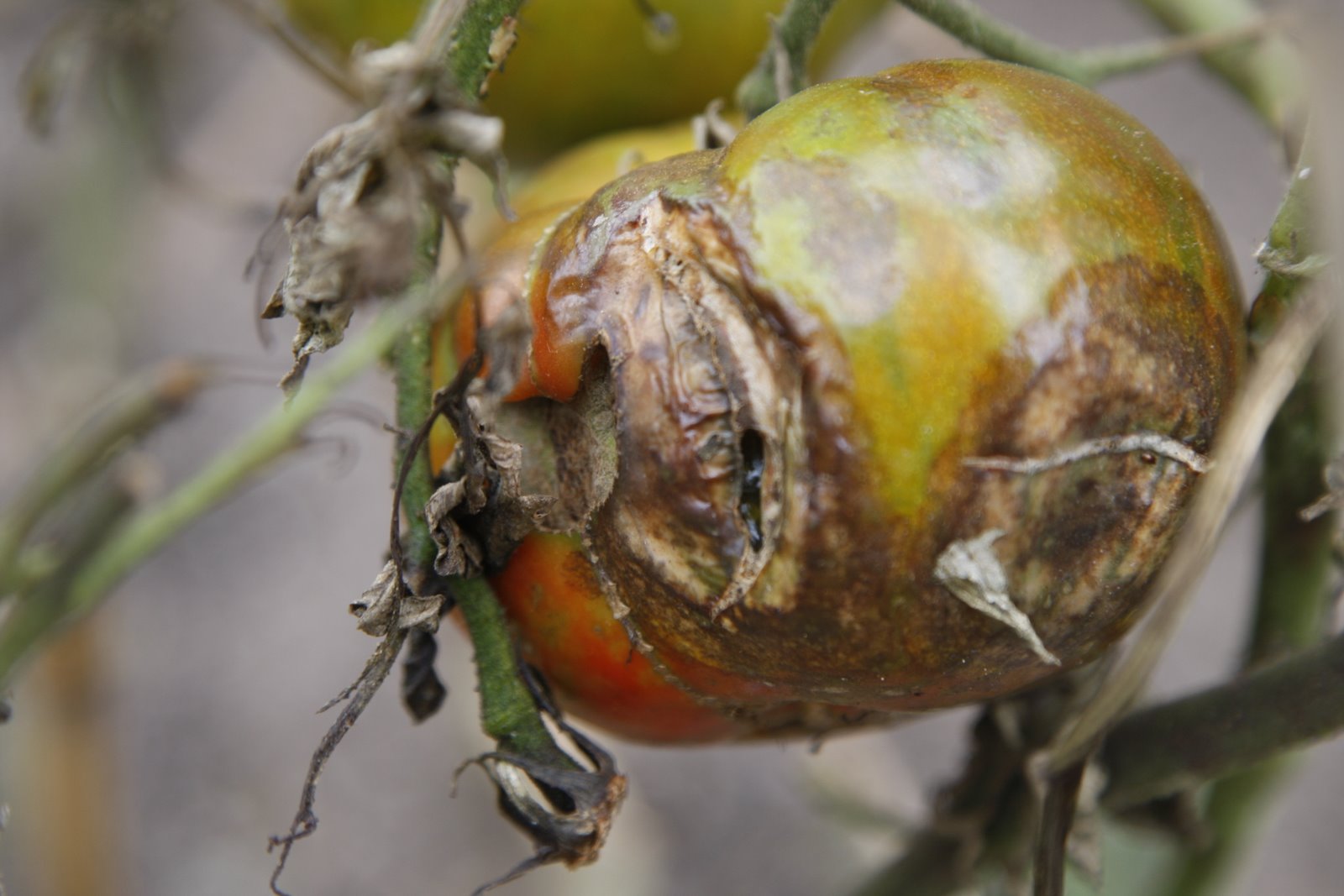
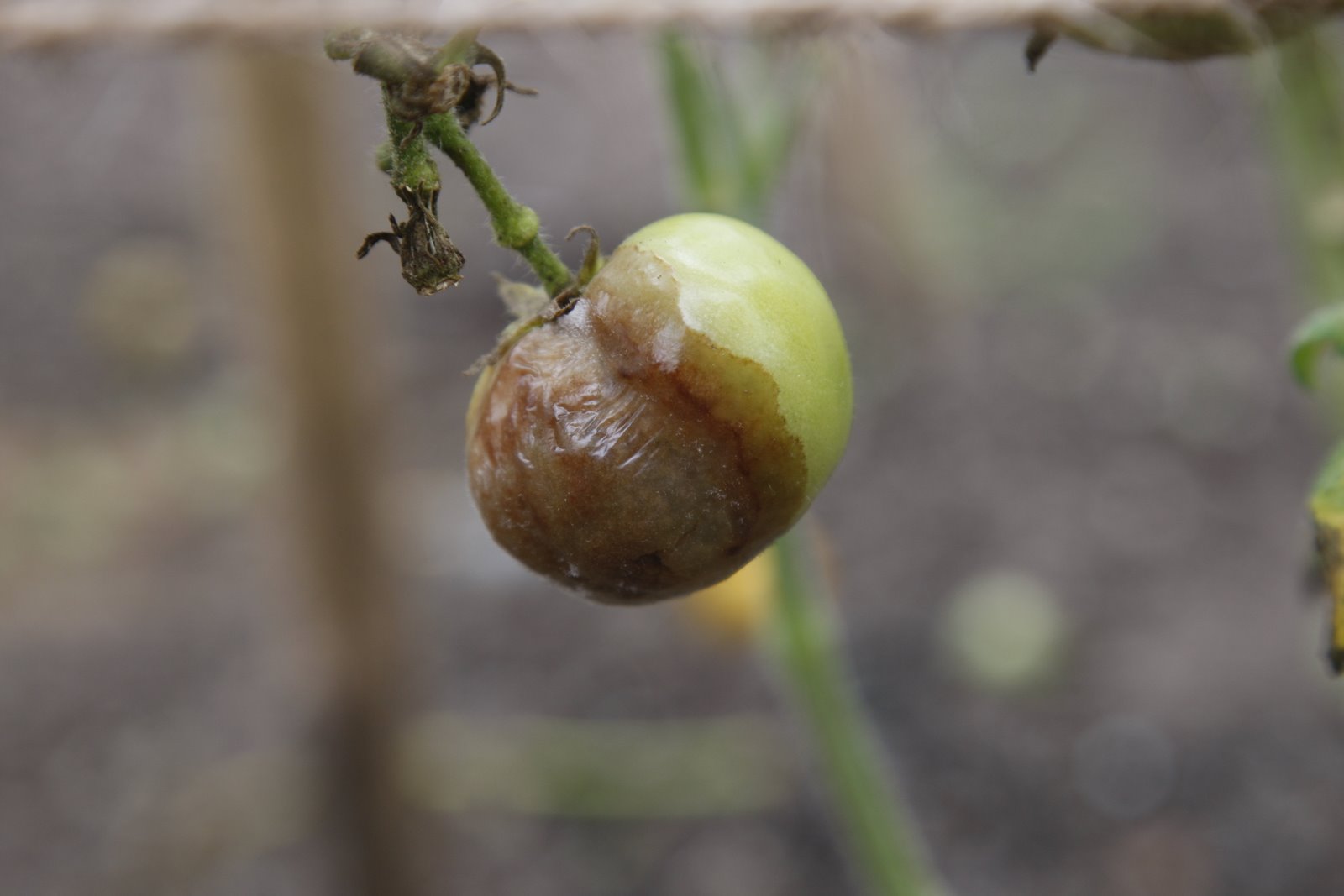
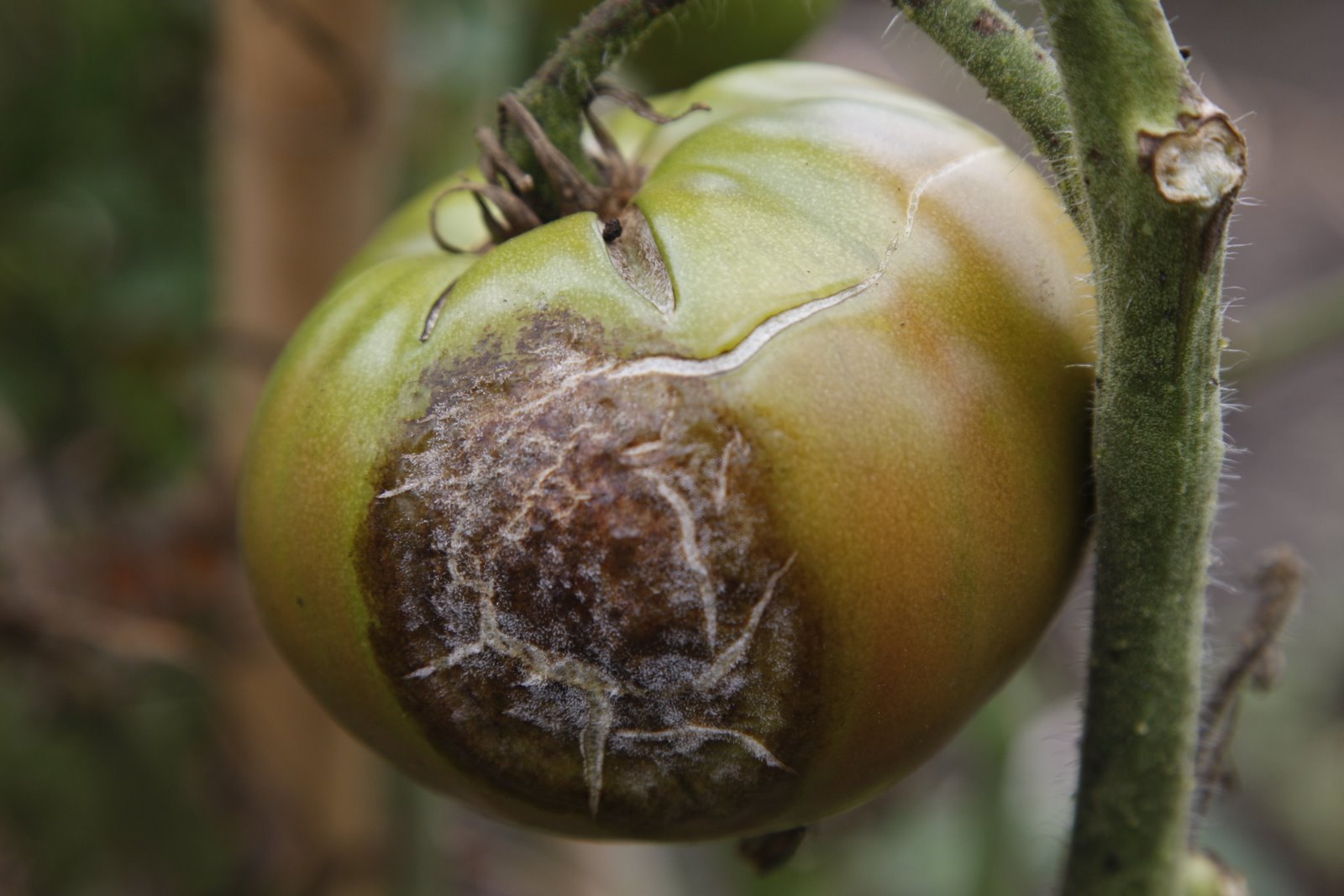
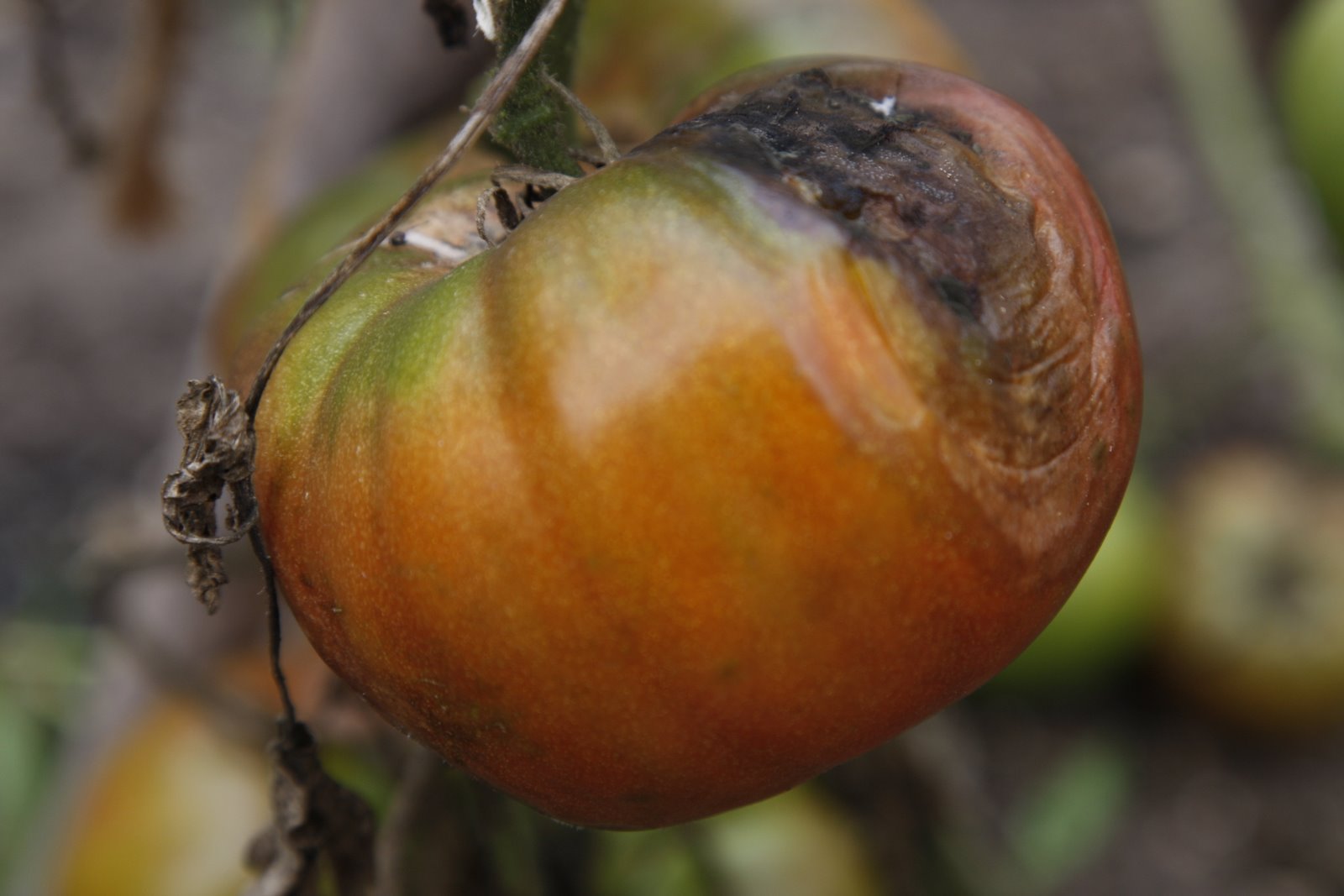
There's been a lot in the news lately about the tomato and potato crop in the northeastern part of the United States. The problem is late blight, a plant disease that attacks those particular plants. As many of you know, it was an especially cool and wet spring, with those same conditions stretching into summer. Late blight is a fungus, which normally appears late in the summer. However, conditions were quite favorable for this highly aggressive disease to thrive. And thrive it did, as it spread throughout the Northeast in just a few days. Late blight has been devastating to commercial farmers, many losing a large portion of their crop. Backyard growers are suffering as well. I, myself, have lost seventy percent of the fifty different varieties in my garden. Even though I still have tomatoes on the vine, many of the beautiful heirloom varieties, which were planted, never had a chance.
1 As you can see, it's been a terrible season for tomato growers.
2 The tomato plants were grown from seed were hardened off in the cold house in the early spring. They were very healthy seedlings.
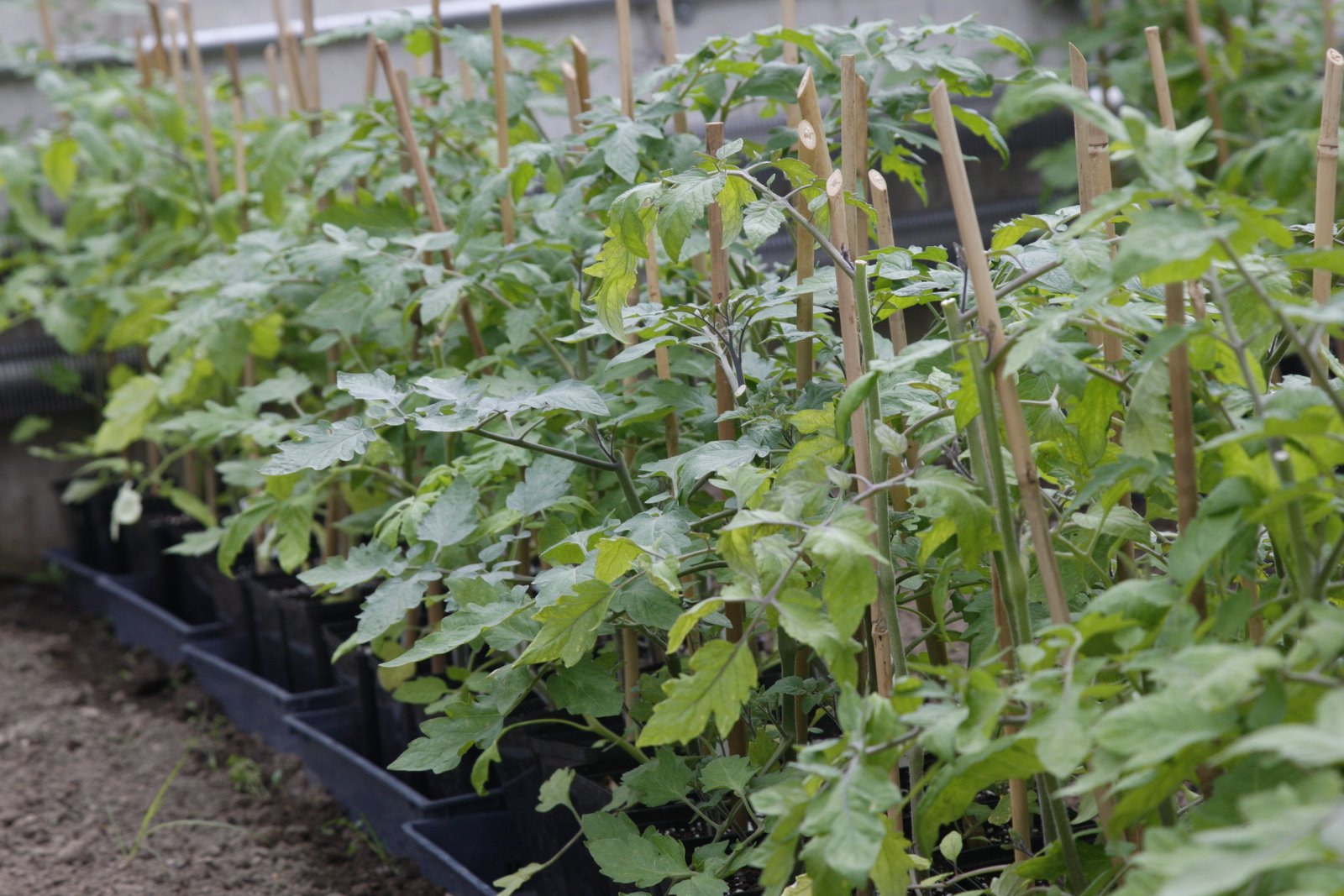
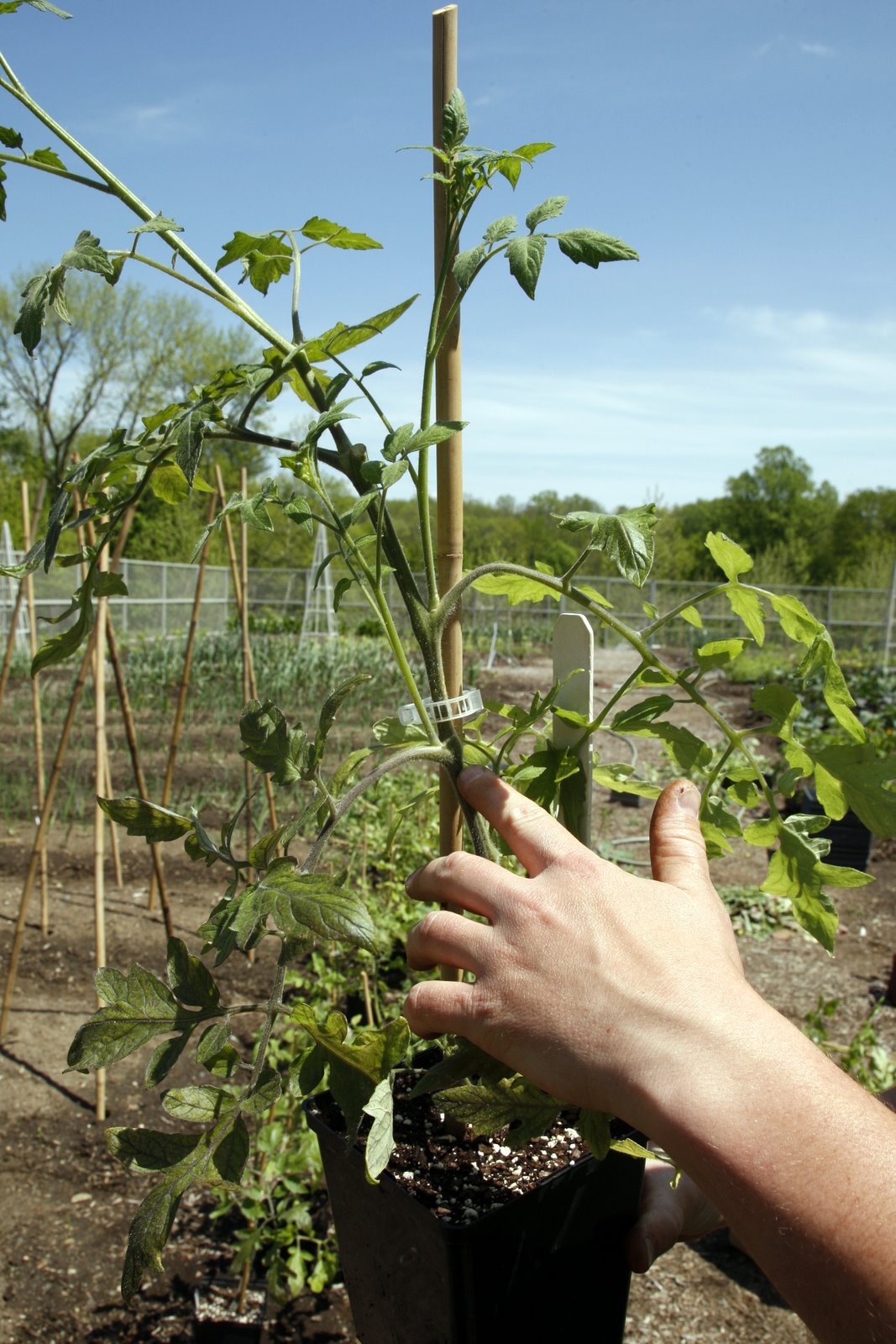
3 Shaun decided to set out the plants in early May.
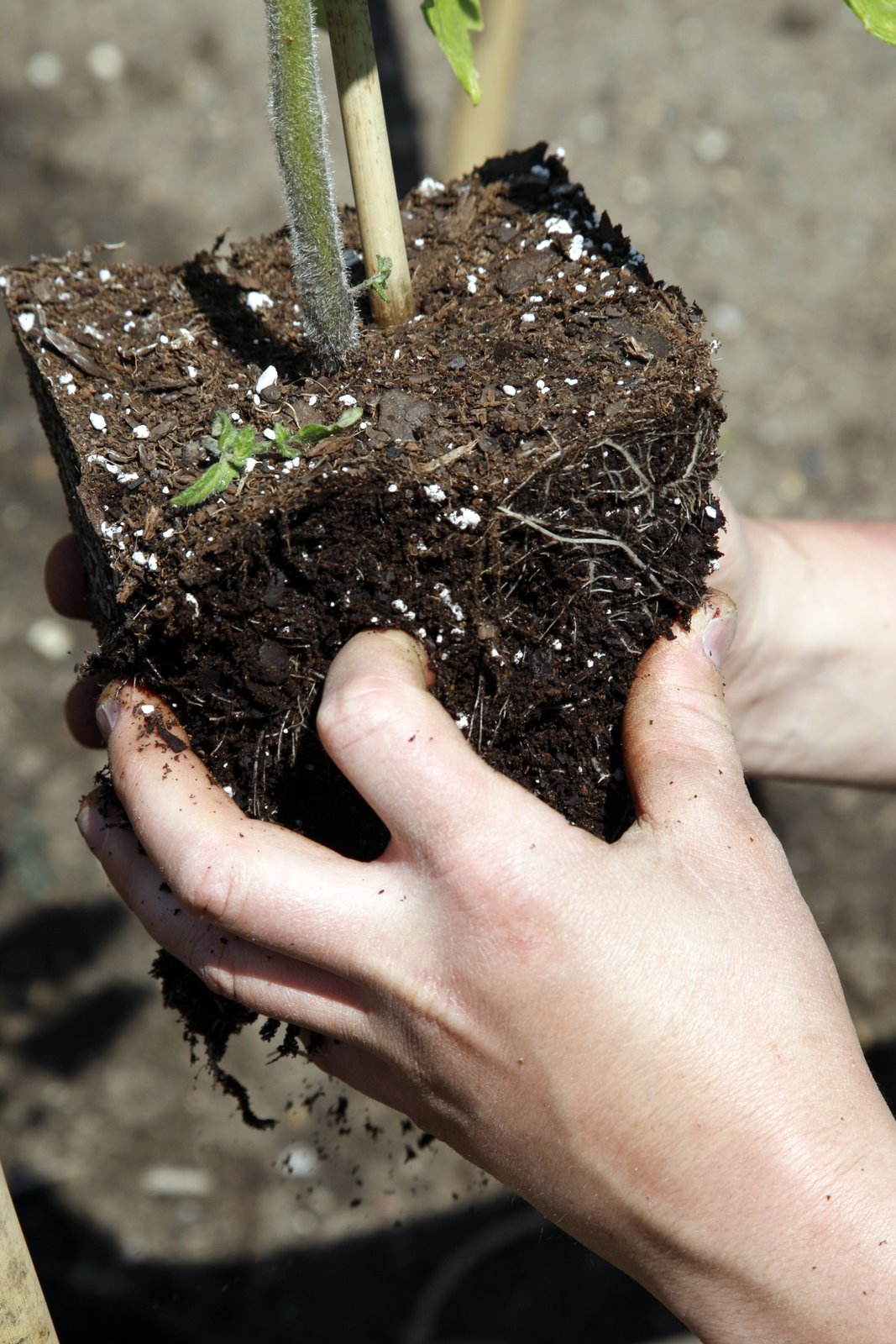
4 He is pointing to how deep the tomato will be planted. Planting them deeply encourages stronger root growth and non-spindly vines.
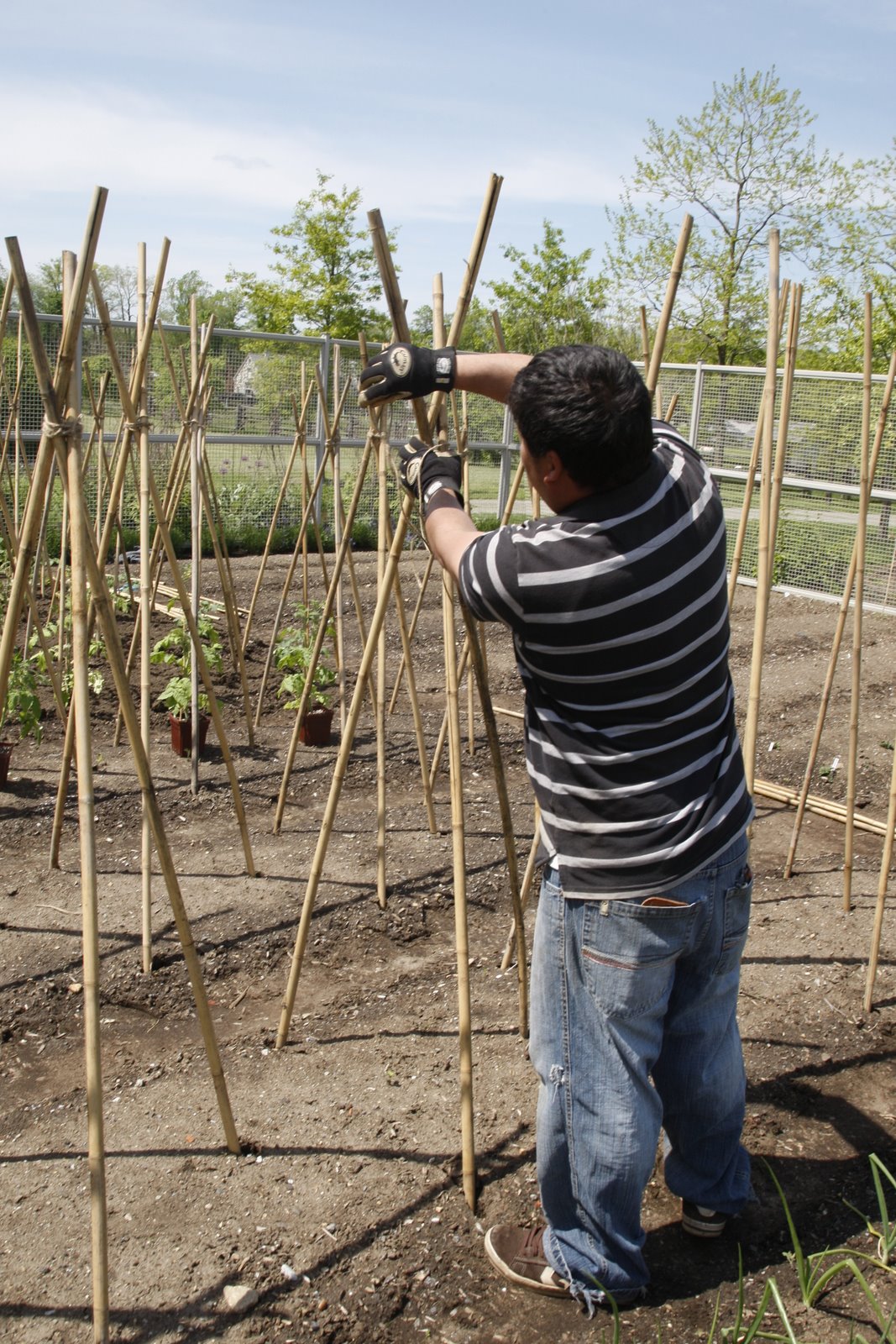
5 Meanwhile, Wilmer is setting out the bamboo supports.
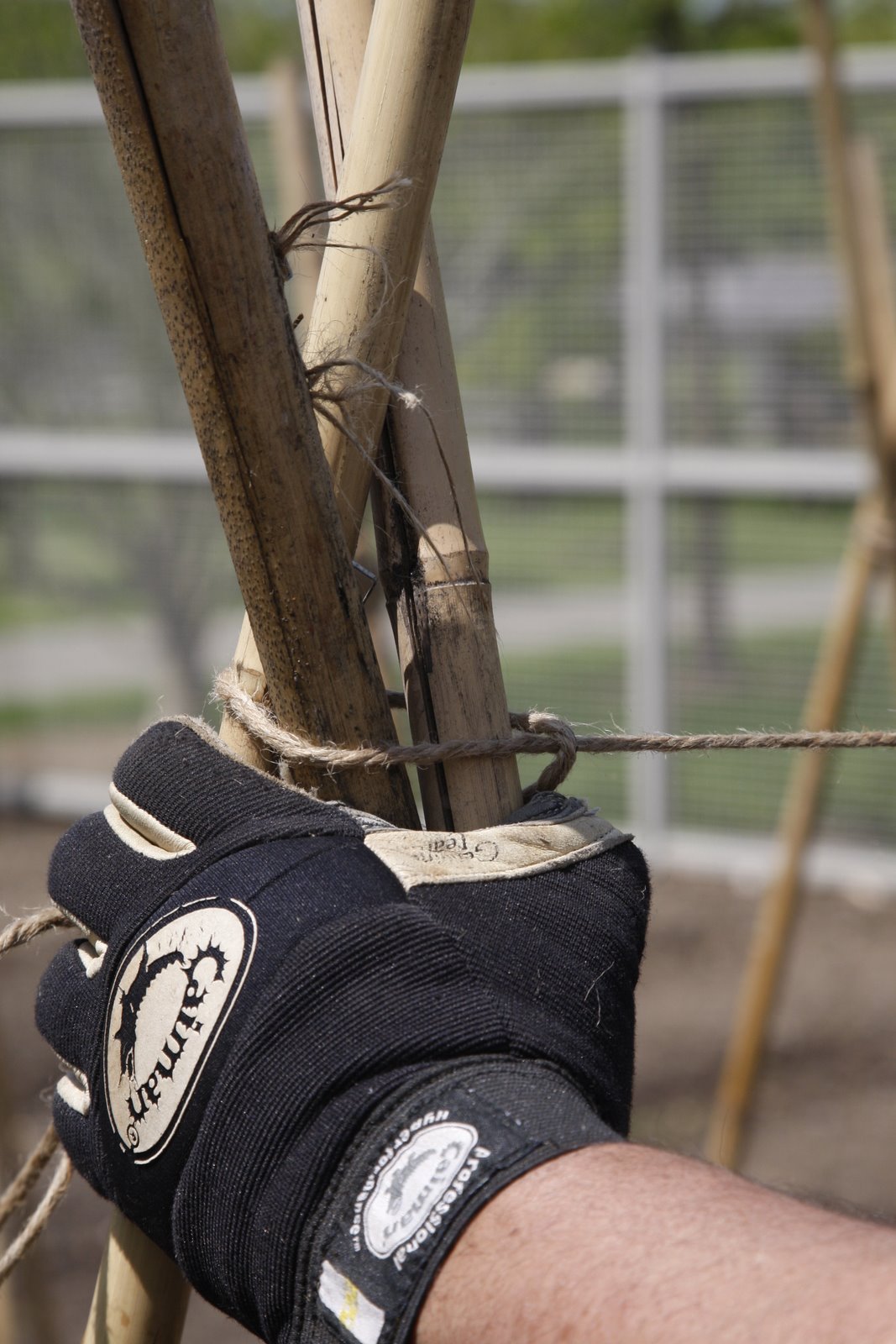
6 The stakes are brought together at the top, forming a tripod.
7 Wilmer ties the tops securely with twine.
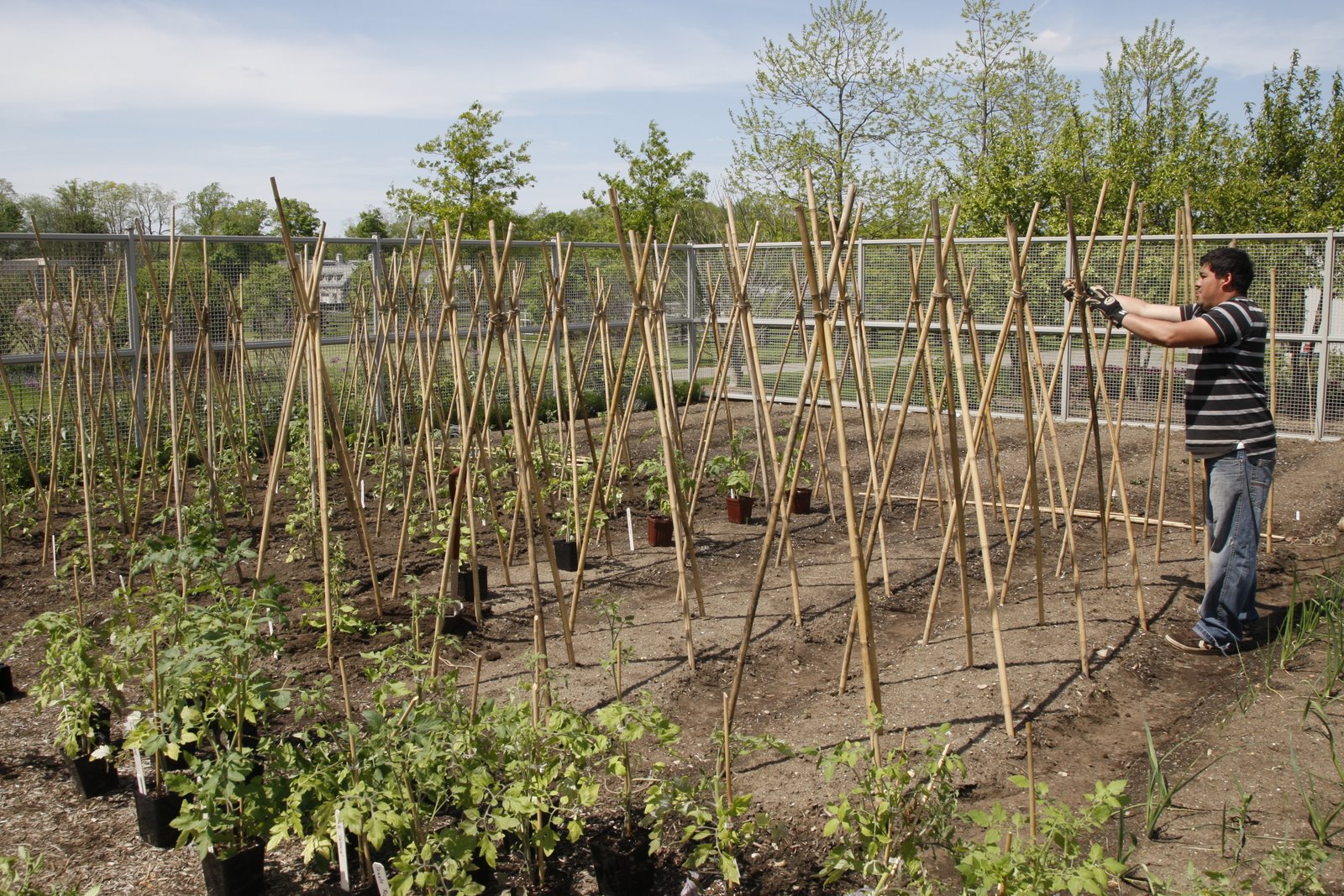
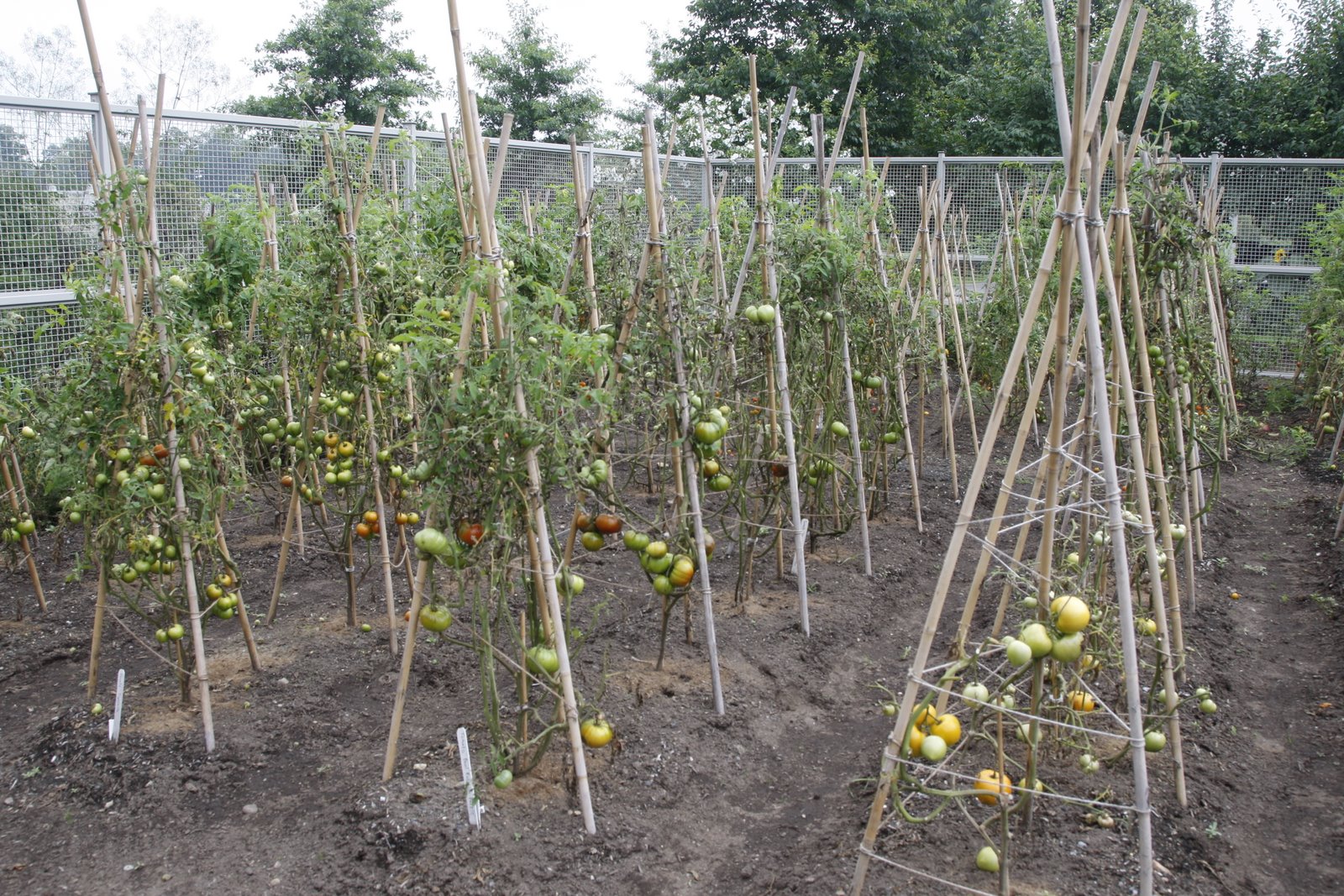
8 Many, many tomatoes and many, many supports
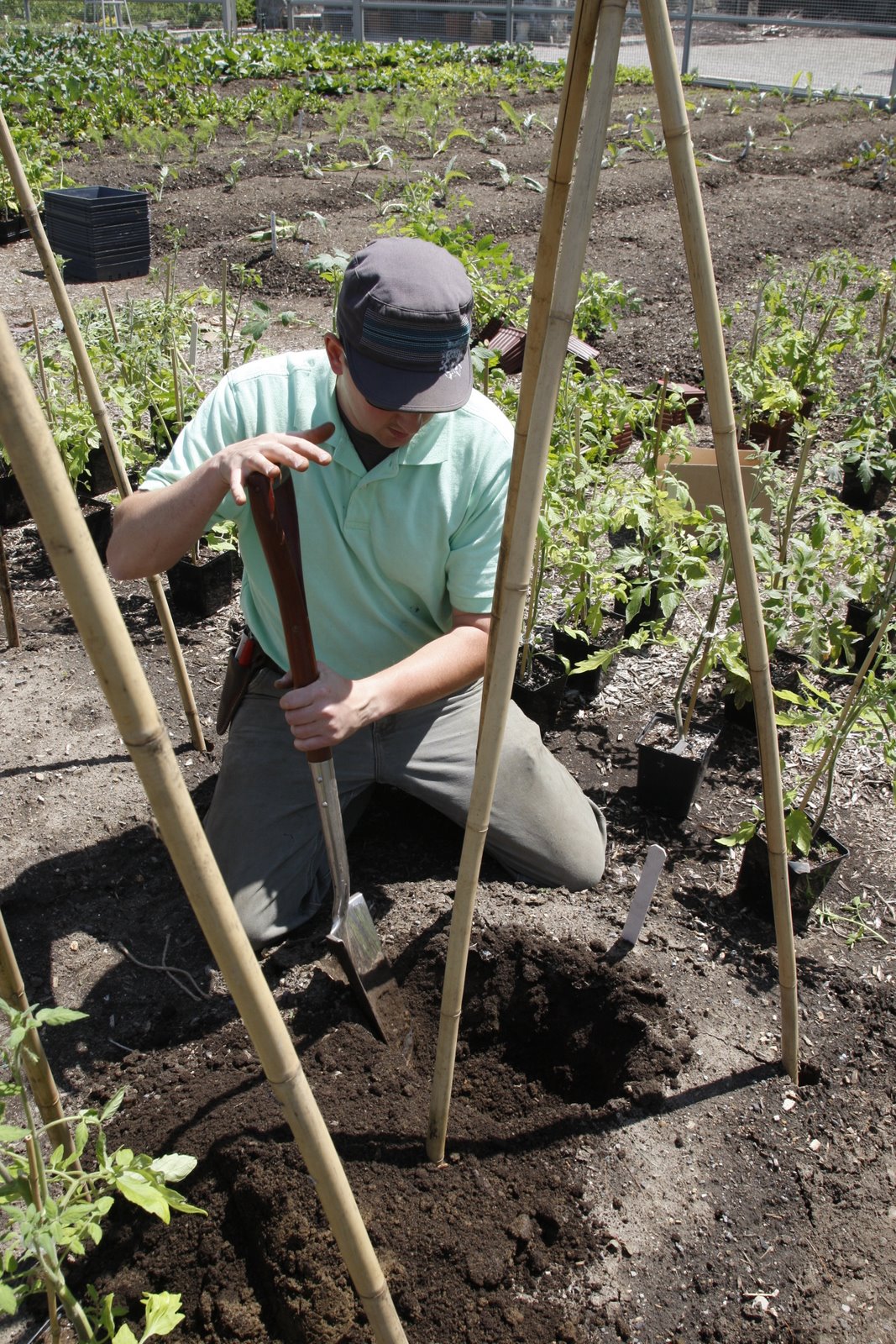
9 Shaun follows Wilmer and digs the holes.
10 It's important to loosen the roots, encouraging them to grown outward.
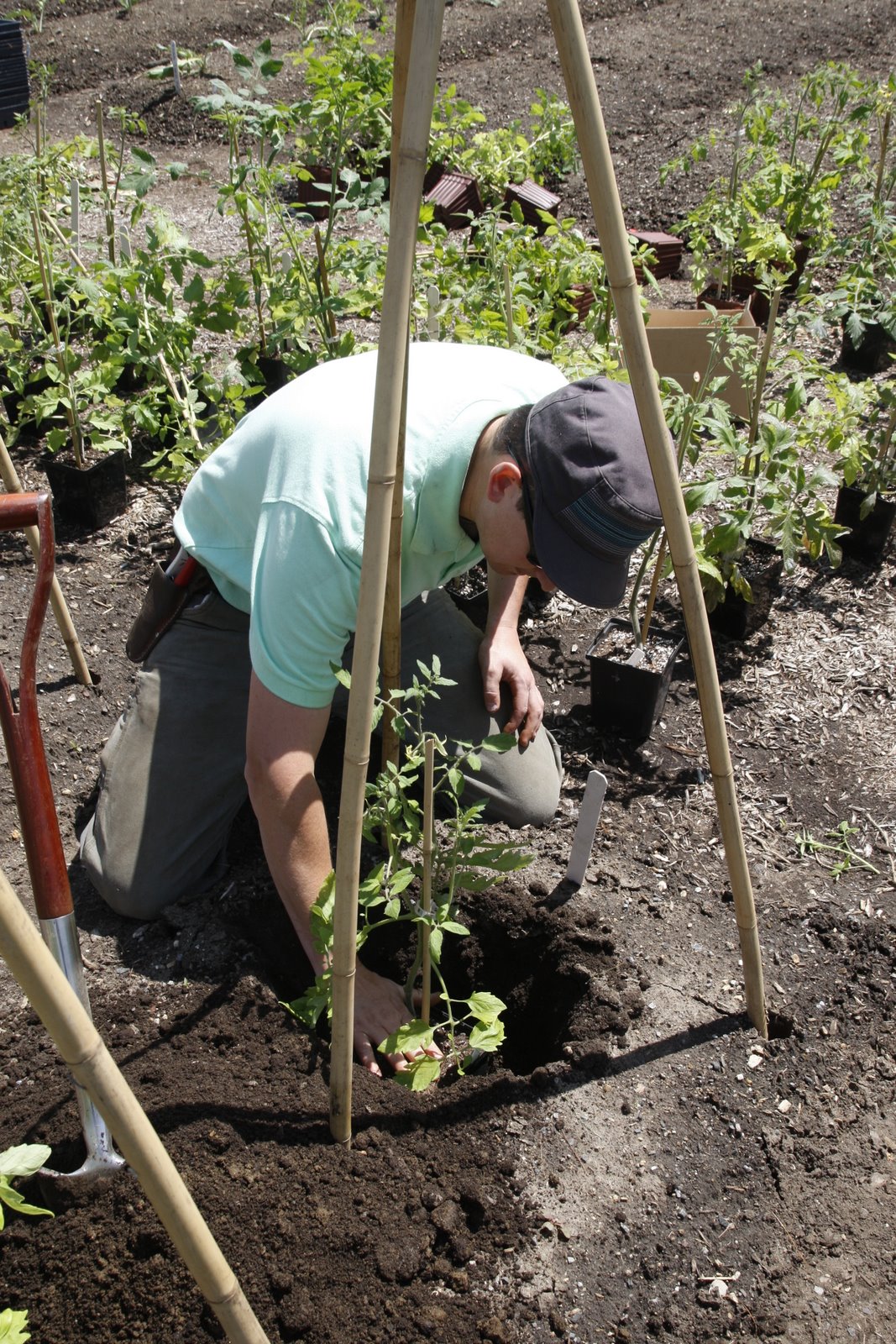
11 Setting the plant deeply in the hole
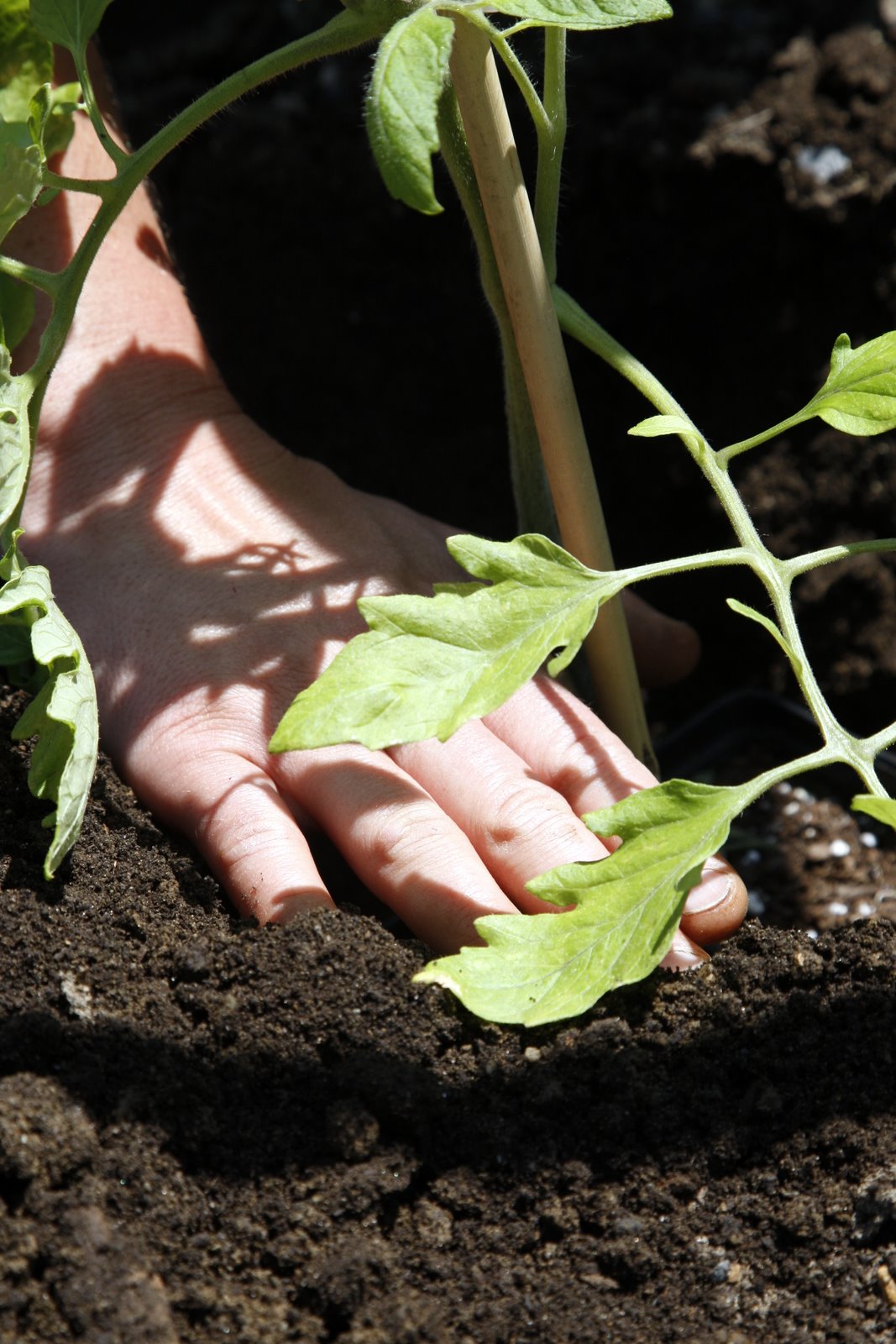
12 He then fills in the hole with beautifully composted soil.
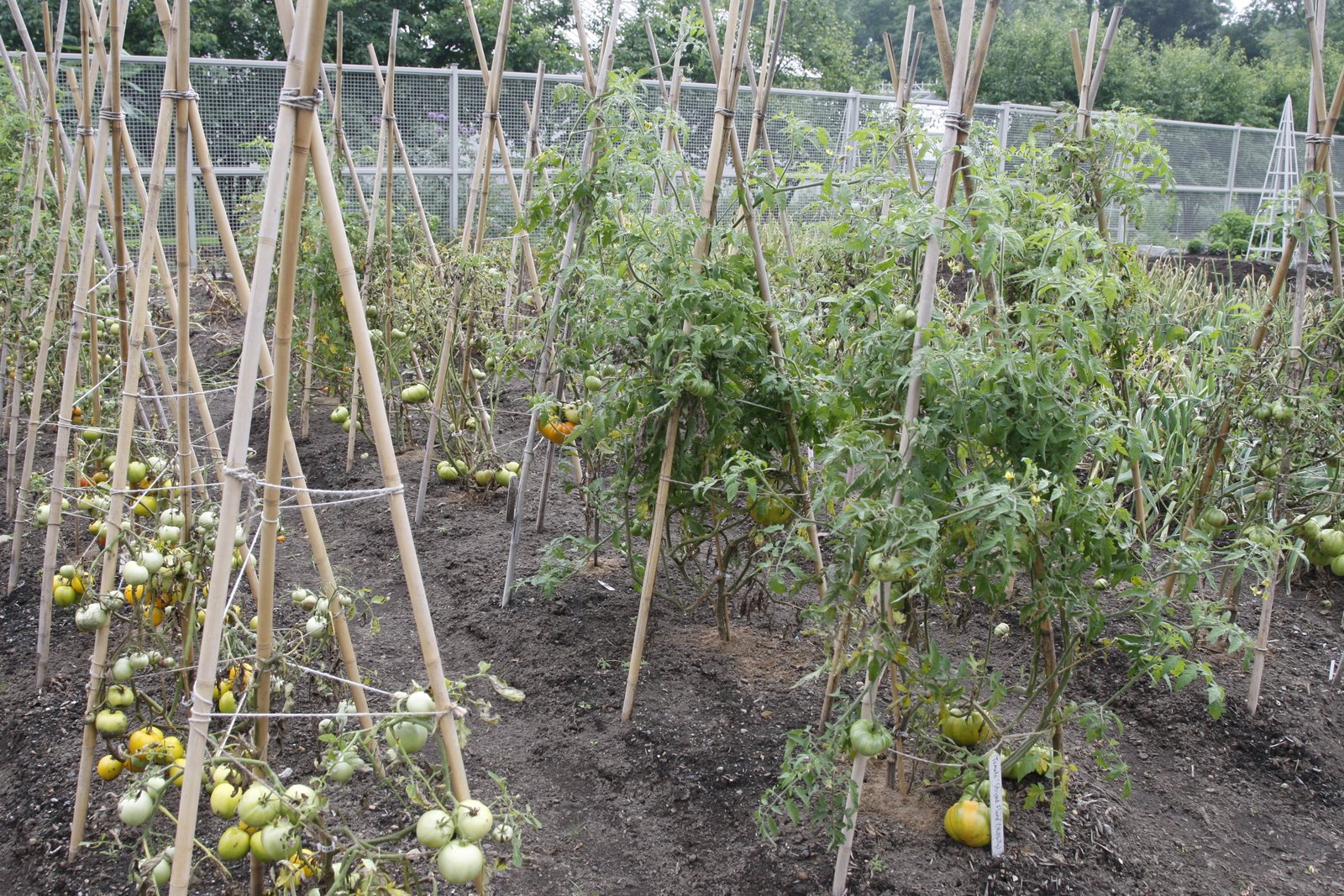
13 The tomato plants were very healthy in the early spring.
14 In early July, the harvest looked very promising.
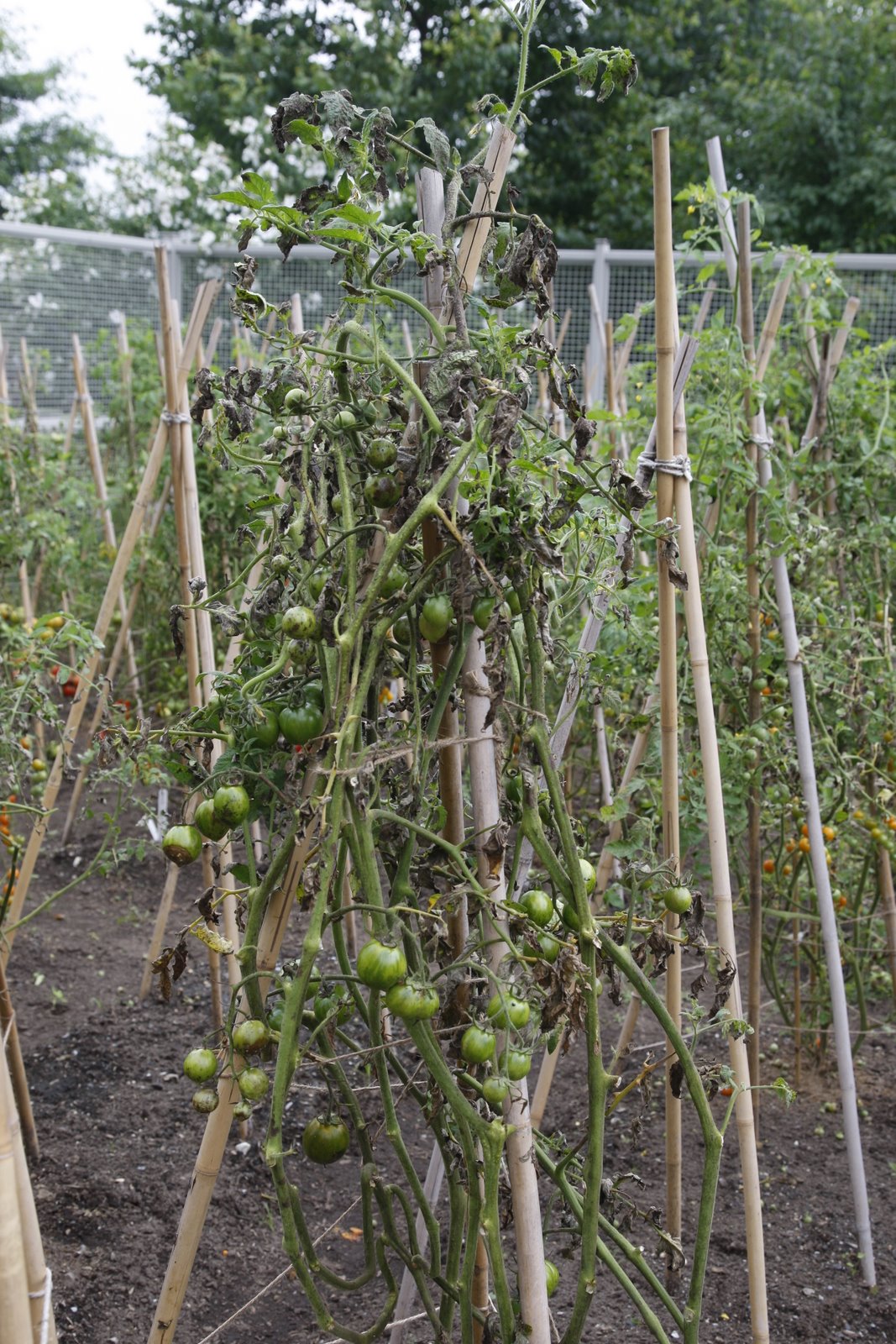
15 However, within a couple of weeks, it was very clear that late blight had attacked.
16 Leaves shriveled and fell.
17 With no leaves, the tomatoes on the vine stopped growing.
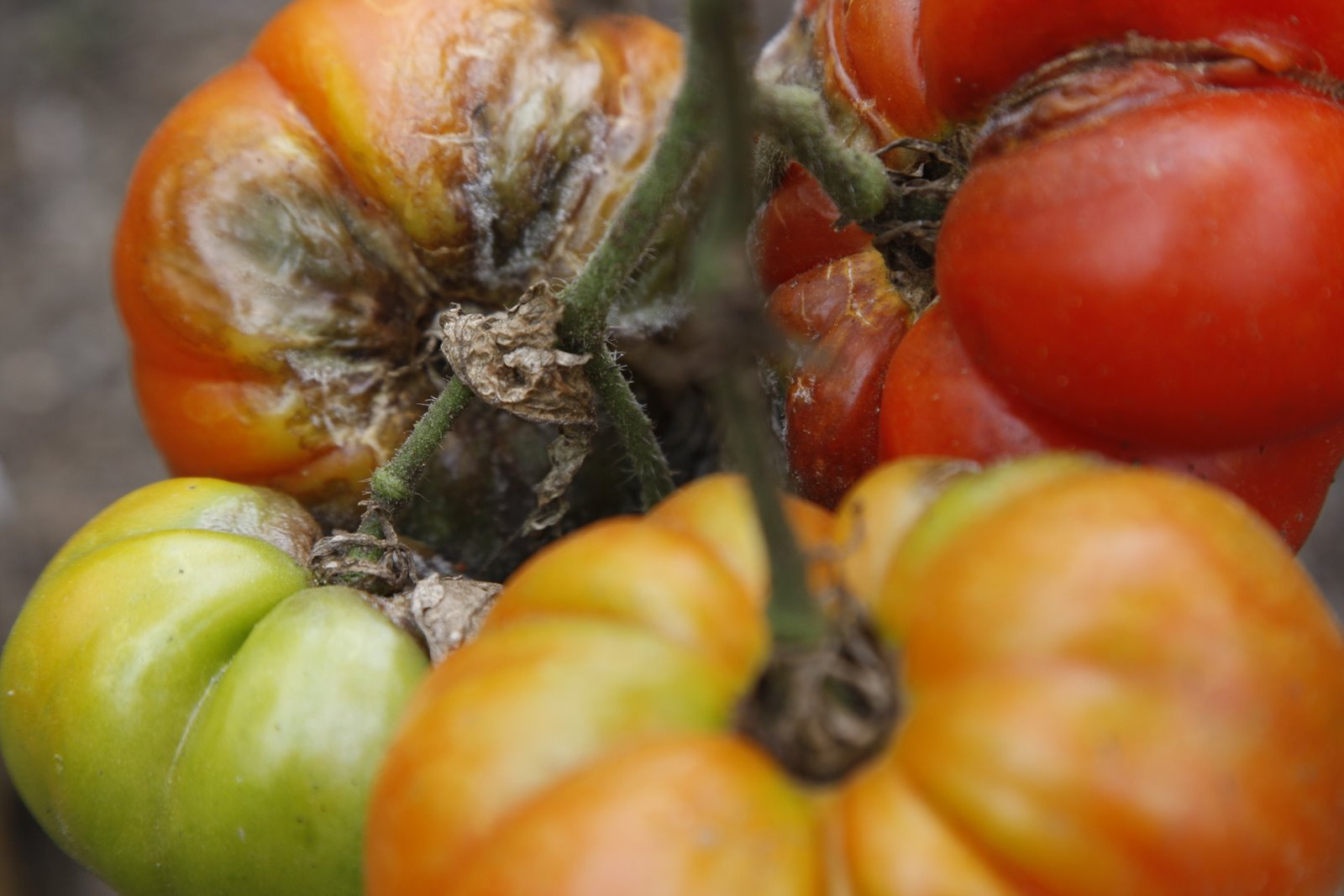
18 The growing and ripening process halted and rot set in.
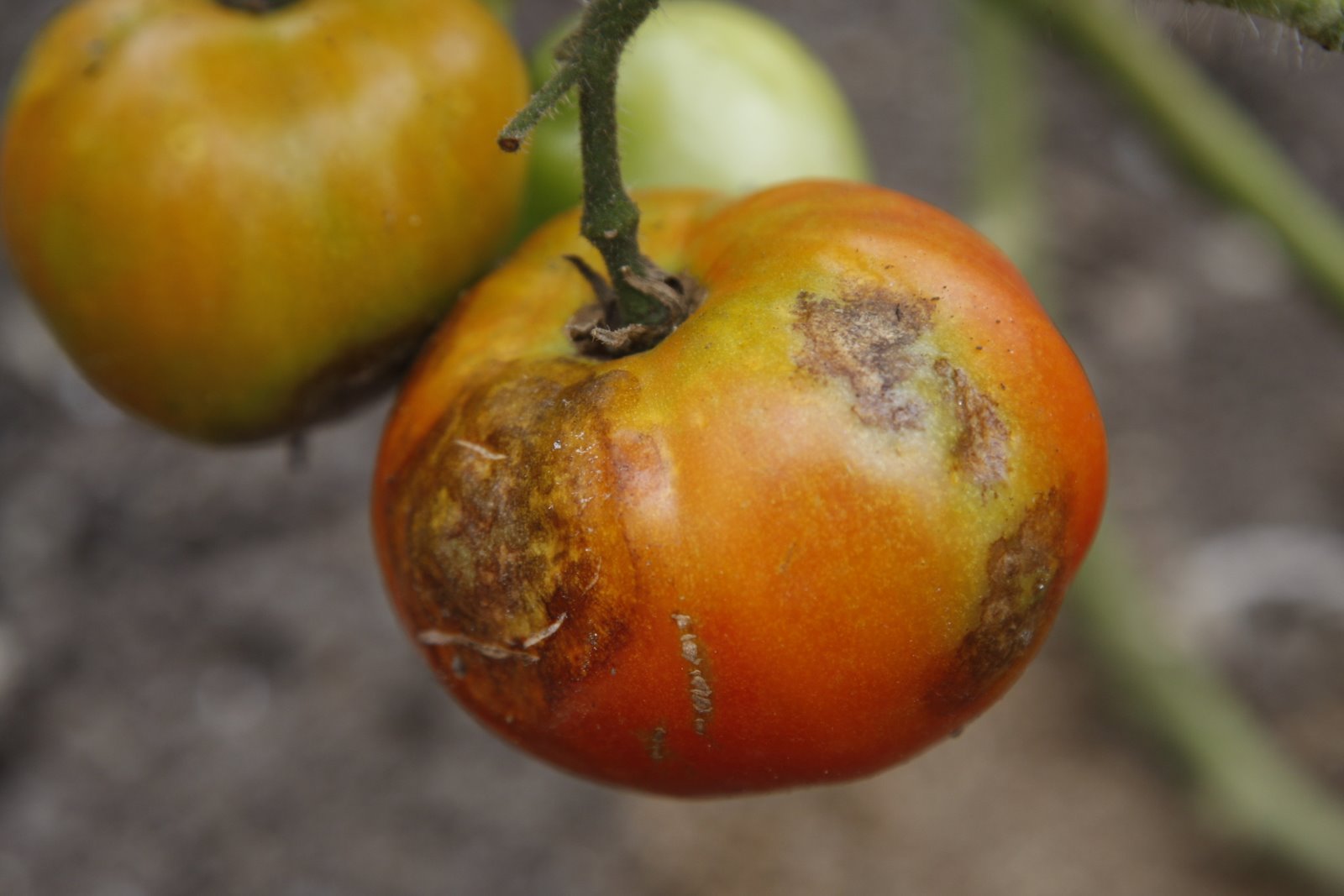
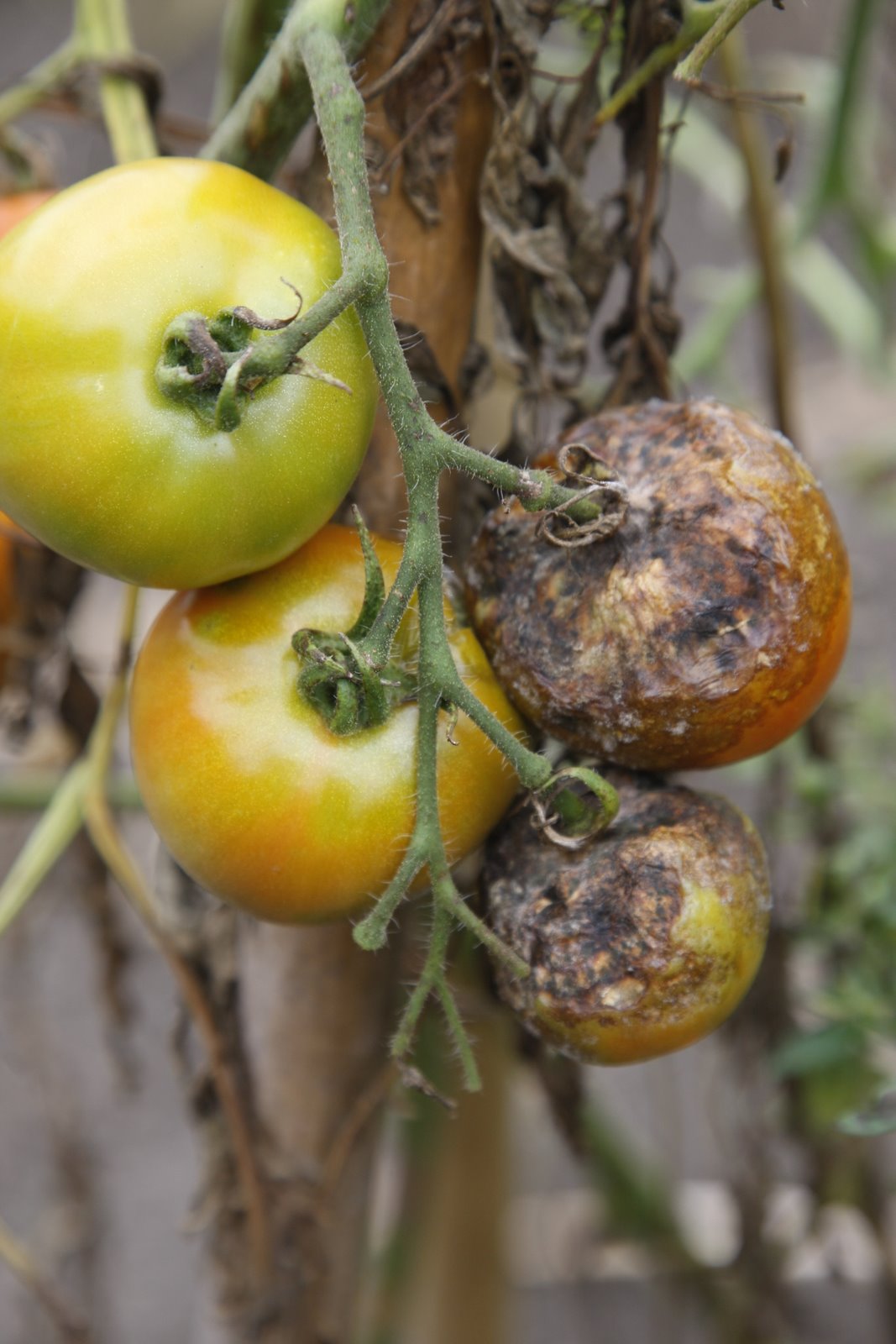
19 Not even a chance
20 A slight ripening but not a chance
21 A beautiful heirloom - gone!
22 More tomatoes - gone!
23 One can only imagine how delicious these might have been.
Photos By Eliad Laskin
Posted on
August 11th, 2009 in
Gardens, My Home | Permalink |
Comments are moderated, and will not appear on this weblog until the author has approved them.
Oh my goodness - I experienced the same thing a few years ago in the Pacific Northwest. It was my first garden and the tomatoes were sooo beautiful and I was so proud of myself. WELL - surprise - surprise! I woke up one morning to the devastation of my tomatoes and WAS devastated.
Blasted blithe! Now I live in Hawaii and hopefully I will have better luck.
I love tomatoes!
Posted by: Kathleen | August 11th, 2009 at 1:47 am
This happened to us also, years ago. We have also had a year when the potato crop was wiped out by blight. We diligently rotate crops and now only plant disease resistant varieties of tomatoes.
Do those heirloom varieties not have resistance to blight?
This year, with our unusually hot summer here in the Pacific Northwest, I have the best tomato crop growing and ripening that I have ever had.
You can sometimes just never know what you are going to get despite your best efforts!
Posted by: Clayvessel | August 11th, 2009 at 1:56 am
This is so sad...all those beautiful plants! I hope that next year is better.
Posted by: Adrienne | August 11th, 2009 at 1:59 am
It is such a shame. Our four plants (which look pretty meagre compared to yours) are doing well in our back garden although we are waiting for some sunshine to ripen them. I have so far seen no news on tomato blight affecting London.
I suppose the tomatoes you do get from the garden you will treasure even more.
Pru
Posted by: Pru | August 11th, 2009 at 3:24 am
Happened all over this year, such a shame - both that all these crops were lost but that we are also forced to eat hot house grocery tomatoes in the meantime. Yuck.
Posted by: The Blushing Hostess | August 11th, 2009 at 4:10 am
We had it happen last year. We were told to rotate the crops to another location this year. The infected area from last years sits without anything in it this season. We removed the top 3 inchs of infected soil and added 6 inches of new top soil last week. We have decided to leave the bed for one complete season and next sprint try something that is not "vine" related.
This year the tomatoes are suffering because our nights are soon cool, the growth is not happening has it should. This week we are having a "heat" wave and rain showers in the late afternoon - so we might see a growth spurt.
Please share how you and your staff plan to treat the infected area and what you will plant in that space going foward.
Thank you!
Posted by: Annette | August 11th, 2009 at 6:46 am
We also lost all of our tomatoes up here in Upstate New York by Rochester, NY to blight. Our plants also looked very healthy in the beginning then the same thing happened to ours. What a waste, I so miss the fresh tomatoes out of our garden.
Posted by: Cathy | August 11th, 2009 at 7:08 am
Are preventatives being developed to ward off possible annual blight, as weather continues to surprise us?
Posted by: andyjspencer.blogspot.com | August 11th, 2009 at 7:18 am
Oh my gosh . . .How absolutely terrible and so very sad. . .Your comment on the one tomato that didnt have a chance made me very sad.
Martha, next year the tomato harvest will be in the book of records.
again, thank you for sharing ..
my best. . .nina
Posted by: nina zeumer | August 11th, 2009 at 8:16 am
so sorry but was there no clue that perhaps this would be a wet growing season--- and if that were known perhaps giving the plants plenty of space between each could that have helped ?? it seems to me as a monday moringing quaterback more space in the future between plants
Posted by: HBE | August 11th, 2009 at 9:29 am
Hi Martha!
Really sorry to hear about all of the crop failure, yours and everyone's!
Yes. the tomato blight! The problem is not confined to the northeast, however. Here in Florida I first noticed the blight on my tomatoes at the beginning of the summer. I harvested a pretty good crop before the blight set in. I cut,pruned and butchered the blight away; sprayed with every kind of organic concoction I could come up with and of course, nothing helped, the blight won.
Remember that great movie Farrah Fawcett stared in? "The Burning Bed."? That's what I'm planning for my garden; BURN THE BLIGHT!
The tomato seeds I used were organic seeds from a grower in Maine...hmmm. I now have 3-4 inch tomatoes starting in flats from some of my own seeds. Will see what happens.
Blight was not the problem with my potatoes though..."I" was the problem! Planted them wrong: whole, rather than cut-up pieces. I did grow some but they were very small. The sweet potatoes were a better success. Still, I think I harvested too soon but I like them small anyway.
In one of Joni Mitchell's songs she talks about people - and our ways of wasting and polluting our beautiful planet - as being "a blight on the earth." It would not surprise me if blight in and of itself is just another repercussion of the imbalance we have created. Even with all we have come to realize and understand, the county I live in continues to spray poison along the roadways, all because of a few weeds! We need laws to stop this careless, unnecessary futile practice. I'd rather see a herd of goats happily chewing away!
A new spring, a new garden!
PS. What about your huge cold house? Any protection offered there? Hope so.
Posted by: tinay | August 11th, 2009 at 9:31 am
I am actively battling blight here in MI. I have cut off every spotty leaf (some vines are pretty bare!) I have remulched with inert stable shavings to cover the soil, and am spraying after each rain with a sulfur compound. The plants are struggling, but have their vegital noses above water.
My elder gardening pals (80+) tell me to treat the soil after this season with a copper solution, rotate crops and hope for warmer more dry weather.
We will see.
Posted by: Sarah | August 11th, 2009 at 10:05 am
I was fortunate to "only" have slugs and slug damage this year. They're finally ripening up and coming in well, but late.
Posted by: Perry | August 11th, 2009 at 10:11 am
Sorry to hear about your tomato blight I personally haven't had a problem this year , is there anything u can do to kill the blight without compromising the quality of the veggies ?
Posted by: bradford jackson | August 11th, 2009 at 10:13 am
Even here in the south, in Charlotte, NC, I found blight on a few of my tomatoes this week. Didn't think it would come this far south, but we HAVE had a relatively wet spring and summer too. Our plants look better than these and the rest of the 60 or so tomatoes on the vines look good, but we are watching closely.
Posted by: Justine | August 11th, 2009 at 10:14 am
We have had a similar problem with squash varieties here in the southeastern US. We had so much rain that the fruit just rotted on the vine. There wasn't anything we could do.
Posted by: Jennifer | August 11th, 2009 at 10:14 am
Our CSA up in Northern VT lost all of their crop - they ended up digging up all the plants and burying them. Tremendous disappointment to all - I can't have summer without fresh tomatoes! I have a potted cherry tomato plant and notice yellowing leaves at the bottom, but don't think I have blight. Thanks for sharing, Martha. Even the best maintained gardens have hurdles to leap.
Posted by: Michelle | August 11th, 2009 at 10:14 am
Guess ai will have to buy BACKYARD BEAUTIES grown in Madison, ME in huge greenhouses. Alice
Posted by: Alice Goldsmitth | August 11th, 2009 at 10:20 am
So sad. All of your hard work. For the first time in years my mother has beautiful tomatoes. Usually we don't get enough sun and too much rain for them to ripen up.
Posted by: Cadence | August 11th, 2009 at 10:22 am
Luckily our tomatoes were wonderful. We milled to many tomatoes for sauce that we will be making sauce all winter. I live in Concord, CA, about 40 miles east of San Francisco.
Posted by: Cathy | August 11th, 2009 at 10:23 am
Our heirloom tomatoes did pretty good this year. We live in East Texas. We planted 24 plants of 6 different varieties. They produced more than enough for both of us and neighbors, too.
Posted by: Ine Burke | August 11th, 2009 at 10:53 am
Our tomatoes had to go in late because of the rainy spring in TN. It continued to rain throughout July, so many of our tomatoes have cracks in them. But after seeing yours (while on Twitter) and hearing about others' gardens, I feel pretty lucky that I will have tomatoes to put up.
Sorry that your garden was hit with the blight.
Posted by: Katie | August 11th, 2009 at 10:55 am
We experienced this in Michigan - about 35 years ago. But part of the problem there was that we were gardening in a 'communitiy garden' and the soil had not been amended or taken care of in years. I live in Colorado now and I have 3 varieties of tomatoes planted - they seem to be doing well. Last year I lost all my tomatoes to deer! The year before - an early frost which left the tomatoes looking just like your blighted ones. Hope I get something this year.
Posted by: Barbara Reed-Polatty | August 11th, 2009 at 10:56 am
Here in central Ohio our tomatoes are doing great! They're ripening quickly and taste so good. Sorry your season was ruined.
Posted by: Hanna | August 11th, 2009 at 11:01 am
That's so awful! I had one tomato plant but only got one tomato off of it because it's been so hot here. Was really looking forward to some fresh tomatoes.
Posted by: Alyzabeth | August 11th, 2009 at 11:02 am
Last year we didn't get many tomatoes, so this year I planted extra plants. And ended up with a bumper crop.
Hydrogen peroxide, 3%, sprayed undiluted on plants periodically helps kill fungal diseases. Veggie Wash is a new product that does this also (I haven't tried it yet, but I hear about it on the radio program of Howard Garrett, who has an extensive organic gardening site at http://www.DirtDoctor.com).
Thank you for posting that sequence of photos. I've been meaning to change the method of supporting my plants, and didn't know quite how you were placing the bamboo. I've had to prop up flimsy tomato cages this summer.
This year my fridge has been brimming with tomatoes and I've canned and frozen a lot. (I put in about a dozen plants).
http://i646.photobucket.com/albums/uu188/Northwesterner_photos/Dirt-Doctor-forum/July15-fridge-tomatoes-1b.jpg
Posted by: Maggie Dwyer | August 11th, 2009 at 11:07 am
I live in California. This summer has been strange with frequent cool spells. Several of my plants have developed blight although the cherry tomatoes are doing really well. Several heirlooms did not produce at all.
Posted by: Kathy | August 11th, 2009 at 11:11 am
Here in San Diego, I have stopped growing tomotoes due to overwhelming blight. More fun and less frustrating to hit the Farmers' markets!
Posted by: Elizabeth Schmitt! | August 11th, 2009 at 11:19 am
Martha,
I live in Westchester as well, down in Scarsdale Village and all my neighbors have lost all their tomatos, I love my heirlooms, yellows and romas, even my cherry tomatos.
I am making sure though, the plants are properly disposed of in airtight plastic bags.
Posted by: Carl | August 11th, 2009 at 11:22 am
Here in Beautiful NW Louisiana we had a nice crop this year. LOTS of Romas-lots of sauce in the freezer!
Posted by: Susan | August 11th, 2009 at 11:37 am
This is awful; however, I appreciate you sharing. It makes me feel better about problems in my garden to know that even a gardener as great as you experiences some setbacks. As others have said, I would like to know what you will do to treat this area for future plantings...
Posted by: GG | August 11th, 2009 at 11:43 am
What a shame ,I can almost taste how good they would have been.So much work and then this oh well we take what Mother Nature dishes out but doesn't seem fair.
Posted by: Leona Milbury | August 11th, 2009 at 12:00 pm
...tsk tsk tsk...what a cryin' shame, Martha! This is awful! All the preparation, all the TLC, all the anticipation, then...a wiped-out crop! Judging on the manymany posts before mine today (which I've not read as of yet), other folks are experiencing the same misfortune as you, Martha! I feel just awful, for being the rain lover/hog that I profess every summer.
Well, I guess these'll soon go on the compost heap!
=^..^=
"Take out the weeds from some wild spot, Remove each stone that shows, Plant seeds of friendship good and deep, And tend the plant that grows."--Mary Freeman Startzman
Posted by: Cindy Bricker | August 11th, 2009 at 12:42 pm
So sorry to see you lost your whole beautiful crop. I'm in Rhode Island and I lost mine too. I only have a couple of plants in pots because I don't have the room for a full garden.
I, and others surely, would love to know what you and your growers plan to do to make sure it doesn't happen next year. Will you treat your soil? Mine are in pots, how do I successfully clean the pots?
Again I'm sorry you lost your whole crop, a summer without tomatoes is like a child without a smile.
Posted by: Nancy Turbitt | August 11th, 2009 at 12:46 pm
Our community garden in Natick MA just outside Boston has had the same problem. It is great to share information about it. Victor -- my garden mentor - is so upset about it. The cucumber have
been delicious but not overly abundant. What about yours? Basil, parsley, cilantro, dill, lettuce, geraniums. magnolias, and morning glories are thriving. Nature!
Posted by: Teresa Touey | August 11th, 2009 at 2:06 pm
I'm in White Plains and so far my tomatoes are doing okay, though slow to ripen this year. However, the leaves on the plants seem to be drying up faster than usual.
Posted by: Moira | August 11th, 2009 at 2:10 pm
Hi Martha,
Since I don't plant tomatoes every year, I was not familiar with blight and don't recall it ruining any of my plants when I lived in Michigan. At least now I know what happened to my tomatoes this year. I thought they might have gotten too much water, not enough sun, then too much sun and not enough water. I should have taken my clue when the leaves started to get funny looking and some had white stuff on them. Oh well, next year maybe. In my research of blight, I found out it can also come from compost so I hope you're not going to add those plants to your compost heap. I'm sure you know more than me though. Poor tomatoes! Trish
Posted by: Trish | August 11th, 2009 at 2:27 pm
I live just around the corner from you and have similar issues. Our roma tomato and grape tomato plants seem to be the only ones that have somewhat come through. Although now or romas are dying off too!
Also our eggplants never bloomed this year.
Posted by: marla | August 11th, 2009 at 2:30 pm
I'm so sorry to see your beautiful tomatoes all blighted. But do not despair. Time for fried green tomatoes and green tomato pie!
Posted by: LinC | August 11th, 2009 at 3:19 pm
Truly sad when this happens...we had similar situations last year on the Lower Mainland here in Vancouver. This year is better. So much work and effort and not much to show for it now.
Posted by: sherey | August 11th, 2009 at 3:59 pm
I feel really sad for your crop becuase I know you treat your plants like your baby. I live in Southern California and don't have problem with my tomatoes. My cherry tomatoes give out so much fruit that I don't know what to do with it.I gave a lot of them to my friends at work and still had more. However, my heirloom tomatoes never give out the fruit,any duggestion?
Posted by: Ampai Darmiento | August 11th, 2009 at 4:01 pm
I lost my entire crop as well. 18 plants in total. But I didn't let it get to me. I stripped all my tomatoes and made green tomato ketchup (delicious! if a little odd looking) and canned some to make Roman green tomato and mint sauce over the winter. It was my first year gardening, so I'm incredibly bummed, but I'm hoping next year will be better.
Posted by: ann | August 11th, 2009 at 4:07 pm
I live in the northeast also, & the pictures of your tomatoes look just like mine. Out of 40 plants, I only have a few fairly good tomatoes this year. Even my sunflowers didn't do well. Let's stay positive, we usually do have good growing summers here. I hate to rush it, but I'm already looking forward to next season.
Posted by: Sherry | August 11th, 2009 at 4:46 pm
Sorry to hear about all the tomato problems! I'm the only one in my family that eats tomatoes so I don't usually grow any. This year, I thought *maybe* my children would be more interested if we grew some cherry tomatoes. I planted one patio-size plant and expected it to stay somewhat small so I didn't bother to stake or cage it. Ha! Now the thing is HUGE and taking over a whole corner of the garden! The tomatoes are yummy and so plentiful that I share them with neighbors.
Posted by: Vic | August 11th, 2009 at 6:30 pm
I forwarded this on to my Dad because he was so discouraged that his beautiful garden in Maine was invaded with this terrible blight. I told him that if Martha's garden has this kind of problem then he shouldn't feel so bad...probably didn't help much though
Tricia - Avolli
Posted by: Tricia - Avolli | August 11th, 2009 at 6:34 pm
I'm so sorry that you haven't had the good fortune of enjoying a wonderful tomato season.
The season began a bit early for us in Los Angeles. Spring was quite mild and many of us planted earlier than we normally would but the weather did not disaapoint. The plants were growing beautifully until one dreadful day in May when bacterial wilt appeared affecting several of my 75 plants! Thankfully, with the guidance of the man who sold me the seedlings, I was able to save almost all of the plants. I've had a great harvest (makes up for last year) and look forward to enjoying my homegrown tomatoes into the fall.
Posted by: Laura Taylor | August 11th, 2009 at 7:51 pm
Martha,
It hit Minnesota, too! Yuck!
Pat
Posted by: Pat | August 11th, 2009 at 8:14 pm
We've had too much rain and not enough sun in Boston. Crops for us are just OK. Last year we ached for rain - guess we should have been careful what we asked for - need sun too!
Posted by: Kathy - Boston | August 11th, 2009 at 8:28 pm
my aunt grew some tomatos at her new house so far the fuits are great and it is growing plenty fo everyone, .. i guess living SoCal helps, especially with the weather and all, we just need to water it because it can be very dry here.. better luck next year martha!!! love ya!!!
Posted by: Linda | August 11th, 2009 at 8:35 pm
In Minnesota they're not even done yet, at least not mine. It's been such a cold summer. But I think they look OK. What do you think Marta?
http://www.cookingfordads.net/robtom.jpg
Rob Barrett
Cooking for Dads
Posted by: rob barrett | August 11th, 2009 at 8:46 pm
Hi,
FYI -- There seems to be a remaining BLIGHT on your blog dating back to when Twitter went down.
I'm still seeing 'fatal error' language posted under Visit Martha on Twitter. Looks unkind, and allows no information or connector by which to visit.
Have you looked into POWER TWITTER yet? It's really quite innovative.
A and 6 W's
.
Posted by: andyjspencer.blogspot.com | August 11th, 2009 at 9:05 pm
My dad goes a great garden. I raid it all the time. But, I noticed his tomatoes were not that good this year and he still has so many green ones. Pittsburgh weather has been very cool this summer, maybe that has alot to do with it.
Posted by: Arlene | August 11th, 2009 at 9:07 pm
So sad. Here in Minnesota my tomato's are doing fine. I'm growing them in large pots on my patio, that i put fresh soil in from year to year. Maybe that's what saving them?
Posted by: Carrie | August 11th, 2009 at 10:20 pm
Martha so sorry about your tomatoes.....have had a bumper crop of them this year in the sunny south...the roma tomatoes are really nice...and will be more than happy to share with you...just come on down for a visit...we will have some sweet tea ready for you and the crew also thanks for making life more interesting Doug
Posted by: Douglas Maze | August 11th, 2009 at 10:46 pm
"The Canadian Gardener" tv show based in Vancouver, BC, spoke often of the difficulty of growing tomatoes in their climate. Their particular problem was black spot fungus, but the principle was the same. They tried growing them with plastic sheeting under them so that the rain couldn't splash up spored onto the leaves, but that didn't work. I remember that gardeners reported having luck growing their tomatoes on an upper balcony, away from the soil, with an overhang so that the raindrops couldn't attach spores floating in the air and bring them down.
Be interesting to see if any of your readers with apartment gardens have had any luck.
Posted by: Lynn | August 11th, 2009 at 11:19 pm
Wow how frustrating! We have been lucky in Northern California this year. I experienced this in my own garden a few years ago, I felt so defeated! Nothing like a perfect tomato right off the vine.
Posted by: AndreaBakerslove | August 11th, 2009 at 11:36 pm
Hi Martha, What a shame after all of the hard work by Shaun and his helpers that your tomatoes didn't make it to harvest time like they were supposed to. Not much we can do about the weather except hope to God it improves to produce blightless tomatoes that we would hope for from the very beginning. We go through such disasters here in the PNW quite often so I know how you feel. My tomatoes are doing pretty well so far, but they are not ripening yet. Some of them have dark areas on the bottom of the tomatoes. I'm hoping most of them will ripen shortly. Take care and don't ever give up. There's always next year and great farmers markets. Jan
Posted by: Jan Erickson | August 11th, 2009 at 11:50 pm
So sorry to see the sad pics. I live in southern england - dorset - and i have just had the same experience as you. sole distroying, especially when you put so much time and effort and nurturing into it. no tomatoes this year.
Posted by: gina smith | August 12th, 2009 at 3:47 am
A friend of ours grows the Best tomatoes every year and told us to make a mixture with lots of garlic and water and spray it on the plants and soil. It has worked wonders so far and we have enjoyed a season of great tomatoes.
Posted by: Julie | August 12th, 2009 at 4:50 am
Hi Martha,
Well here on the Eastern Shore of Maryland the tomato blight is also alive and doing rather well unfortunatly. We were able to get a few of our heirloom tomatoes to the dinner table and they were excellant in flavor. But the plants have all died the fruit looks bad as does the rest of the plant with it's yellowing leaves. I just wonder if it is ok to have eaten those few heathy looking ones a few weeks back? I sure hope so.
Posted by: Debera | August 12th, 2009 at 8:24 am
We built our dream house on a wonderful farm in NJ. We planted our first organic garden .It was huge, corn, beans, melons, zuccini, 97 tomato plants. We were so excited until the blight came. It seems it happened over night. Only the tomatoes were infected. All that work. Nothing like a Jersey tomato. Oh well, We'll try again next year. Good luck gardening everyone.
Posted by: Susan | August 12th, 2009 at 9:14 am
Will composting diseased plant remains contaminate the compost heap??
At the first sight of blight, could nearby but not visibly damaged tomatoes be harvested and still consumed (for example, as fried green tomatoes) or is the fungus harmful if ingested??
Thank you for any insights you may offer.
Posted by: Rob Ann Tomlinson | August 12th, 2009 at 9:29 am
Sorry to see your tomatoes have gotten the blight as well. My dad has a wonderful garden that I am fortunate to share the produce of each year and his crop of tomatoes was completely wiped out. Usually there are so many tomatoes we don't know what to do with them all! I visited the garden yesterday. You can see in the photo I snapped on my phone that down the center of the garden is where the tomatoes usually are and now there is a bare space. It is very sad how the crops have been so vastly effected - from the home gardeners to the commercial farmers.
http://i821.photobucket.com/albums/zz138/angeldogdesigns/garden.jpg
Posted by: Tamara | August 12th, 2009 at 10:15 am
Something that has helped successfully combat the late blight -- it won't resurrect a hard-hit plant, but it will arrest it in the early stages -- is a new(ish) variation on the topical copper spray marketed by a company called EnviroGreenGlobal.
HTH!
Posted by: Fari Garcia | August 12th, 2009 at 10:41 am
We live in central PA, and have been hit by the blight also. So depressing, because this is the first big garden we've had in a few years, and we were looking forward to lots of tomatoes. Our grape and cherry tomatoes don't seem to be affected and we're enjoying them, but we were looking forward to bigger tomatoes for sandwiches, etc. Let's hope for a better season next year!
Posted by: Pam | August 12th, 2009 at 10:45 am
I live in southern Connecticut and am harvesting an outstanding crop of five different tomato varieties which I grow in containers called "Earth Boxes." (I am a retiree, not involved in this company in any way.) I purchased plants raised in a local nursery, not a big box store. There is no sign of any blight in any of my ten containers. I would guess it is because there is no contamination in the unique environment of the boxed soil, the amount of water getting to the roots is controlled, and I can move the boxes around my deck where they have excellent air circulation and sunlight. Might be a good product idea for one of Martha's shows!
Posted by: Kathryn McGinty | August 12th, 2009 at 11:20 am
From Louisiana: Welcome to our world...we have been unable to grow tomatoes here for many years because of disease and virus problems. Our biggest problem has been that of TSWV (tomatoe spotted wilt virus) which over the last few years has devasted our crops until the release of TSWV resistant varieties. Even with these resistant varieties we still have to spray religiously with insecticides and fungicides to contol other insects (which are vectors to spread disease) and diseases. Try the TSWV resistant varieties next year, such as Top Gun, Christa, BHN 444, BHN 640, etc.
Posted by: Lloyd | August 12th, 2009 at 11:22 am
I had the same problem in Maryland. I've planted tomatoes for 11 years and have never seen it this bad. I only planted 12 plants but the total yield was what I normally would get from just 6 plants (50% reduction!).
Posted by: Dana Crespo | August 12th, 2009 at 12:19 pm
Here in Massachusetts, 20 miles south of Boston, I have losrt my entire tomatoe crop of some thirty plants, several different varieties. These plants were grown from seed in my hobby greenhouse this spring hence these plants were blight free. The blight took all plants in one week and most probably came from fungus spores which can trael up to 40 miles from infected plants bought at big box store nursery departments.
Posted by: C. Chase | August 12th, 2009 at 12:26 pm
Here in the St. Louis area, I have lost almost all of my tomatoes to blossom-end rot. First time ever. Think it is too late to save much from this year.
Posted by: Marilyn Gordon | August 12th, 2009 at 12:49 pm
are they all like that, ok, one or two- but not the rest- and what is that
Posted by: dating | August 12th, 2009 at 12:50 pm
I approve
Posted by: Marilyn Gordon | August 12th, 2009 at 12:51 pm
I live in New Jersey across from Staten Island. When I returned from a weeks vacation, I found Bottom rot on my tomatos. This was my first attempt at growing from seed in a patio pot. I was so dissapointed, but moved the plants to receive less rain and sprinkled bone into the soil. Now plants (have two) are producing some beautiful tomatoes. Sorry to hear about the blight.
Posted by: Cheryl | August 12th, 2009 at 1:34 pm
in 2009, a bad tomato crop is a severe disappointment; in days of Victory Gardens, it meant a meager table in winter, too. I look forward to hearing what strategy will be used to avoid what seems nearly unavoidable at times, as many good measures were obviously taken! May the tomatoes of 2010 be doubly delicious.
Posted by: Dorothy | August 12th, 2009 at 1:48 pm
Gee whiz, from reading ALL the posts here from yesterday and more add-ons today, I've been compelled to do a little research on the dastardly tomato blight.
According to advice given by the Royal Horticultural Society, DO NOT COMPOST infected plants (destroy them!), and DO NOT save any seed from fruits on infected plants, as the fungus can be seed-borne as well.
We all obviously are familiar with this awful crop-emaciator - potatoes are susceptible, too. It's caused by the fungus 'Phytophthora infestans' (it infests, alright!) that produces spores that are dispersed by wind and rain splash. Warm, wet conditions are needed for their production and for infection to occur. (And) they're the EXACT conditions the northeast and several other portions of the country have experienced this summer! (well, warm-ish, anyway...)
Along with the use of protective sprays (ones containing mancozeb [Dithane] or copper), it sounds like controlling this blight requires good old-fashioned 'housekeeping' in the garden beds. Clean up and destroy ALL infected plants (leaves/stalks/fruits), as resting spores produced in dead plant tissue can overwinter in the soil to initiate infections the following season. The RHS also stated that the risk from this source of the disease is small, compared with infection arising from air-borne spores. Infected potato tubers should be dug, too, and not left in the ground or along the garden's edge. They are usually infected first, before tomatoes. So...
...there you have it! Hope this is helpful to many of you!
=^..^=
Posted by: Cindy Bricker | August 12th, 2009 at 2:40 pm
To avoid late blight you need to use serenade or sonata preventively before lesions form. These products are OMRI organic listed.
Posted by: Ralph Zingaro | August 12th, 2009 at 3:59 pm
My garden was struck 2 weeks ago. I immediately sprayed with copper sulfate, and that and the change in the weather has helped a little.
The sun golds (orange cherries) were some of the first to show the blight, but they keep ripening good tomatoes. That's not going to happen forever, but I'm very impressed, two weeks in. Corby Kummer over at Atlantic Food Channel (who linked to this blog) also says the sun golds are holding up.
Michelle in Northern Vt (me too). The yellowing bottom leaves are septoria leaf spot, a fungus in the ground that we have every year. Doesn't affect the tomatoes except that without leaves they aren't as sweet. The blight is starting as brown leaves at the top.
The extension people here have said the most important thing is to make sure ALL potato pieces are out of the ground, as (unlike septoria leaf spot, for example) the late blight needs living tissue to survive the winter. So make sure all those little potatoes come out of the ground. don't compost, where they could survive, but throw in trash
Posted by: lemonfair | August 12th, 2009 at 4:25 pm
Cheryl in New Jersey.
Good idea...but it's too late now. Should have moved them when the plants were smaller. I think too much rain at the wrong times in plant development is part of the problem.
Posted by: Marilyn | August 12th, 2009 at 4:50 pm
.
Cindy,
So nice of you to shop for information for us!
Andrea
.....and 6 who steal from the vine!
.
Posted by: andyjspencer.blogspot.com | August 12th, 2009 at 7:35 pm
I'm surprised Martha didn't pull the blighted plants out as soon as it was known they were infected.
The fungus spreads through both close contact and the wind, traveling up to 10 miles.
As soon as mine showed they were blighted, I pulled them. I'd rather not take the chance of someone else's tomatoes or potatoes getting infected because I propagated the fungus by leaving my plants in.
Posted by: L. Holly | August 13th, 2009 at 8:58 am
Please post any definitive advise on how to prepare the garden for next year's tomatoes after having blight in the garden. Our cool WI summer has caused blight all around.
Thanks! I enjoy your postings and pictures. Always learn something new!
Posted by: Jeanne Huie | August 13th, 2009 at 9:57 am
Oh Martha, that is so sad to see your tomatoes like that. I do not have much of a green thumb, and have only ever planted a garden once. But this Spring my son brought home starter plants from school, and I went out and bought tomato plants at Home Depot to see if I could get some decent tomatoes for myself. I am shocked to say that we have had a bumper crop of delicious tomatoes, from just 6 plants we have given away tomatoes to neighbors and my husband has taken many to work. We are eating as many as we can and everyday we have another batch to bring in. Gotta love miracle grow! we are growing these on our back deck in containers! Also my son planted corn and I moved it to a big paint bucket and it has 3 ears of corn on it! That's amazing to us! He also is growing black eyed peas and squash, all from seeds he sowed in tiny cups at school. Needless to say we are thrilled with our success. Maybe next year we can grow watermelon for my fav salad of Arugula, watermelon and feta with balsamic vinegar dressing. YUM!! Love what you do - always inspiring! Dianne Hadaway
Posted by: Dianne Hadaway | August 13th, 2009 at 11:52 am
I live on the east end of Long Island and we're having the same problem with the tomotoes, so disappointing.
Posted by: Grace | August 14th, 2009 at 7:13 pm
It's called Global Cooling, people! We are in a low solar cycle with very little solar activity, apparently one of the worst/lowest ever since these records were kept. And it's meant to continue. There was something similar in the 1800's, which supposedly caused the Irish Potato Famine, and just generally poor conditions for growing anything at all.
Posted by: Aly | August 15th, 2009 at 12:08 am
IF YOU SUSPECT BLIGHT, REMOVE THE ENTIRE PLANT IMMEDIATELY AND DISPOSE OF IT IN A PLASTIC BAG. IAM A CONTAINER GARDENER AND SAVED ONE OF MY PLANTS. THE BLIGHT HIT ONE CONTAINER, SO I WAS LUCKY. GOOD LUCK EVERYONE ! BEA
Posted by: Bea Trainer | August 15th, 2009 at 1:59 pm
I have been so depressed about the blight - Have been pulling out my (formerly) gorgeous plants this week. I do have a few little italian paste tomatoes that appear to be resistant -
I was able to fend off the blight long enough to harvest some unblighted green fruit - viva fried green tomatoes!
After dinner I have to bag all those plants - now what do I do to "clean" that soil????
Posted by: Katherine | August 16th, 2009 at 5:29 pm
We lost all our tomatoes to late blight here in the southern Adirondacks. This season apparently was the "perfect storm" scenario, cool wet days with a prevailing south wind which allow the spores to travel and flourish as they did in many gardens. Tomatoes and potatoes are their victims and while the tomatoes are not to be saved there is hope that potatoes may be salvageable. The spores do not over-winter on dead plant tissue so there is no need to disinfect soil, stakes or supports. Do not compost though and dispose of infected plants in plastic bags. This will pass and there is always next year:)
Posted by: marianne | August 16th, 2009 at 6:02 pm
Sorry to hear the sad news about your tomatoes. Strangest thing happened with mine. Everyone I know has been hit by blight except for me(knock on wood). All my neighbors in every direction have lost their plants. Our farm sets in southwestern Pennsylvania on some kind of weird weather front. Every drop of rain passes above or below us. I have had to water my garden throughout the growing season. Somehow I believe this has protected us from the blight. Hopefully my luck will continue to hold out. Good luck next year. It's heart-breaking to lose such beautiful plants after all the hard work that's put in to them.
Posted by: Sherri Crow | August 19th, 2009 at 9:37 pm
I know a farmer not far from me who lost his whole tomato crop of 1200 plants this year. I planted from seed (Jung Seed and some older varieties still viable) and have still not lost any tomatoes at all to Late Blight. I do have a little wilt on some, but nothing like this devastating blight that's hit most of the east coast.
The cherry tomatoes from Jung, along with several heirloom varieties, have done quite well. I'm in southeastern PA and I guess either the wind patterns haven't blown the spores my way, or I got lucky with the varieties I planted.
We've had an extremely wet season and all my melons have rotted before ripening.
Posted by: Victoria Webb | August 19th, 2009 at 10:59 pm
To further add to my comment 08/16; the blight attacks were hit and miss no doubt, with our plants totally succumbed to it but our neighbors 100 yards away seem unscathed. Perhaps application of a fungicide may have helped unaffected plants, but we try to be as organic as can be and not keen on using chemicals on our vegetables.
Posted by: marianne | August 20th, 2009 at 5:20 pm
I had the same problem. I used an organic fungicide- Exel LG by Organic Labs - NOTE: it is not approved for California Organic Growers. It worked- I originally tried Ortho Ecosense first but did not help. The owner of Pound Ridge nurseries suggested i try the Exel product- and it salvaged most of my plants.
I also know you need to throw away all infected plants- do not compost. I also believe that you need to bake the soil they were grown in with black tarp over it to kill the fungus. I am looking into what exactly needs to be done with the soil. Any tips would be helpful!
Posted by: Bernadette Durham | August 30th, 2009 at 11:33 am
I live in upstate NY near Rochester. I save my own seeds and plant heirloom nonresistent only.
My Dad bought 2 beefsteak tomato plants from a nearby nursery. He planted in his raised bed, which is located a few feet away from my raised beds. His showed symptoms fairly early. All of his tomatos were destroyed.
I use a double hoop on my heirlooms. The inside layer is a no thrip/no see um mesh screen. The outside layer is a high quality plastic greenhouse sheeting purchased at Griffins in Auburn NY.
I dont ever take off my screening but do roll up or take off the plastic outer layer.
I believe the airbourne fungus is very small. However, we had quite a bit of wind blowing across and towards the heirloom beds from the infected hybrids. Yet, unbelievably, the heirlooms are producing super tomatoes and show no signs of blight. I did not use copper or baking soda as prevention. I watered them by drip, with the hosing placed on the ground, so as not to wet the leaves. I collect rainwater and completely irrigate from low gravity fed pressure, so this waters slowly adn I have to watch to make sure the plants get what they need. I made sure they had plenty of Ca2+ after flowering. I use SFG's Mel's mix recipe only, with home composted mixes. I do soil block initially and I do grow year round outdoors and indoors.
I really wonder why the heirlooms are not sick?
Yes, I use good infectious disease precautions. However, they are a few feet away from badly ill tomato plants.....
Maybe the sceening is slowing the fungus down...but surely cant be stopping it altogether.....????
The 4 different heirlooms are origianally from Heirloom Acres. THis is my 4th season collecting seeds from the originals.
Anyone have any ideas?
I am concerned about next season, even though complete rotation is possible. I have been to many farms in western NY and have seen almost complete devastation. I was frankly angry at Cornell's statement, that pokes at home growers....as if our crops are not necessary....some of us do depend on our tomato crops in this economically challenging time...
Posted by: Kathy OMeal | September 7th, 2009 at 11:19 am
Blight also in central Kentucky, of five plants of different varieties I managed to get about six buckets full. The orange ones were the least affected, but the reds were devasted. The butterflys seemed to like the juice of the downed ones tho. Funny one of the plants was a volunteer from last year and had full tomatoes on it. We have had tons of rain so this did not help.
Posted by: julia Mitchel | September 8th, 2009 at 7:05 pm
Unfortunately we also have severe late blight. We were devastated when we came home from the long holiday weekend to find all of our 60 tomato plants to be strickened with this blight. 75% of the tomatoes are infected. All of the plants itself are pretty much or soon to be dead. We still have green tomatoes that are not infected yet which leads to my question- Can the remaining tomatoes be picked to ripen then possible can? Hoping we can salvage some of our crop.
Posted by: carin | September 9th, 2009 at 8:19 am
I have searched many sites and not come across a site such as yours telling me all I need to know. I have added you to my bookmarks, can anyone else suggest other related topics that I can search for to find out more information
Posted by: garden tomato | October 20th, 2009 at 5:25 am