

An update on my honeybees
In preparation for the cold winter ahead, Guy Hodges, my beekeeper, came to supplement each of my hives with a special pollen patty. A pollen patty is a mixture of bee pollen, enzymes, and proteins, which the bees feed upon during periods of pollen shortage. It helps to fatten up the worker bees, in hopes of keeping the hive active and healthy.
As Guy will attest, it's been a particularly bad season for honeybees. Here in the Northeast, the spring was cold and wet, continuing into the summer. Pollen was scarce for the bees to collect and consequently, there is no surplus honey to harvest. Any honey made in my hives will remain there for the bees. Guy tells me that he will harvest honey from only 10% of his 80 beehives. It's imperative that the bees have plenty of honey in the hive because it takes one cell of honey and one cell of pollen to form one bee, and a queen will lay 1,500 to 2,000 eggs per day!
Another problem, and one of twenty-seven afflictions of honeybees is the Varroa mite. These tiny parasites suck the blood from both the adults and the developing brood, weakening those attacked. When Guy opened my hives the other day, he discovered some of these nasty creatures, brought in by drifting worker and drone bees. He will wait until spring to work on this problem. Please enjoy this latest blogisode of the very complex world of honeybees.
-

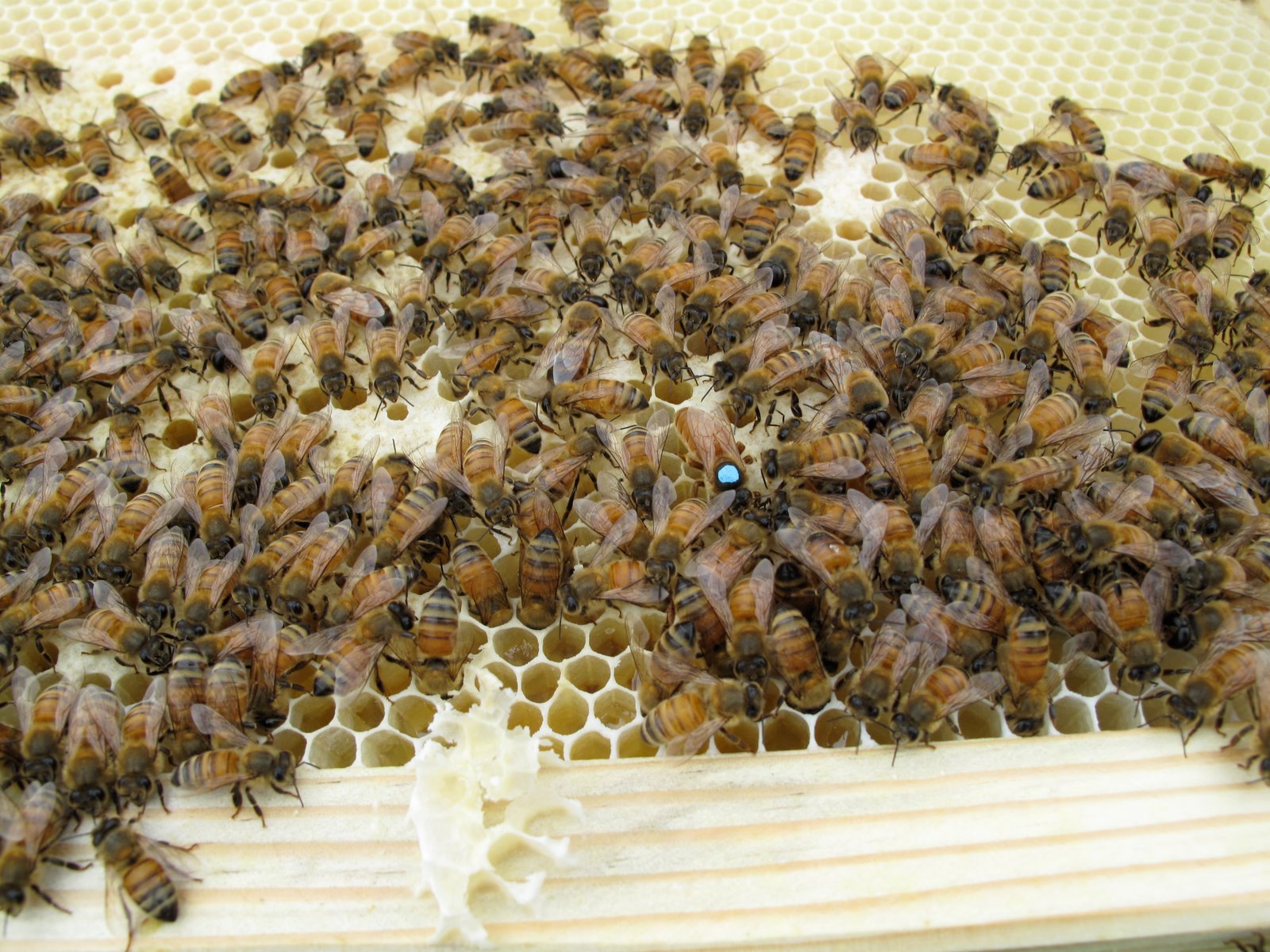
- A good view of my honey bees taken last spring, including the queen with the blue marking
-
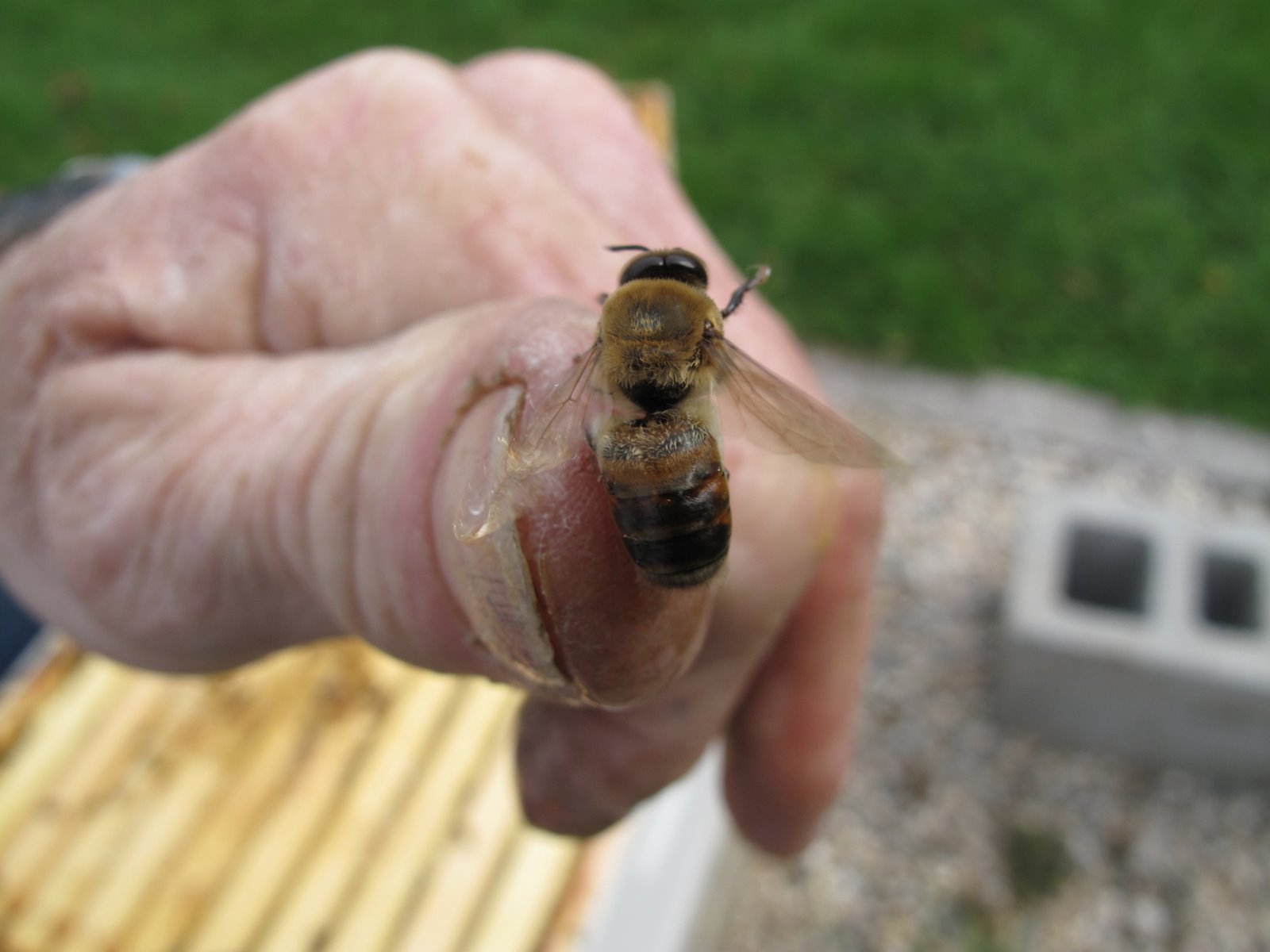
- This is one of several male drones, which exist for the sole purpose of reproduction. So many drones present at this time of year means there is plenty of food in the hive.
-
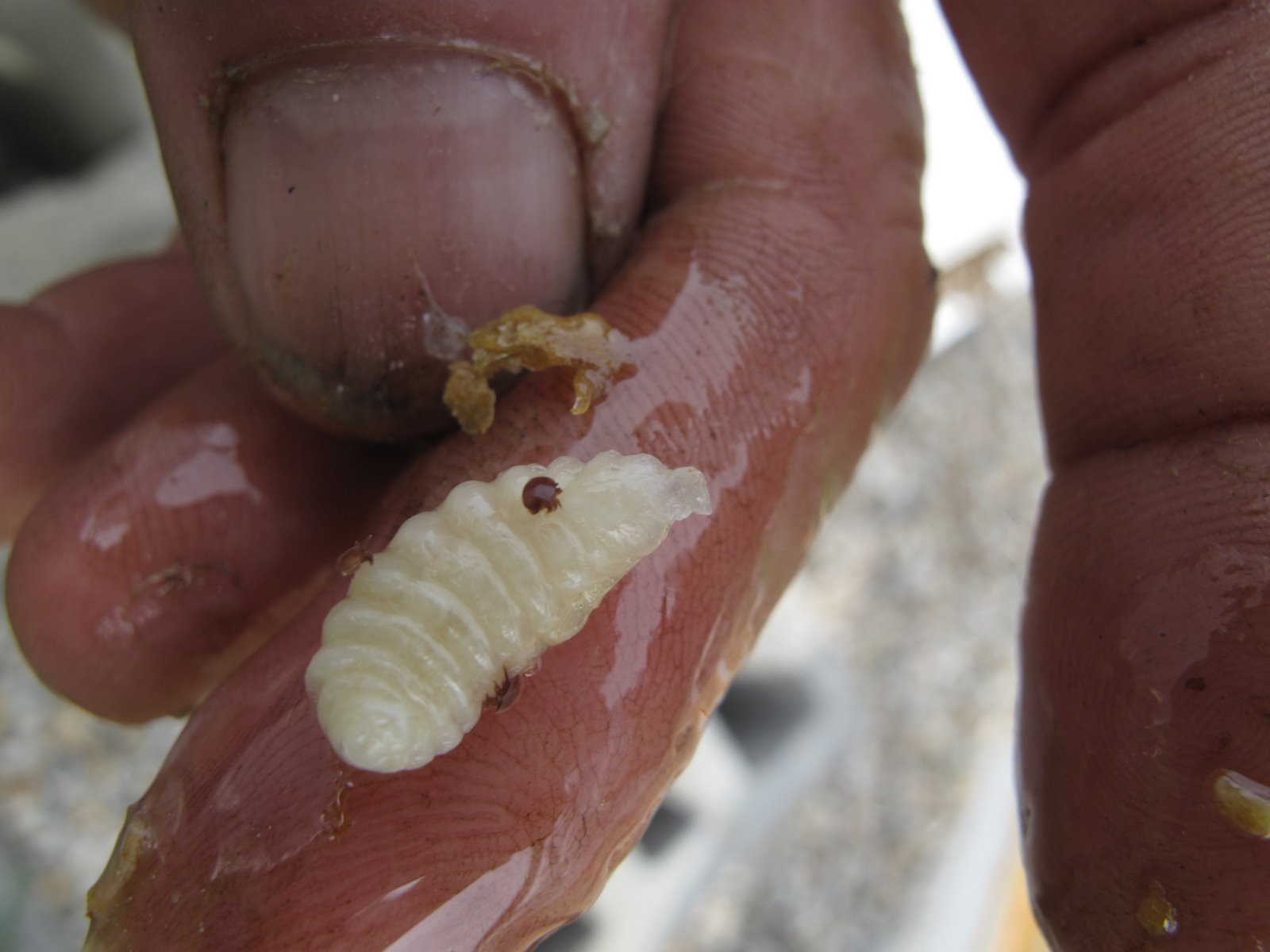
- Some of the burr comb removed from the hive contained drone larva. This larva has a detrimental Varroa mite feeding on it.

-
- This larva has 3 Varroa mites – Guy will deal with the mite problem in the spring.
-
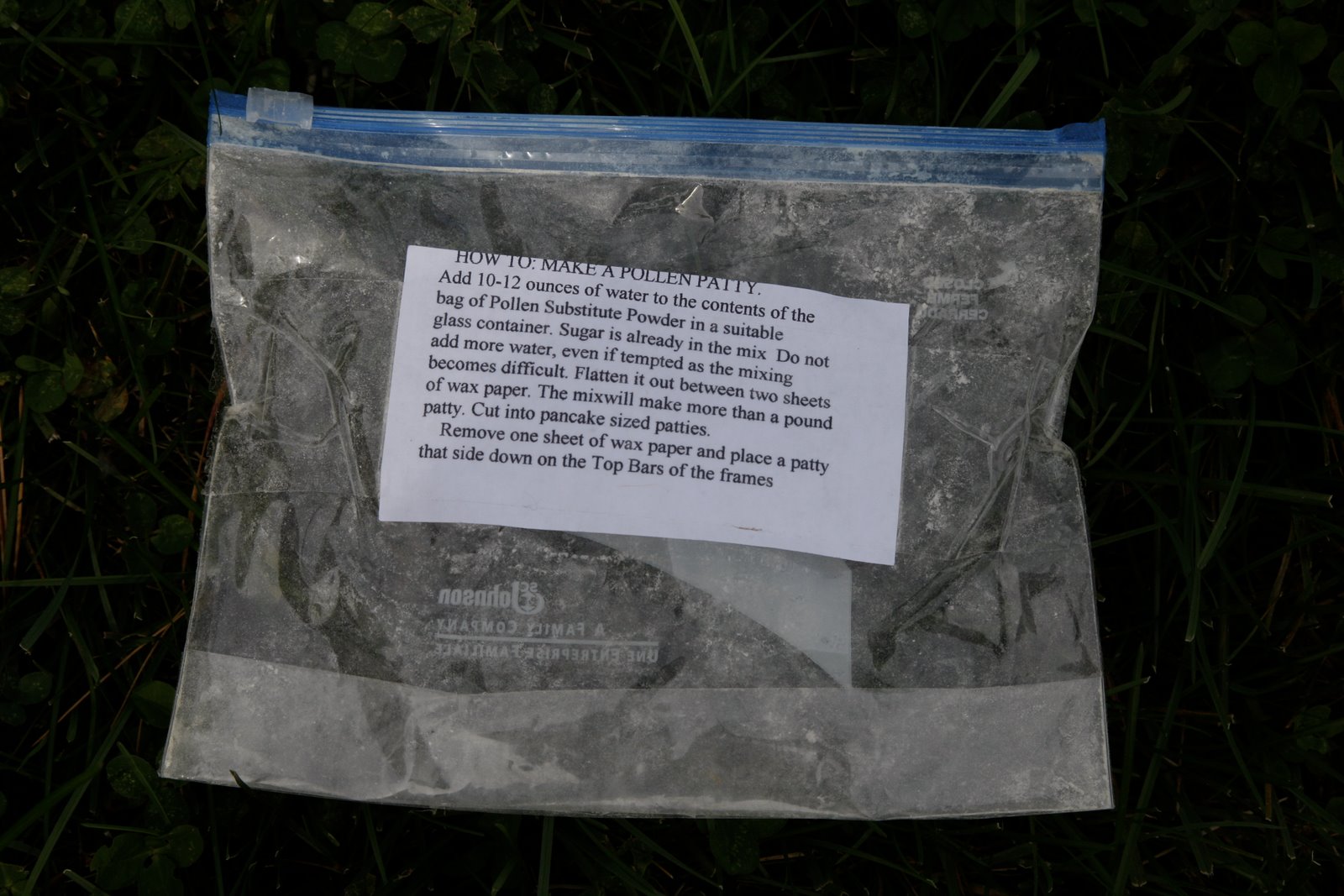
- Very detailed instructions for mixing the pollen patty
-
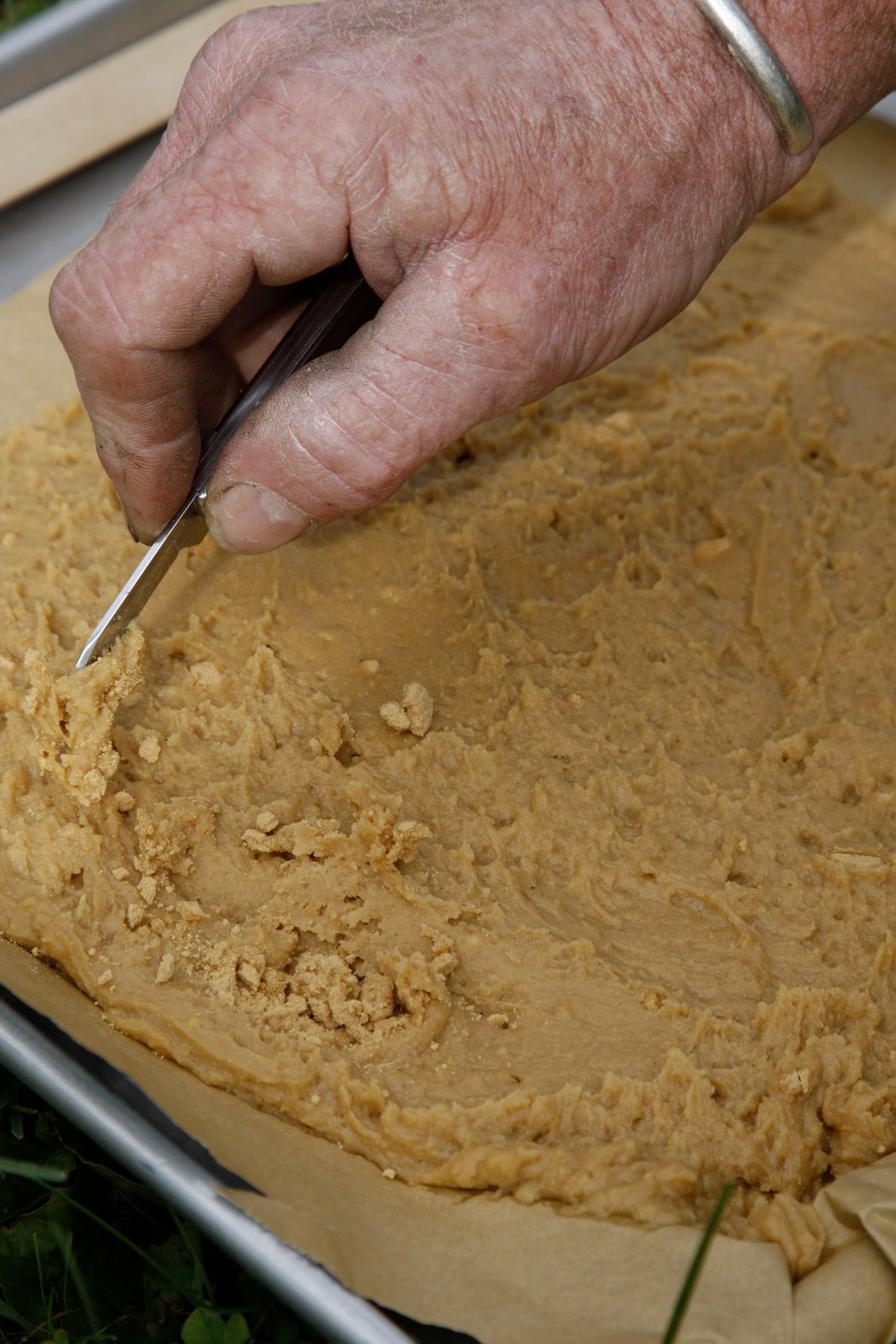
- Guy is mixing in any dried areas of the pollen patty that he sees.
-
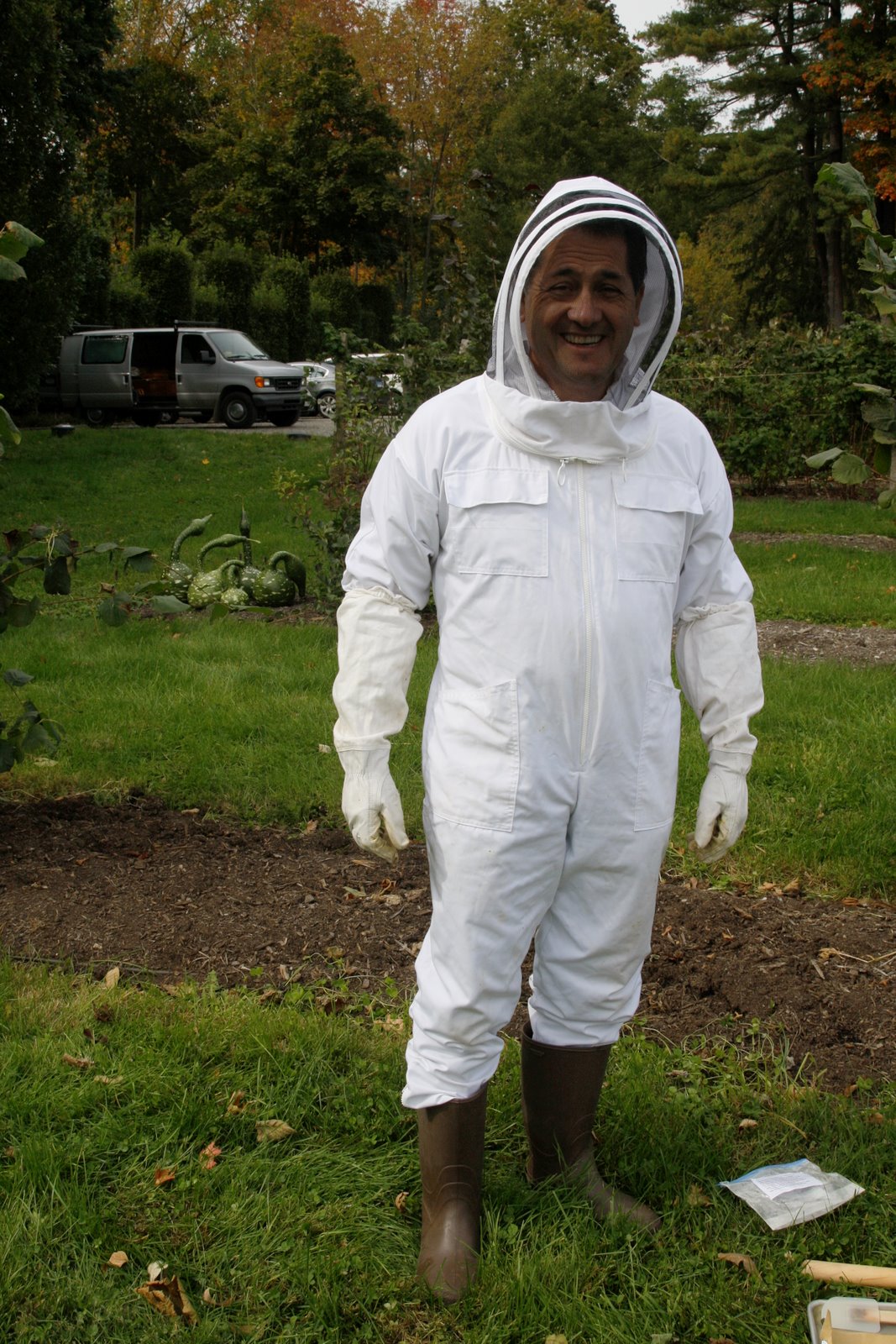
- Carlos in his bee garb – he finds learning about my colonies fascinating.
-
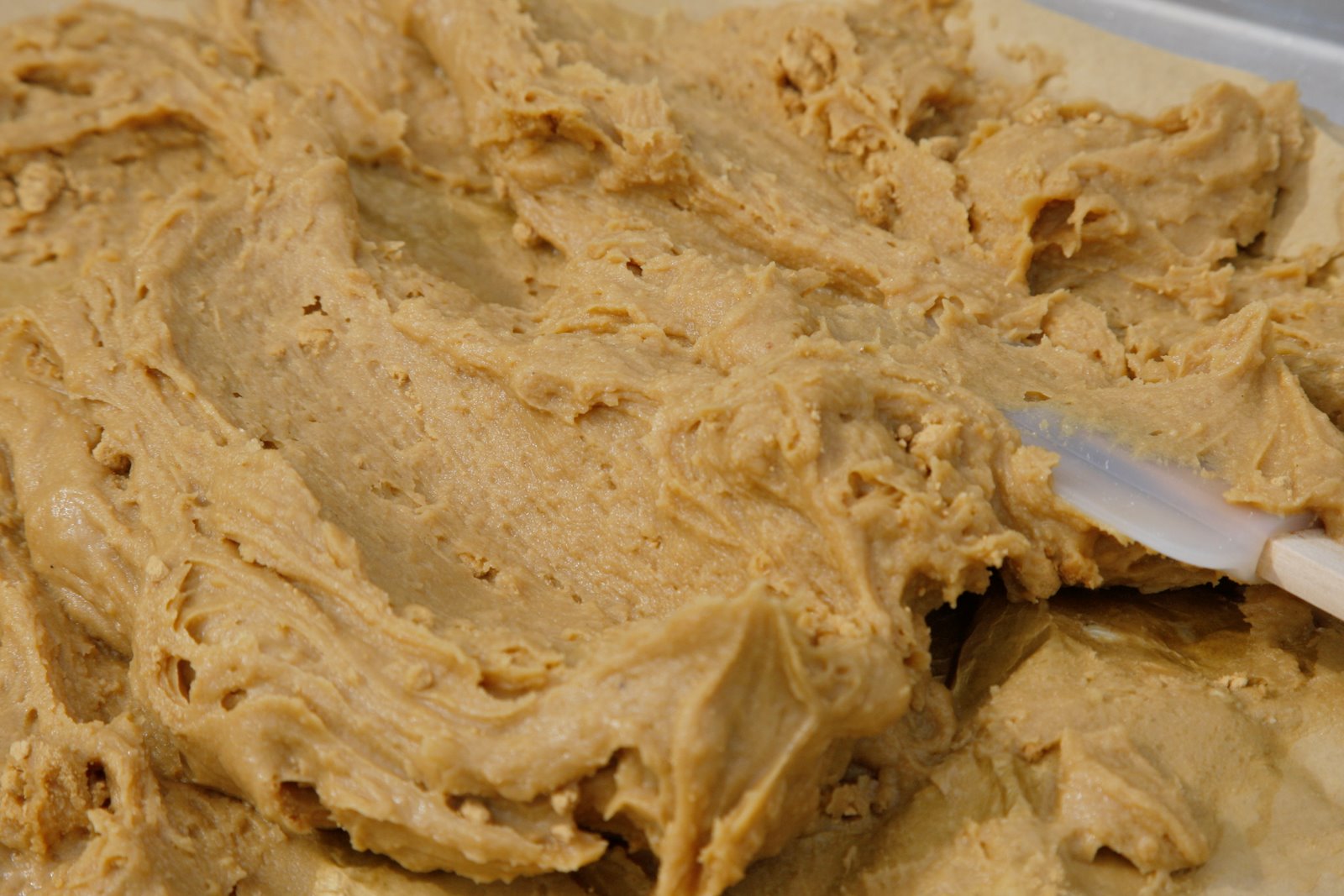
- Guy continues mixing the patty.
-
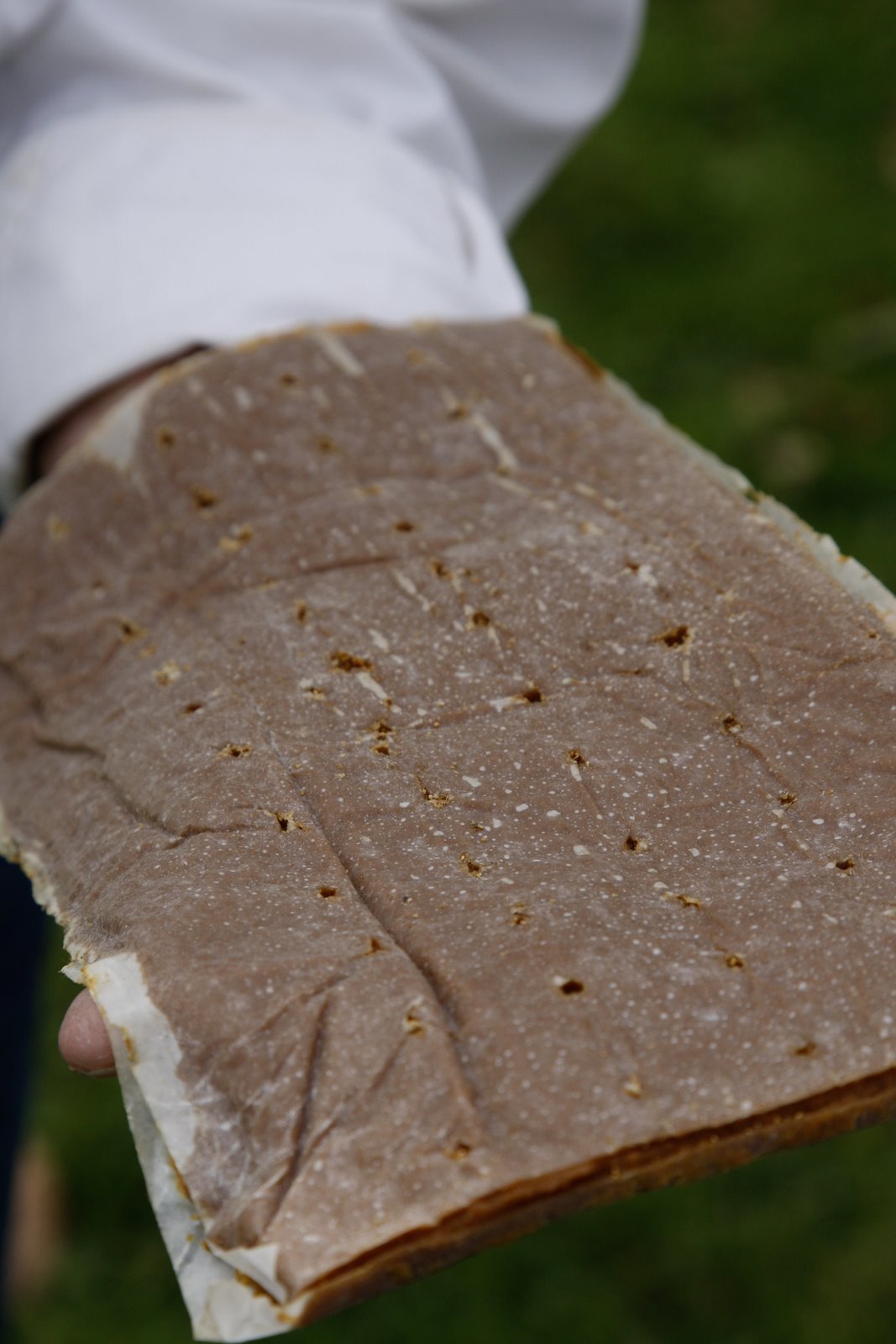
- This is a commercial pollen patty which Guy uses on other hives.
-
- Covering it over with another sheet of wax paper
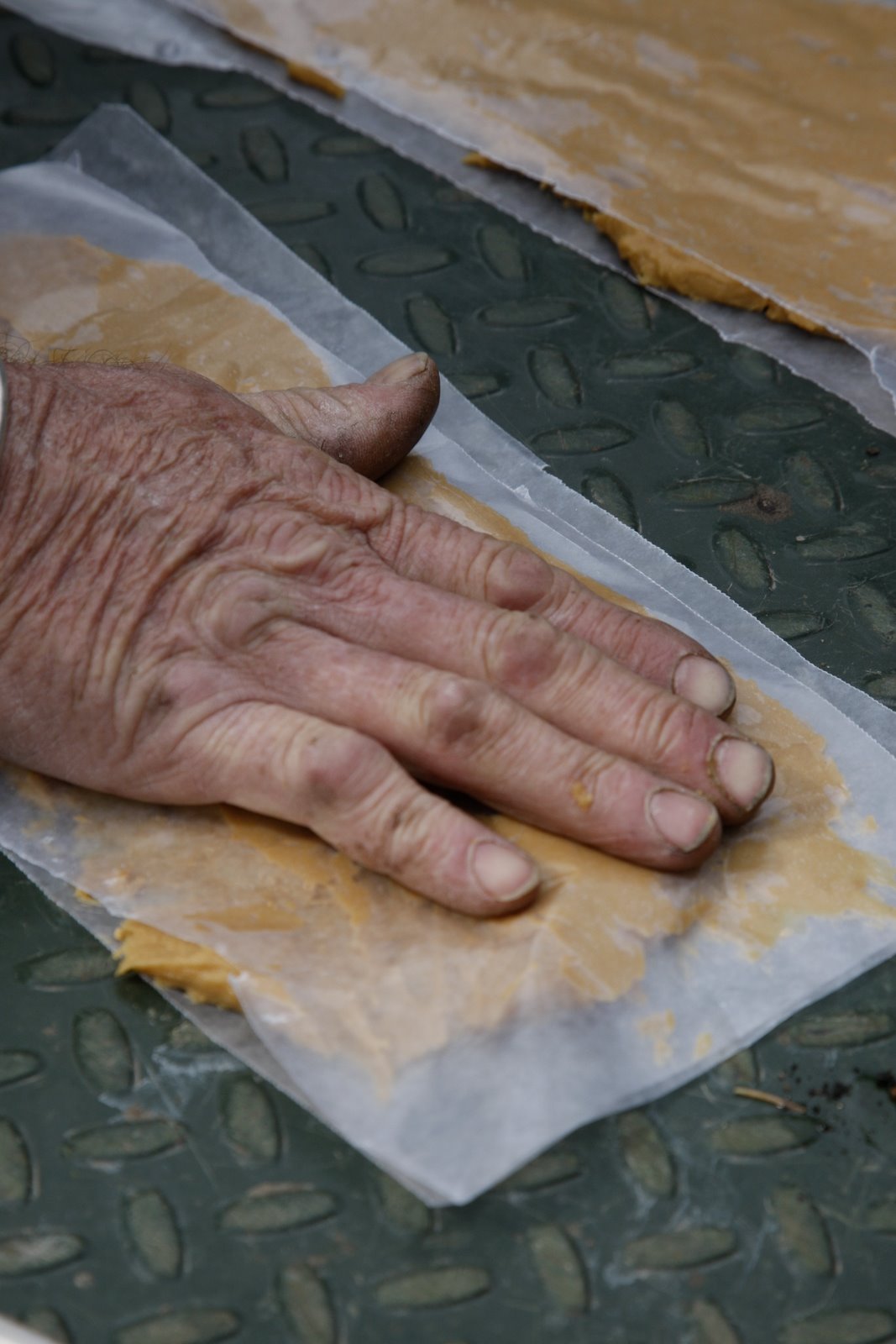
-
- Spreading the patty mix onto wax paper
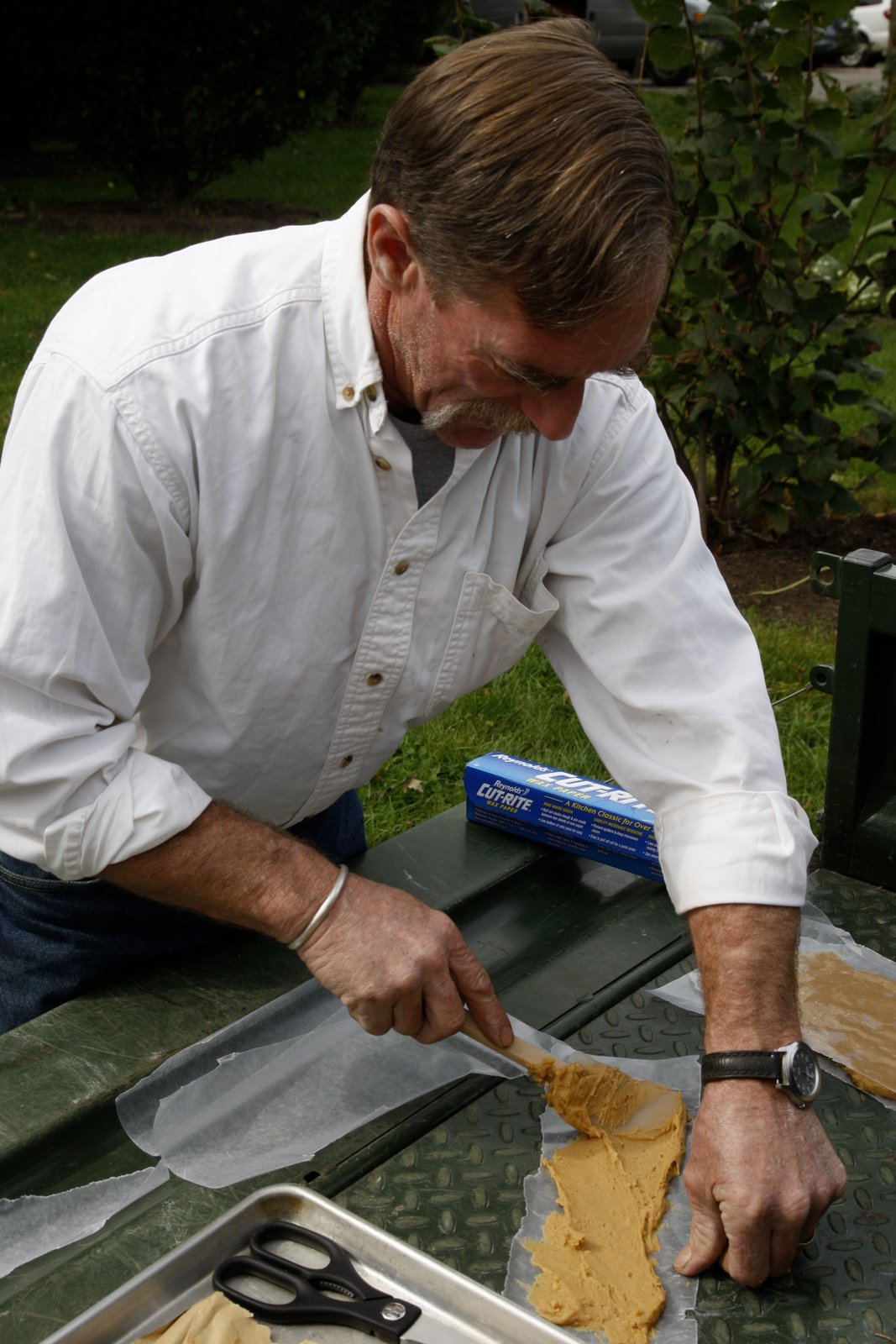
-
- The bees will chew through the wax paper to get to the pollen patty, but Guy cuts slits to make it easier for them.
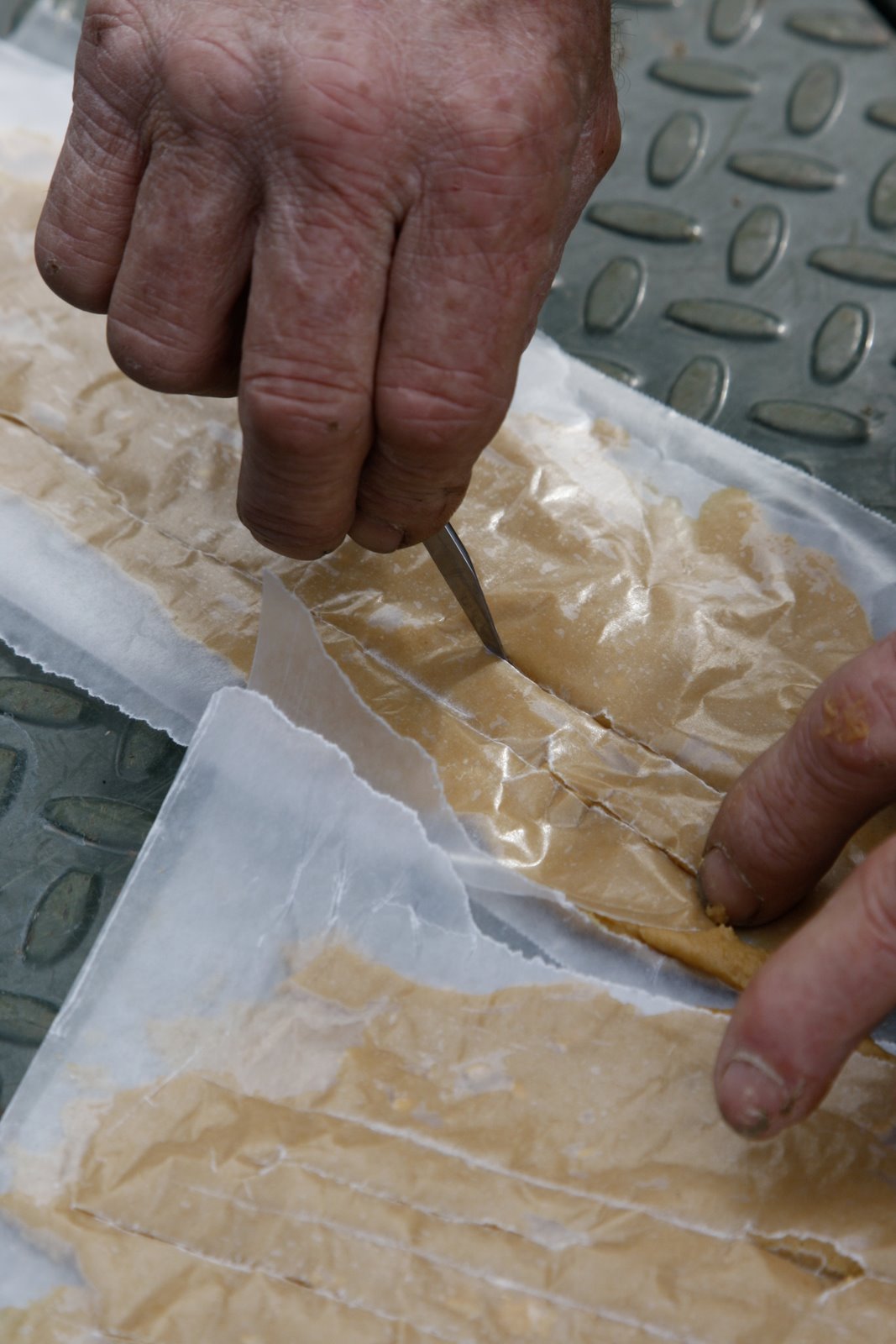
-
- The bee smoker, loaded with pine needles, ready for use
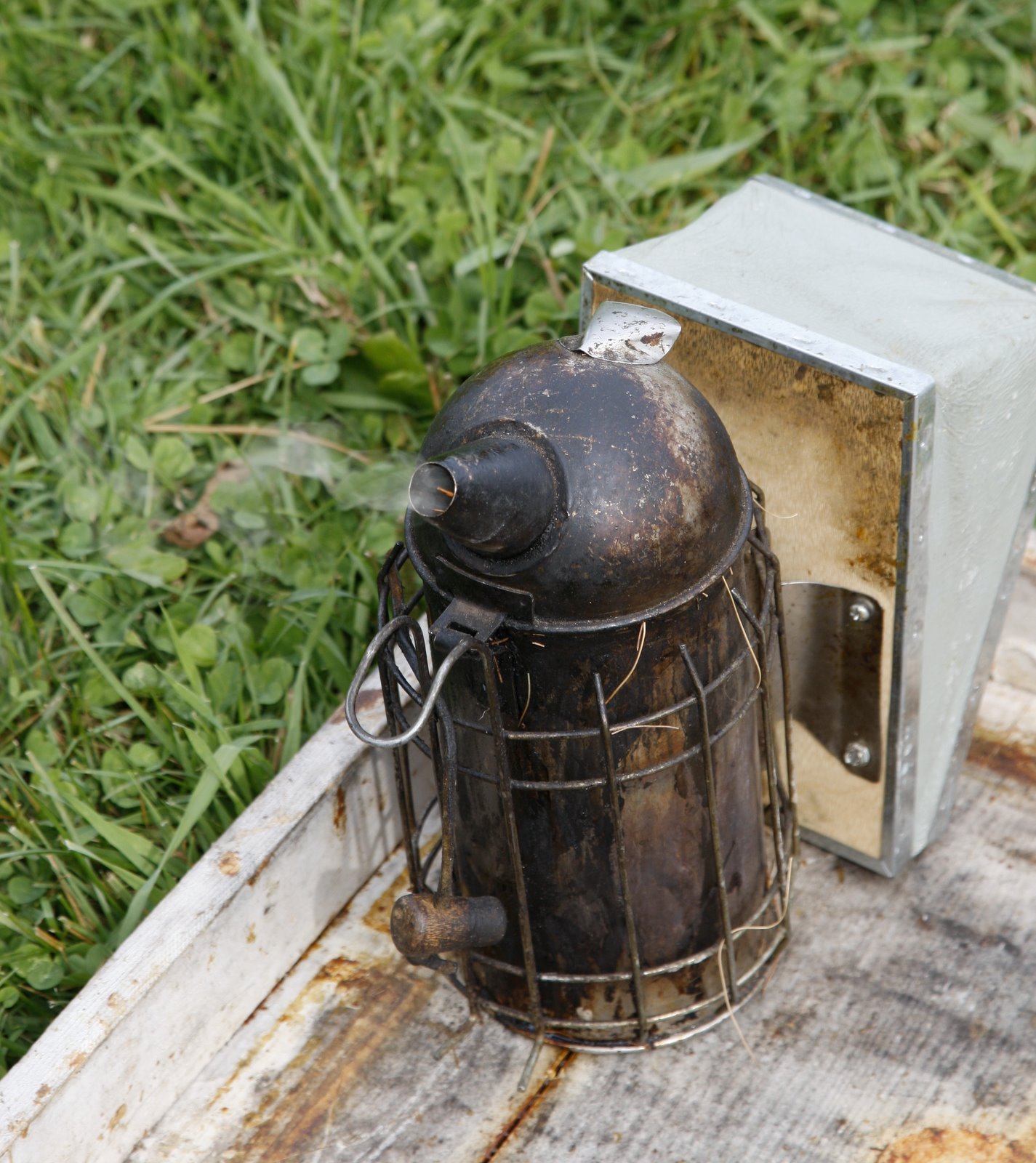
-
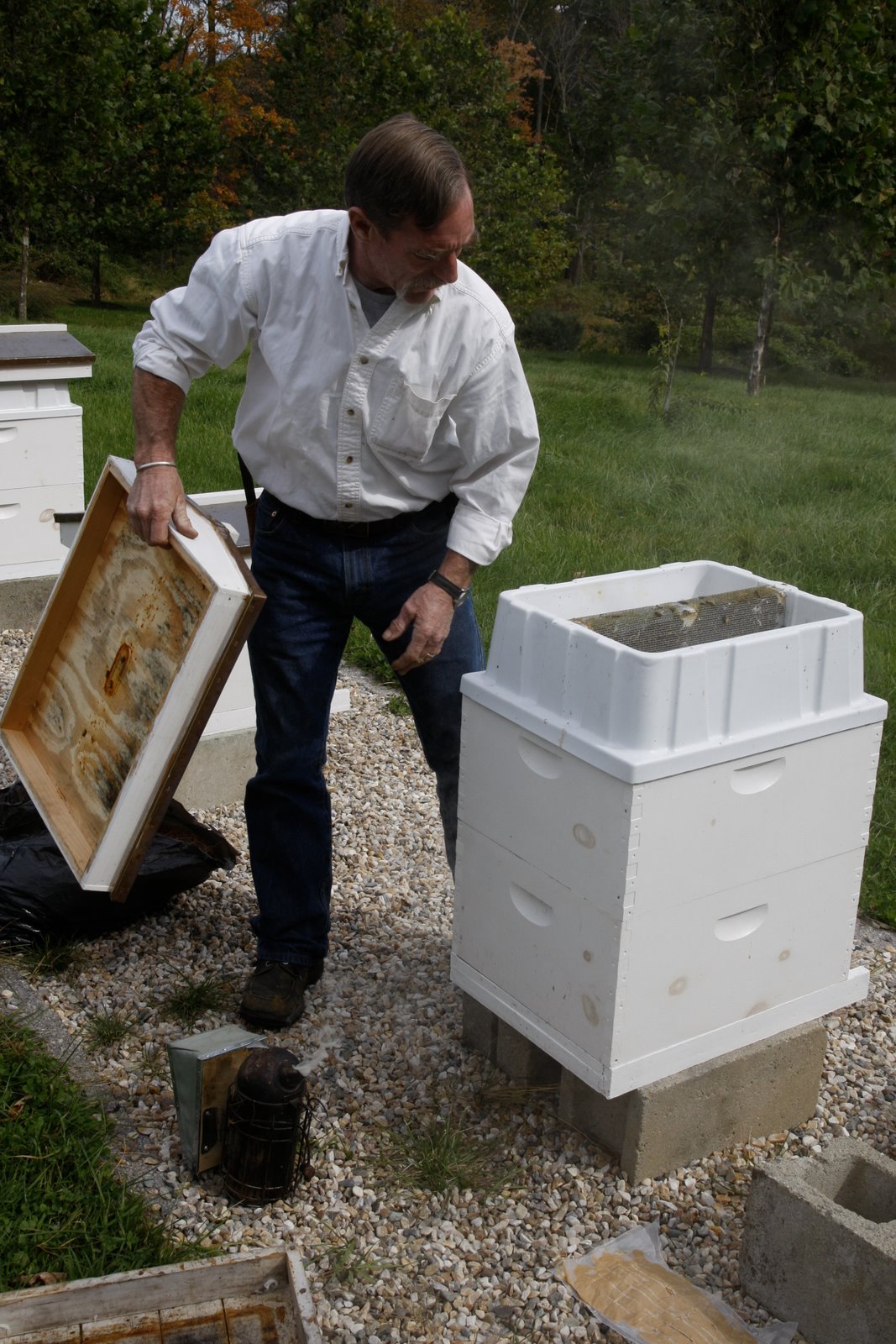
- Guy removes the lid from the first hive revealing the sugar-syrup feeding tray.
-
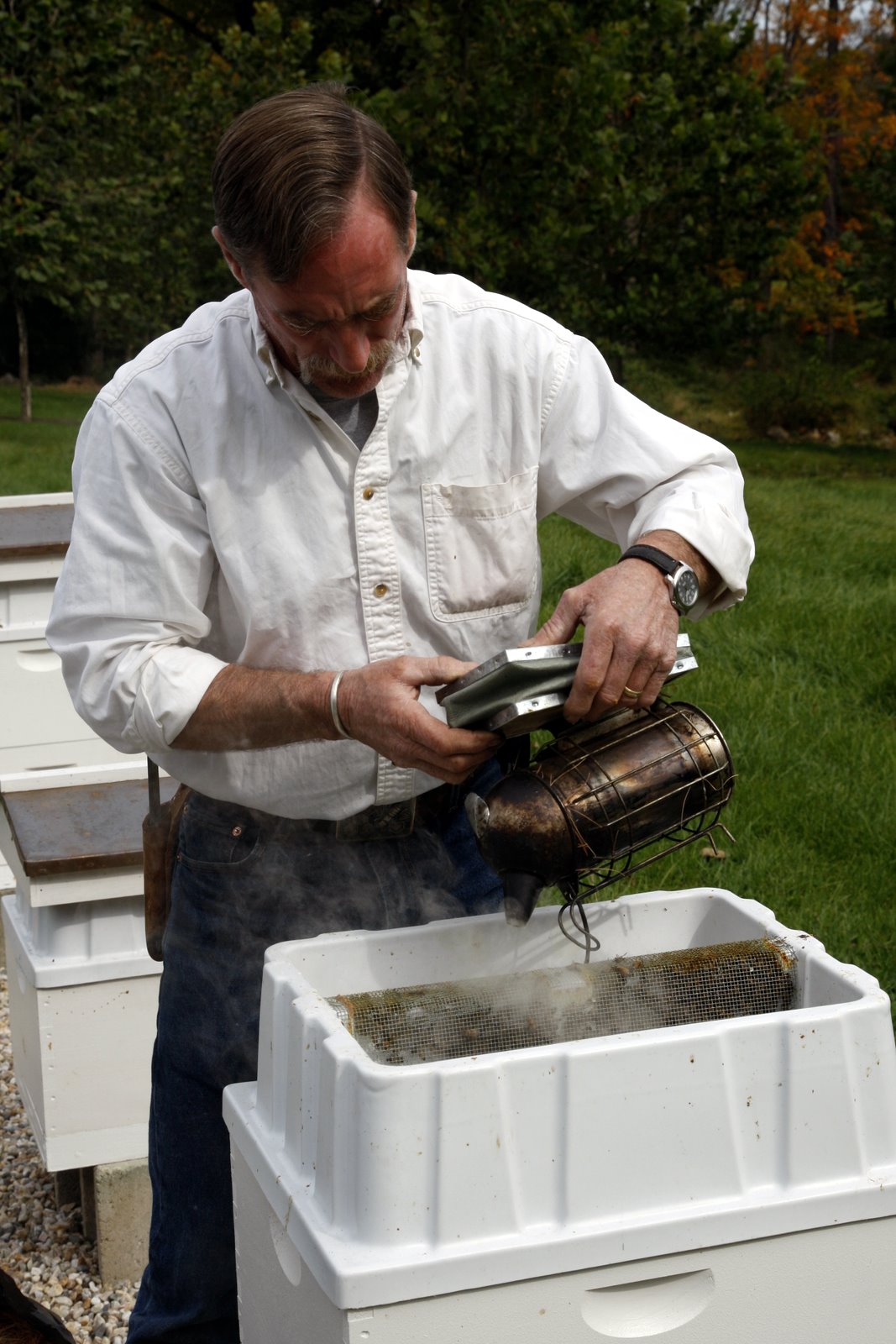
- Smoking the bees helps to keep them docile.
-
- Guy is loosening the feeder tray for removal, being as quiet as possible. Any loud noises make the bees angry!

-
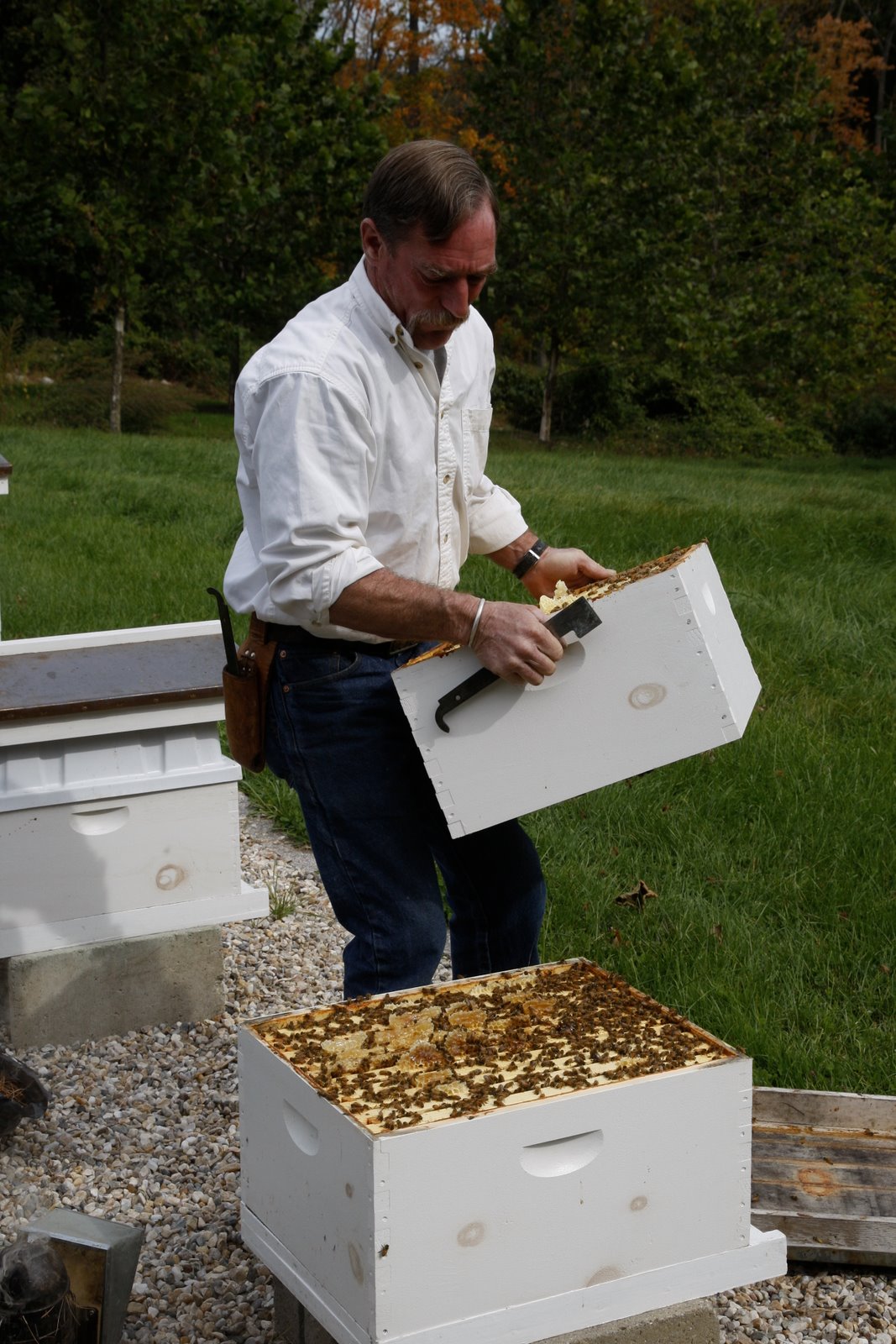
- Guy lifts off the heavy brood chamber, which contains about 70 pounds of honey!
-
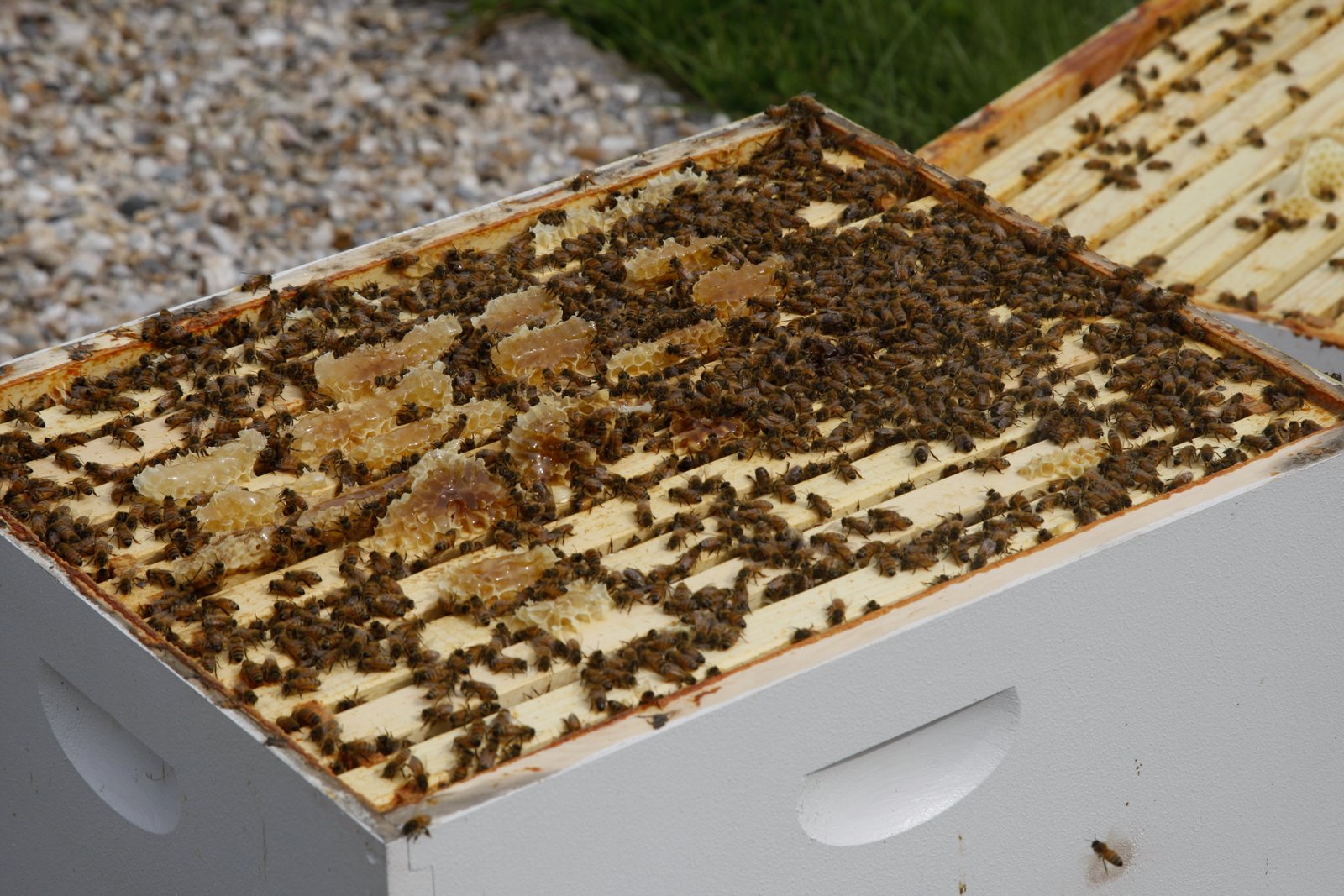
- Indeed, this is a very healthy hive with many, many female worker bees. This hive no longer needs to be fed sugar syrup.
-
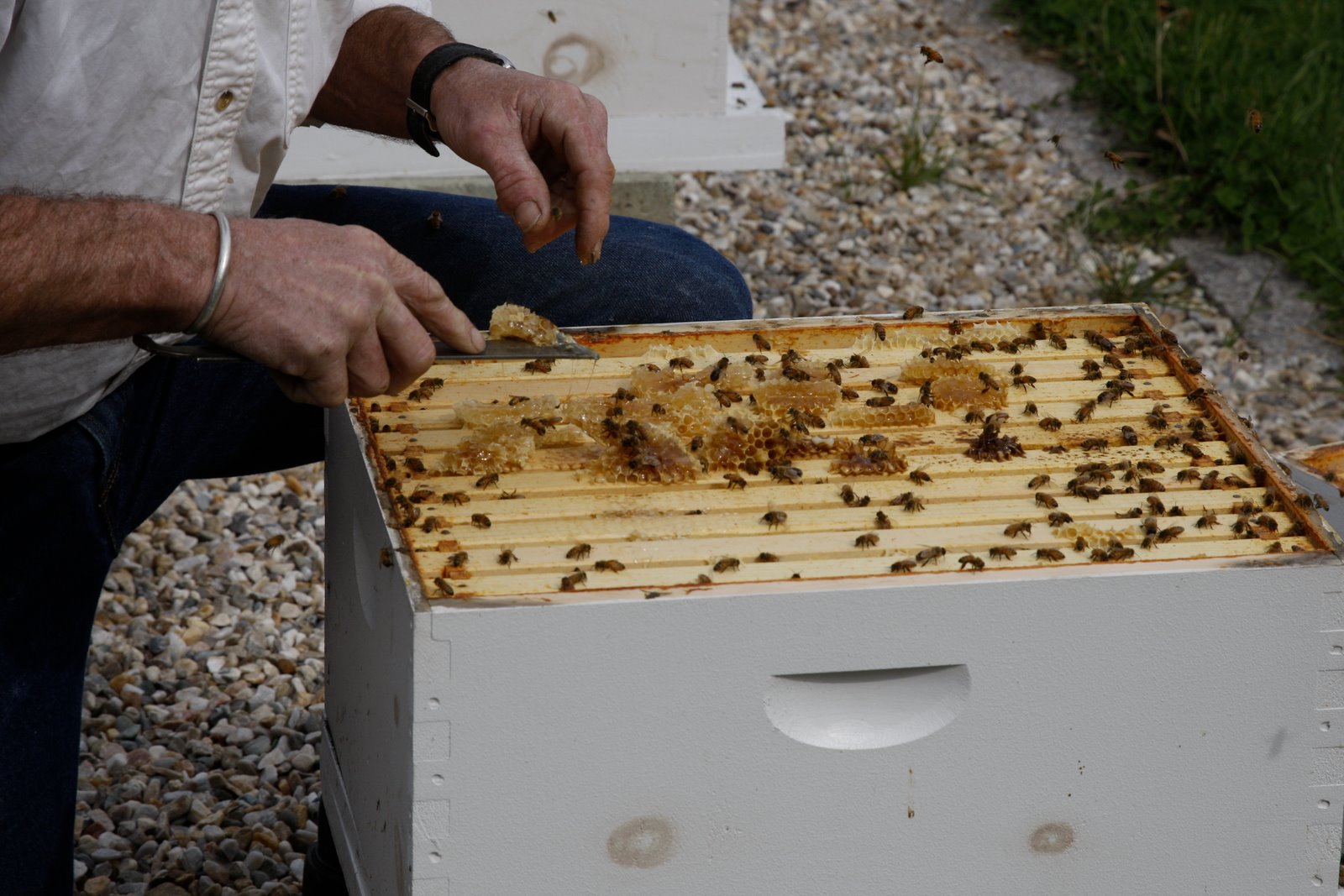
- Guy neatens up the hive by removing the extraneous burr comb.
-
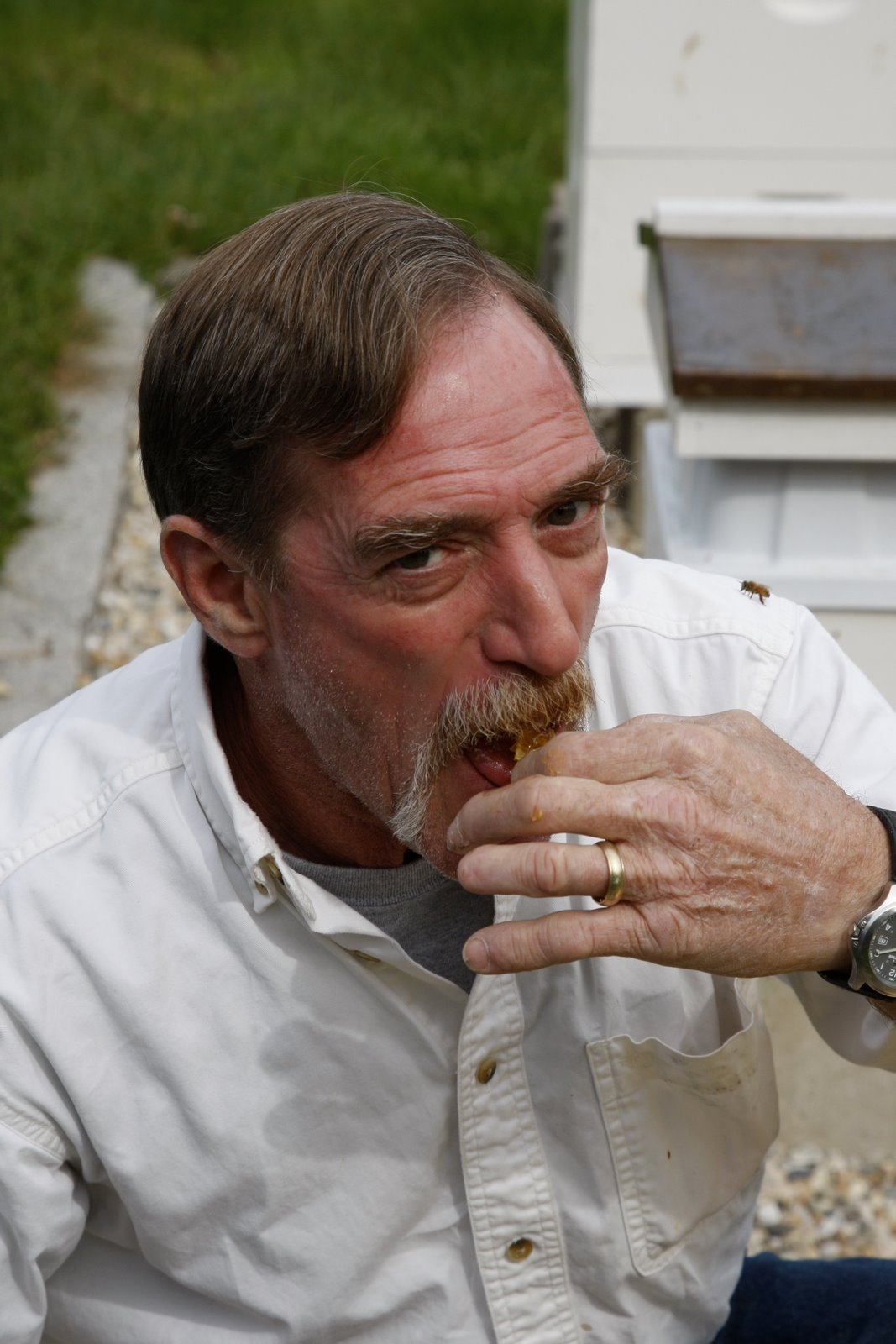
- Guy pauses to enjoy a sampling of the honey.
-
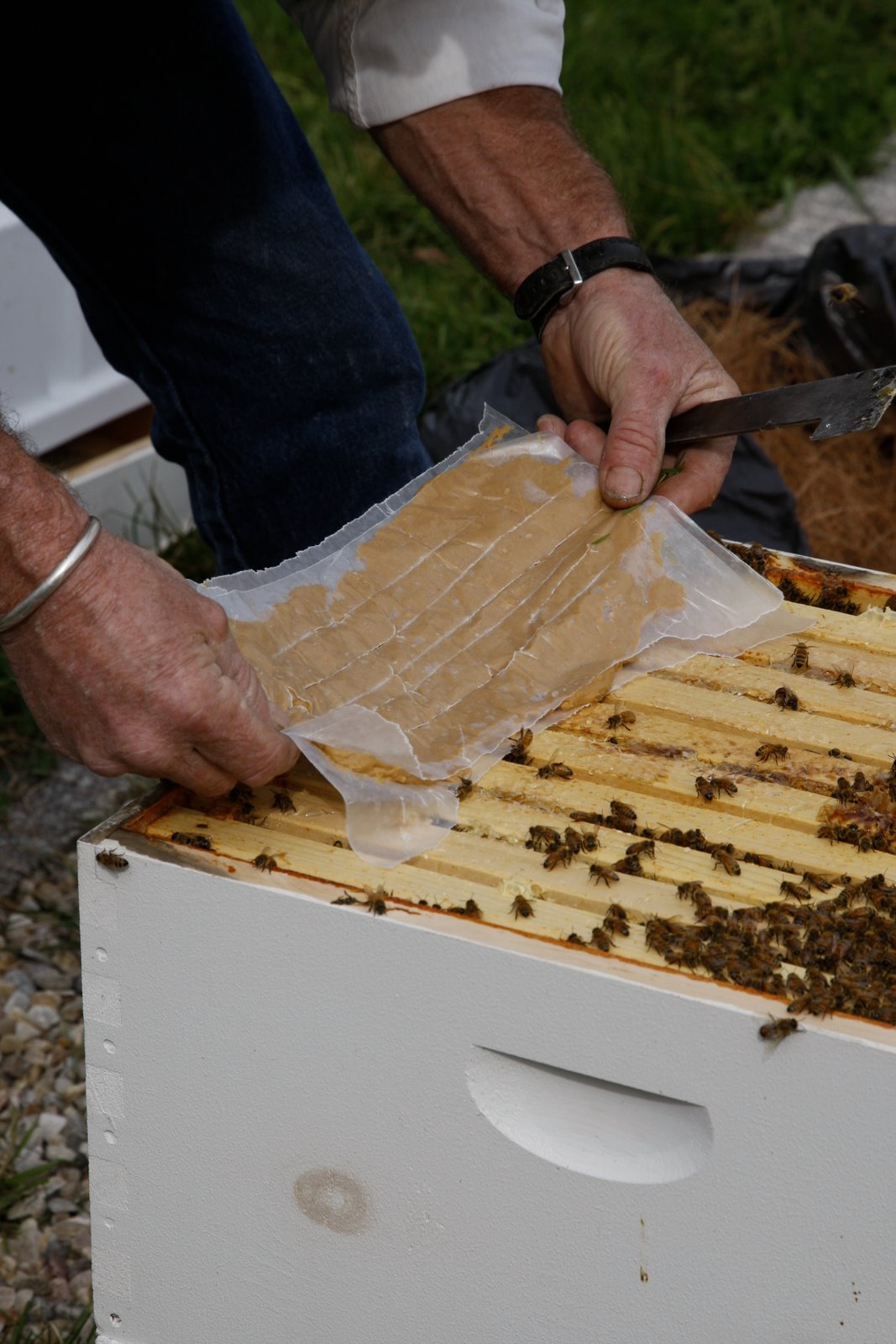
- Guy places the bee pollen patty on top of the lower chamber.
-
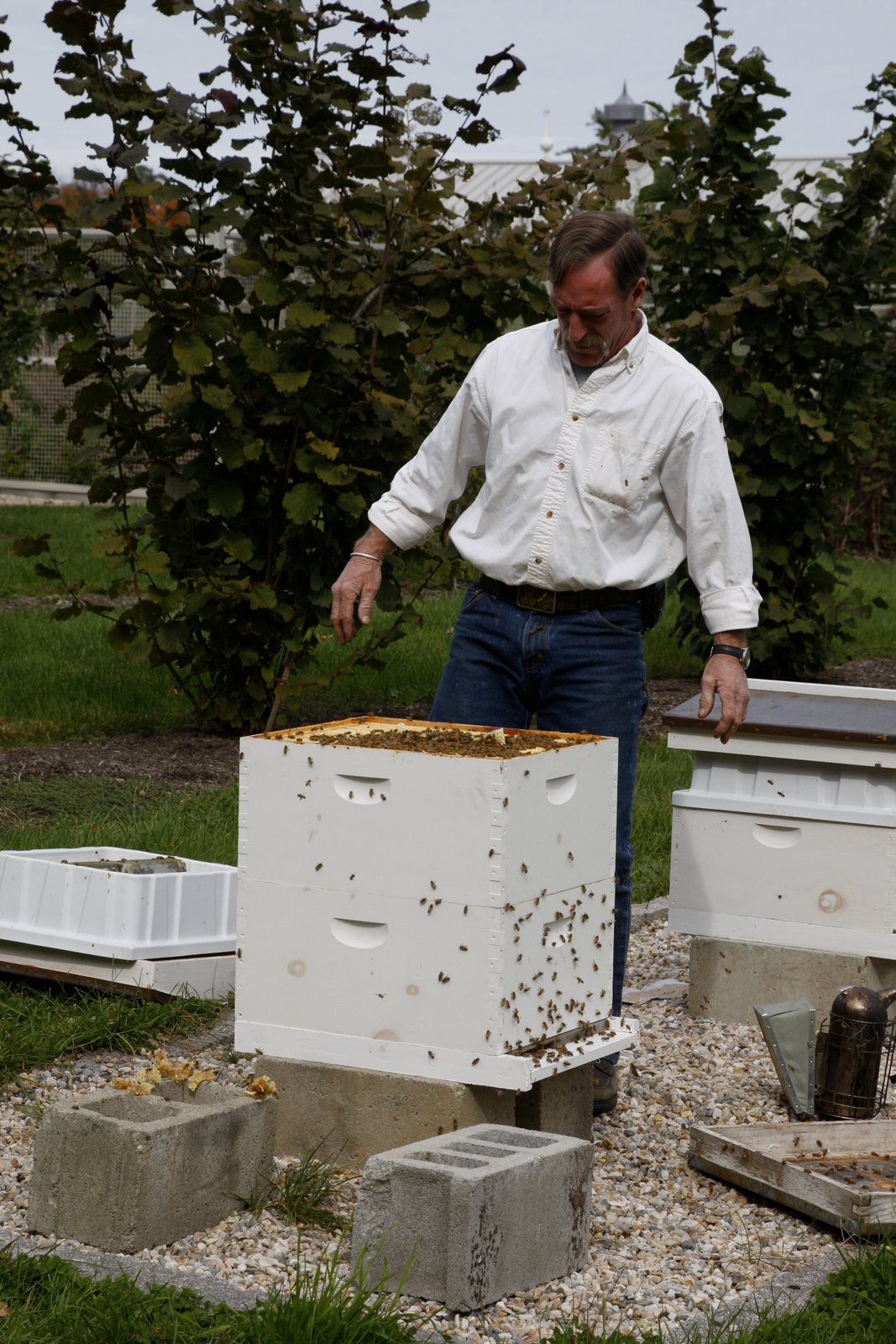
- The upper brood chamber is set back in place.
-
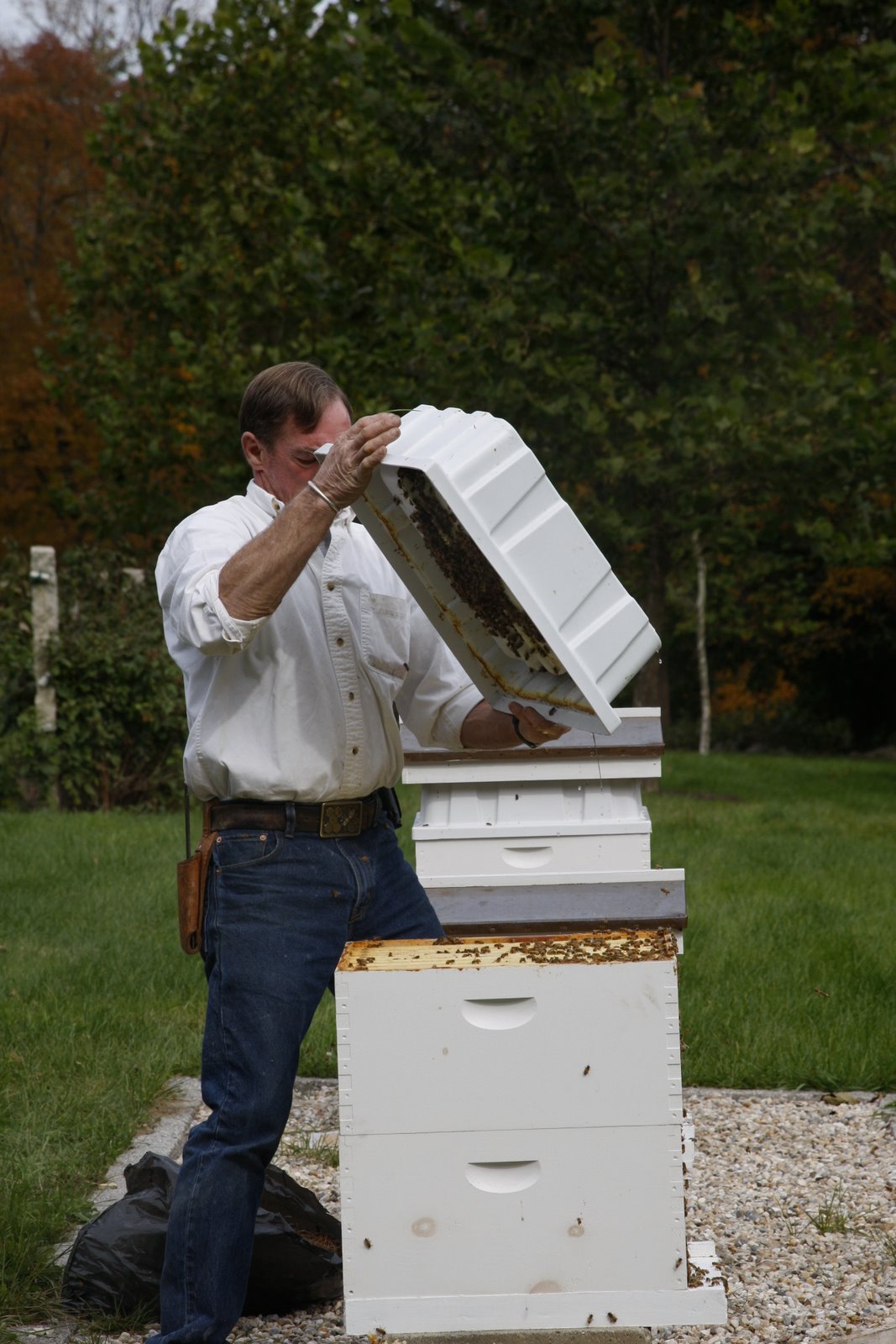
- Guy gives the feeding tray a good shake to extricate the the bees clinging to it.
-
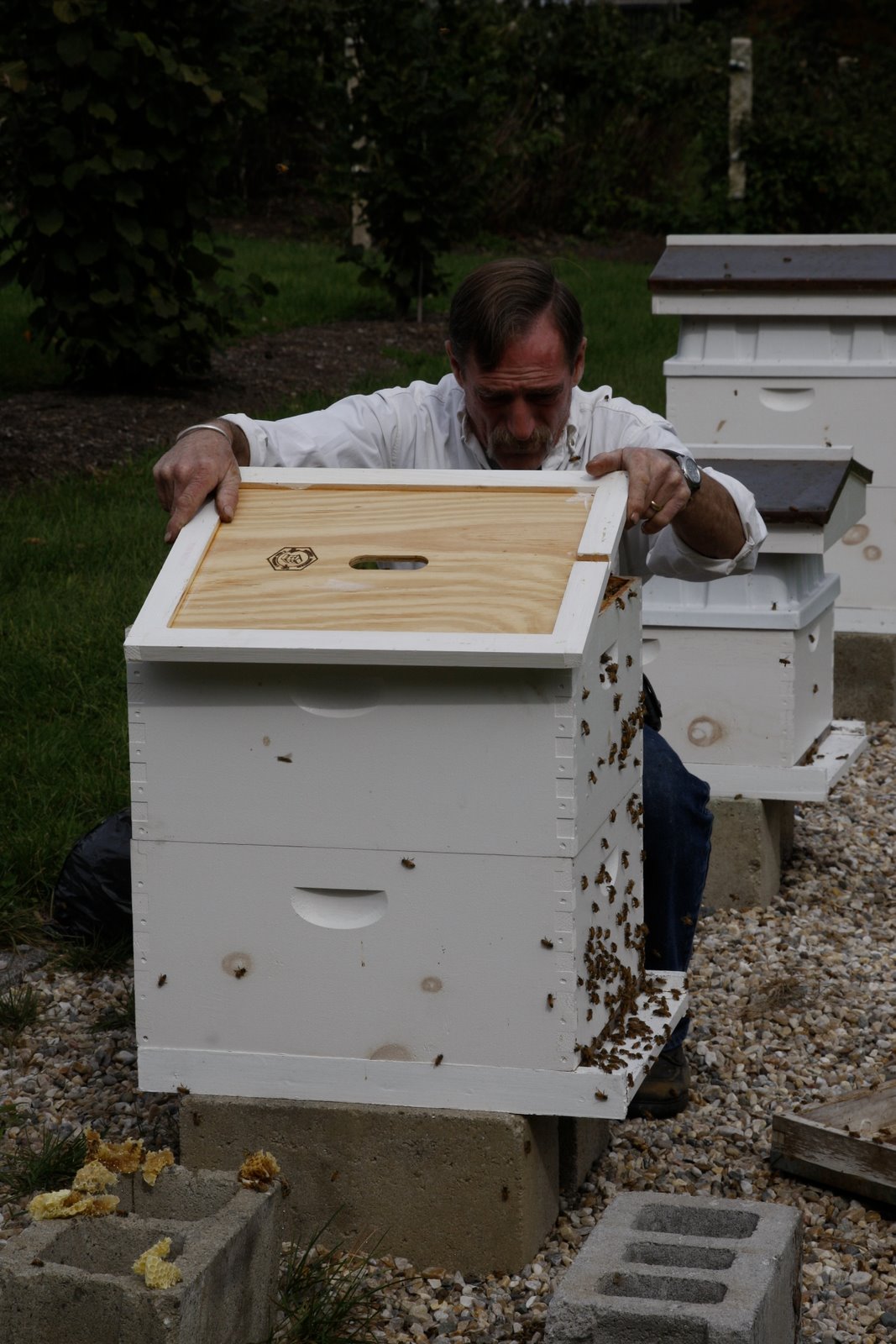
- Instead of replacing the feeding tray, Guy sets an inner cover on top of the chamber.
-
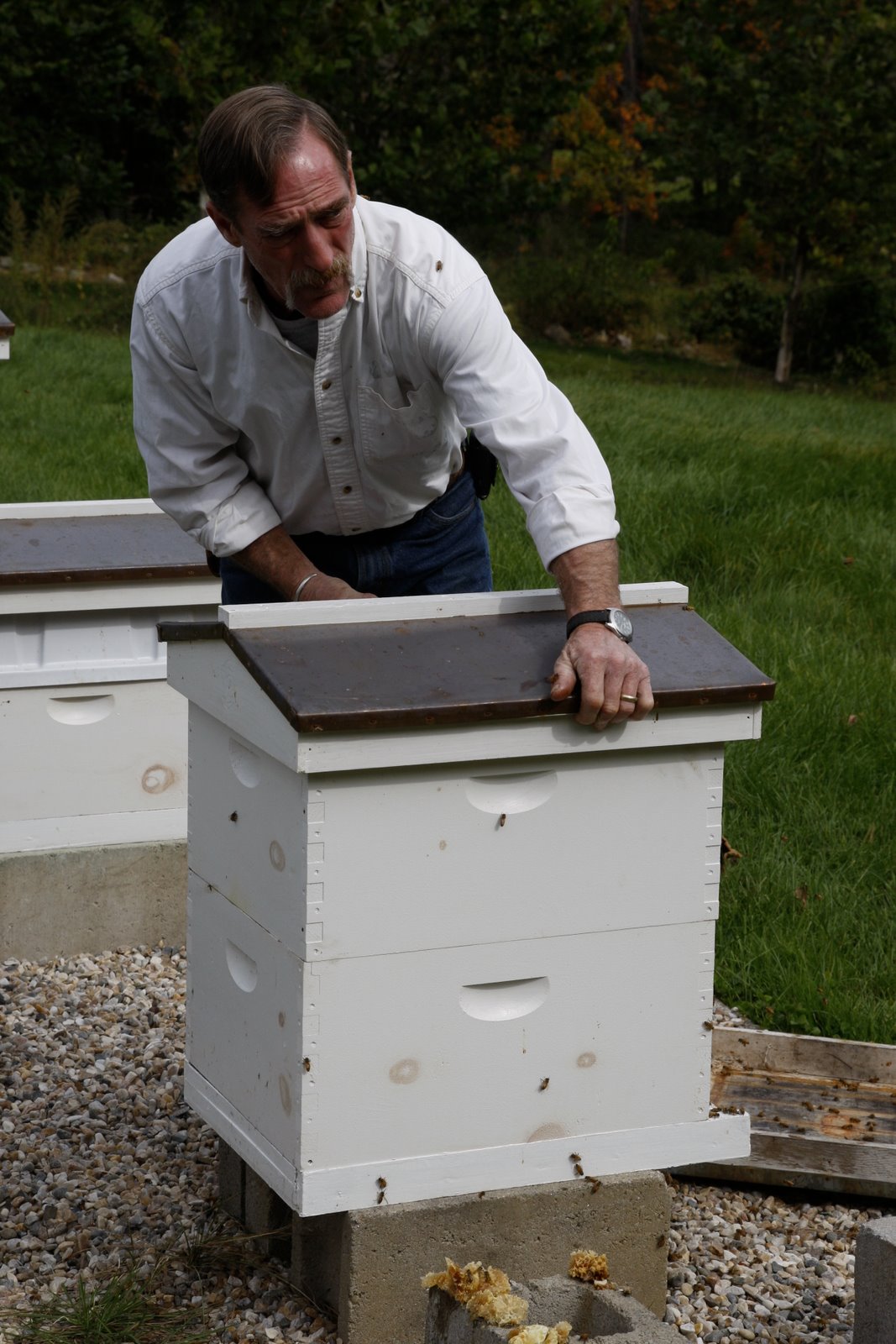
- And lastly, the hive lid is set in place.
-
- From the looks of things, Guy feels this hive is quite healthy. Again, using smoke to calm tempers.

-
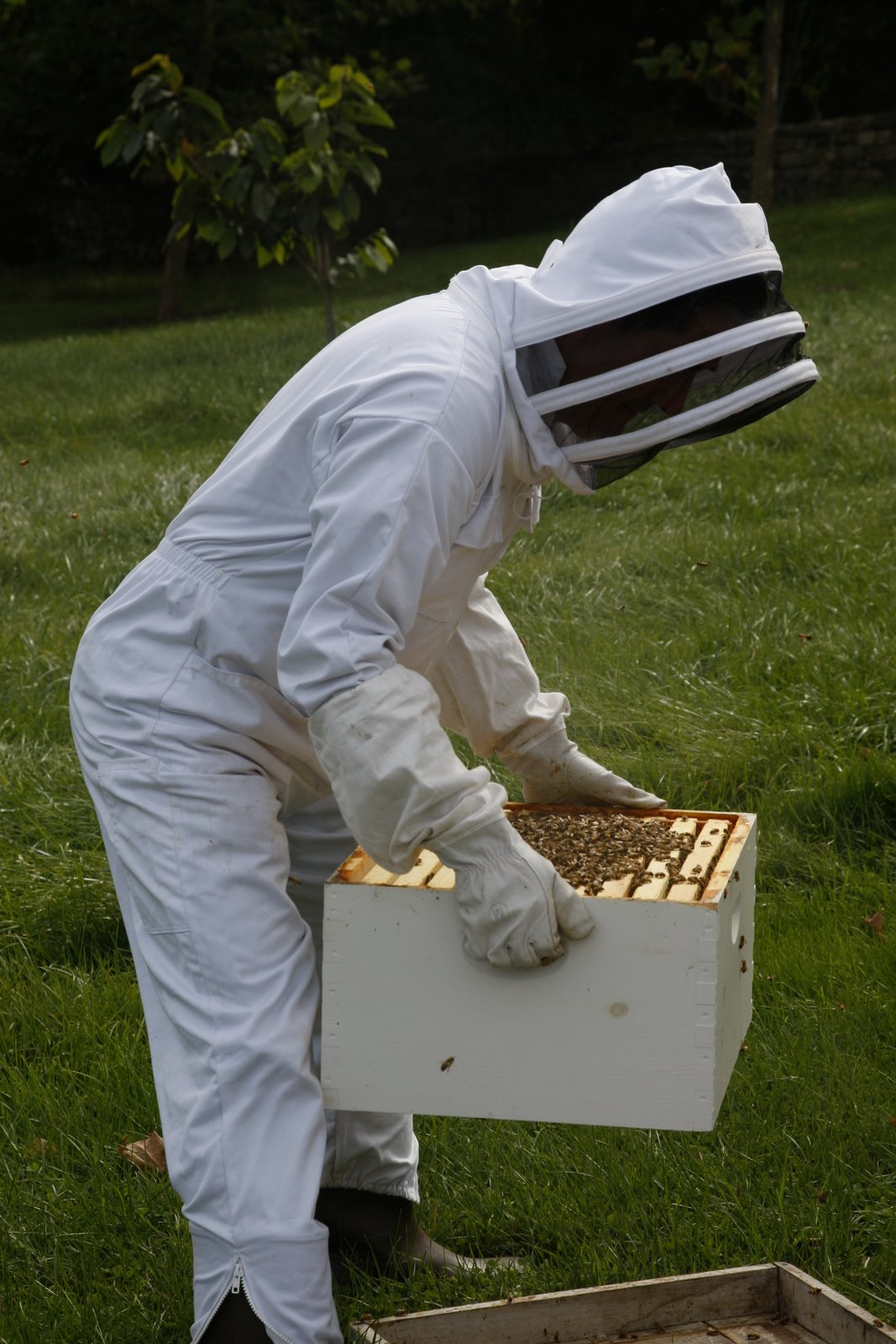
- Carlos can hardly believe how much it weighs.
-
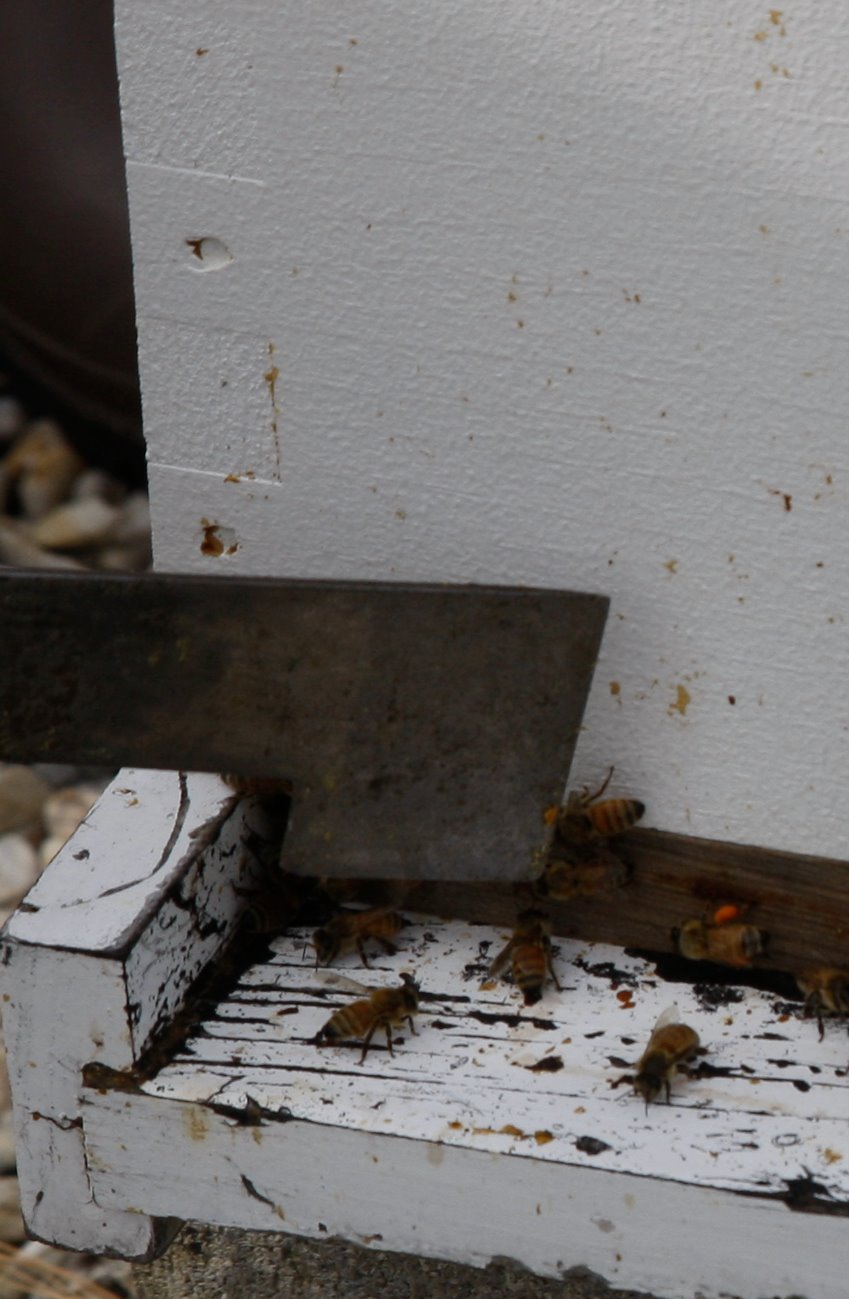
- The orange on this bee is pollen. If you stay to observe, you will see bees arrive with different colors of pollen obtained from different blossoms.
-
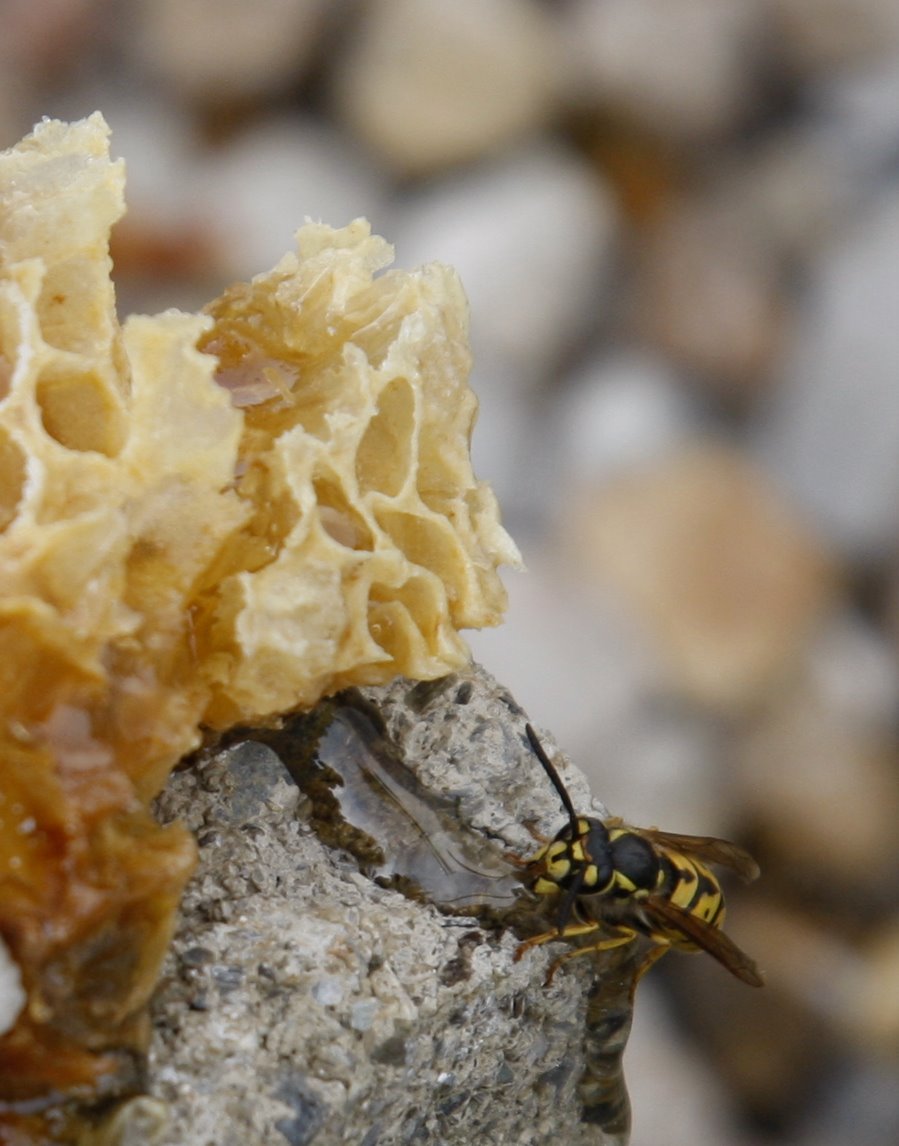
- This unwelcome yellow jacket is seizing the opportunity for a quick and easy snack.
 Martha Pins


 Martha Tweets

