
Join Me and See Where and How All-Clad Cookware is Made
After the book signing at Giant Eagle Market District, we drove to Canonsburg, Pennsylvania to tour the All-Clad Metalcrafters plant. I’ve been cooking with All-Clad cookware products for many, many years and I was quite curious to see how these wonderful pots and pans are made. John Ulam, an accomplished metallurgist, discovered that by bonding various metals in just the right ways, he could create a new product with amazing qualities. He realized that these new ‘clad’ metals would be ideal for cookware and established All-Clad Metalcrafters in 1971. Professional chefs and gourmet home cooks loved the performance of these pots and pans and they grew in popularity. It always fascinates me to see how things are made and this field trip was no exception. Enjoy!
-

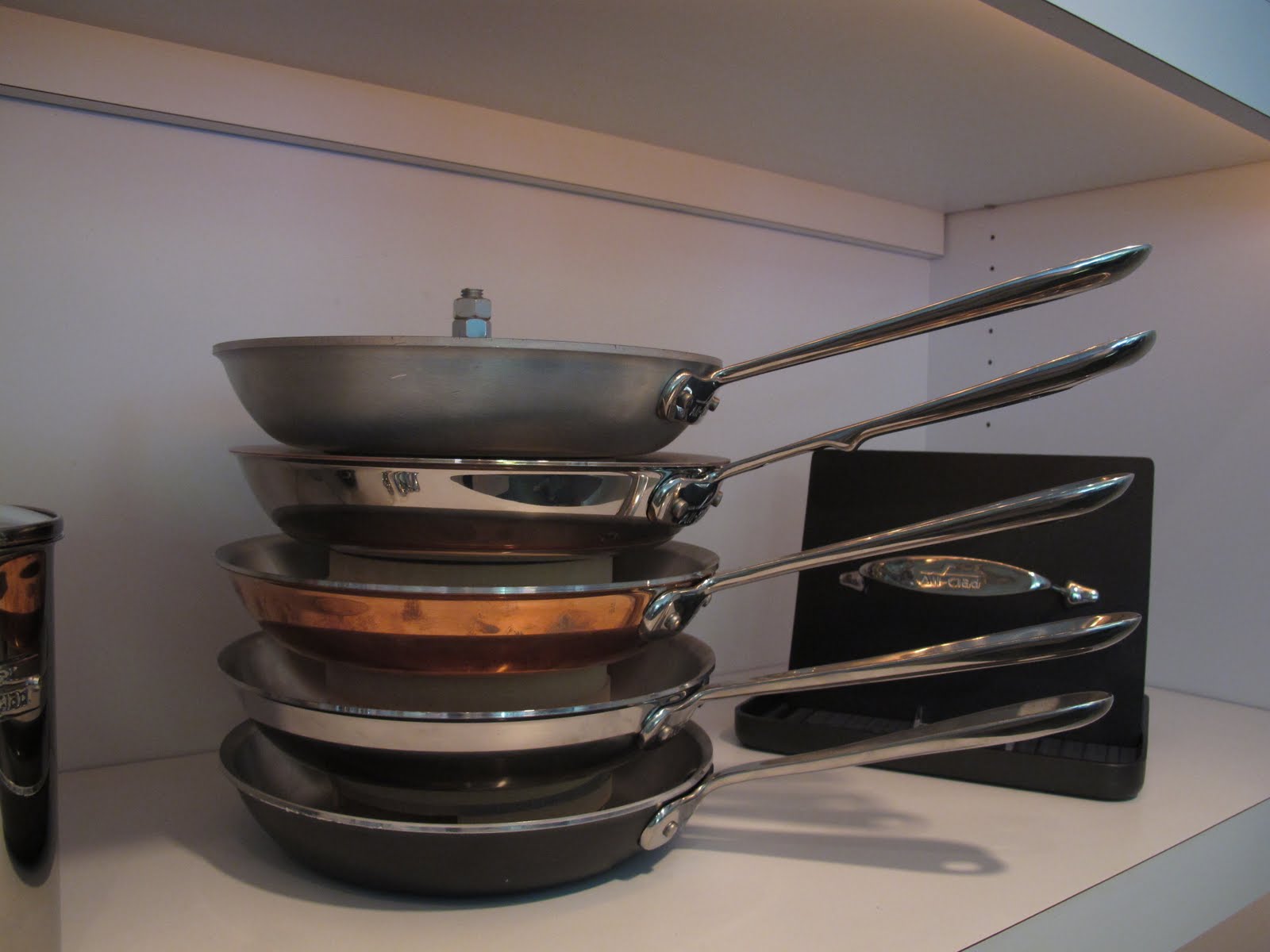
- In the All-Clad boardroom there is a sampling of items from their five lines.
-
- A good example of the five lines
-
- Unfinished, formed fry pans

-
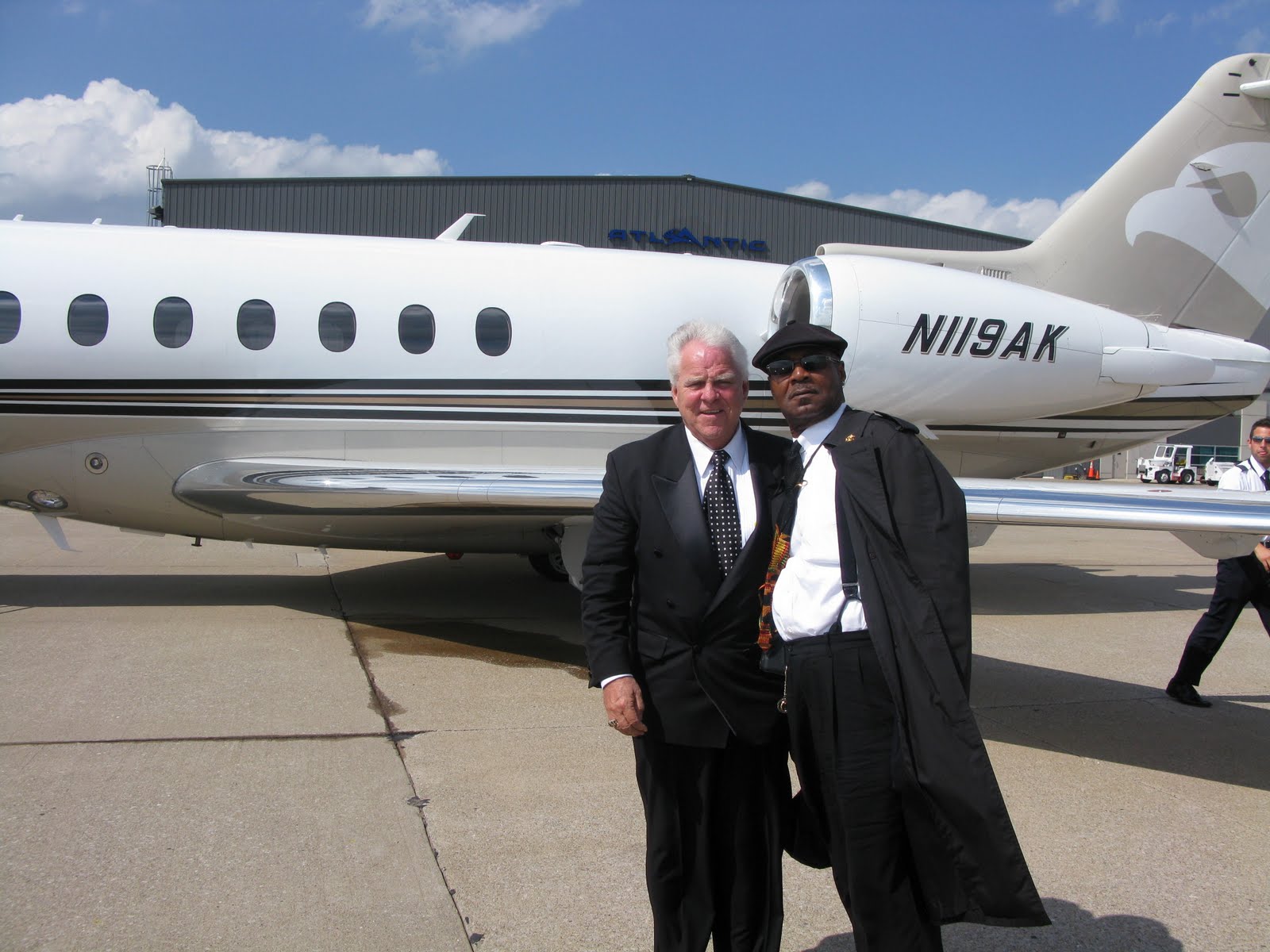
- Saying goodbye to our drivers – Chuck and Oscar
-
- It has just formed a pot.
-
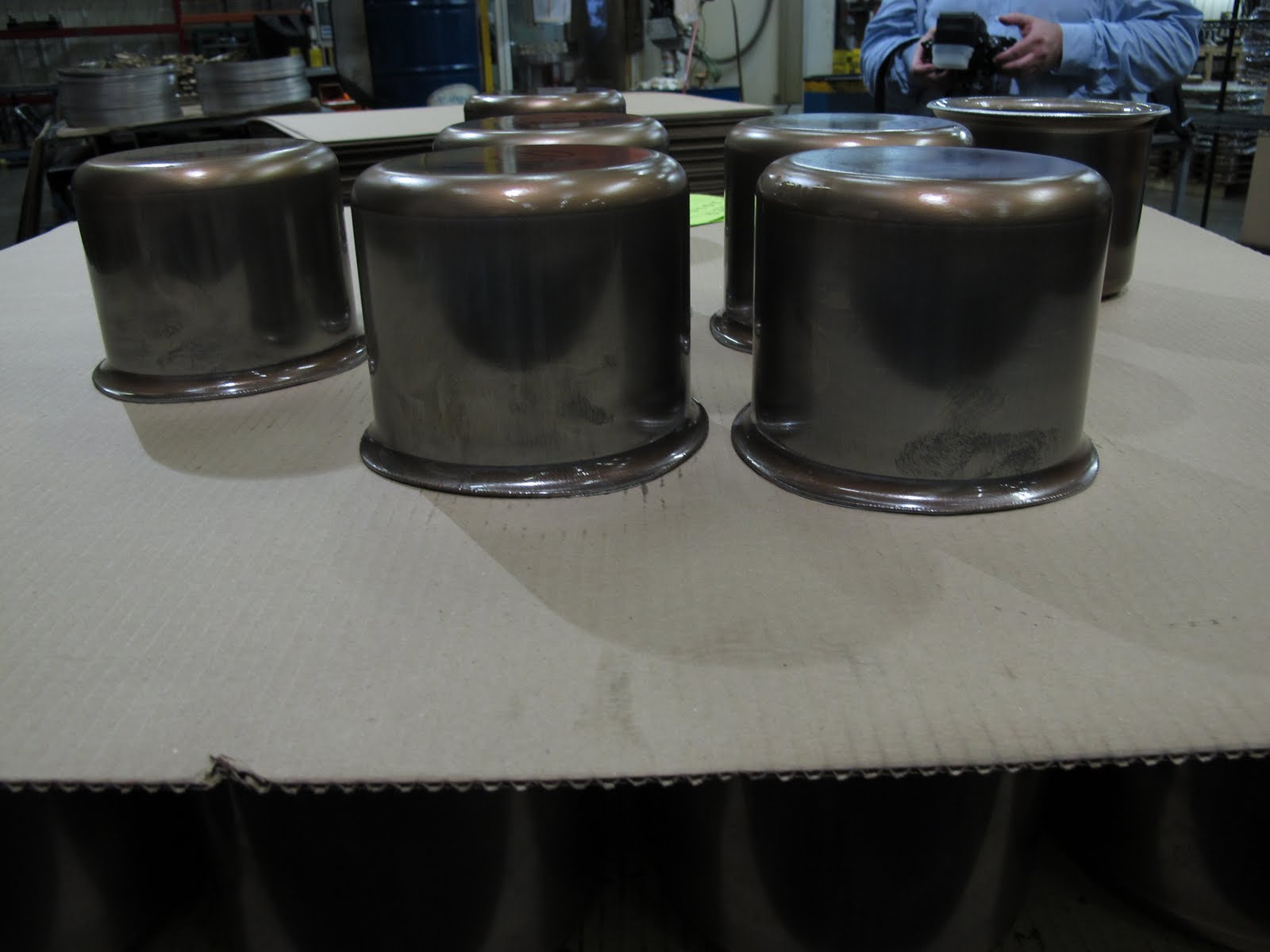
- Unfinished formed sauce pans
-
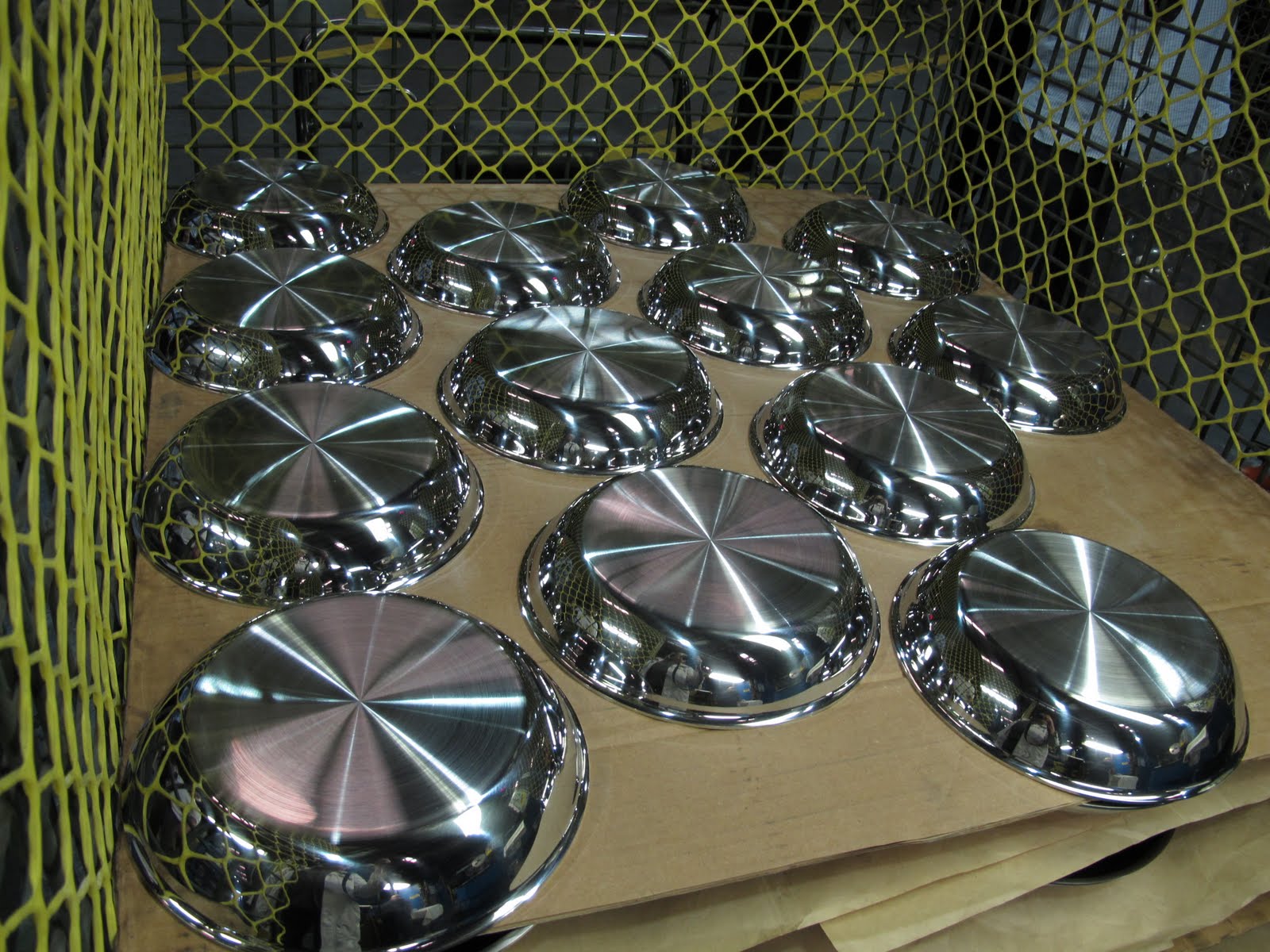
- These polished fry pans are ready for their handles.
-
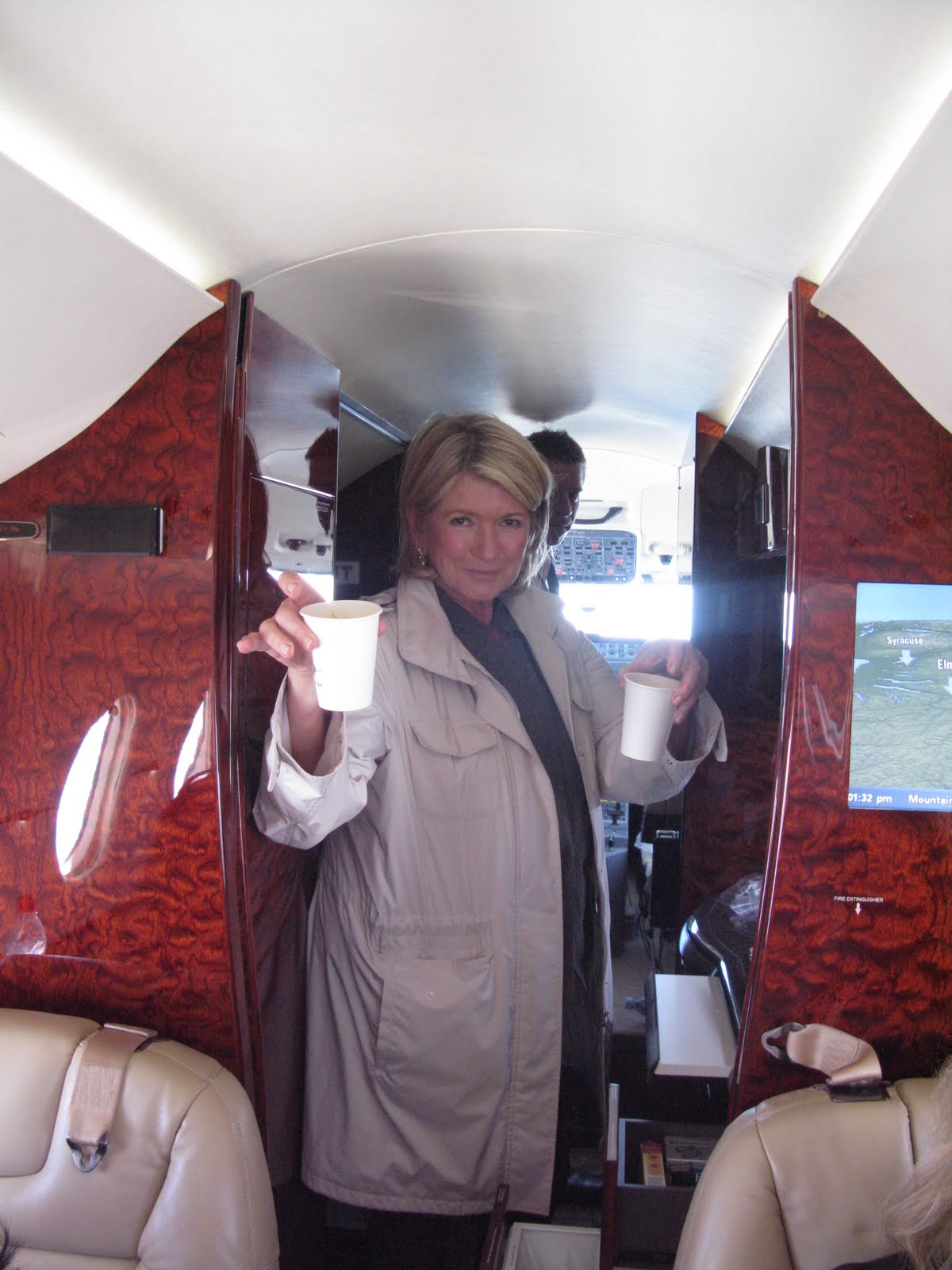
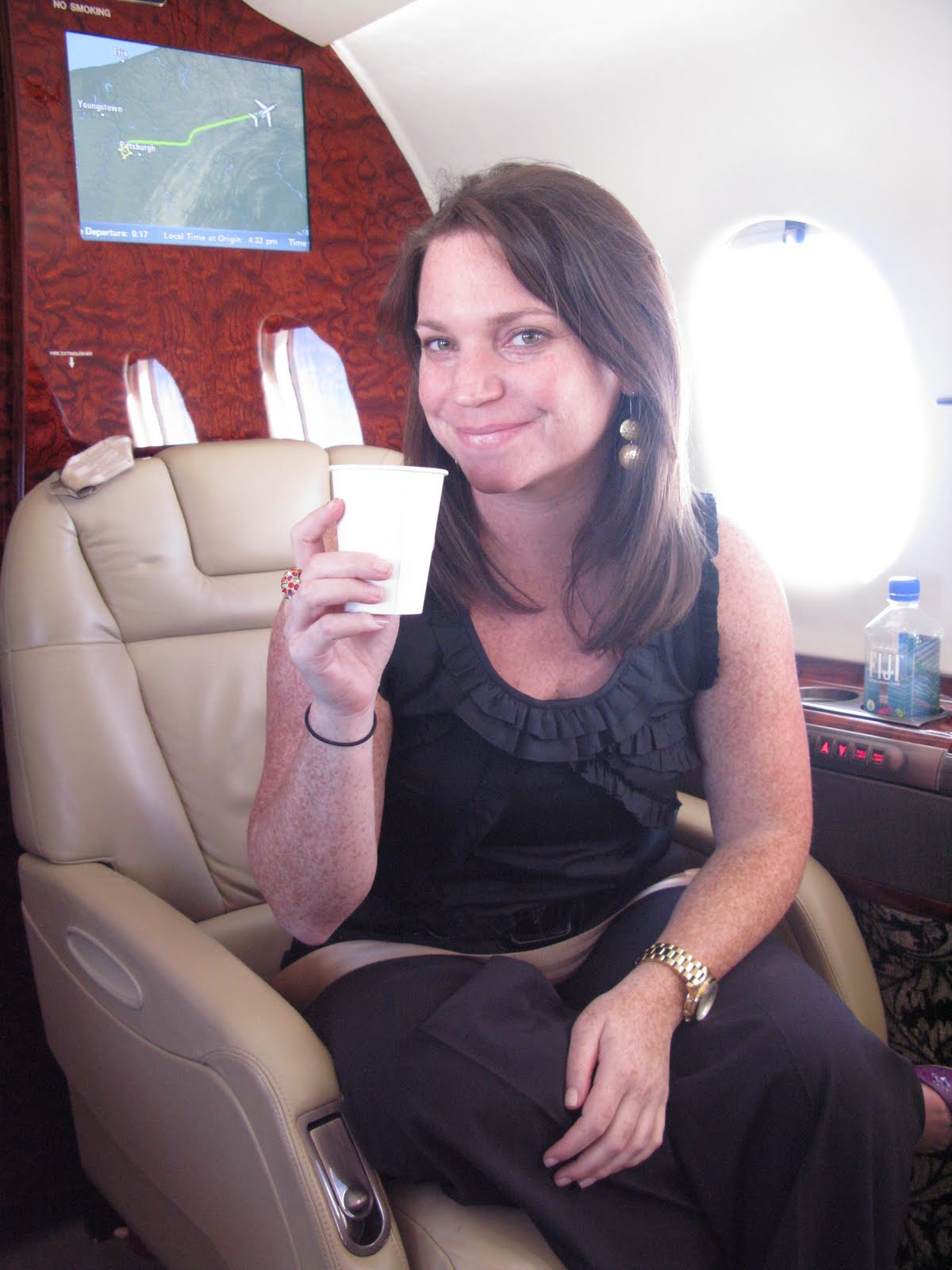
- On the way home I mixed up a cocktail refreshment for everyone.
-
- Katie enjoyed this day!
-
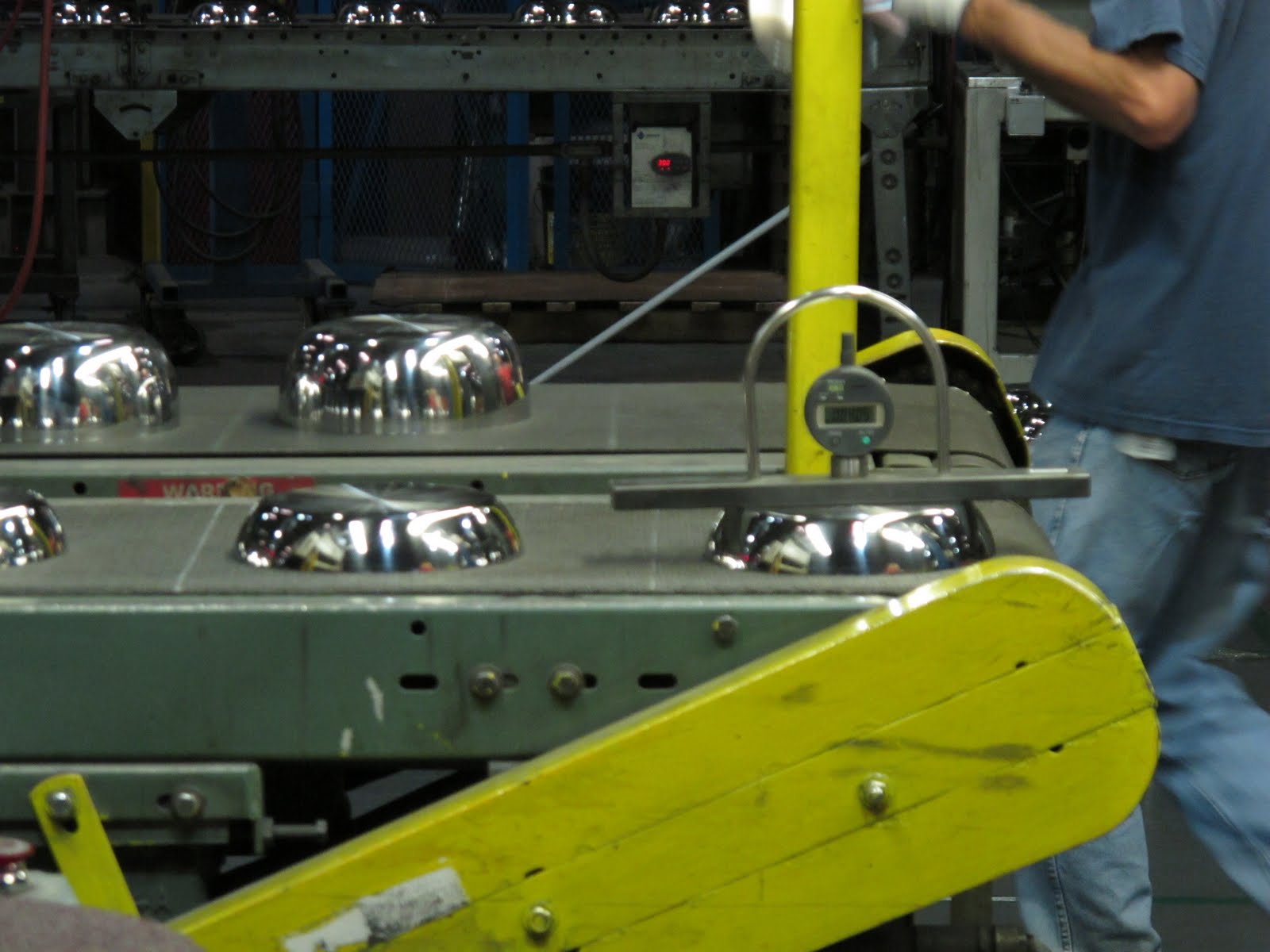
- This inspection gauge is used to check the concavity of the product. If necessary, press tools will be used to rectify inferior readings.
-
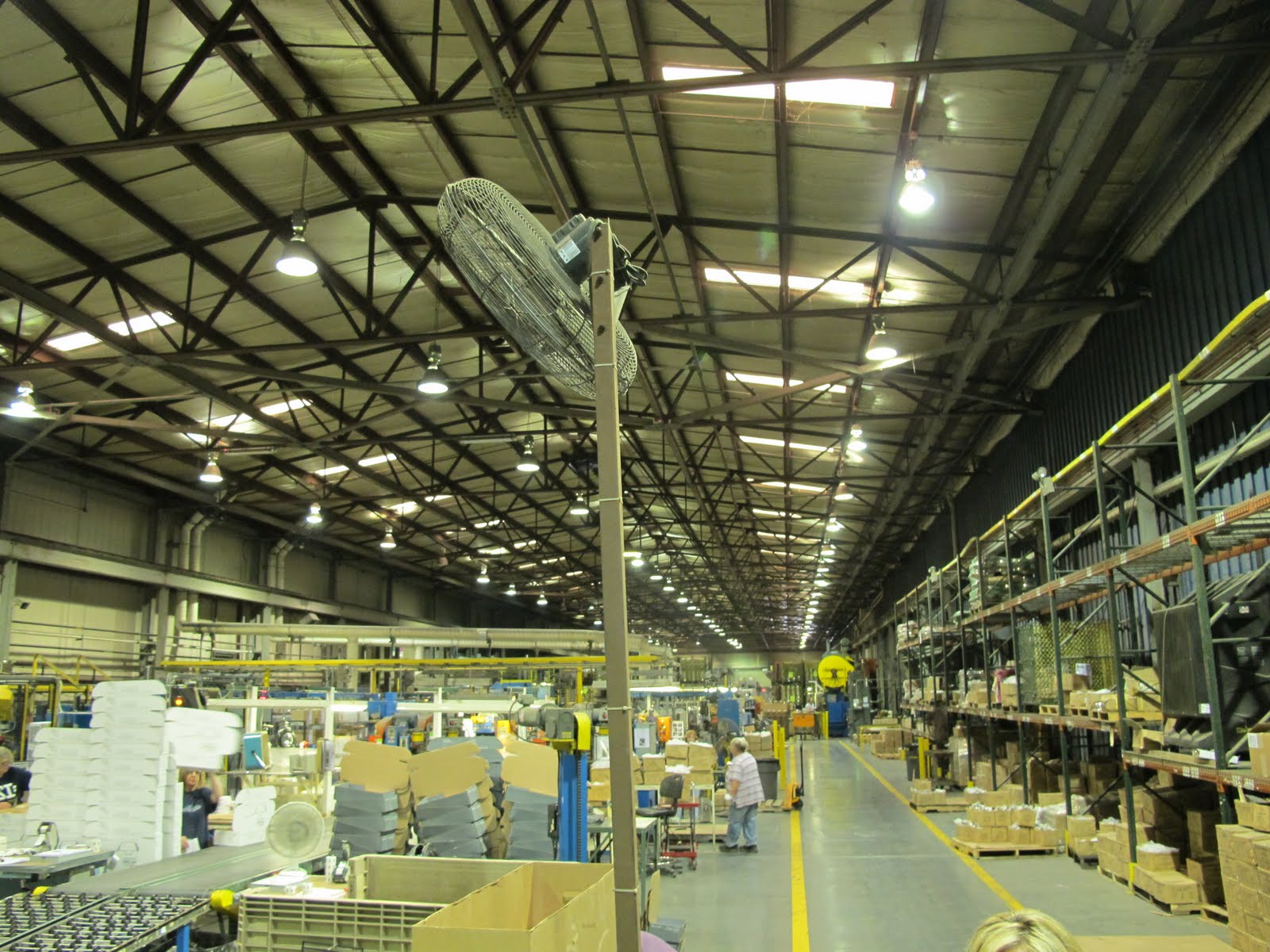
- One part of the busy factory
-
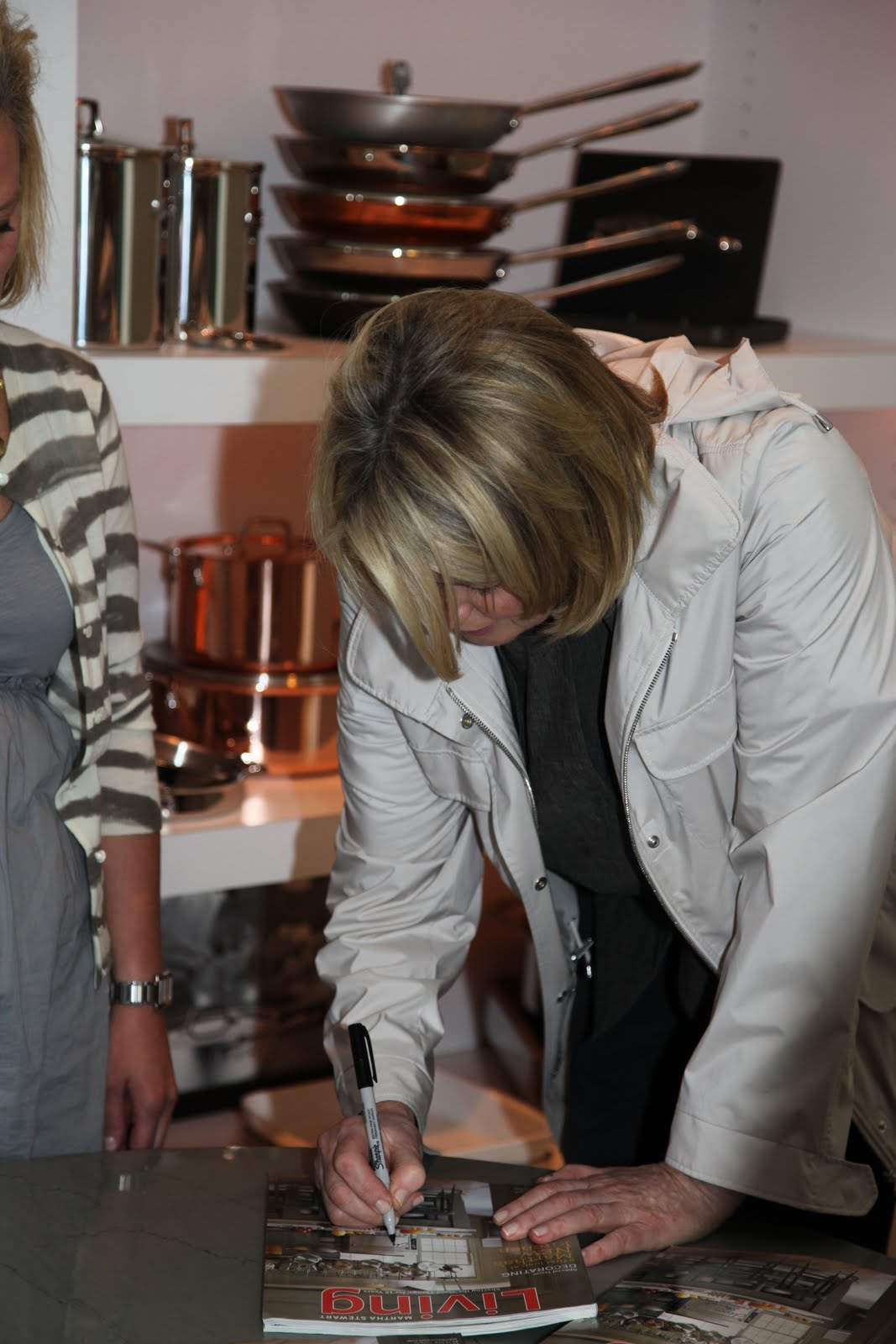
- Signing a back issue of my magazine, featuring my Cantitoe kitchen – Of course, the pots hanging from the pot rack are All-Clad!
-
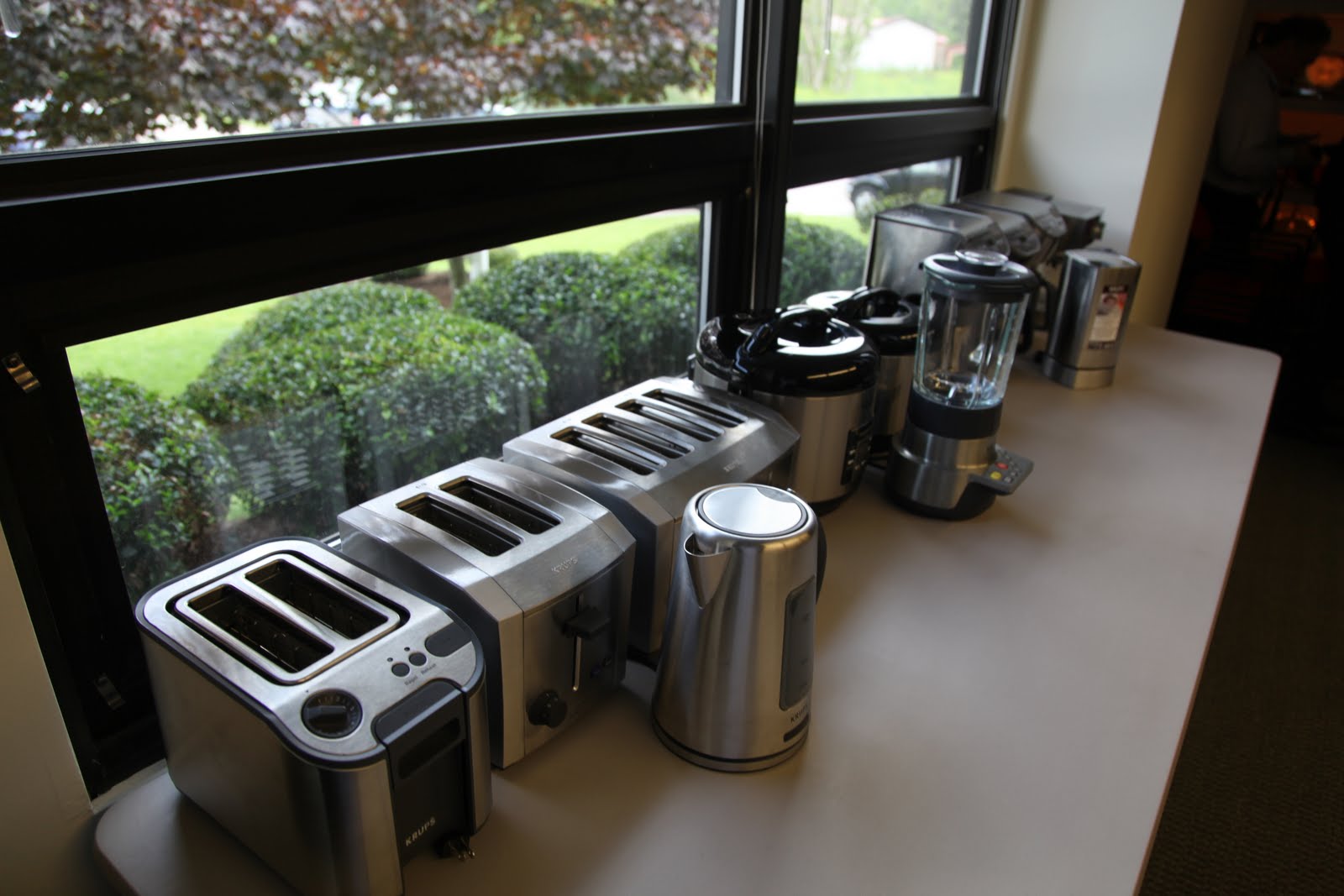
- These are Krups products – All-Clad’s sister company.
-
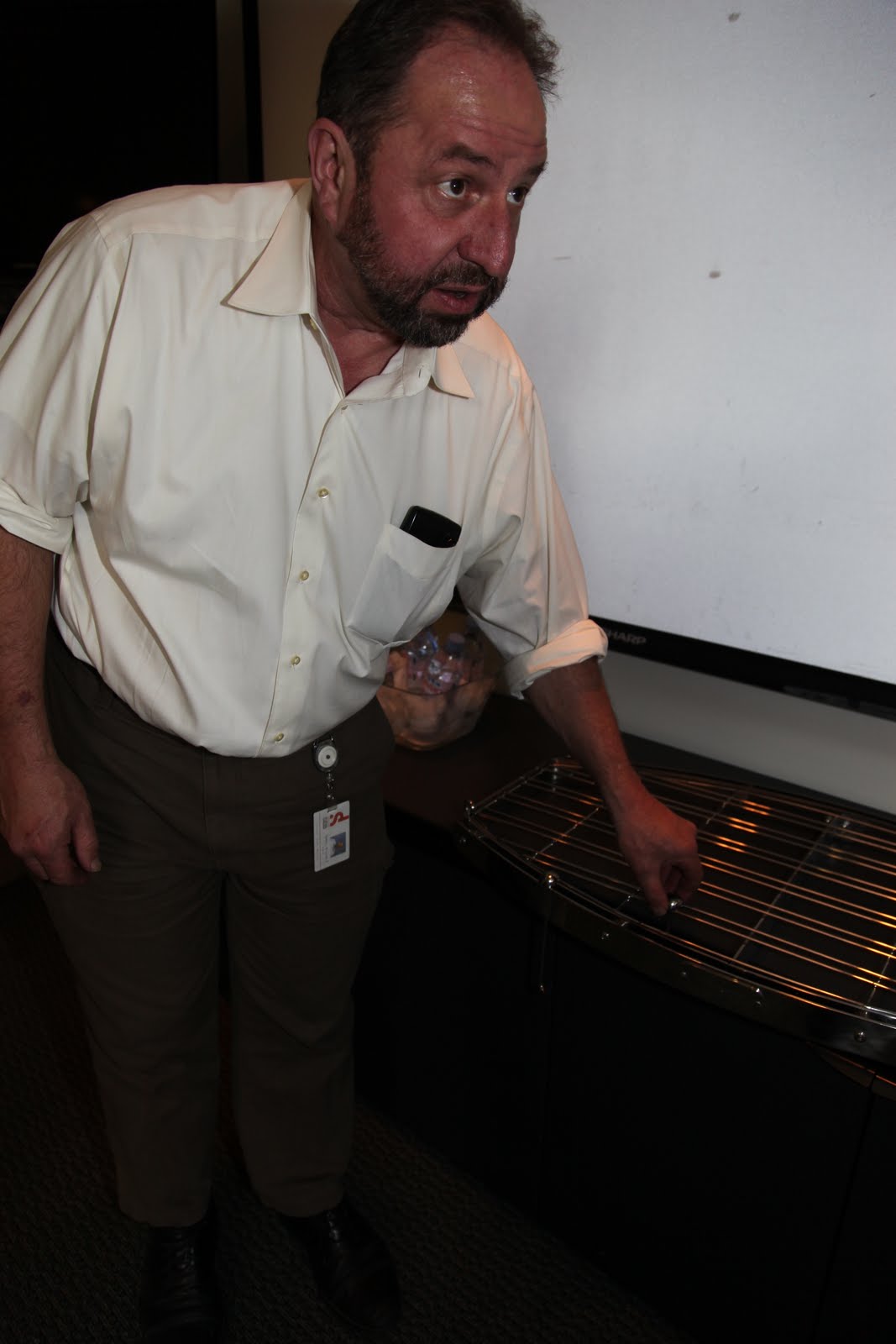
- Bill Groll showing a new pot rack – soon to be available at Sur La Table http://www.surlatable.com/
-
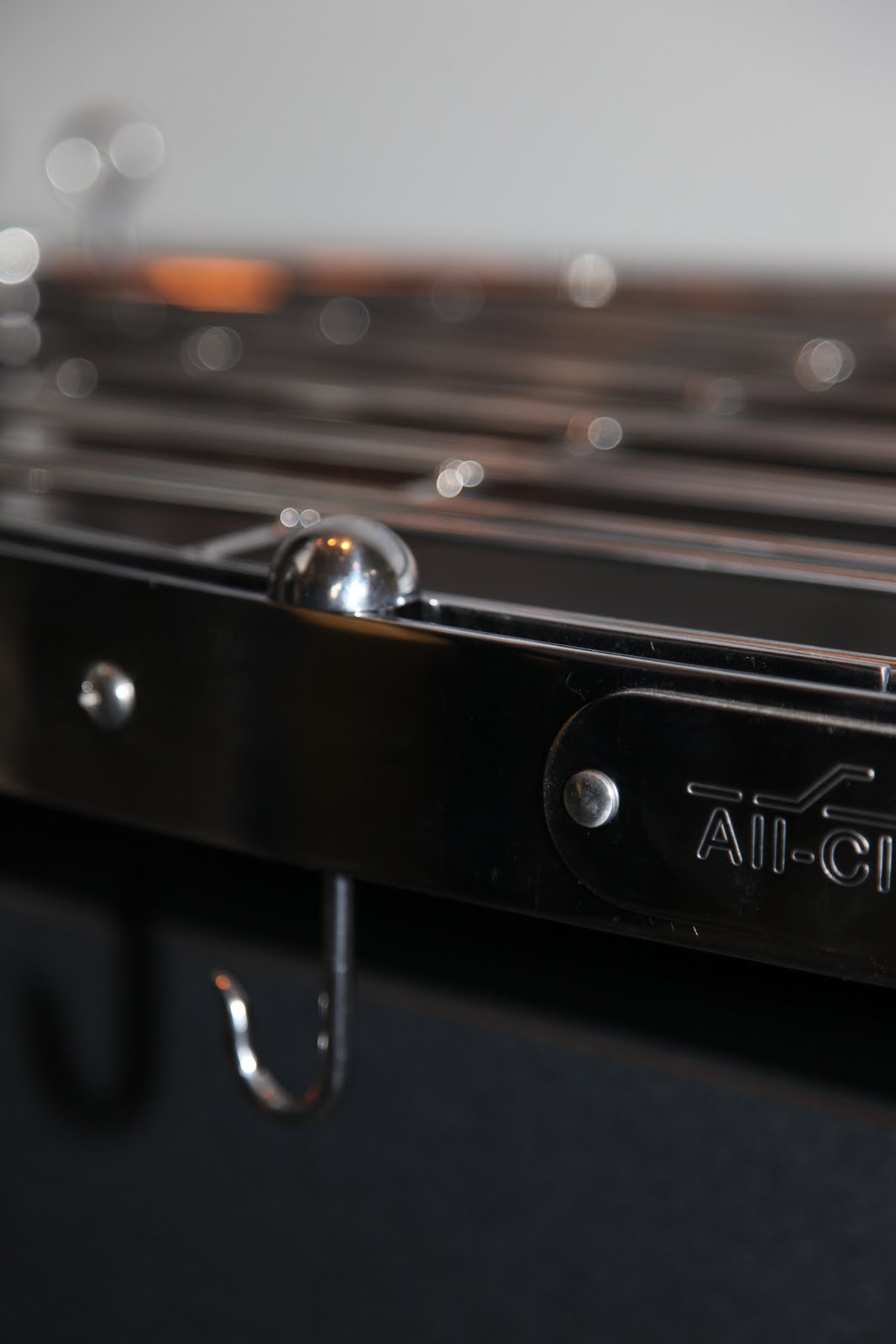
- The hooks of the pot rack are held in place with magnets.
-
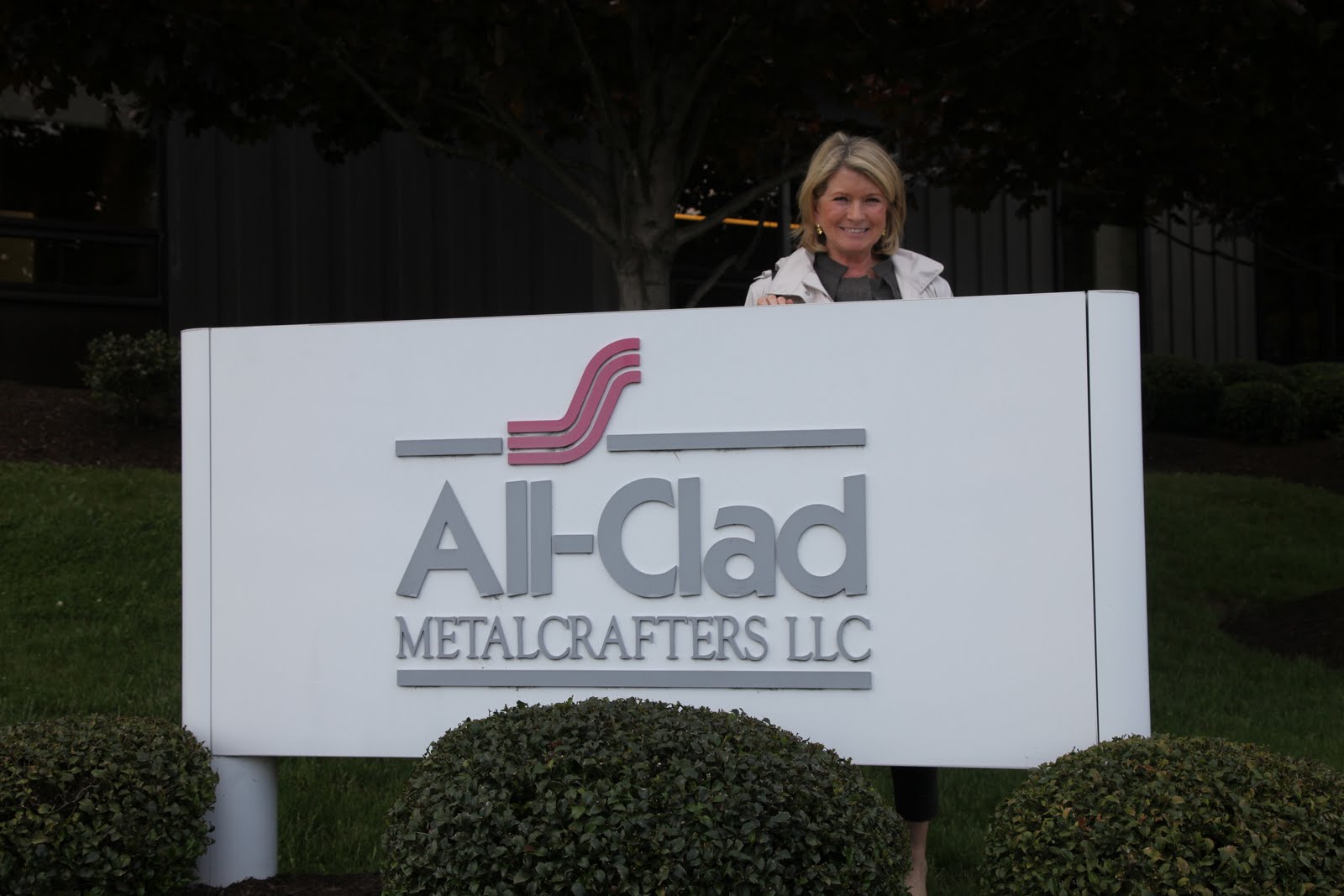
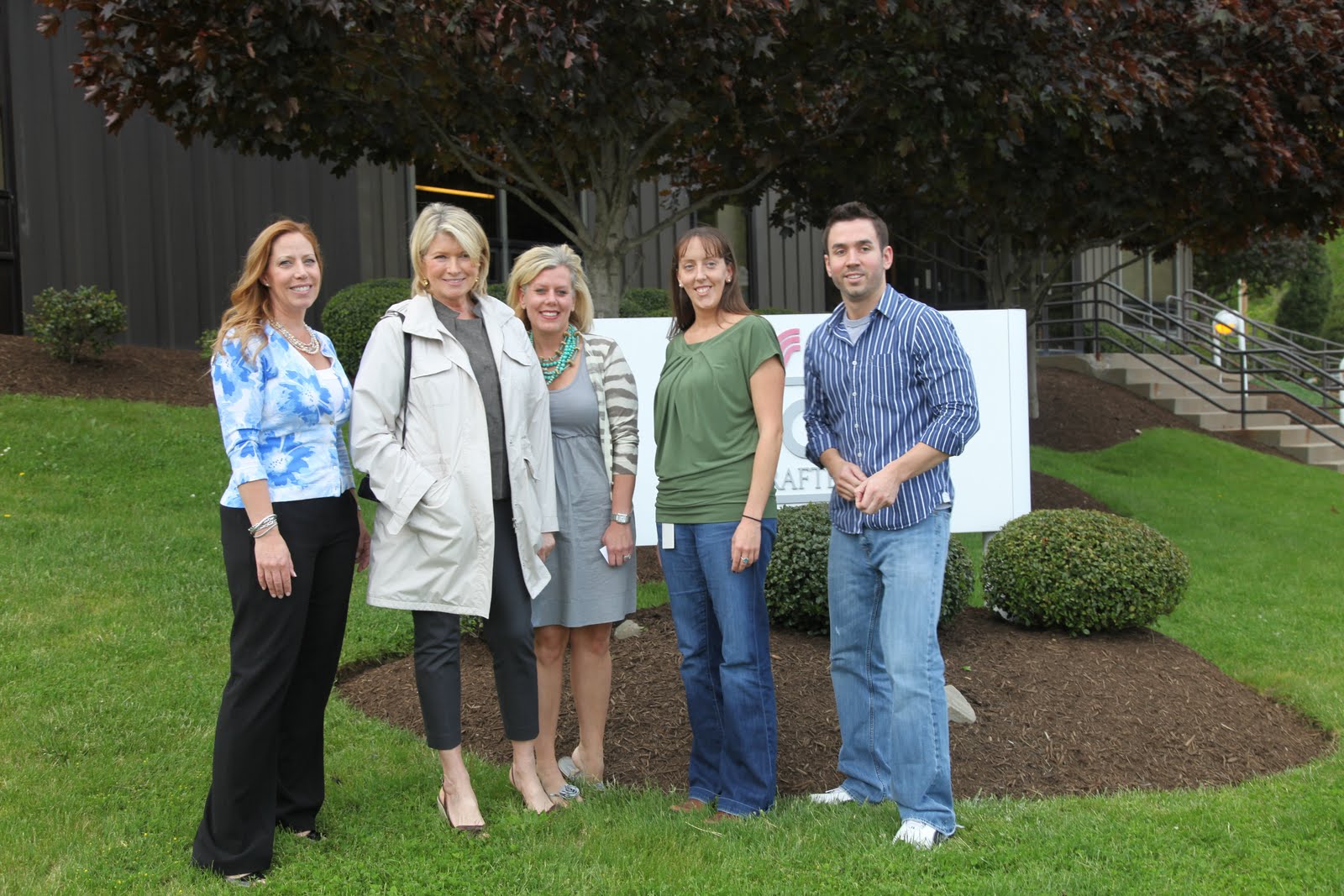
- Arriving at the All-Clad factory
-
- Here I am with Judy Baker, Melissa Palmer, Melanie Tennant, and Nick Jendrejeski
-
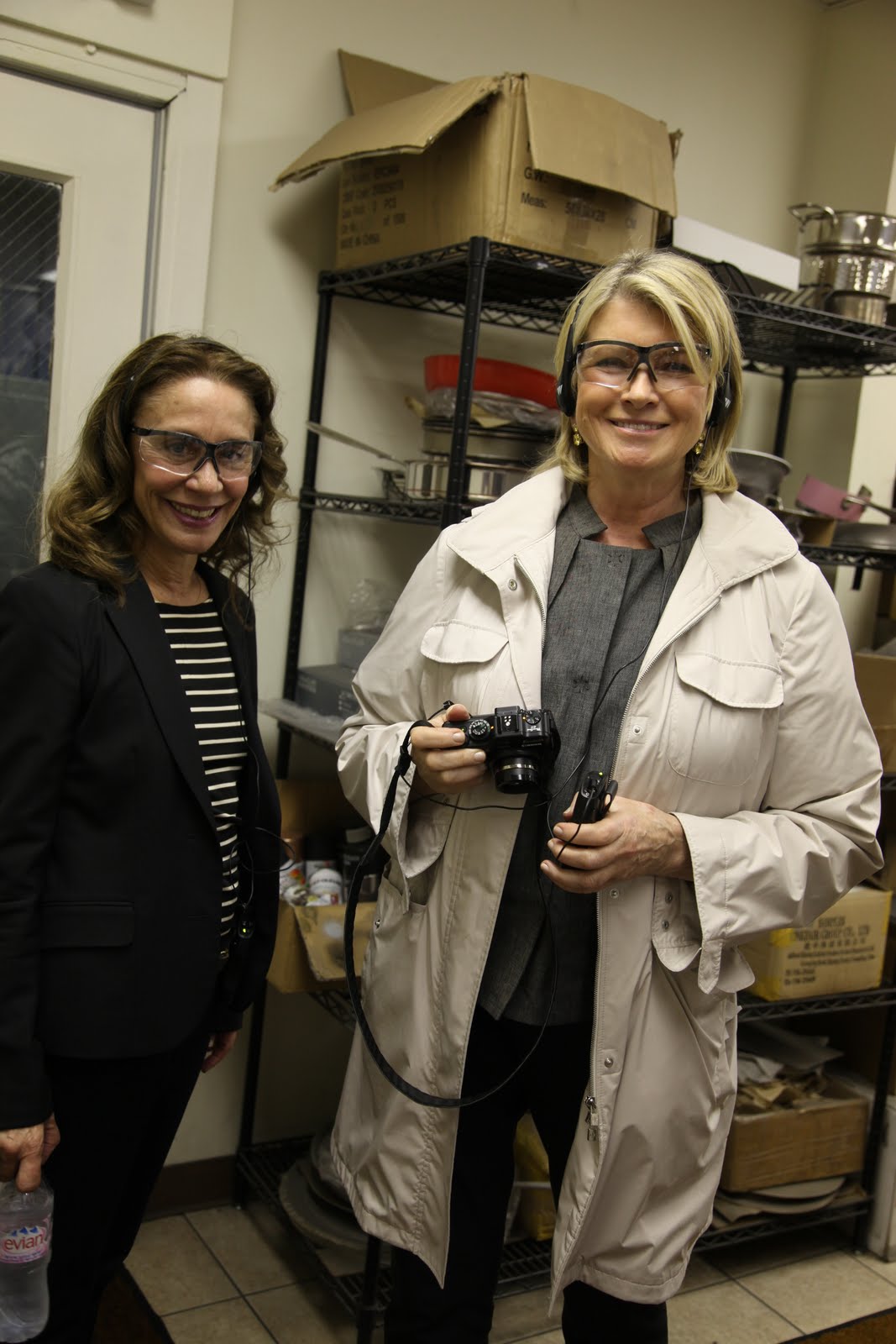
- Robin and I with our protective glasses
-
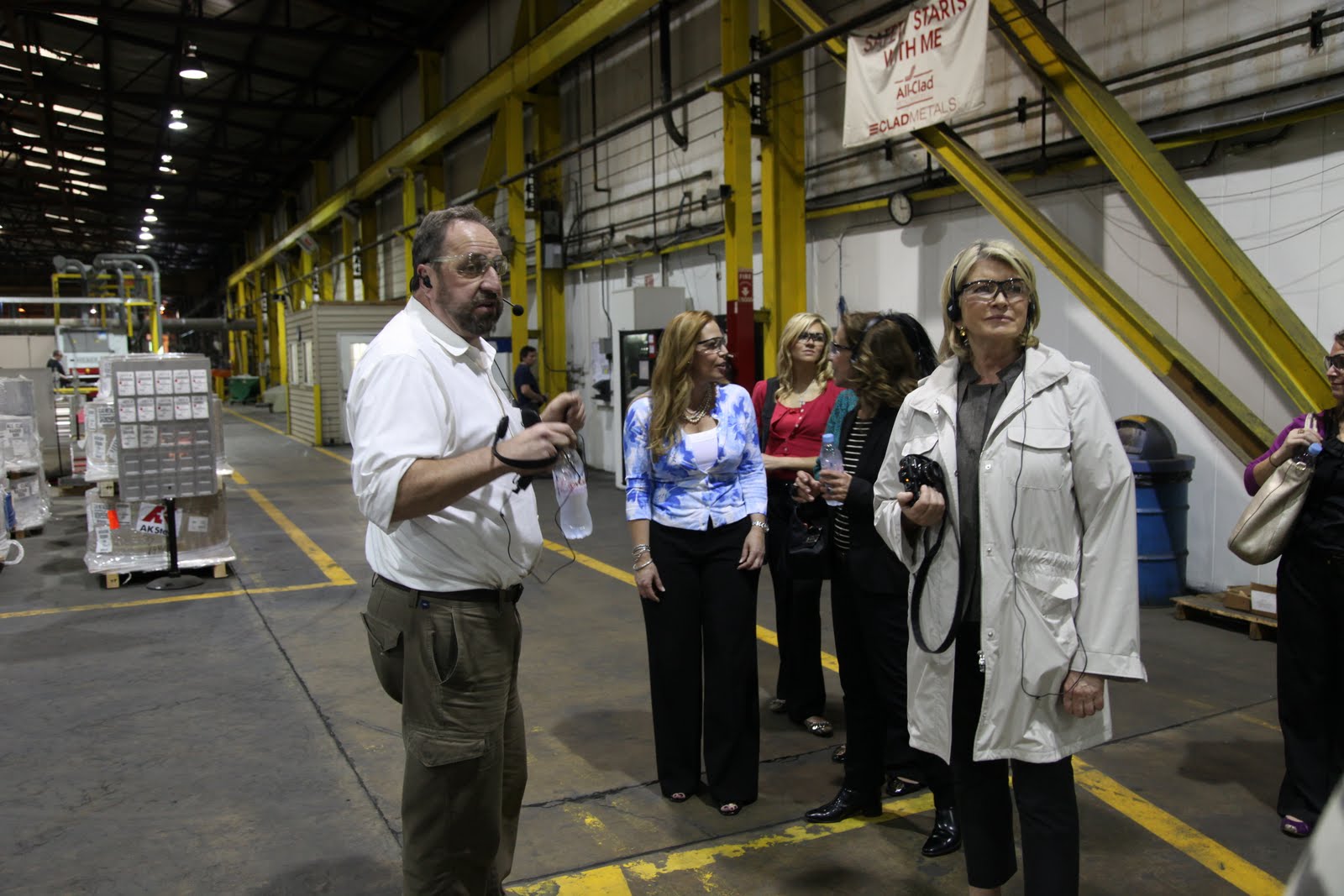
- Because of the noise in the plant, we wore headphones to hear what Bill was saying.
-
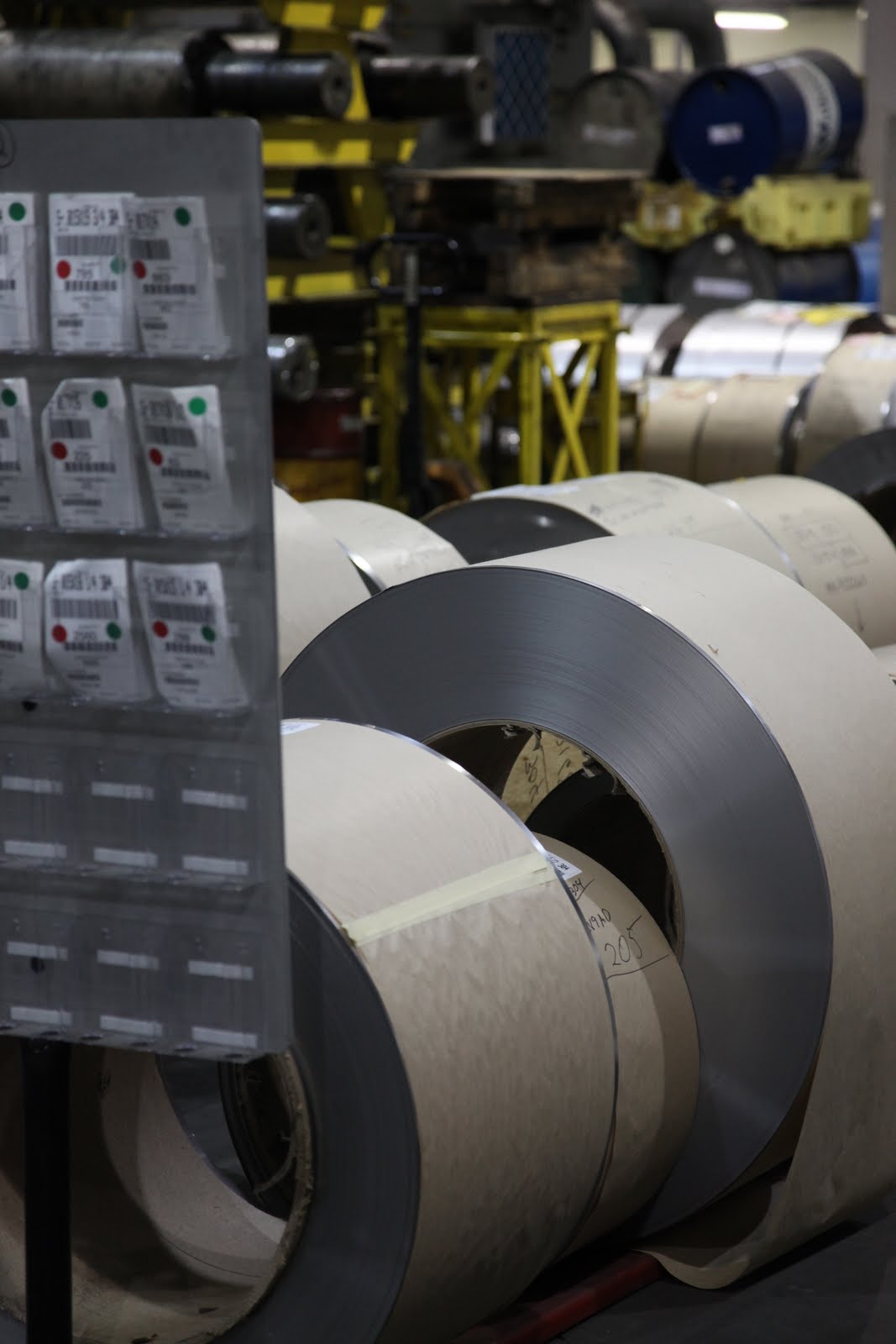
- Giant rolls of coiled metal
-
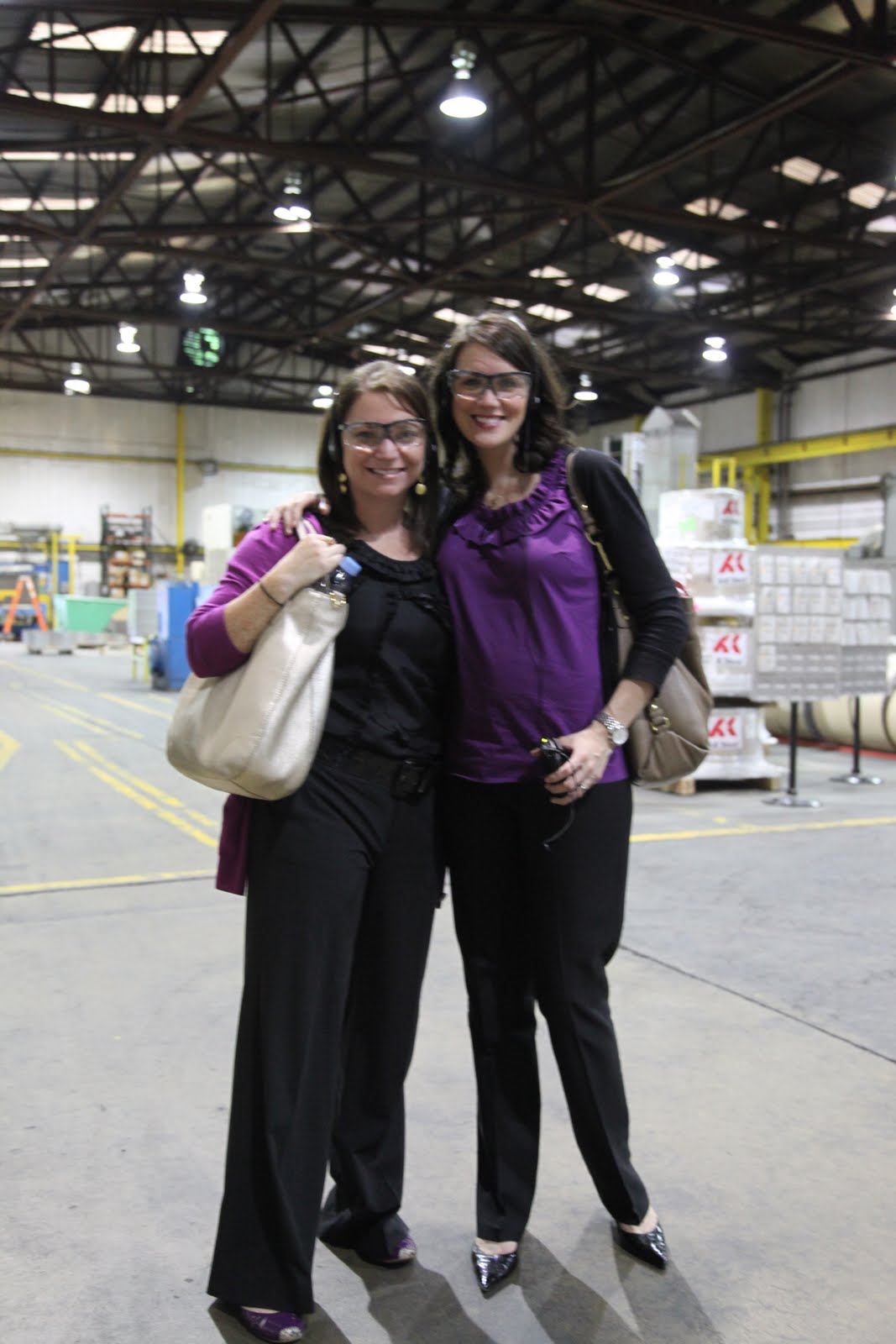
- Katie Goldberg and Nicole Sutliff
-
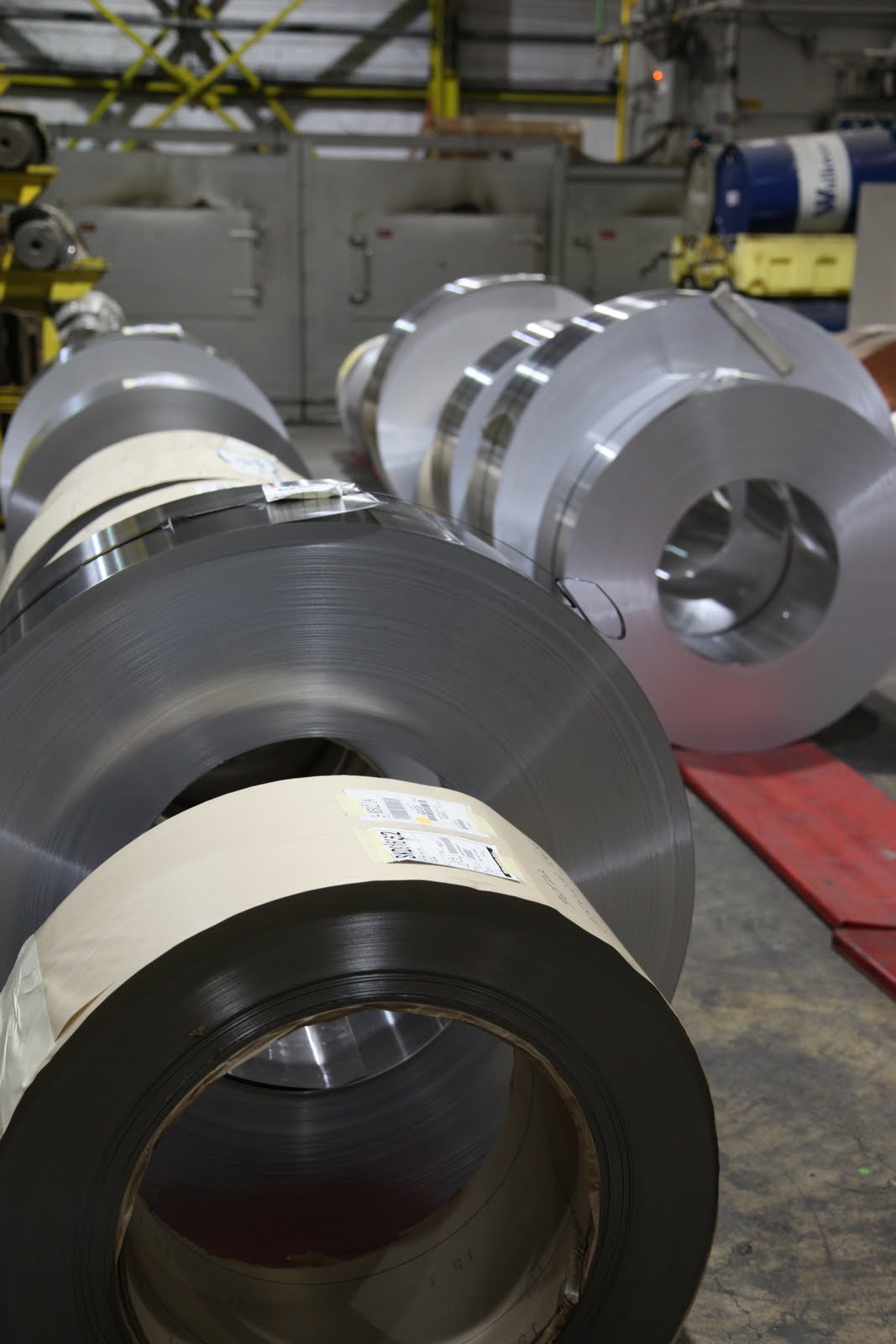
- More metal coils
-
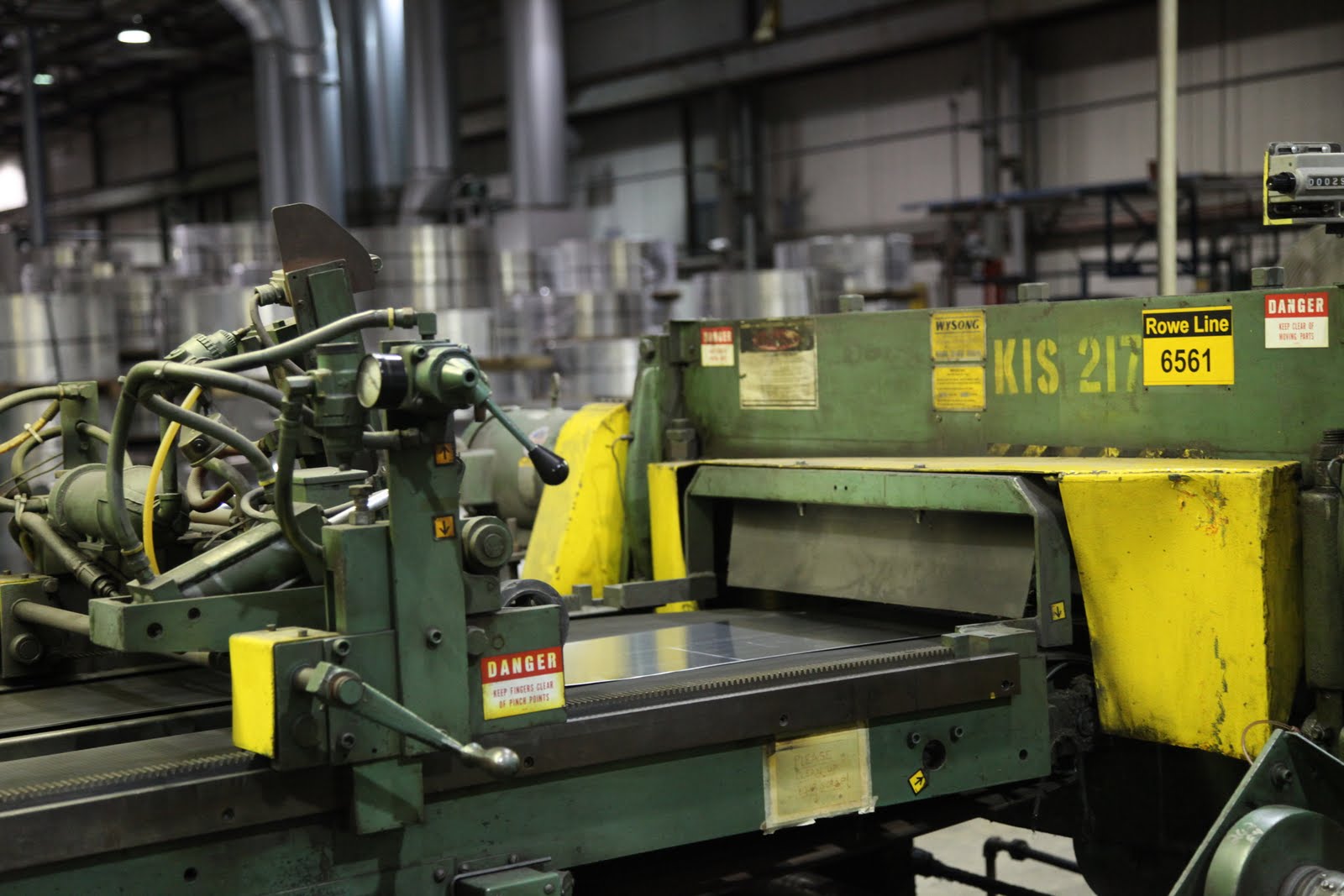
- It’s called an aluminum shear.

-
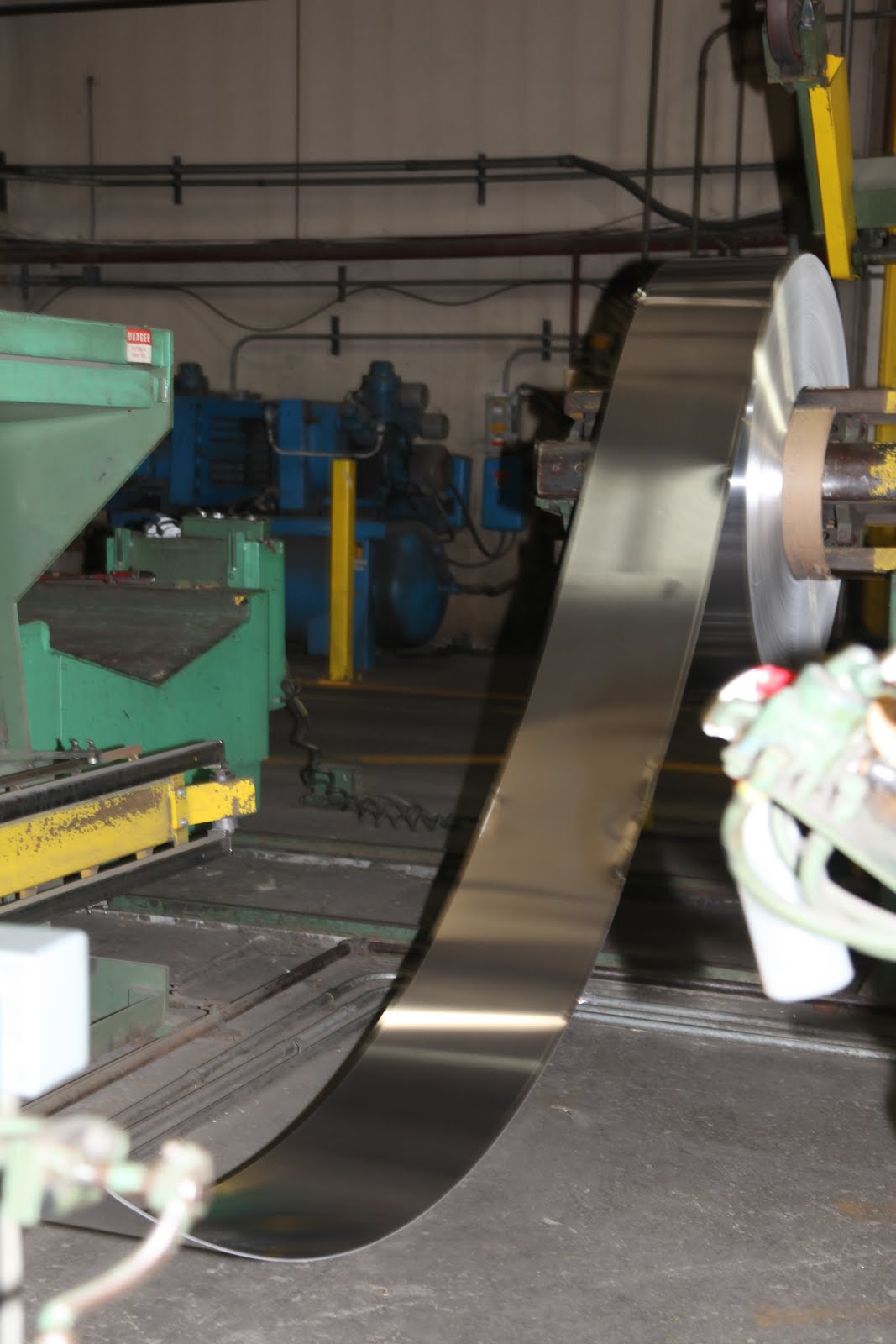
- This coil of aluminum is fed into a cutting machine.
-
- The shear cuts the aluminum into workable-sized rectangles.
-
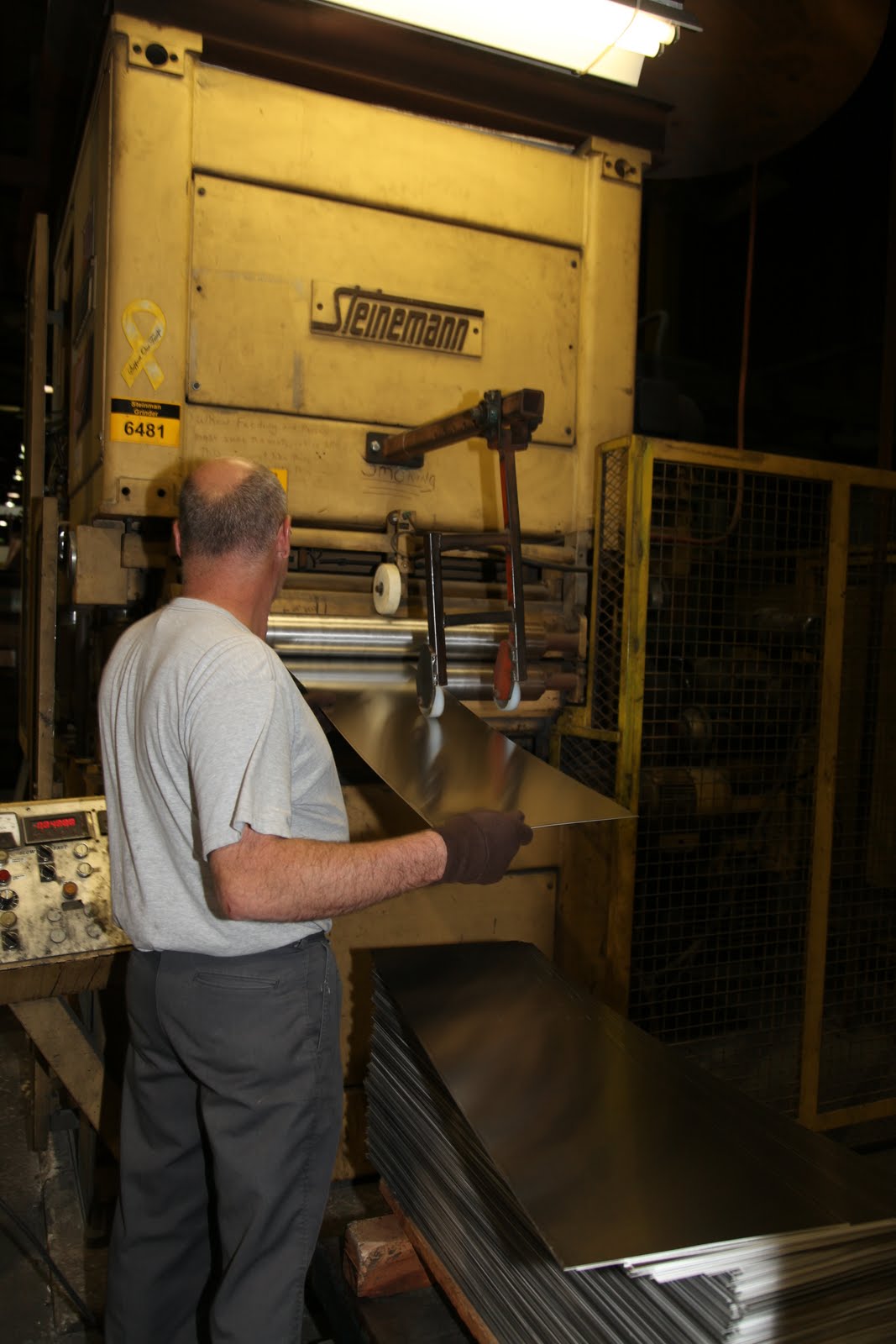
- Next, the rectangles are fed into a grinding machine, preparing them for the bonding process.
-
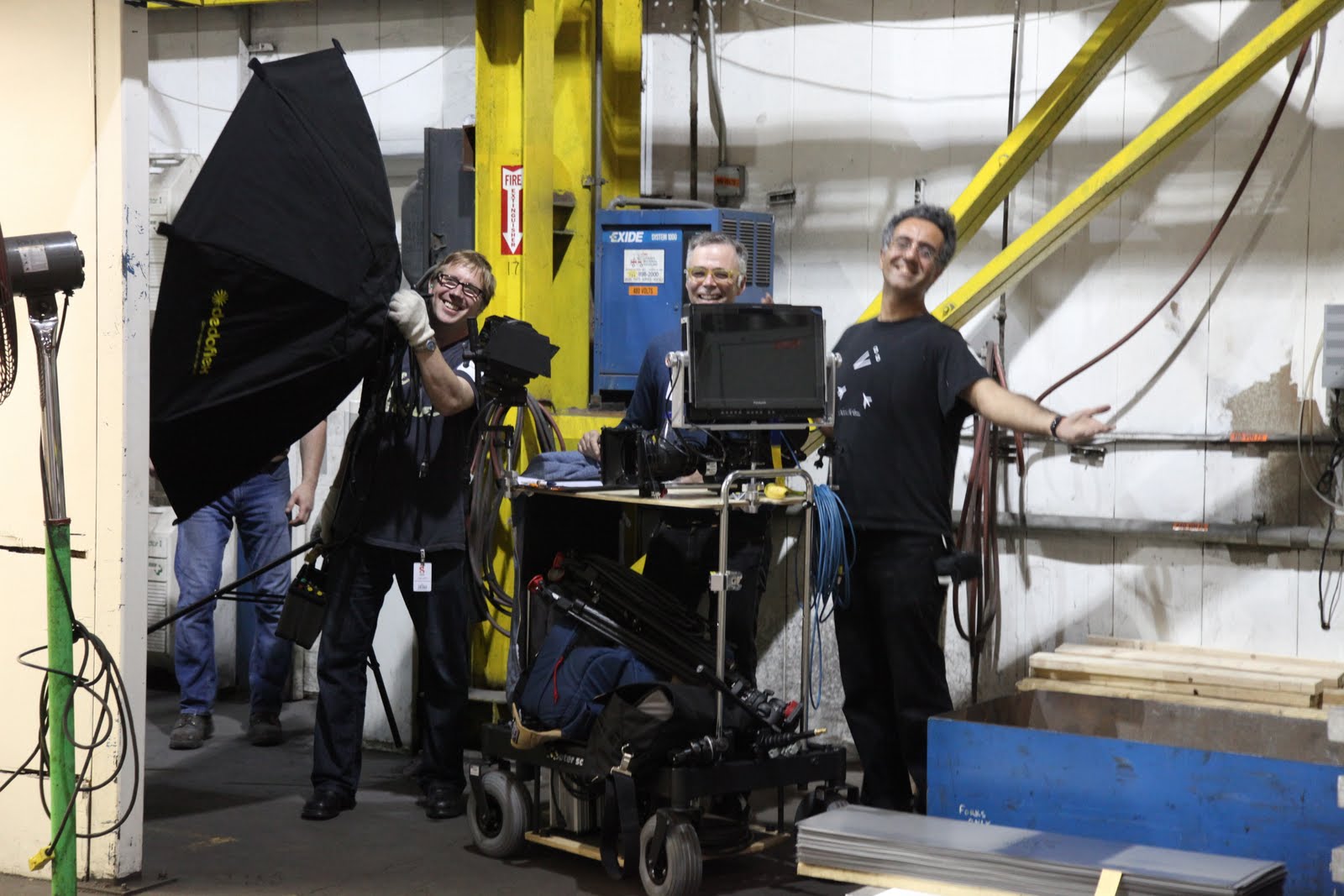
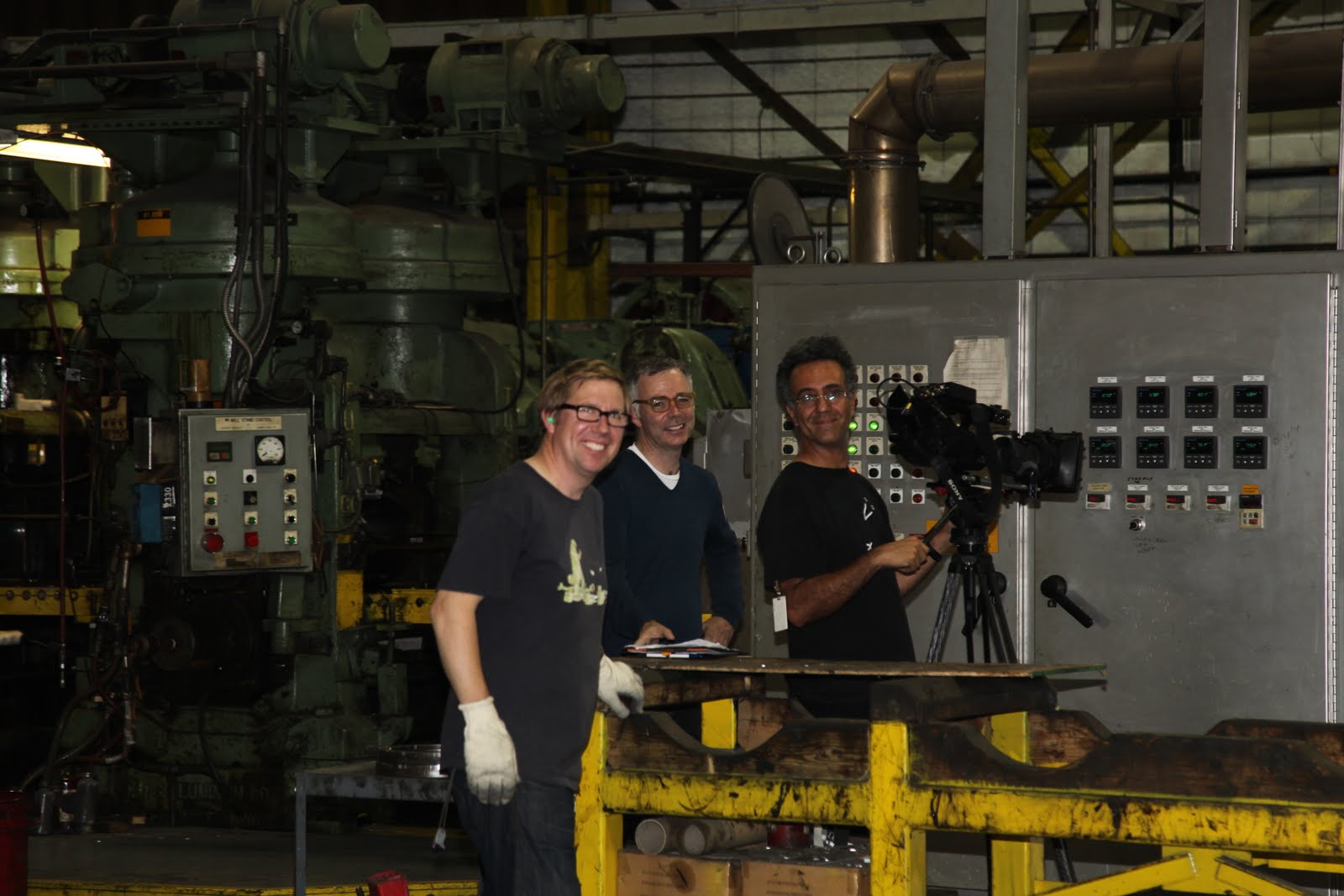
- Coincidently, producers and a cameraman from HGTV were also at the plant.
-
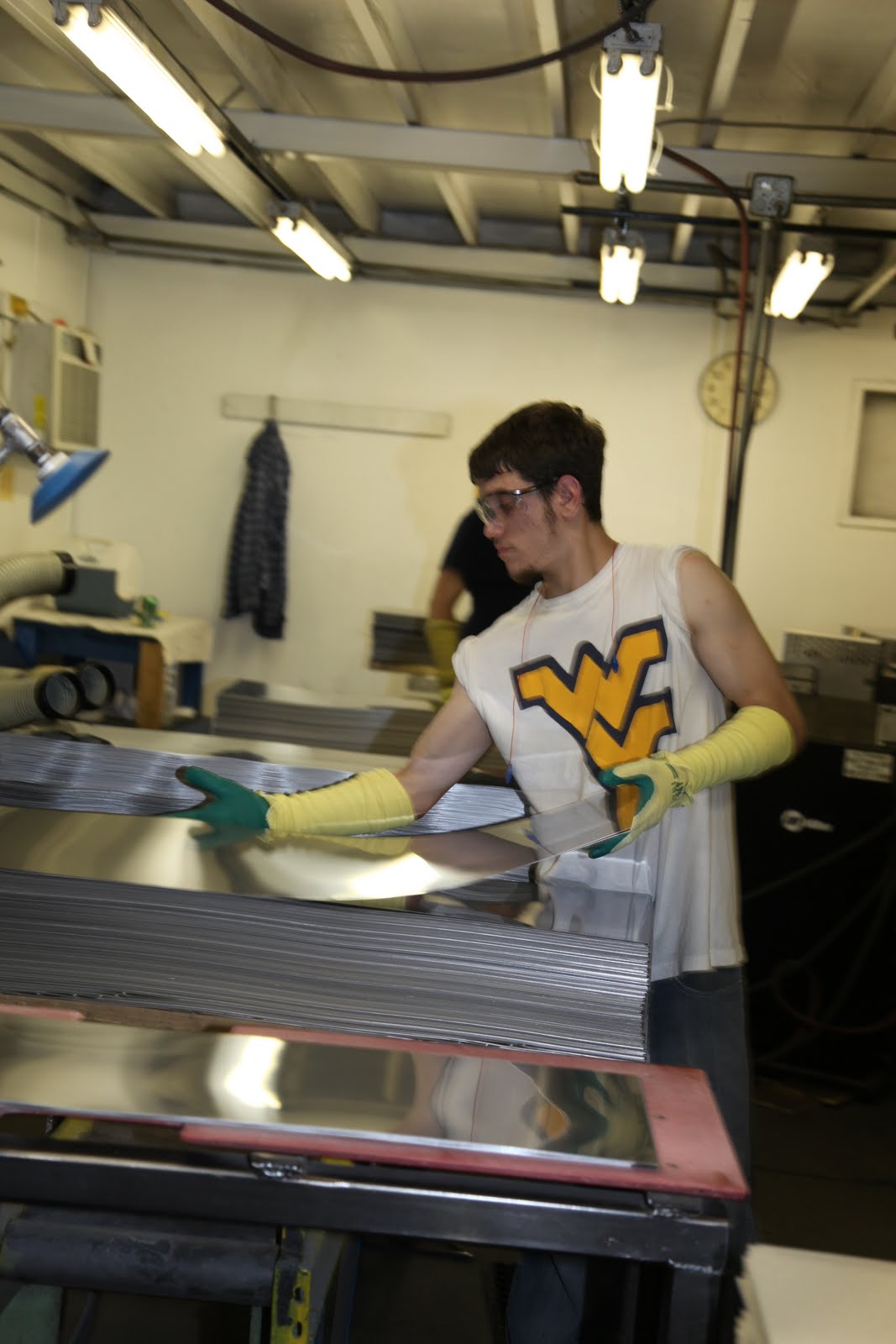
- Here, sheets of stainless and aluminum are stacked to prepare for bonding.
-
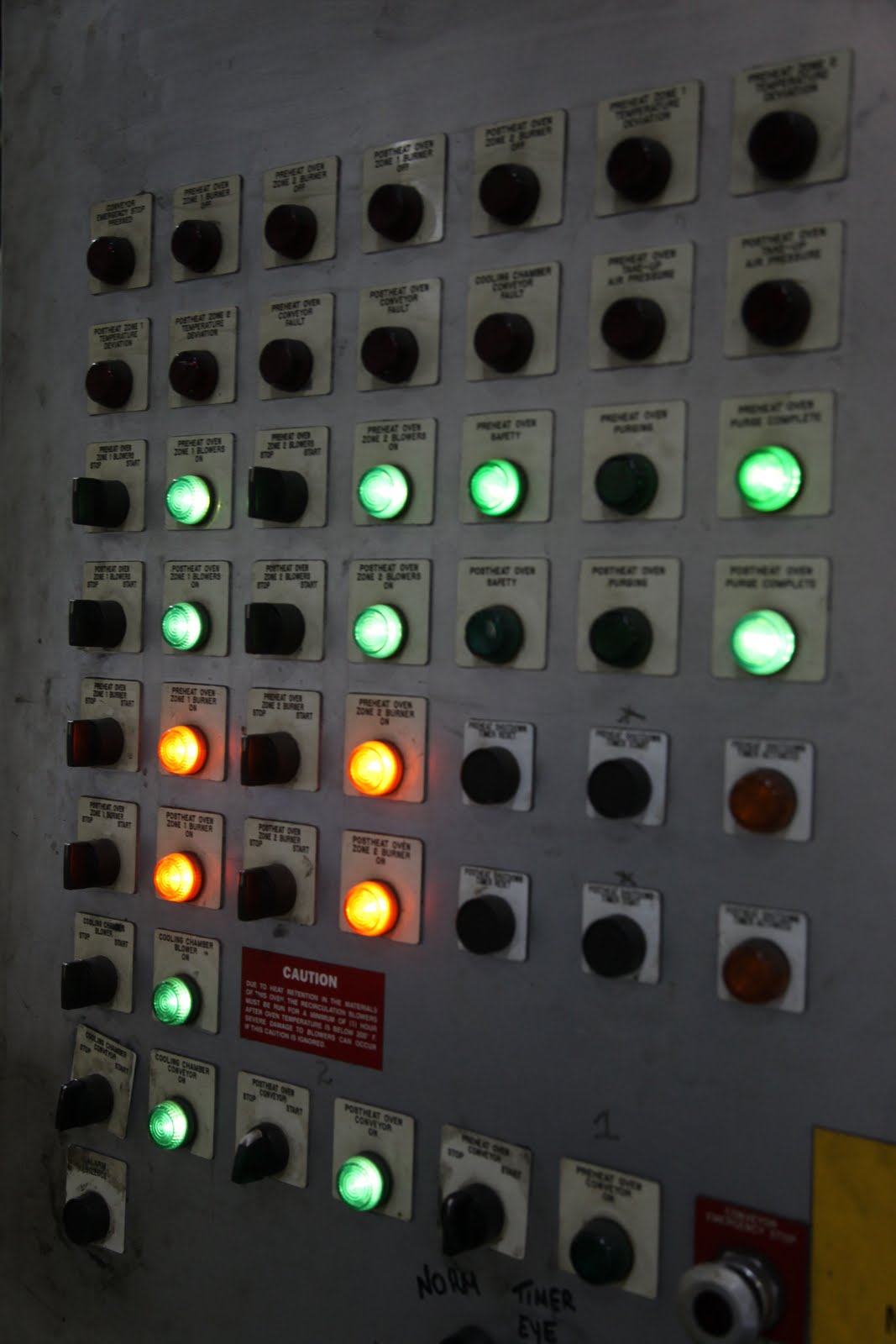
- Those stacked sheets are passed through this oven, which is 60-feet long.

-
- The oven controls – each part of the long oven is heated to various temperatures for the bonding process.
-
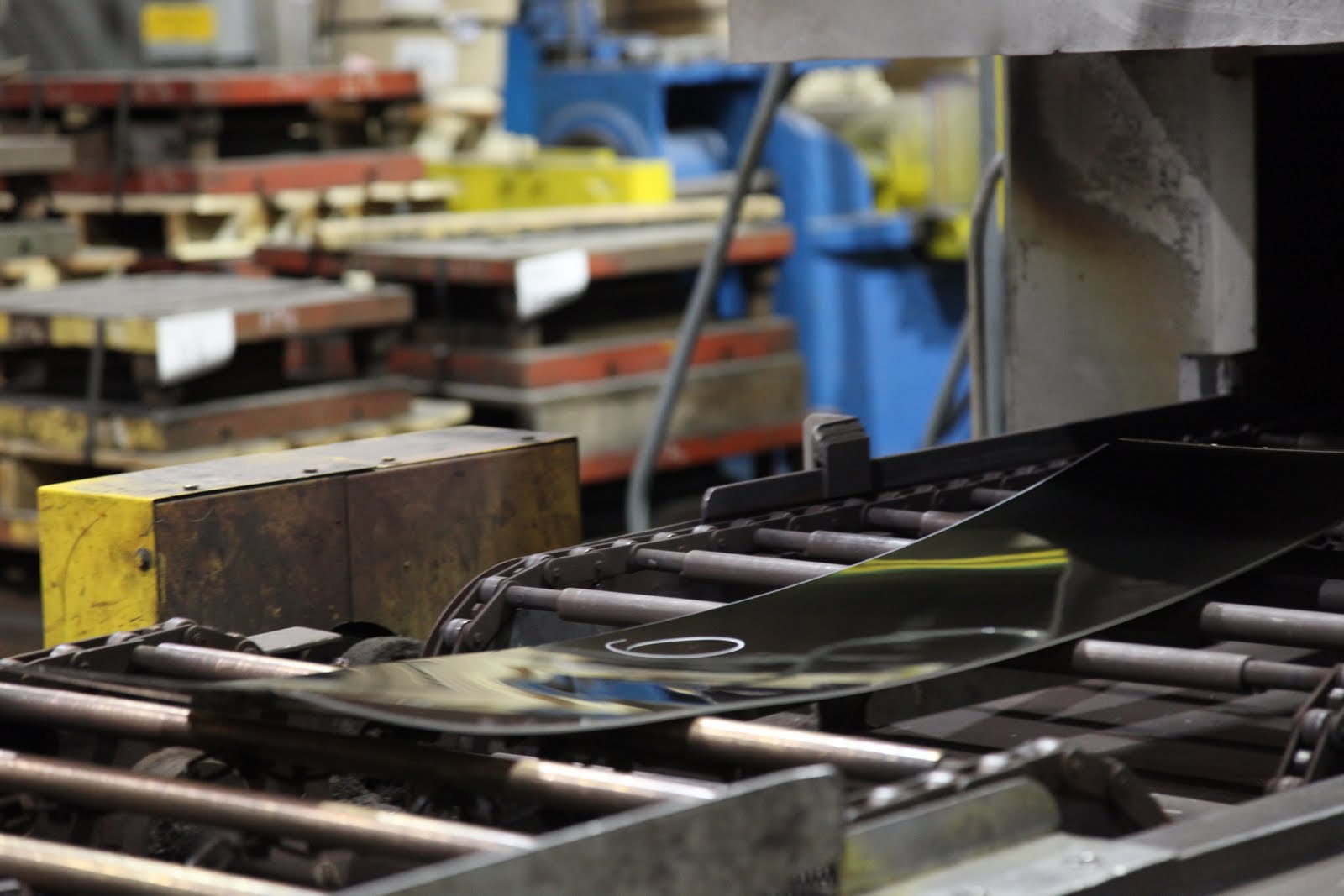
- The bonded metal emerging out of the oven
-
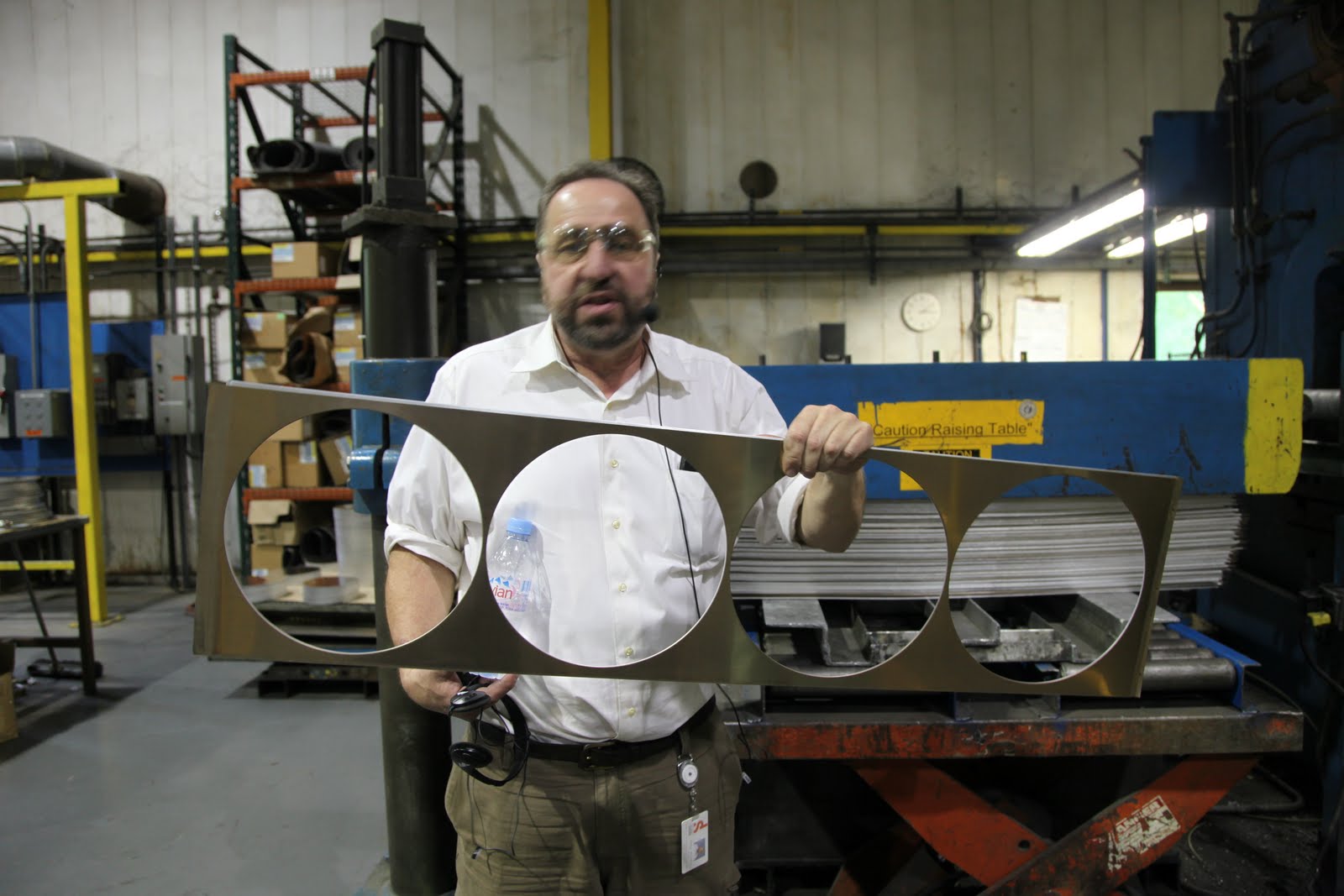
- Bill Groll, explained that the scrap leftover from the blanking process is recycled for reuse.
-
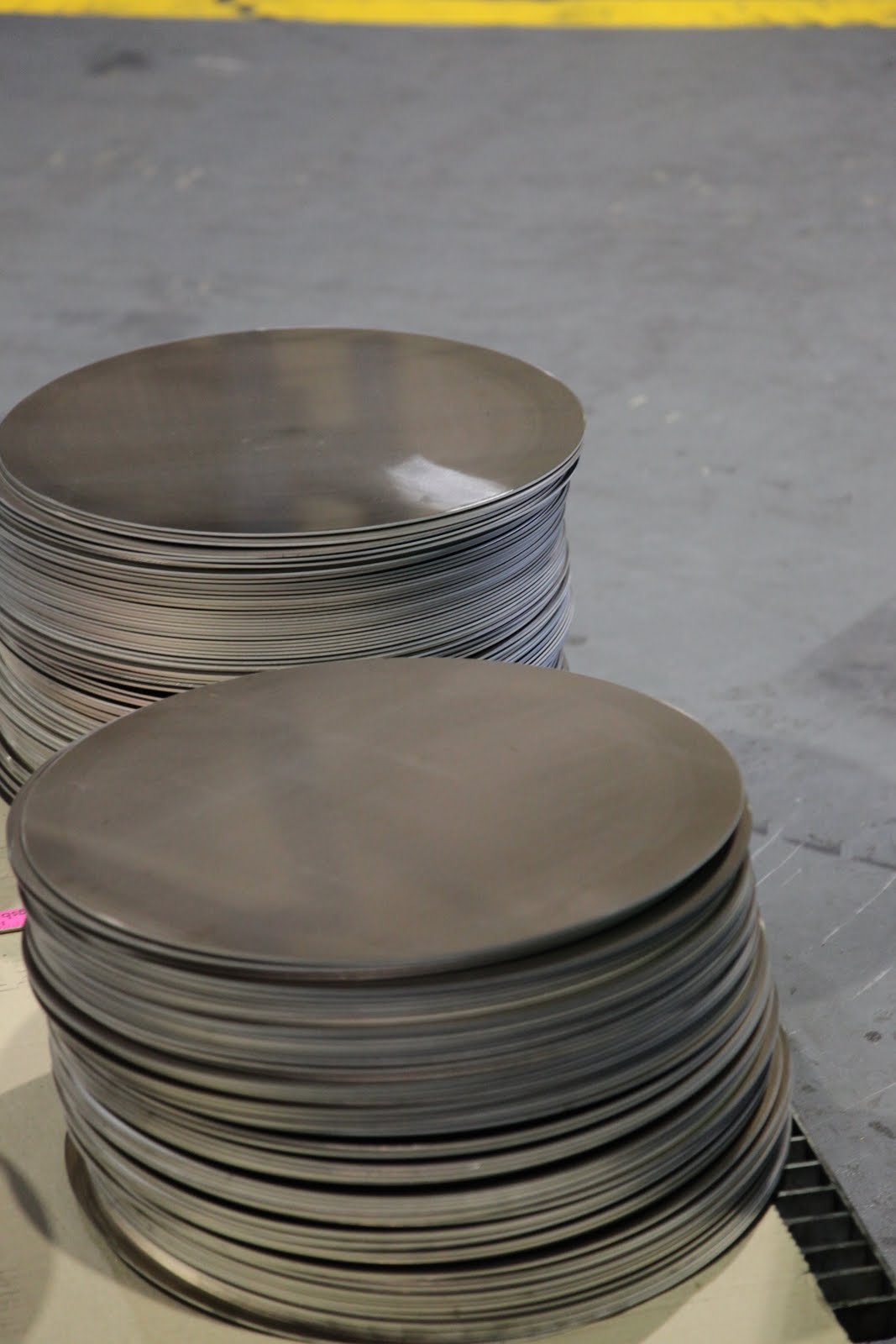
- The blanks will be formed into pots and pans.
-
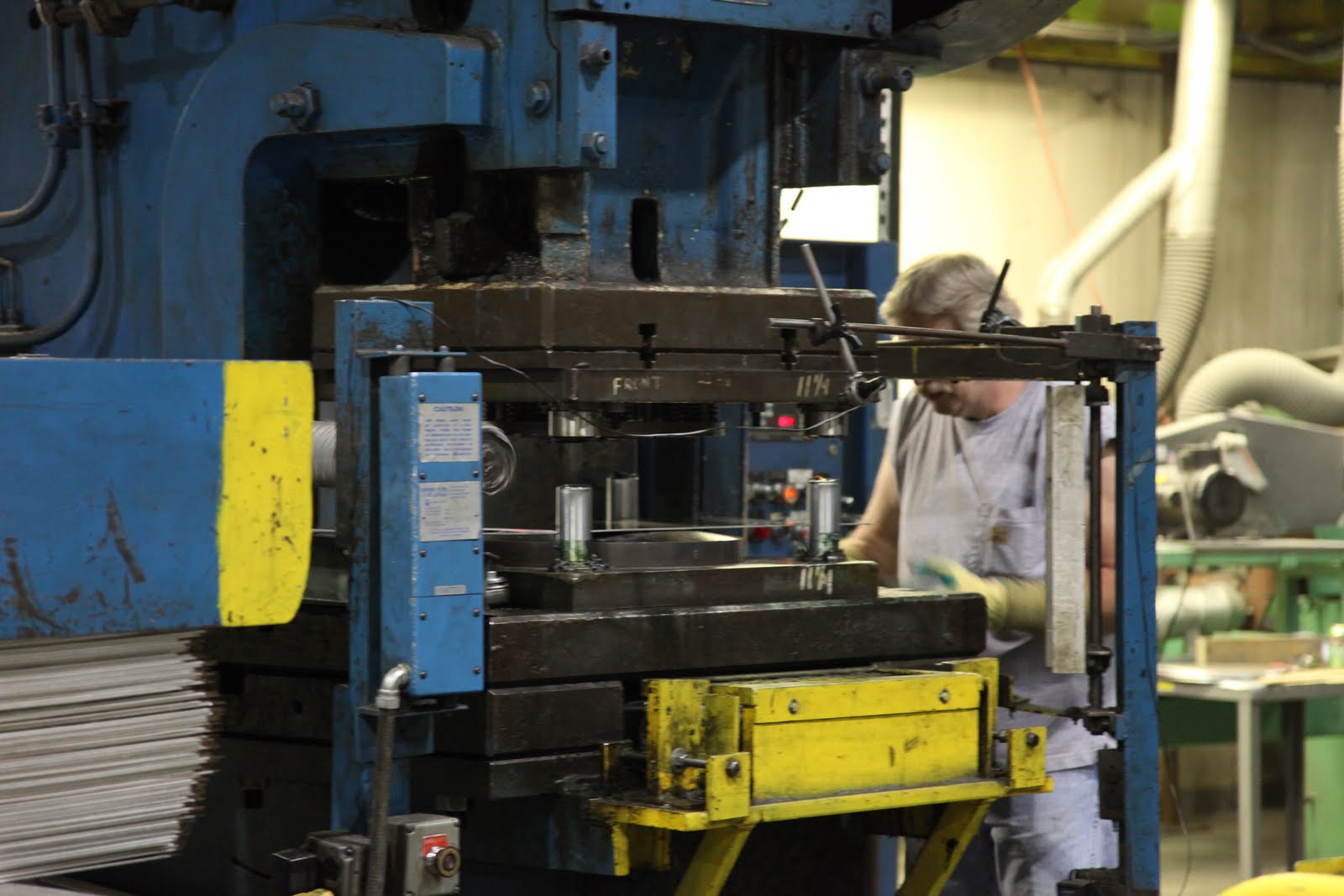
- Once the bonded metal is cool, it is fed into this machine, which cuts it into blanks.
-
- Formed, unfinished stock pots

-
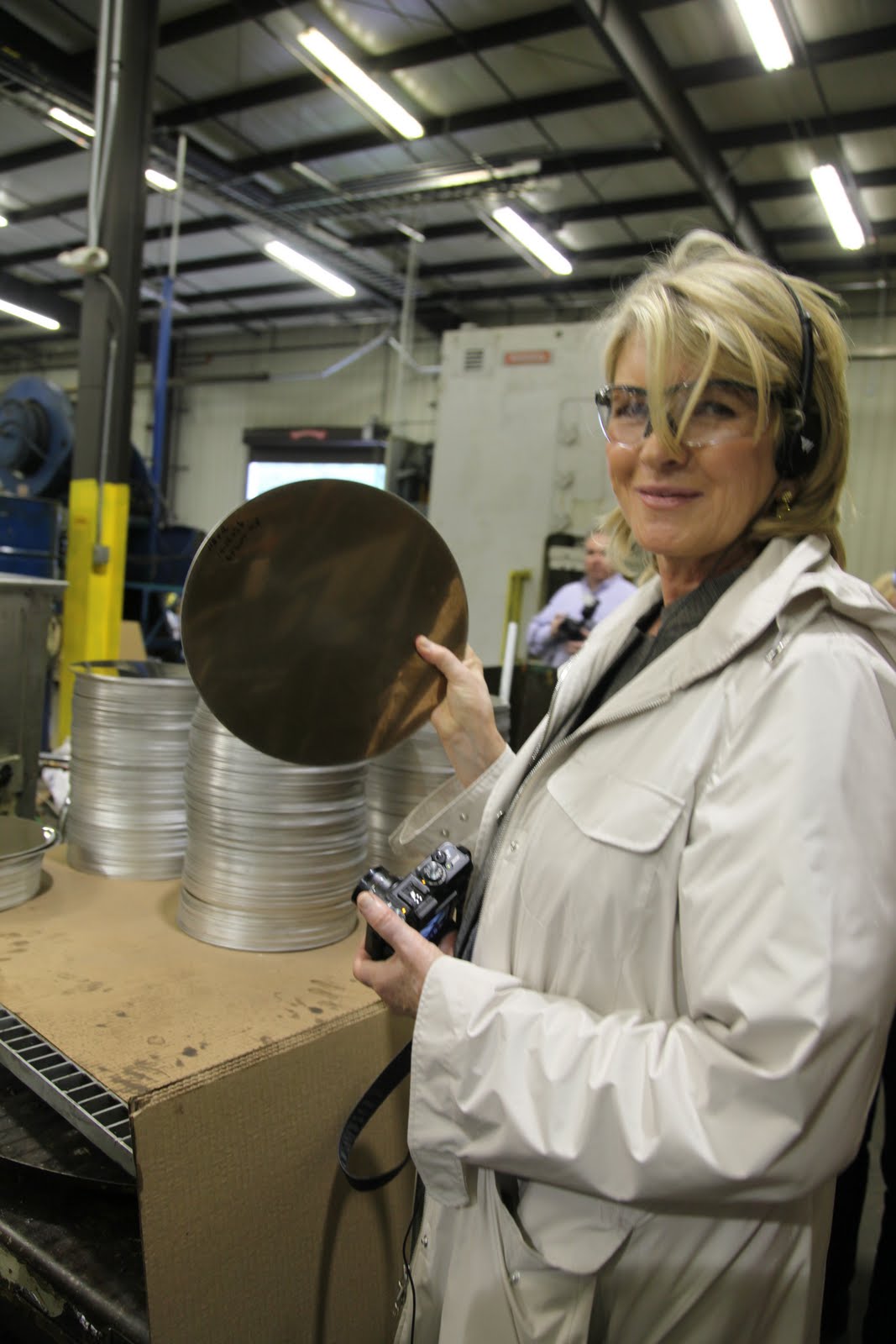
- This stack of blanks will go into another machine to form them.

-
- Holding a blank – it has substantial weight.
-
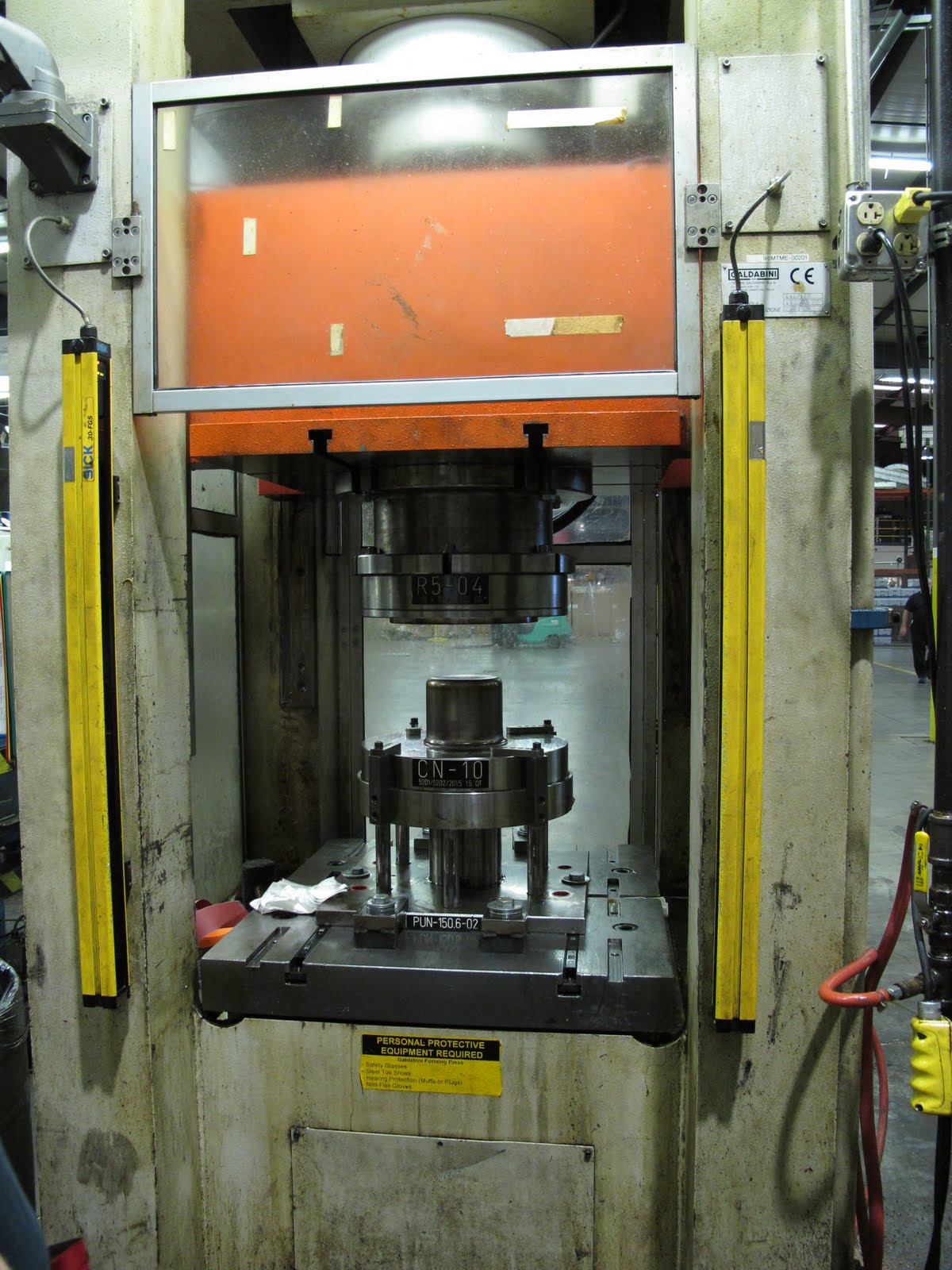
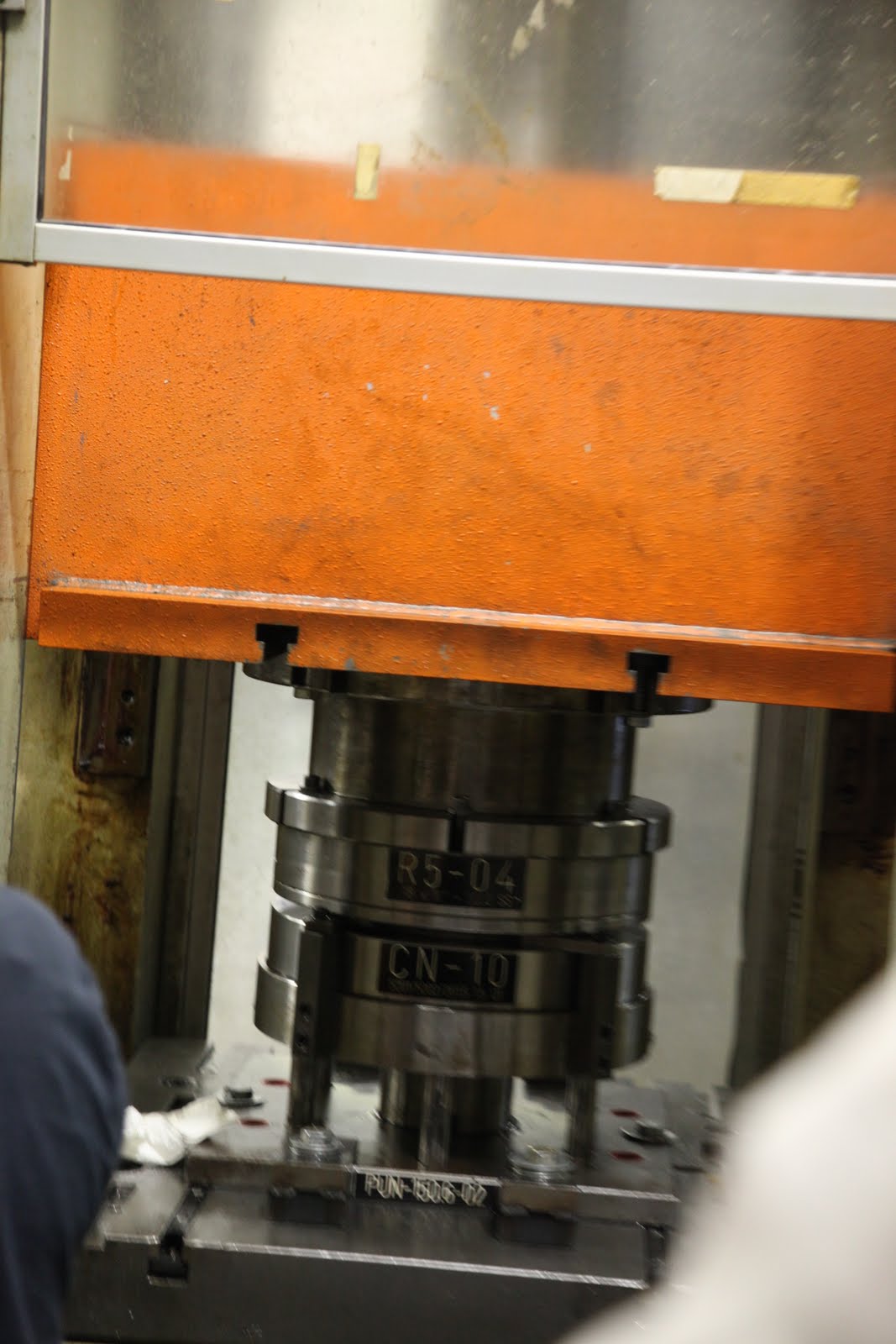
- This is a hydraulic forming press – it has 160-tons of force.
-
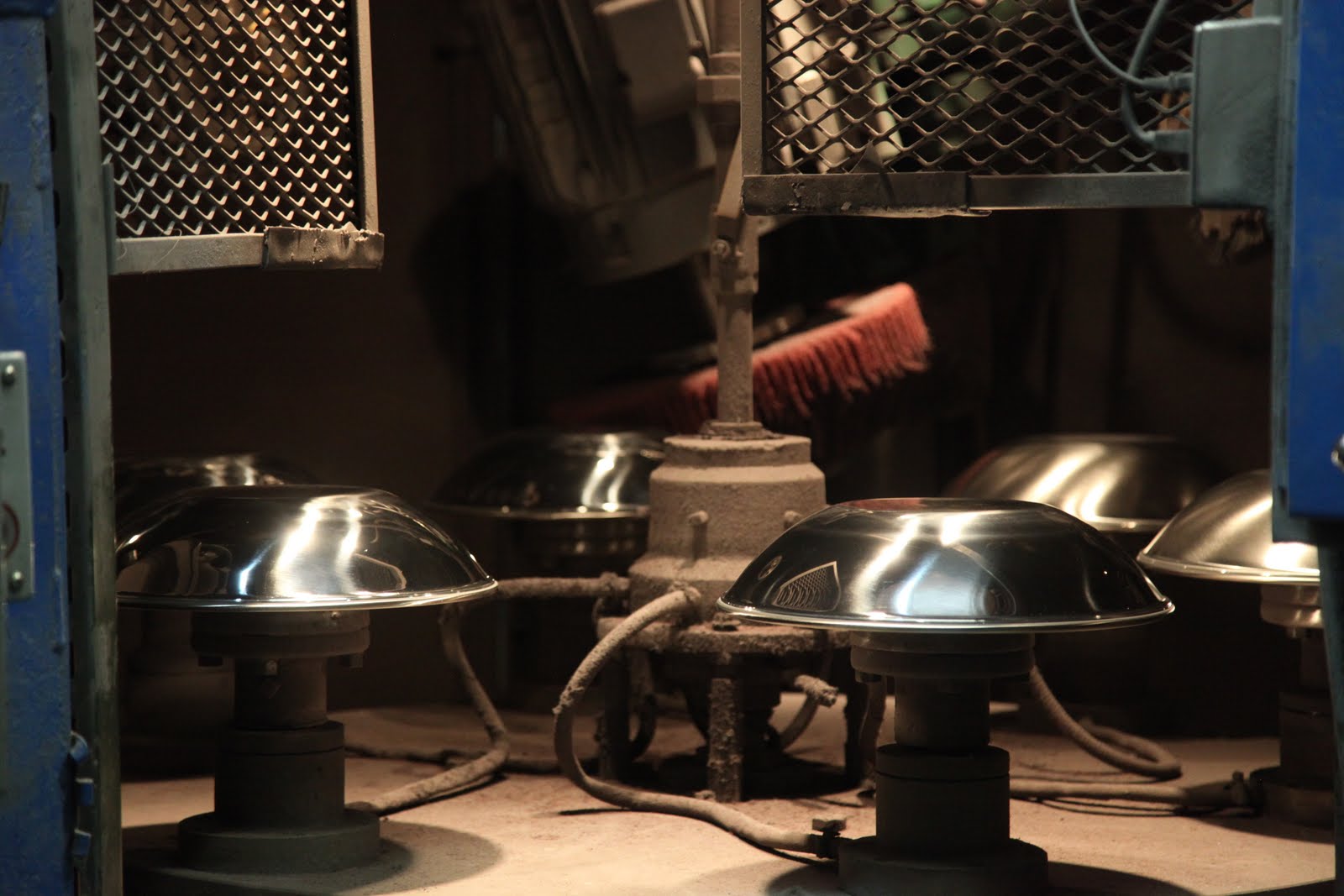
- The unfinished pots are passed through a rotary buffing machine.
-
- And through a commercial washer

-
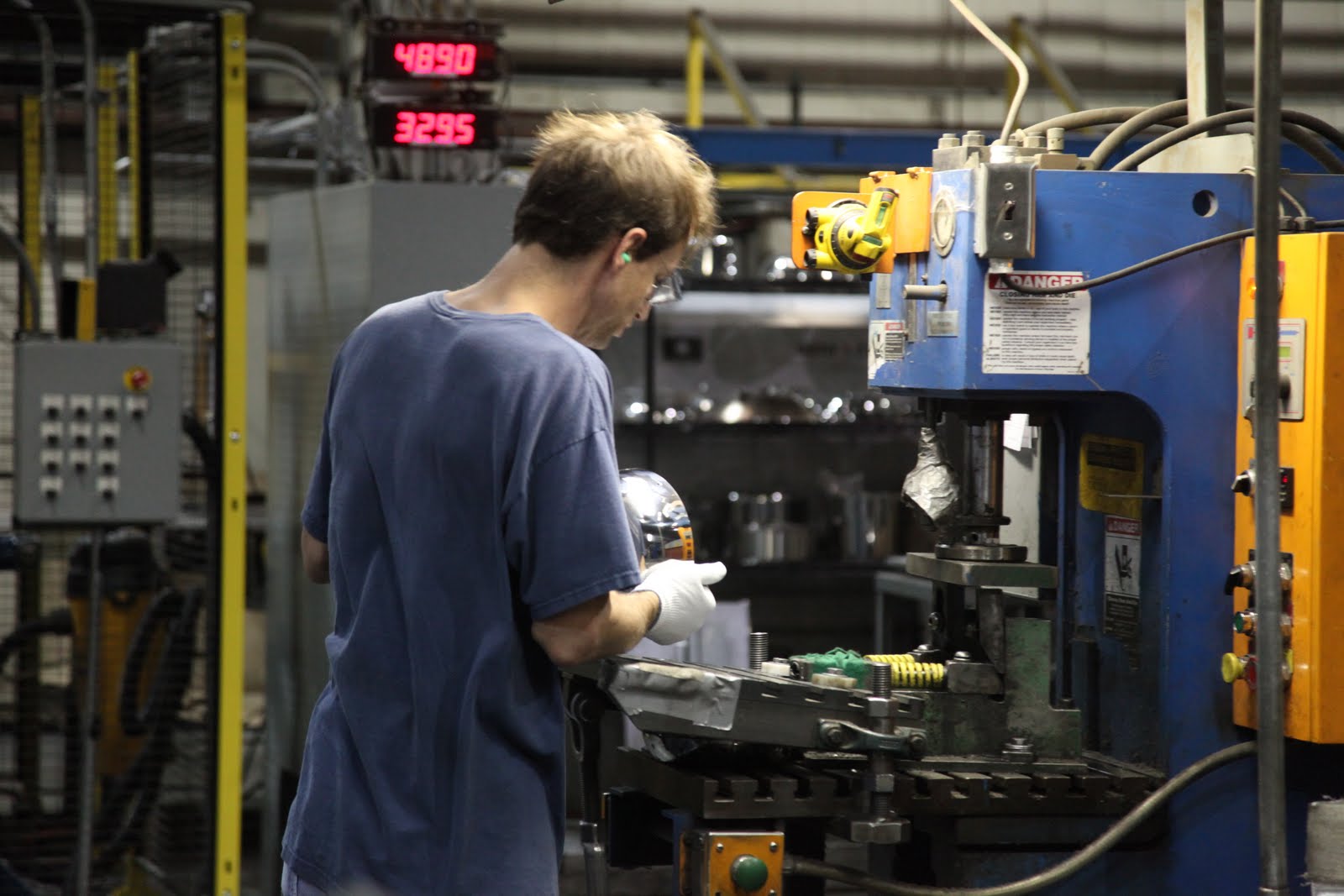
- This machine is a hole punch to attach handles with rivets.
-
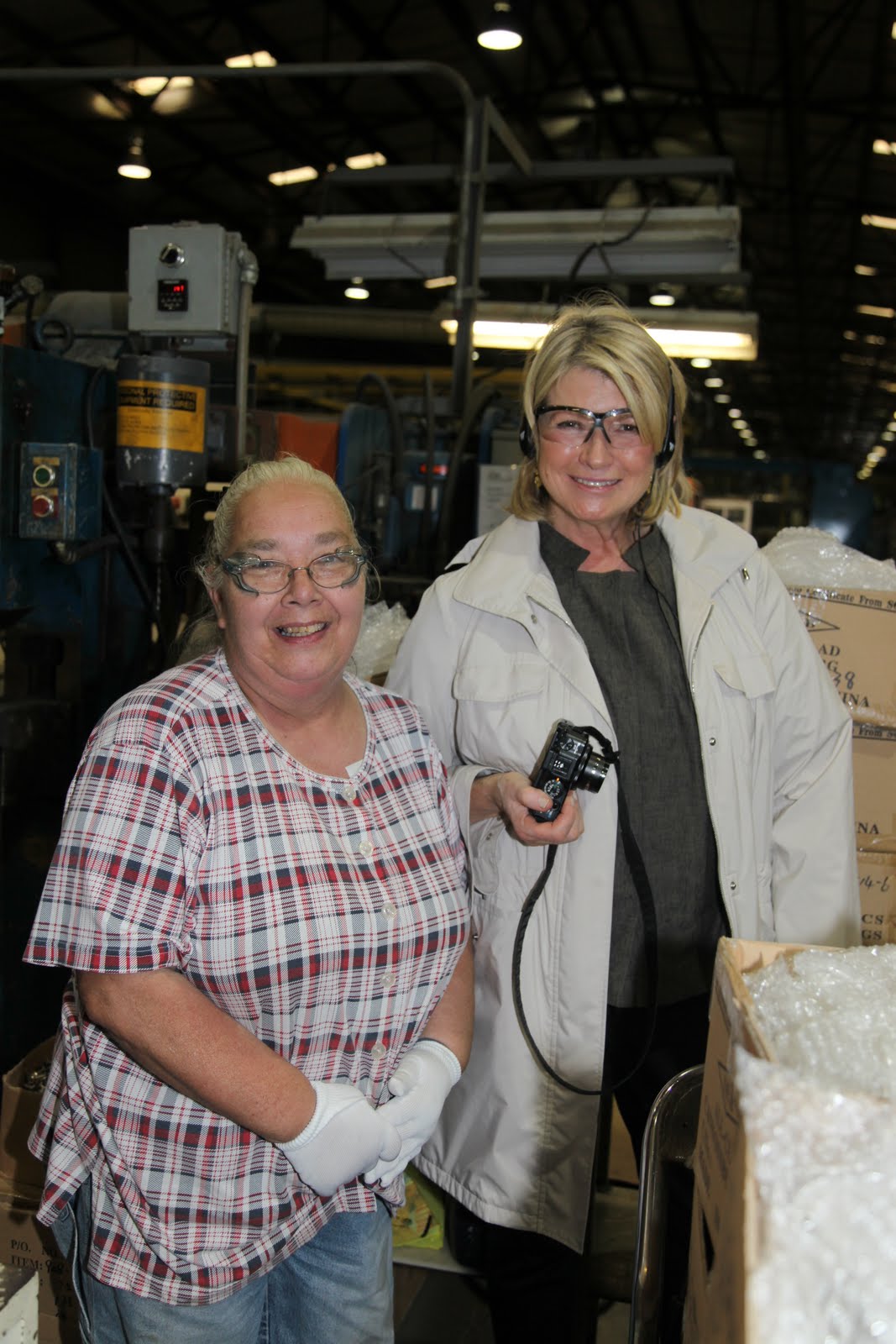
- This is Millie, the riveter – she fastens on the handles.
-
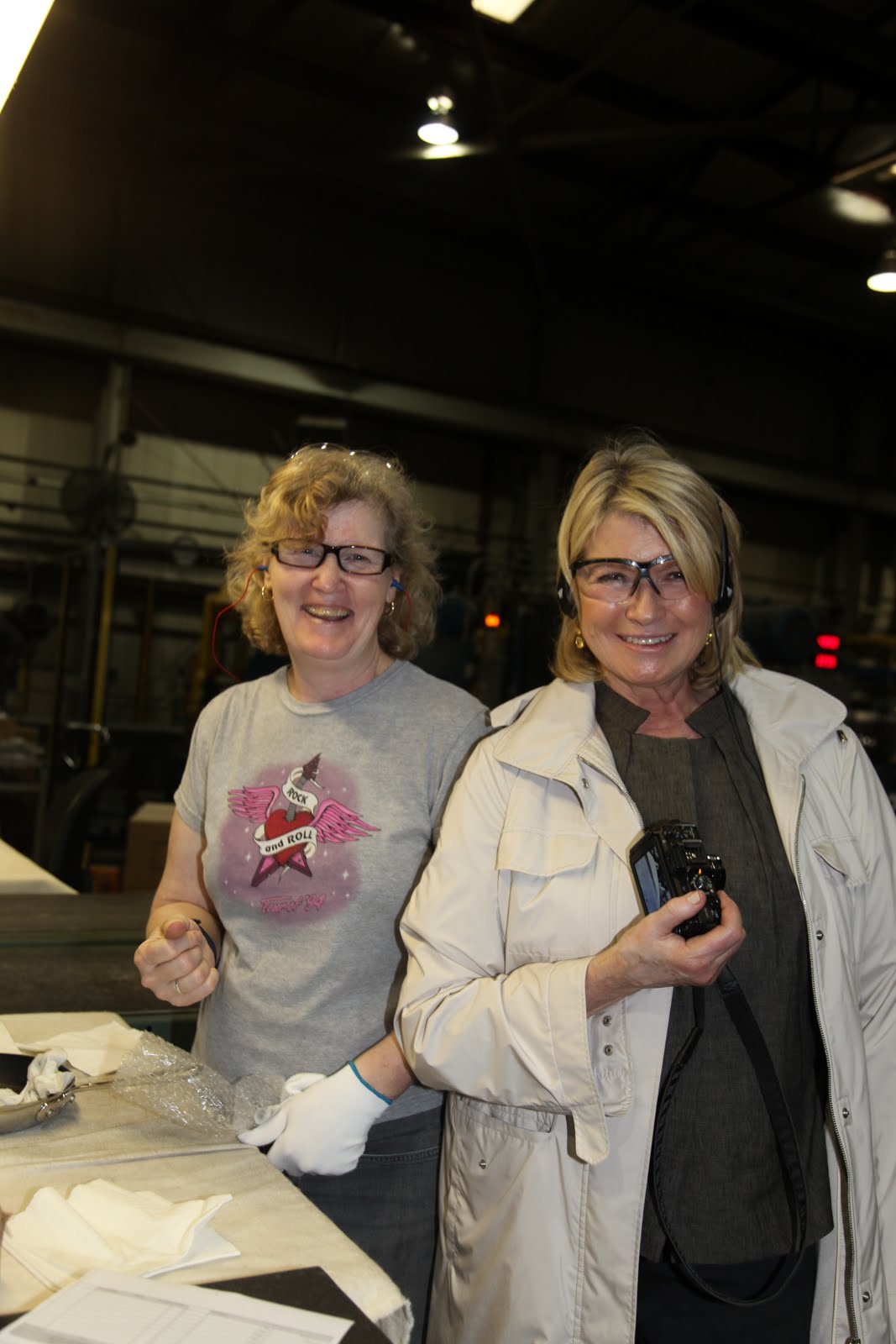
- Here I am with Susan, who inspects the finished product.
-
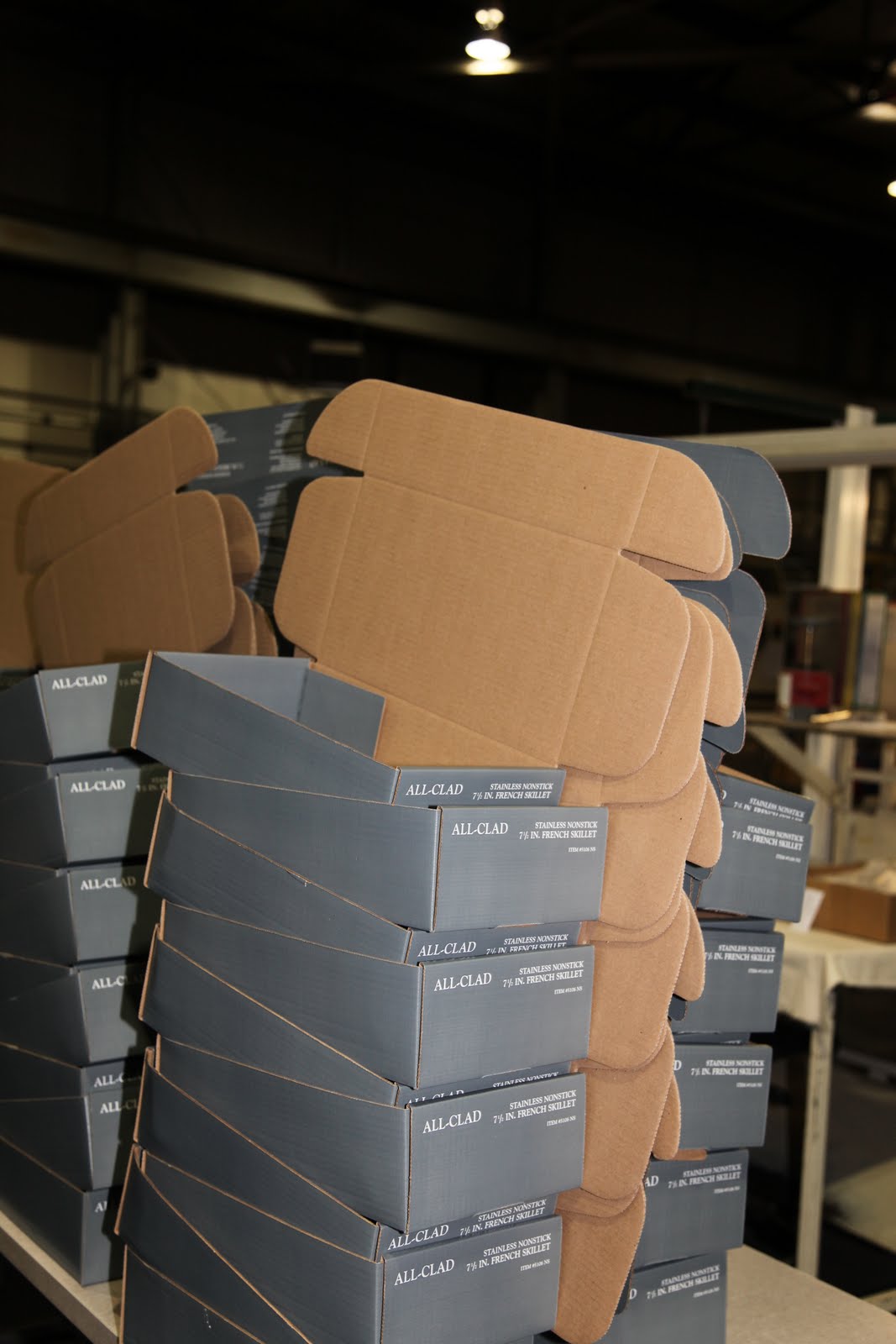
- Product boxes waiting to be filled
-
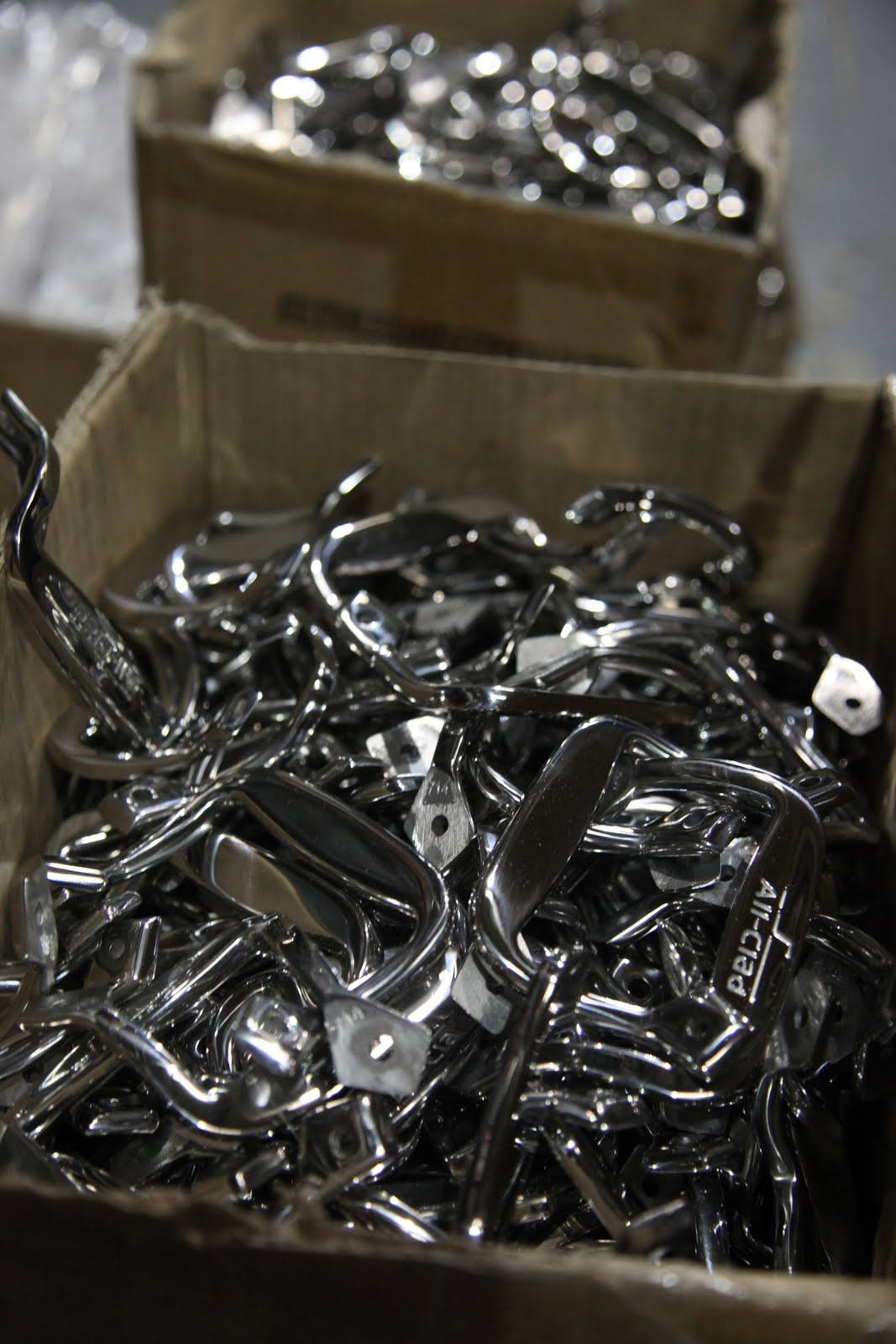
- Handles stamped with All-Clad waiting to be riveted
-
- Again, we meet up with the HGTV Producers and cameraman.
-
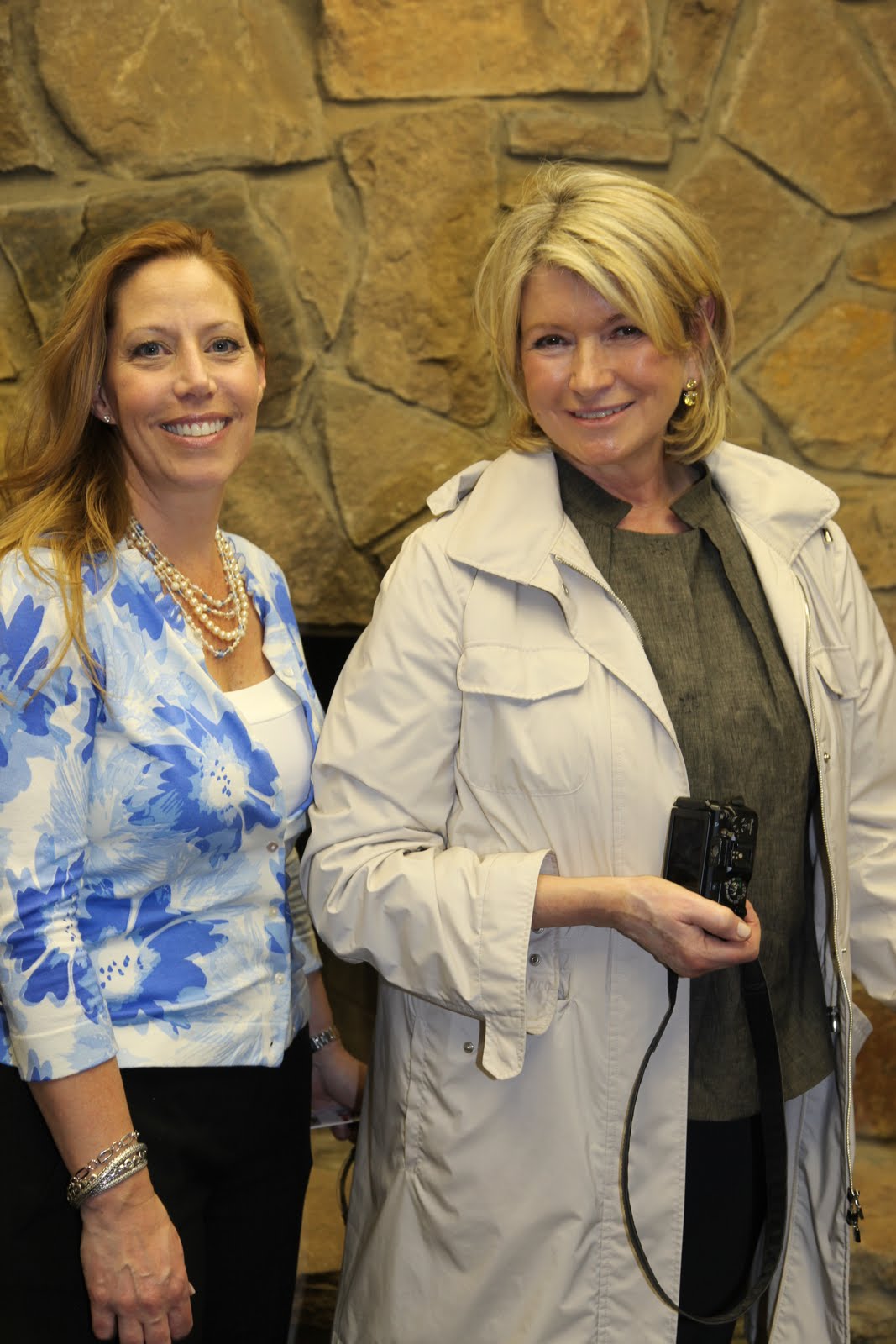
- And posing with Judy Baker
-
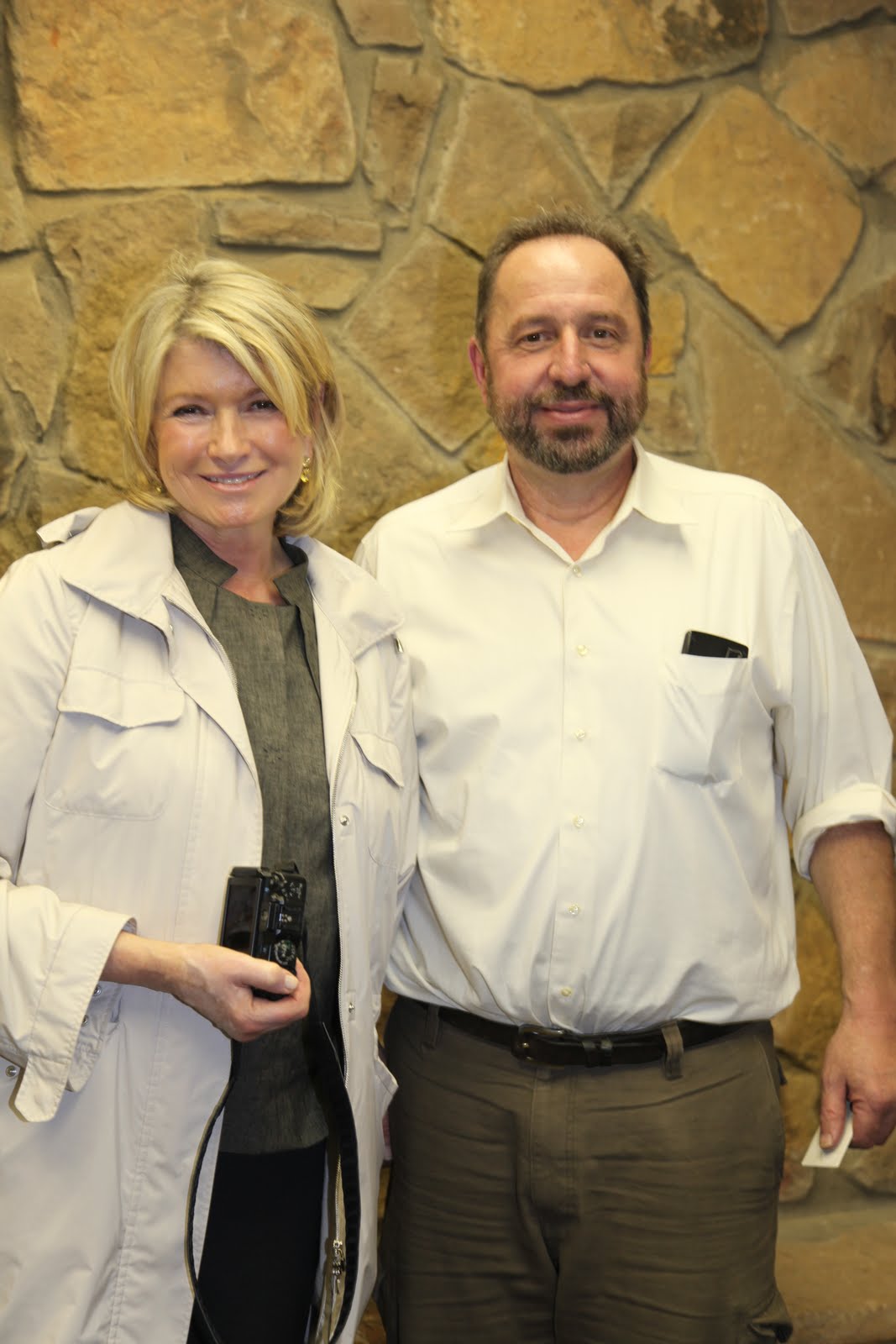
- Here I am with Bill Groll – VP Research and Development
-
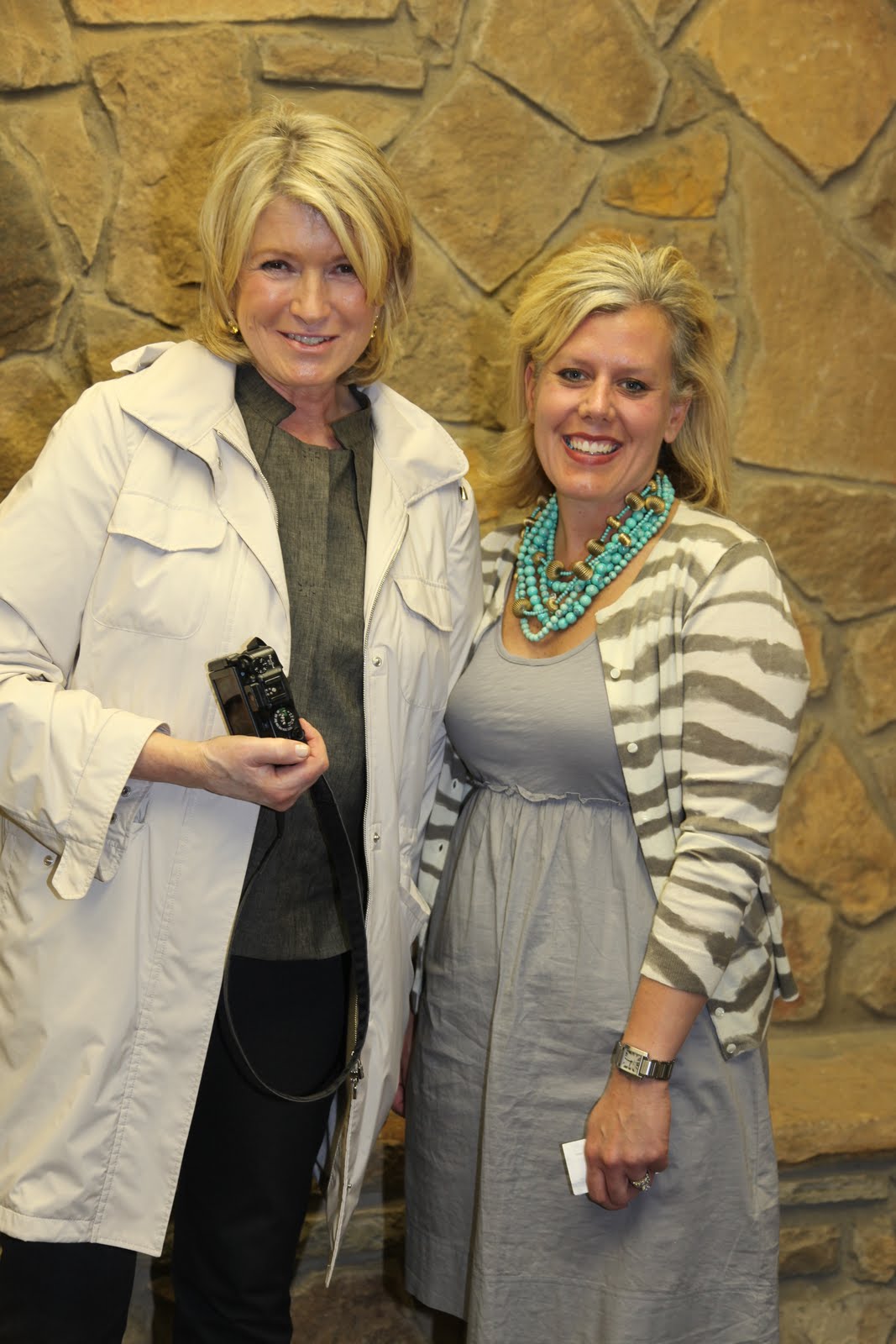
- And with Melissa Palmer – VP Marketing Communications
 Martha Pins


 Martha Tweets

