

Getting Gardening Chores Done
We’re expecting more mild weather here at my farm with temperatures in the upper 40s - a good time to continue with some outdoor gardening tasks before the winter chill returns.
My crew is busy with many projects, including pruning and grooming various trees and shrubs, pollarding the London planes, fertilizing and mulching the garden beds, and clearing any late season leaves. Here at Cantitoe Corners, it's crucial to take advantage of every good day we get.
Here are some photos, enjoy.
-

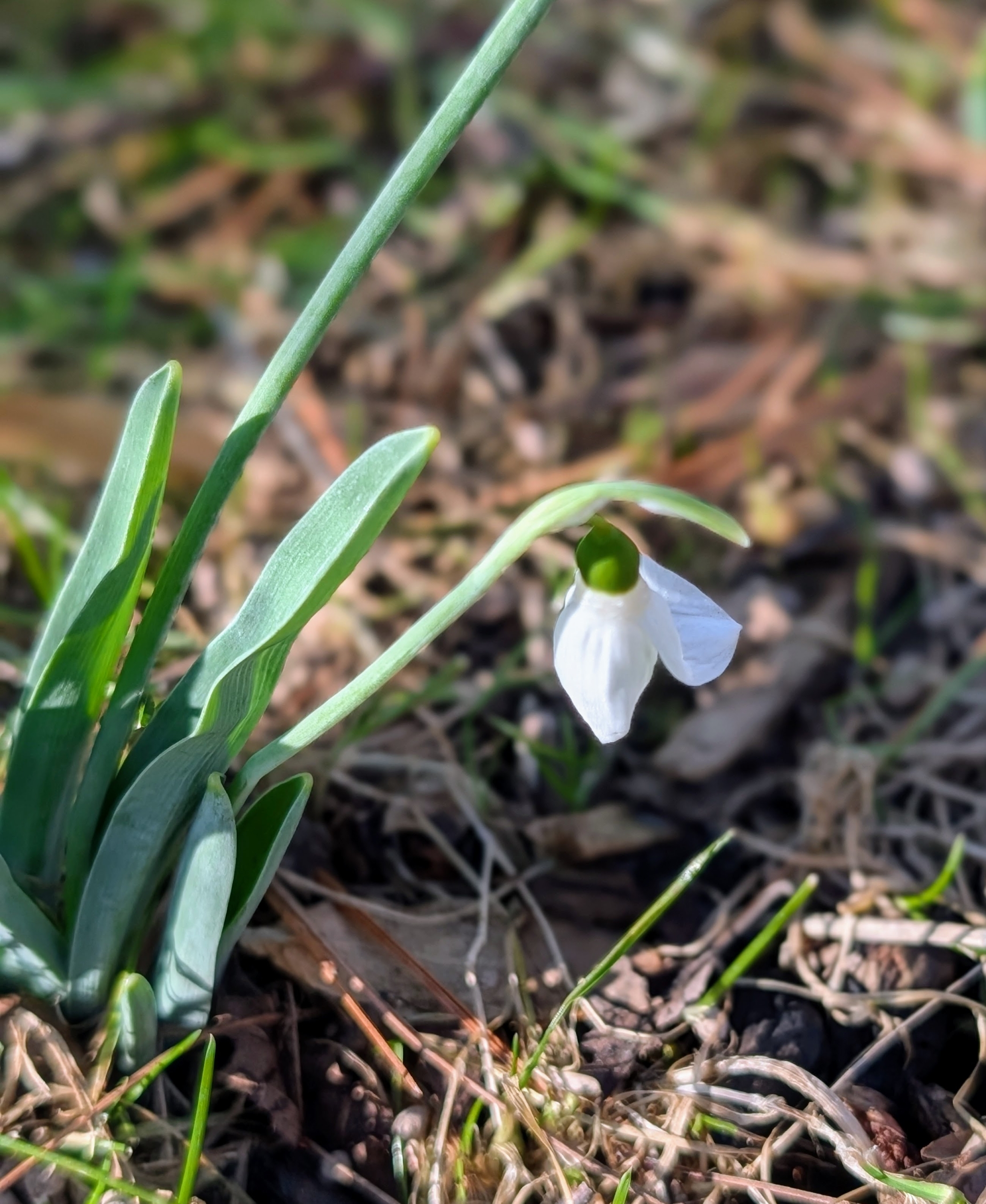
- It’s mid-January, but some of the snowdrops are already giving a sweet welcome to spring. Snowdrops, Galanthus, are the nodding, crisp white flowers that dangle above clumps of strap-shaped leaves from now through March. I have planted lots of snowdrops around the farm.
-
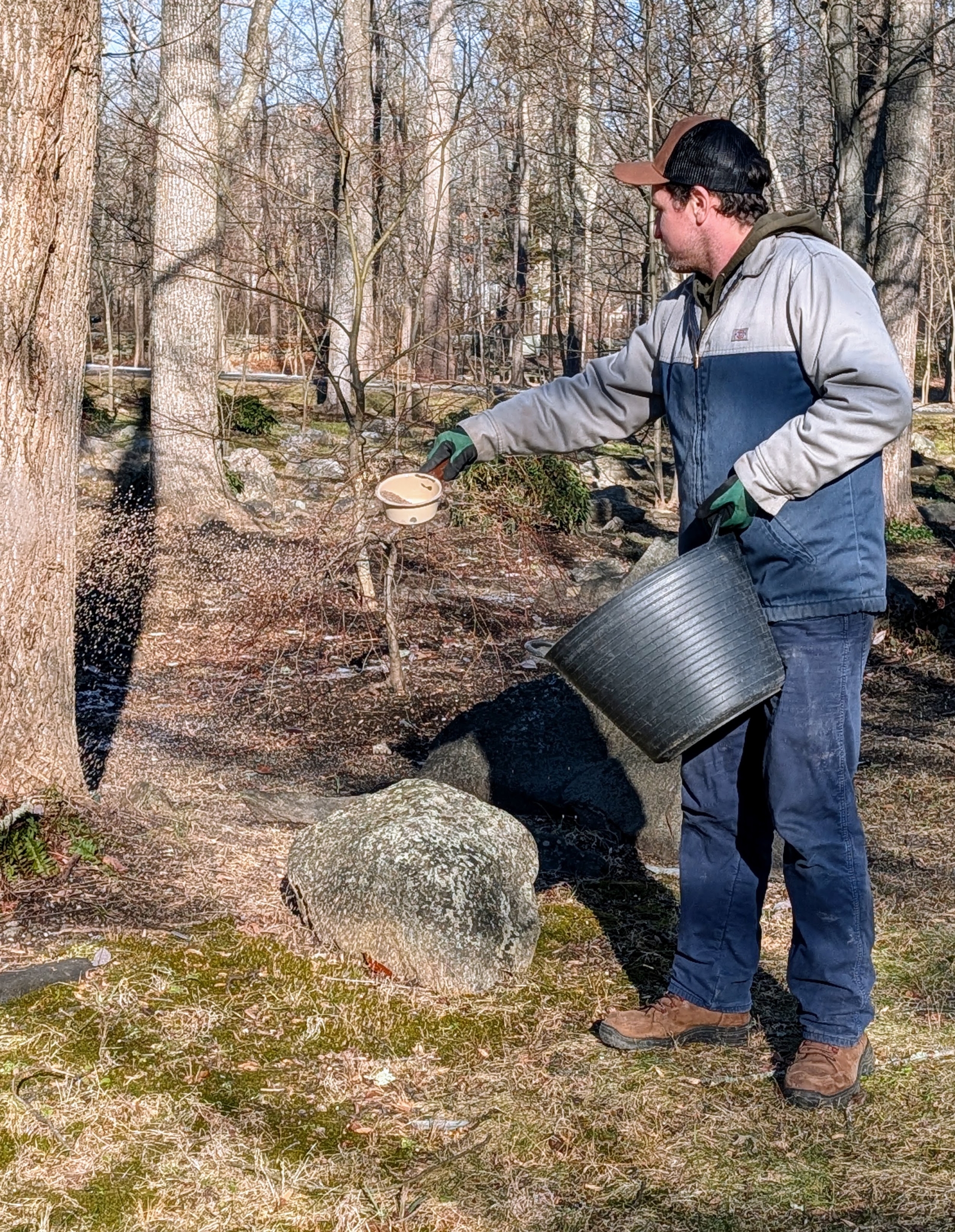
- Ryan feeds the area with Azomite, a natural mineral substance used primarily as a fertilizer and soil amendment. It is rich in potassium,, magnesium, iron, and calcium which are essential for plant growth and soil health.
-
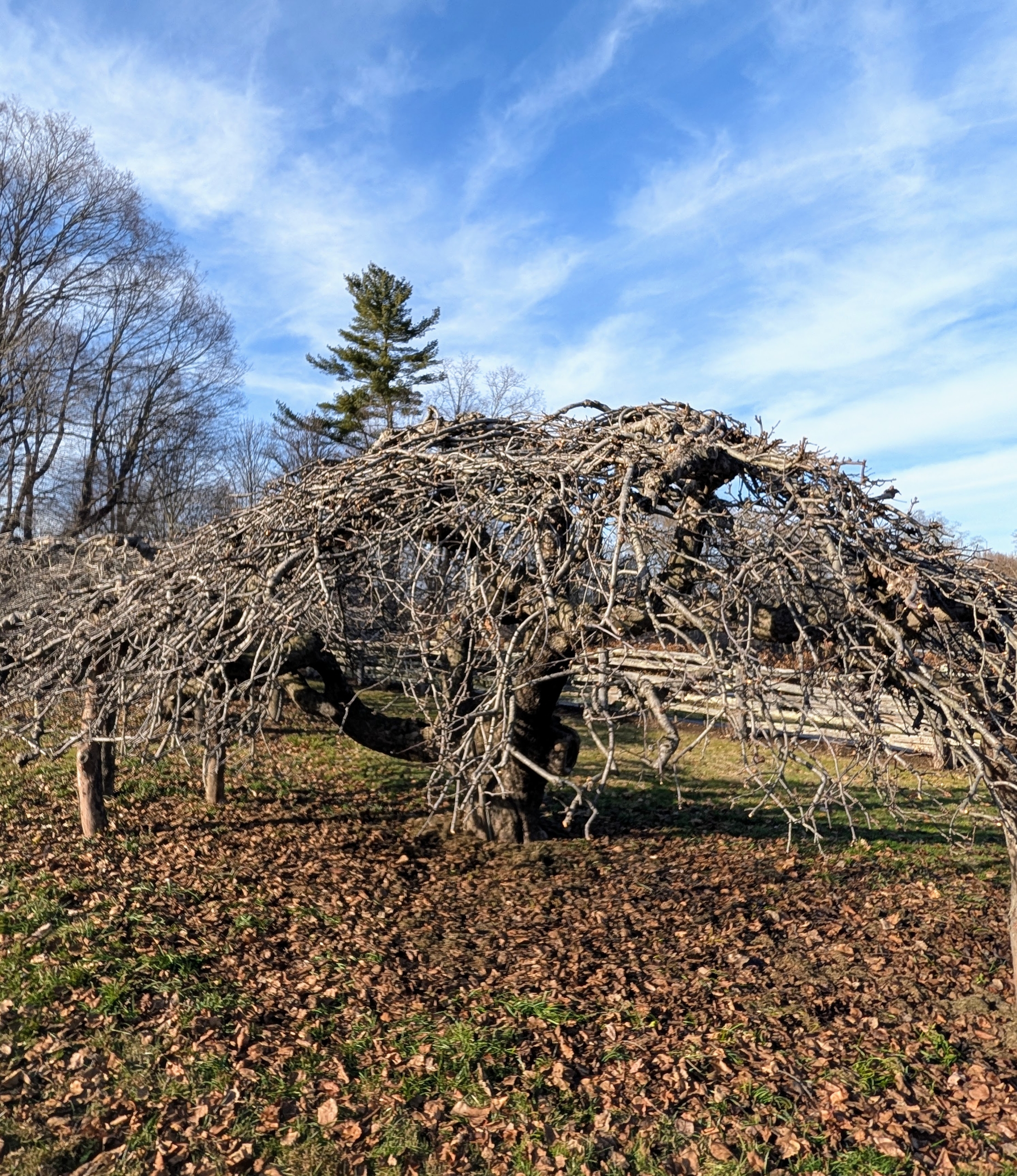
- While the temperatures have been pleasant these last few weeks, my outdoor grounds crew has been able to get a lot of chores done. These “ancient” apple trees, which have been here since i acquired the property have just been pruned. Good maintenance always pays off – these trees continue to provide delicious fruits in autumn.
-
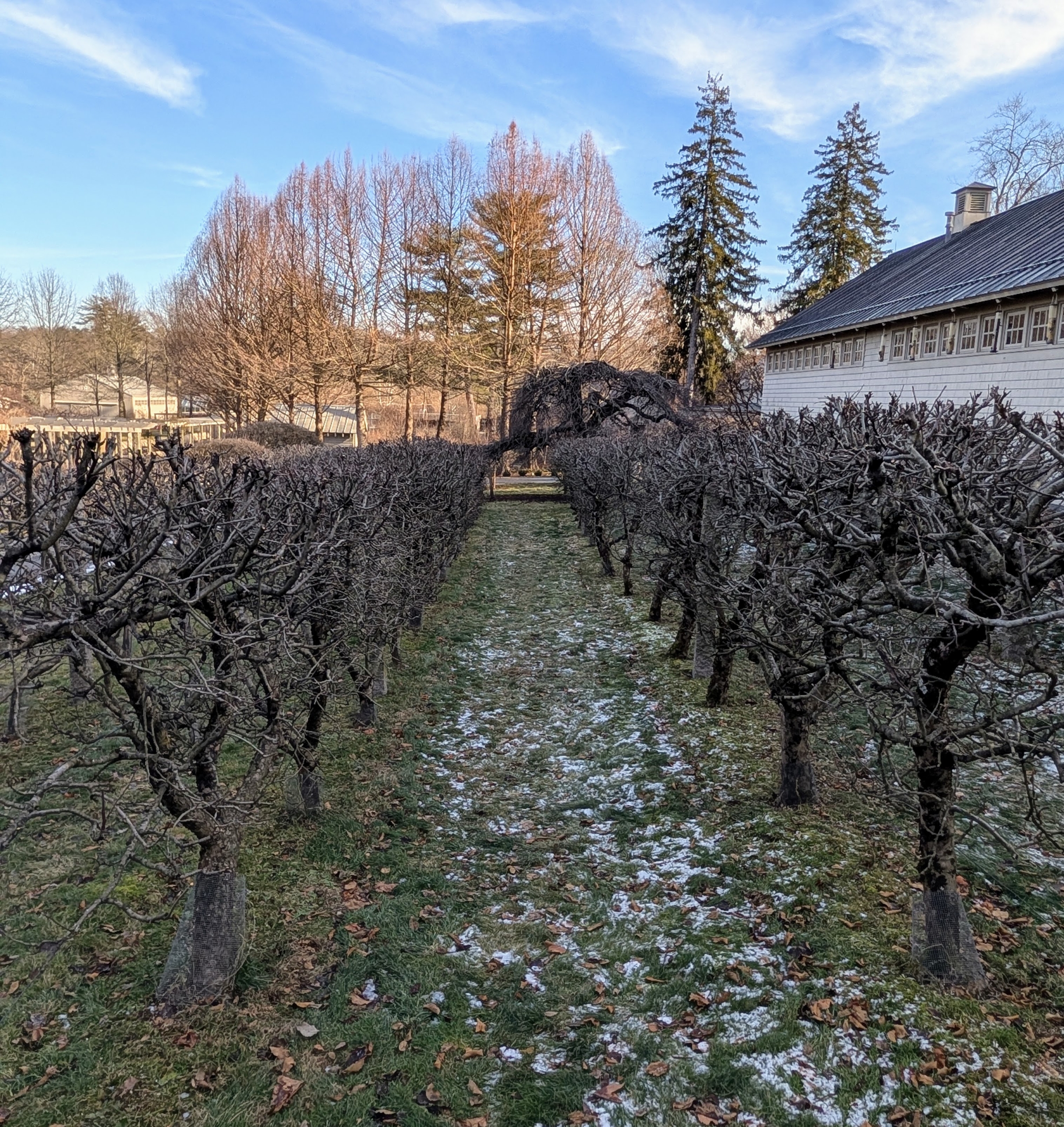
- My dwarf apple espalier was also recently pruned. Espalier refers to an ancient technique, resulting in trees that grow flat, either against a wall, or along a wire-strung framework. There are four rows of espaliered apples here.
-
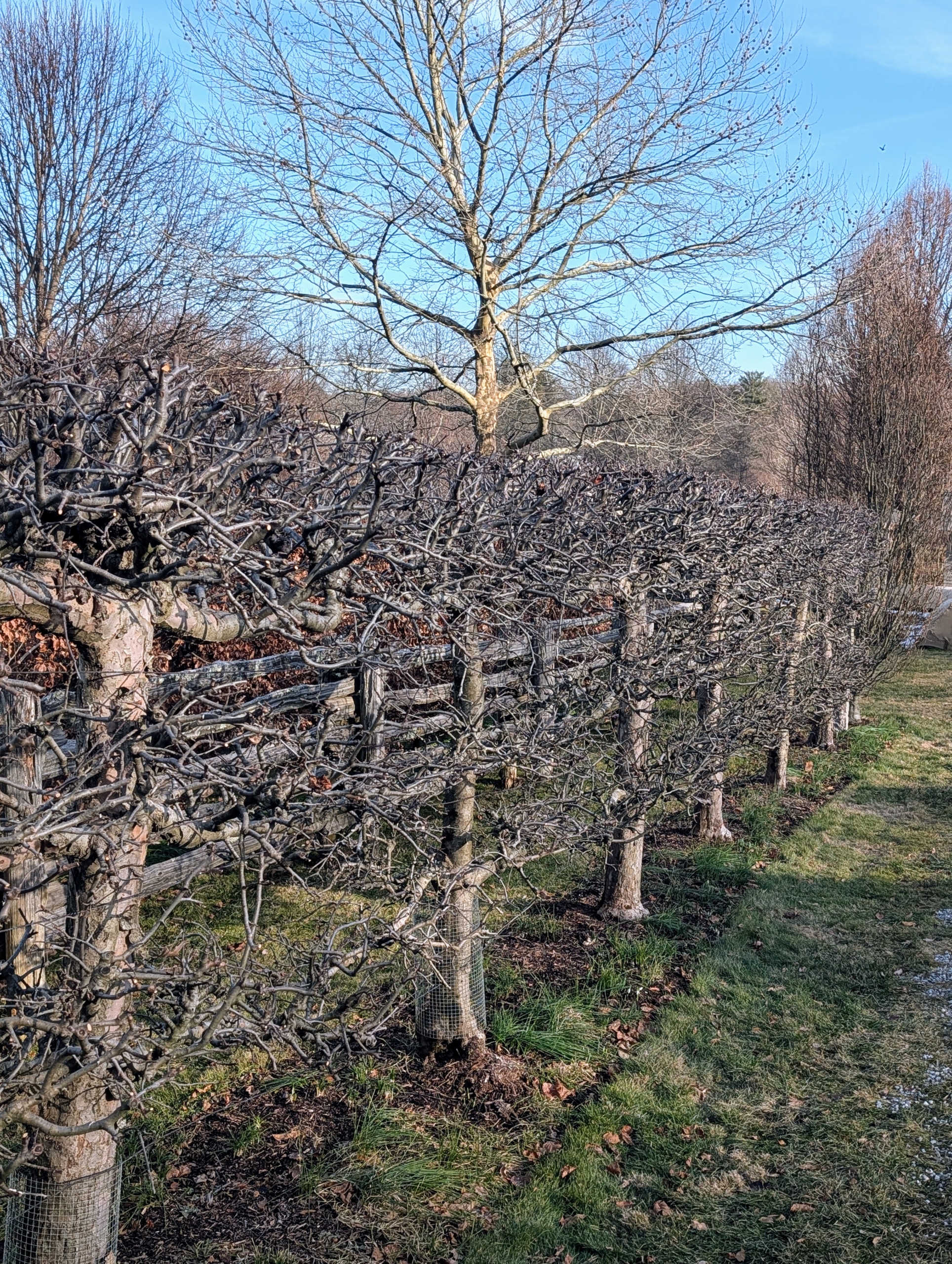
- I also have these espaliered Gravenstein apples across the carriage road which were also just pruned and groomed.
-
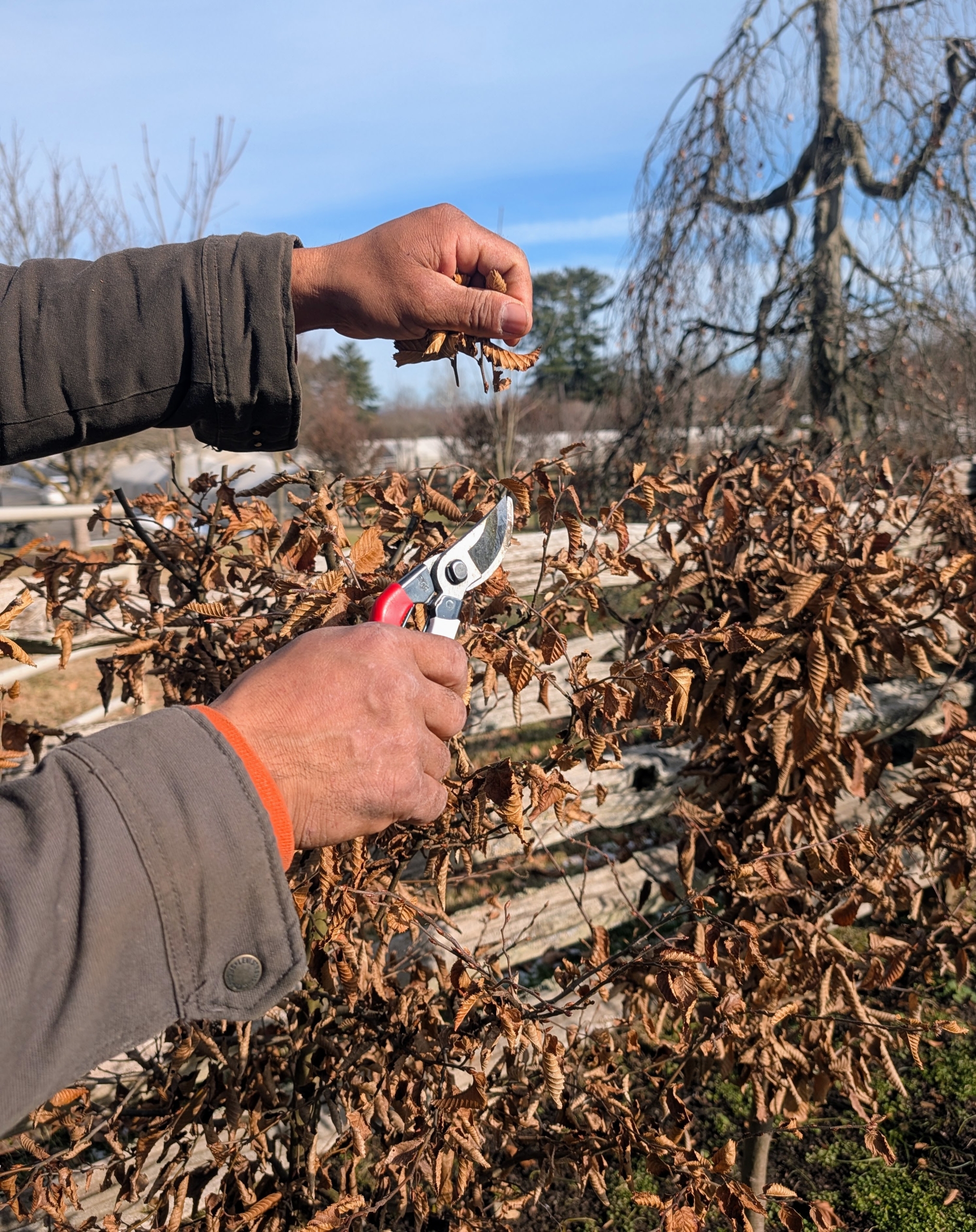
- Yesterday, Pasang pruned the European hornbeams, Carpinus betulus, surrounding my vegetable garden.
-
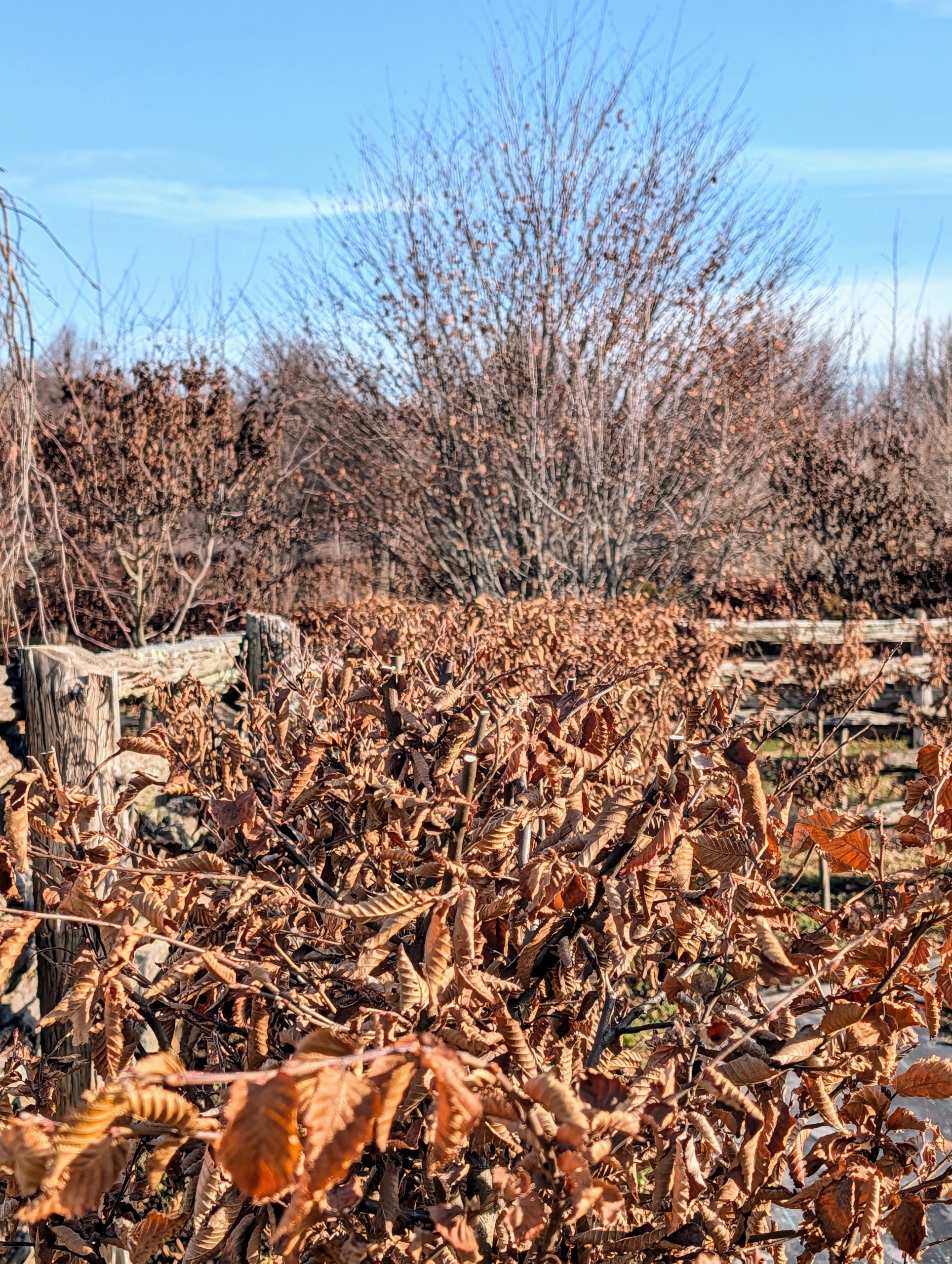
- These are fast-growing deciduous trees and are being grown as a hedge along the inside of the half-acre space.
-
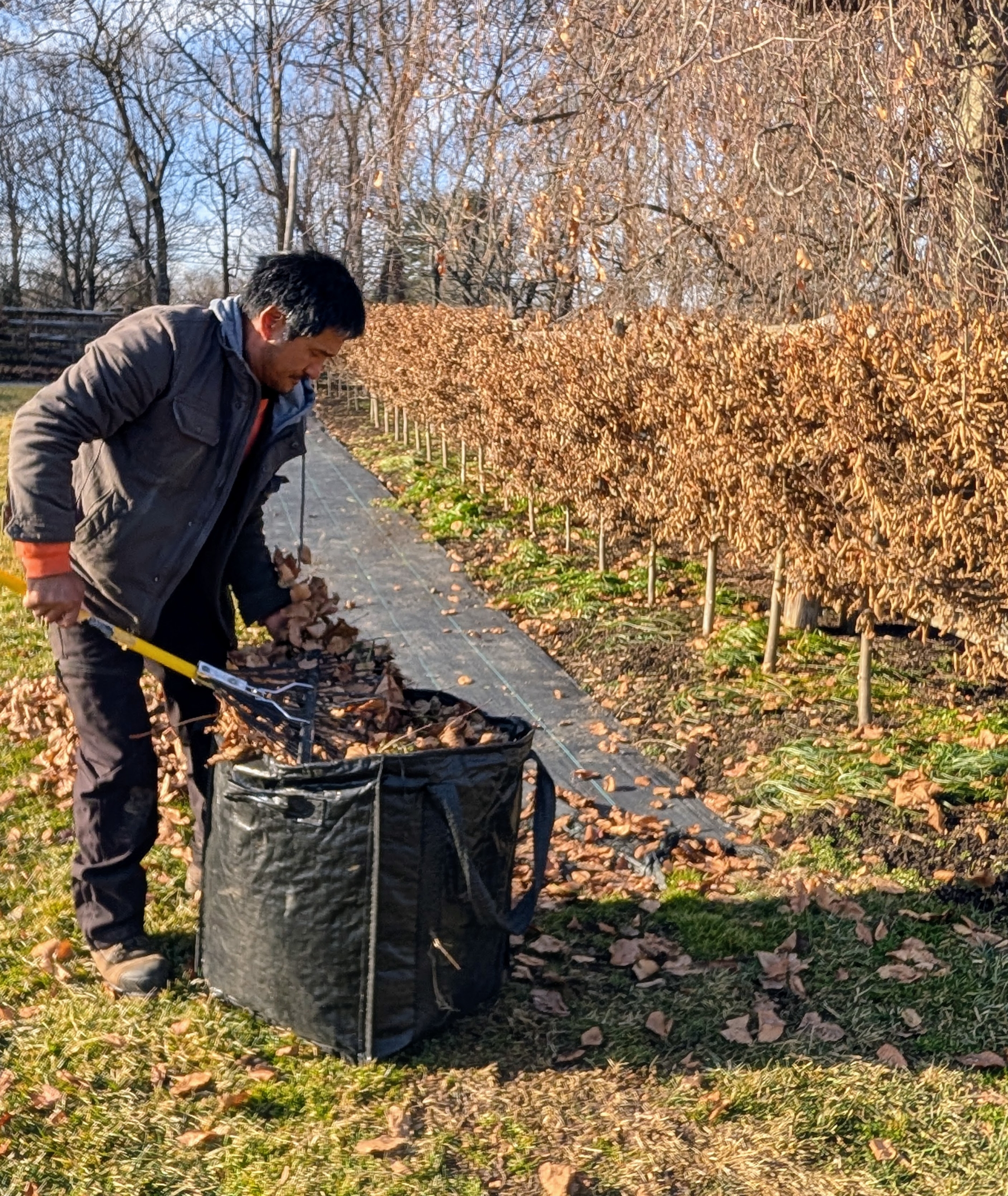
- Pasang works efficiently and quickly. Here he is cleaning up all the dropped branches and late season leaves after the chore was completed.
-
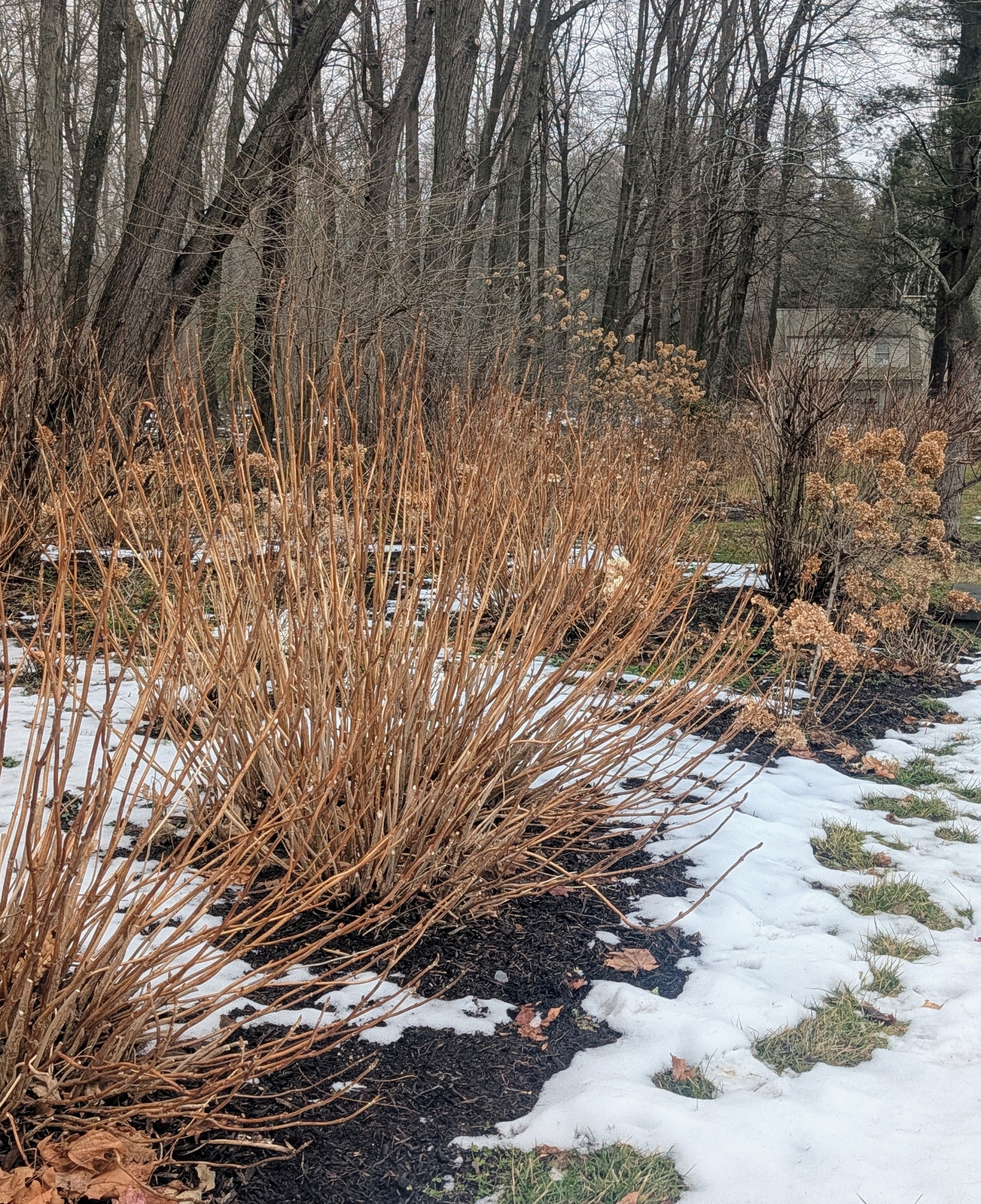
- This is also a good time to prune my hydrangeas. I have hydrangeas growing in a large bed across from my chicken coops, around my peafowl pen, outside my tennis court, under my allée of London plane trees, and along one side of my large “run-in” horse paddock.
-
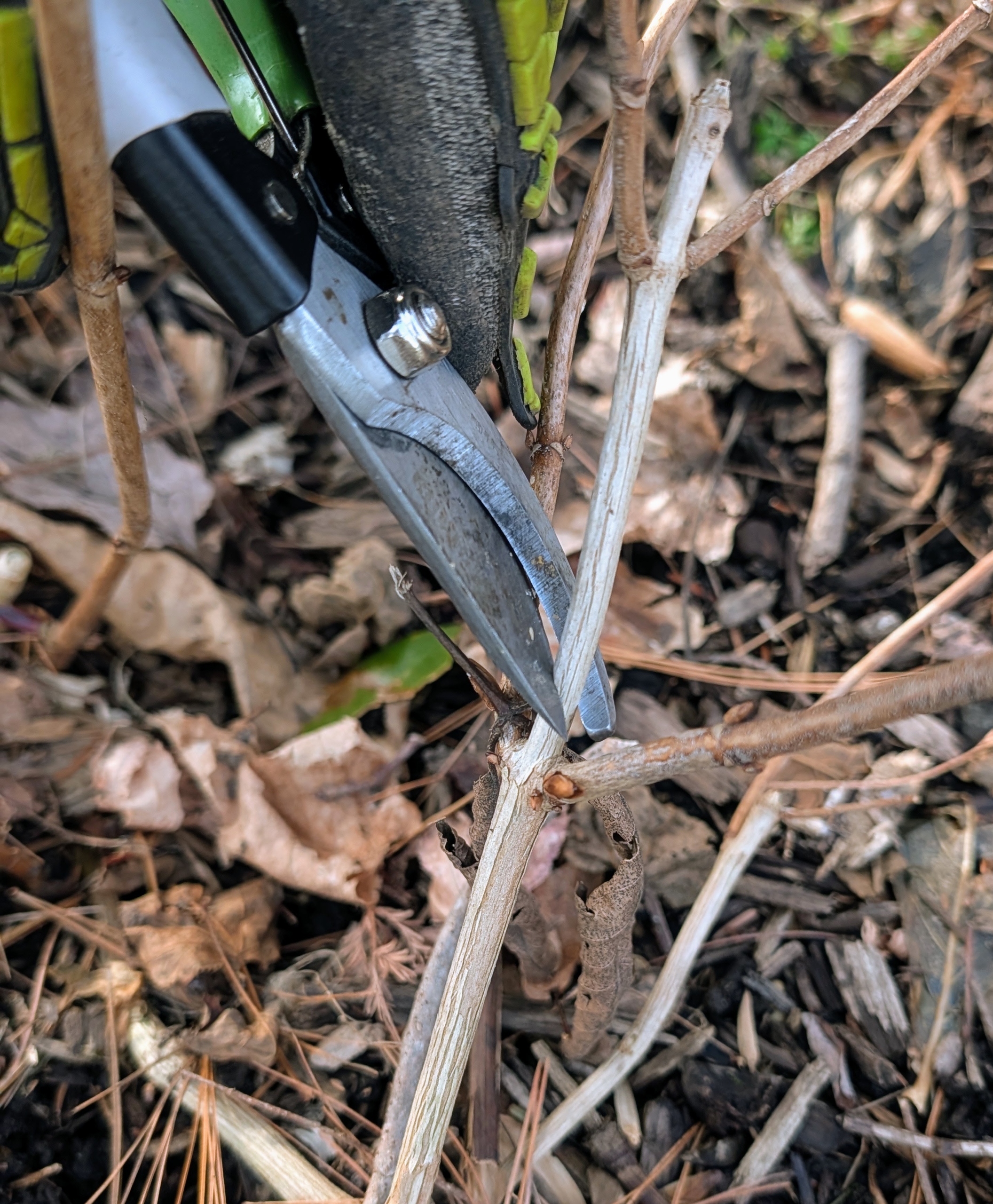
- Here, Matthew trims the hydrangea stem. When cutting hydrangeas, it is important to cut just above the bud or node to ensure the plant can continue to grow and produce flowers. To be certain this is done properly, all the pruning is done by hand, one shrub at a time.
-
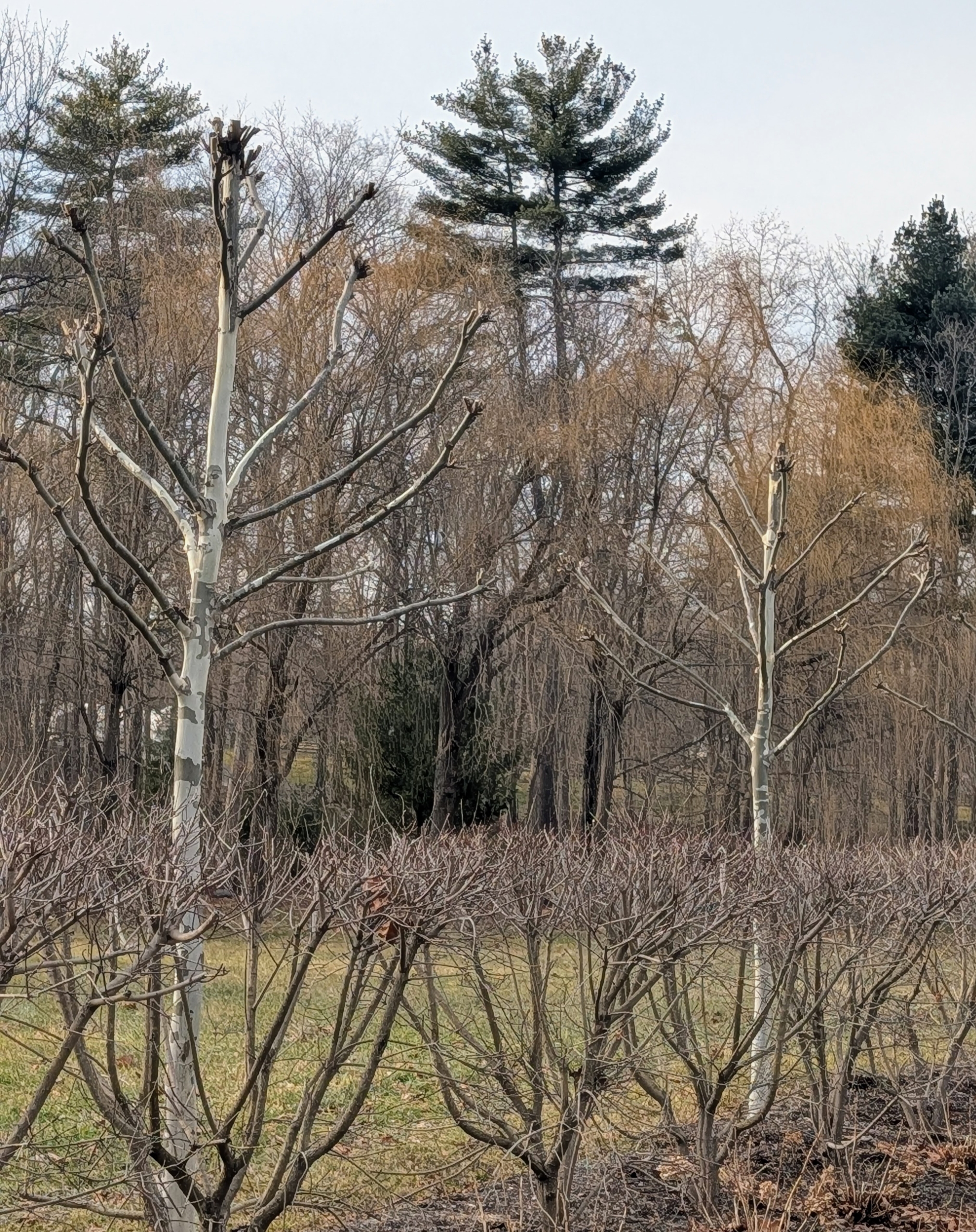
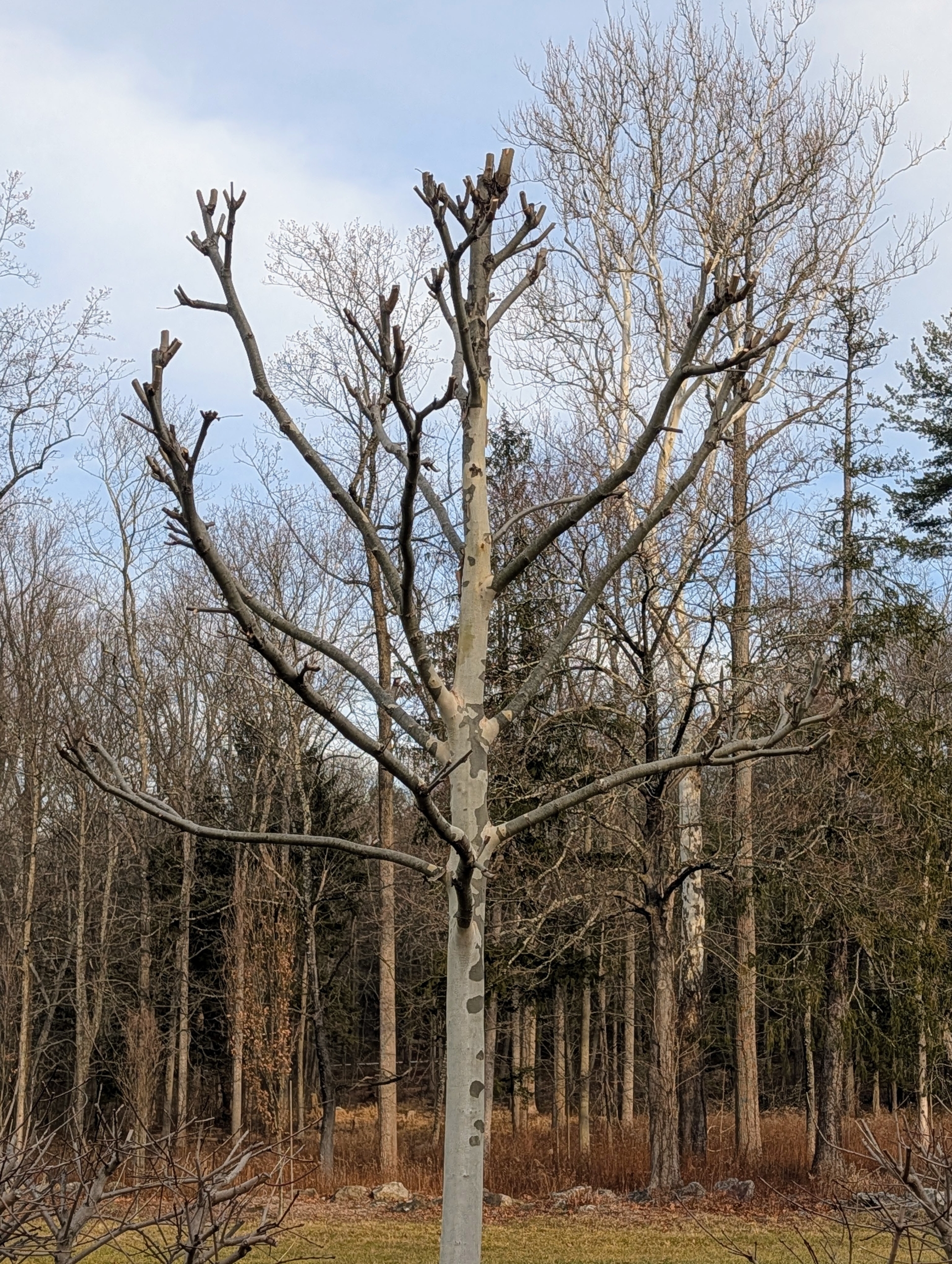
- In my middle hayfield allée, the London planes and smoke bushes were also given some attention. I planted the allée in 2019. In December 2024, I started pollarding the London planes, a pruning technique that involves the removal of a tree’s upper branches to promote the growth of club-headed stems and dense new foliage. London planes are well-suited for pollarding and respond well to this practice.
-
- One can see the developing “knuckles” or “boles” made by removing growth back to the main stem.
-
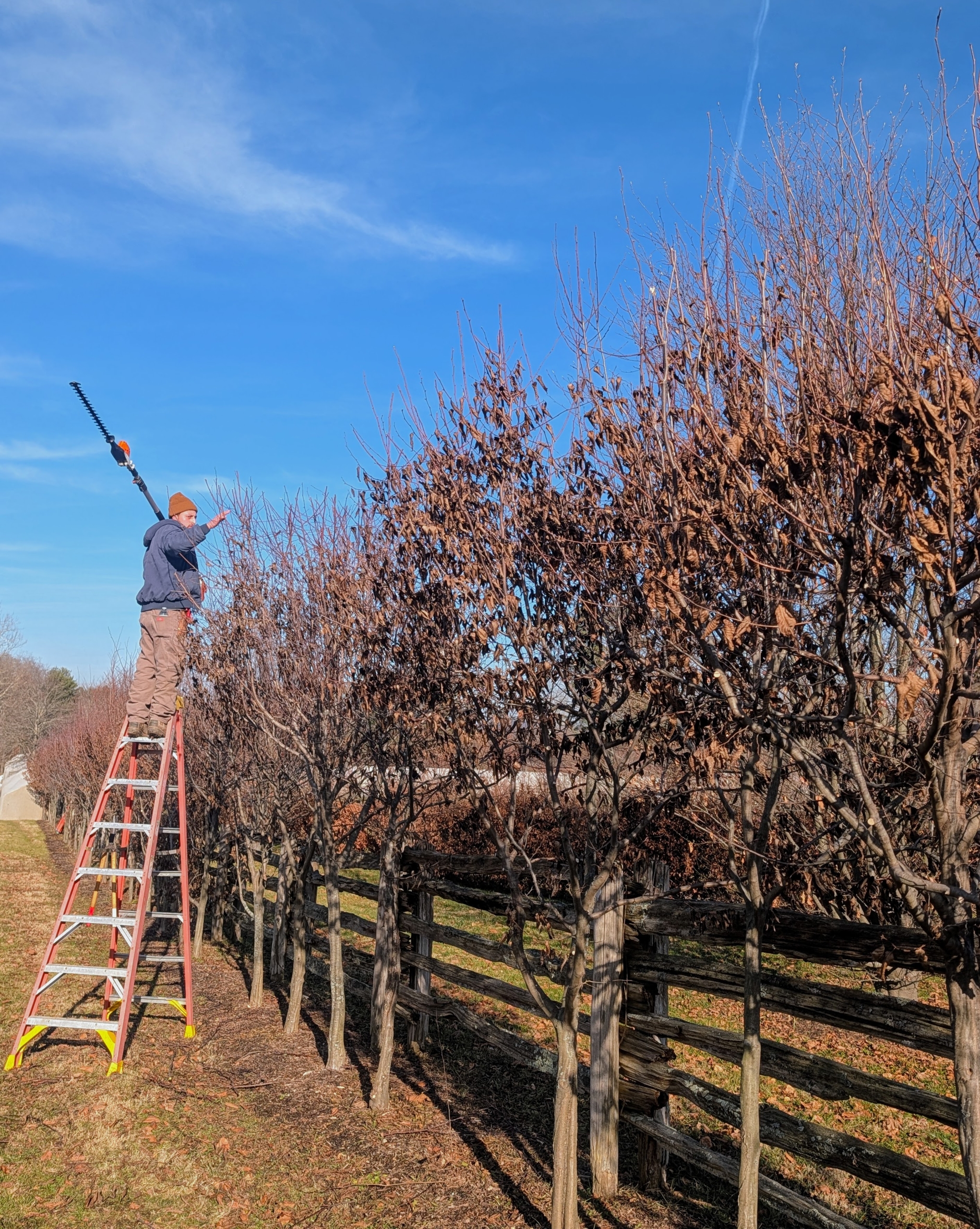
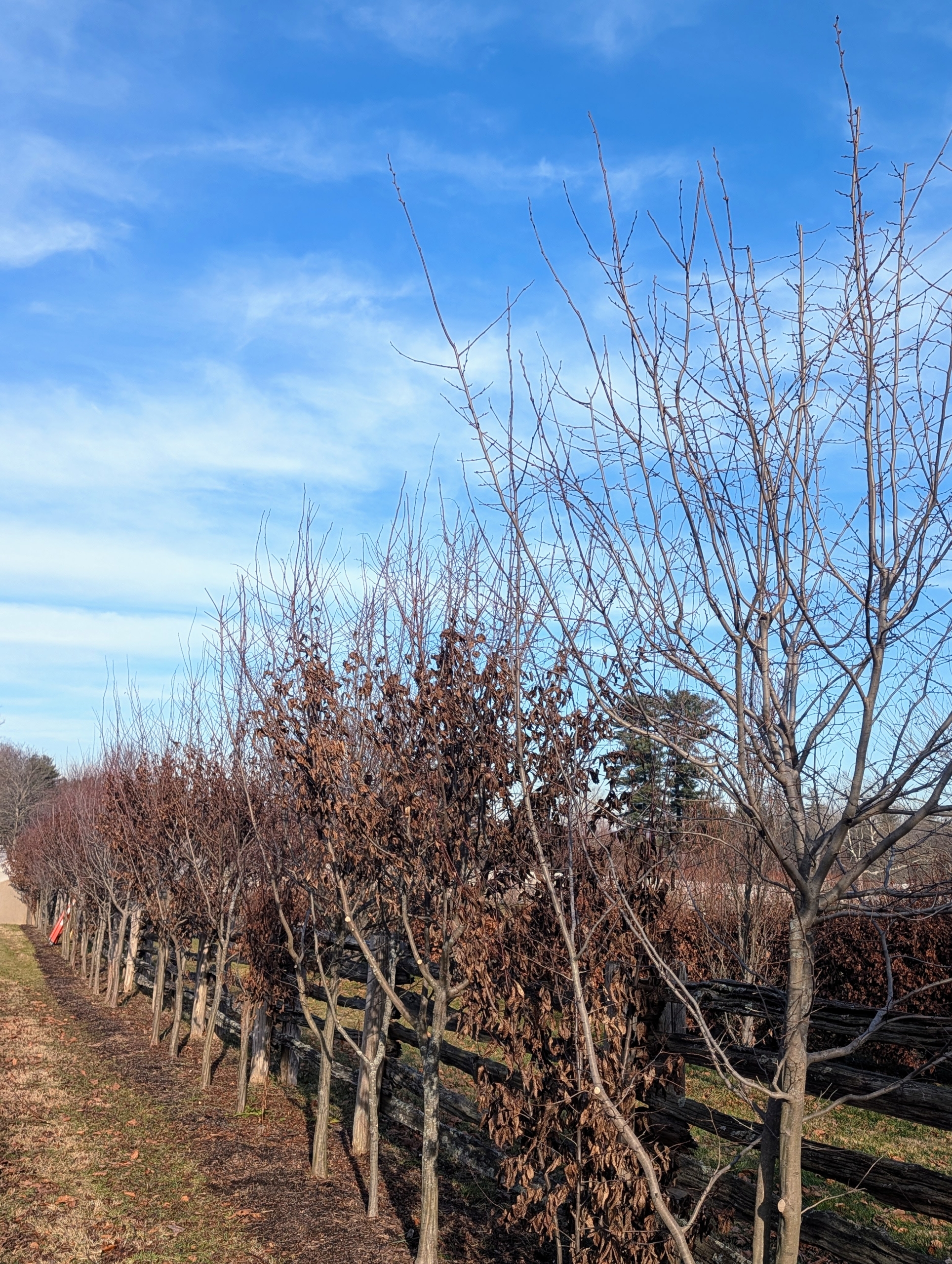
- Outside the vegetable garden, Alex works on a long stand of American hornbeams. I instructed him to trim them down two feet from the top, keeping the entire line of trees level and square in shape.
-
- These trees grow about 12 to 24 inches per year.
-
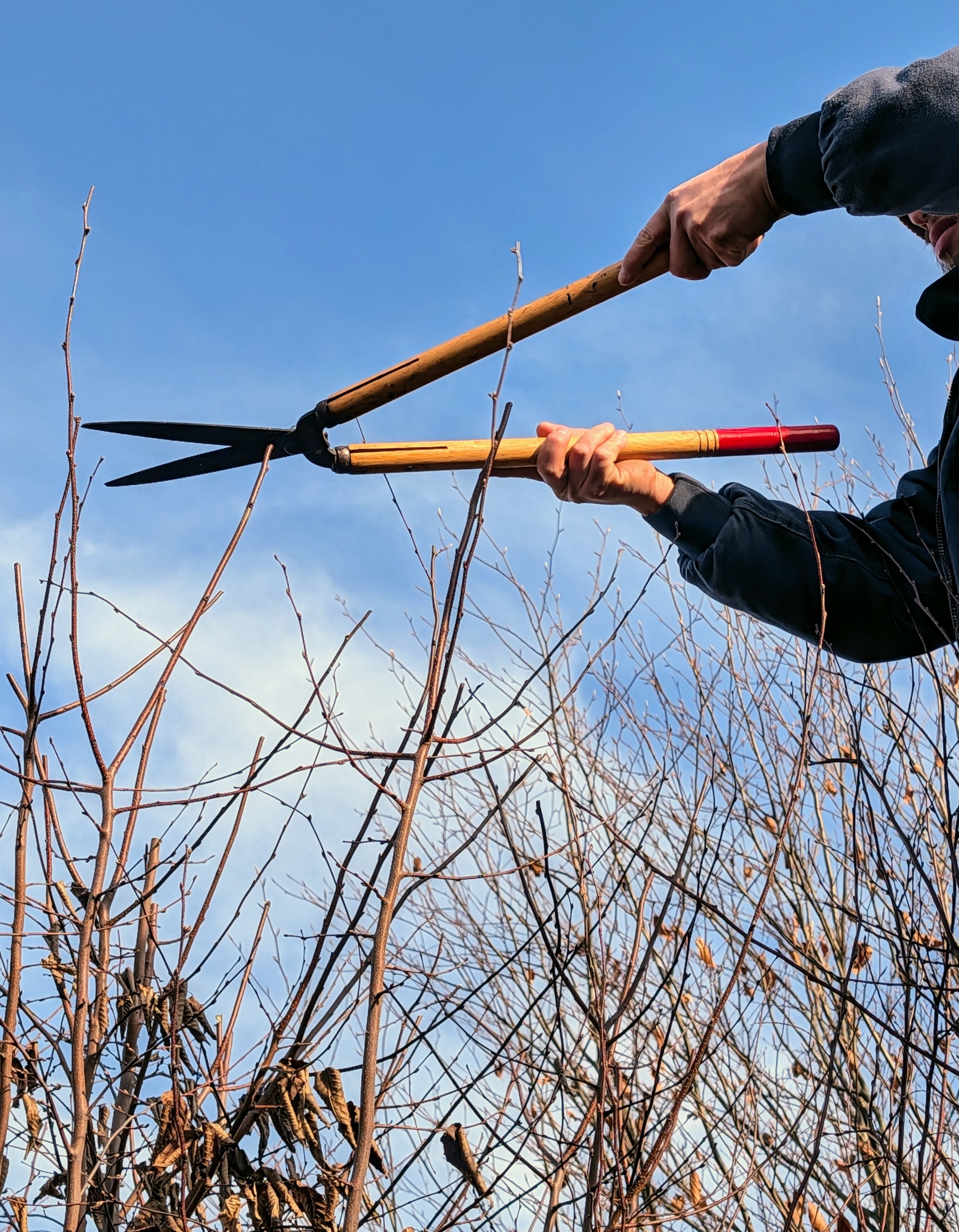
- Alex does a lot of the work by hand. These Japanese Okatsune shears are specially made for trimming hedges. These shears are user friendly and come in a range of sizes.
-
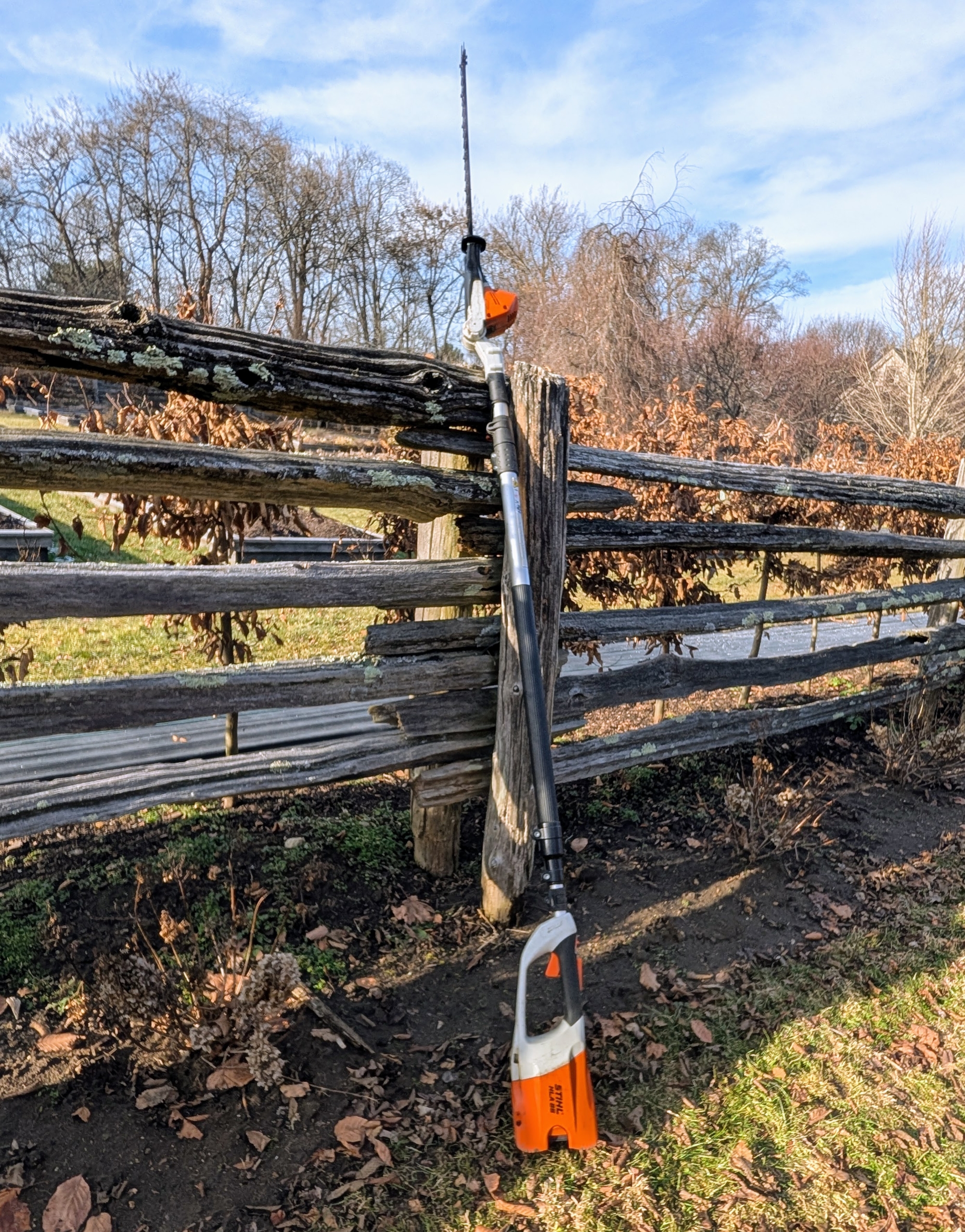
- For the tops, he makes sure they are all cut to the exact height by using the STIHL HLA 86 Powered Extended-Reach Hedge Trimmer. I’ve been using STIHL for many years and find all their tools durable, efficient, and easy to use.
-
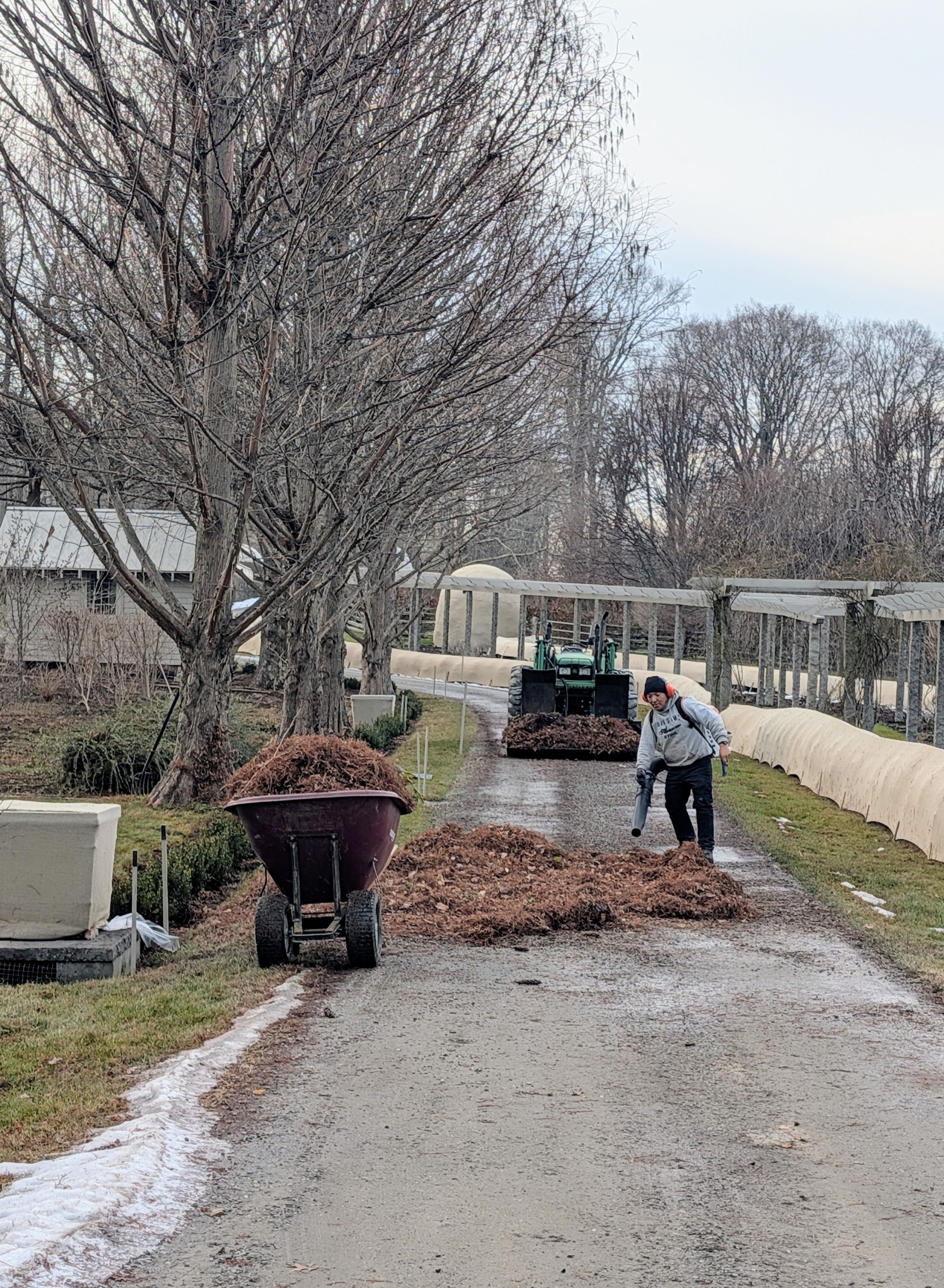
- Here, Phurba and Adan work to clear the late season fall foliage from gardens outside my Tenant House. My crew works in teams getting so many tasks done every day.
-
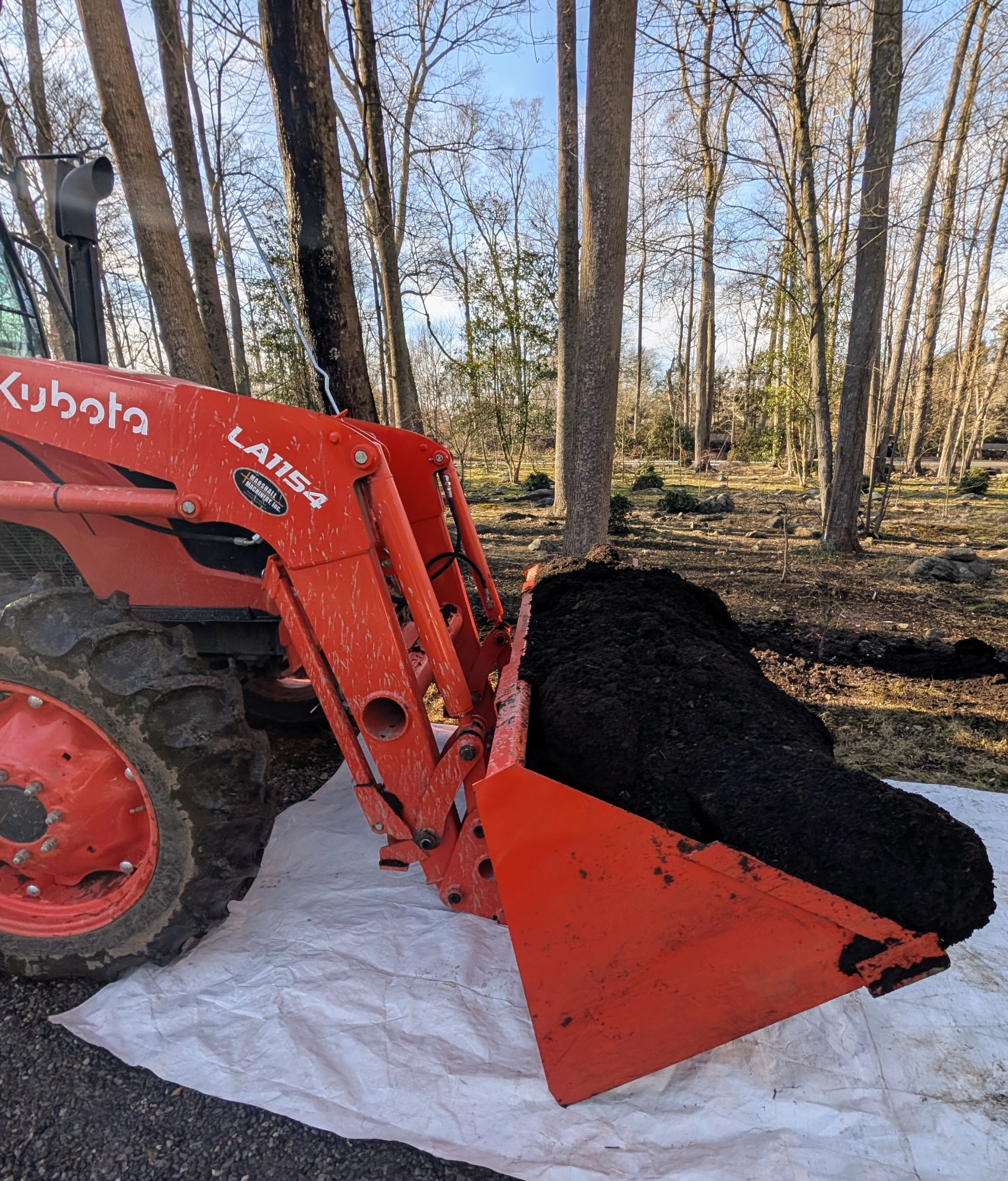
- Back down in my Japanese Maple Woodland, Pete spreads a layer of good mulch made right here at the farm. He transports loads using my Kubota tractor.
-
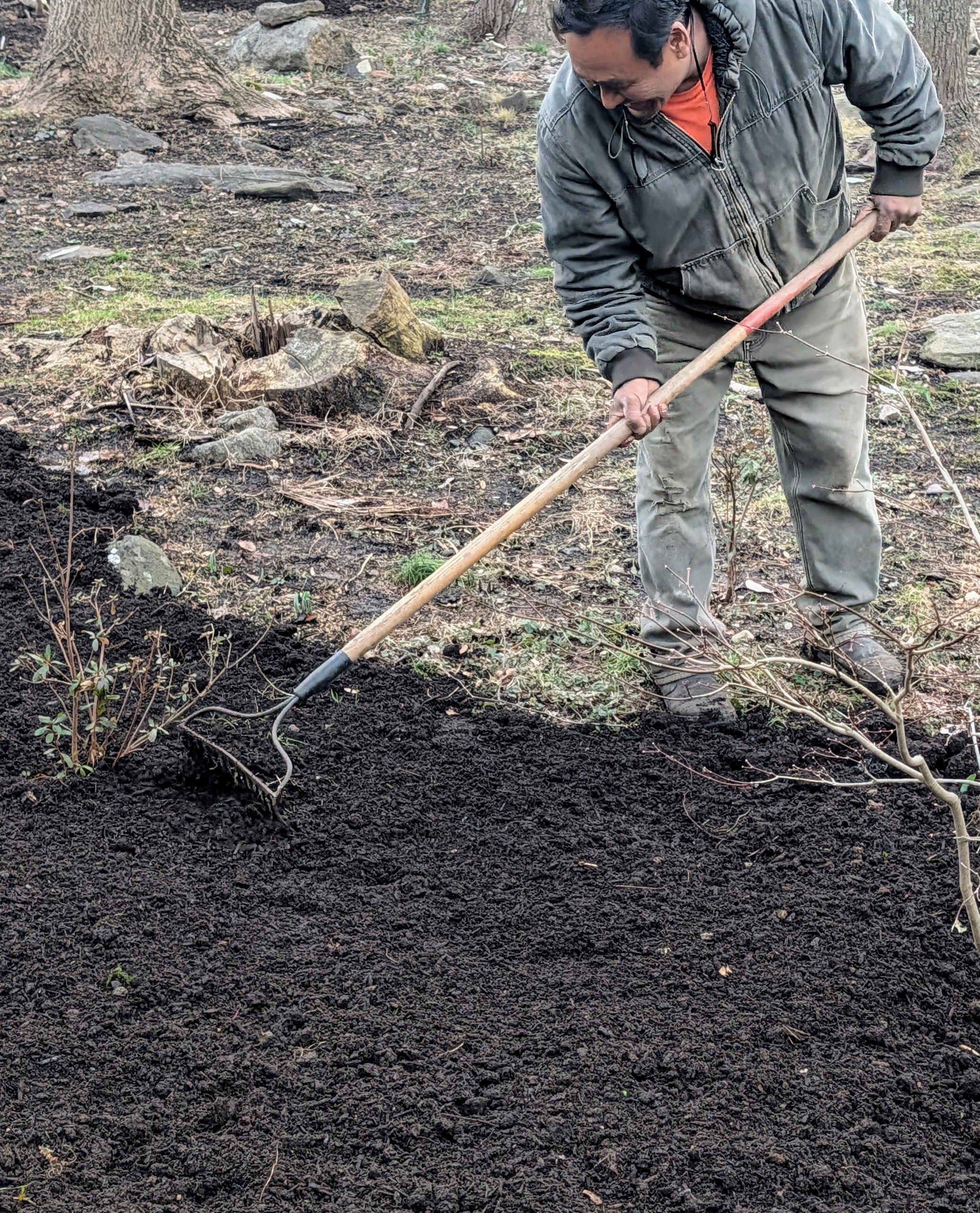
- Mulch has a lot of benefits – it insulates the soil to protect plants from extreme temperatures in summer and in winter, gives the beds a finished look making them very neat and tidy, and because I make my own, I know it is filled with nutrients, which improves the overall health of the plants.
-
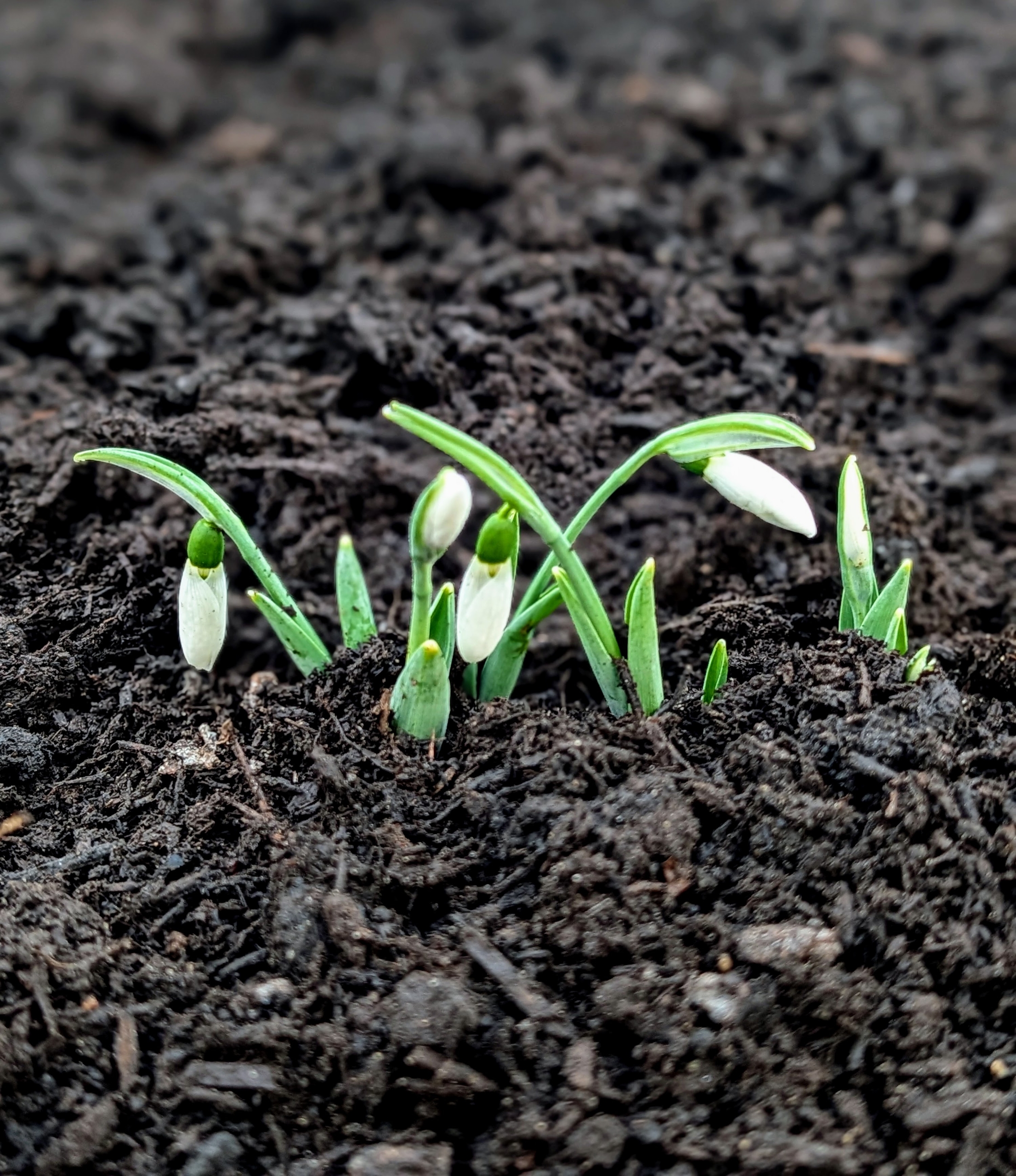
- Here are some snowdrops with a new layer of mulch insulating their young and delicate flowers and leaves. Maintaining a farm depends largely on the weather. These last weeks have given us a chance to check many jobs off the list, thanks to Mother Nature.
 Martha Pins


 Martha Tweets

