

Three Silver Pheasant Hens Join My Flock
Do you know... a group of pheasants is called a nye or nide? More specifically, the words refer to pheasants gathered on the ground. A family of pheasants with their chicks is called a brood, while a group of pheasants in flight is known as a bouquet - such a fitting name for such colorful birds.
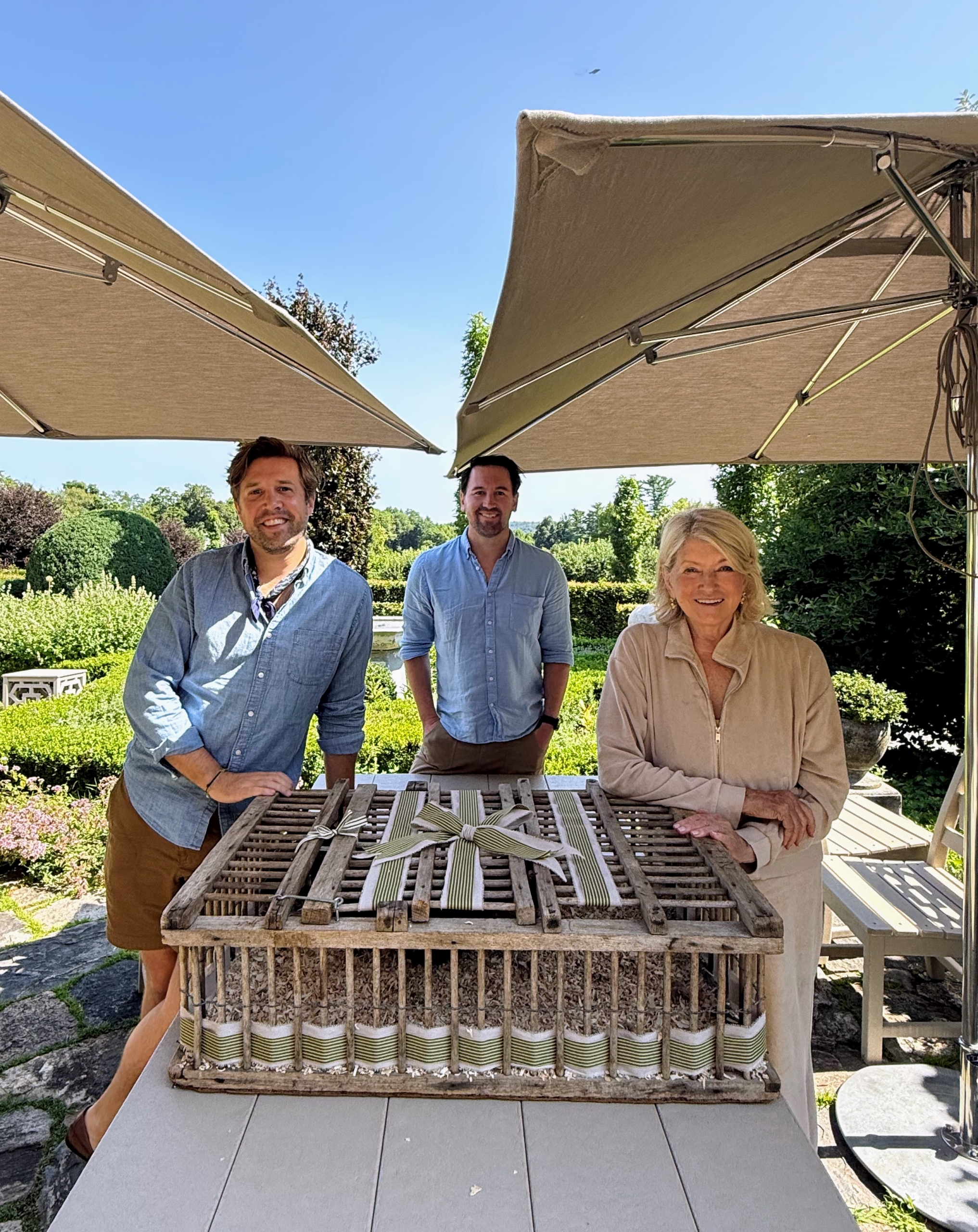
I hope you caught my recent Instagram post on @MarthaStewart48. Last week, I received an early birthday present from my friends Gregory Goodwin and Kyle Rush. They gifted me three young silver pheasant hens to join my handsome silver pheasant male. I'm happy to report they're getting along nicely, and the hens are happily exploring their surroundings, and enjoying the company of all their new feathered friends.
Enjoy these photos.
-

- I called it my best birthday present so far – three beautiful young silver pheasant hens presented in this charming vintage carrier. Here I am with Greg and Kyle and the girls.
-
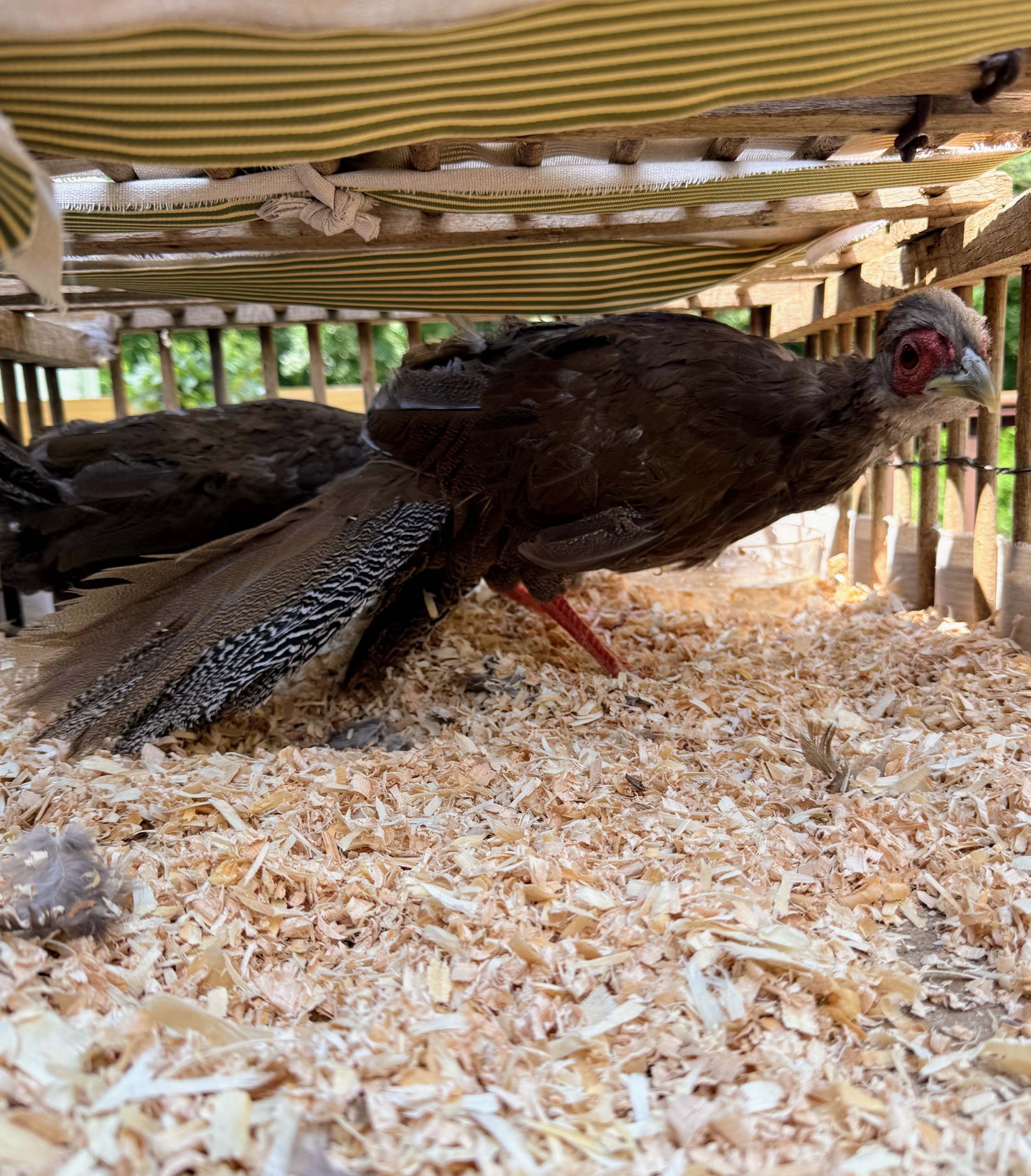
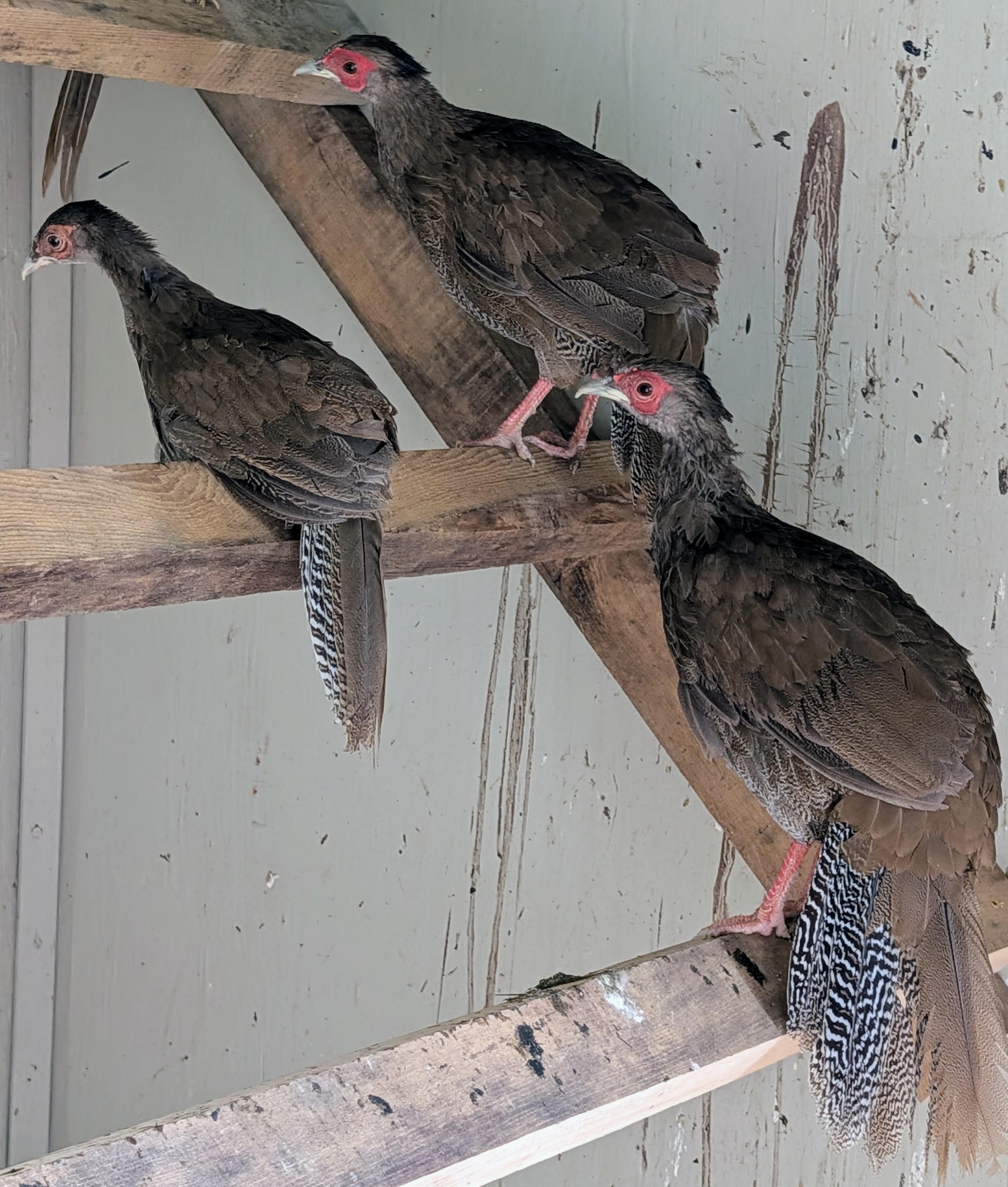
- The silver pheasant hen is mostly brown with subtle black and white streaking. I was excited to introduce the three to my male silver pheasant.
-
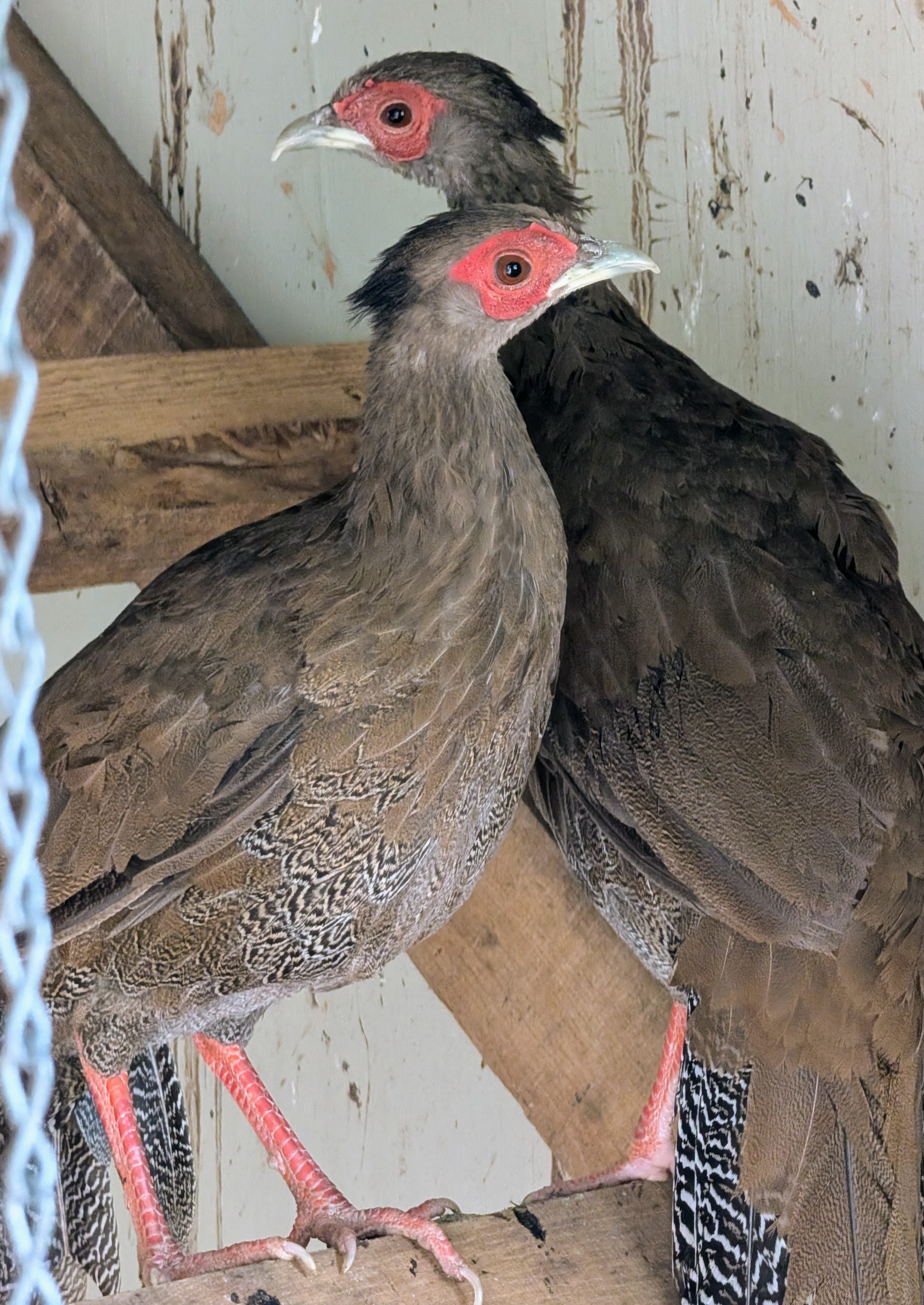
- Here’s a photo of two of the three hens in their new coop. The birds also have a small crest on the head that’s brown with black tips. Both the males and females have bare red faces.
-
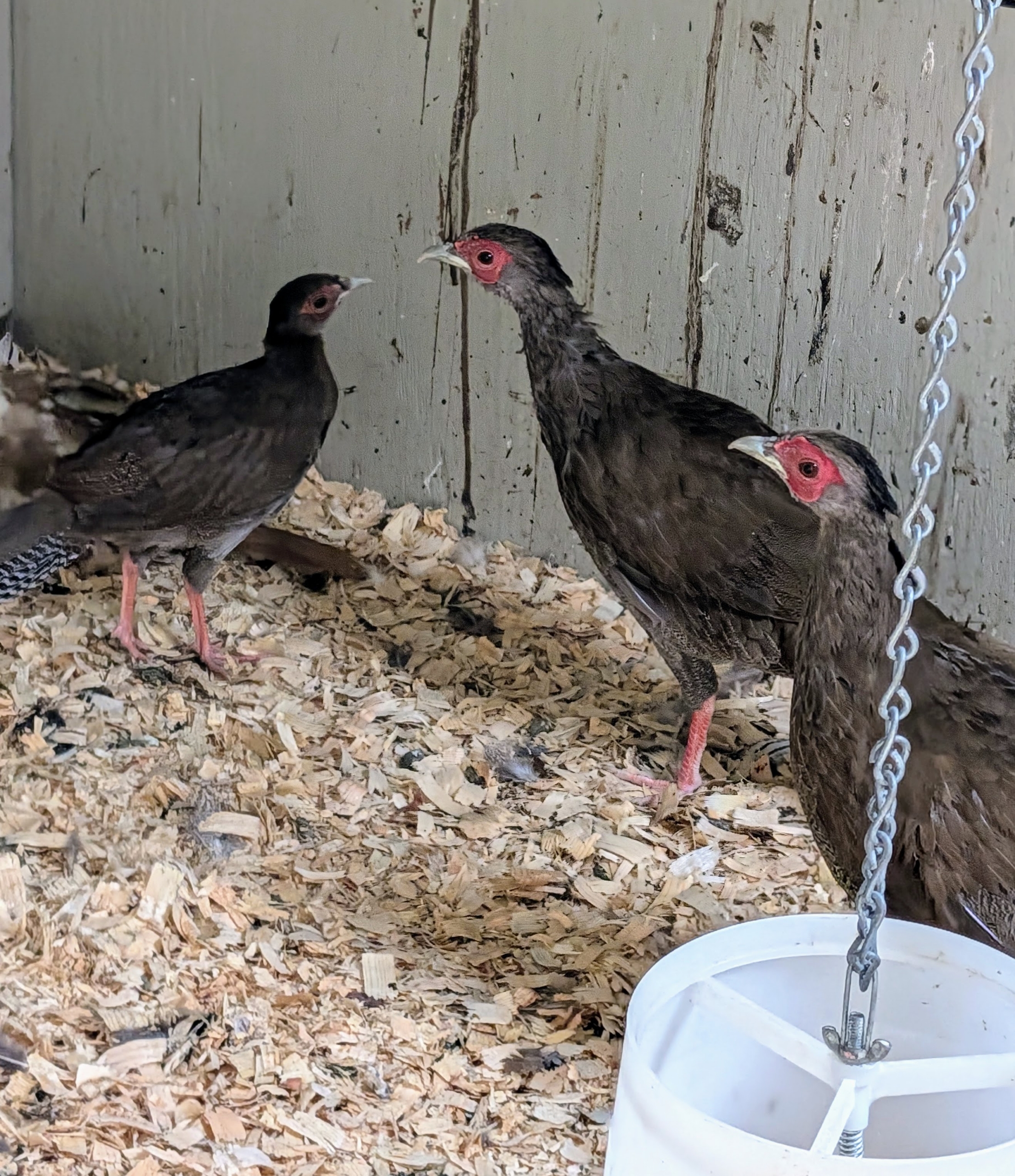
- The three feel most comfortable together right now, but they’re acclimating nicely to their enclosure.
-
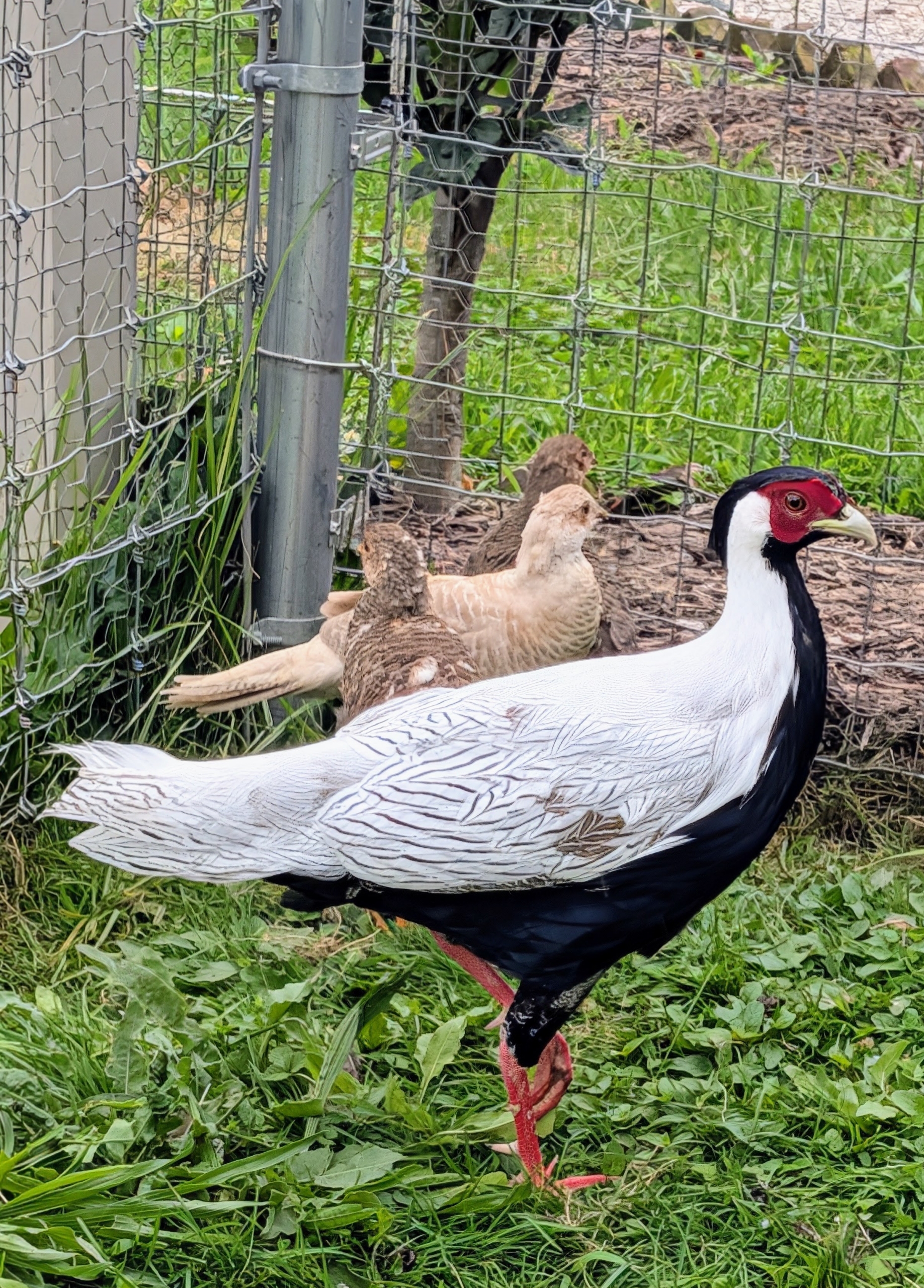
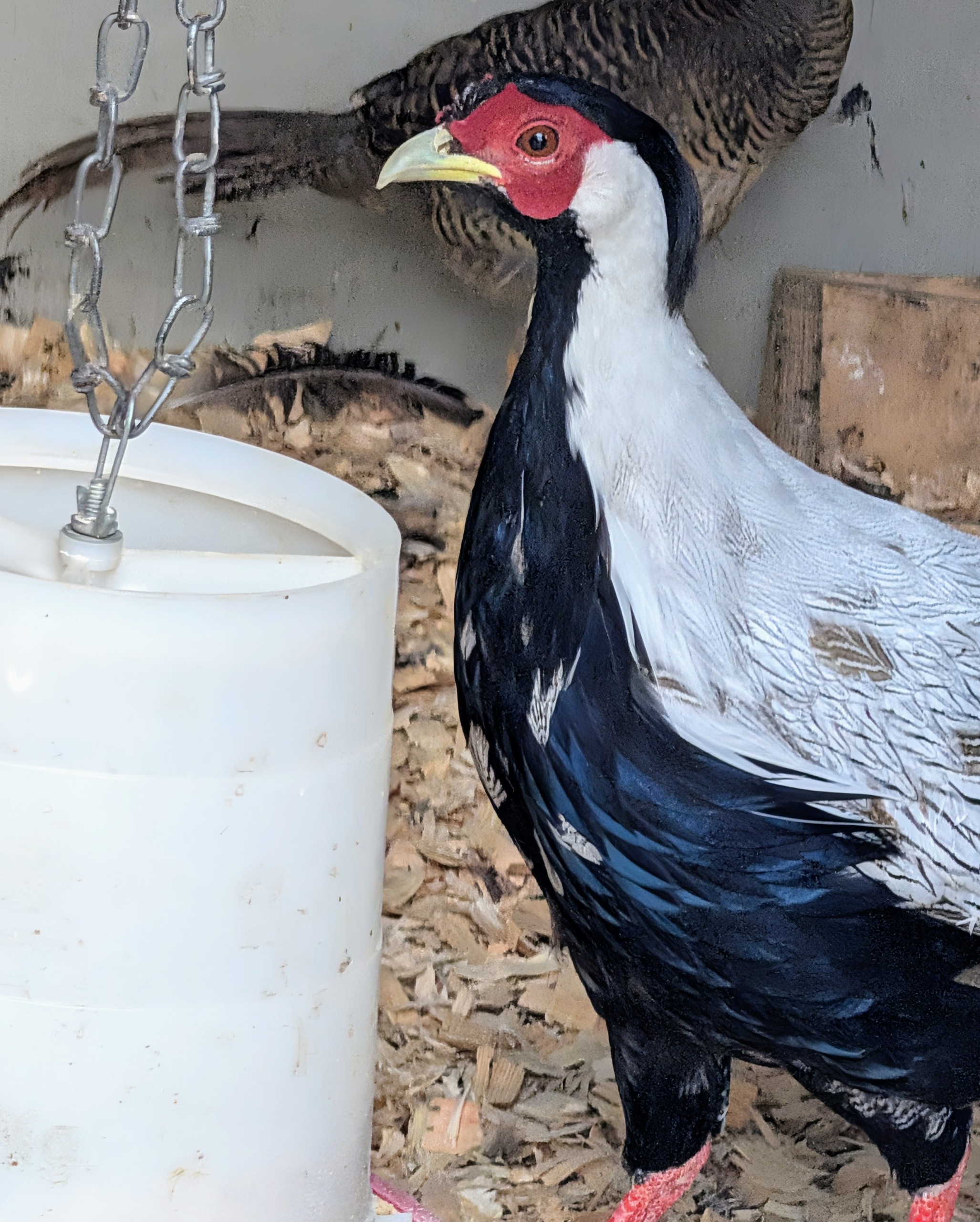
- This is my male silver pheasant. Male pheasants have more vivid, iridescent plumage than the females, so they appear more attractive during breeding season.
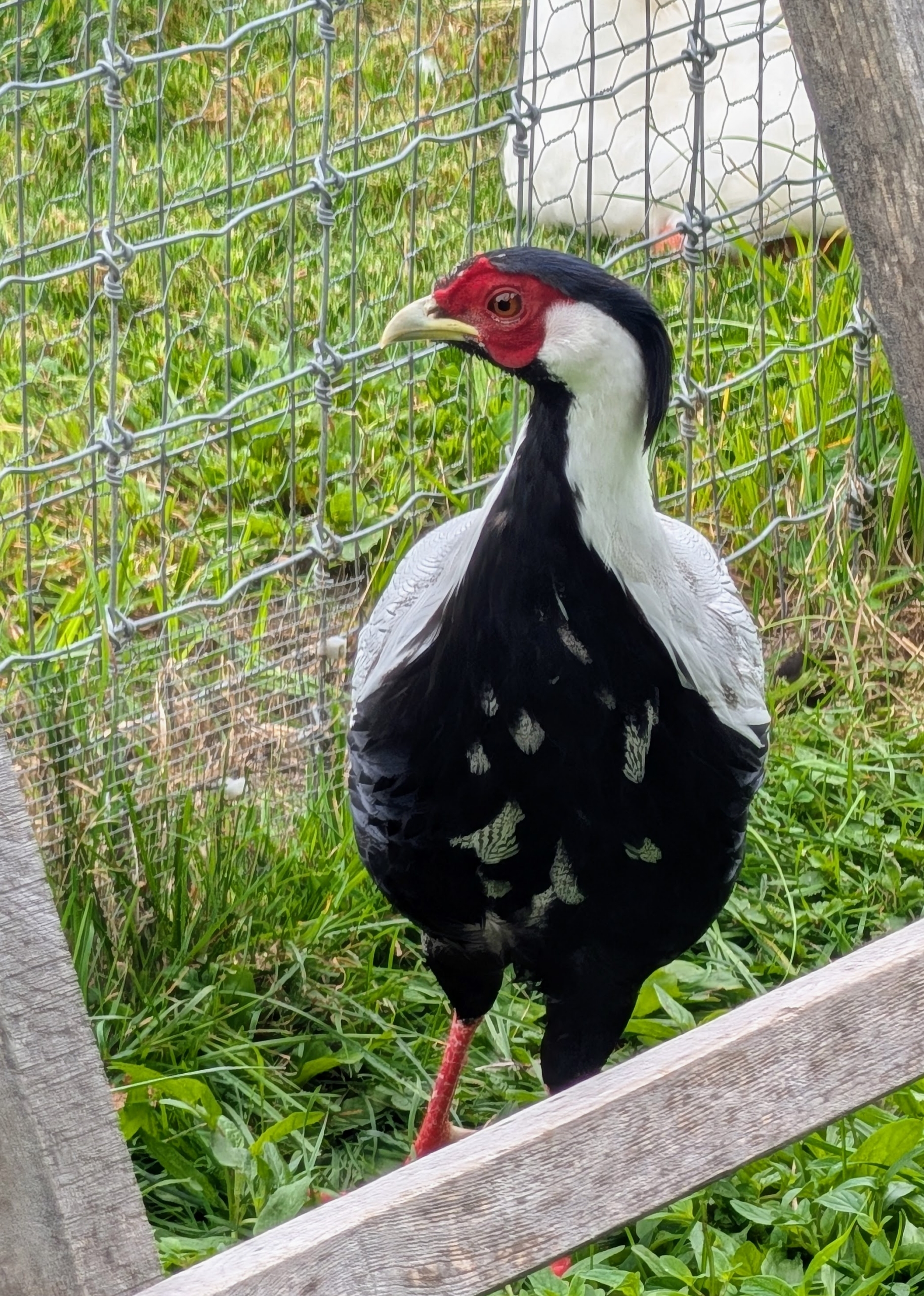
-
- This is a photo of the same male when I first acquired him last February. His feathering looked different then. It changes until the bird is full grown at around two years.
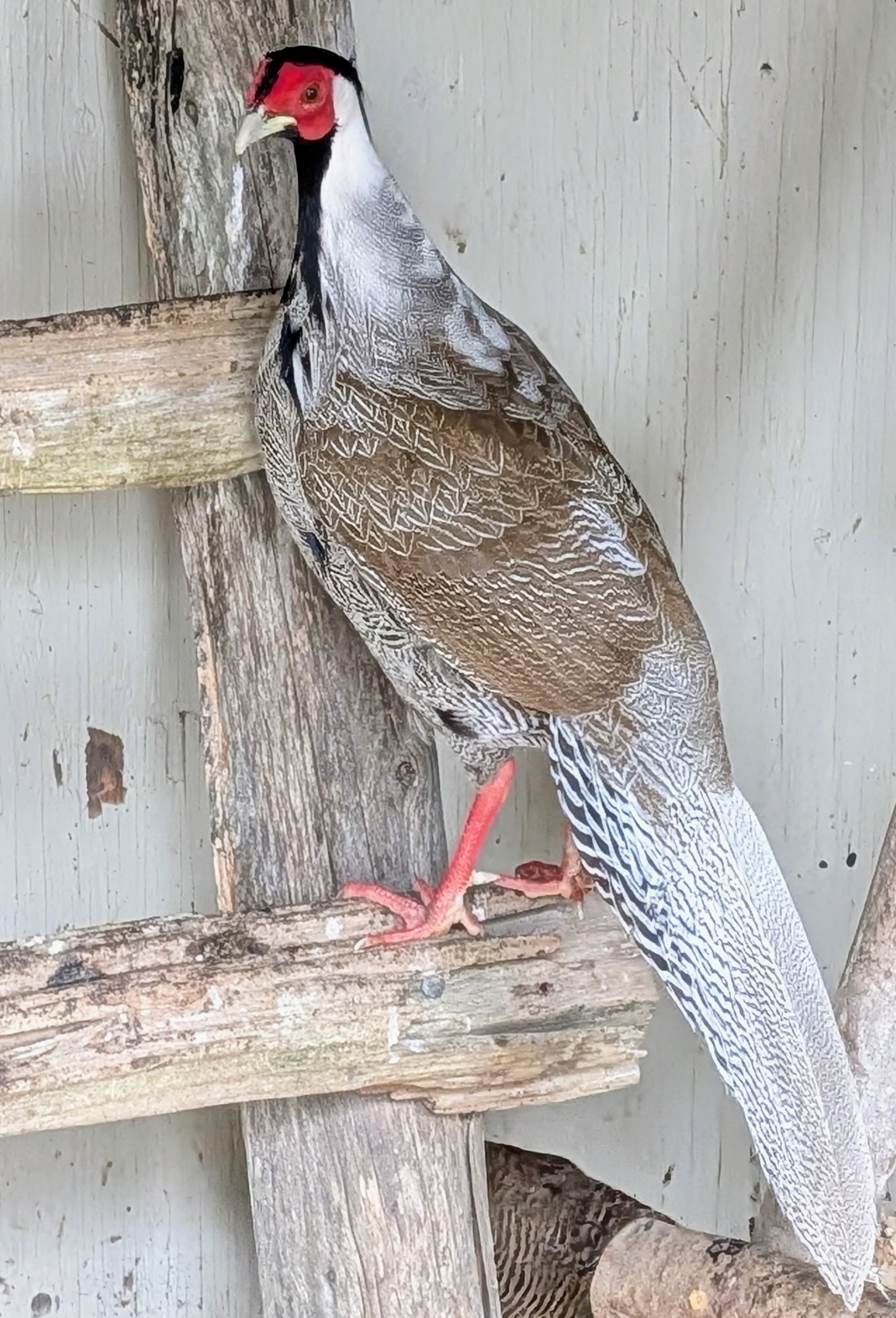
-
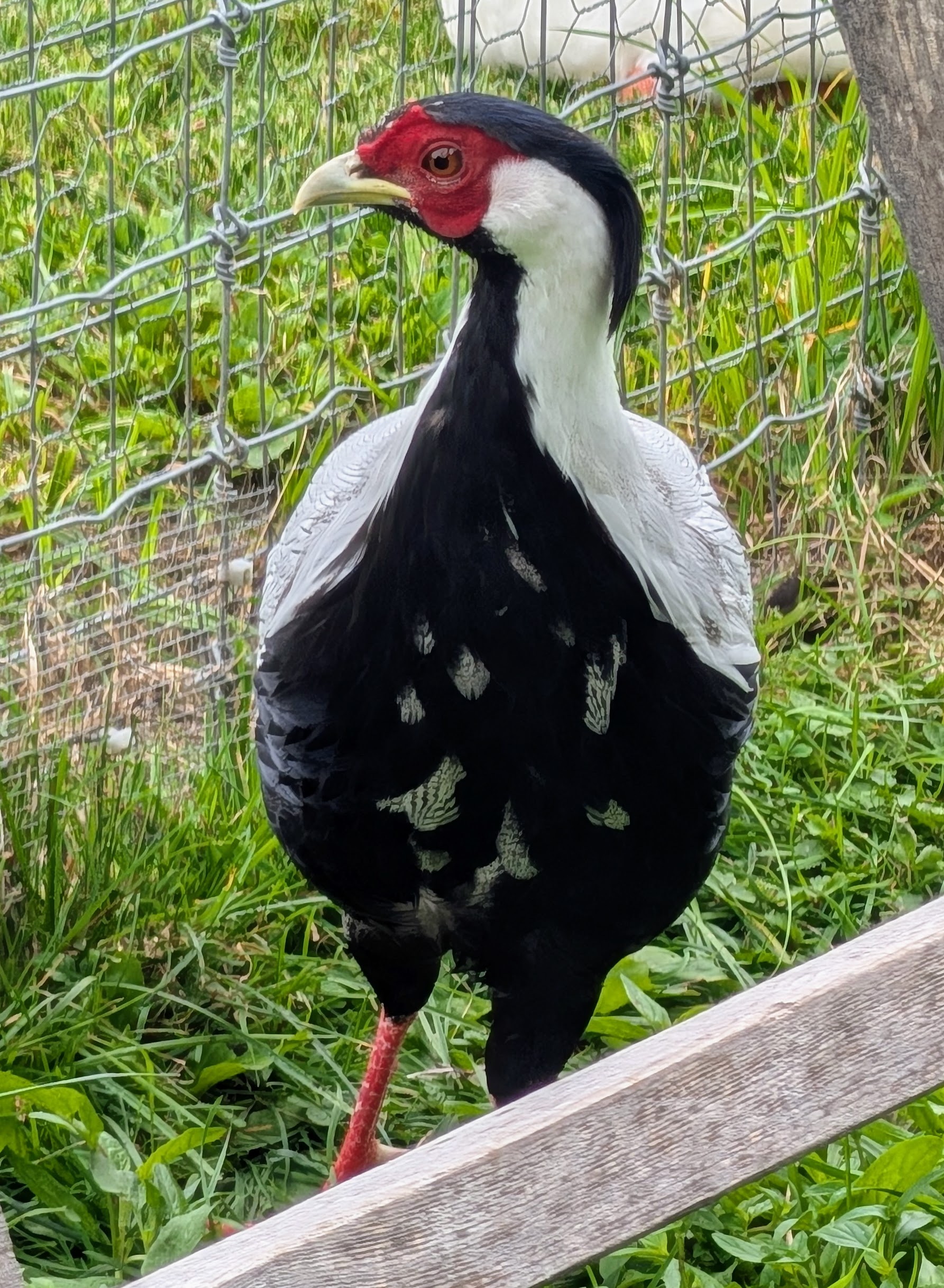
- This was him just yesterday. He’s growing fast. At full maturity, he will have a longer black crest, with central feathers becoming more and more white. Males also continue to grow until the total body length is about 50 inches including a tail of up to 30 inches.
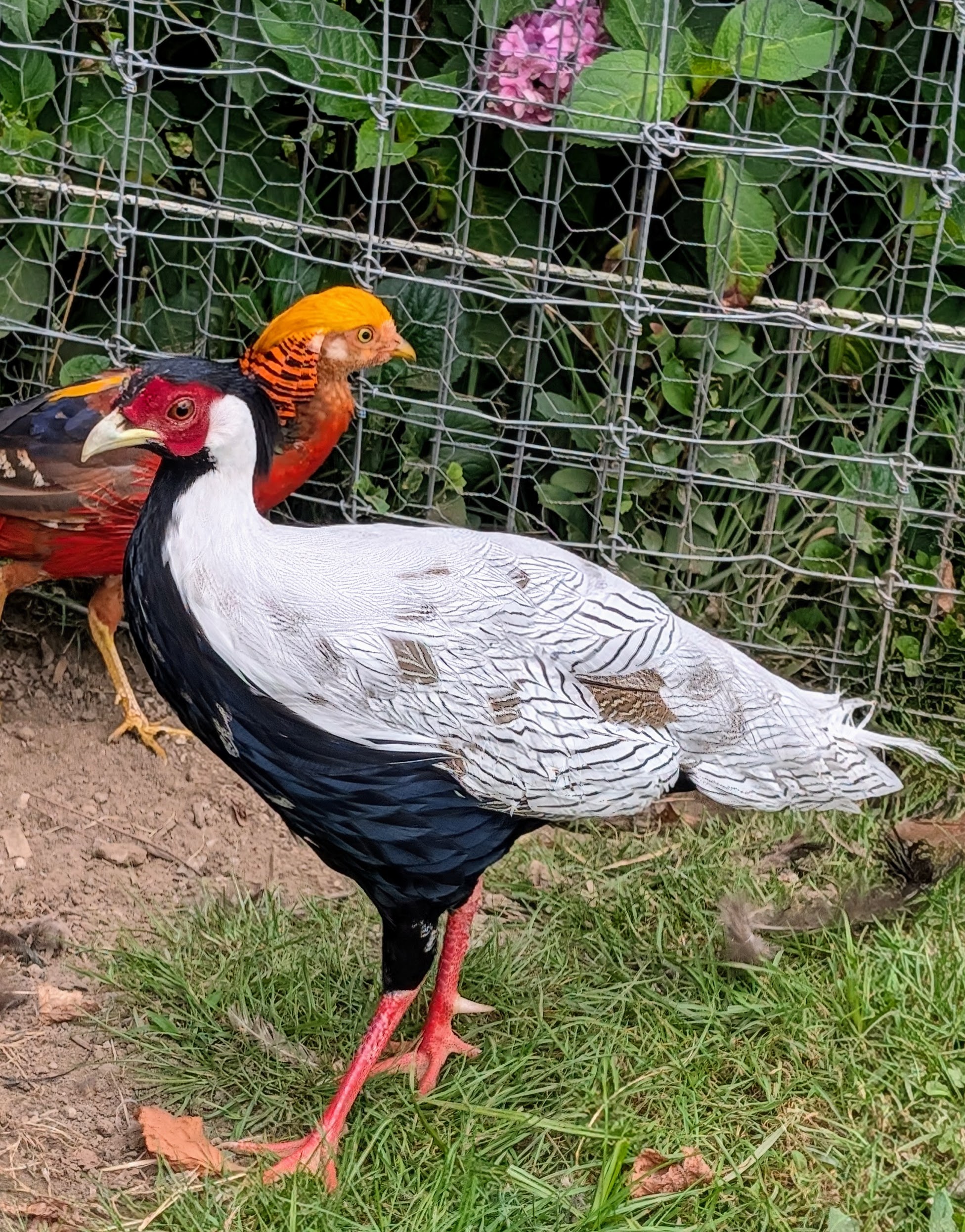
-
- Silver pheasants are quiet and mild. This one is also very attentive to his surroundings.
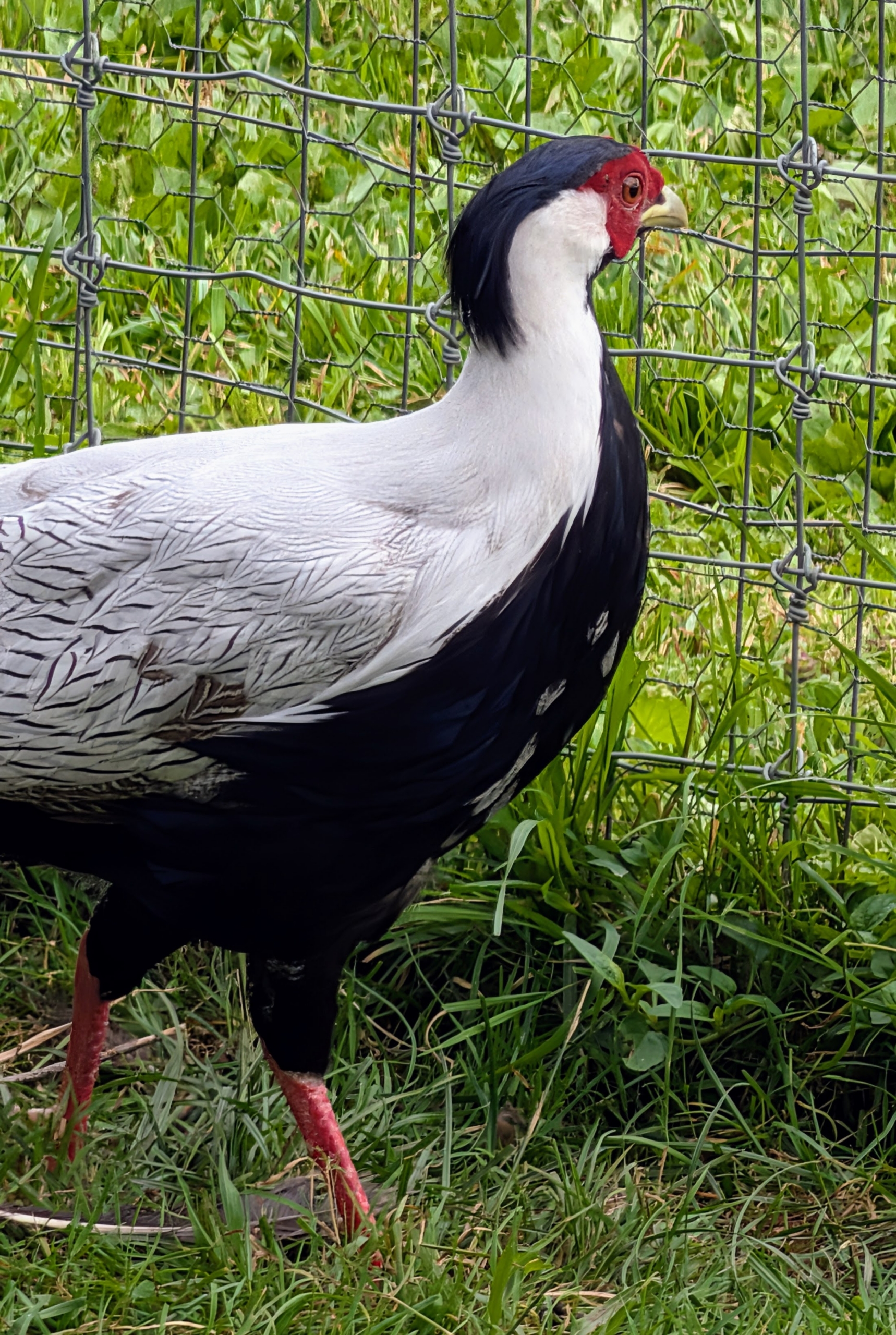
-
- While mostly ground dwelling, pheasants will perch up high to escape predators.
-
- And pheasants have surprisingly good memories and can recall the location of their nests even after traveling long distances.
-
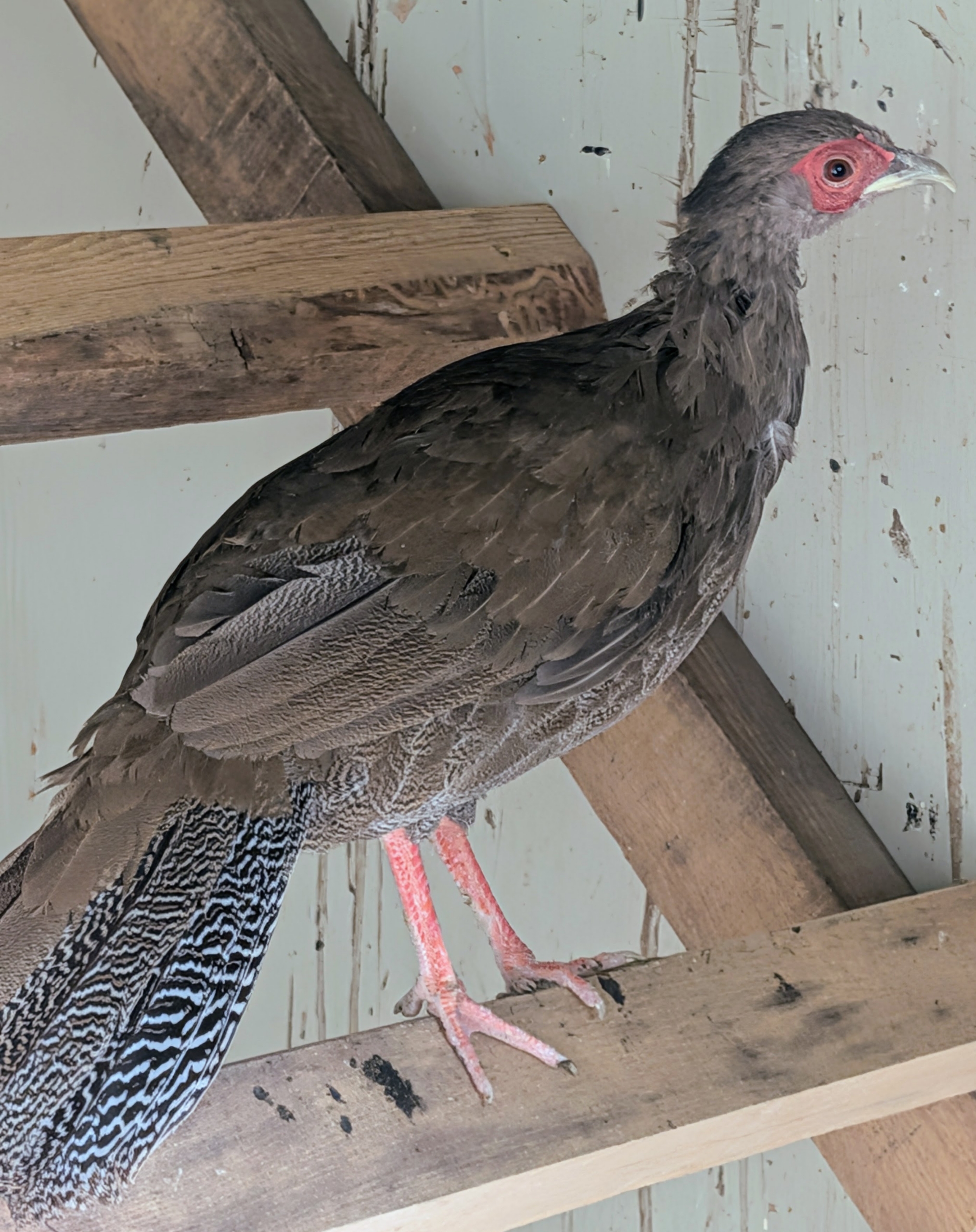
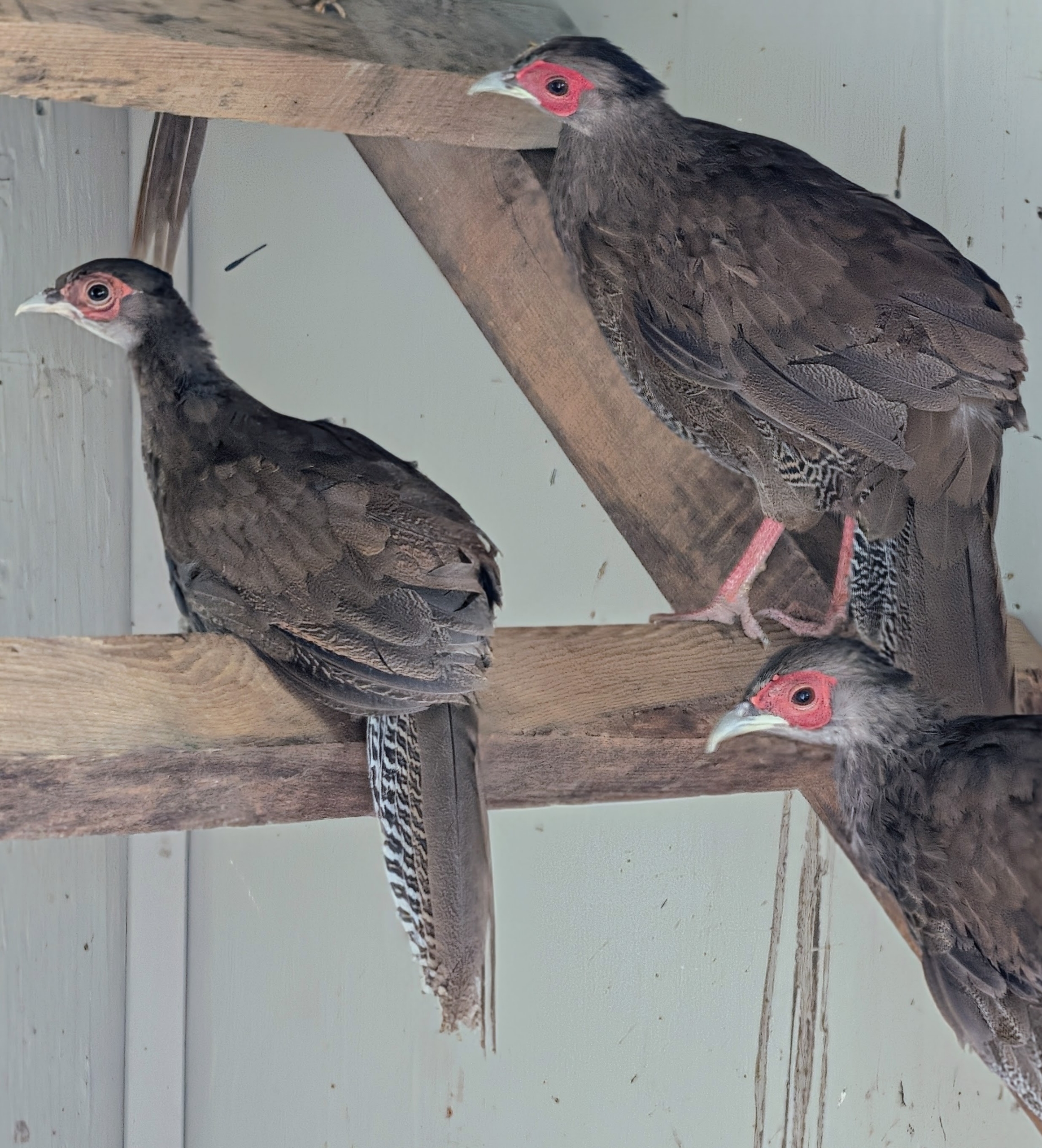
- The new hens are perching on their ladder in the coop. They are quiet, hardy, and generally calm.
-
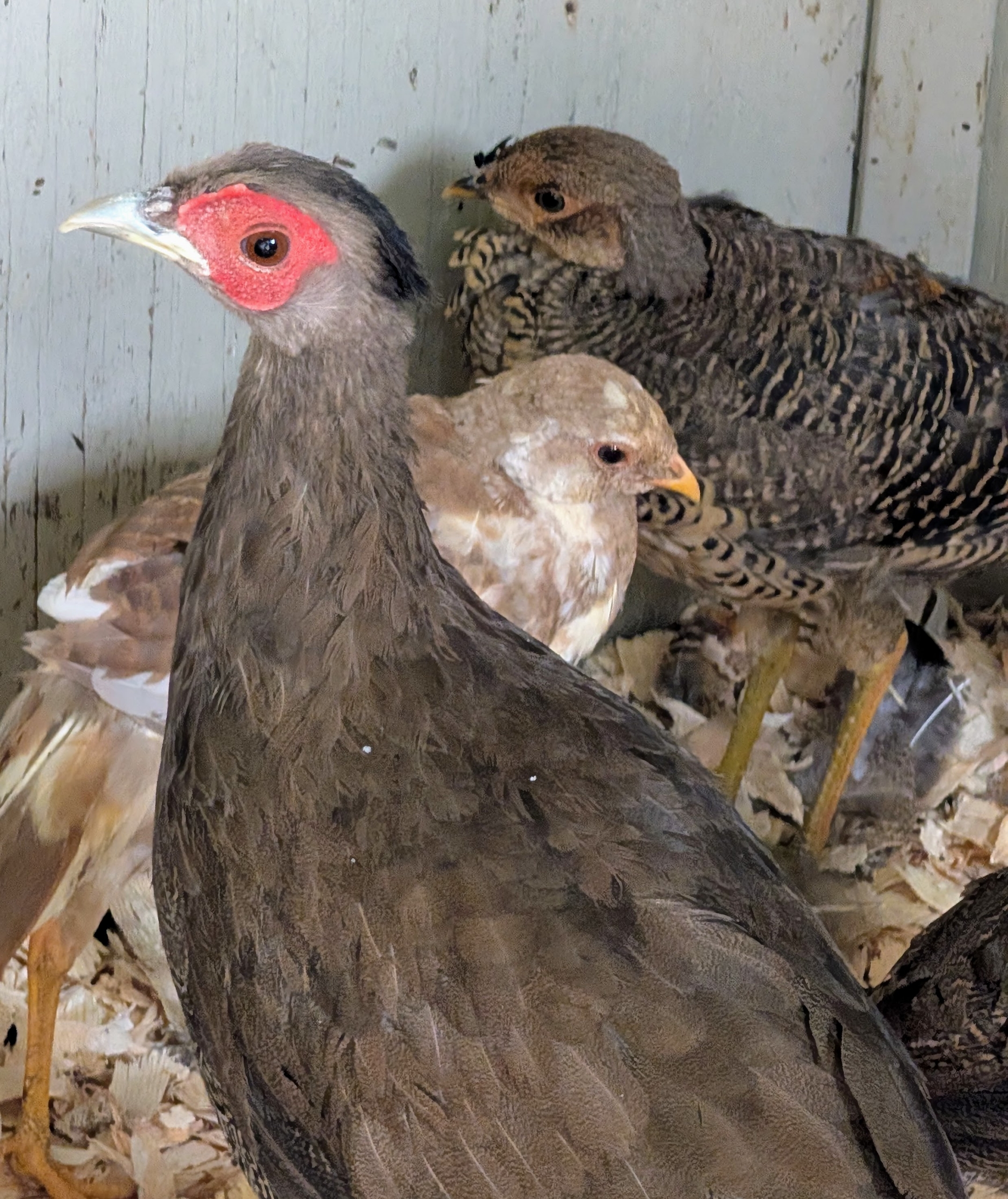
- They are also getting along well with the other pheasants that share their coop.
-
- But they are also quite active and able to fly. Look at their legs and feet. They have four digits on their feet, with the first toe, known as the hallux, typically pointing backward for effective stability and movement. The legs of silver pheasants are red, distinguishing them from other species.
-
- All my outdoor birds get a good supply of seeds. Pheasants also eat insects, berries, and plant matter – they are excellent foragers.
-
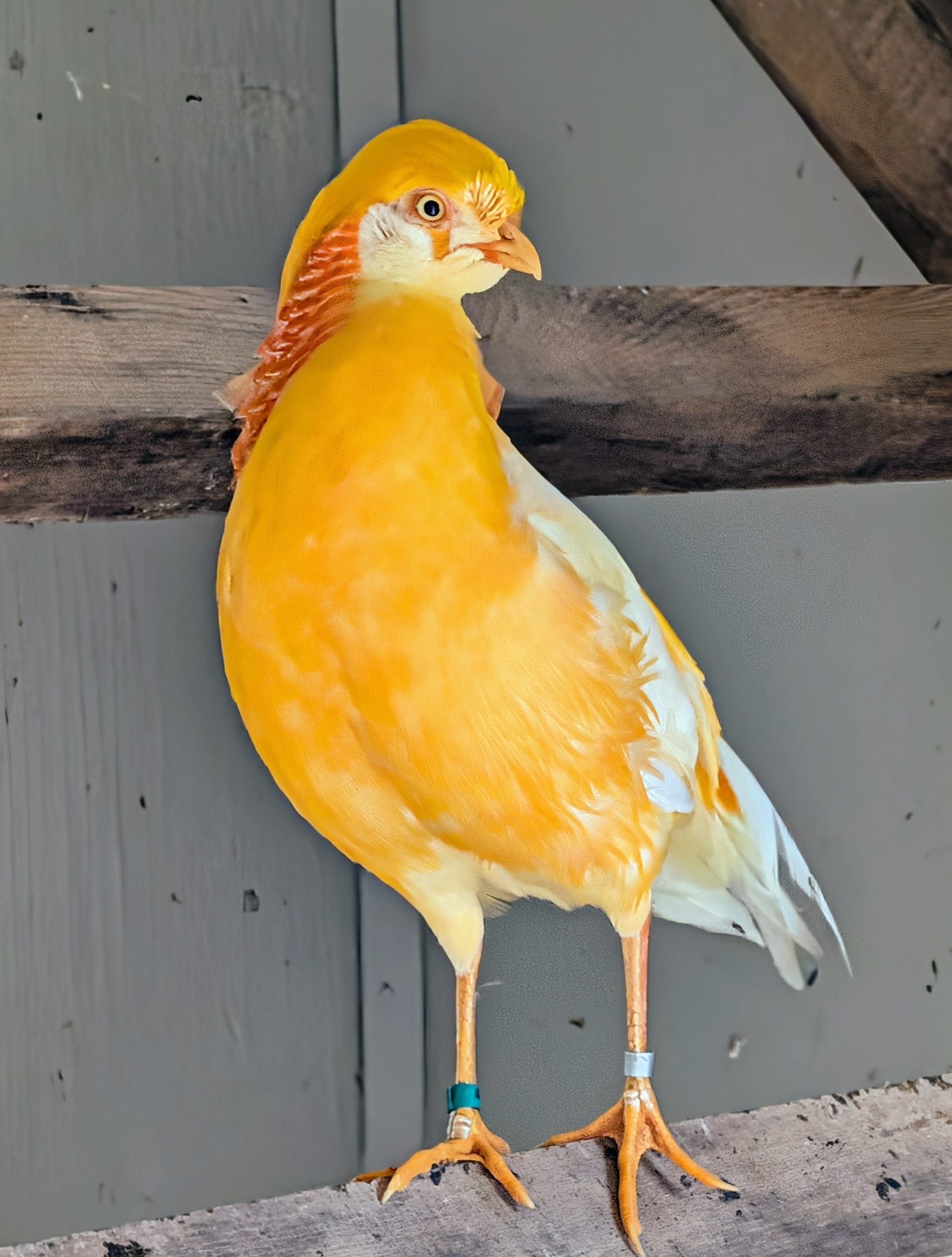
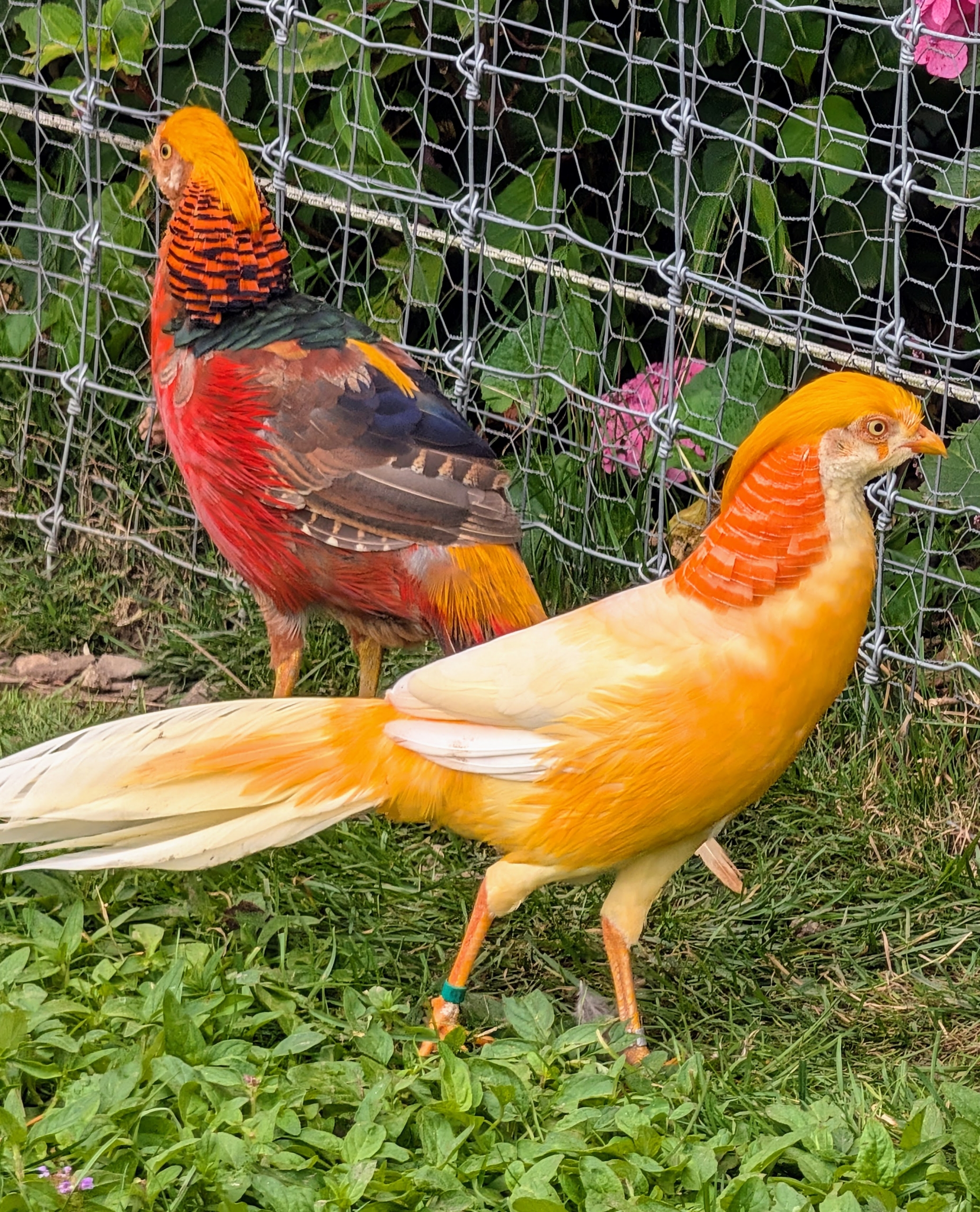
- The silver pheasants live with my golden pheasants. This is a male peach golden pheasant, strikingly rare in its coloration. Males are white with a light, shiny golden breast and body and a full peachy ruff.
-
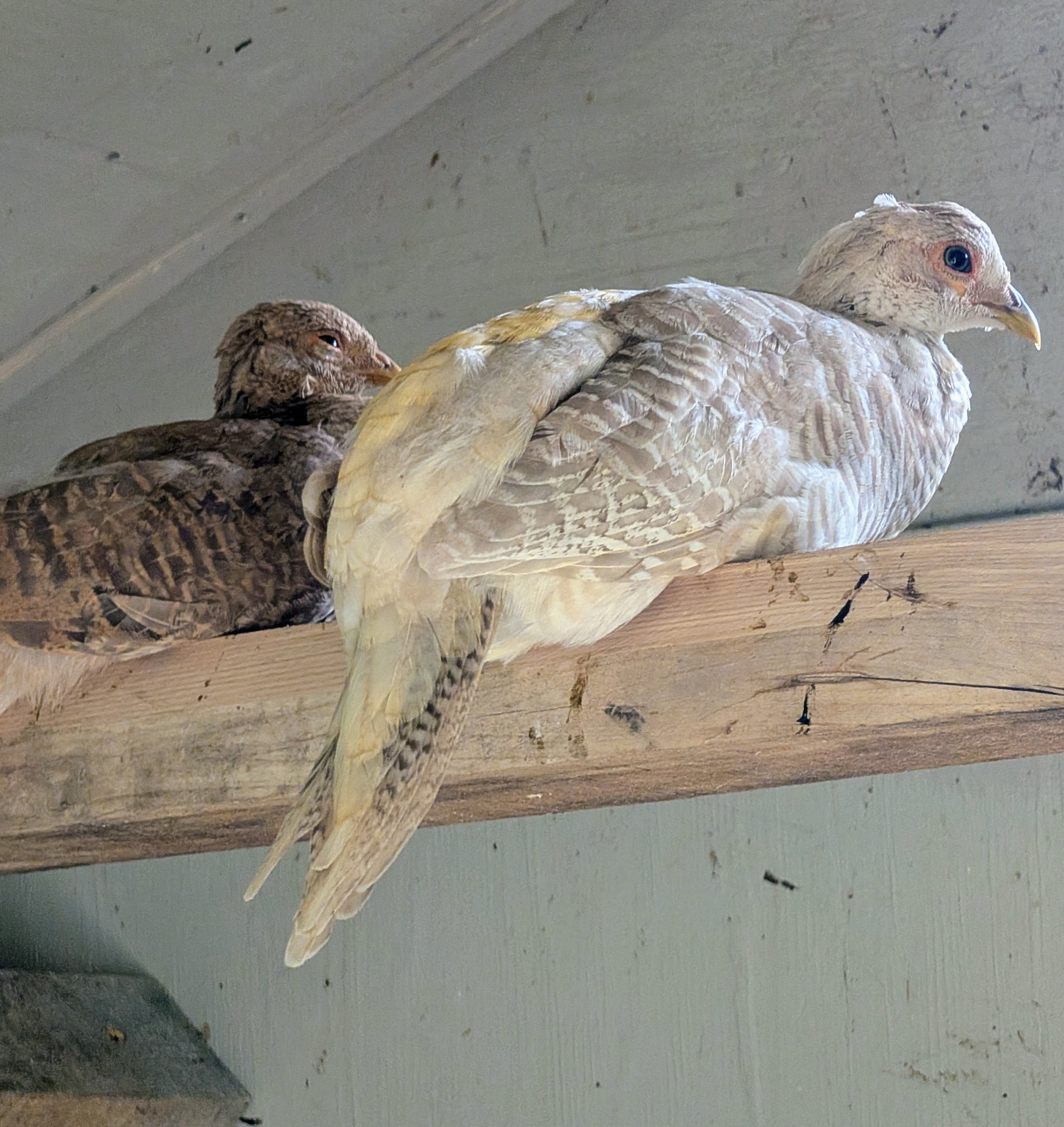
- The white is a female peach golden pheasant – much duller in color.
-
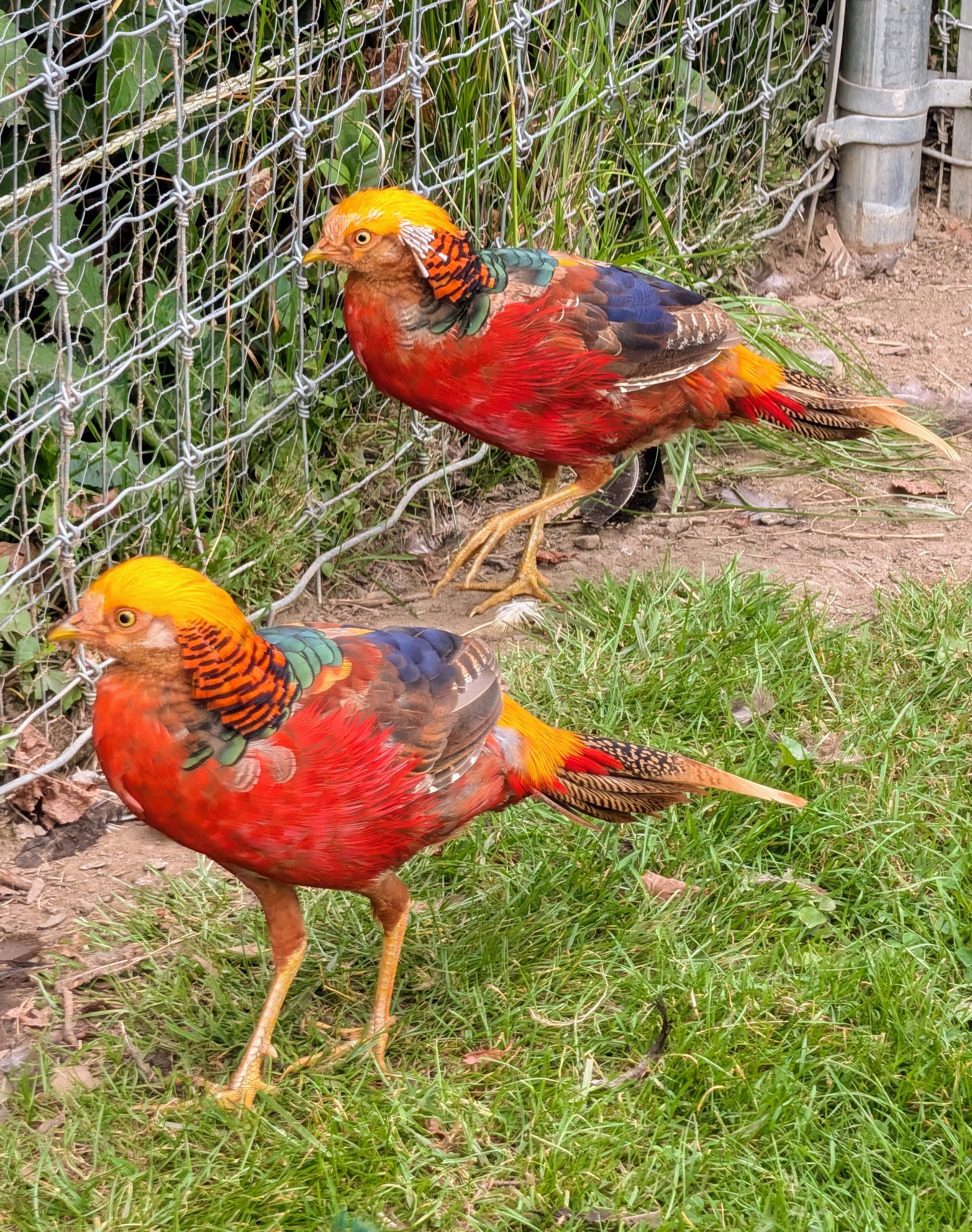
- And these are vibrant, exotic red golden pheasants, known for their striking red and gold plumage and hardy nature.
-
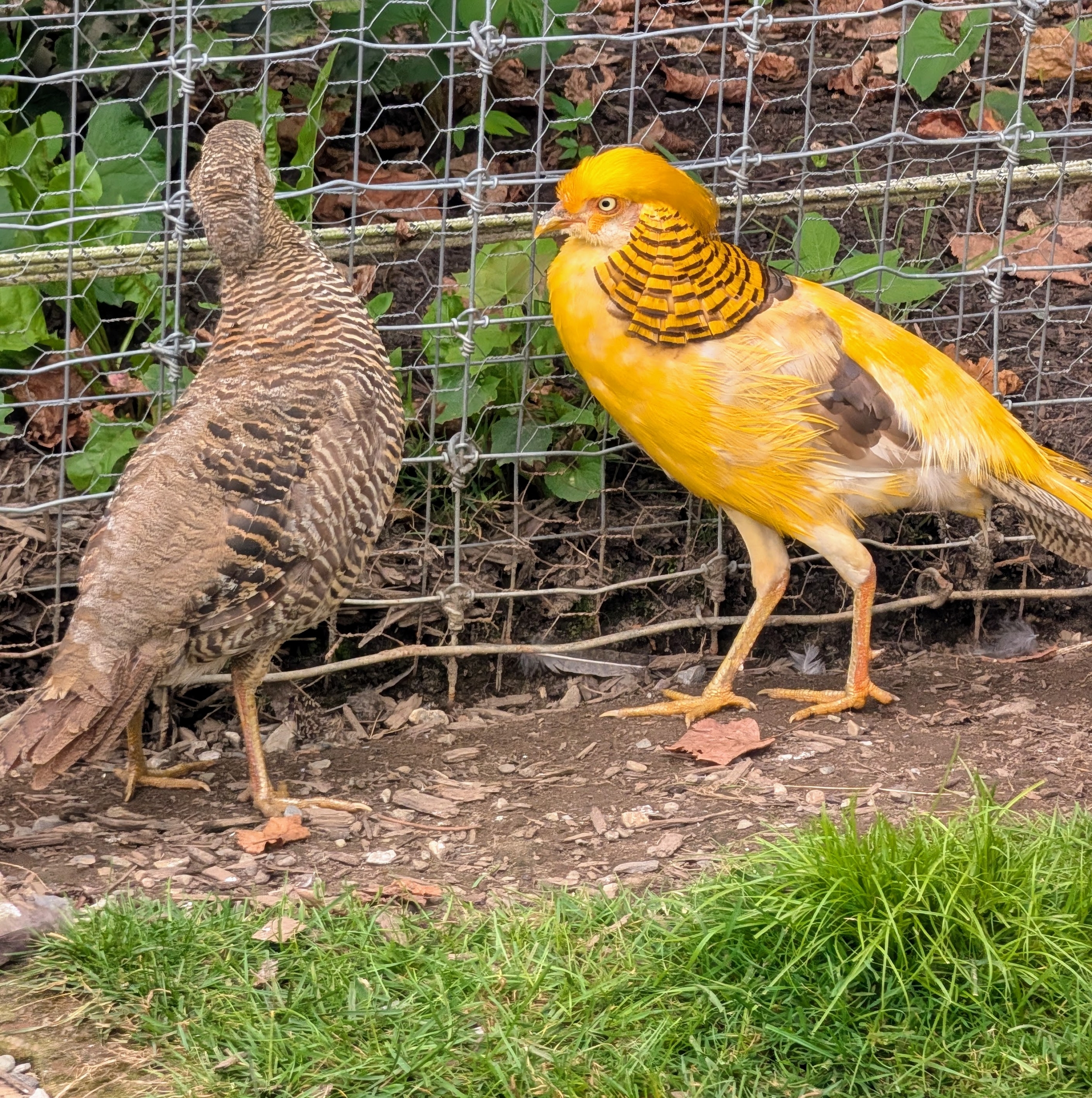
- On the right is a male yellow golden pheasant. The yellow is a color mutation of the red golden pheasant. It was originally developed in the 1950s. To maintain the yellow coloring, these birds need shaded areas to protect their feathers from the sun. A female is on the left.
-
- I am happy they all get along so well in their enclosure. In all, I have 19 pheasants – many of which were hatched right here at my farm. I am looking forward to watching them all thrive here at the farm.
-
- Their graceful appearance, fascinating behaviors, and vibrant colors make pheasants a true pleasure to raise. With good care, these beautiful birds will live for 15 to 18 years.
 Martha Pins


 Martha Tweets

