Japanese maples have always been among my favorite trees - I’ve planted many over the years.
Recently, a friend told me about a beautiful, old Japanese maple at a neighboring property that needed a new home. The house had just been sold, and the new owner planned to redesign the landscape. After seeing the tree, I knew I wanted to transplant it here at my farm, where it could continue to thrive. Moving a mature specimen was no small undertaking. Removing it from the ground and transporting it required careful planning, ingenuity, and strength, but it was well worth the effort.
Enjoy these photos.
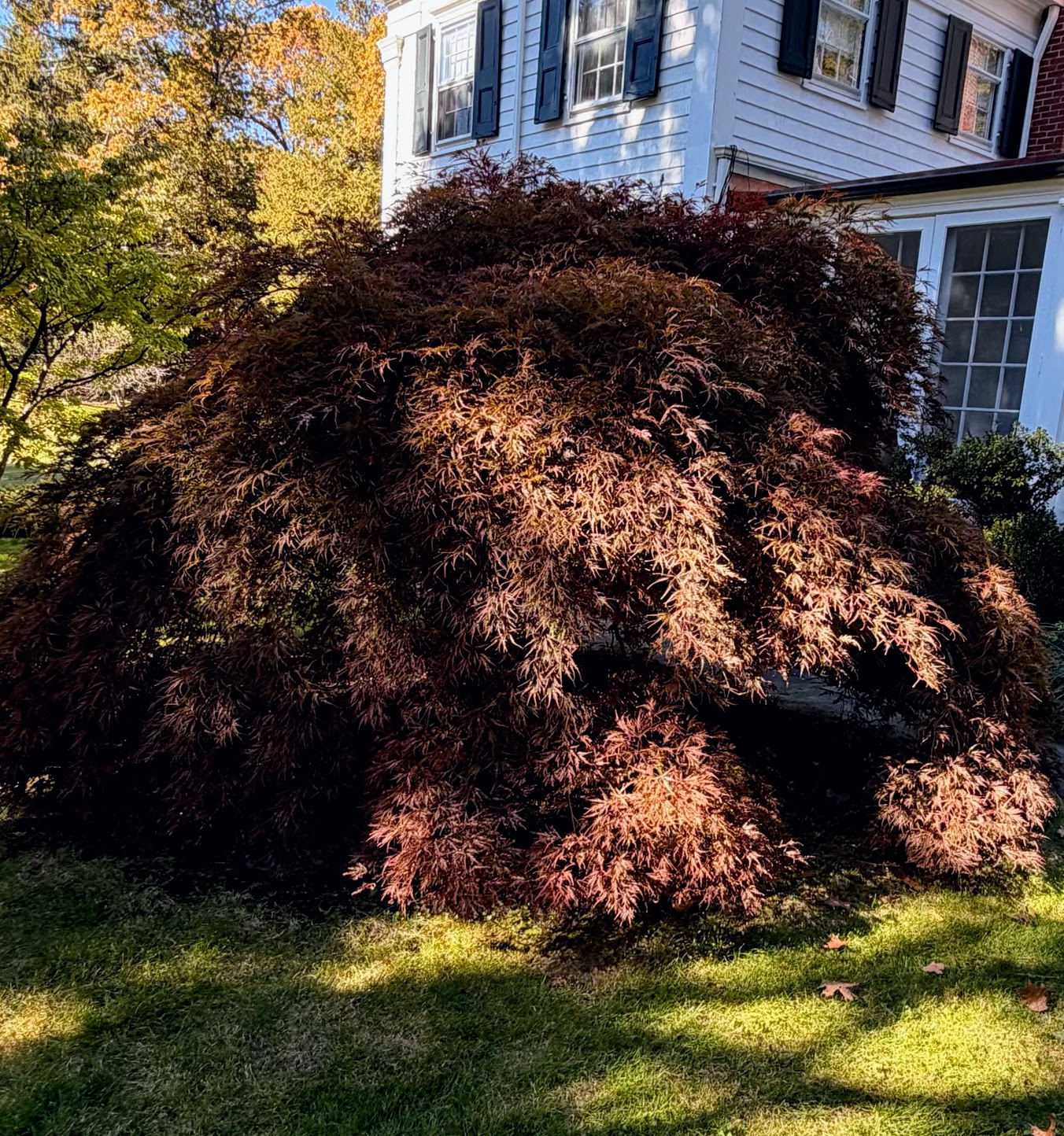
This Japanese maple is a beautiful specimen tree. It’s in excellent condition at more than 80-years old. I knew it would look wonderful at my farm.
Few trees are as beautiful as the Japanese maple. With more than a thousand varieties and cultivars including hybrids, the iconic Japanese maple tree is among the most versatile small trees for use in the garden.
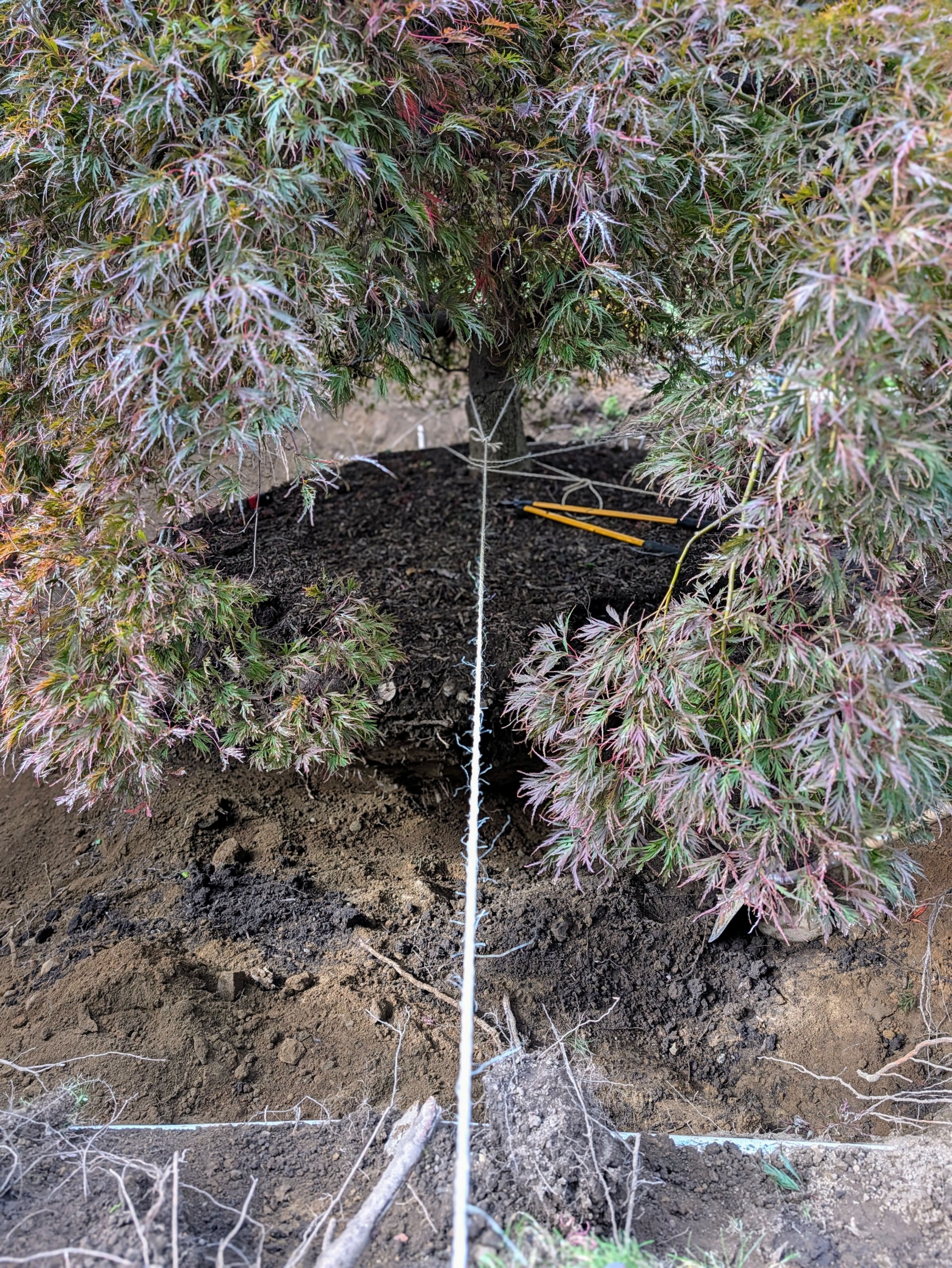
The first step is digging it out of the ground. The crew spends time carefully digging the soil from around the tree.
Rope is tied around the trunk of the tree and secured at two points, so the root ball does not move.
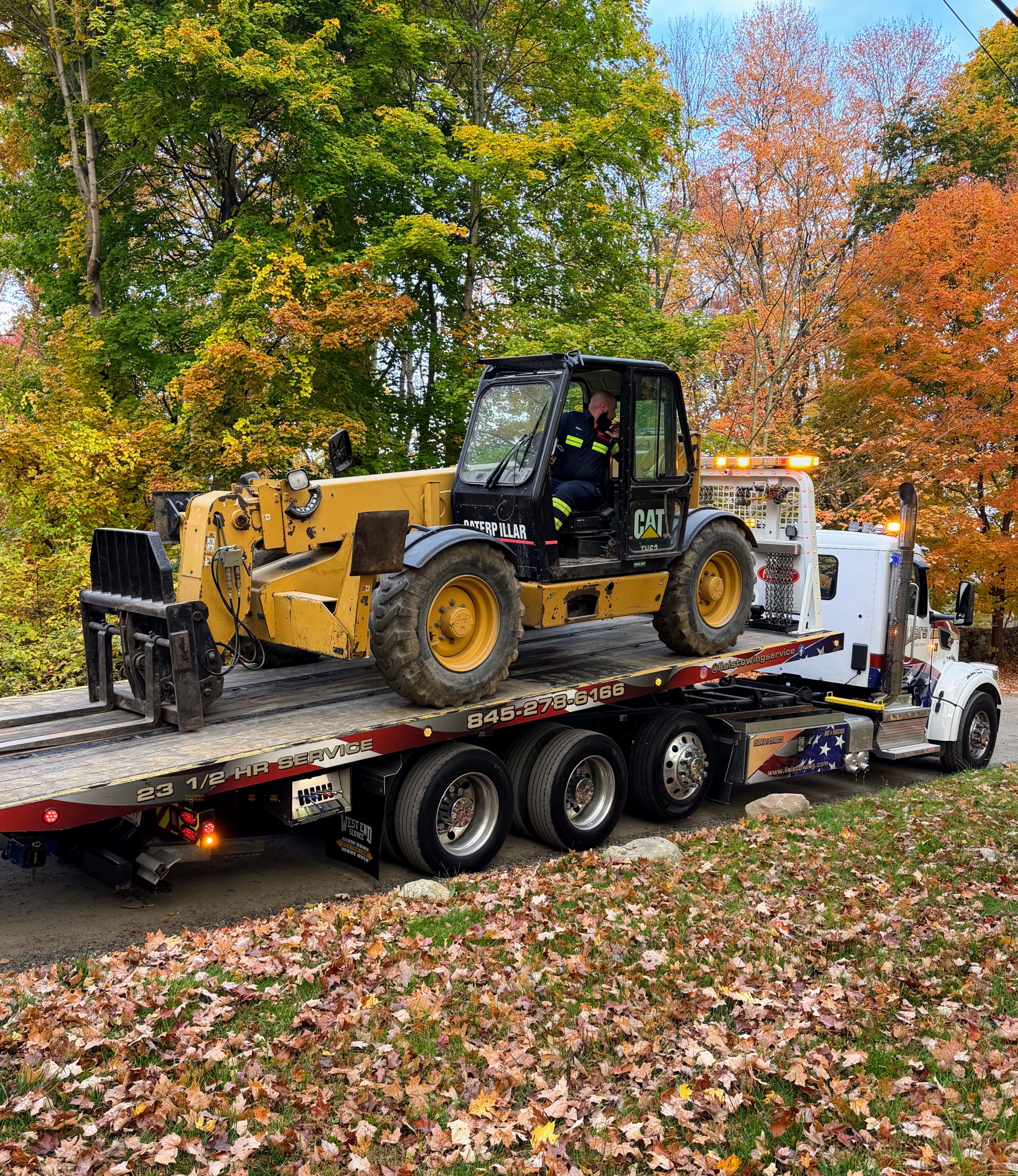
We had my trusted Hi-Lo transported to the location to help with the removal process. This is a strong machine and can handle the weight of the tree.
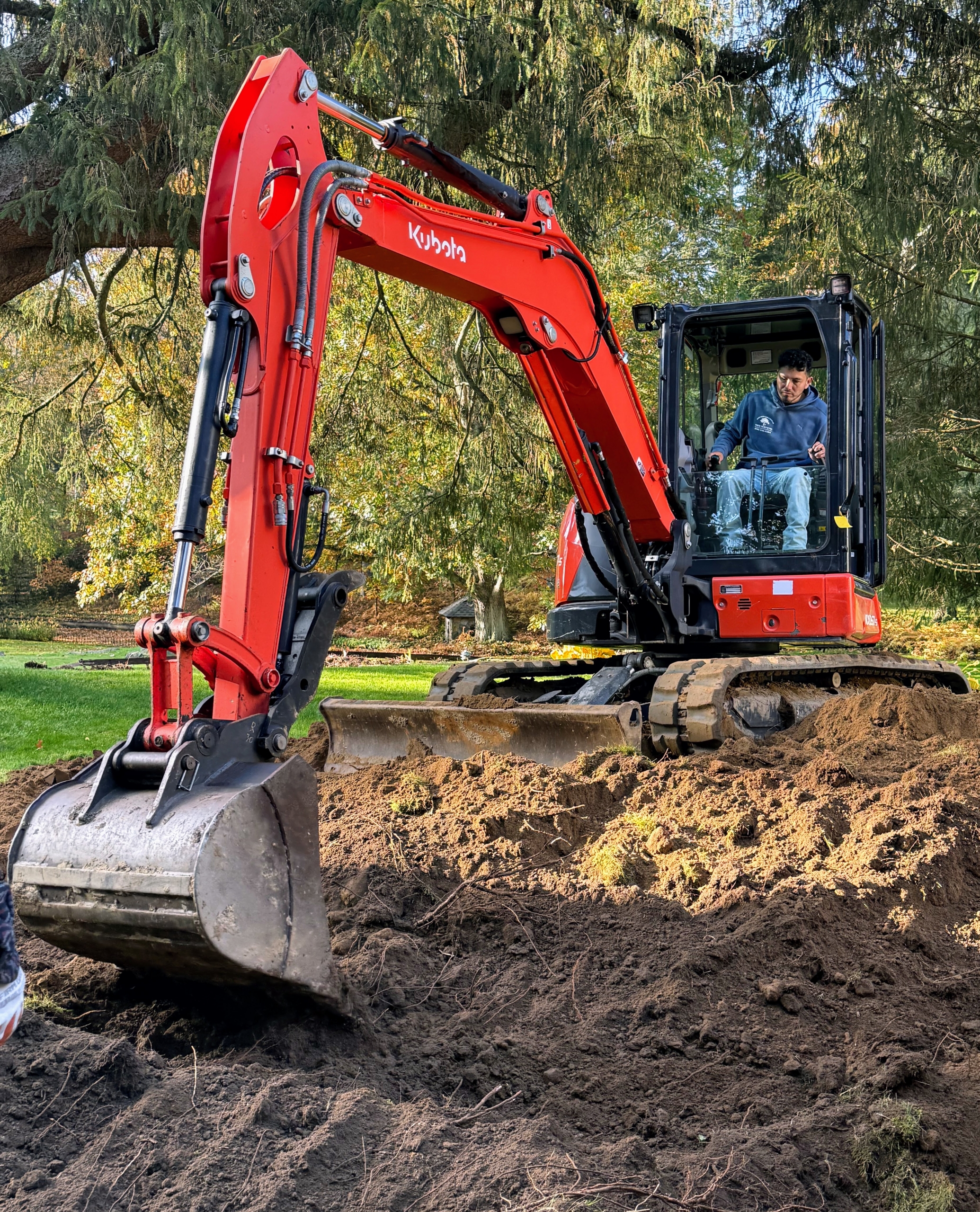
Meanwhile, an excavator digs a level area for the Hi-Lo near the tree.
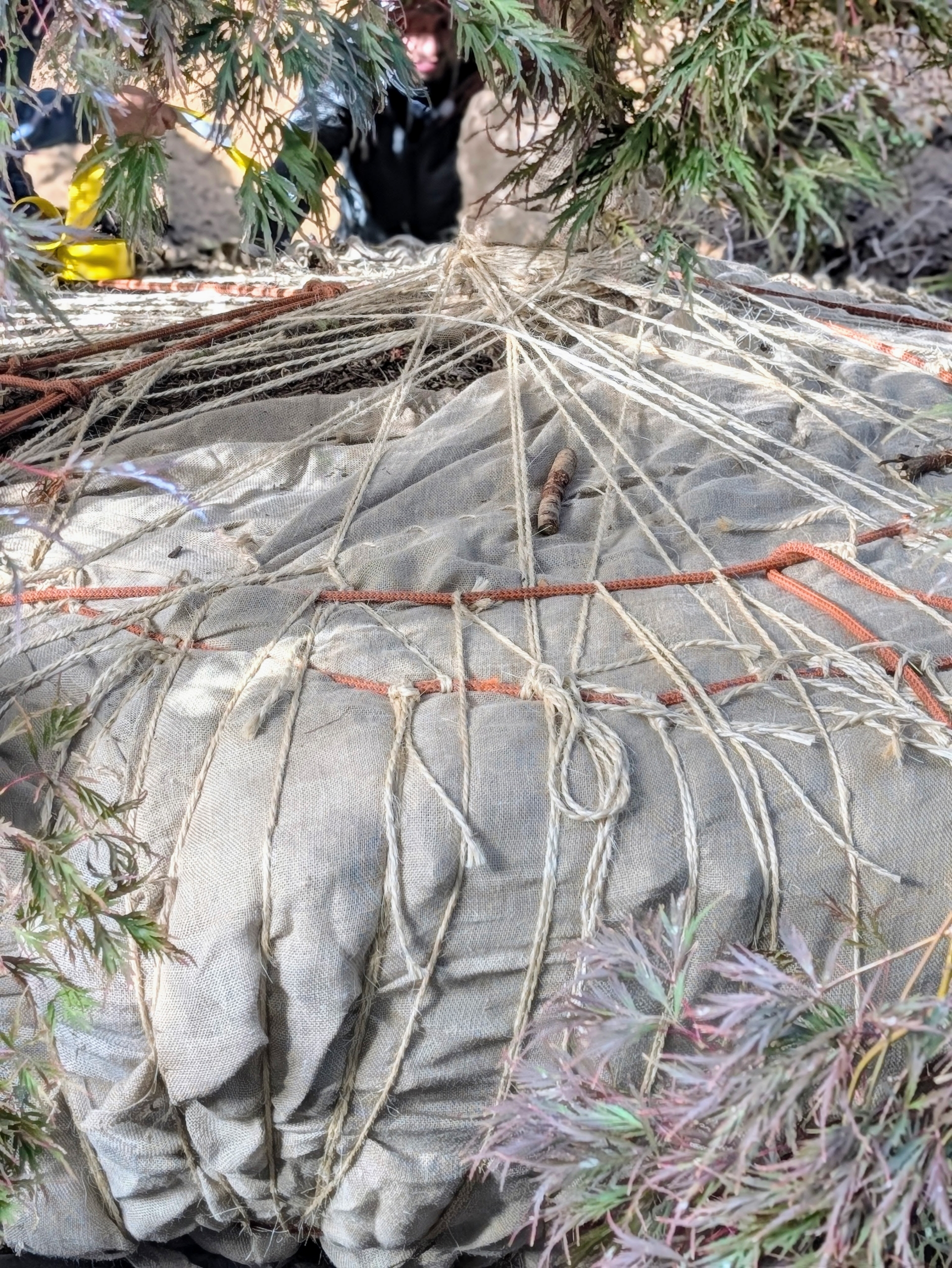
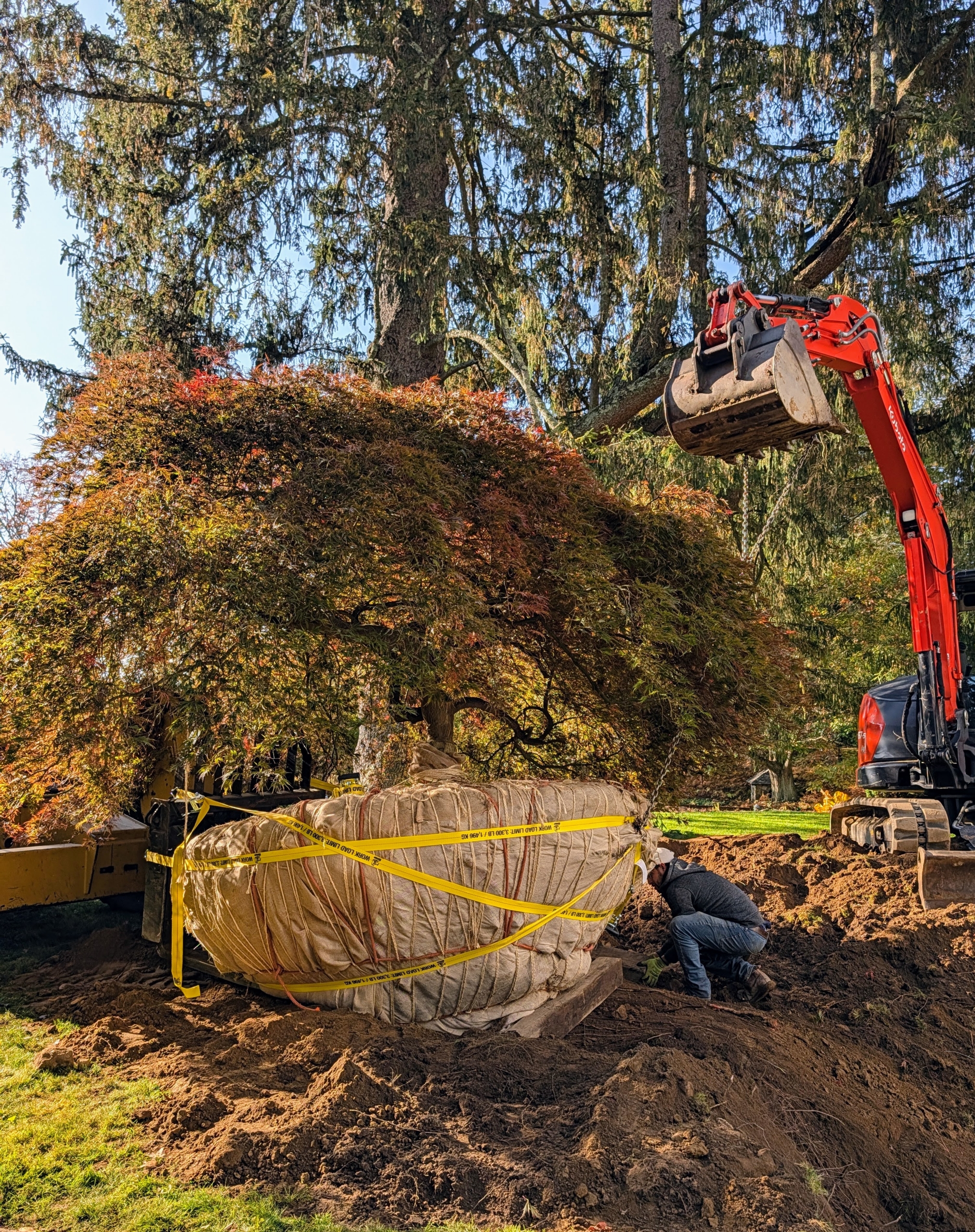
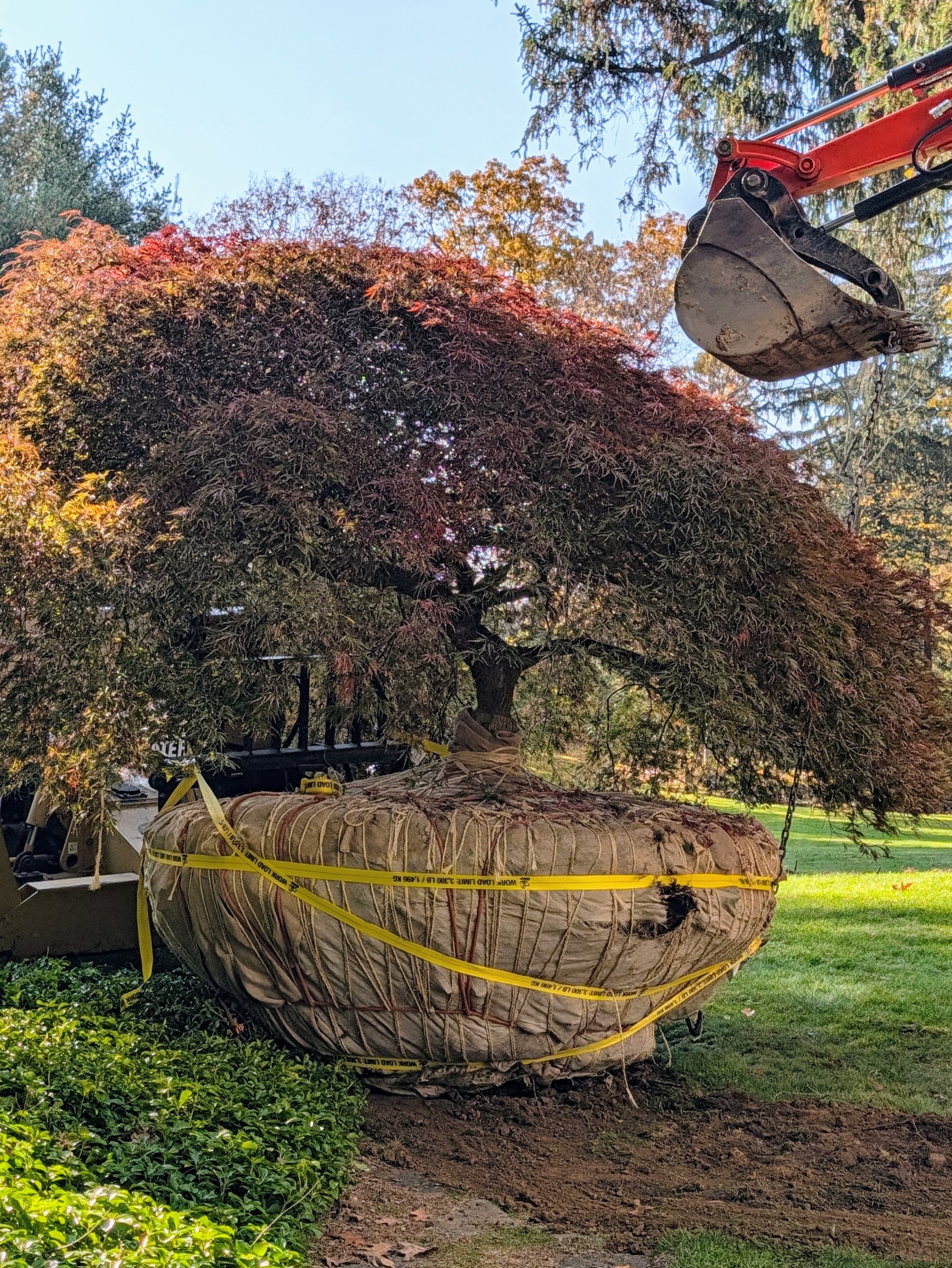
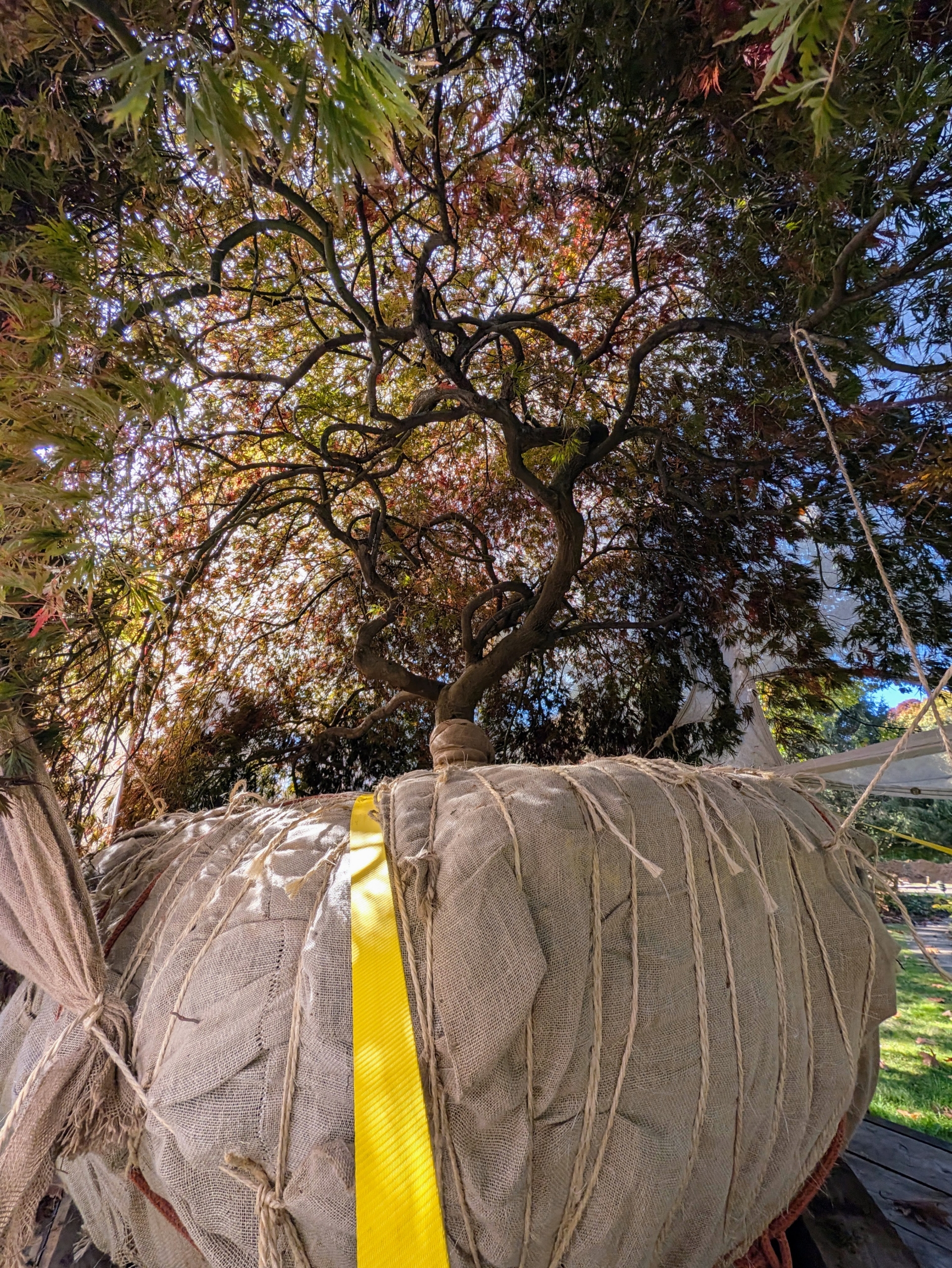
The root ball of the Japanese maple is wrapped in burlap and tied with twine. This process is known as balling and burlapping. It is an important part of the process because it protects the root system, maintains soil integrity, and greatly improves the tree’s survival chances after transplantation.
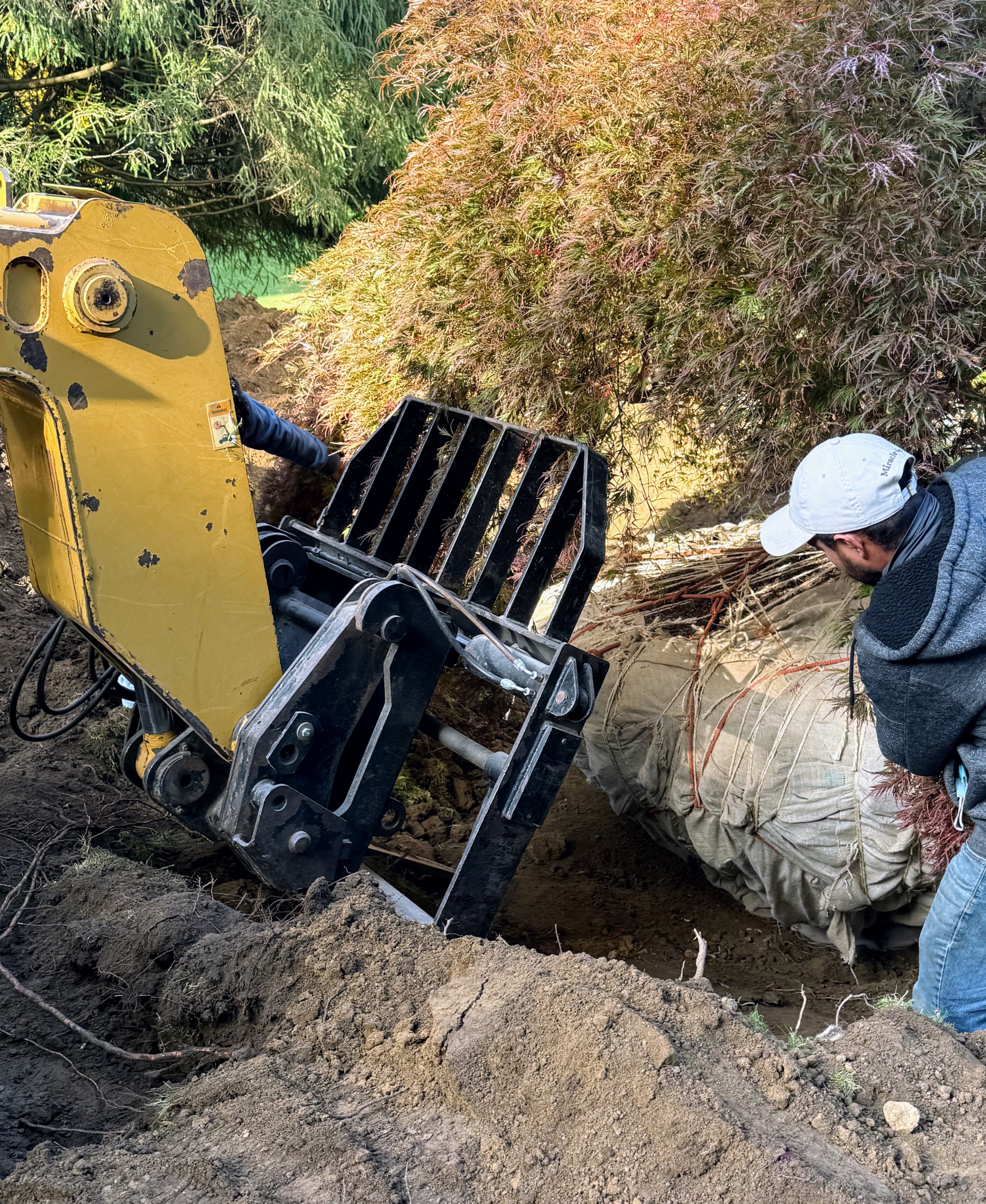
The Hi-Lo’s fork is carefully placed next to the root ball.
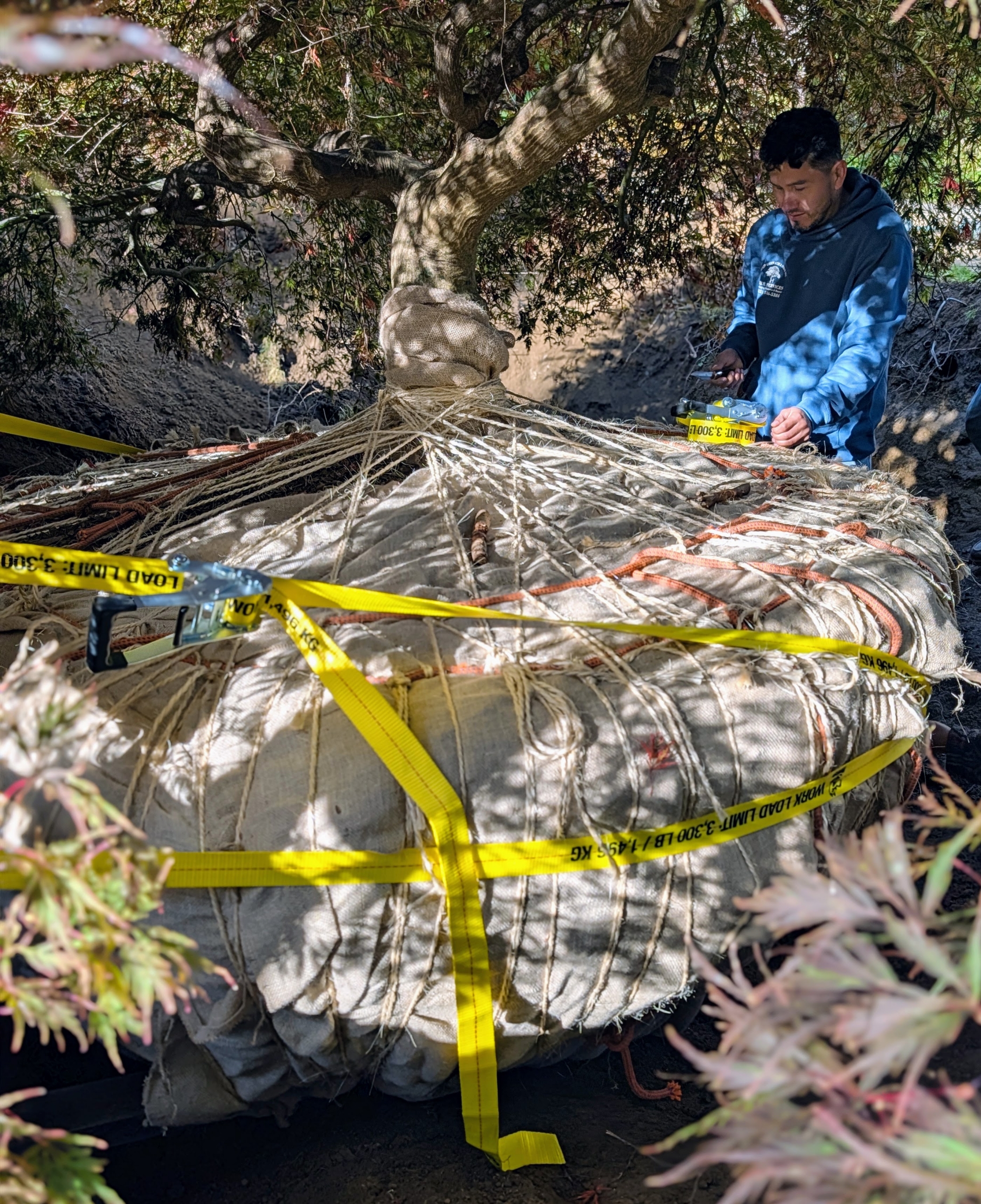
Straps are attached to the rootball to keep it even more secure as it moves.
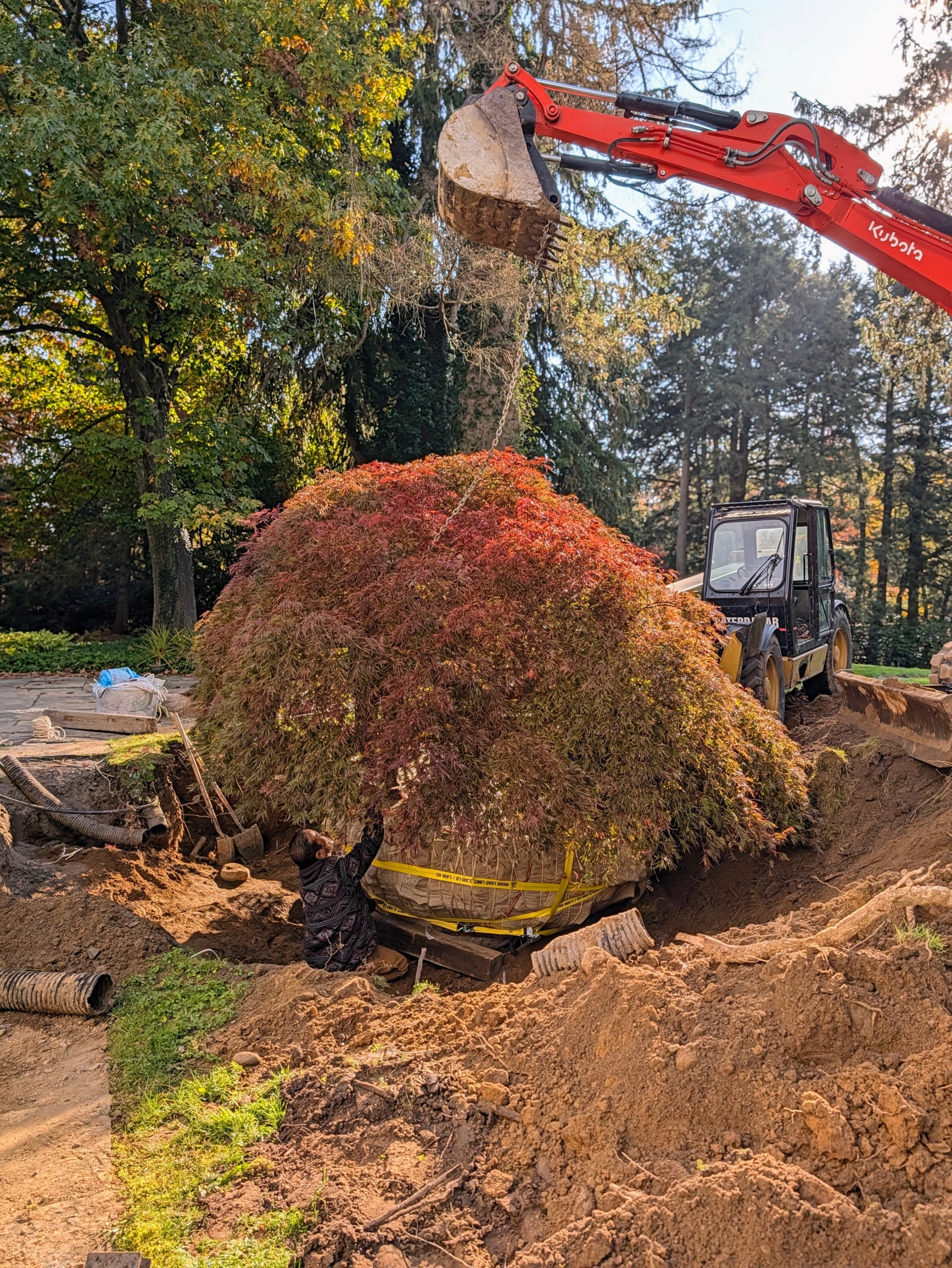
Next, chains are also secured around the root ball, so it can be supported from above. Don’t always rely on ropes or straps, which could break in the process. Chains are a good option.
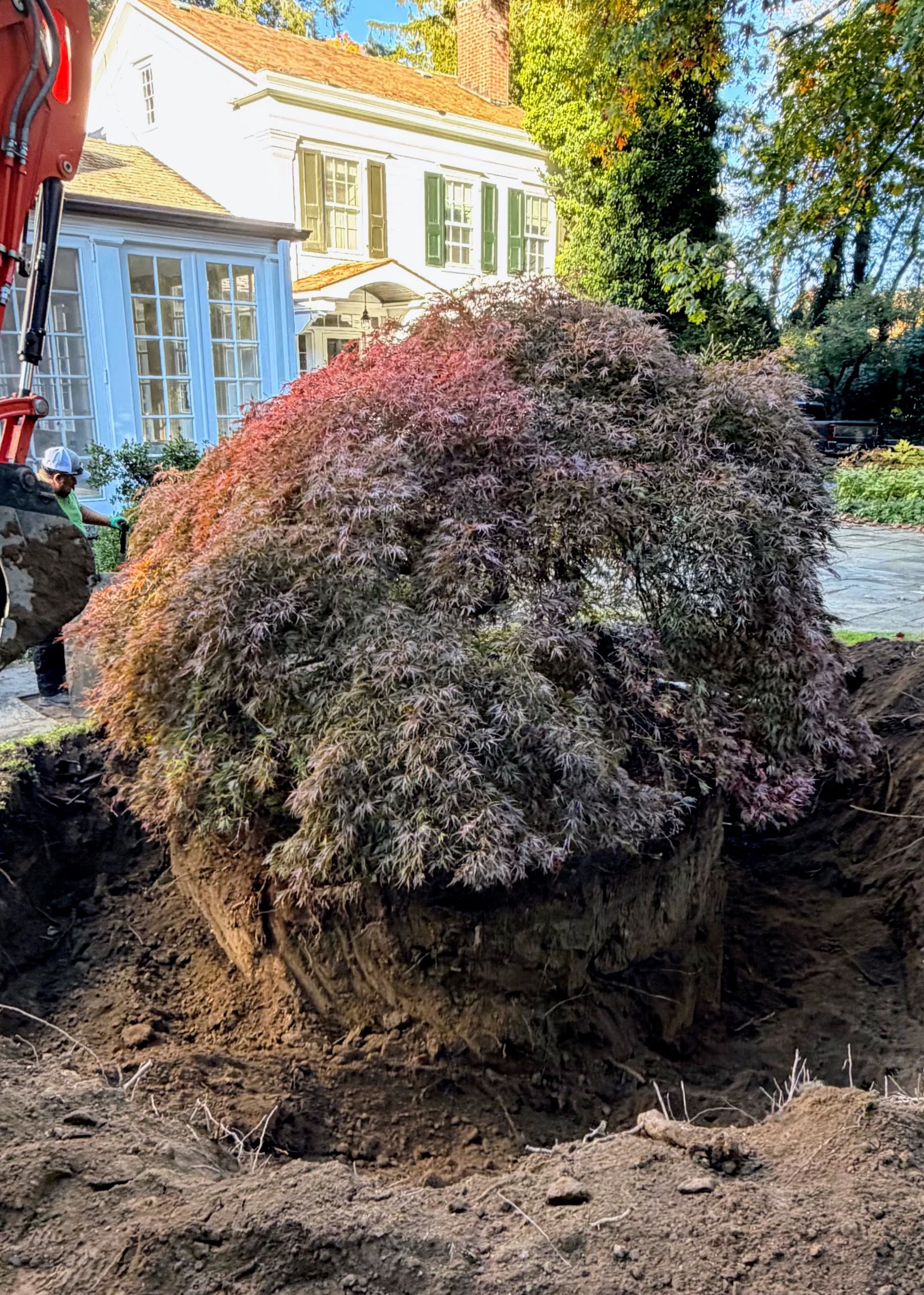
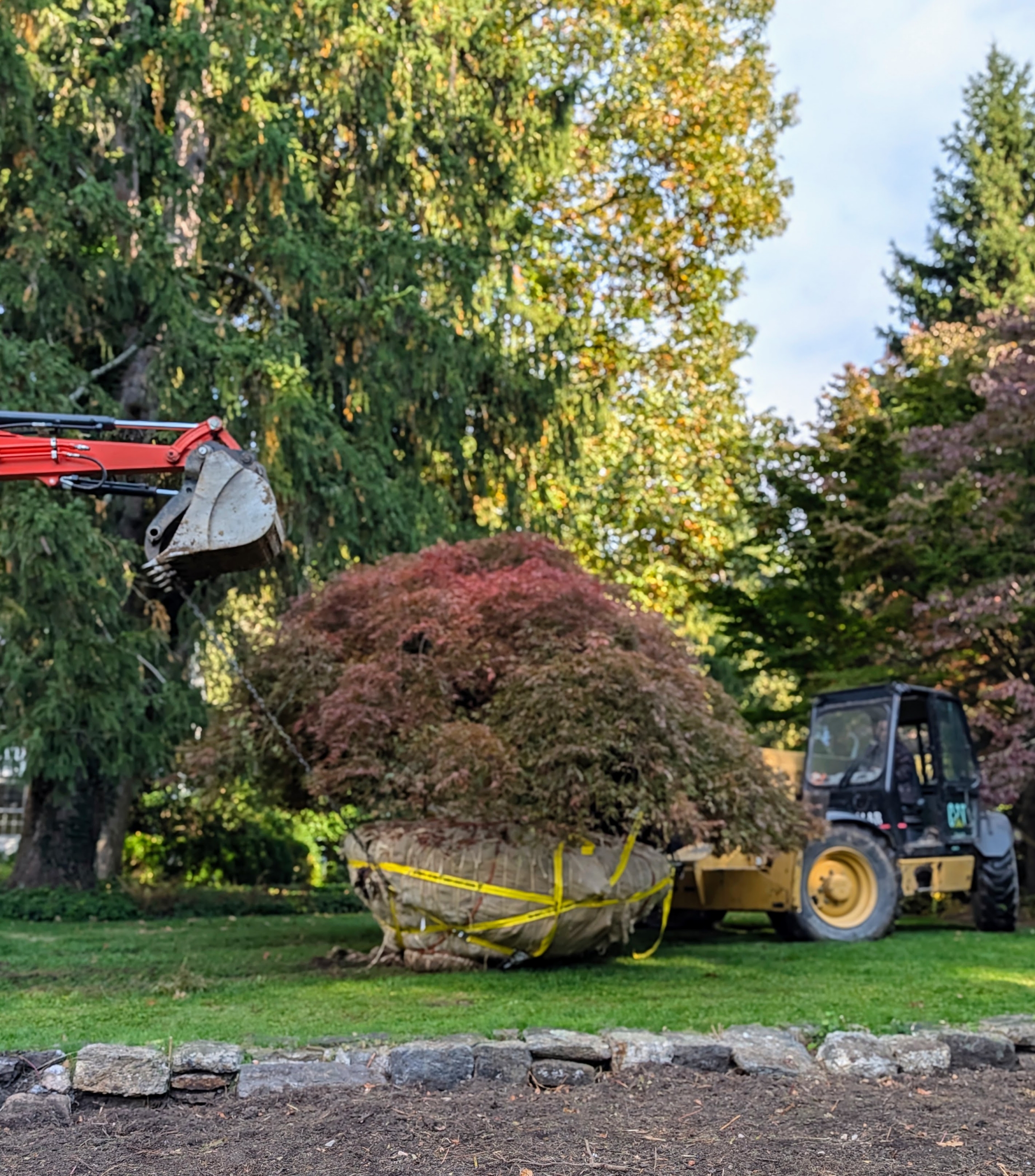
A few minutes later, the six to eight thousand pound tree is lifted to higher ground.
Look how beautiful this Japanese maple is – in form and in size.
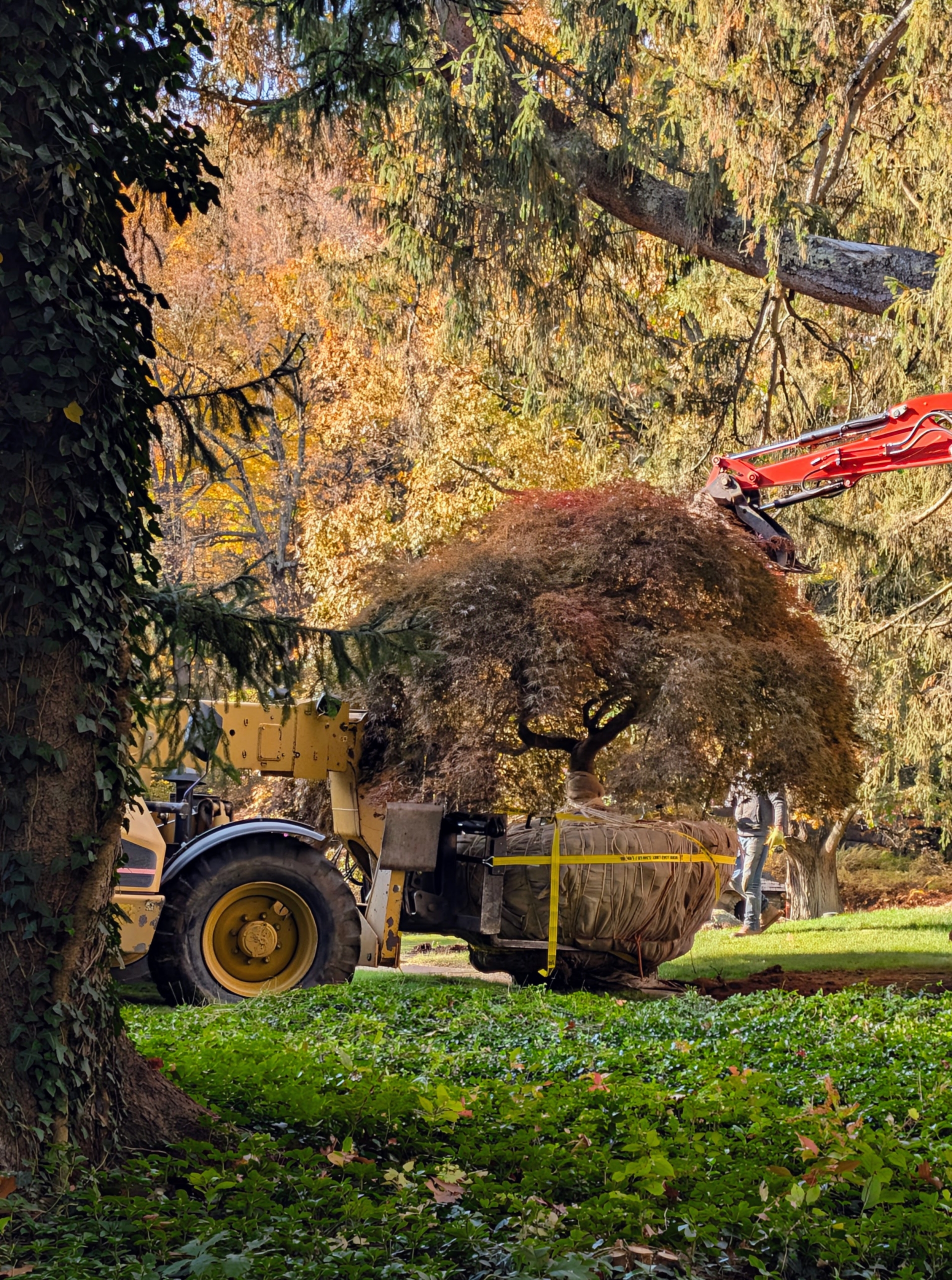
Chhiring, who is driving the Hi-Lo, and Norman, who is controlling the excavator, move slowly across the lawn. It is being supported from the top and bottom.
It doesn’t take long to move it to the waiting trailer, but it does take care and skill to move it through tight spaces, under branches, together at the same speed, so the tree moves safely.
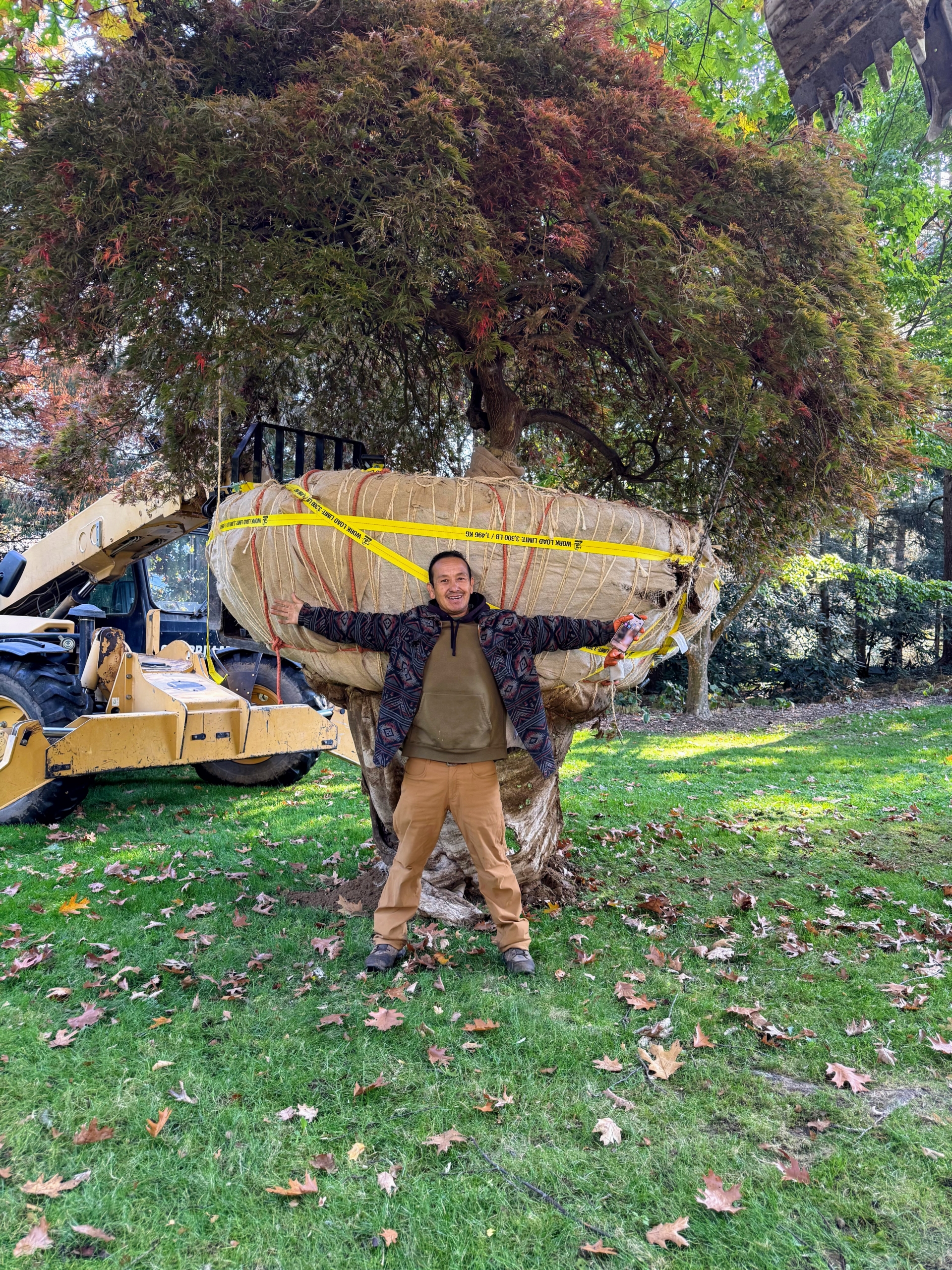
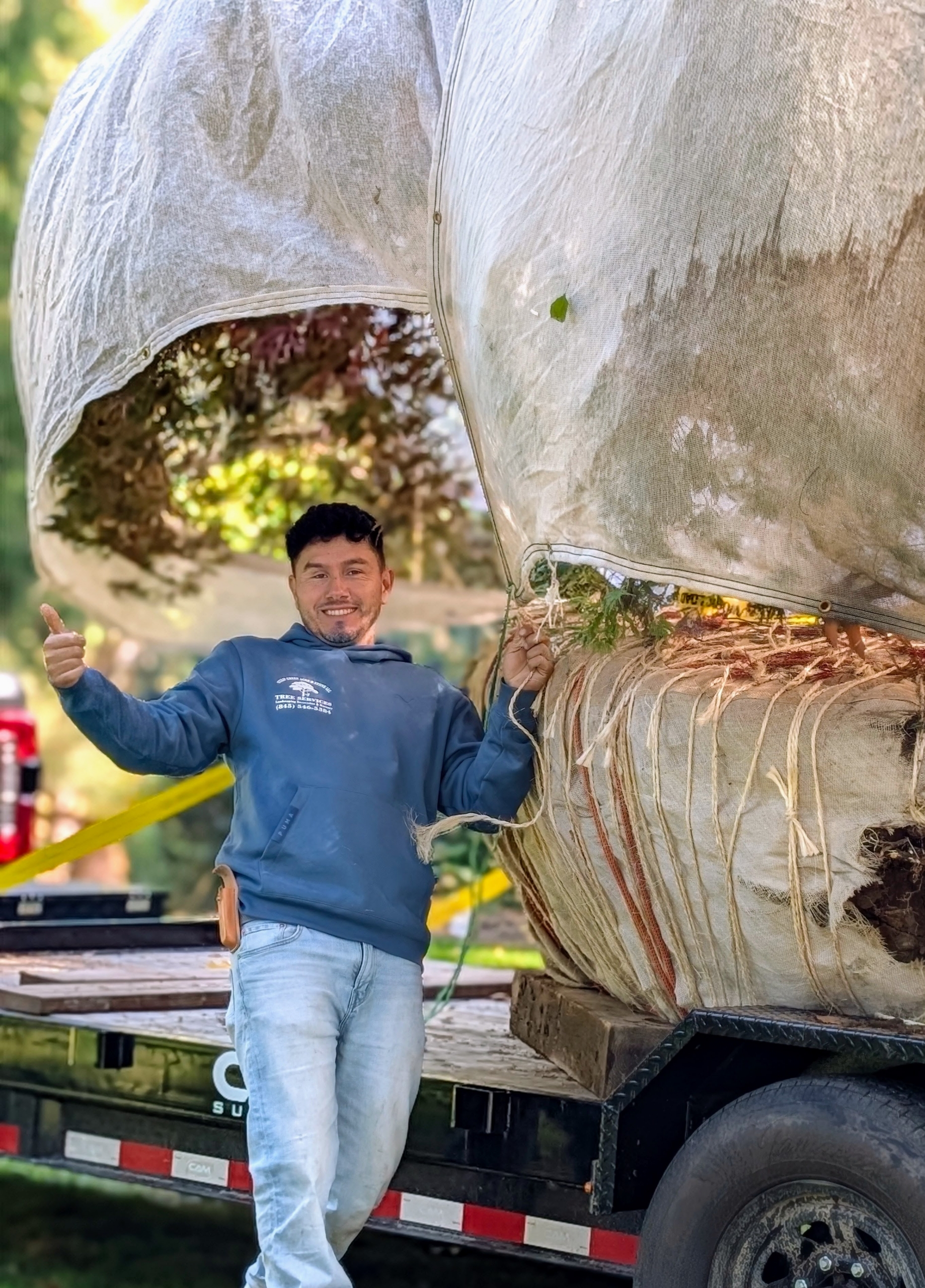
Here is Chhiring showing the root ball. A tree’s root ball should generally be eight to 12 inches of diameter per inch of the trunk’s caliper, with depth at about 75% of that same diameter.
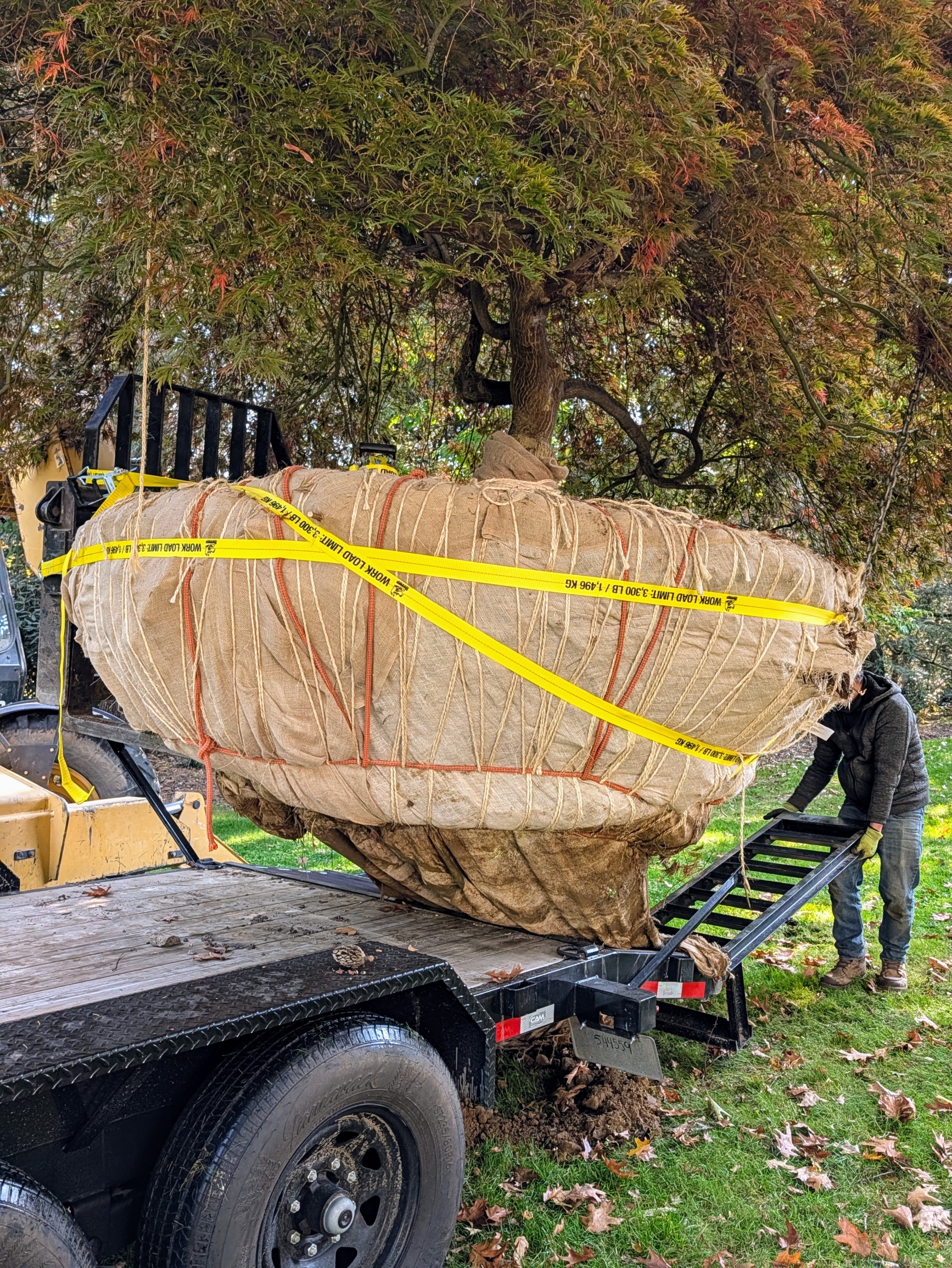
Using the machines, the tree is carefully moved onto the trailer.
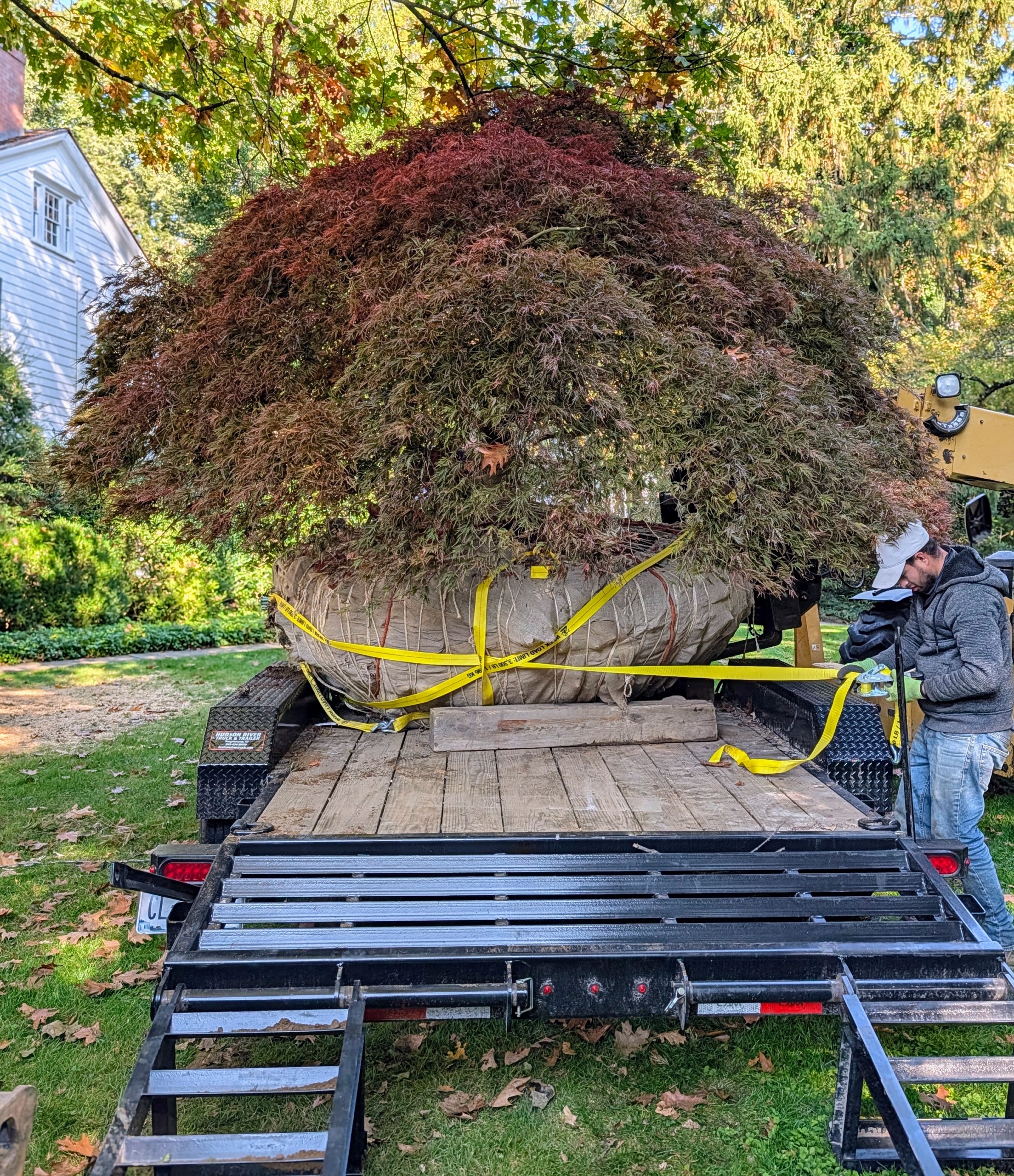
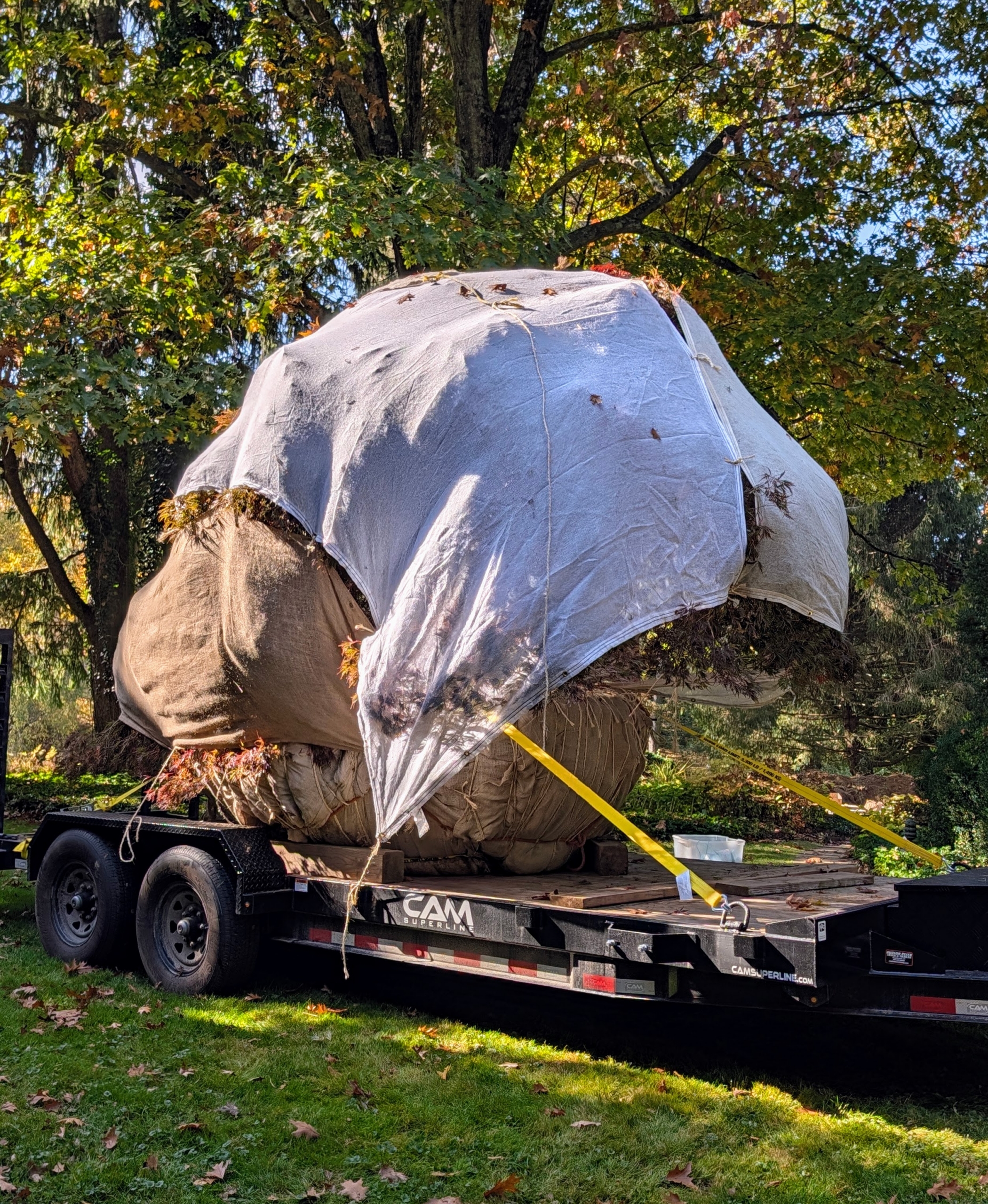
Here it is getting strapped into the trailer bed for the ride to its new home.
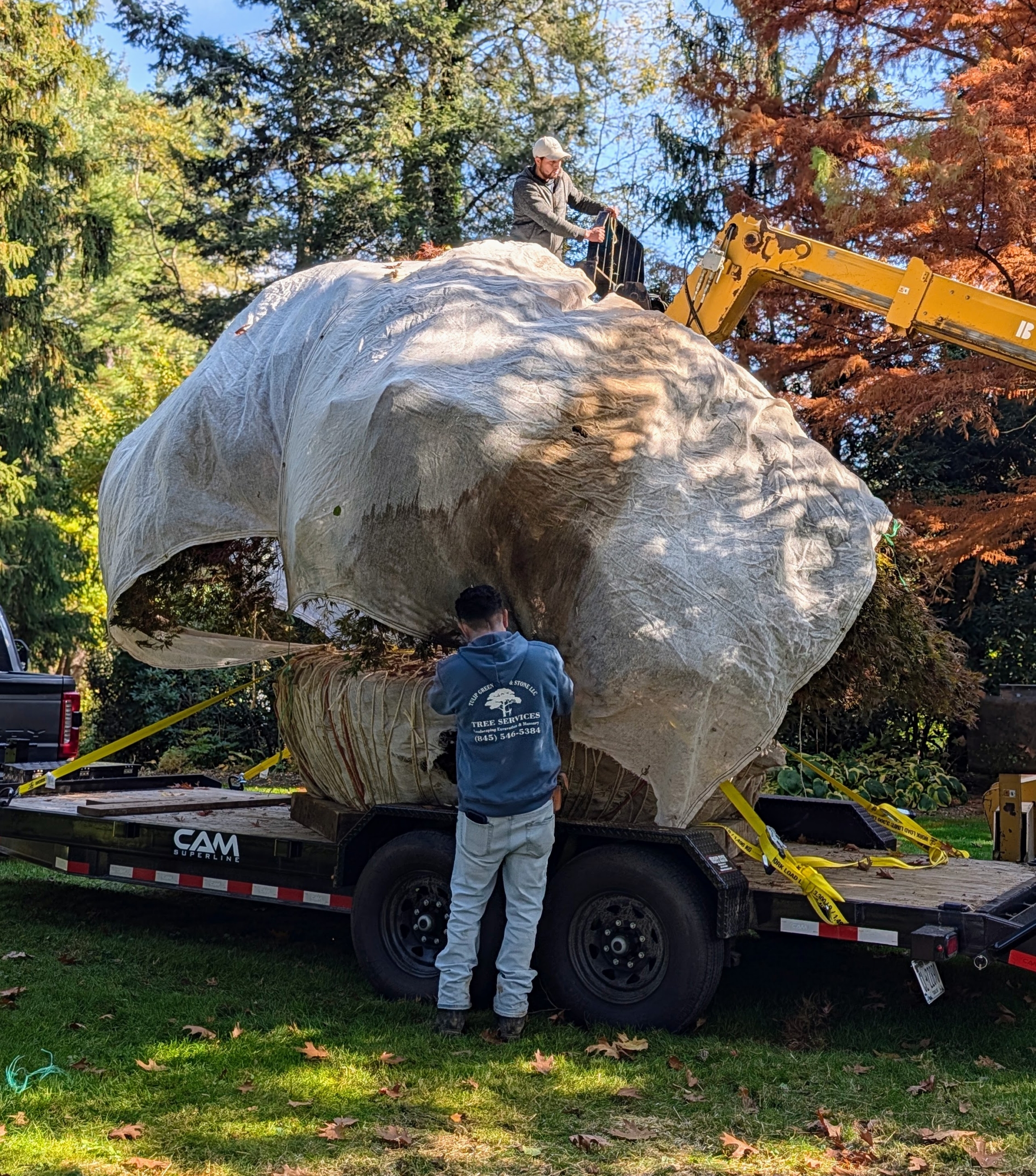
For safety, the entire tree is covered before leaving the property.
The branches are now well-protected.
Here’s Norman making the last adjustments before moving.
It is now covered, properly secured, and ready for its short ride to my farm. Stay tuned for my next blog when I show where it is planted.
Halloween has always been one of my favorite occasions, and whenever my schedule allows, I love getting dressed up in fun and creative costumes. Here are a few of my favorites from years past! Yesterday, I had the pleasure of appearing on the TODAY show in an Olympics-inspired costume alongside host Craig Melvin, who dressed up as my friend Snoop Dogg - also in Olympics red, white, and blue! I shared some festive Halloween entertaining ideas, including my no-bake spiderweb cheesecake, witches’ brew, and a ghastly goulash. I hope you had a chance to watch!
Enjoy these photos and have a fun Halloween!
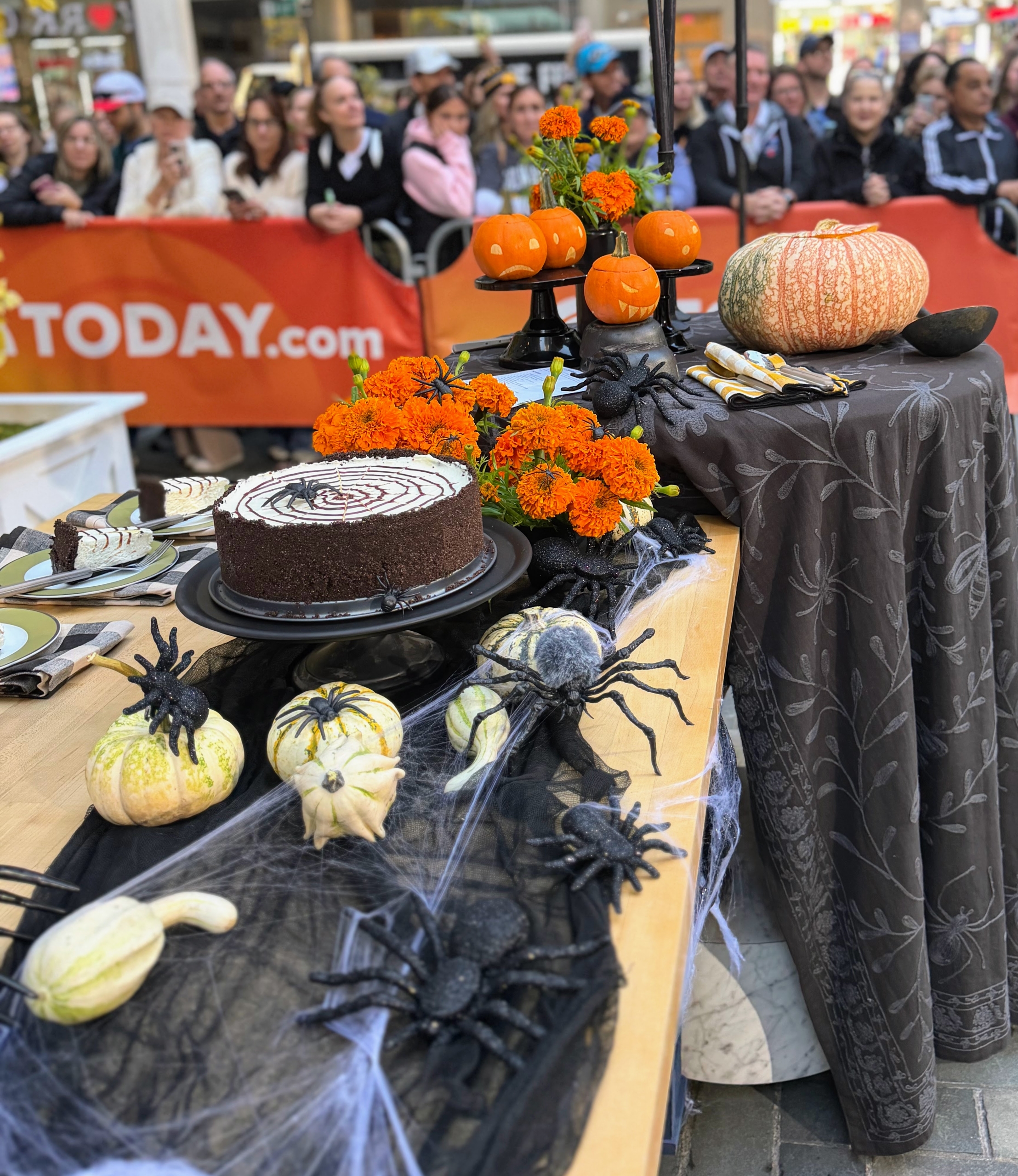
Happy Halloween! Here I am in New York City’s Rockefeller Plaza at a beautiful Halloween decorated table.
The table setting included lots of gourds, pumpkins and spiders in webs – just waiting to crawl on all the Halloween-inspired dishes.
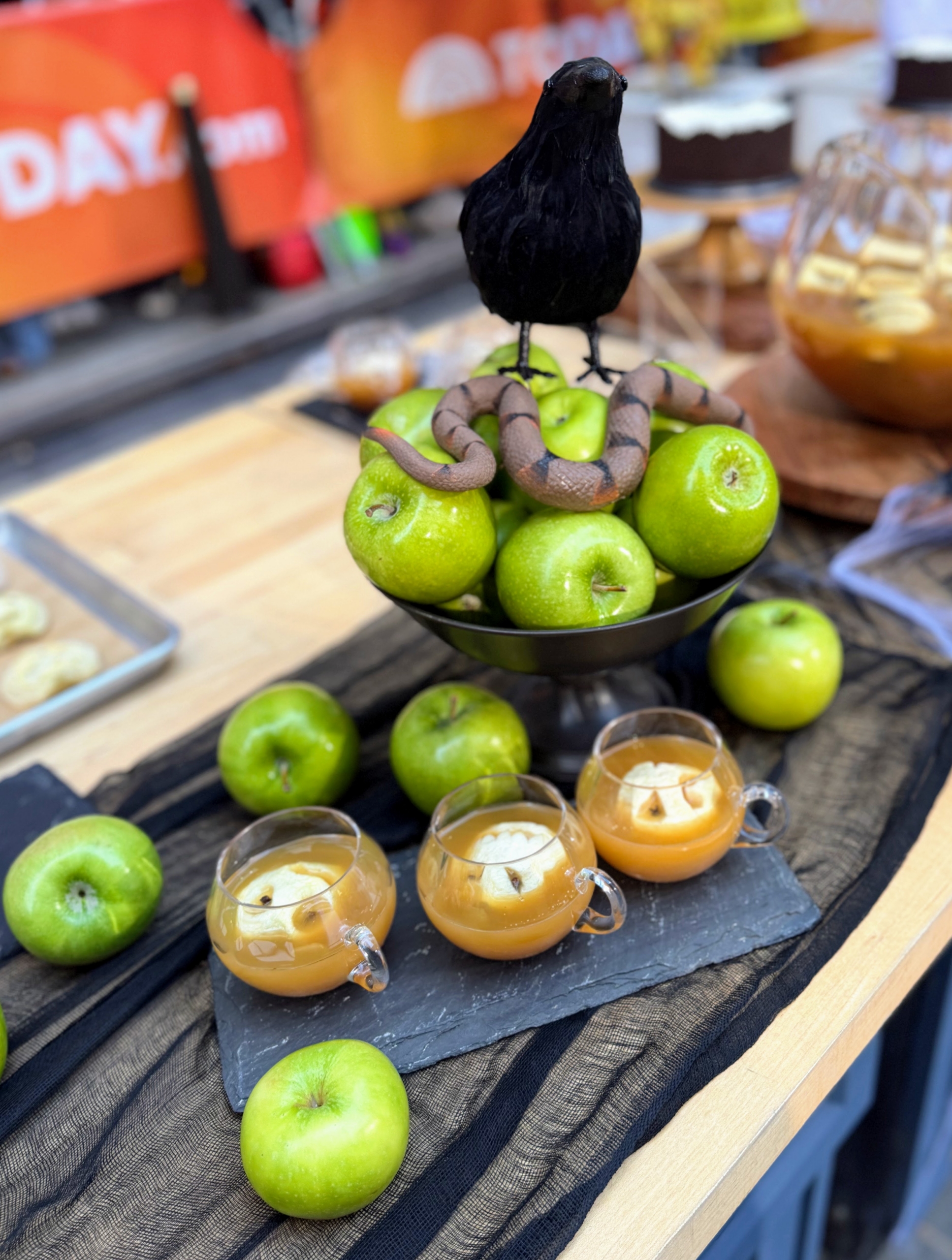
Here are some delicious apples for my witches brew – a mulled cider served with a spooky shrunken head in each cup.
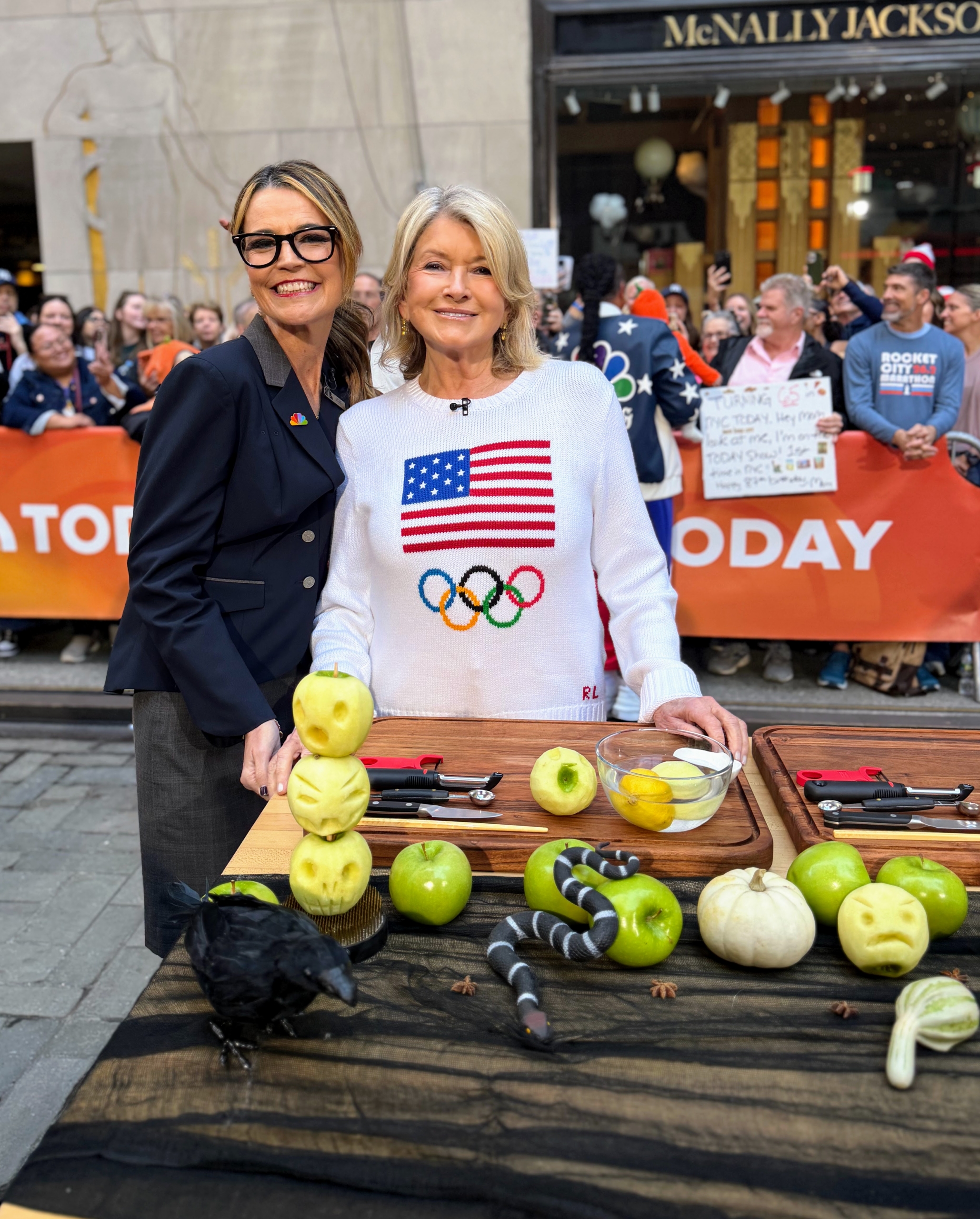
The apples are skinned, cored and then carved – one can use a melon baller and chop stick to carve a face into the flesh of the apple. Add a clove in each eye socket for an even scarier look.
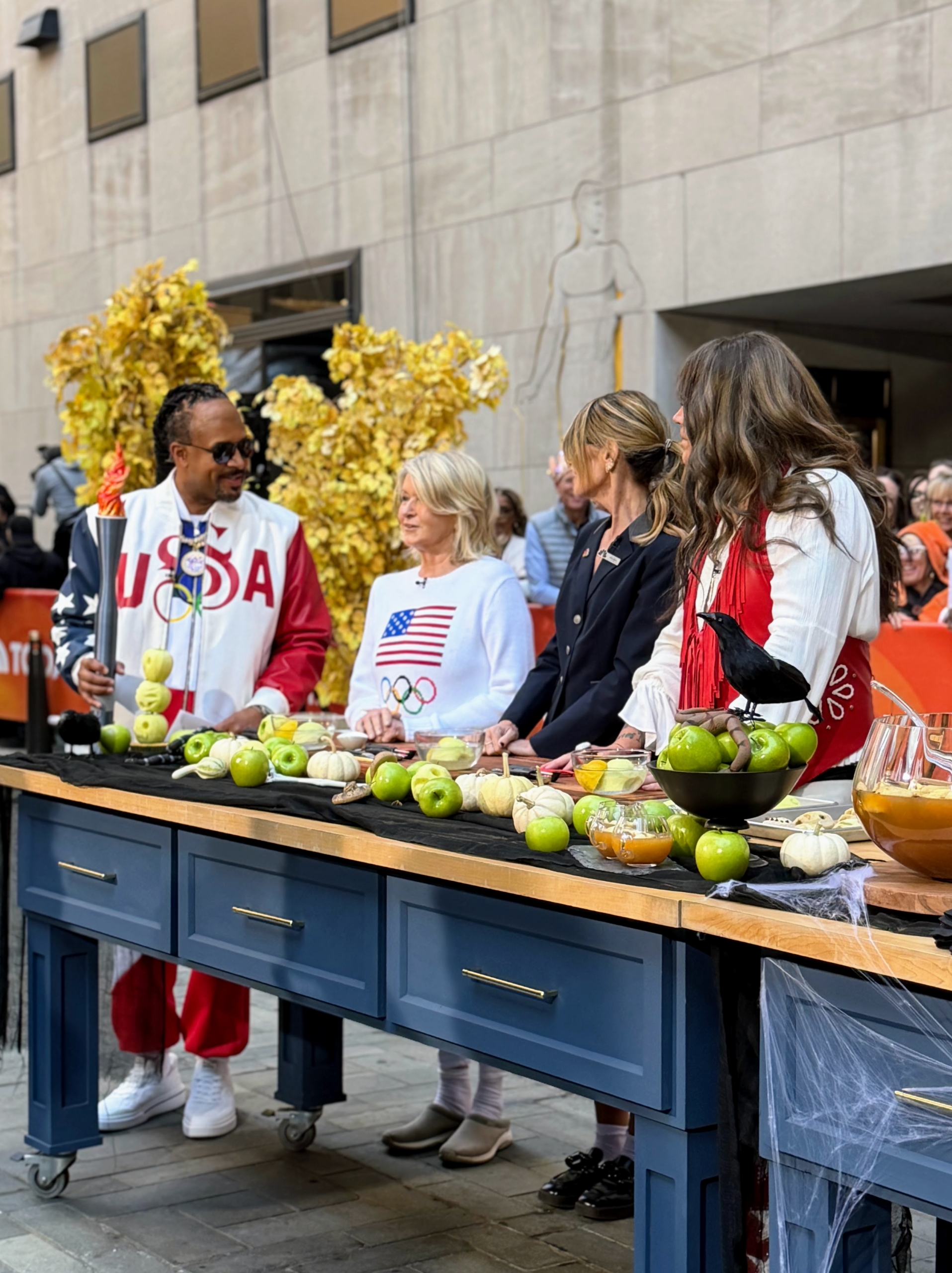
And here I am with Craig Melvin dressed as Snoop Dogg. Remember our appearances at the Winter Olympics in Milan?
I taught host Savannah Guthrie how to make my shrunken heads. Savannah is dressed as an NBC page.
Here I am with Craig, Savannah and can you guess? Dressed with long, brown hair is Carson Daly as country singer-songwriter, Ella Langley.
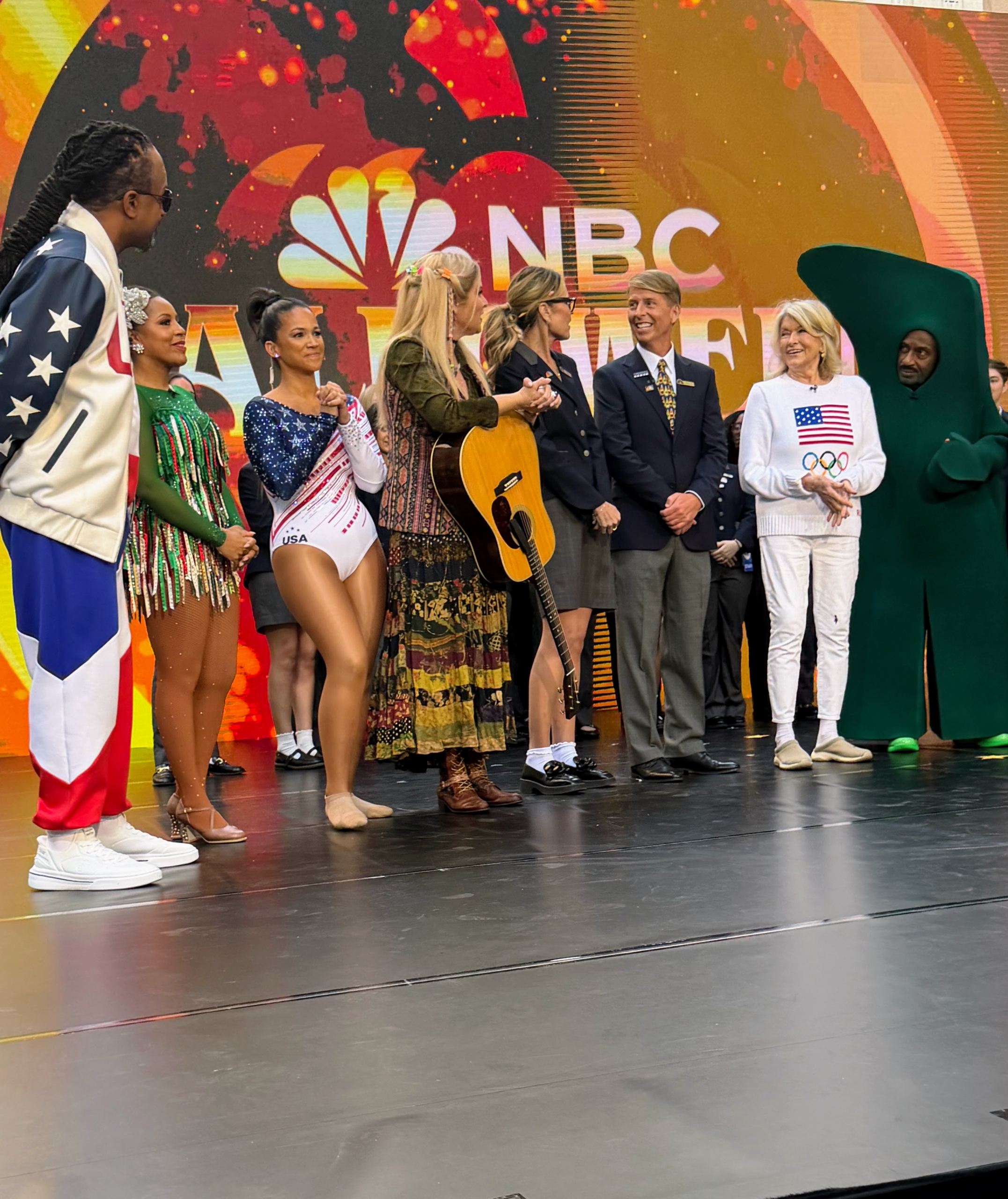
The morning show team dressed up to celebrate NBC’s 100th anniversary – some wore costumes showcasing various iconic shows through the years. Here I am joined by “Snoop,” Sheinelle Jones as a Radio City Rockette to honor the Music Hall next door, Laura Jarrett as gymnast Simone Biles, Jenna Bush Hager as Lisa Kudrow’s Phoebe Buffay, guest Jack McBrayer, and on my left, Al Roker as Gumby from Saturday Night LIVE.
Craig did a good job as “Snoop Dogg,” but there’s only one true “D-O-double G.”
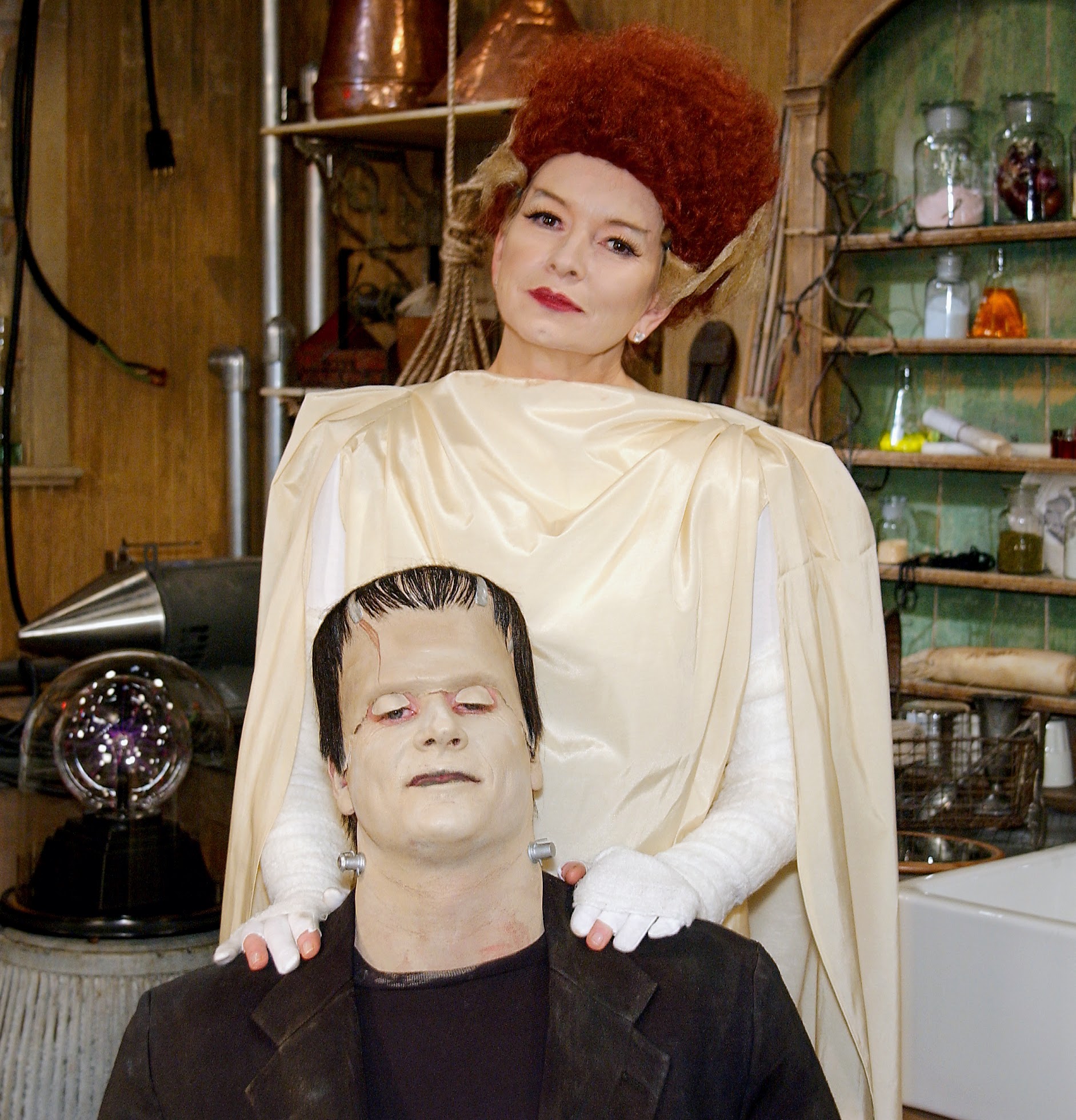
Remember some of these following great costumes? Meet my dear husband, Frank. He’s the strong, silent type. We’re pictured in our well-appointed potting shed turned laboratory, surrounded by some of our most useful possessions – test tubes, newt brains and electrodes.
Here I am as Red Pirate Martha with my crew of ship rats!
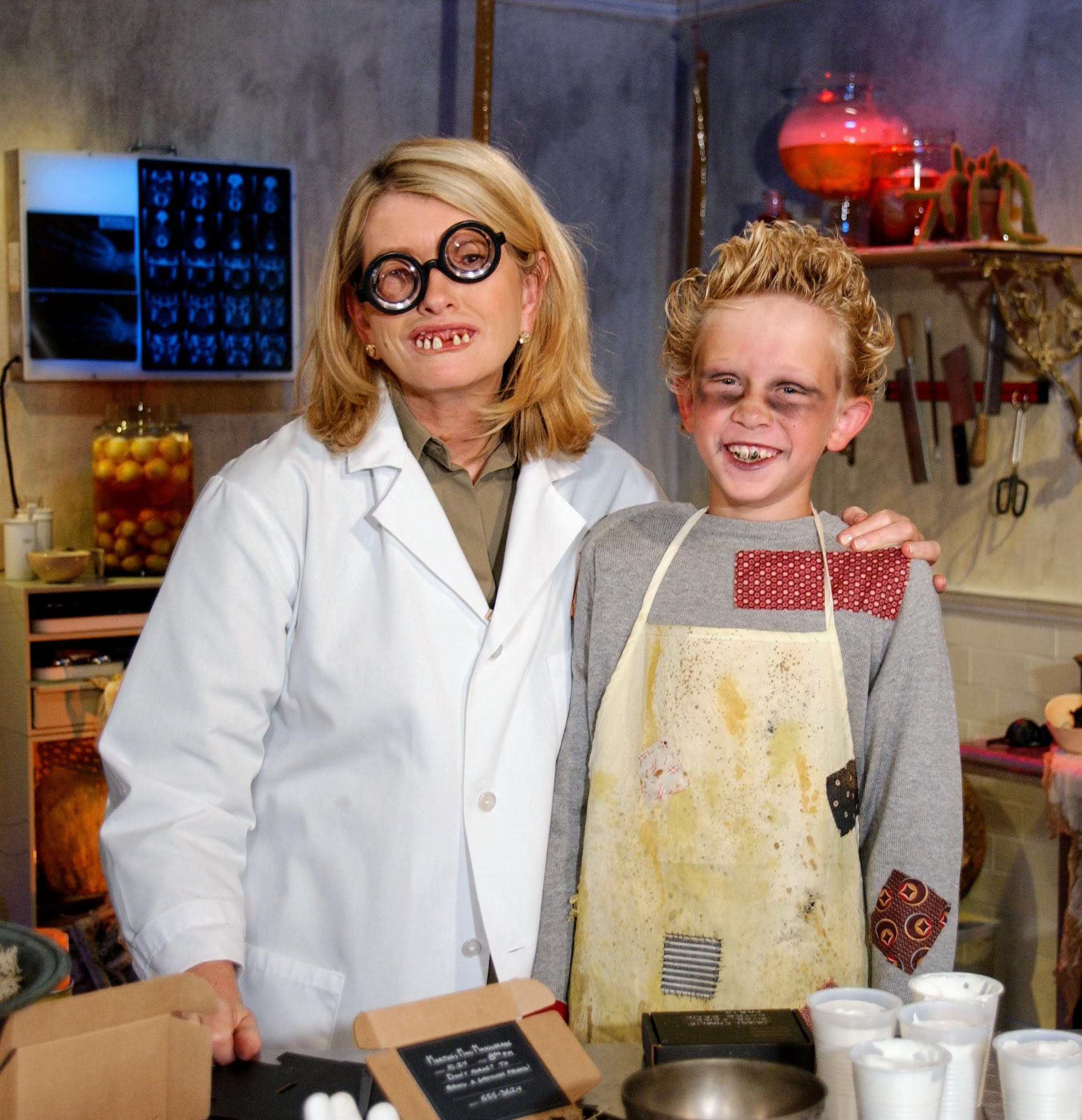
Here I am as a scary scientist with my nephew, Charlie Plimpton.
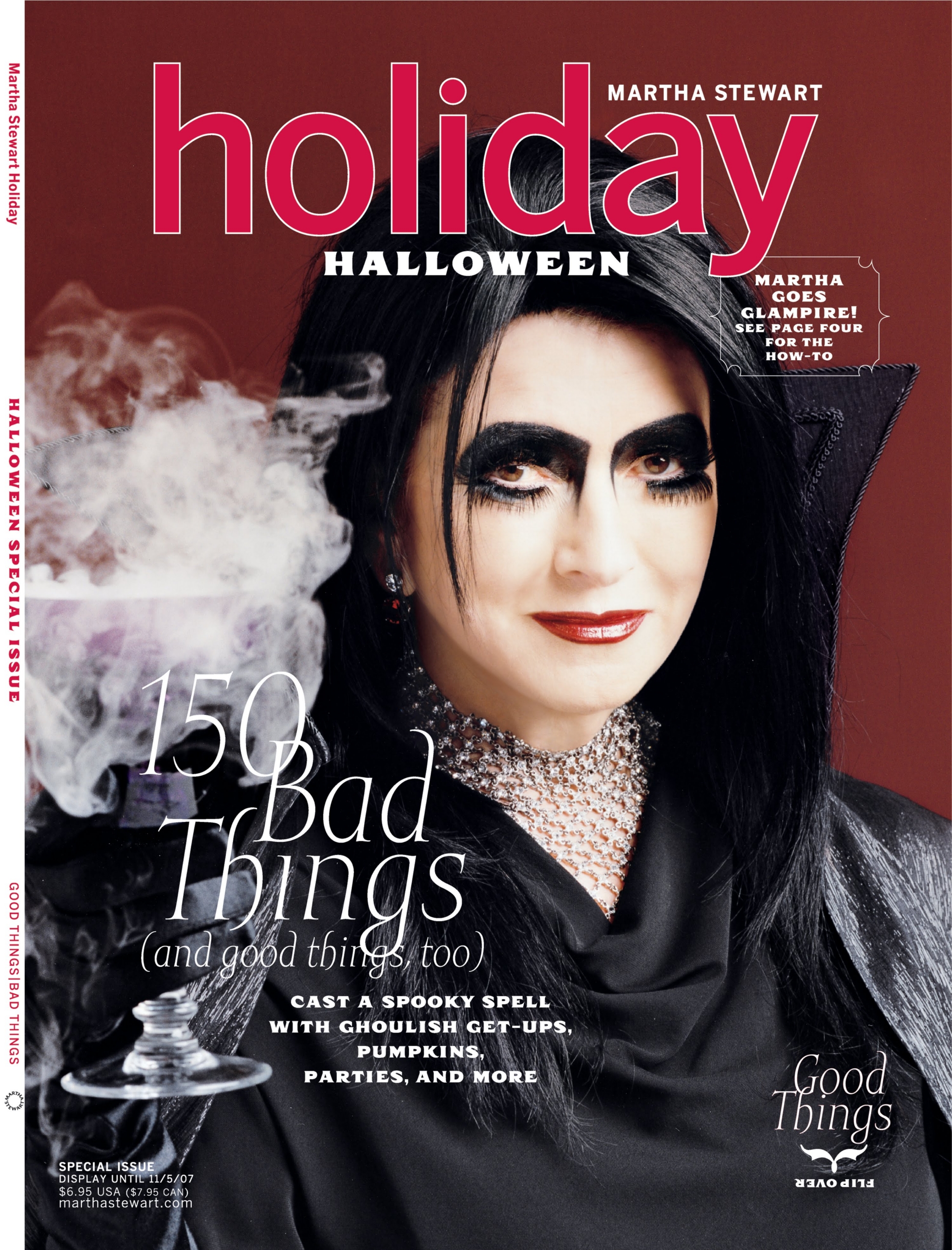
I dressed in a lot of costumes for the covers of my Halloween Special Issues. This is “Bad Martha” from the 2007 holiday issue featuring 150 “bad things” such as ghoulish get-ups, scary pumpkins, and spooky party ideas. My “Glampire” cape was made from black silk woven with metallic threads. (Photo by Craig Cutler)
And here is “Good Martha”, with 150 “good things”, such as enchanting costumes, easy decorations, and tasty treats. (Photo by Craig Cutler)
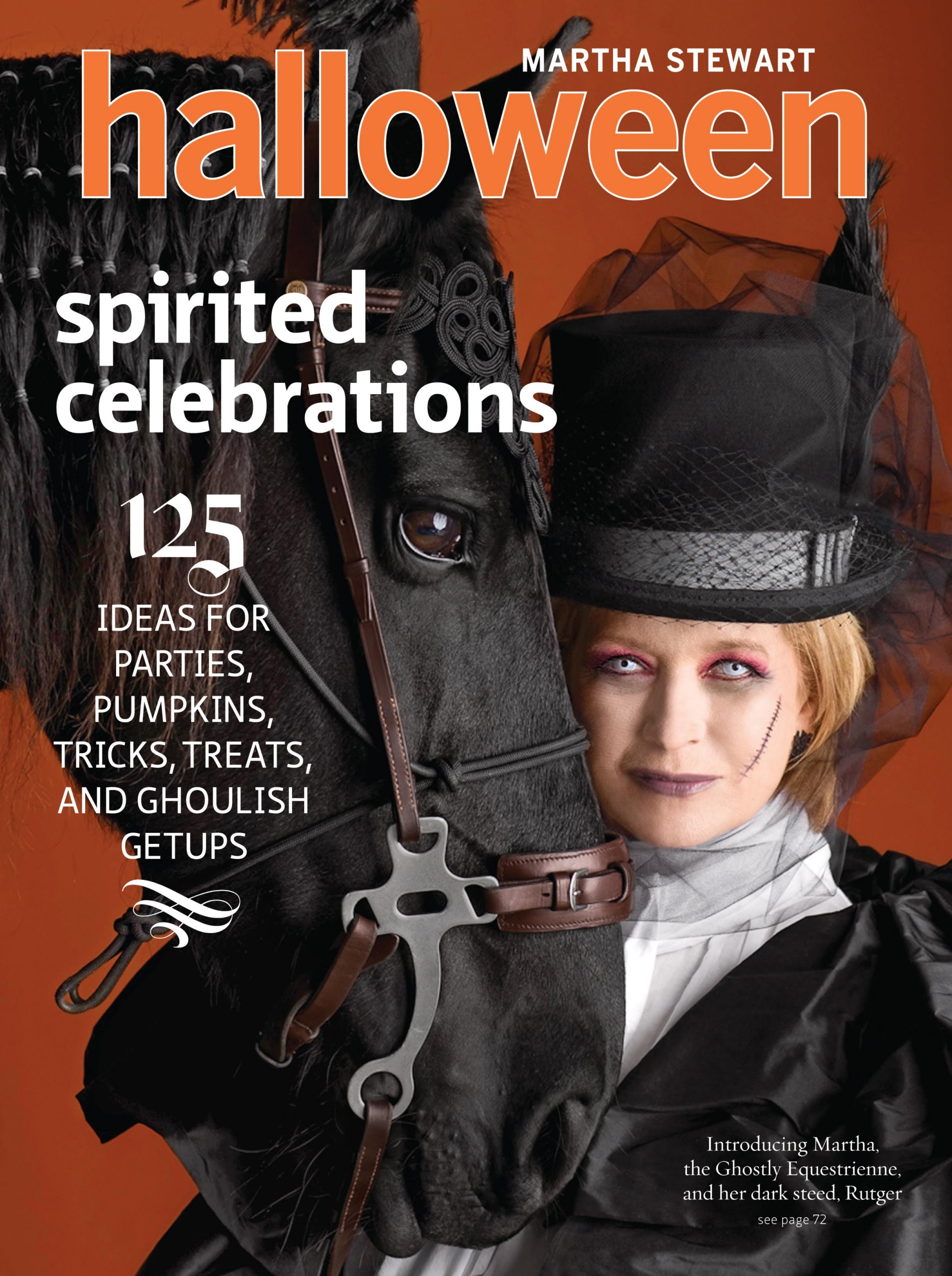
Here I am dressed as a ghostly equestrienne with my handsome Friesian, Rutger, at my side. This costume was for the cover of our 2009 Halloween issue. (Photo by Diego Uchitel)
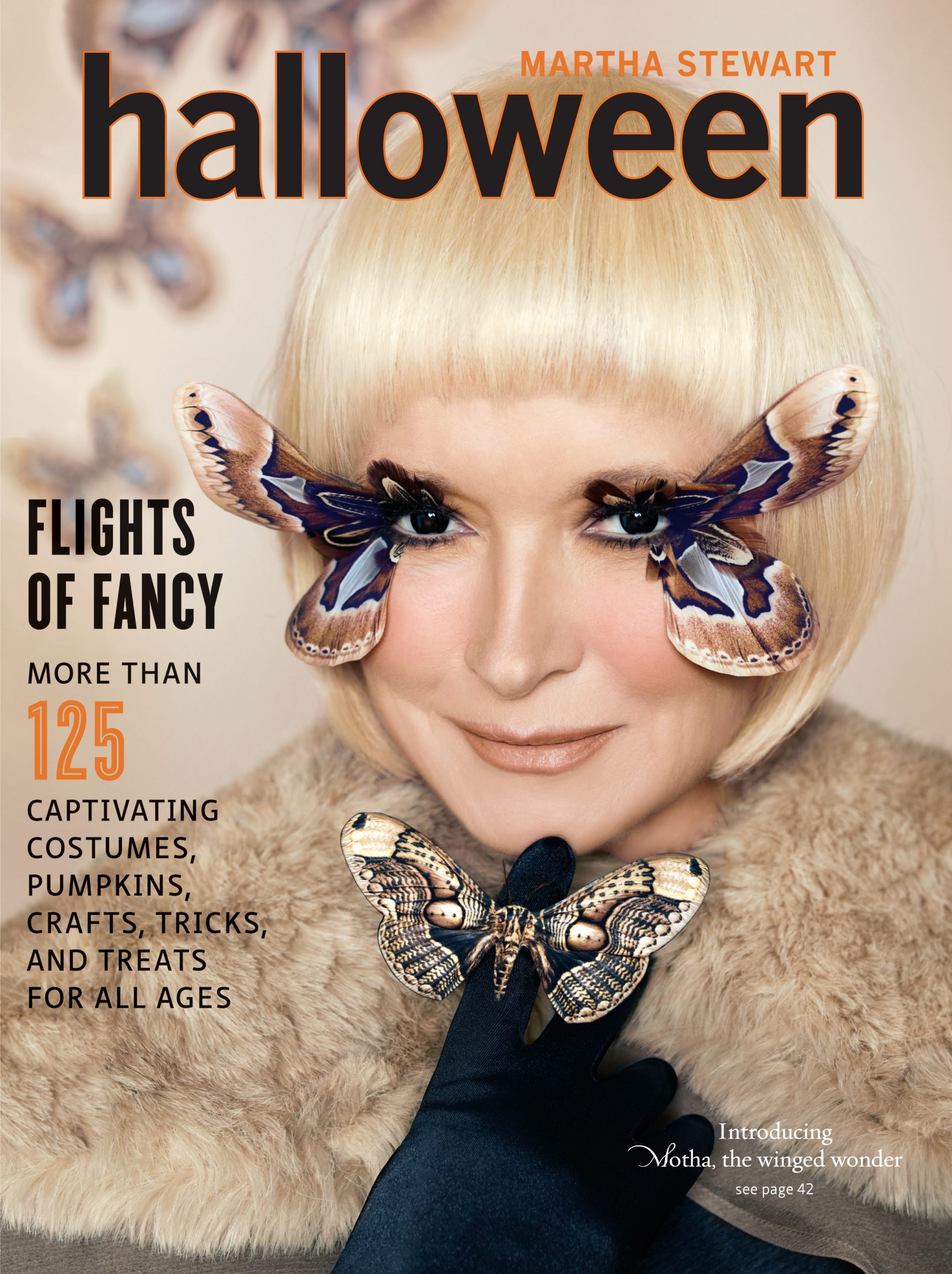
And here I am as “Motha” from our 2011 Halloween special issue – with my platinum-blonde bob wig, and flirty feathered lashes. (Photo by Ruven Afanador)
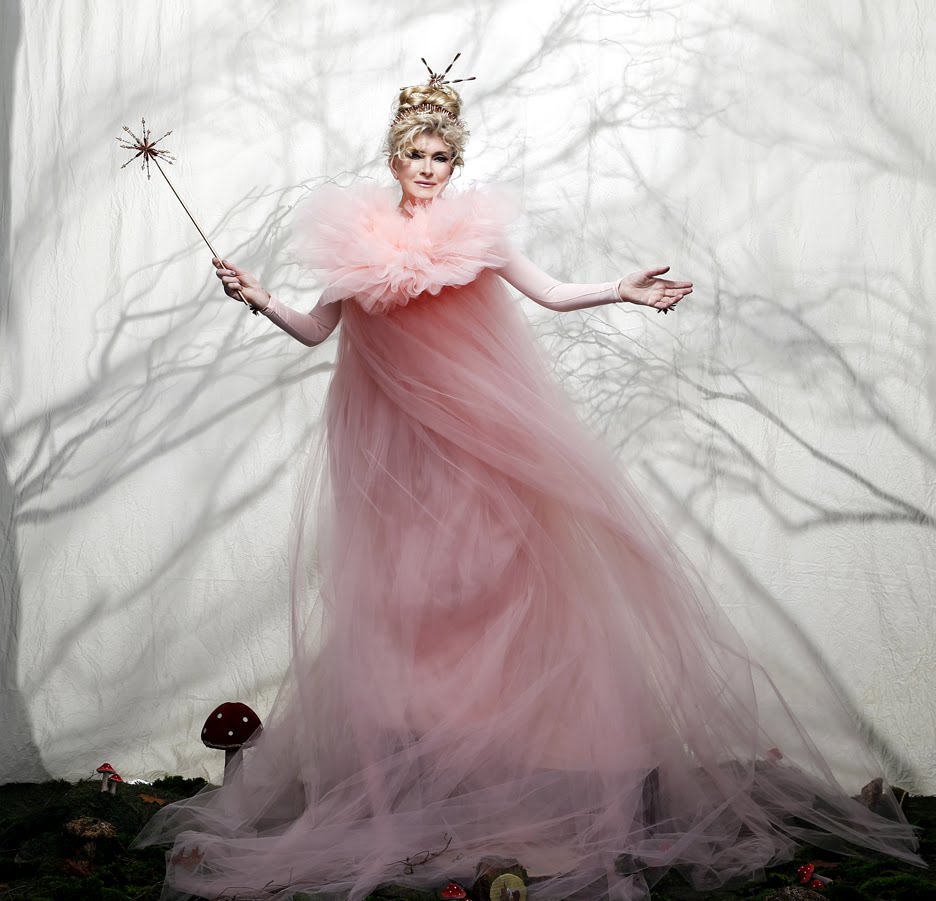
This is my “Fairy God Martha” costume. I wore a pink bodysuit and leggings underneath all this tulle fabric. (Photo by Fadil Berisha)
And here I am in a “Bloody Park Avenue Nurse” costume, inspired by the Richard Prince Nurses Series. (Photo by @douglasfriedman)
This is me as one of Roy Lichtenstein’s iconic “comic book women.” I wore a platinum-blond wig and outlined a plain white shirt with black stripes, and used red half-gloves.
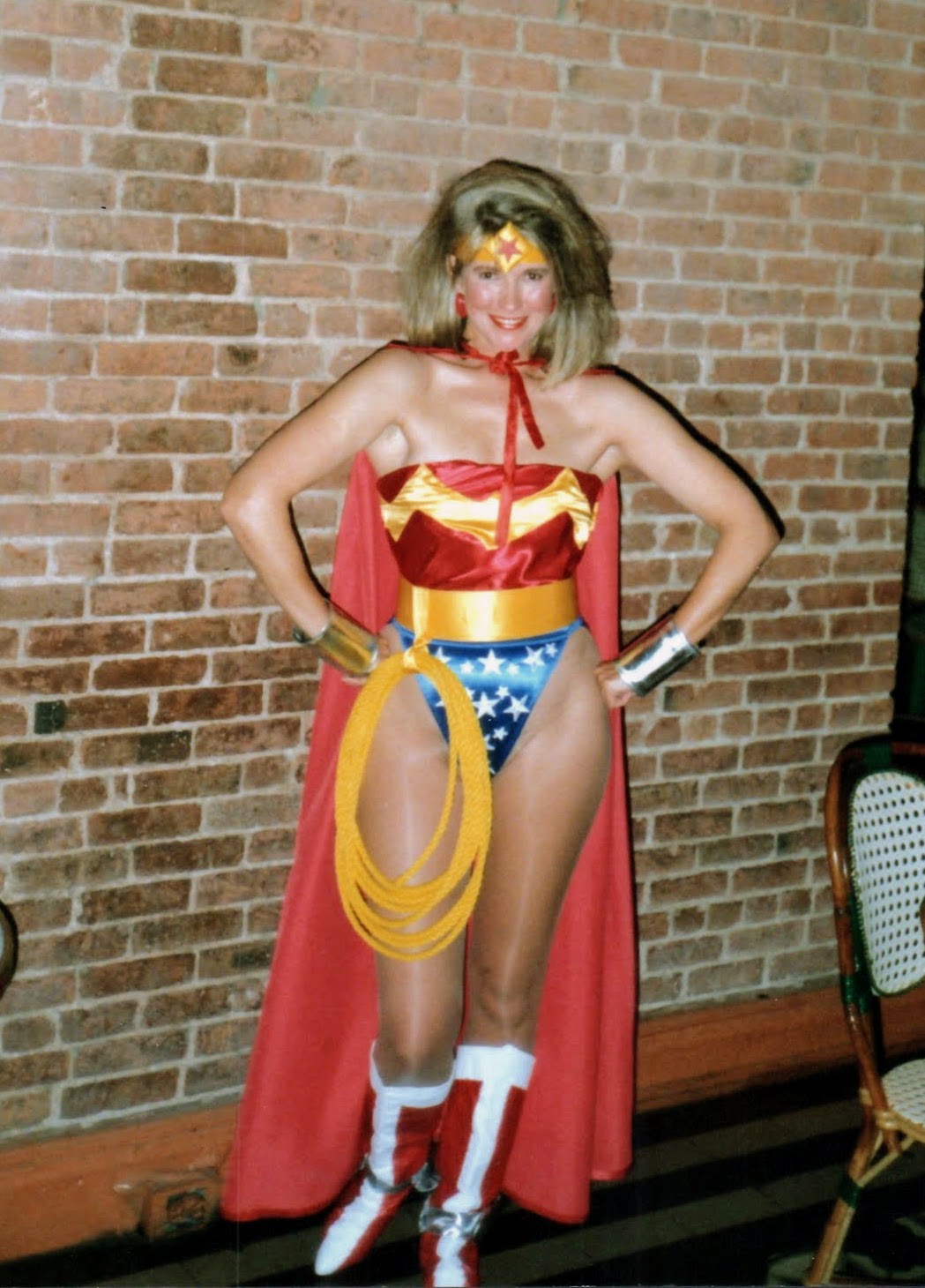
And you know this superhero – “Wonder Woman” Martha!
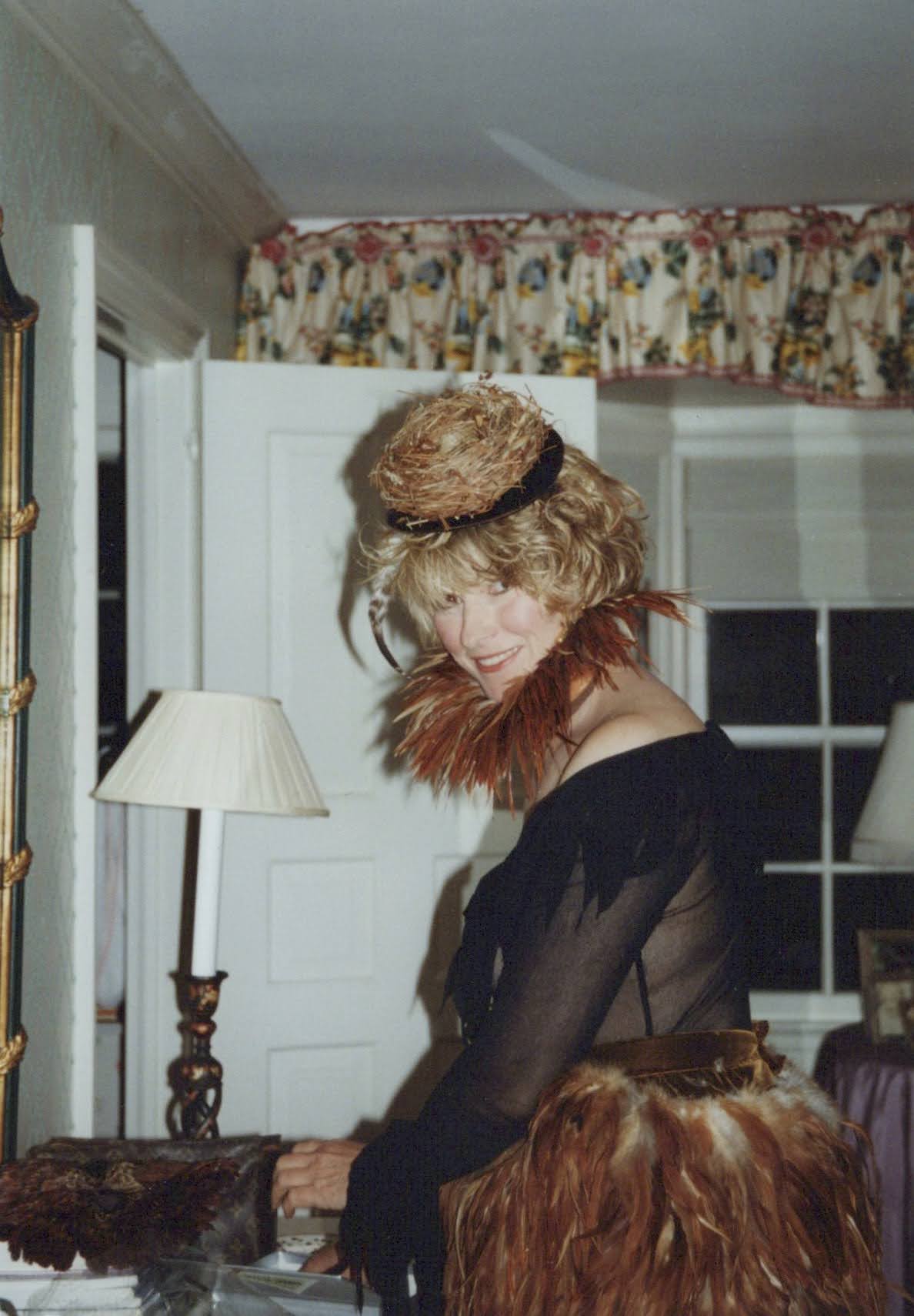
At this Halloween party, I dressed as a many-plumed bird.
You know who I am here – Marilyn Monroe. Have a safe and fun All Hallow’s Eve.
Here at my farm, we work from a detailed checklist of daily and seasonal chores, but unexpected projects sometimes arise that require immediate attention.
When something new comes up, it’s important to assess its urgency, adjust the day’s schedule, and determine the most efficient way to get it done. Yesterday, Pete from my outdoor grounds crew took a short time out to repair the doors on a small wooden storage shed inside my chicken coop yard. The repairs will help keep bins of chicken feed securely stored and protected from curious, unwelcome wildlife. Even the smallest maintenance projects play an important role in keeping my farm organized, safe, and running smoothly.
Here are some photos.
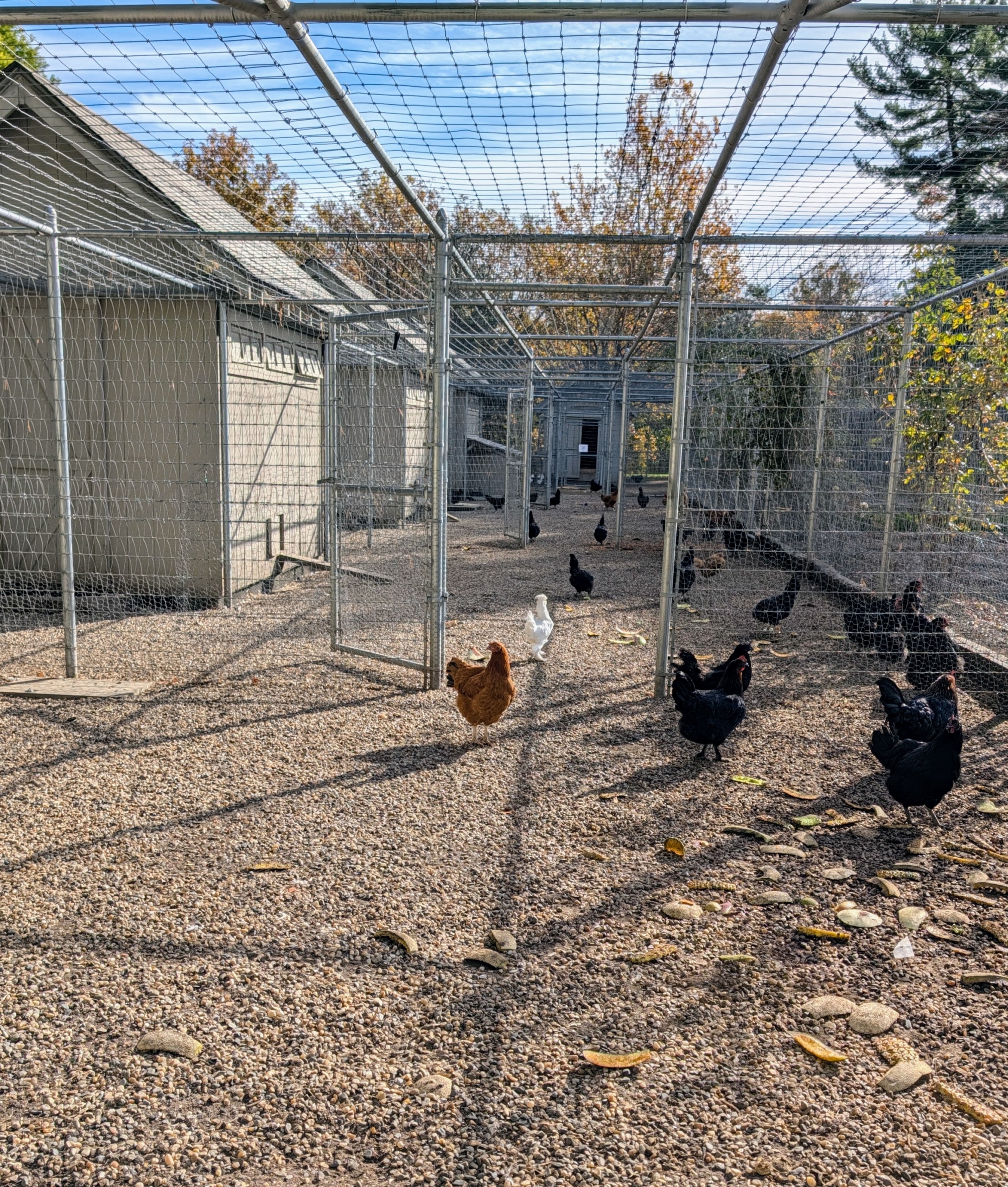
In my chicken yard, I have five large coops that house my chickens, Guinea hens, and turkeys. I keep them as clean as possible to keep my fowl healthy and the unwanted vermin away.
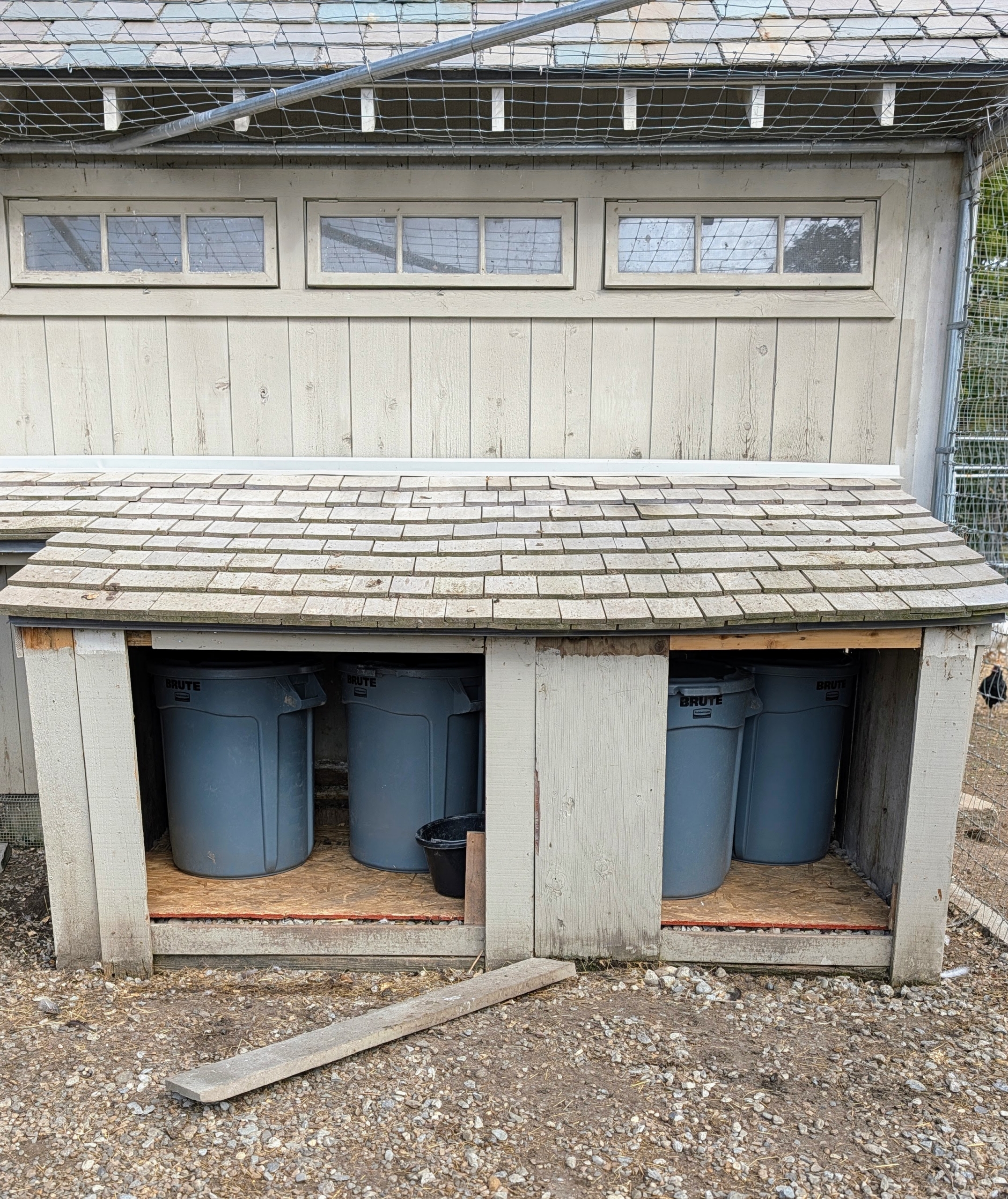
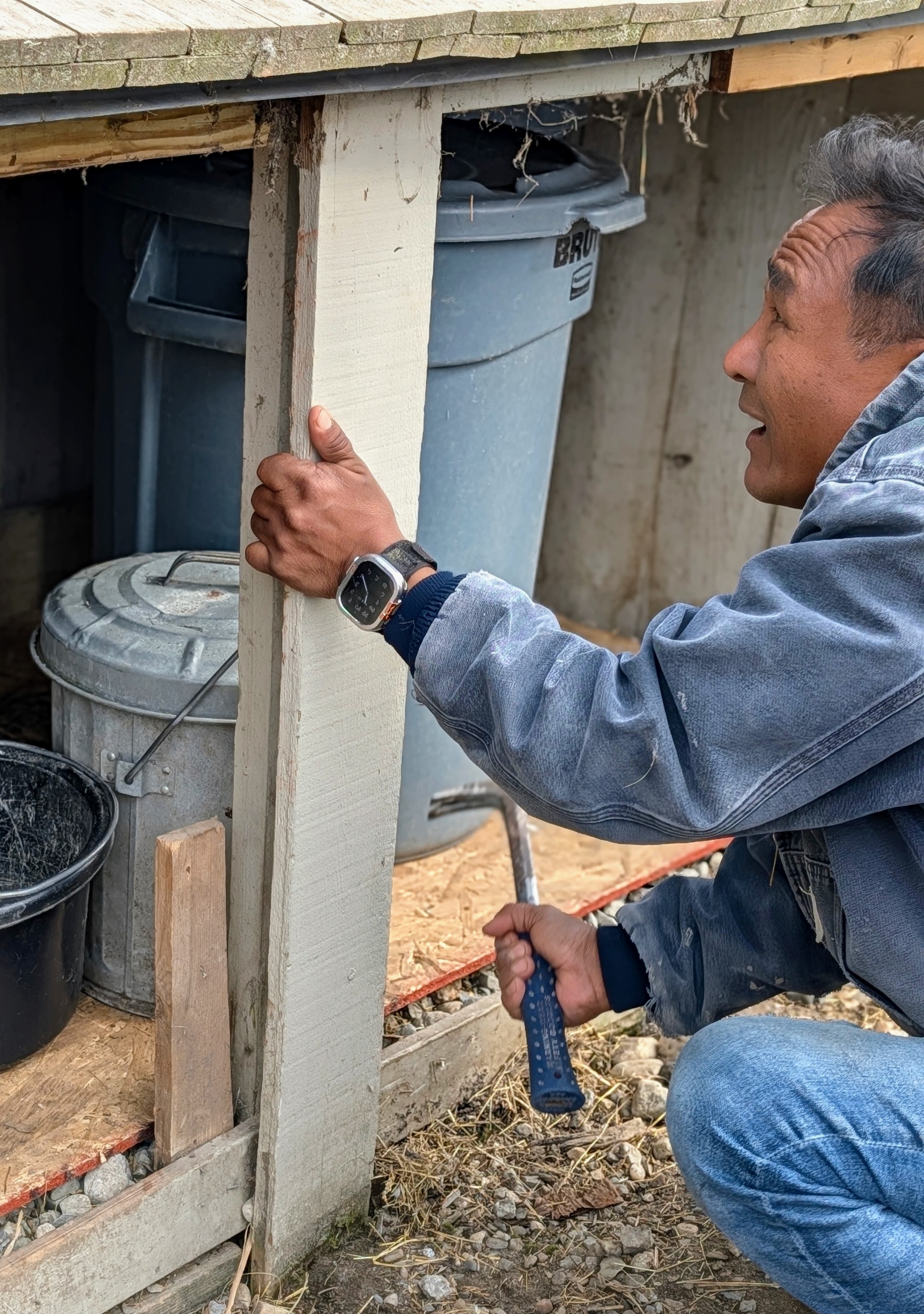
This small shed needed proper doors to keep the bins inside well protected.
Temporary panels kept the space somewhat closed, but the wood could still be pushed giving access to intruders.
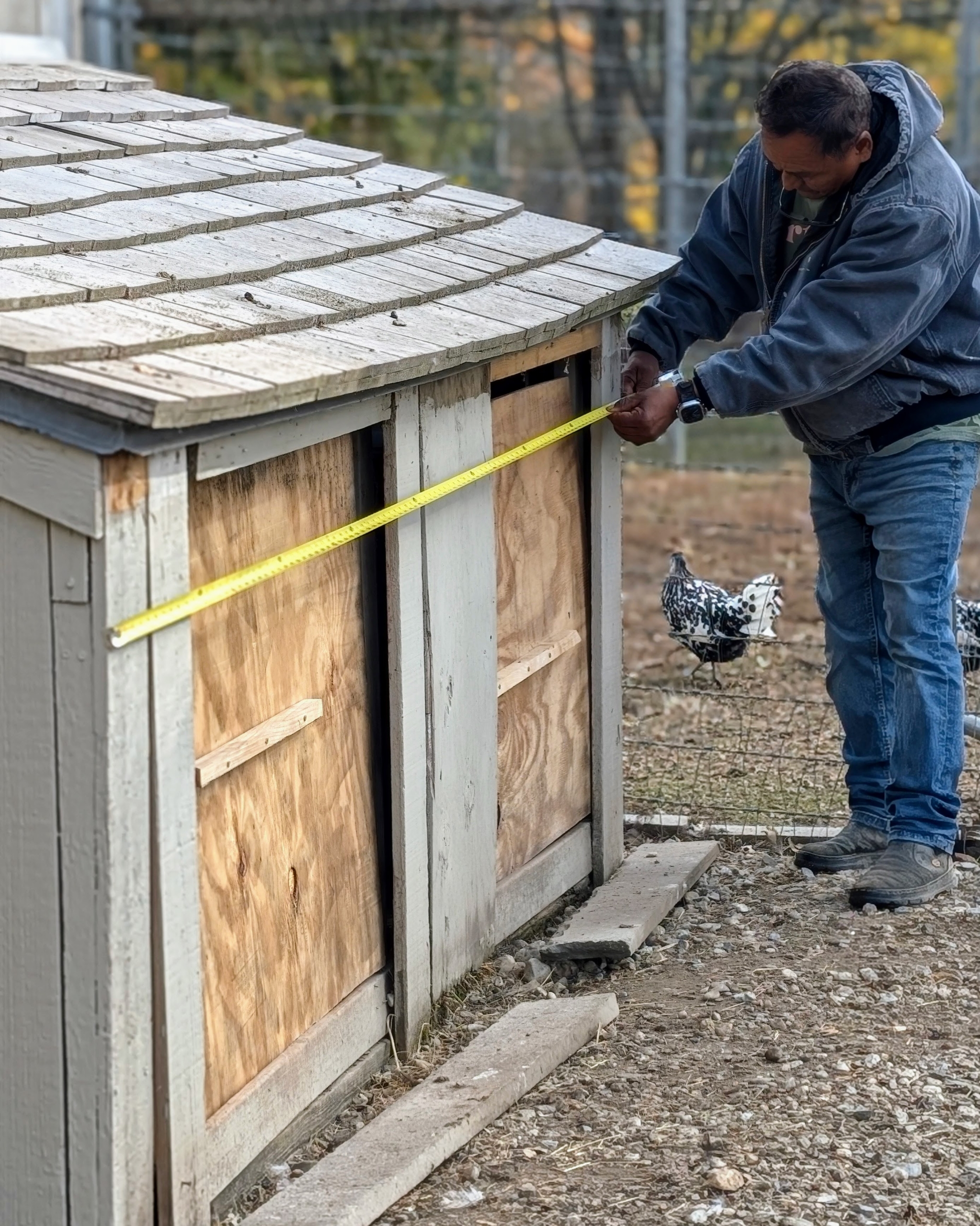
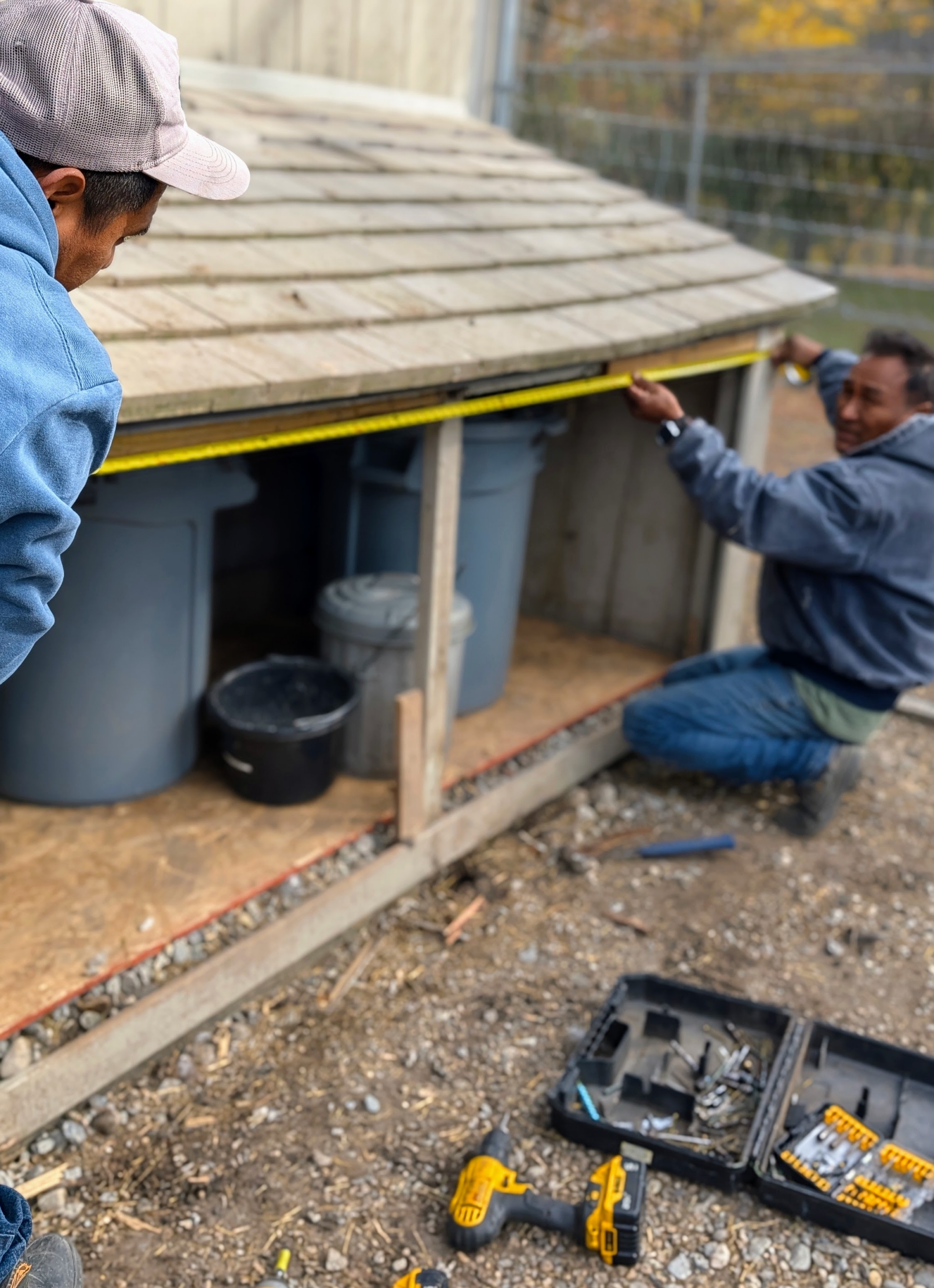
Pete measured the space for sliding doors that would work more efficiently.
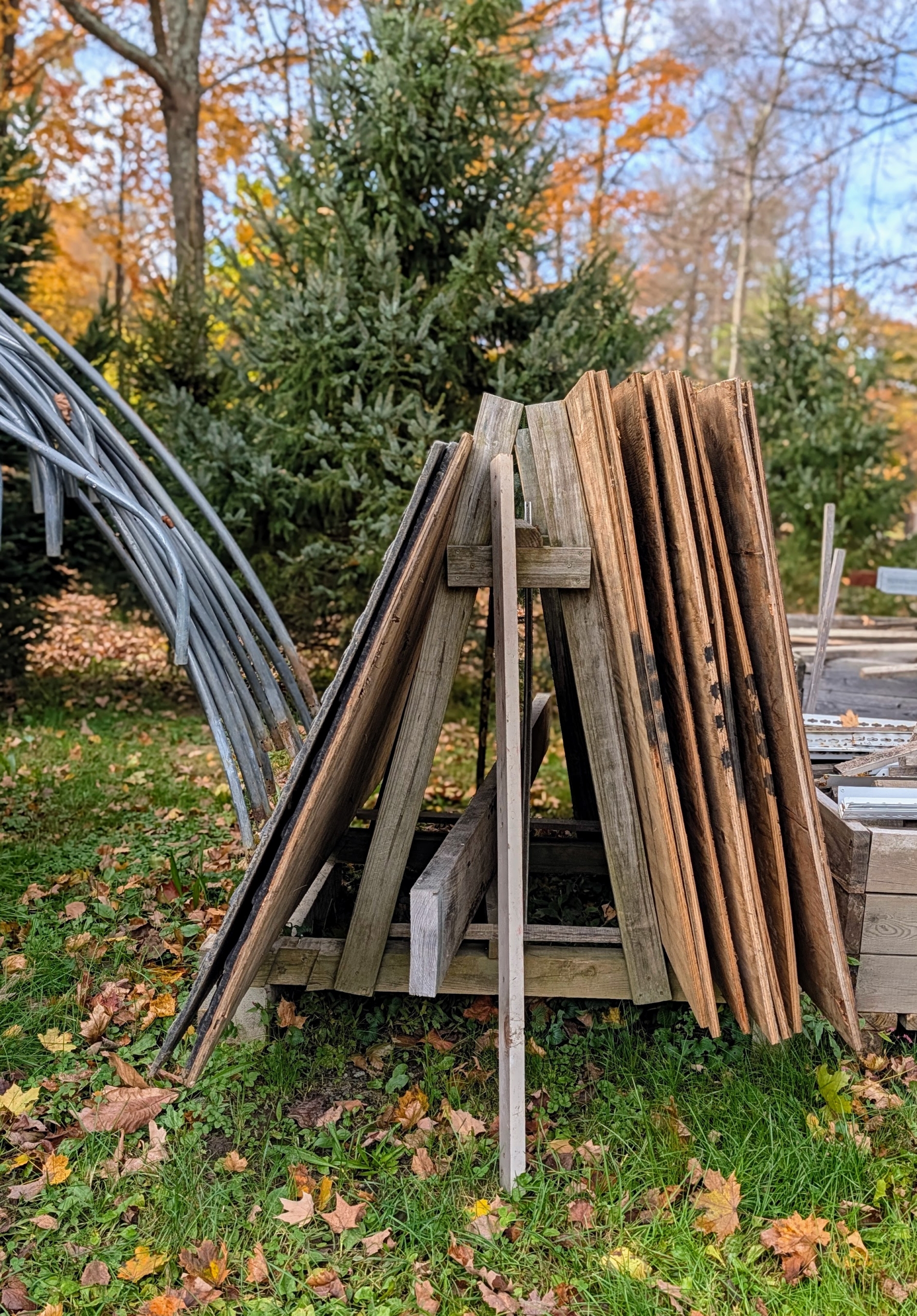
In my back field, I store a lot of scrap materials for use on various projects. I always impress upon the crew to reuse, repurpose and recycle whenever possible.
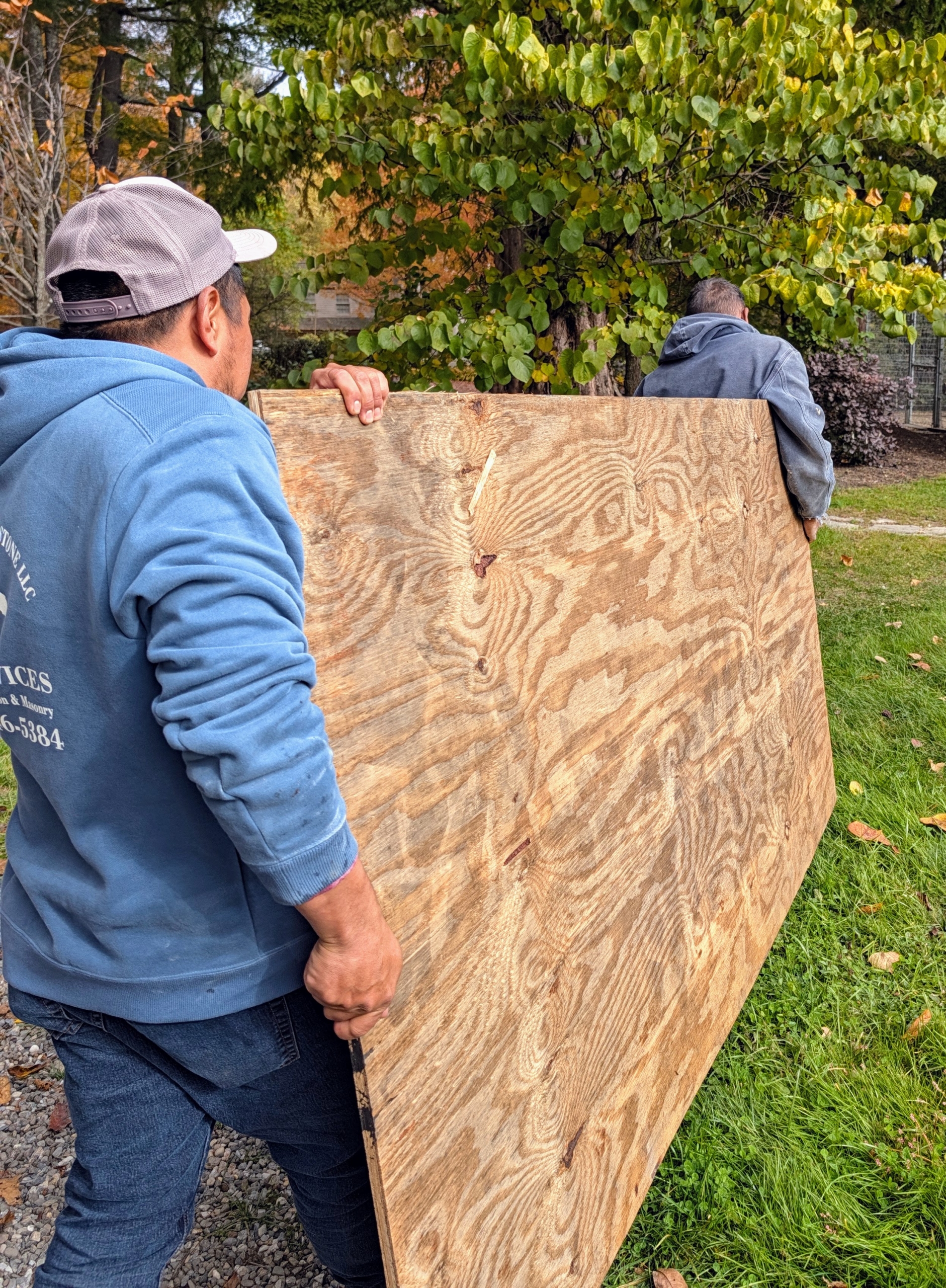
One piece of scrap plywood was retrieved for the door project.
Pieces on the structure that were no longer needed were taken down.
Pete worked carefully and efficiently having all his needed tools close at hand.
As the adage goes, measure twice, cut once. Here, Pete measures the space again.
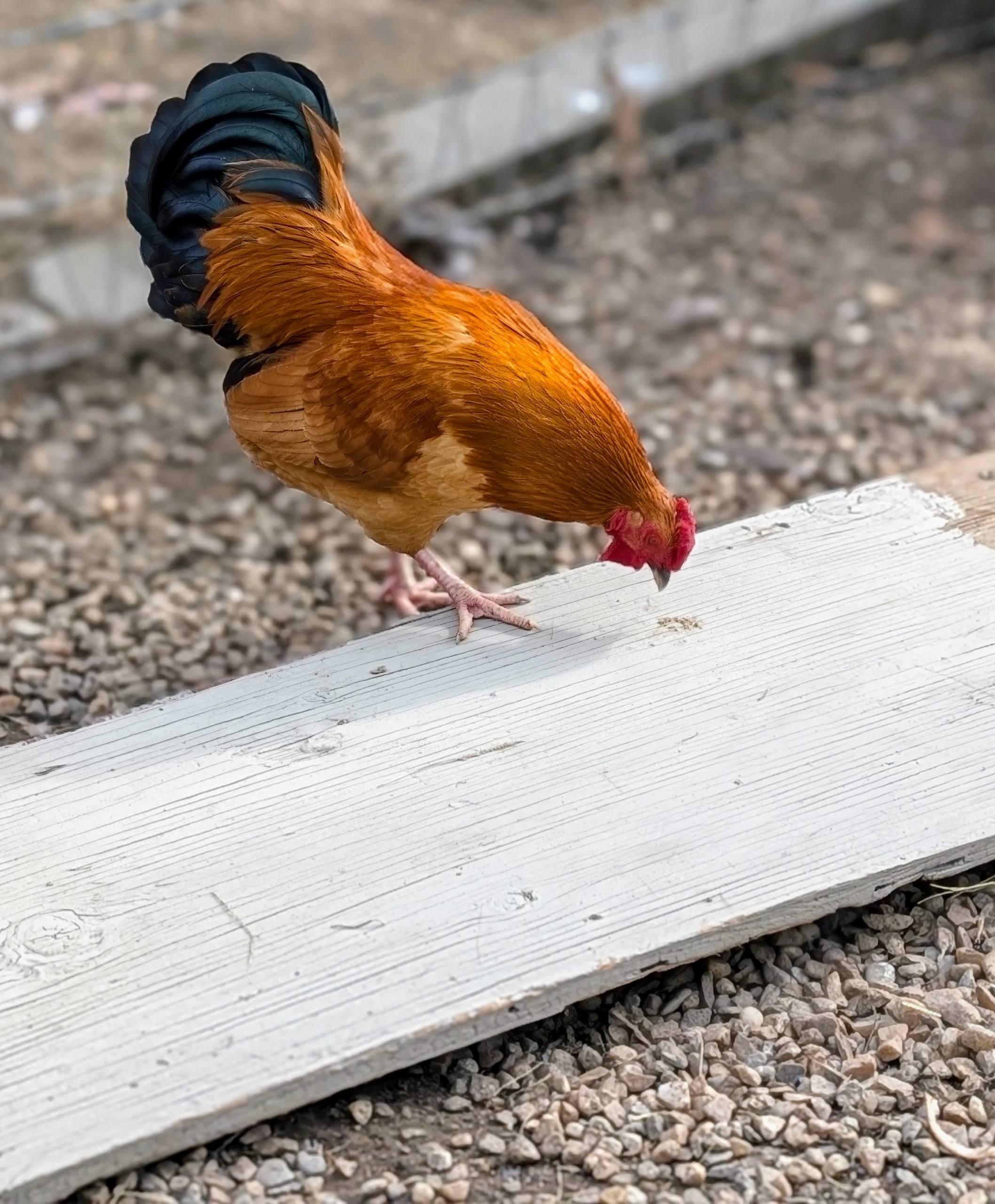
Because my chickens are raised around humans, they are very accustomed to all the activity and curious to investigate everything they see.
They use their beaks, which are rich in sensory receptors, to explore and peck at unfamiliar objects, bugs, and to navigate around obstacles.
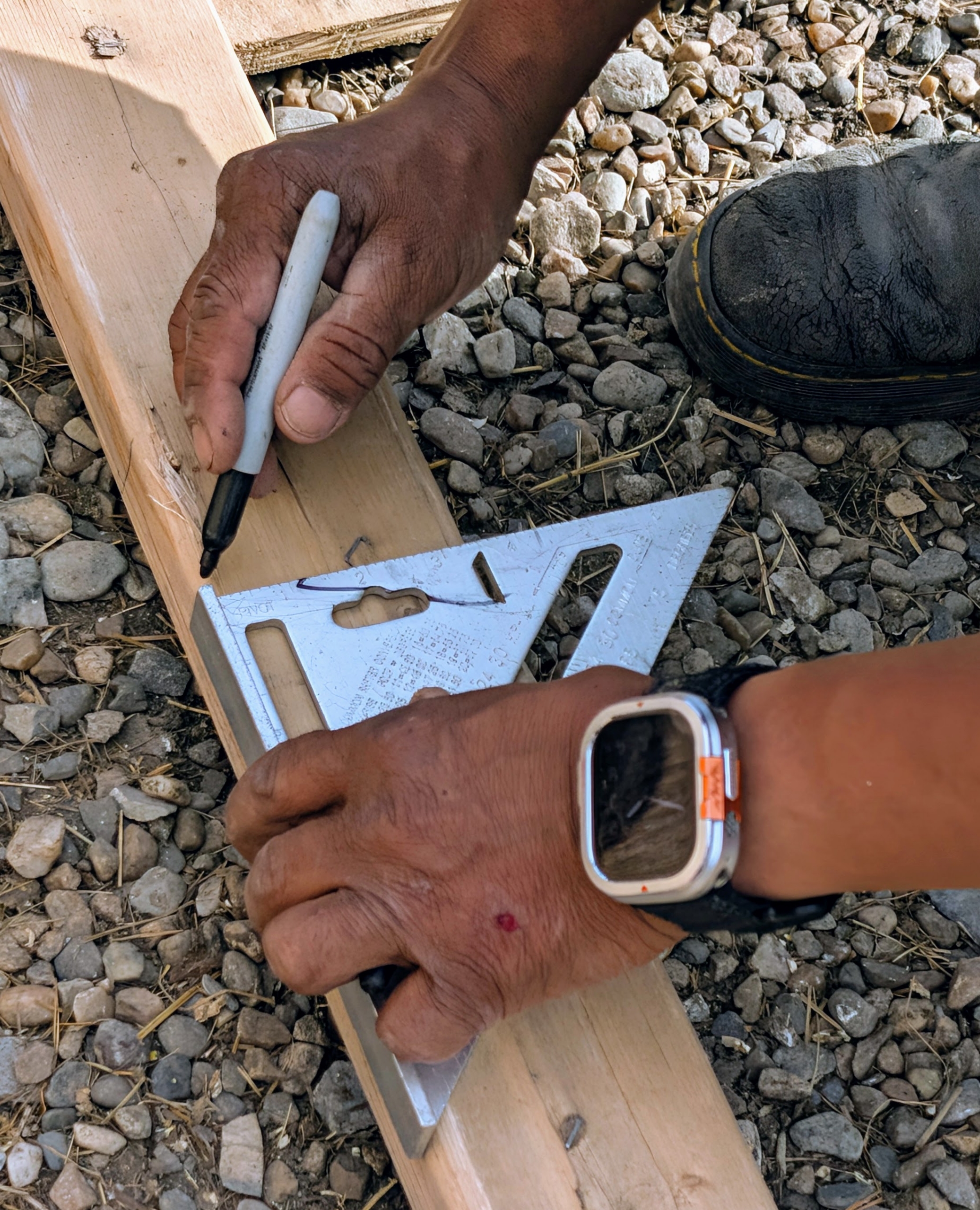
Using a set square ruler, Pete makes the appropriate marks for cutting.
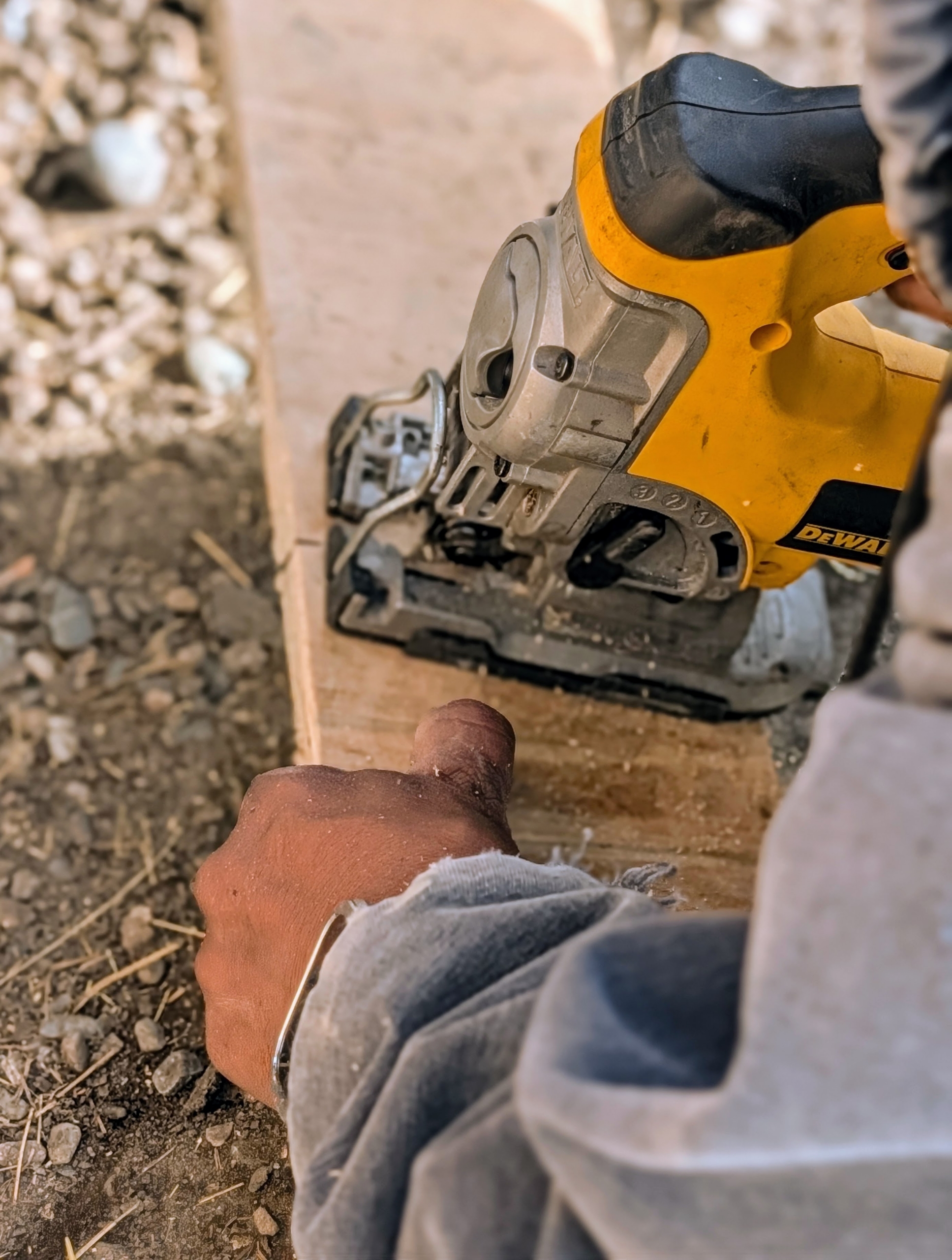
Pete tries to cut materials all at once before installing.
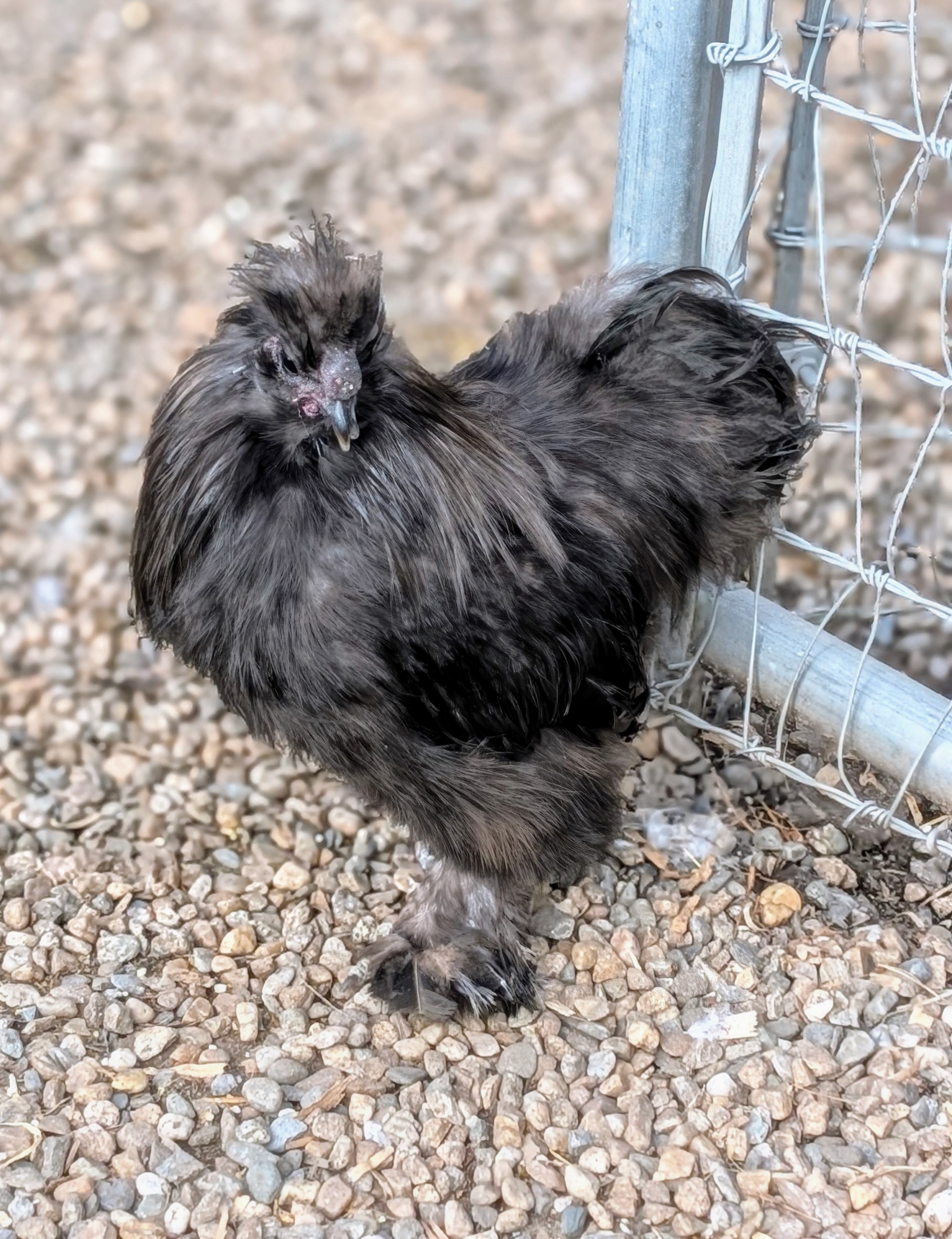
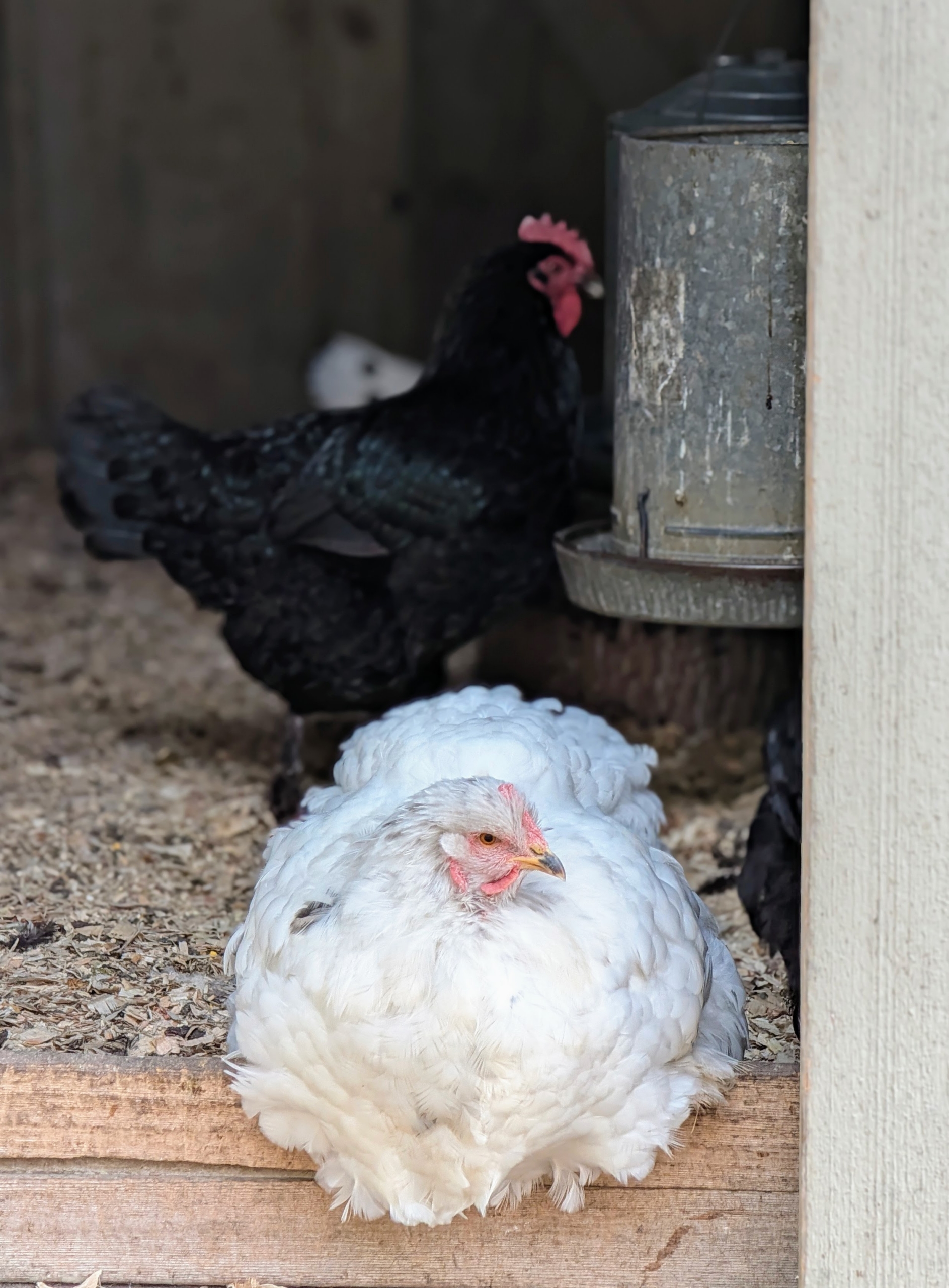
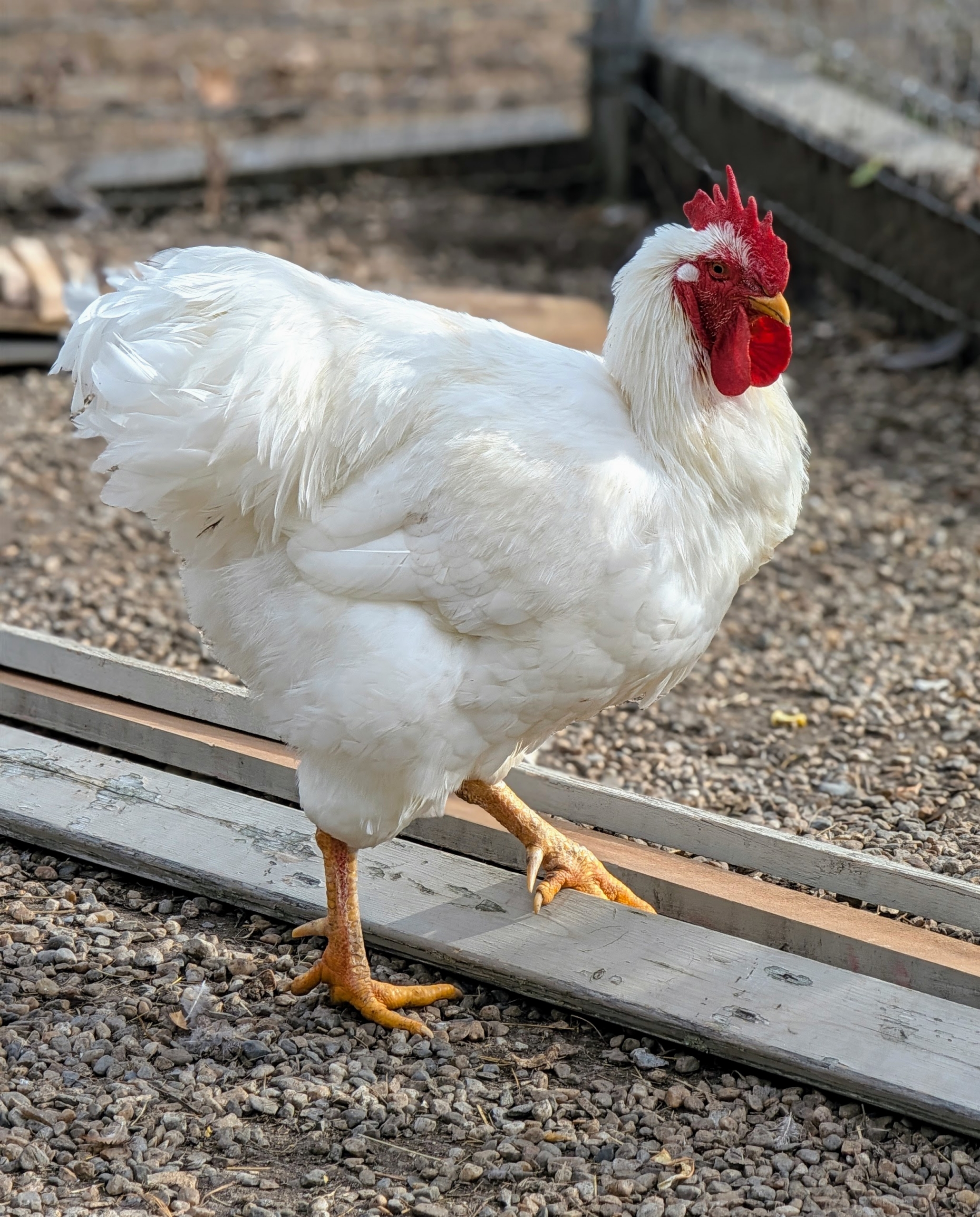
This hen watches from her coop doorway.
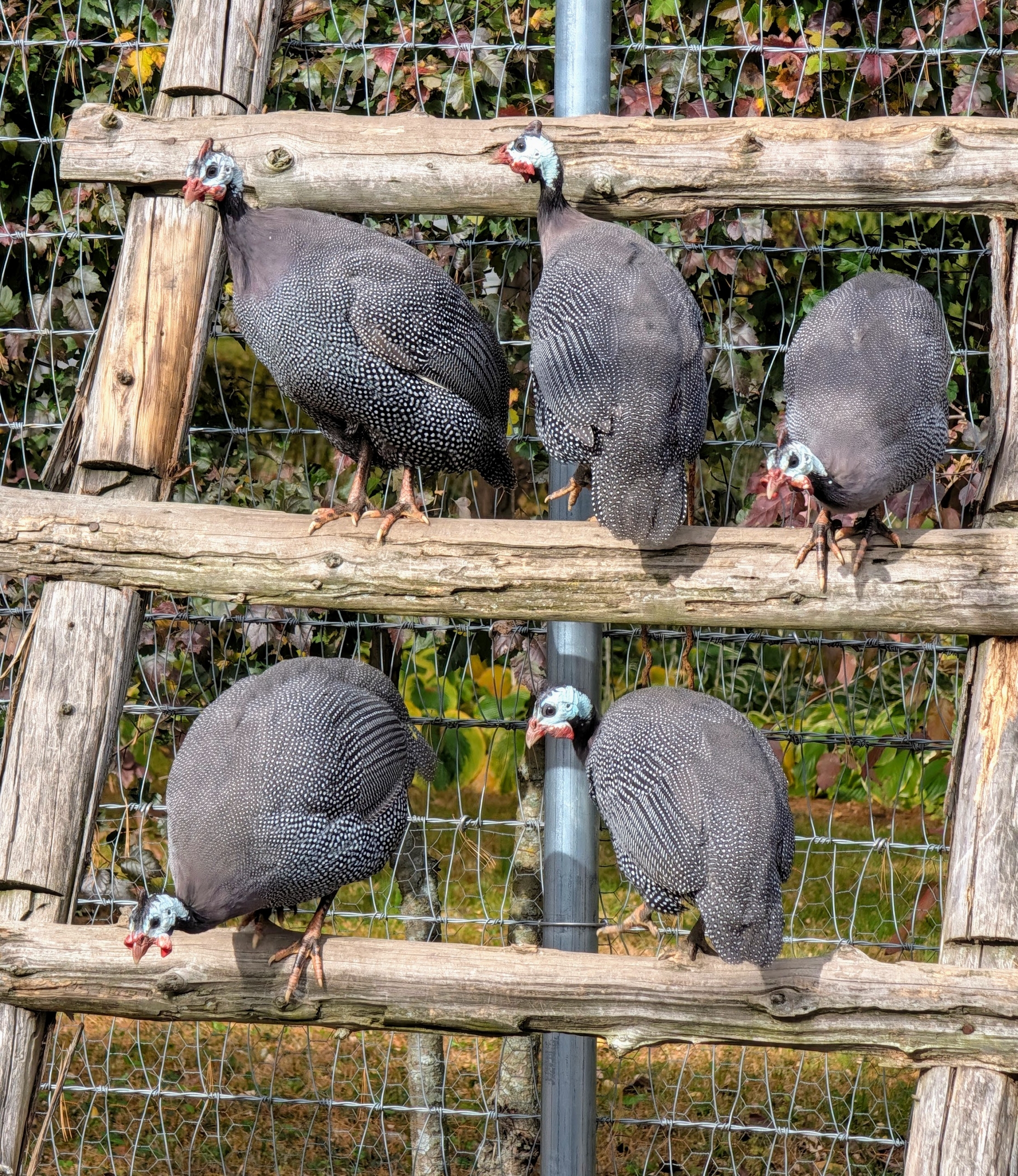
Here is a group of Guinea fowl – naturally active, independent foragers with strong curiosity, but they startle easily and keep their distance.
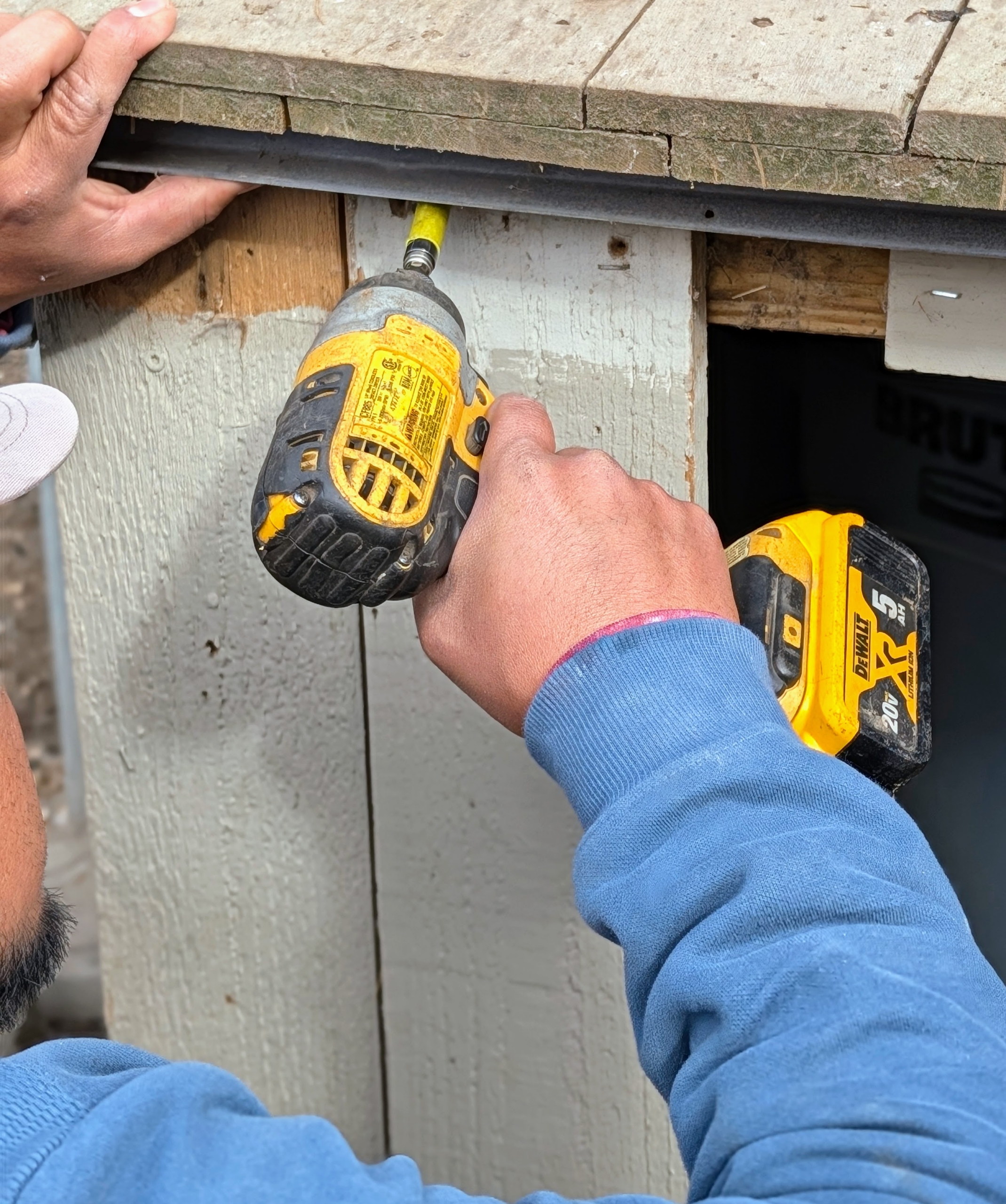
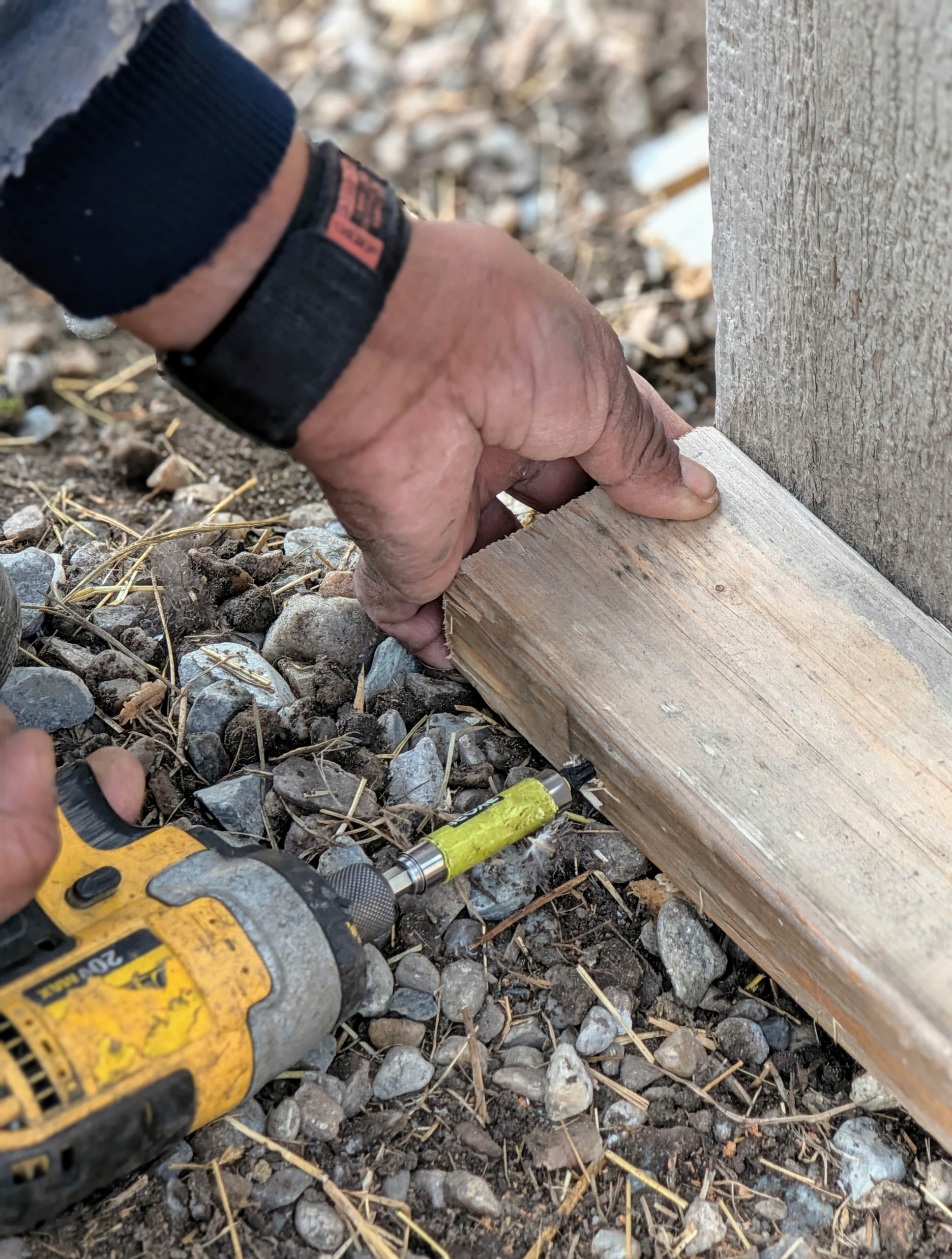
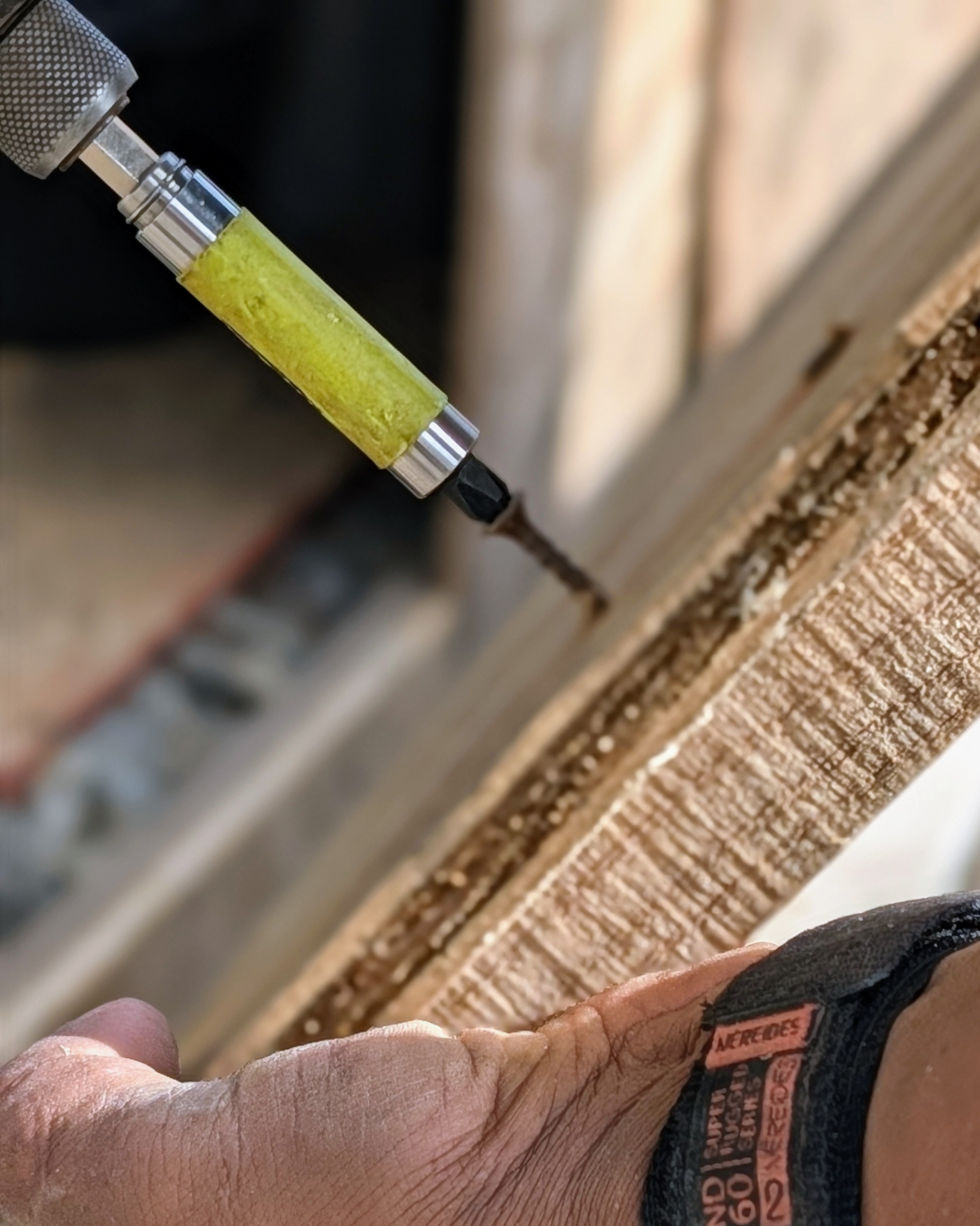
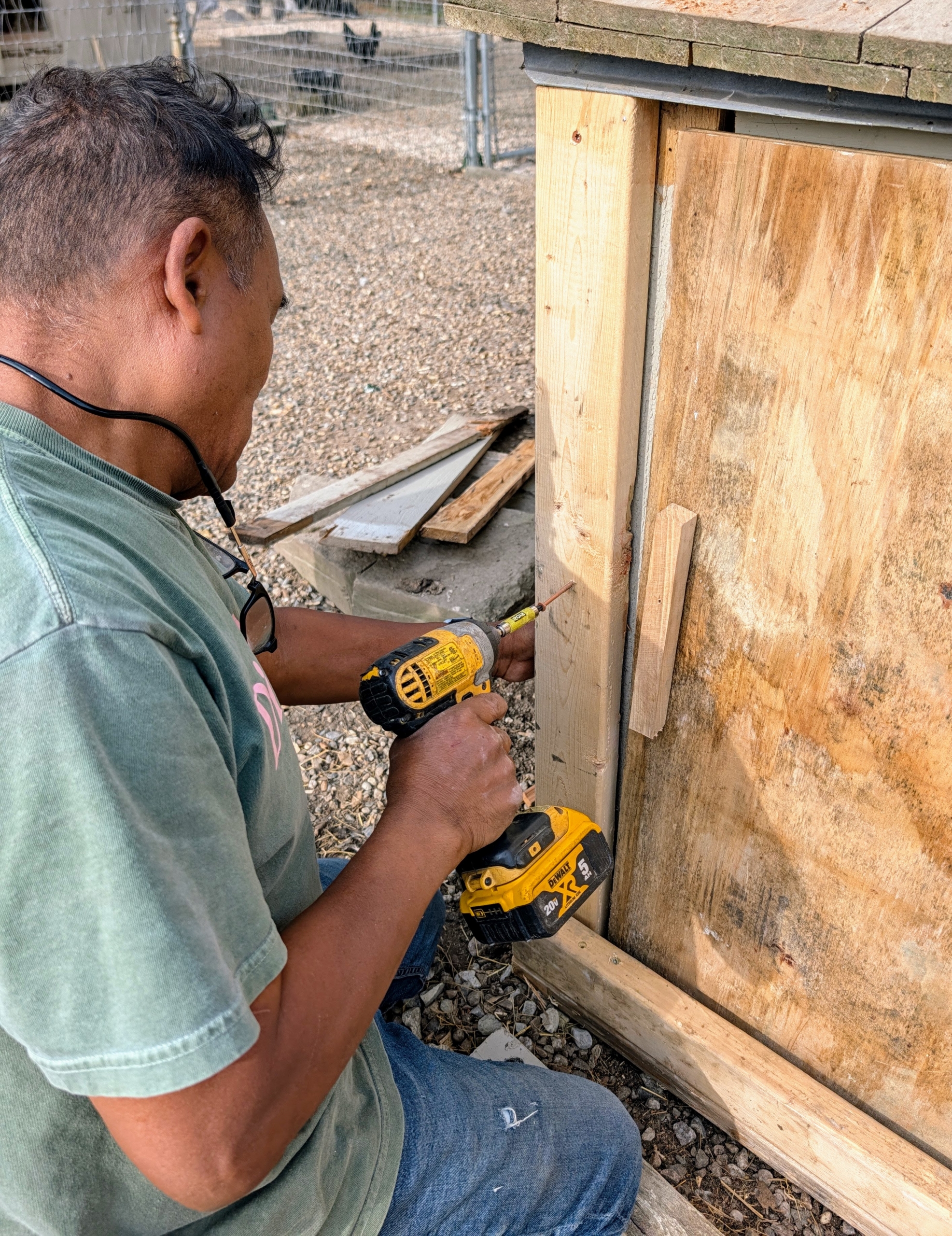
Pete secures a piece of 2×4 wood which will provide a base for the sliding doors.
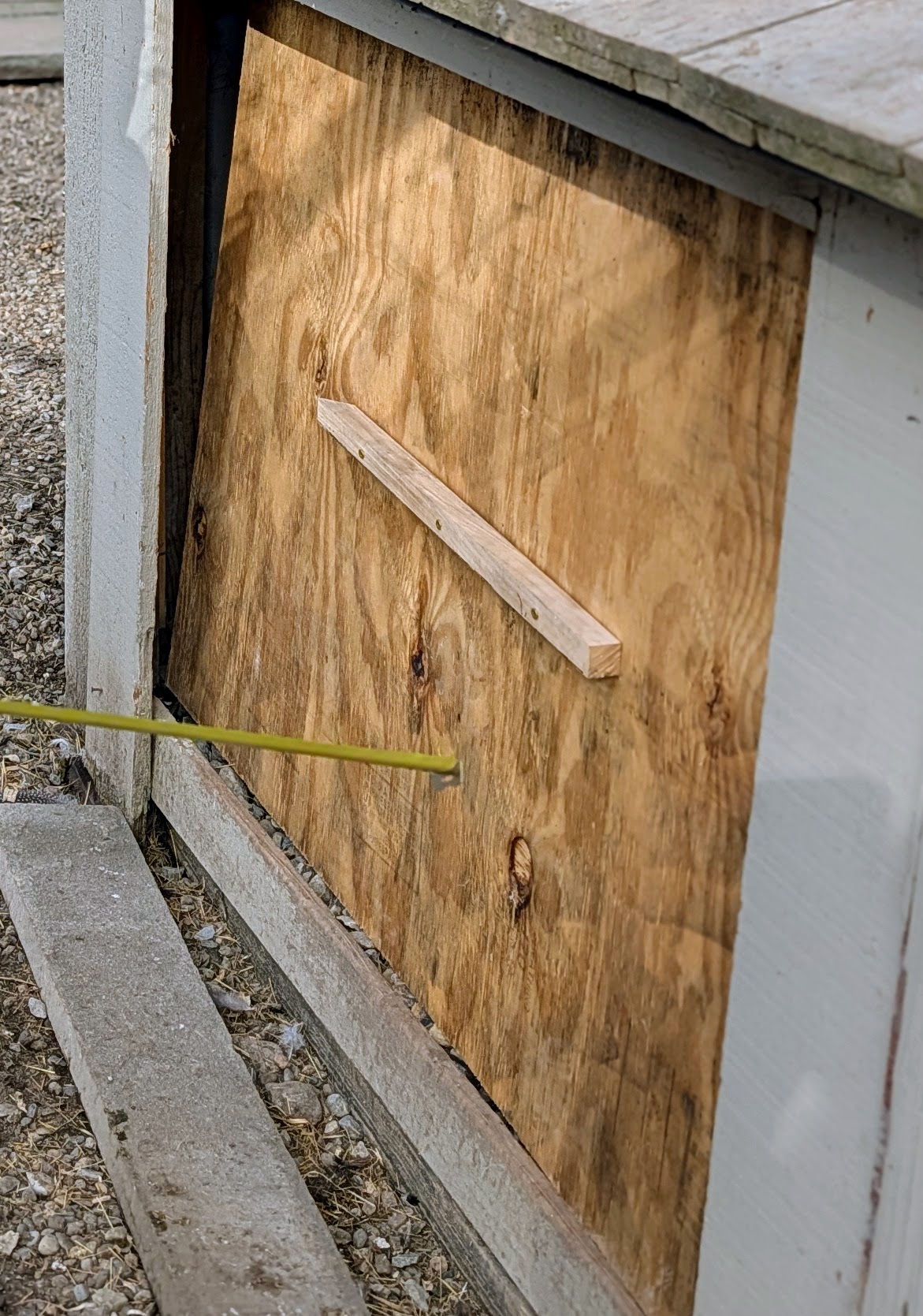
He also attaches scrap wood to make usable handles for these doors.
Side pieces cut to fit will prevent the doors from sliding too far.
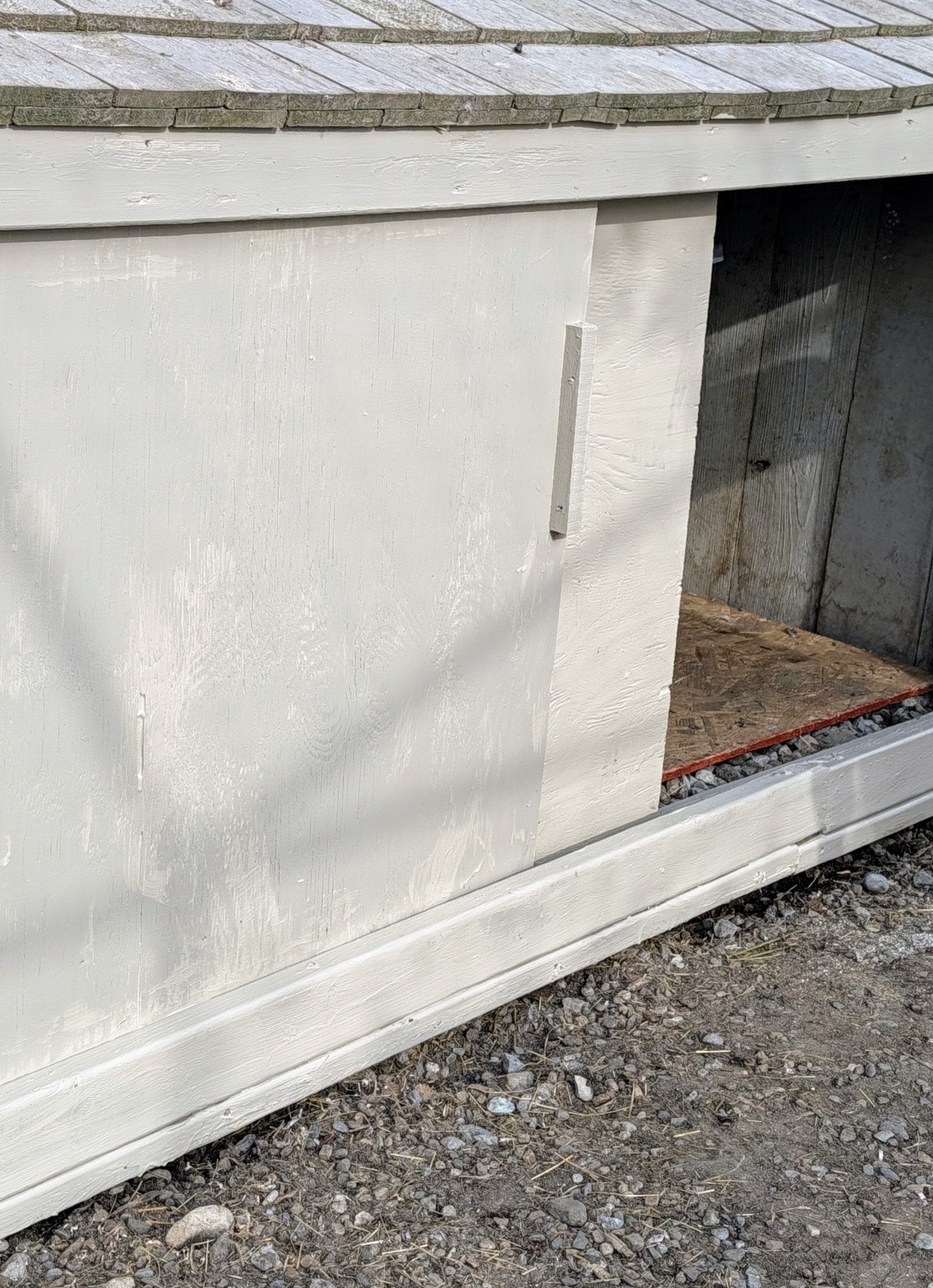
In the end, it is an easy and quick solution for an important storage need.
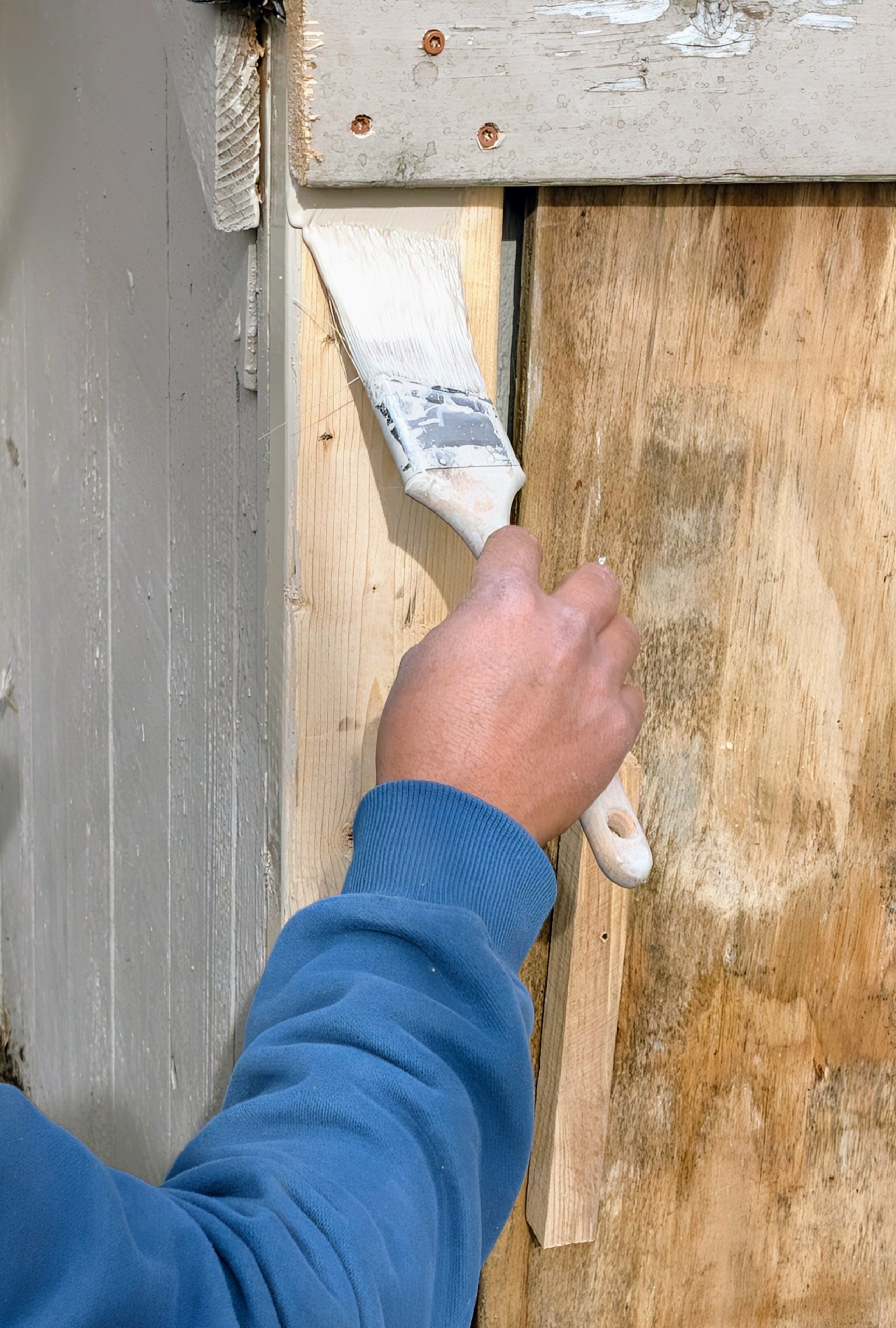
Lastly, the doors on this unit are painted my signature “Bedford Gray.”
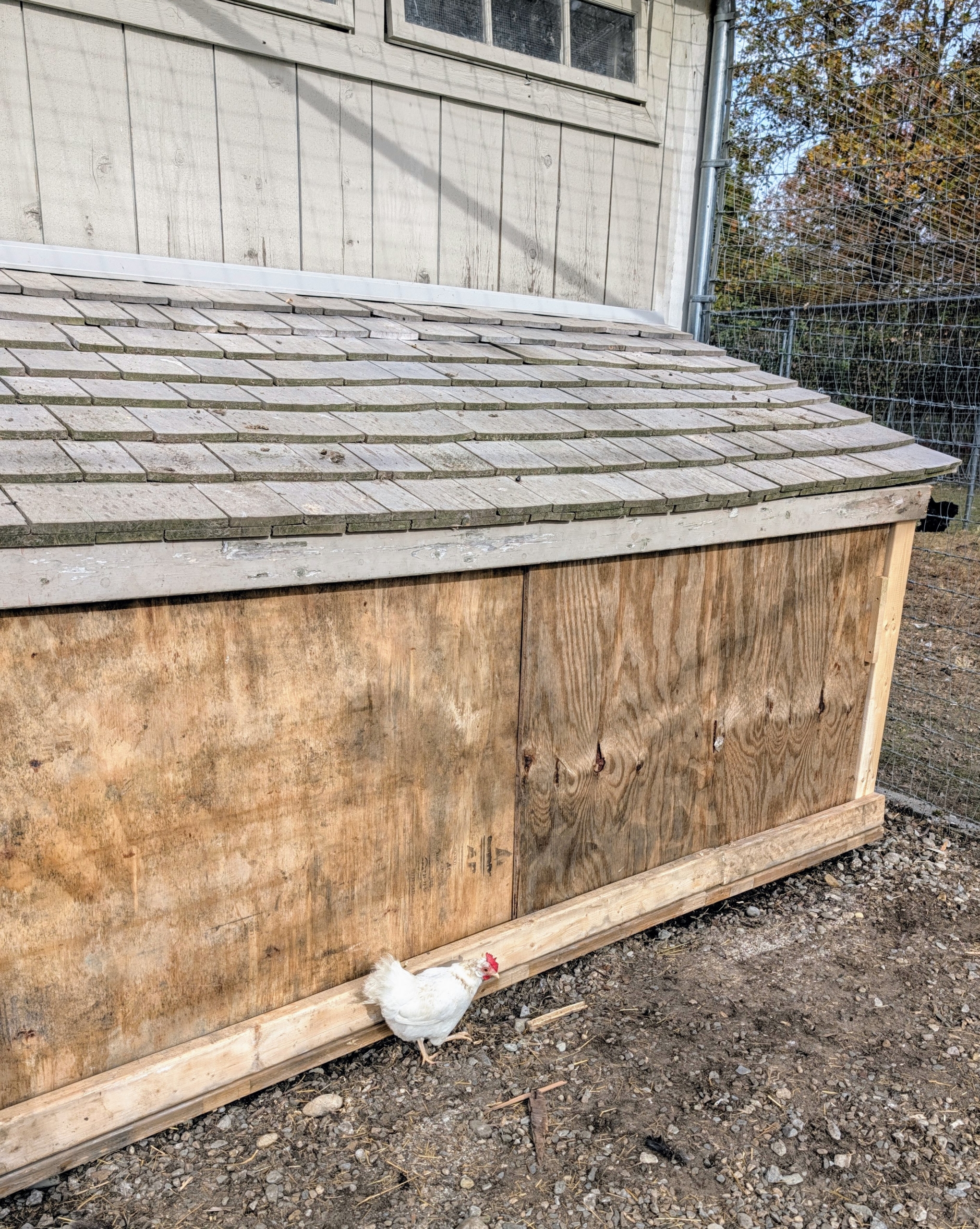
Another hen comes to check out what’s happening.
This small maintenance job took less than one hour to complete, but it will protect the feed, keep the area neat and tidy, and possibly prevent any bigger issues from happening later.












 Martha Pins


 Martha Tweets


