

Infinite Variety: Three Centuries of Red and White Quilts
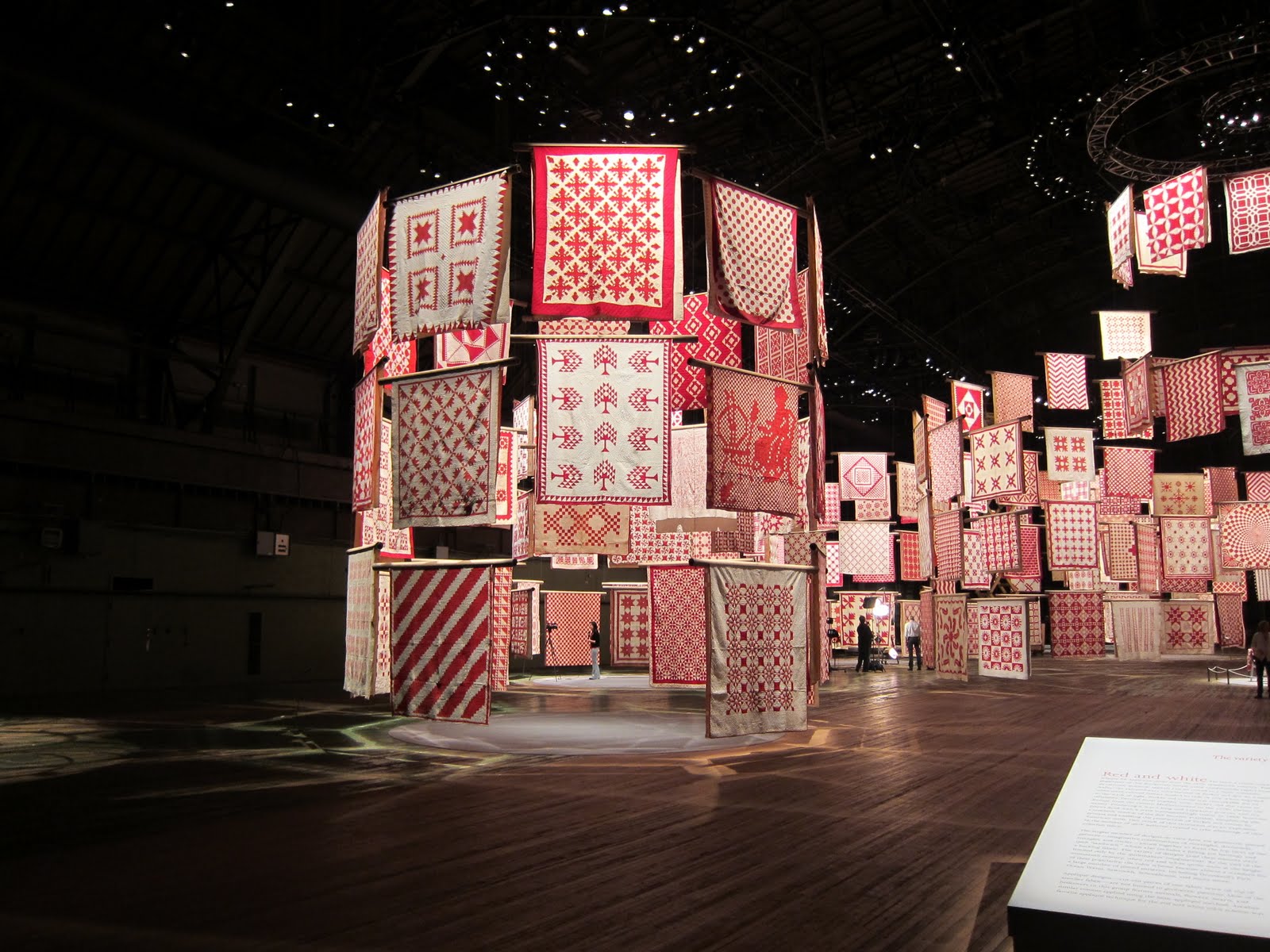
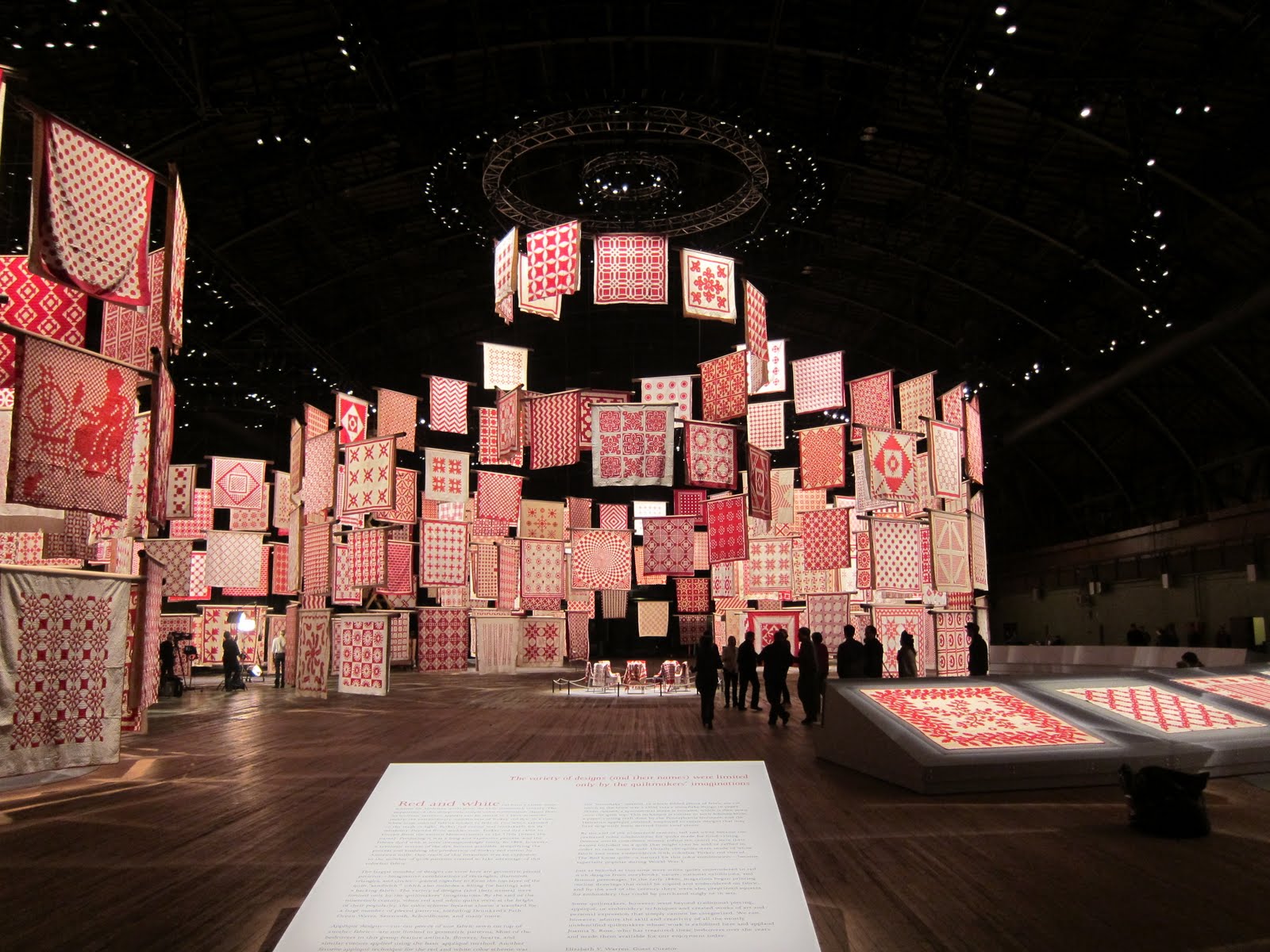
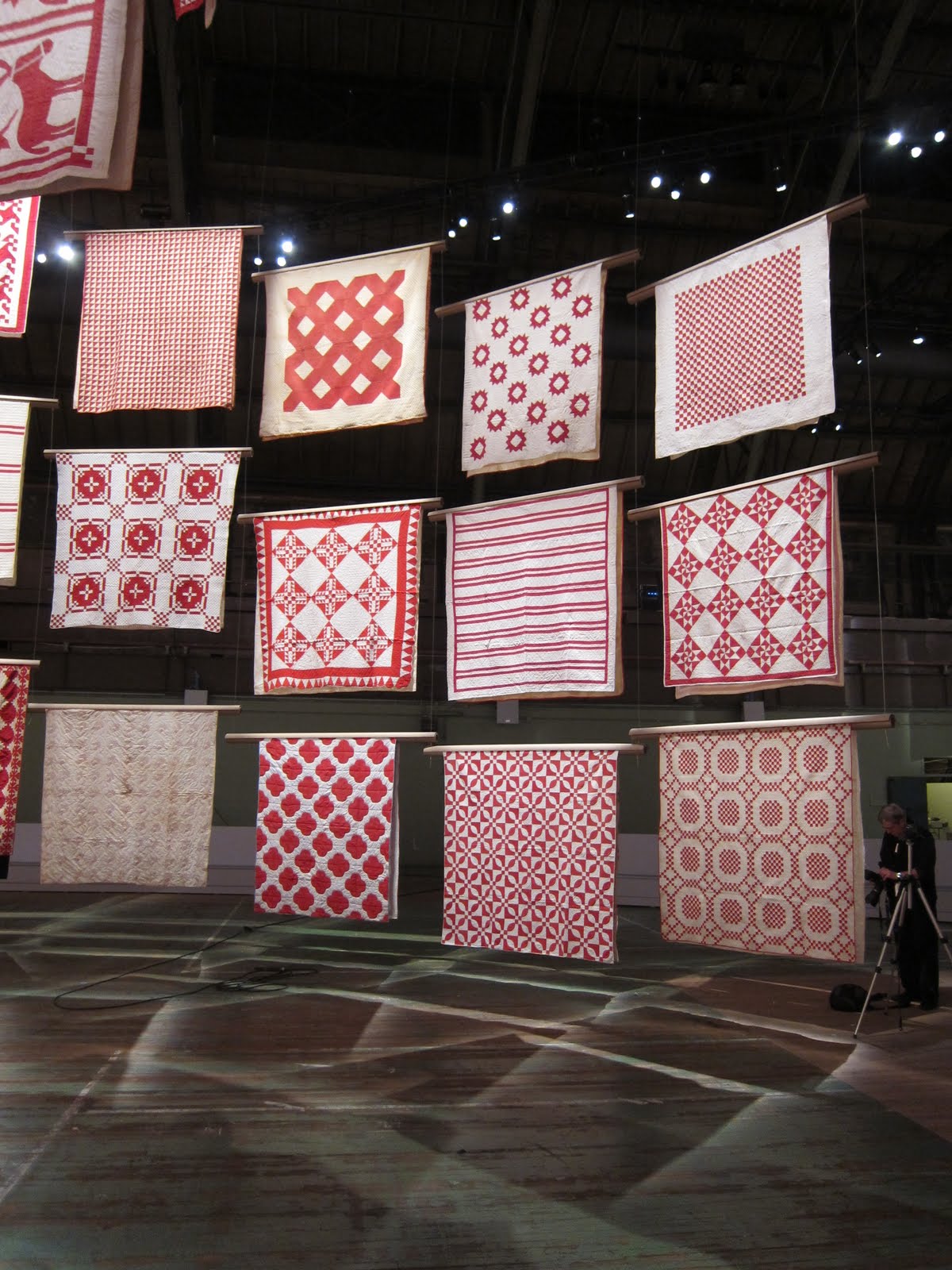
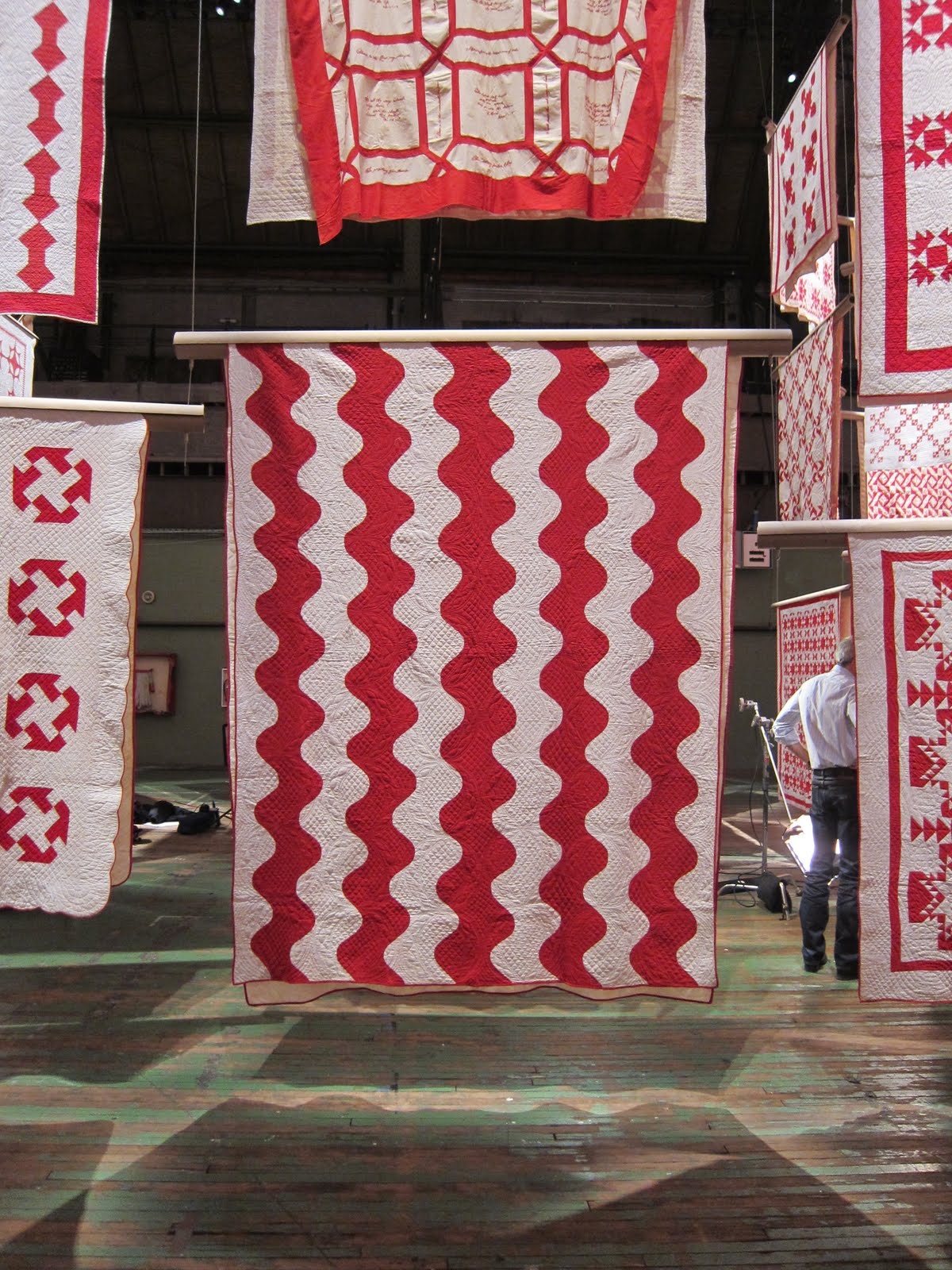
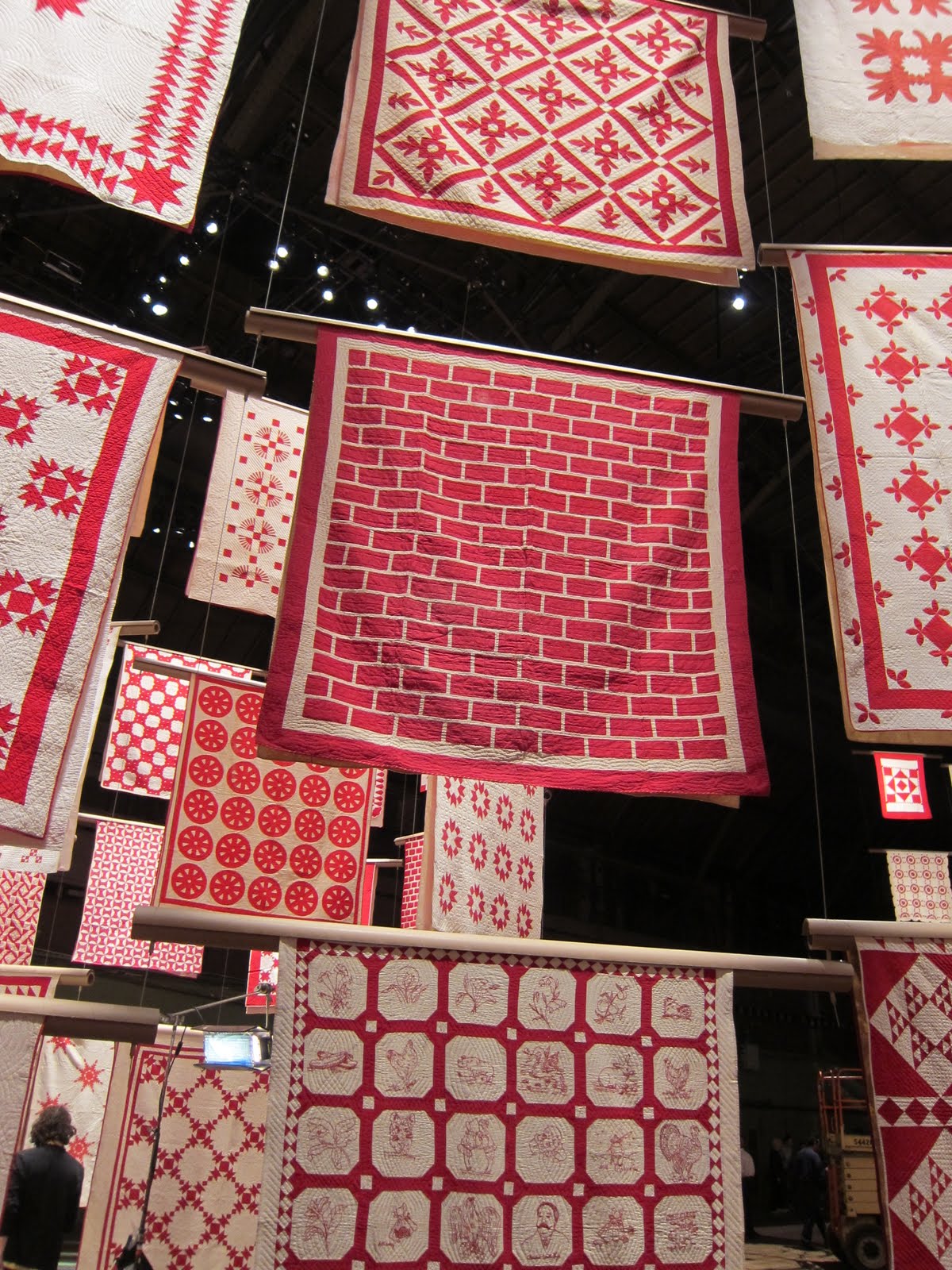
Last Thursday, I went to the most incredible display of quilts that I have ever seen. My TV crew joined me at the Park Avenue Armory at 643 Park Avenue (between 66th and 67th Street), in New York City to see the American Folk Art Museum’s presentation of “Infinite Variety: Three Centuries of Red and White Quilts.” Joanna Rose, a New York quilt collector, has a collection of more than 1,300 quilts but she really wanted to put her entire collection of red and white quilts on public display, all 651 of them and no two alike! If at all possible, I urge you to see this exhibit, which runs through March 30th. It’s simply breath taking! And please tune into my television show on Monday on Hallmark Channel, to see the segment about the quilts that we shot at the Armory.
-

- The quilts are all on loan from Joanna Rose, a private New York collector.
-
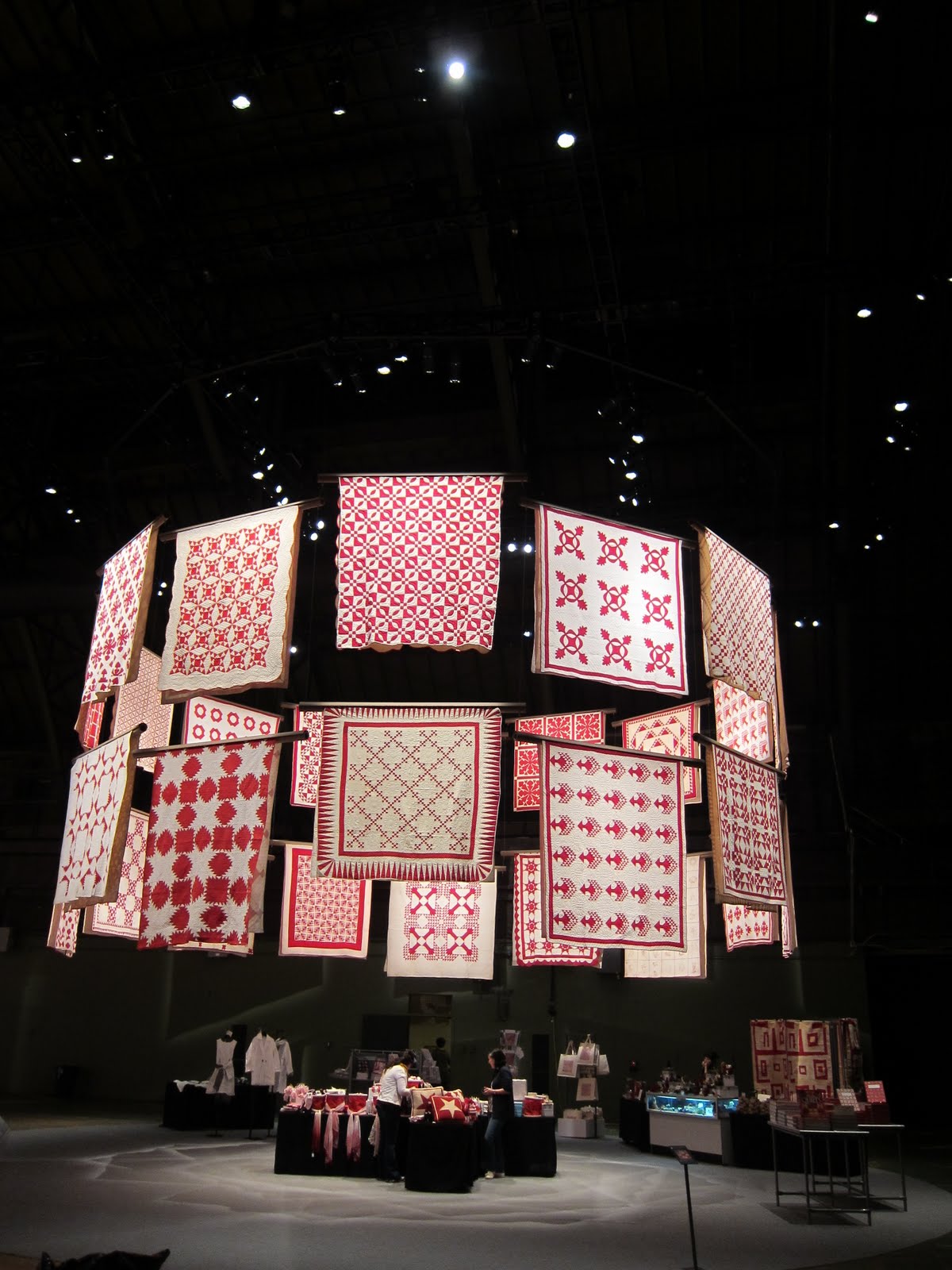
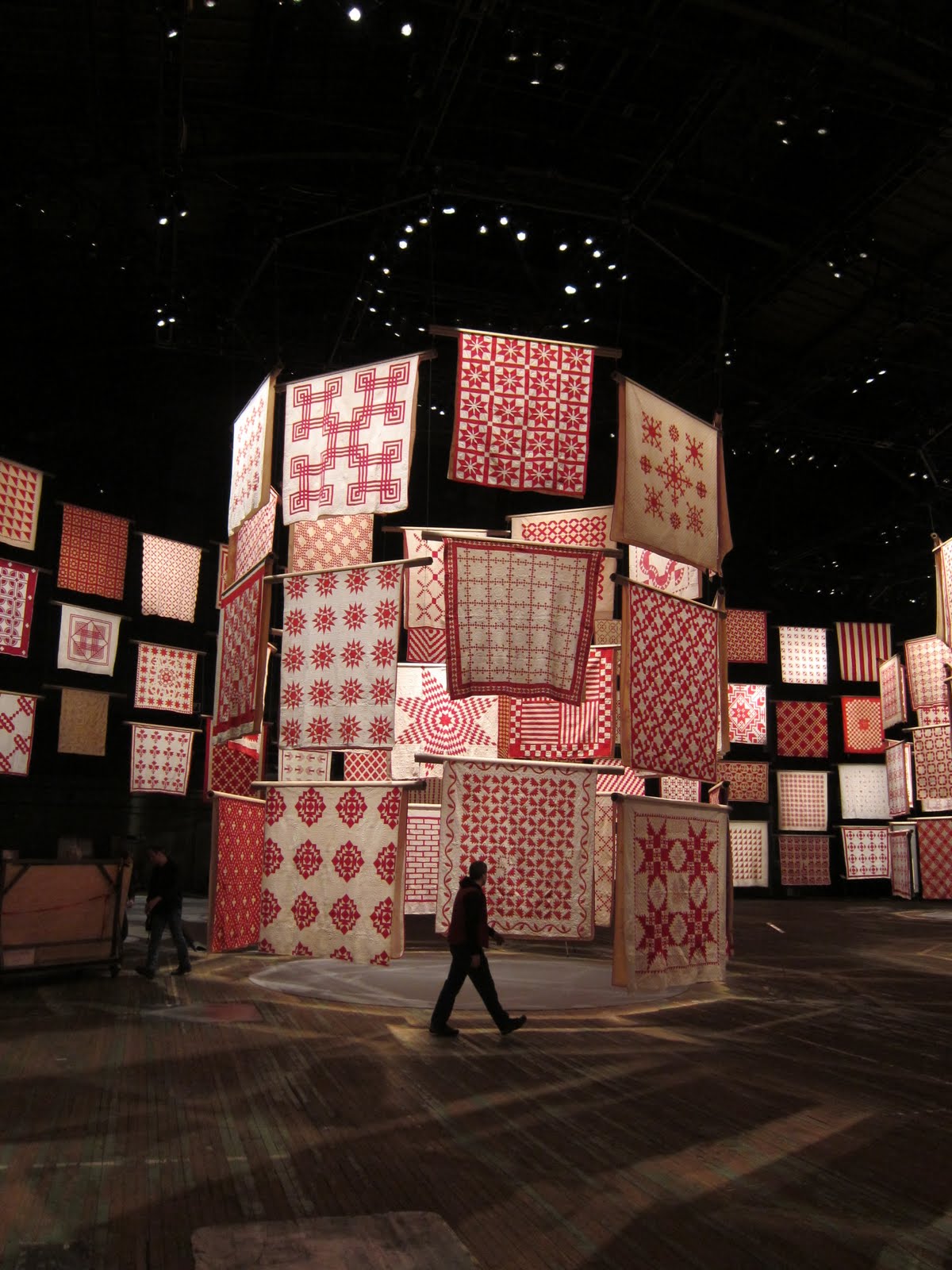
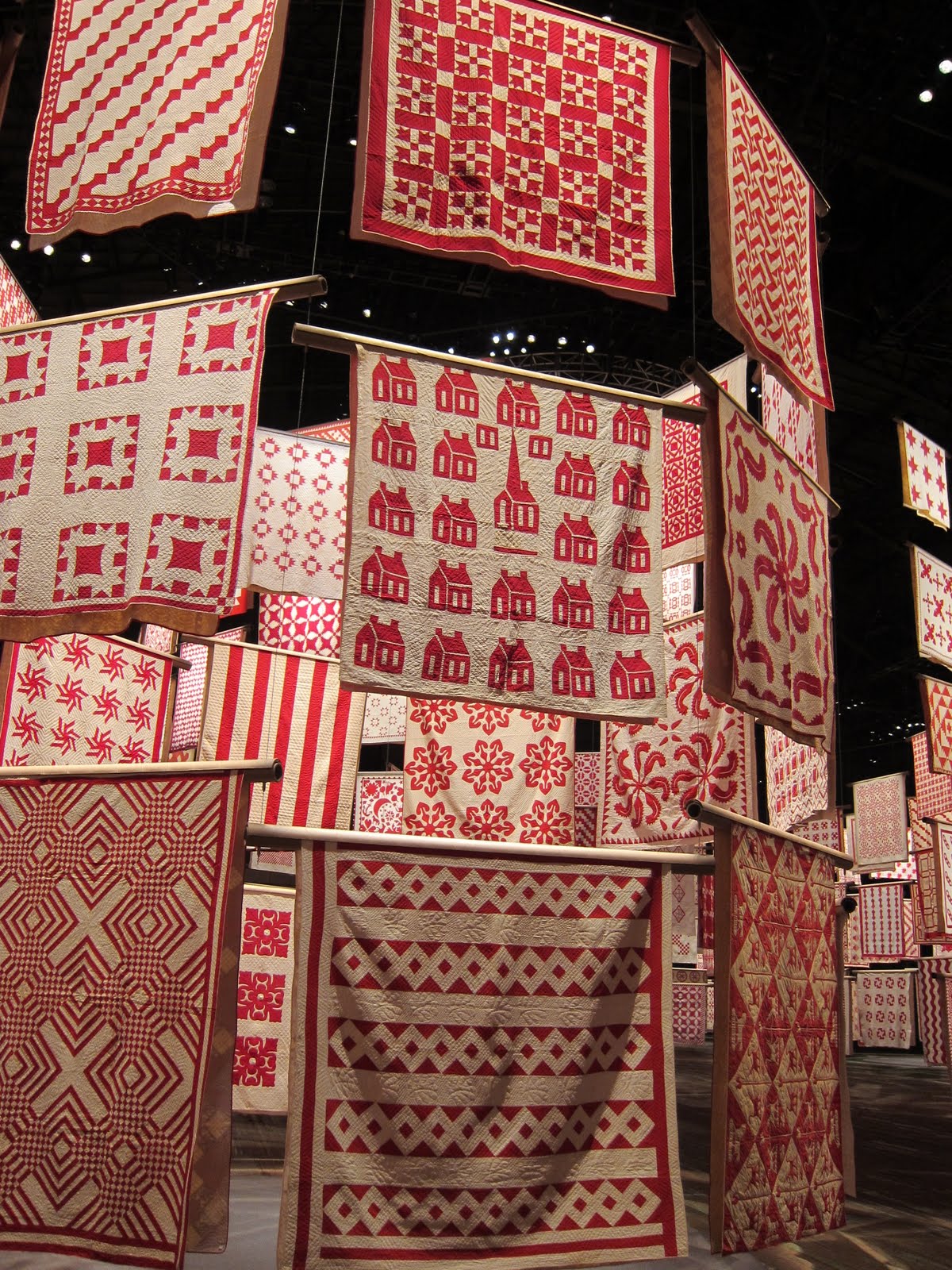
- There are more than 650 red and white American quilts in this exhibit, the largest quilt exhibition ever presented in New York City.
-
- The innovative and exciting display of the quilts in the Armory space has been created by the award-winning NYC exhibition design firm Thinc Design.
-
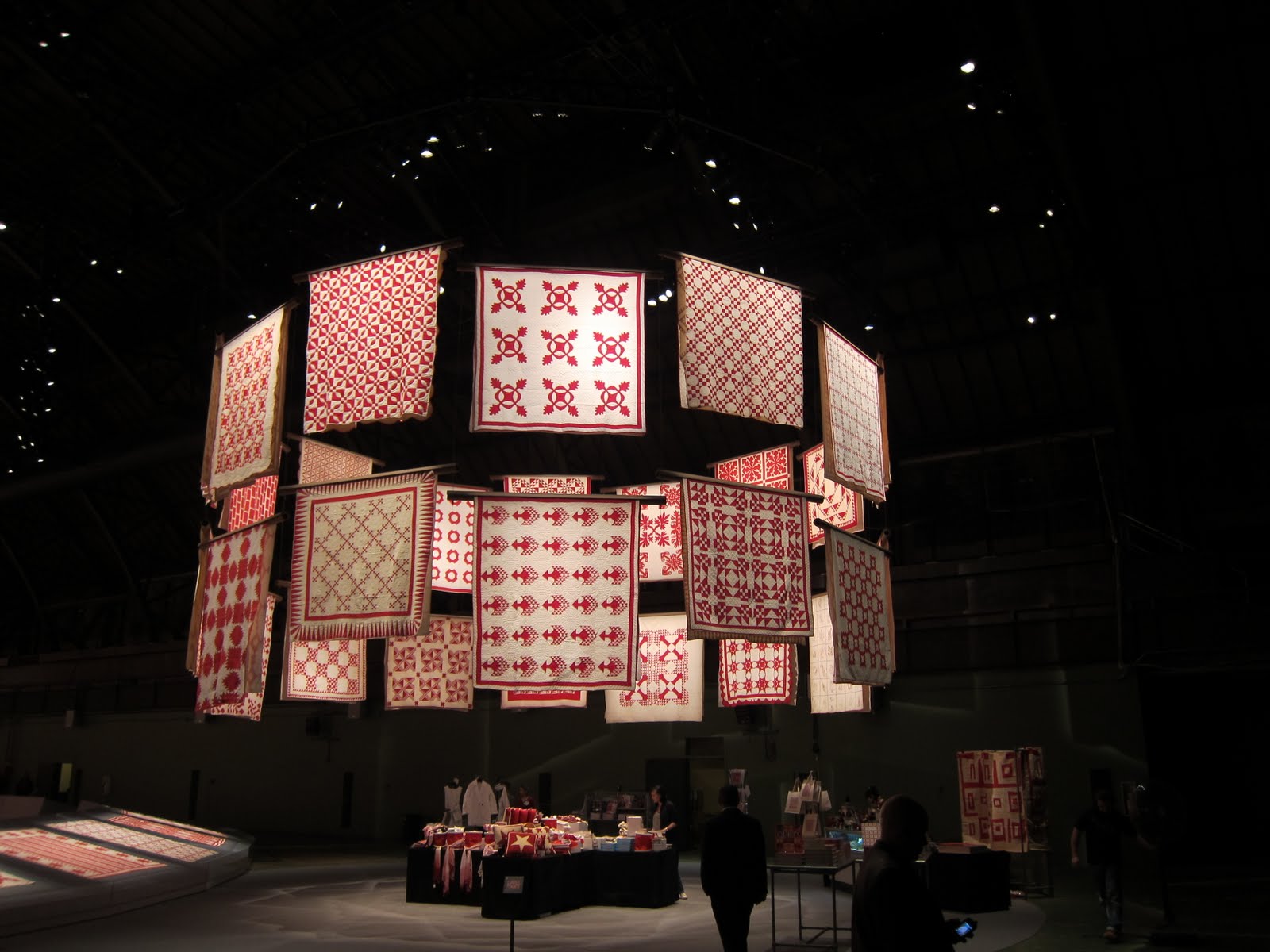
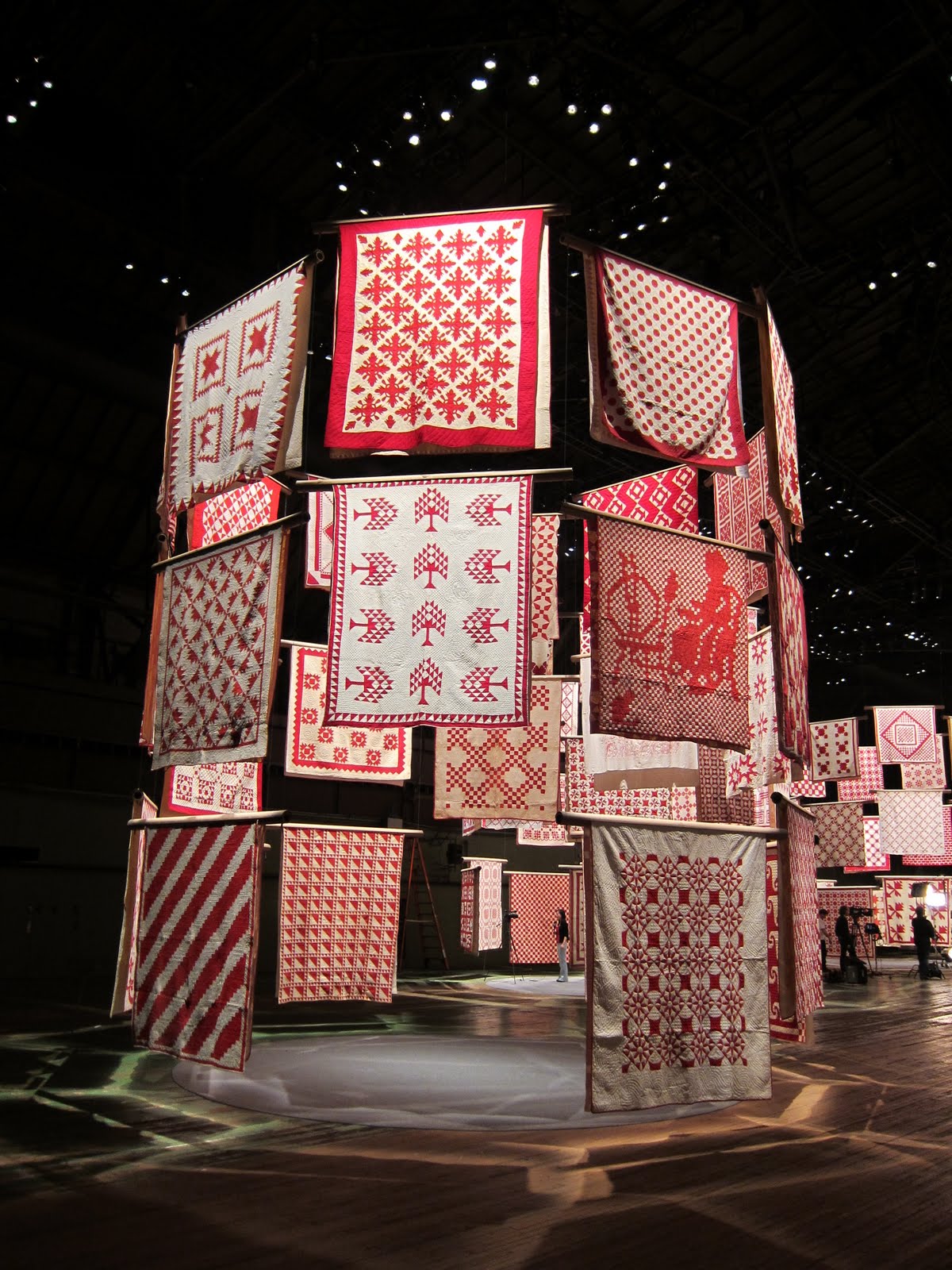
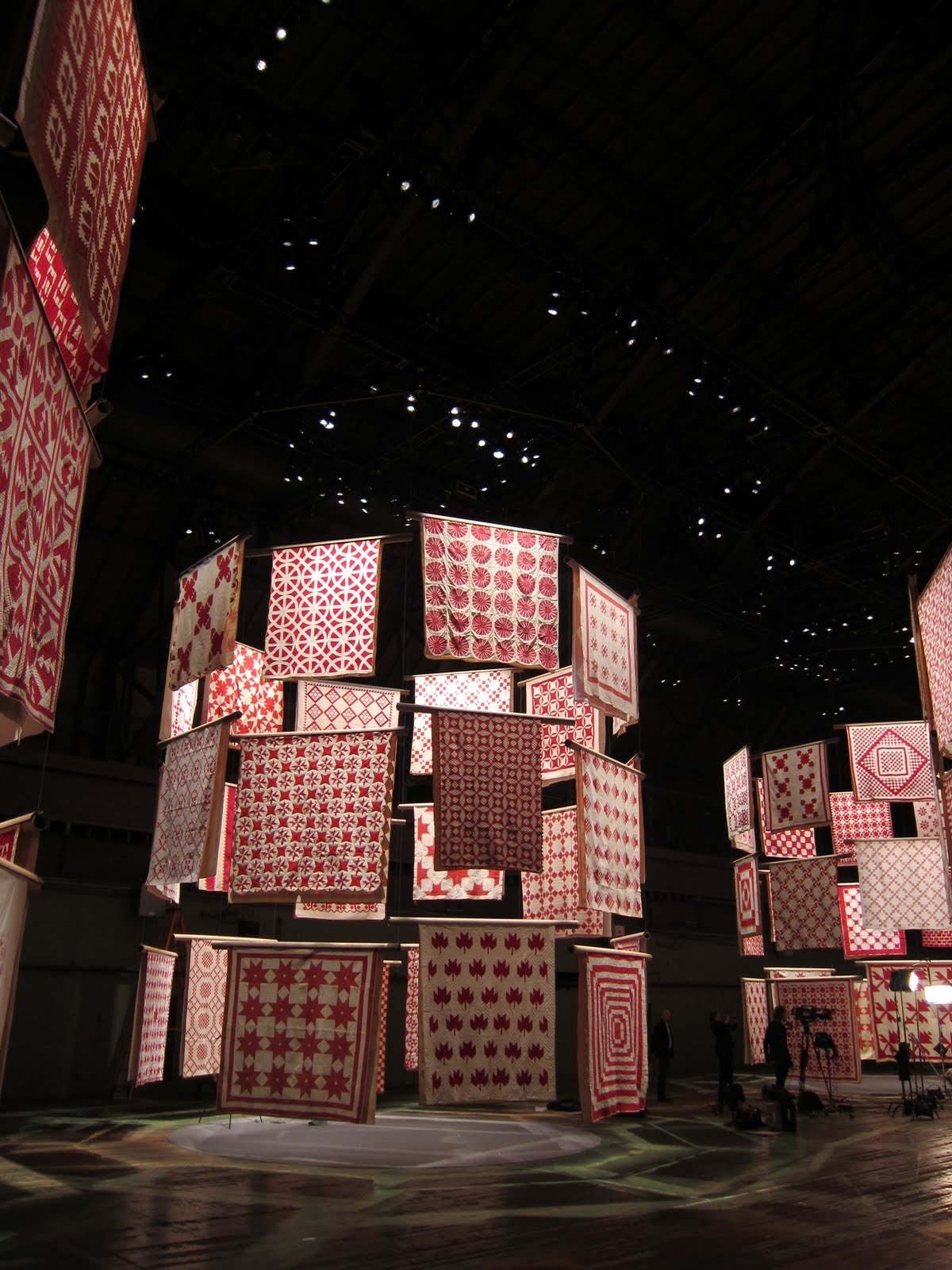
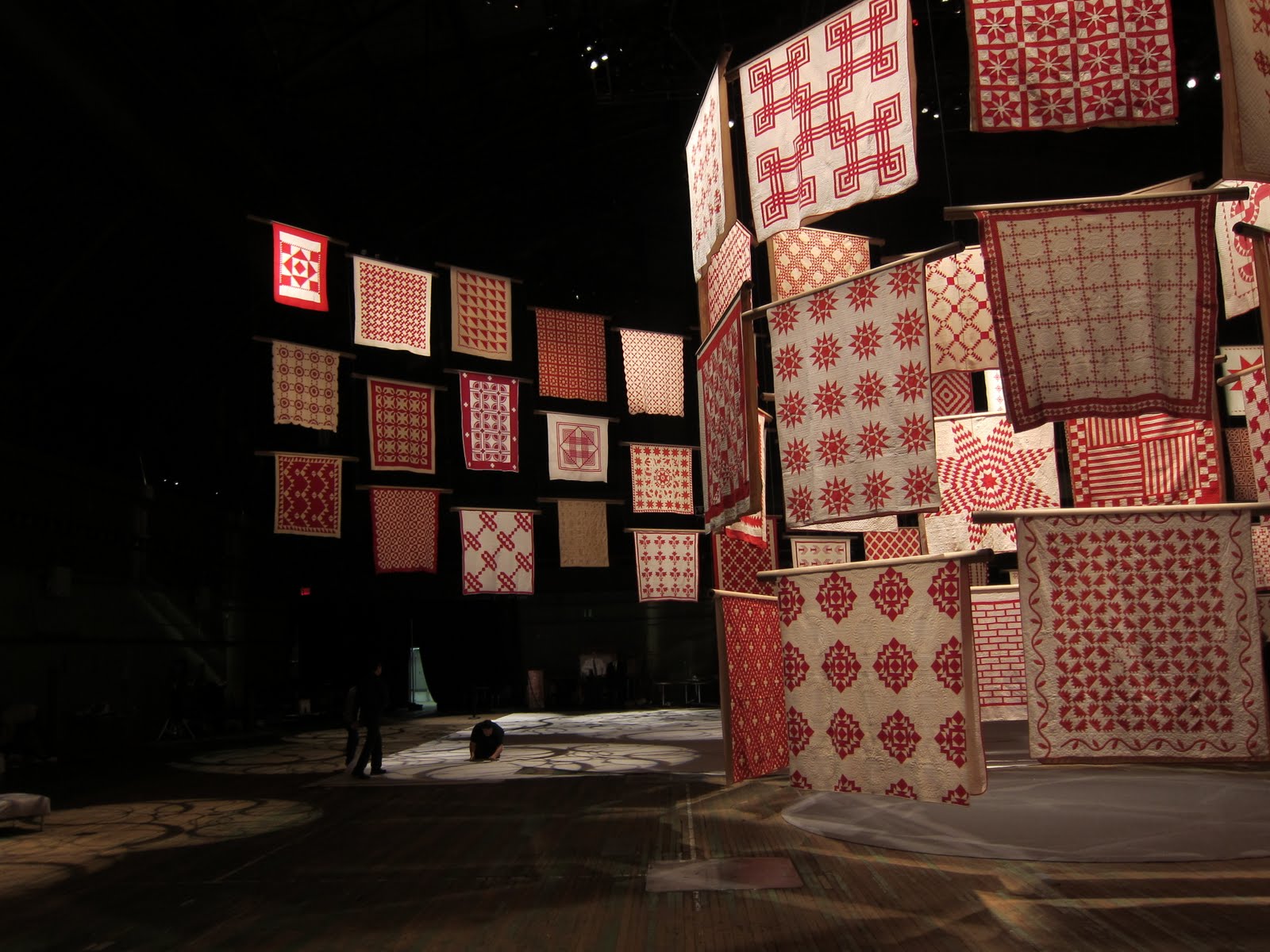
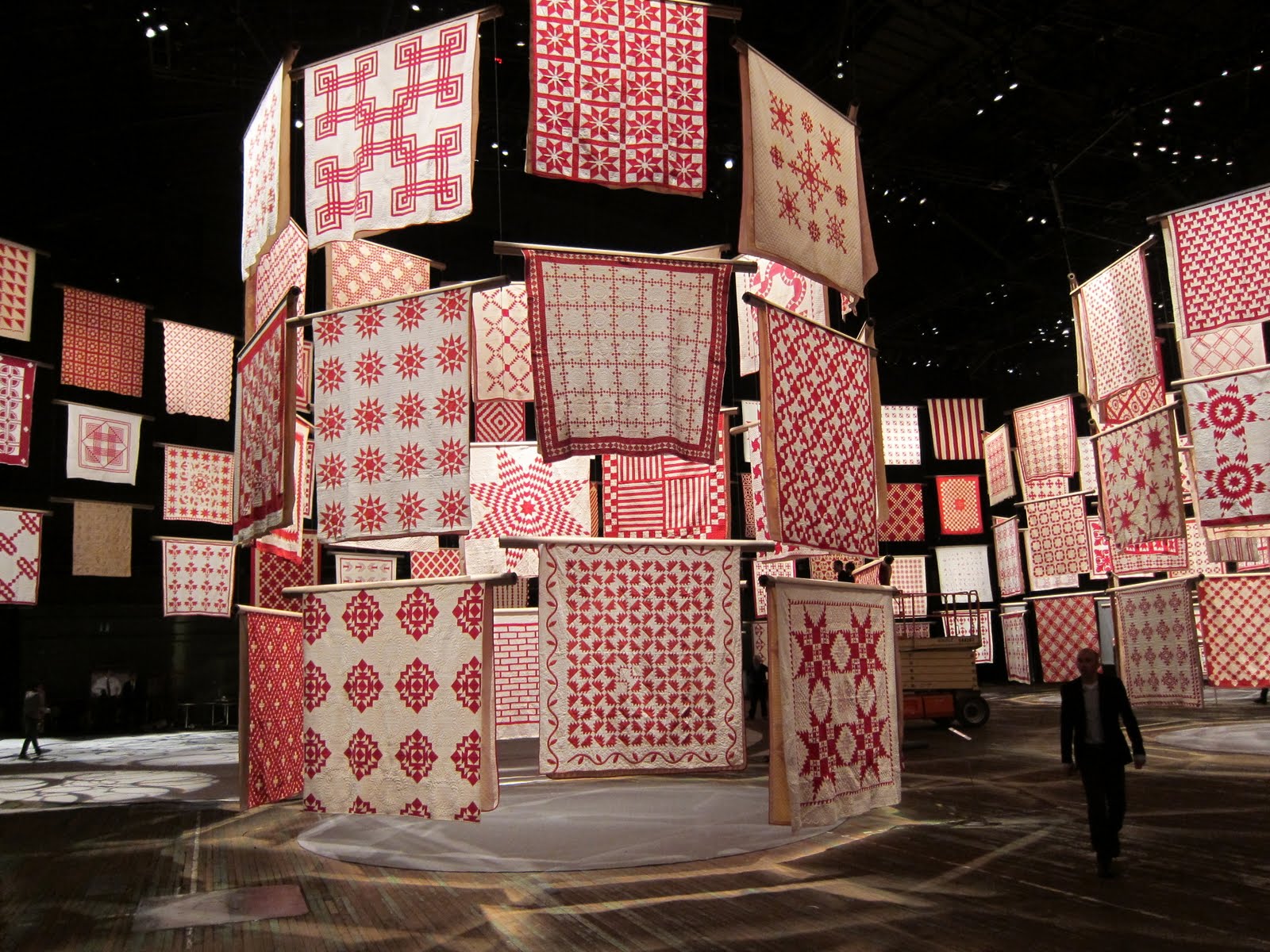
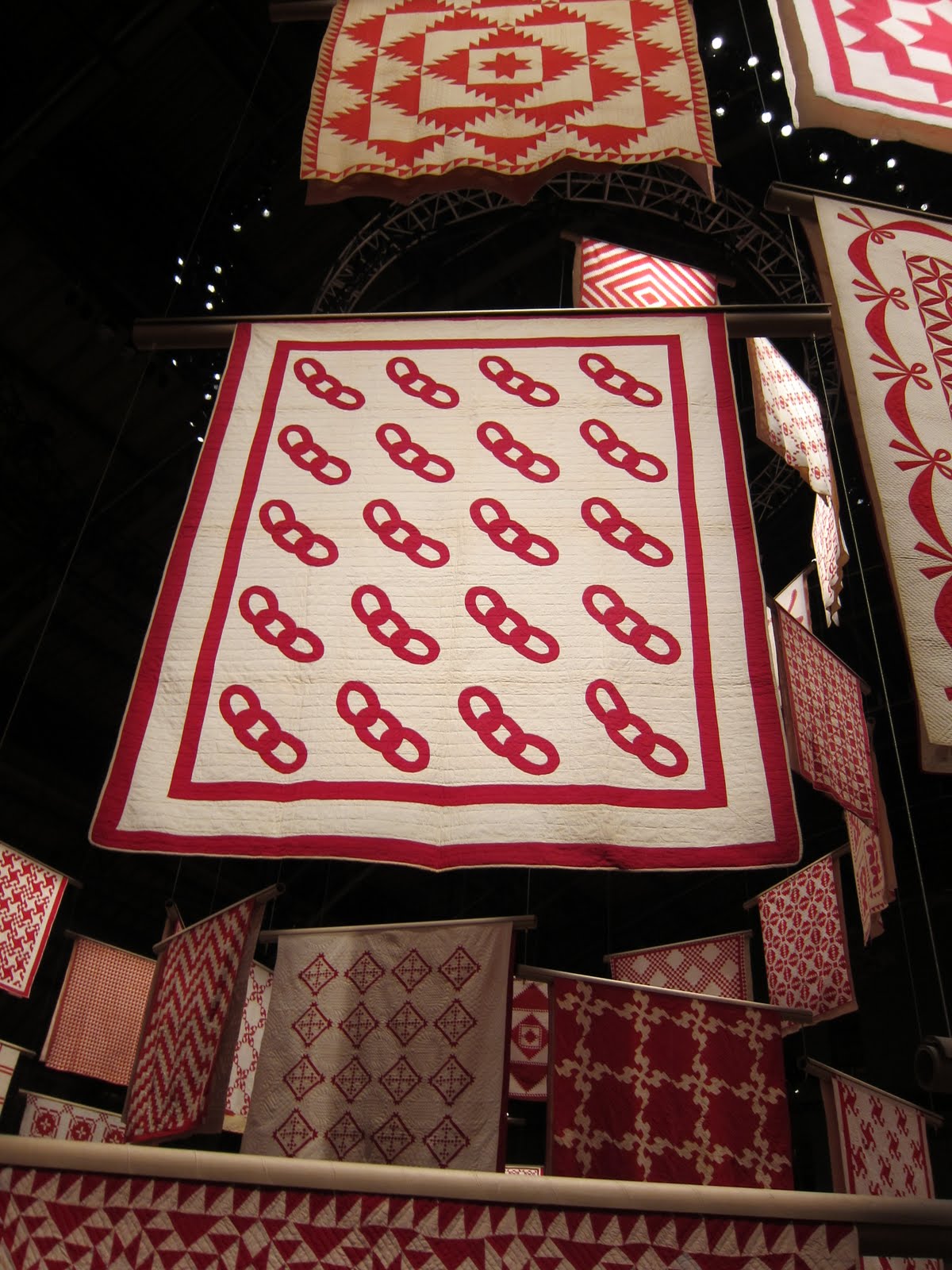
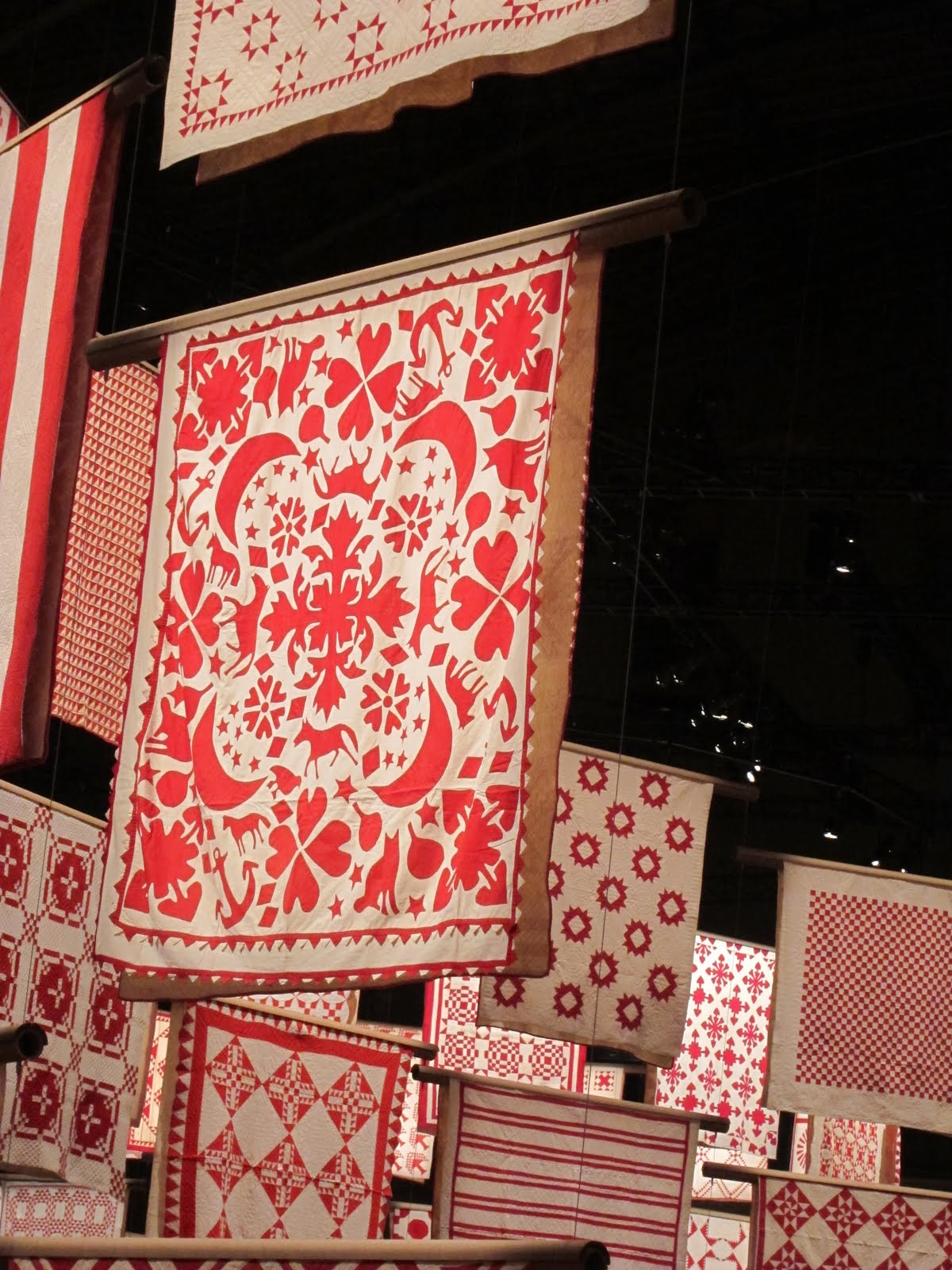
- Defying gravity, the quilts appear to spiral in mid-air, creating circular pavilions.
-
- Those circular forms invite visitors to experience the quilts in a three-dimensional environment.
-
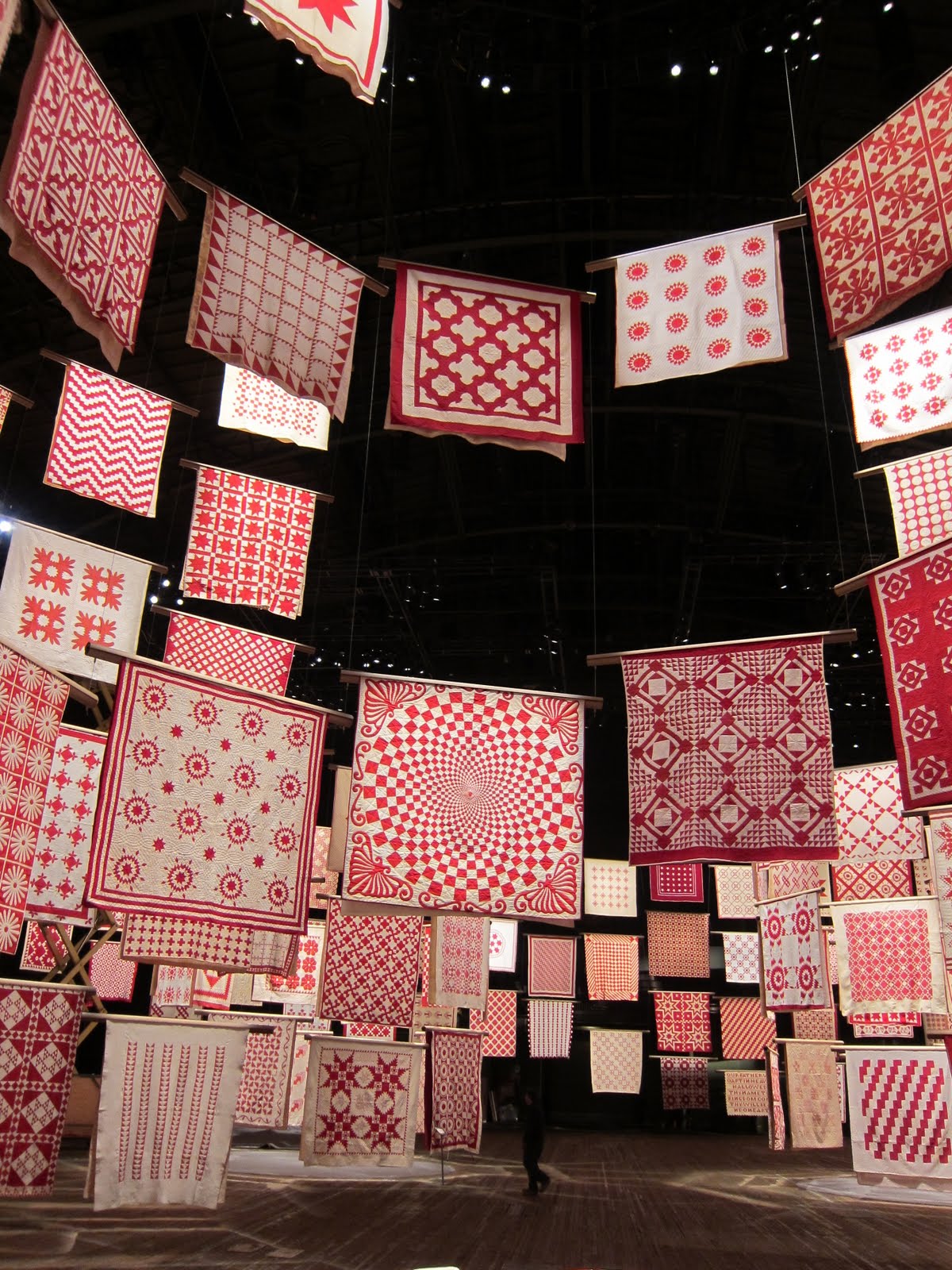
- This superb collection is astonishing, not only because of the sheer number of red and white textiles, but also because no two are exactly alike!
-
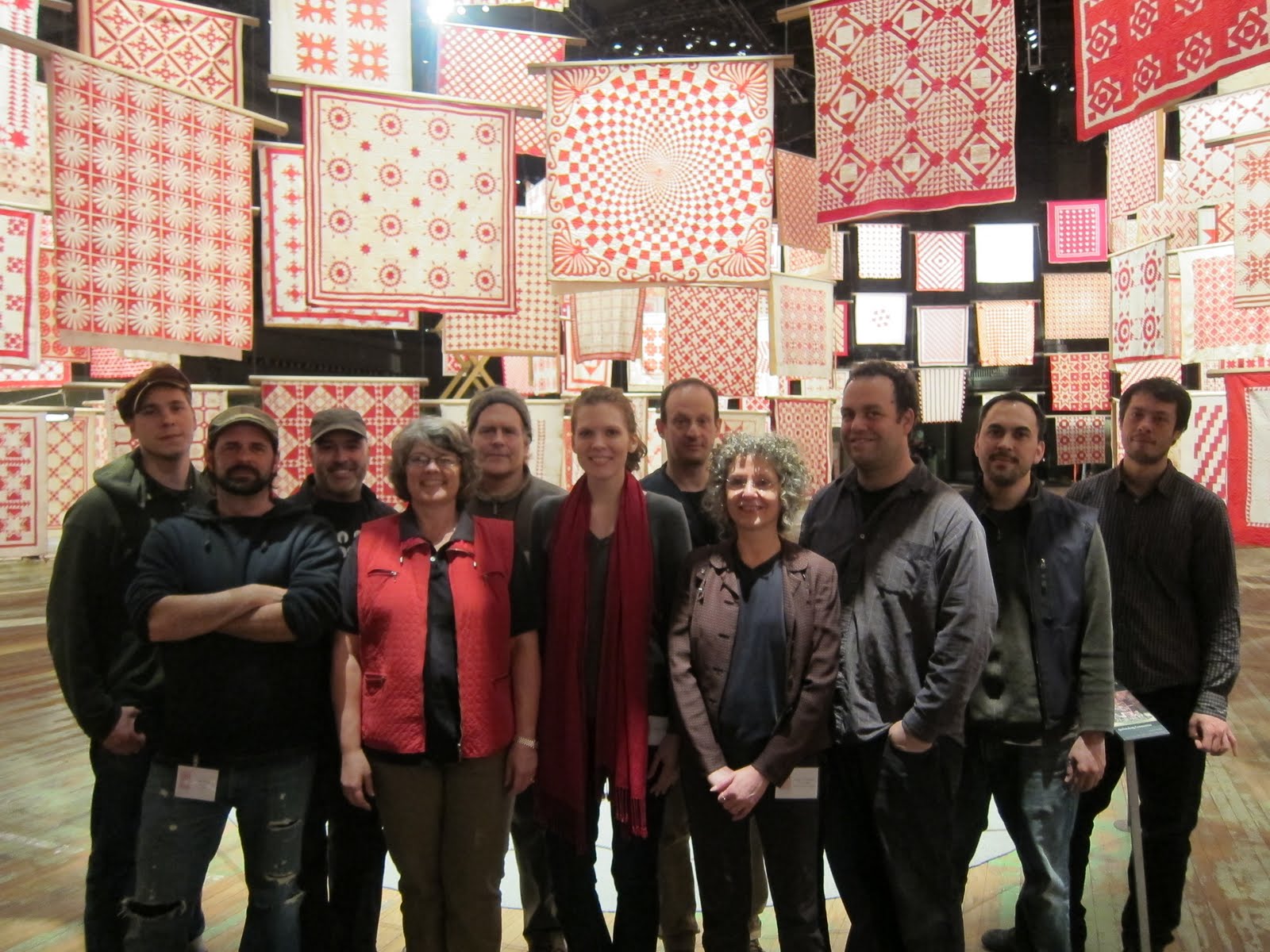
- This is the proud team that hung the 650+ quilts.
-
- During the 19th and early 20th centuries, when quilts no longer needed to be made for mere warmth…..
-
- Quiltmakers used the art form to express their creativity within the confines of popular decorating trends.
-
- Red and white has been a classic color scheme for American quilts since the early nineteenth century.
-
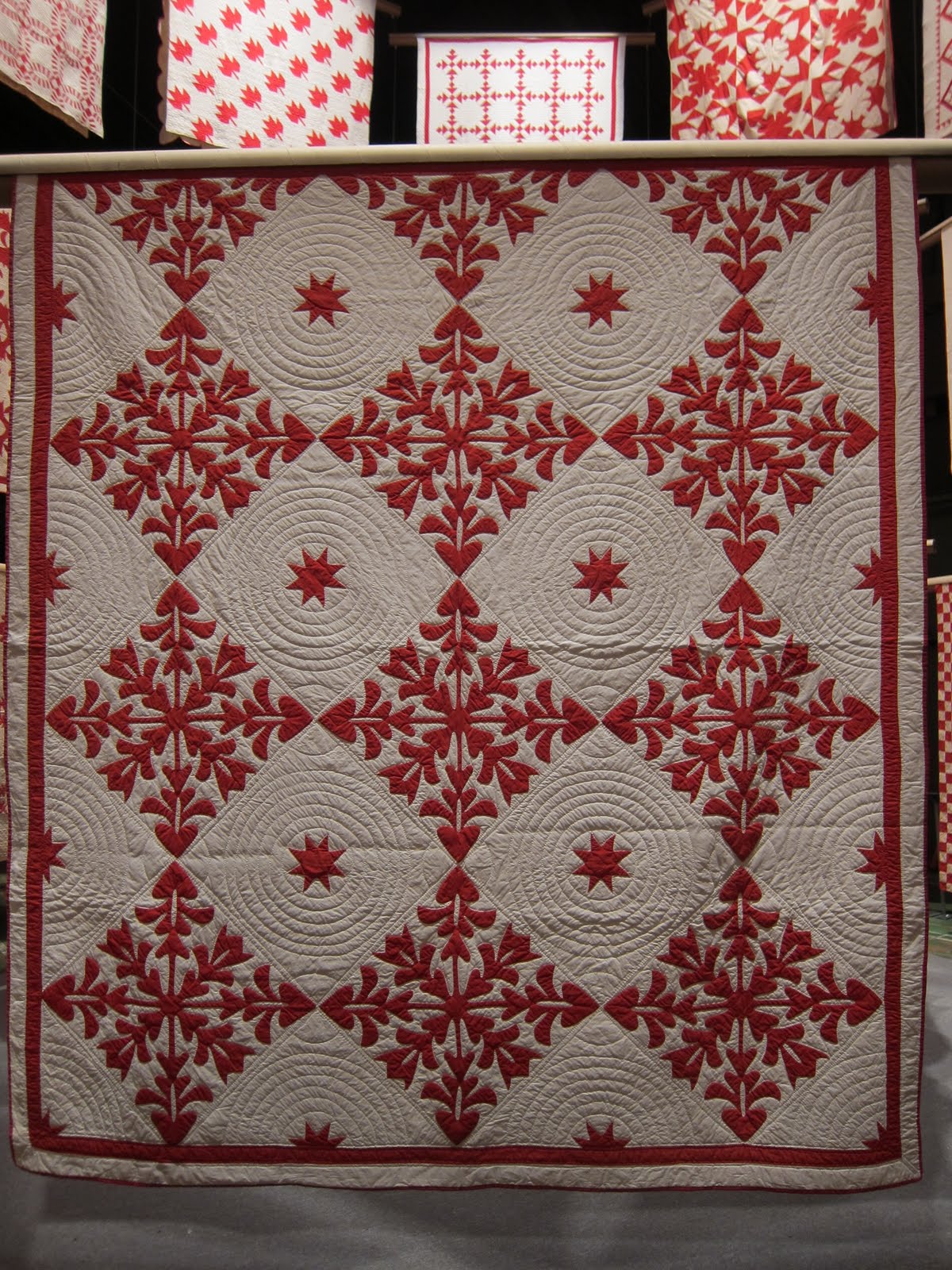
- Aside from its aesthetic appeal, the extraordinary colorfastness of Turkey red dye was a major factor for using this color combination.
-
- In a time when most colored fabrics tended to fade or run when exposed to the wash or light,…..
-
- Turkey red cotton was remarkable for its reliability.
-
- Derived from madder root, Turkey red dye came to Europe from the eastern Mediterranean in the 1750s.

-
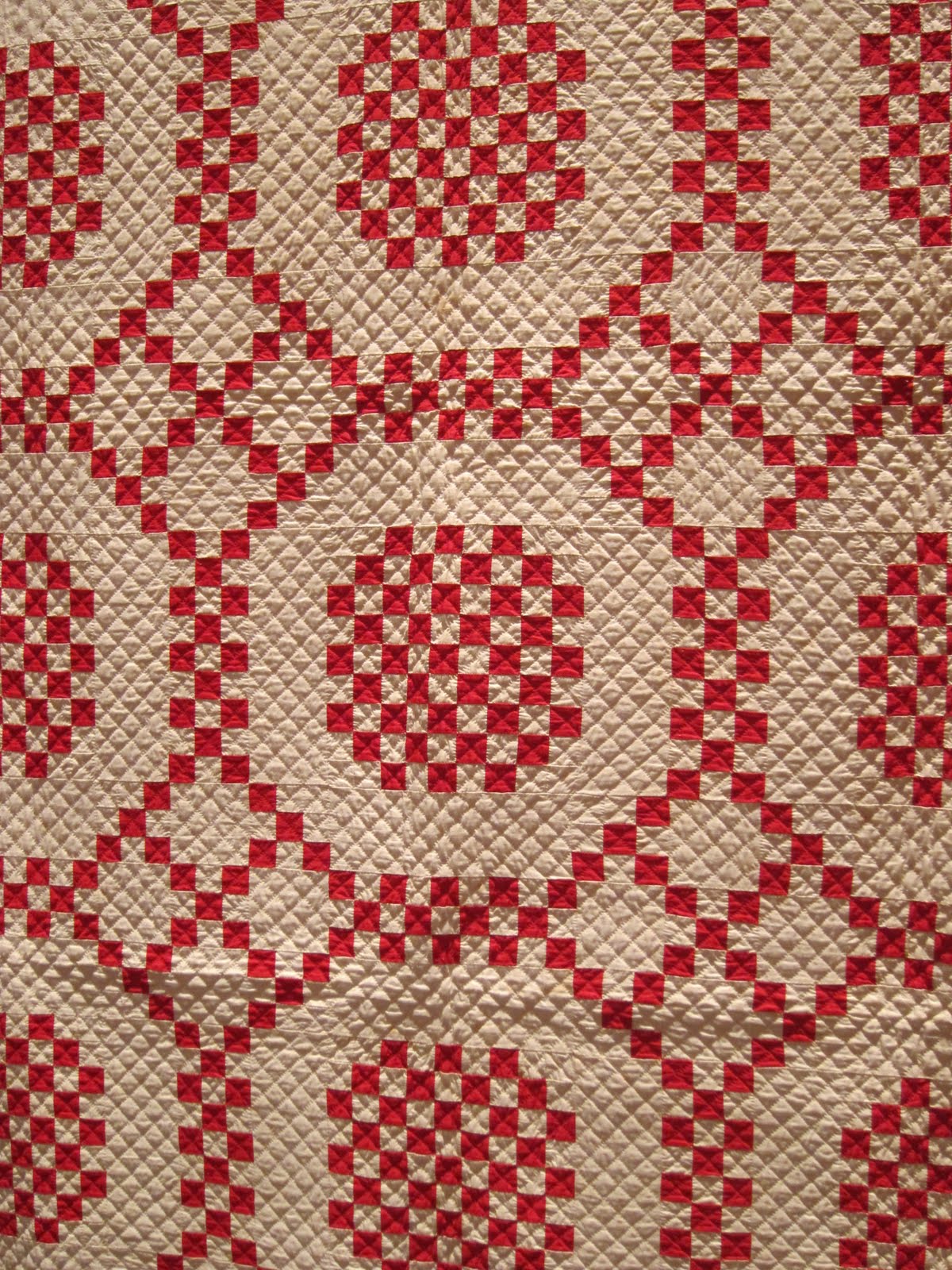
- Producing it was a long and expensive process, and the fabrics dyed with it were correspondingly costly.
-
- In 1868, however, a synthetic version of the dye became available.

-
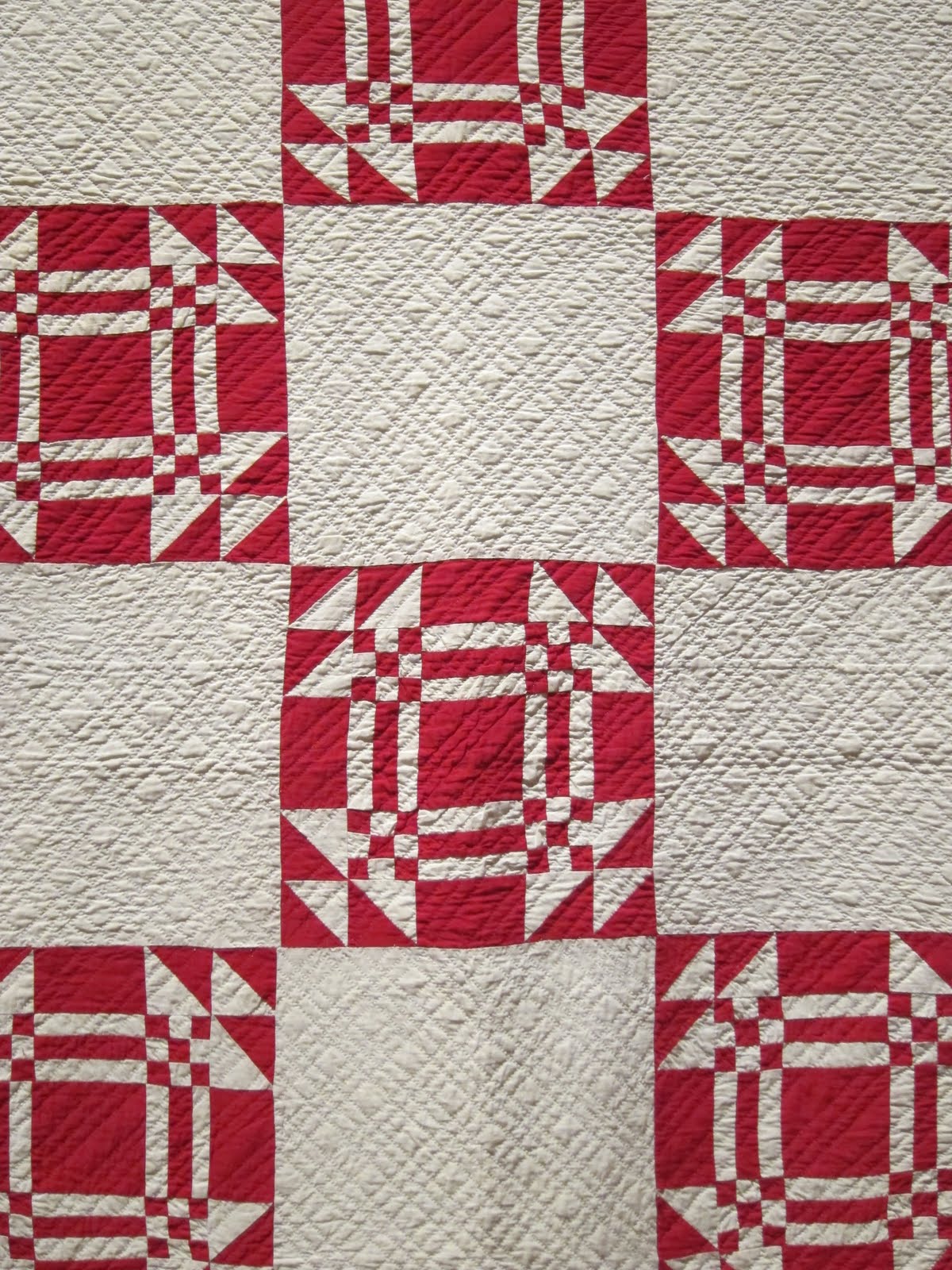
- This simplified the process and enabled the production of Turkey red cotton by American mills.
-
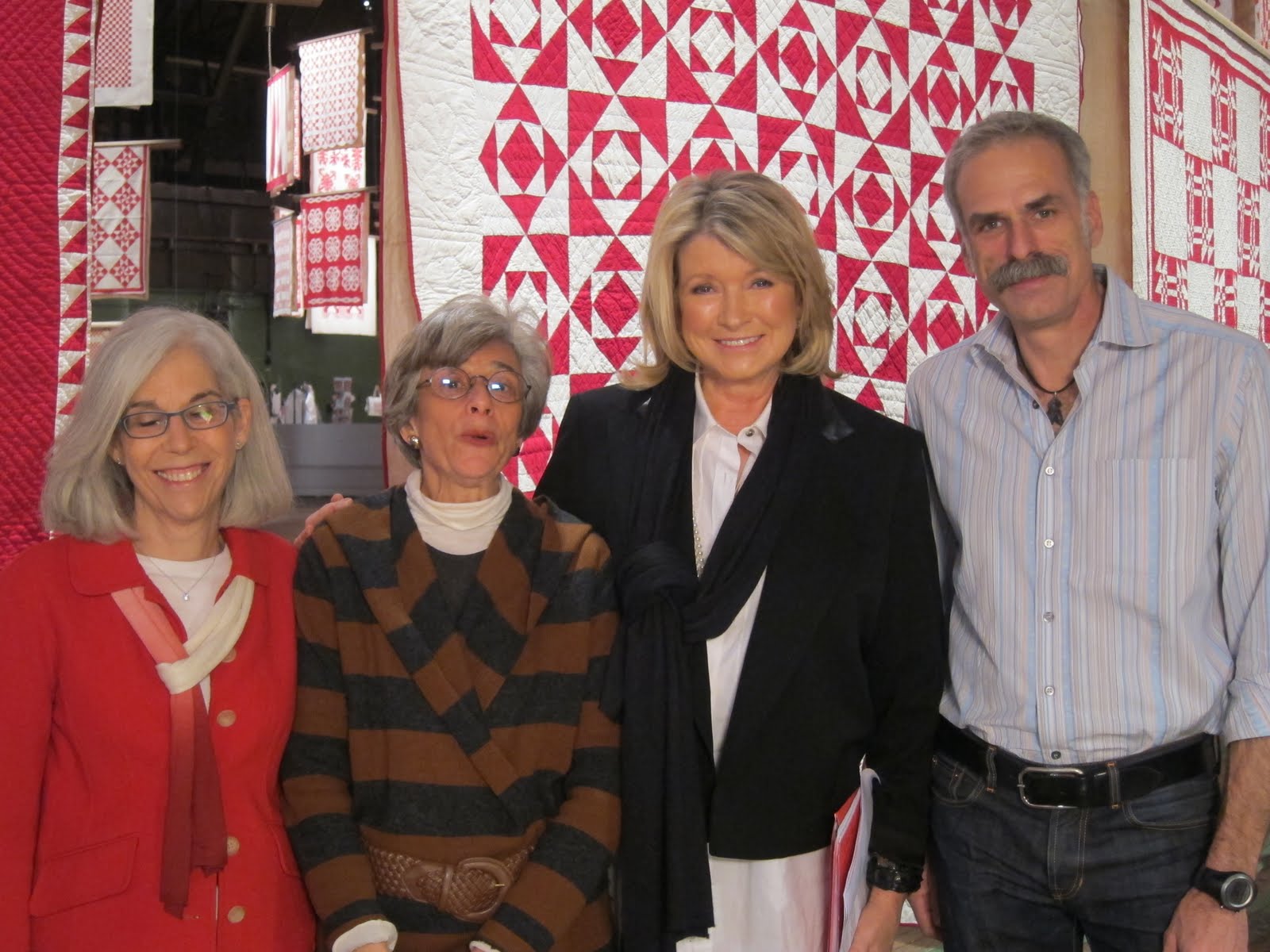
- Liz Warren – Curator of collection, Susan Flamm – PR for American Folk Art Museum, me, and Tom Hennes – Thinc Design
-
- One result of this invention was an explosion in the number of quilt pattern created to take advantage of this colorfast fabric.
-
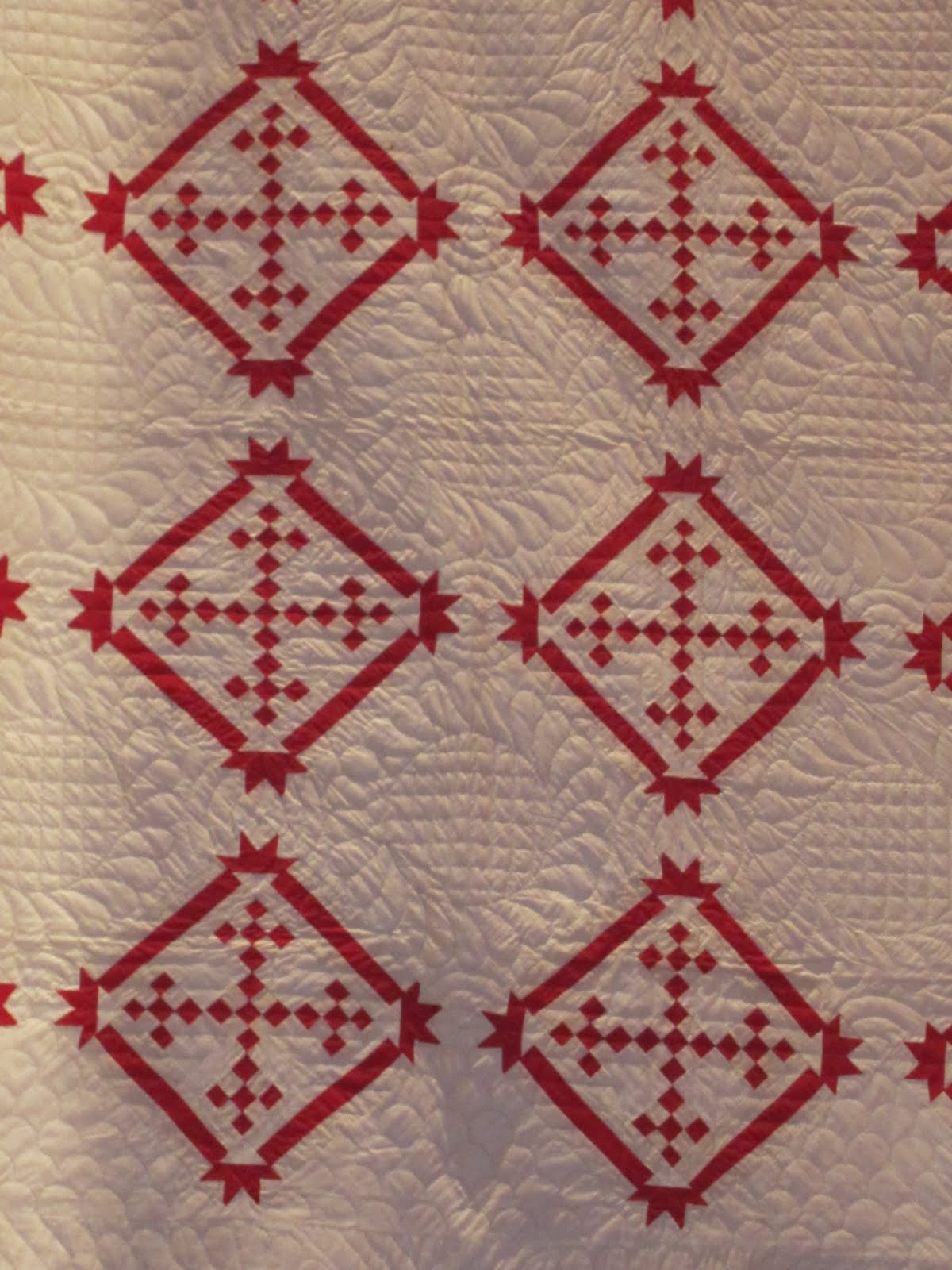
- The largest number of designs on view are geometric pieced patterns.
-
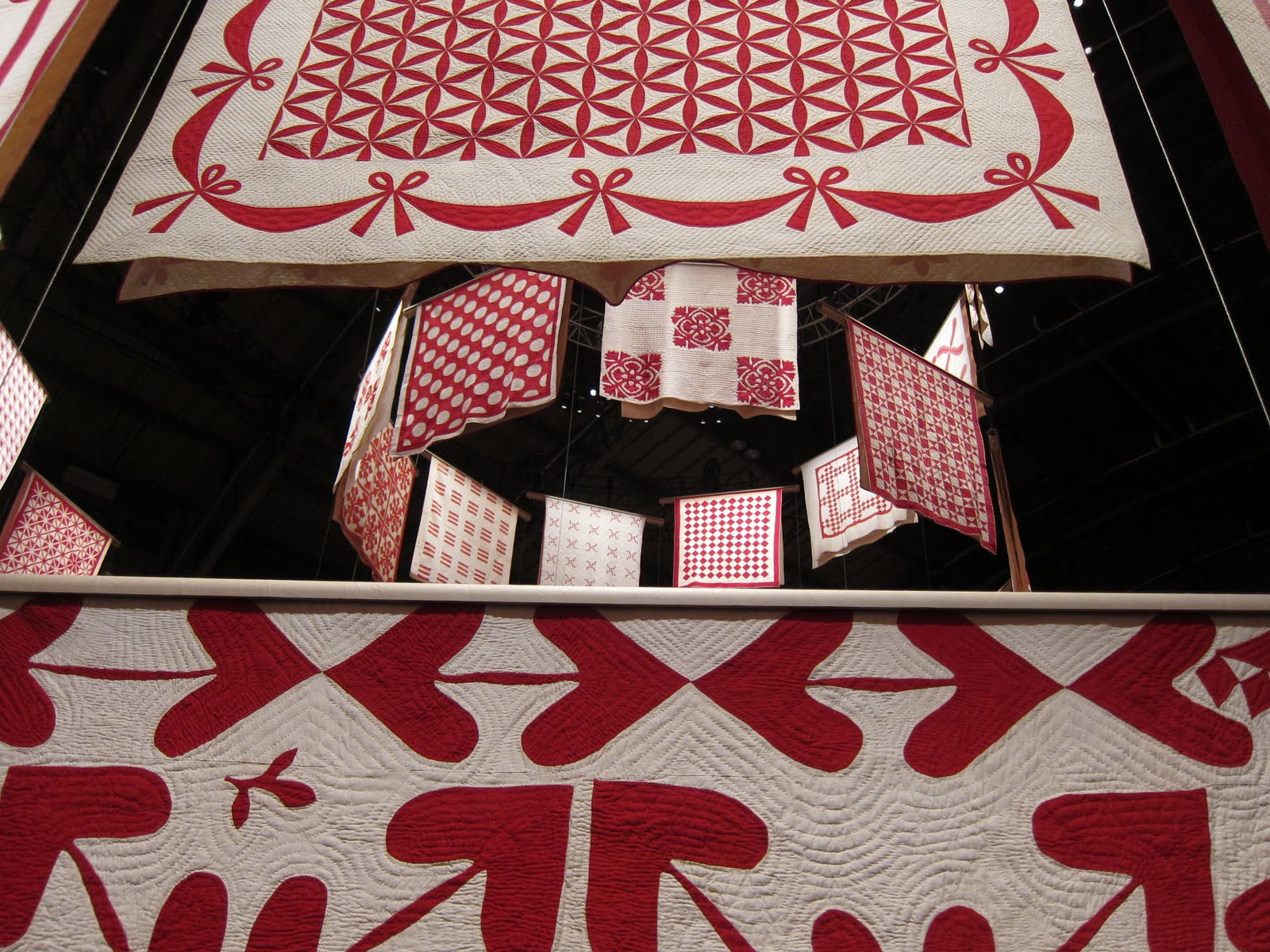
- But there are also appliqué designs – cut-out pieces of one fabric sewn on top of another fabric.

-
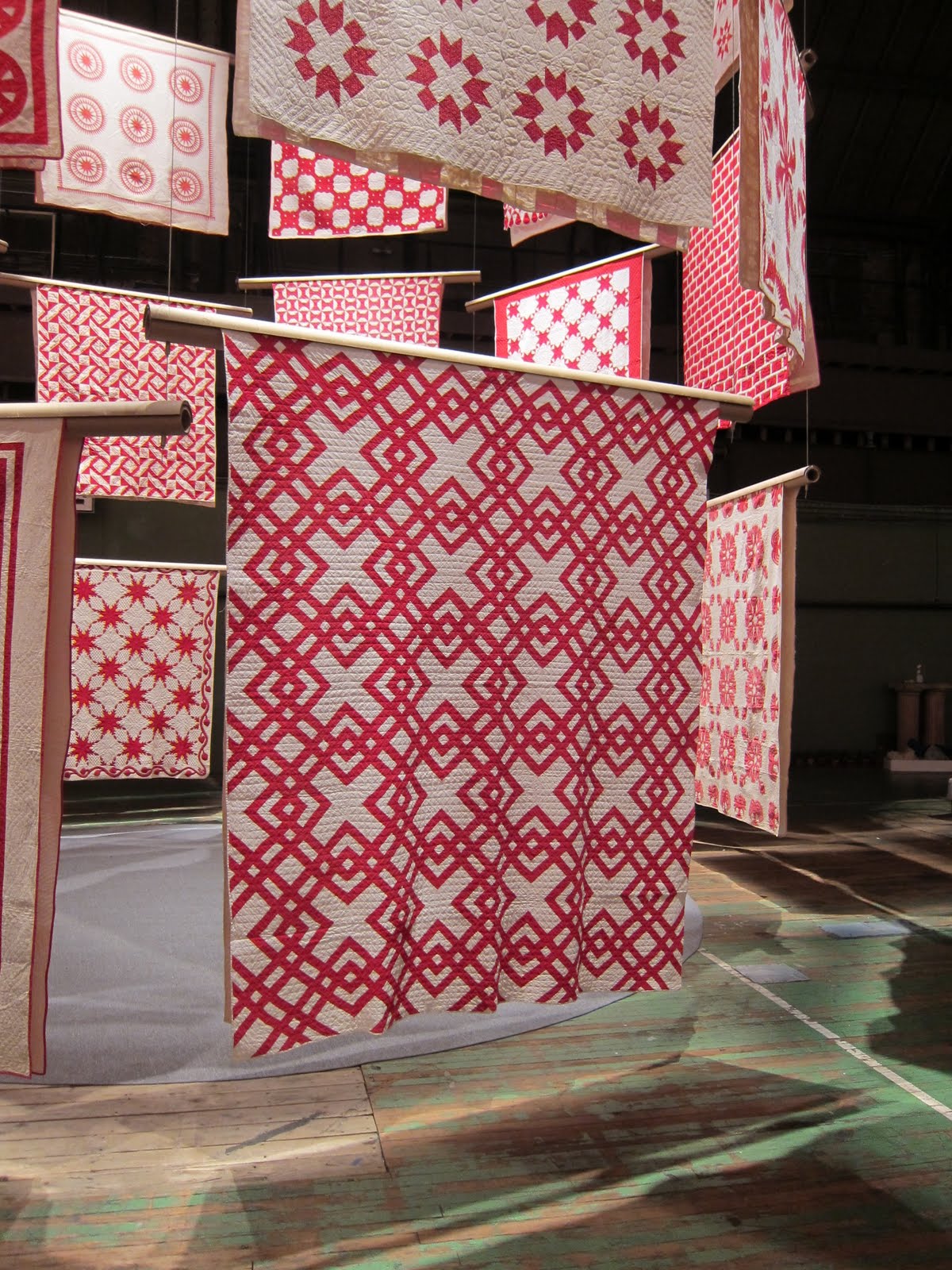
- The variety of designs, and their names, were limited only by the quiltmakers’ imaginations.
-
- By the end of the nineteenth century, red and white quilts were at the height of their popularity.
-
- At that time, the color scheme became almost a standard for a large number of pieced patterns.
-
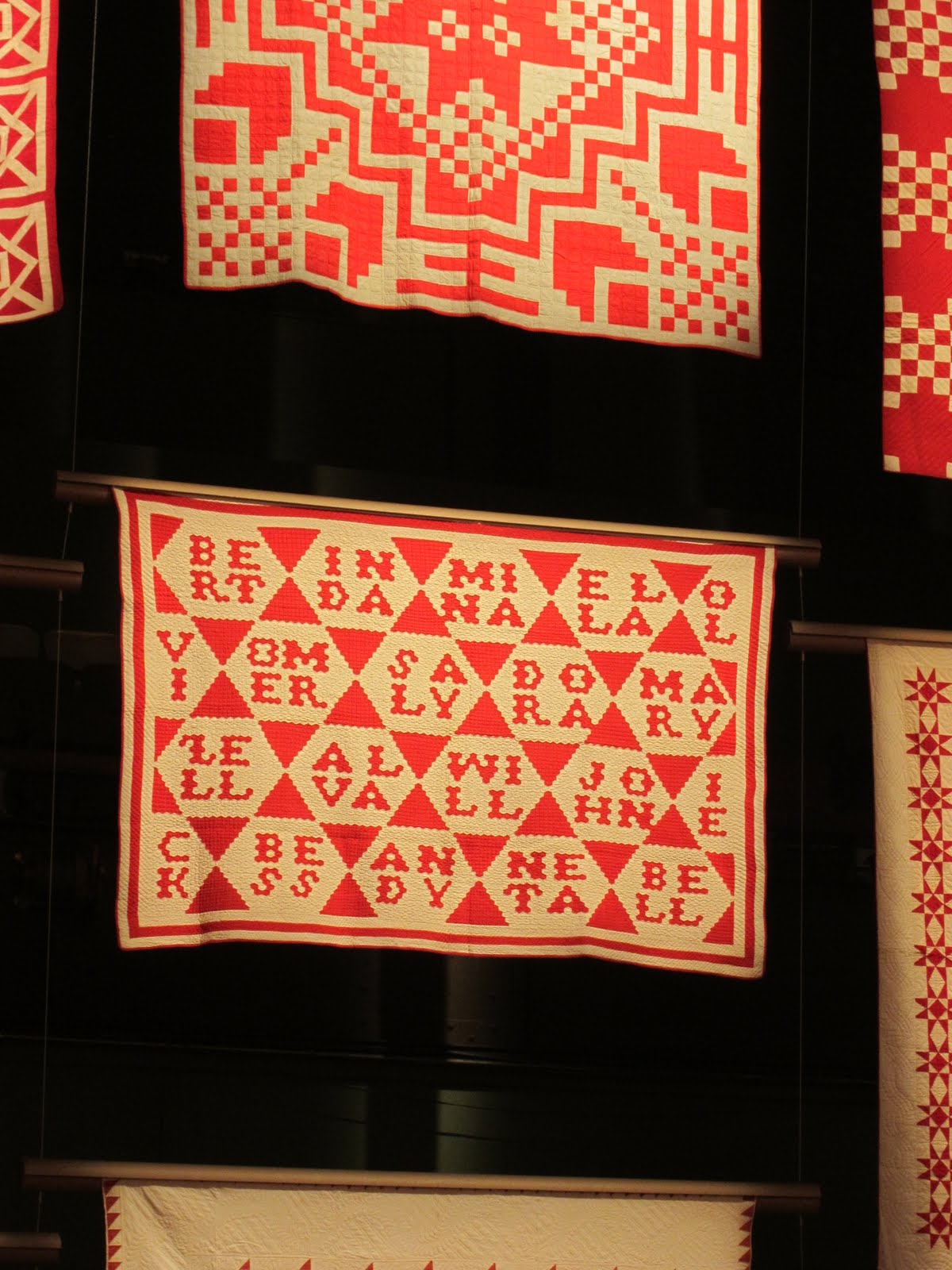
- By the end of the nineteenth century, red and white became the preferred color combination for quilts made for fundraising.

-
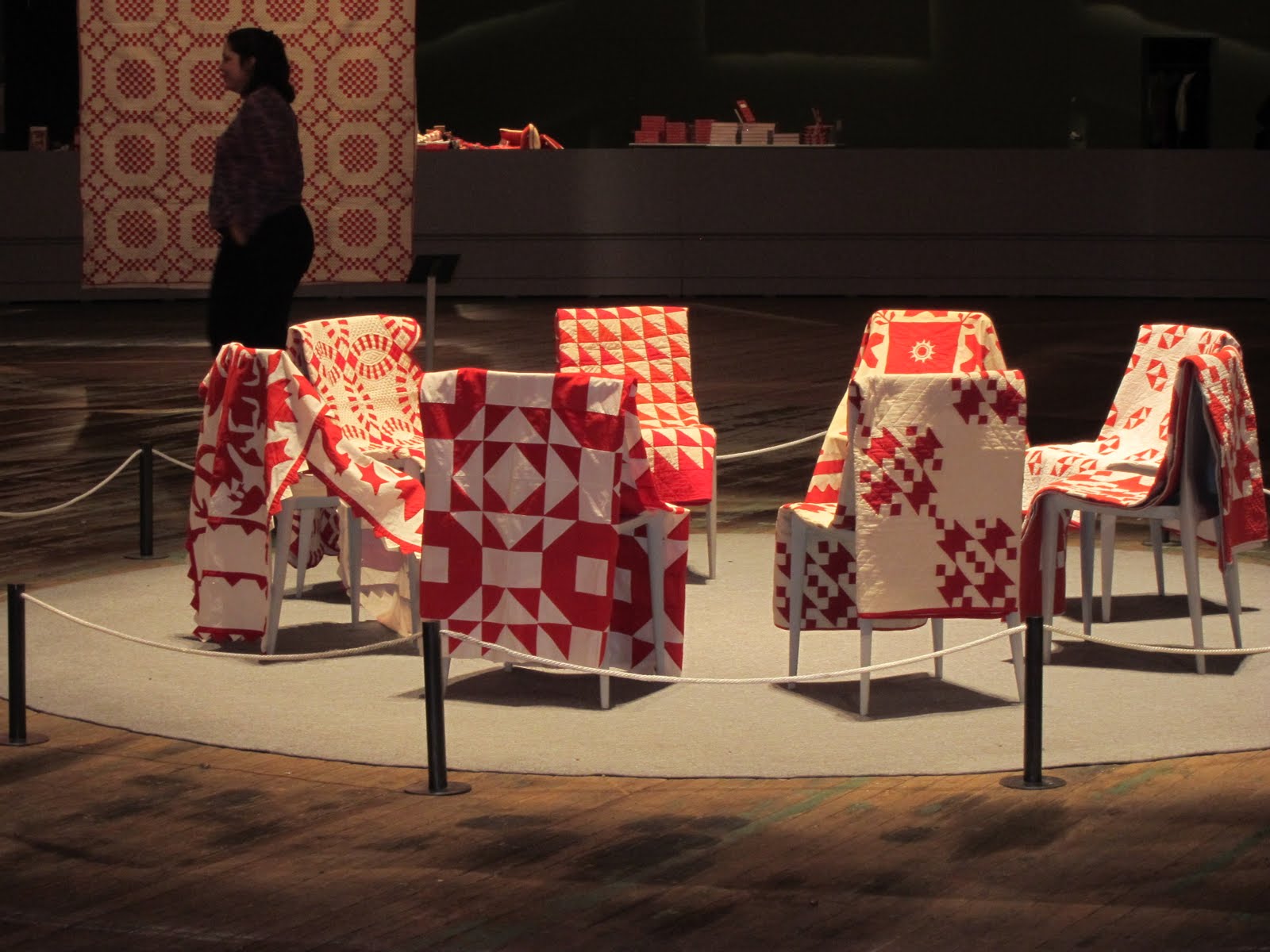
- Most of these quilts were created by women sitting in circles, like this one, called quilting bees.
-
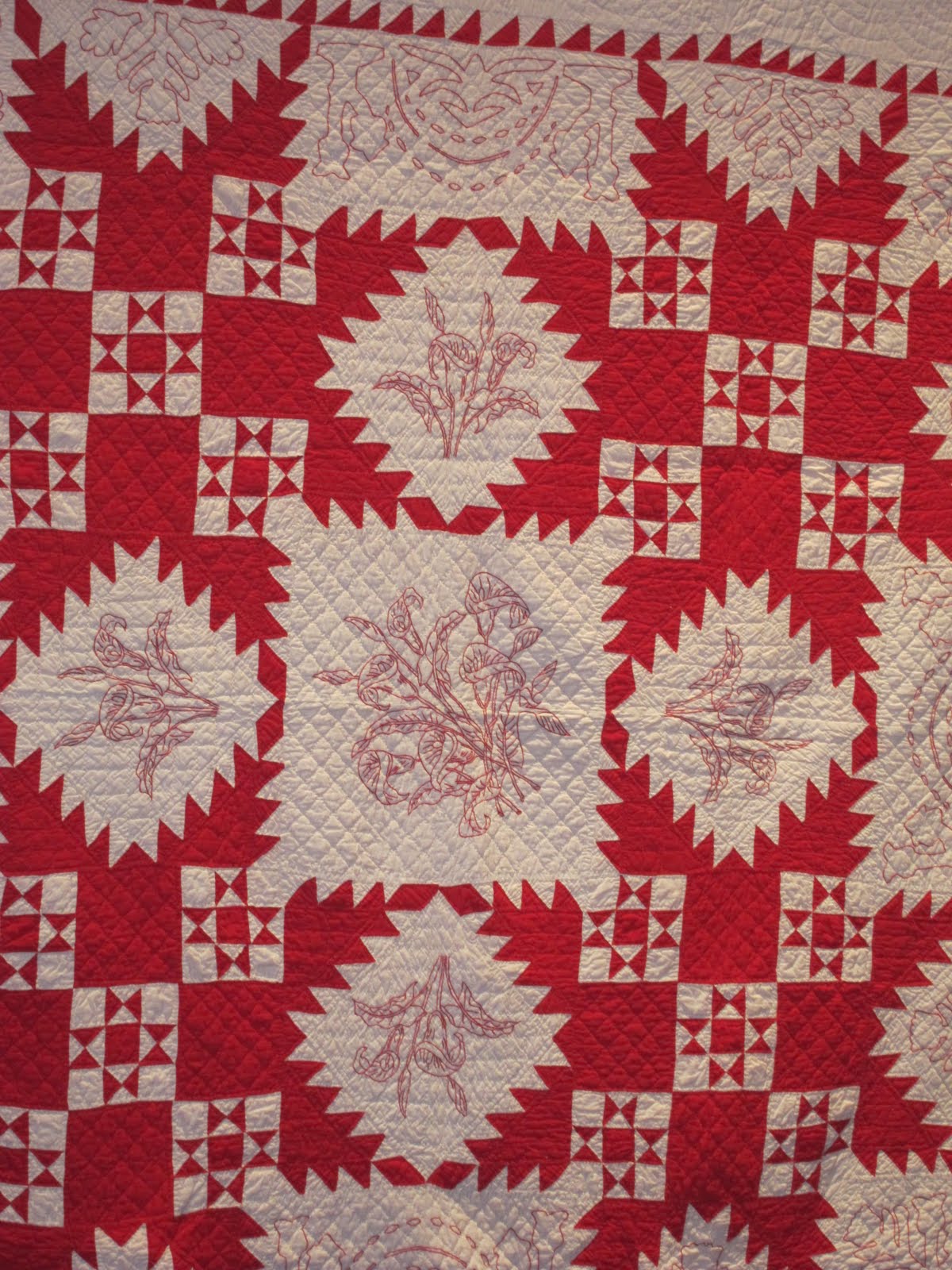
- Some quilts have embroidered embellishments.
-
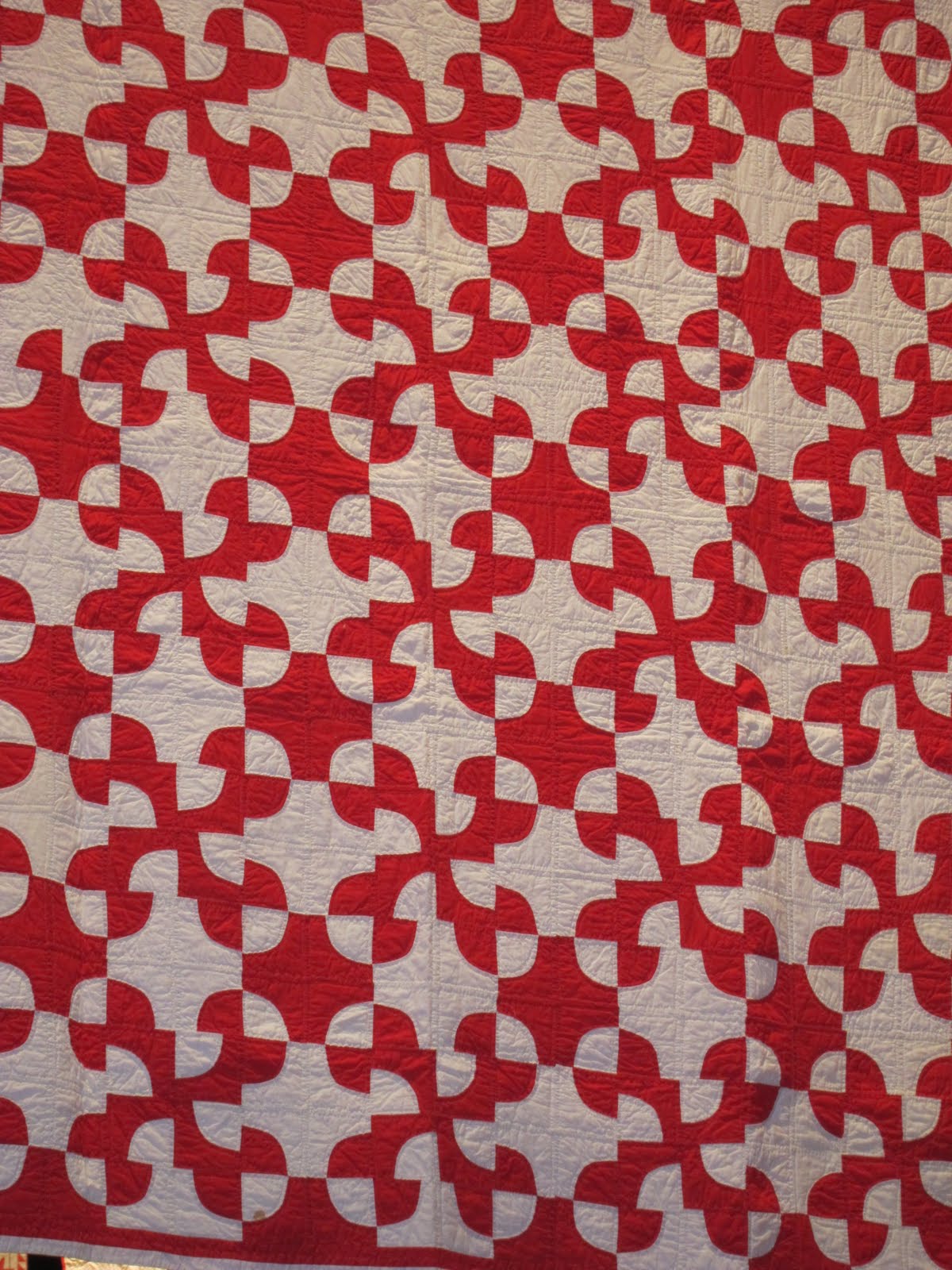
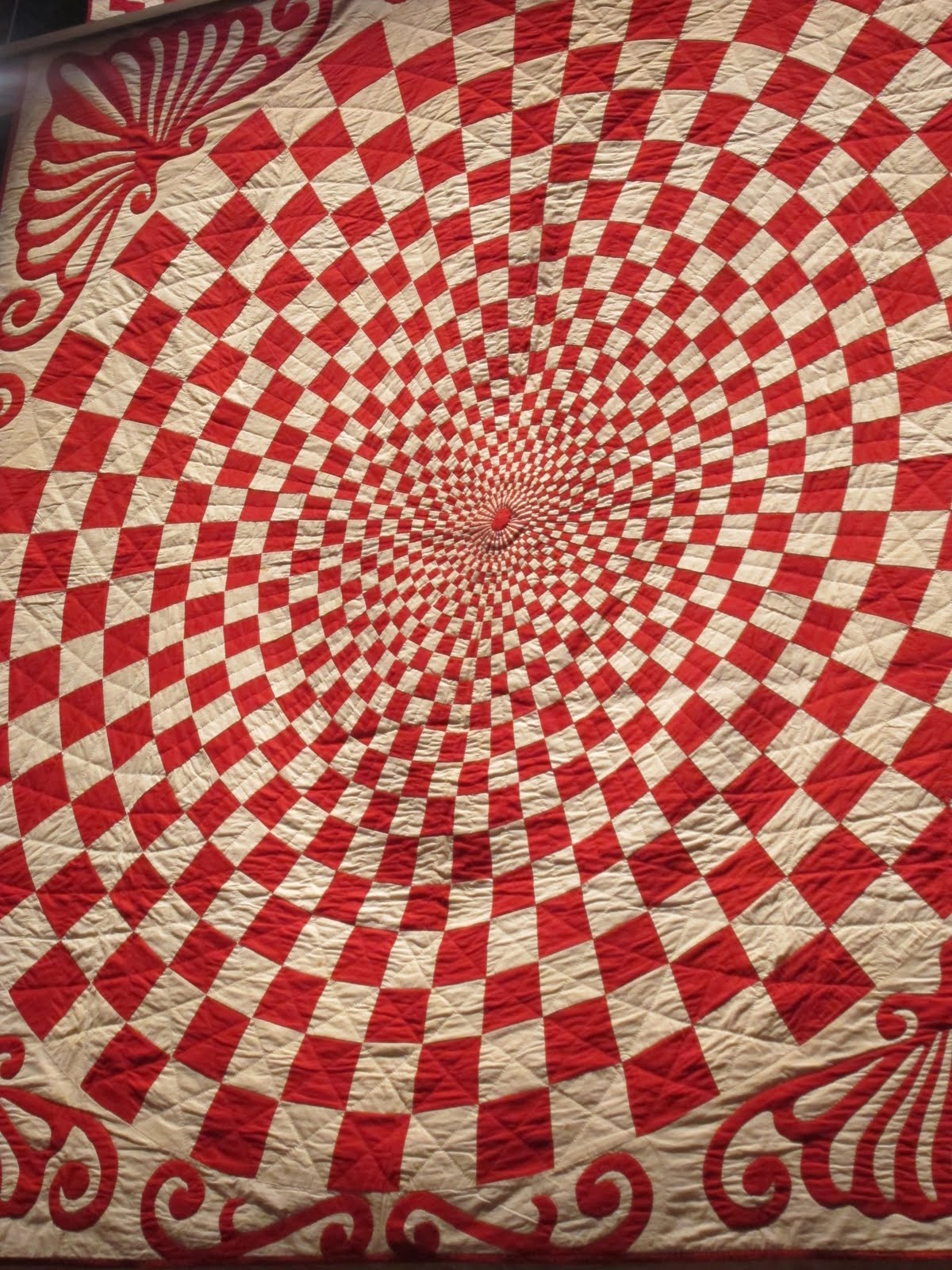
- Some patterns look like op-art.
-
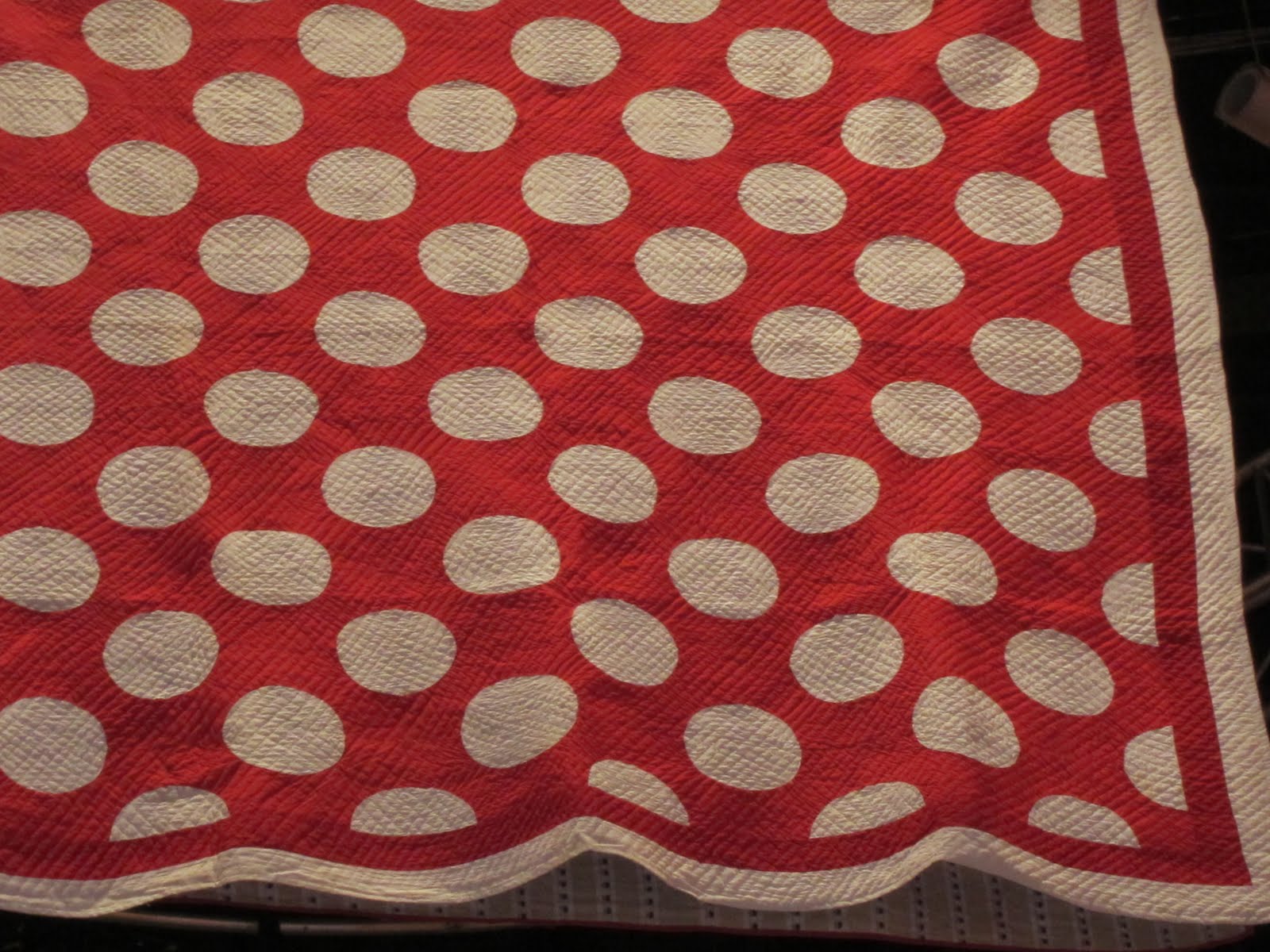
- Joanna Rose found many of these quilts during the 1950s at flea markets.
-
- They often sold for five or ten dollars!
-
- Quite often, quilts were used as wrapping for other purchases.

-
- Another popular method was to embroider white quilts in red with designs from storybooks, nature, national exhibitions, and famous personages.

-
- It wasn’t until the latter decades of the 20th century when their originality and graphic beauty was realized.
-
- Donors would contribute money (often ten cents) to have their names included on a quilt for these fund-raising ventures.
-
- It was Joanna Rose’s wish for her 80th birthday to display all of these quilts – a wonderful gift for New York City.
-
- This amazing pattern is called Vortex.
-
- Detail

 Martha Pins


 Martha Tweets

