
The Bonsai Courtyard at Longwood Gardens
Bonsai is the centuries-old Japanese practice of dwarfing trees and growing them in containers.
In fact, the word "bonsai" implies it - "bon" refers to a tray or shallow container, while "sai" means to plant or to grow. Longwood Gardens in Kennett Square, Pennsylvania, is home to an incredible collection of bonsai trees. It includes nearly 200 trees - some of them rare Japanese species. The bonsai trees are displayed in rotating groups of about 50 in a tranquil 12,500 square-foot garden courtyard. And inside Longwood's historic Potting Shed is a Bonsai Workshop where specimens are meticulously prepared and refined by experts, visiting artists, and volunteers.
Here are some photos, enjoy.
-

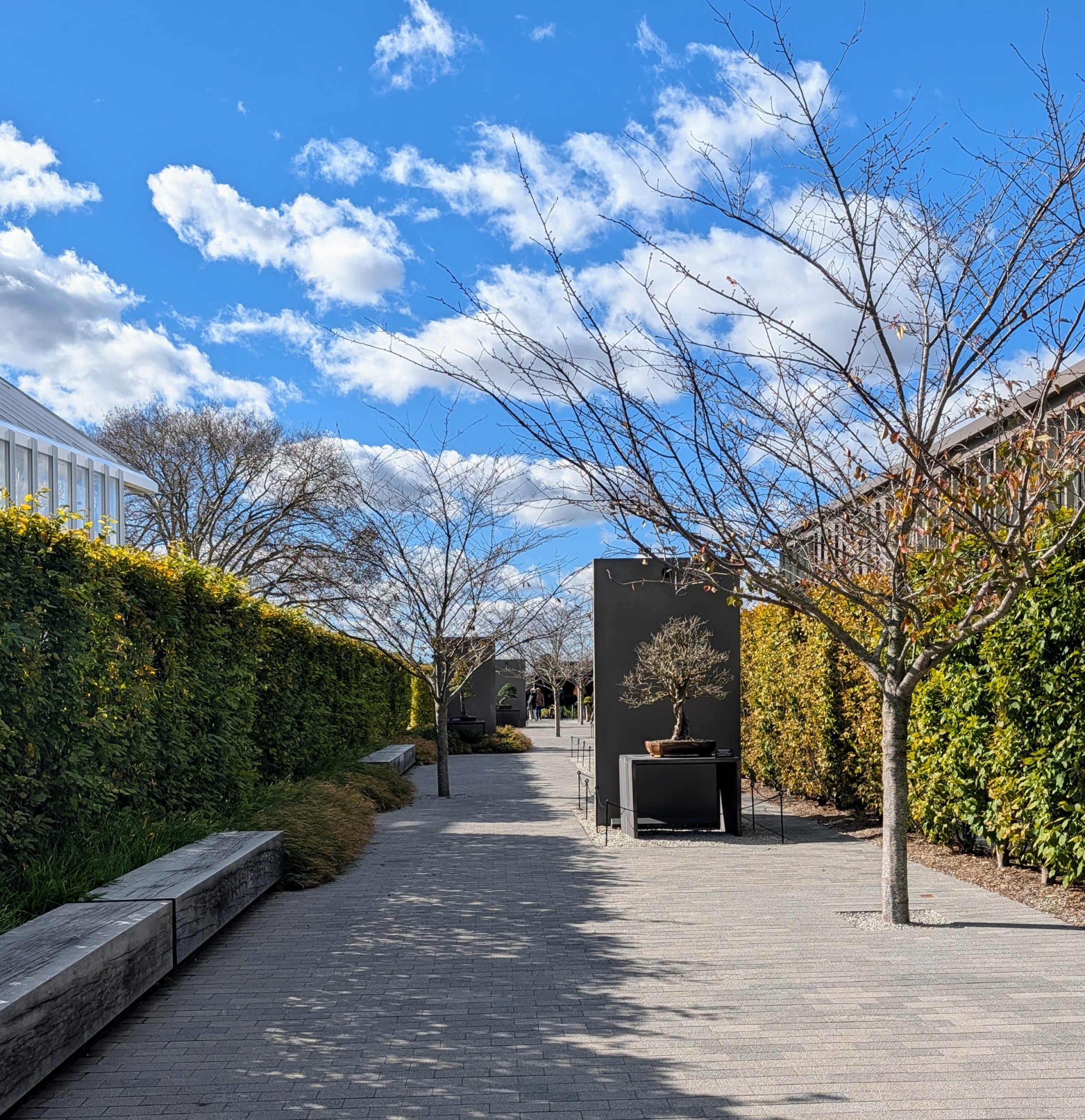
- Longwood’s Bonsai Courtyard is surrounded by trees, walls and hornbeam hedges, and decorated with a subdued combination of natural hues, crushed stone, and charred wood.
-
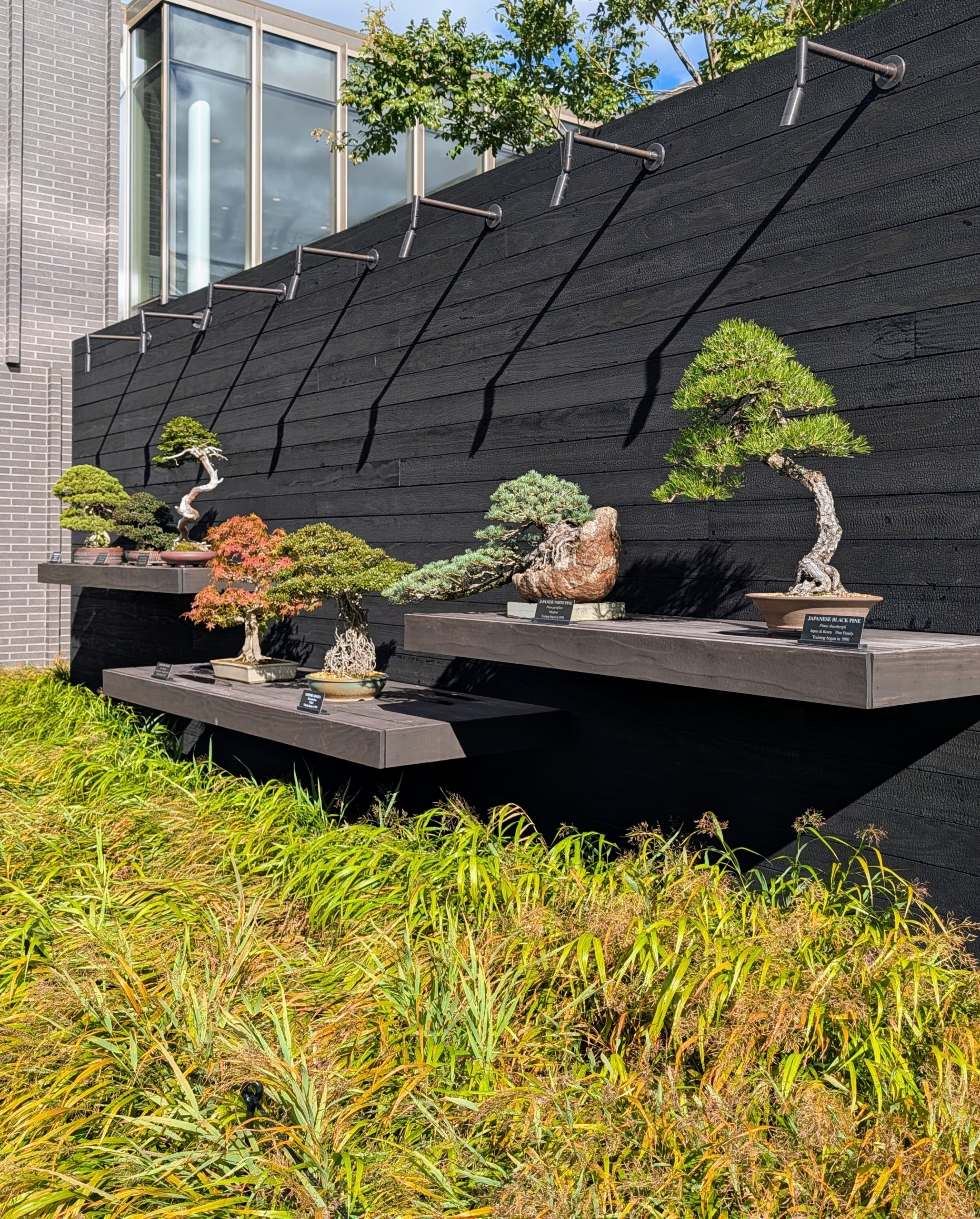
- The Bonsai Collection was started in 1959 with 13 trees from renowned bonsai artist, Yuji Yoshimura. Today, Longwood has more than 150 trees in 14 different styles cultivated by some of the world’s most prestigious masters in the art of bonsai.
-
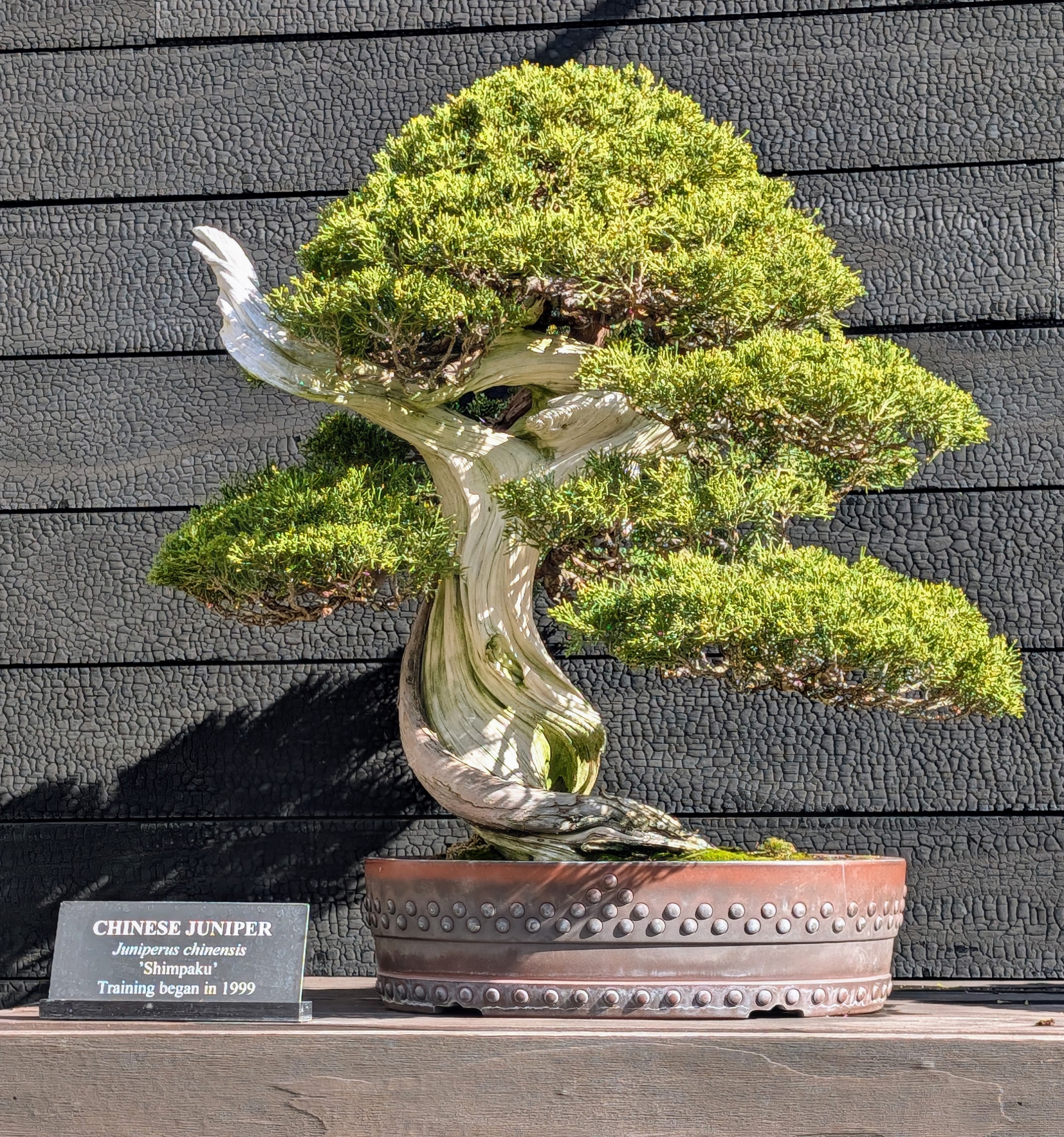
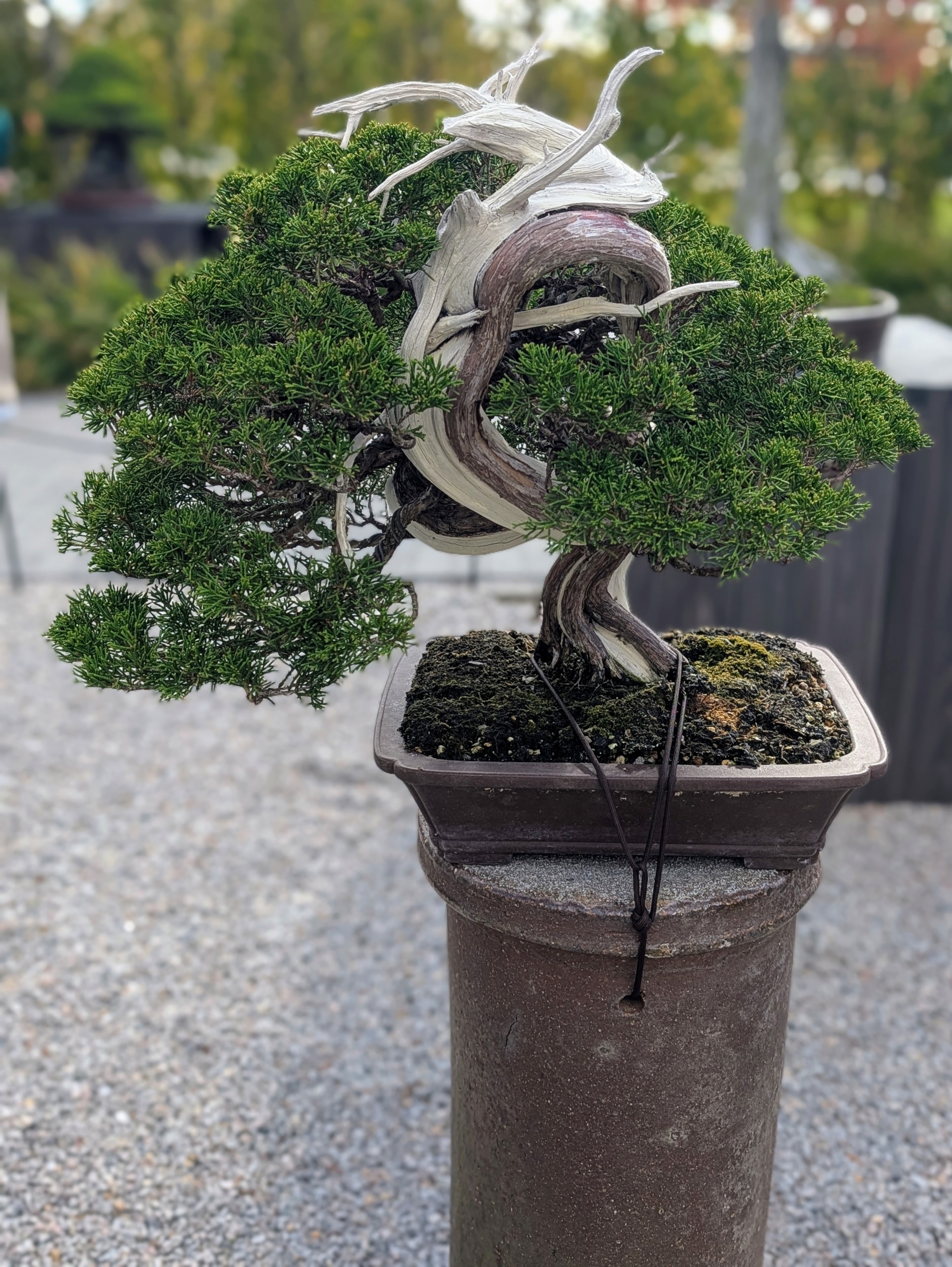
- This is a Chinese Juniper, Juniperis chinensis ‘Shimpaku.’ Adaptable and appealing, the Chinese juniper is popular among bonsai enthusiasts. Training on this specimen began 26 years ago.
-
- This is also a Chinese juniper tree, Juniperus chinensis ‘Shimpaku.’ Training on this bonsai began in the year 2000. For bonsai beginners, it is important to select a hardy and forgiving species like the juniper.
-
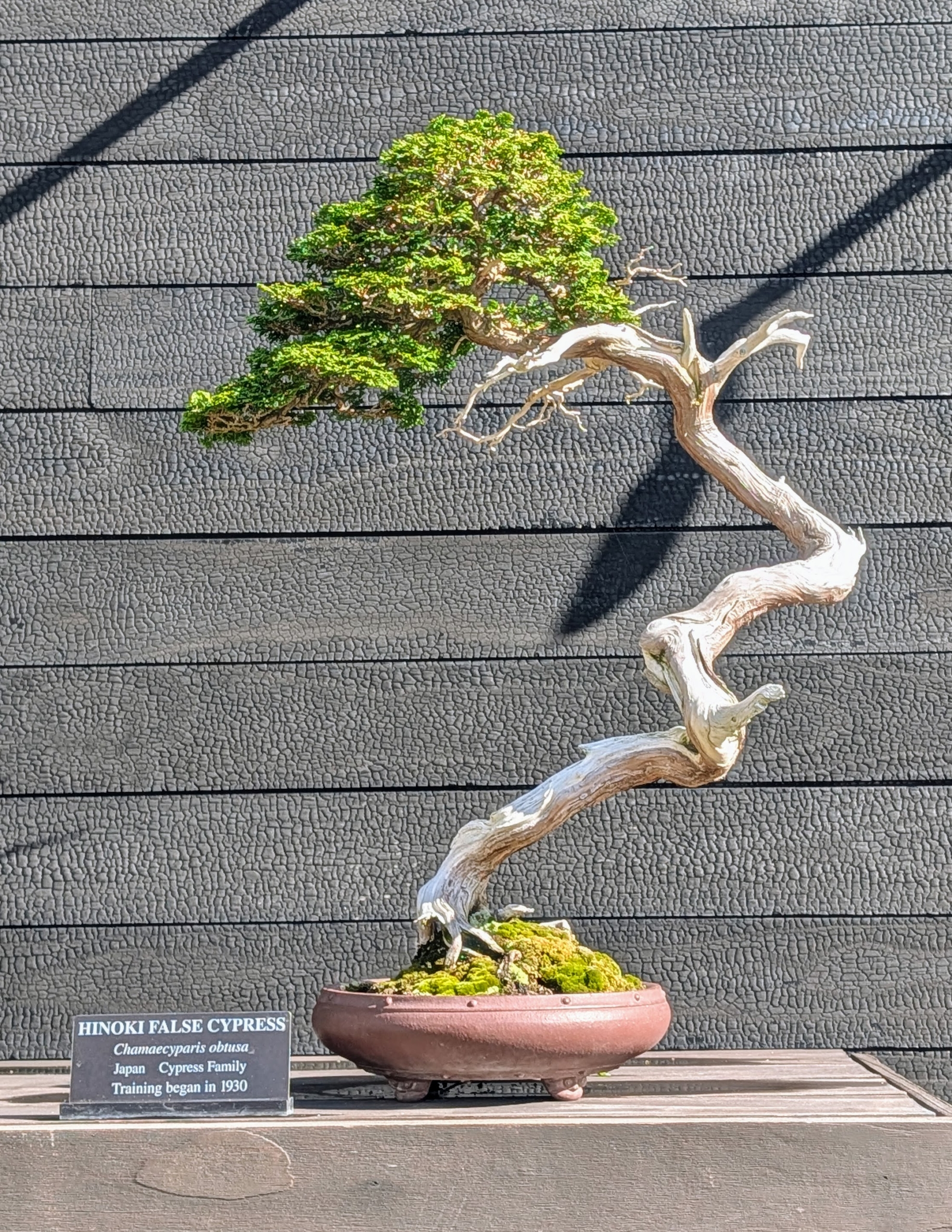
- Training on this Hinoki False Cypress, Chamaecyparis obtusa began in 1930. It has dark green leaves that form fanlike layers on branches that resemble ferns. While it grows quickly, it needs a lot of maintenance to retain its beautiful bonsai form.
-
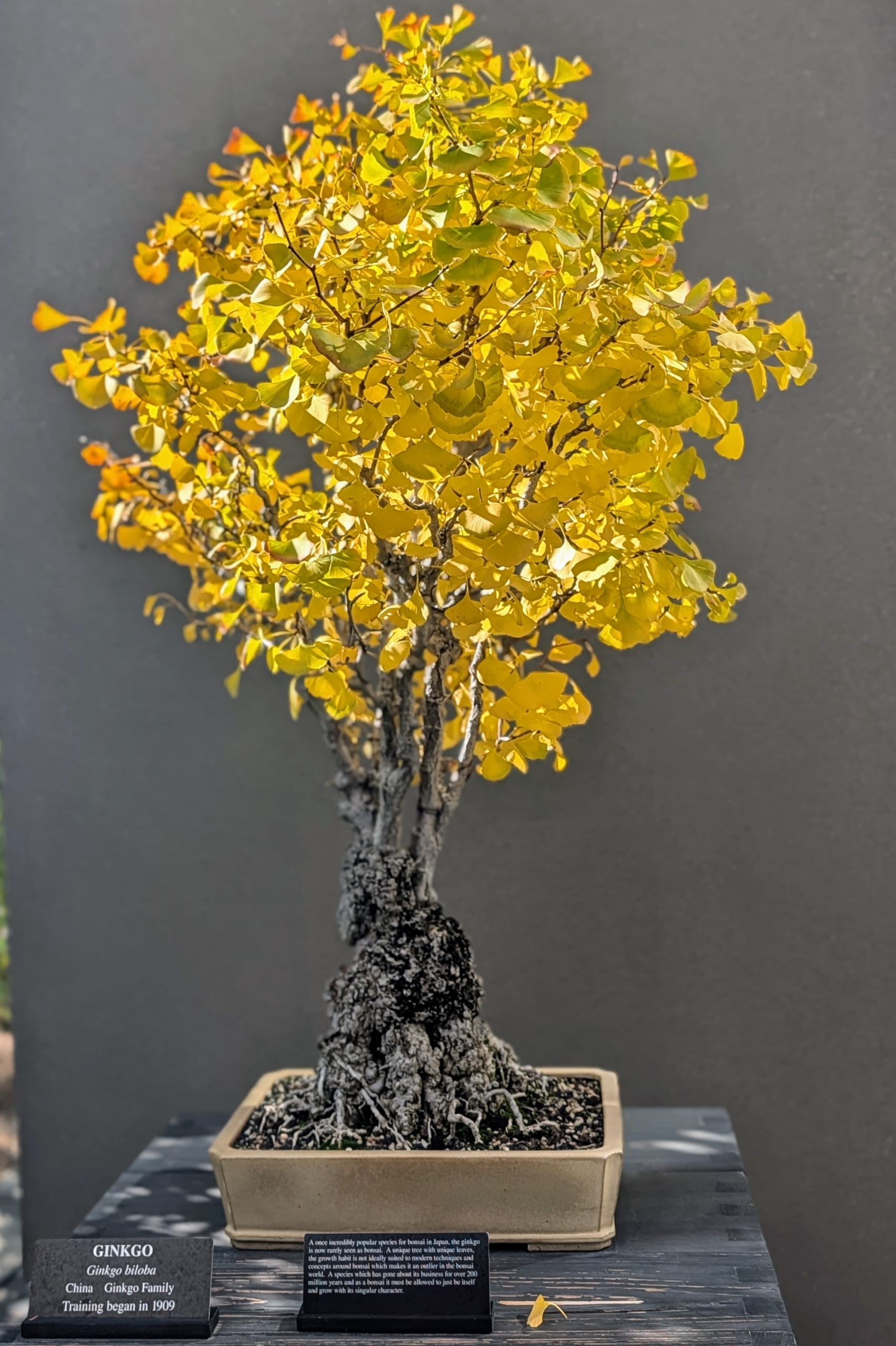
- Ginkgo bonsai trees, Ginkgo biloba, have the same unique fan-shaped leaves that turn golden yellow in fall. This Ginkgo first started developing as a bonsai in 1909.
-
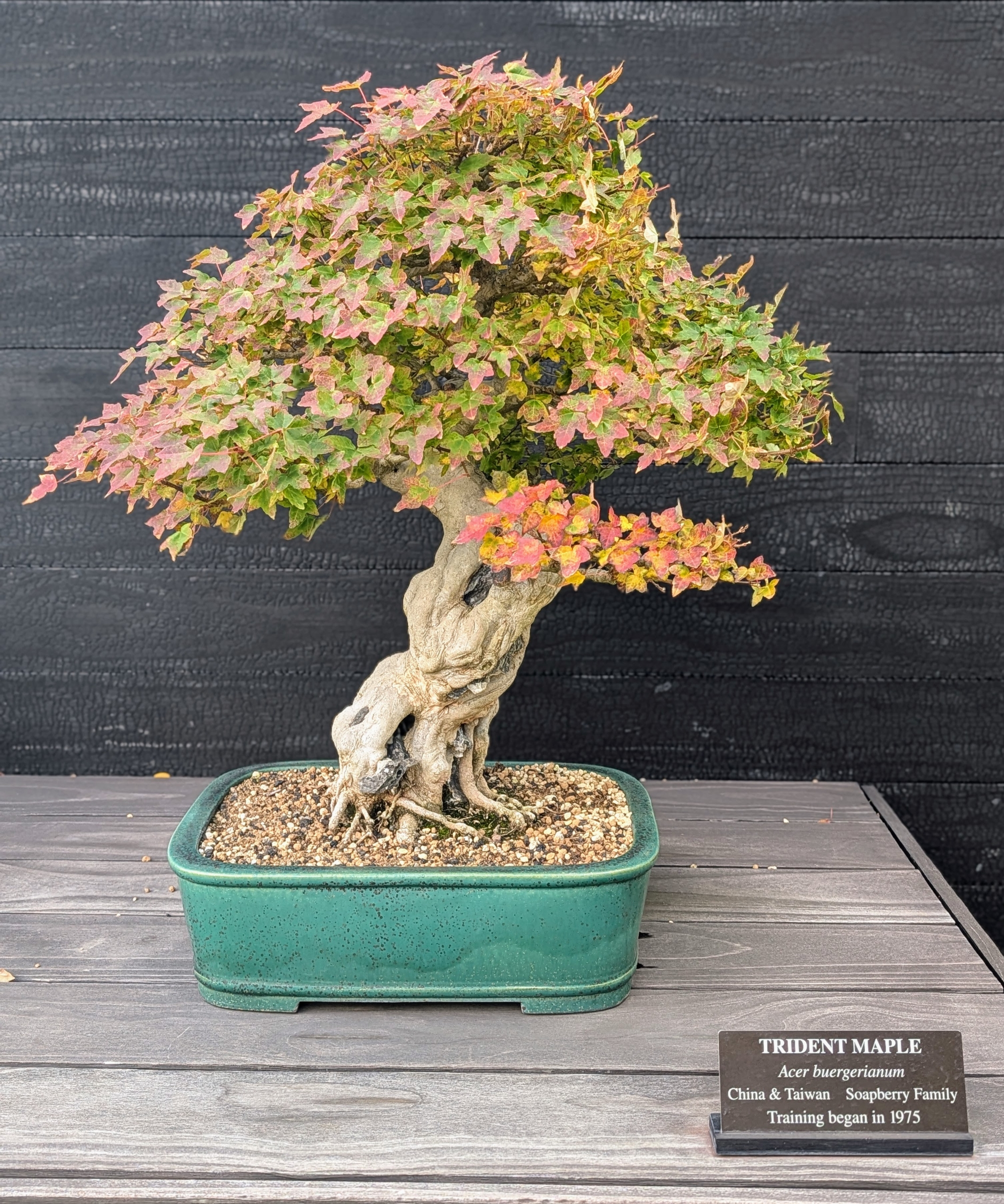
- Trident Maple, Acer buergerianum, is another popular bonsai tree because of its fast growth and thick trunk.
-
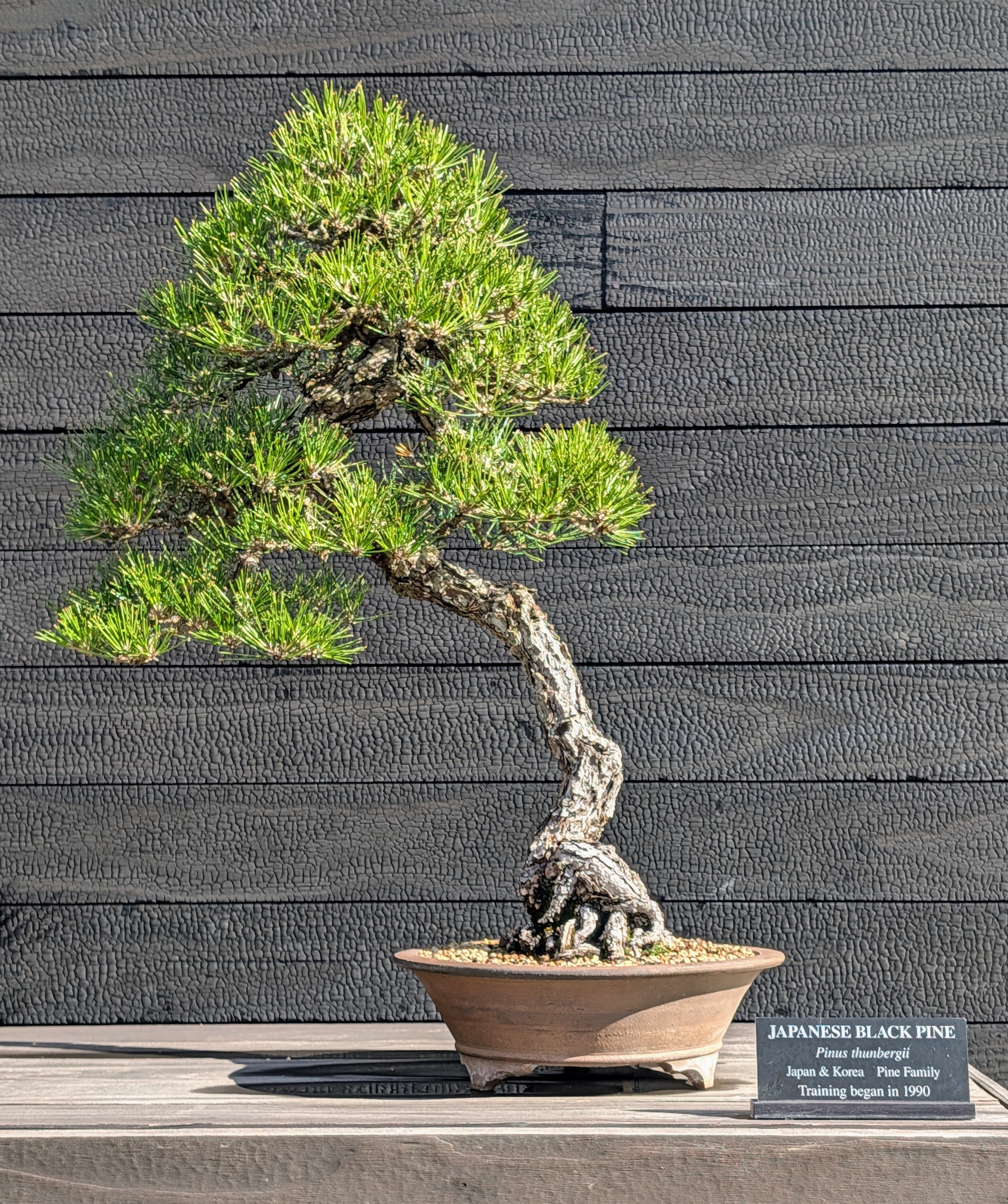
- The Japanese black pine, Pinus thunbergii, has a naturally thick trunk with dark green foliage. The bark of the tree is gray and turns black as it matures. This bonsai is 95 years old.
-
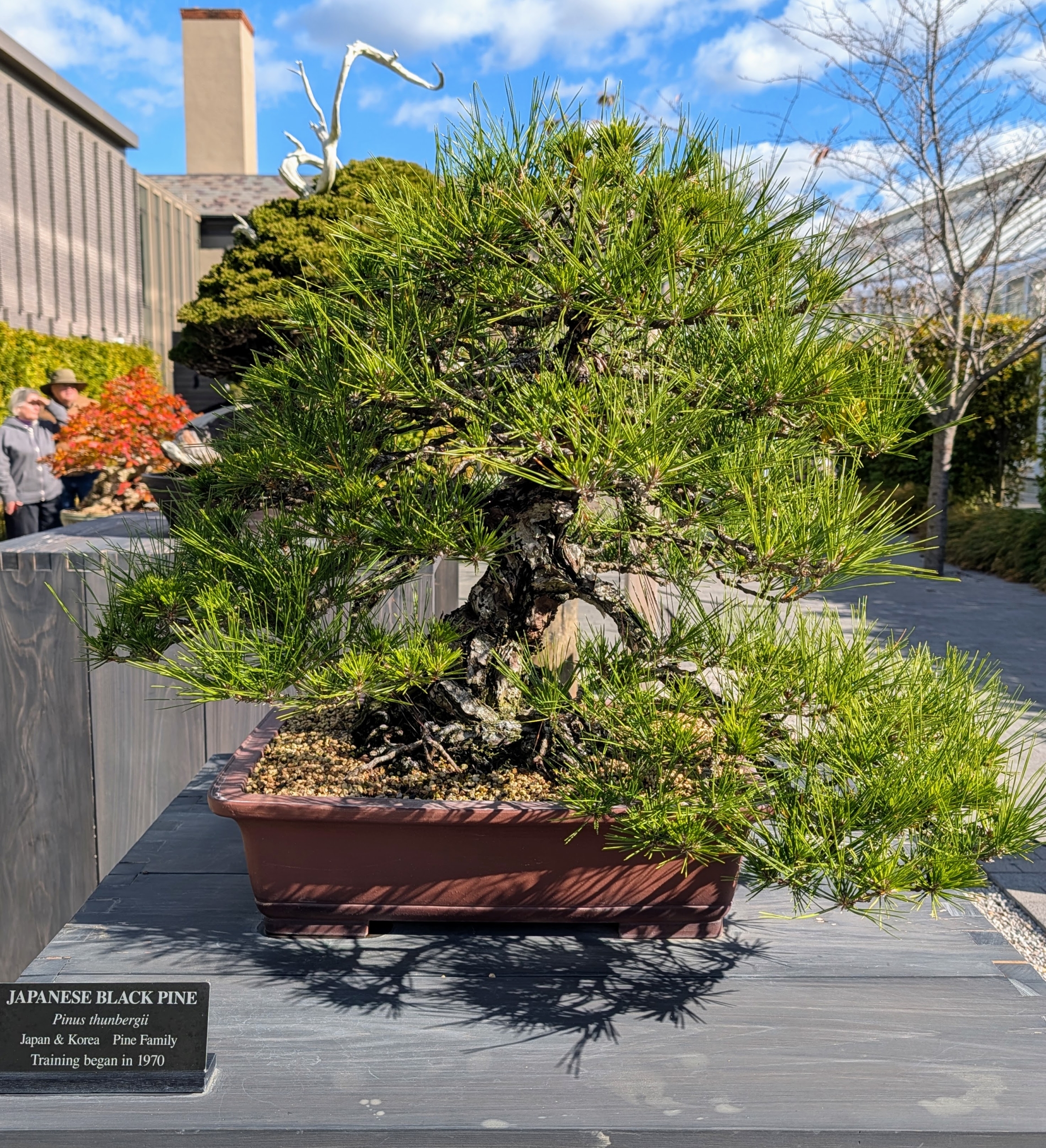
- Here is another Japanese black pine – its training began in 1970. These trees prefers lightly moist soil, with time to dry out between waterings.
-
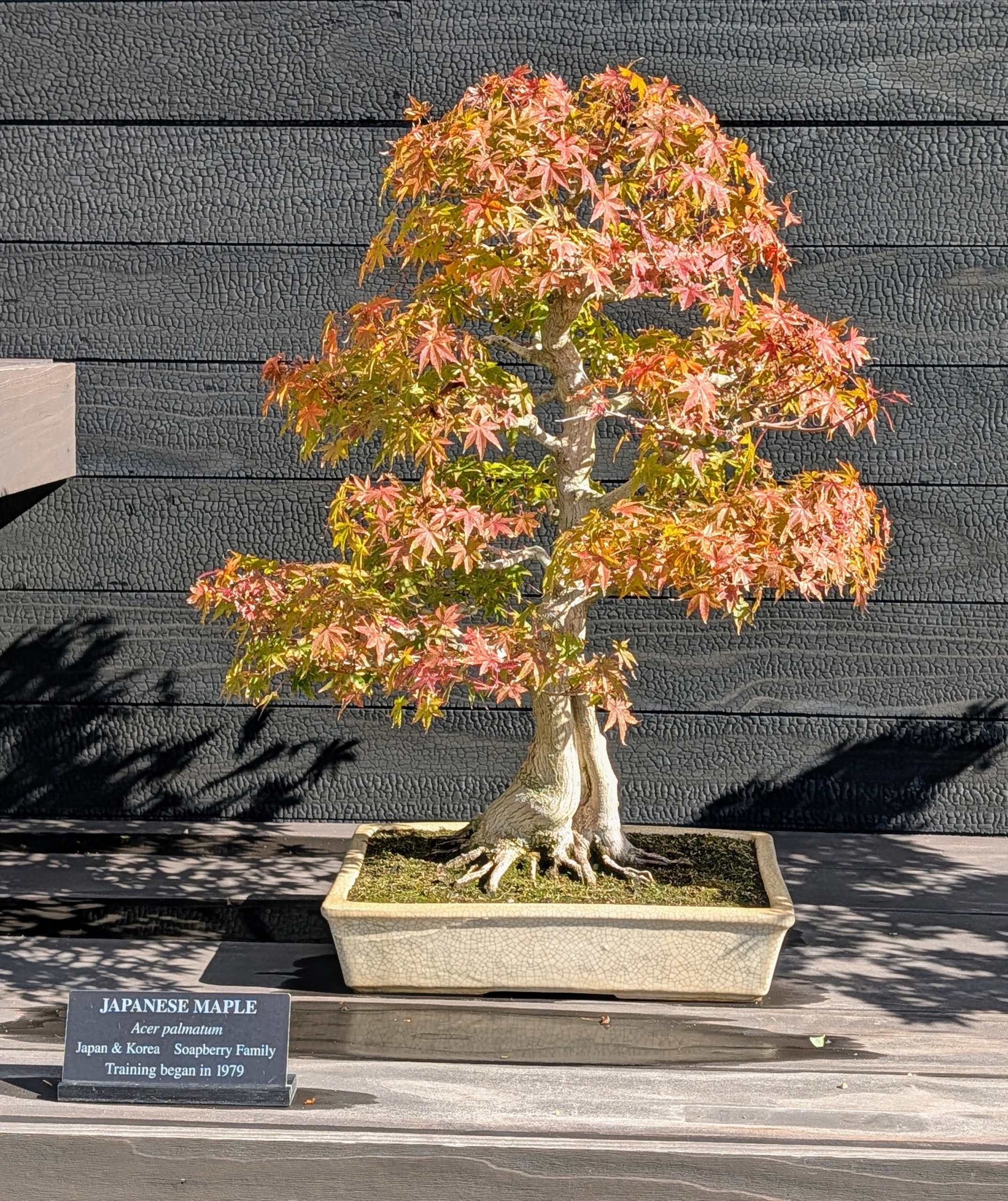
- One of my favorite trees is the Japanese Maple, Acer palmatum. This bonsai version was started in 1979. The natural and graceful forms of the Japanese maple make these trees easier to shape and maintain.
-
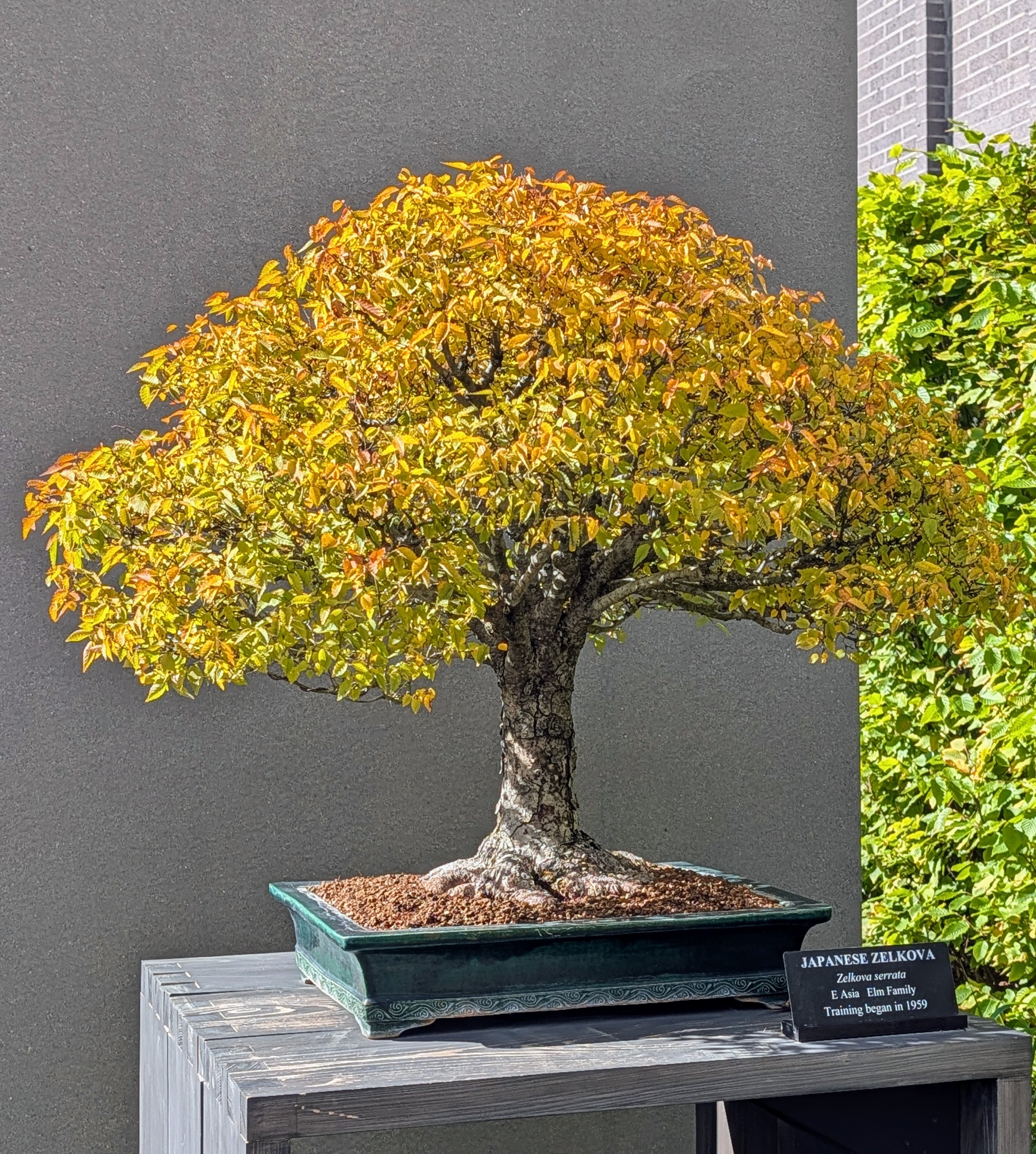
- This is a Japanese Zelkova, Zelkova serrata. It is also known as the Japanese greybark elm. It thrives in full sun and some shade during the hottest weeks of the summer.
-
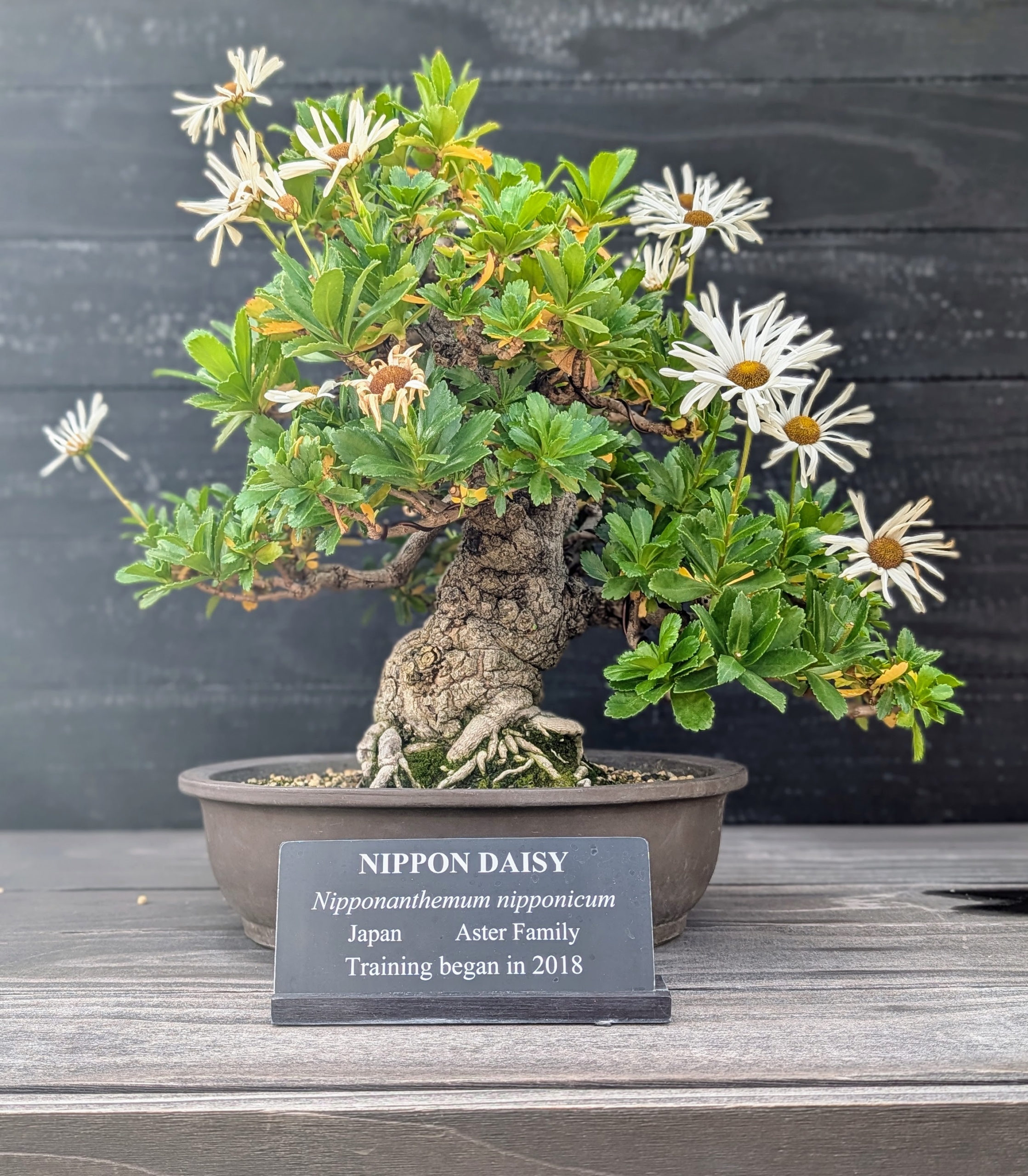
- And this is a Nippon Daisy, Nipponanthemum nipponicum. It is one of the younger bonsai trees in this collection – training on this began in 2018. It responds well to bonsai pruning and shaping and features the same charming white daisy-like flowers.
-
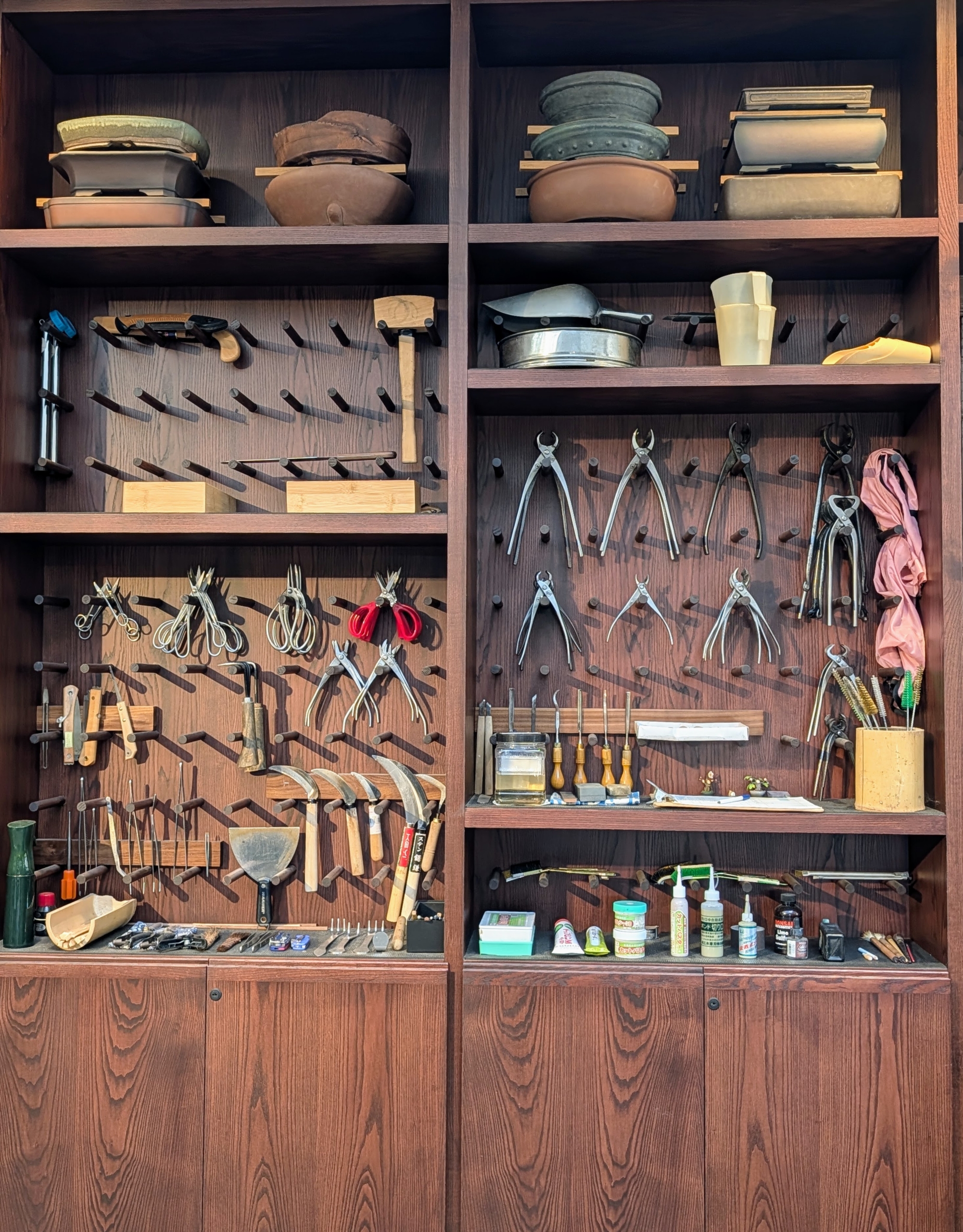
- At Longwood, the historic Potting Shed is dedicated to garden operations and now the care and maintenance of nearly 200 bonsai trees. It is one of the original Conservatory buildings constructed by founder, Pierre S. du Pont in the 1920s.
-
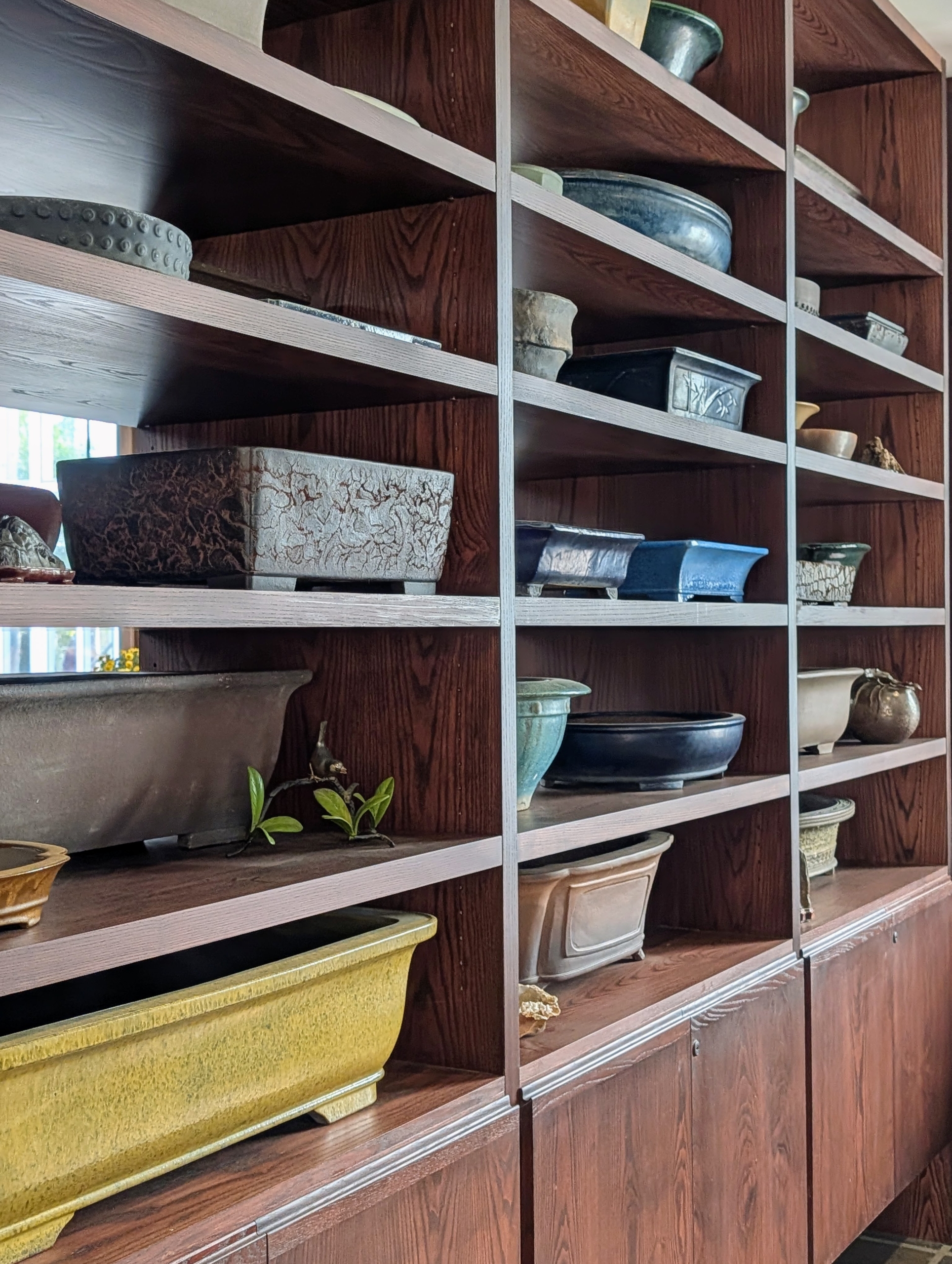
- The Bonsai Workshop also displays many pots for its specimens. The pairing of trees with the proper pots is critical in bonsai art. There are more than 500 artisanal pots here – crafted by potters from around the world.
-
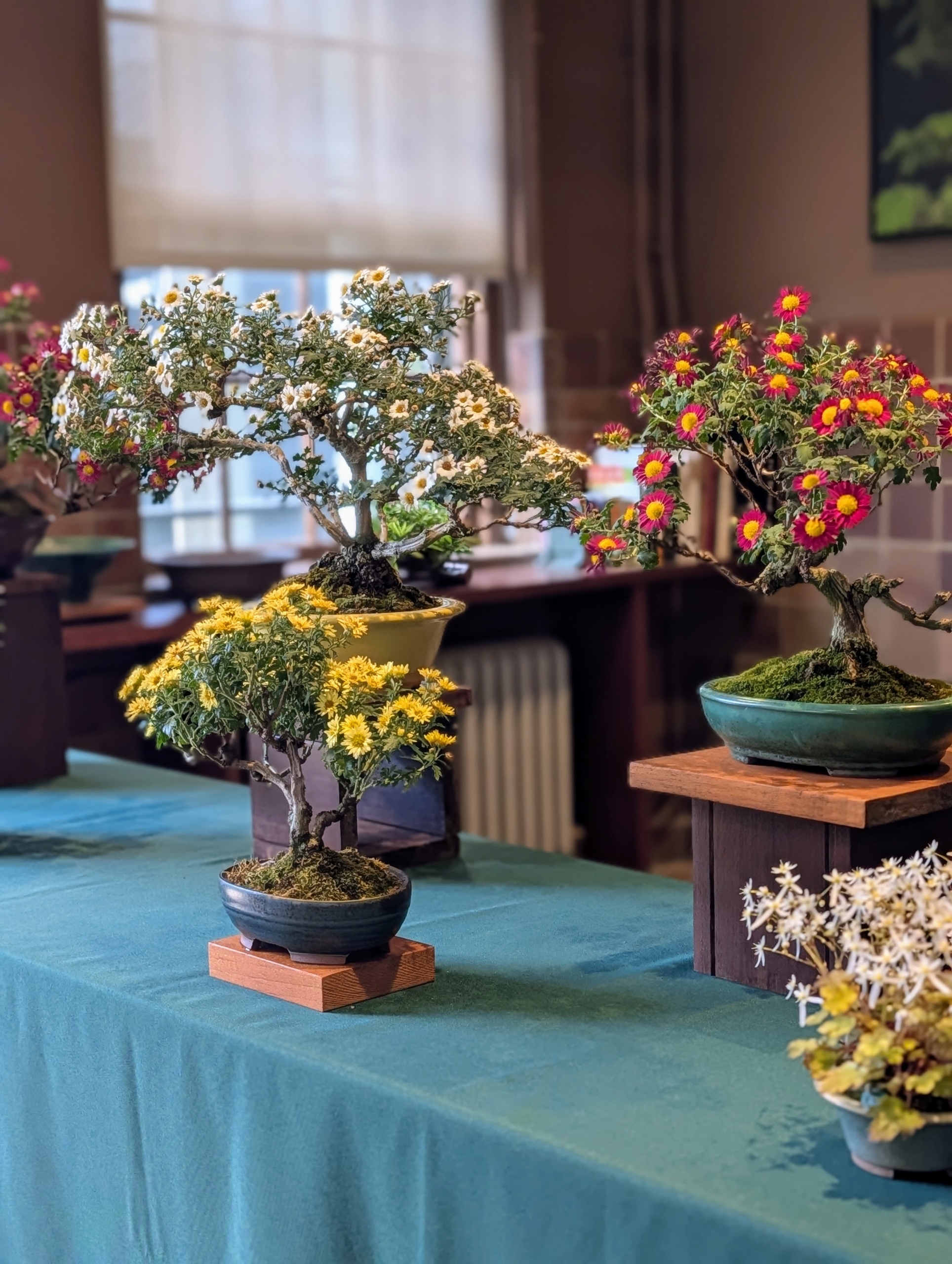
- Displayed on tables in the Workshop are bonsai chrysanthemums. These range from two to six years old with thick trunks and well defined branches.
-
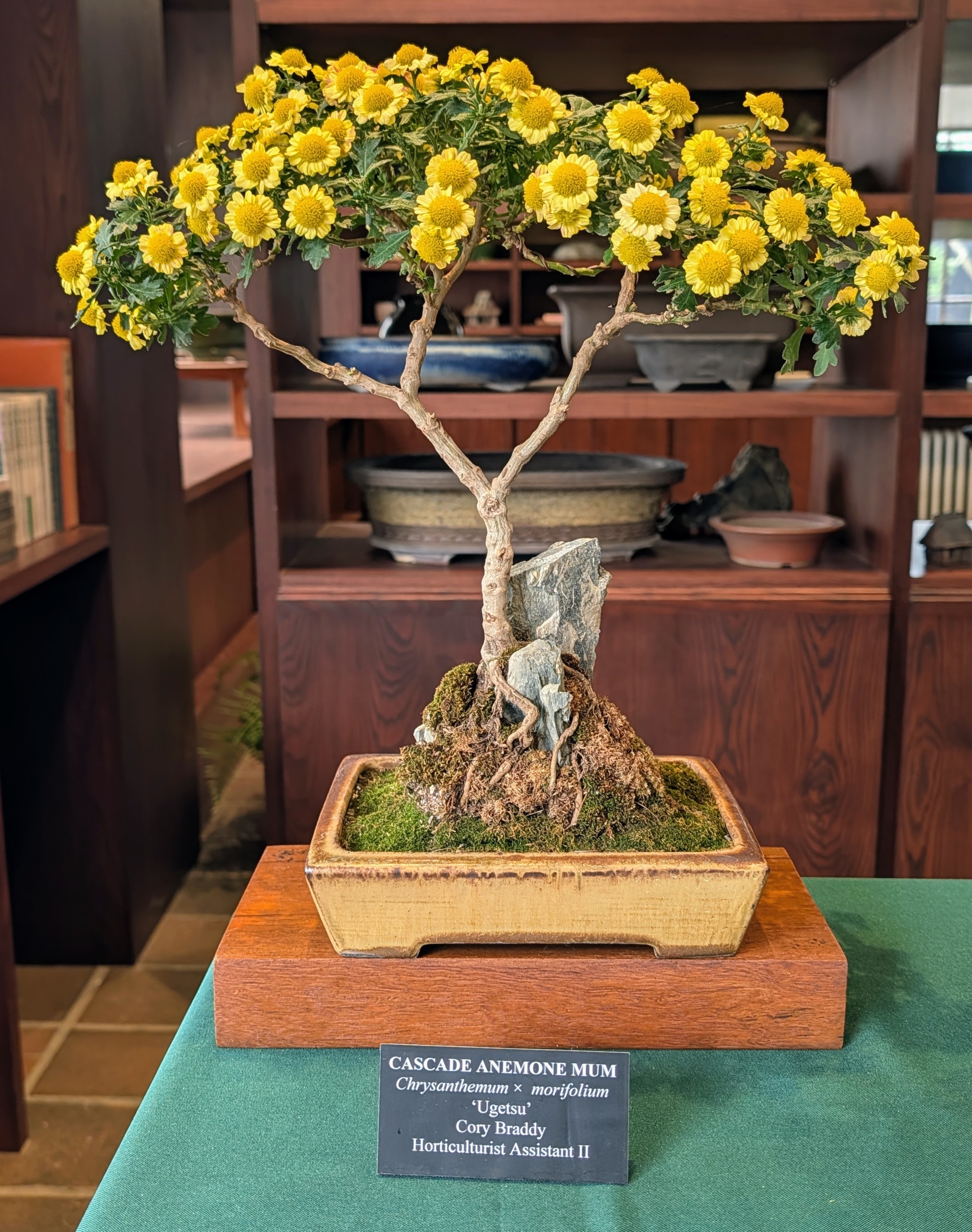
- Almost any tree can be trained and shaped into a bonsai. Gnome chrysanthemums are among those types that work well for bonsai because of the smaller leaves and flowers. This is an example of a Cascade Anemone Mum. It is Chrysanthemum x morifolium ‘Ugetsu.’
-
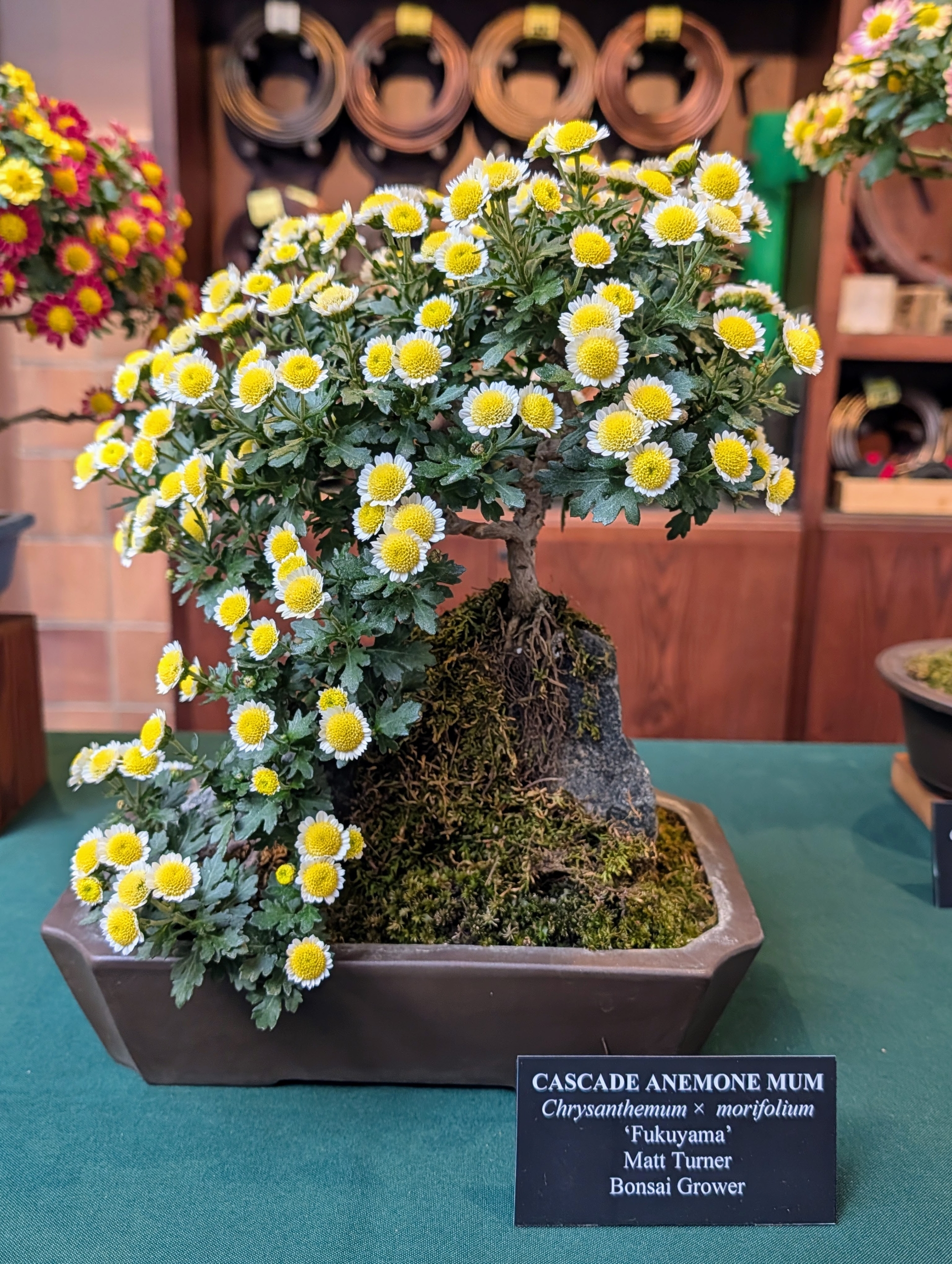
- This Cascade Anemone Mum Chrysanthemum x morifolium ‘Fukuyama’ features plentiful blooms and a gorgeous cascading growth habit.
-
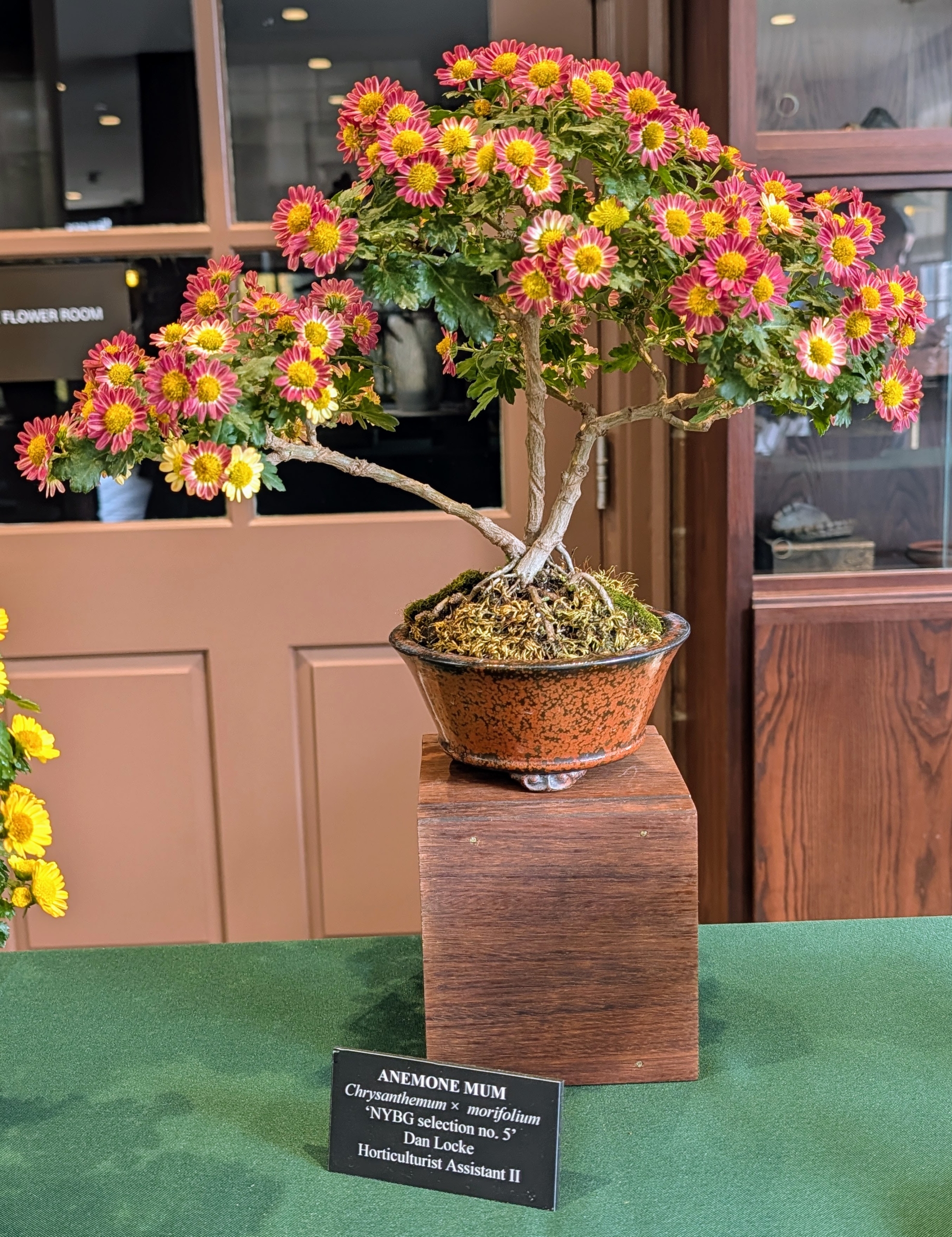
- This Anemone Mum bonsai tree is so carefully pruned and groomed. In bloom, it shows off small orange and yellow flowers.
-
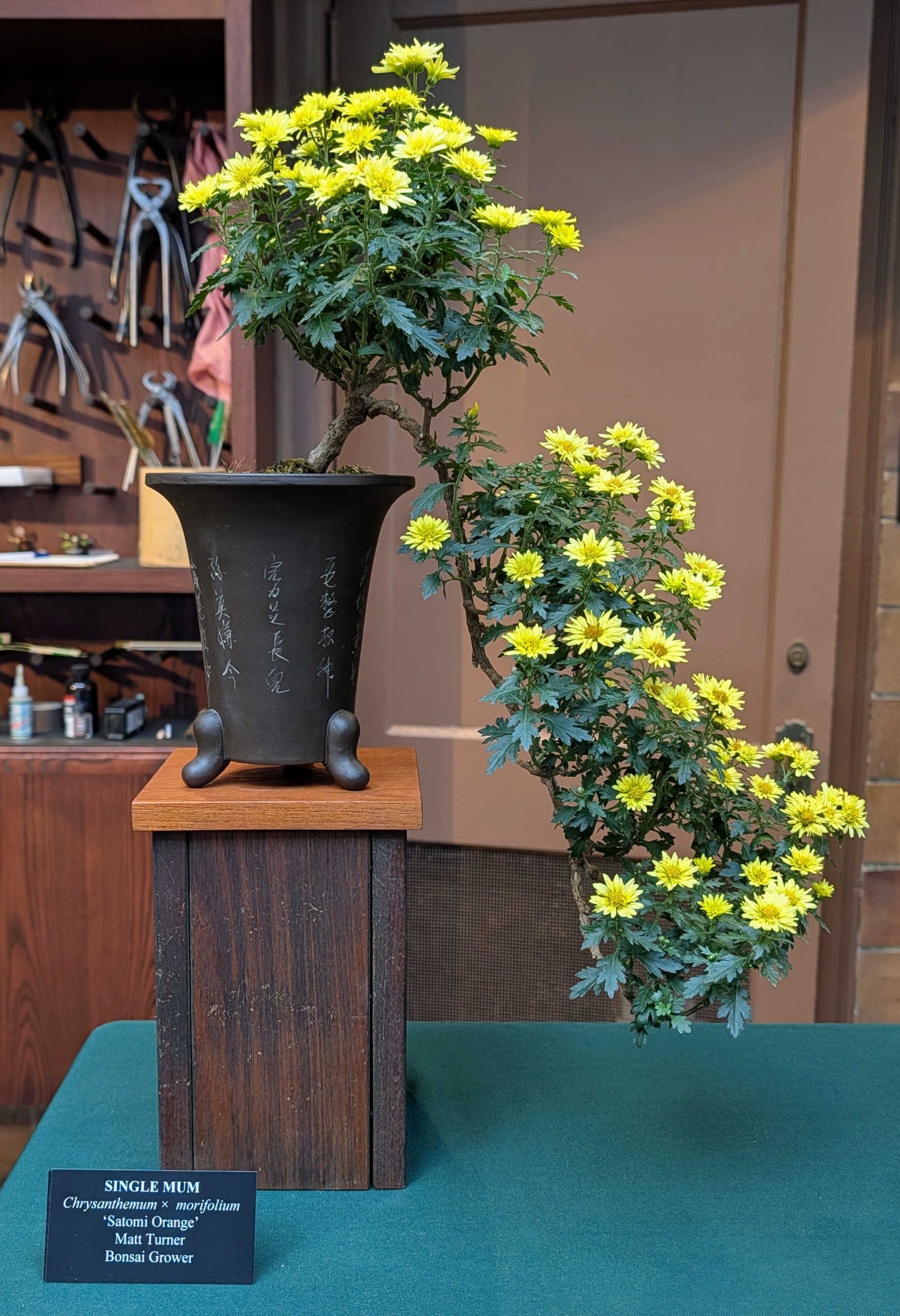
- A single mum bonsai is grown from one rooted cutting known as a “mother.” This is Chrysanthemum x morifolium ‘Satomi Orange.’
-
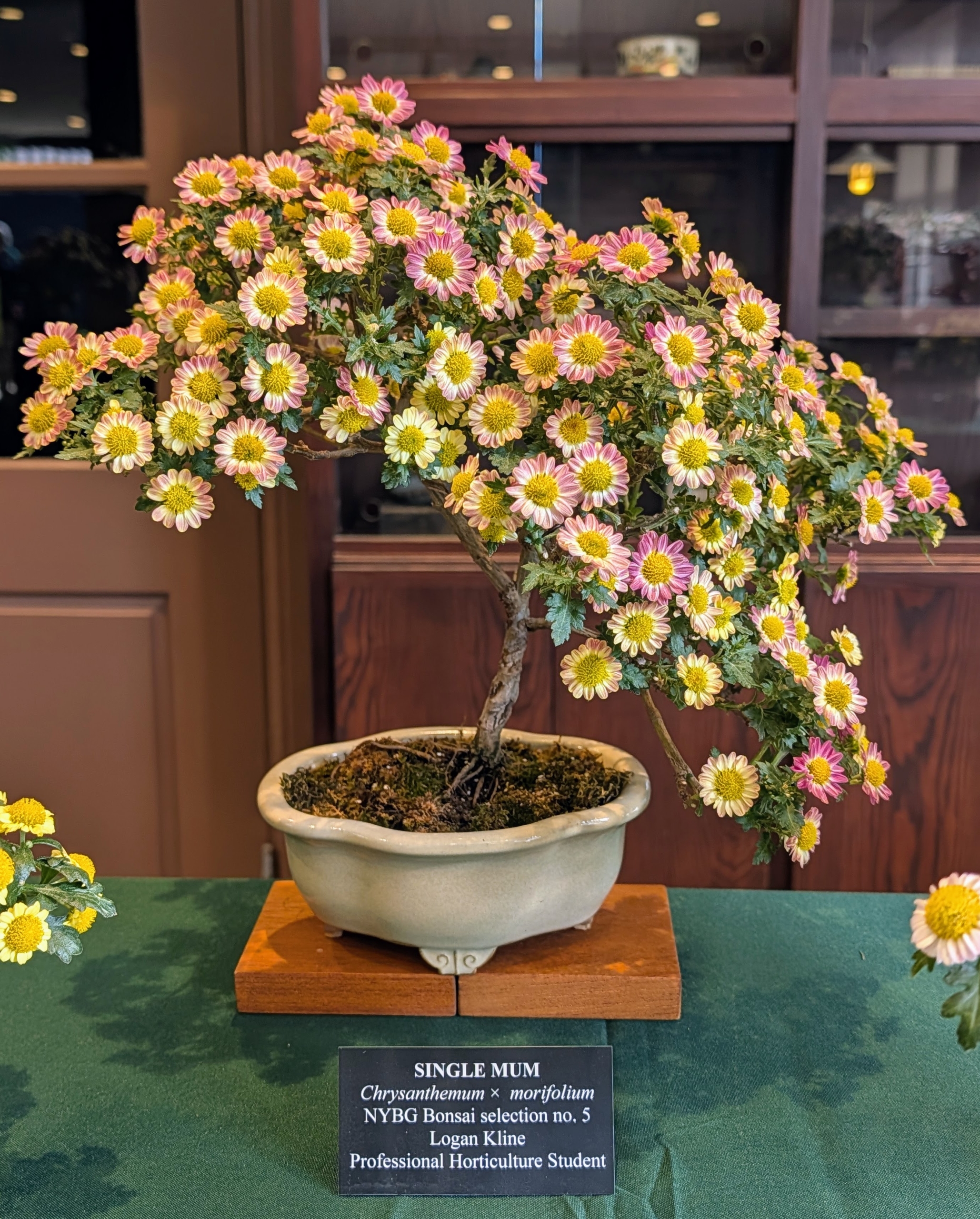
- And this Single Mum is NYBG Bonsai selection number 5 with beautiful yellow, pink, and white flowers.
-
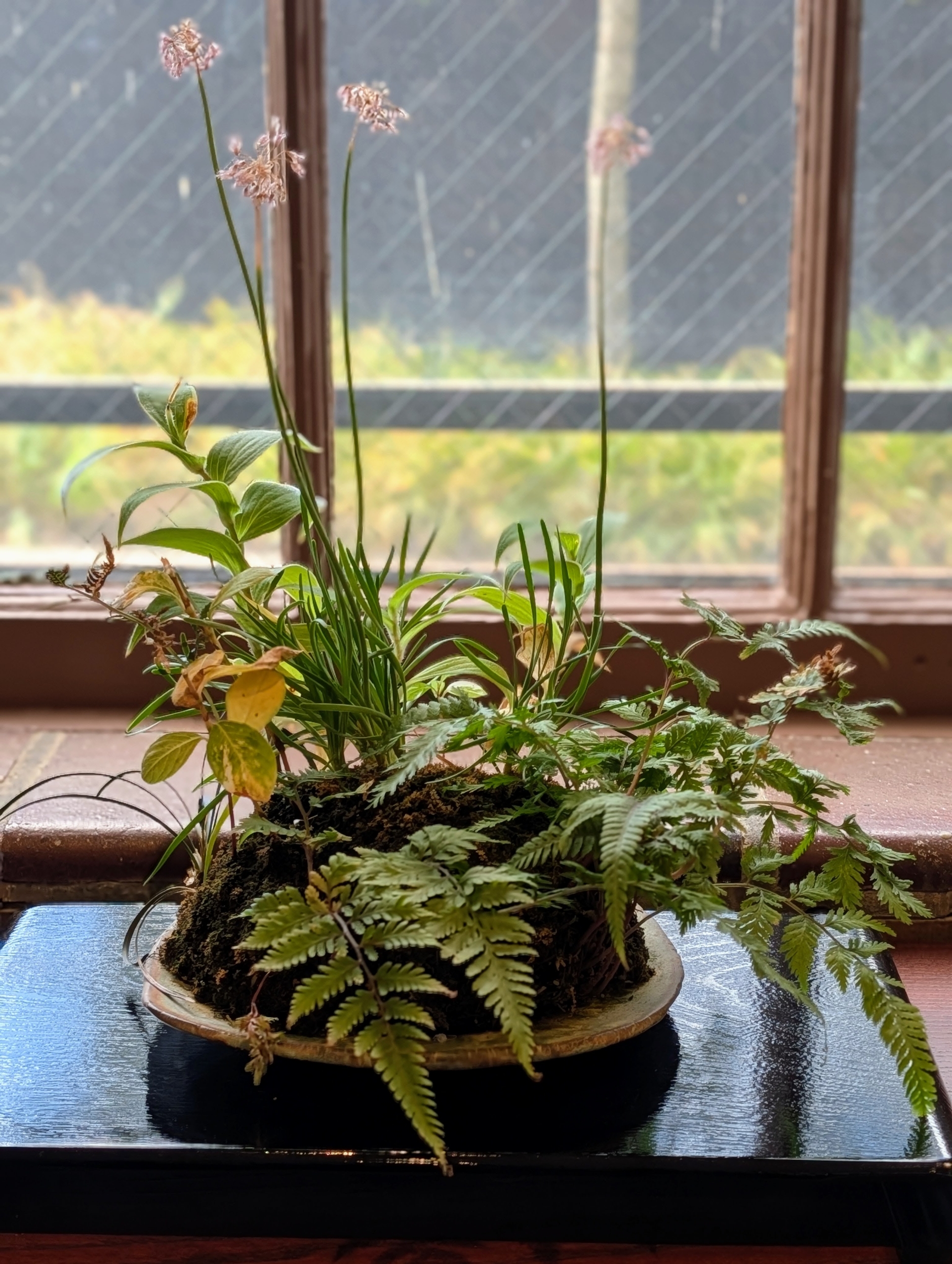
- Part of Longwood’s Kusamono Collection is this arrangement. Known as a companion to bonsai, kusamono translates to “grass thing.” The arrangement includes a variety of grasses, mosses, and flowers. If you are ever in the area, visit Longwood Gardens – learn its history and walk through its beautiful spaces.
 Martha Pins


 Martha Tweets

