

Adding Cymbidium Orchids to My Collection
As a passionate gardener, I love adding new and interesting specimens to my plant collections. Most recently - four beautiful and colorful cymbidium orchids.
Cymbidium, or boat orchid, is a genus of more than 50-evergreen species in the orchid family Orchidaceae. Cymbidium orchids are prized for their long-lasting sprays of flowers, used especially as cut flowers or spring corsages. Yesterday, my head gardener Ryan McCallister repotted the orchids in appropriate orchid containers, so they could be displayed in my home.
Enjoy these photos.
-

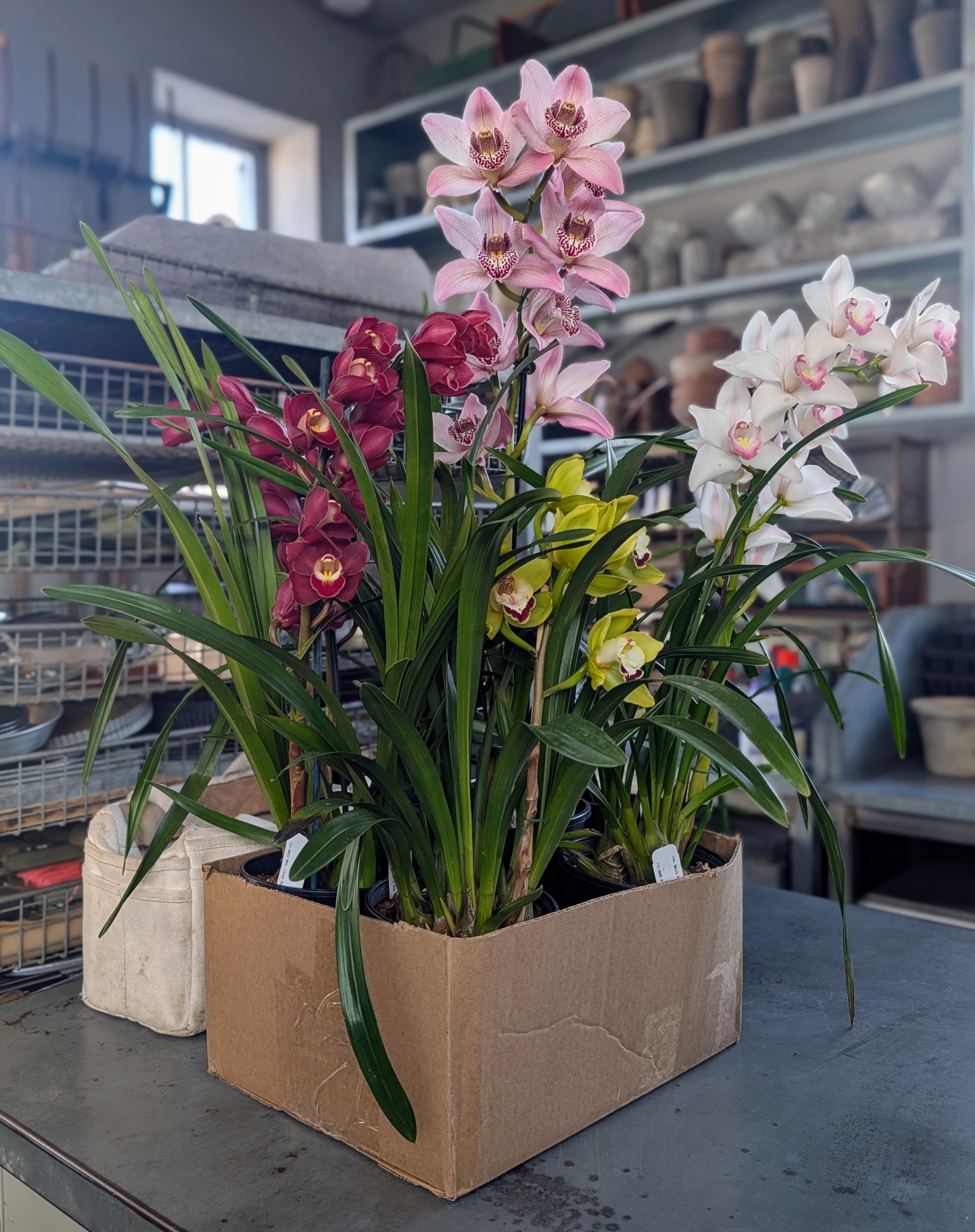
- Aren’t these orchids so beautiful? I am a big fan of cymbidium orchids with their gorgeous large flower sprays. I have many in my collection, but not in these colors – these are great additions from White Plains Orchids, a family-operated nursery not far from my farm.
-
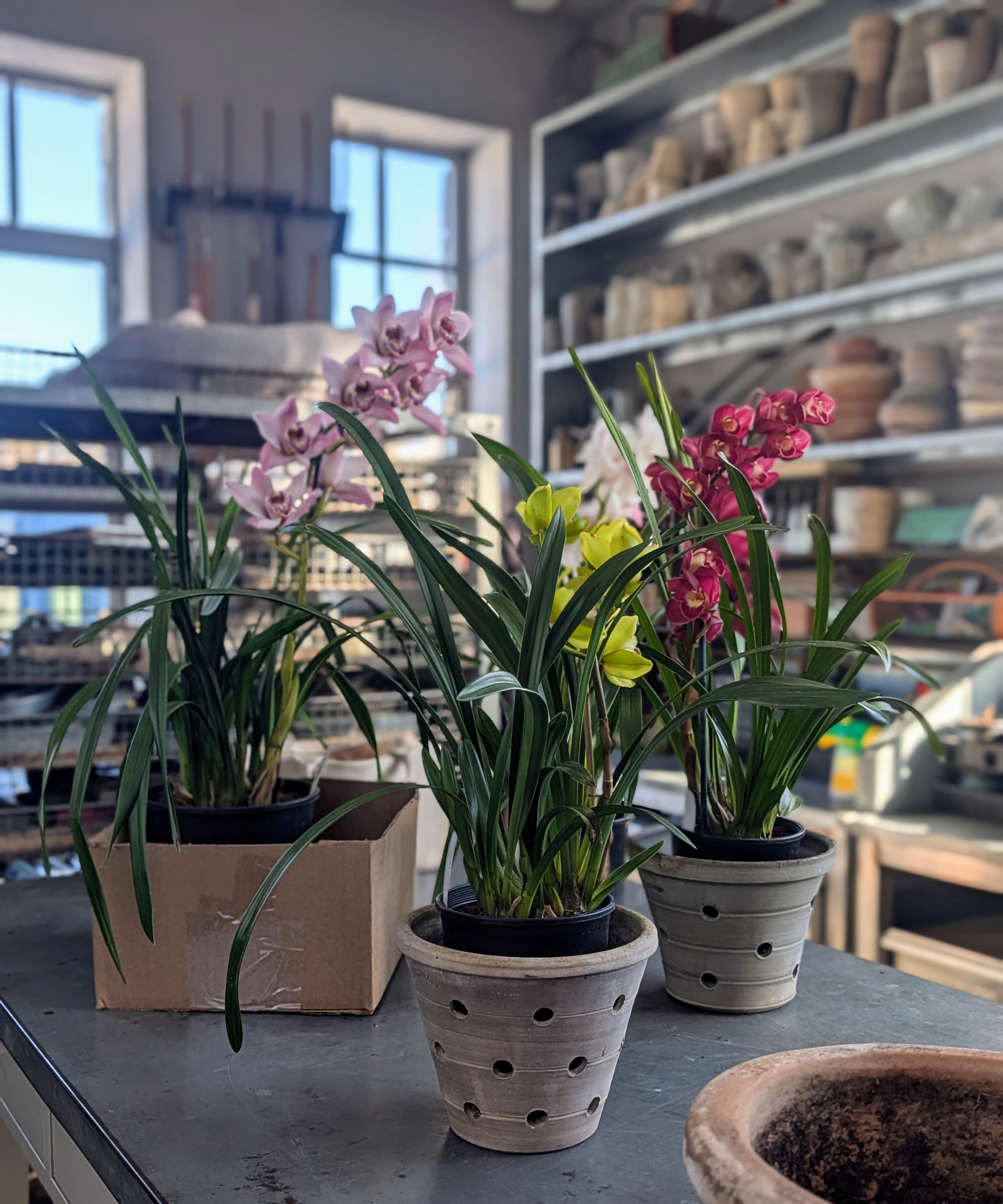
- Ryan places the plants in pots to check they are the right size. When potting orchids, choose a pot that can accommodate two years of growth, or about two inches larger than the one before. Specialized orchid containers have holes all around the surface to increase the air circulation in the roots – these are the best. These pots are made by master potter Ben Wolff.
-
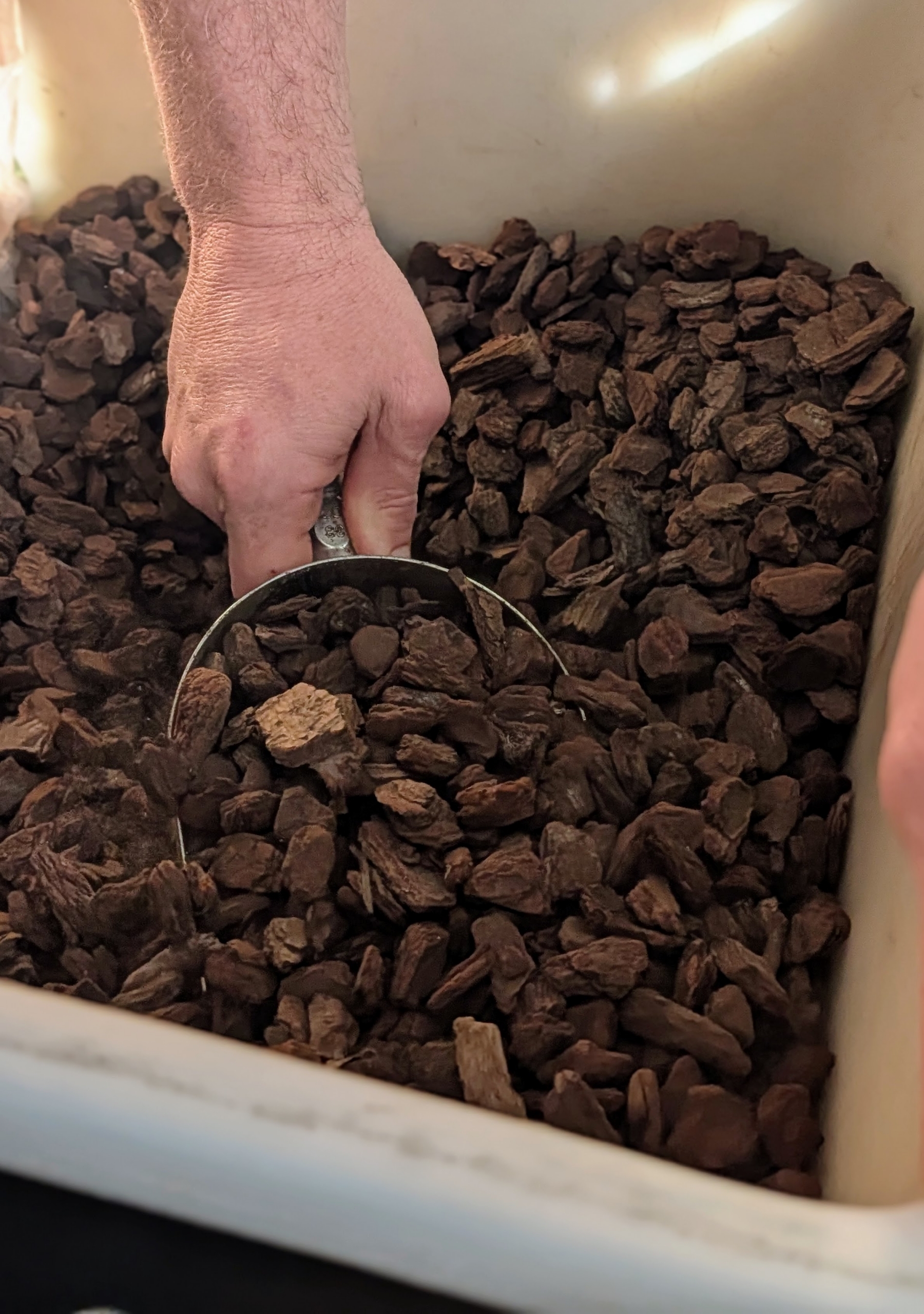
- Orchids don’t grow like other potted plants. Instead, they exist in a container of loose materials. I like to create my own mix, but there are pre-made orchid mixes available at garden supply stores. Ryan starts with a good quality coarse orchid bark which allows air to circulate naturally around the roots of the plant.
-
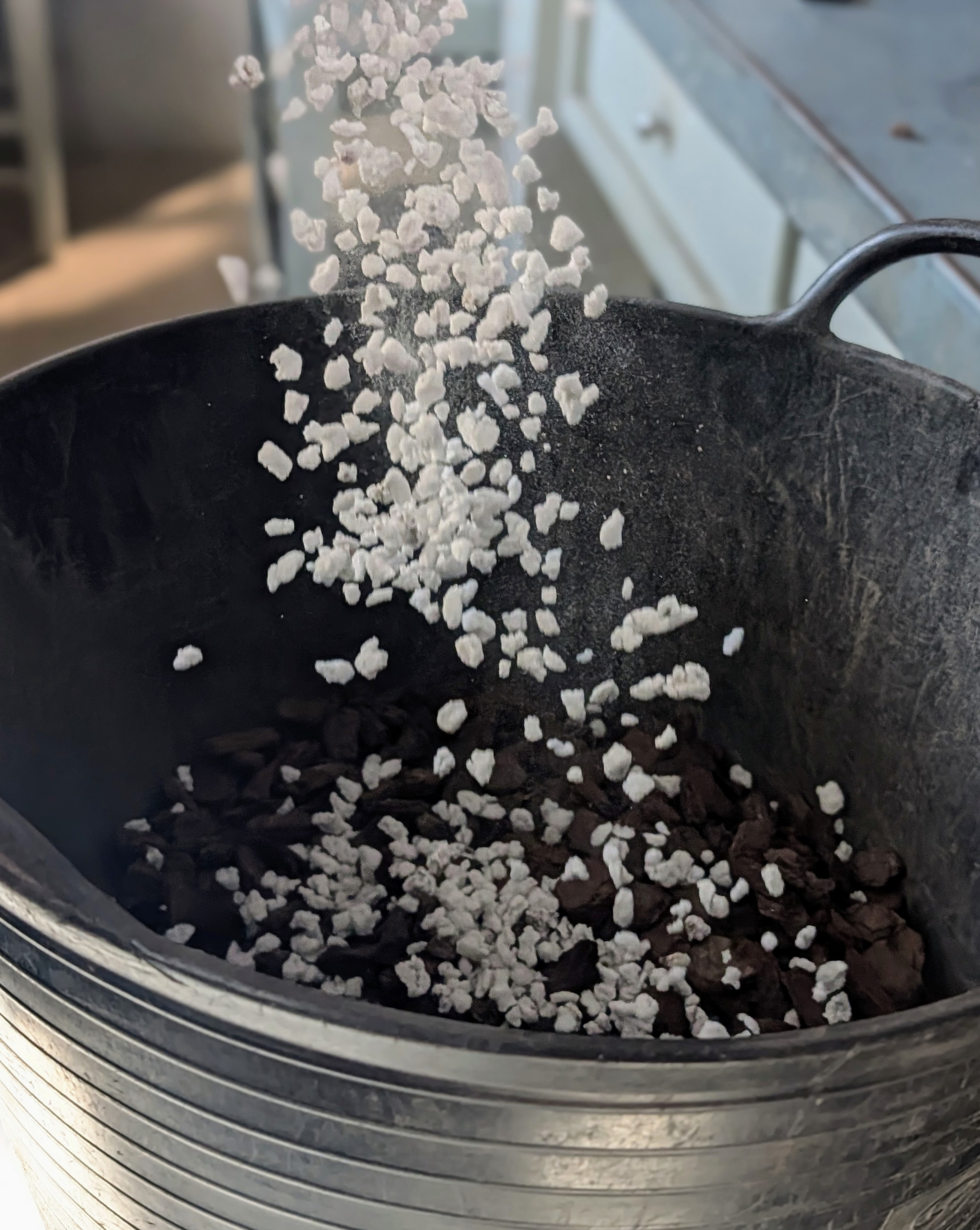
- And then he adds perlite – a lightweight, porous volcanic glass used to improve aeration and drainage in soil and other plant mixes.
-
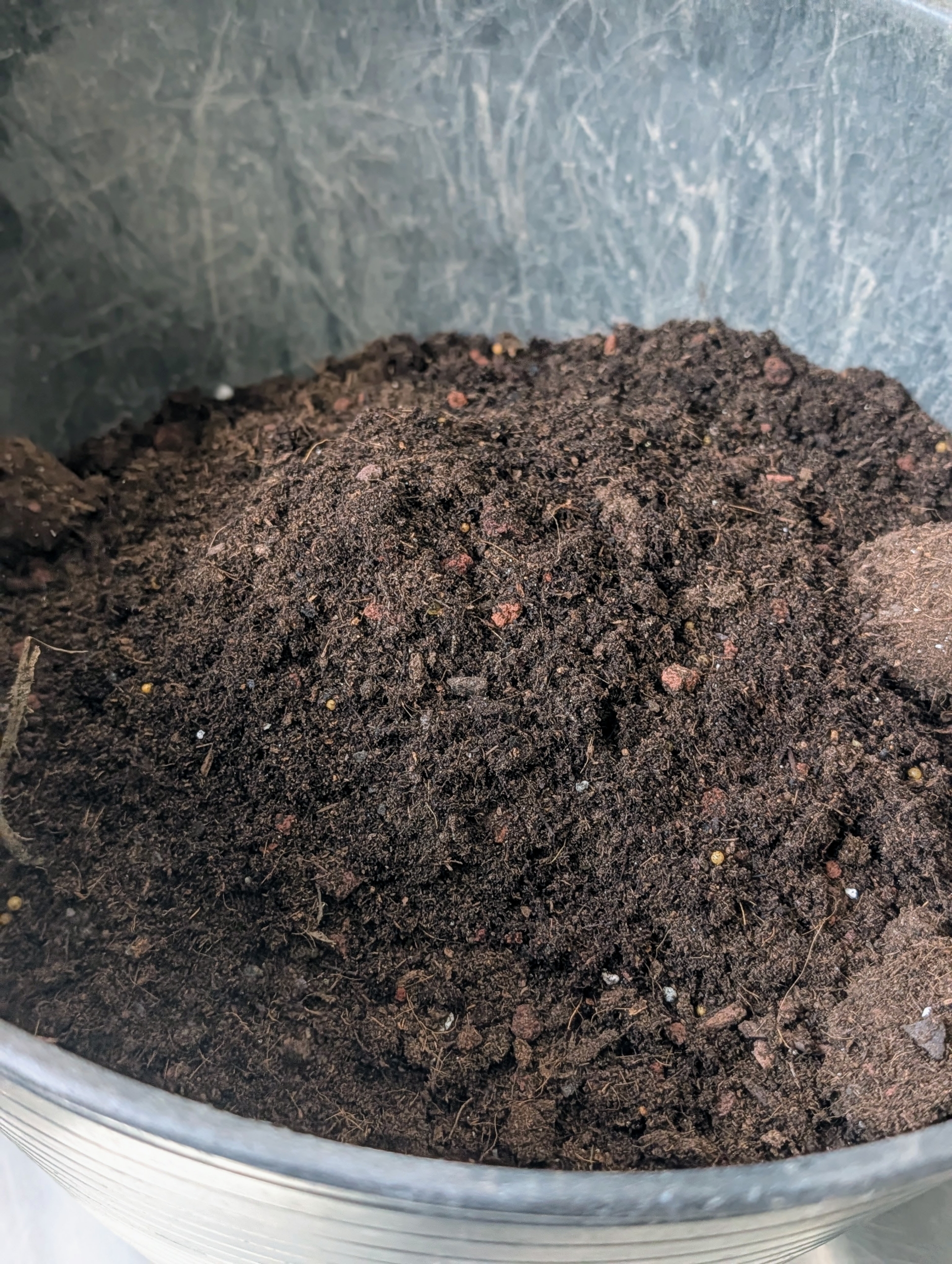
- Cymbidium orchids prefer a little soil because they are semi-terrestrial orchids that naturally grow on trees and rocks in their natural habitat. They require a soil that is well-draining, airy, and slightly acidic, allowing excess water to pass through and prevent root rot.
-
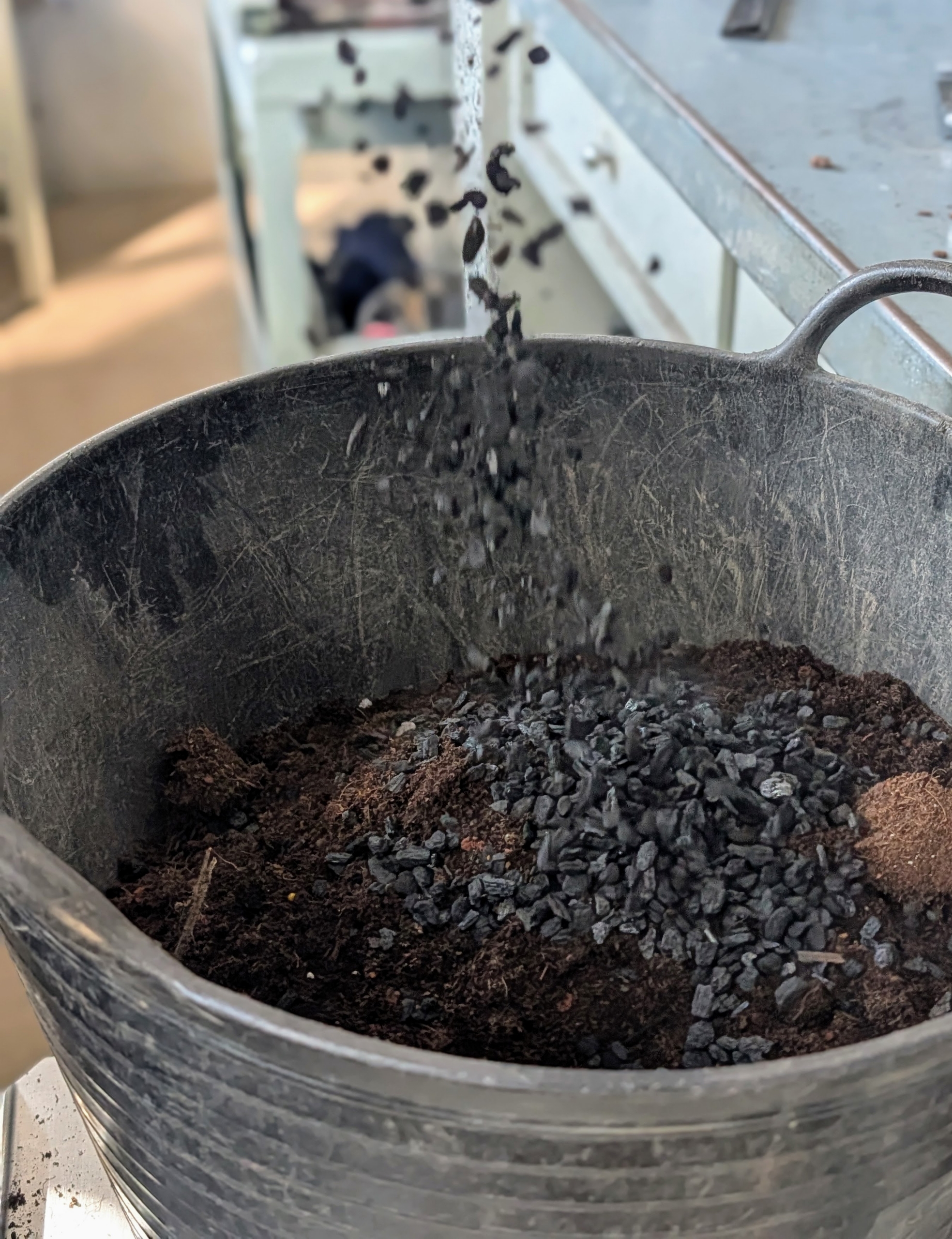
- Ryan then adds a couple scoops of charcoal which acts as a natural water filter preventing any buildup of toxins. It also absorbs excess moisture, helps to regulate pH levels, and contributes to a balanced and stable growing environment.
-
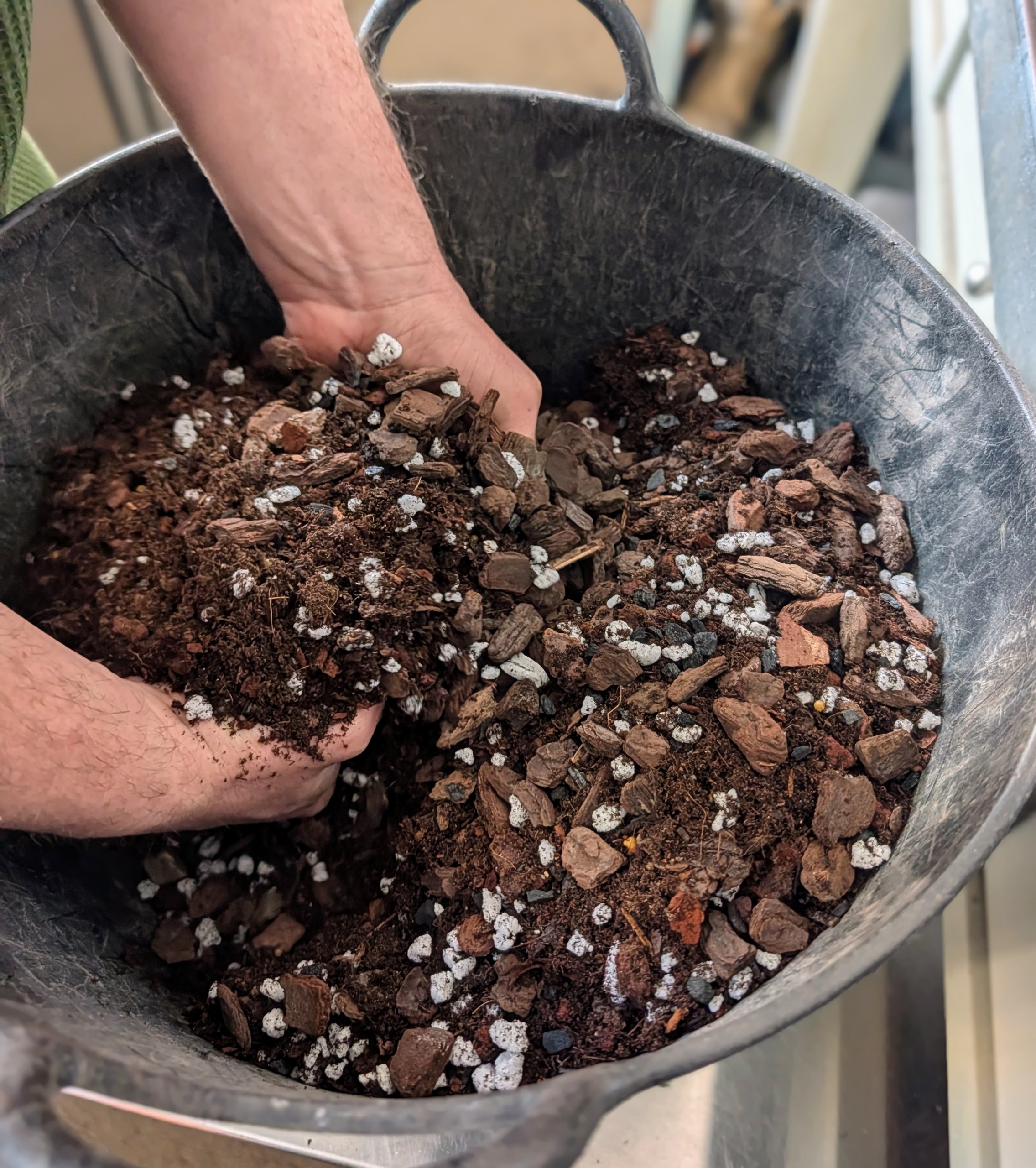
- Ryan mixes the materials together with his hands to ensure even distribution. He adjusts proportions as needed. One can also wet the mix slightly to help settle it down.
-
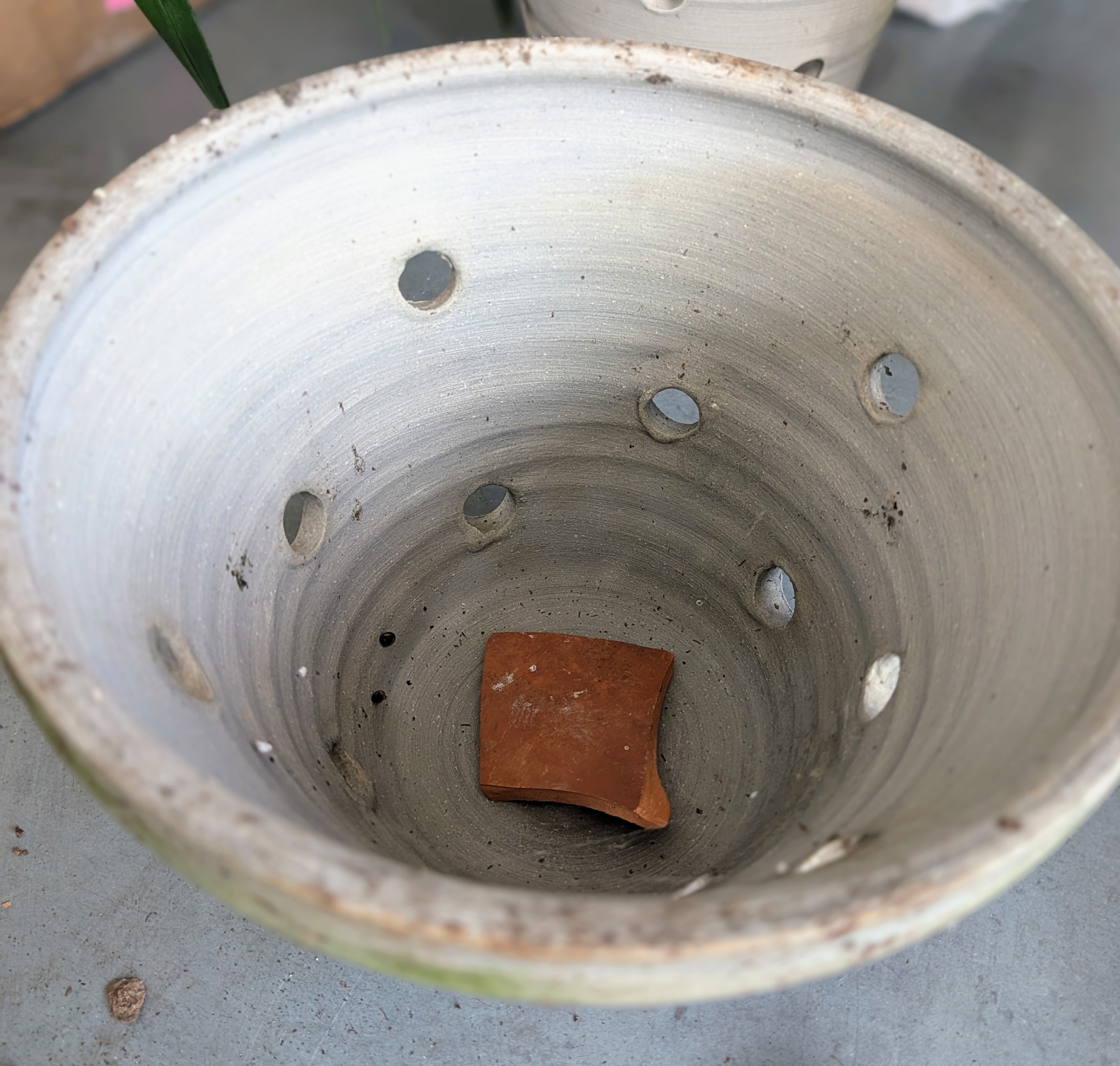
- As with all potted plants, it is important to have proper drainage holes in the pot. I always cover them with a shard, so none of the potting mix falls out.
-
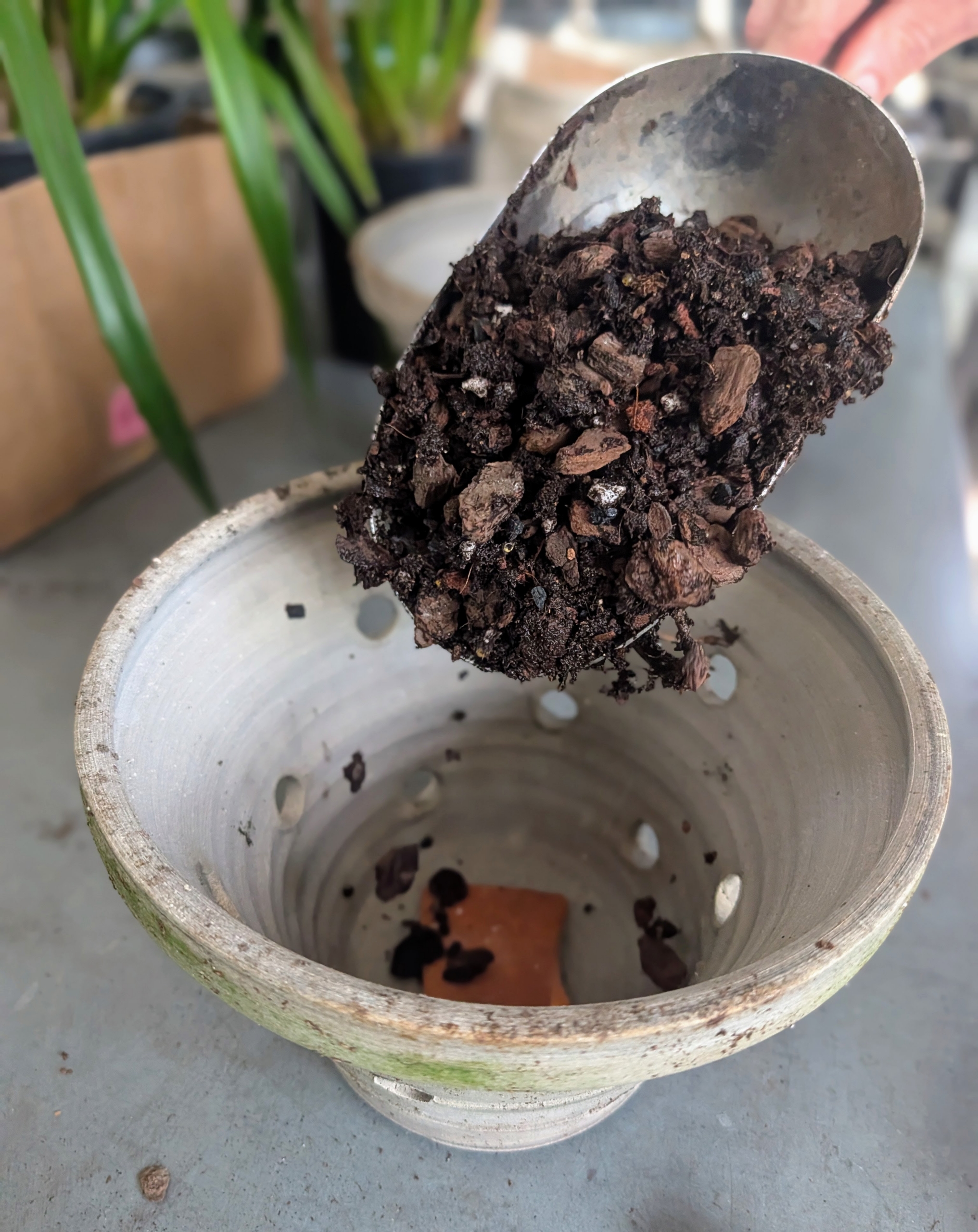
- Ryan covers the bottom third of the pot with the orchid potting mix.
-
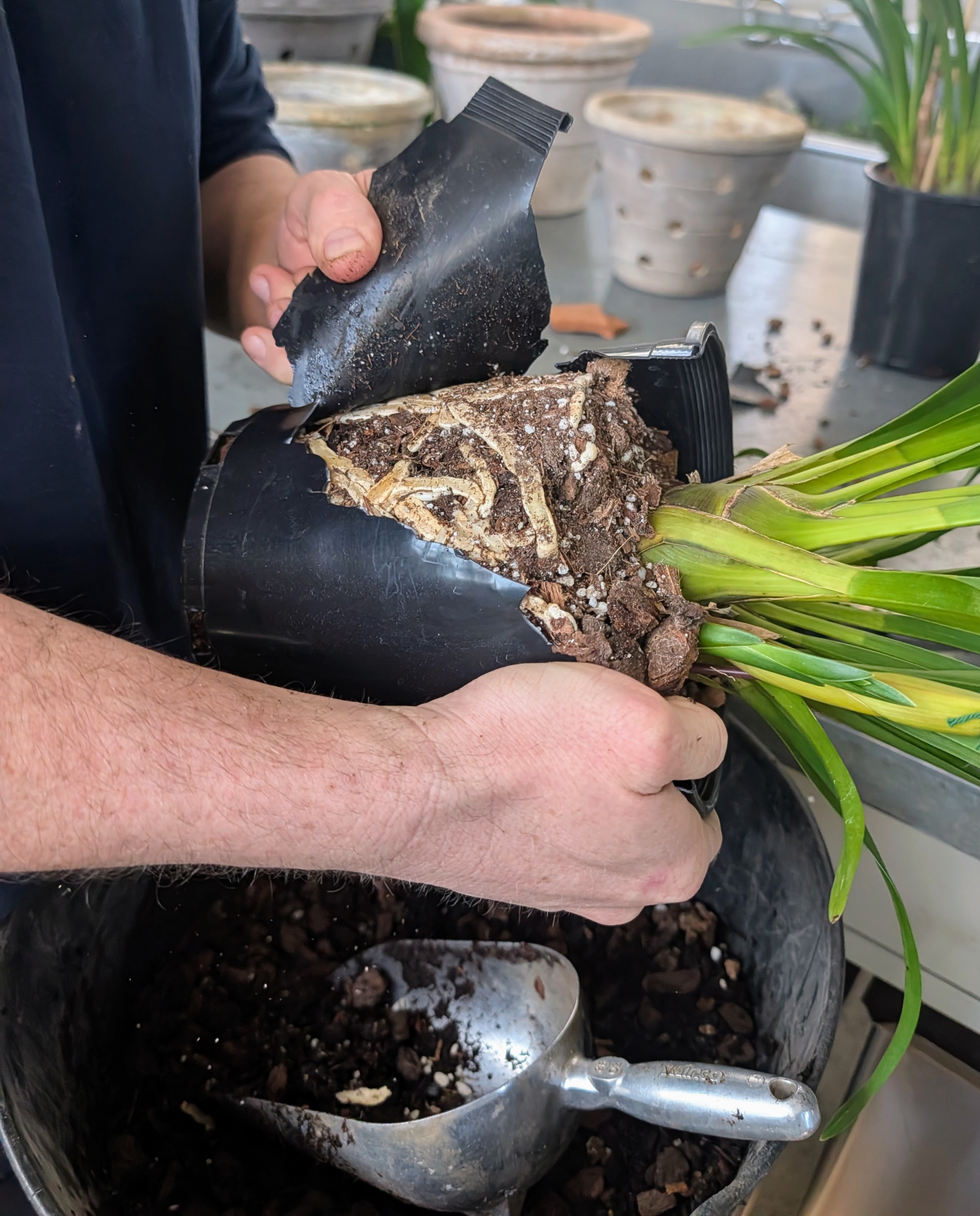
- And then he removes the plant from its plastic pot. This orchid was too snug in its pot, so to make sure the root ball remained intact, Ryan had to cut the pot. I like to save plastic pots for reuse, but sometimes that’s just not possible.
-
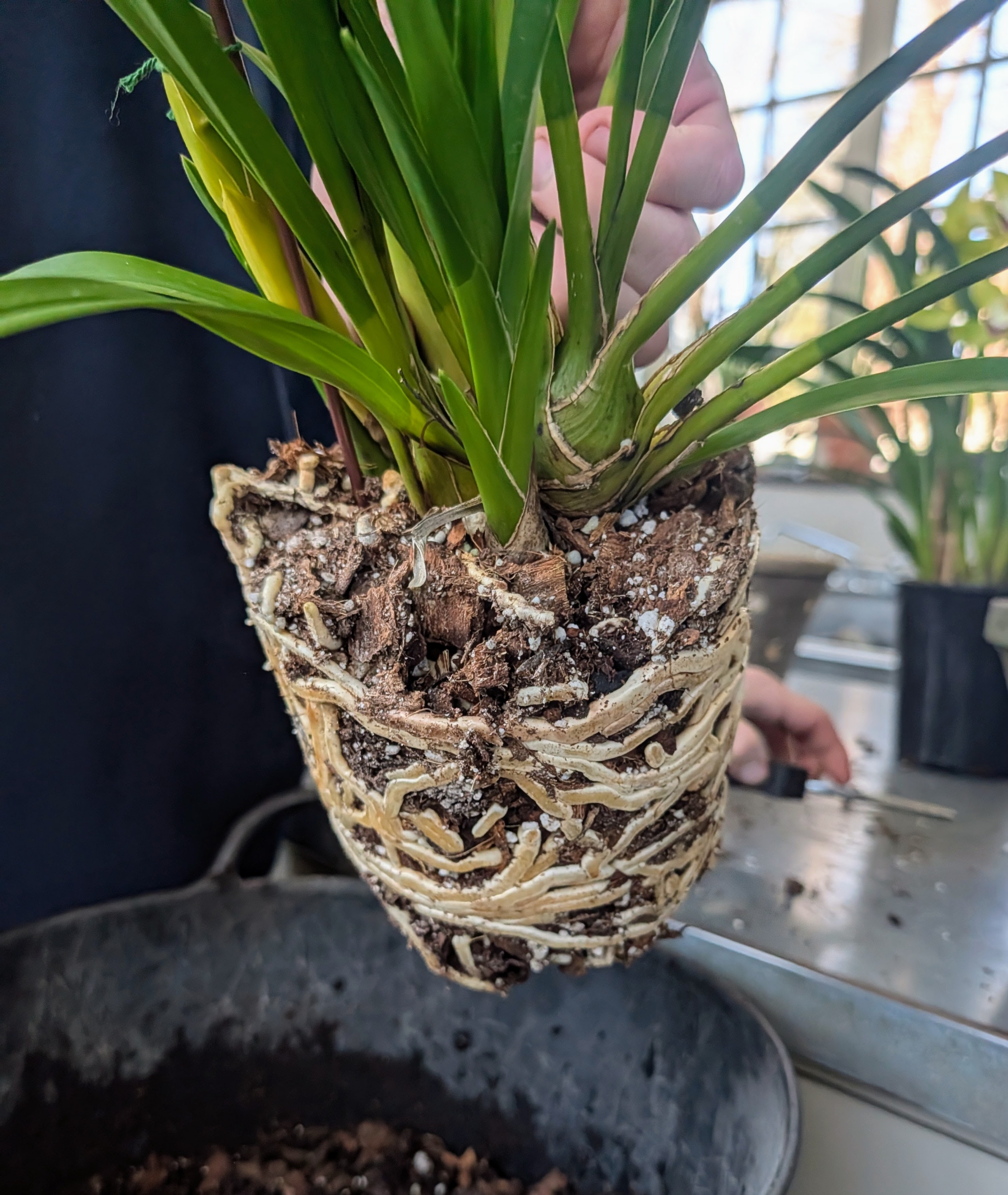
- Notice, this root ball is a little pot bound. Cymbidiums actually prefer cooler conditions and can tolerate being slightly pot bound to allow them to absorb moisture and nutrients efficiently, which is crucial for their growth and blooming. It is one of the reasons it is blooming so nicely right now.
-
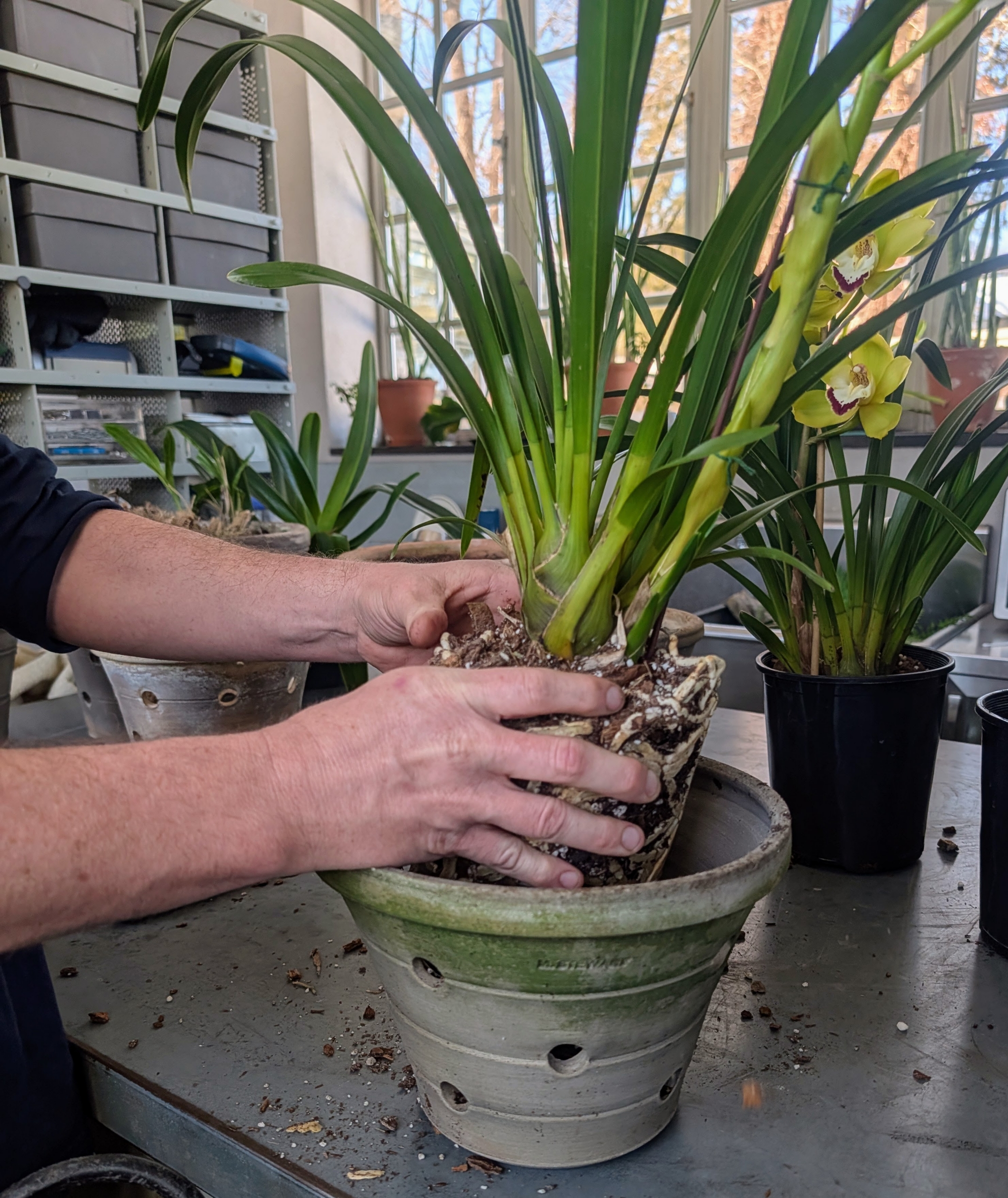
- Ryan places the orchid carefully into its new pot, making sure it is at the same height it was in its original container.
-
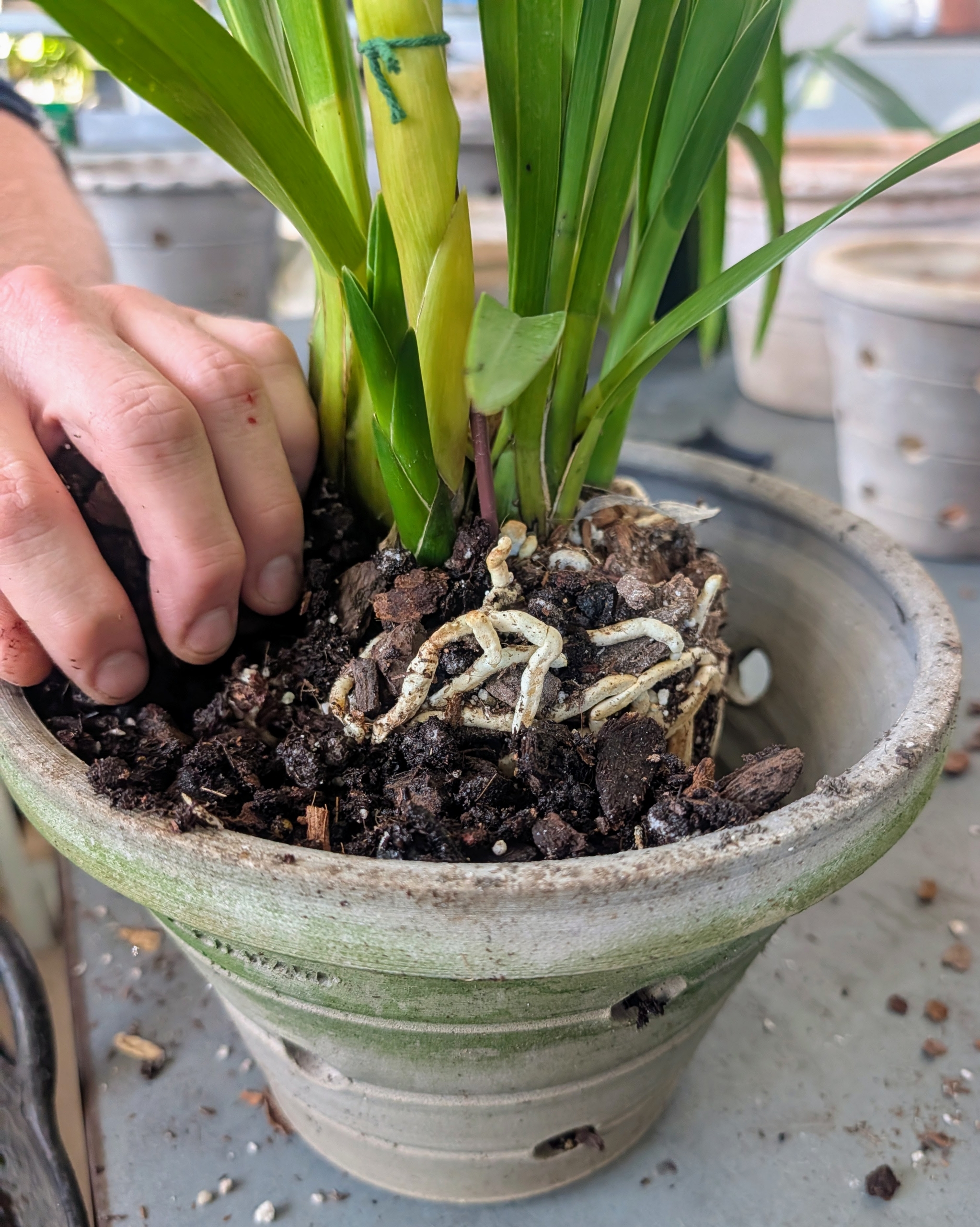
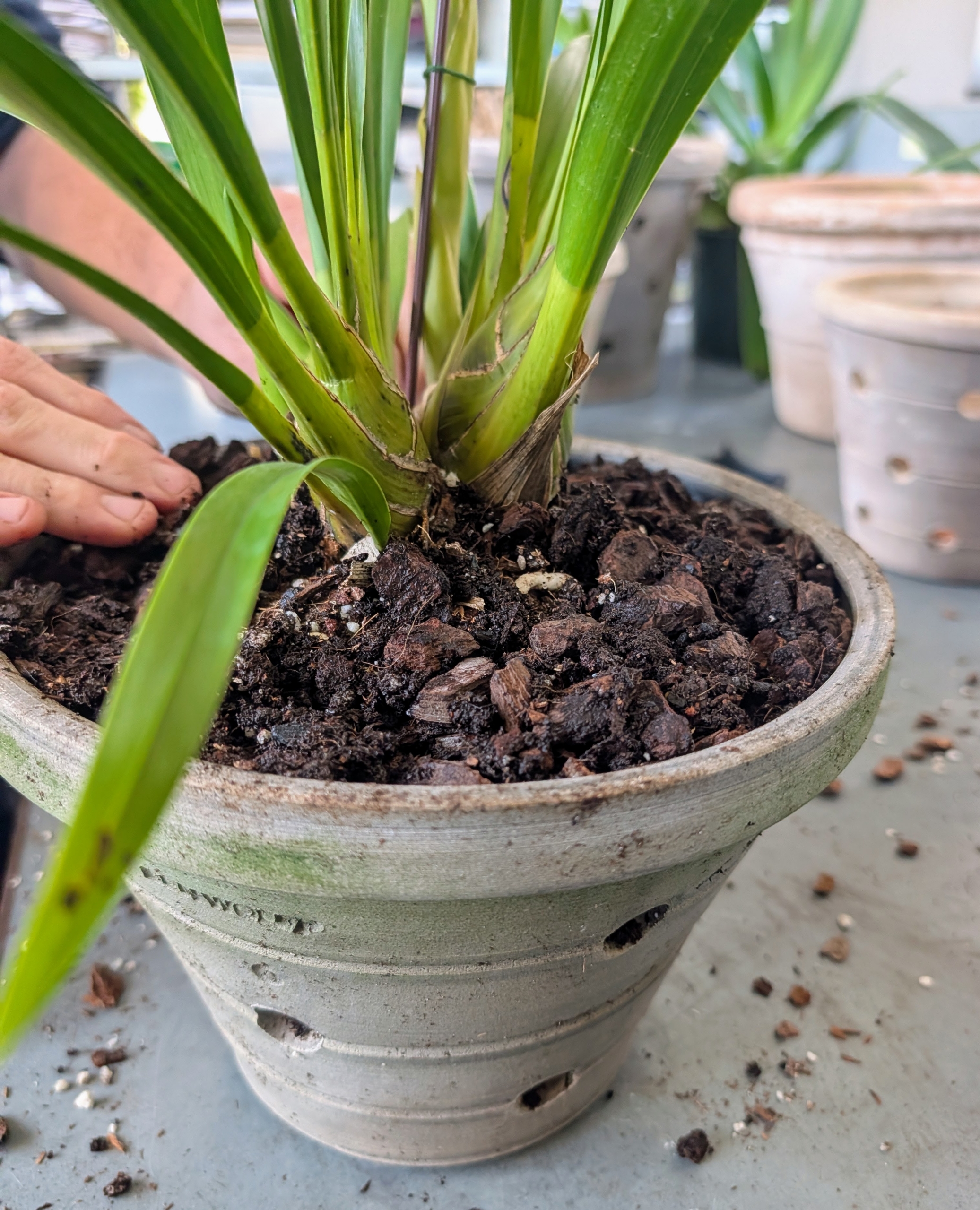
- The potting mix should be about one-inch below the top of the pot, so none of it overflows when watering.
-
- Ryan gently presses the medium into the pot to ensure it is well packed, adding more potting mix if needed.
-
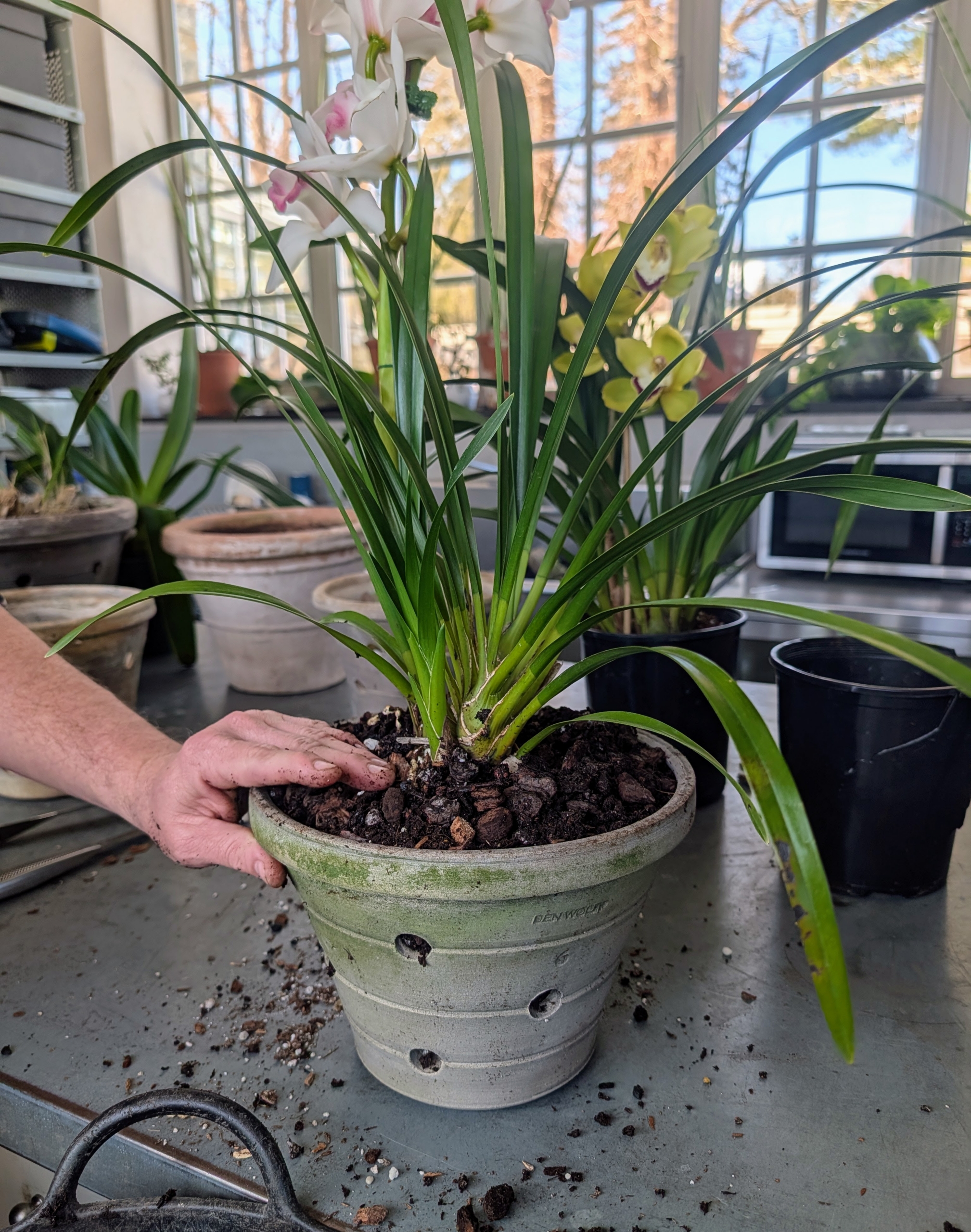
- While the orchid is in active growth, keep it in slightly damp conditions but never let the medium become soggy.
-
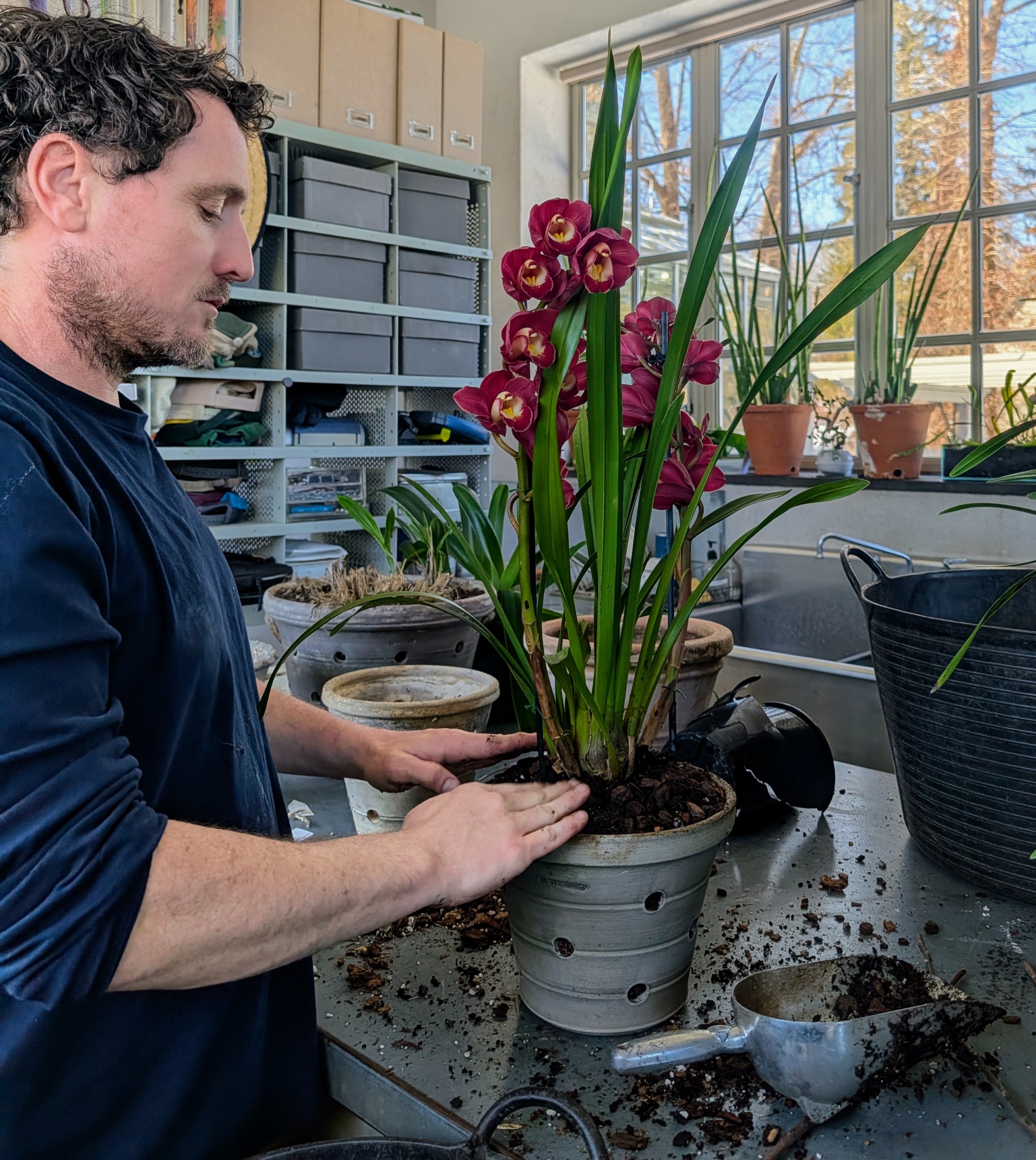
- Here, Ryan finishes up and tamps down some more to make sure plant and mix have good contact.
-
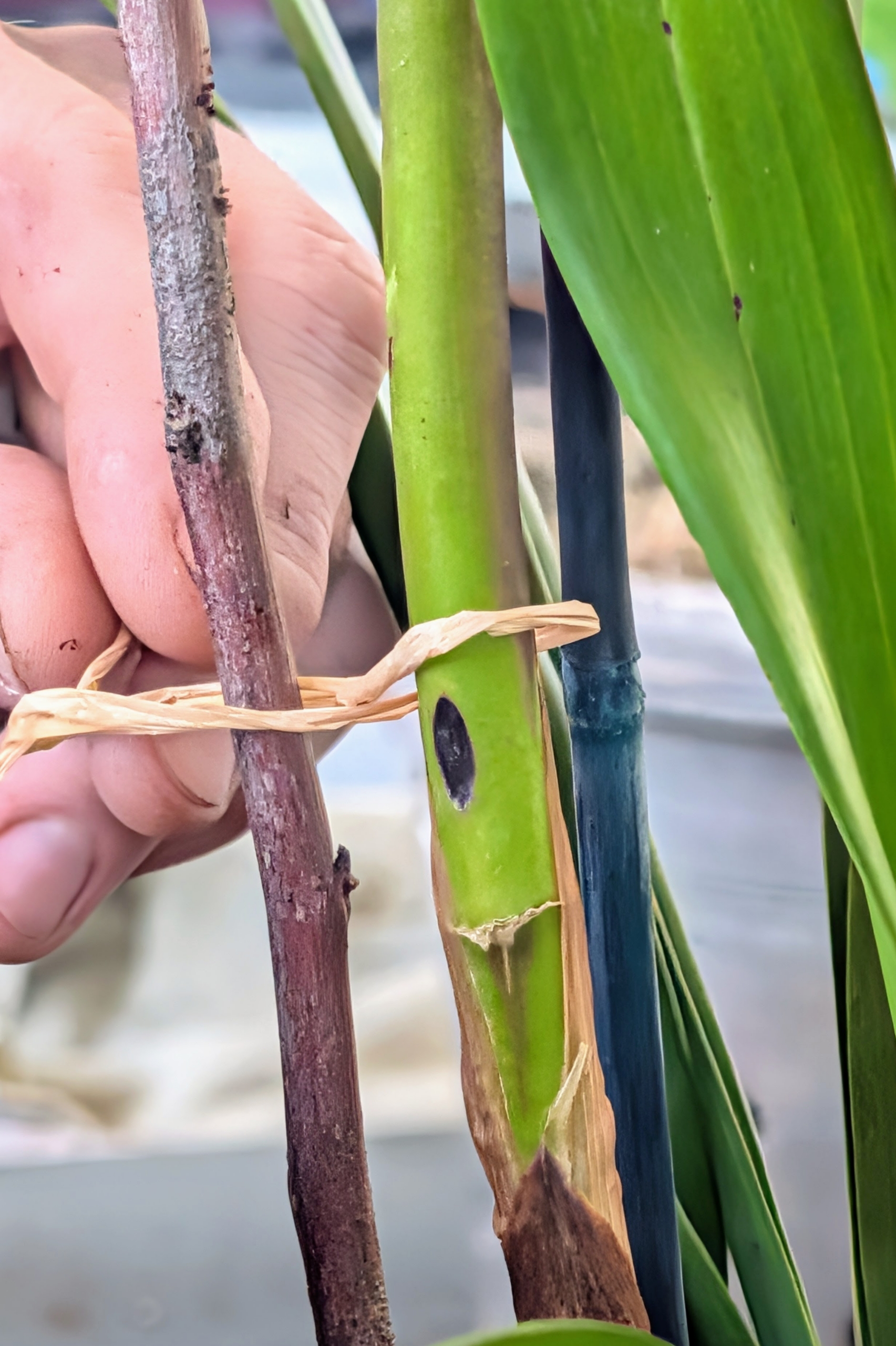
- To help support the tall, heavy stems, Ryan secures them to natural colored apple branches using pieces of raffia. I prefer these to the painted bamboo that is sometimes found with nursery orchids.
-
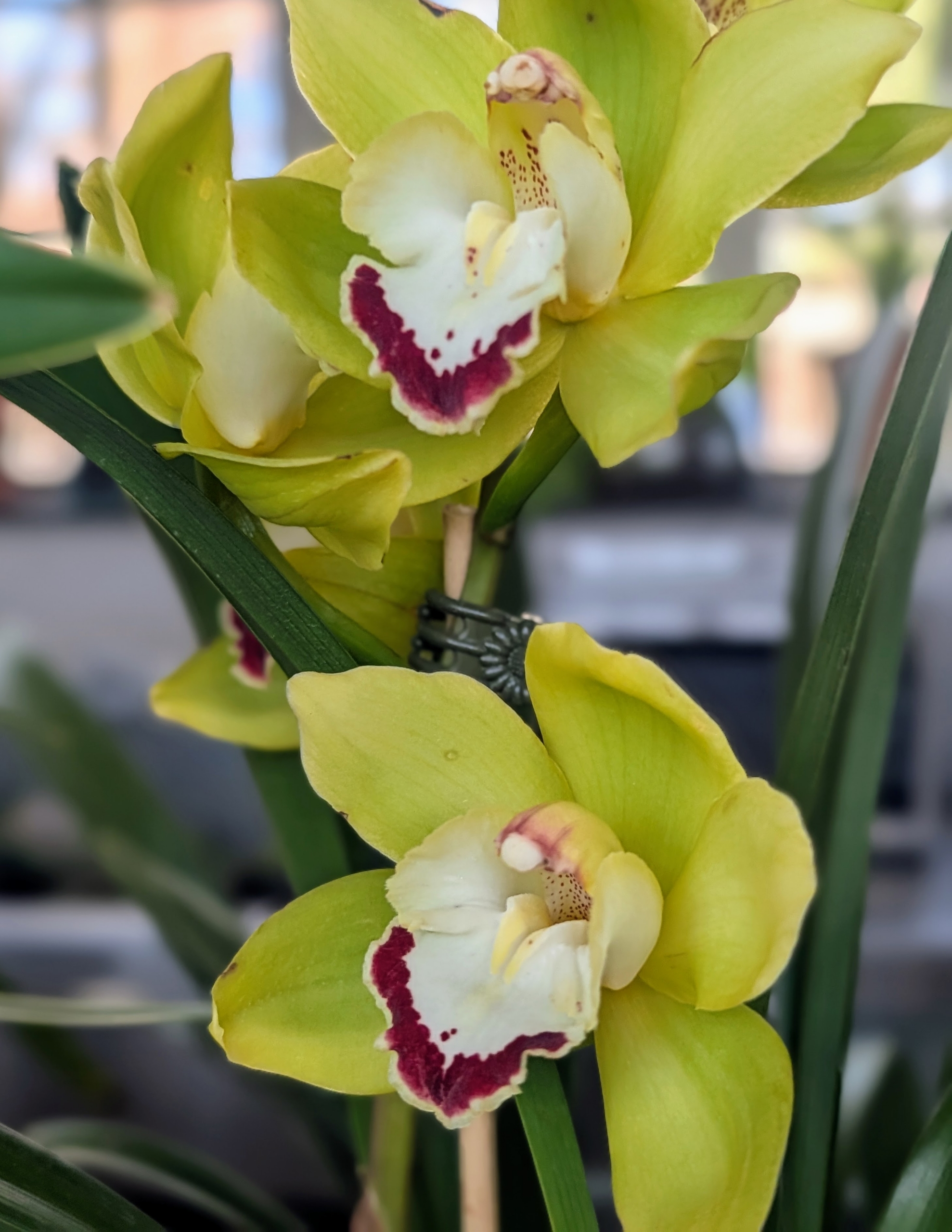
- Cymbidium orchids are prized for their sprays of long-lasting flowers. This one is Cymbidium ‘Jade.’
-
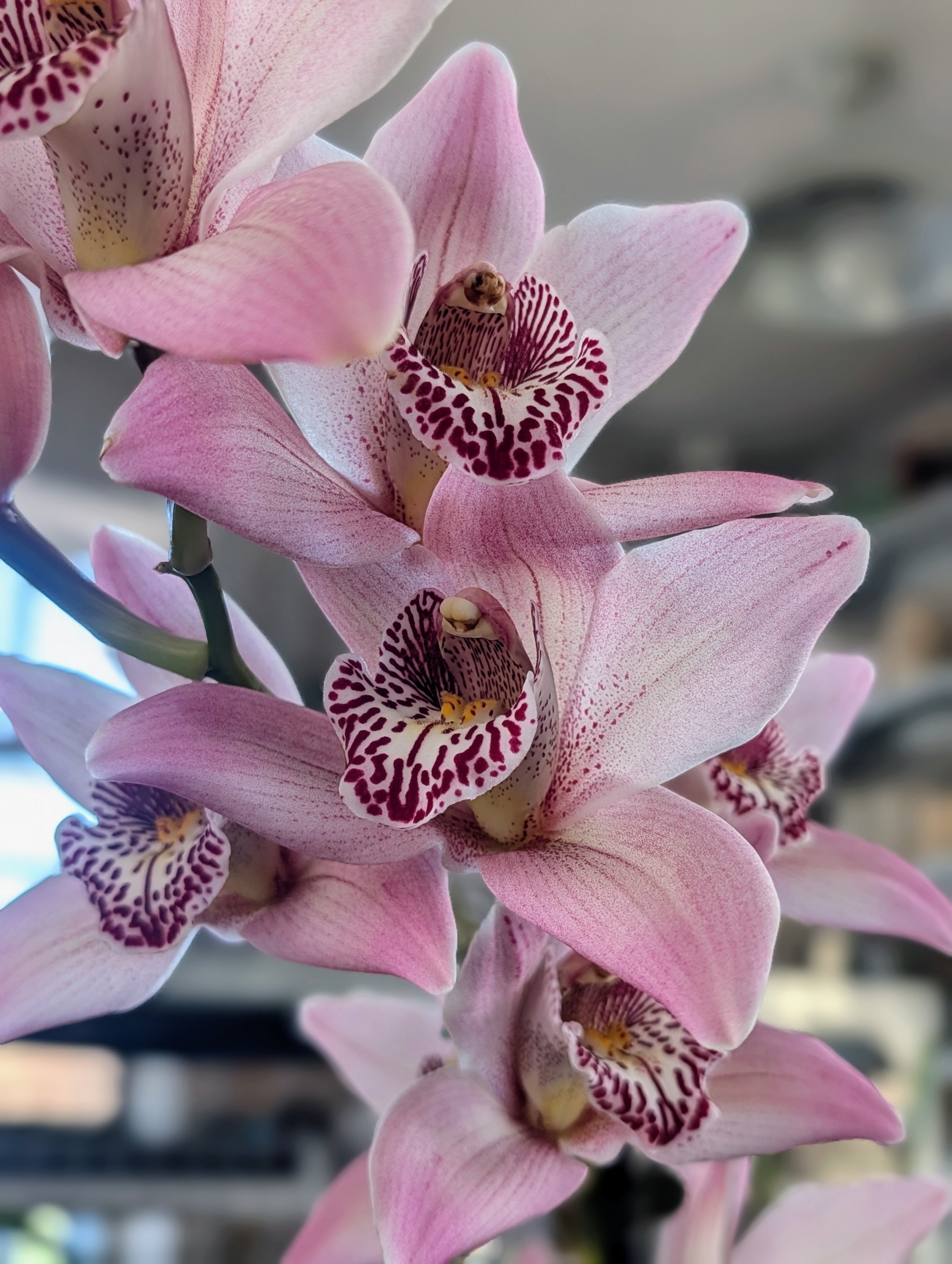
- The range of colors for this genus include white, green, yellowish-green, cream, yellow, brown, pink, red and black with a variety of markings of other color shades – every color but blue. This is a Cymbidium hybrid – Cymbidium ‘Solana Star,’ Cymbidium Wood Wilson ‘White Knight,’ x Cymbidium Solana Rose ‘Nancy.’
-
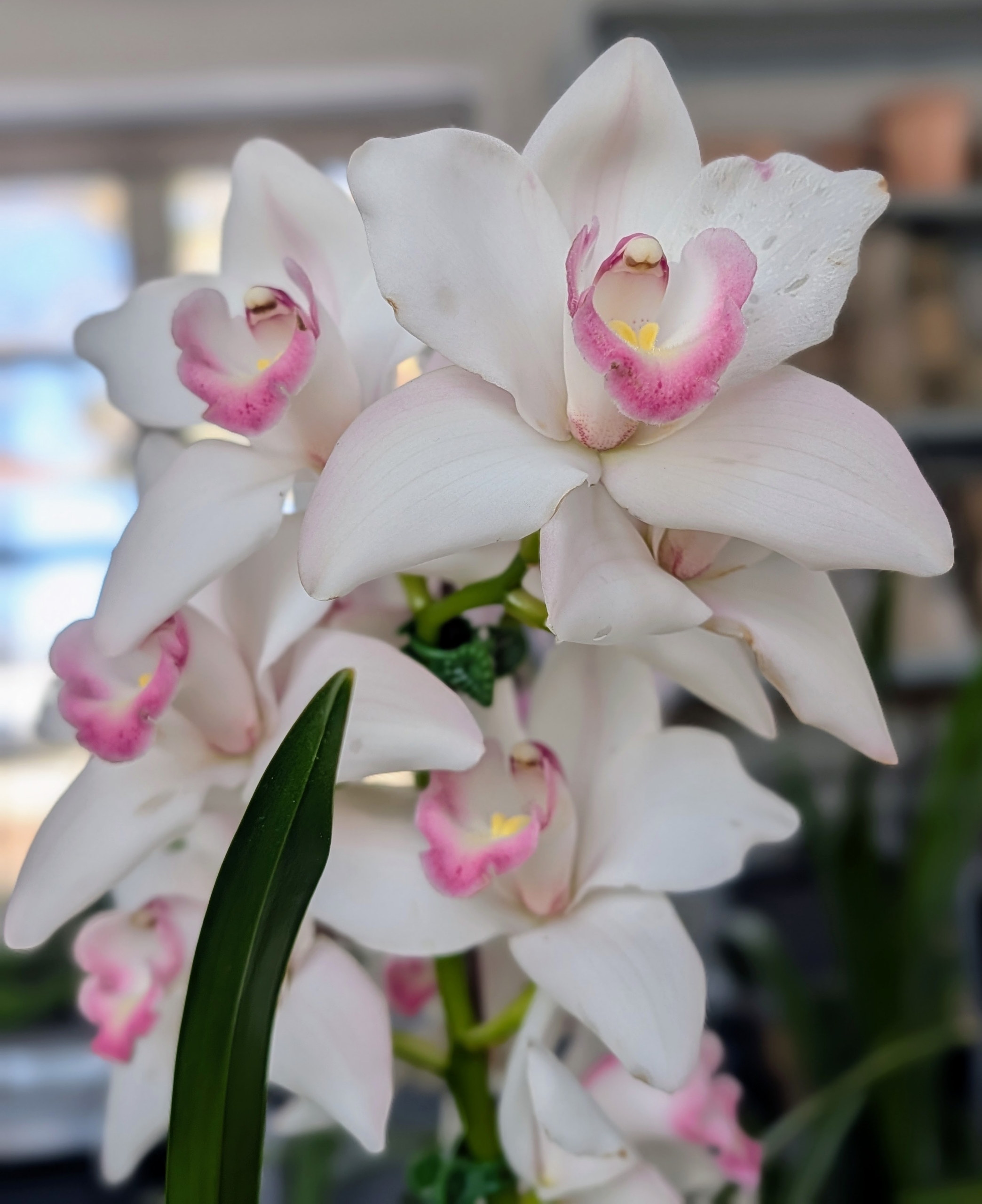
- This white and pink plant is Cymbidium ‘White Madame.’ Cymbidium flowers typically have three sepals and two petals each with a prominent three-lobed labellum making them appear “boat like.” The flowers last about 10-weeks.
-
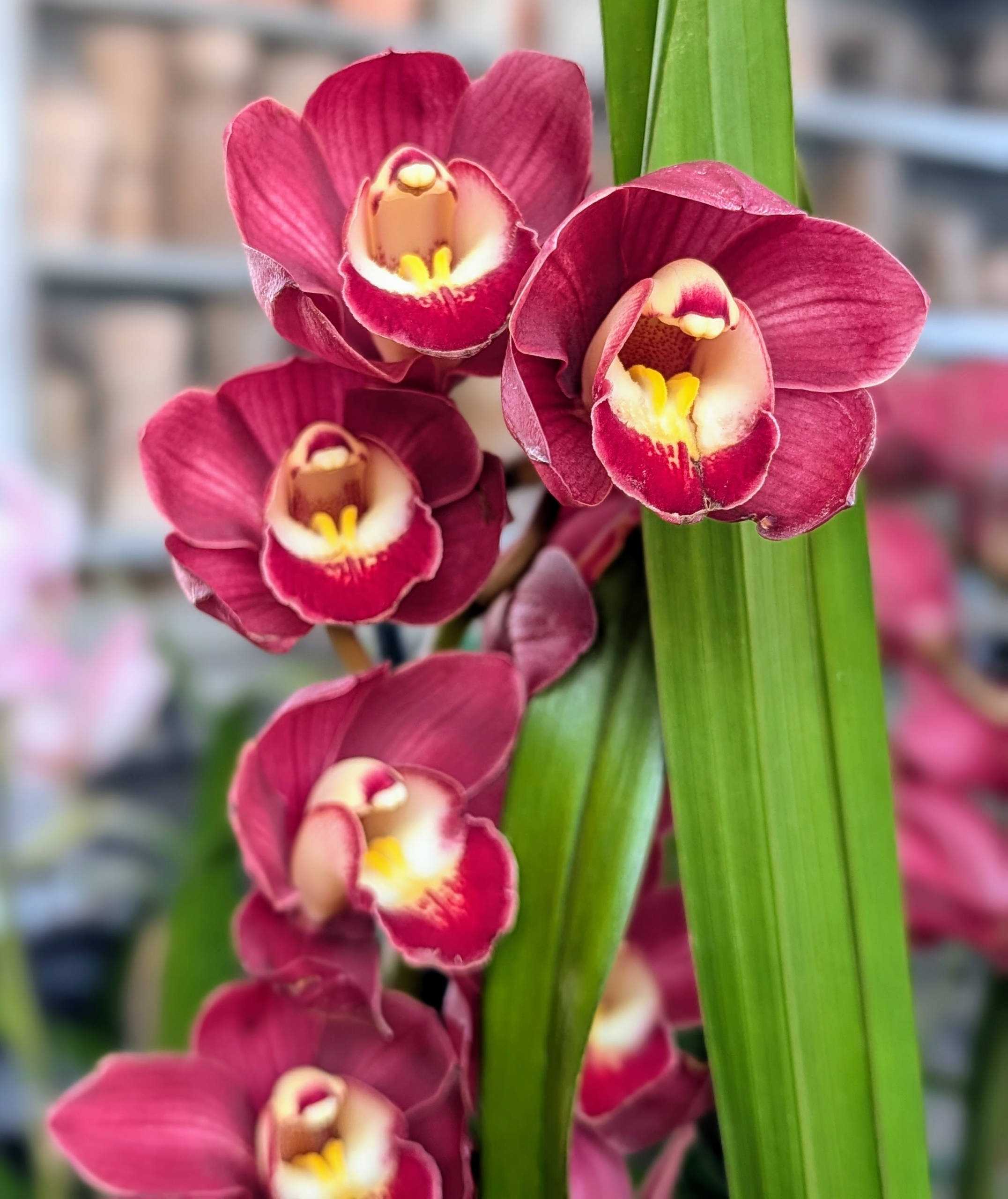
- And this is Cymbidium ‘Red Arrow.’ Soon they will all come up to my Winter House for display – and just in time for my weekend dinner party.
 Martha Pins


 Martha Tweets

