

Pruning My Fruit Trees
Wintertime pruning continues at my farm - next on the list, the orchard trees.
If you grow fruit trees, the best time to prune them is now - in winter - or in very early spring before any new growth begins. Pruning not only helps to develop proper shape and form, but also encourages new growth, promotes high fruit yield, and maintains good tree health. I have more than 200 fruit trees in my orchard - peaches, apples, pears, cherries, medlars, and others. This year, I called on the experts from The Arborist, Inc. in nearby Bedford Hills, New York to take on the big job.
Here are some photos, enjoy.
-

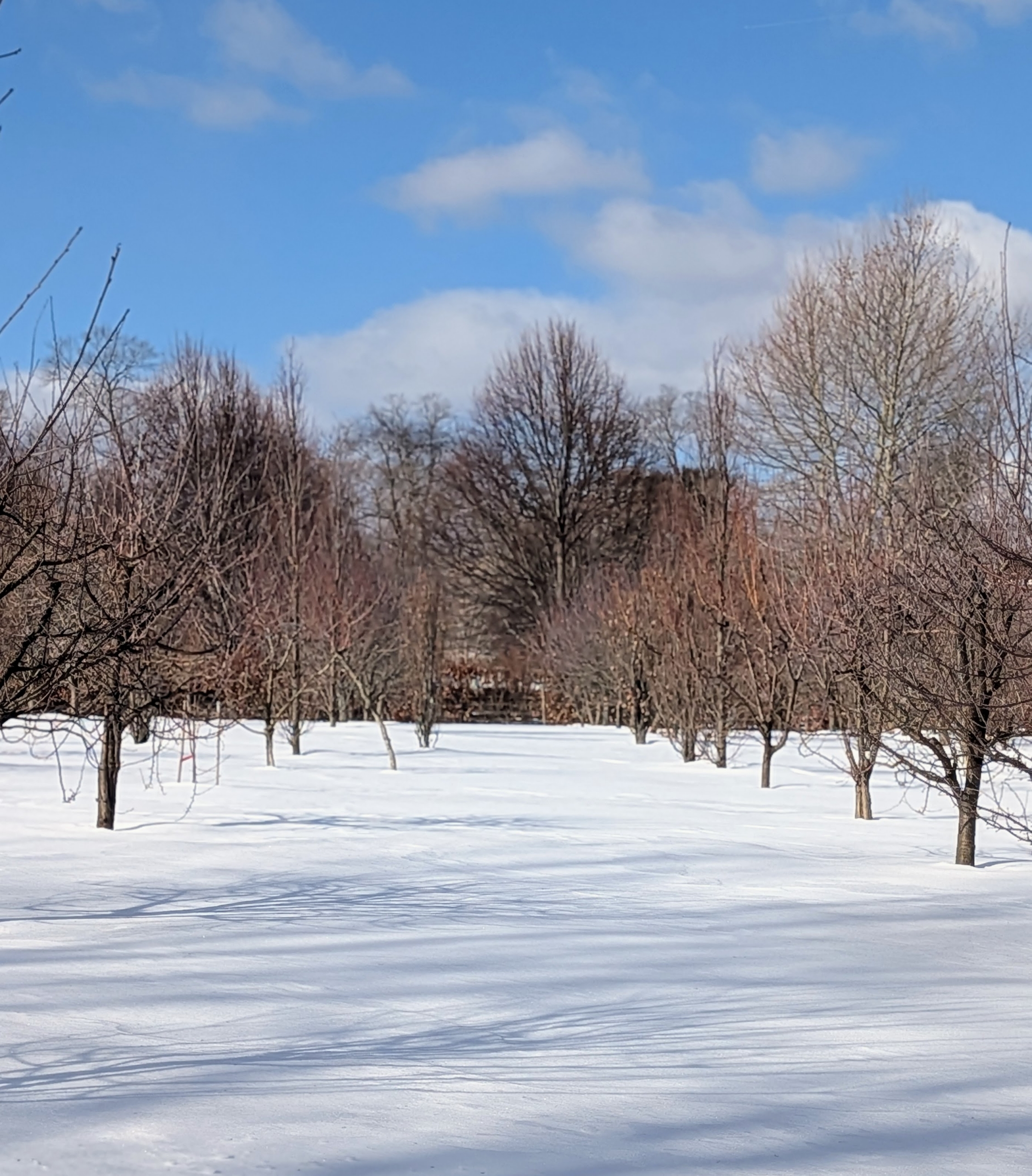
- There’s still a lot of snow on the ground, but the orchard trees need pruning to ensure they continue to produce an abundance of fruit. All my fruit trees are extremely healthy, in part because of all the care and maintenance that is done to maintain them.
-
- The tree experts at The Arborist specialize in pruning fruit trees.

-
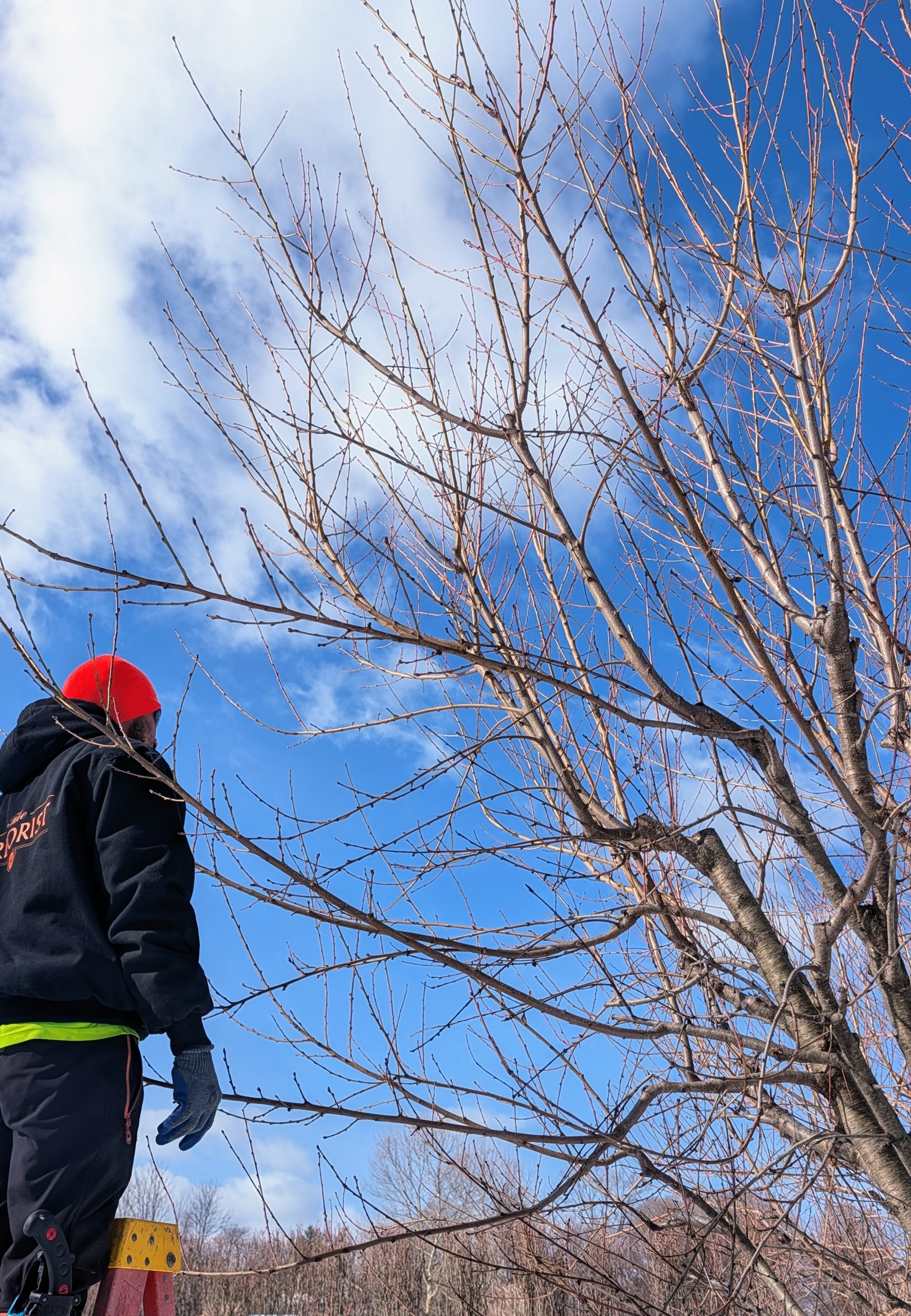
- Before starting on any tree, foreman Ray assesses the tree and decides where he will start trimming.
-
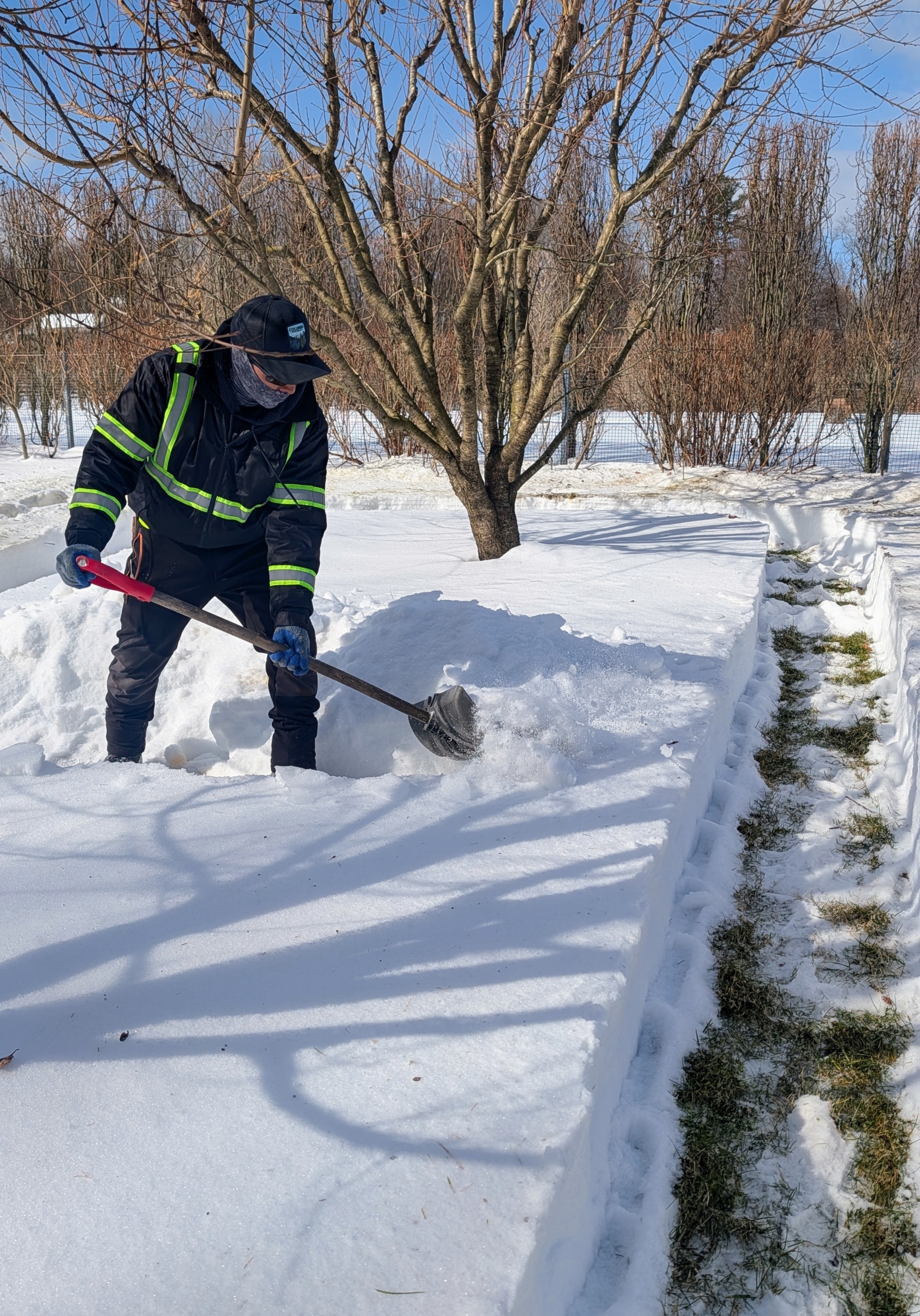
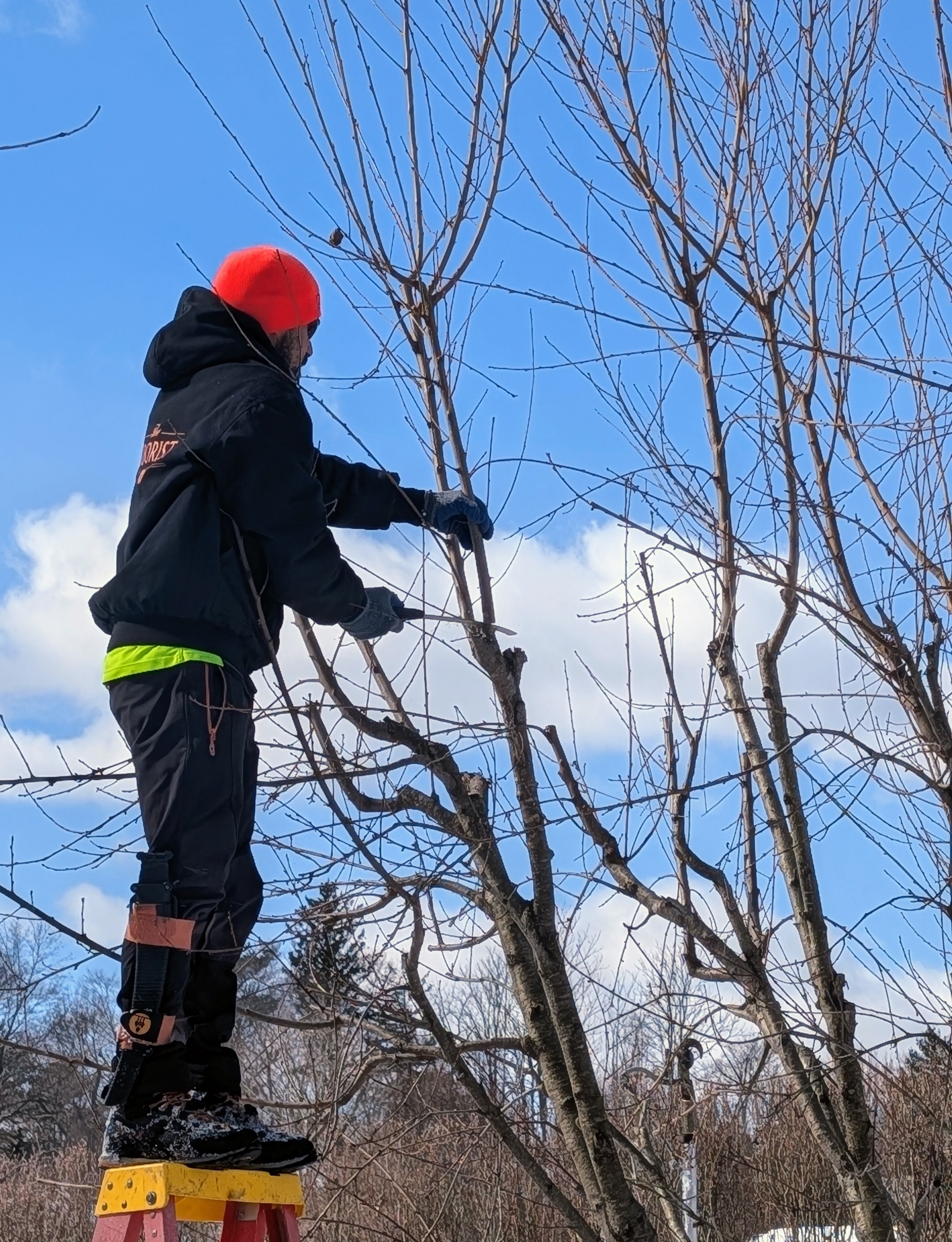
- With all the snow on the ground, it is also necessary to shovel a path, so the crew can work on each tree and safely set up their ladders.
-
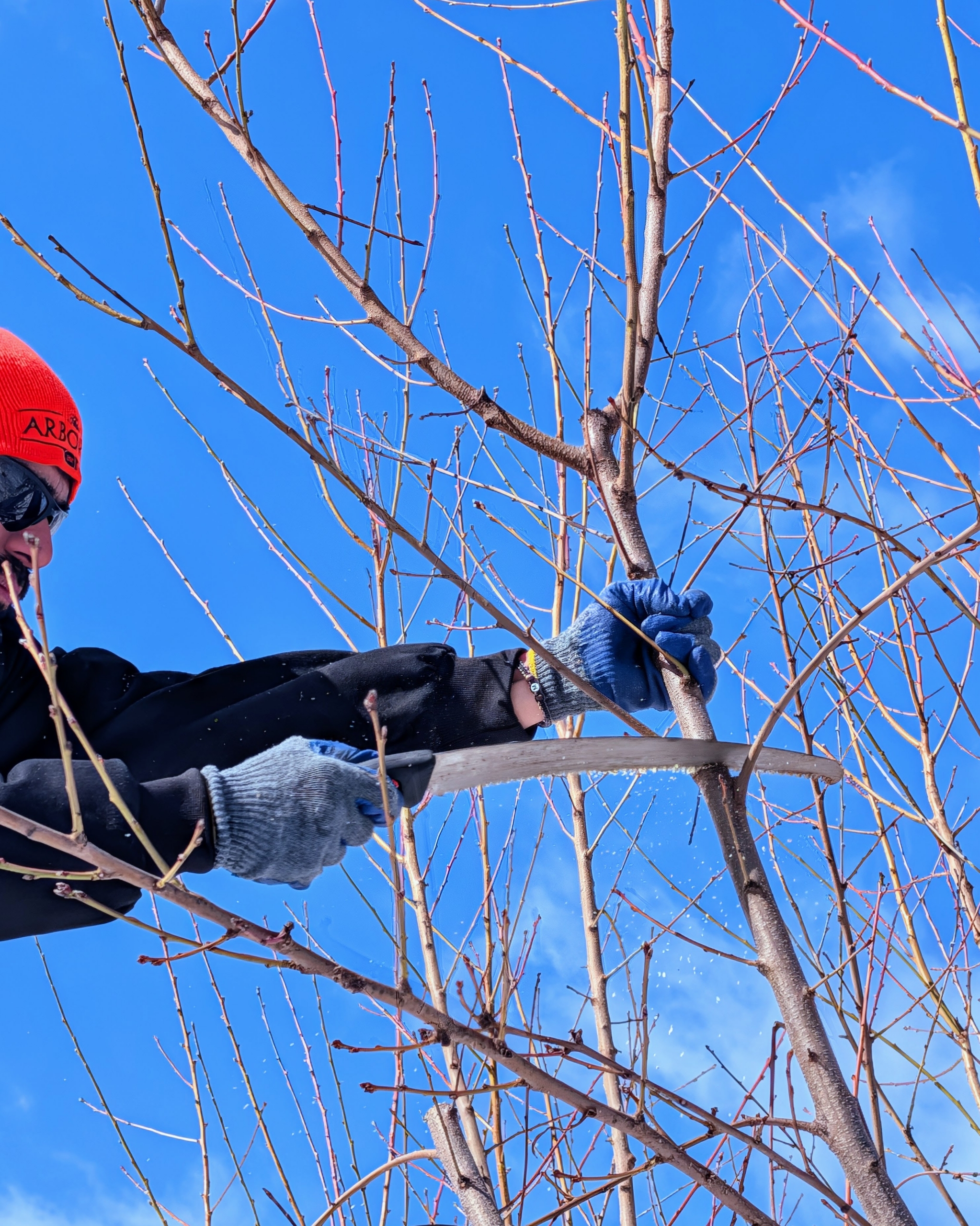
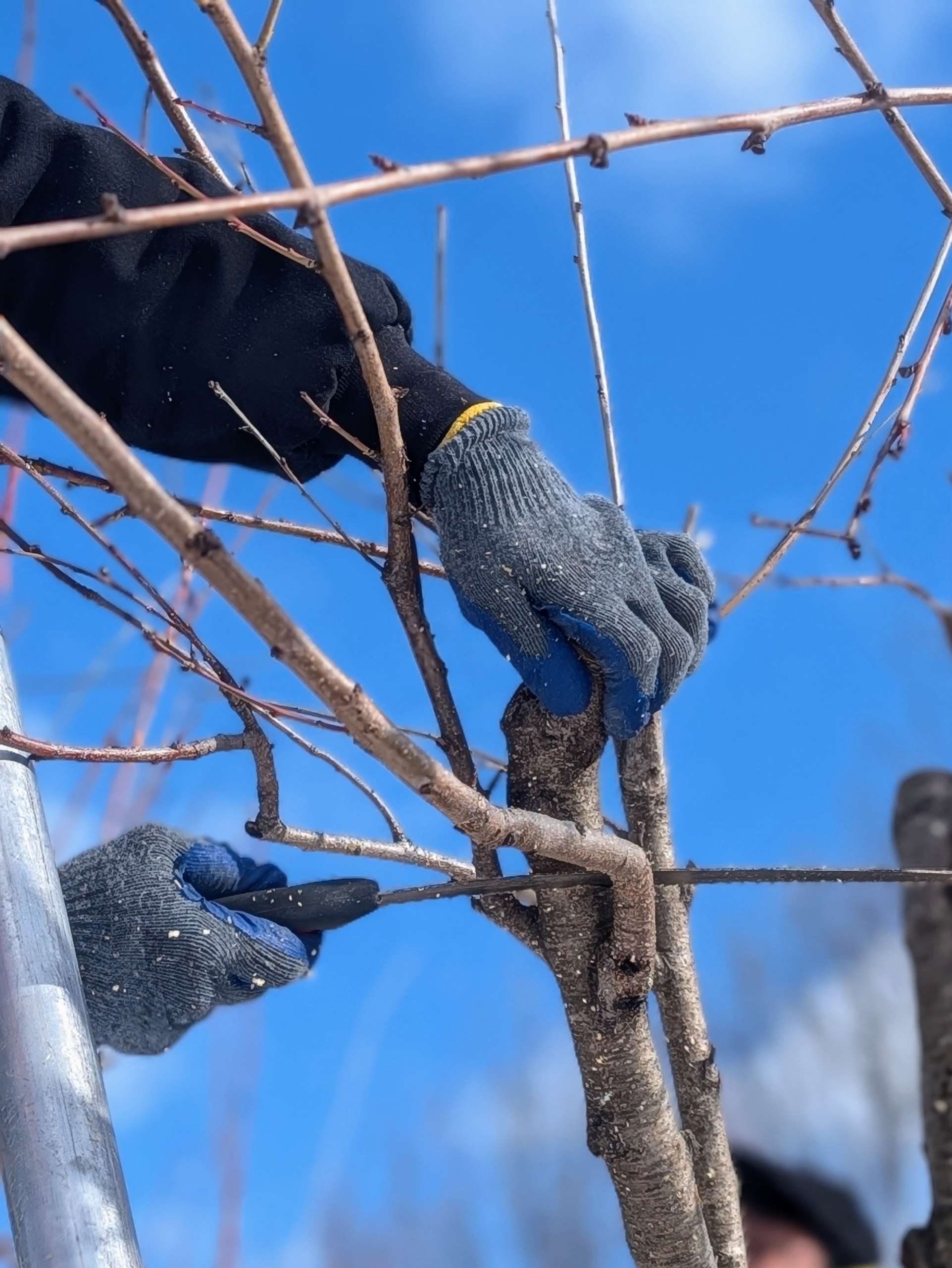
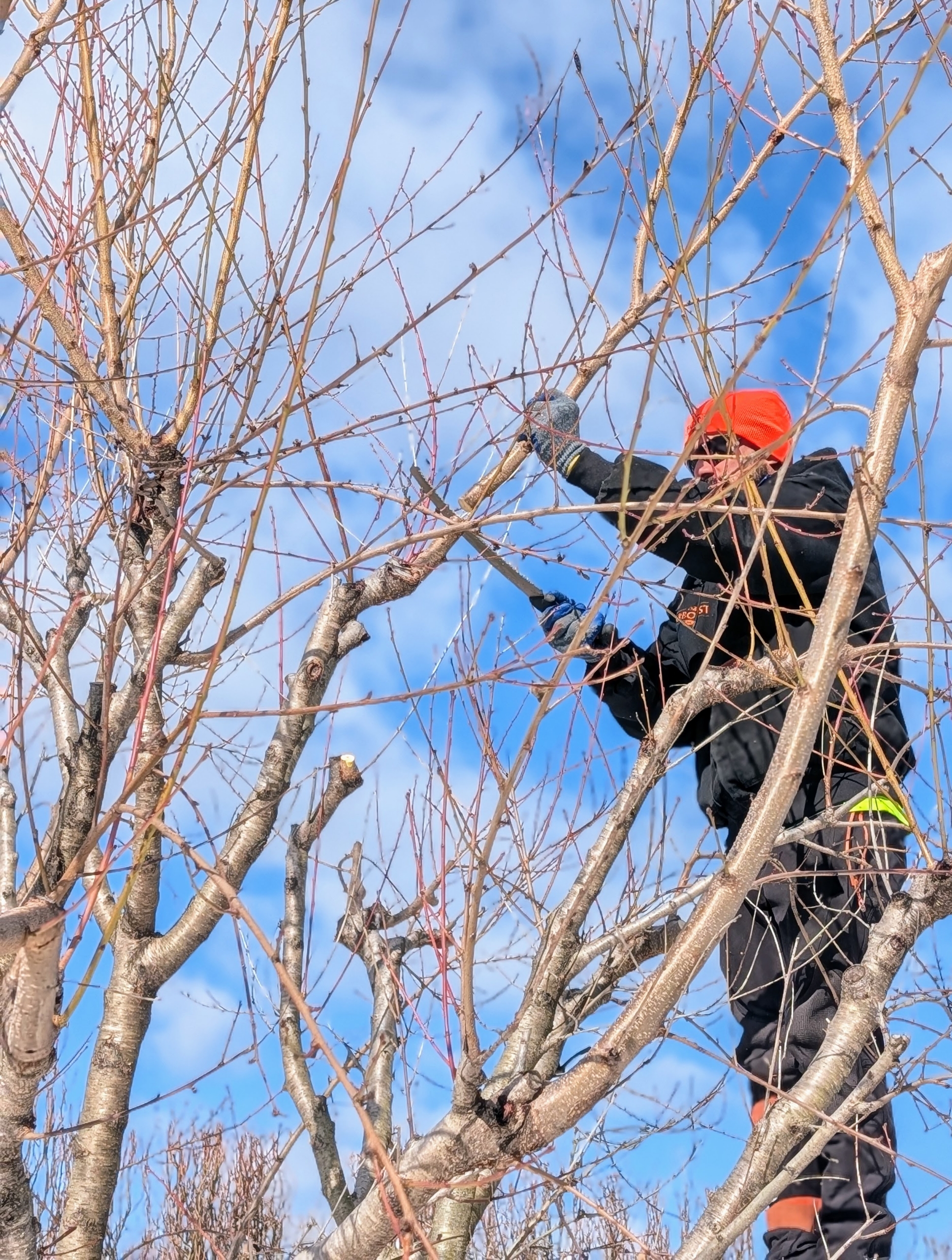
- A bow saw, or pruning saw, cuts on both the fore stroke and back stroke and is designed for cutting thicker, older branches.
-
- I prefer much of the work be done by hand. Cutting by hand gives my trees a more natural appearance and shape.
-
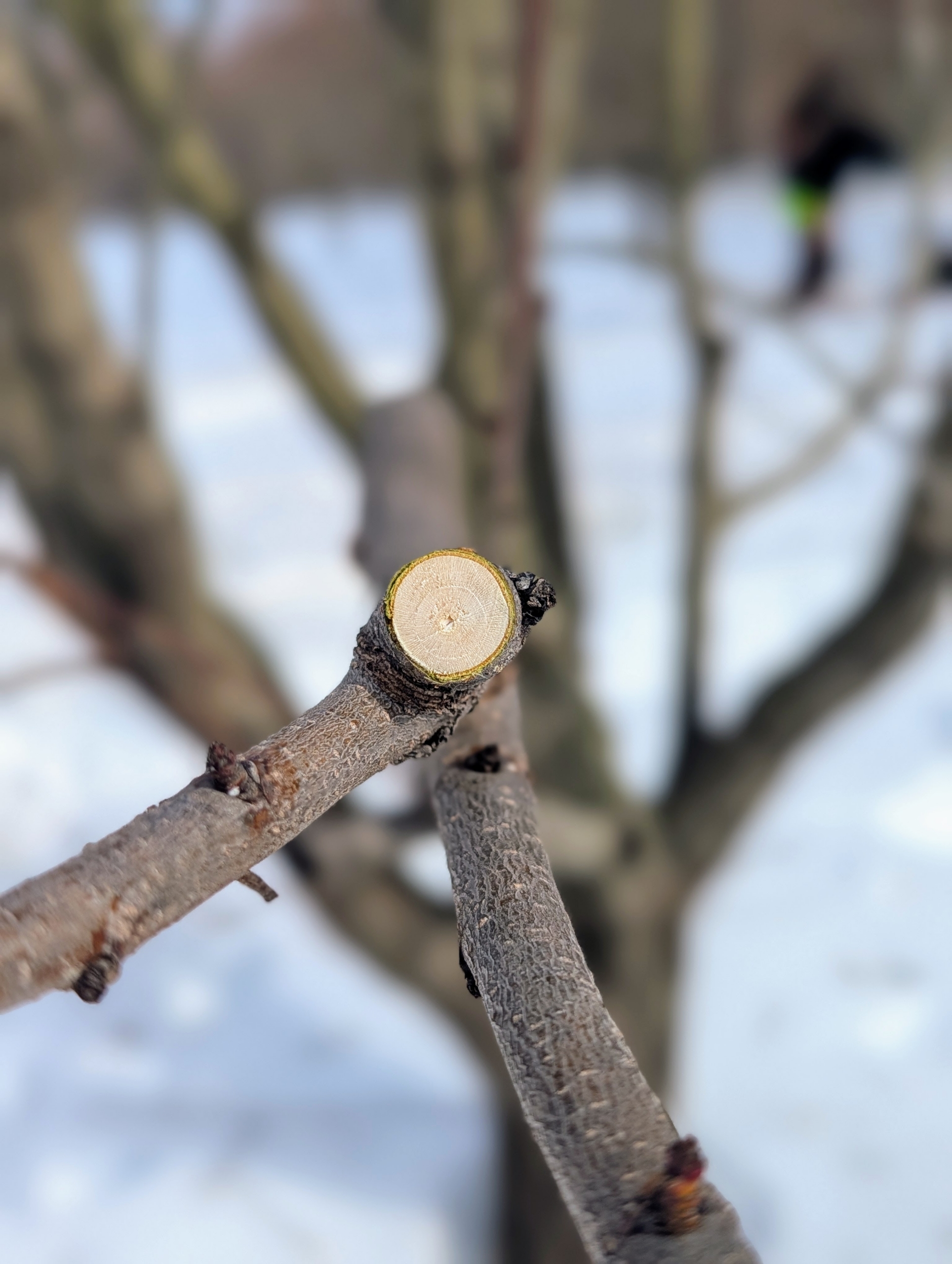
- Pruning cuts should be made fairly flush to the branch from which it grew. The idea is to leave slight stubs. By removing any more, the remaining branch has too much of an opening for disease to enter. Here, one can see where a cut was made. And cuts should be clean – something that can only be done with good, sharp tools.
-
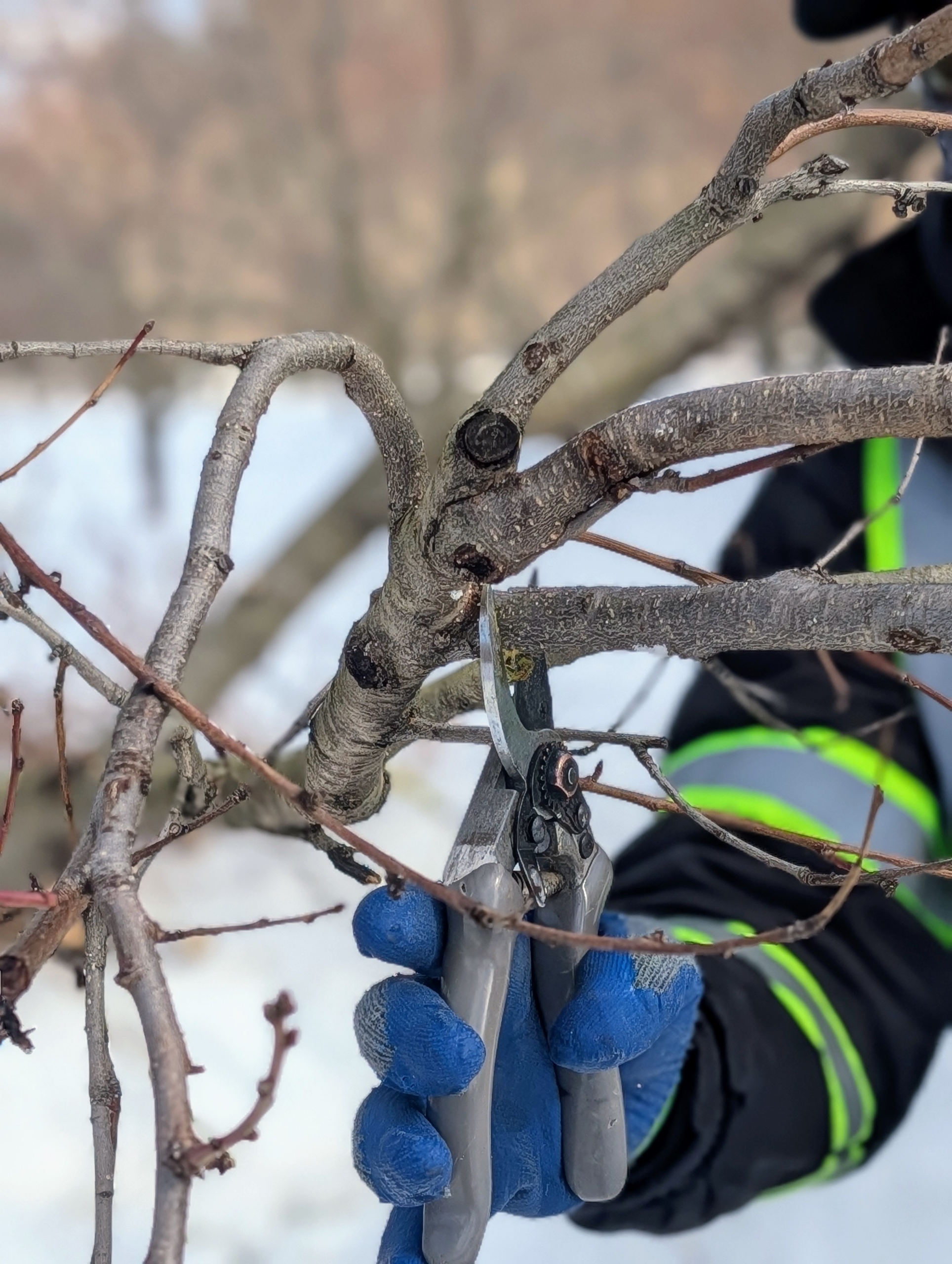
- After cutting the old, thick branches, Ray focuses on the Ds of pruning and removes any dead, diseased, damaged, defective, or deranged branches.
-
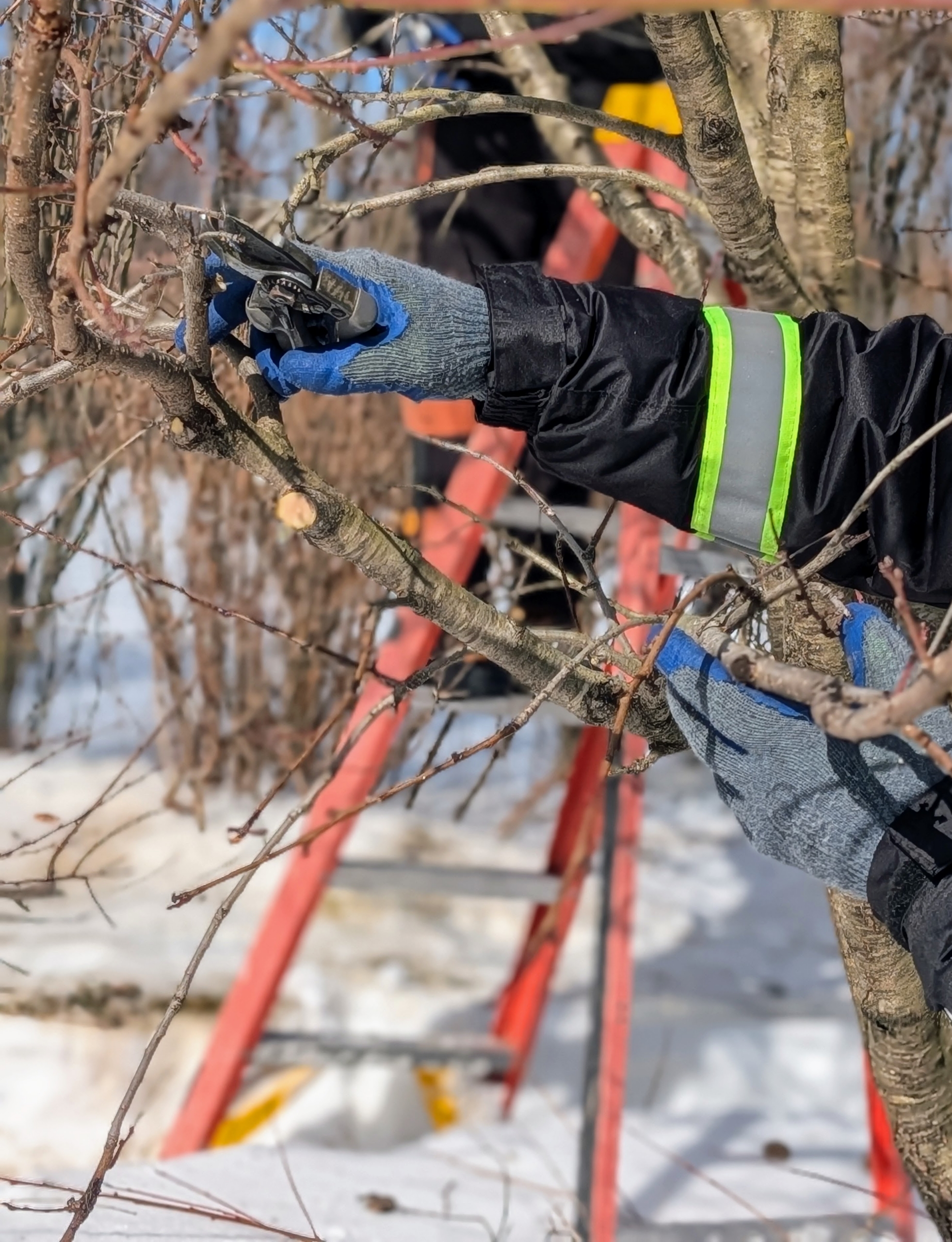
- Dead branches, or those without any signs of new growth, are cut, so the energy is directed to the branches with fruiting buds.
-
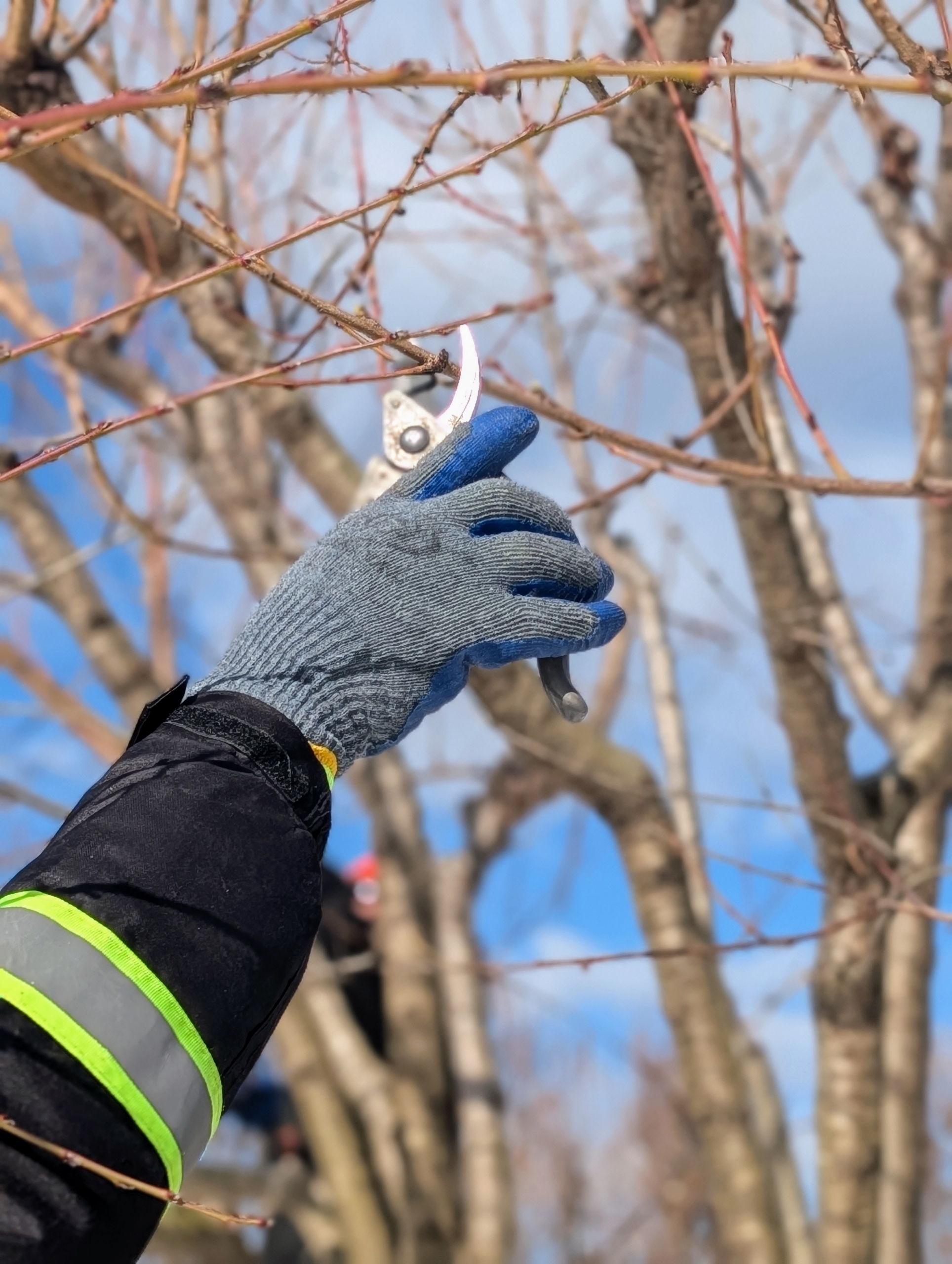
- Ray cuts branches that are rubbing or crisscrossing each other, preventing any healthy new growth. Basically, the goal is to create a tree with well spaced lateral branches. Any branches which interfere with the tree’s shape or create a dense framework should be removed.
-
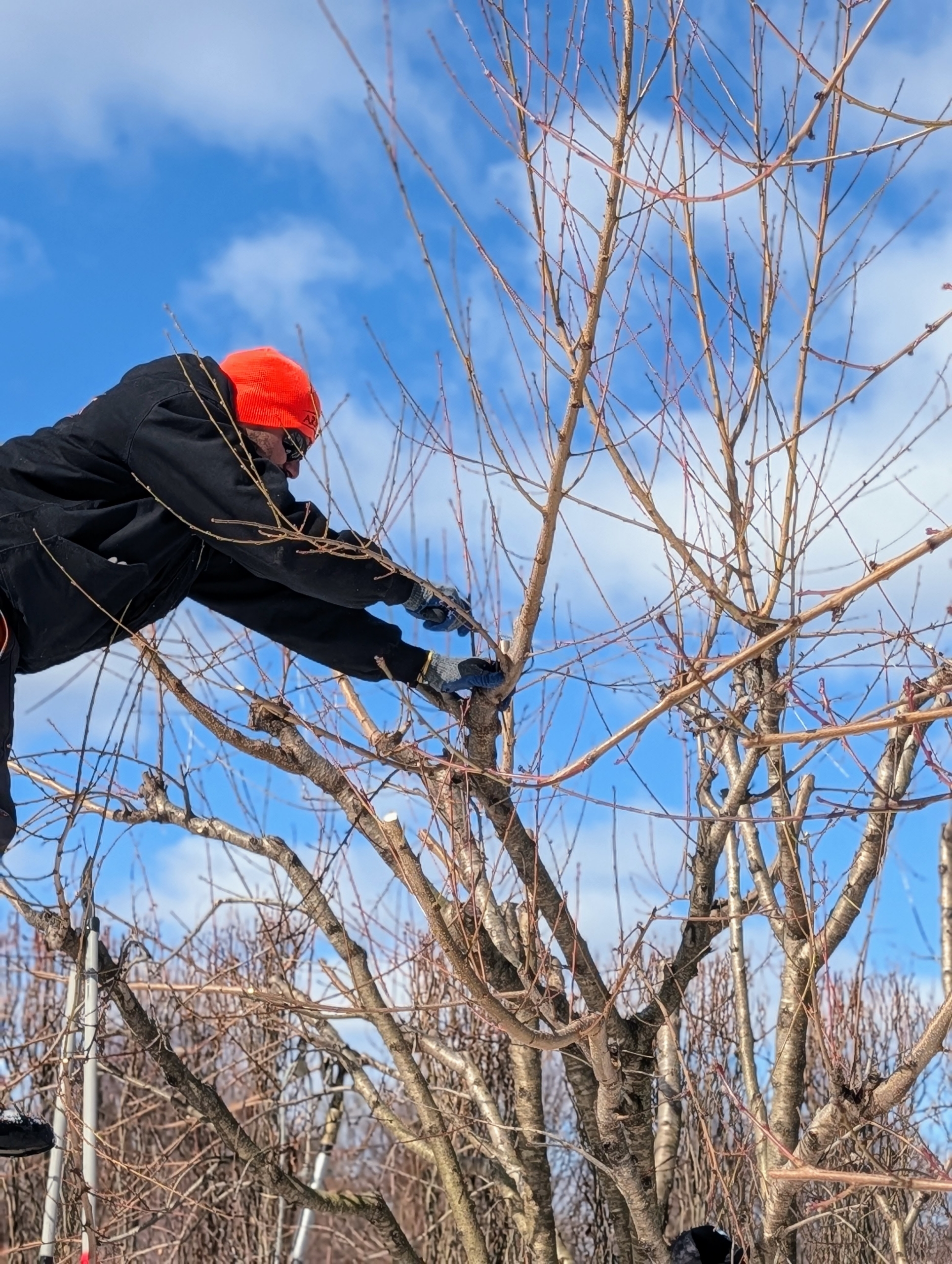
- And he prunes the suckers away from the tree trunk to prevent them from taking over.
-
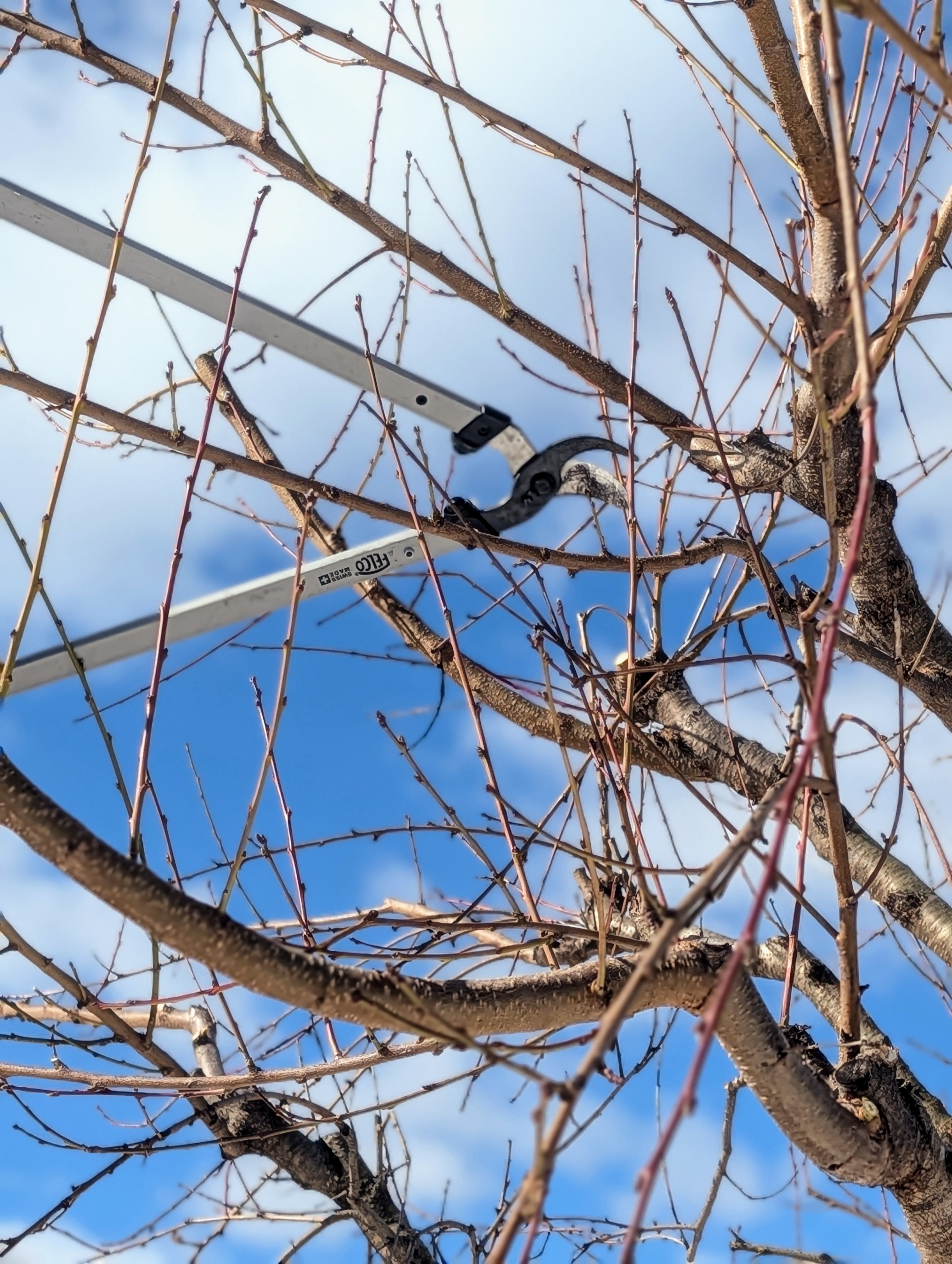
- For slightly larger branches up to two-inches in diameter, they use bypass loppers.
-
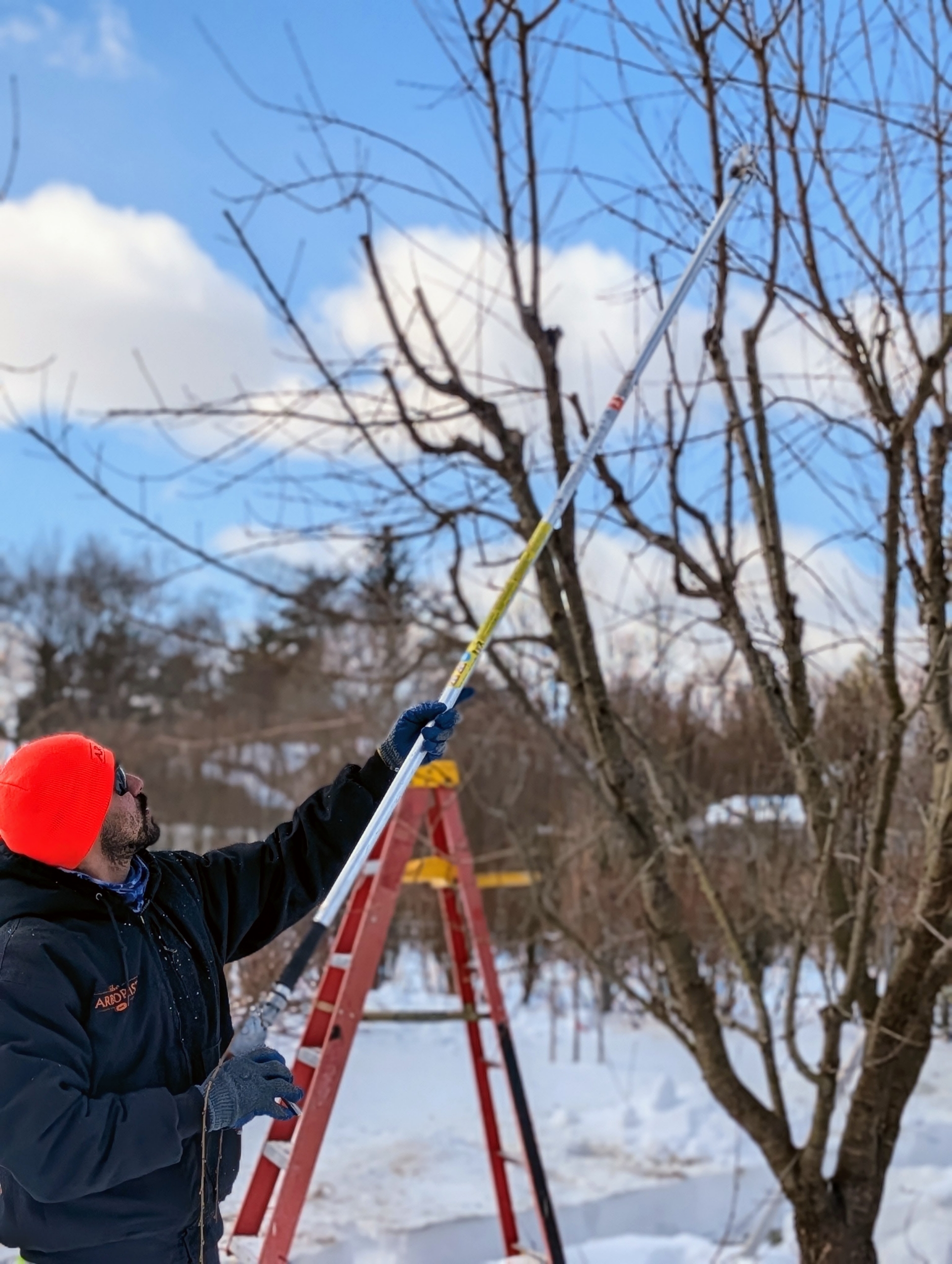
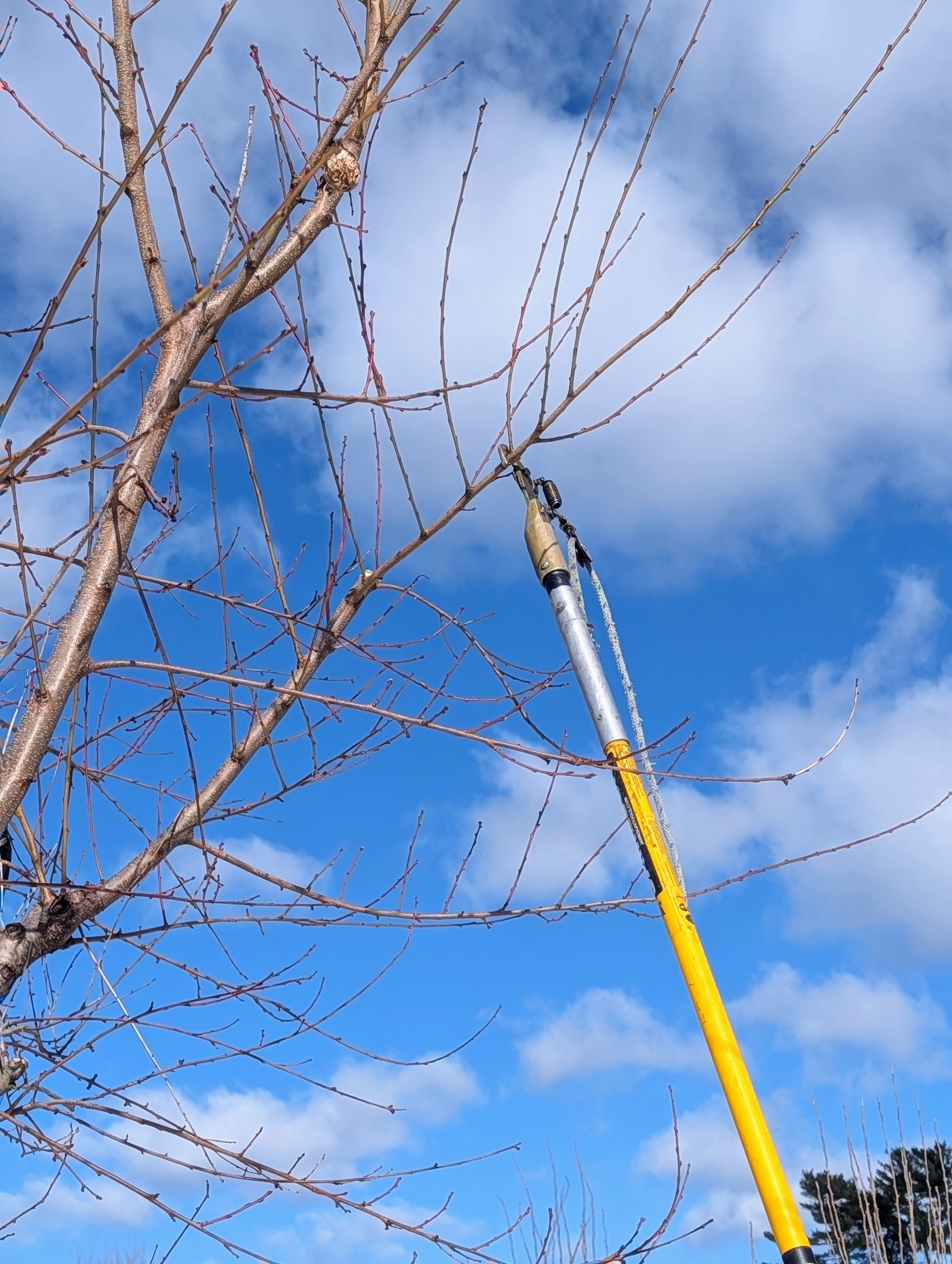
- Here, a long handled pole pruner is used to remove harder to reach branches.
-
- Pole pruners can reach high branches and trim multiple branches at once, saving time and effort. It’s important to have all the necessary tools at hand, so these tasks can be done efficiently.
-
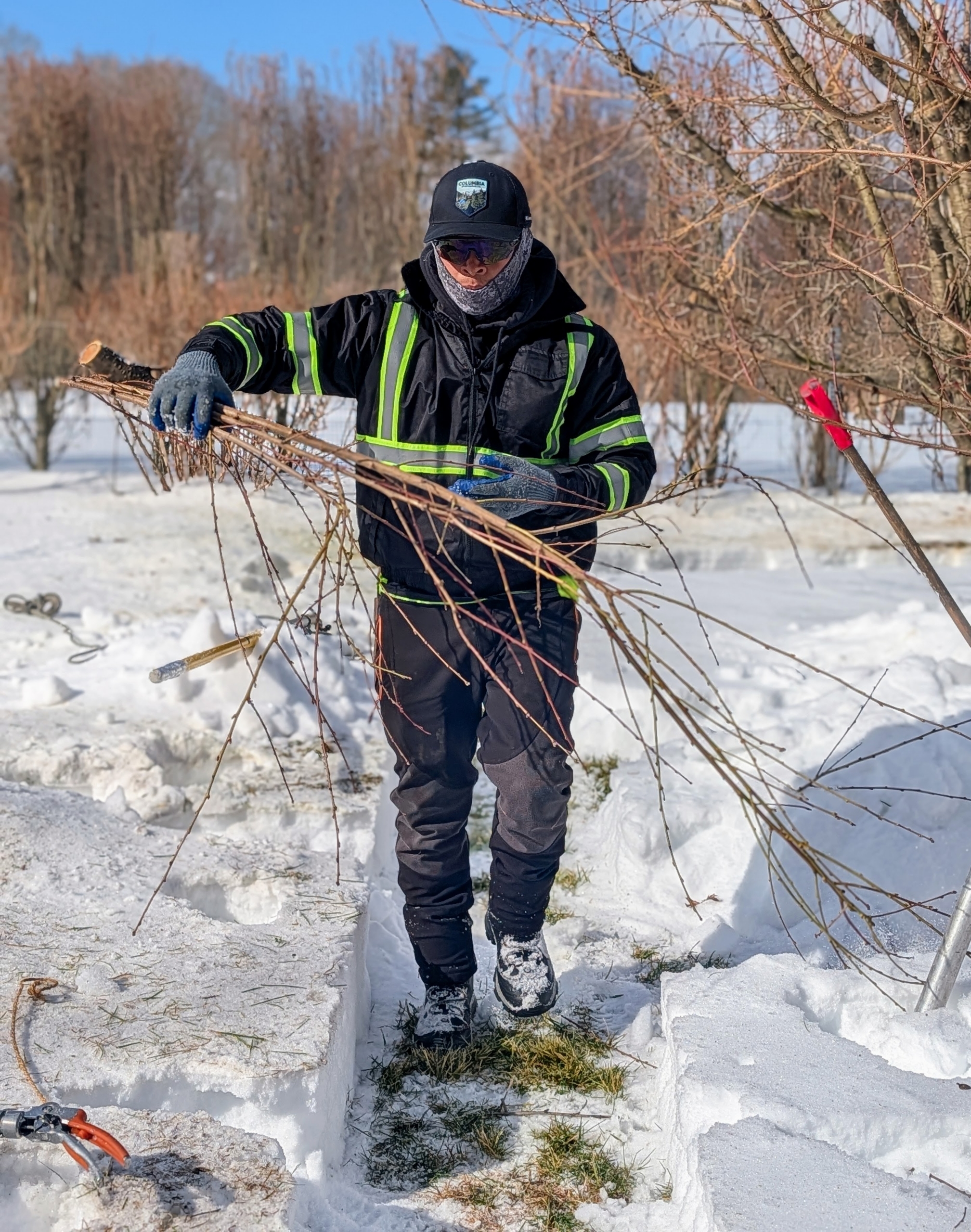
- When pruning, it’s always a good idea to pick up branches during the process, so there isn’t a lot of time wasted with clean-up in the end.
-
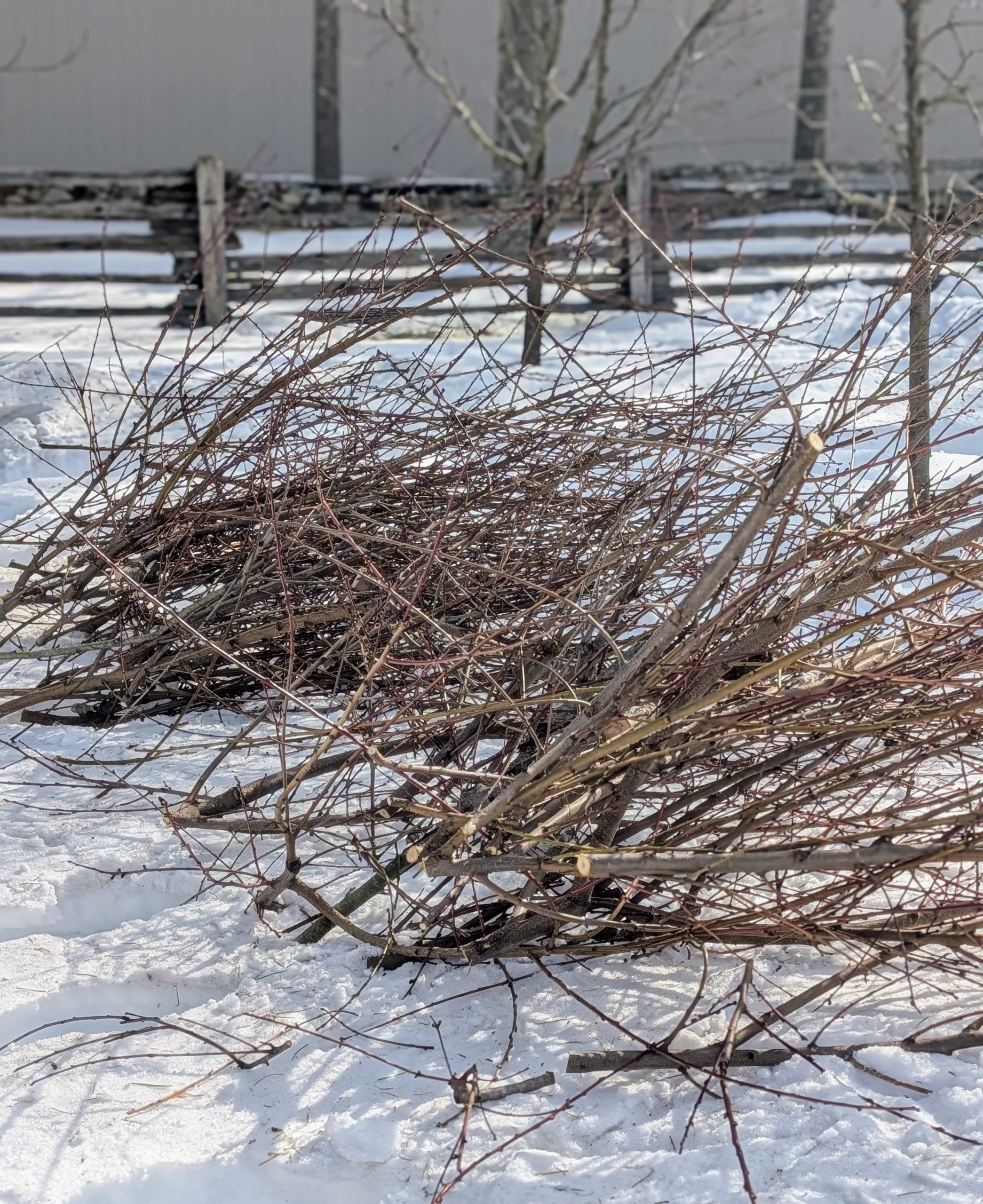
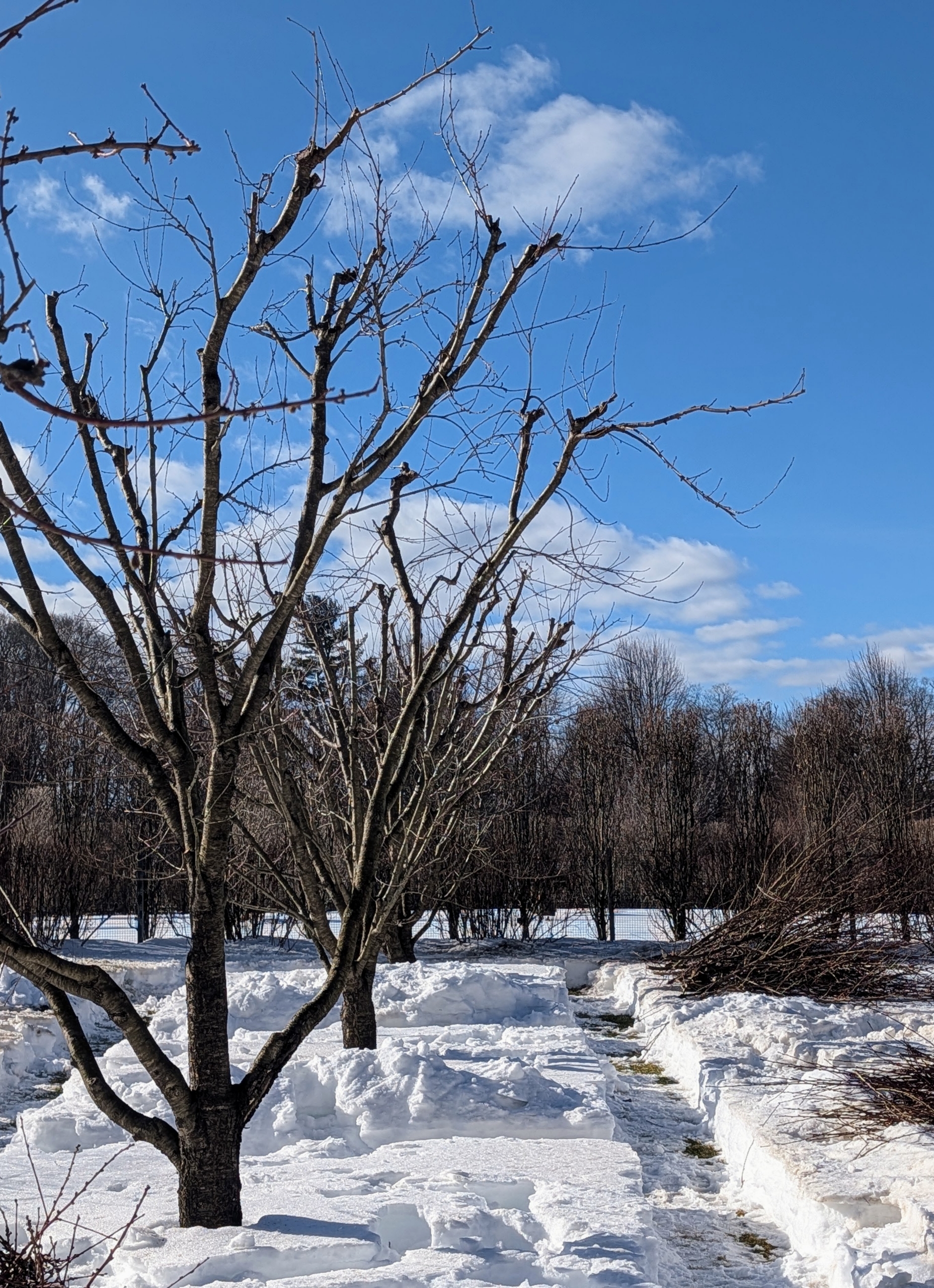
- Neat and tidy piles are made along the shoveled foot path, so they can be retrieved easily. The branches are either saved for kindling or processed through a wood chipper to make mulch.
-
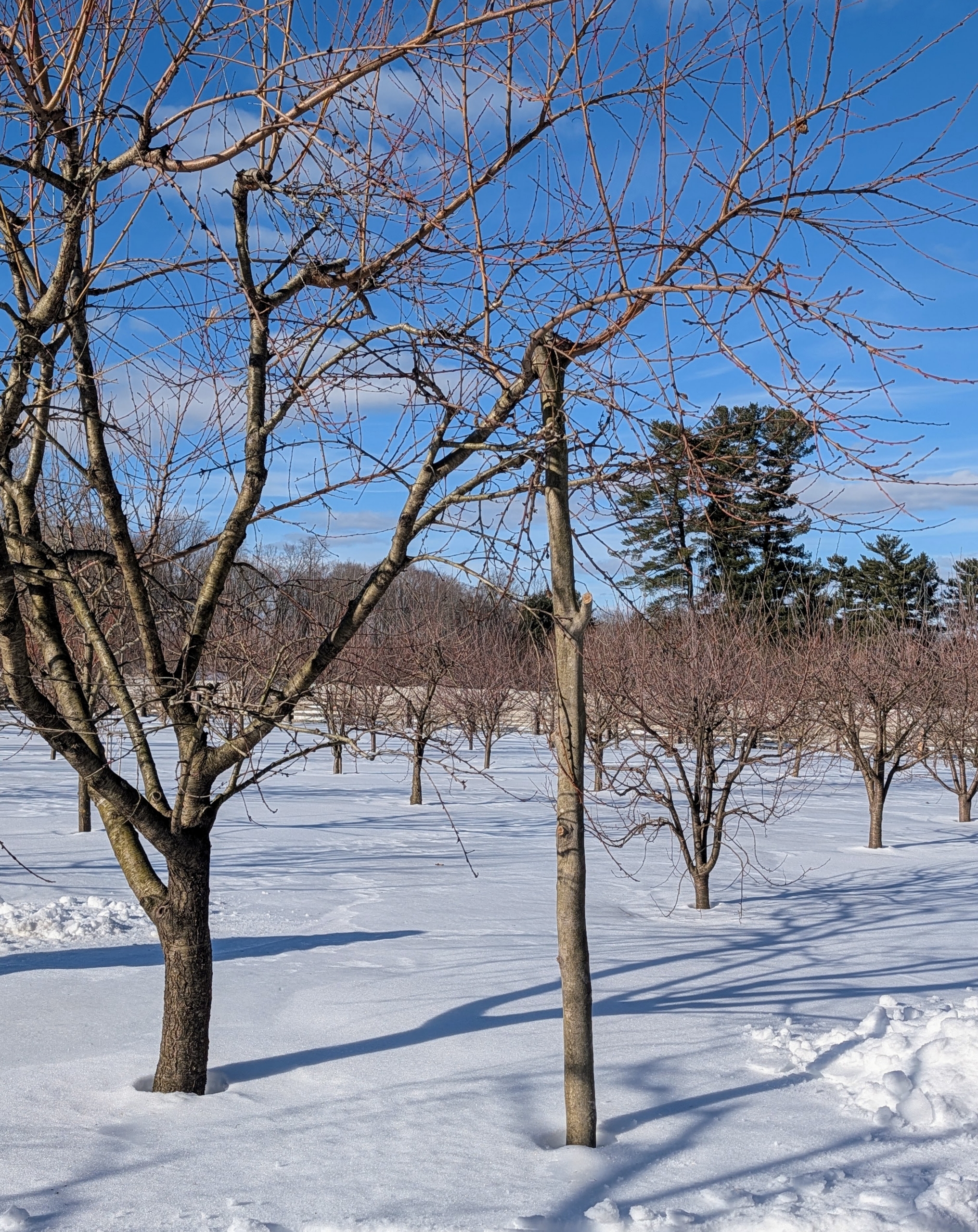
- Some of my fruit trees have long branches which weigh heavy when laden with fruit. To support them, I use “crutches” with natural “v” notches that could cradle the heavy limbs.
-
- Removing crowded branches helps let in light and promote good air circulation.
-
- A good pruning improves productivity and promotes more fruiting. I like to prune my trees annually to establish and maintain good structure and shape.
-
- I instructed the crew to cut about a third of the new growth including all the suckers. There is still a lot more work to be done, but I am looking forward to many lustrous green trees heavy with fruits come summer.
 Martha Pins


 Martha Tweets

