

Planting Espaliered Lindens
It's always exciting to find just the right specimen trees to plant in a certain location. I recently spotted eight espaliered linden trees, Tilia cordata EC square, at Select Horticulture Inc., in nearby Pound Ridge, New York and knew right away they'd look excellent in my living maze.
I designed my maze to have a variety of different trees and shrubs. I wanted every turn to be both beautiful and interesting. I decided these lindens should be planted close together in a center allée formation close to the north end of the three-acre space. My gardeners and outdoor grounds crew prepared the location, put up landscape twine so every tree would be perfectly straight, gathered their tools, and got to work.
Here are some photos, enjoy.
-

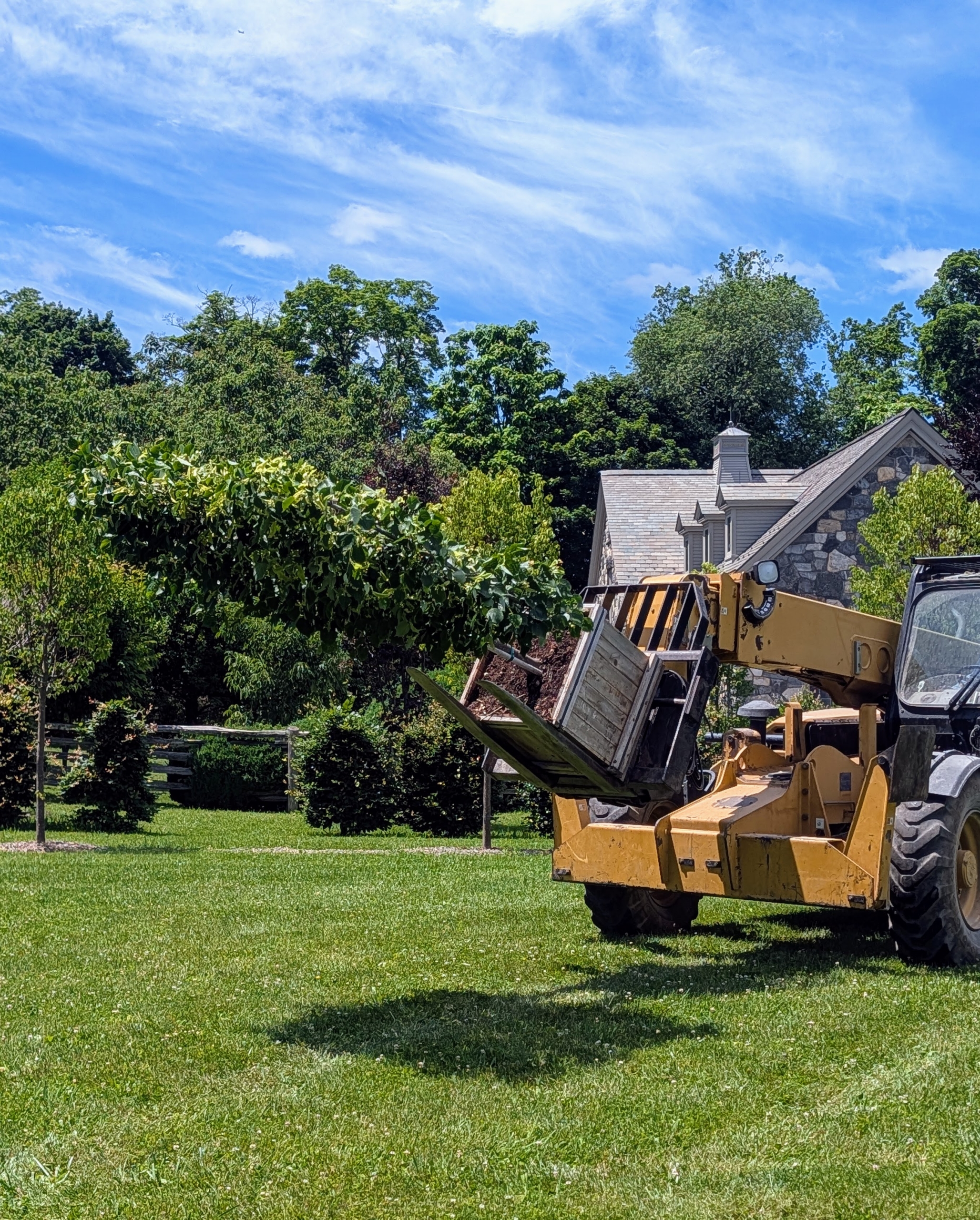
- It’s always fun to see what new trees I’m adding to the farm – on this day, eight handsome espaliered littleleaf lindens.
-
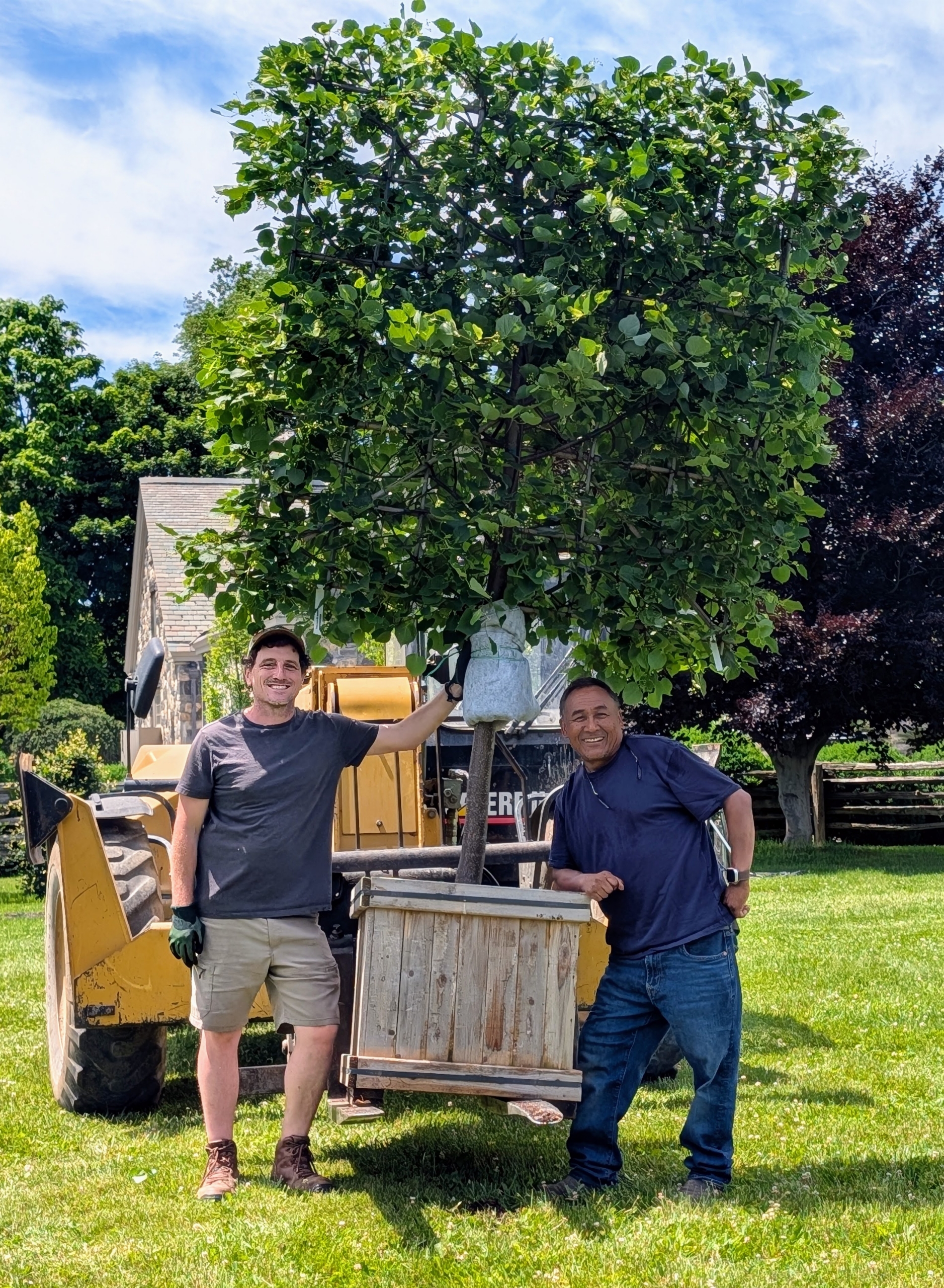
- My head gardener Ryan McCallister and Pete Sherpa from my outdoor grounds crew, unloaded all the trees where they would be planted – in a prominent center area of my maze.
-
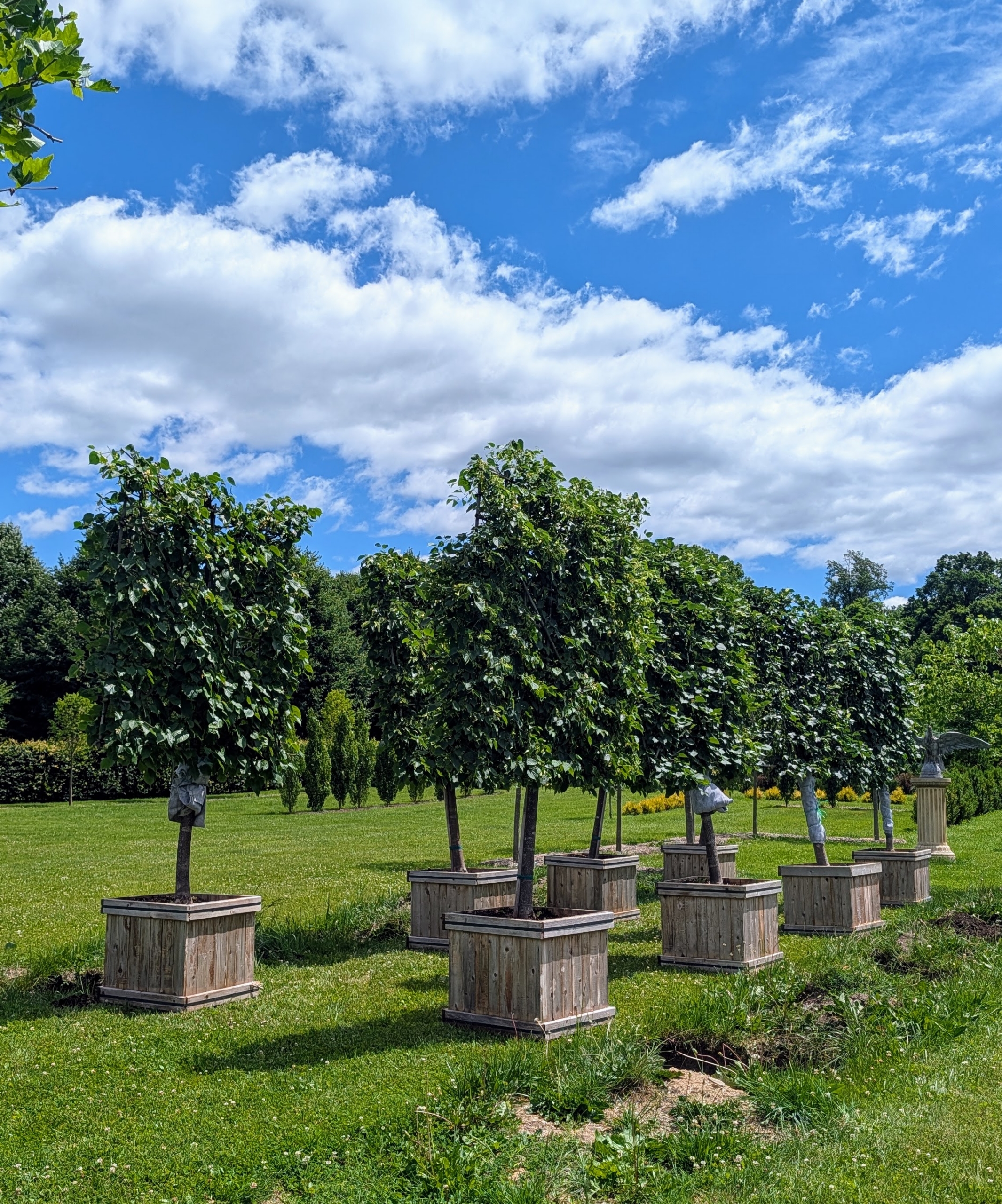
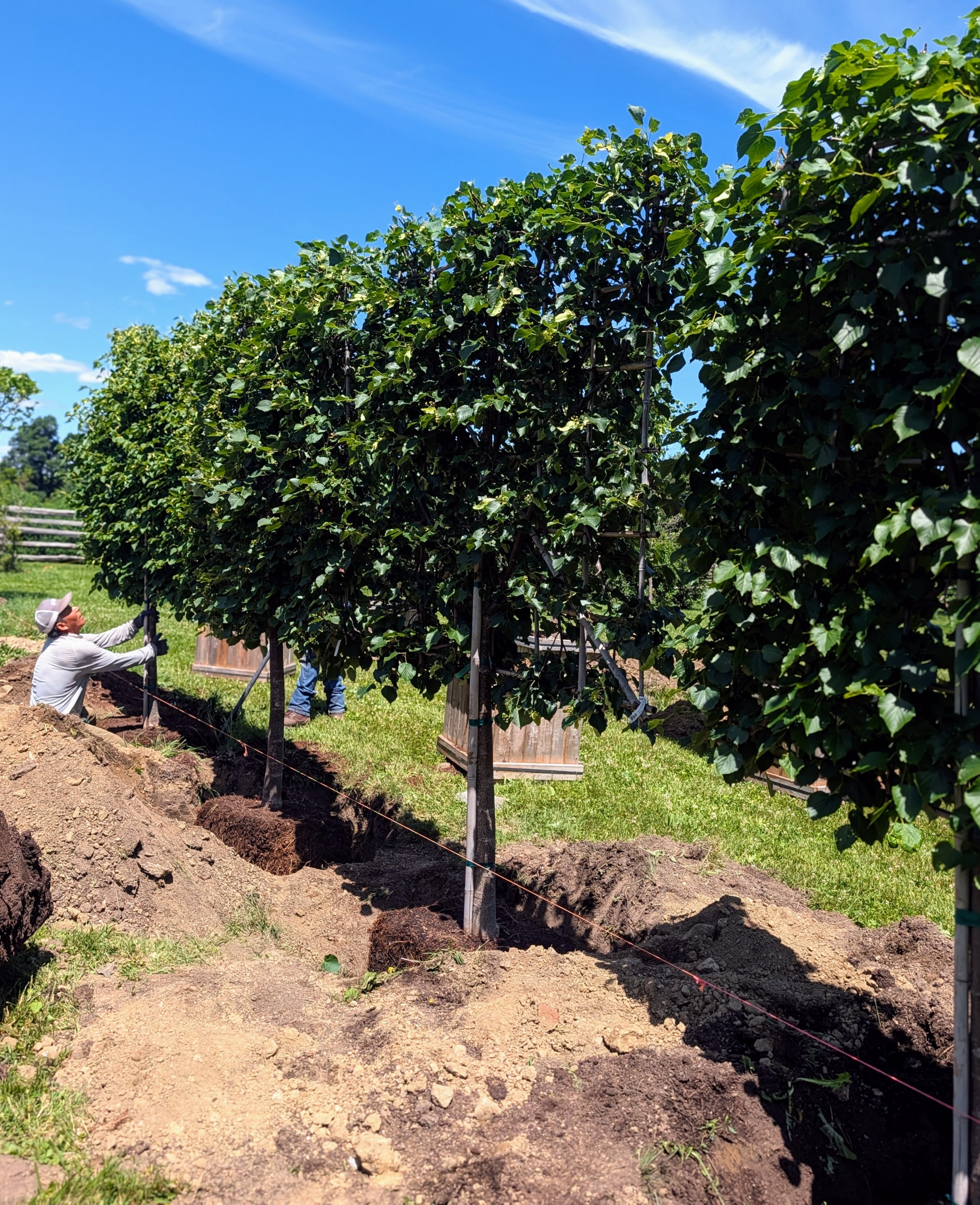
- Here they are next to some previously dug holes. I instructed the team to plant them close to each other, almost touching.
-
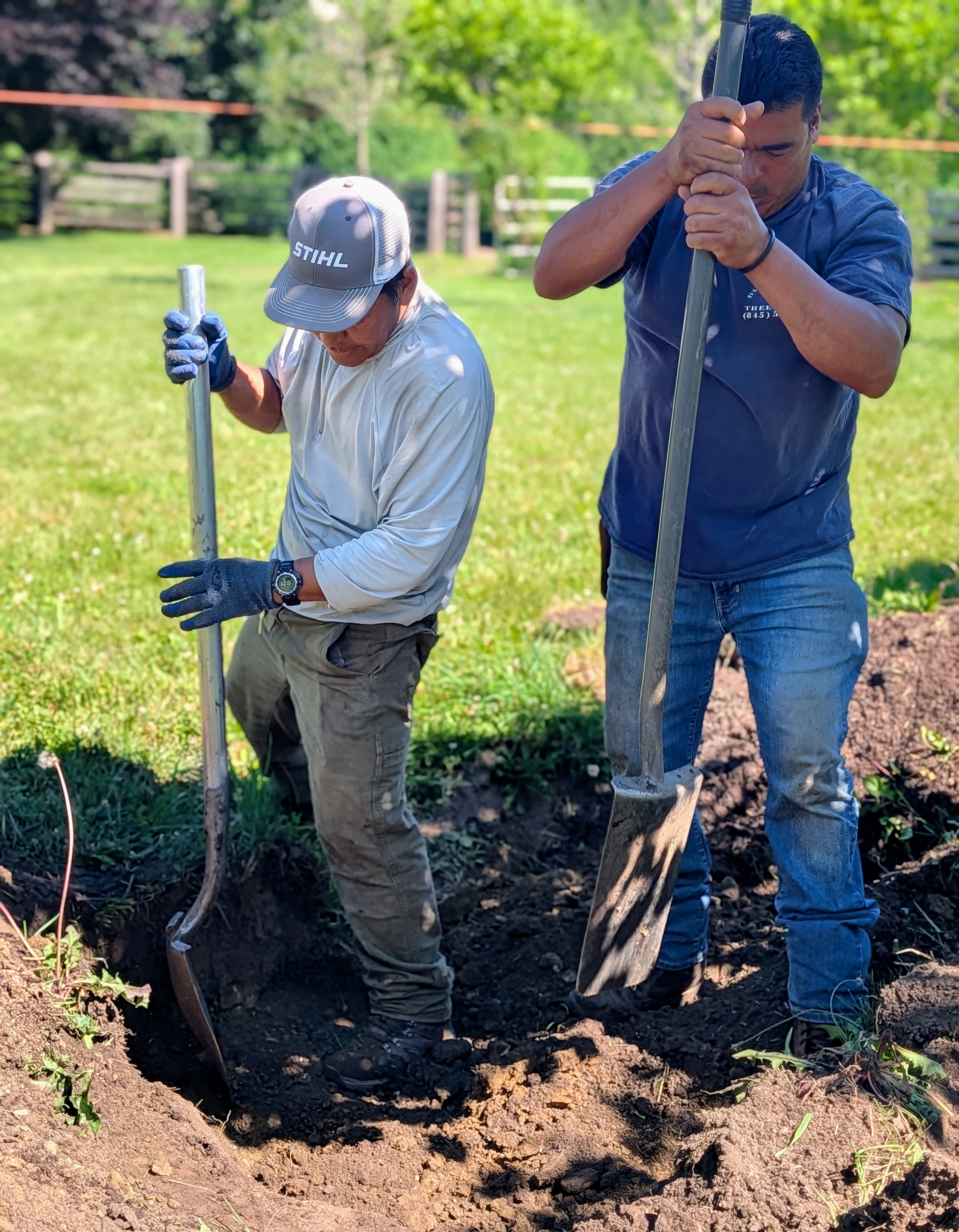
- The holes needed to be moved slightly to accommodate the trees, so Phurba and Arnold started digging. Each hole is manually smoothed out and prepared to ensure it is deep enough for each specimen. The hole sides are slanted. Digging a wide planting hole helps to provide the best opportunity for roots to expand into its new growing environment.
-
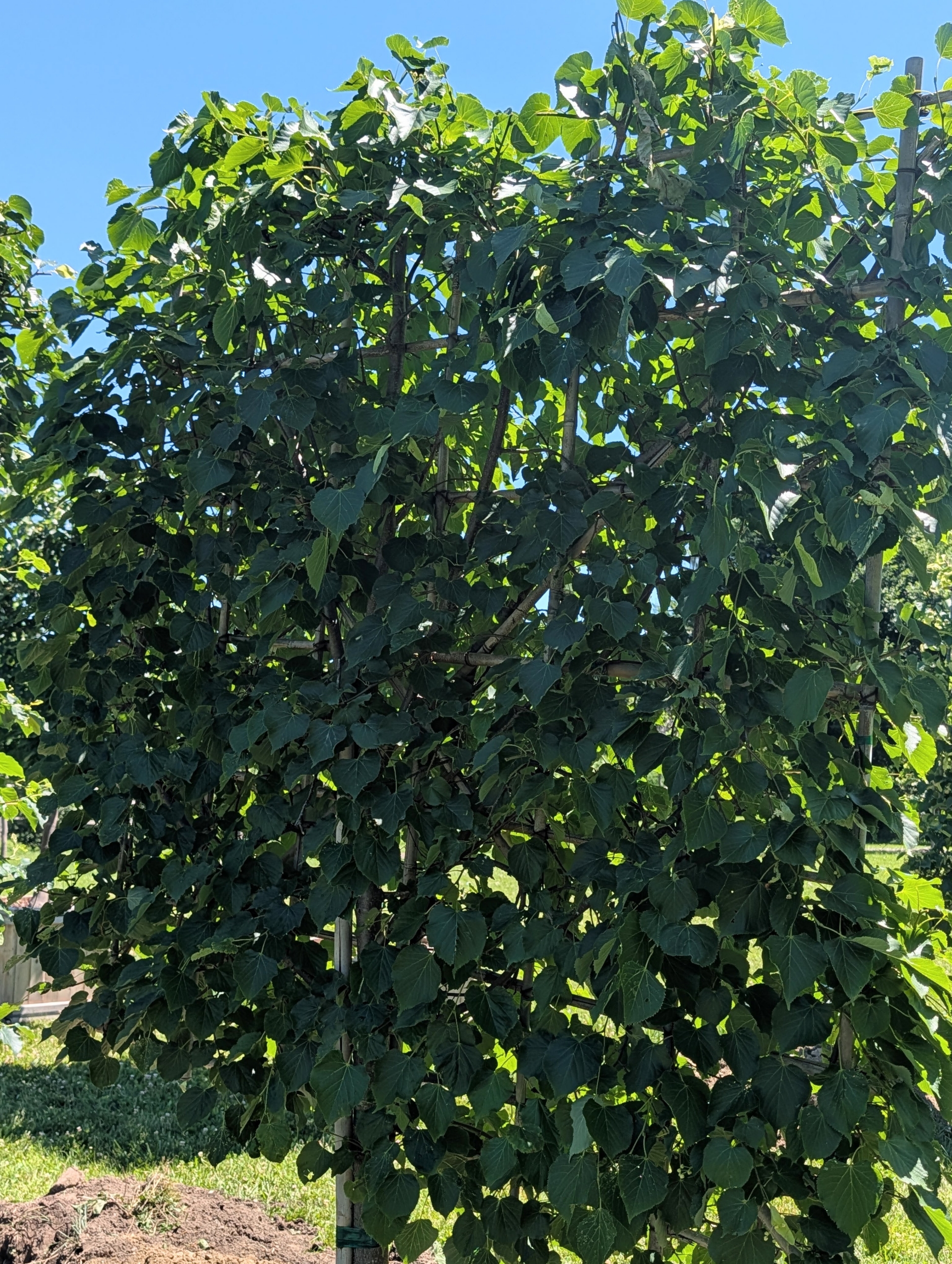
- Tilia cordata, commonly called littleleaf linden, is native to Europe. It has been widely planted in the United States as an ornamental tree because of its attractive foliage, dense form, and its tolerance to urban conditions. These are espaliered, meaning they are trained along a support to keep them in this flat shape, which is square.
-
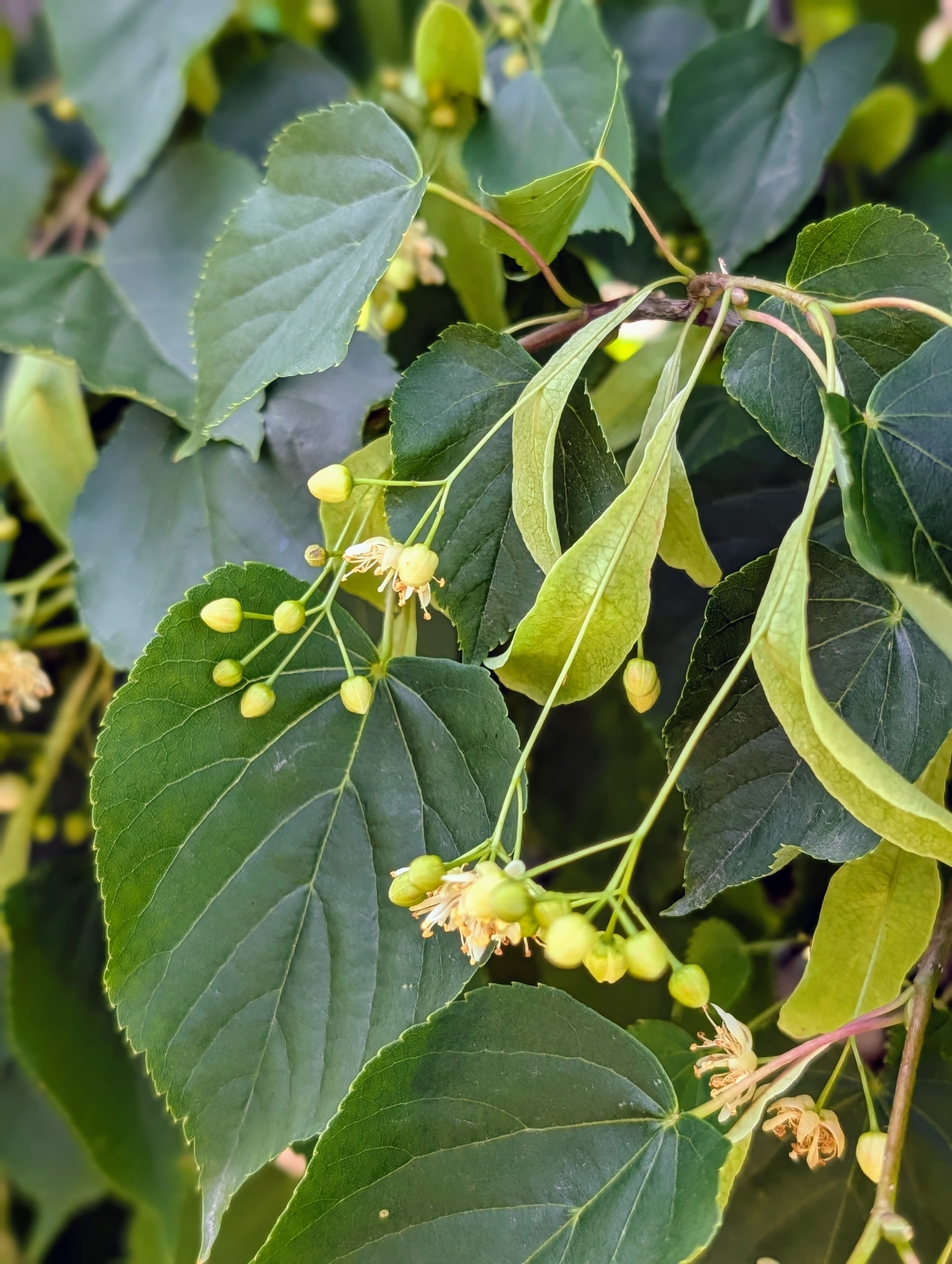
- The leaves of the littleleaf linden are ovate, shiny, and dark green up to about three inches long with tapered tips, serrated margins, and cordate or heart-shaped bases. Littleleaf linden trees are known for their fragrant, creamy-yellow flowers that appear in late spring to early summer, typically June to July.
-
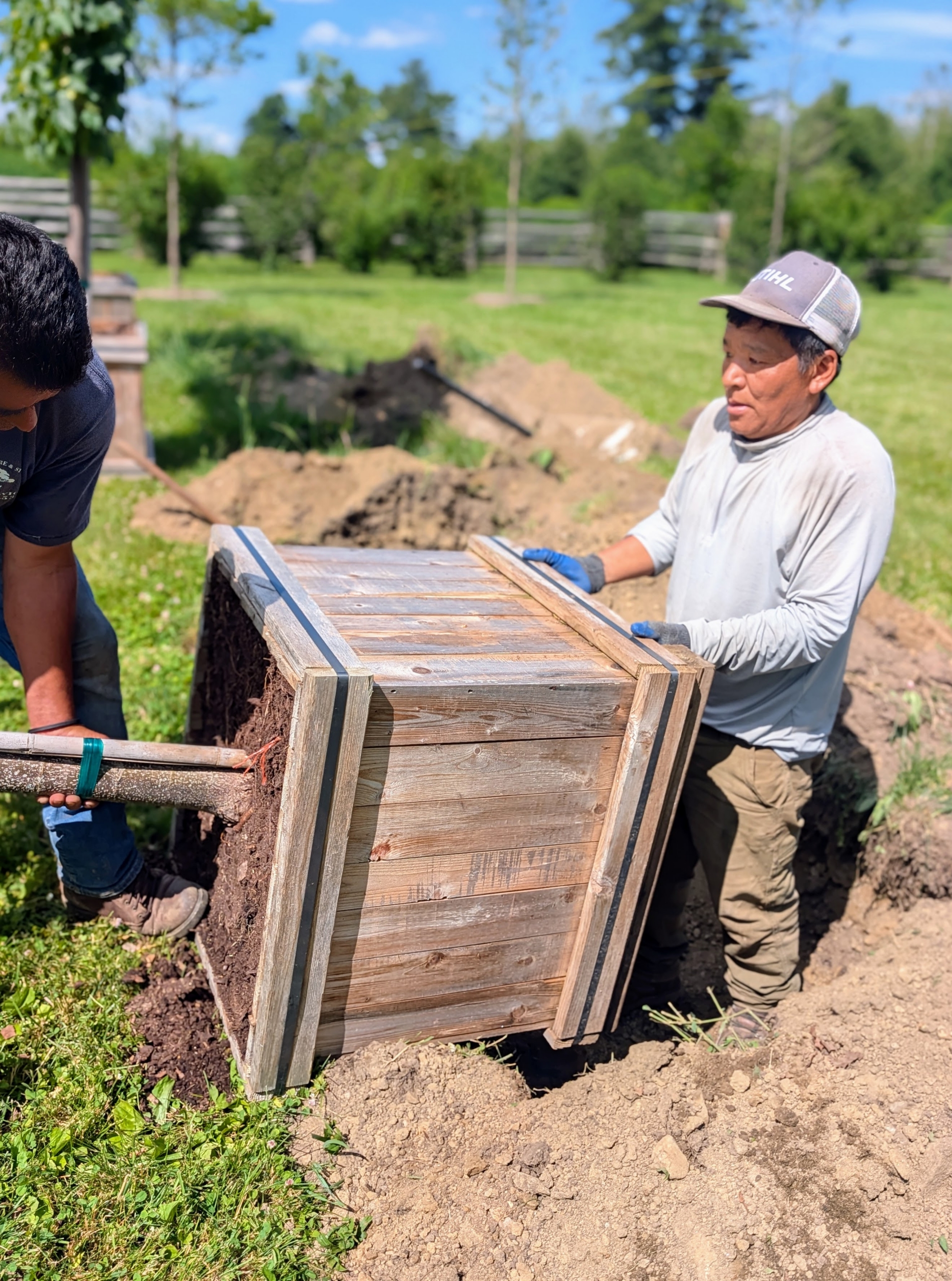
- The trees arrived in wooden boxes. I asked the crew to be careful, so the boxes were not damaged – I can always repurpose them later.
-
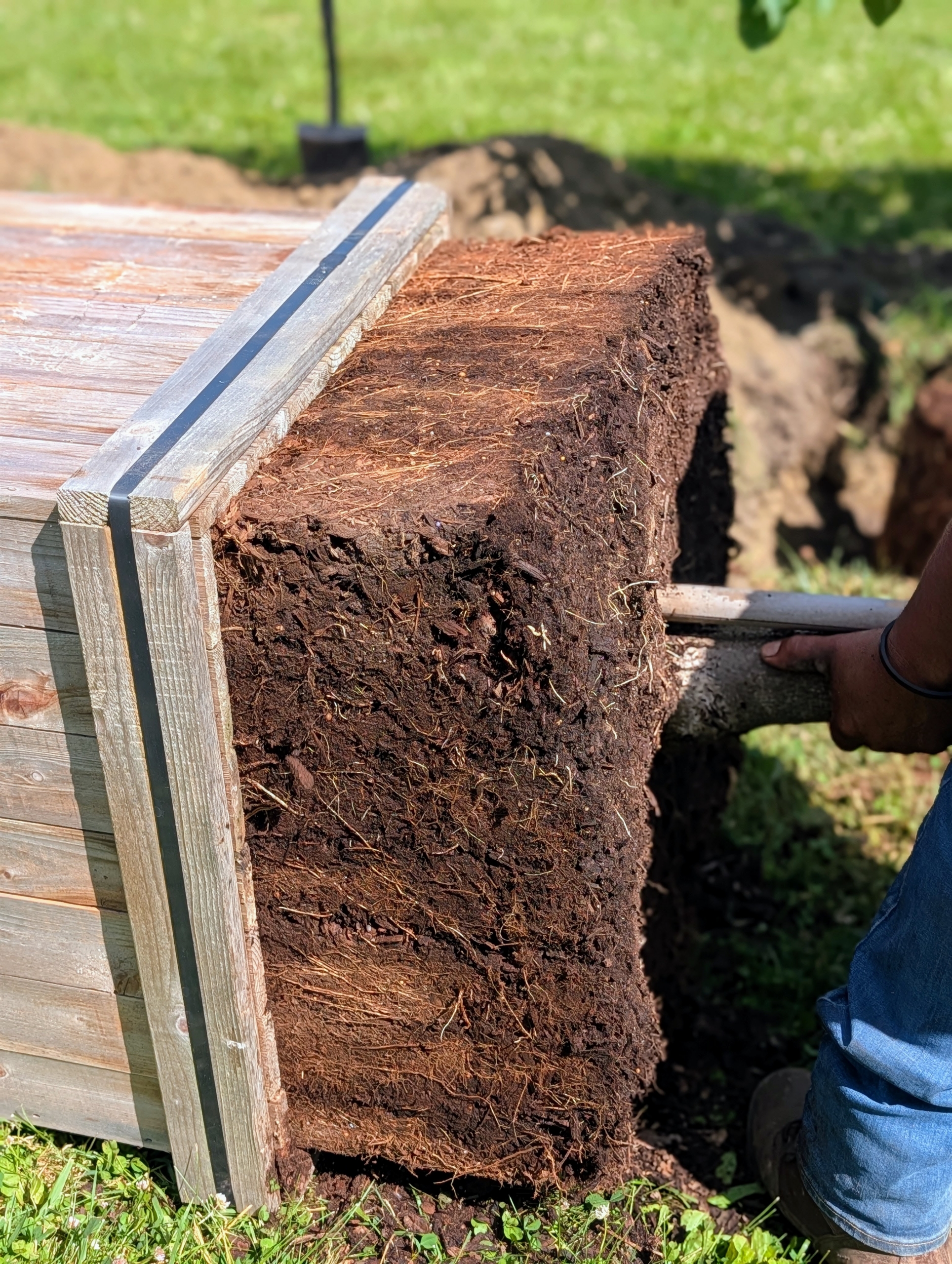
- The root ball is slowly pulled from its box.
-
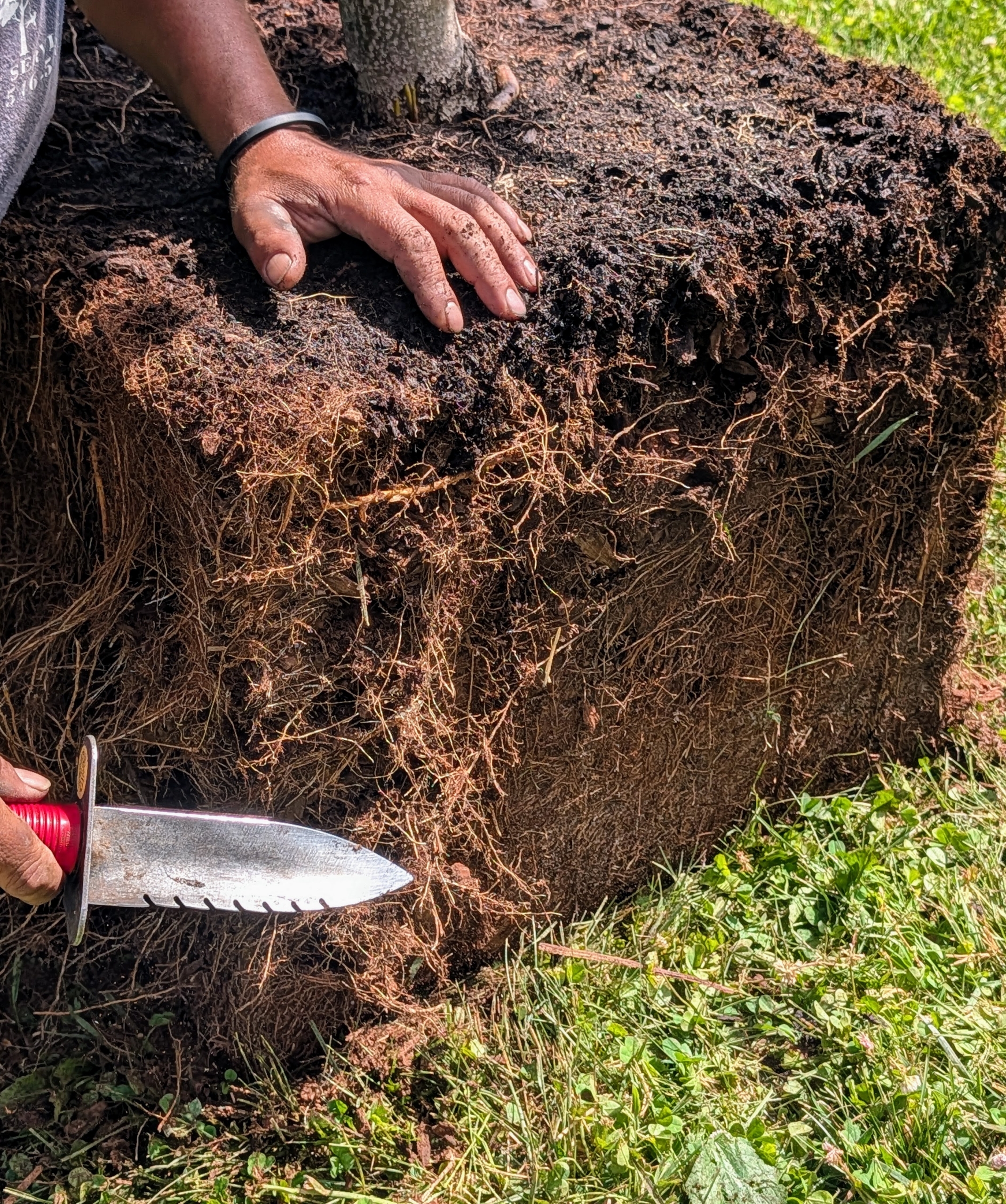
- And then each root ball is scarified. Scarifying the root ball is a planting technique where one cuts or scores the outer edges of the root ball to redirect circling roots and encourage new roots to develop outward into the surrounding soil.
-
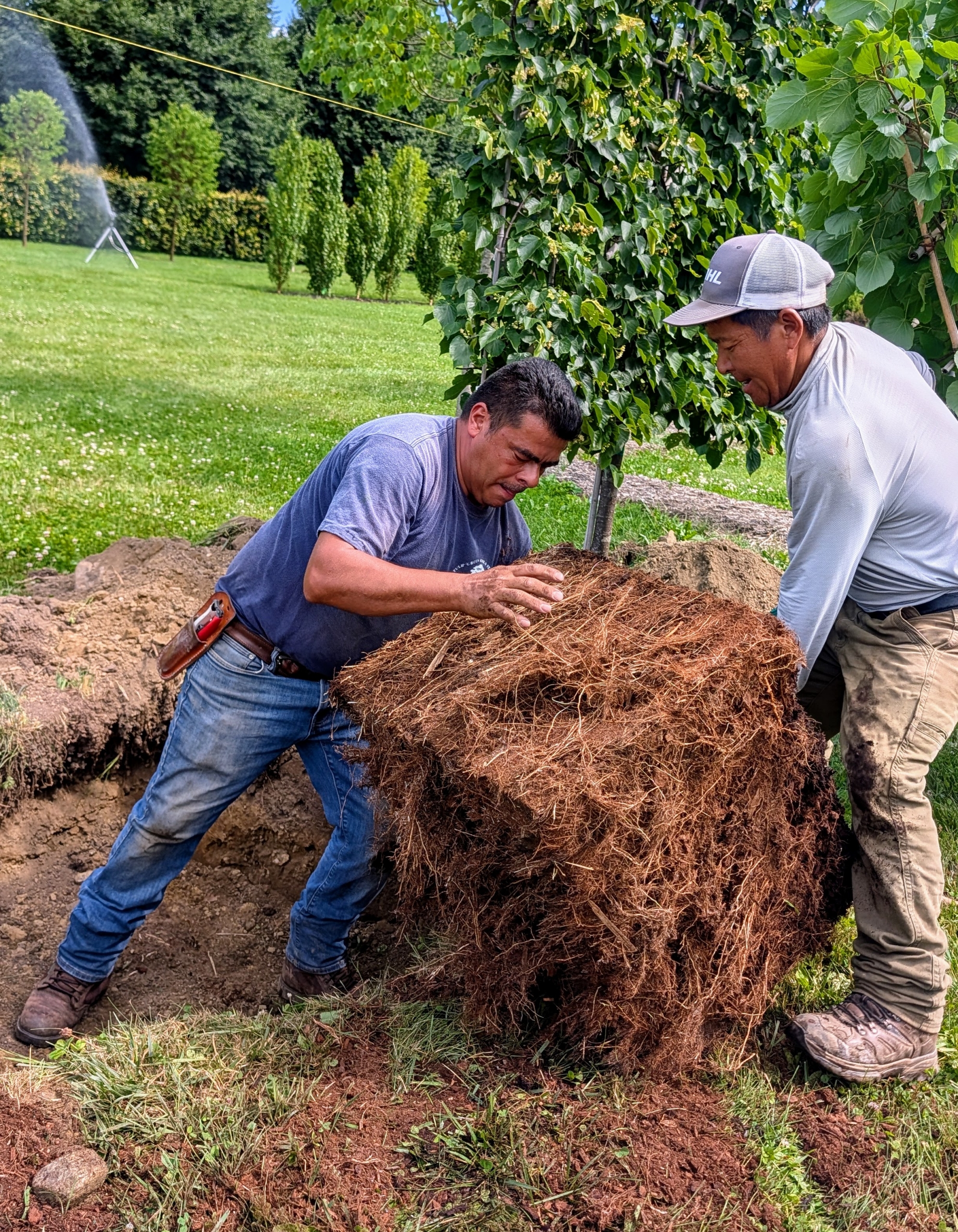
- Arnold and Phurba slowly roll the root ball into position. When moving a heavy tree into its hole, only hold it by the root ball and the base of the trunk – never by its branches, which could easily break.
-
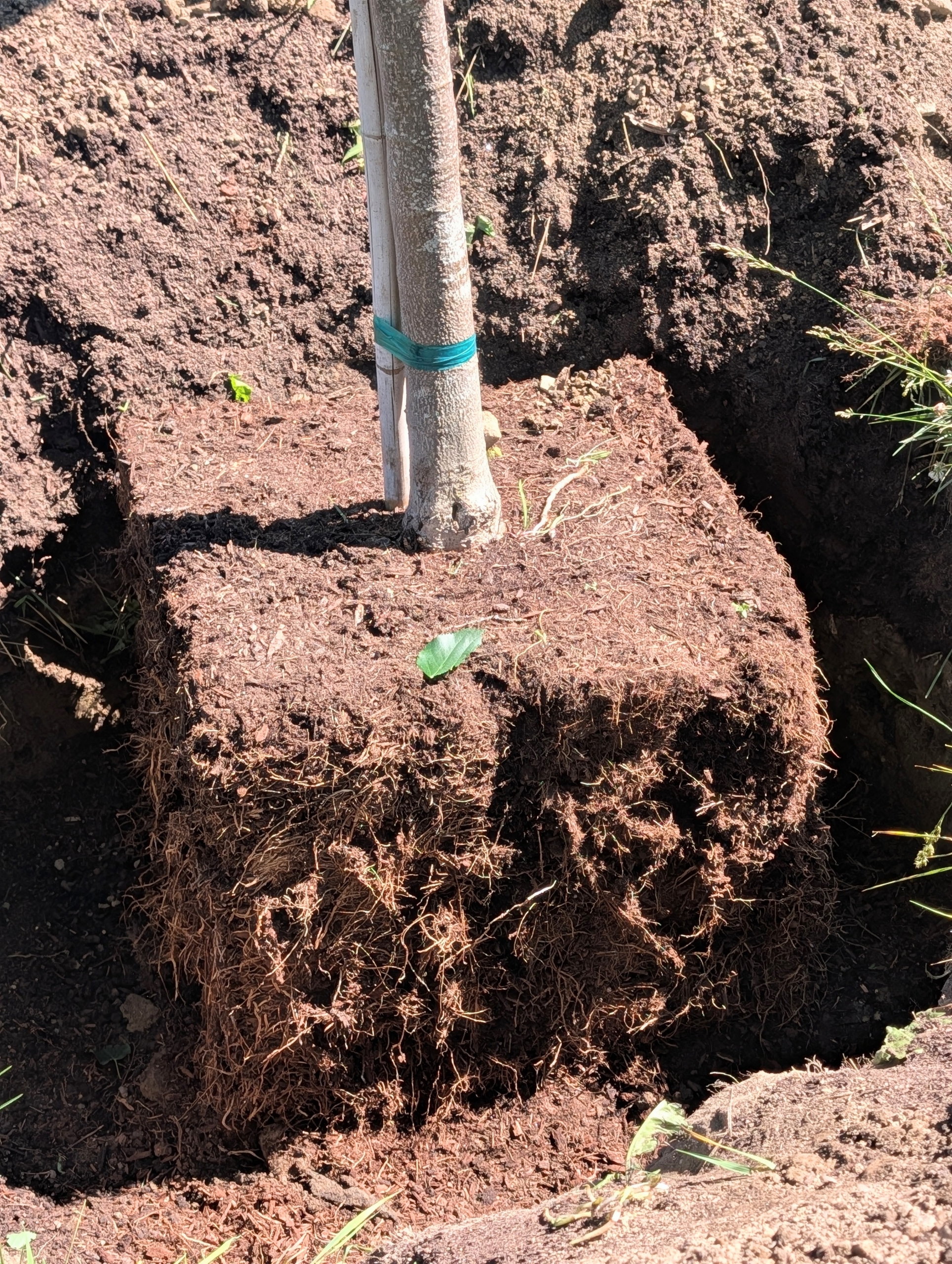
- Once the tree is in its designated hole, it is adjusted to ensure everything is precisely straight and in line with the others. Landscape twine is secured to help.
-
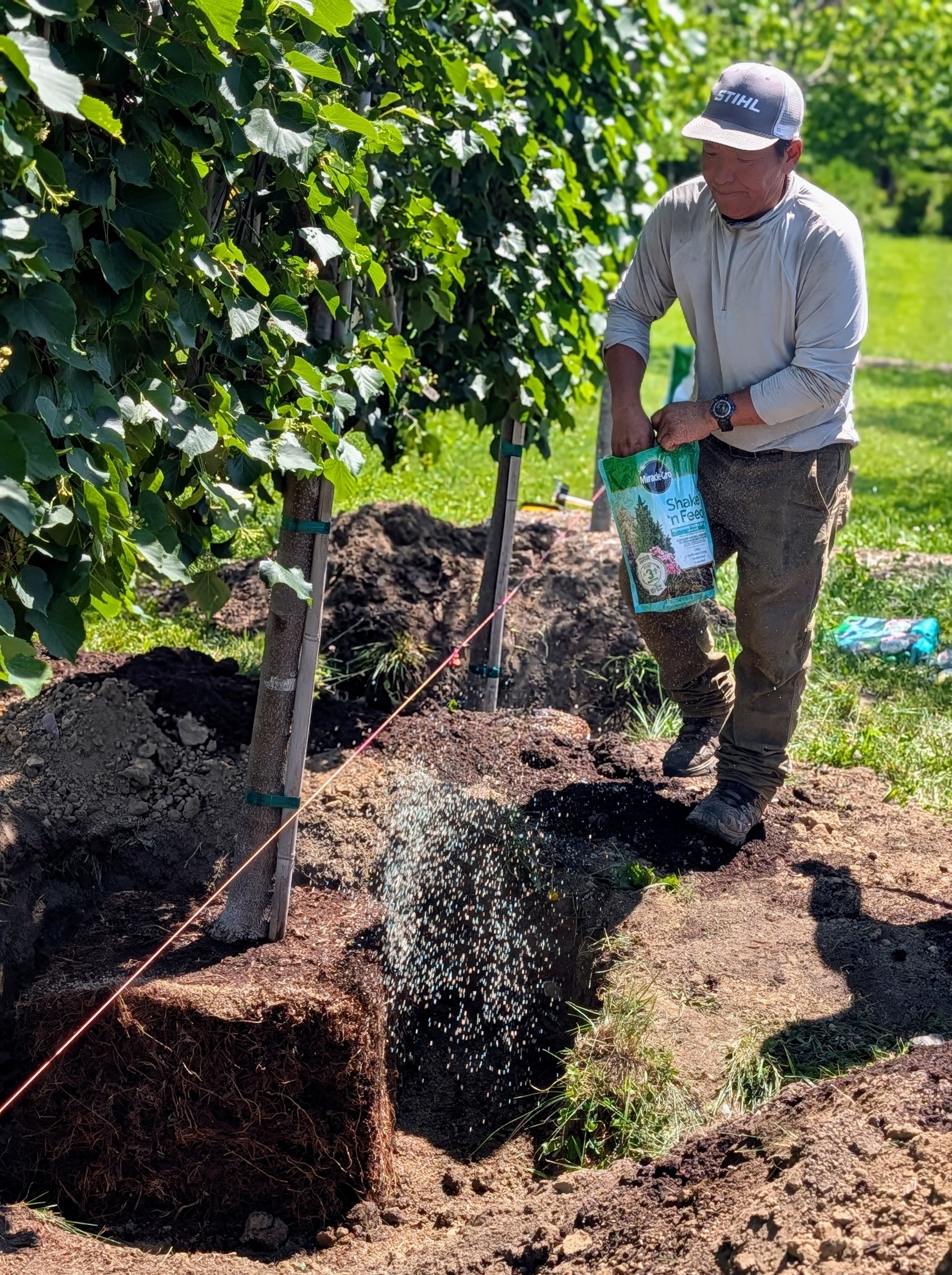
- The entire area – each hole and the surrounding soil – is sprinkled with fertilizer.
-
- For these I use Miracle-Gro Shake ‘n Feed Flowering Trees and Shrubs plant food.

-
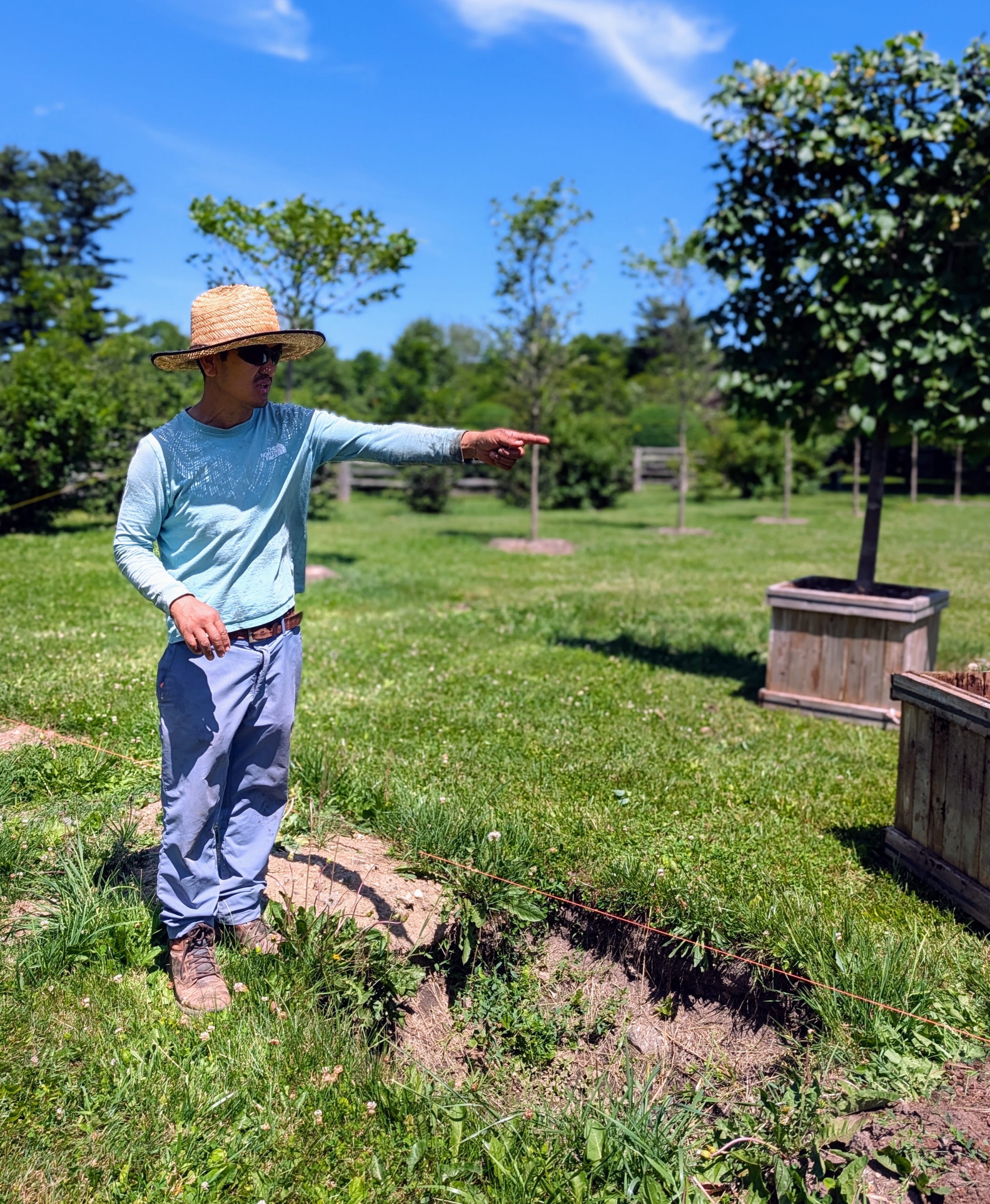
- My foreman Chhiring has a good eye for planting, so he also takes a look – pointing out which trees need a bit more adjusting.
-
- Phurba moves a tree ever so slightly. The crew also positions plantings with the best side facing the walking path or area where guests, or myself, will see them.
-
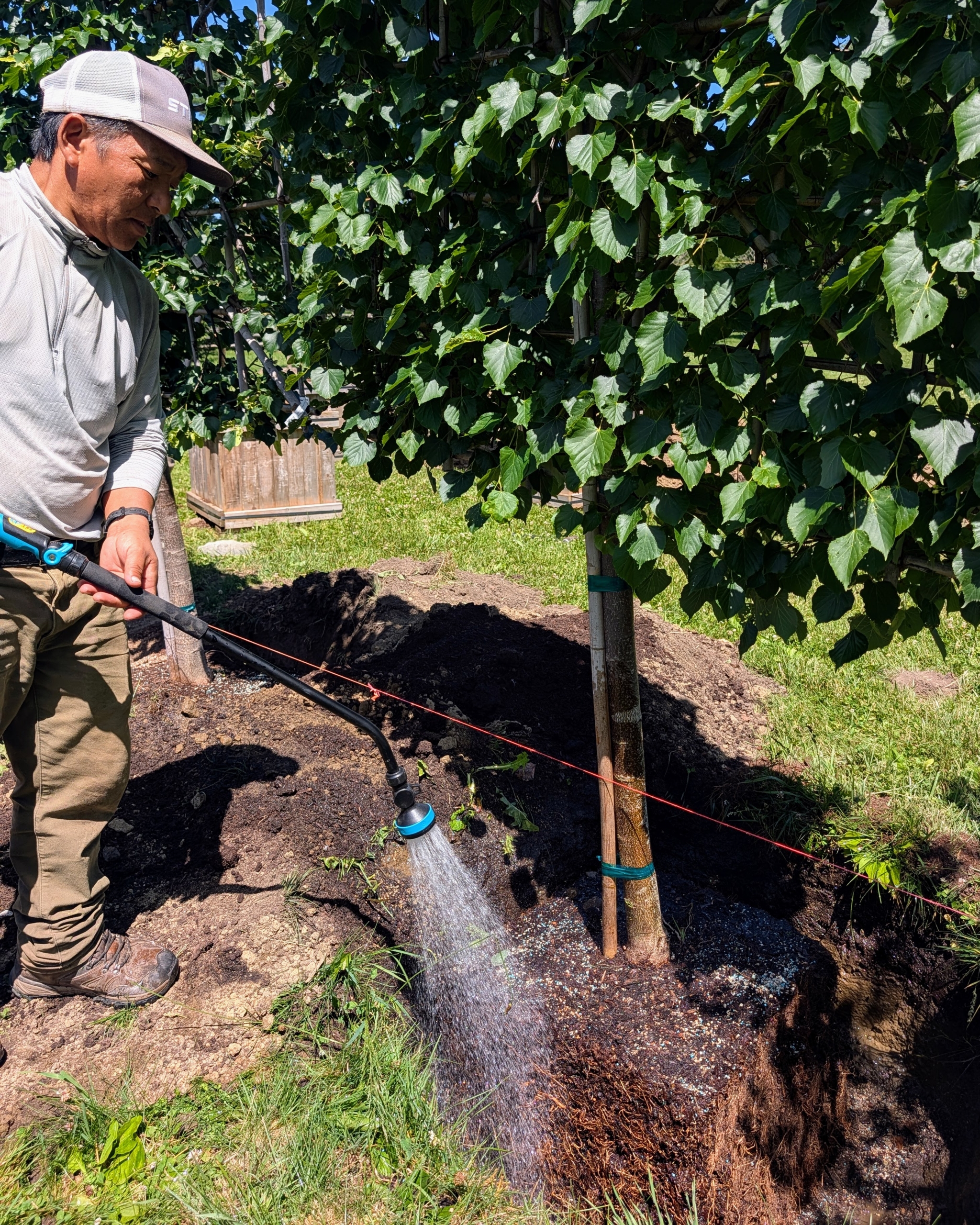
- Once they are in place, the crew starts watering. I always instruct my team to fill the hole with water before it is filled.
-
- Filling the hole with water helps settle any loose soil, eliminate air pockets, hydrate the soil around the root ball to encourage roots to spread, and minimizes stress to the tree when it is newly transplanted.

-
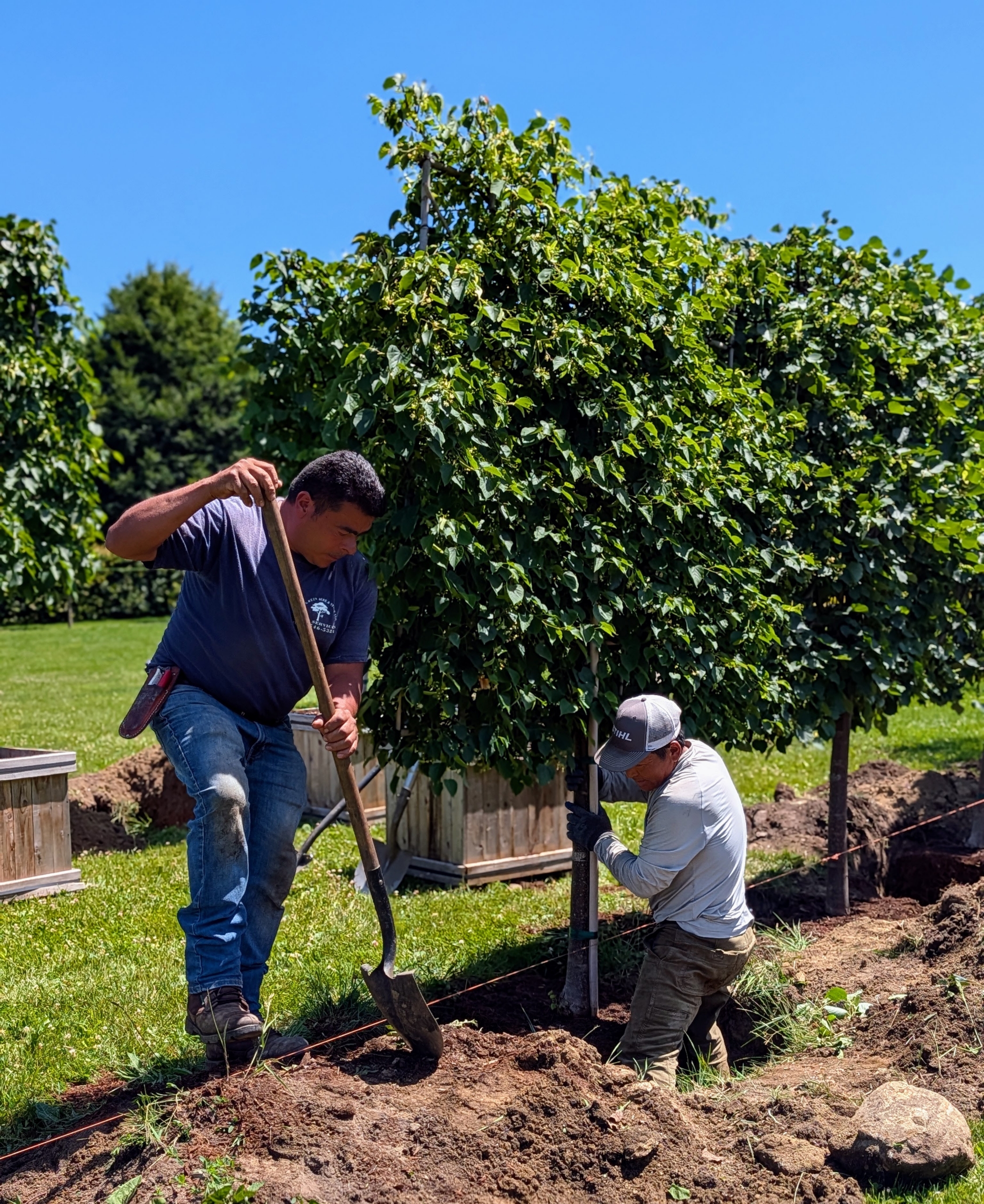
- Then it’s time to backfill.
-
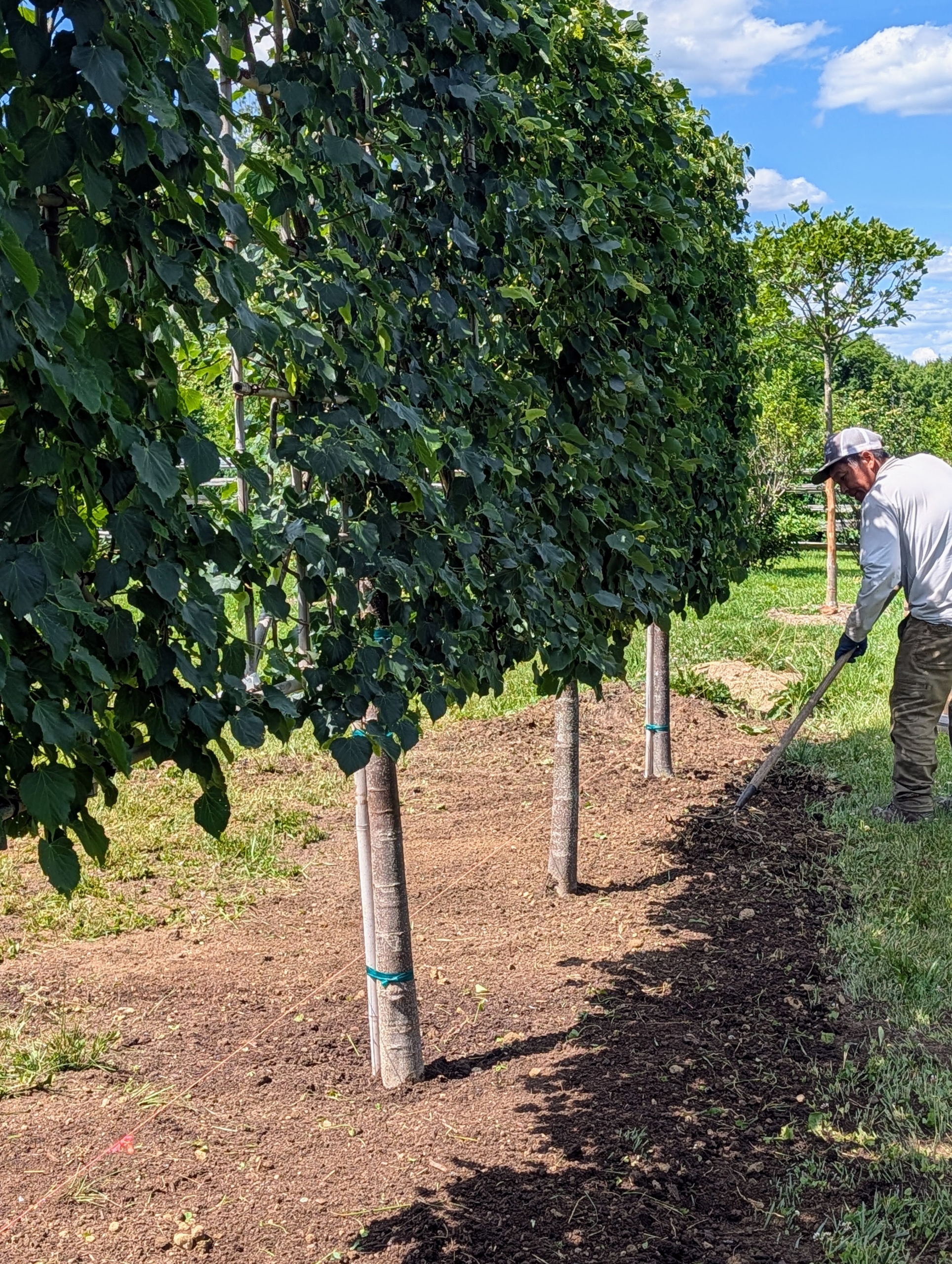
- Afterward, Phurba rakes the area beneath the trees and removes and loose rocks or clumps of soil.
-
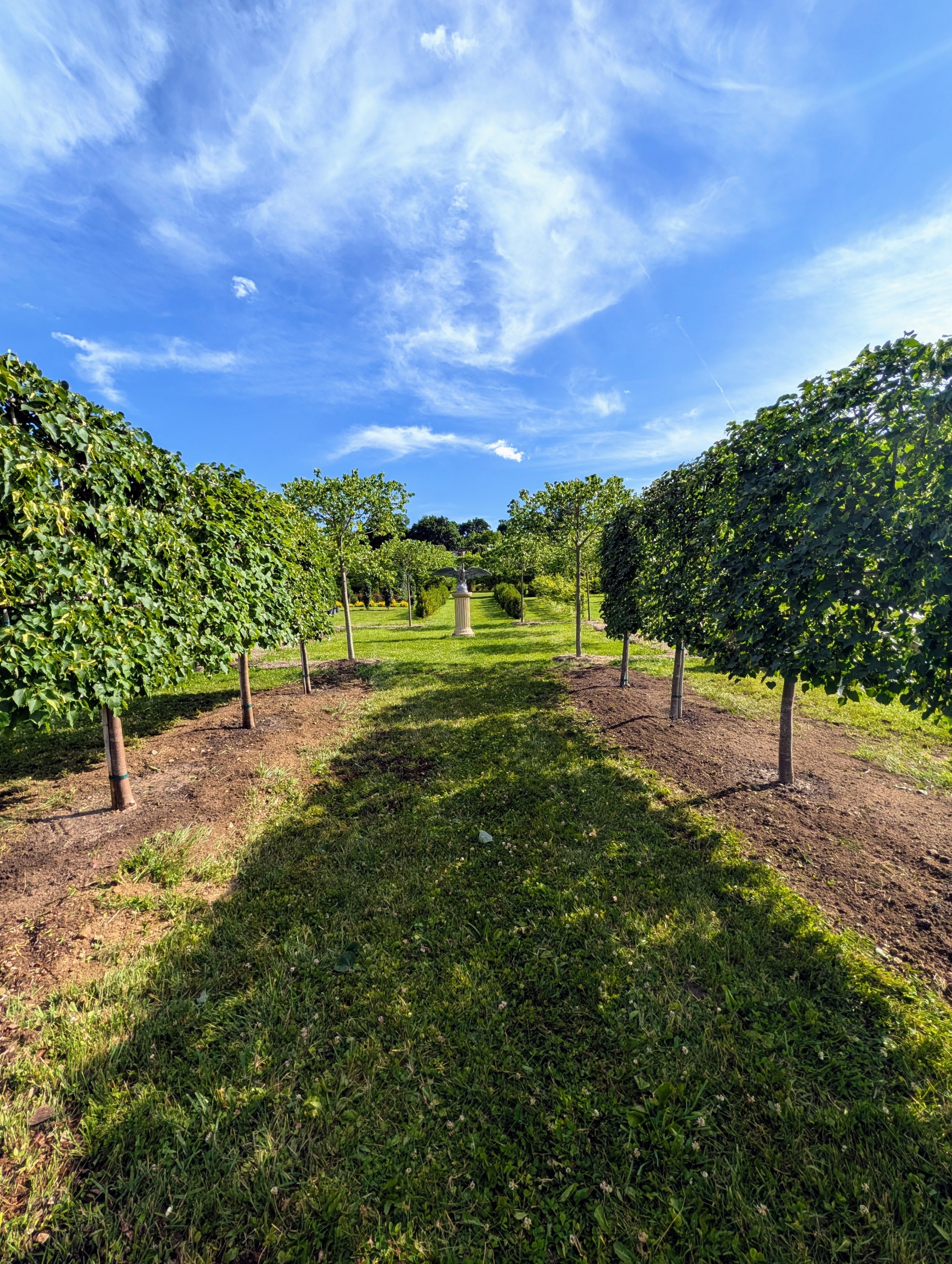
- The trees are just in front of this eagle – one of the main focal points of my maze. The newly planted area will also be mulched and edged.

-
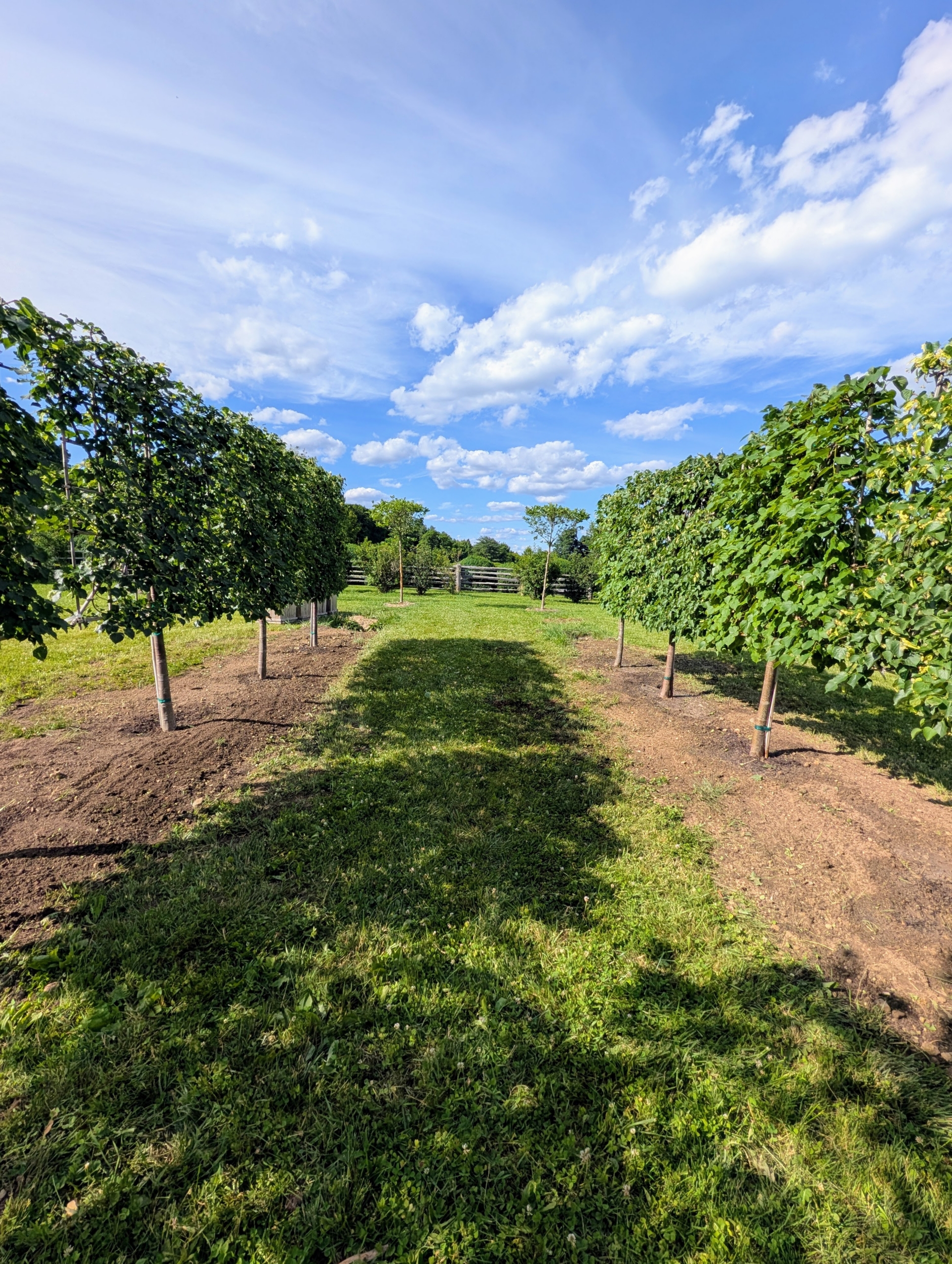
- I think it looks so excellent here surrounded by other linden trees. These littleleaf linden trees usually produce a single leader trunk that supports the evenly spaced, horizontal branches.
-
- This maze is almost done. I’m so proud of it. Follow along to see more of my “a-mazing” maze trees.
 Martha Pins


 Martha Tweets

