

More Colors of Fall
Here at my farm, the trees continue to put on a spectacular display of fall color.
At this time of year, changes in temperature and daylight cause leaves to slow and eventually stop their food-making process. As the chlorophyll breaks down, the green color fades, revealing the beautiful hues of autumn - gorgeous shades of orange, yellow, brown, red, and evergreen.
Enjoy these photos.
-

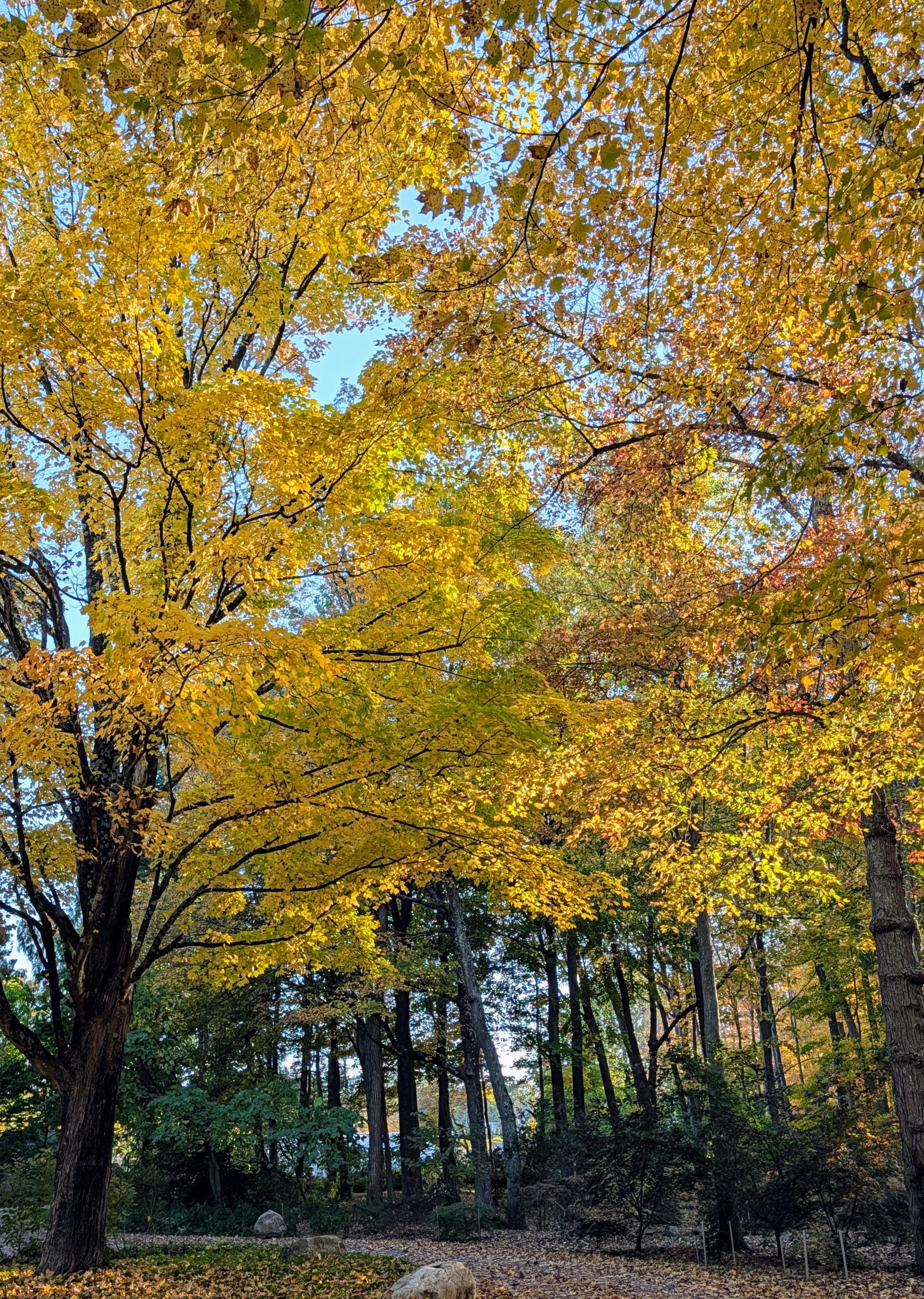
- Fall foliage has not quite hit full peak here at my farm, but the changing leaves are gorgeous.
-
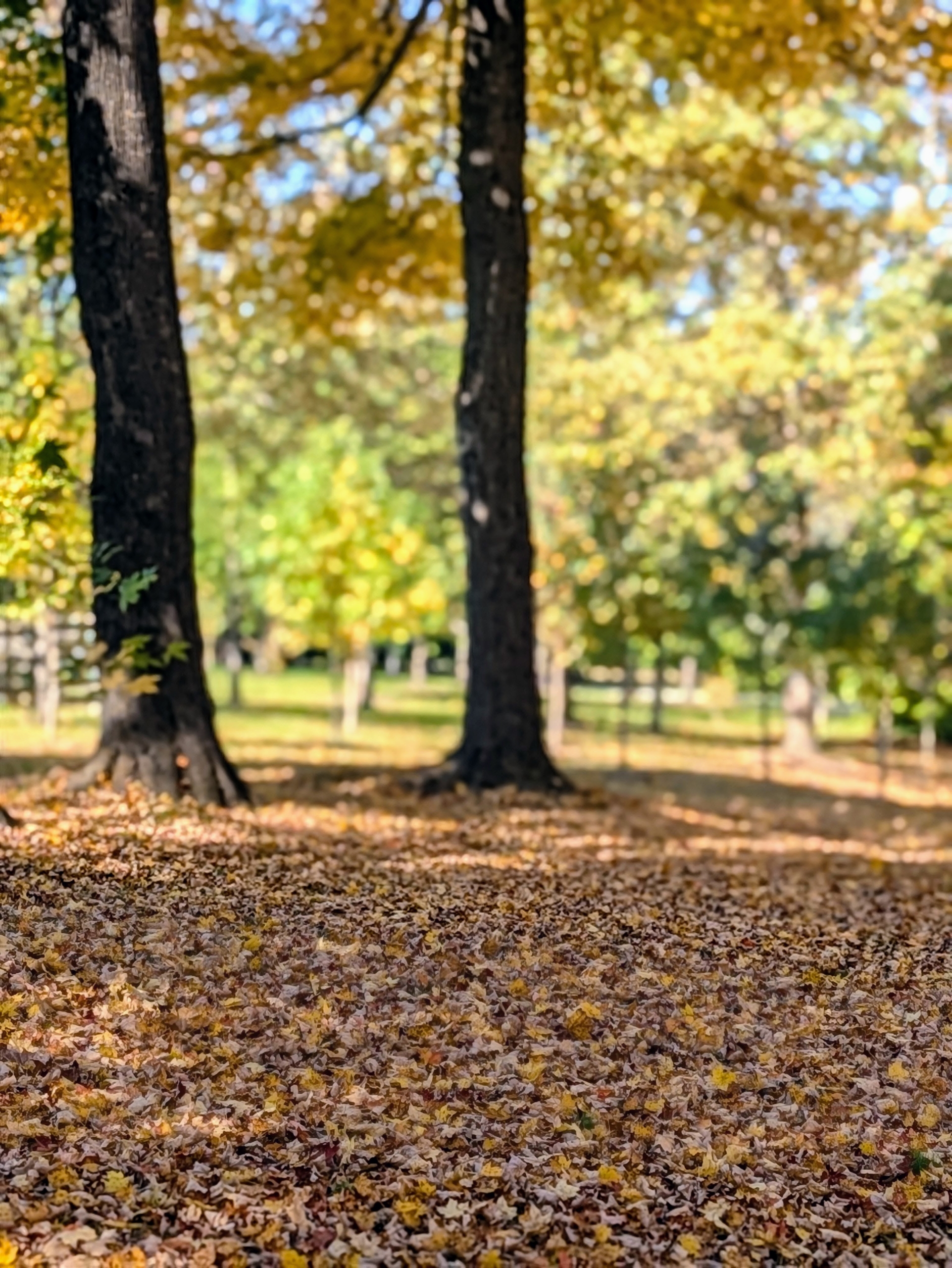
- There are leaves everywhere this time of year. Some trees change and drop early, others late – usually from mid-October to mid-November here in the Northeast.
-
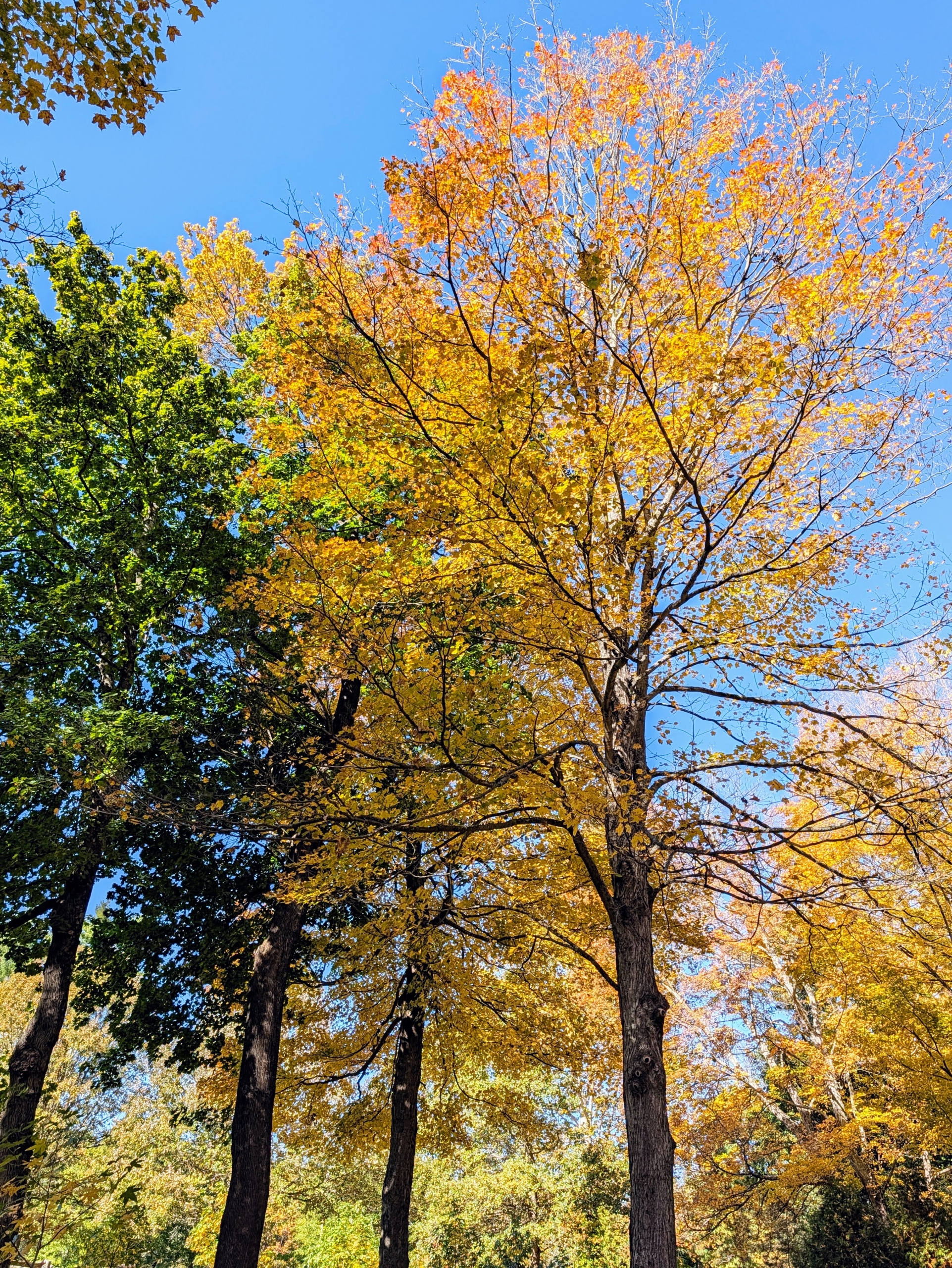
- Autumn leaf color is a phenomenon that affects the green leaves of many deciduous trees and shrubs. Deciduous refers to those specimens that lose their leaves every year.
-
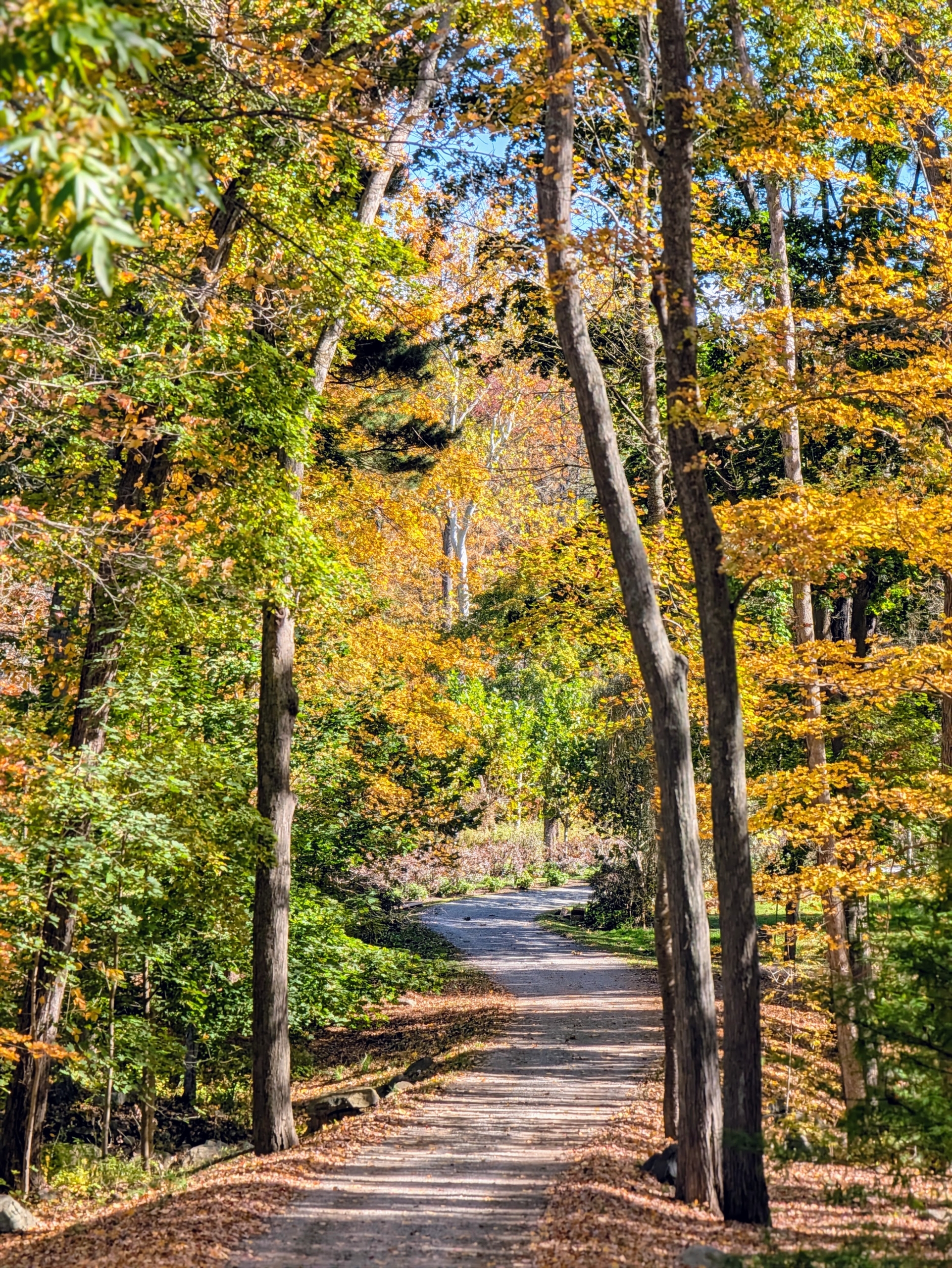
- This is always a popular viewpoint – in every season. It is the carriage road leading to my woodland and hay fields.
-
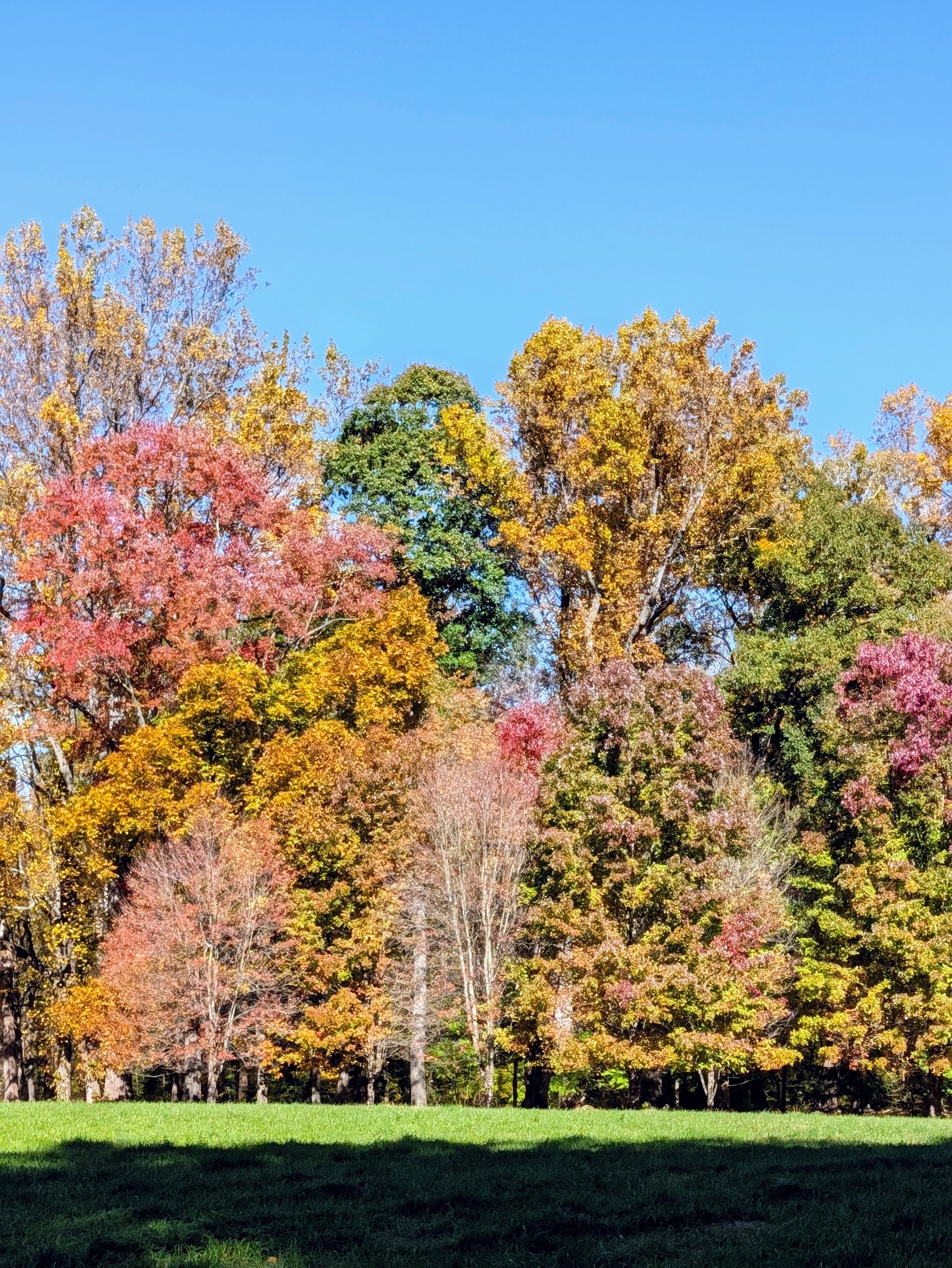
- And what a difference a couple of weeks make. A short time ago, there was still a lot of green in the trees – now many have changed to shades of yellow, burnt orange, and red.
-
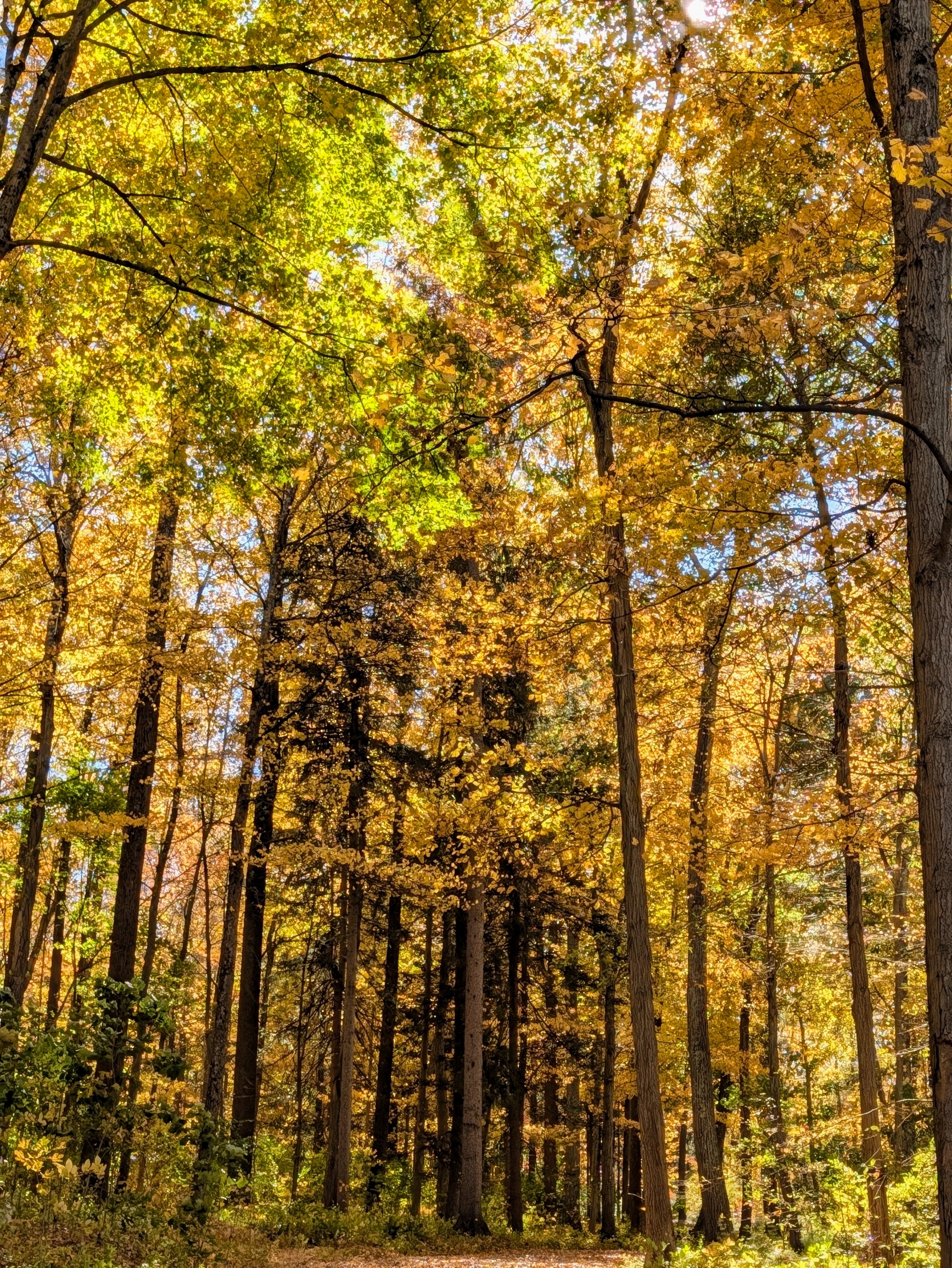
- The colors change daily – warm, sunny days and cool nights produce the most spectacular hues.
-
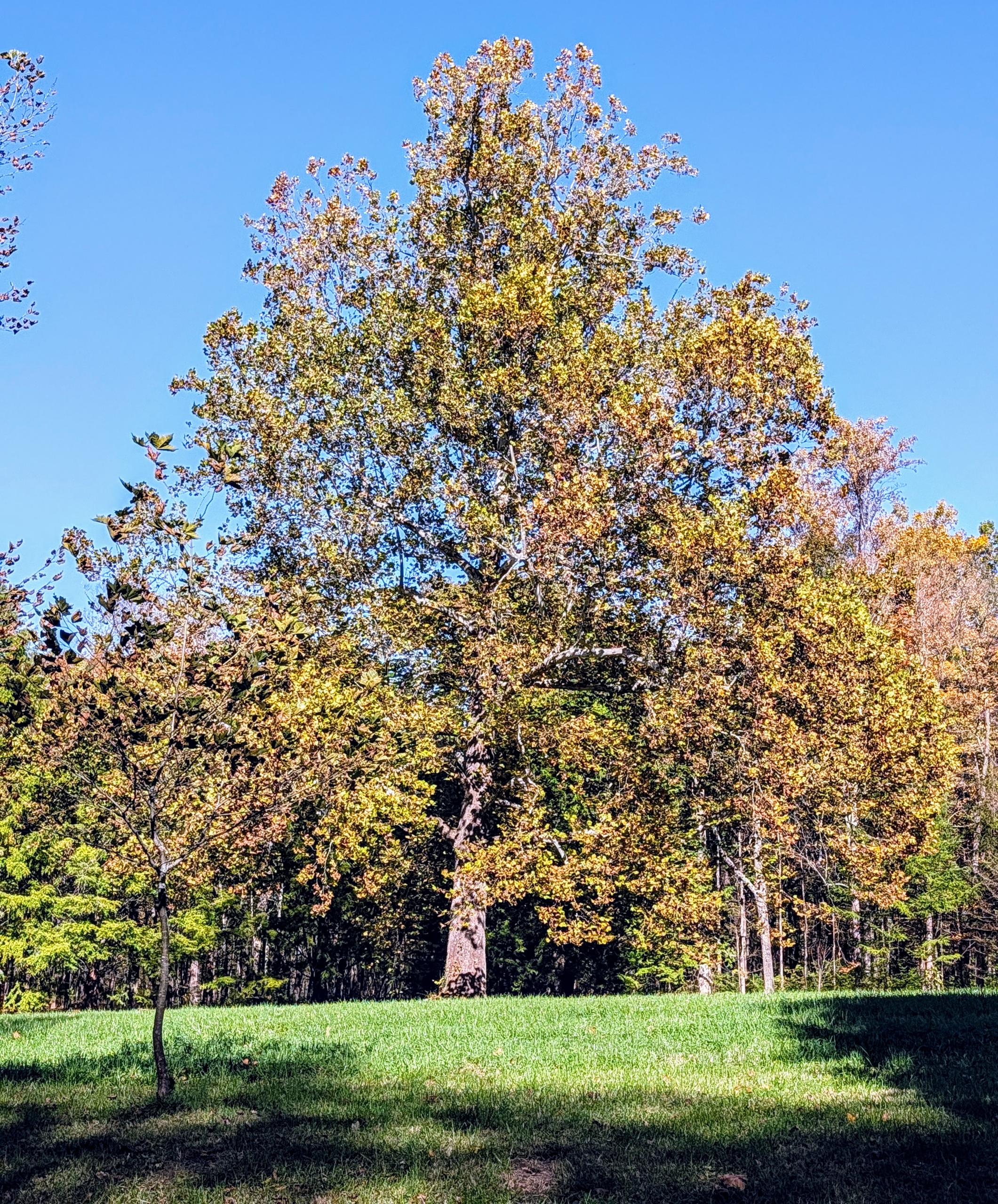
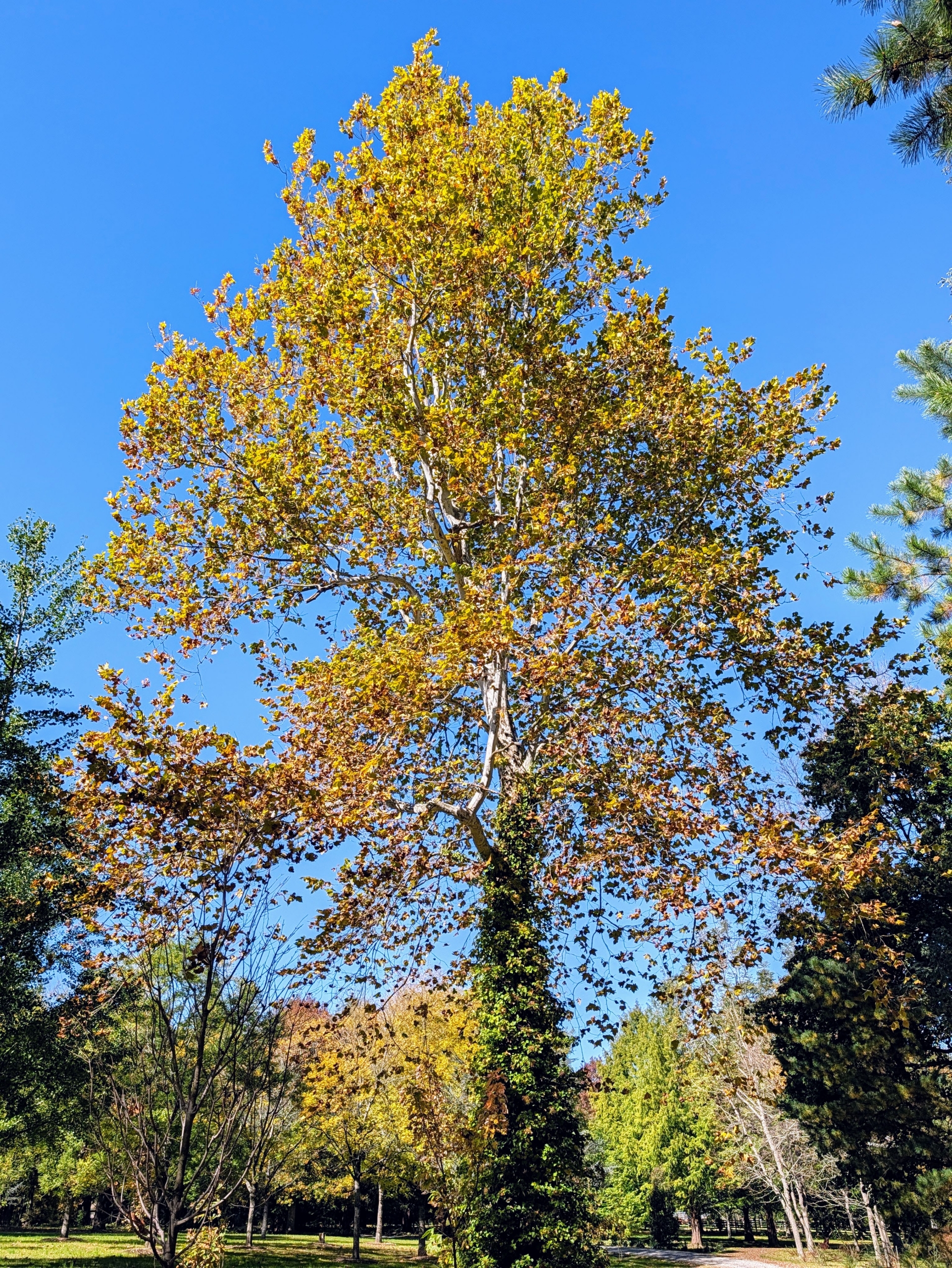
- At the edge of the back hayfield is the giant sycamore tree – the symbol of my farm. The foliage of American sycamore trees is a vast crown of large leaves. In autumn, sycamore tree leaves turn shades of yellow and brown.
-
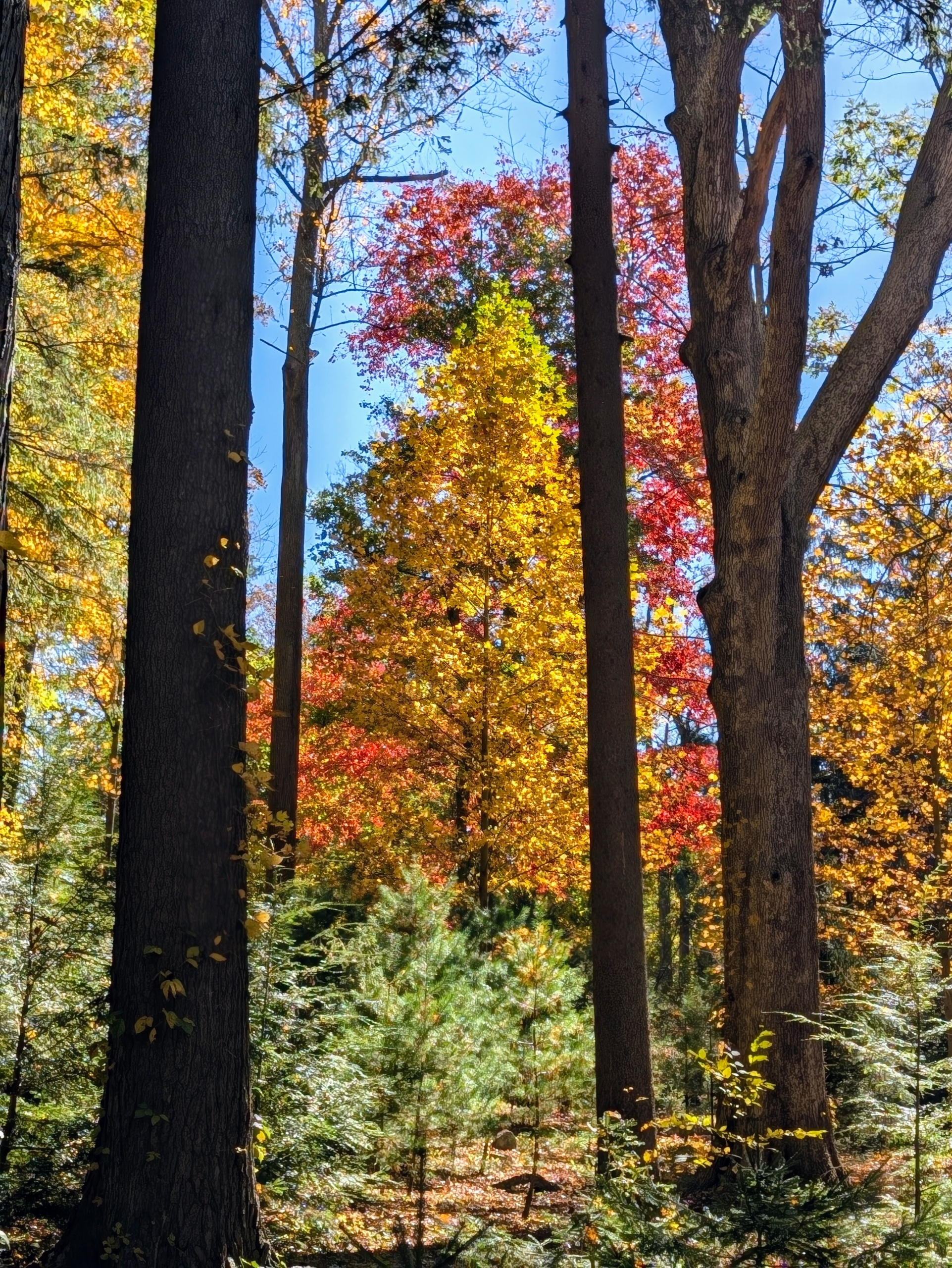
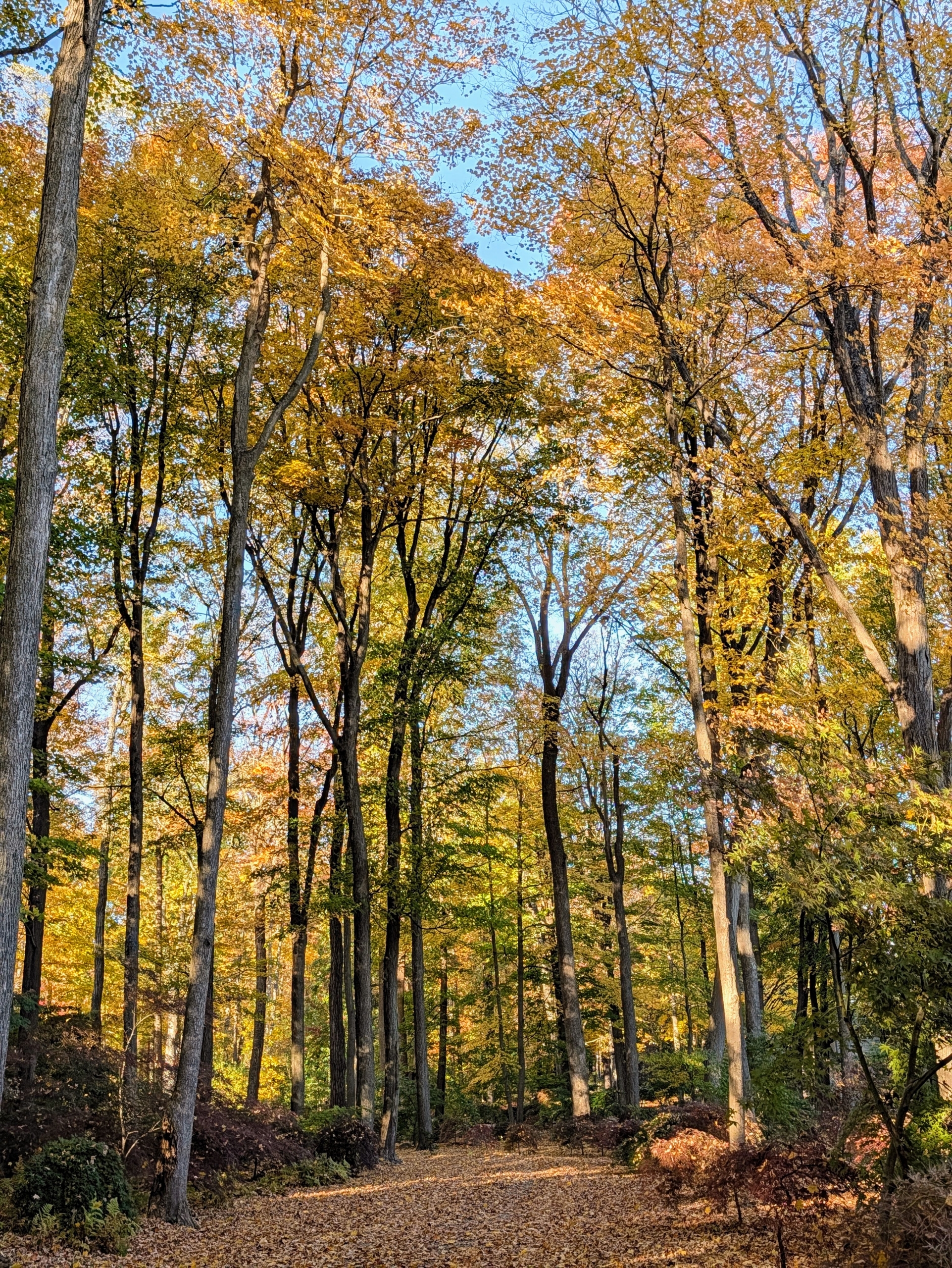
- Here is a look through the woodland – so beautiful with its changing color palette.
-
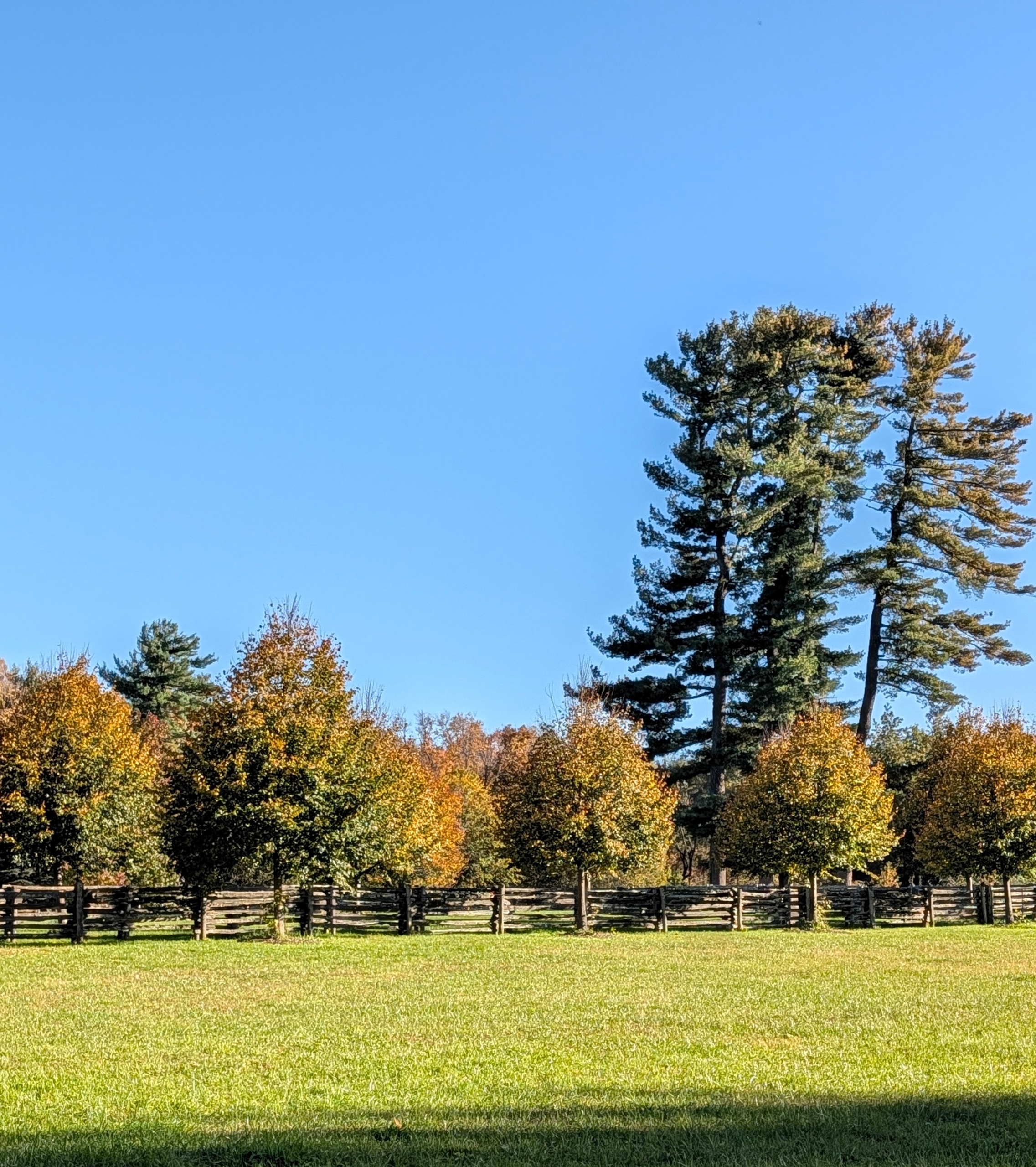
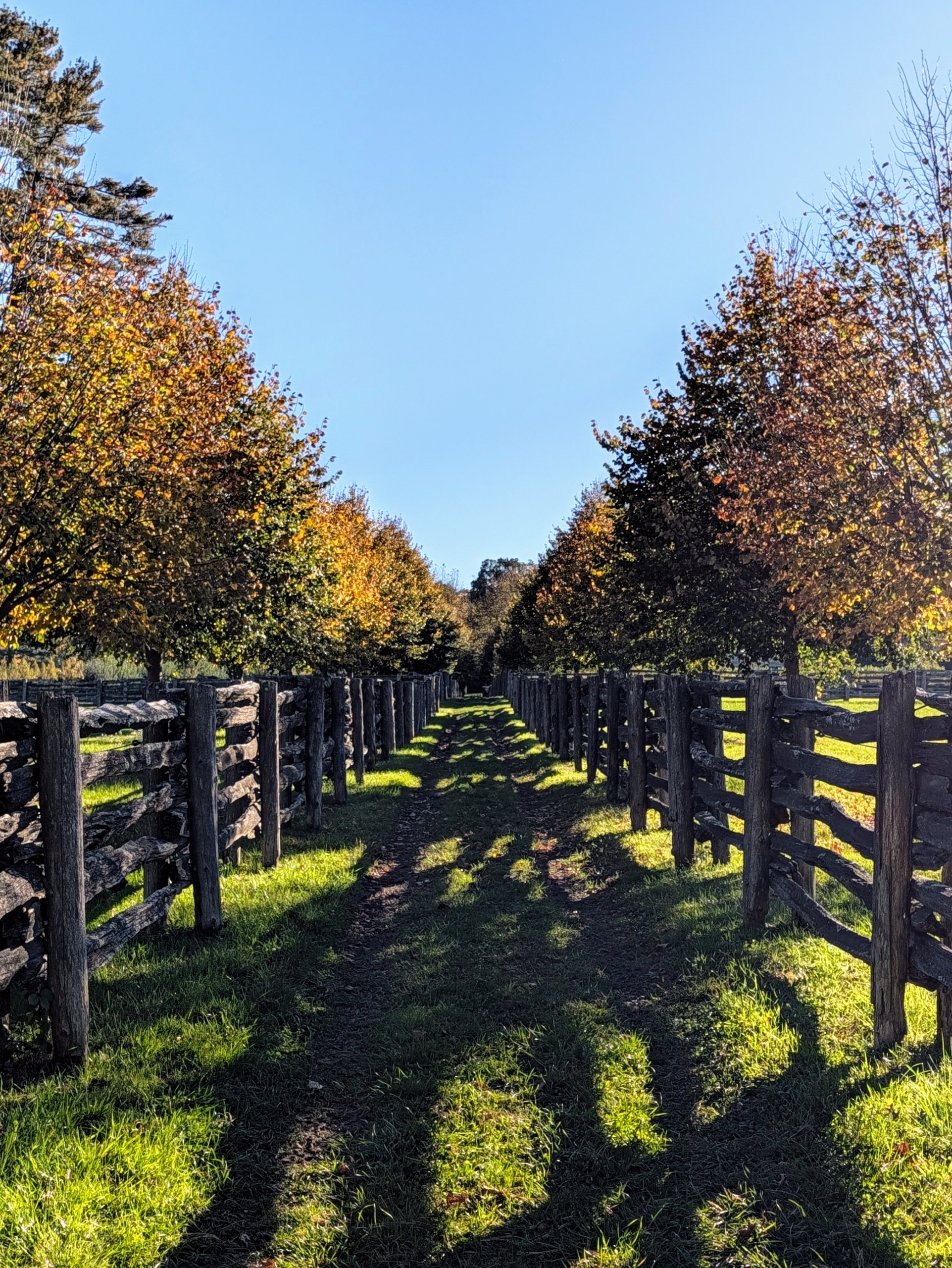
- Linden tree leaves turn a spectacular bright yellow color in fall. Lindens, Tilia, are also known as basswoods, and have sturdy, straight trunks and profuse foliage. This allée of lindens runs from the chicken coops up to my allée of boxwood and then again from the boxwood to my long pergola.
-
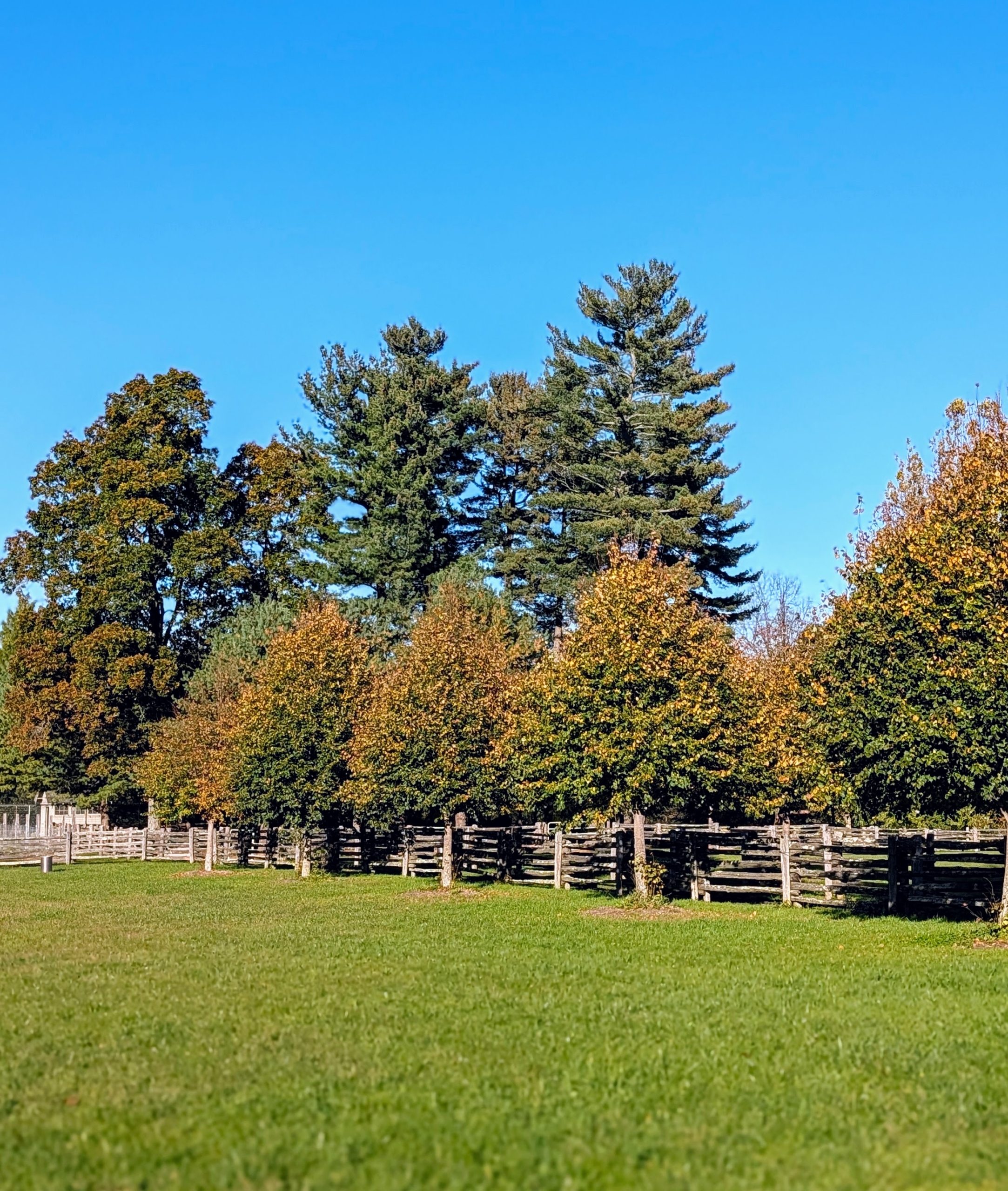
- And I planted all these lindens. In fact, I’ve planted most of the trees on the property except the very tall towering trees that are original to the farm.
-
- I extended this linden tree allée in 2017. When mature, lindens reach 50 to 80 feet in height with a spread of 35 to 50 feet. Every single one has developed so beautifully.
-
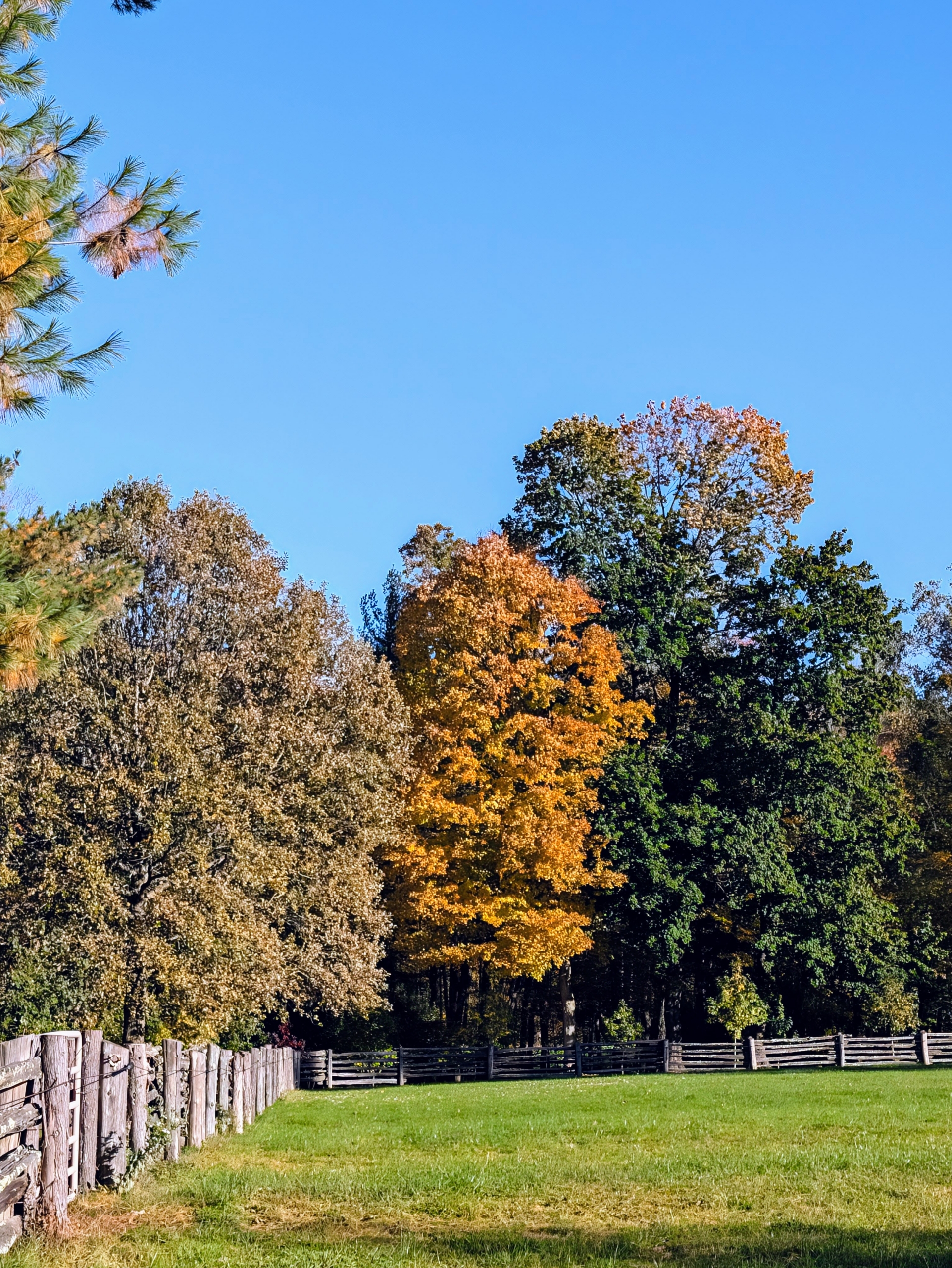
- I’ve also planted many different types of trees in hopes that they would shade, provide climate control, and change color at different times, in different ways. Here is some of the autumn color seen across one of my paddocks.
-
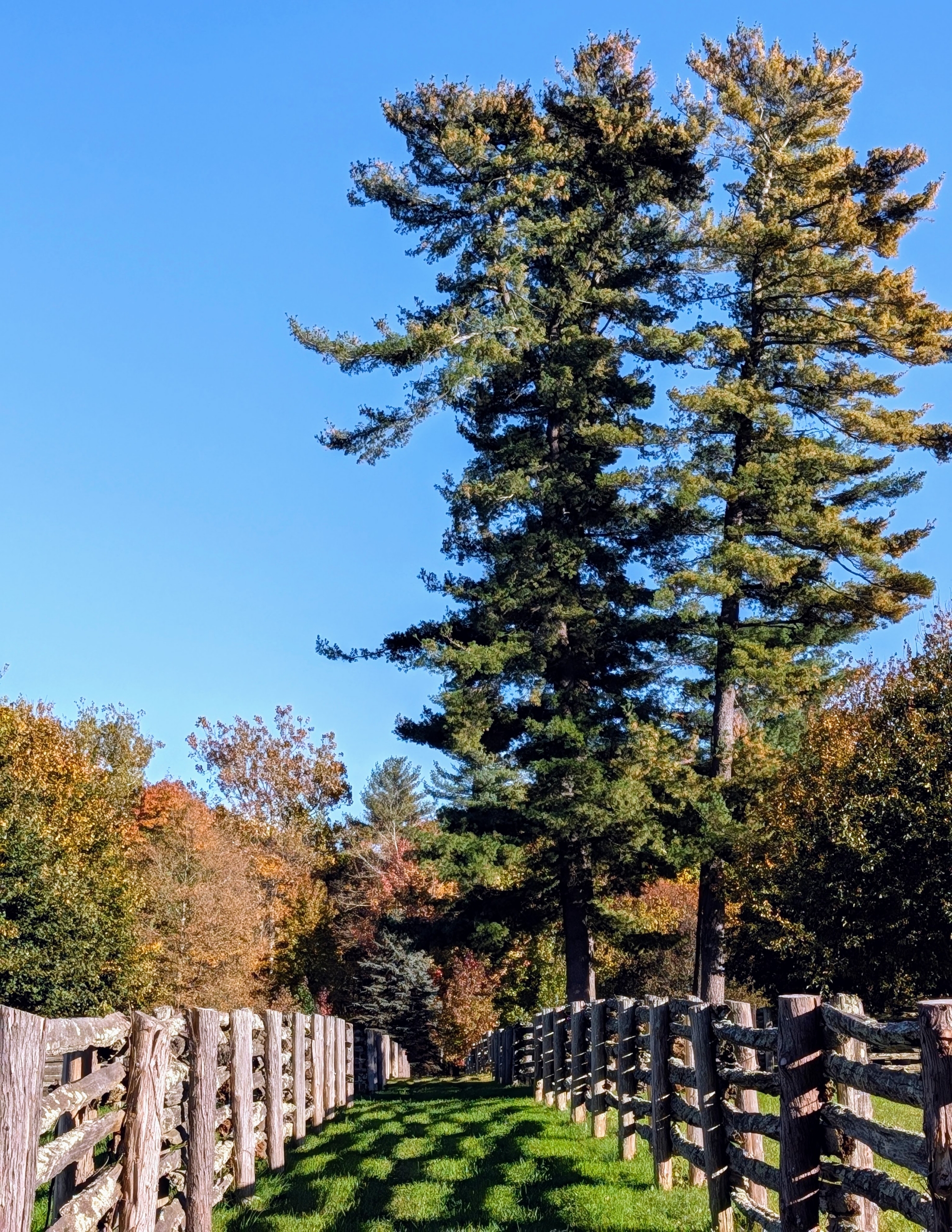
- I get many compliments on the fencing – it is antique spruce fencing I bought in Canada, and it surrounds all my paddocks for the horses, pony, and donkeys.
-
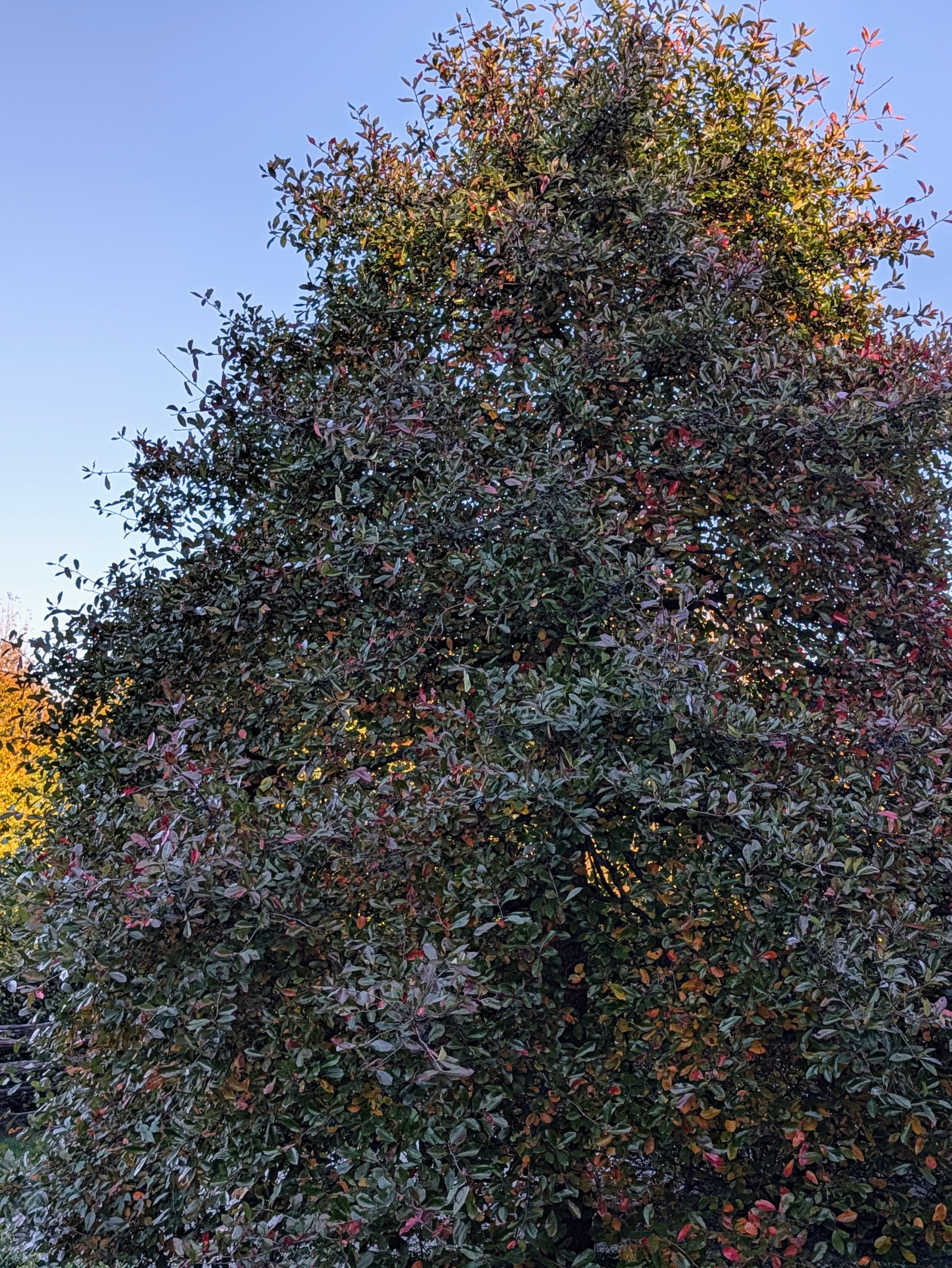
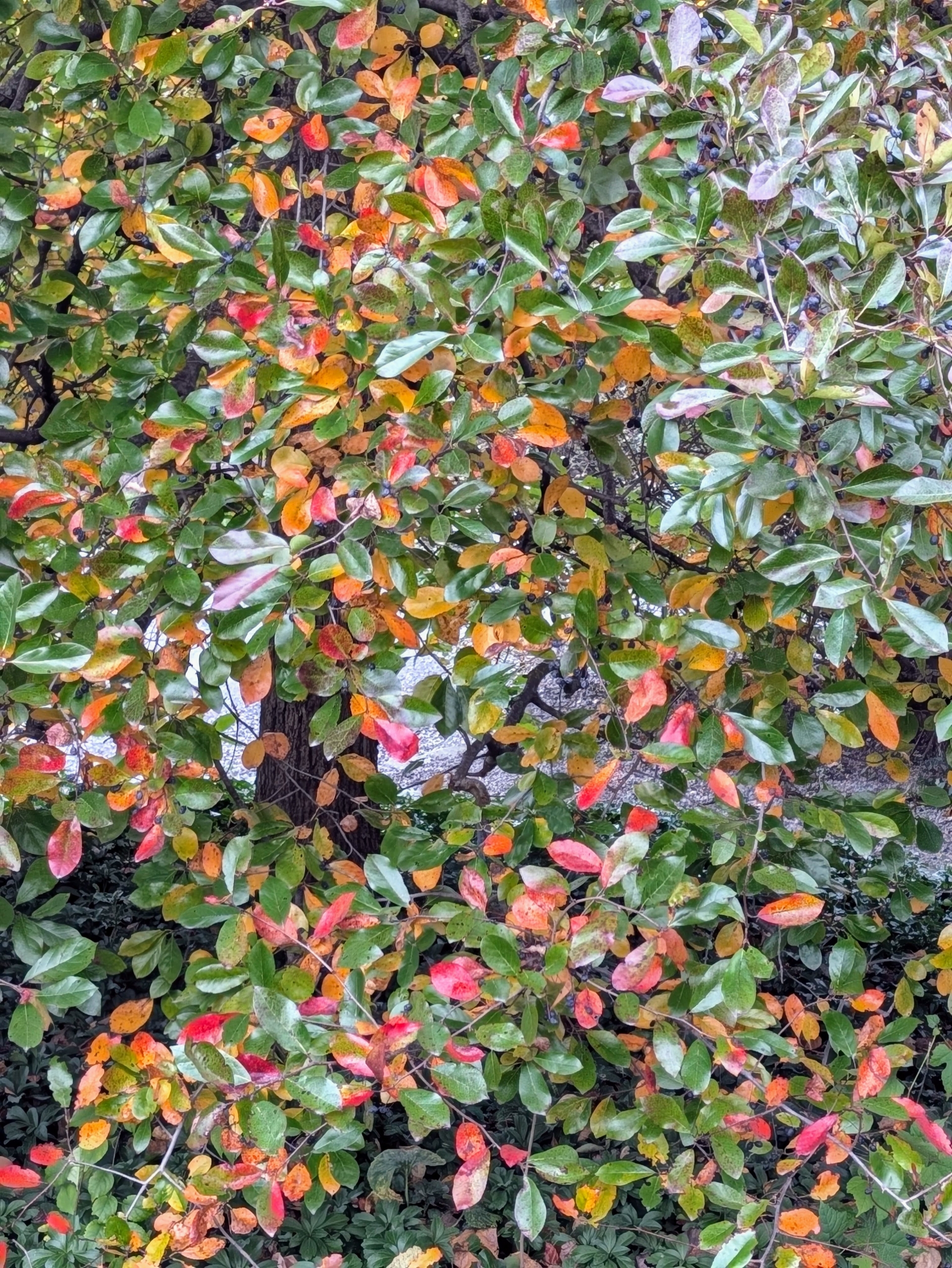
- Just a week ago, this beautiful Nyssa sylvatica, or black tupelo, was still predominantly dark green, but now its foliage is turning bright red, purple, yellow, and orange – all colors that may appear on the same branch.
-
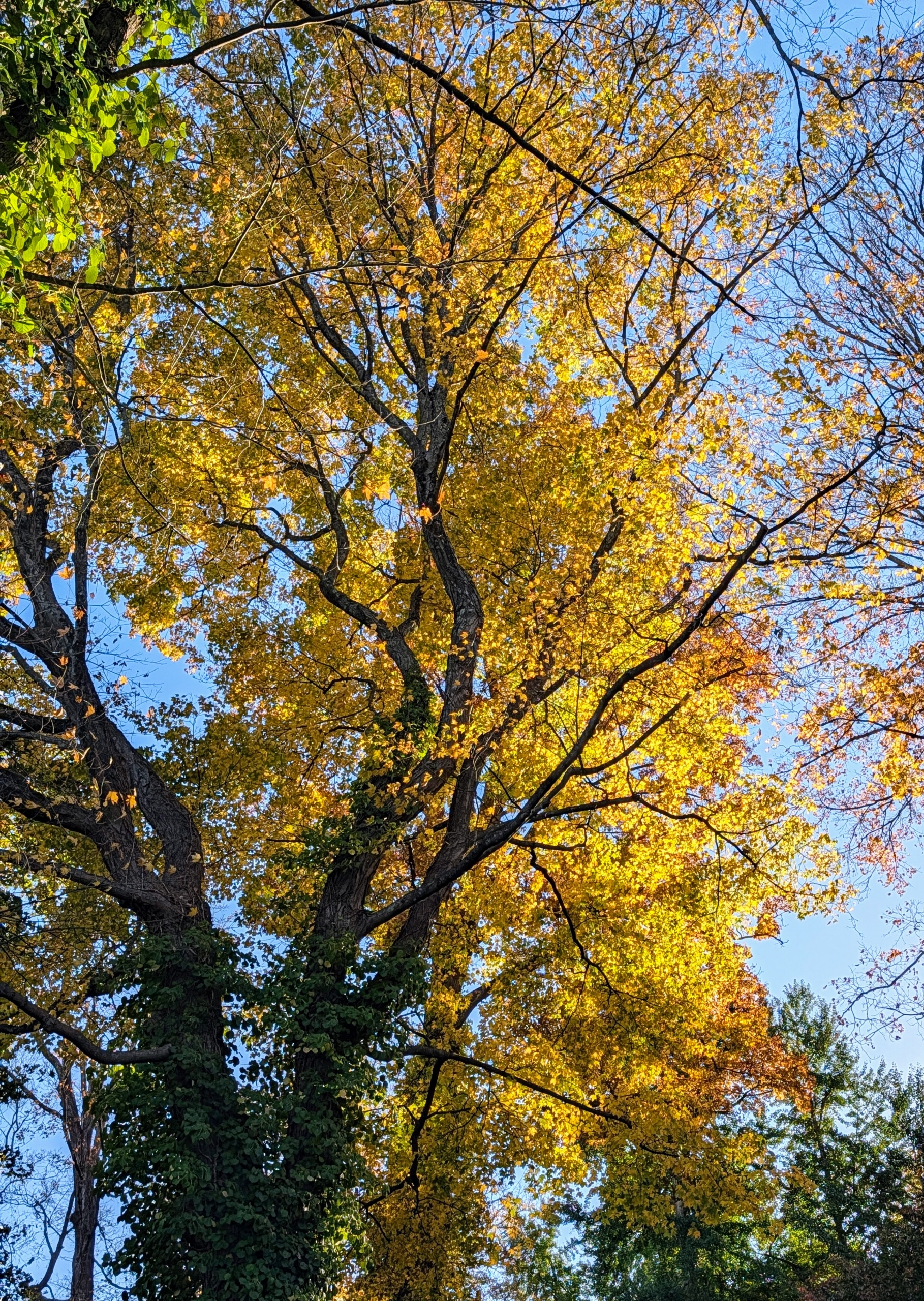
- Here’s a closer look at some of the changing leaves.
-
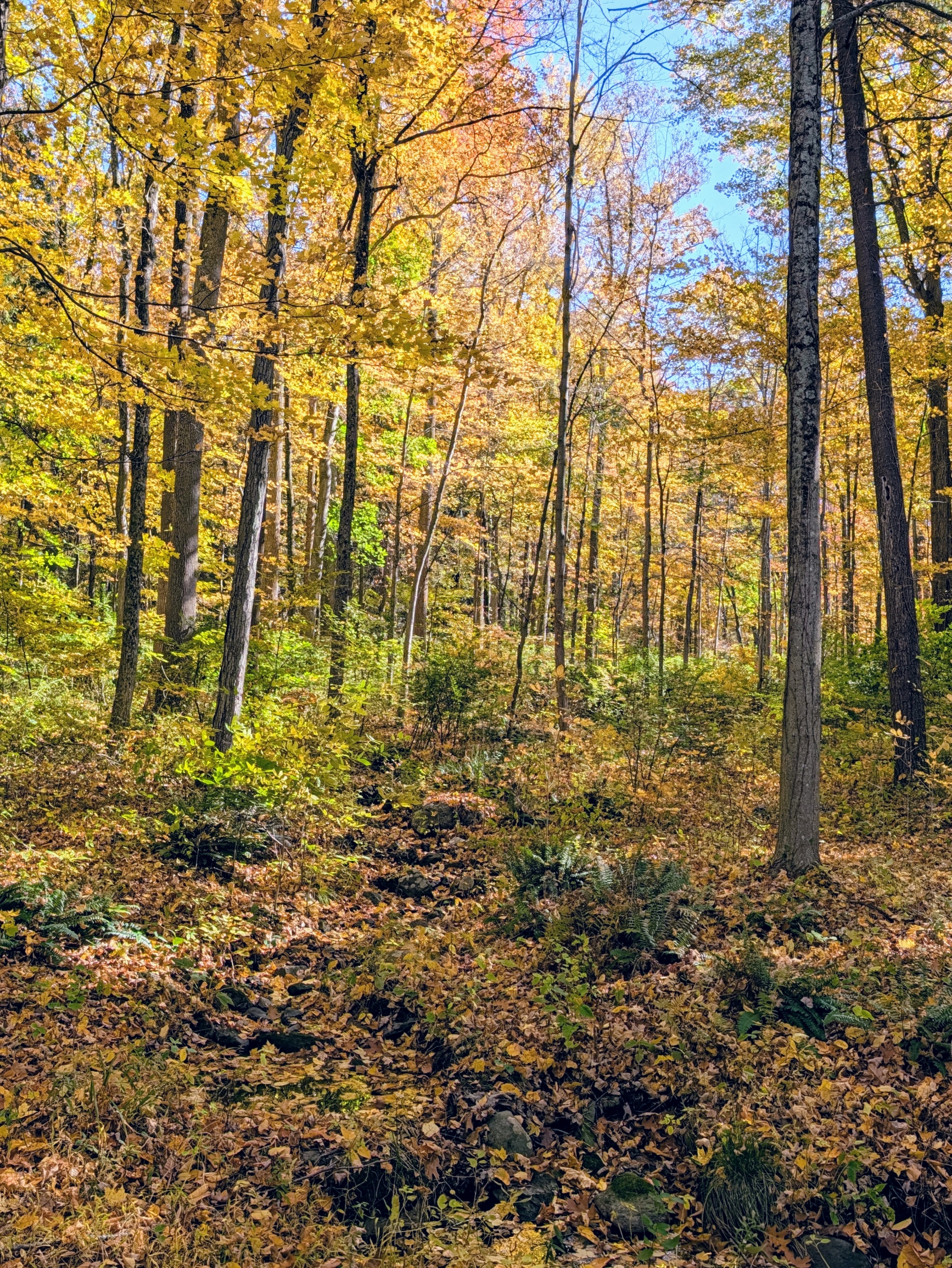
- The brooks and streams around the farm are also filled with falling foliage, but if one listens closely, one can hear the gentle, flowing babbling sounds.
-
- I tour the farm several times a day when I am home. The best times to view the changing foliage is early morning when colors are softer and there is less sun glare, or later in the afternoon when the colors are rich and vibrant. Clear, calm days produce the brightest shades.
-
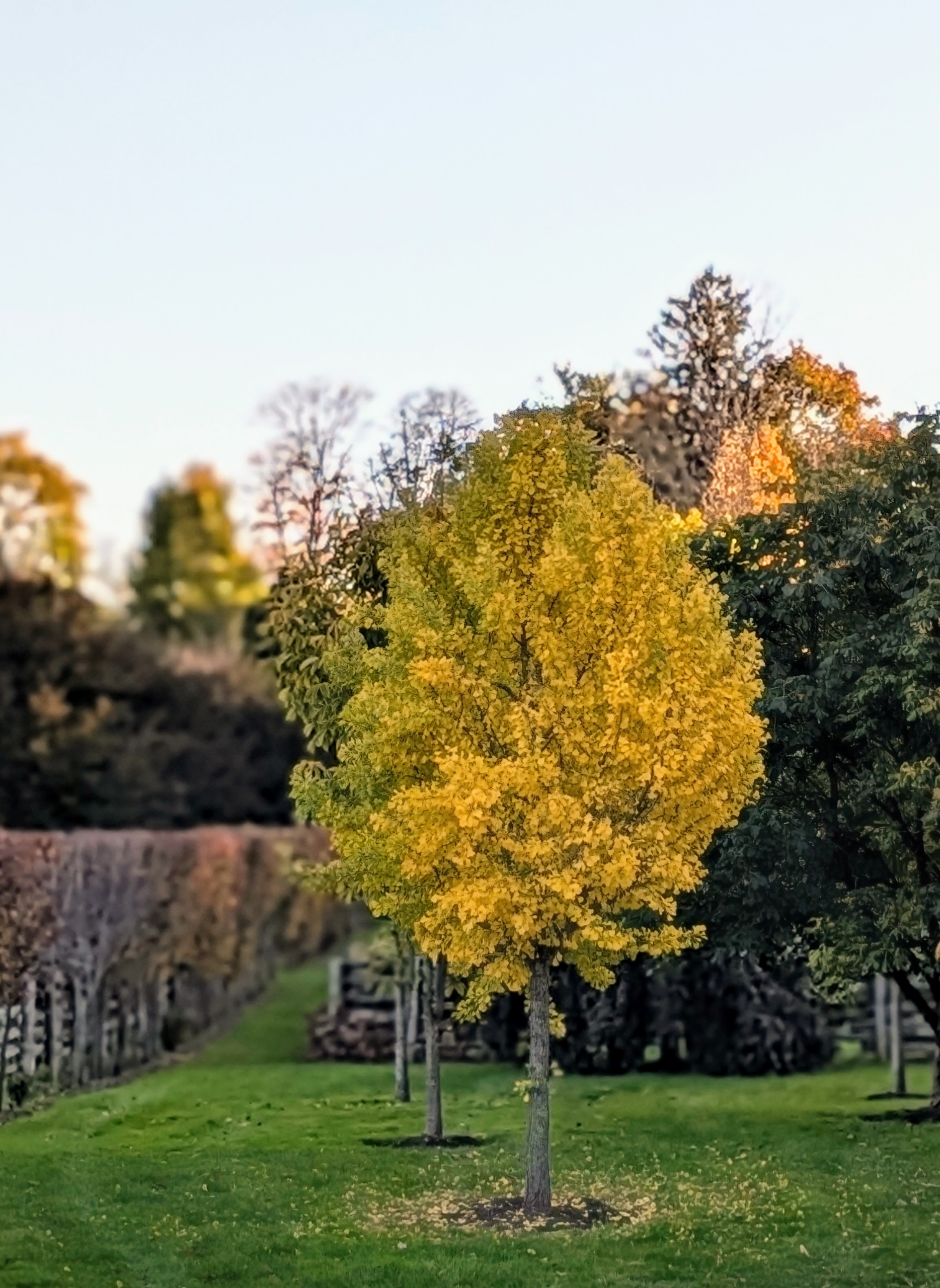
- Here is one of my ginkgo trees. These trees show a dramatic change every fall when the bold green leaves turn golden bright yellow.
-
- And do you know… it’s called fall after the older English phrase “fall of the leaf,” which refers to the season when the leaves drop. The word autumn comes from the Old French automne, from the Latin autumnus, and is used more in Britain.
-
- Some of the best places to see the changing fall foliage include New England, Japan’s Kyoto and Hokkaido, Québec and Ontario in Canada, the Blue Ridge Parkway here in the US, Bavaria in Germany, and the Scottish Highlands. I hope you are able to enjoy some of these amazing autumn colors wherever you are.
 Martha Pins


 Martha Tweets


