

Planting a Mature Japanese Maple tree at My Farm
A beautiful, mature Japanese maple tree is now planted in its new home here at my farm.
Last week, I had the opportunity to rescue a lovely tree from a nearby property where the new owner was planning to redesign the landscape. Relocating such an established specimen required careful planning and a slow, precise process, but it was well worth the effort. The tree is now happily settled in its new spot beside my pond, where I hope it will continue to thrive.
Enjoy these photos.
-

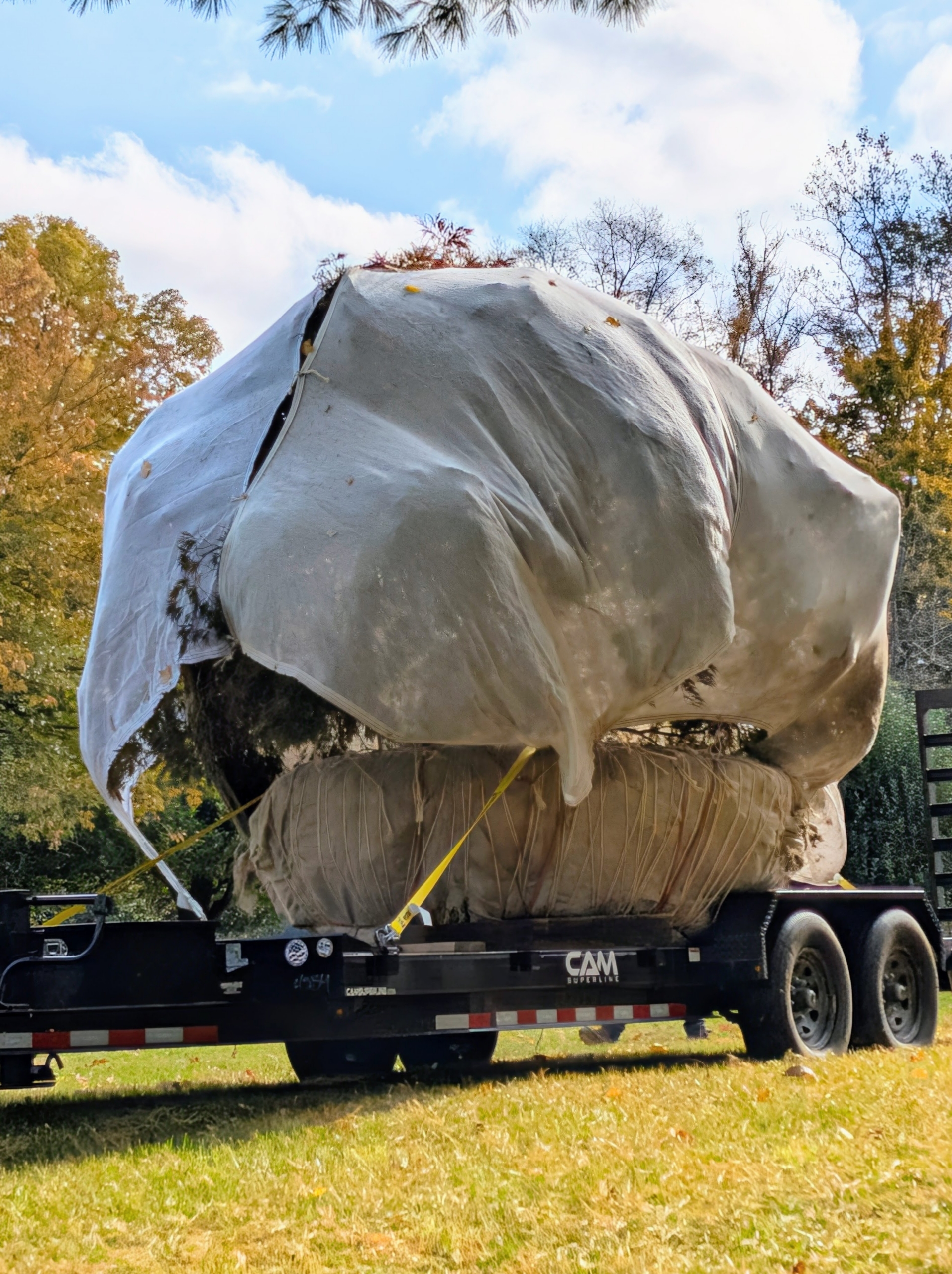
- Remember the Japanese Maple tree I moved from a nearby home? Here it is arriving at my farm, intact and well-protected with burlap, straps, and ropes.
-
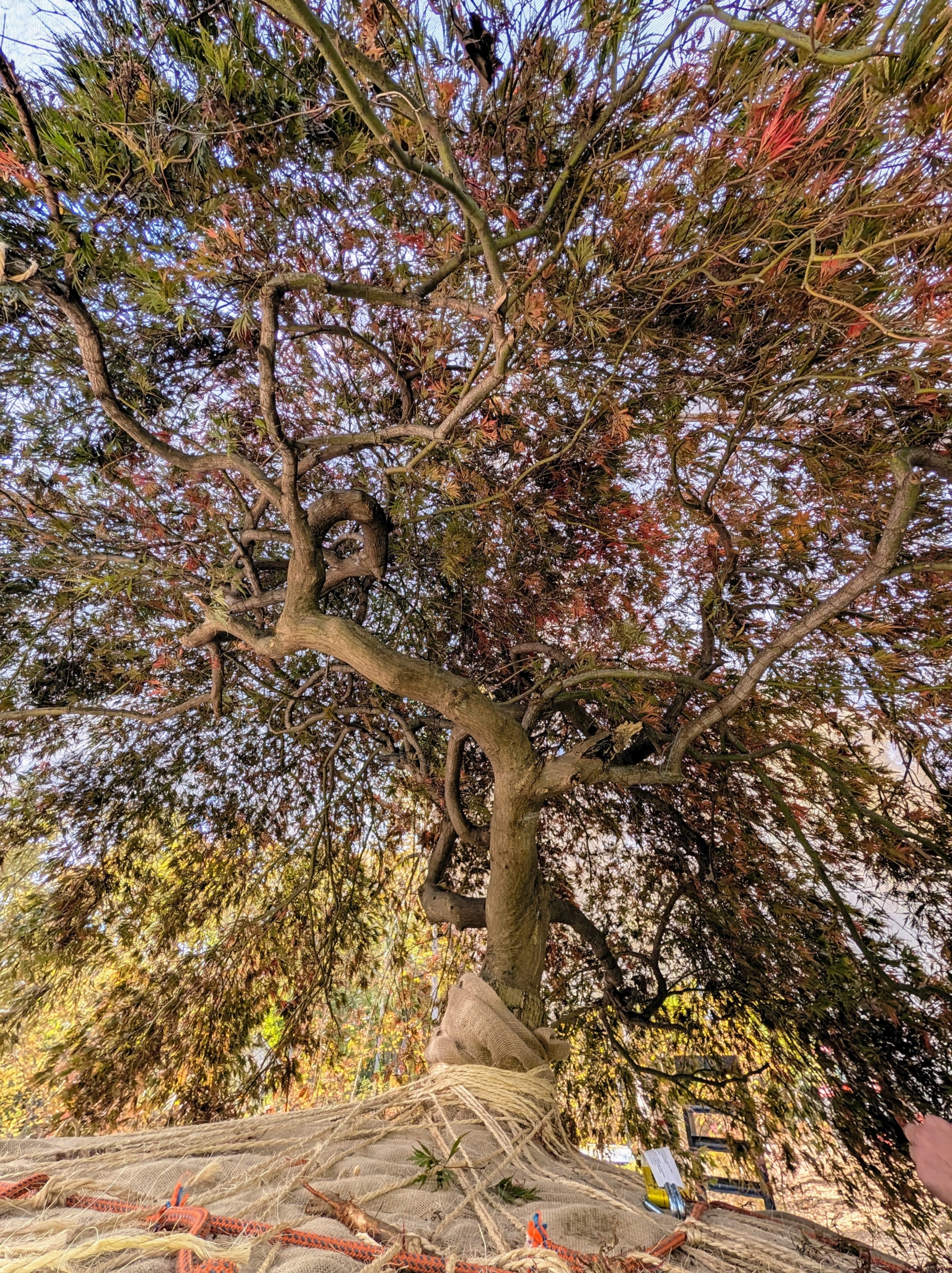
- Underneath the burlap, all the branches are also in excellent condition – not one broke during the entire moving part of the process.
-
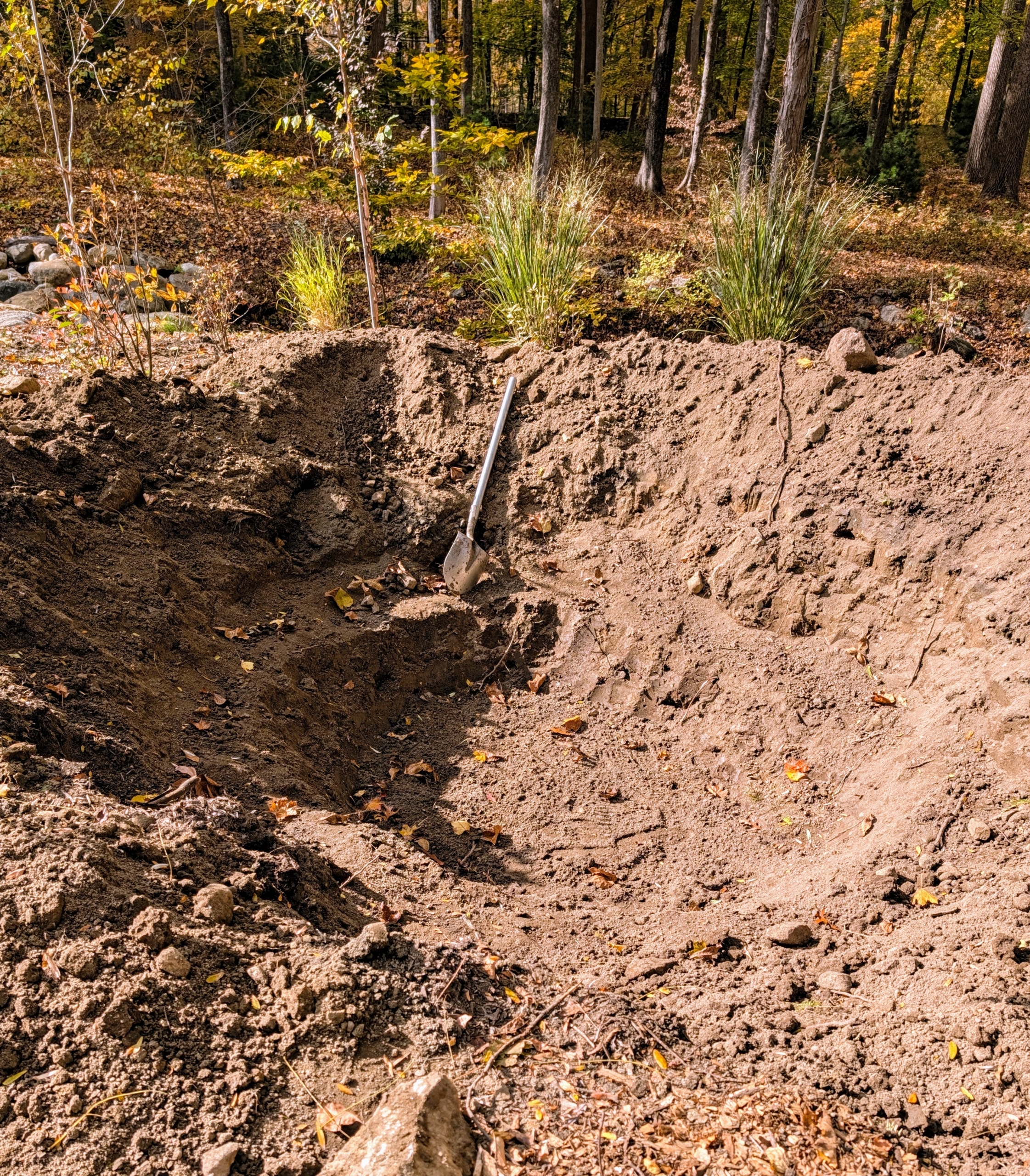
- The hole was dug the day before. It is all ready in the exact location I specified.
-
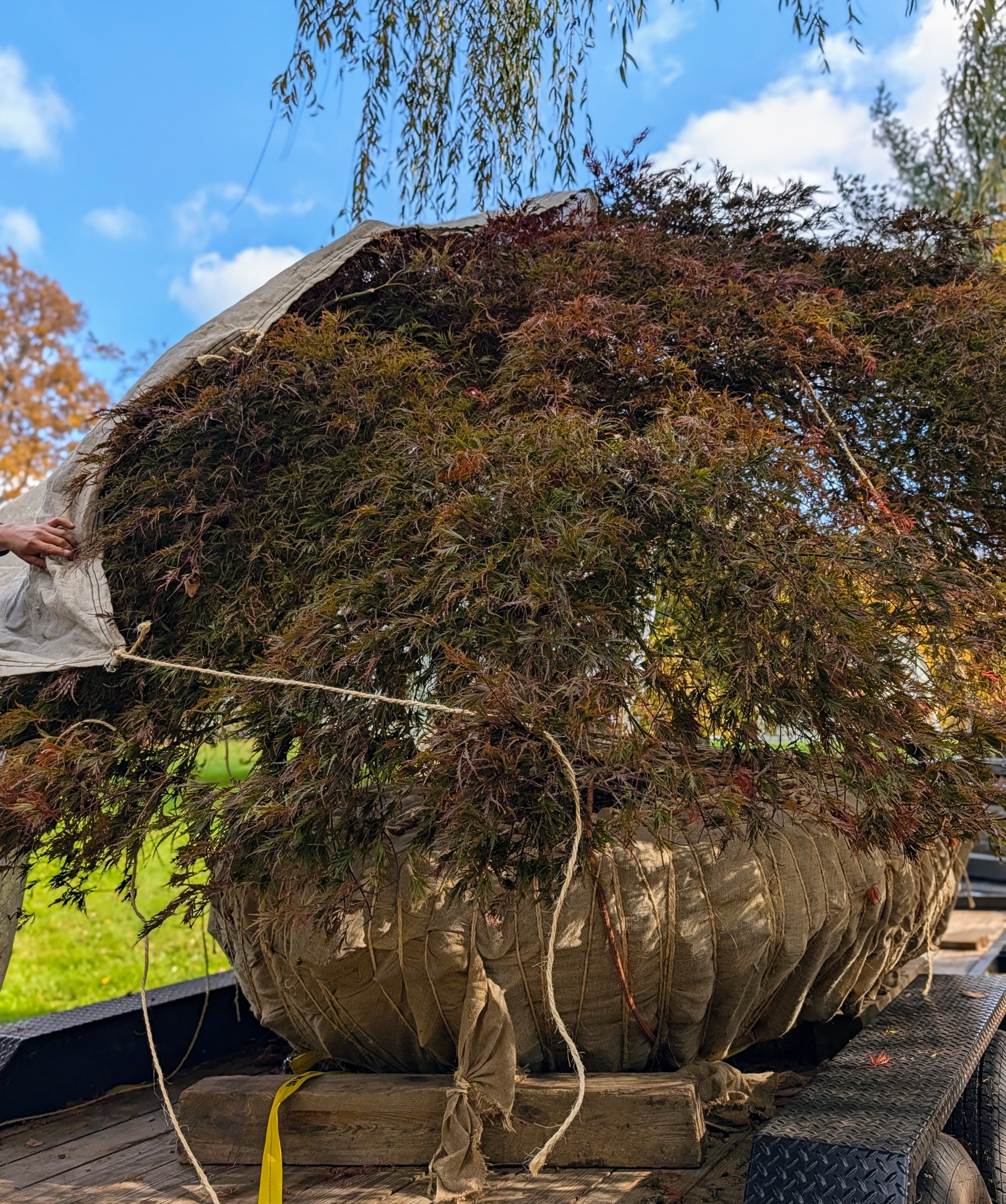
- Here, the burlap cover is removed.
-
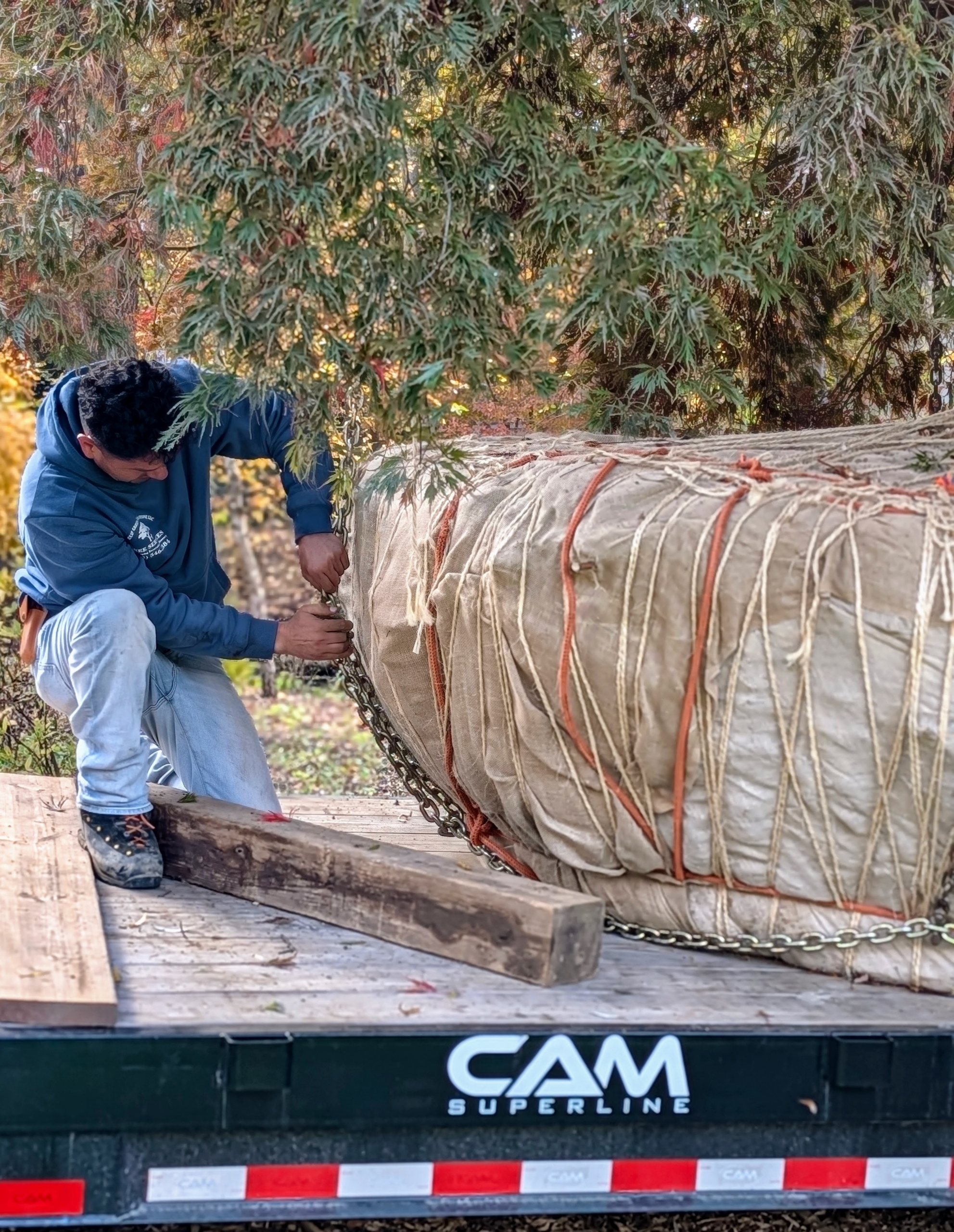
- Chains are wrapped around the root ball, so it can be carried the rest of the way to the hole.
-
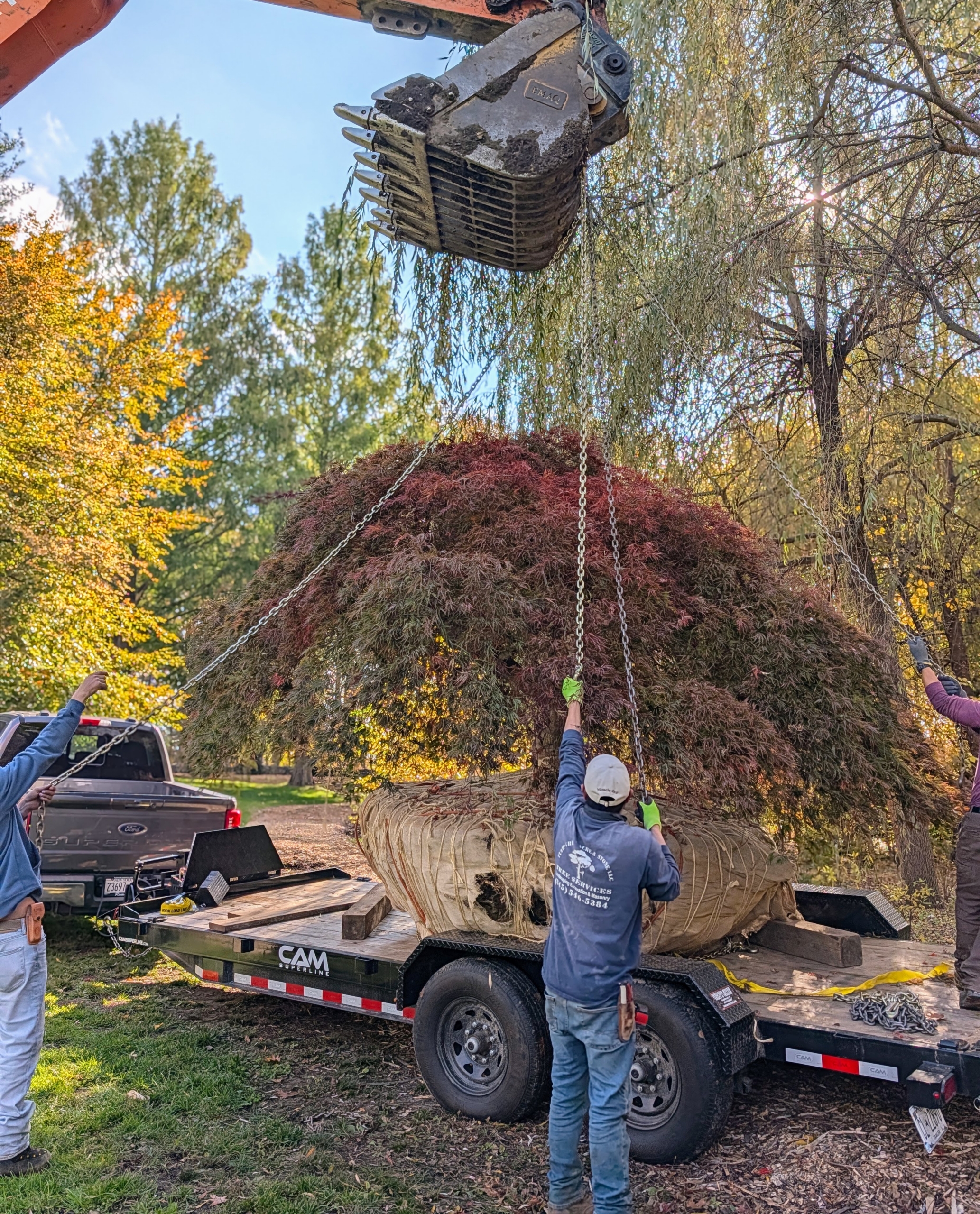
- Chains are also secured to the bucket of a tractor and then connected to the chain around the tree’s root ball.
-
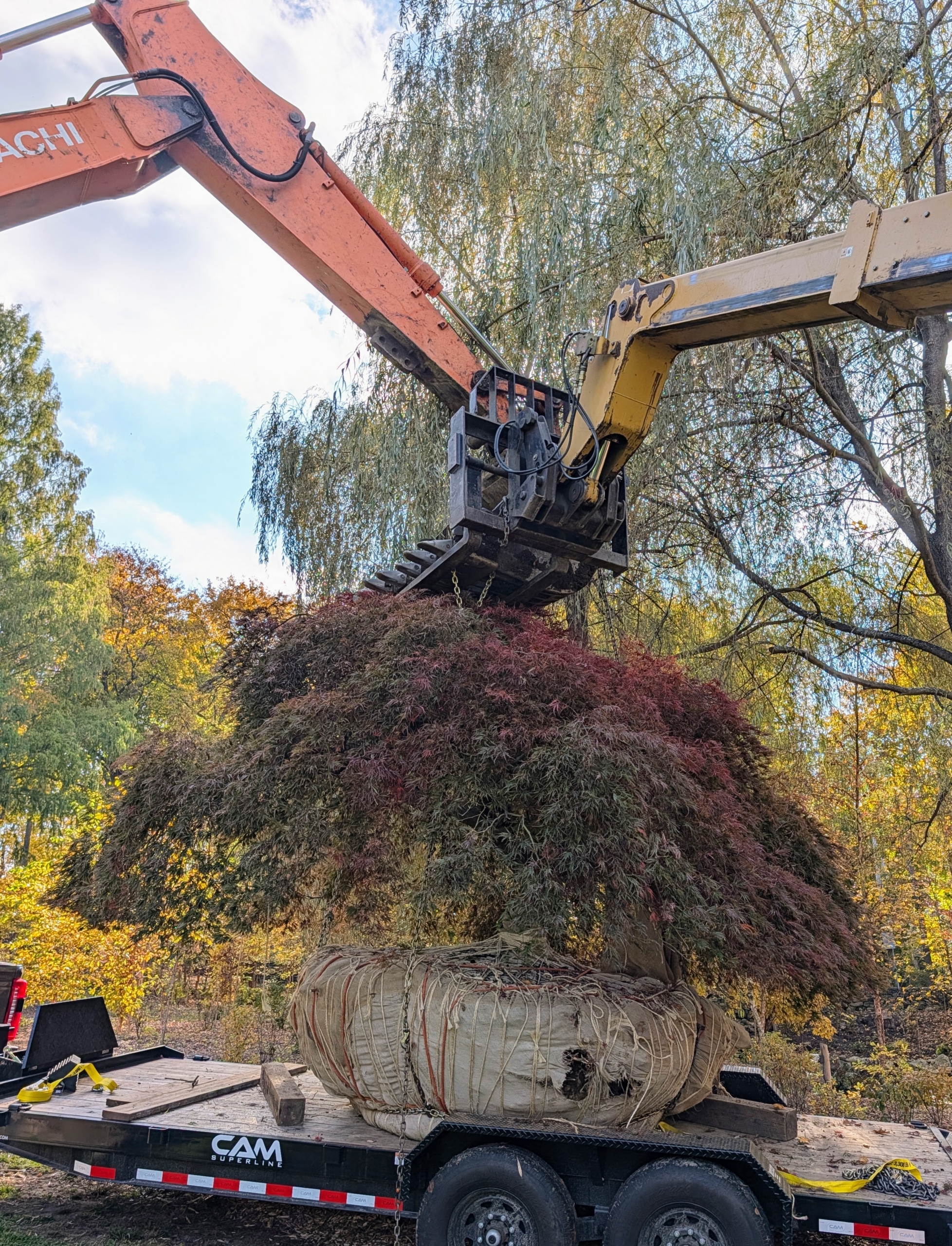
- This allows the Hi-Lo and the bucket to work together in lifting the tree and carrying it to its permanent spot.
-
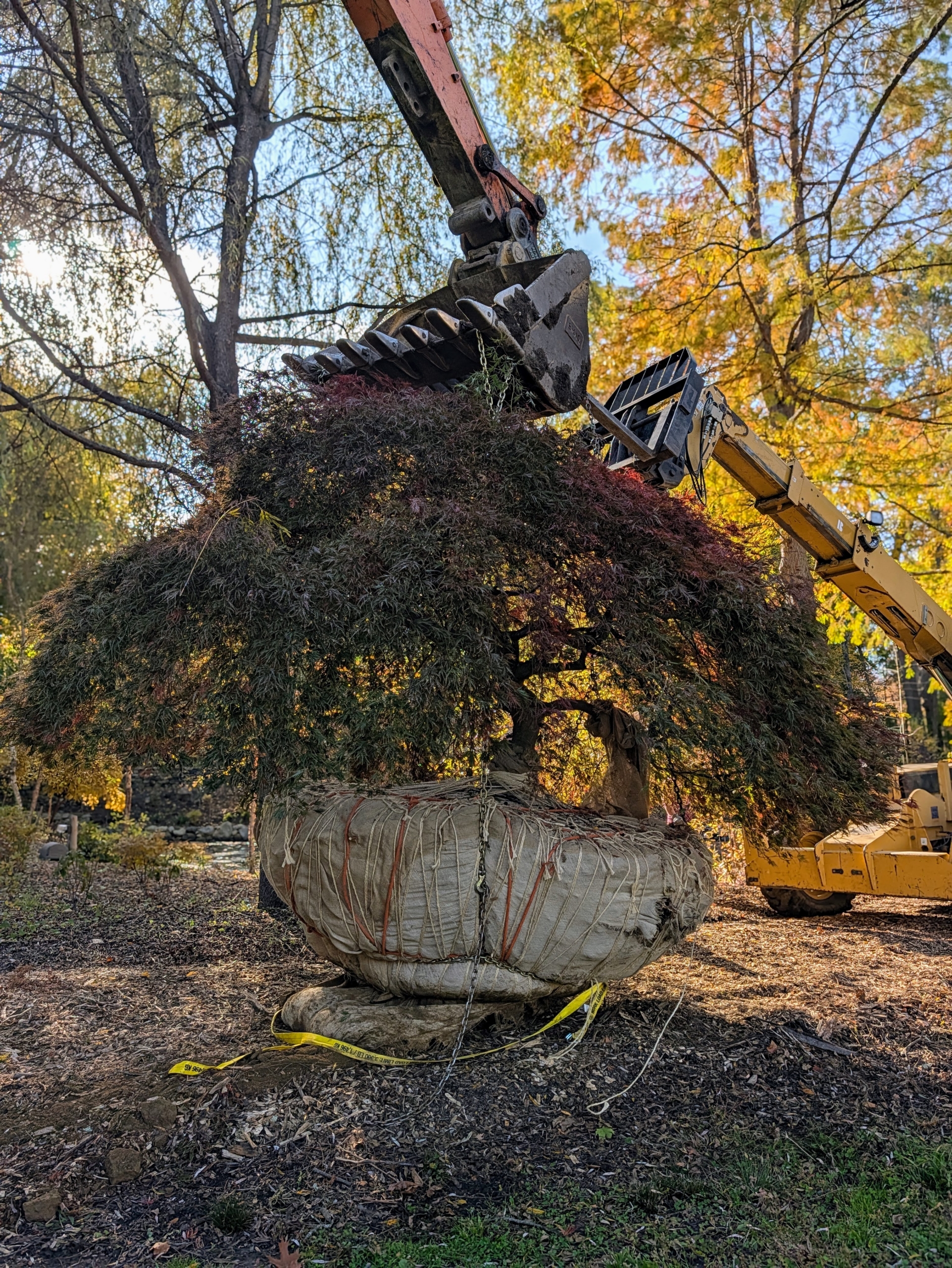
- Slow and steady underneath the trees.
-
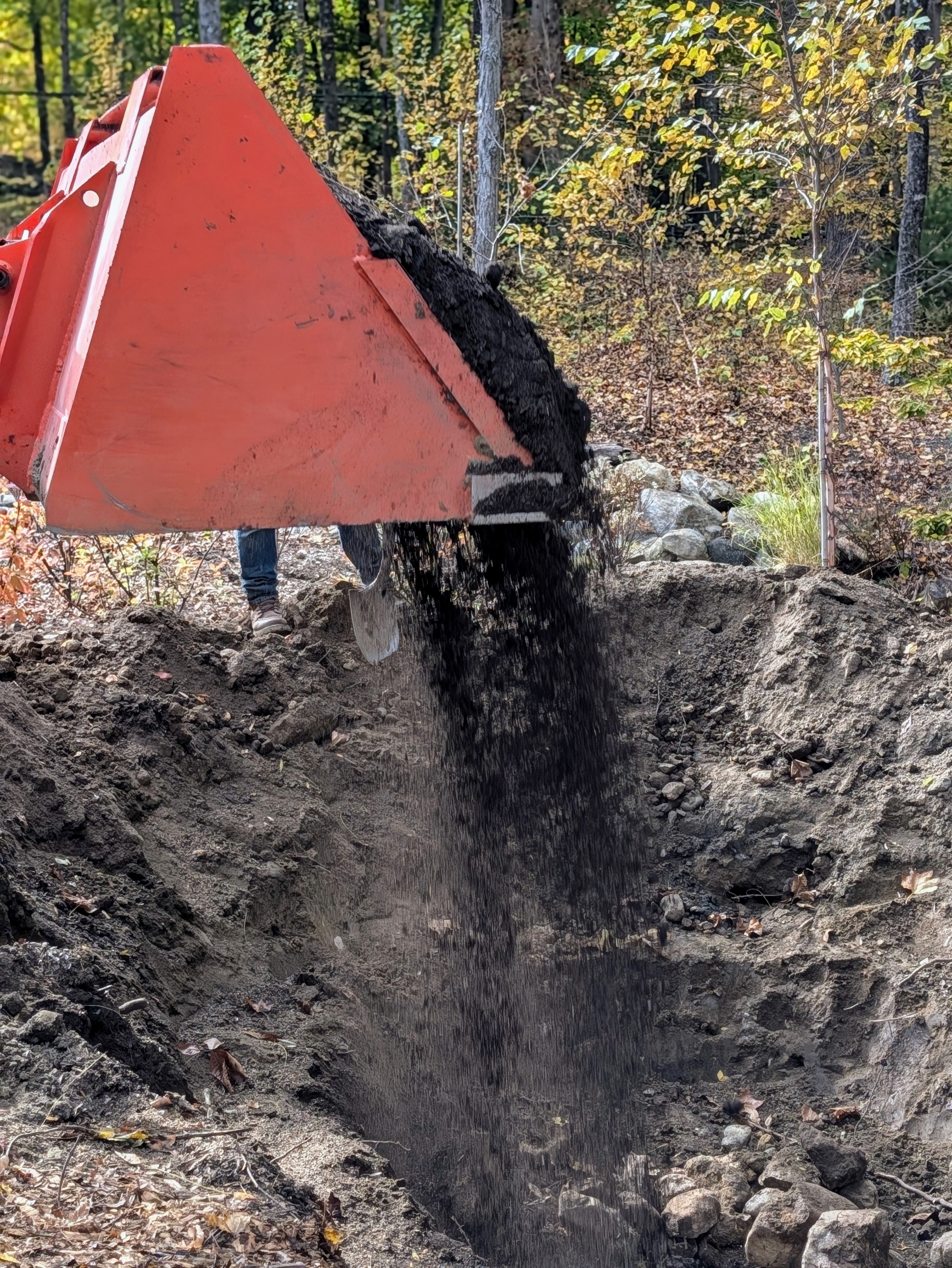
- Meanwhile, a new layer of compost is dropped into the hole. I am so fortunate to be able to make all this compost right here at my farm.
-
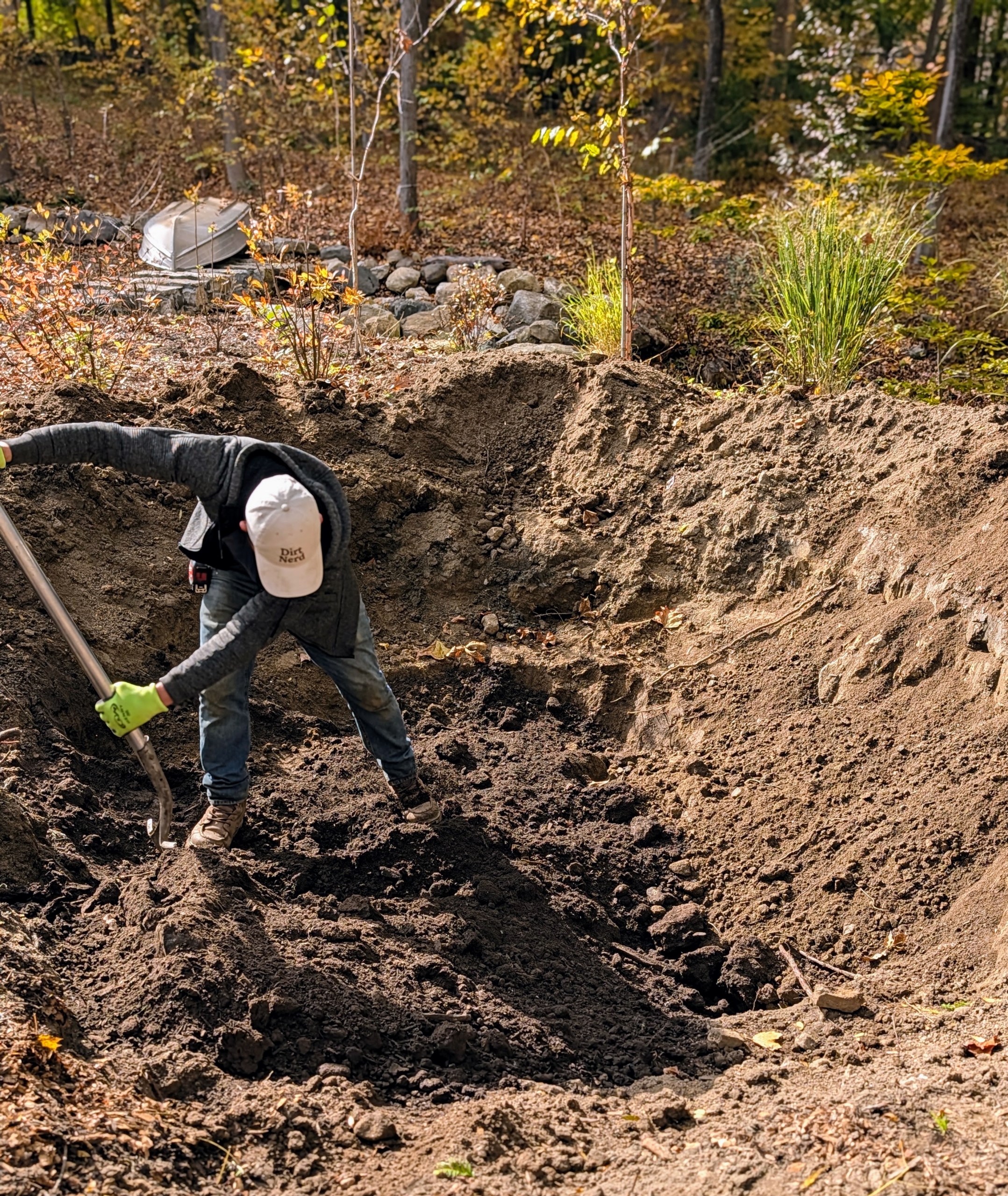
- The compost is spread evenly in the hole to adjust for the proper depth.
-
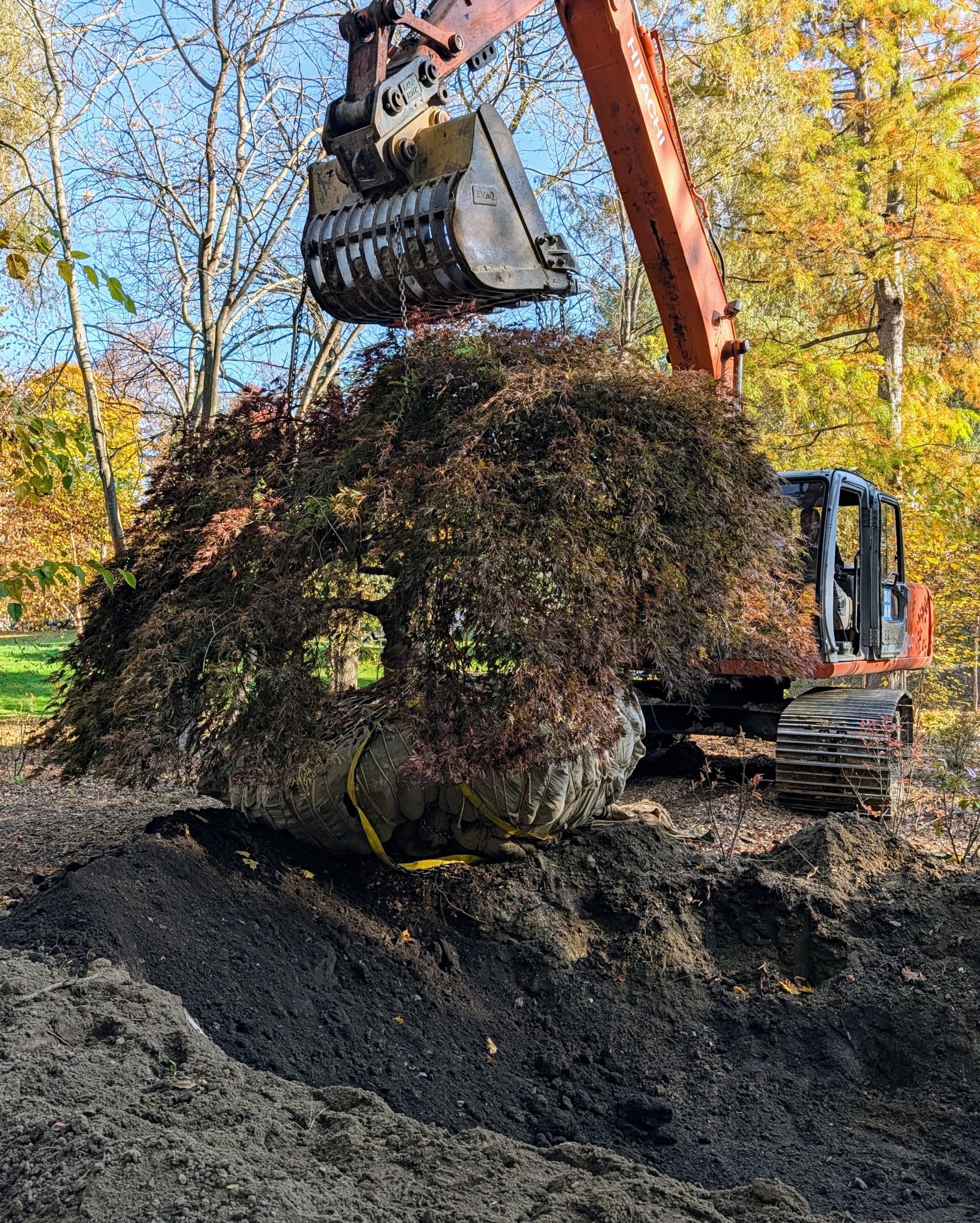
- And here comes the tree. It is now at the edge of the hole ready to be dropped in. The crew selects the best side to face out to the road.
-
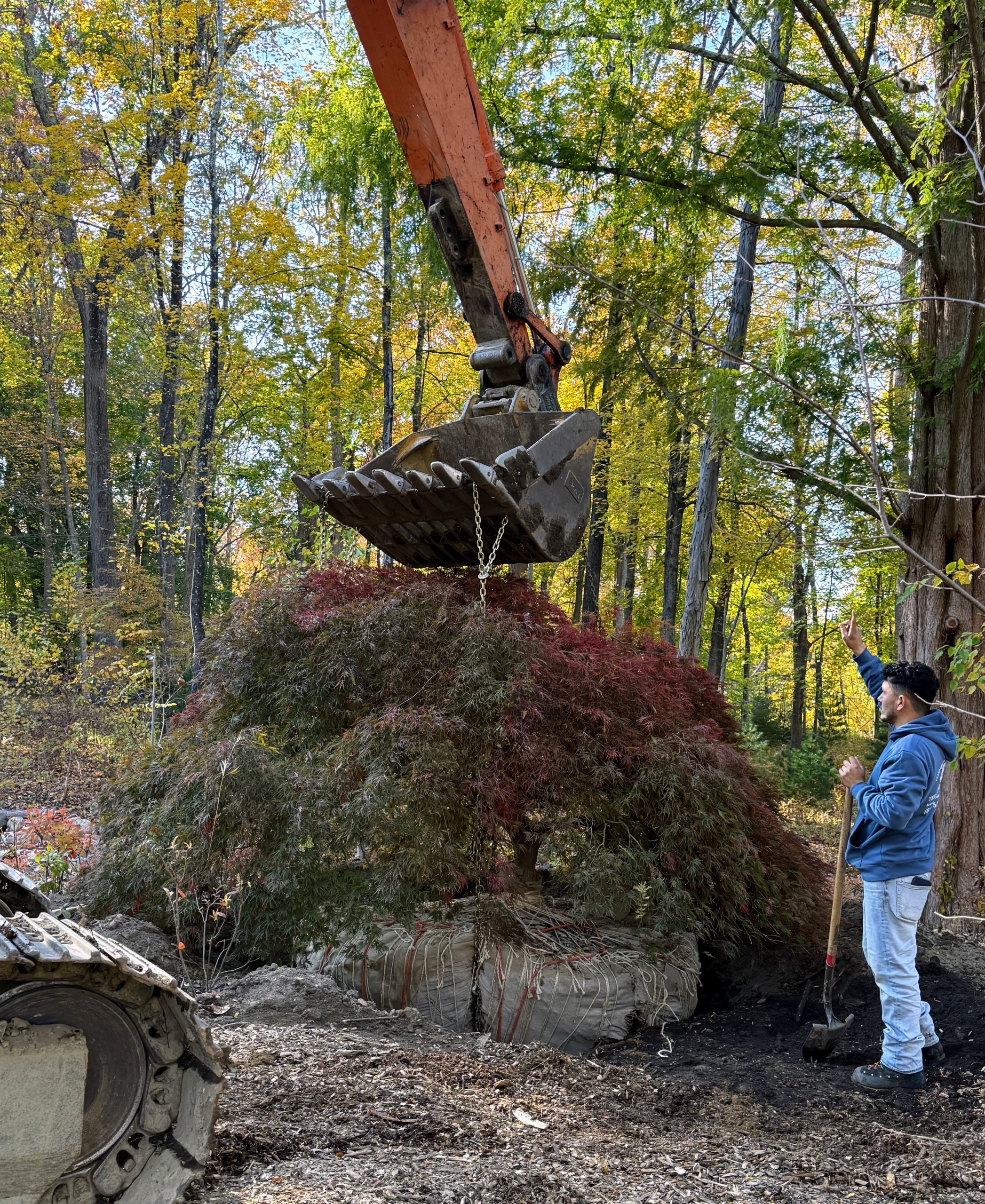
- The tree is lowered and checked for proper positioning. It is crucial for the tree’s longterm health and stability to be planted just right. Too deep could suffocate the roots – too shallow and the roots could be exposed and dry out.
-
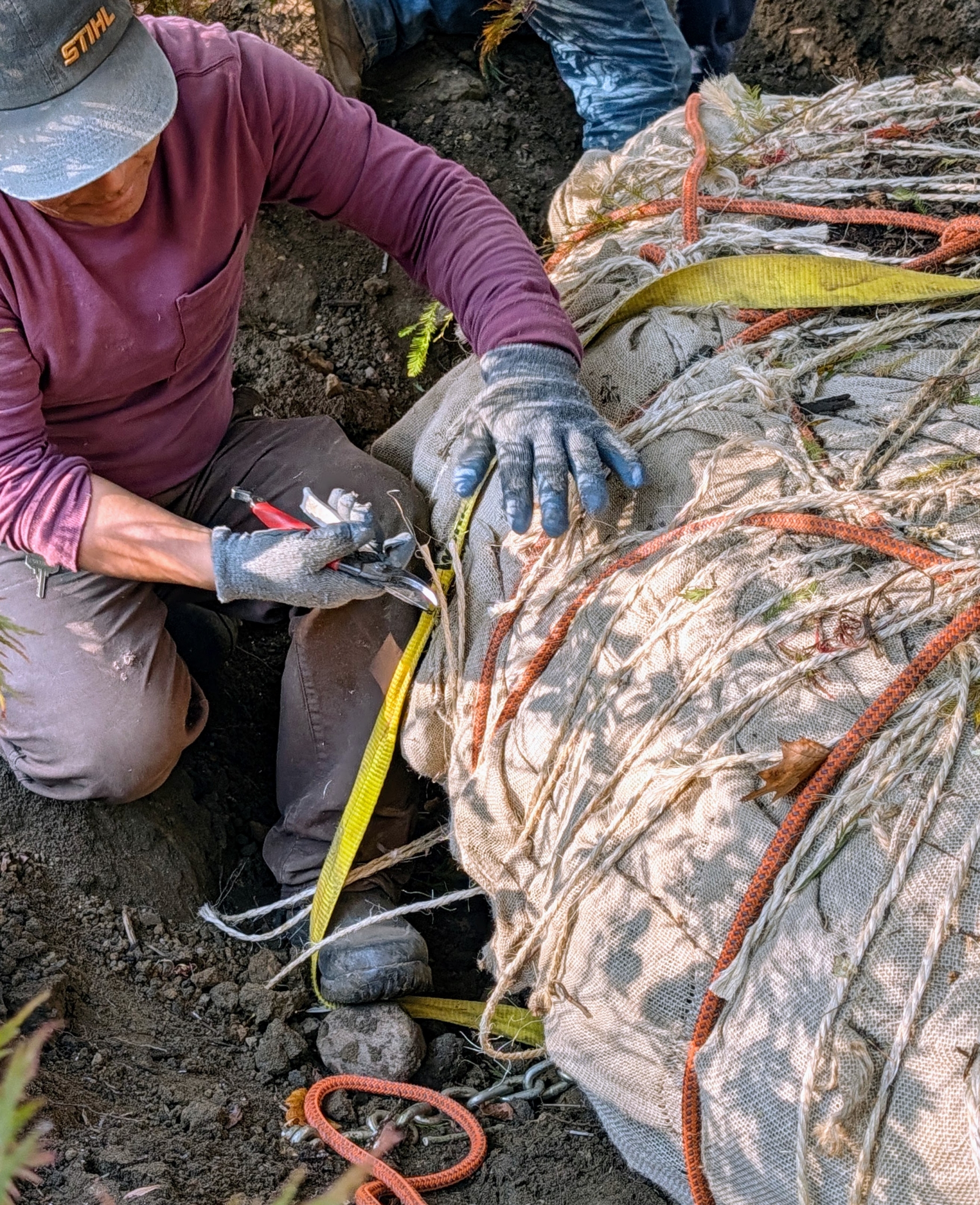
- Phurba begins to remove the twine wrapped around the root ball.
-
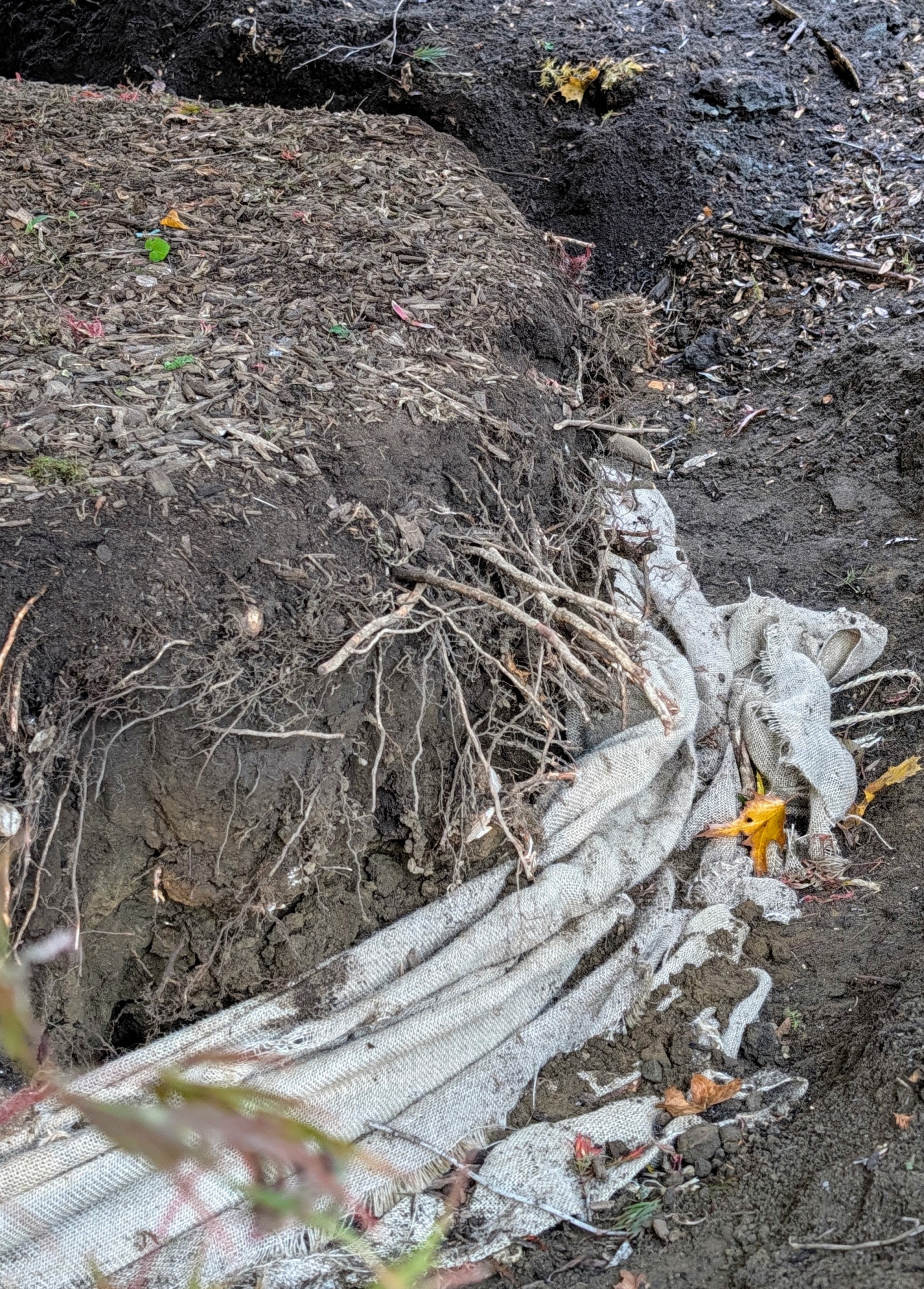
- The team removes the burlap from around the root ball. Once it is removed from the sides, they carefully pull it out from under the root ball. Some gardeners prefer to leave the burlap in place, but I always remove all the wrapping to ensure there is nothing blocking the tree’s natural root growth.
-
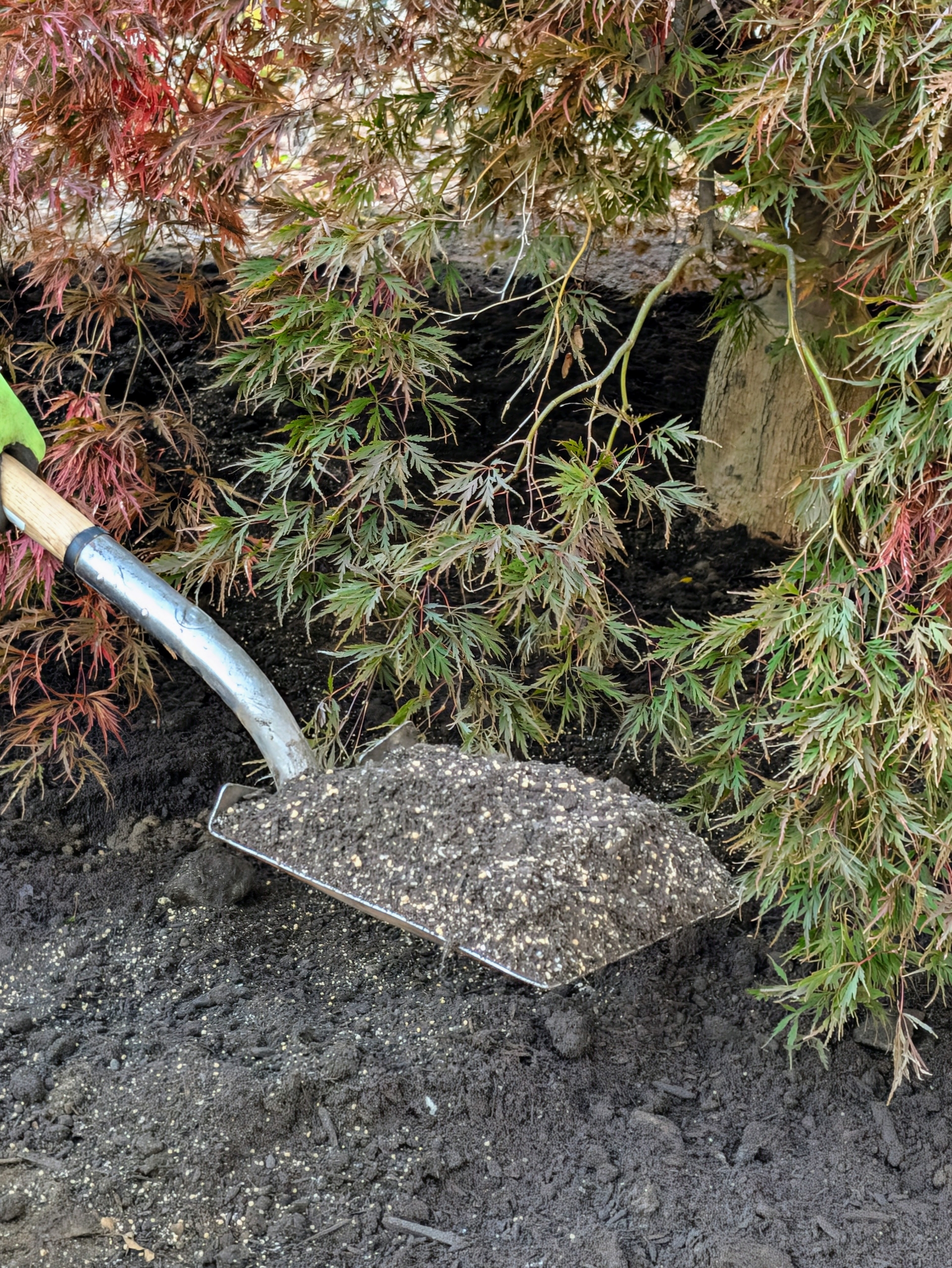
- Phurba mixes fertilizer with the existing soil and additional compost placed around the tree’s base.
-
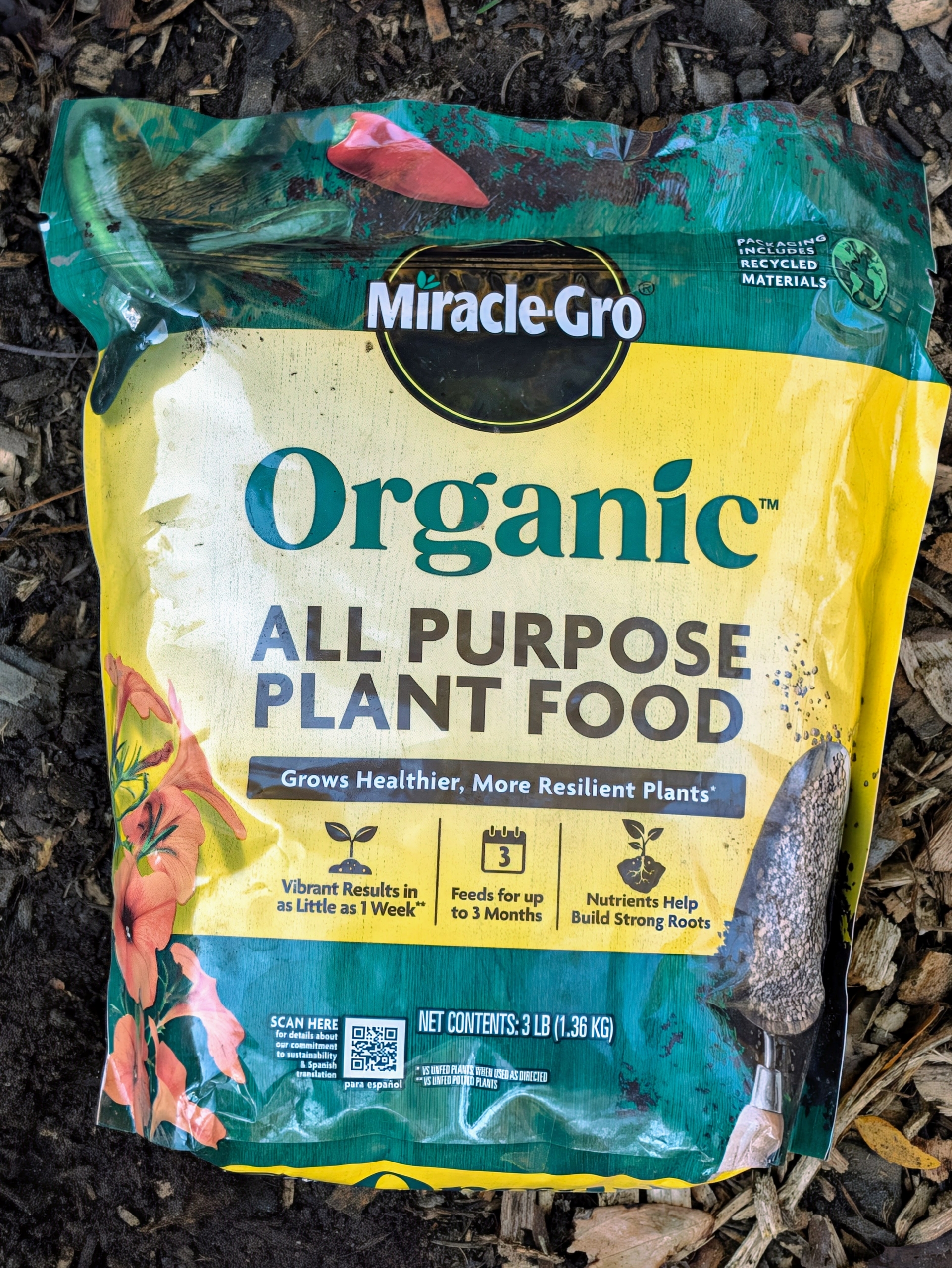
- I use Miracle-Grow All Purpose Plant Food. This feeds the tree above and below the soil for three months.
-
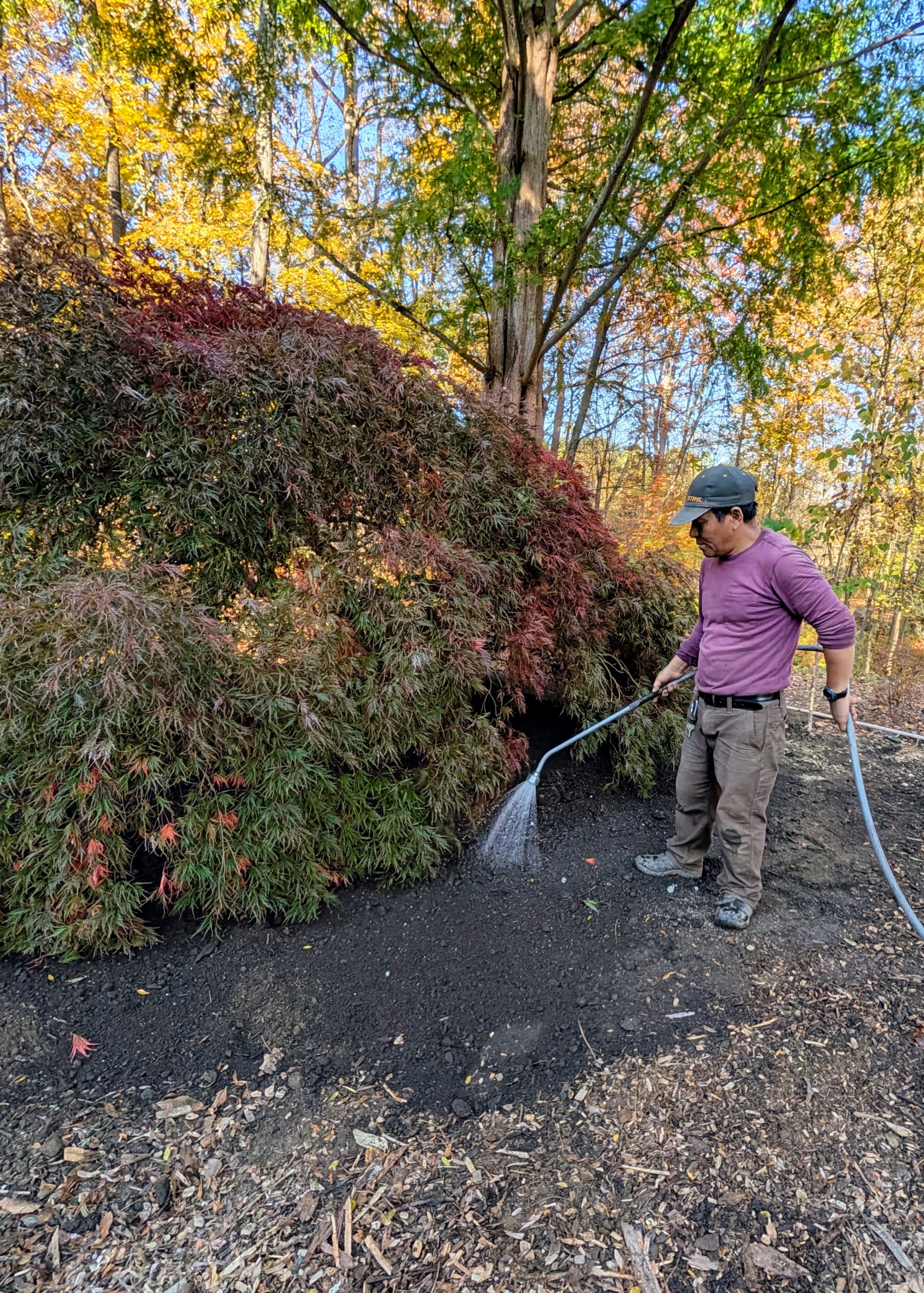
- Then the tree is thoroughly watered…
-
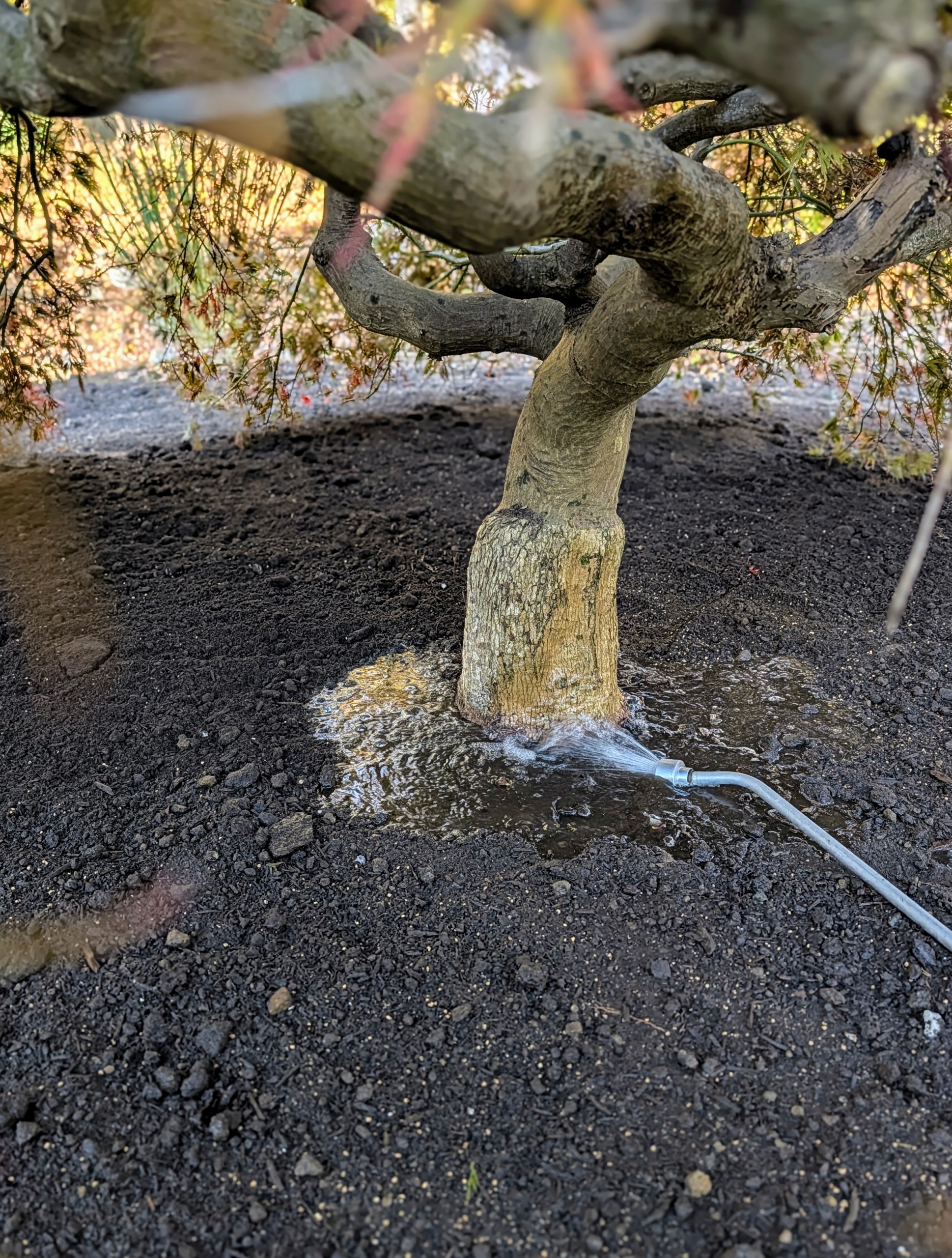
- Especially close to the tree’s trunk down to the roots.
-
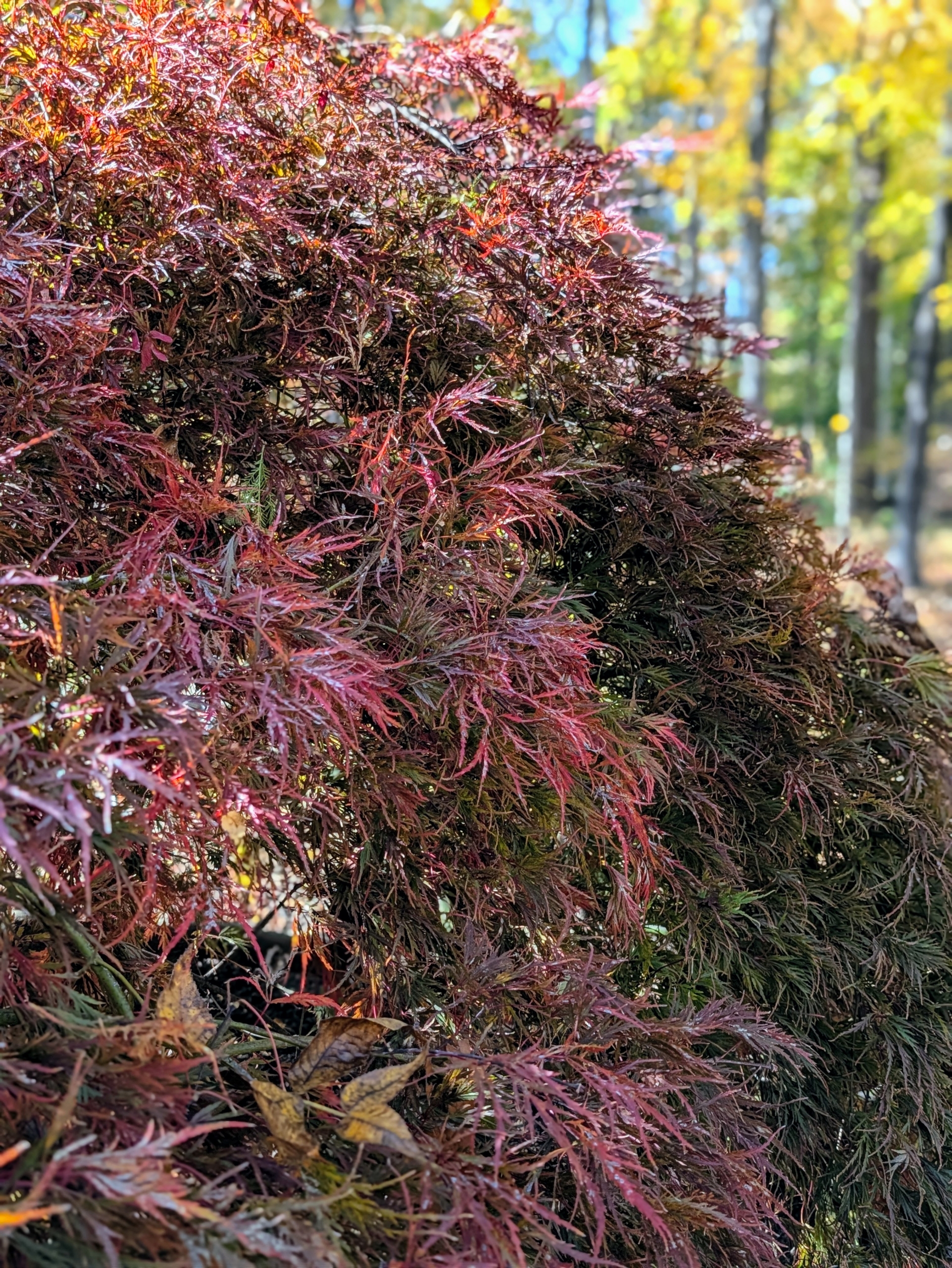
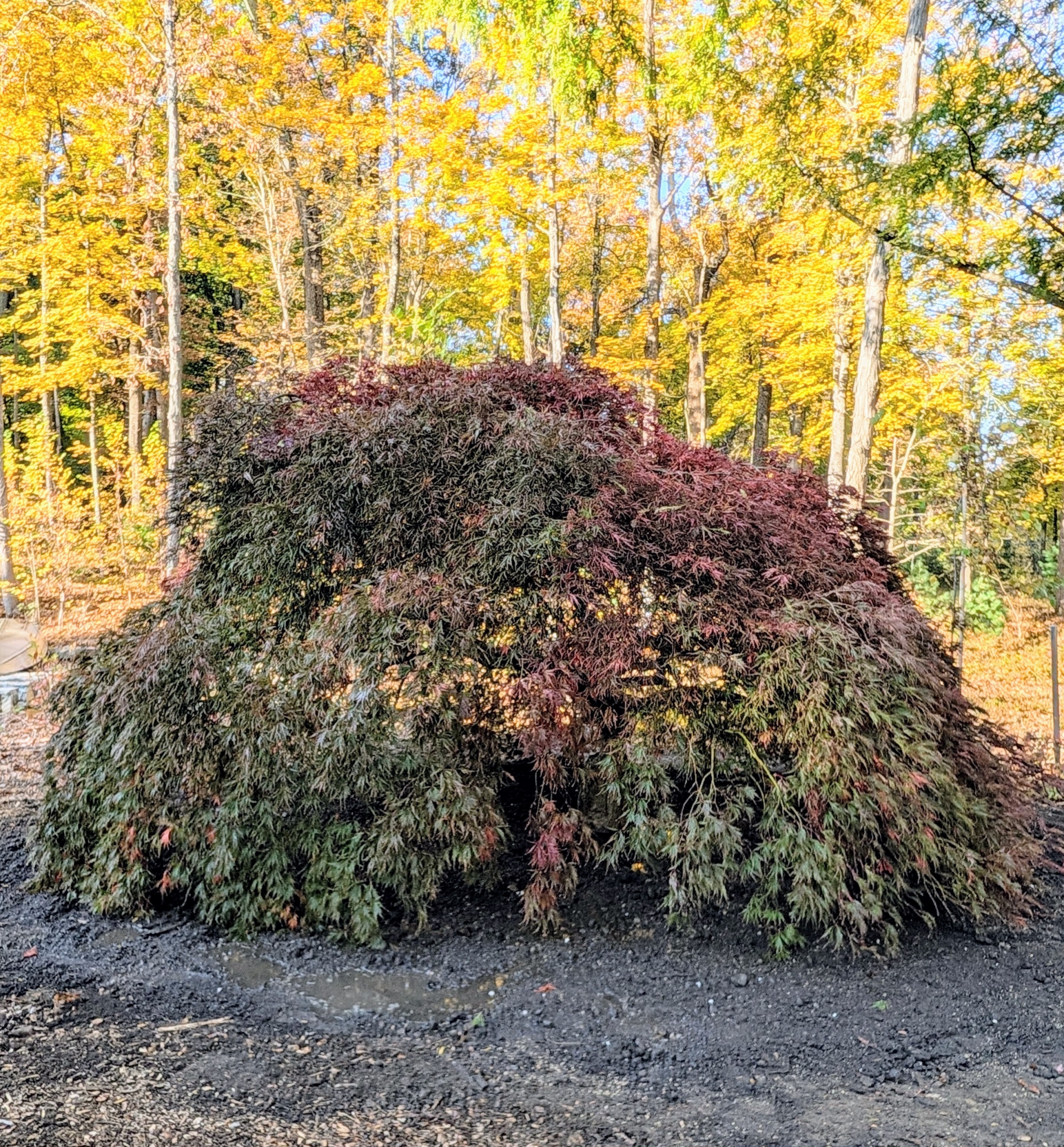
- The leaves of this Japanese maple are changing. All Japanese maples, Acer palmatum, are deciduous, meaning they shed their leaves annually.
-
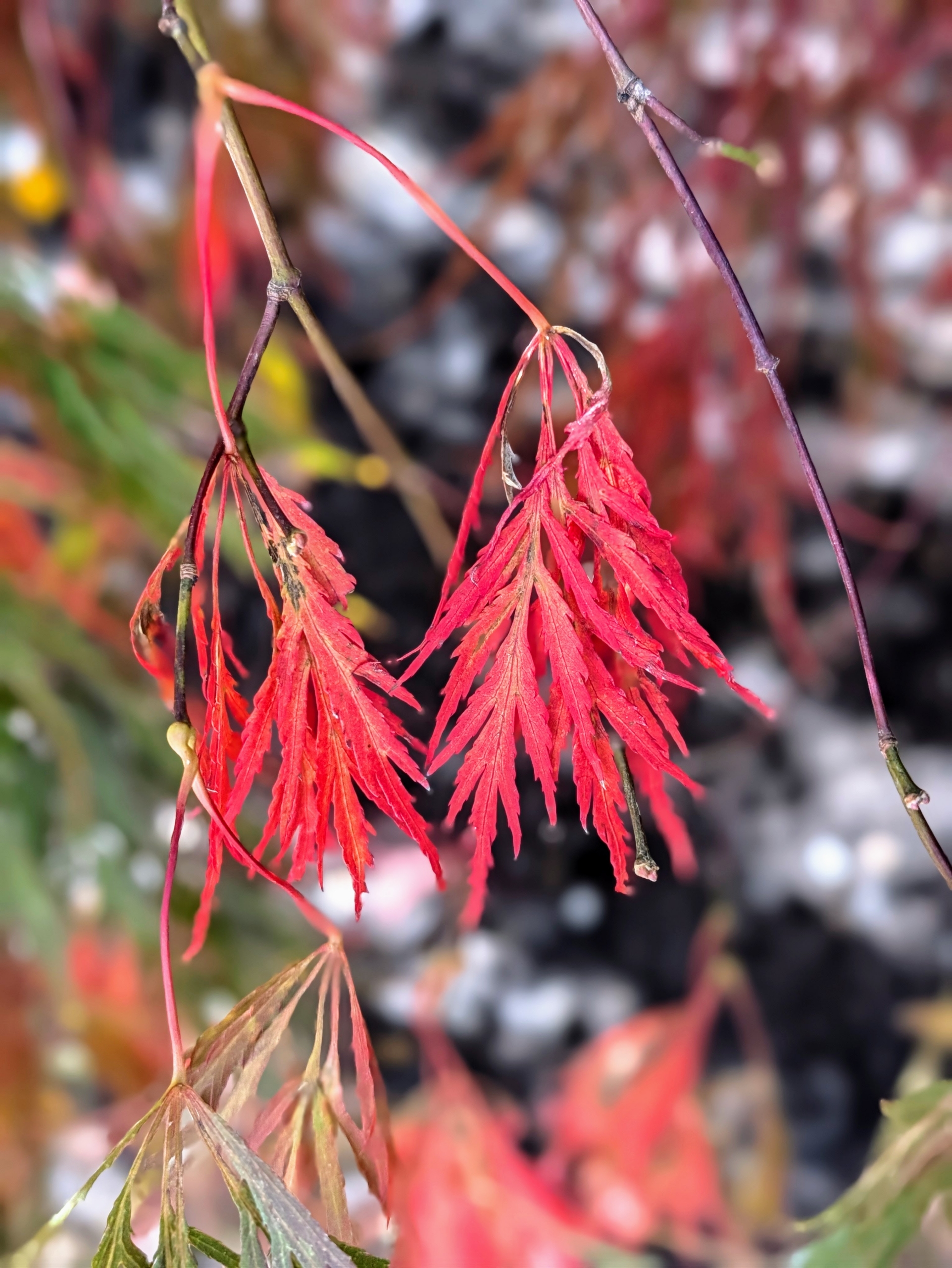
- Japanese maple trees display a wonderful array of autumn colors, from bright yellow and orange to fiery red, before naturally dropping their leaves for the winter.
-
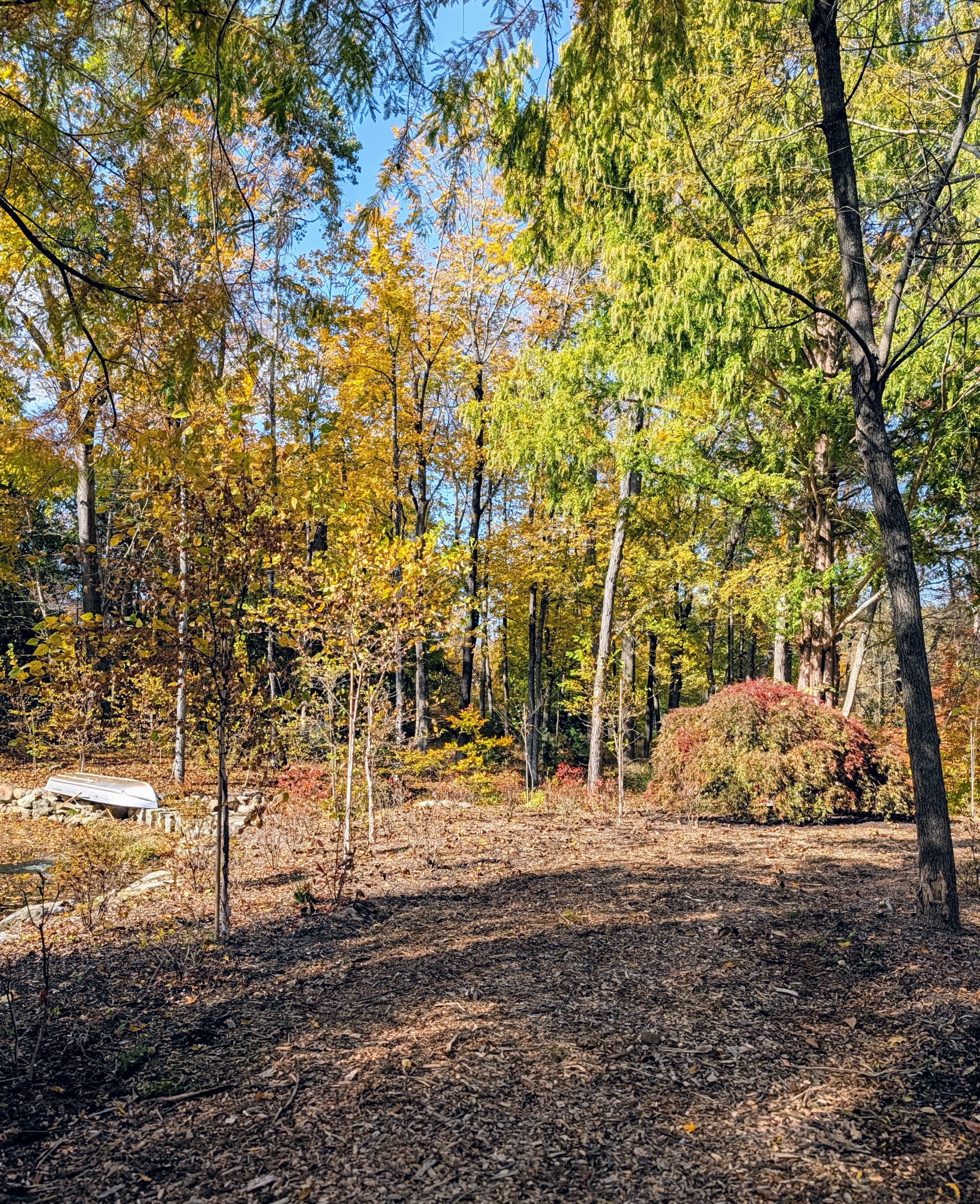
- Japanese maples grow slowly, but they can live more than a hundred years. It looks perfect in this spot near my pond.
-
- I am looking forward to seeing this tree develop and flourish here at Cantitoe Corners.
 Martha Pins


 Martha Tweets


