

Planting a New Peony Cutting Garden
Come spring, the peonies at my Bedford, New York farm will be more spectacular than ever.
I have long adored peonies and have cultivated them here for years. My collection includes a tree peony border nestled under the dappled shade of tall sugar maples; a selection of tree and Itoh peonies in the formal sunken garden behind my Summer House; and a dedicated pink and white herbaceous peony garden that bursts with color and life every June. Yesterday, my gardeners and outdoor grounds crew expanded my collection, planting hundreds of bare-root divisions in my new cutting garden — a fenced space in the middle hay field, situated just beyond the allée of London Planes and Cotinus. I am confident these varieties will thrive here at Cantitoe Corners.
Enjoy these photos.
-

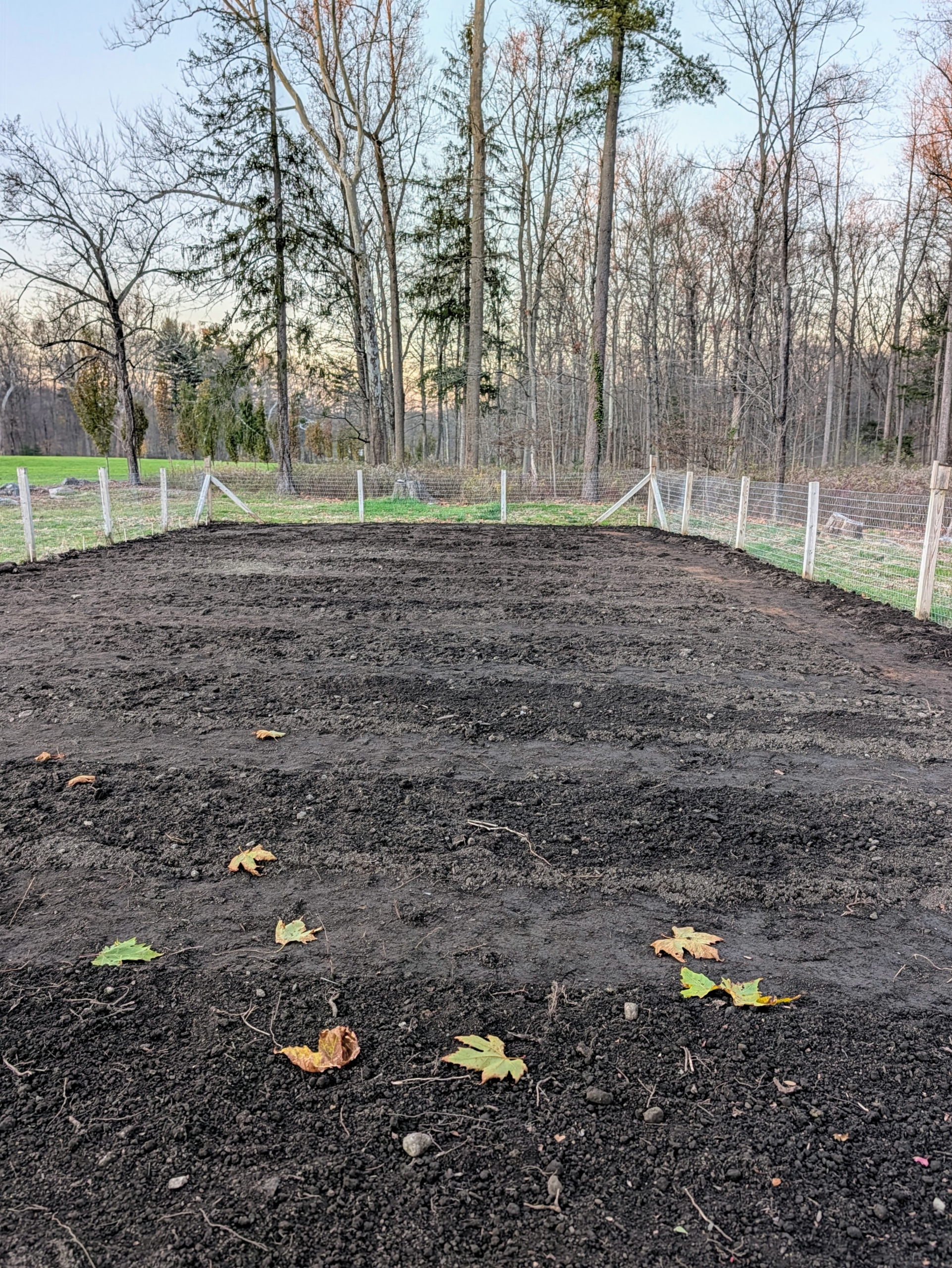
- This space measuring 84 feet by 36 feet has served me well over the years. I used it to grow my pumpkins and squashes. I also used it to enclose and protect young potted bare-root tree cuttings until they were developed enough to plant in more permanent locations. Recently, I decided it would be a perfect cutting garden, where I could grow neat and tidy rows of gorgeous, colorful flowers. Here it is all cleared and tilled and ready for planting.
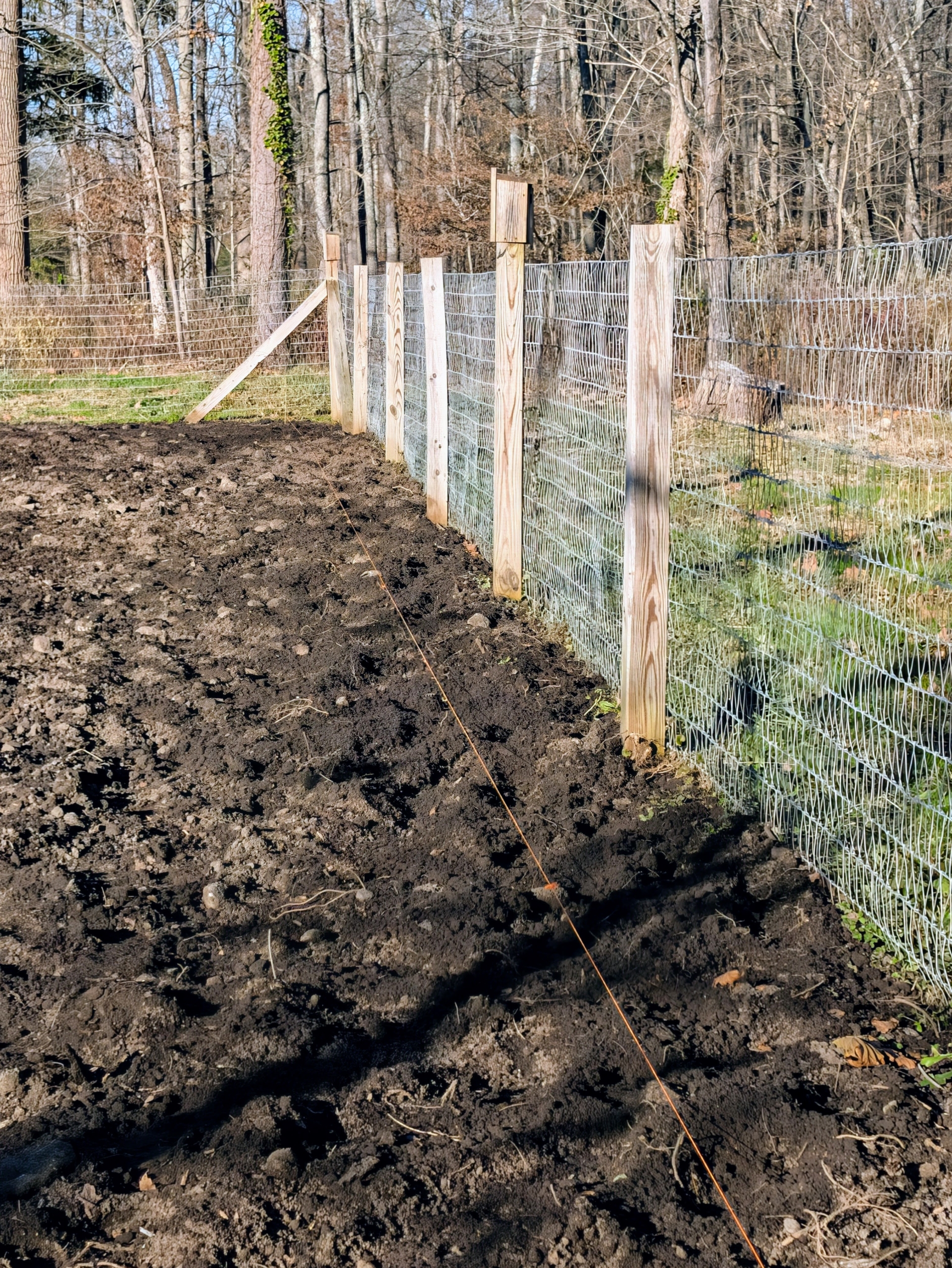
-
- The first step is to measure the area and calculate the proper spacing for the rows, footpaths, and plants.
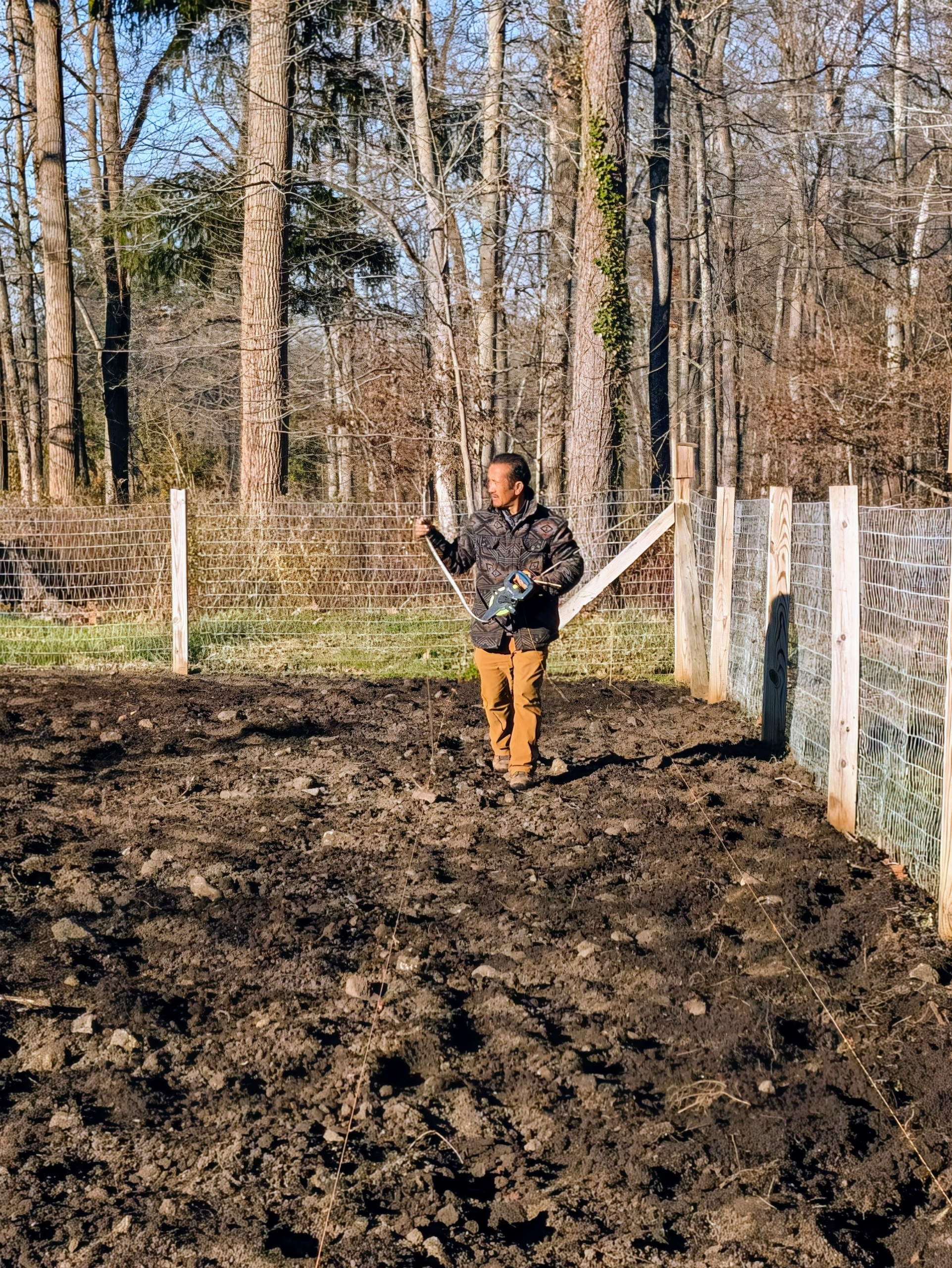
-
- Herbaceous peonies grow two to four feet tall with sturdy stems and blooms that can reach up to 10-inches wide, so it’s crucial they have just the right amount of room. Chhiring marks everything, so beds can be dug perfectly.
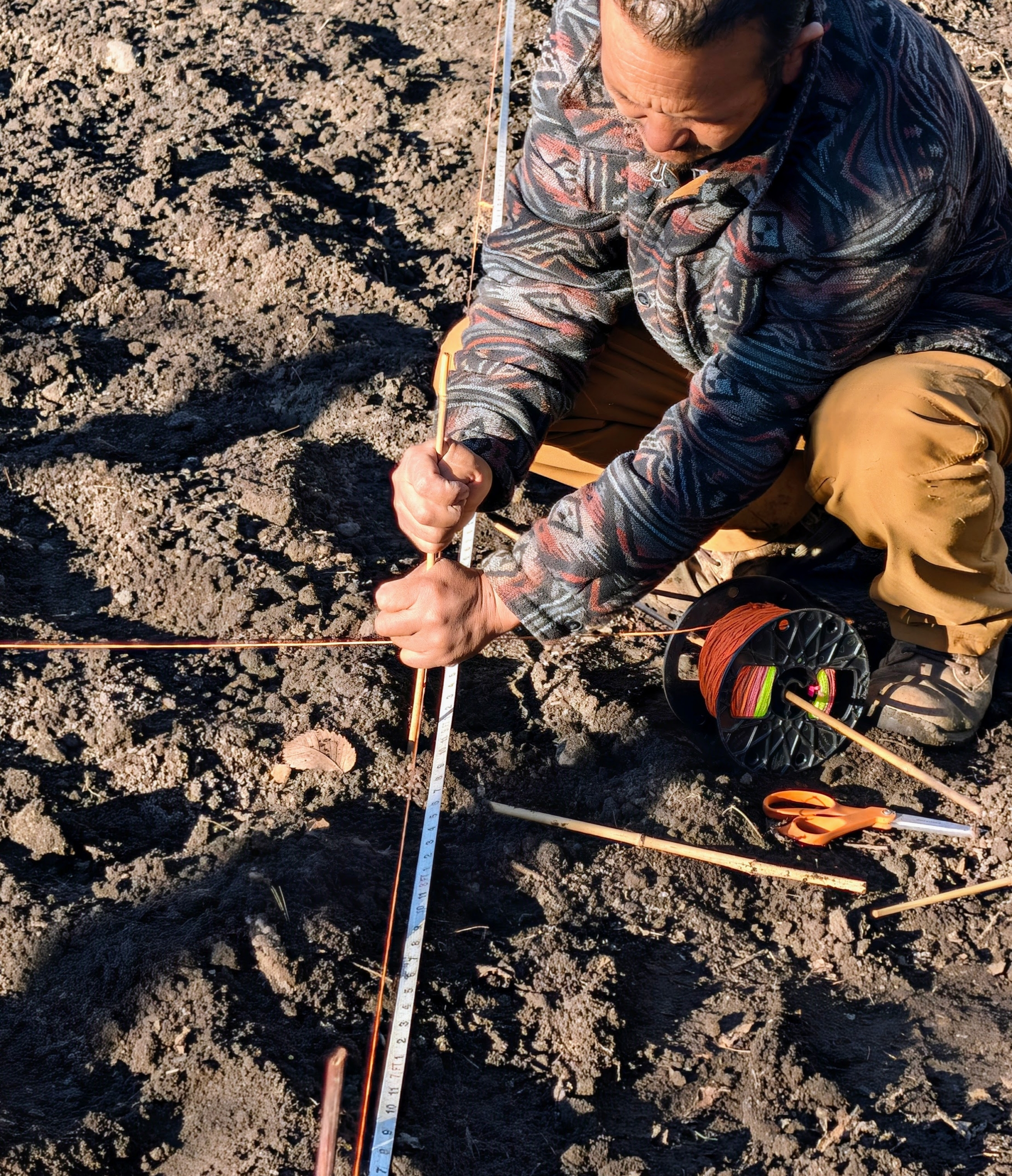
-
- Chhiring also places bright colored landscape twine to mark where each bed starts and ends. The flowers will be planted in sectioned rows by variety.
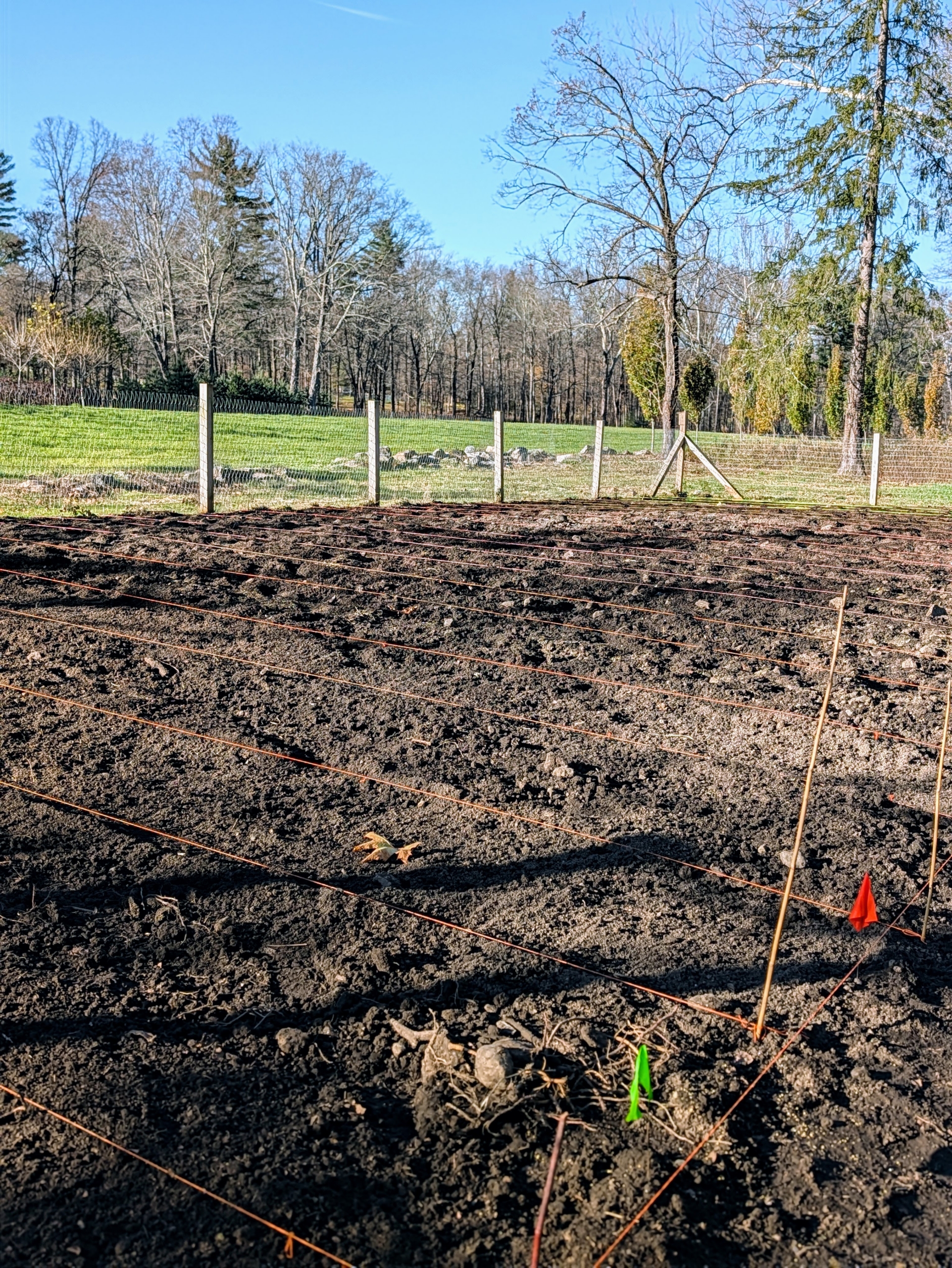
-
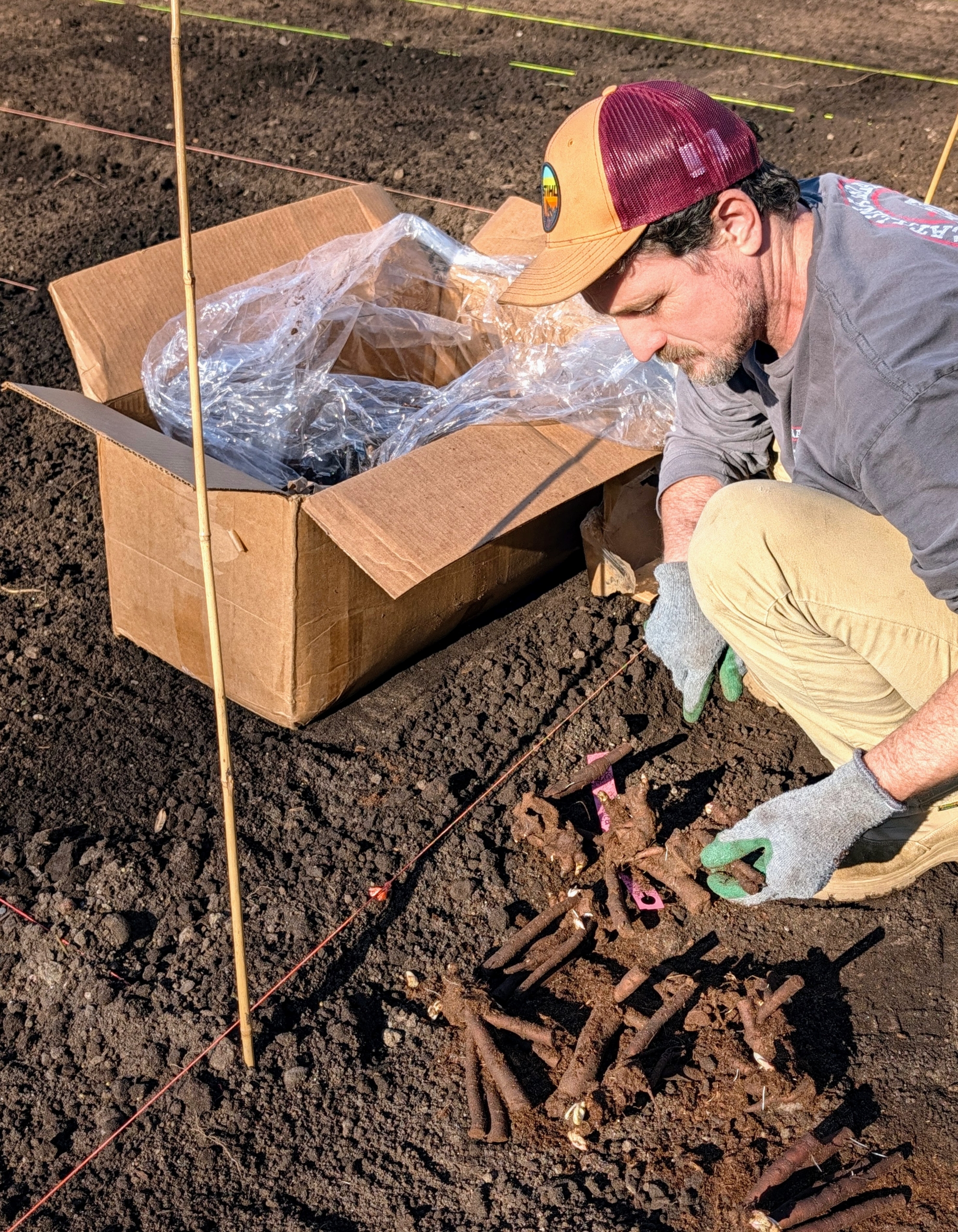
- These peonies are from Hollingsworth Peony Farm, a registered peony grower and hybridizer in Skidmore, Missouri. Each peony root division, or “start” is packed in sphagnum peat moss for protection during transport. Ryan removes them one by one and organizes the groups to be planted.
-
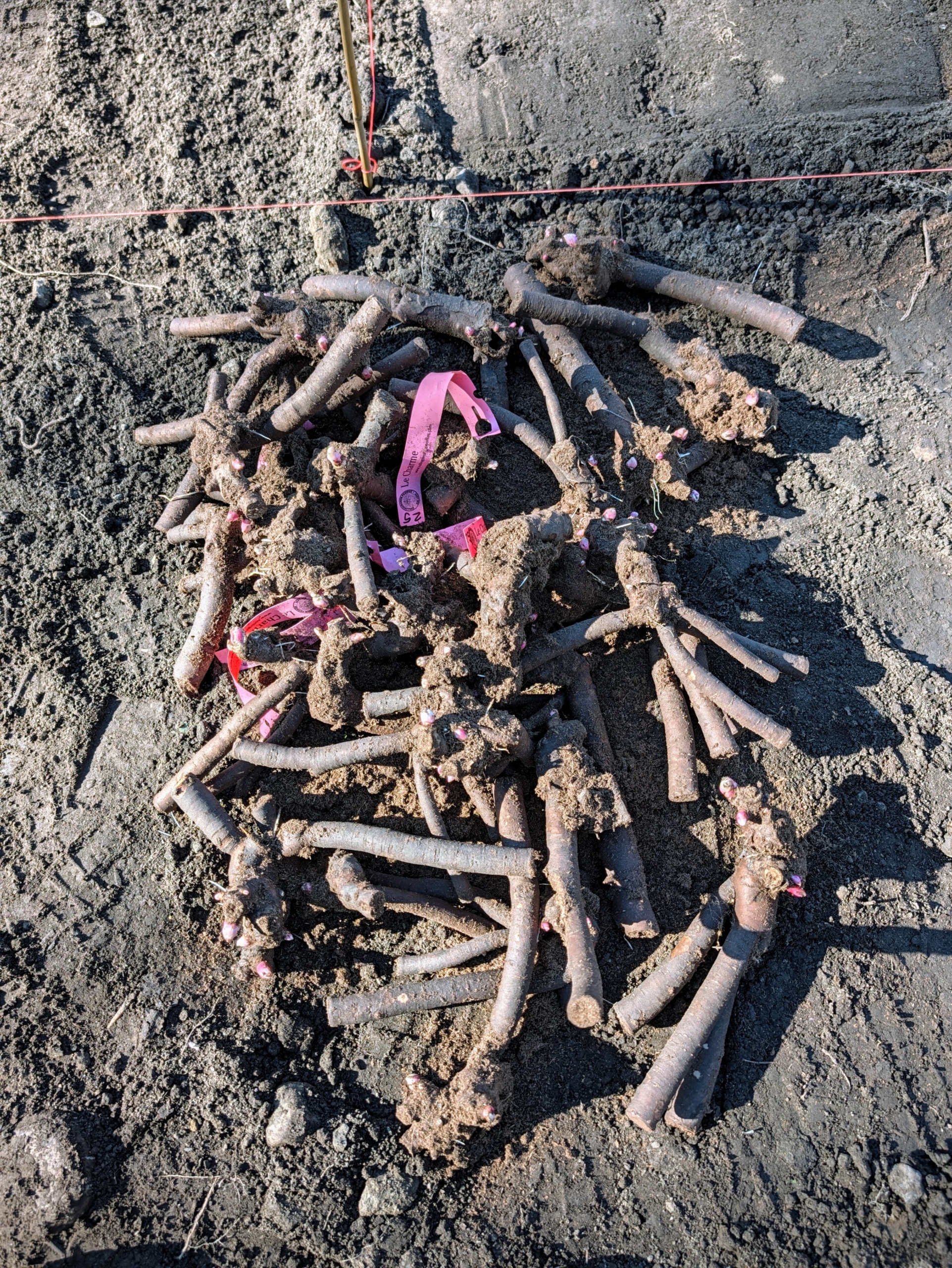
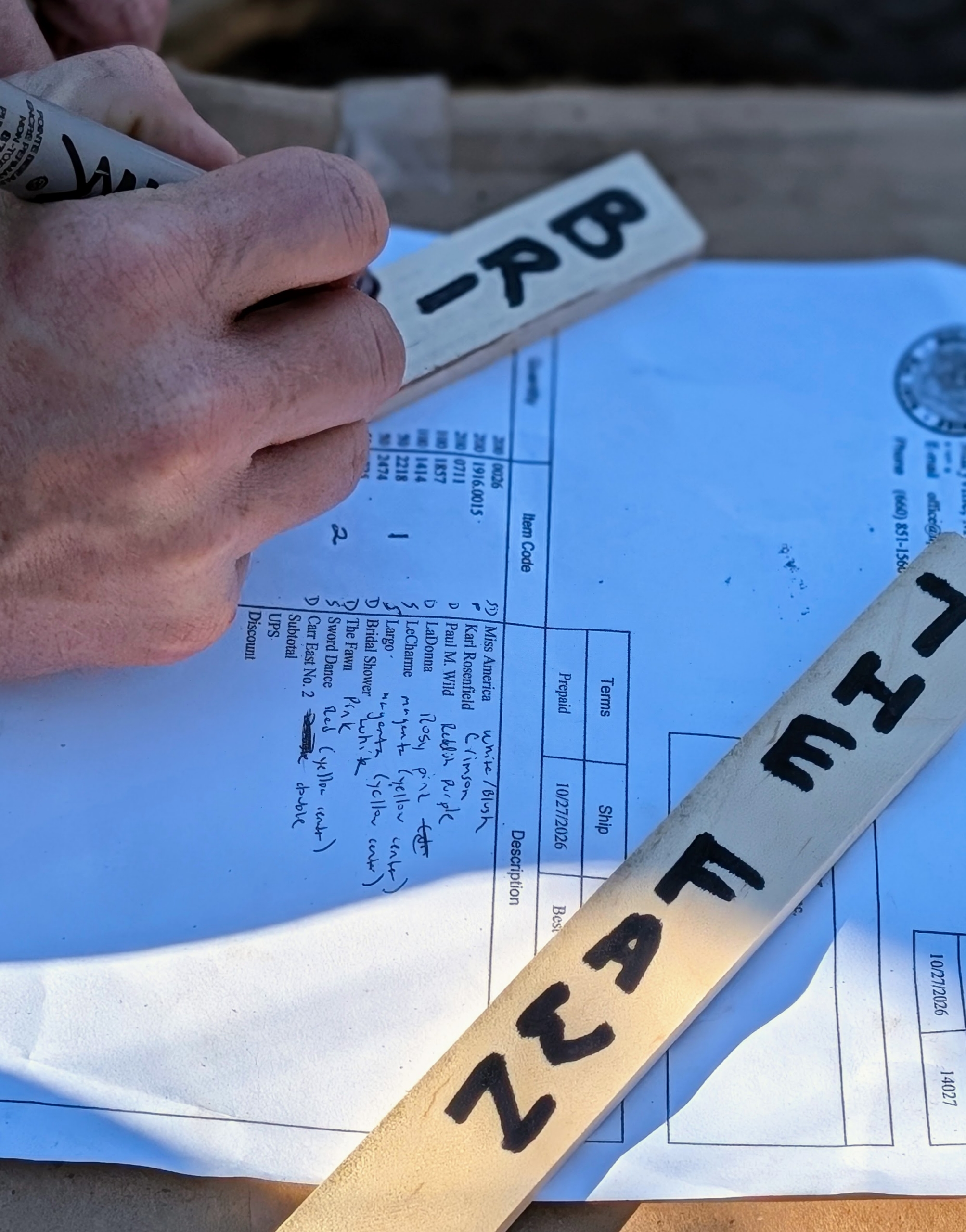
- Bare-root peonies do best when planted in the fall. These peonies are sorted by color and form. These divisions are cut from plants that are at least four years old, so these are programmed to flower in the first year. The varieties include ‘Miss America,’ ‘Karl Rosenfeld,’ ‘Paul M. Wild,’ ‘LaDonna,’ ‘LeCharme,’ ‘Largo,’ ‘Bridal Shower,’ ‘ The Fawn,’ ‘Sword Dance,’ and ‘Carr East No. 2.’
-
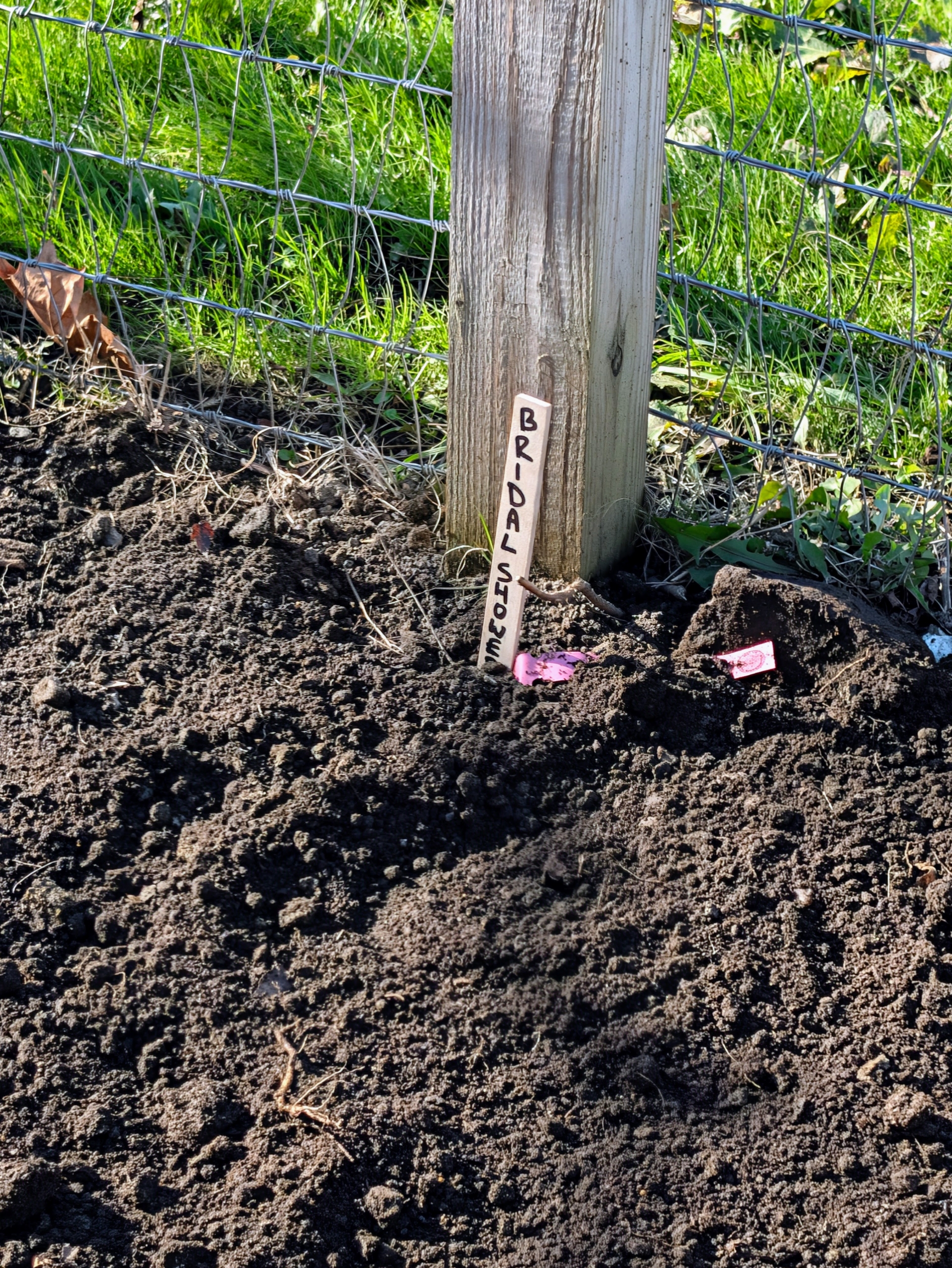
- Ryan creates a marker for each variety, so we can identify all the varieties and know which ones do best in this garden.
-
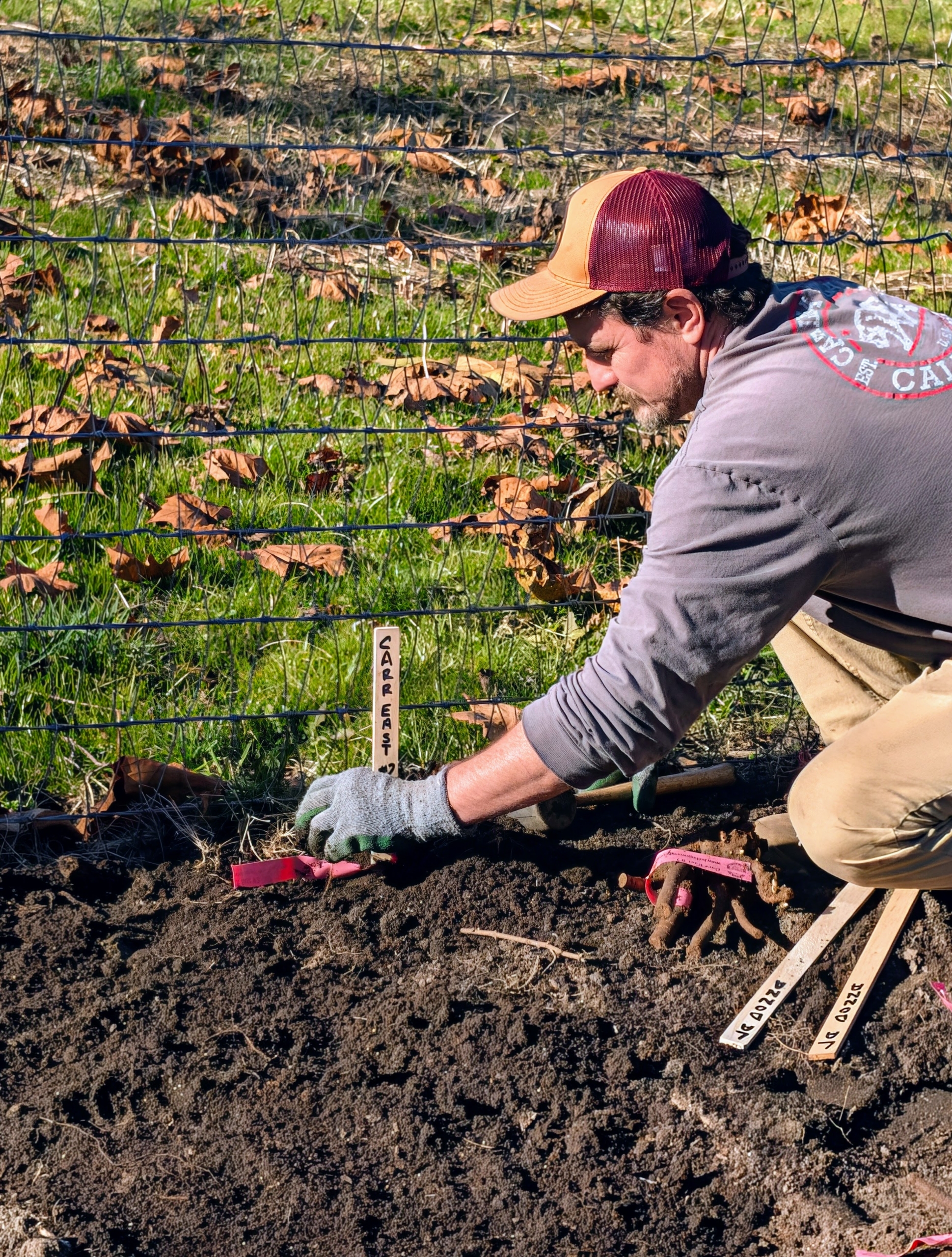
- He places the wooden marker at the back of each row, where it can remain undisturbed. He also attaches a plant tag, just in case the wooden one fades over time.
-
- These markers are large enough to see clearly from a distance. They are from Johnny’s Selected Seeds in central Maine, one of my favorite source for seeds and supplies.
-
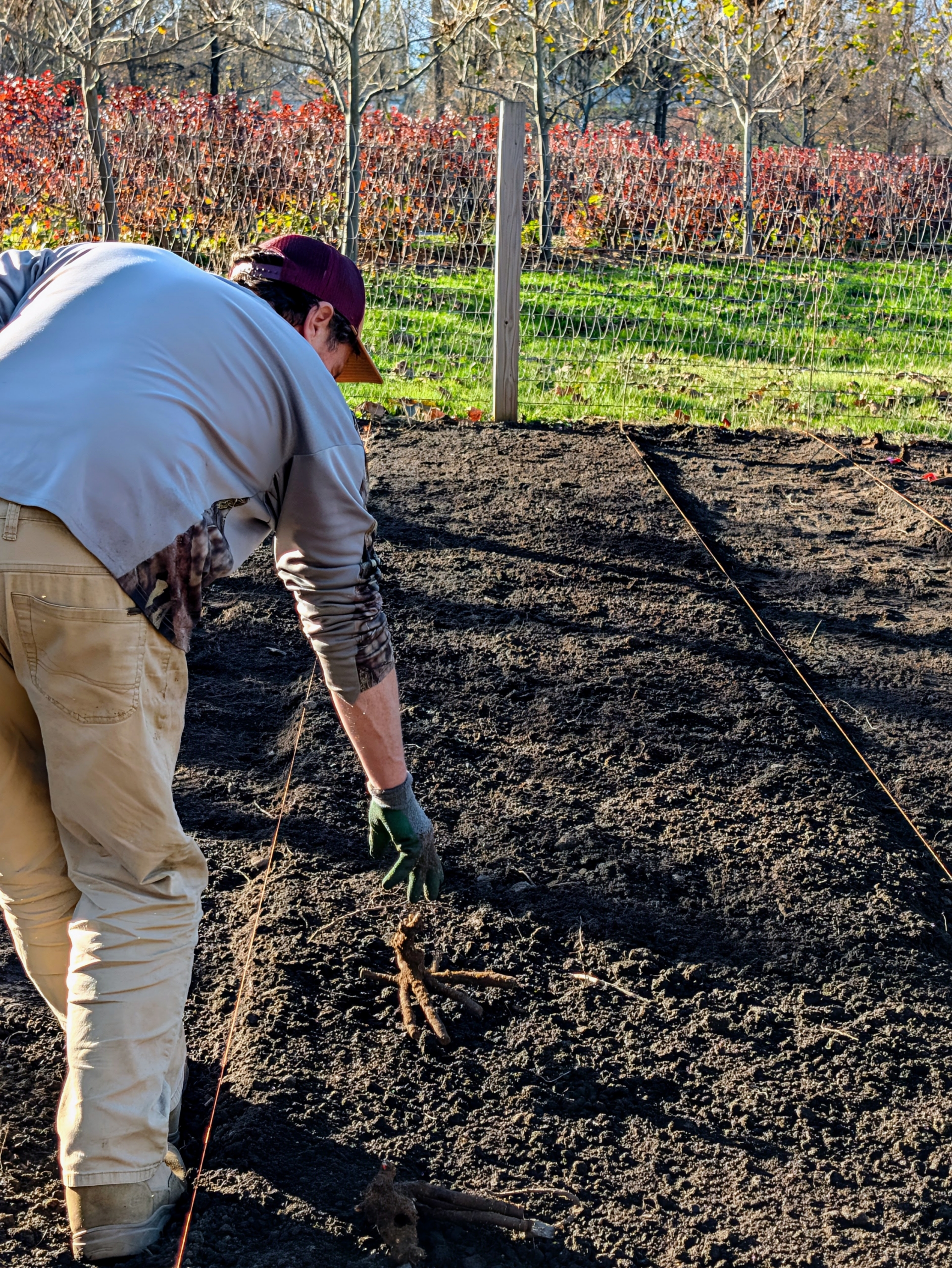
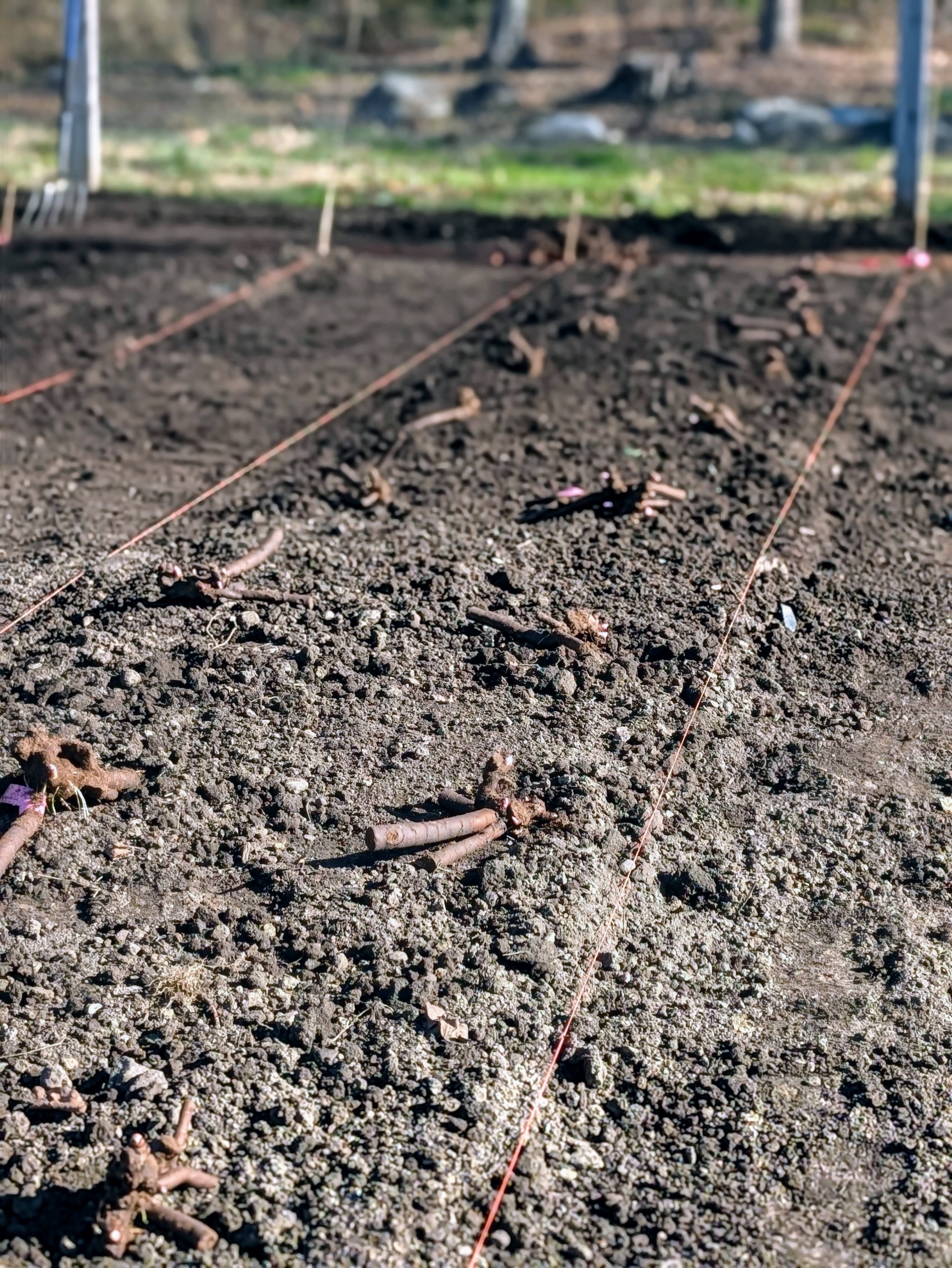
- Ryan drops the peony divisions two feet apart along the bed where they will be planted.
-
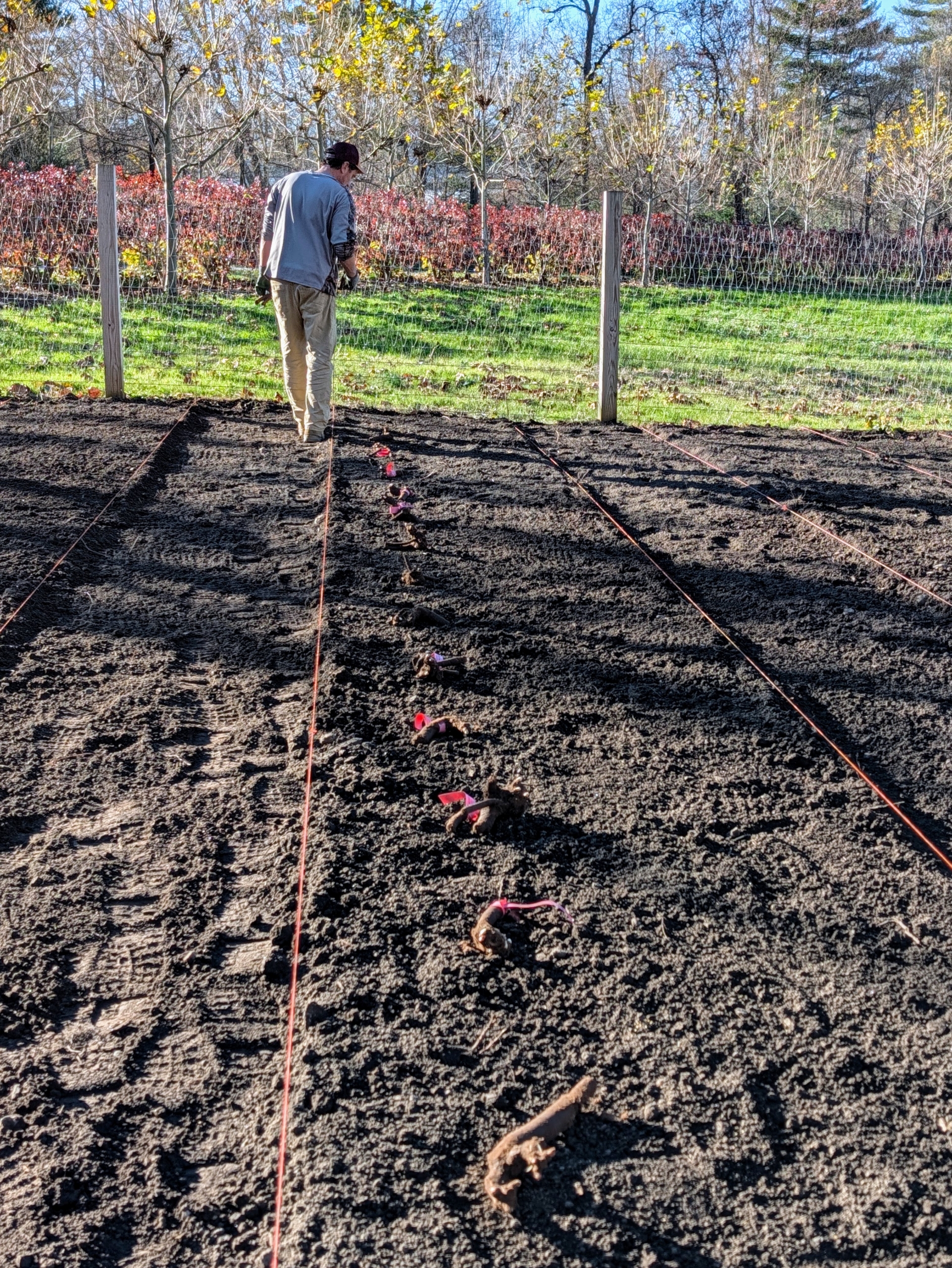
- Each bed will have two rows of 12.
-
- Ryan is careful to line them up the same way in every row. I take many photos of my gardens for both print and video, so they need to grow beautifully and perfectly straight and organized.
-
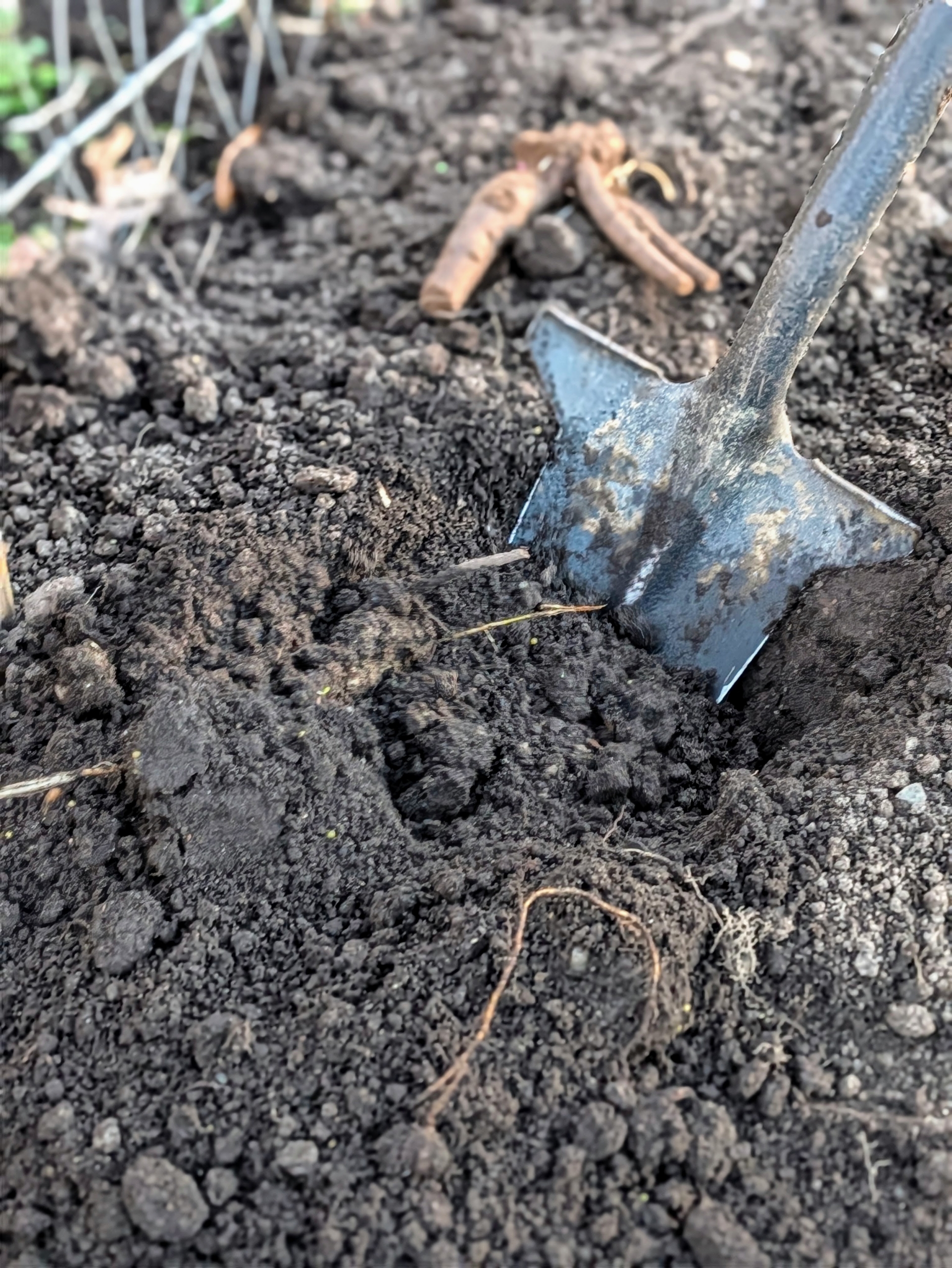
- Next, a hole is dug where the division is placed.
-
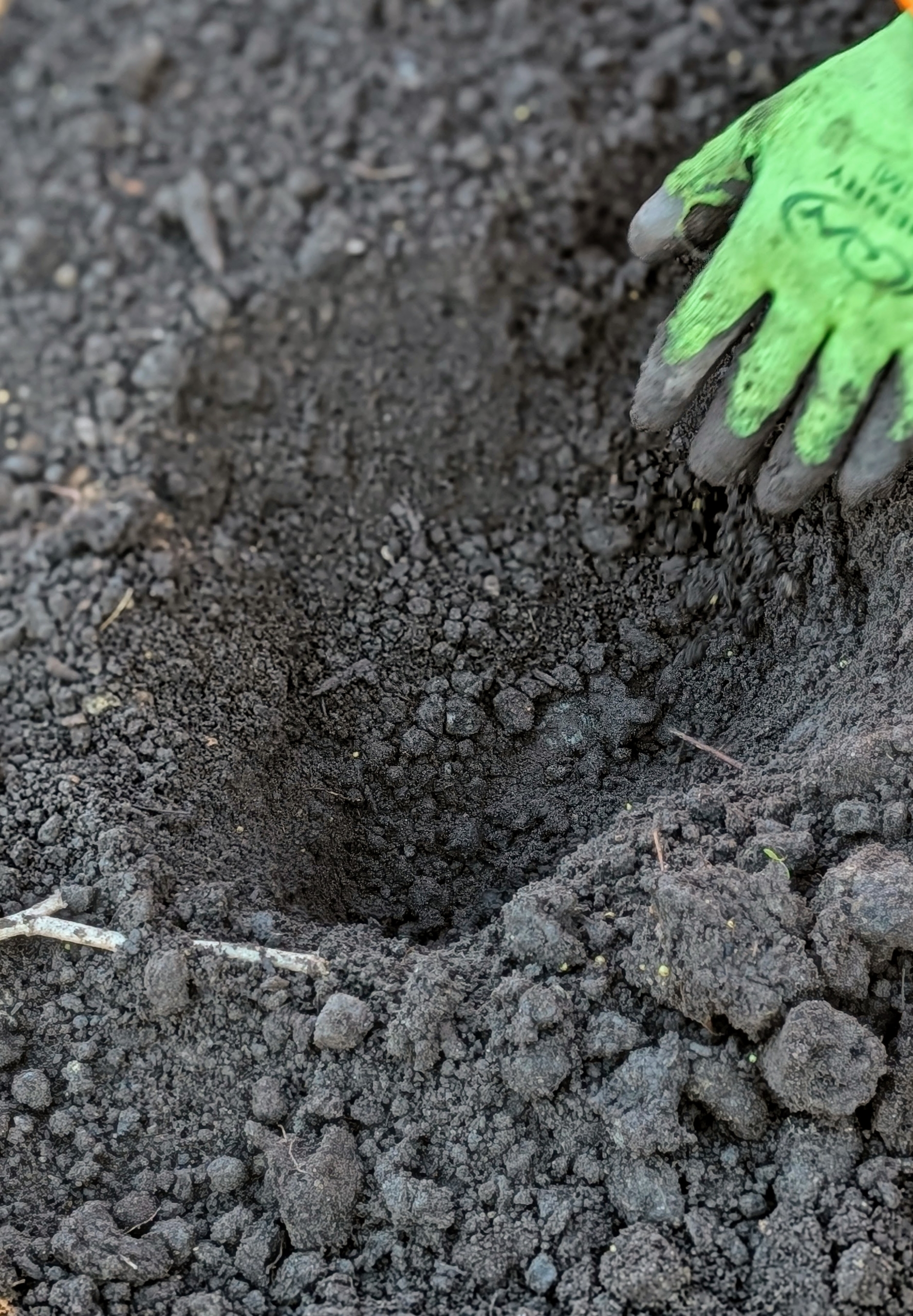
- Each hole is dug in moist soil that’s about a foot wide by six inches deep – deep enough to accommodate the entire bare root division.
-
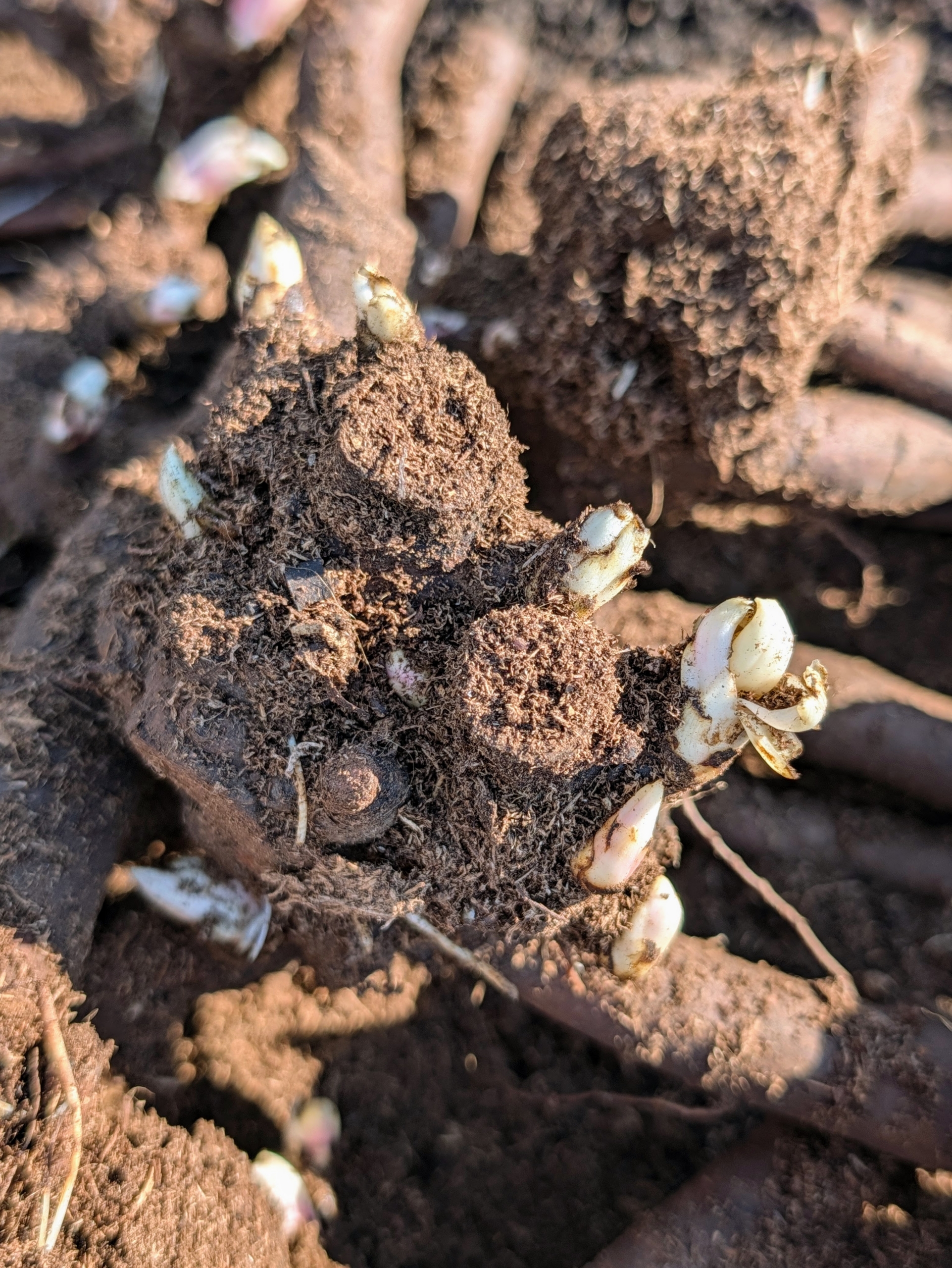
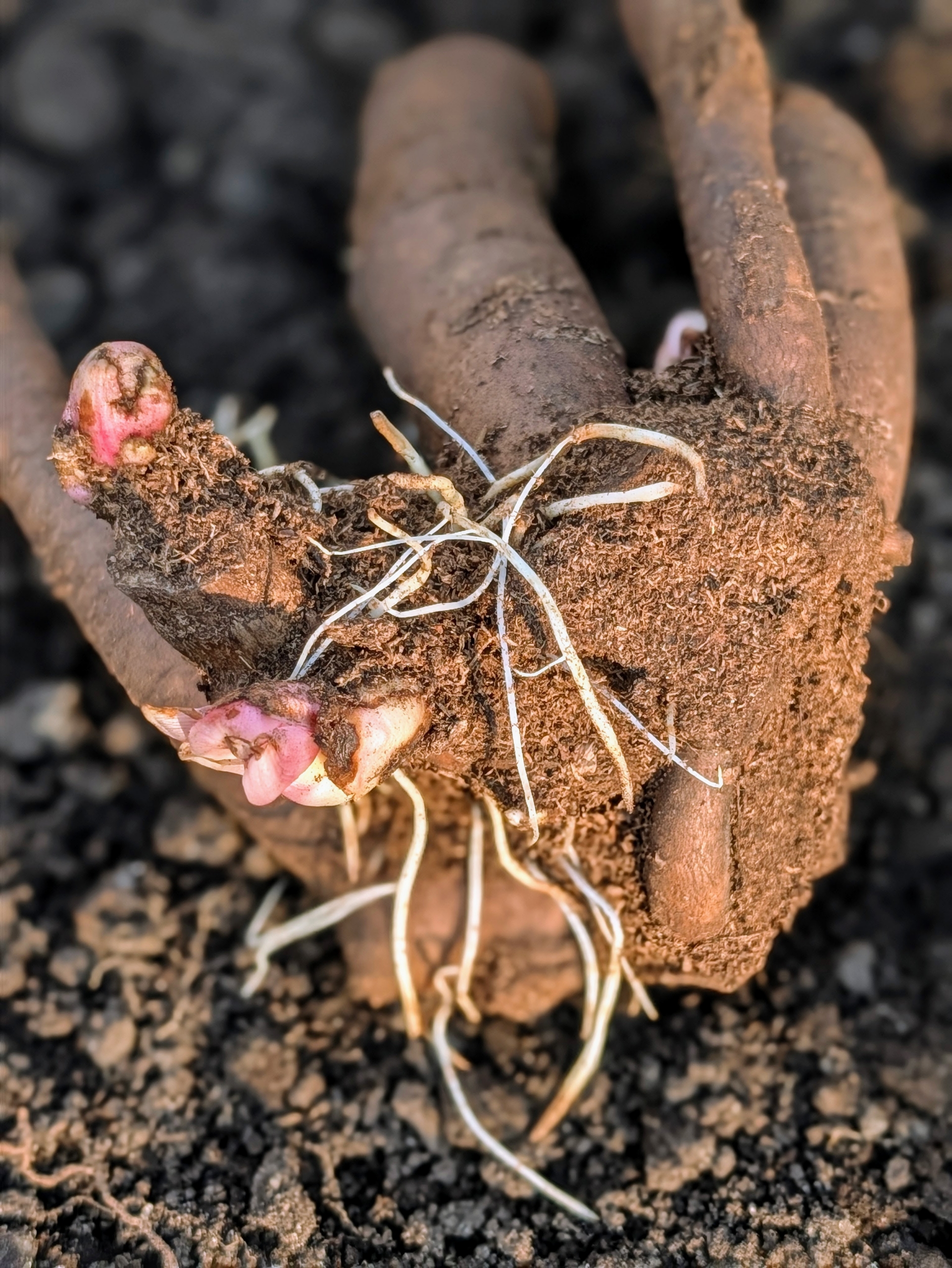
- A peony division looks like a small clump of thick, fleshy storage roots, or tubers, topped with a crown that holds about three to five small growth buds, known as “eyes.”
-
- Here, one can see pink buds growing from the top of the division.
-
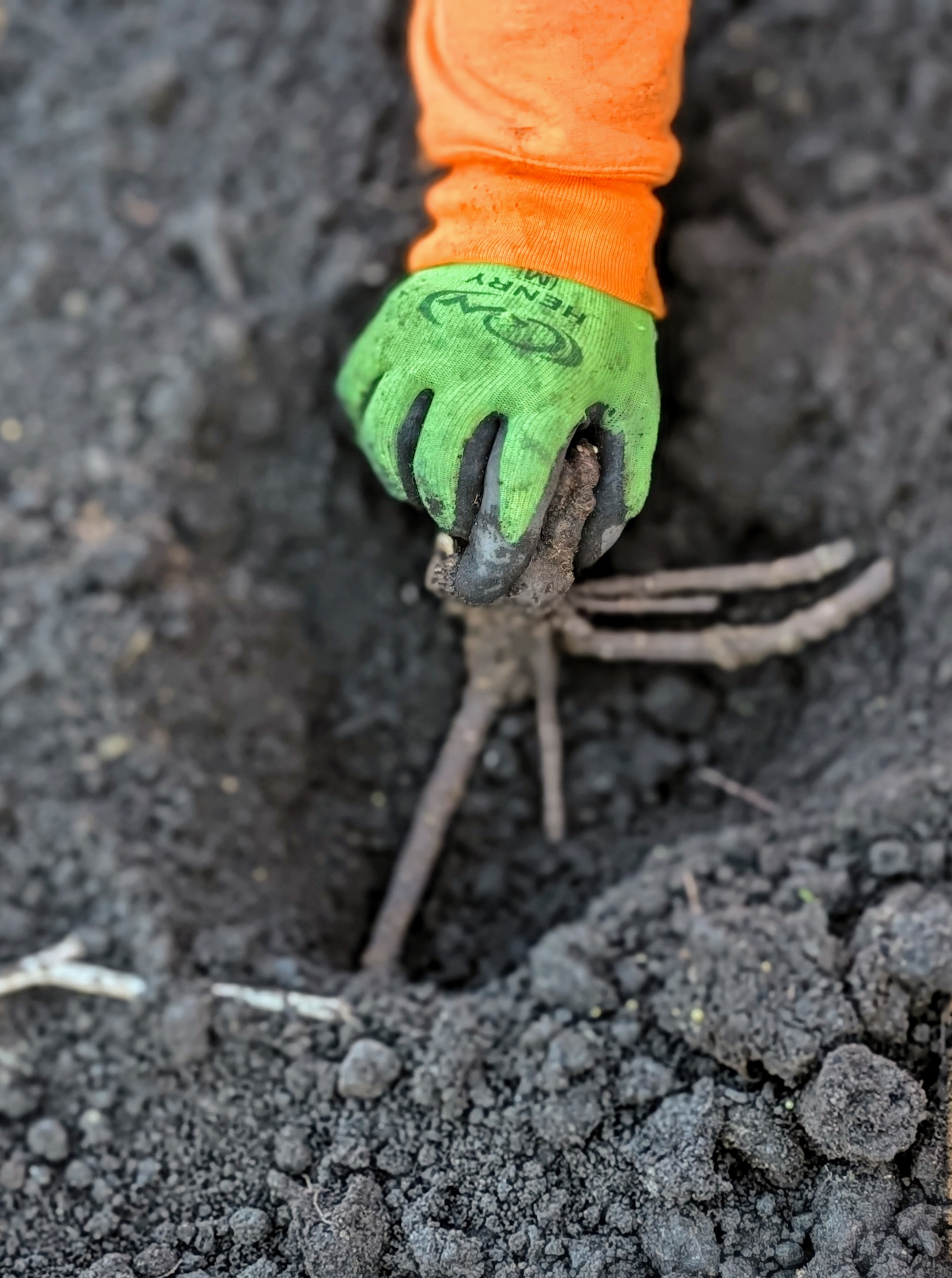
- The roots are placed facing downward and outward for best growth, and the buds are faced up. The division must sit deep enough so the bottom of the shoot buds are at least two inches under the soil line.
-
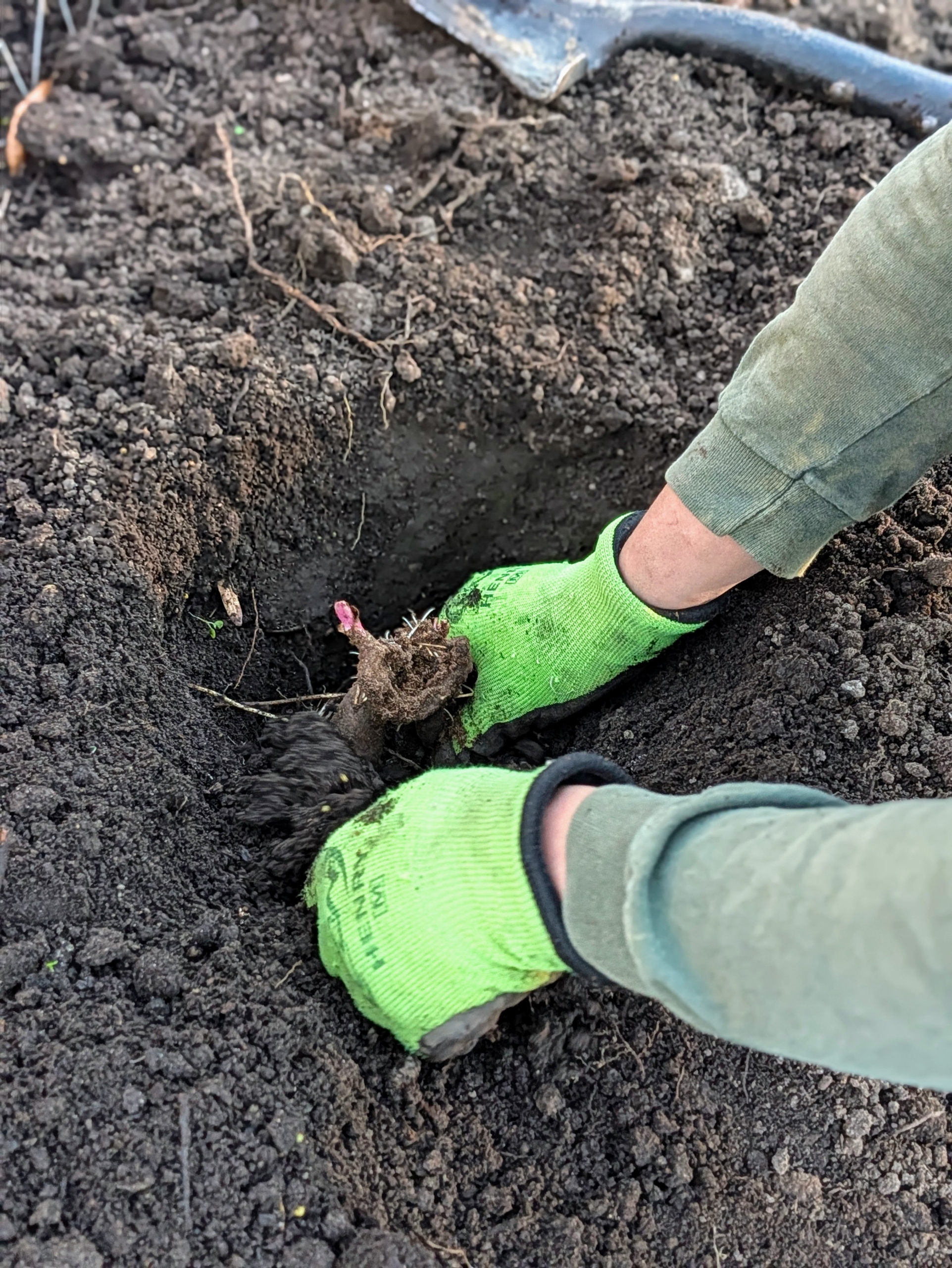
- Then as the division is held secure, the hole is backfilled, so it is lightly packed and all the parts of the division are fully covered.
-
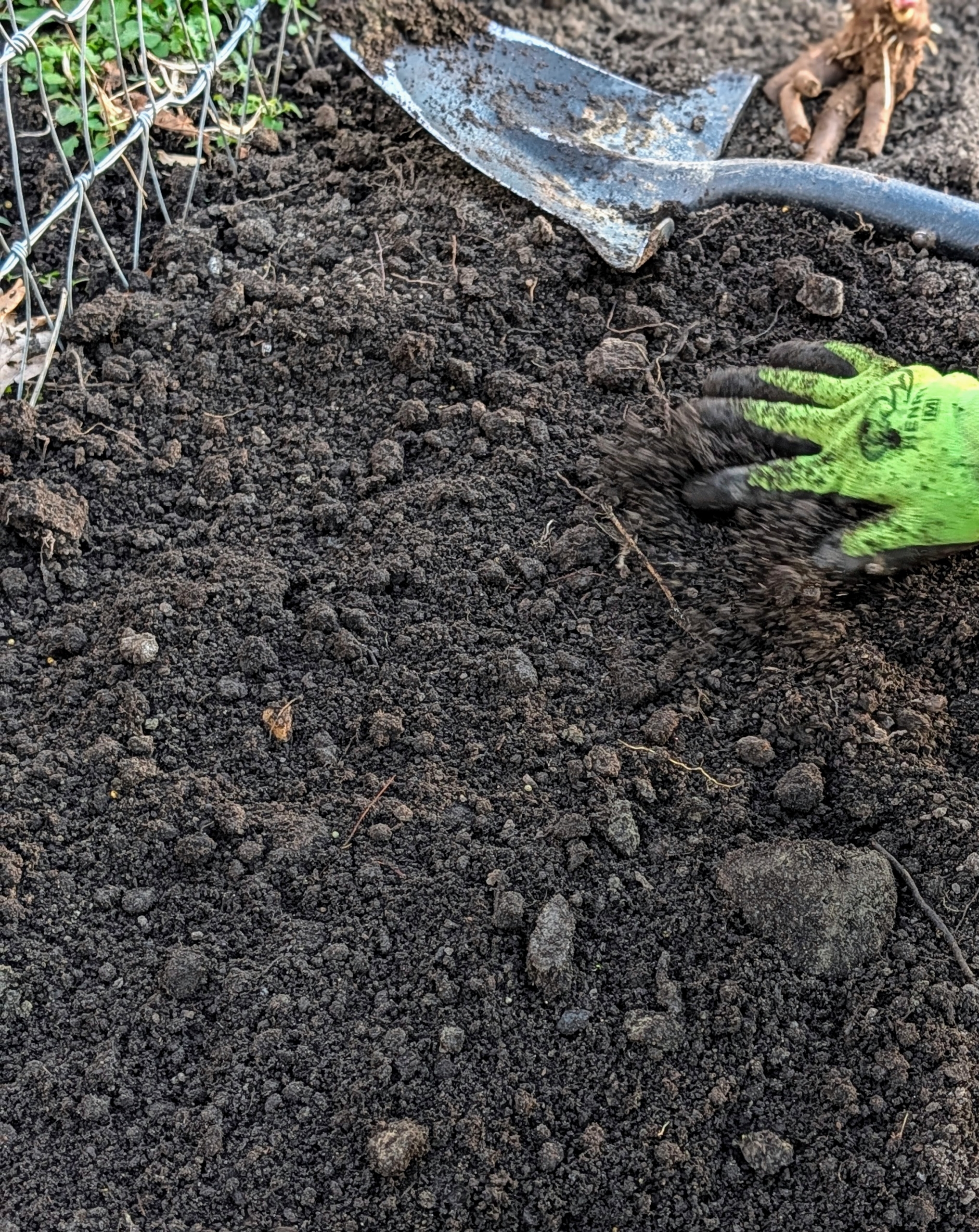
- Once it is covered, none of the division is seen. A layer of compost, made right here at my farm, will also cover the area to protect the young planting from frost.
-
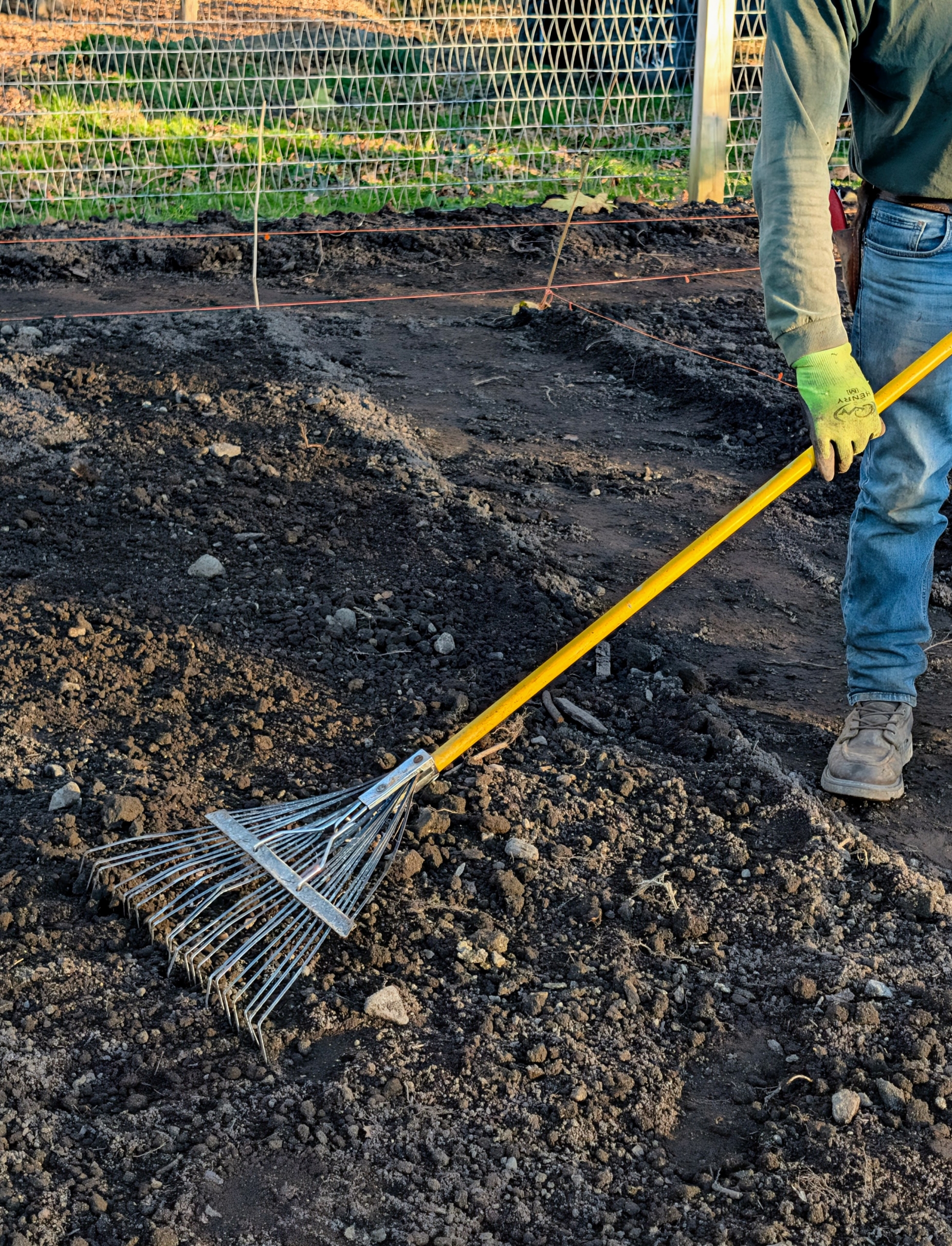
- After all the peonies are planted, the beds are raked neat and tidy. One of the reasons peonies do so well here at my farm is because of the soil. It has a pH of 6.5 to 7.0, which is ideal. Peonies also prefer full sun and do even better with light midday shade and protection from strong winds.
-
- This space is a perfect location for these peonies. Hopefully all these plants will be bursting with color early next June. When properly planted and cared for, these fragrant specimens can live for 100 years or even more.
 Martha Pins


 Martha Tweets


