

Starting Brassica Seeds
Gardeners, it's time to start those brassicas from seed.
Here at my farm, I always start the year off planting seeds indoors for the next growing season. Last week, my head gardener, Ryan McCallister, started pots of broccoli, cauliflower, and cabbage - all considered brassicas, or cole crops - a genus of plants in the mustard family, scientifically known as Brassicaceae, whose members are informally referred to as cruciferous vegetables. The seedlings will be nurtured in the greenhouse until they’re mature enough to move to my vegetable garden.
Enjoy these photos.
-

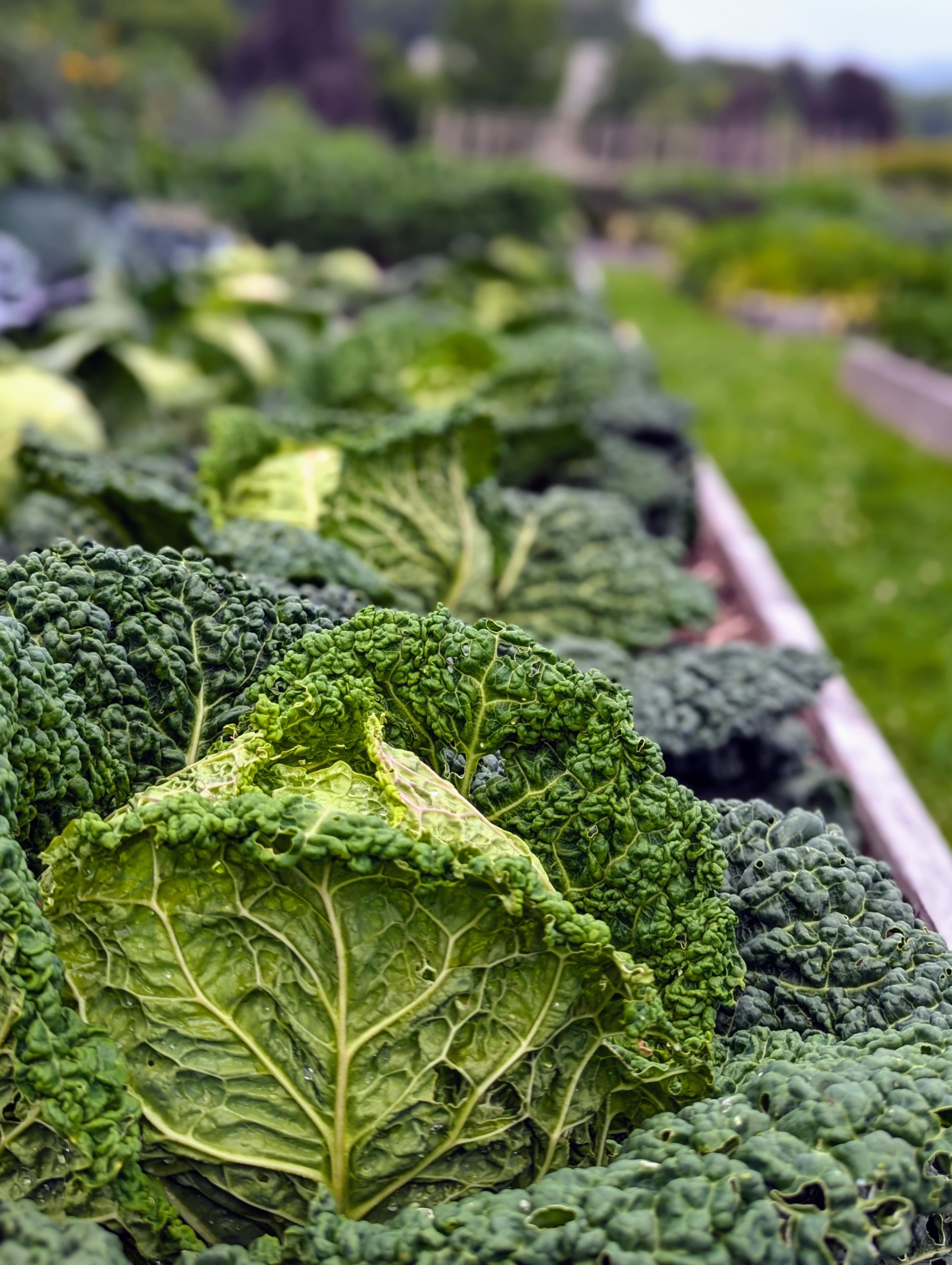
- Here is one of my brassica beds in summer. I grow lots of brassicas and save them all for me and my family.
-
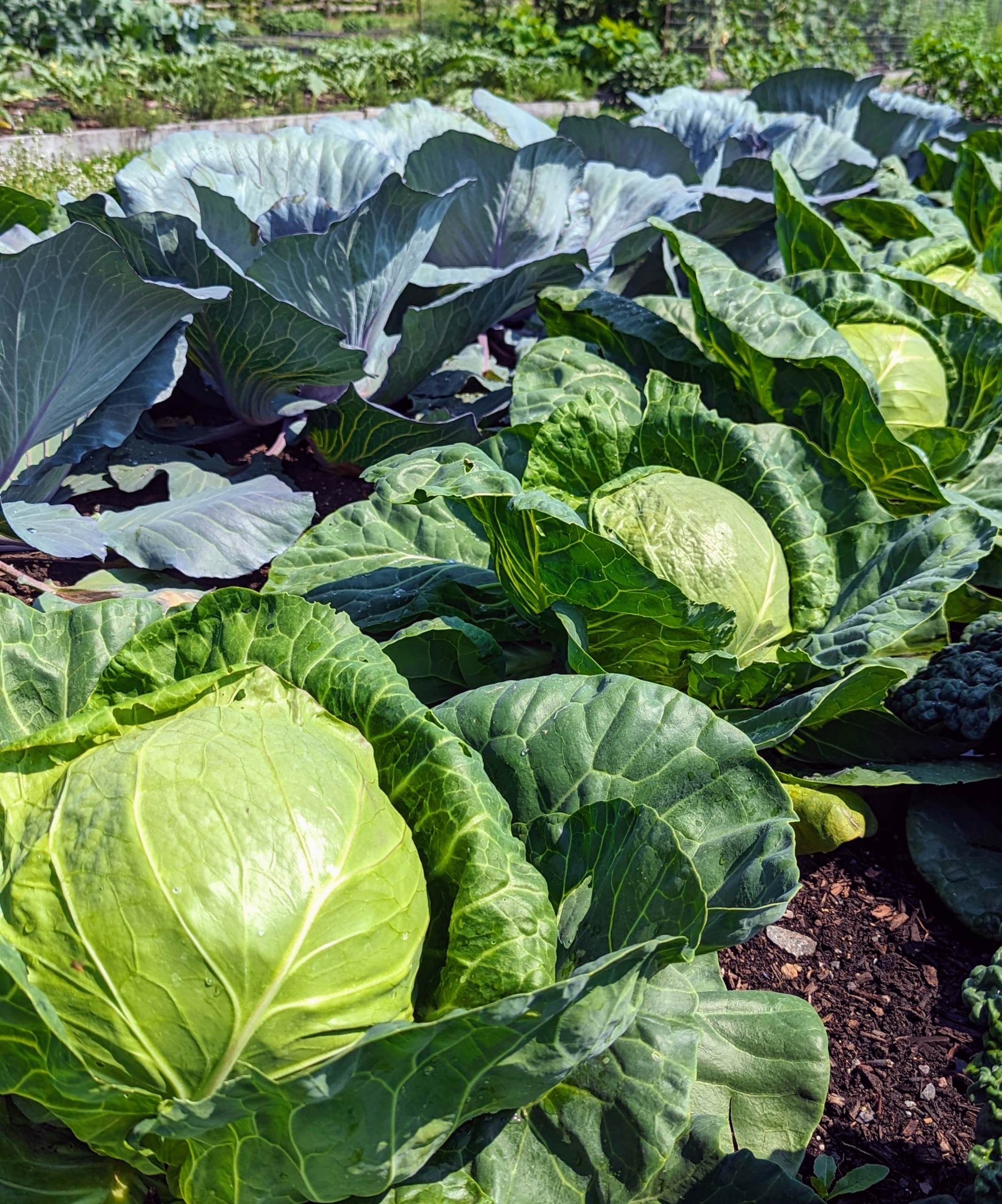
- Cabbages are popular brassicas. A common variety, green cabbage, has densely packed green leaves that grow lighter towards the center. They’re just right for picking when they feel firm and have compacted leaves, with little to no wilting on the outer casings.
-
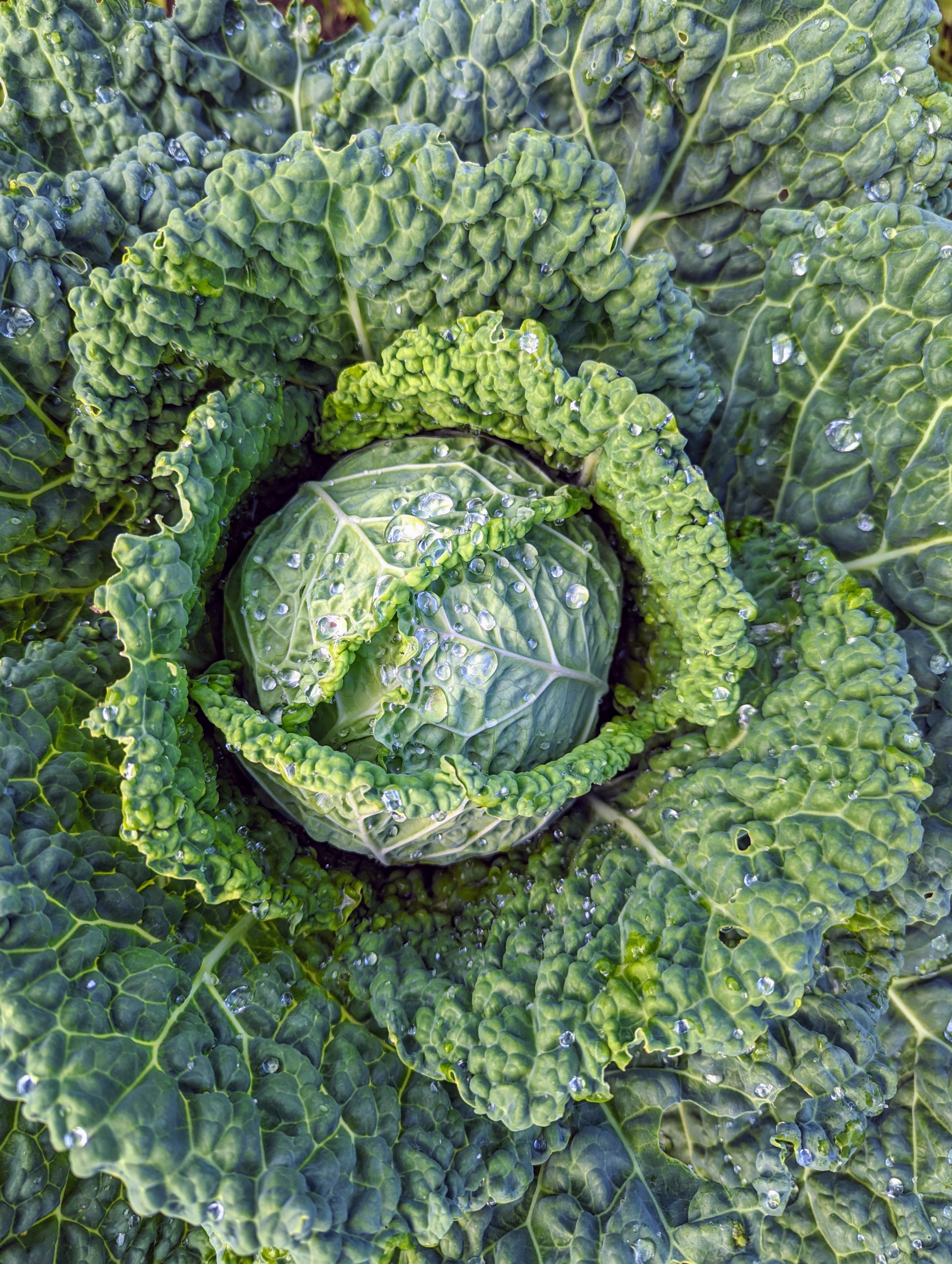
- This is known as Savoy cabbage, with its loose layers of frilly leaves. This thick-ribbed head cabbage, also called curly cabbage, is delicious in salads and has a slightly peppery flavor.
-
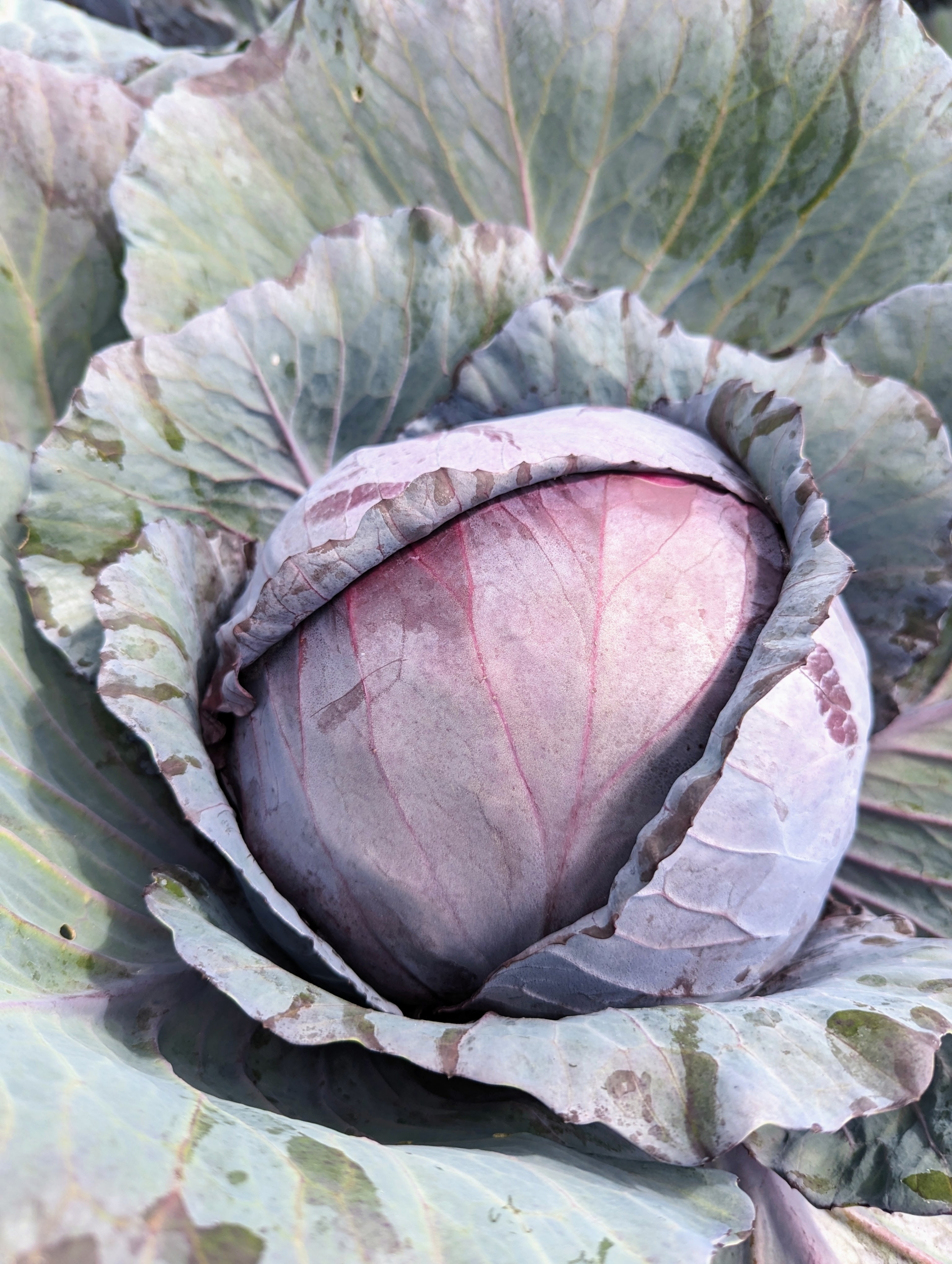
- Ranging from red to purple, this head cabbage has a stronger flavor than green cabbage and can be eaten cooked or raw, adding texture and snap to dishes.
-
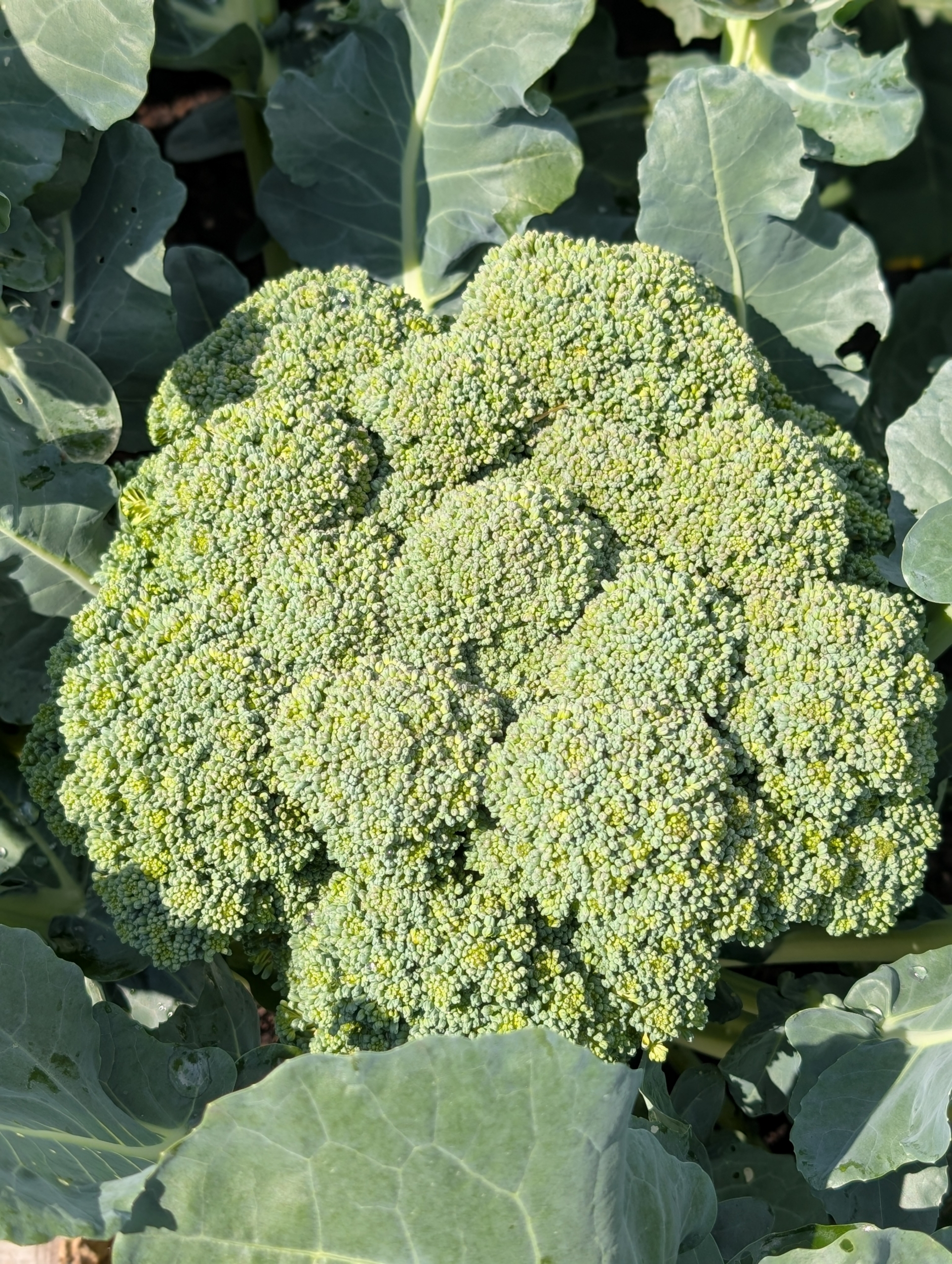
- You may recognize this brassica – it’s broccoli. I grew lots of broccoli every year. When mature, some of my broccoli heads are bigger than one’s hand.
-
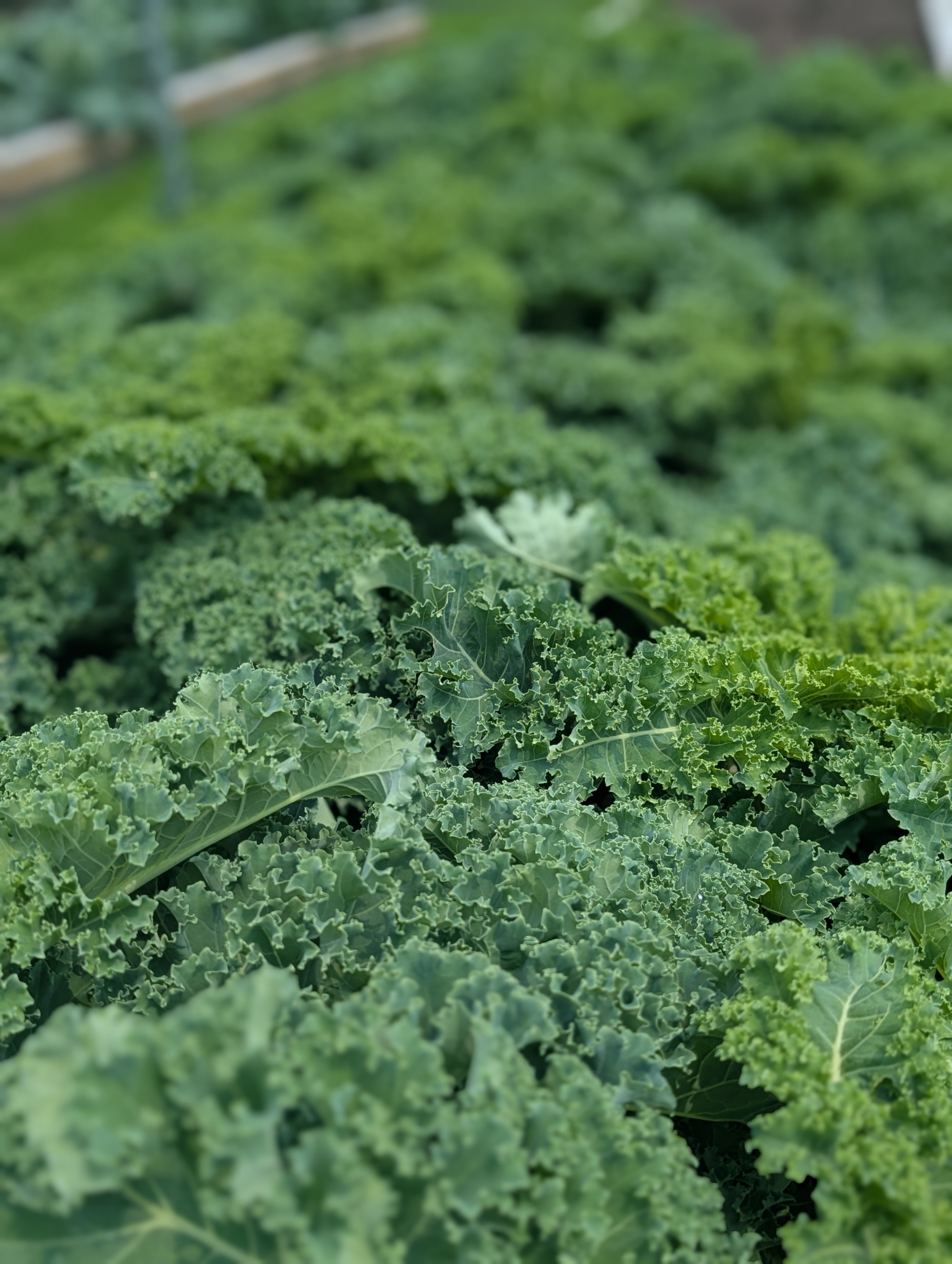
- Kale is a leafy green vegetable that is also in the Brassicaceae family. It has green or purple leaves, in which the central leaves do not form a head.
-
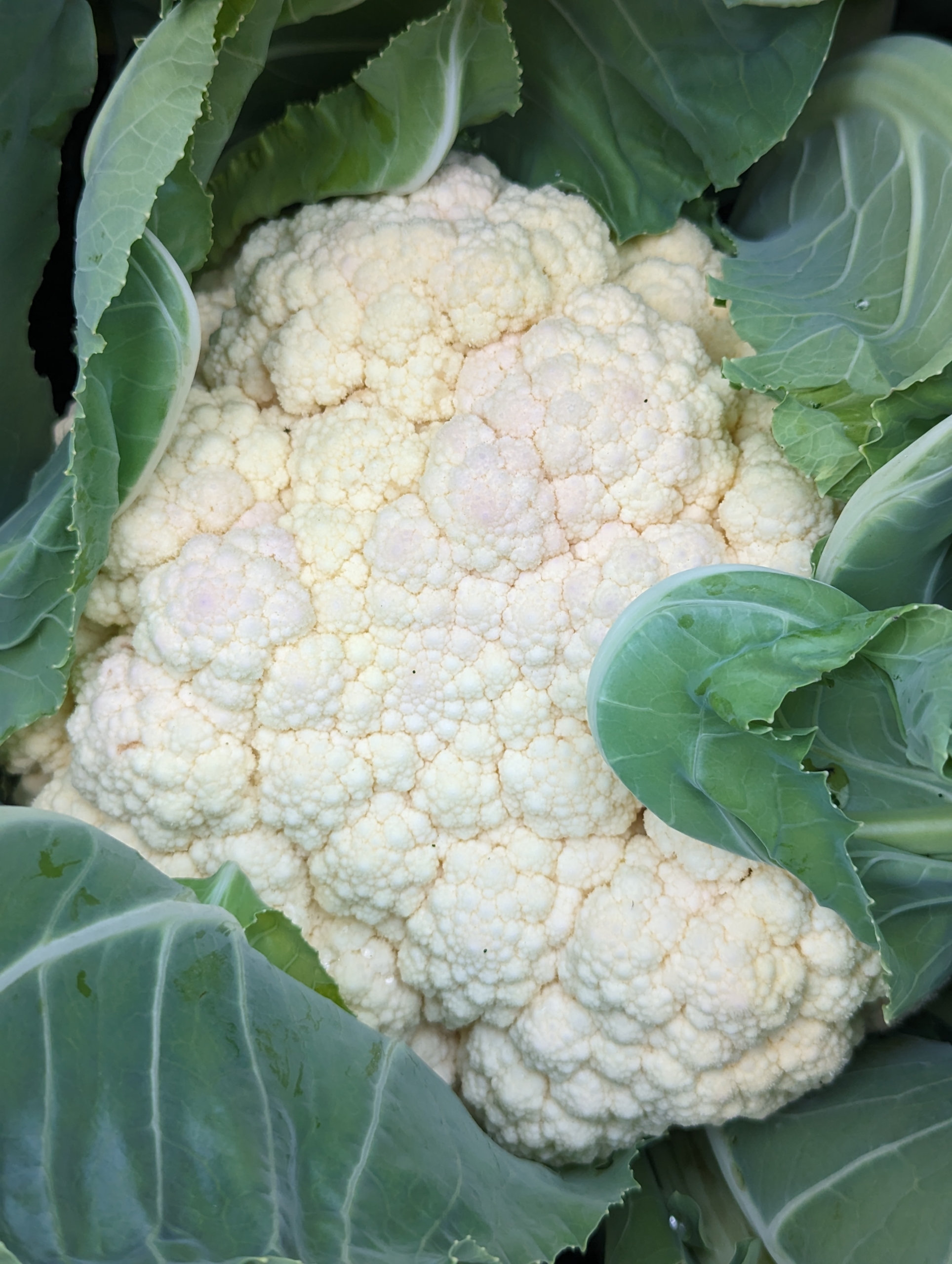
- And another brassica or cruciferous vegetable is the cauliflower. The word “cauliflower” is Latin, meaning “flowers of cabbage” and the low-growing plant looks very similar to cabbage until the large leaves open up and reveal the “curd,” the most commonly consumed part of the vegetable. Most are familiar with the white varieties, but cauliflower also grows in yellow-orange, purple, and even green.
-
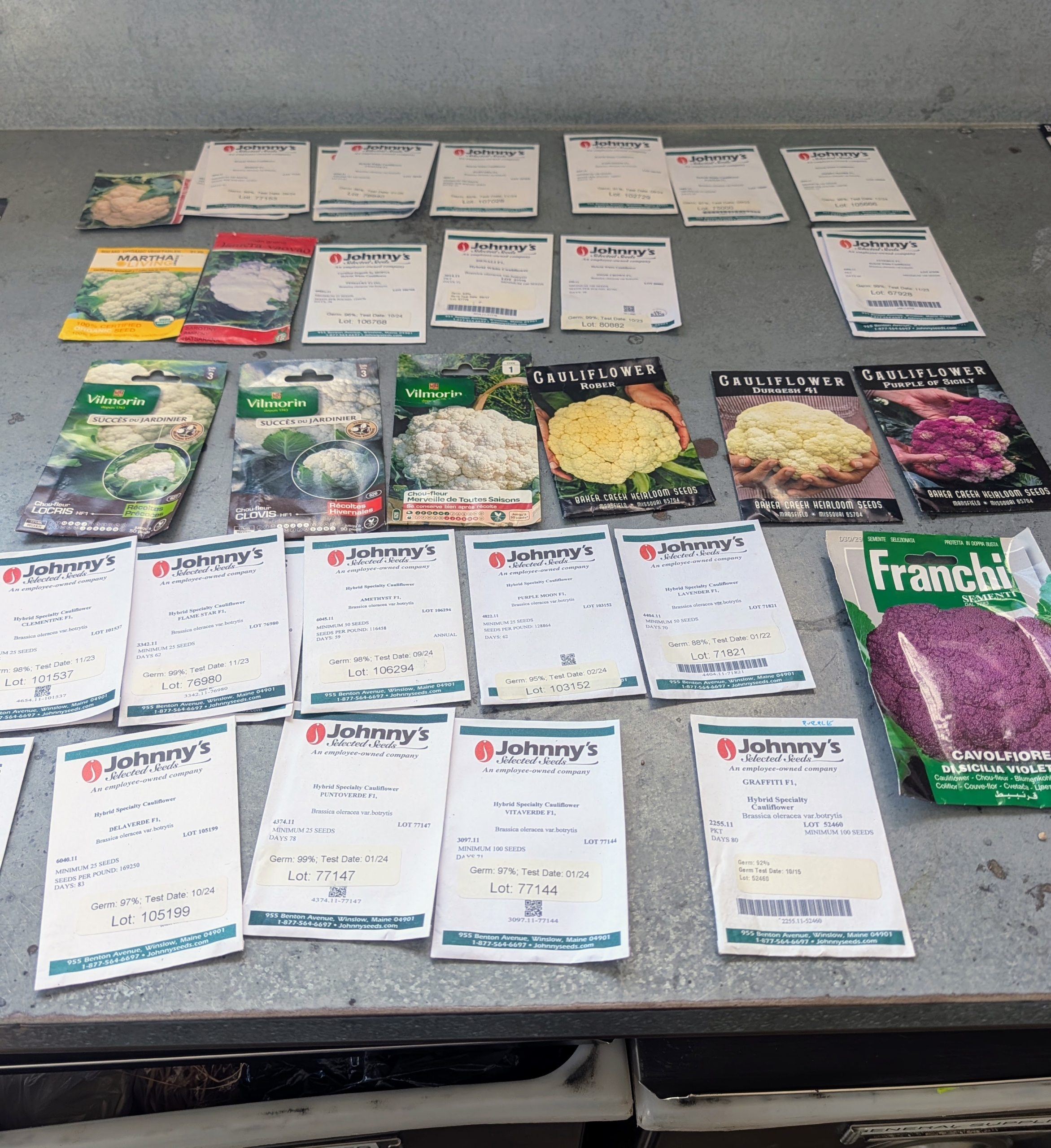
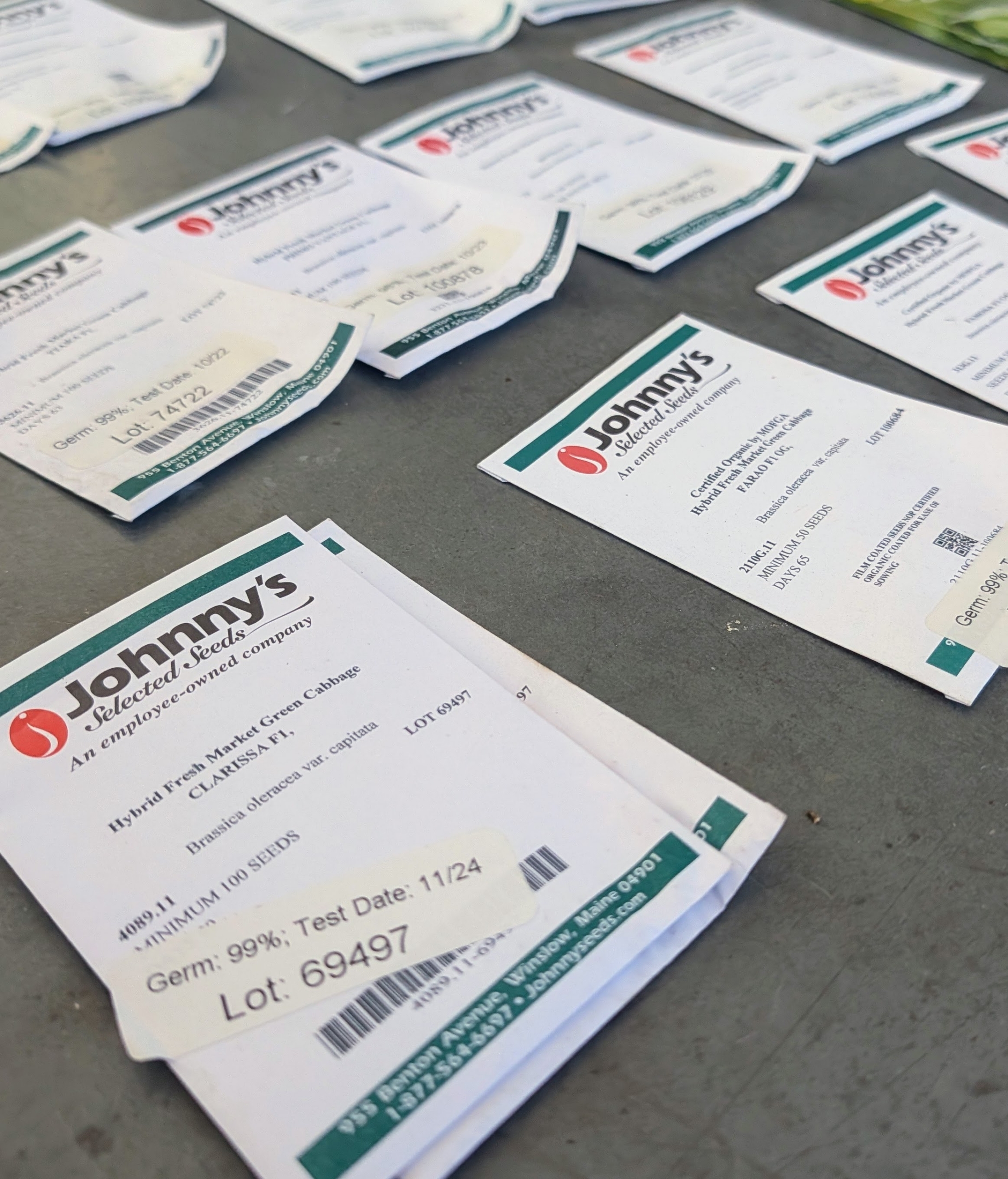
- This time of year my head house tables are often filled with seeds ready to be planted in pots and trays. I use seeds from favorite sources, seeds I’ve picked up during my travels, and sometimes seeds exchanged with friends.
-
- Johnny’s Selected Seeds is a privately held, employee-owned organic seed producer. Johnny’s offers hundreds of varieties of organic vegetable, herb, flower, fruit and farm seeds that are known to be strong, dependable growers.
-
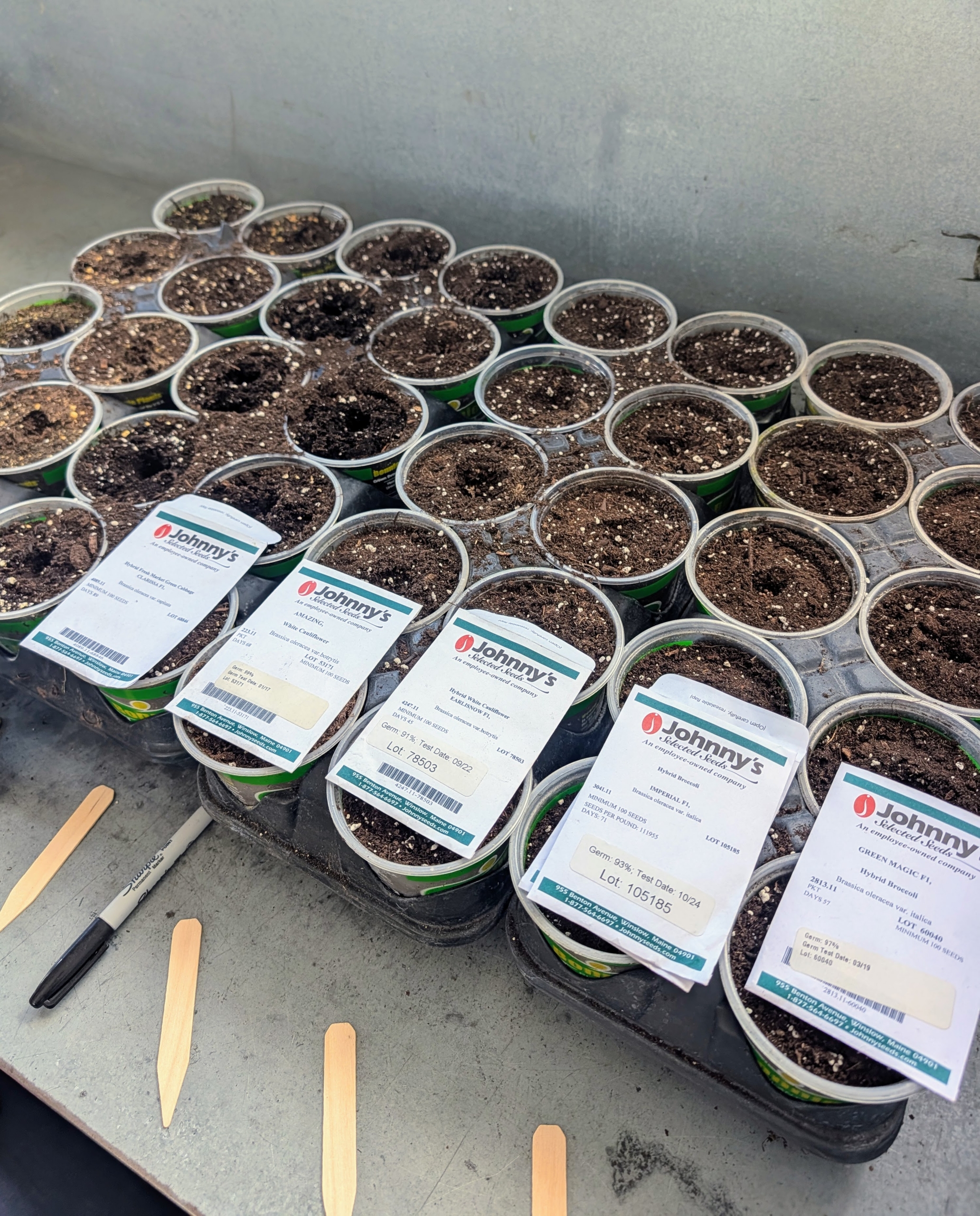
- And all the beautiful vegetables start out here in my head house seeded in small pots or trays. My head gardener, Ryan McCallister, prepares the pots ahead of time, so there are always some ready to use.
-
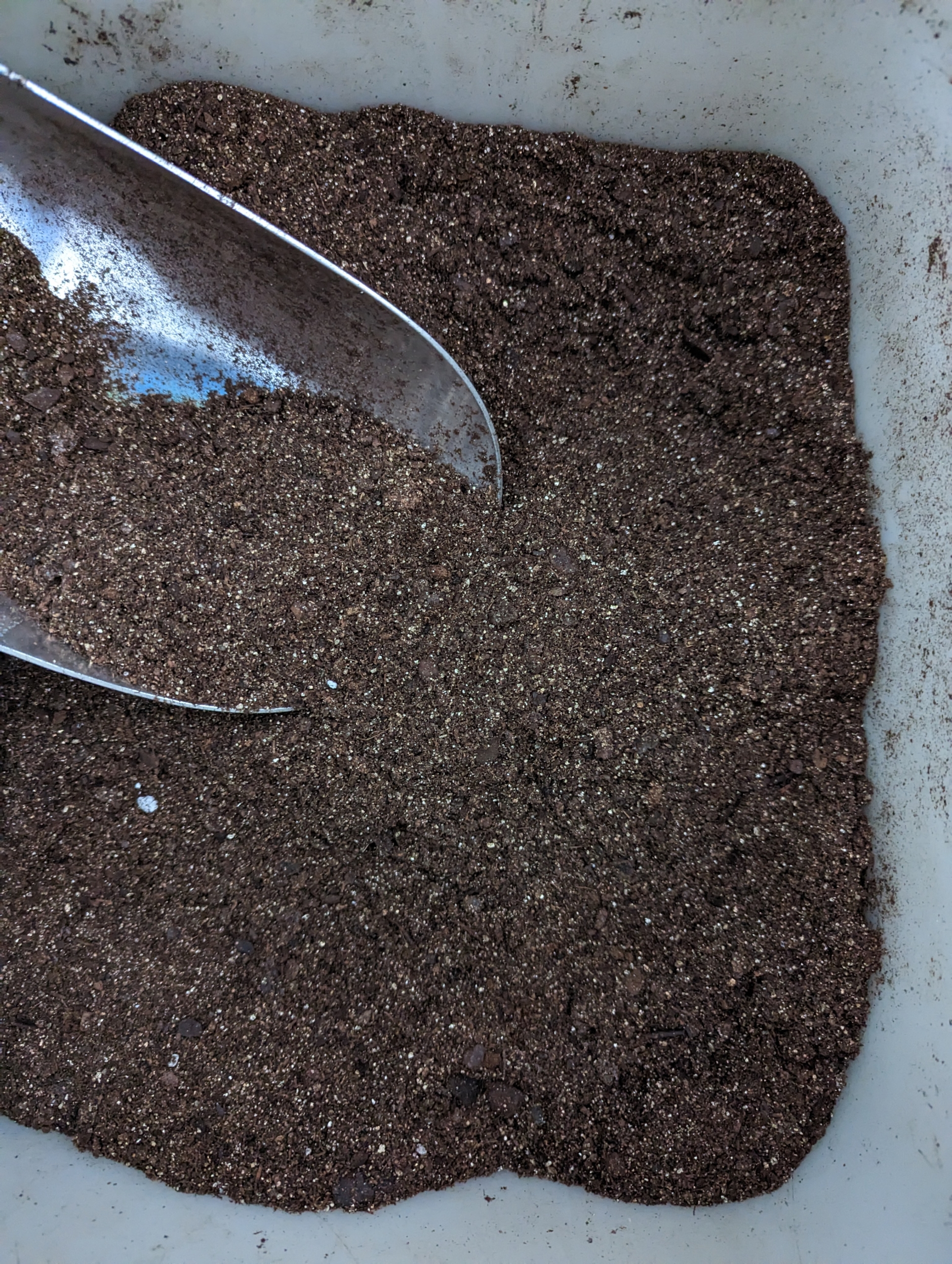
- When starting from seed, it is best to use a pre-made seed starting mix that contains the proper amounts of vermiculite, perlite and peat moss. Seed starting mixes are available at garden supply stores. I use Miracle-Gro seed starting potting mix.
-
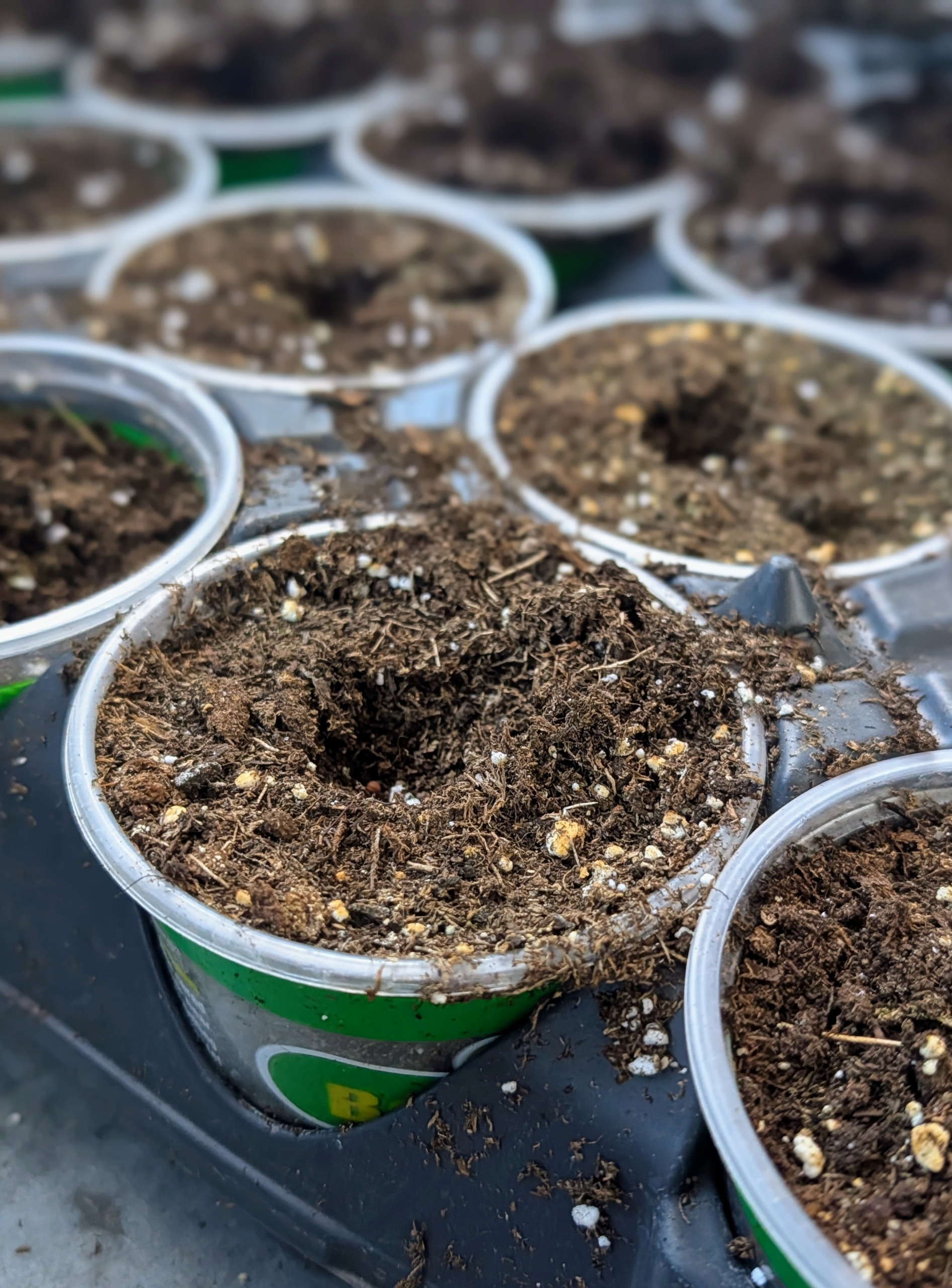
- Holes for the seeds can be made in the center of the containers with one’s finger or end of a marker.
-
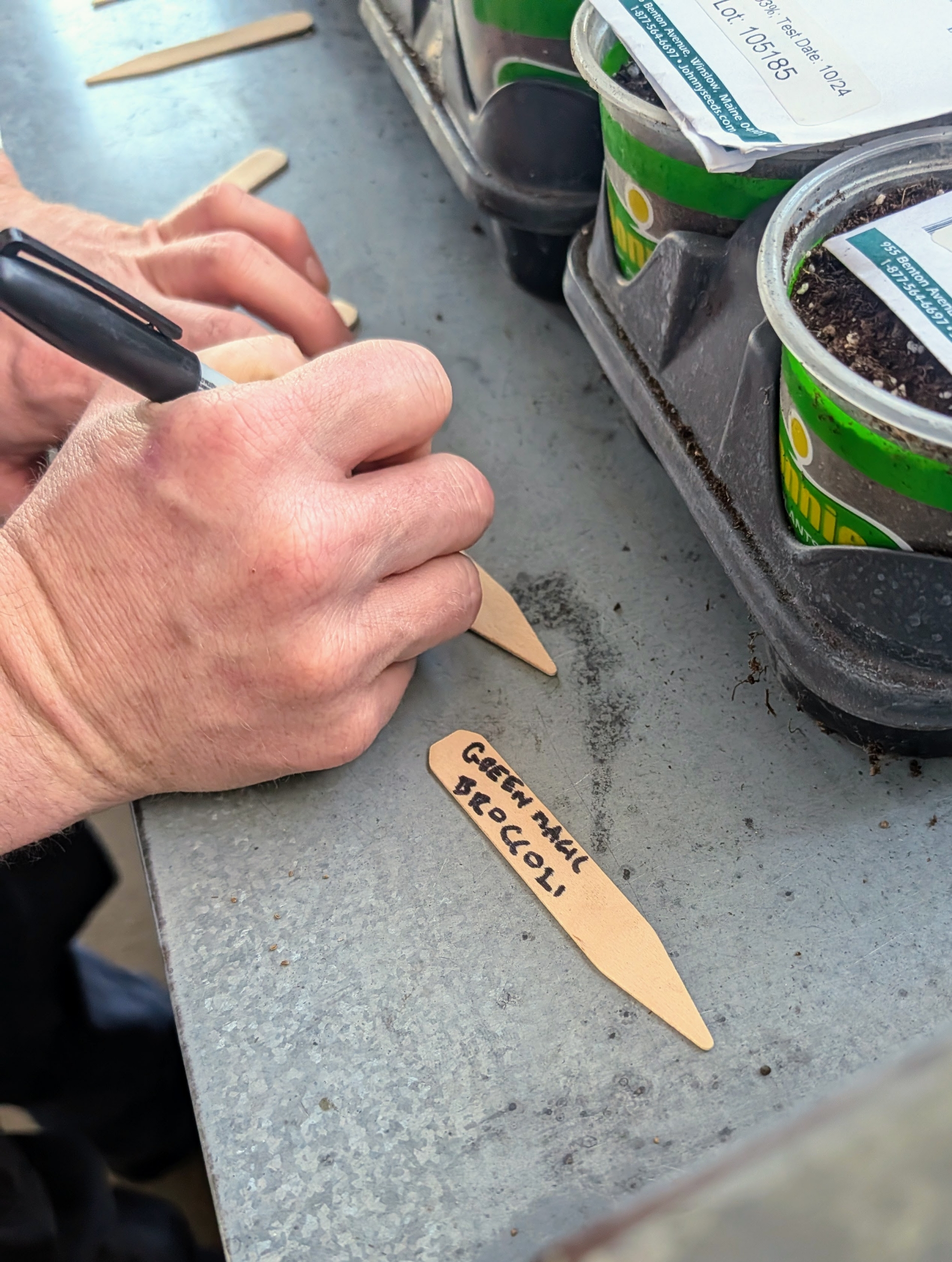
- Ryan writes the seed variety on small wooden markers also from Johnny’s. This information is good to know for planting the next season.
-
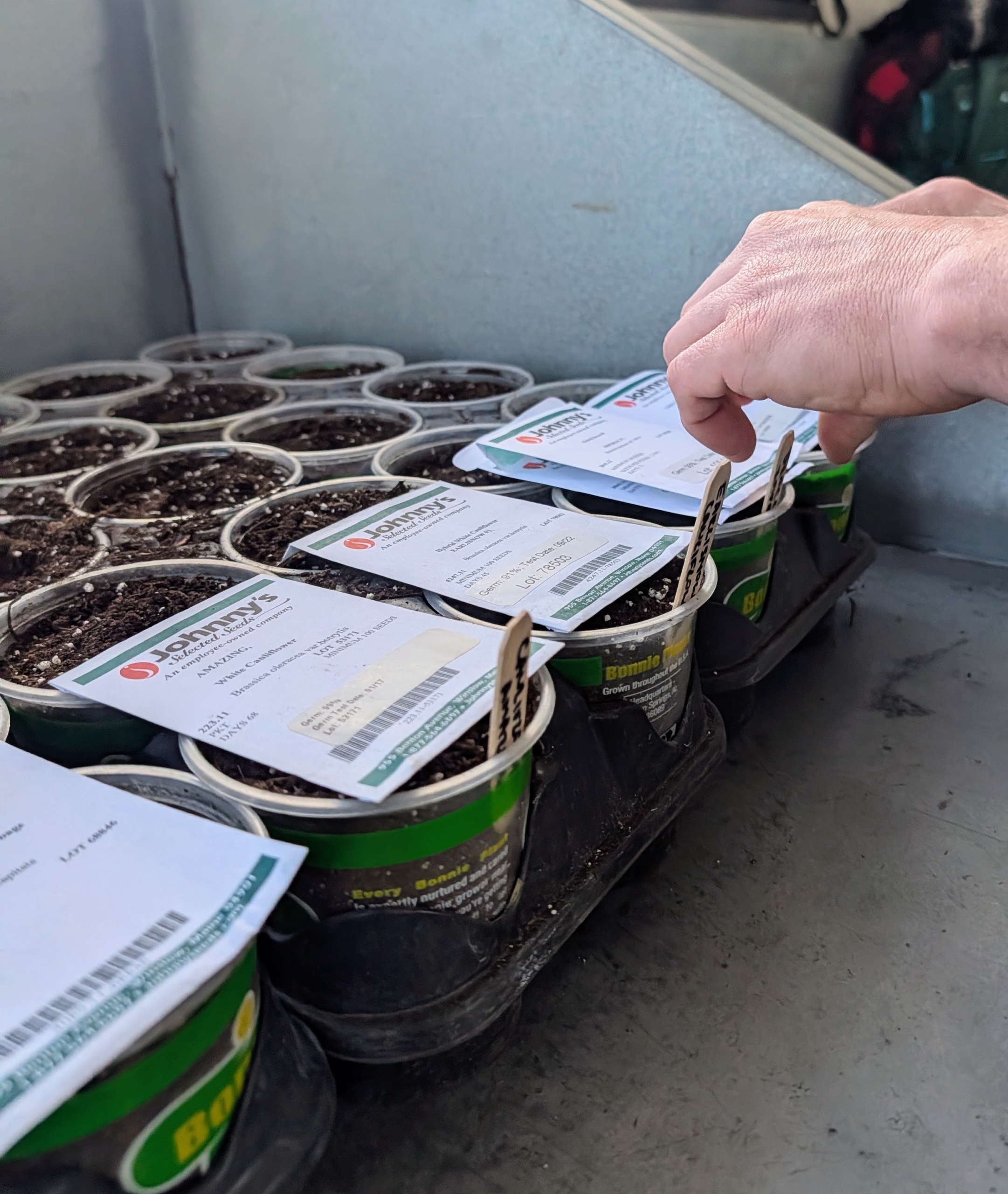
- Ryan places markers in the pots to identify the varieties.
-
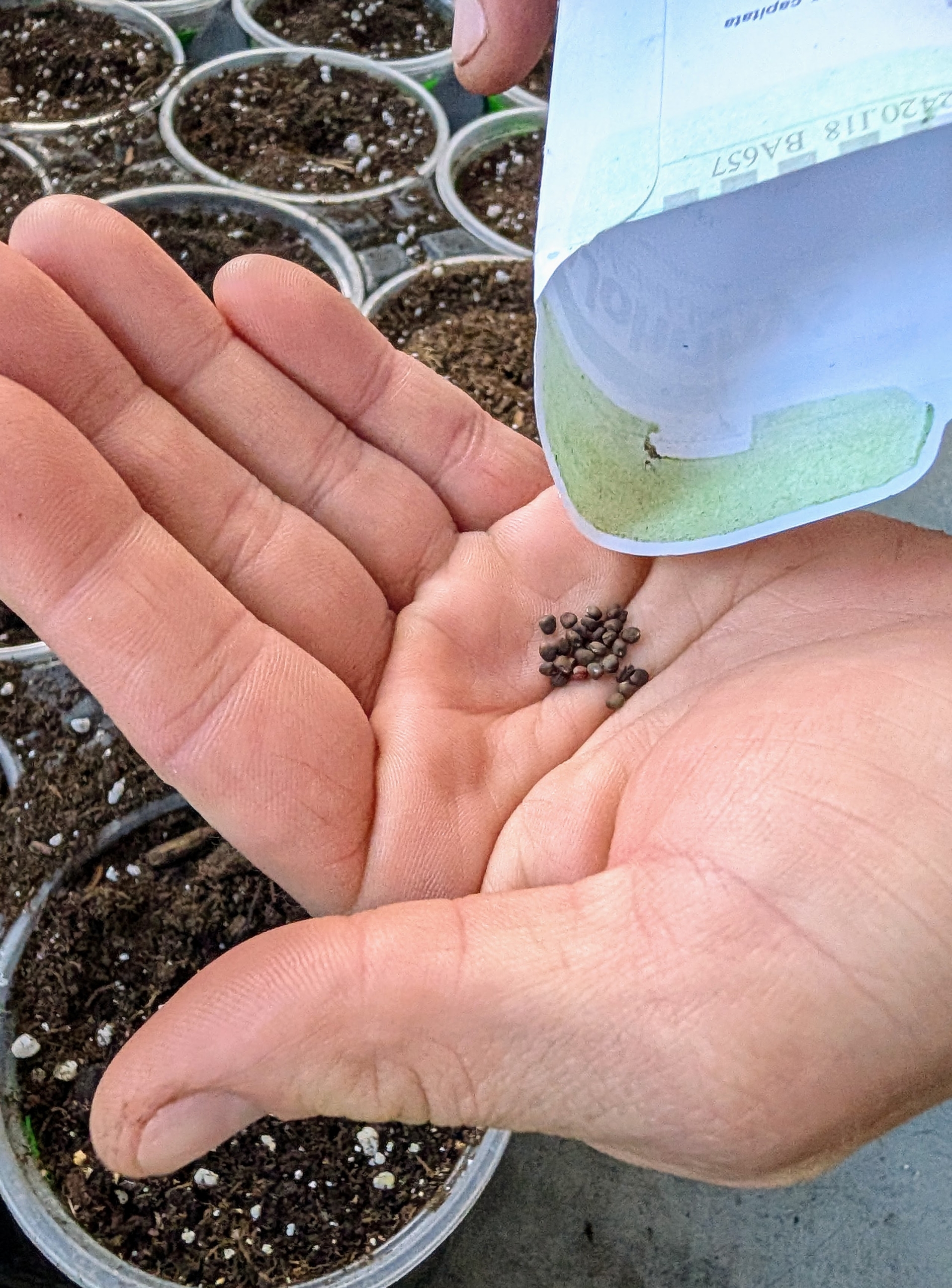
- Seeds are small, so be very careful when pouring them out of the packet. Seeds are planted at different times depending on their maturity durations.
-
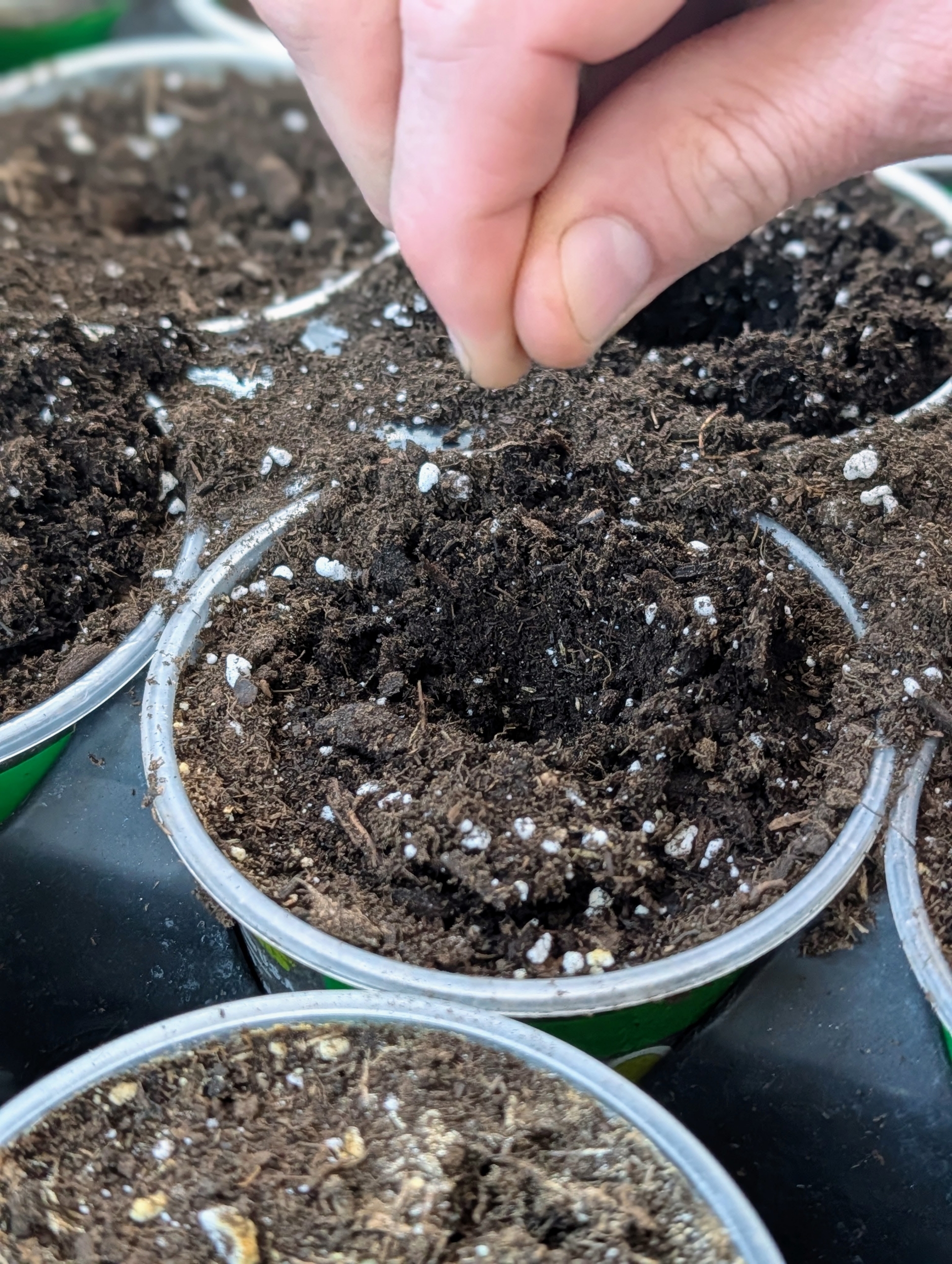
- Ryan drops one to three seeds in each cell. Any weak seedlings will be thinned out later. When buying or ordering seeds, be sure to read the hardiness of the plant. And know your hardiness zone, so you can select the right seeds for your area.
-
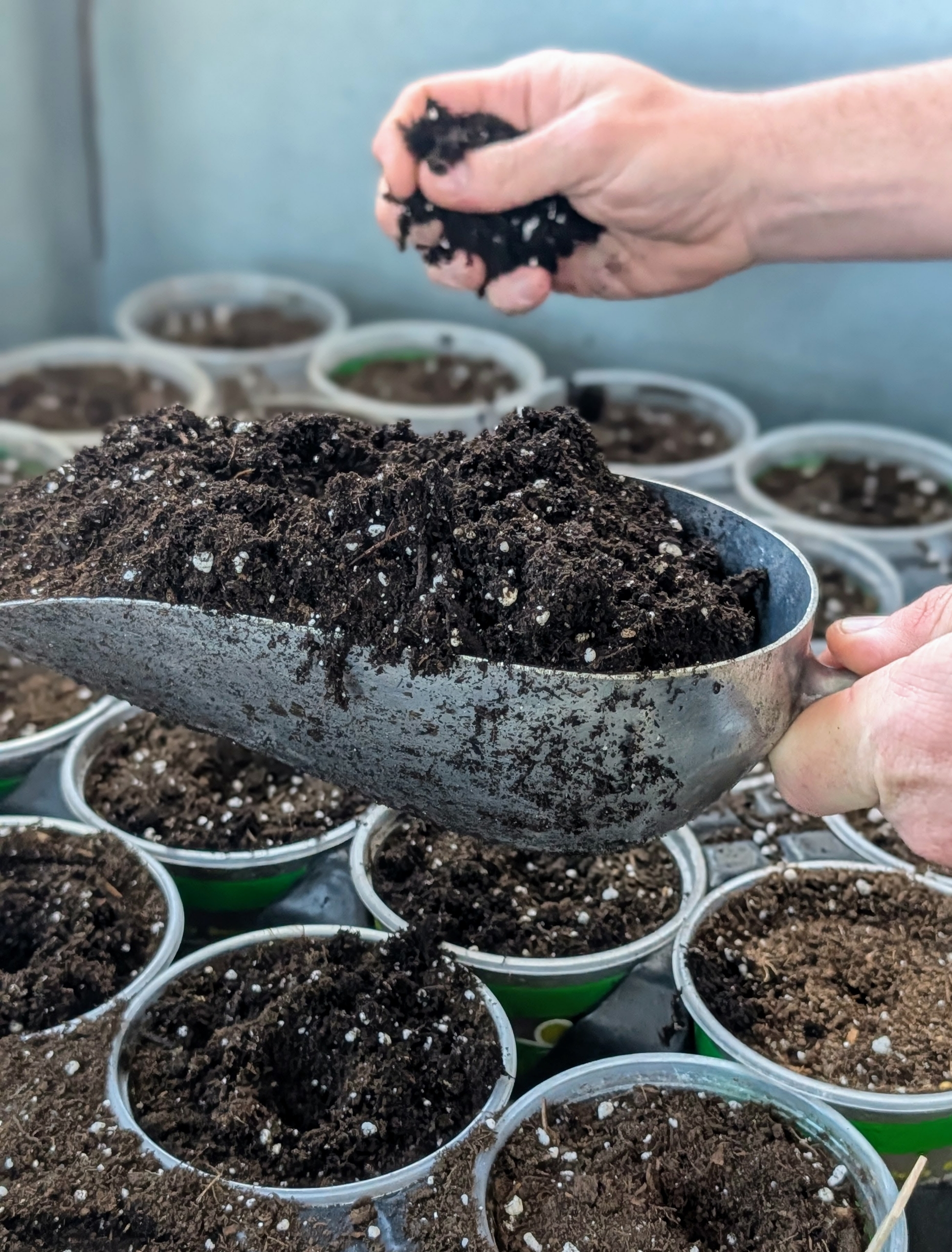
- Once the pots are seeded, they are covered up with another layer of soil mix.
-
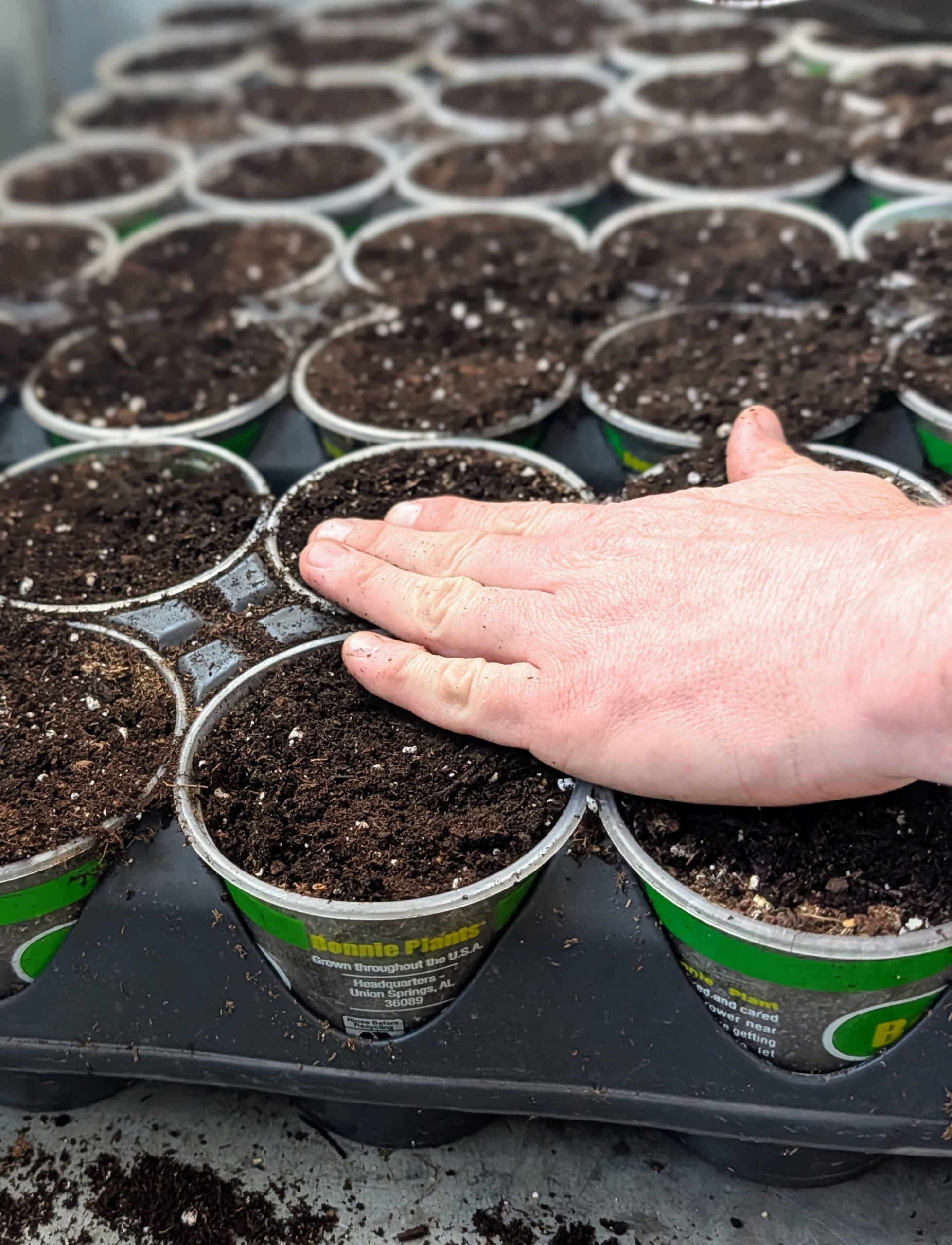
- Ryan spreads the soil mix across the pots completely and evenly.
-
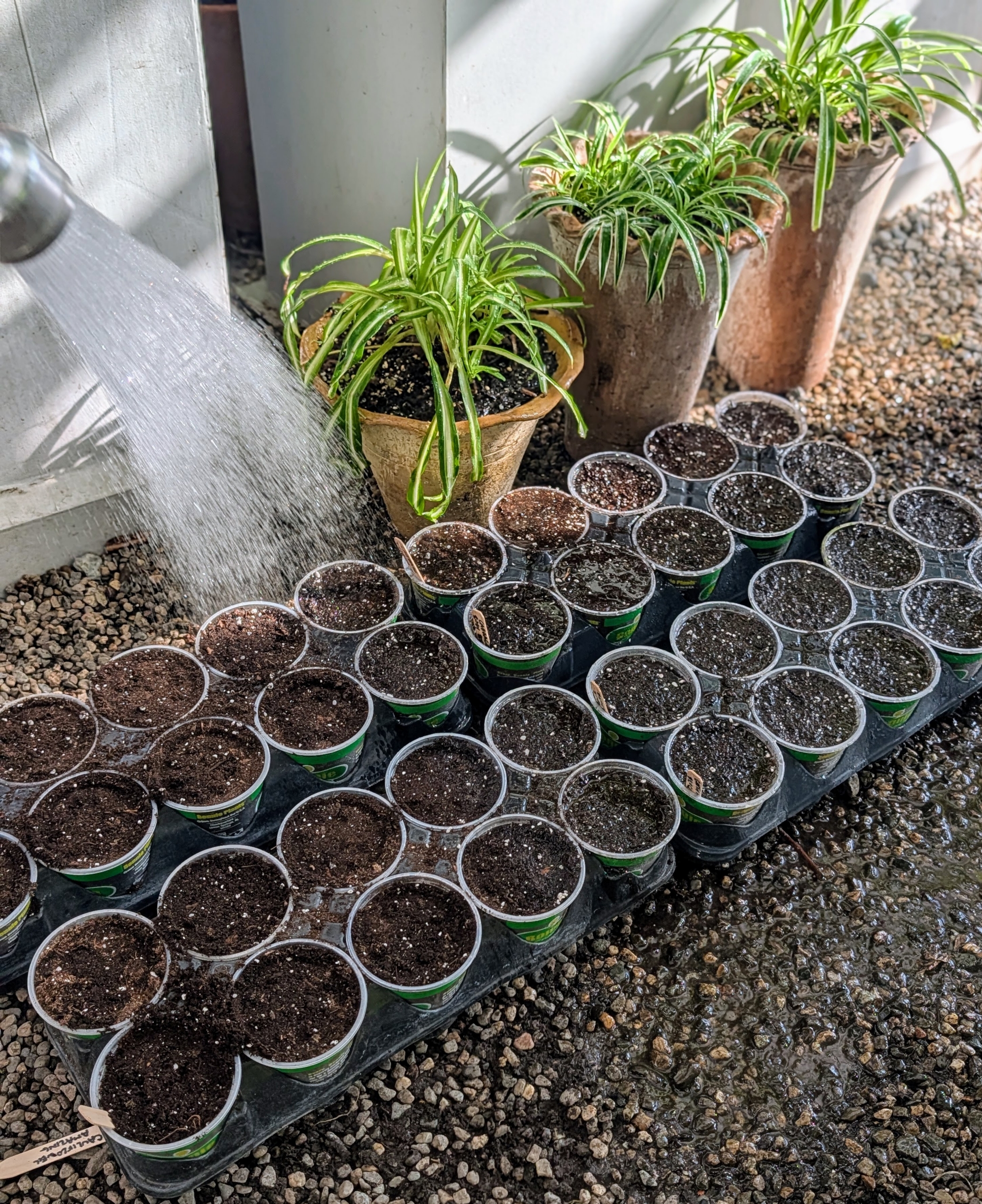
- Ryan gives the seeds a thorough watering. These seeds will be selectively thinned in a few weeks. The process eliminates the weaker sprout and prevents overcrowding, so seedlings don’t have any competition for soil nutrients or room to mature.
-
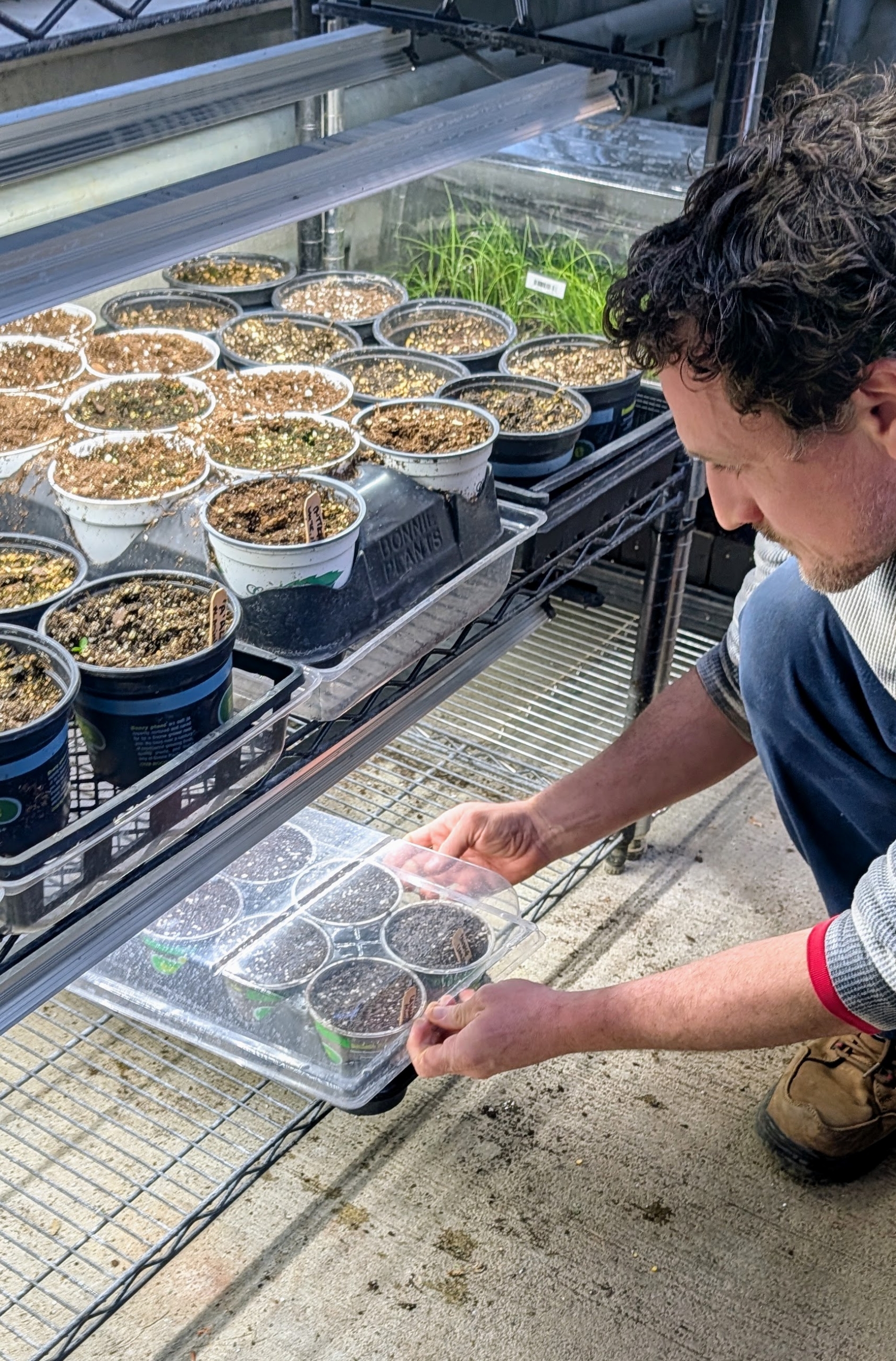
- And then finally, the pots are placed under plastic covers and put on a shelf under lights in a warm area of my greenhouse. It’s still February, but let the growing season begin – I’m ready!
 Martha Pins


 Martha Tweets

