
My Trees in April
Here at my farm, we’re expecting morning showers, cloudy skies, and temperatures in the low 50s, but the gardens continue to transform.
Despite the erratic weather, there's new spring growth every day. And, while many of the flowers are erupting with vibrant color, we've also been taking photos of the various trees and all the precious leaves, buds, and blooms just beginning to open on their branches.
Here are some photos, enjoy.
-

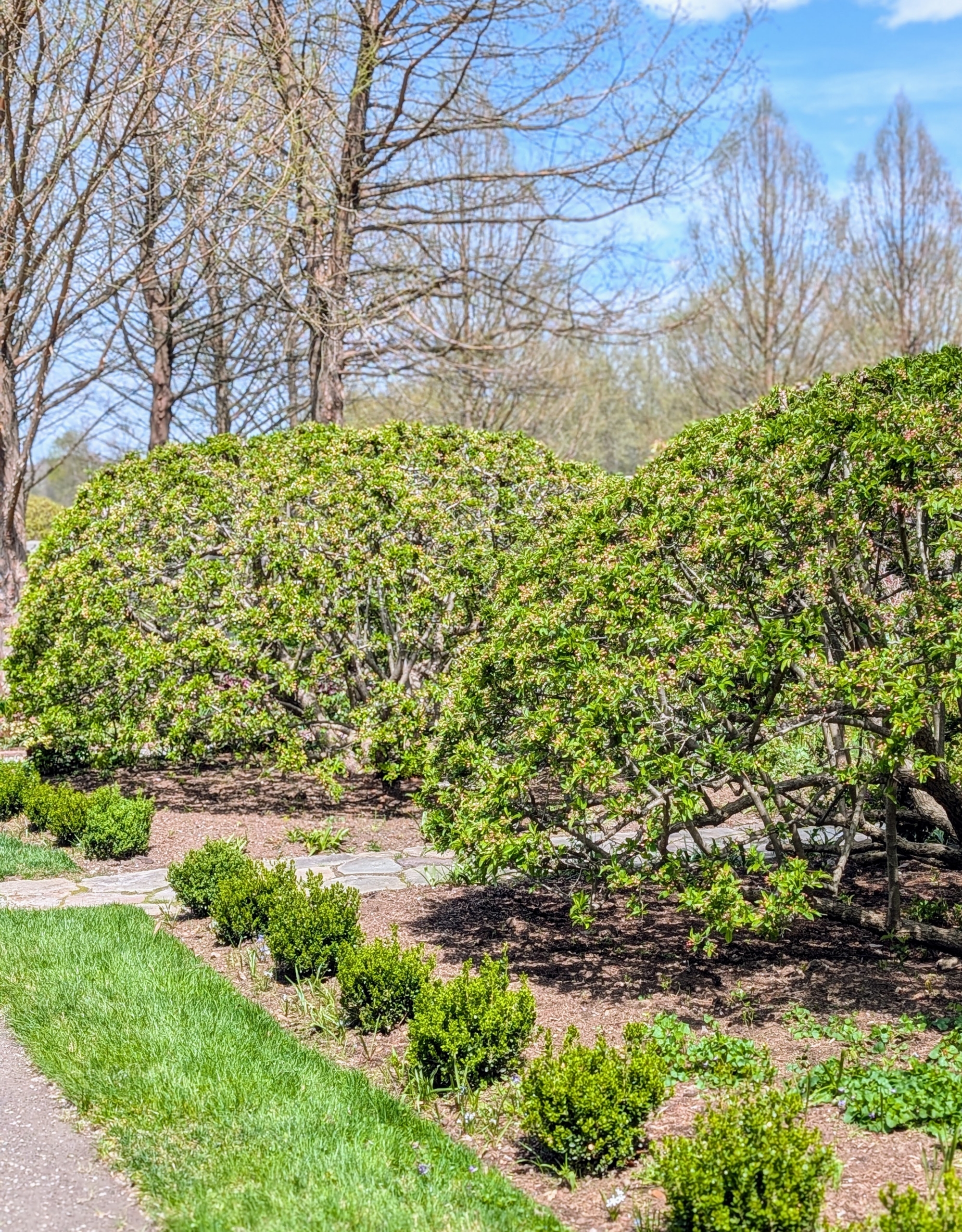
- I tour the farm several times a day to see how all the trees and plants are doing. This time of year, there’s always something new to admire. Malus sargentii, occasionally called Sargent’s apple or Sargent crabapple, is a species of crabapple in the genus Malus. The plant is a shrub growing about six-feet tall. Here are two of four that flank the carriage road between my Tenant House and my studio.
-
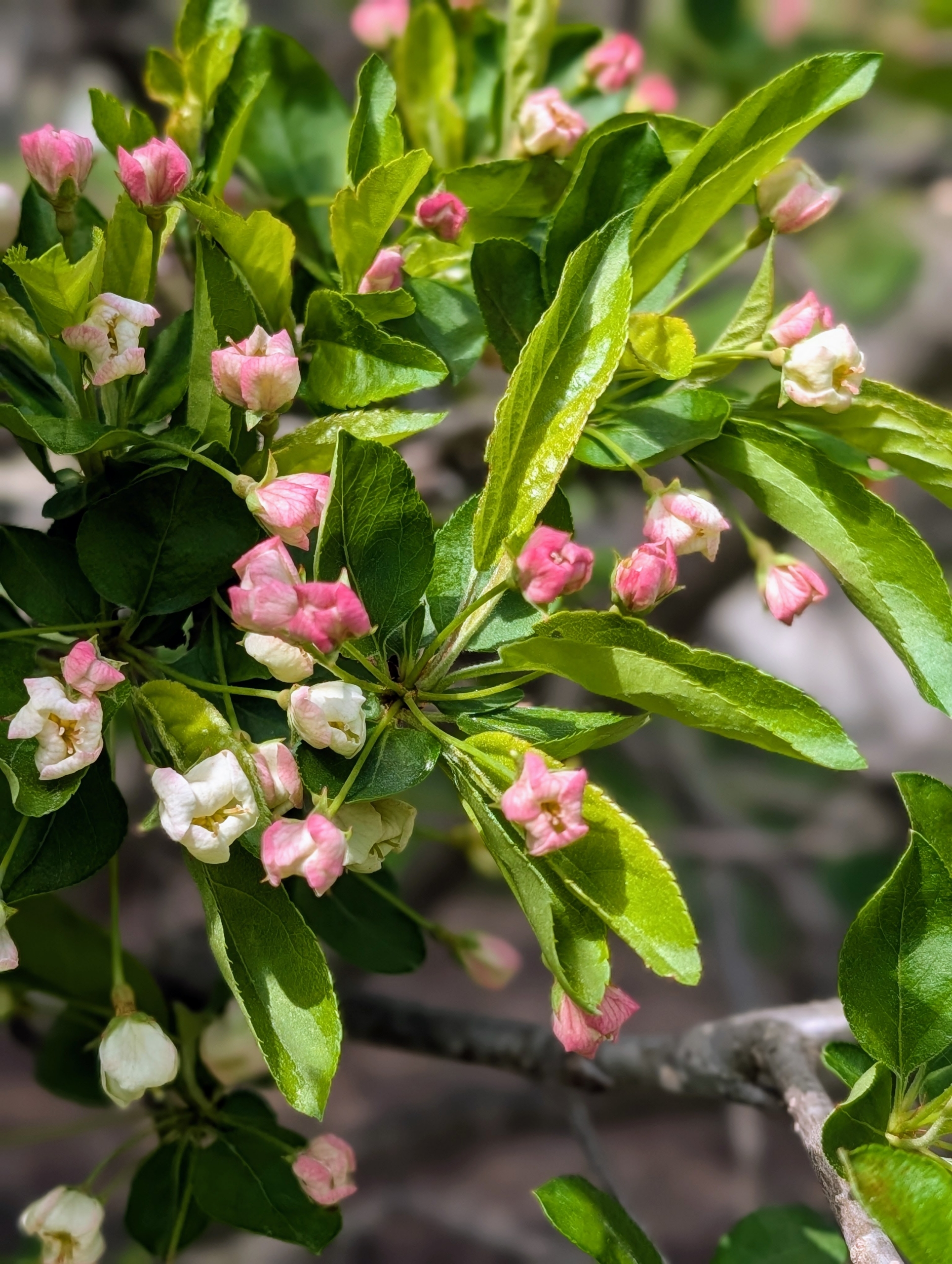
- They’re showing off many buds on their branches. This is the early stage of spring bloom. The buds are reddish-pink or pale pink and open to fragrant, white flower clusters.
-
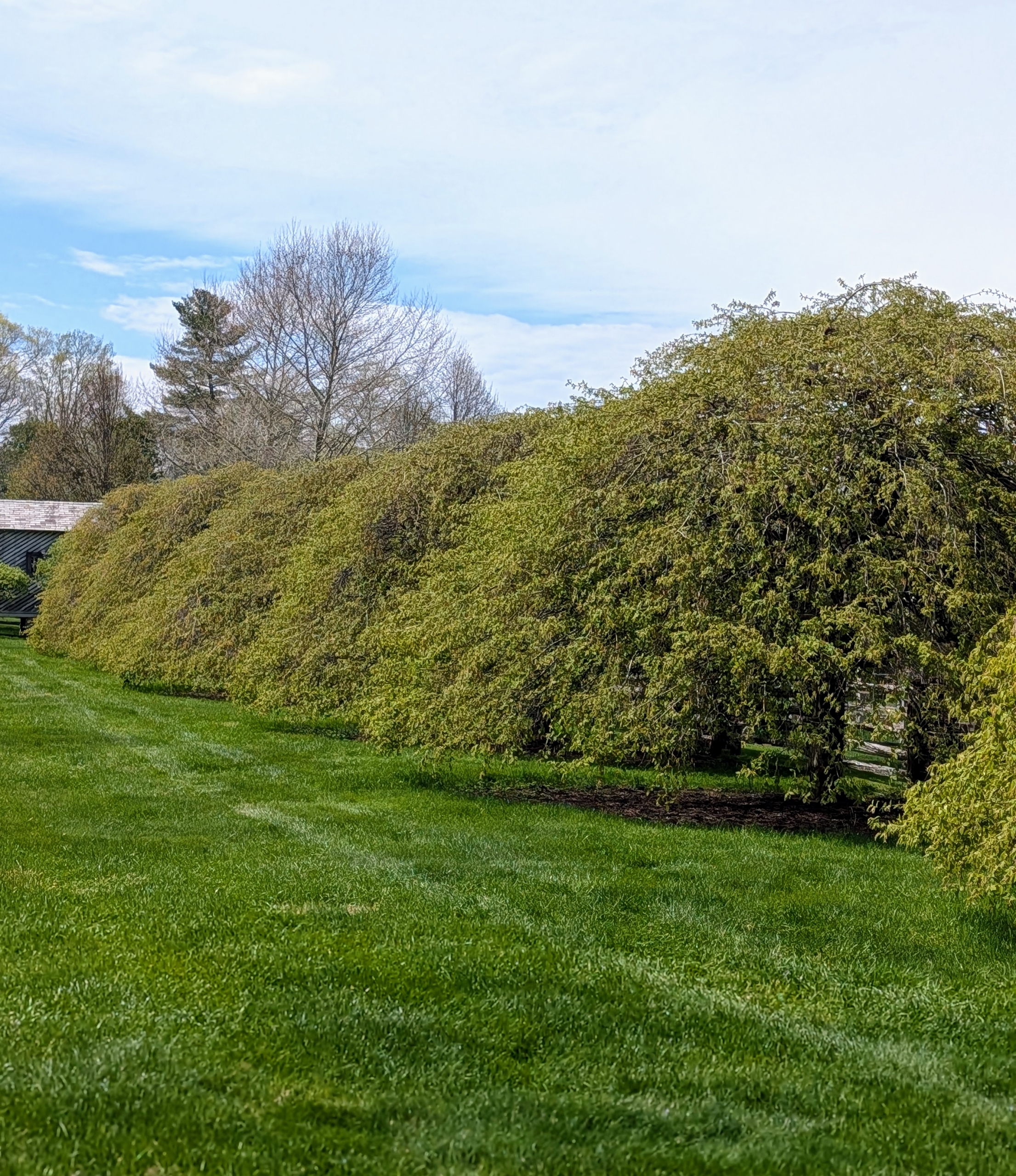
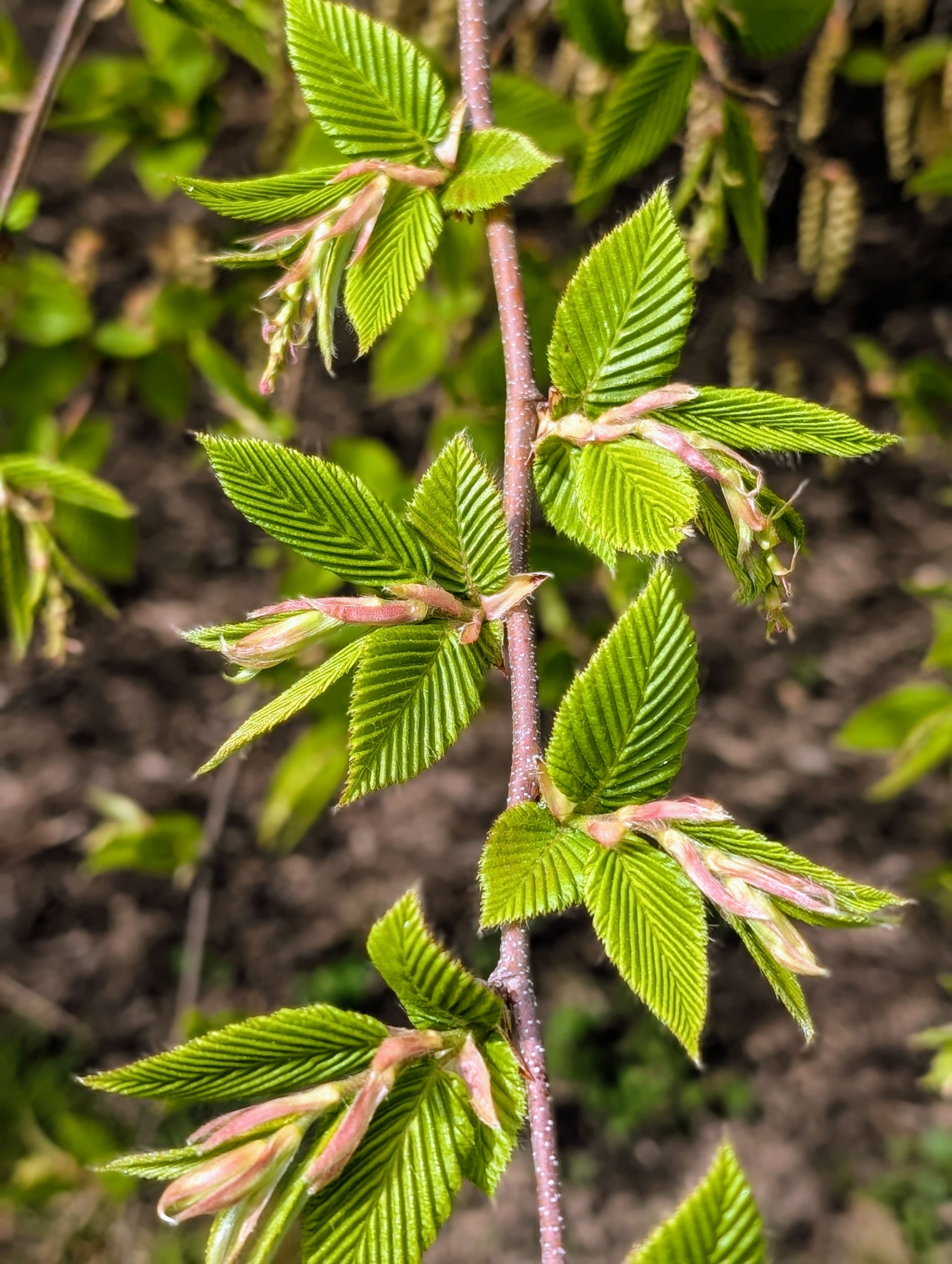
- Bordering one side of my playing field, a large stretch of lawn adjacent to my pergola, are these weeping hornbeams, Carpinus betulus ‘Pendula’ – the branches of these trees gracefully weep creating umbrellas of foliage that reach the ground.
-
- Weeping hornbeam leaves are ovate with pointed tips and serrated edges.
-
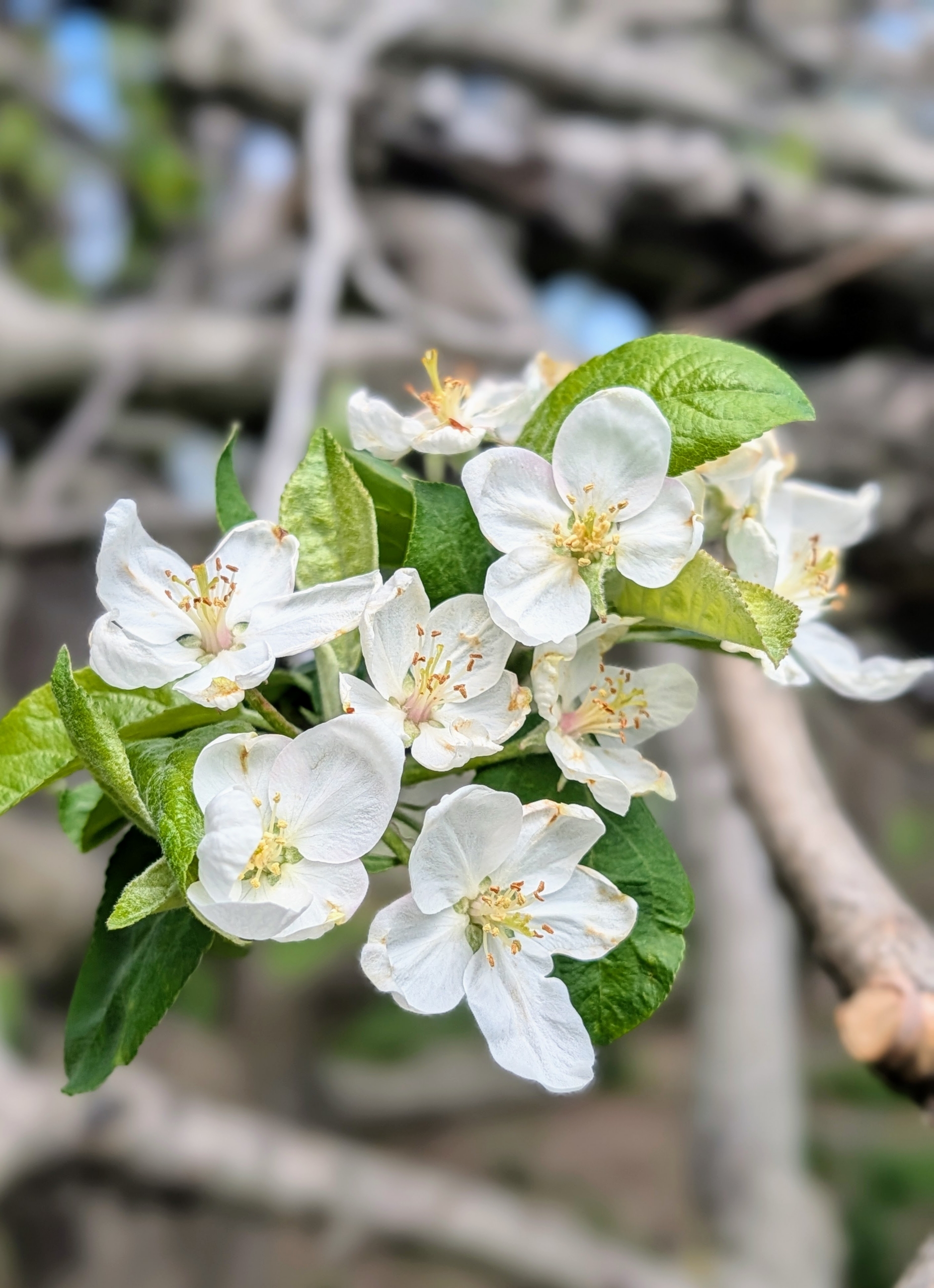
- In spring, the apple trees’ buds unfold, and newly formed leaves and pure white flowers begin to grow on the ends of the twigs.
-
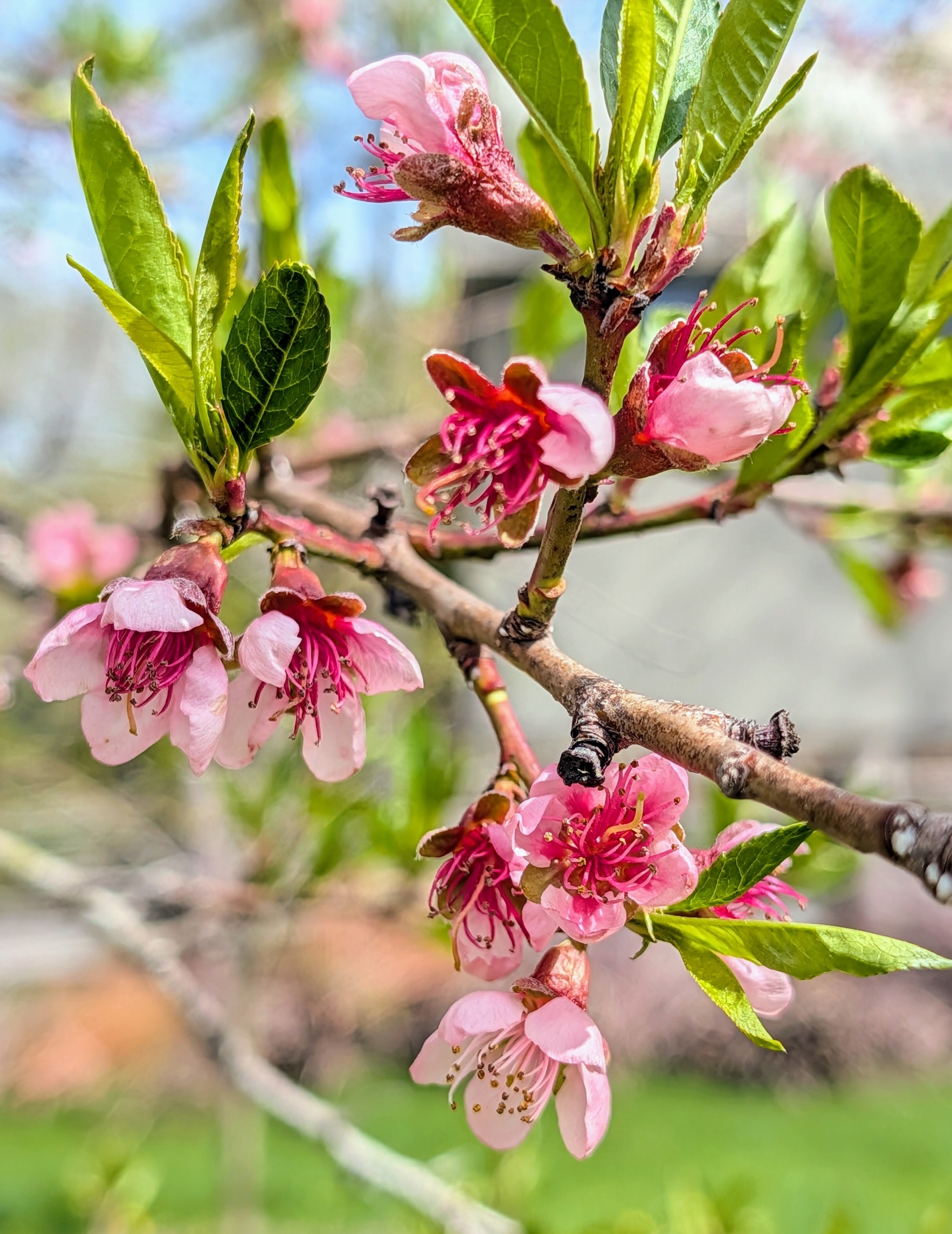
- My orchard surrounds three sides of my pool. These are the pink buds of one of my peach trees.
-
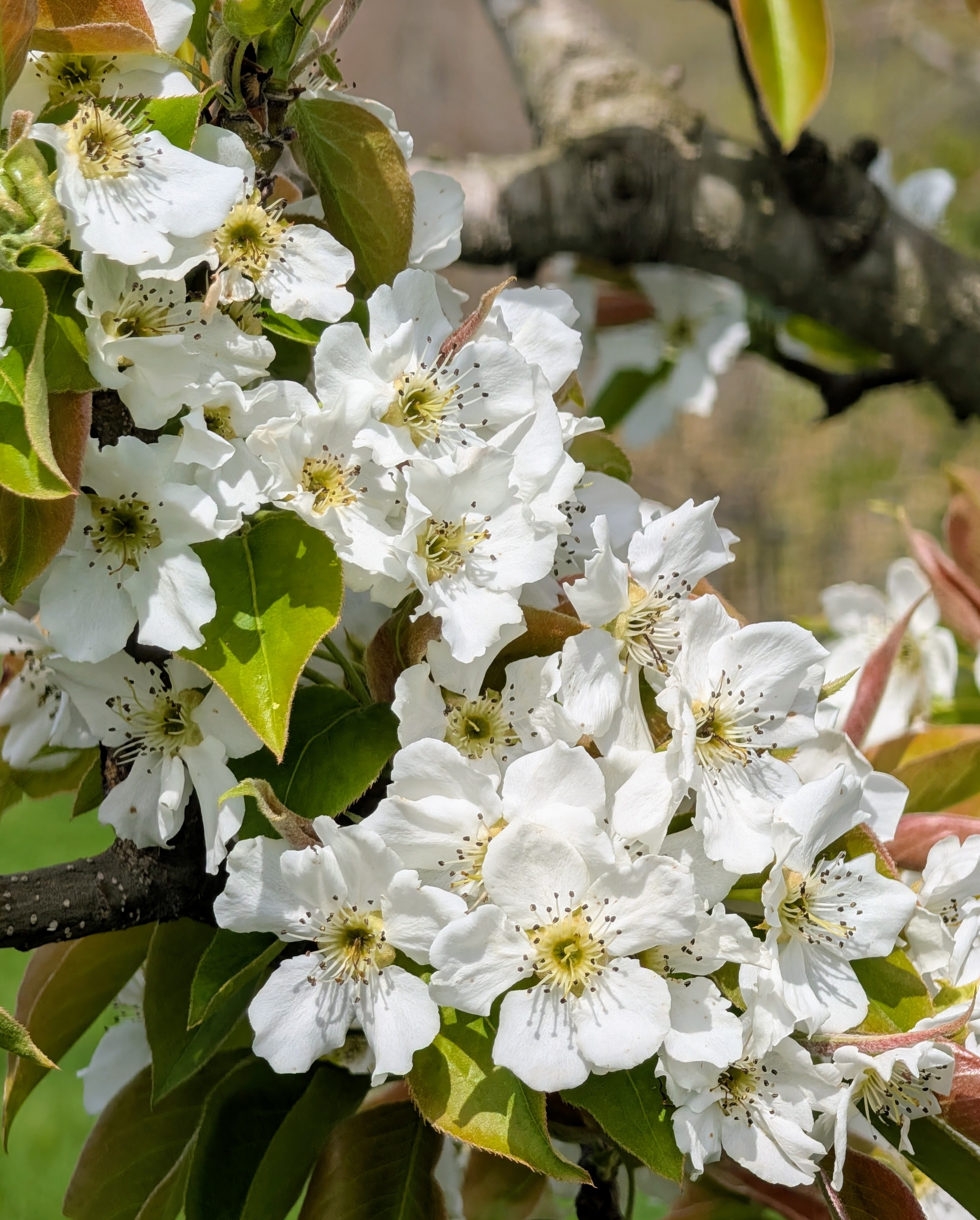
- Fruiting pear trees bloom from April to May, with stunning white flowers.
-
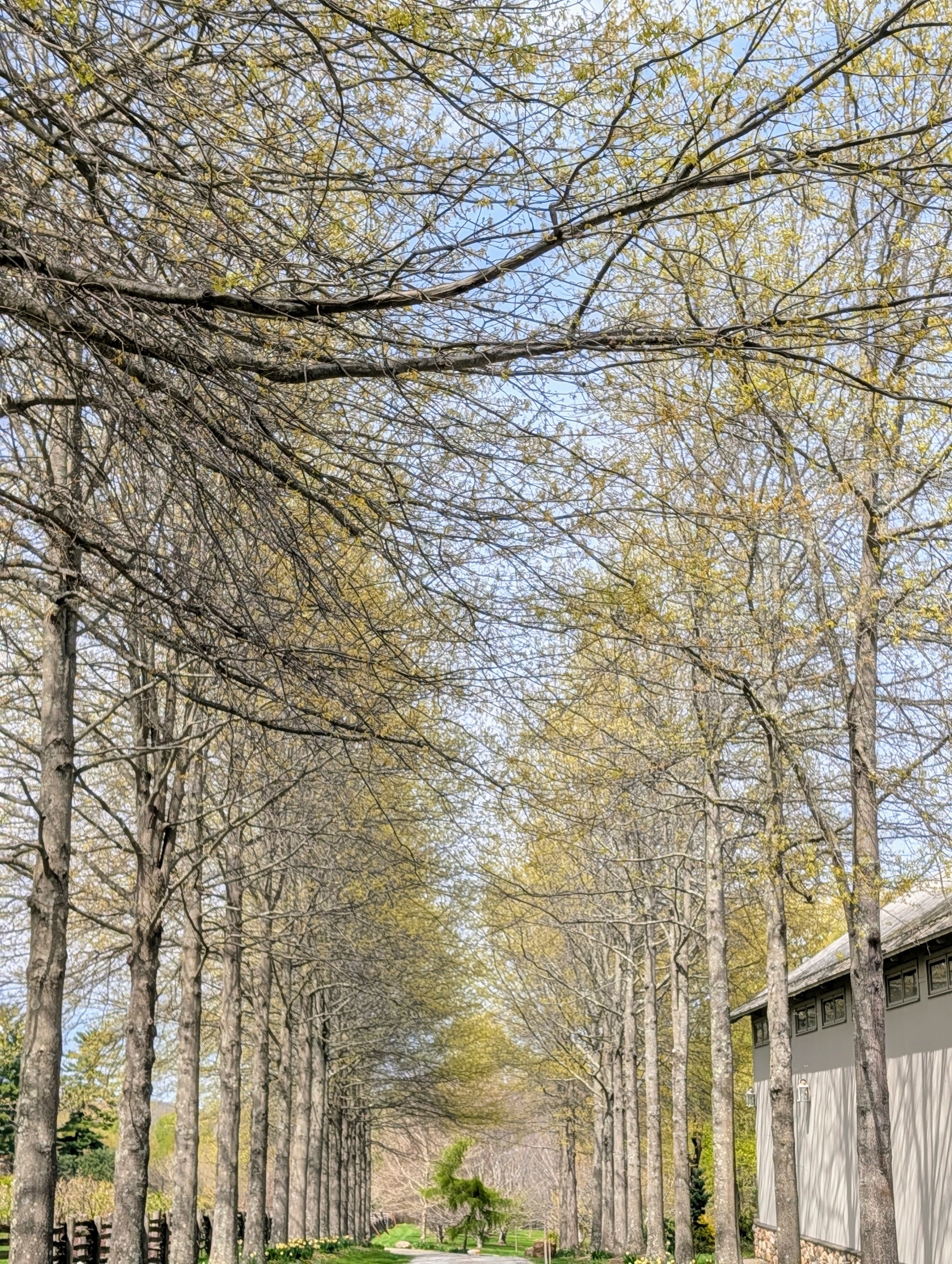
- This is my Pin Oak Allée. The trees are beginning to leaf out, but at this time it is easier to see its recognizable branch habit, where the lower branches hang down, the horizontal middle branches flare out and the upright upper branches point up.
-
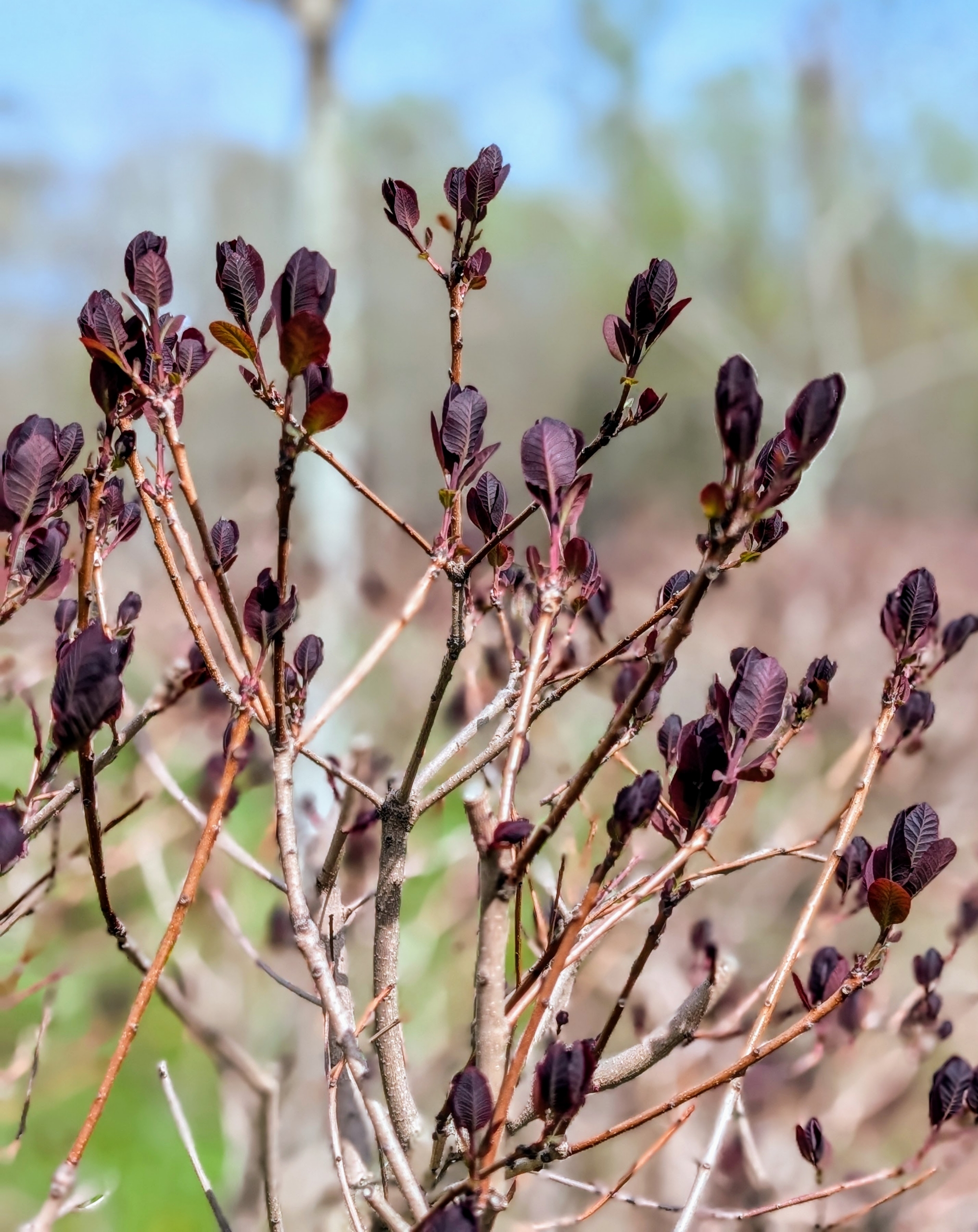
- These Cotinus leaves are small now, but they will grow large, broad, and oval to oblong in shape, with a smooth, glossy surface.
-
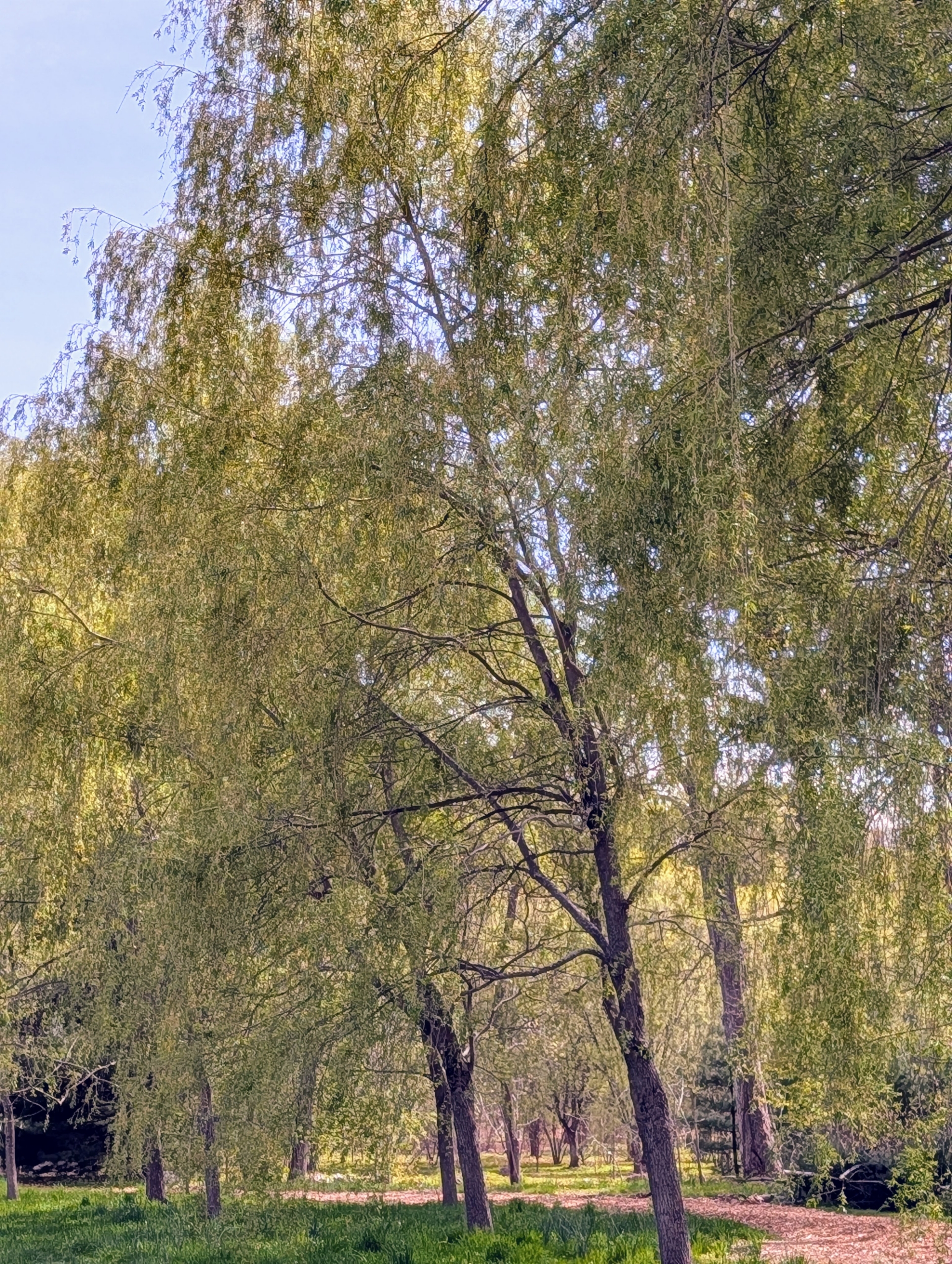
- From a distance, it is easy to notice the golden-yellow weeping willows. This grove is at the edge of my pinetum. The golden hue looks so pretty against the early spring landscape.
-
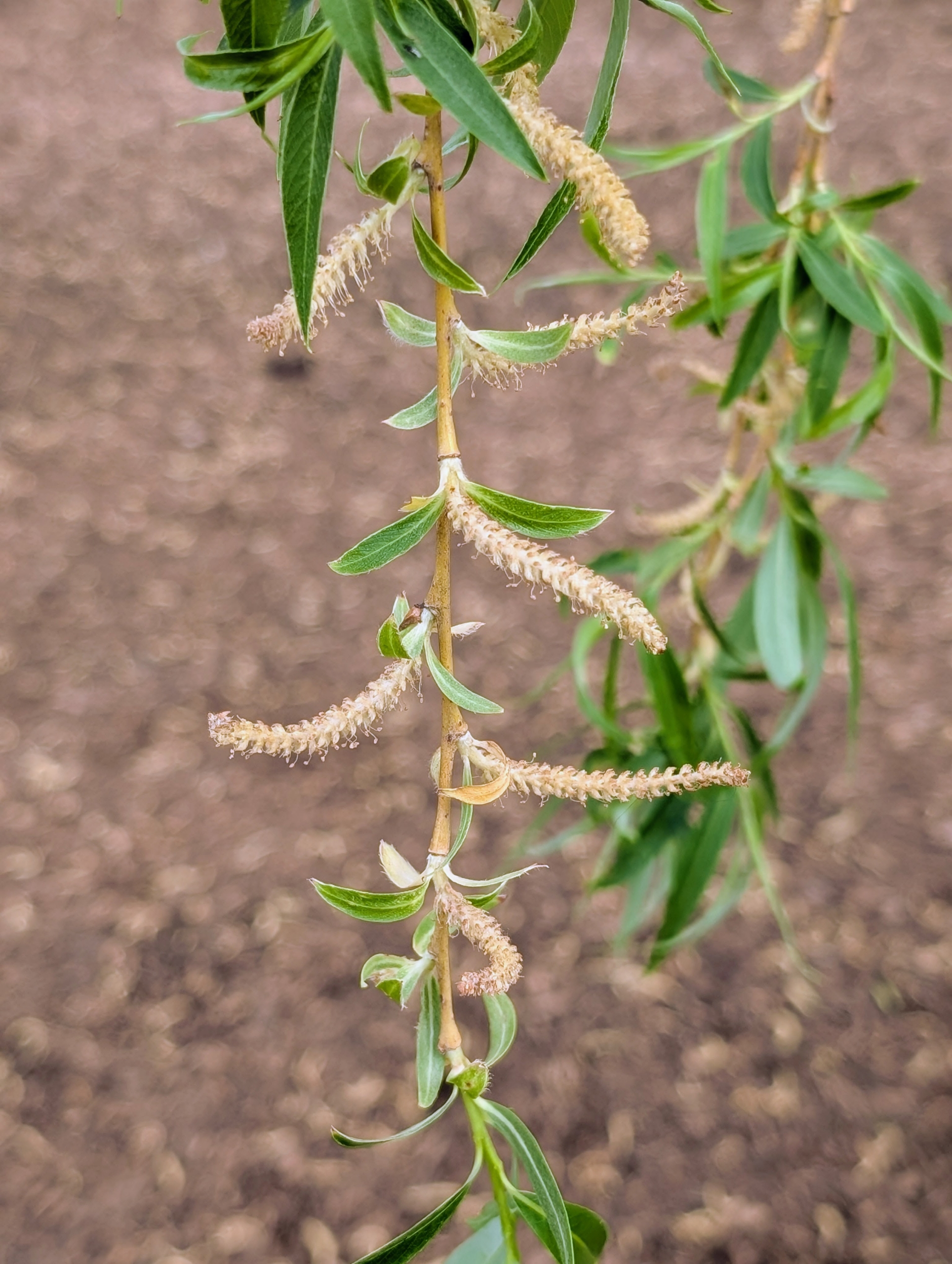
- When the tree blooms late winter to spring, yellow catkins such as these appear. The catkin flowers are one to two inches long, and each blossom consists of hundreds of hairlike protrusions. The flowers mature to yellow before they are disbursed by wind or rain.
-
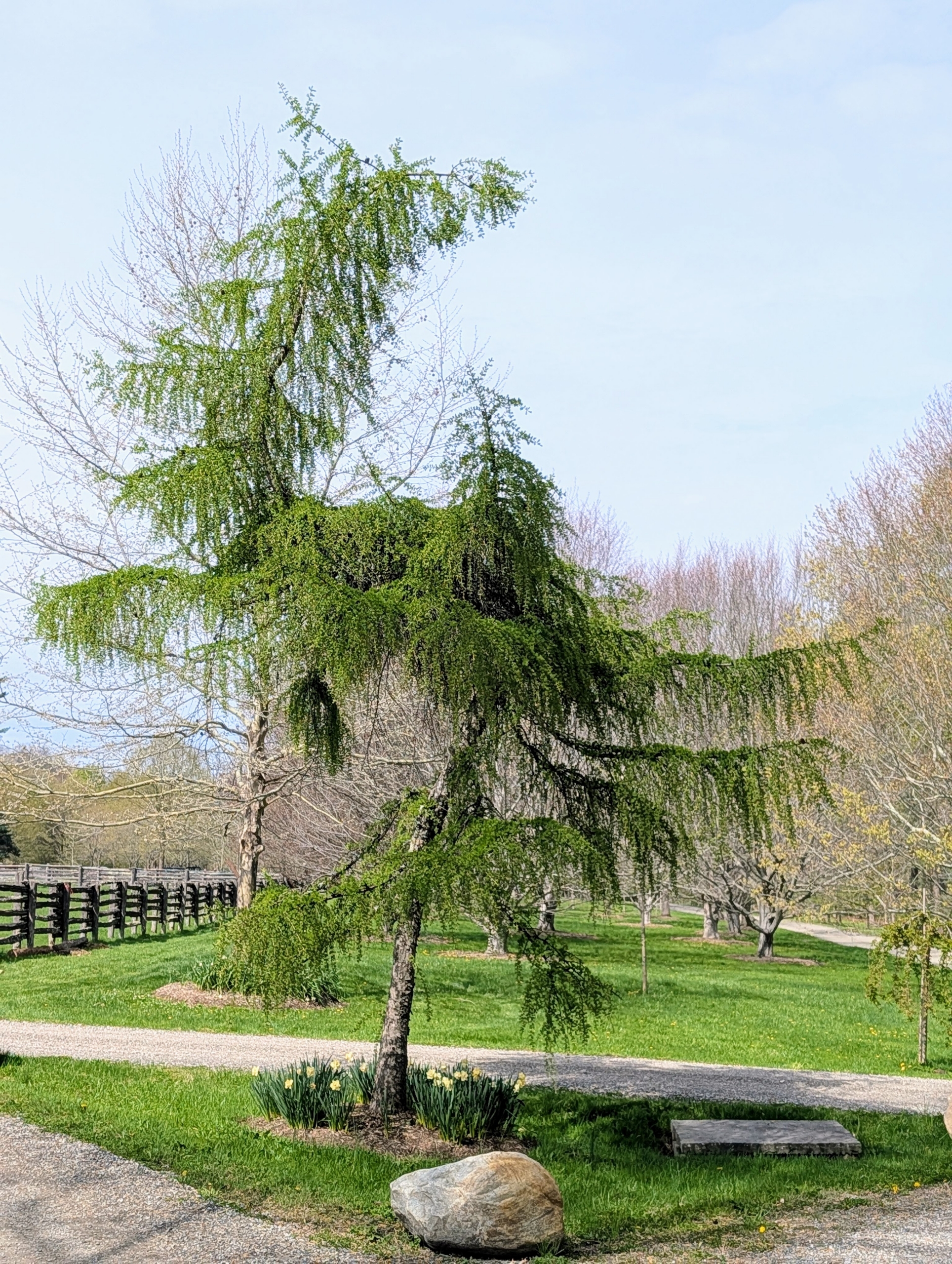
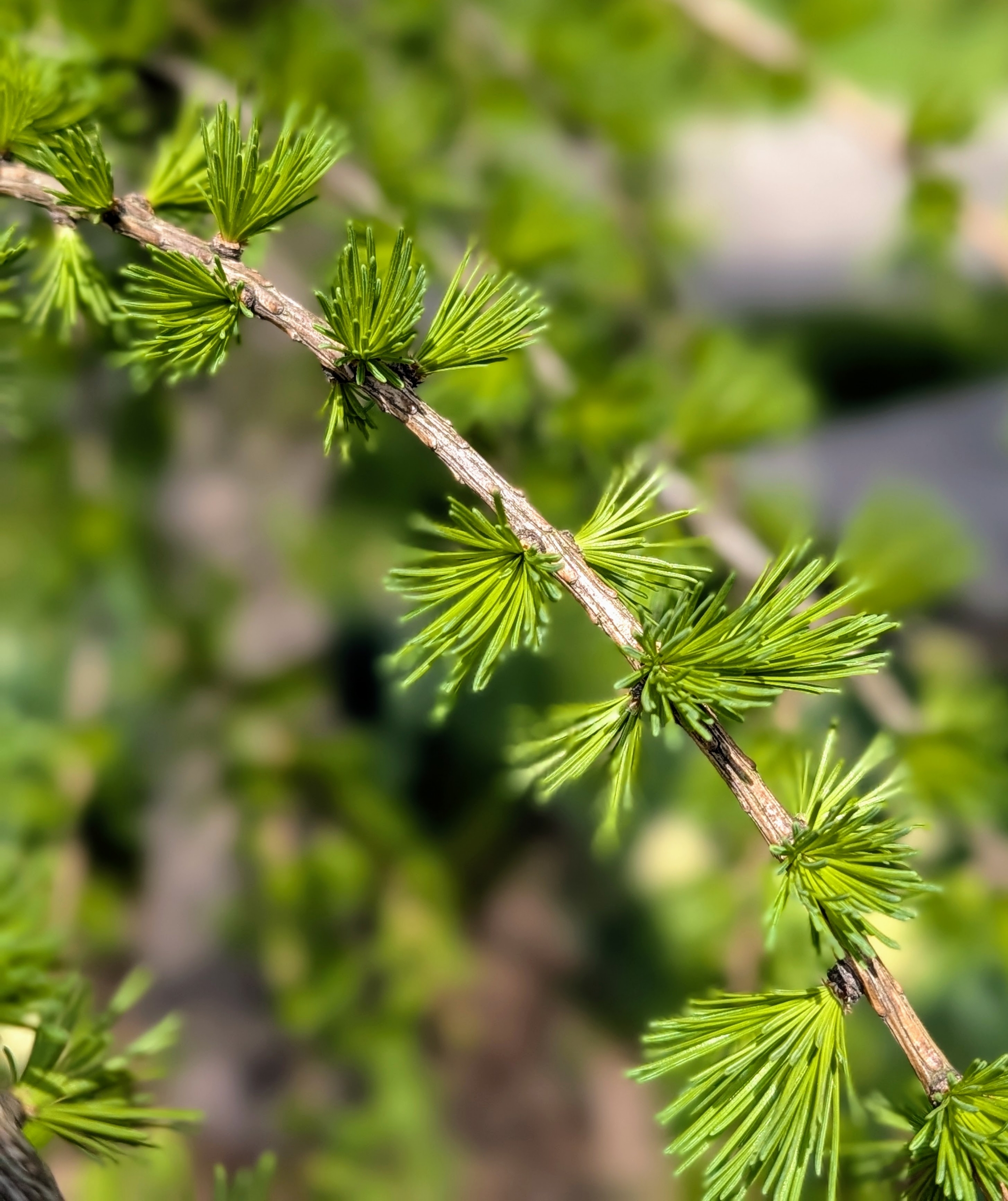
- This is a weeping larch, Larix decidua ‘Pendula’. It has bright lime green needles in spring, which turn gold before dropping in fall.
-
- Here, one can see how the foliage grows on the tree giving it an elegant sculptural effect. This tree is planted at the intersection between my pin oaks and my Allée of Boxwood.
-
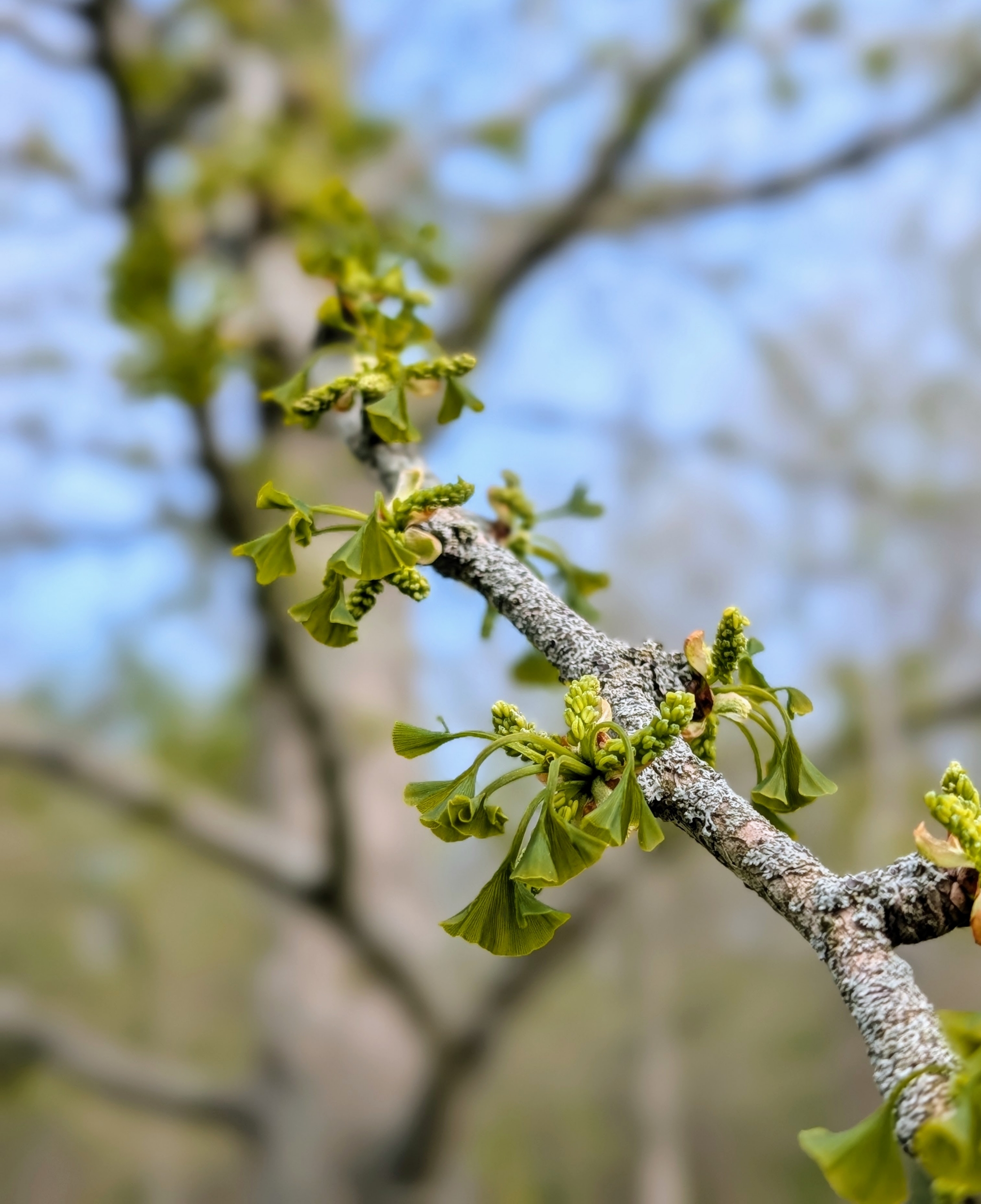
- Look closely to see the tiny young leaves of the Ginkgo with their distinguishable fan-shape. When mature, they will be up to three-inches long, with a petiole that is also up to three-inches long. This shape and the elongated petiole cause the foliage to flutter in the slightest breeze.
-
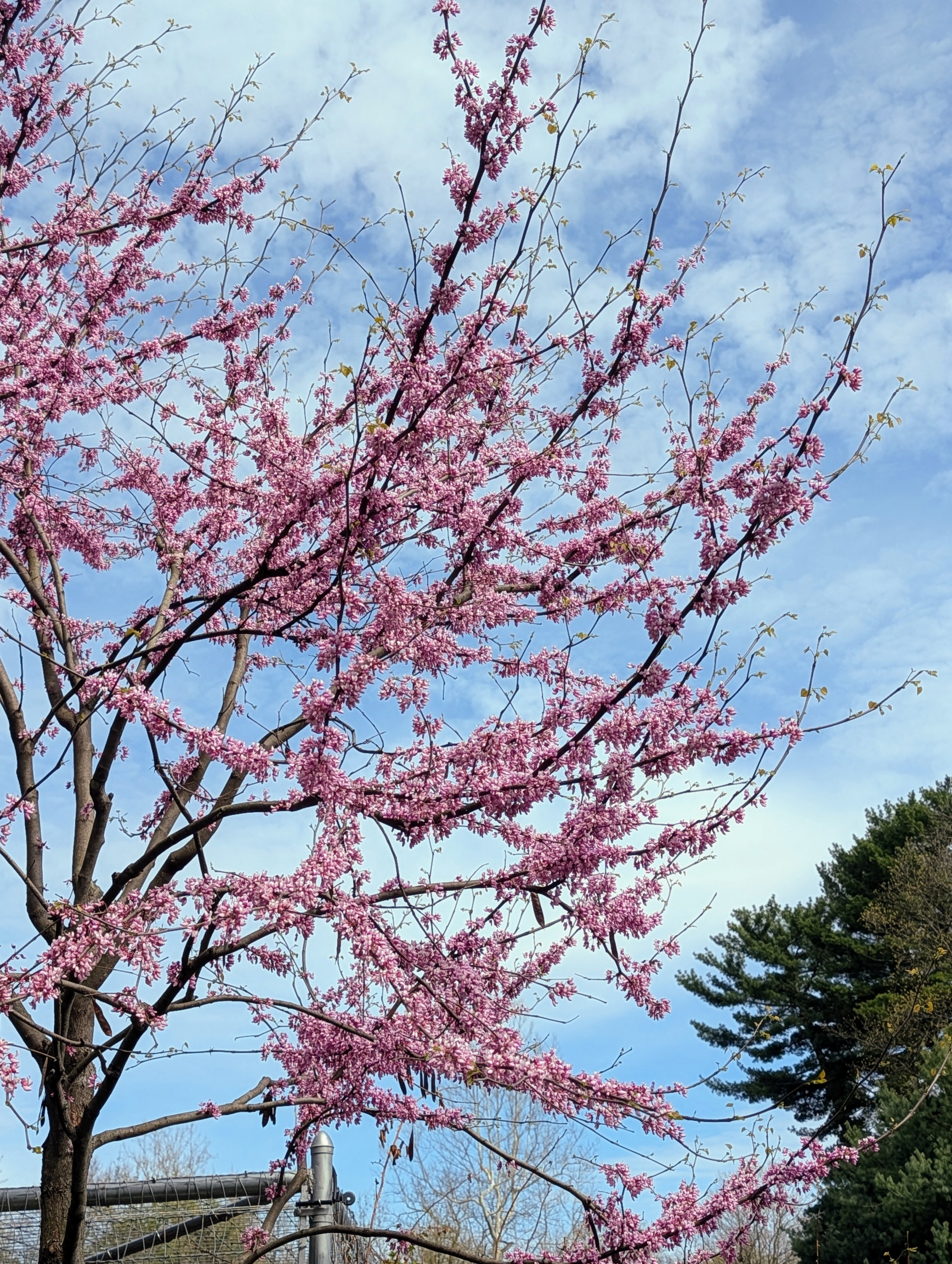
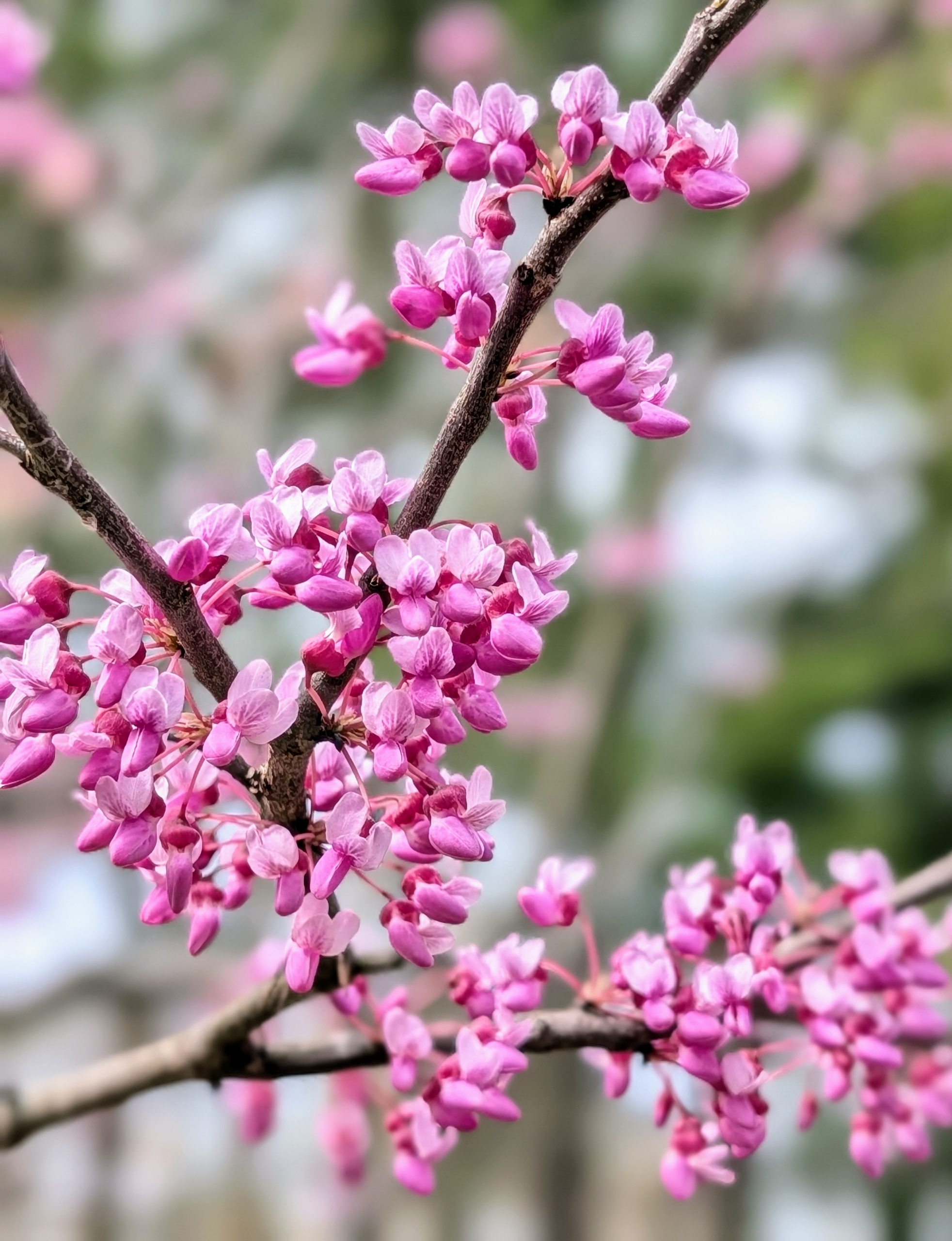
- I have several Cercis canadensis ‘Merlot’ trees, or eastern redbuds. They’re all just starting to show off their beautiful early season purple-pink flower buds.
-
- Redbud flowers are among the most striking early spring sights. They are small, pea‑like blooms that appear in clusters along bare branches and sometimes on the trunk before the tree’s leaves emerge.
-
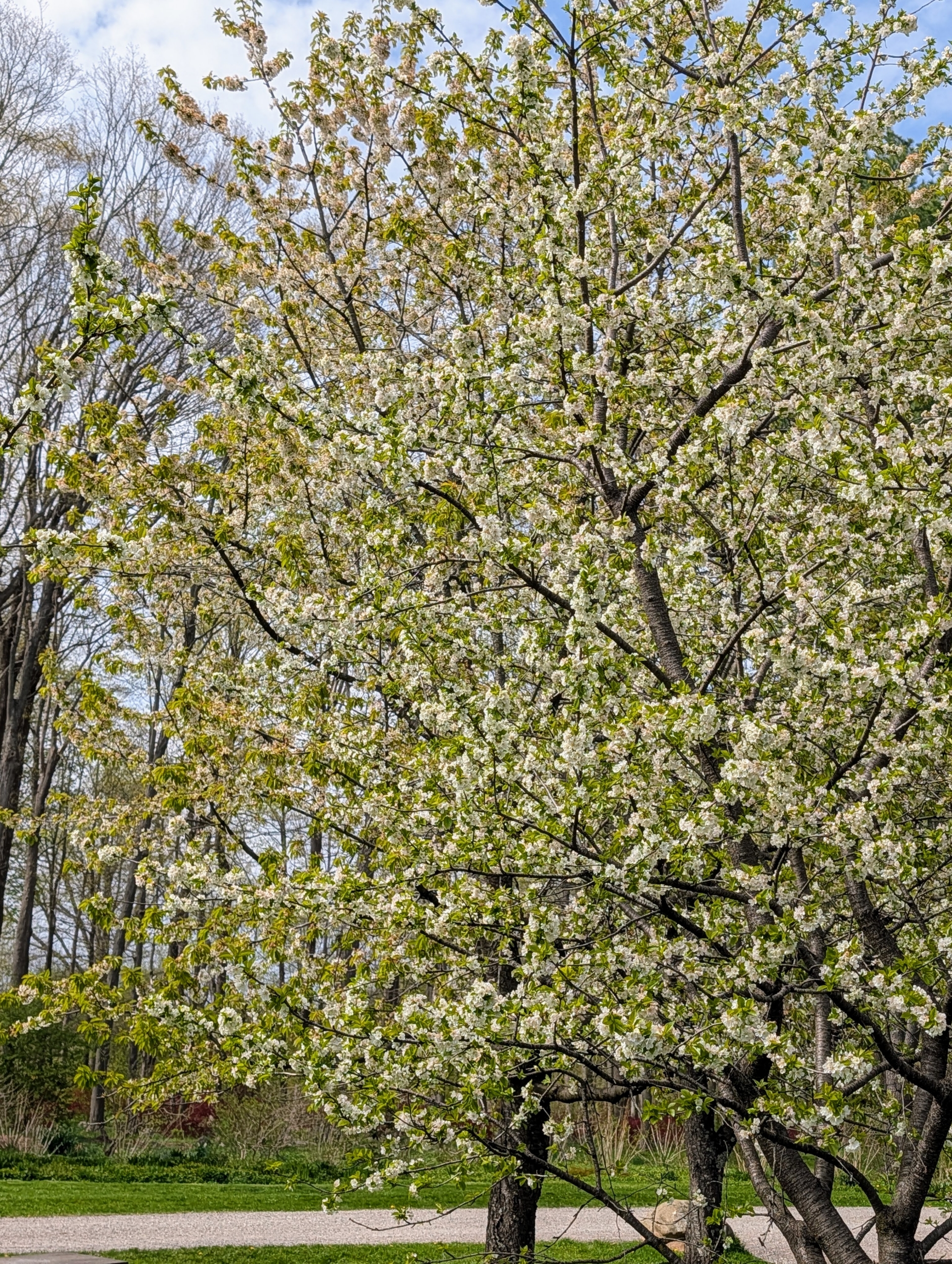
- Nearby are two cherry trees. Cherry trees belong to the genus Prunus and are in the family Rosaceae. These trees are famous for their sweet or sour stone fruits called drupes and their eye-catching blossoms. Unfortunately, we all wait with anticipation for the fruits, but oftentimes squirrels beat us to them.
-
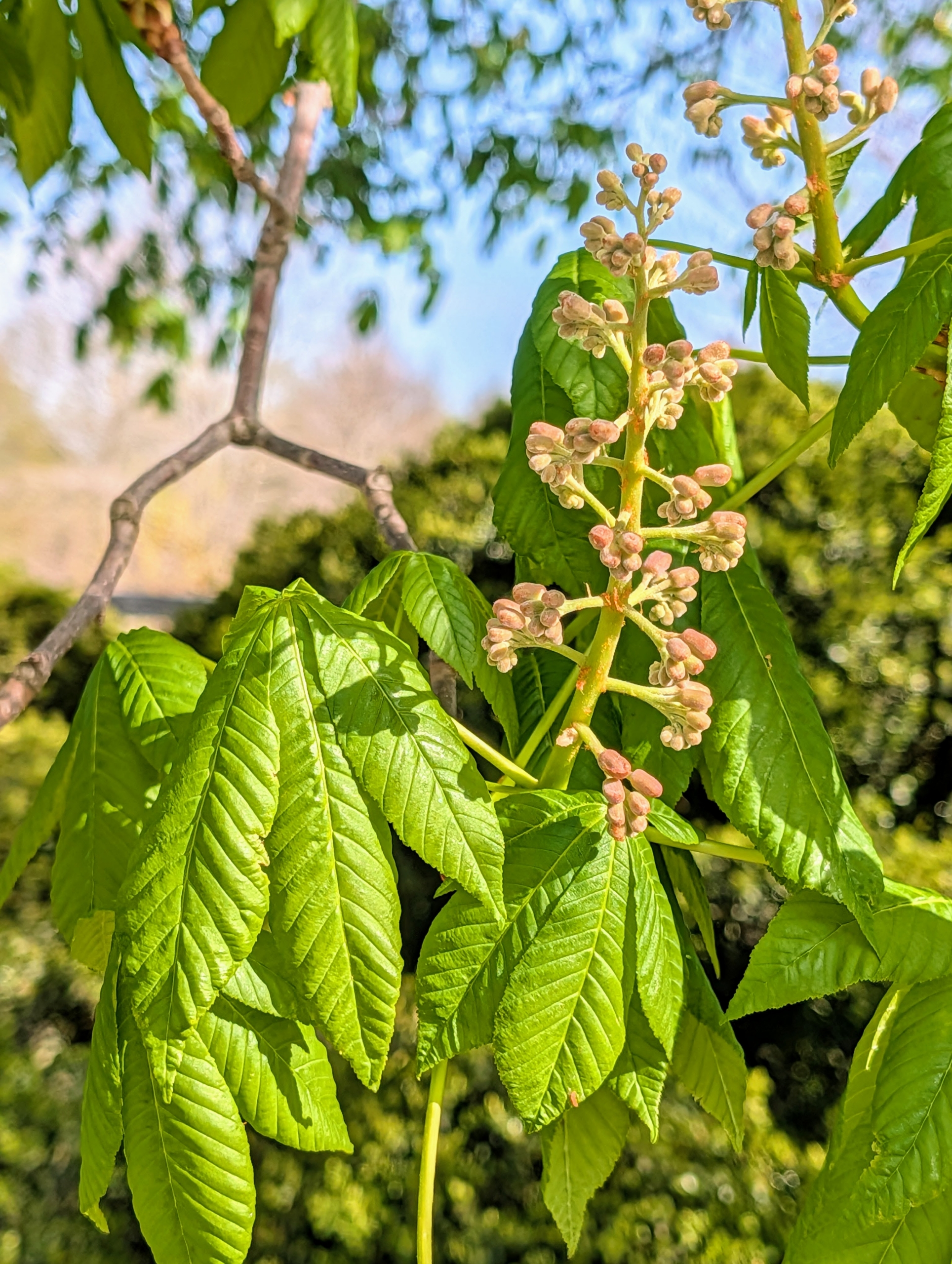
- Here are the leaves of the horse-chestnut. Even at this early stage, the leaves and developing flowers are big. By mid-May to early June, these trees will be in full flower.
-
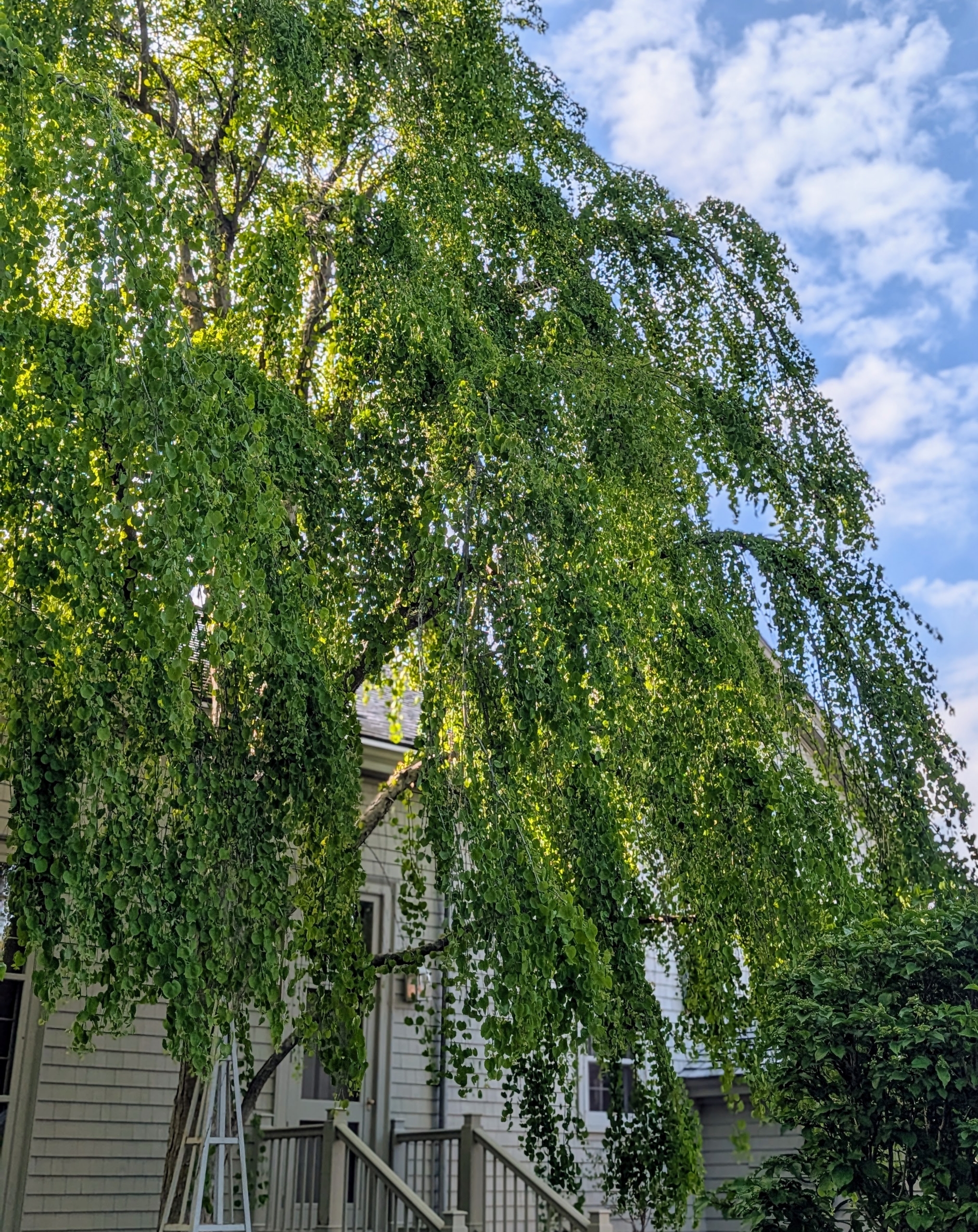
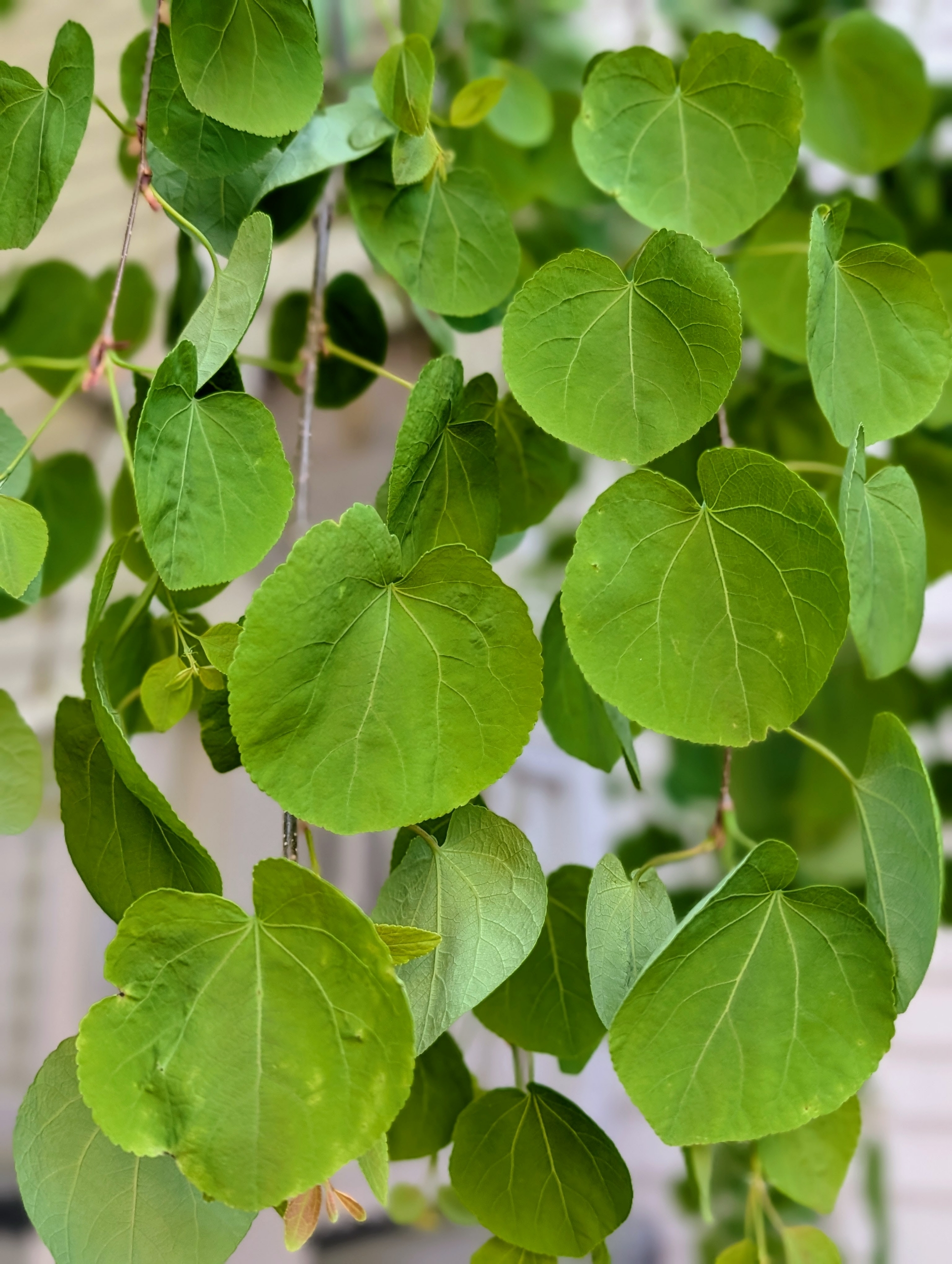
- On my terrace parterre and on one side of my home are weeping katsura trees, one of my favorites. Cercidiphyllum japonicum f. pendulum has pendulous branches that fan out from the crown and sweep the ground. Caramel-scented foliage emerges bronze or purple-red, turns blue-green, then fades to gold or apricot in autumn.
-
- The leaves are heart-shaped, typically two to three inches long, with a wavy or finely serrated edge and a pointed tip.
-
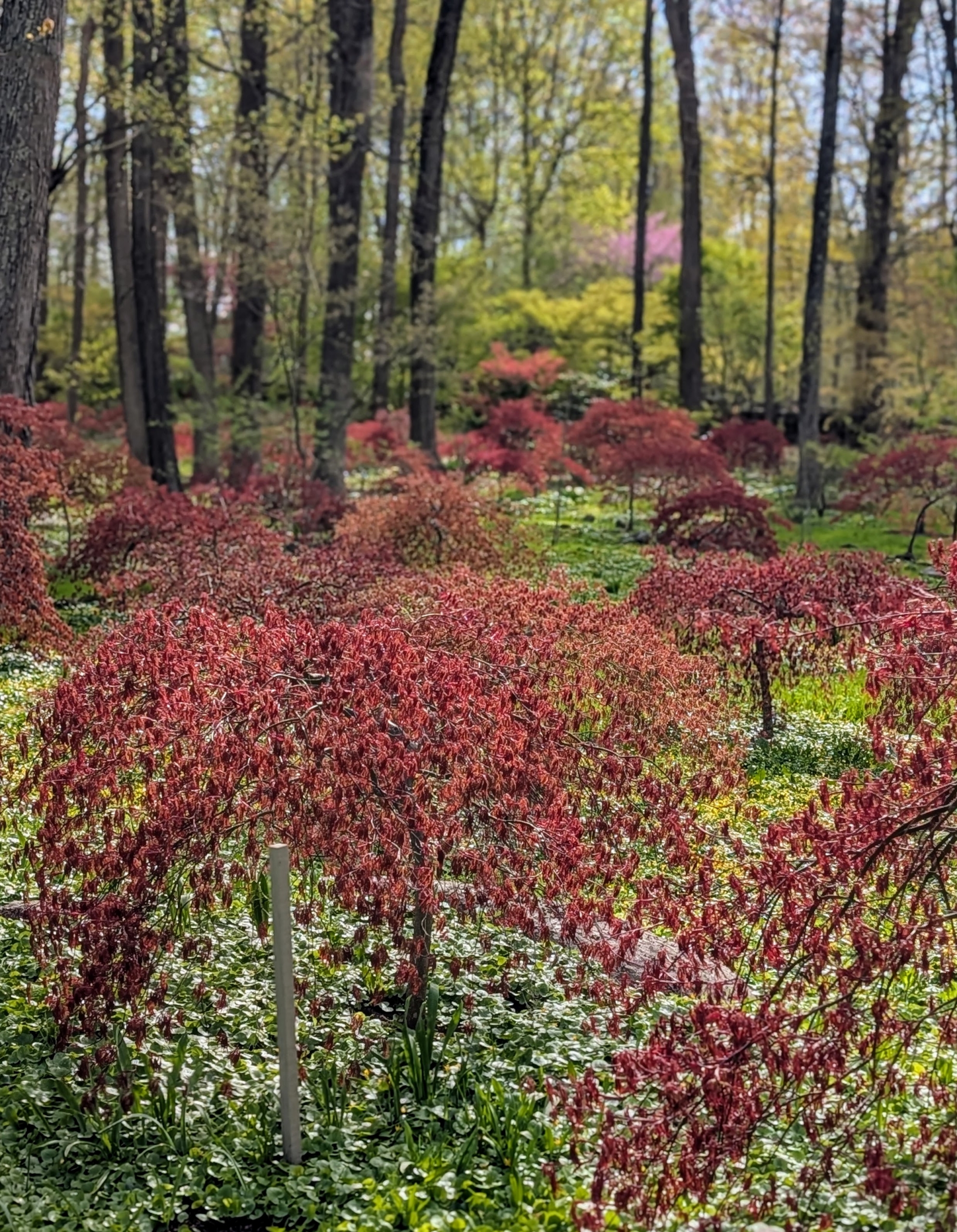
- And here are the Japanese maples – so full of color. Spring has sprung with such energy and growth. I hope you appreciate something new in your garden every day.
 Martha Pins


 Martha Tweets

