

Inside Lucie Rosen's Wardrobe at The Caramoor Center for Music and the Arts
If you're ever in the Westchester, New York area, I encourage you visit The Caramoor Center for Music and the Arts. This year, every Friday and Saturday through September 5th, guests can enjoy the Rosen House Focus Tour: Inside Lucie's Wardrobe, an interesting and historic exhibit of Lucie Rosen's unique fashions.
Caramoor is an 81-acre former country estate where art and music enthusiasts Lucie and Walter Rosen built an Italianate-style villa and gardens to entertain their friends from around the world. In 1946, the Rosens opened their property as a performing arts center, which hosts seasonal concerts, historic house tours, educational programs, and other outdoor affairs and performances. And now for the first time in more than 30-years, guests can view the bold garments Lucie wore and treasured from the 1930s to the 1960s - the shimmering silks, elegant patterns, and vivid color palettes - and learn the captivating stories behind them.
Here are some photos, enjoy. And please go to Caramoor's website, just click on this highlighted link, for tickets and more information.
-

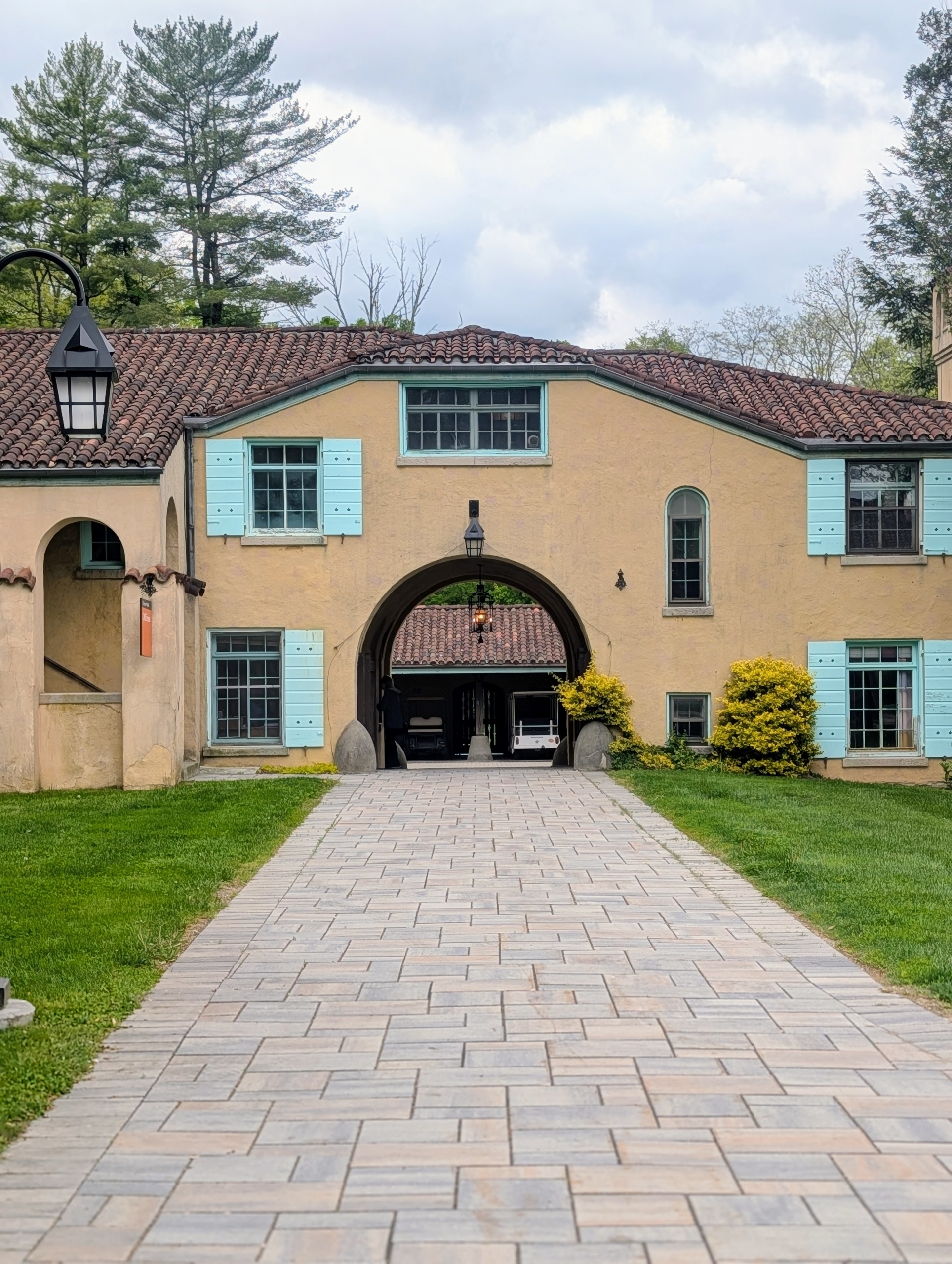
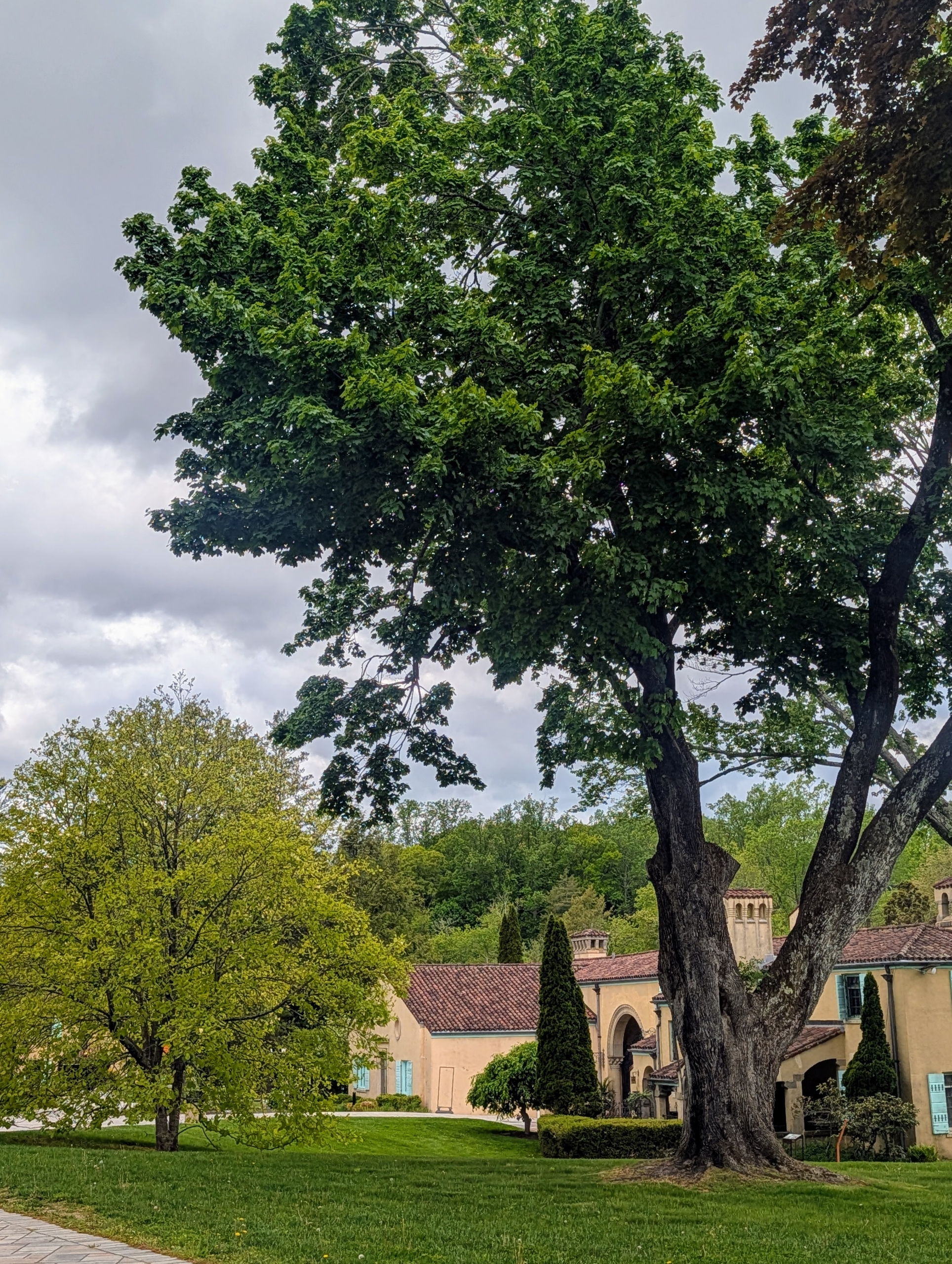
- Caramoor Center for Music and the Arts is located in the picturesque hamlet of Katonah, New York and is listed on the National Register of Historic Places. If you haven’t been, Caramoor is a wonderful place where one can hear exceptional music, enjoy interesting and informative programs, and walk through beautifully maintained and historic gardens.
-
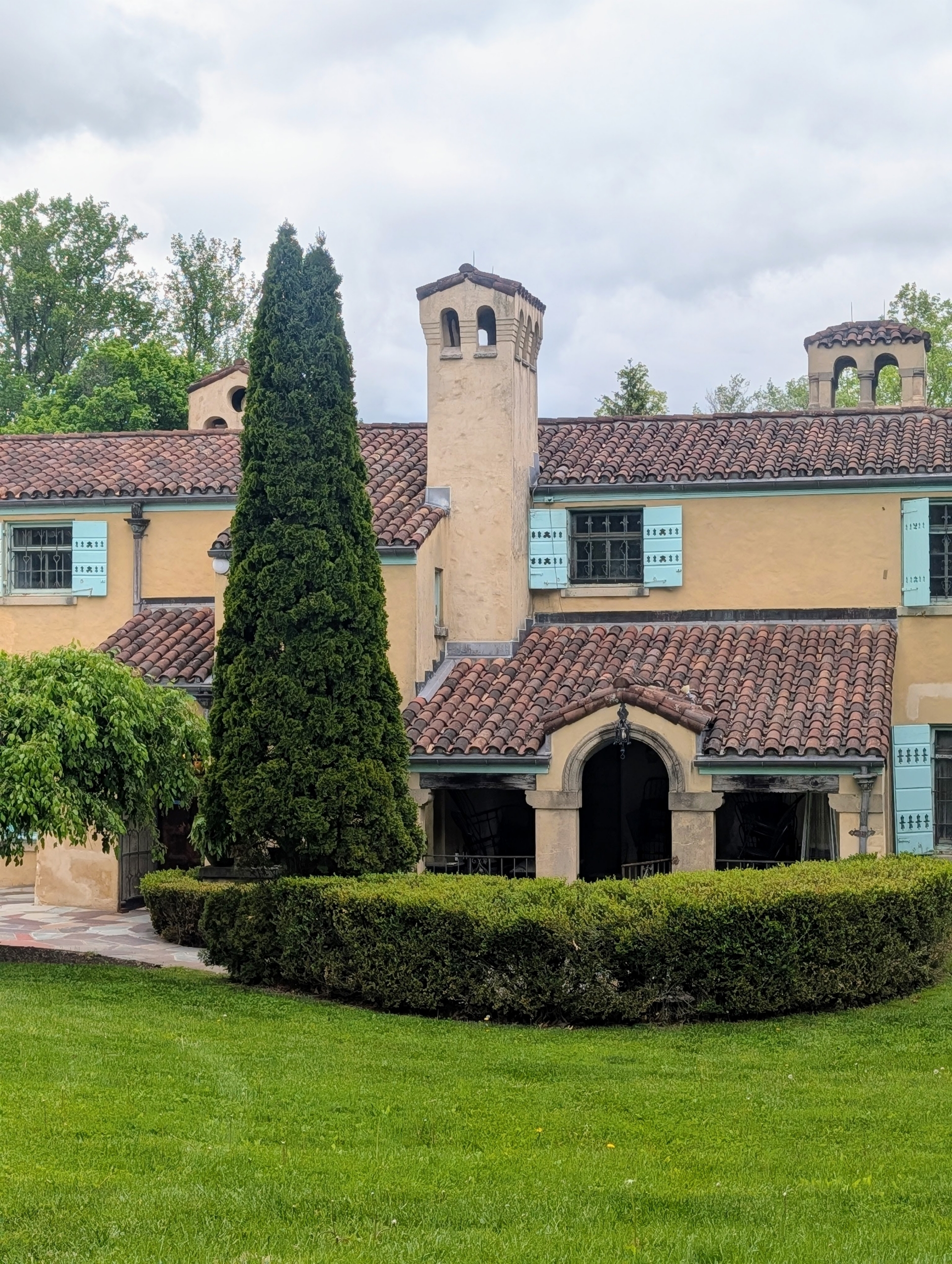
- The Rosens built the estate and restored the grounds gradually during the 1930s, importing many architectural and decorative items from Europe. The Caramoor became a center for the arts and music following the World War II death of the Rosens’ only son.
-
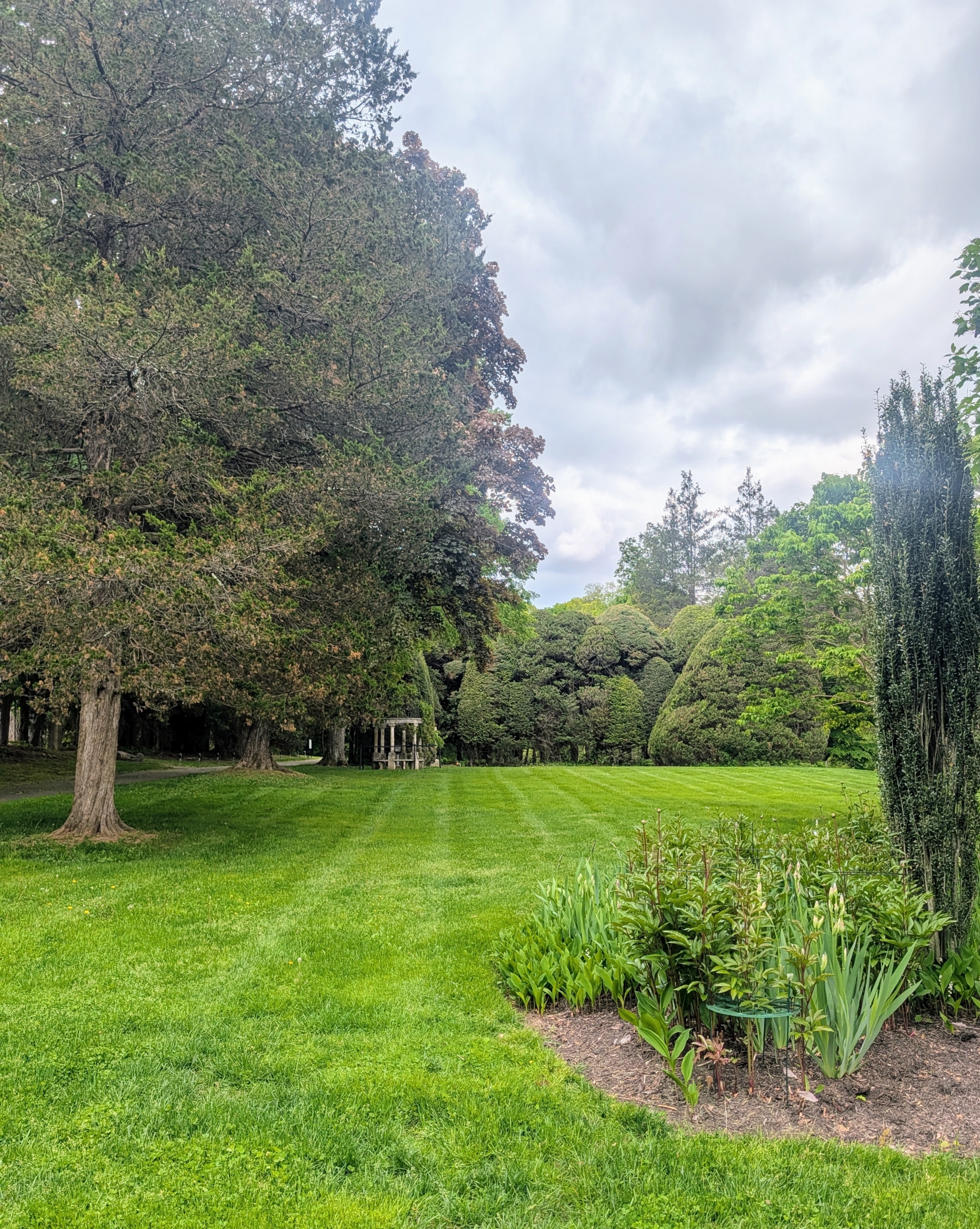
- The gardens are meticulously manicured and maintained. Some of the original gardens were planted around 1912, making them one of the oldest native features of the estate.
-
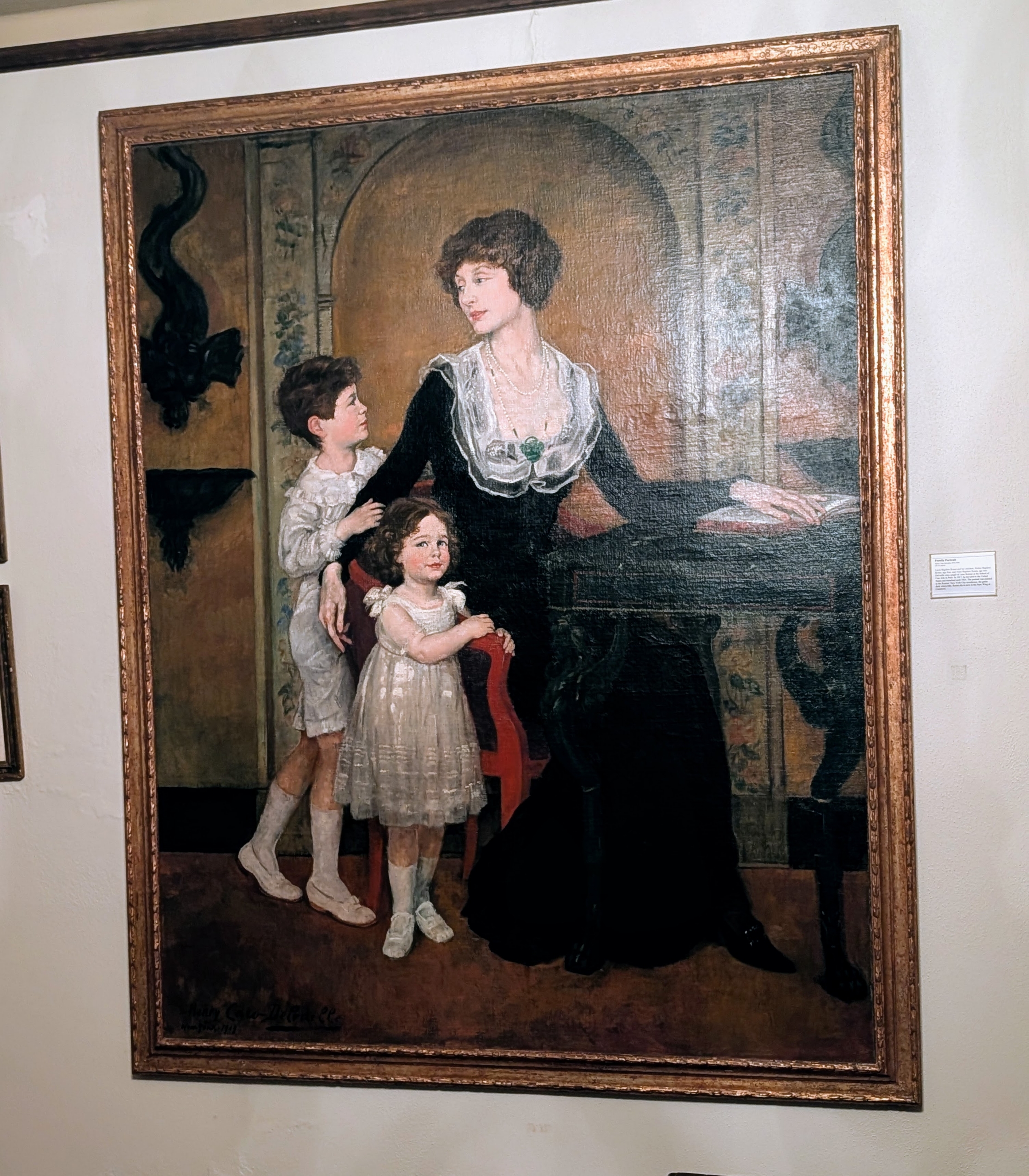
- This is a family portrait of Lucie Bigelow Rosen and her children, Walter and Anne. This was painted in their New York City townhouse and is now displayed at Caramoor along with the green desk in the painting.
-
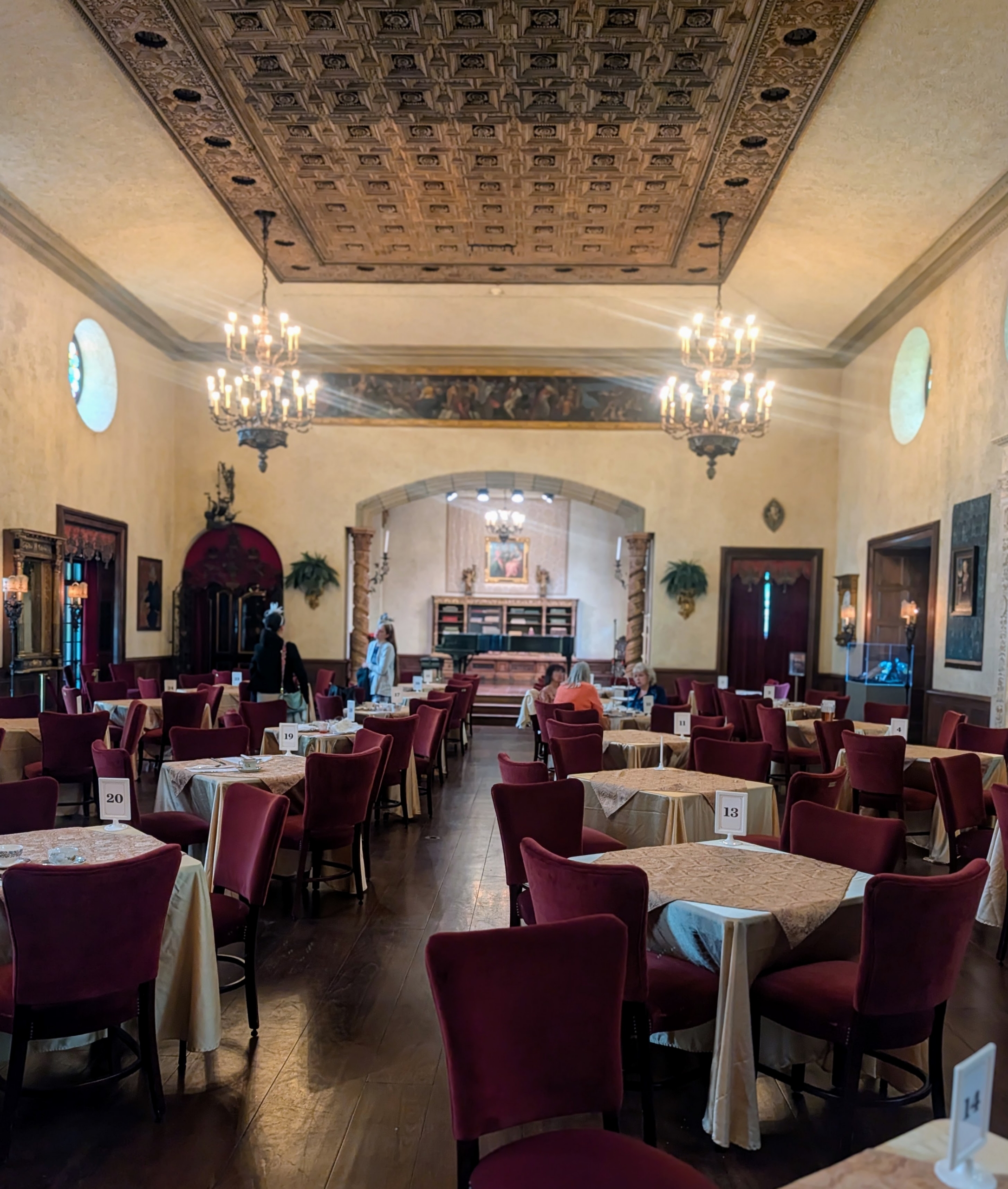
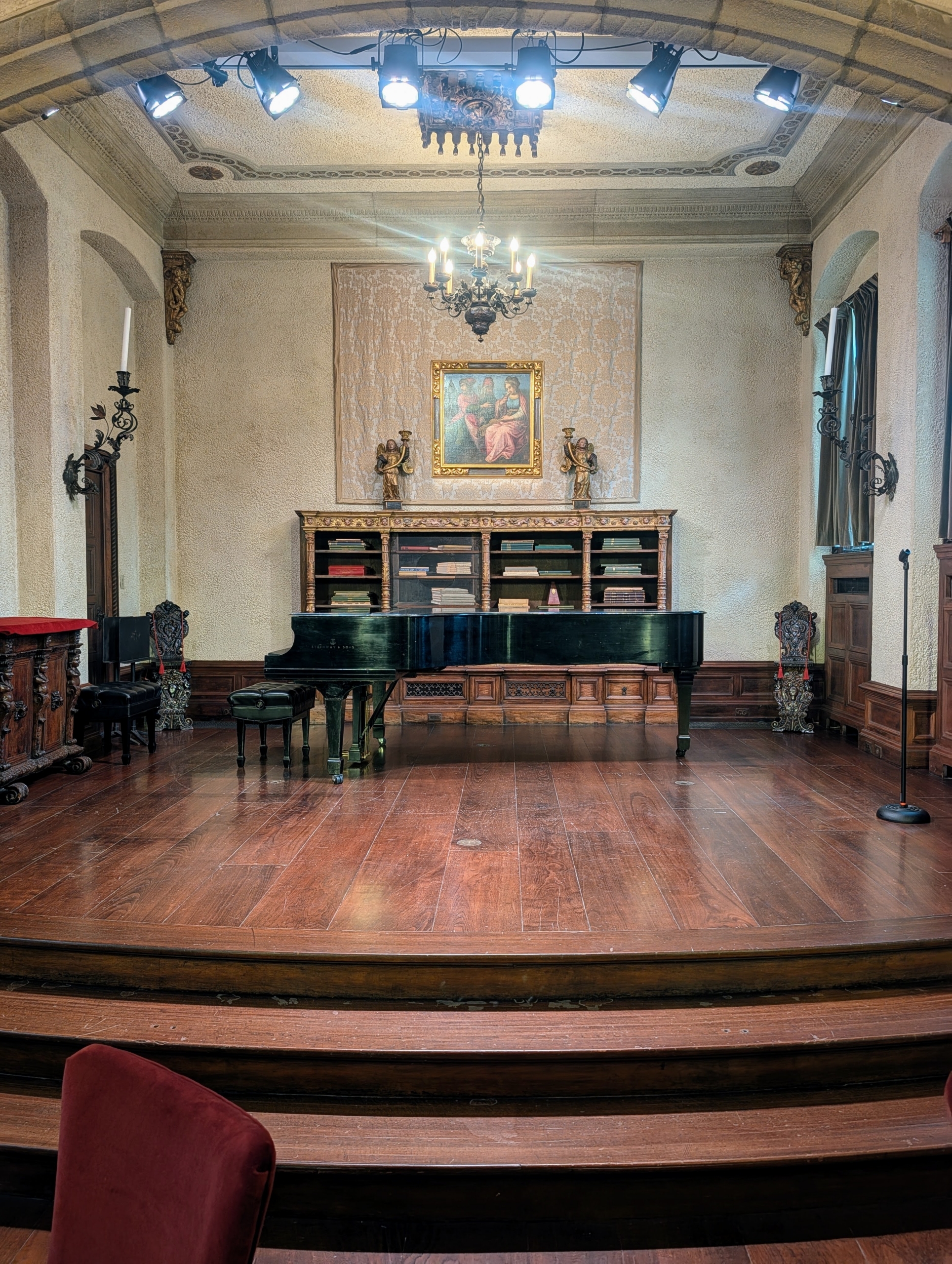
- This is the Music Room at Caramoor. This room seats 170 guests and is known for its Renaissance furniture, Gothic tapestries, and stained glass elements. Depending on the time of year, the room is sometimes configured with theatre seating for views of the stage.
-
- The Music Room is used for intimate musical performances, recitals, opera and lectures. My nephew, Christopher Herbert, performed here in 2018 with his musical group, New York Polyphony, an amazing a cappella vocal quartet that sang both early and new music.
-
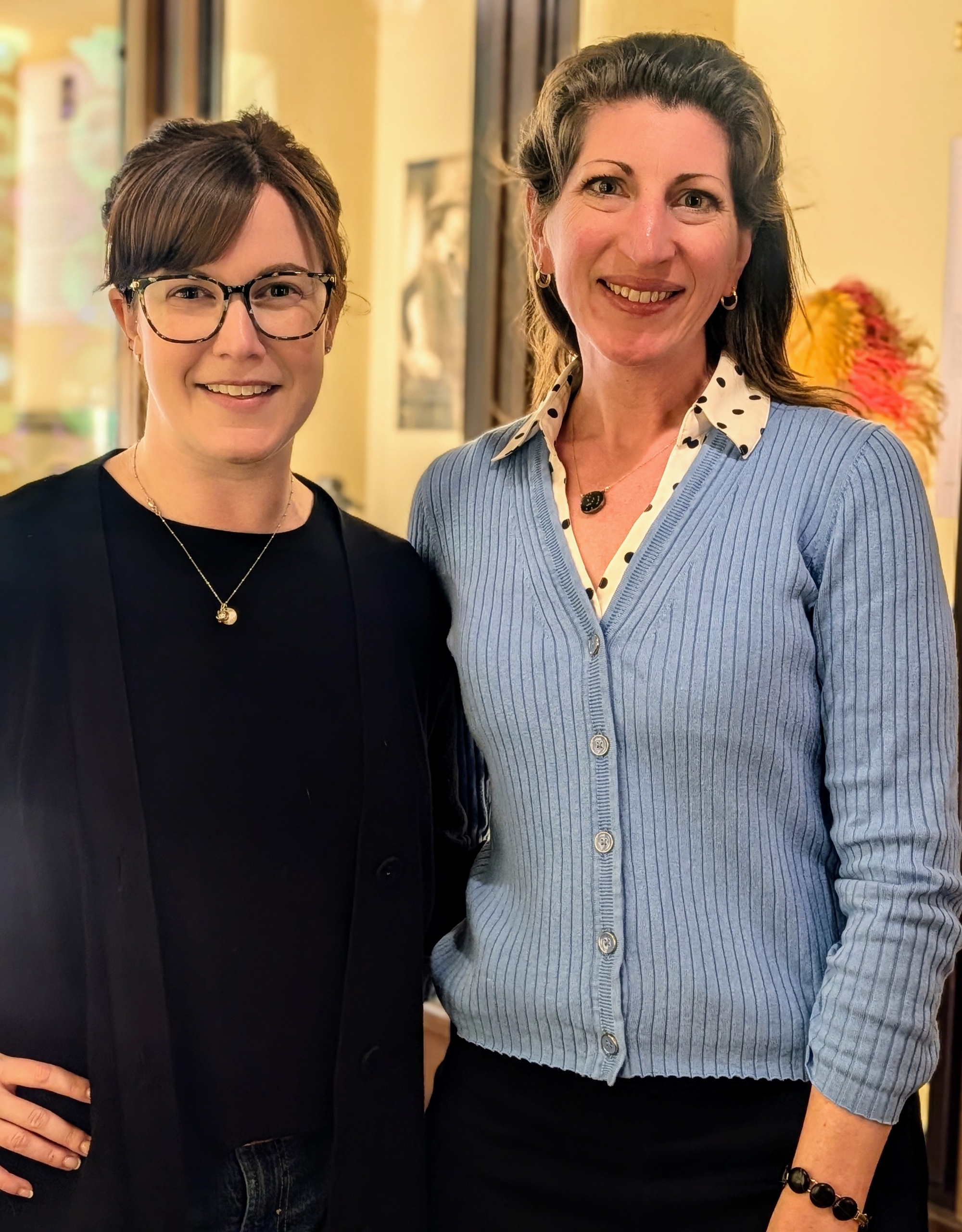
- Here are Gillian Fox, President & CEO of Caramoor and Gayle Greves, Director of Guest Experience.
-
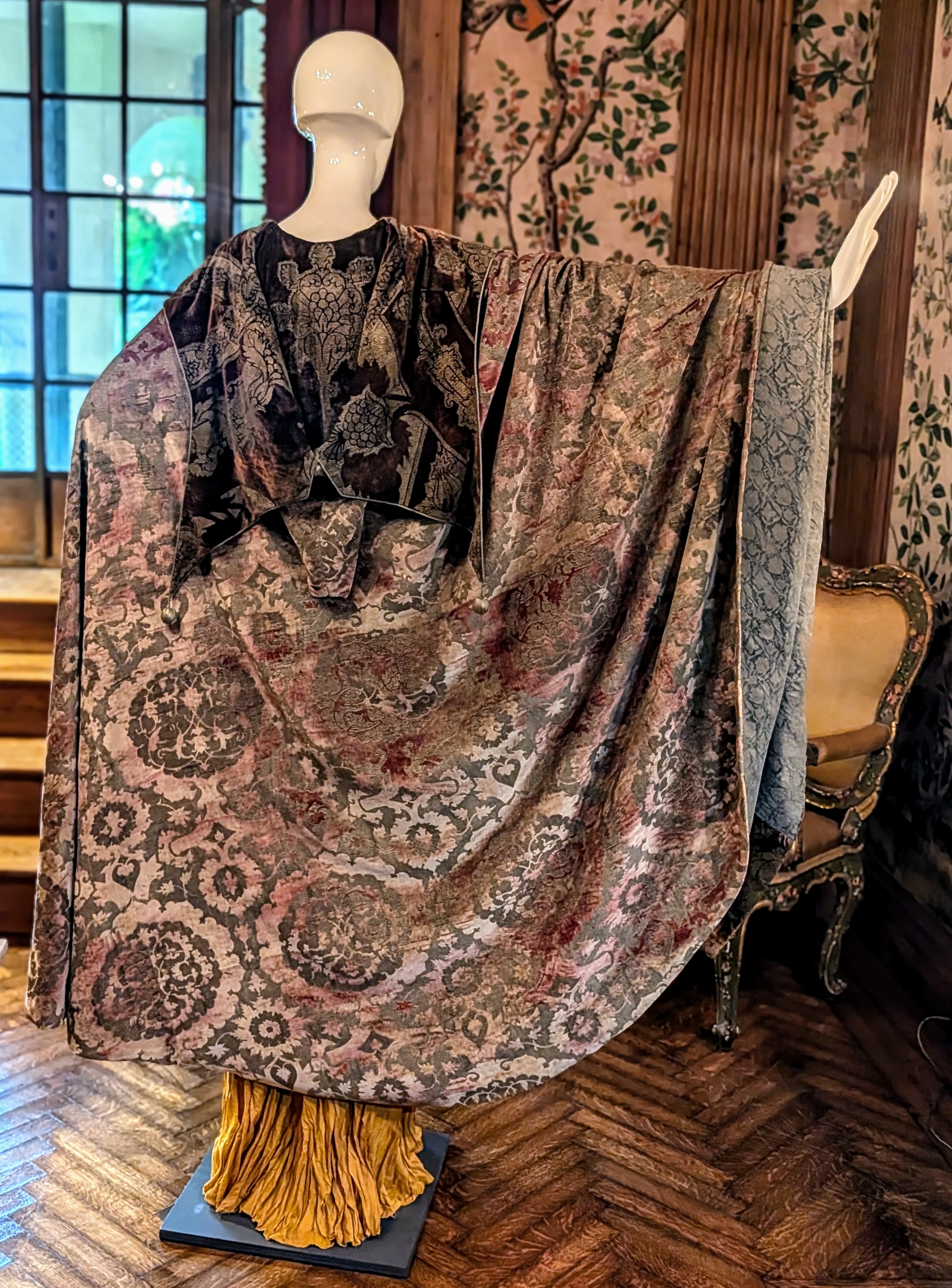
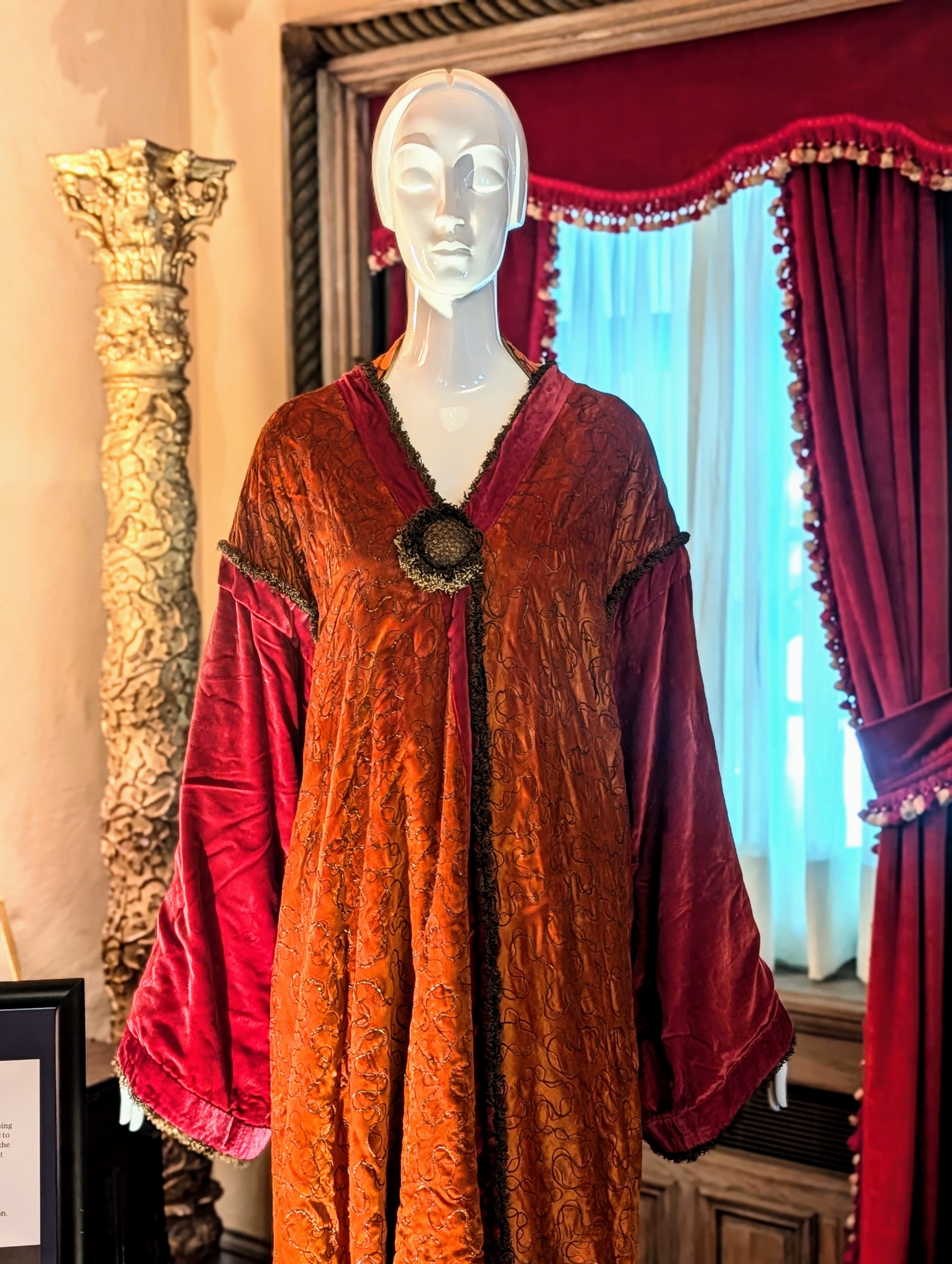
- This year, the main exhibit is the Rosen House Focus Tour: Inside Lucie’s Wardrobe. It offers guests an interesting look at Lucie Rosen’s fashions through the years – some of which would still look radiant today. This is an evening coat made out of Fortuny stamped silk velvet.
-
- This evening coat is made of orange-red silk velvet with metallic embroidery and trim. Lucie loved to use bold colors and rich fabrics for her capes.
-
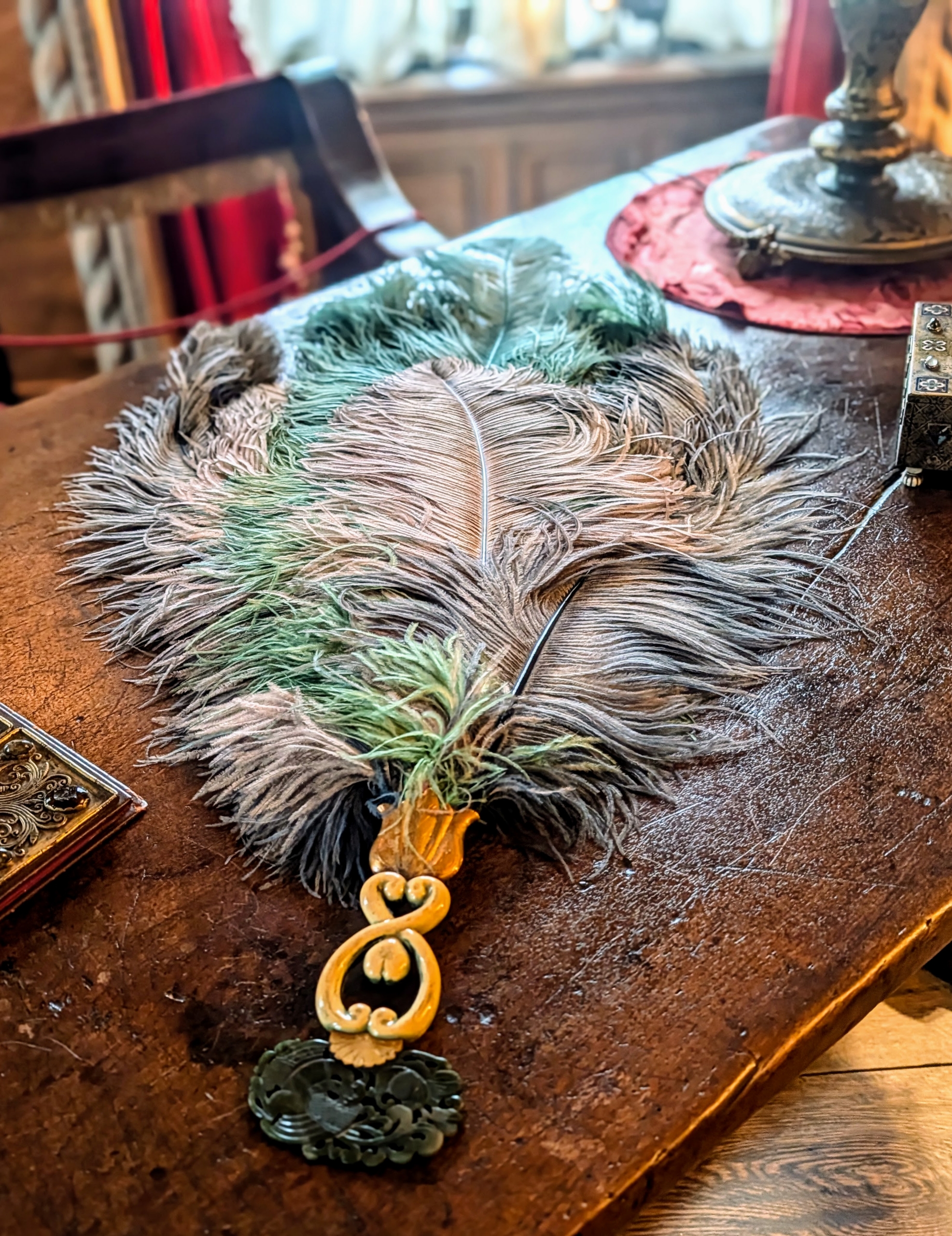
- Lucie often used feather hand fans. She had them made in an array of different colors to match her clothing.
-
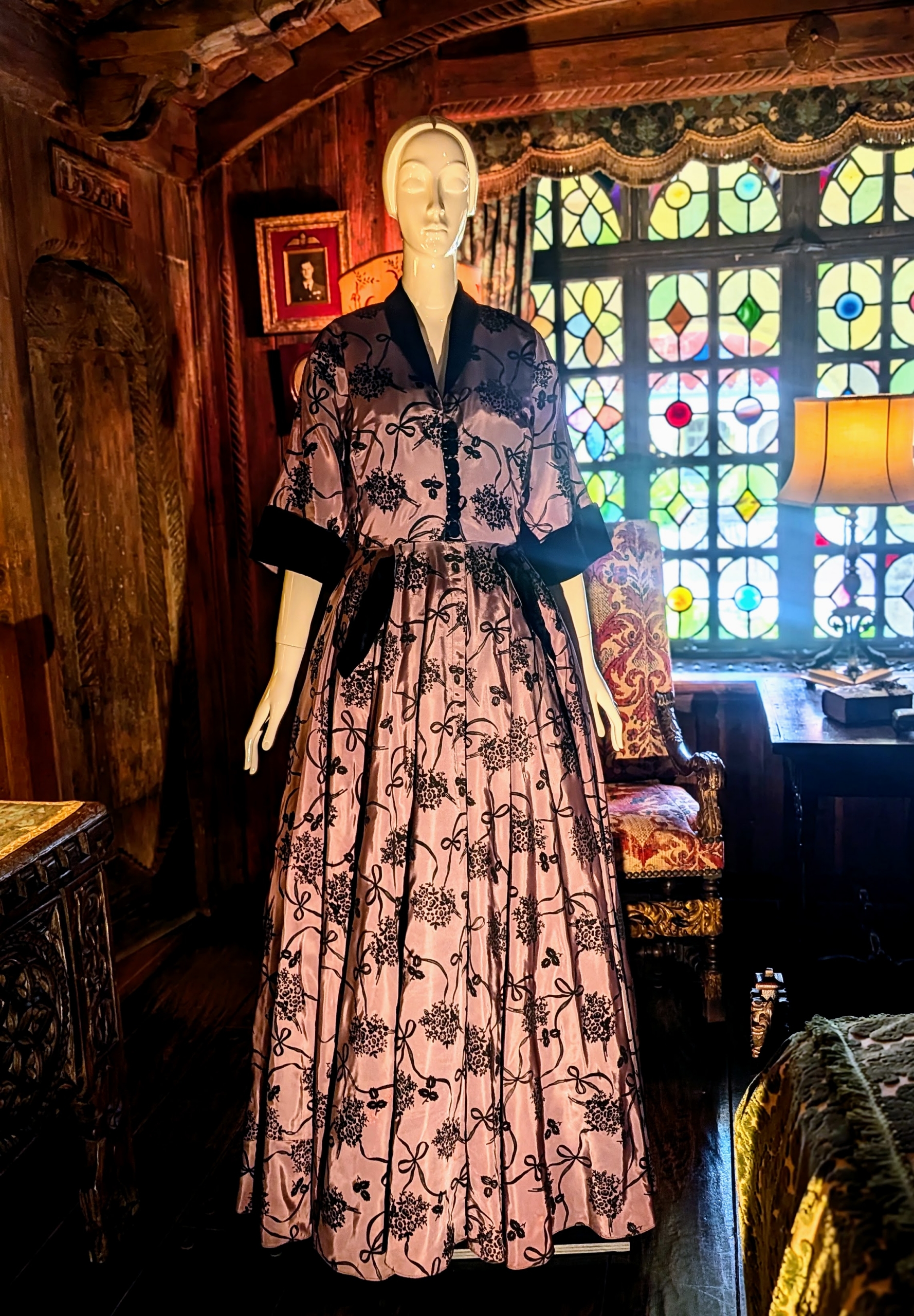
- This silk satin hostess dress is flocked with velvet accents. While Lucie loved color, she often used some black for dramatic effect.
-
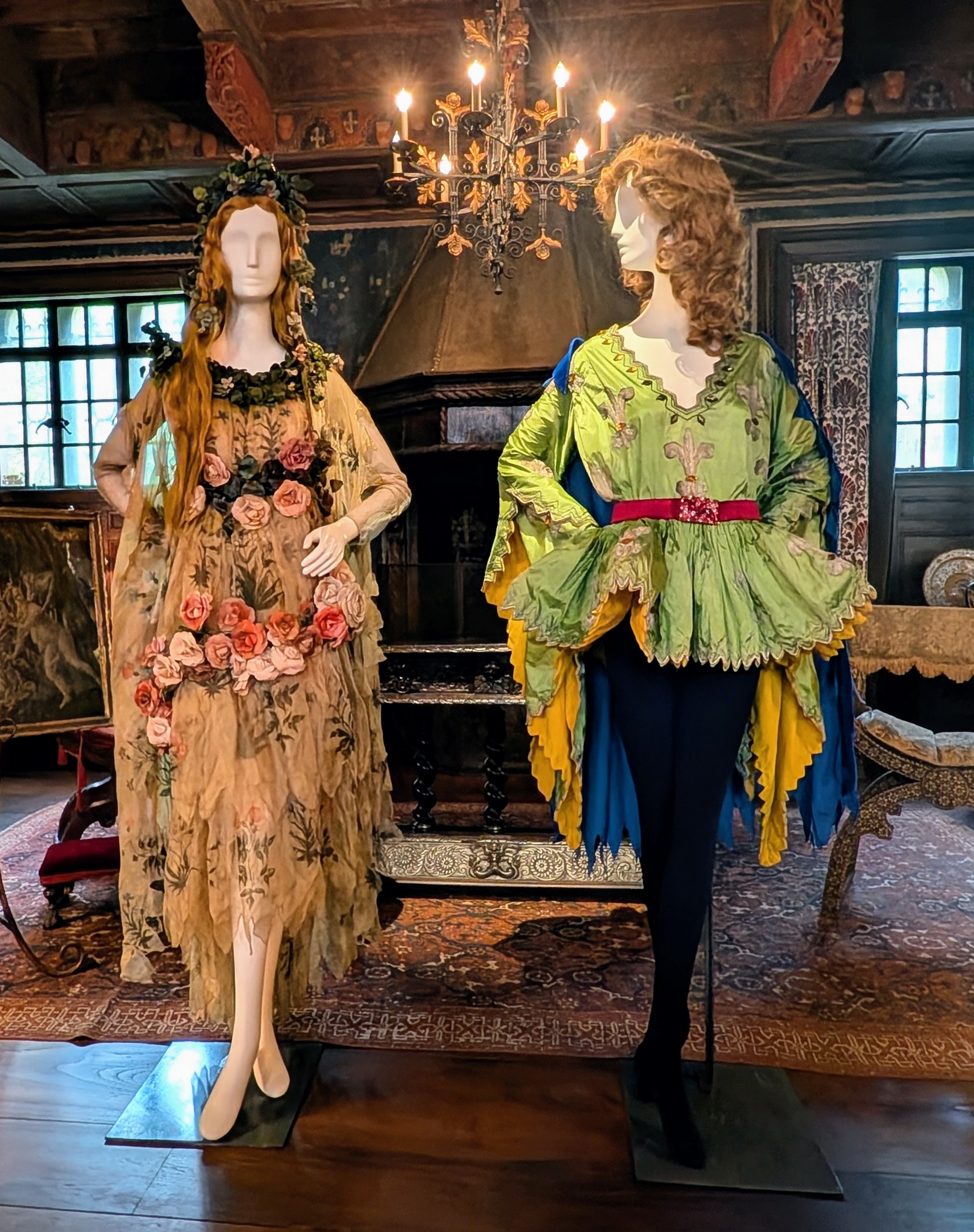
- In the Spanish Alcove, a small space in the Music Room reserved for intimate gatherings and family games, were these costumes. On the left is a hand-painted Flora costume made of silk chiffon, silk organza, silk linen flowers, and metallic thread. It was what Lucie wore to the February 1924 Beaux Arts Ball, a high society fundraiser for the Beaux-Arts Architects. The costume was inspired by the painter Sandro Botticelli’s, Primavera.
-
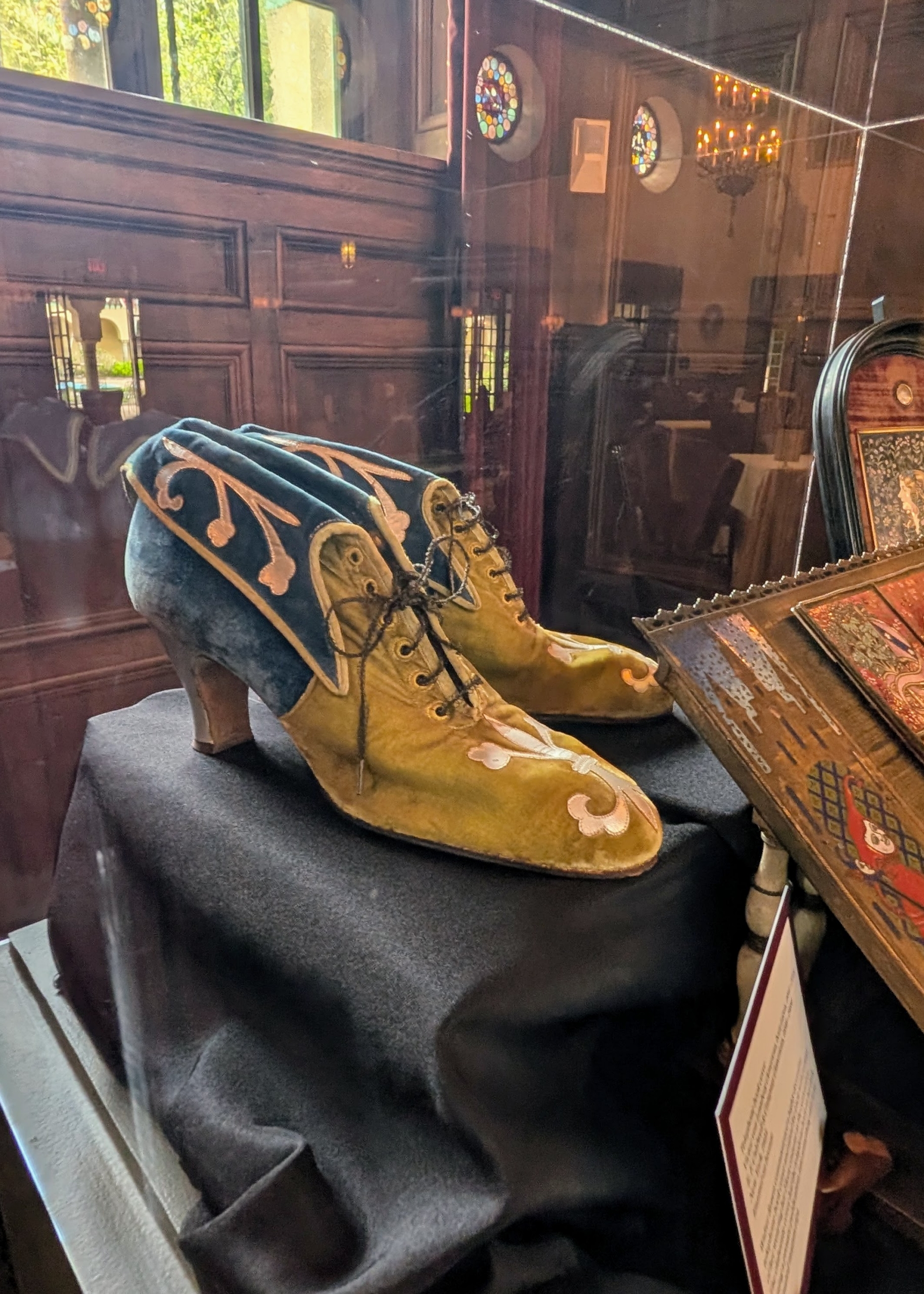
- Also in the Music Room, a pair of Lucie’s shoes. Shoes of this era had elongated silhouettes to emphasize narrow foot shapes. Decorative elements were also used and required snug fits to maintain structure.
-
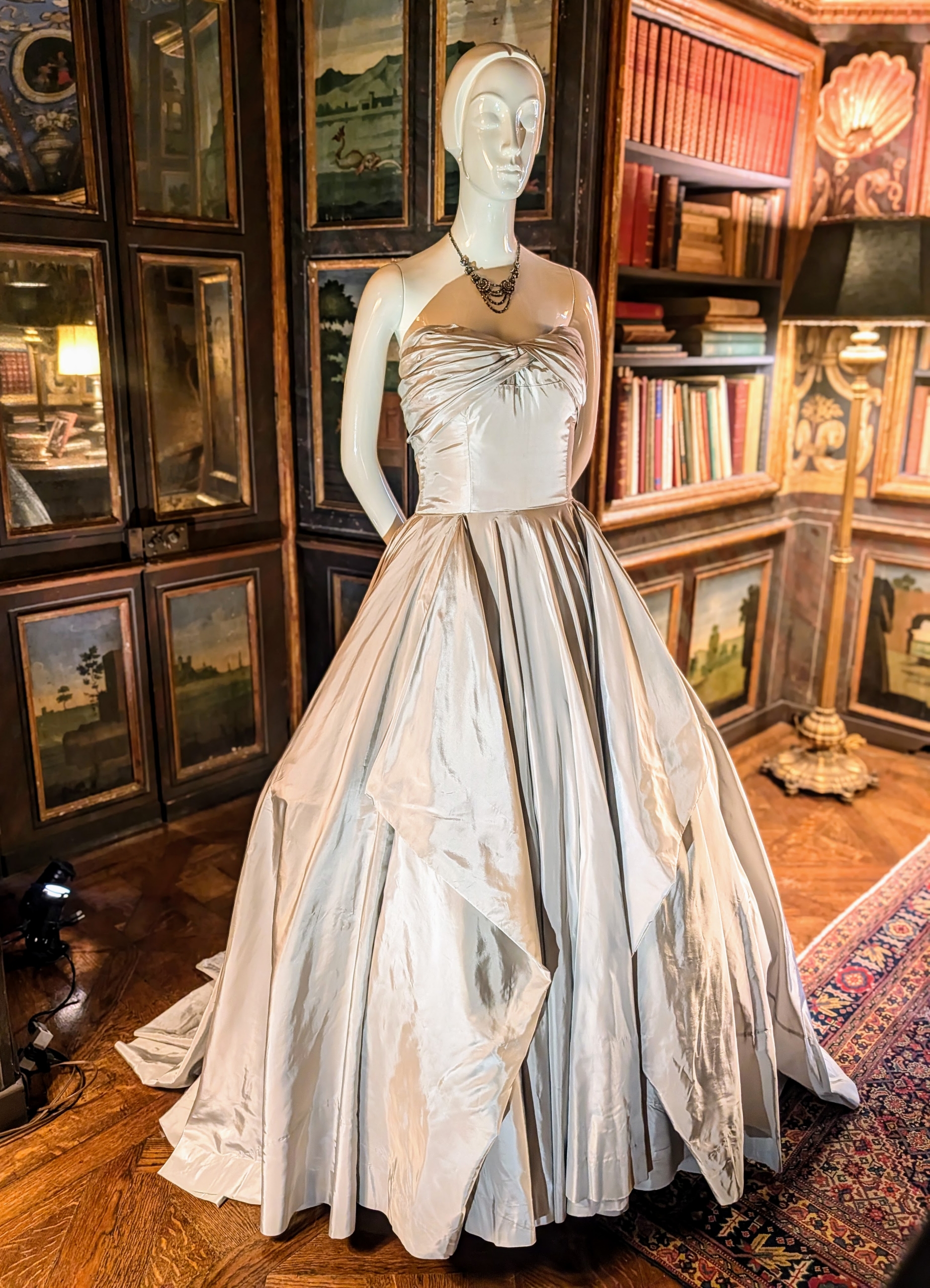
- Full skirts, cinched waists, and shapely bodices were characteristic of evening gowns in the 1950s. This gown shimmers in silvery gray satin.
-
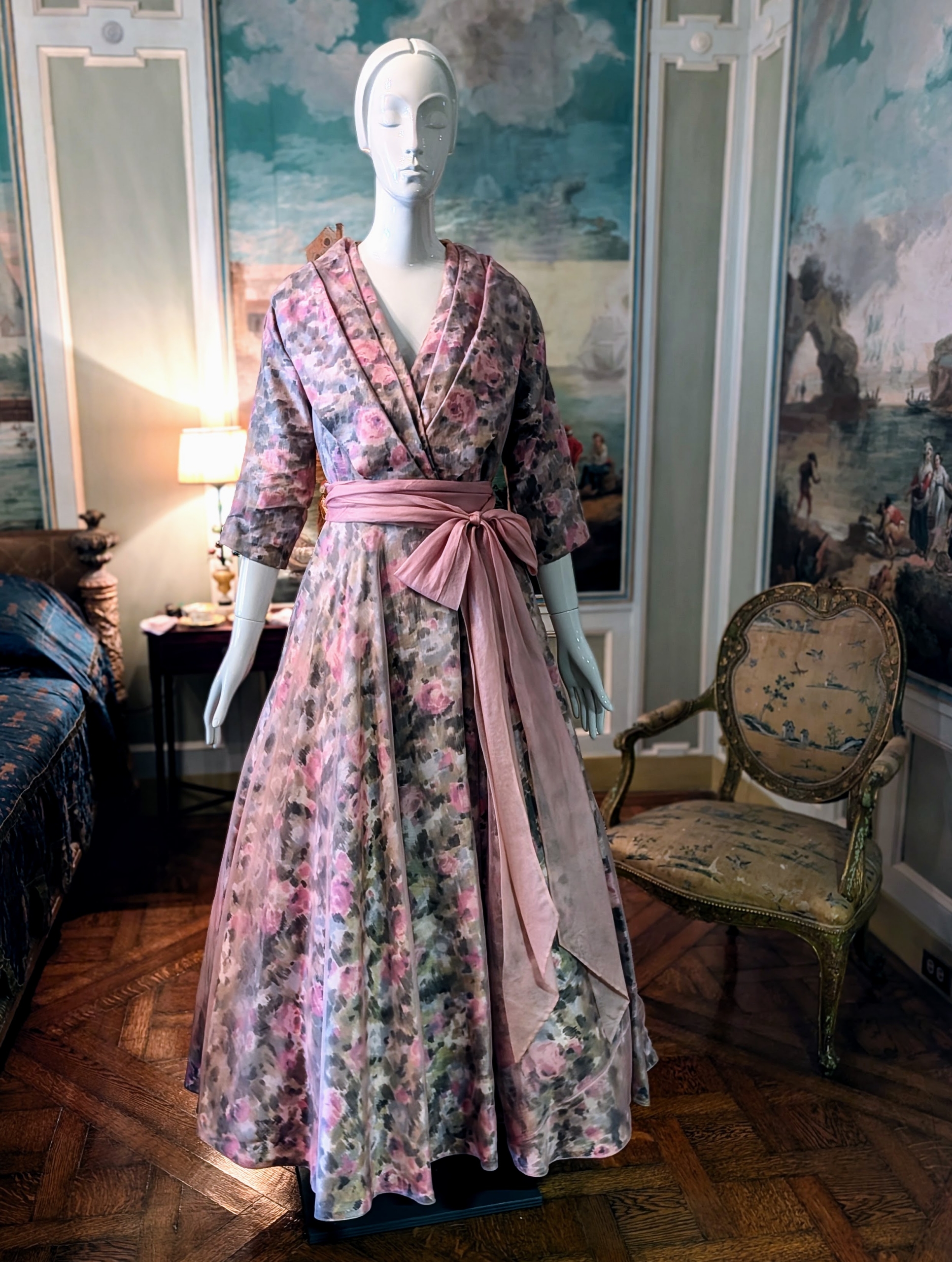
- This is one of several day-dresses on display inspired by Christian Dior’s “New Look” after the war. These dresses included floral prints, long, full skirts and fitted busts.
-
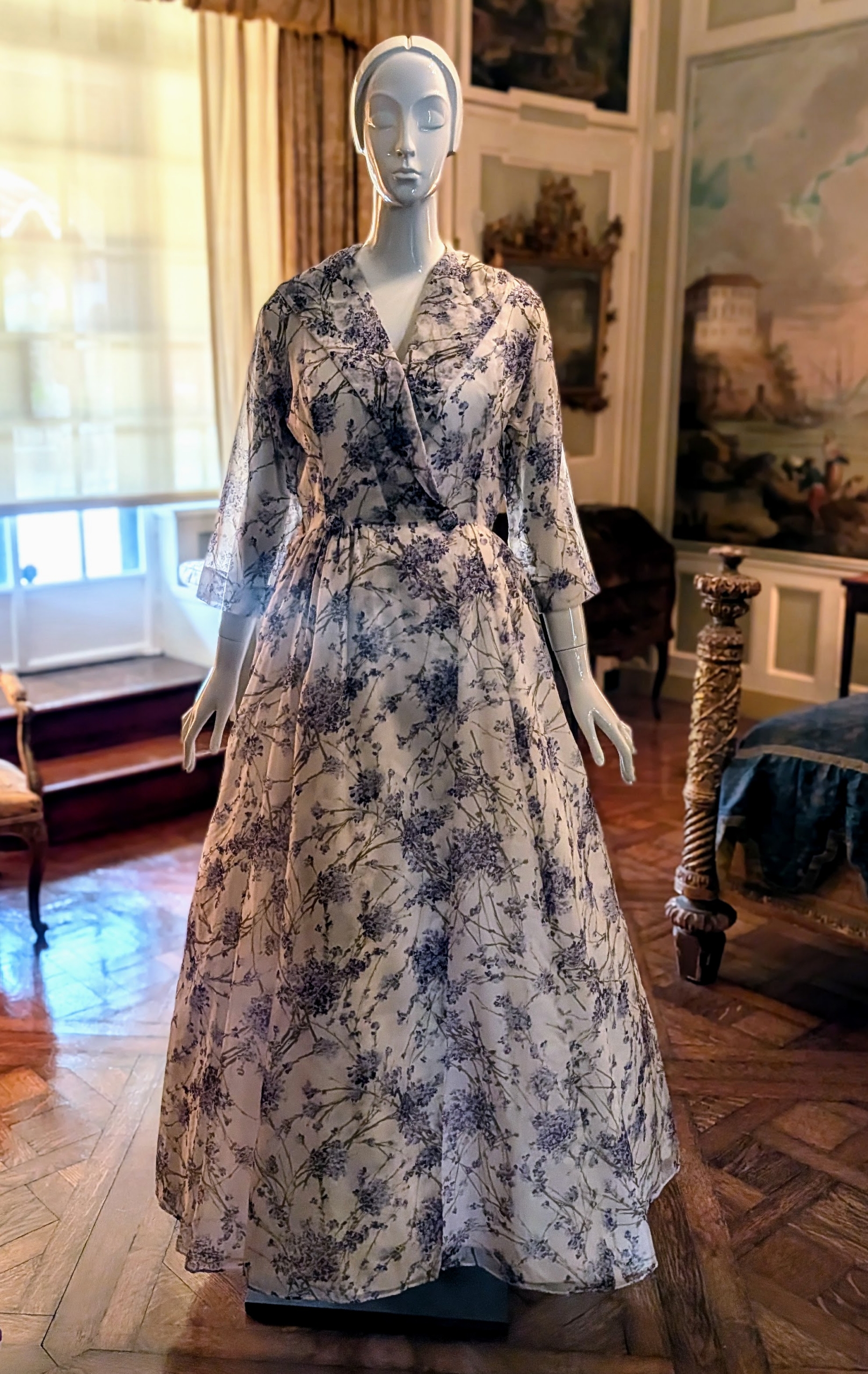
- Here is another example of one of Lucie’s floral day-dresses.
-
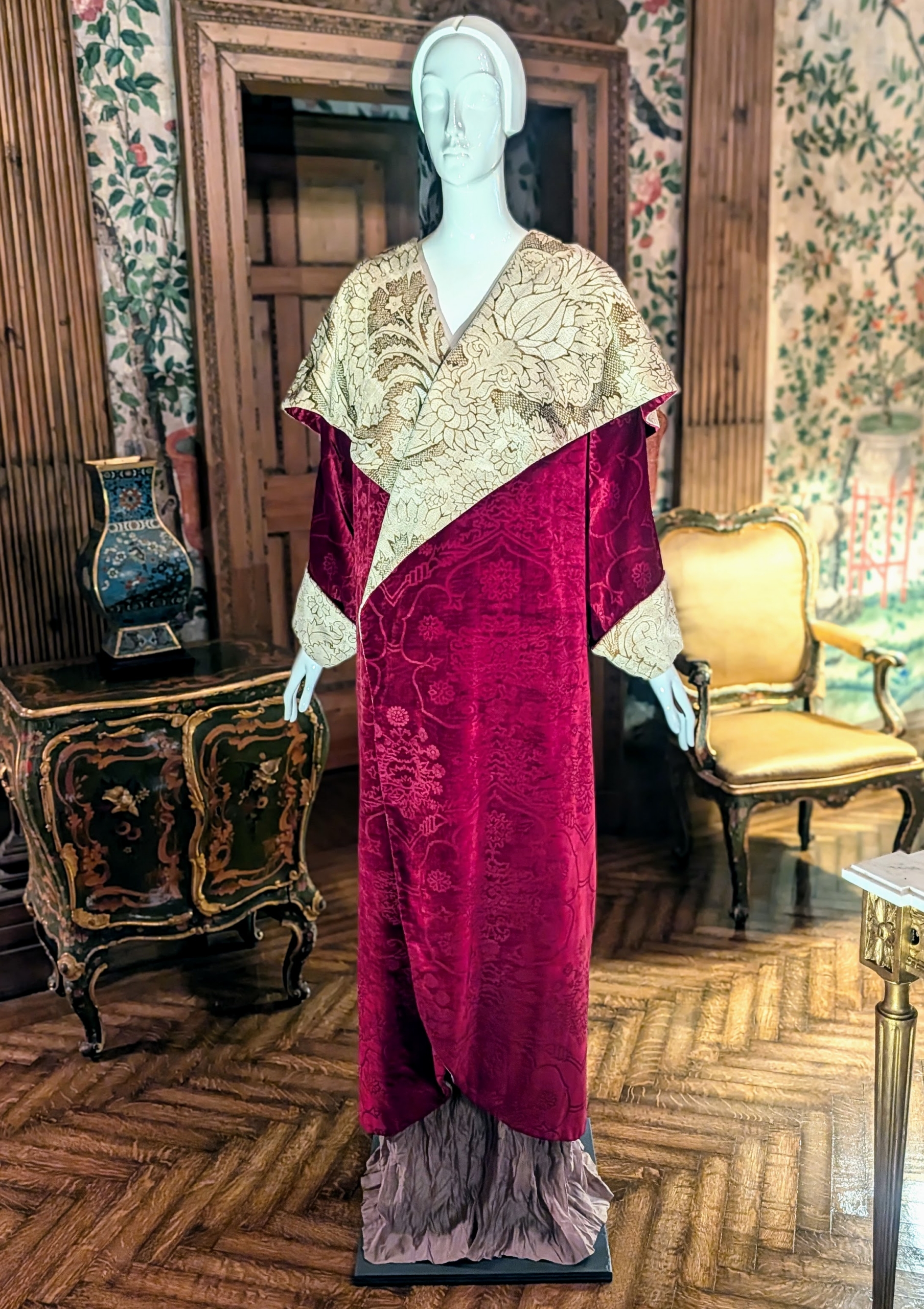
- This wine-colored evening coat features a wide-collar with a pomegranate pattern stamped in gold, a signature pattern of Fortuny.
-
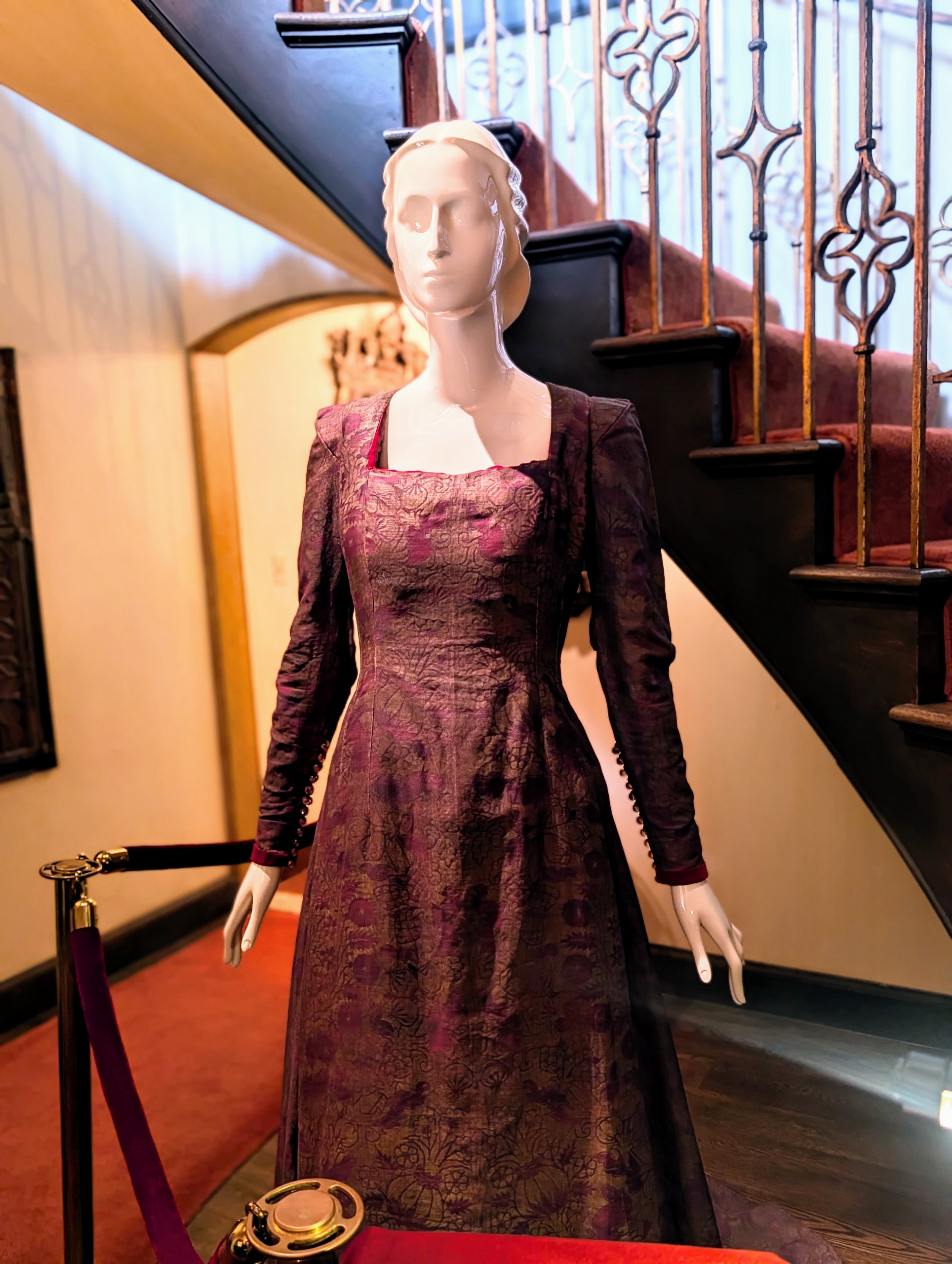
- Lucie was more fond of finding her own fabrics and having them made into dresses than purchasing ready-to-wear garments. The fabric for this gown is made from magenta silk stamped with a silver pigment by Fortuny. The actual dress is said to be made separately with a custom fitted bodice and train.
-
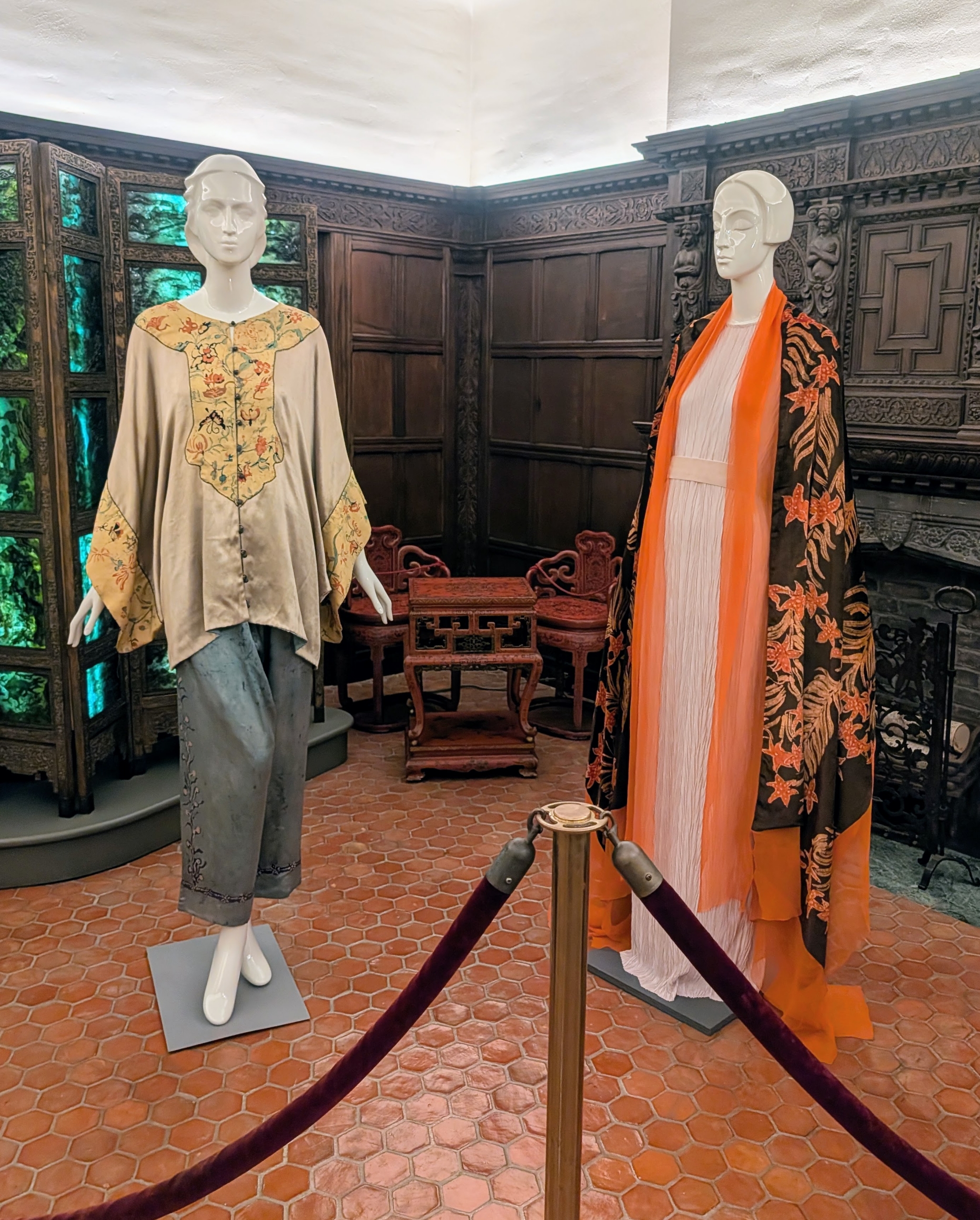
- Displayed here – a two piece ensemble used for lounging and a light tiger-lily patterned shawl, a gift from designer Ethel Wallace.
-
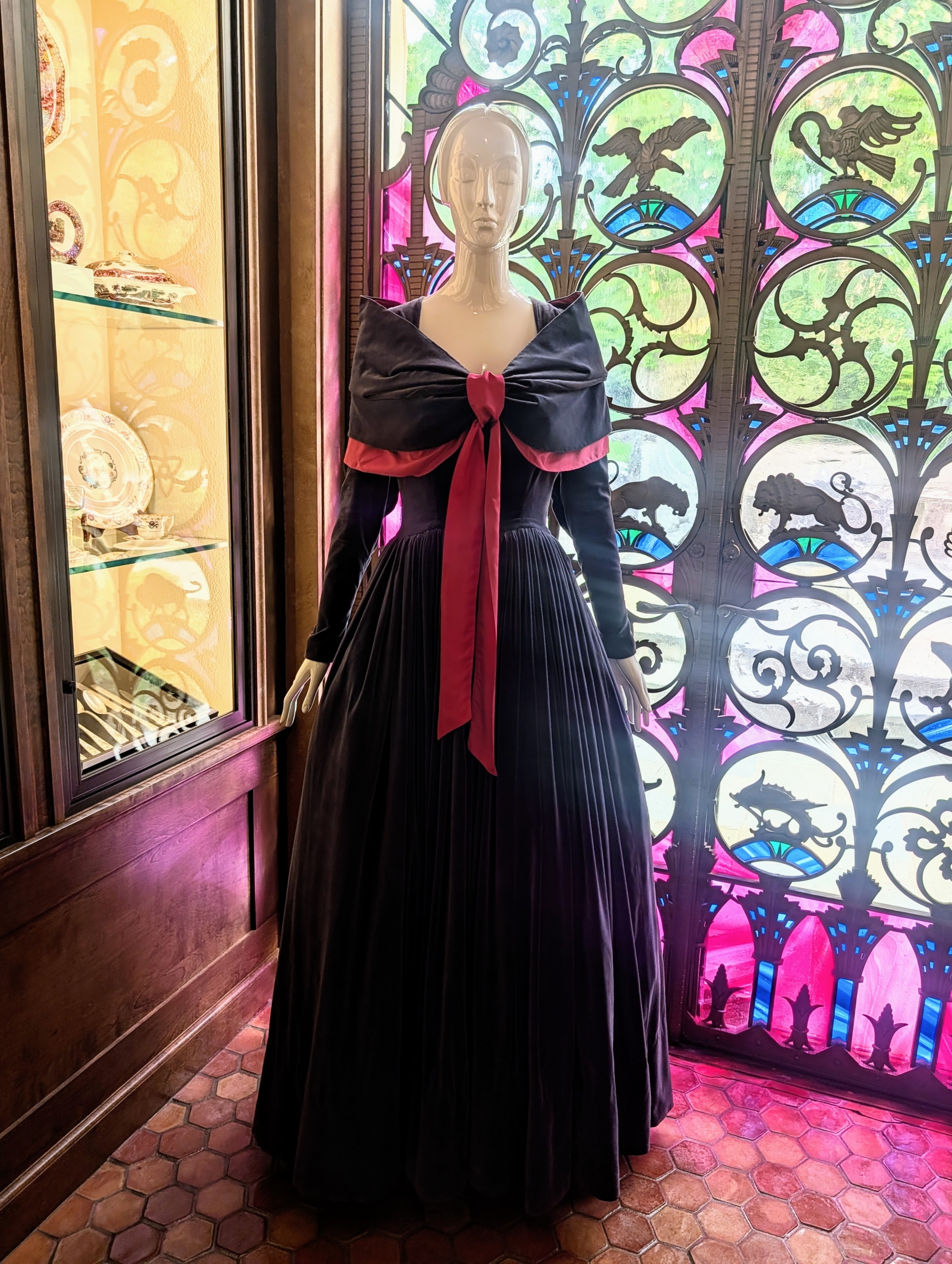
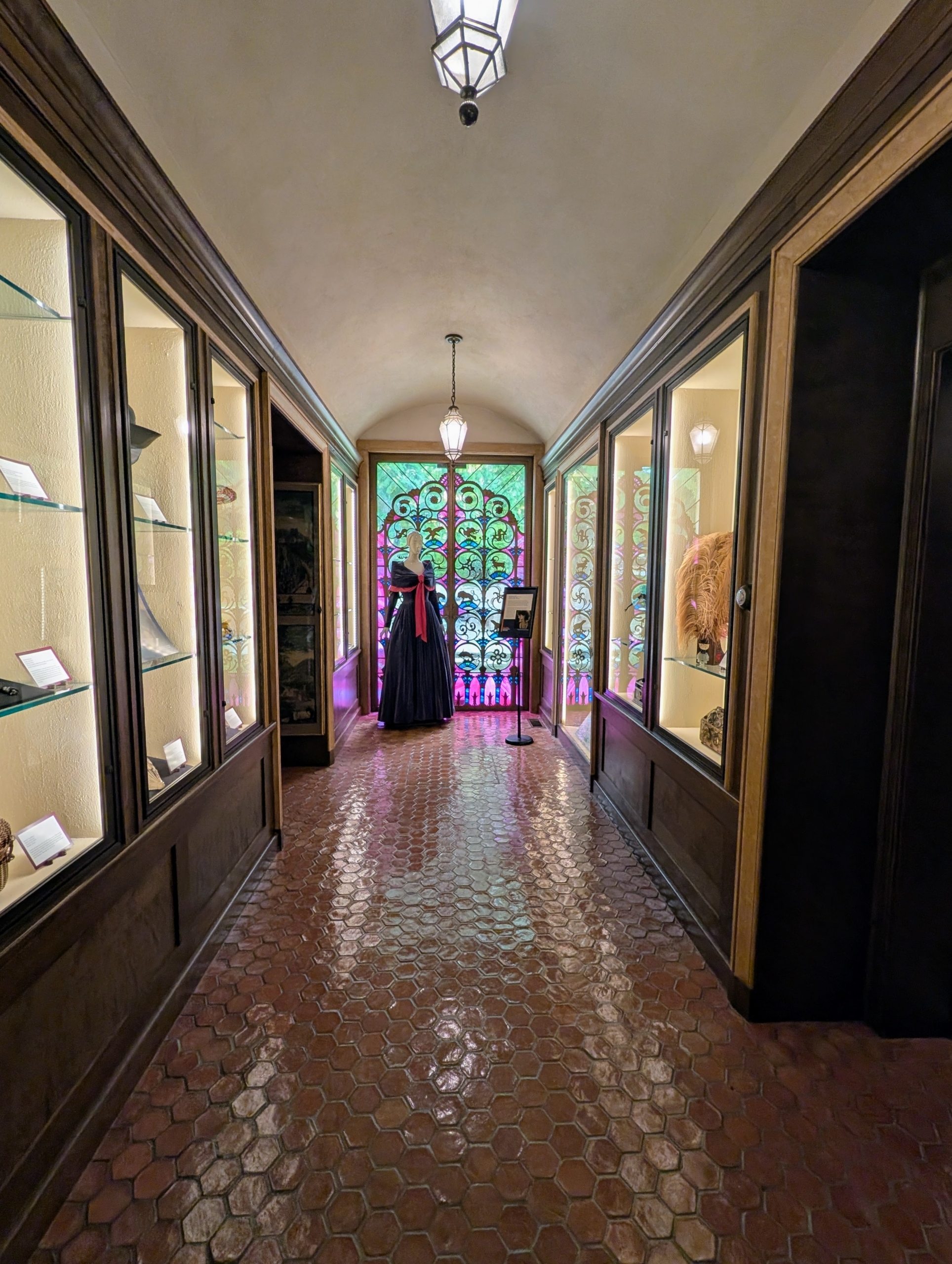
- This dinner dress with matching stole lined in magenta was a favorite silhouette style for Lucie. She wore versions of this in the 1930s and 940s.
-
- The dress is displayed at the end of the Southwest Wing, which was completed in 1974. It includes three period rooms from the Rosens’ New York City townhouse and features many of the items taken from that home.
-
- There is so much to see and learn at The Caramoor Center for Music and the Arts. A visit offers a unique blend of world-class performing arts, historic architecture, natural beauty, and now an inside look into the wardrobe of Lucie Rosen. Caramoor is open all year round. Check out its calendar at caramoor.org or stop in for a pleasant walk through the historic gardens.
 Martha Pins


 Martha Tweets

