

My First Cut of Hay 2026
This year's first cut of hay produced 1296 bales! A great amount for my horses and donkeys to enjoy.
Hay is a harvested plant that’s dried and cured after being cut in the field. In most cases, hay is cut during the late bud or early bloom stage to maximize its nutritional value. When I moved here, I designated three separate areas as hayfields, so I could grow lots and lots of delicious, nutritious hay. Last week, my outdoor grounds crew worked hard to cut, fluff, rake, and then bale the hay in all three areas.
Enjoy these photos.
-

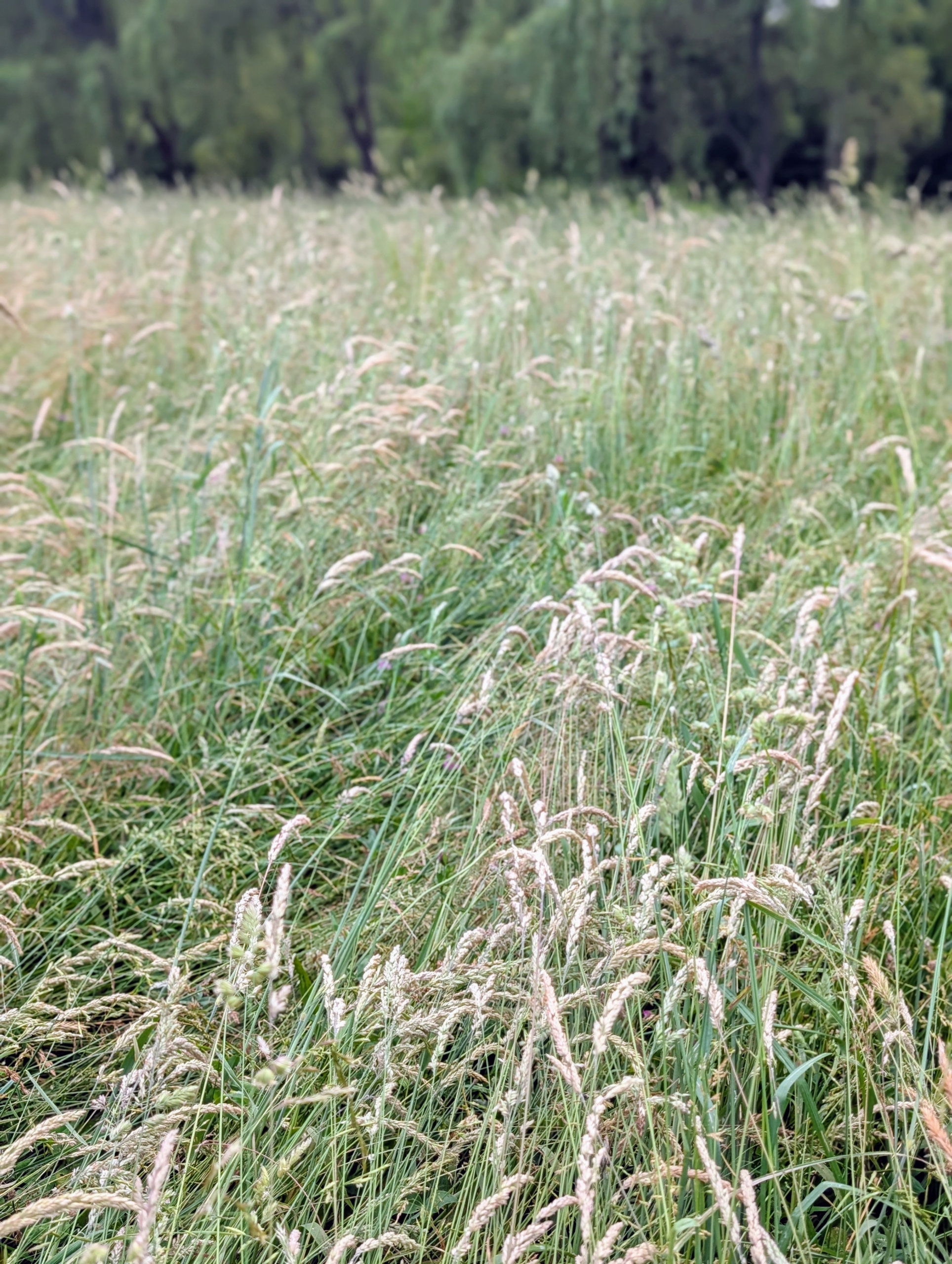
- Here is one of my hay fields ready for the season’s first cut. My hay is a mixture of timothy, orchard grass, Kentucky bluegrass, ryegrass, and clovers – all great for my horses and donkeys.
-
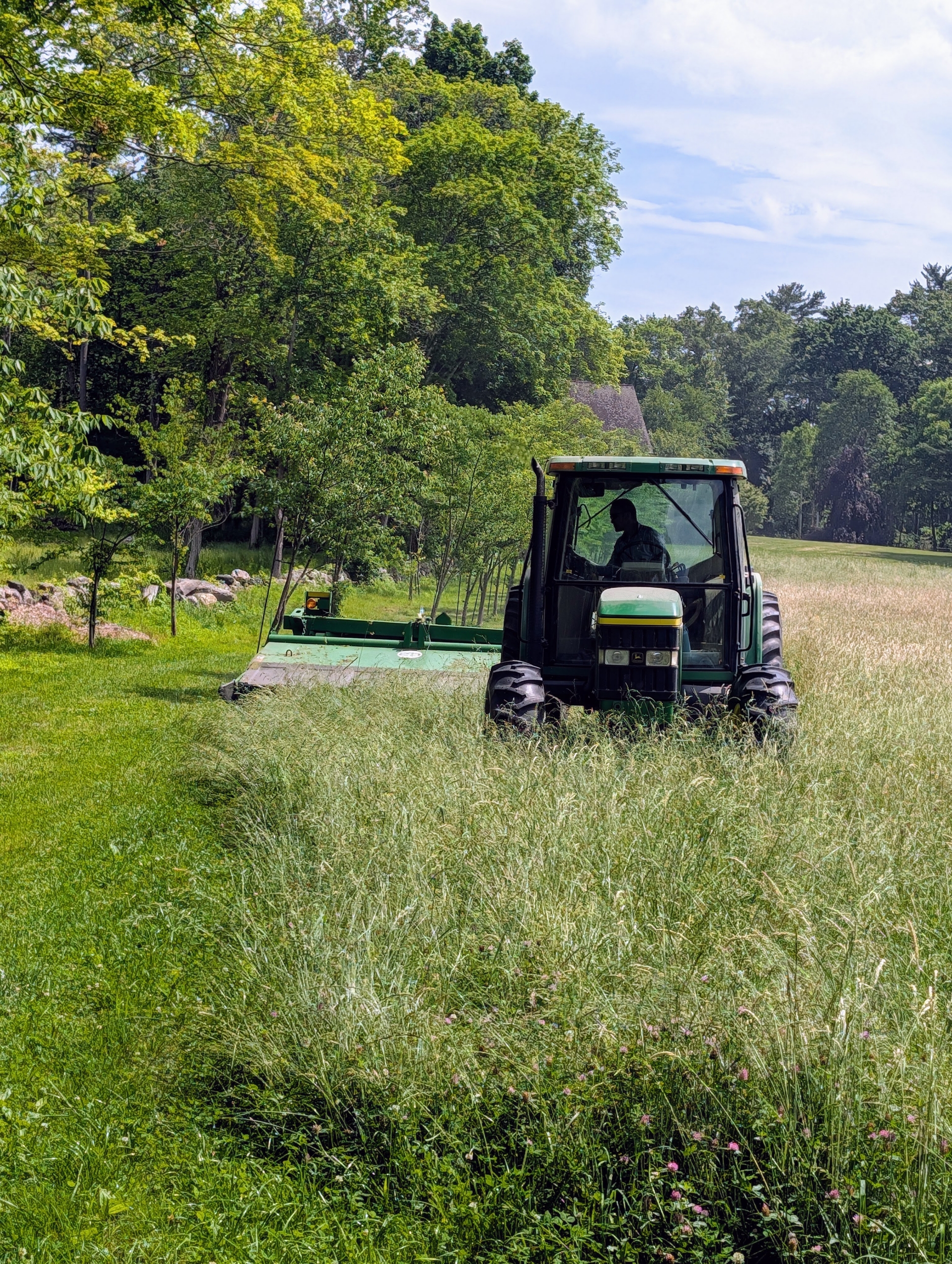
- Mower-conditioners are a staple of large-scale haymaking. Attached to one side of the tractor, it cuts, crimps, and crushes the hay to promote faster and more even drying. It is the first step in the hay baling process.
-
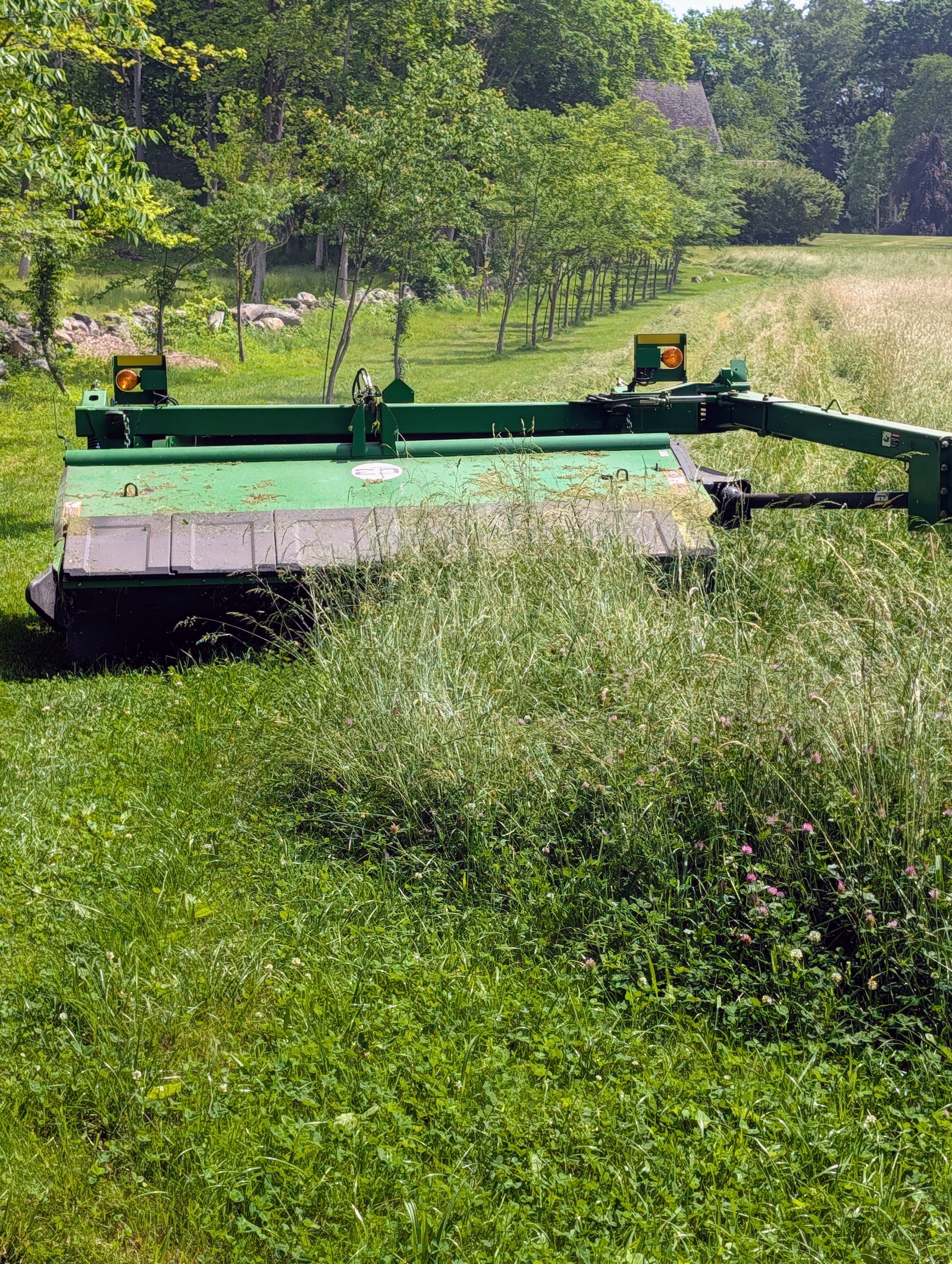
- Here it is from the front. This equipment also works to remove the waxy coat on the crop as it conditions, making the hay dry faster – this means less waiting time and less chance for poor weather to negatively impact the hay quality.
-
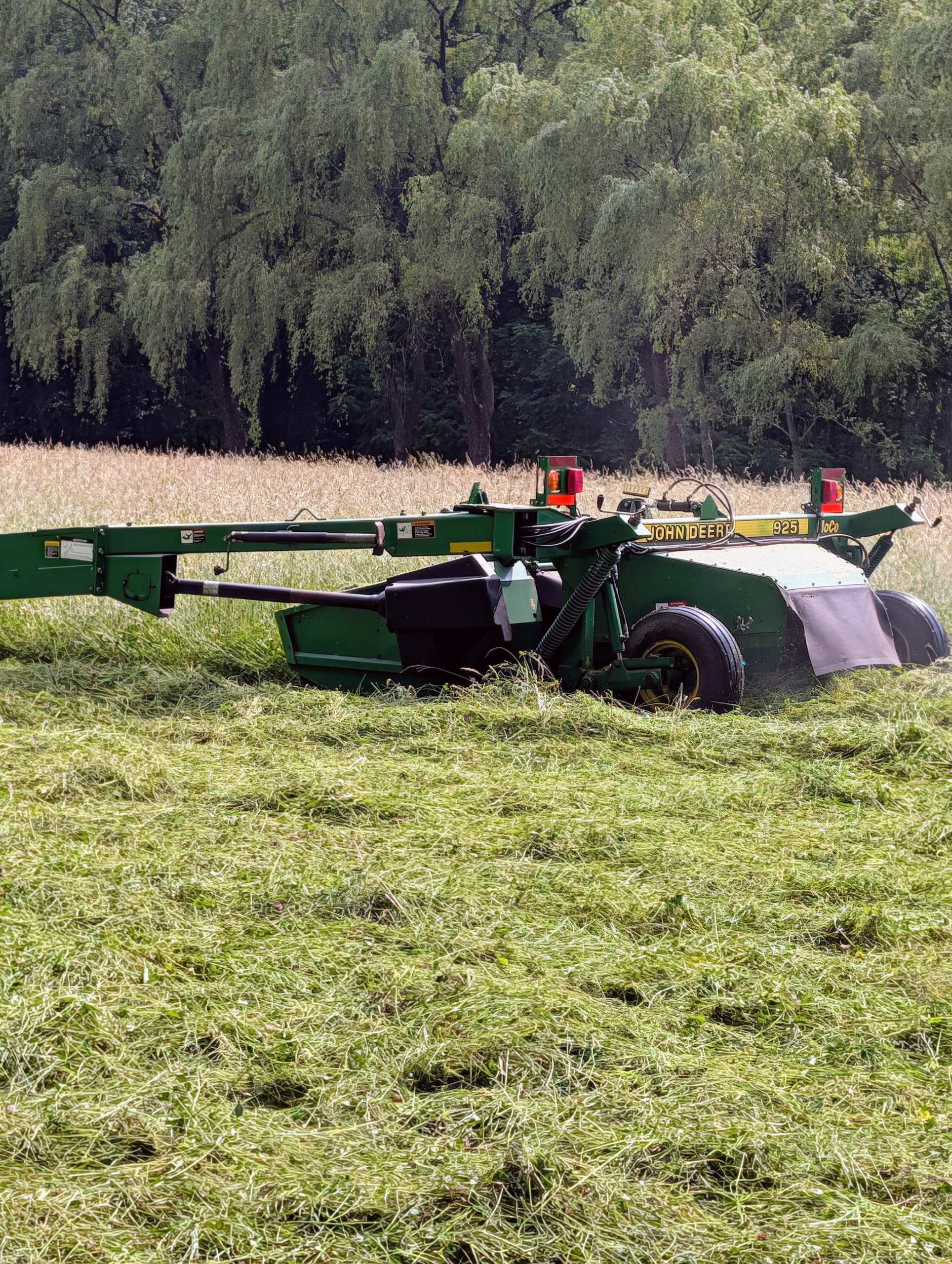
- When weather conditions are ideal, these machines allow farmers to cut wide and fast – the best formula for quality field productivity. As the mower-conditioner goes over the grass, it cuts it and then conditions it – all under the protective hood of the machine.
-
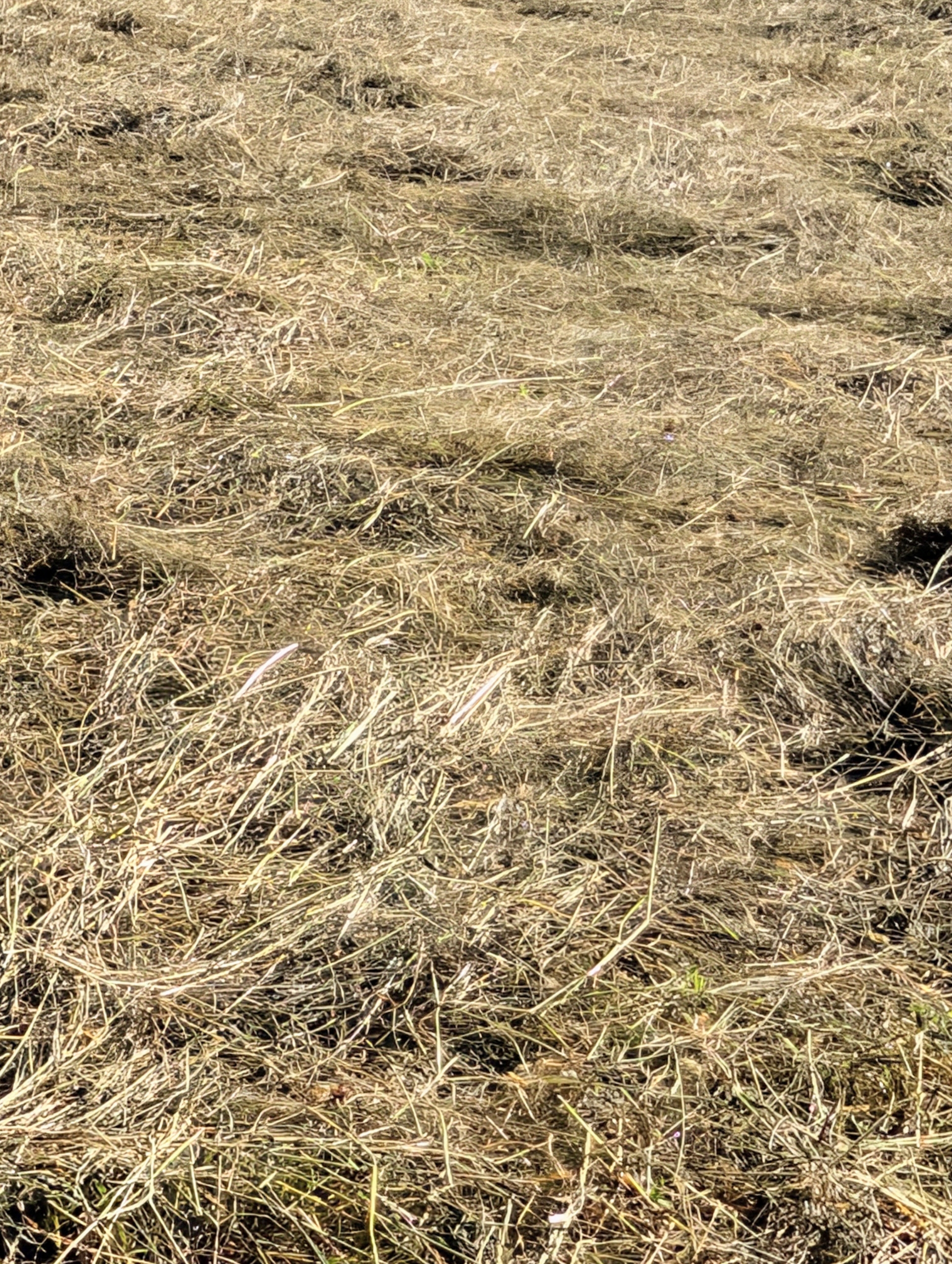
- Here is a section of hay cut. The best time is to start as soon as dew is off in the morning, which will maximize drying time. After it is cut, it is left to dry for several hours.
-
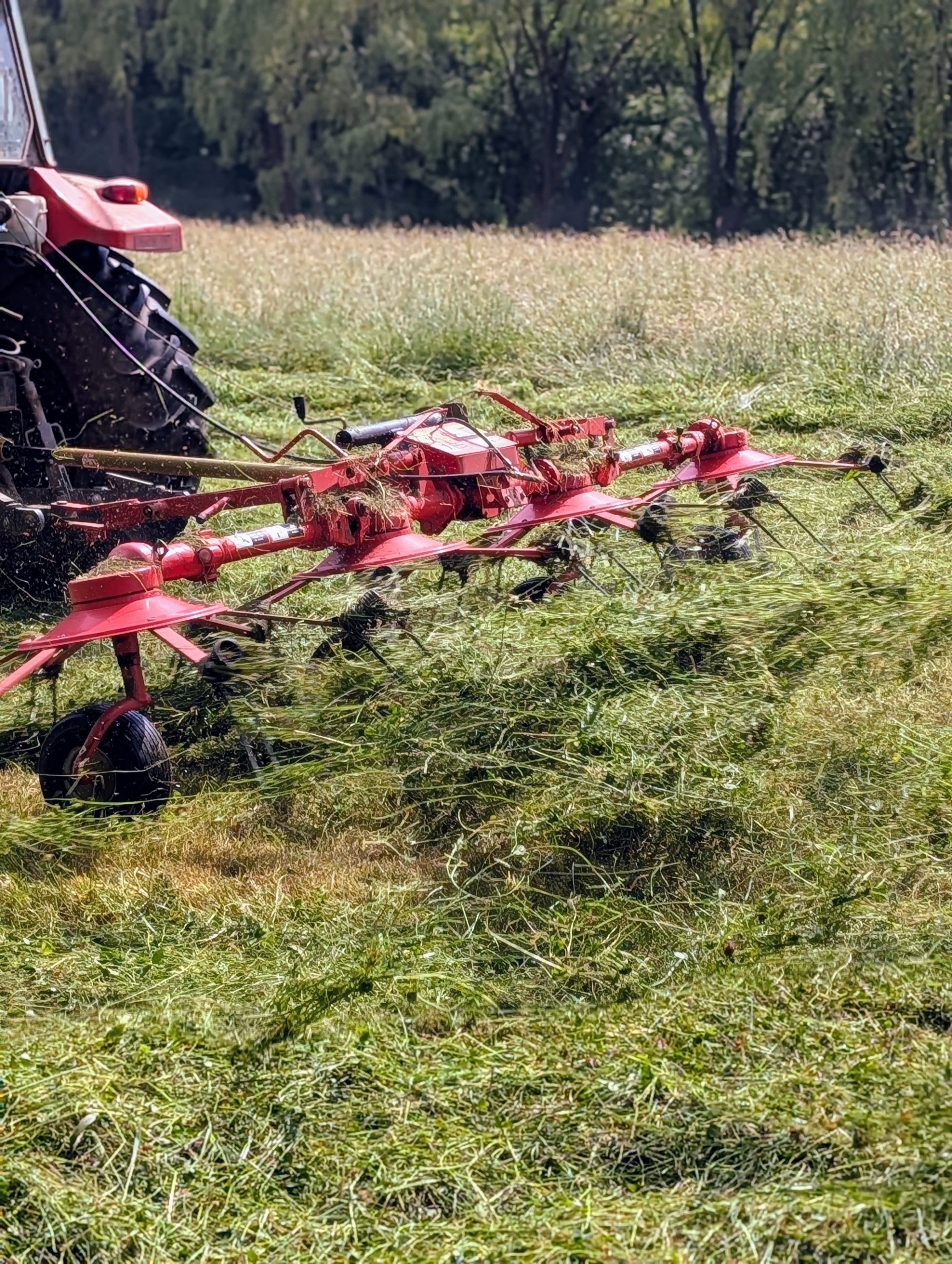
- Next, the cut hay is ready for tedding, also known as fluffing. This is our hay tedder. A tedder spreads and fluffs the hay in a uniform swath. It uses a rotary motion to grab the hay with spinning tines and then cast it out the back of the machine.
-
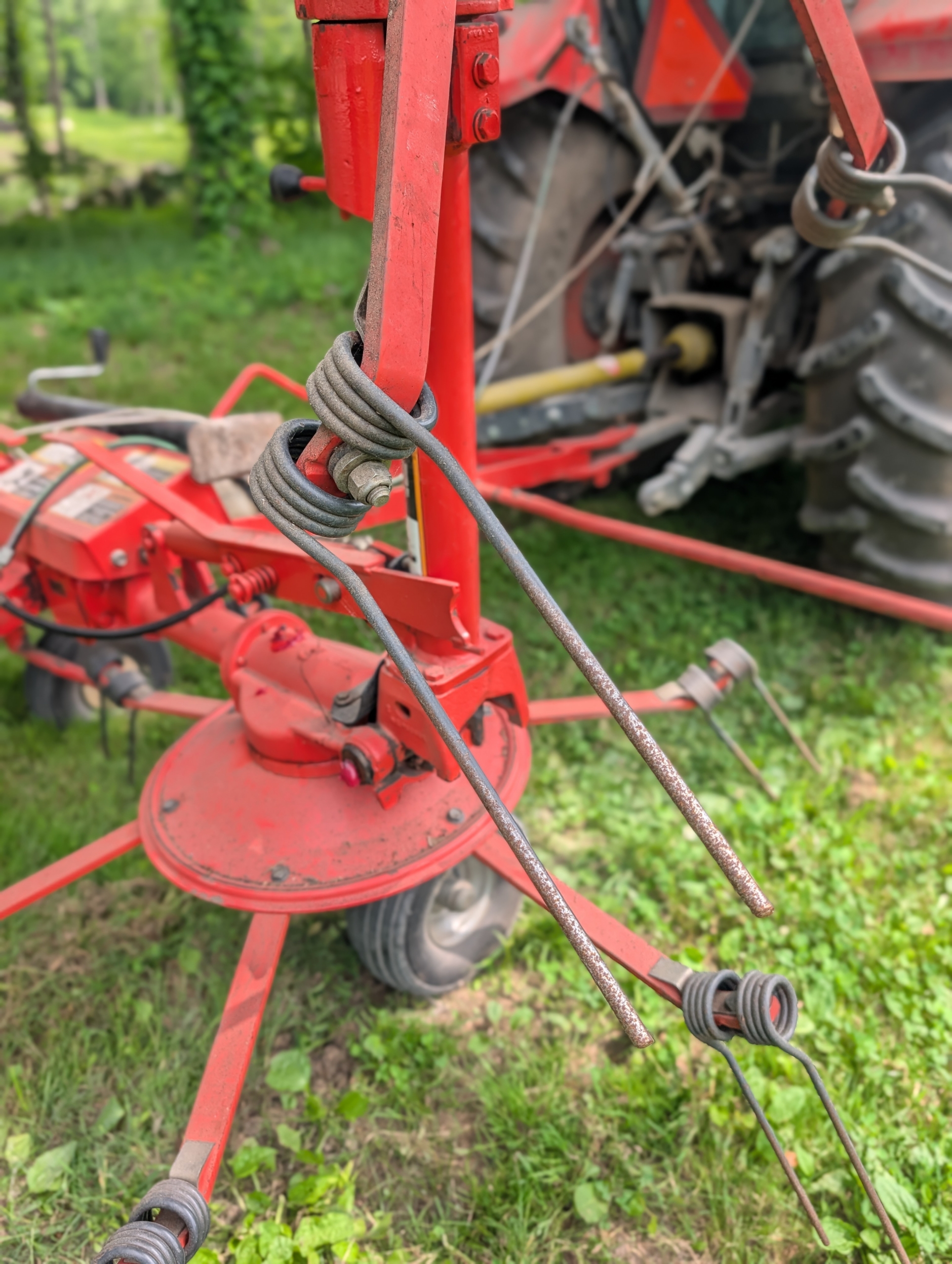
- Here’s a look at the long metal tines when not moving.
-
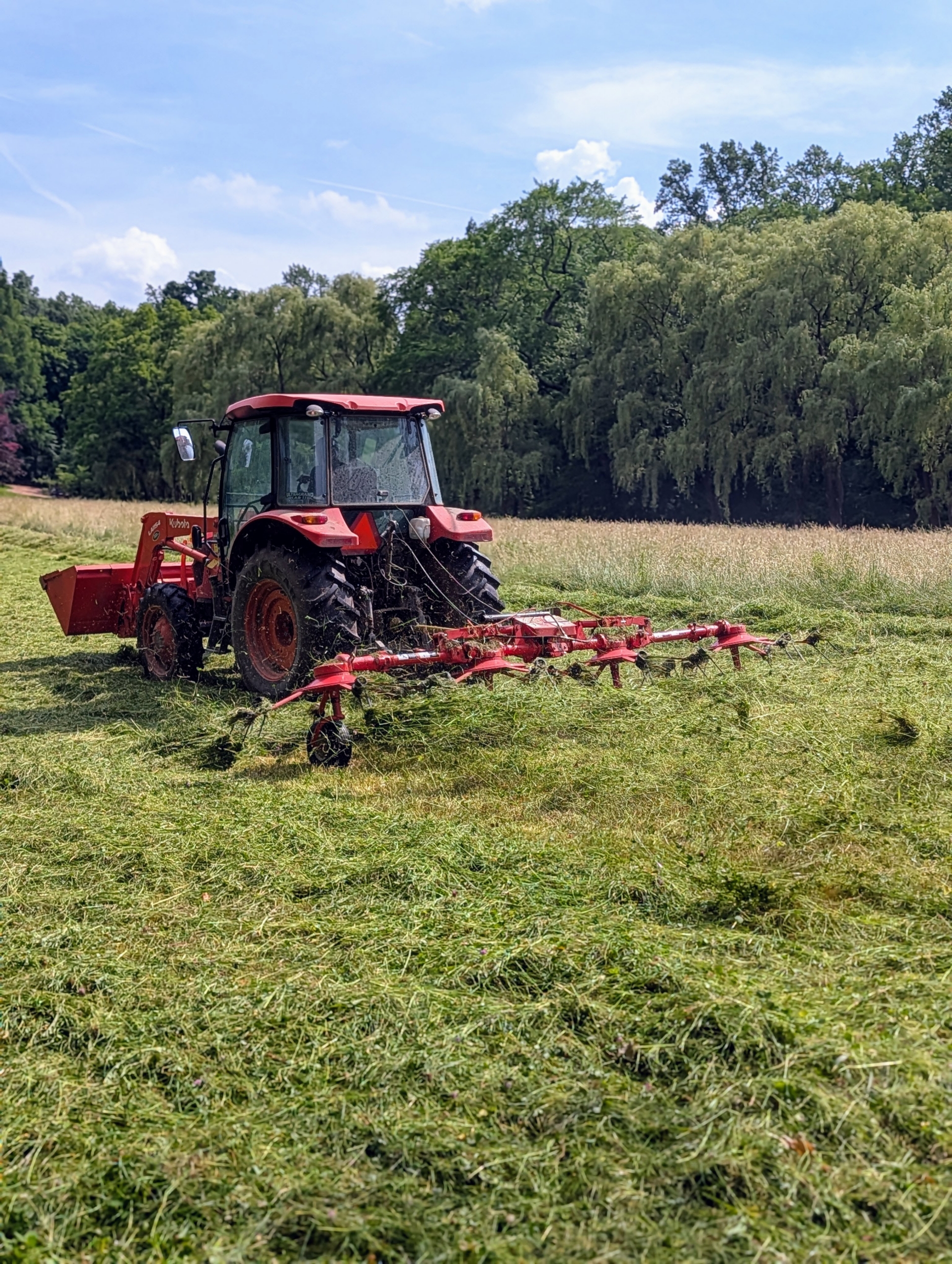
- The tedder moves up and down the field taking all the greener hay from the bottom and turning it over to dry. The hay turn colors from green to tan. On average, it takes about three days per field, depending on the size of the field and the weather, to complete the entire process of mowing, raking, and baling hay.
-
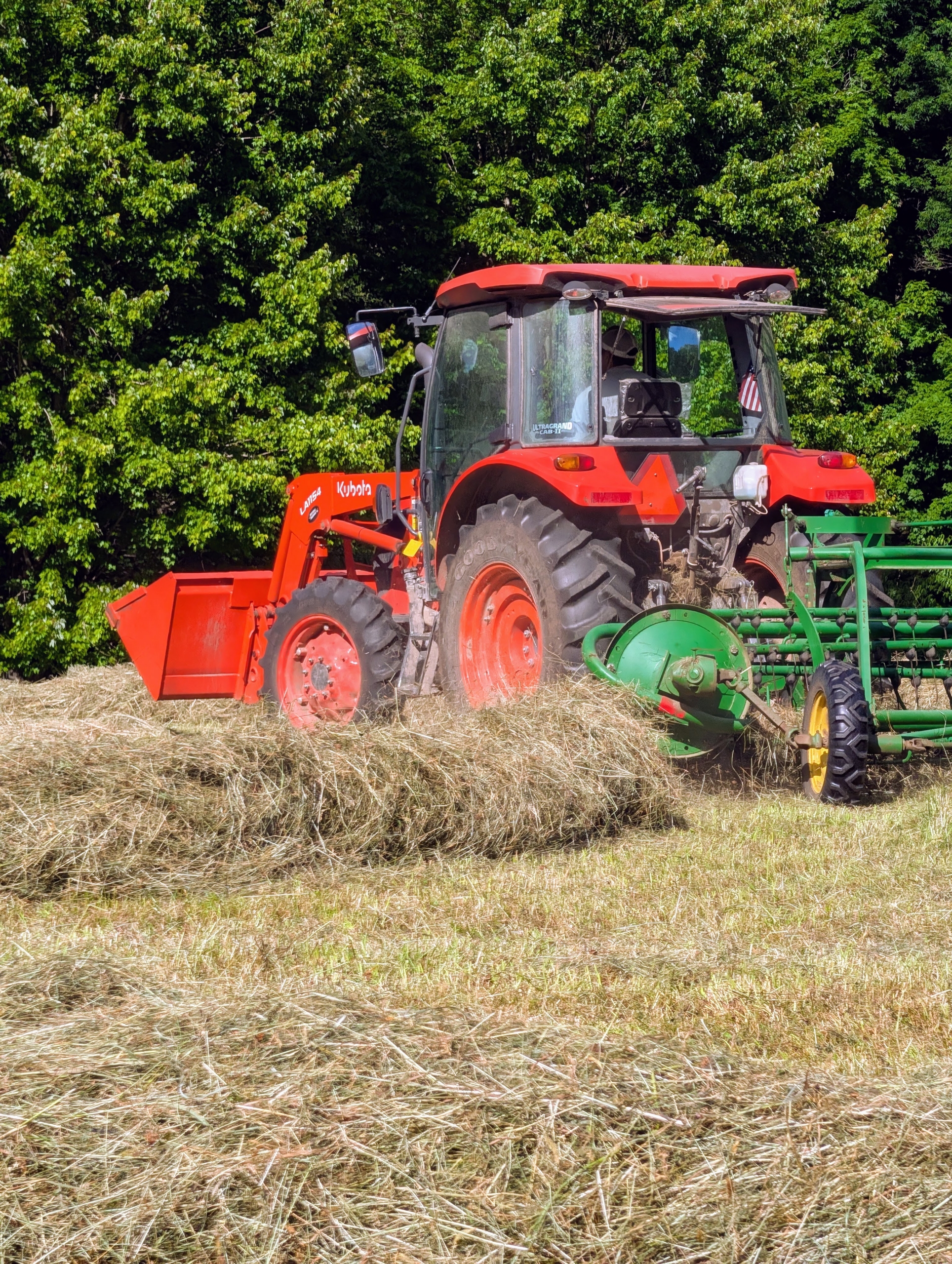
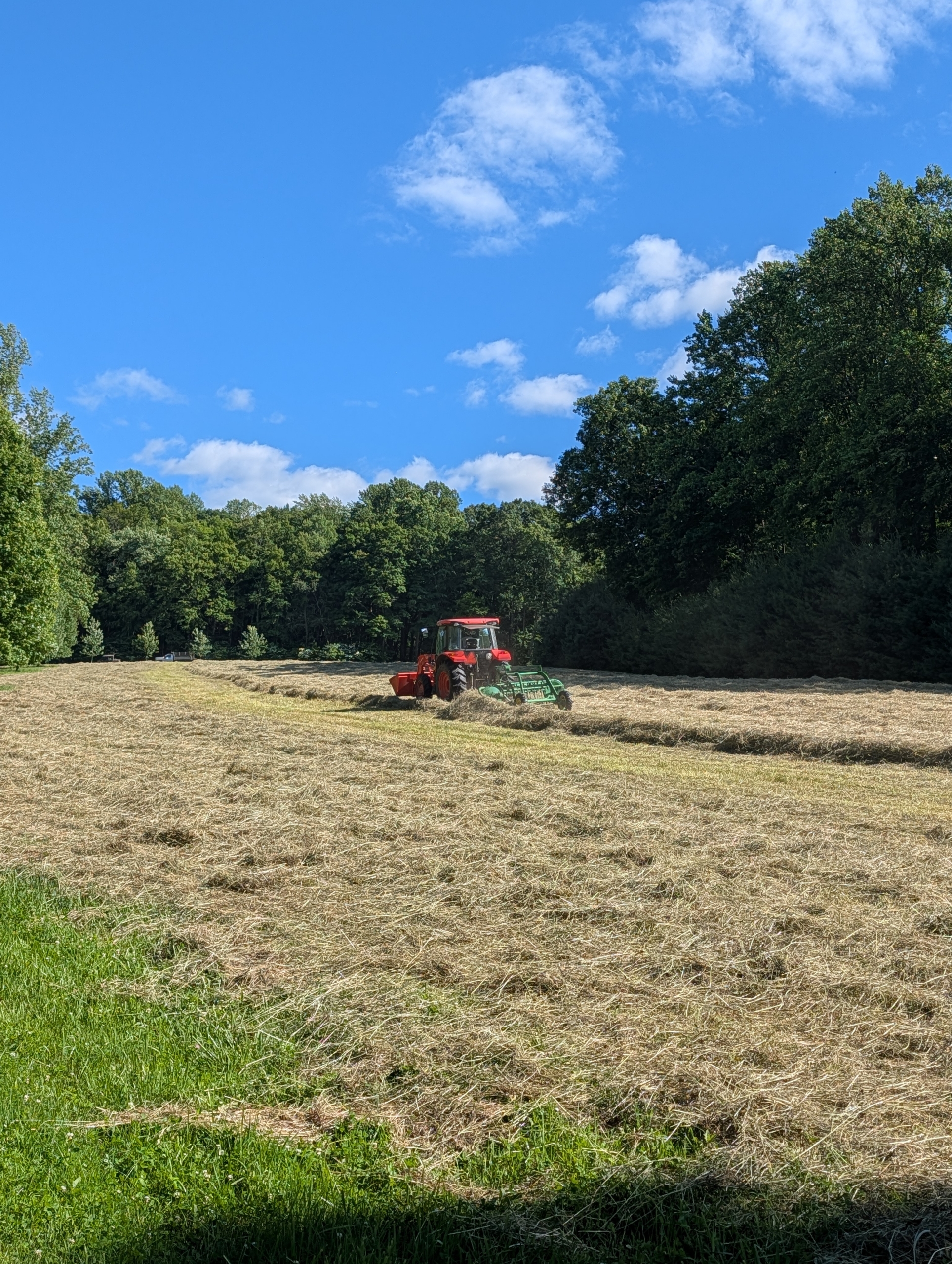
- Then it is time to make the windrows, which are rows of hay raked up and shaped before being baled. The bar rake is pulled behind a tractor to make windrows from the tedded hay. The bar rake, also known as a basket rake is hydraulically driven. This rake allows for consistent movement across the fields making well-shaped windrows.
-
- I am fortunate to have all this equipment. With a stretch of good weather, the entire process takes less than a week.
-
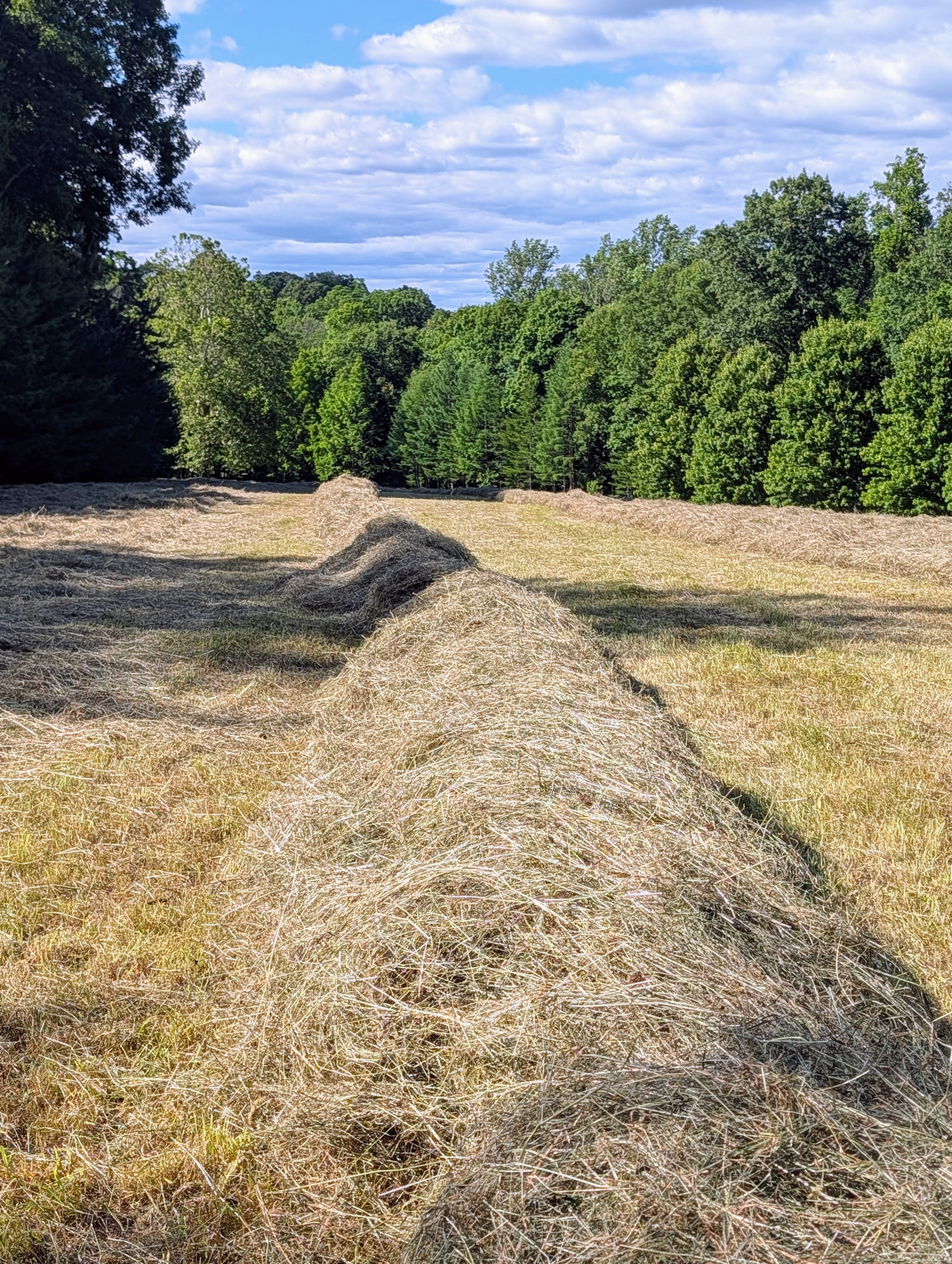
- Here is a windrow ready to bale. All the windrows are lined up straight next to each other with enough room in between for the baler to maneuver properly around the field.
-
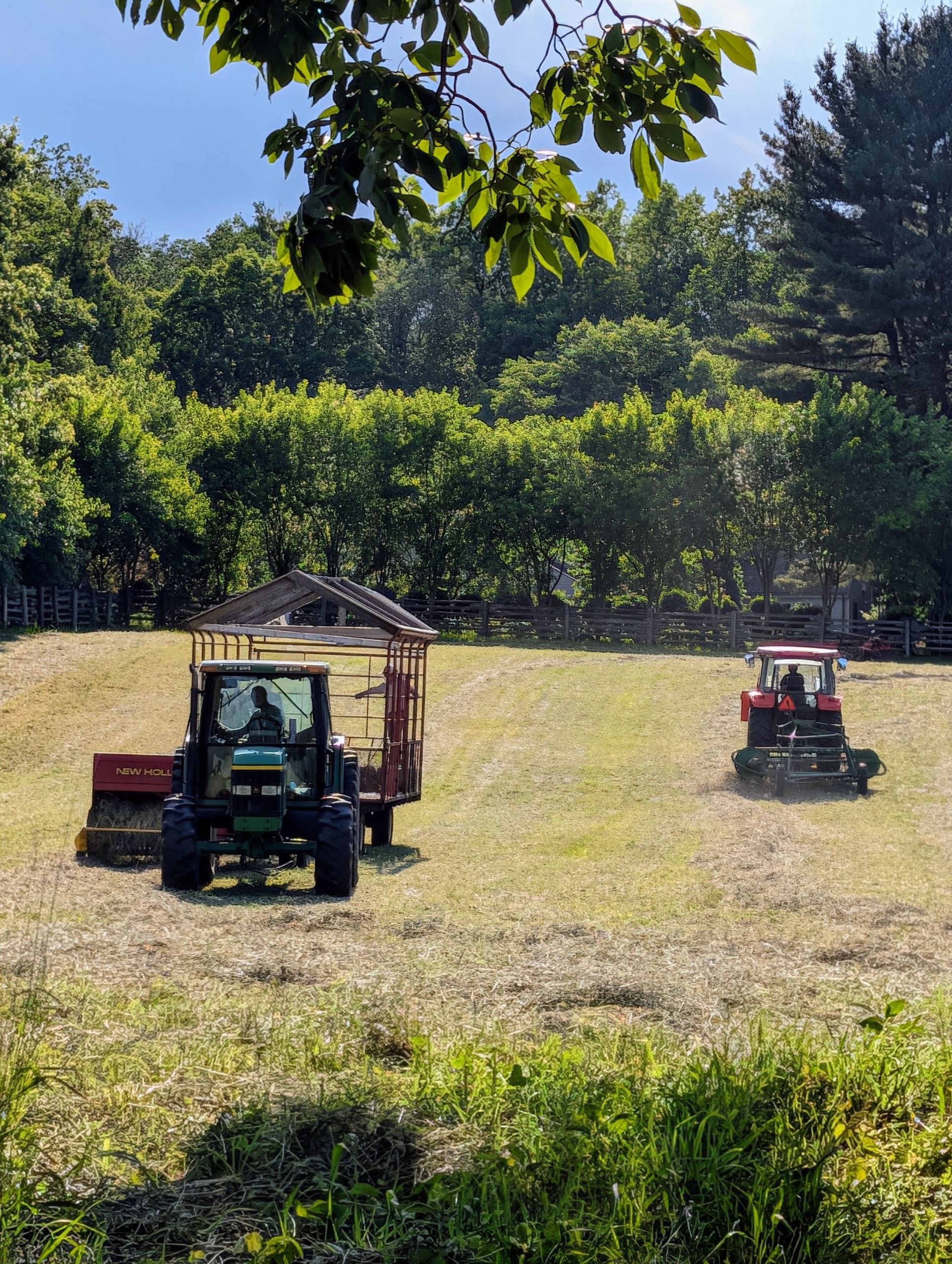
- It’s an efficient process. As one creates the windrows, another bales.
-
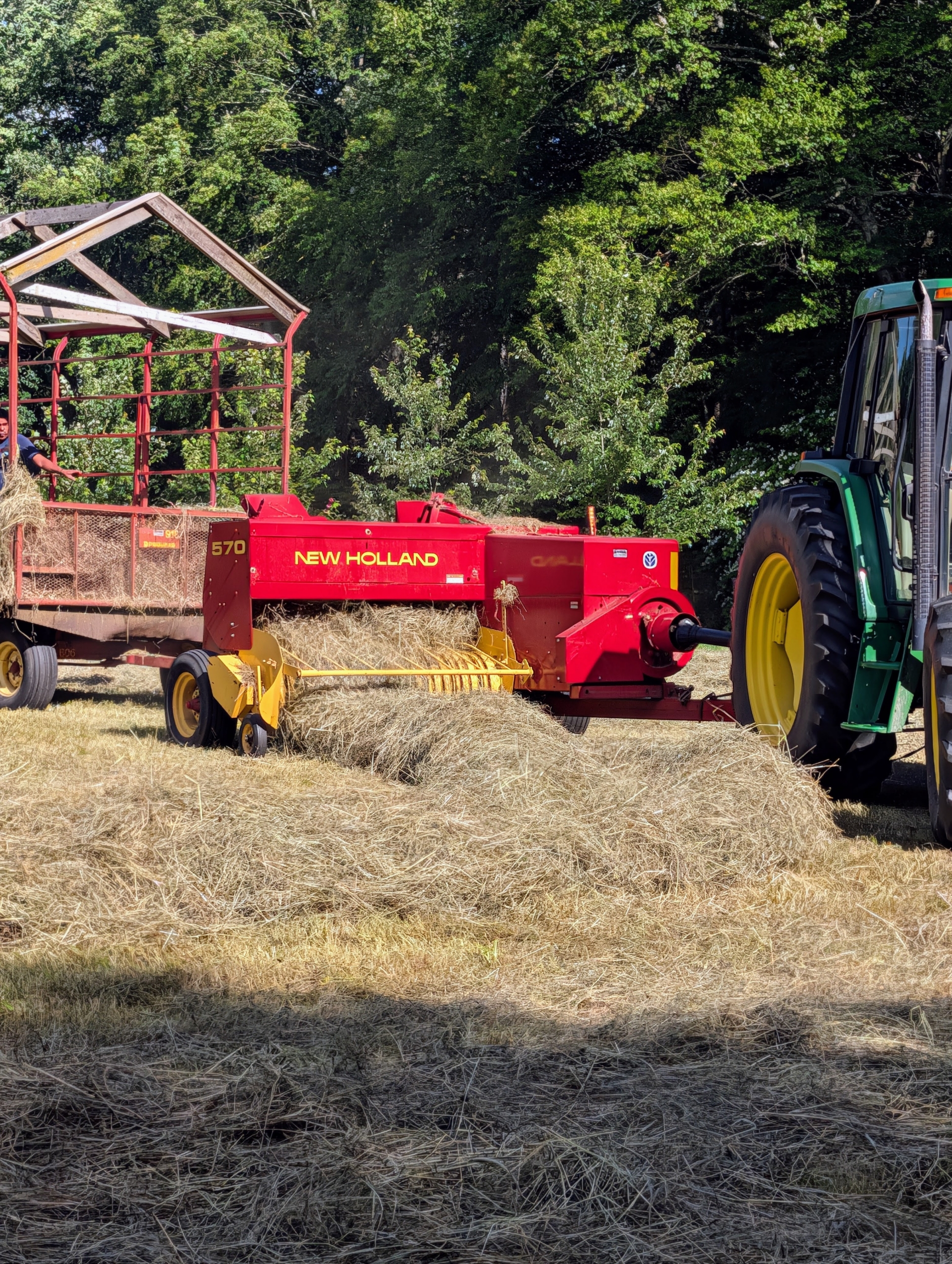
- A hay baler is a piece of farm machinery used to compress a cut and raked crop into compact bales that are easy to handle, transport, and store. The tractor rides to one side of the windrow while the baler passes directly over it to collect the hay. All the hay is dry and passing through the machine smoothly. If the hay is properly dried, the baler will work continuously down each row. Hay that is too damp tends to clog up the baler.
-
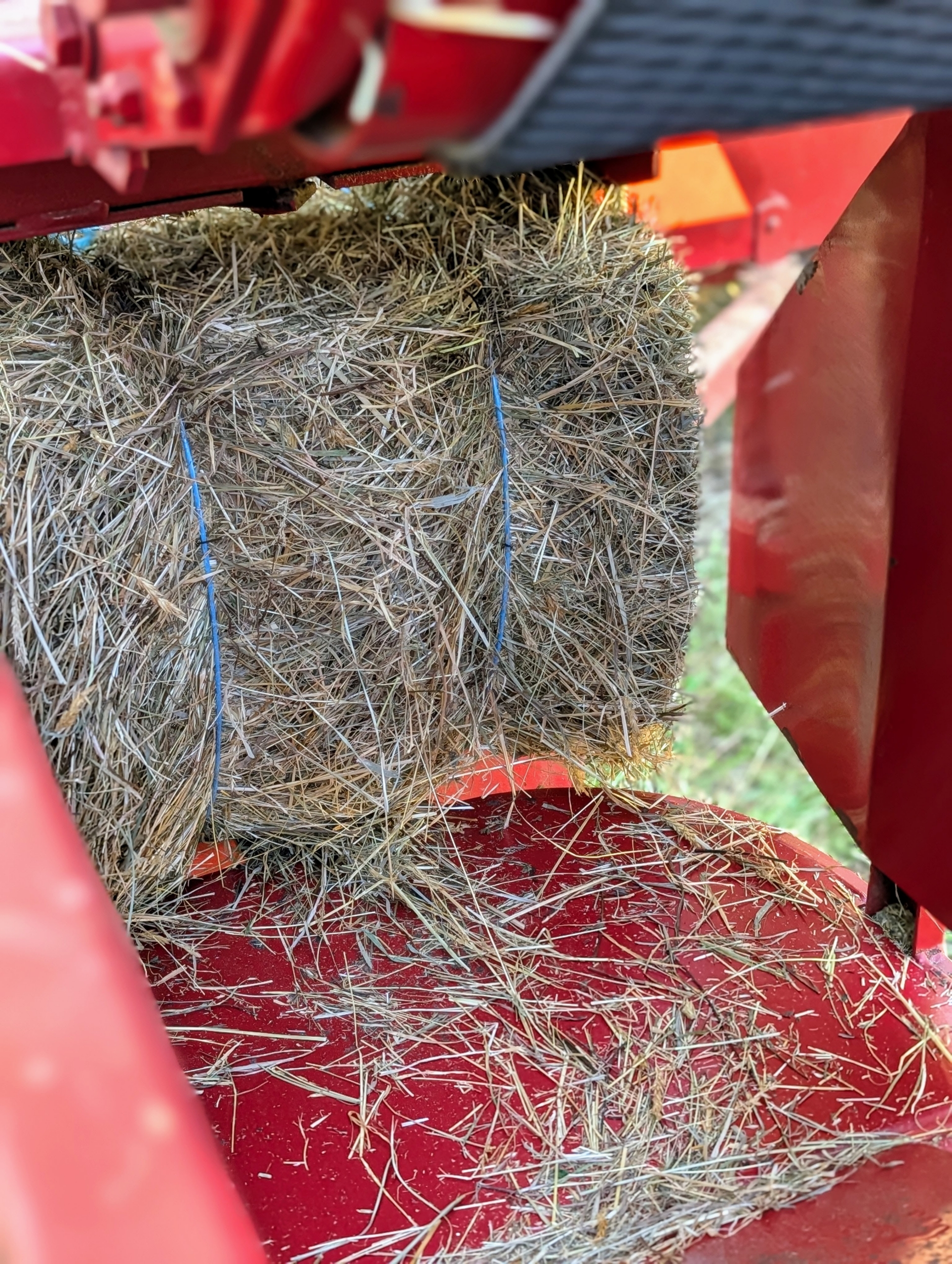
- As hay is collected, a baled “square” travels up the conveyor belt. A measuring device, normally a spiked wheel that is turned by the emerging bales, measures the amount of material that is being compressed and then knotters wrap the twine around the bale and tie it off. And then it is propelled into the wagon by a mechanical arm called a thrower or a kicker.
-
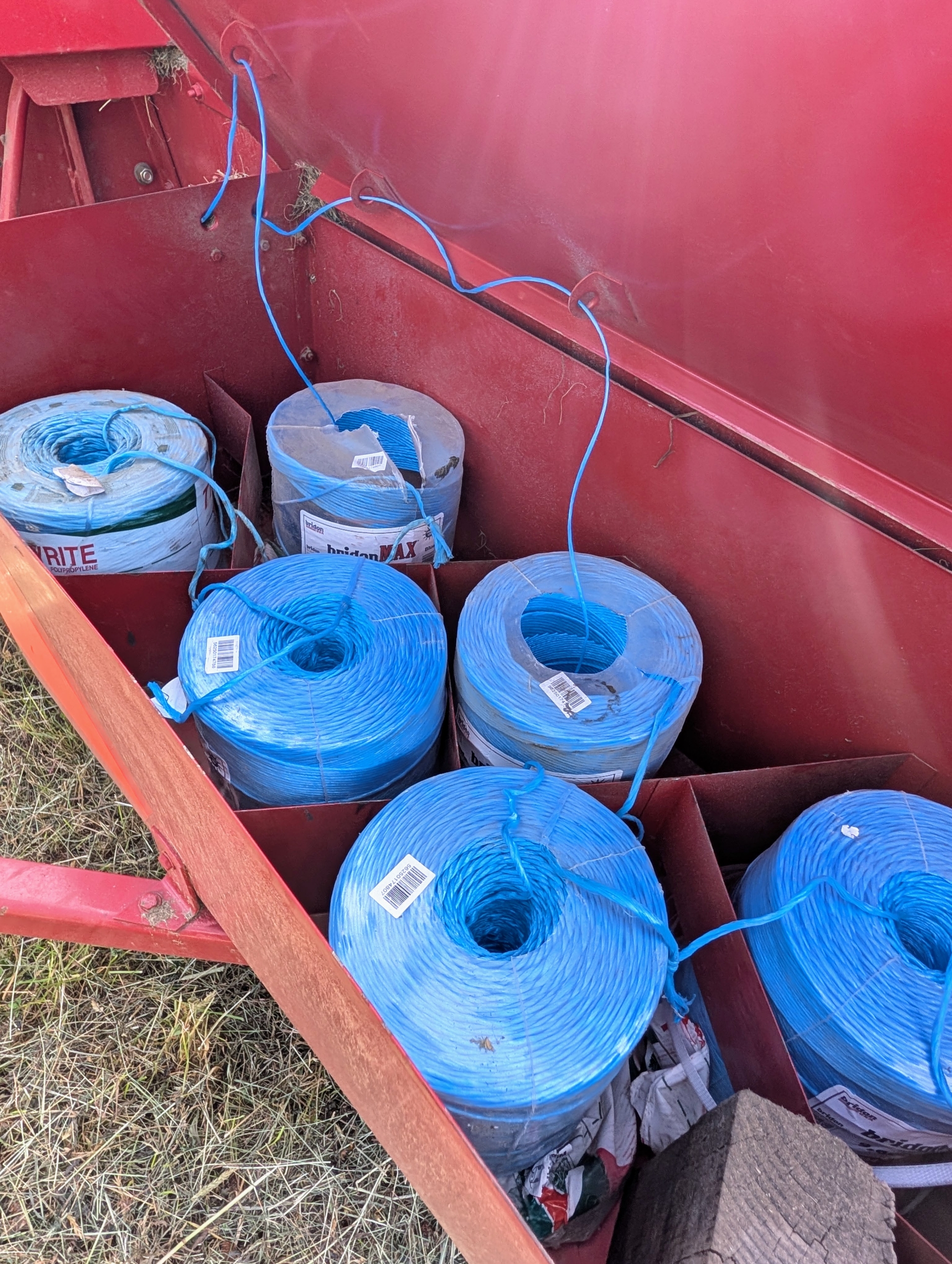
- Inside, a box behind the baler is where large rolls of twine are positioned and tied to each other, so they can feed into the baler and secure the hay just before it shoots out into the trailer.
-
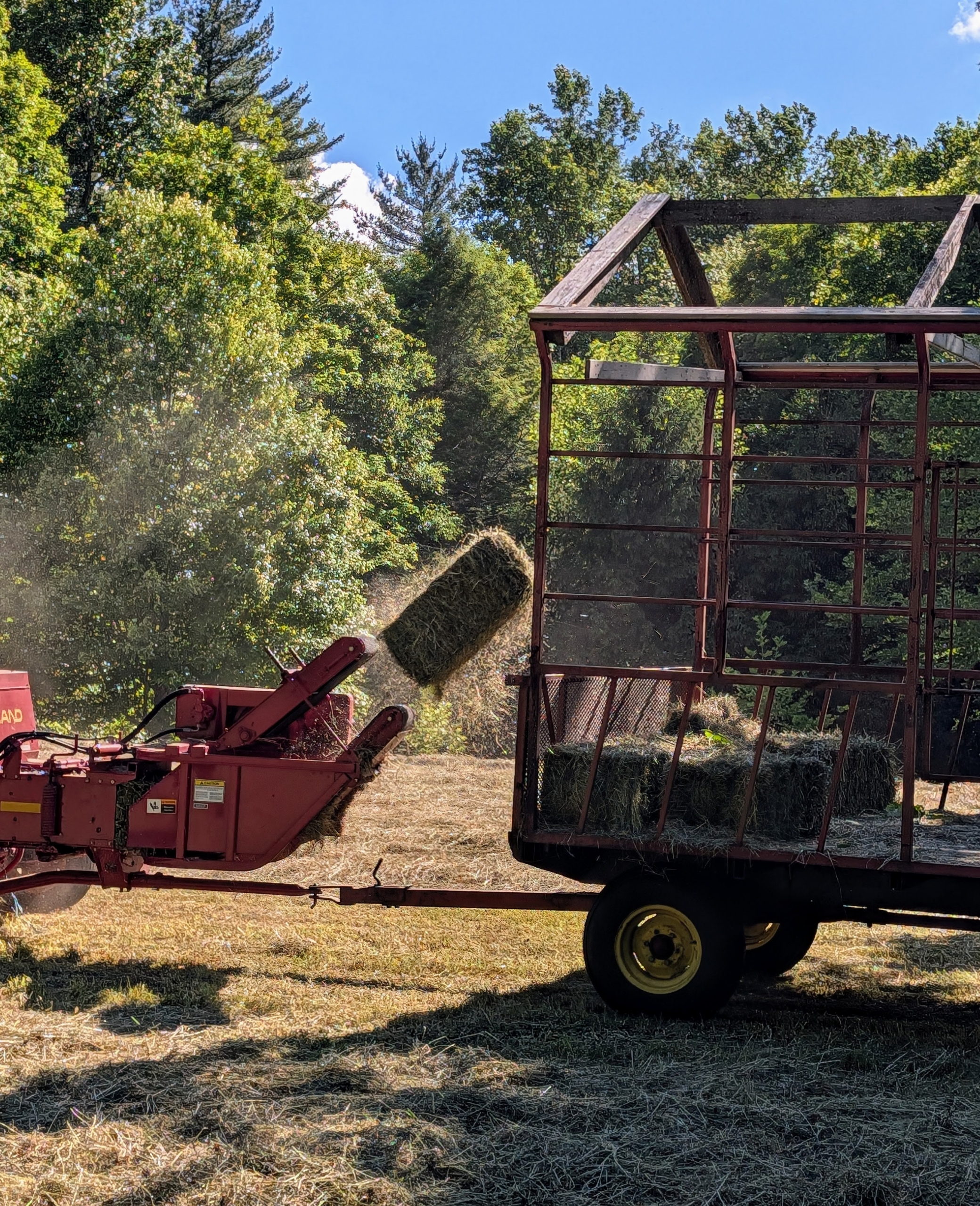
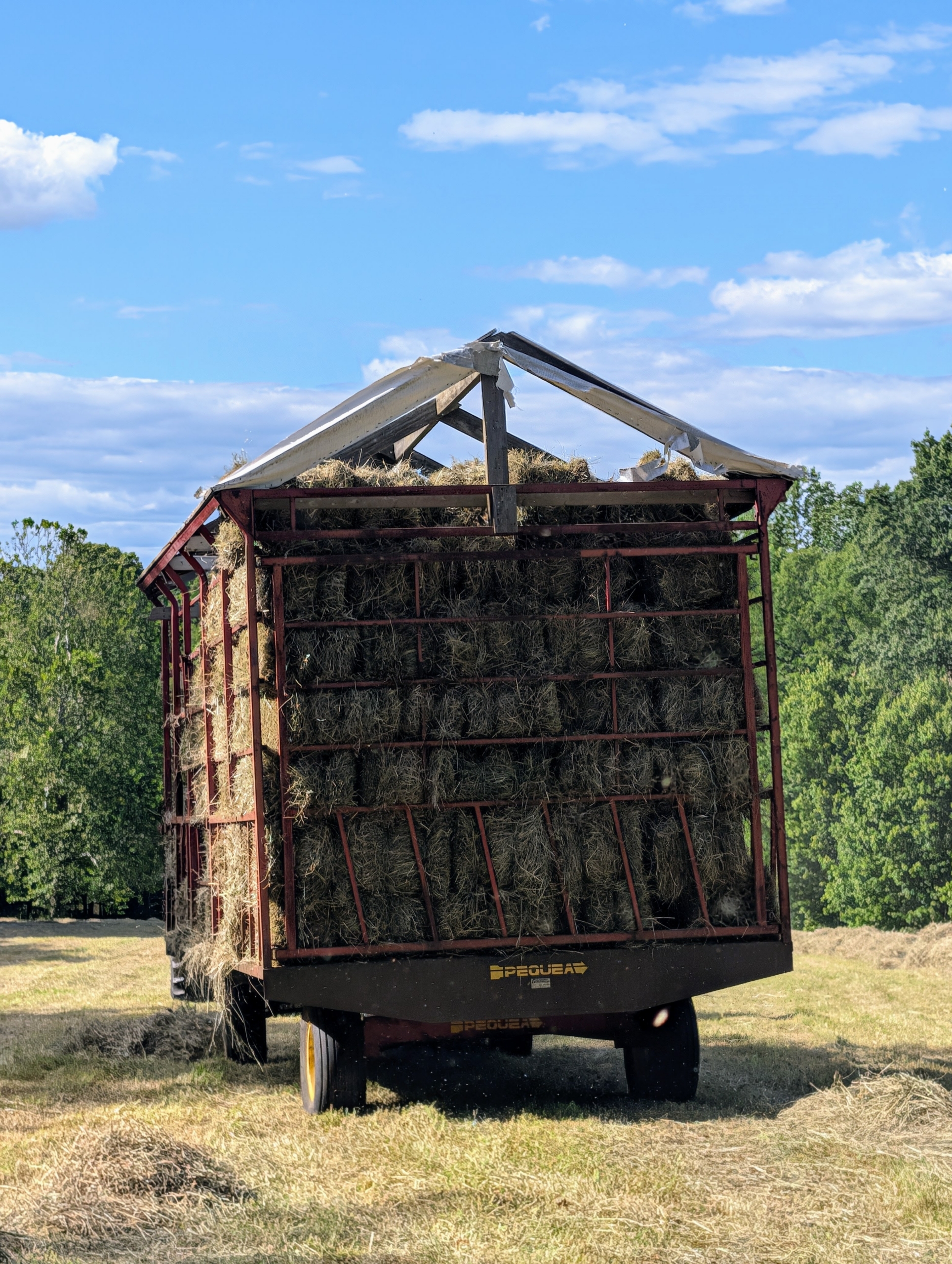
- The process starts midday when there is the least amount of moisture. The wagon fills up pretty quickly. Each wagon can hold about 150-bales.
-
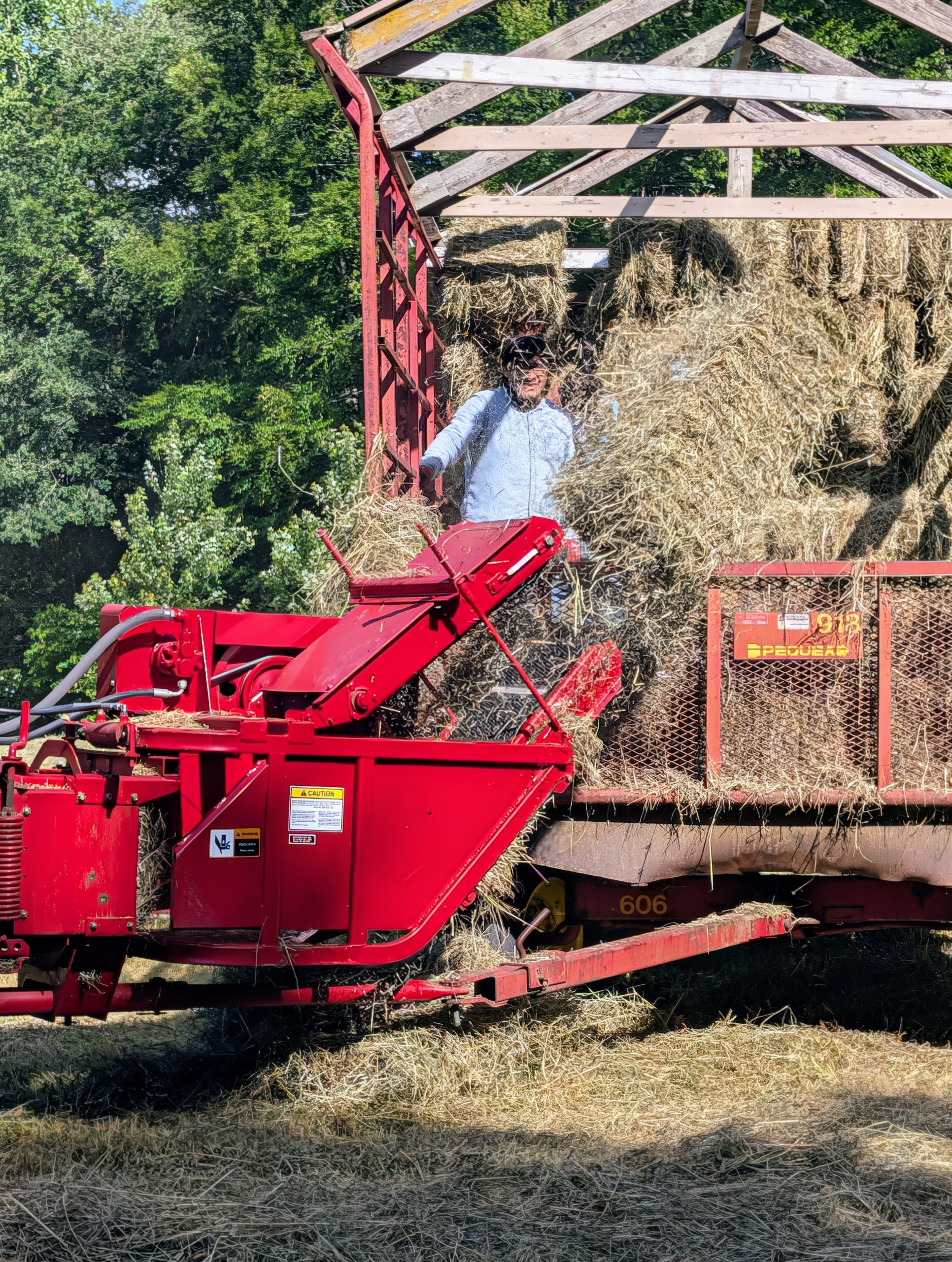
- The hay is lifted by tines in the baler’s reel. Here one can see the bale shooting upward.
-
- I have two hay wagons. Here is one completely filled and ready to stack.
-
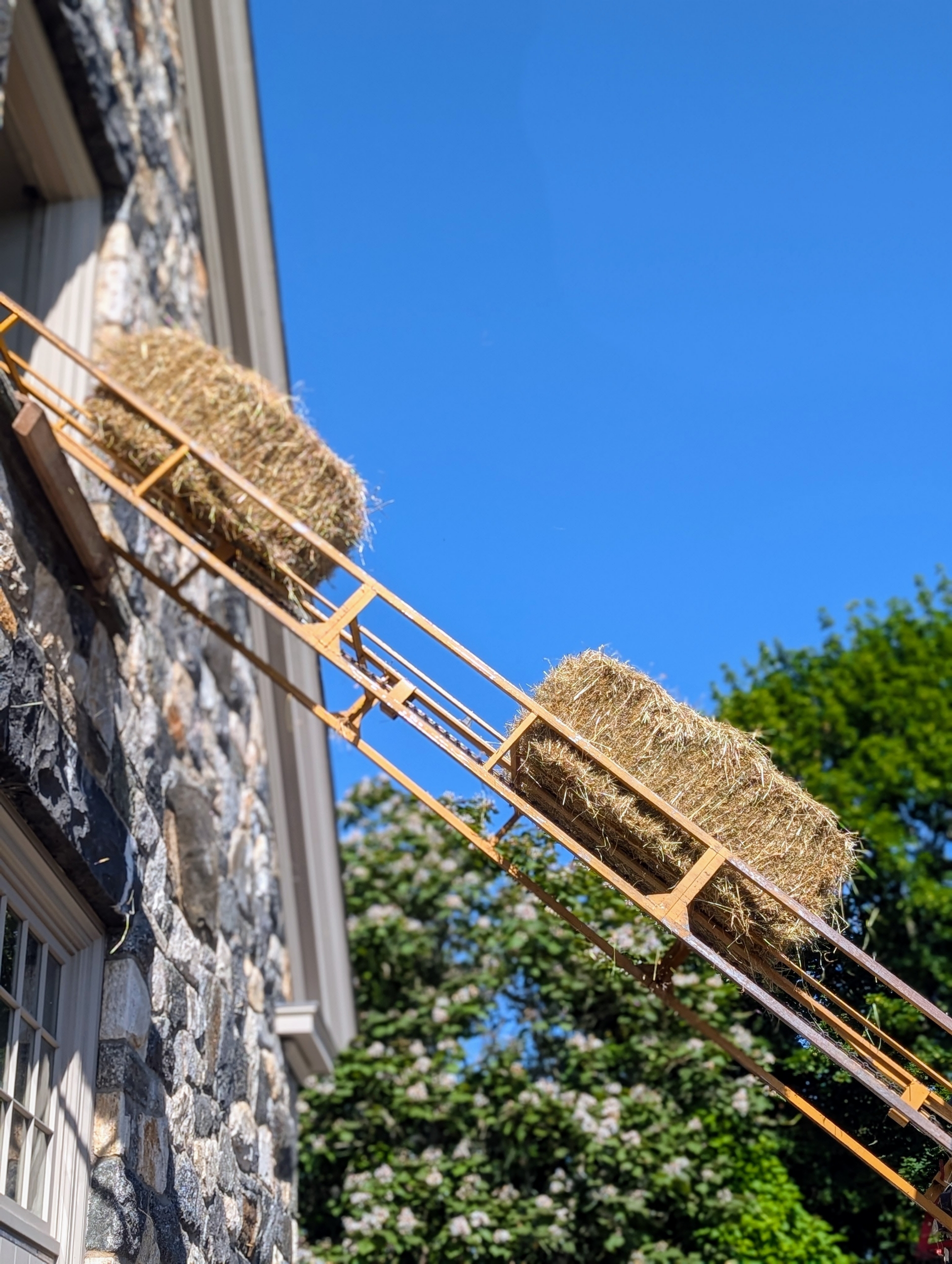
- The crew sets up the hay elevator to the hay loft. Then each bale is placed on the hay elevator which sends it up to waiting hands. Baling hay is a team effort. Each bale is about 15 by 18 by 40 inches large. The number of flakes in the bale is determined by a setting in the baler. Many balers are set for 10 to 12 flakes per bale. The bales are manageable for one person to handle, about 45 to 60 pounds each.
-
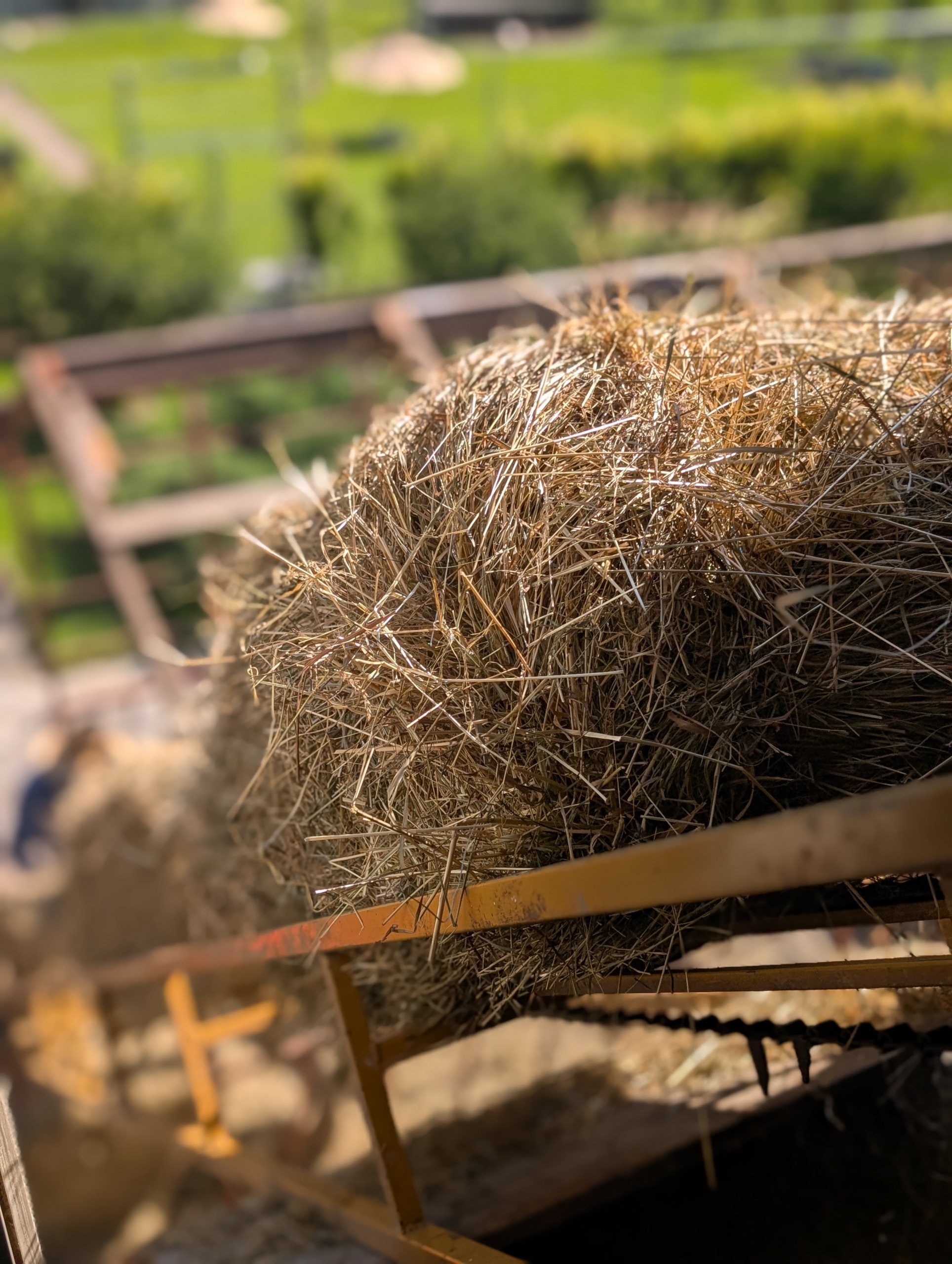
- Here is a view from the hay loft as the bales come up the elevator.
-
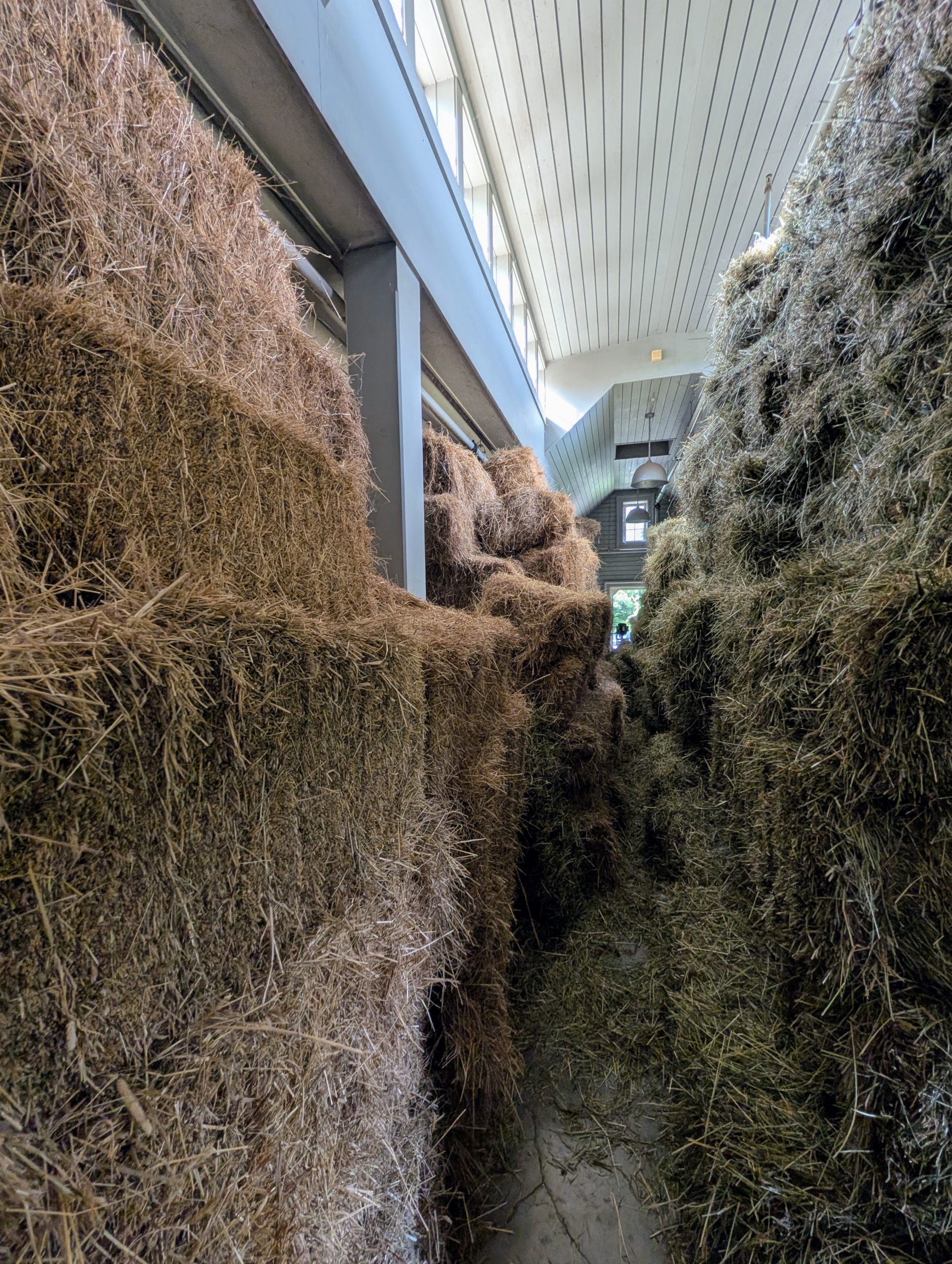
- The hay loft is full! Once all the fields are cut, they will be re-seeded and we’ll do a second cut at the end of the summer. I’m so glad to be able to make my own hay right here at my farm.
 Martha Pins


 Martha Tweets

