

Beautiful Trees in Summer
Summer weather at the farm is expected to be especially hot and humid today, with temperatures possibly reaching 90 degrees Fahrenheit.
By this time of year, many of the garden’s plants have already reached their peak of bloom and are beginning to fade, but the trees are putting on a spectacular show of their own. I planted most of them over the years and I love seeing how beautifully they have matured. Their lush green foliage provides wonderful texture, shade, and beauty throughout the landscape.
Enjoy these photos.
-

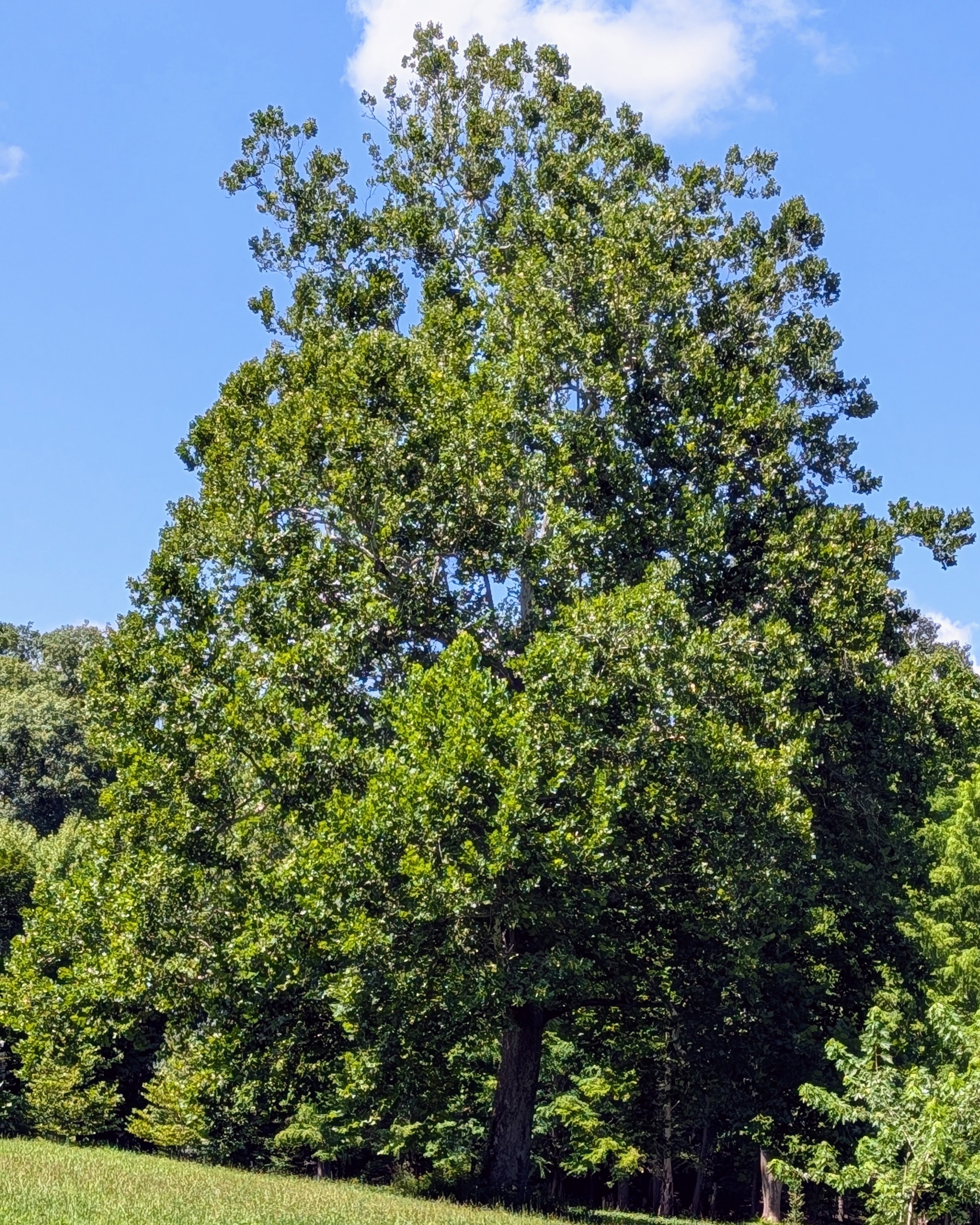
- This weekend, stop and look at some of the trees around you. Every single day I am home, I tour the farm to see how all the trees, shrubs, and plants are doing. Every specimen is special – their foliage, shape, and growth habit. This tree is the symbol of my farm – the great sycamore in my back hayfield. It’s one of my favorite trees and is original to the property.
-
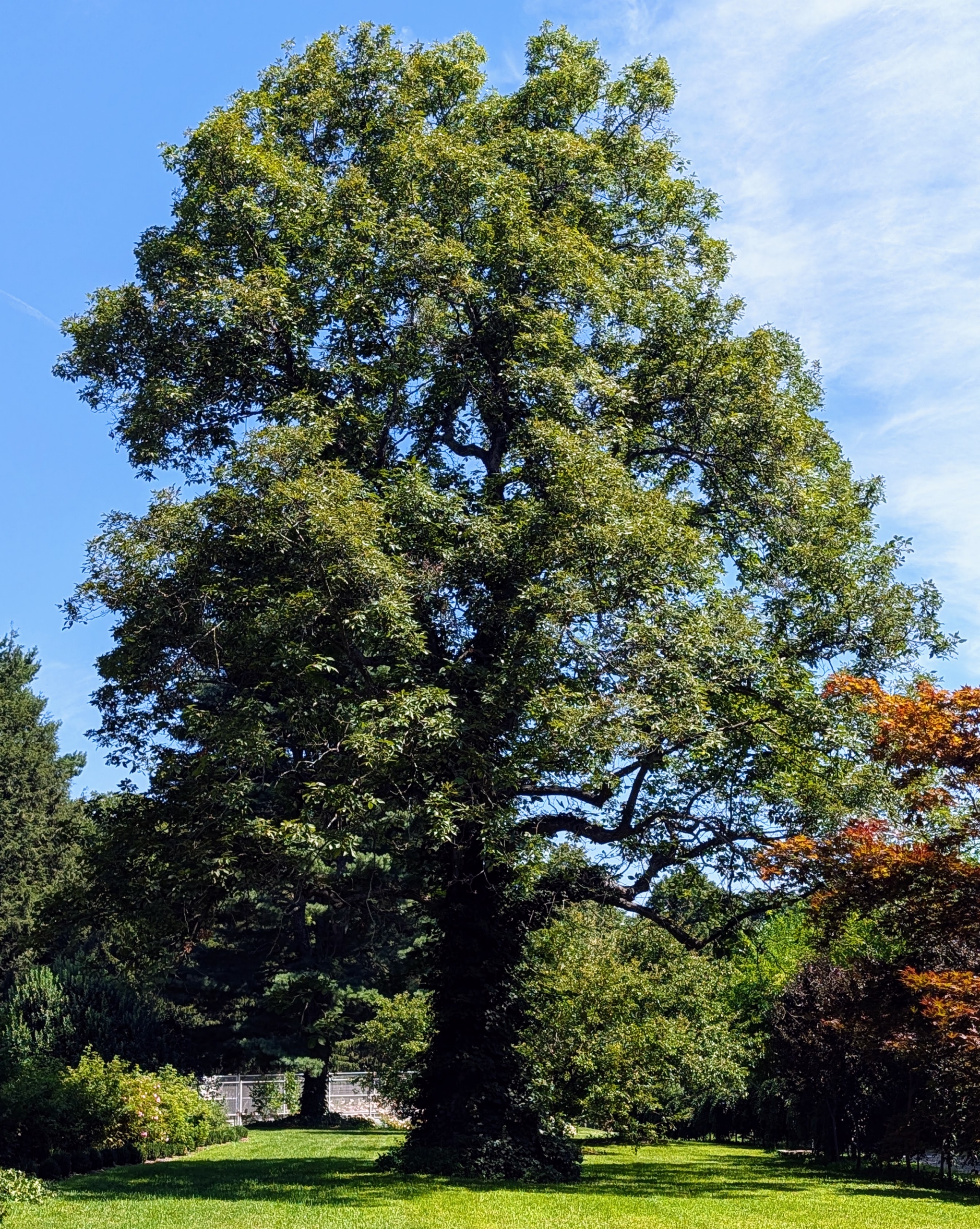
- This is a mature hickory tree. Hickory trees are one of the most important hardwood trees in North America. They are robust, durable and valued for their nut production. The hickory is a variety of species within the Carya genus. There are about 12 species of hickory native to North America.
-
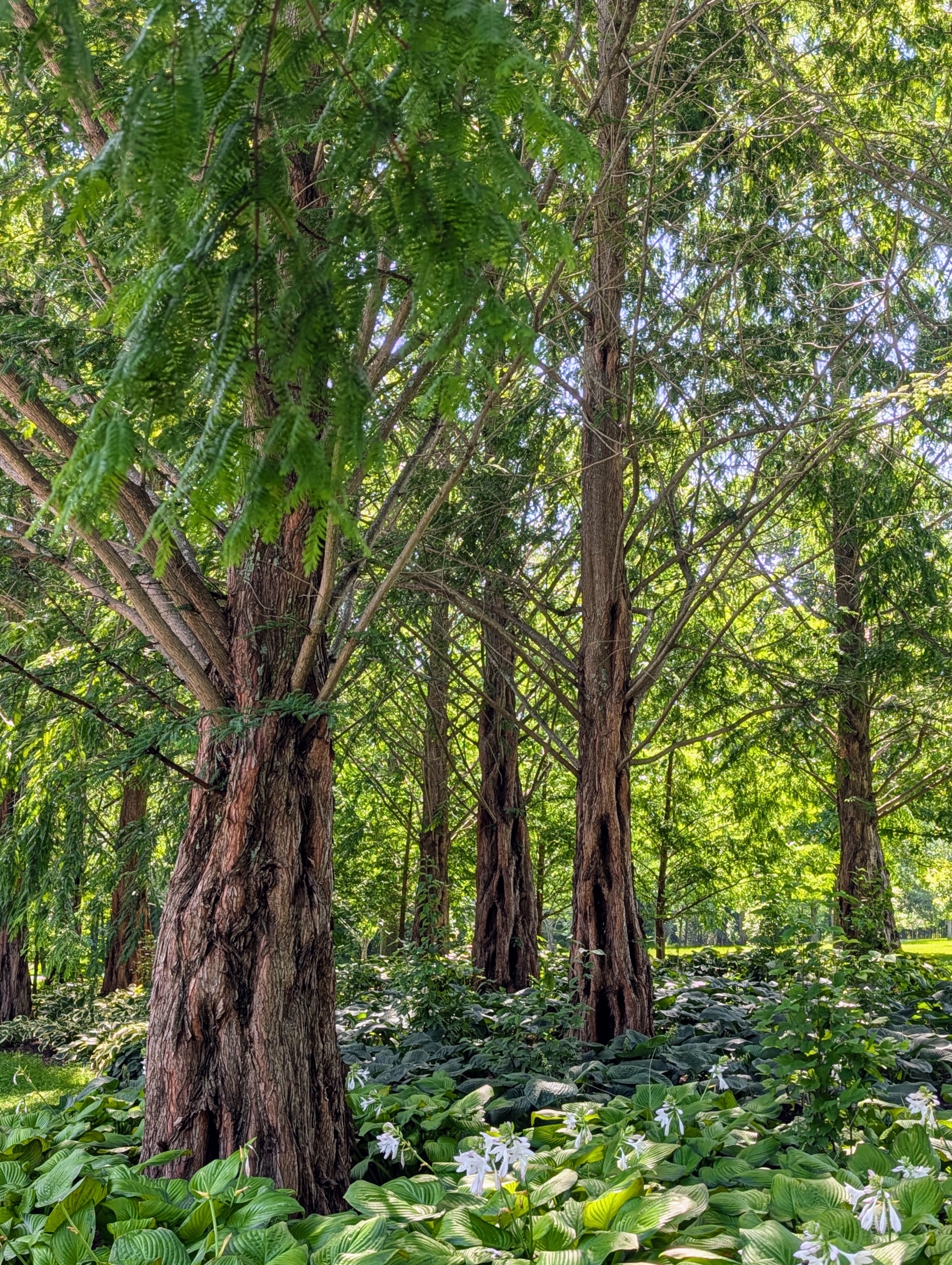
- Down behind the chicken coops is a grove of dawn redwoods. Dawn redwoods, Metasequoia, grow faster than most trees and need an area under full sun that is large enough to accommodate the trees which can grow to more than 160-feet tall. One of their distinguishable characteristics is the deeply fissured bark on mature trees.
-
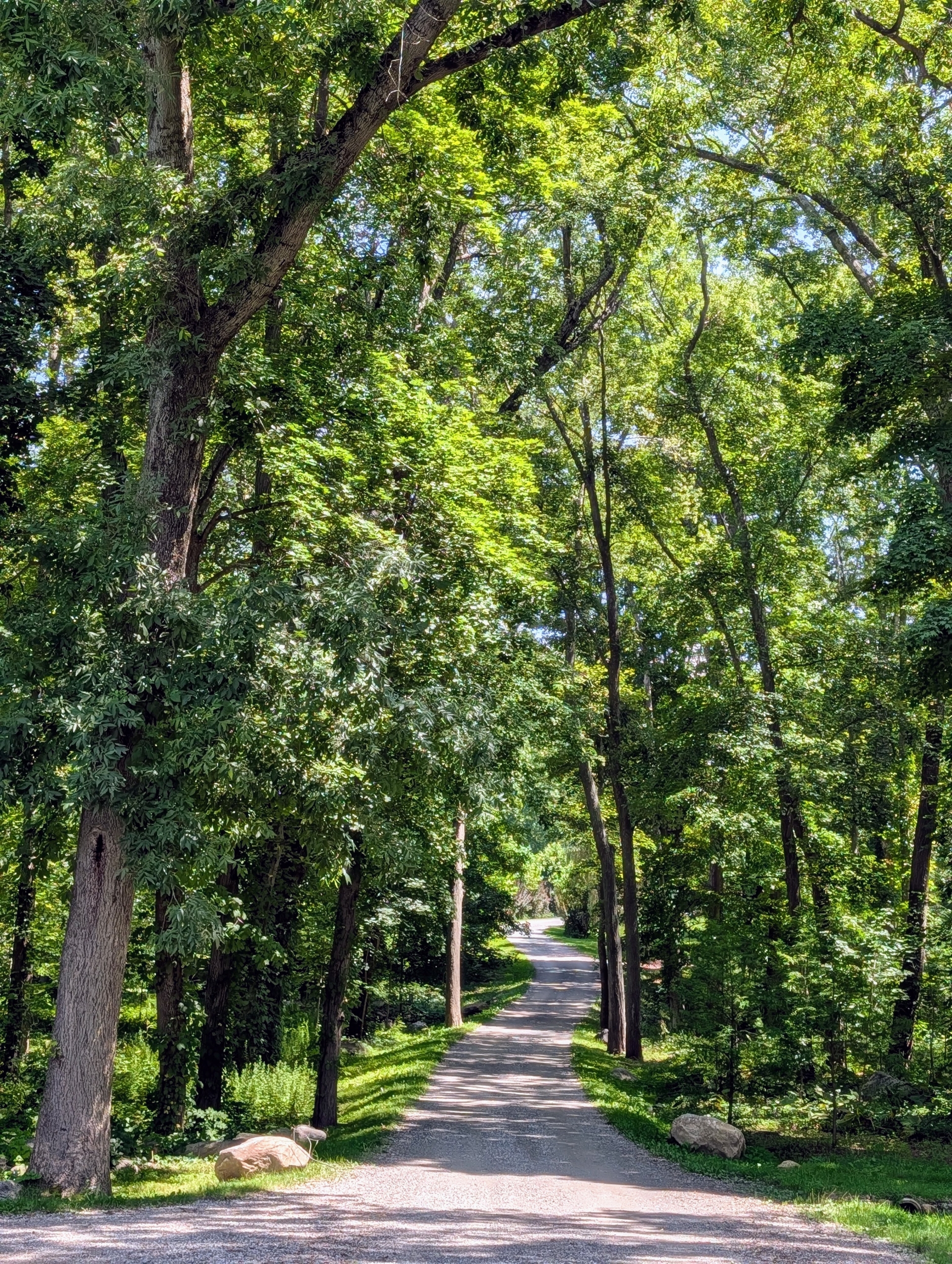
- These trees line the main carriage road to and from my woodland.
-
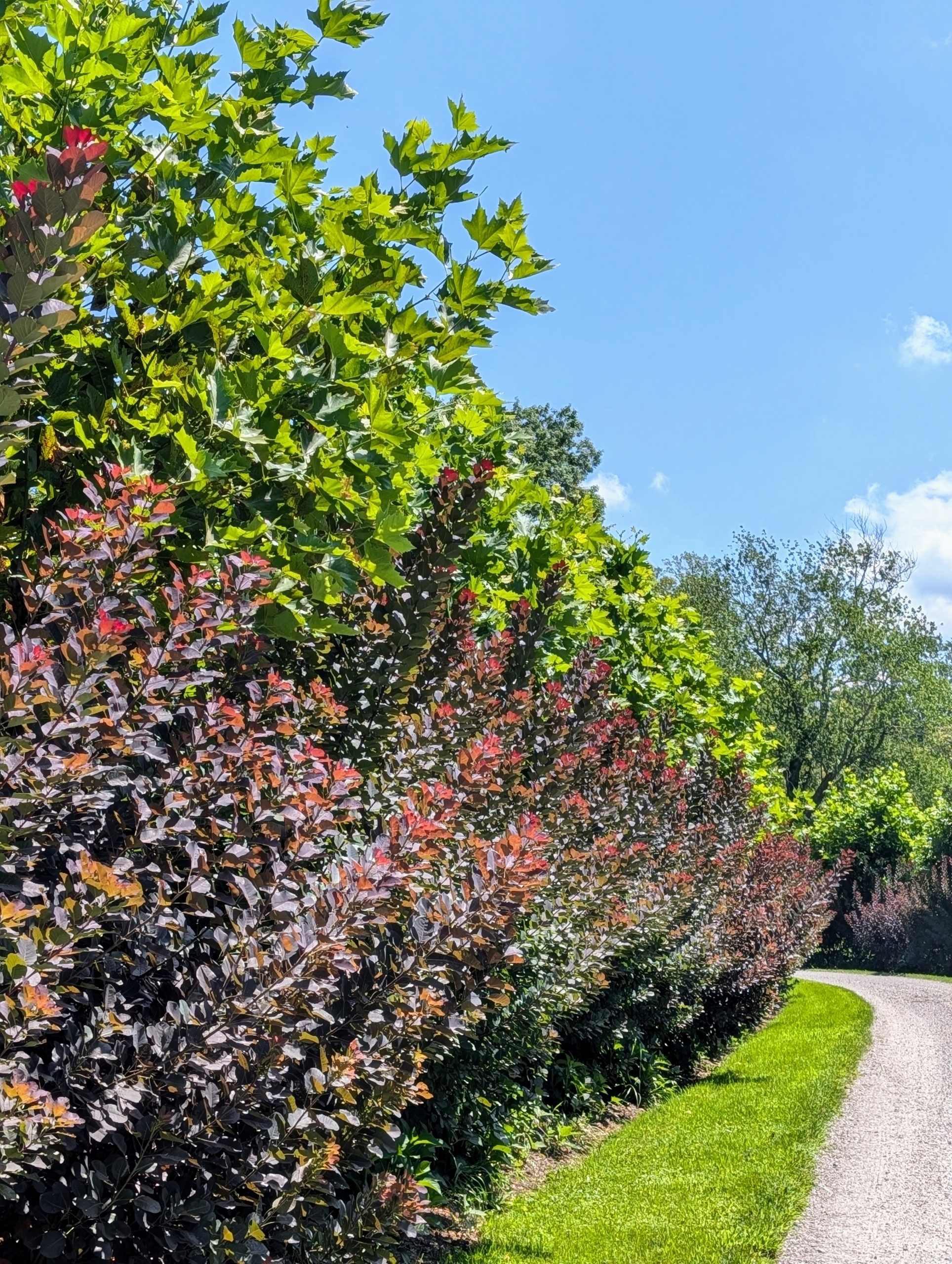
- On both sides of the carriage road in my middle hayfield, I planted an allée of London plane trees and about 100 royal purple smoke bushes, Cotinus coggygria.
-
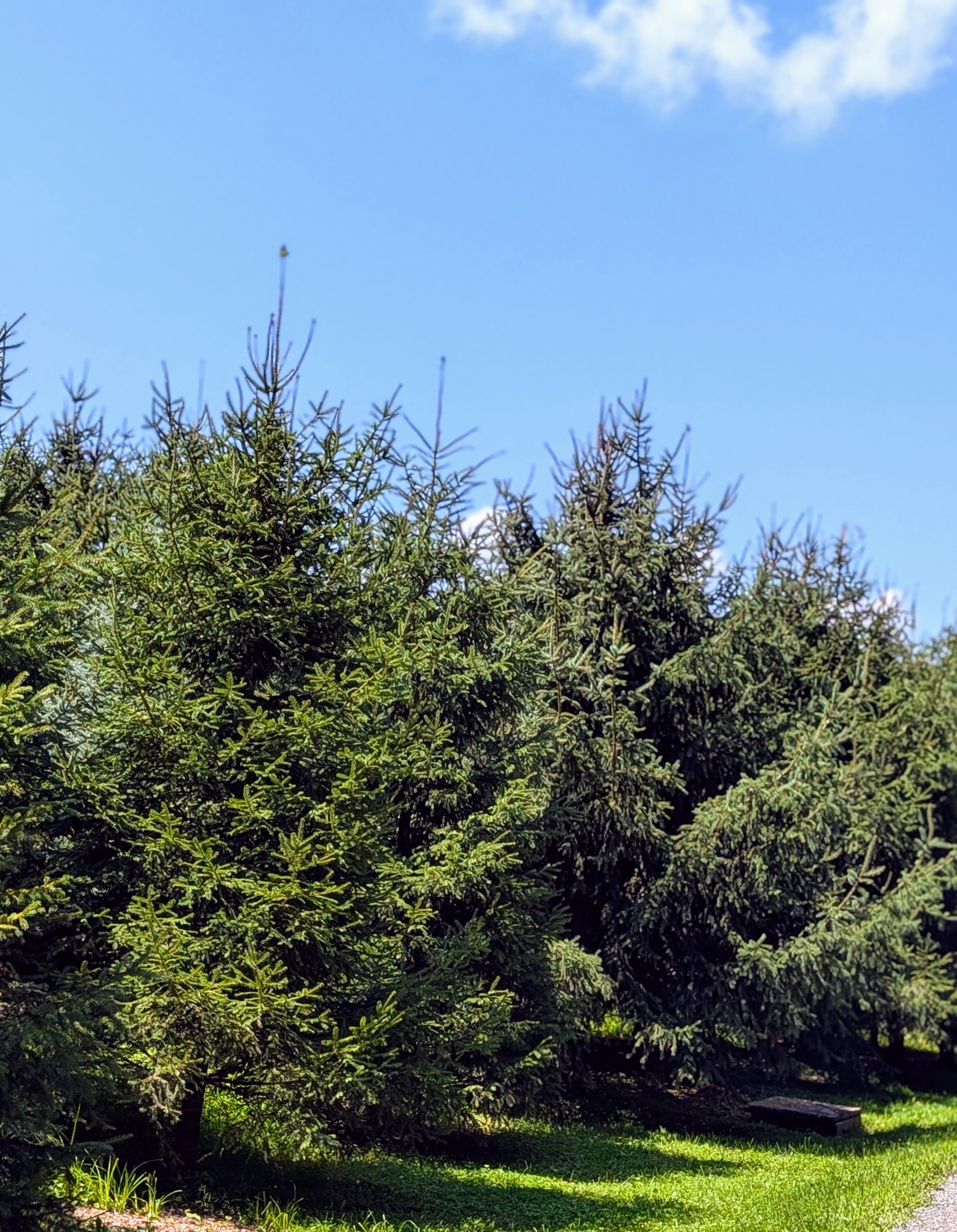
- In 2009, I planted what I call my “Christmas Tree Field” – a large space where I grow different types of evergreen trees – rows of Frasier Fir, Canaan Fir, Norway Spruce, Blue Spruce, and others. They’ve grown so big since that initial planting.
-
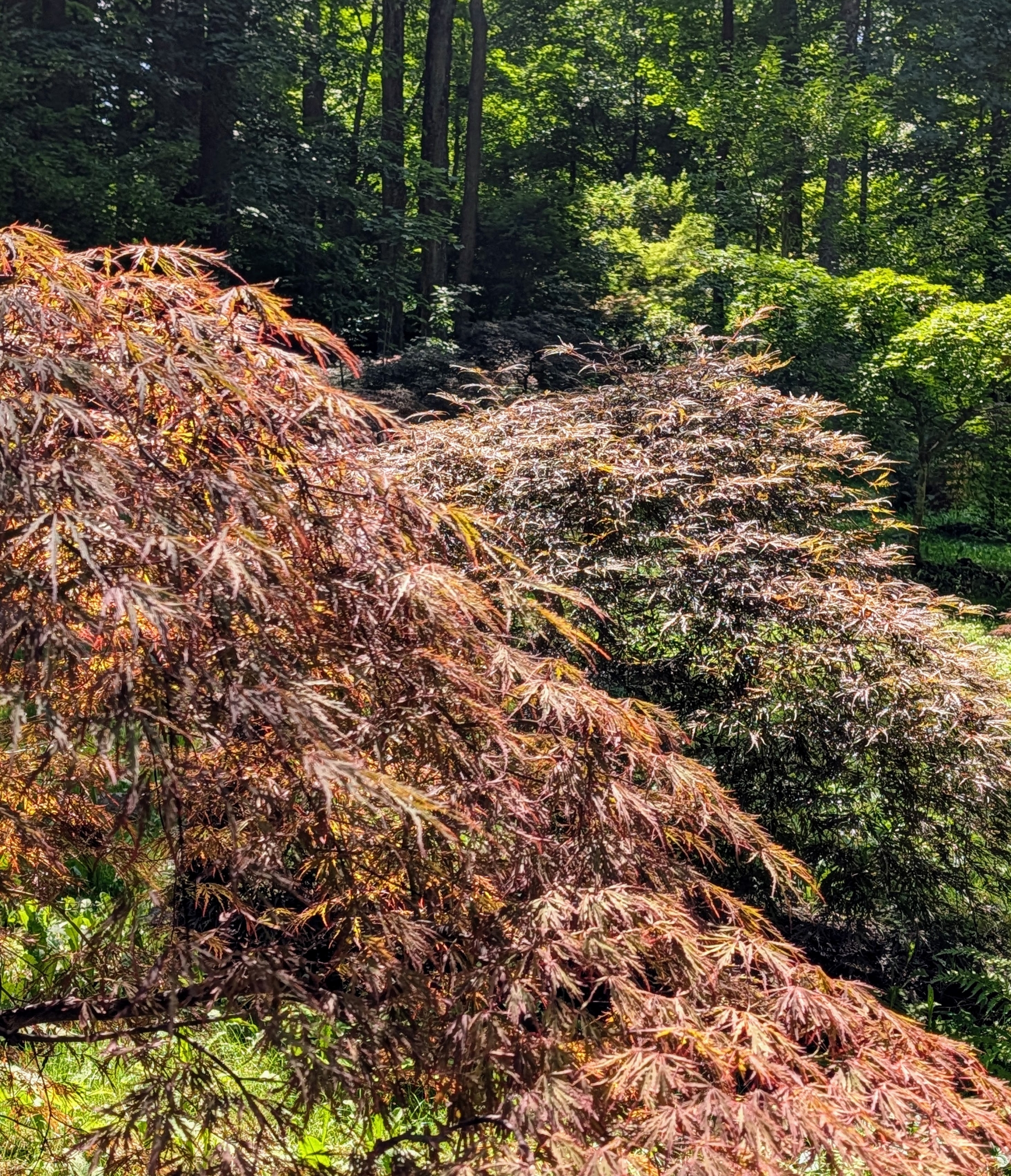
- I have many Japanese maples in this woodland near my chickens. I dedicated this area to my late sister, Laura, who loved Japanese maples. I always look forward to their gorgeous displays of color, especially in autumn.
-
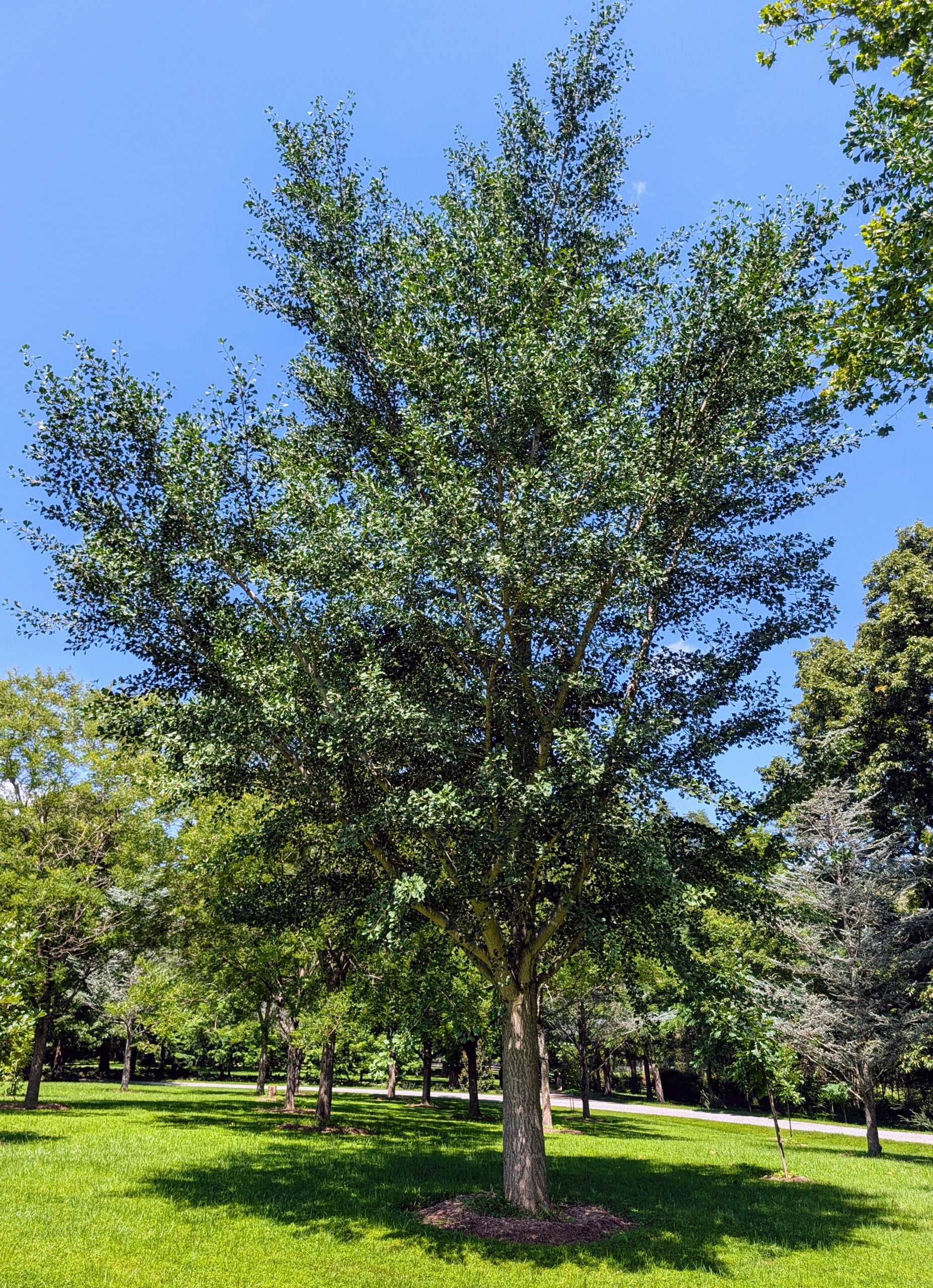
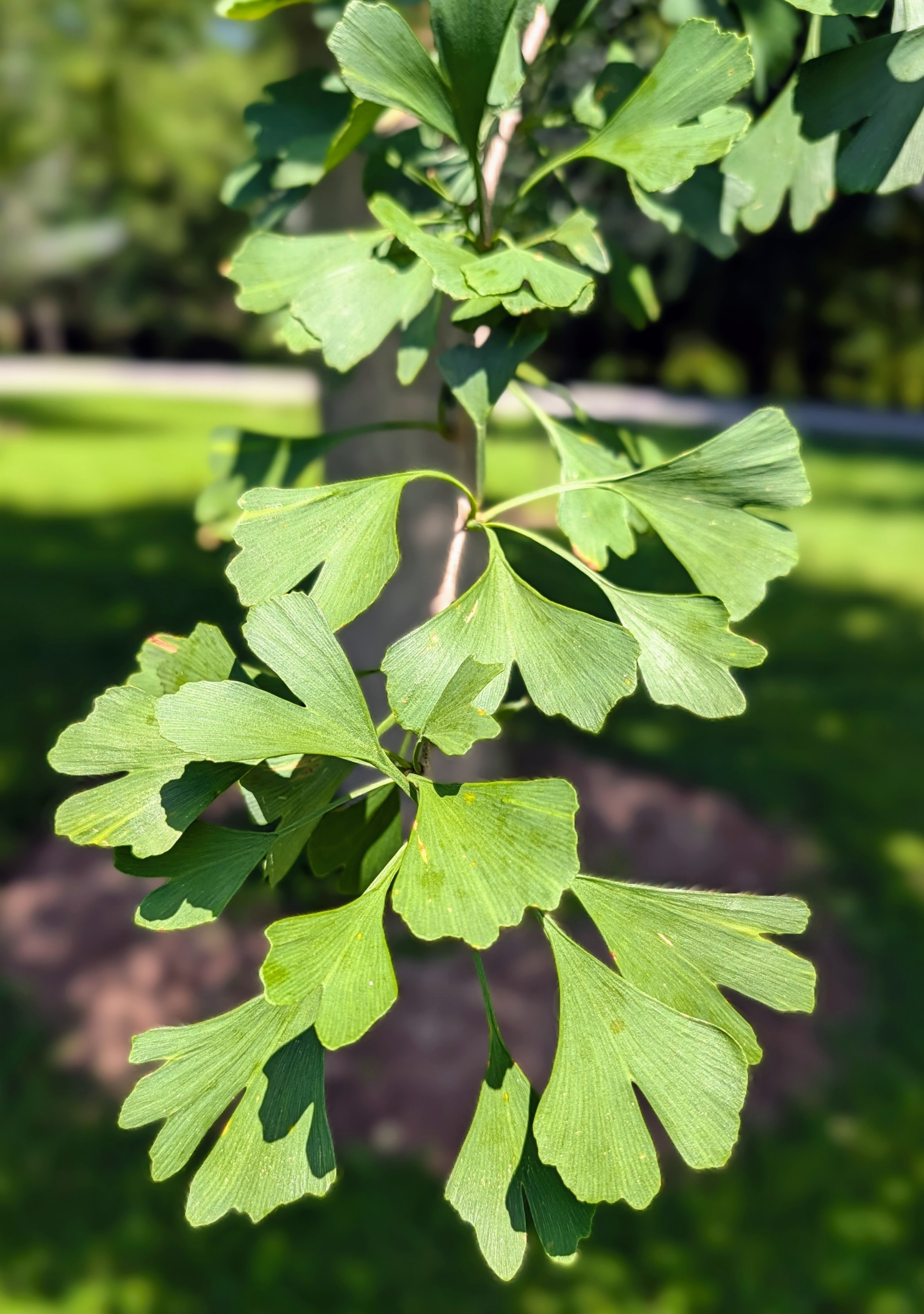
- This is a ginkgo. Ginkgo biloba, commonly known as ginkgo or gingko, and also known as the maidenhair tree, is the only living species in the division Ginkgophyta. It is found in fossils dating back 270-million years. Native to China, the ginkgo tree is widely cultivated, and was cultivated early in human history. I have many ginkgo trees planted around the farm.
-
- The leaves are unusually fan-shaped, up to three inches long, with a petiole that is also up to three inches long. This shape and the elongated petiole cause the foliage to flutter in the slightest breeze.
-
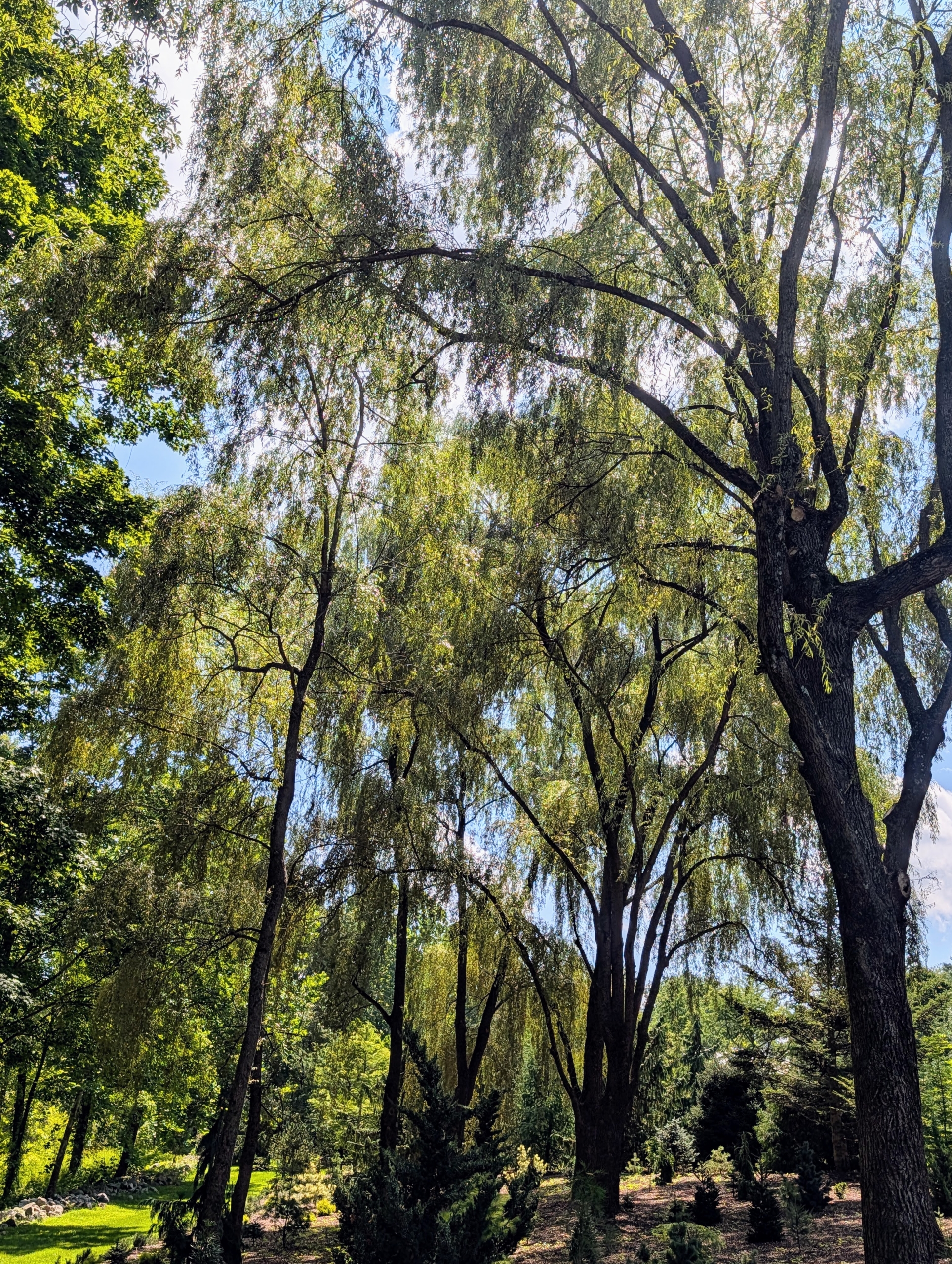
- From a distance, everyone notices the weeping willows. These are in a grove at the edge of my pinetum. Weeping willows are wide and tall with graceful curtains of drooping branches that sweep the ground.
-
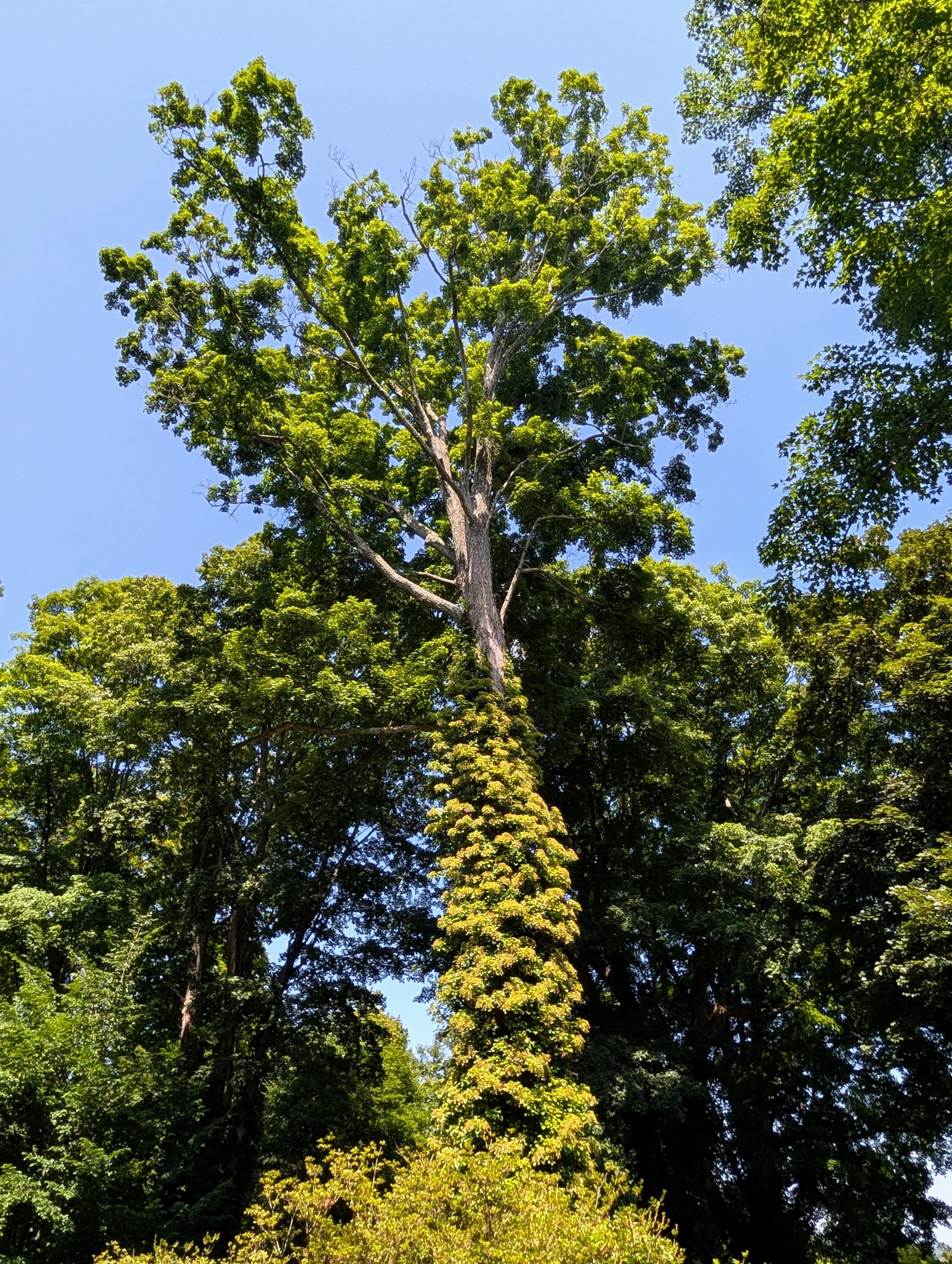
- Acer saccharum, the sugar maple, is a species of flowering plant in the soapberry and lychee family Sapindaceae. It is native to the hardwood forests of eastern Canada and eastern United States. Sugar maple is best known for being the primary source of maple syrup and for its brightly colored fall foliage. Sugar maples covered with climbing hydrangeas look so beautiful in my tree peony garden.
-
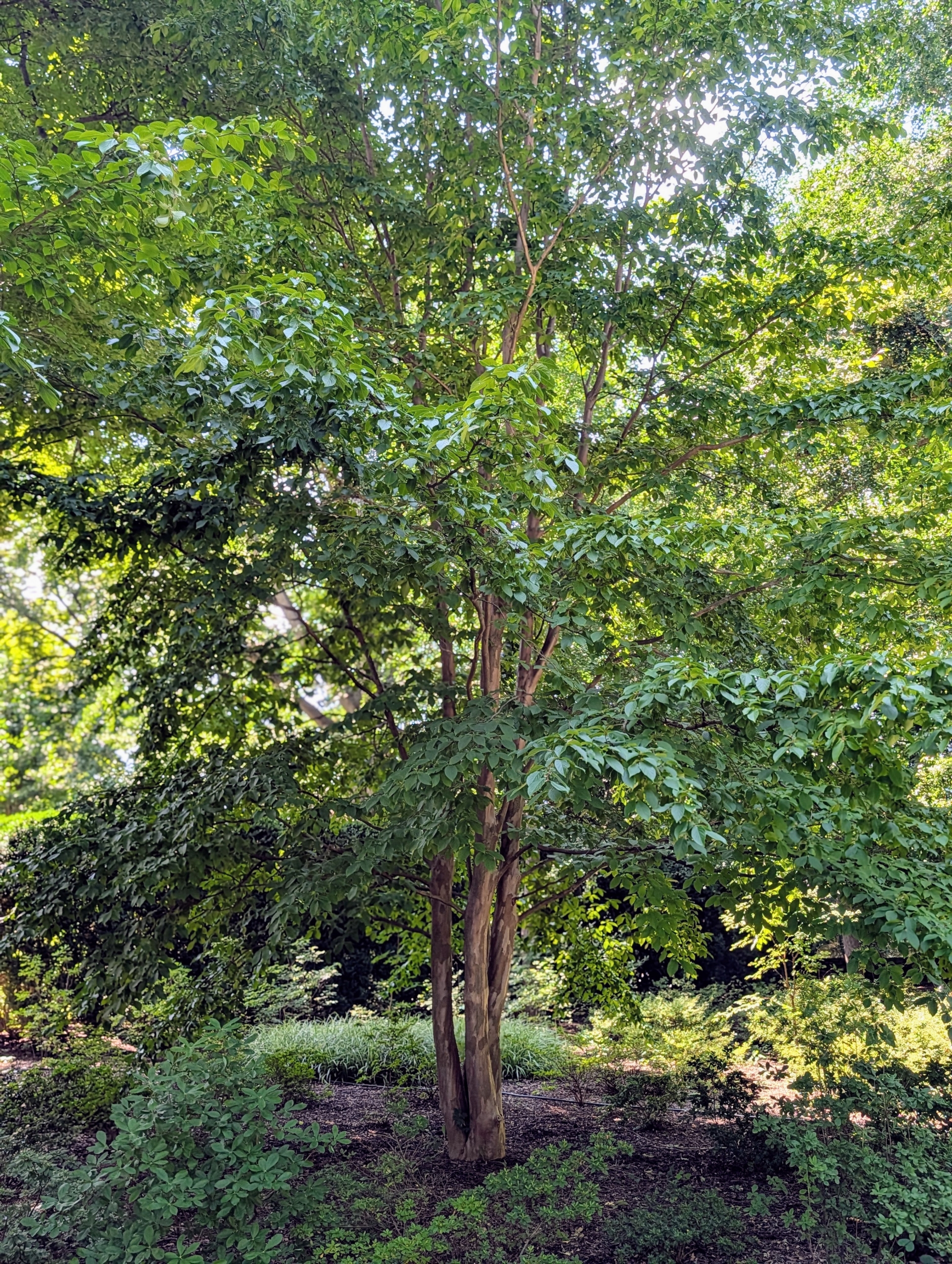
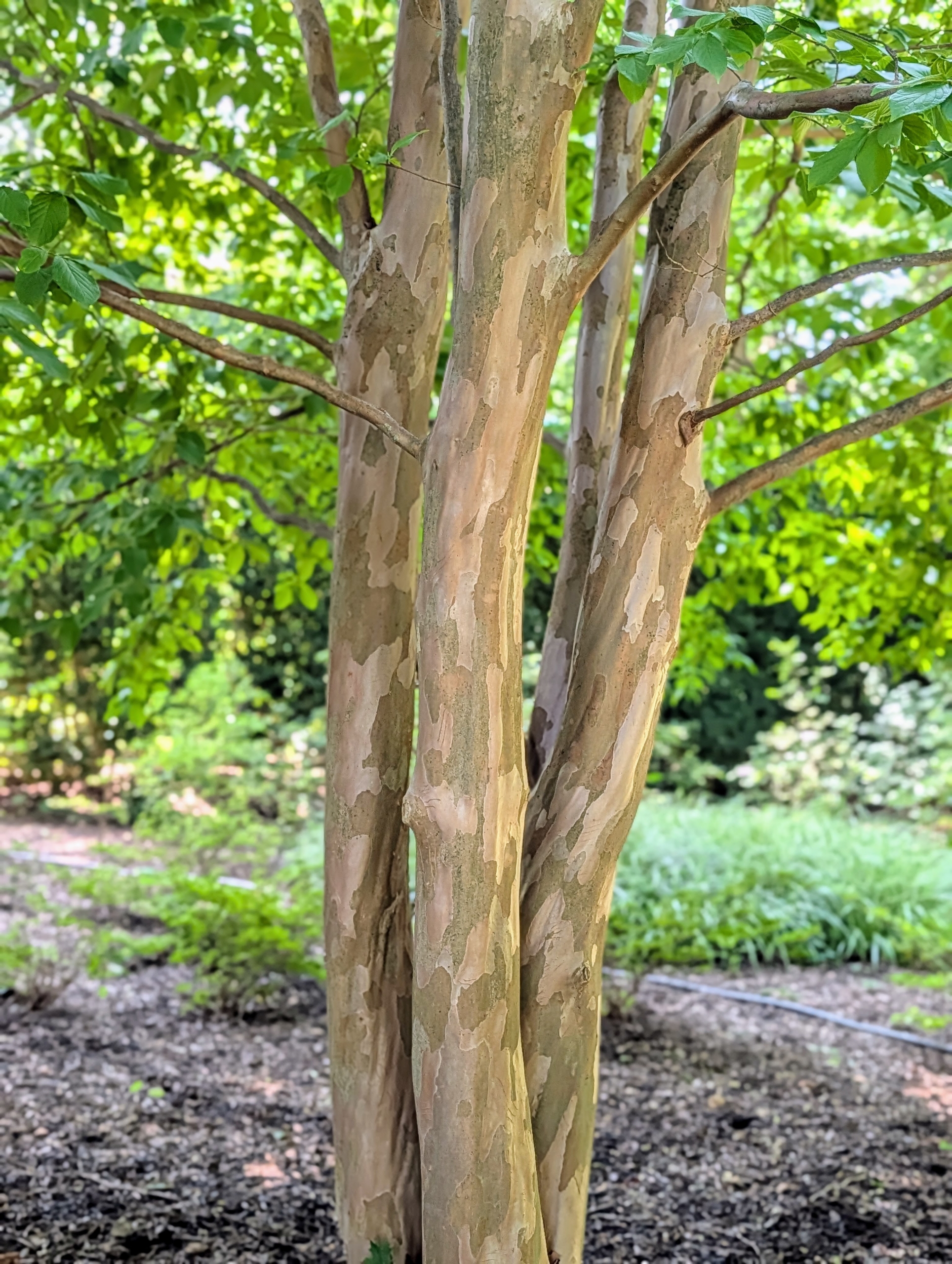
- The Japanese Stewartia is native to Japan, Korea, and the southeastern United States. It is a slow-growing, all-season performer that shows off green leaves in spring, white flowers in summer, and colorful foliage in autumn. I love stewartias – after all, my name is “Stewart.”
-
- One of the most appealing features is the Stewartia’s bark. It is multi-colored and peels away in strips.
-
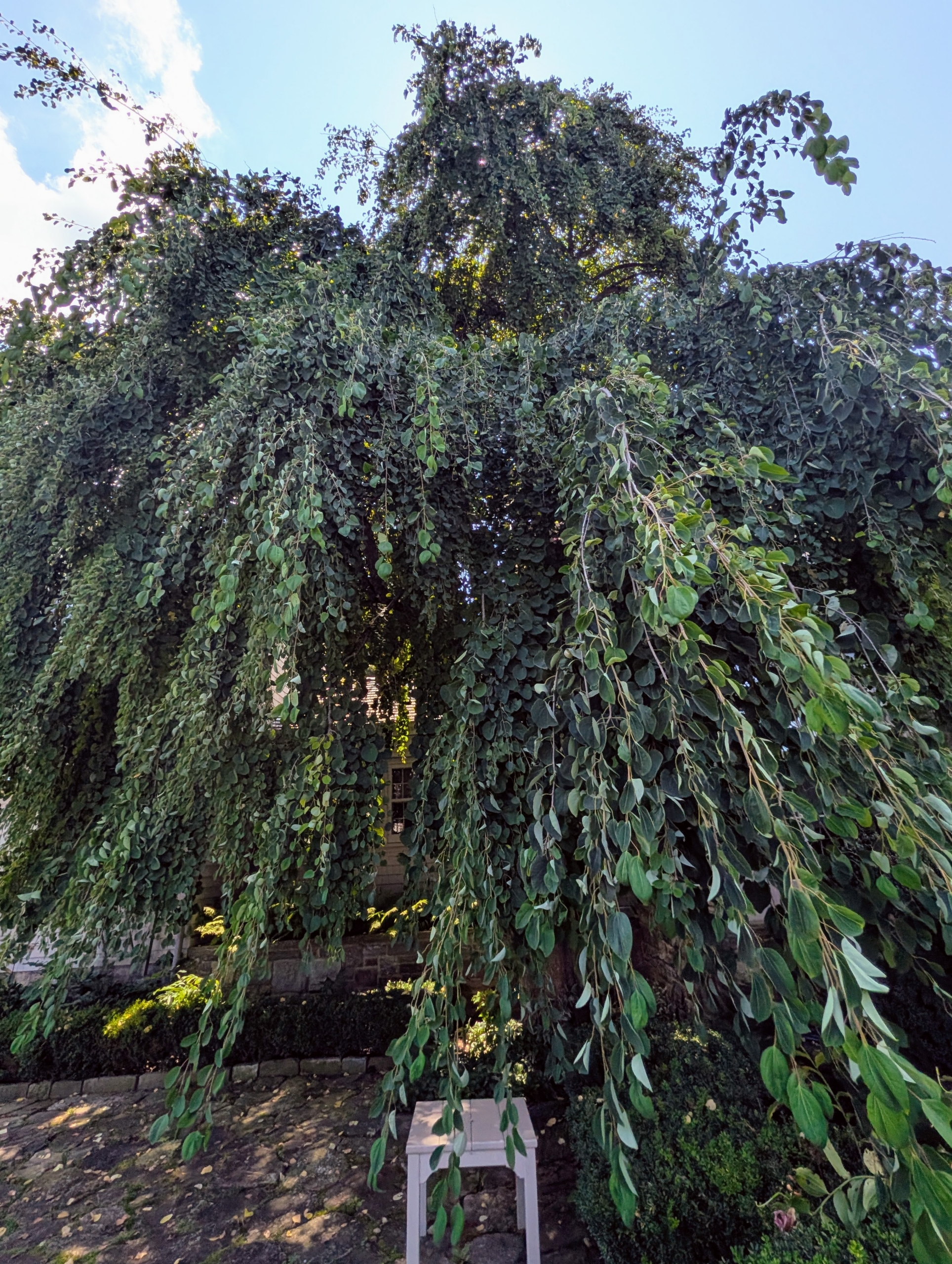
- Outside my Winter House is this weeping katsura. Cercidiphyllum japonicum f. pendulum has pendulous branches that fan out from the crown and sweep the ground. Caramel-scented foliage emerges bronze or purple-red, turns blue-green, then fades to gold or apricot in autumn.
-
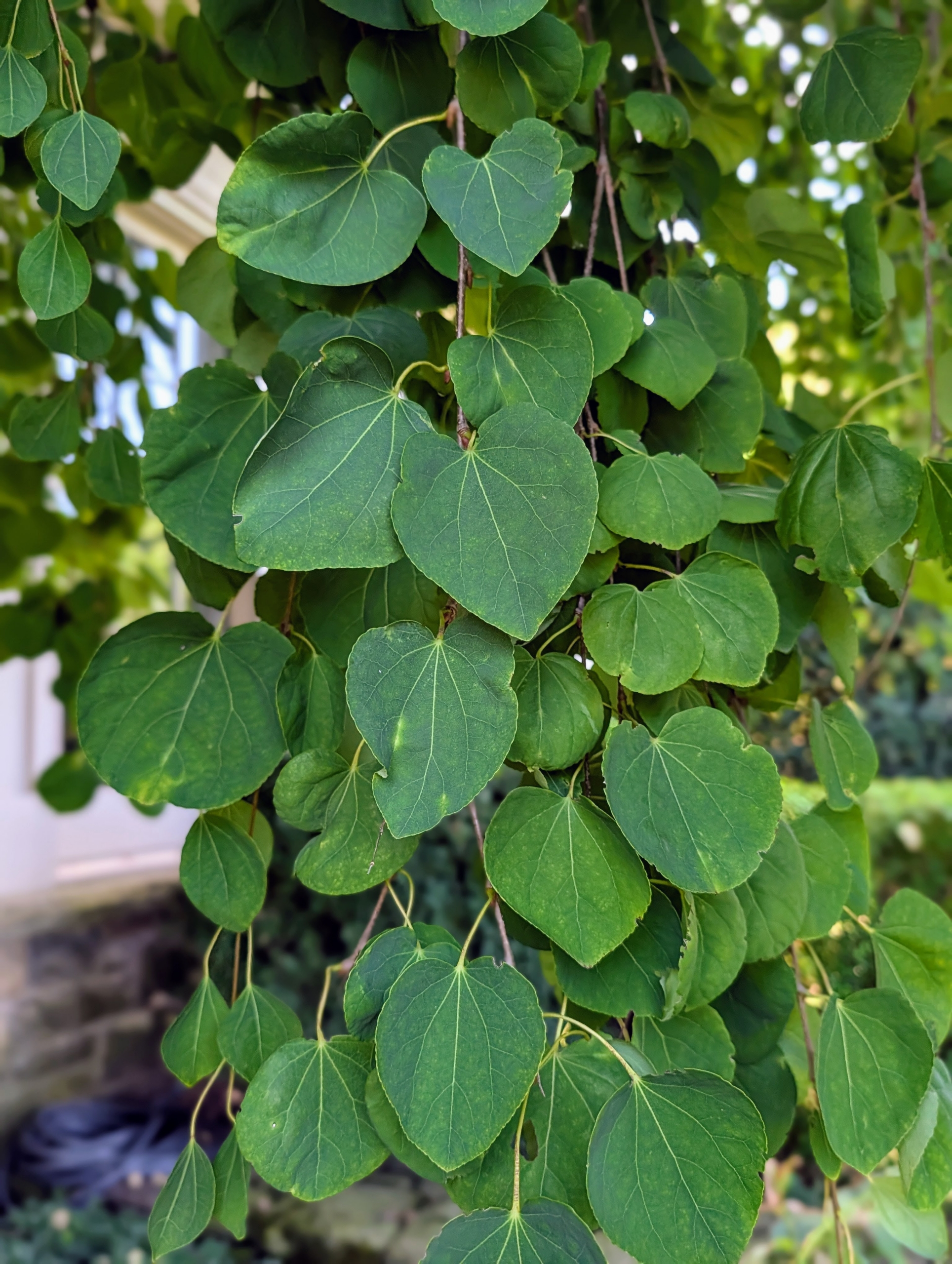
- One of the most distinctive features of the katsura is its heart-shaped leaves. These leaves grow opposite each other along the branches.
-
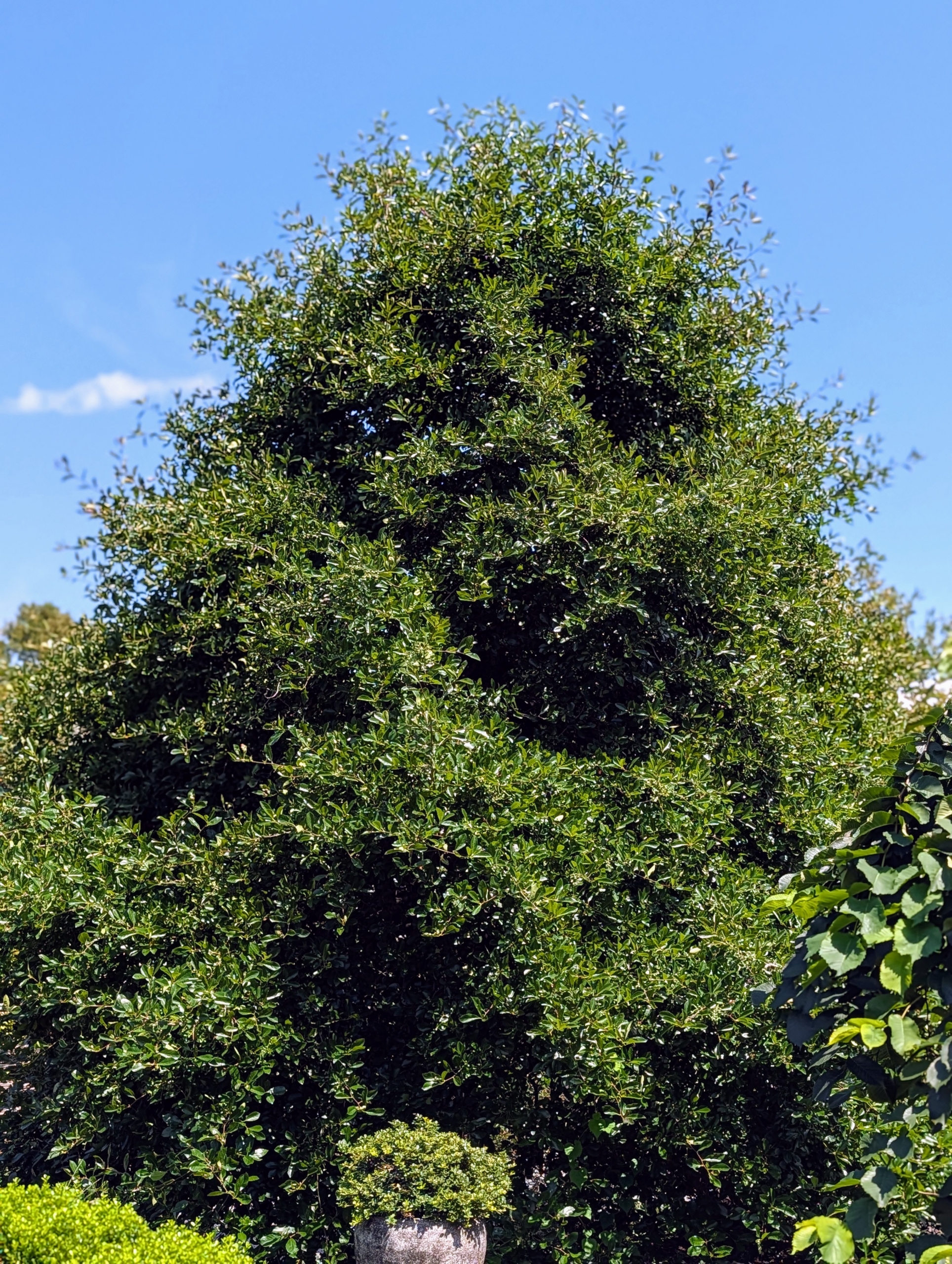
- Nearby, off my terrace parterre is this beautiful Nyssa sylvatica, or black tupelo – a medium-sized deciduous tree native to eastern North America from the coastal Northeastern United States and southern Ontario south to central Florida and eastern Texas, as well as Mexico. Its summer leaves are a bold dark green.
-
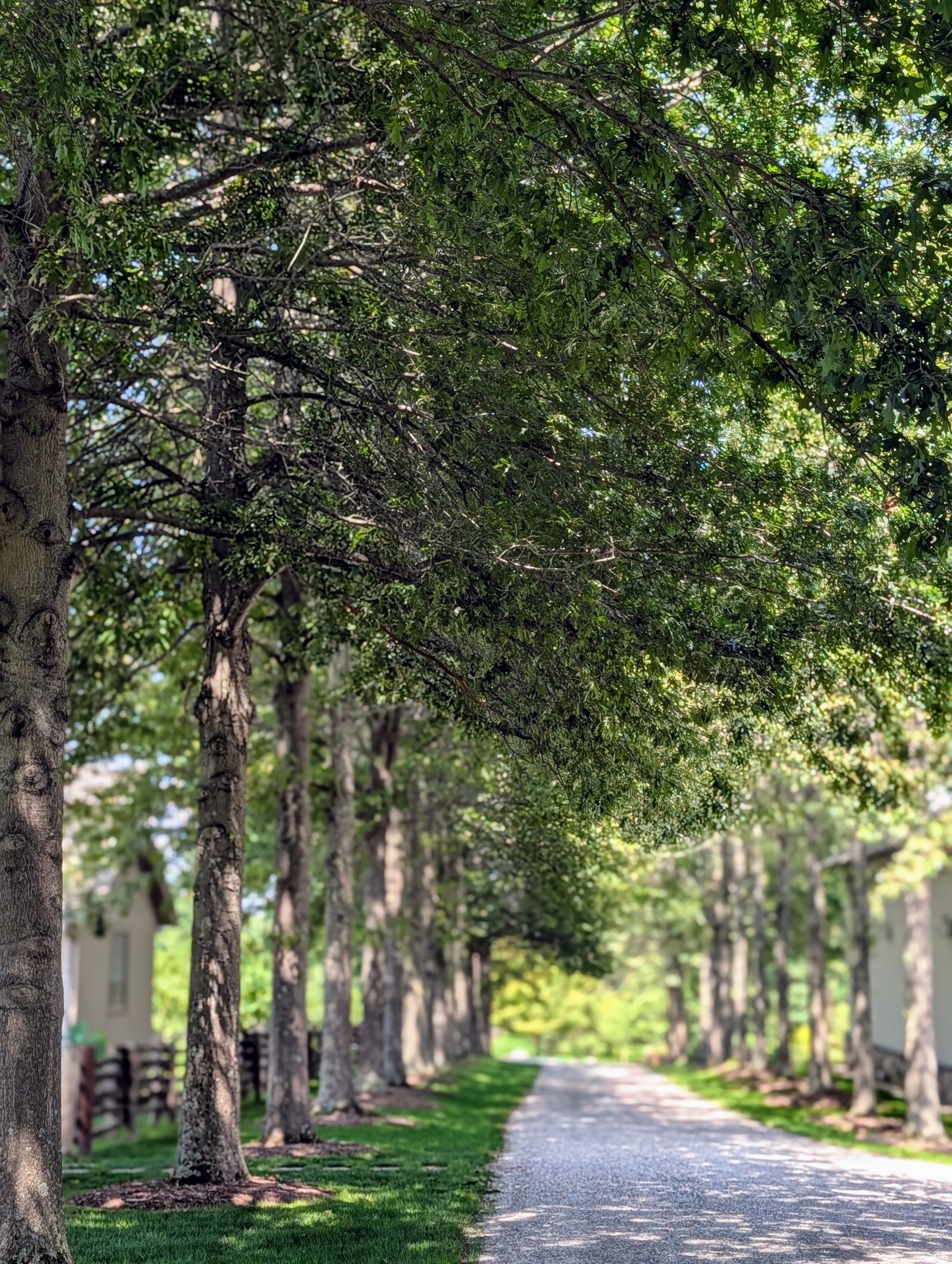
- This is my allée of pin oaks, Quercus palustris, which I planted soon after moving to my farm. At that time, they were just about six feet tall. Look at them now!
-
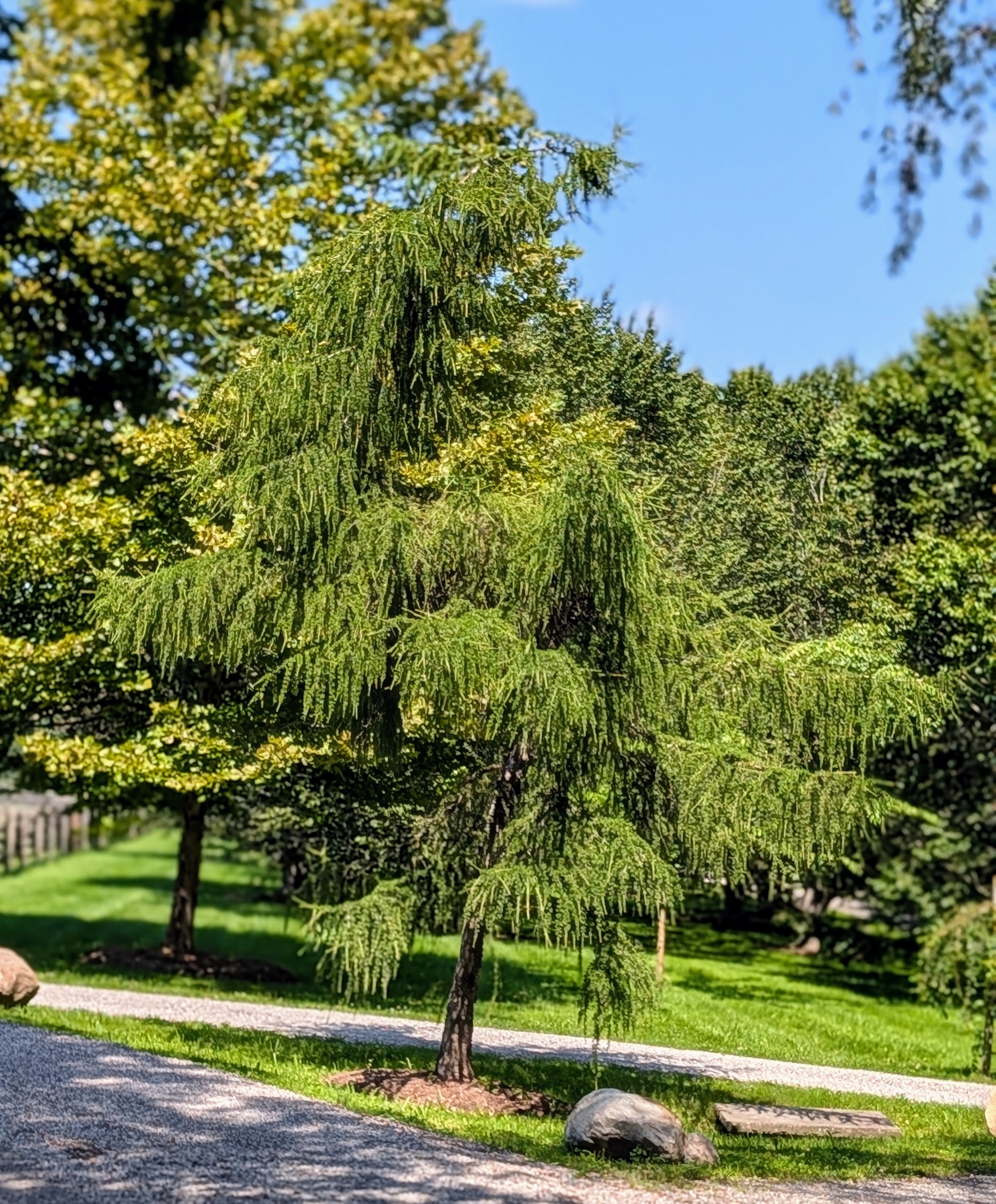
- This is a weeping larch, Larix decidua ‘Pendula’. It has bright lime green needles in spring, which turn gold before dropping in fall. I liked this specimen because of its growth habit – it almost looks like an “S.”
-
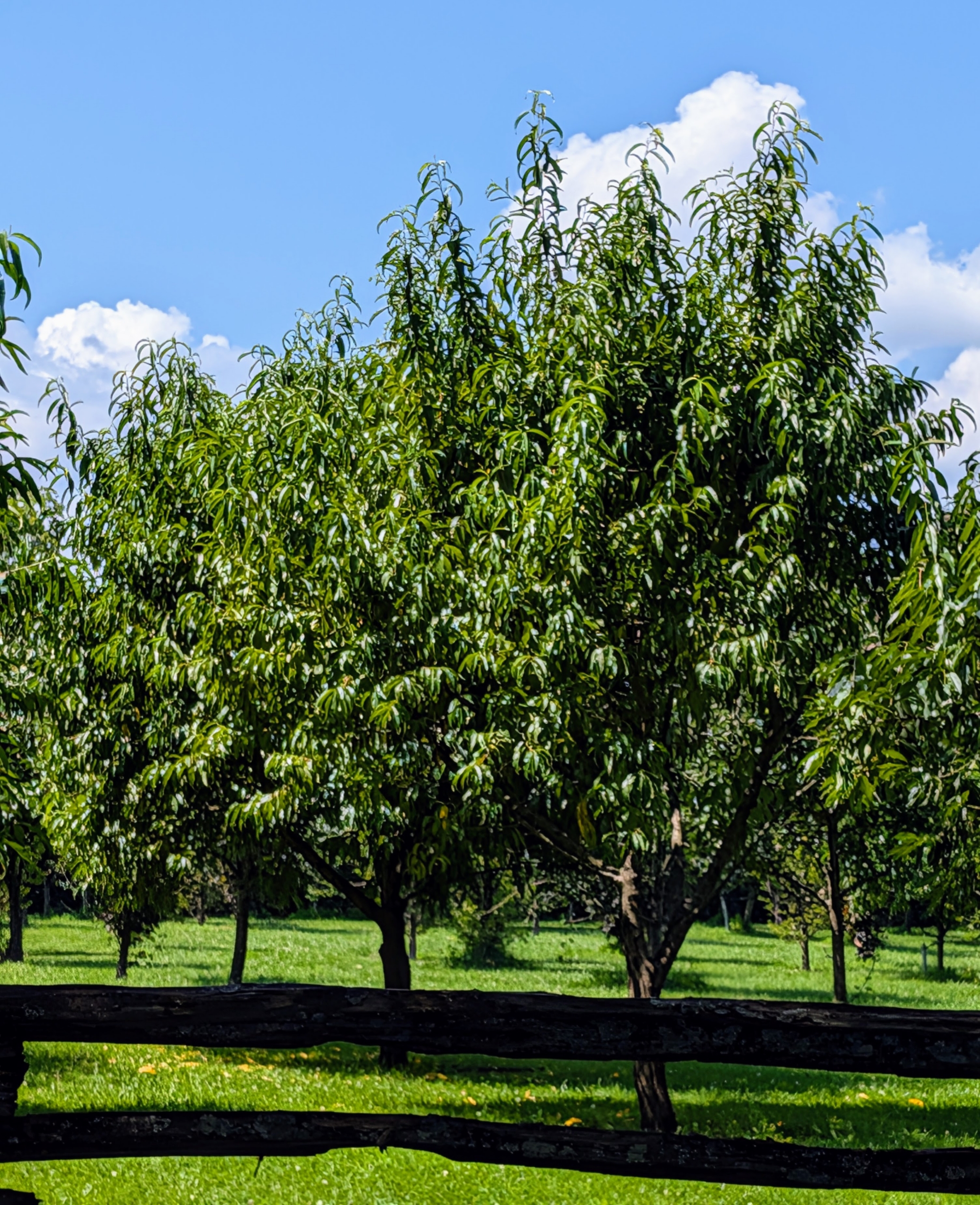
- It won’t be long before I’m enjoying the fruits from my orchard. My orchard surrounds three sides of my pool. I planted more than 200-fruit trees here, many of which started as bare-root cuttings.
-
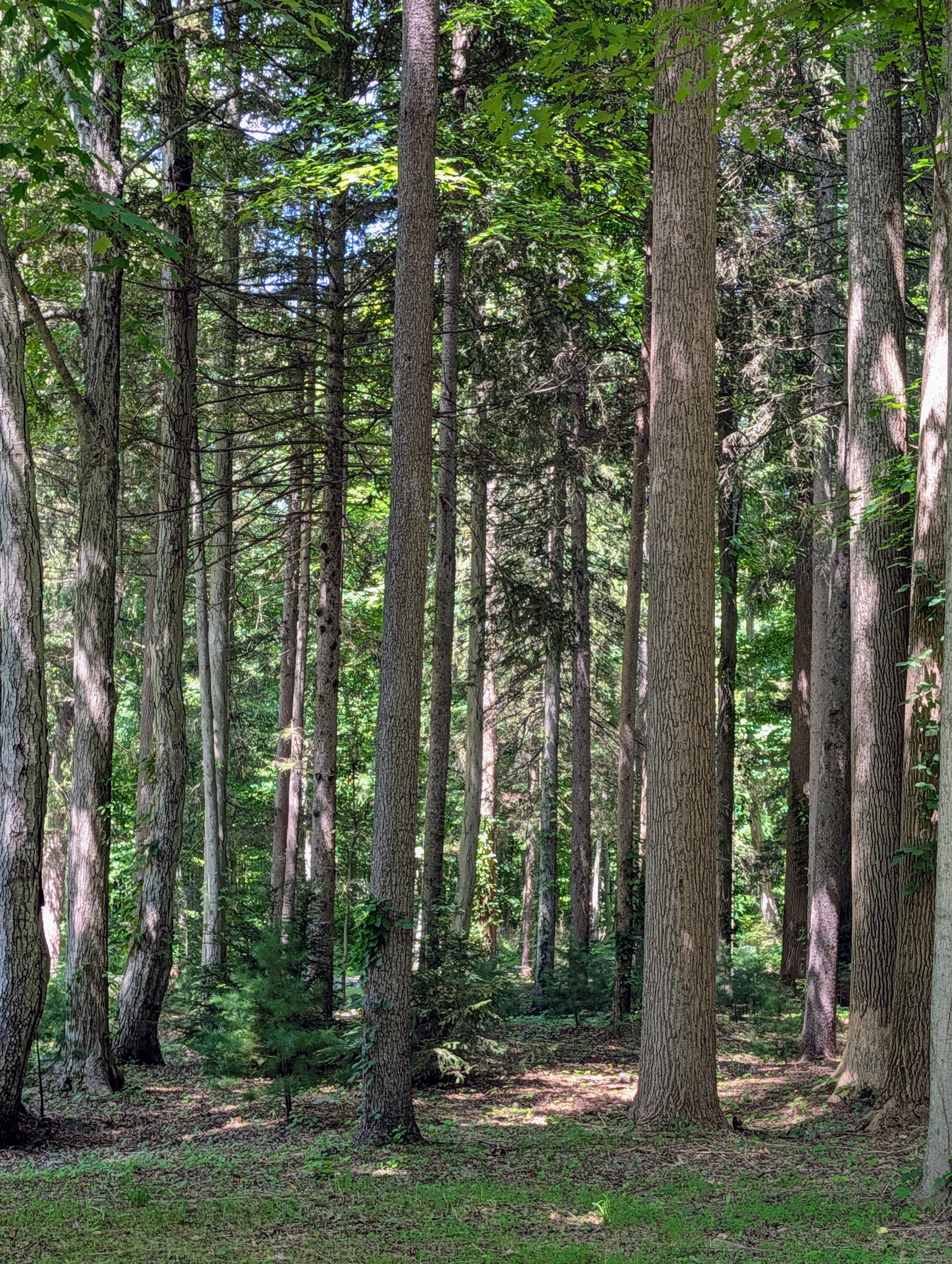
- And this is a view through the woodland, where I’ve also planted thousands of trees. I love how all the trees here look in the landscape and how they change through the seasons. Most importantly, I am proud to plant as many as I can for the environment – trees help combat climate change, provide habitat and food for birds and other animals, and release oxygen for us to live. I hope you can enjoy and appreciate the many trees where you are.
 Martha Pins


 Martha Tweets

