
A New Bed of Roses
Sometimes a garden needs a complete redesign — a fresh start that revitalizes the space and makes room for new, young plants.
This week, I decided to transform the large garden bed behind my farm’s vegetable greenhouse. The space had previously been used for growing dahlias, but I thought it would be the perfect location for a beautiful collection of roses, including my own Martha Stewart Hybrid Tea Rose. The bed receives full sun and is protected from strong winds, making it an ideal location. My gardeners and outdoor grounds crew removed the old plants, tilled and amended the soil, and then started planting.
Here are some photos, enjoy.
-

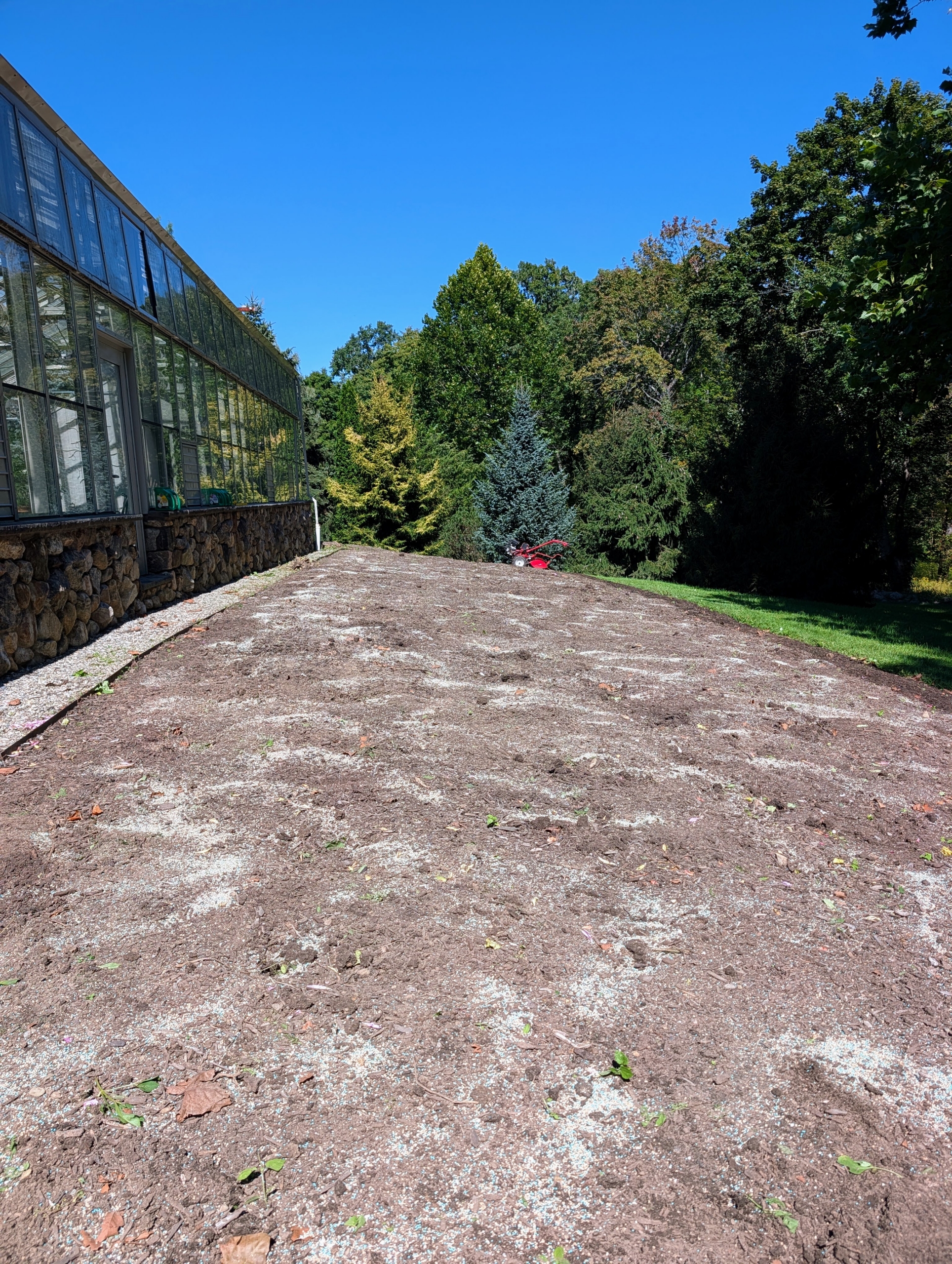
- This bed was once filled with dahlias. They had all served me well over the years, producing many beautiful and colorful blooms, but they were aging and the garden needed a good overhaul. Here it is cleared of plants and sprinkled with a generous amount of fertilizer.
-
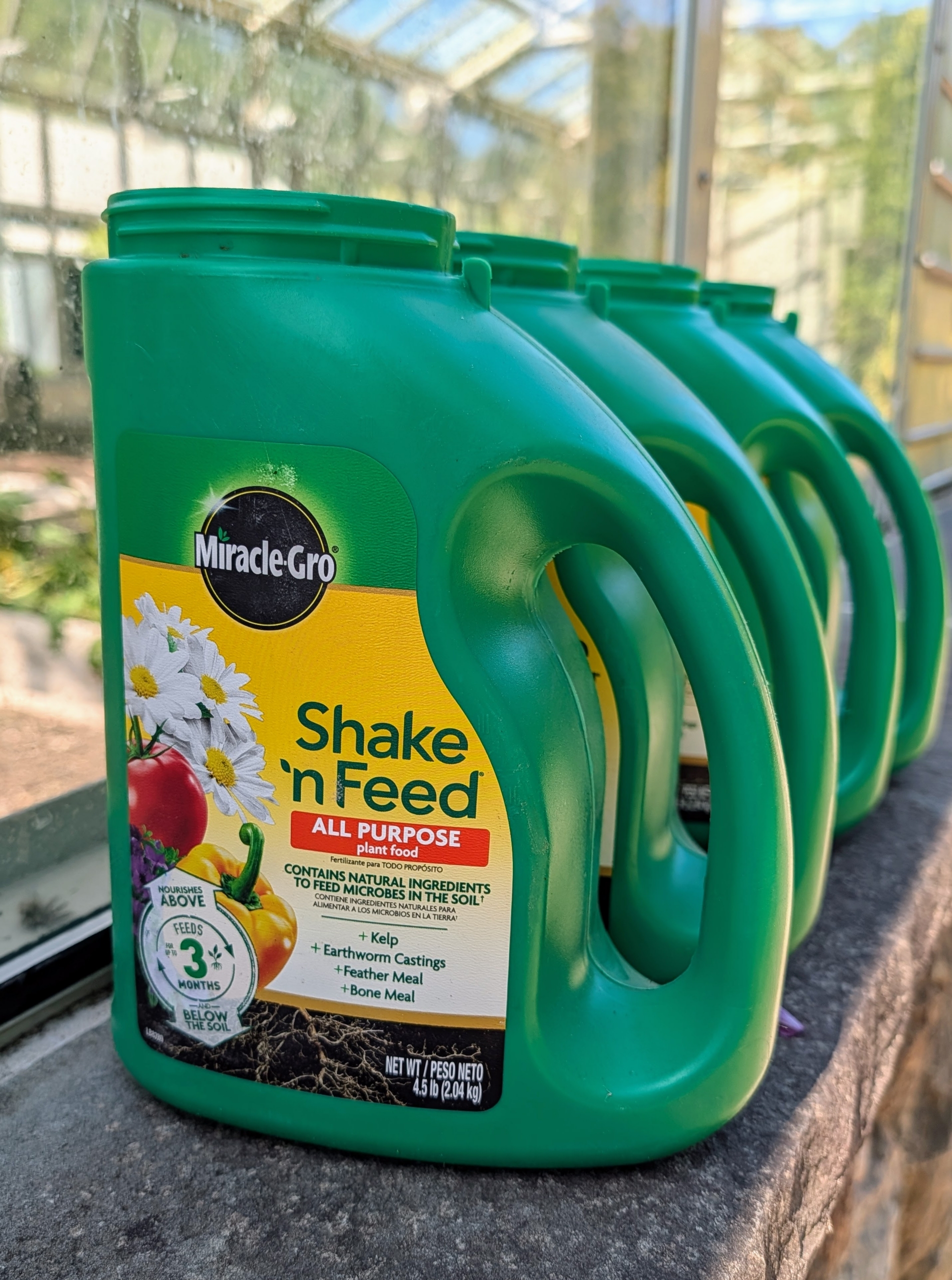
- Fertilizer replaces lost nutrients, so levels are acceptable for healthy growth. I use Miracle-Gro Shake ‘n Feed All Purpose Plant Food, a slow-release fertilizer formulated to nourish a wide variety of plants for up to three months.
-
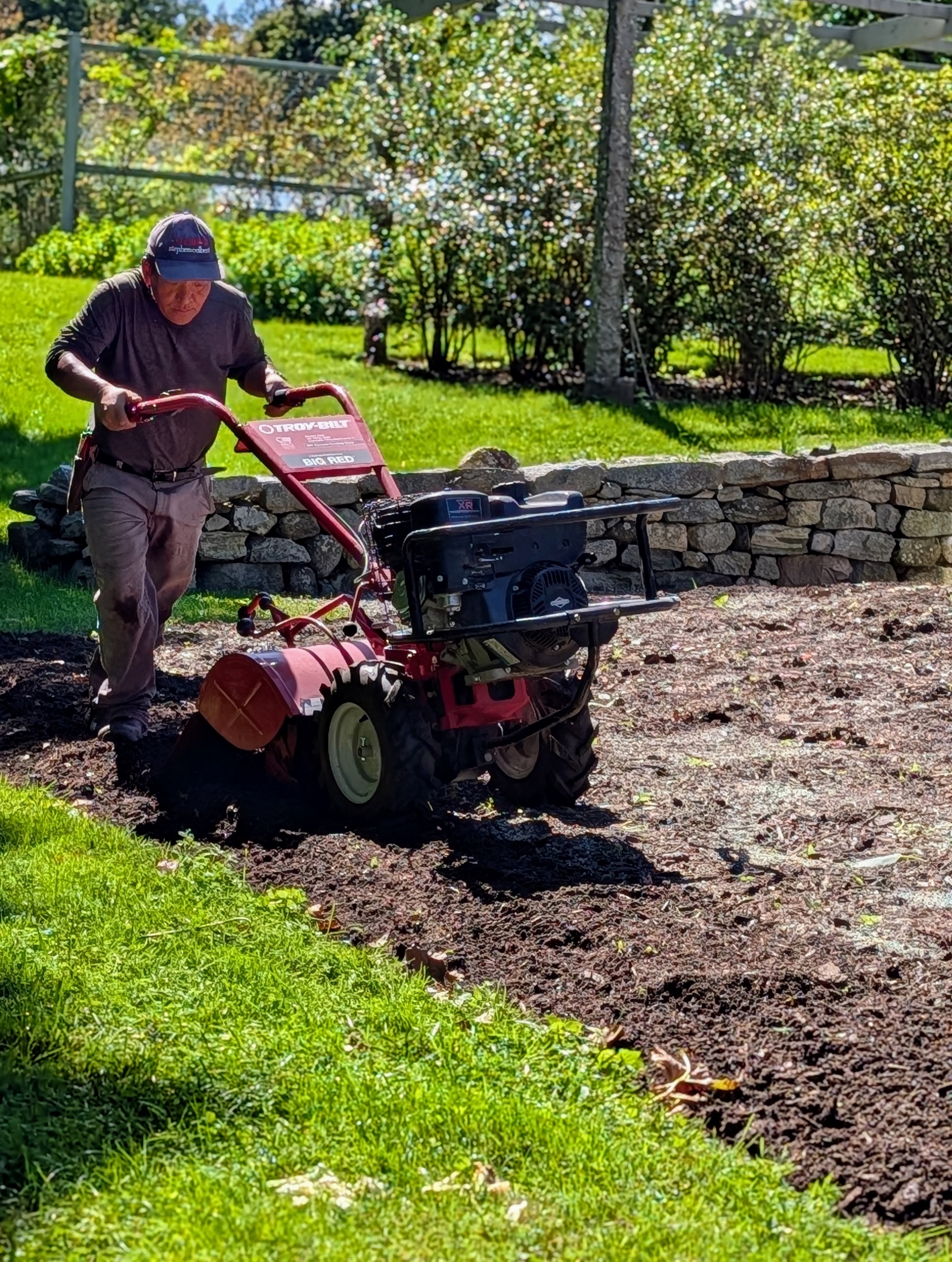
- Rototilling is one method of turning up the soil before planting. It also helps to loosen any other root balls that may have been left deep in the bed. I always rototill the earth before planting a new garden.
-
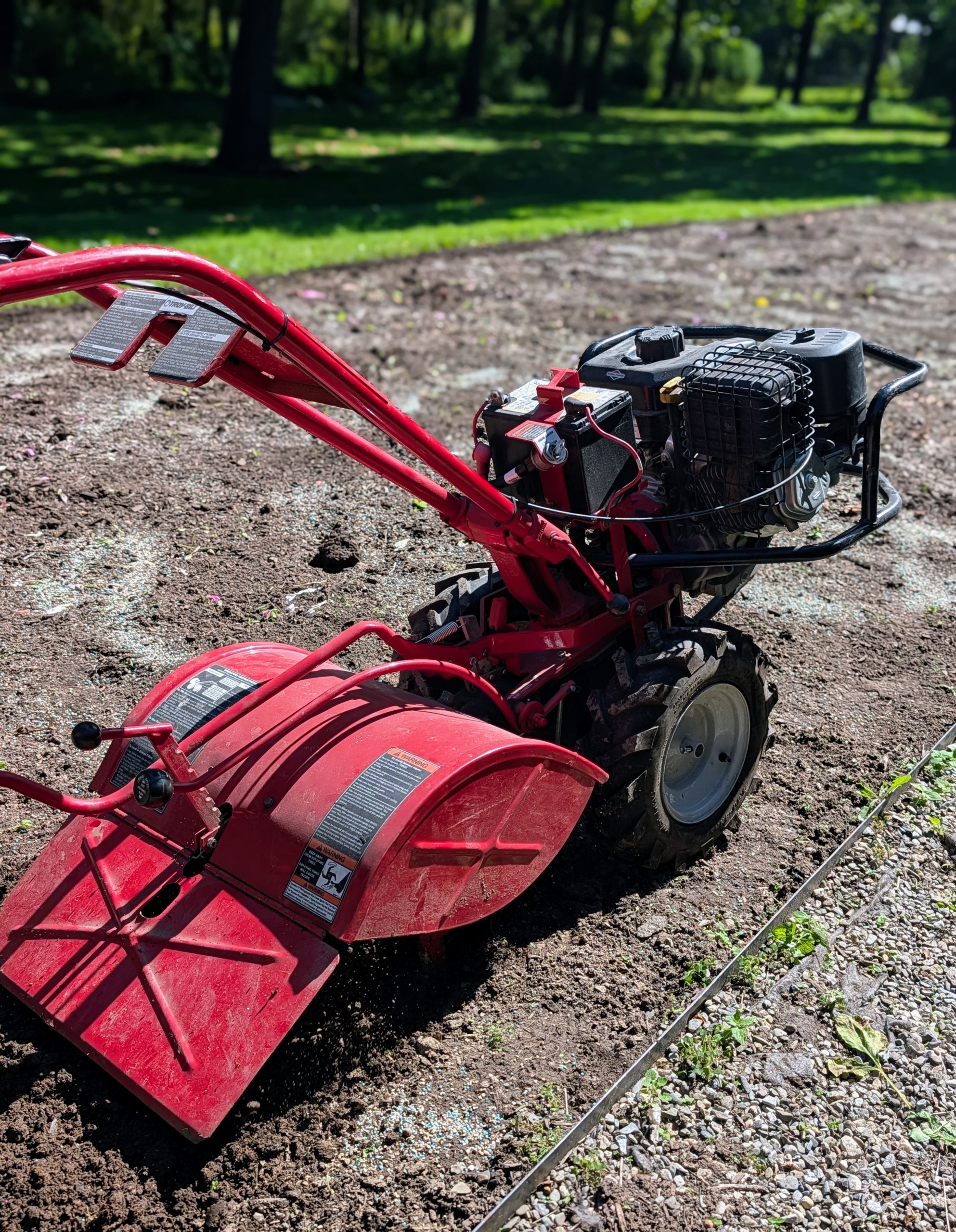
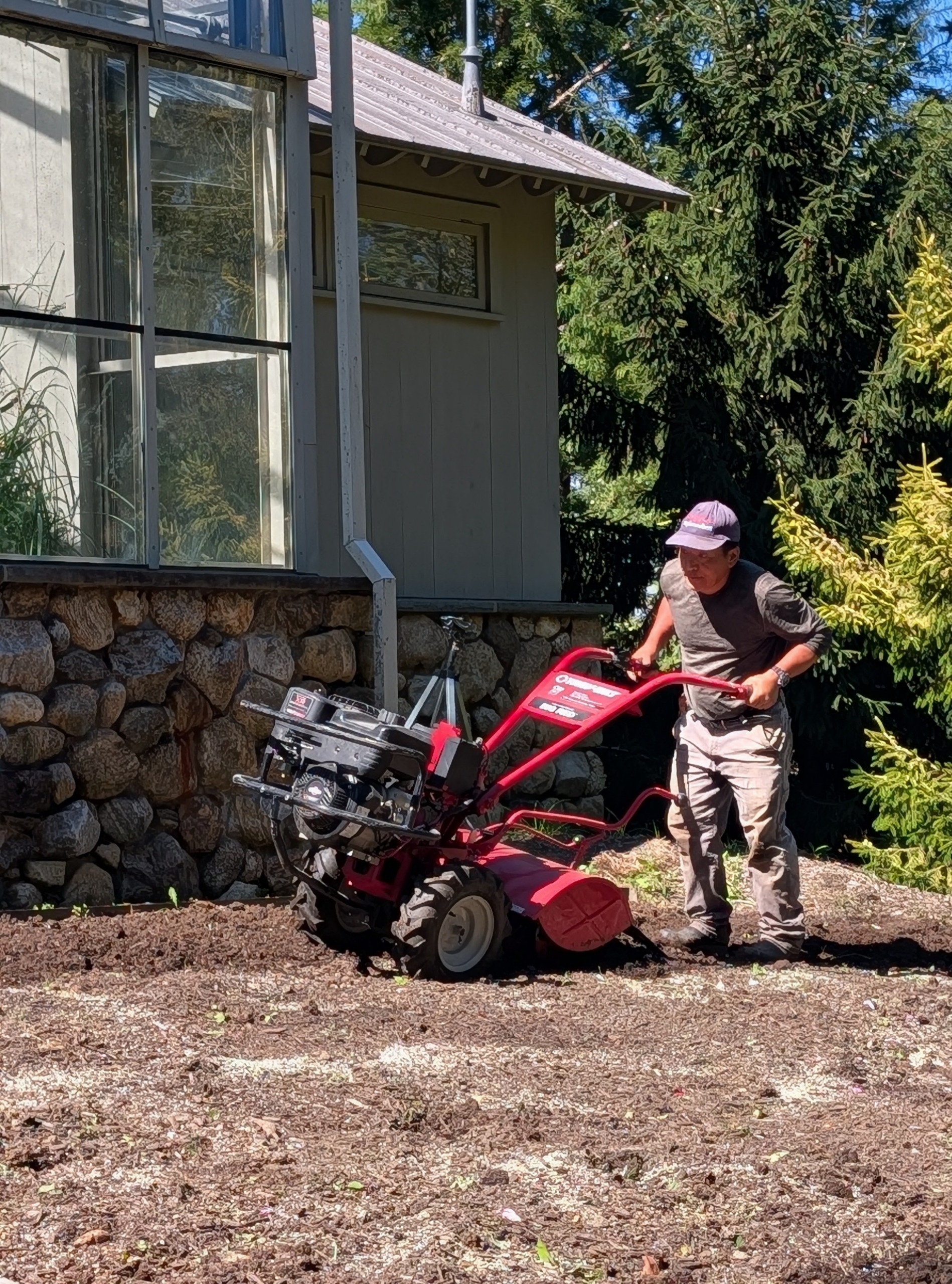
- As Phurba moves, he makes sure to overlap his passes slightly, so every bit of soil is covered. Tilling also helps to level the ground as it turns over the soil.
-
- The machine is set to till the soil at about six to eight inches deep. It is not a heavy piece of equipment, but does need to be pushed slowly through the soil to work it well.
-
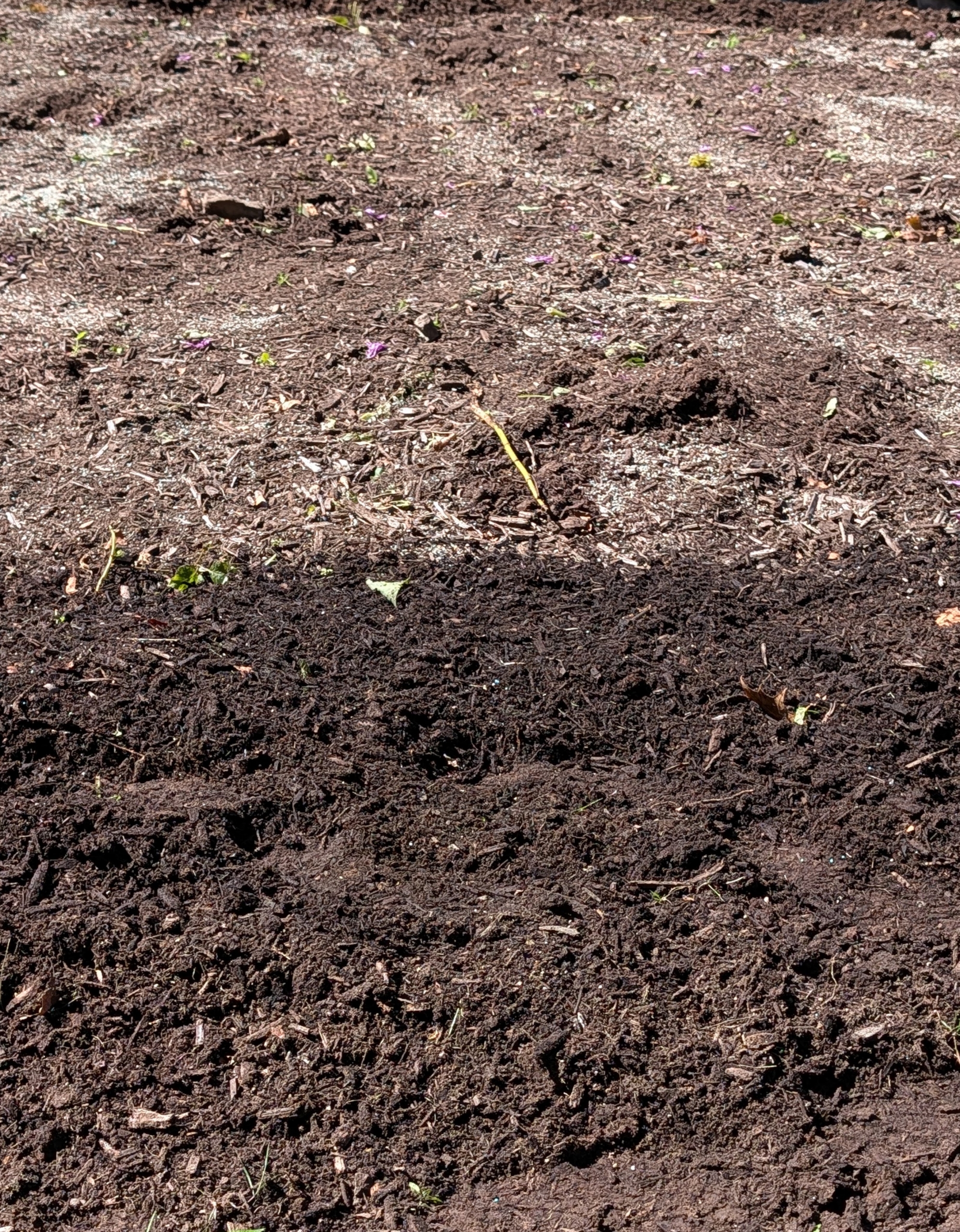
- Here, one can see the tilled dark, rich soil. In the foreground is nutrient-rich soil that has been tilled. In the back is soil that Phurba still has to go over.
-
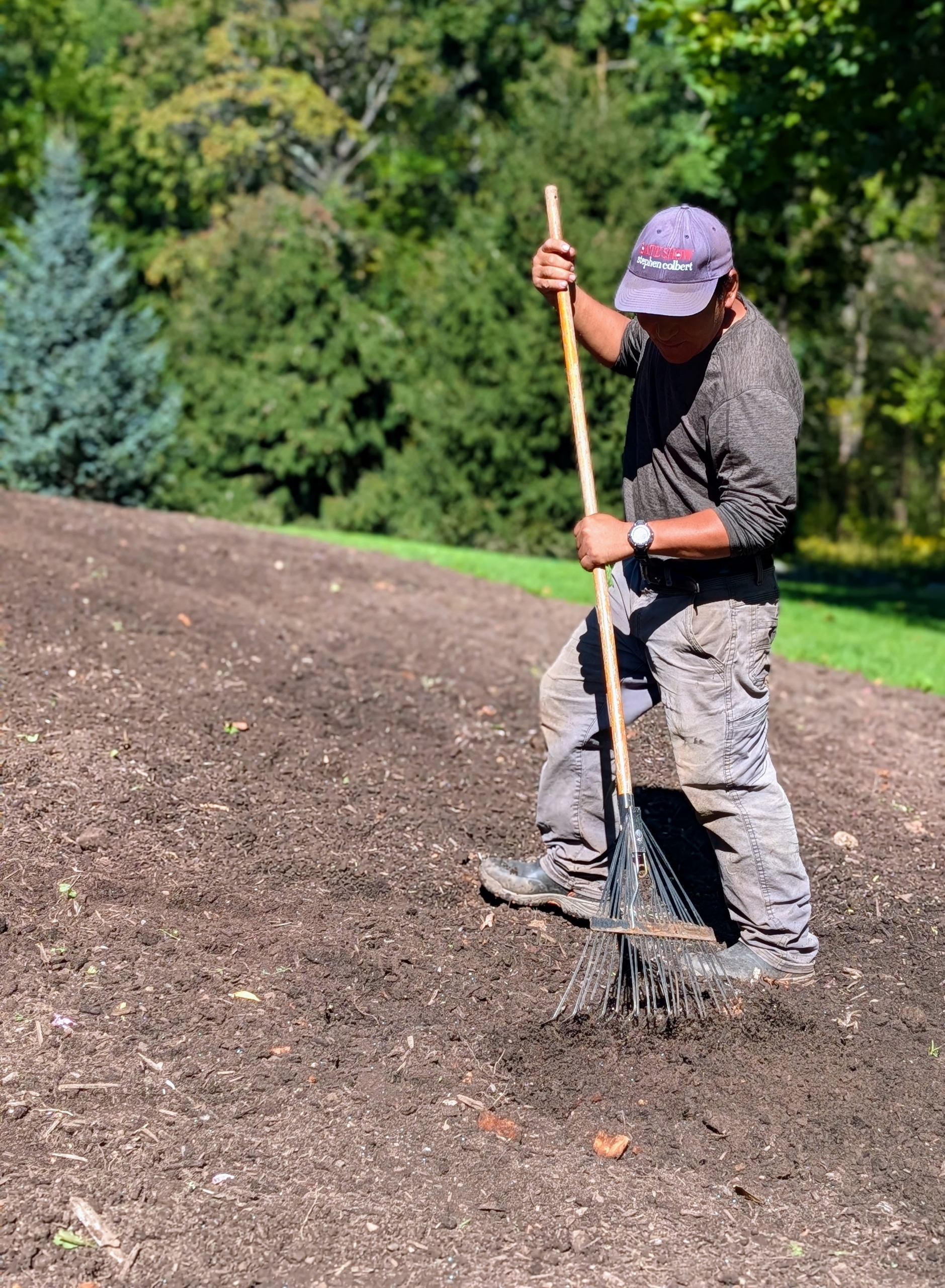
- Phurba goes over the entire space with a long hard rake to level the bed.
-
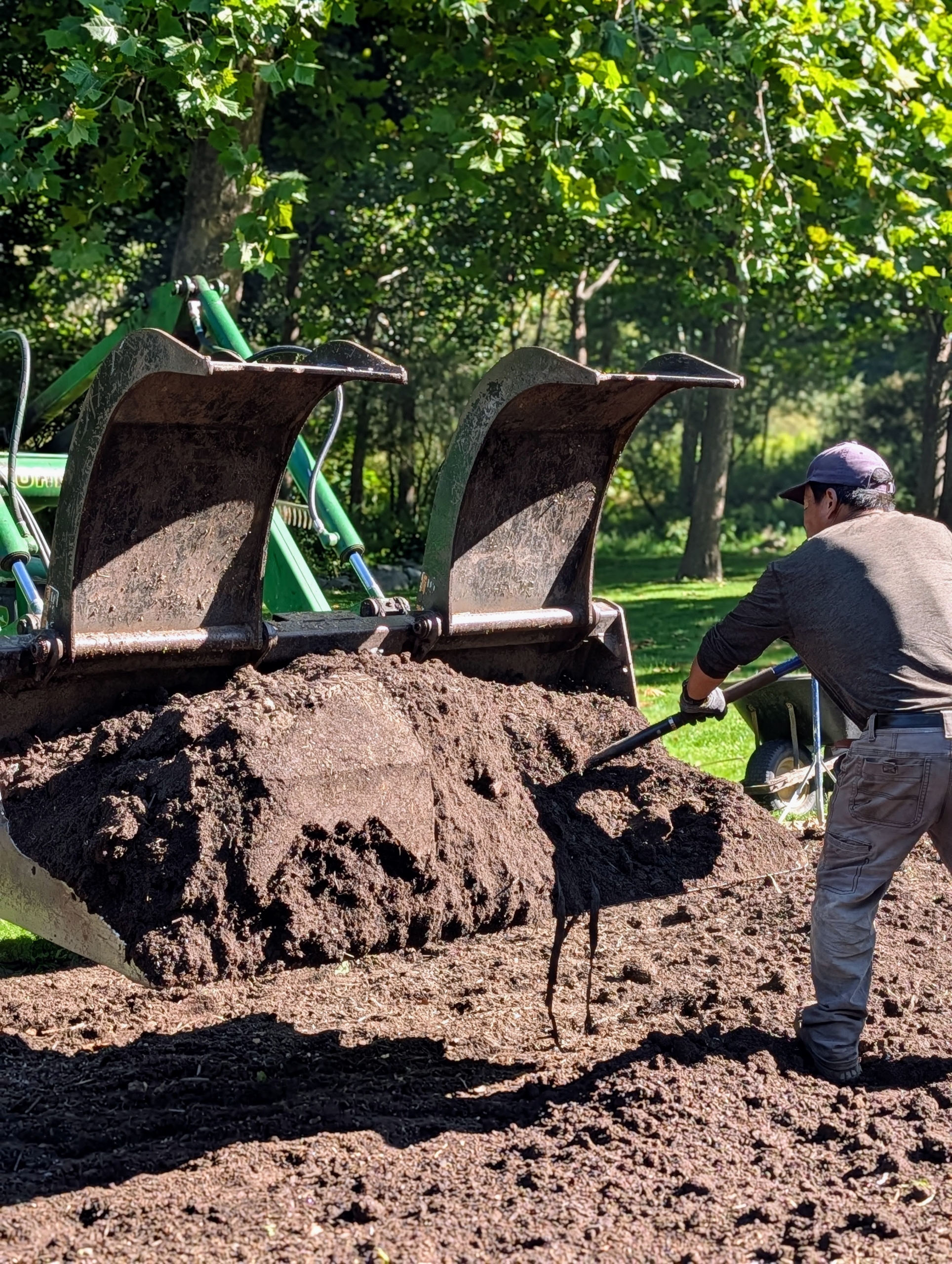
- The soil is amended with compost. I am so proud of my compost that is made right here at my farm. Quality compost provides nutrients, improves soil structure, and supports beneficial microorganisms.
-
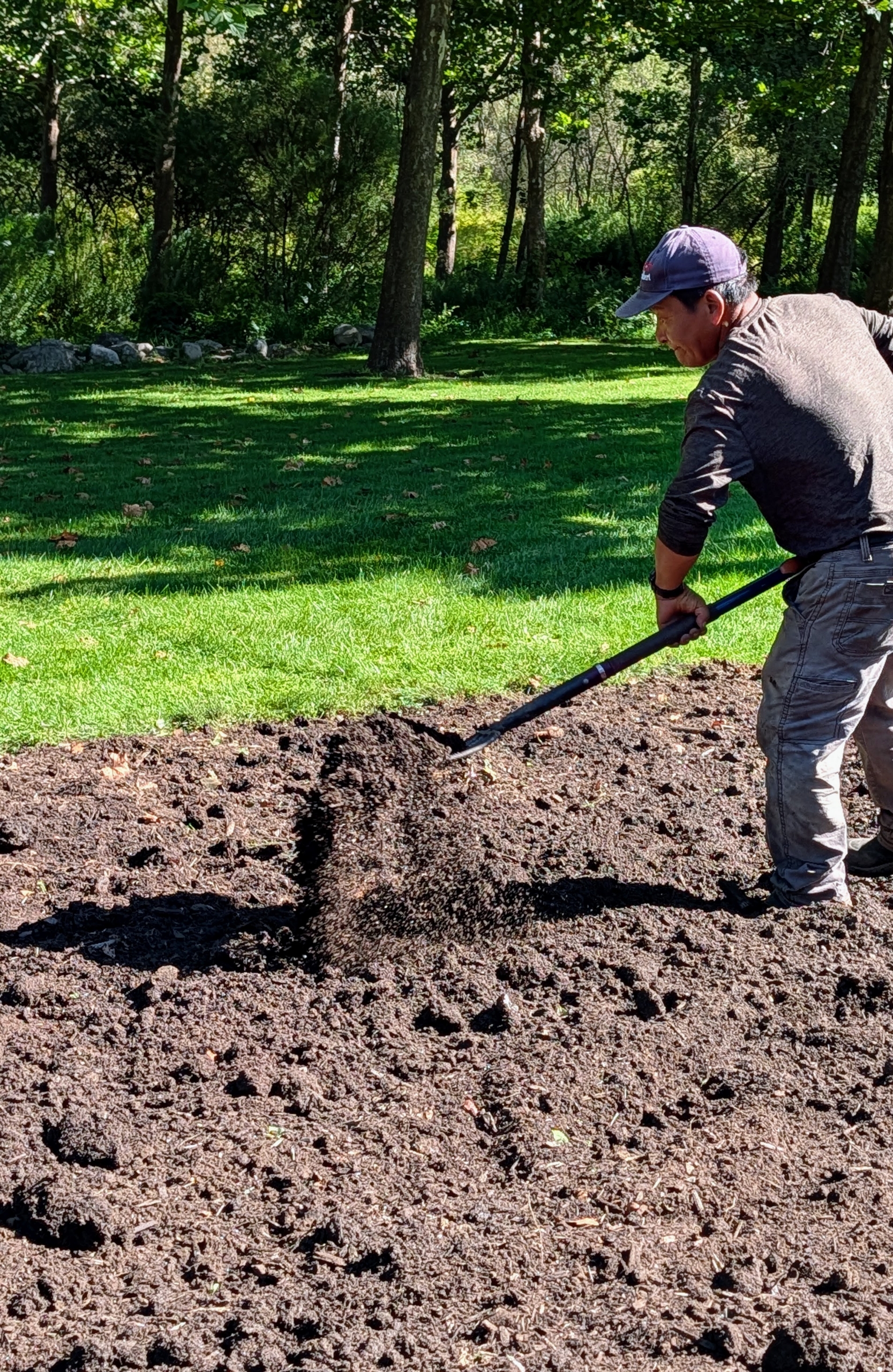
- Phurba uses a garden pitchfork to lift and drop the compost across the garden.
-
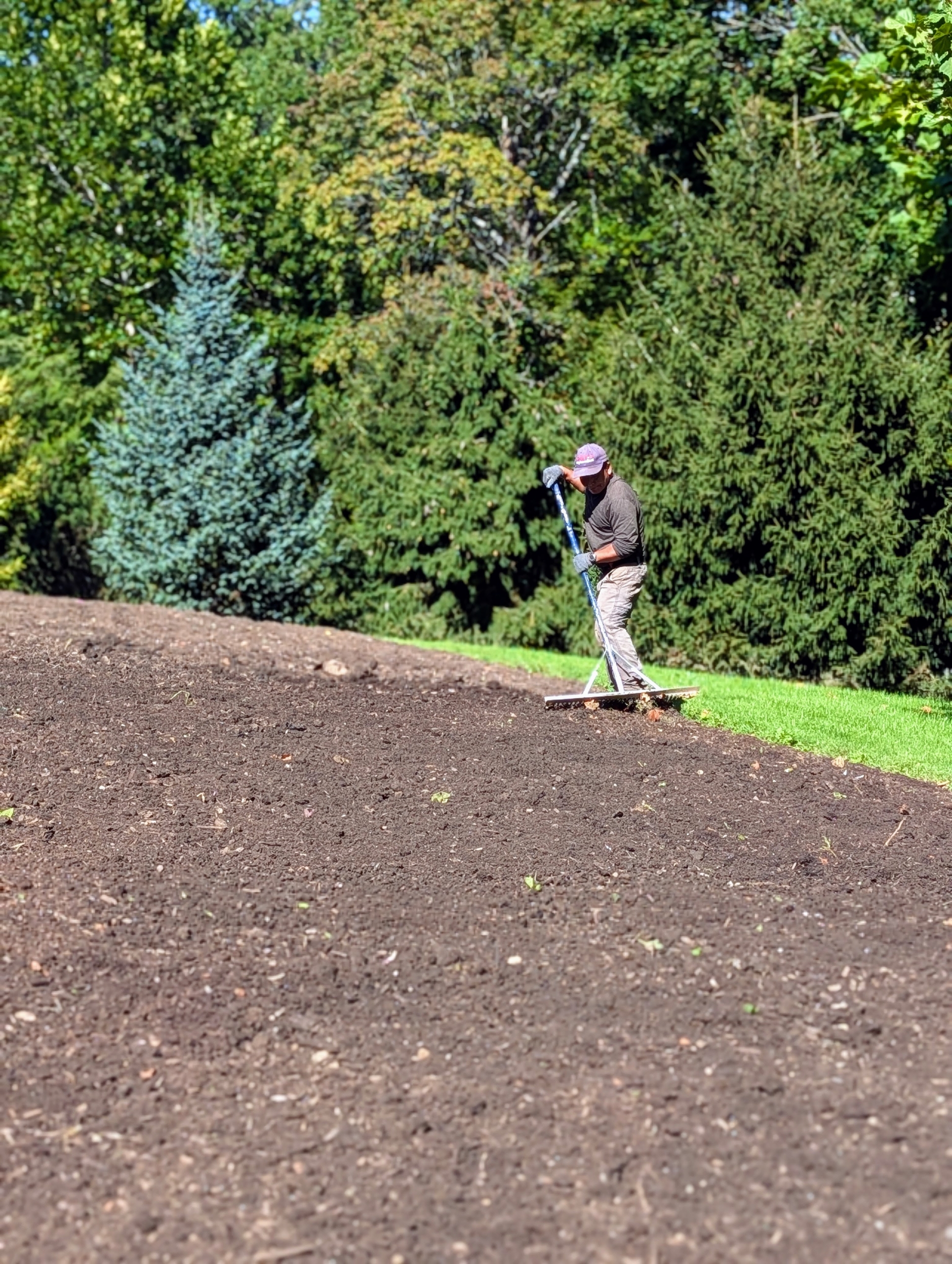
- Then he uses a hard rake, or bow rake, to break up any soil clumps and spread it evenly.
-
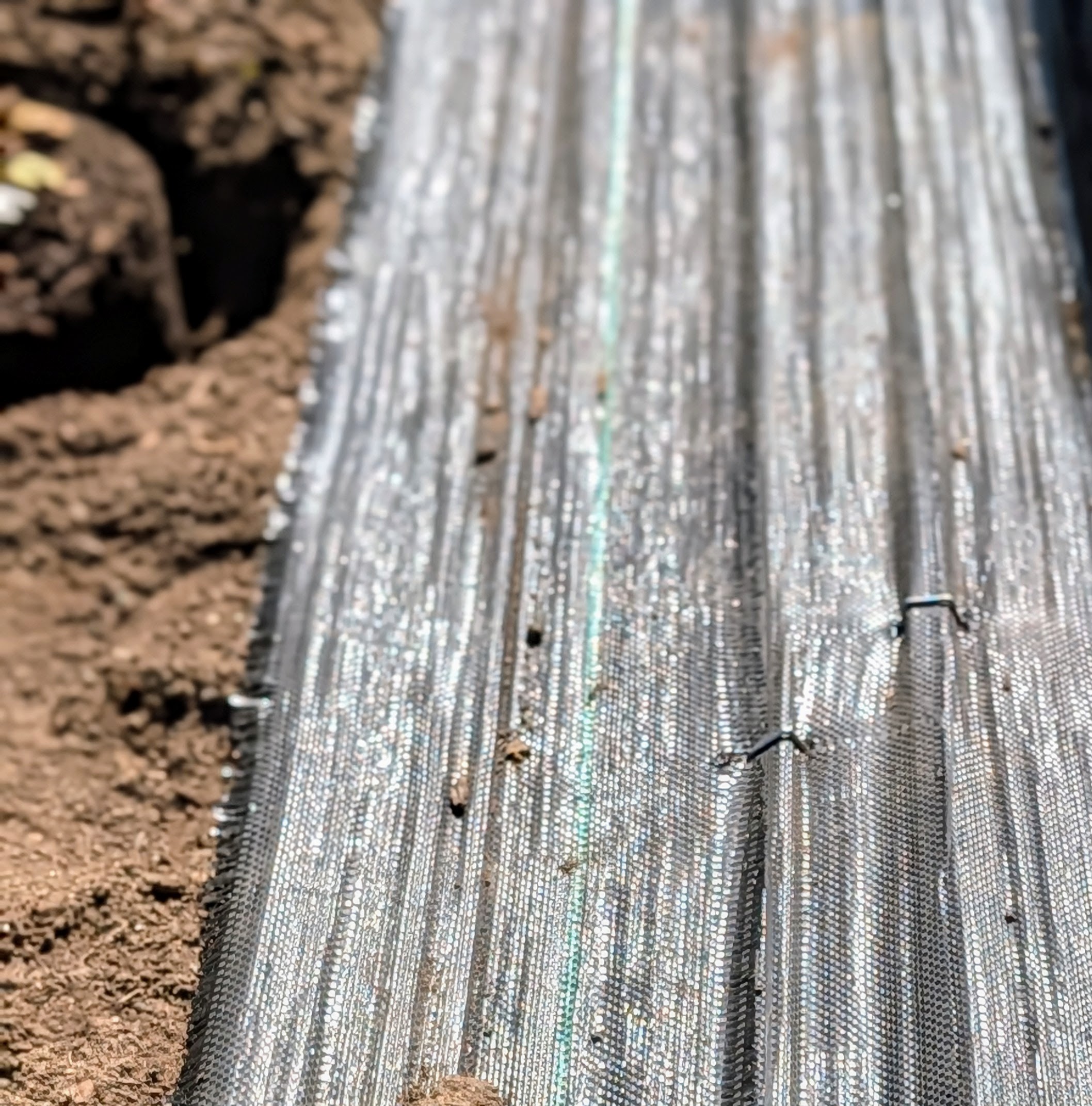
- Industrial weed cloth is placed around the perimeter of the bed to keep pesky weeds from growing. I like to use strong landscape staples in the center and edges to keep it in place.
-
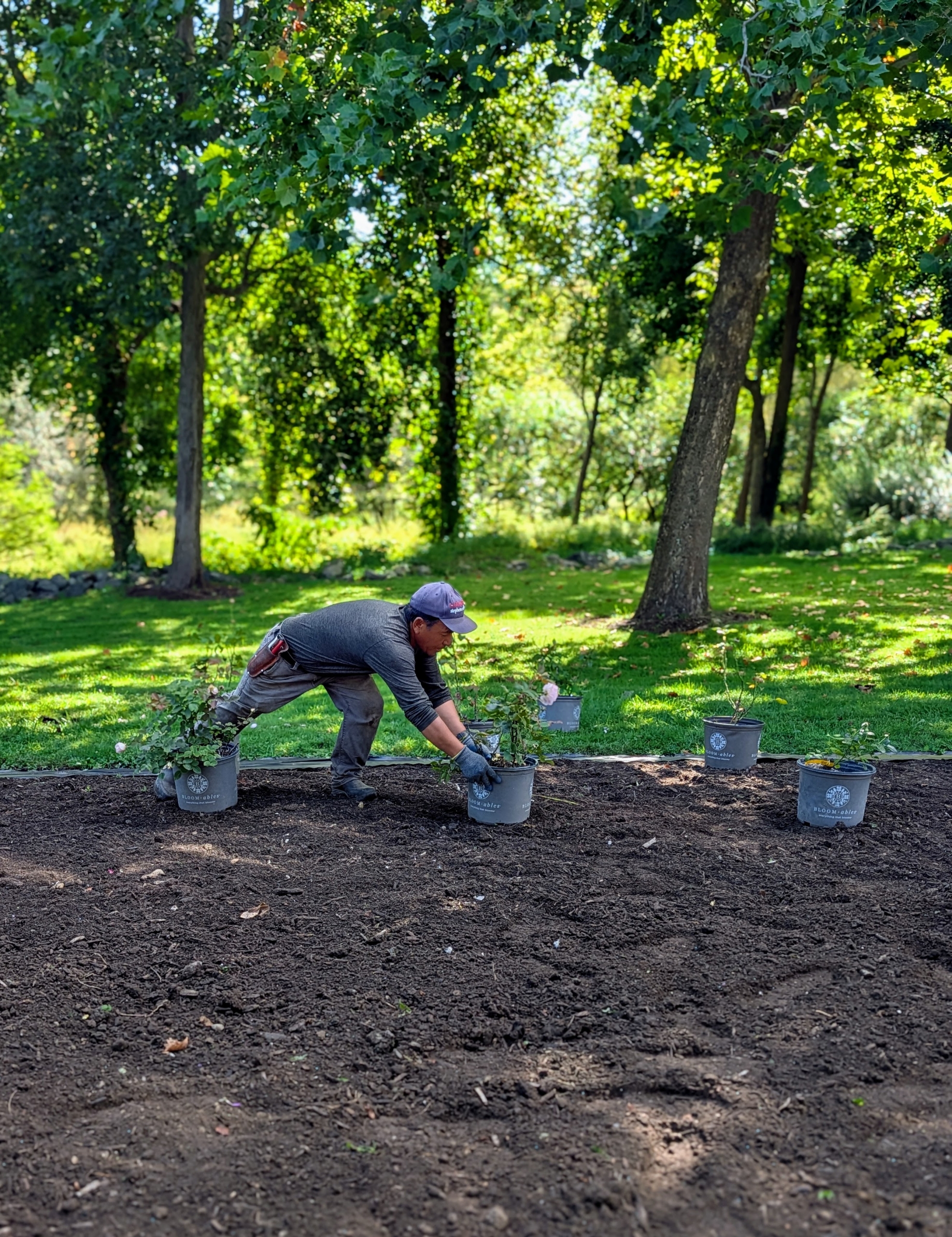
- The roses are selected and brought to the garden. And then under Ryan’s direction, Phurba places the potted roses where they need to be.
-
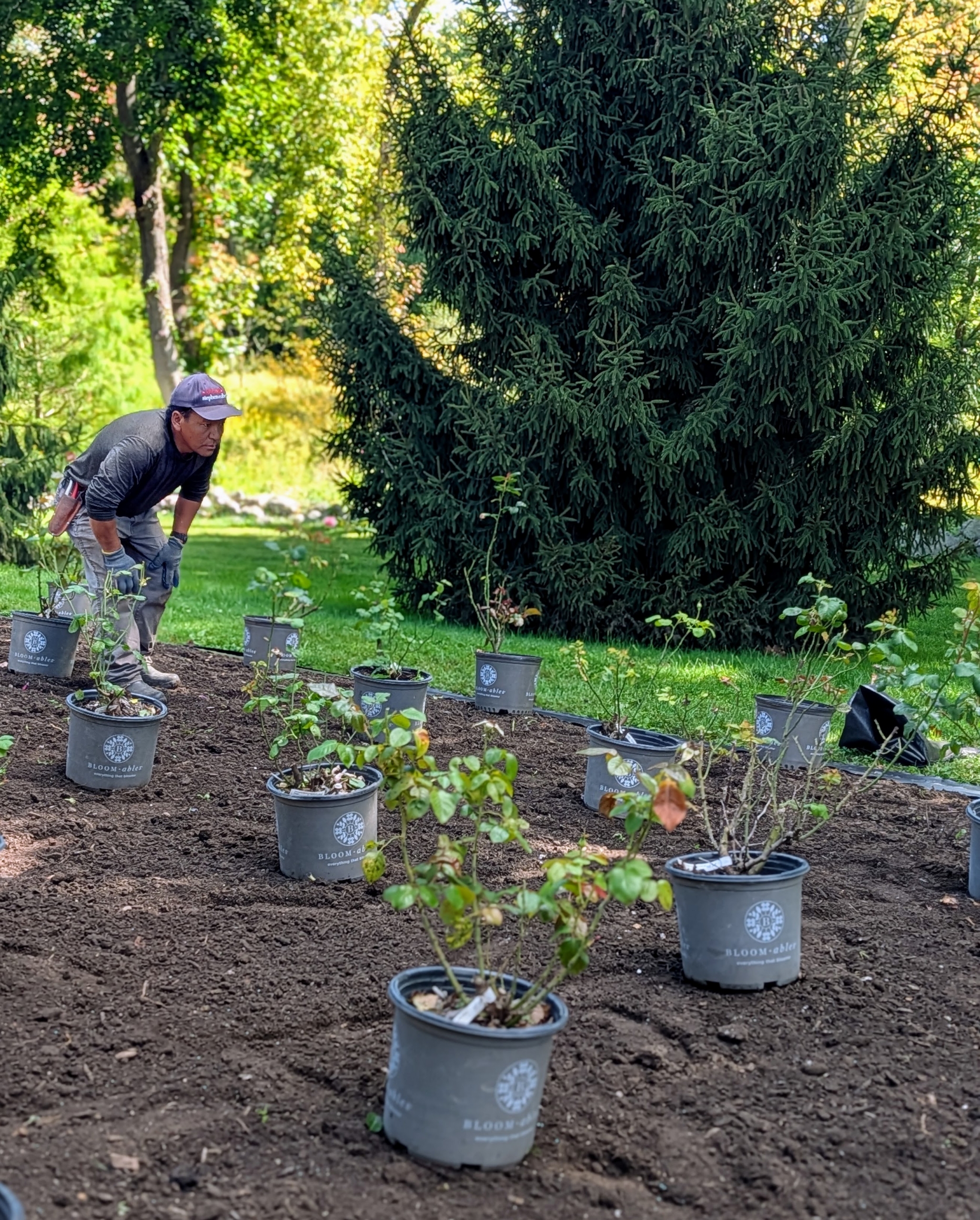
- I wanted the plants in perfectly straight rows.
-
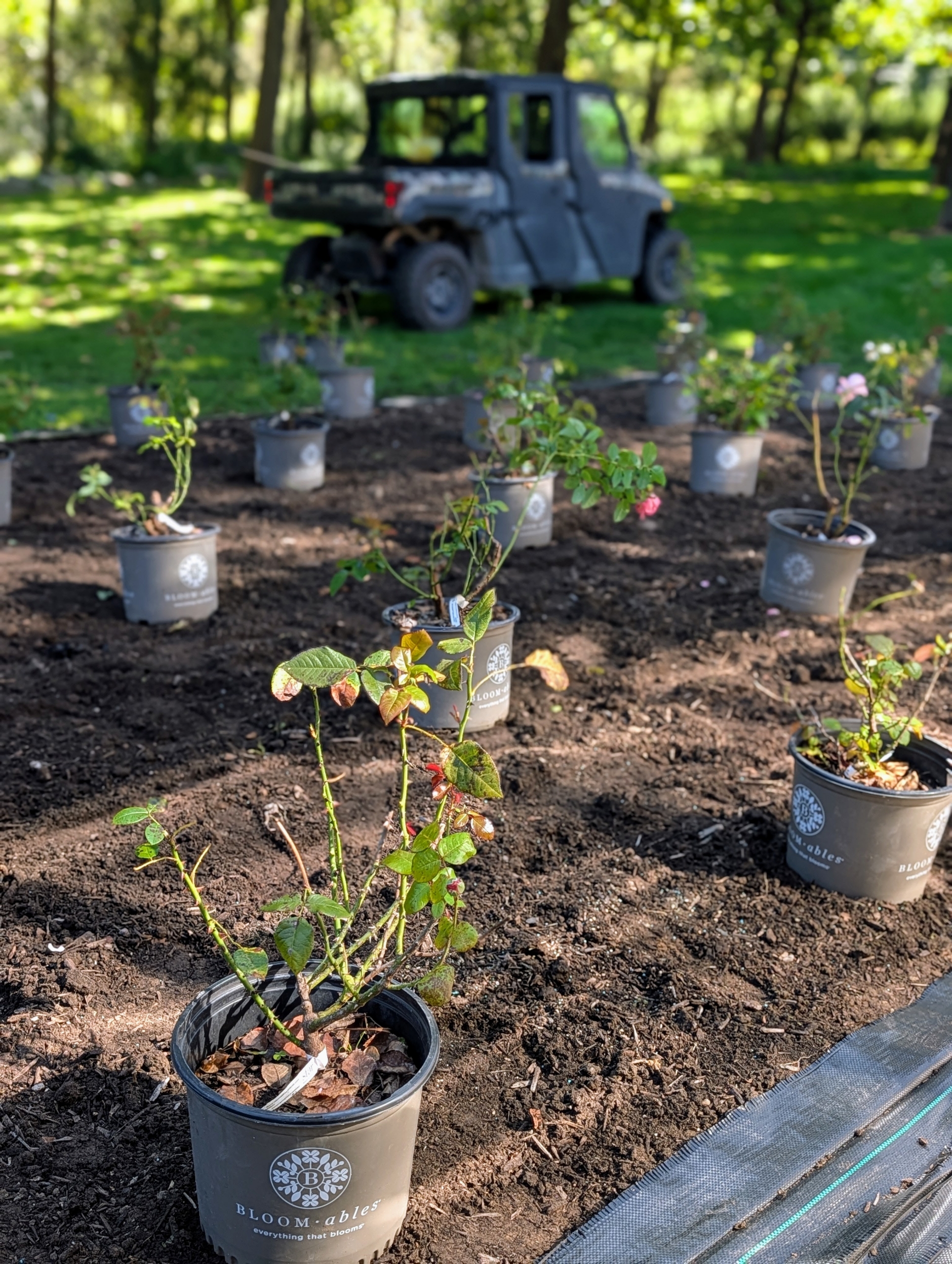
- Every row is checked multiple times from every angle before any plant is removed from its pot.
-
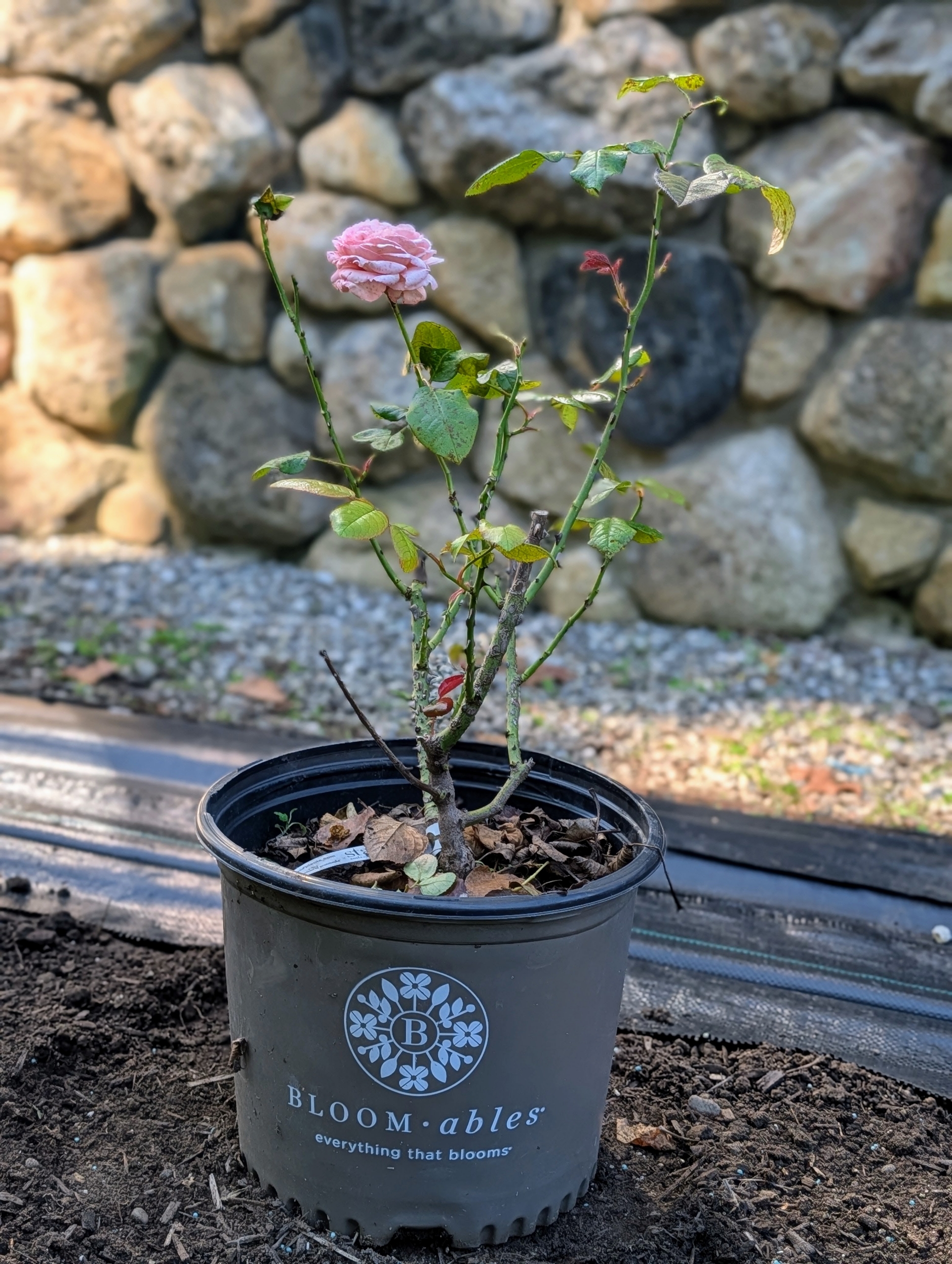
- These roses are from Star Roses and Plants, a company of brands that focuses on breeding and introducing specimens offering longer-lasting, disease resistant blooms. They came to me as bare-roots and have developed nicely over the last year. Some of the varieties choses for this garden are ‘Raspberry Cupcake,’ ‘Bolero,’ ‘Apricot Candy,’ ‘Ball Gown Romantica,’ ‘Beverly,’ ‘Coco Loco,’ ‘Top Cream,’ ‘Sunbelt Savannah,’ ‘Princesse Charlene de Monaco,’ ‘Francis Meilland,’ and ‘Liv Tyler.’ Around the garden, I wanted my rose, the Martha Stewart Hybrid Tea Rose, which when in bloom shows off more than 100 lush pink to apricot petals and a citrus-honeysuckle scent.
-
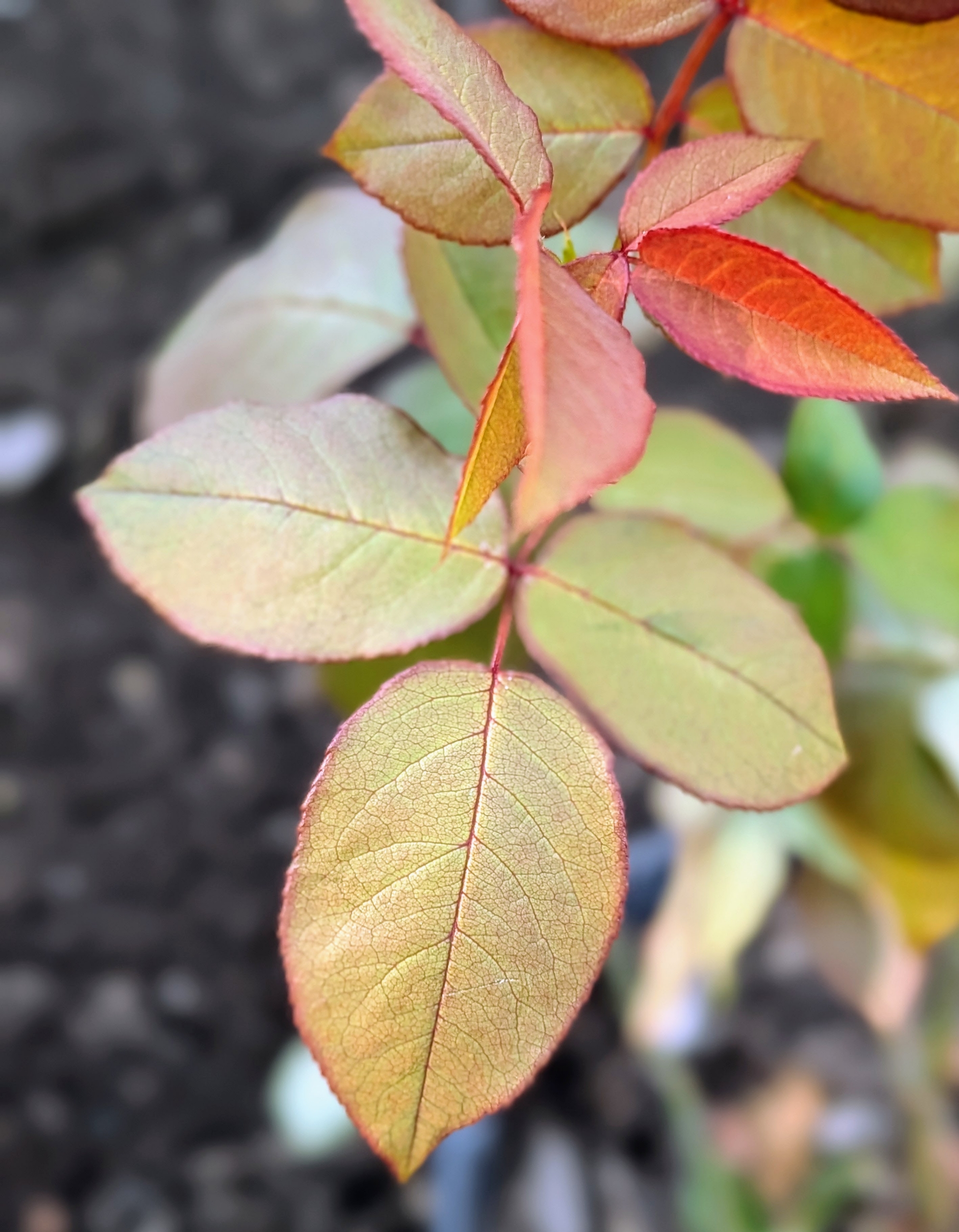
- Rose leaves are borne alternately on the stem. In most species, they are about two to five inches long, pinnate, with at least three leaflets and basal stipules. The leaflets also usually have a serrated margin. and remember, rose stems are often armed with sharp prickles, not thorns. A prickle can be easily broken off the plant because it is really a feature of the outer layers rather than part of the wood, like a thorn.
-
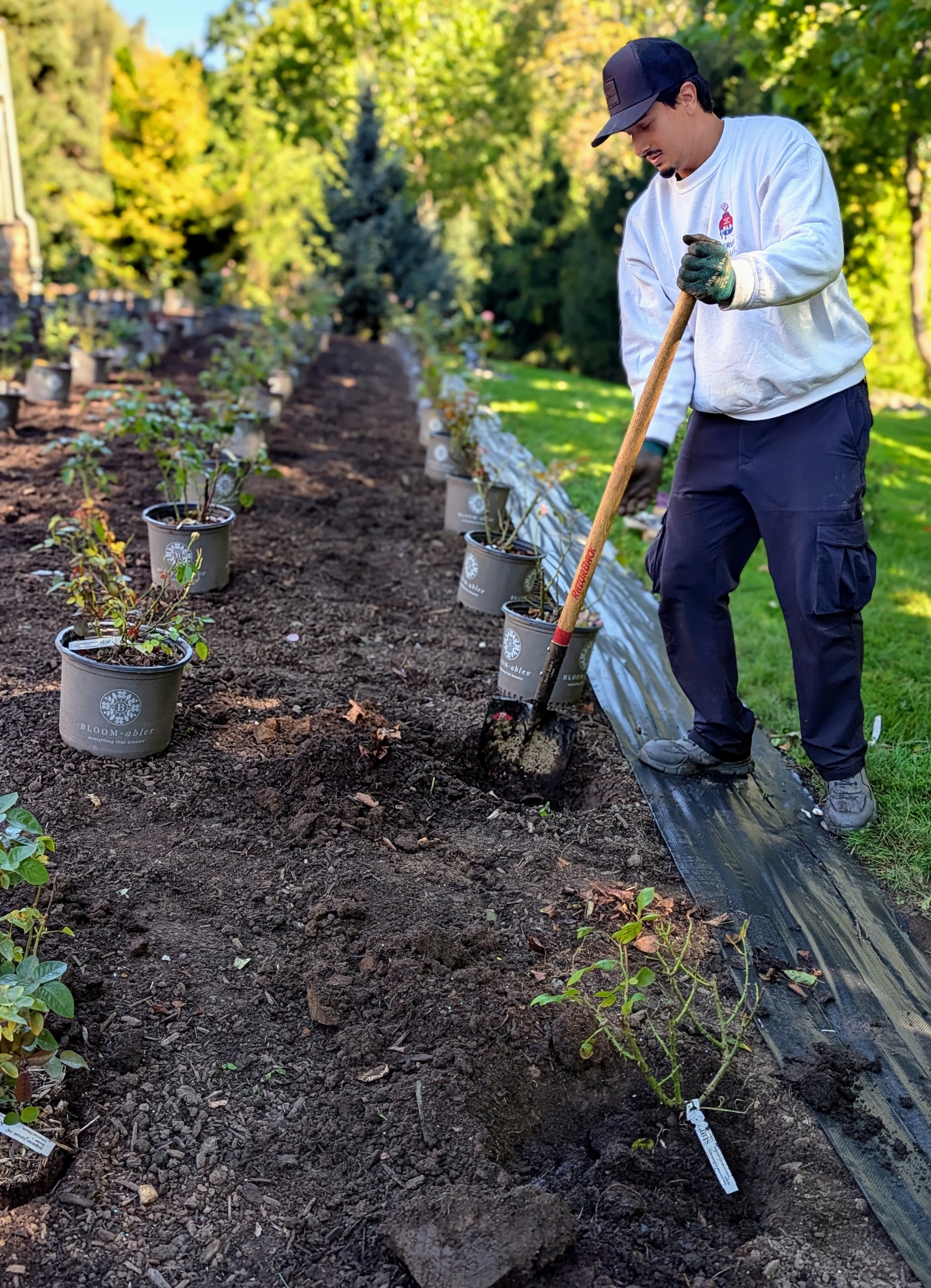
- Nearly 100 roses will be planted here when complete. Matthew begins digging the holes under each pot.
-
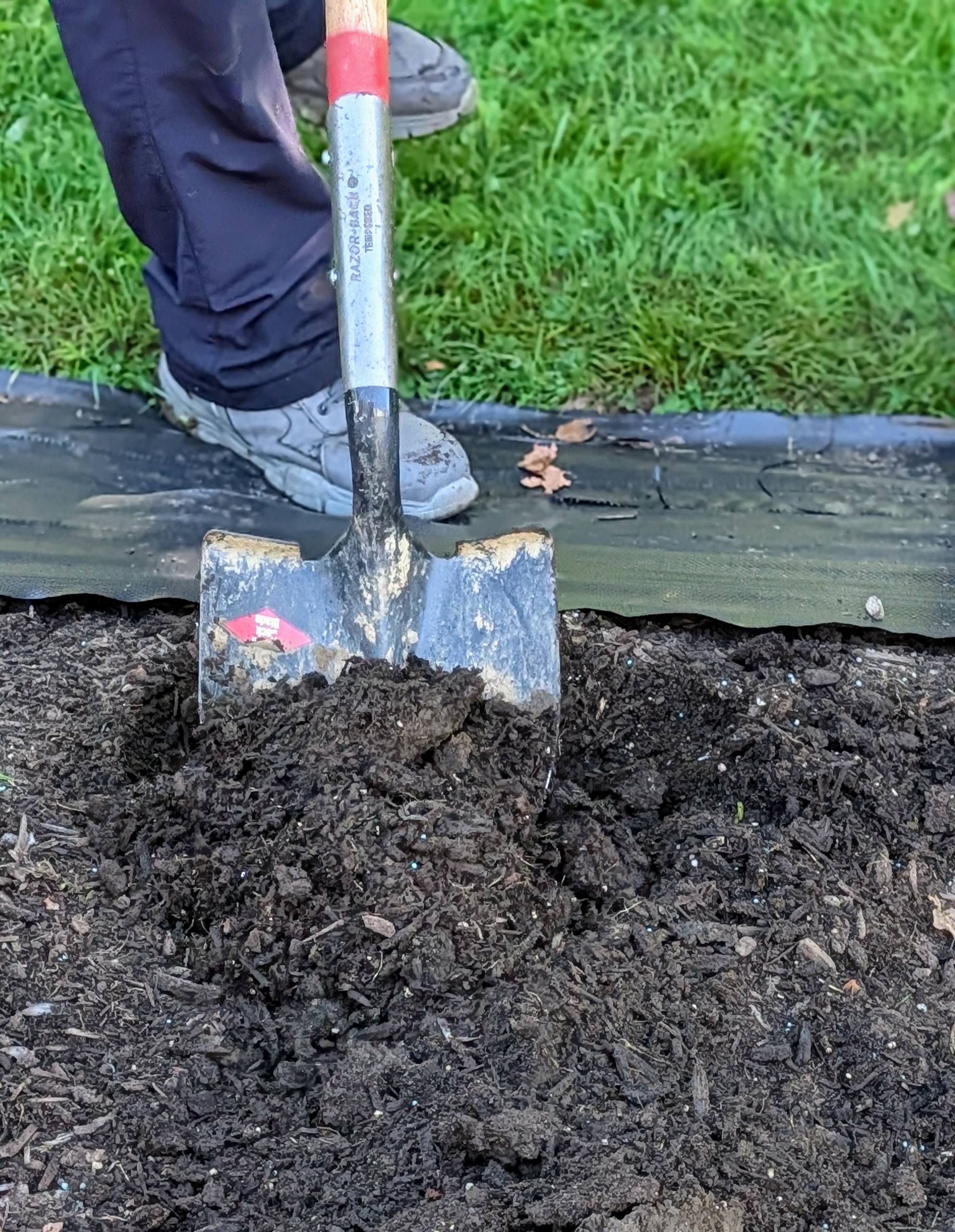
- All the holes are dug first and then rechecked for proper positioning. When planting, make sure the hole is slightly wider but equal in depth to the rose’s root ball. This will generally be about 15 to 18 inches deep by 18 to 24 inches wide.
-
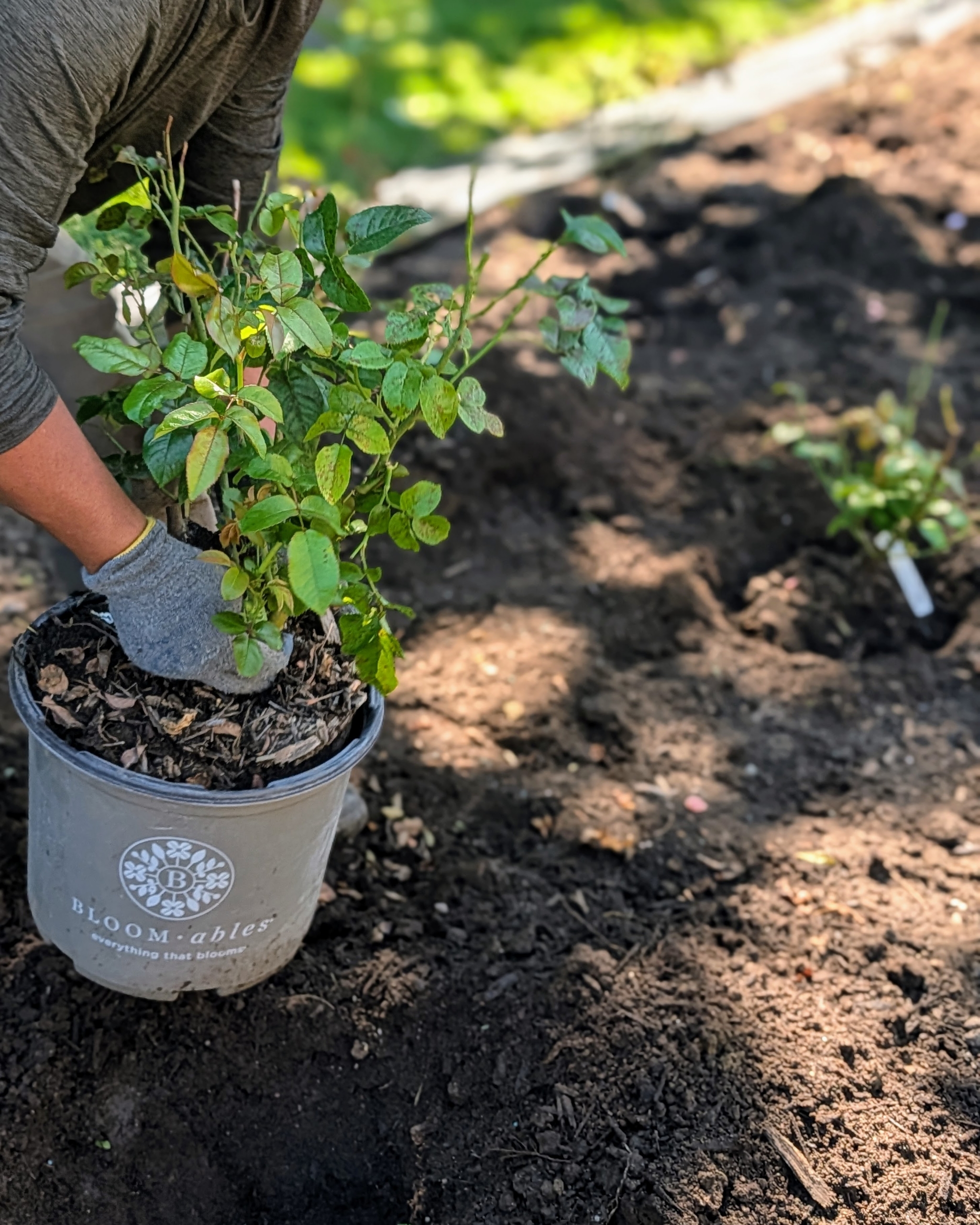
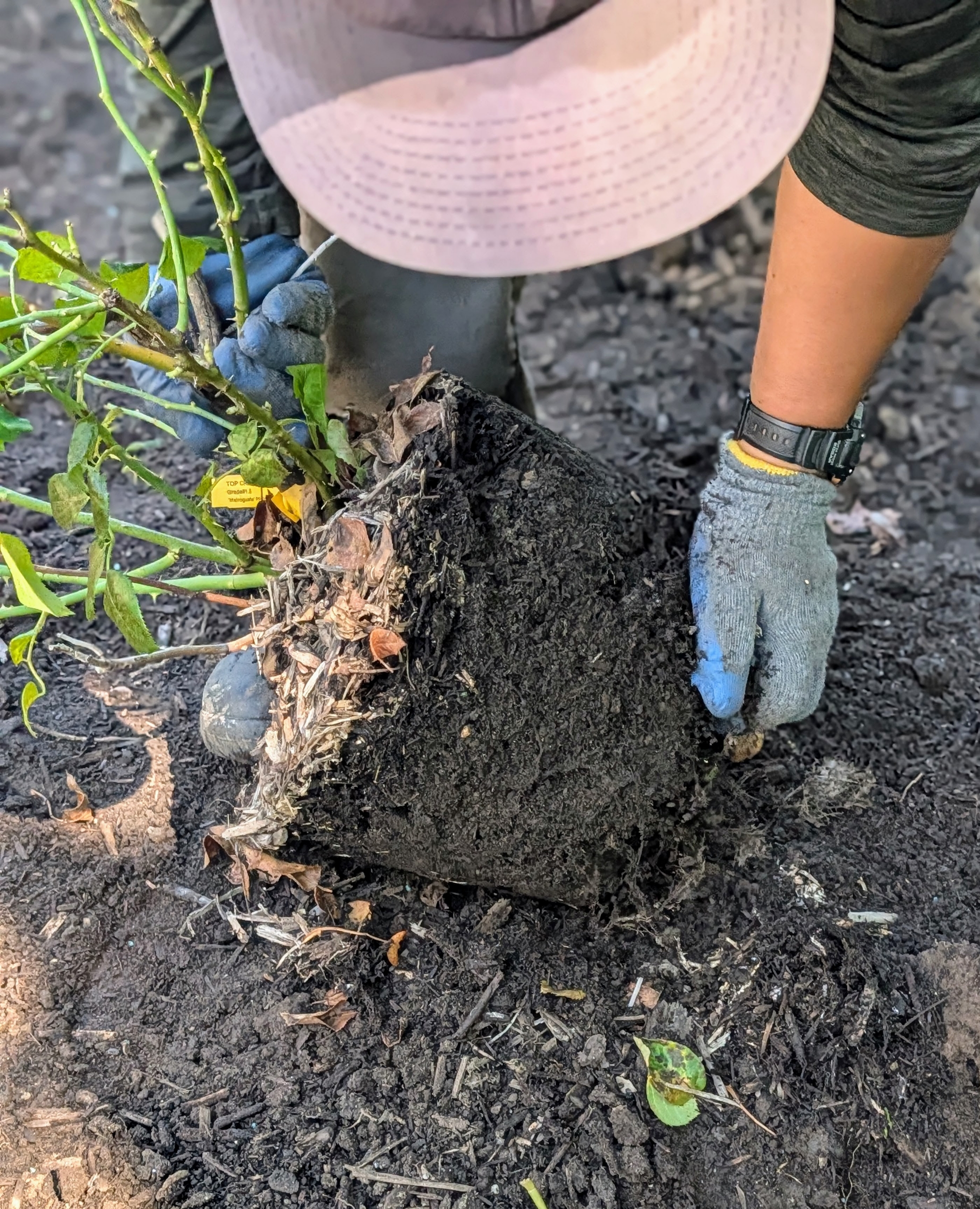
- Phurba carefully removes a rose from its pot. Do this slowly, especially if the root ball is moist and crumbling.
-
- And then he teases the roots slightly to stimulate growth.
-
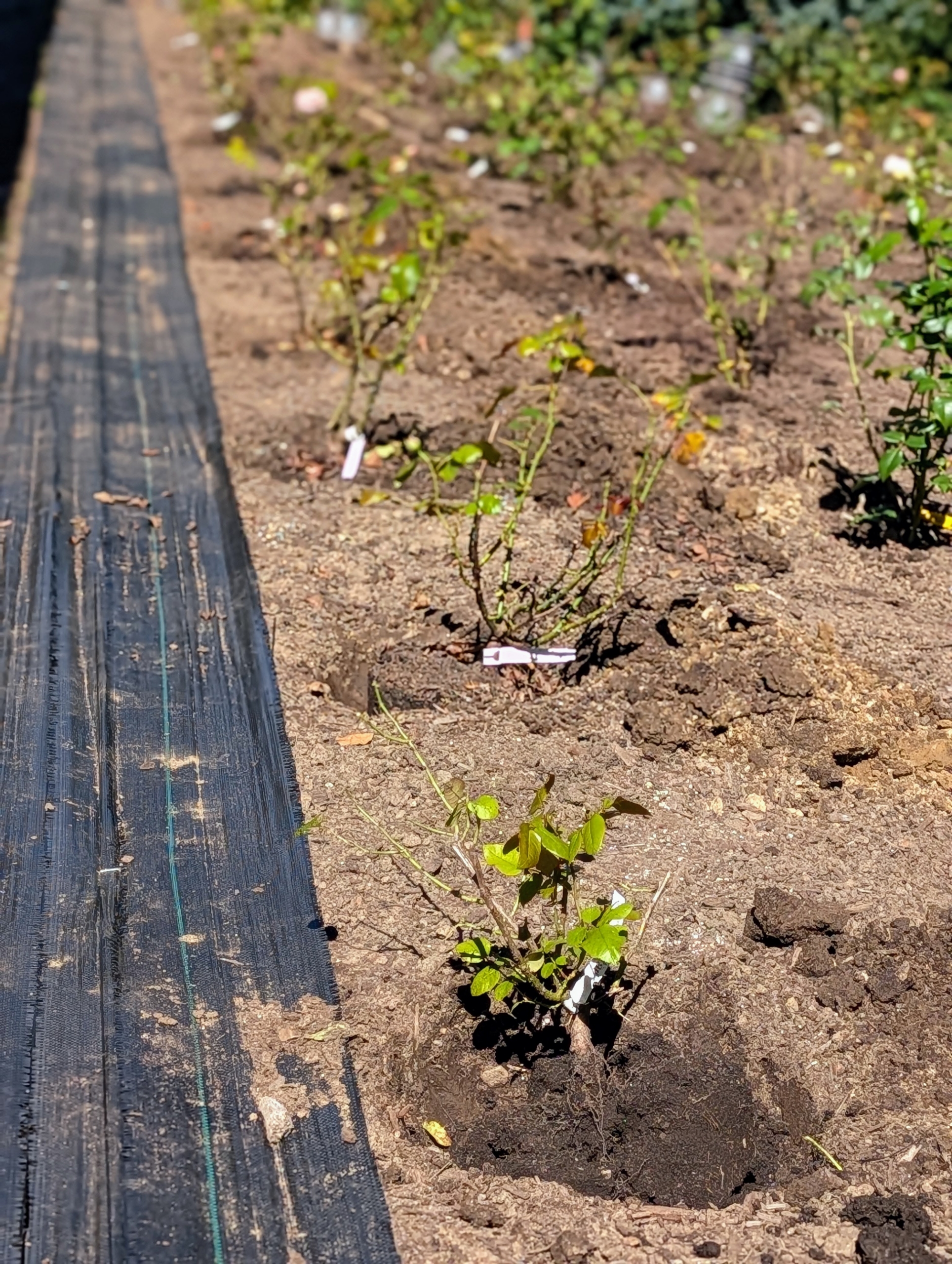
- The roses are placed in their designated holes before backfilling – just in case more adjustments are needed.
-
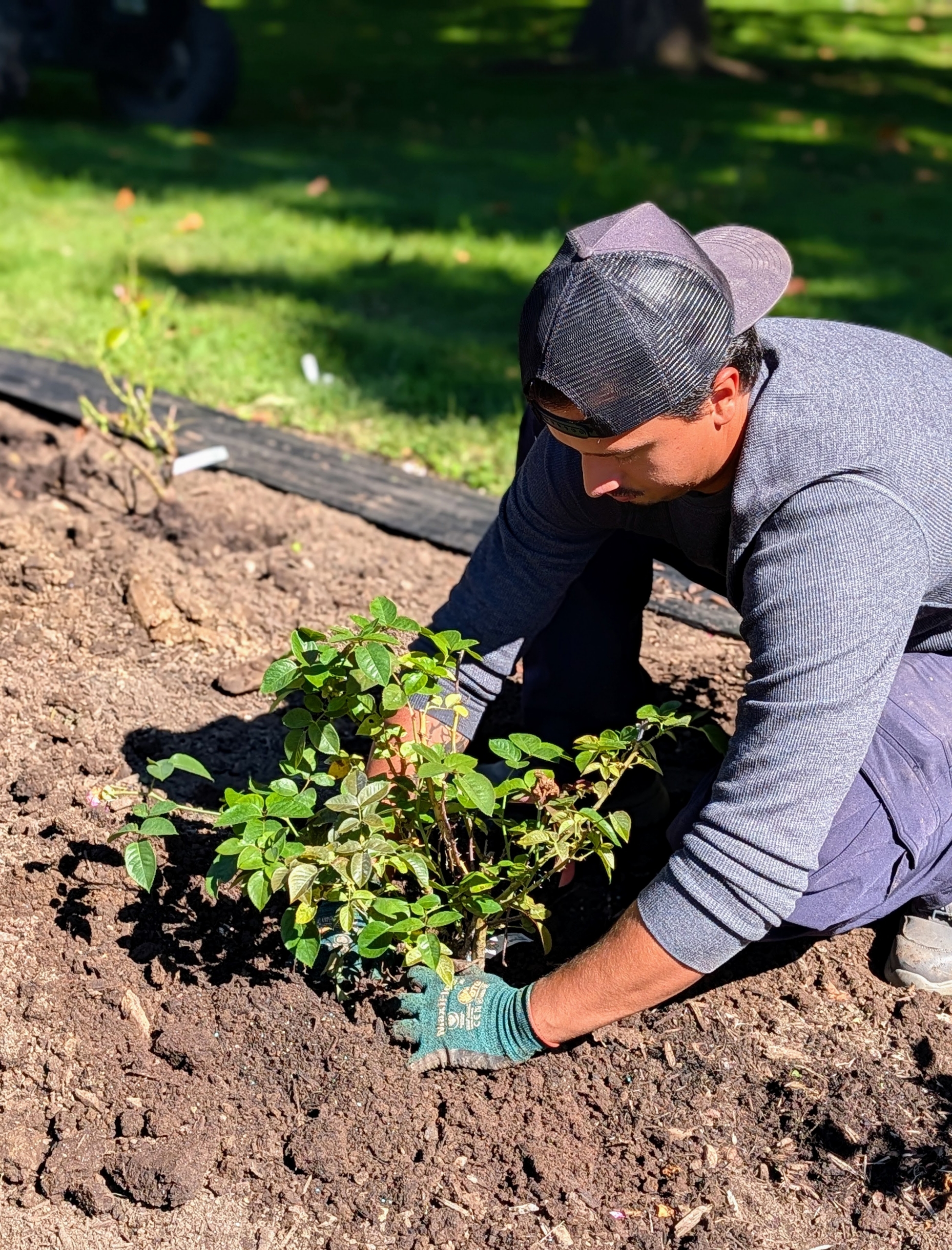
- Phurba is sure to bury each rose to the same depth it was in the pot. The bud union should be at or slightly below the soil surface.
-
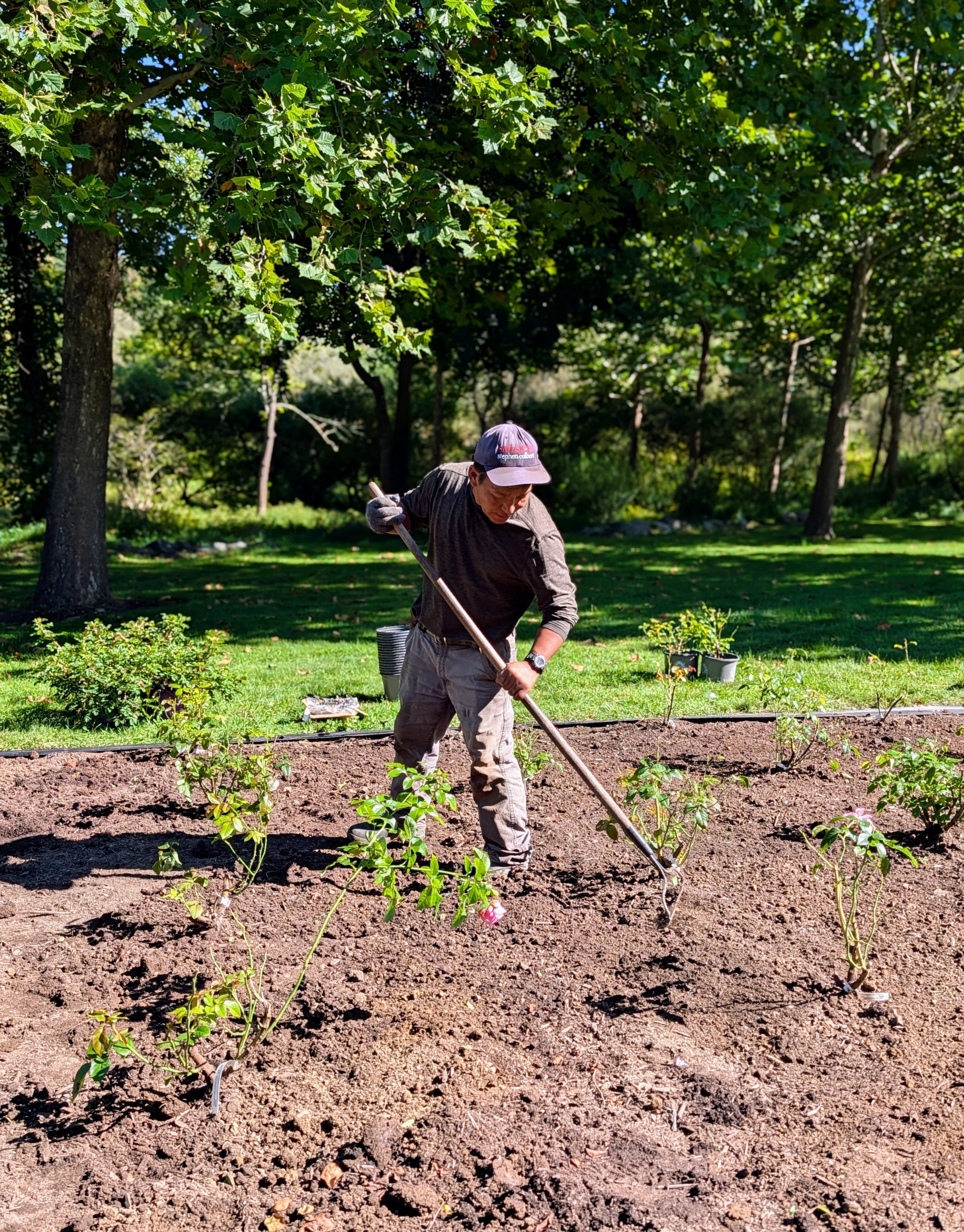
- Once the area is planted, the surrounding soil is raked evenly and neatly with a hard rake and then everything is given a good watering.
-
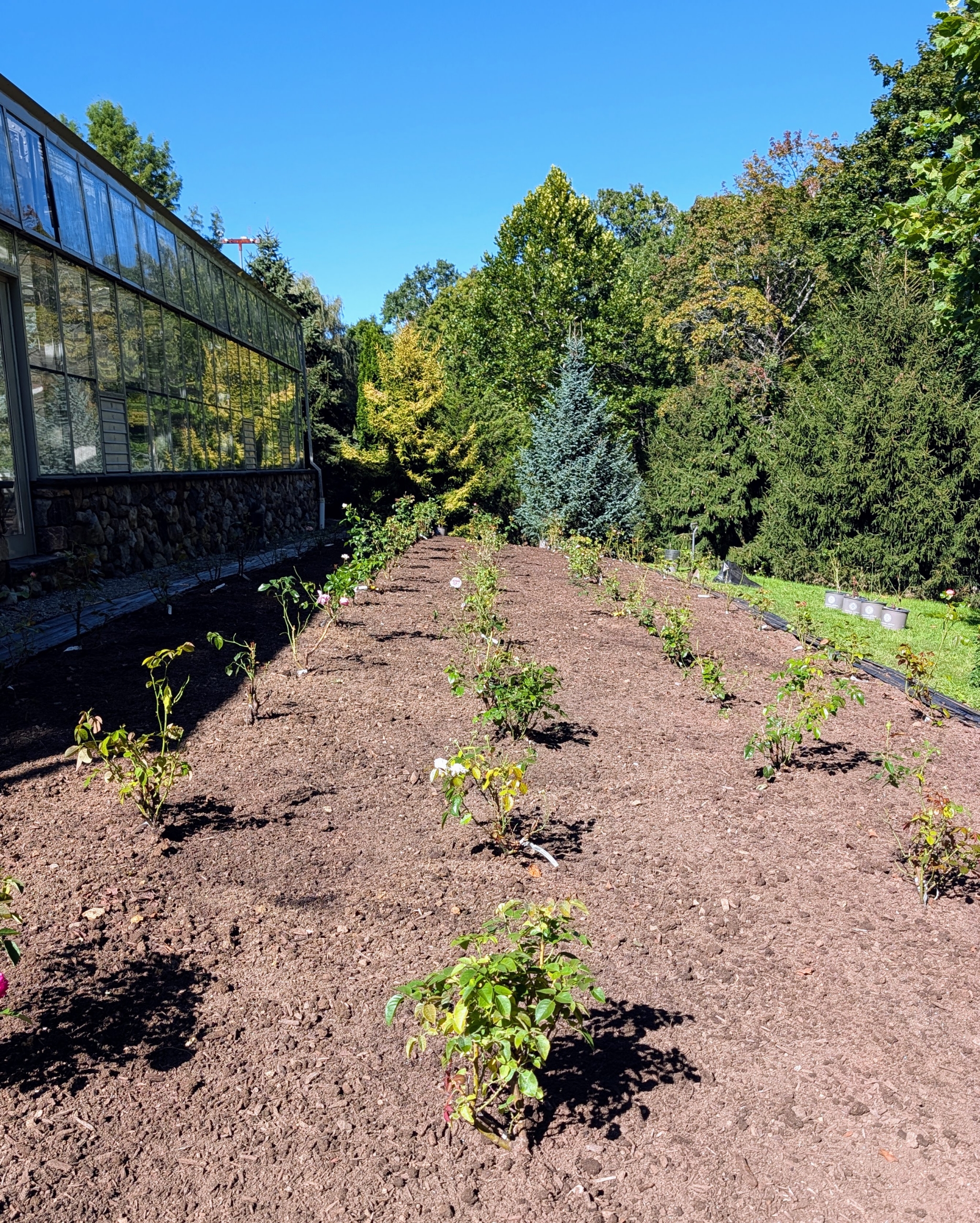
- And by day’s end, the garden is planted. A layer of good, nutrient-rich compost will top dress these plants next. Plan a new garden properly using the best soil, food, and lighting needs to give young plants the best start possible. This garden will grow beautifully.
 Martha Pins


 Martha Tweets

