

Planting Spring-Blooming Bulbs
If you’re in the New York City area, daytime temperatures are expected to reach the upper 40s this weekend, making it a good opportunity to get some of those spring-flowering bulbs in the ground.
Here at my farm, my gardeners and outdoor grounds crew have been busy planting bulbs throughout the property. The bulbs come from Colorblends Wholesale Flowerbulbs, a third-generation wholesale flower bulb merchant based in nearby Bridgeport, Connecticut. This week, the team focused on the garden beds surrounding my stable and those near my Winter House. They planted Spanish bluebells, irises, squill, muscari, alliums, crocuses, and others. They will all look so marvelous come spring.
Here are some photos.
-

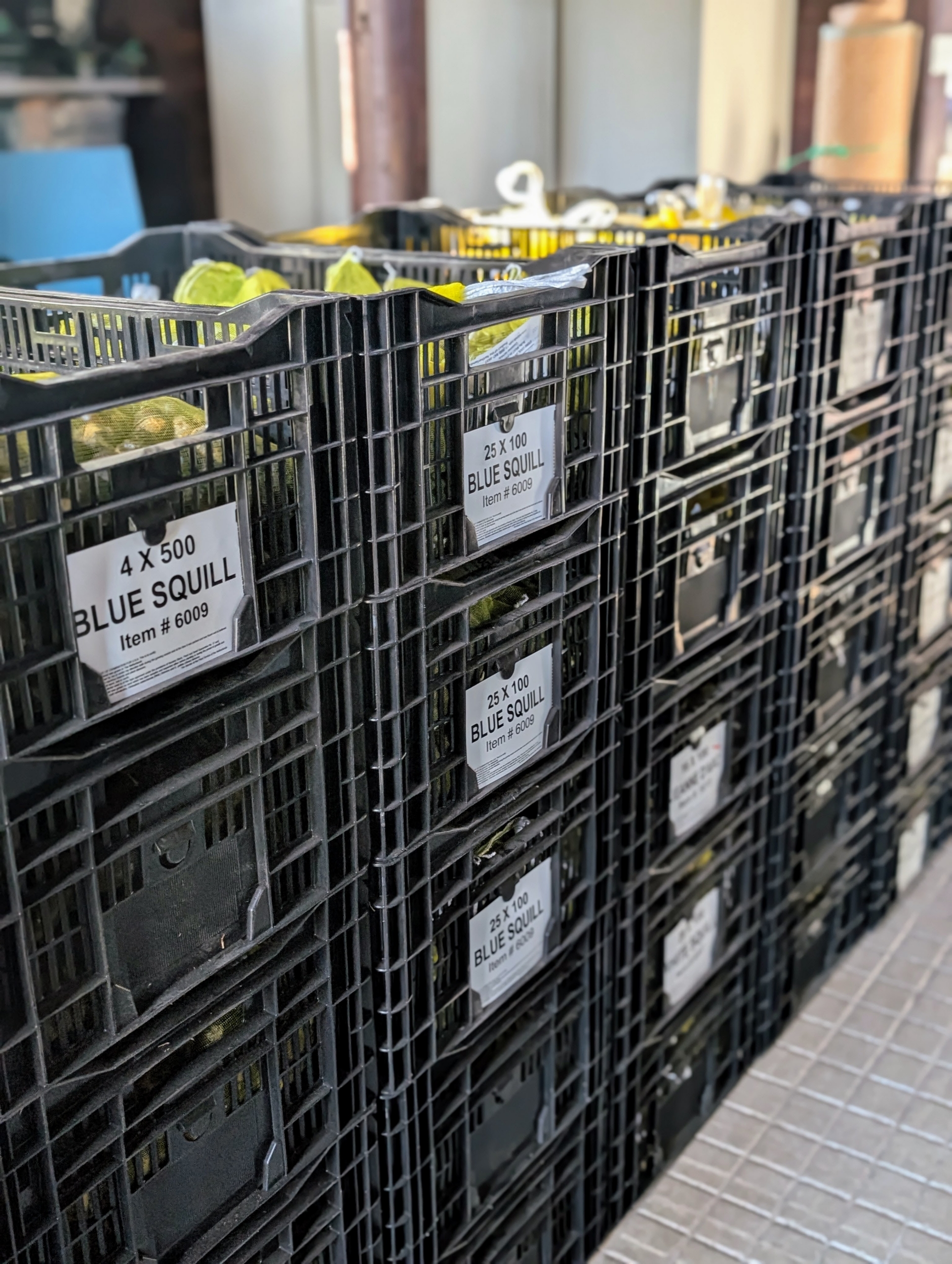
- Many of my bulbs are from Colorblends Wholesale Flowerbulbs – a third generation flower merchant in nearby Bridgeport, Connecticut. I’ve been growing their bulbs for many years.
-
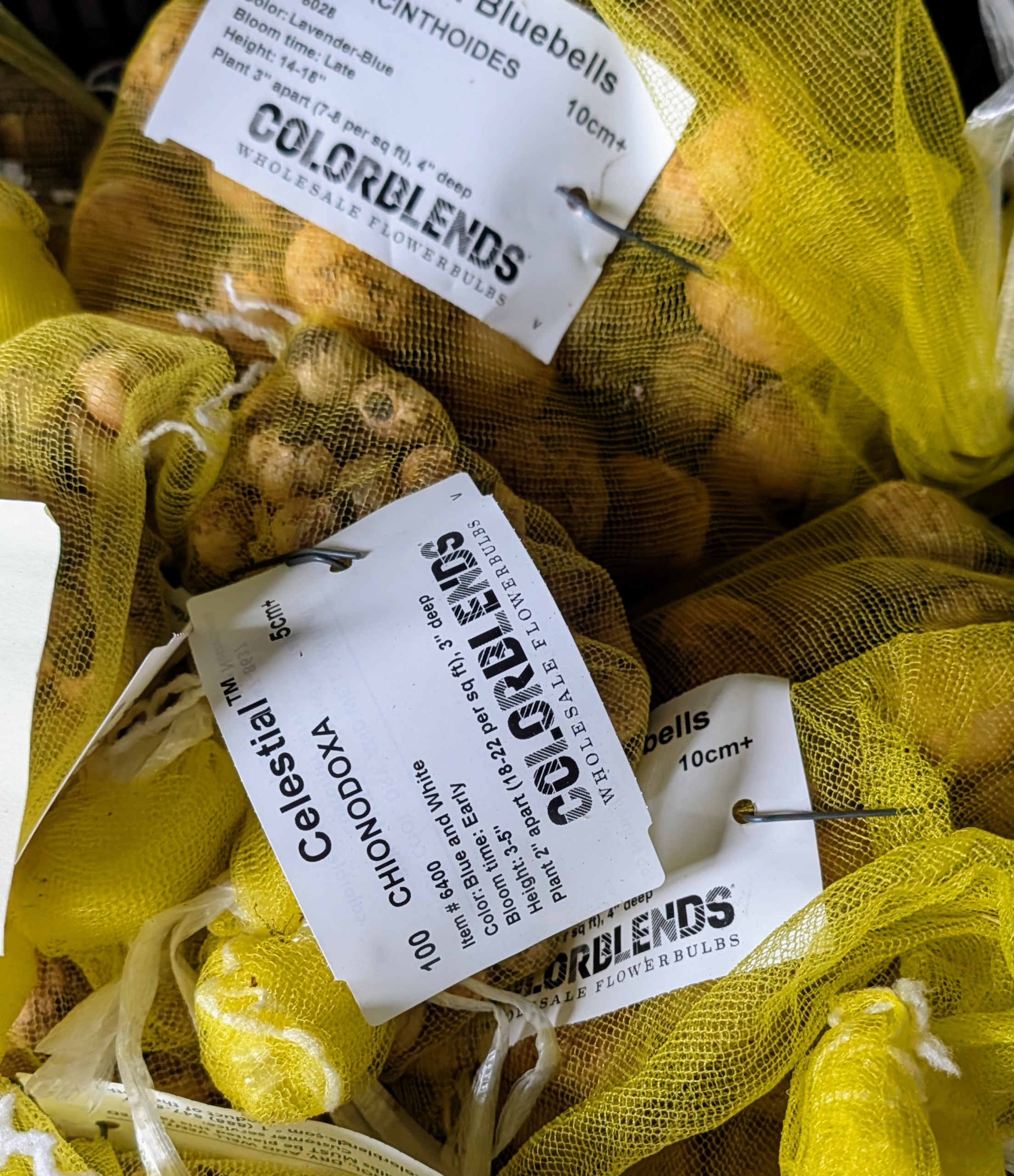
- Bulbs are packaged in batches of 50, 100, 500, and a thousand. They come in these breathable sacks. Some are also packed in paper bags, boxes, and plastic pouches depending on the bulbs’ humidity needs. They must be kept moist without being wet.
-
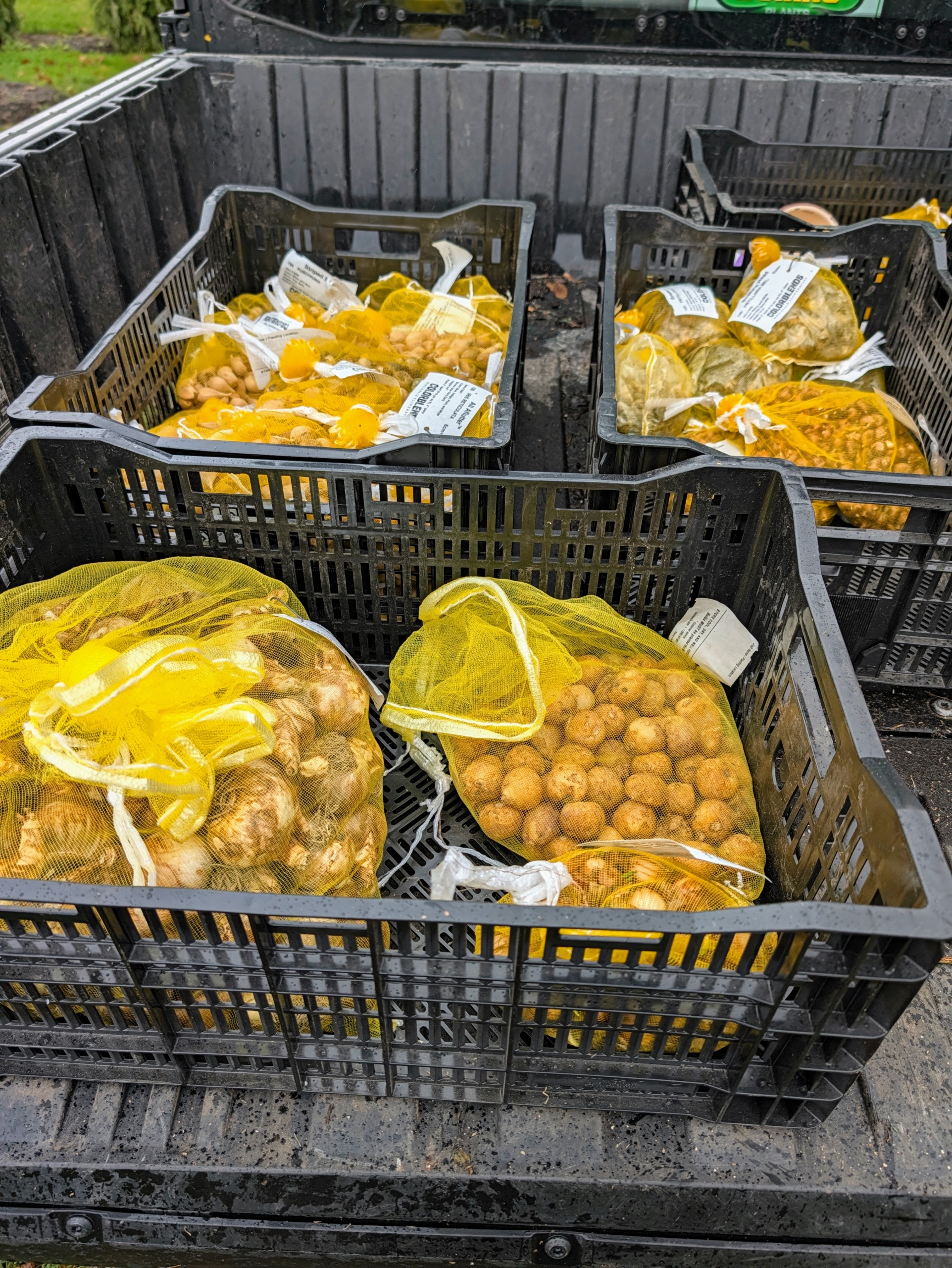
- My head gardener, Ryan McCallister, organizes the bulbs according to where they will be planted.
-
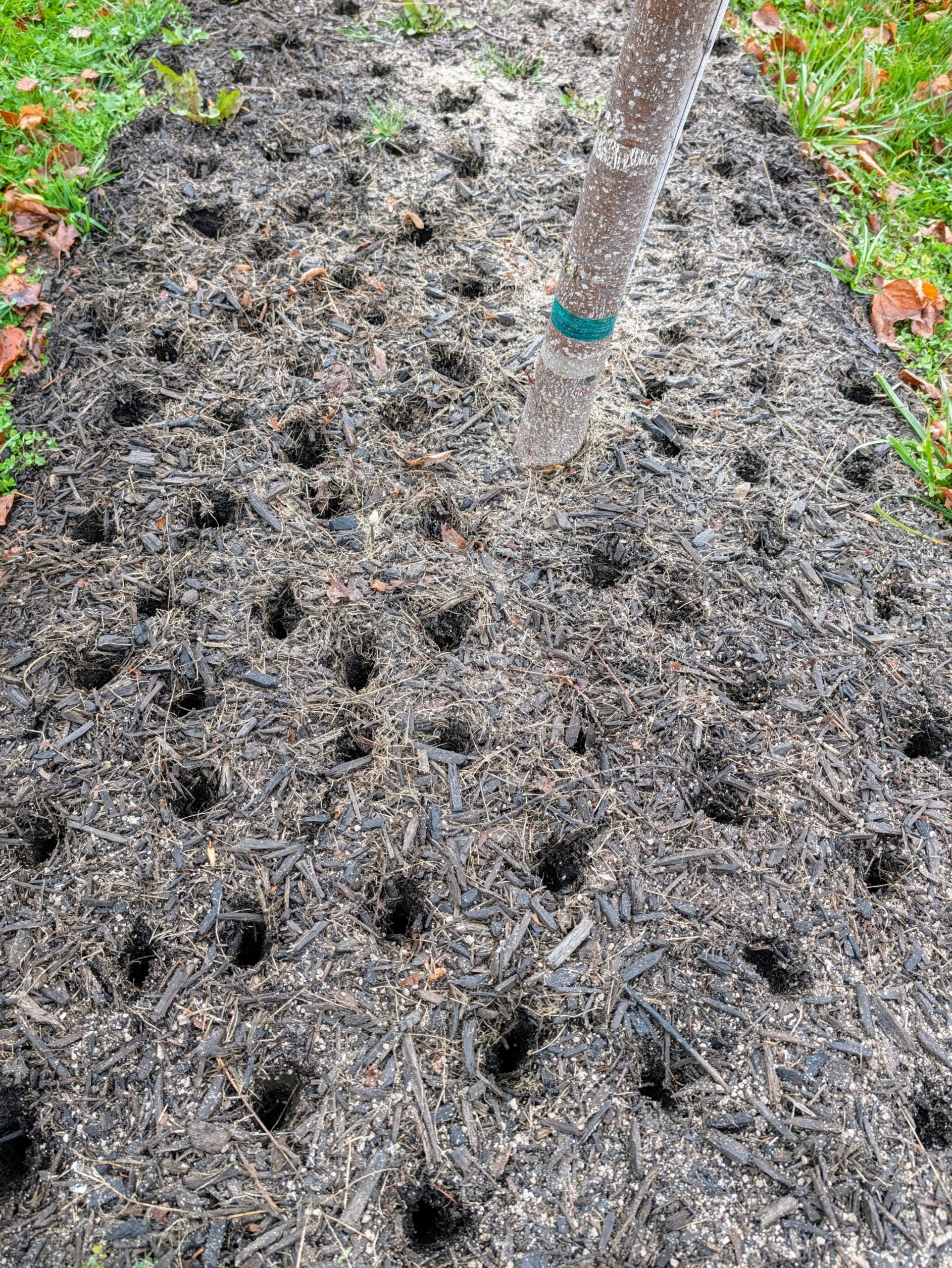
- The crew makes holes in the designated bulb planting areas. These holes were made with a long handled dibber my foreman, Chhiring Sherpa made from timeworn pieces that had been saved.
-
- There are also hand held bulb planters and small auger attachments for drills.
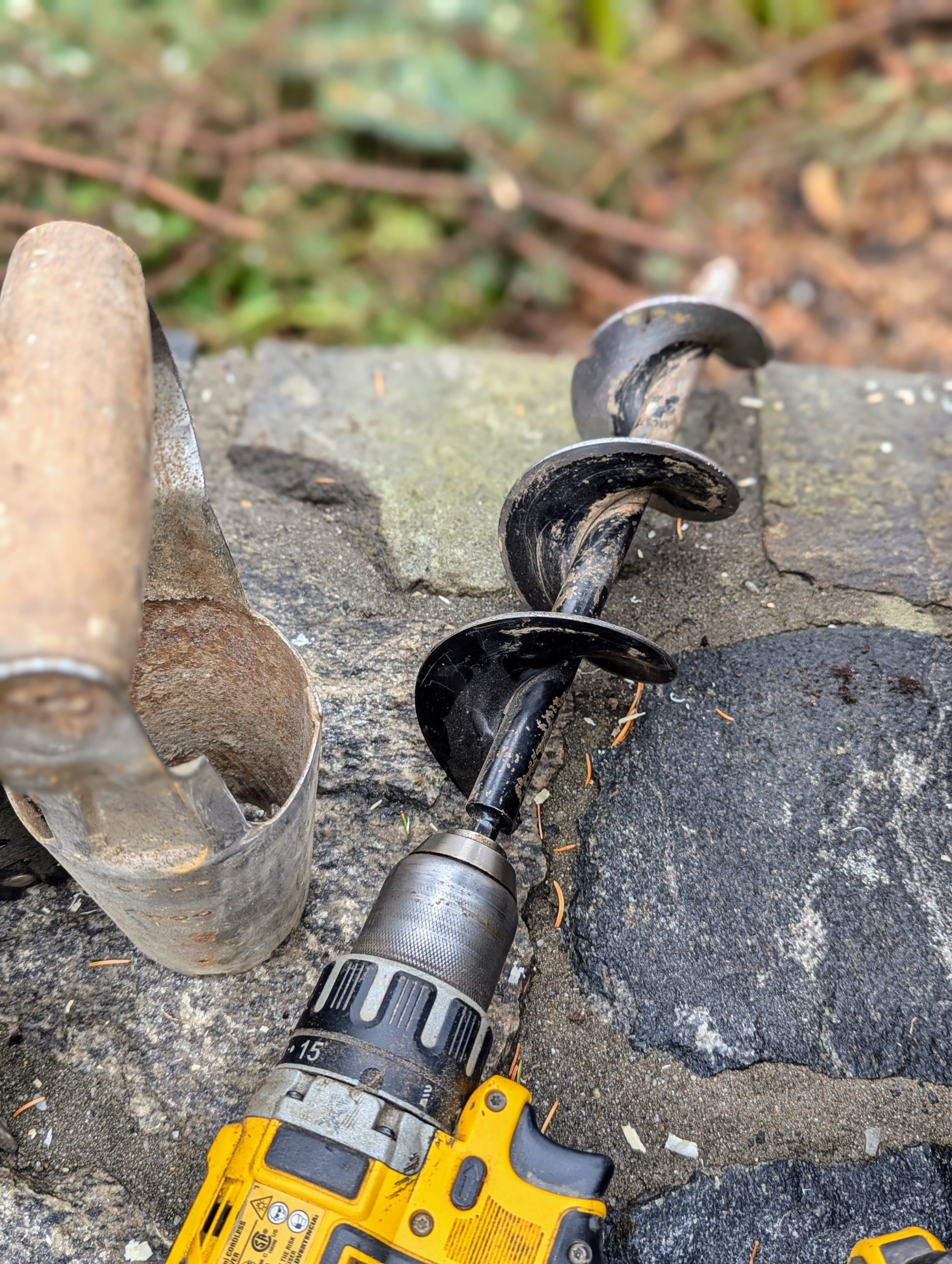
-
- For planting smaller bulbs, my gardeners use T-handled dibbers, which are pressed into the soil to make narrow holes.
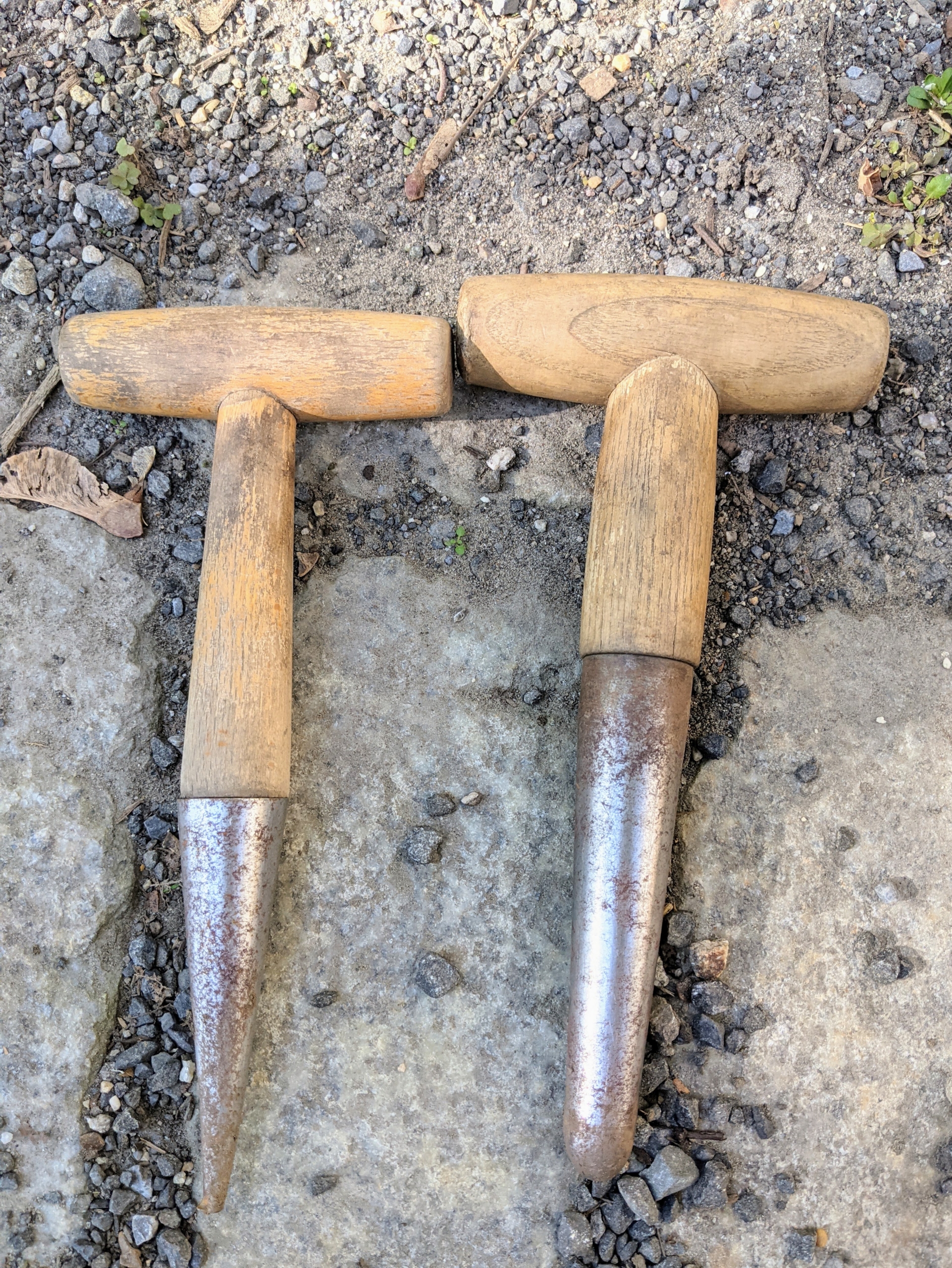
-
- I add Bulb-tone to the nutrient-rich soil. The food should be a balanced fertilizer that has a good amount of phosphorous. Fertilizing spring-blooming bulbs also helps them fight off diseases and pests.
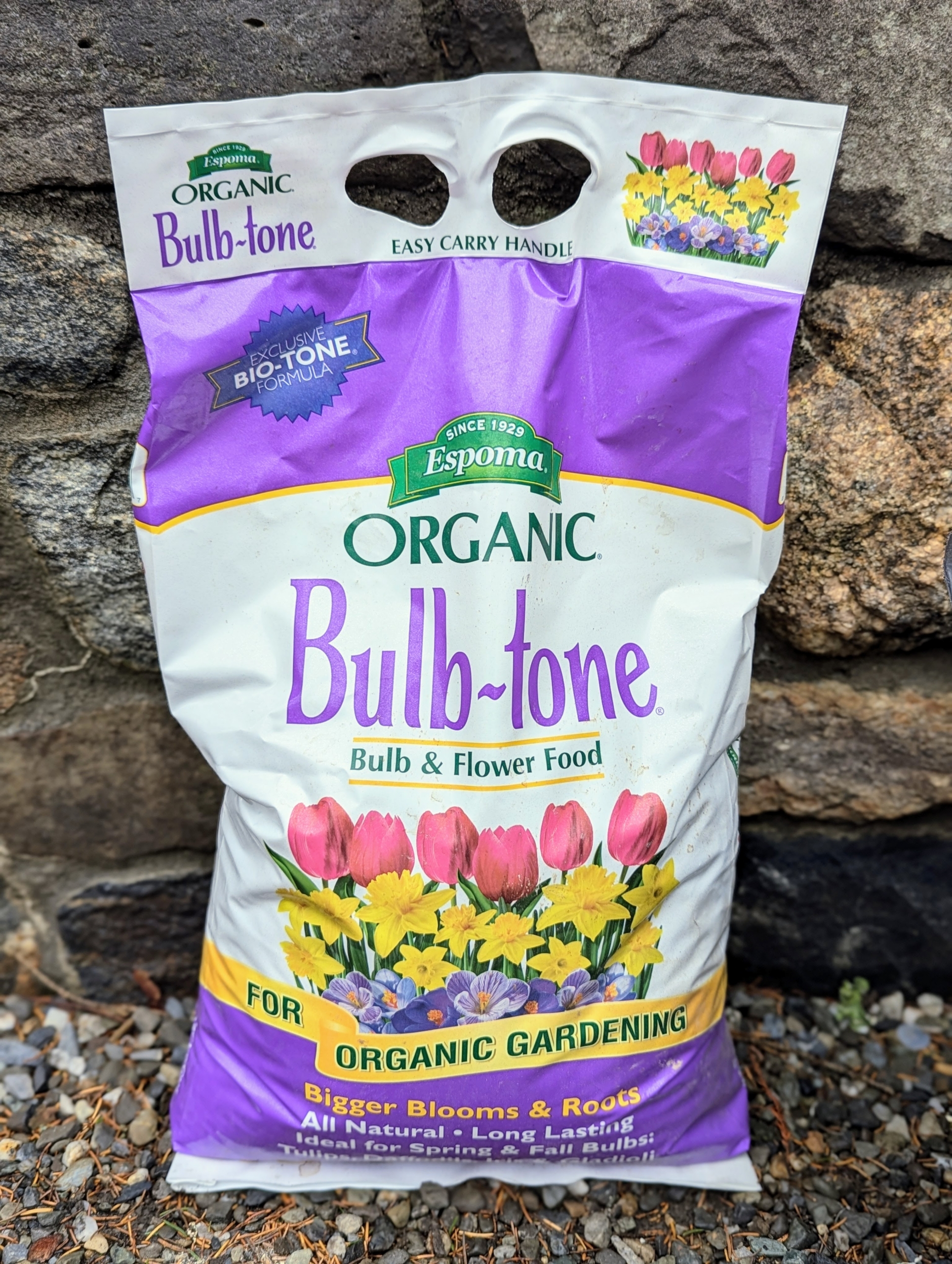
-
- The fertilizer can be sprinkled over and worked into the top few inches of soil.
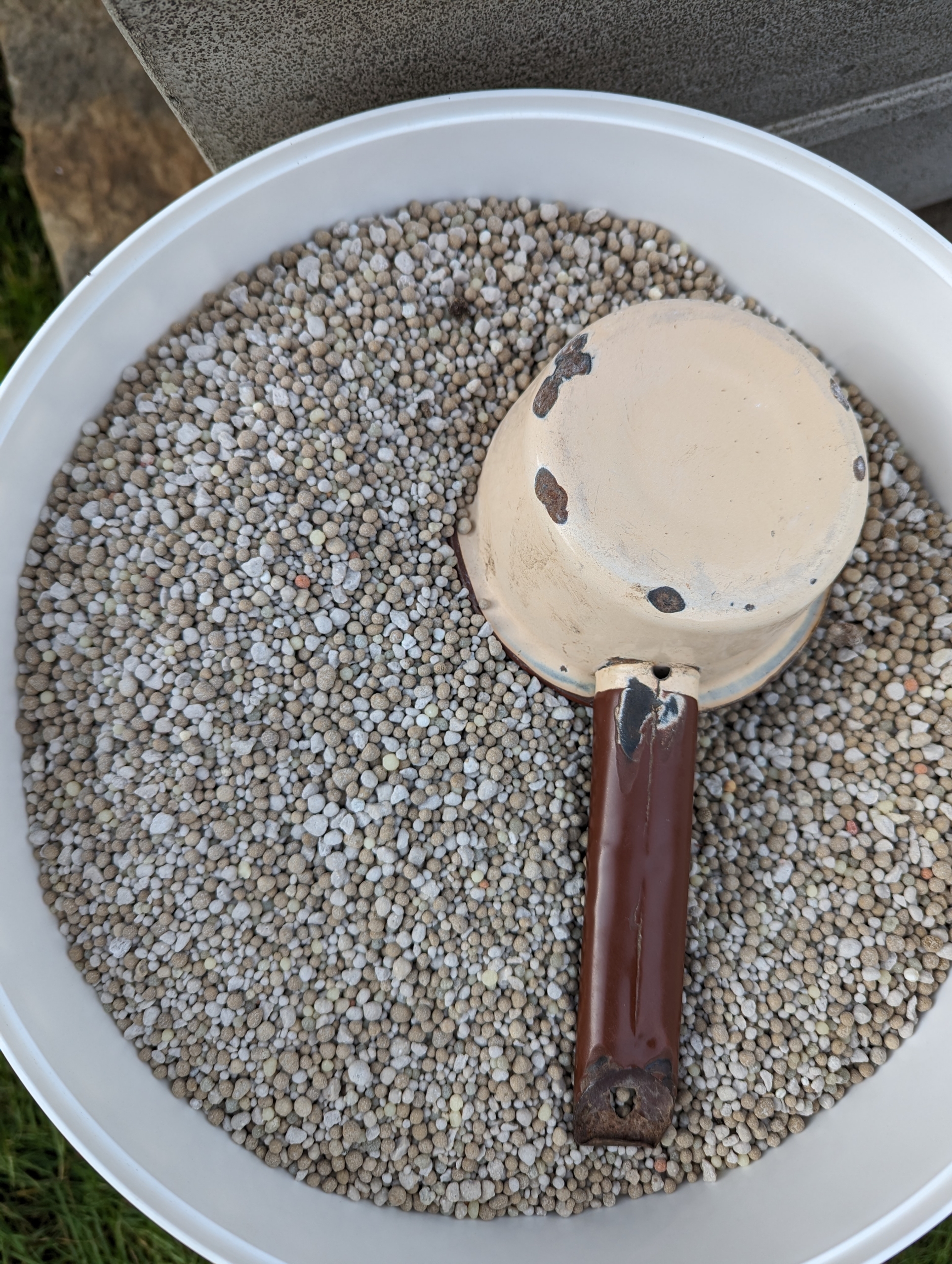
-
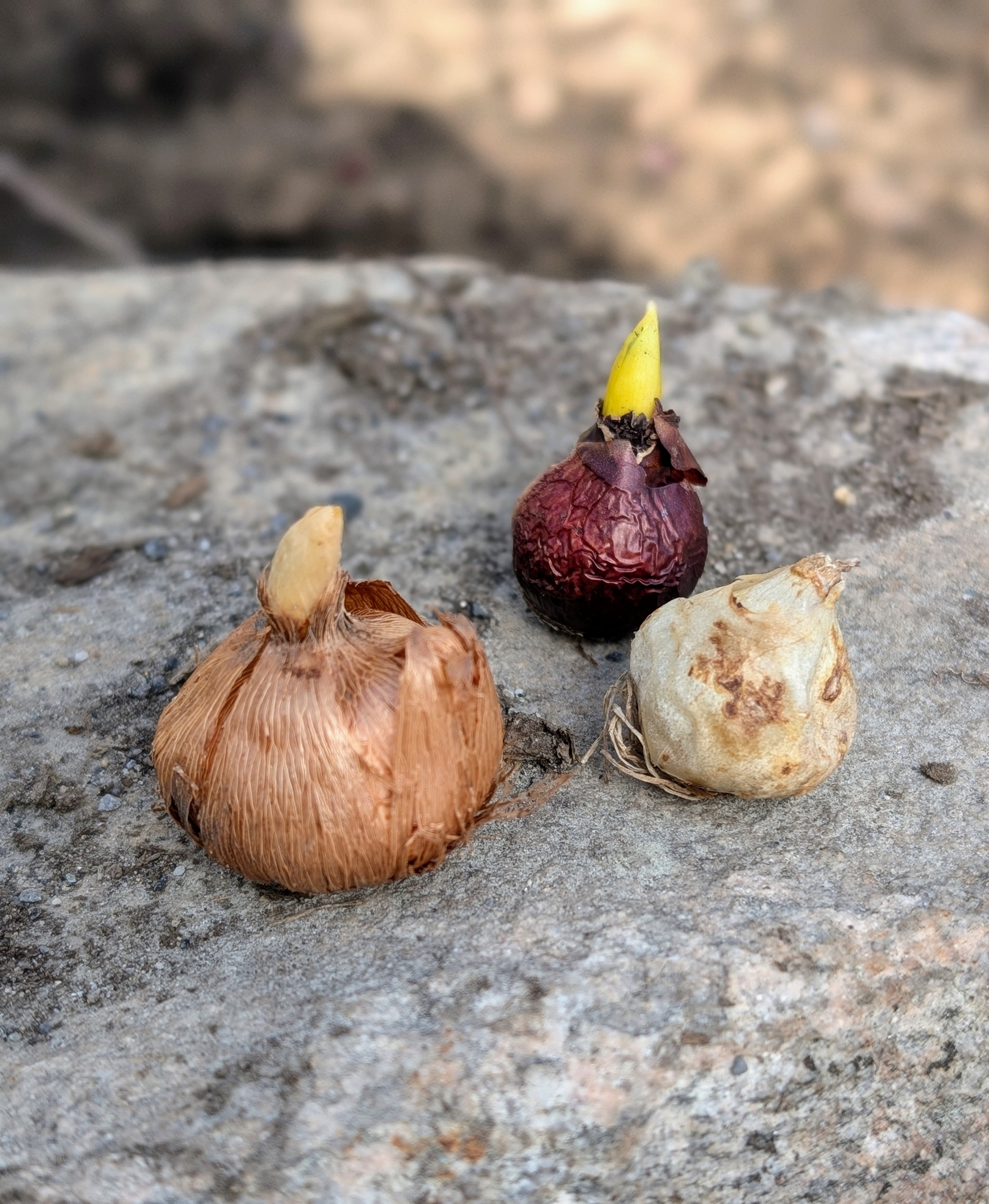
- Bulbs come in different sizes and forms. Shown here is a crocus bulb, a squill bulb and a muscari bulb. True bulbs can be either tunicate, with a papery covering or non-tunicate without the covering. On many bulbs, it is also easy to see which end is the top and which end is the bottom.
-
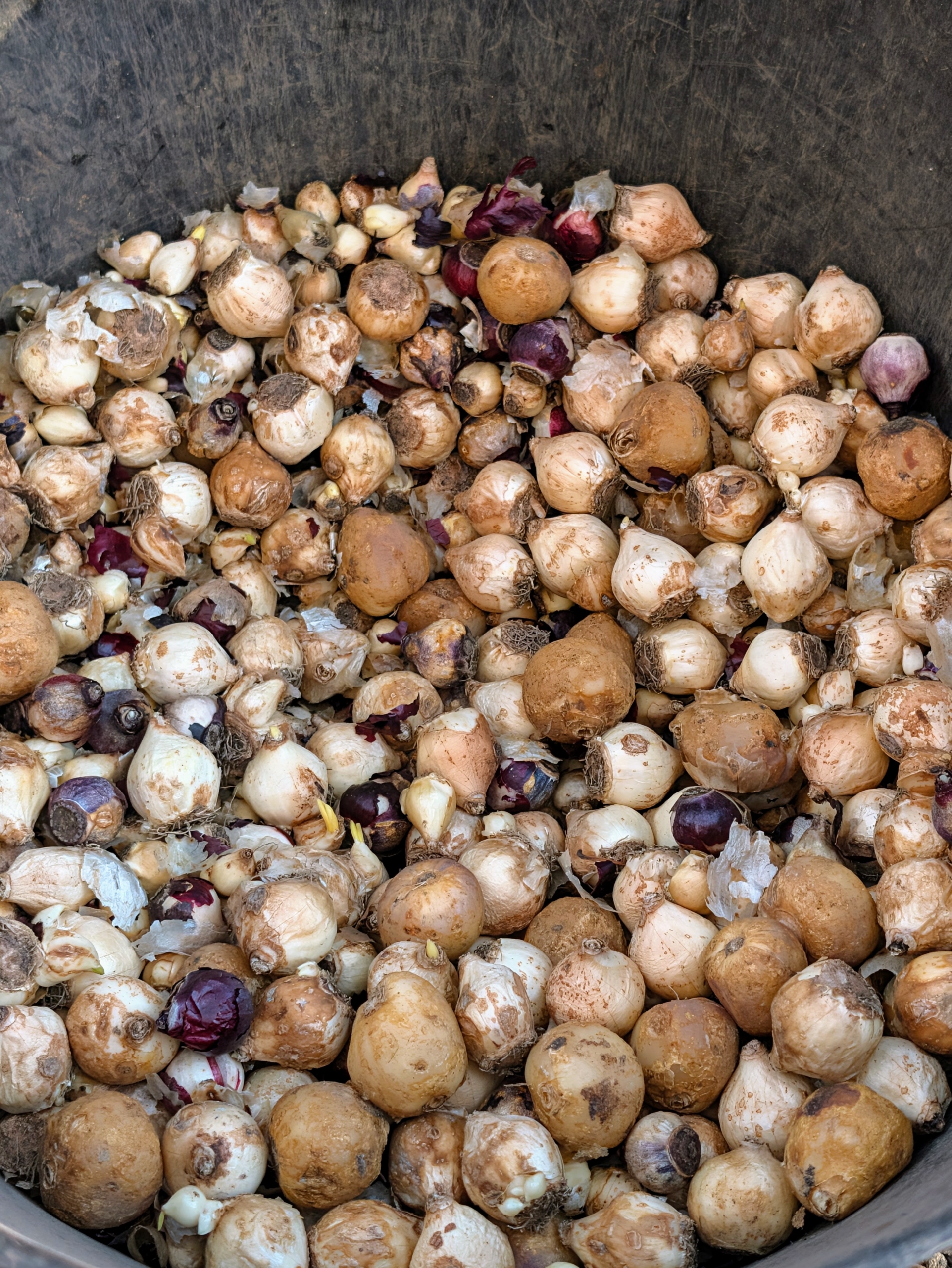
- Ryan mixes a trug bucket of assorted bulbs so they look natural in the bed.
-
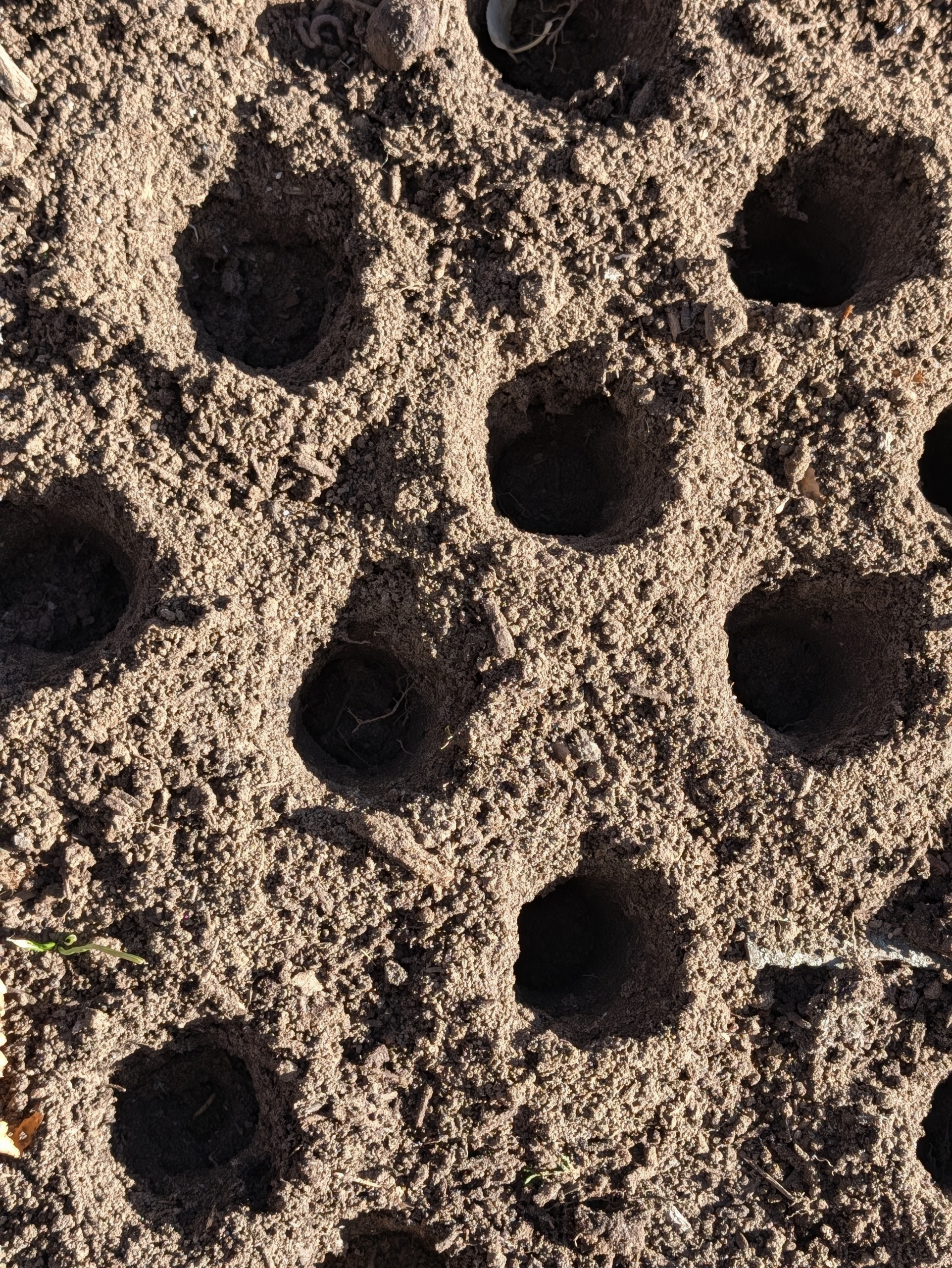
- Each bulb is placed in a hole about three to five inches deep. The dibber is perfect for planting these bulbs. Some holes are pre-made in large sections.
-
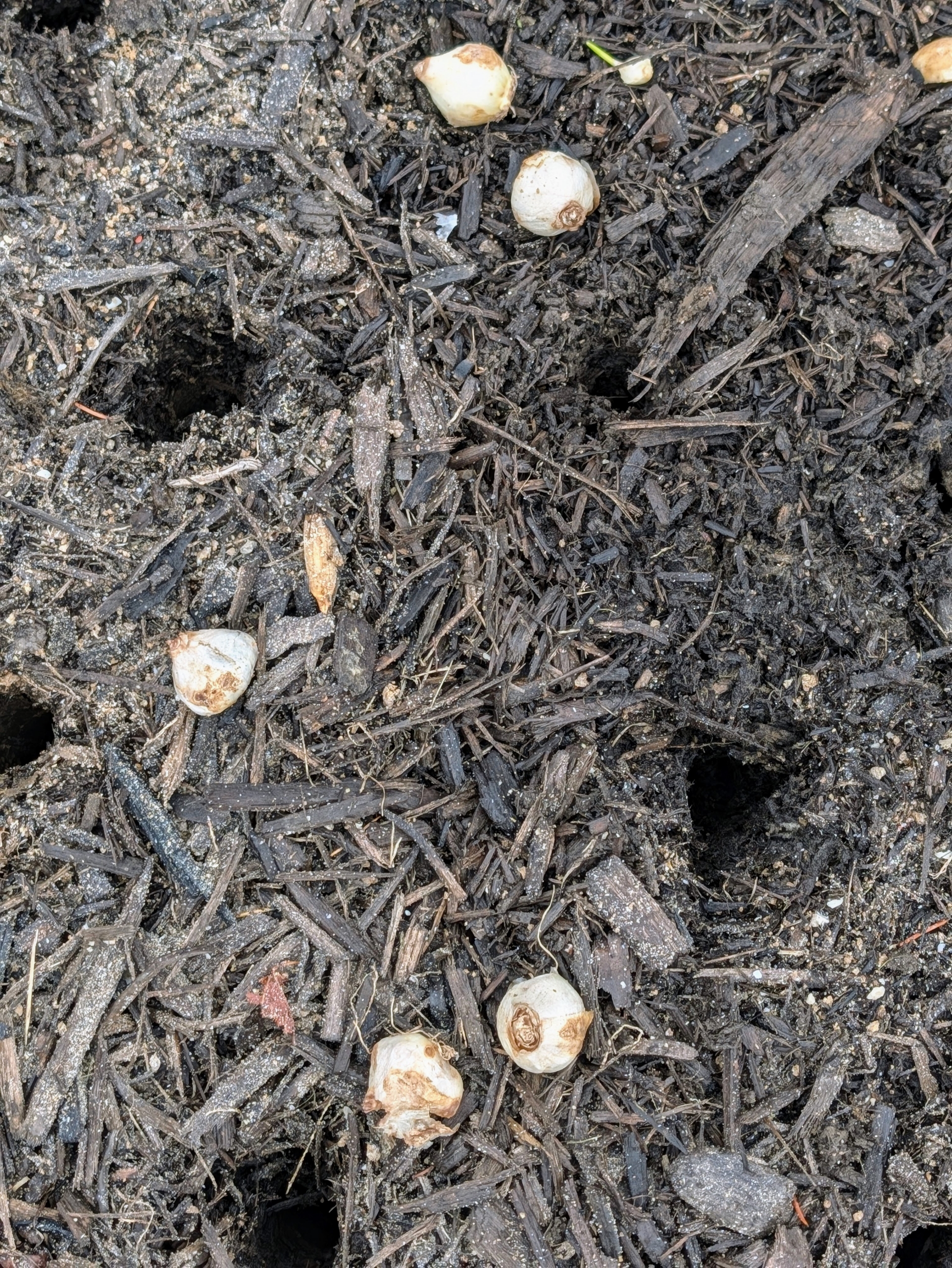
- Other holes are more randomly spaced, so holes are made wherever the bulbs drop.
-
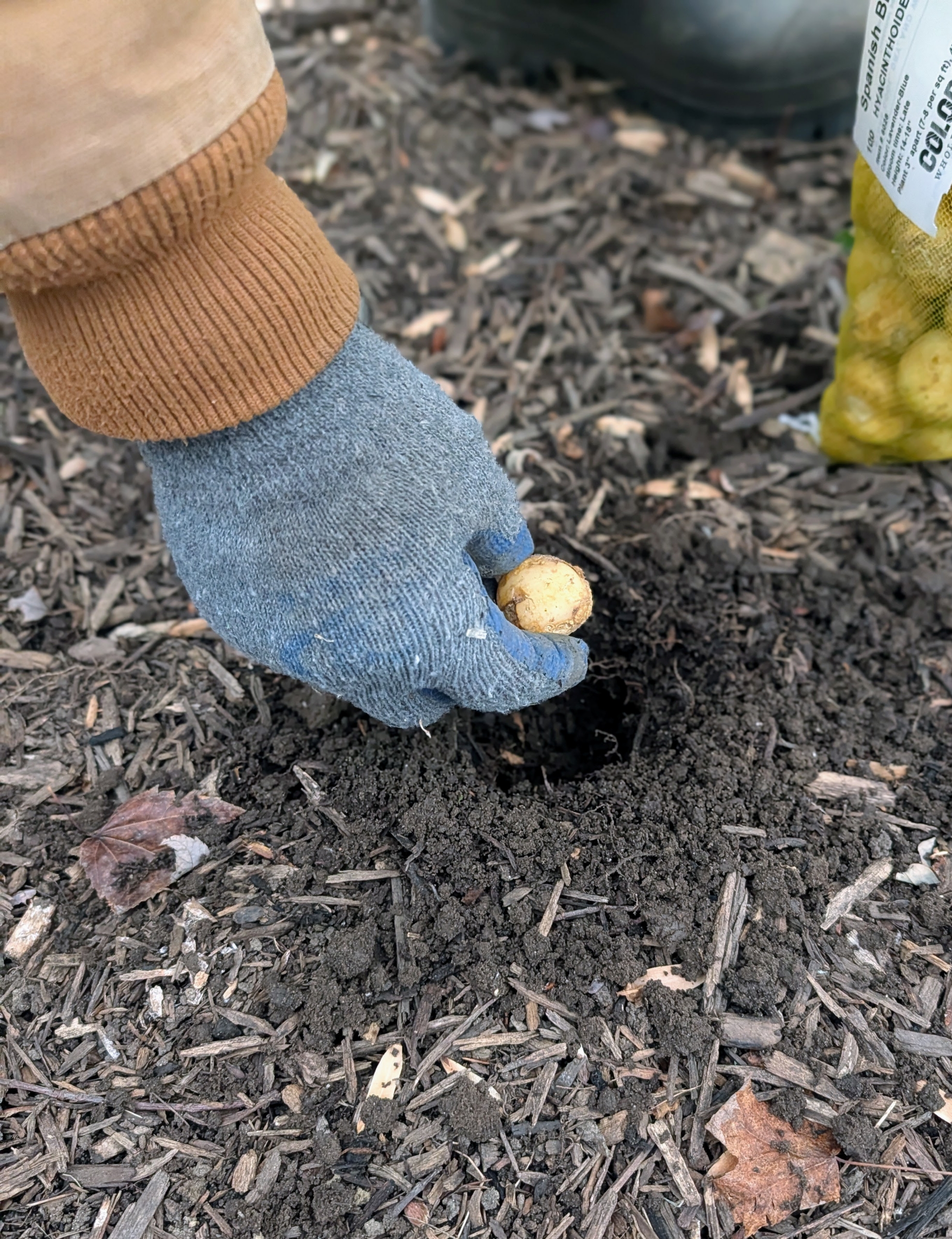
- One by one, each bulb is carefully placed in a hole.
-
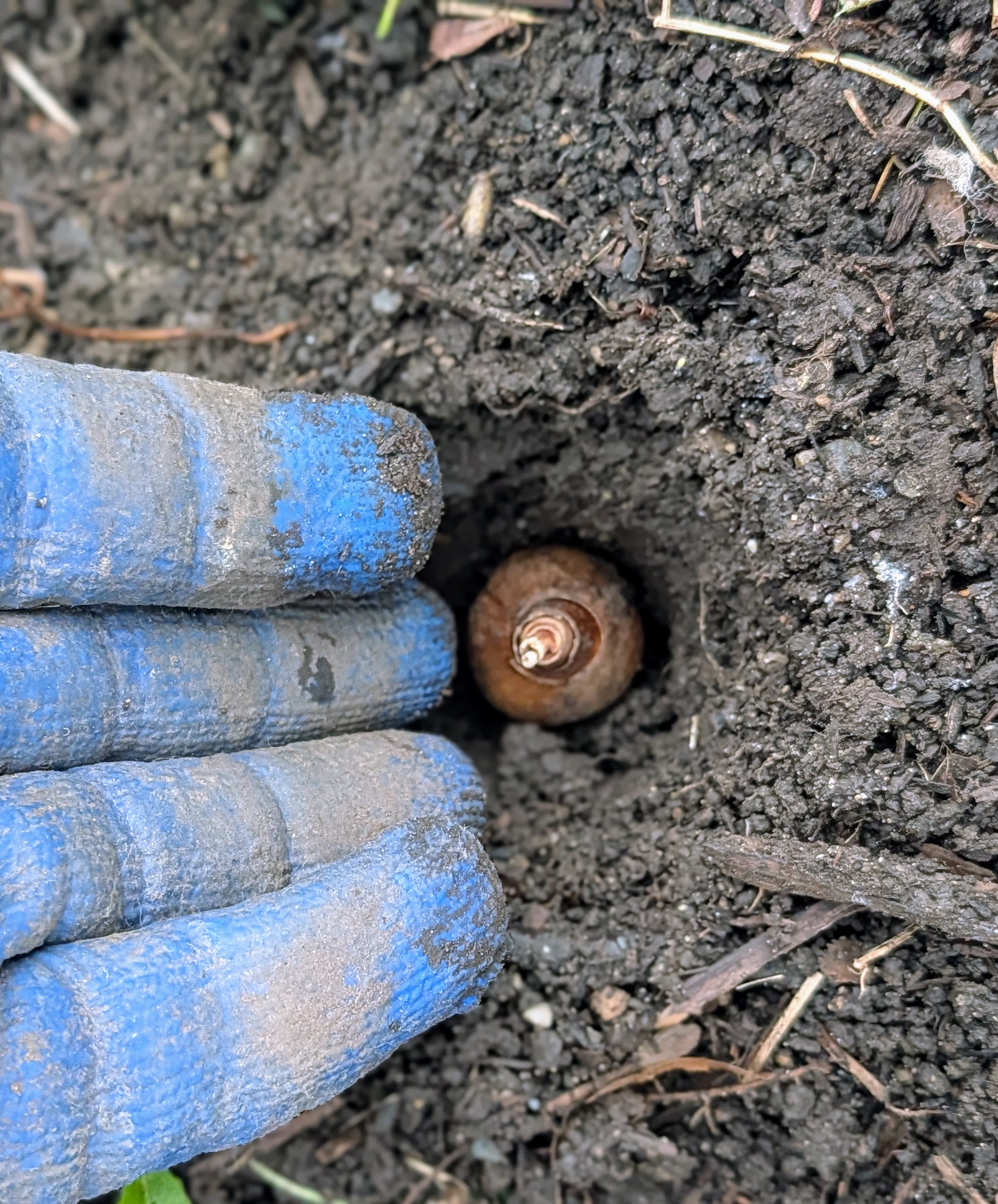
- Bulbs are always positioned with the pointed end faced up, or root end faced down. This is very important, so the plant grows properly from the bulb. Here is a bulb inside the hole.
-
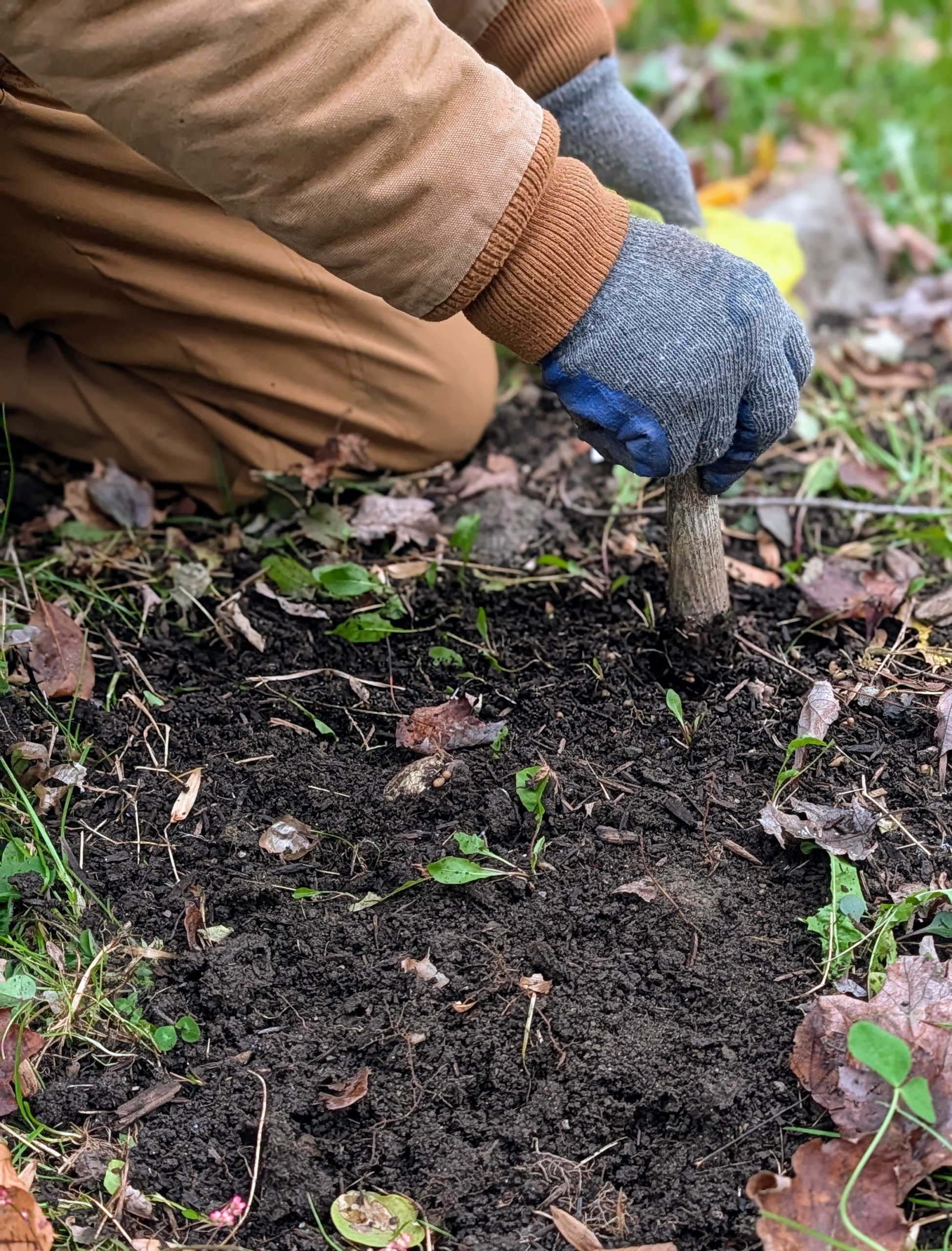
- Wherever new holes are made, the crew is careful not to poke any bulbs previously planted in the area.
-
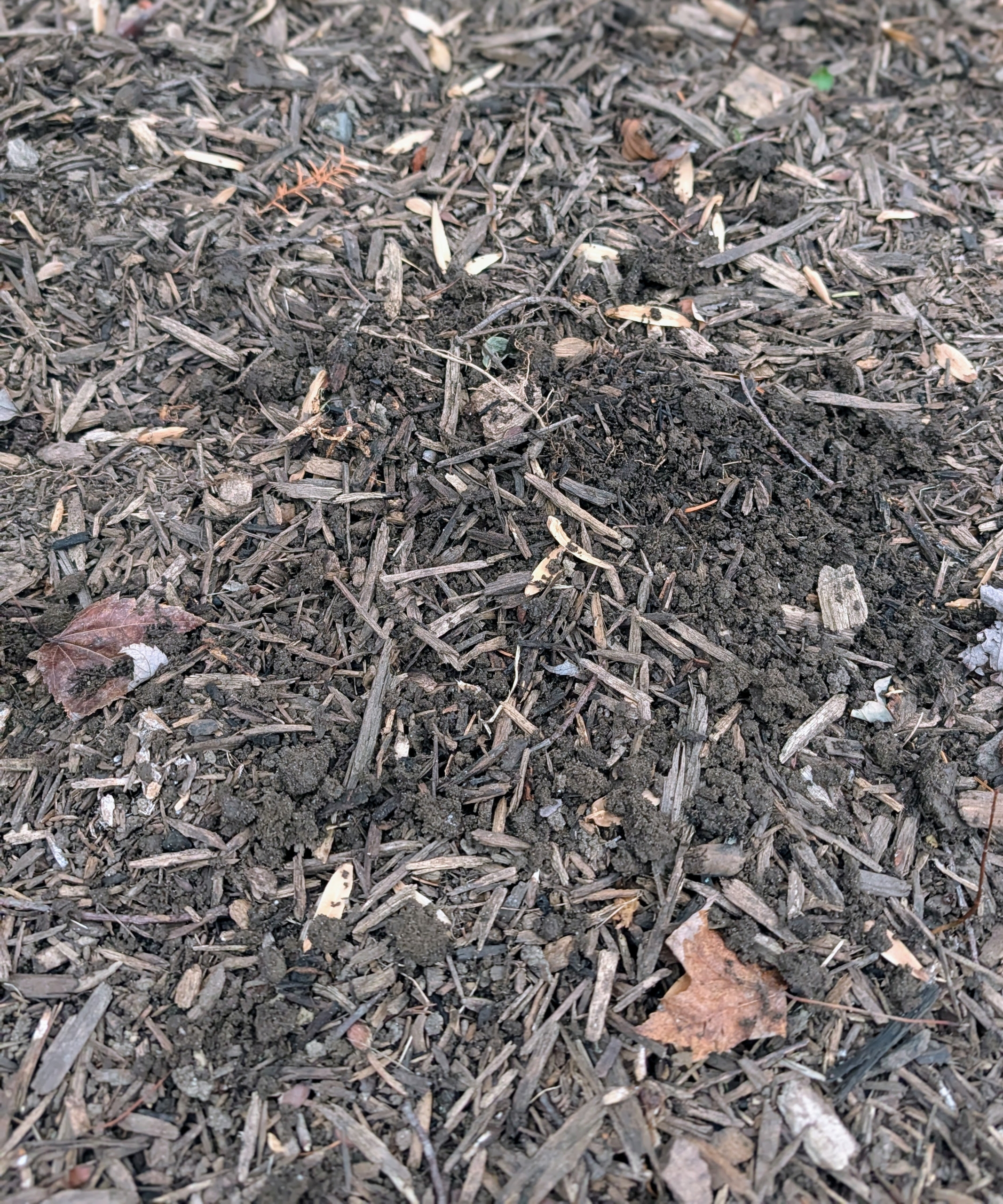
- And after the bulbs are in their designated holes, the holes are backfilled.
-
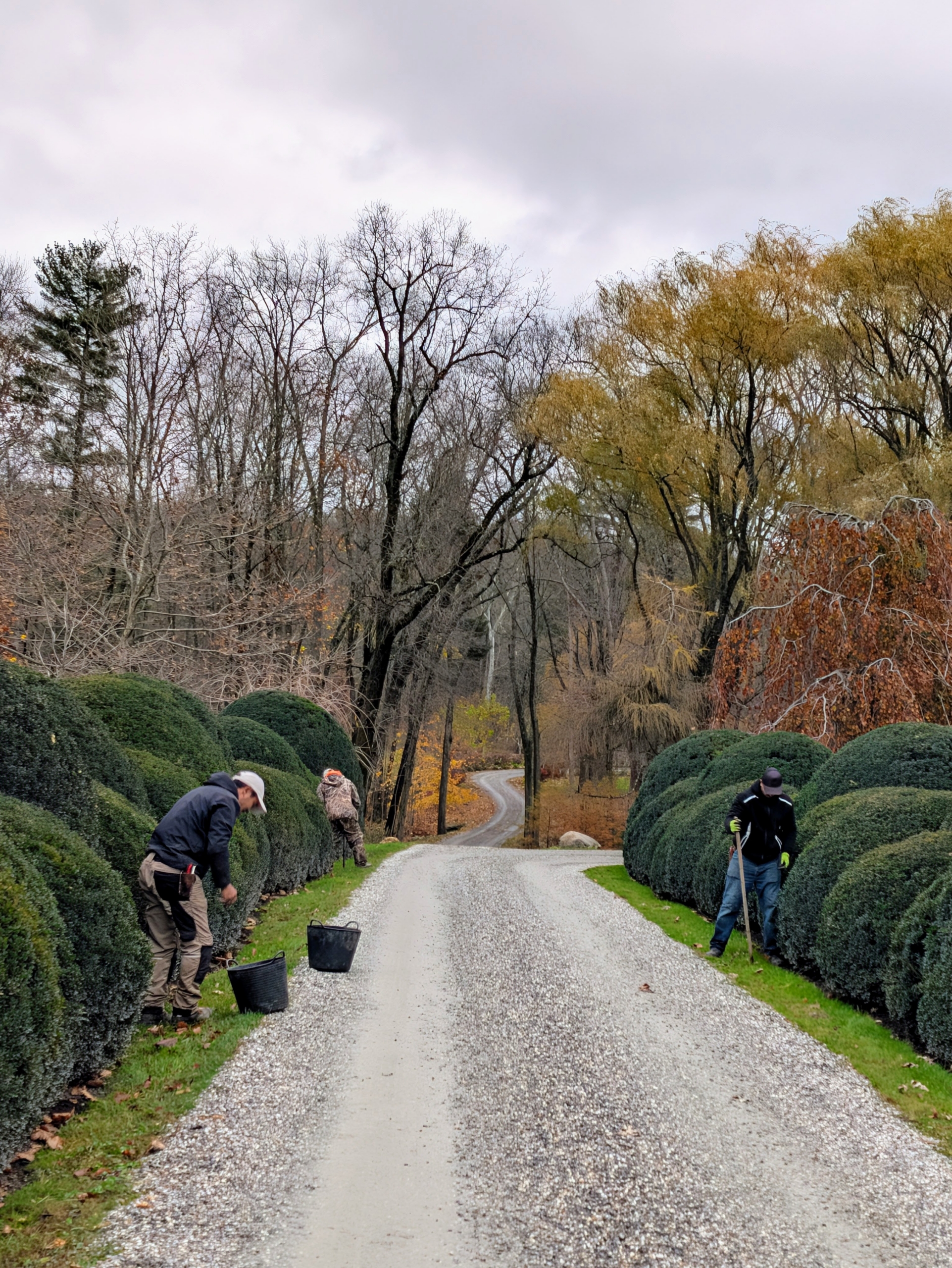
- The crew works fast to plant bulbs on both sides of my long Boxwood Allee.
-
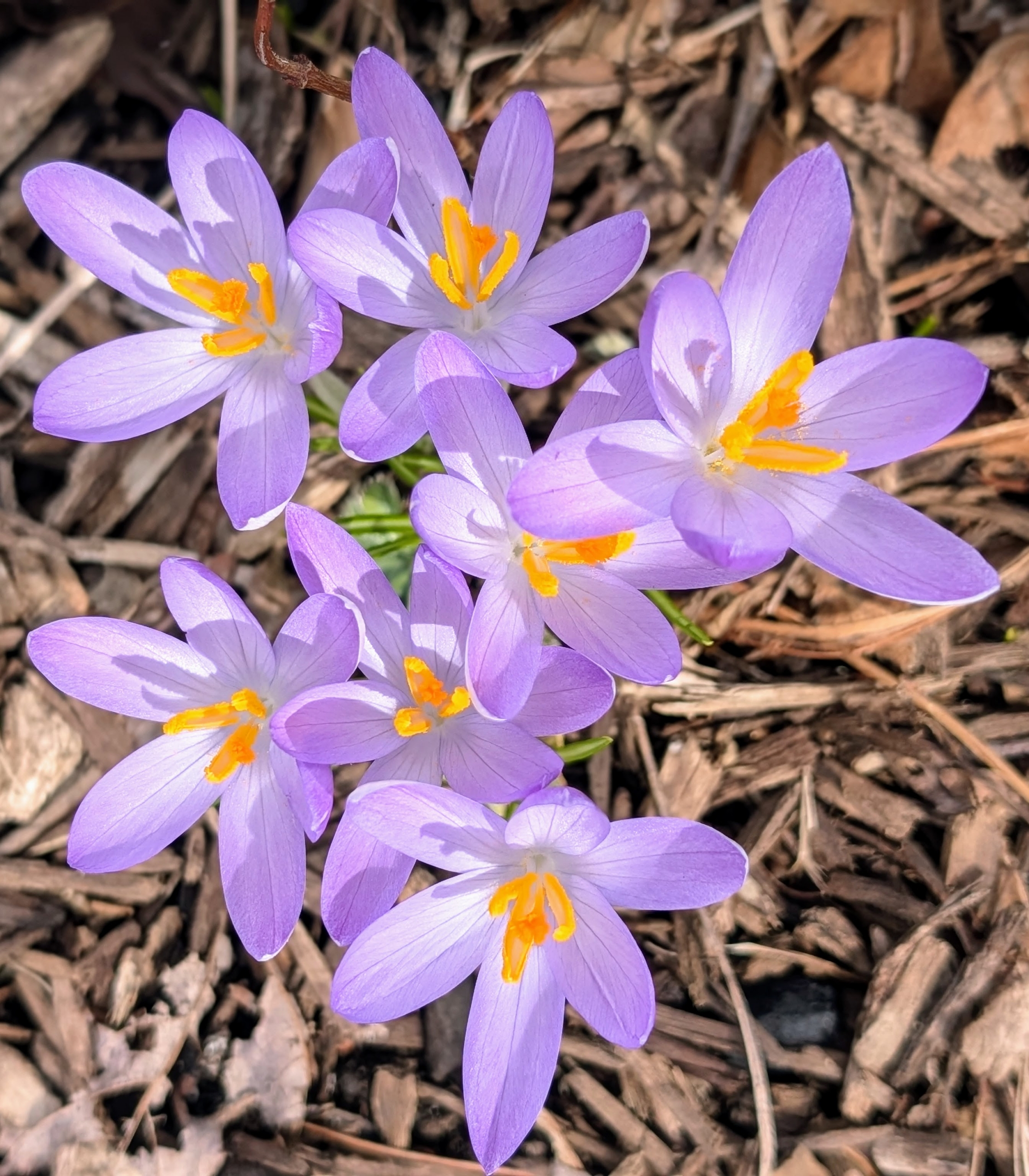
- Among the bulbs being planted – crocus. I plant crocus in many areas around the farm. They look beautiful planted en masse. And over time, these bulbs will naturalize and multiply to produce more flowers every year.
-
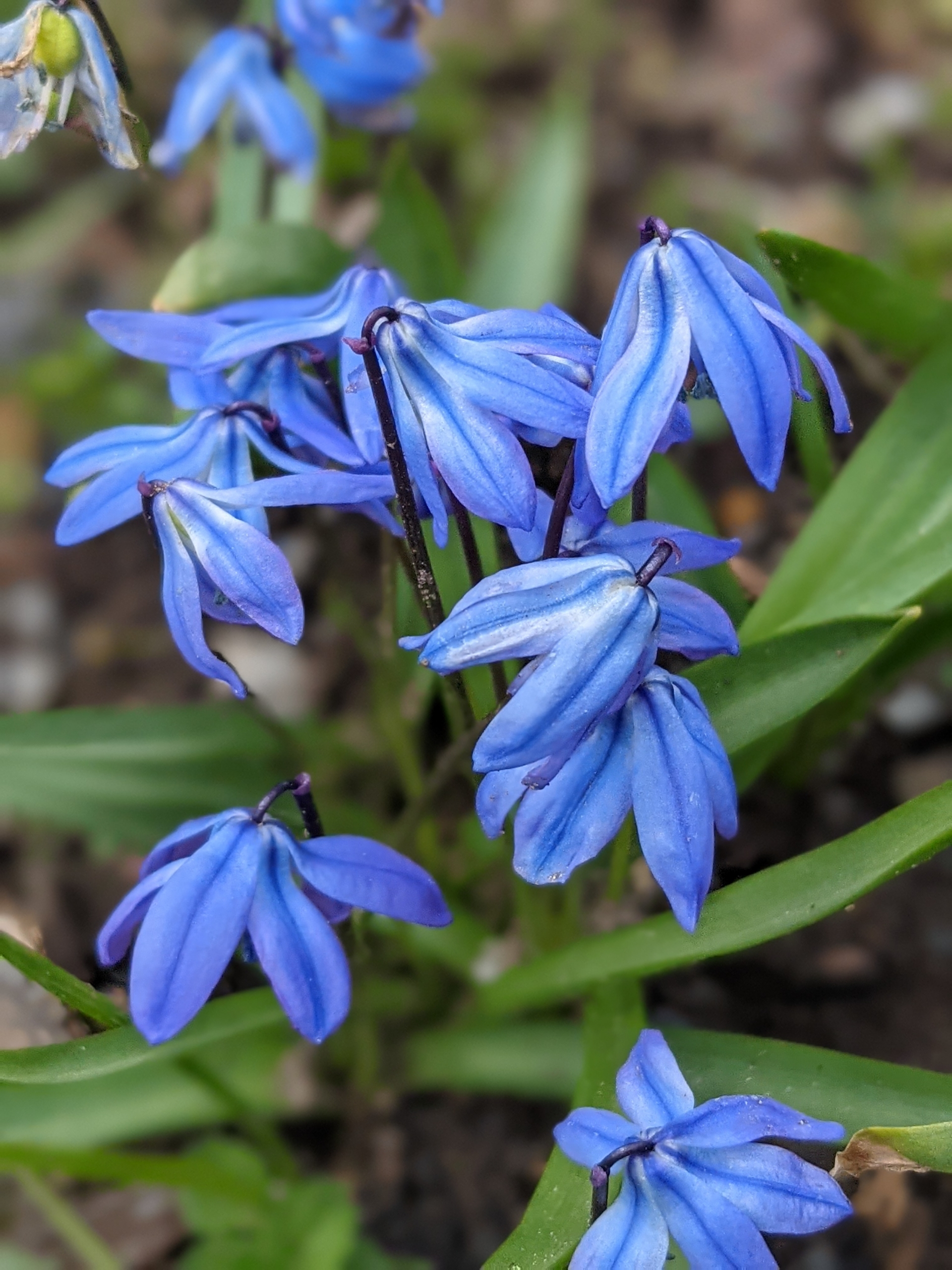
- Squill or Siberian squill, is also known widely by its botanical name, Scilla. It is a spring bulb with green grass-like foliage and arching flower stalks that support one to three nodding blue or white flowers.
-
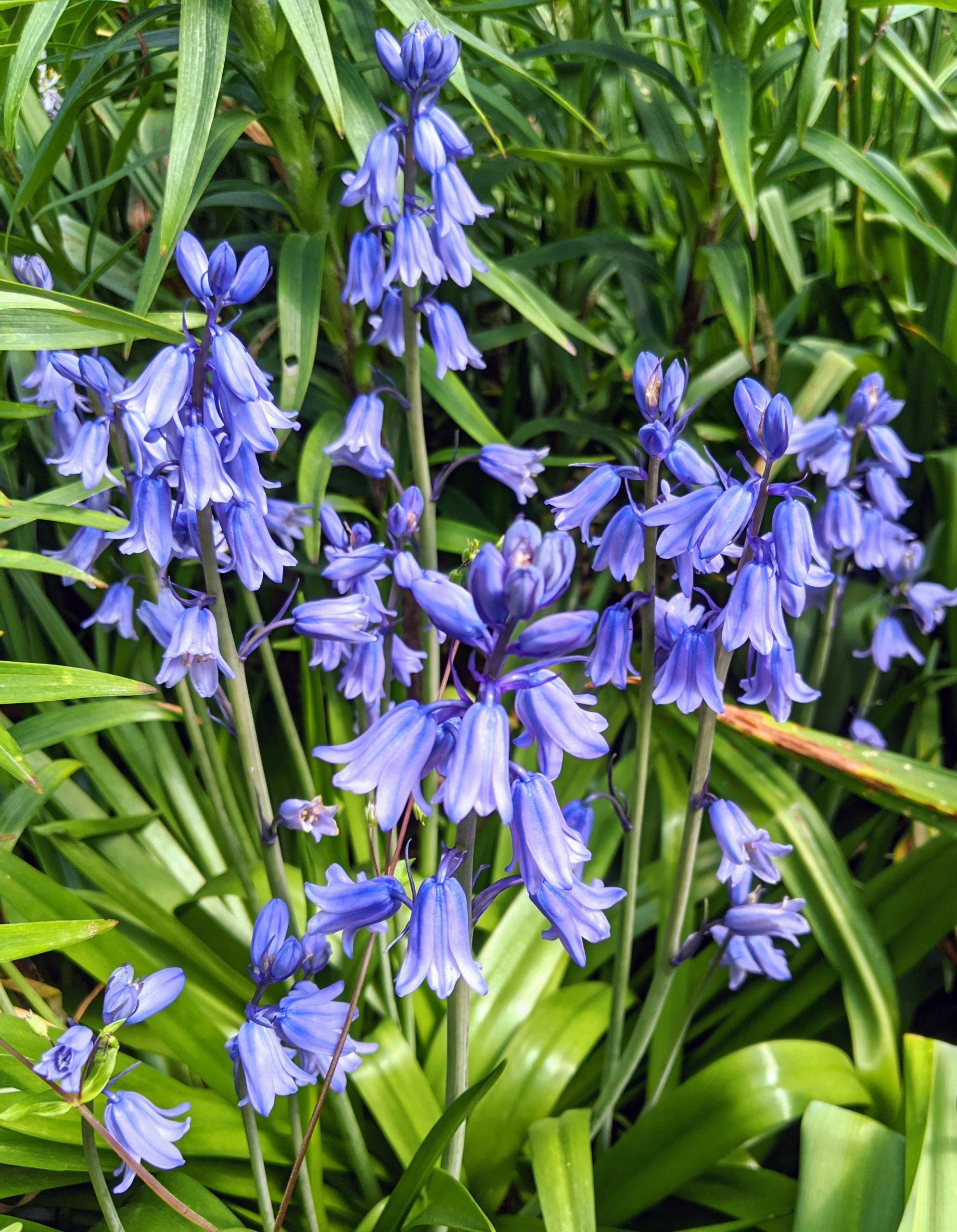
- Spanish Bluebells, or Hyacinthoides hispanica, are shade-tolerant plants that bear spikes of lightly fragrant, blue flowers.
-
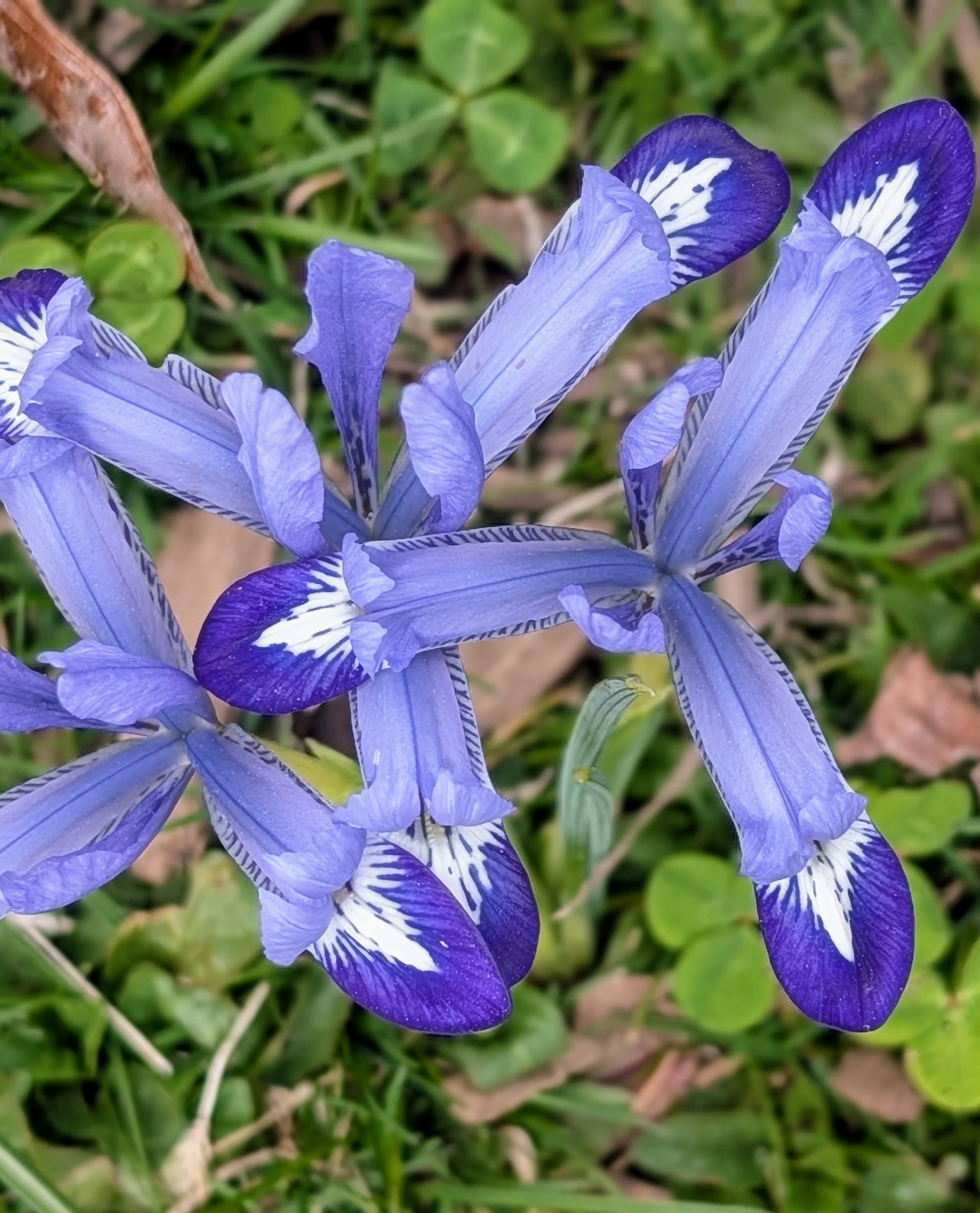
- I also enjoy irises. The blooms have a very light and subtle violet-like scent. Irises come from a vast genus of plants, but nearly all show the recognizable iris flower form – three standard petals and three hanging outer petals.
-
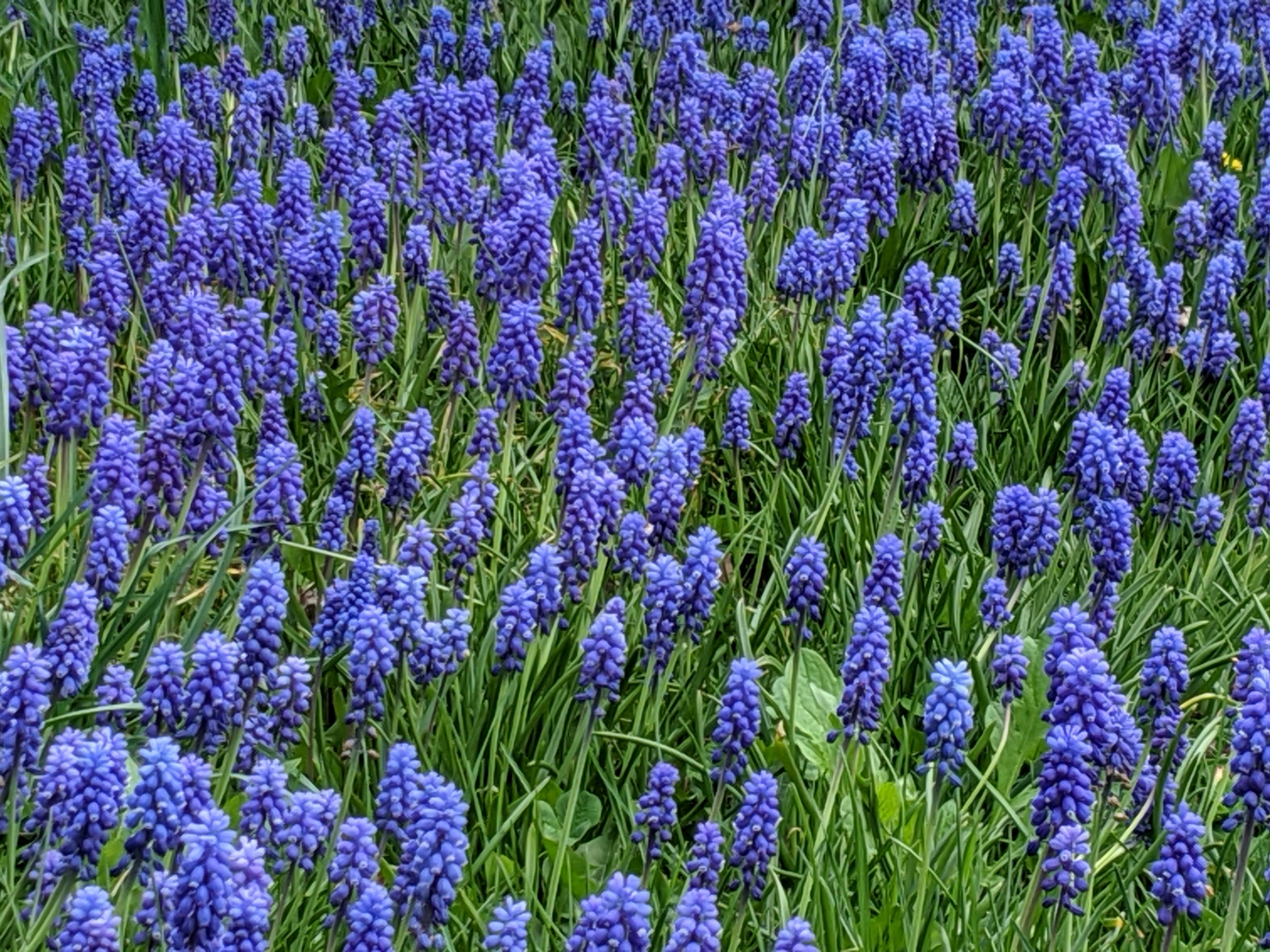
- And I grow masses of beautiful muscari. Muscari is a genus of perennial bulbous plants native to Eurasia that produce spikes of dense, most commonly blue, urn-shaped flowers that look like bunches of grapes in spring. We have thousands of bulbs to plant before winter sets in, but we’ve made a good start!
 Martha Pins


 Martha Tweets


