
Visiting the Baba House in Singapore
As I’ve stated, Singapore is a melting pot of different cultures and on day two, we learned about Peranakan. Between the 16th and 18th centuries, many Chinese traders settled in the Malay Peninsula and married women from the Malay Archipelago. Those combined customs were also influenced by values of the English and Dutch colonists, resulting in the very colorful Peranakan culture. An excellent way to learn about this way of life is by visiting the Baba House, an architectural icon that showcases Peranakan Chinese history, architecture, and heritage. Peter Lee, the honorary curator of the house, gave us a very detailed tour depicting what Peranakan life was like when the house was in its golden years. Following the tour, Edmond Wong gave me a lesson in making a traditional Nonya dumpling. Edmond’s grandmother, Kim Choo, founded her dumpling company in 1945, and the business is still in the family today. Please enjoy the Baba house and what we did afterwards.
-

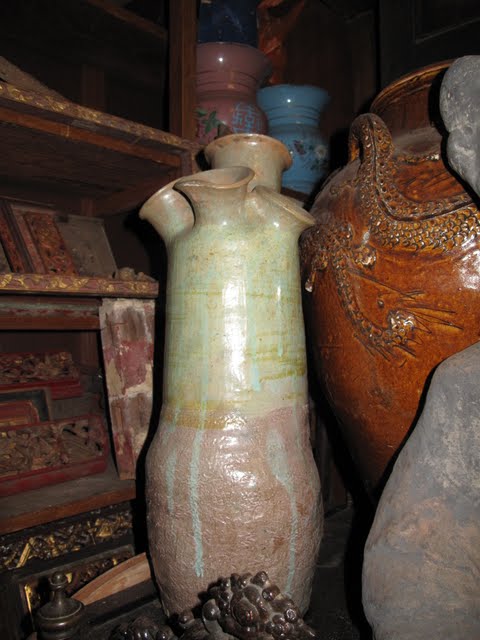
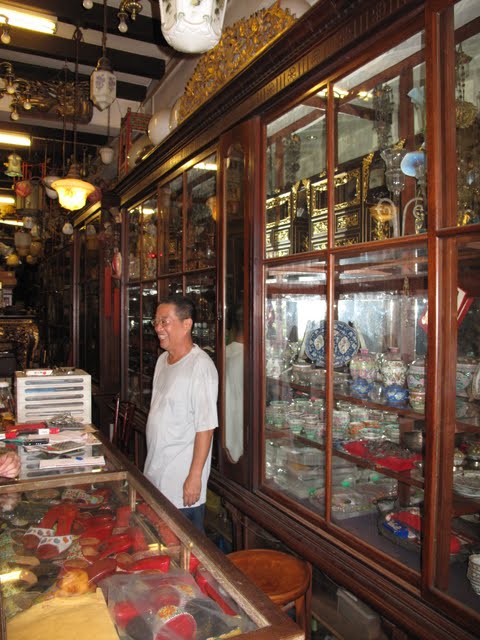
- After our wonderfully informative visit to the Baba House, we stopped at a small antique shop called Guan Antique.
-
- The store was filled with an amazing eclectic mix of objects.
-
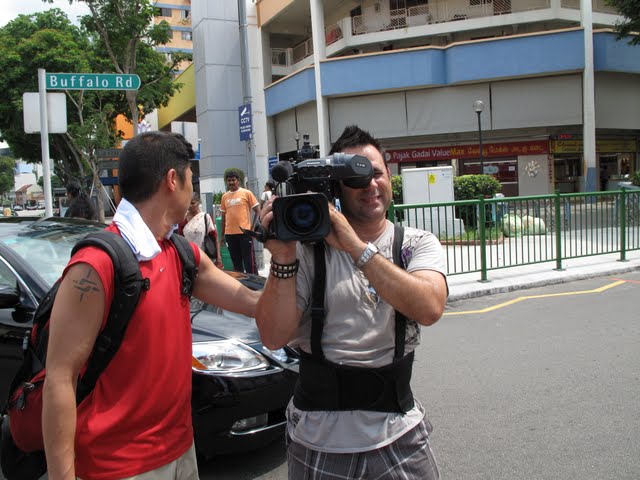
- Next, we made a quick stop in Little India, the heart of Singapore’s Indian community. Here’s our camera man Frankie.
-
- The upstairs corridor with highly polished floors and furniture from China

-
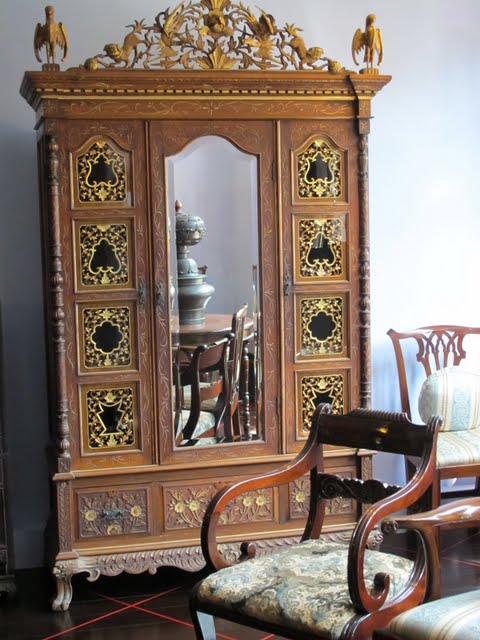
- The house is full of gorgeous, ornate furniture from the Peranakan era. I loved this armoire in the main bedroom.
-
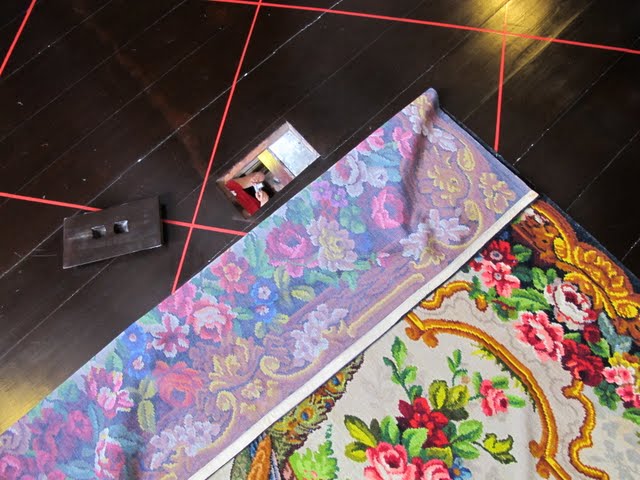
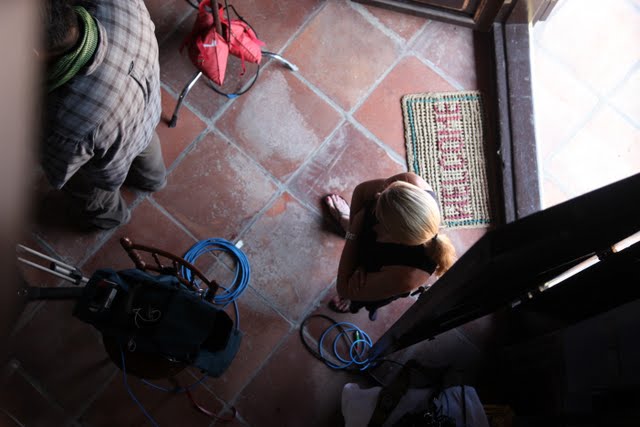
- Beneath a colorful floor covering is a peep hole, which looks down into the main foyer. The bride-to-be would use this to catch a glimpse of potential suitors who came to call.
-
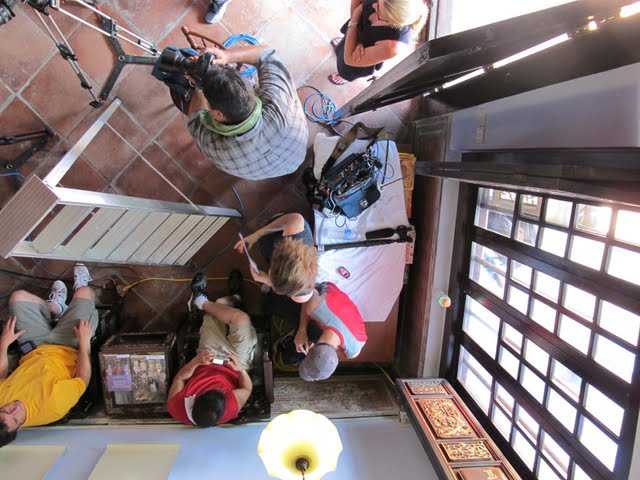
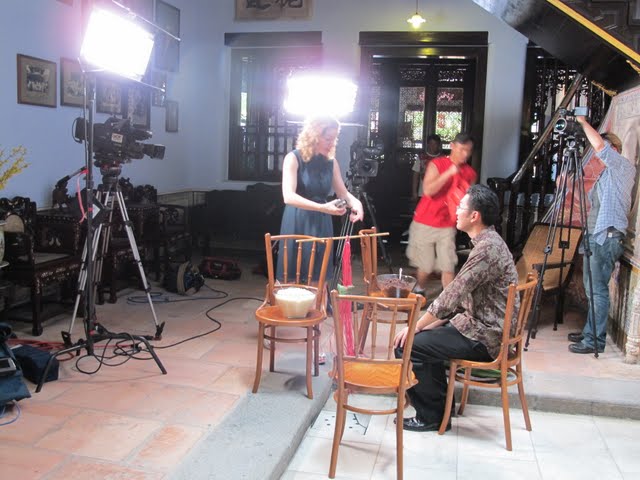
- Good thing the crew was busy at work.
-
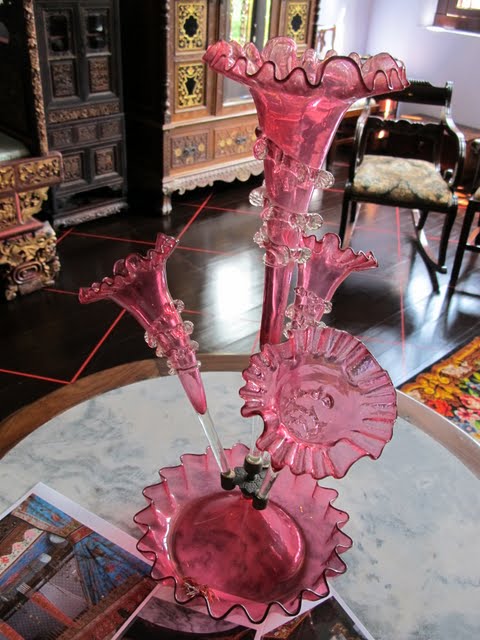
- A beautiful Venetian glass vase
-
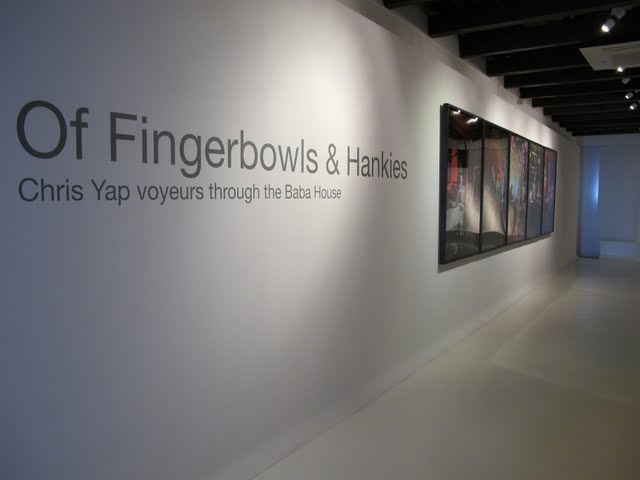
- Part of the upstairs has been extended upon and turned into a private gallery.
-
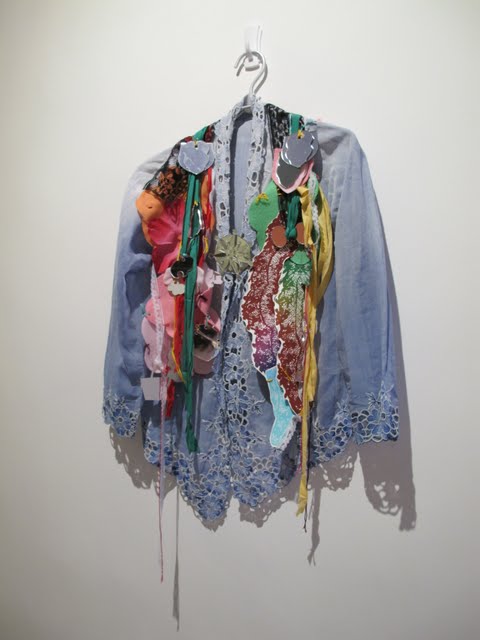
- In that gallery, traditional Pernanakan embroidery is on display.
-
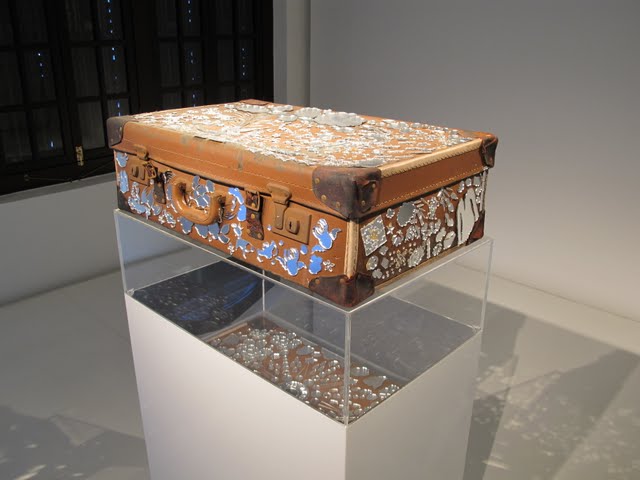
- A suitcase highly decorated with mirrors.
-
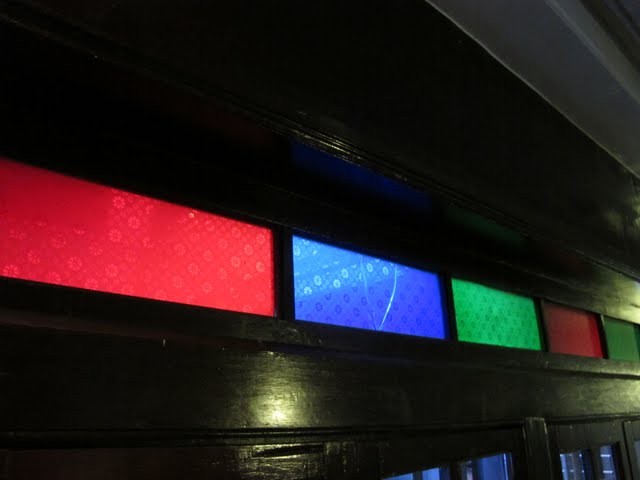
- Panels of stained glass
-
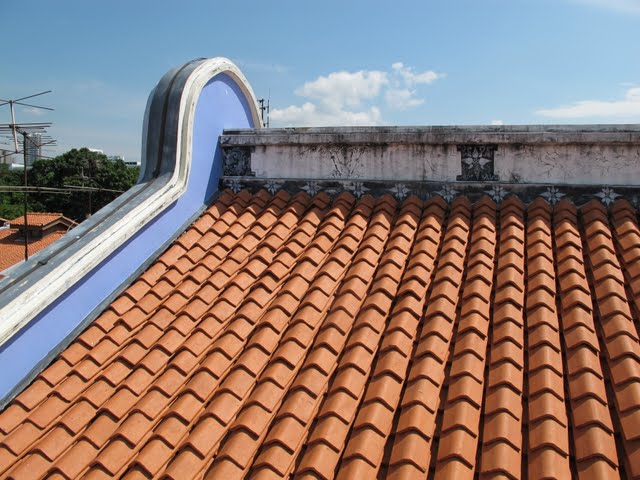
- A shot of the roof with its traditional terra cotta tiling
-
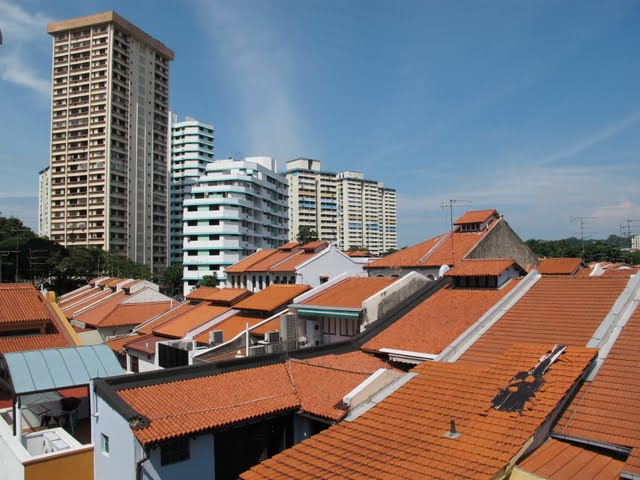
- Located on Neil Road, Baba house is one of several well-preserved, historical homes.
-
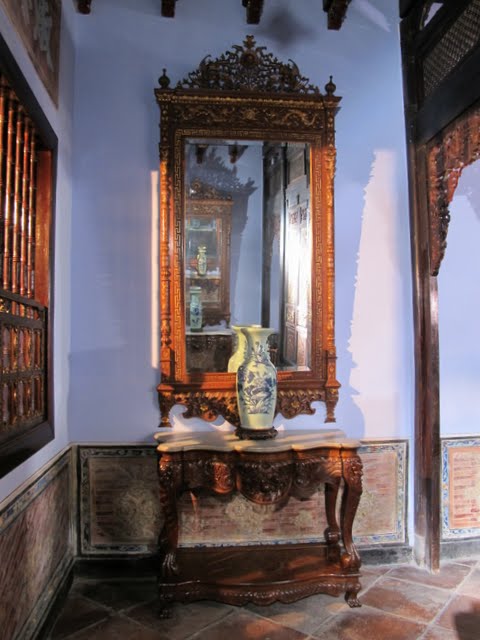
- More Chinese furniture
-
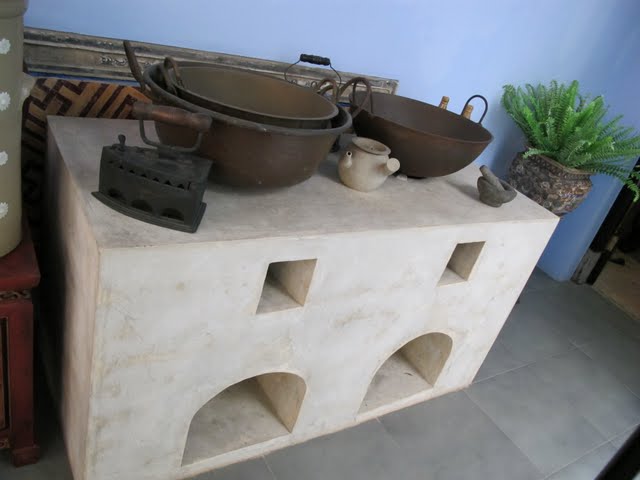
- This beautiful oven is from the Peranakan times.
-
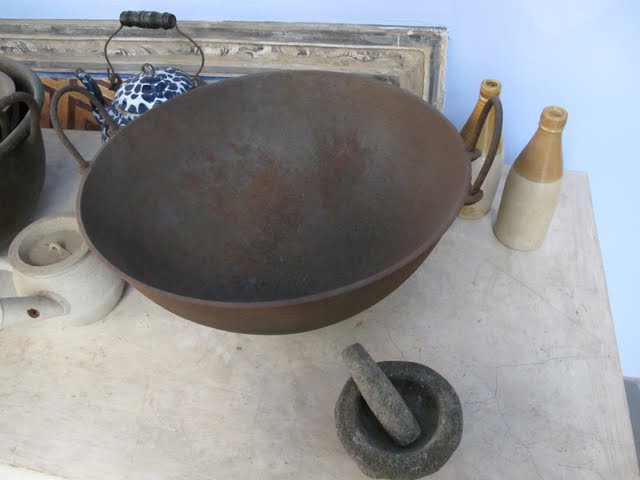
- As are these wonderful kitchen implements
-
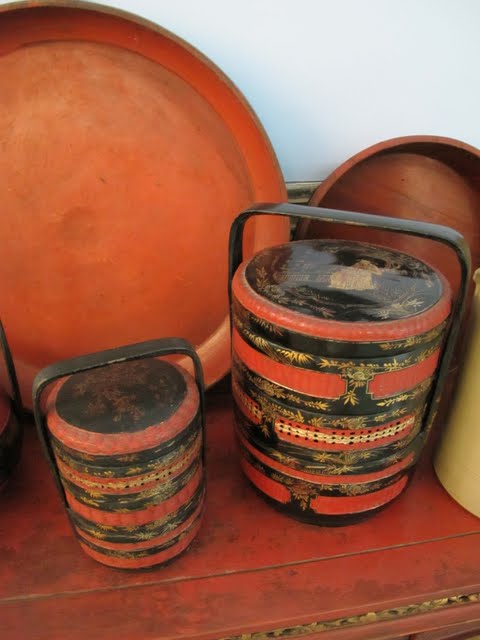
- These are ornate lacquered stackable meal containers.
-
- Beautiful dessert molds

-
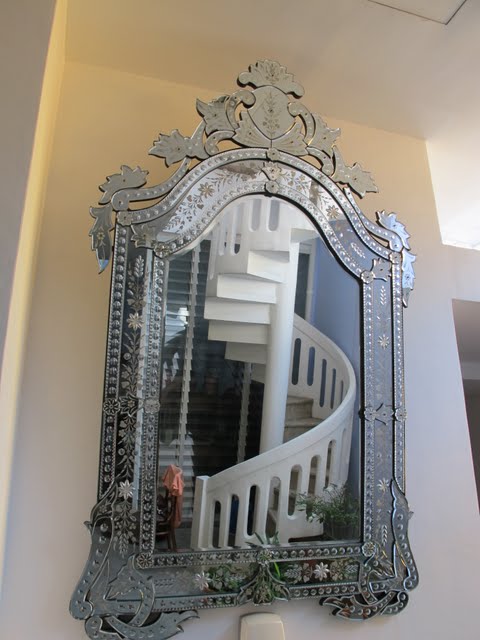
- I loved this mirror – the spiral stair case is part of the Baba House extension.
-
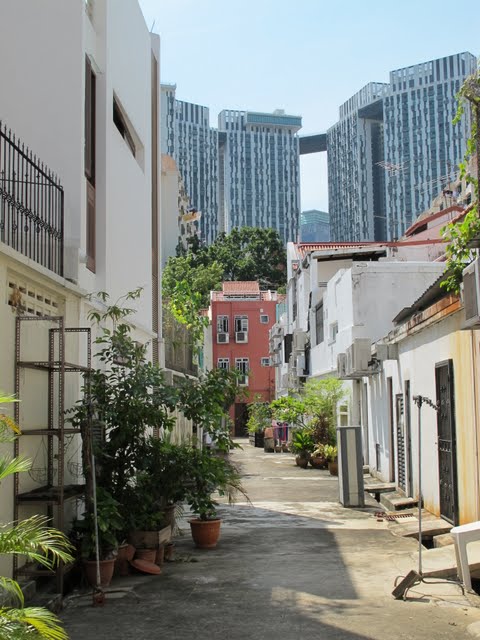
- A back alley with historic homes juxtaposed with modern skyscrapers
-
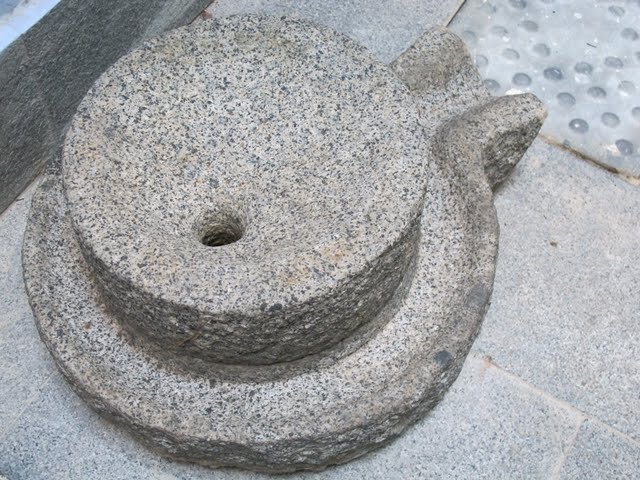
- A traditional grinding stone
-
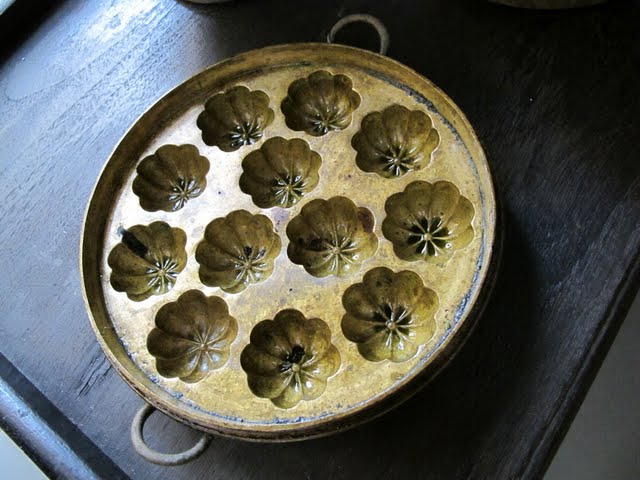
- A pastry mold – after the mold was filled with batter, a lid covered with hot coals was placed on top to bake the batter.
-
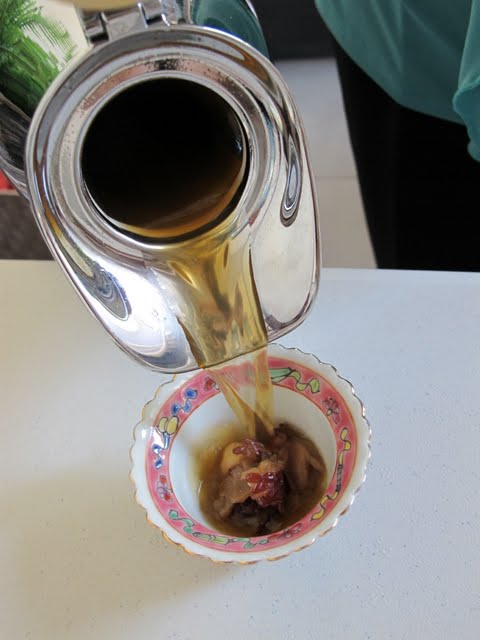
- We were served a refreshing fruit infused tea.
-
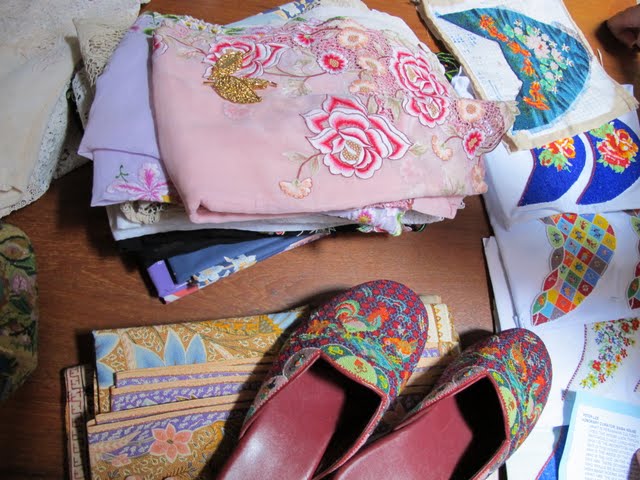
- Old and new traditional Peranakan embroidery. The new work on the right, fashioned after traditional Peranakan beading and embroidery, is designed by Raymond Wong.
-
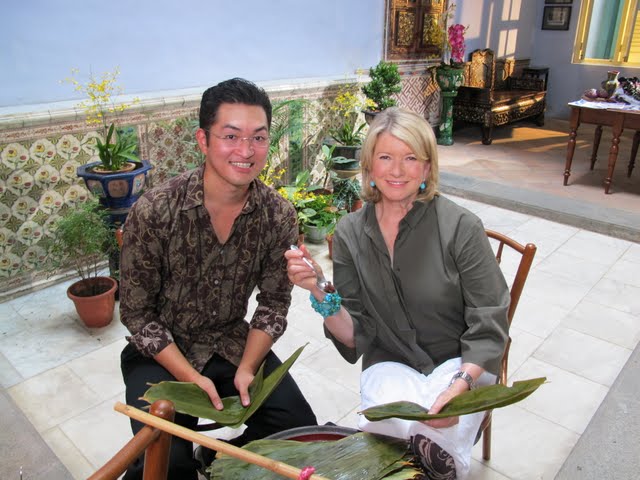
- After a tour of the house, I learned how to make pandan leaf-wrapped dumplings with Edmond Wong, brother of Raymond Wong.
-
- A wrapped dumpling before steaming for six hours

-
- Here I am with Edmond, filling the dumplings with a secret rice and meat filling – a recipe of his grandmother’s. He would not reveal the secret!
-
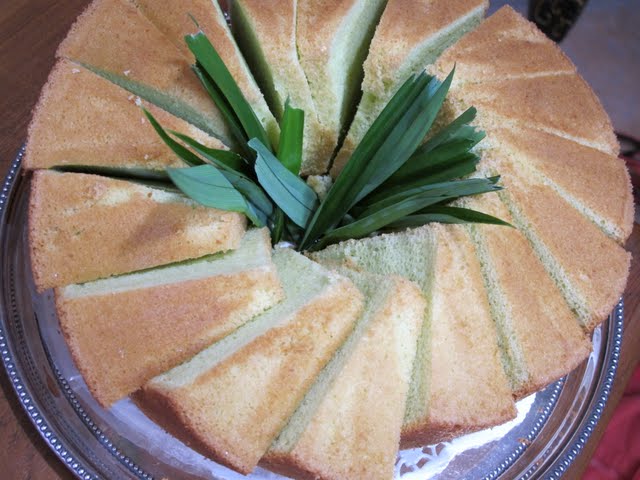
- And a wonderful semolina cake flavored with a bit of Pandan leaf
-
- The dumplings, after 6 hours of steaming. They were so delicious!

-
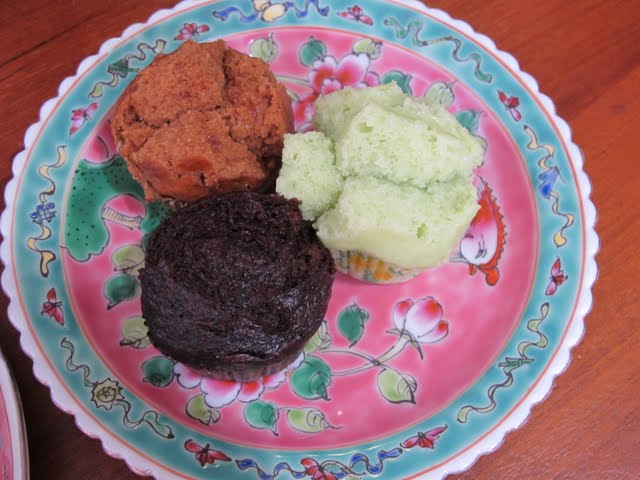
- We were also treated to delectable steamed cupcakes.
-
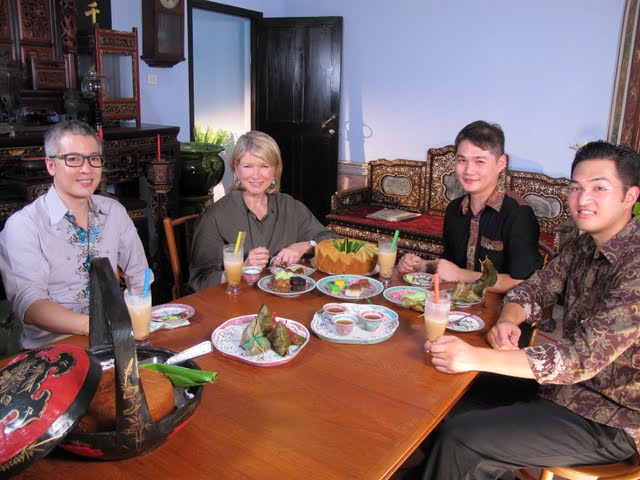
- Here I am with Peter Lee, Raymond Wong, and Edmond Wong sampling the delicious dumplings, along with several other traditional Peranakan sweets.
-
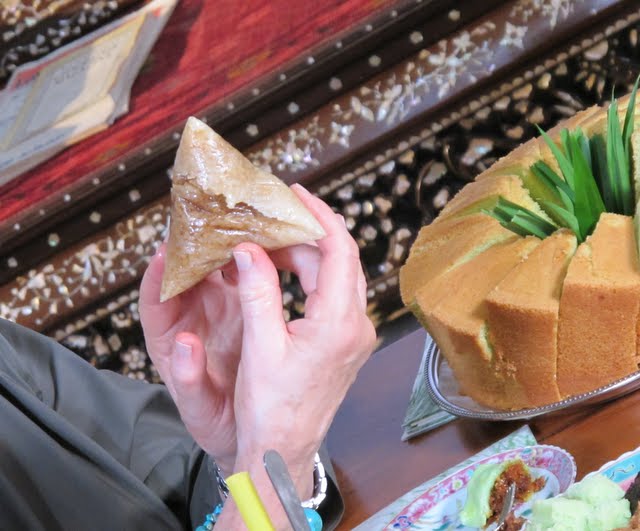
- An unwrapped dumpling – the rice encases the meat.
-
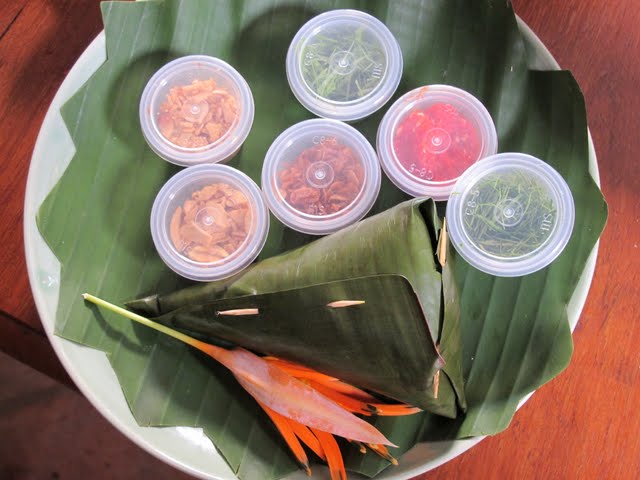
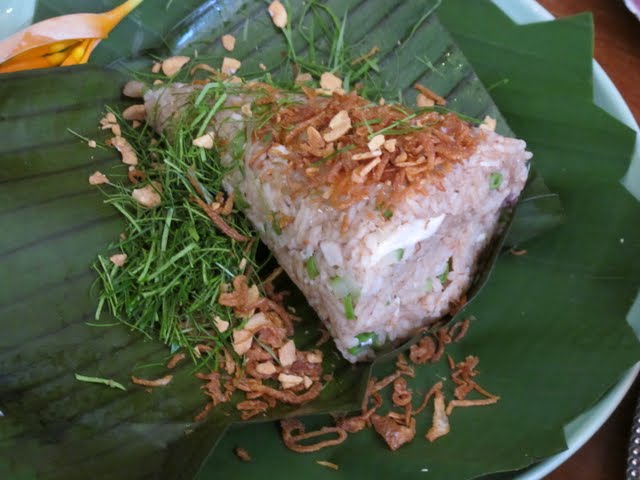
- We also tried this wonderful lunch dish. The banana leaf is filled with rice seasoned with seafood and spices. When opened, you eat it with an assortment of toppings.
-
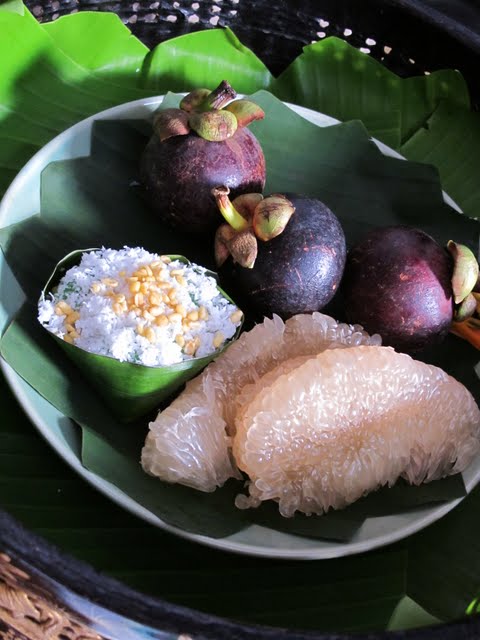
- Mangostein, a tapioca dessert, and pomelo sections.
-
- The rice with the toppings
-
- Very delicious

-
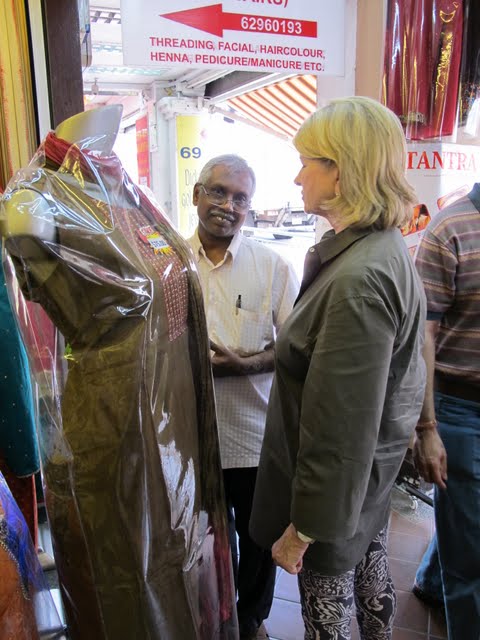
- We stopped in a very nice clothing store. The owners are from the Indian state of Tamil Nadu.
-
- These pretty dresses are called salwar kameez.

-
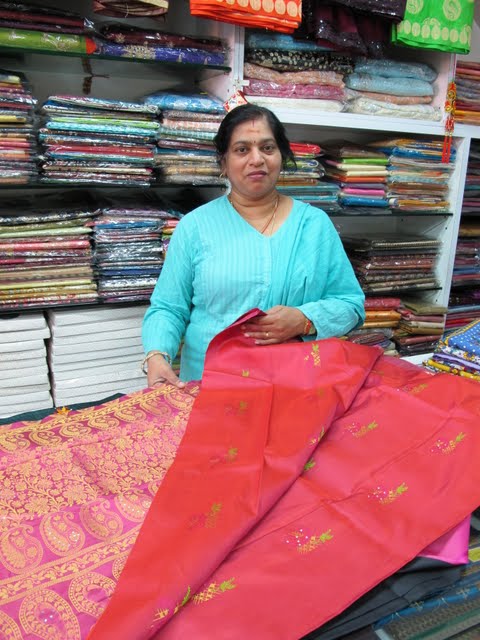
- This woman was happy to show us some of her gorgeous saris.
-
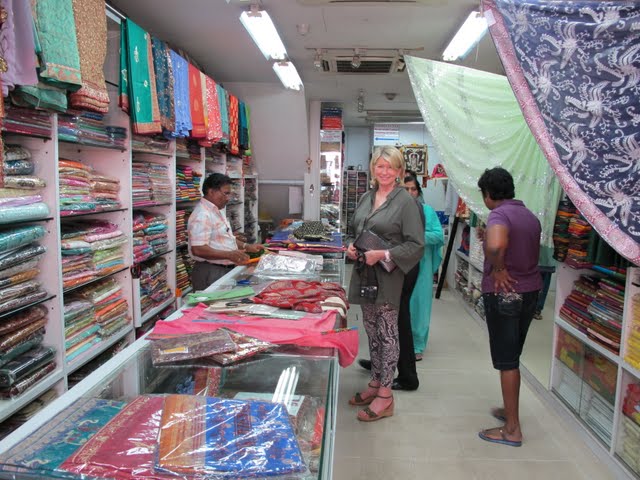
- I really like colorful shops, like this one.
-
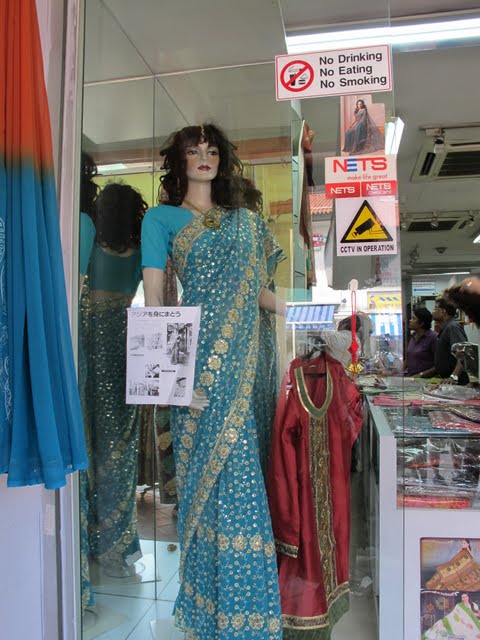
- An especially pretty sari with gold threads woven throughout
-
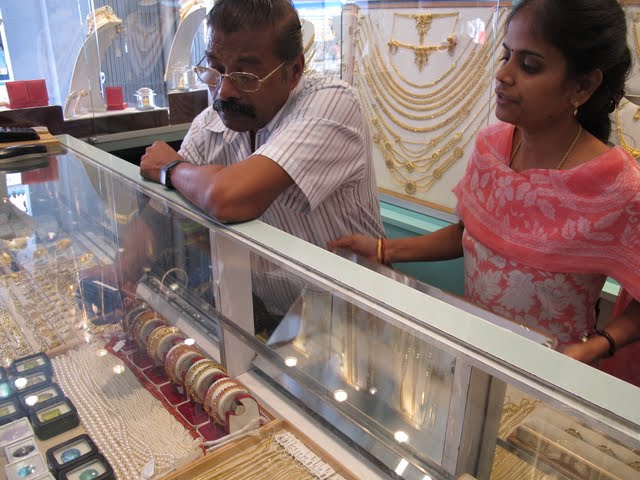
- They had very fine pieces.
-
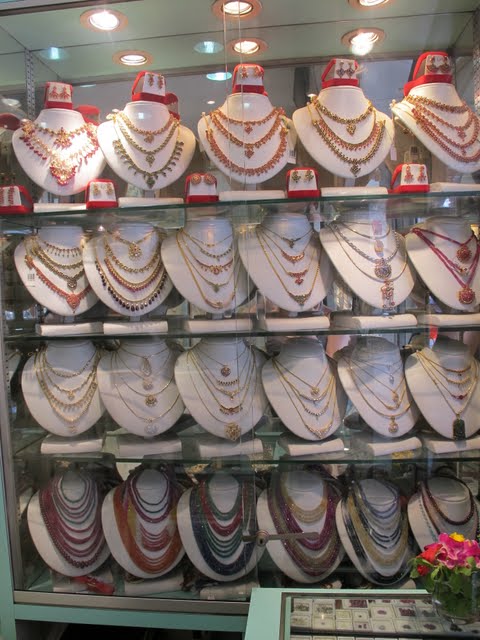
- I was so tempted.
-
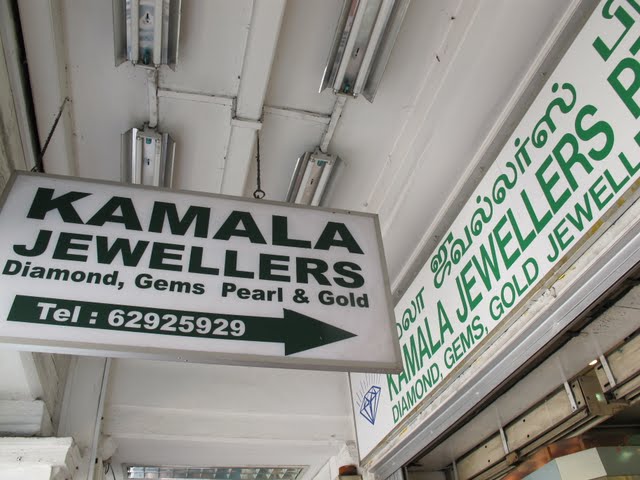
- We also stopped into Kamala Jewellers.
-
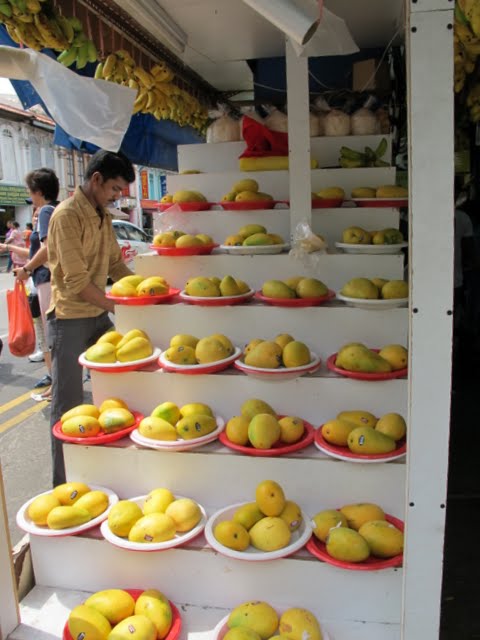
- There were also many food vendors.
-
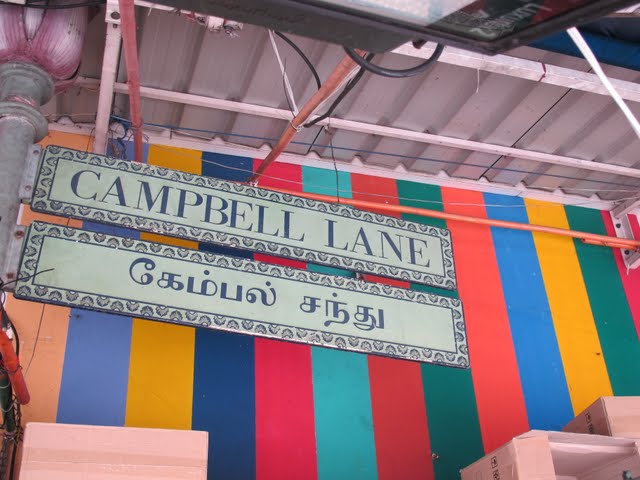
- The writing below is Tamil for Campbell Lane.
-
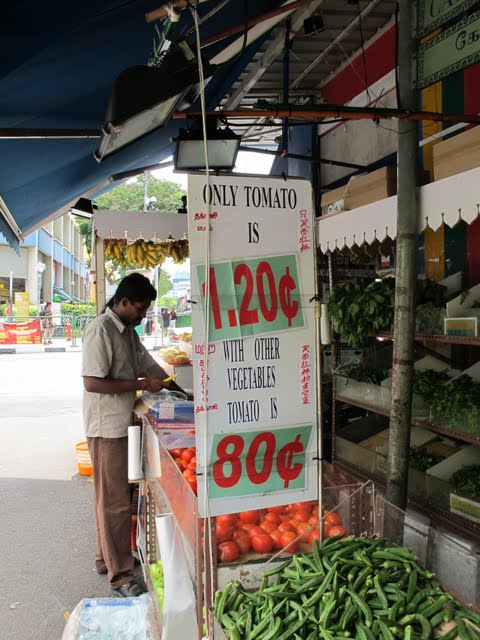
- We found this sign humorous.
-
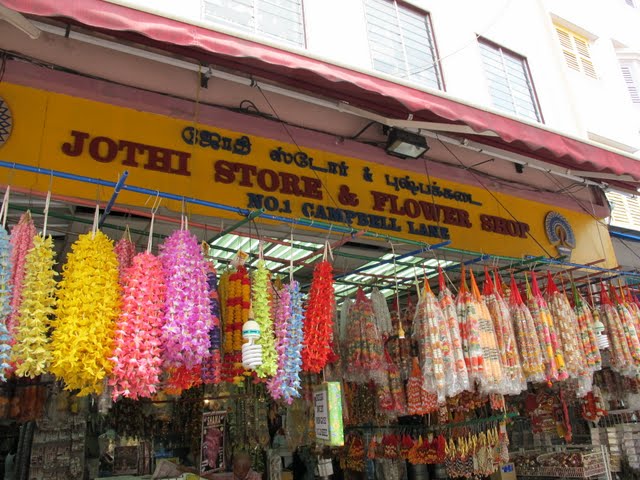
- Fresh flower garlands are a circular symbol of love, peace, and purity for use in Hindu Temples in the neighborhood.
-
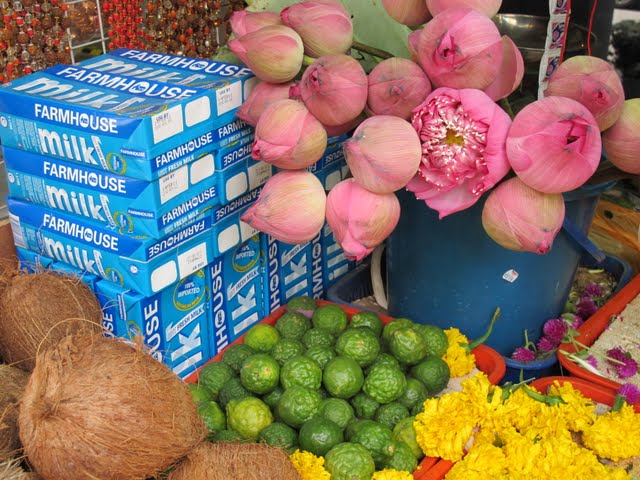
- Milk, coconuts, wrinkly limes, lotus flowers, and marigold blooms
-
- On day two, our first stop of the day was the historical Baba House. This architectural icon showcases Peranakan Chinese history, architecture, and heritage.

-
- Unlike traditional museums, guests are able to feel and enjoy the walls and furnishings. This is a beautiful and elaborately carved wall panel.

-
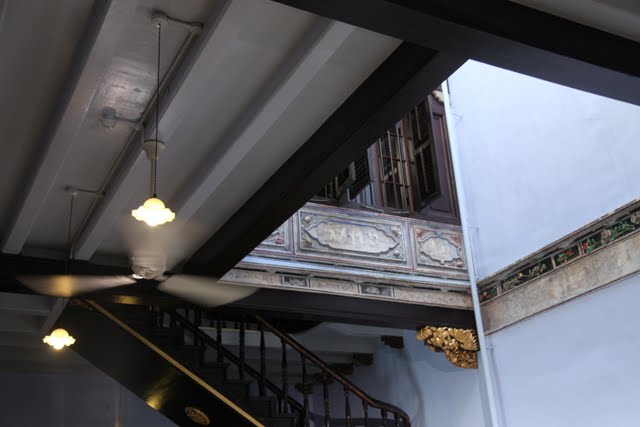
- The house, which was built in 1895, is surprisingly cool in this hot and humid climate. The interior was intentionally made dark to help bring down the temperature. Ceiling fans keep one the interior quite comfortable.

-
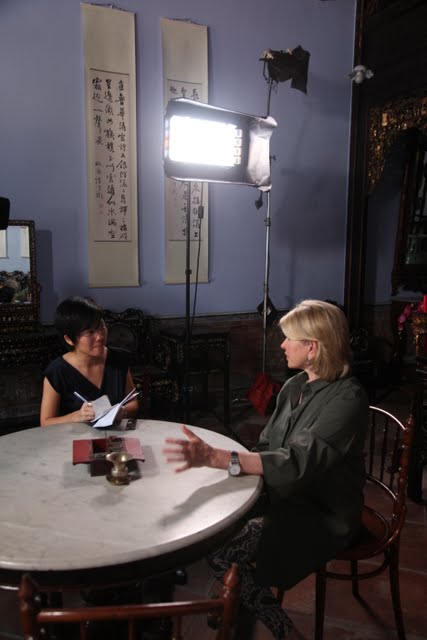
- Before our TV shoot, I sat for an interview with Ms. Huang Lijie from the Straits Times.
-
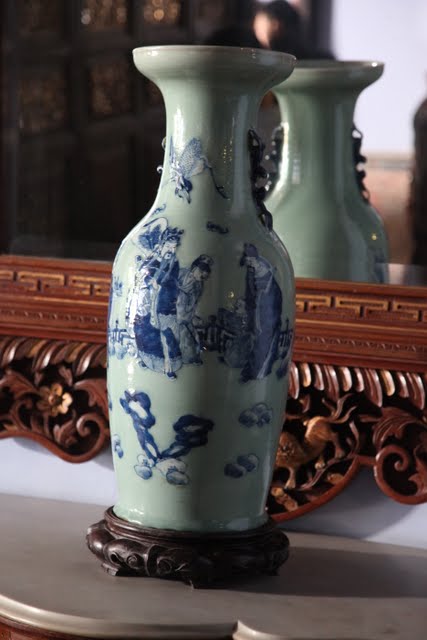
- A very beautiful Japanese vase
-
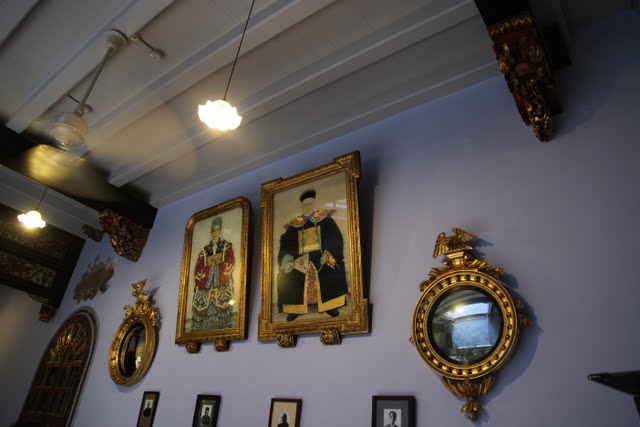
- Hanging on the walls are elaborately framed portraits of generations of the Wee family, who owned the house.
-
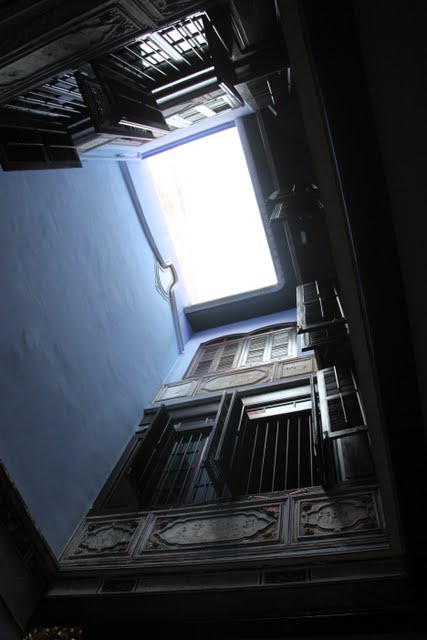
- A little ‘courtyard’ also helps to keep the house cool.
-
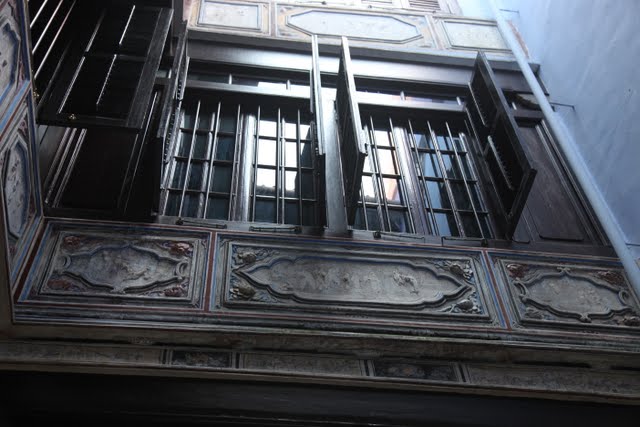
- A closeup of the intricately carved woodwork
-
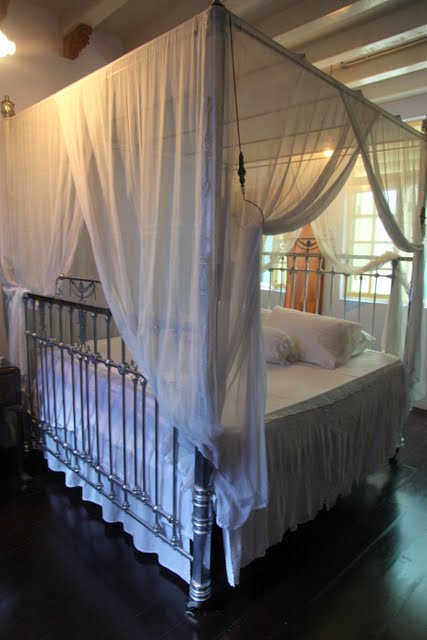
- The second floor is devoted to the 12-day ritual of the Peranakan wedding. This is the bed of a future bride.
-
- Sophie used that peep hole to spy on the TV crew below.
-
- This is a sumptuously carved, lacquered, and gilded canopied wedding bed from 19th-century Penang.

-
- More of the interior
 Martha Pins


 Martha Tweets

