

The Boxwood Allée is Covered in Burlap
My Boxwood Allée is ready for winter.
I've been covering my boxwood specimens with burlap since I first started to garden. Burlap covers protect the tender branches from splaying and breaking from the weight of snow, while shielding the foliage from freezing windburn. I think it also provides a cozy and pretty look to the winter landscape. Yesterday, my outdoor grounds crew enveloped my entire Boxwood Allée, transforming its appearance for the season.
Enjoy these photos.
-

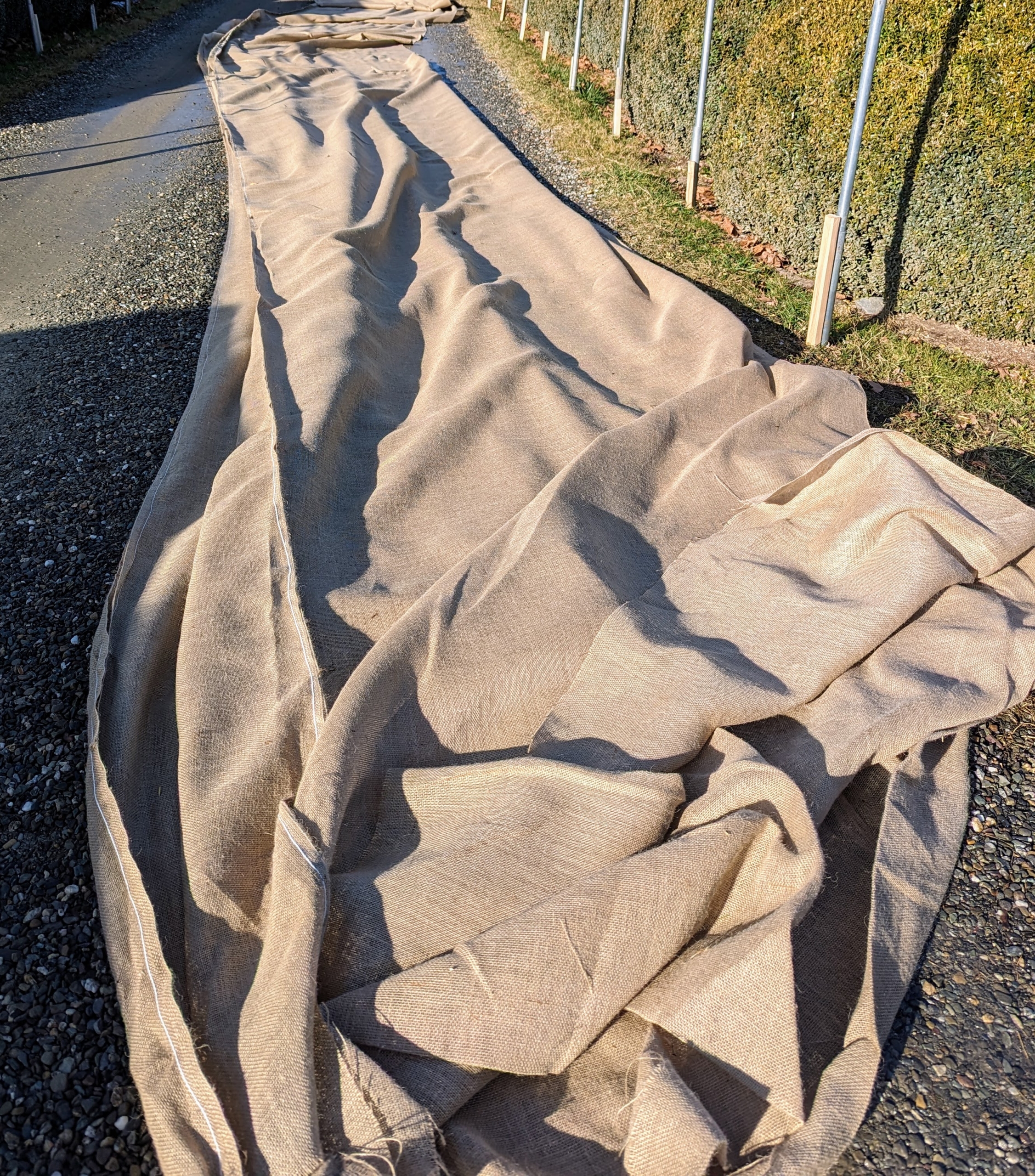
- The burlap gets reused from year to year whenever possible. When it is removed in spring, it is rolled up, labeled and then stored in the dry stable barn until it is used again. This is one of last year’s burlap covers – still in excellent condition. Depending on the quality of the burlap, these covers can last through two seasons, sometimes three.
-
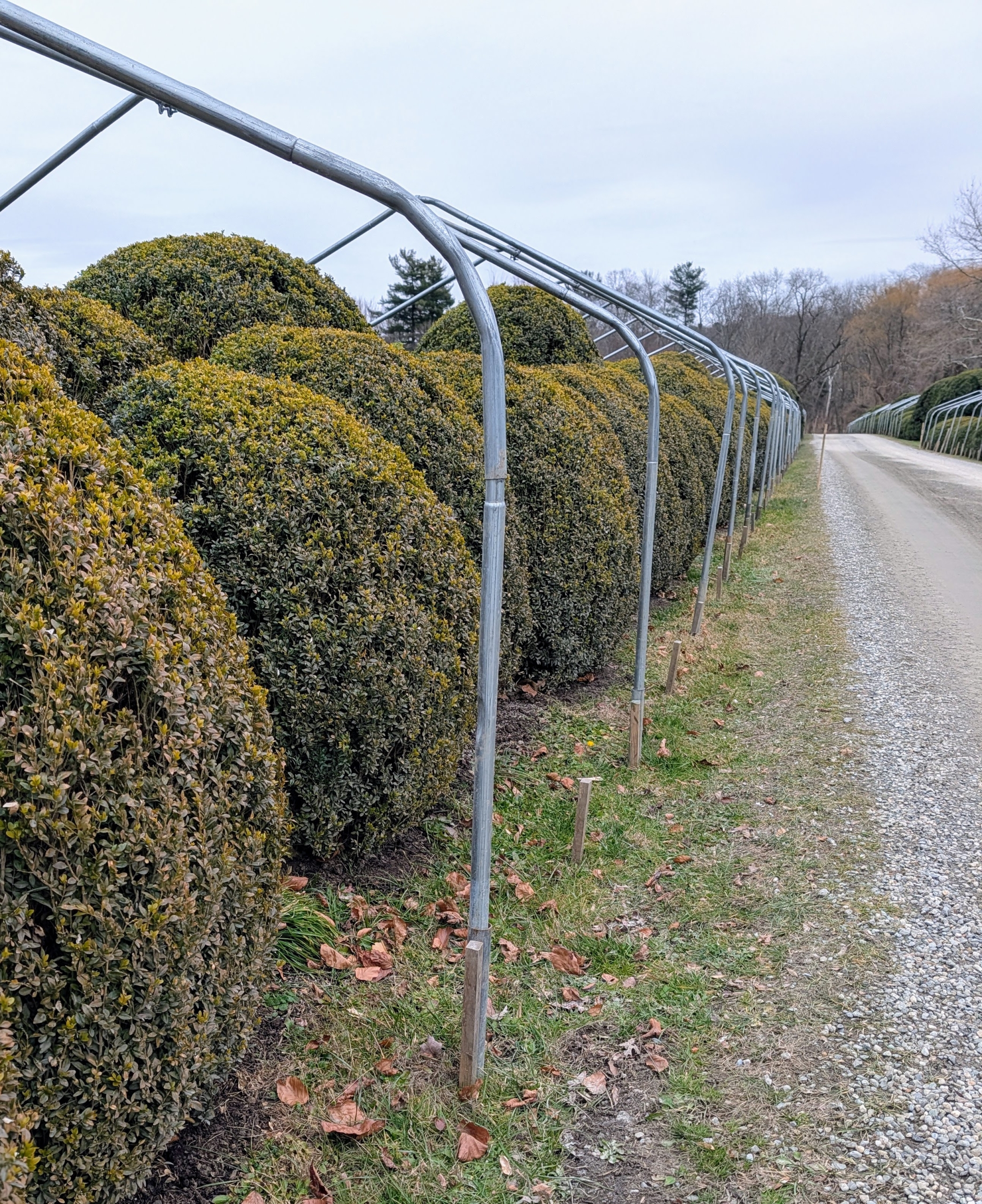
- The framing for the burlap covers was already completed. These are the metal pipes typically used for building hoop houses.
-
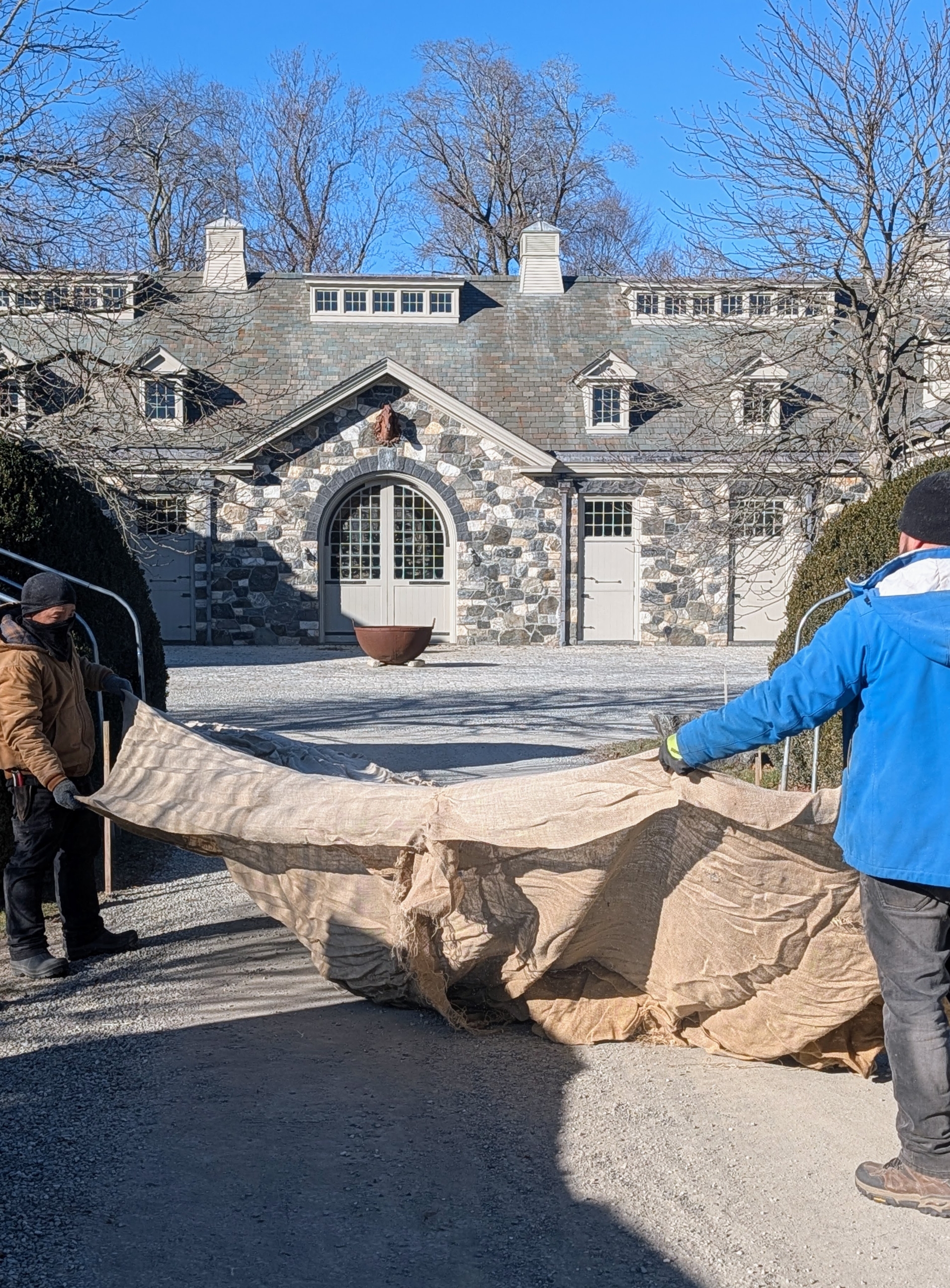
- Phurba and Adan unfold the ends of one burlap cover and make sure it is matched properly to the boxwood the way it was made.
-
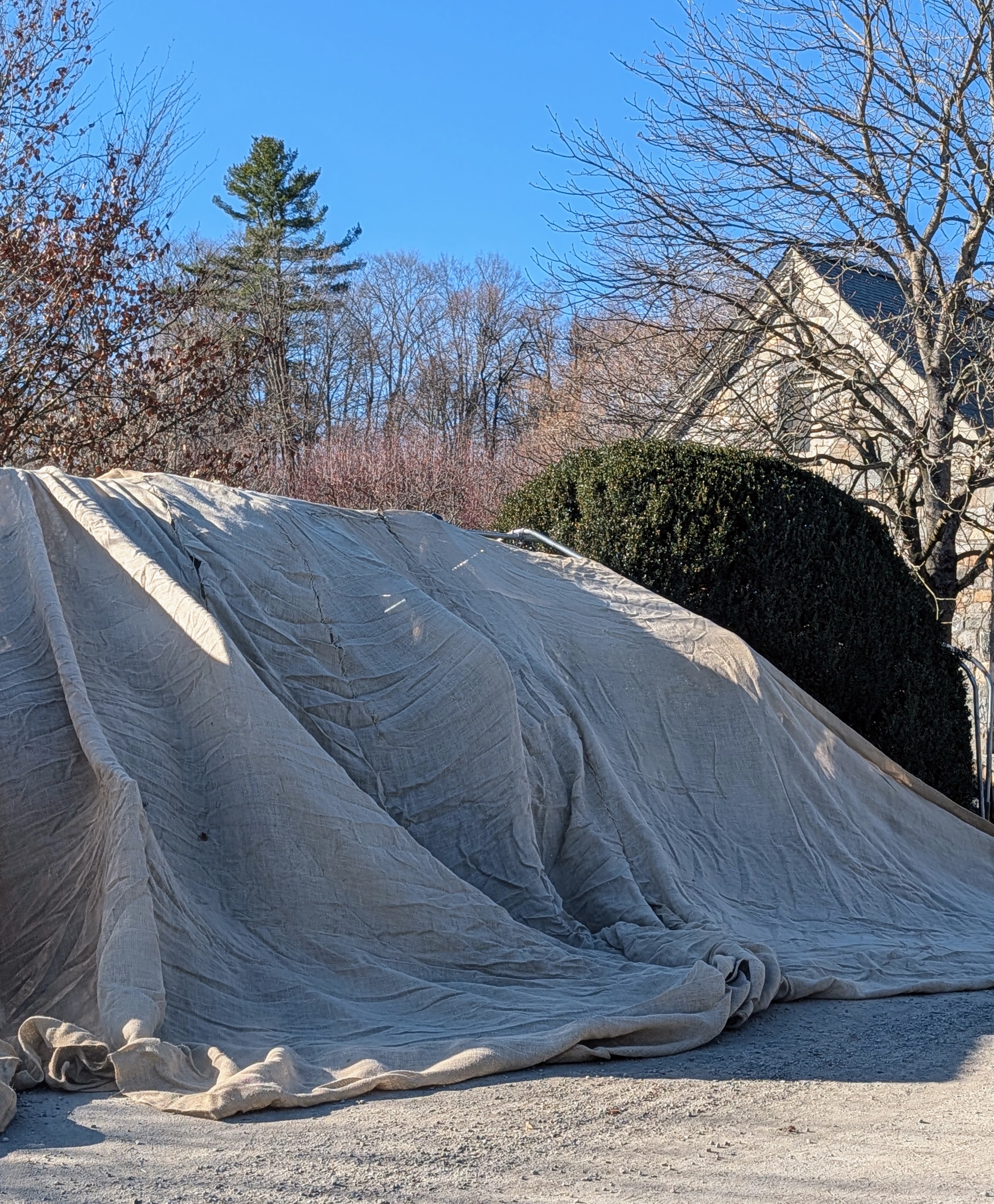
- Then the burlap is slowly draped over the boxwood one section at a time.
-
- Here’s Phurba placing the fabric over a tall boxwood shrub…
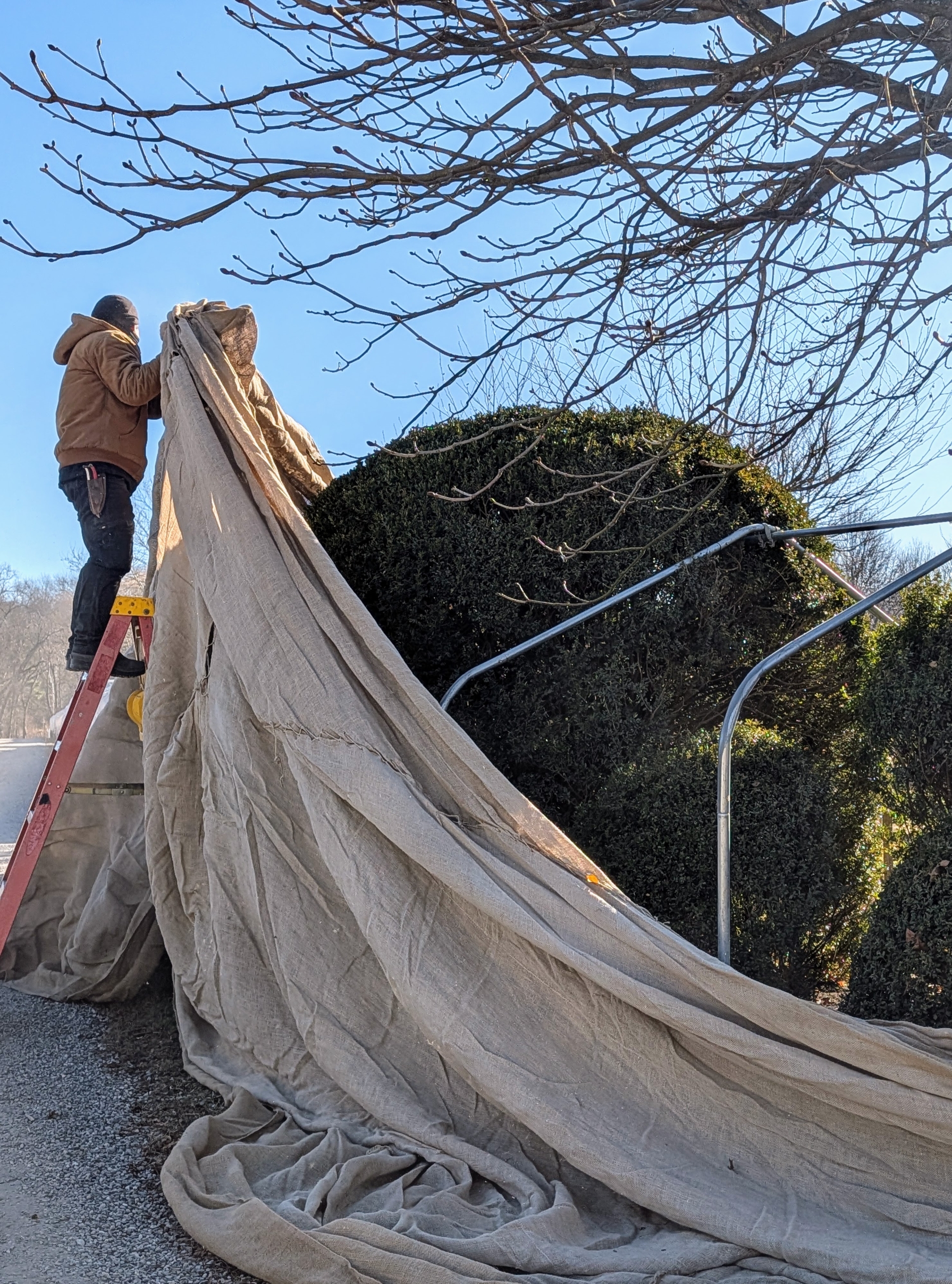
-
- … and then over the metal frame. It takes a couple of crew members to get the burlap over the frame peaks.
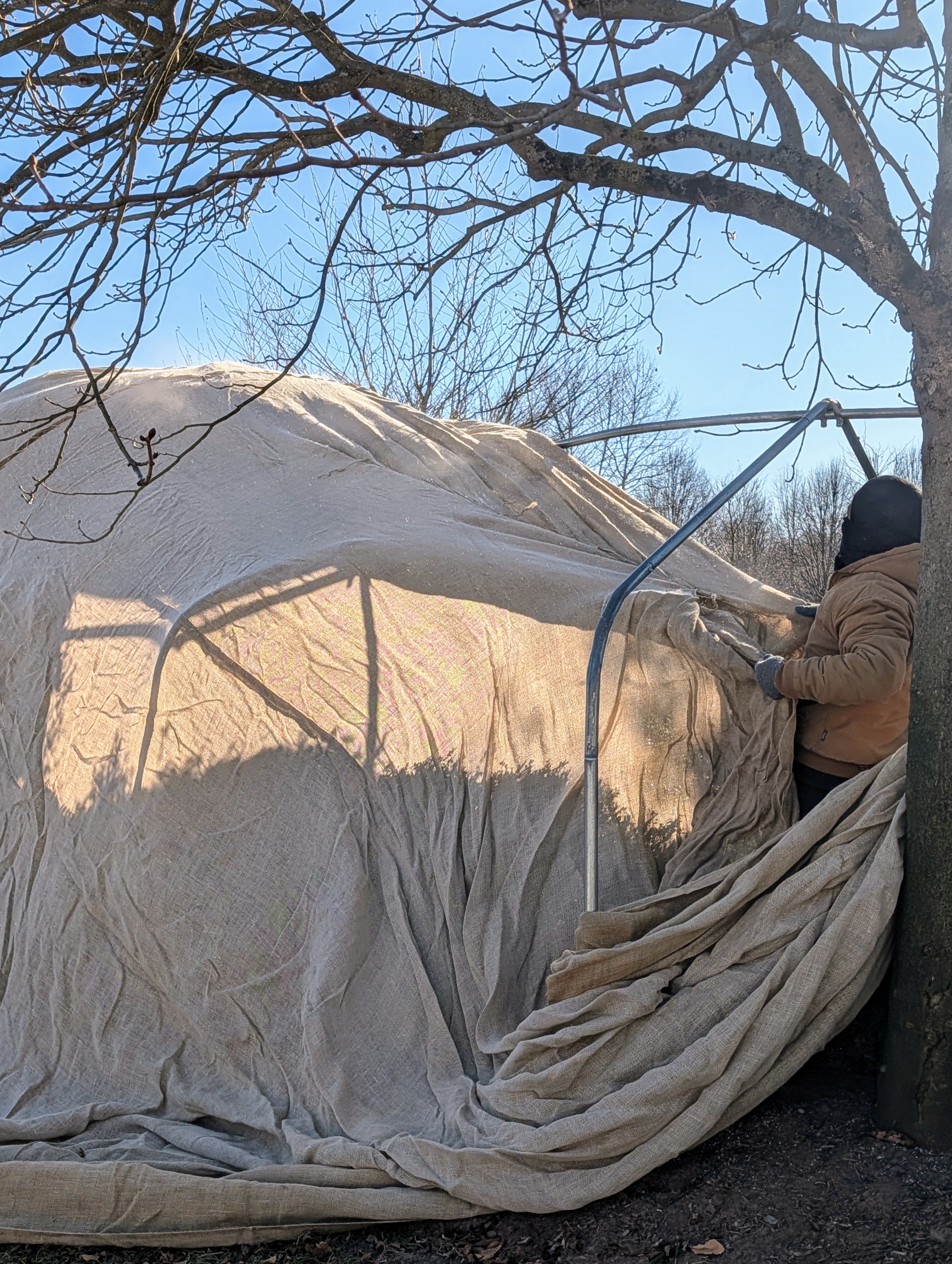
-
- Adan carefully pulls it over the metal ends, so the fabric doesn’t snag and rip.
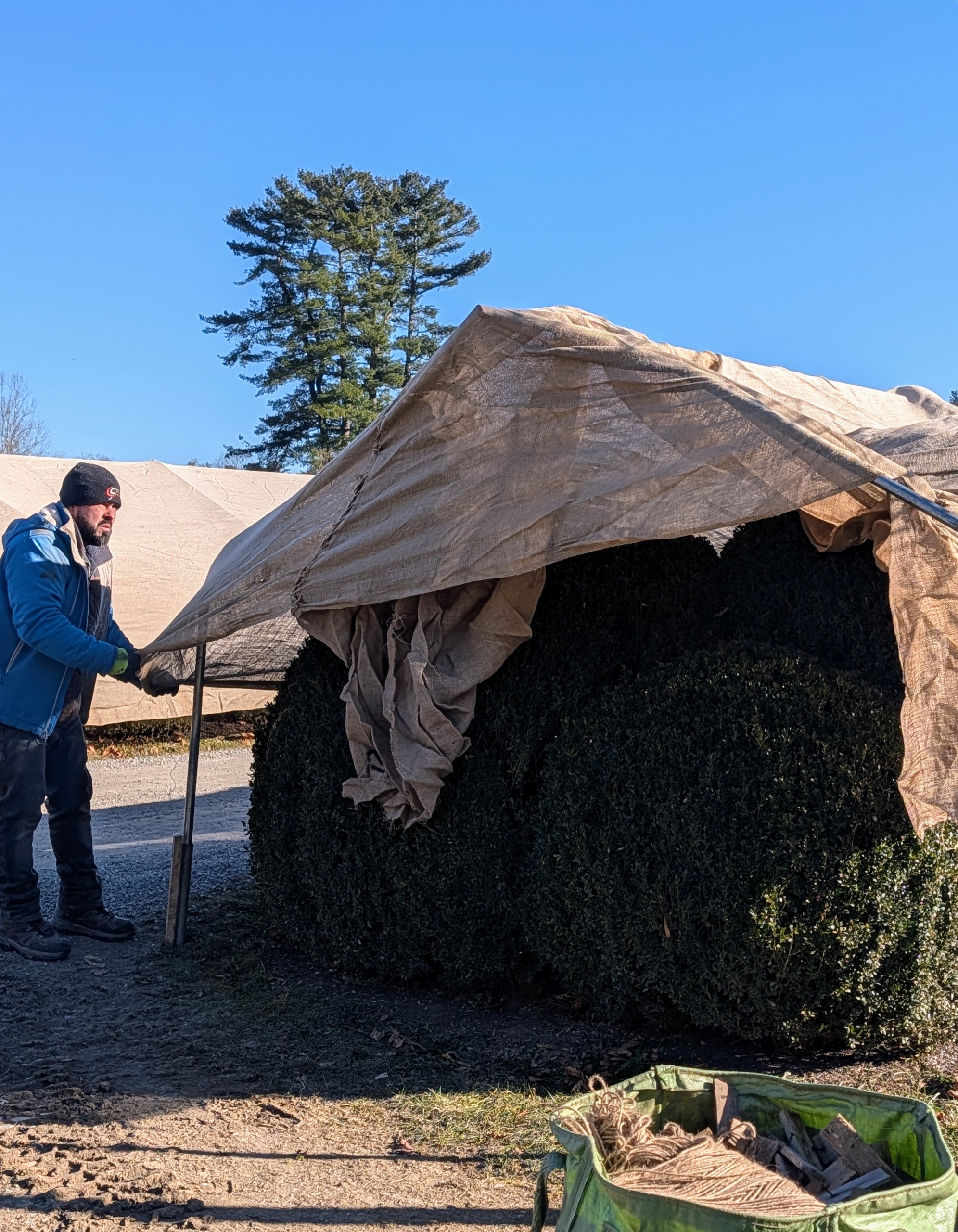
-
- Boxwood grows every year, but these covers still fit the shrubs with plenty of room.
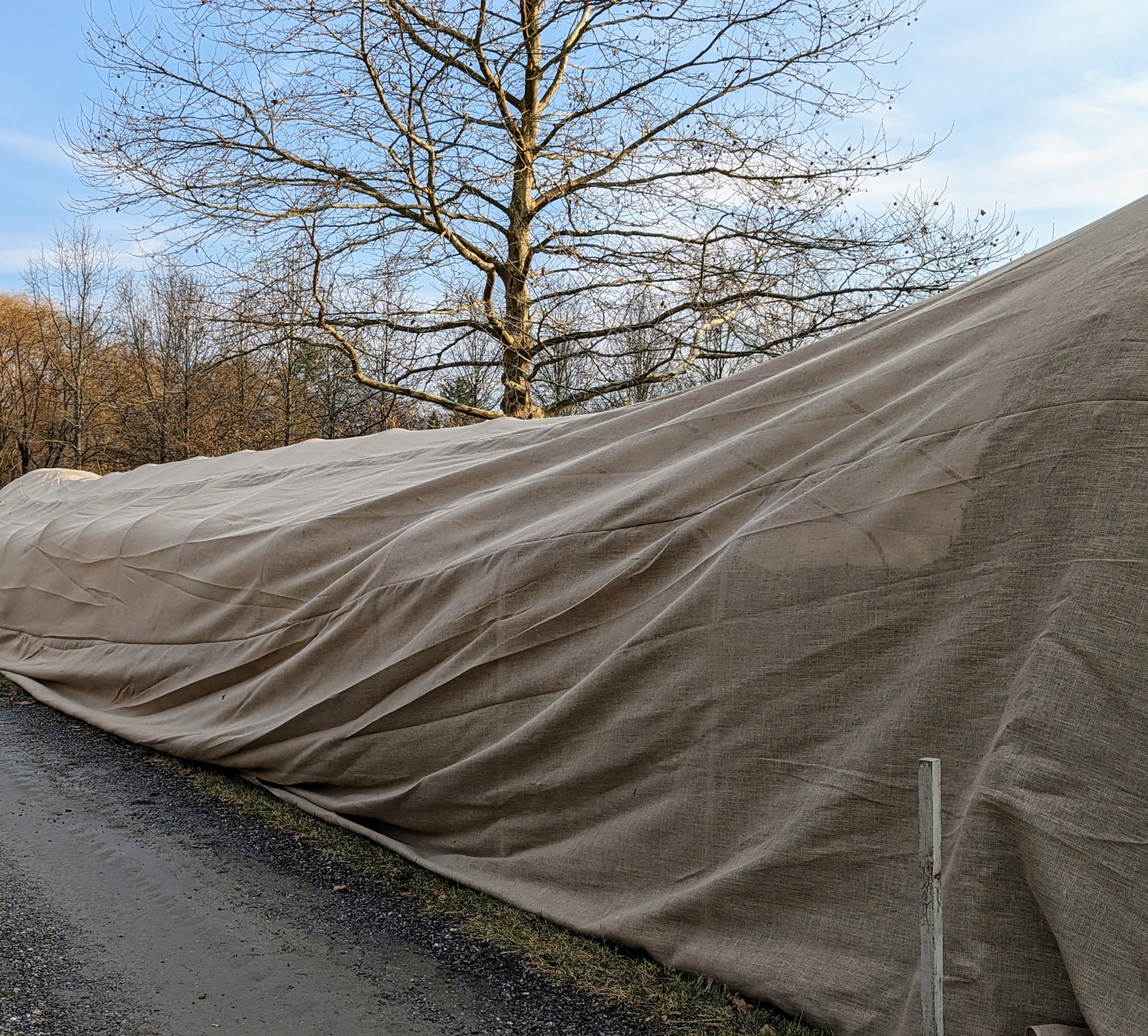
-
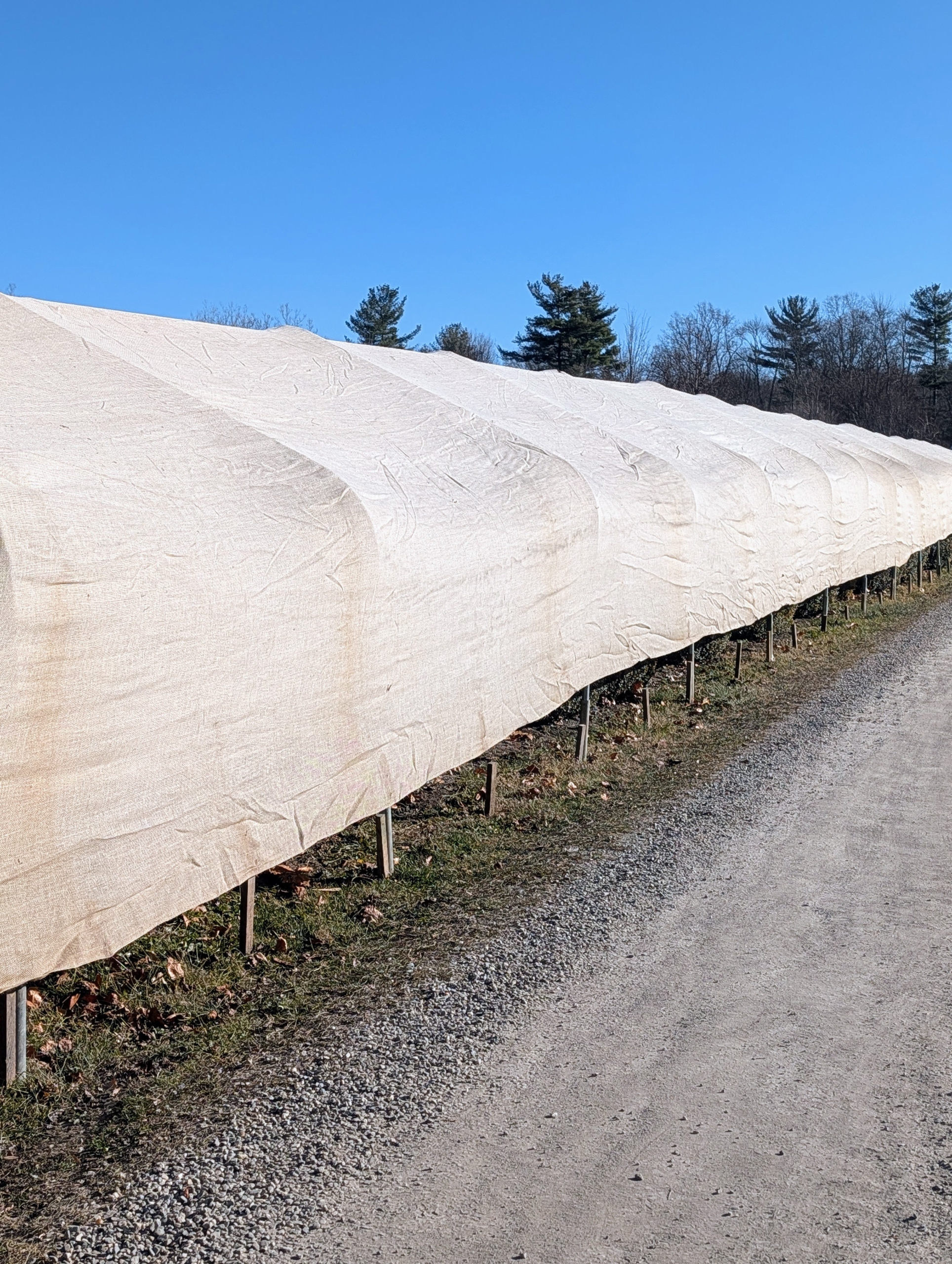
- Here is a section of the allée completely draped with burlap.
-
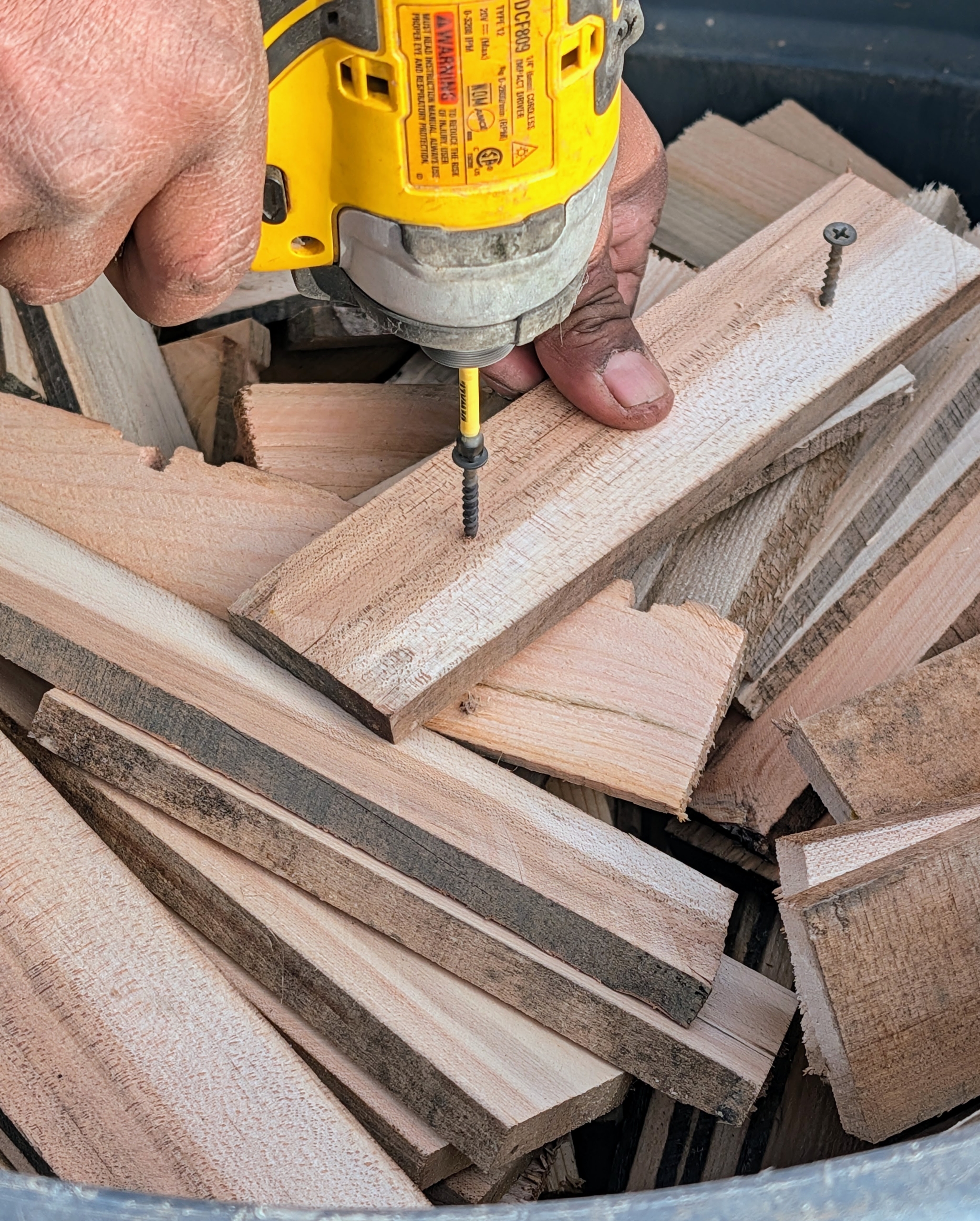
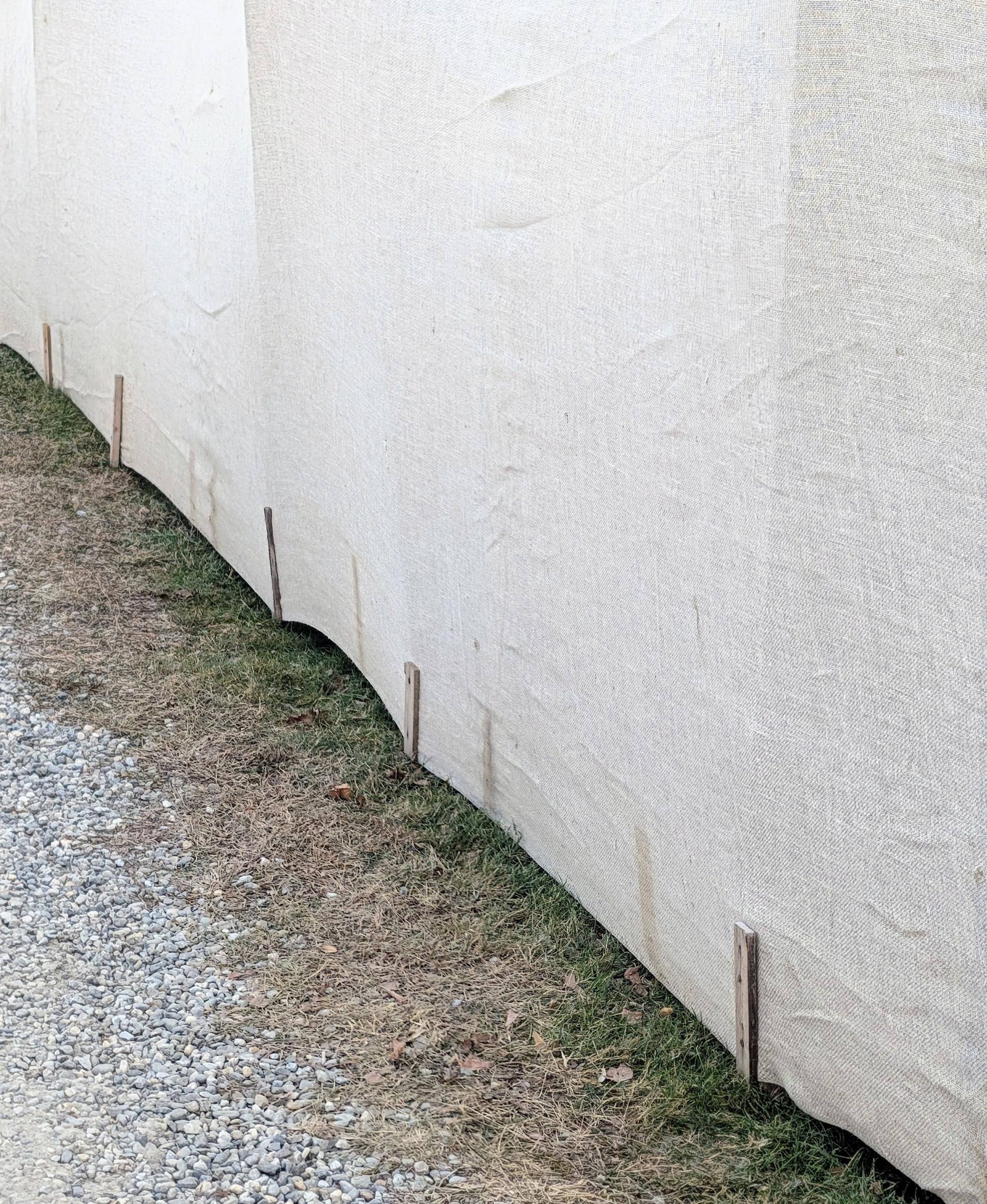
- Scraps of wood can be repurposed for various projects. Here, Pete cut small strips from unused wooden pieces. The strips are about six inches long – just long enough to accommodate two screws that will keep the burlap secure. Pete secures crews into the strips to quicken the process.
-
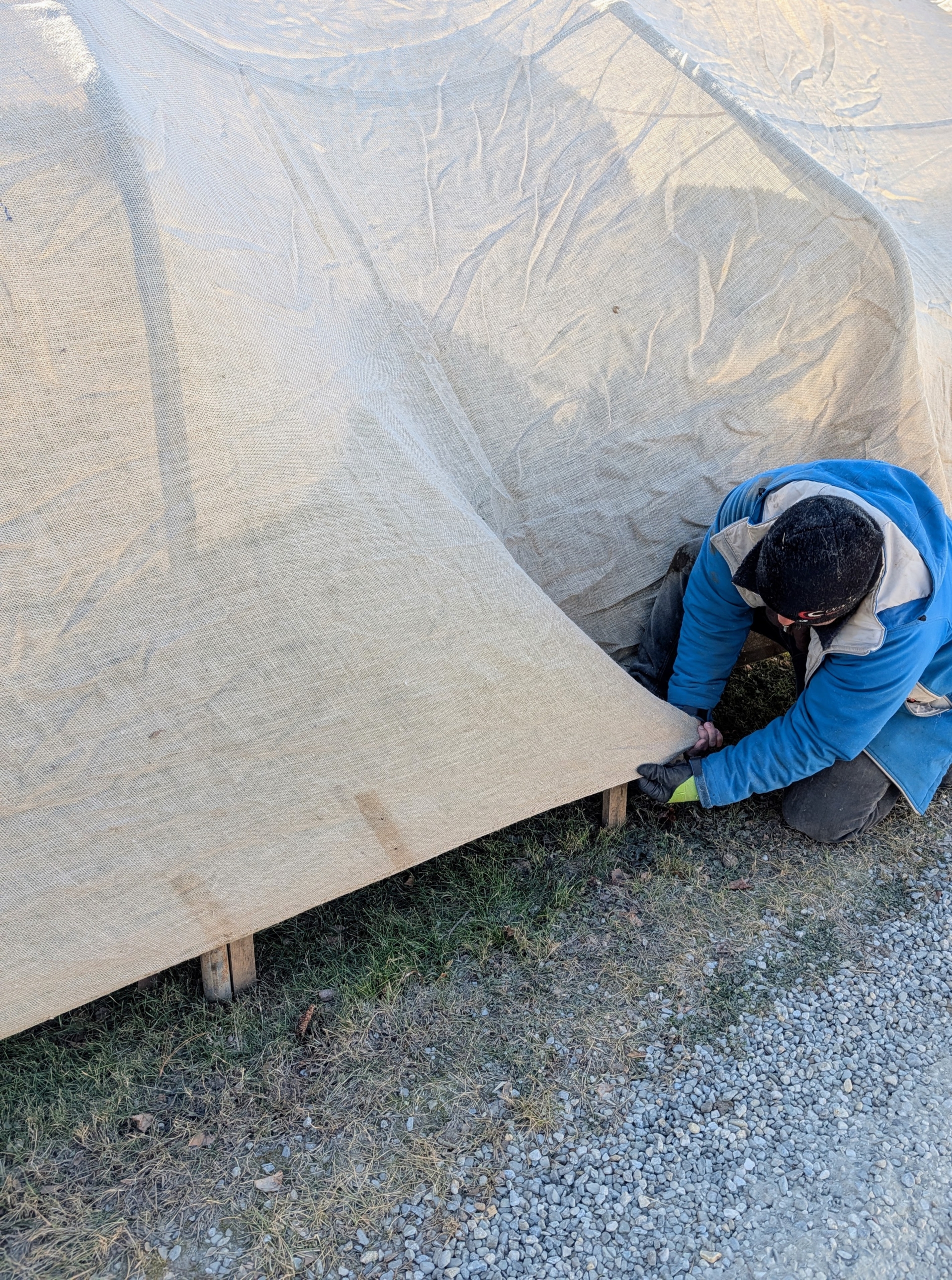
- Meanwhile, Adan holds the fabric taut over the framing and wooden stakes at the bottom.
-
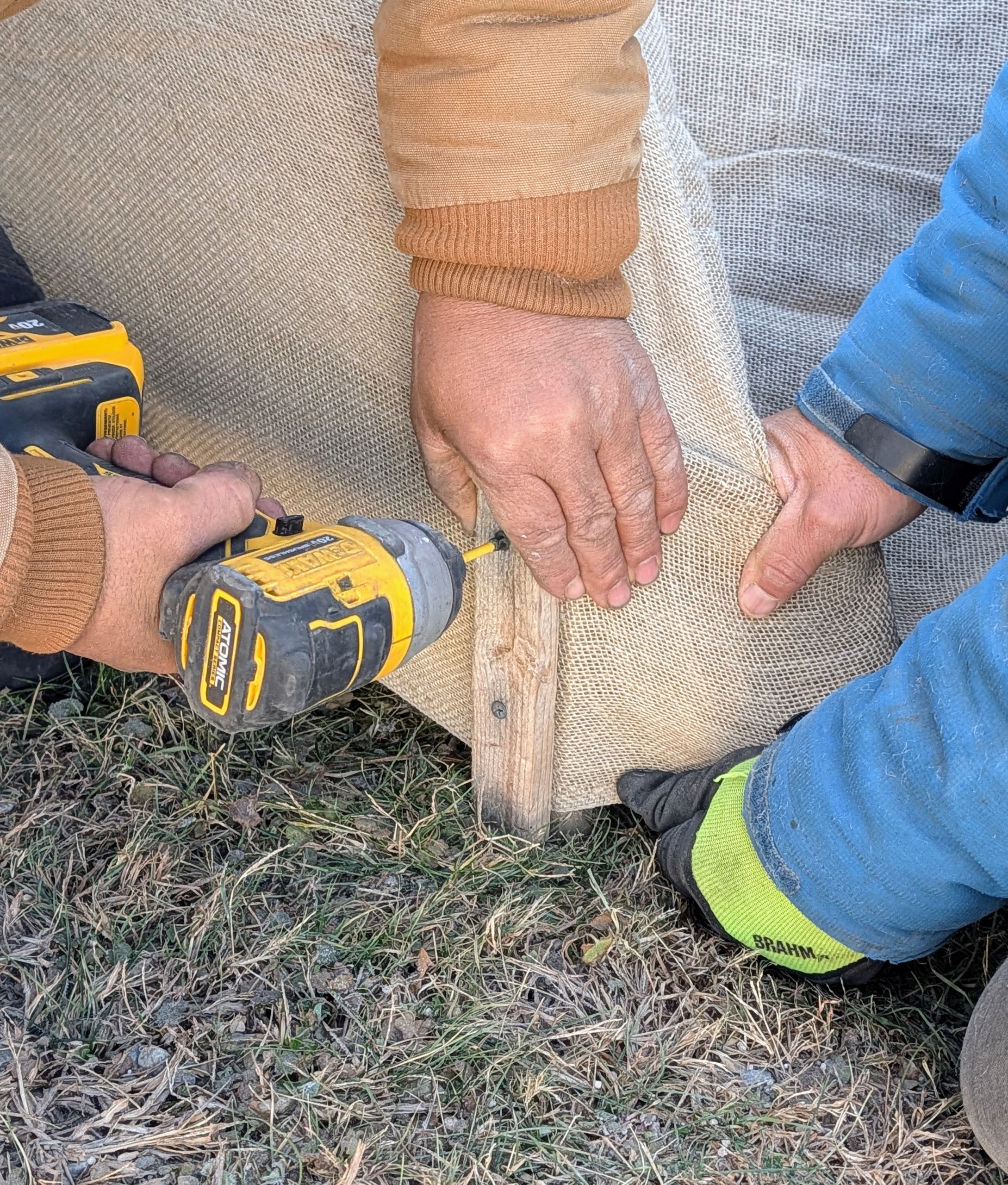
- And Phurba screws the strips to the stakes, sandwiching the burlap in between.
-
- It looks very tidy once several strips are well attached. Both the metal piping and wood stakes can be seen through the fabric.
-
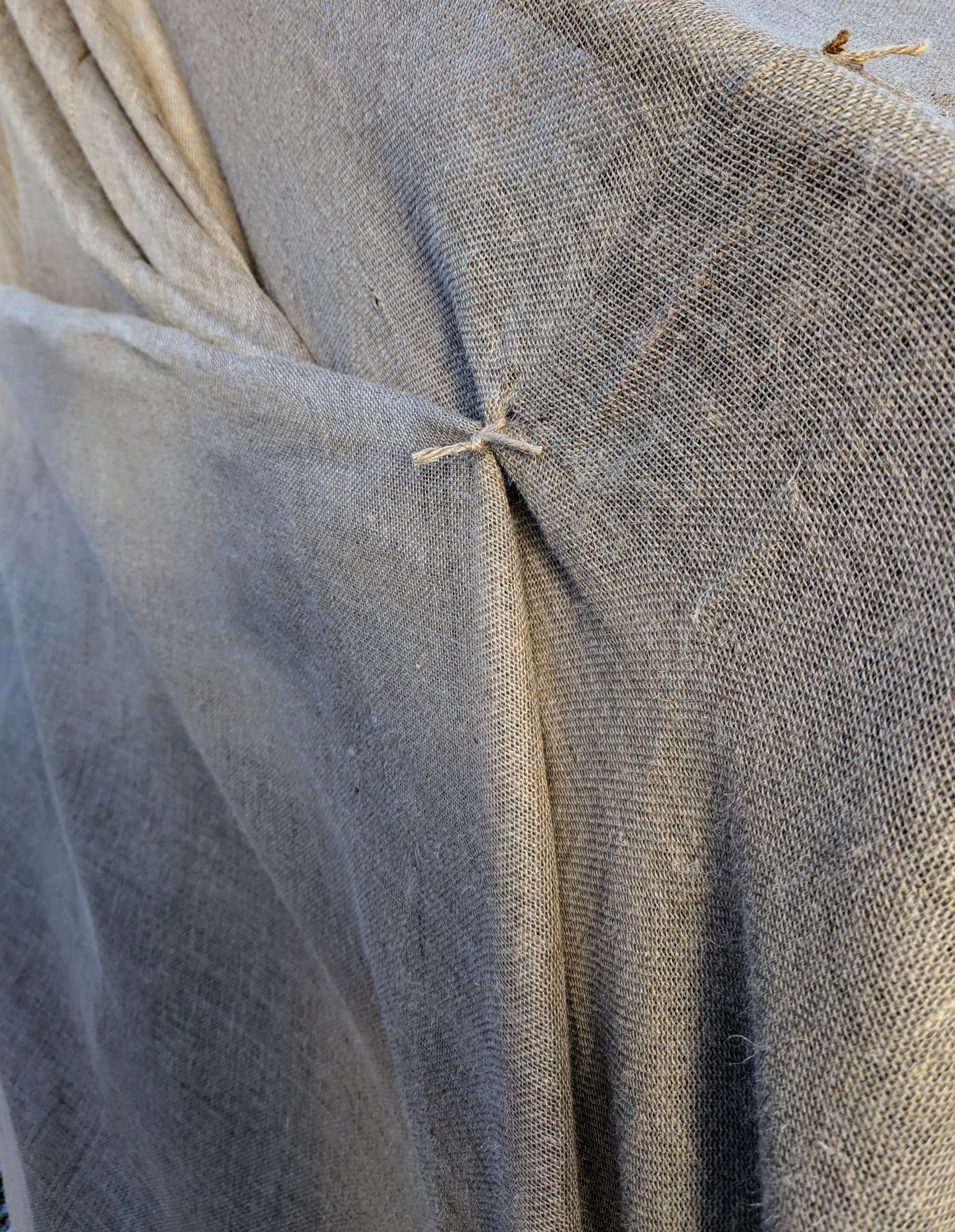
- At the row ends, the burlap is pulled snug and jute twine knots are positioned to keep it closed.
-
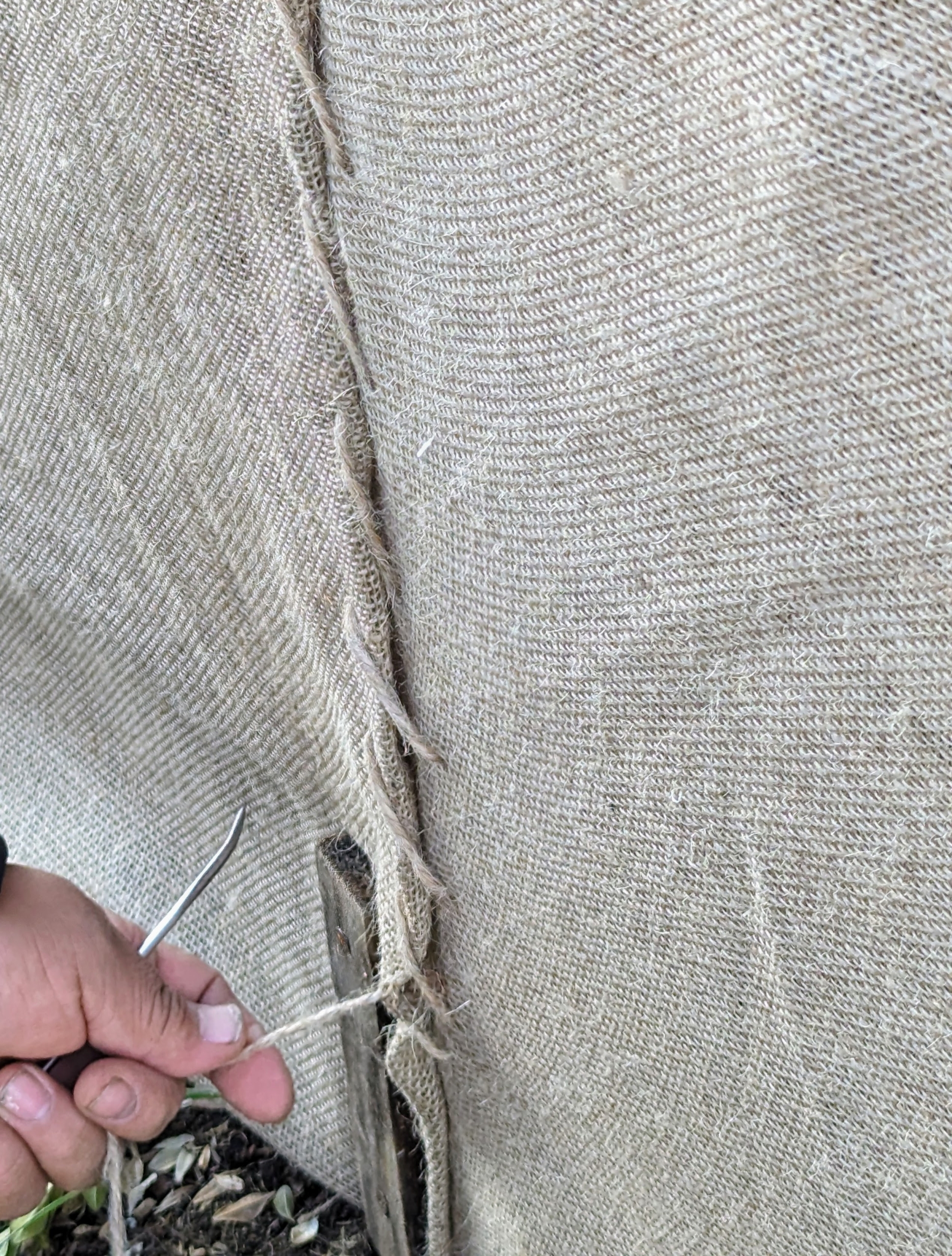
- Phurba sews an opening closed and snug.
-
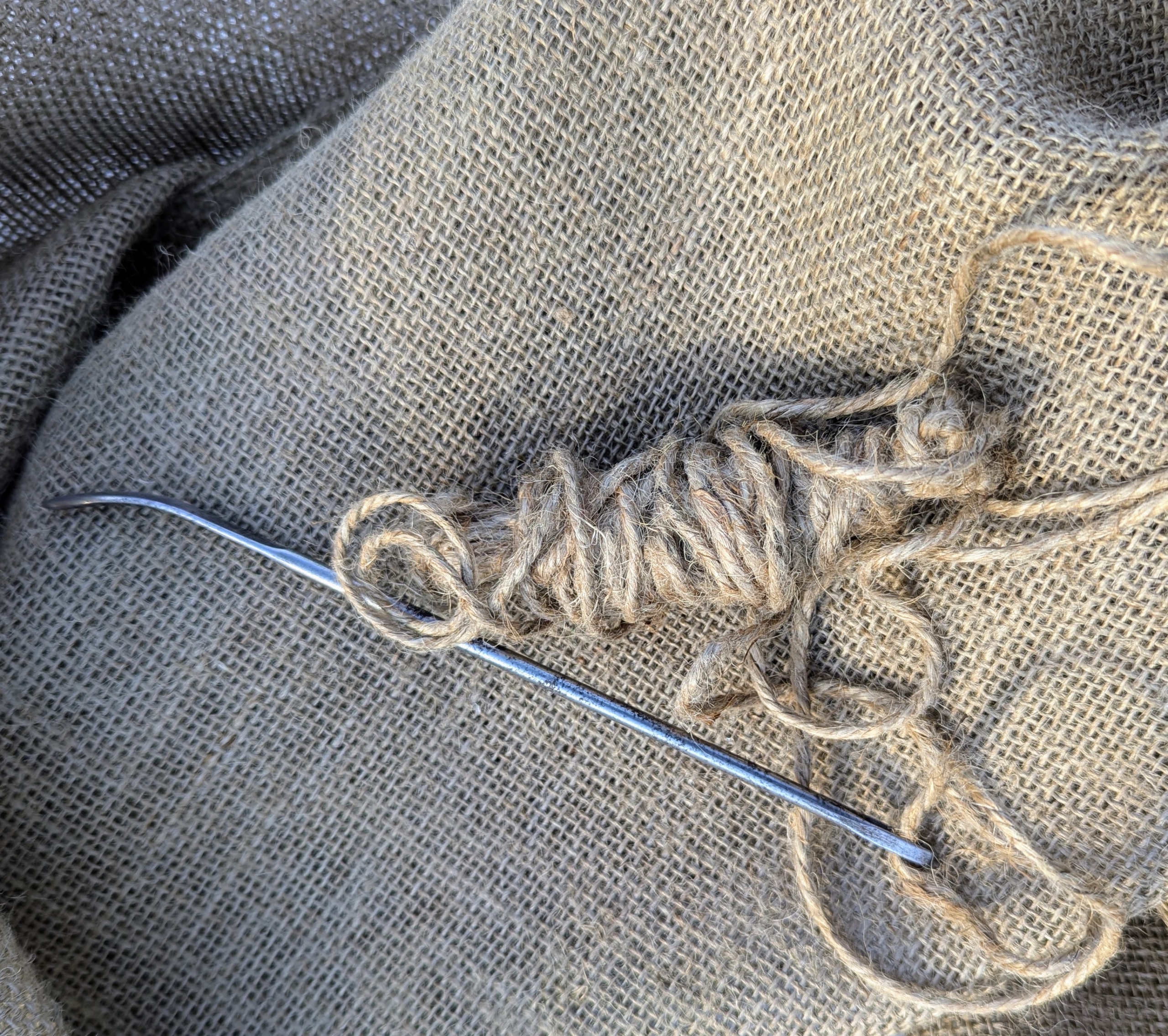
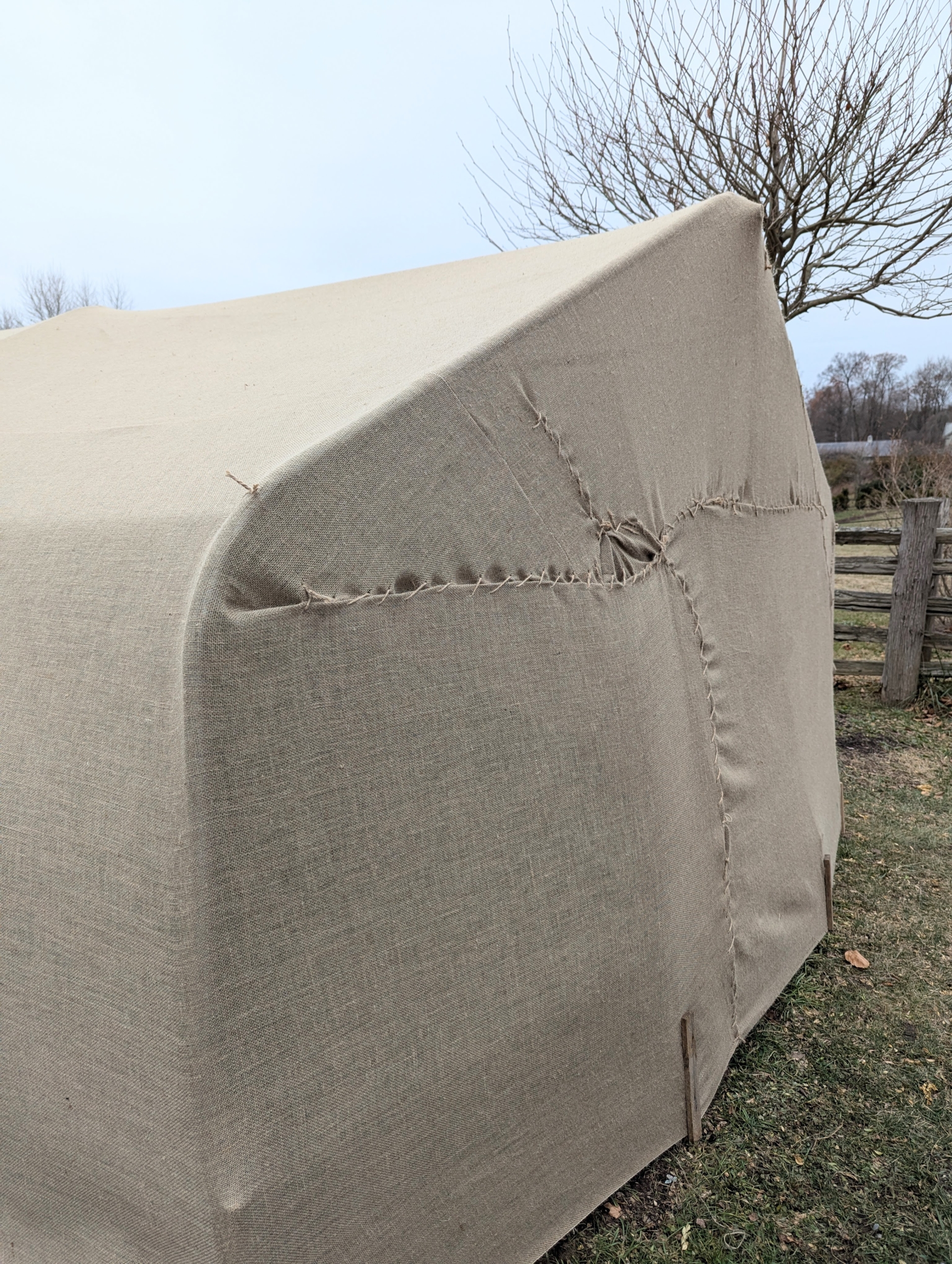
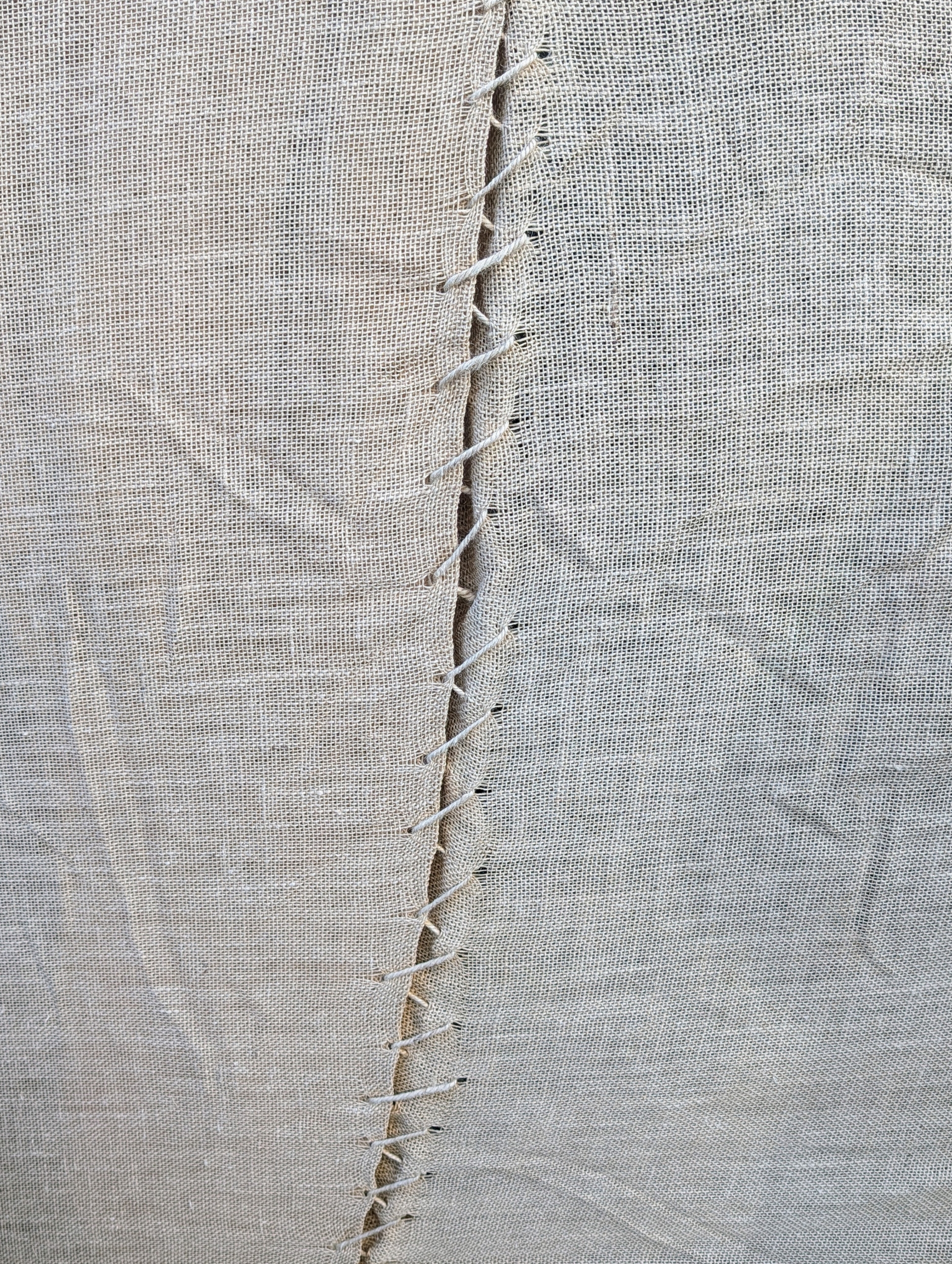
- All the sewing is done using five-inch or eight-inch long craft needles specifically made for working with jute – every member of the outdoor grounds crew has his own needle. These needles have large eyes and bent tips.
-
- Here is what the end sections look like all sewn together. The fabric is pulled taut and secured – all by hand.
-
- Some of the sewing is still intact from last year, saving lots of time.
-
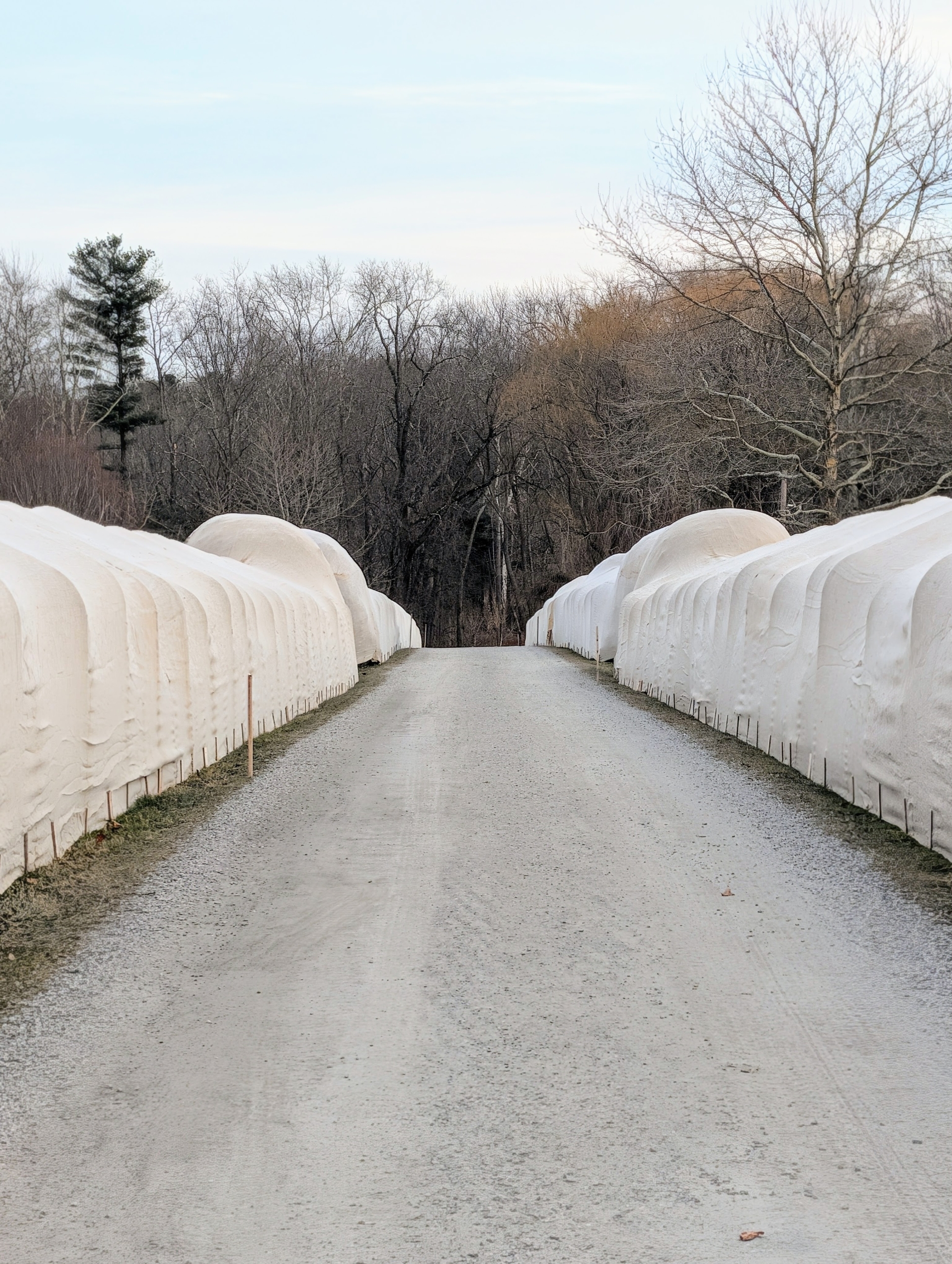
- Here is one finished section of the Boxwood Allée. The burlap still allows the boxwood to “breathe”, and get sunlight, which is important even during the colder months.
-
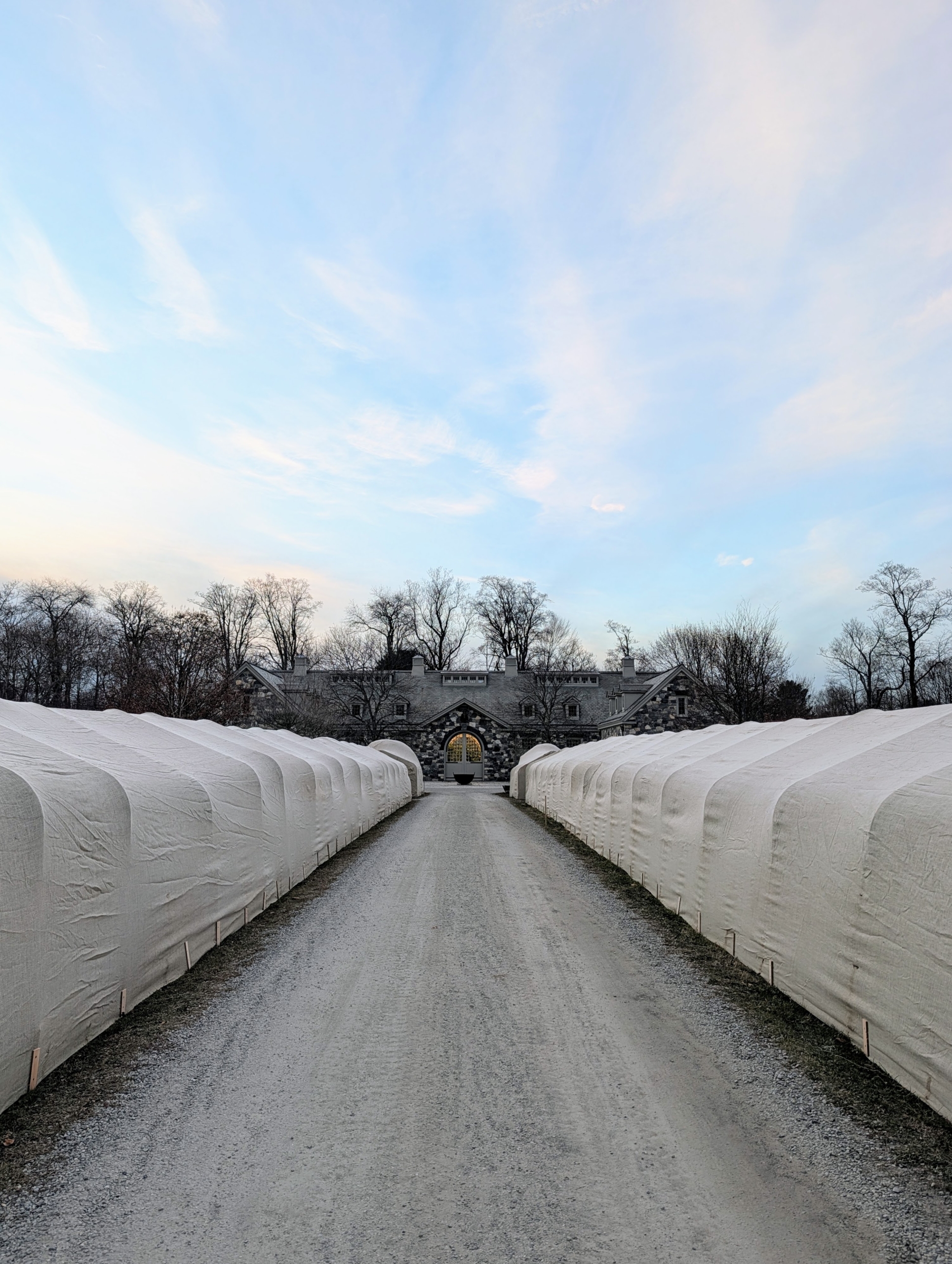
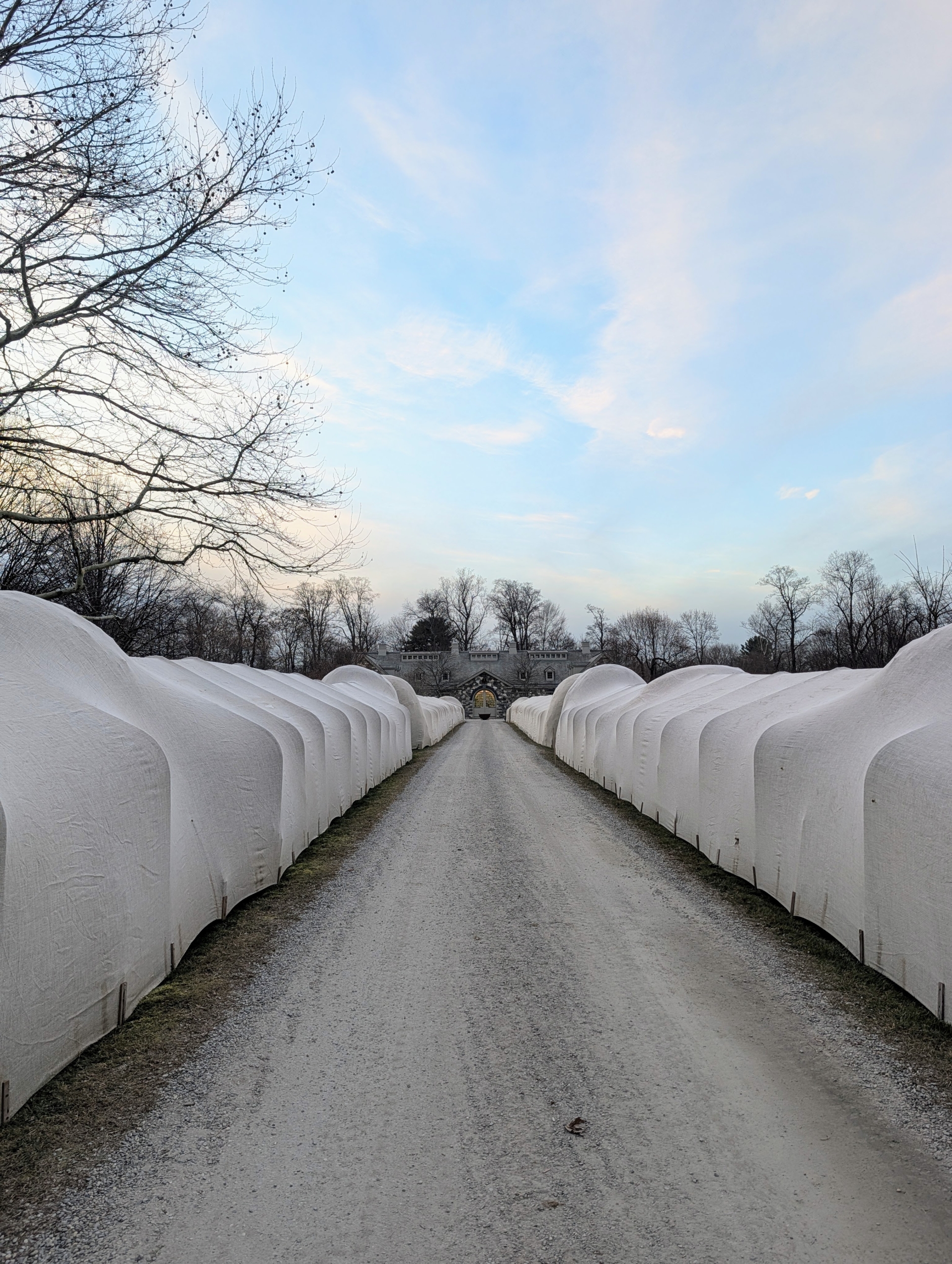
- Here is a view with the stable at the end. I’ve been “burlapping” for many years and find that this is really the most reliable way to protect my hedges and shrubs. Covering this allée with burlap gives me comfort that all will survive the winter unscathed.
-
- And here is the full length of my long Boxwood Allée. It is so pretty to see all done. And this is just the beginning. There’s a lot more to cover up.
 Martha Pins


 Martha Tweets

