

Potting Small Succulents
If you want to add container plants to your collection, consider succulents - they come in such a large variety of different shapes, sizes, and colors.
I have many succulents in my greenhouse. They're easy to maintain and are able to survive prolonged drought because they store moisture in their fleshy stems, roots, and leaves. Some types even remove toxins from the air, promoting healthier indoor environments. Last week, my head gardener, Ryan McCallister, potted up a group of different succulents - several echeverias, a cactus, a jade plant, and a Burro's Tail sedum.
Enjoy these photos.
-

- If you like growing plants, but don’t really have the time to care for them properly, I encourage you to consider growing succulents. They’re inexpensive and easy to maintain. And don’t shy away from smaller specimens. Several displayed in similar pots can look great on a table, along a windowsill, or anywhere they can get lots of light.
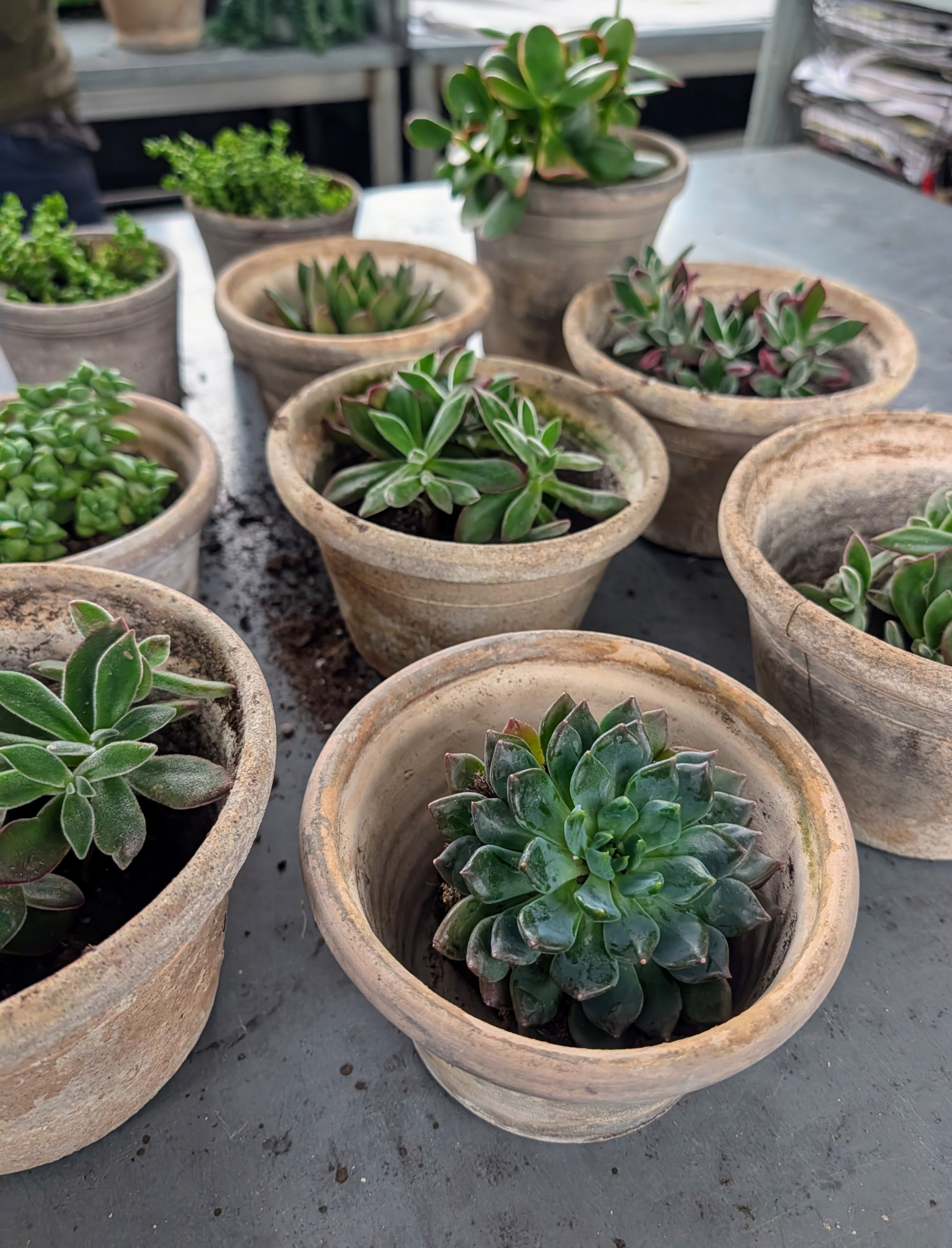
-
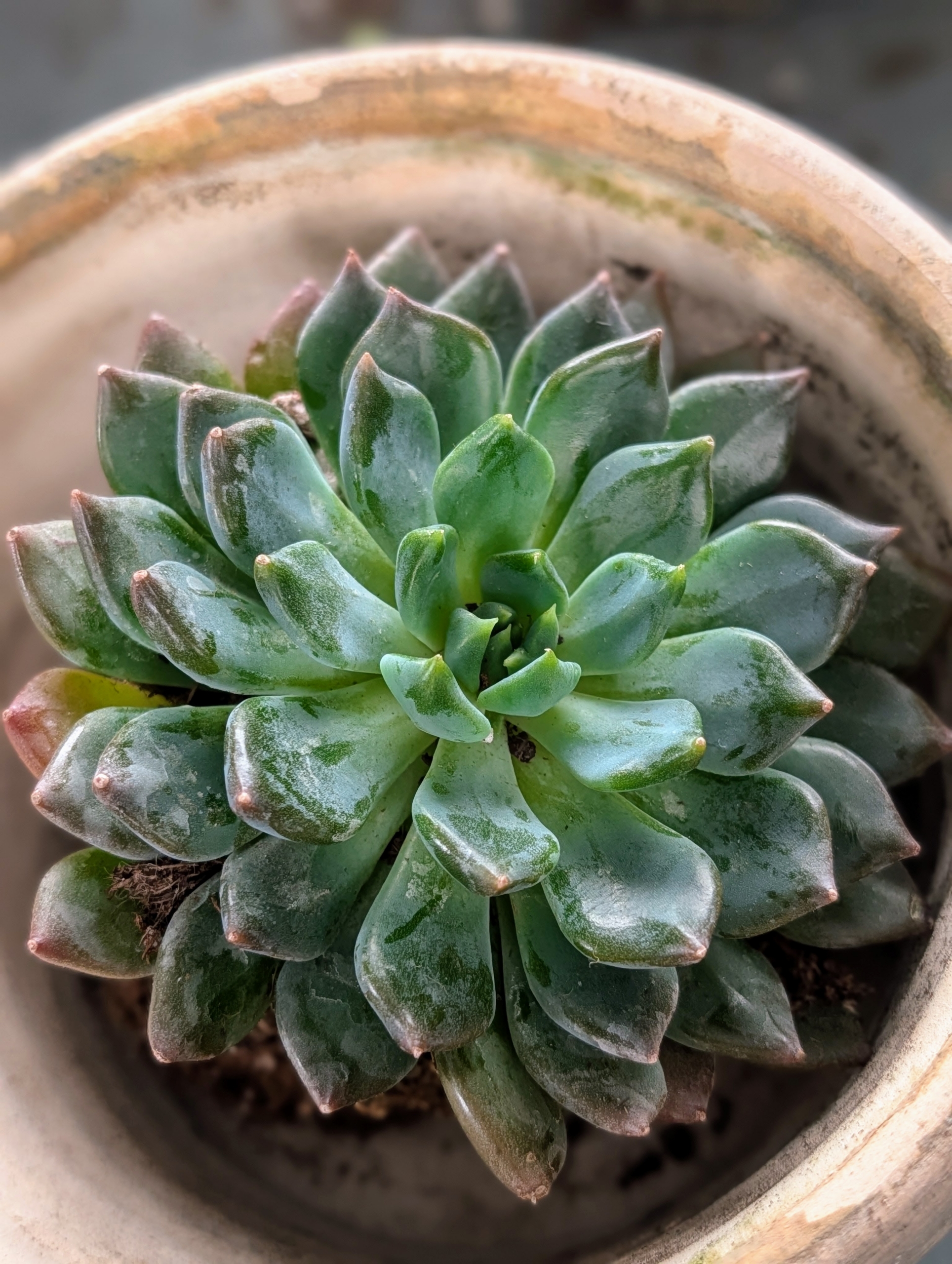
- One type of succulent is the Echeveria, known for its rapid growth and distinctive rosette shaped plump leaves.
-
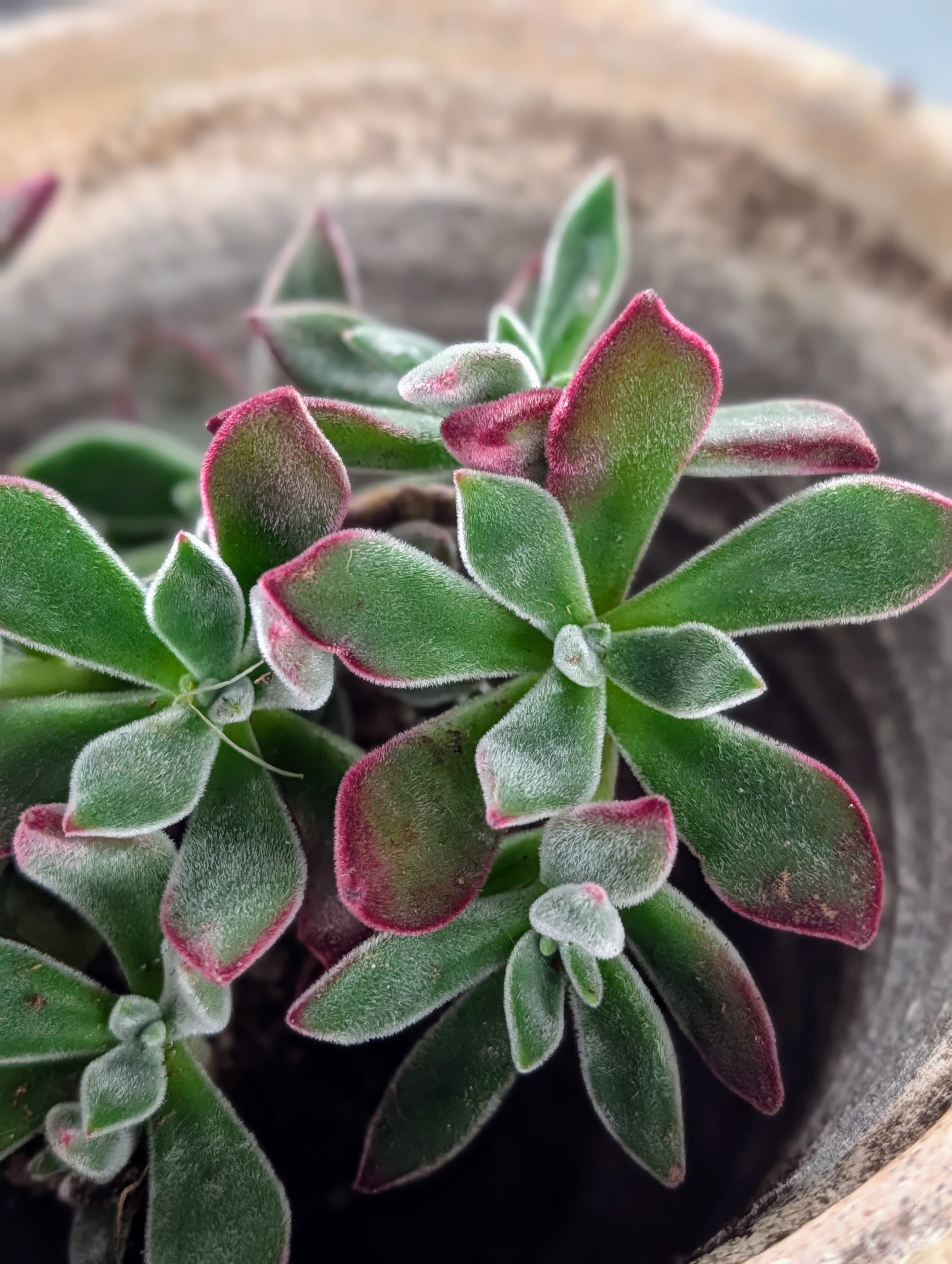
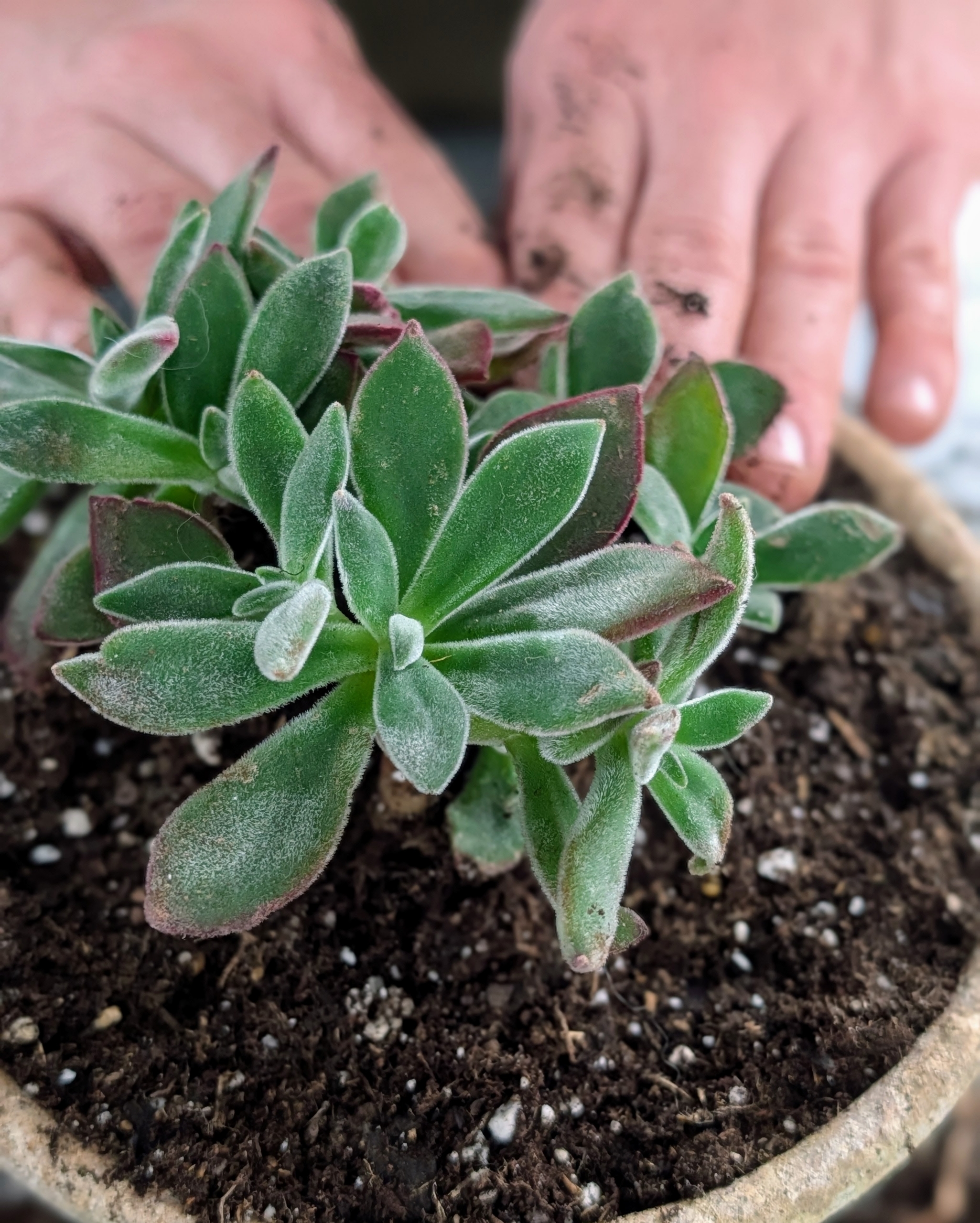
- Here’s another Echeveria with fuzzy green leaves tipped in red and densely covered in fine hairs giving it a soft, velvety appearance.
-
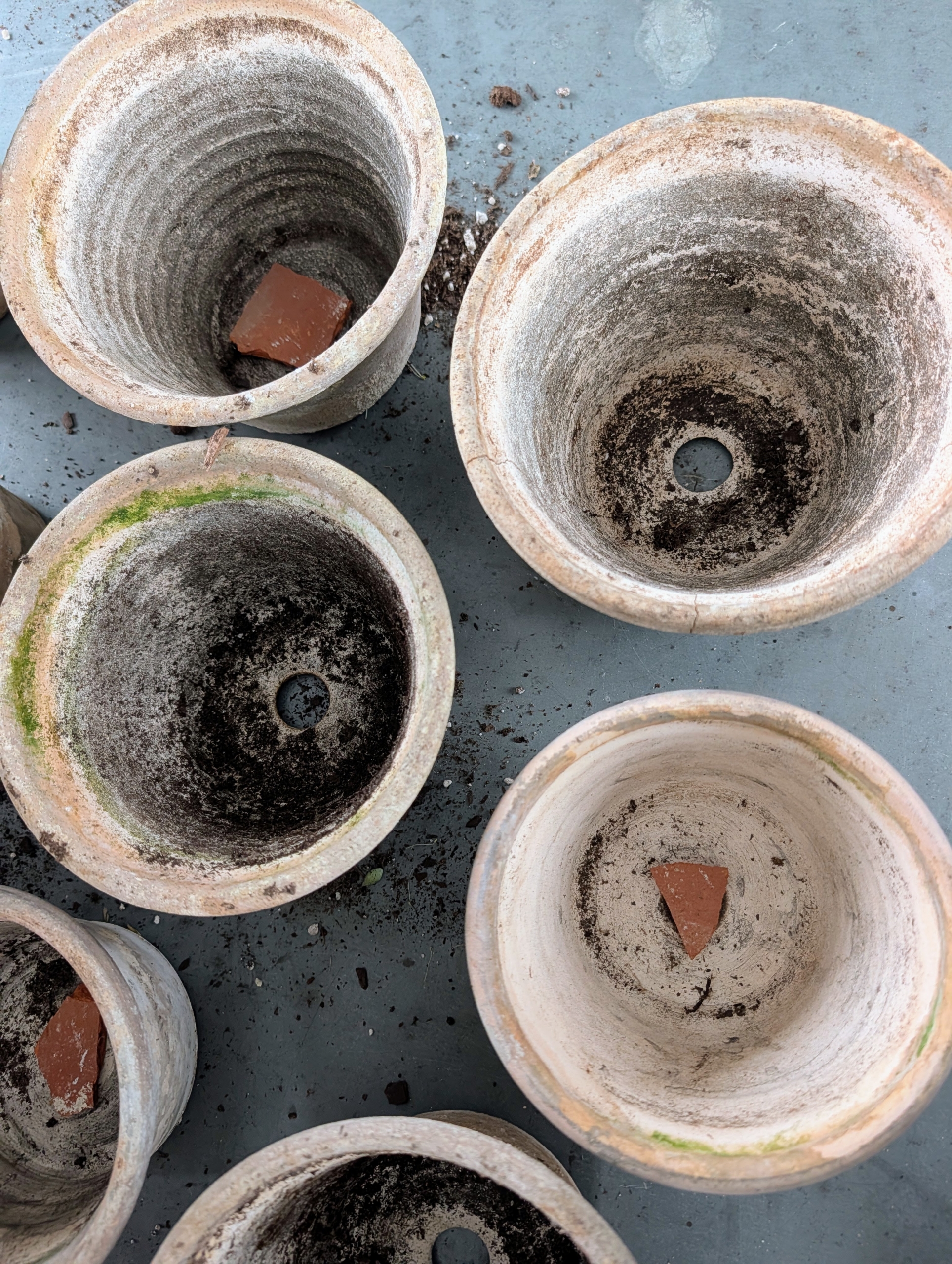
- Each pot has a drainage hole. A clay shard is placed over the hole to help with drainage. I also like to use clay pots because they allow proper aeration and moisture to penetrate through the sides and to the plant. Ryan chooses the appropriate size container for each specimen. All these are hand made by master potter Guy Wolff.
-
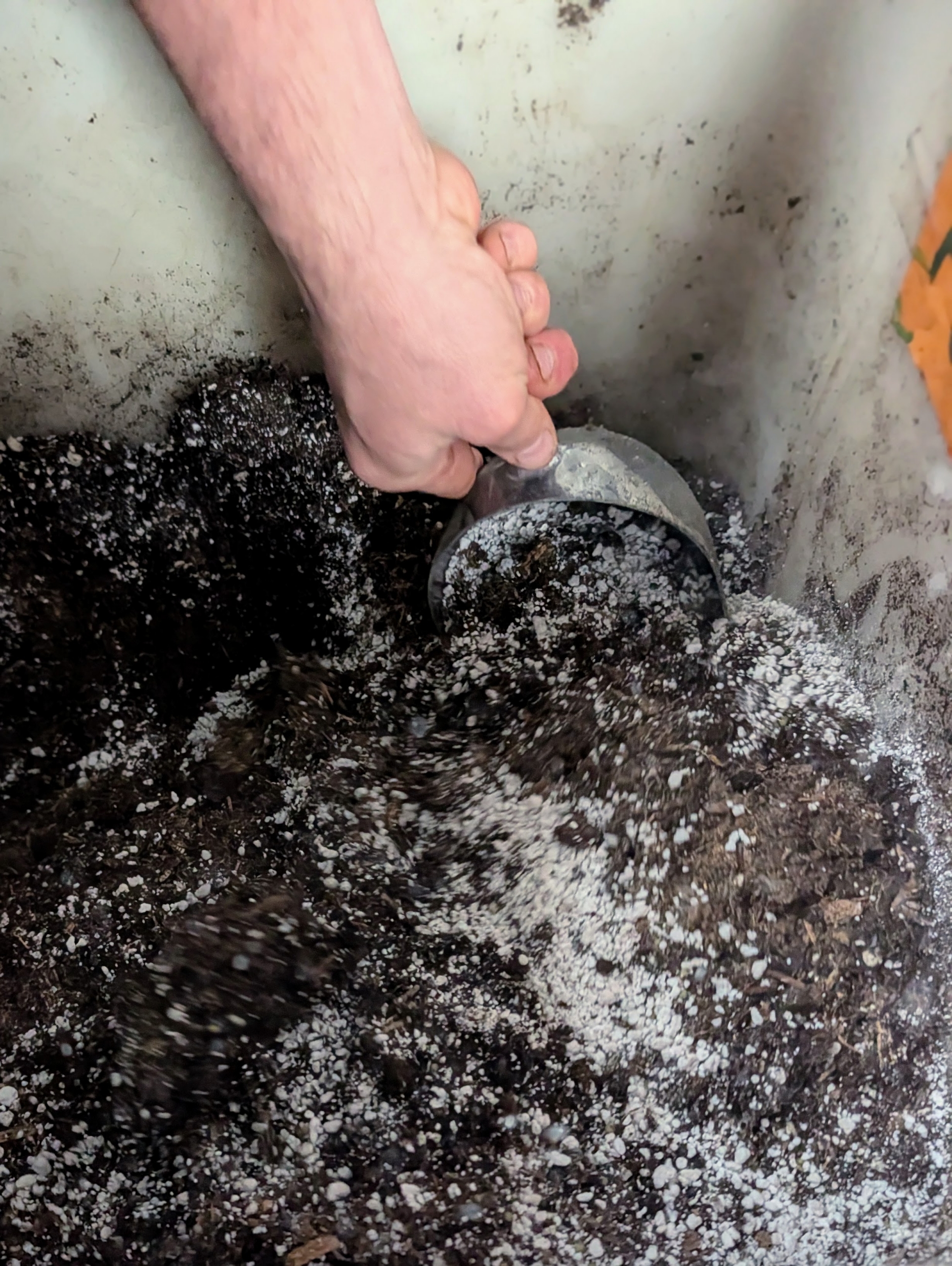
- Before potting, Ryan puts together a suitable soil mix. The right soil mix will help to promote faster root growth and provide quick anchorage to young roots. I use Miracle-Gro potting mix specifically formulated for succulents. Ryan adds more perlite, a lightweight, porous volcanic glass used to improve aeration and drainage in soil and other plant mixes.
-
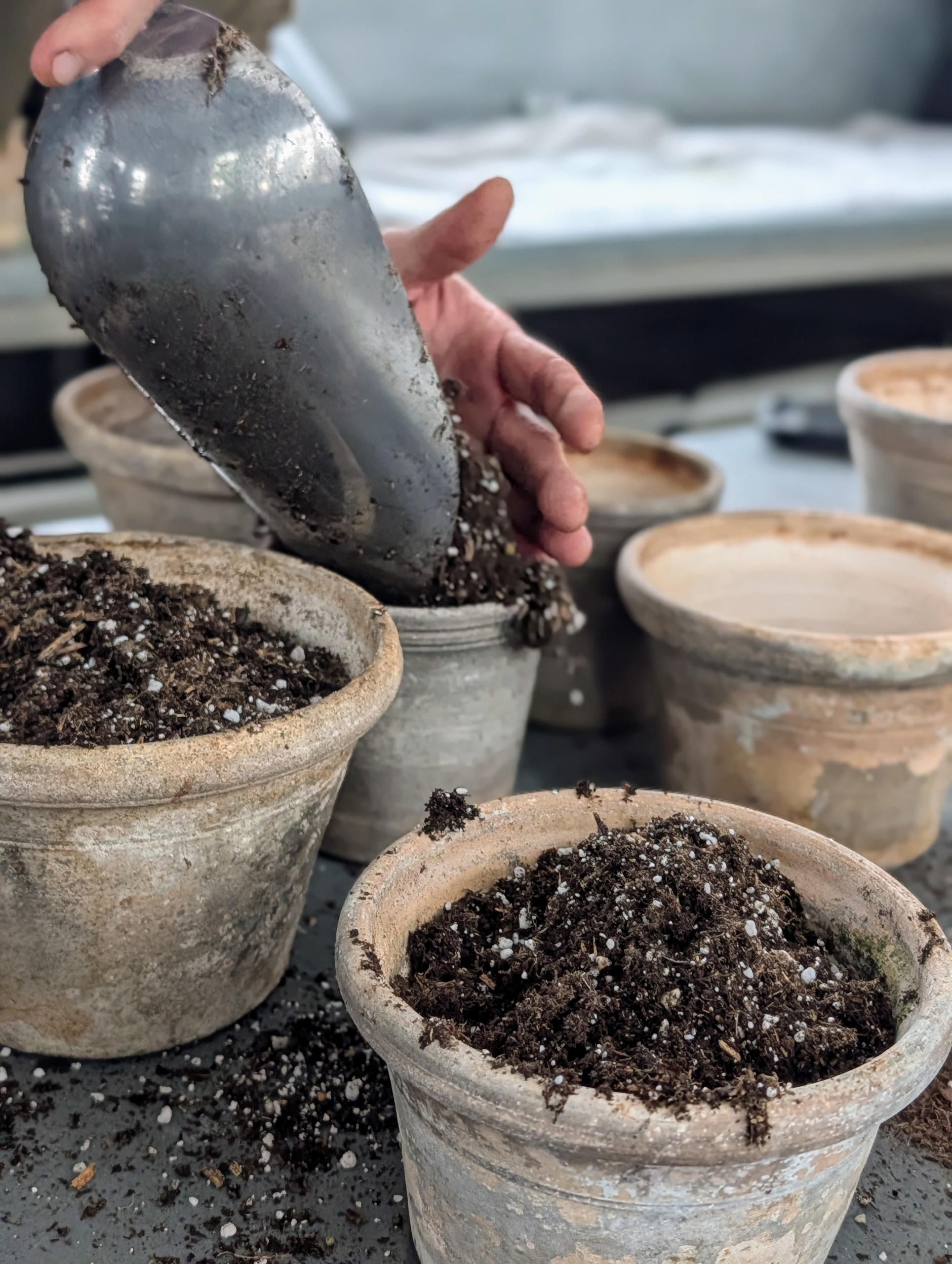
- Ryan fills the pots with the soil mix, adding just enough so it is filled just below the top rim of the pot. When potting several plants, Ryan works in an efficient production line process – filling all the pots first and then planting.
-
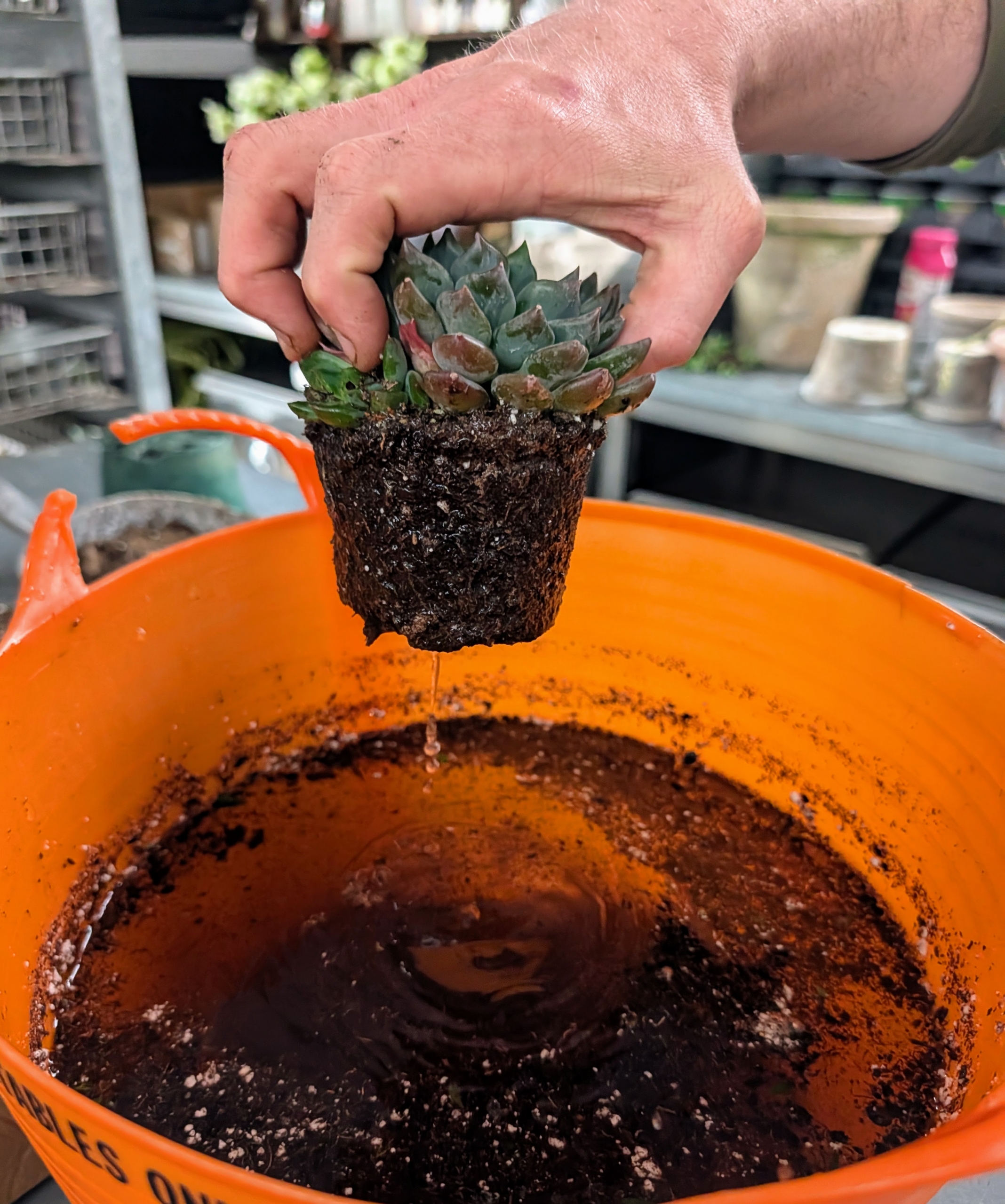
- If the plants seem dry, Ryan dunks the entire root ball into water first and then lets it drain – this boosts hydration before planting and helps in the absorption of nutrients. It will also help the plant become more resilient and better prepared for its new environment.
-
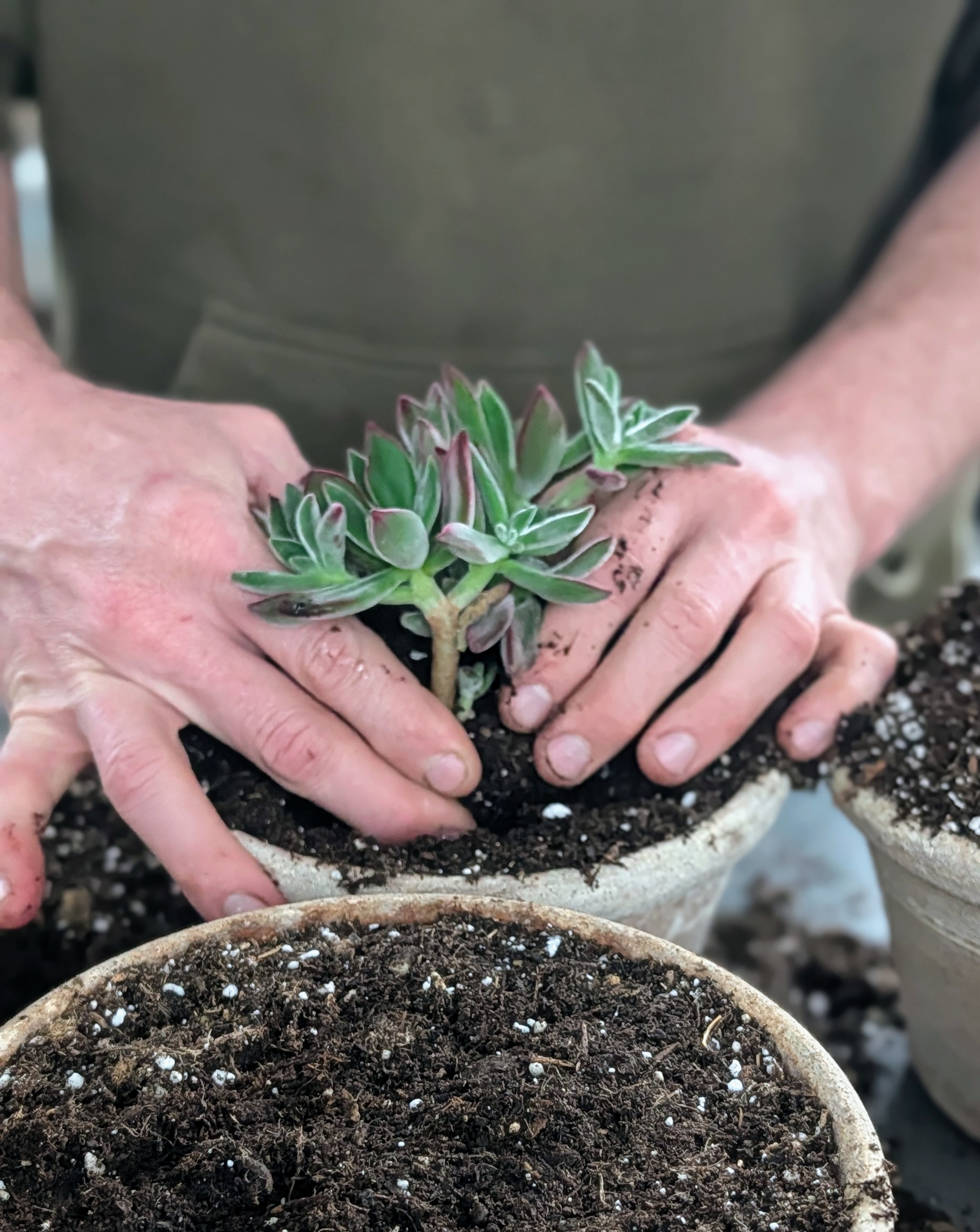
- Ryan places the plant in the pot at the same height it was previously.
-
- Once established, this plant will only need watering when the soil is completely dry.
-
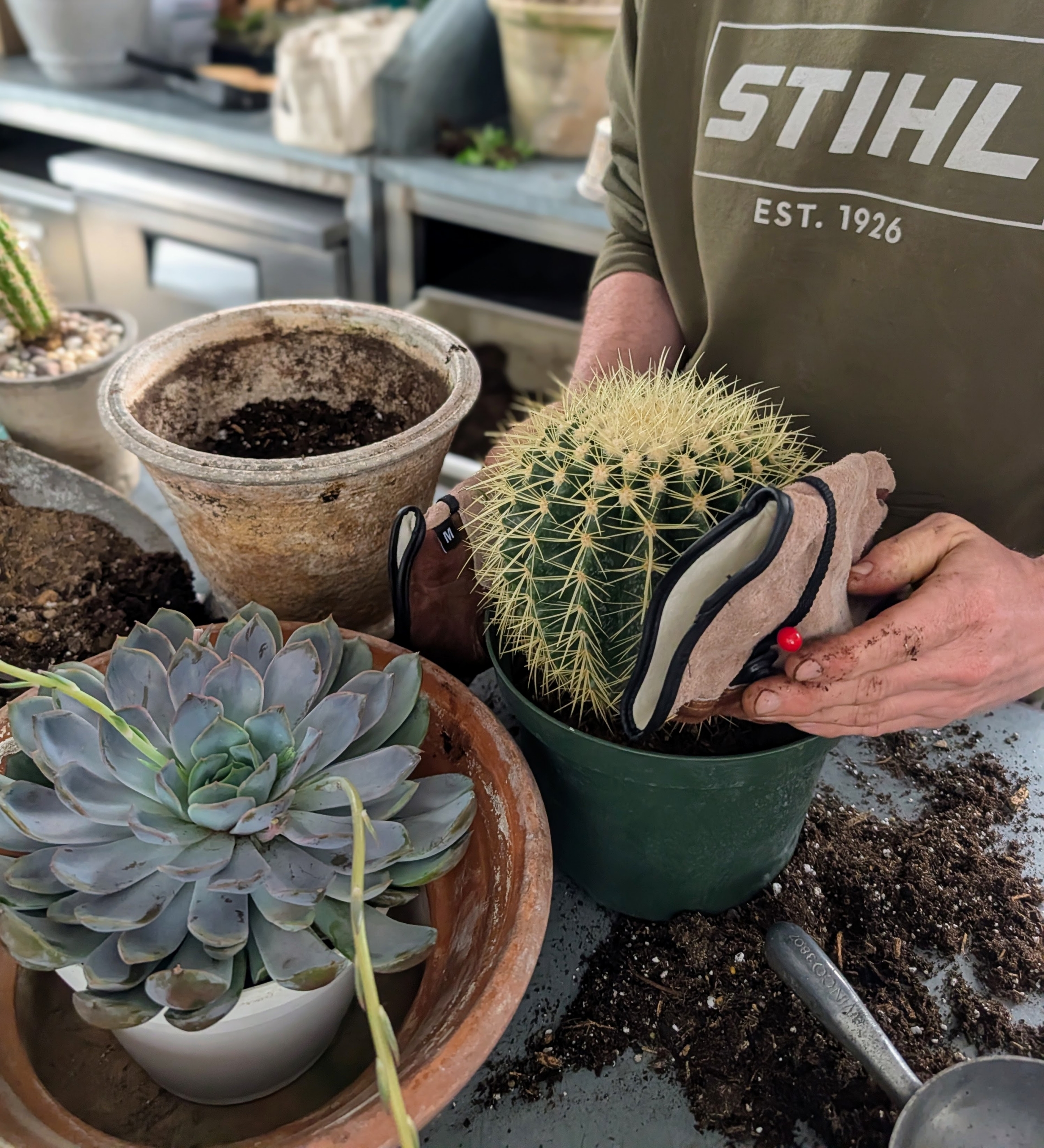
- Next, Ryan plants a barrel cactus, which forms a green, barrel shaped stem with prominent ribs and bright spines. Because the spines are so sharp, Ryan uses a glove to remove it from its original pot.
-
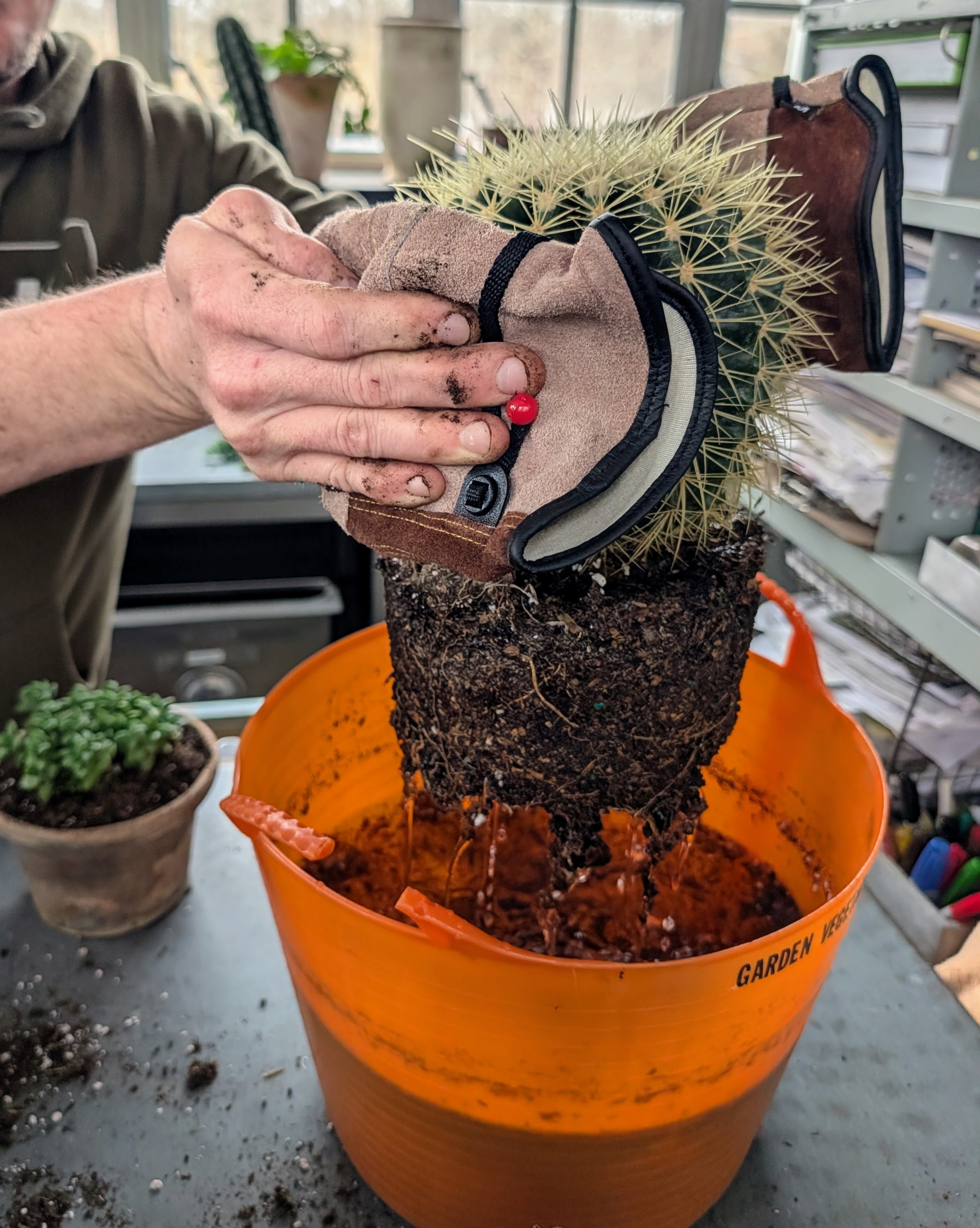
- Just like the others, Ryan places the cactus root ball in water for a boost of hydration.
-
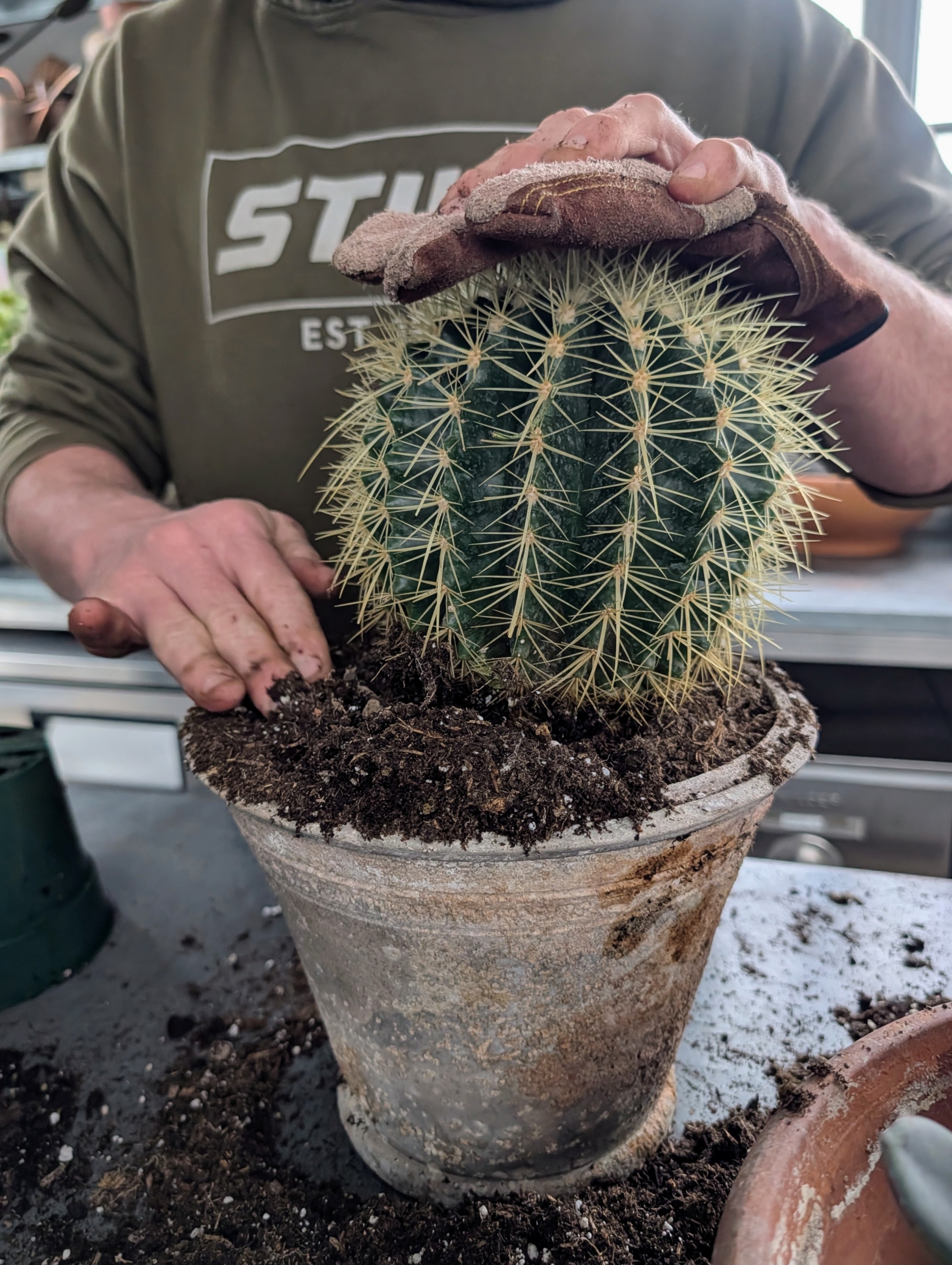
- And then he places it into its new pot.
-
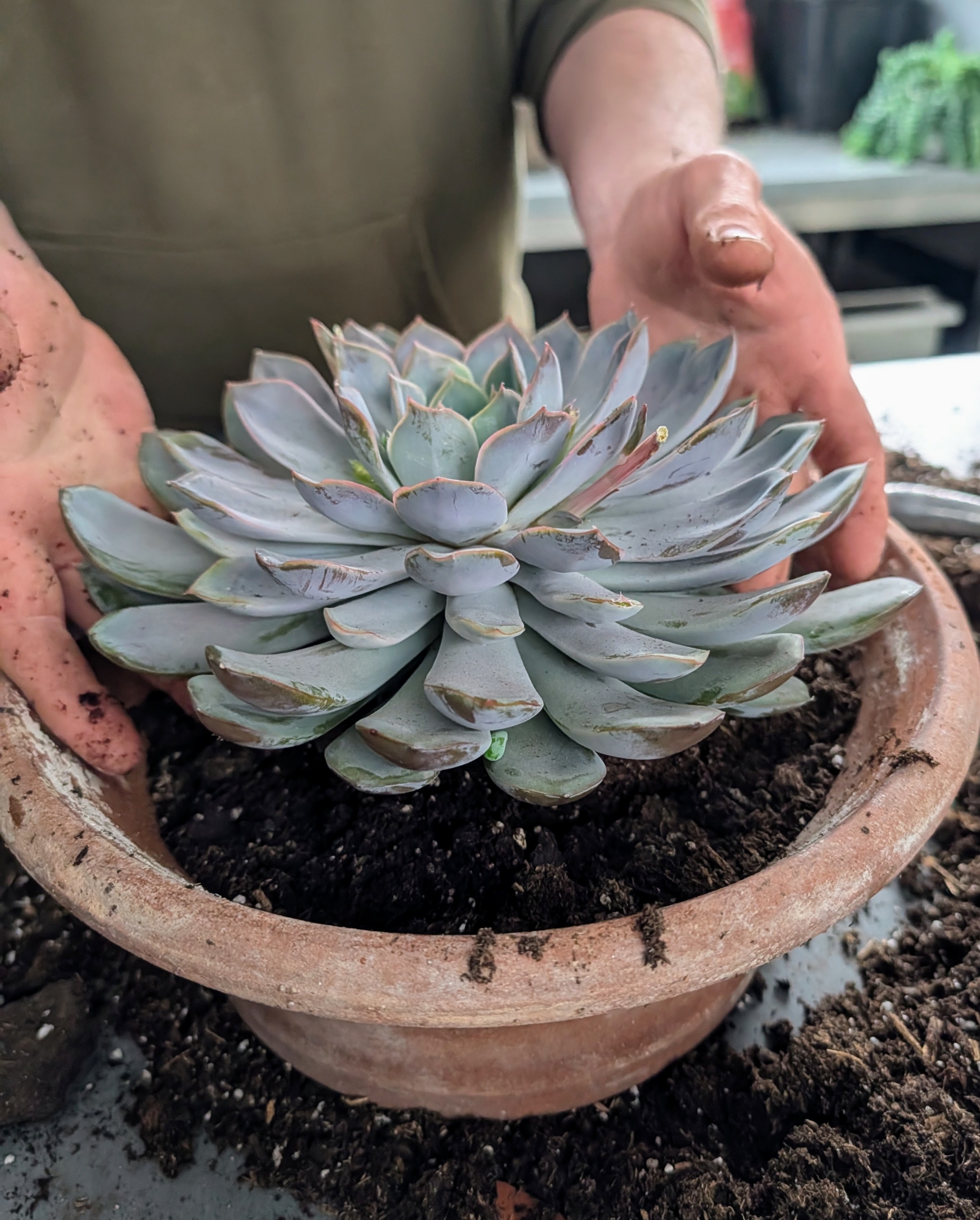
- Here is Ryan potting up another Echeveria. Ryan selects a pot that is slightly larger than the current size of the plant. Terracotta s porous and allows for excellent airflow.
-
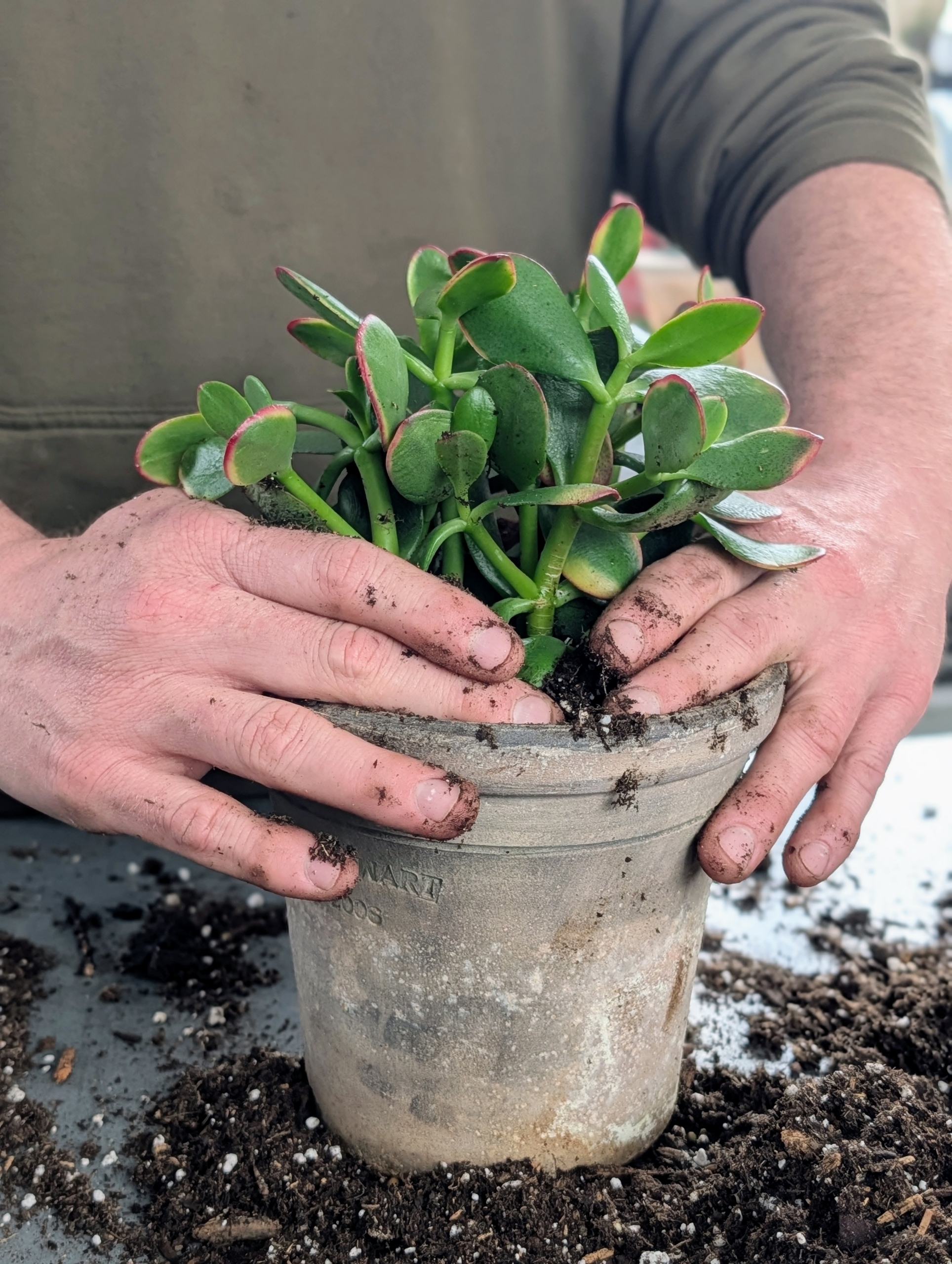
- This is called a jade plant, Crassula ovata, a popular succulent native to South Africa. It has thick, glossy, oval shaped leaves that store water.
-
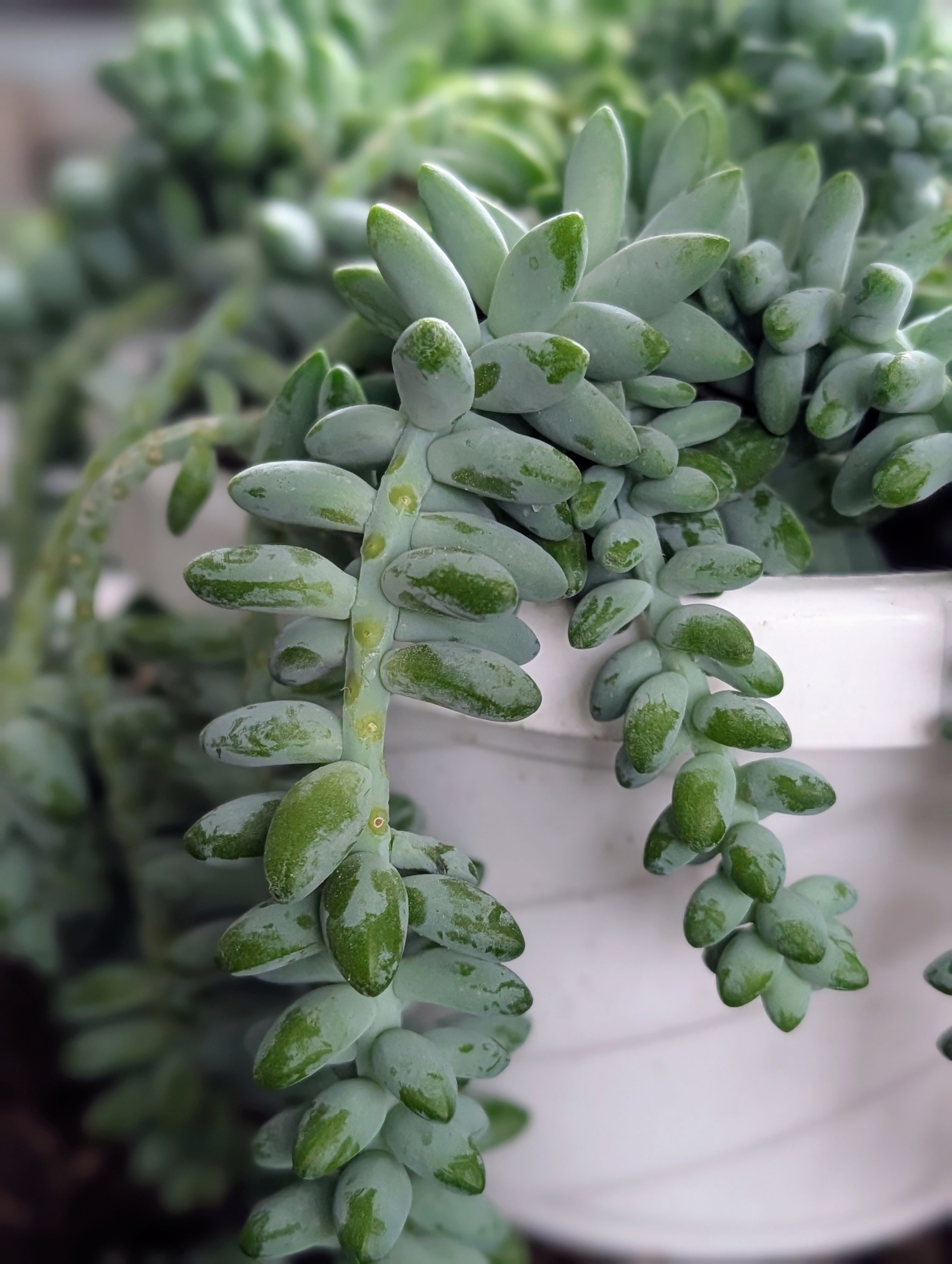
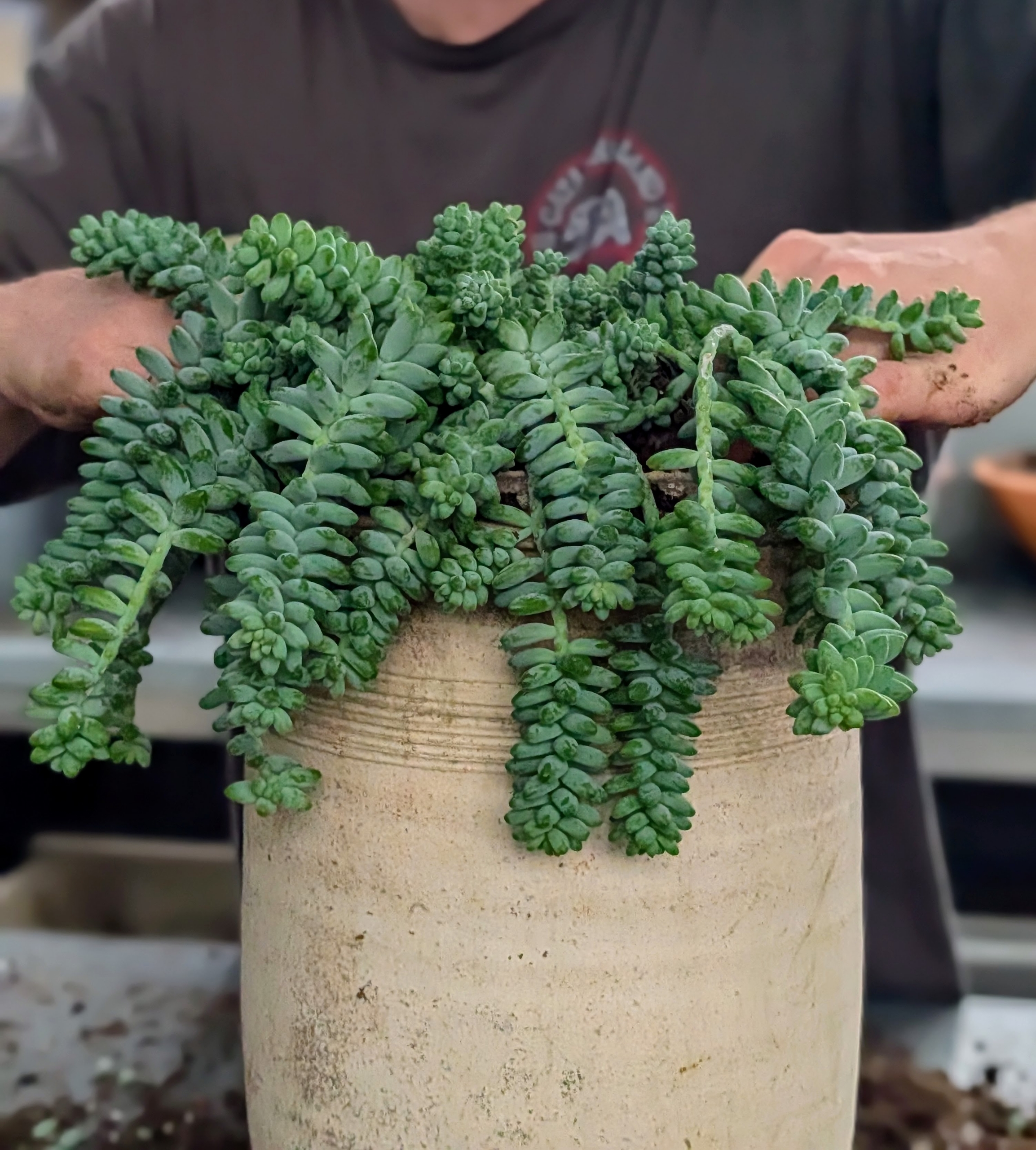
- This is called a Burro’s Tail or Donkey’s Tail, Sedum morganianum. It is a trailing perennial succulent with cascading blue green foliage native to southern Mexico and Honduras.
-
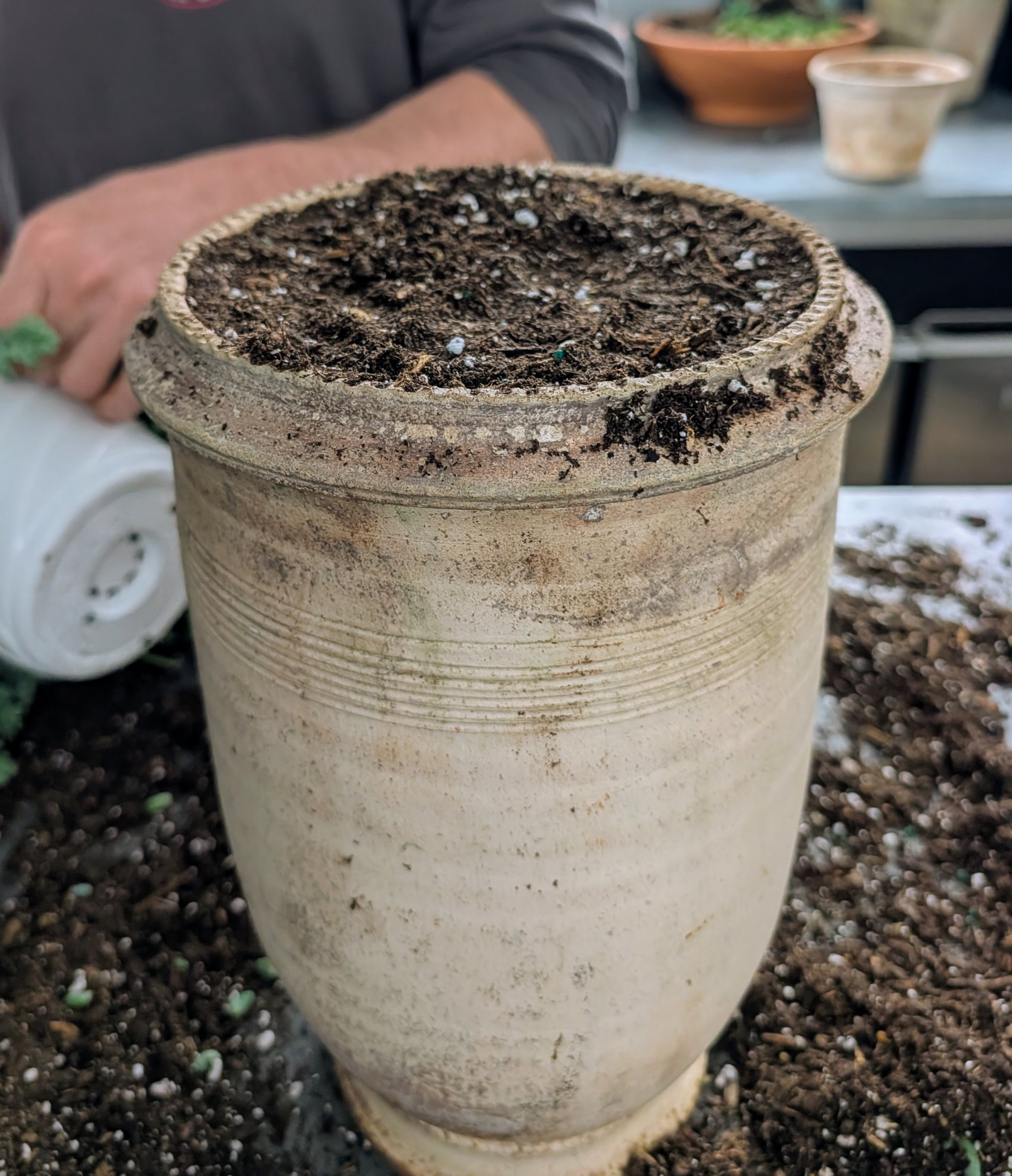
- Because it is a trailing plant, it needs a tall, narrow pot such as this.
-
- These plants store water in their fleshy knob-like leaves making them very drought tolerant. It requires deep watering only when the soil feels dry.
-
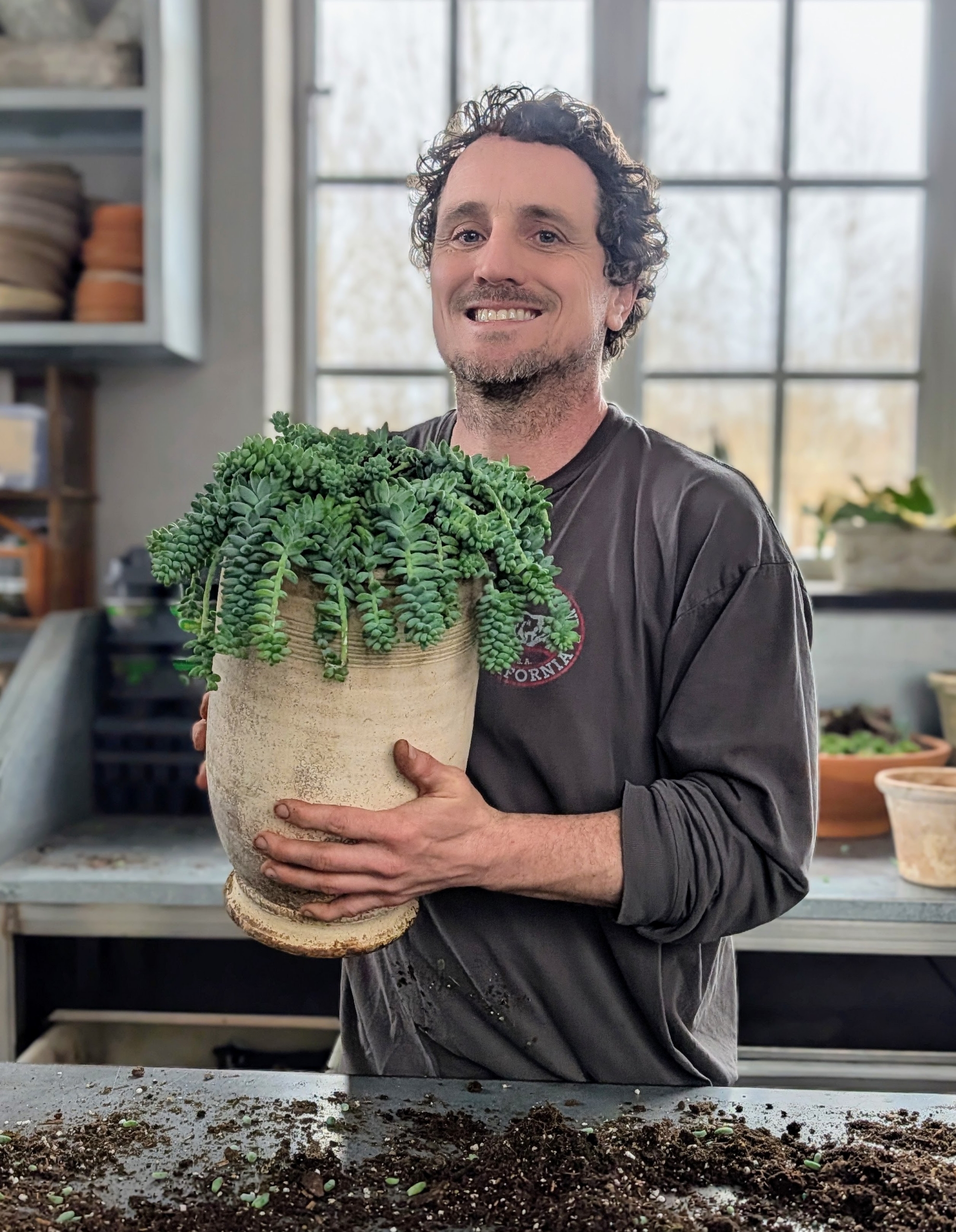
- This Burro’s Tail will do nicely in this pot for a couple of years.
-
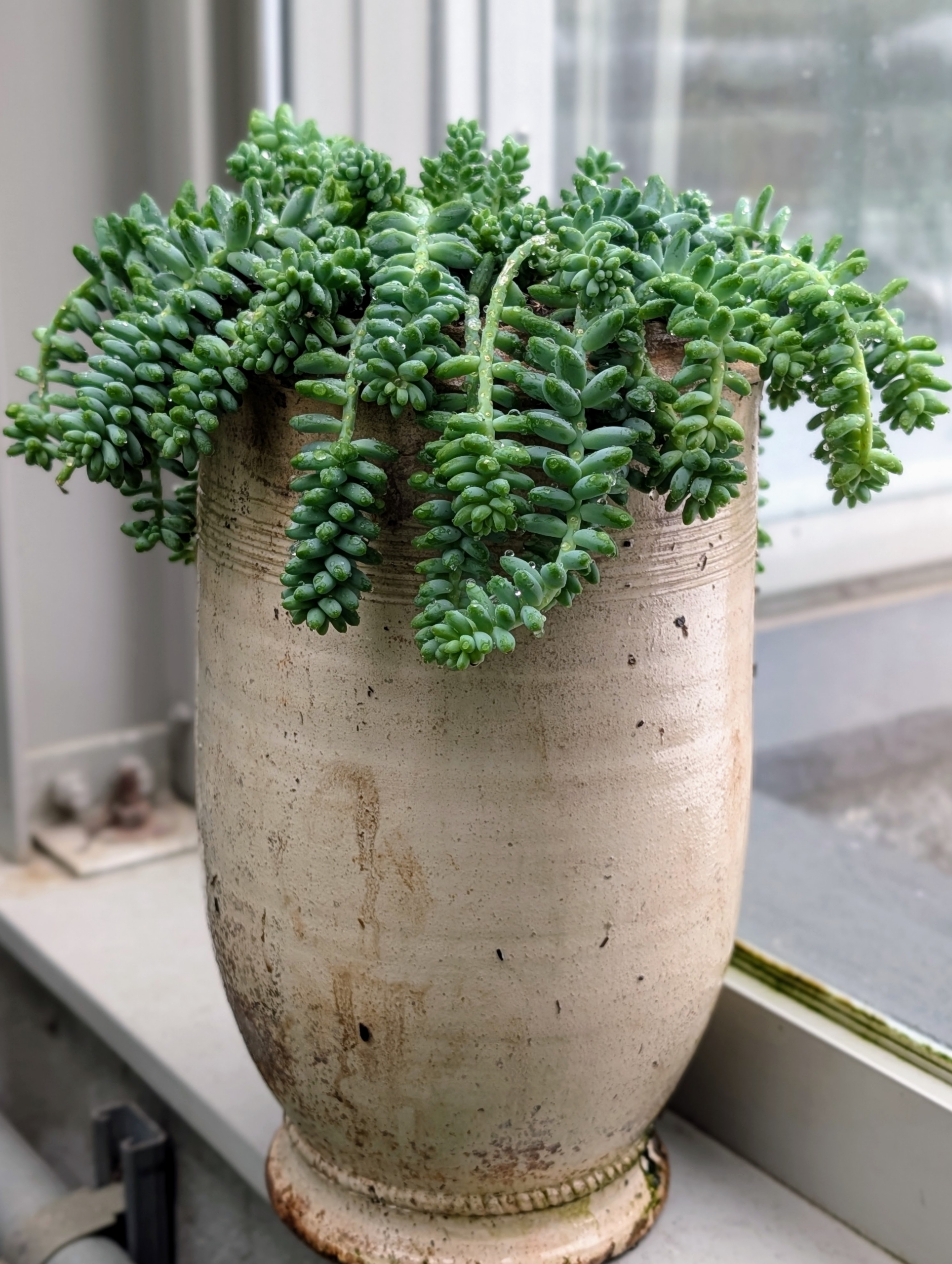
- Ryan places it on a windowsill in my greenhouse where it will get at least six hours of bright, indirect sunlight per day.
-
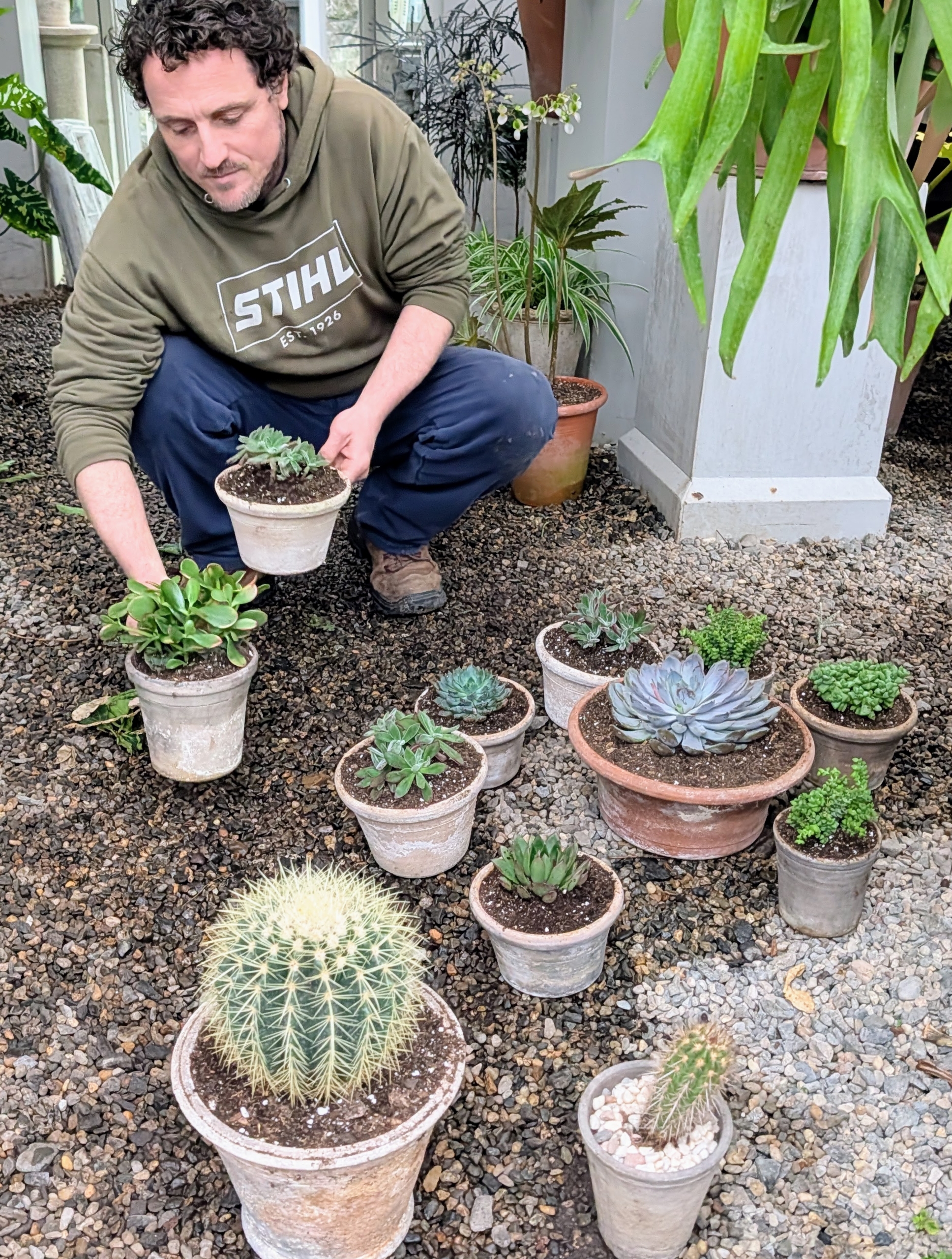
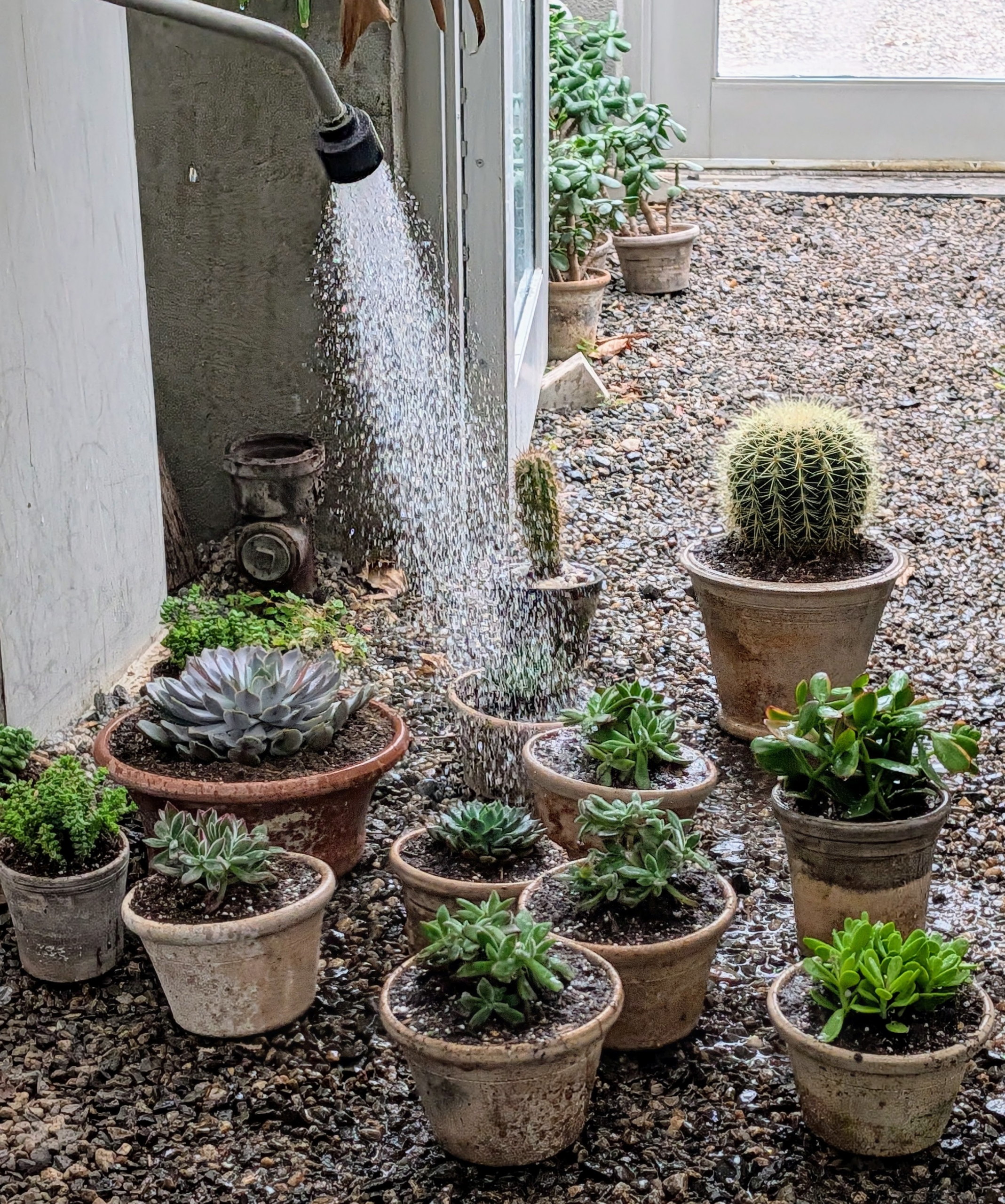
- Ryan gathers all the newly potted succulents on the greenhouse floor so he can give them all one more good drink.
-
- These plants will join others in a section of my greenhouse designated just for succulents, where they can thrive for many years.
 Martha Pins


 Martha Tweets

