

Removing Tall Larch Trees
Protecting homes and maintaining the landscape sometimes means cutting down trees.
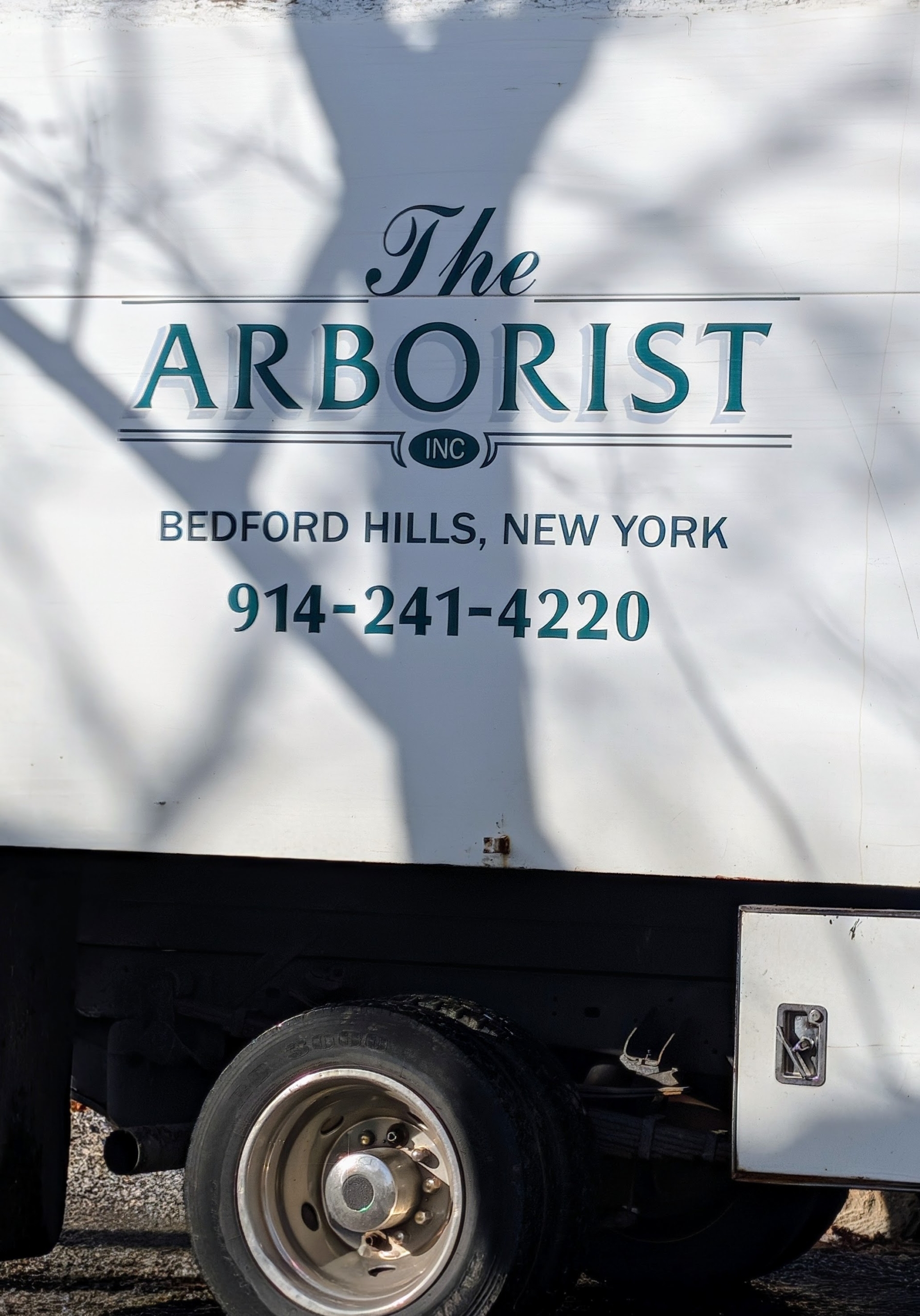
I always feel badly when trees are cut down. Trees are important to our environment - they are the world’s single largest source of breathable oxygen. Trees absorb carbon dioxide and potentially harmful gasses, and they create an ecosystem to provide needed habitat and food for birds and other animals. However, occasionally trees need to be removed. I had two very tall larch trees outside my Summer House that were not doing well and for safety reasons had to be cut down. The crew from The Arborist in Bedford Hills, New York carefully severed each section of tree in 12-foot lengths until they were both down to stumps. Fortunately, the large logs can be milled into usable boards and repurposed for another project.
Here are some photos, enjoy.
-

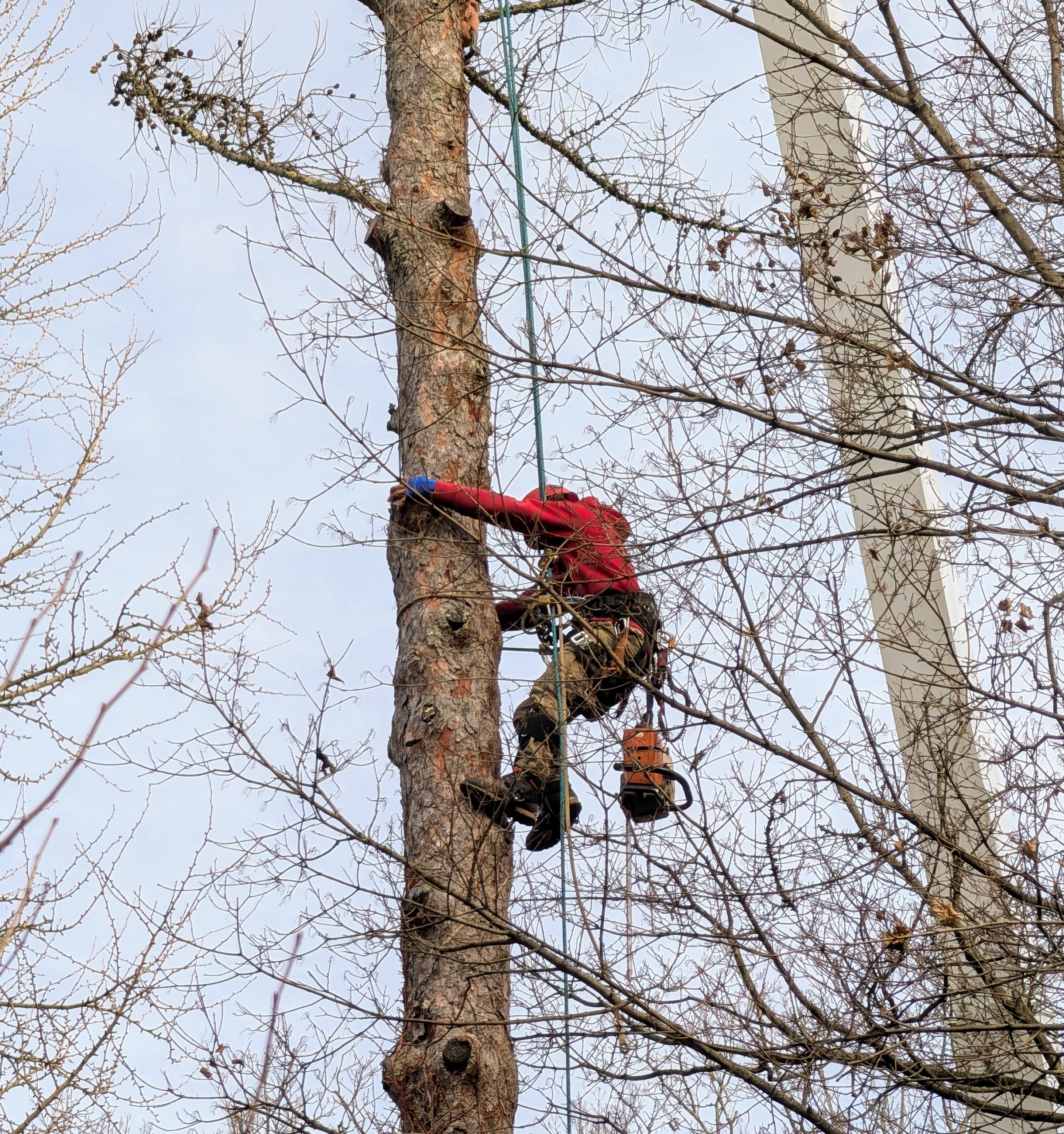
- I never like to see trees come down, but the two larch trees had been in decline for some time.
-
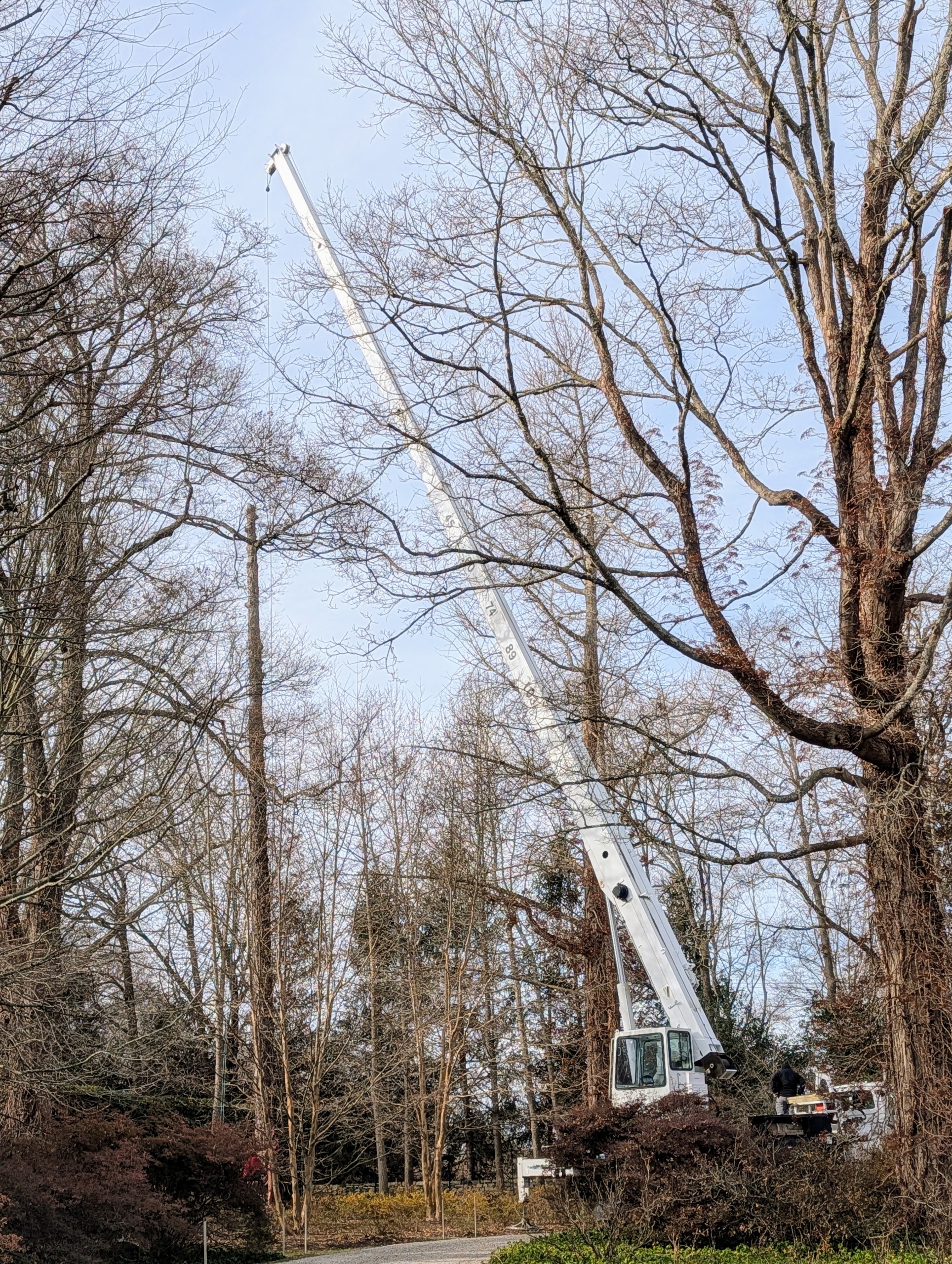
- The Arborist crew came with their own equipment including a crane that could reach the top of the trees easily and efficiently.
-
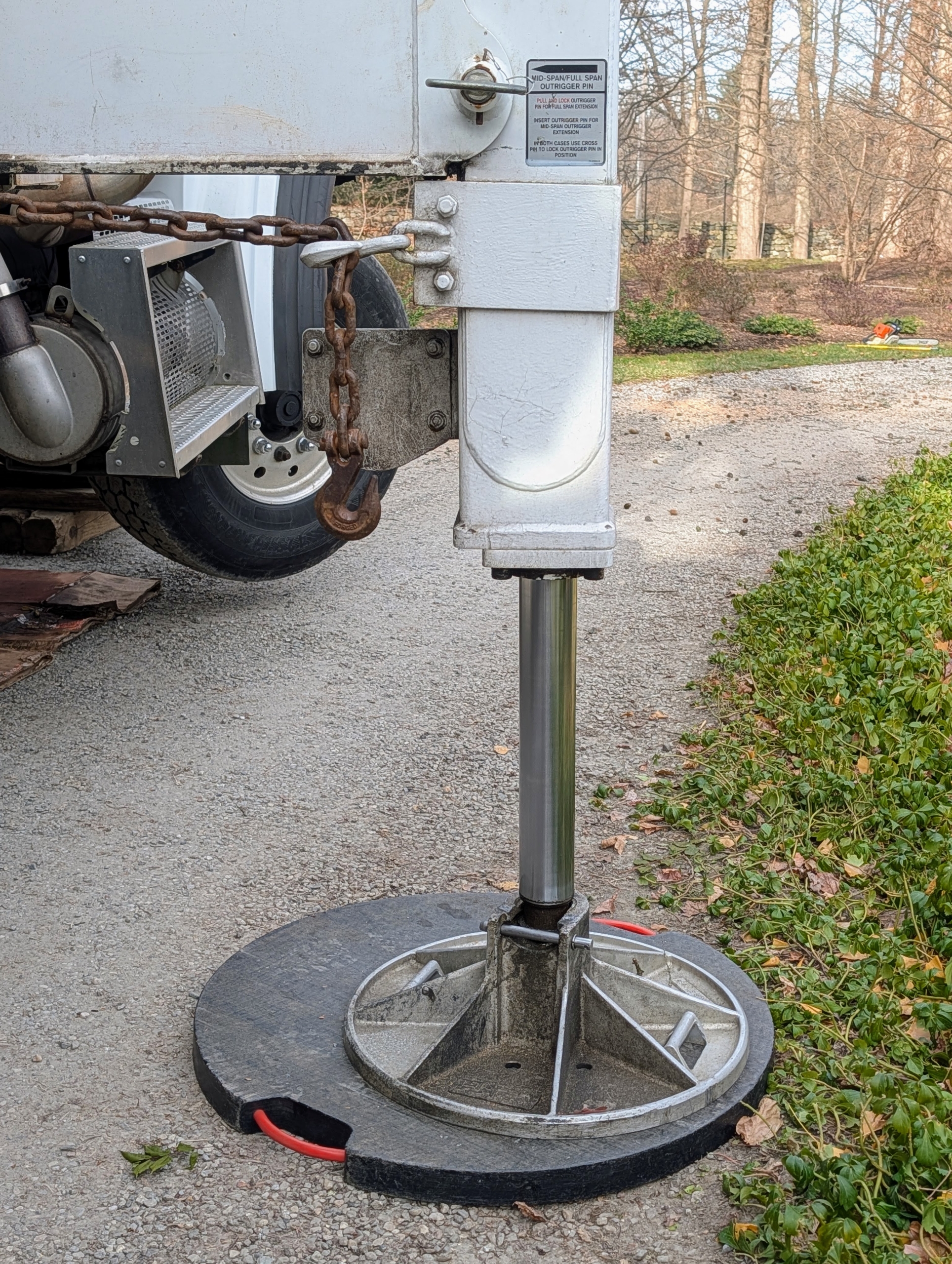
- The crew prepares the crane so it is level on the ground and very secure. This is called an outrigger, which is an extendable support that adds stability to the crane during lifting operations.
-
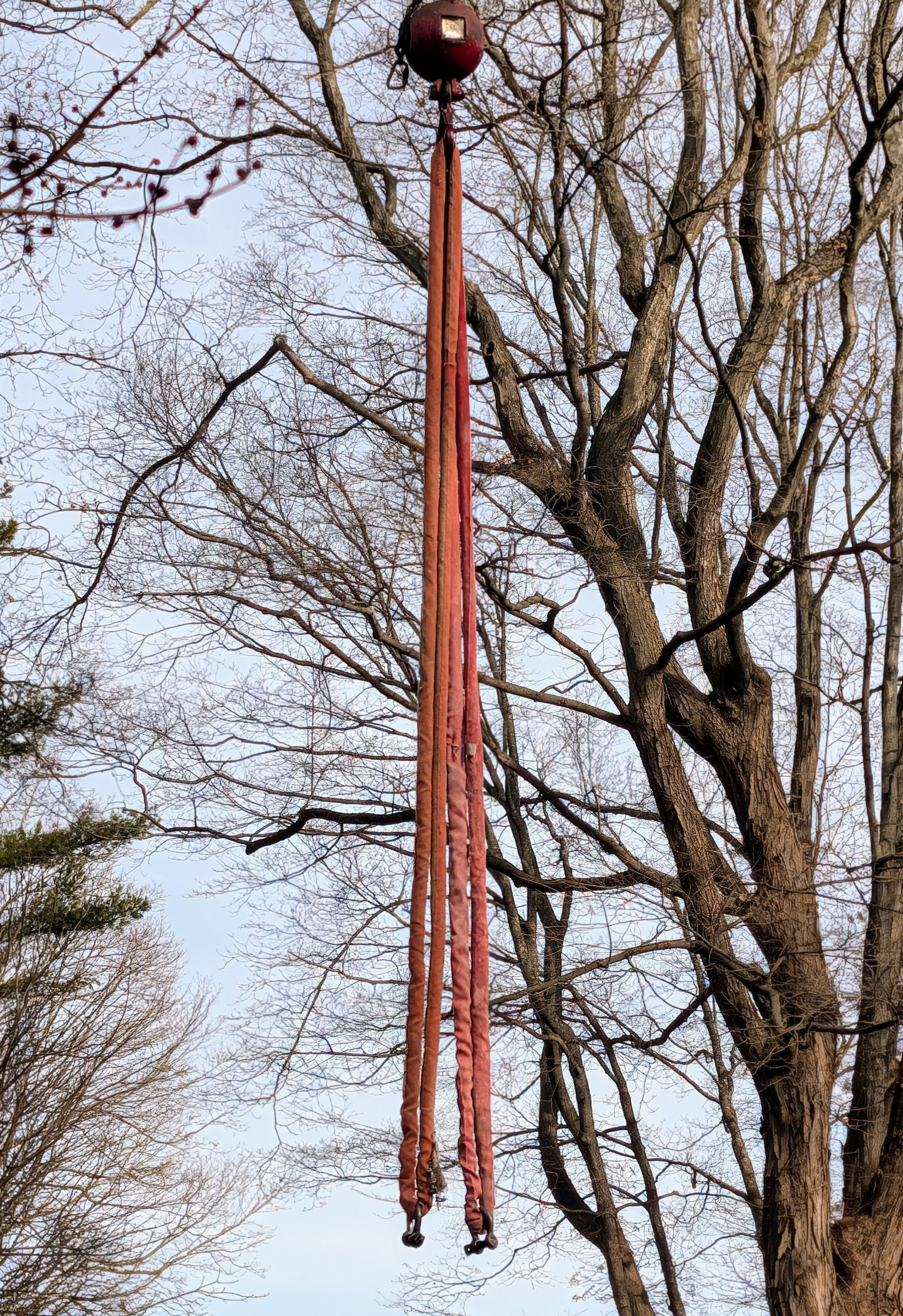
- This crane sling is used to tie around the top of the section to be cut. The sling is designed to handle the full weight of the log until it is safely lowered to the ground.
-
- After all the branches are manually removed, the operator is carefully hoisted up the tree again to start cutting it down. Each 12 to 14 foot long section of tree is cut by chainsaw. The section to be cut is secured and the crane holds it taut, so that it is lifted upwards as soon as it is completely separated from the rest of the tree.
-
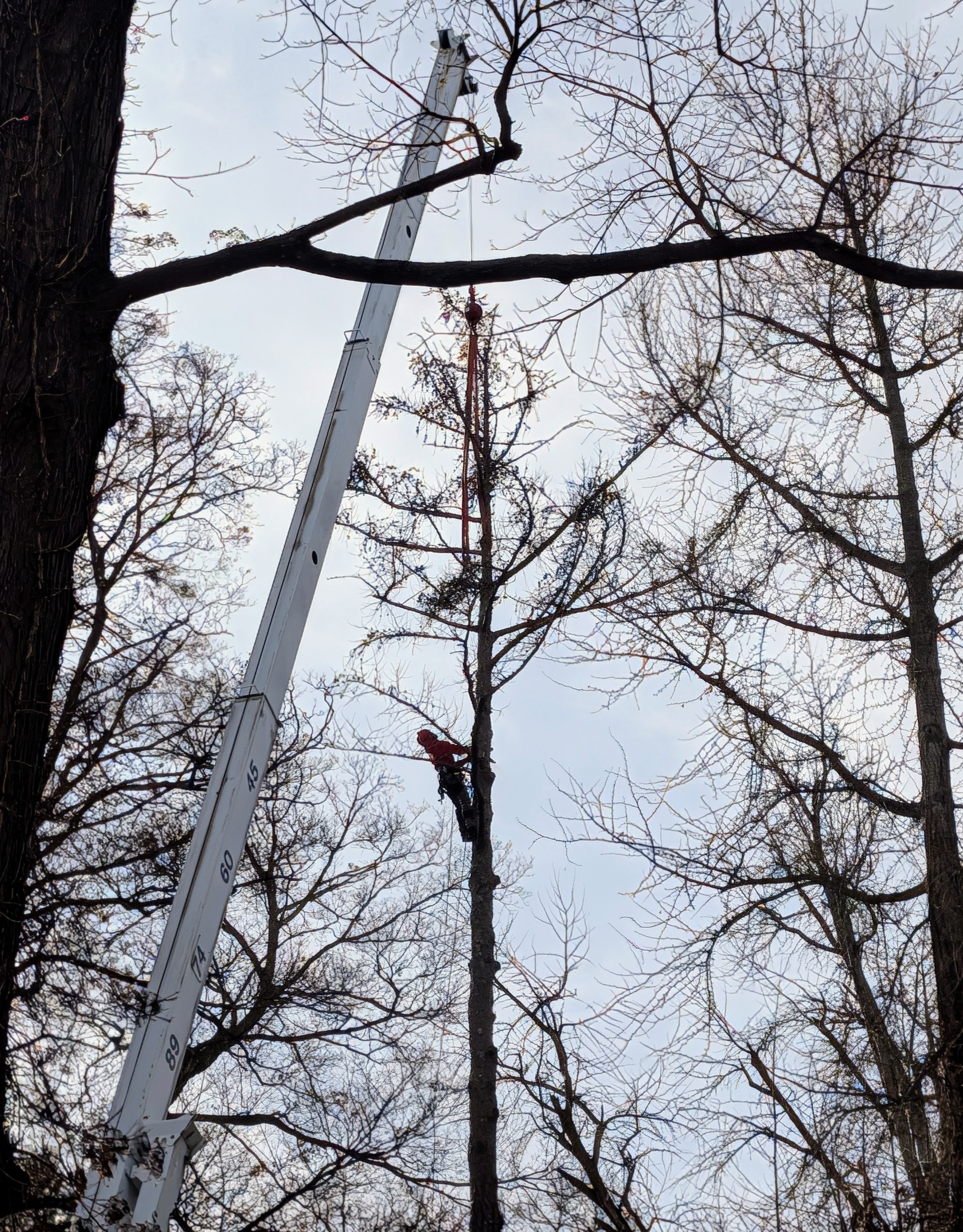
- The first section of this tree is removed and carried by crane to the designated open area below.
-
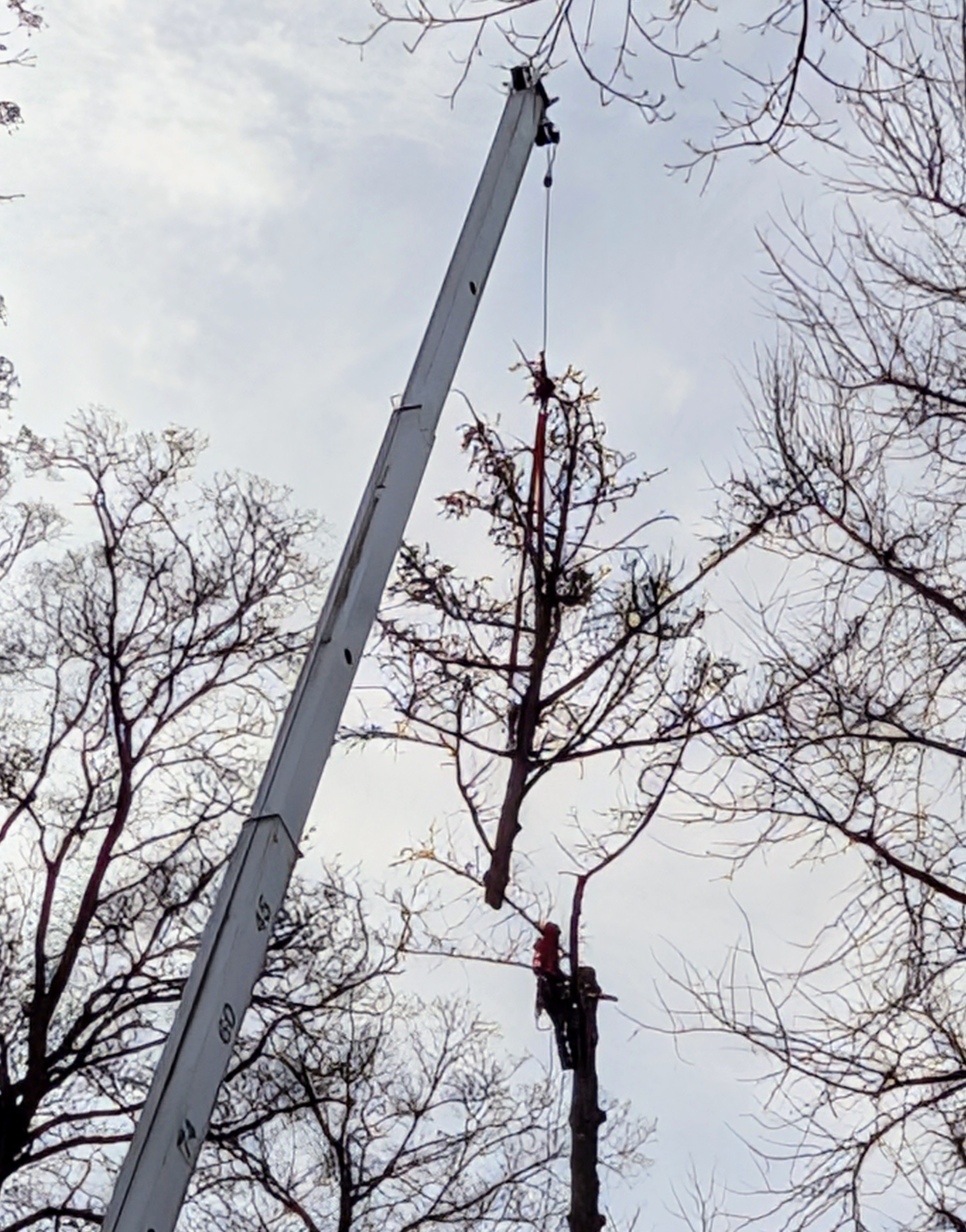
- Thankfully this day was not too windy and the section was brought down smoothly.
-
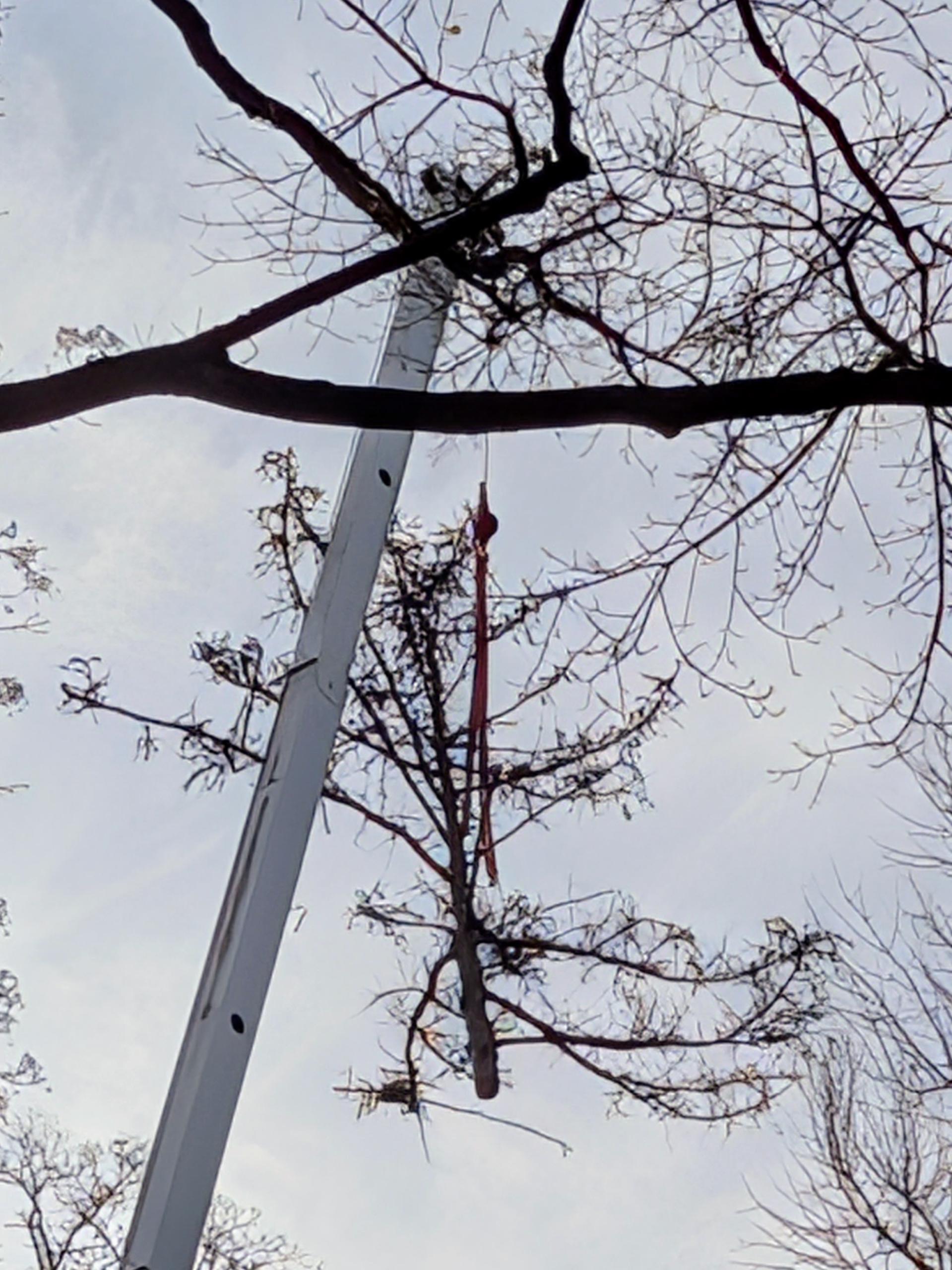
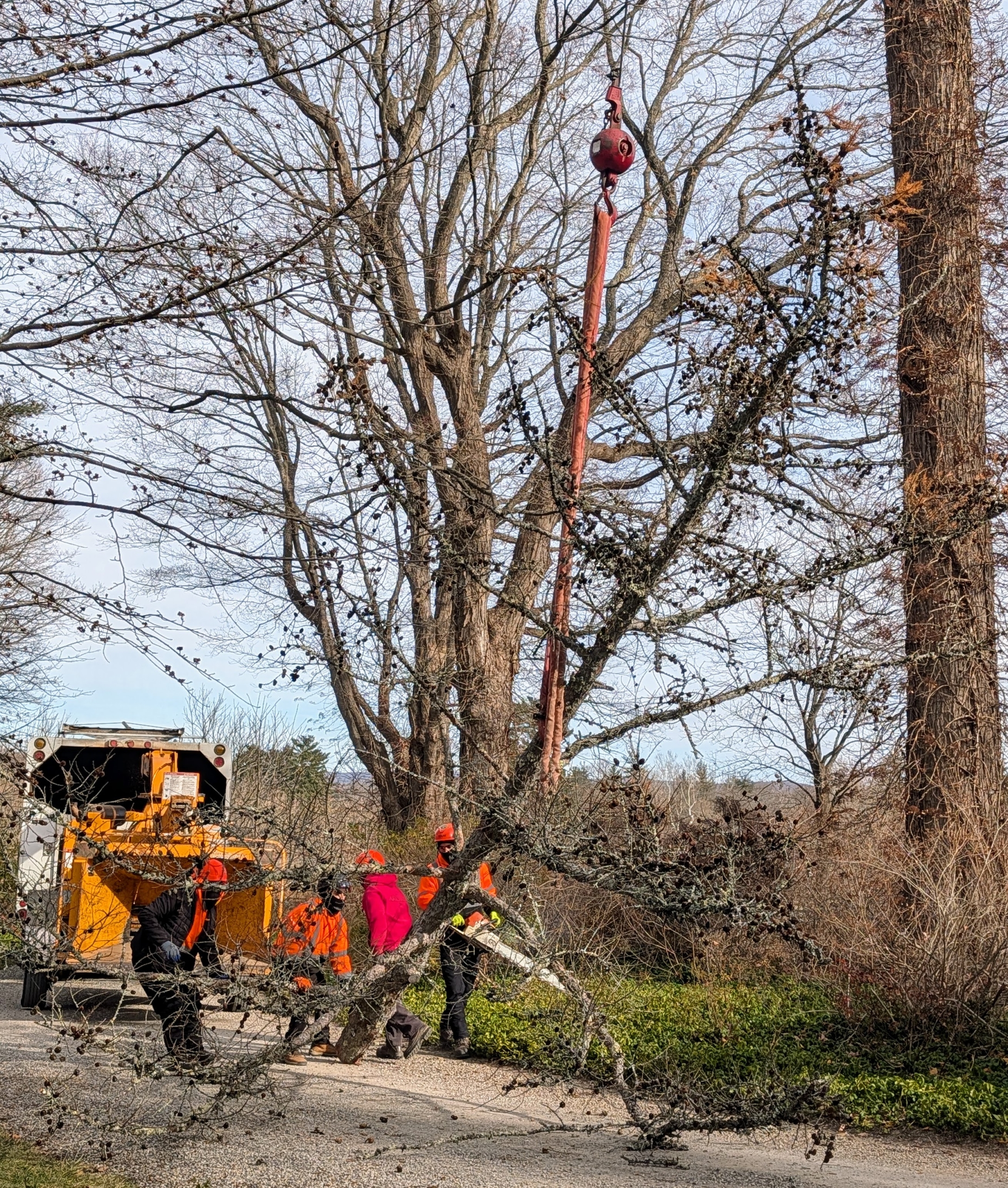
- Once the tree section nears the ground, crew members remove the strap. This piece will go straight into the chipper – the top of the tree is too narrow to make into usable wooden planks, so it will be chipped and used for ground cover.
-
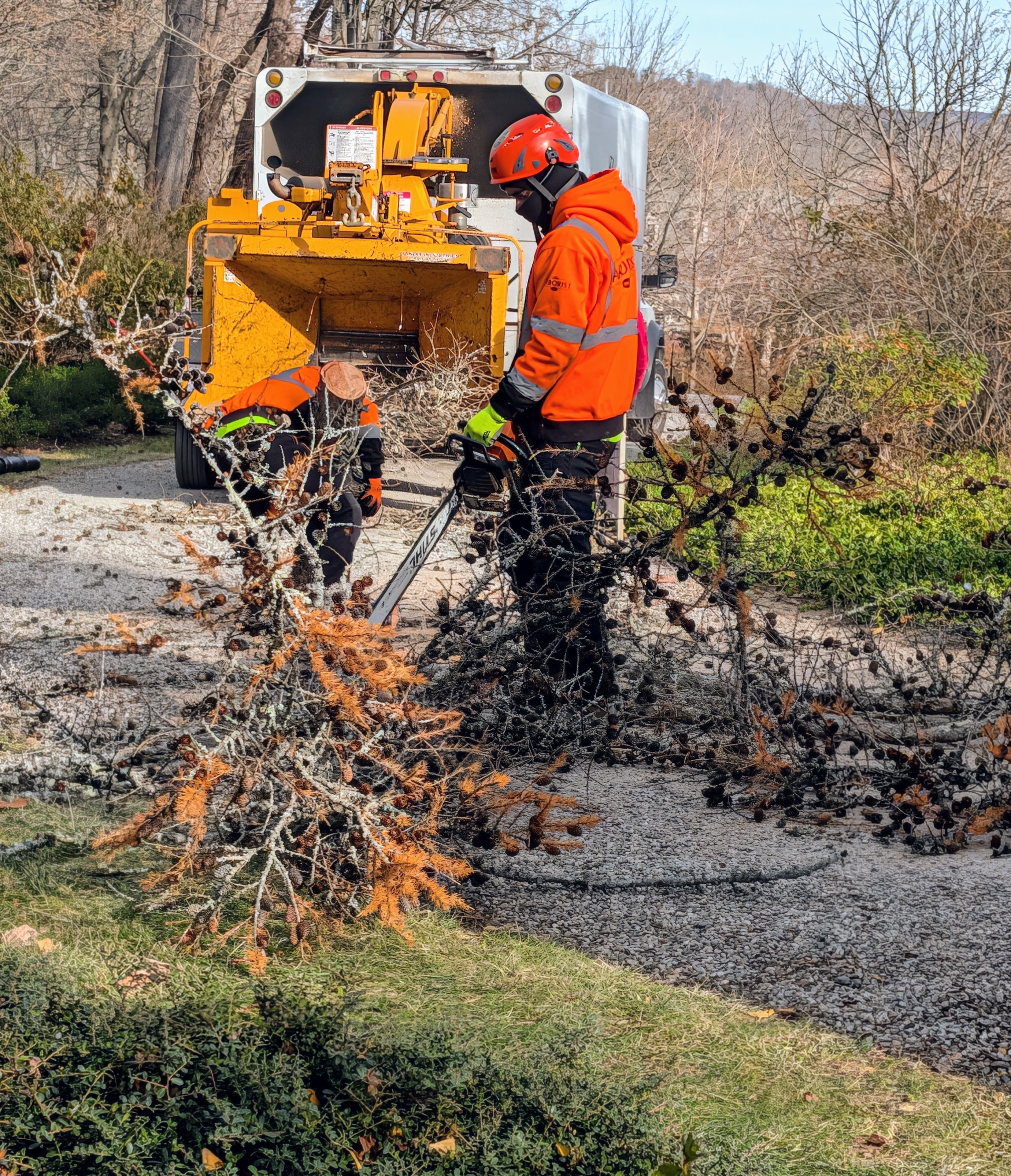
- Any branches are cut off with a chainsaw and put through the chipper also.
-
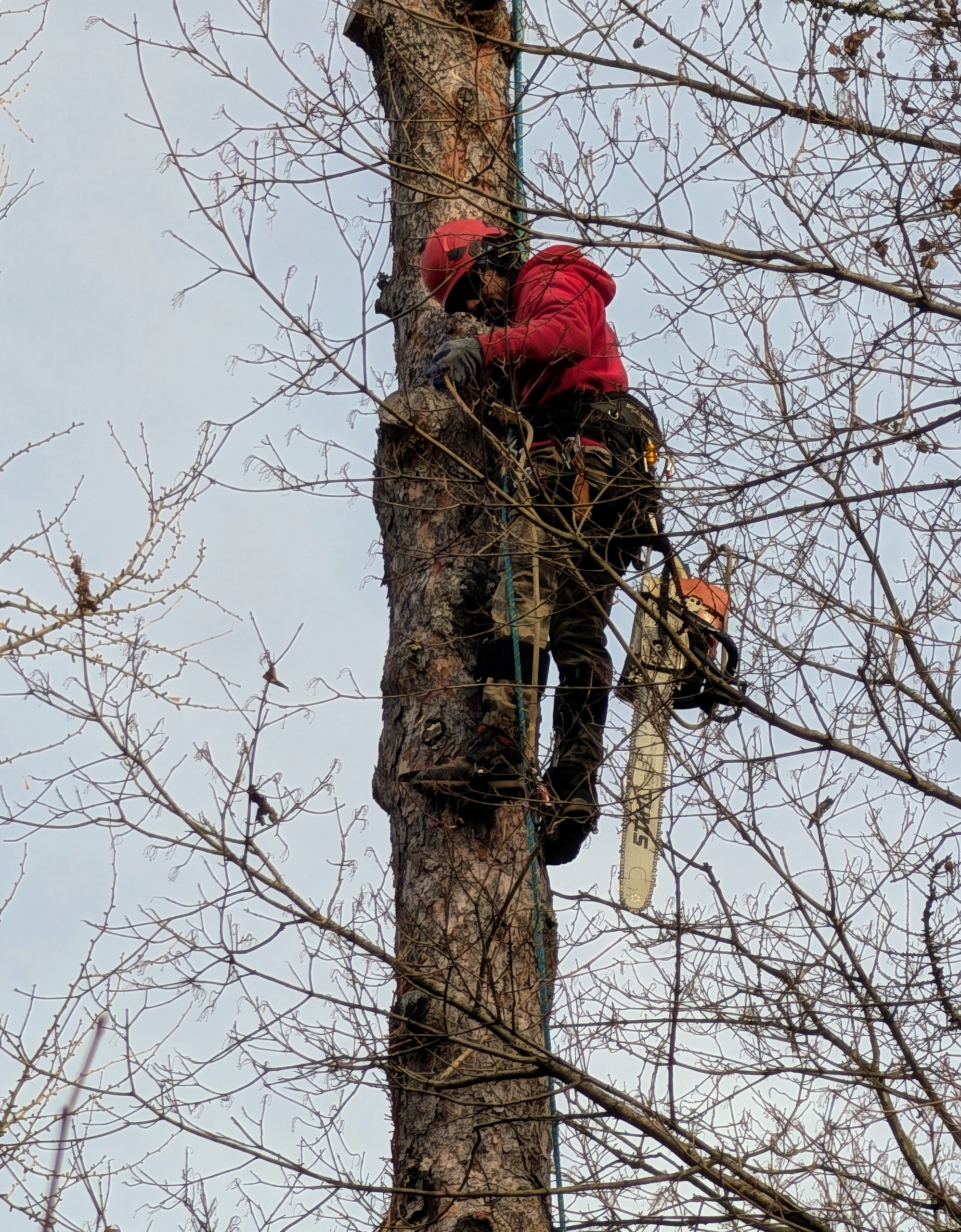
- Ray, the arborist, secures the sling to the top and then works his way downward to cut off the next section. Arborists wear climbing spurs designed with spikes to ascend trees by penetrating the tree trunk.
-
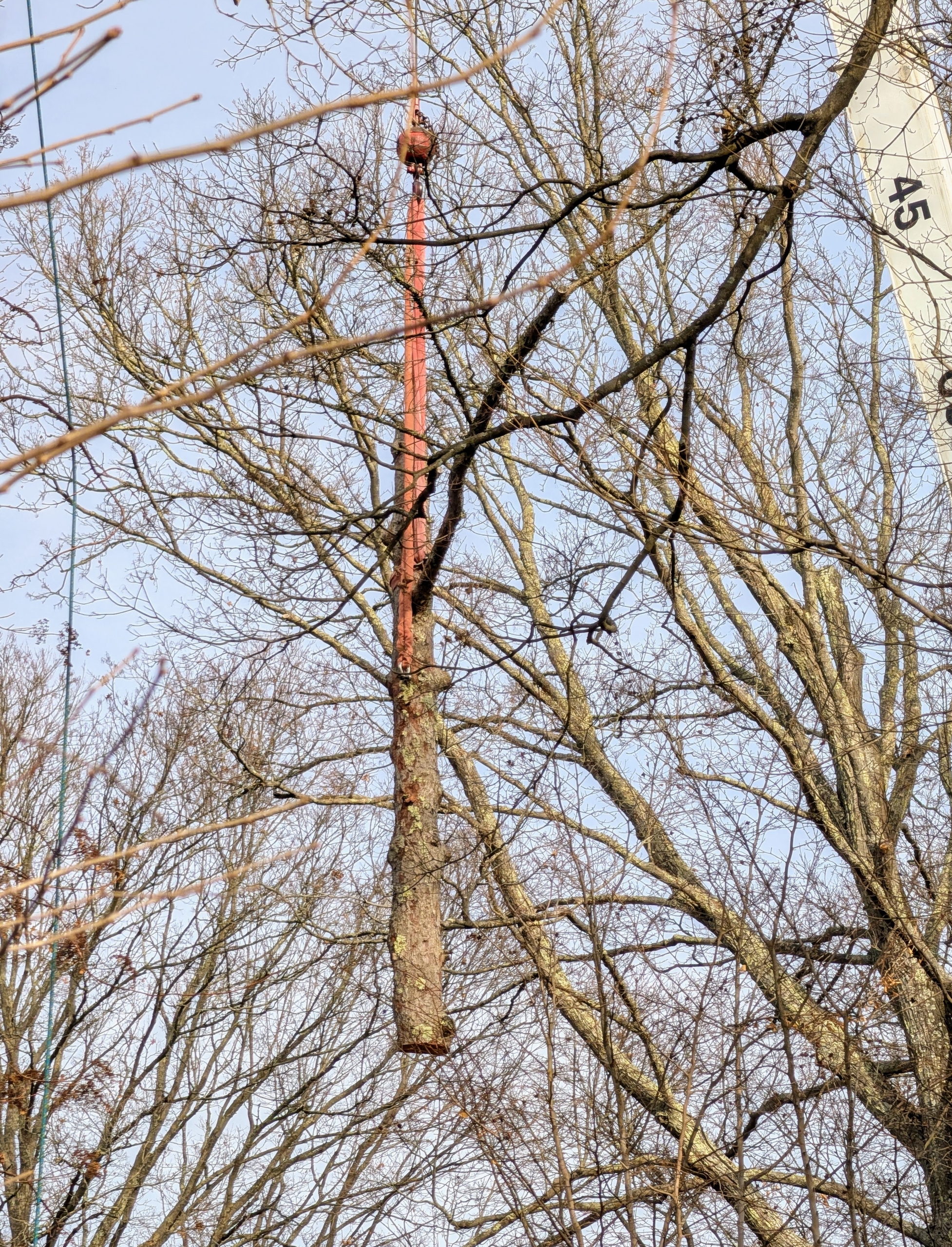
- Here is another section of tree on its way down. The crane is maneuvered a good distance from any other trees, structures, or people.
-
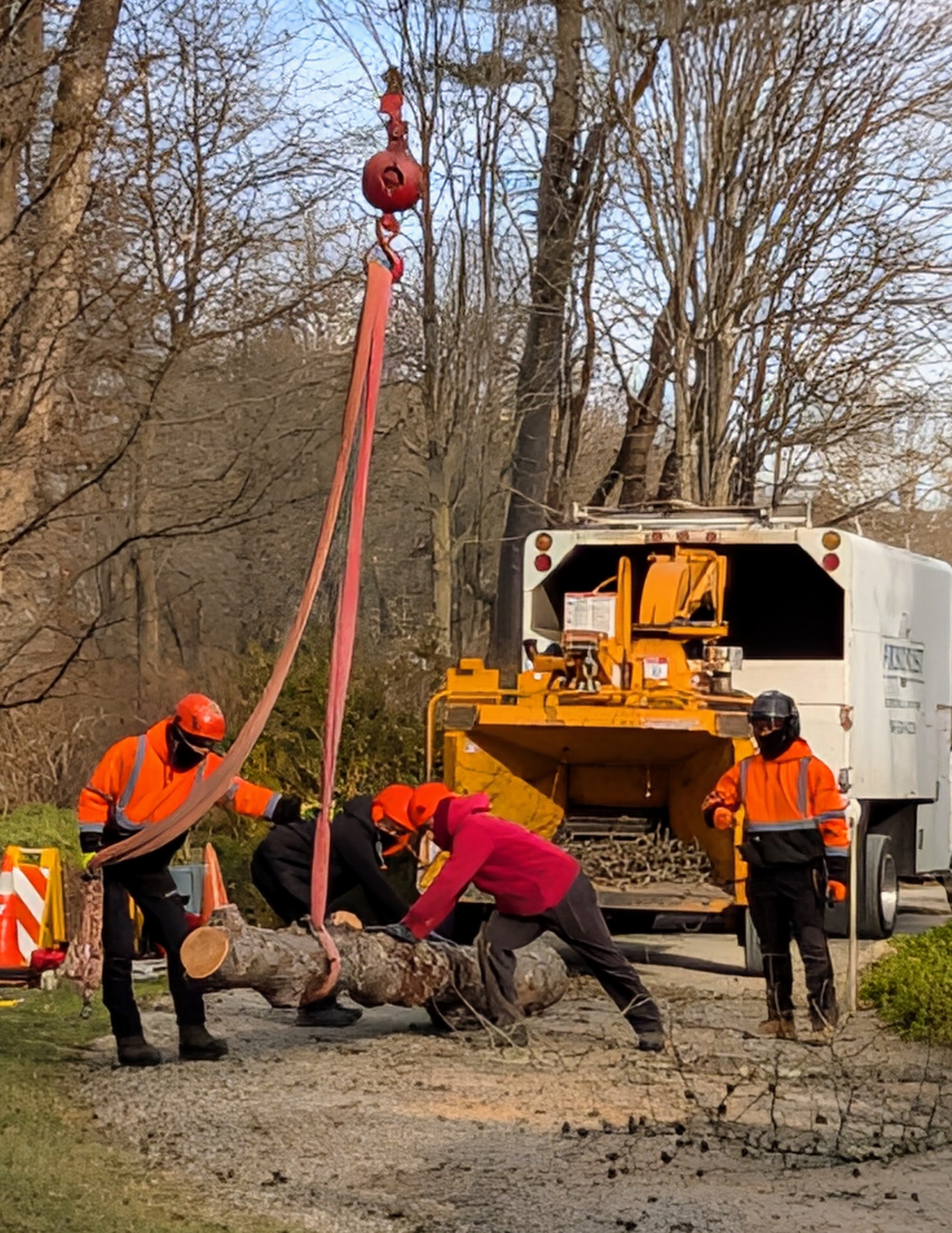
- Crew members remain on the ground to guide the log as it is lowered.
-
- And another section comes down.
-
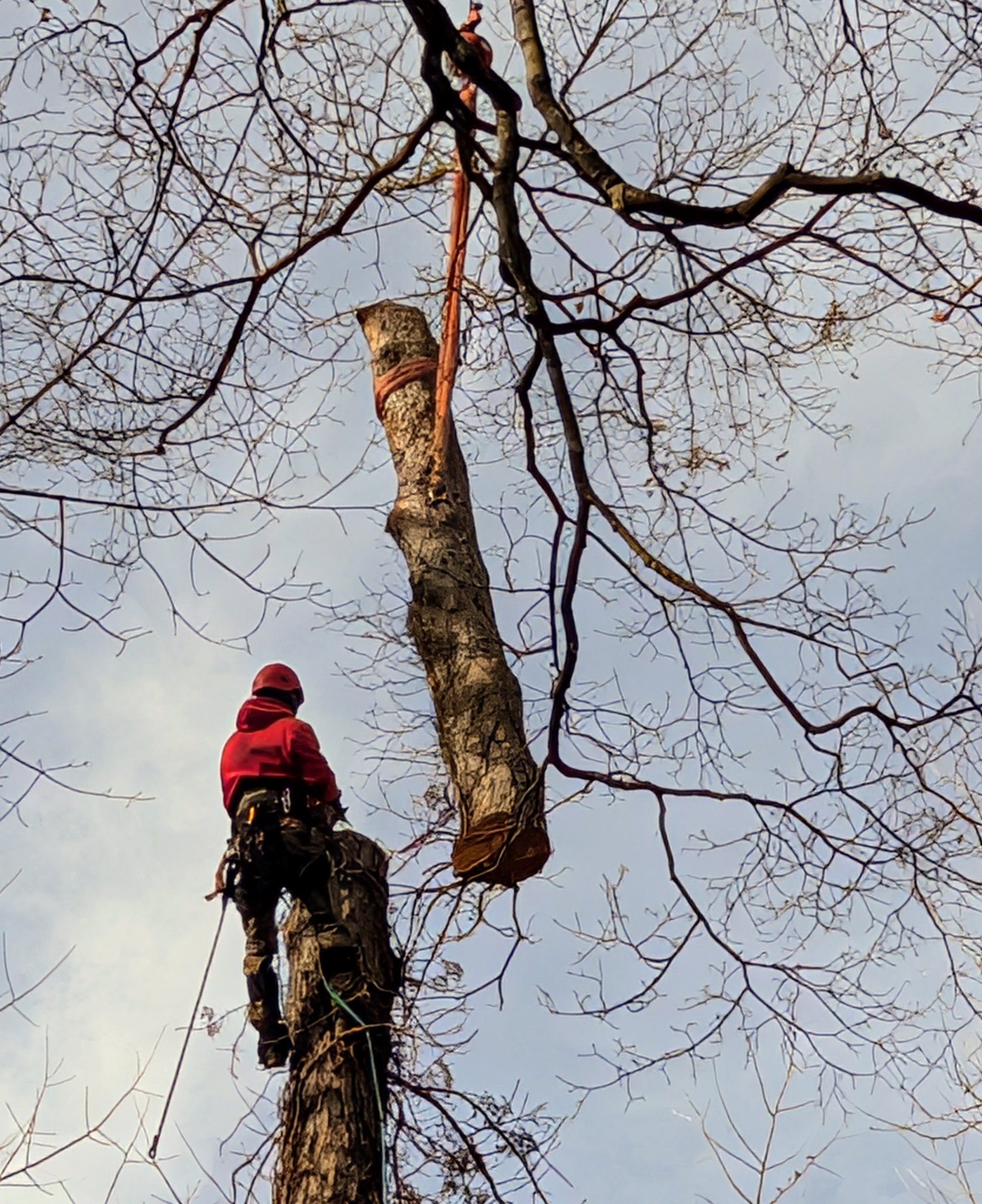
- The logs are then taken to my back compost field where they will be milled into two-inch thick boards that will be used in a future building project – nothing is wasted.
-
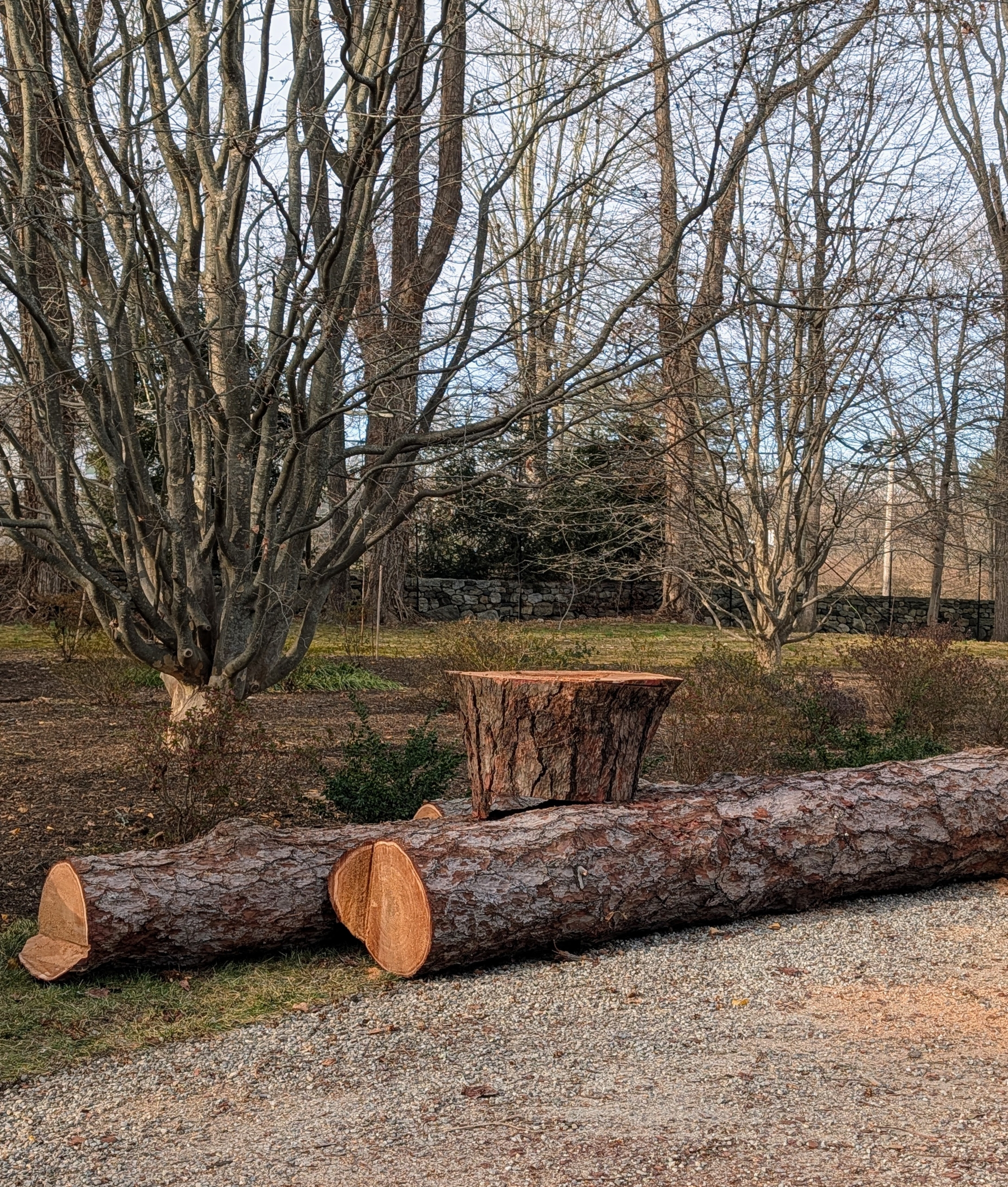
- Here is what is left after the tree is completely removed. They were able to save my climbing hydrangea too! The entire area looks different, but also very nice.
-
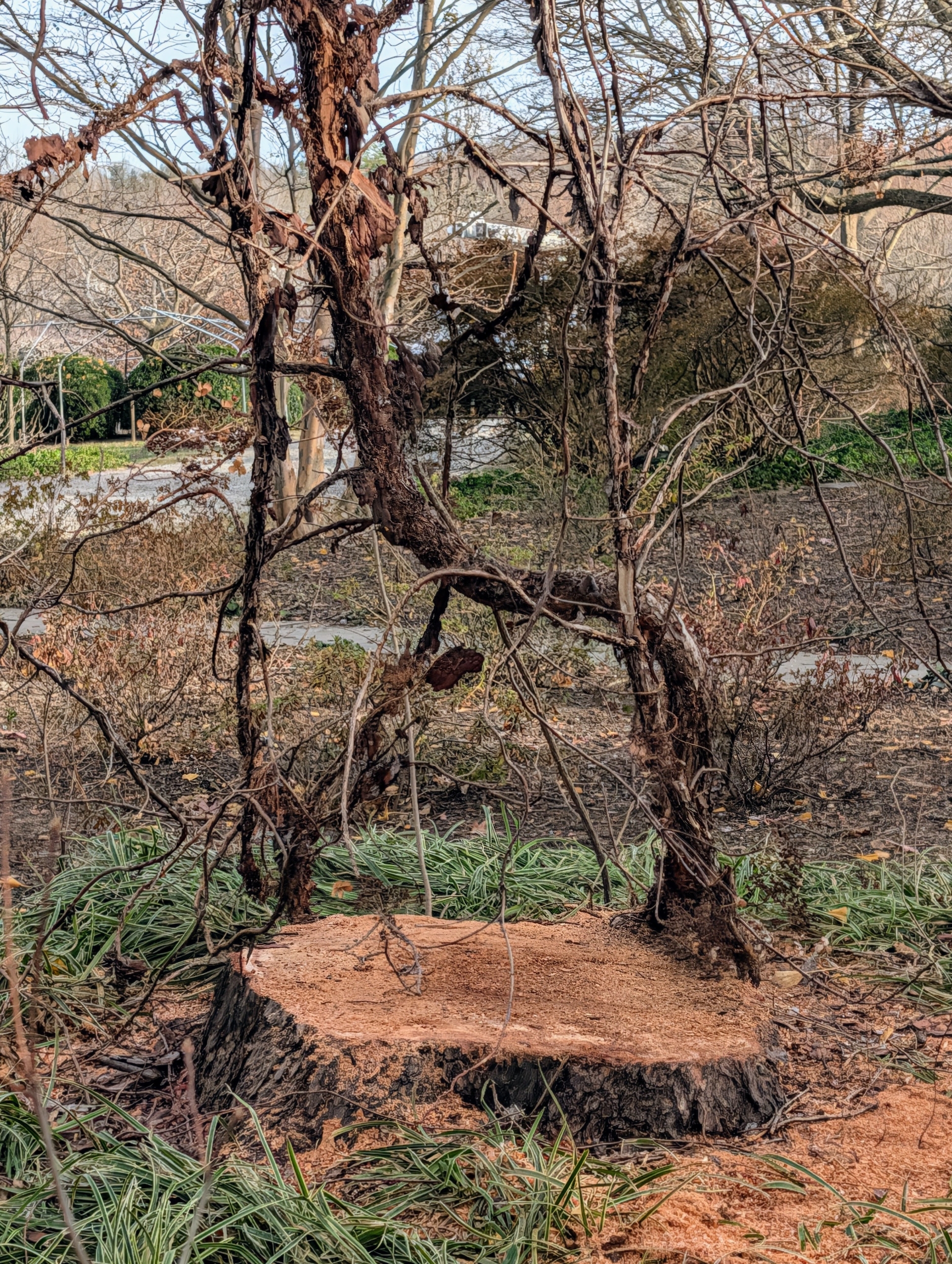
- I also asked the crew to prune some of the surrounding maples and magnolias.
-
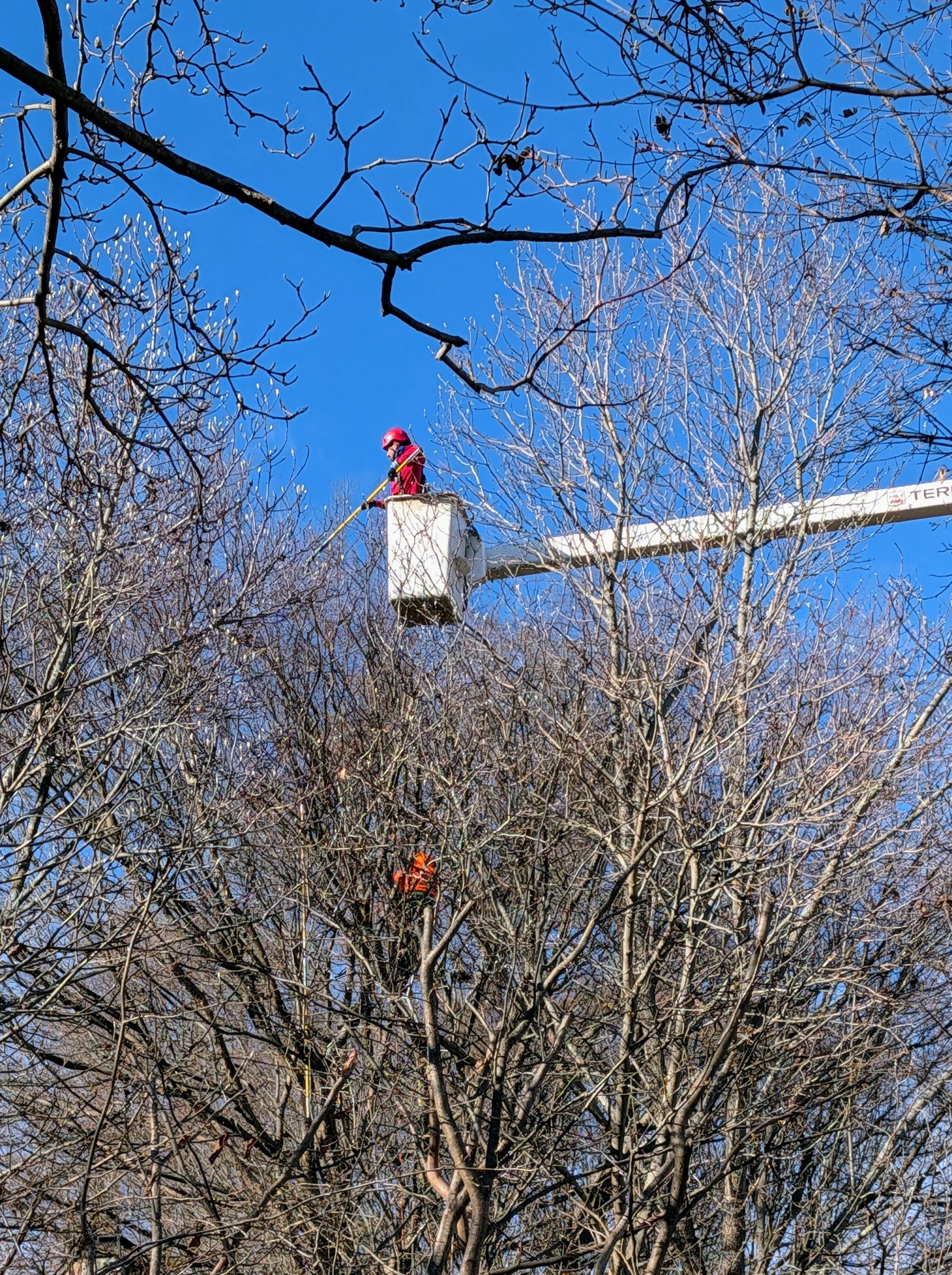
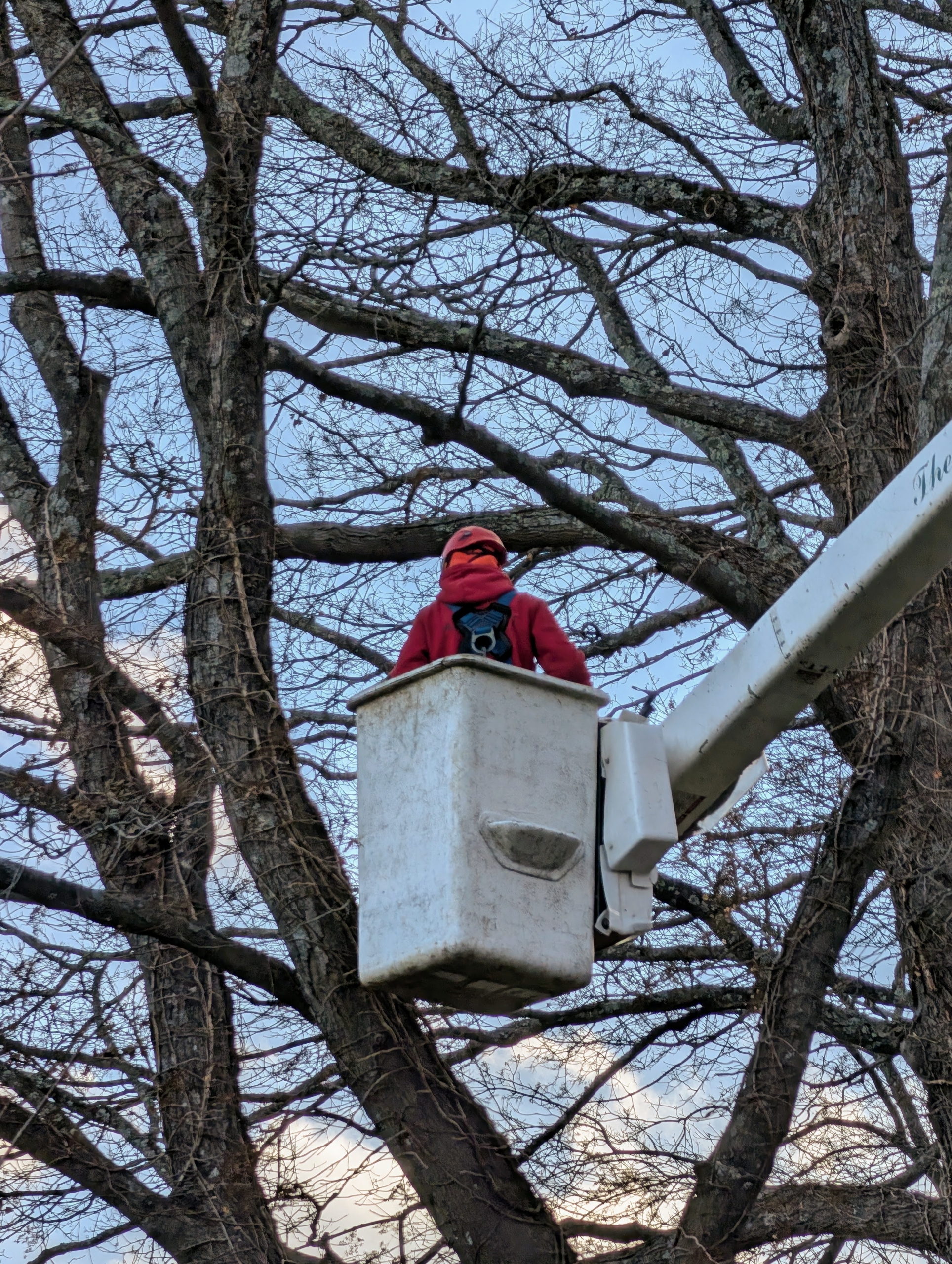
- The job is done from the safety of a lift bucket. From here the arborist can reach high branches and prune while a crew catches the debris below.
-
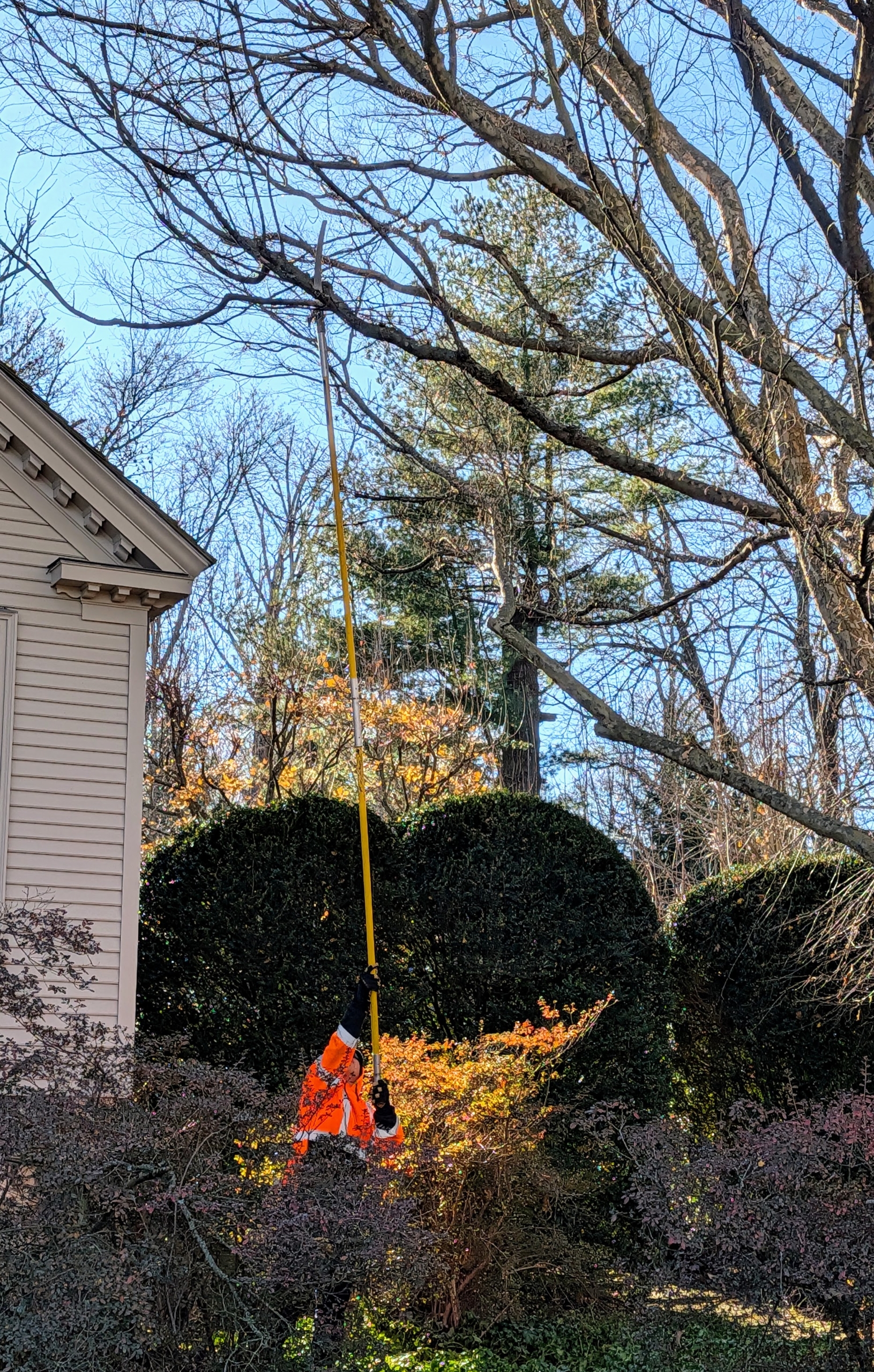
- Branches closer to the ground are cut with a telescopic long reach pruner.
-
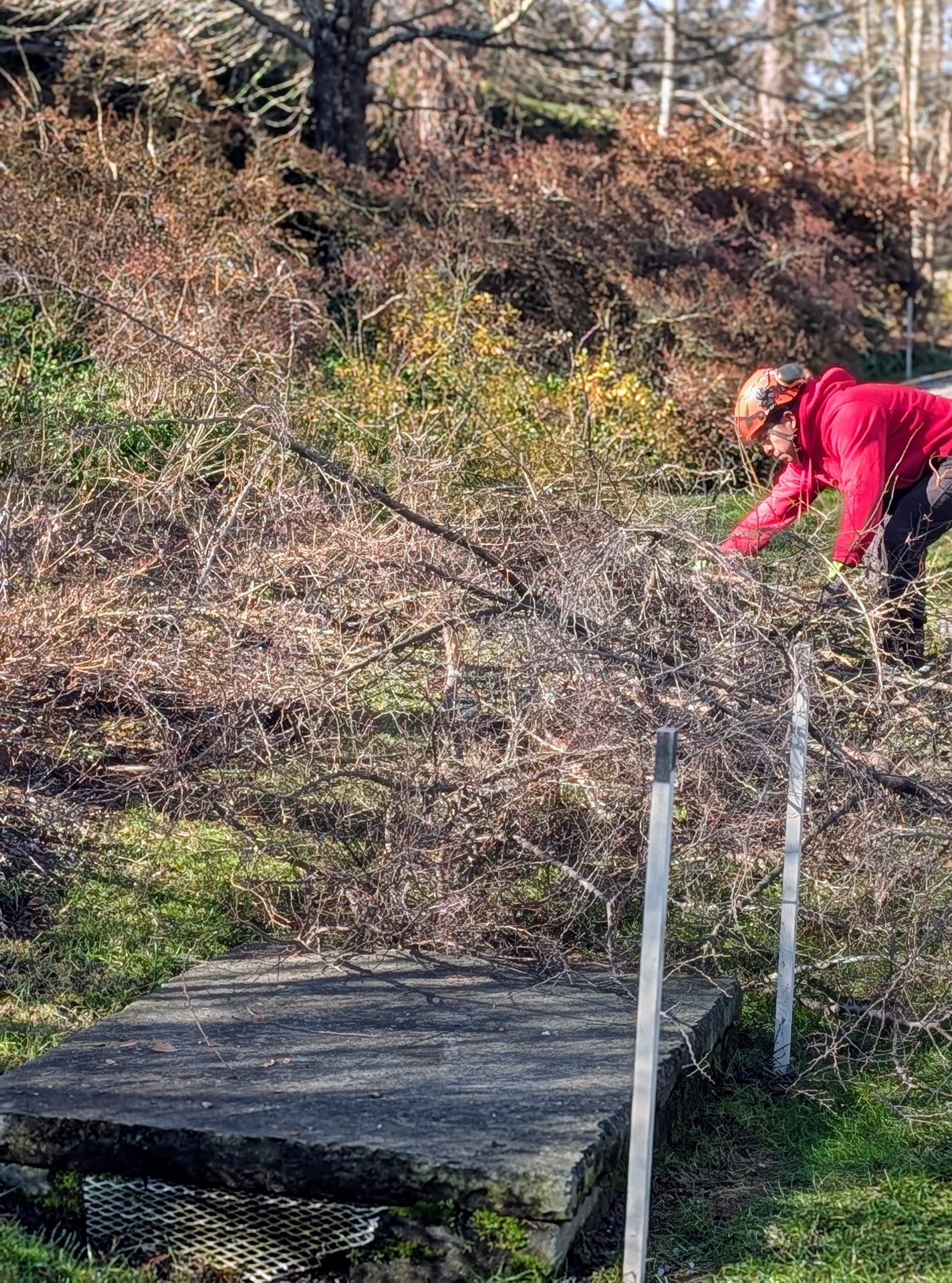
- The crew is very tidy and quick to pick up the cut branches.
-
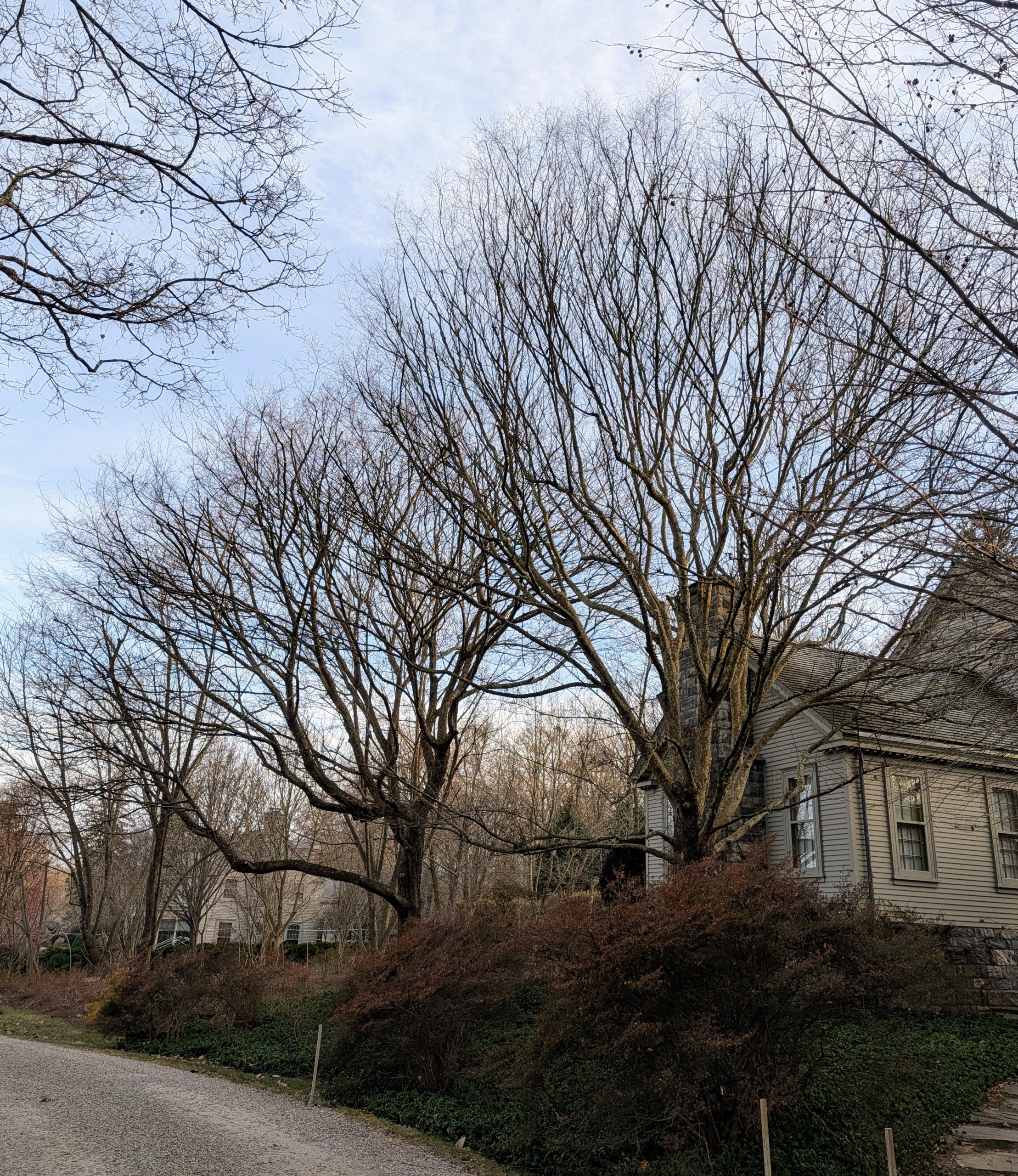
- I think these trees were pruned very nicely.
-
- If trees need to be removed, make sure it is done by professionals who can get the task completed quickly and safely. Thanks The Arborist!
 Martha Pins


 Martha Tweets

