

Decorating My Winter House with Plants
Houseplants and cut flowers bring life to any room, especially during the cold, dreary days of winter.
Whenever I entertain, I like to decorate with an assortment of potted plants and cut blooms that provide color and interesting and expressive foliage. It’s an inexpensive way to add beauty and texture to any space. My head gardener, Ryan McCallister, brought some beautiful plants to display in my Winter House for a small gathering I am hosting this weekend.
Enjoy these photos.
-

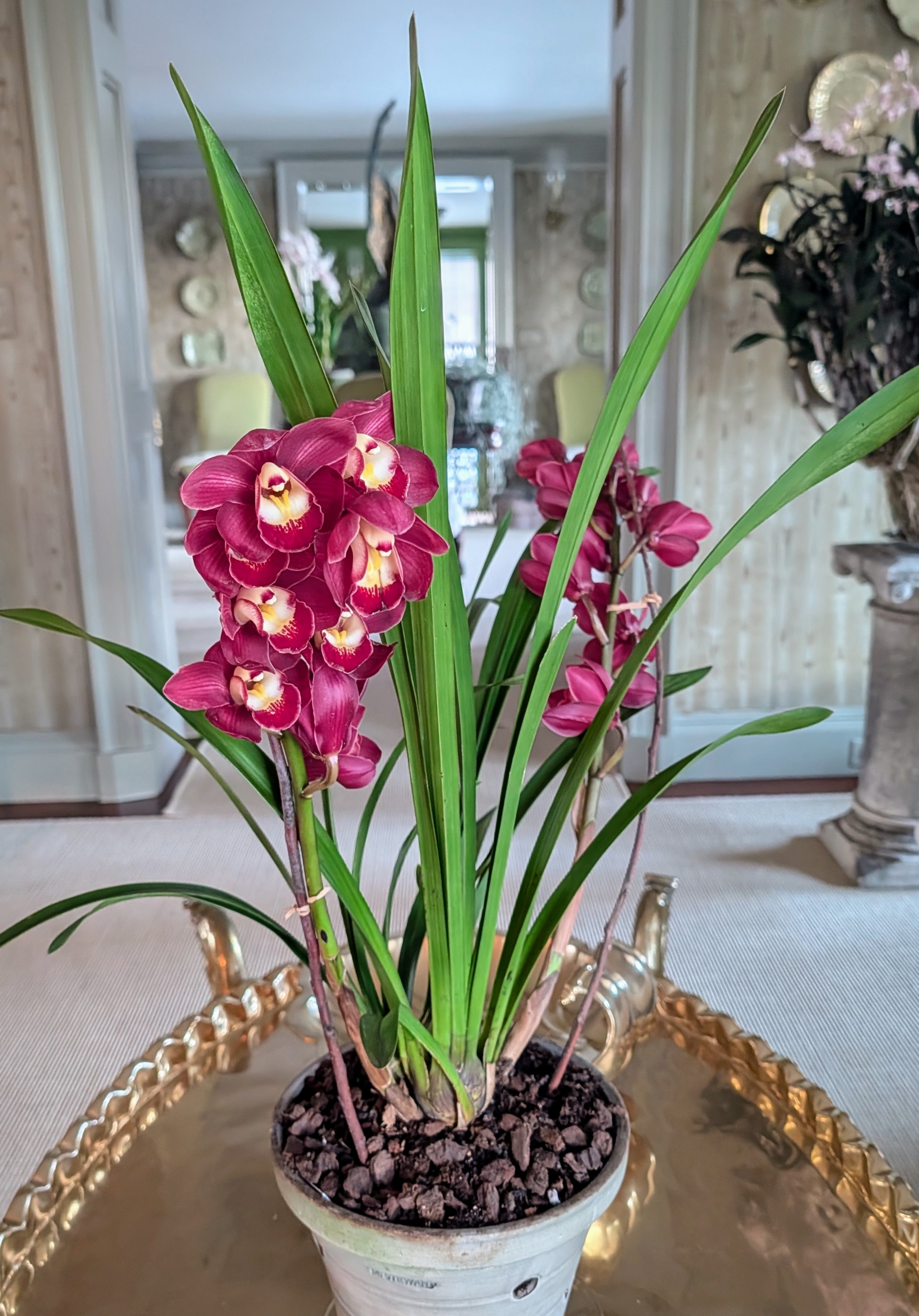
- I have some of the most beautiful orchids displayed on the tables and counters of my Winter House. Orchids come in a range of colors. Cymbidium, Phalaenopsis, and Dendrobium orchids come in blue, red, pink, white, purple, yellow, orange, and green.
-
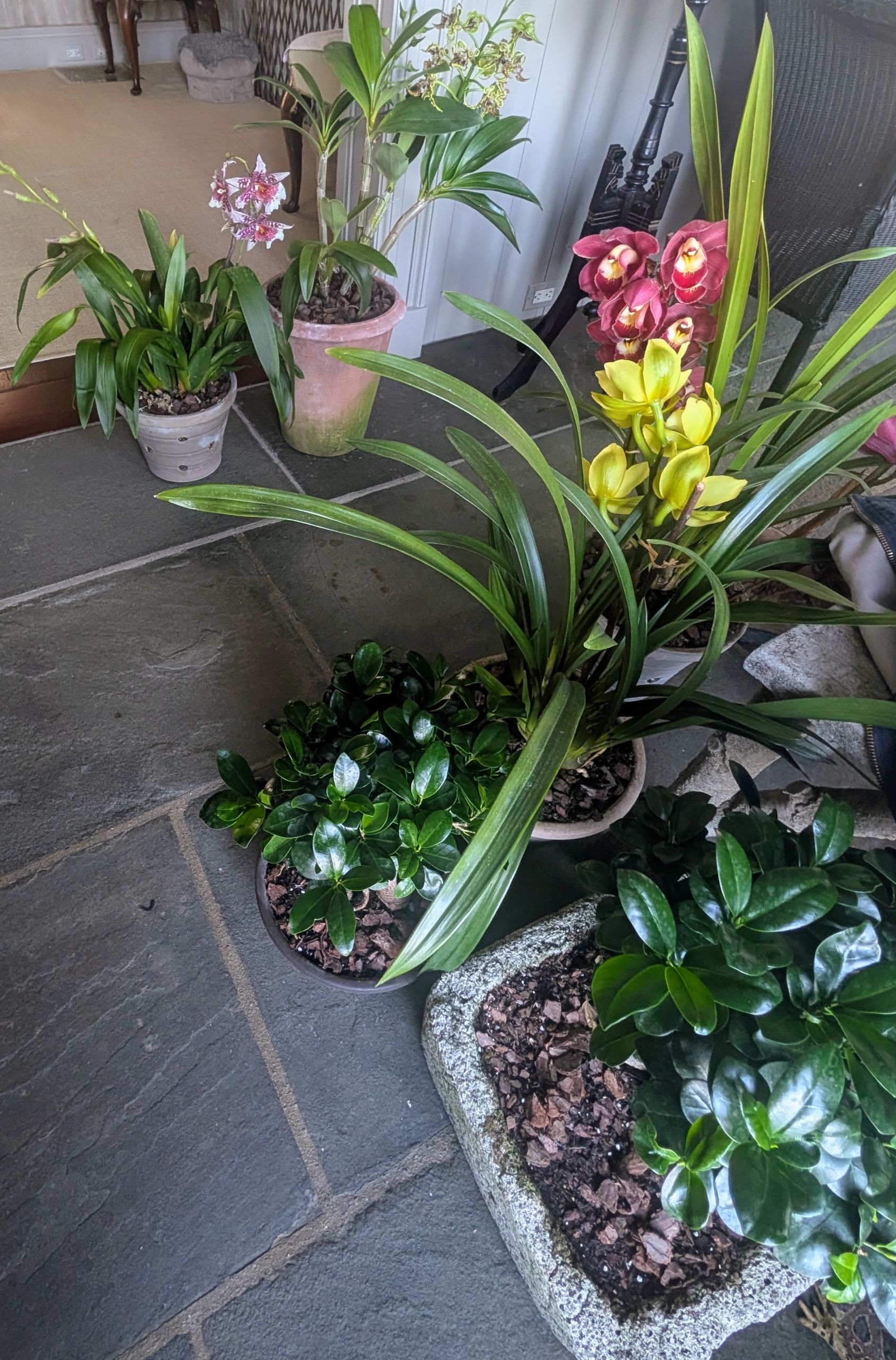
- Ryan brings the group of selected potted specimens in through my enclosed porch. Ryan selects those specimens that are blooming or looking especially lush. He also selects where they will be placed depending on size, light needs, and how many of each variety he brings inside.
-
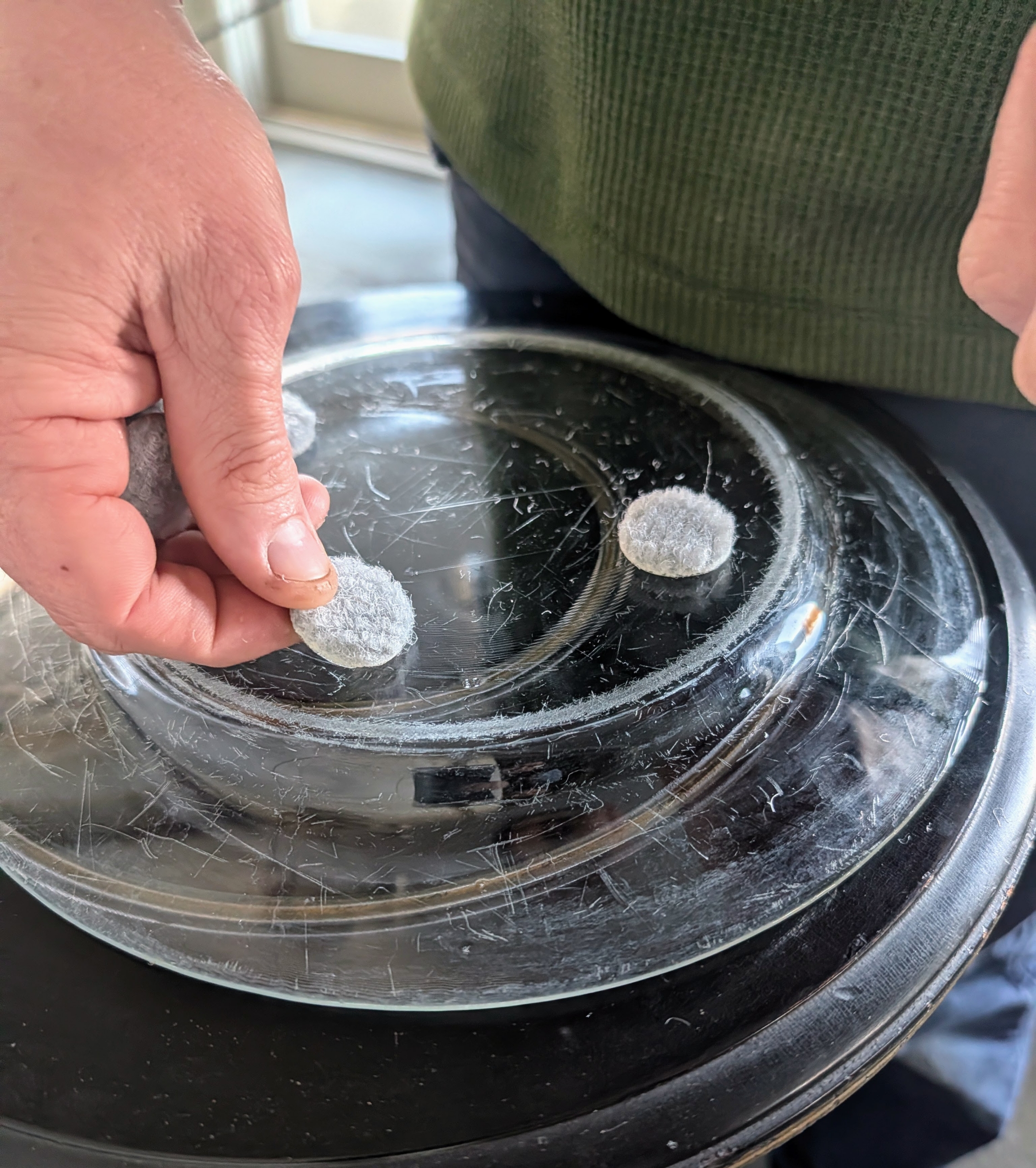
- I use glass, silver, or copper plates purchased from tag sales or antiques fairs, under the pots to catch any water. I find them more decorative than the clay saucers that come with the pots. Here, Ryan also puts furniture protectors on the bottom, so the plates do not scratch any furniture.
-
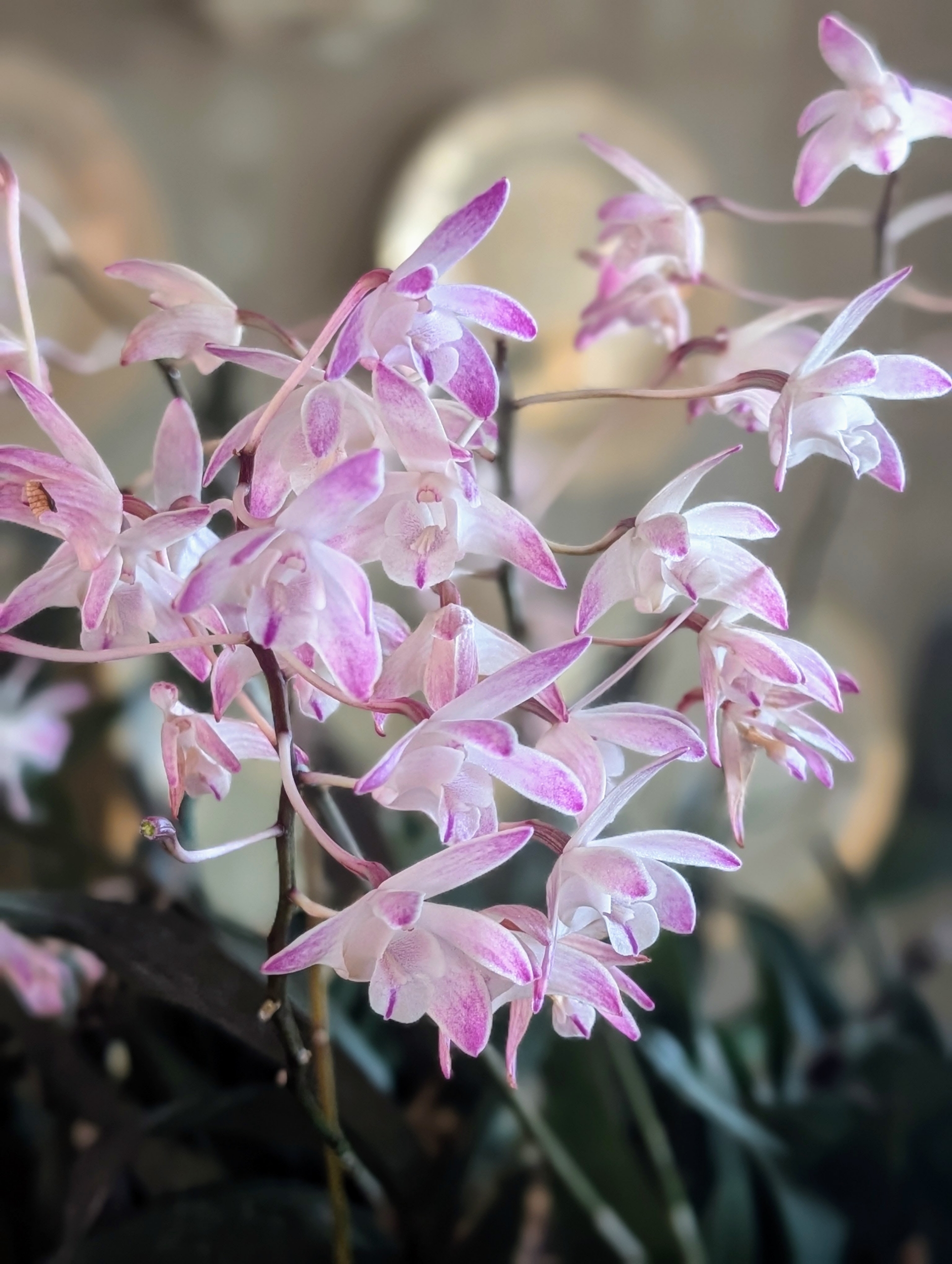
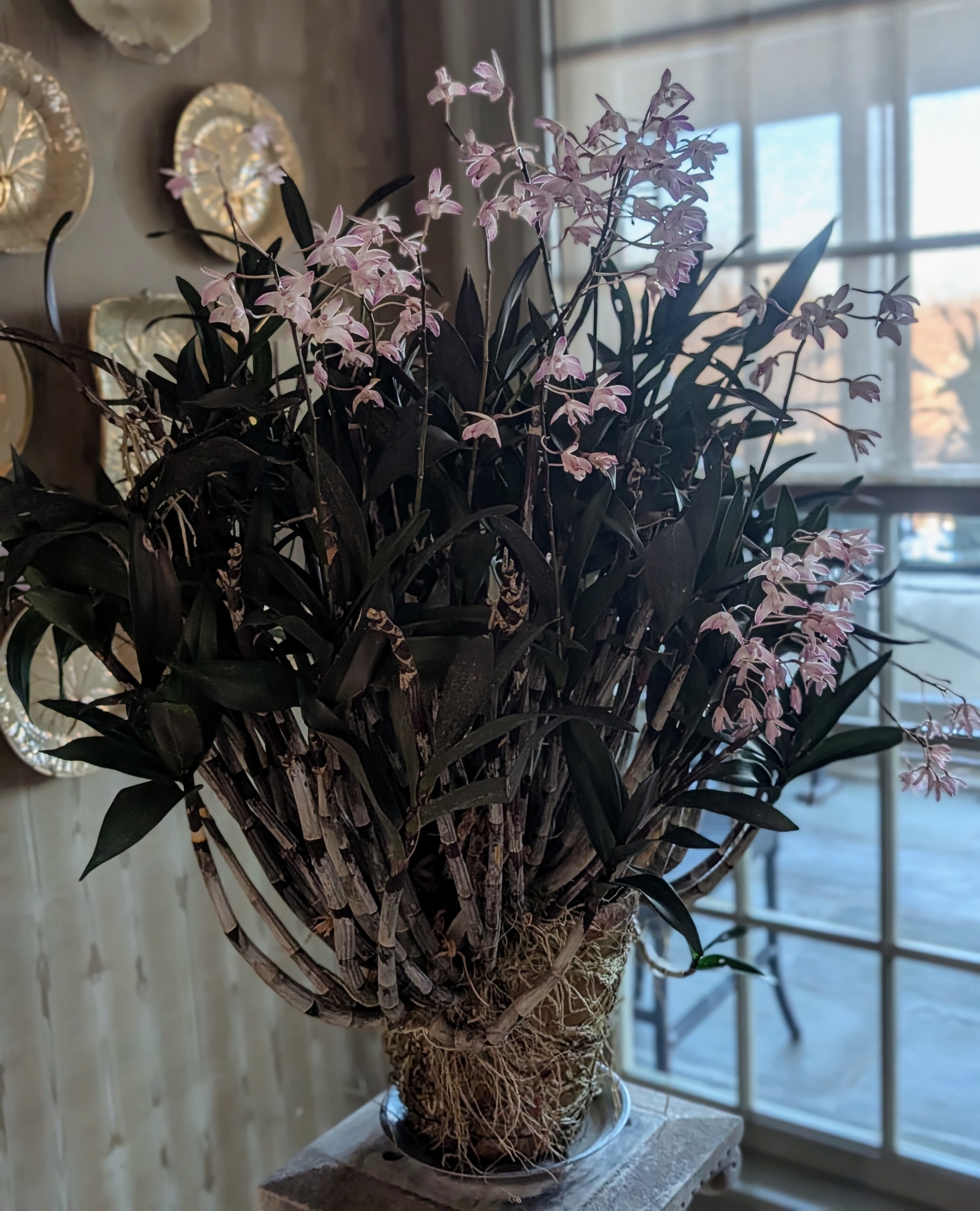
- Here is Ryan with a blooming Dendrobium orchid. All Dendrobiums are epiphytes, which means they grow on other plants. In nature, they grow on the branches of trees.

-
- Dendrobium flowers are bright, showy, and fragrant. Native to Southeast Asia, the genus Dendrobium is among the largest of all orchid groups.
-
- This Dedrobium is positioned on a strong stone pedestal where it can be seen when I walk through my sitting room.
-
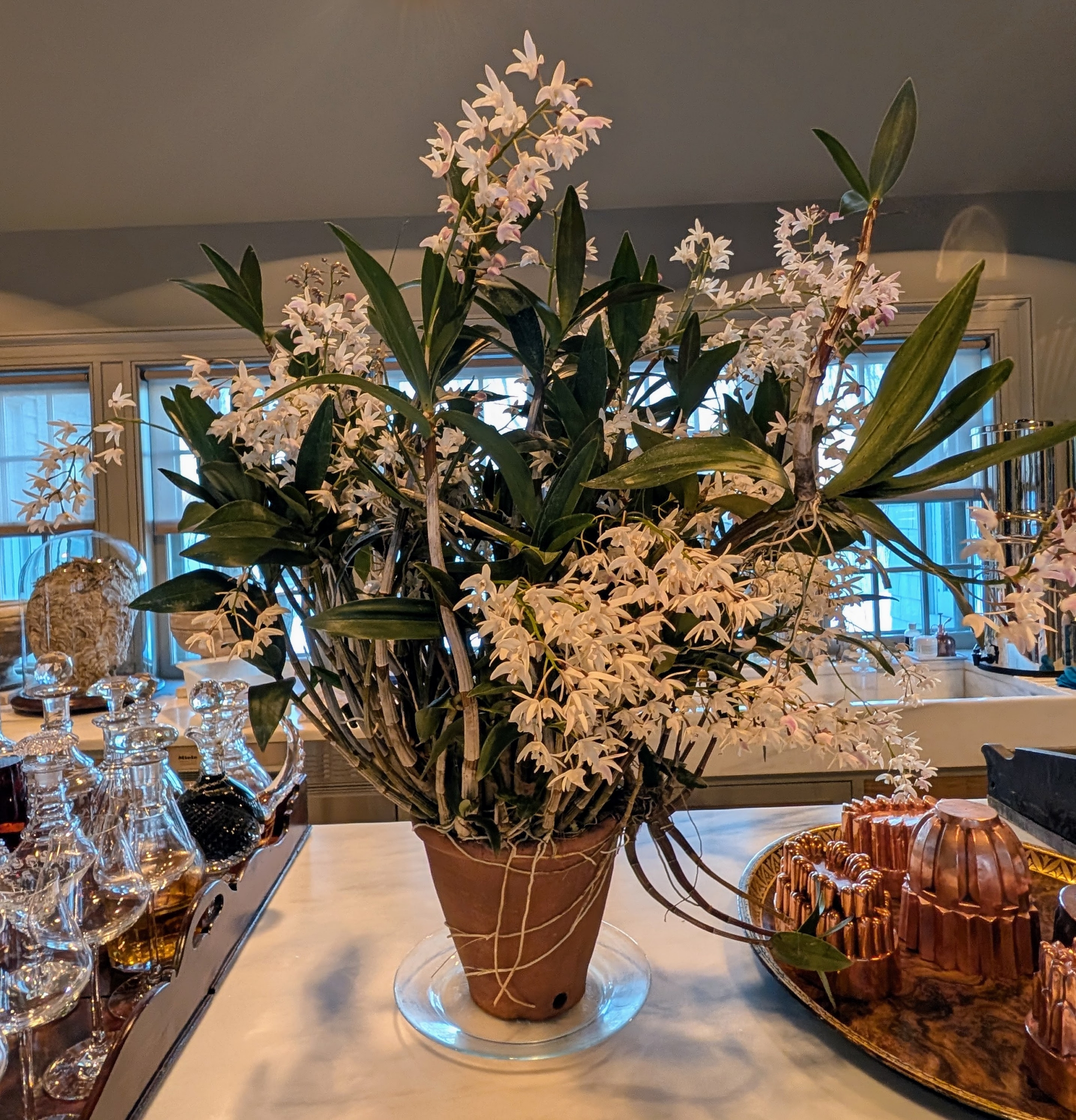
- This white Dendrobium is on my servery counter. The evergreen canes are topped by five inch long inflorescence, or cluster of flowers, each one producing four to eight blooms.
-
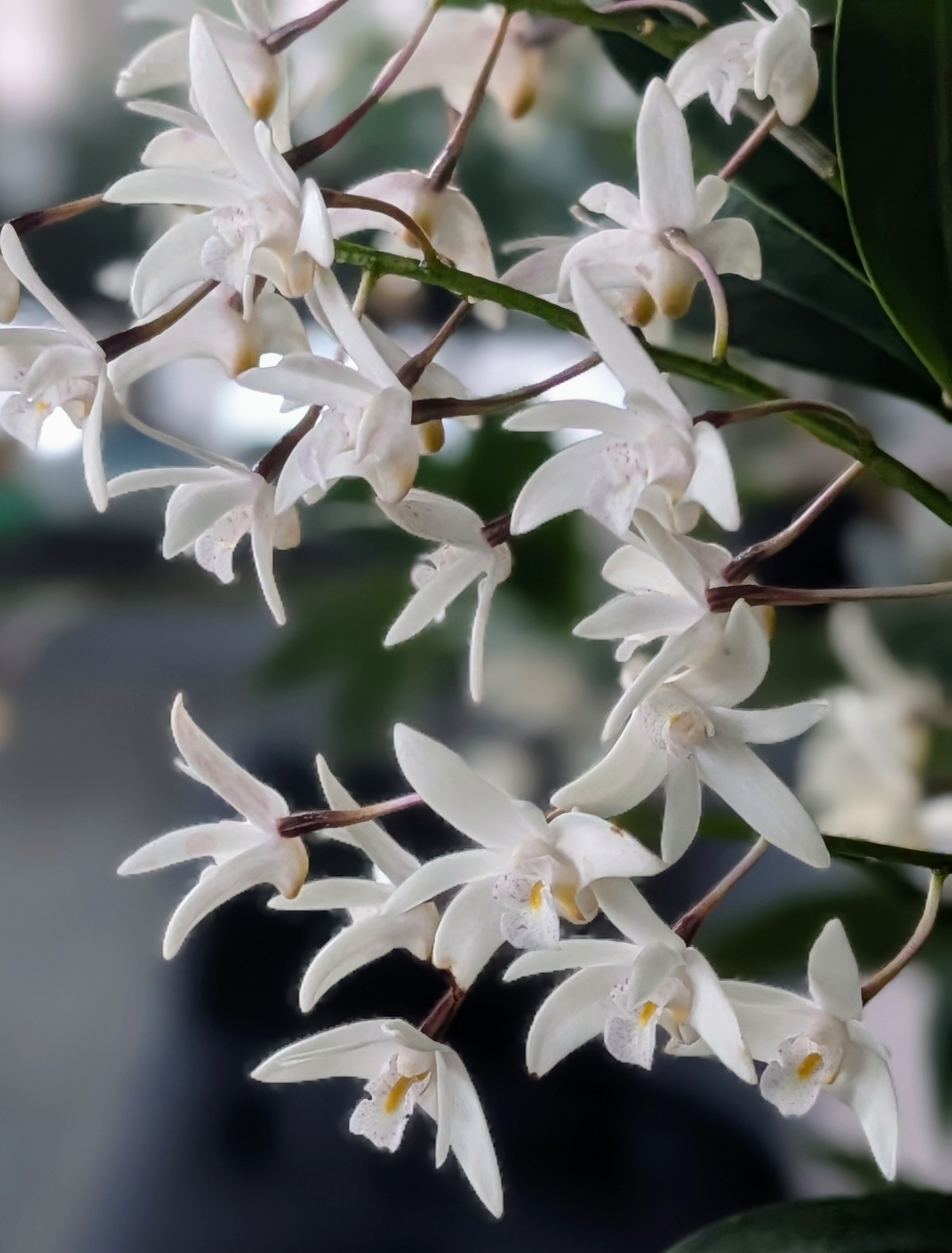
- Dendrobium flowers are smaller orchid blooms. They have a butterfly-like shape and are about three inches across.
-
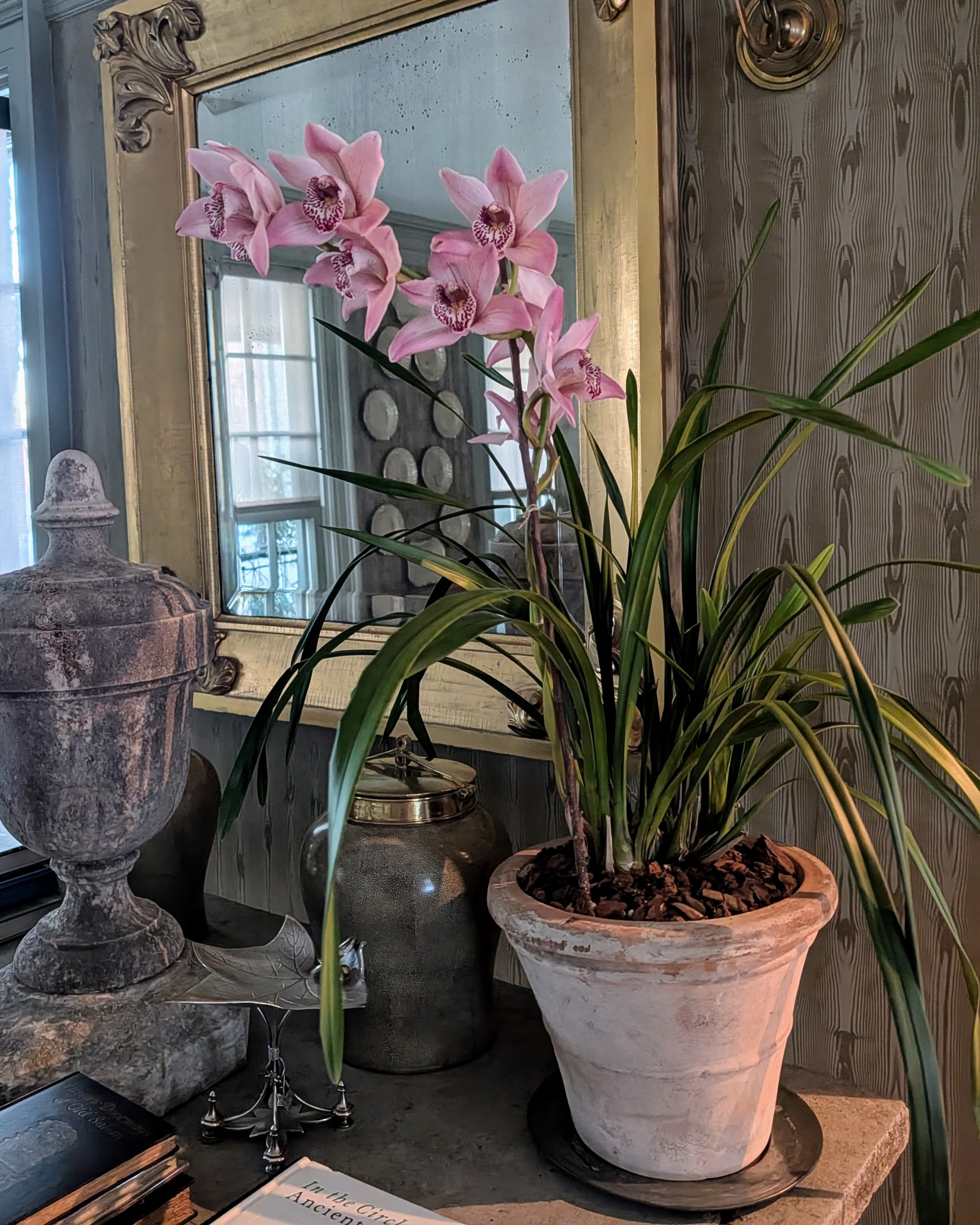
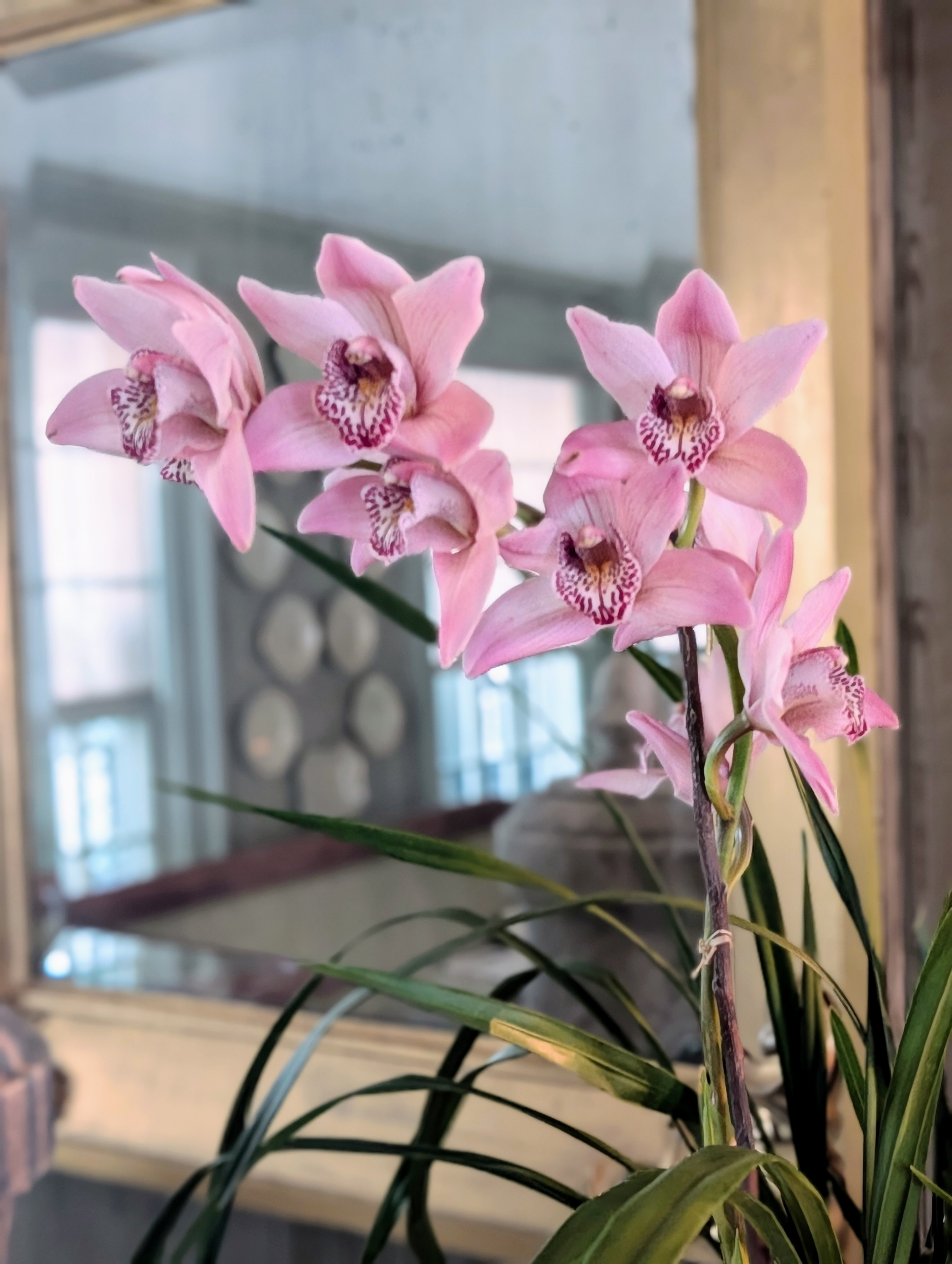
- Cymbidium orchids are prized for their sprays of long-lasting flowers. This is a Cymbidium hybrid – Cymbidium ‘Solana Star,’ Cymbidium Wood Wilson ‘White Knight,’ x Cymbidium Solana Rose ‘Nancy.’
-
- The flowers typically have three sepals and two petals each with a prominent three-lobed labellum making them appear “boat like.”
-
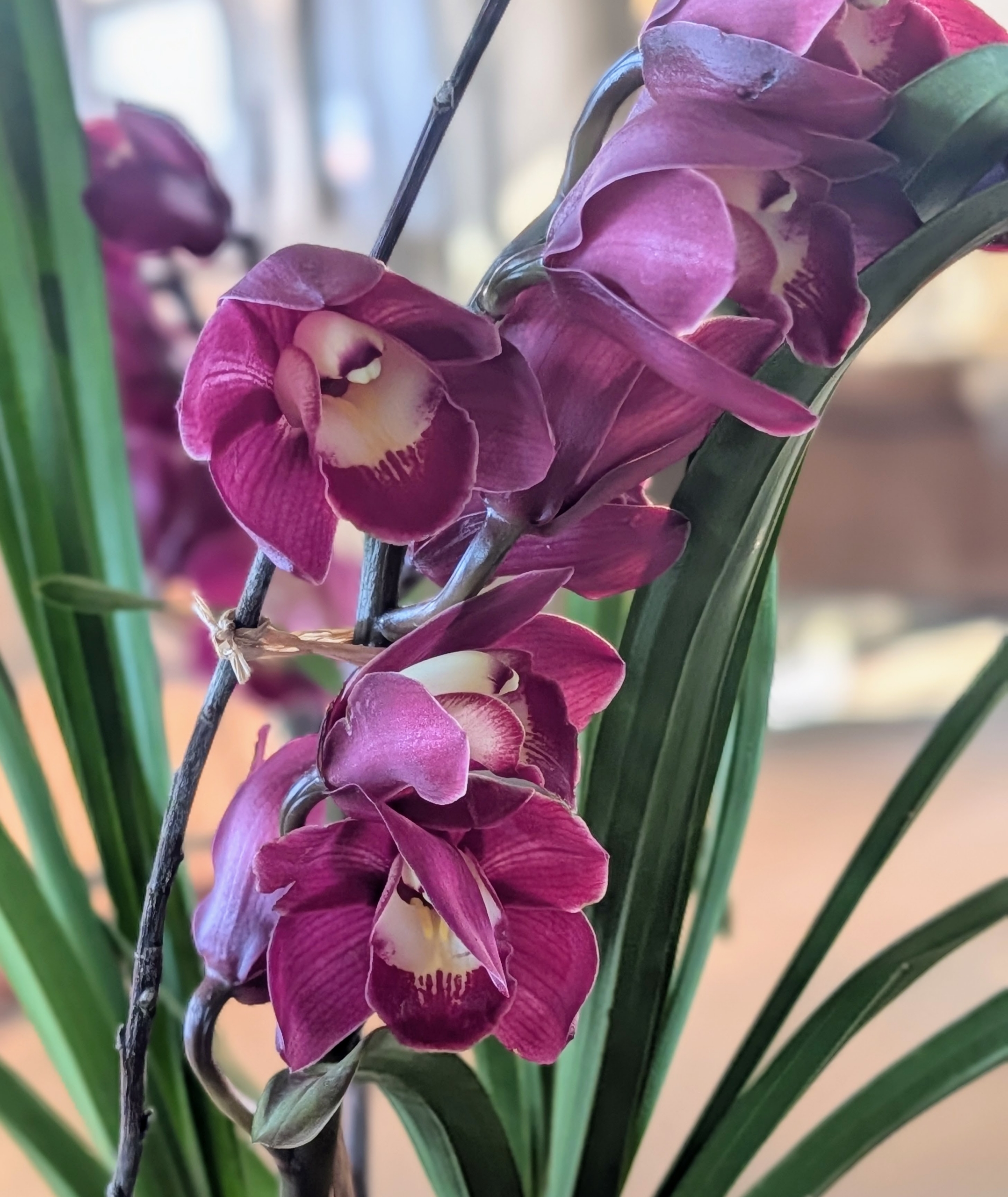
- When keeping orchids in the home, south and east-facing windows work best. When provided with a proper balance of light, humidity, and temperature, these plants will have healthy bright green leaves.
-
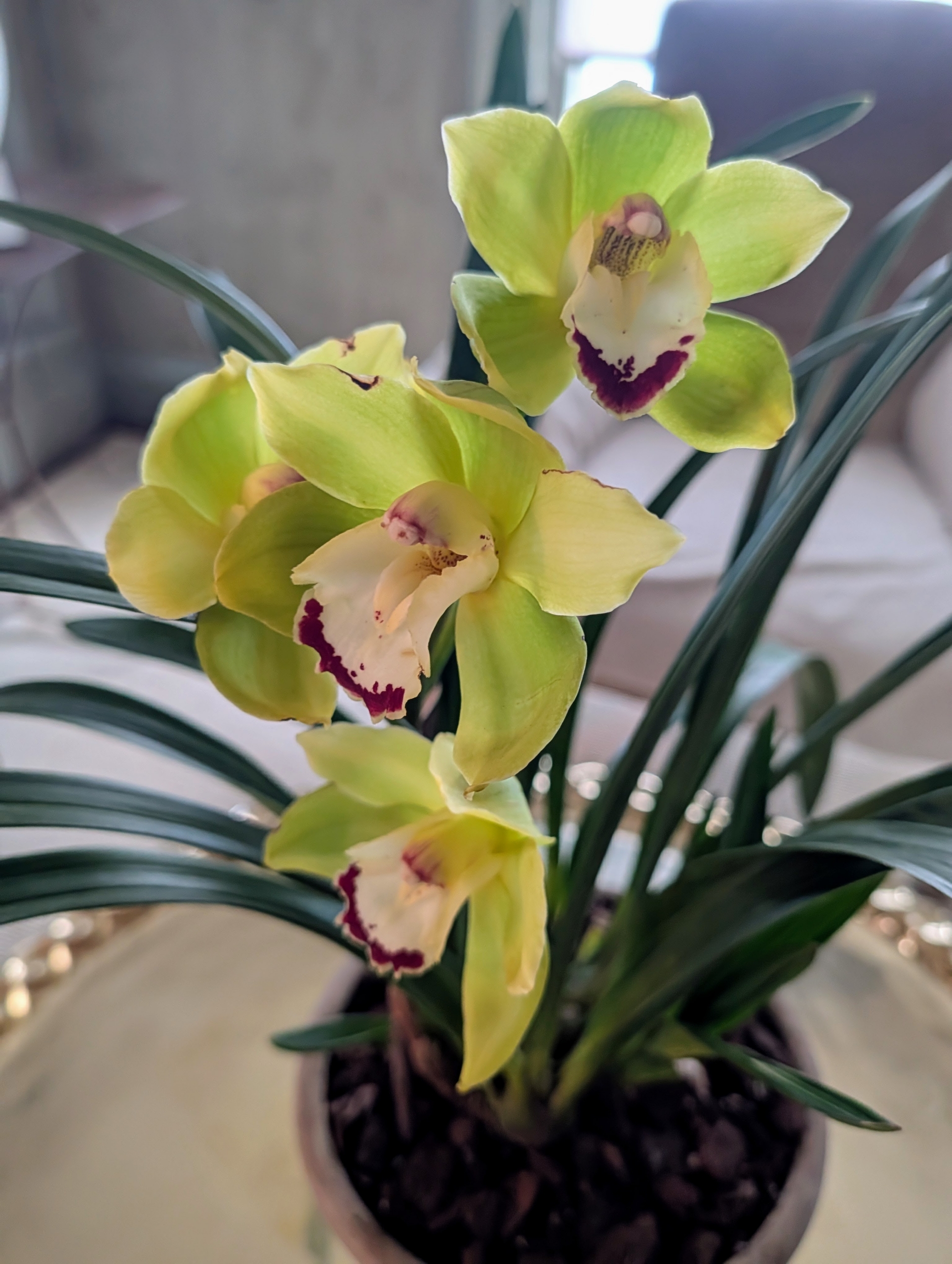
- I put this on a brass coffee table in my sitting room. It is Cymbidium ‘Jade.’
-
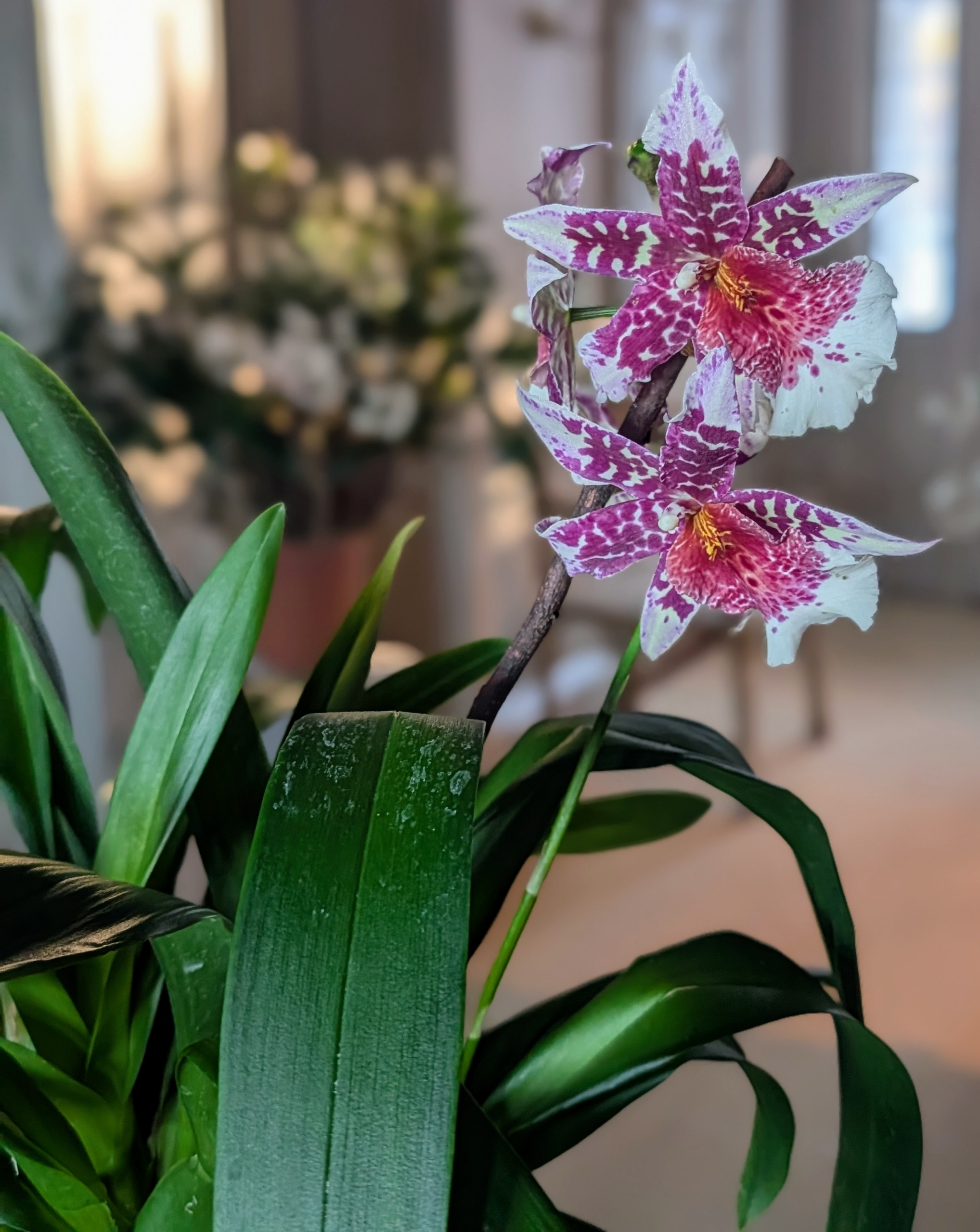
- Beallara Marfitch ‘Howard’s Dream’ AM/AOS is a stunning Oncidium orchid hybrid. It features striking psychedelic colored blooms in pink, purple and white. And, it can bloom twice a year when cared for properly.
-
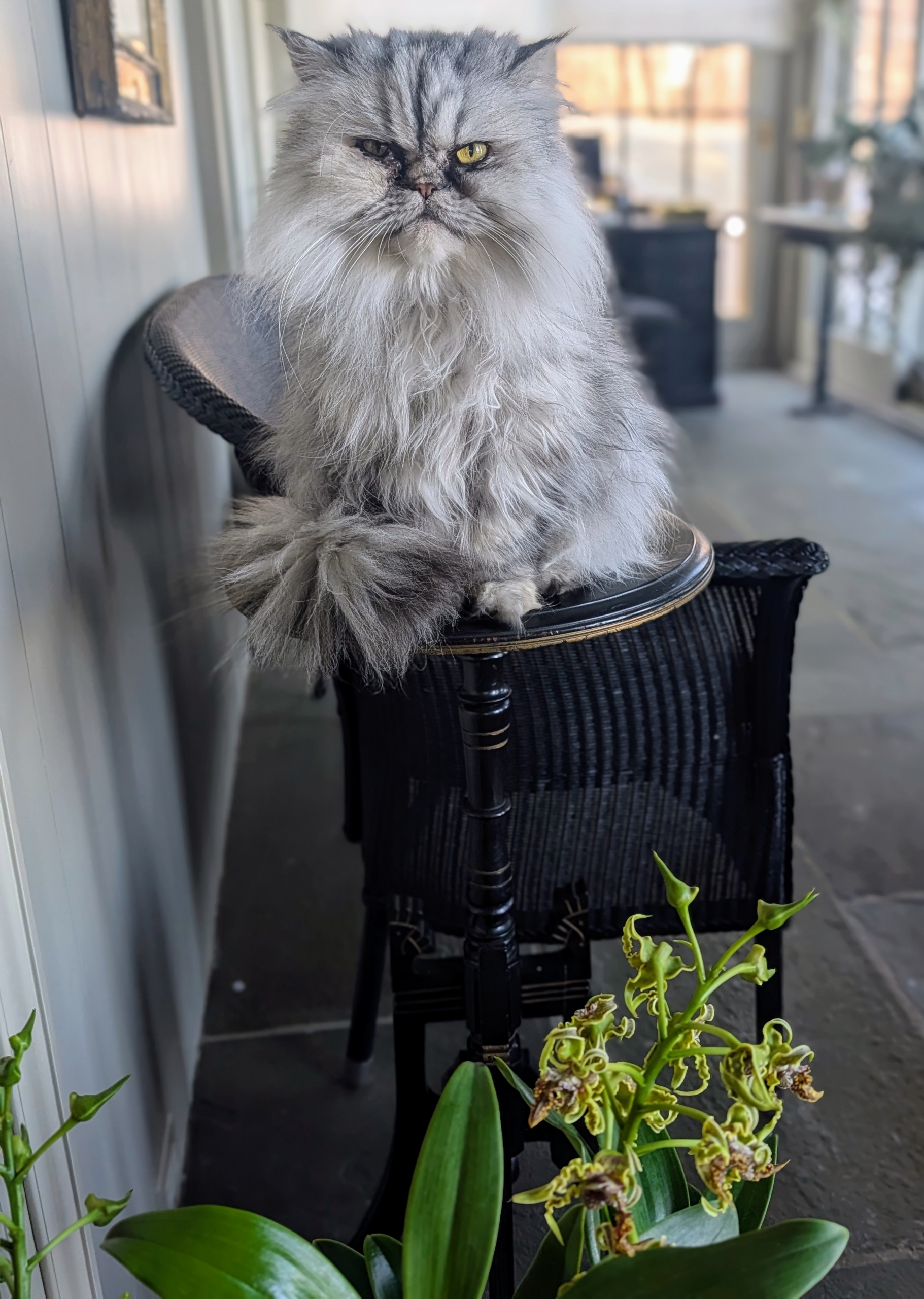
- Here is my silver shaded Persian, Magnolia. She enjoys lounging in my enclosed porch and watching the placement of every plant. Magnolia is one of four cats that live with me in my Winter House.
-
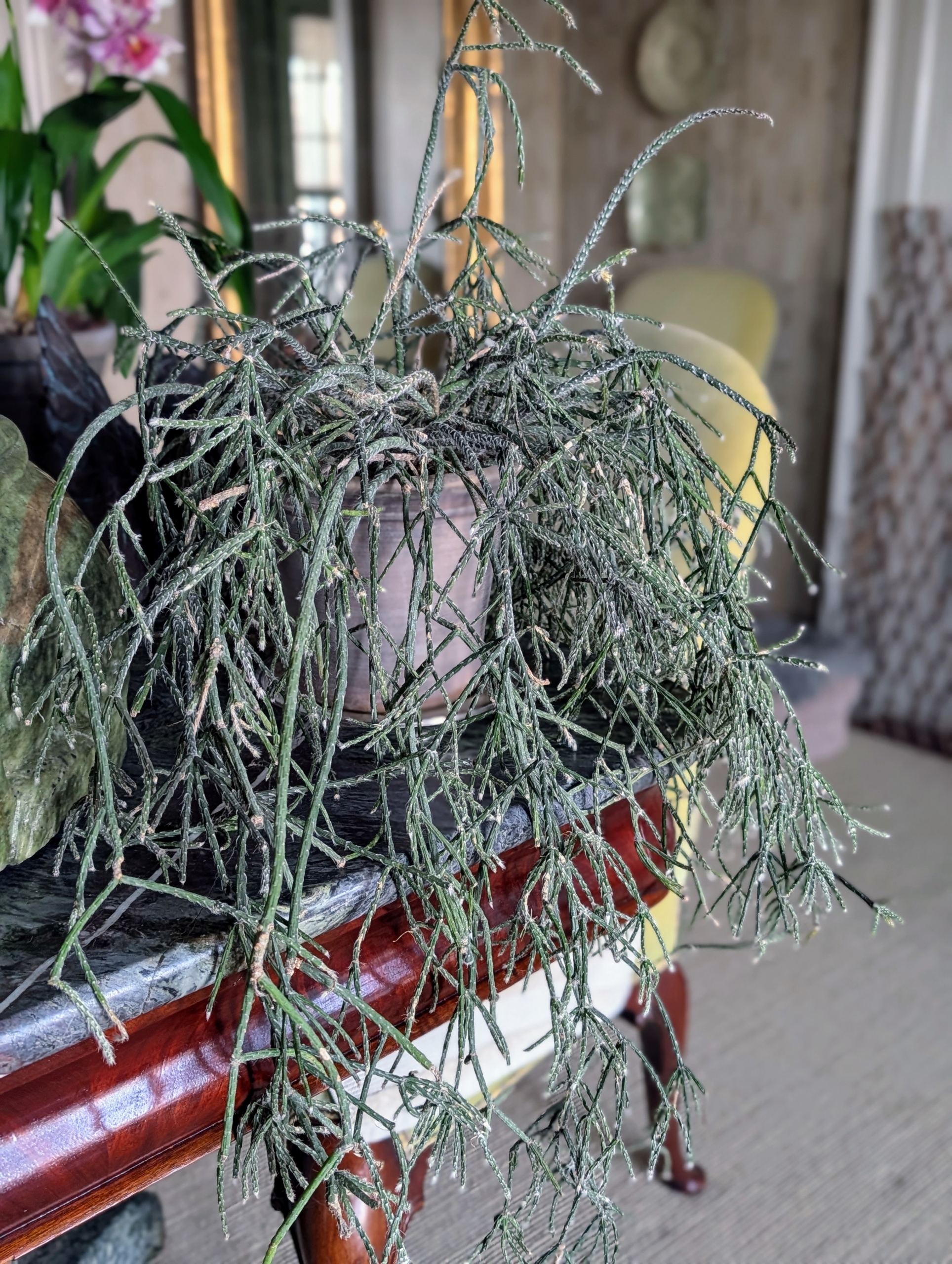
- This is a potted rhipsalis, native to the rainforests of South America, the Caribbean and Central America. Rhipsalis is a cacti genus with approximately 35 distinct species. I have many types of rhipsalis growing in my greenhouse. Rhipsalis specimens have long, trailing stems making them perfect choices as indoor plants on pedestals or tall tables.
-
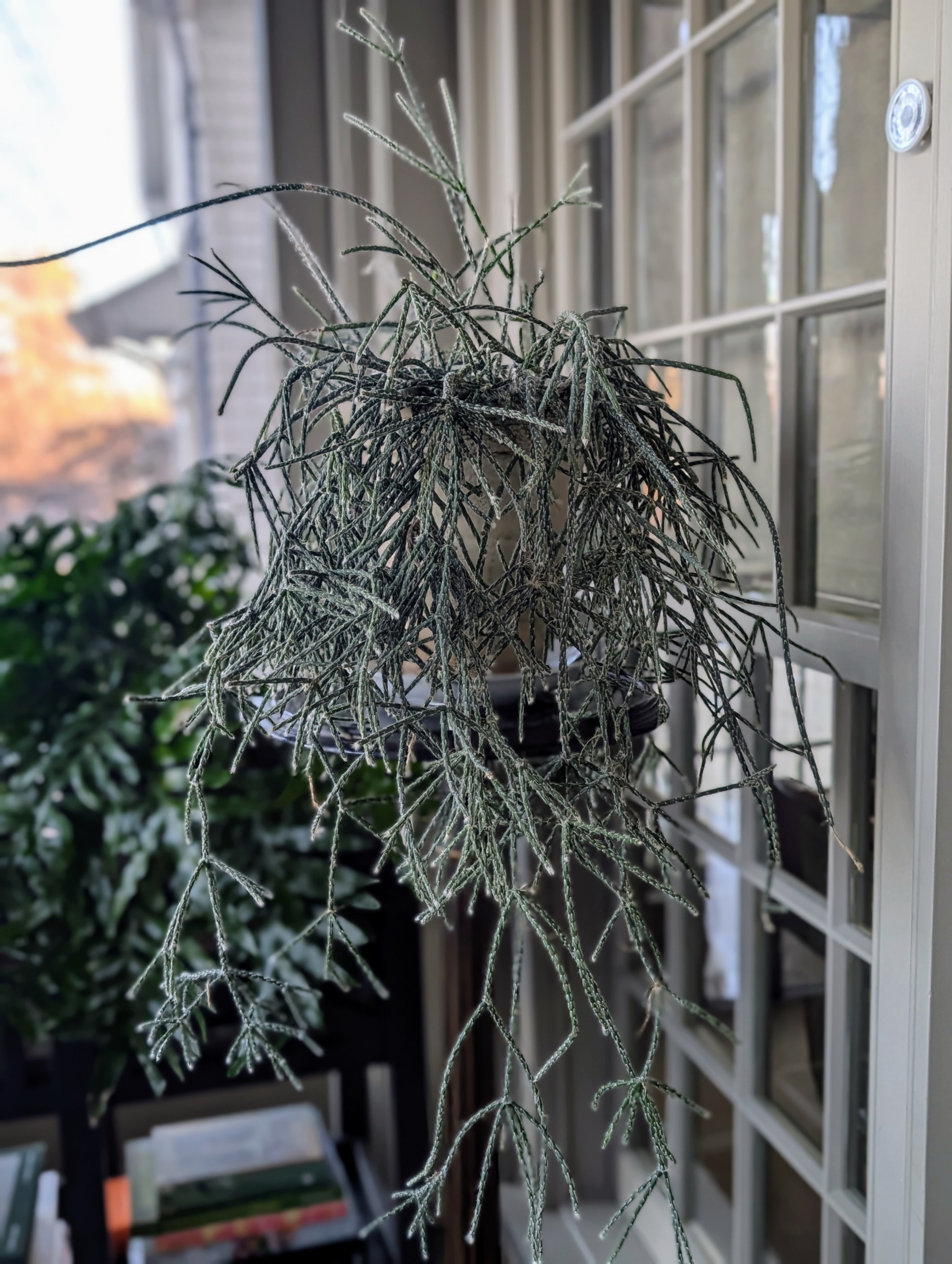
- Also known as chain cactus or mistletoe cactus, the thread-like succulent stems are narrow, green and can grow several feet long.
-
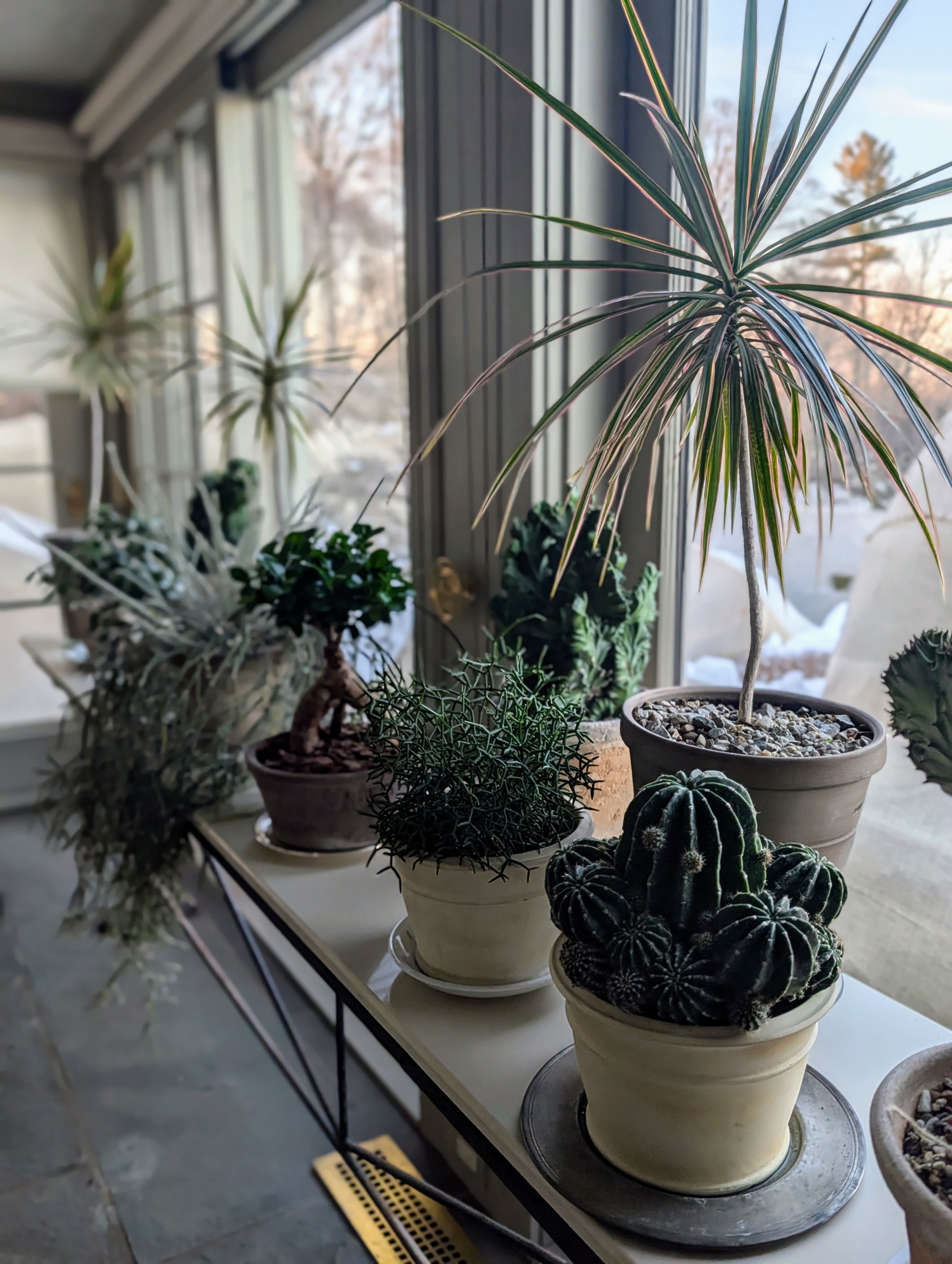
- My porch is a lovely space for displaying houseplants. The floor to ceiling windows allow lots of light and the plants surround my desk, where I can enjoy them while writing or while attending remote meetings.
-
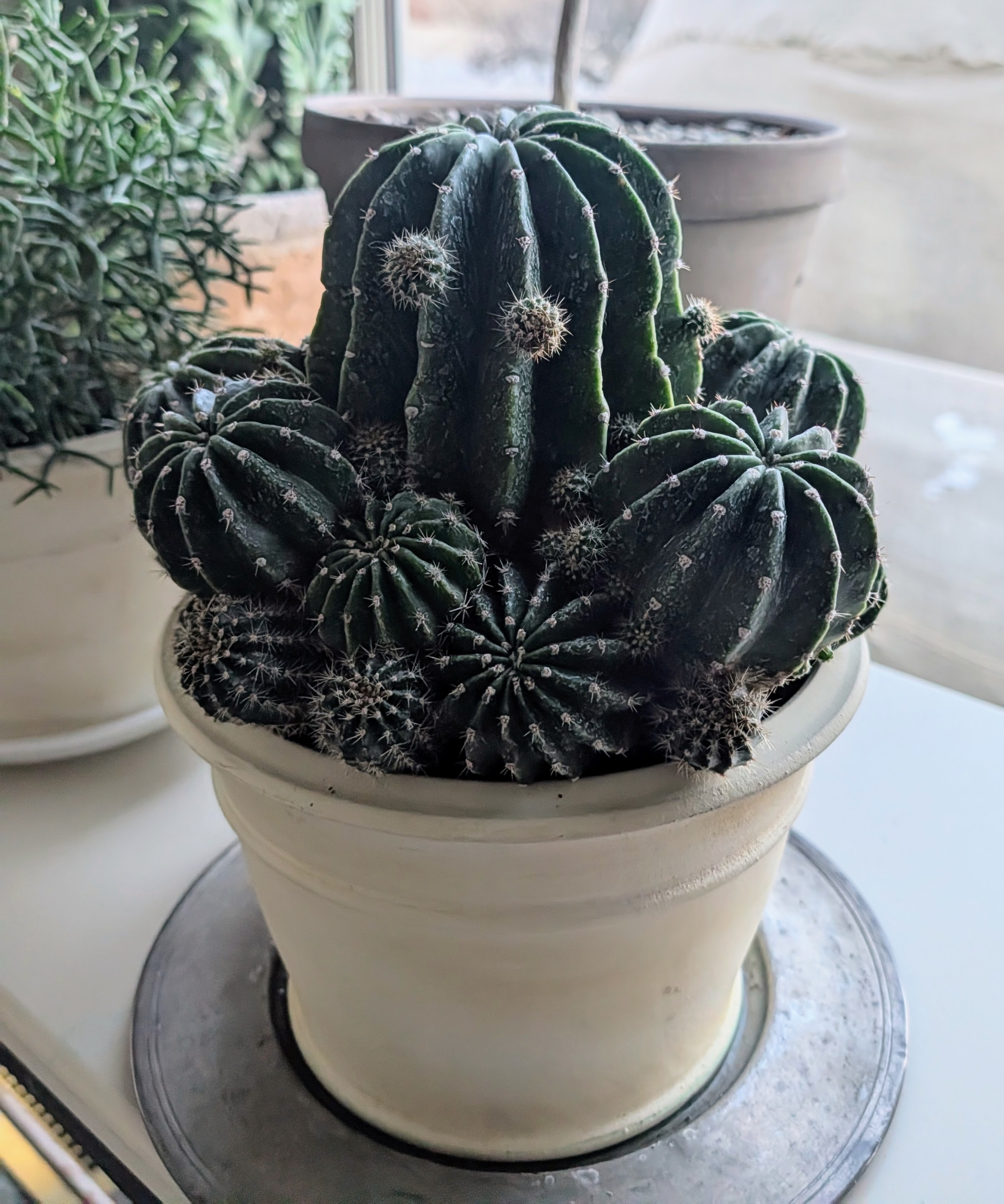
- If you like growing plants, but don’t really have a lot of time to care for them, consider growing succulents. Succulents, which includes the cactus family, require very little maintenance. These plants are able to survive prolonged drought because they store moisture in their fleshy stems, roots, and leaves.
-
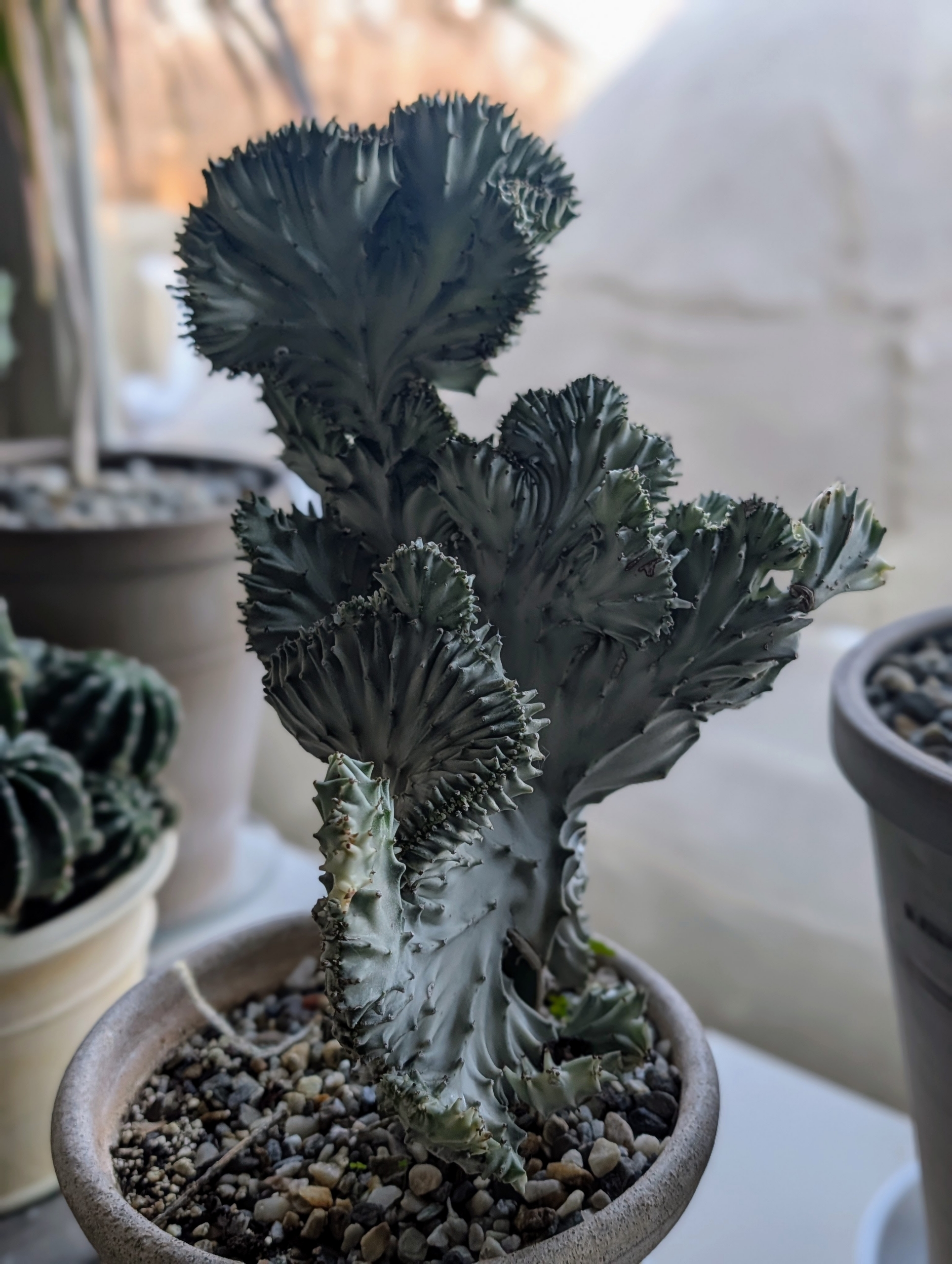
- This Euphorbia lactea is a cactus-like succulent known for its interesting shape and spiny ridges.
-
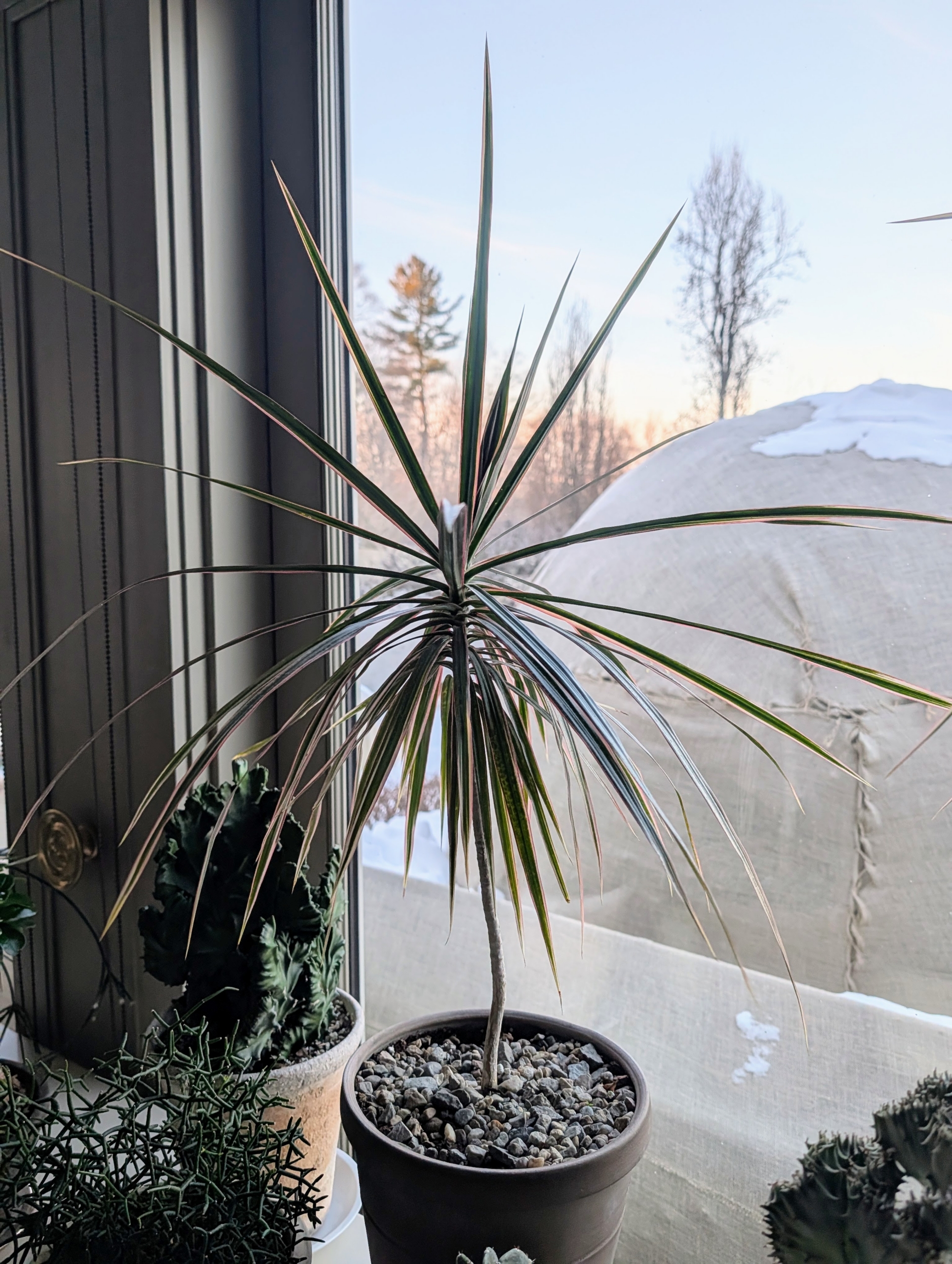
- Dracaena’s narrow foliage may be completely green or may include stripes or edges of green, cream, red, or yellow.
-
- And my beautiful Lilium, my brown Persian longhaired cat. Always be sure any plants displayed inside are safe around pets. Fortunately, my pets are not attracted to any plants or flowers. I hope you can enjoy some beautiful plants in your home this winter.

 Martha Pins


 Martha Tweets

