

April Blooms
We're expecting temperatures in the 50s today with possible frost tonight - very different from the recent warm weather we had when so many of the spring flowers were blooming.
Last week, temperatures reached the high 80s. Every day, something new came to life with vibrant spring color - Fritillaria, Leucojum, Muscari, the tulips, the Mertensia with their charming blue flowers that open from pink-tinged buds, the large blooms of the Magnolias, and of course, lots and lots of daffodils. I hope they all make it through the cold snap.
Here are some photos, enjoy.
-

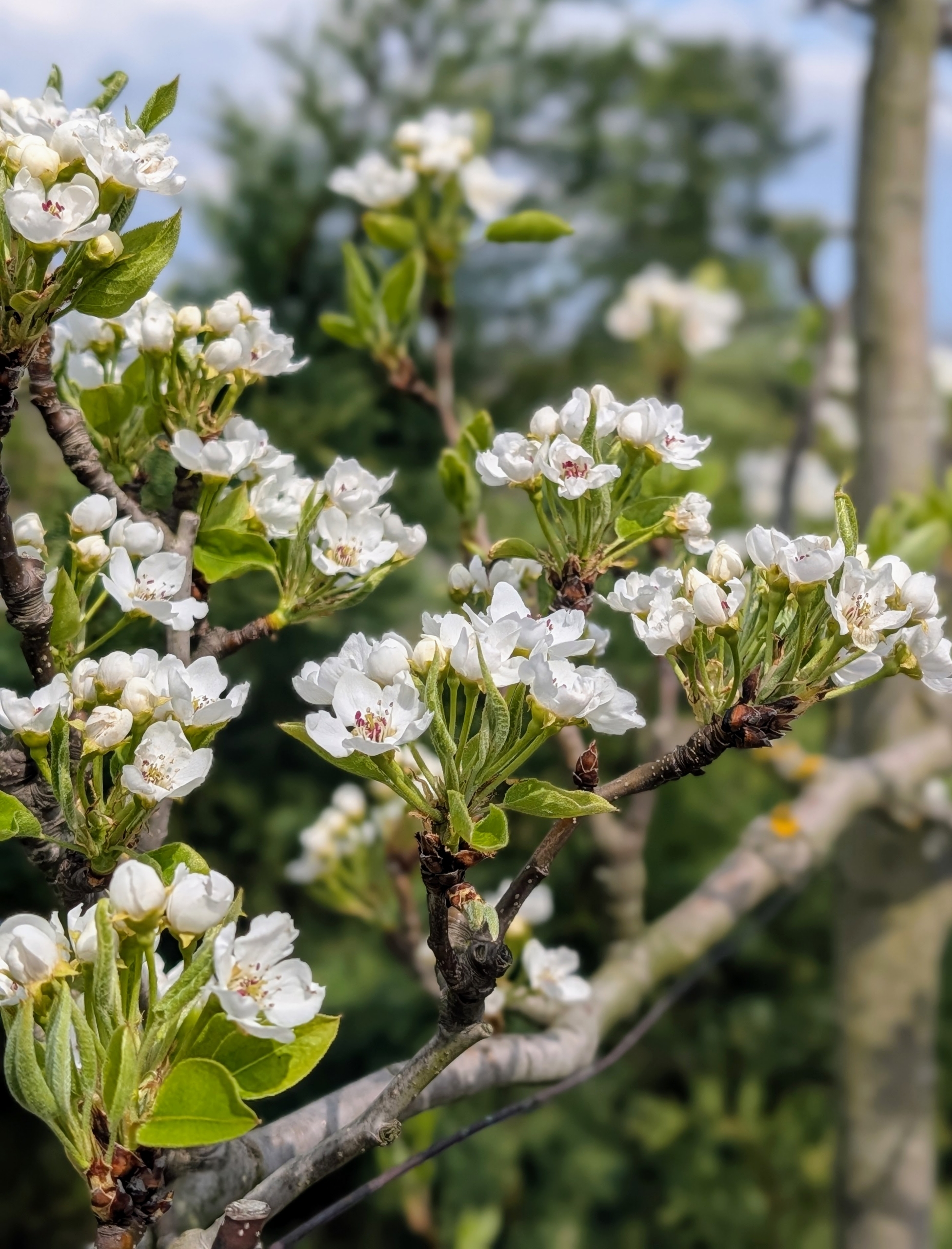
- Fruiting pear trees bloom from April to May, with stunning white flowers. These espaliered Asian pear trees are hard to miss outside my stable. Here I have six ‘Shinseiki’ and four ‘Nijisseiki’ pear trees.
-
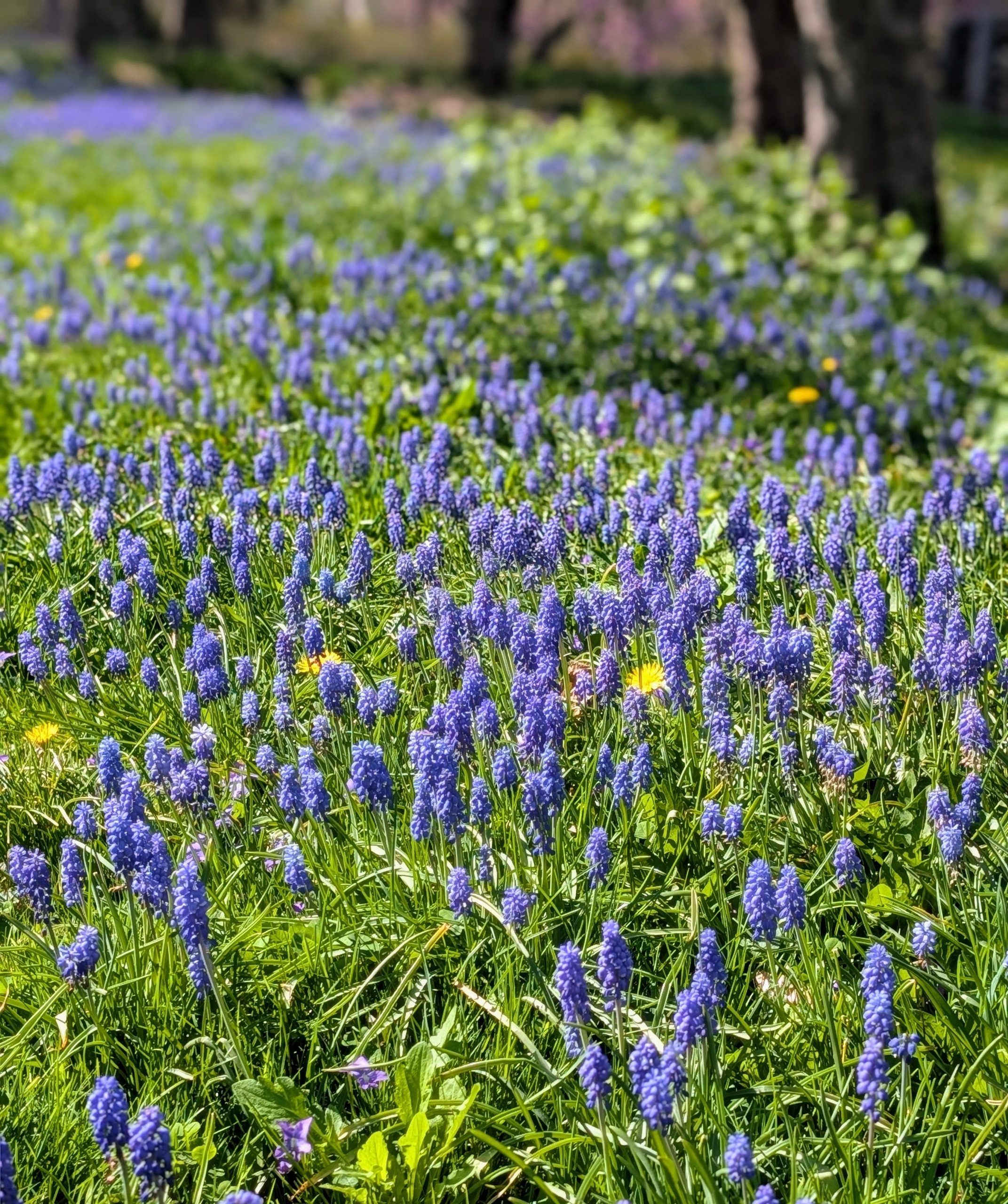
- Swaths of Muscari are blooming under my old apple trees. Muscari is a genus of perennial bulbous plants native to Eurasia that produce spikes of dense, most commonly blue, urn-shaped flowers that look like bunches of grapes in spring.
-
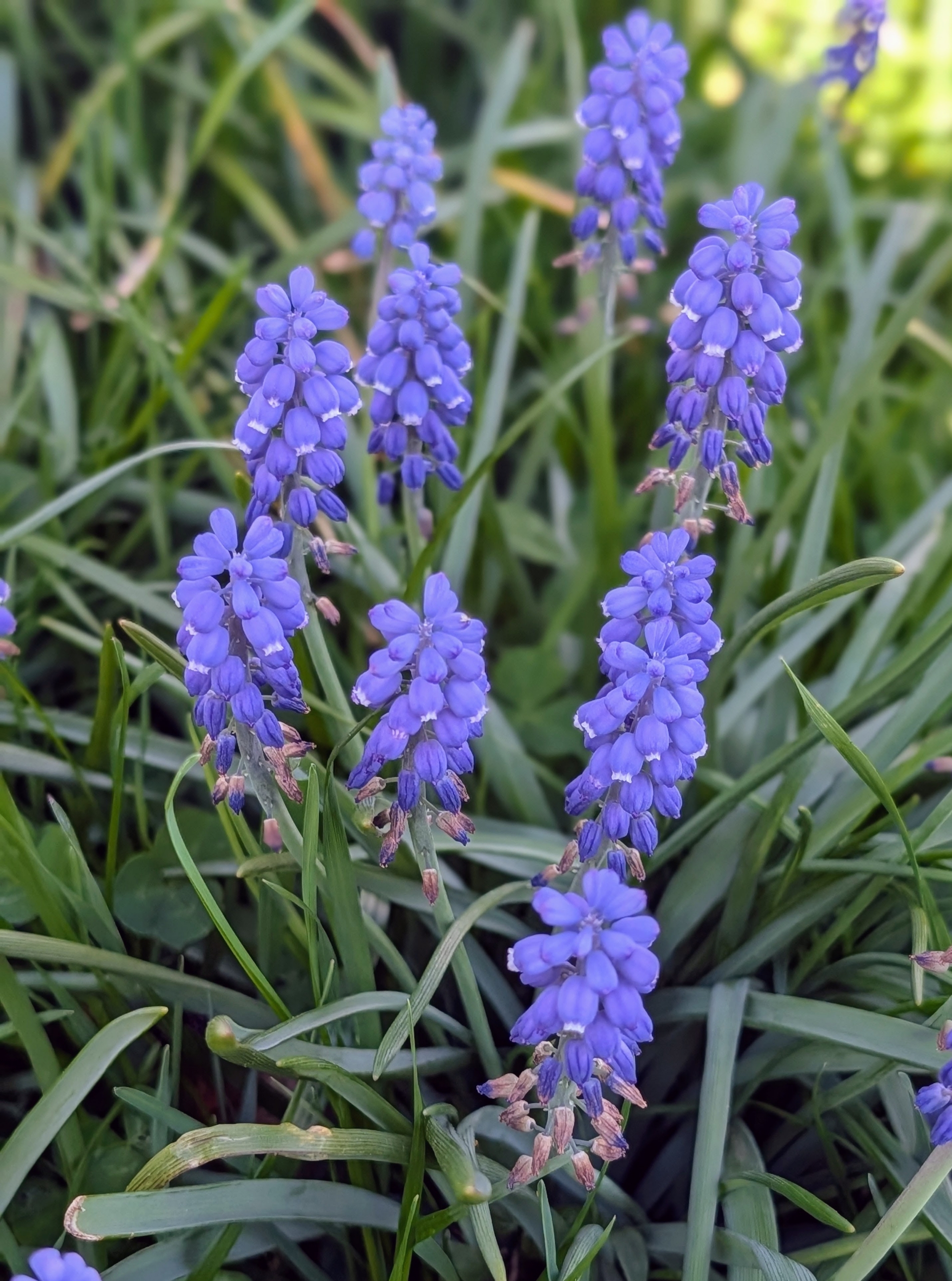
- Here they are up close. Muscari is also known by its common name for the genus – grape hyacinth.
-
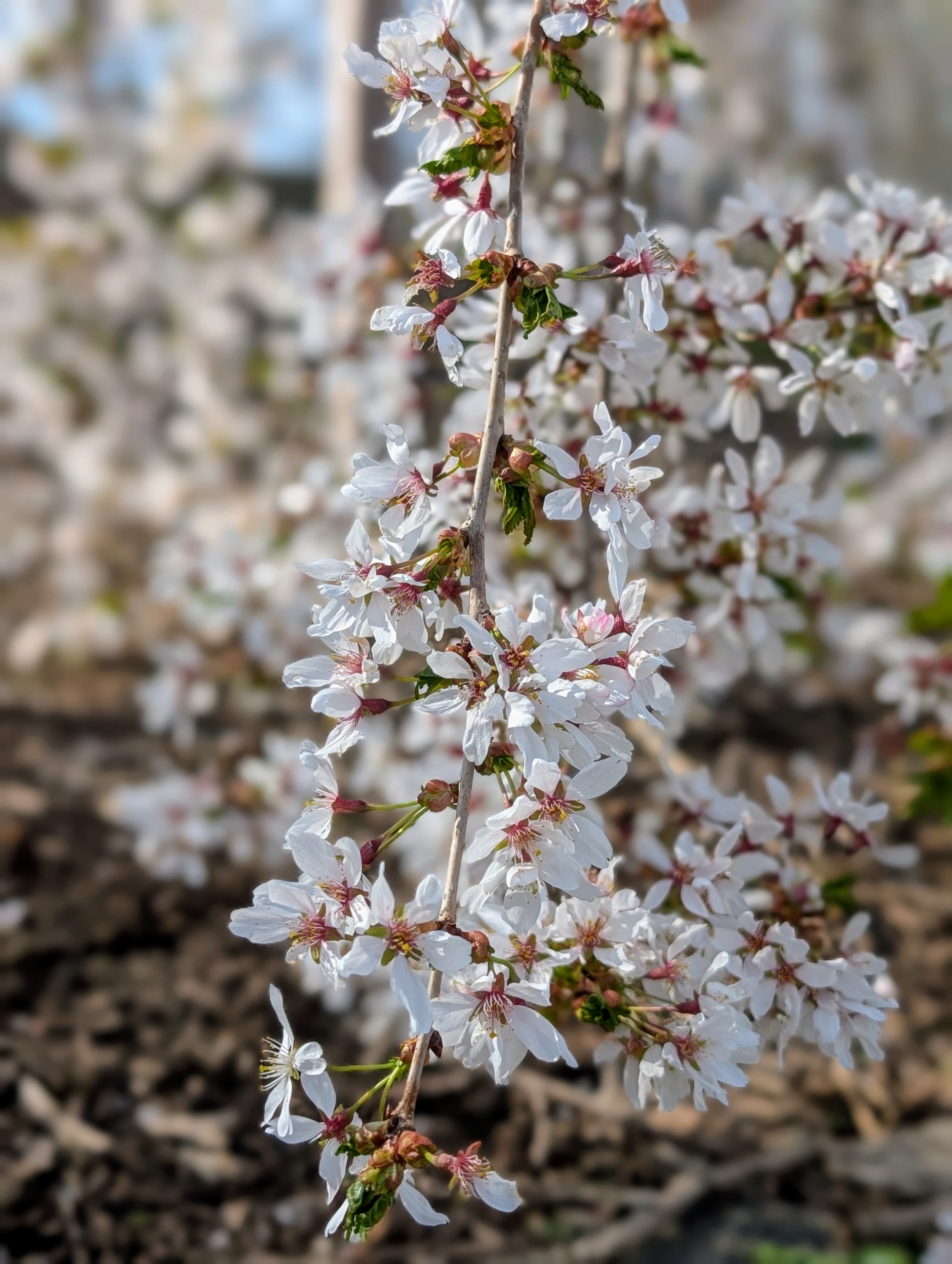
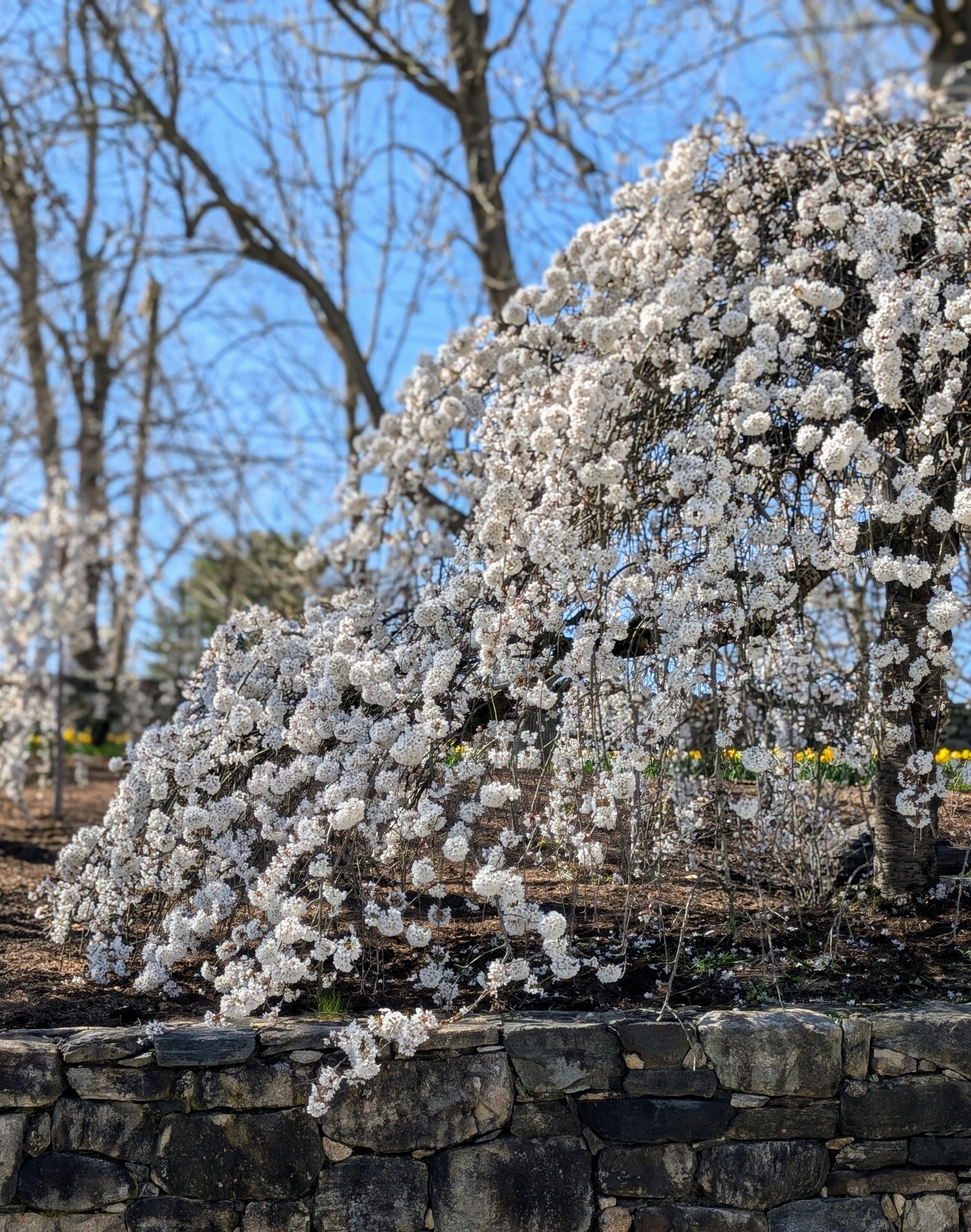
- These are the flowers of a weeping cherry tree with its cascading branches. This is one of several outside my stable. They only bloom for a short while. These trees are eye-catchers when guests are lucky enough to see them filled with white flowers.
-
- When in bloom, weeping cherry flowers attract many butterflies and hummingbirds.
-
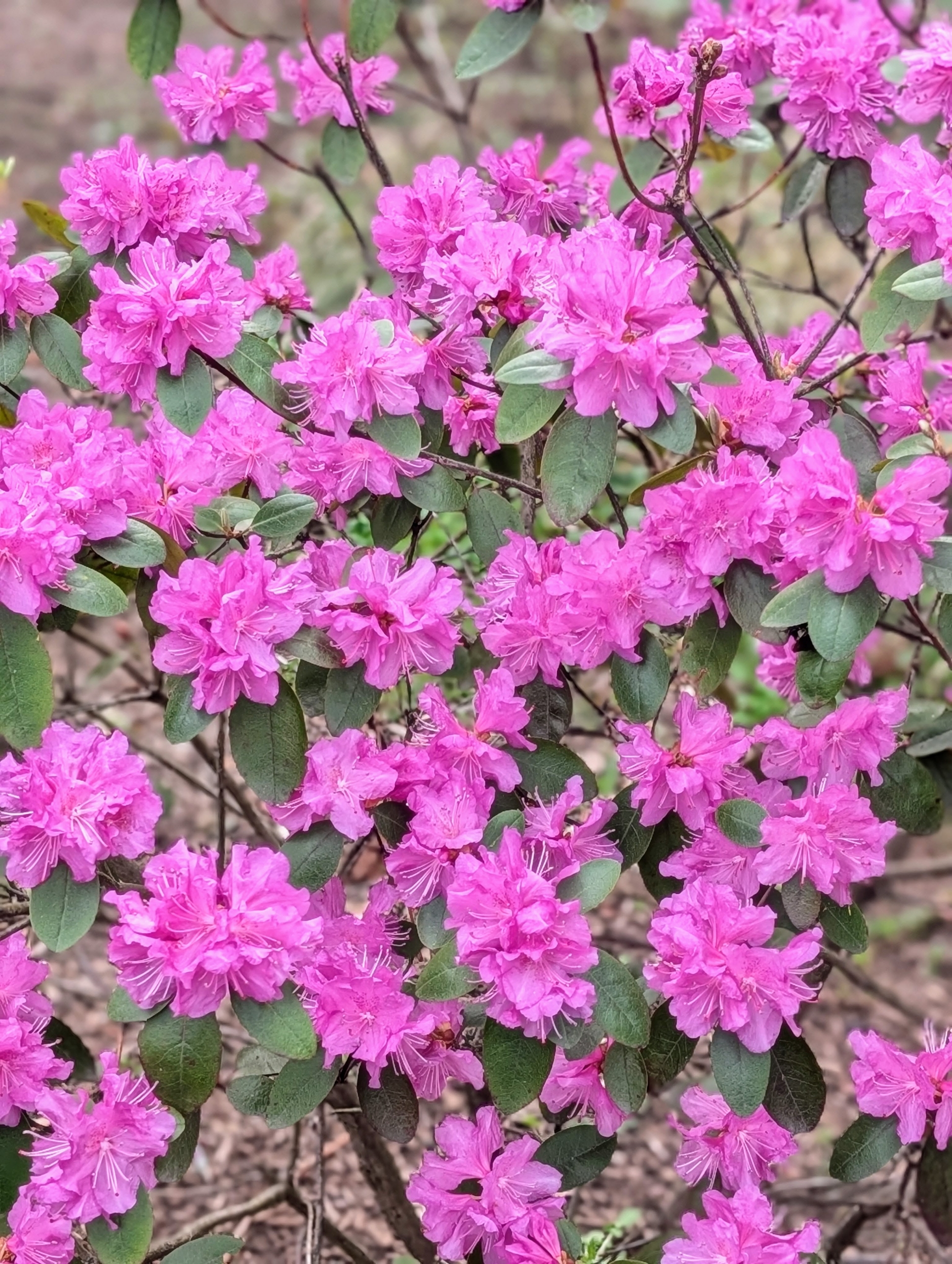
- A handful of azaleas along one side of my farm are also blooming. Of all the shrubs that flower in spring, azaleas provide some of the most brilliant displays. I have hundreds planted outside my Summer House and down the carriage road to the stable.
-
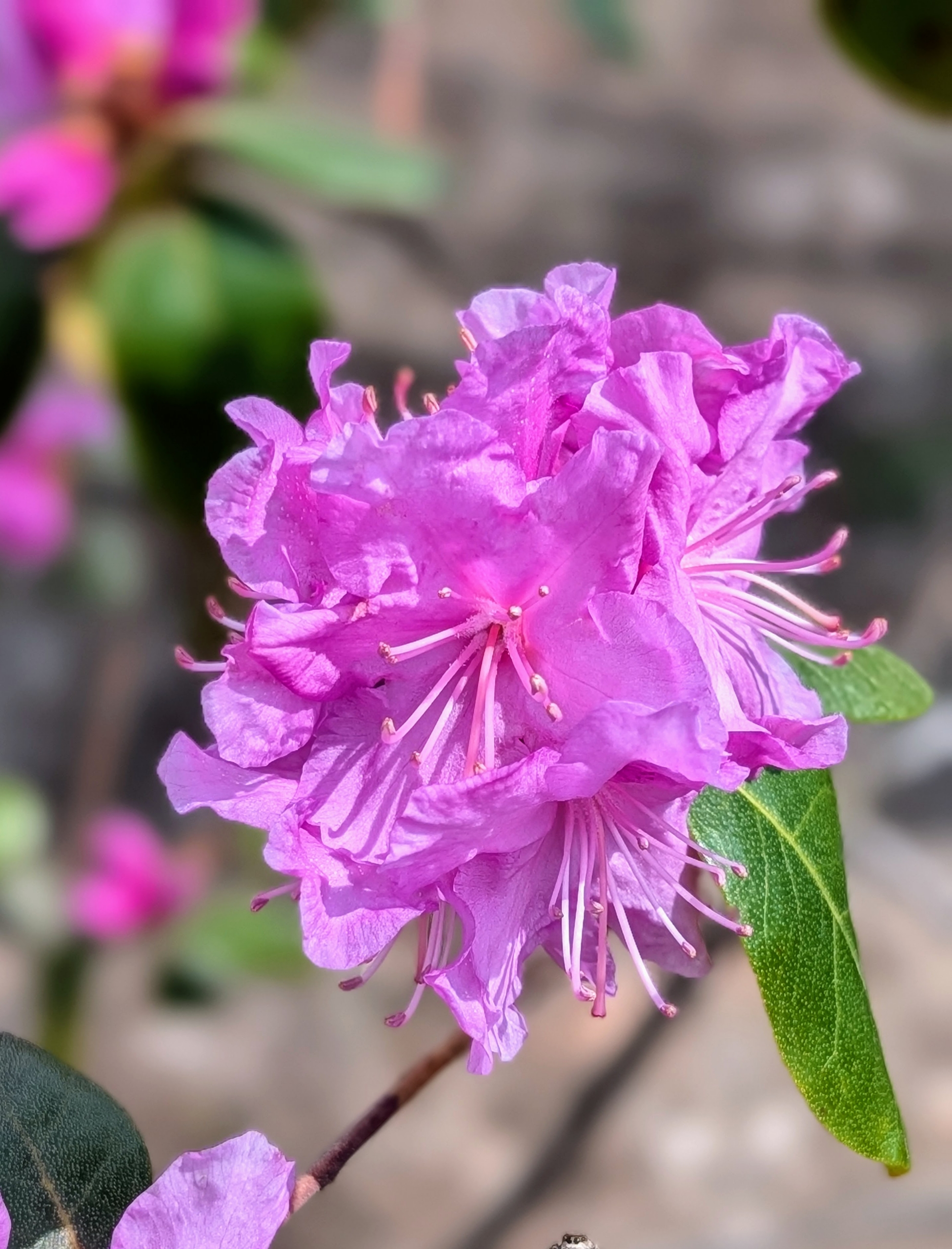
- Azaleas are generally healthy, easy to grow plants. Some azaleas bloom as early as March, but most bloom in April and May with blossoms lasting several weeks.
-
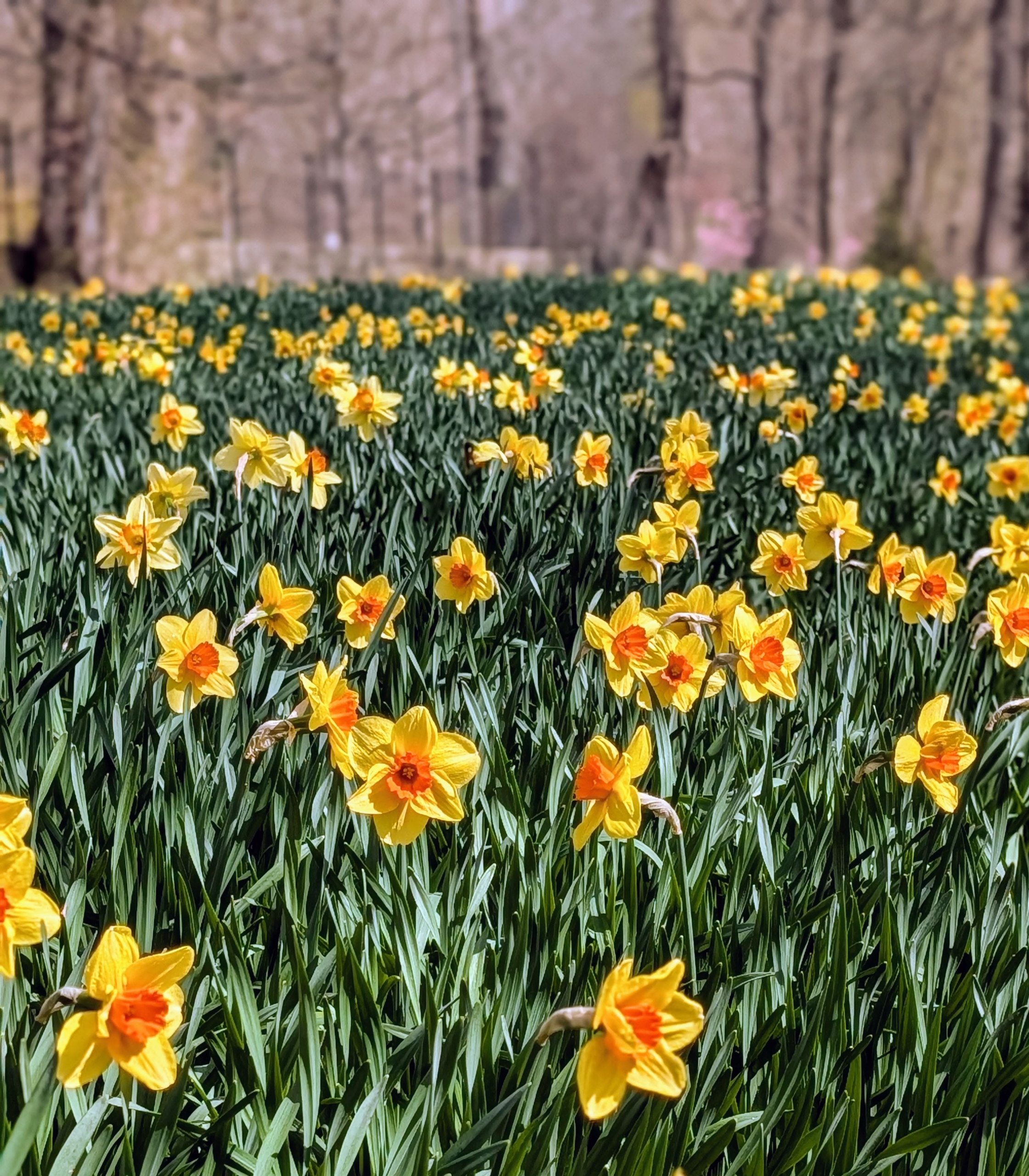
- My long daffodil border is broken up into various groupings – different varieties, different shapes and sizes, and different blooming times. This provides a longer splash of color through the season. More and more pop up every day.
-
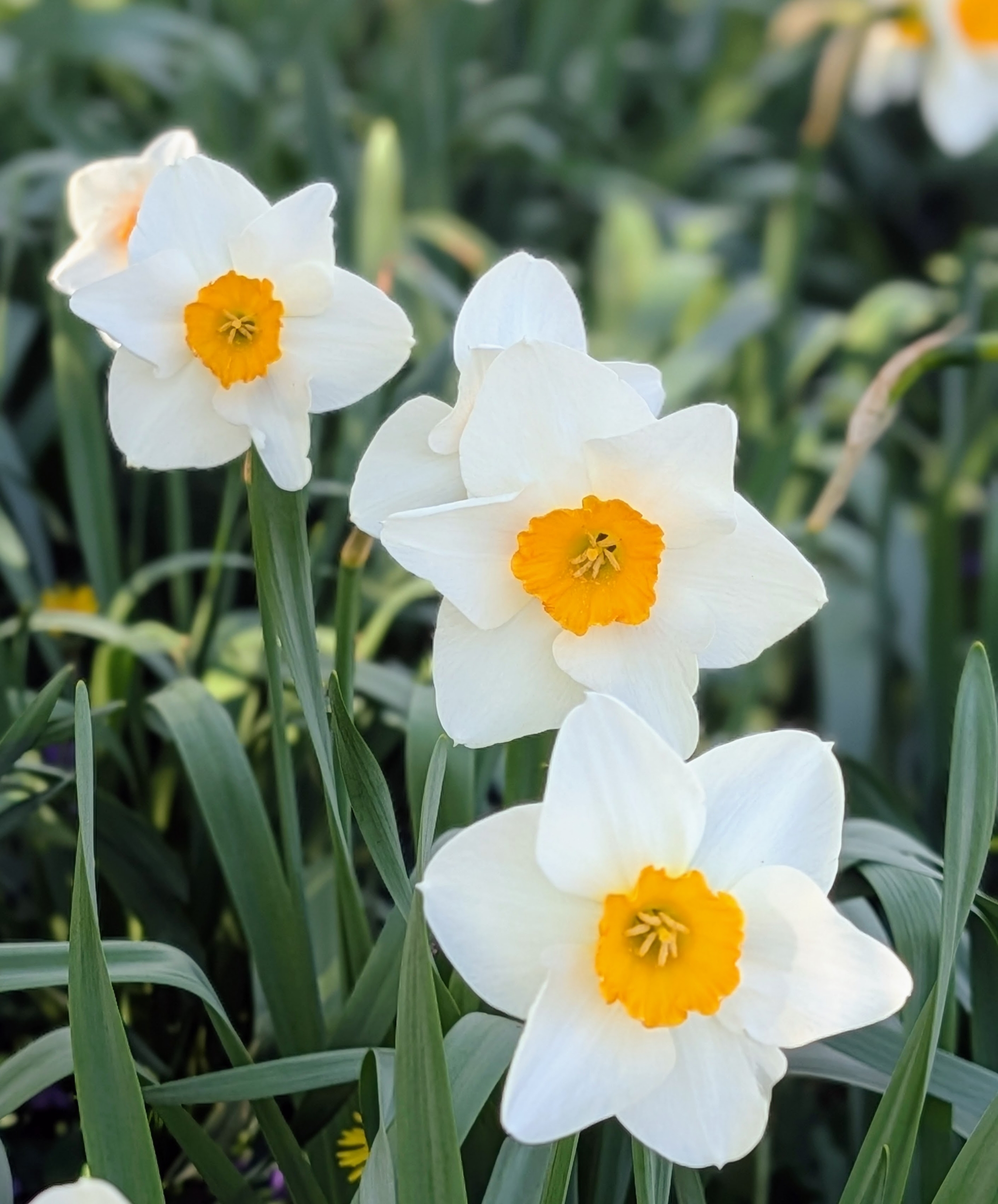
- The flowers are generally white or yellow with either uniform or contrasting colored tepals and coronas. This white daffodil has a bold contrasting orange center.
-
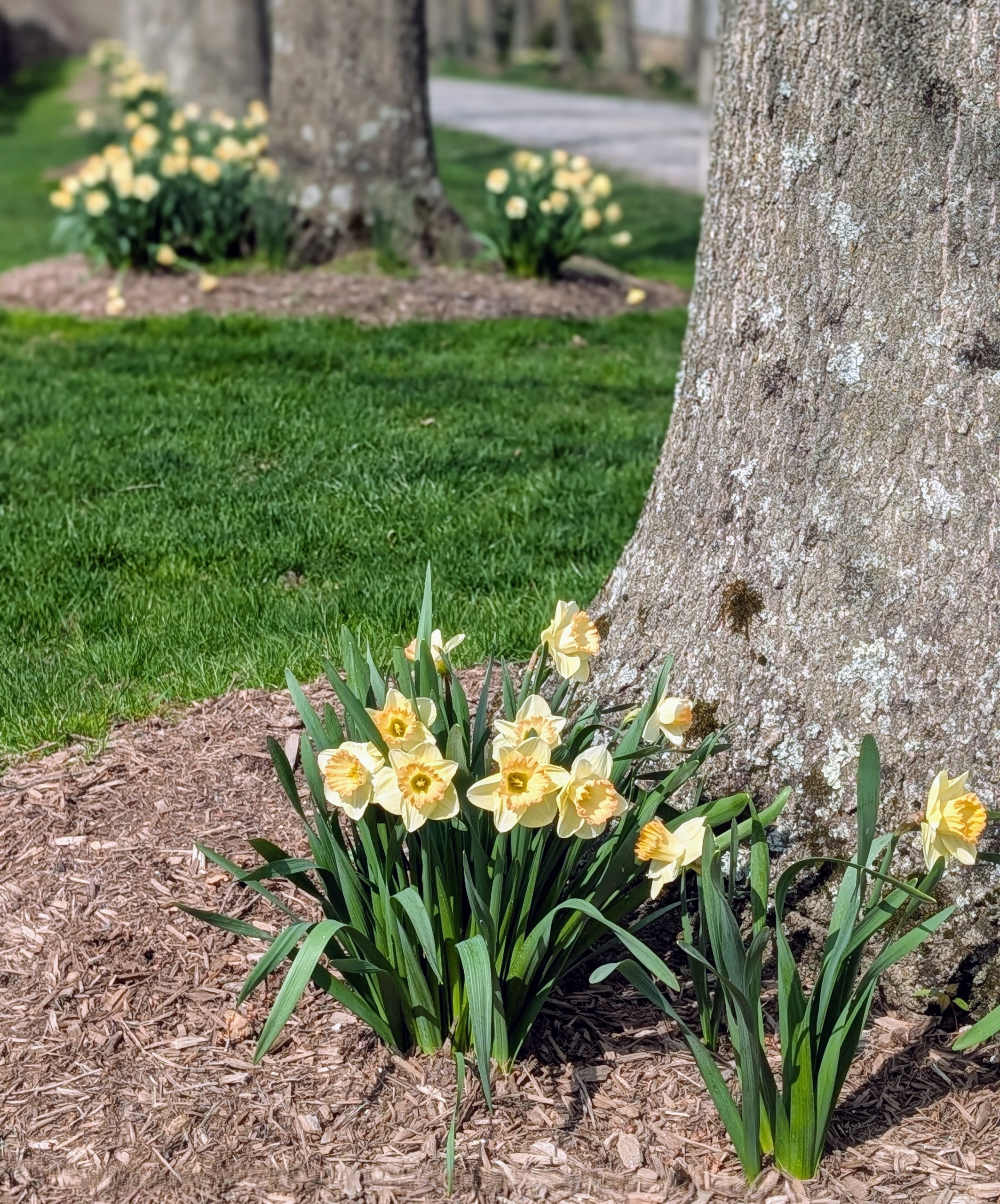
- Underneath the majestic pin oaks in the allée and in the pits under the weeping willows I have a variety of Narcissi named after me by Van Engelen Inc., a wholesale flower bulb company in Bantam, Connecticut.
-
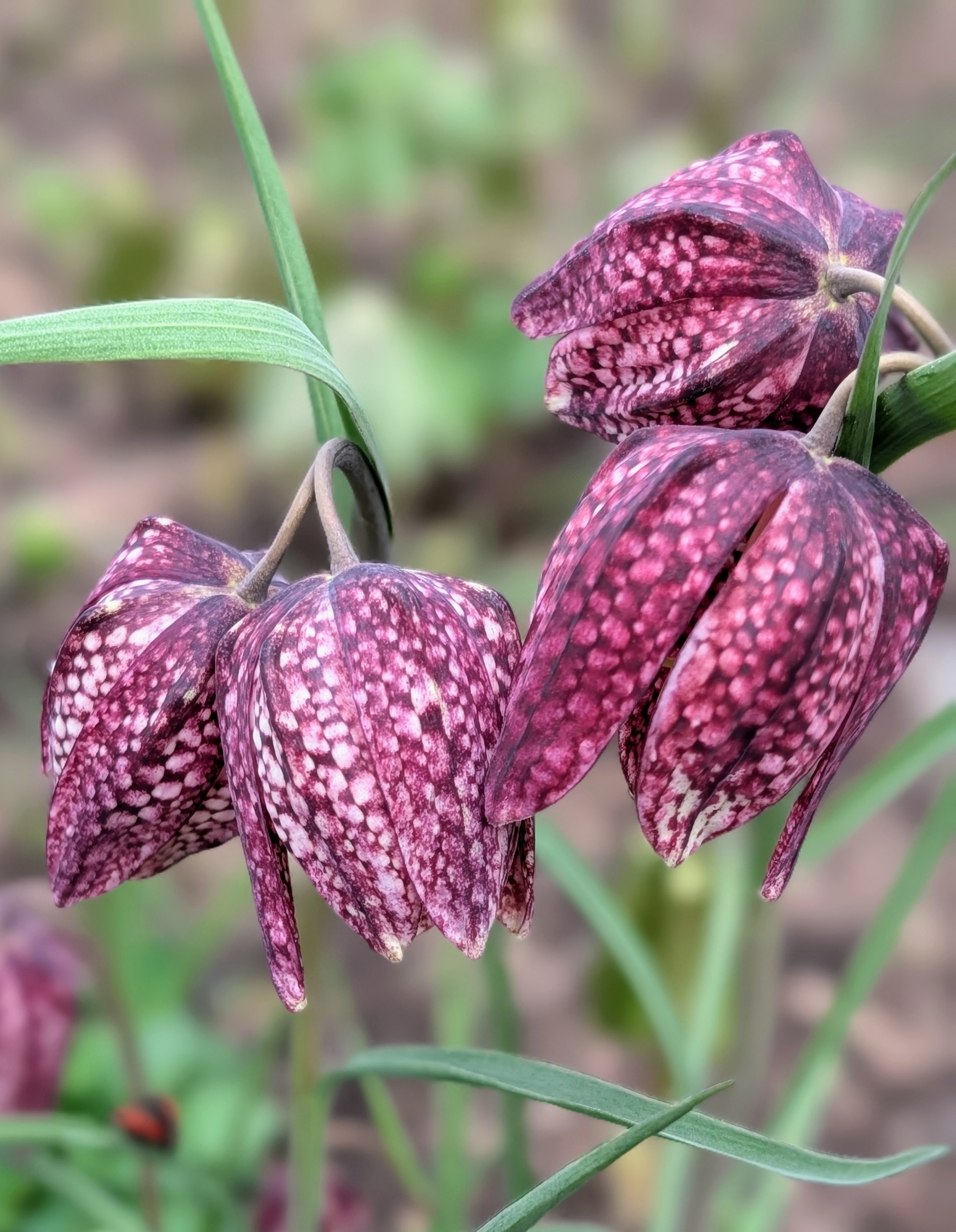
- Commonly known as Guinea Hen Flower, Checkered Lily or Snake’s Head Fritillary, Fritillaria meleagris is an heirloom species dating back to 1575. It has pendant, bell-shaped, checkered and veined flowers that are either maroon or ivory-white with grass-like foliage on slender stems.
-
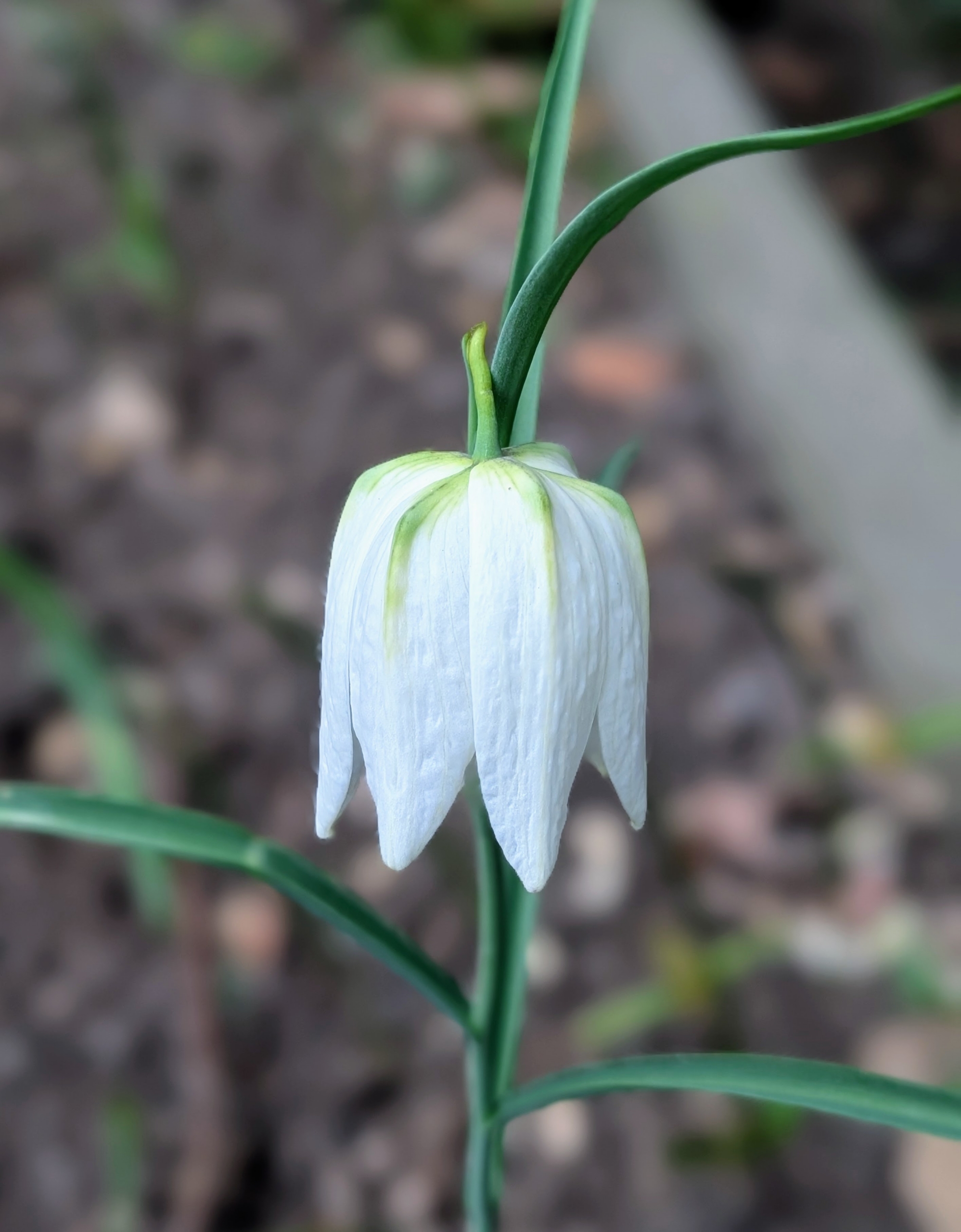
- Here is one of the blooms in white.
-
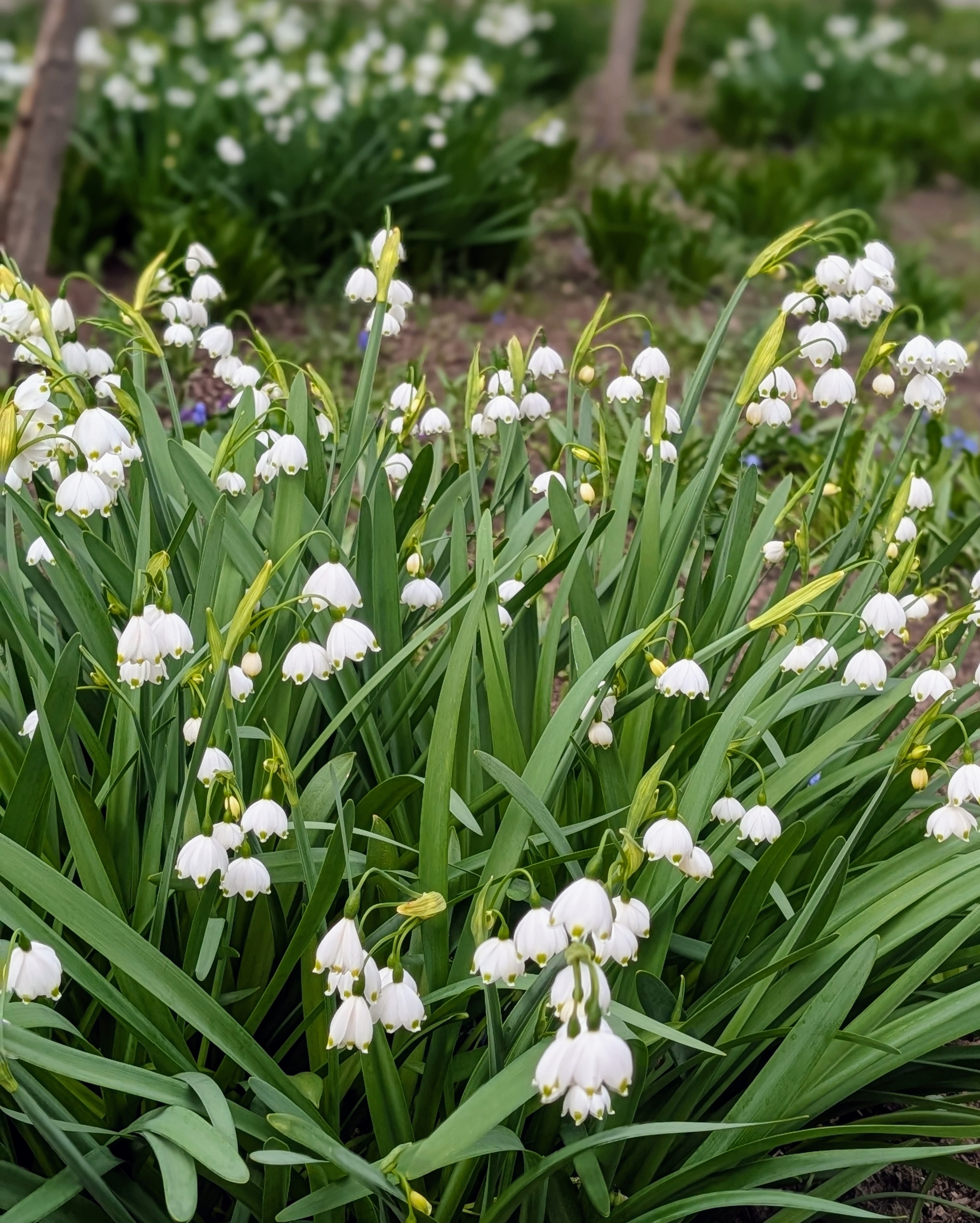
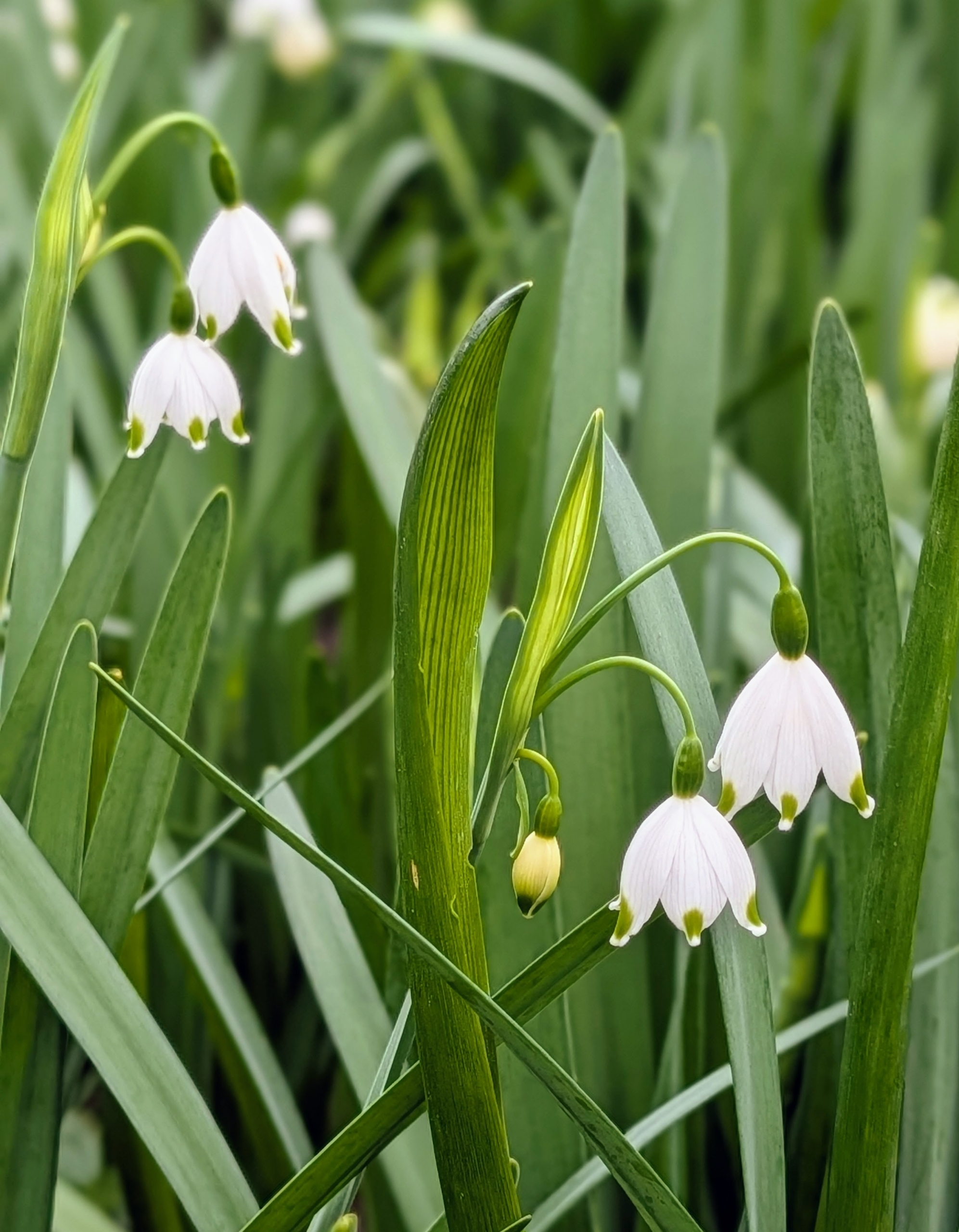
- These are Snowflakes – not to be confused with Snowdrops. The Snowflake is a much taller growing bulb which normally has more than one flower per stem. Snowflake petals are even, each with a green spots on the end, whereas Snowdrops have helicopter-like propellers that are green only on the inner petals.
-
- Snowflakes, Leucojum, are native to Eurasia and are members of the amaryllis family. These perennials increase over time and are not attractive to deer or rodents.
-
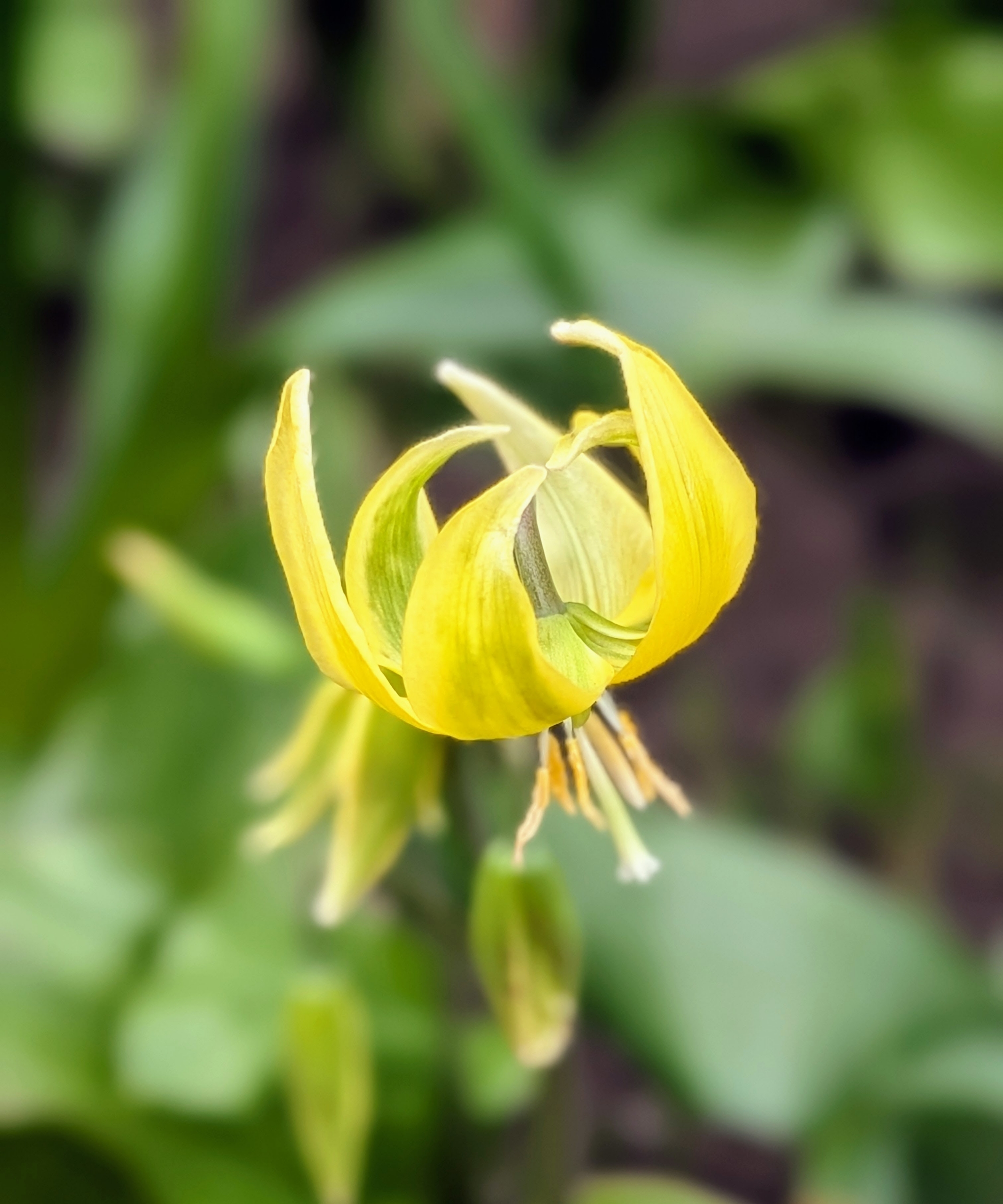
- This trout lily is ‘Pagoda Dogtooth.’ It produces up to 10 clustered, 12-inch arching stems that bear yellow, nodding flowers with reflexed petals.
-
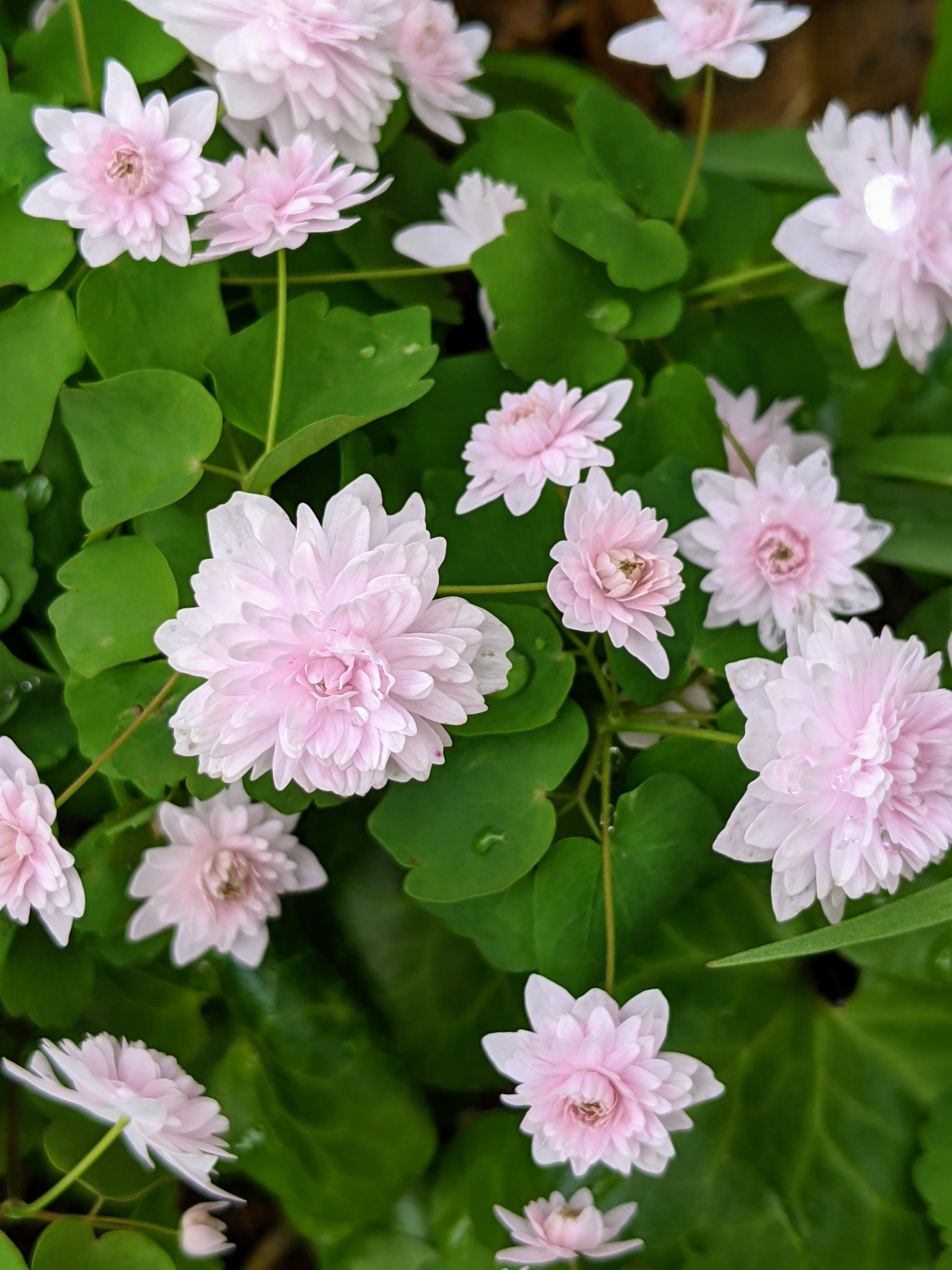
- Anemonella thalictroides is an easy-to-grow, deer-resistant, durable, but dainty looking plant. The genus name Anemonella roughly translates as ‘little anemone’ because its flowers are miniature copies of the windflower. These are a light pale pink.
-
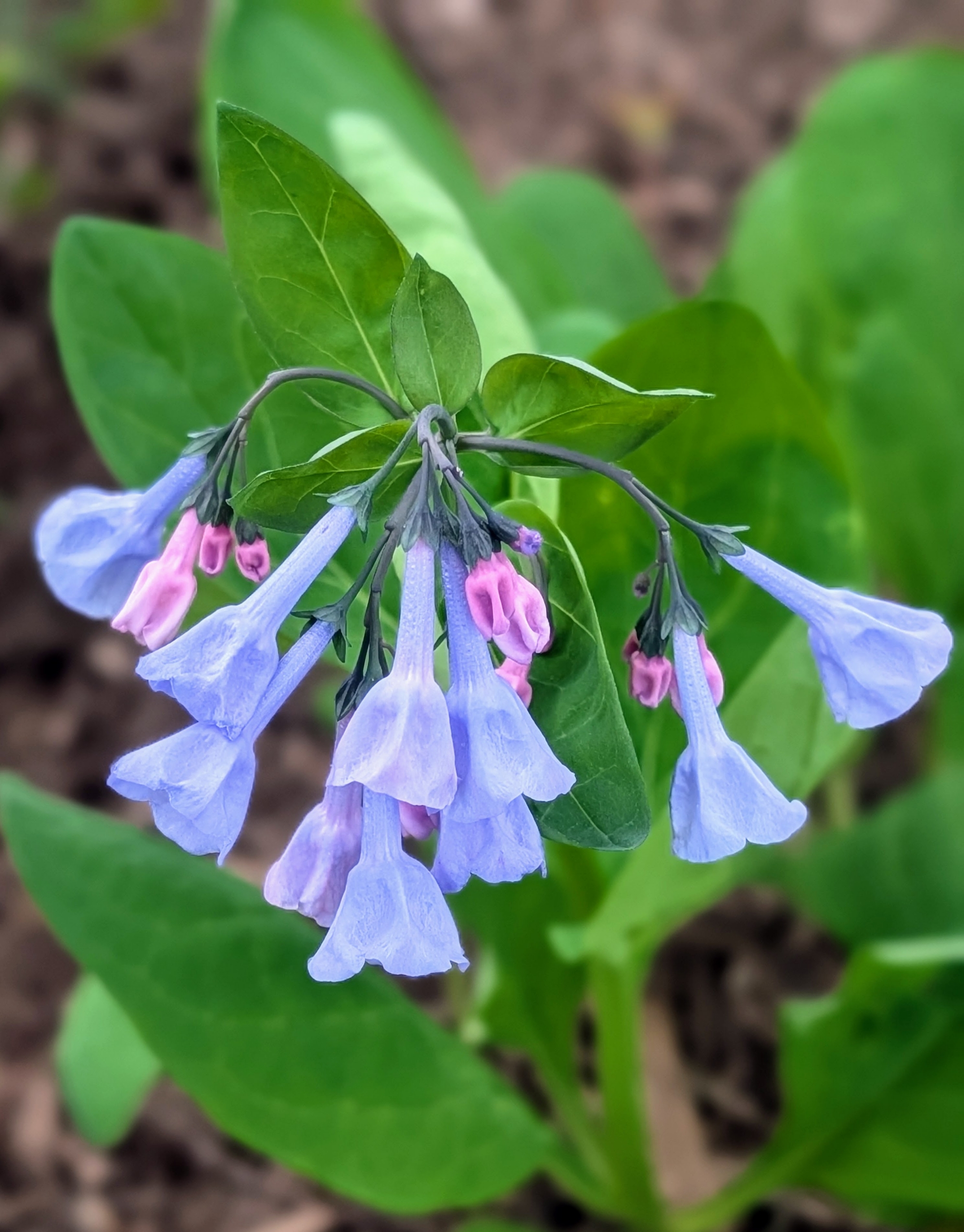
- Mertensia virginica, or Virginia bluebell, is a perennial that is native to North America. Its buds are actually pink, but the flowers are blue. They can grow in any garden and bloom in early to mid spring and continue blooming through early to mid summer.
-
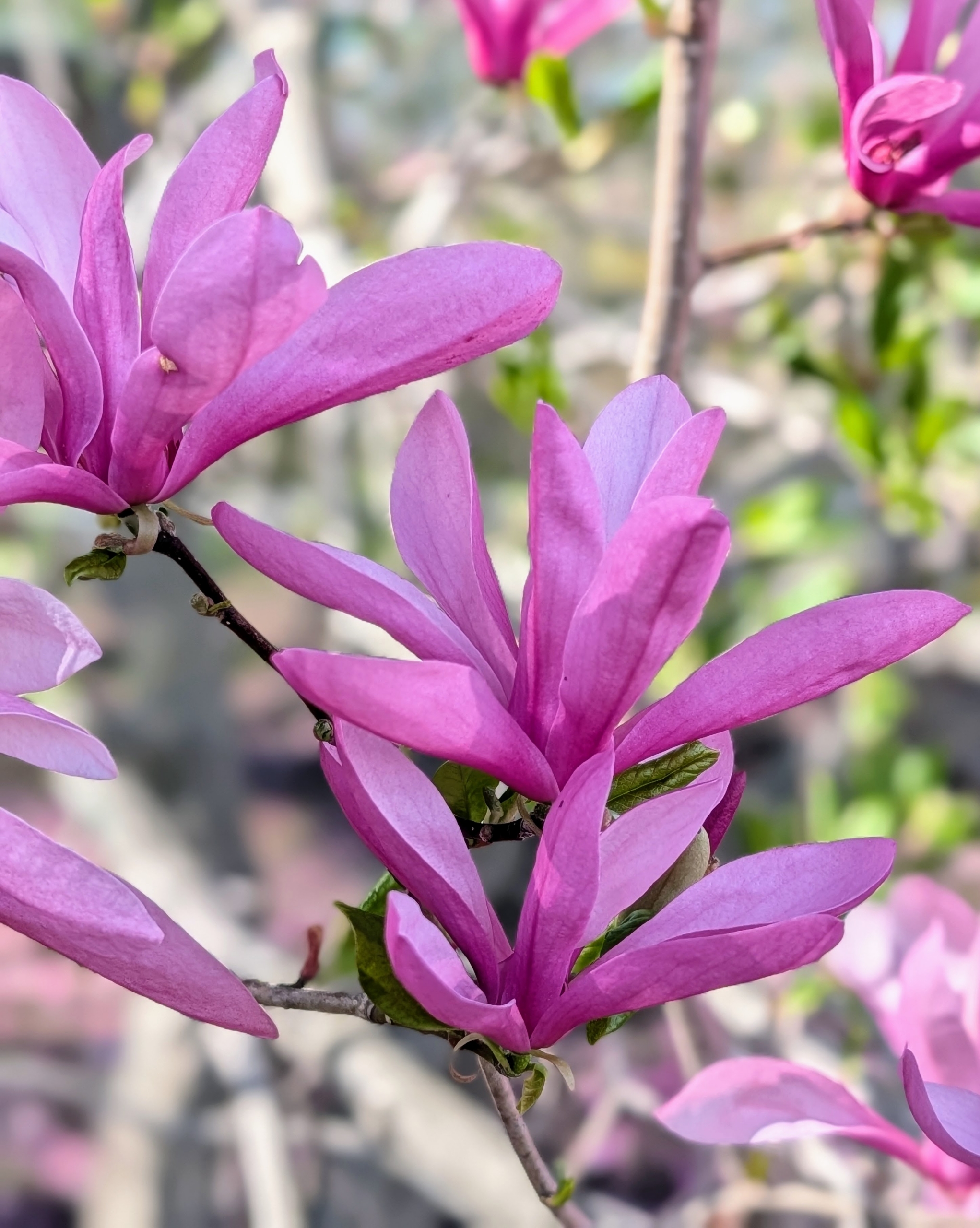
- Magnolia is a large genus of about 210 flowering plant species in the subfamily Magnolioideae. It is named after French botanist Pierre Magnol. Growing as large shrubs or trees, they produce showy, fragrant flowers that are white, pink, red, purple or yellow, which may be bowl-shaped or star-shaped.
-
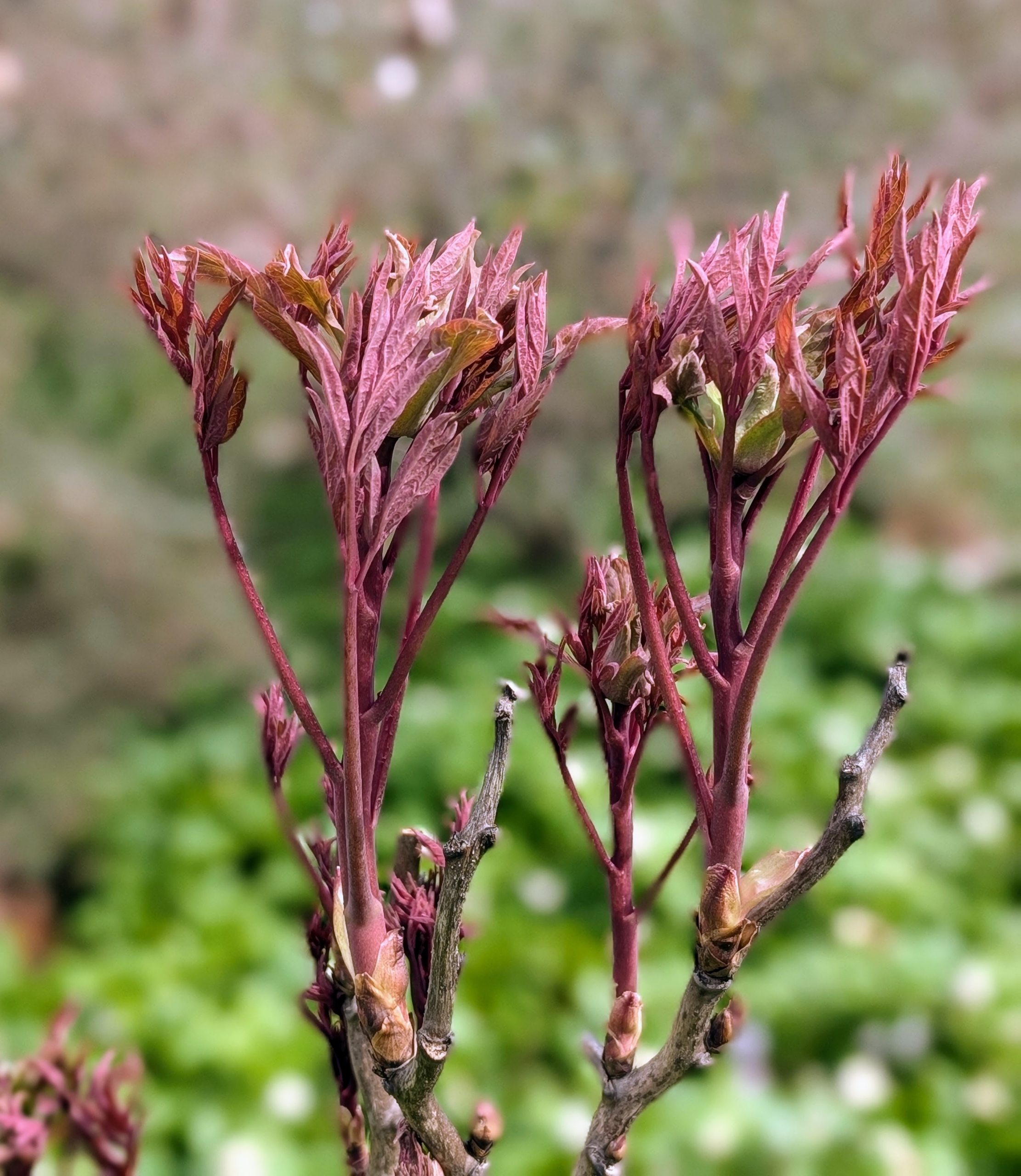
- The foliage of the tree peonies are also starting to emerge.
-
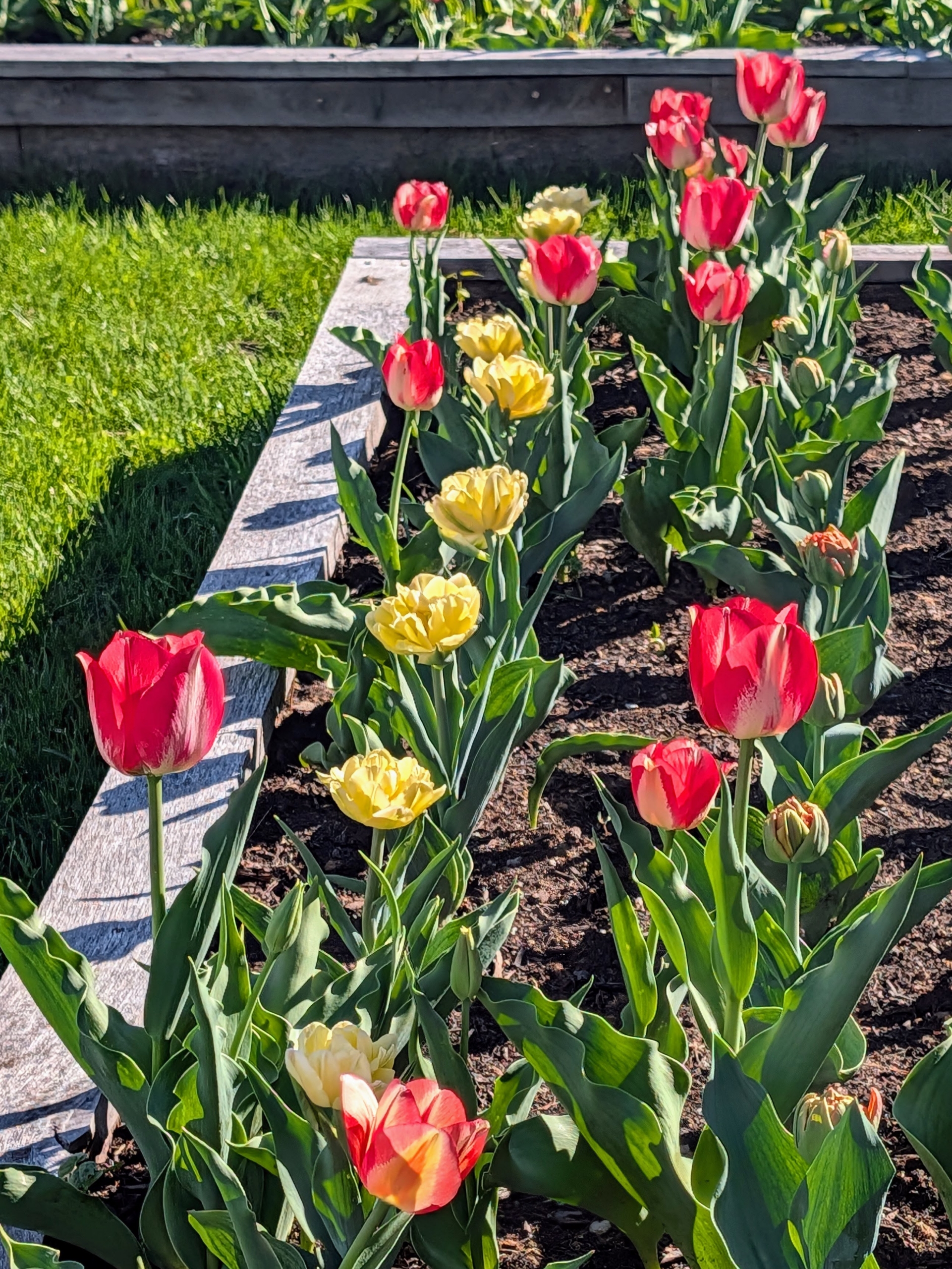
- In my vegetable garden, I also have a few beds of blooming tulips. There are currently more than 3000 registered tulip varieties, which are divided into at least 15-groups, mostly based on the flower type, size, and blooming period.
-
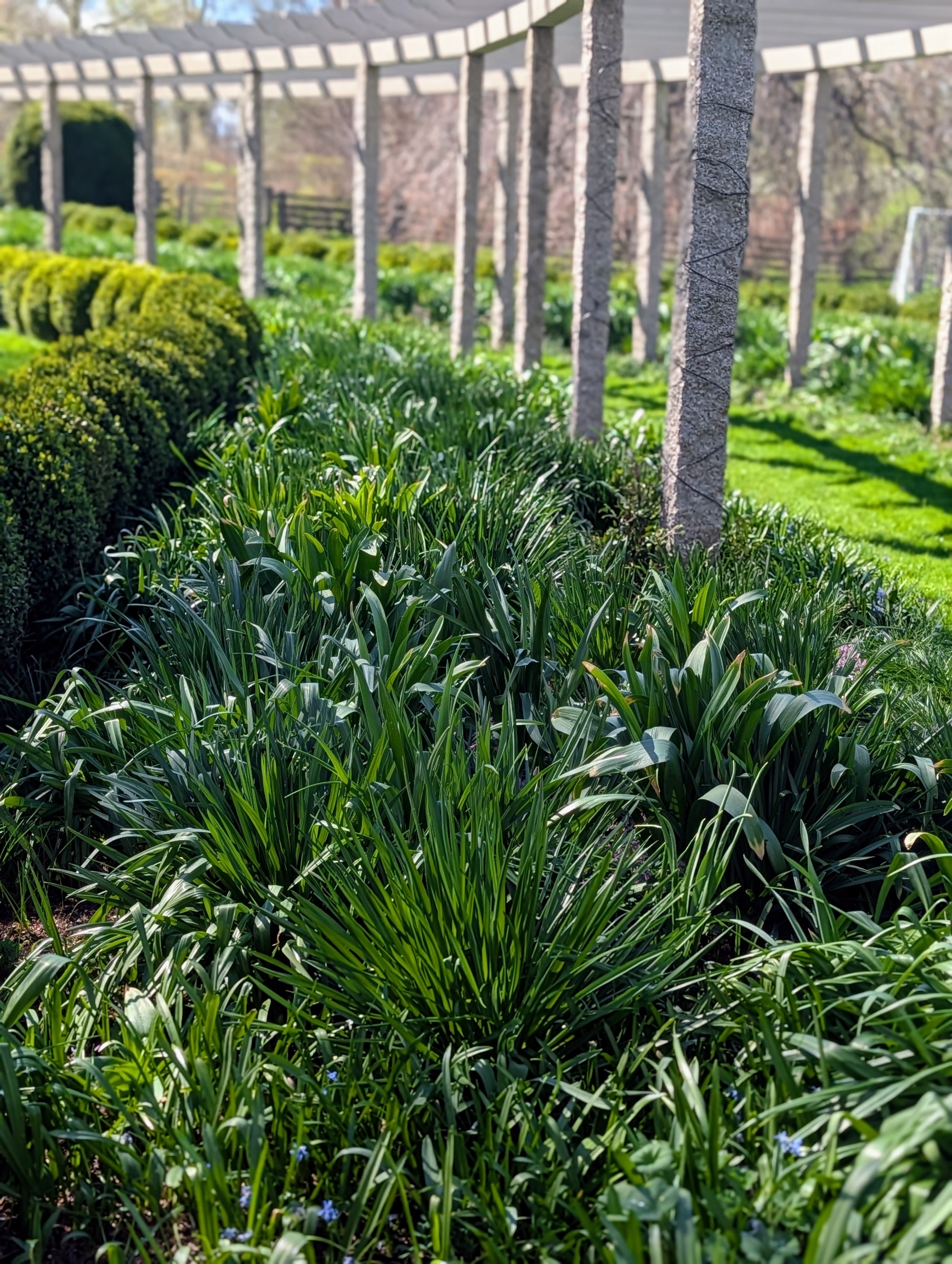
- My long pergola is just full of lush green foliage. Soon, it will display a palette of blue, purple, and lavender Alliums, Camassia, and Spanish Bluebells. Hopefully the cold weather won’t affect the plants too much – fingers crossed.
 Martha Pins


 Martha Tweets

