
Potting Hundreds of Trees for the Farm
Whenever I get bare-root tree cuttings and seedlings I prefer to plant them in appropriately sized containers first, so they can be watered and carefully monitored until they are planted in the gardens.
This week, my outdoor grounds crew worked very hard to pot hundreds of young trees, including pine trees, spruce trees, and cedar trees, American chestnuts, willows, buckthorns, and bald cypress. They all came from Musser Forests, Inc., a Pennsylvania-based company specializing in conifers, hardwood seedlings, and transplants.
Enjoy these photos.
-

- Potting and planting hundreds of trees at the farm is a huge, yet exciting undertaking. I love trees, and every year I plant as many as possible, sometimes thousands. I get them small – as bare-roots or as containerized seedlings.
-
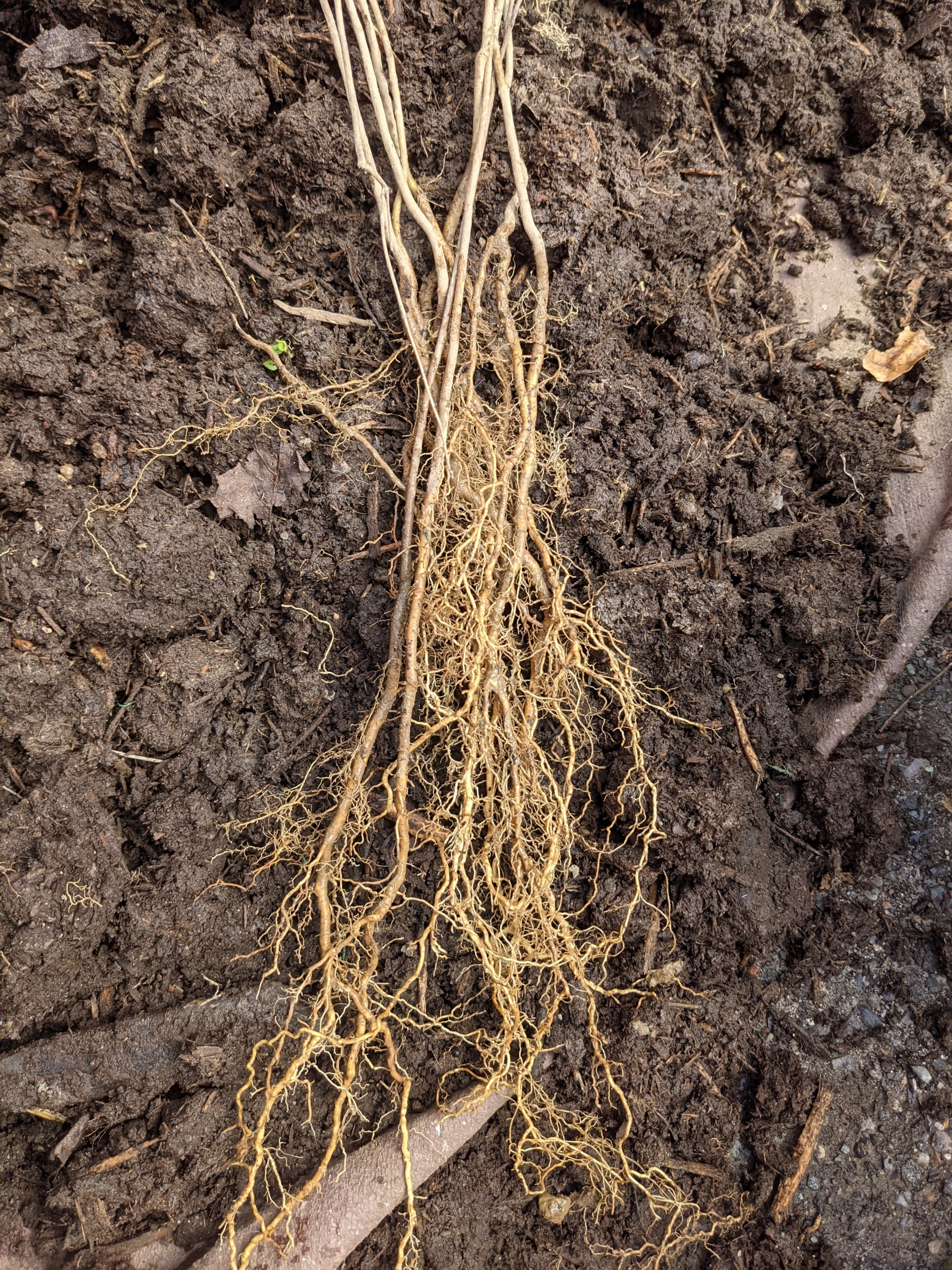
- Bare-root trees are so named because the plants are dug from the ground while dormant and stored without any soil surrounding their roots. Bare-root plants should not have any mold or mildew. The cuttings should also feel heavy. If they feel light and dried out then the plant probably will not grow.
-
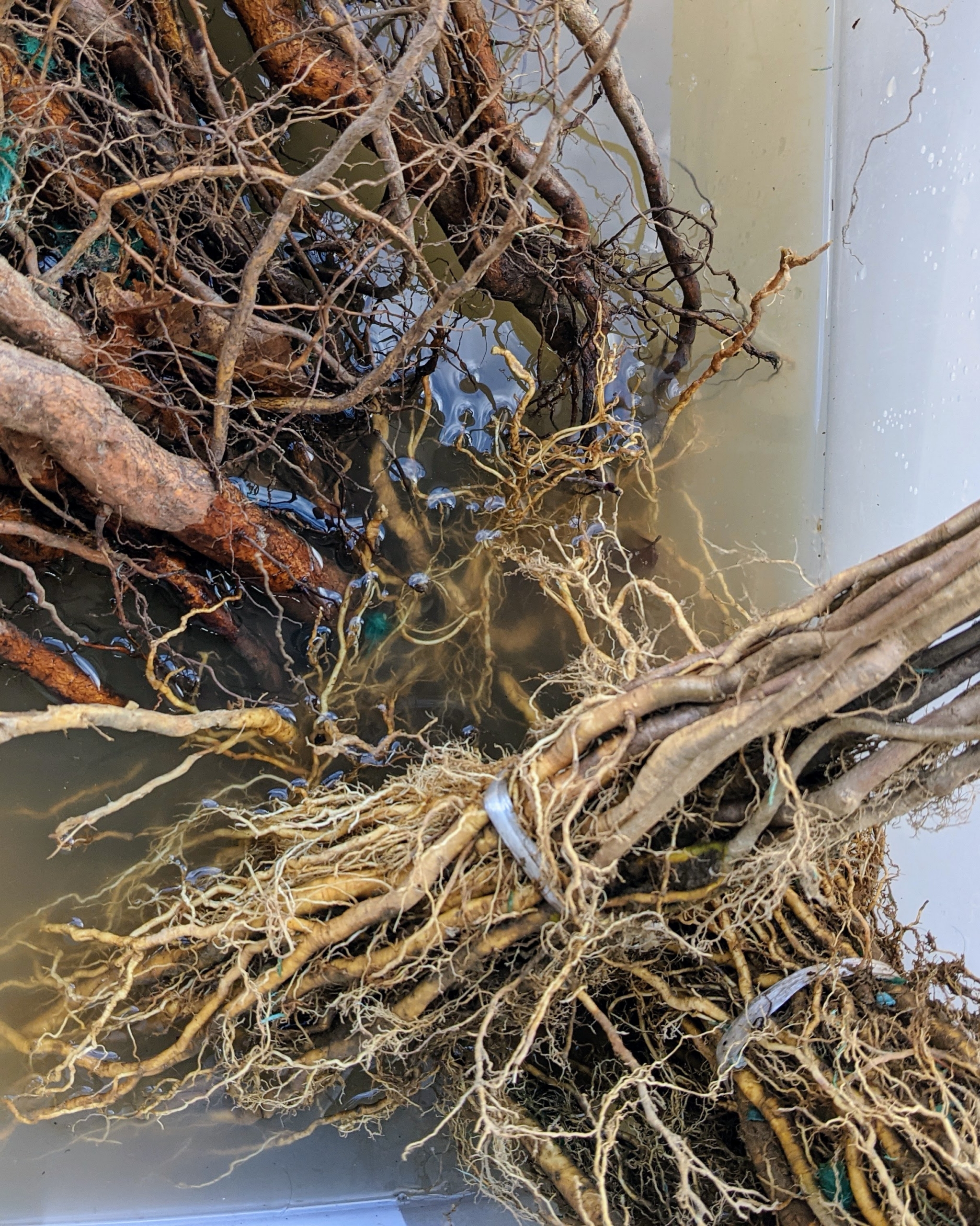
- Once the bare-roots are removed from the box, they are placed in water filled bins until they are potted.
-
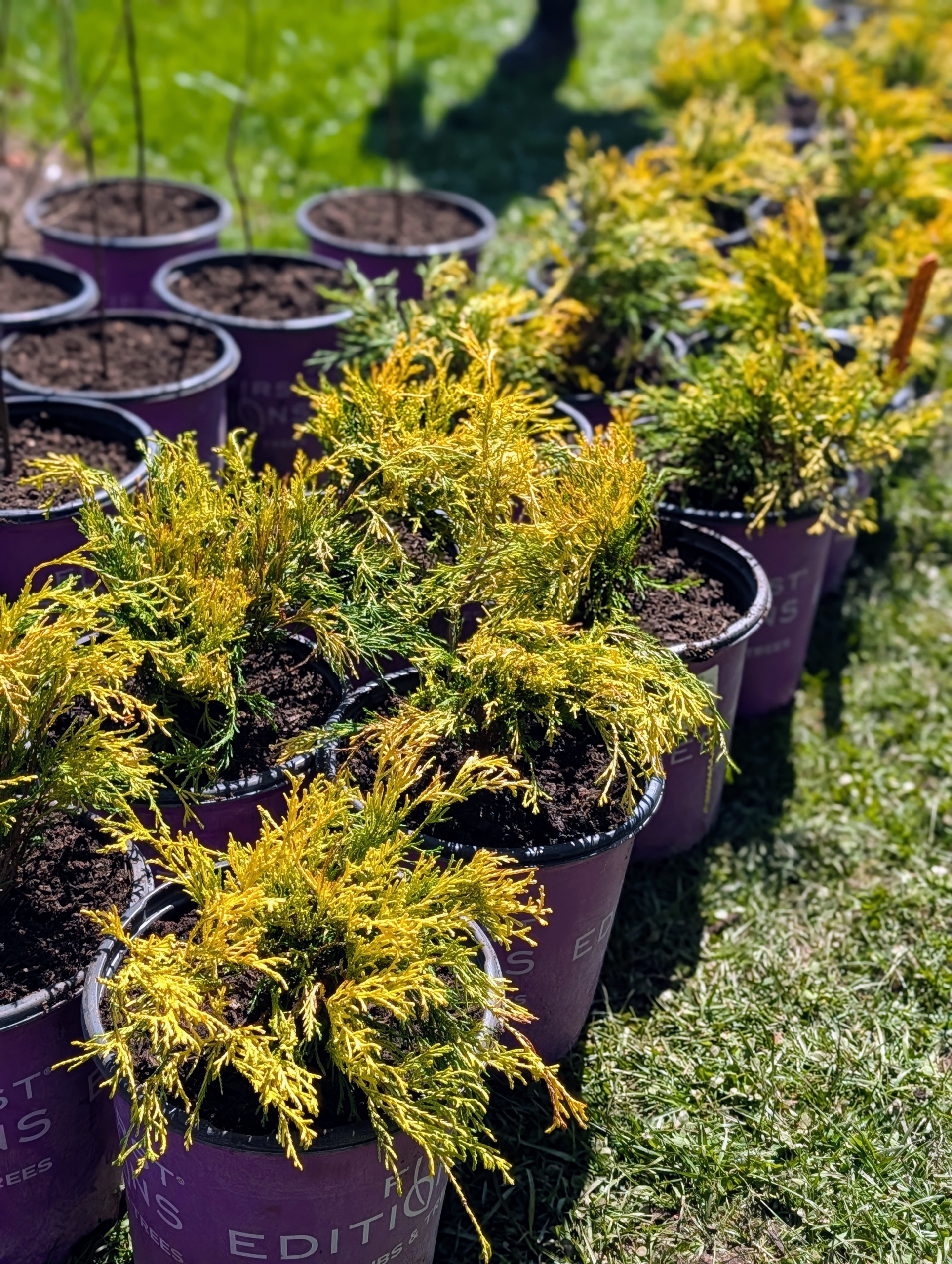
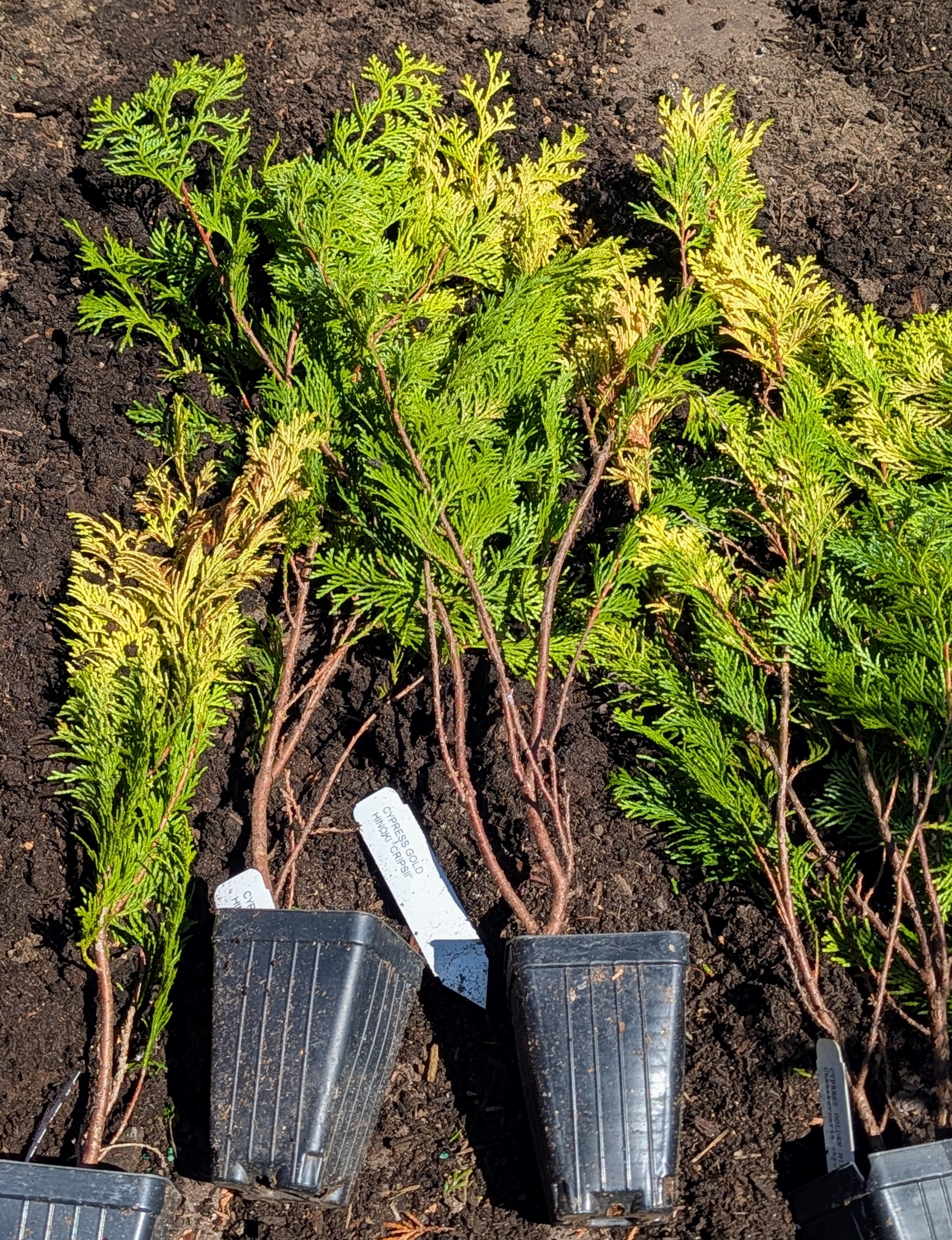
- Some trees arrived in small containers. These are Crippsii Golden Hinoki Cypress seedlings ready to be potted in larger vessels.
-
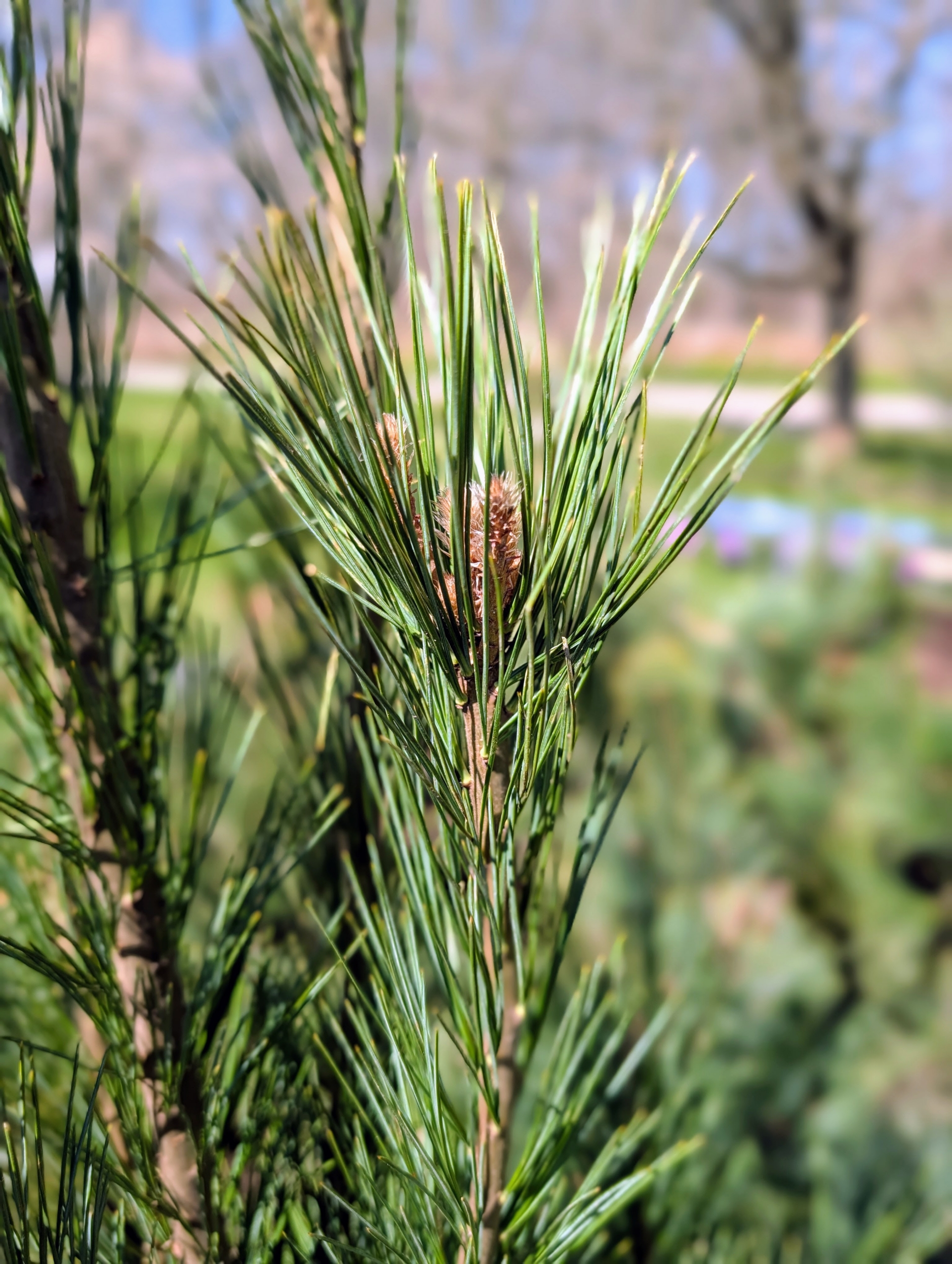
- This is a Southwestern White Pine, Pinus strobiformus. It is a tall evergreen coniferous tree native to the mountains of western Texas, New Mexico, Arizona, and southwestern Colorado, extending to Mexico. It is characterized by its pyramidal habit, slender trunk, open crown, and soft, straight to slightly twisted, finely serrated, rich blue-green needles.
-
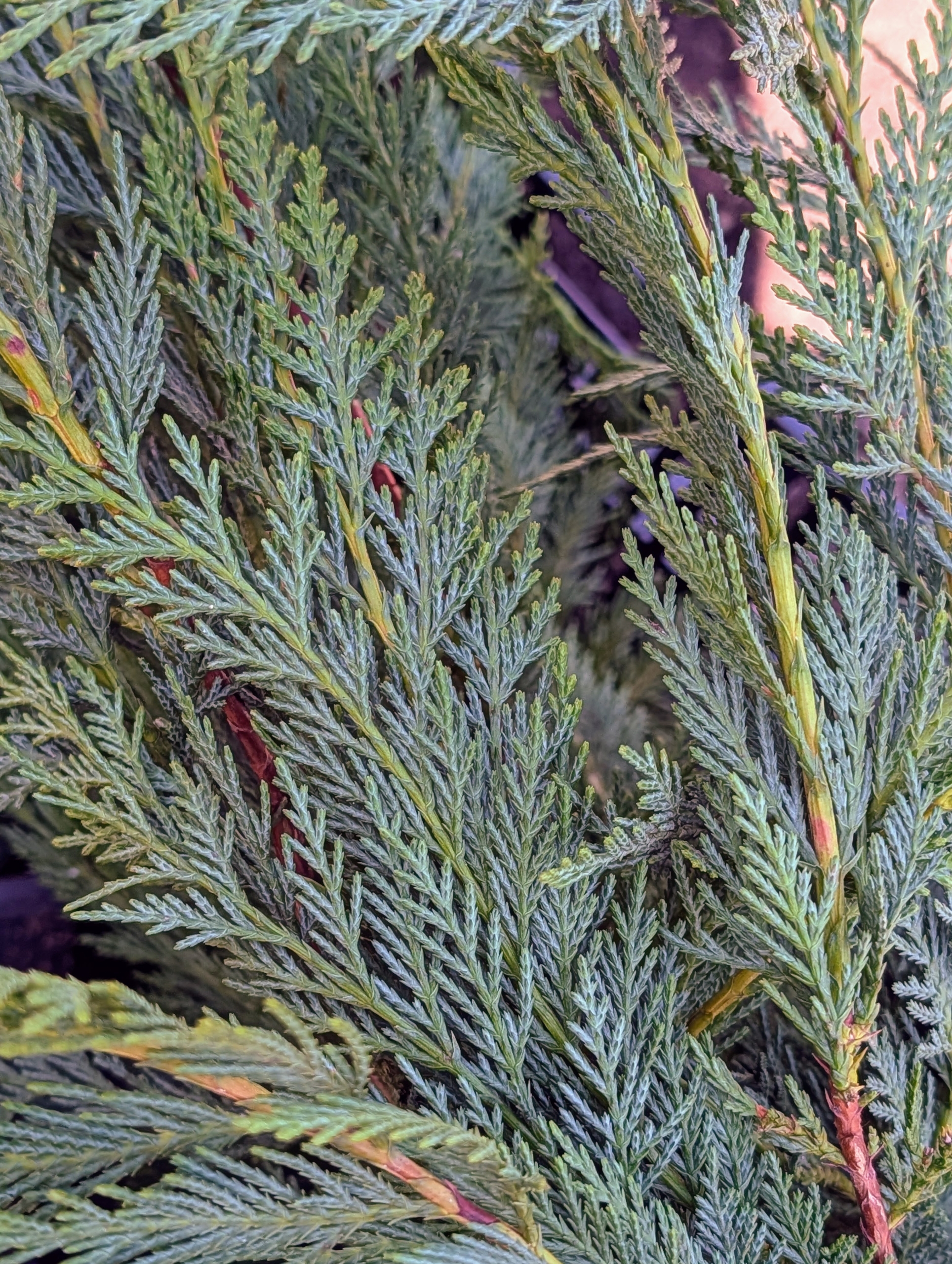
- The Leyland cypress is a fast-growing, evergreen hybrid tree. It can reach 50 to 70 feet in height when mature.
-
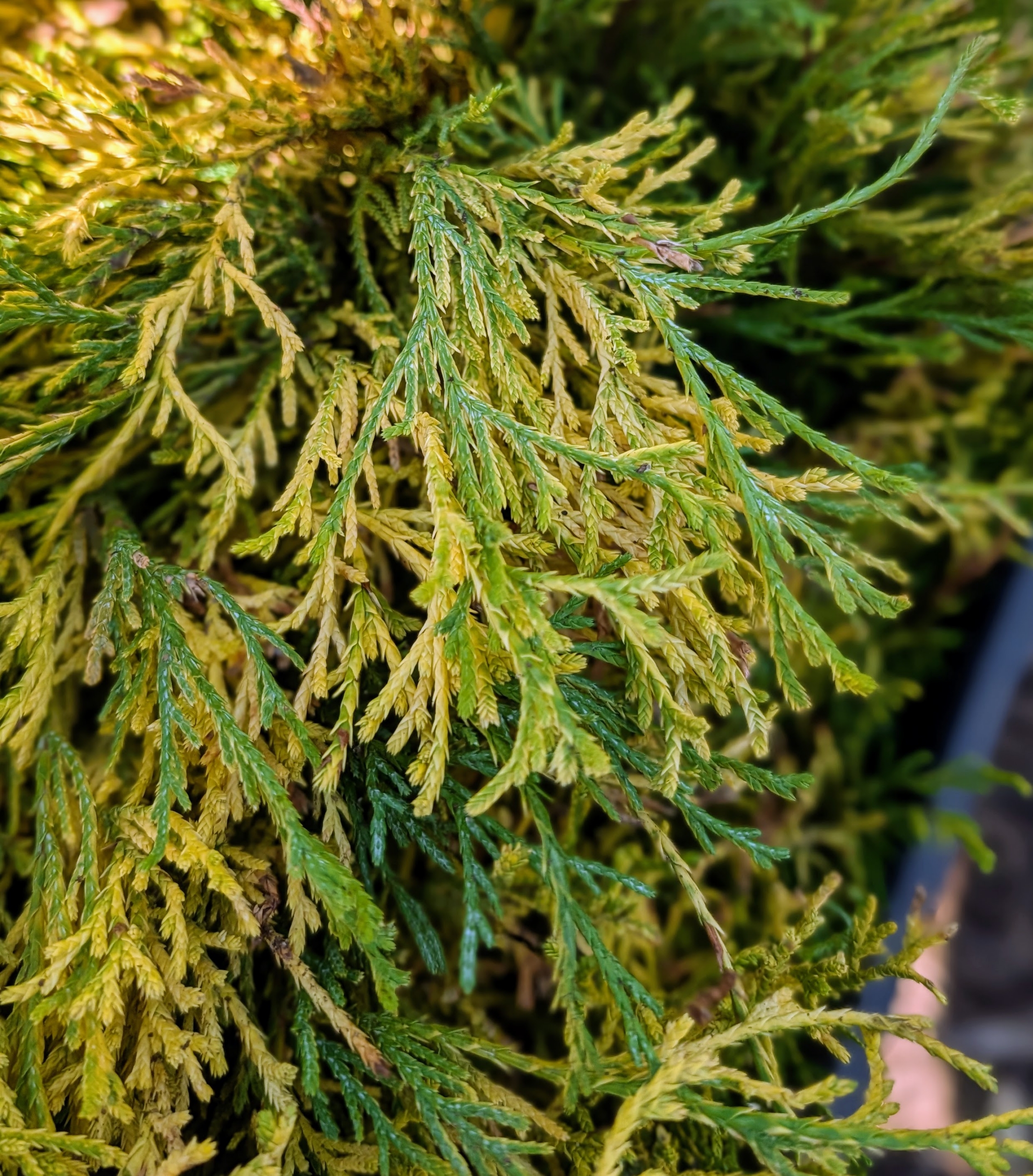
- Gold Thread Cypress is an evergreen shrub with striking yellow foliage. It holds its stunning golden color all throughout the year.
-
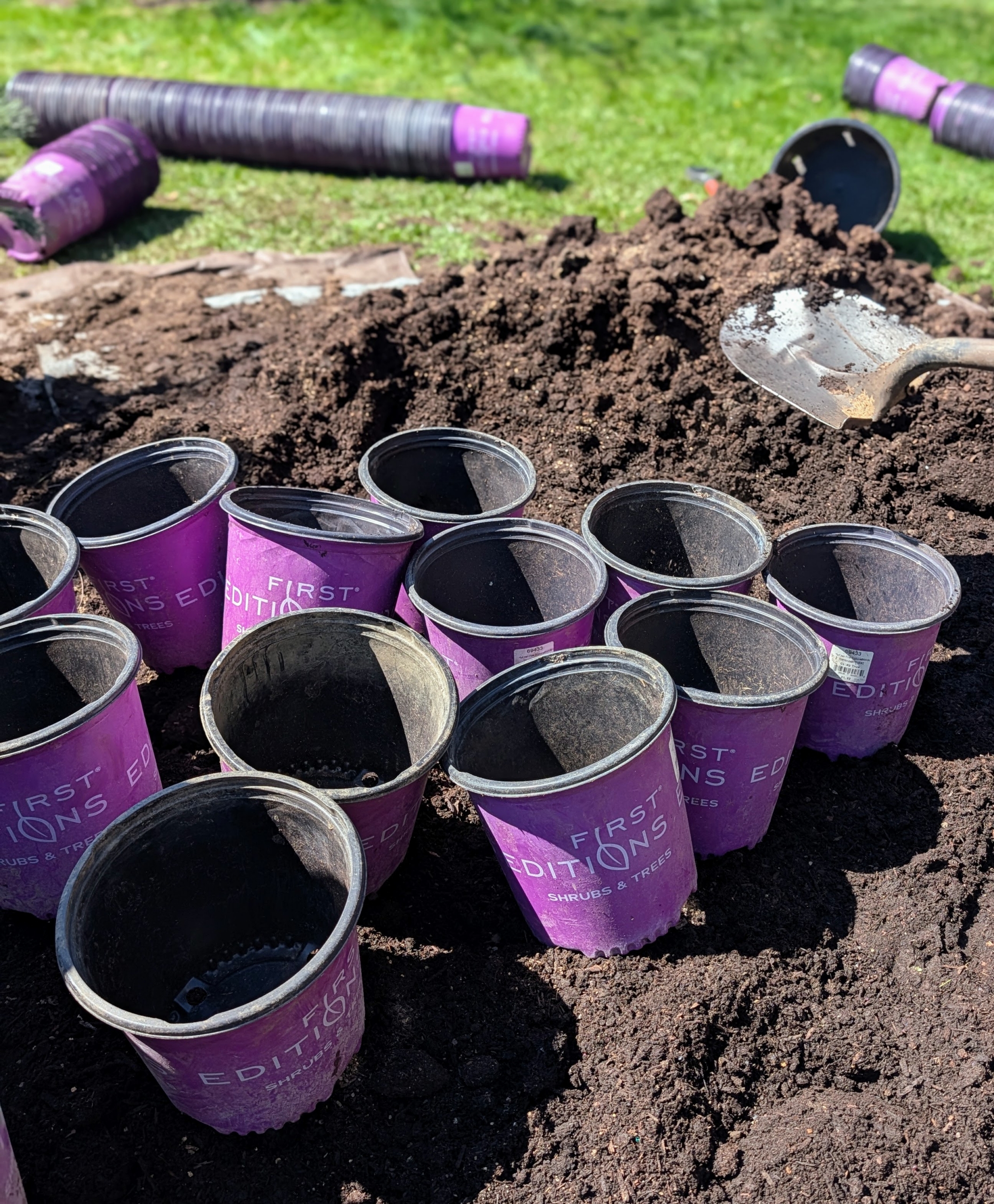
- I save pots whenever I can – they always come in handy for projects like this, and I always encourage the crew to reuse supplies whenever possible. Each pot is prepared with a small layer of soil ready for the tree and backfill.
-
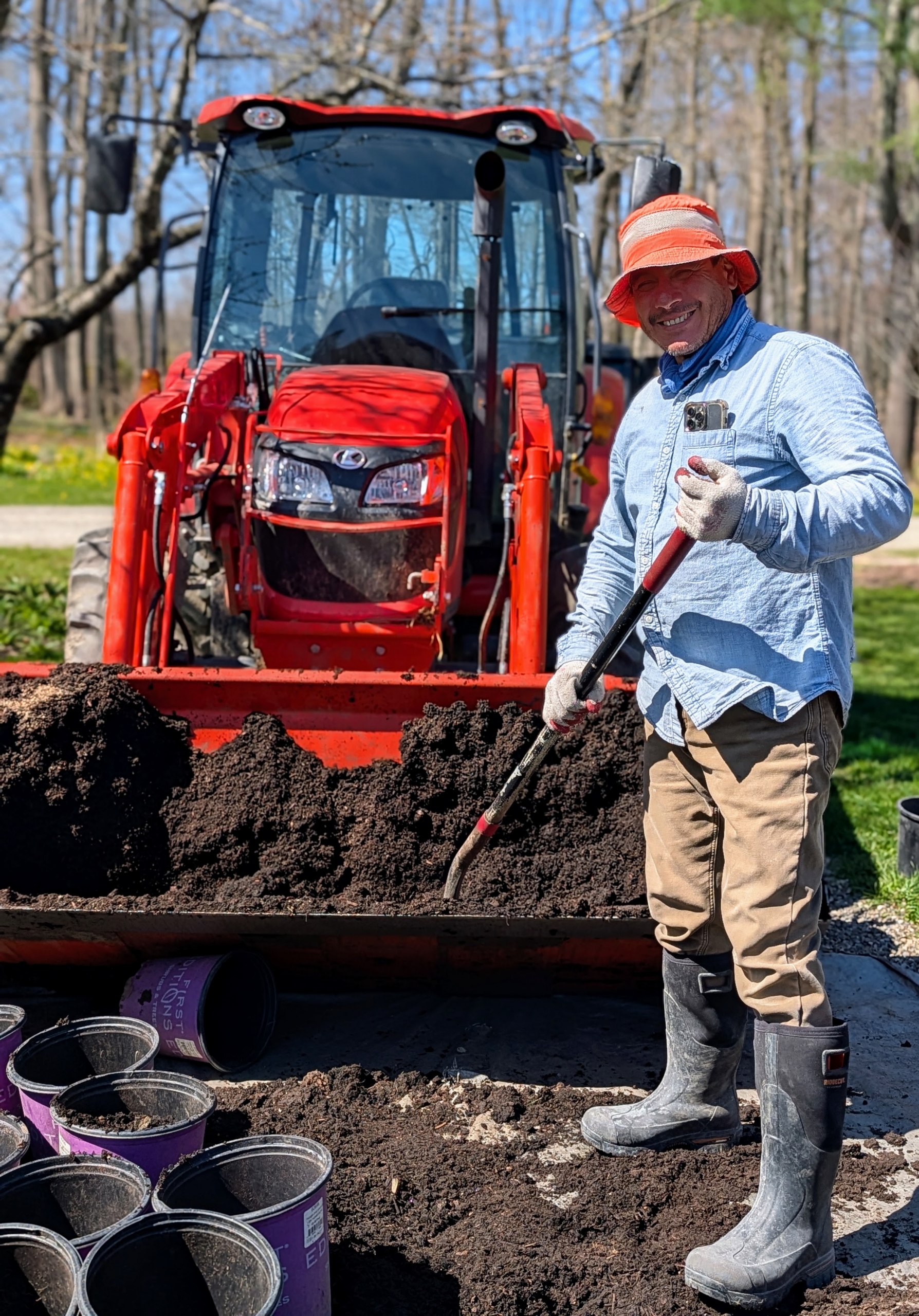
- We use composted manure and top soil for potting. Composting manure above 131-degrees Fahrenheit for at least a couple weeks kill harmful pathogens, dilute ammonia, stabilize nitrogen, kill weed seeds and reduce any objectionable odors. I am so proud of the nutrient-rich soil I make here at the farm.
-
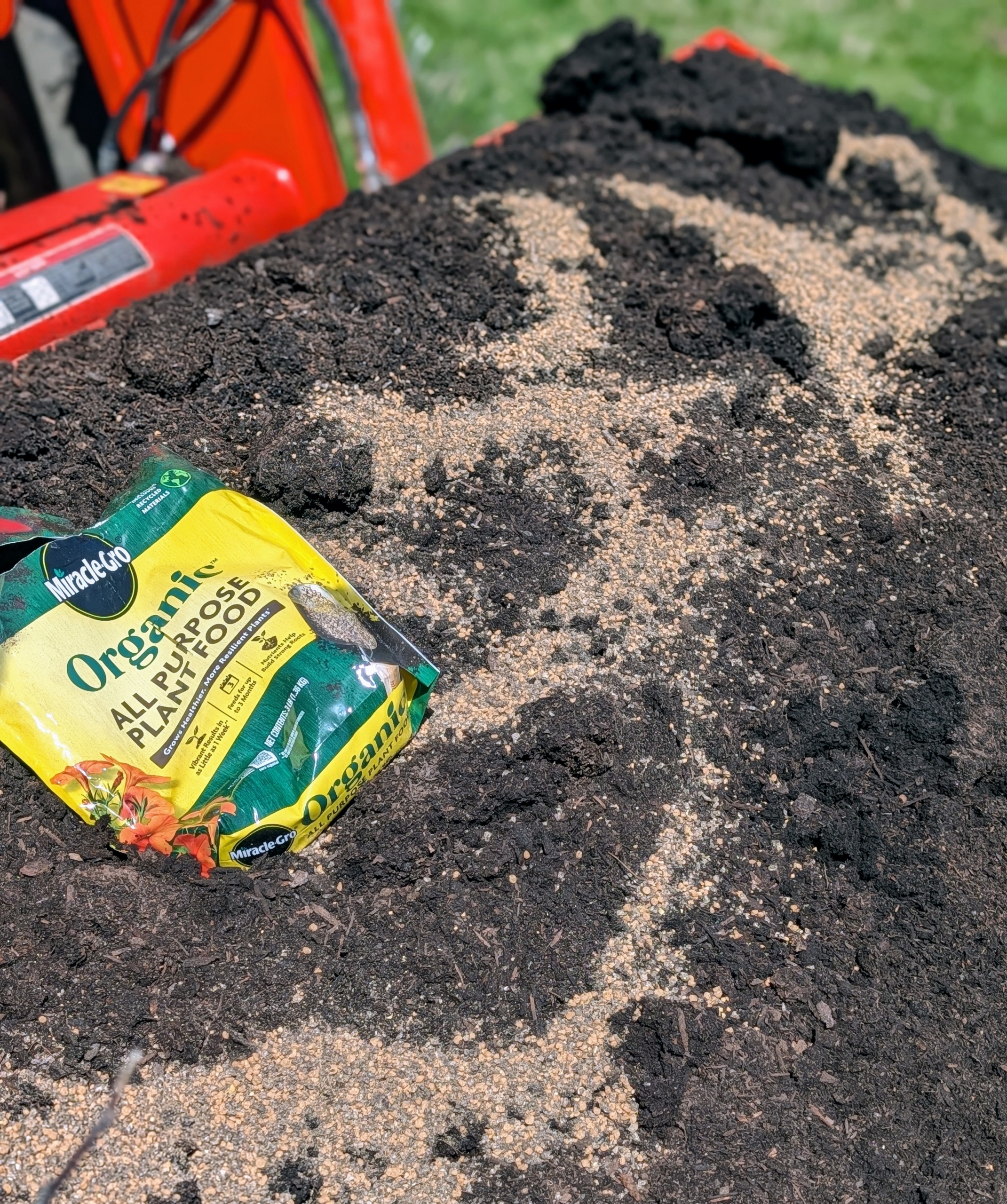
- It is amended with some good fertilizer and then mixed well. I use Organic All-Purpose Plant Food from Miracle-Gro.
-
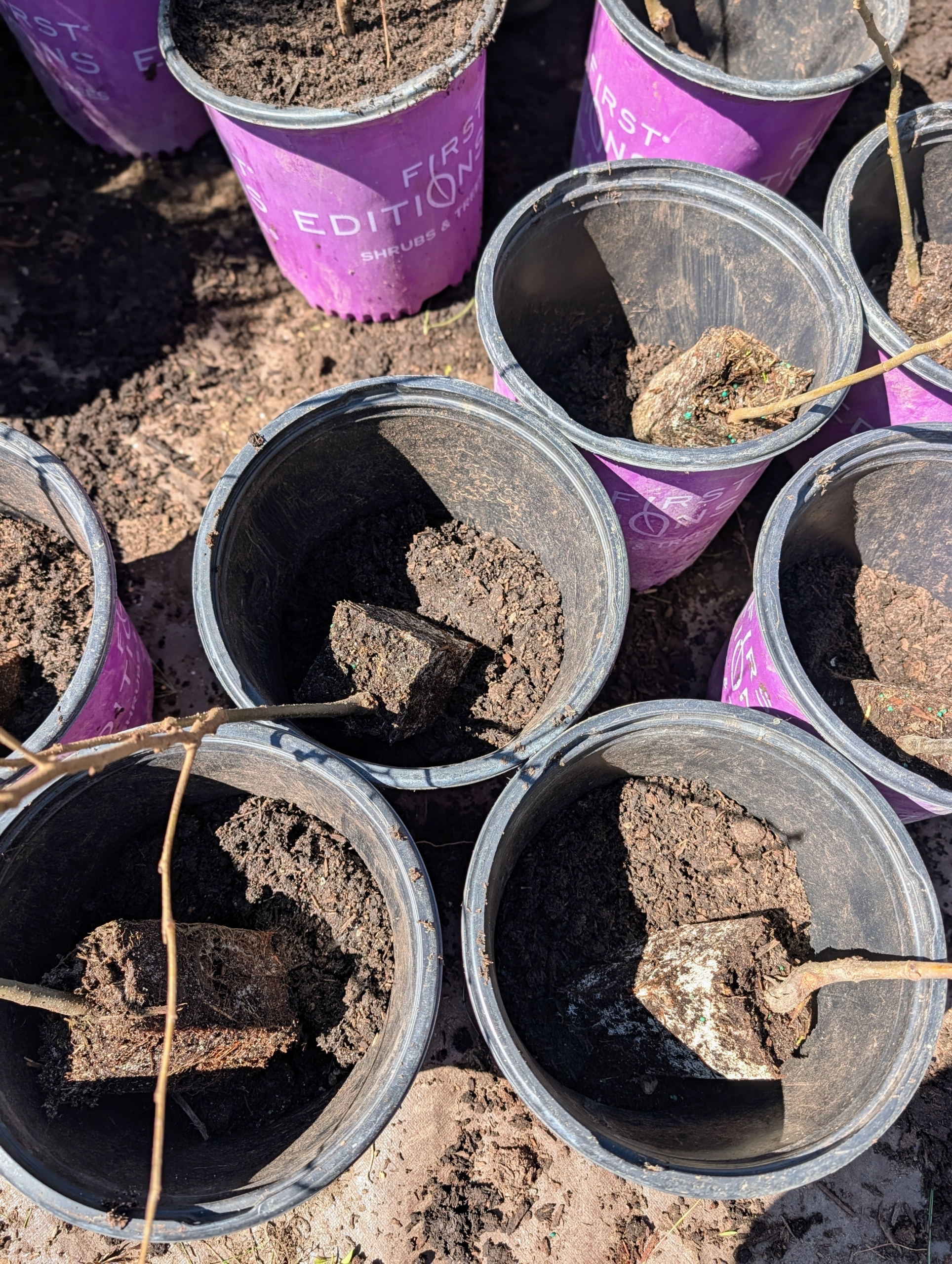
- The process for potting is the same for small seedlings and for bare-roots. Each tree or shrub is placed into an appropriately sized pot, so the roots and root balls are not crowded at the bottom.
-
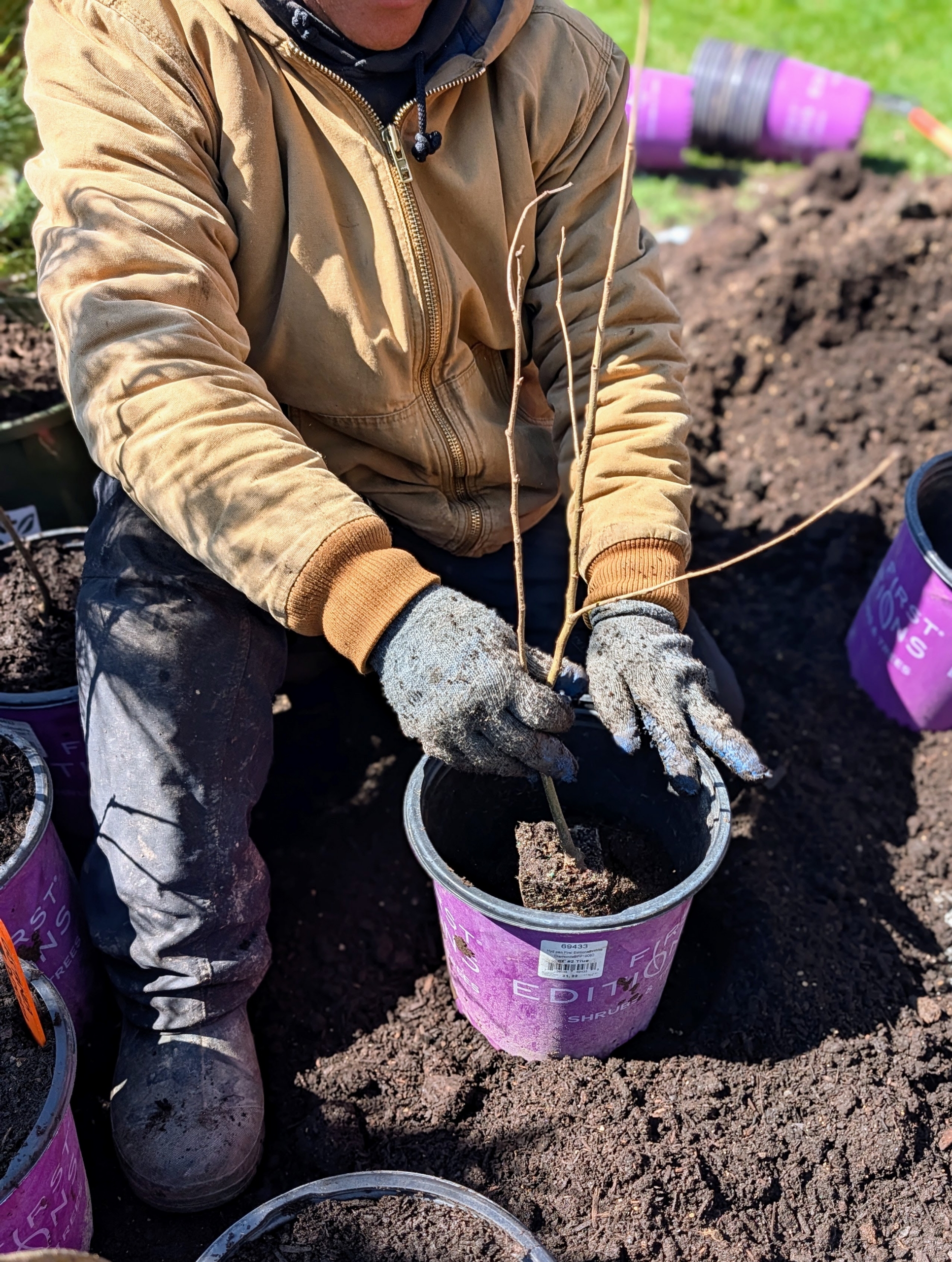
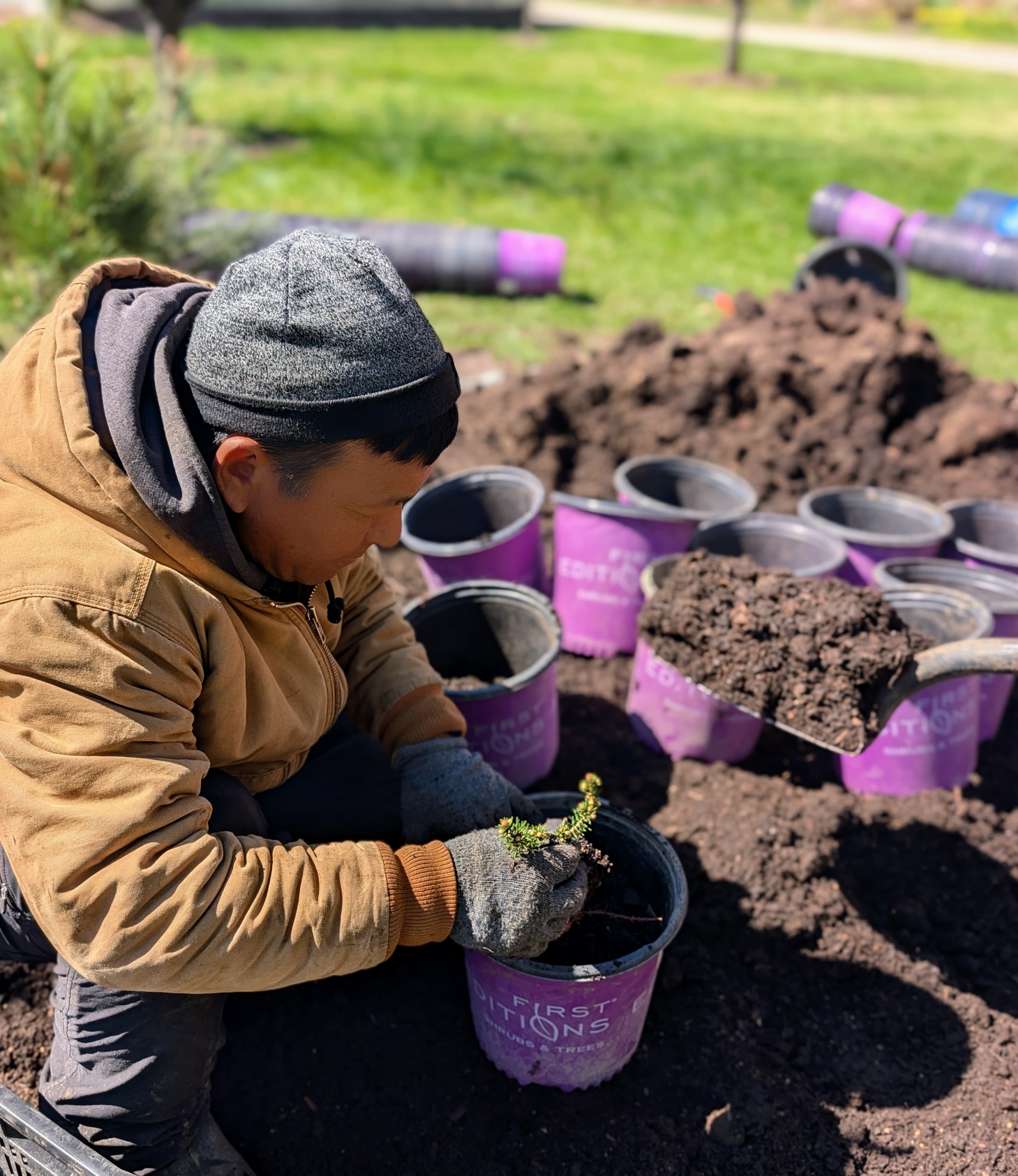
- Phurba places a seedling in the pot so it is straight and centered in the container.
-
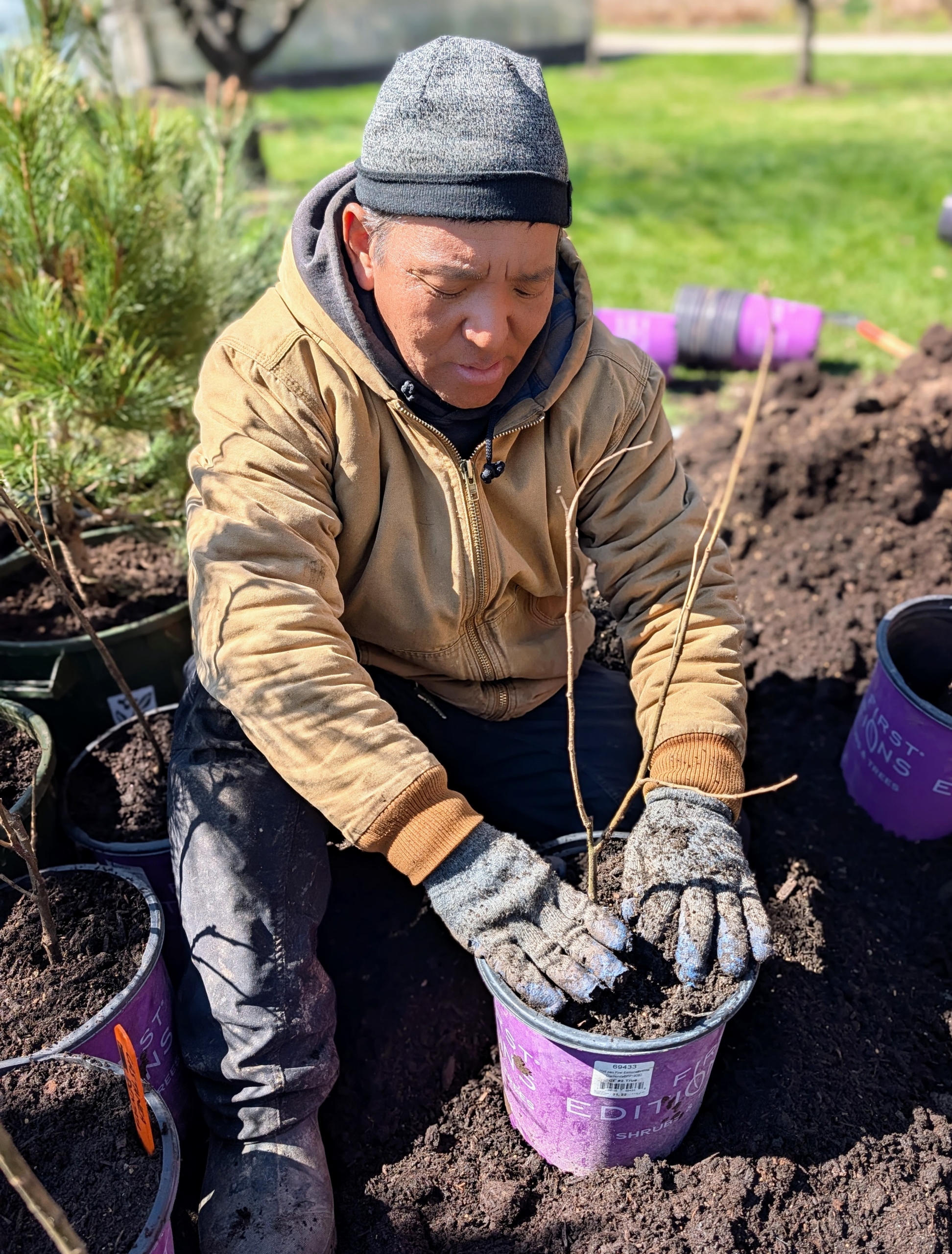
- Here he tamps down lightly after the pot is backfilled so there is good contact between the tree roots and the surrounding soil.
-
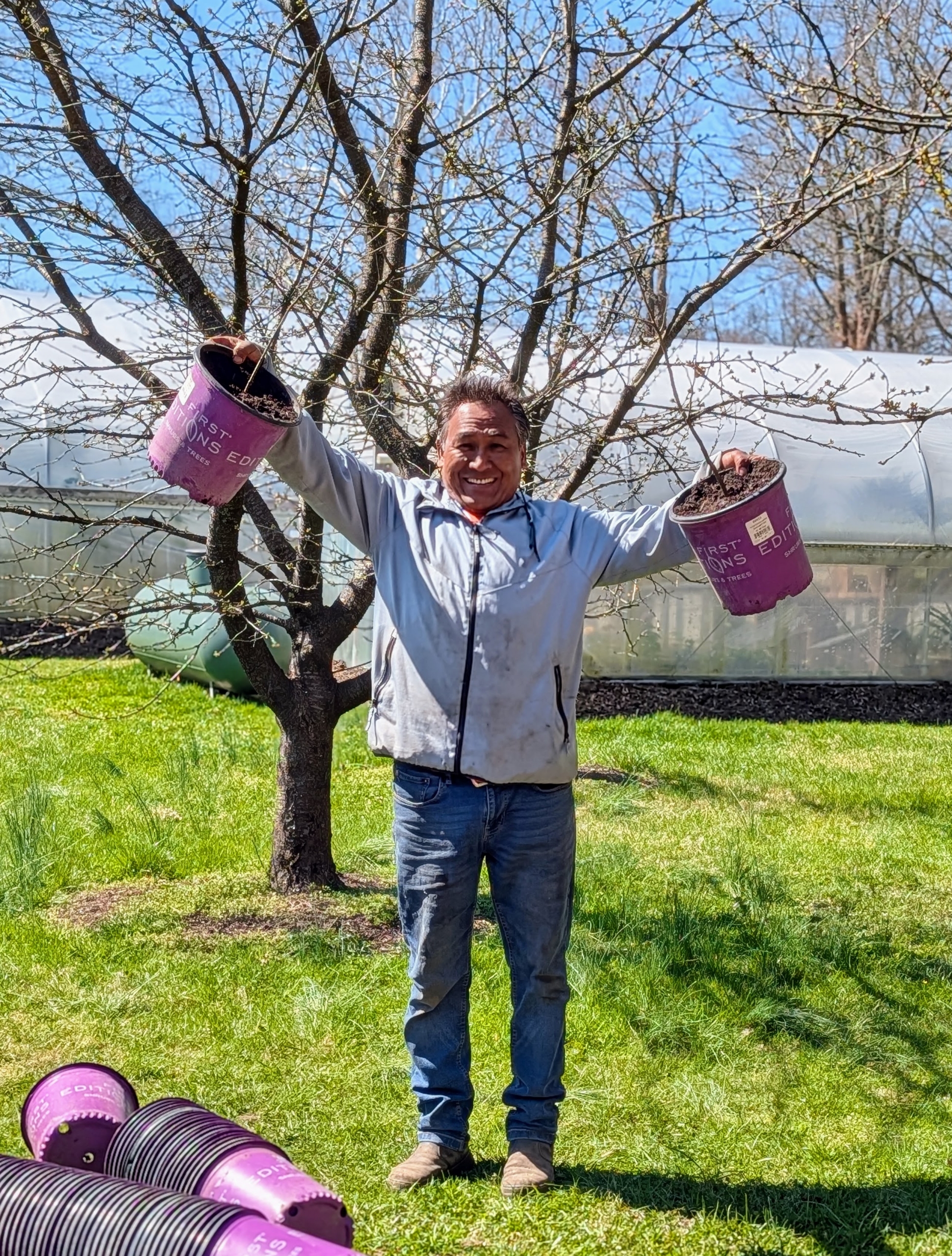
- Once trees are planted, Pete moves them in sections to a designated area where they wait to be transported to the nursery.
-
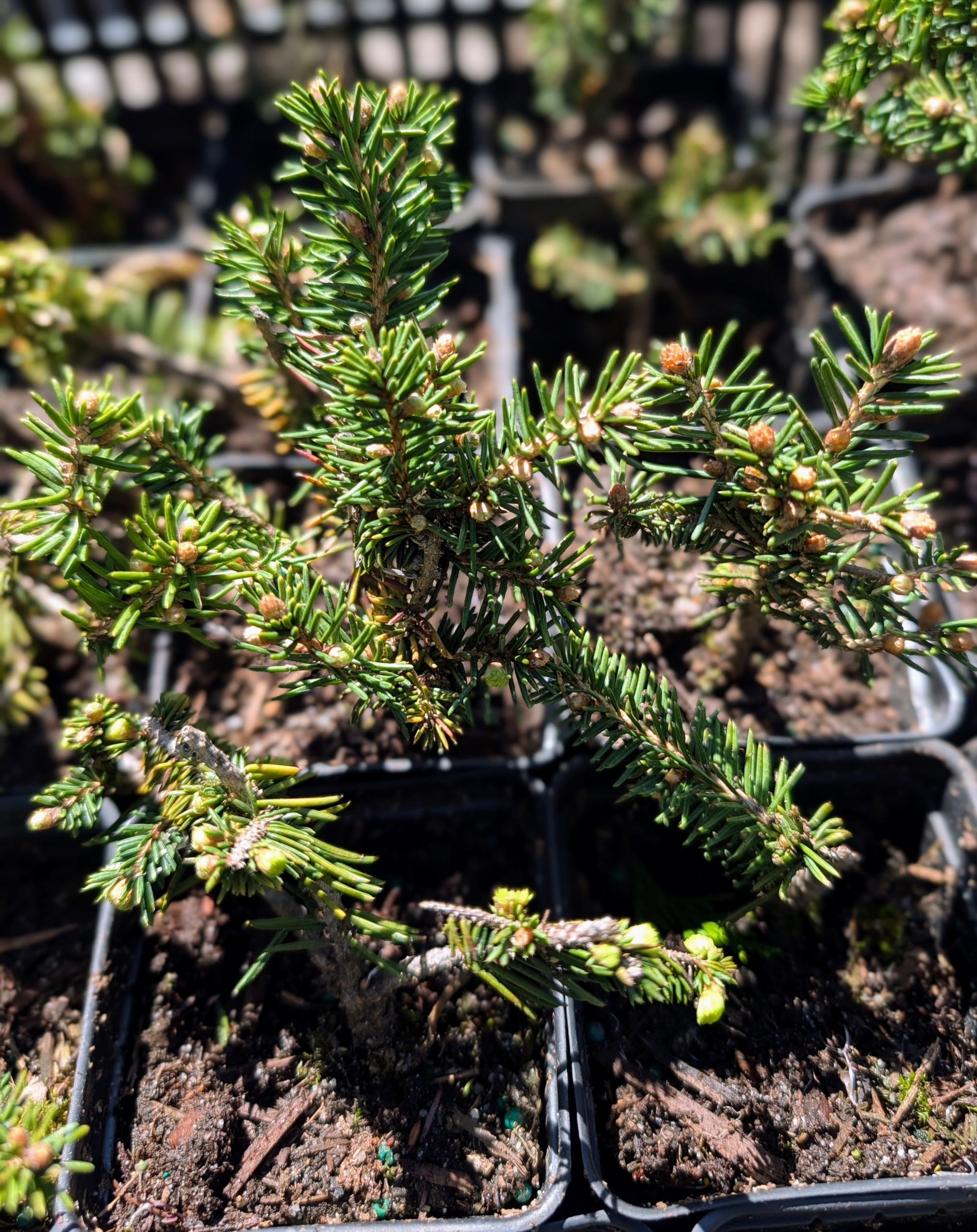
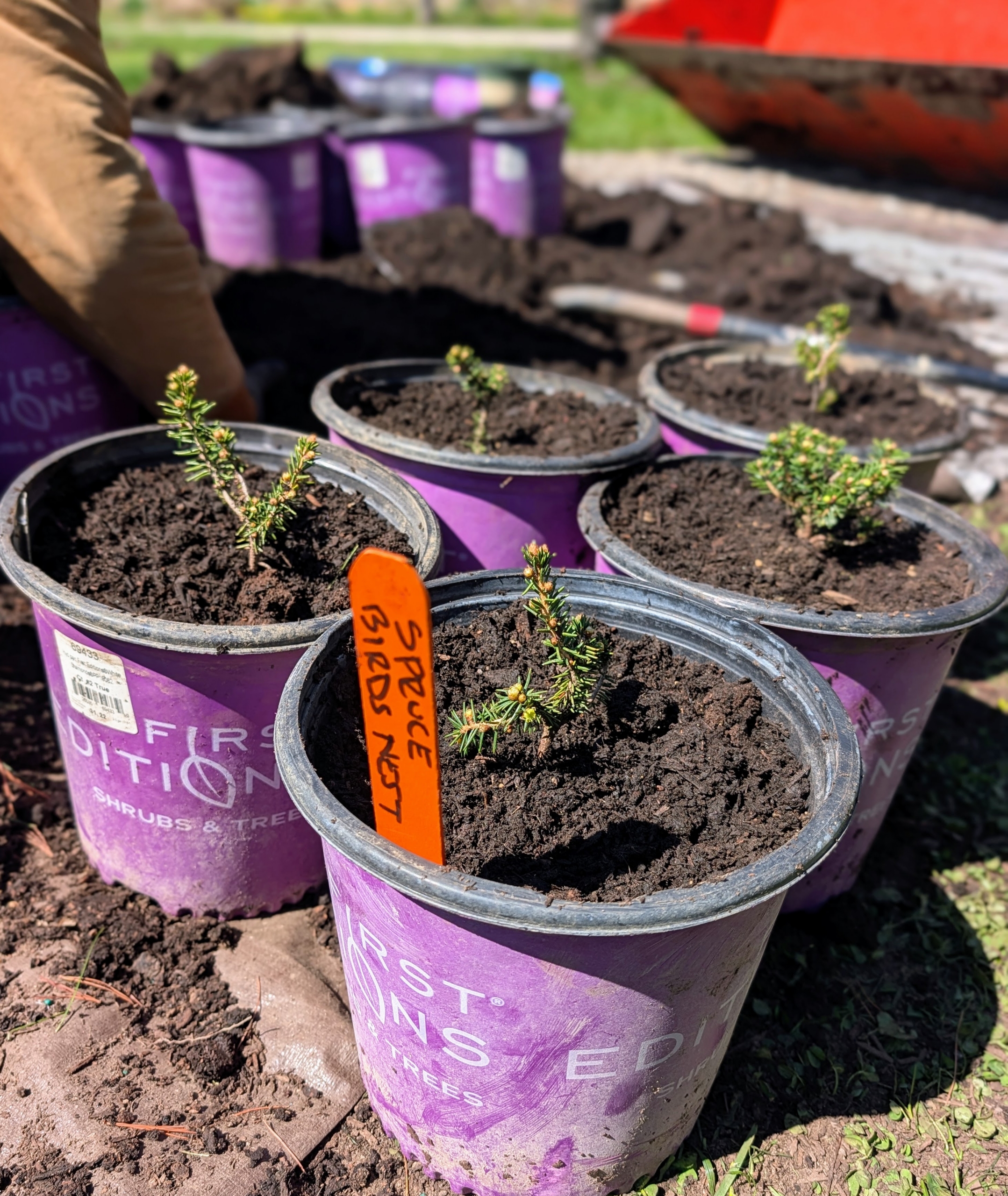
- These are Bird’s Nest spruce trees – slow-growing, dwarf evergreen conifers with a distinctive nest-like depression in the center.
-
- Phurba moves fast and pots the specimens by group. These Bird’s Nest spruce trees have shallow root systems and will do well in these pots.
-
- As each tree is potted, it is placed in a row with all like specimens – and marked.
-
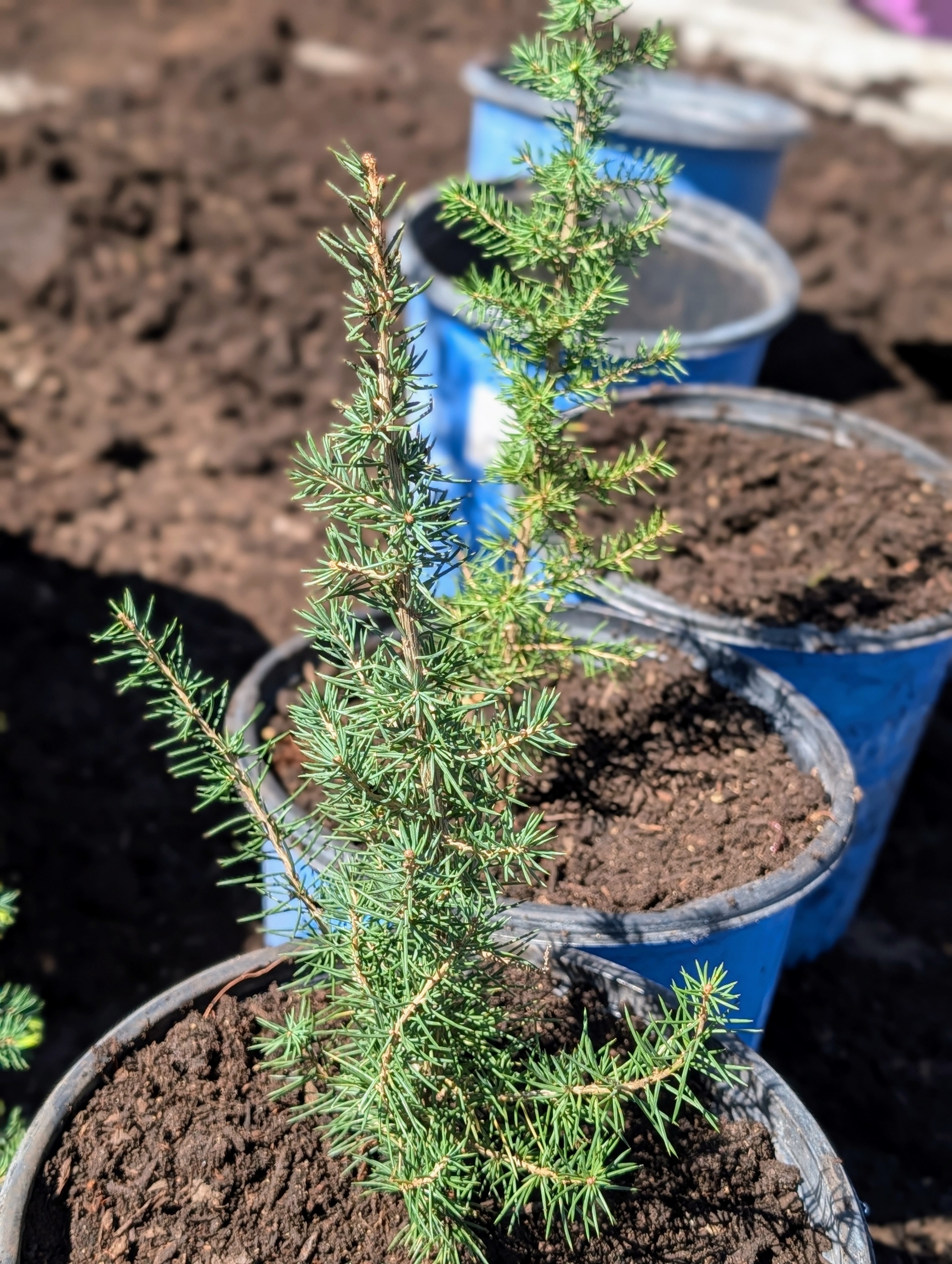
- The Blue Atlas Cedar, also known as Cedrus atlantica ‘Glauca’, is an evergreen native to the Atlas Mountains of Northern Africa and prized for its steel-blue to silvery-blue needles and branching structure. It typically grows with pyramidal crown when young, gradually spreading into a broad pyramid as it matures. The tree can reach 60 feet in height and 40 feet in width.
-
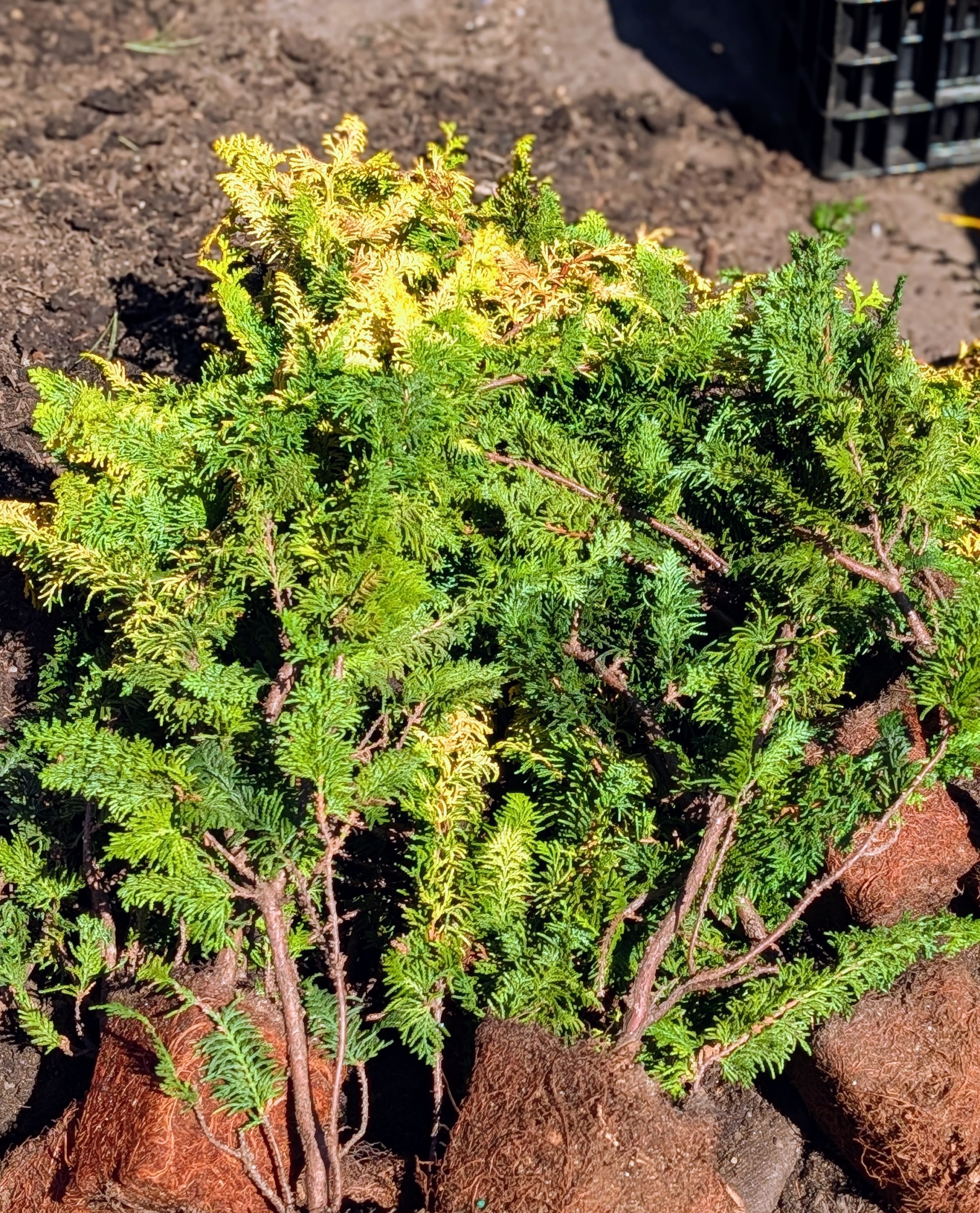
- I also got a selection of Fernspray Gold False Cypress, Chamaecyparis obtusa ‘Fernspray Gold’ – a dense evergreen conifer known for its golden-yellow to vivid green, soft, fan-like foliage.
-
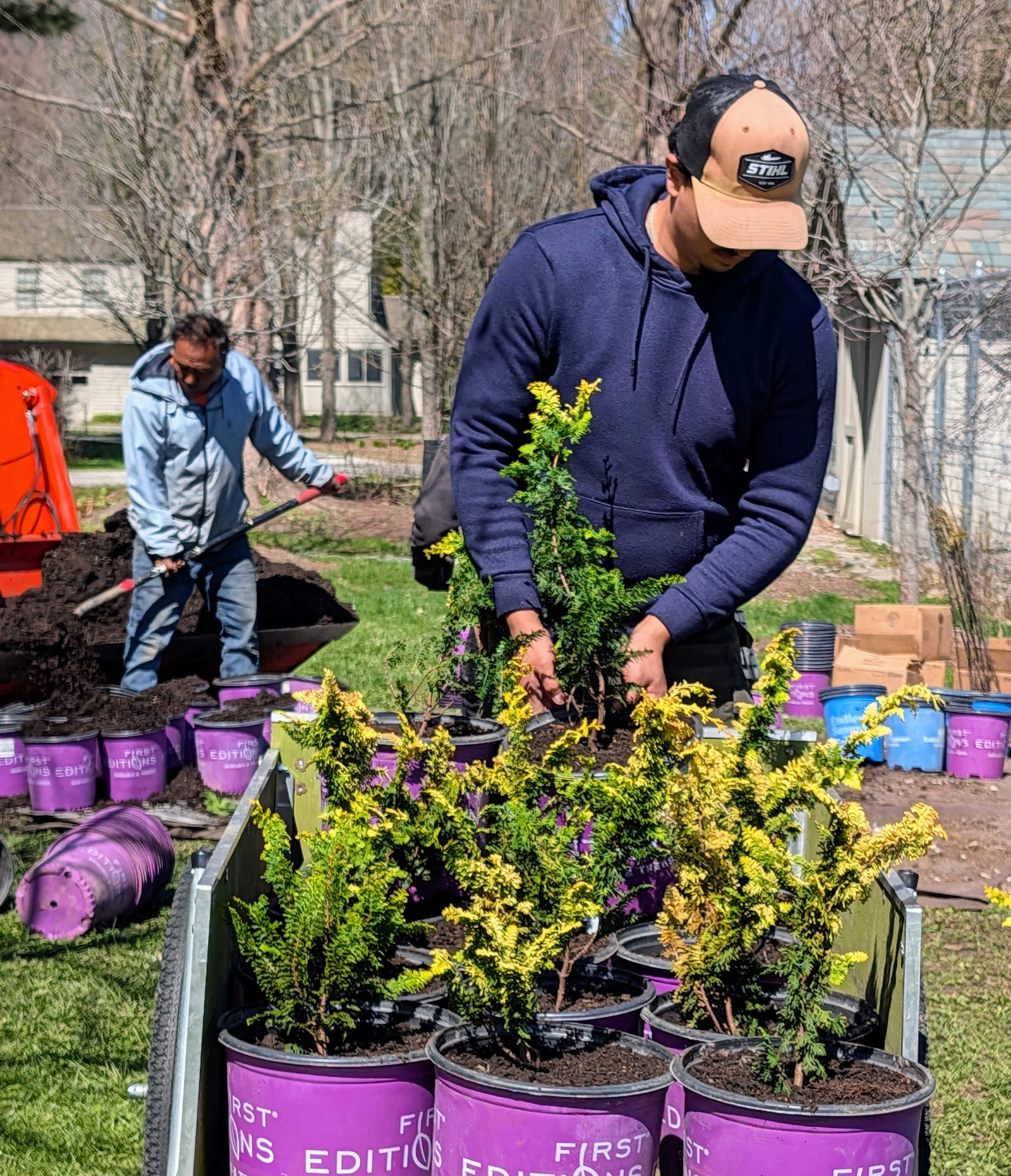
- In order to get all the seedlings potted as quickly as possible, it’s “all hands on deck.” The crew creates a very productive assembly line. While some plant, others load. Here’s Matthew loading potted trees onto the wheelbarrow.
-
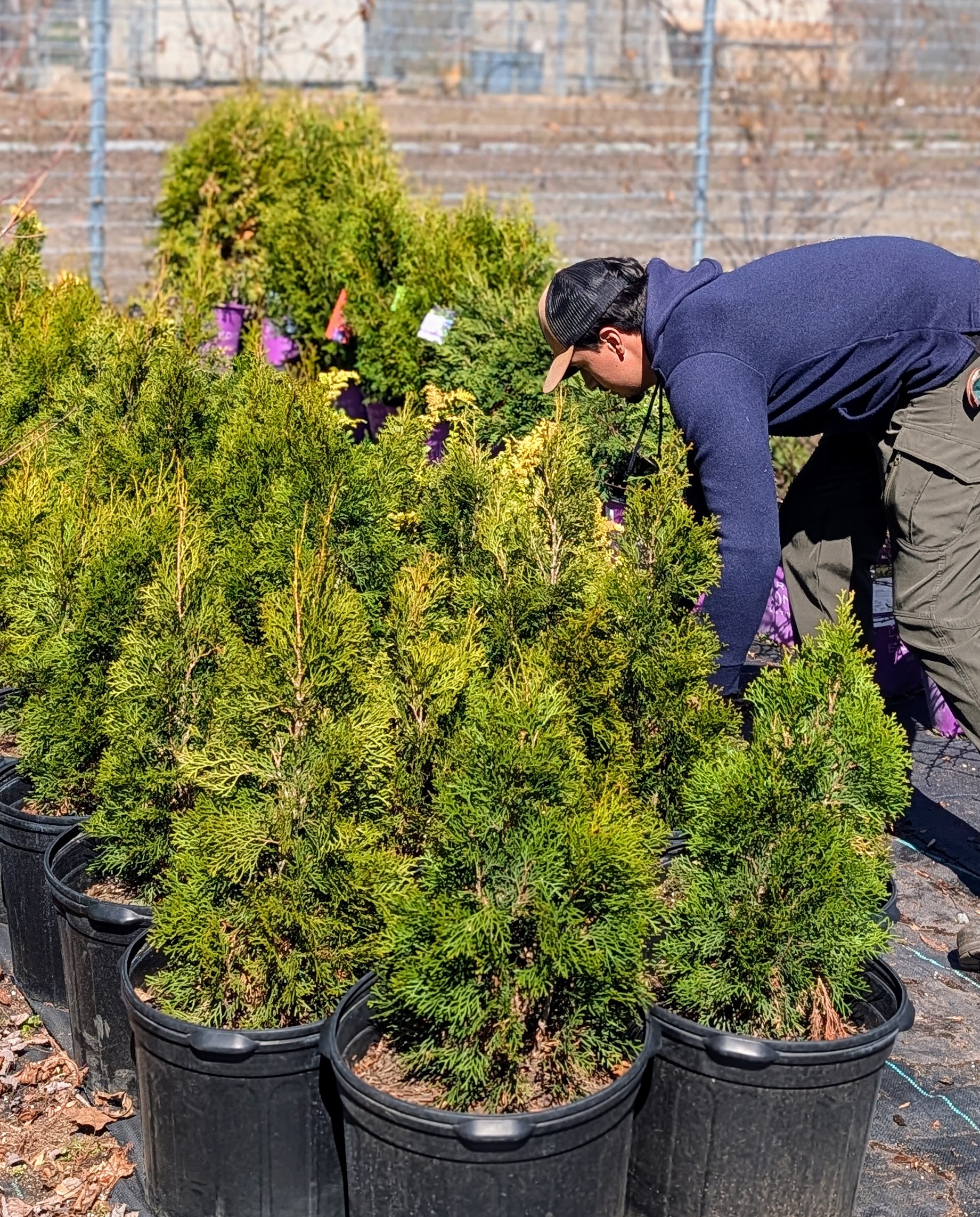
- And then he lines them up in the nursery where they will be properly and carefully maintained.
-
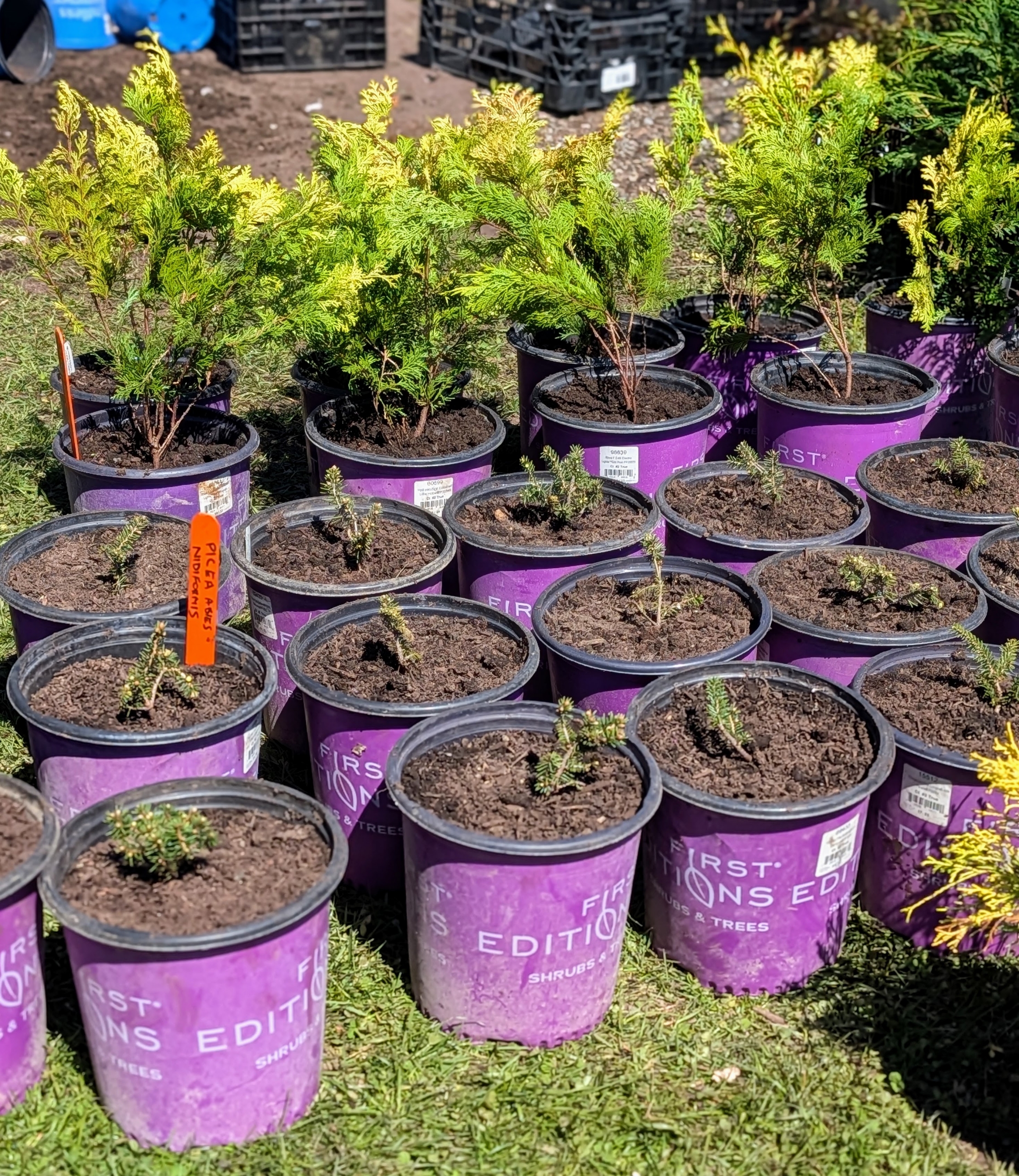
- These trees will thrive in these pots and be in excellent condition when it is time to plant them in their more permanent locations around the farm.
 Martha Pins


 Martha Tweets

