

Chicks at My Farm
It’s always exciting to have babies at my farm - especially when they're cute, fluffy chicks.
Right now I have more than 50 precious chicks in residence. The peeps came from eggs laid here at my farm and then incubated and hatched inside my "chick room" at the stable. All of them are healthy, alert, and very curious. They will remain in a large, heated cage until they are big enough to move outdoors to their own enclosure and coop, and then into the chicken yard with the other adults.
Here are some photos, enjoy.
-

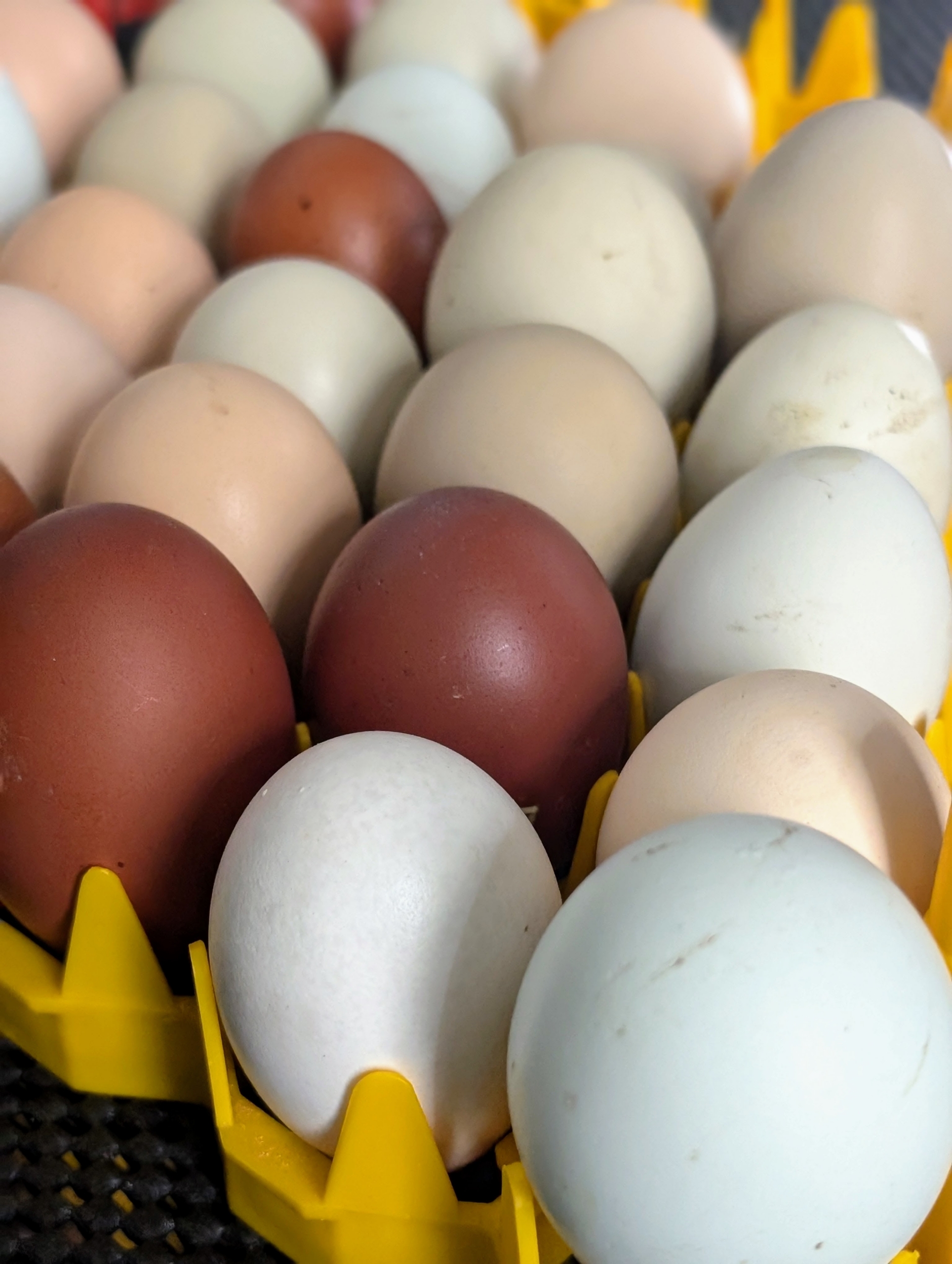
- It’s that time of year when I have lots of eggs – all laid by my healthy hens here at the farm.
-
- The eggs are placed into an incubator where they are safe from other birds and closely monitored until they hatch. Chicken eggs take 21-days. While the eggs incubate, they are automatically turned once a day, 45-degrees each way, back and forth during this period.

-
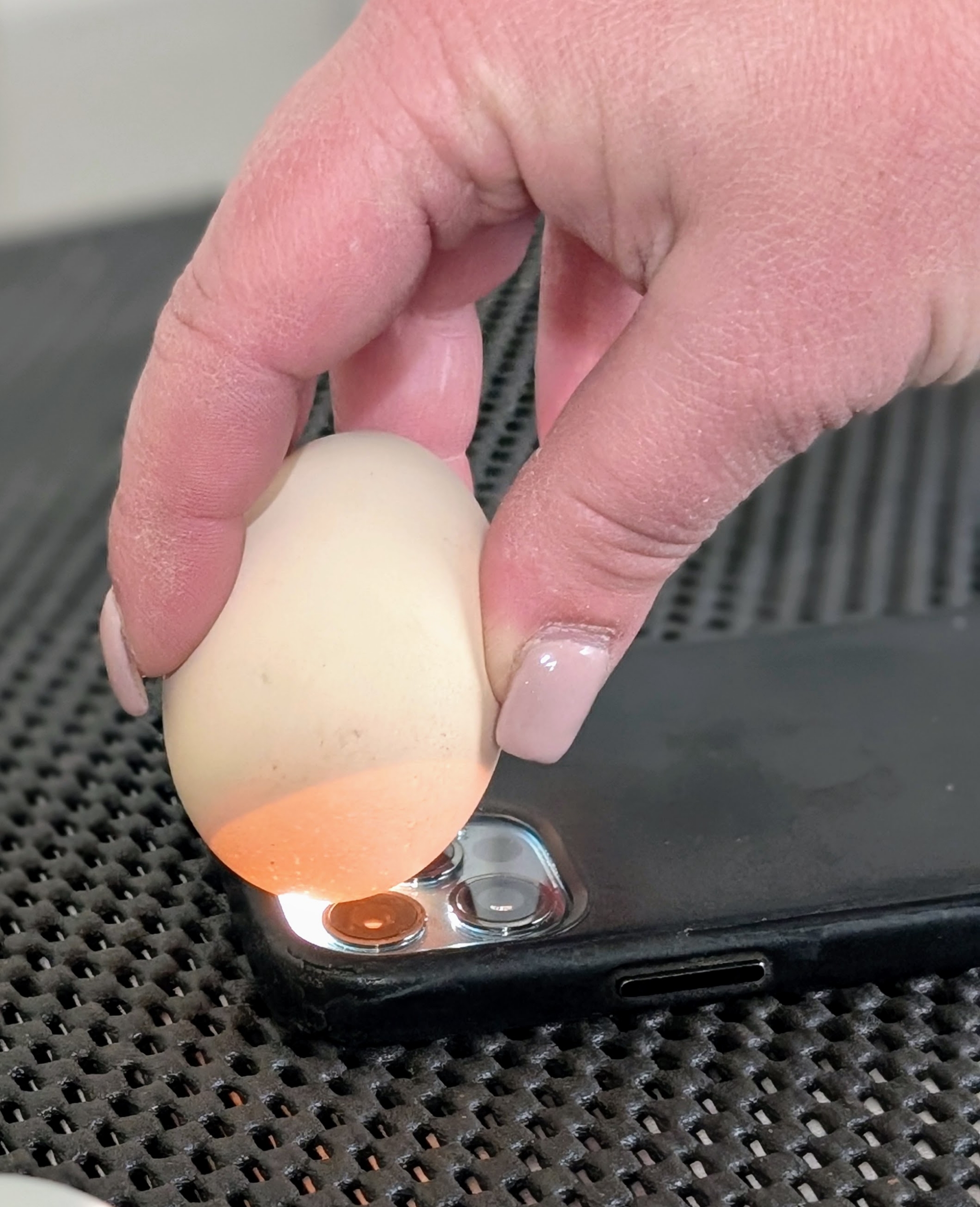
- At about day-7 and again at day-14, Helen “candles” each one, meaning she holds each egg against a light, turning it slowly, to observe the embryo inside. Fertilized, growing embryos can be identified by visible blood vessels, a large dark spot or filled space in the egg. This egg looks to have a developing chick inside.
-
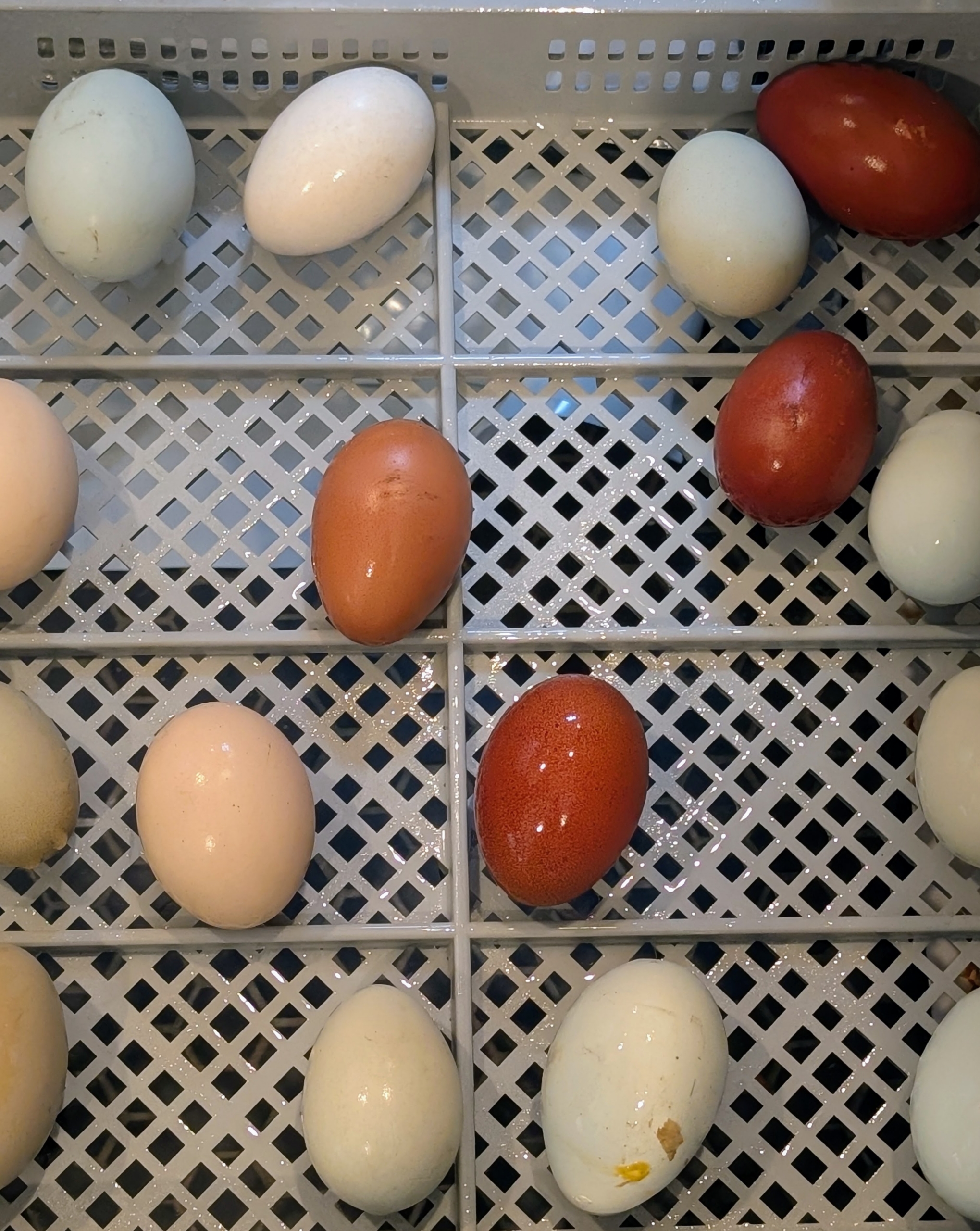
- From days 17 to 21, they’re placed into this hatching cabinet, where it is still warm. The eggs are spaced apart in sections where it is safe and where eggs cannot roll during the hatching process.
-
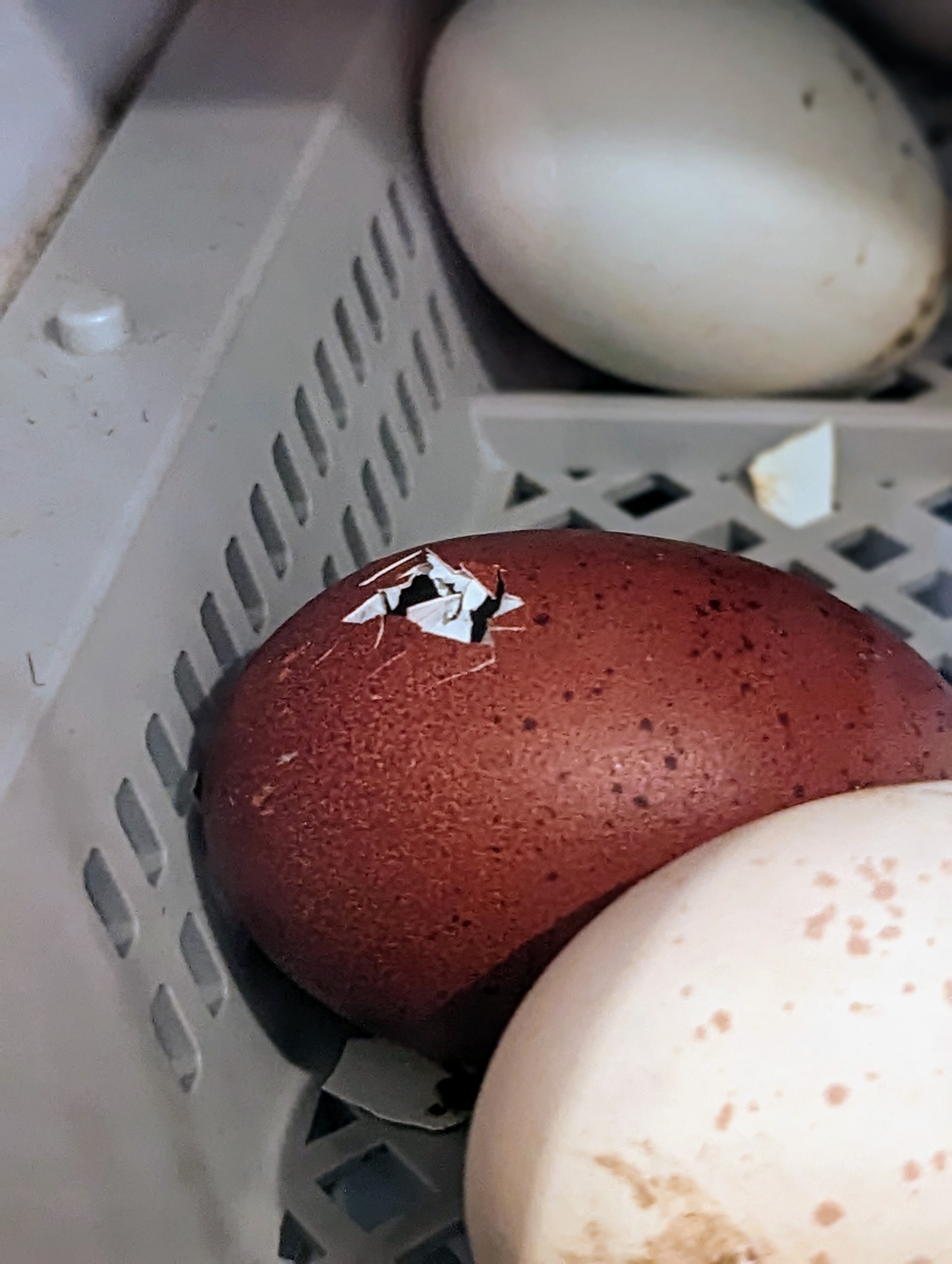
- And then the wait for pipping begins, when a chick starts to crack its egg. This process starts around day 19. The chick breaks through the shell to breathe air.
-
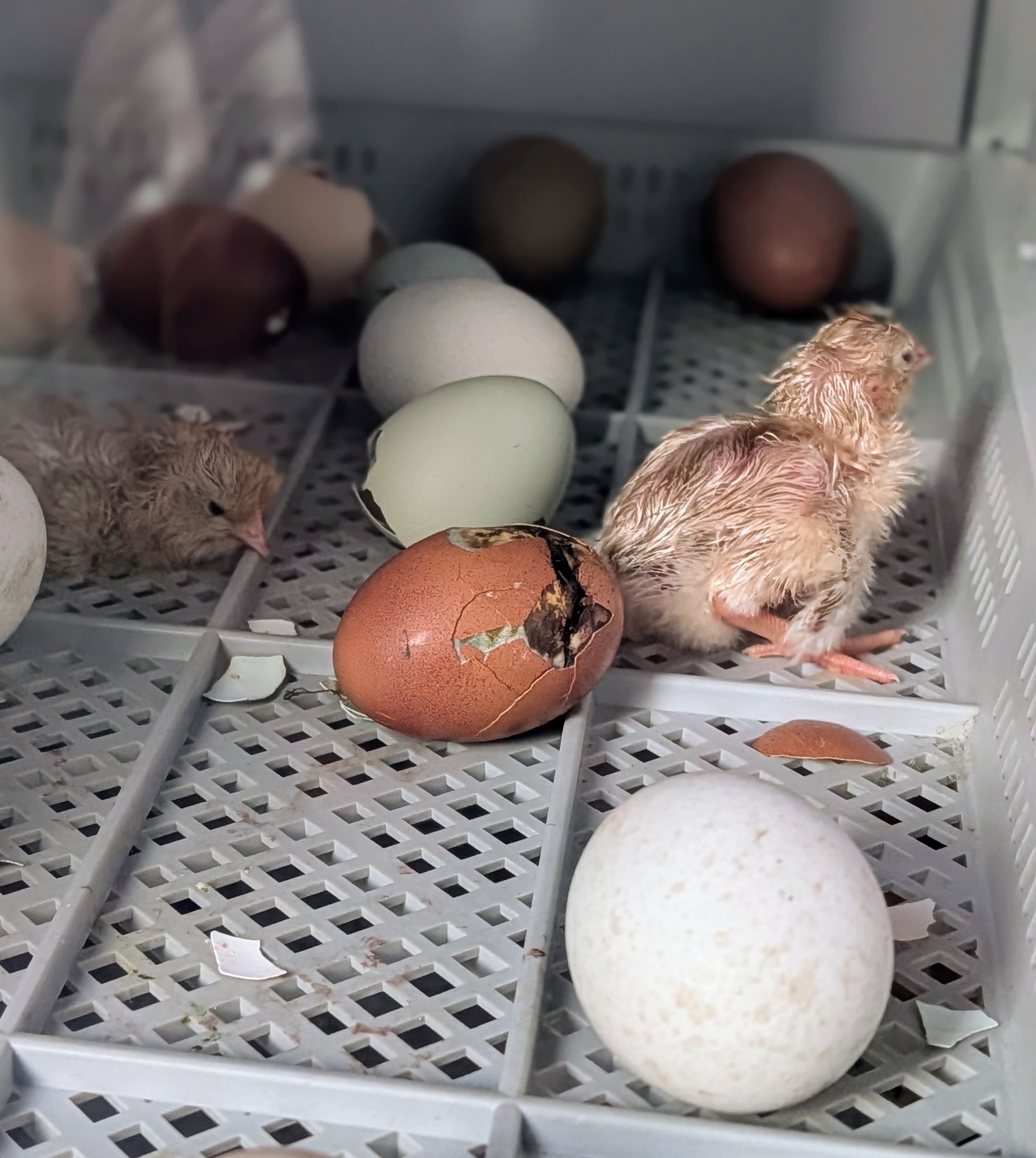
- And one by one, chicks emerge. They remain here until they are dry.
-
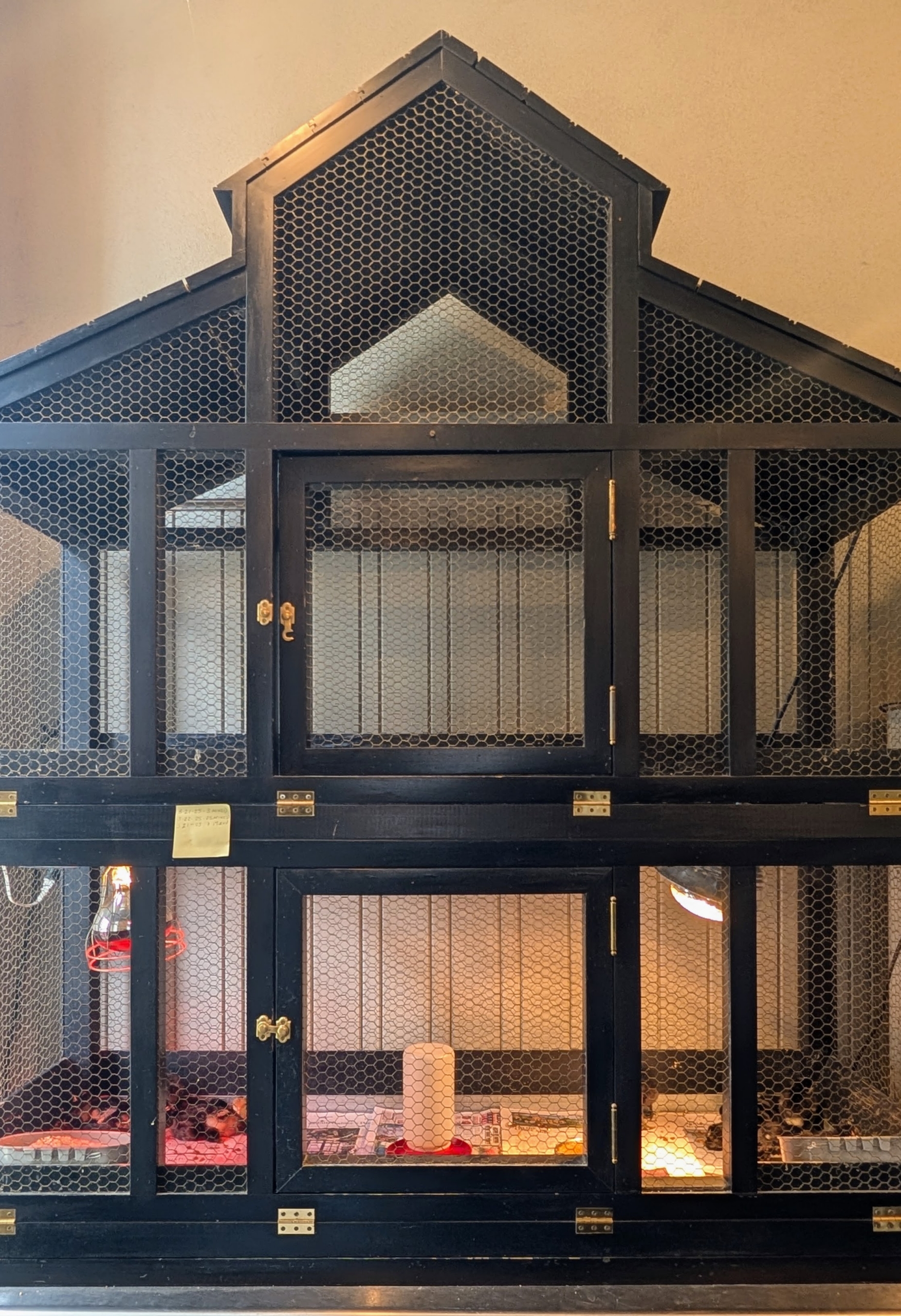
- After the chicks hatch, they are placed into this cage in the same room. The room is kept very warm and the chicks are checked often. Baby chicks need constant monitoring until they are at least a month old.
-
- The chicks are kept in a draft-free brooder with appropriate red heat lamps to keep them warm. Chicks require an air temperature of 95 degrees during the first week, 90 degrees the second week, and so on – going down by around five degrees per week until they’re ready to transition to the coop.
-
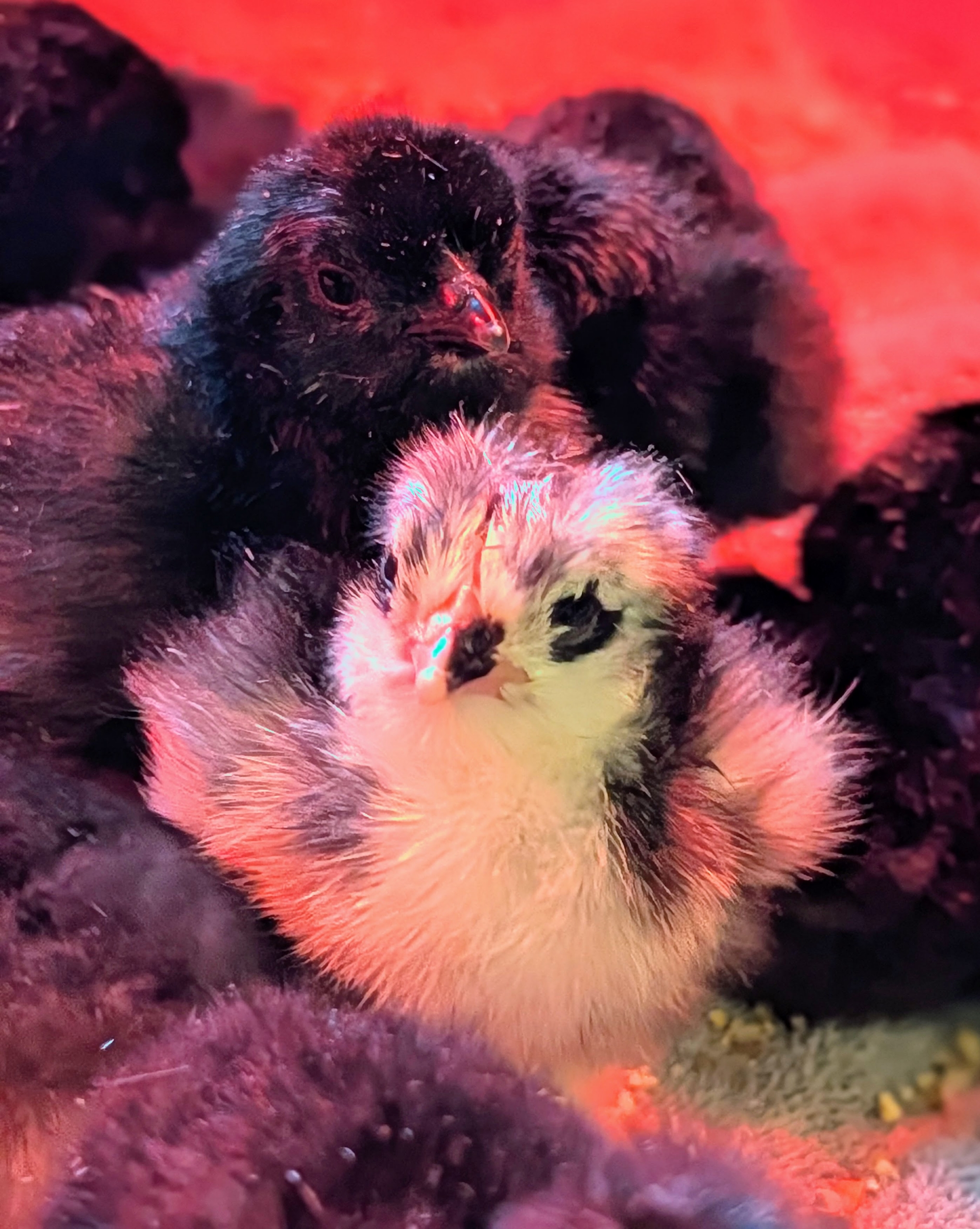
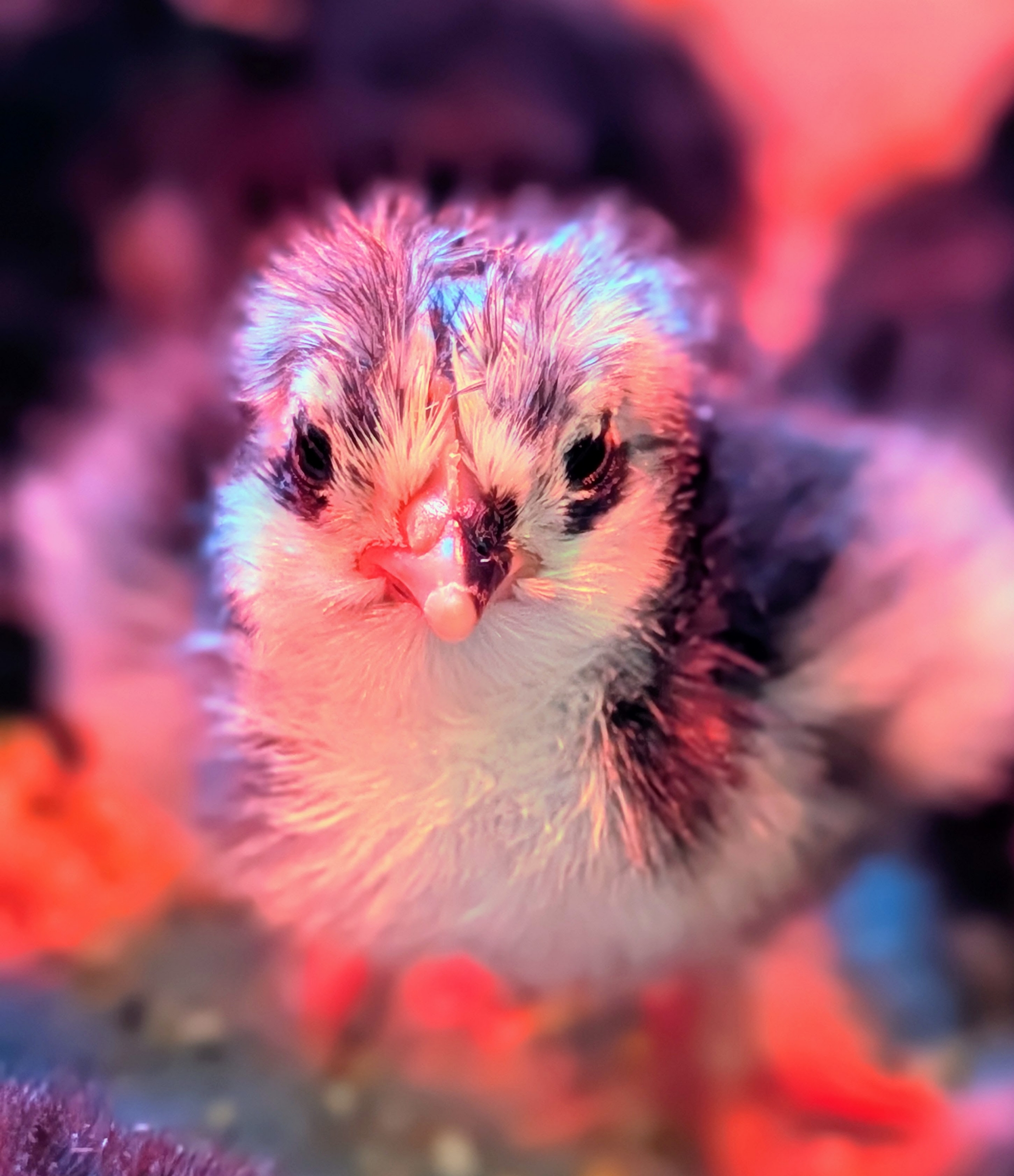
- And here is just one of the chicks – nothing short of adorable.
-
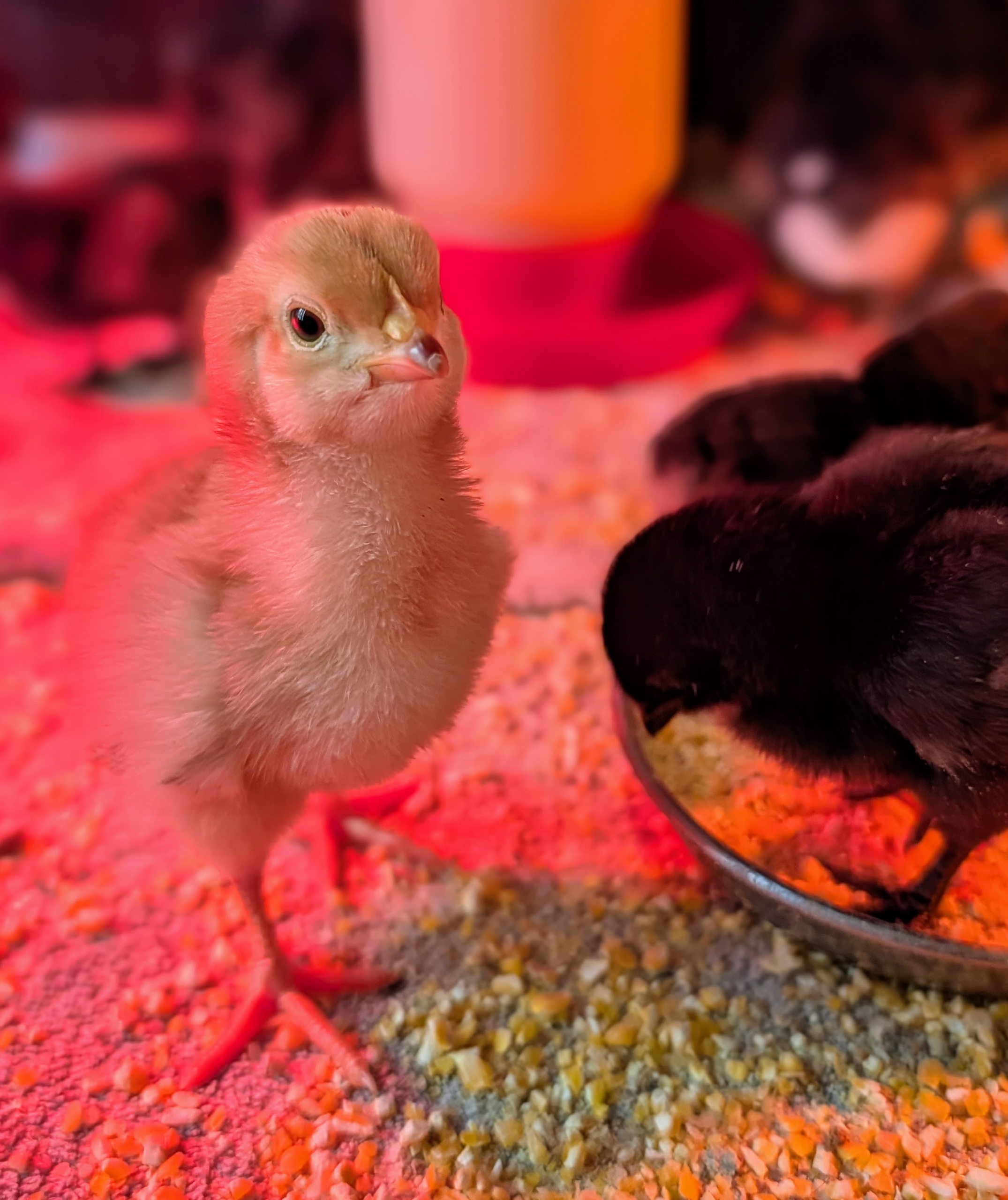
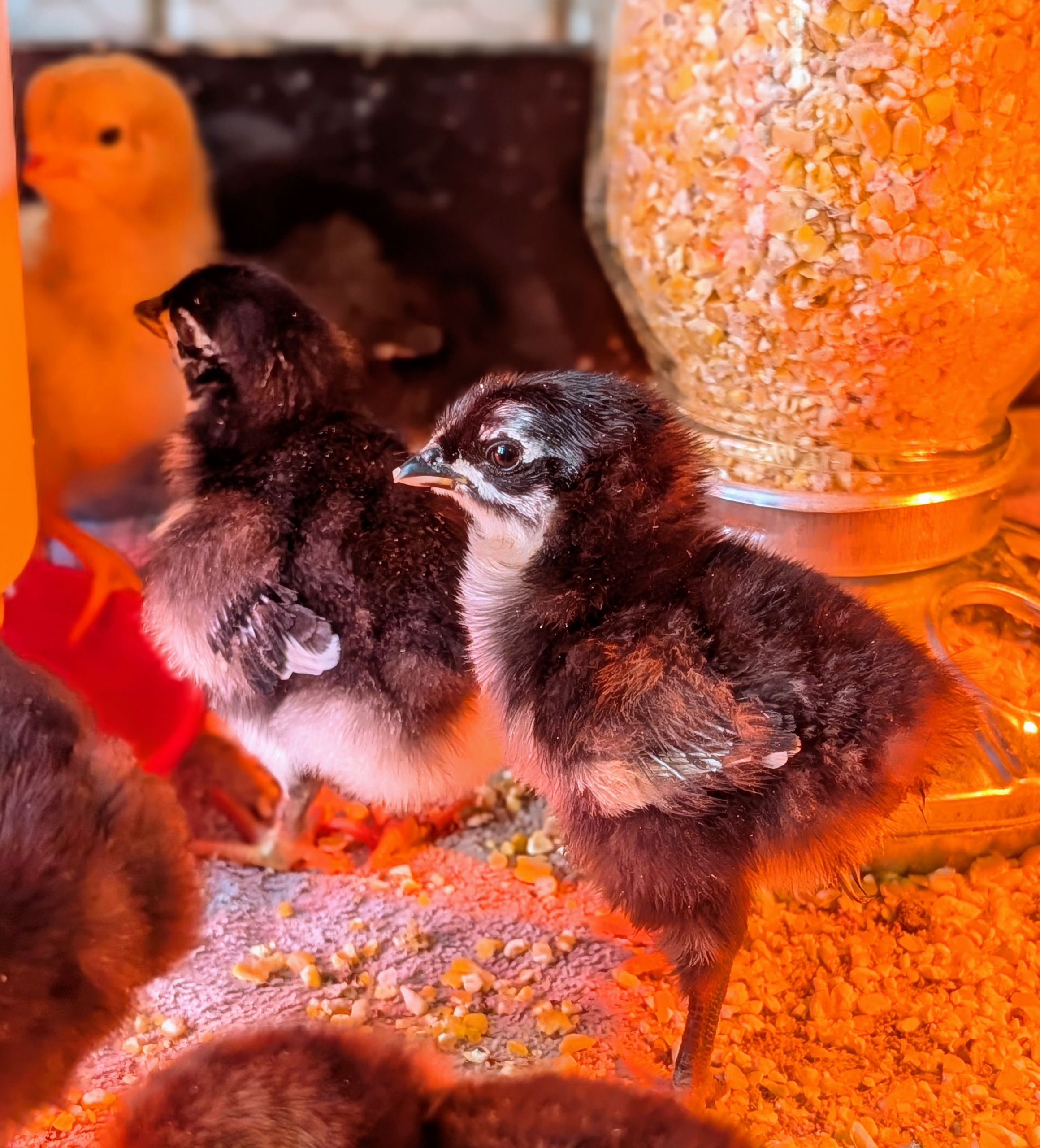
- These youngsters are less than a week old, but they are already very mobile and exploring their surroundings.
-
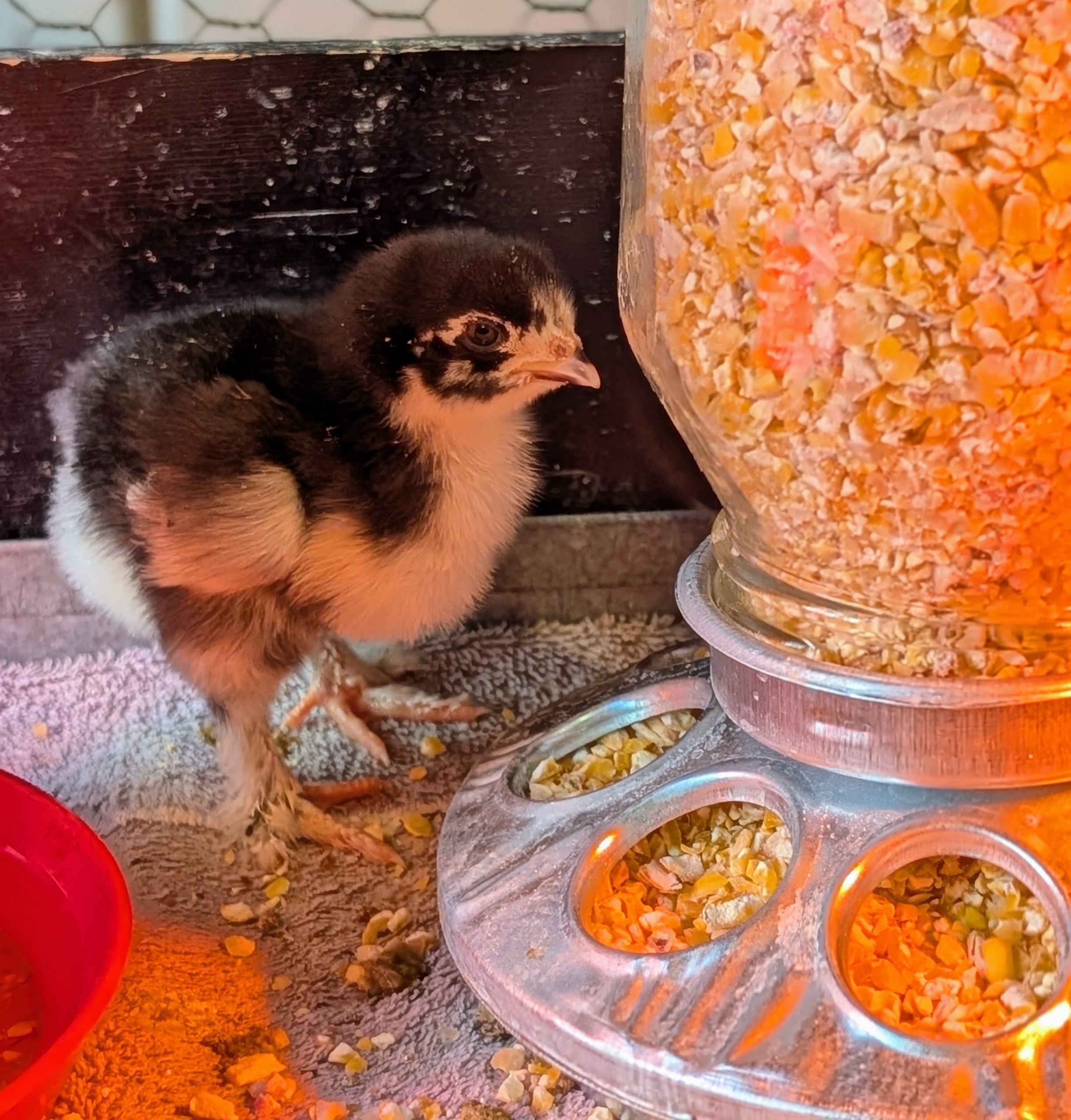
- The chicks are fed organic chick starter for the first six to eight weeks. Starter feed is a protein dense variety of chicken feed designed to meet a chick’s dietary requirements. Several feeding dishes are placed into the cage.

-
- A chick should never have to “wait in line”. On average, about 10-chicks can consume approximately one-pound of chick starter feed per day.
-
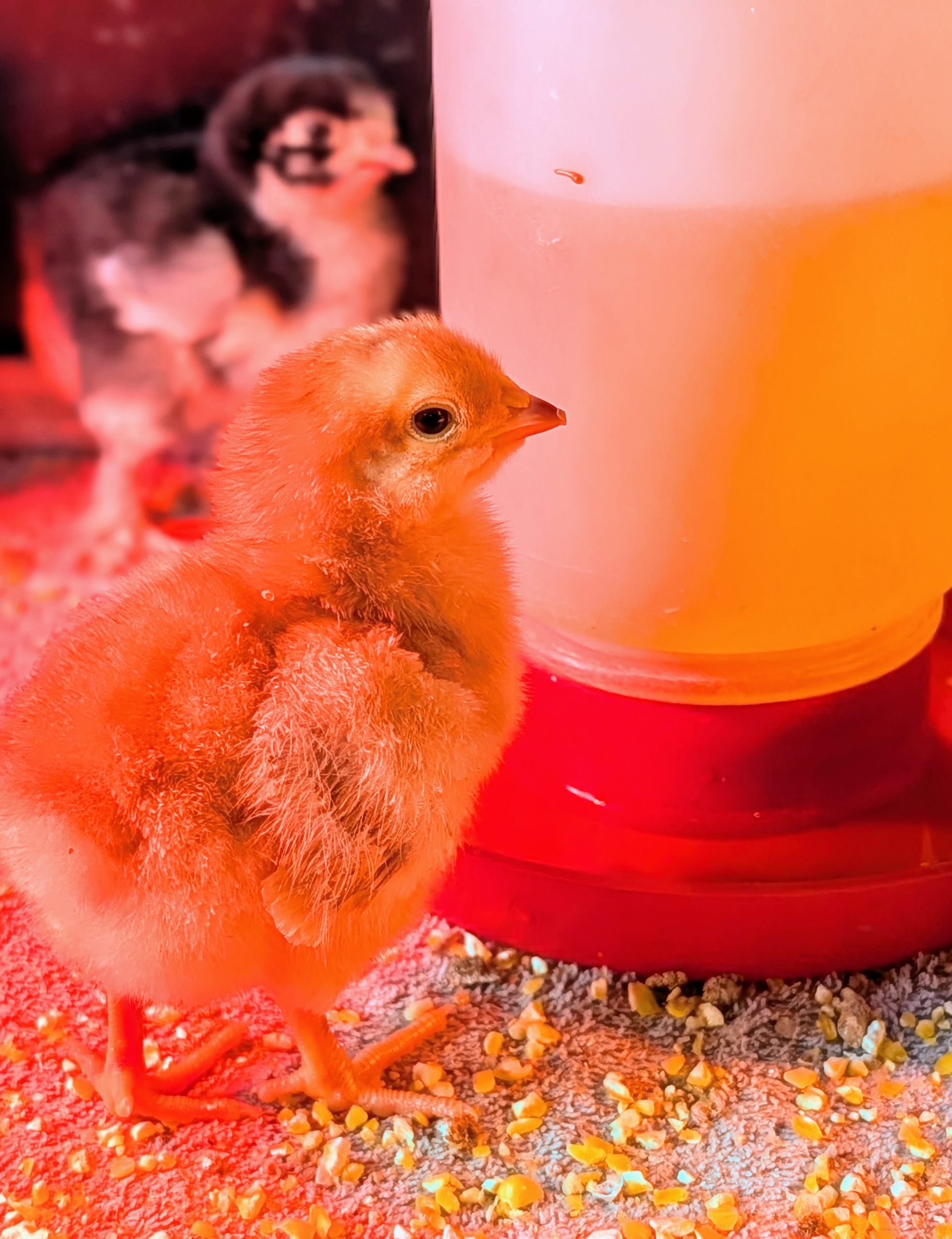
- Fresh, clean water is also always provided. In fact, every chick is personally shown where their food and water sources are, so they know where to find them.
-
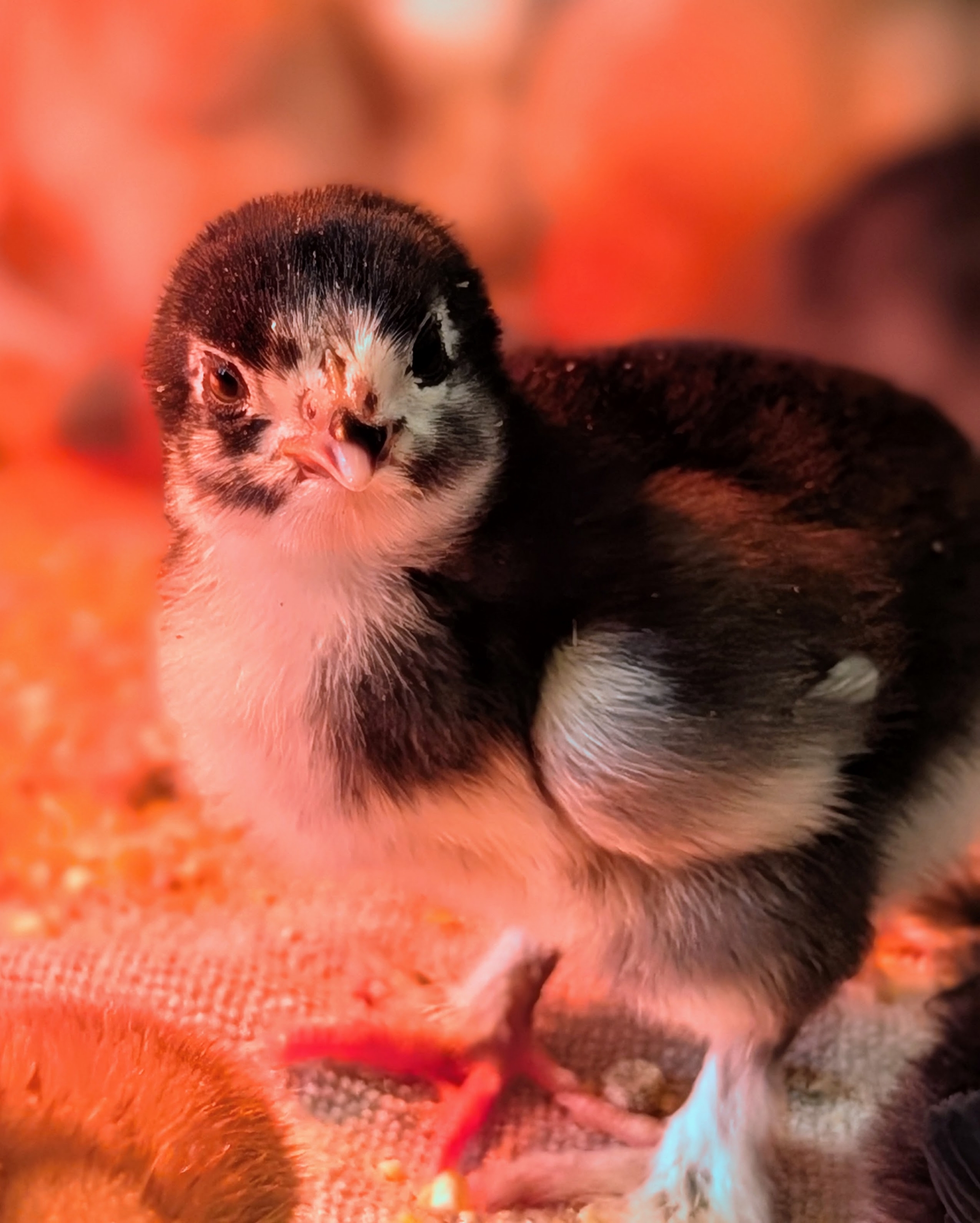
- Chickens are generally gentle, shy birds, but because these are being raised around a lot of activity, they will be well-socialized and friendly.
-
- Chickens have their own personalities – some are more active or more curious than others.
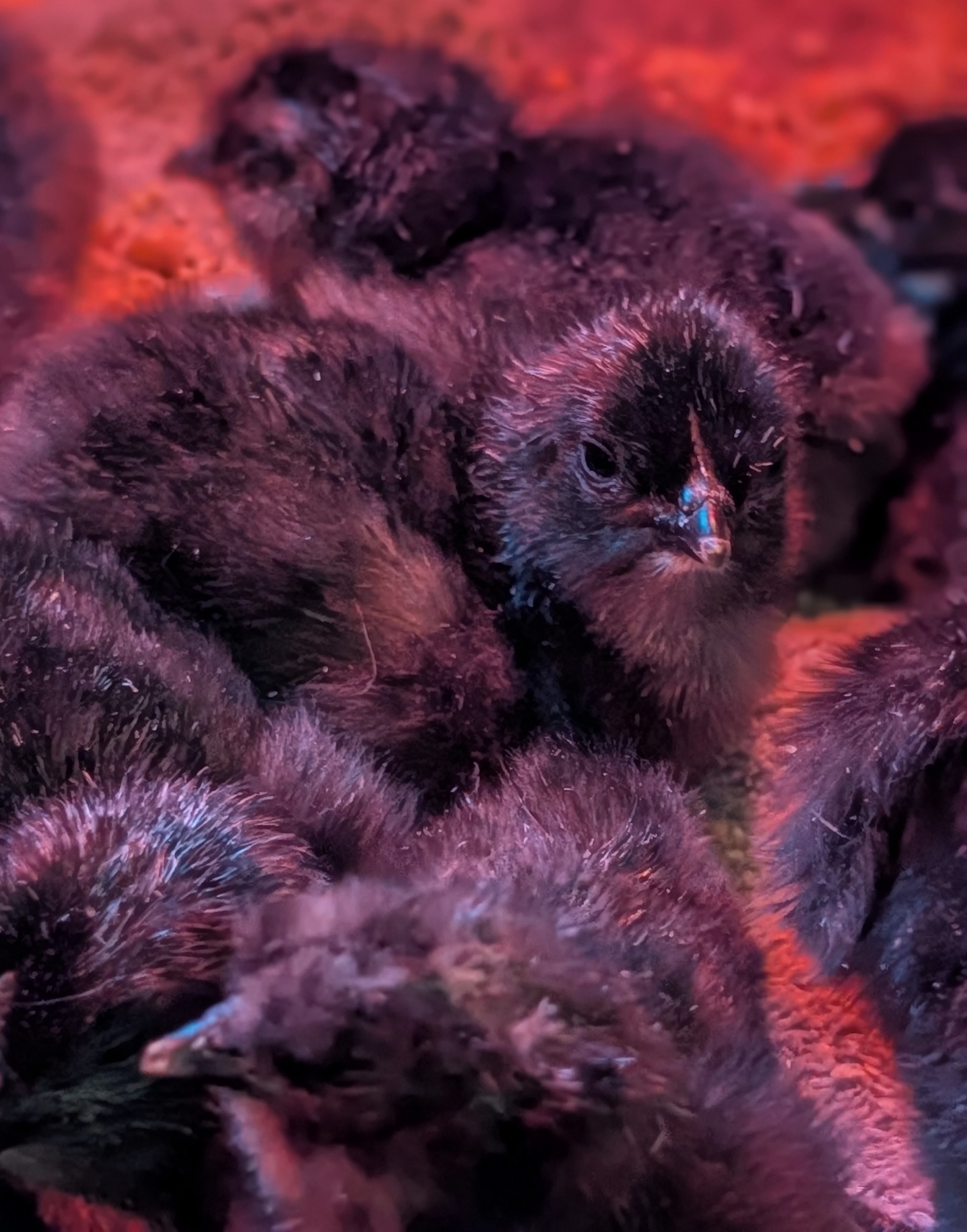
-
- These babies get lots of visitors throughout the day, but ideally, they should be checked at least twice daily for food, water, and temperature needs.
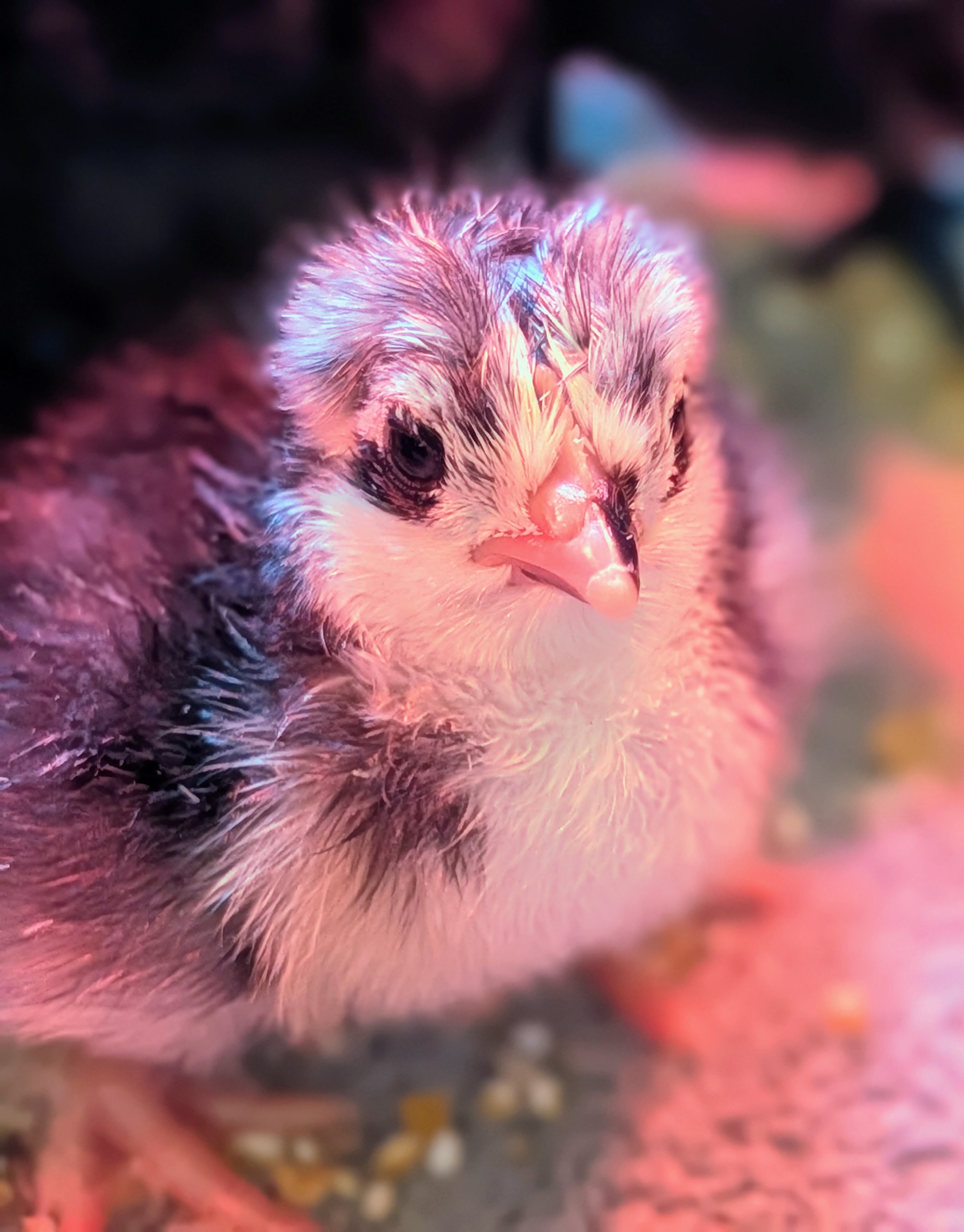
-
- These chicks all have clear eyes and are very alert.
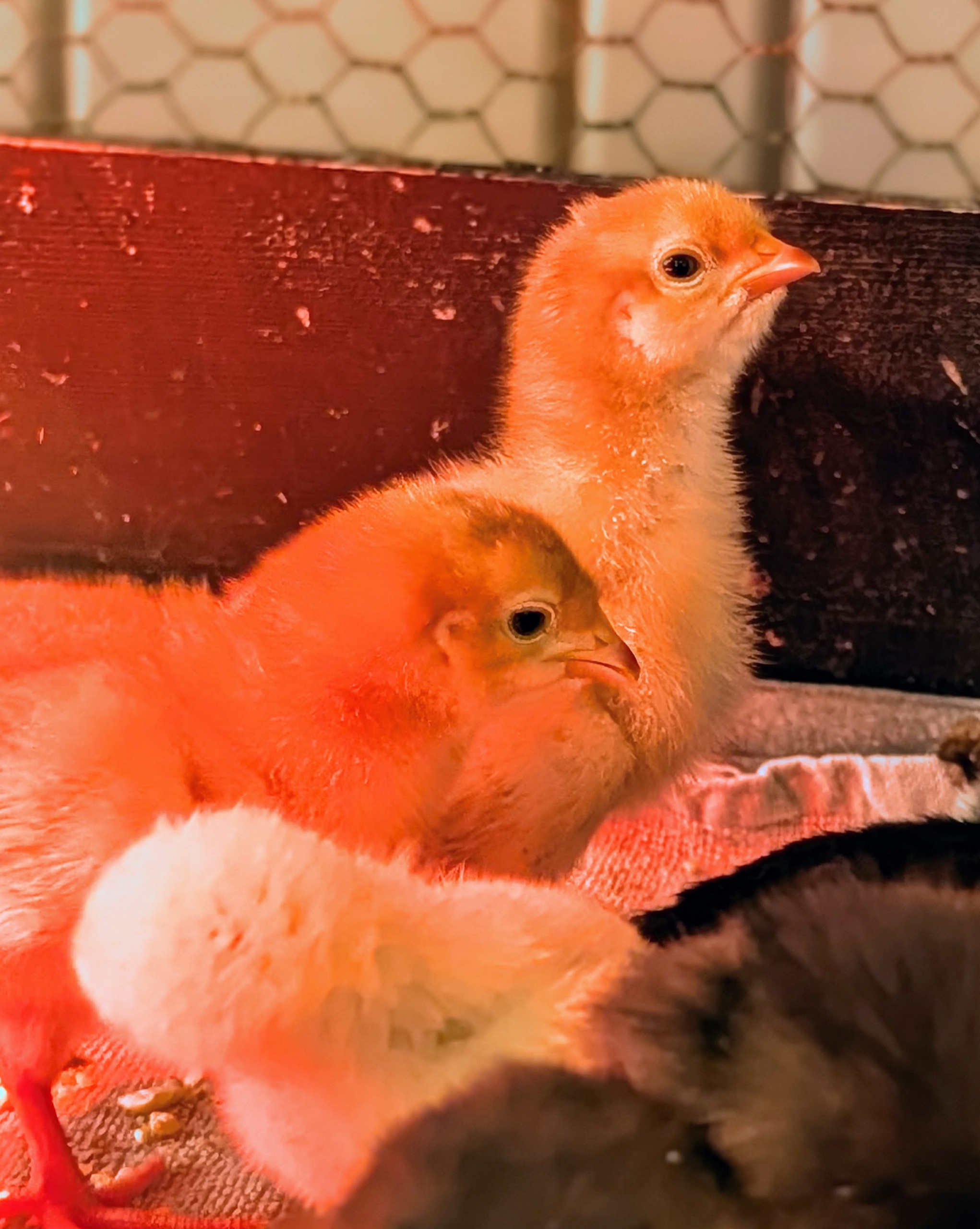
-
- One can typically identify roosters from hens around four to 12 weeks of age. Right now, they’re all just sweet, charming peeps.
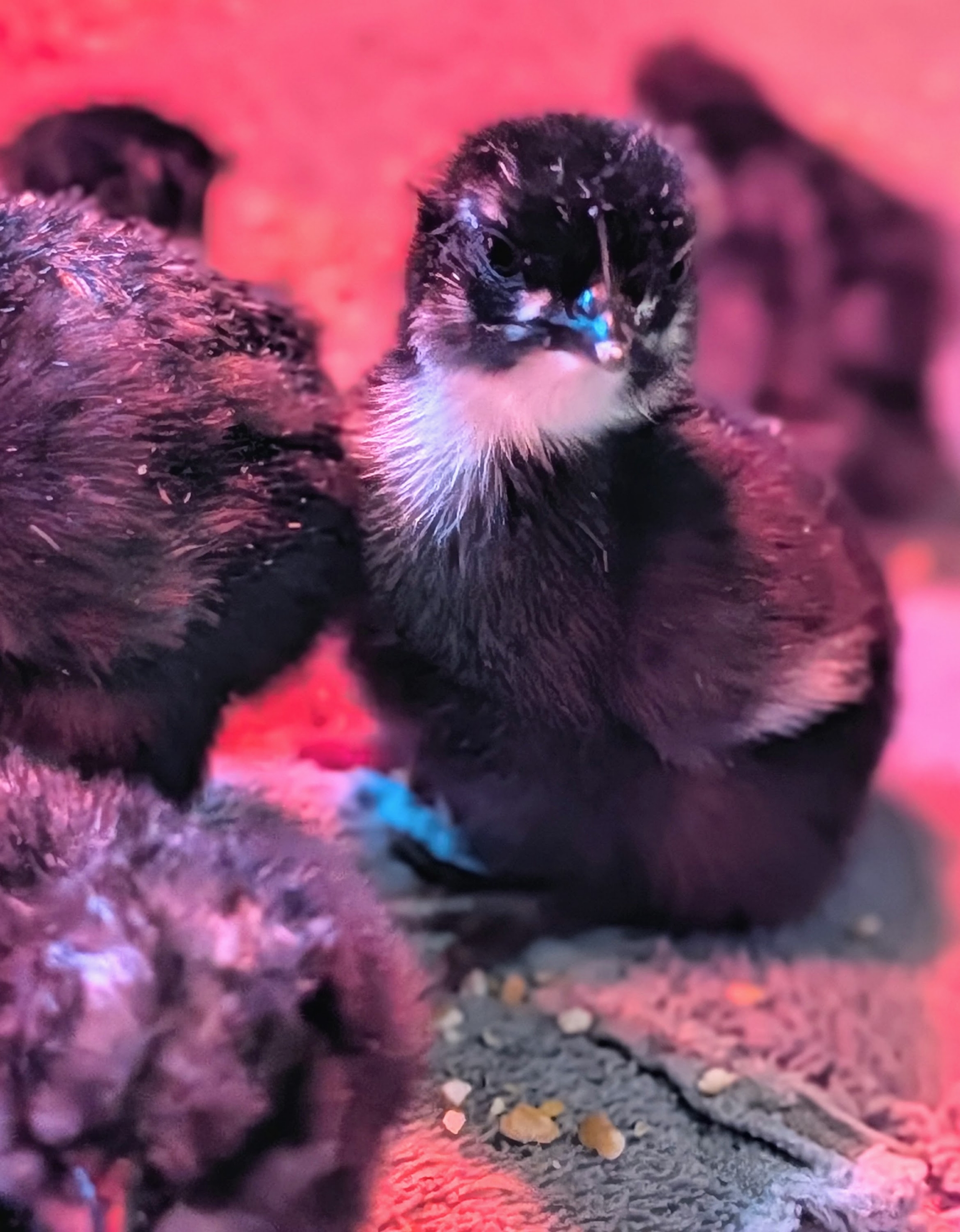
-
- In general, chickens are quite vocal. They make around 30 different calls to communicate with each other, expressing everything from “I am hungry” to “there’s a predator nearby.”
-
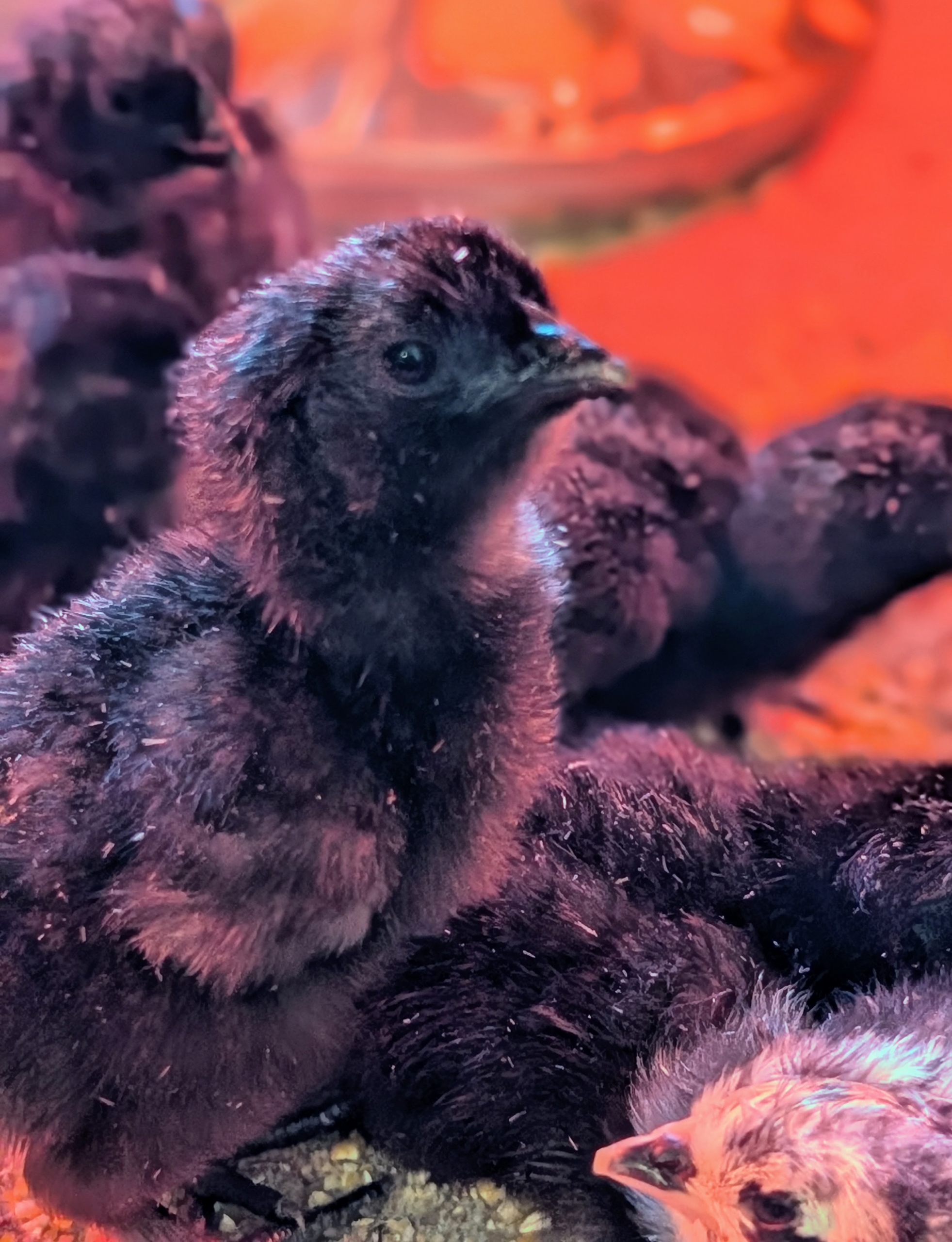
- Chicks grow quickly and are quick to follow behaviors from other flock members.
-
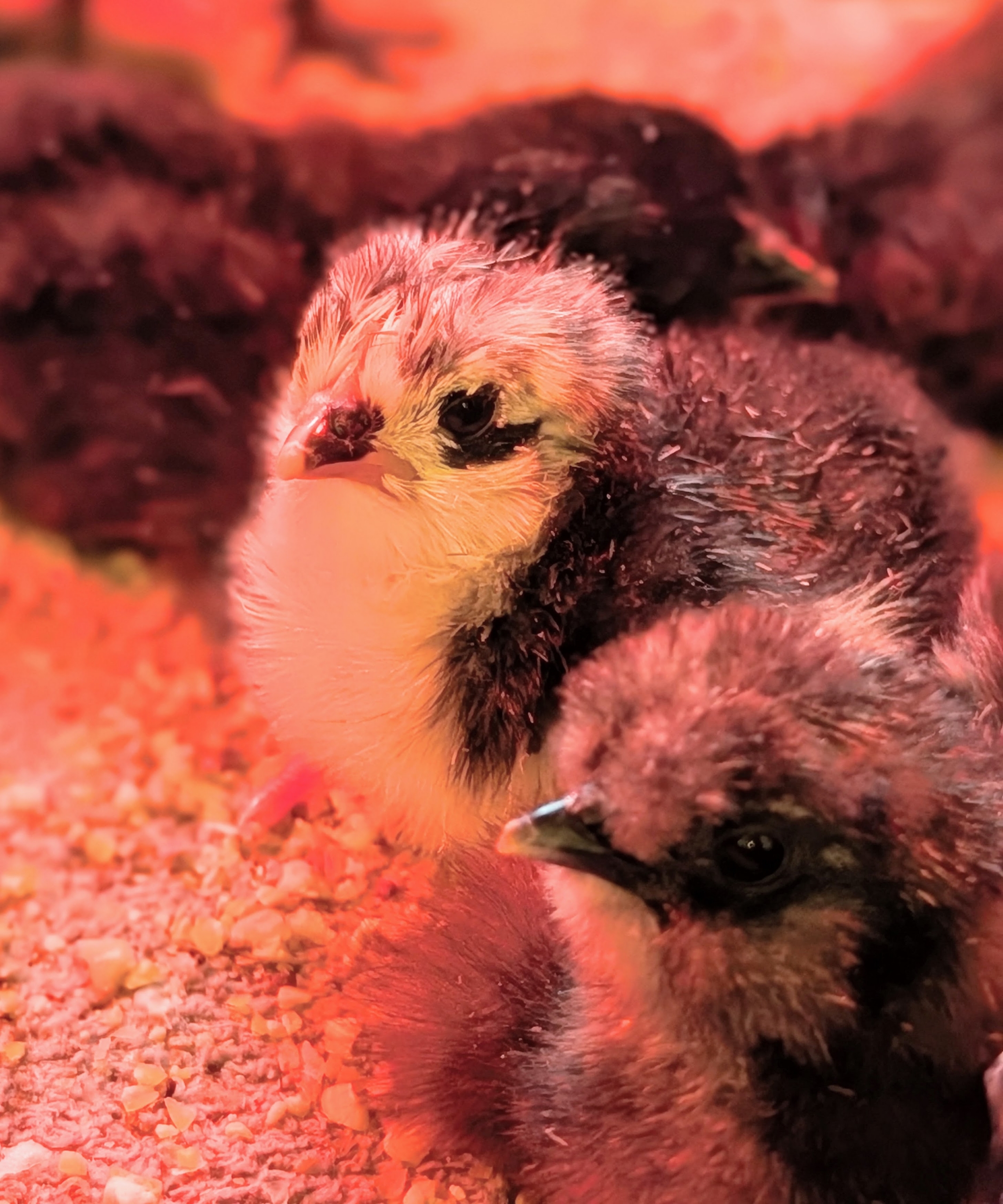
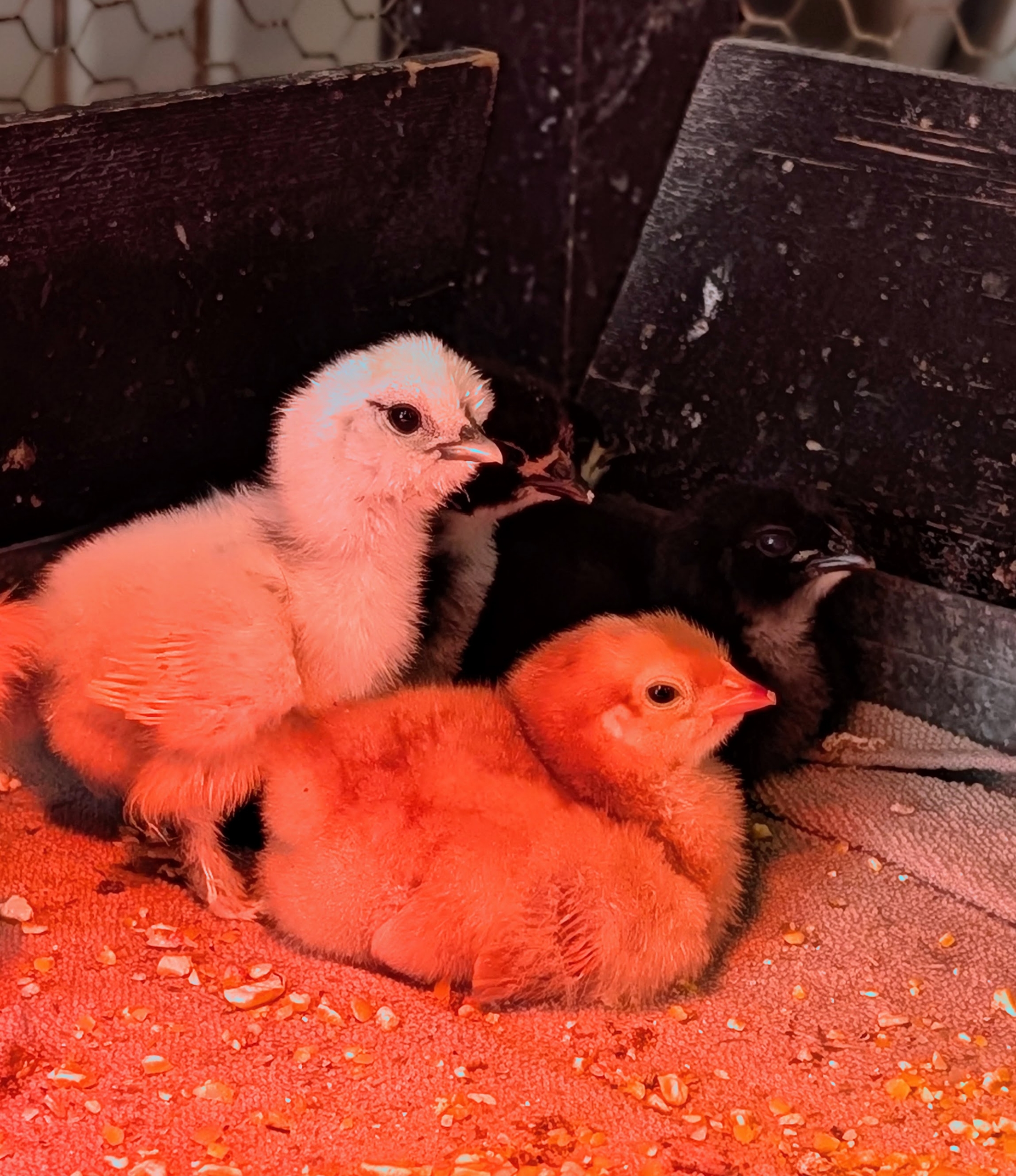
- These peeps are also very social and where one goes, the others follow.
-
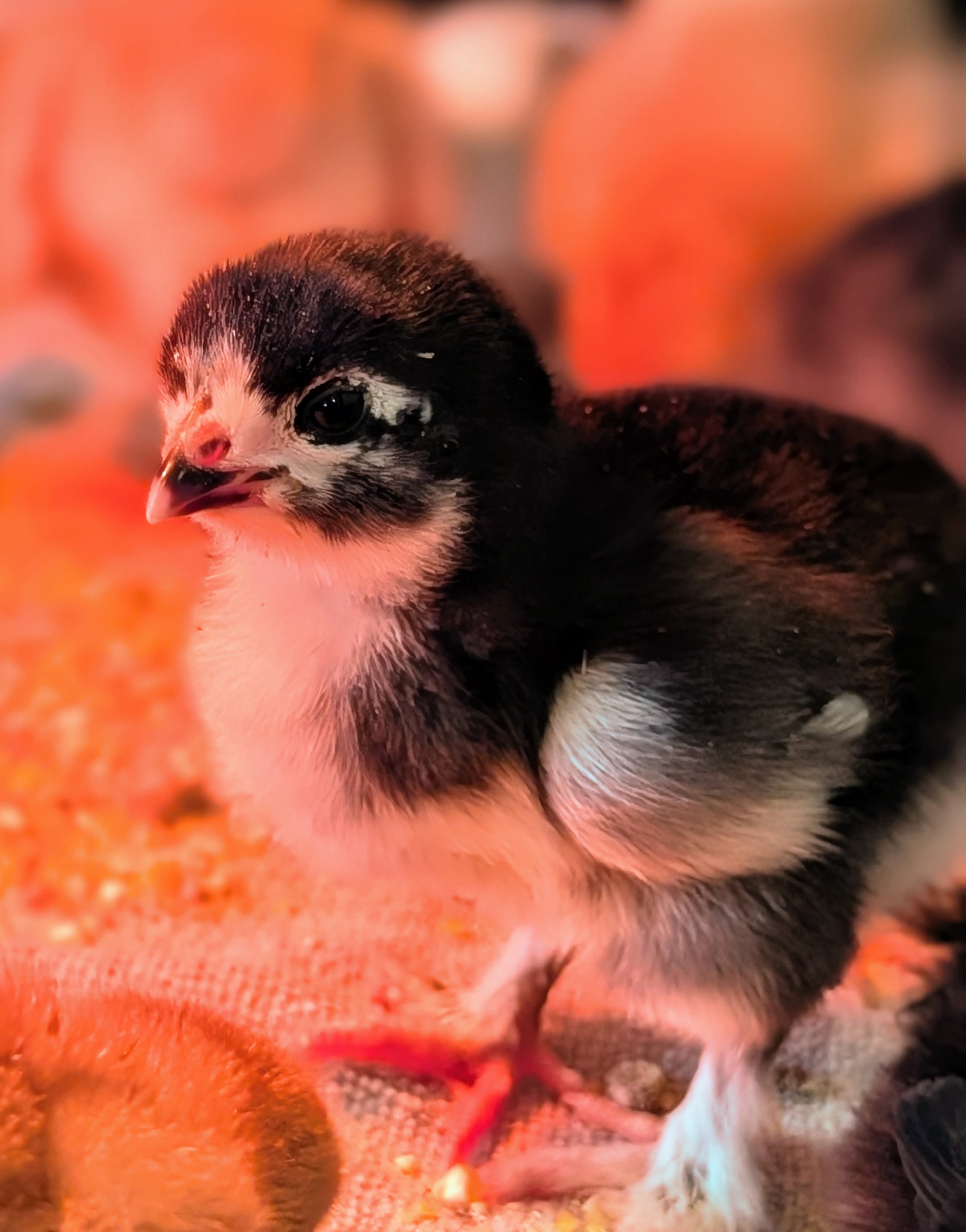
- This chick is wide awake now, but chicks sleep quite a bit – between 18 and 20 hours a day when they’re this young. They need the rest for growth and development.
-
- I’ve raised many different chicken breeds and varieties over the years. I am so happy with this group – they are all strong, good eaters, and will be great additions to my flock.
 Martha Pins


 Martha Tweets

