
Preparing the Season's Vegetable Garden
My large, half-acre vegetable garden is ready for planting.
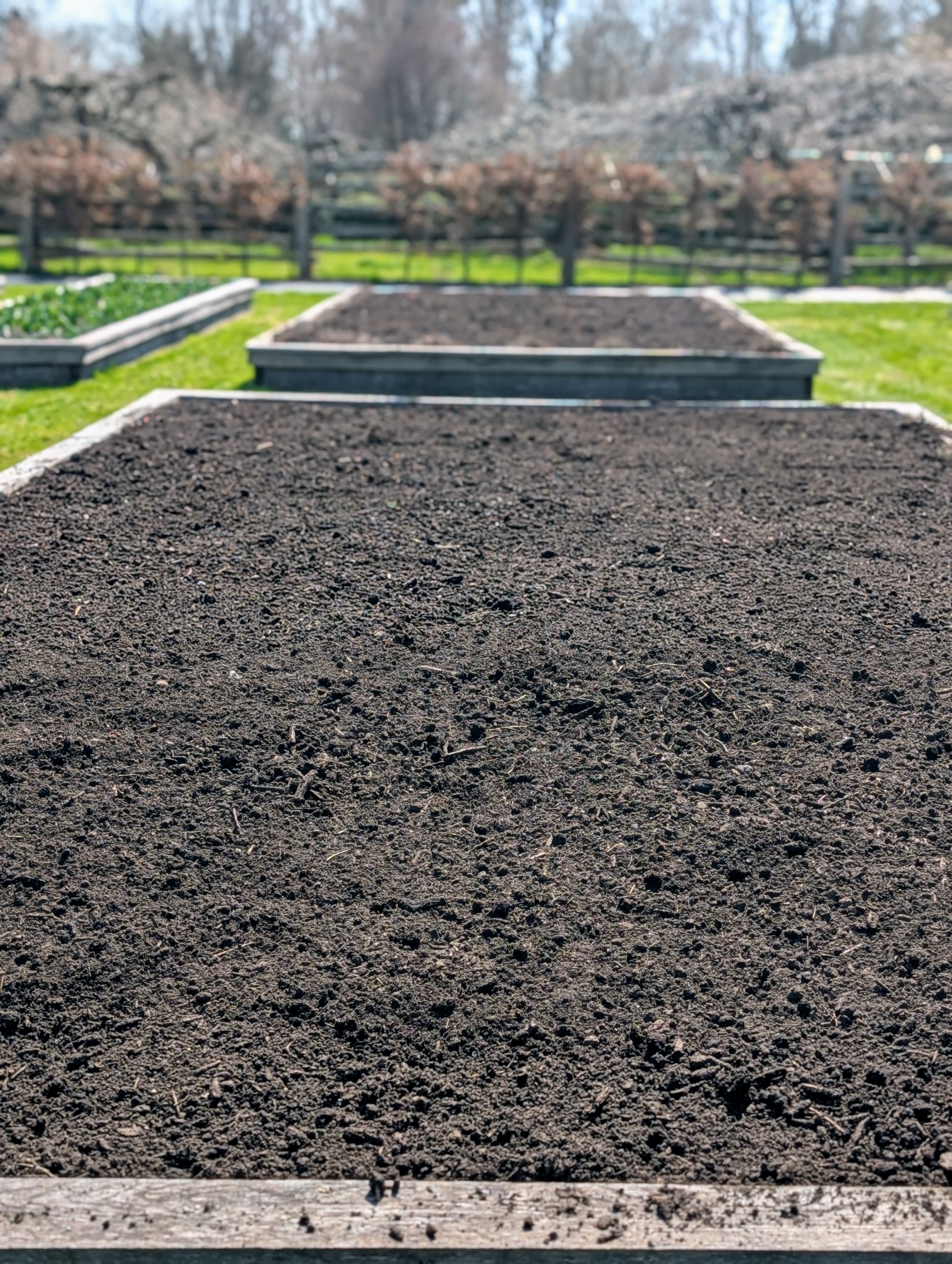
Having a really good vegetable garden where I can grow lots of fresh, delicious, and nutritious produce is extremely important to me. I share the vegetables with my daughter, my grandchildren, and other family and friends. Last week, the beds were cleaned, topped with an even layer of Miracle-Gro Organic Raised Bed & Garden Soil, and raked perfectly for planting.
Here are some photos.
-

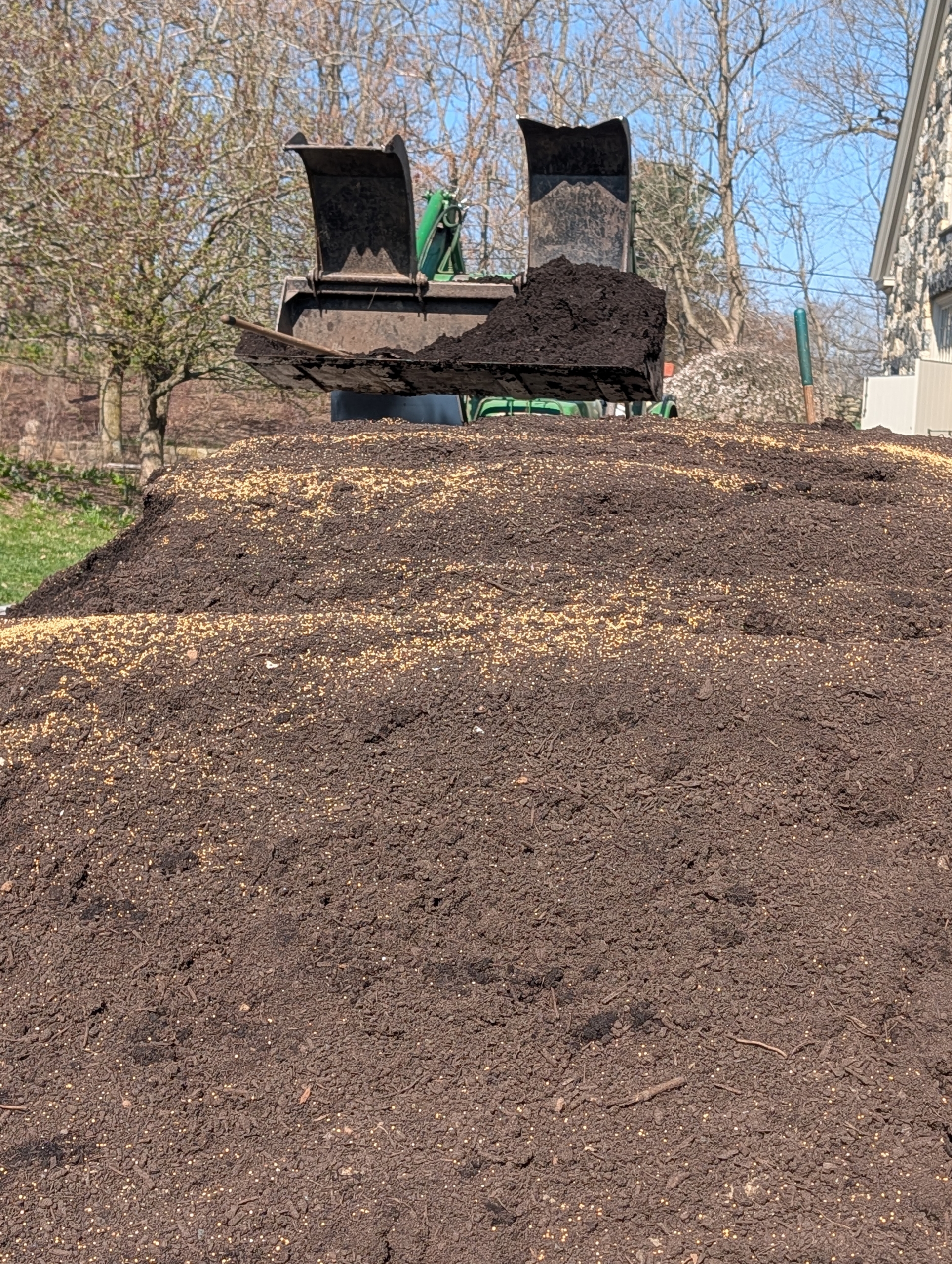
- It’s spring and time to turn our attention to preparing the vegetable garden for the season. Soil is delivered and dropped onto the carriage road near the garden gate. This Miracle-Gro Organic Raised Bed & Garden Soil is already complete with nutrients, but I also add Miracle-Gro Organic All-Purpose Plant Food.
-
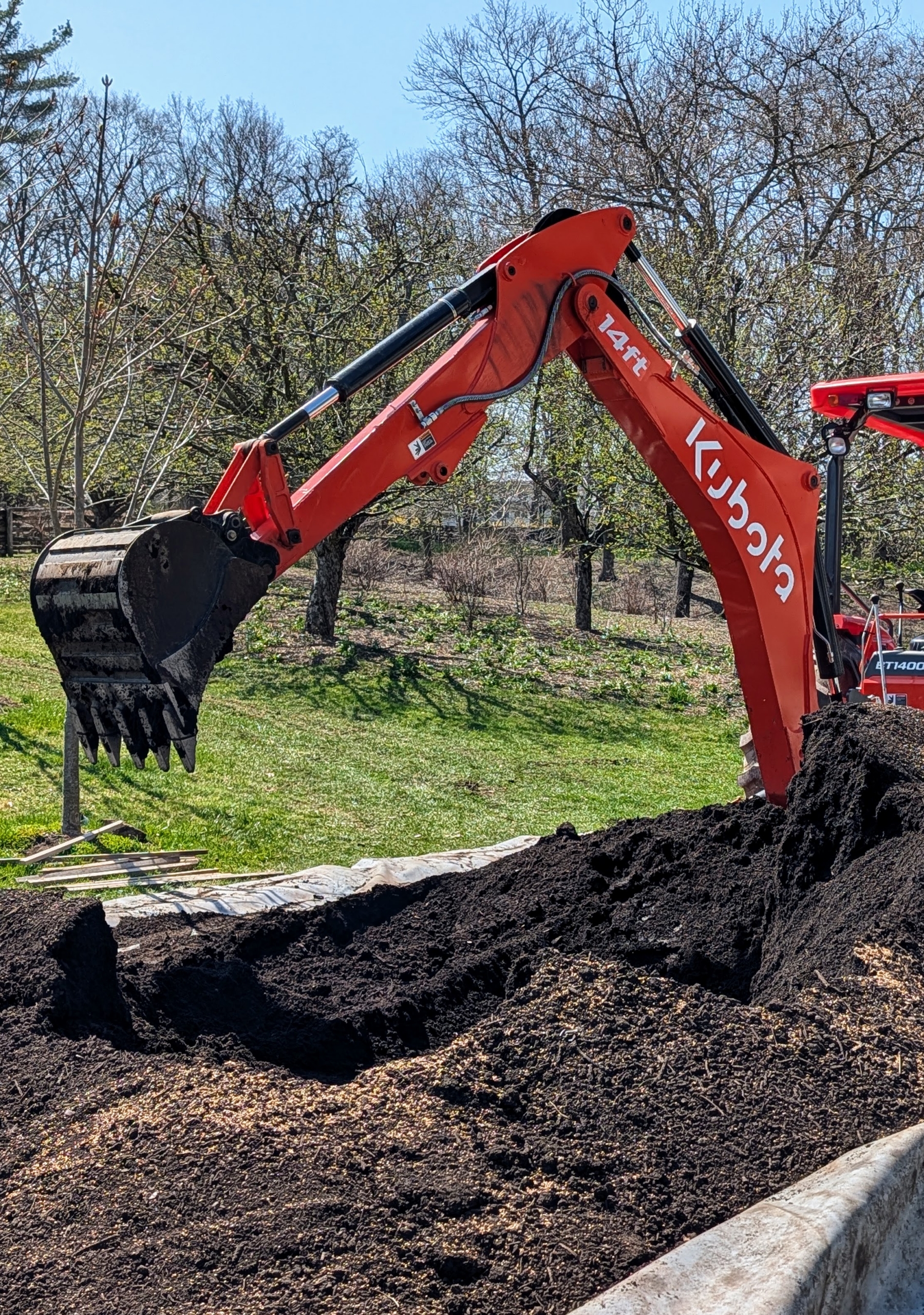
- The fertilizer is mixed thoroughly with our Kubota tractor backhoe bucket and loads of soil are transported to the garden.
-
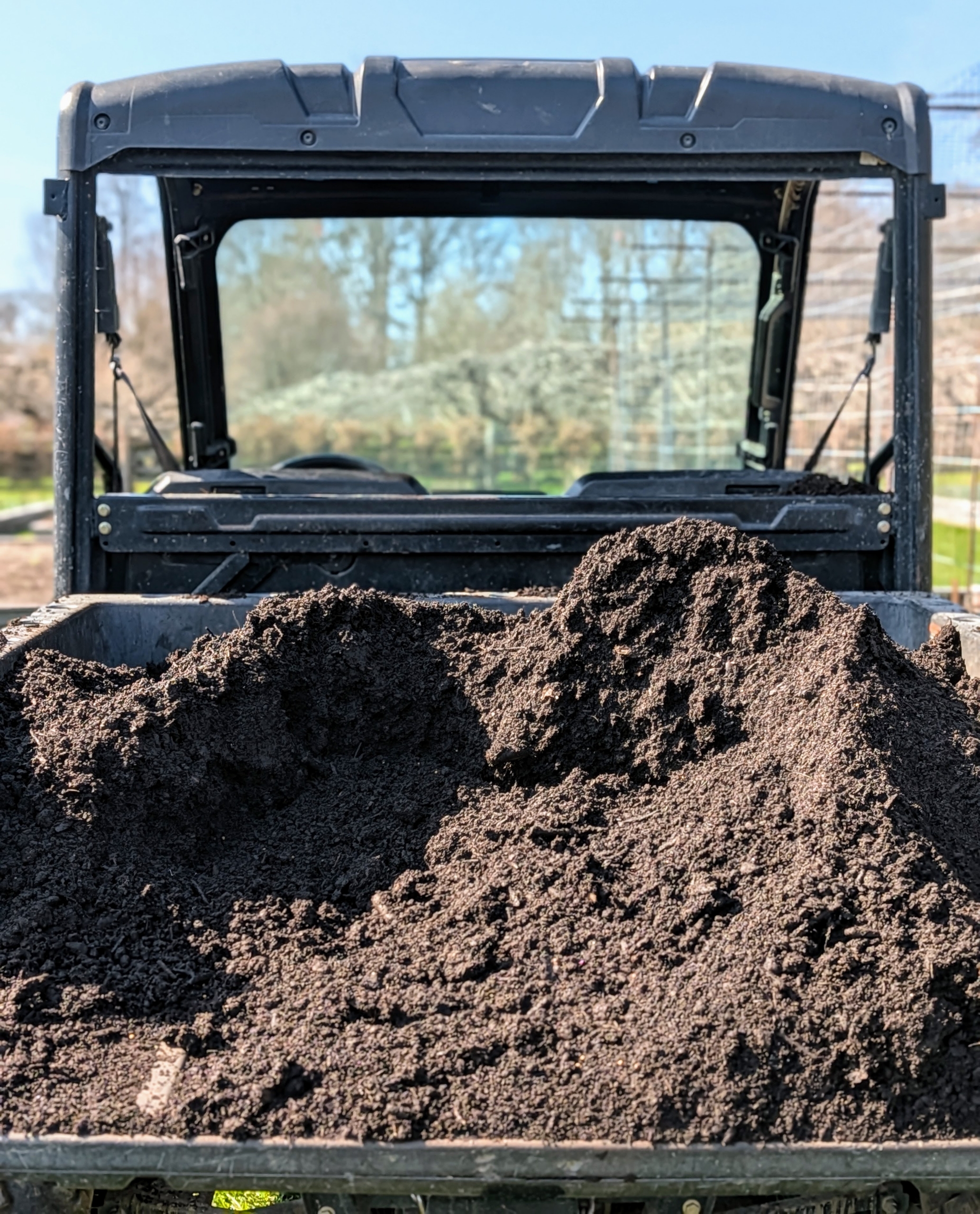
- My crew uses the back of our trusted Polaris off-road vehicle to load and unload soil. Everyone at the farm uses these vehicles every day – to move soil, potted plants, tools, and supplies, etc.
-
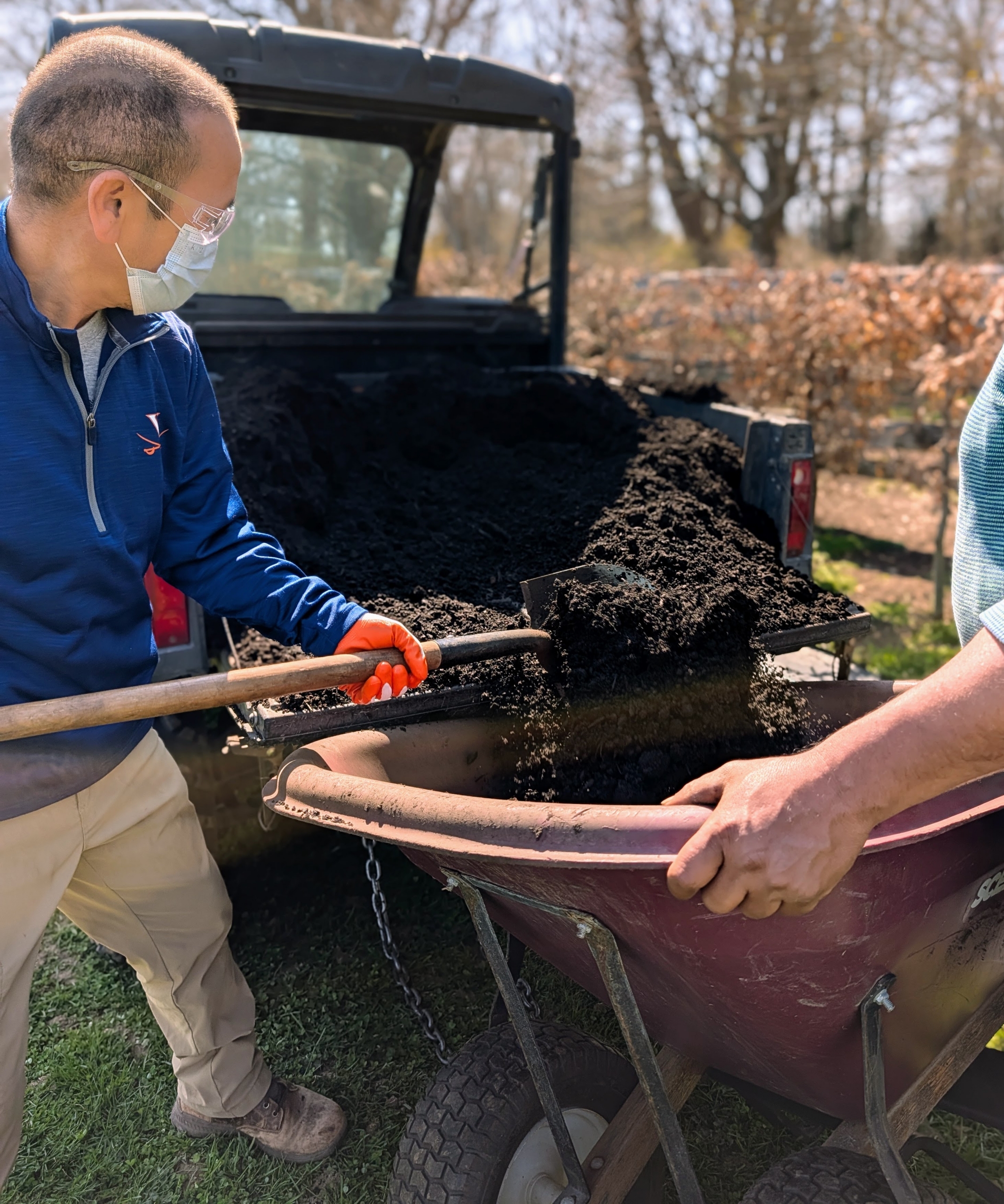
- Next, Chhiring shovels the soil into the wheelbarrow – it’s a very focused and efficient production line process.
-
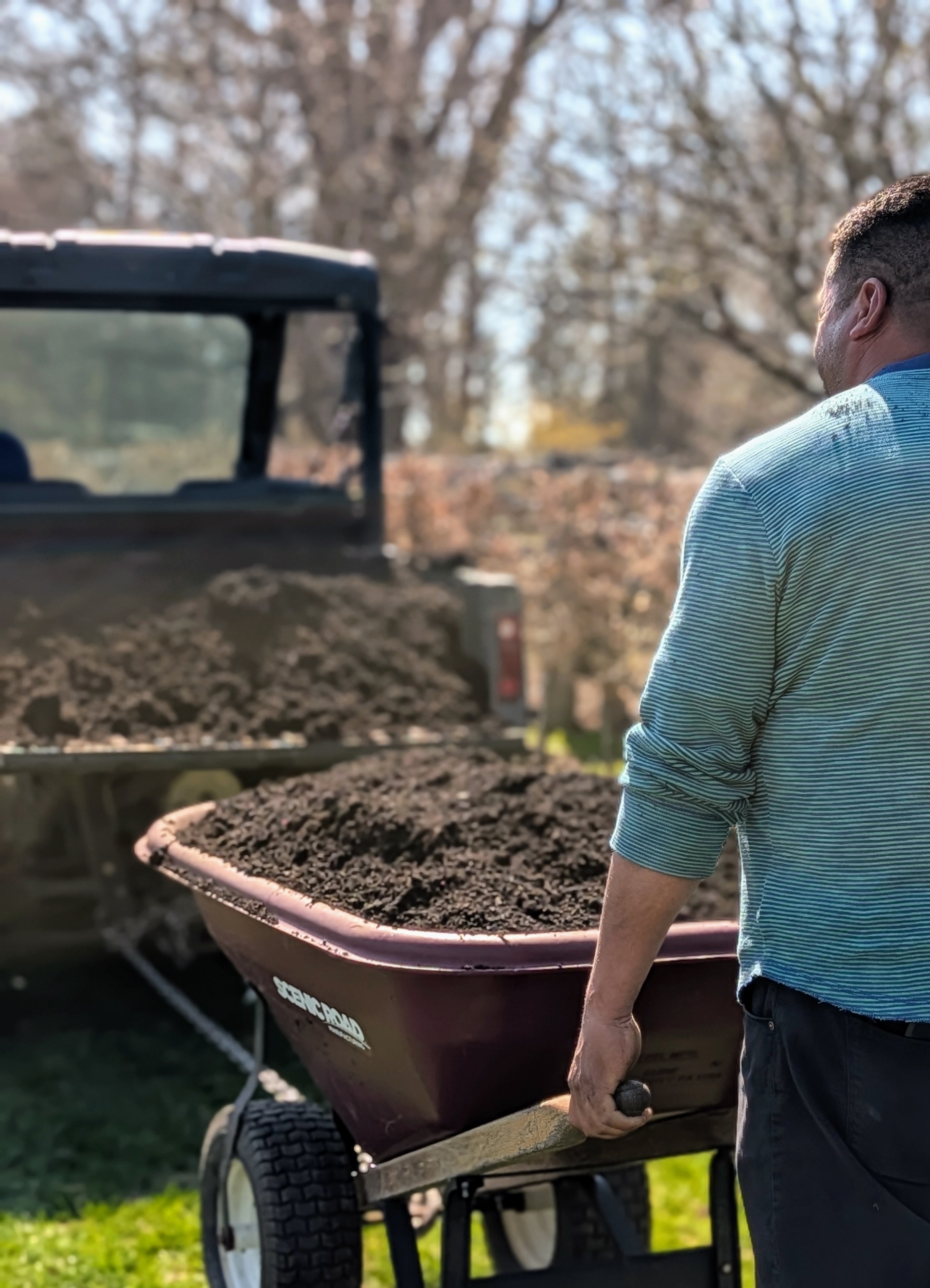
- As each wheelbarrow is filled, it is taken to a specific bed and unloaded.
-
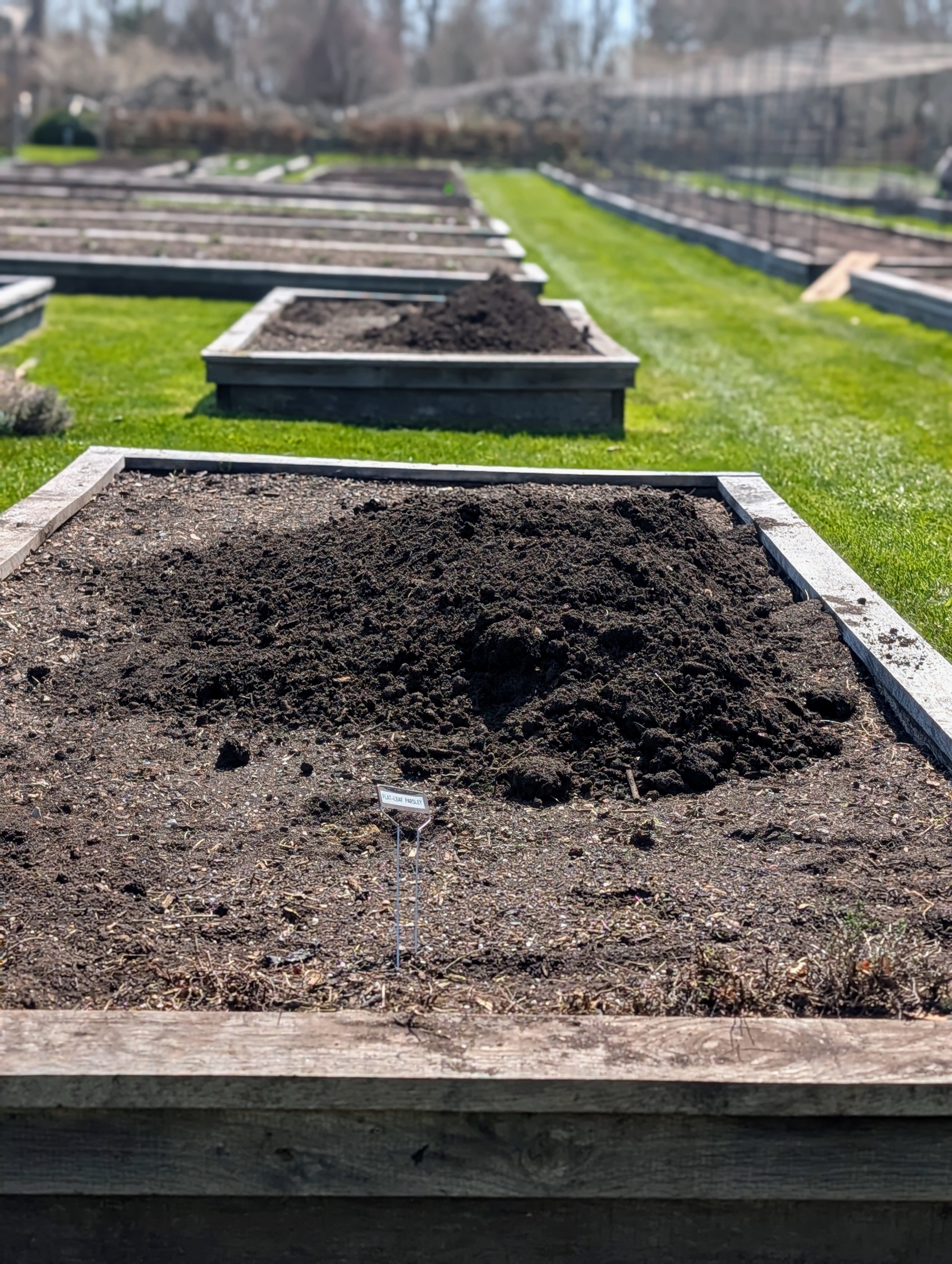
- Appropriately sized clumps are dropped to top dress all the fed beds.
-
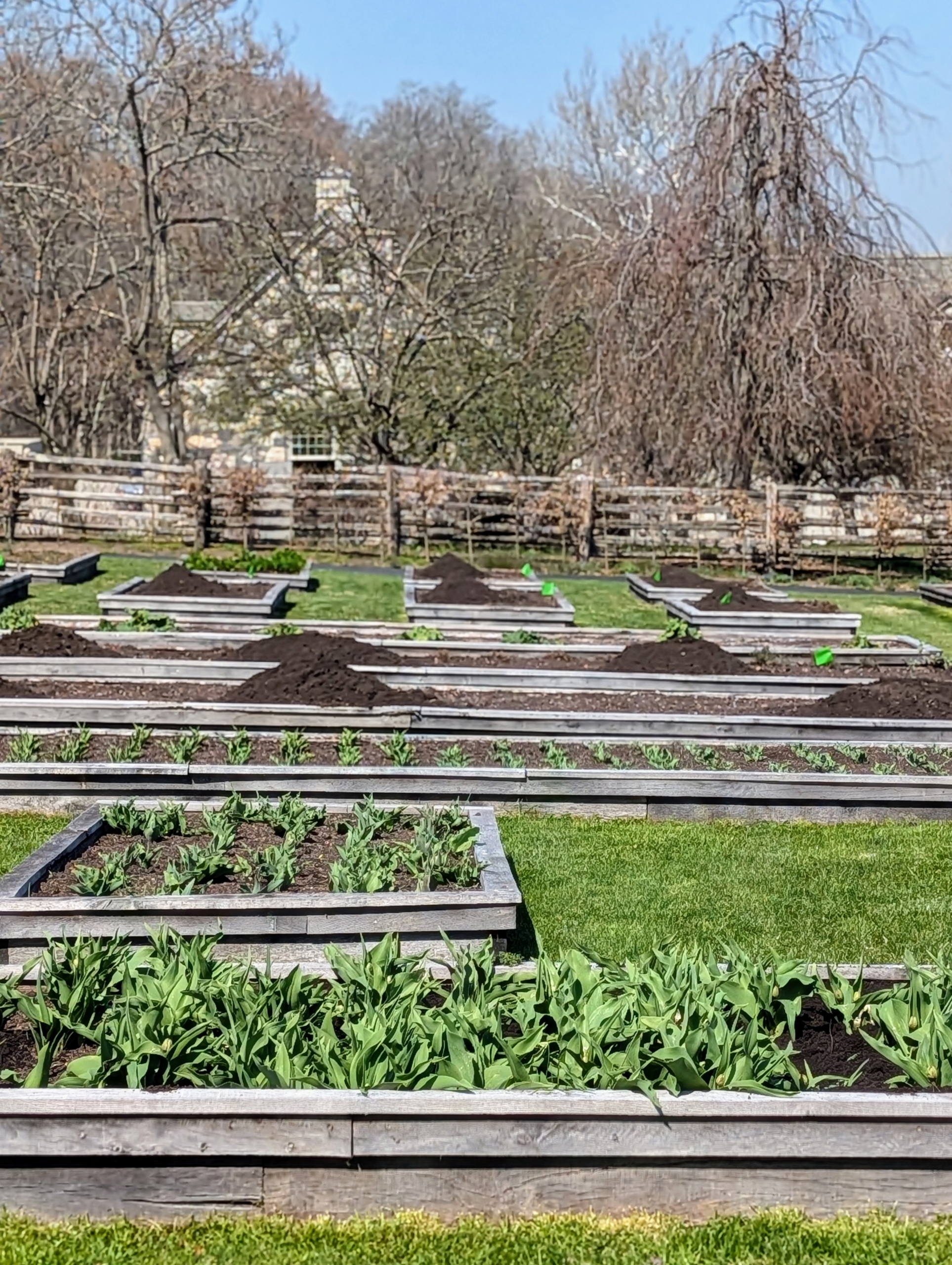
- Some beds are already filled with plants, but others are cleared and ready for fresh layers of soil.
-
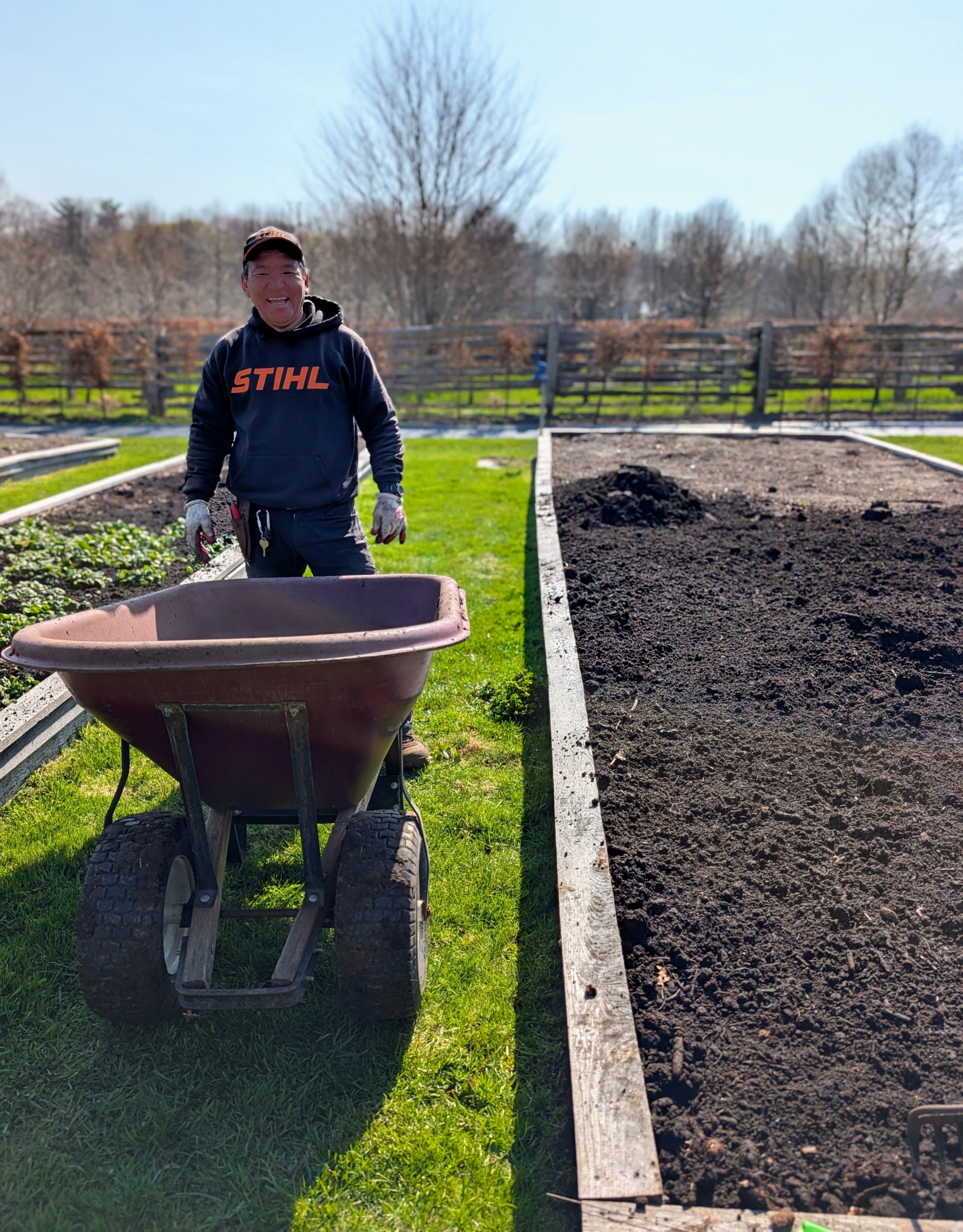
- The beds in this garden range in size from about 5′ by 10′ to 8′ by 70′. Here’s Phurba going back for another wheelbarrow full for this bed.
-
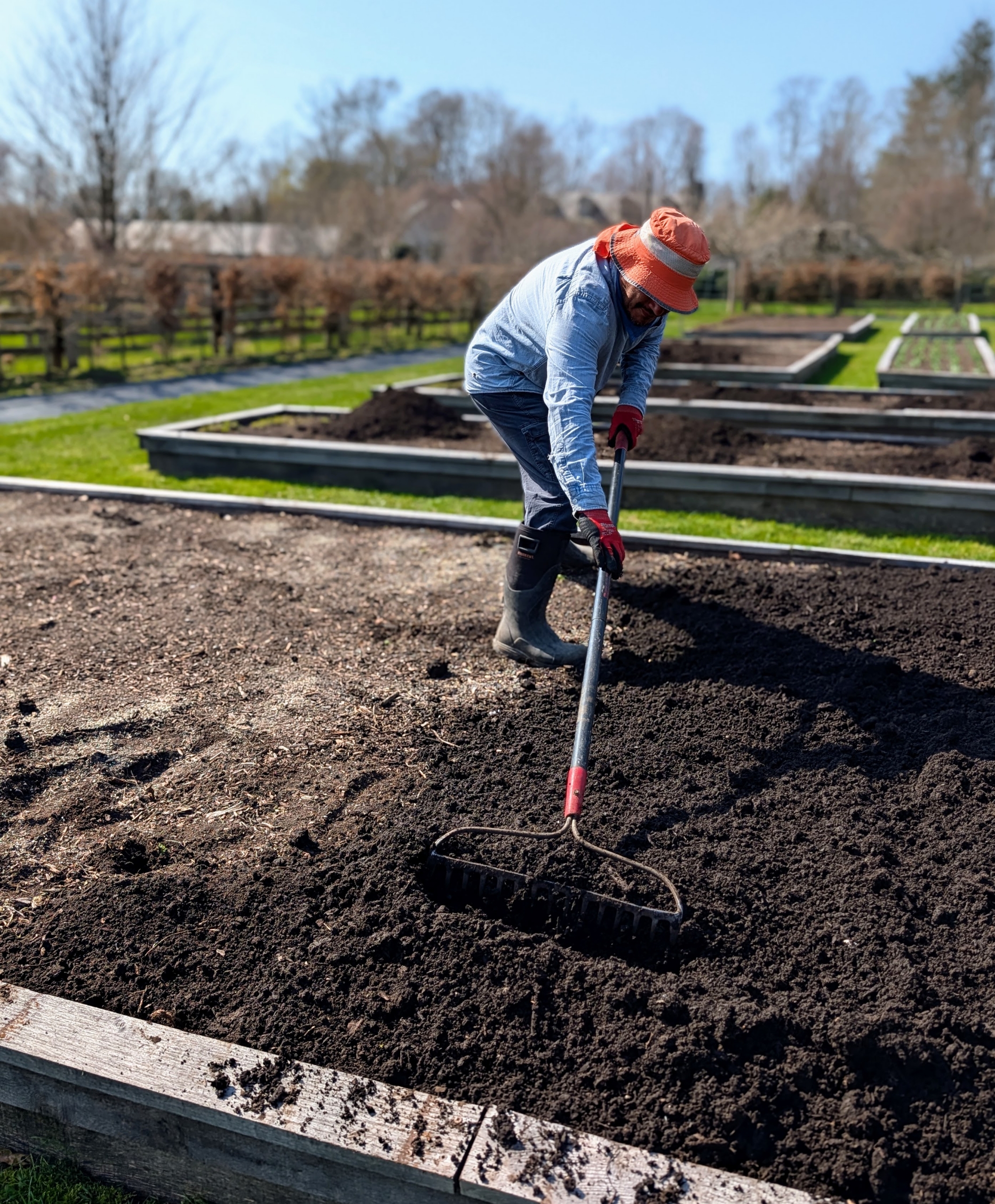
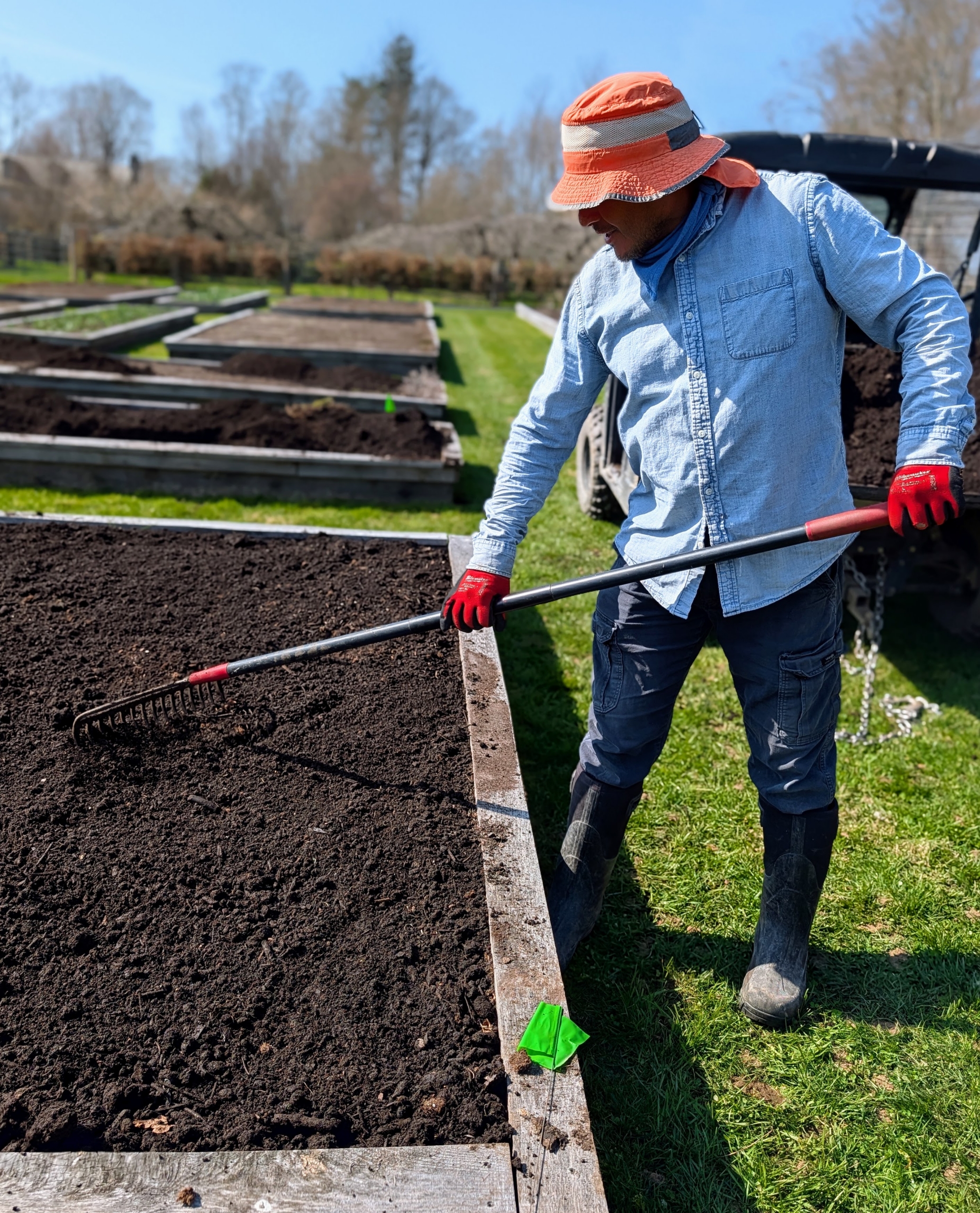
- Meantime, Cesar begins raking the soil across the bed with a hard rake.
-
- A three inch layer is spread over each bed carefully and evenly.
-
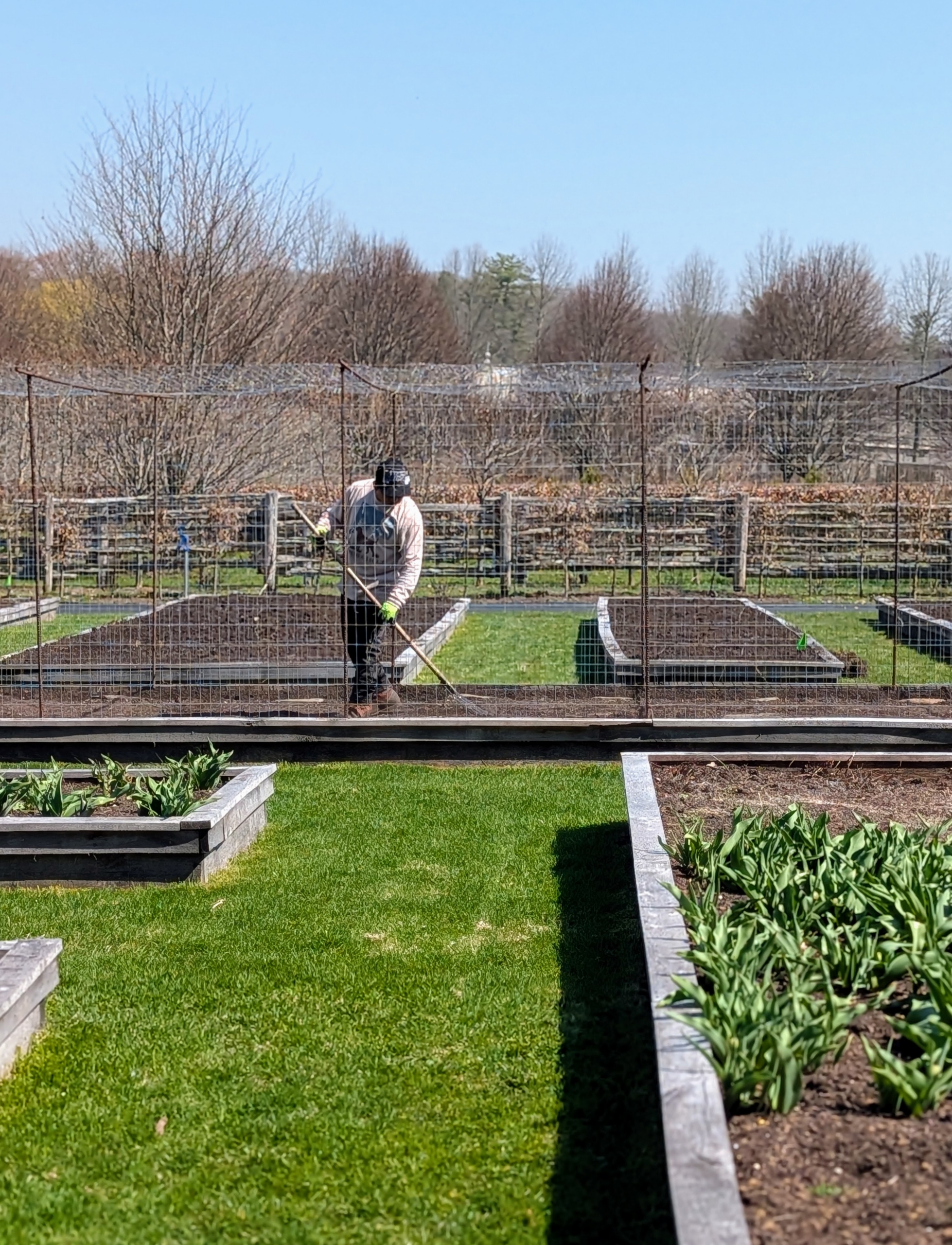
- José tackles another bed.
-
- The beds are beautiful to look at even before any planting is done.
-
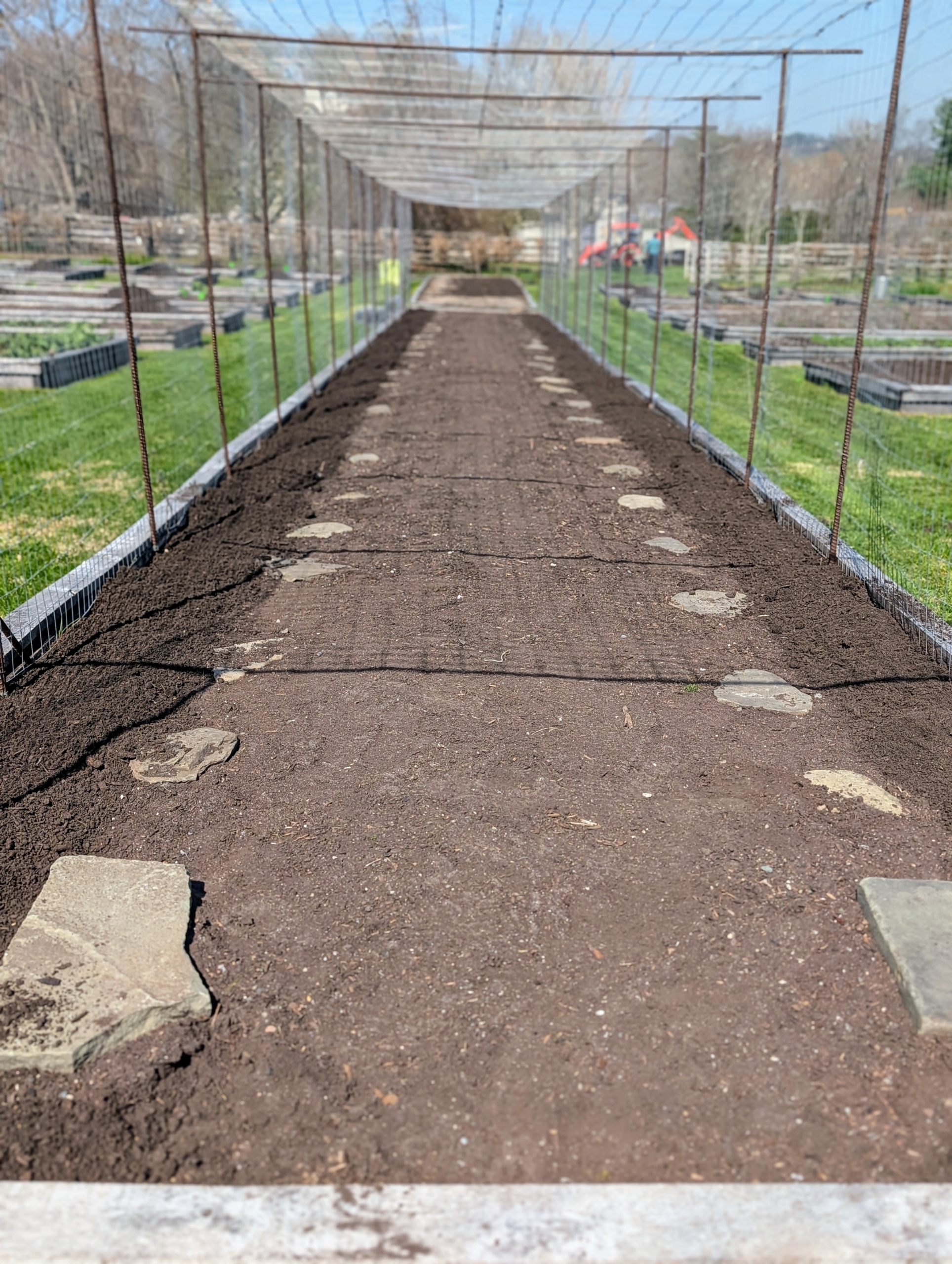
- In this center bed along the side fencing are lots of planted peas – one section for shelling peas, which need to be removed from their pods before eating, and another for edible pods, which can be eaten whole, such as our snap peas. They are best grown on supports to keep them off the ground and away from pests and diseases.
-
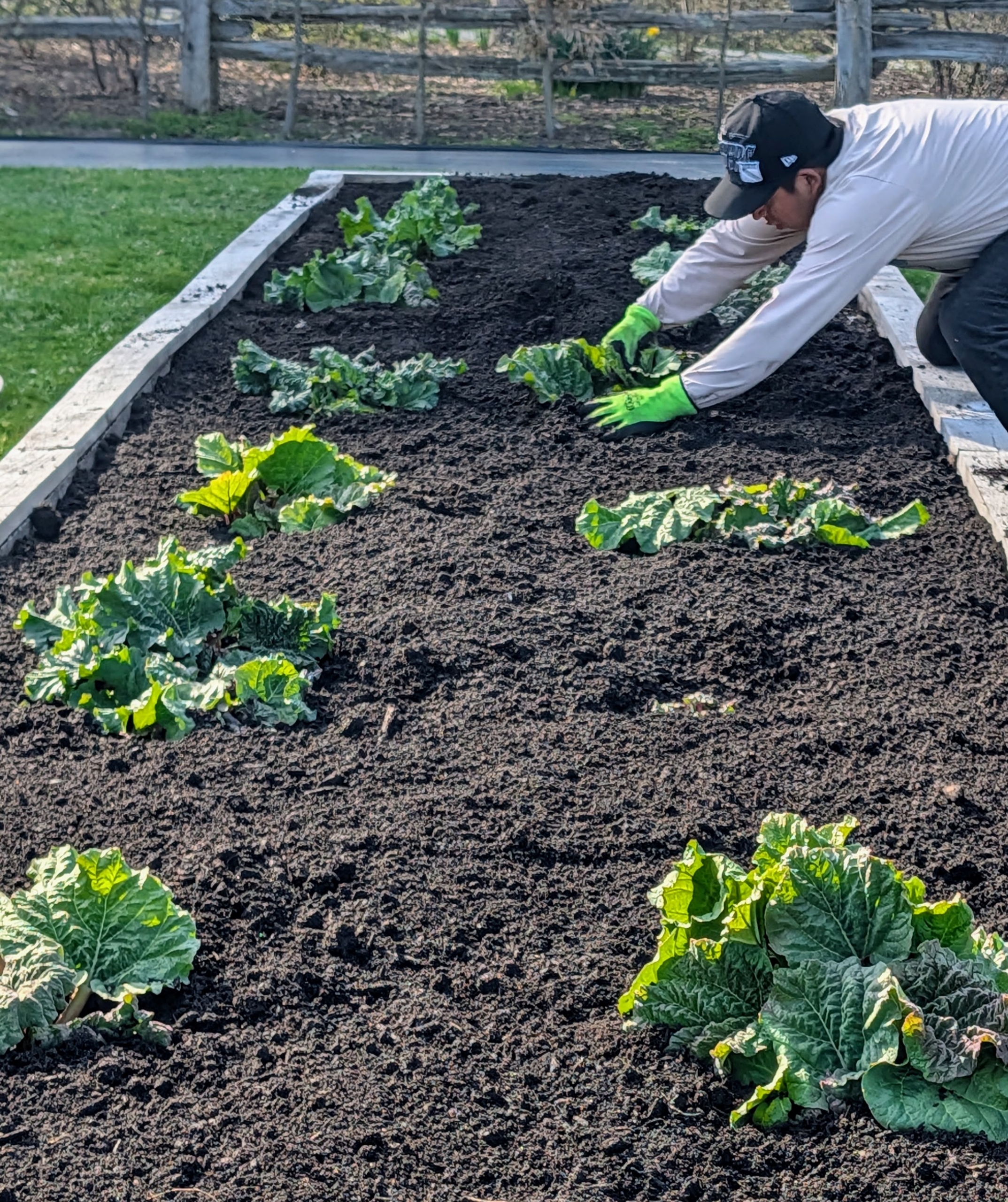
- Here, soil is placed around my rhubarb plants. My rhubarb did nicely over the winter out here in the garden. When keeping rhubarb during the cold season, be sure it is well fed and maintained, to ensure good health and productivity.
-
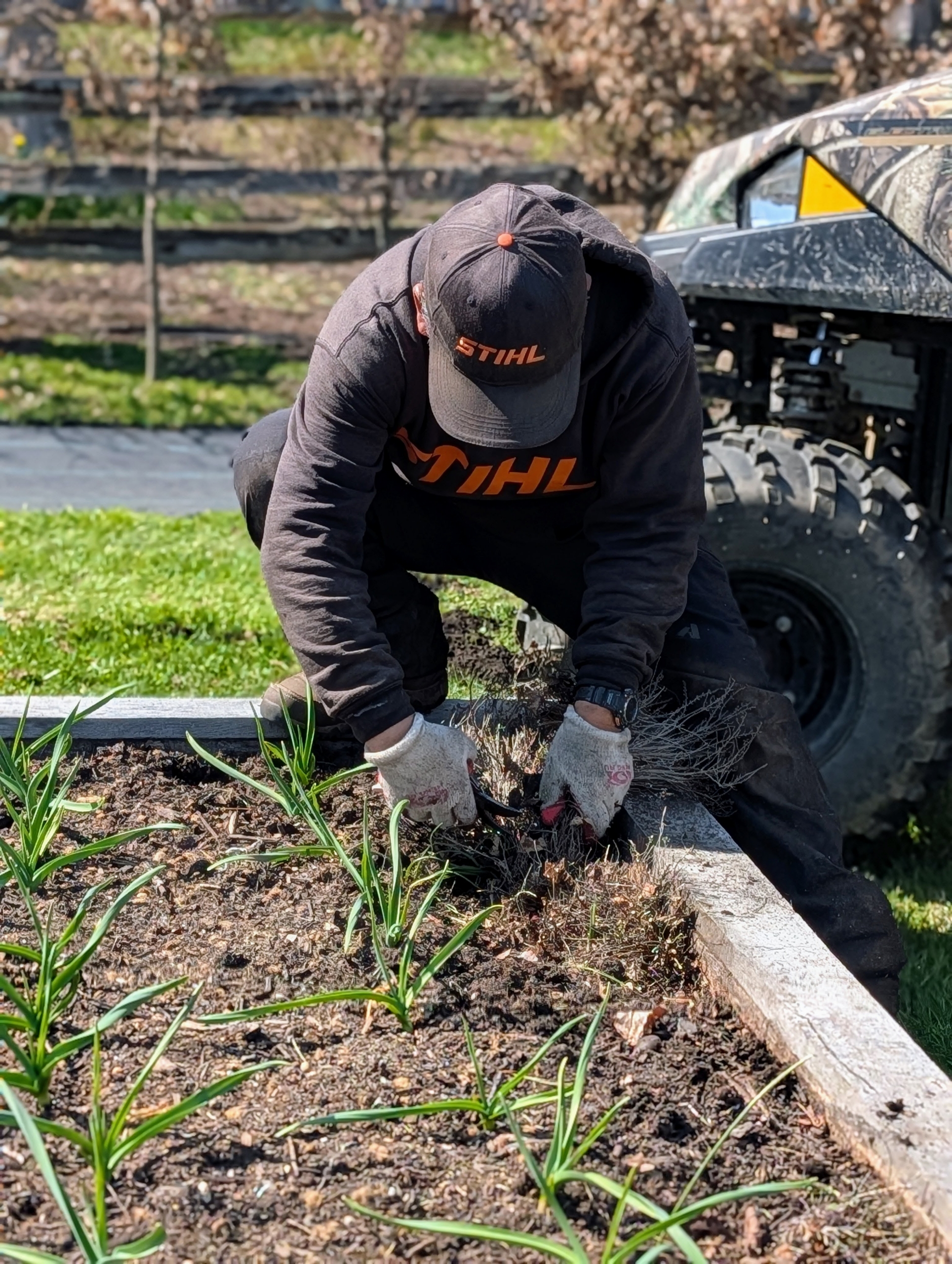
- At the corners of each bed I planted herbs. Phurba grooms whatever herbs survived the cold season and removes any dead plants.
-
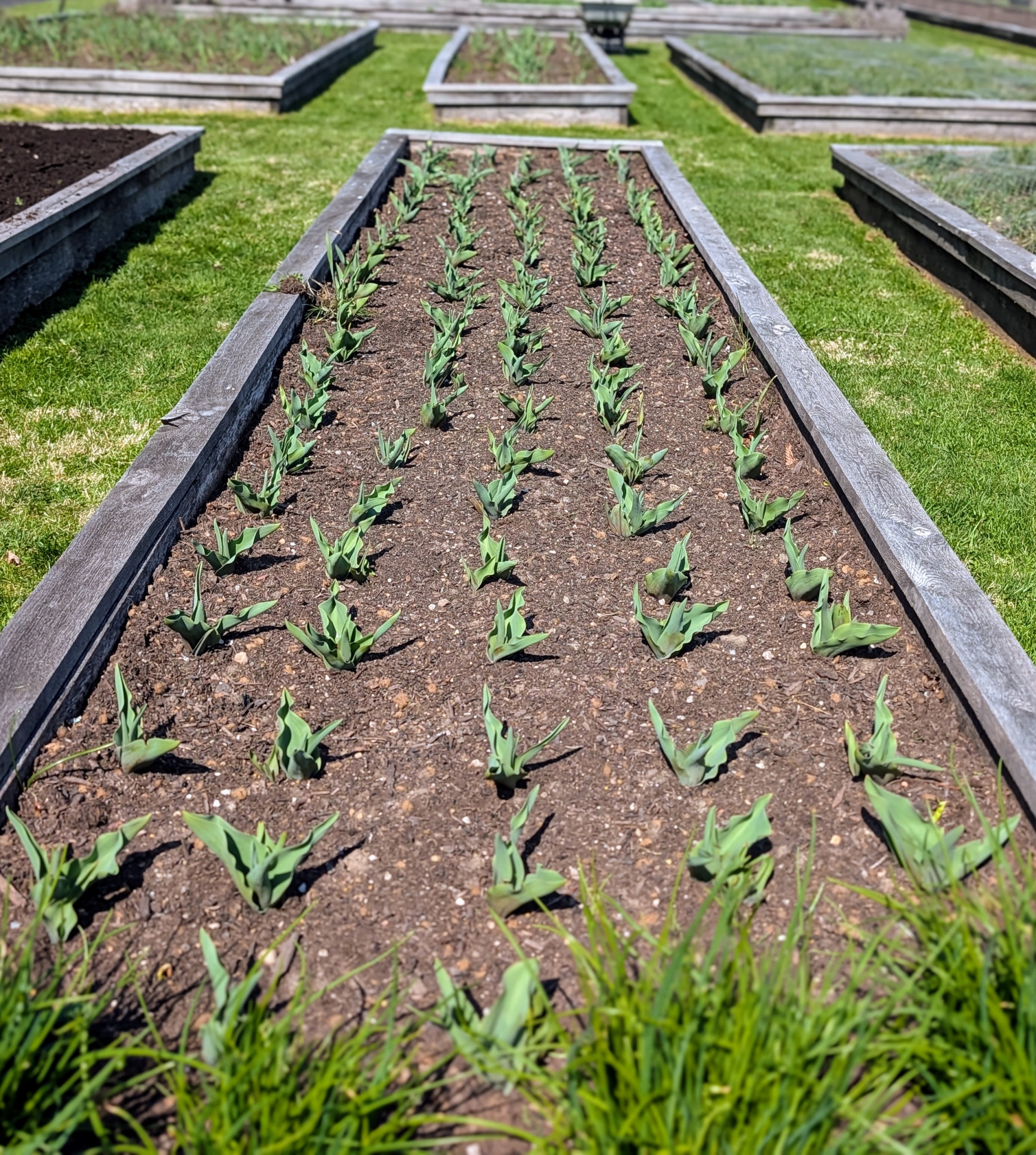
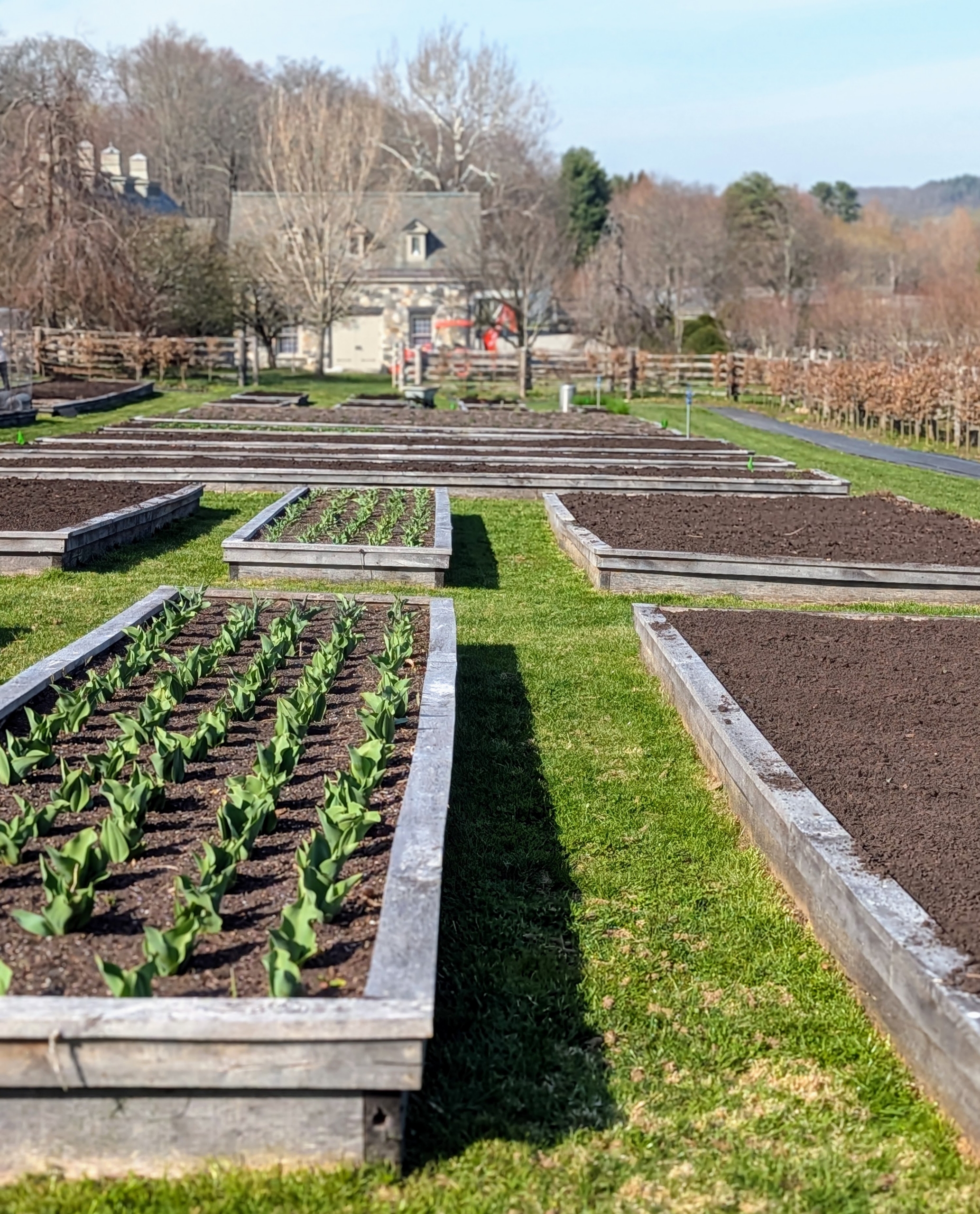
- This bed is filled with tulips. These colorful flowers will be ready to cut and enjoy in a few weeks.
-
- I planted several beds of tulips last November. They require a sustained dormant period of cold temperatures in order to stimulate root development. I’m excited to see them bloom.
-
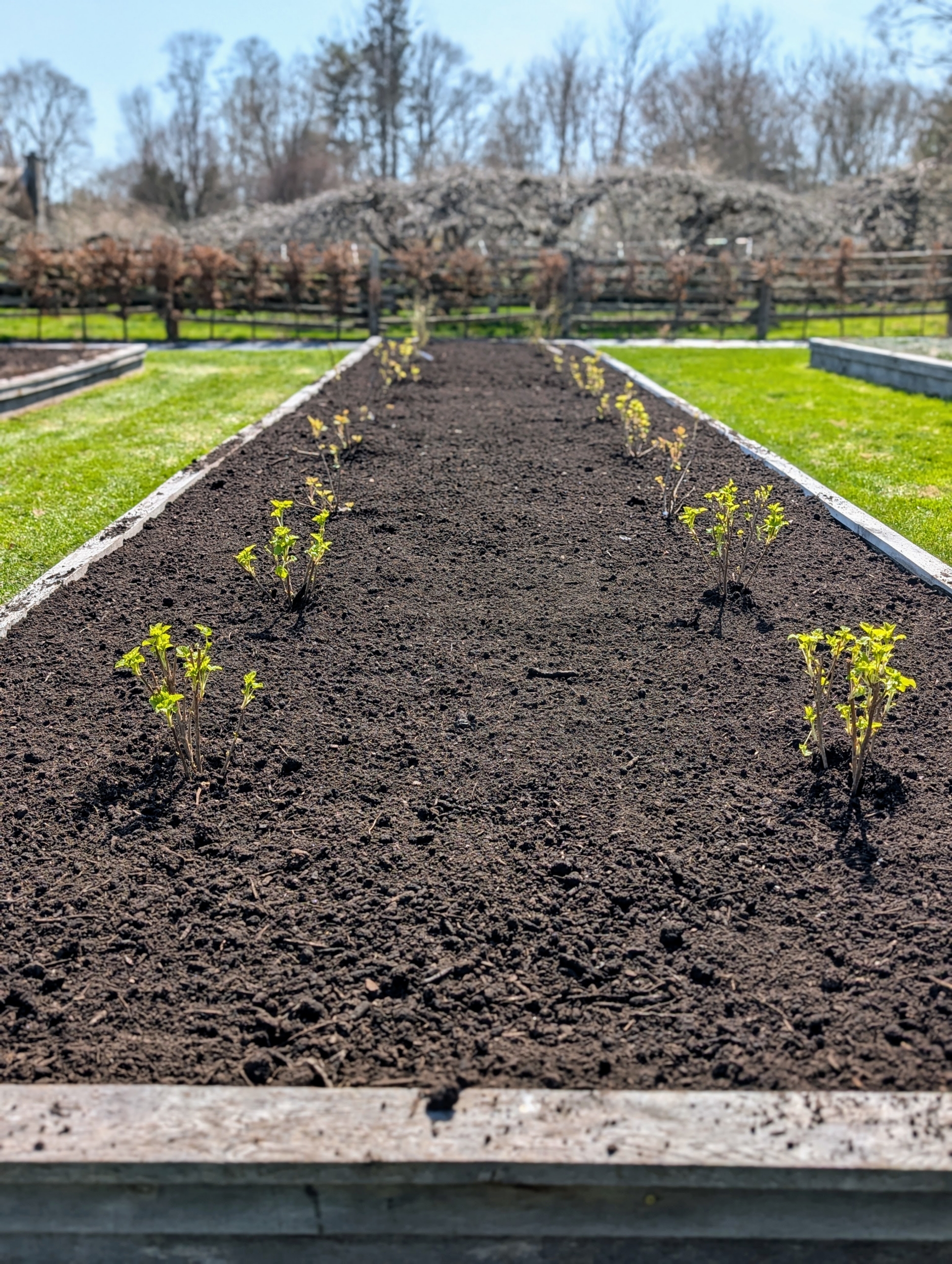
- This bed is planted mostly with currants. True currants are tiny berries that grow in clusters on shrubs belonging to the Ribes family. Some of the varieties include ‘Rovada,’ ‘Red Lake,’ and ‘Jonkheer Van Tets.’
-
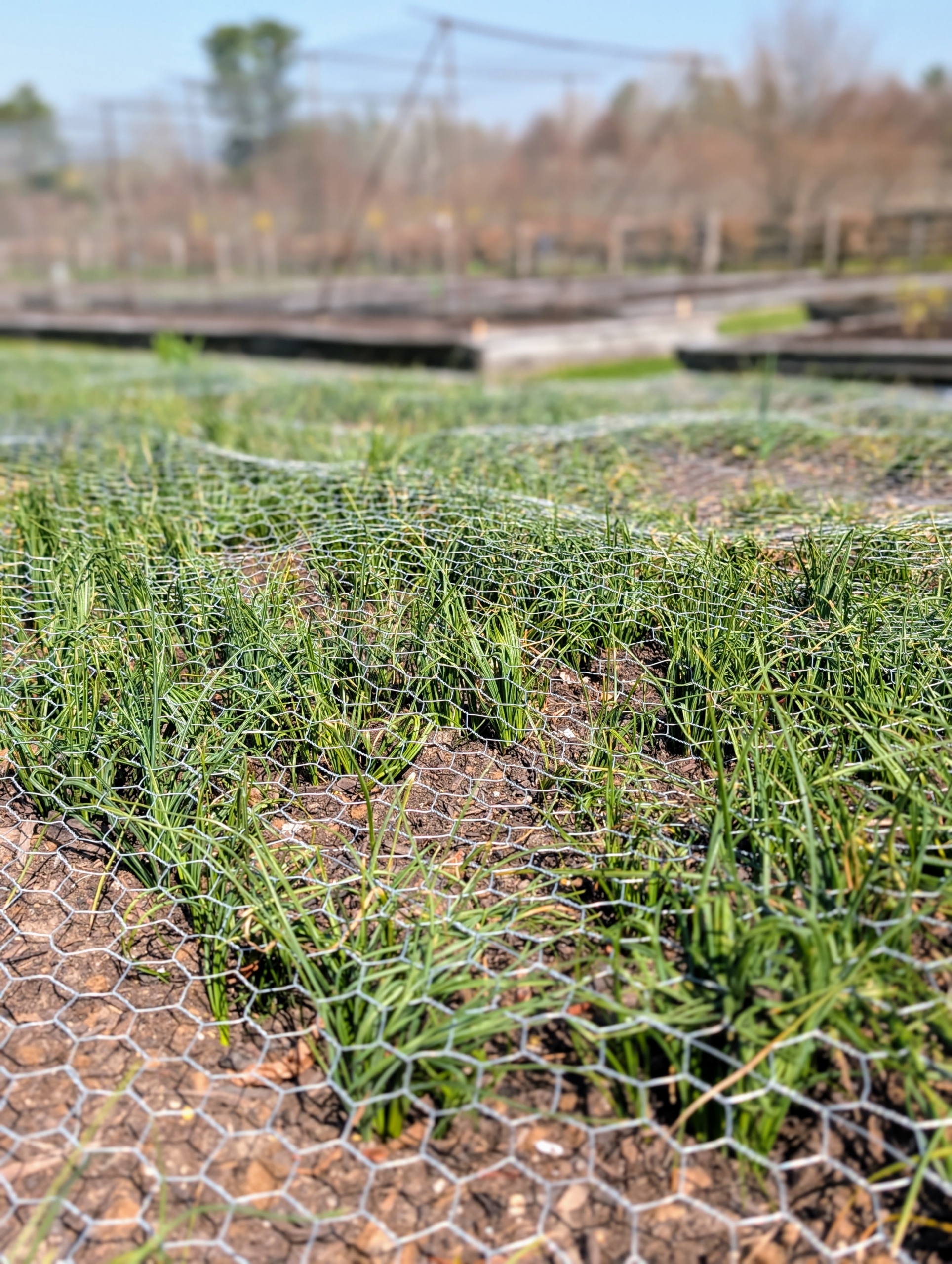
- And remember the saffron planted here by my friend, Hannah Milman? In January, I covered the growing saffron with wire fencing to protect the underground bulbs from curious creatures. The foliage grows well in between the wire.
-
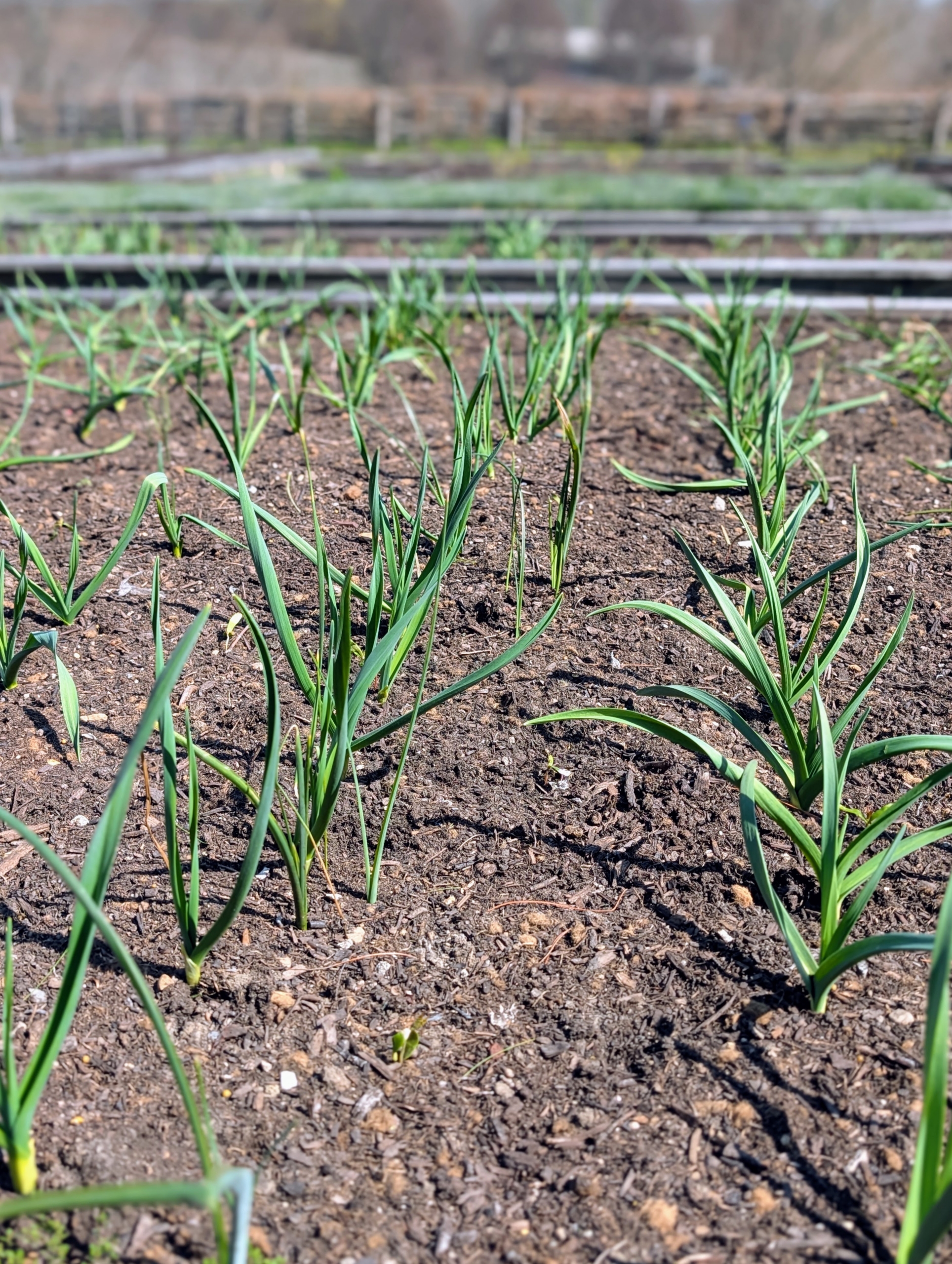
- And here is my garlic bed. Fall is the ideal time to plant garlic. Planting then allows the bulbs to establish good roots before winter, leading to larger and more flavorful cloves by the summer harvest. This garlic looks good so far!
-
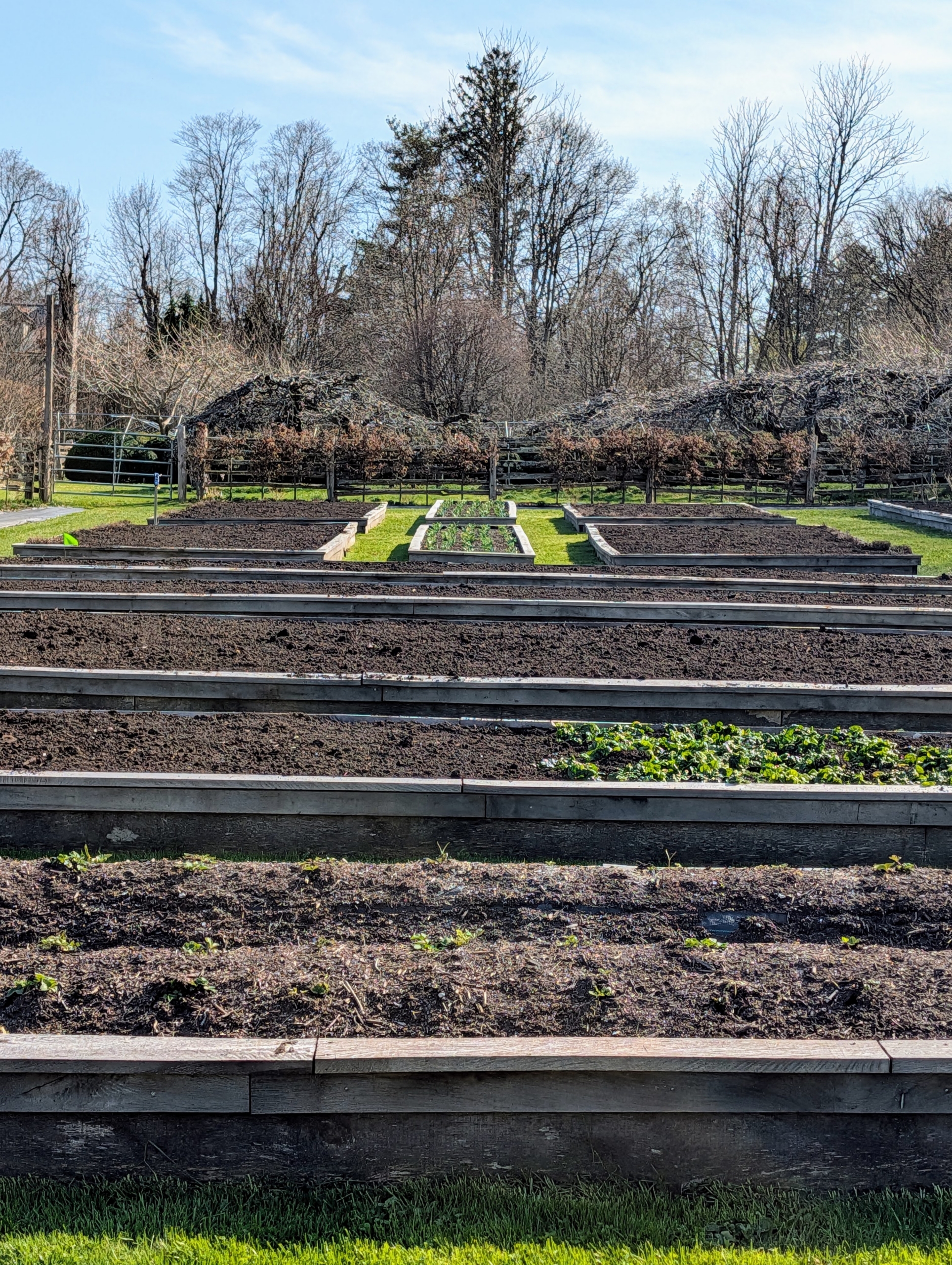
- In the foreground is one of my strawberry beds. Strawberries are perennial plants that naturally enter a dormant state during winter. Dormancy allows the plant to conserve energy, protect the roots, and prepare buds for fruiting in the next season. There’s still lots of planting before all the beds are full, but everything is off to a great start!
 Martha Pins


 Martha Tweets

