

My Curious Peafowl Around the Farm
Here at the farm my peafowl love to get out and explore.
Peafowl are very social birds - they travel in groups, enjoy foraging, and often play together. They are also very loyal and tend to stay where they are well-fed and well-protected. My peacocks and peahens live in a very safe and comfortable pen outside my stable, where they get lots of attention from visitors. Yesterday, I let them out to roam the property - they walked around the stable complex, through the gardens, and even perched on fences and boulders. At the end of the day, they were all led back to their familiar enclosure, where I know they are safe and sound.
Enjoy these photos.
-

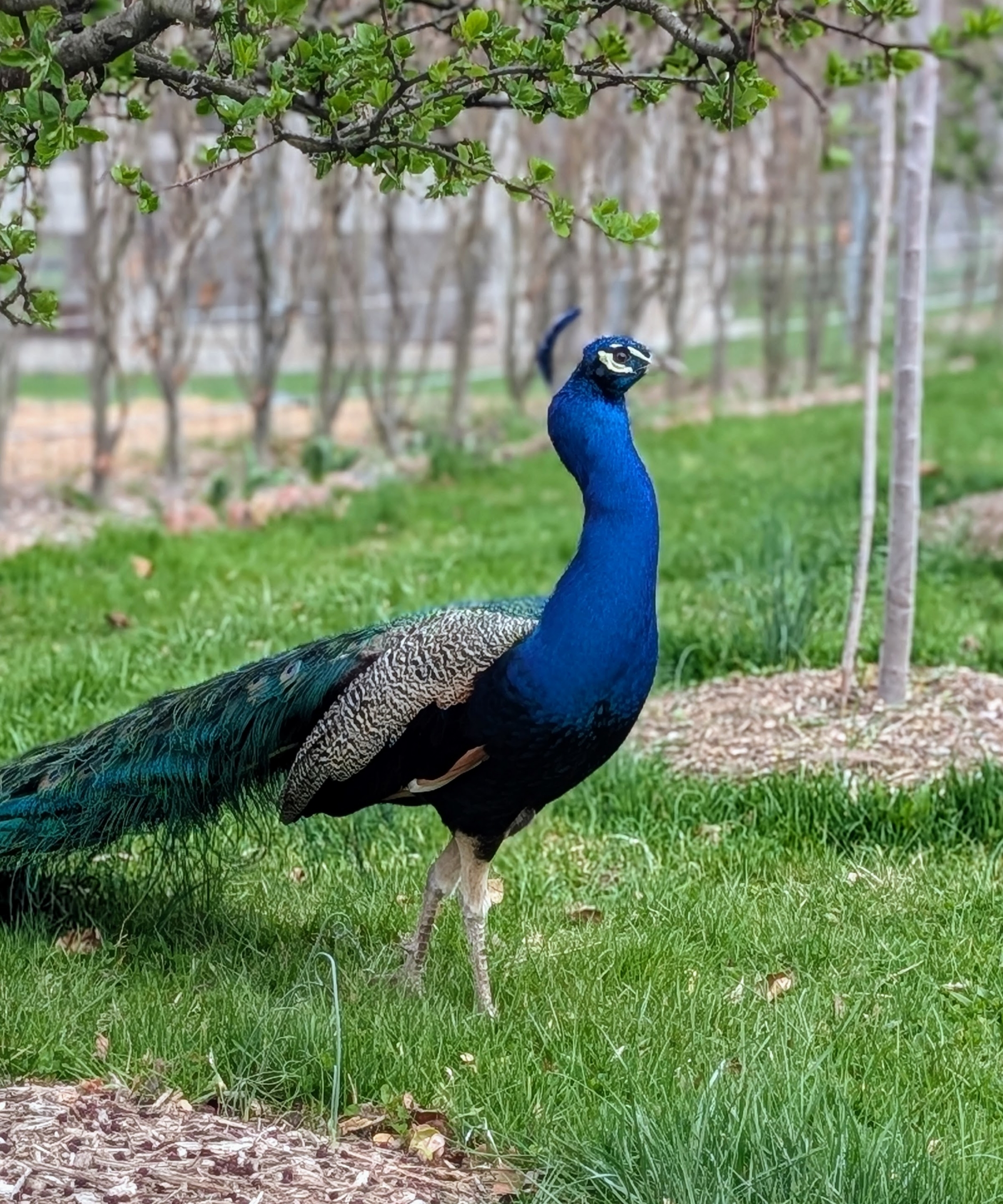
- I keep all my birds in large, protected enclosures because of the predators that sometime wander through the property, such as coyotes. On this day, I decided to give the peafowl a little freedom to explore. Here is one peacock just outside the pens.
-
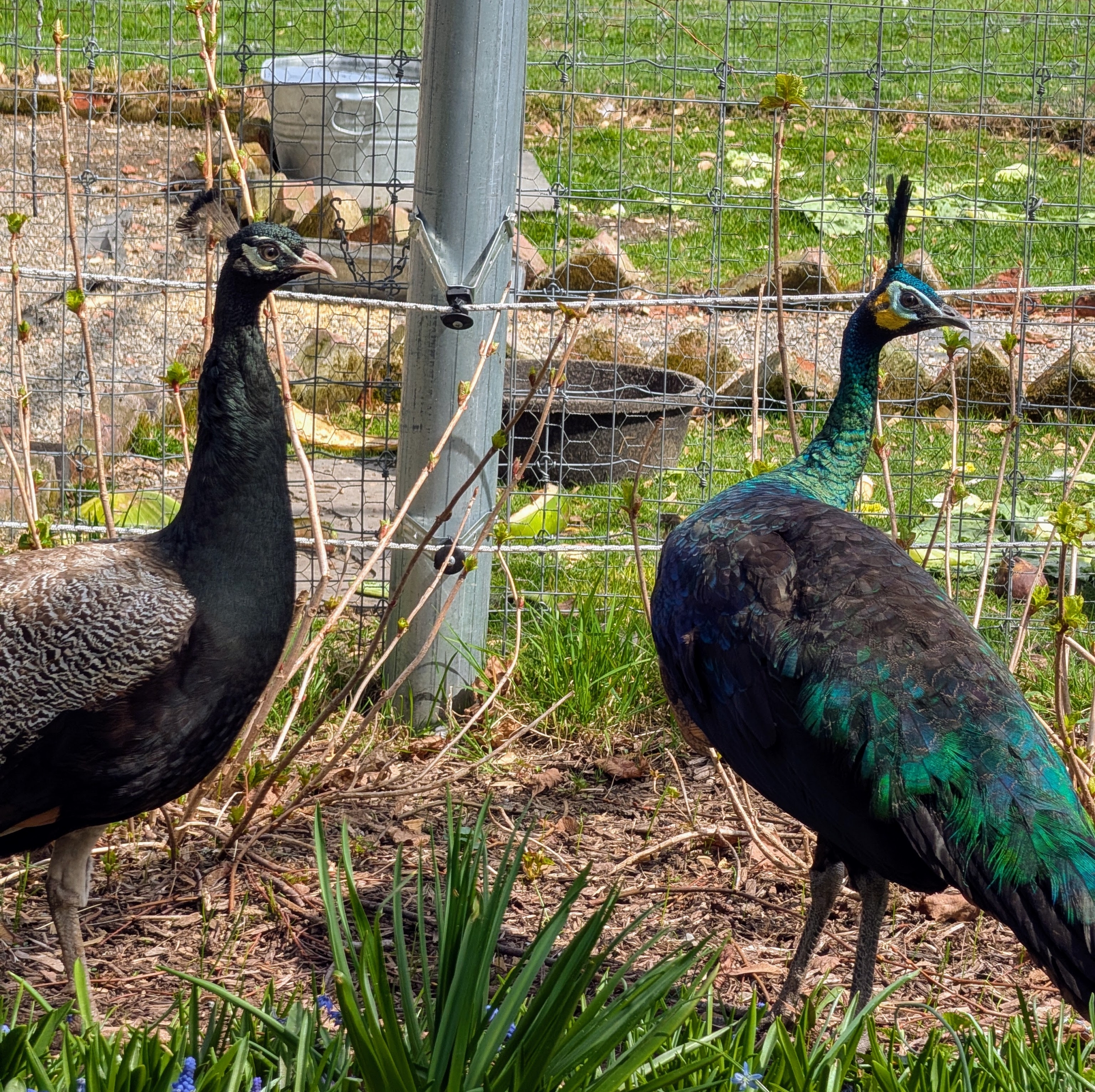
- Where one goes, others are sure to follow.
-
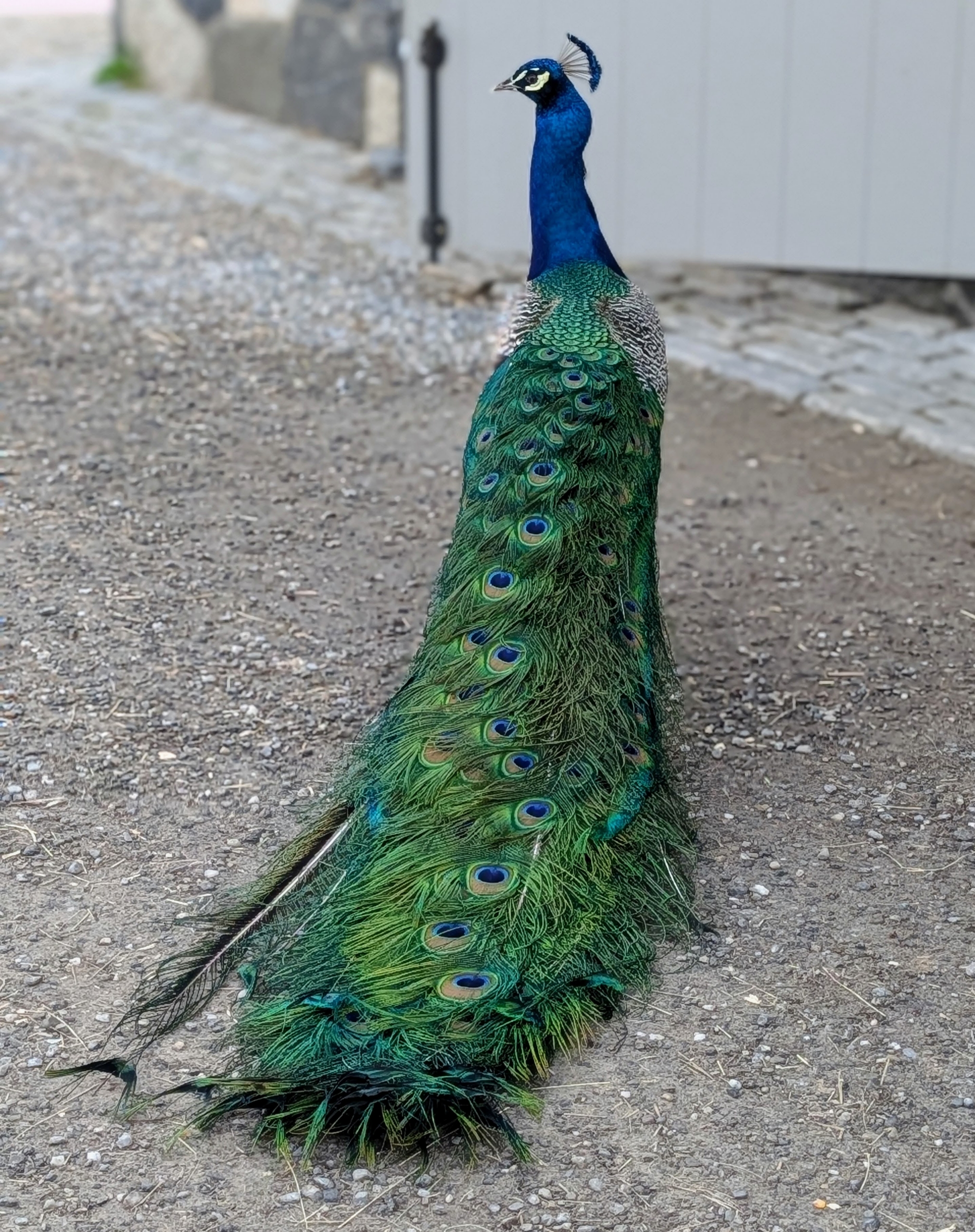
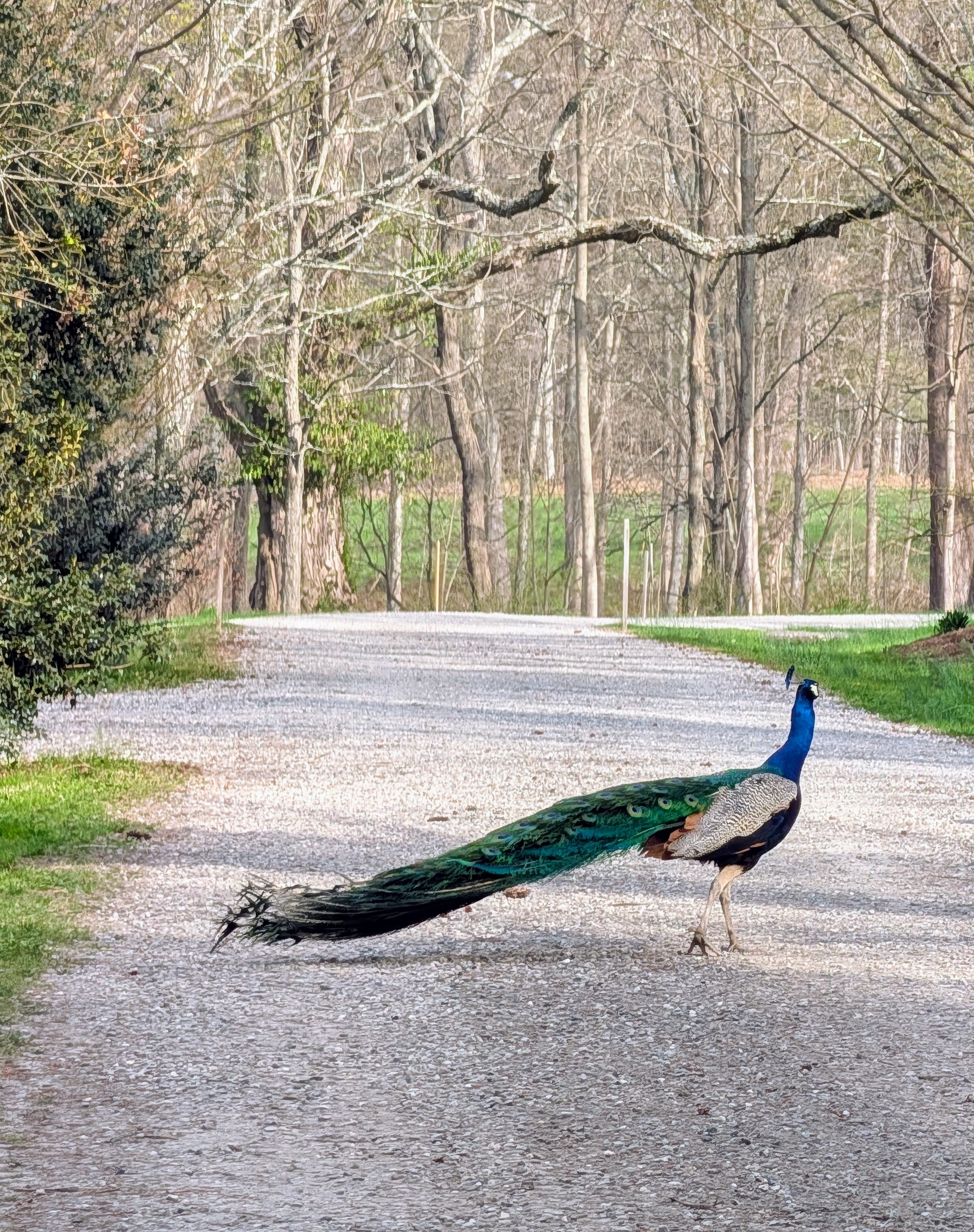
- Here is a mature male with his gorgeous tail feathers behind him. A mature peacock can have up to 200 feathers in his tail, which can weigh about a half pound during mating season.
-
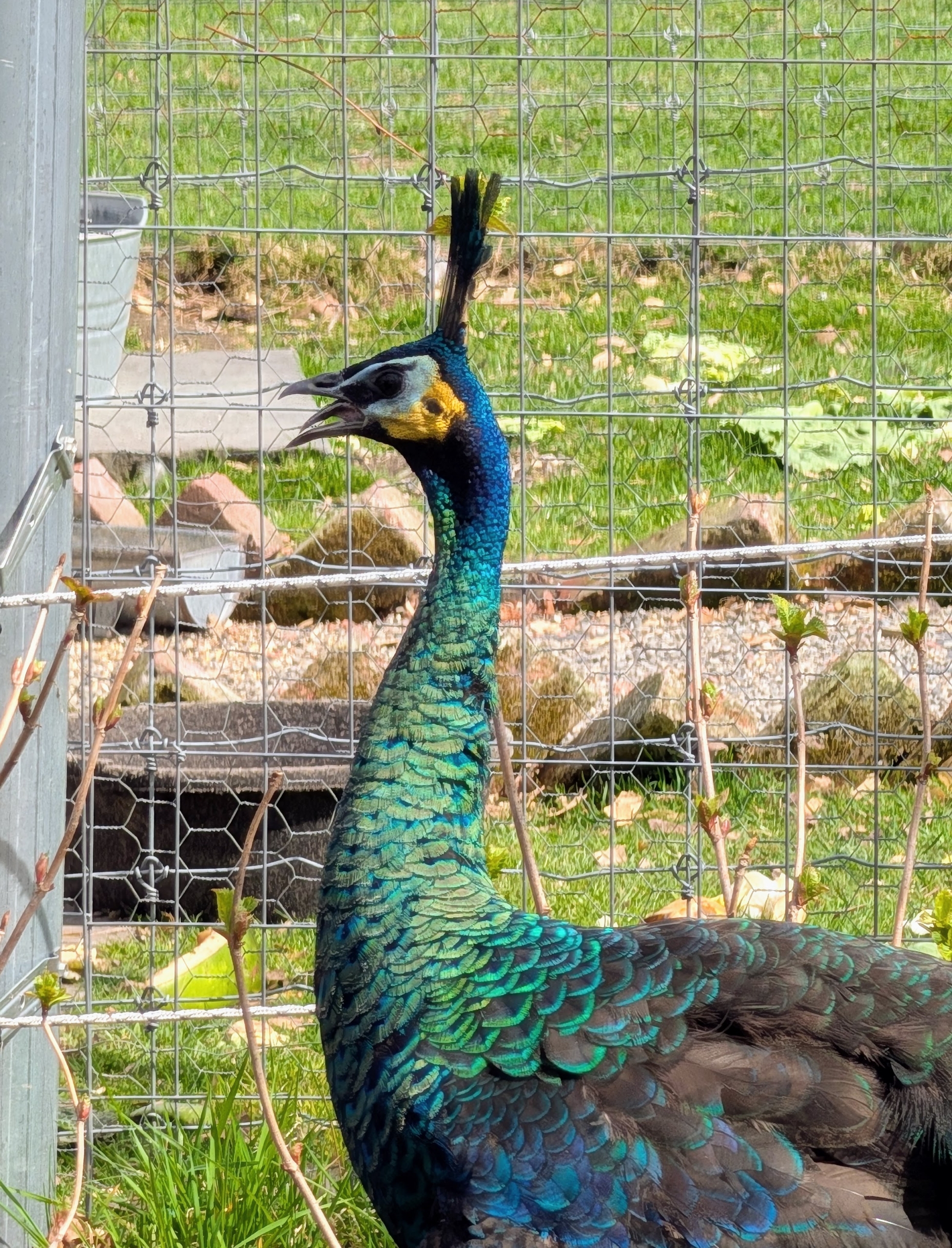
- As beautiful as peafowl are, they don’t make very melodious sounds. Peafowl have 11 different calls, with most of the vocalizing made by the peacocks. And, with their sharp eyesight, peafowl are quick to see predators and call out alarms. Oftentimes, I can hear them from across the farm.
-
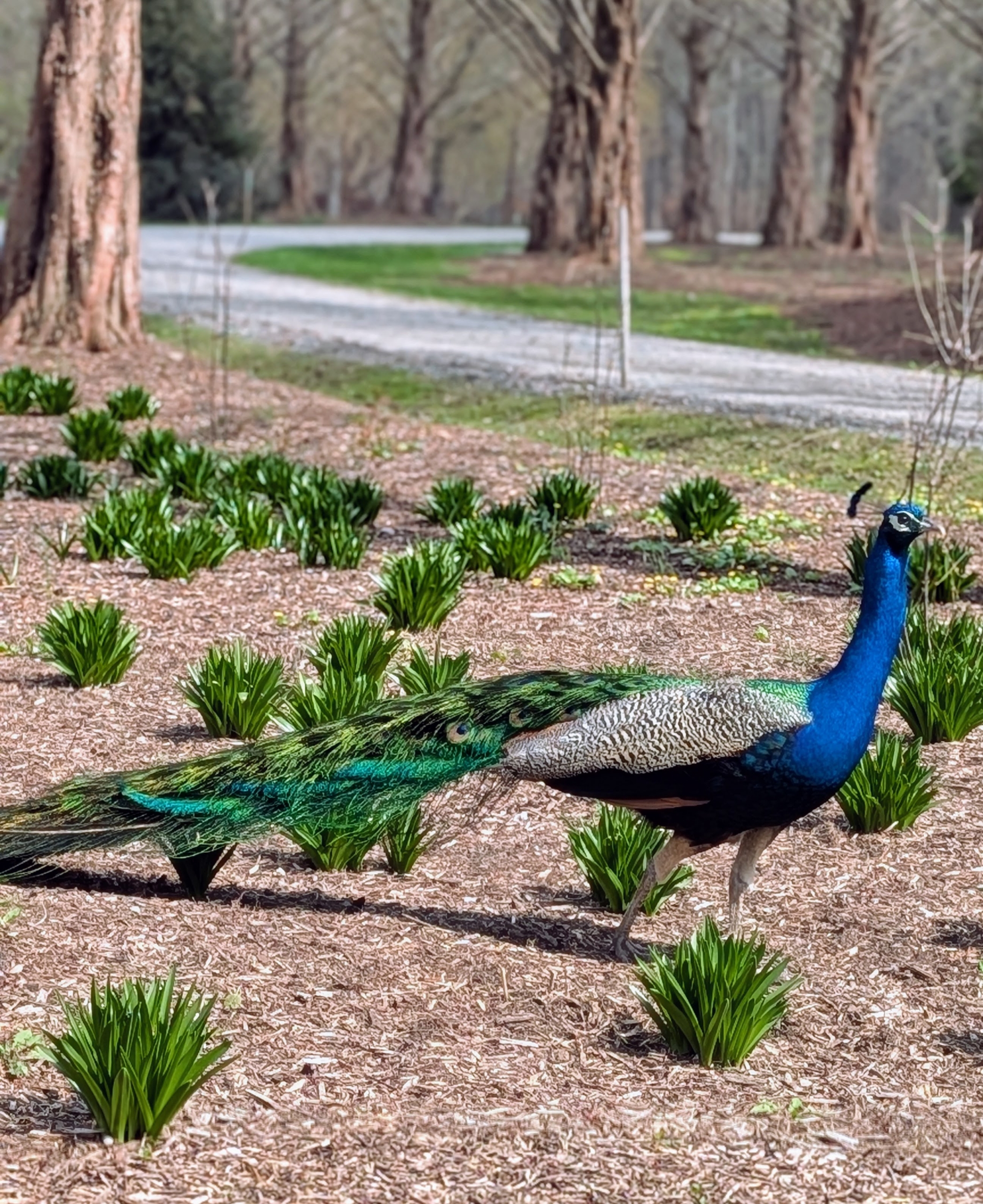
- This handsome peacock grew up with the chickens, so he likes to stroll down the carriage road to visit them.
-
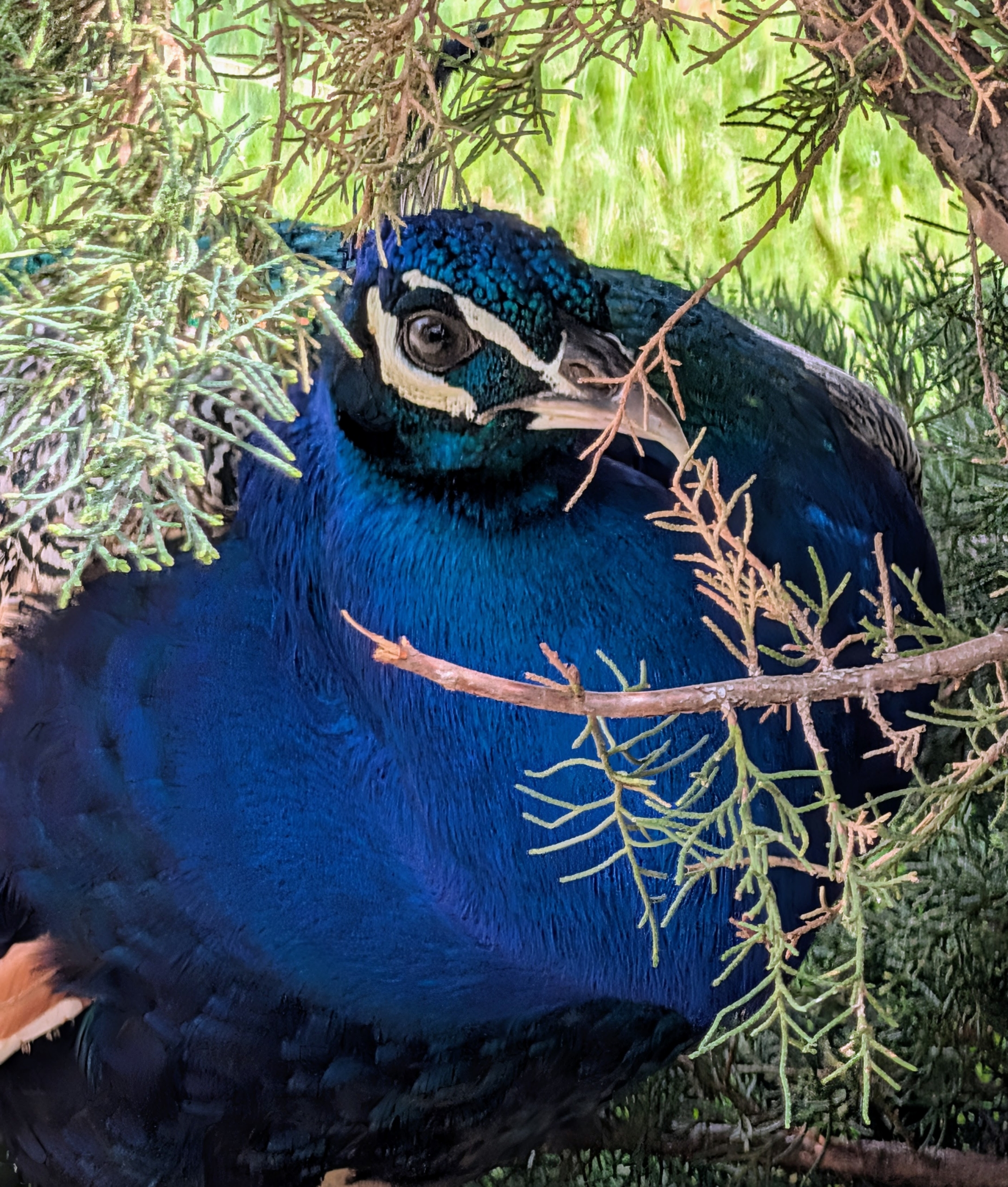
- Here’s one hiding under some foliage of an evergreen…
-
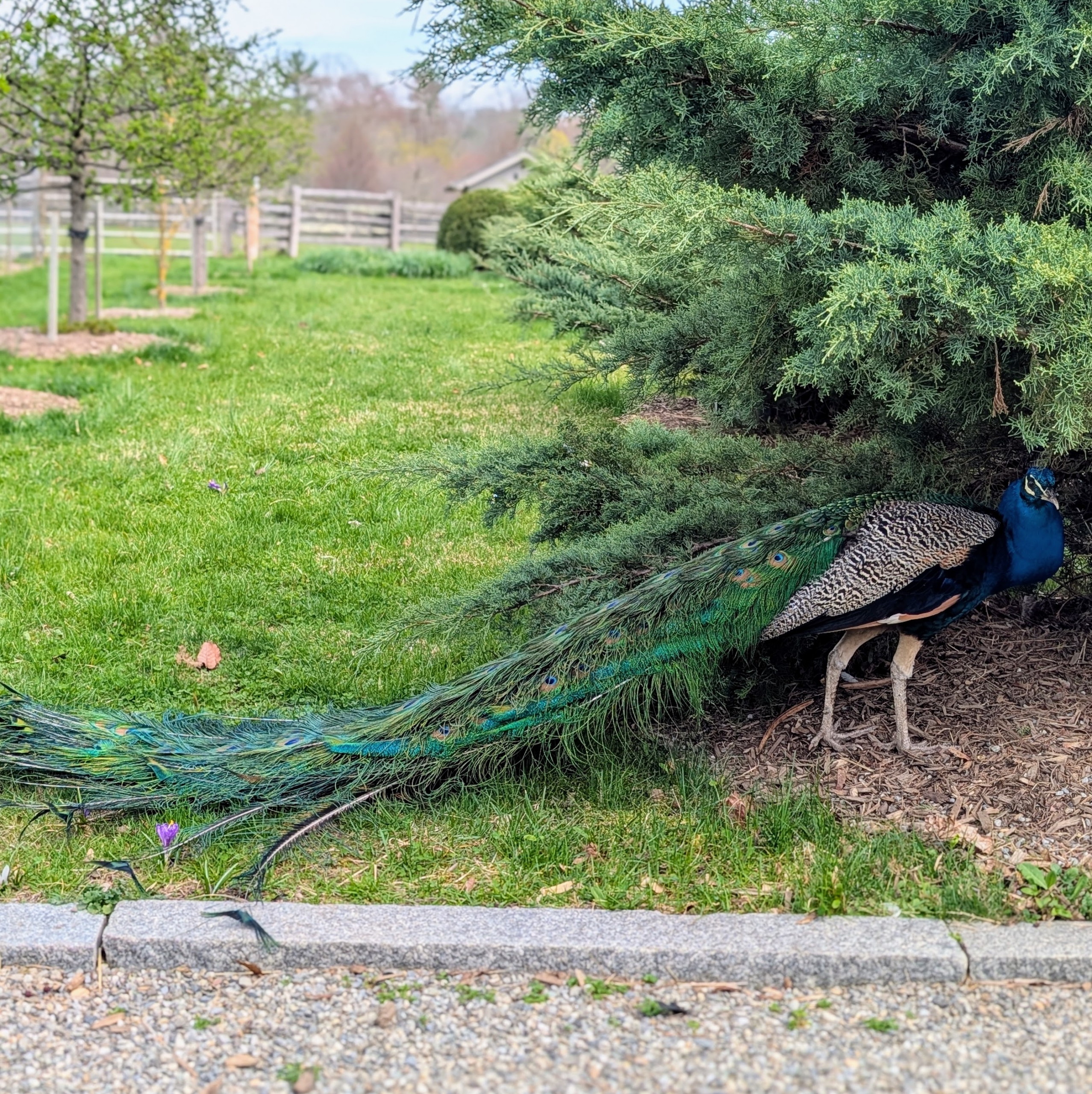
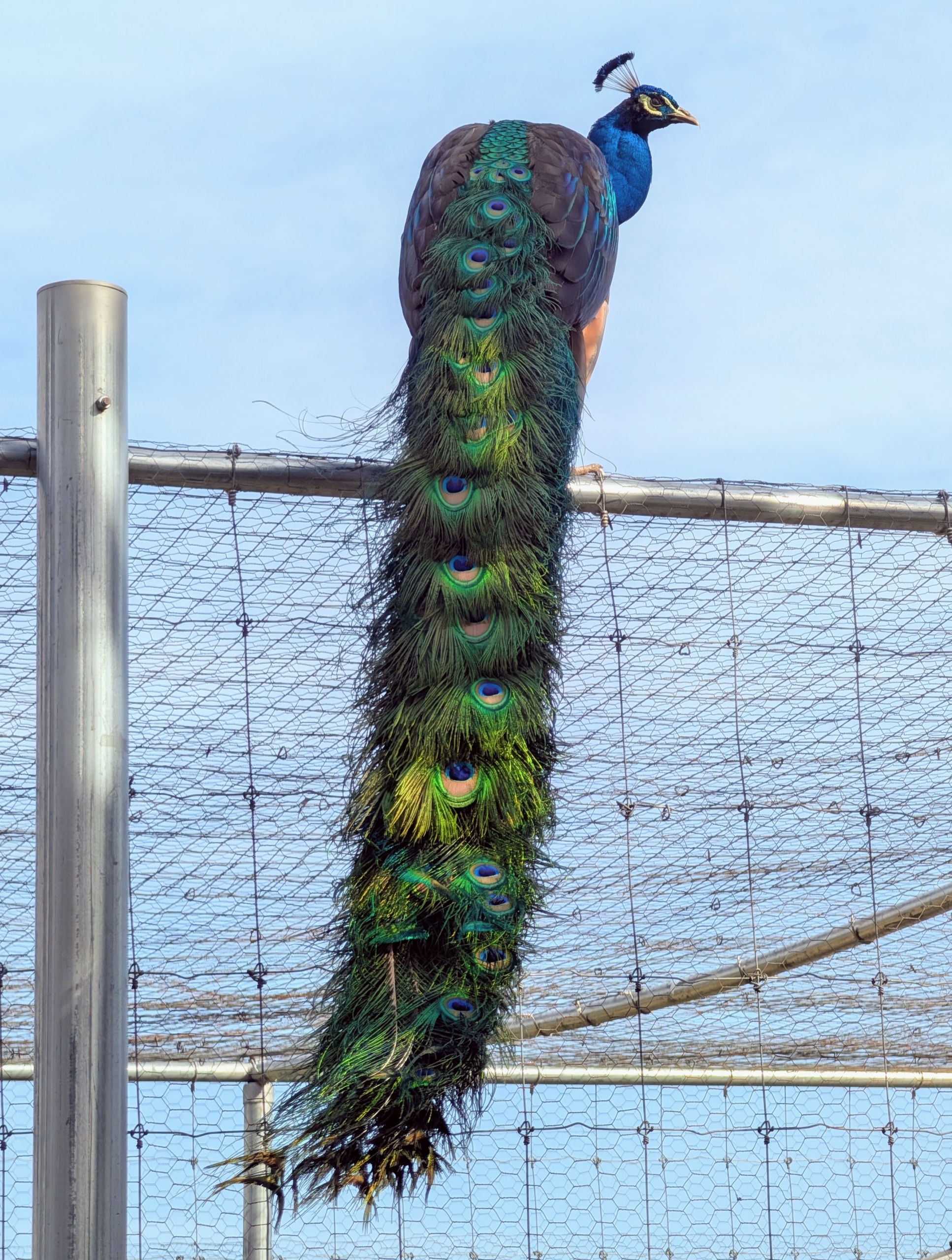
- But hard to hide his long lustrous tail. The tail feathers grow to five feet long when the make is mature – that’s longer than the bird’s body.
-
- Peafowl are members of the pheasant family. There are two Asiatic species – the blue or Indian peafowl native to India and Sri Lanka, and the green peafowl originally from Java and Burma, and one African species, the Congo peafowl from African rain forests.
-
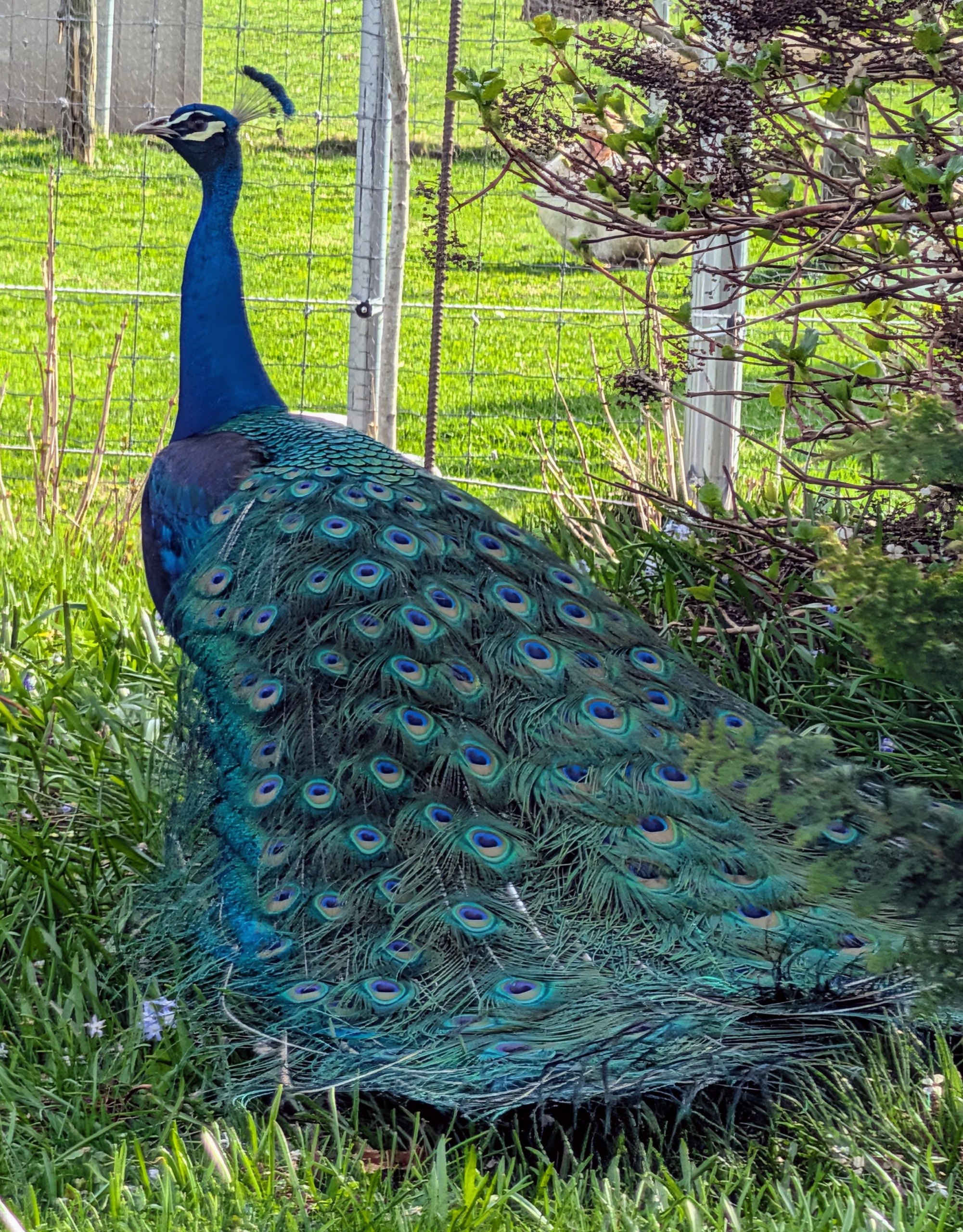
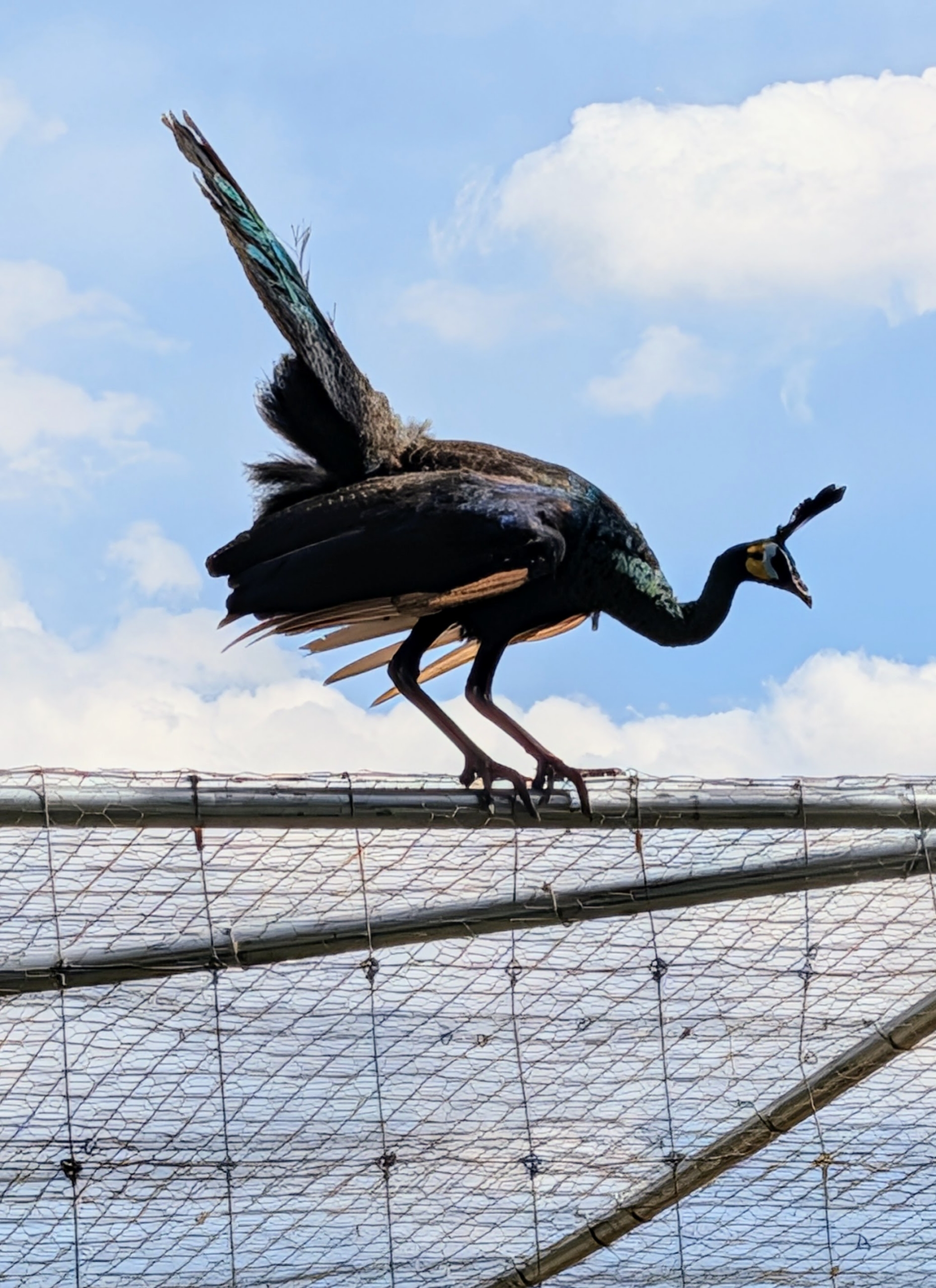
- I have both juveniles and adults. Within a year, peacocks are almost completely mature. Two year olds resemble adult males, but their tails are still short and need time to develop like this one. They become sexually active around the age of three. Peahens develop faster than peacocks and can mate as early as one.
-
- Like many birds, peafowl enjoy roosting at higher levels. In the wild, this keeps them safe from predators at night. Here is one peacock up on the peafowl fence just watching all the activities.
-
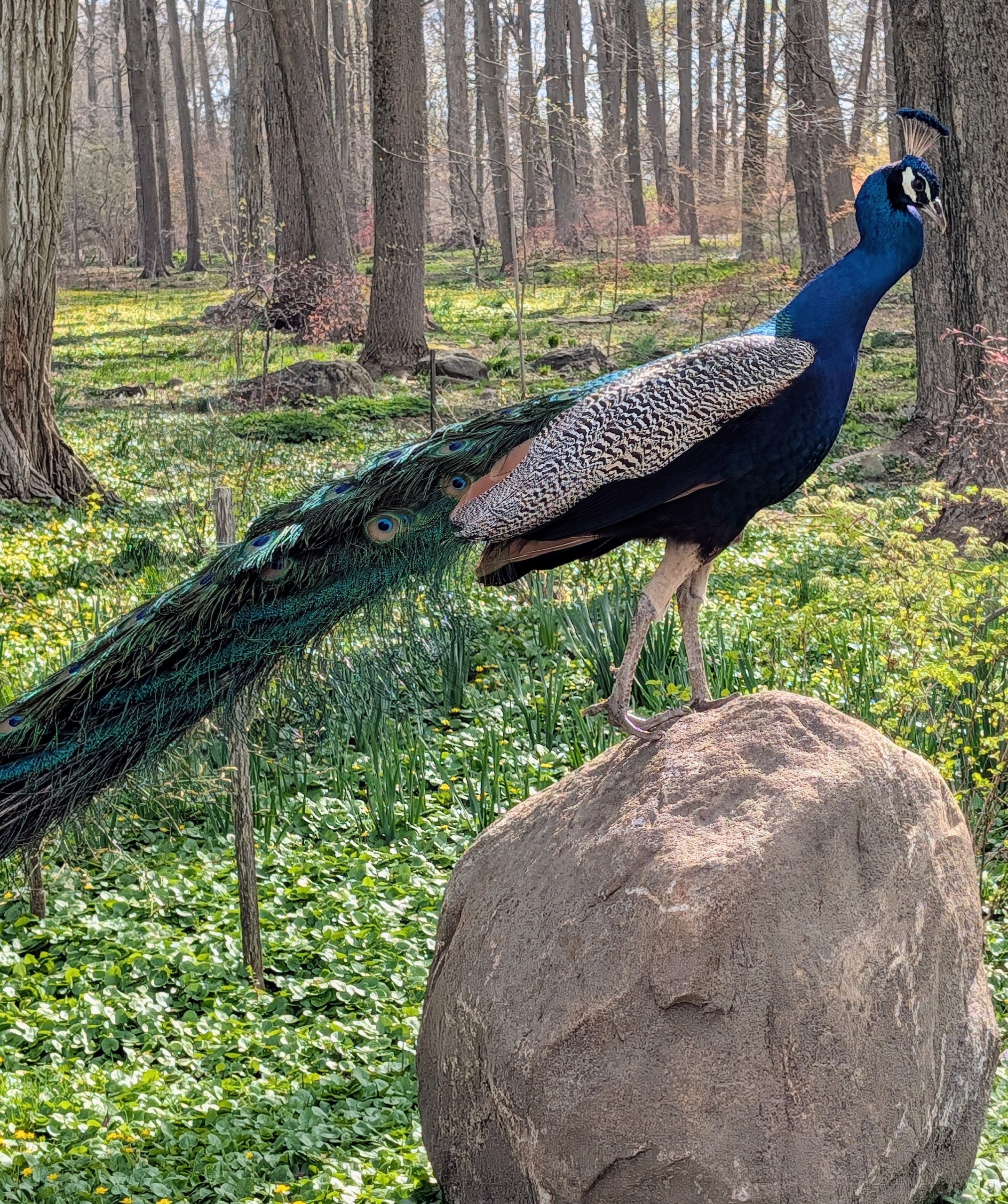
- Here’s one of the “blue boys” on a boulder. Peafowl also have acute hearing, but can be poor at discerning from what direction certain sounds originate.
-
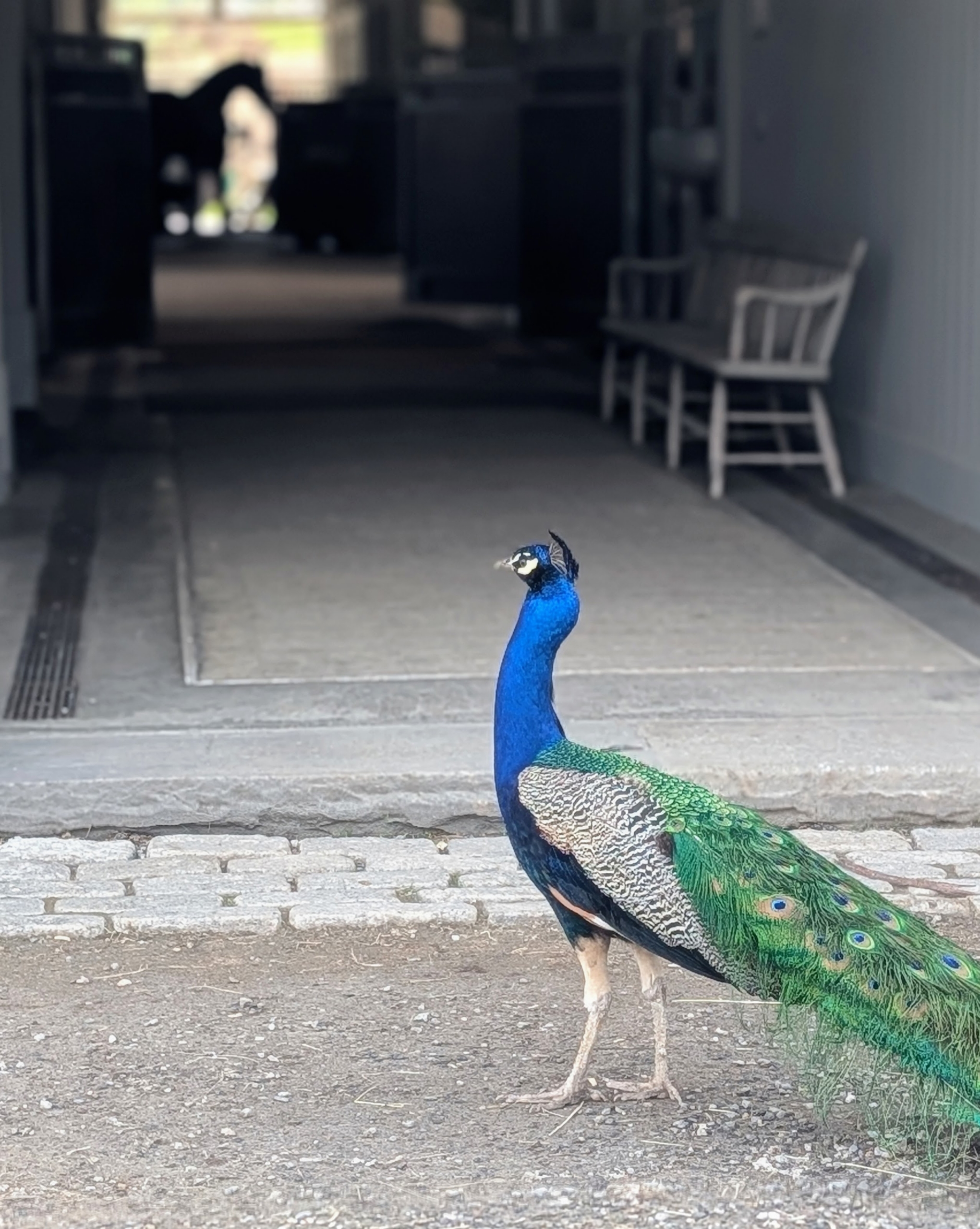
- Peafowl are very curious. I think this one is eager to go into the stable to visit the horses.
-
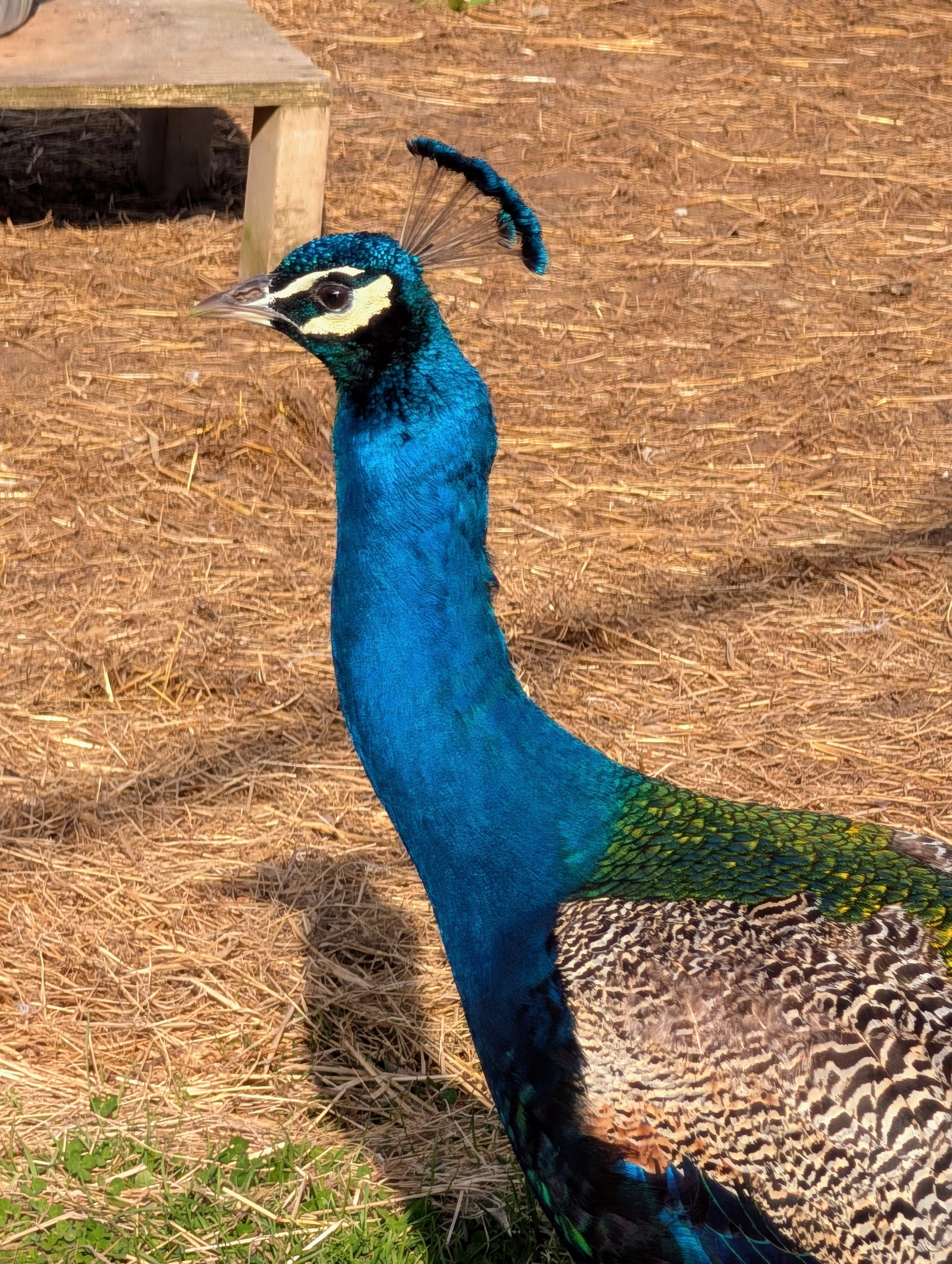
- Both male and female peafowl have a fan-shaped crest on their heads called a corona. It may take up to one year for a corona to reach full size.
-
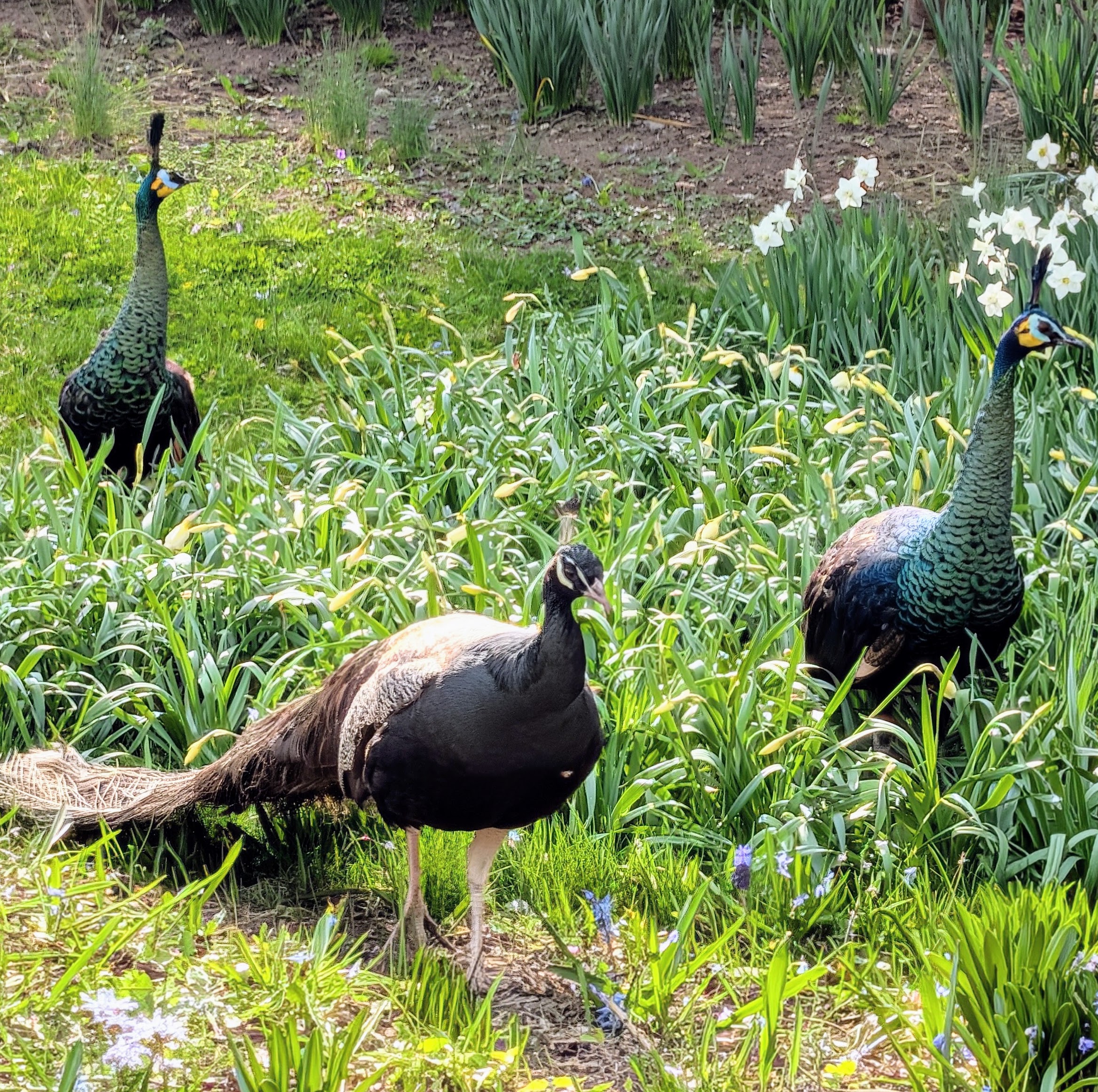
- Here’s a trio walking through the daffodil bed near the allée of lindens. Peafowl are ground feeders. They do most of their foraging in the early morning and evening. As omnivores, they eat insects, plants, grains, and small creatures.
-
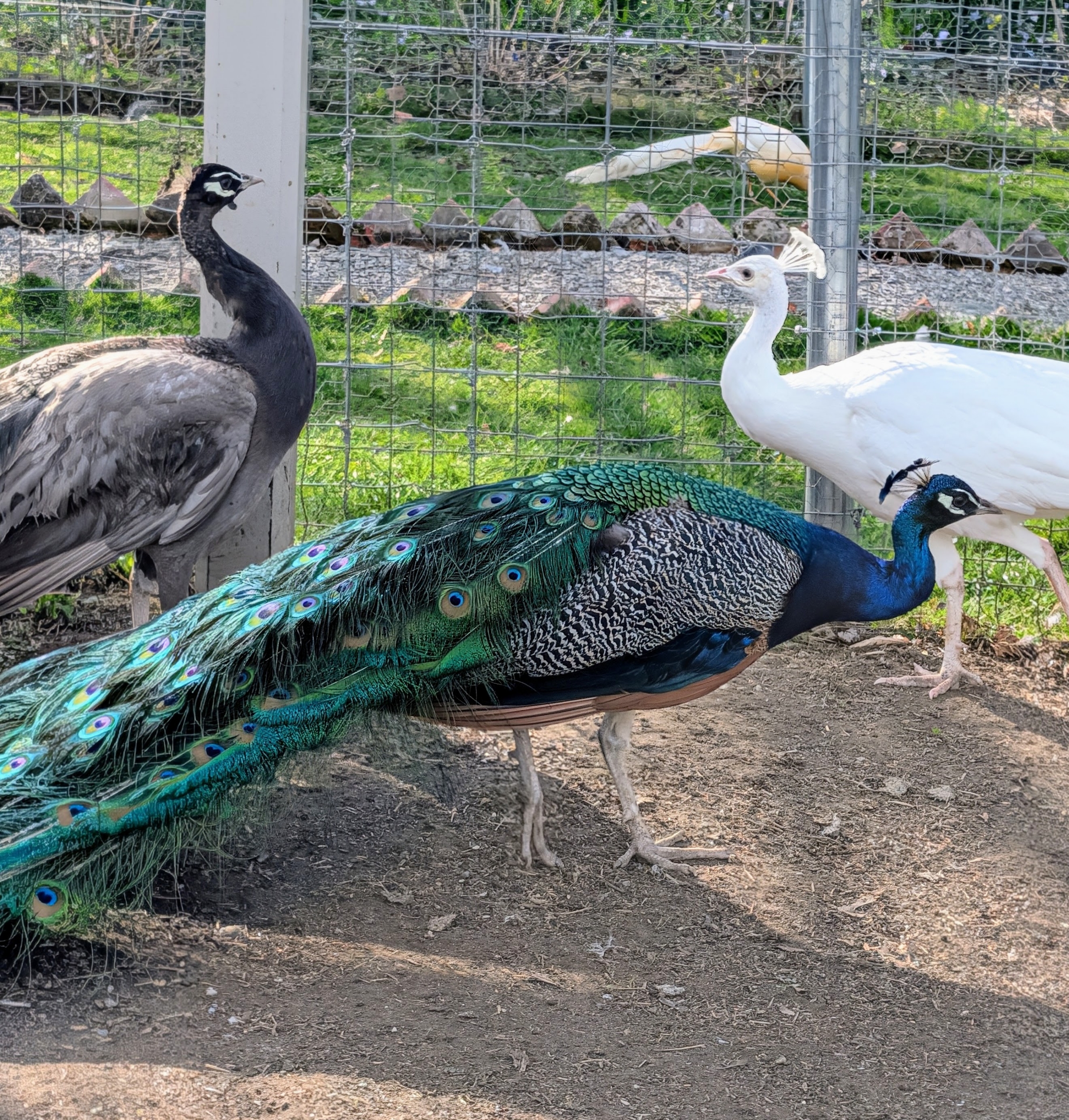
- These males preferred the comforts of the pen, venturing only to the adjacent goose enclosure. I am glad these males get along.
-
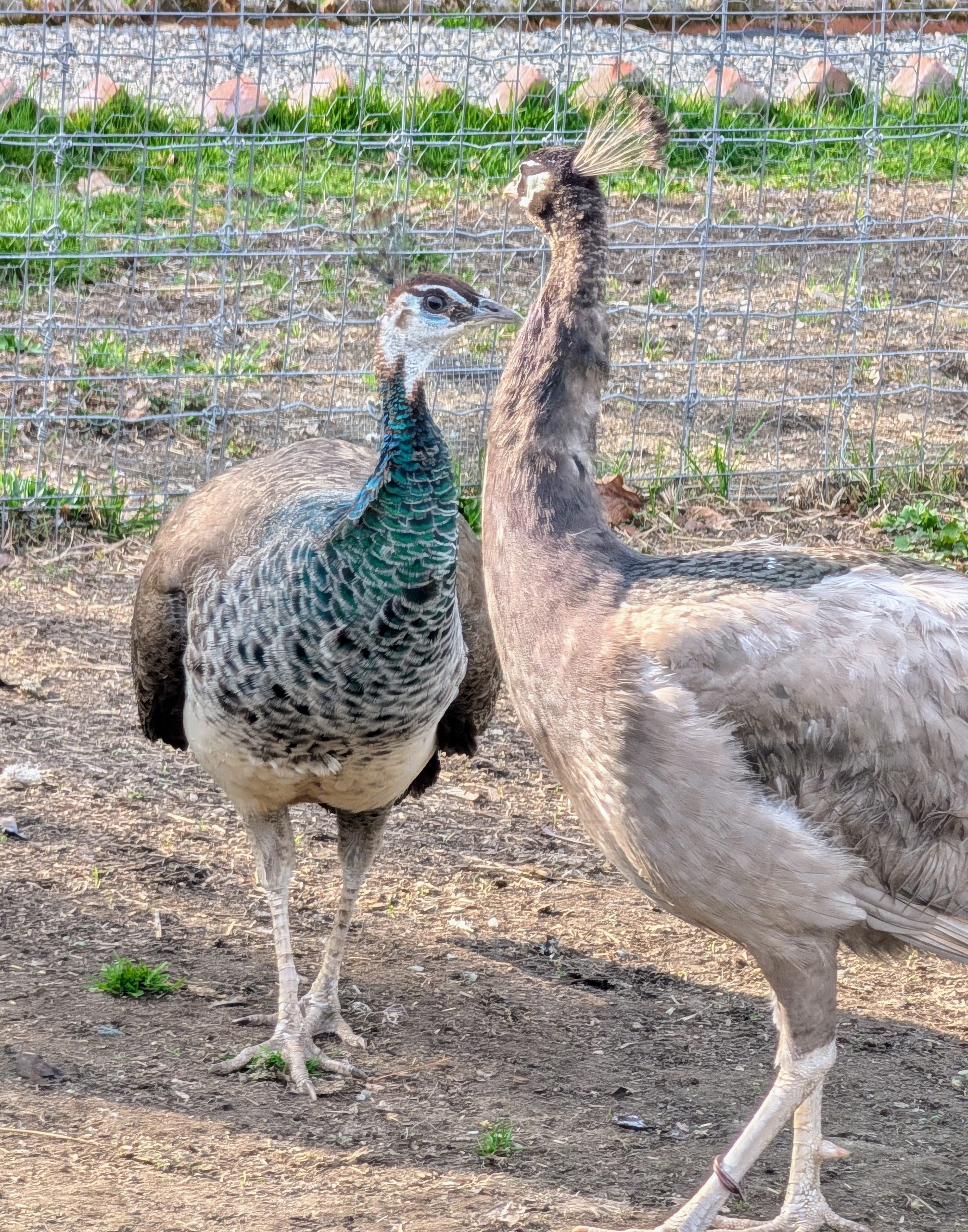
- Peafowl are smart, docile and adaptable birds. They are also quite clever.
-
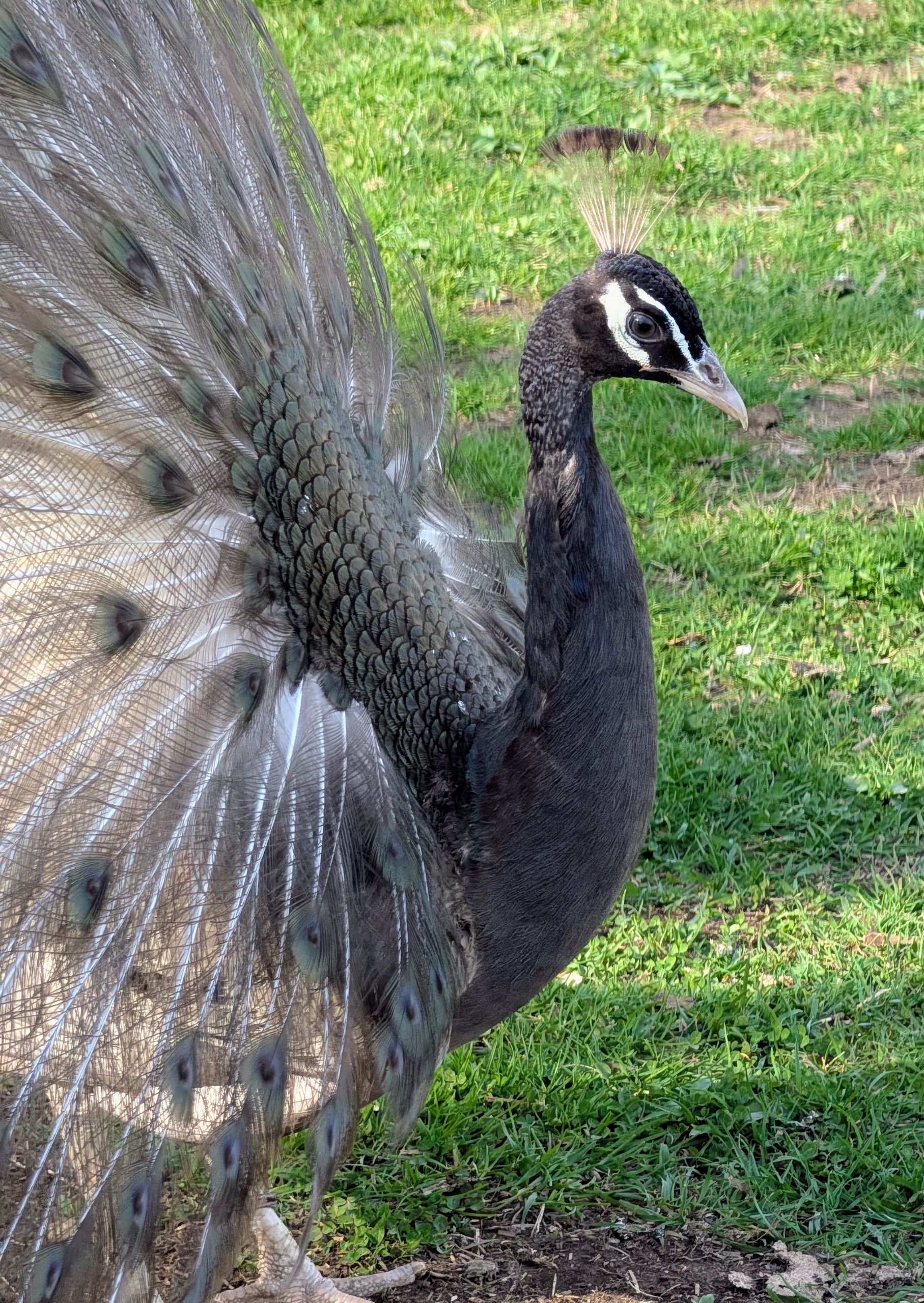
- Here is a male showing off his tail feathers to a nearby female. Mating season typically runs from March to October. The male’s neck muscles stiffen to allow for the elegant positioning of its head during the courtship dance.
-
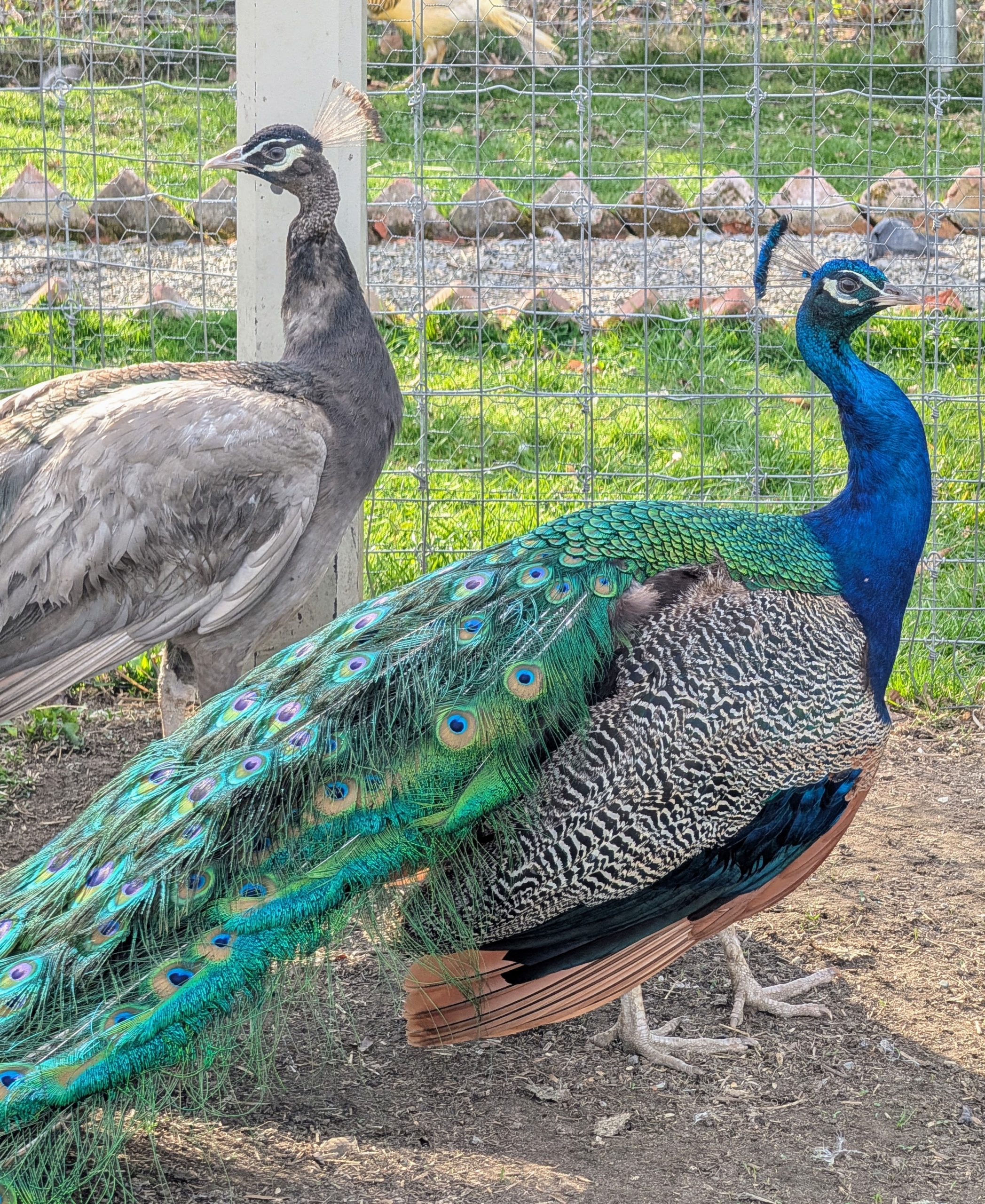
- Even while socializing and grazing, peacocks are alert and aware of all that occurs around them.
-
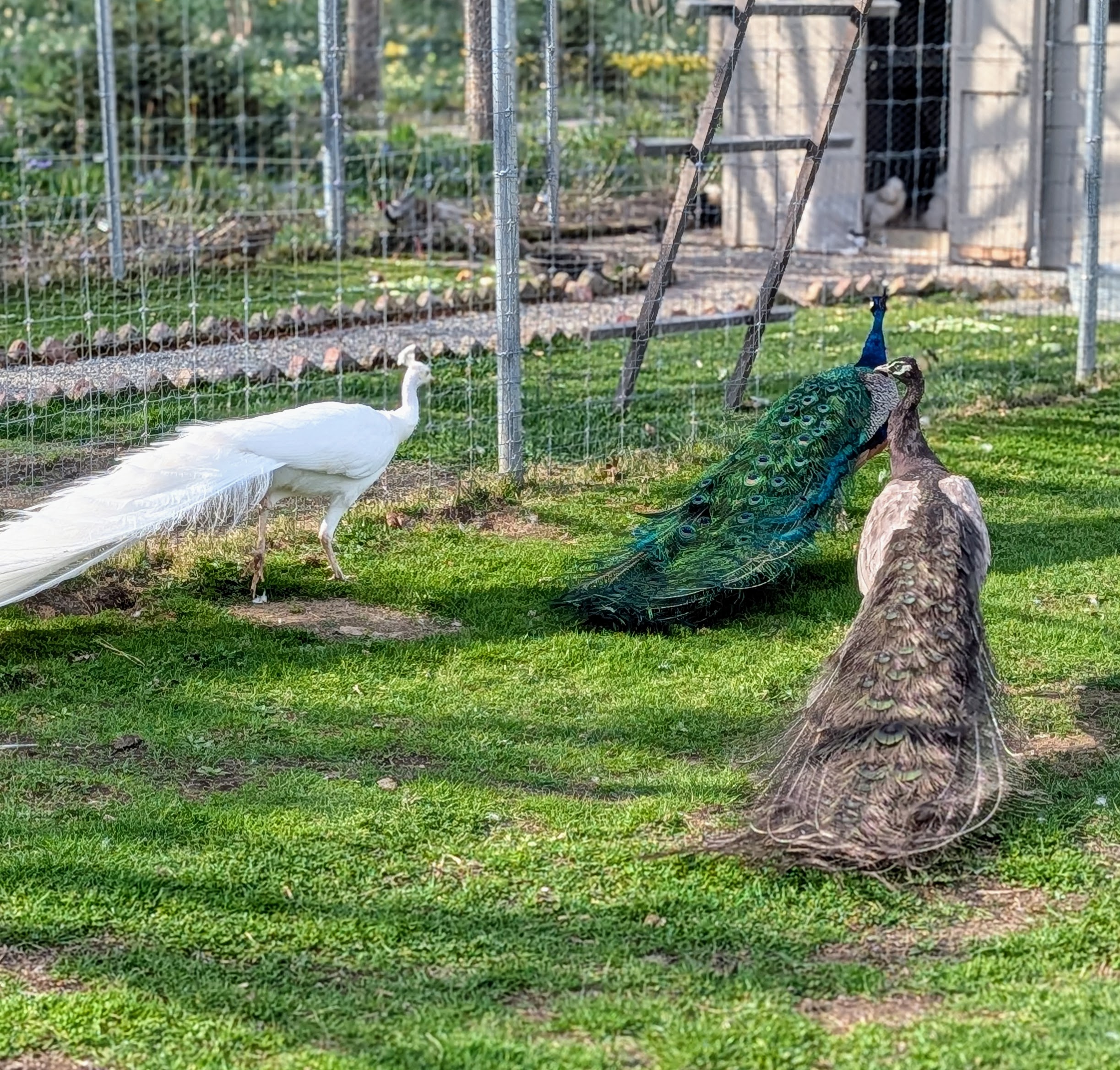
- Peafowl are happiest when living in small groups. They often walk around following each other. White peacocks are the result of leucism or albinism. While leucistic white peacocks are far more common than albino peacocks, both types are rare.
-
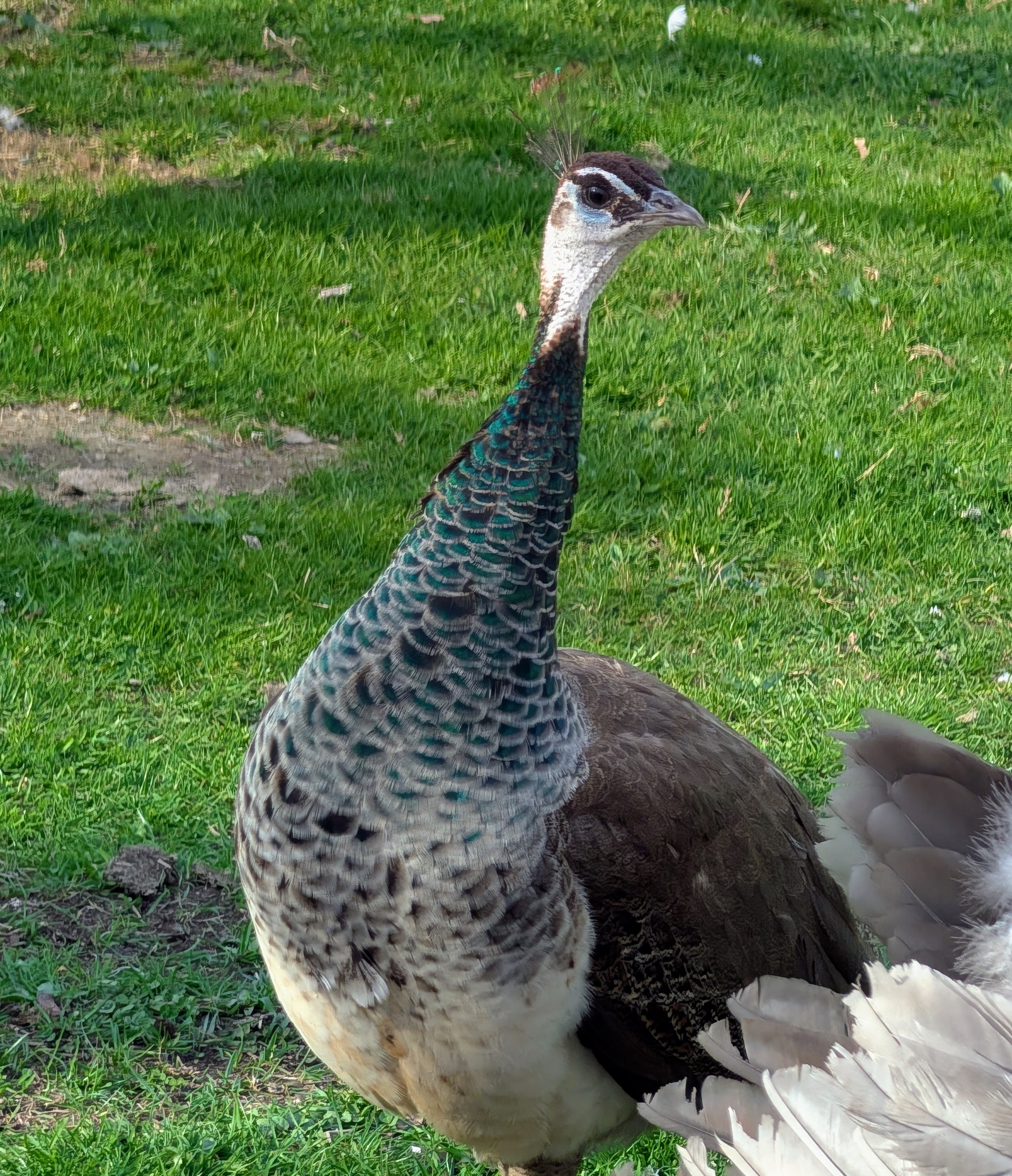
- Here is a curious female coming up to see the camera. Female peafowl are more muted in color and are usually more camouflaged to blend into their surroundings.
-
- Whenever I tour the farm I always call out to them… and oftentimes, they answer. After a day of exploration around the farm, these stunning birds are all led back to their safe enclosure.
Here's a short video of one of my white peacocks doing the mating dance. This display is known as “train-rattling.” The ability to fan out the train is done with very strong and specialized muscles.
 Martha Pins


 Martha Tweets

