

Moving Tropical Plants Outdoors
Time to bring all my beautiful potted plants outdoors for the season.
I have a rather sizable collection of tropical specimens at my farm. During the winter, they are all stored in special greenhouses. Once the warm weather arrives, they are all brought out for display - some go to my home in Maine, and the remainder of the plants are placed in various locations here at Cantitoe Corners. It's a big undertaking to move all these plants when the weather changes. Thankfully, I have the help of a strong outdoor grounds crew and some heavy-duty farm equipment to get the job done.
Here are some photos, enjoy.
-

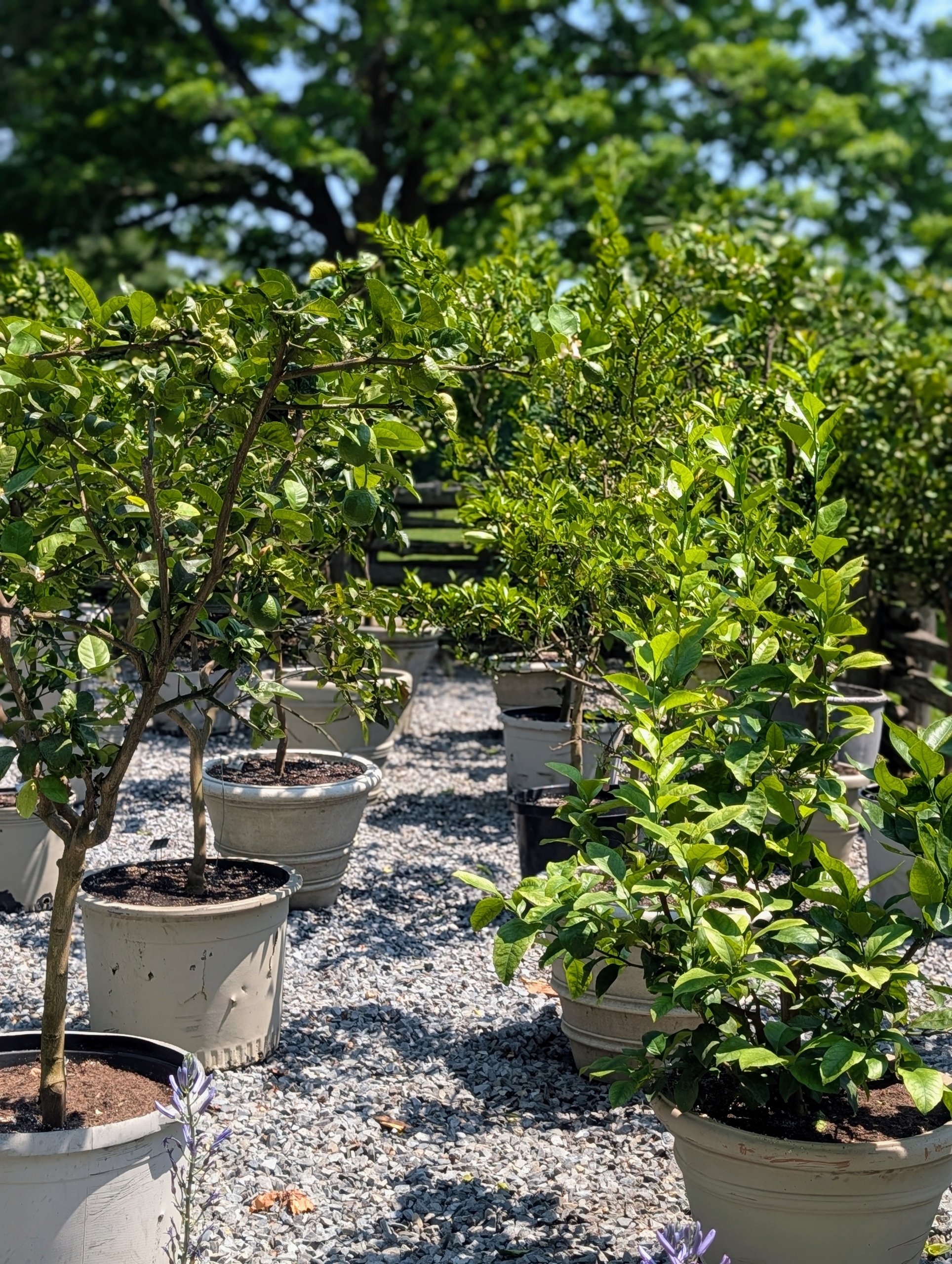
- Every year around this time, the tropical plants are taken out of storage, cleaned up, and repotted if needed, and then moved to their warm-weather locations. This year, my citrus collection is displayed outside the hoop houses on a bed of gravel. Citrus plants are considered high-light specimens and need intense, full-spectrum light, ideally 12–16 hours per day.
-
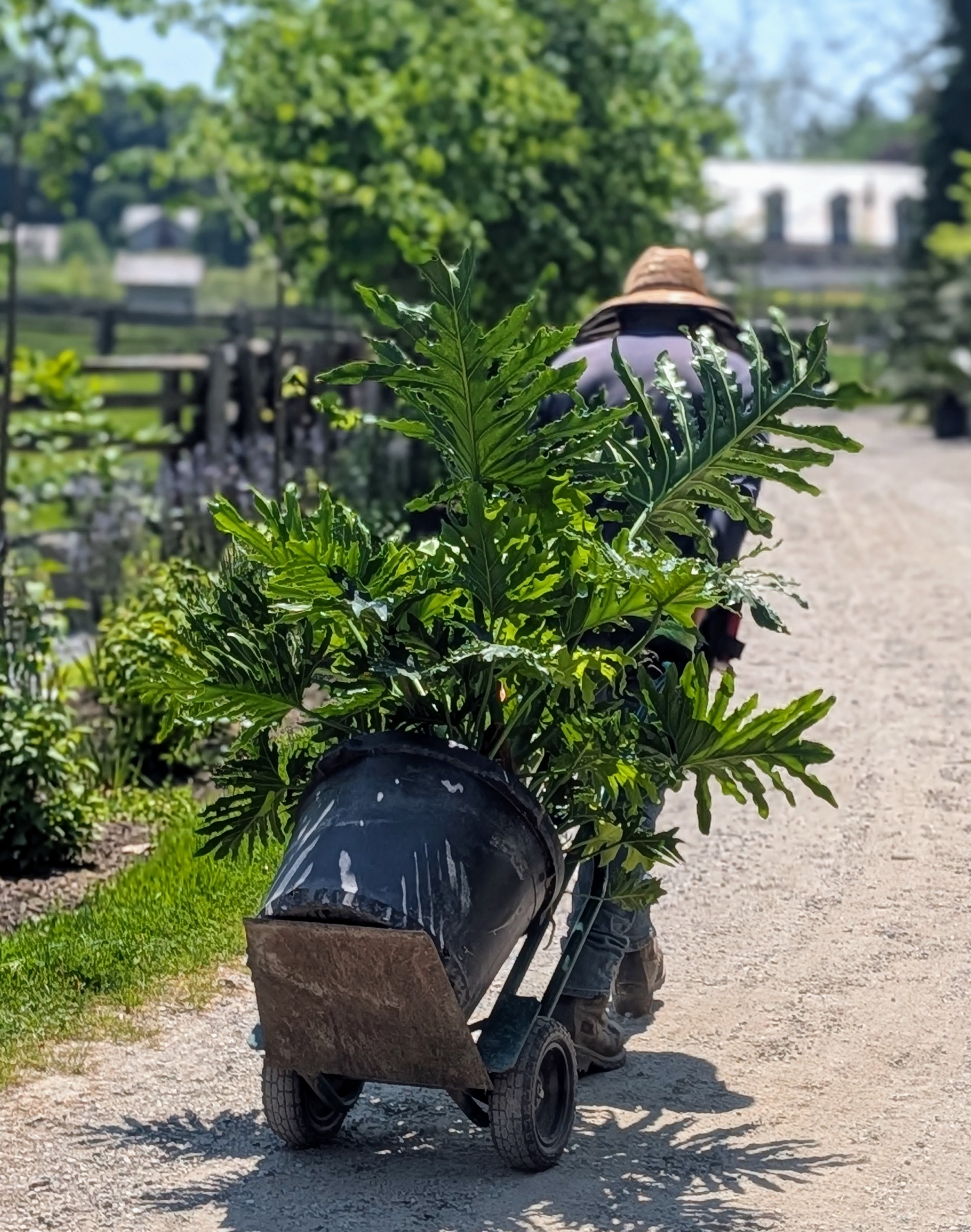
- Each potted plant is transported one by one and carefully placed outside until I decide where it will be moved for the summer months.
-
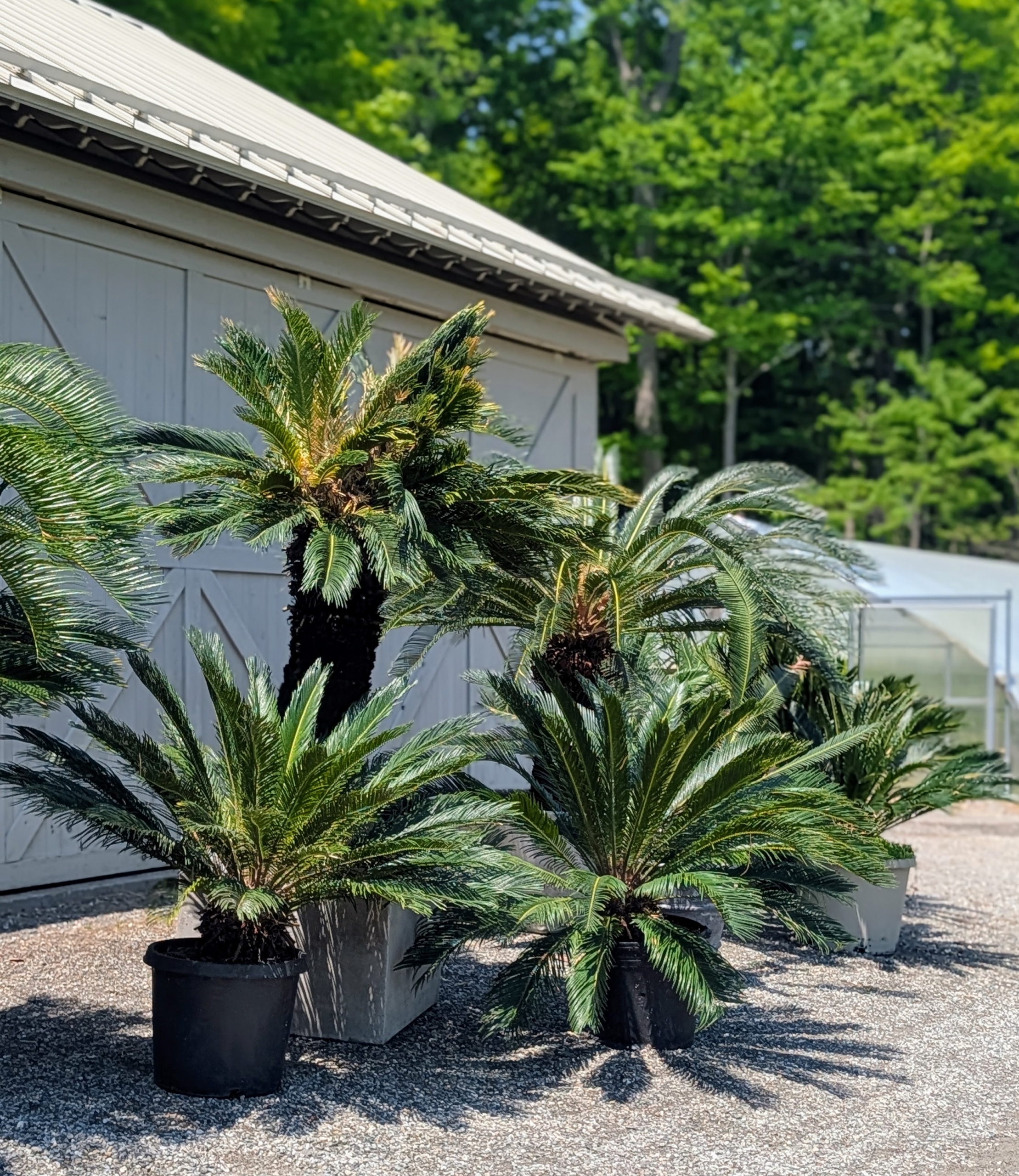
- This is one of my favorites – the sago palm, Cycas revoluta. It is a popular houseplant known for its feathery foliage and ease of care. Sago palms prefer to be situated in well-drained soil, and like other cycad plants, do not respond well to overwatering.
-
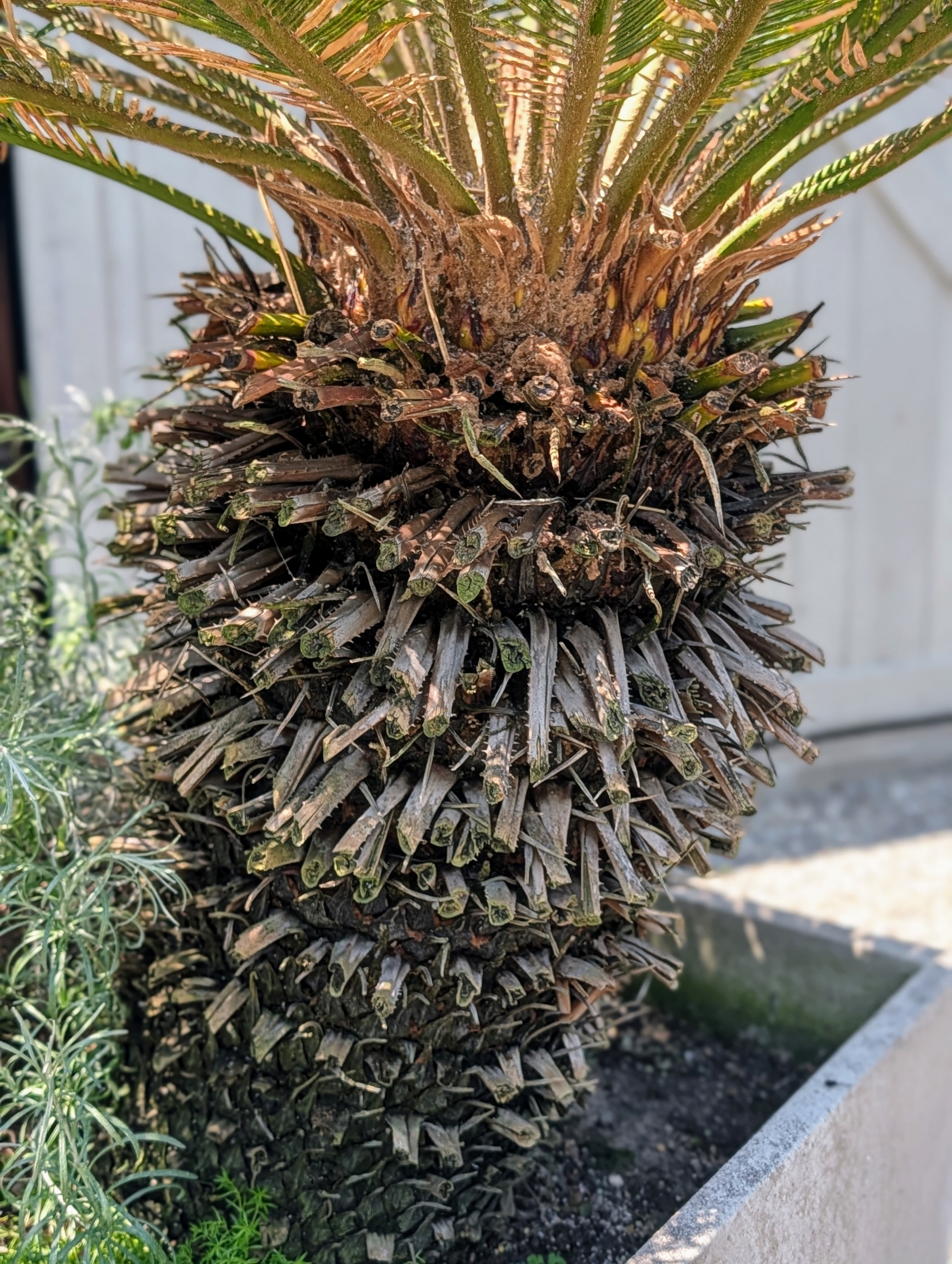
- Below the foliage of the sago palm is the bare section of trunk where leaves were once cut. The rough trunk becomes leafless as it ages.
-
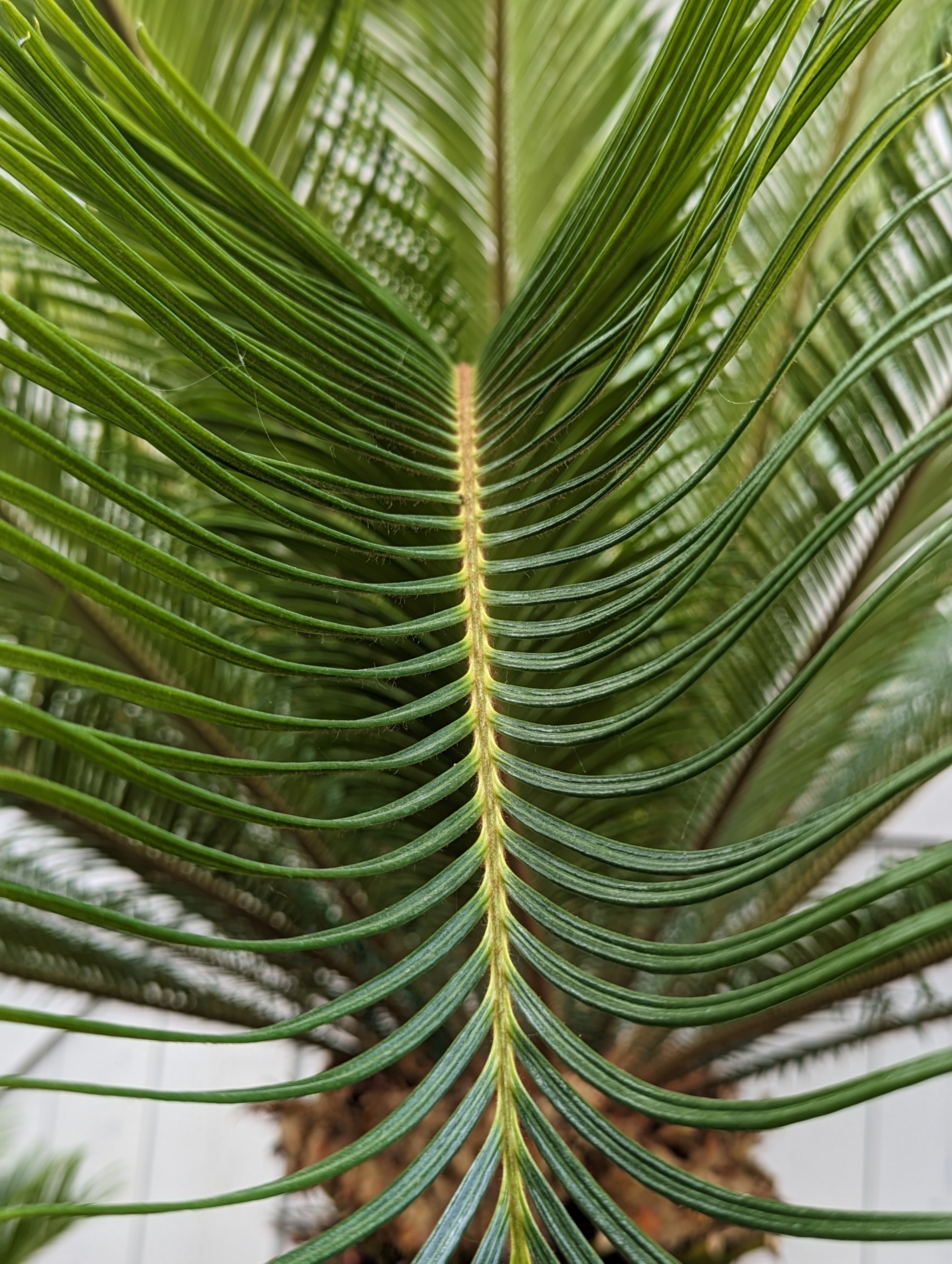
- Here is a closer look at one of the fronds. The tips are quite pointy and sharp, so it’s best to keep it away from lots of foot traffic.
-
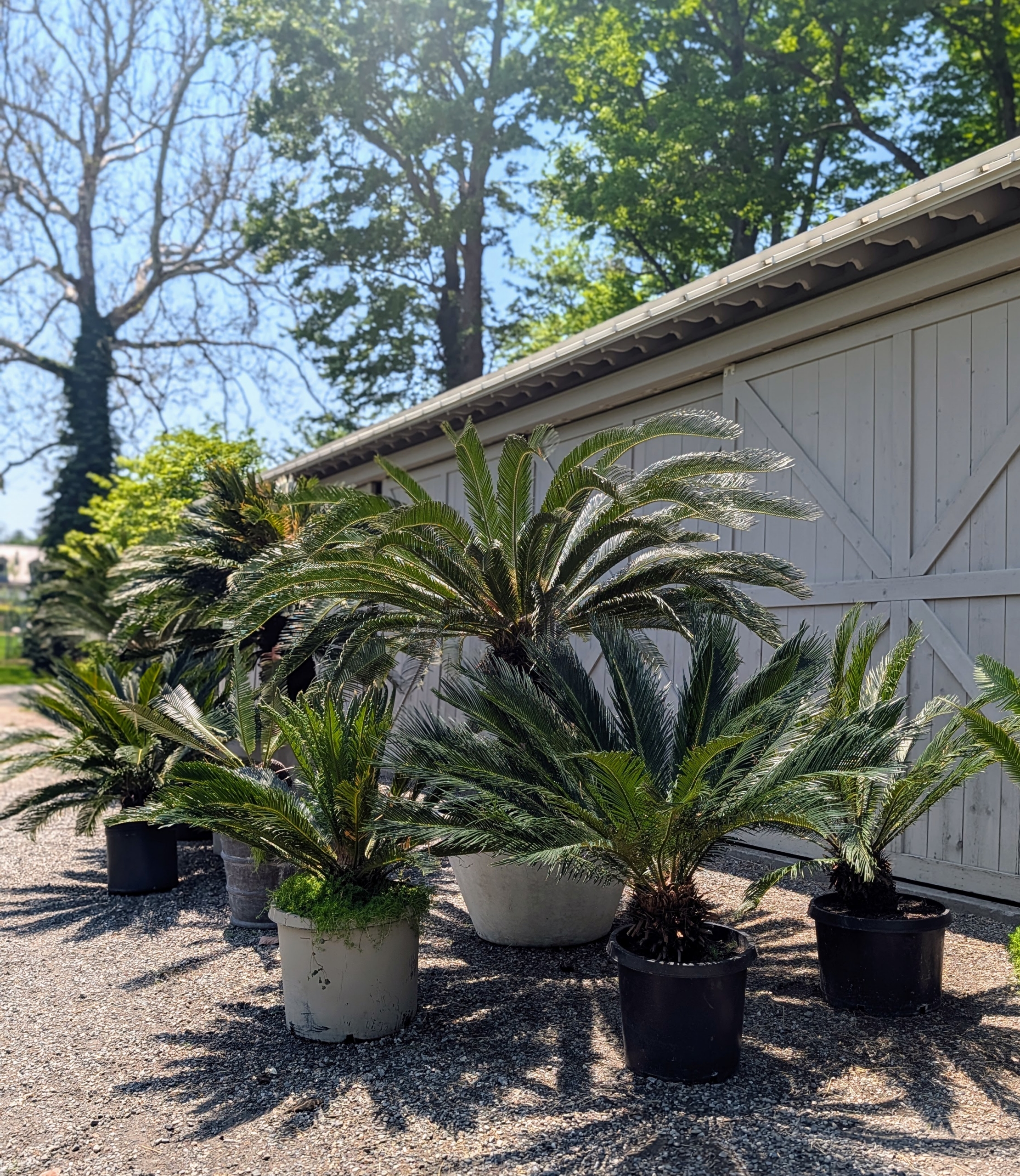
- I have a very large collection of sago palms. As the plants are removed from the hoop house, they’re all grouped by type, but never touching.
-
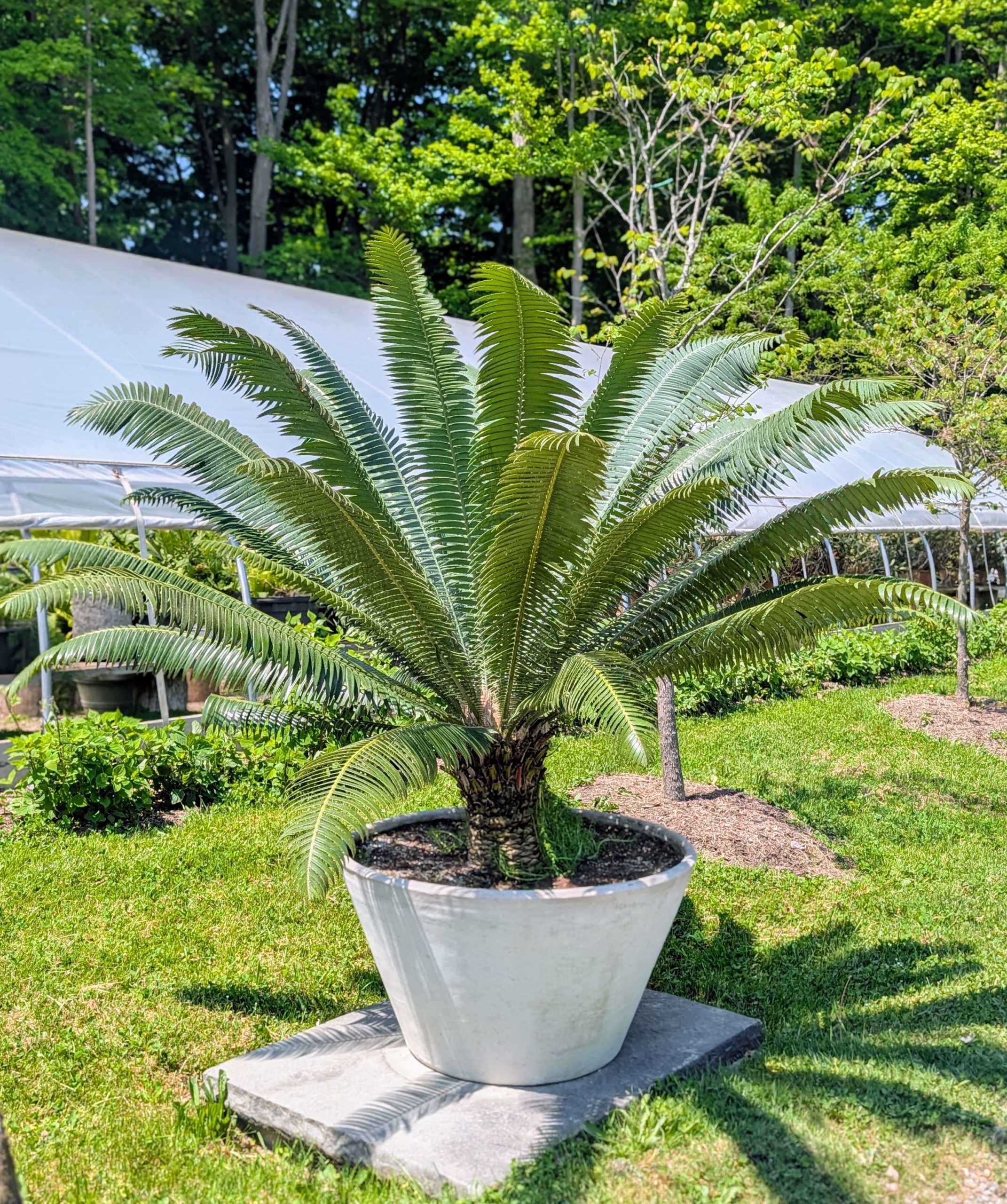
- Sago palms can grow up to 10 feet tall and can spread up to 12 feet wide, depending on species, growing conditions, and whether they are planted in the ground or in containers. This one is maturing so perfectly.
-
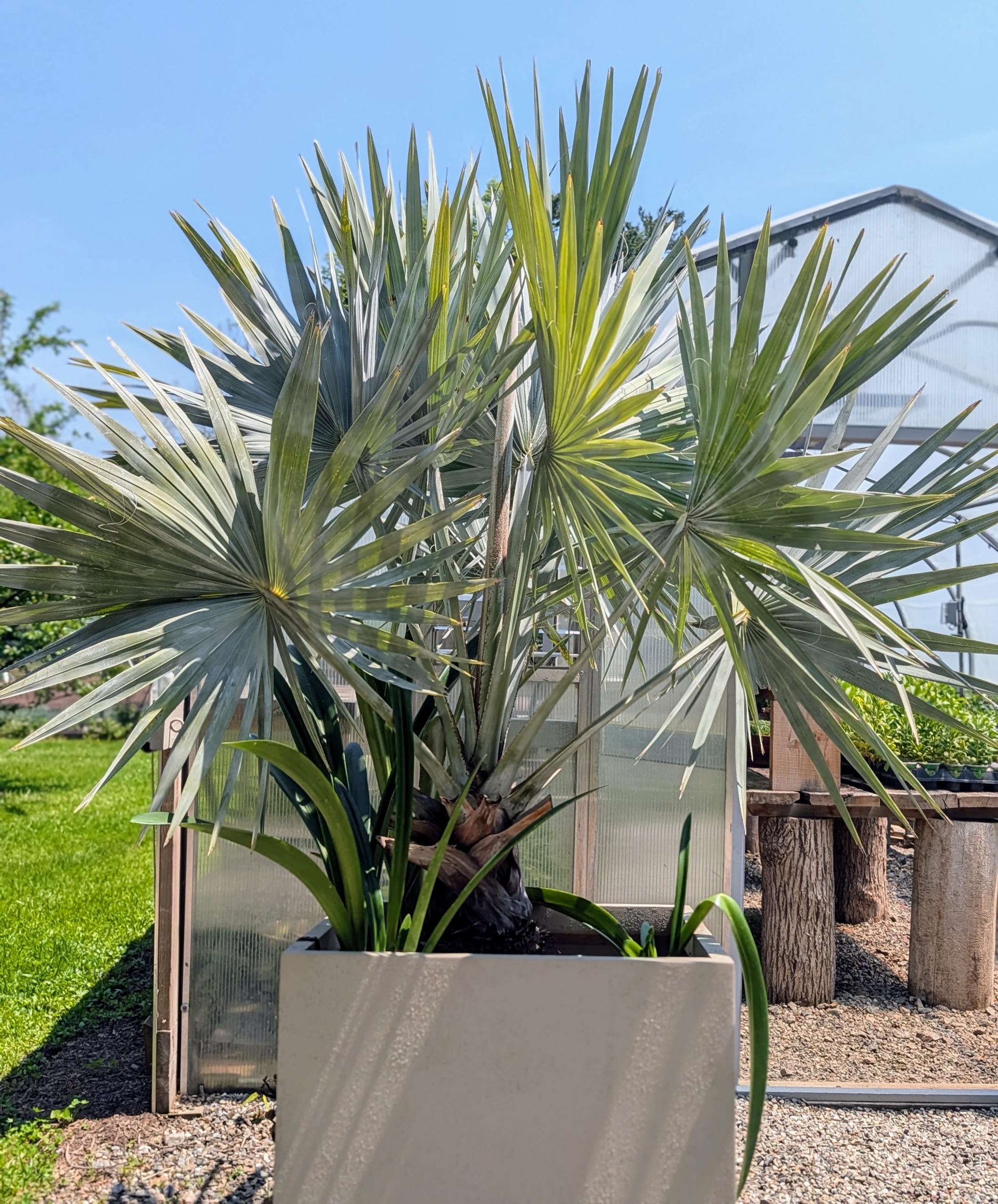
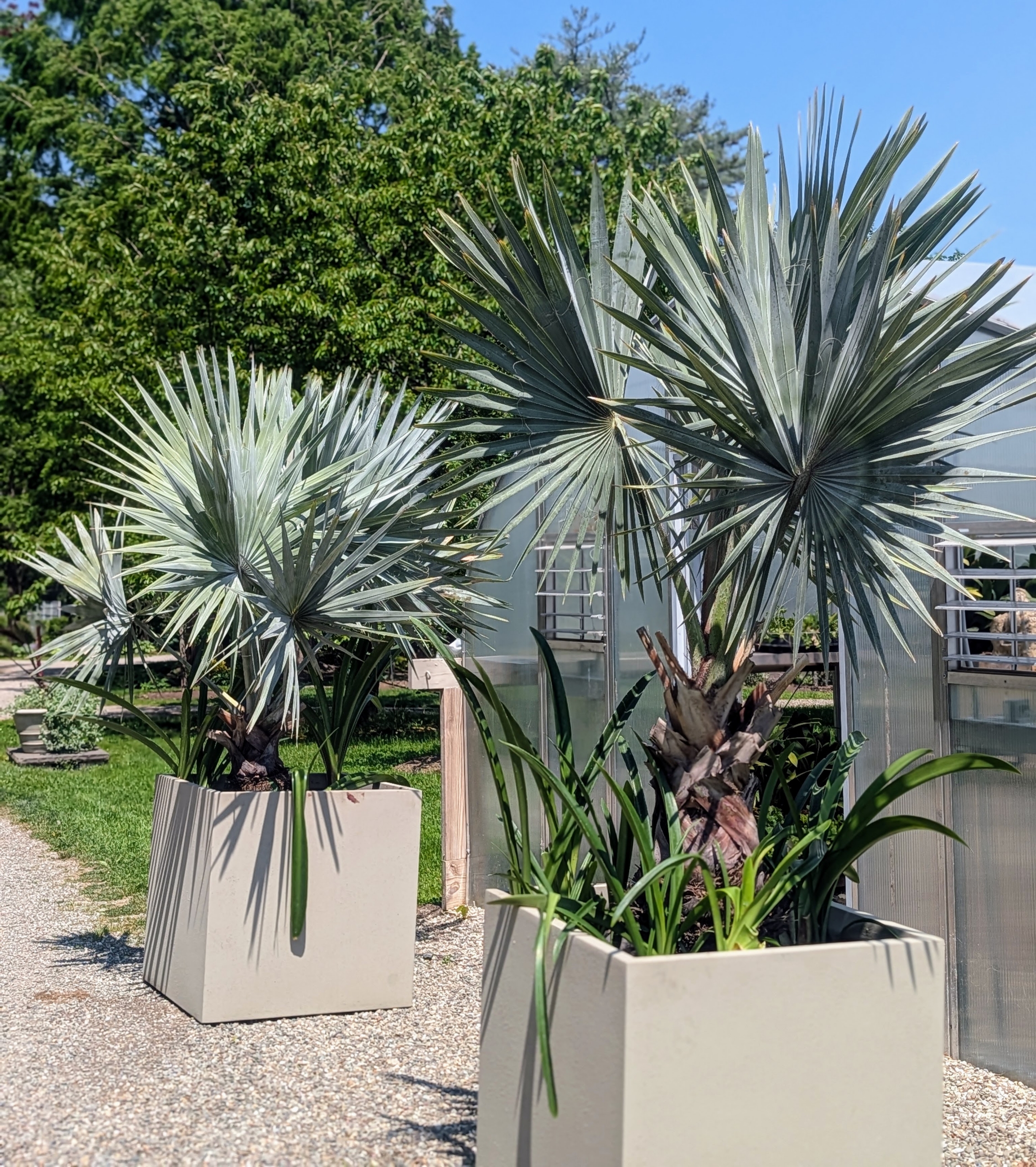
- This is a Bismarkia palm, Bismarckia nobilis, which grows from a solitary trunk, gray to tan in color, and slightly bulging at the base.
-
- I chose this spot for two potted Bismarckias, where they will thrive under full sun. For optimal growth and flowering, Bismarckias need full to partial sunlight, with at least six to eight hours of direct sun daily outdoors.
-
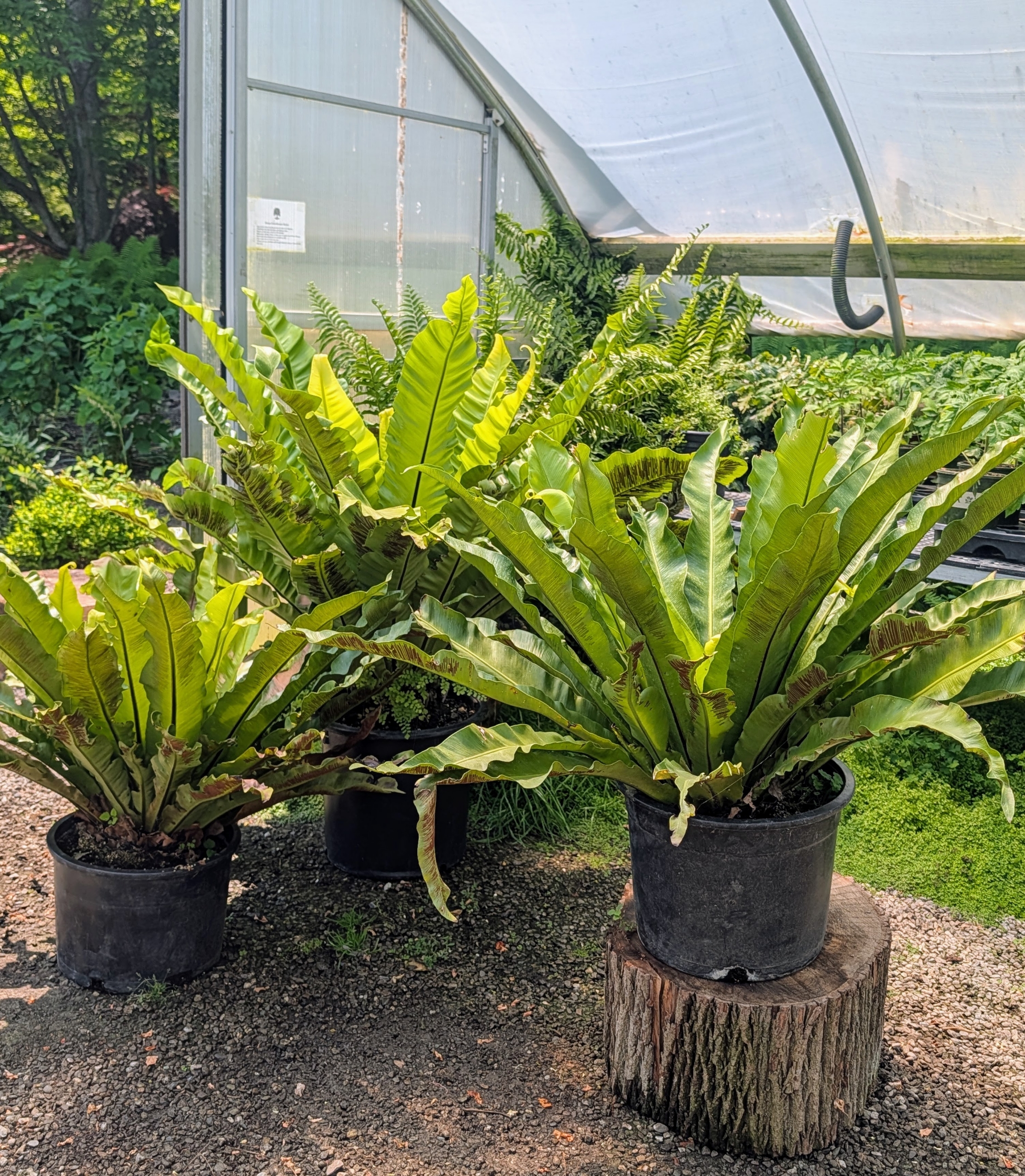
- Here are potted bird’s nest ferns. Bird’s-nest fern is a common name for several related species of epiphytic ferns in the genus Asplenium.
-
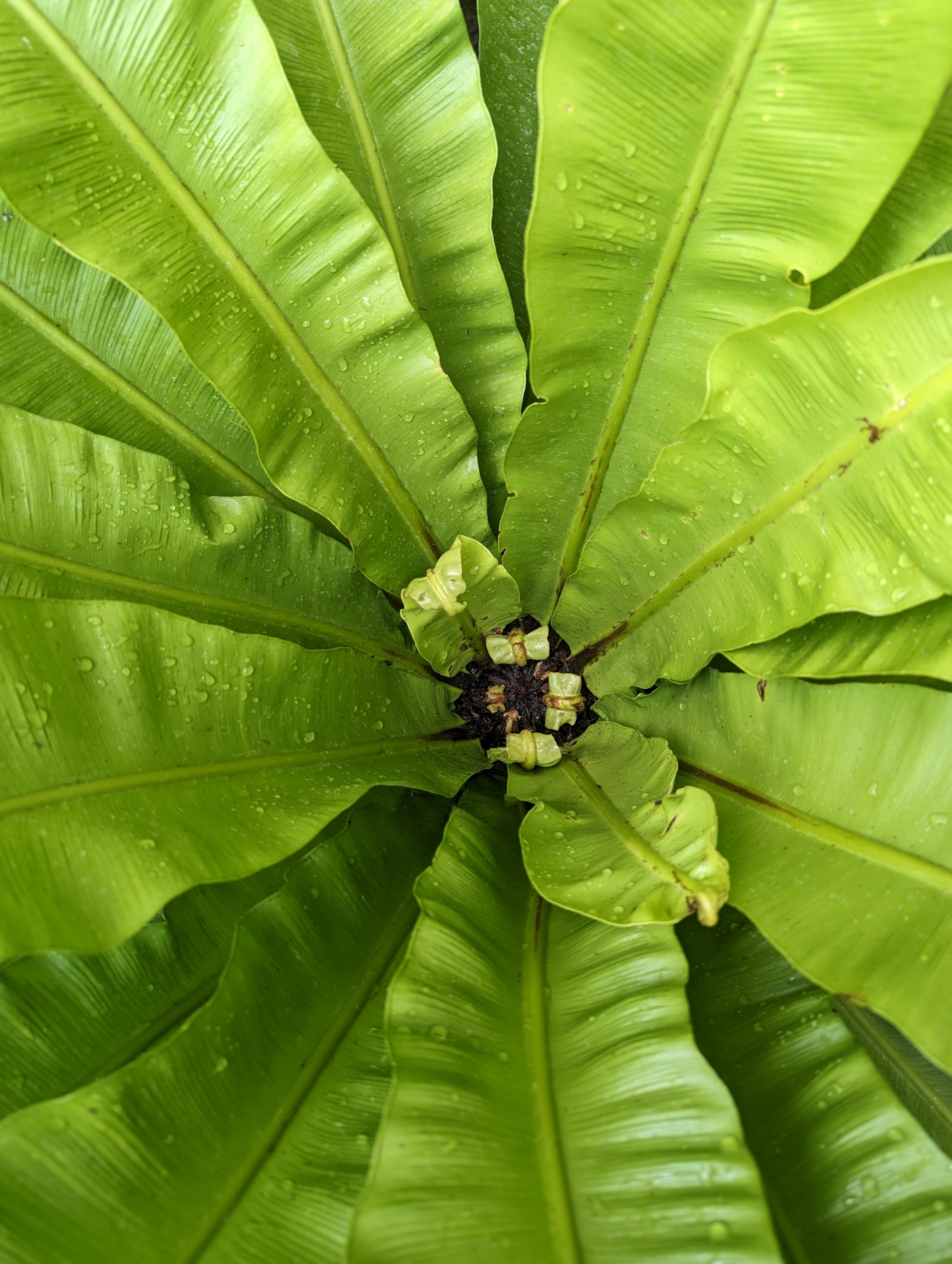
- The bird’s nest fern is known for its tropical fronds that grow out of a rosette in the middle of the plant which closely resembles a bird’s nest. It is also occasionally called a crow’s nest fern.
-
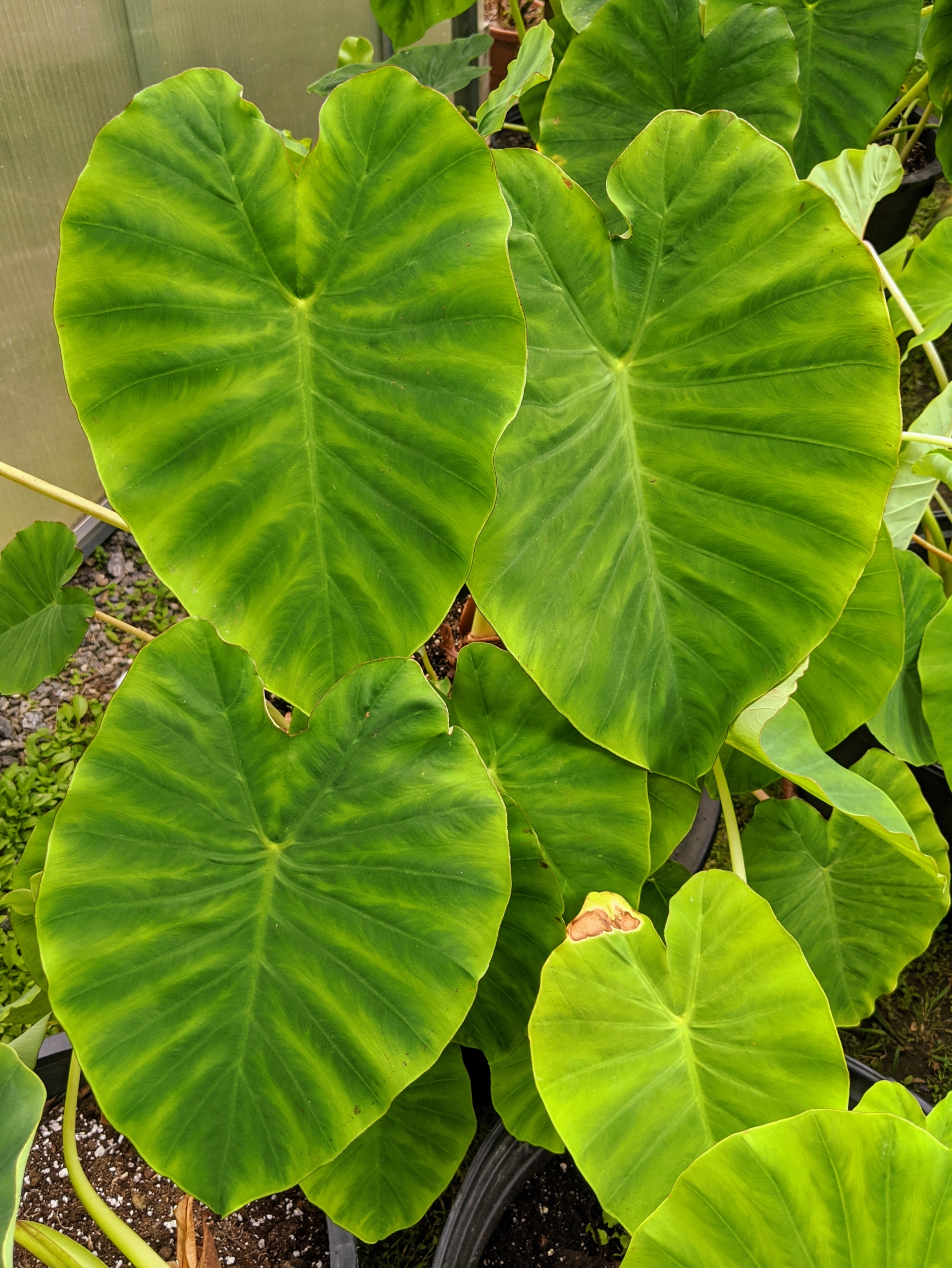
- Here is a green colocasia. In contrast to Alocasia, the leaf tip of colocasia points downwards.
-
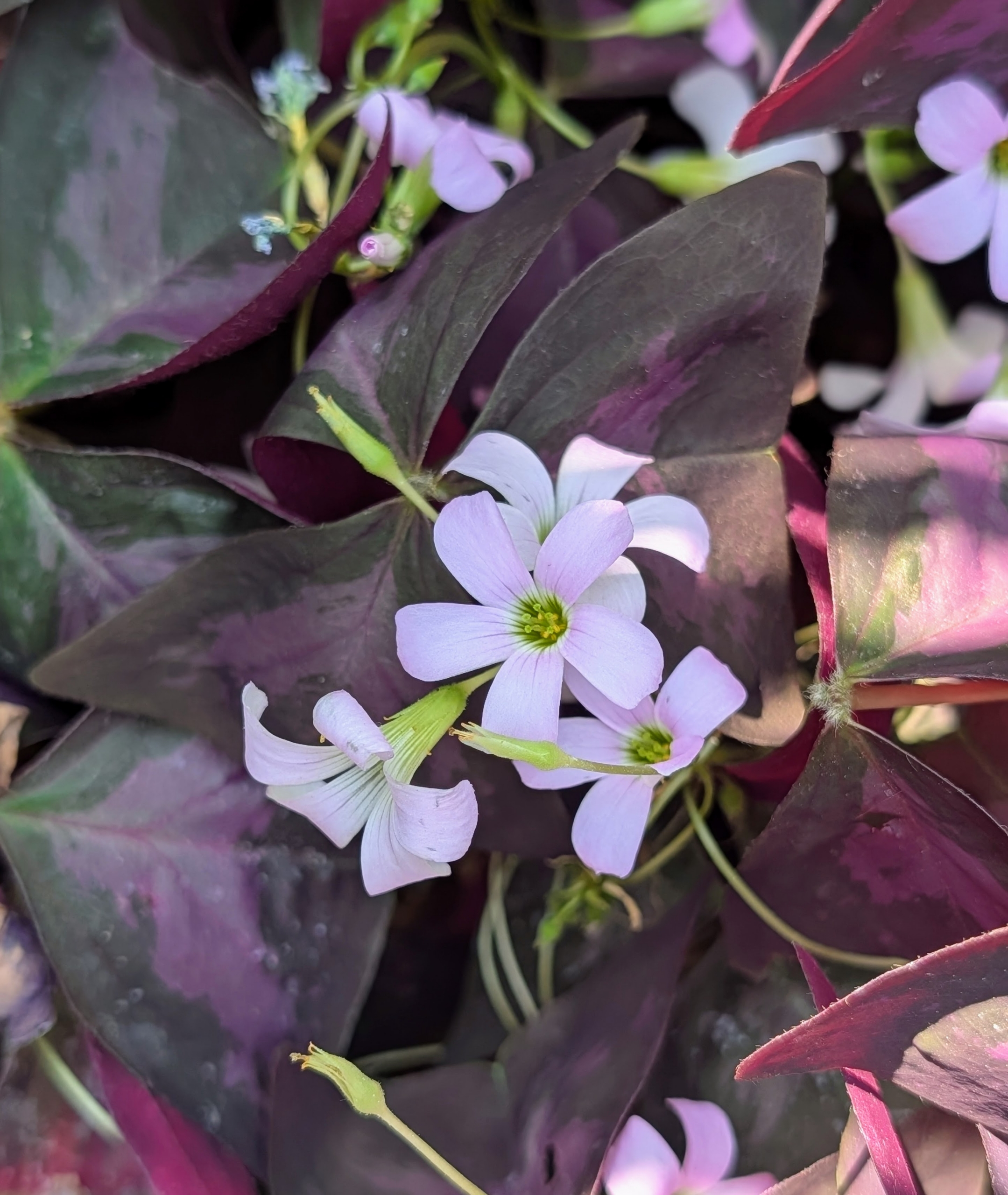
- This is Oxalis triangularis, commonly called false shamrock. It is a species of perennial plant in the family Oxalidaceae. The trifoliate leaves resemble a shamrock and can be green to variegated to deep maroon in color. The leaves close up at night or when disturbed.
-
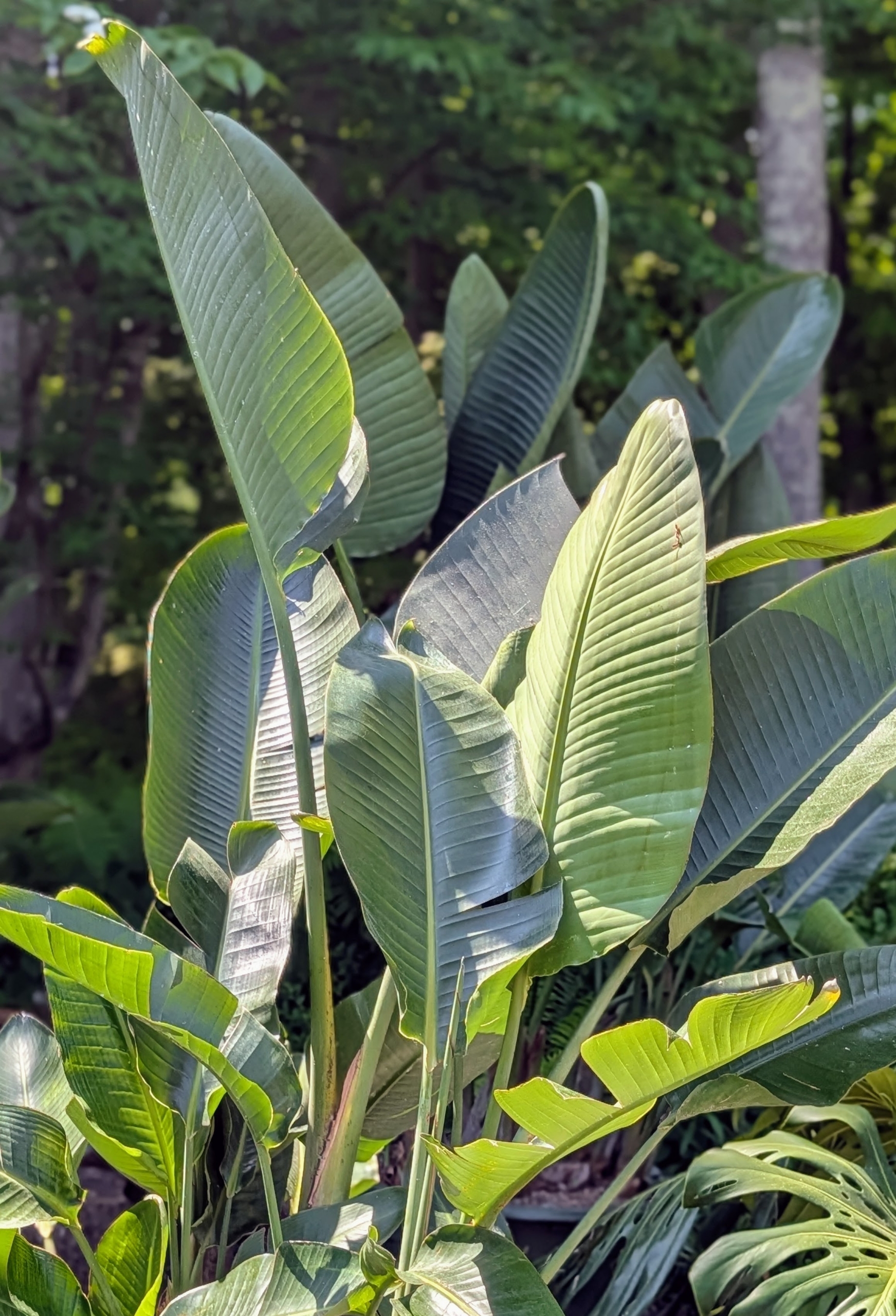
- Another plant in my tropical collection is Bird of Paradise, Strelitzia nicolai – a species of evergreen tropical herbaceous plant with gray-green leaves that grow up to 18-inches long out of a main crown in a clump. The leaves are paddle shaped, similar to banana plant leaves, and attached to a long, upright stalk.
-
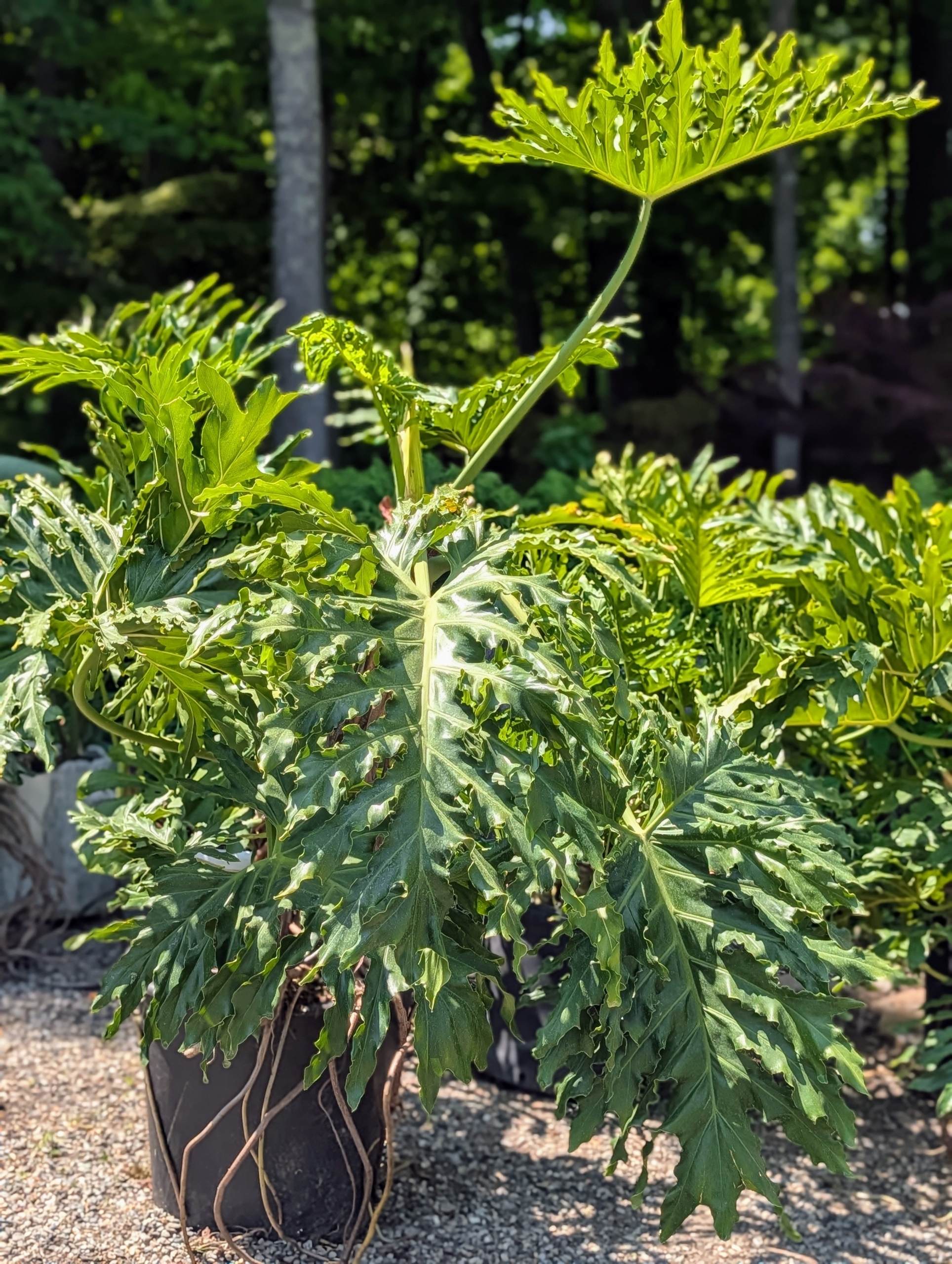
- The foliage of philodendrons is usually green but may be coppery, red, or purplish with parallel leaf veins that are green or sometimes red or white.
-
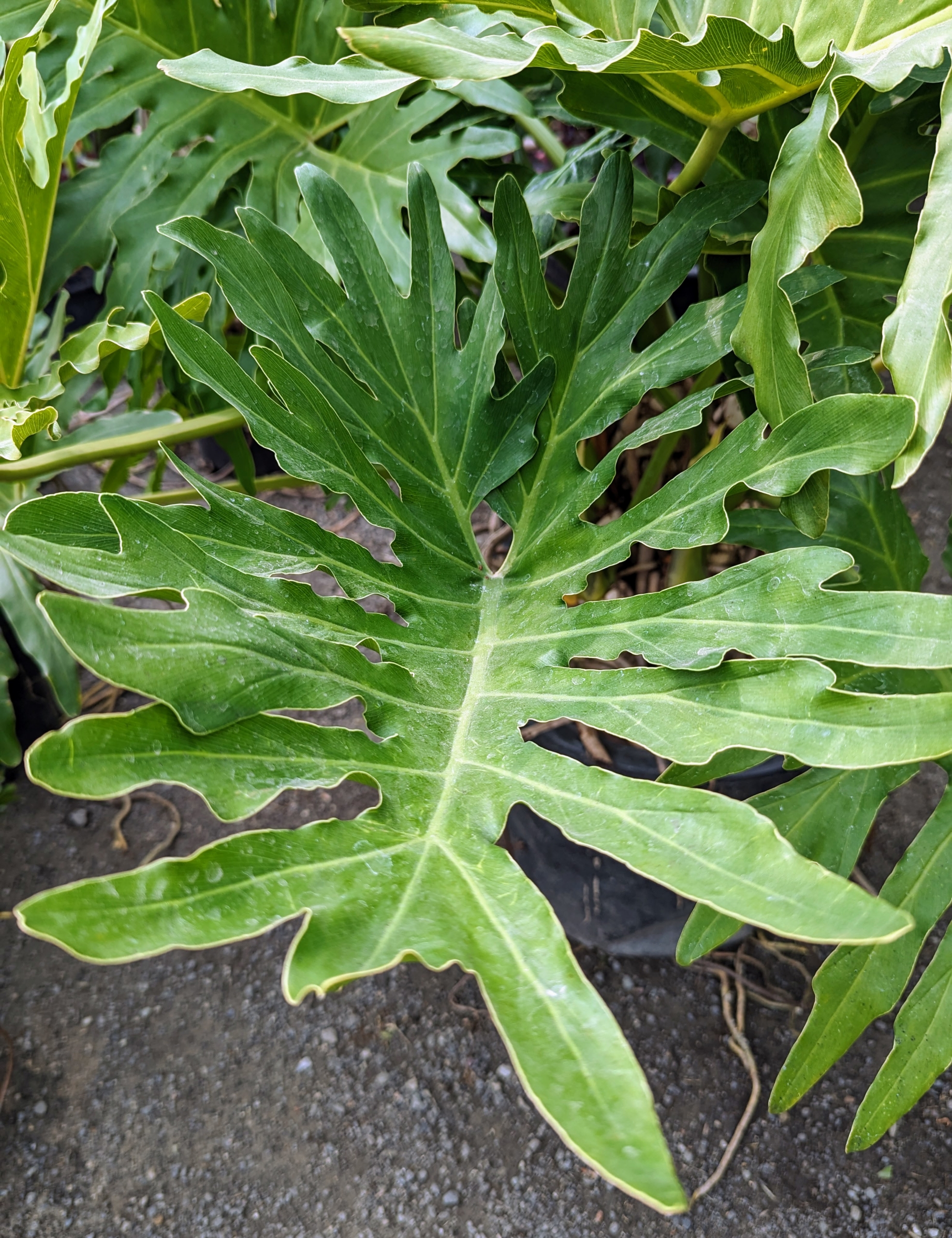
- Shape, size, and texture of the leaves vary considerably, depending on species and maturity of the plant. I have many philodendrons that are growing so well here at my farm.
-
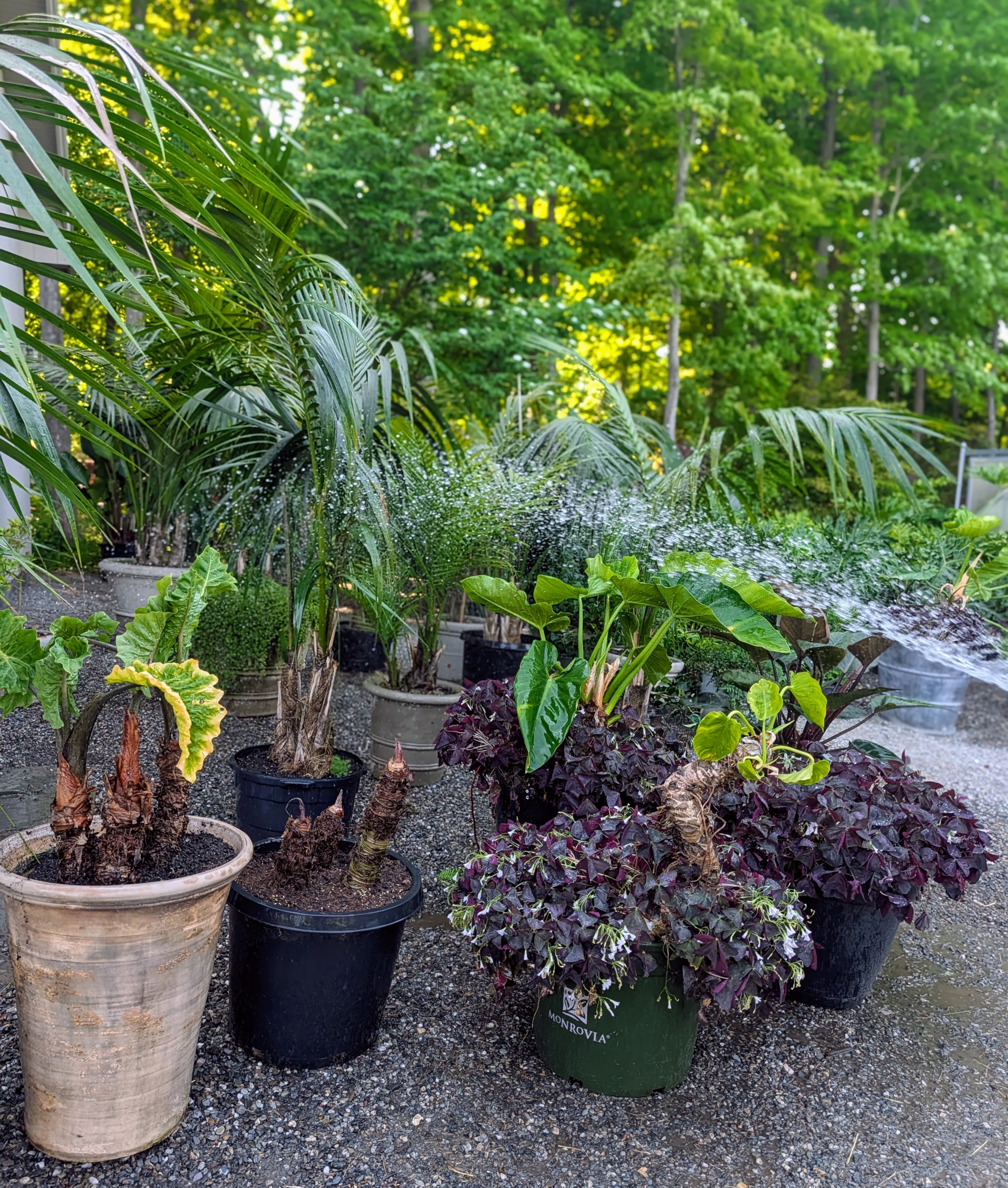
- This day was very warm, 90 degrees Fahrenheit, so Ryan gave everything a thorough drink.
-
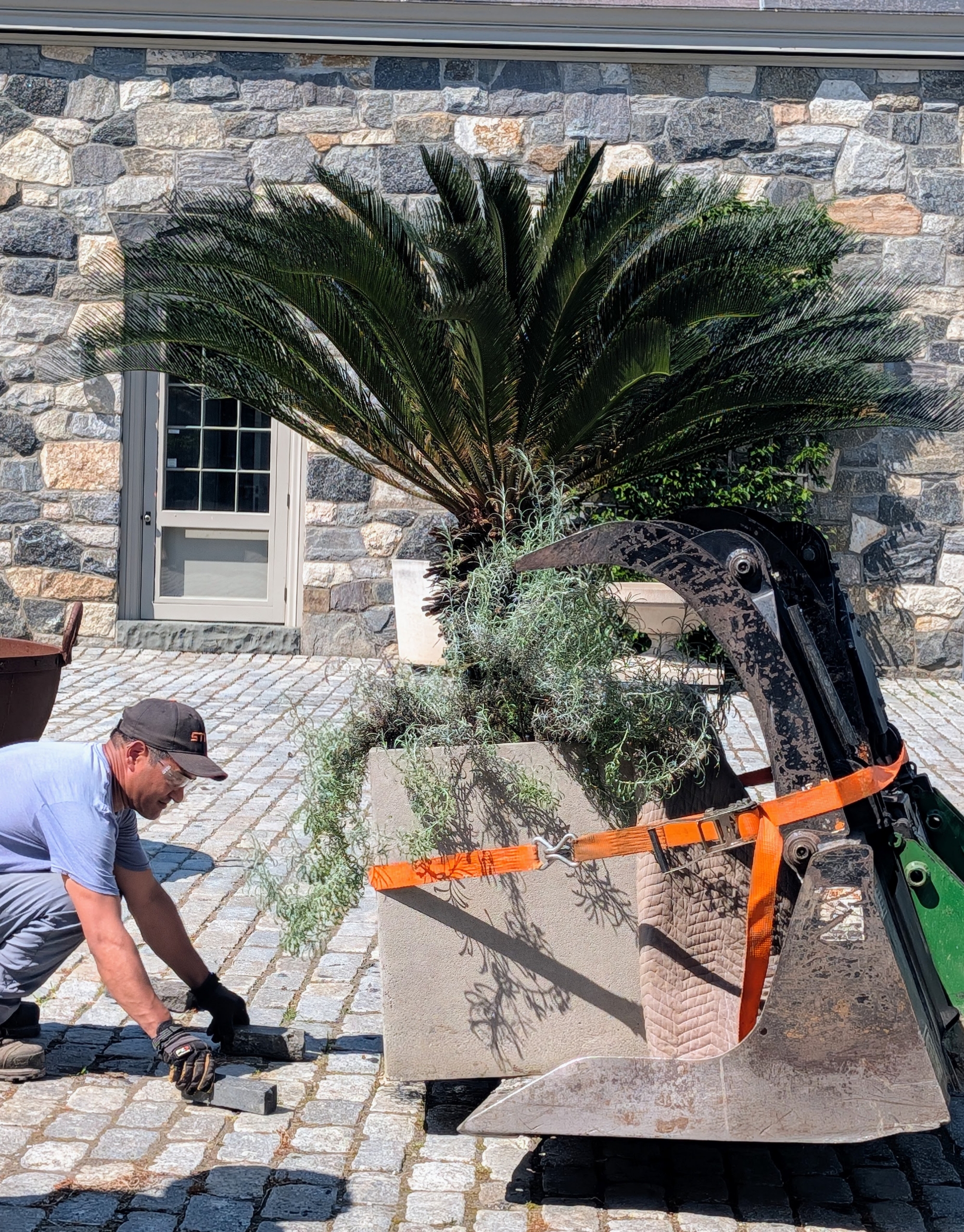
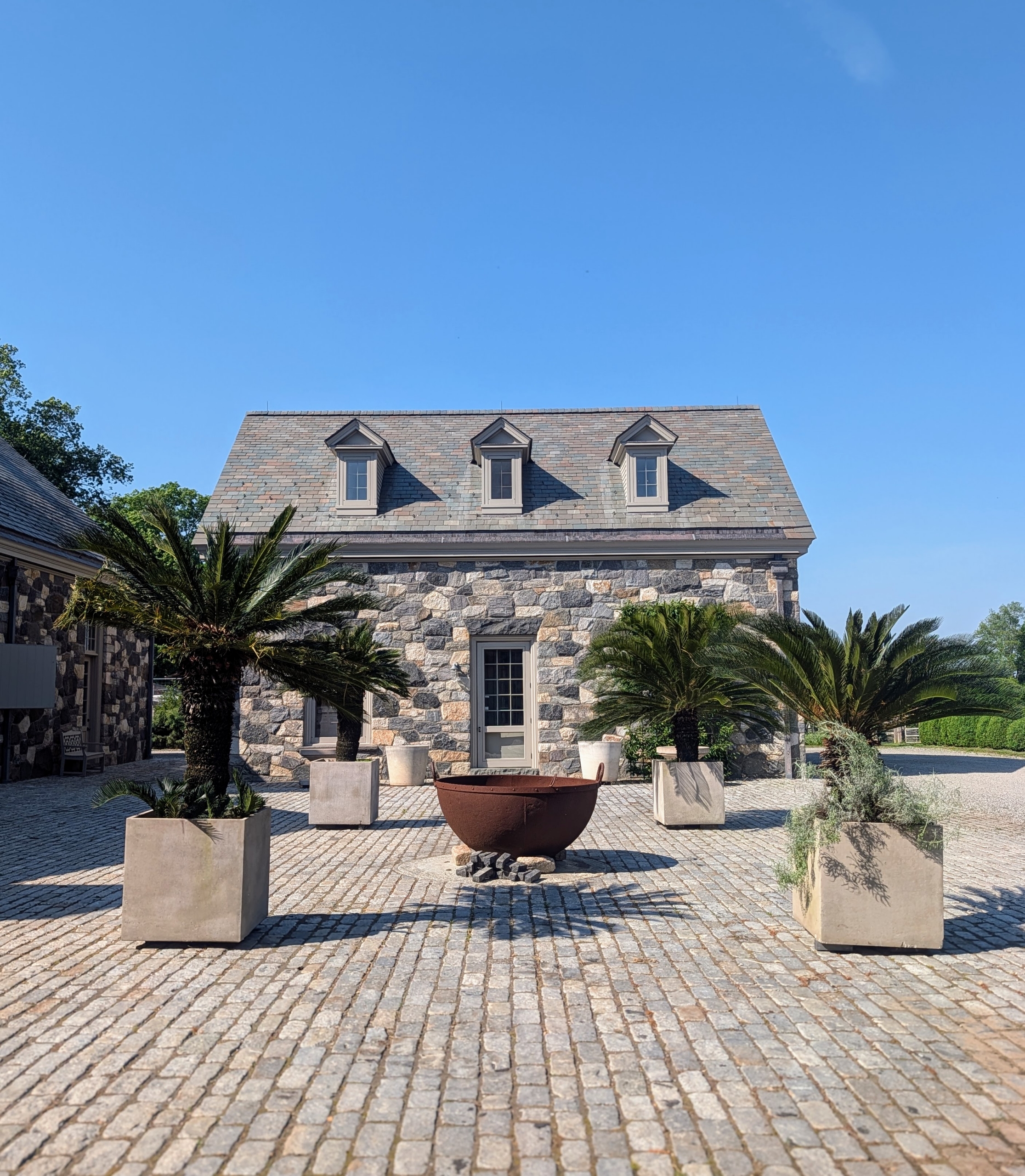
- Down in my stable complex courtyard, Pasang positions bricks for this large potted sago.
-
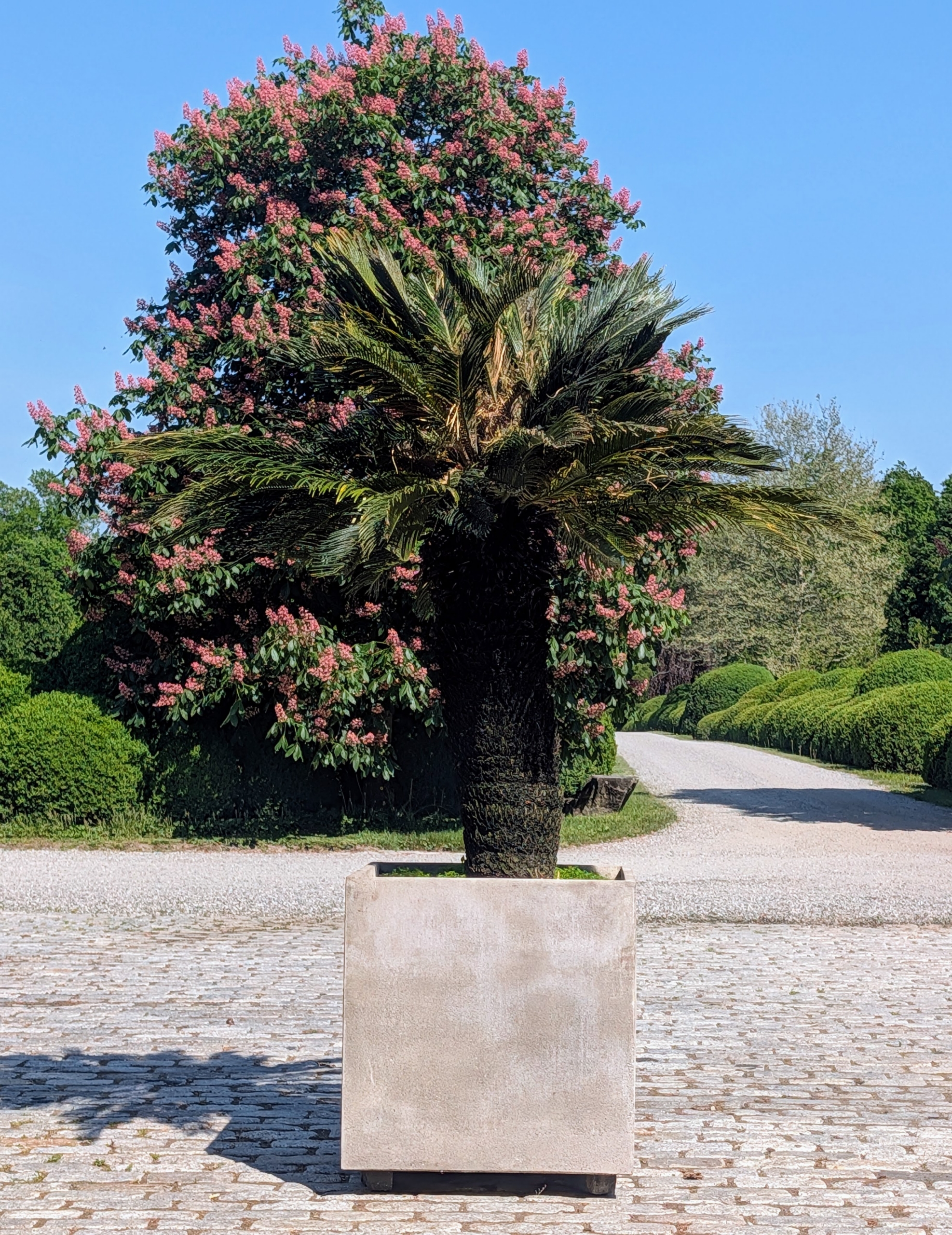
- Four of these in like pots will sit here for the season. They look so inviting and beautiful seen in front of my stable from my Boxwood Allée.
-
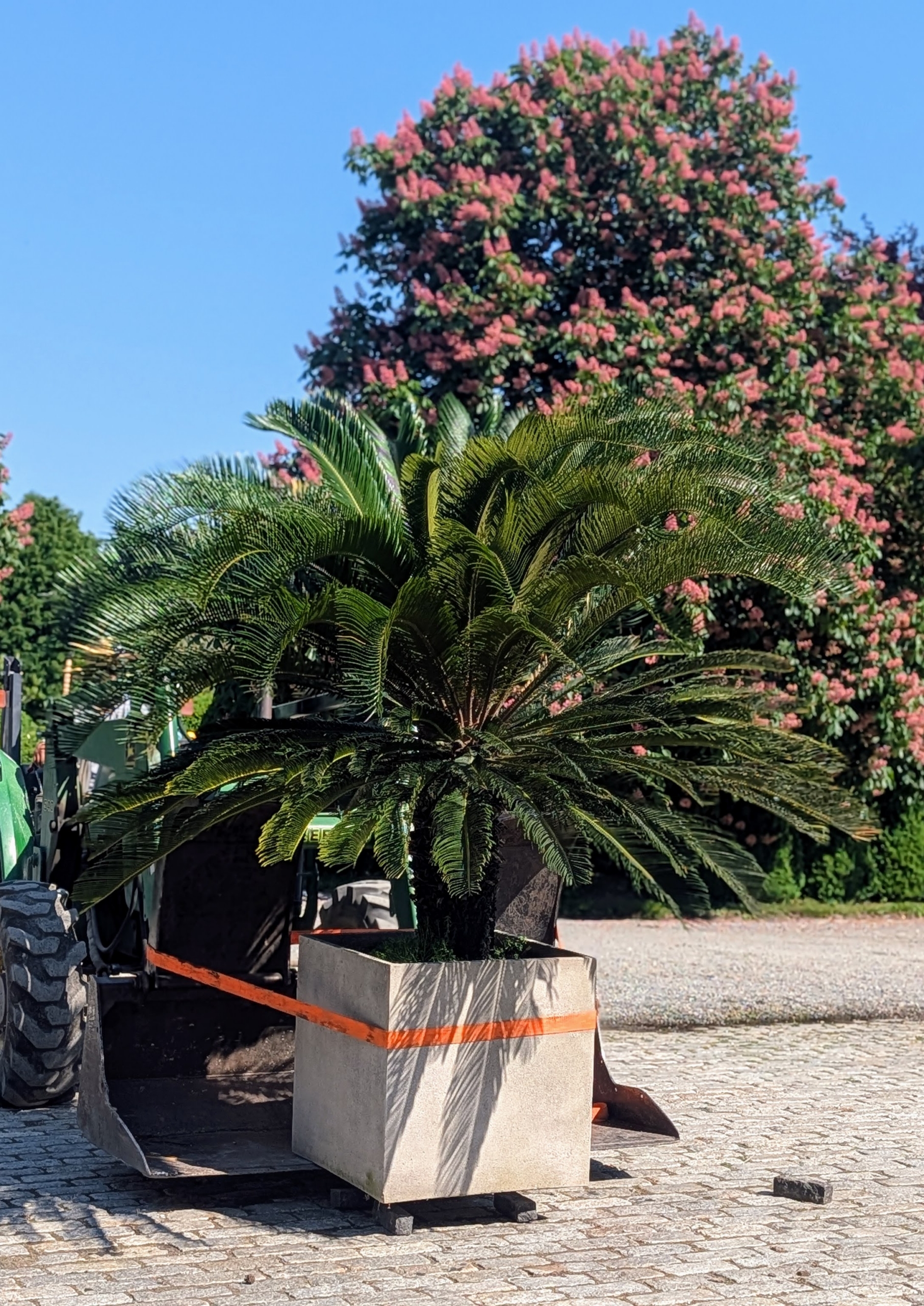
- Here is another one – moving slowly and carefully to its designated spot. Notice, my crew uses strong straps to keep the pot in place, and moving blankets to cushion it during transport.
-
- It is so nice to see my potted tropical plants again after the long cold winter. There are so many more to take outdoors. I am so fortunate to be able to store all these plants when needed, and then enjoy them all around my farm from now until the fall.
 Martha Pins


 Martha Tweets

