

My Pergola in Spring Bloom
My long and winding pergola is putting on such a colorful and gorgeous display - all the spring flowers are just spectacular this time of year.
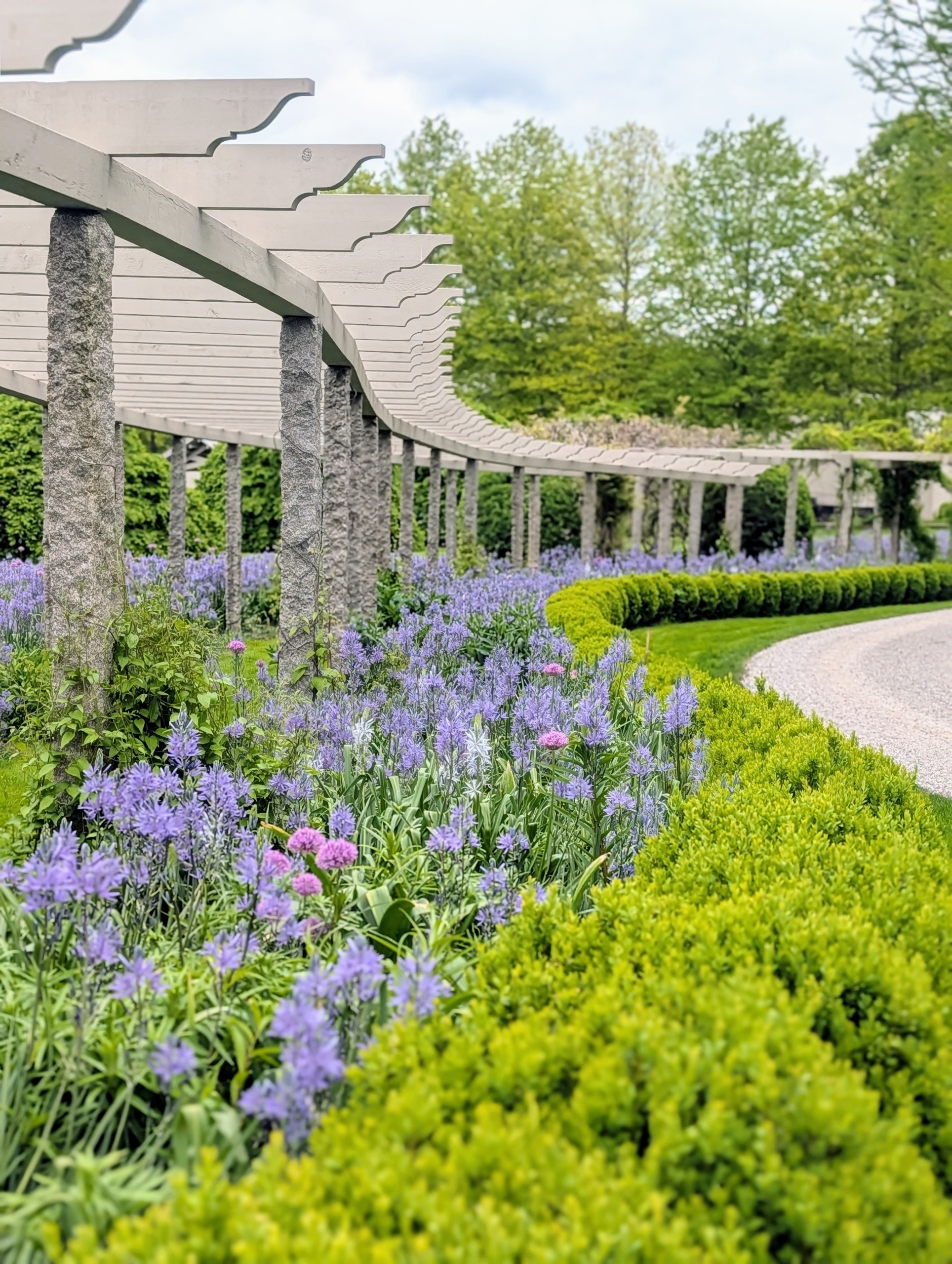
Soon after I bought my farm, I built a long pergola along the carriage road leading up to my home specifically for clematis. Over the years, I've added lots of bulbs and perennials that bloom at different times throughout the season. Right now, the Camassia and Alliums are covering the area in an eye-catching palette of purple and blue - it's just stunning.
Here are some photos, enjoy.
-

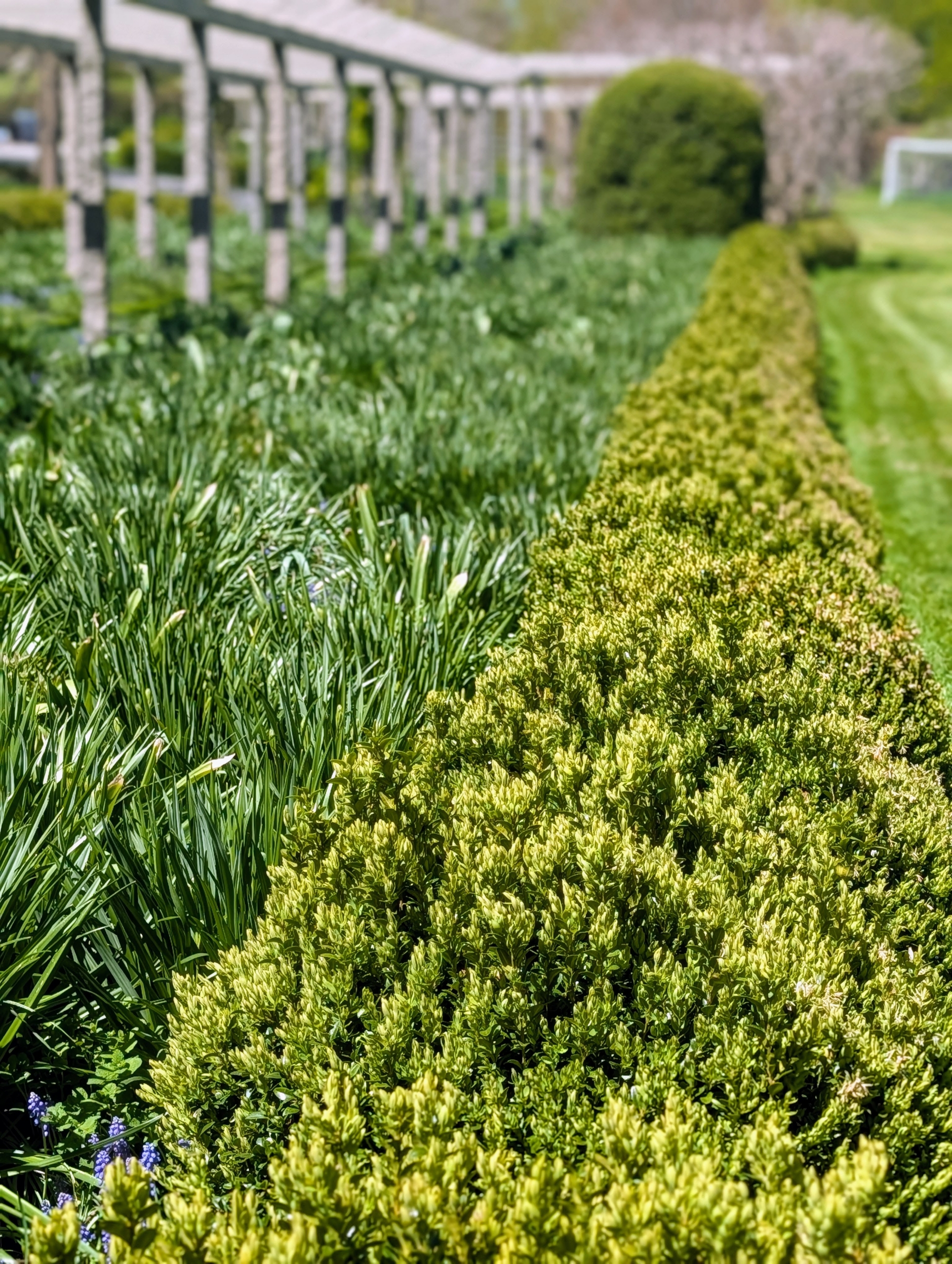
- It’s amazing what a difference a few weeks make in a spring garden. This is the pergola garden in late April – lush green with new foliage filling the beds.
-
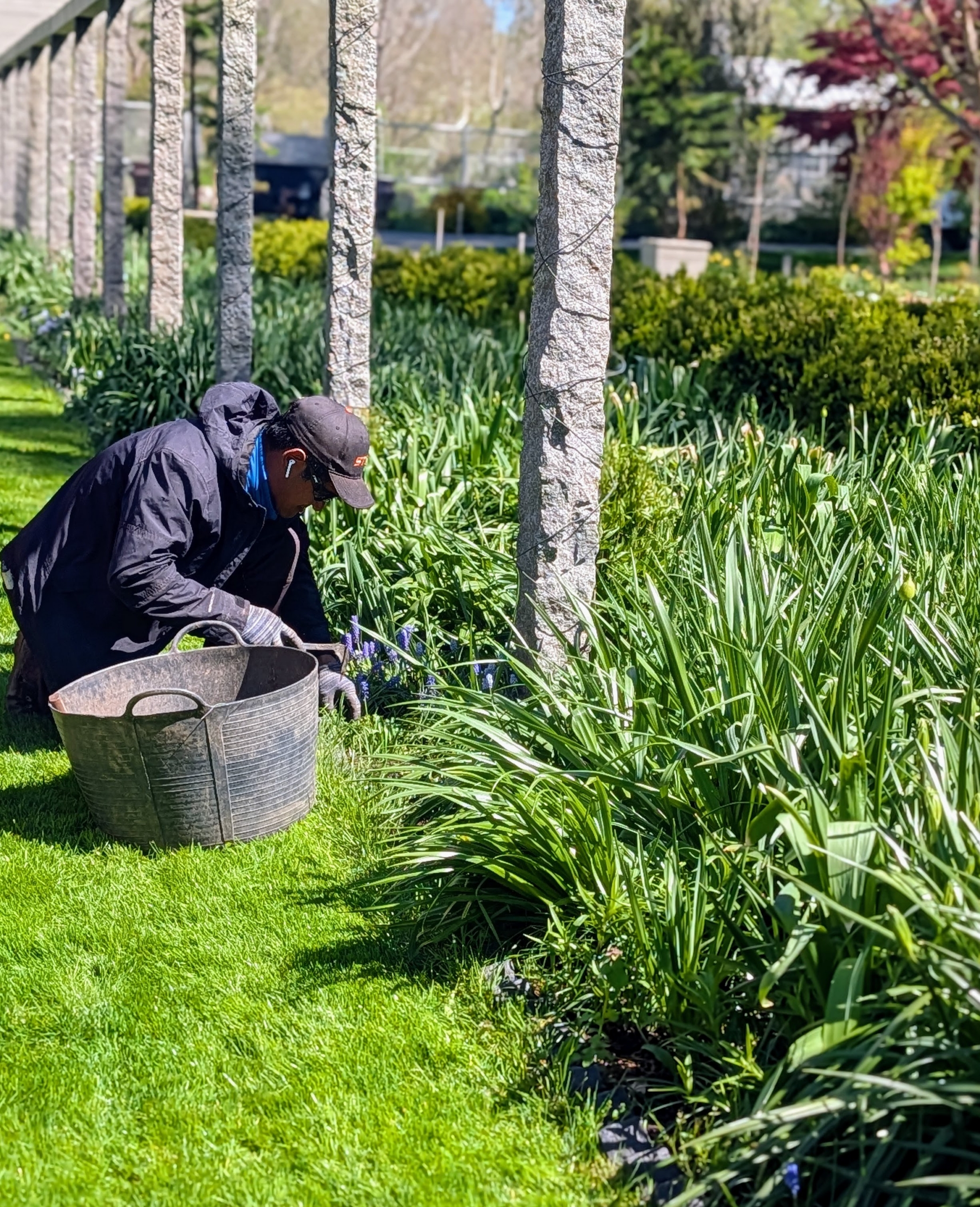
- Here’s Pasang checking and cleaning the beds a few days later.
-
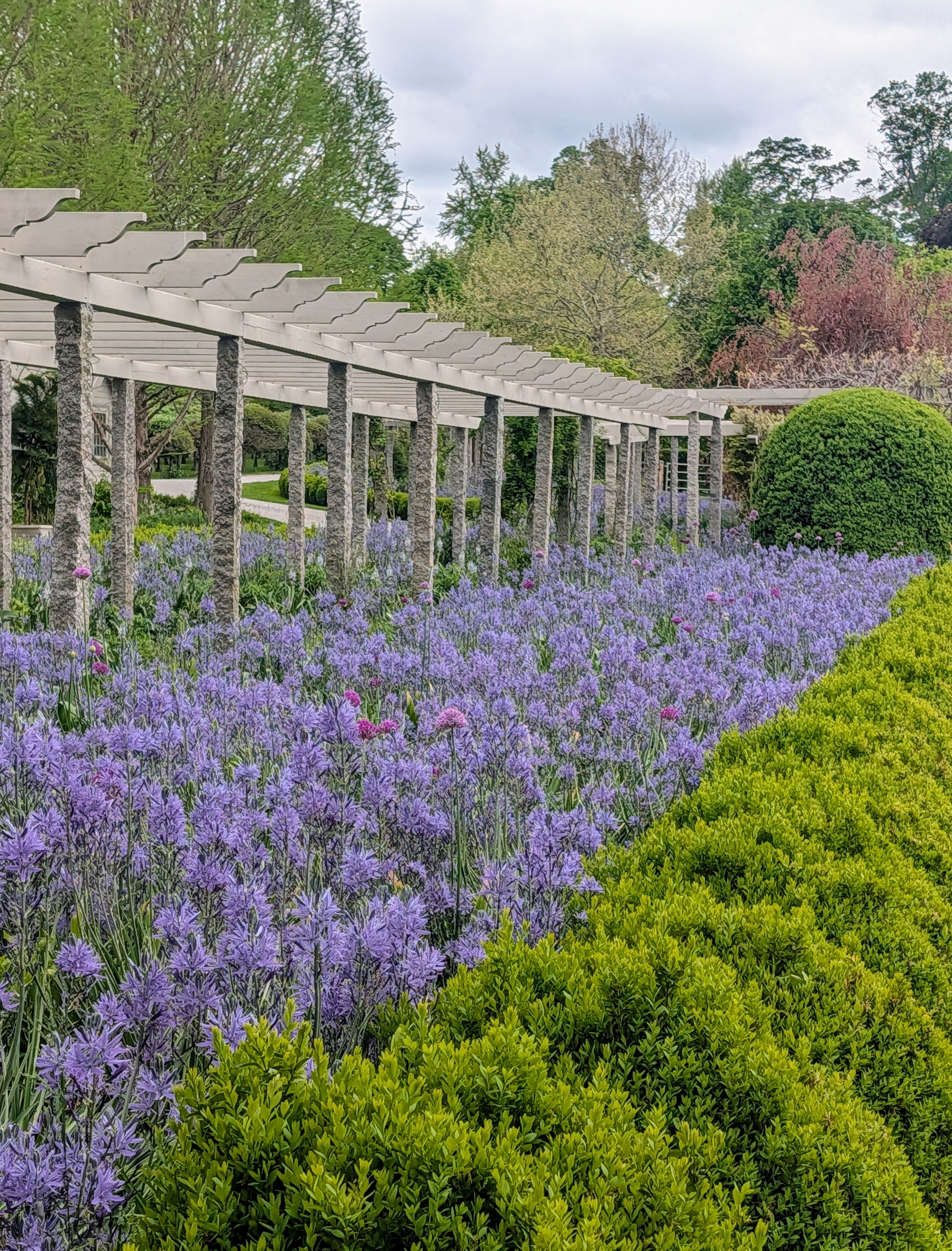
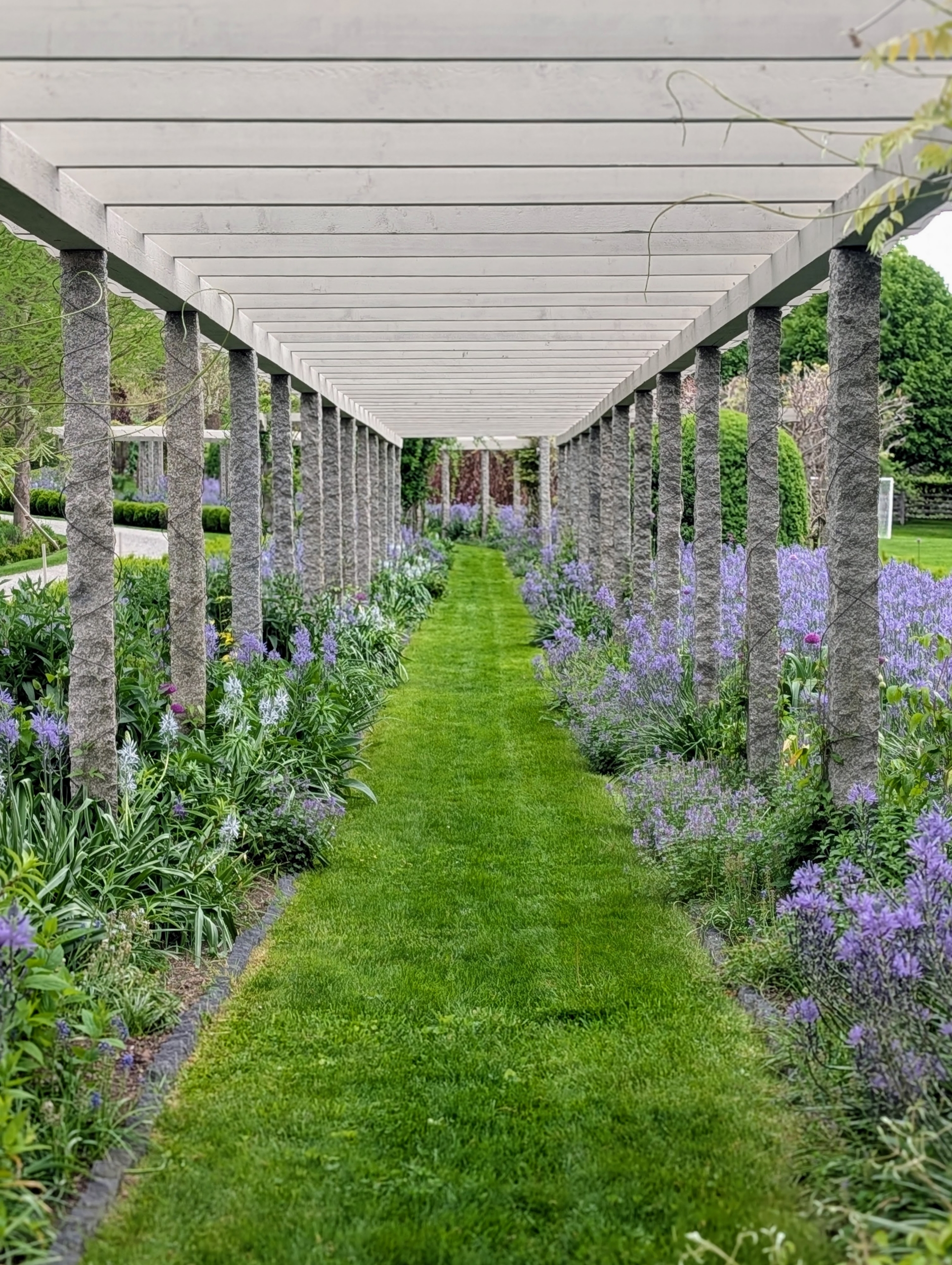
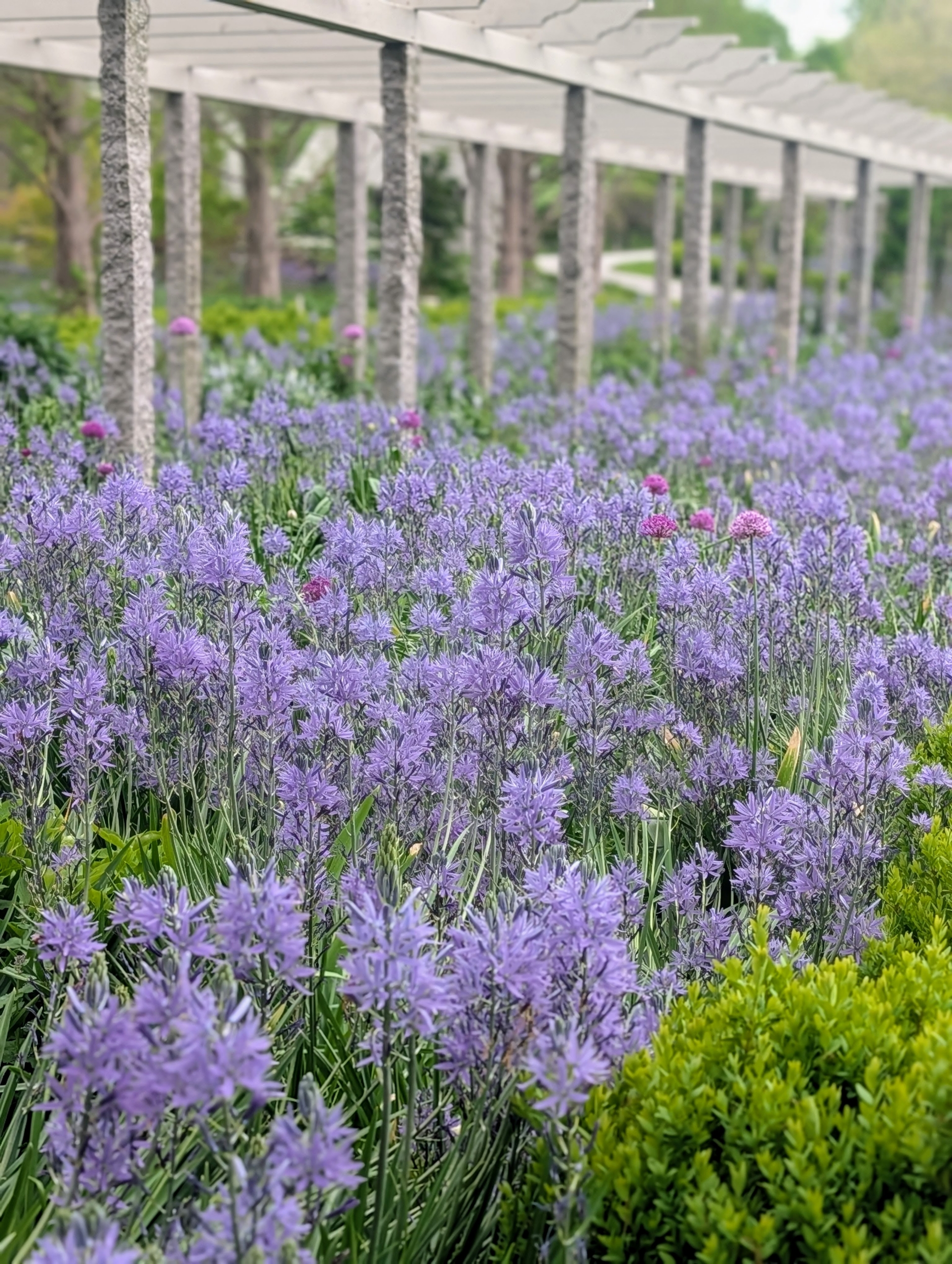
- And now the garden is filled with varying hues of purple and blue – it’s breathtaking.
-
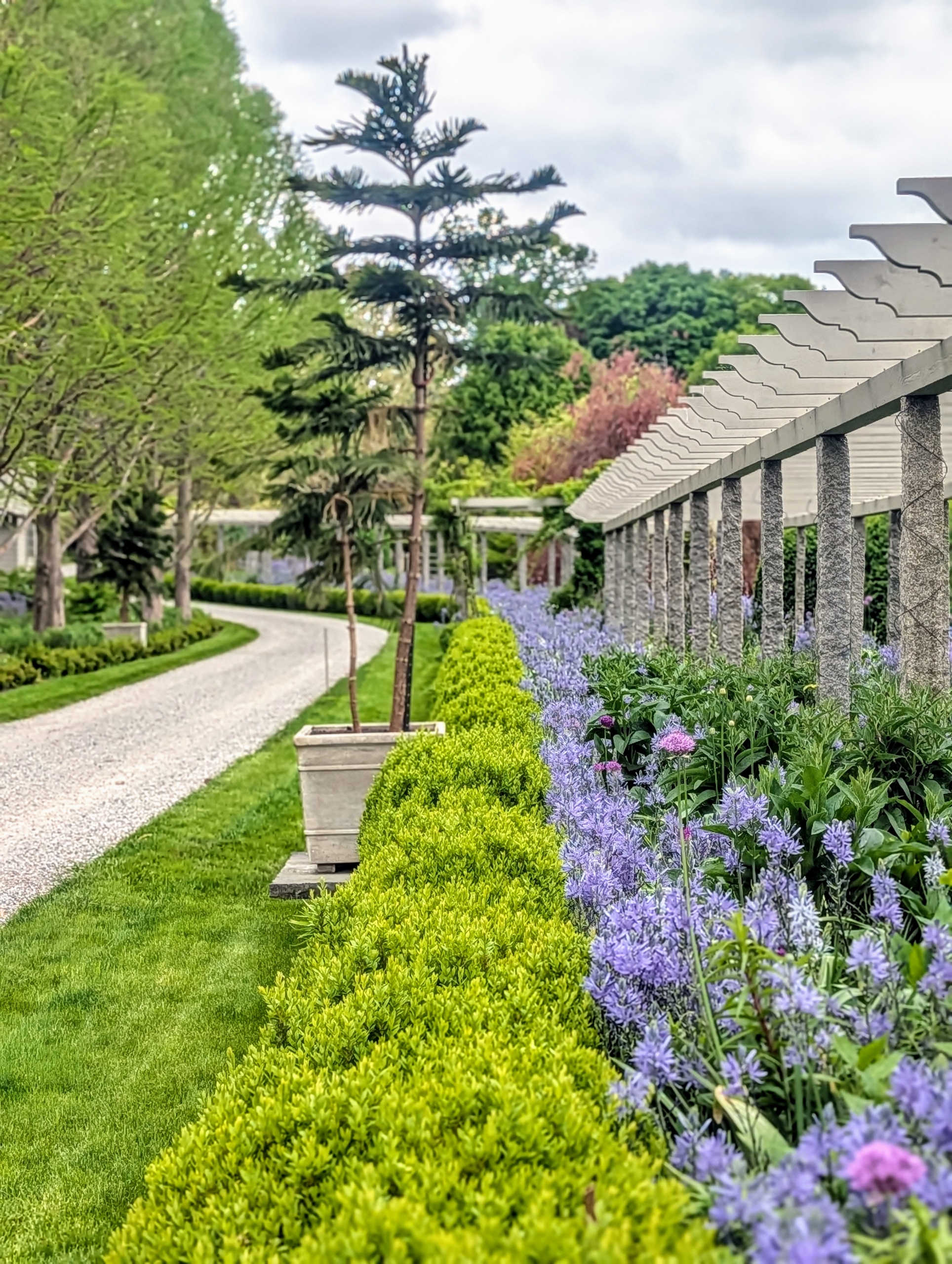
- My pergola garden is located across from my stately bald cypress trees. This pergola starts just outside my flower cutting garden and runs along one side of the carriage road leading to my Winter House.
-
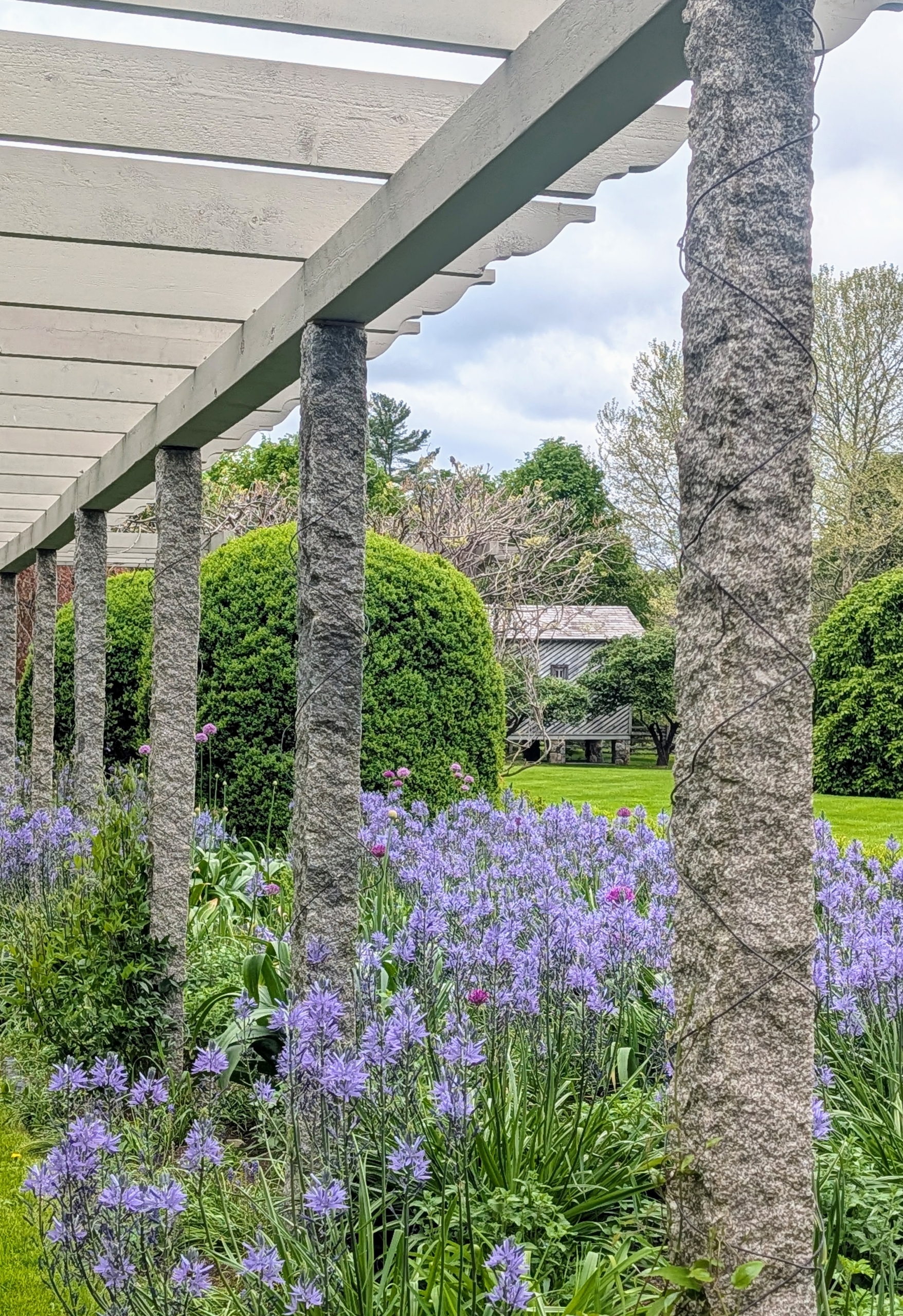
- The uprights for this pergola are antique granite posts from China – originally used as grape supports in a valley that was going to be dammed and flooded to create a reservoir.
-
- The cedar rafters were just replaced last year using my own designs.
-
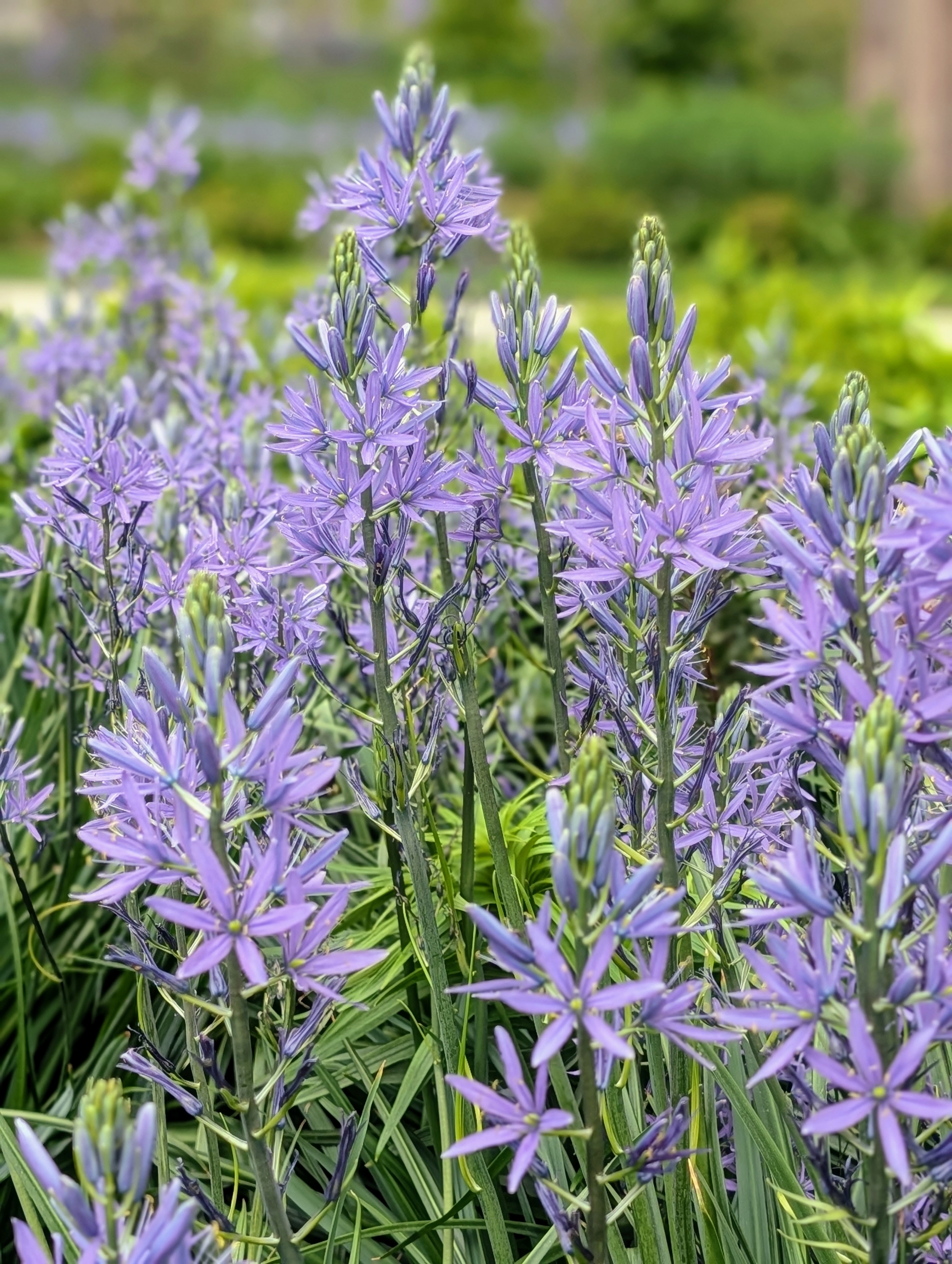
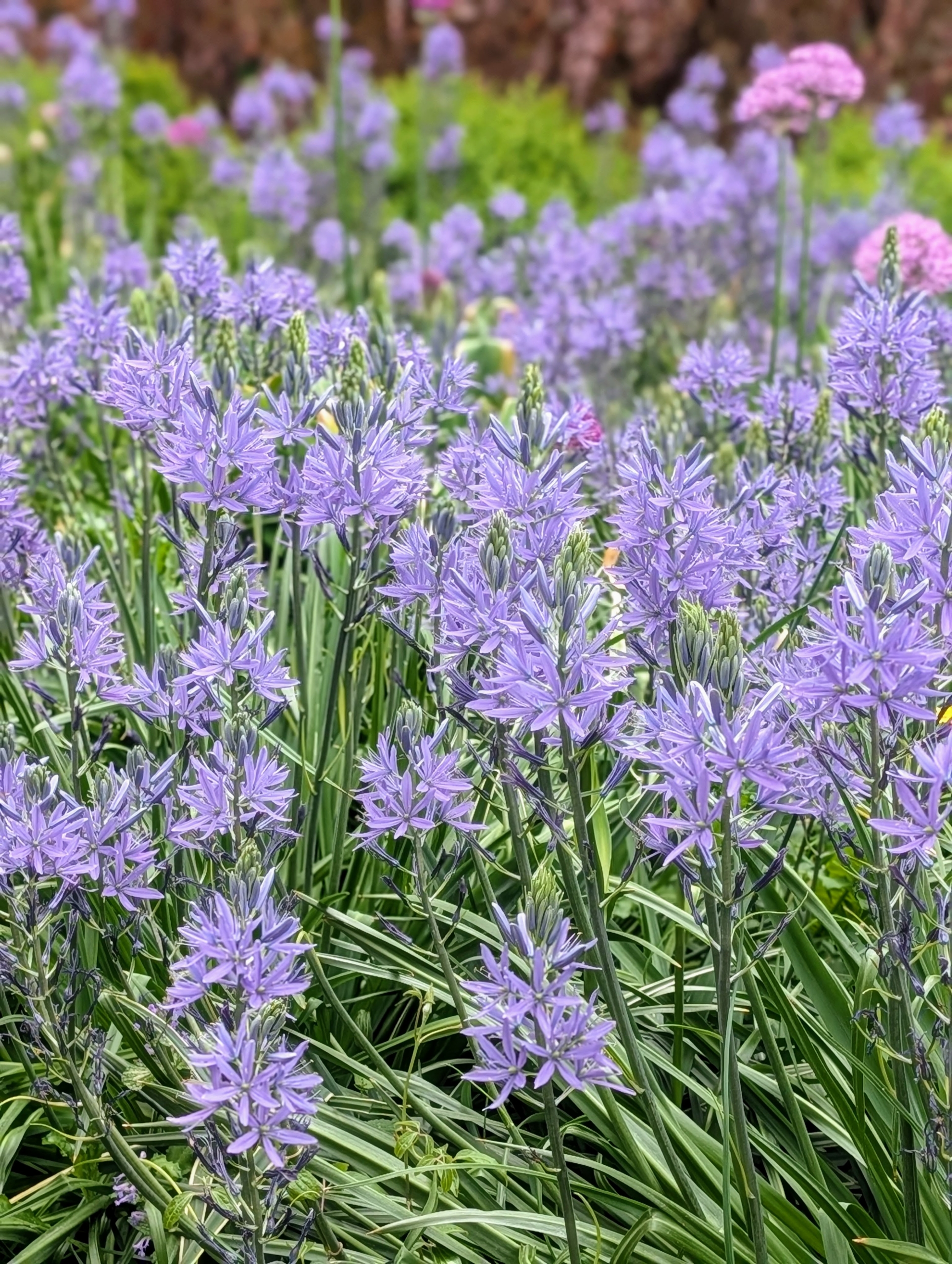
- The most prominent plant right now is the Camassia – it’s blooming profusely and so beautifully. Camassia is also known as camas, wild hyacinth, Indian hyacinth, and quamash. The bulbs are winter hardy in zones 4 to 8 and both the plant and the bulbs are resistant to deer and rodents.
-
- Camassia leichtlinii caerulea forms clusters of linear strappy foliage around upright racemes.
-
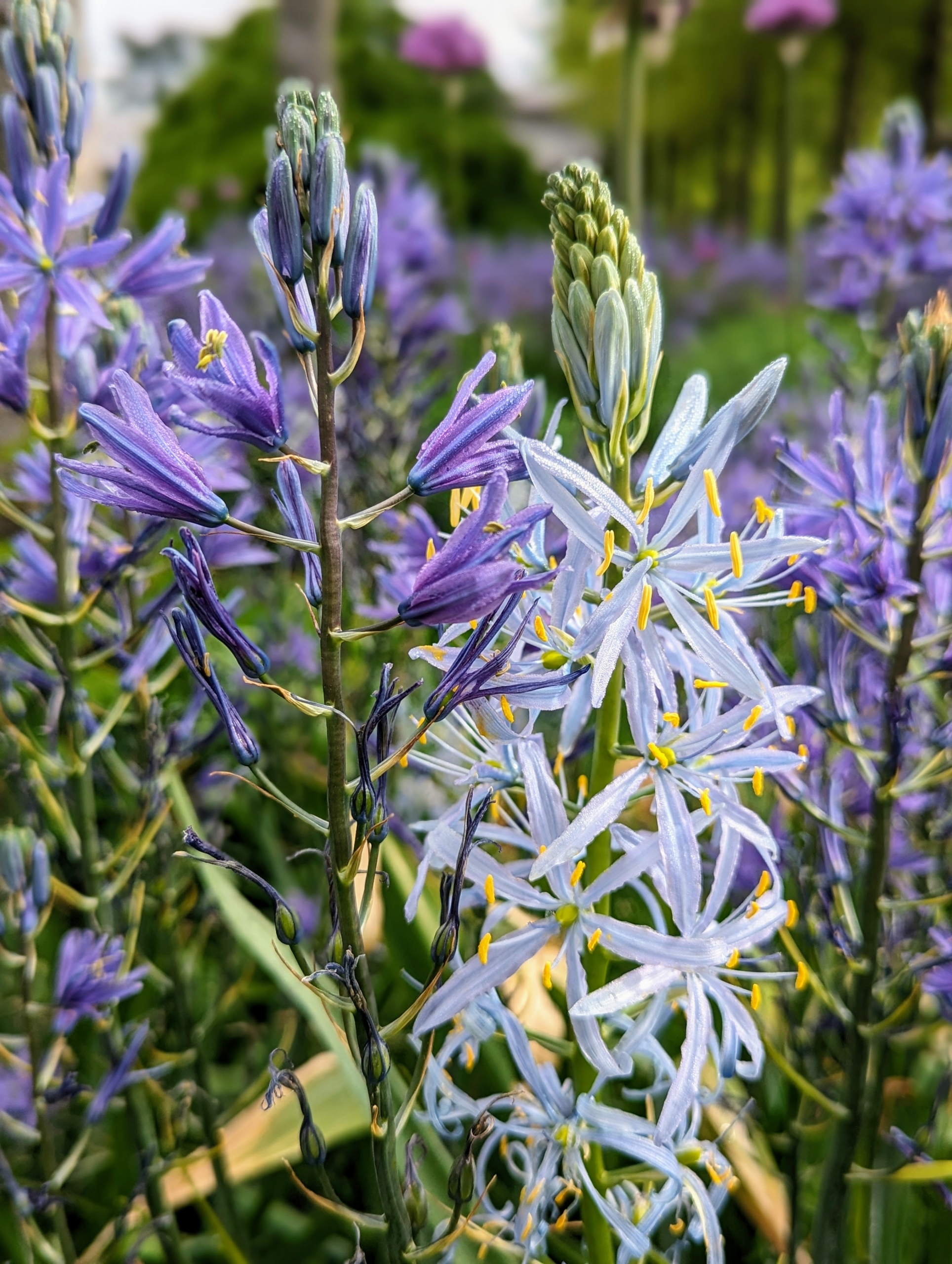
- Camassia is a genus of plants in the asparagus family native to Canada and the United States. It is best grown in moist, fertile soil, and full sun. The flower stalks stand 24 to 30 inches tall and display dozens of florets that open from the bottom up.
-
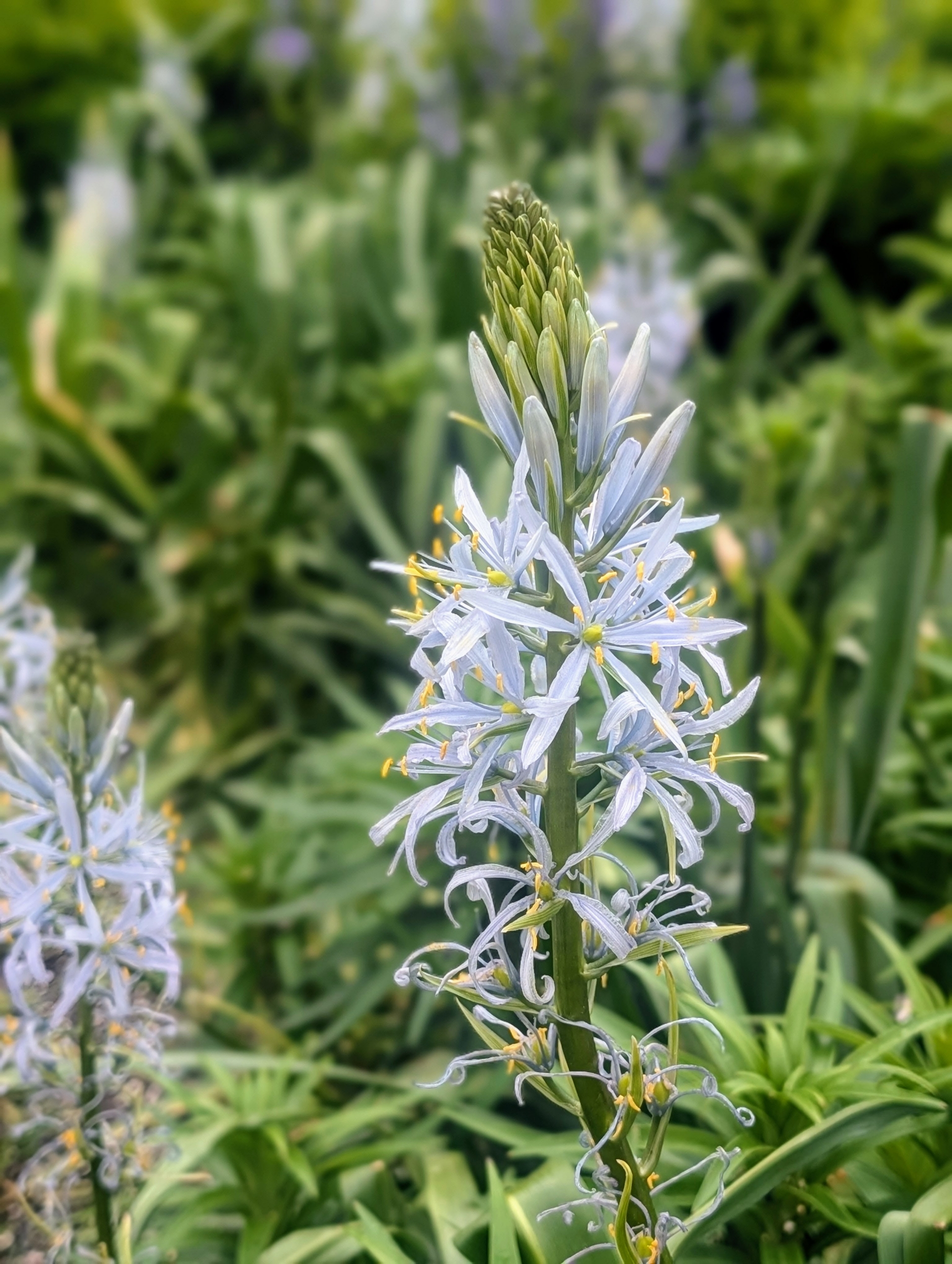
- Camassia also comes in this lighter shade of blue. Both the lighter and darker shades look so good growing together in this garden. One can see the six-petaled, two-inch, star-shaped flowers.
-
- In the garden, Camassia blooms in late spring, after the daffodils and just before the peonies and other early summer perennials. Camassia is incredibly valuable since it naturalizes well when left undisturbed in a good spot.
-
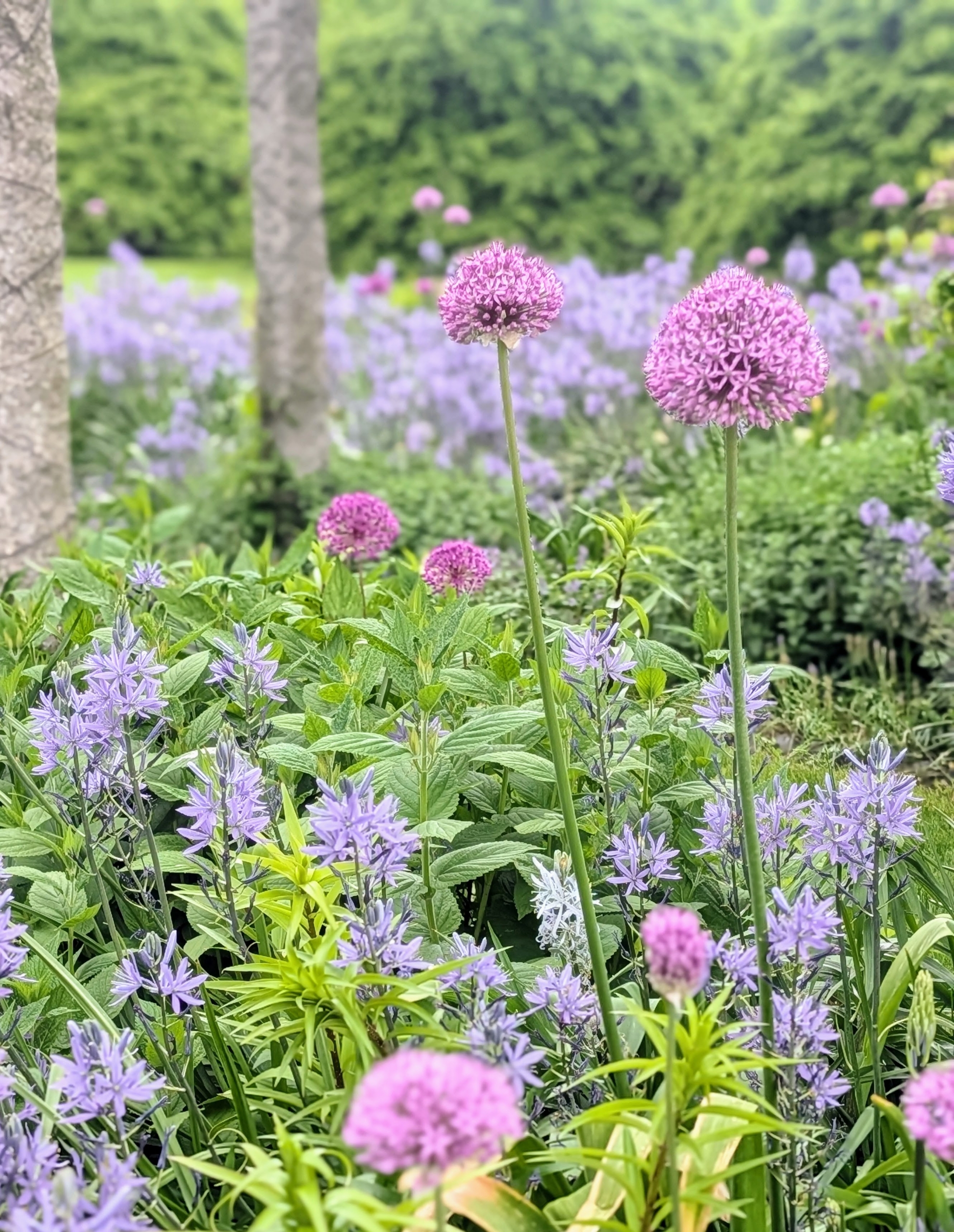
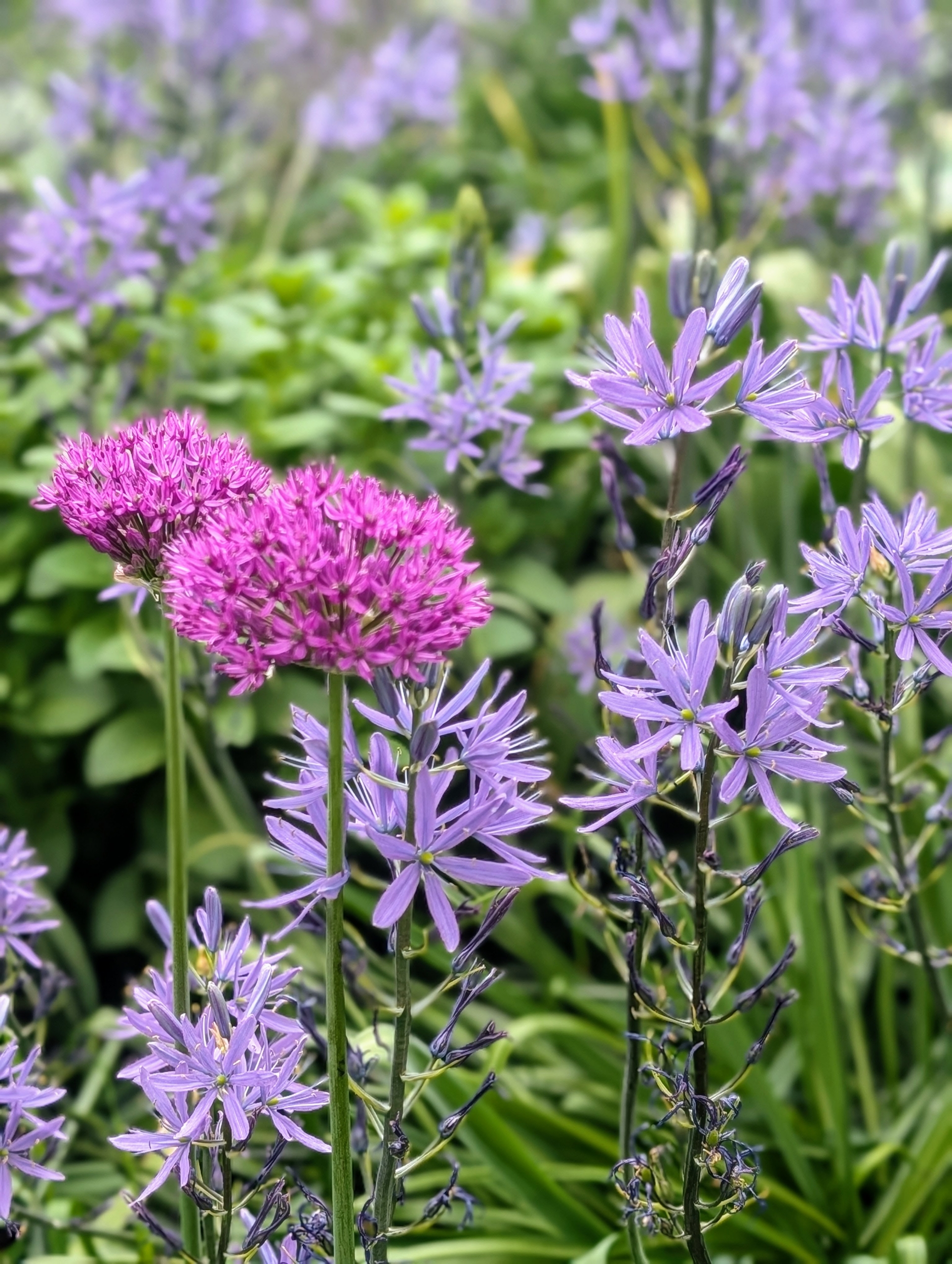
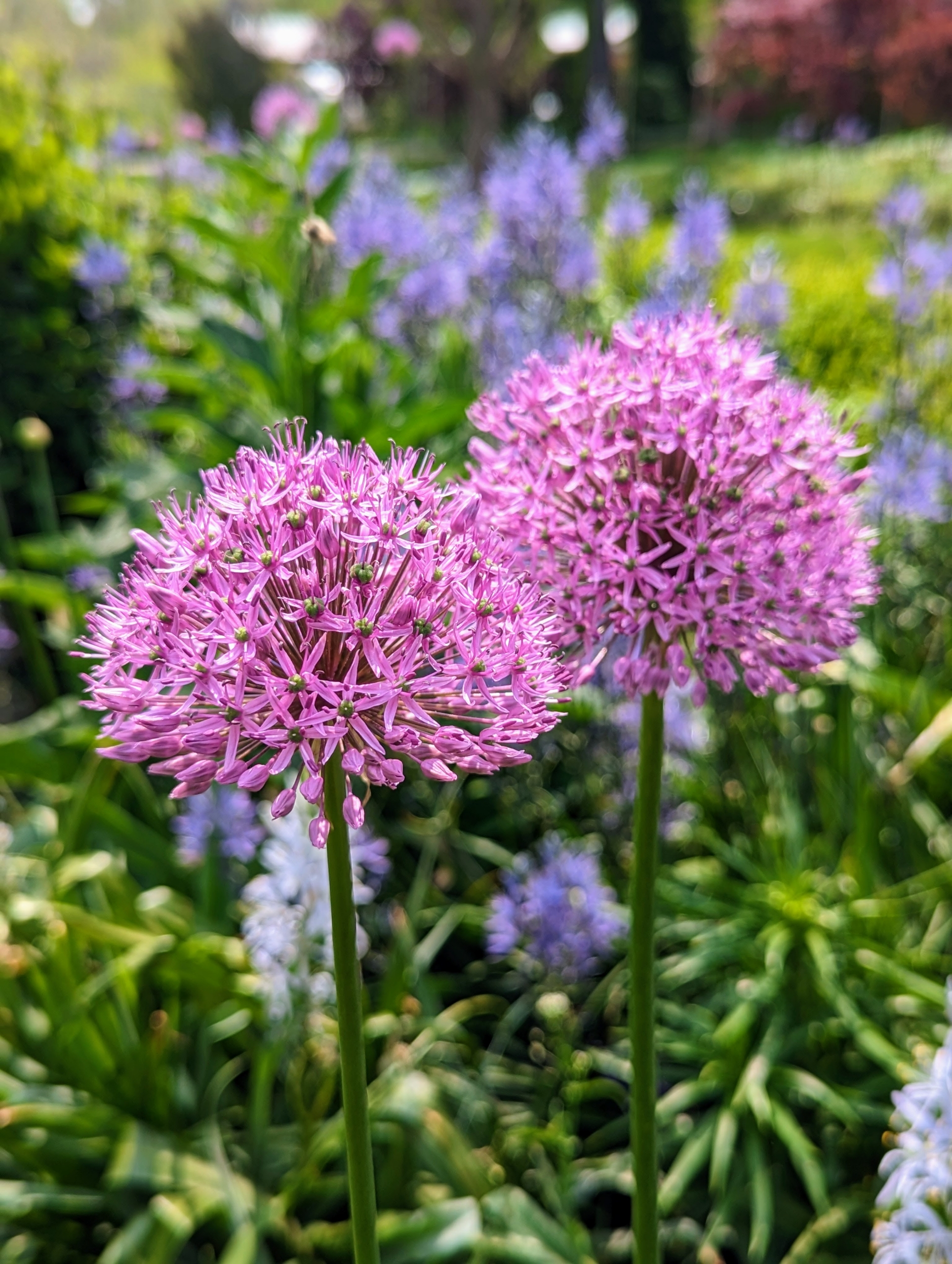
- Alliums are often overlooked as one of the best bulbs for constant color throughout the seasons. They come in oval, spherical, or globular flower shapes, blooming in magnificent colors atop tall stems.
-
- An allium flower head is a cluster of individual florets and the flower color may be purple, white, yellow, pink, or blue.
-
- Alliums require full sunlight, and rich, well-draining, and neutral pH soil.
-
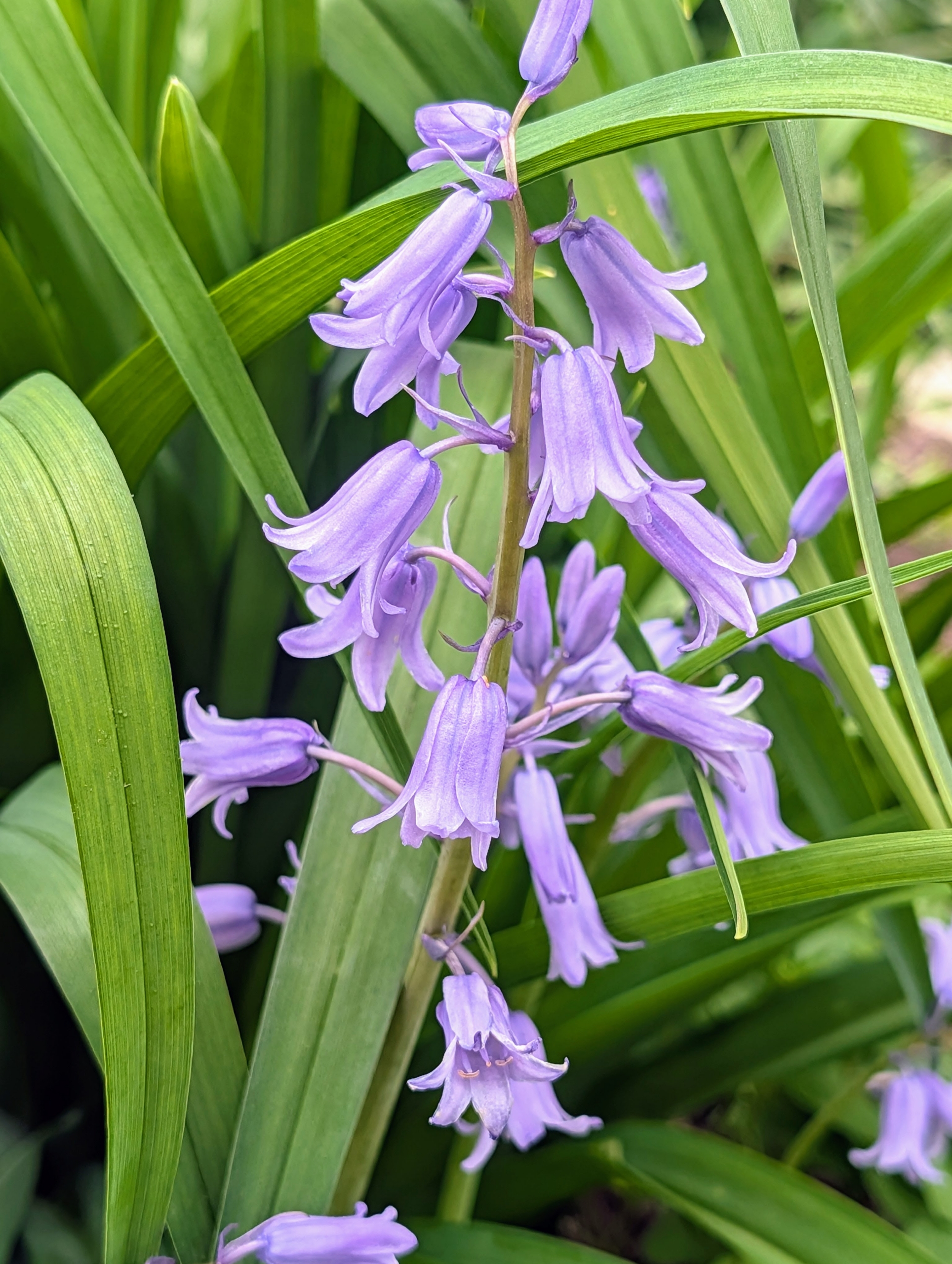
- Spanish Bluebells, Hyacinthoides, are unfussy members of the lily family, and native to Spain and Portugal. They are pretty, inexpensive, and good for cutting – they add such a nice touch of blue-purple.
-
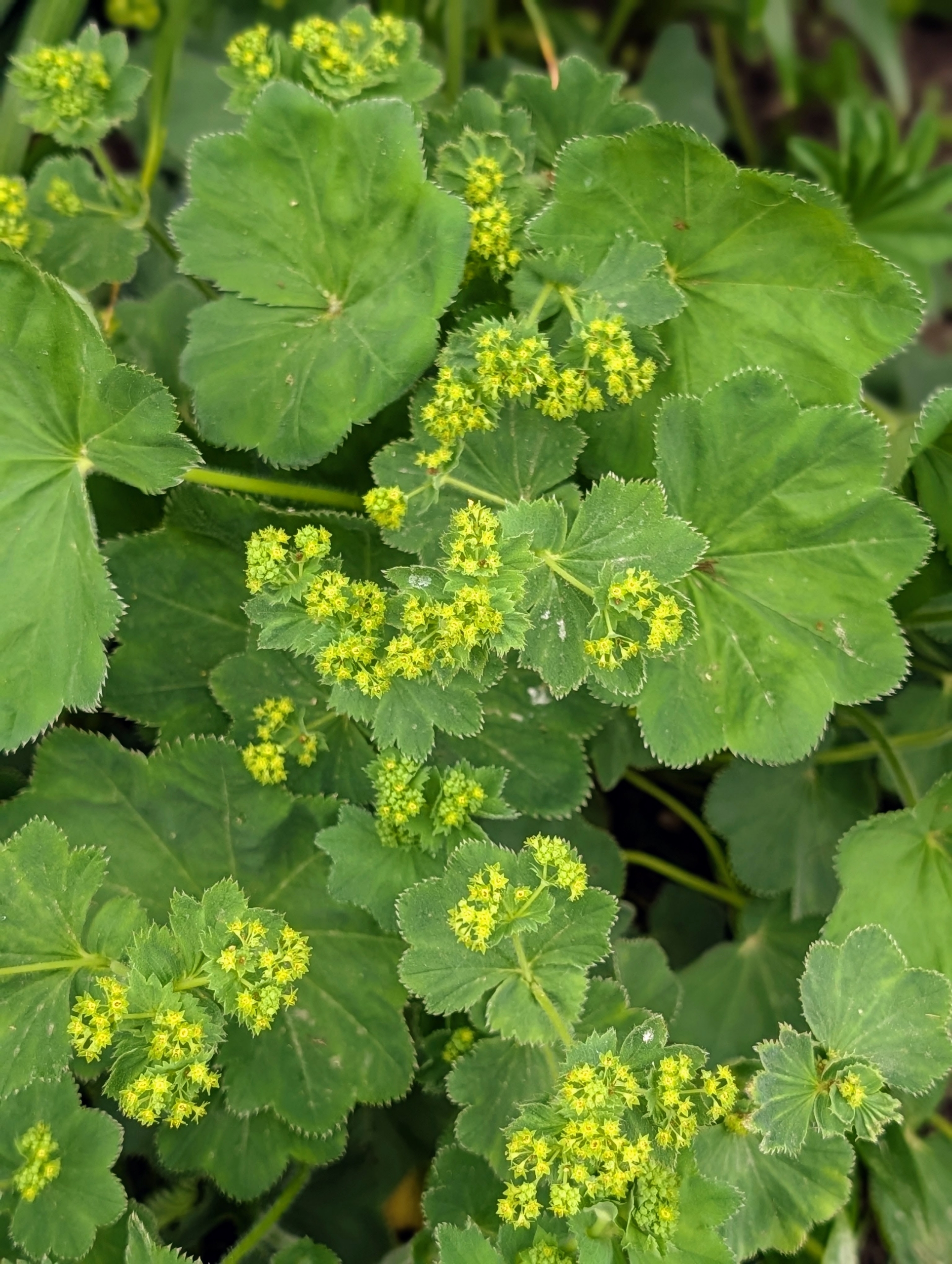
- This is lady’s mantle, Alchemilla mollis. It’s a clumping perennial which typically forms a basal foliage mound of long-stalked, circular, scallop-edged, toothed, pleated, soft-hairy, light green leaves and sprays of chartreuse, star-shaped flowers. Lady’s mantle is used here along the footpath.
-
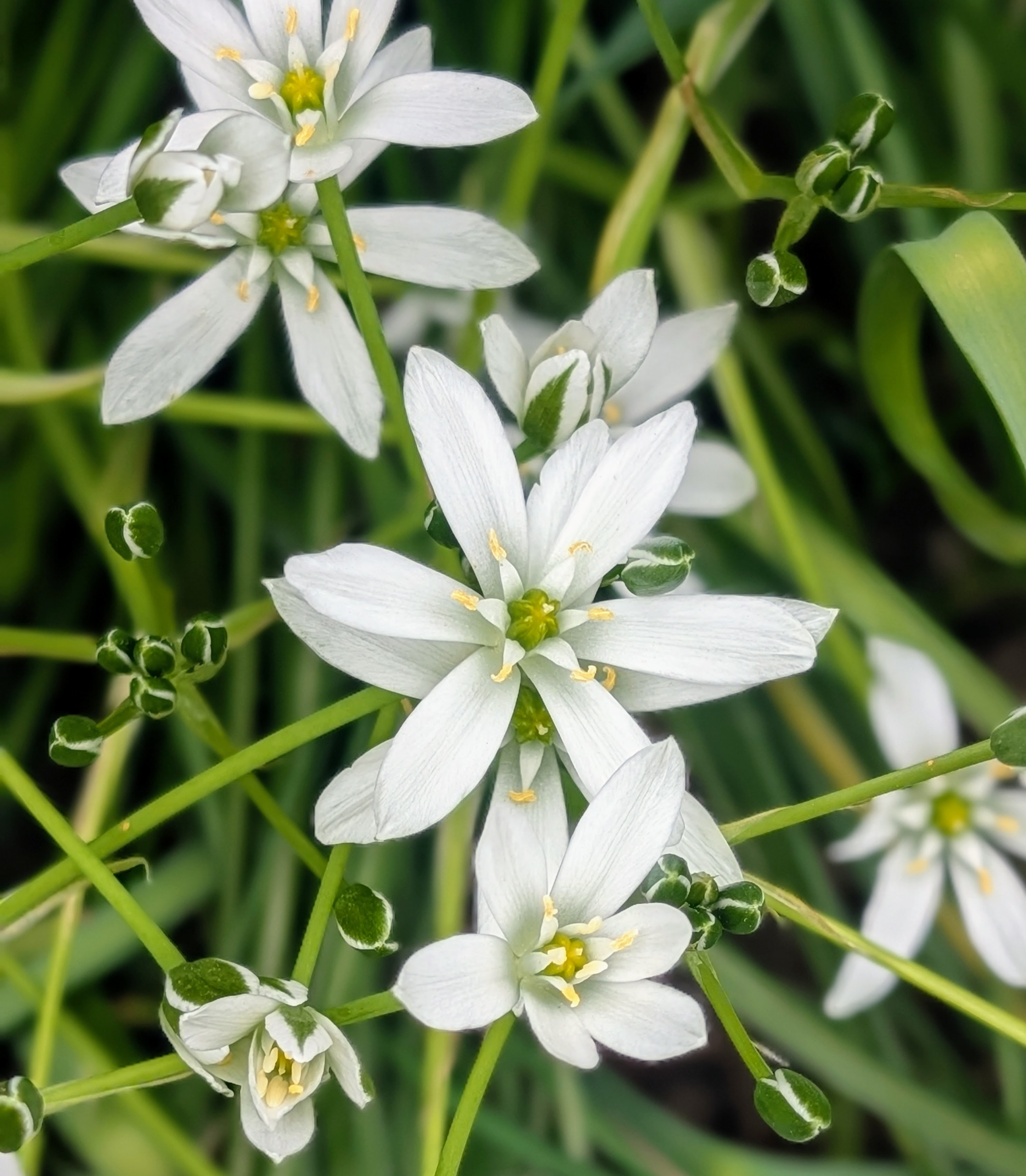
- Growing low to the ground is Ornithogalum. It features spear-like flower stems with multiple star-shaped white blooms.
-
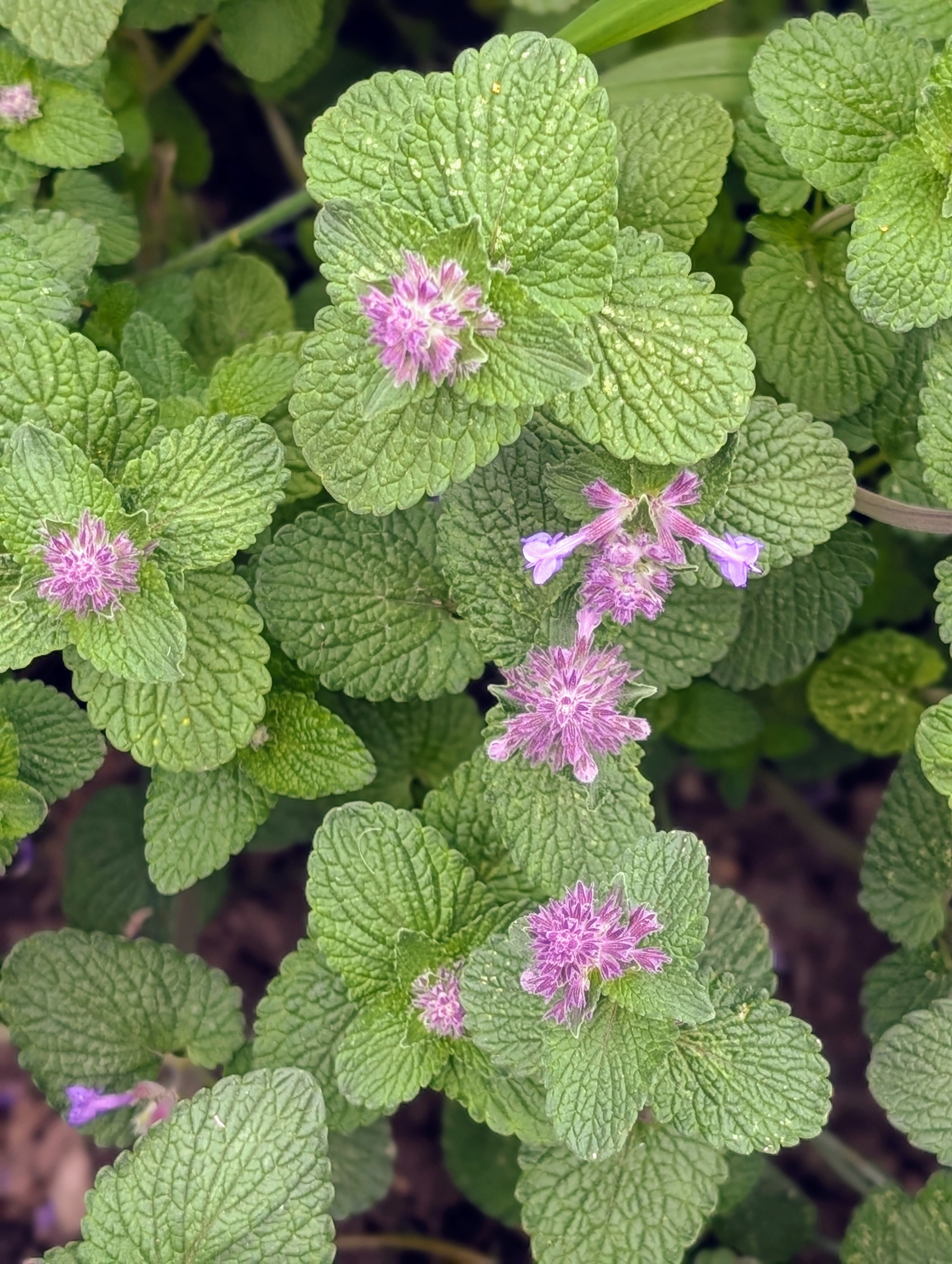
- Nepeta is such a hardy, low-maintenance perennial that can be added to many gardens.
-
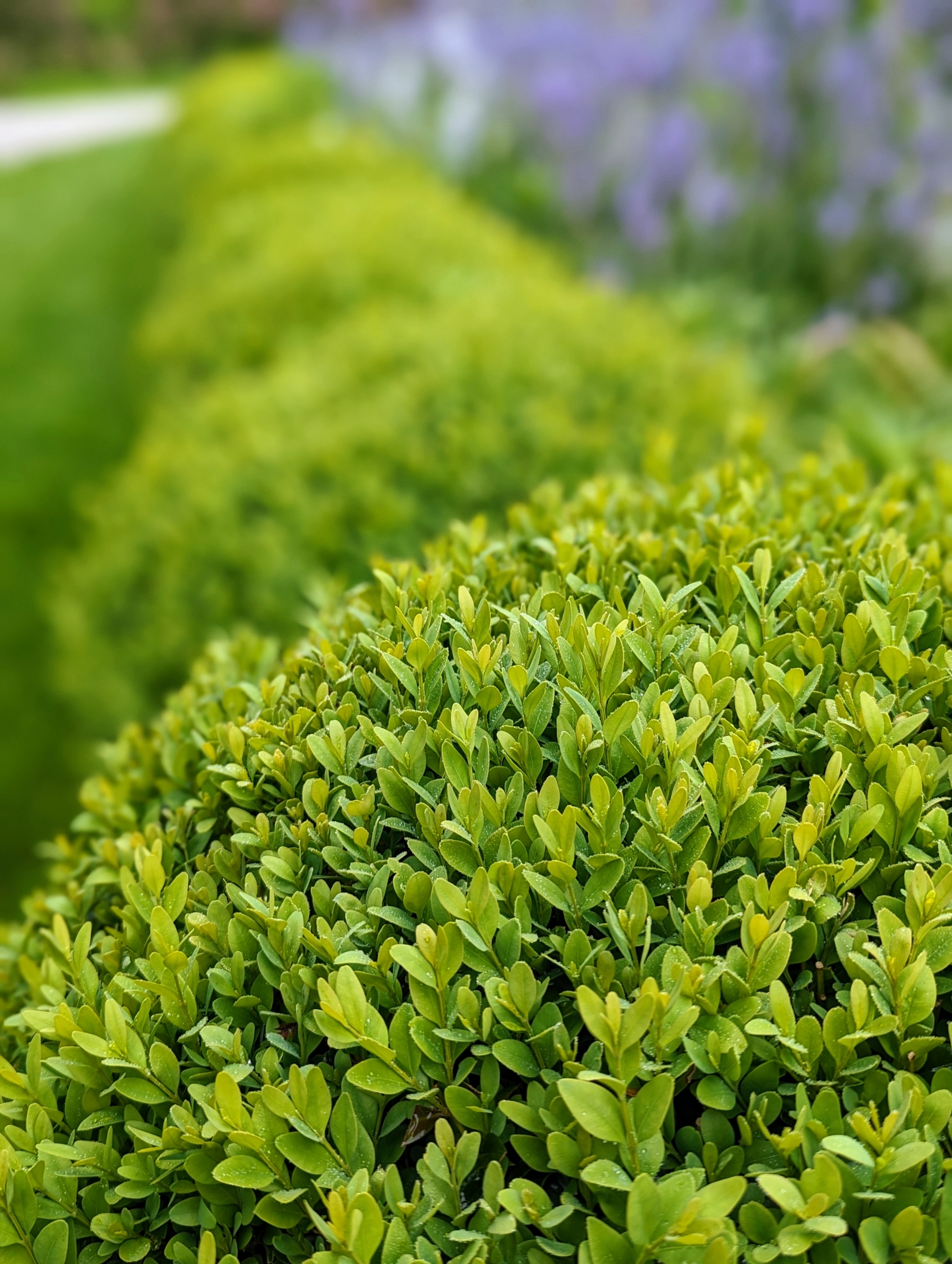
- Both sides of the pergola are bordered by boxwood. There are more than 300 boxwood shrubs planted here. These boxwood shrubs were grown from small saplings nurtured in one area of my vegetable garden next to my chicken coops. They’ve grown so much since we planted them eight years ago.
-
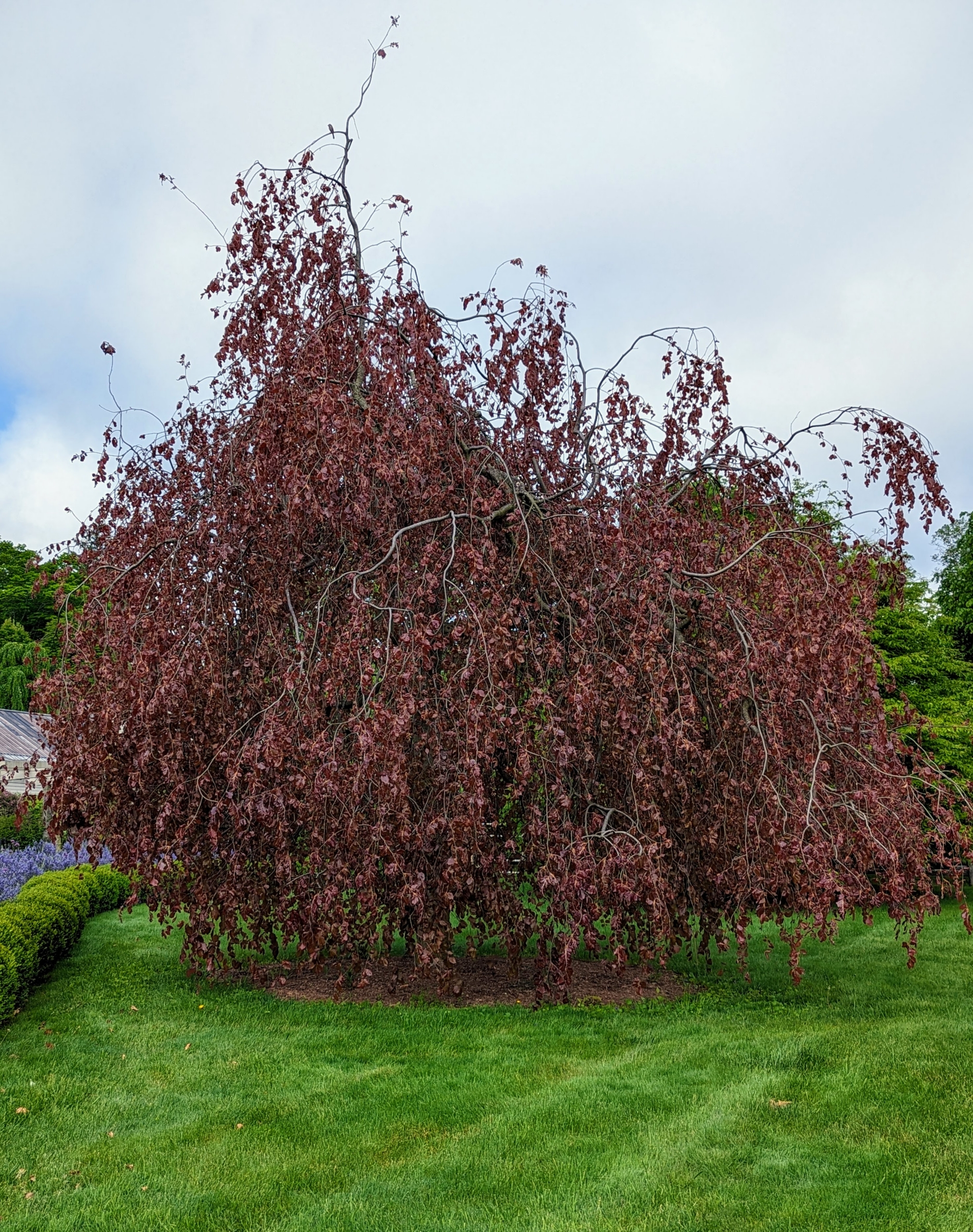
- On one side of the pergola is this giant weeping copper beech tree – I love these trees with their gorgeous forms and rich color. I have several large specimens on the property. The deep red to copper leaves grow densely on cascading pendulous branches.
-
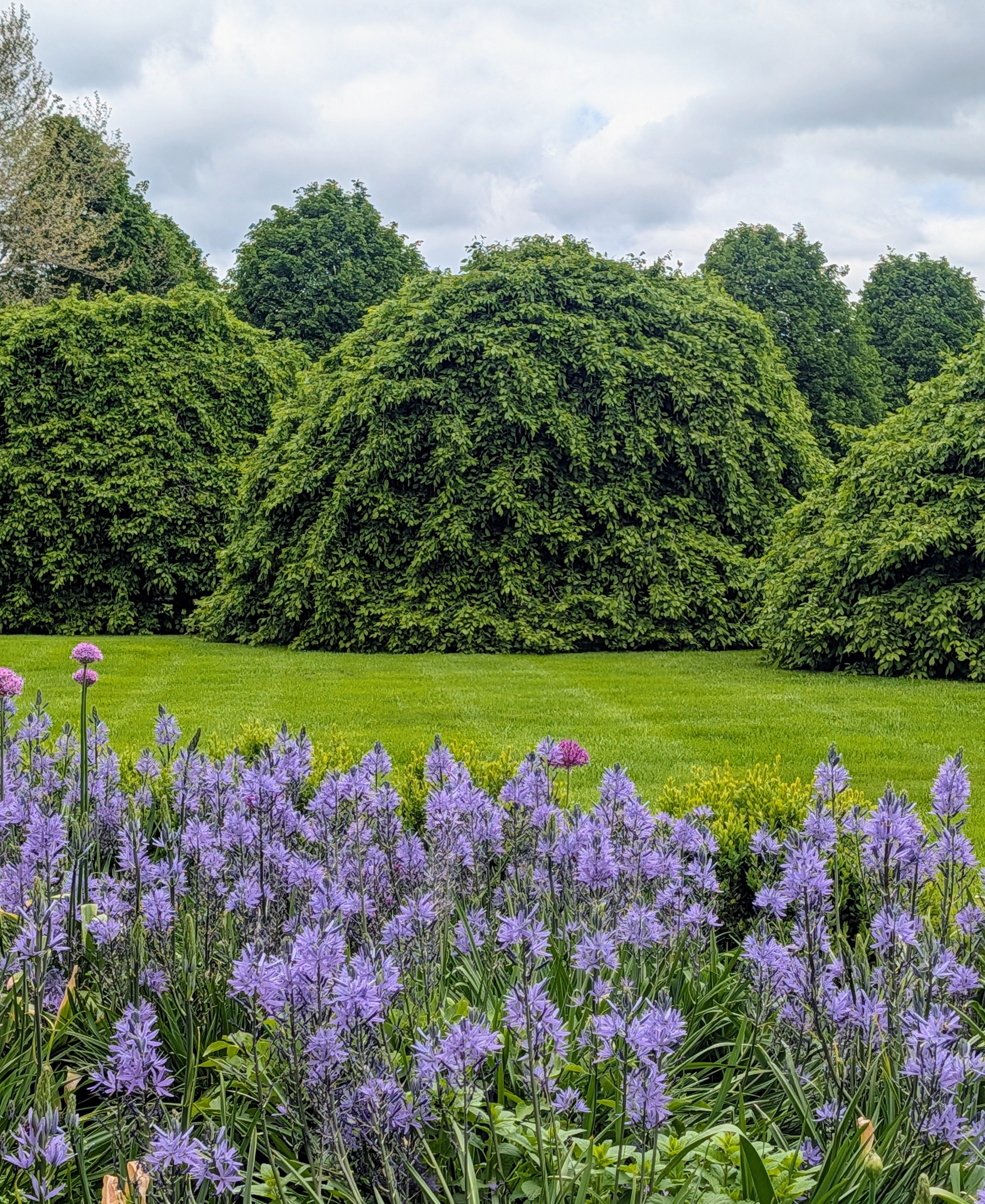
- And behind the pergola are six matched standard weeping hornbeams, Carpinus betulus ‘Pendula’. Weeping hornbeams can grow to be about 50-feet tall at maturity, with a spread of 40-feet. These are very rare and precious trees.
-
- I am so proud of the spring gardens. My pergola garden is among the first one sees when they arrive at the farm, and some of it can also be viewed from my terrace parterre outside my Winter House kitchen. The palette of colors is a big favorite – it grows more colorful and vibrant every year. In a few weeks, it shall transform once again and feature lovely shades of orange.
 Martha Pins


 Martha Tweets

