
Potting Interesting Varieties of Cacti
Exotic forms of succulents make excellent container specimens.
Succulents are low-maintenance, adaptable both indoors and out, and have a large number of unique forms making them ideal plants for those who love growing them but don’t really have a lot of time to care for them. Succulents, which includes the cactus family, are able to survive prolonged drought because they store moisture in their fleshy stems, roots, and leaves. Cacti also have pad-like buds, called areoles, out of which grow sharp spines, which protect the plant from harm and collect and condense moisture. Not long ago, I bought a few interesting cacti to add to my growing collection.
Enjoy these photos.
-

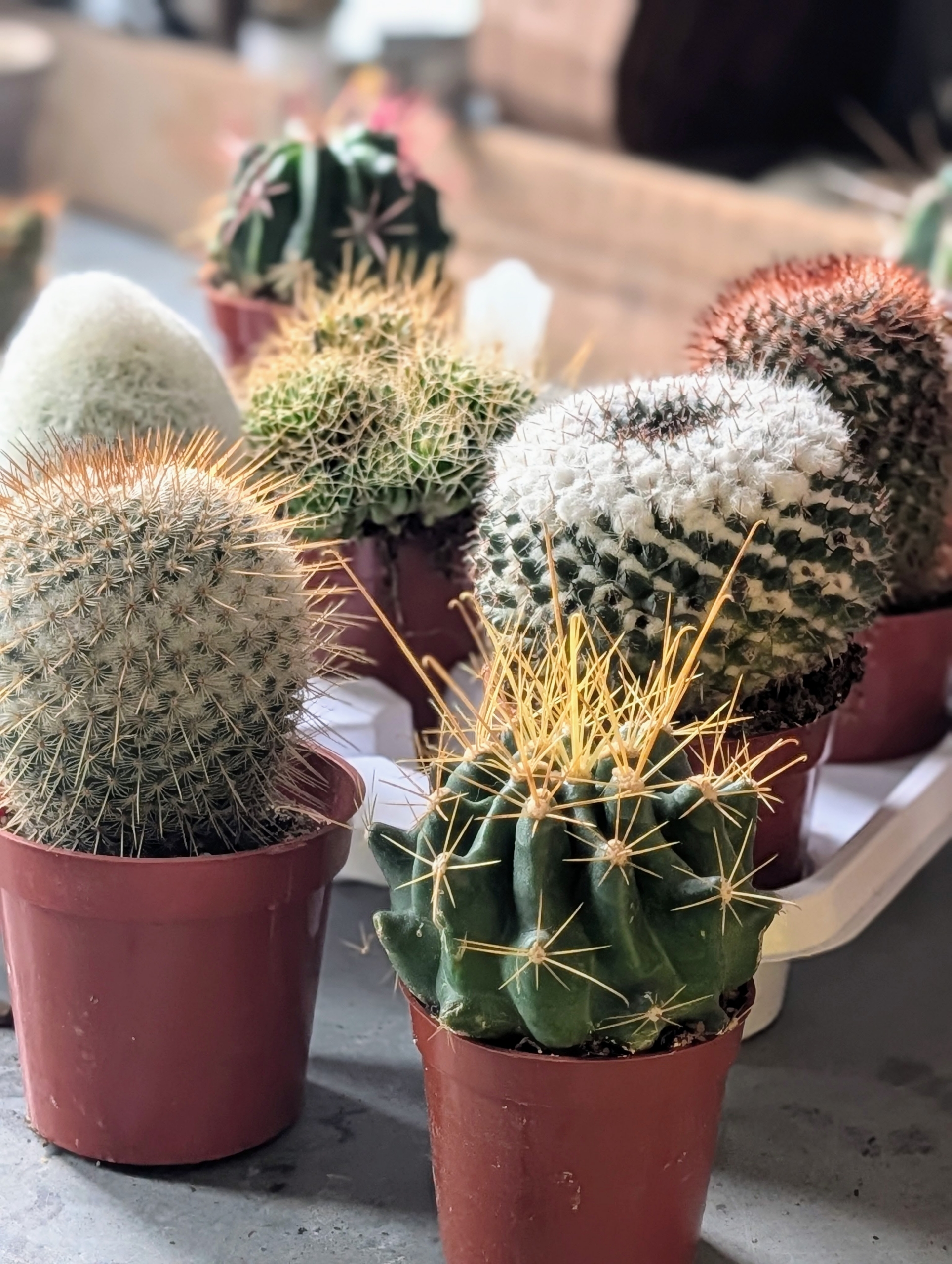
- Whenever I travel, I often look for interesting plants to bring home and add to my greenhouse. I have amassed quite a collection of unique specimens over the years. These are from Colasanti Farms in Canada, a 4th generation family owned company growing a large variety of cactus, succulents and tropical plants.
-
- When starting a cactus collection, know the basics about watering, sunlight, soil, and pots. And start with smaller, easy-to-care-for varieties.
-
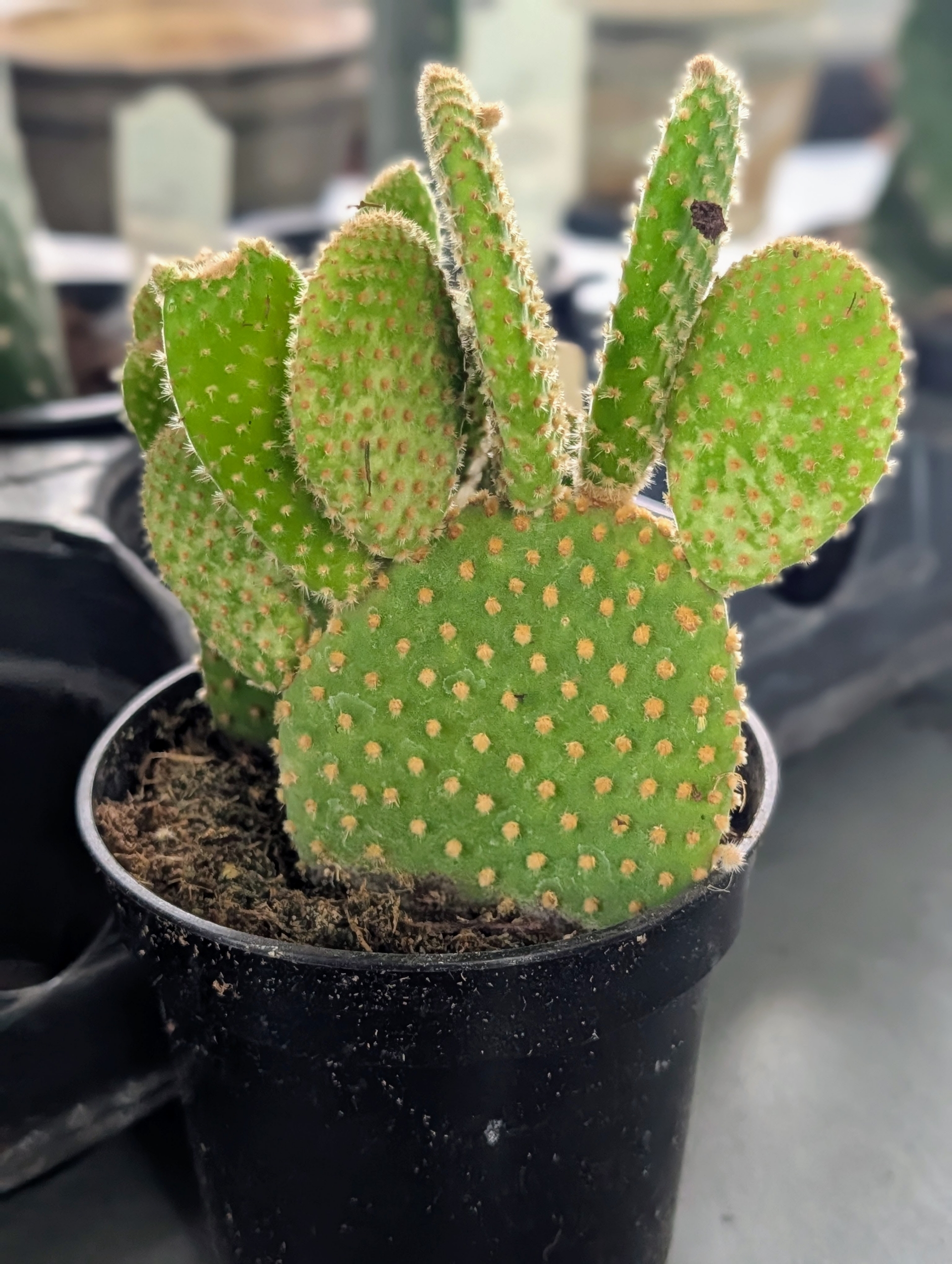
- The Bunny Ear Cactus is a charming, low-maintenance ornamental plant with flat, paired pads covered in tiny barbed spines.
-
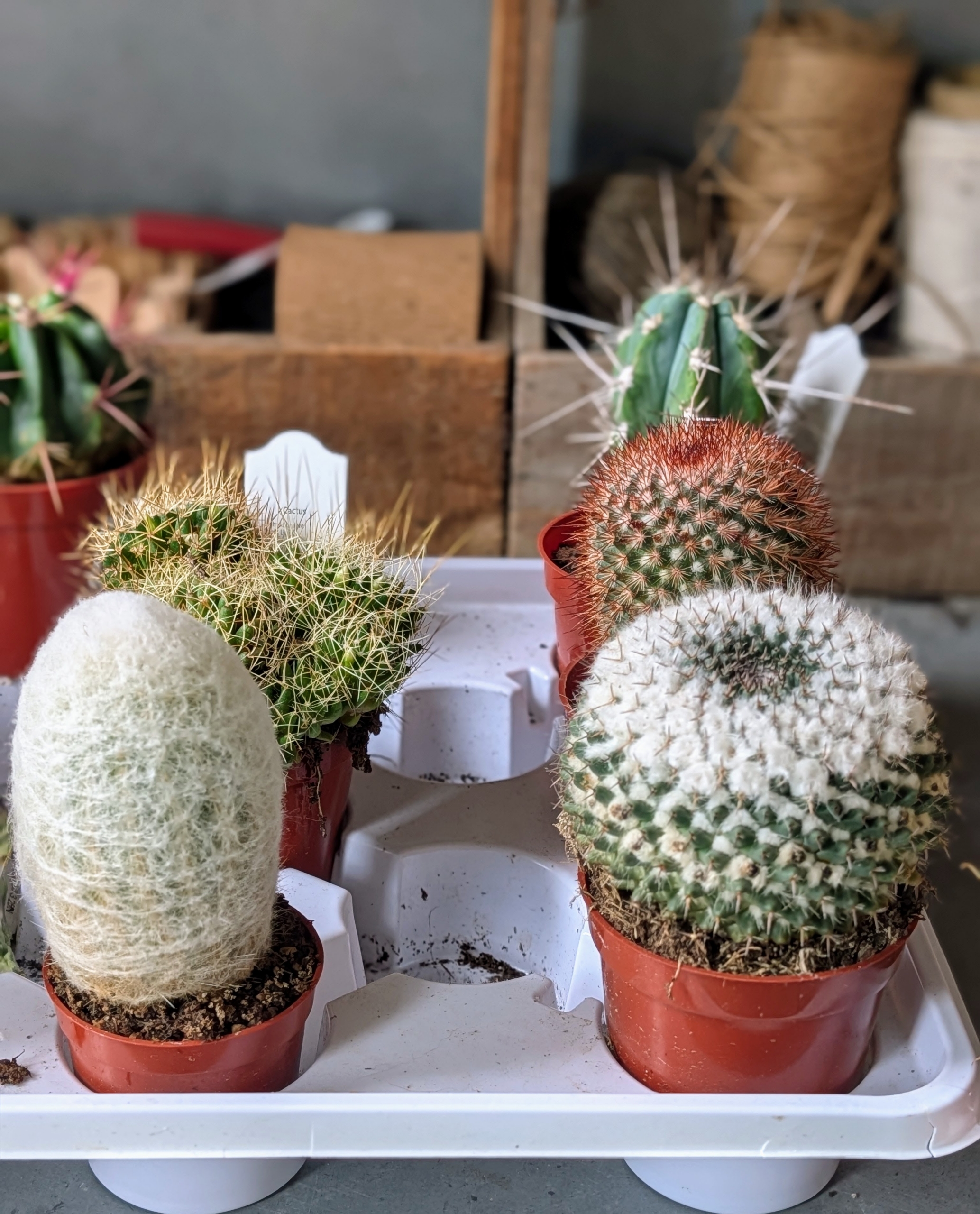
- The Old Lady Cactus is a small, clump-forming cactus native to central Mexico and valued for its appearance and ease of care. It is spherical or cylindrical, can grow up to 12 inches tall and four inches wide, and has soft white hairs and bristle-like white spines, giving it a “white-haired lady” look.
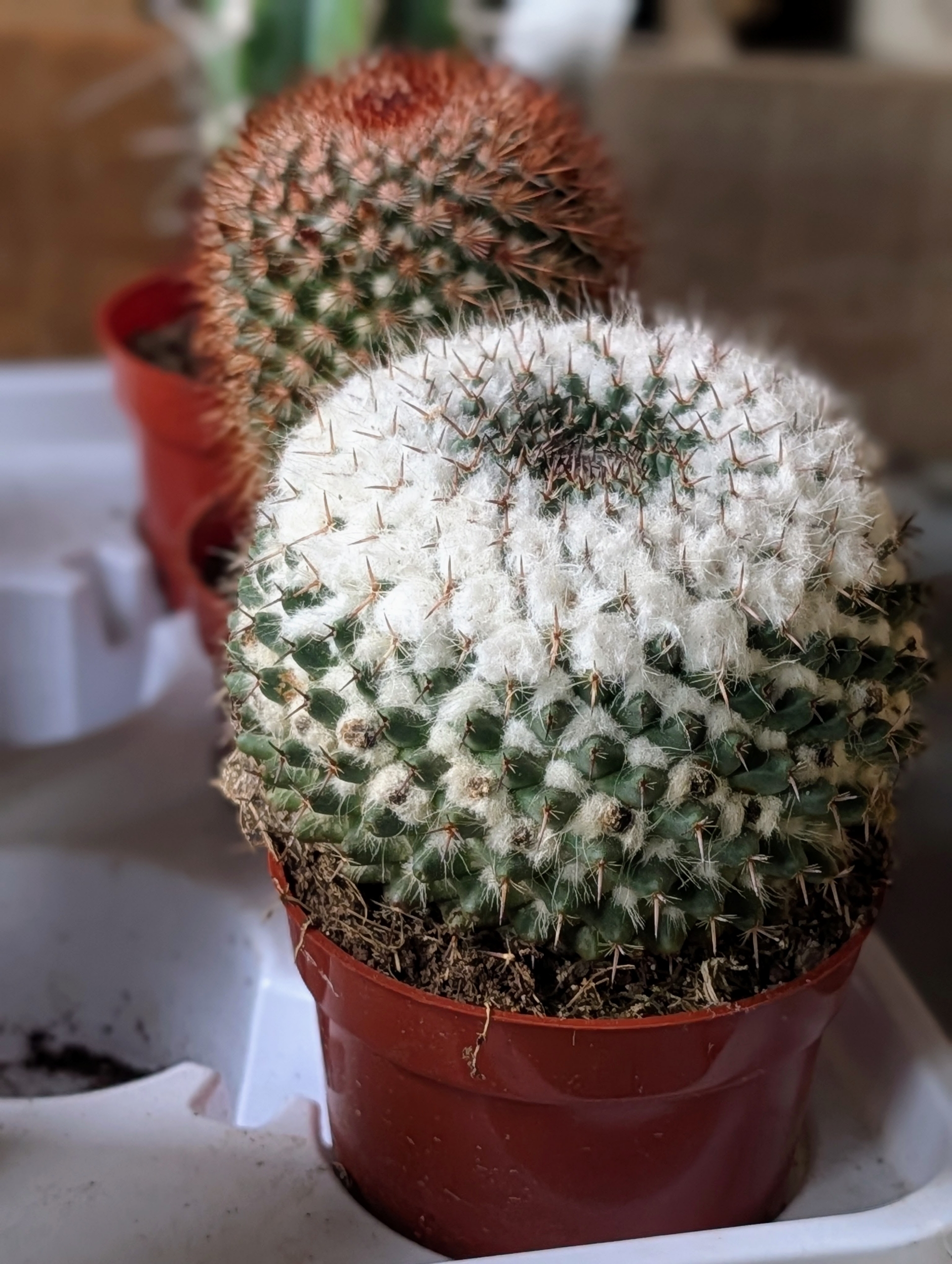
-
- Similarly, the Old Man Cactus is a slow growing columnar cactus covered in long, white, hair-like spines that protect it from sun and cold, also giving it an aged appearance.
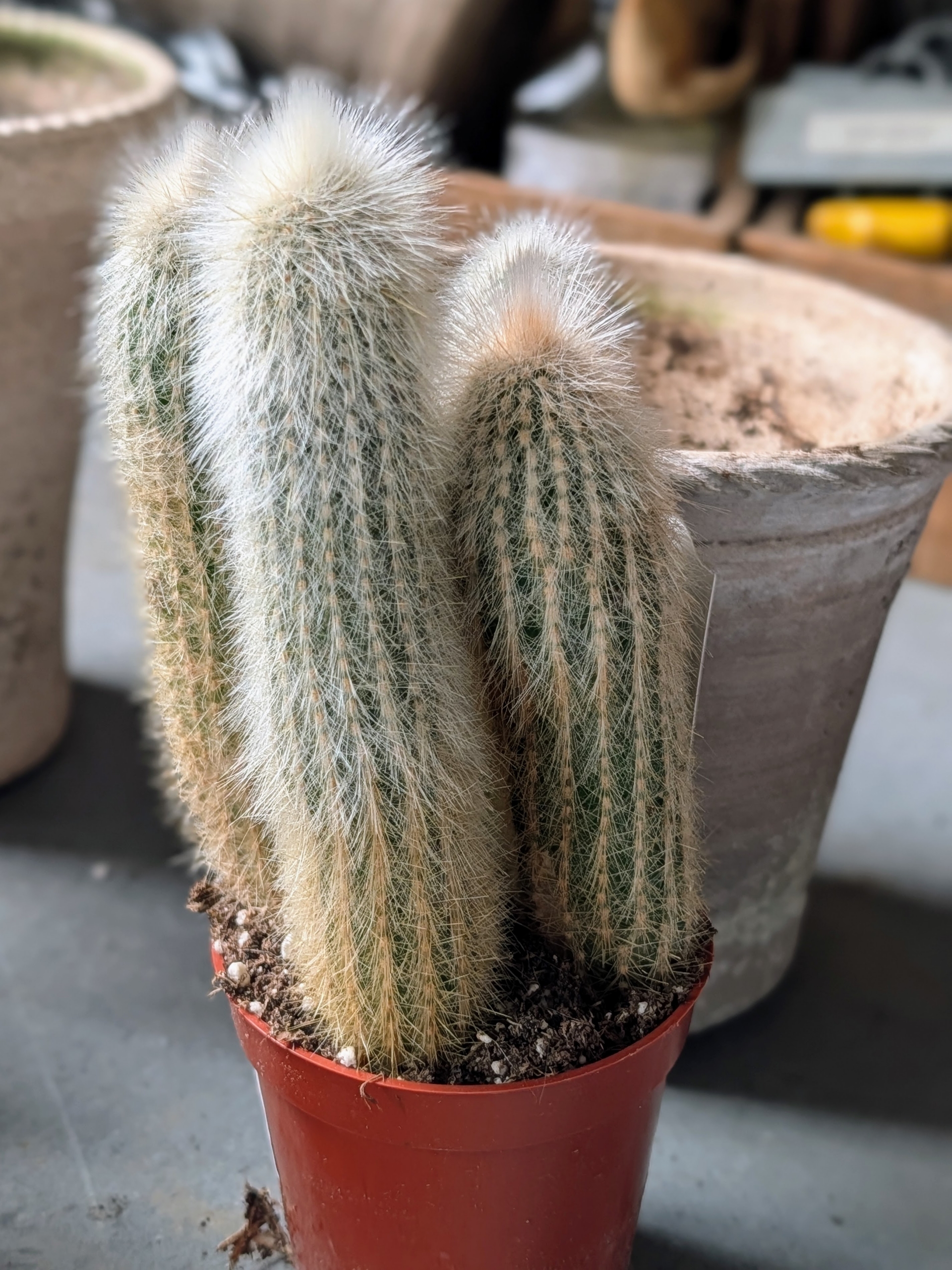
-
- Several cactus species are known for their furry, white-coated looks – some with more dense woolly hairs or modified spines, but all part of the plant’s natural defense and insulation.
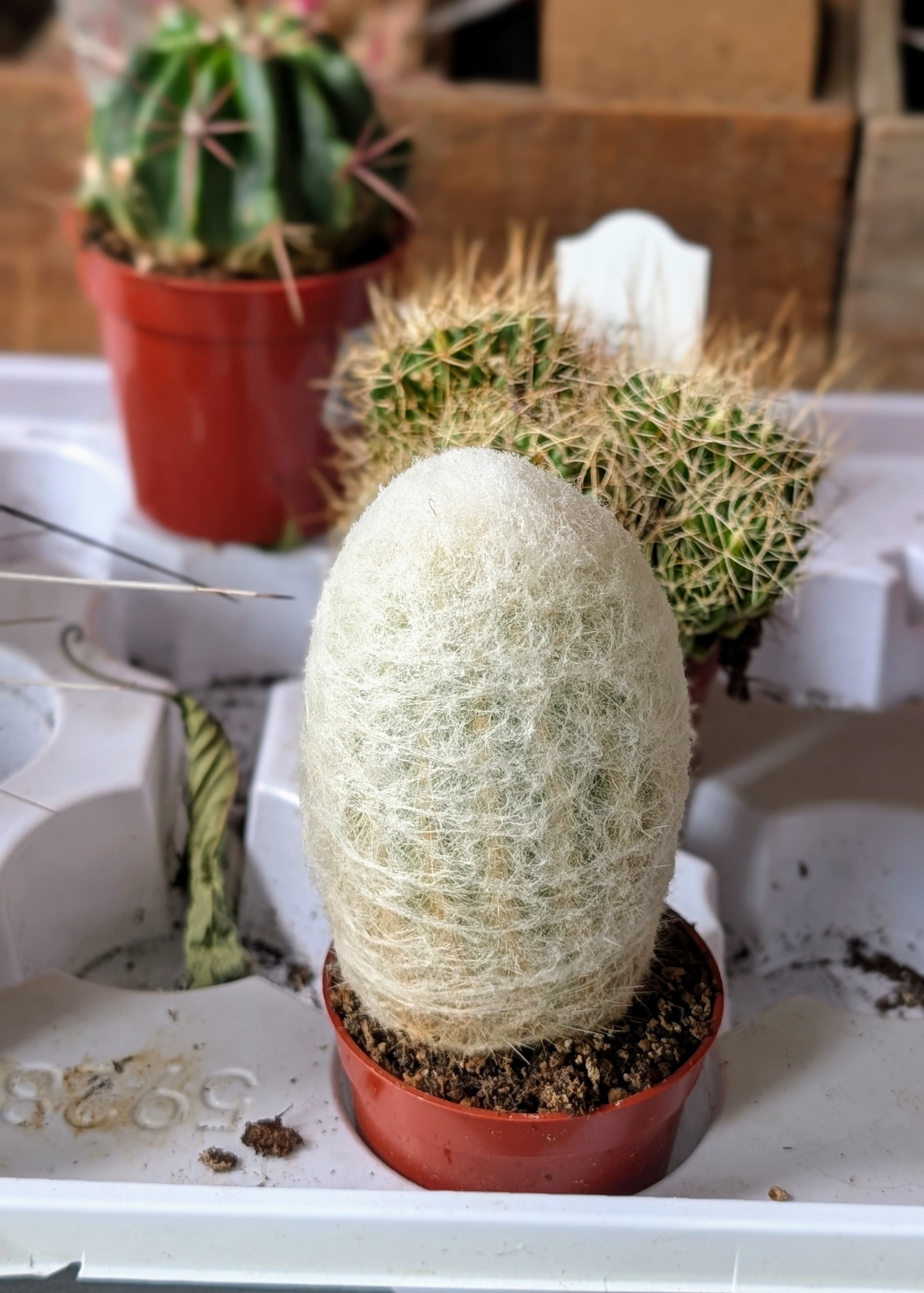
-
- The Spiral Cactus is a striking, naturally twisting variety known for its corkscrew-shaped stems, fast growth, and ease of care when provided with bright light and well-draining soil.
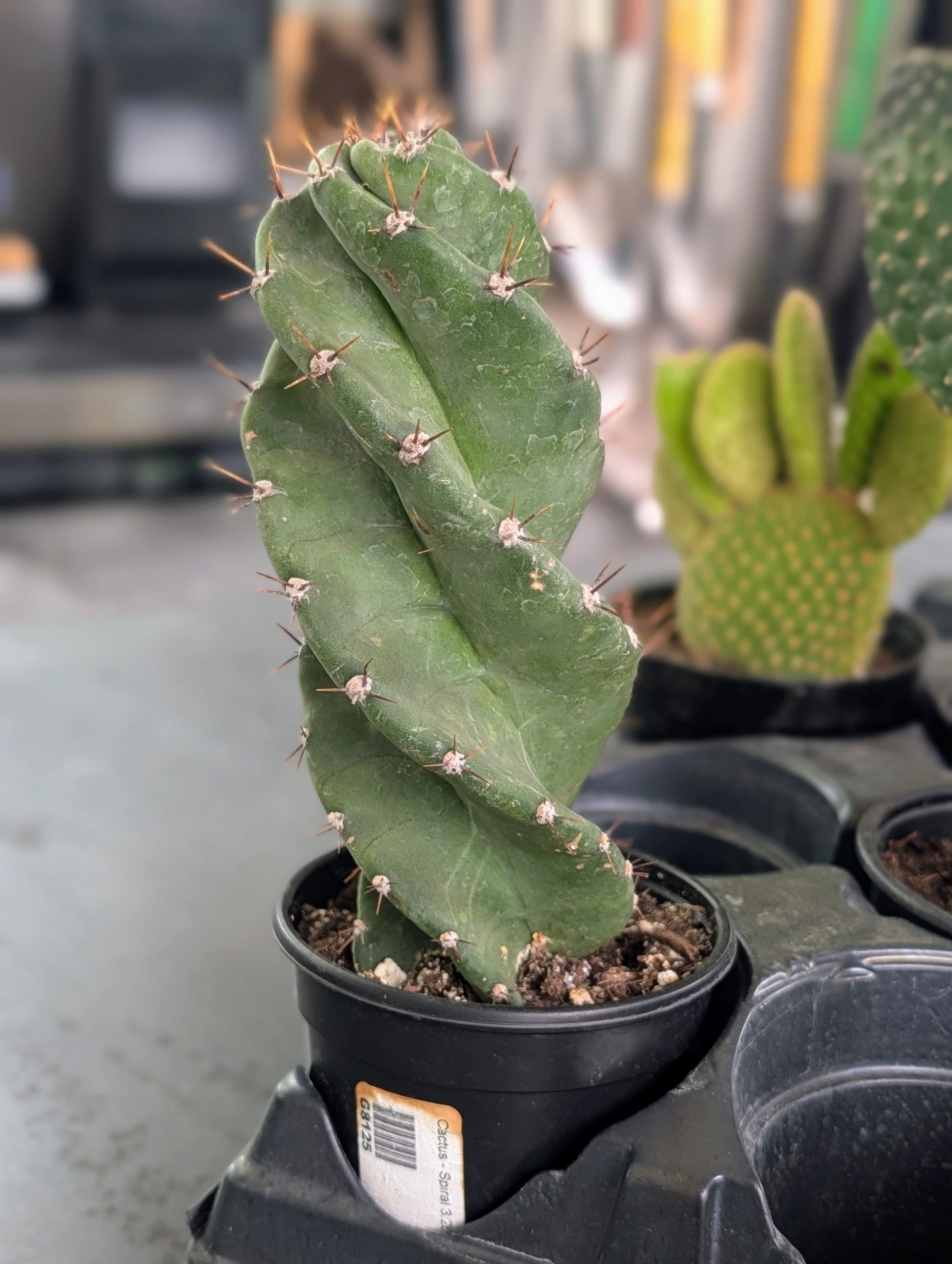
-
- Ryan chooses the appropriate size container for each specimen. He matches the pot to the cactus’s growth habit—tall, narrow for columnar species, shallow and wide for globular or spreading types. I’ve been using Guy Wolff pots for many years – he makes every one of these by hand.
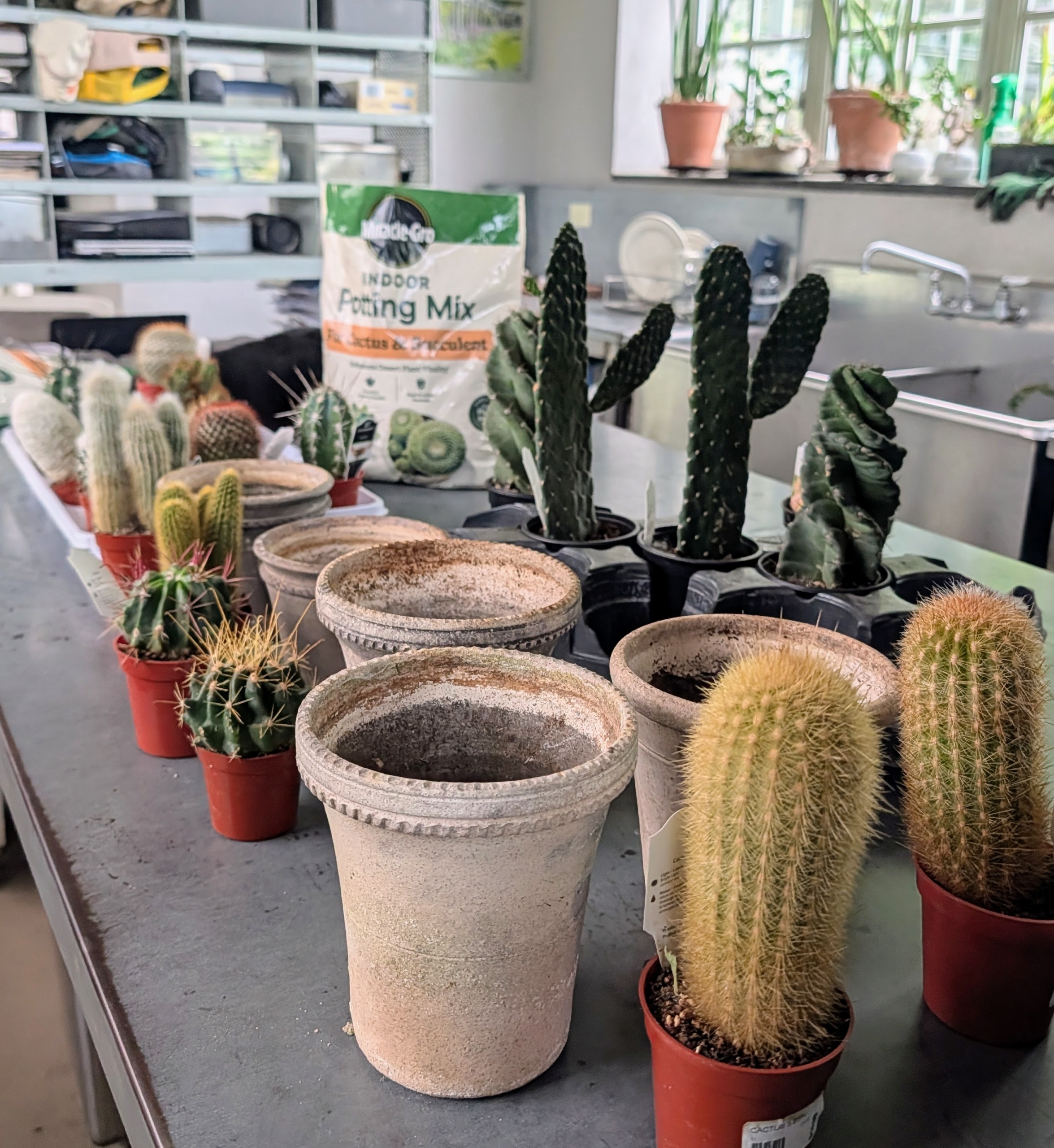
-
- Select pots that are only slightly larger than the current root ball. Cacti have shallow roots and dislike sitting in wet soil.
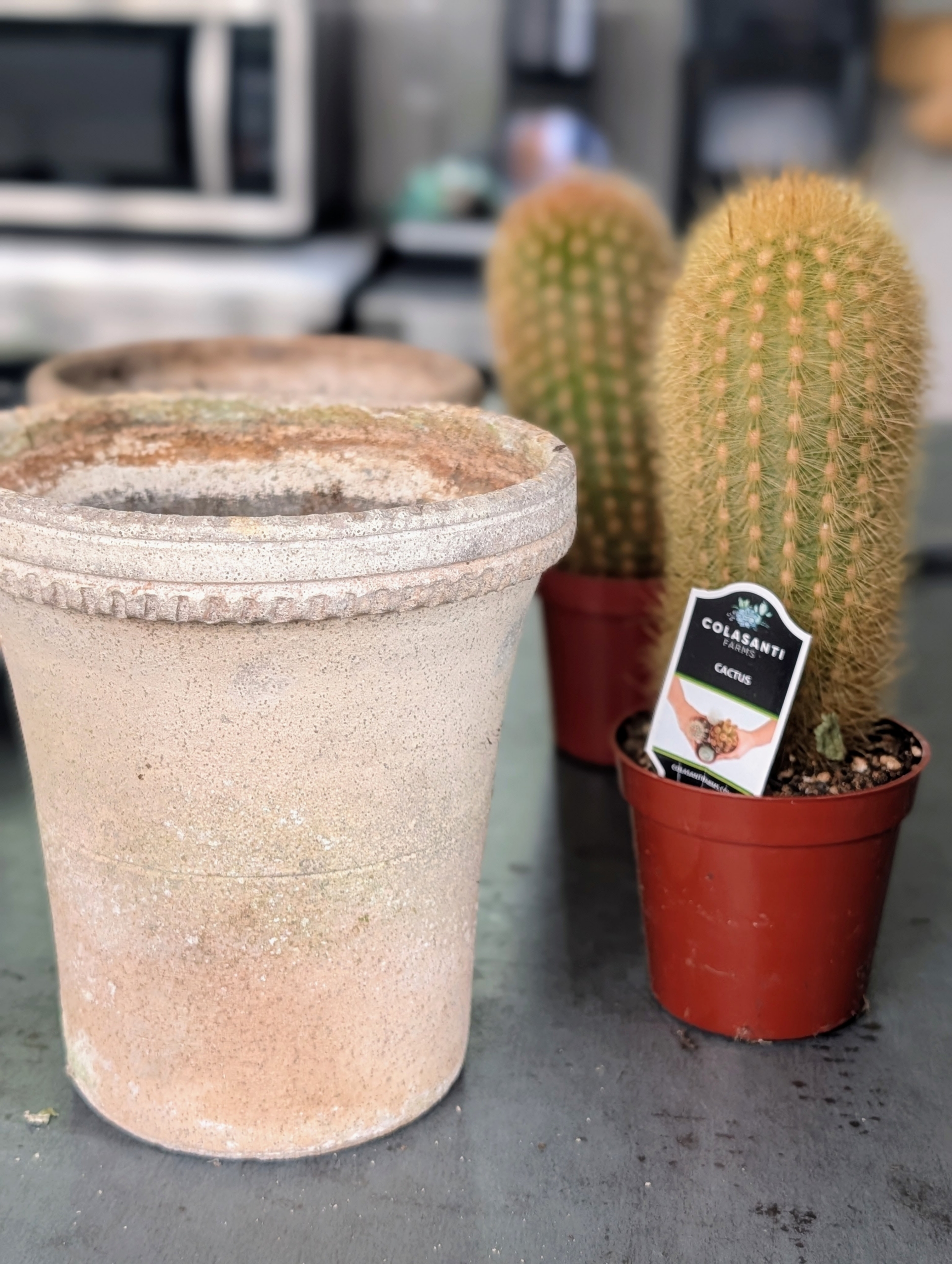
-
- Each pot has a drainage hole. A clay shard is placed over the hole to help with drainage.
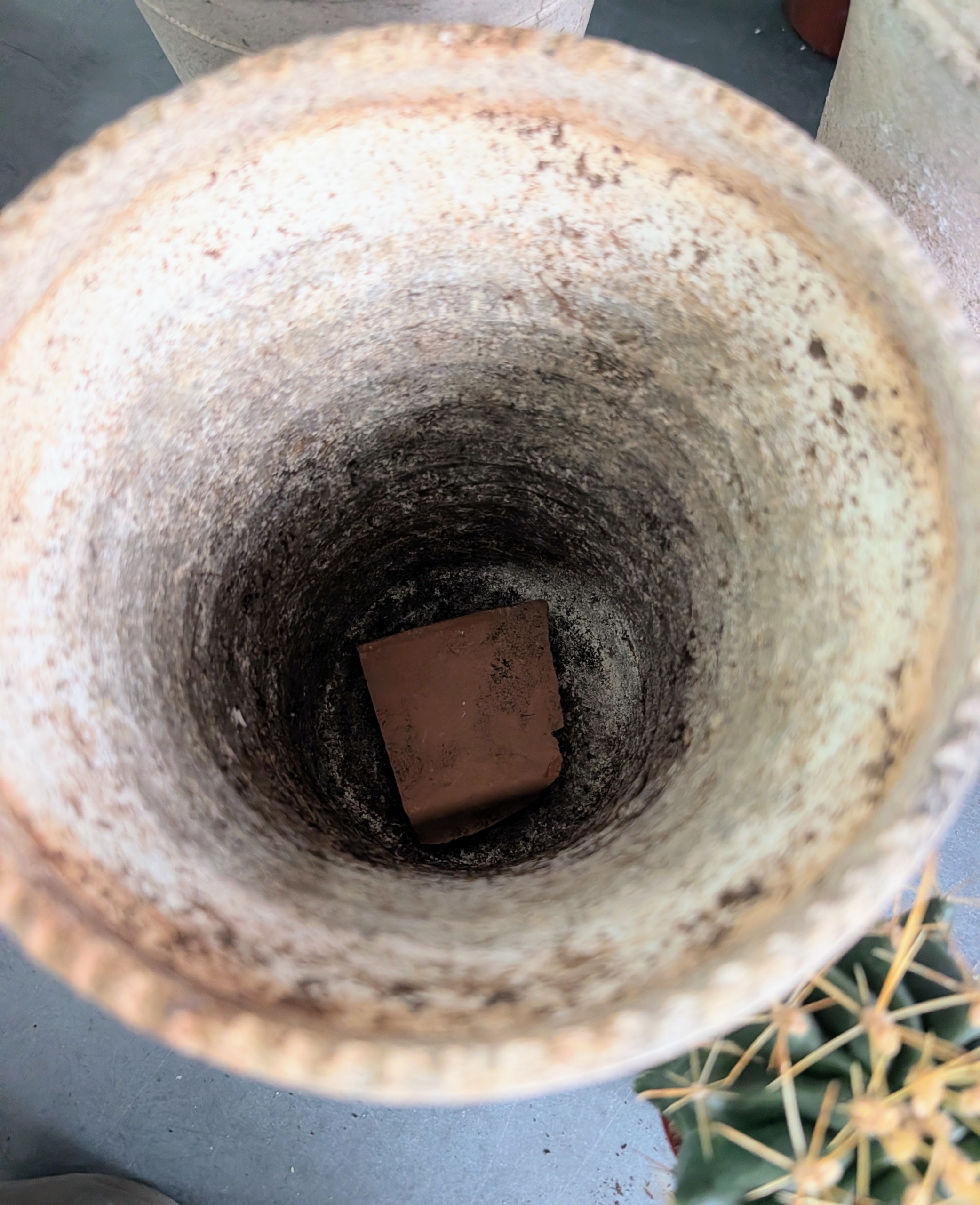
-
- I like these pots because they allow proper aeration and moisture to penetrate through the sides and to the plant.
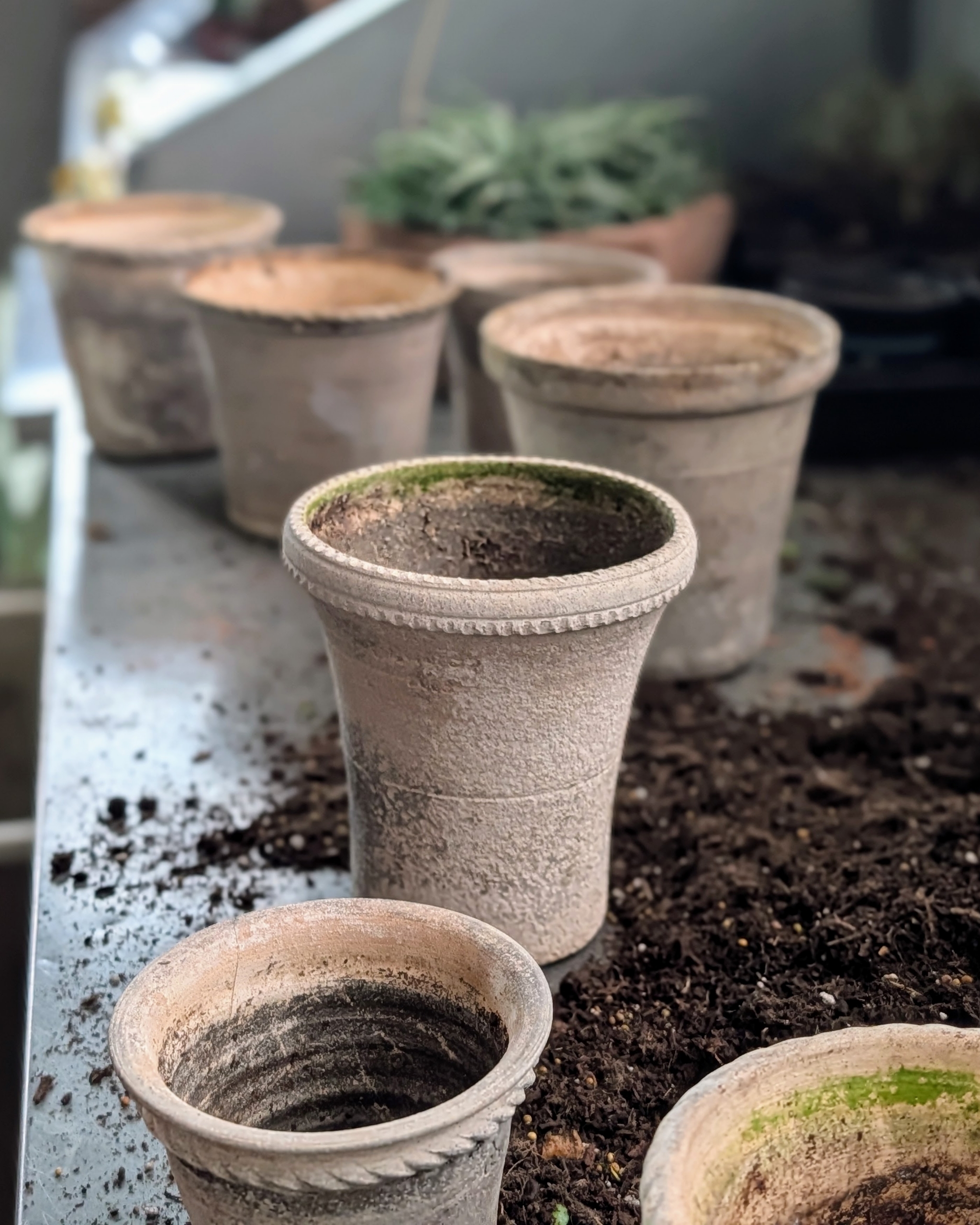
-
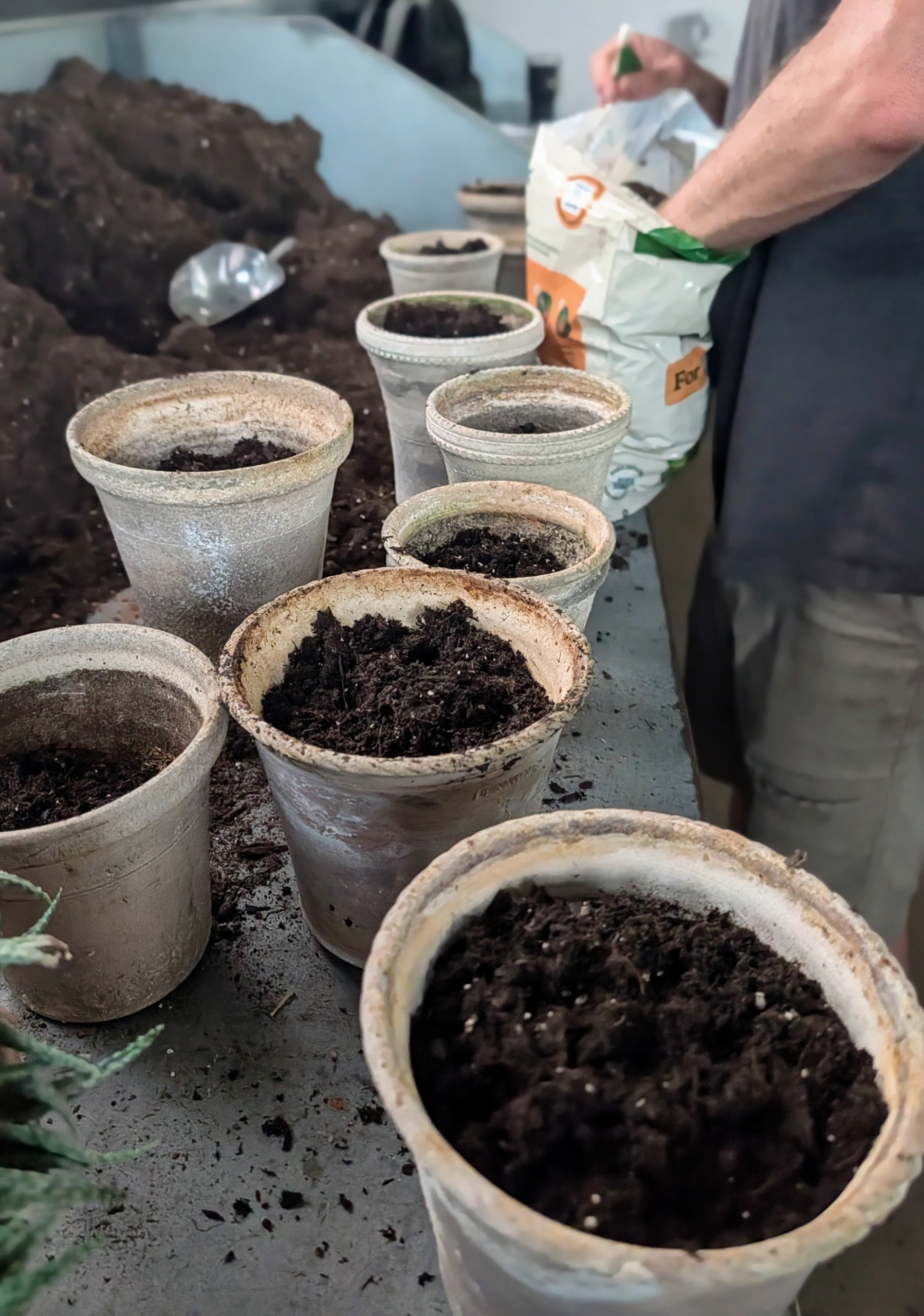
- Ryan fills the pots with the soil mix, adding just enough so it is filled just below the top rim of the pot. When potting several plants, Ryan works in an efficient production line process, filling all the pots first.
-
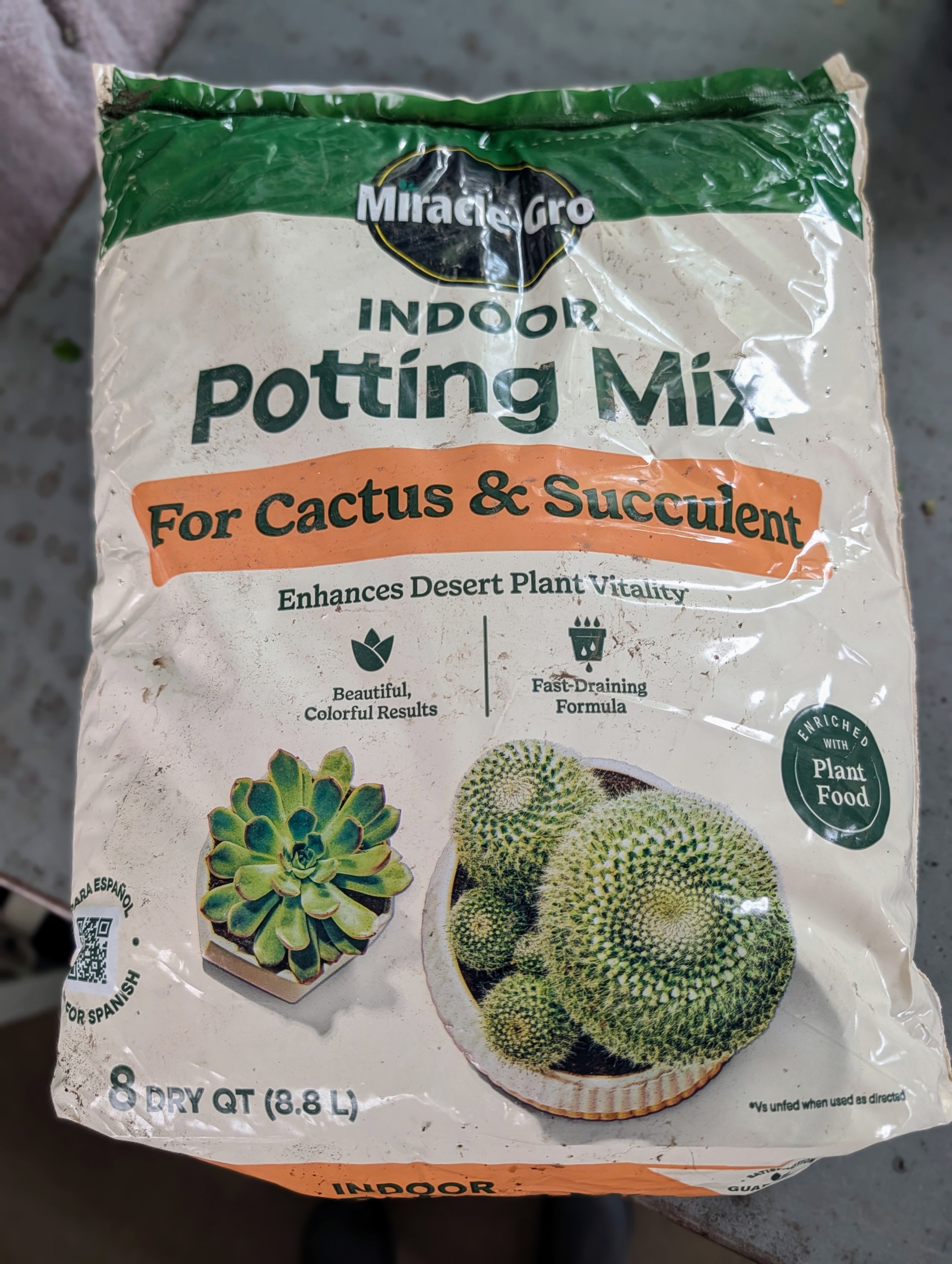
- I use Miracle-Gro Indoor Potting Mix for Cactus and Succulents. It’s a fast-draining formula that’s great for all kinds of succulents, cacti, and citrus plants.
-
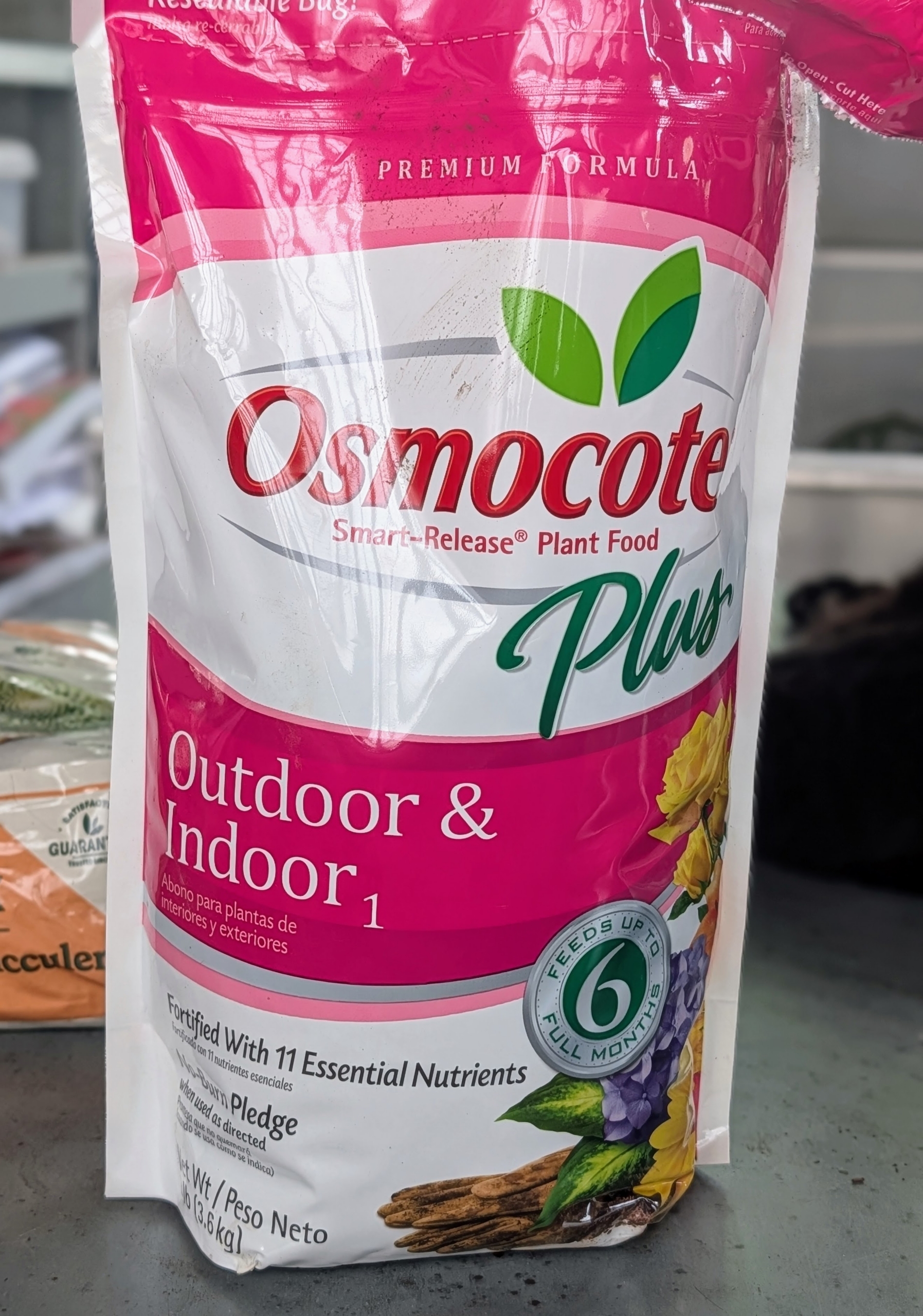
- I also use Osmocote Plus, a type of controlled-release fertilizer designed to support plant growth. Always remember to feed your plants.
-
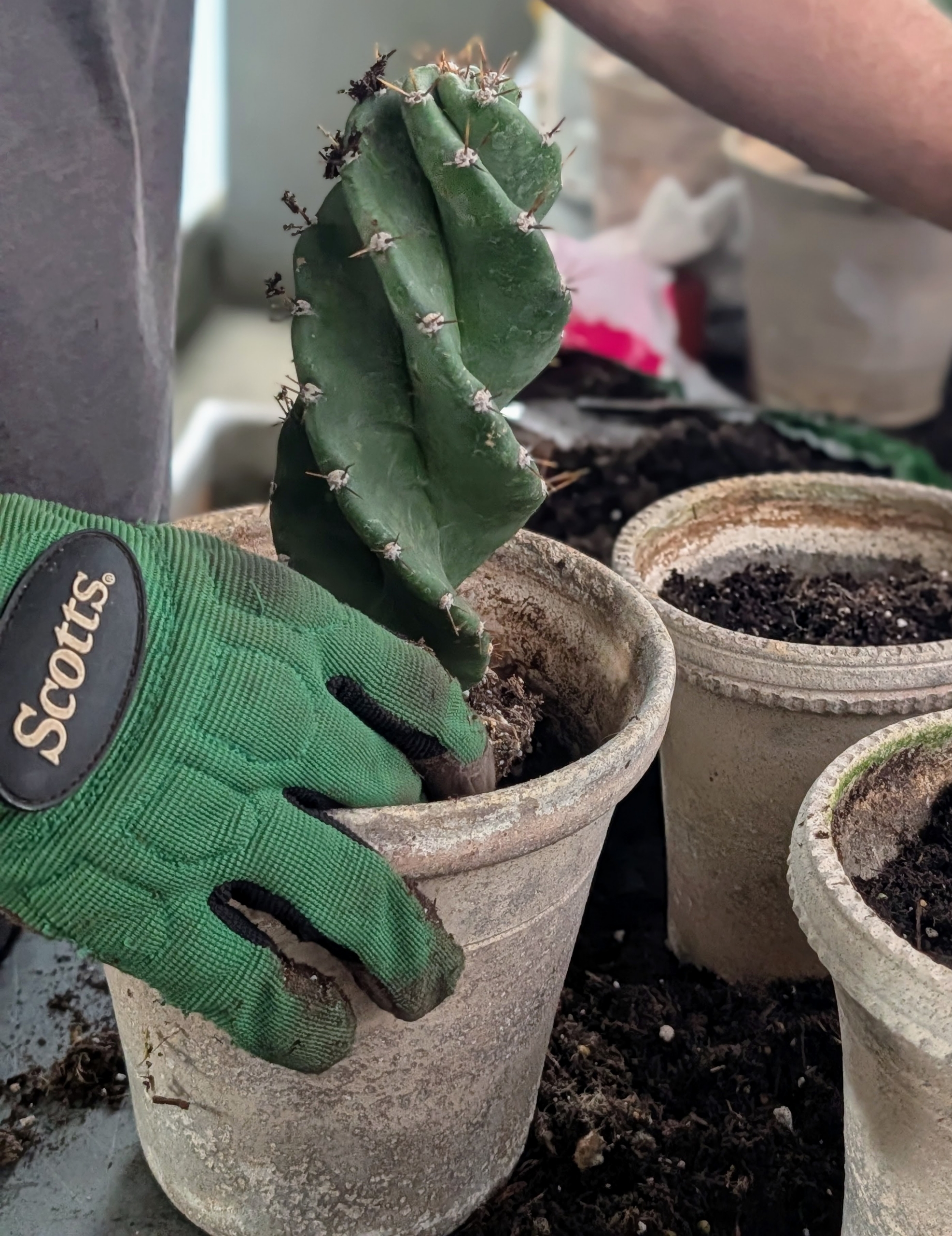
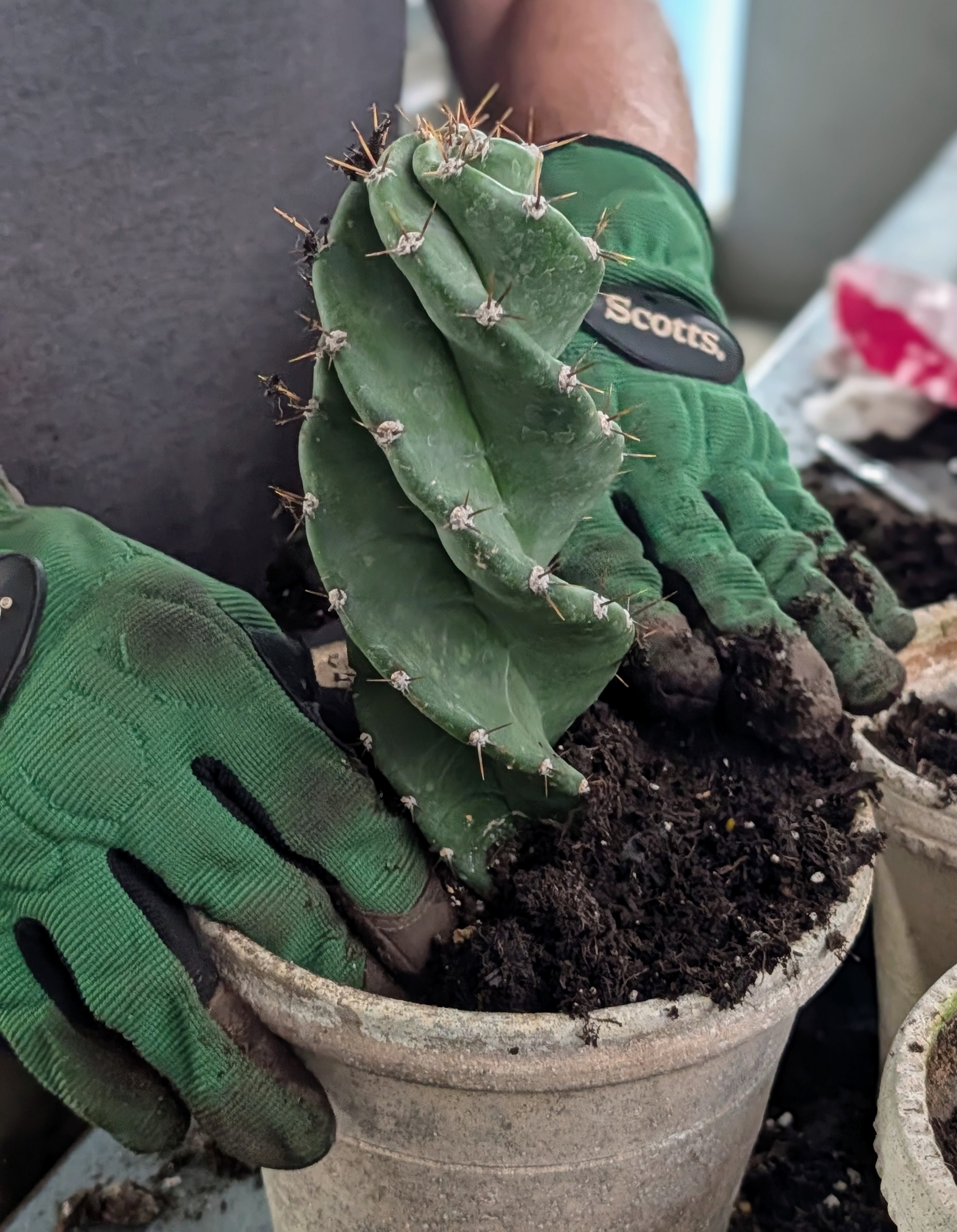
- For spiny cacti, it’s important to use gloves or tongs to avoid injury. Ryan gently places the cactus in the center, ensuring the base sits just below the rim.
-
- He fills in all the gaps around the plant, firming it lightly without compacting the soil.
-
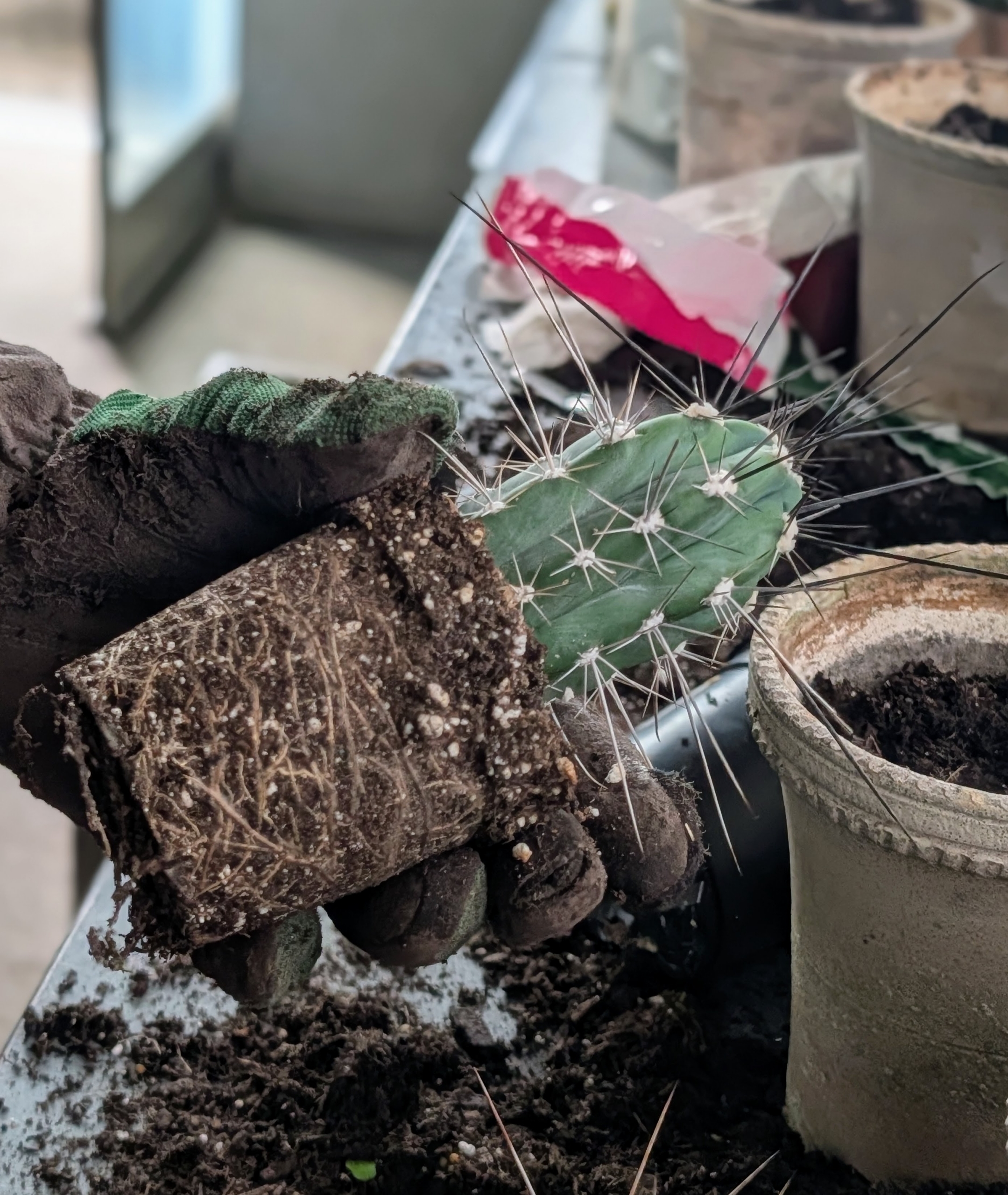
- Here is another cactus ready for potting. Before placing any plant in a pot, be sure to tease or loosen the root ball just a bit to stimulate root growth.
-
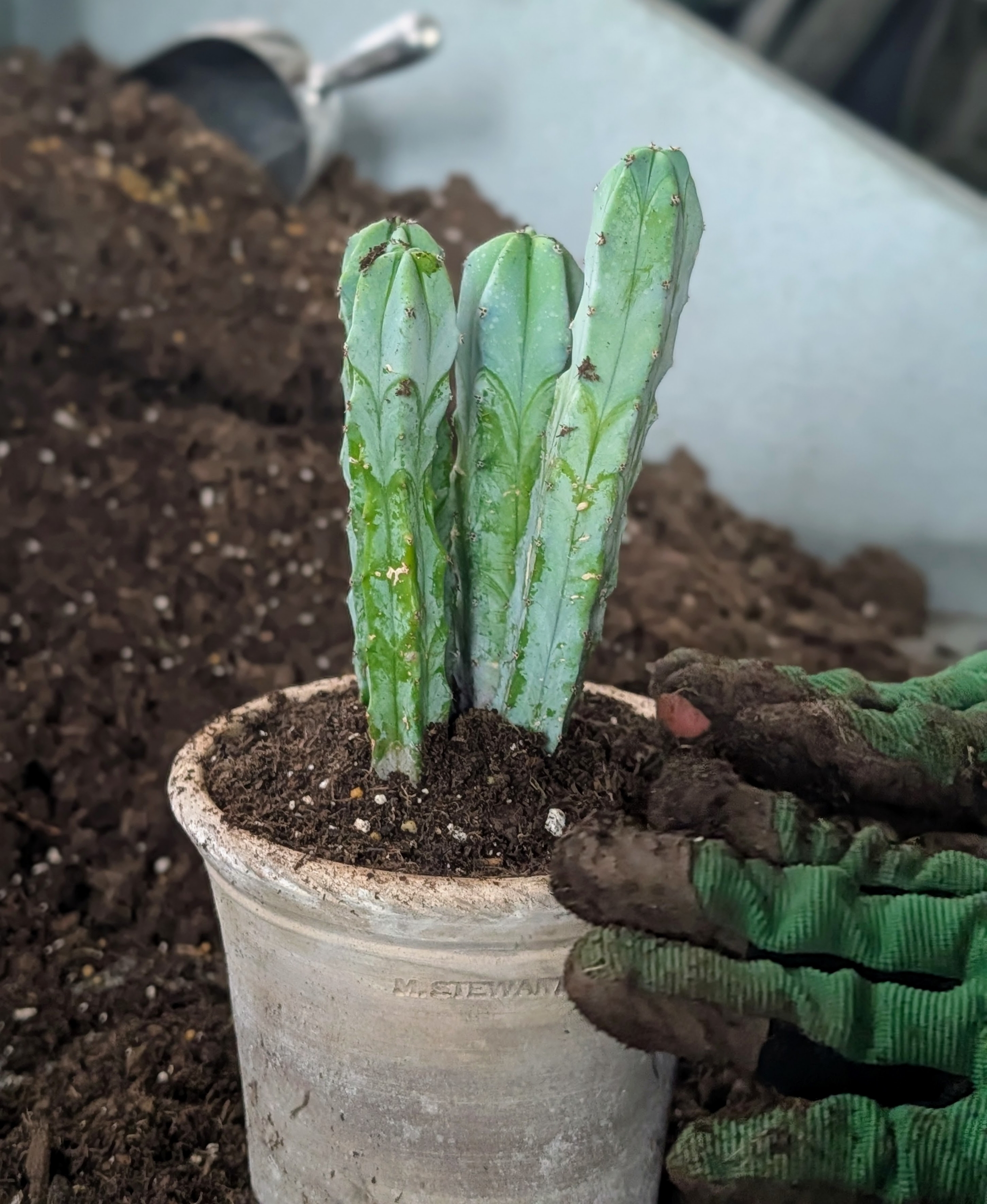
- Many of these plants will last a couple years in these pots before they need transplanting. This is a Bilberry Cactus with thick, upright, blue-green stems with deep ribs, giving it a geometric shape, and small dark spines.
-
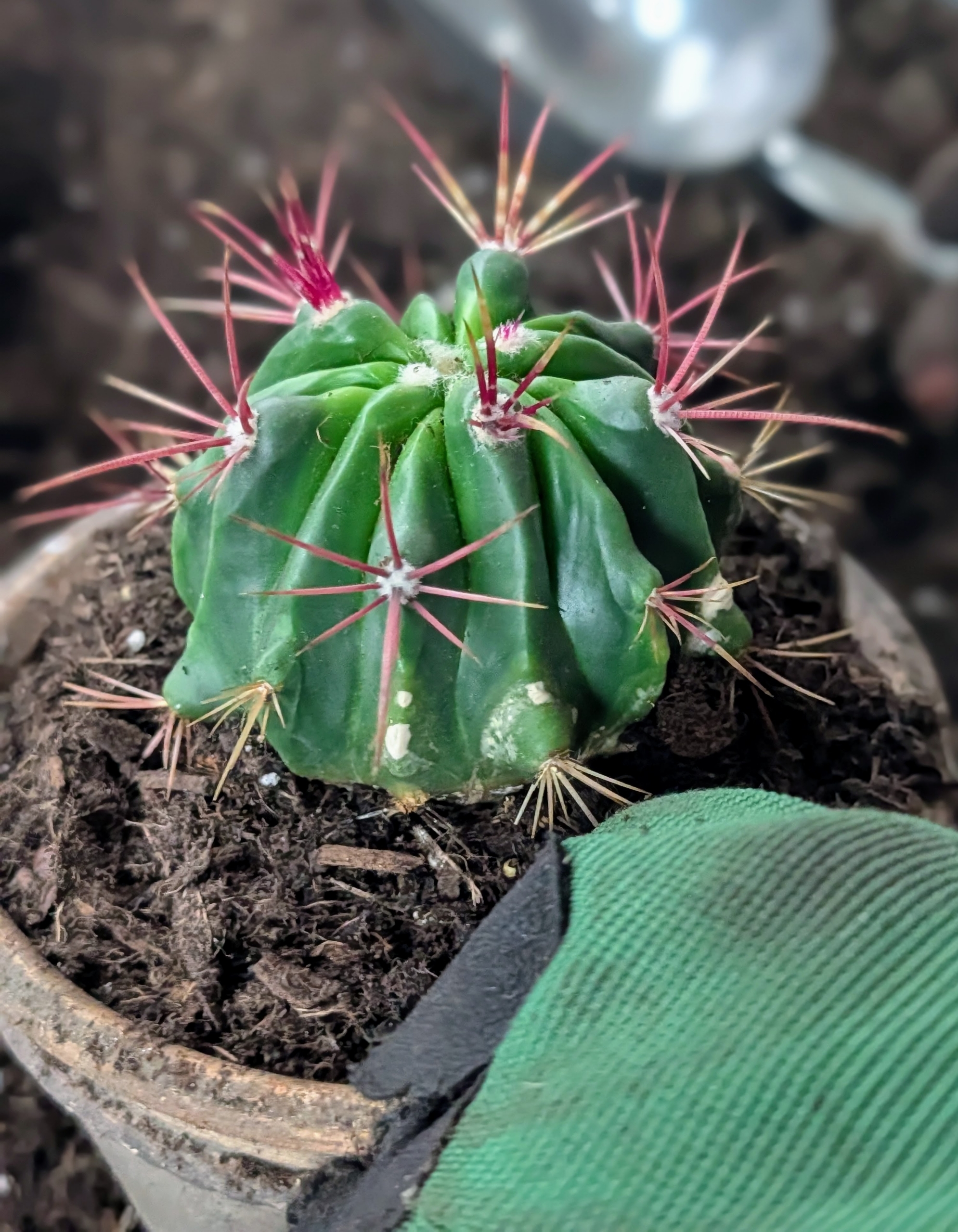
- This is a barrel cactus, which is a round or cylindrical desert cactus known for its ribbed body, sharp spines, and vibrant flowers. Its spines, which can be yellow, red, or brown, provide protection, shade, and help reduce water loss.
-
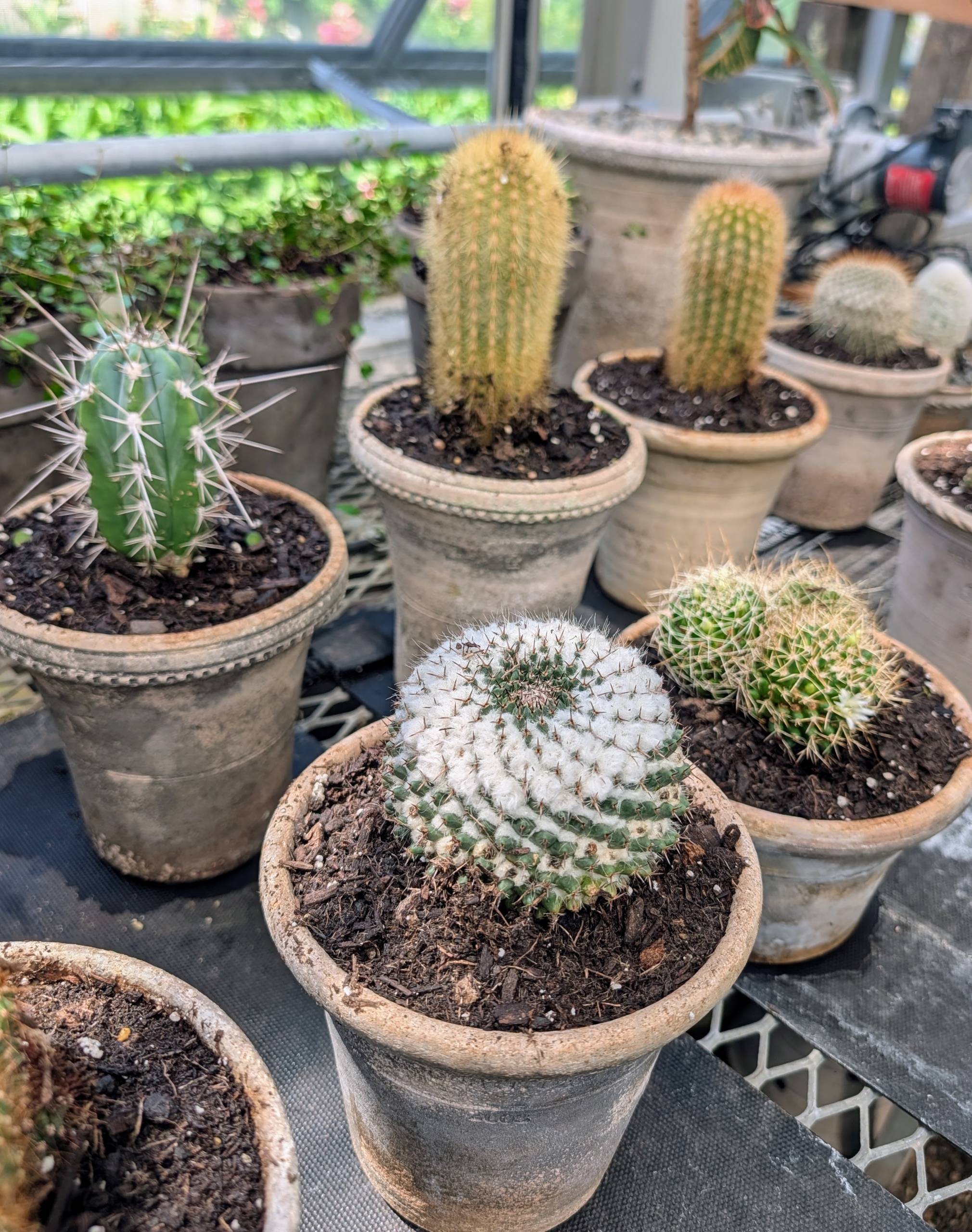
- Once all the plants are potted up, they are watered and placed in the greenhouse where they will get bright, direct light.
-
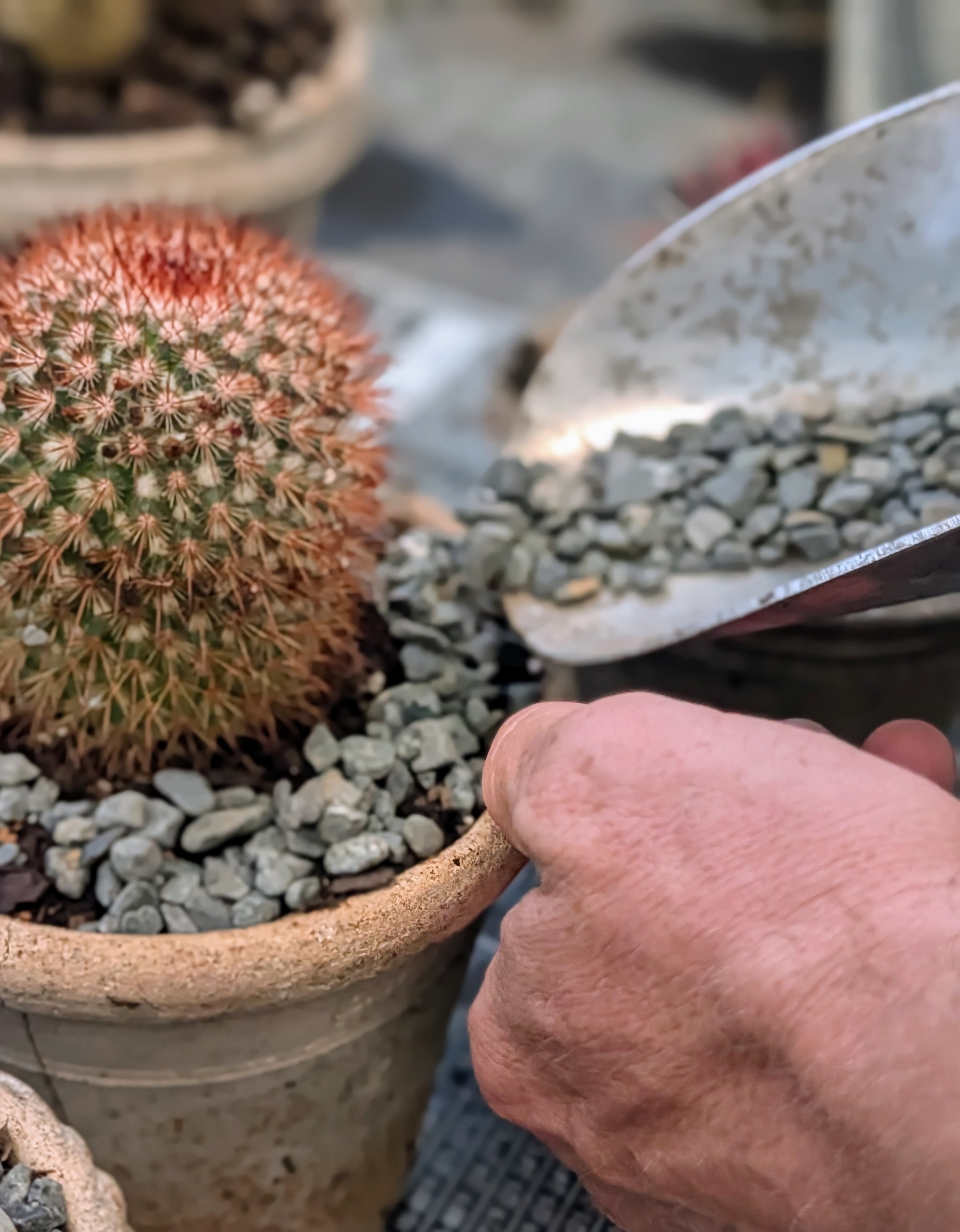
- Ryan adds pea gravel to the top of the pots. Pea gravel, so named because the pieces are pea-sized, is available at garden centers and comes in different colors.
-
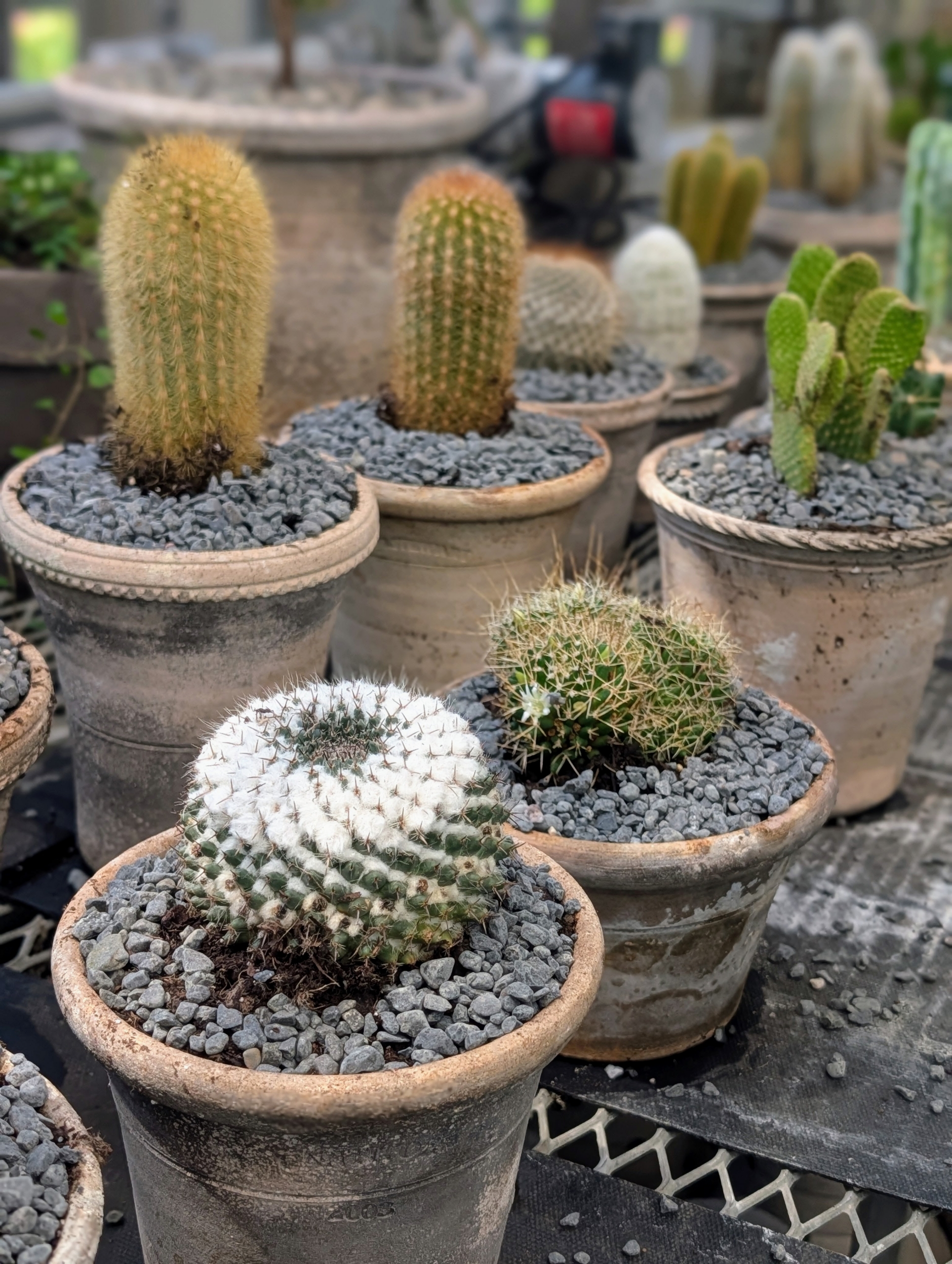
- Gravel breaks up the force from watering, keeping the topsoil intact. It also creates air pockets in the soil, improving aeration and preventing compaction.
-
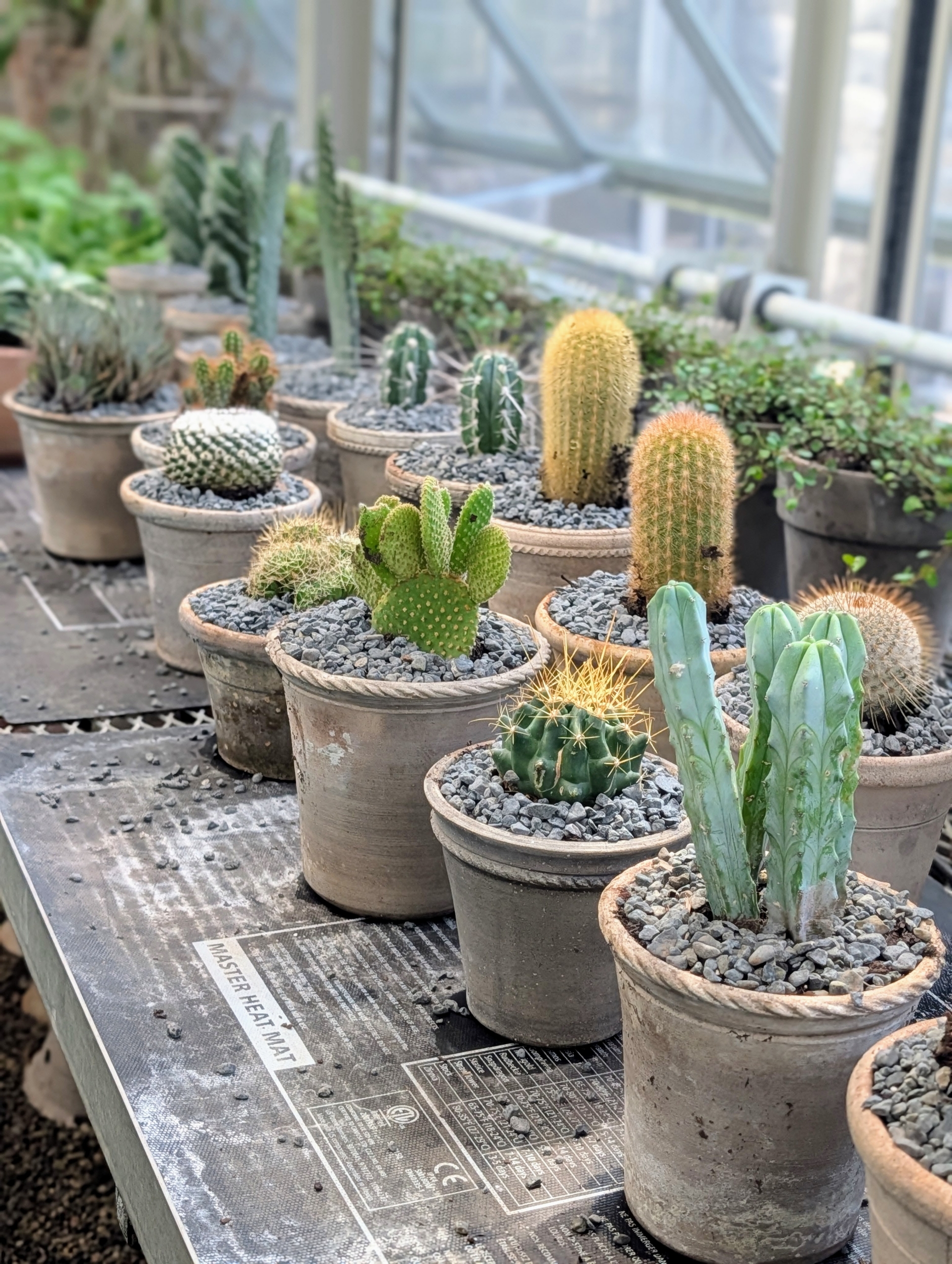
- These plants will remain here in the greenhouse where they can be properly maintained. Occasionally, they will also be rotated into my Winter House for display. Try adding some of these plants to your collection – you’ll enjoy them as much as I do.
 Martha Pins


 Martha Tweets

