
Pruning My Hornbeam Hedges 2026
It's that time of year again when the hornbeam hedges around my farm are pruned and groomed.
Every summer, my outdoor grounds crew trims the hornbeam hedges in front of my main greenhouse - the large sculpted hedge across the carriage road and the hornbeam hedges surrounding part of my formal Martha Stewart Rose gardens. The English hornbeam, Carpinus betulus, is a fast-growing deciduous tree. It can grow about four to five feet per year. From a distance, it appears solid, but light streams in through the leaves providing a pleasing and dappled space. I keep a close eye on all the hornbeams - it’s crucial to prune them regularly, so they never look too overgrown and unruly.
Here are some photos.
-

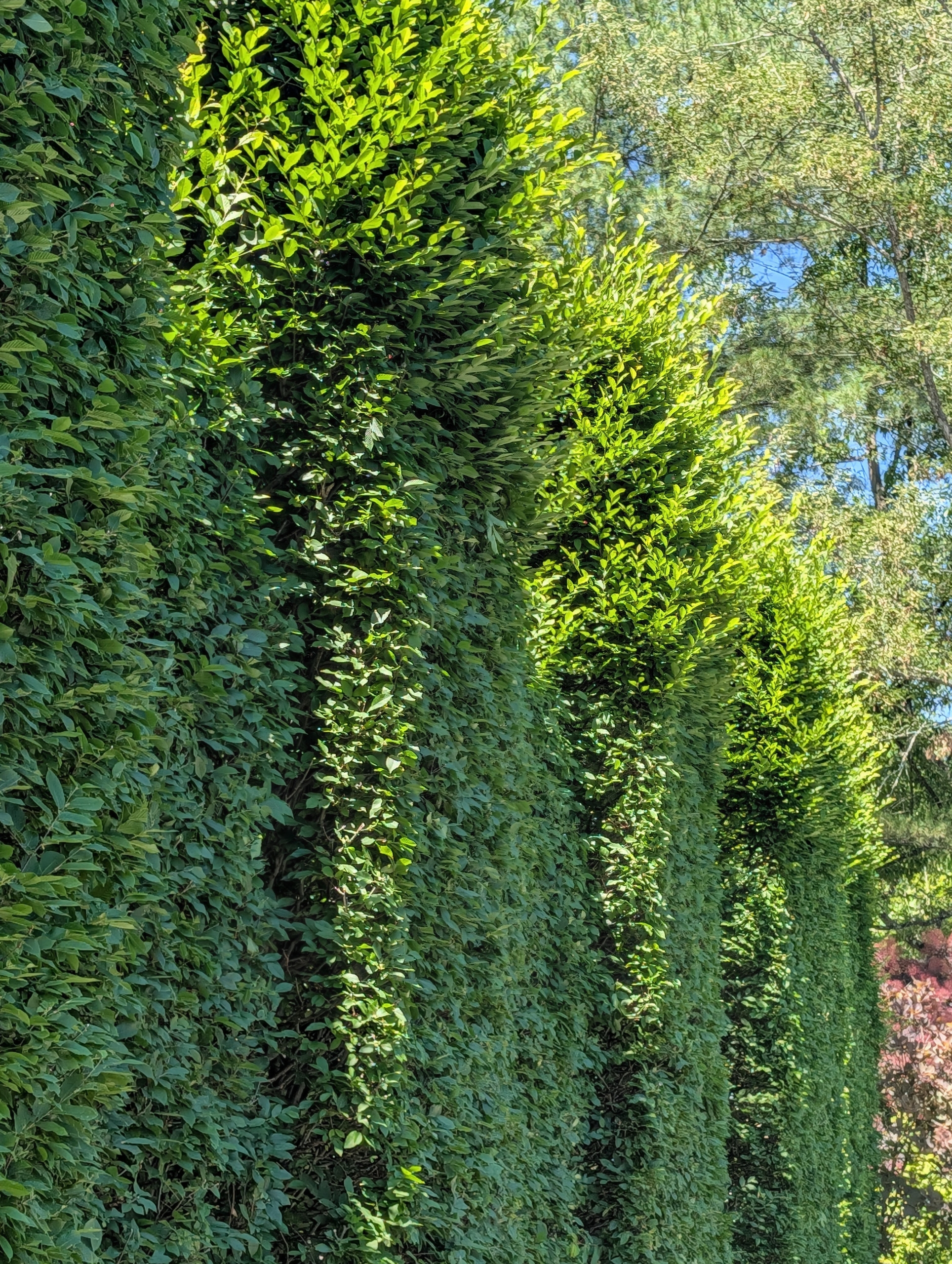
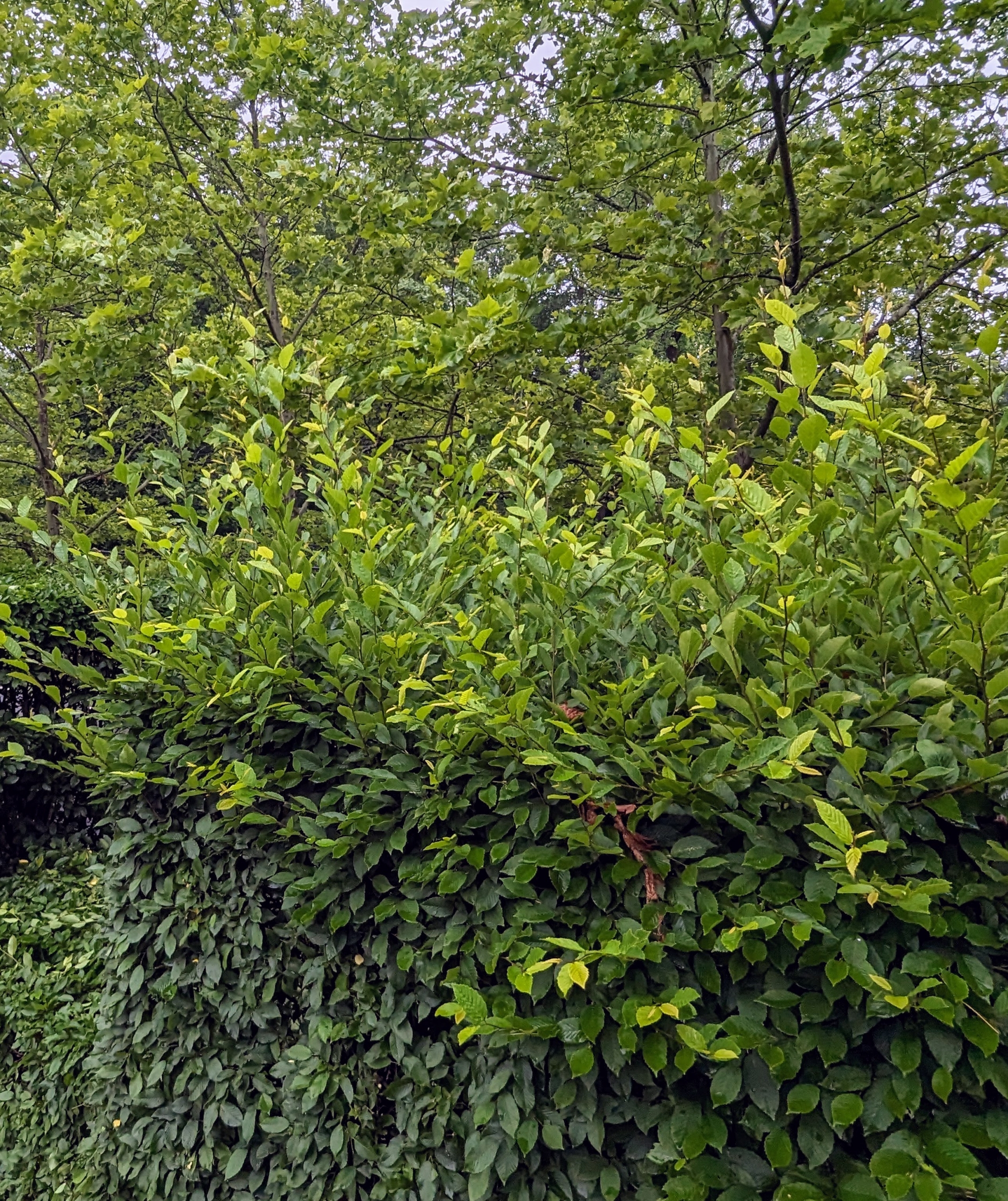
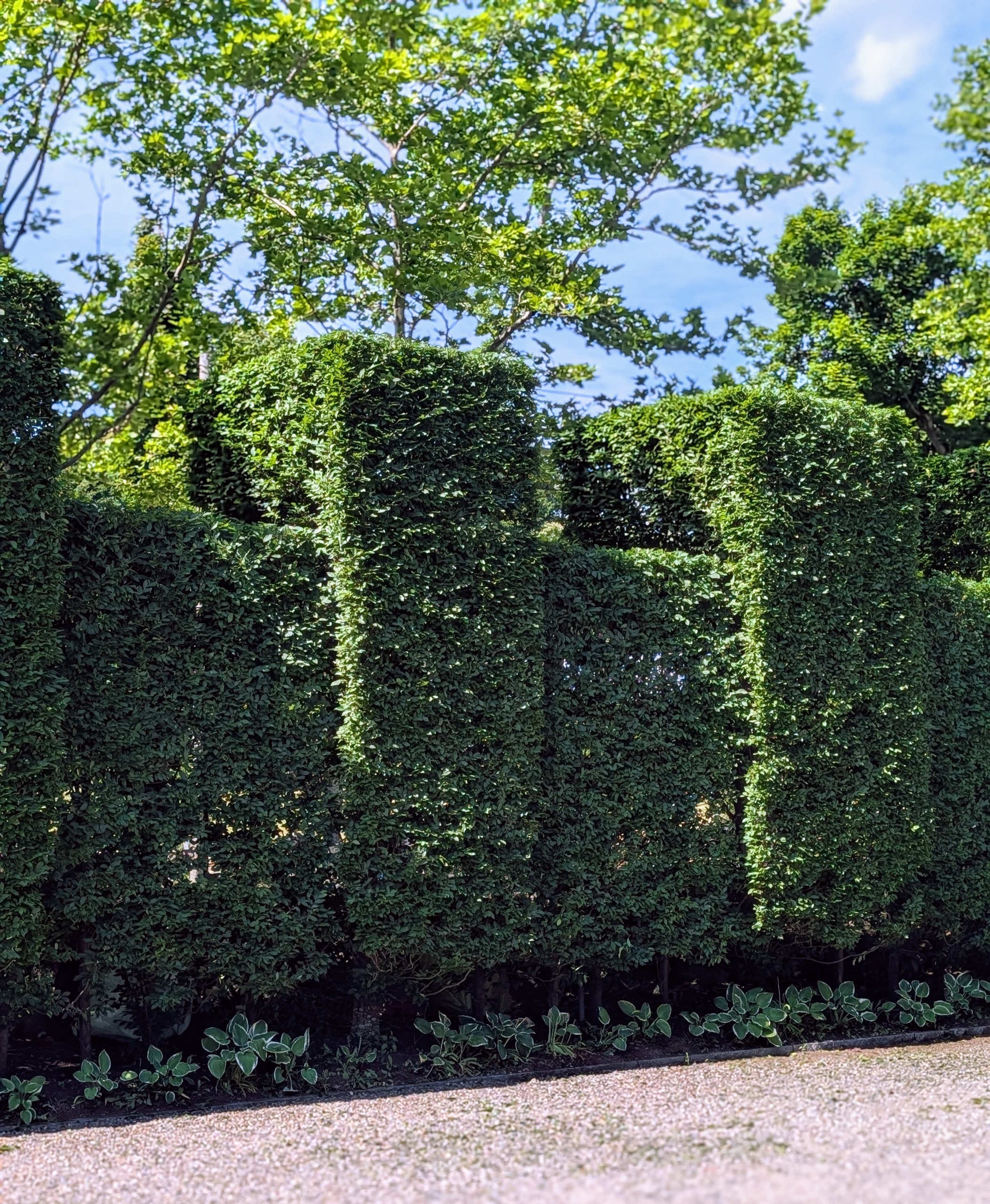
- This tall hornbeam hedge is quite pretty here, but serves primarily as a privacy and noise barrier from the road. Hornbeams grow very quickly, so it is important to trim and sculpt them regularly. Here, the top is just from the one’s year’s growth. The bottom half has already been trimmed.
-
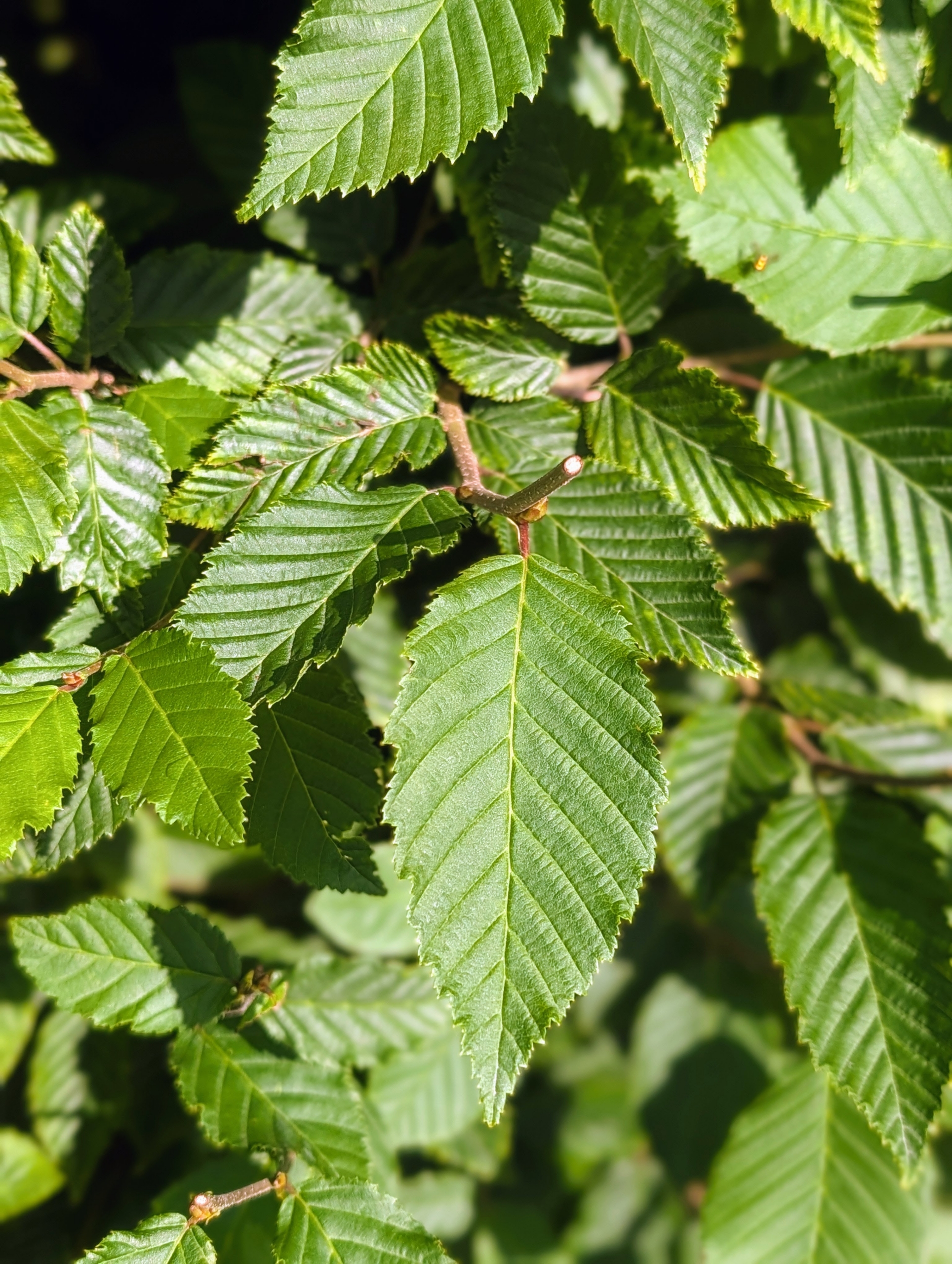
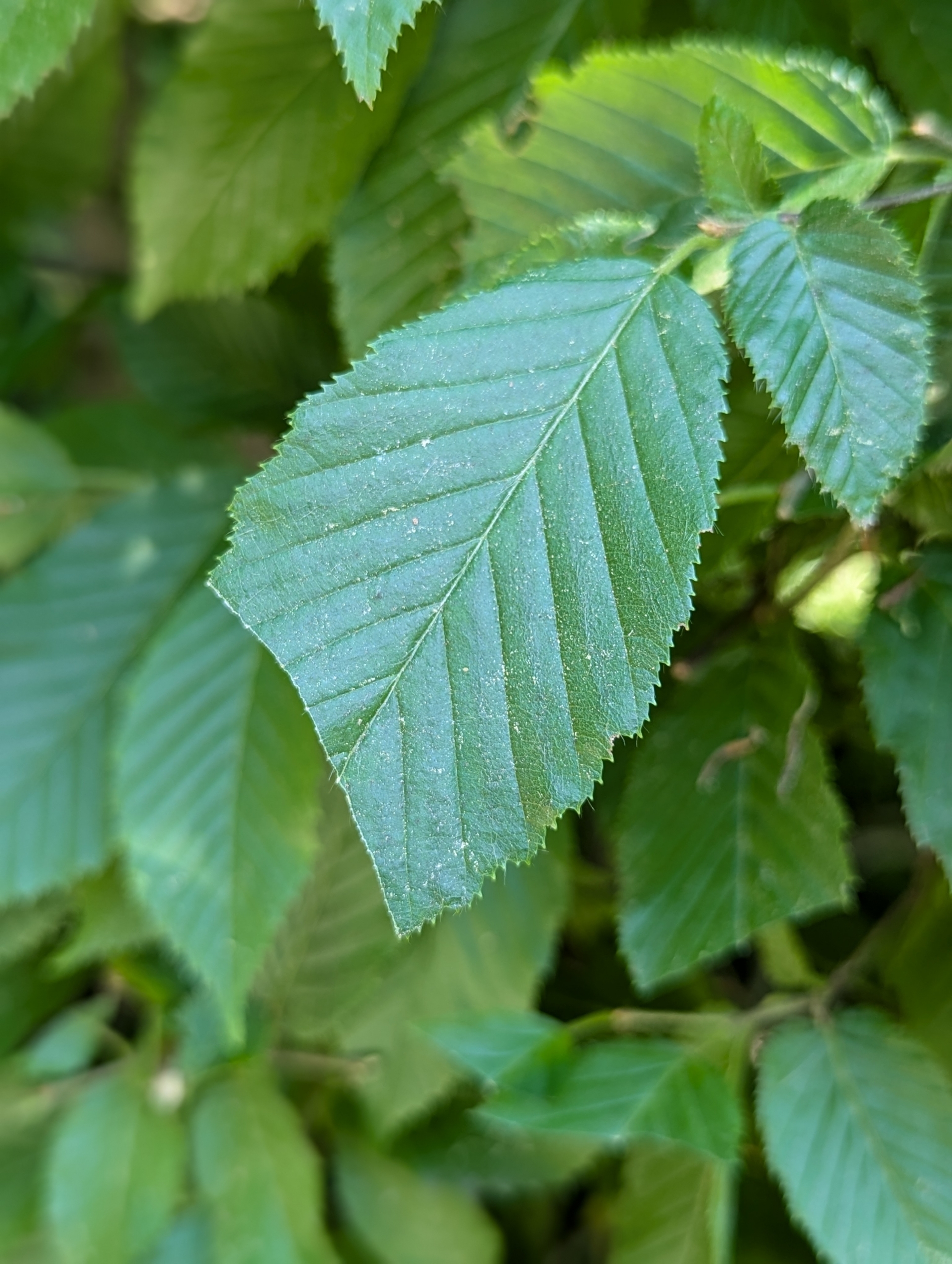
- The English hornbeam is related to the beech tree, with a similar leaf shape. On the hornbeam, the leaves are actually smaller and more deeply furrowed than beech leaves. They become golden yellow to orange before falling in autumn.
-
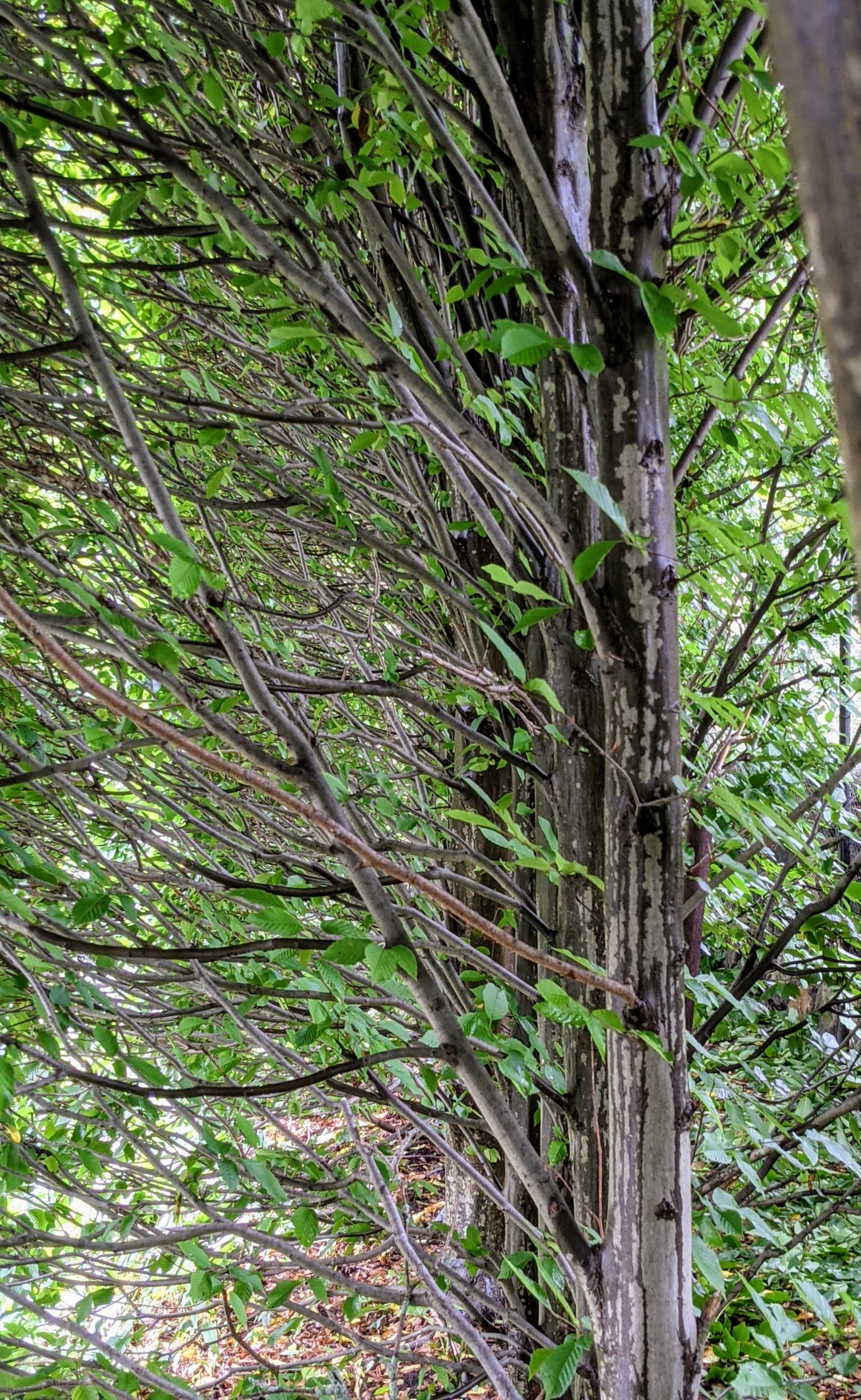
- Looking inside the hedge, the hornbeam has pale grey bark with vertical markings. The sturdy branches grow outward and slightly upward.
-
- Pasang Sherpa is my resident tree arborist. He is very skilled at pruning and grooming and enjoys working with the trees.

-
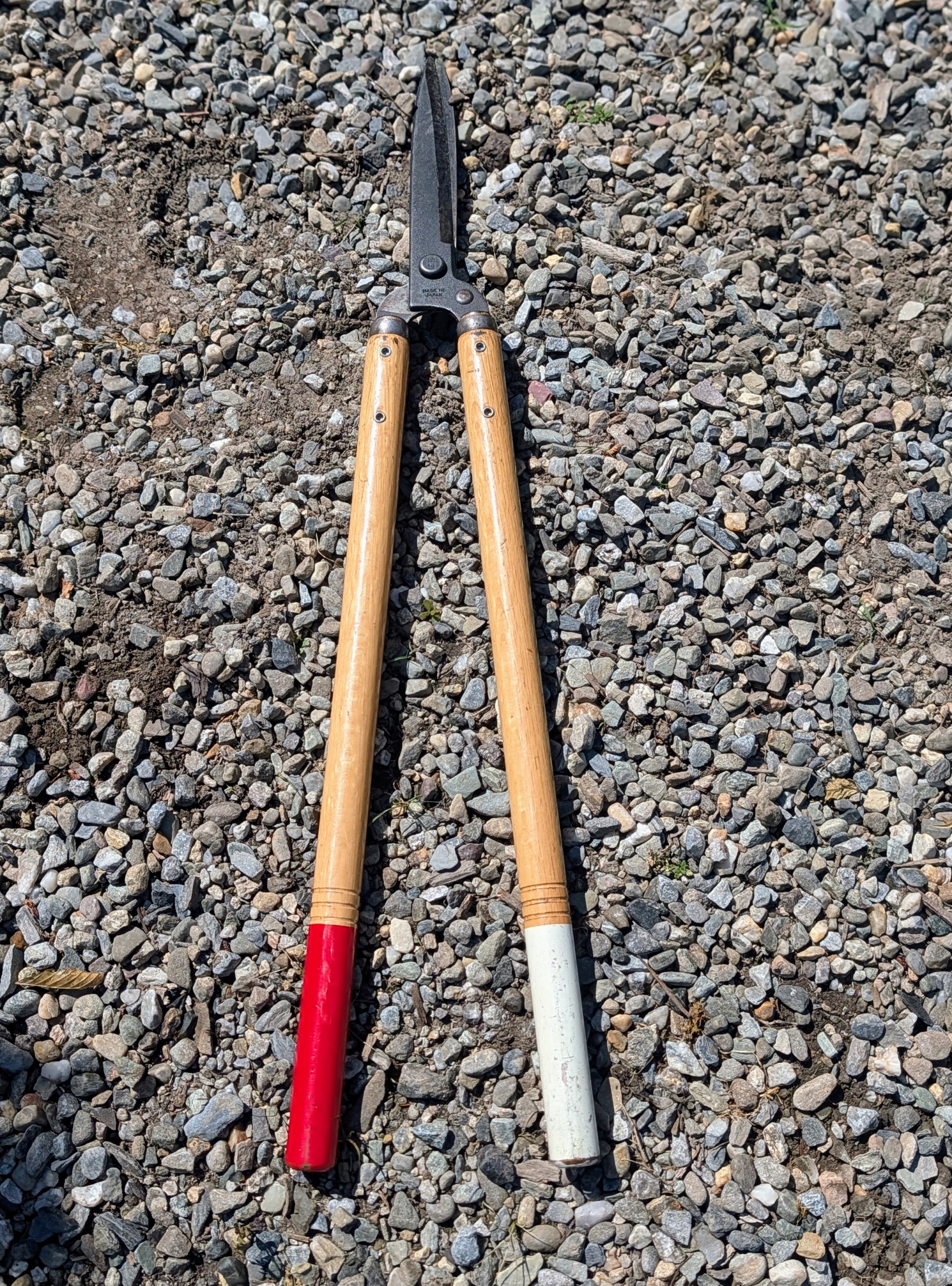
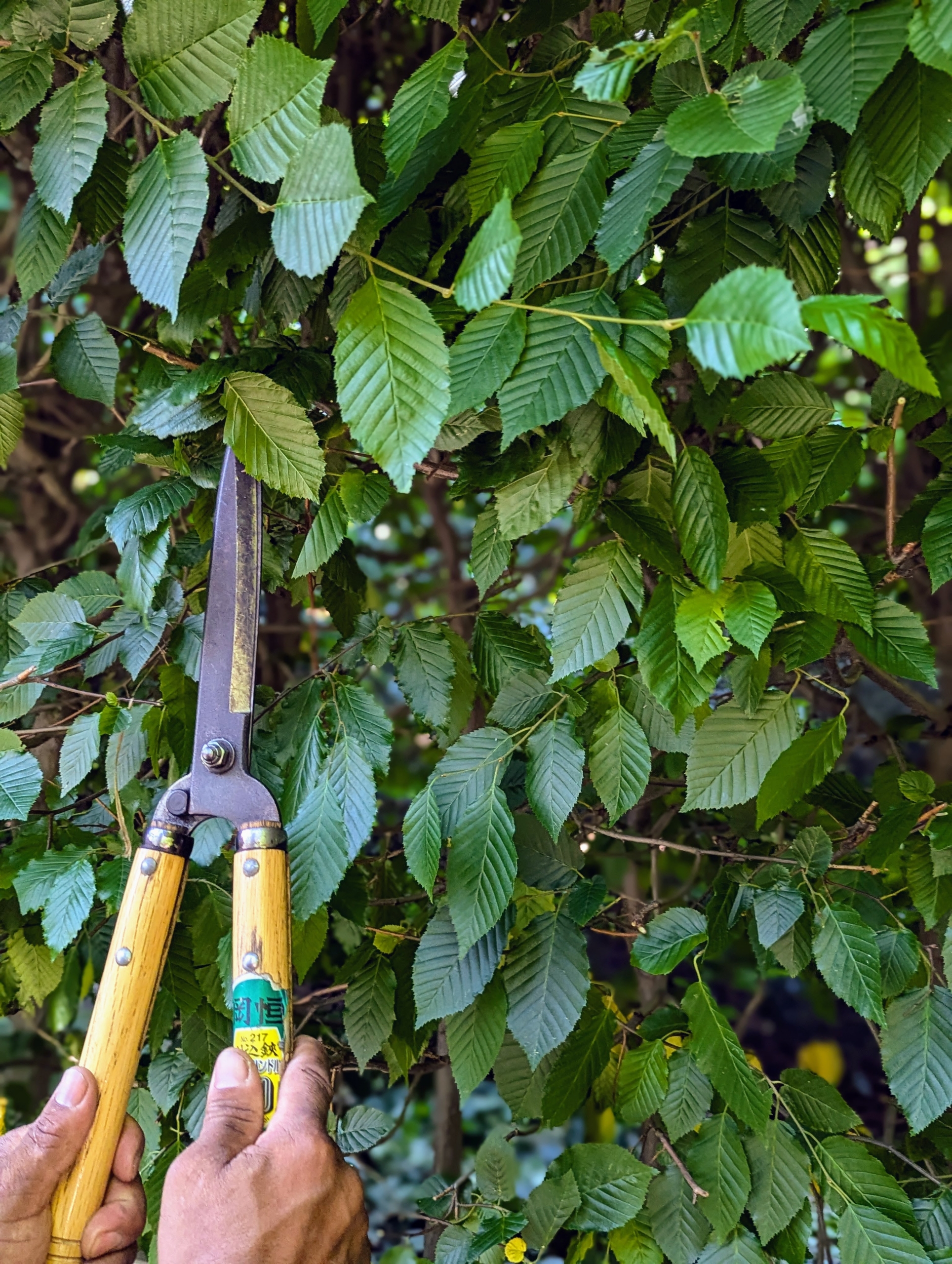
- Most of the pruning is done by hand. Everyone uses Japanese Okatsune shears specially made for trimming hedges. These shears are user friendly and come in a range of sizes. It is more time consuming to trim these hedges this way, but it is also more exact.
-
- I prefer hand trimming because the cuts are very clean and smooth.
-
- The front face sections are done first. We use a traditional English style of pruning, which includes a lot of straight, clean edges. A well-manicured hedge can be stunning in any garden but left unchecked, it could look unruly.
-
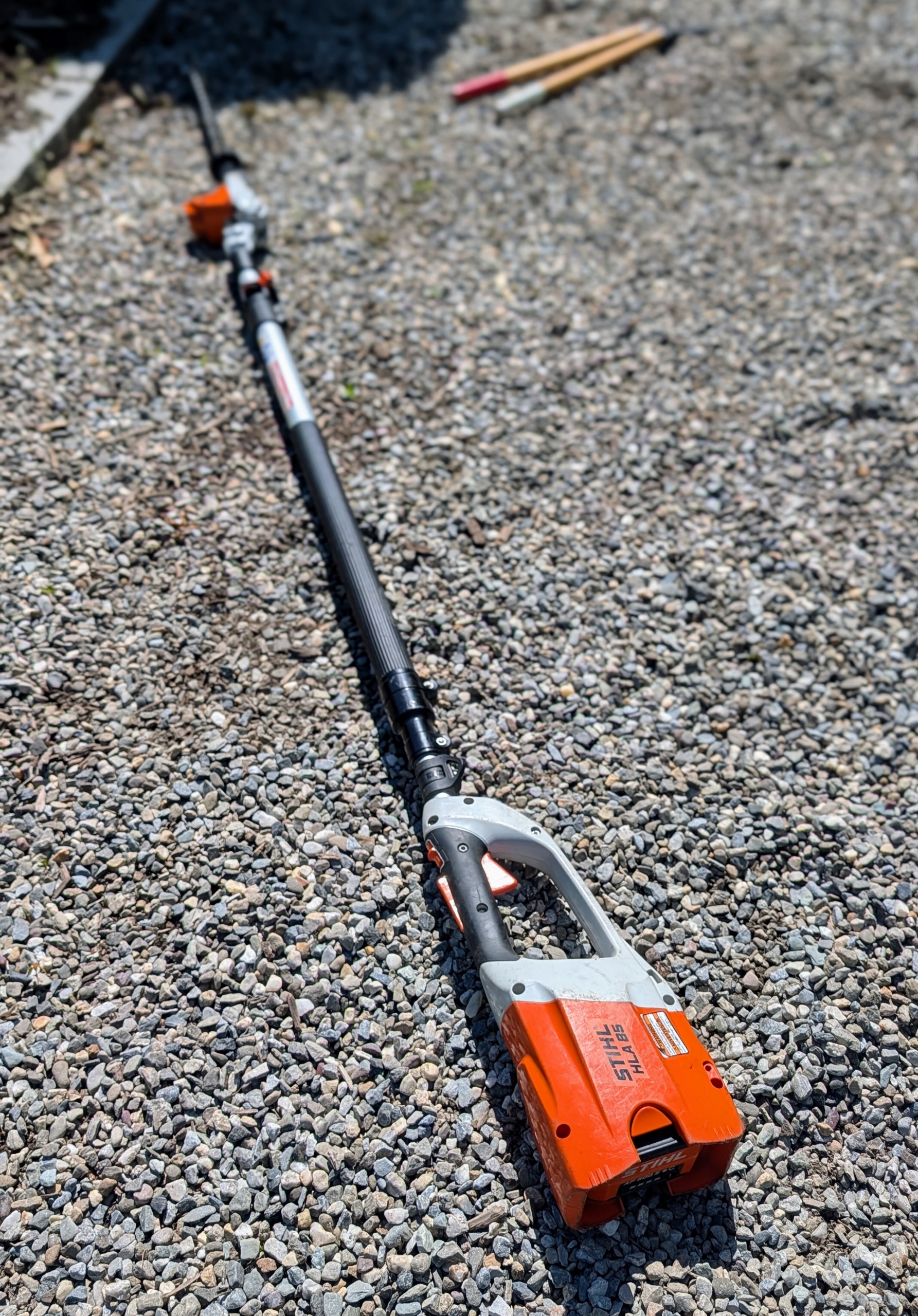
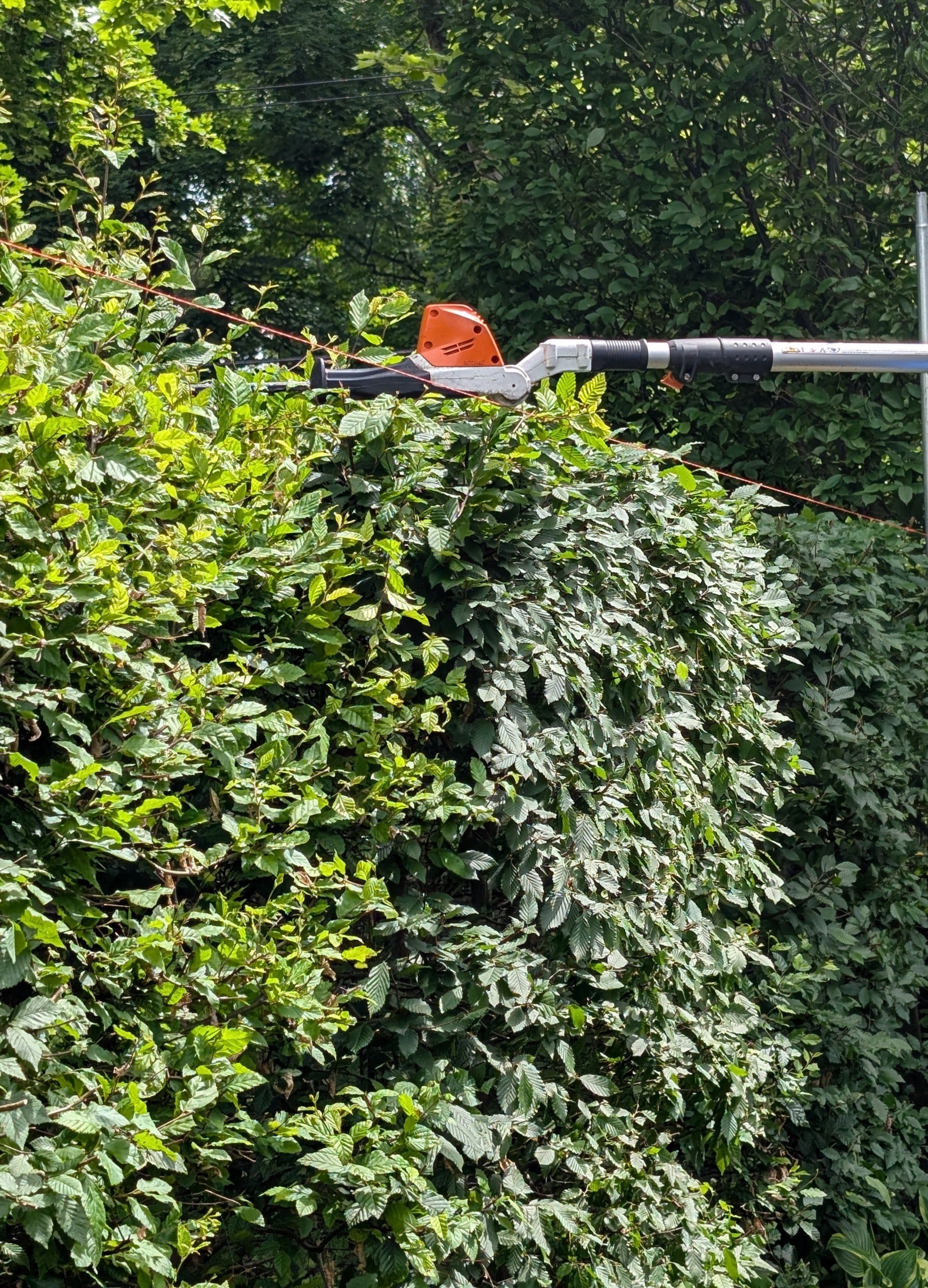
- For the hedge tops, we use the STIHL HLA 85 battery powered extended hedge trimmer. It’s light, easy to maneuver and cuts extremely well.
-
- To keep the hedges straight on top, I instruct everyone to use landscaper’s twine to create a guide. It’s an easy way to make sure everything is cut properly. This nearby hedge is younger, but also growing very nicely and fast.
-
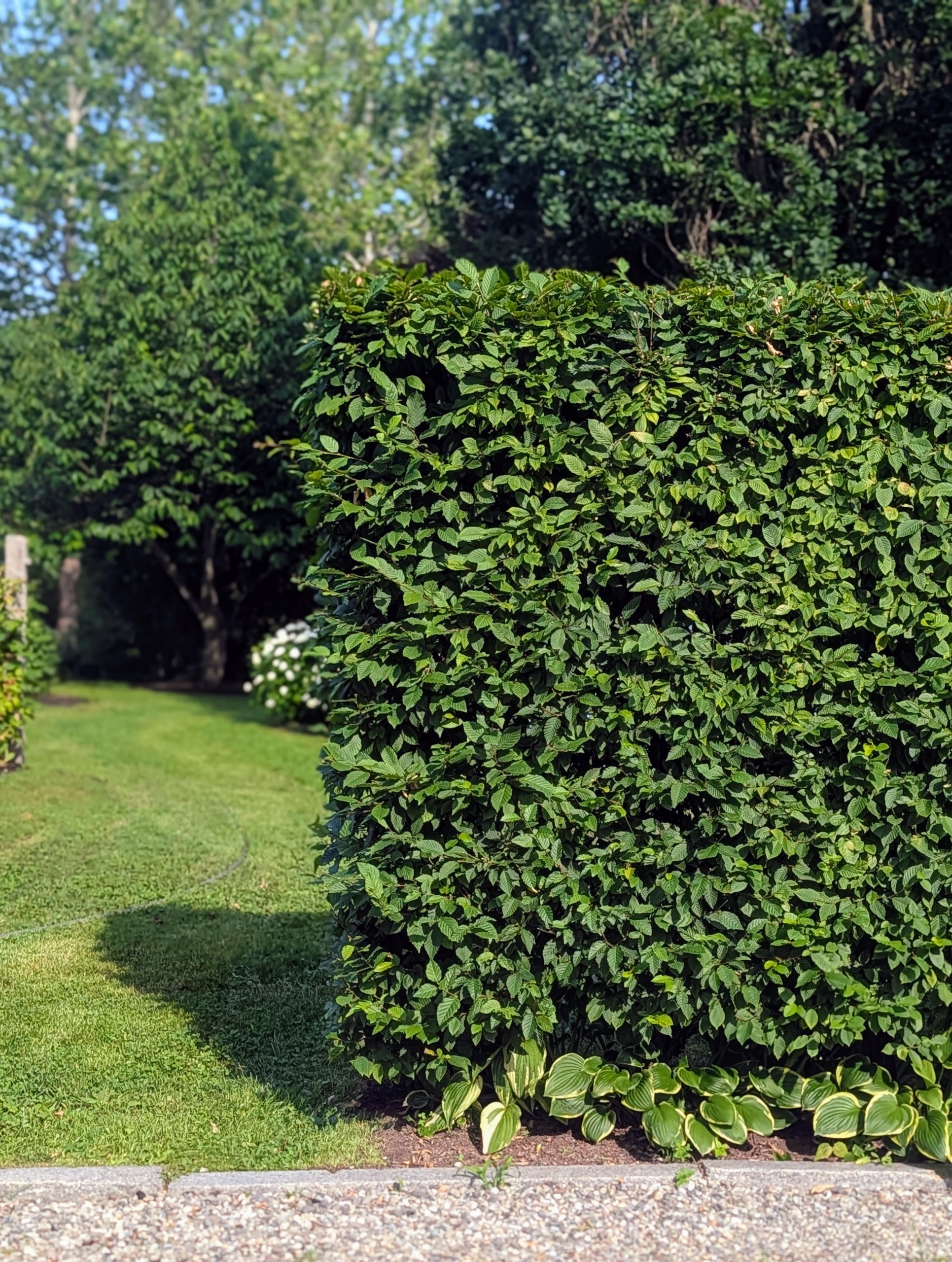
- Here is the same section after trimming.
-
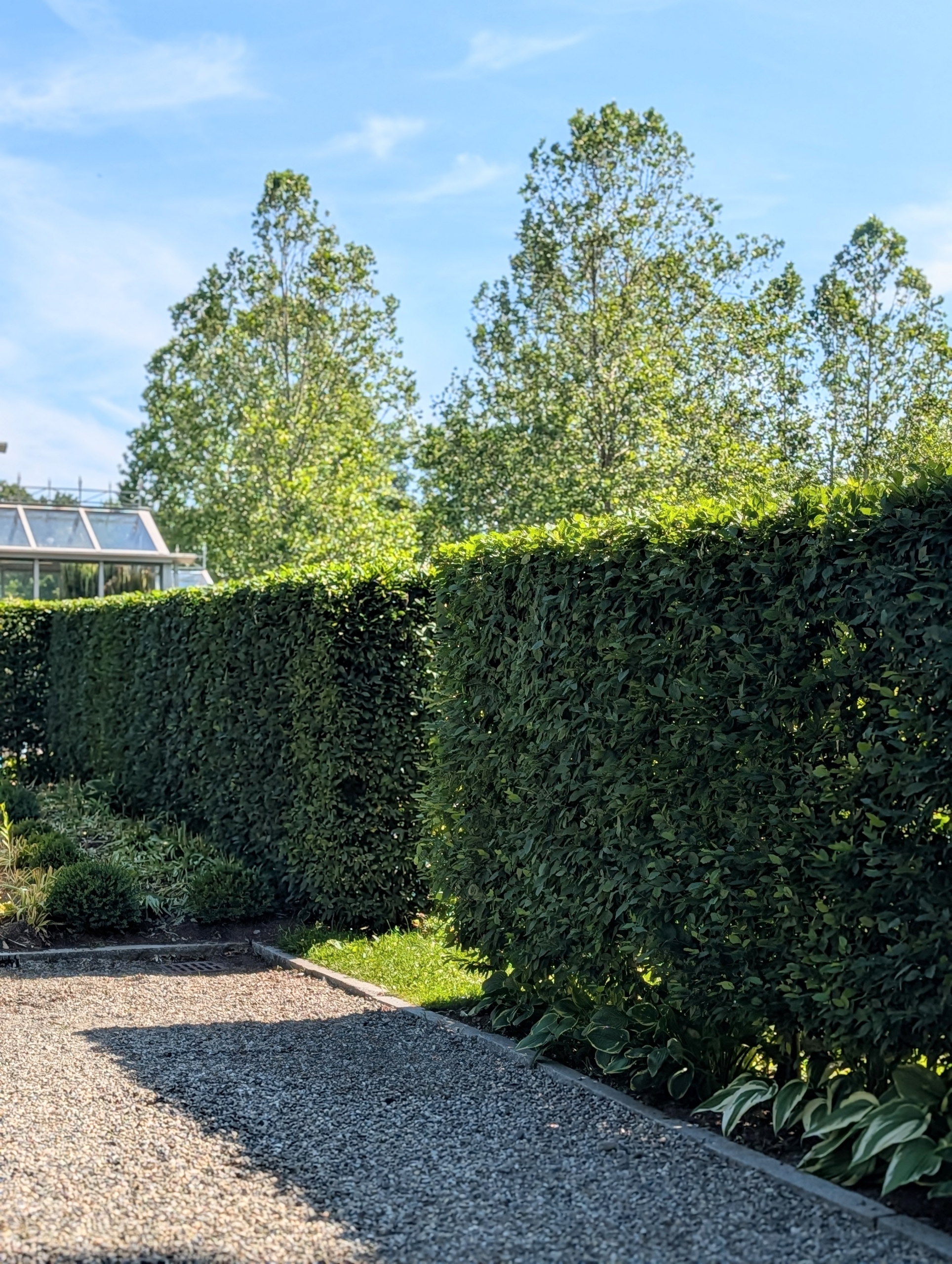
- This entire side is straight and lush. My garden plantings do so well in part because of the excellent soil, which I feed and amend consistently through the year.
-
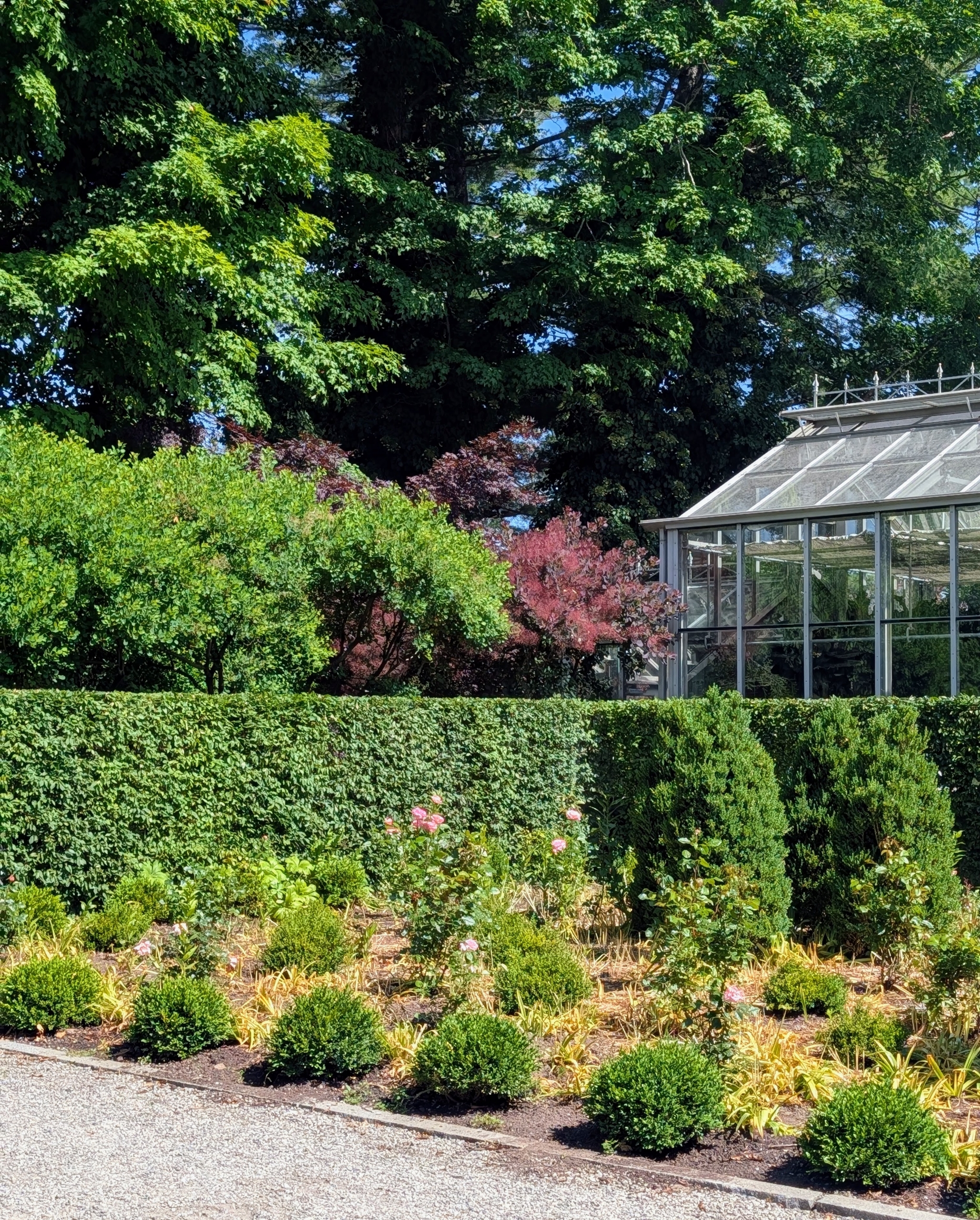
- The opposite side of the garden beds is also pruned so nicely and so straight.
-
- The tops of the taller hornbeams are accessed by our trusted Hi-Low.
-
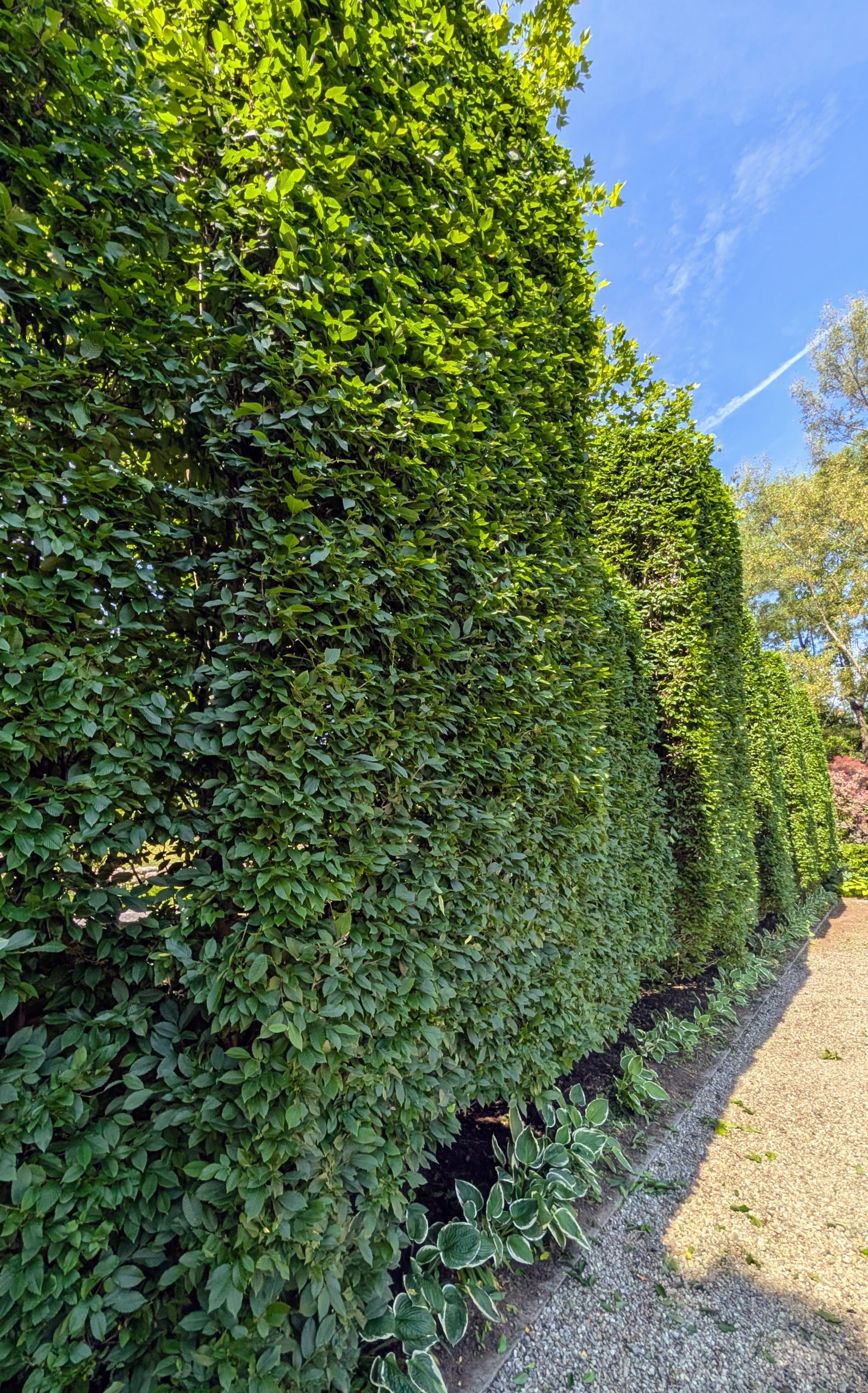
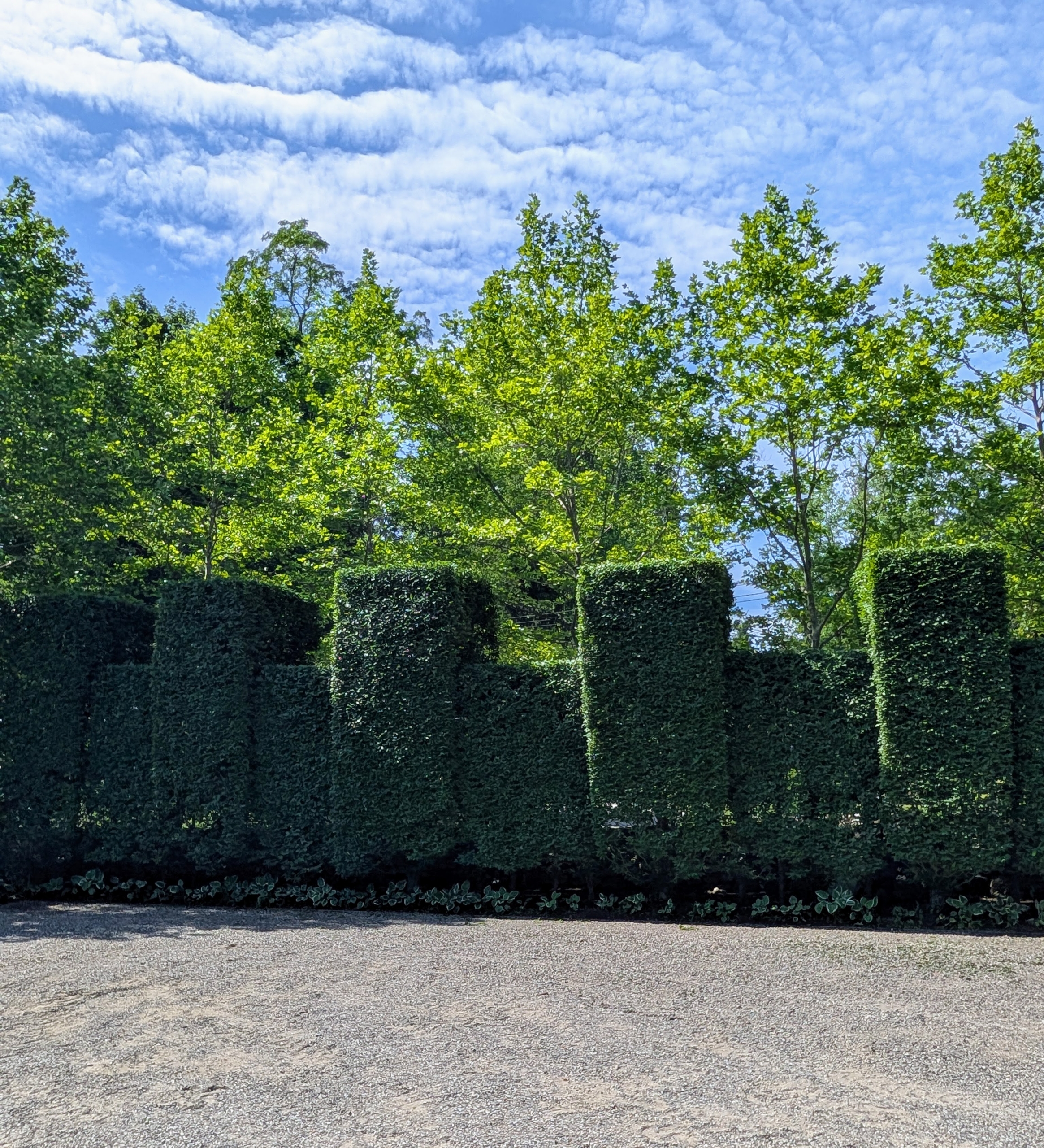
- And here is a side view of the big hedge showing how the front is sculpted with the taller sections protruding just a bit.
-
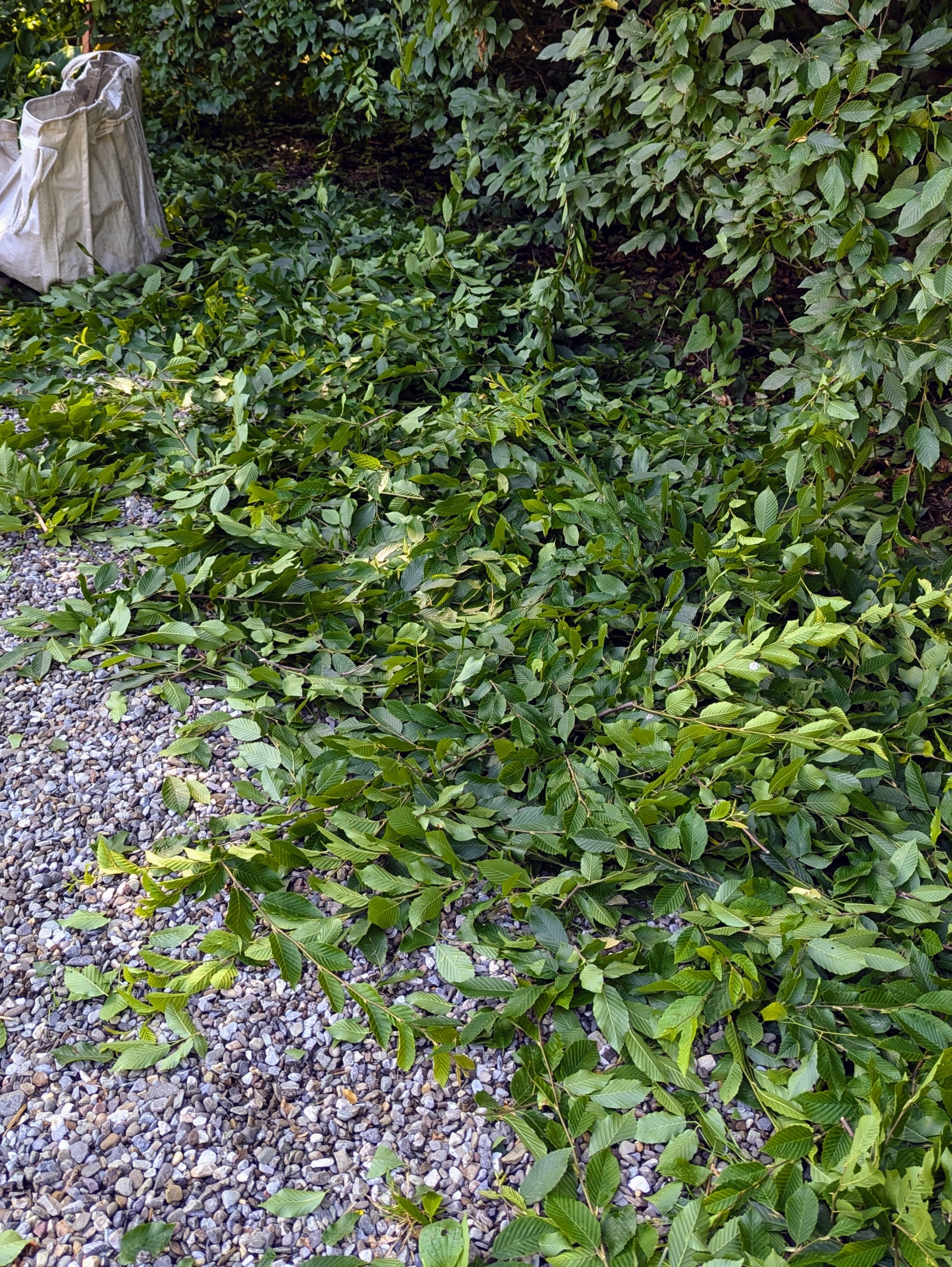
- Down below – all the cut leaves. These are raked up as they work, so cleanup is easier at the very end.
-
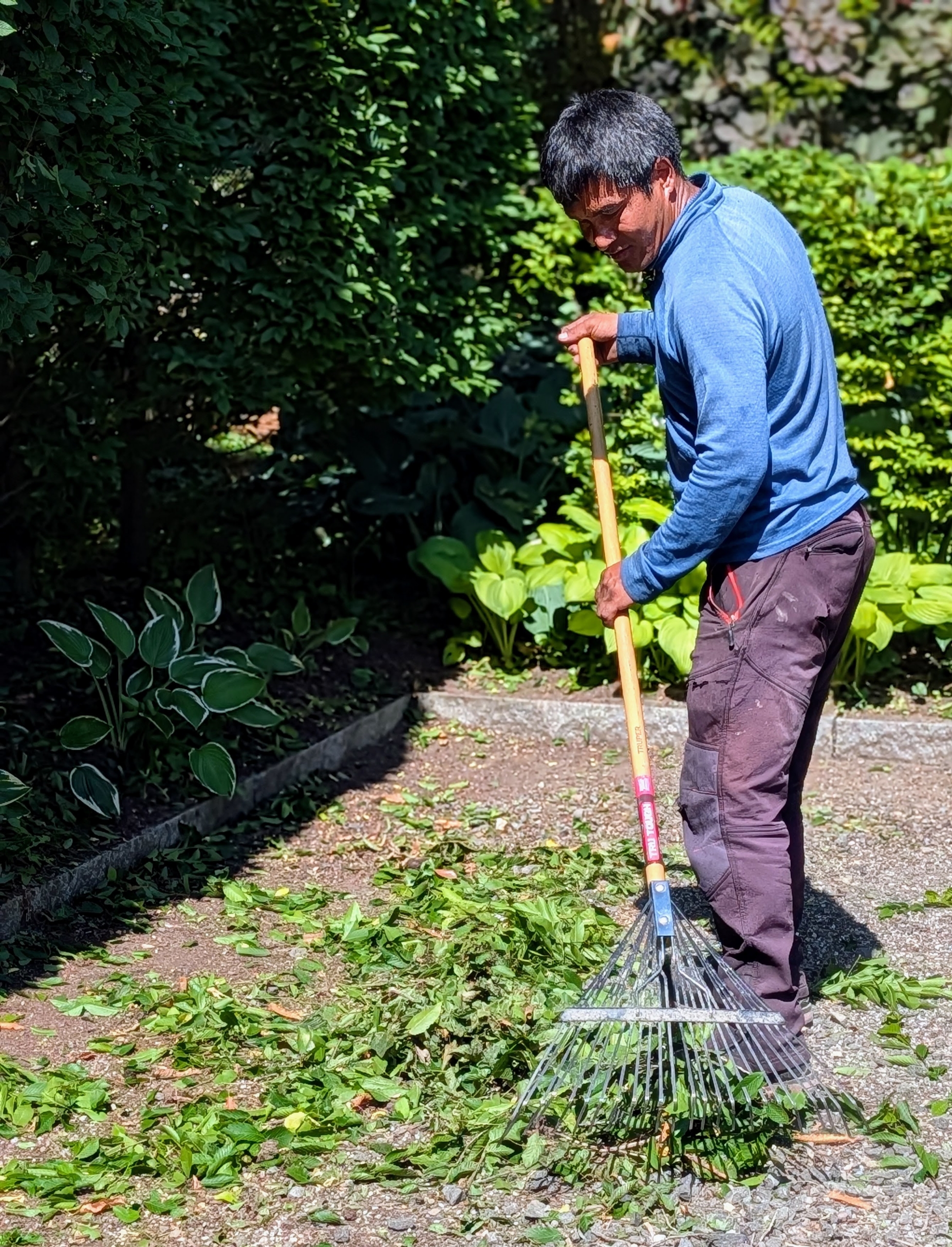
- Here’s Pasang keeping up with all the pruning cleanup.
-
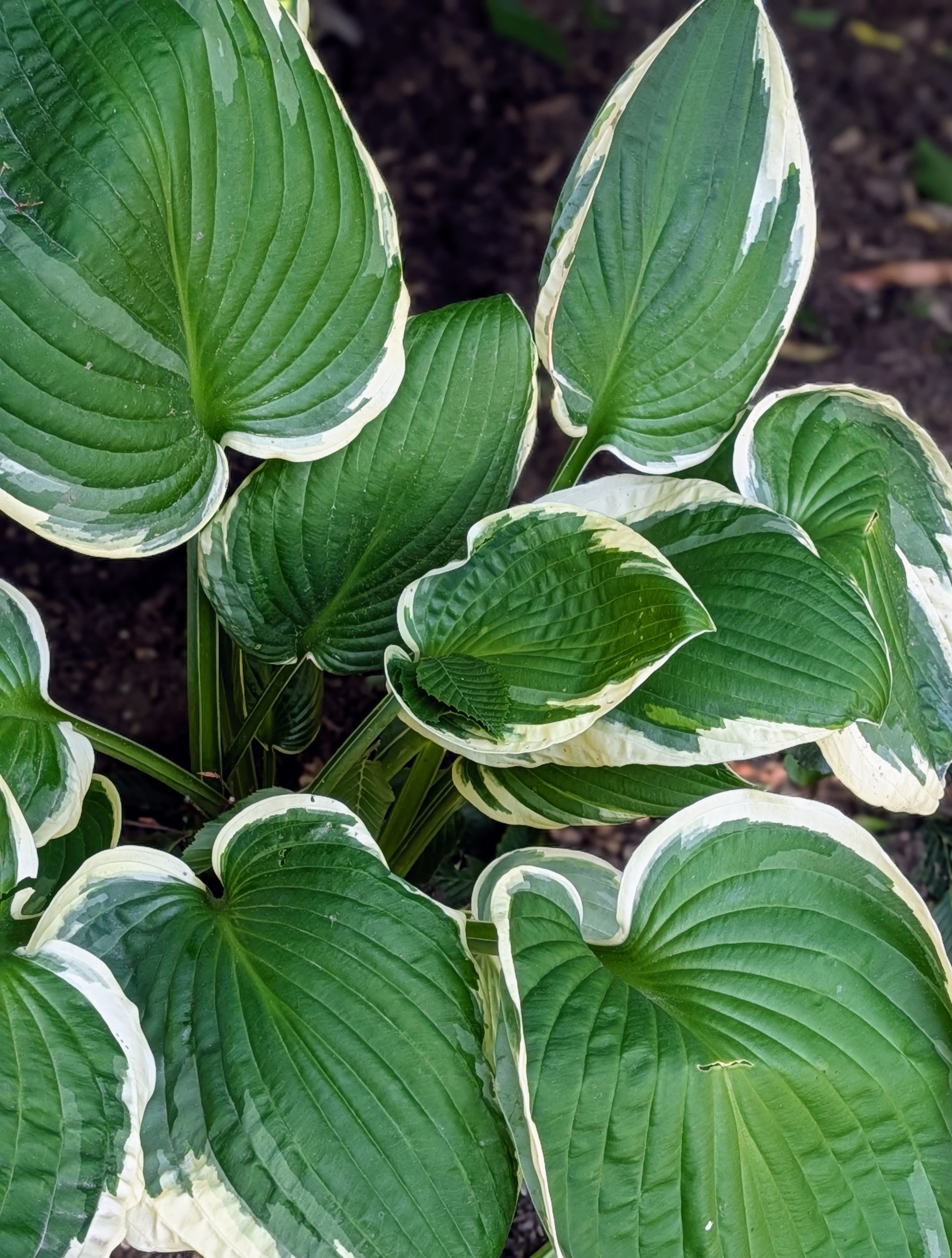
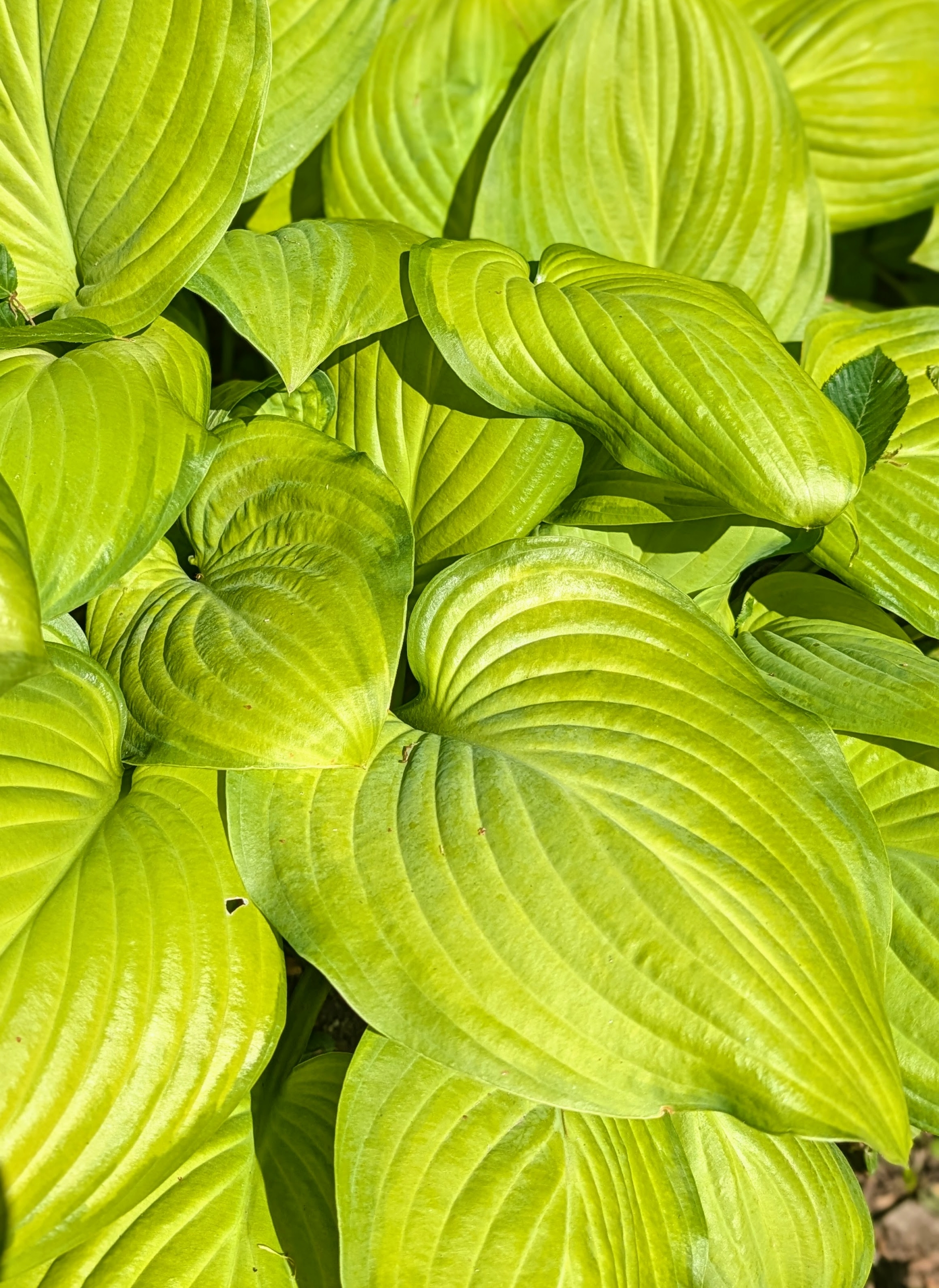
- Under the hedges are hostas. Hostas thrive best in partial shade and this area is perfect.
-
- Hosta is a genus of plants commonly known as hostas, plantain lilies, and occasionally by the Japanese name, giboshi. Hostas display a rich palette of foliage colors, including green, blue, gold, yellow, white-centered, and variegated patterns, with subtle variations.
-
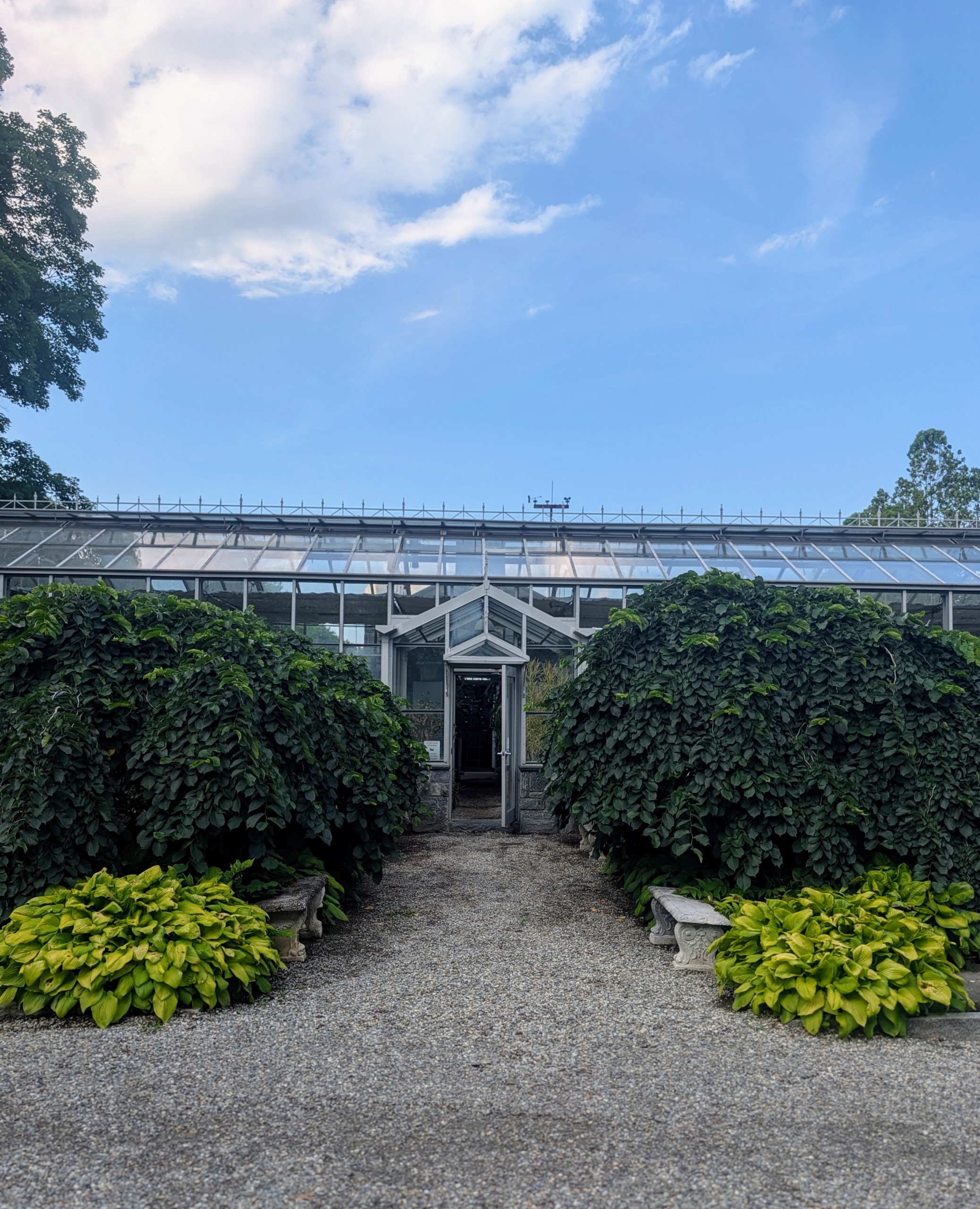
- Just across the gravel covered parking area is my glass greenhouse. Flanking the doorway are Camperdown Elm trees. These Camperdown elms, Ulmus glabra ‘Camperdownii,’ are weeping cultivars of the wych elm and loved for the fountain‑like, umbrella‑shaped canopy and twisted, drooping branches.
-
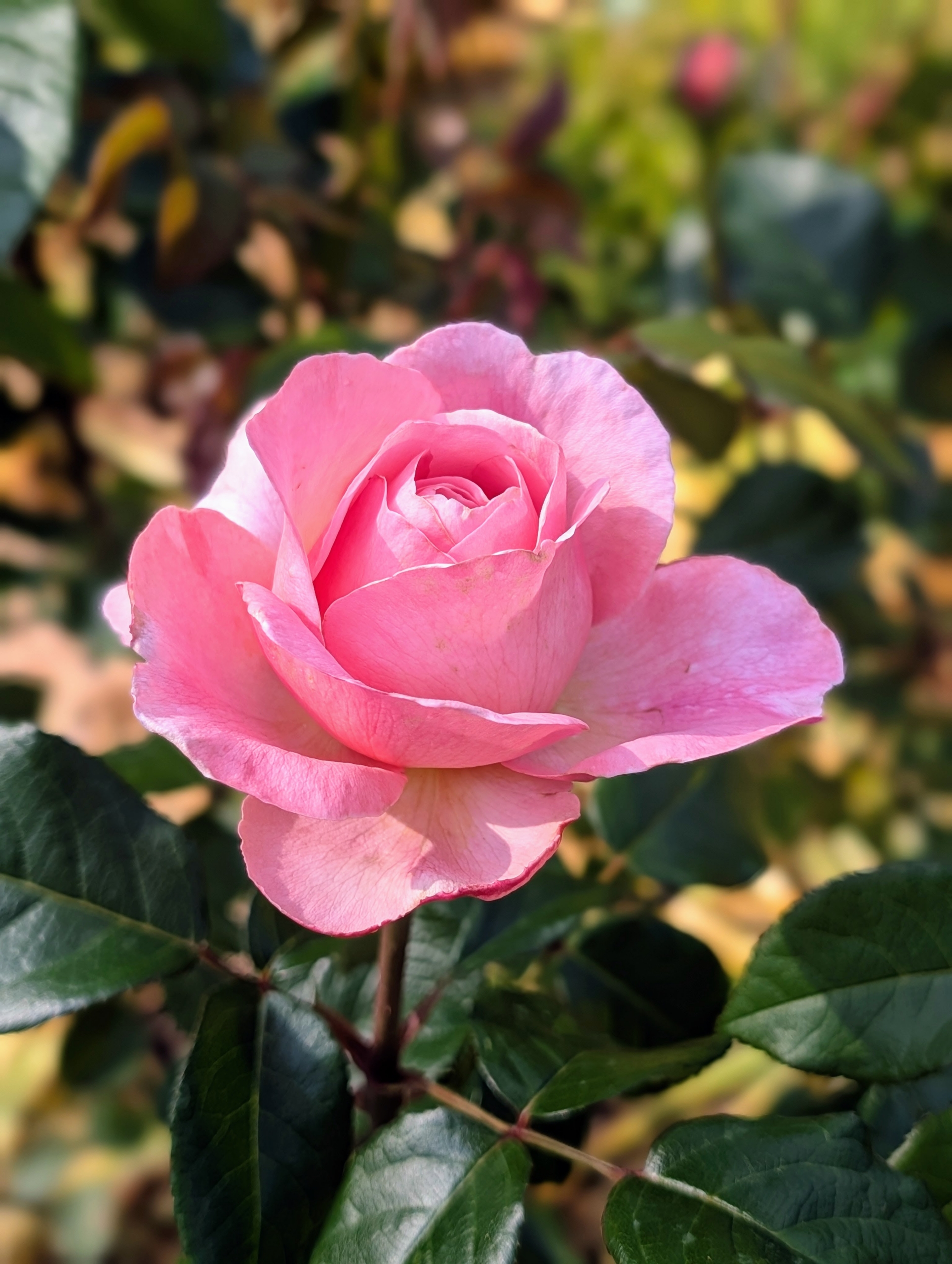
- All the green foliage is accented by formal gardens filled with rows of my Martha Stewart hybrid tea rose. My rose has large pink blooms, dark green foliage, and a most wonderful and sweet fragrance.
-
- After just a couple of days, the hornbeams are done and this year, they look spectacular – greener and fuller than ever before.
-
- Pruning and grooming all the hornbeams is a big task, but once they’re finished they look so terrific – thanks to my hardworking crew!
 Martha Pins


 Martha Tweets

