
Baby Quail, Baby Pheasants, and a Peachick
It’s always so much fun to watch the baby animals grow here on my farm. Right now, my youngest residents include baby quail, young pheasants, and a peachick hatched right under its watchful mother hen in the peafowl coop.
I’ve been raising poultry and other outdoor birds for many years. Of course, I love keeping chickens for their fresh, delicious eggs, but I also enjoy raising different kinds of birds and learning more about the many breeds and varieties. Most of my hatchlings begin life in carefully maintained incubators and brooders, where they stay warm and protected until they’re ready to move into the "nursery" coop, and then finally to the adult enclosures to join the rest of their flocks.
Here are some photos.
-

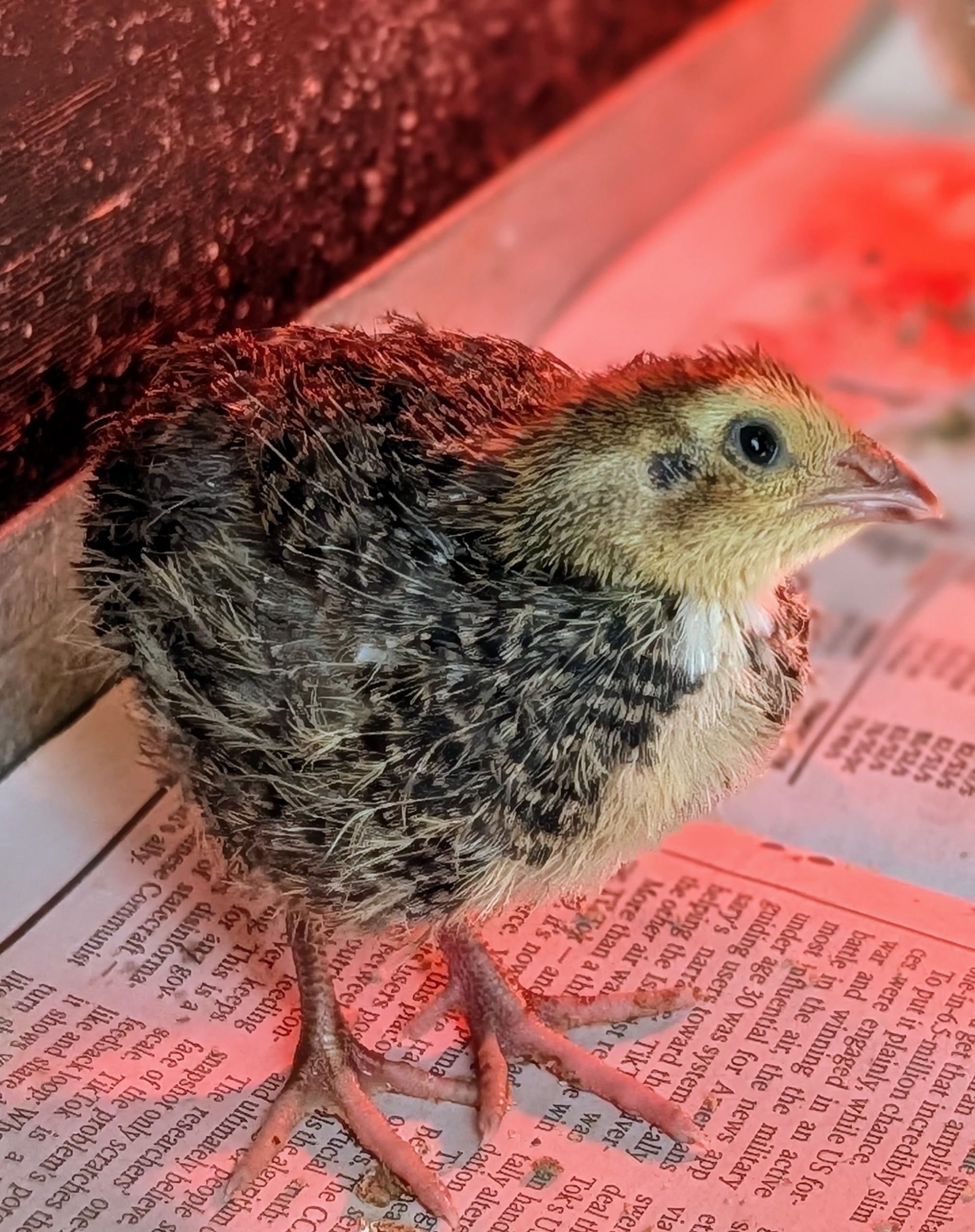
- Whenever we have baby birds here at the farm, my stable manager, Helen, who is very experienced in raising chickens, sets up the brooders with bedding, feeders, and proper heating elements in our stable feed room. This is one of more than a dozen quail chicks I brought home as eggs from a Swap Meet and Private Sale at the Gentlemen’s Farm. This chick is already very alert and curious.
-
- These quail chicks, and other baby fowl, do best in temperatures around 80 to 85-degrees Fahrenheit. Baby birds need constant monitoring until they are at least four or five weeks old. Here they are checked several times a day. This room is also free from drafts.
-
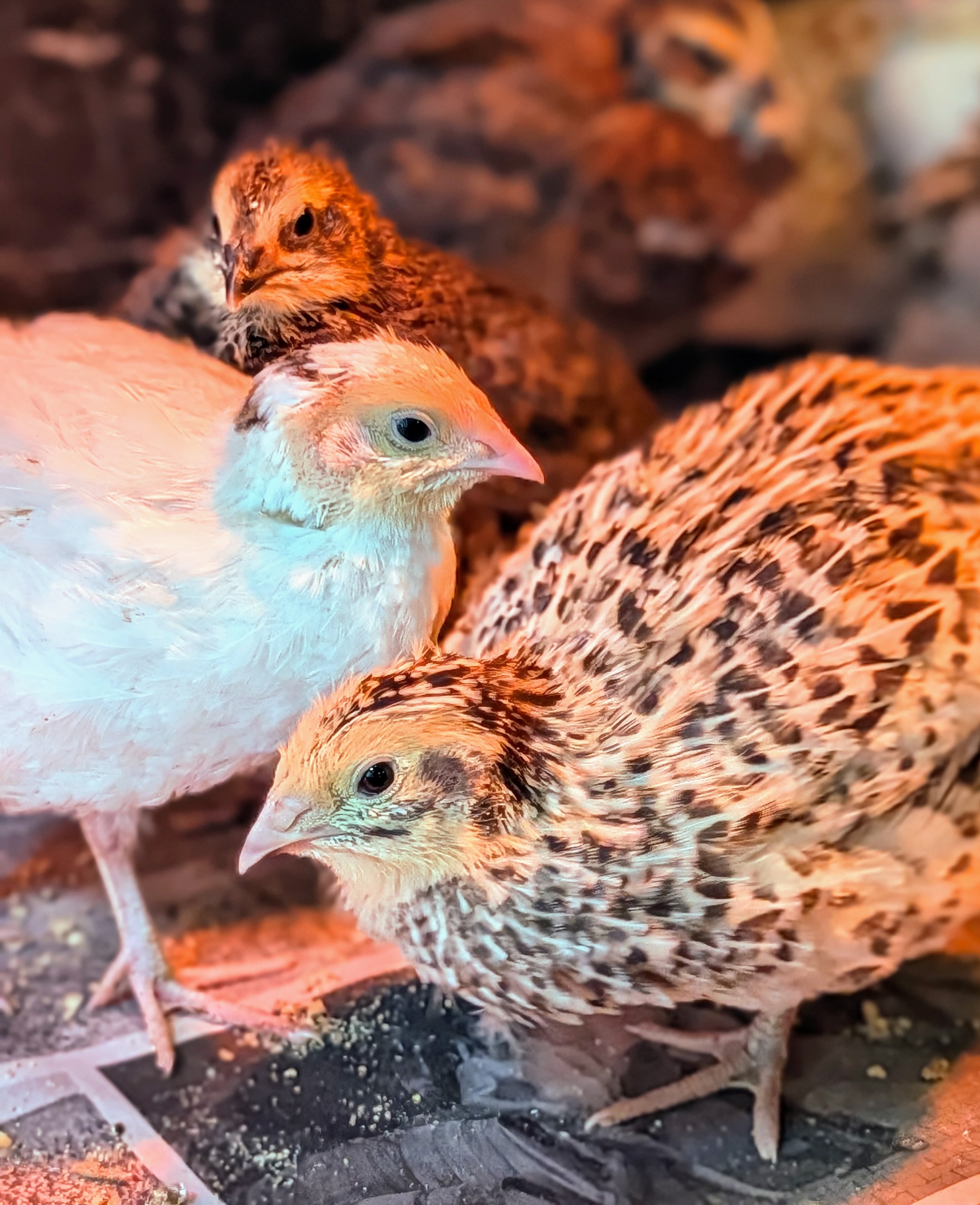
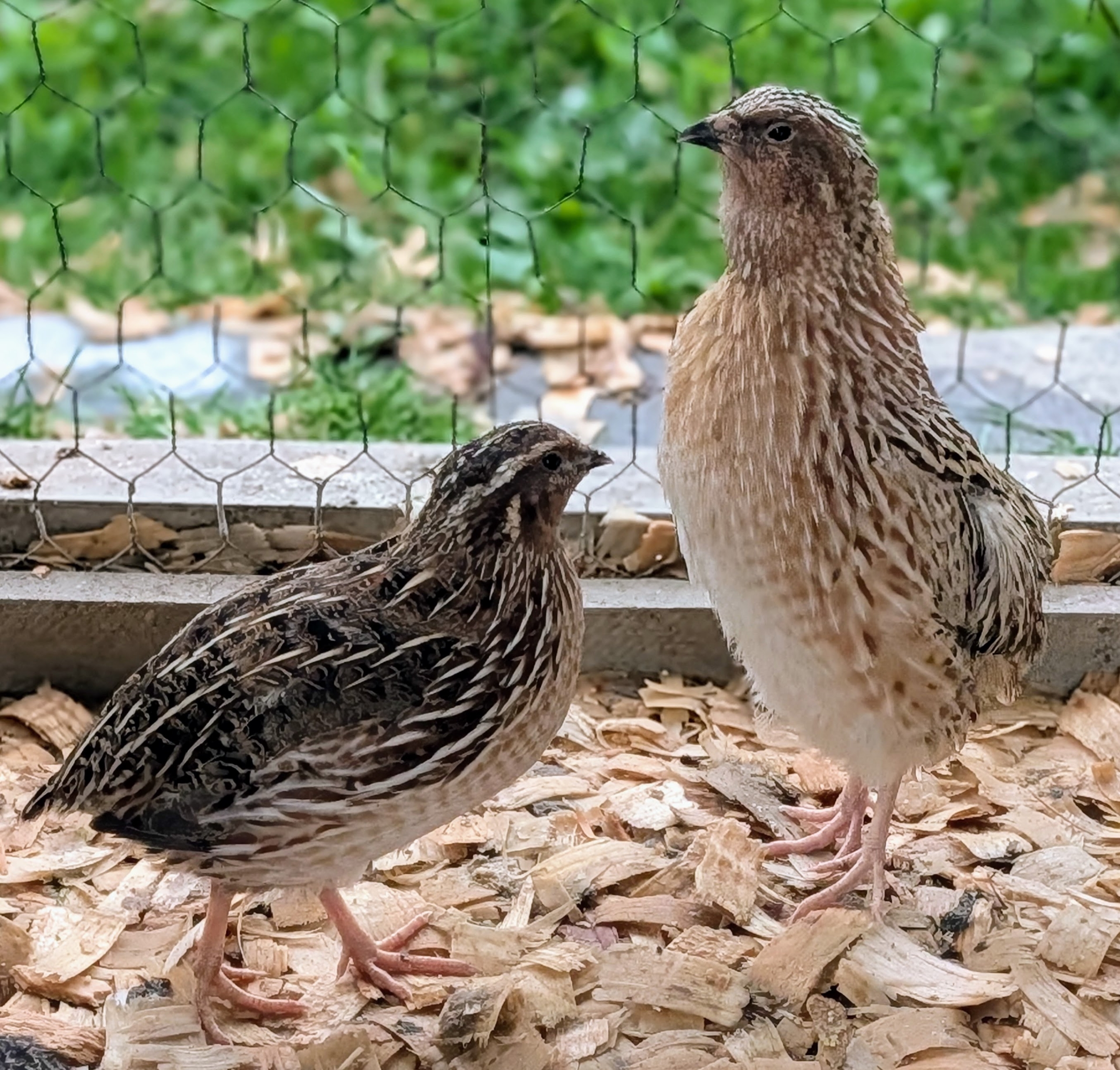
- Quail are relatively small, growing up to only eight to 10 inches in length. But they grow fast and can move out of this cage after only a few weeks.
-
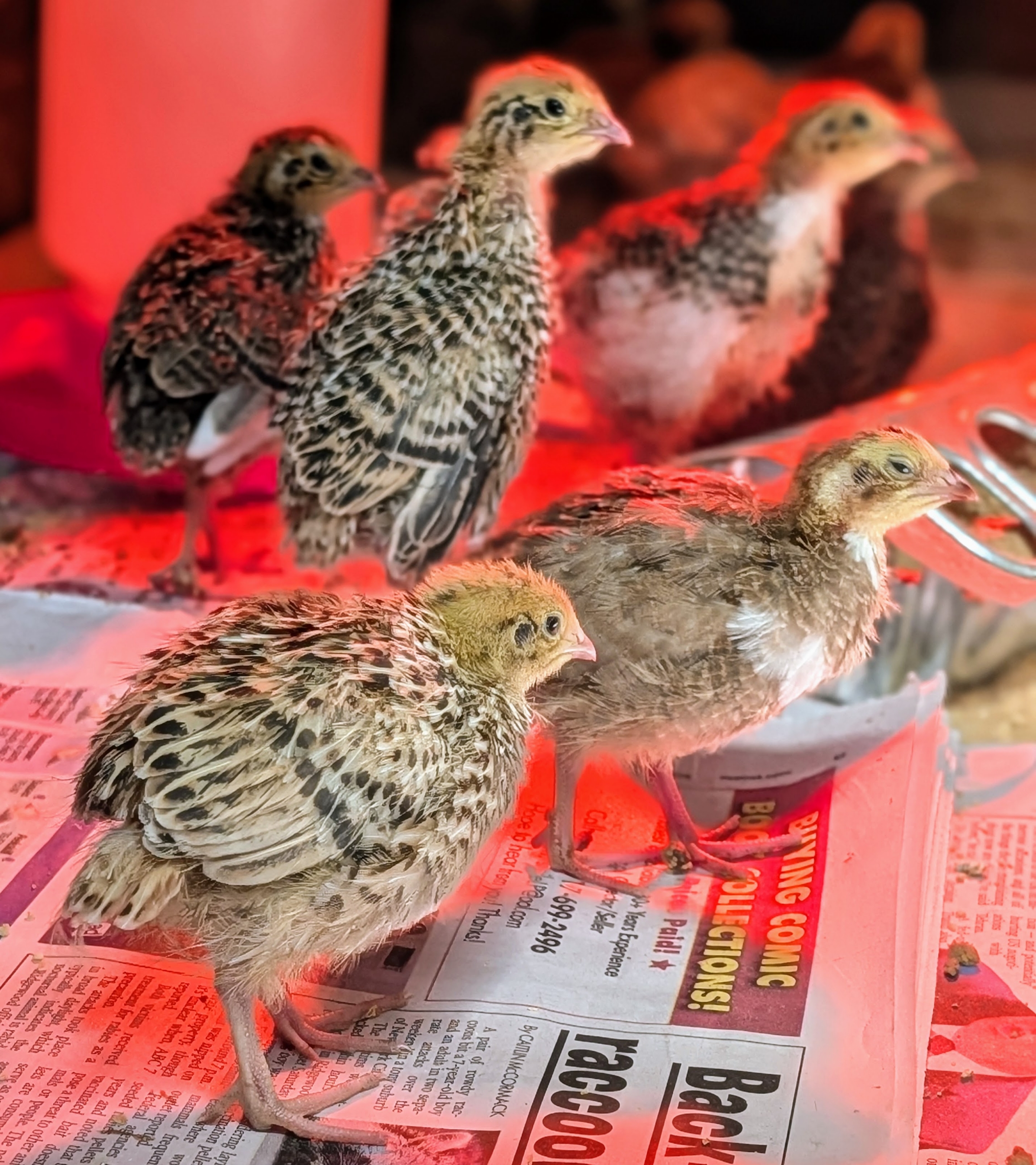
- Once big enough, the quail chicks are moved to this “nursery” coop where they have more room to roam.
-
- Because they are small, quail chicks don’t need large enclosures or extensive feeding areas. And in terms of food, quail chicks are omnivores and do well on a balanced diet that includes commercial pellets, fruits, and vegetables.
-
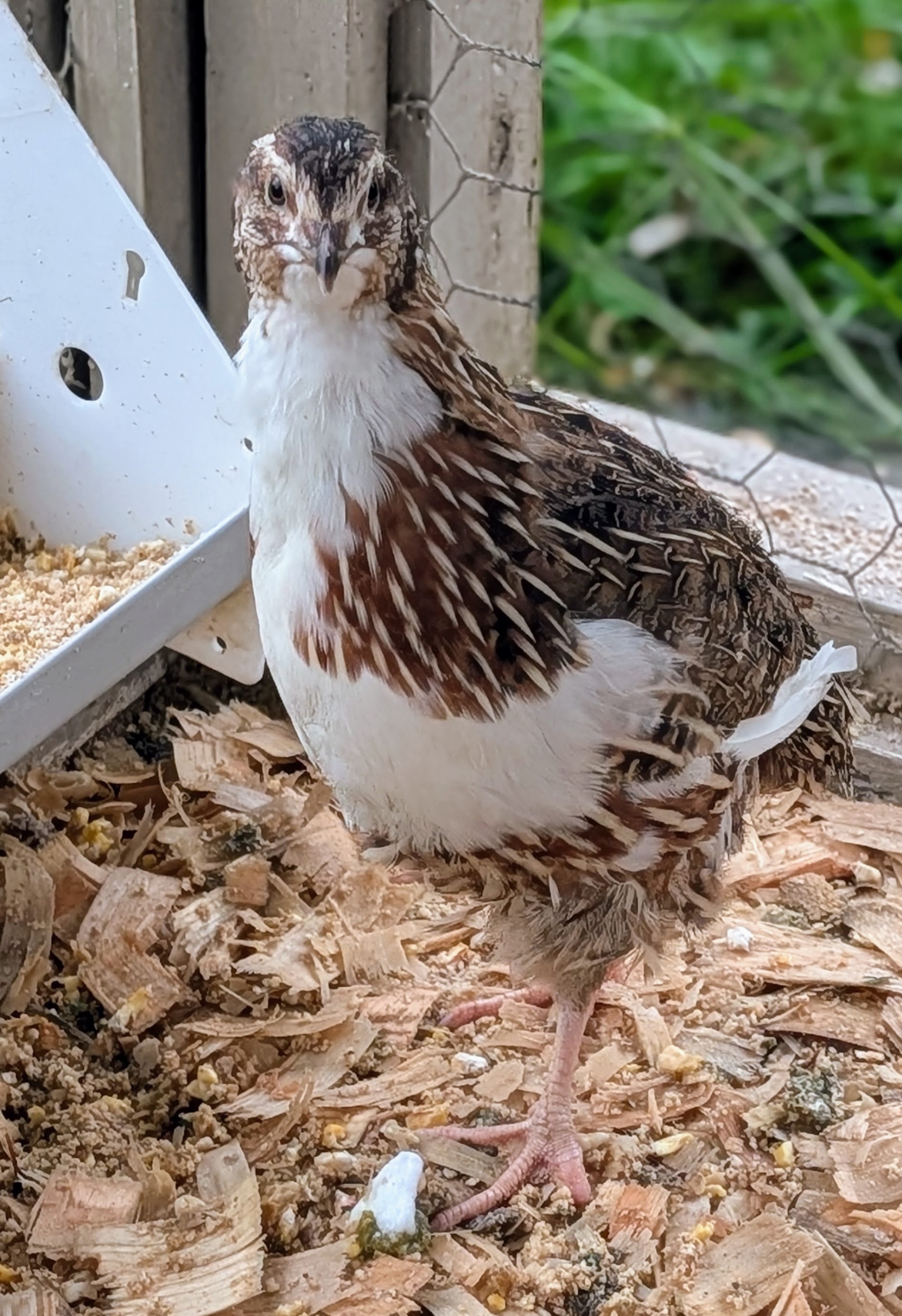
- Quail communicate with each other using a variety of whistles, chirps, and clucks. This young quail is quite vocal.
-
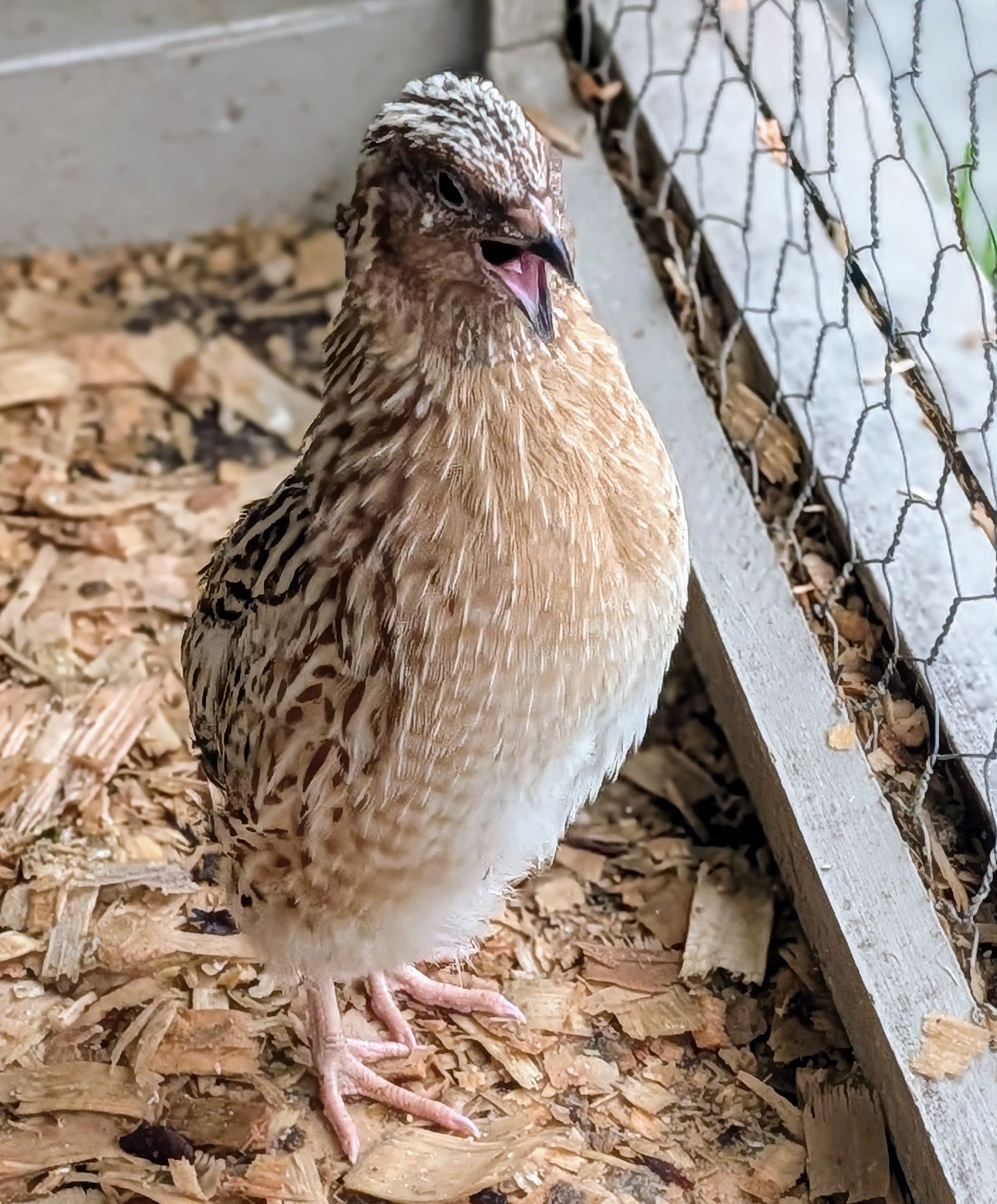
- Most of these birds are Celadon quail – a rare, recessive-gene variety of Coturnix quail prized for laying true blue eggs, which are often described as robin’s egg blue or speckled blue.
-
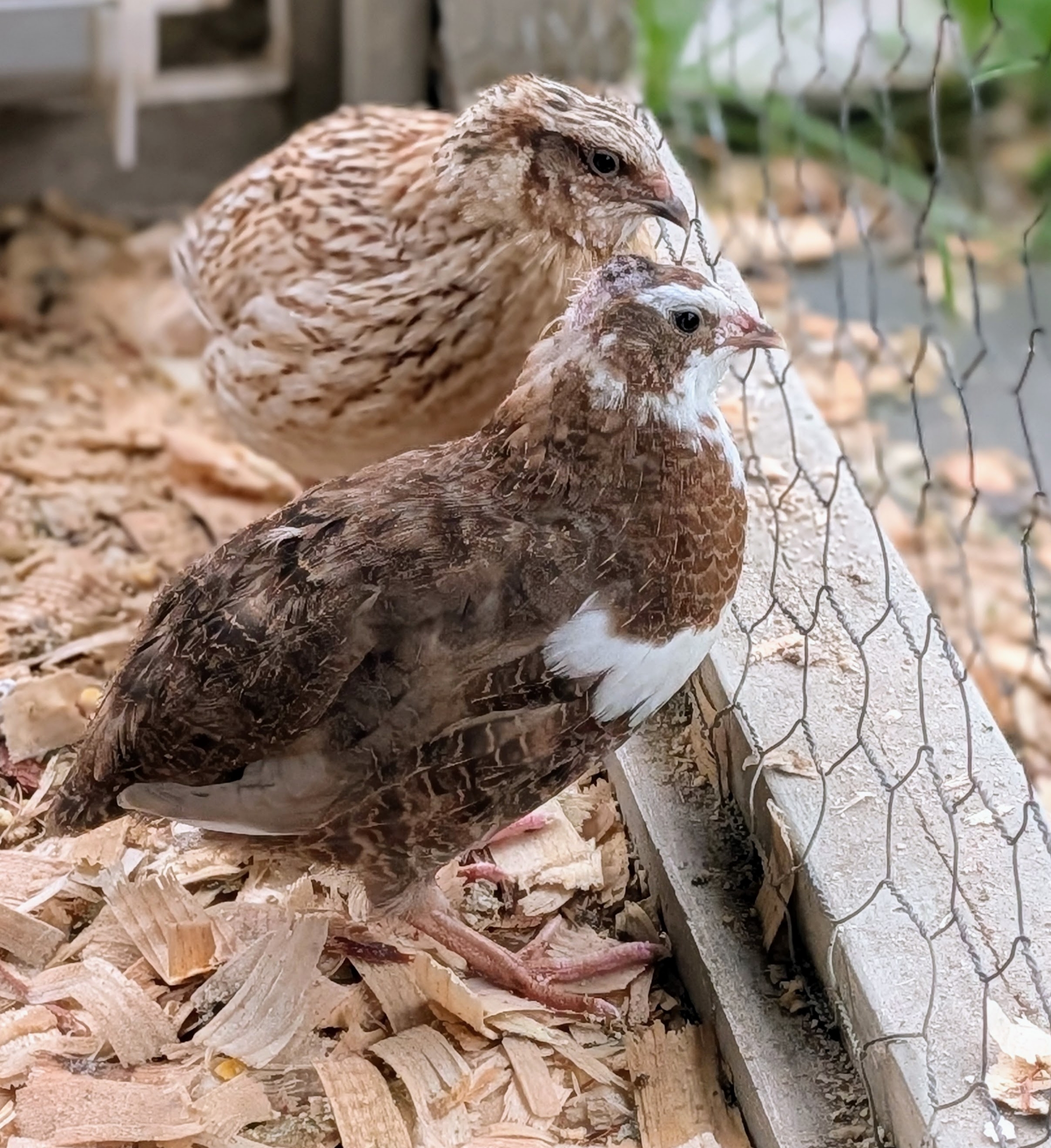
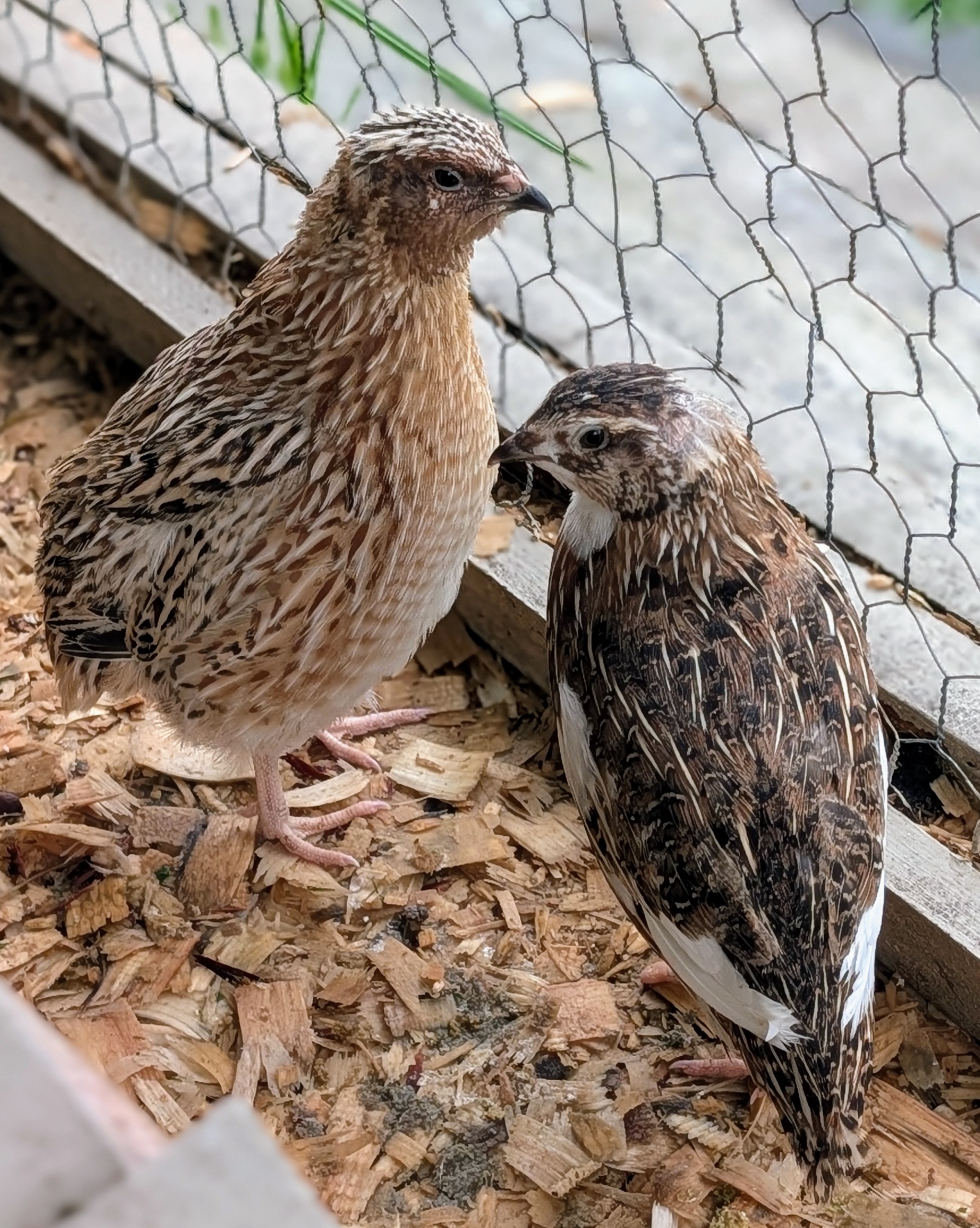
- These quail come in soft brown, gray, and buff with white markings, making them blend in nature when out in the wild.
-
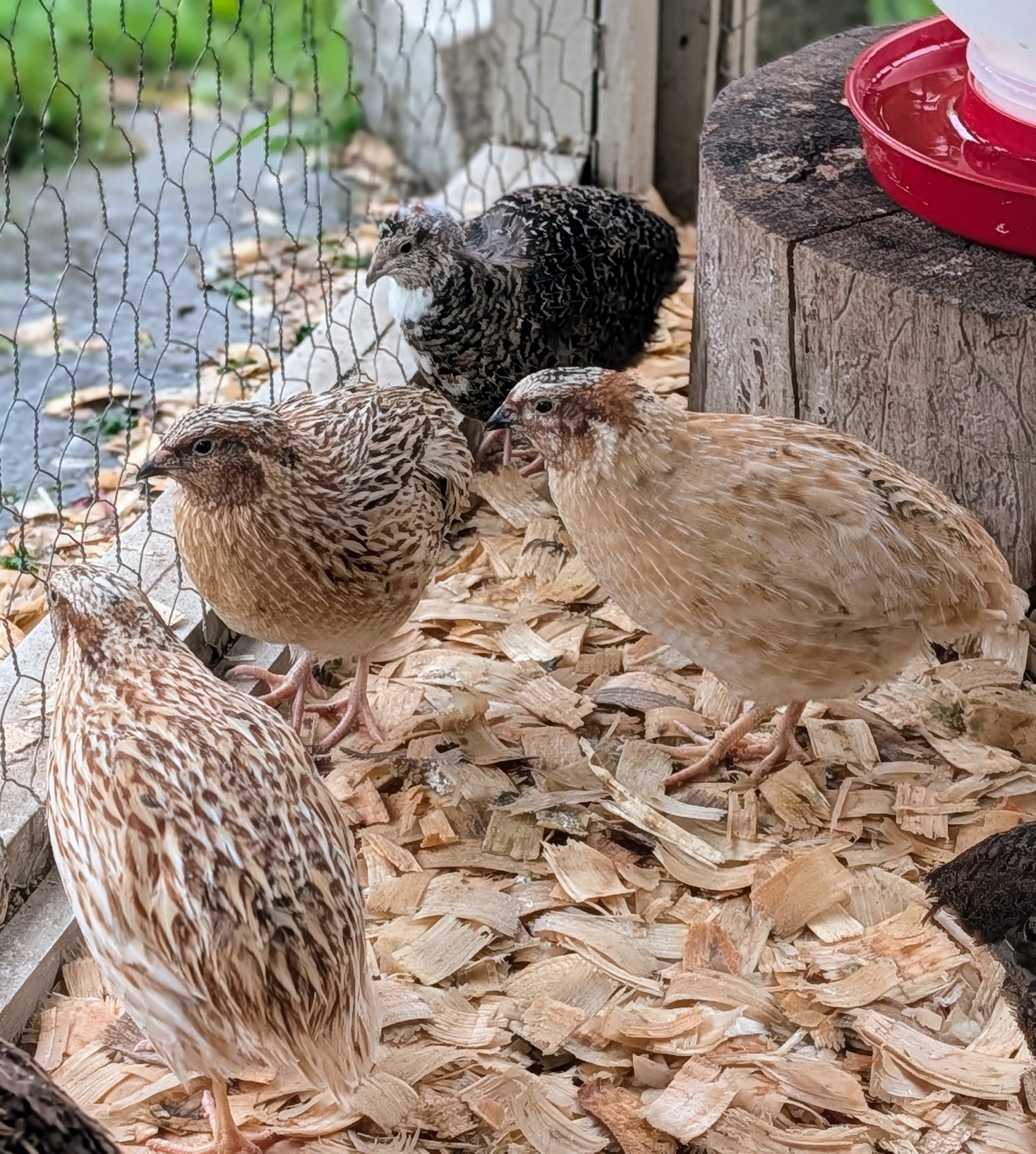
- Quail are very social birds and enjoy being in groups with their own kind.
-
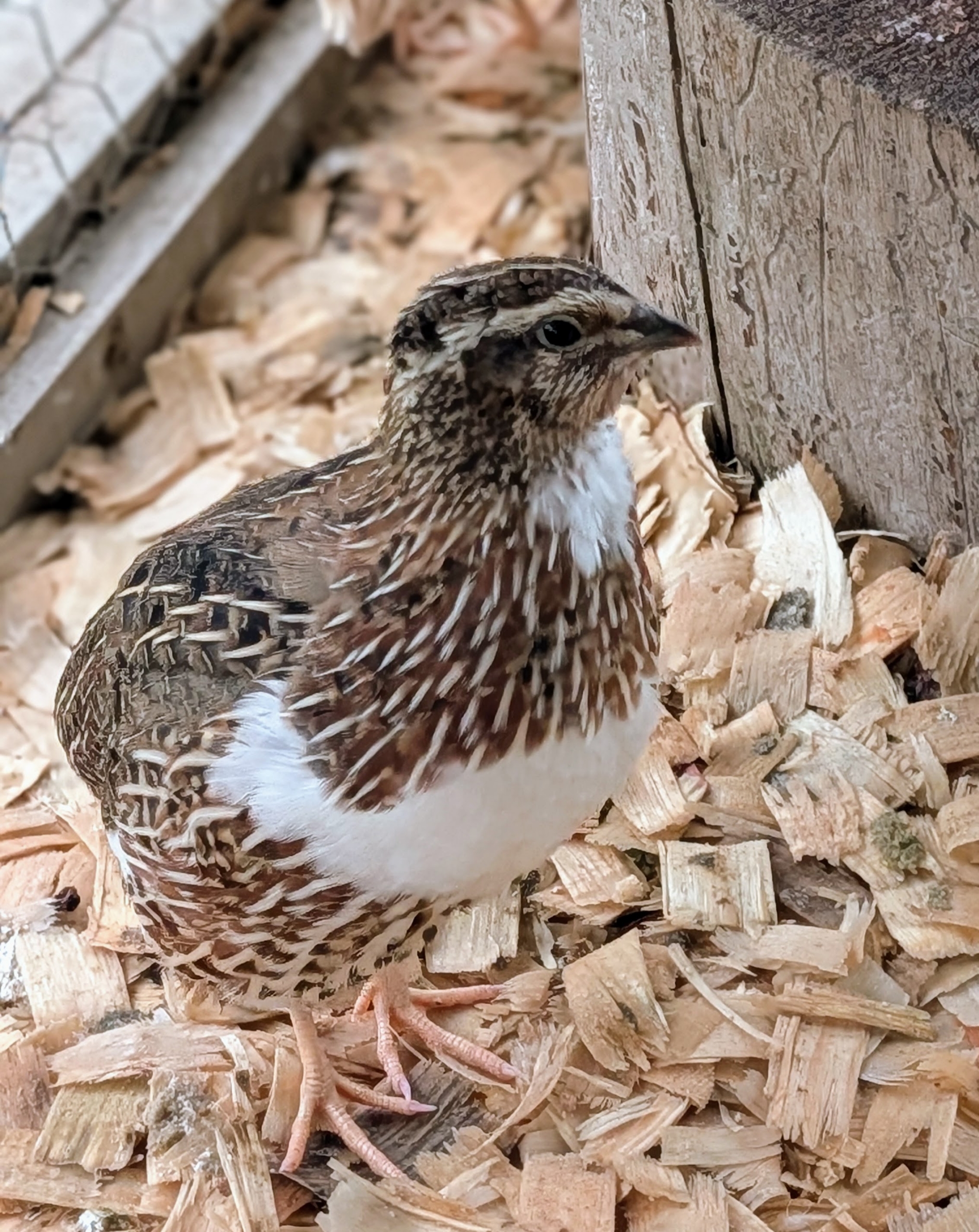
- Their temperament is calm, docile, and while skittish at first, they learn to acclimate quickly to their environments.
-
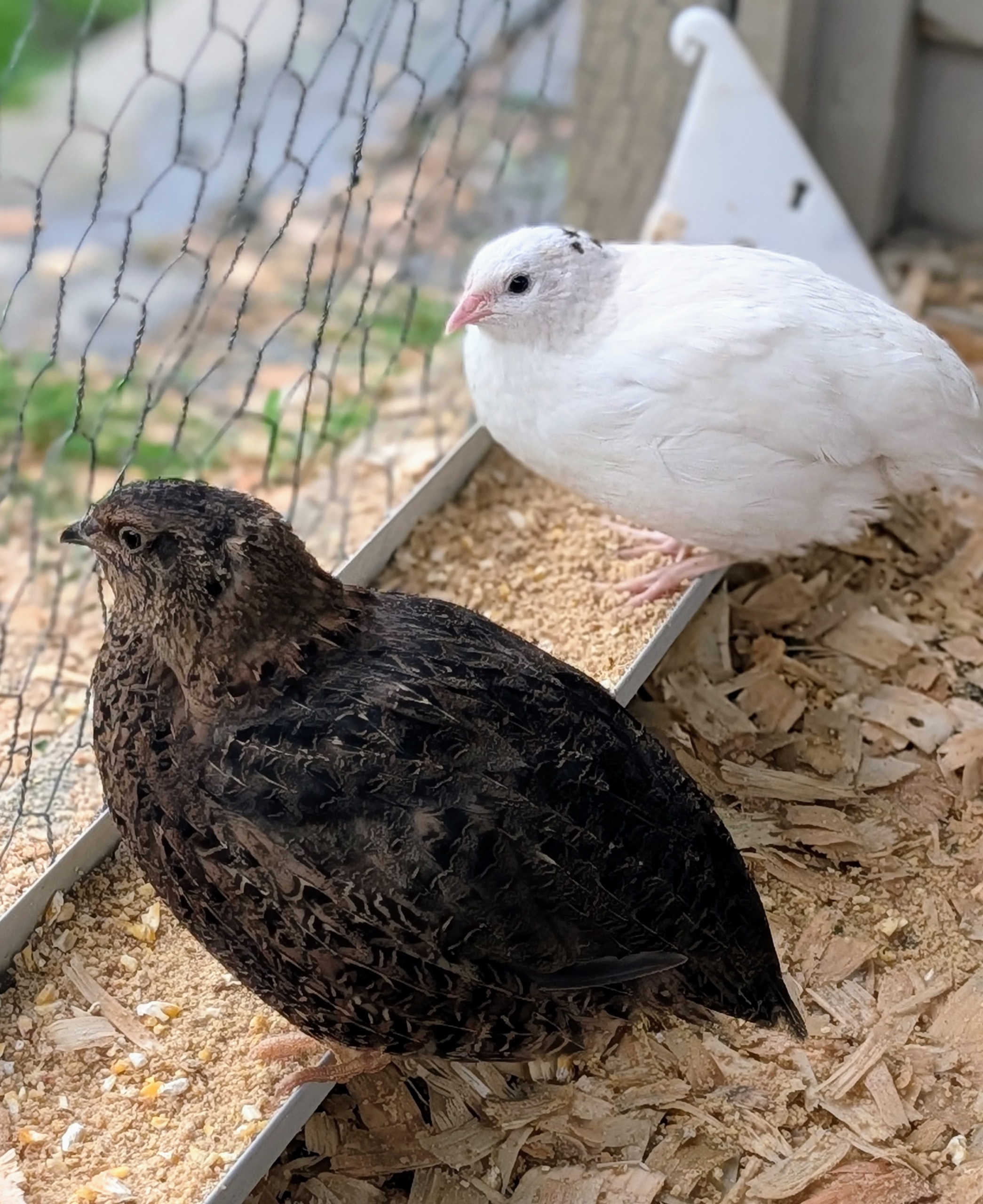
- And do you know… a collective terms for a group of quail is a “covey?”
-
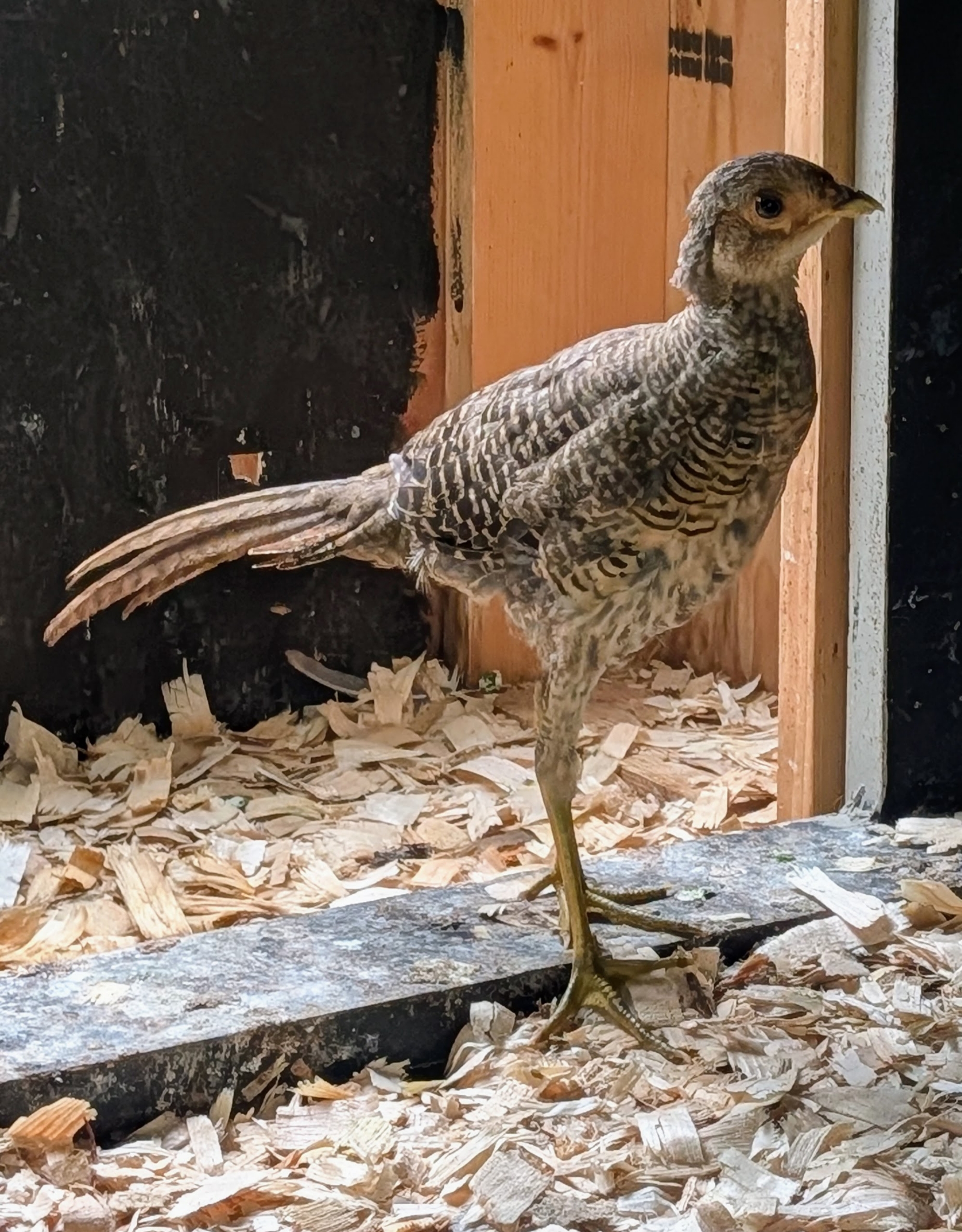
- Living with the quail are nine young pheasants, also known as poults or chicks, which I hatched here at the farm. Quail and pheasants are both precocial birds, meaning they grow rapidly and become independent feeders within hours of hatching.
-
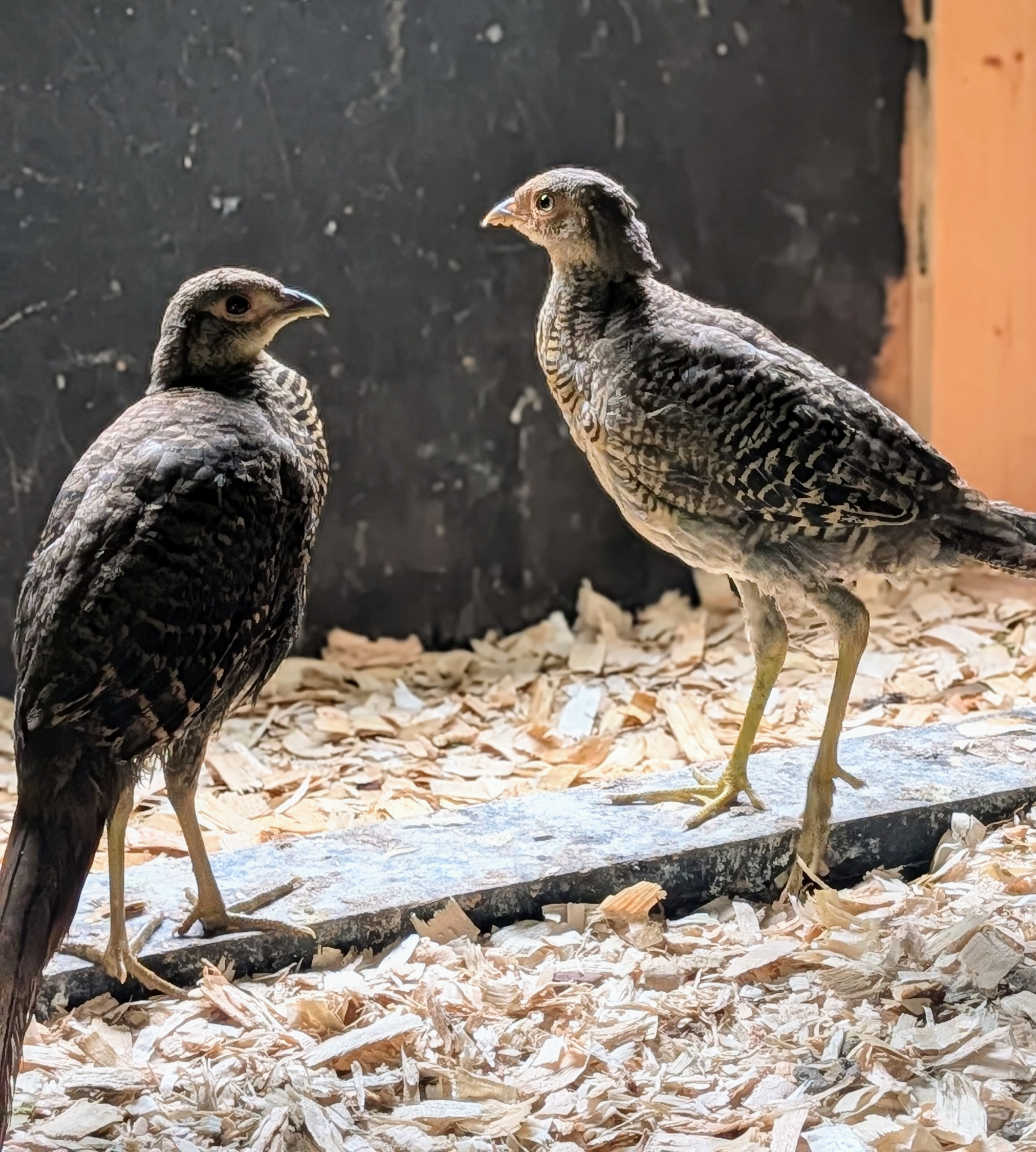
- Pheasants are hardy, very intelligent, and very friendly.
-
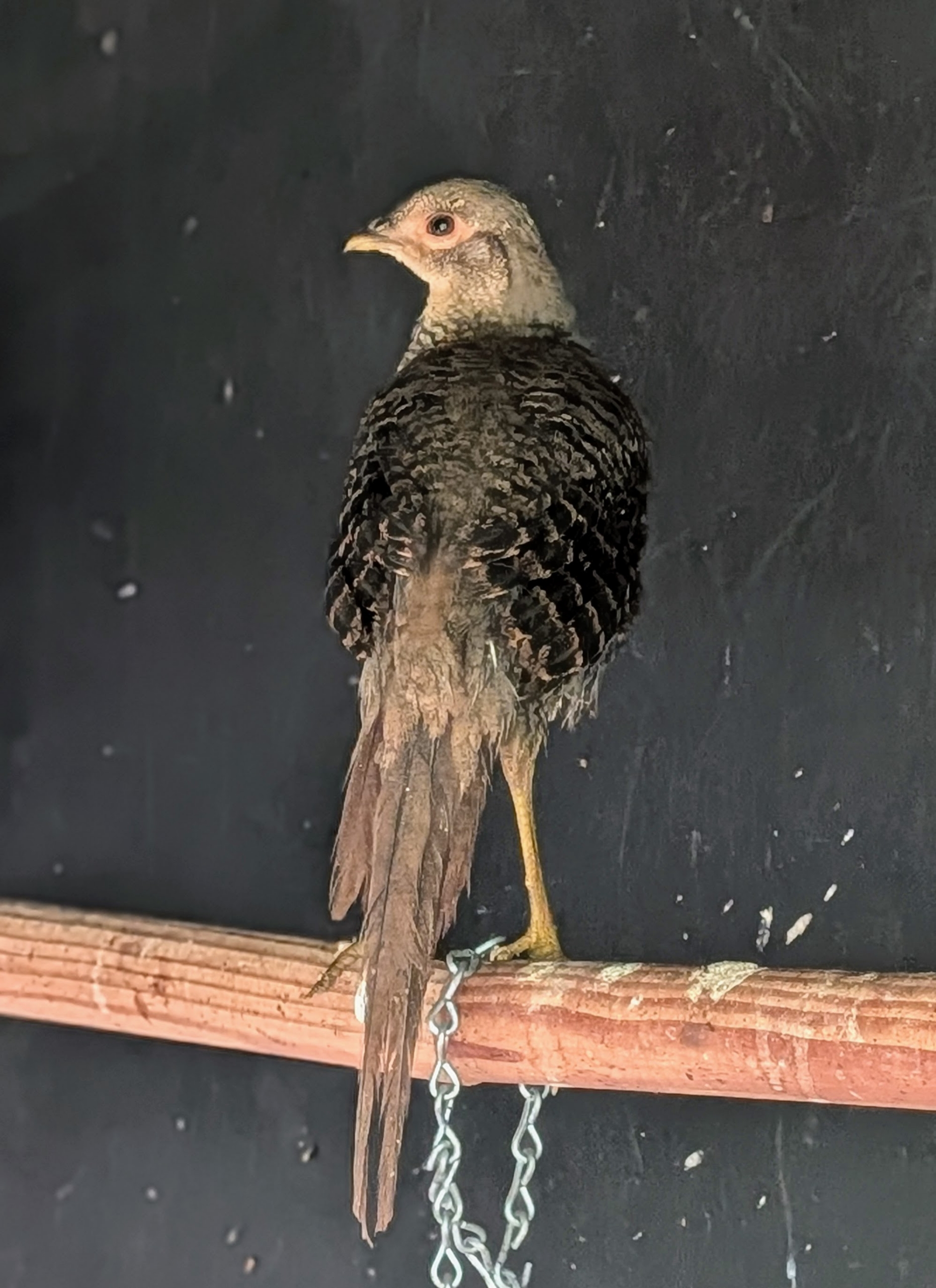
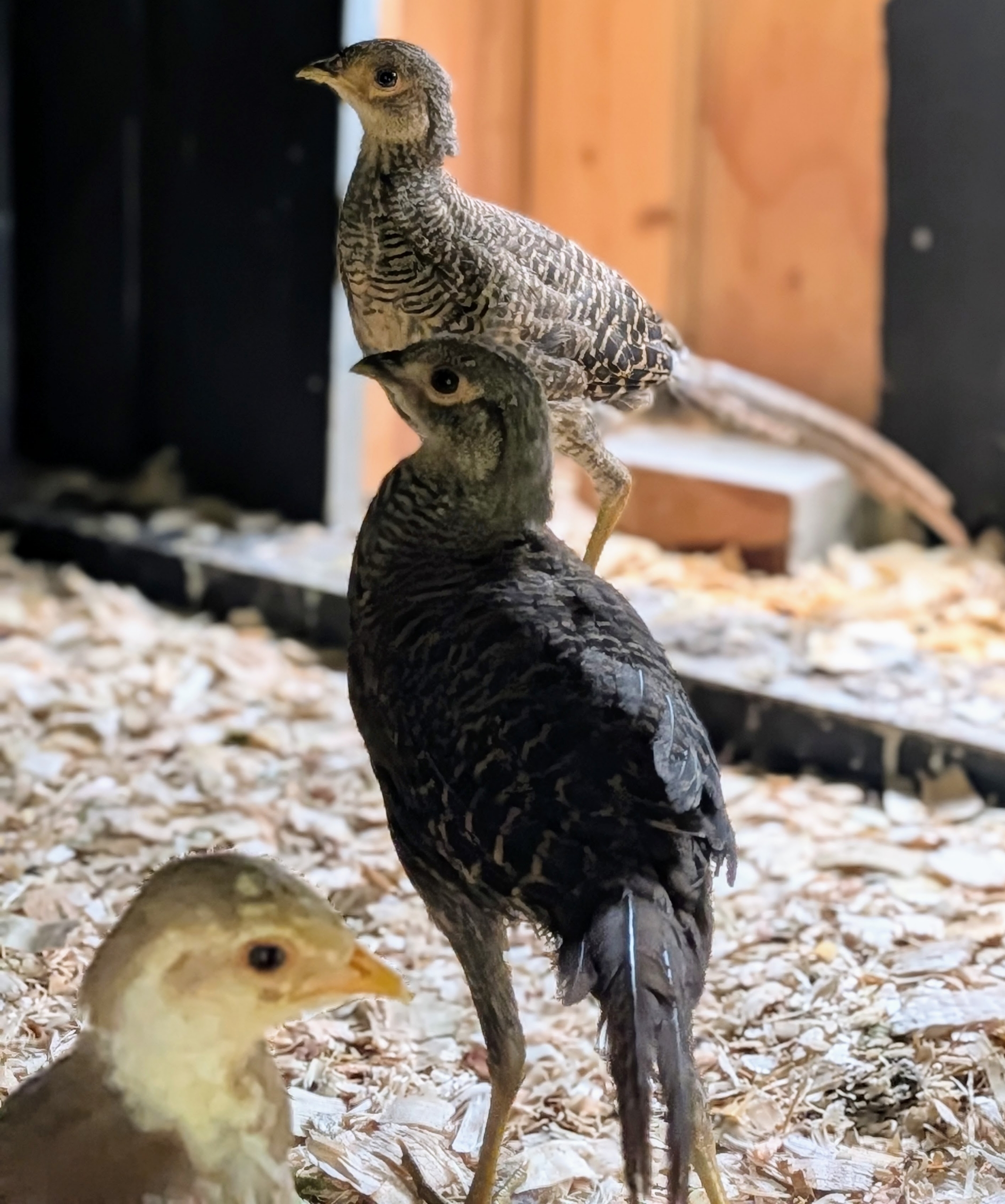
- Baby pheasants have a distinct coloration that is different from adult pheasants. Their down feathers are usually a tawny-yellow color with darker feathers on their backs and sides. As they grow, their feathers change and they begin to resemble adult pheasants.
-
- Pheasants are very curious, alert and very fast. In fact, these birds prefer to run rather than fly and adults can reach speeds of up to 45 miles per hour if necessary to escape danger.
-
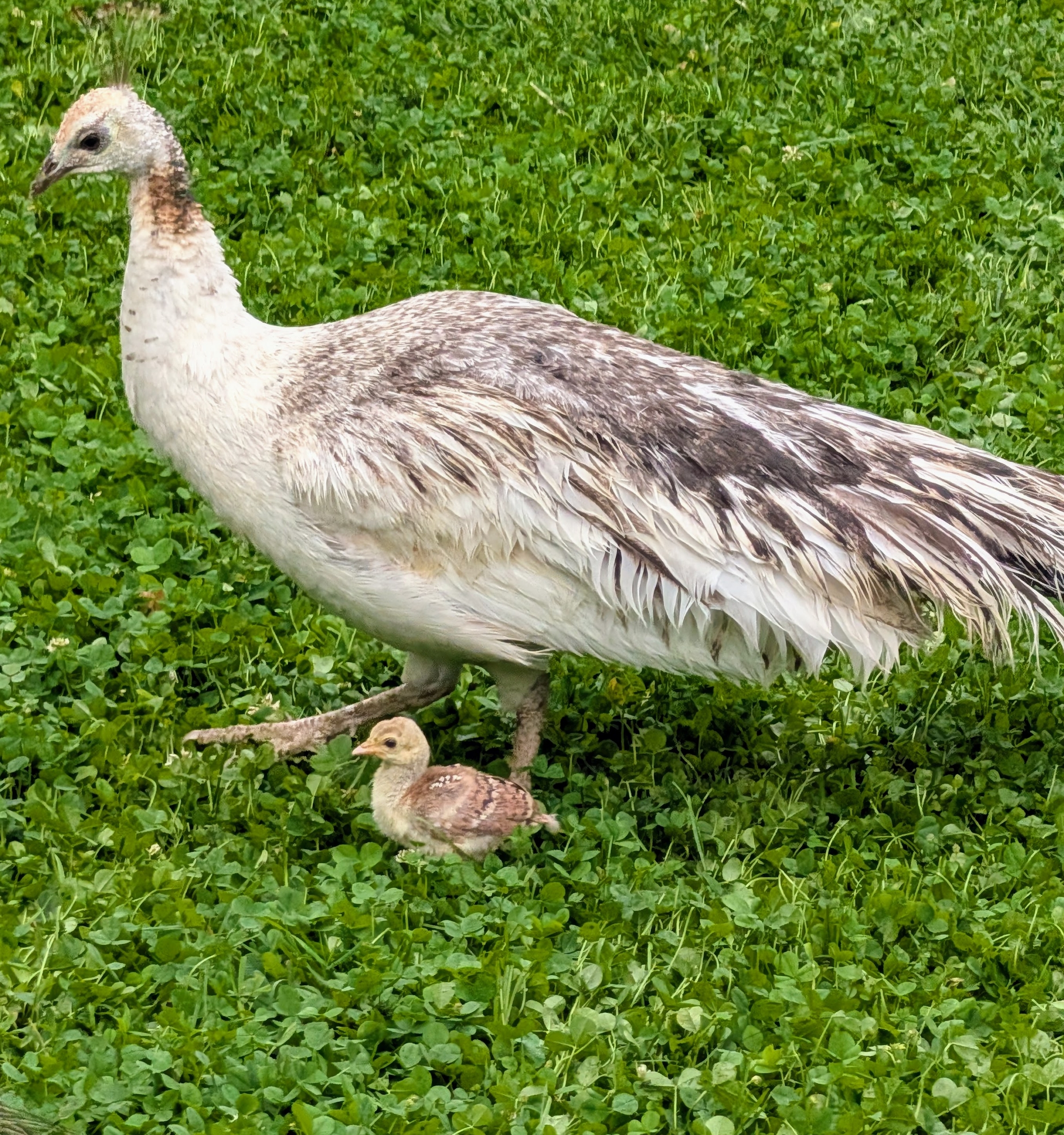
- Right now, the most visited baby on the farm is this peachick, hatched right under its mother last week.
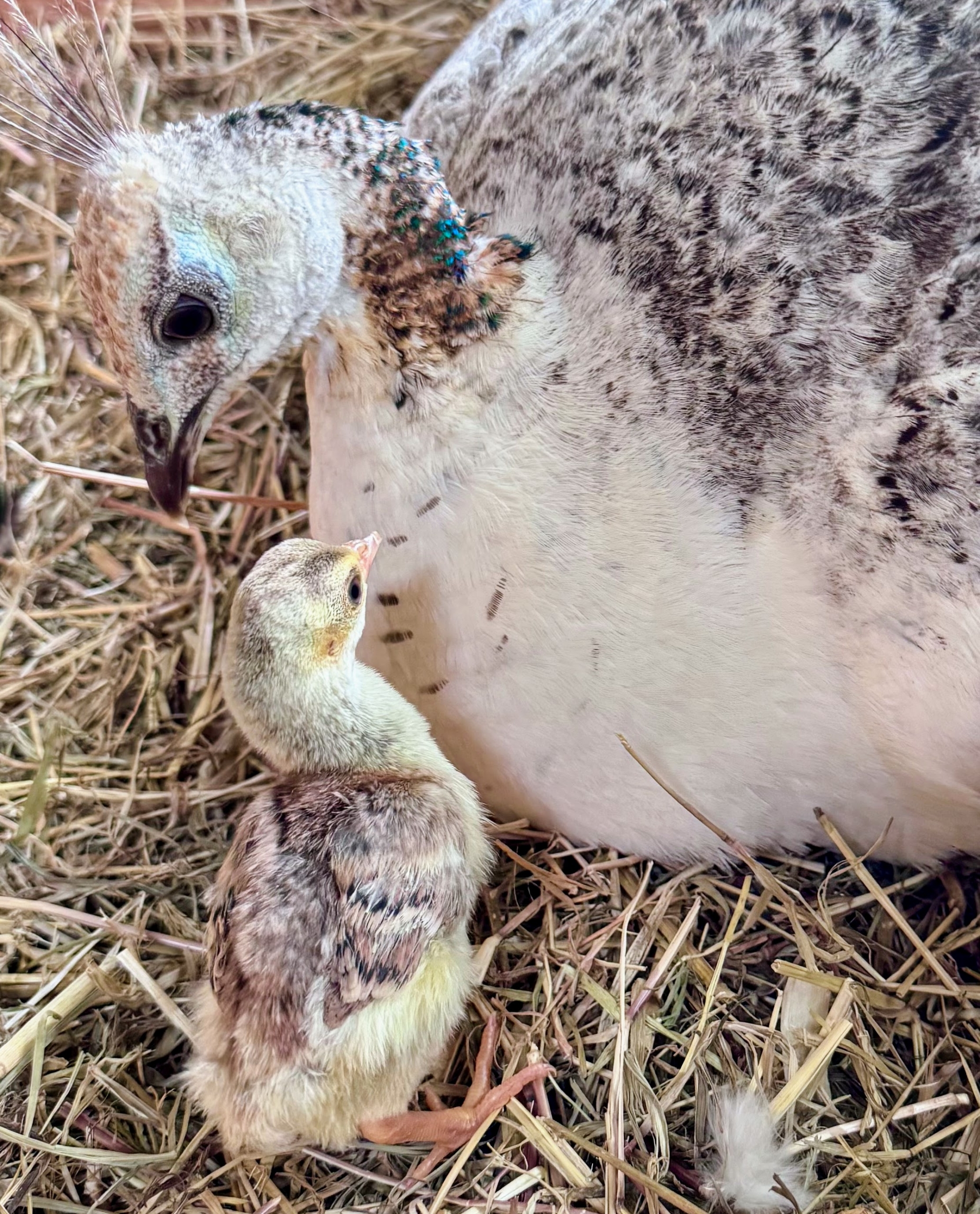
-
- Because all my birds are kept near humans and human activity, they are very social and love when anyone stops to visit.
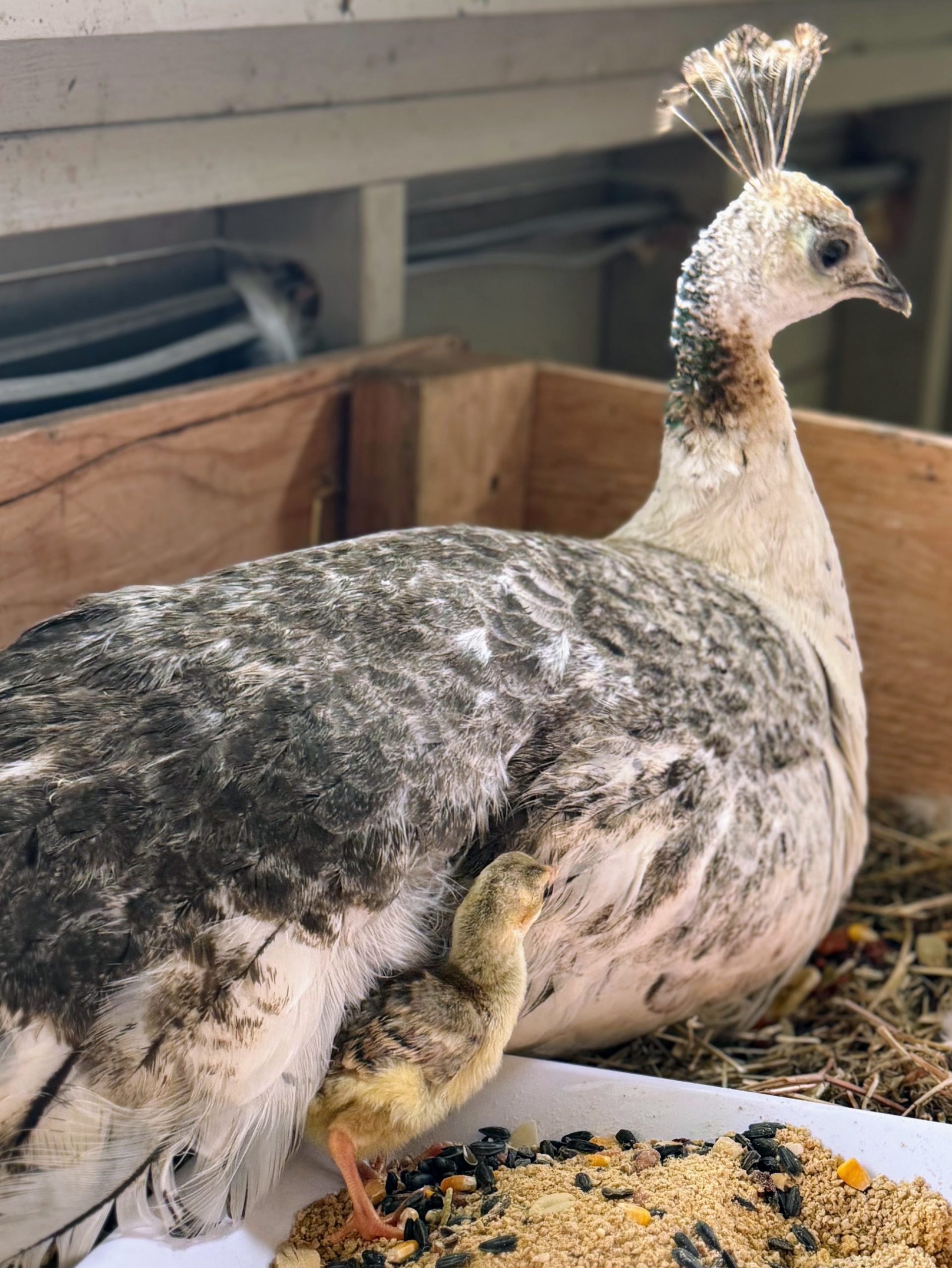
-
- This peachick is learning everything from its mother hen – how to move in and out of the nesting box, what to eat and how to be confident, independent. The combination of these lessons, including predator avoidance and social learning, is crucial for development.
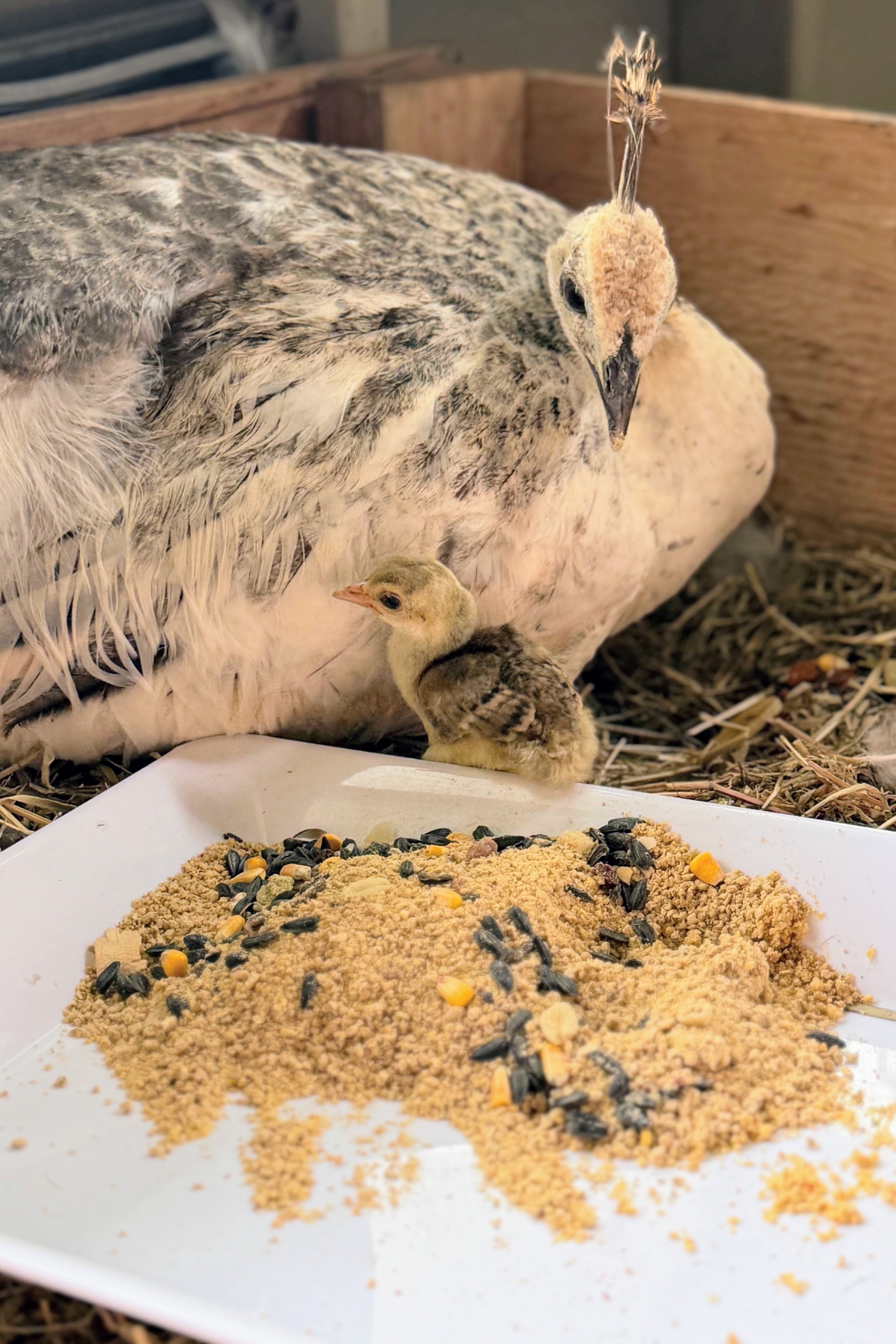
-
- And there are lots of mature friends to help. The others keep their distance from the peachick now as most mother peahens tend to be very attentive and protective of their chicks.
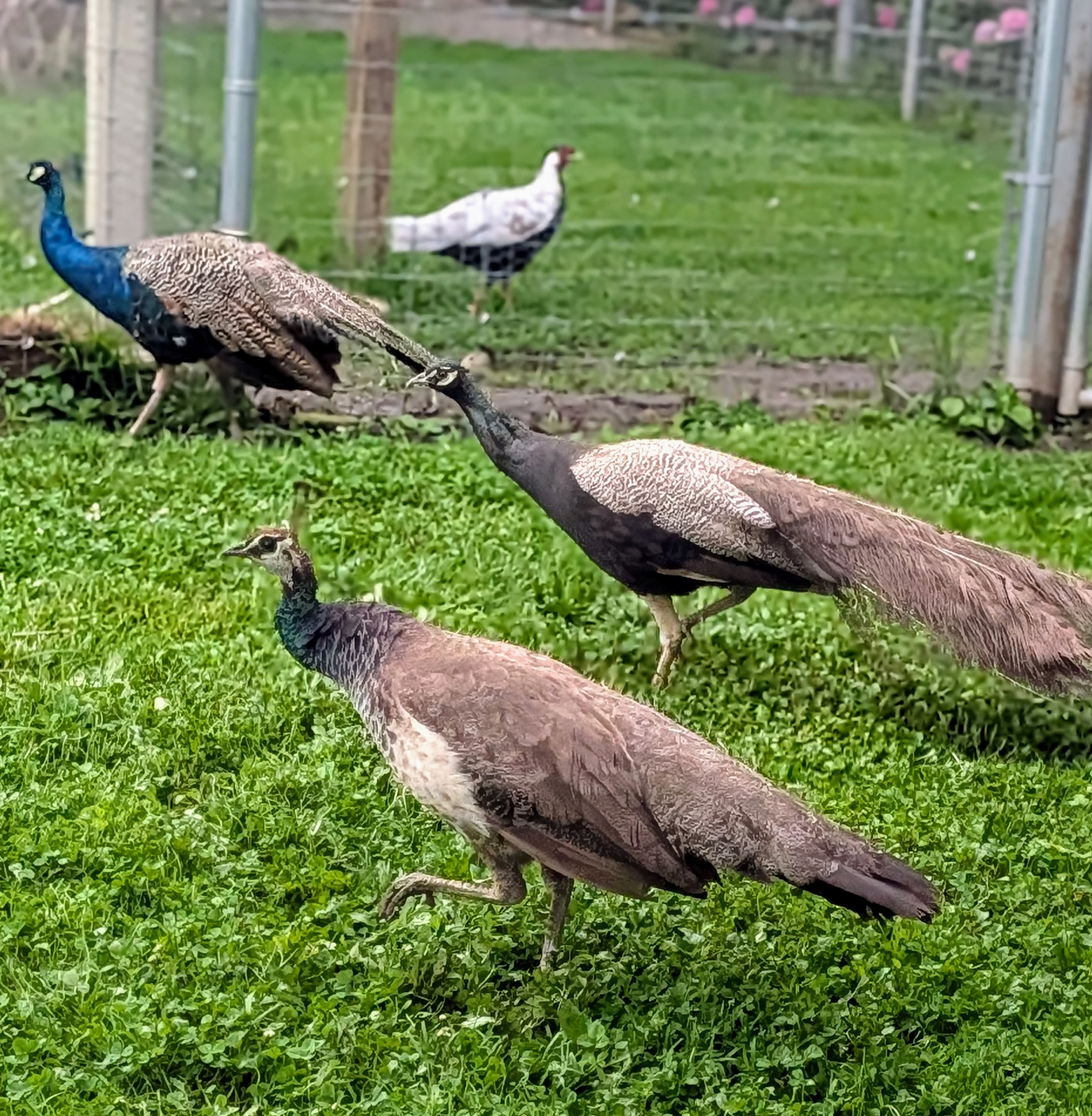
-
- But it won’t be long before this youngster is playing with all the others. I’m excited to watch this little peachick grow and thrive.
 Martha Pins


 Martha Tweets

