

Planting Succulents in Faux Bois Containers
I have always loved succulents. With their fleshy leaves and extraordinary forms, succulents are easy to maintain and make excellent container plants - I have quite a few of these popular specimens in my collection.
During a heavy rainstorm that lasted all of yesterday, my head gardener, Ryan McCallister, planted a selection of succulents in two of my faux bois planter boxes. These will be displayed outside my Winter House where they will flourish under the bright summer light.
Enjoy these photos.
-

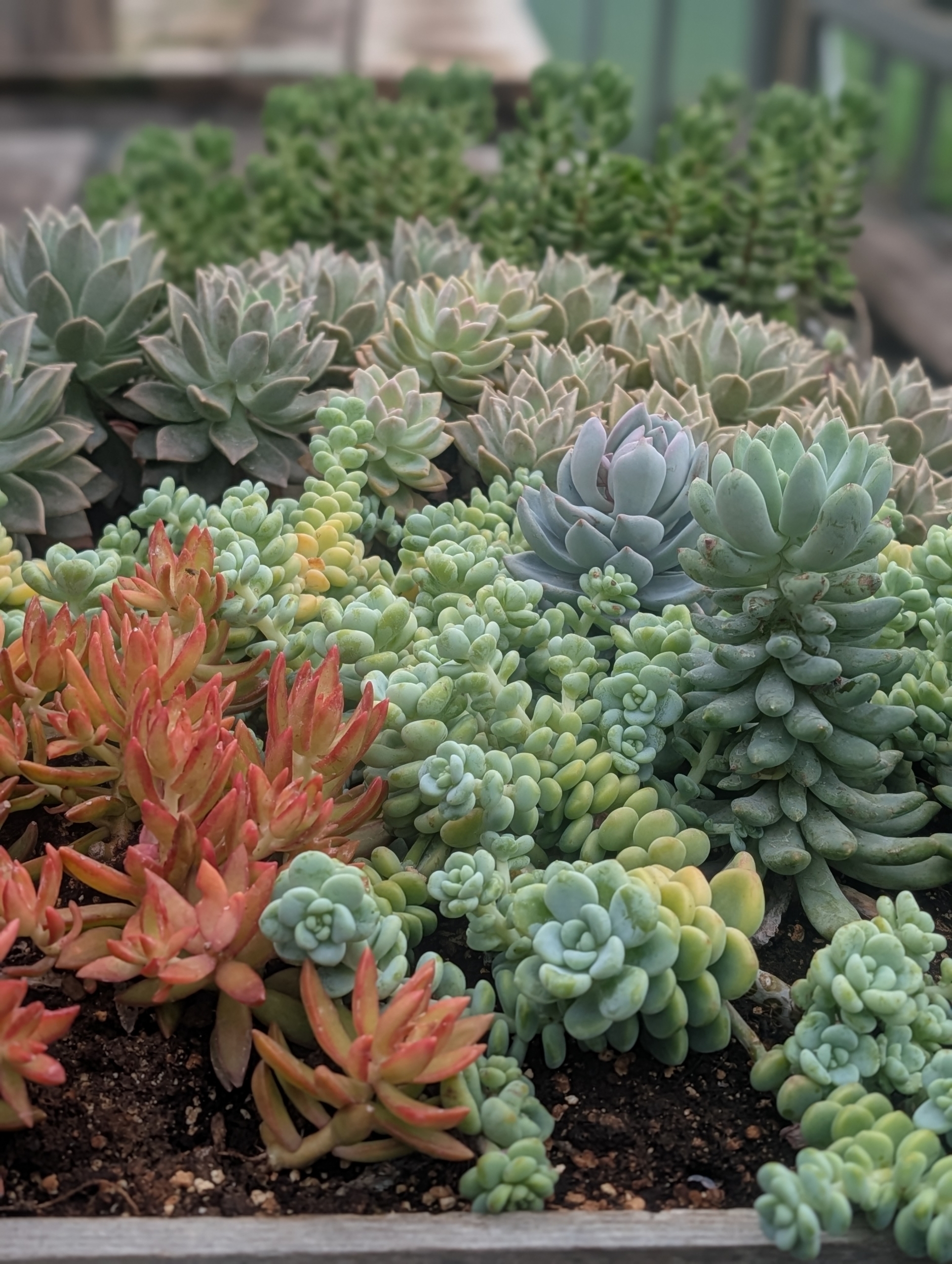
- Not long ago, my head gardener, Ryan McCallister, brought these plants back from Maine. Succulents are plants that have thickened, fleshy leaves, stems, or roots designed to retain water, enabling them to thrive in environments with limited rainfall or high temperatures.
-
- The plan was to pot them up in two of these faux boix planters.
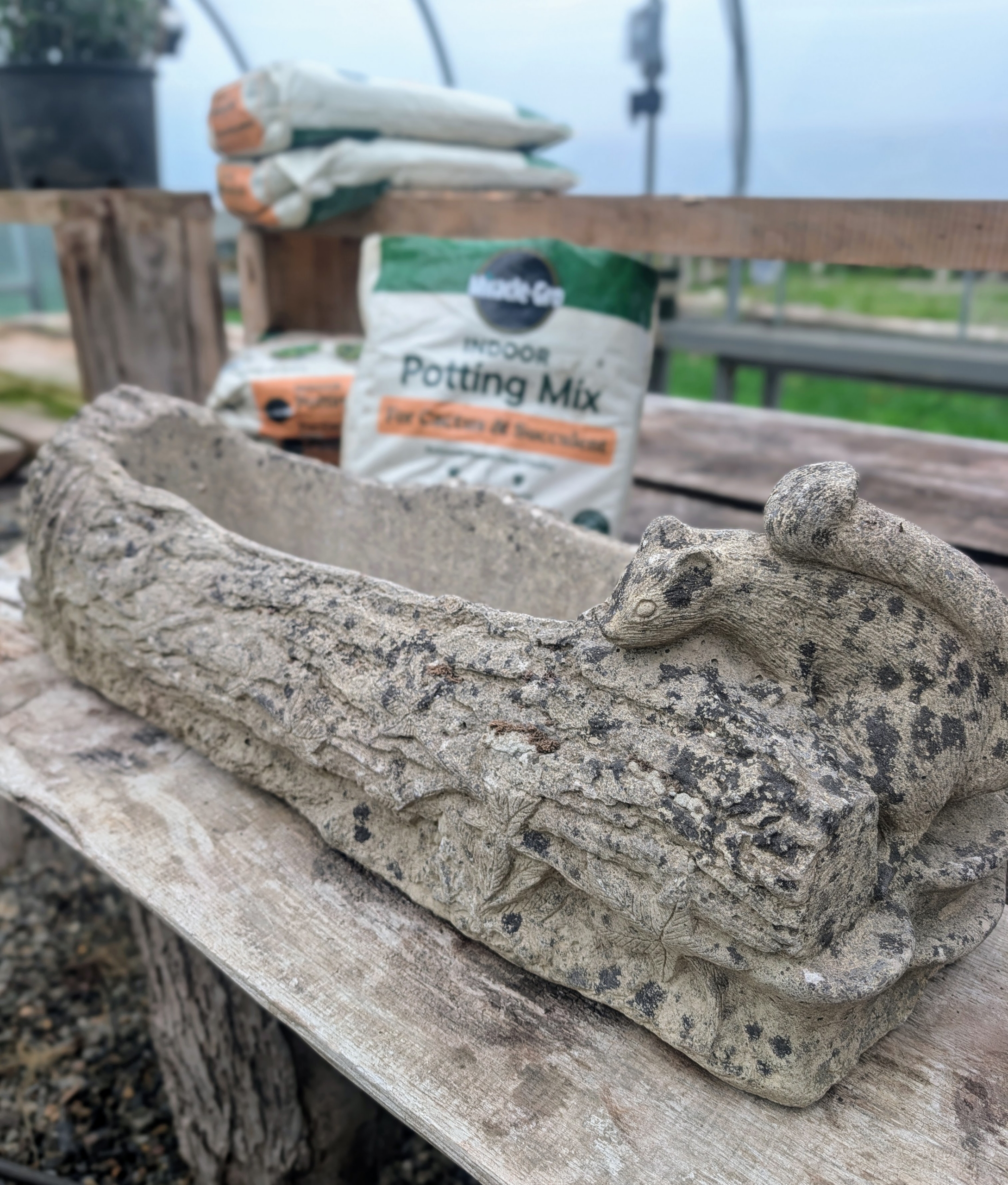
-
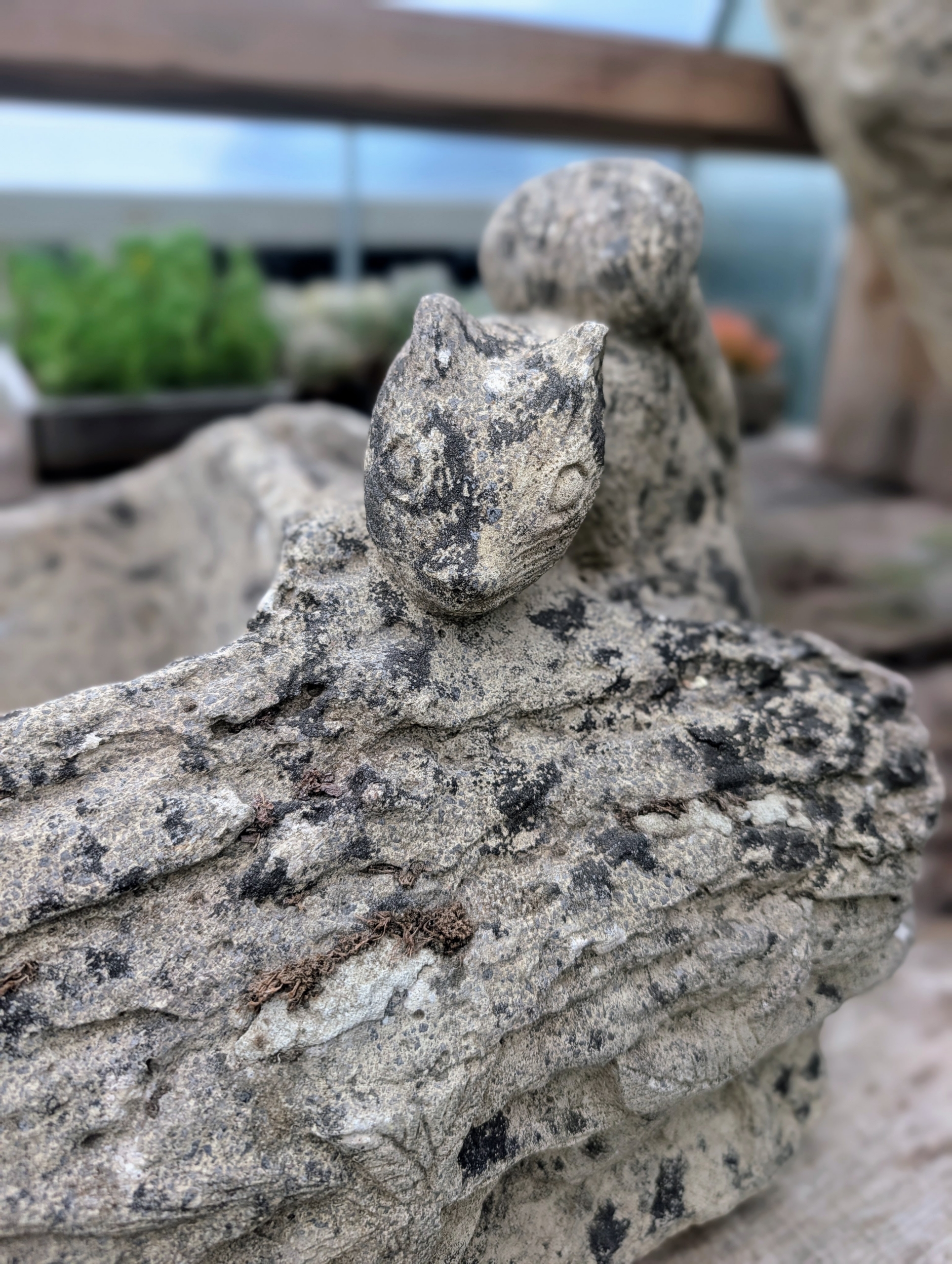
- They’re very charming – each with a squirrel positioned on one end.
-
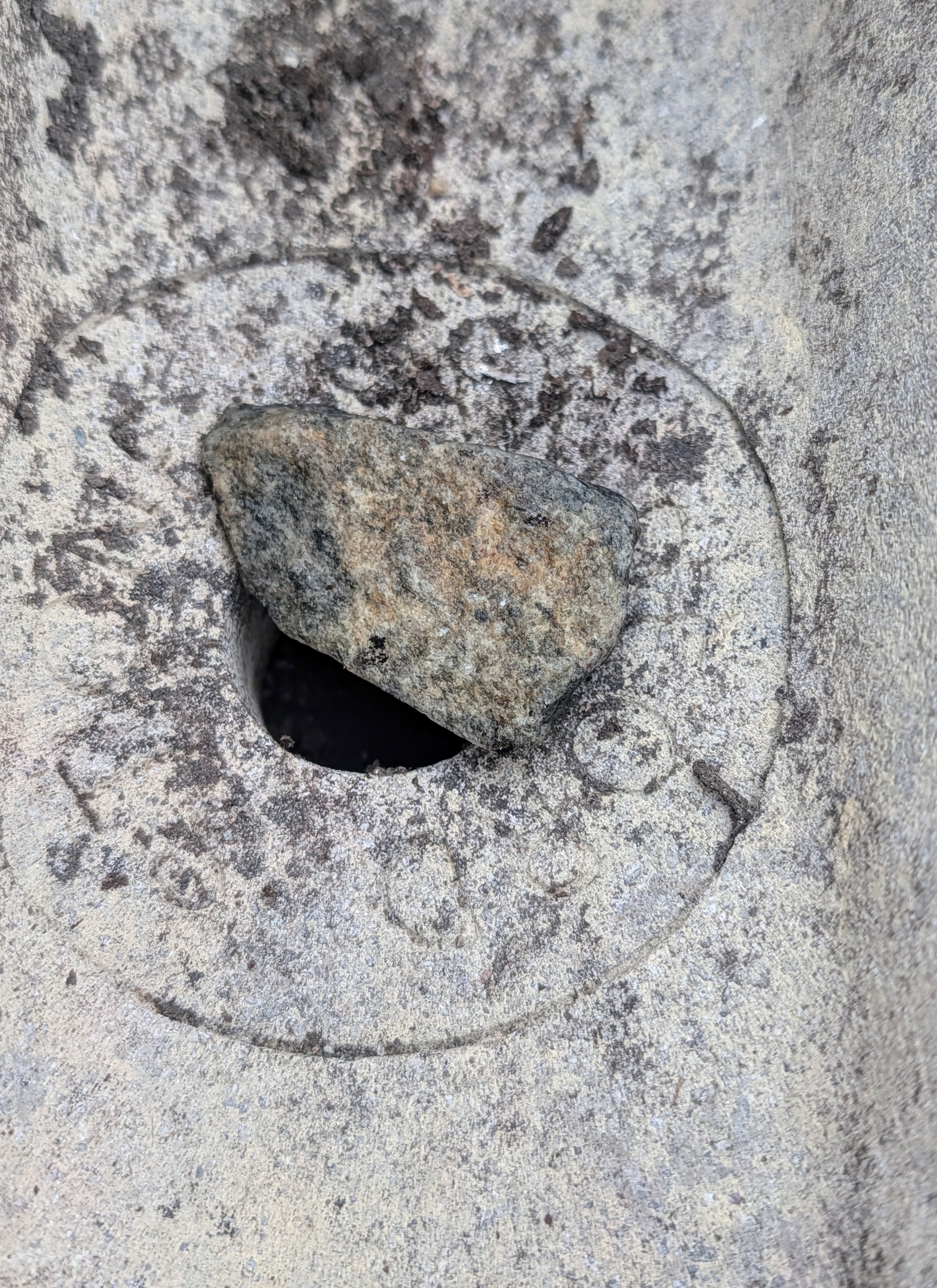
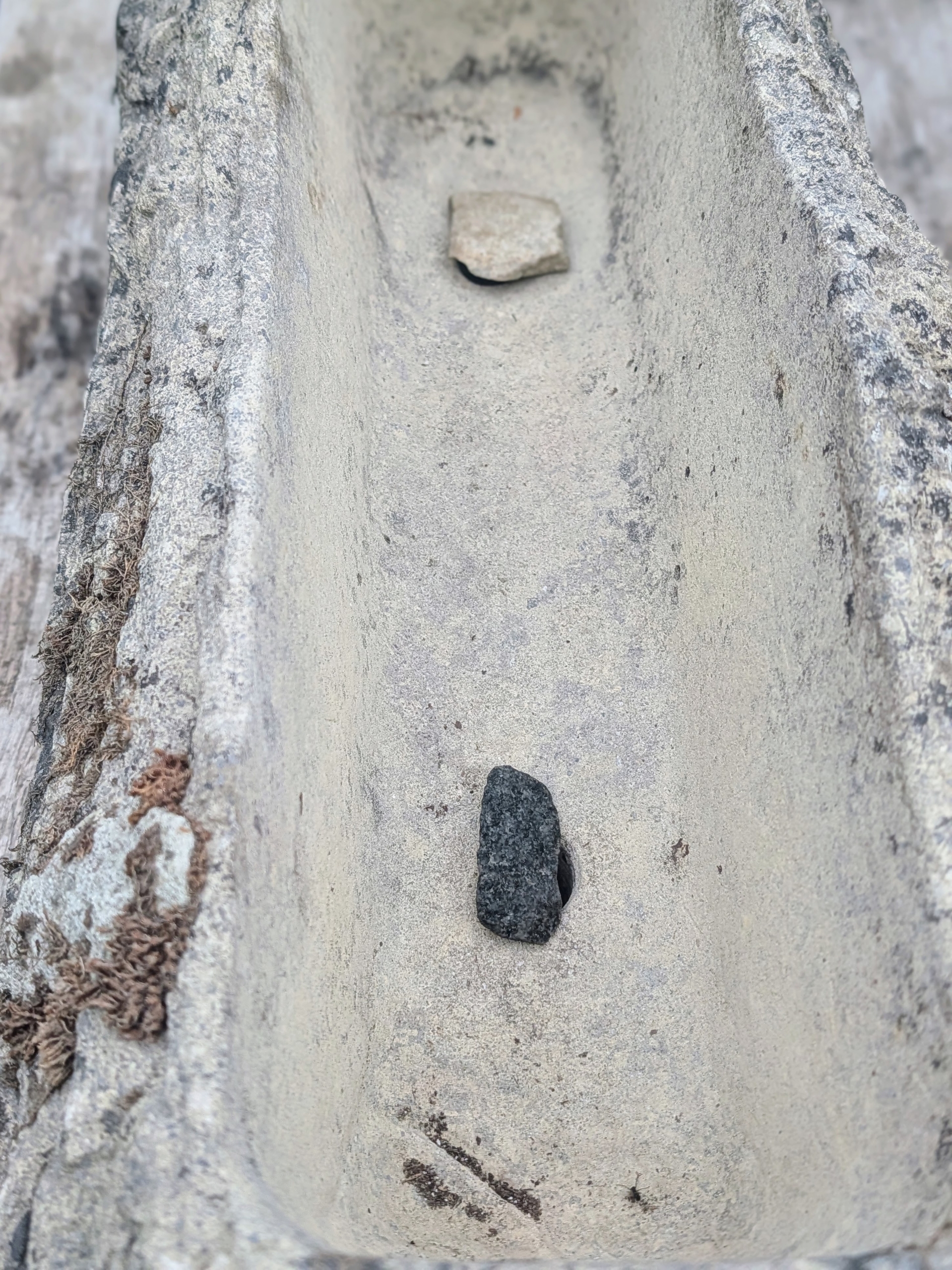
- Each container has two drainage holes. A flat stone is placed over each hole to help with drainage and to prevent any soil from falling out.
-
- Here are the two holes covered at the bottom of the planter. Clay shards left over from broken pots can also be used – so be sure not to throw the pieces away.
-
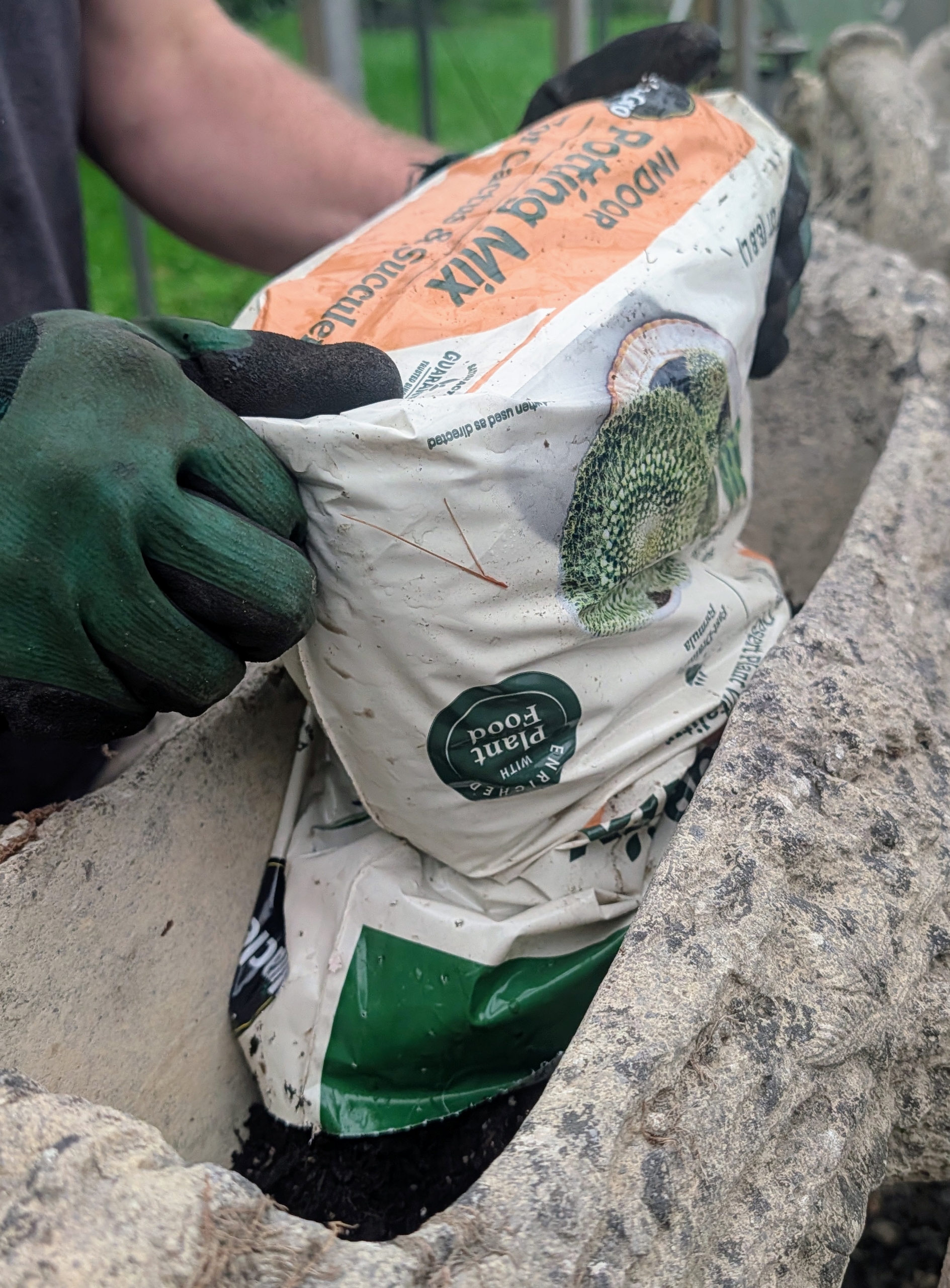
- Ryan fills the planters with the appropriate medium. Because succulents don’t like wet roots, it is important to use a soil mixture that will drain well.
-
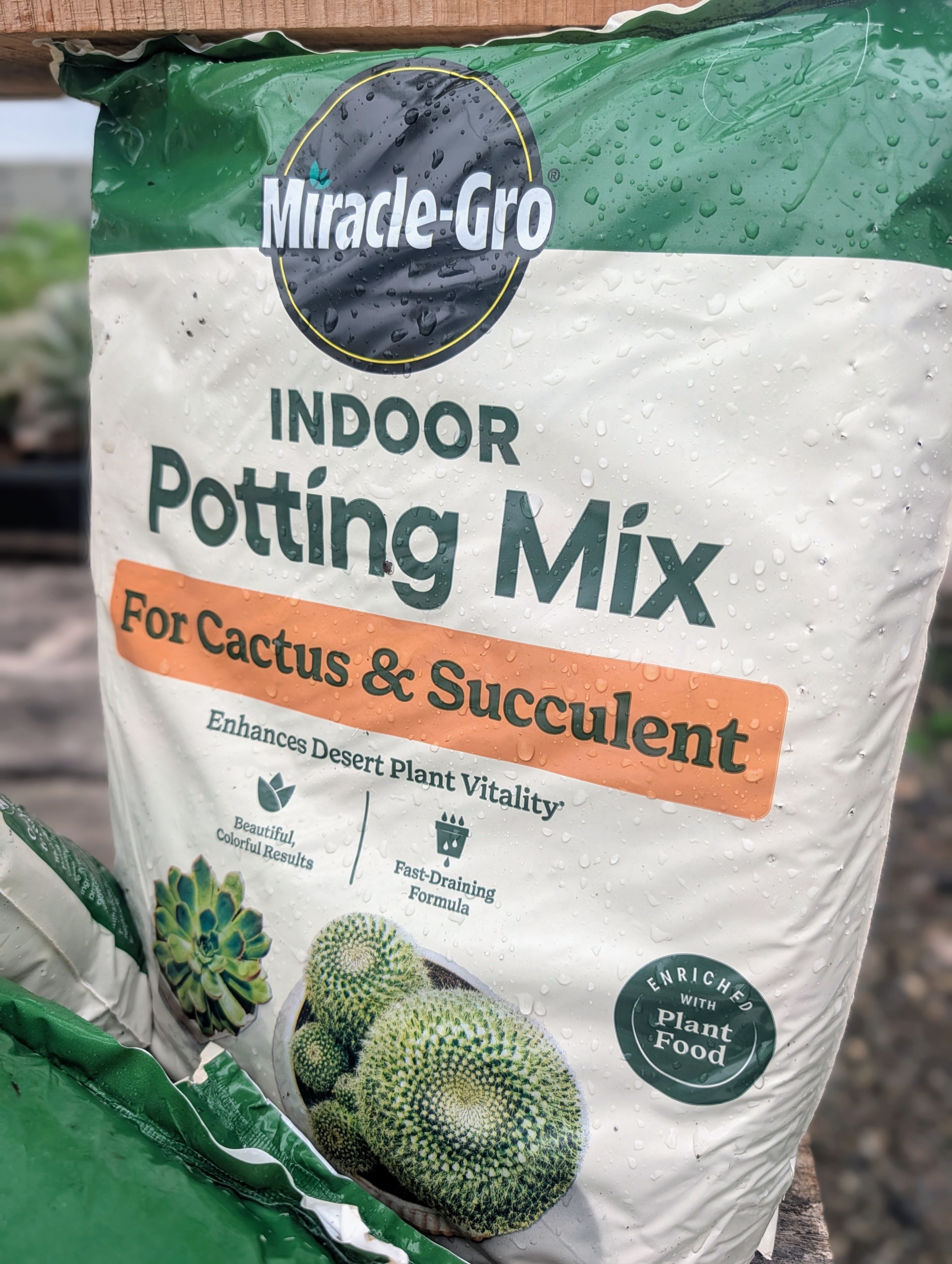
- I use Miracle-Gro Indoor Potting Mix for Cactus & Succulent. This soil mix features a fast-draining formula, specifically blended to promote successful growth for cacti, potted palms, citrus, and other succulents.
-
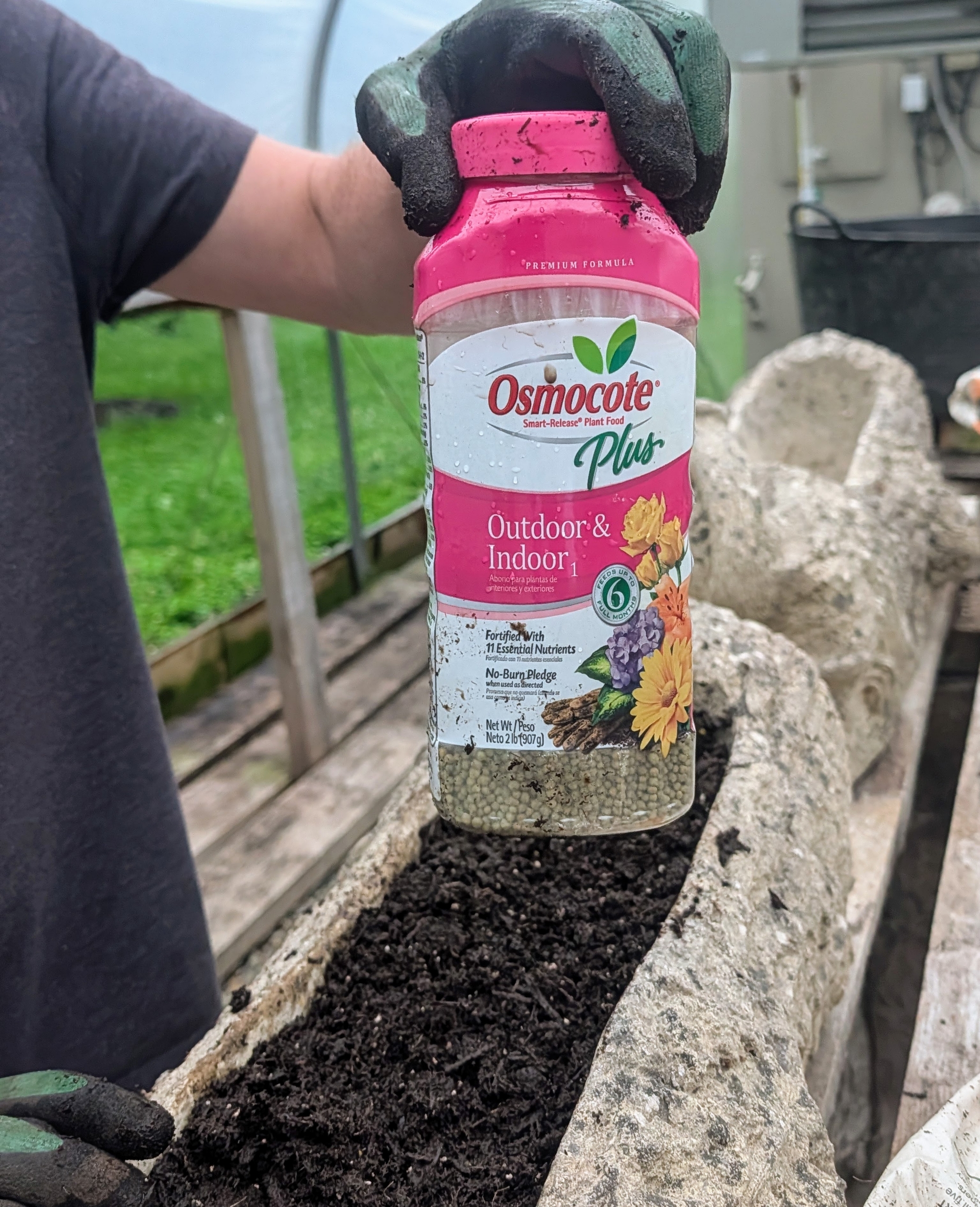
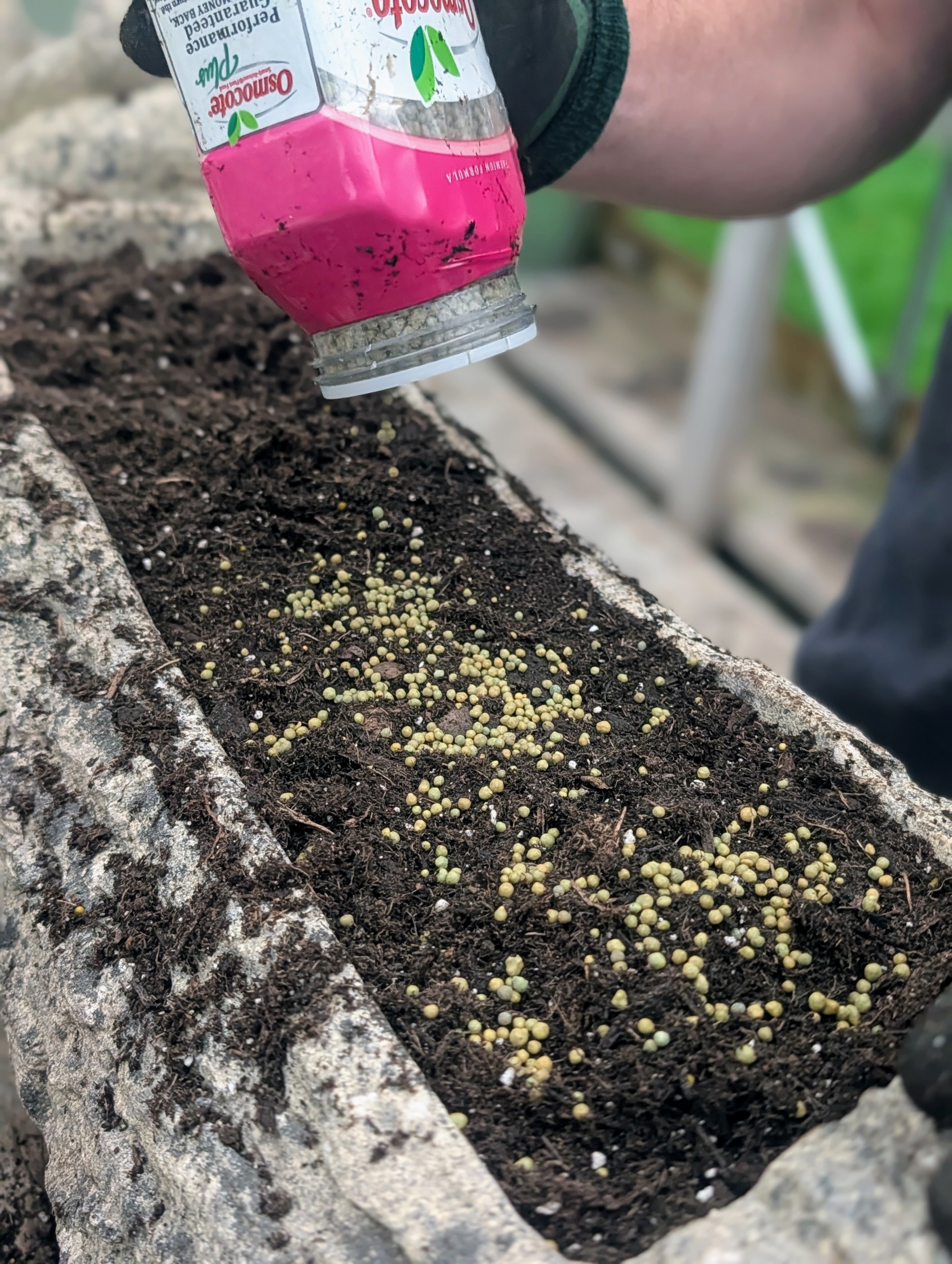
- Ryan adds the food – a very important part of gardening. Each planter gets a sprinkling of Osmocote – small time released plant food particles known as prills that are filled with nutrients.
-
- These prills coat a core of nutrients including nitrogen, phosphorus and potassium. The resin-coating is made from linseed oil and as the plant’s root system takes-up nutrition from the soil, it also takes up the needed nutrients from the Osmocote.
-
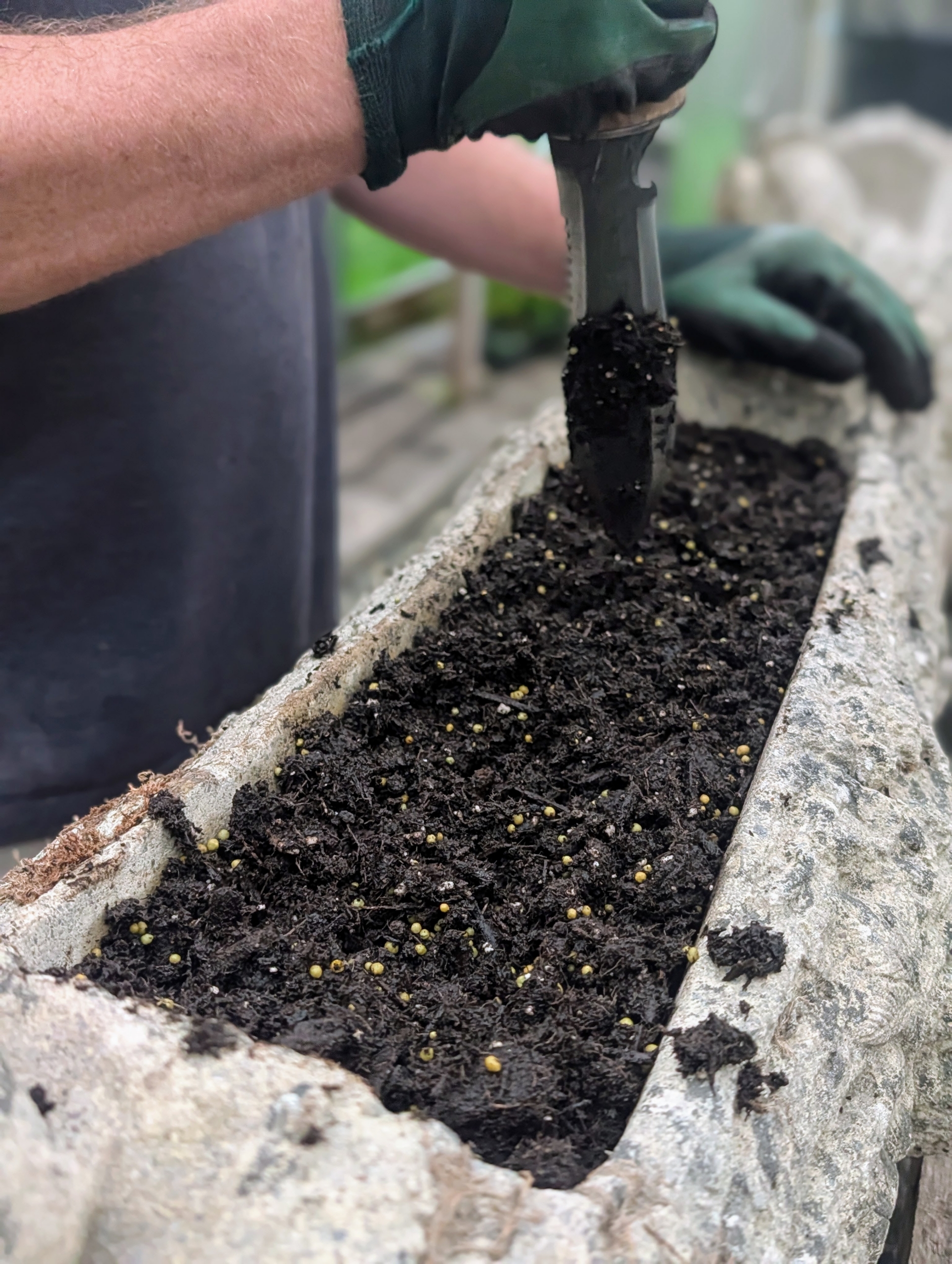
- … and then he mixes it thoroughly in the soil with his Hori-Hori gardening knife.
-
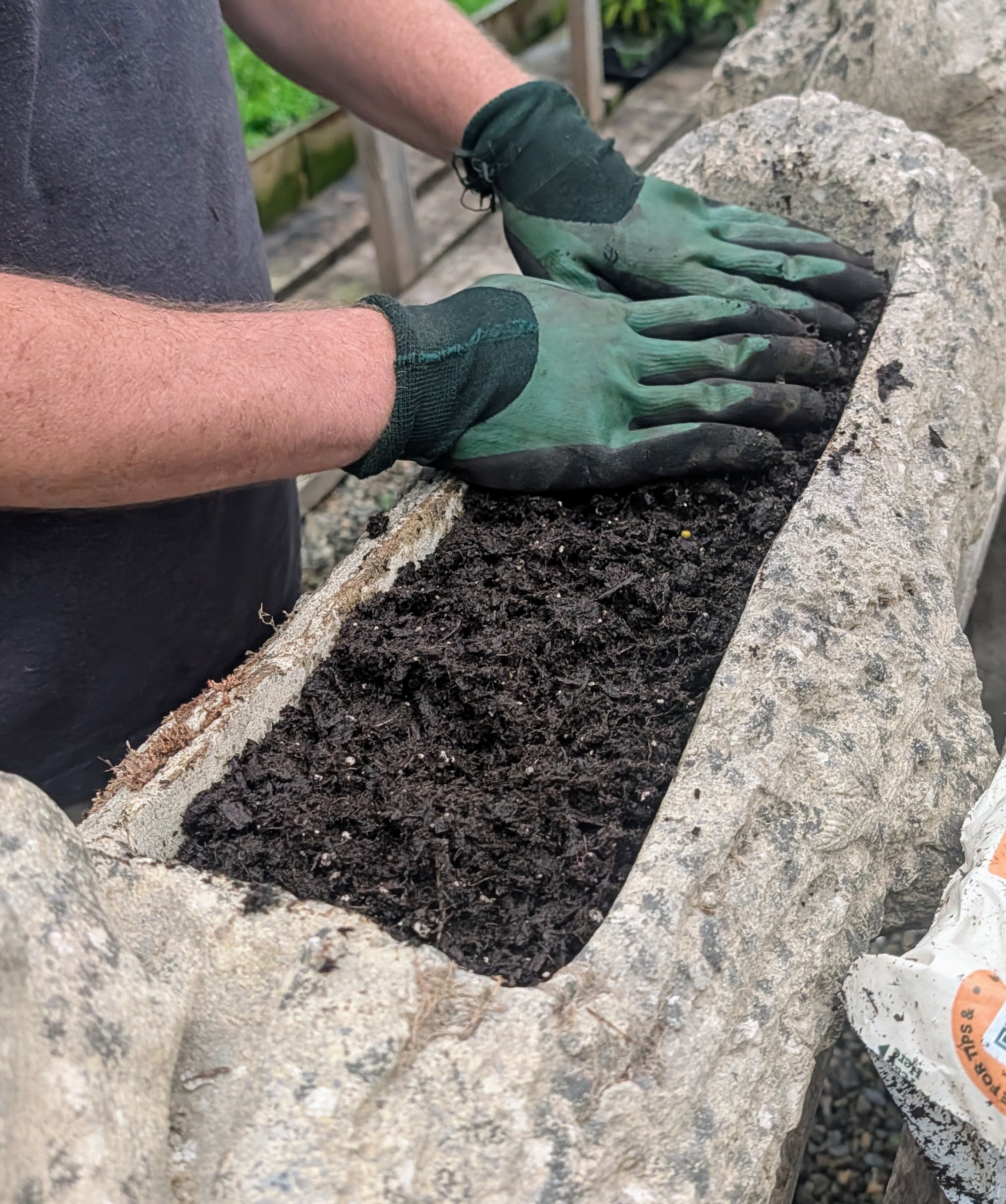
- Ryan lightly packs in the soil and makes sure there is enough. The container should be filled to just under its lip, so soil does not fall out when watered.
-
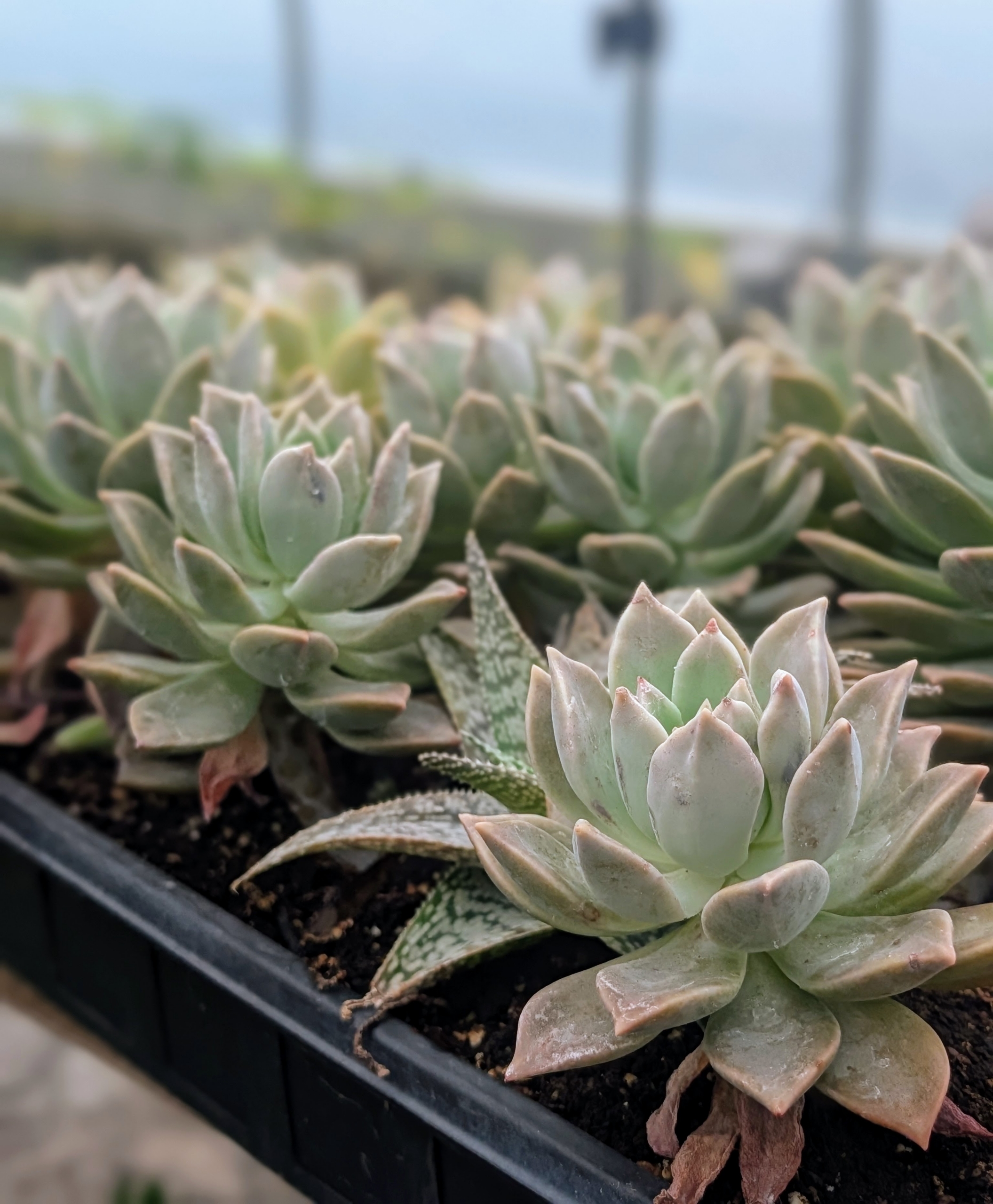
- If you like growing plants, but don’t really have a lot of time to care for them, I encourage you to consider growing succulents. With their fleshy leaves and interesting shapes, succulents are easy to maintain and make excellent container specimens.
-
- Succulent comes from the Latin word “sucus,” which means juice or sap. It’s also a nod to the nourishing leaves.
-
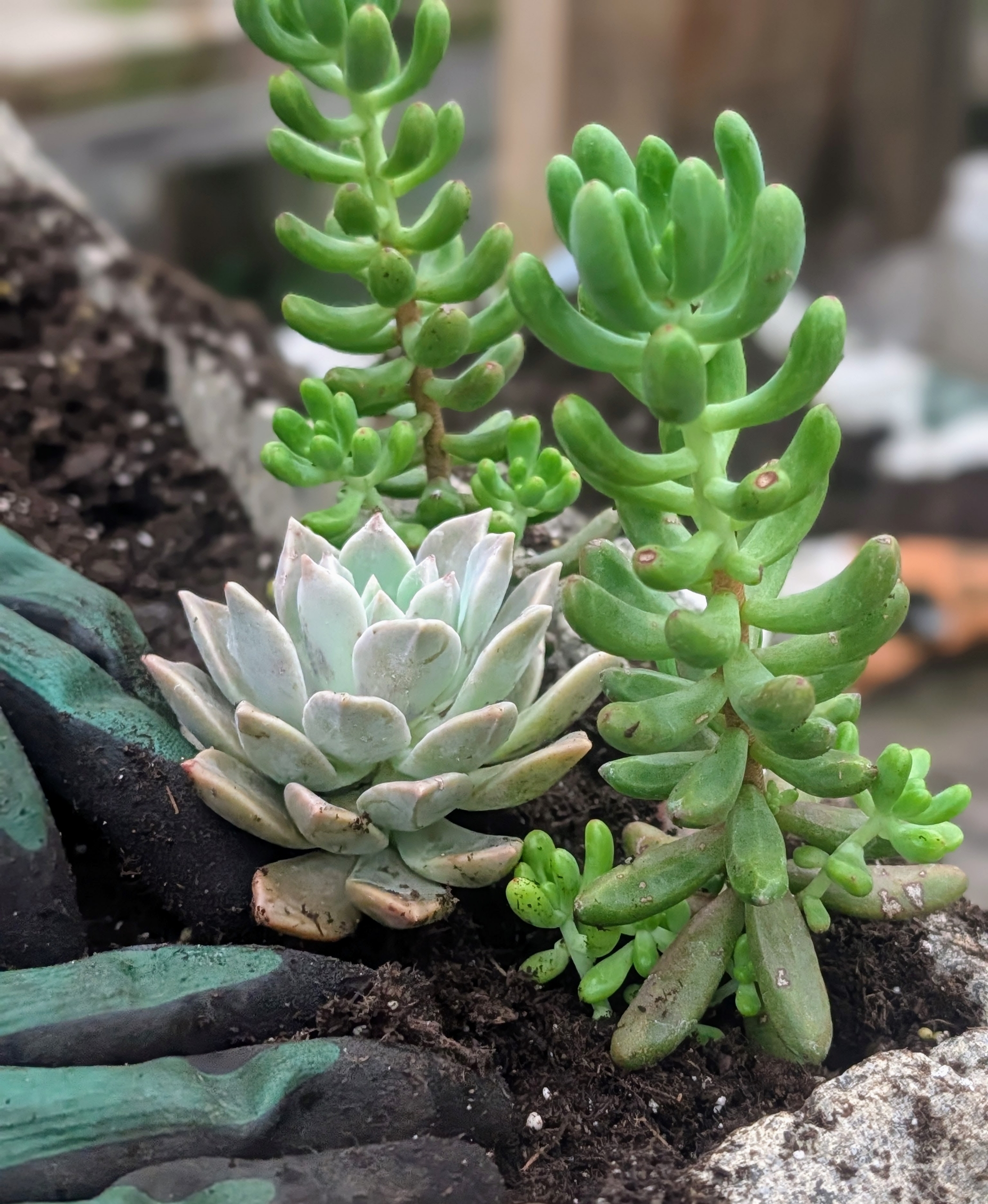
- Ryan carefully plants each succulent in the box taking into consideration each one’s size – he uses taller specimens in the back and shorter ones in front.
-
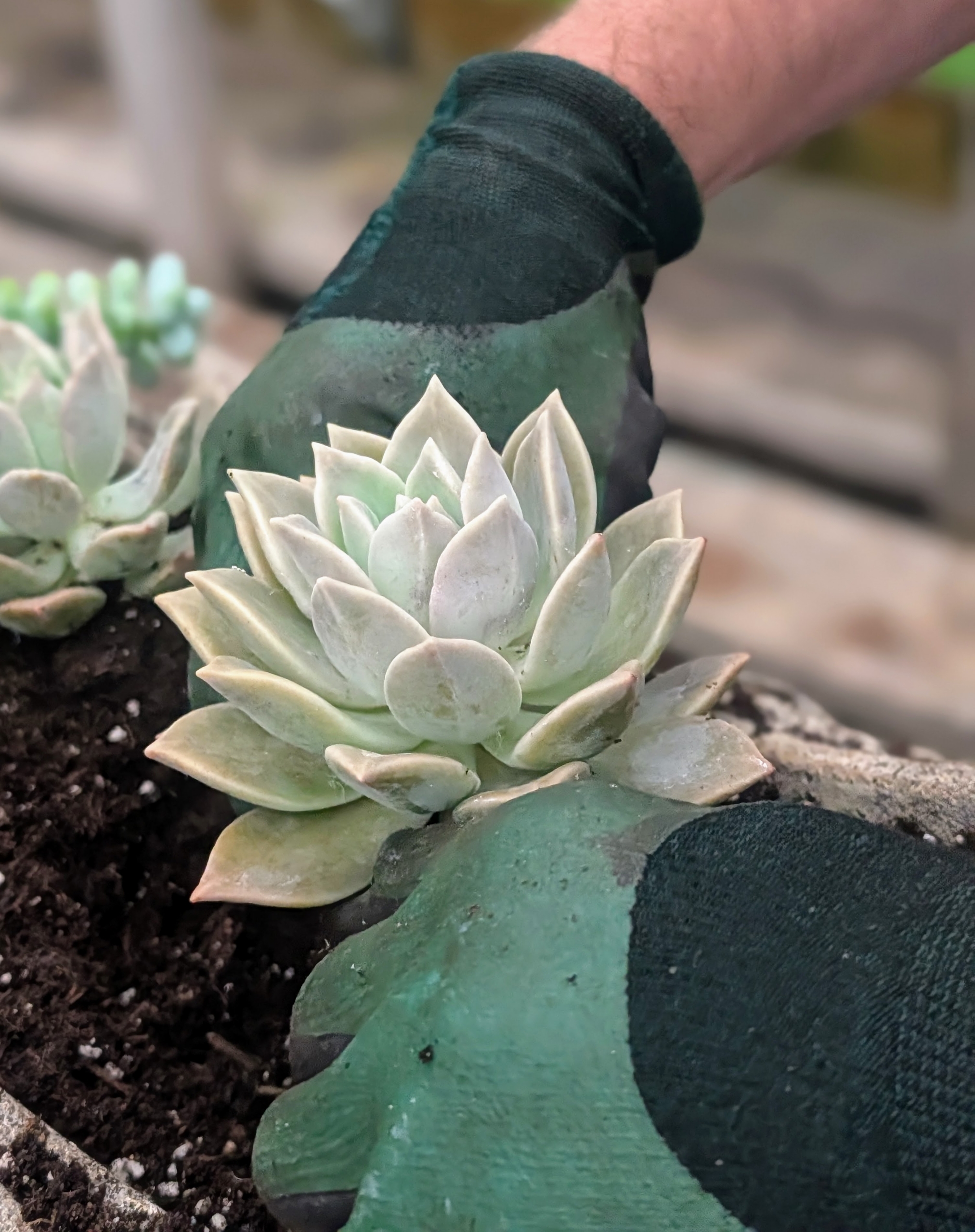
- These plants can be planted closely together, so don’t worry if some of them touch each other.
-
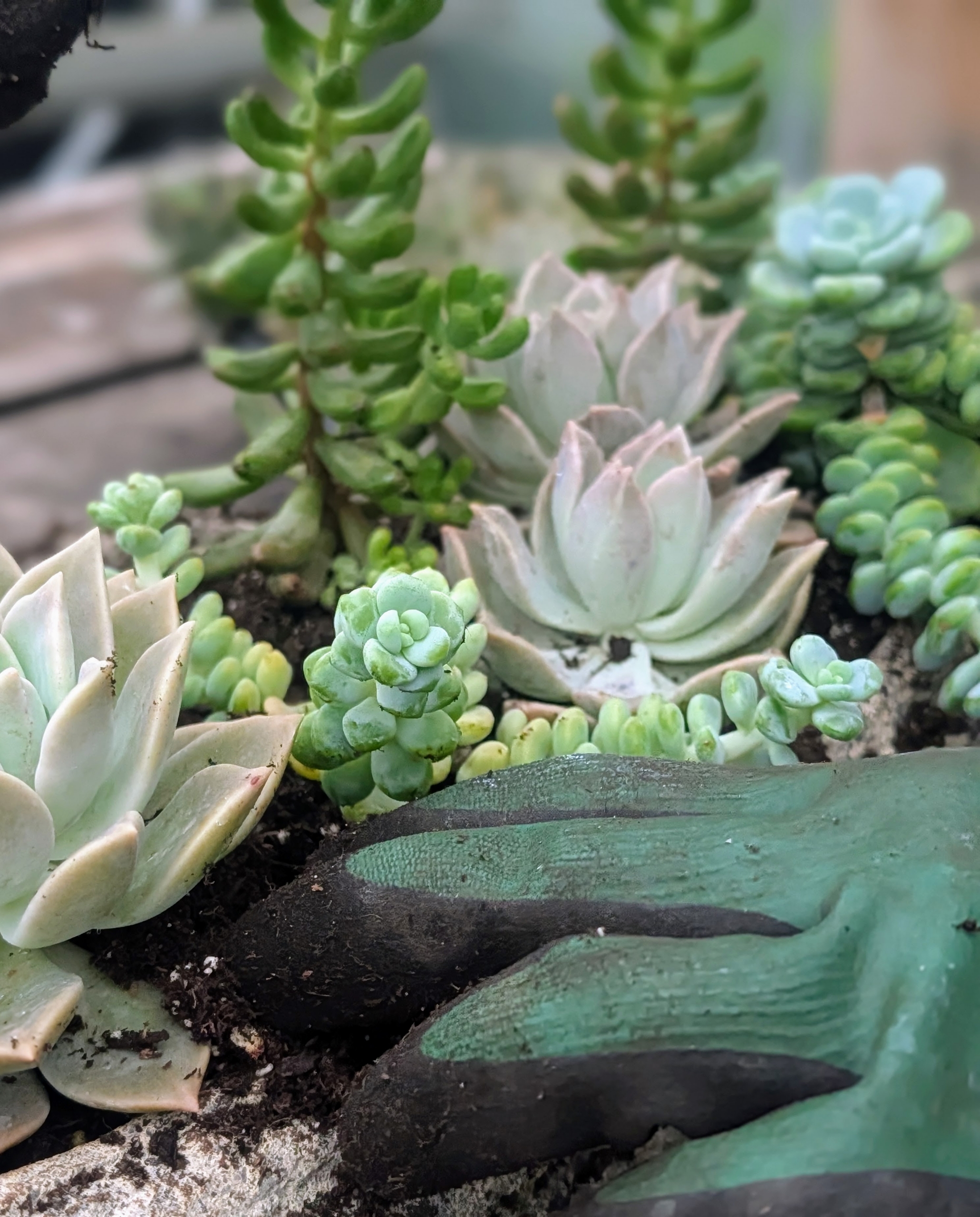
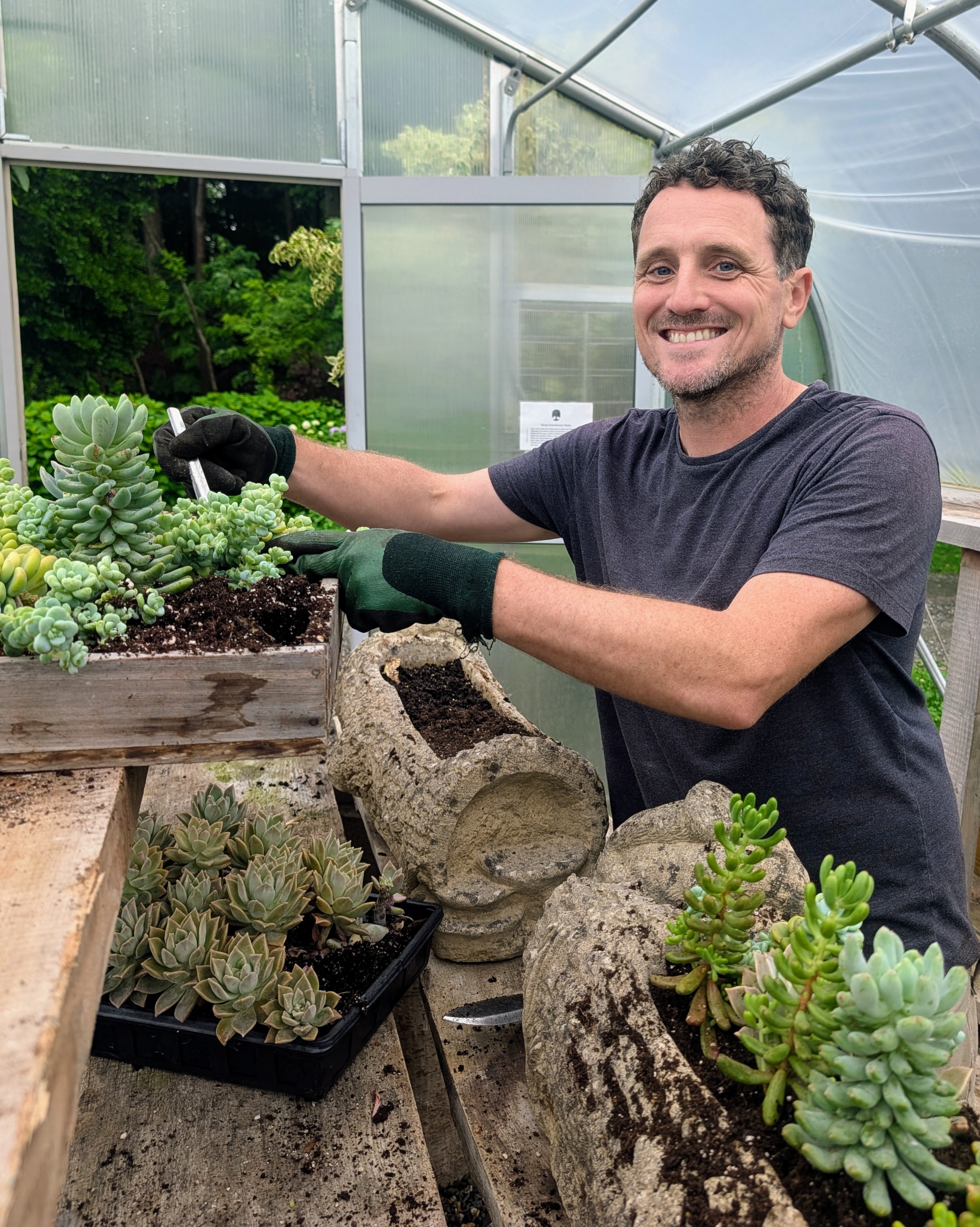
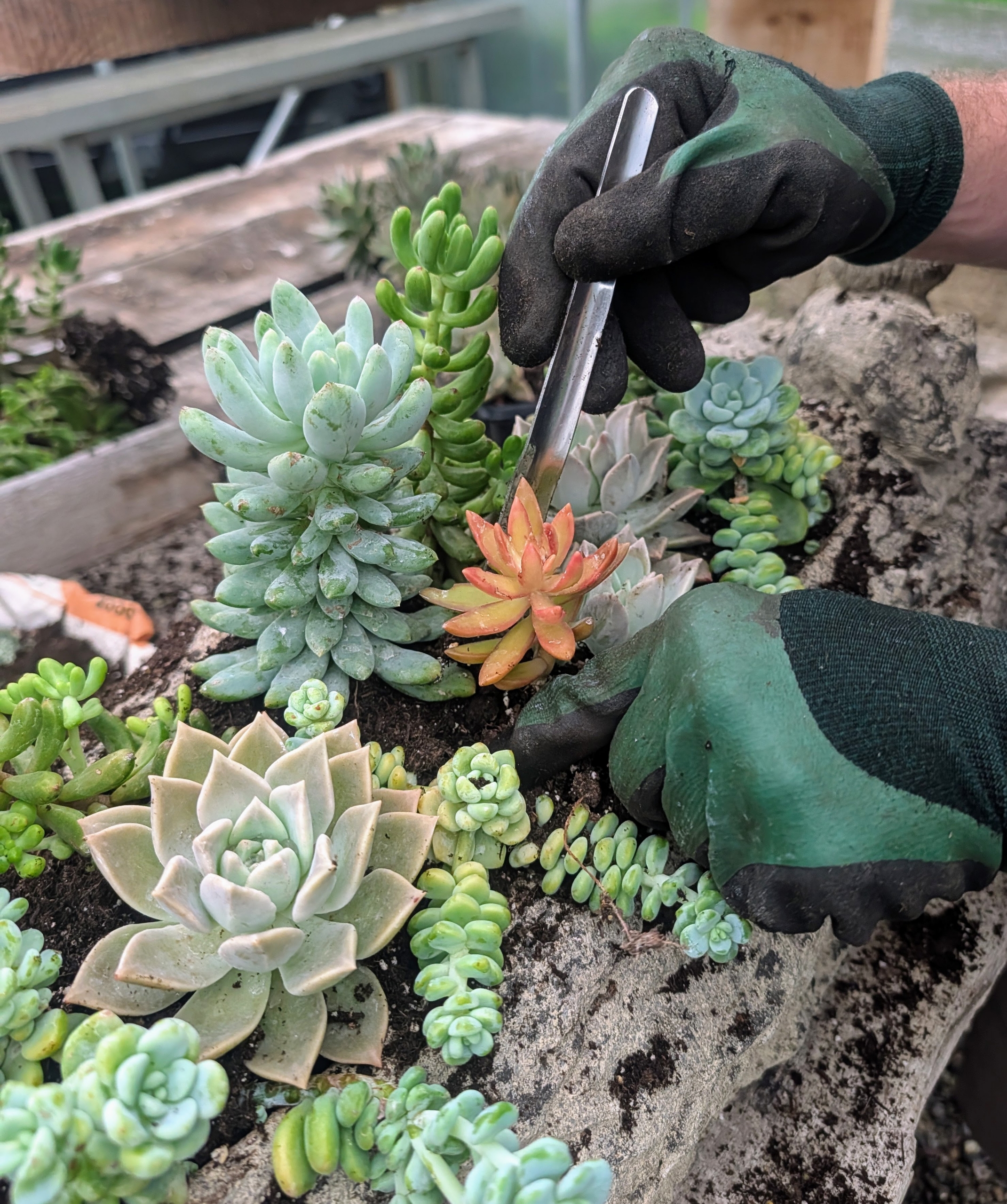
- Ryan also selects the plants creatively, so there is a varied use of color and texture in each container. Here he is using a widger to remove small plants.
-
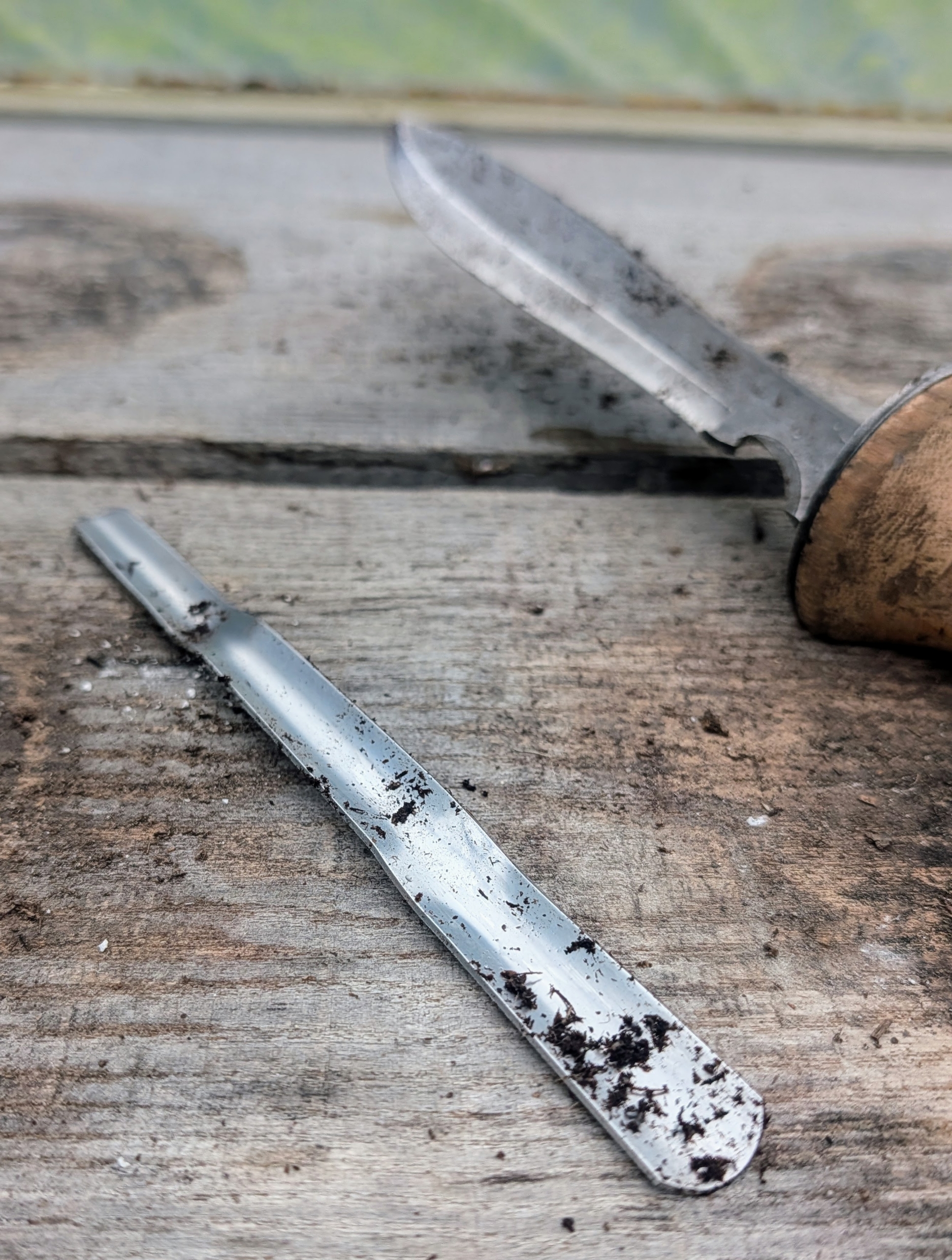
- The widger is made for Johnny’s Selected Seeds. It’s a very handy multipurpose tool. It has a convex stainless steel blade that delicately separates tiny plants and helps to lift up the root balls.
-
- Shades of green are a given for succulents, but one can also find succulents that are blue, purple, pink, orange, and even red!
-
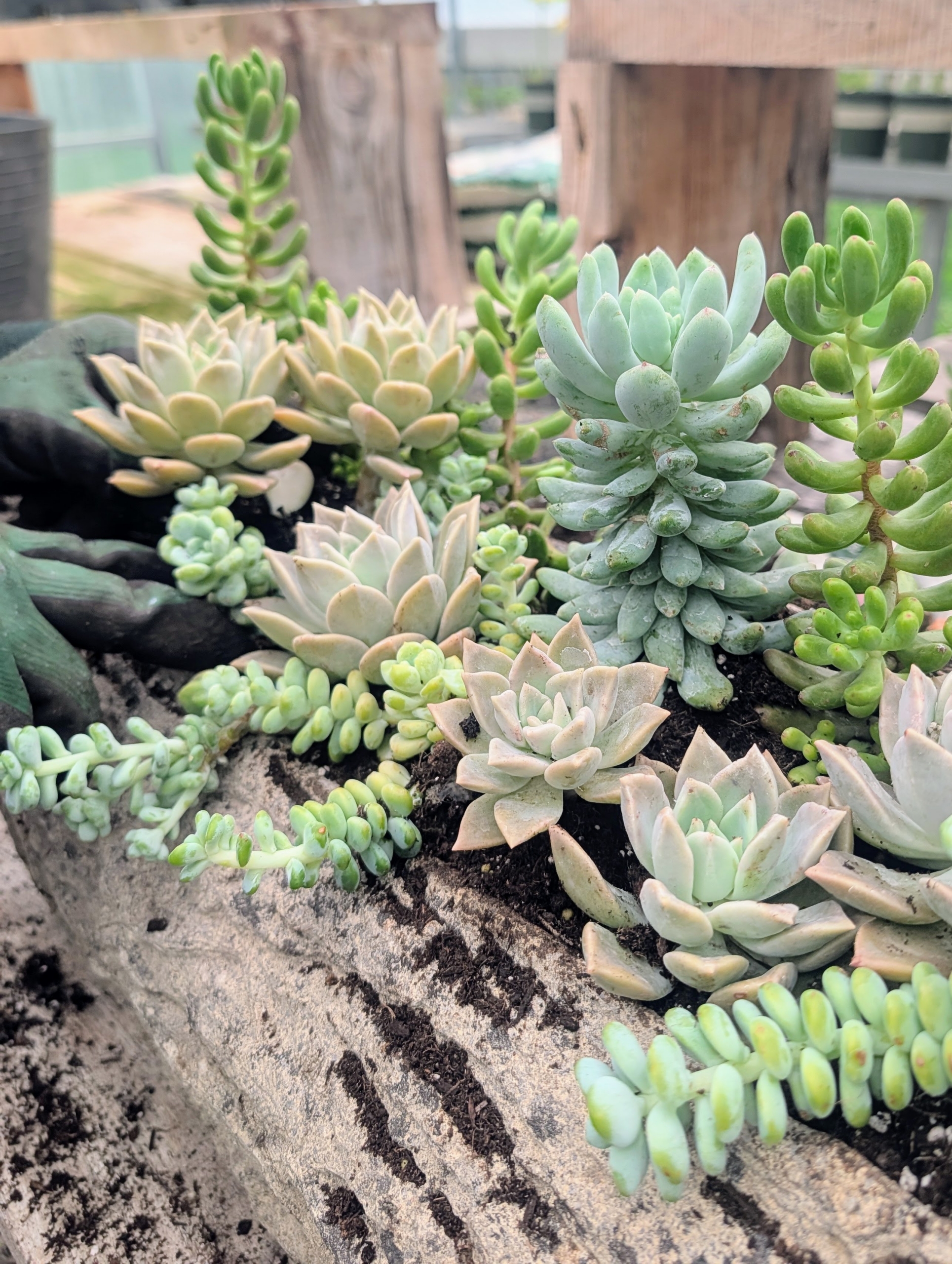
- Ryan makes sure all empty spaces are filled. It’s nearly complete – all these plants will do so well in this planter box.
-
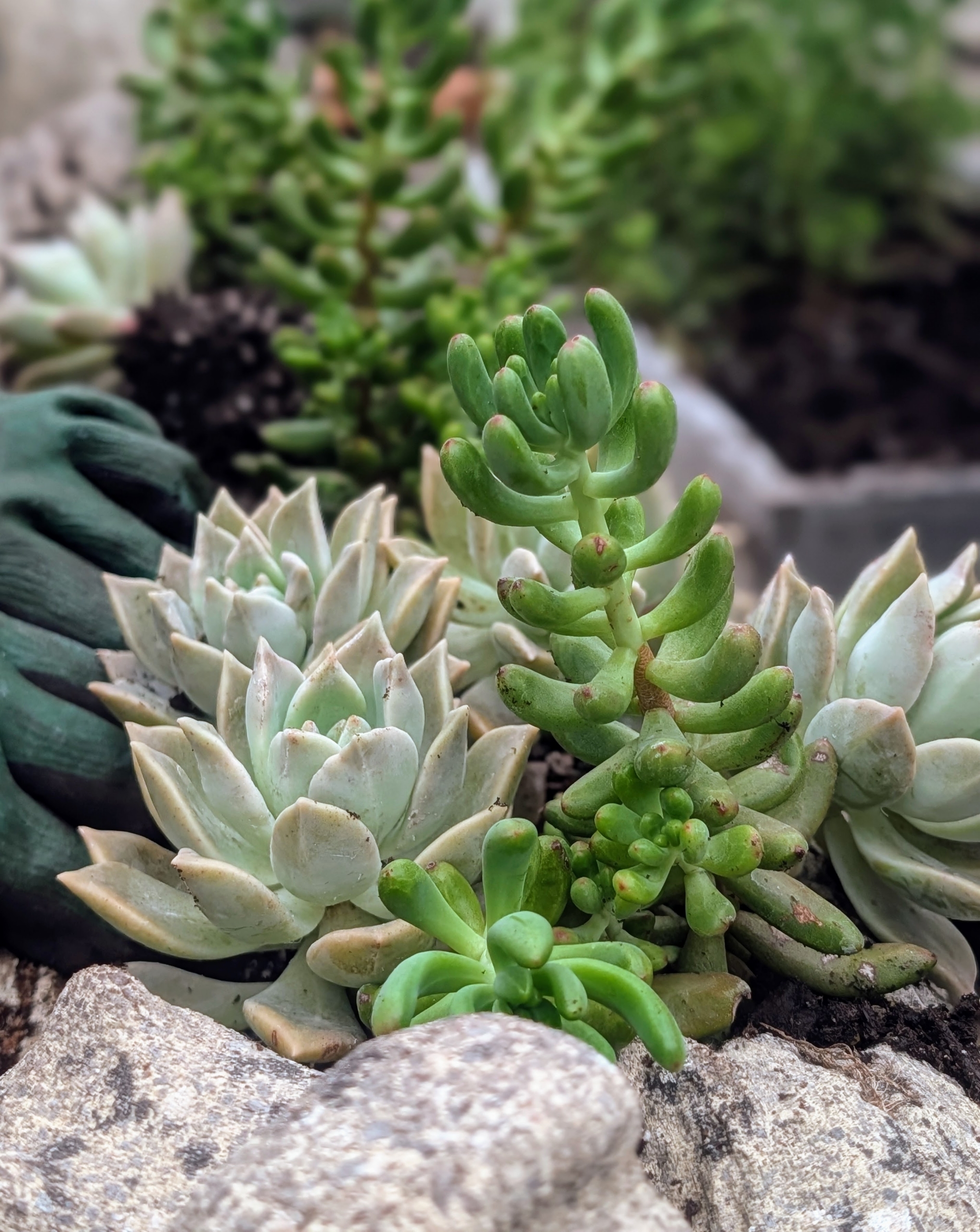
- Ryan does the same for the second planter. Succulents grow in so many different and interesting formations. I often bring succulents into my home when I entertain – guests love seeing and learning about the different varieties. In this trough, many are sedums. There are many, different varieties and species of sedum, also called “stonecrop.” Depending on their growth habit, sedums can be categorized as both low-growing and upright.
-
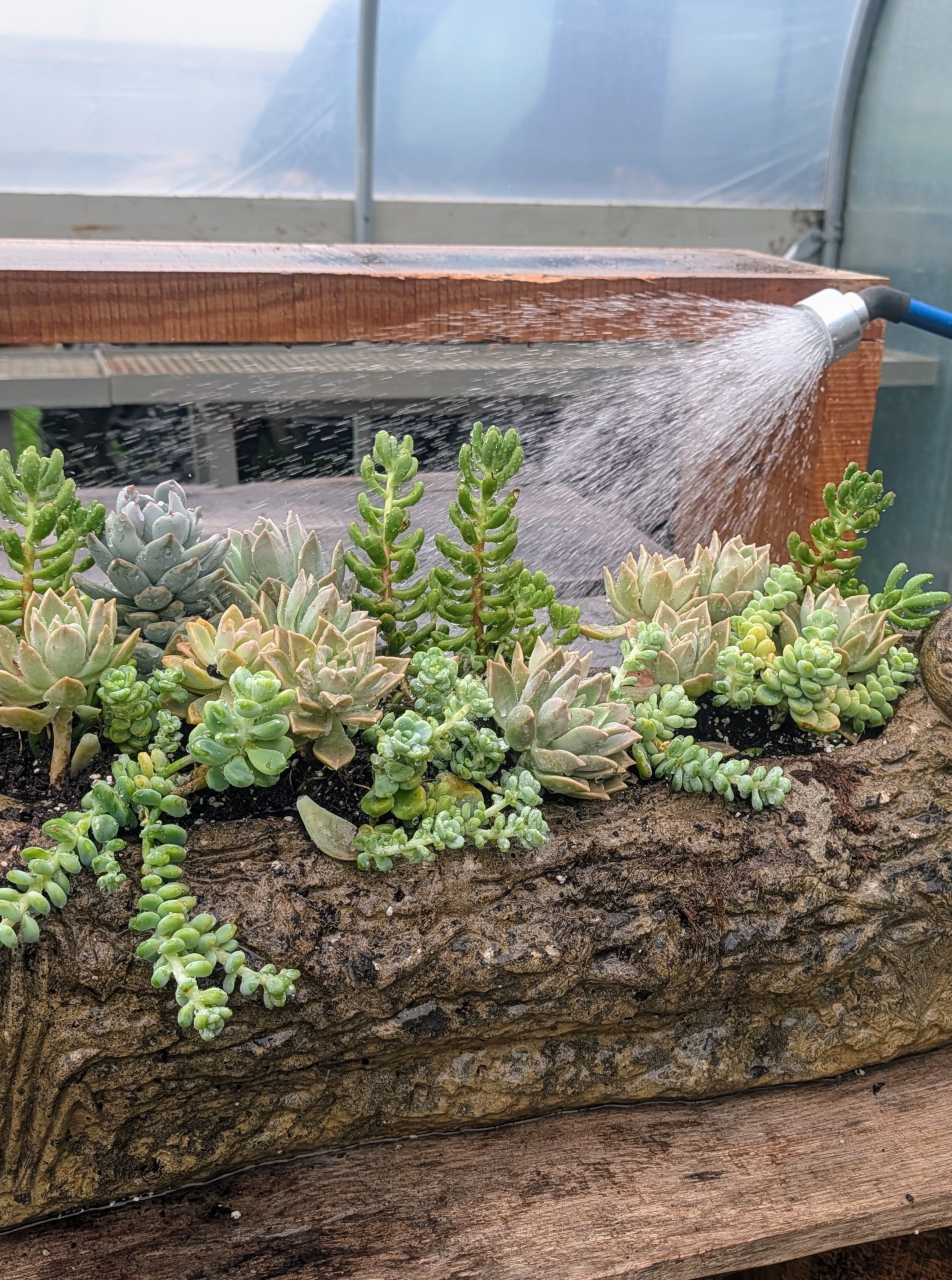
- After Ryan is done, the filled planters get a good watering.
-
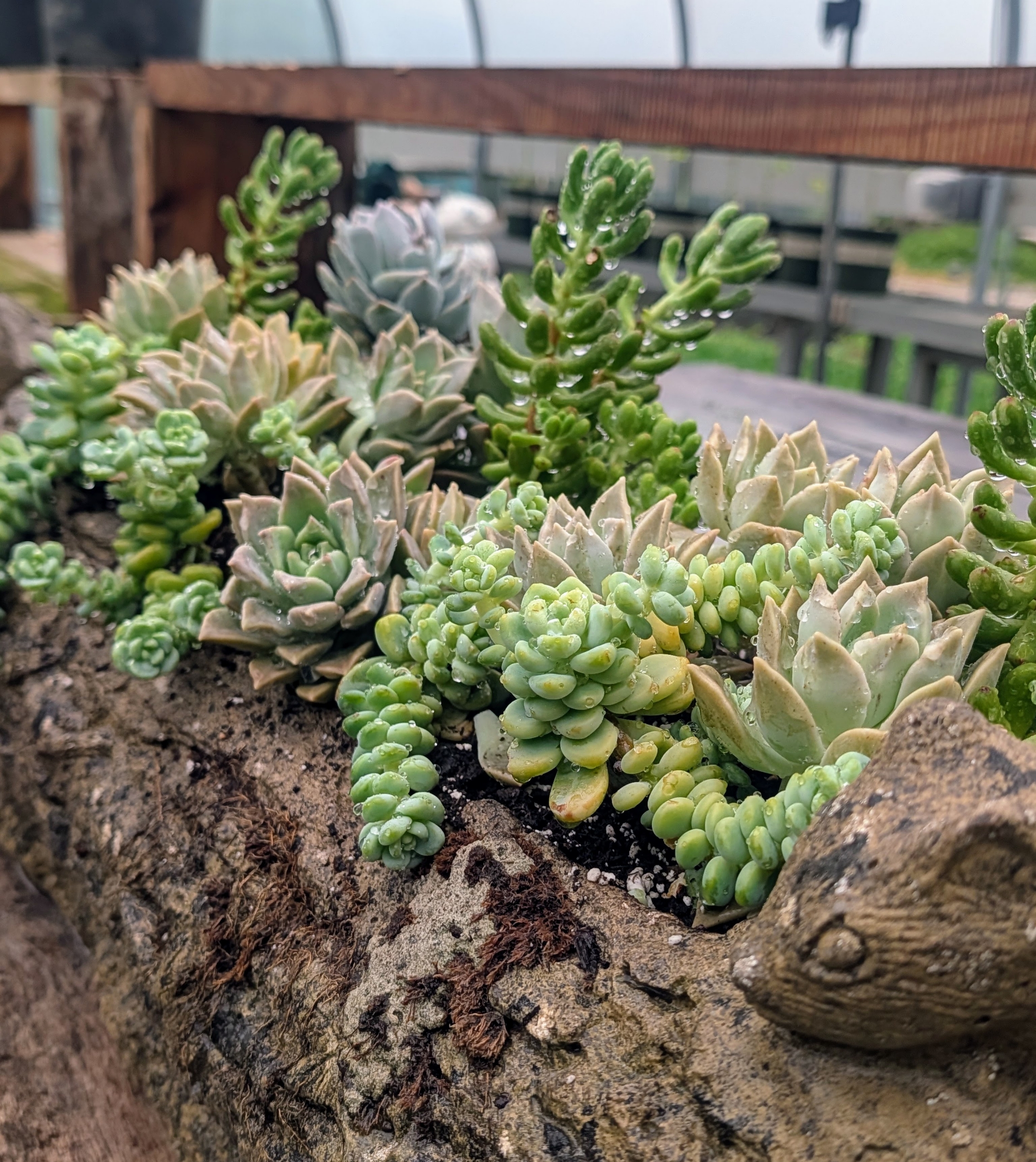
- These troughs are now ready for display outside my Winter House.
-
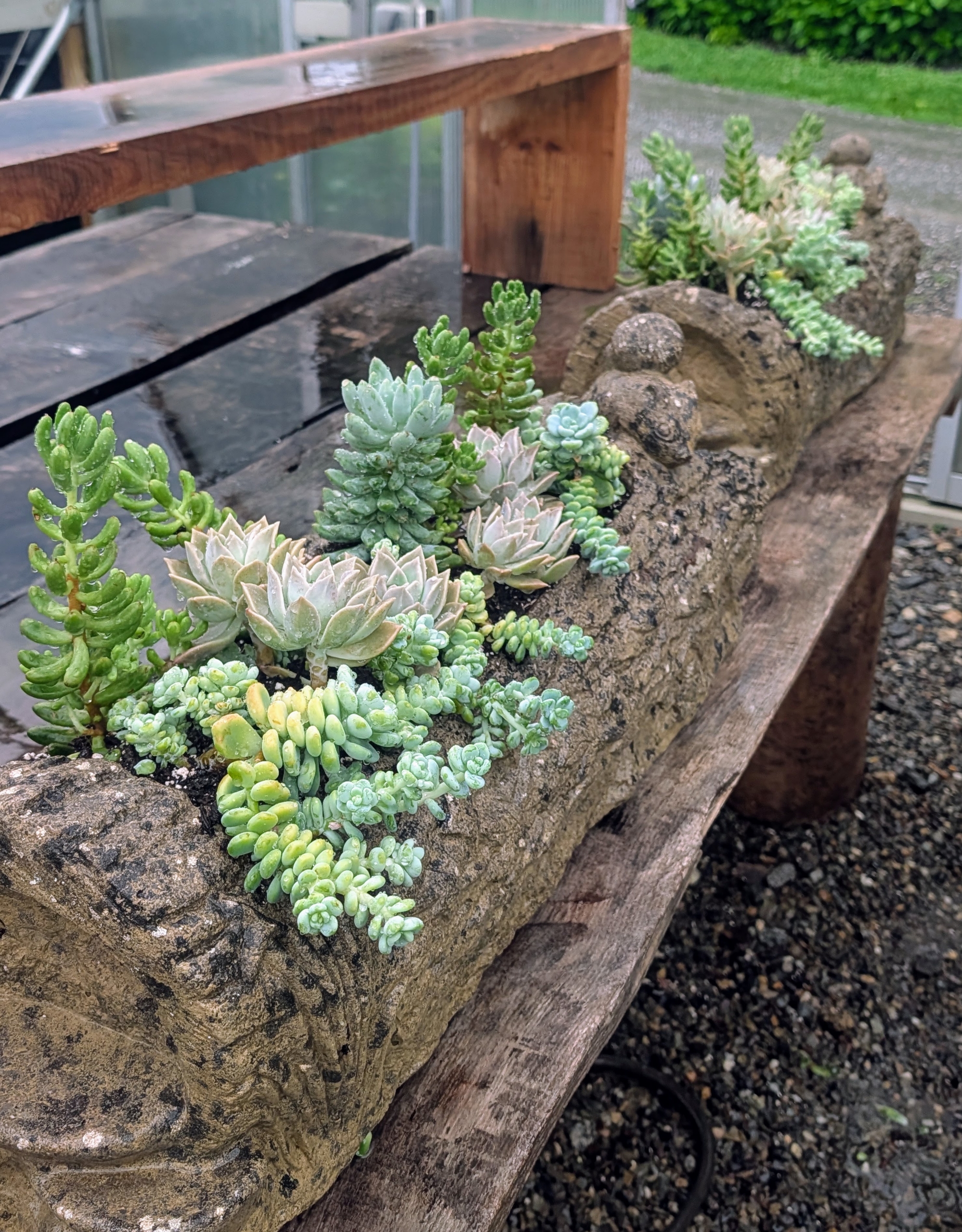
- Succulents thrive in bright light and should do excellently there.
 Martha Pins


 Martha Tweets

