

August Flowers in My Cutting Garden
As summer wears on, late-season flowers continue to bring vivid color and beauty to my gardens.
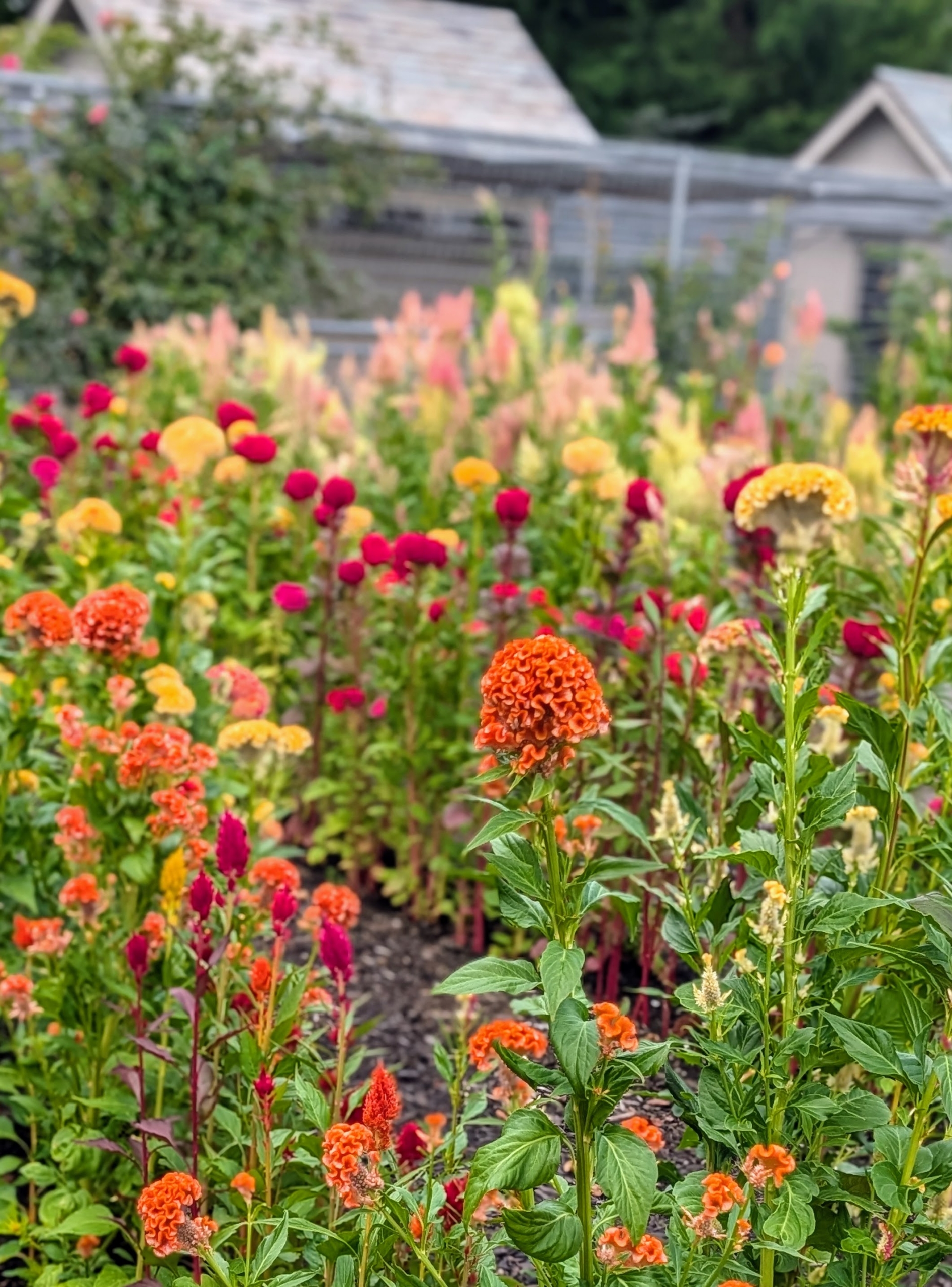
Down by my chicken coops, in what was once my vegetable garden, I dedicated a space entirely to annuals. Here, different varieties are thoughtfully arranged in beds according to size, color, and bloom time. Every flower is started from seed in my greenhouse. Right now, the Aztec marigolds, zinnias, cosmos, amaranth, and celosia are putting on a beautiful show - they are great flowers to admire outdoors in the garden and just as lovely when cut and brought indoors for arrangements.
Here are some photos.
-

- When I redesigned this garden, I wanted a space for raised beds where I could plant flowers by type specifically for cutting. This garden has such excellent, nutritious soil, I knew whatever was planted here would thrive.
-
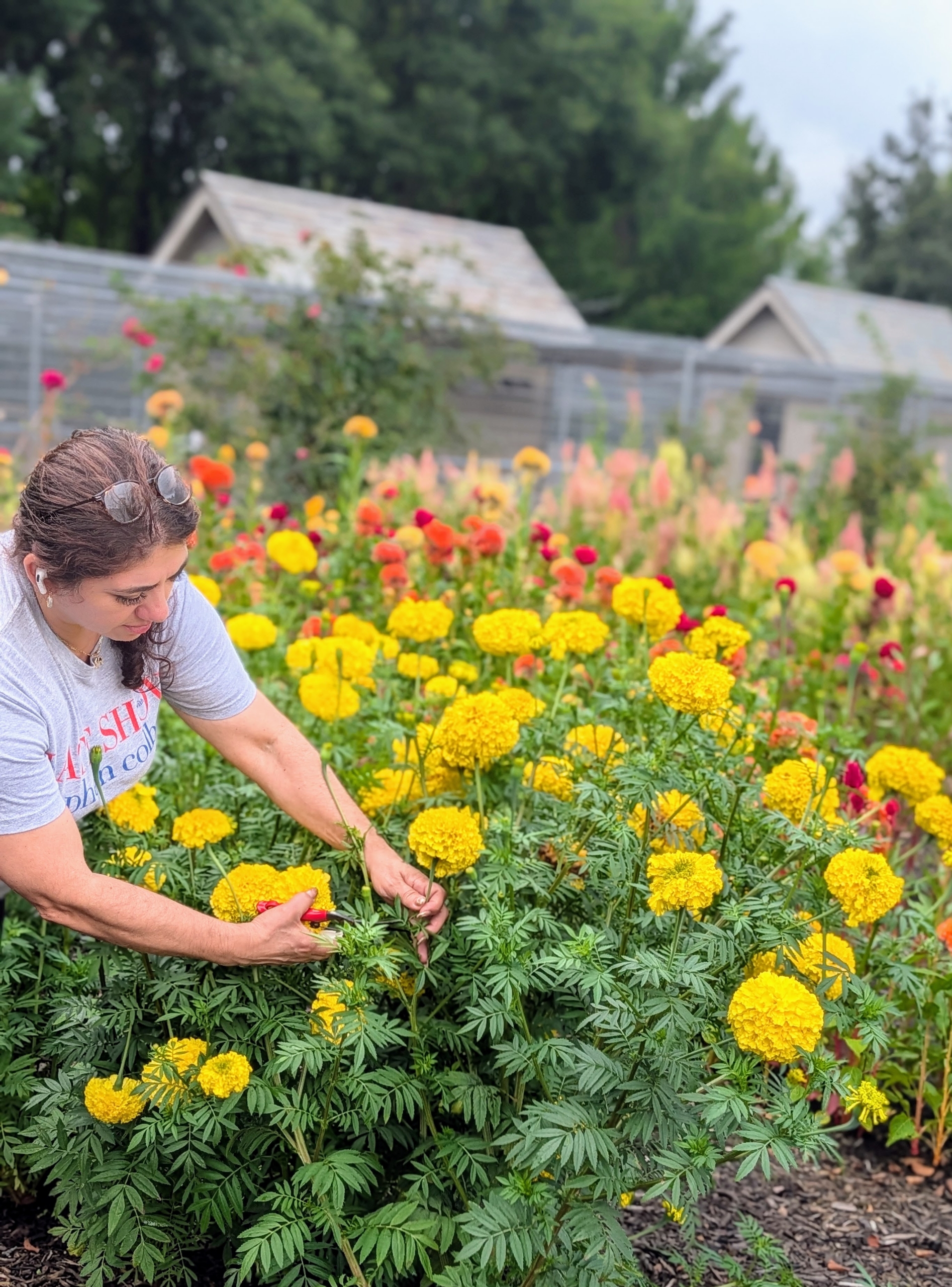
- I planted flowers that do well in full sunlight, meaning they get at least six to eight hours of sun per day. Enma cuts some of these giant Aztec marigolds for indoor arrangements.
-
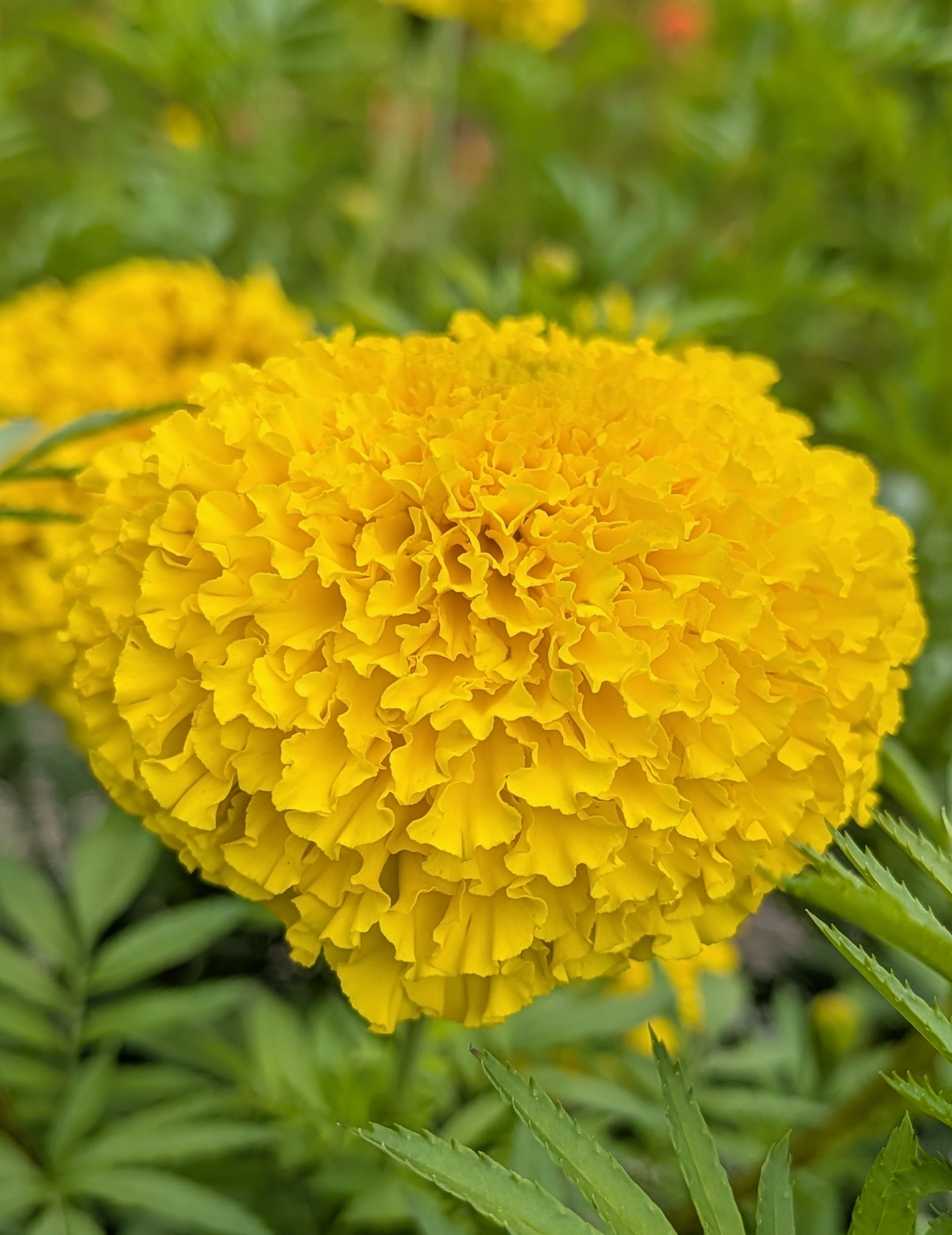
- Also known as American marigold or African marigold, Aztec marigold, Tagetes erecta, is a showy, easy-to-grow annual that blooms from summer to the first frost. The huge, fragrant blooms, appear on top of one to four-foot stems and are available in various shades of orange, yellow, bronze, and creamy white.
-
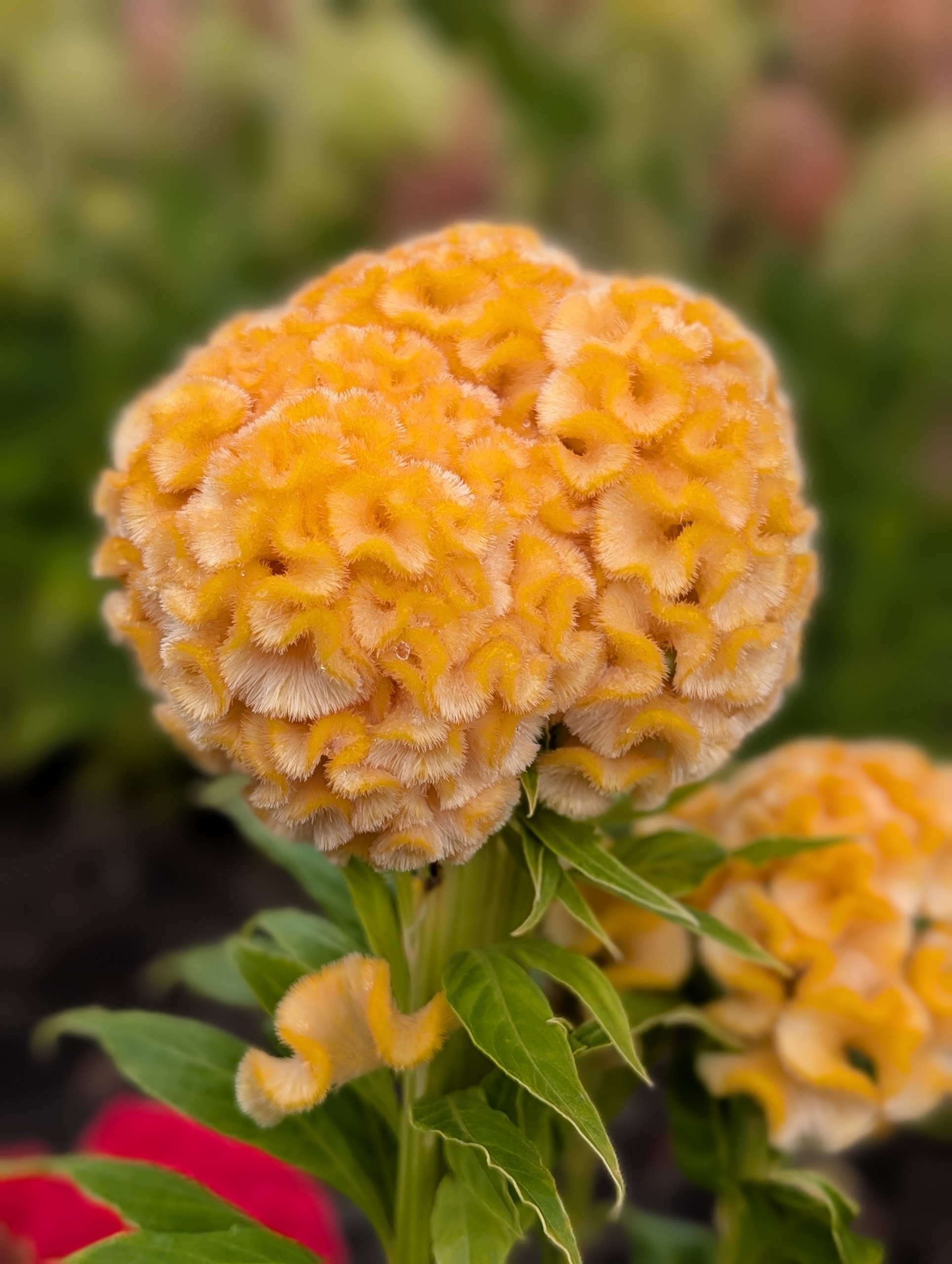
- Celosia is a small genus of edible and ornamental plants in the amaranth family, Amaranthaceae. Its species are commonly known as woolflowers, or, if the flower heads are crested, cockscombs. The plants are well known in East Africa’s highlands and are used under their Swahili name, mfungu.
-
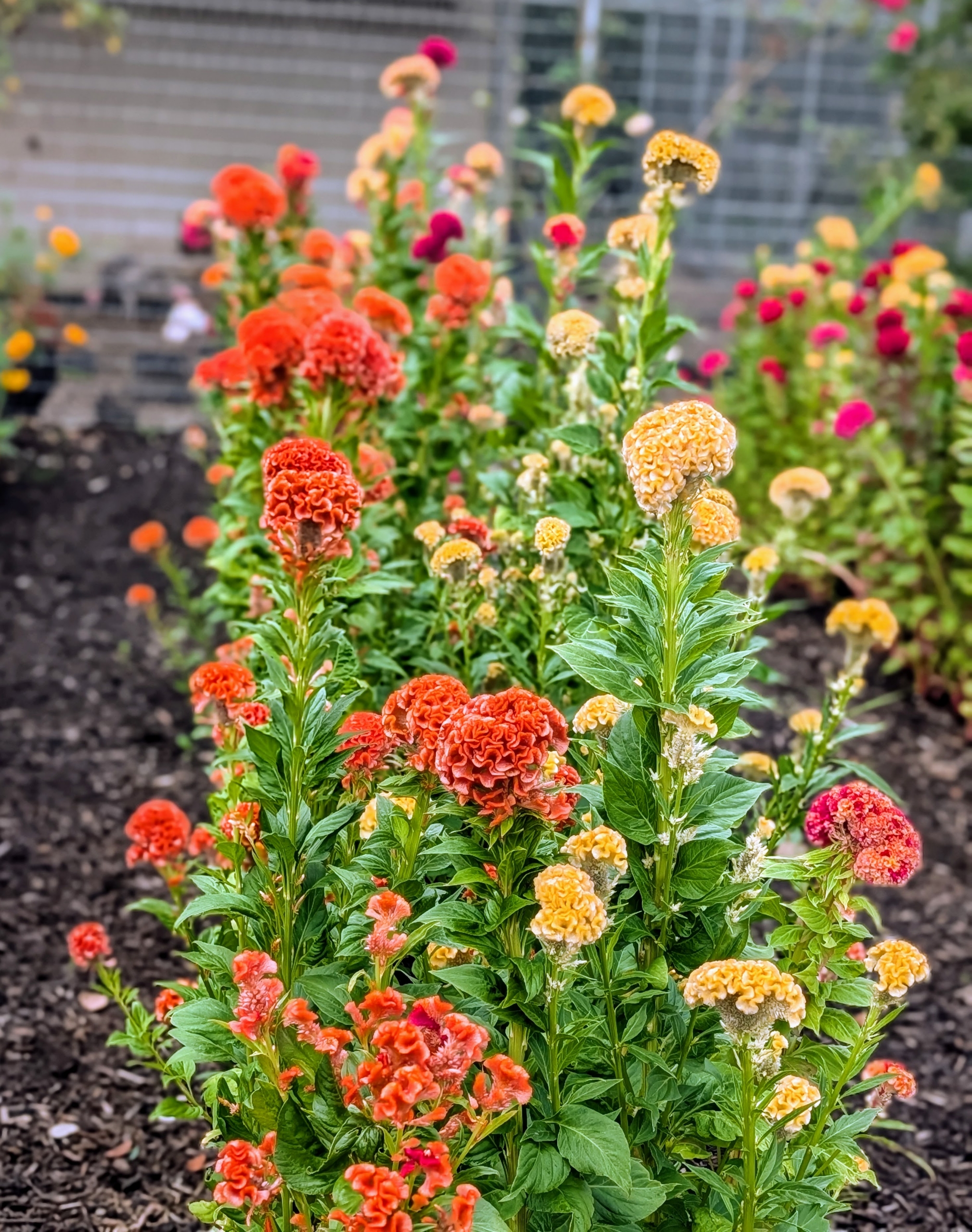
- This crested type, Celosia Cristata, has twisted, dense, velvety flower heads that can grow to six inches wide.
-
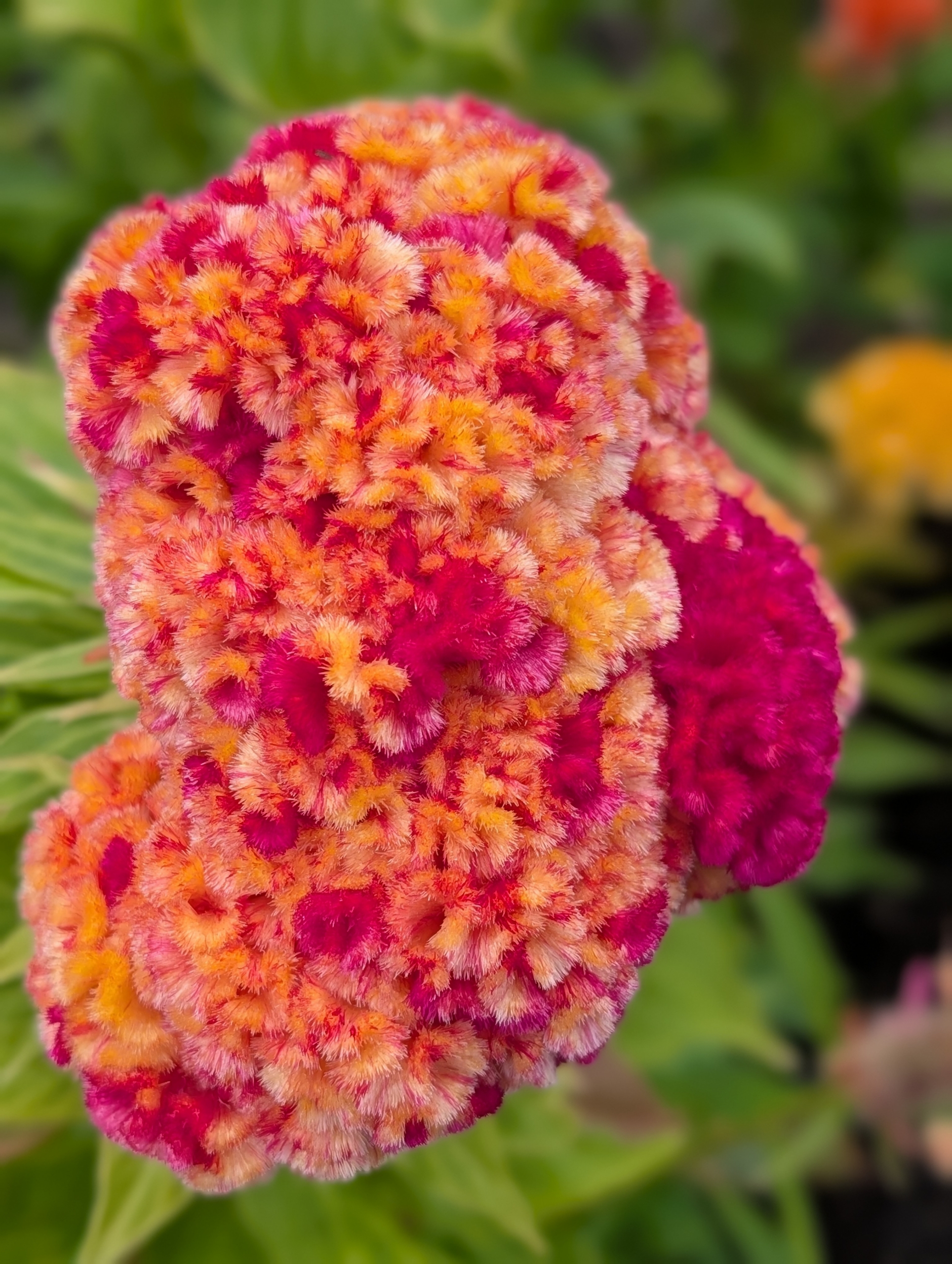
- While many are one color, some of them come in a combination of colors, such as this one in shades of orange and red.
-
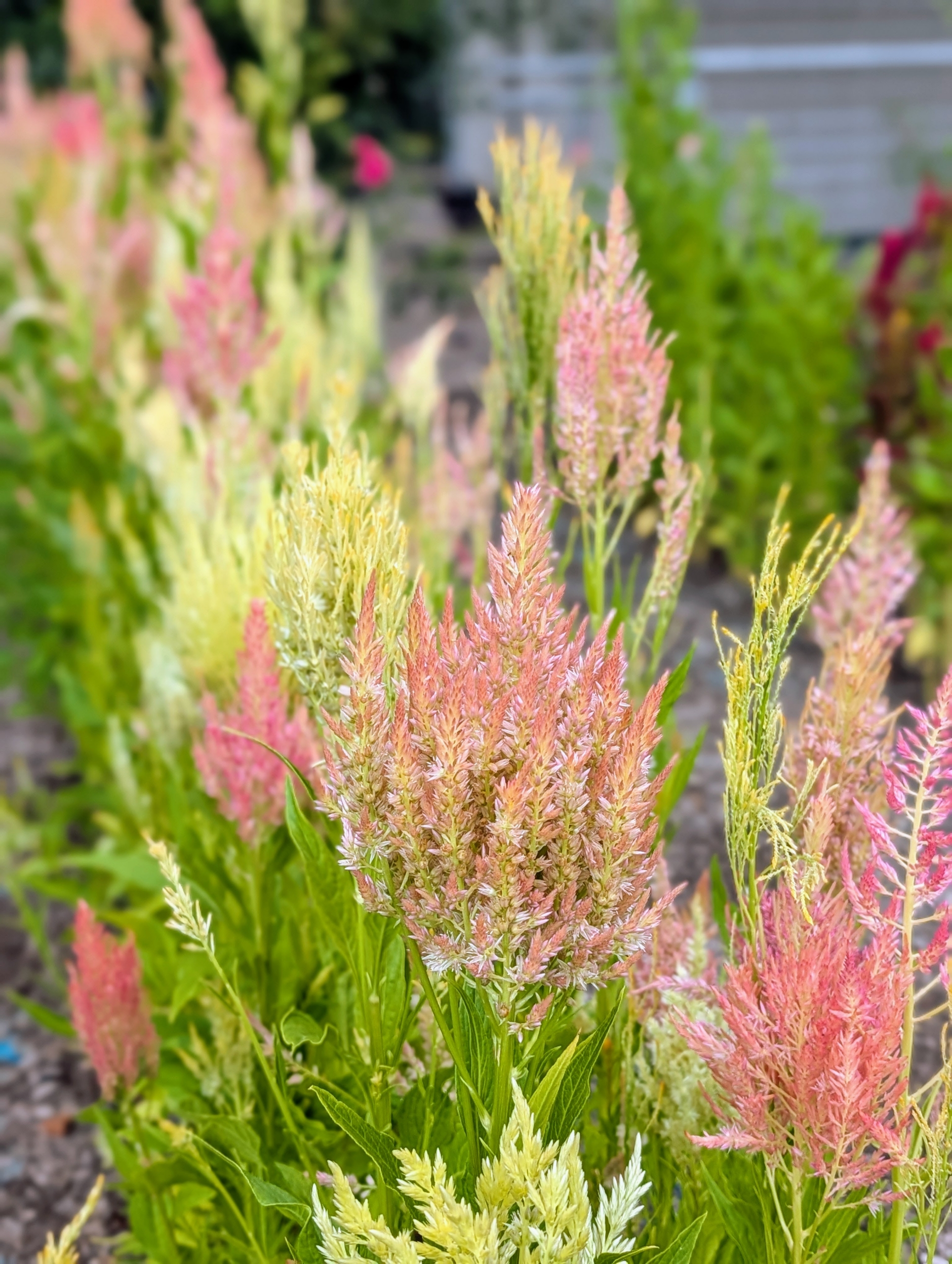
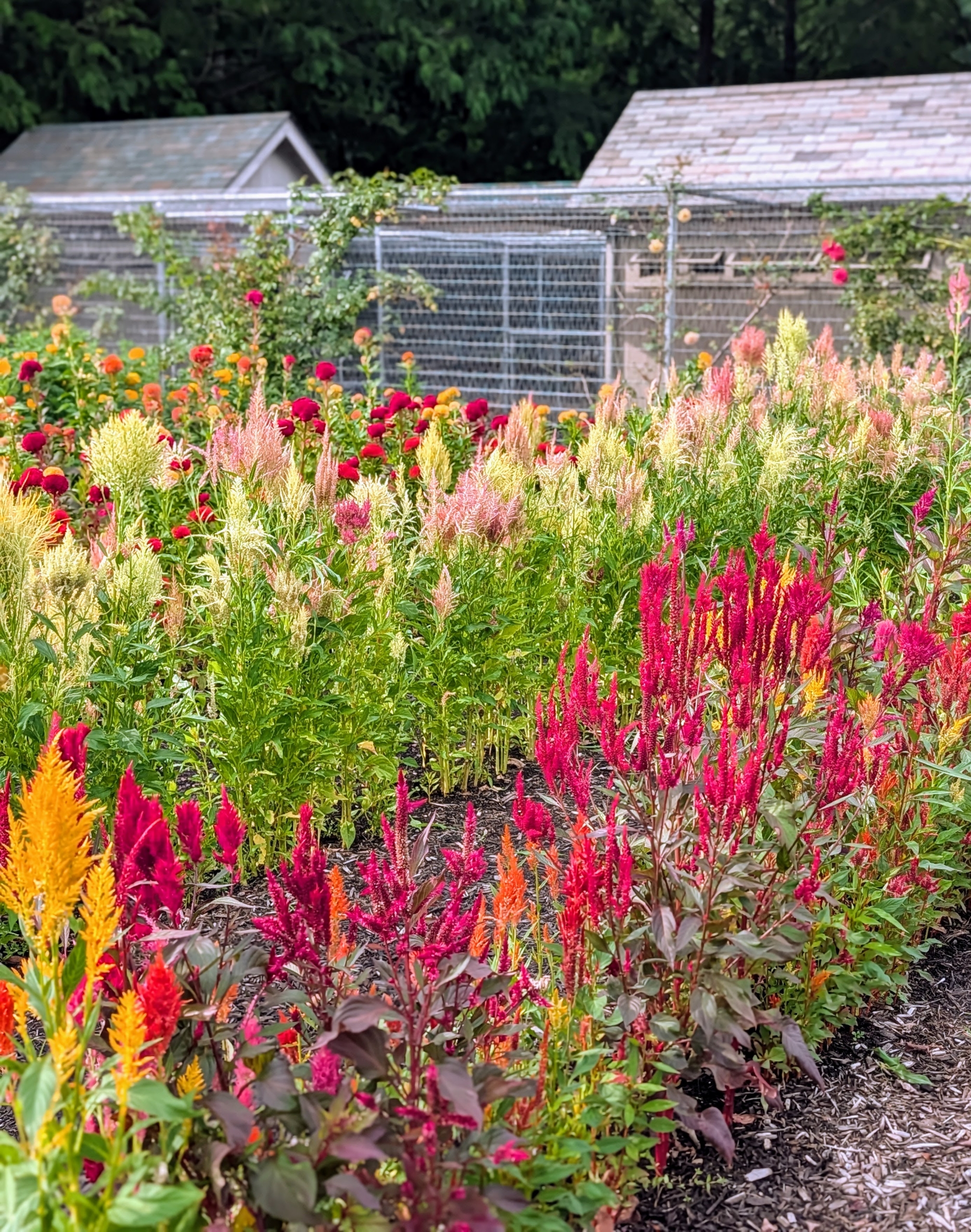
- This is the most widely grown type – the feathery, flame-like Celosia flowers made of hundreds of slender, bracts from a central axis.
-
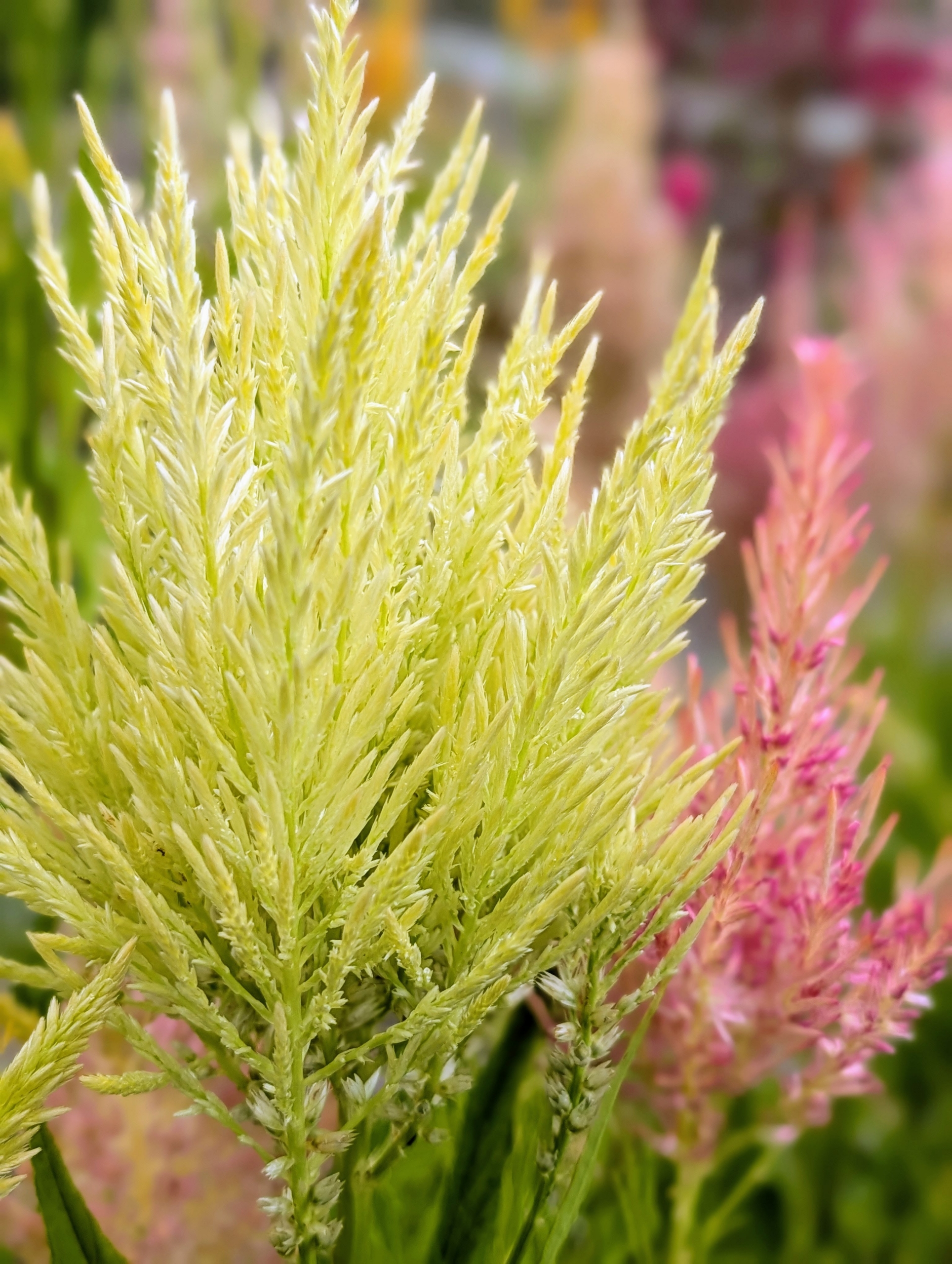
- These celosia flowers also come in a vibrant array of colors including bright yellow, orange, pink, fiery shades of red, and deep purple.
-
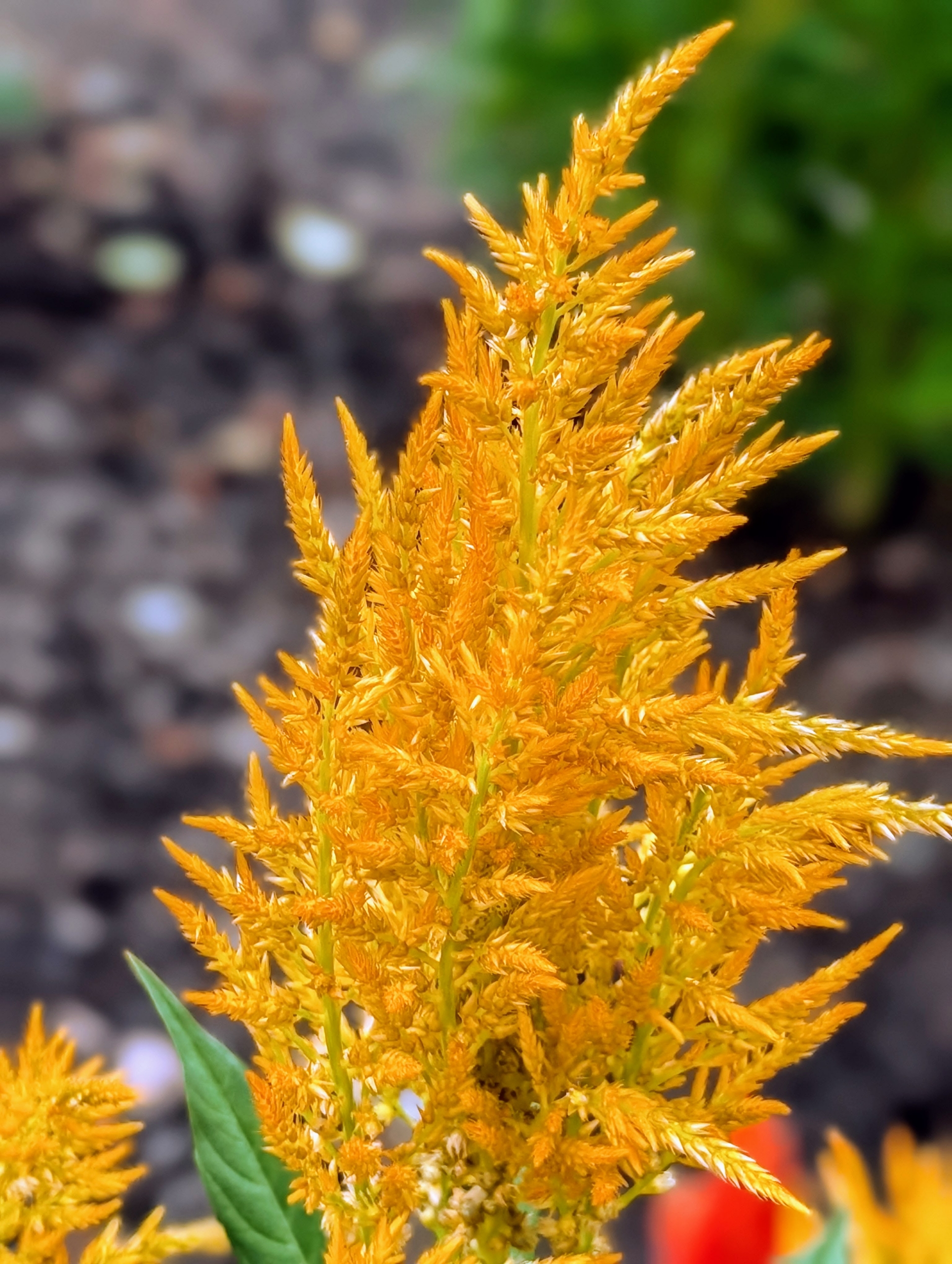
- Here’s a plume celosia in a bold gold. The flowers are vibrant in the garden, but also hold up very well when cut, adding dramatic texture to arrangements.
-
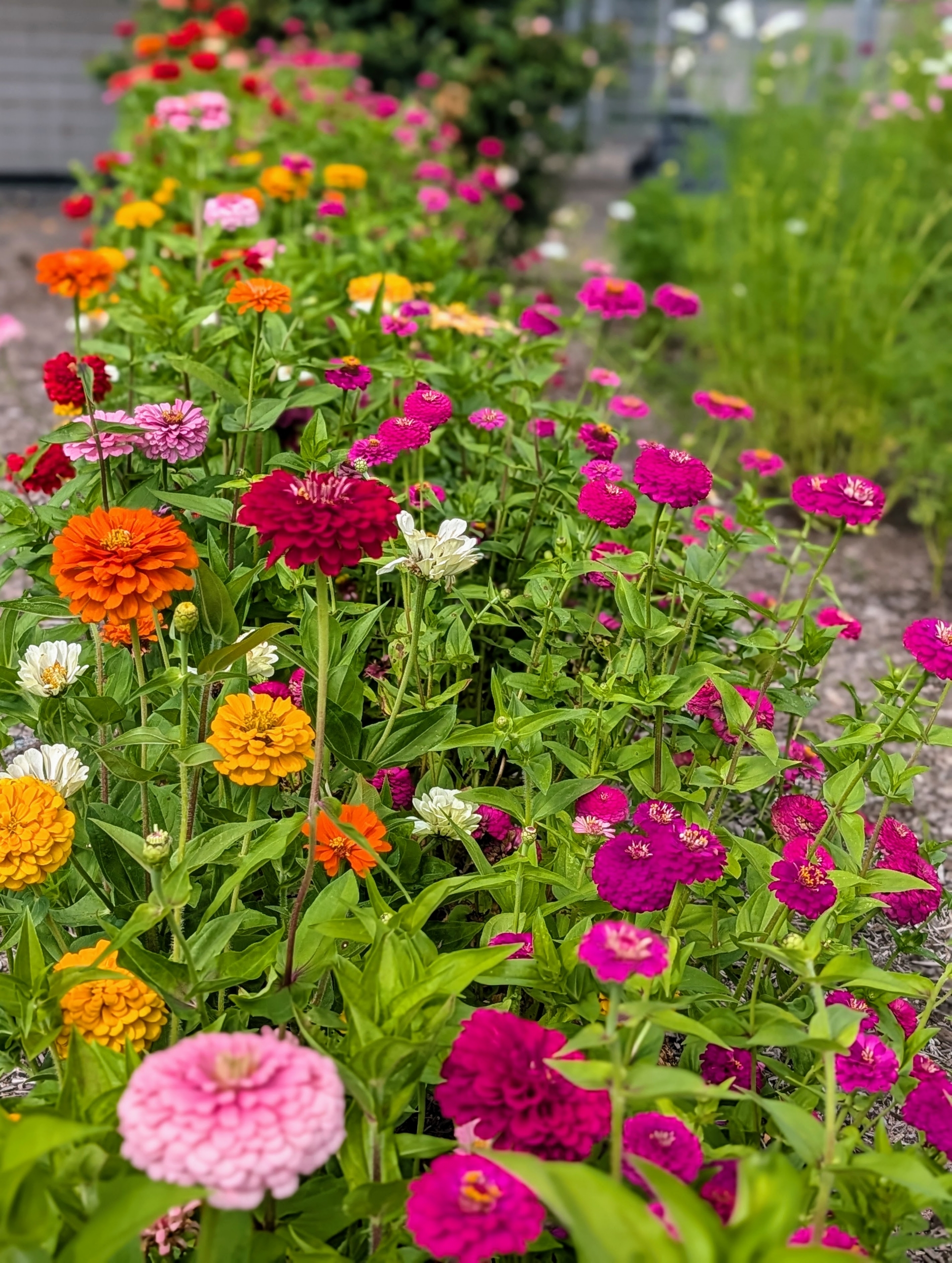
- Another big shower right now – my zinnias. Zinnia is a member of the aster family and native to Mexico and Central America.
-
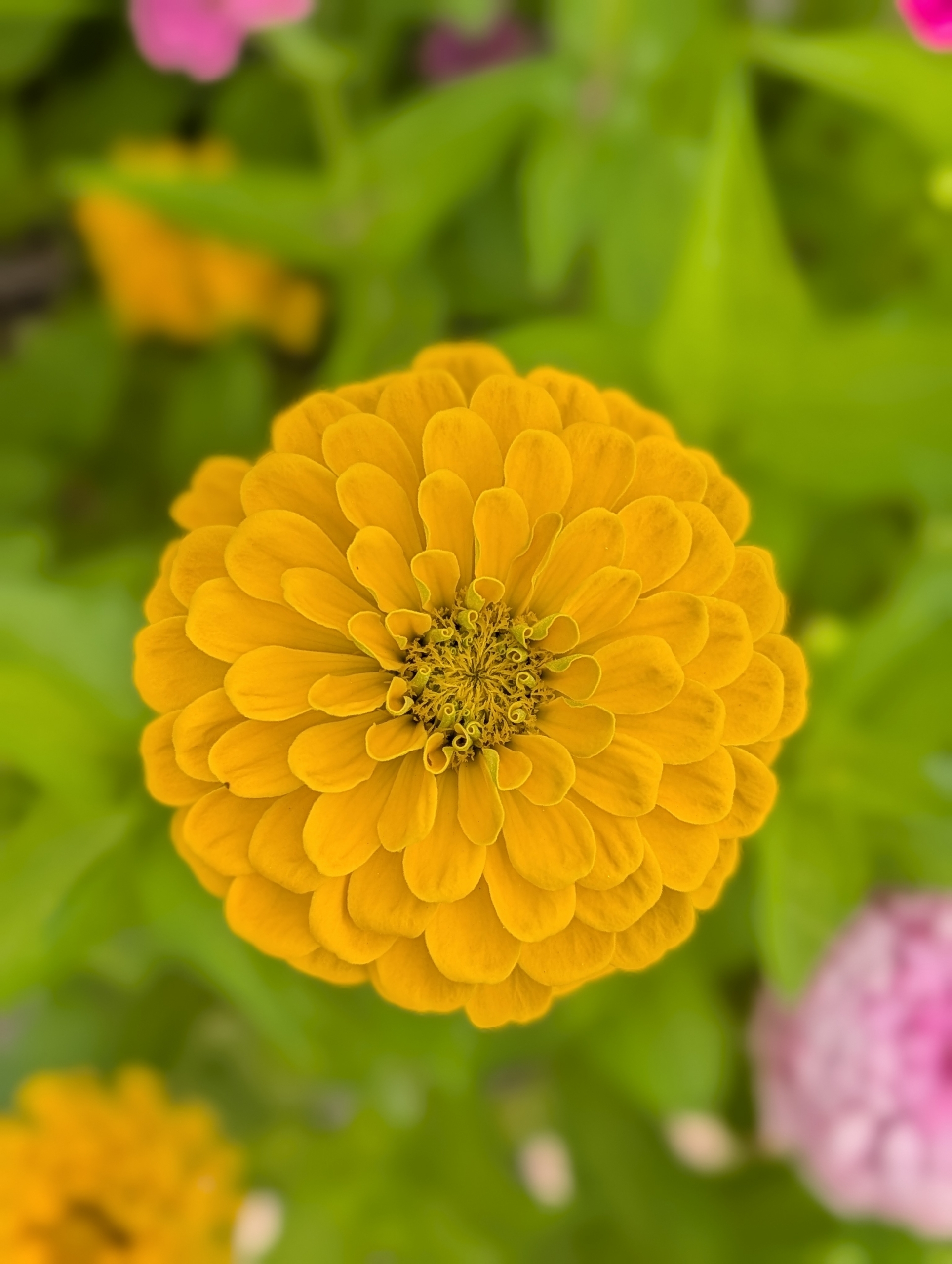
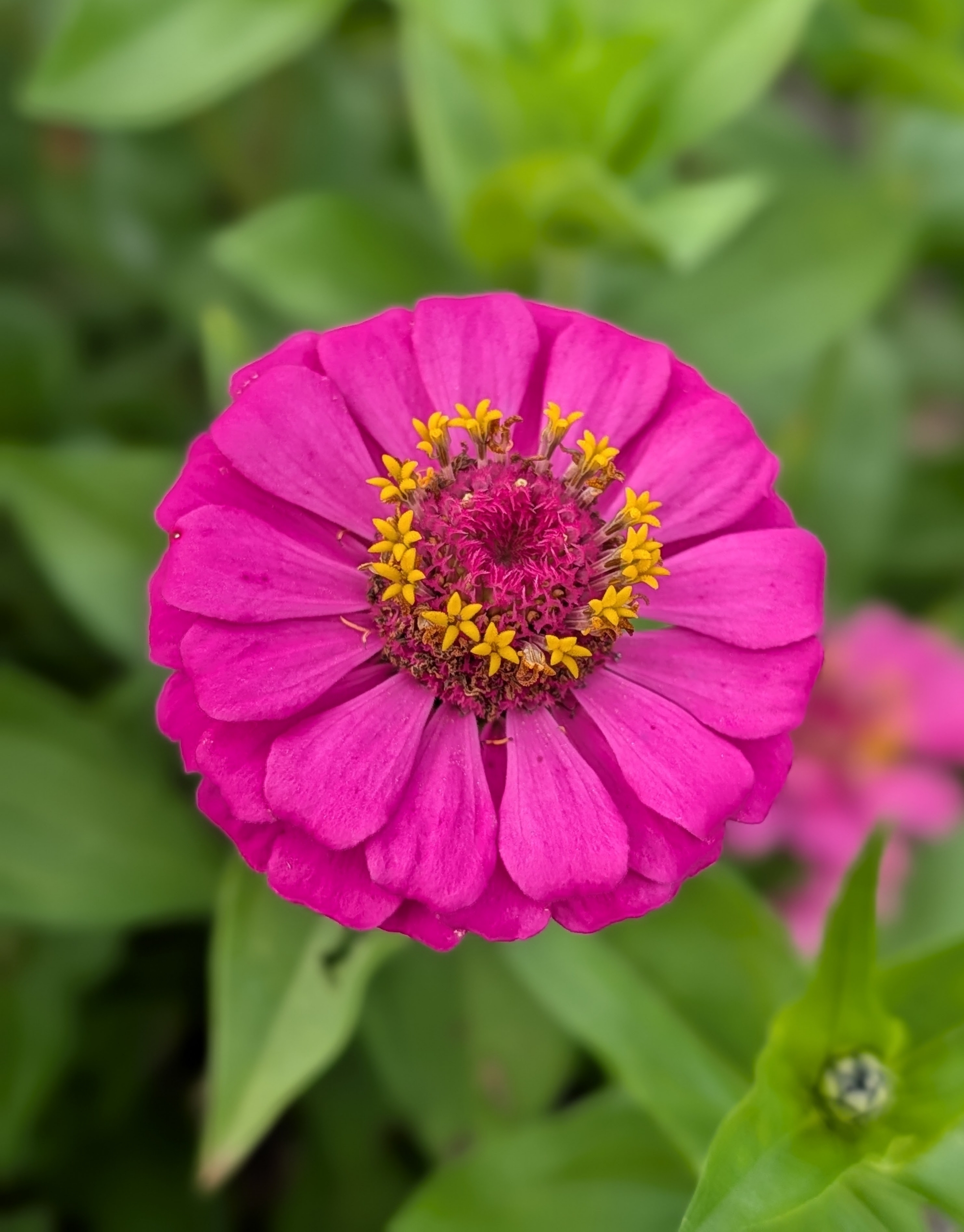
- Zinnias are the simplest of flowers and was a favorite of my dad. They come in extraordinary colors and sizes and shapes and are easily grown in one short season.
-
- The Aztecs originally called them “plants that are hard on the eyes” because of their colorful flowers. Zinnia is named after Johann Gottfried Zinn, a German botany professor who discovered the plants and brought them to Europe in the 1700s.
-
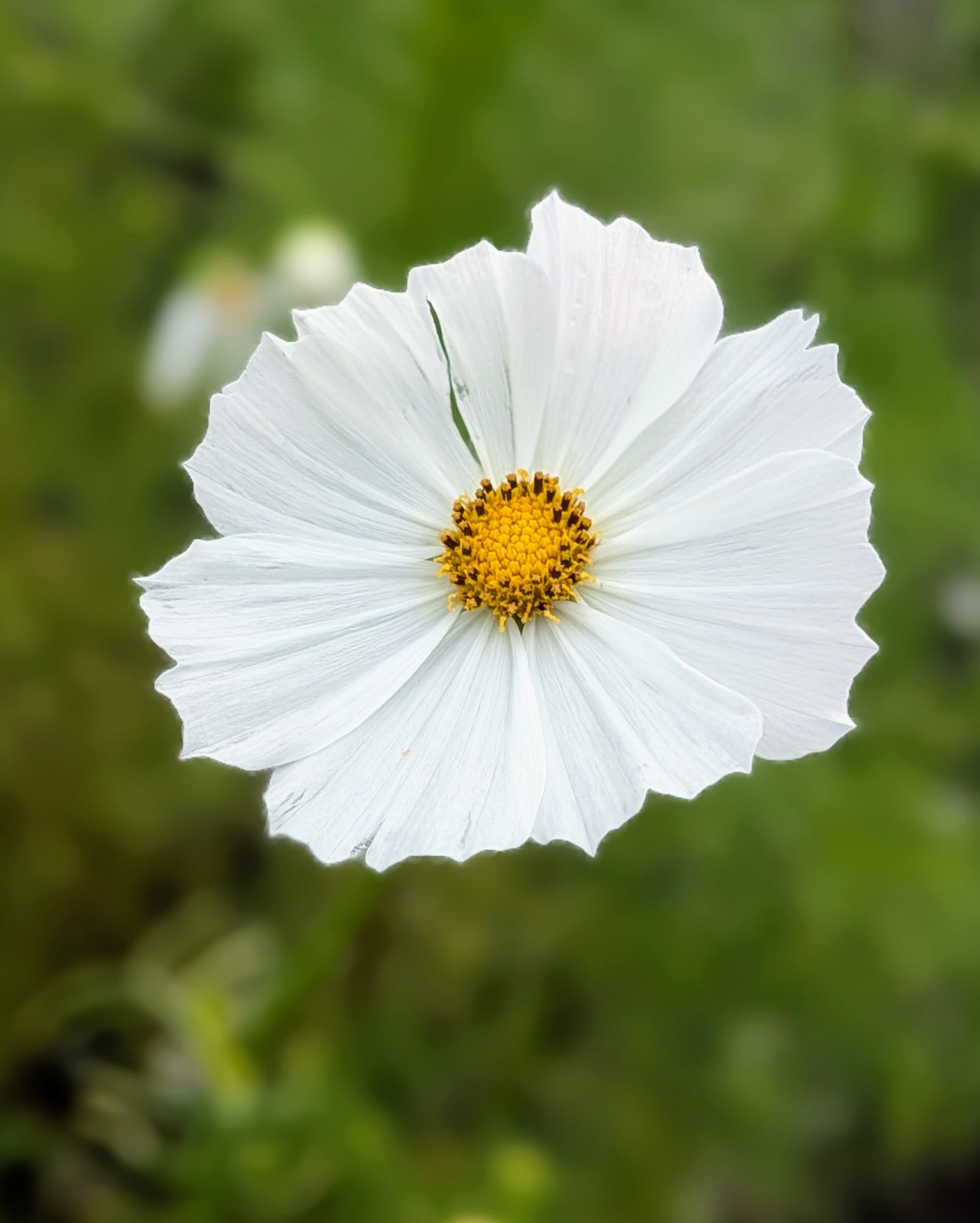
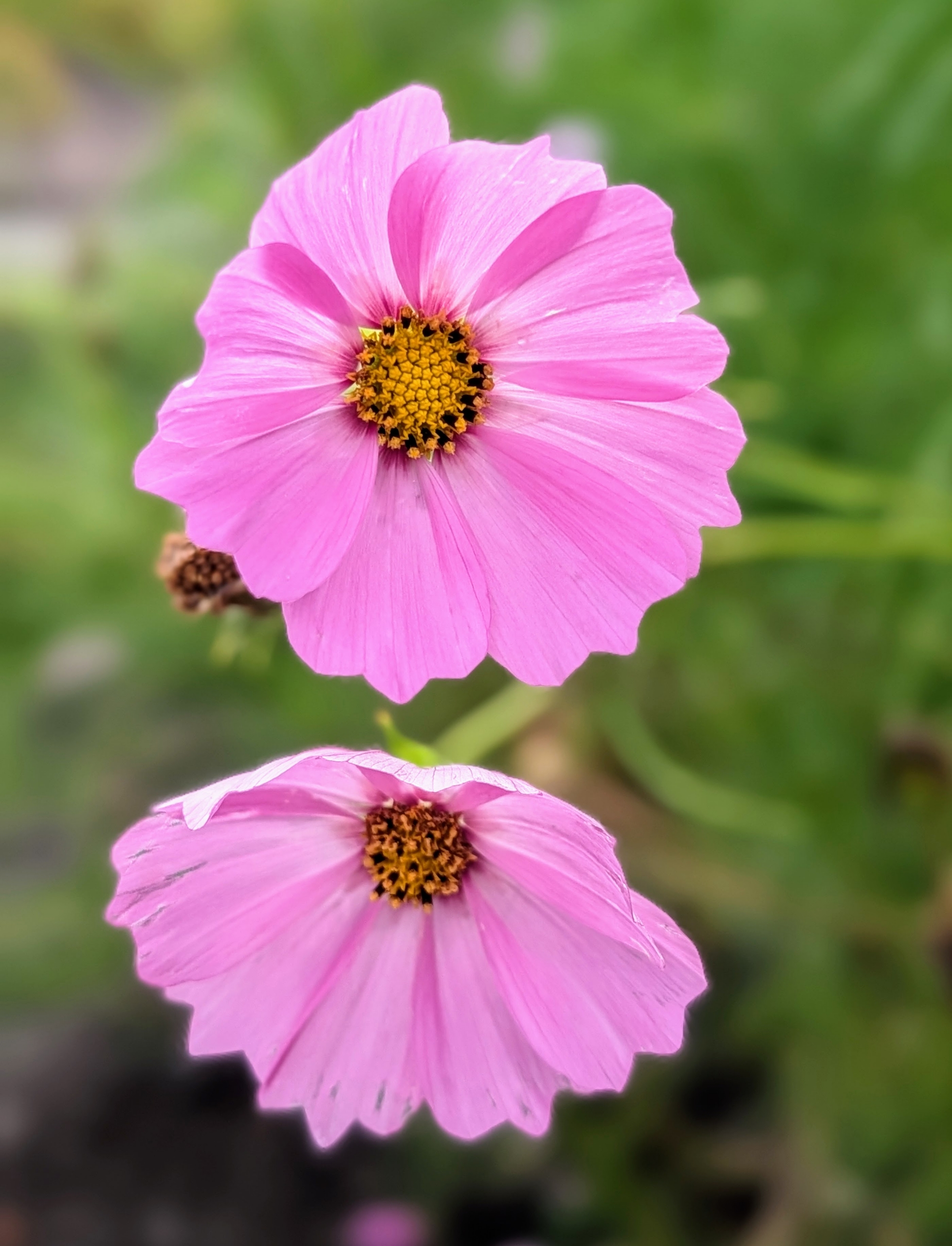
- Cosmos are annuals with colorful daisy-like flowers that sit atop long slender stems. They attract birds, bees, and butterflies and come in a variety of colors including white and various shades of pink, crimson, rose, lavender, and purple, all with yellow centers.
-
- The lacy foliage and silky flowers bloom from midsummer to the first frost.
-
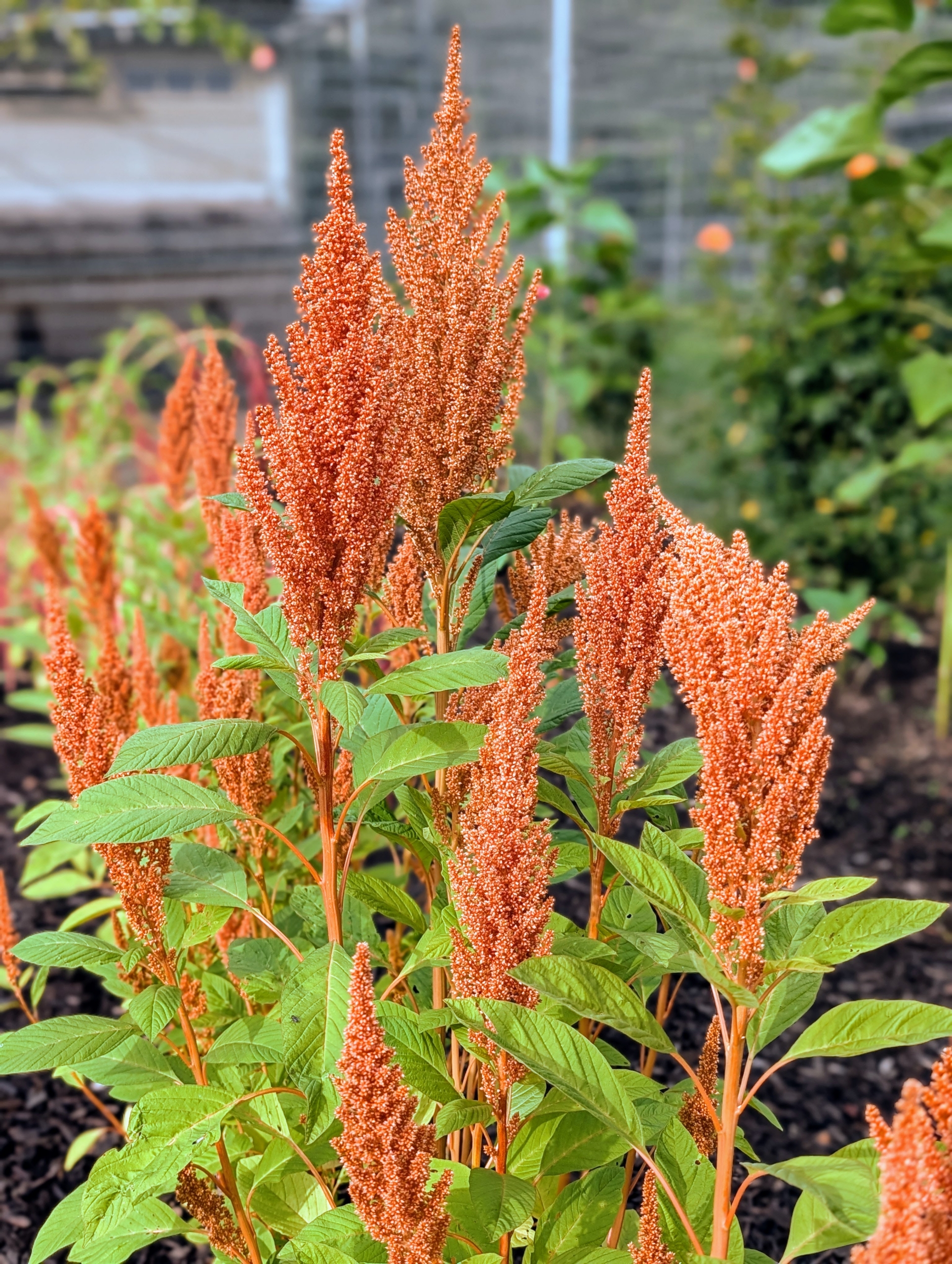
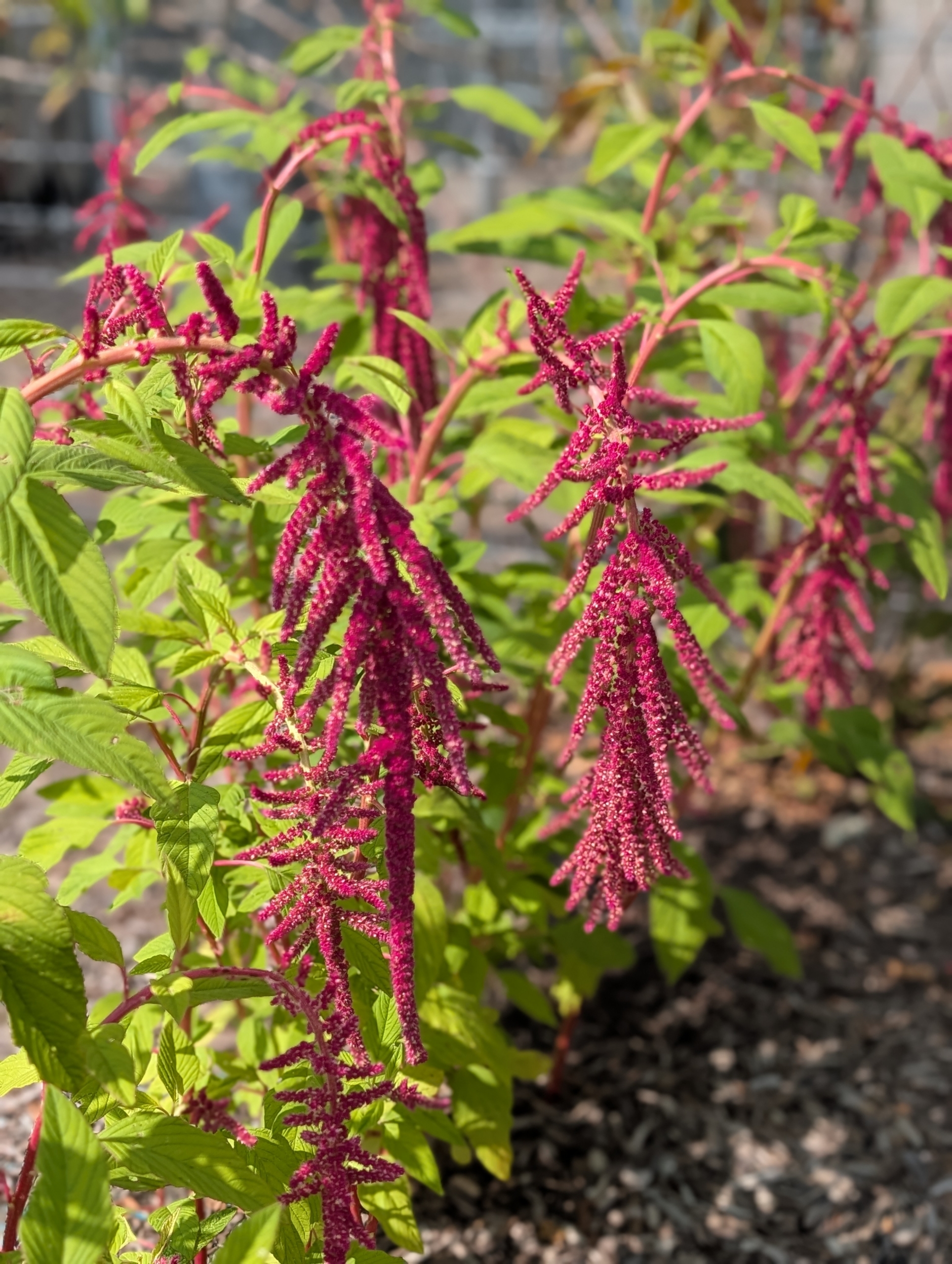
- This is Amaranth. The velvety flowers are dense – some with drooping tassels. Blooms come in richly saturated harvest hues, and they hold their colors and shapes even when dry.
-
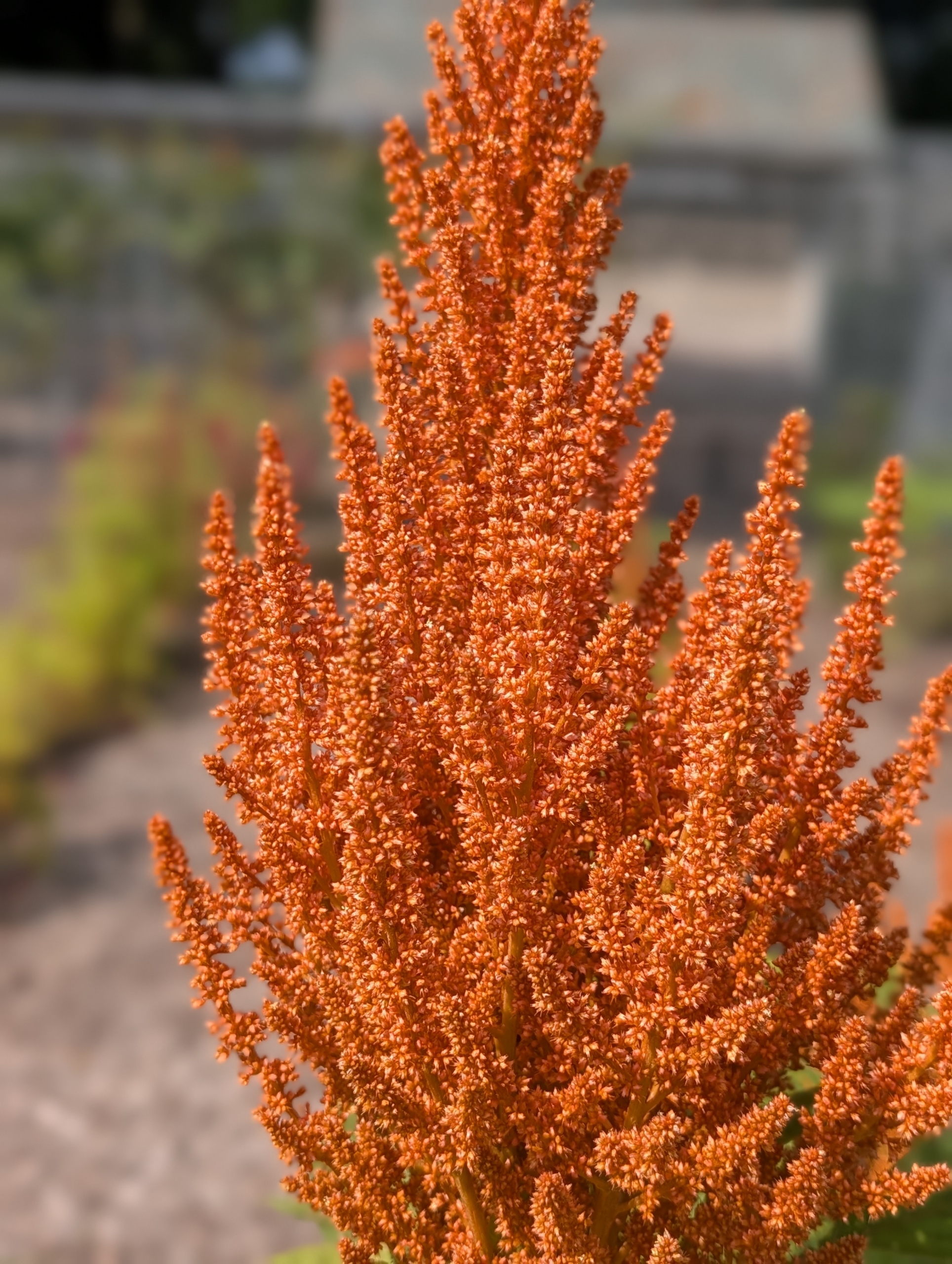
- There are two main types of Amaranth grown for cutting – one with an upright growing habit where the plants produce spikes or plumes that add height and drama to arrangements.
-
- The other is a trailing type of Amaranth with a draping growth habit.
-
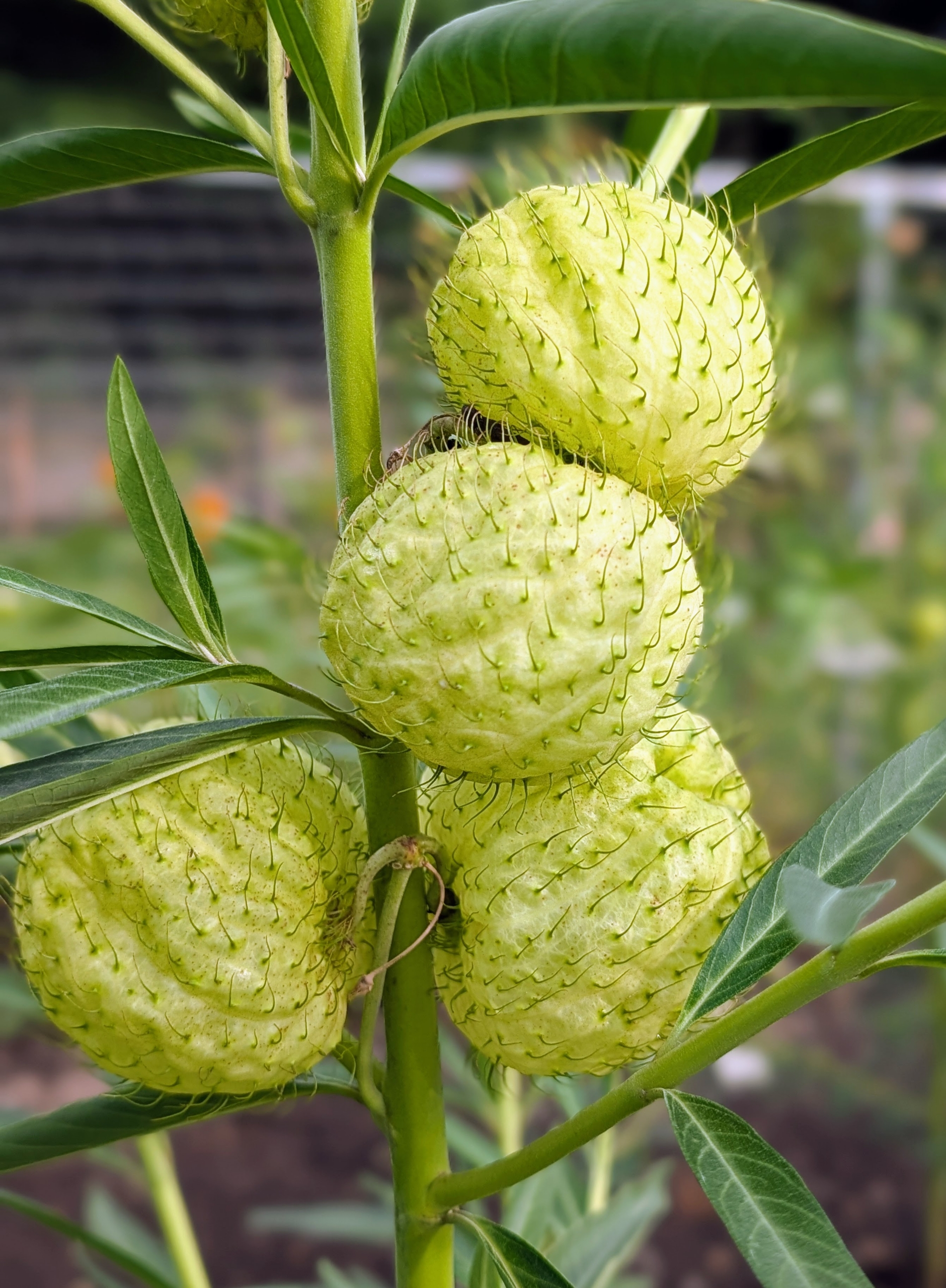
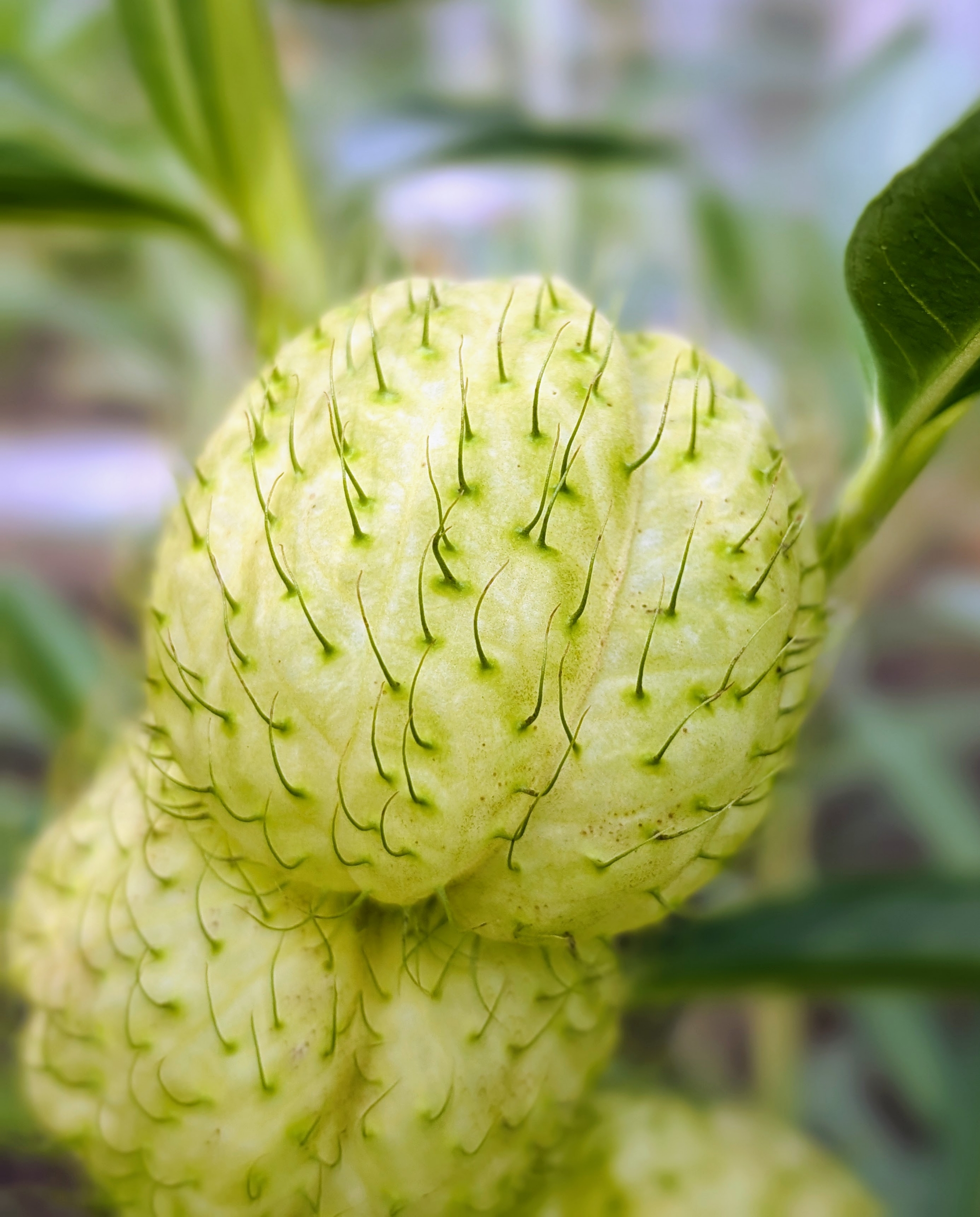
- And have you ever seen these? Commonly called hairy balls milkweed, Gomphocarpus physocarpus, this plant stands out in any garden. The round, balloon-like seed pods are covered with soft, hair-like spines.
-
- These pods can reach the size of a small lime.
-
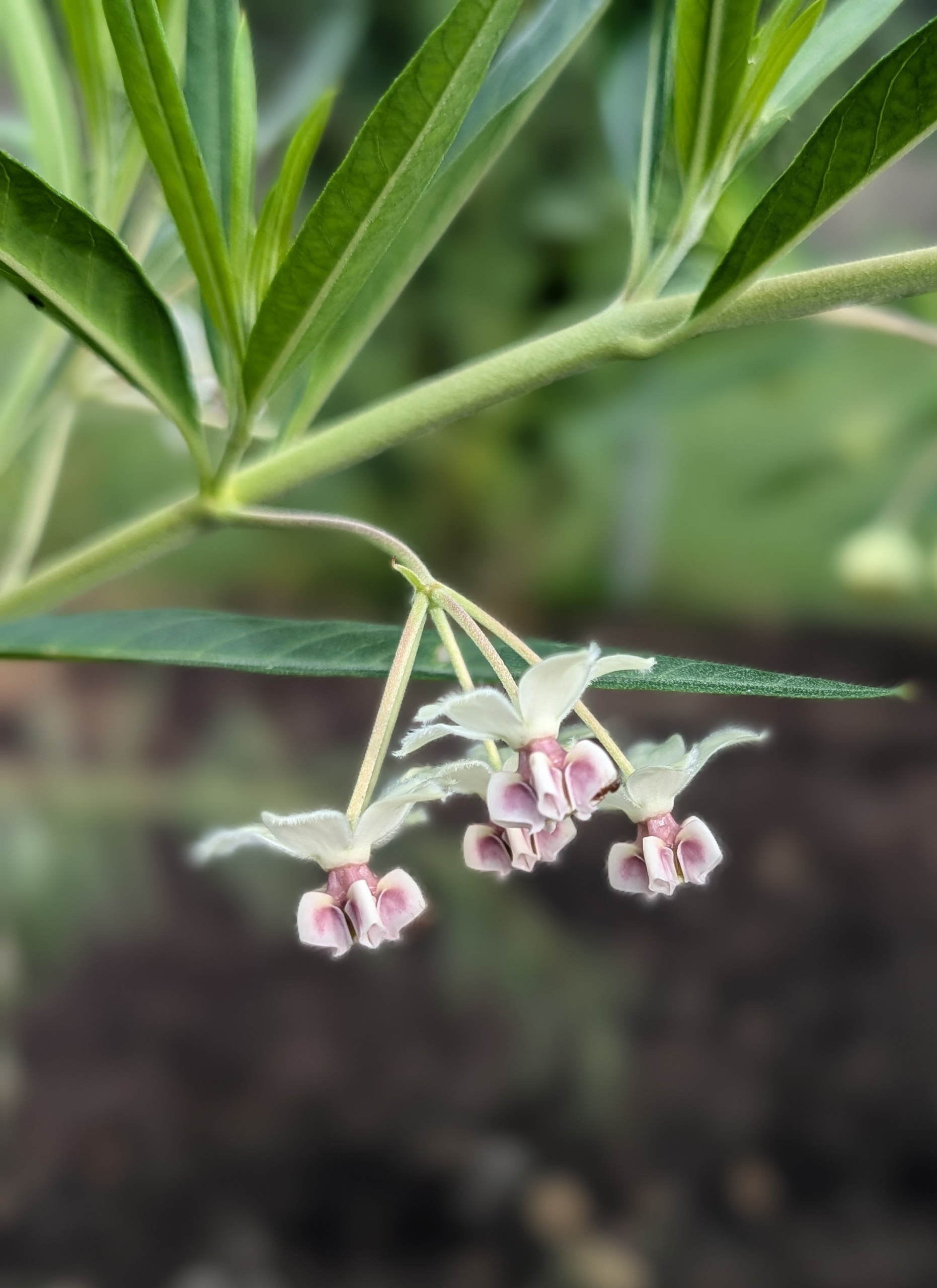
- The hairy balls milkweed also produces clusters of small, star-shaped white or pale green flowers. These blooms are delicate and fragrant, and are loved by pollinators.
-
- I hope your flower gardens are also doing wonderfully this year.
 Martha Pins


 Martha Tweets

