
Picking Red and Gold Raspberries
While fall is less than a week away, we’re still picking the last of summer’s delicious fruits here at my farm - those small, fragrant, and wonderfully sweet raspberries.
A few days ago, I noticed an abundance of both red and gold raspberries on the bushes. Gold raspberries are much like their red counterparts, but with a beautiful golden color and an especially sweet, honeyed flavor with subtle apricot notes and just a hint of tartness. Raspberries are delicious eaten fresh, but I also love using them in jams and jellies, pies, and tarts.
Enjoy these photos.
-

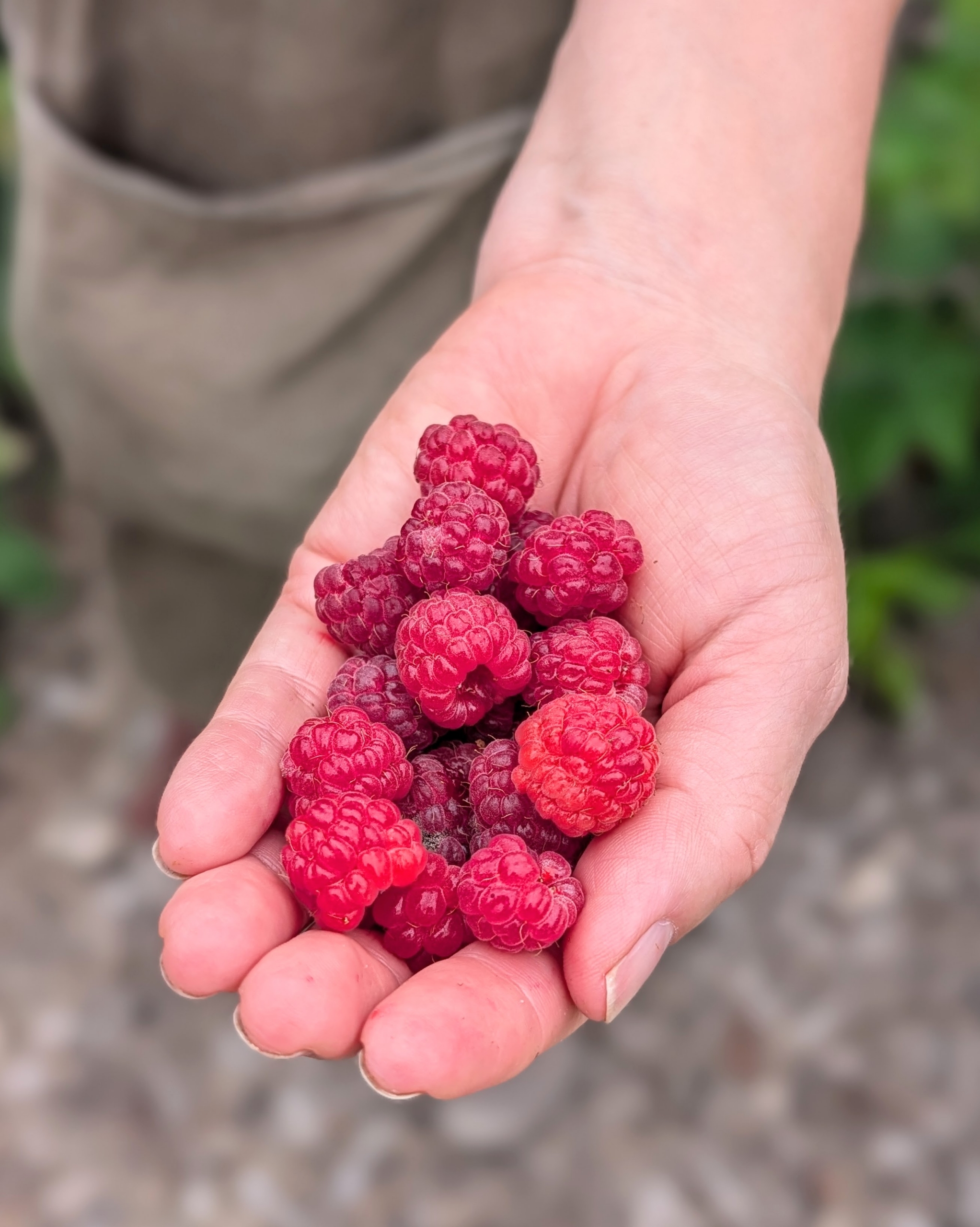
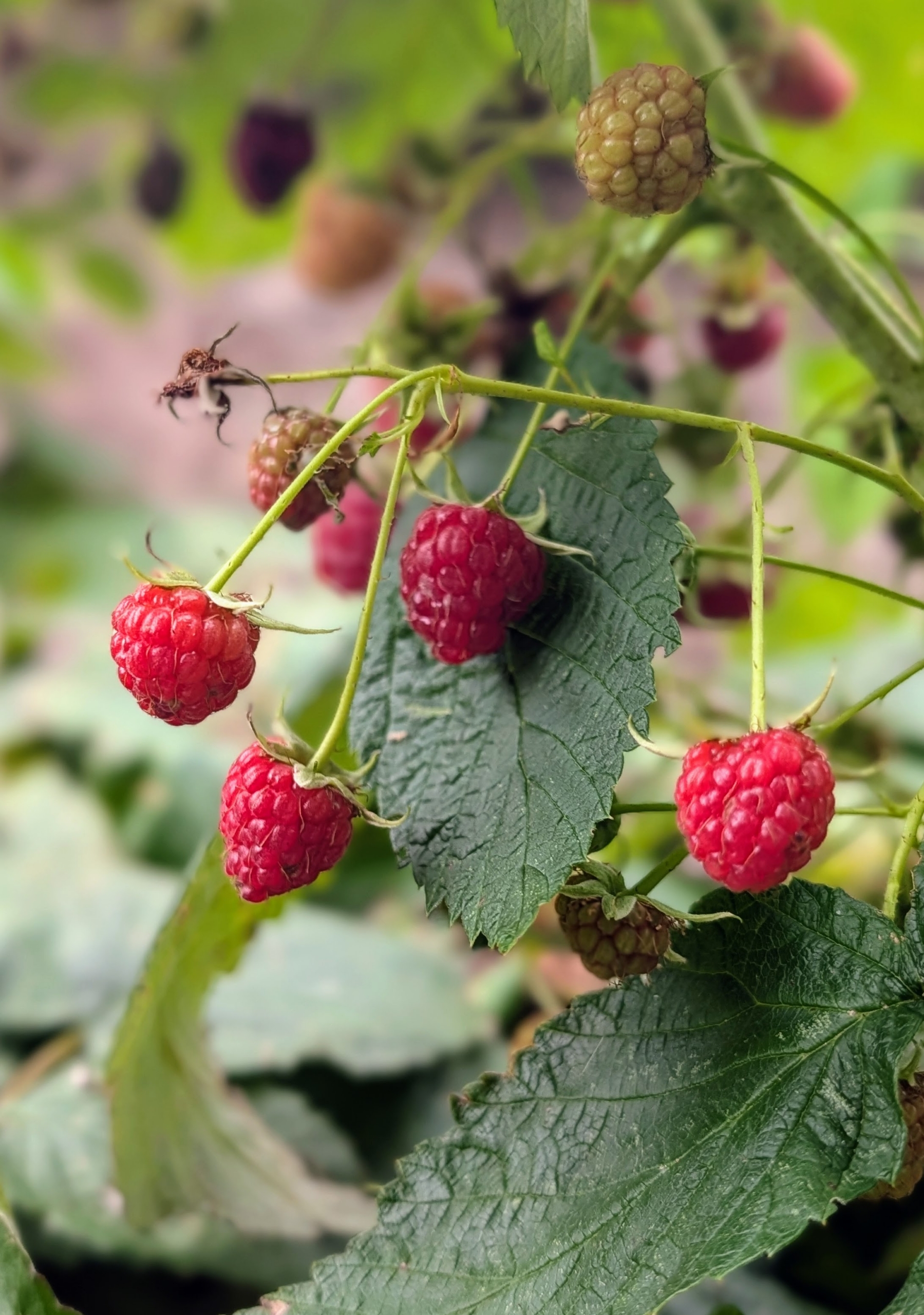
- Ripe raspberries are rich in color, whether they are red, golden, or black. They are great for use in desserts, but can also be used in cereals, ice-creams, juices, and herbal teas.
-
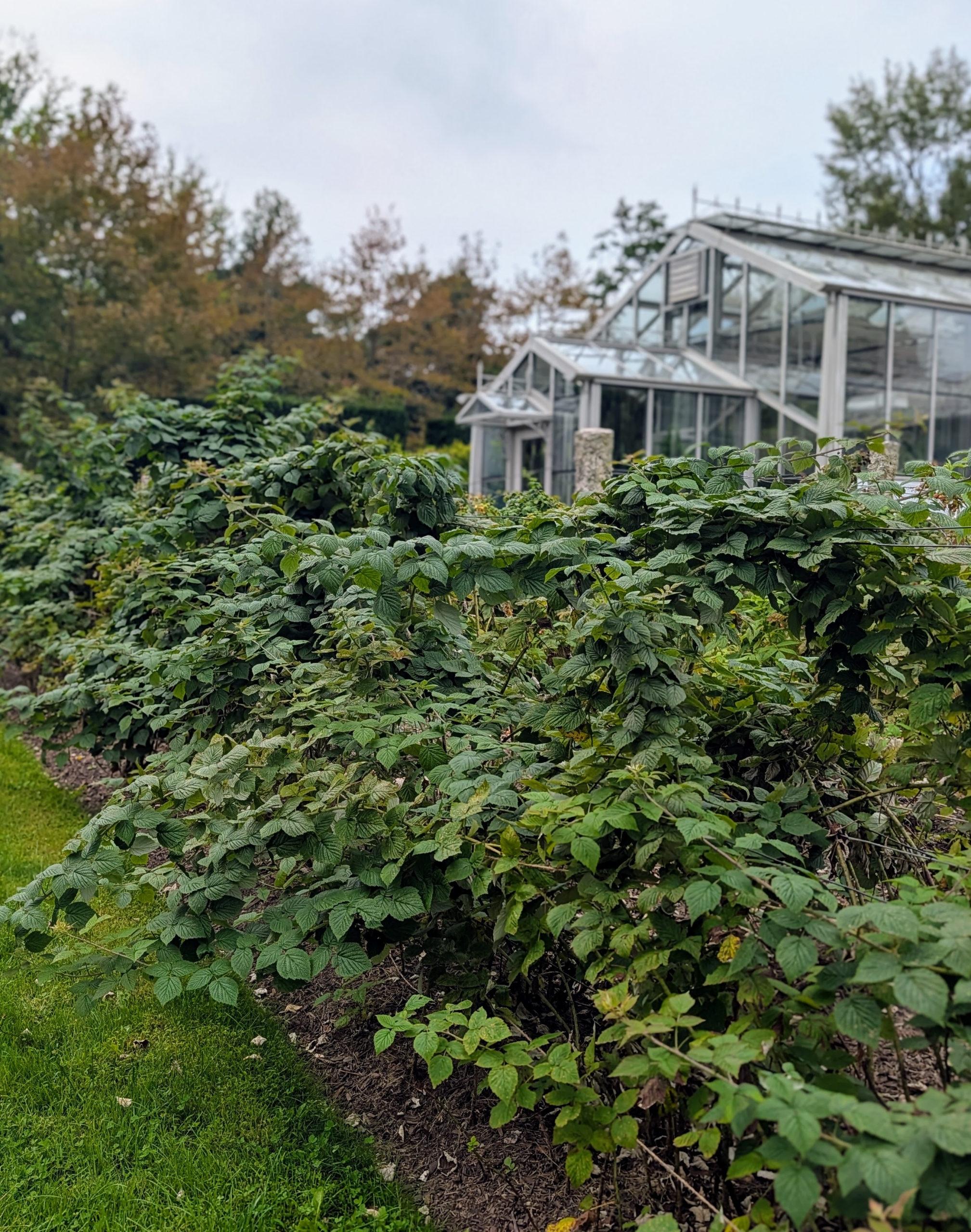
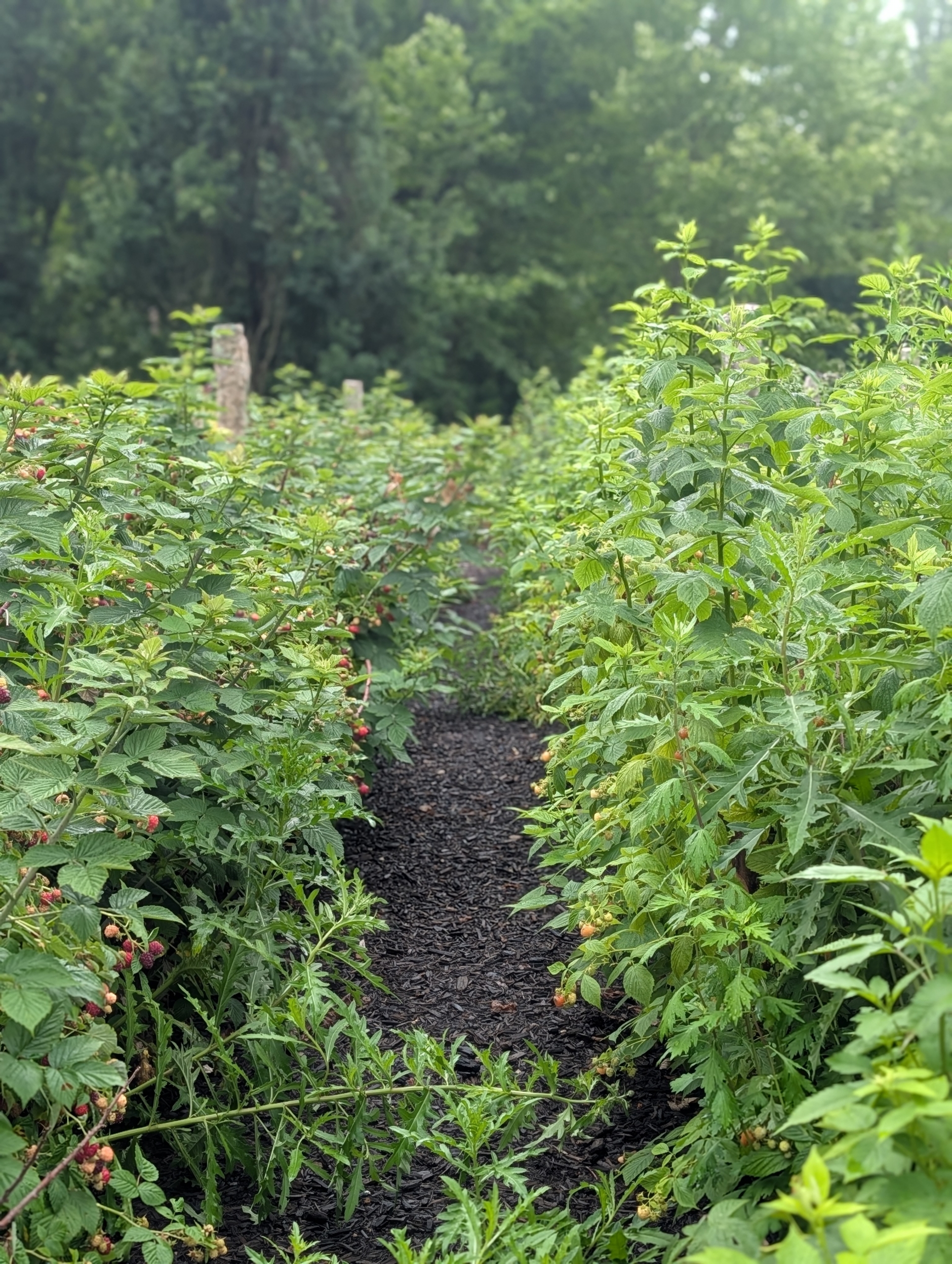
- I have several rows of raspberries behind my main greenhouse. They all produce many fruits every summer.
-
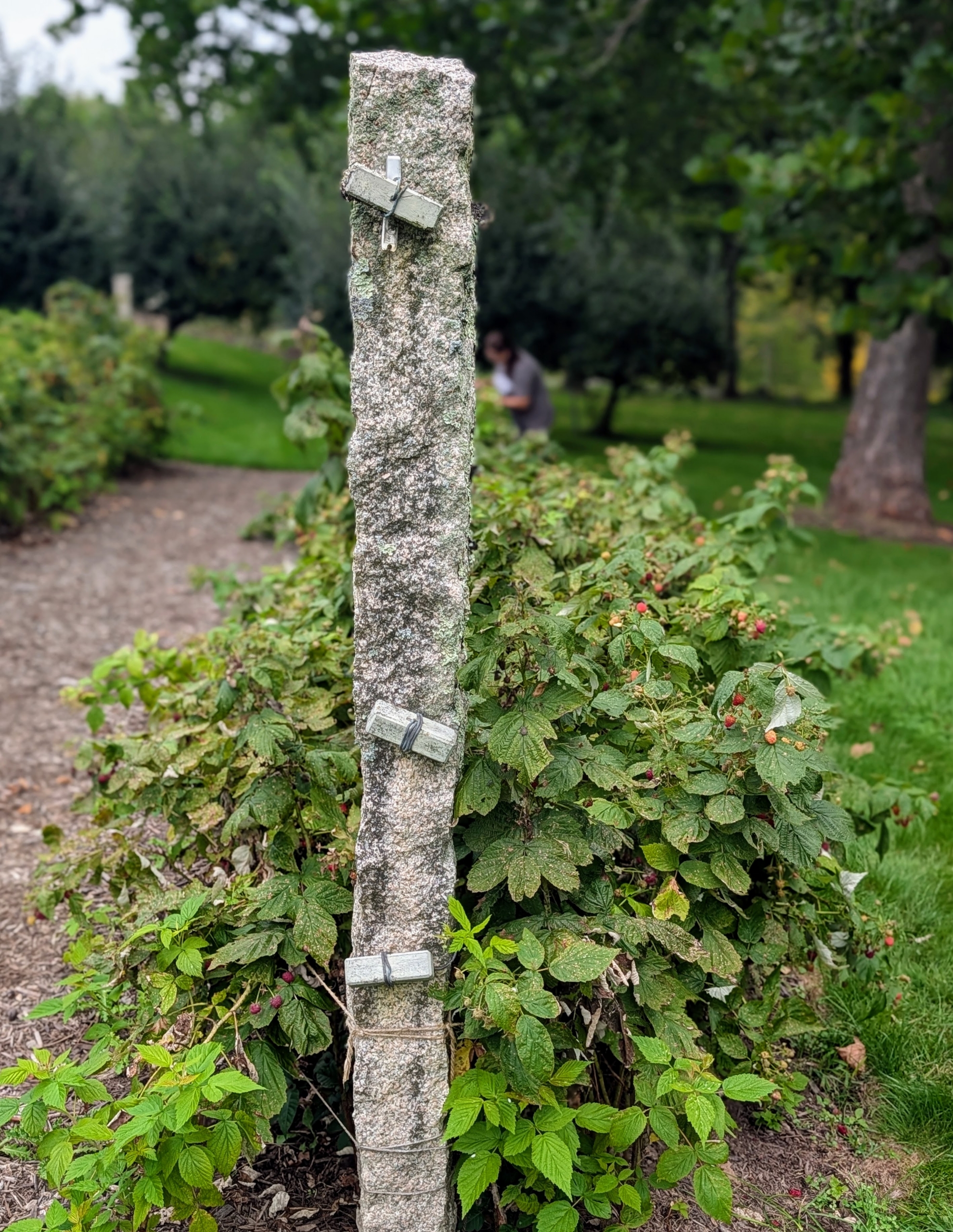
- Most raspberry plants need additional support to grow properly. I use these granite posts at the end of each row, and stretch strong gauge copper wire in between them to hold up the plants. These antique posts are from China. They were originally used to support grape vines.
-
- Raspberries thrive in temperate climates with cool winters, mild summers, and full sun exposure. I am fortunate to be able to maintain such healthy berry bushes here at the farm. I also grow blackberries, goose berries, strawberries, currants, and blueberries.
-
- Only the ripe raspberries will slip off the stems easily. All of these red raspberries are in perfect condition.
-
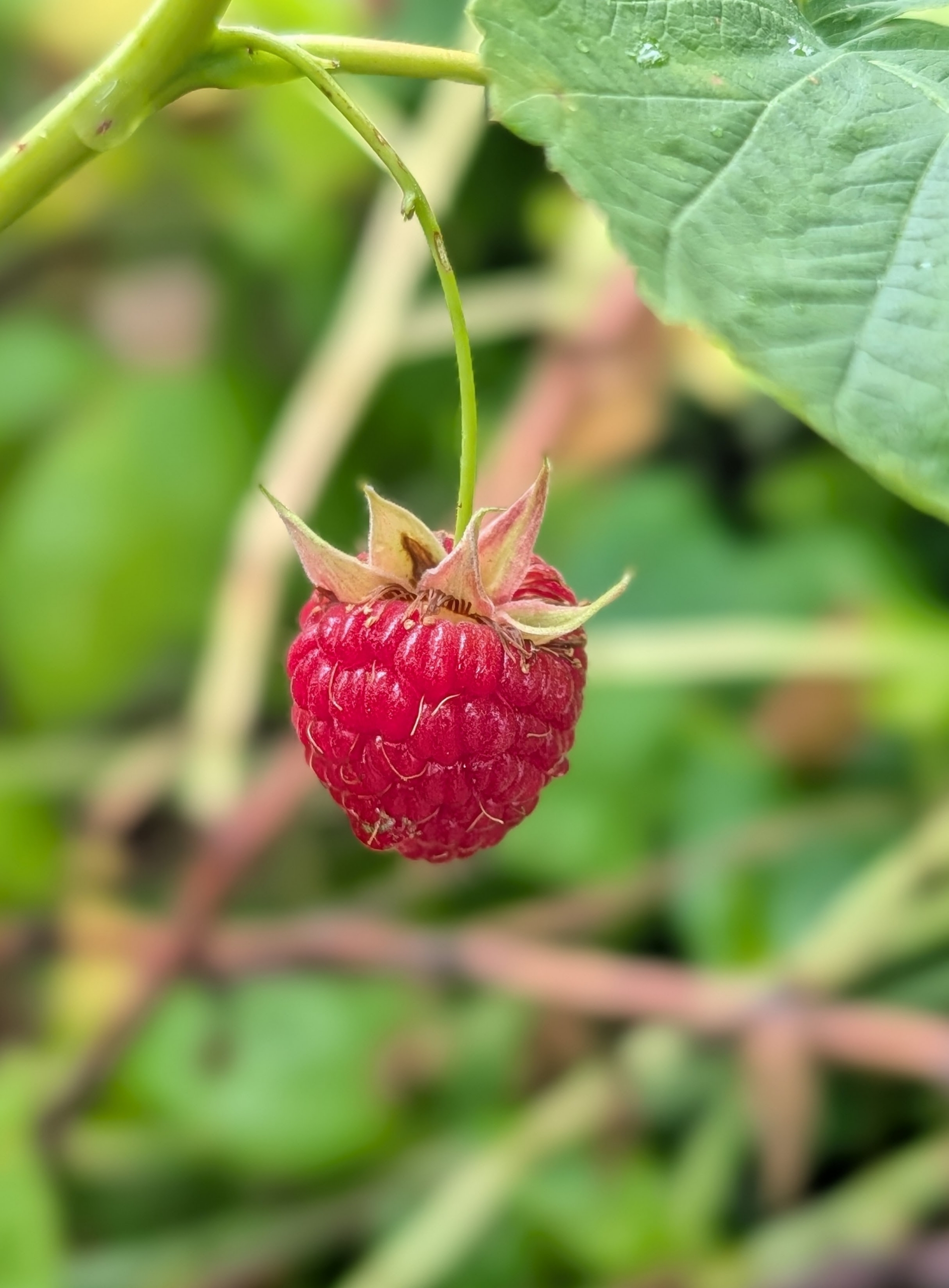
- The plants grow on woody, arching stems called canes. And the berries form on the tips and along the sides of those canes.
-
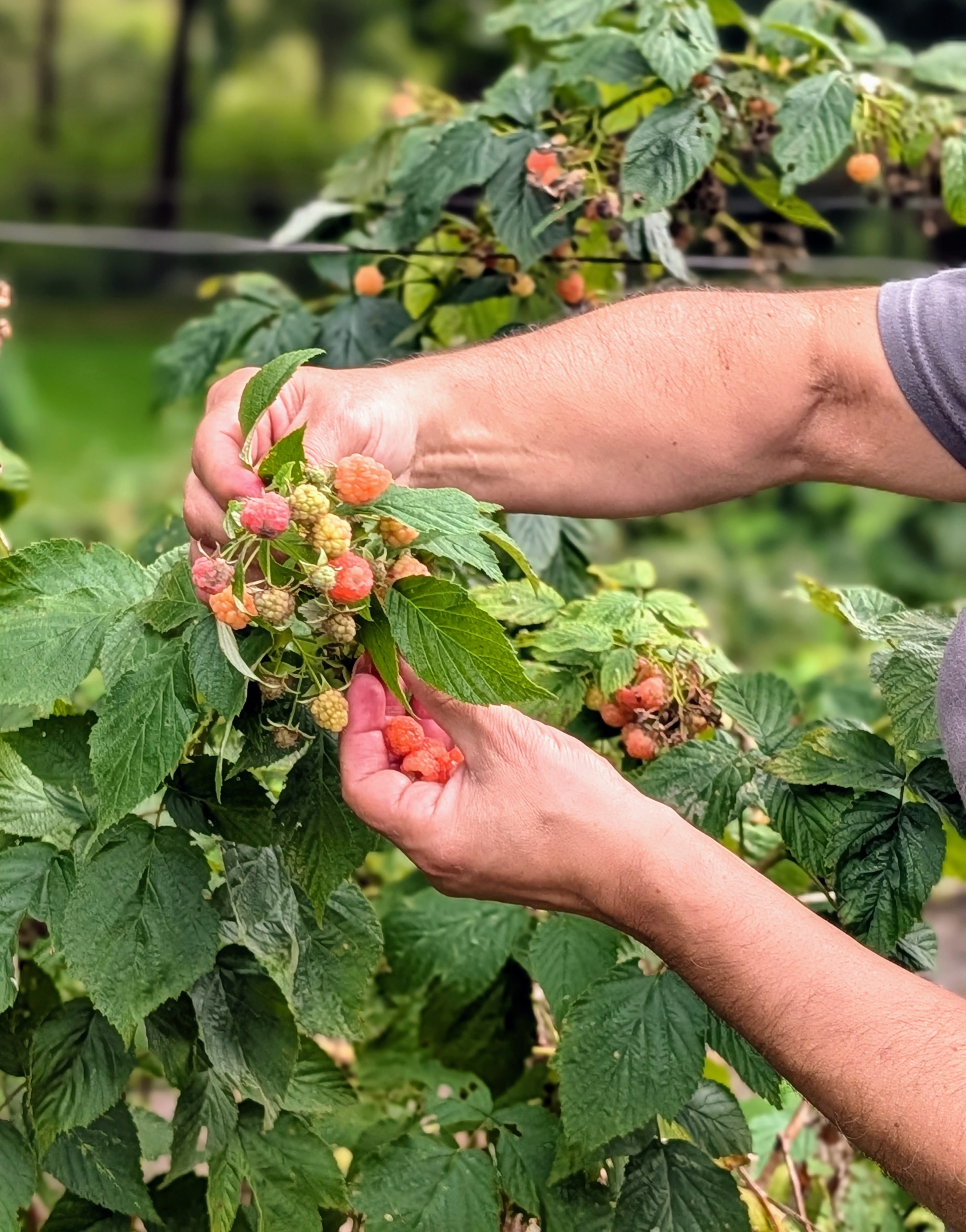
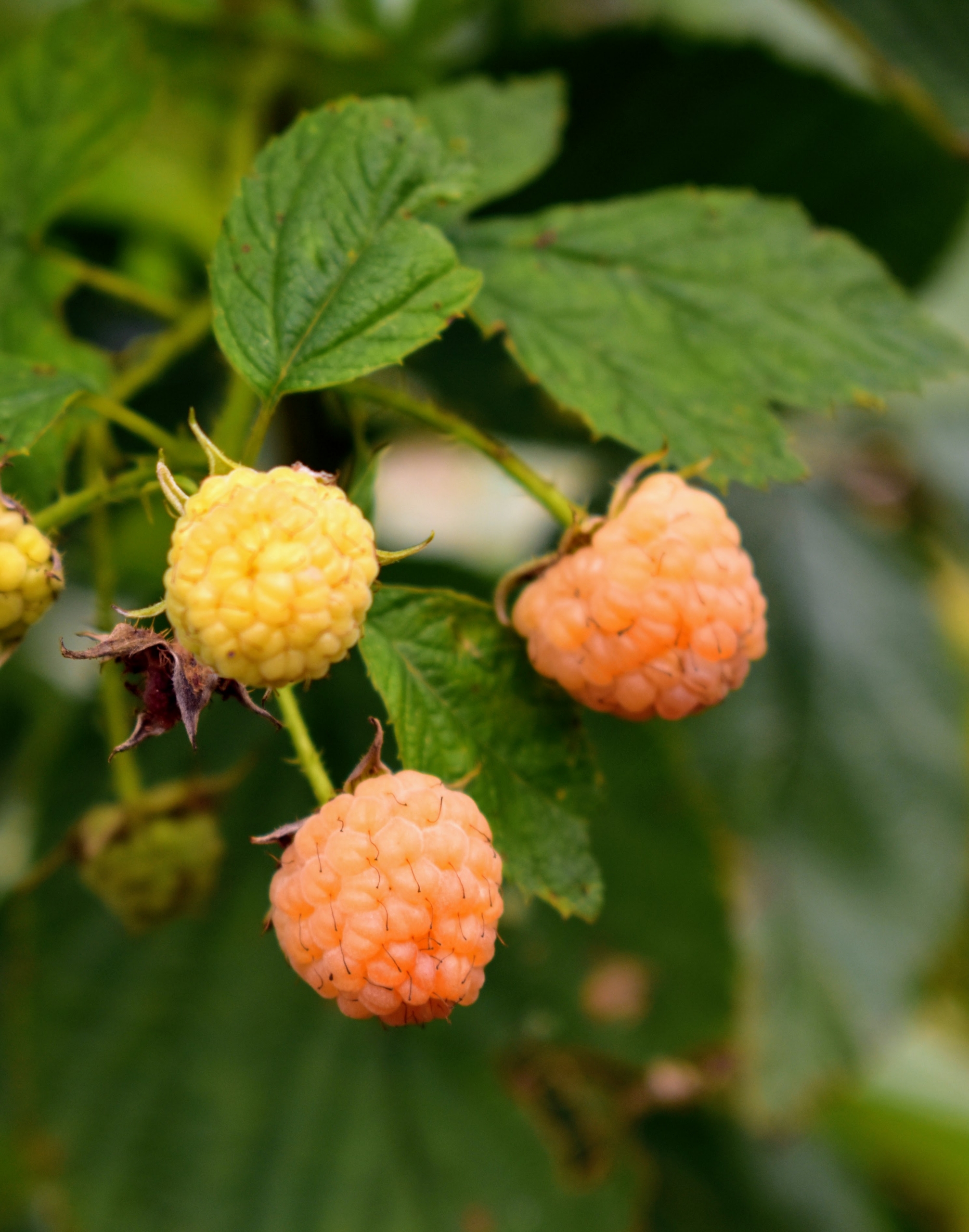
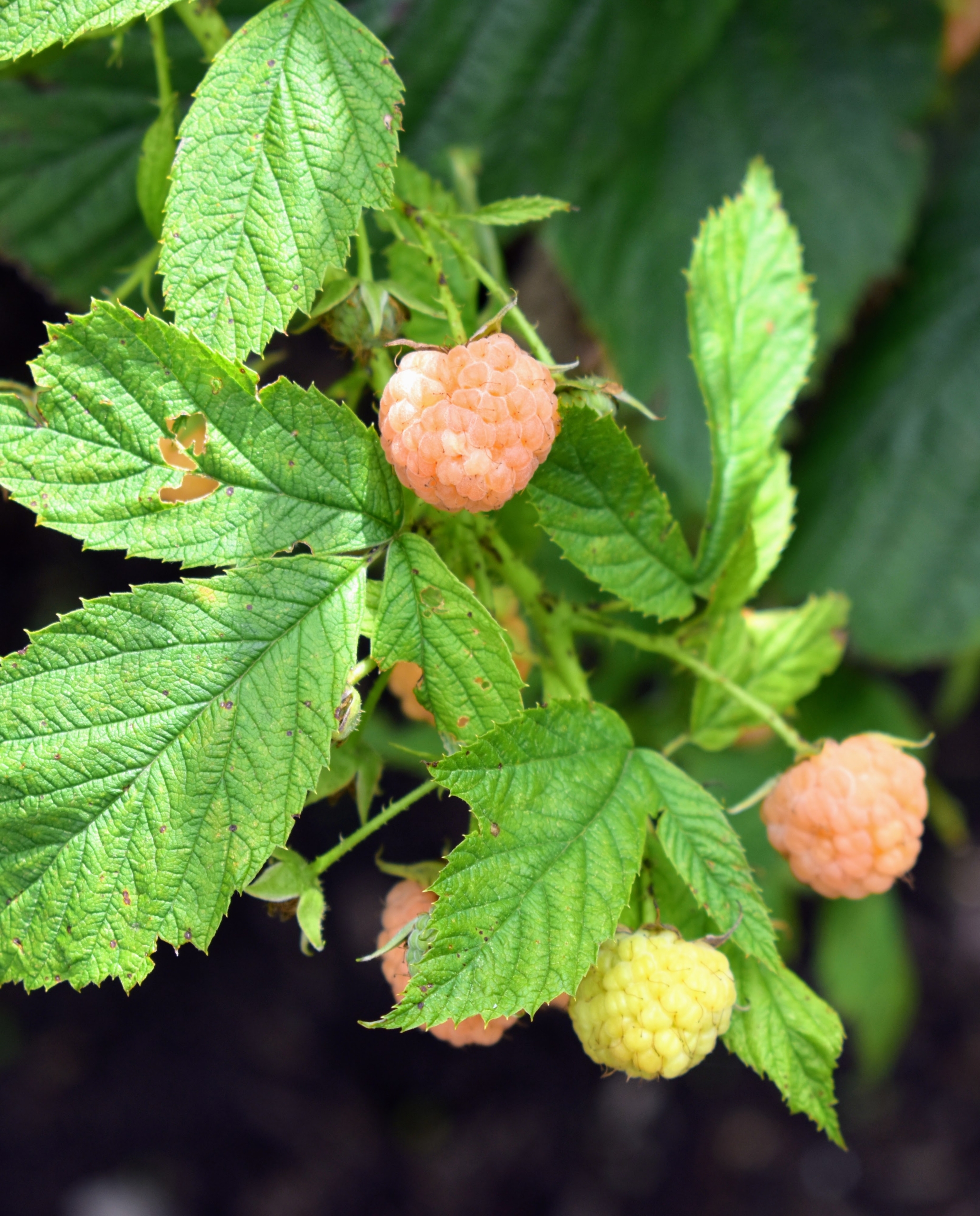
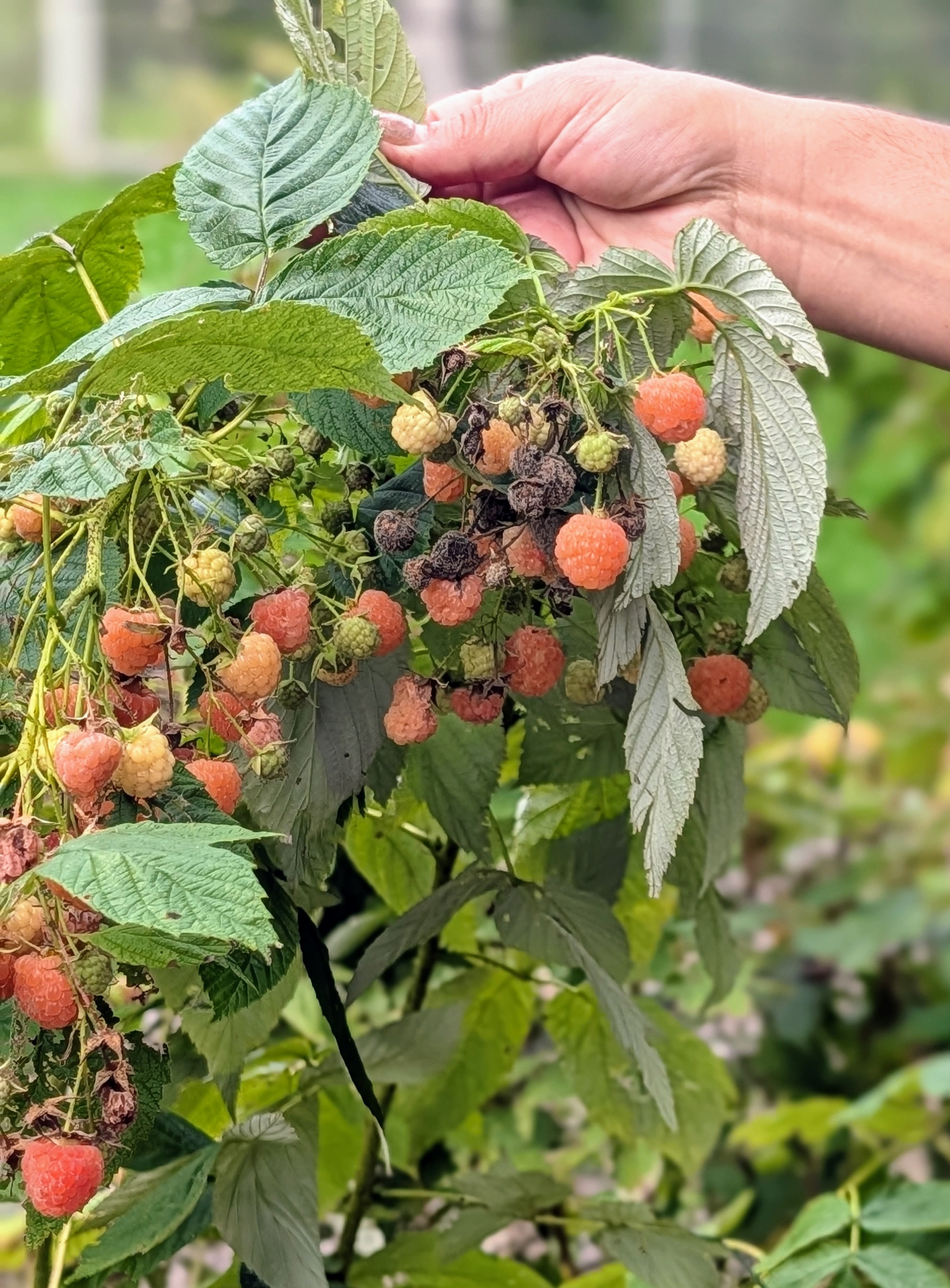
- Although not as bright and easy to see as the red raspberries, these bushes are filled with ripe, gold raspberries. Botanically, all raspberries grow on shrubs belonging to the Rosaceae family, in the genus Rubus.
-
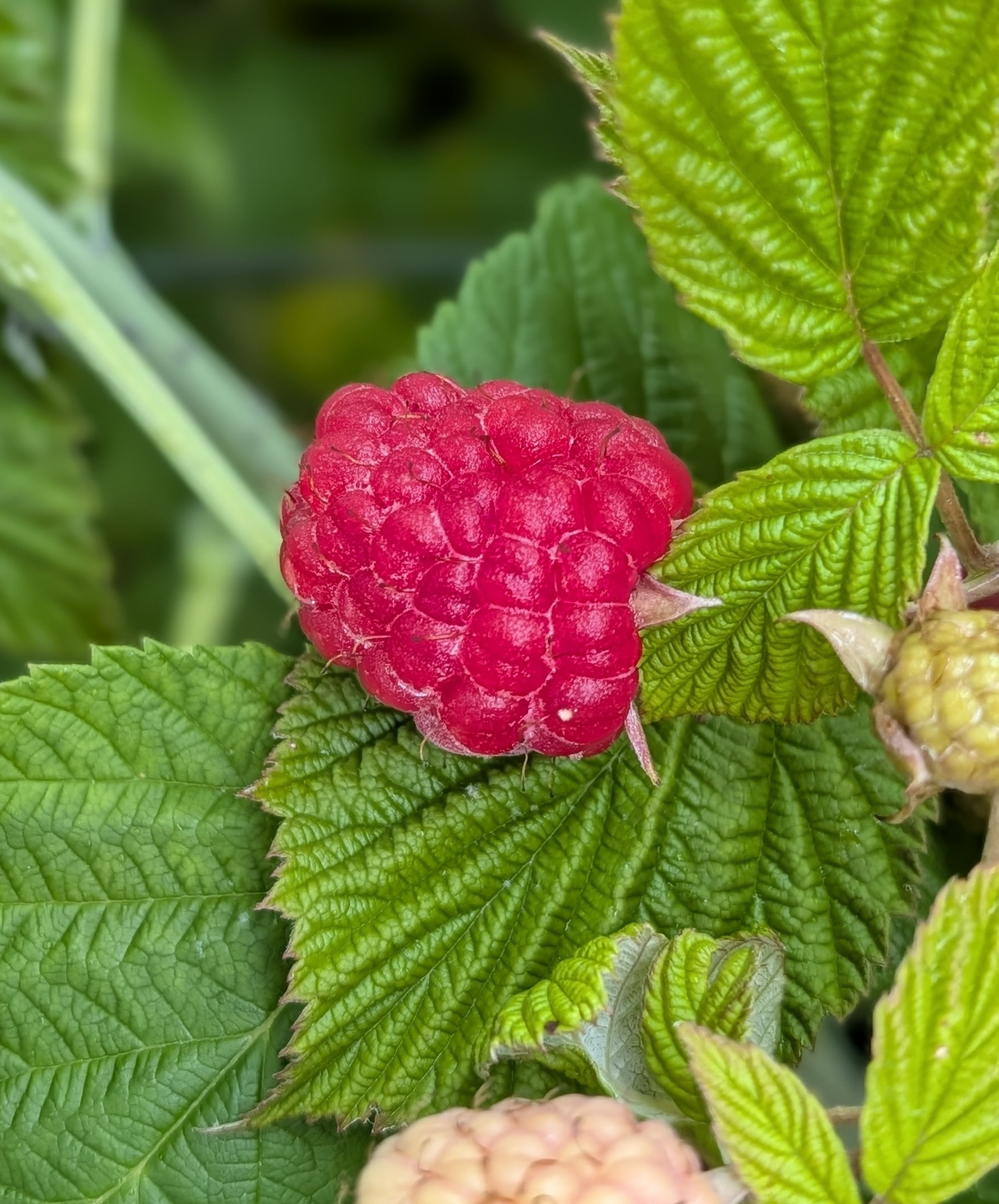
- The raspberry is made up of small “drupe” fruits which are arranged in a circular fashion around a hollow central cavity. Each drupelet features a juicy pulp with a single seed.
-
- Gold raspberries get their distinctive yellow‑to‑amber color from a natural genetic mutation in the common red raspberry that prevents the production of anthocyanins – the water‑soluble plant pigments responsible for the red, purple, and blue colors in many berries, including red raspberries.
-
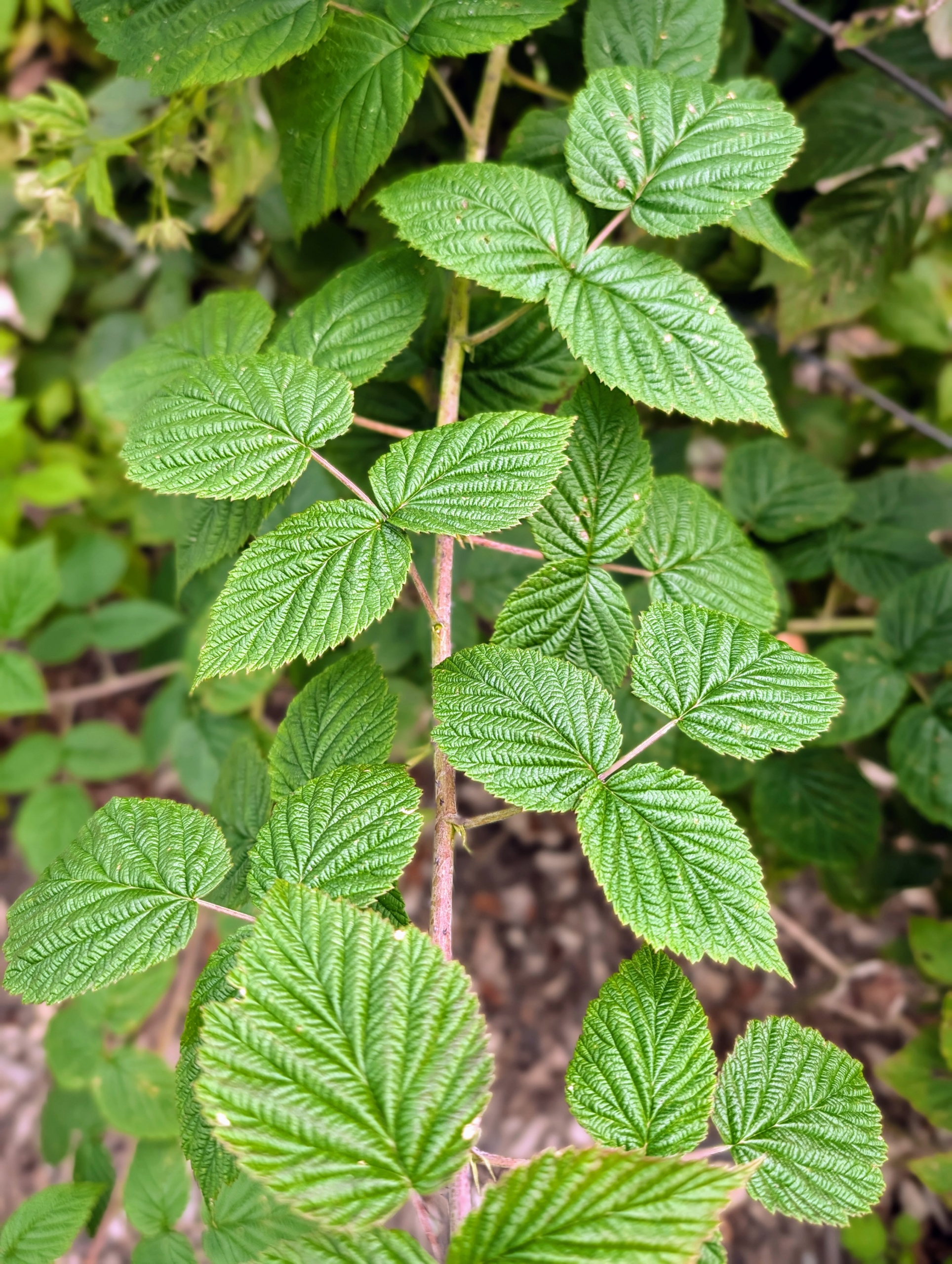
- The raspberry plant has spade-shaped leaves that are toothed along the edges. It takes about two to three years for a new raspberry plant to produce a significant crop of fruit. Once mature, one plant can produce several hundred berries in a season.
-
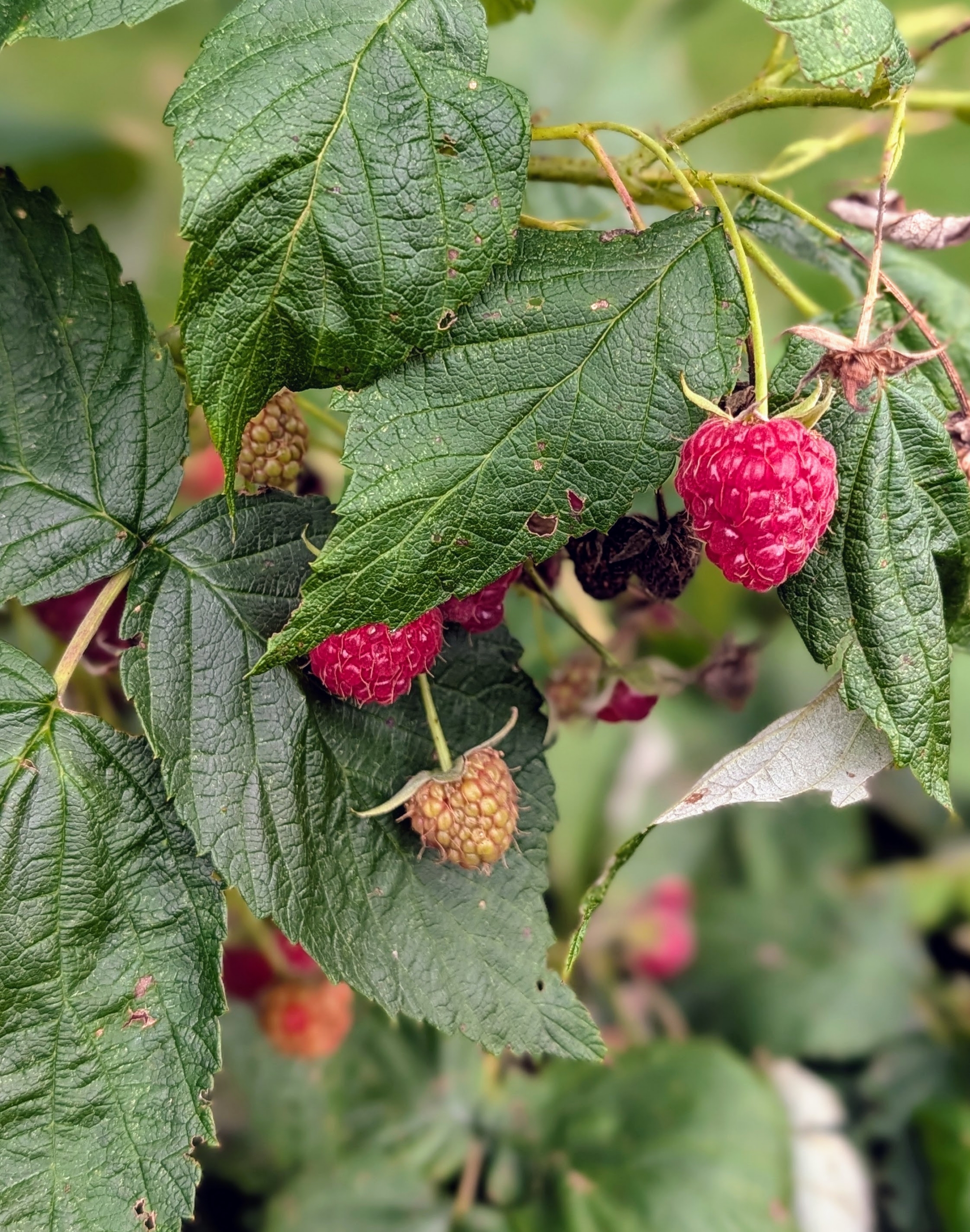
- Raspberries are unique because their roots and crowns are perennial, while their stems or canes are biennial.
-
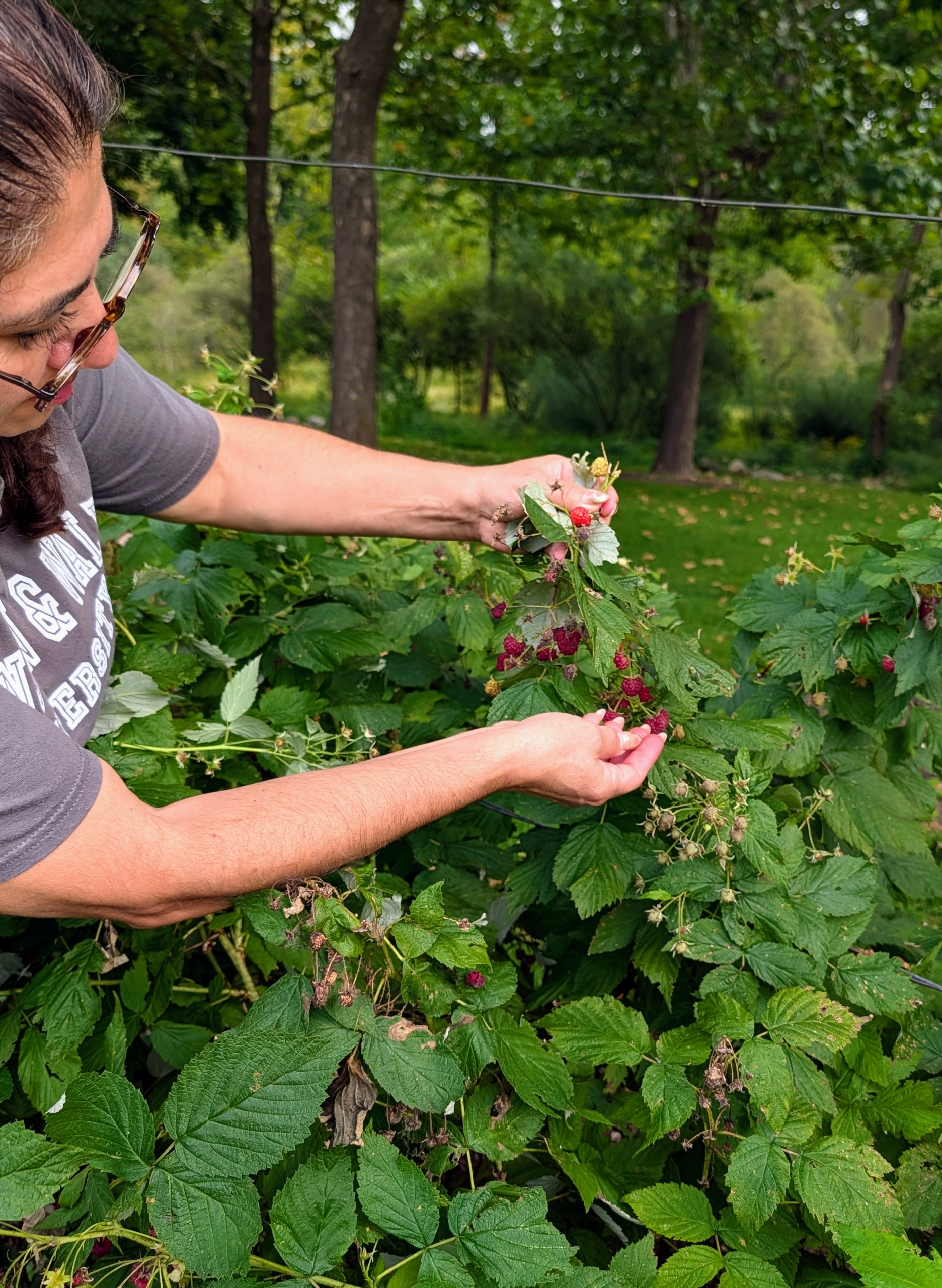
- Here, Enma picks many of the red raspberries. They are quite fragile, so she is careful not to pack them in or press them down.
-
- Raspberries contain vitamins A and E and are also rich in minerals, such as potassium, manganese, copper, iron, and magnesium.
-
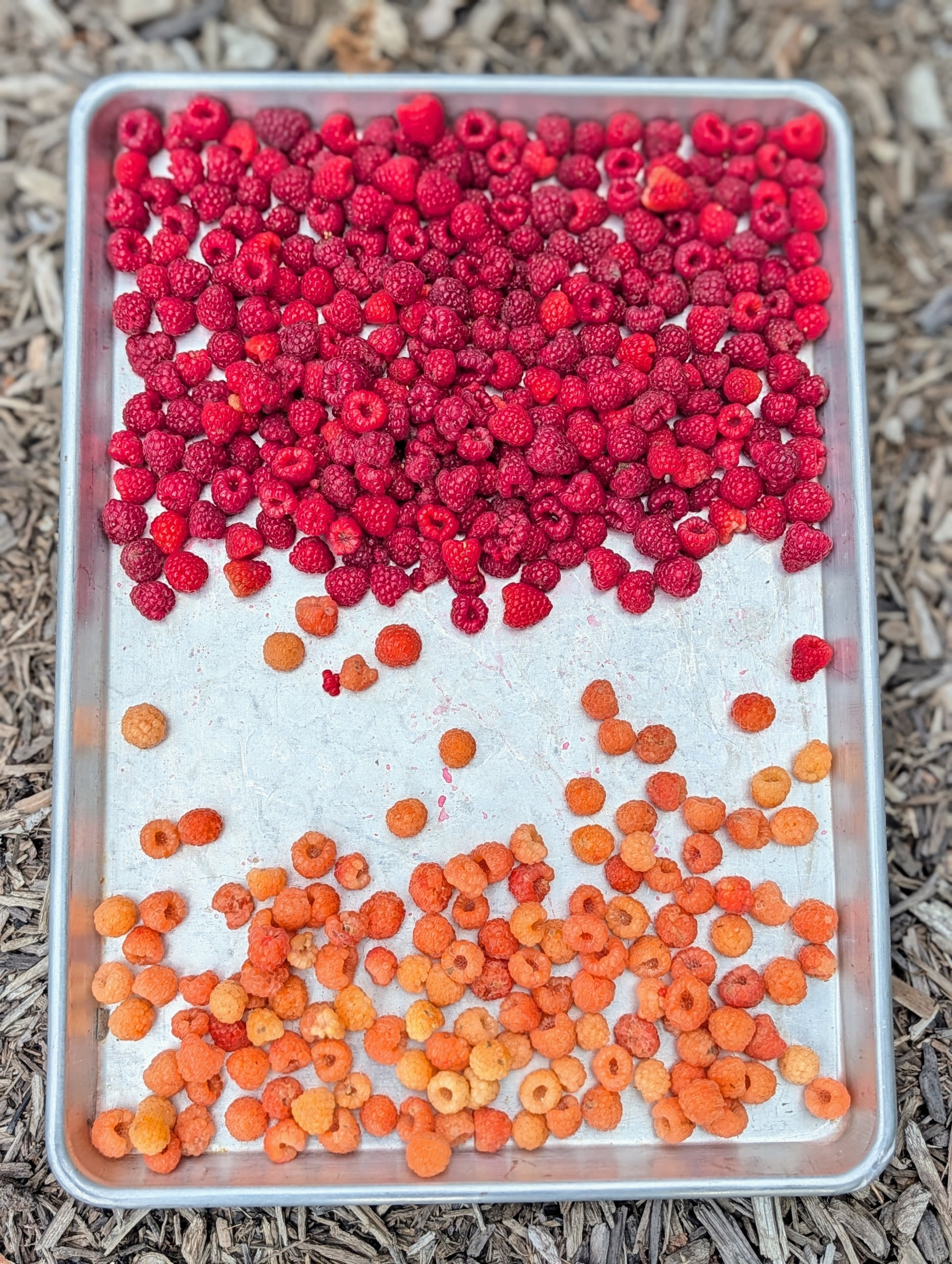
- Enma fills this tray with berries in just a few minutes.
-
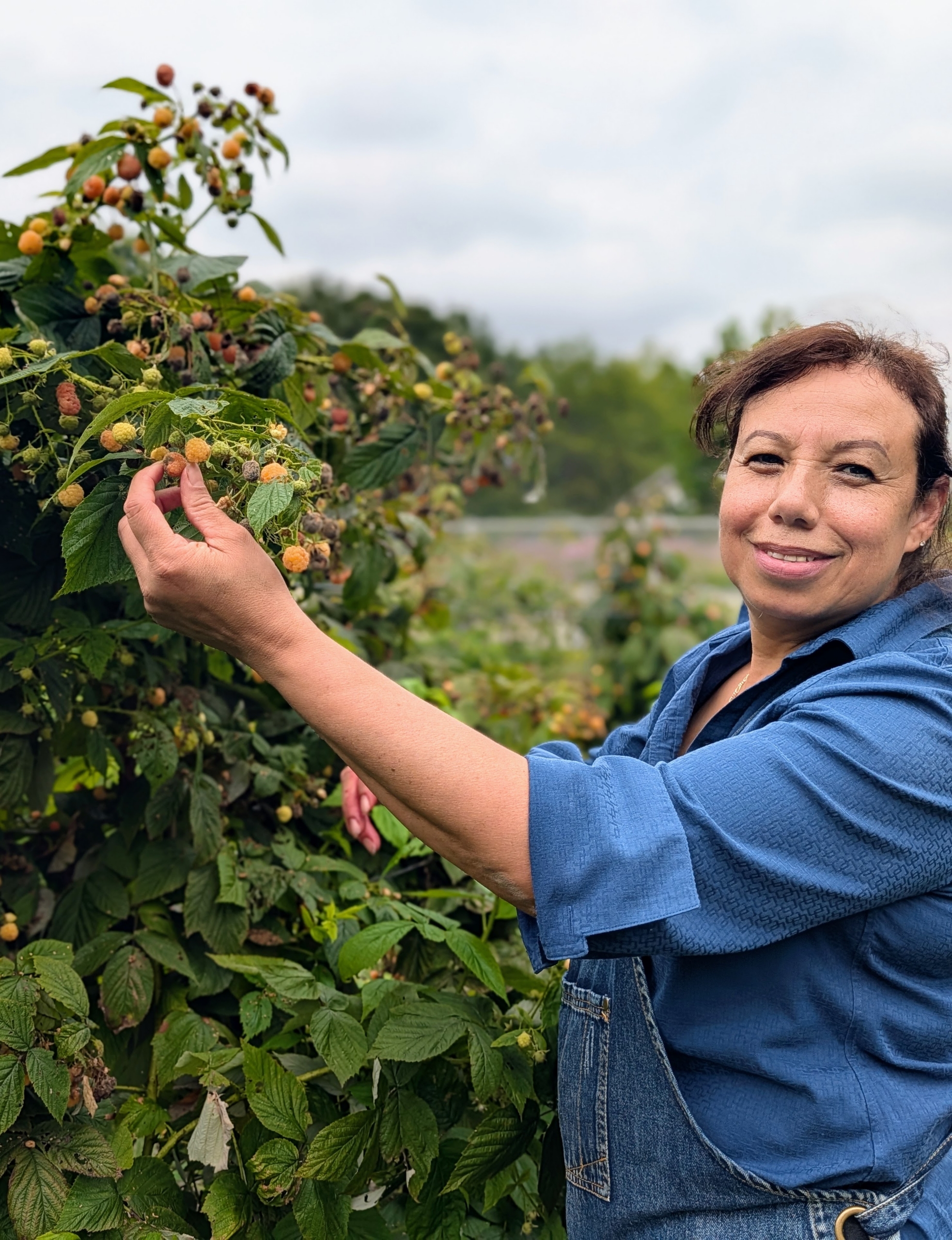
- Elvira picks an abundance of sweet gold berries from another row.
-
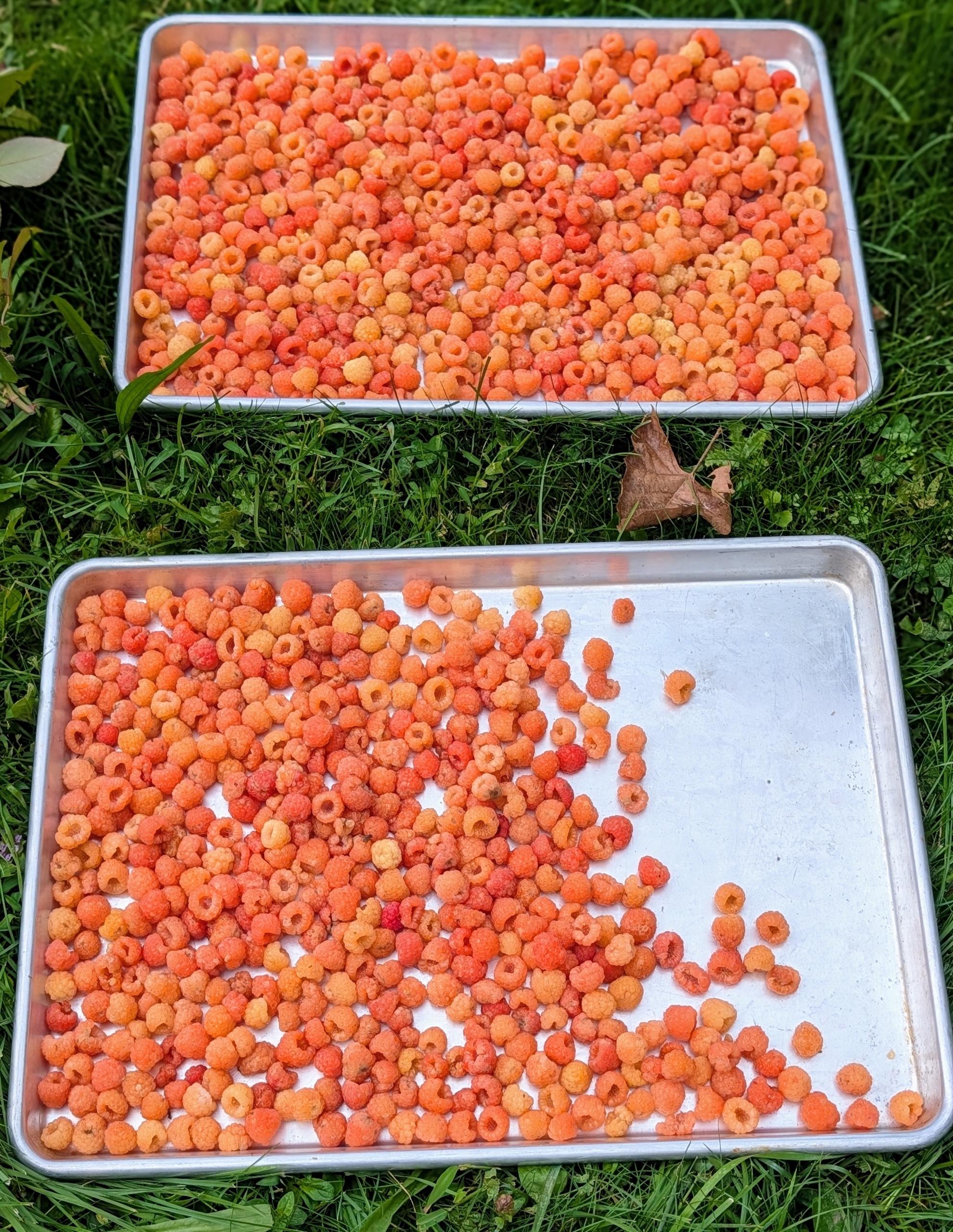
- The berries are placed in one layer on large sheet trays, so they retain their shape after picking.
-
- Looking carefully under the foliage, one can find so many berries waiting to be harvested.
-
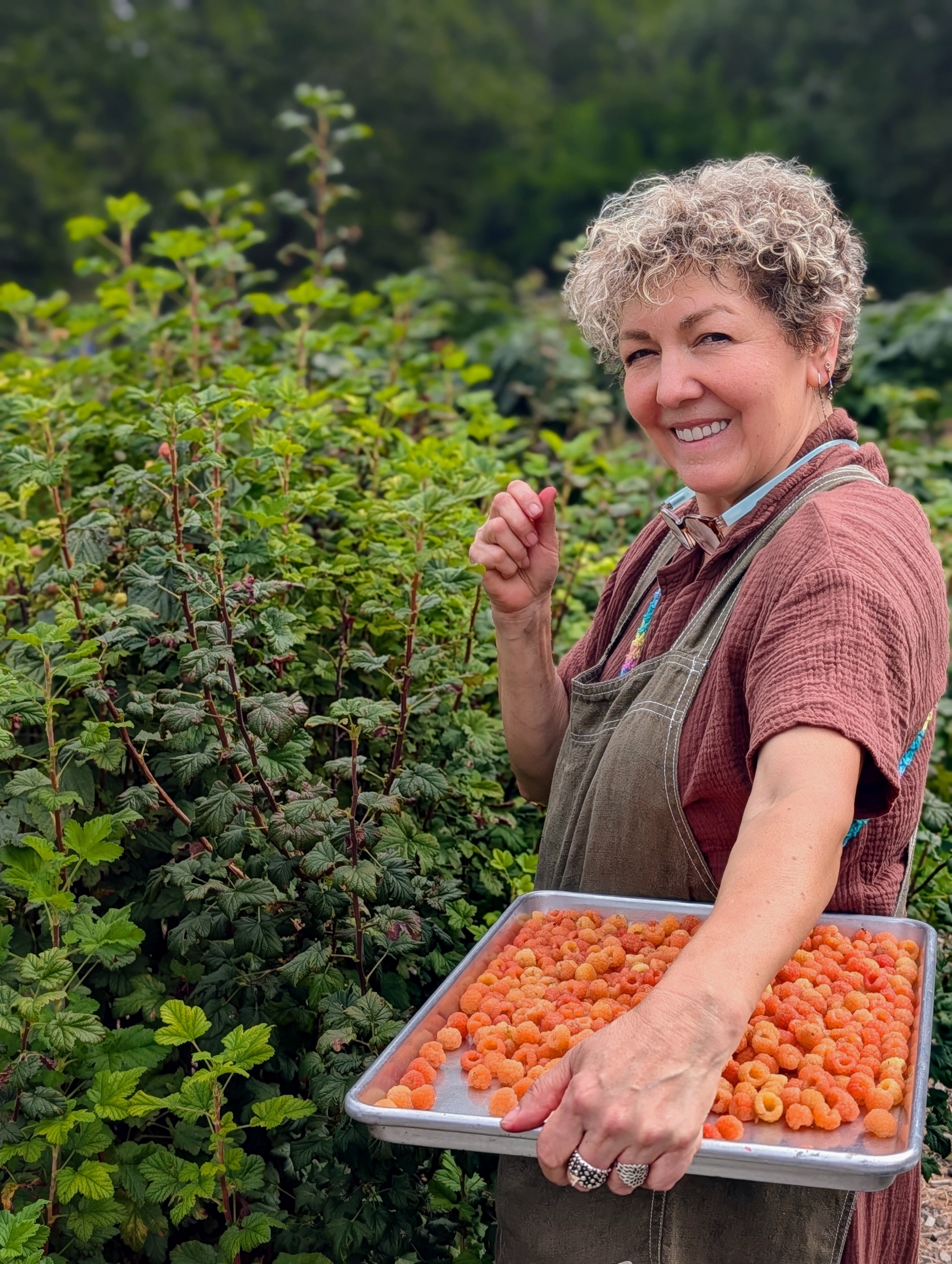
- Patricia also fills an entire tray.
-
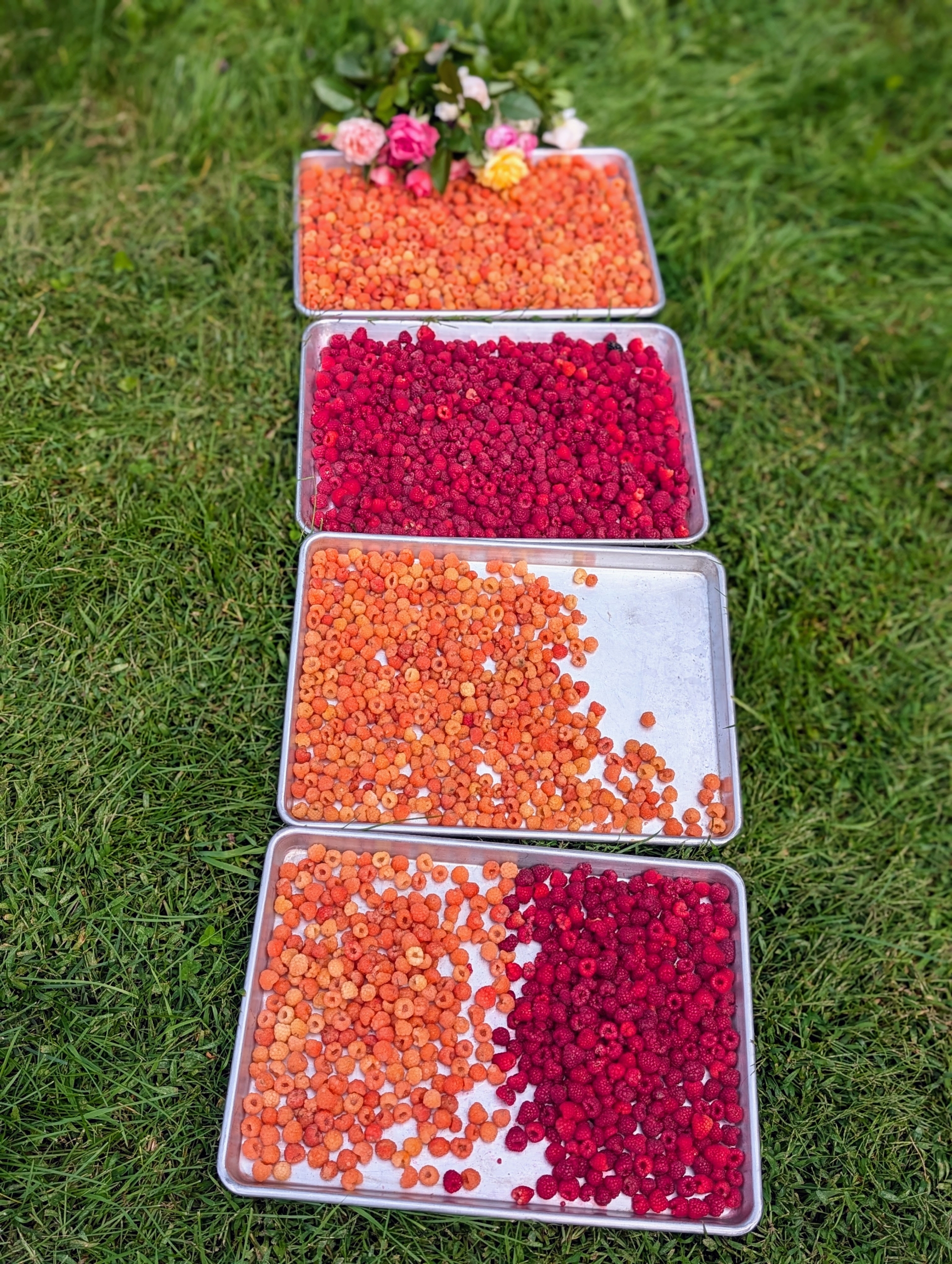
- Four trays of berries picked in less than an hour. To save berries for use at another time, they can be frozen and used as needed.
-
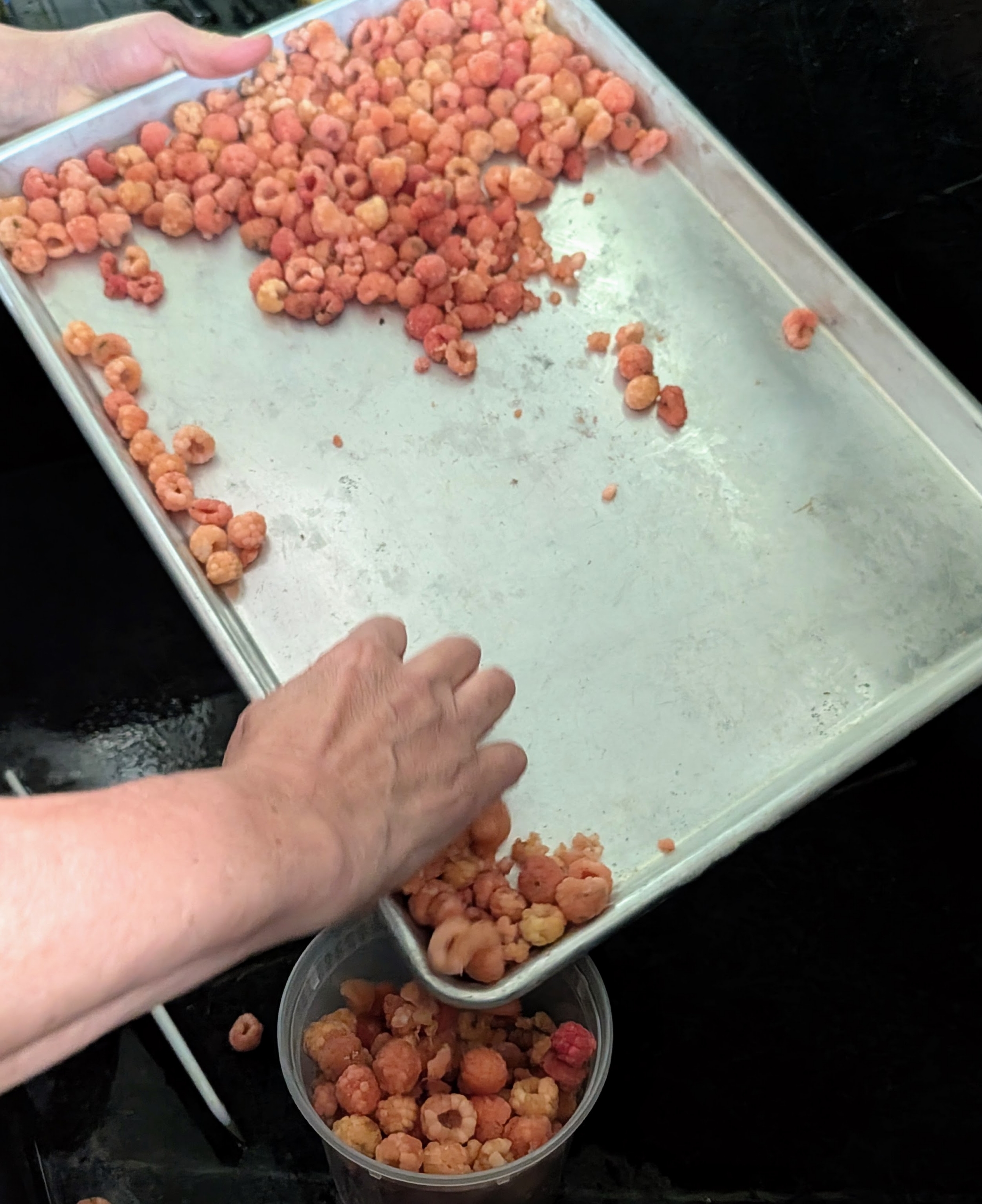
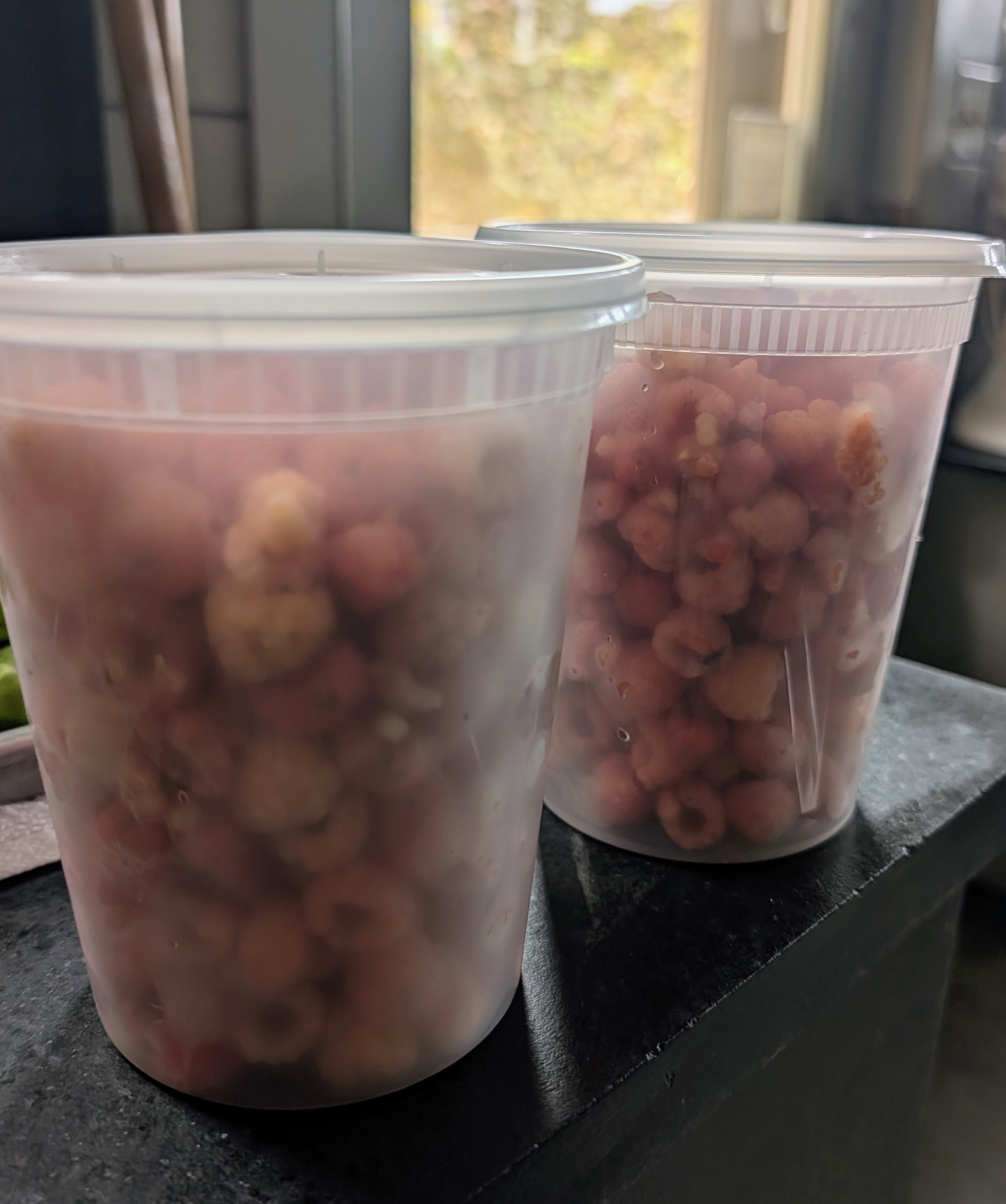
- These berries were left in the freezer for several hours. Now, they can be moved into plastic containers or freezer bags.
-
- Properly frozen raspberries retain their flavor, texture, and nutritional value for eight to 12 months.
-
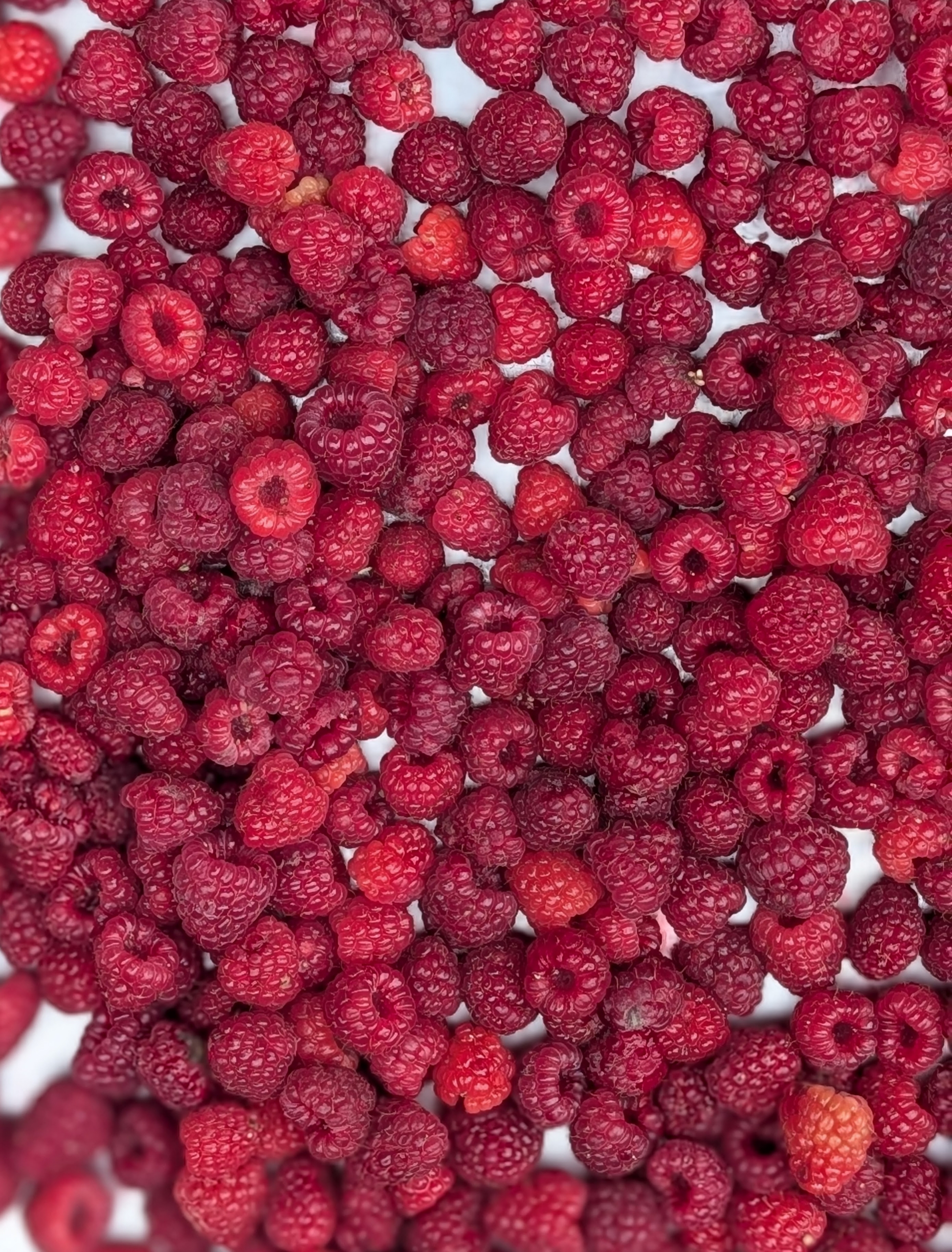
- Freshly picked raspberries provide a combination of sweet‑tart flavor, juicy texture, and vibrant aroma that’s unmatched. Check your bushes – maybe you have more to pick before the season ends!
 Martha Pins


 Martha Tweets

