
Protecting My Bonsai from the Cold
Here at my farm, it's a clear sign cold weather is on the way when plants and various ornamental vessels are covered in burlap. I've been covering my boxwood and ornamental planters for years, but my bonsai trees that live outside also require winter protection.
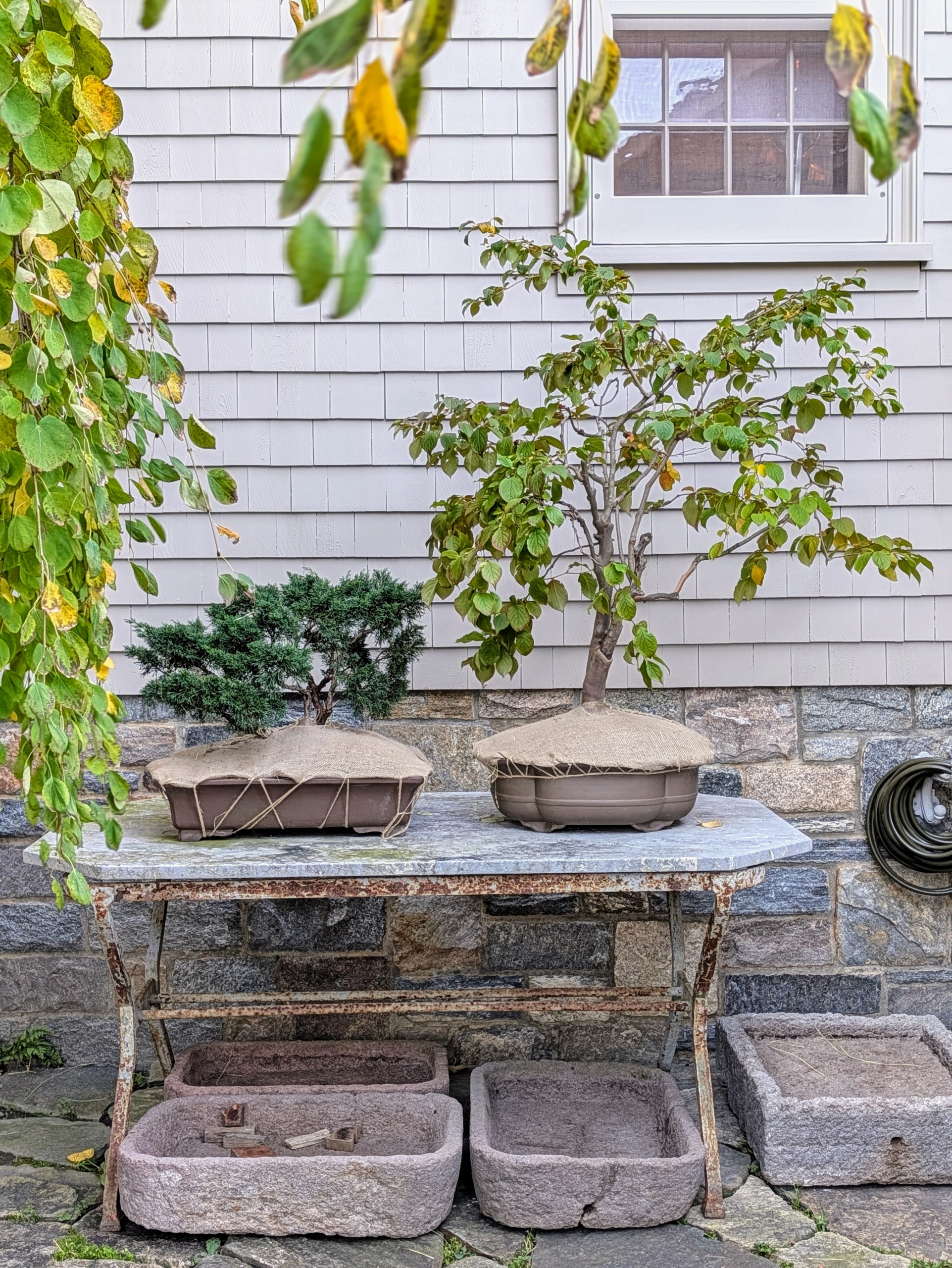
During the cold season, most bonsai enter dormancy, a state of reduced metabolic activity that helps conserve energy and water while protecting the tree from frost and low light conditions. Yesterday, the pots of my deciduous Stewartia bonsai and my evergreen juniper bonsai were both insulated and covered with burlap to further prevent heat loss and protect shallow roots.
Enjoy these photos and easy how-to instructions.
-

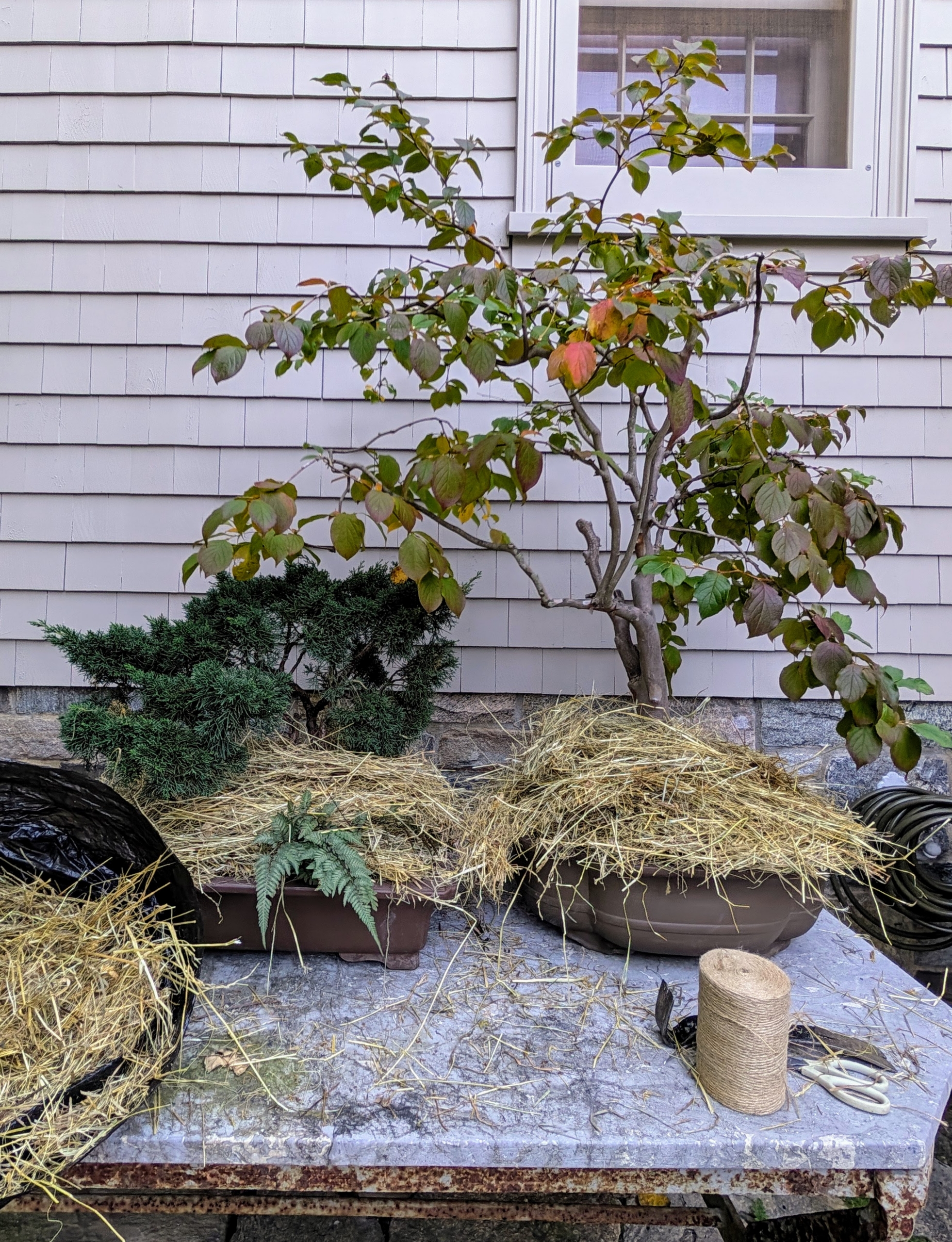
- These bonsai trees sit on a table outside my Winter House where they are protected from harsh winds. To prepare them for the cold season, they are first insulated with hay, which I grow right here at the farm.
-
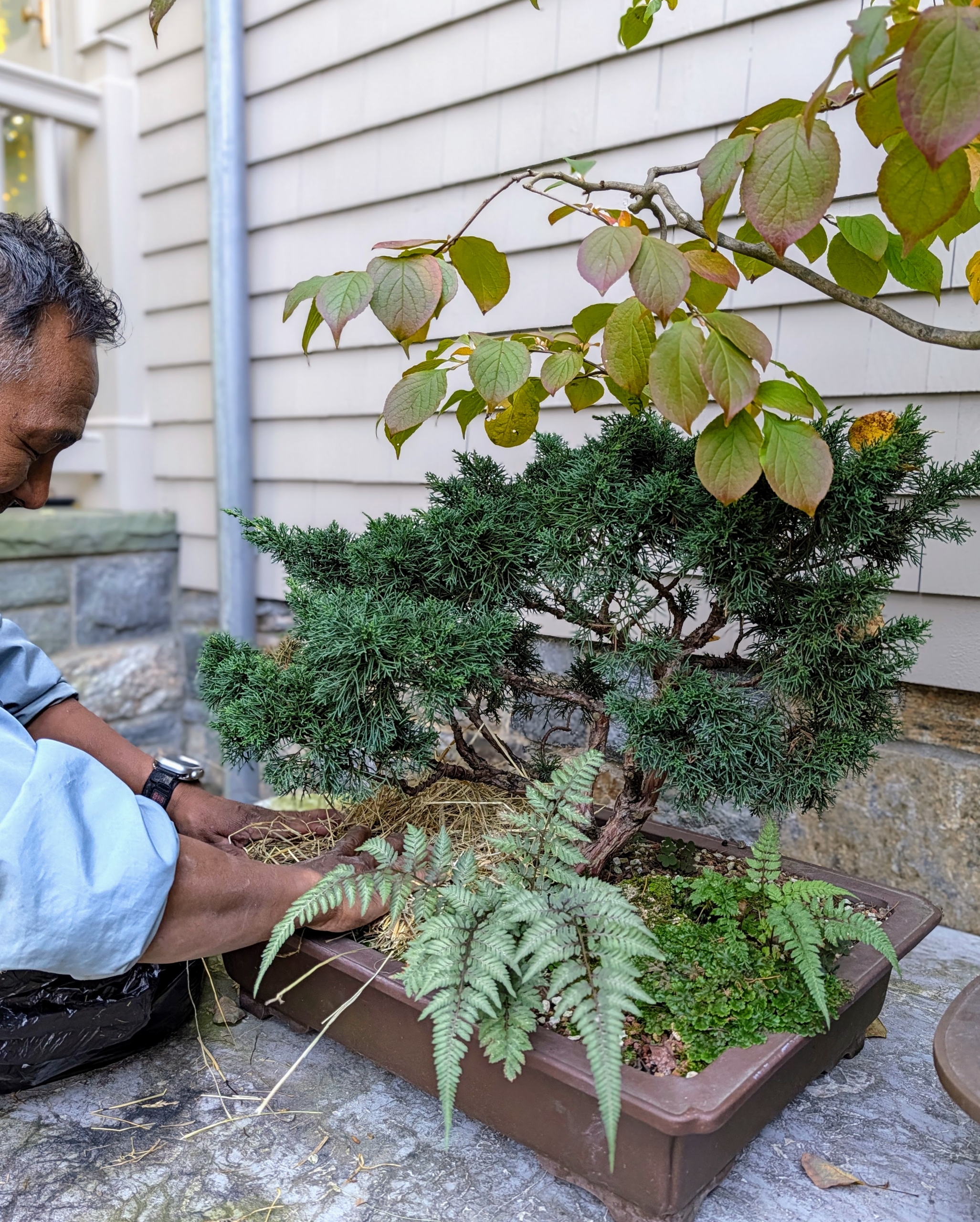
- Pete places a generous two to three inches of hay on the soil of the pot. Roots in pots can freeze faster than in-ground trees because the vessel conducts cold from all sides.
-
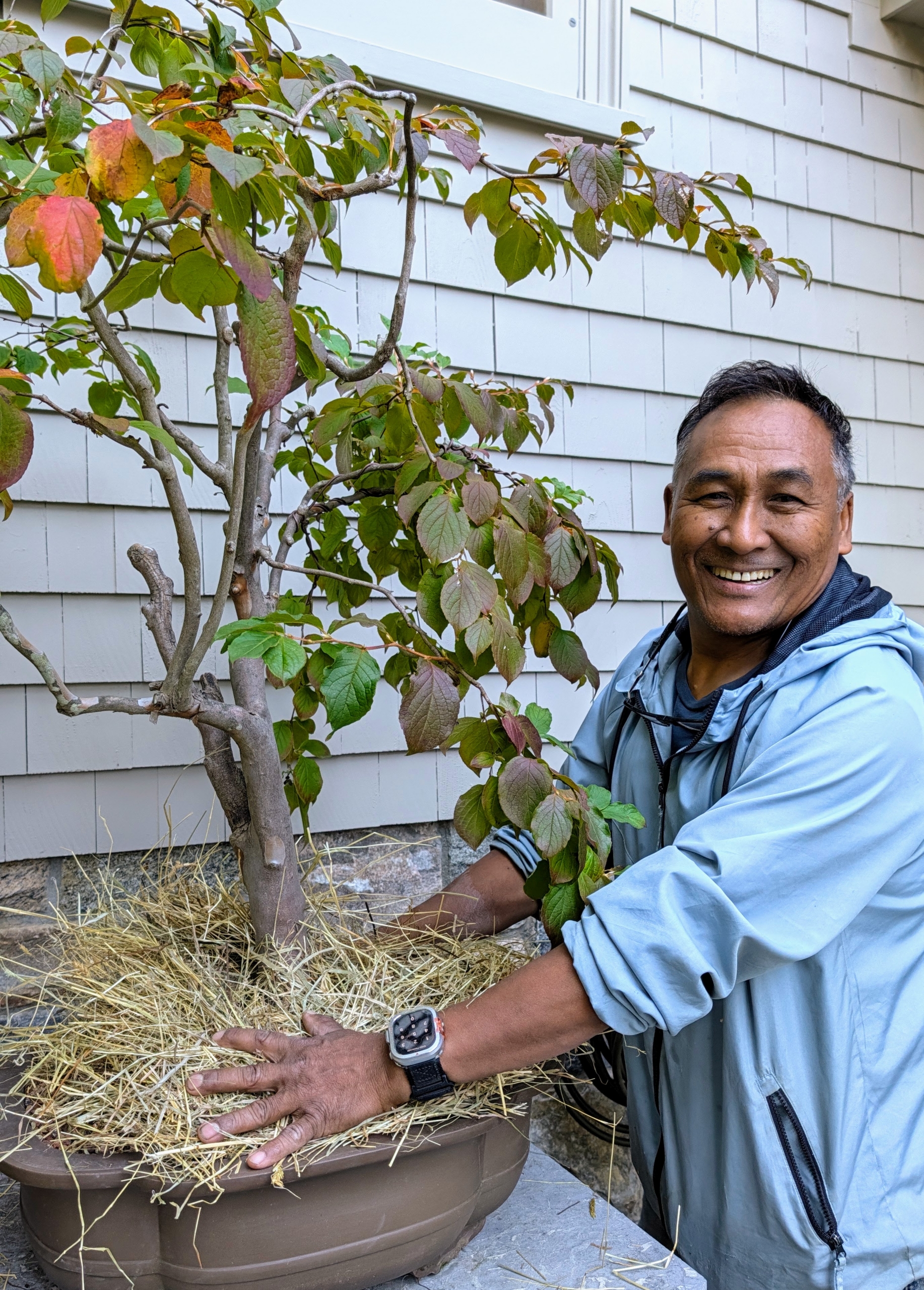
- Here’s Pete doing the same thing with my Stewartia bonsai tree. A bonsai tree is a full-sized tree species grown in a small container and carefully shaped to create the appearance of a mature tree in miniature. This Stewartia has done so excellently over the years.
-
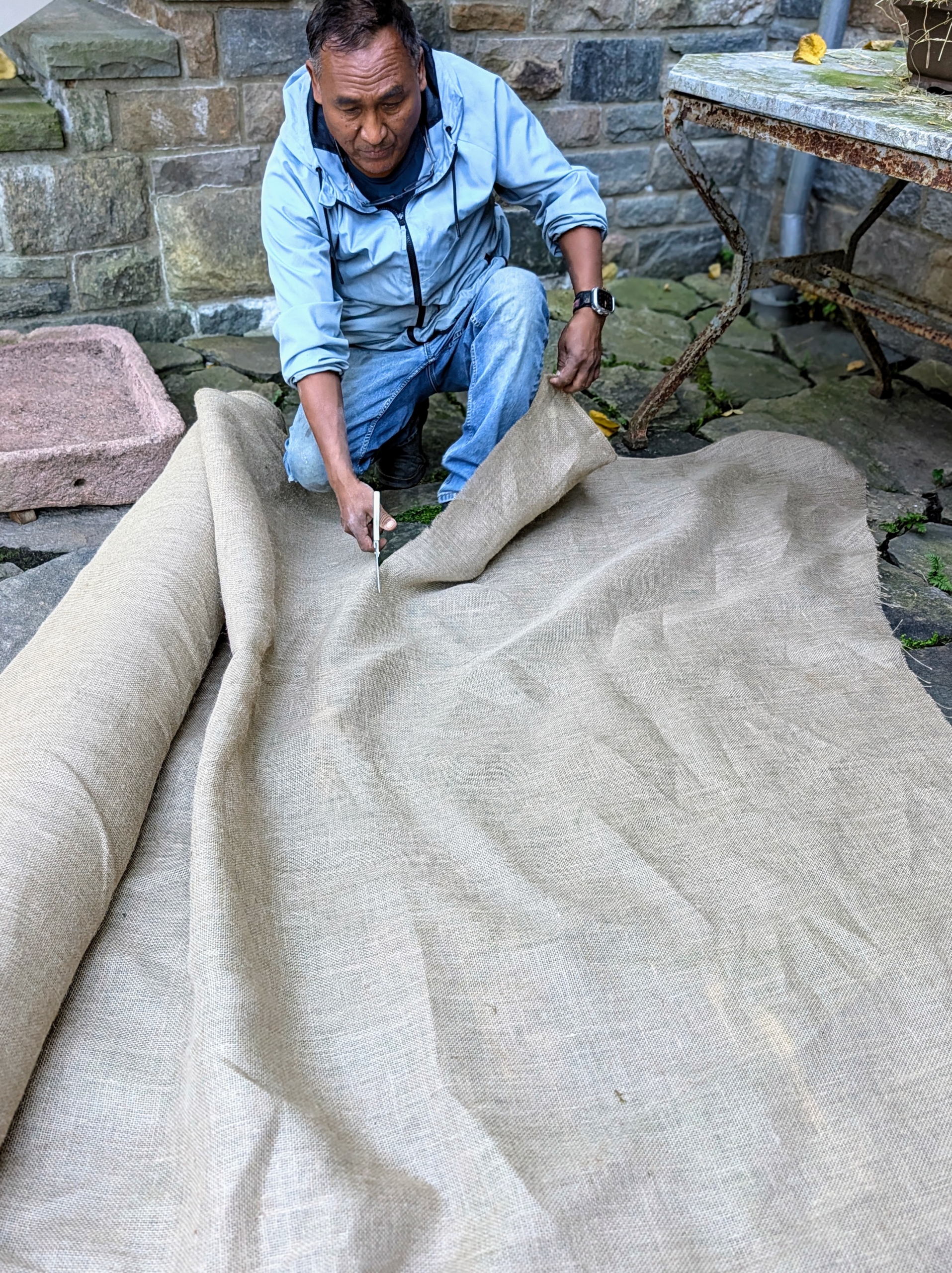
- Pete cuts a piece of burlap to drape over the pot. Burlap is available in giant rolls of 40-inches or 60-inches wide. Also called hessian, burlap is made in Pakistan, Bangladesh and India from jute, a tall, grass-like plant grown for its strong fibrous stalks.
-
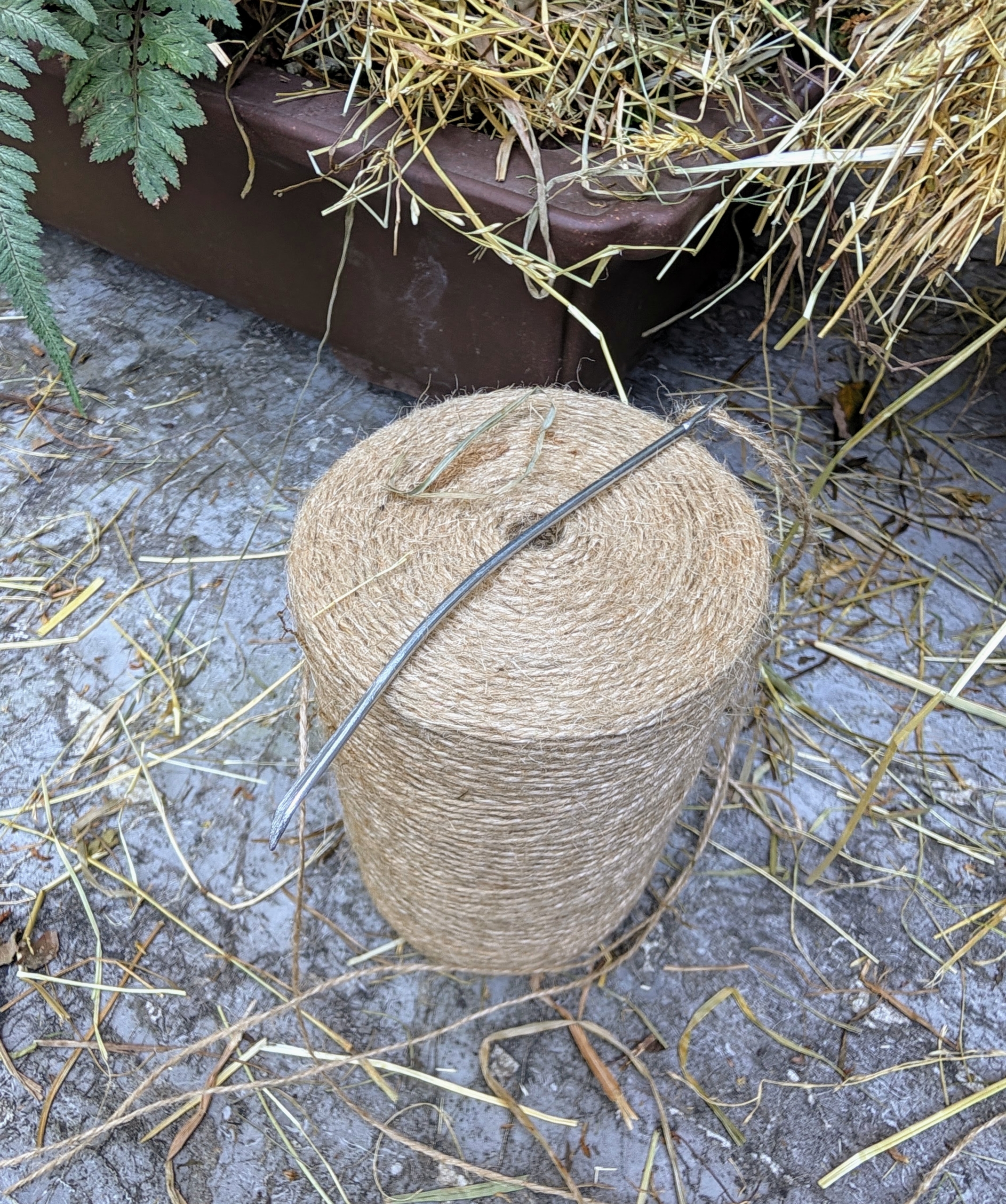
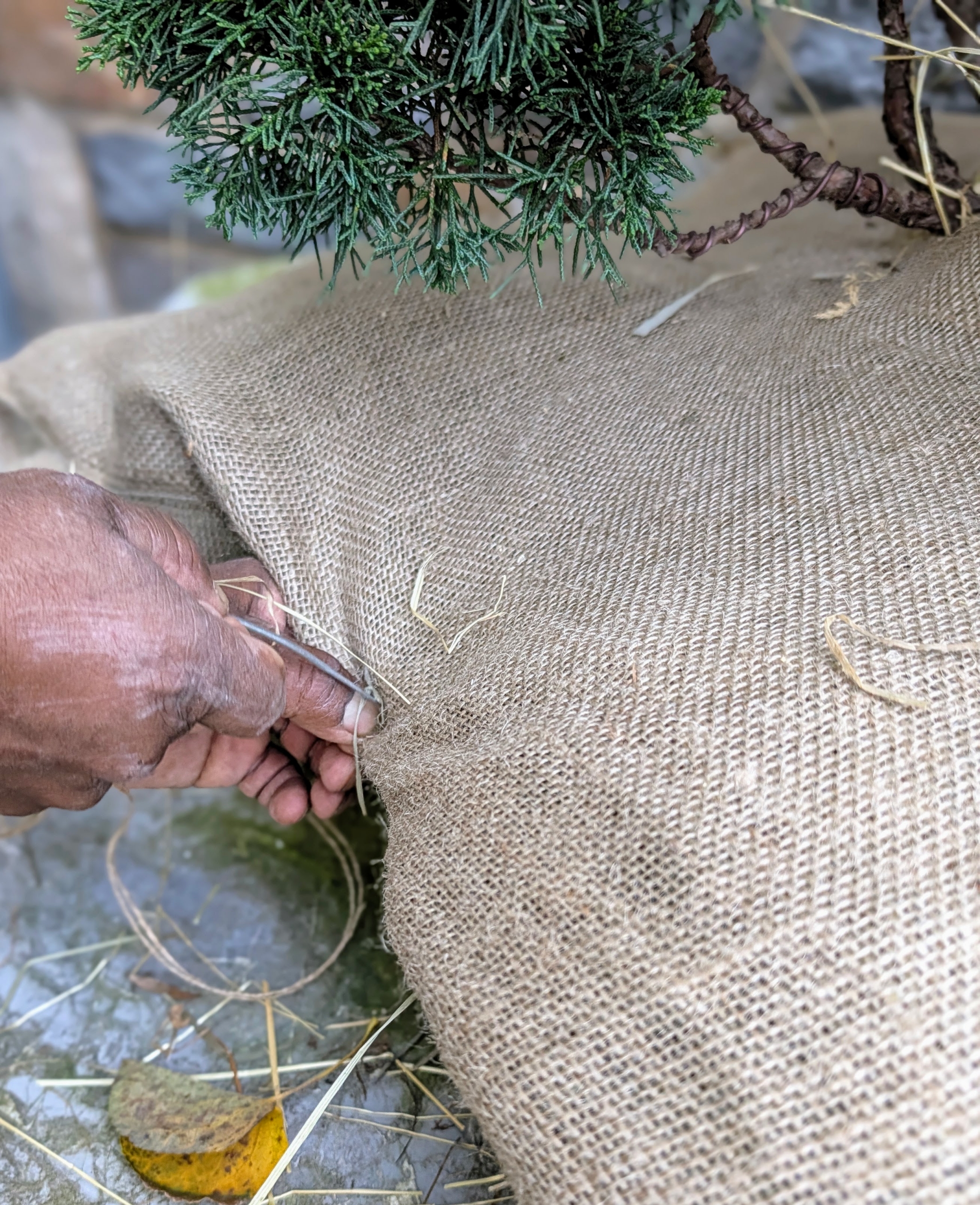
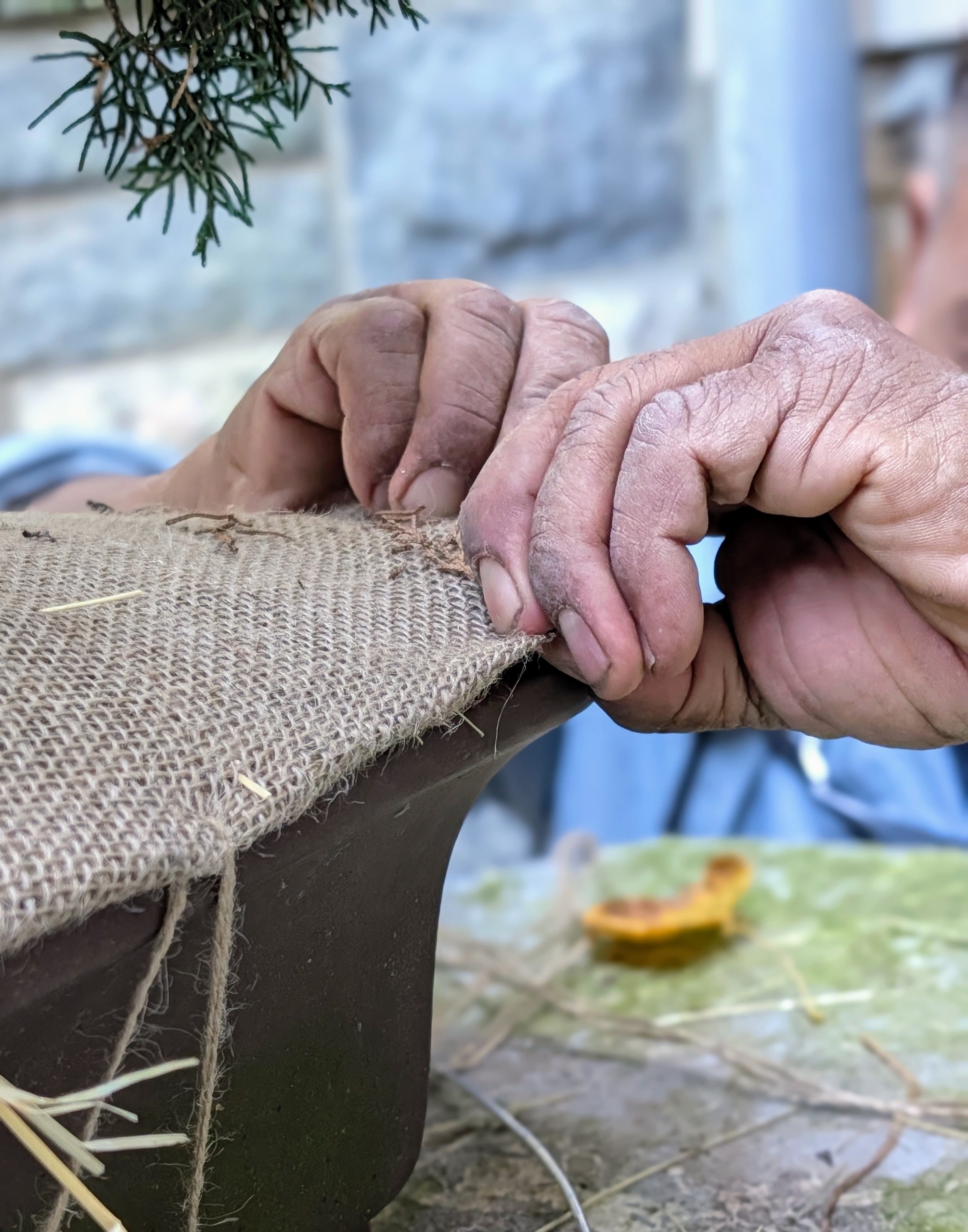
- To sew burlap, the crew uses jute twine. It is all natural and the same color as the burlap. Five-inch long needles specially designed for sewing this material have large eyes and bent tips. Every member of my outdoor grounds crew has a needle. Pete stitches the top of the fabric together pulling the burlap snug.
-
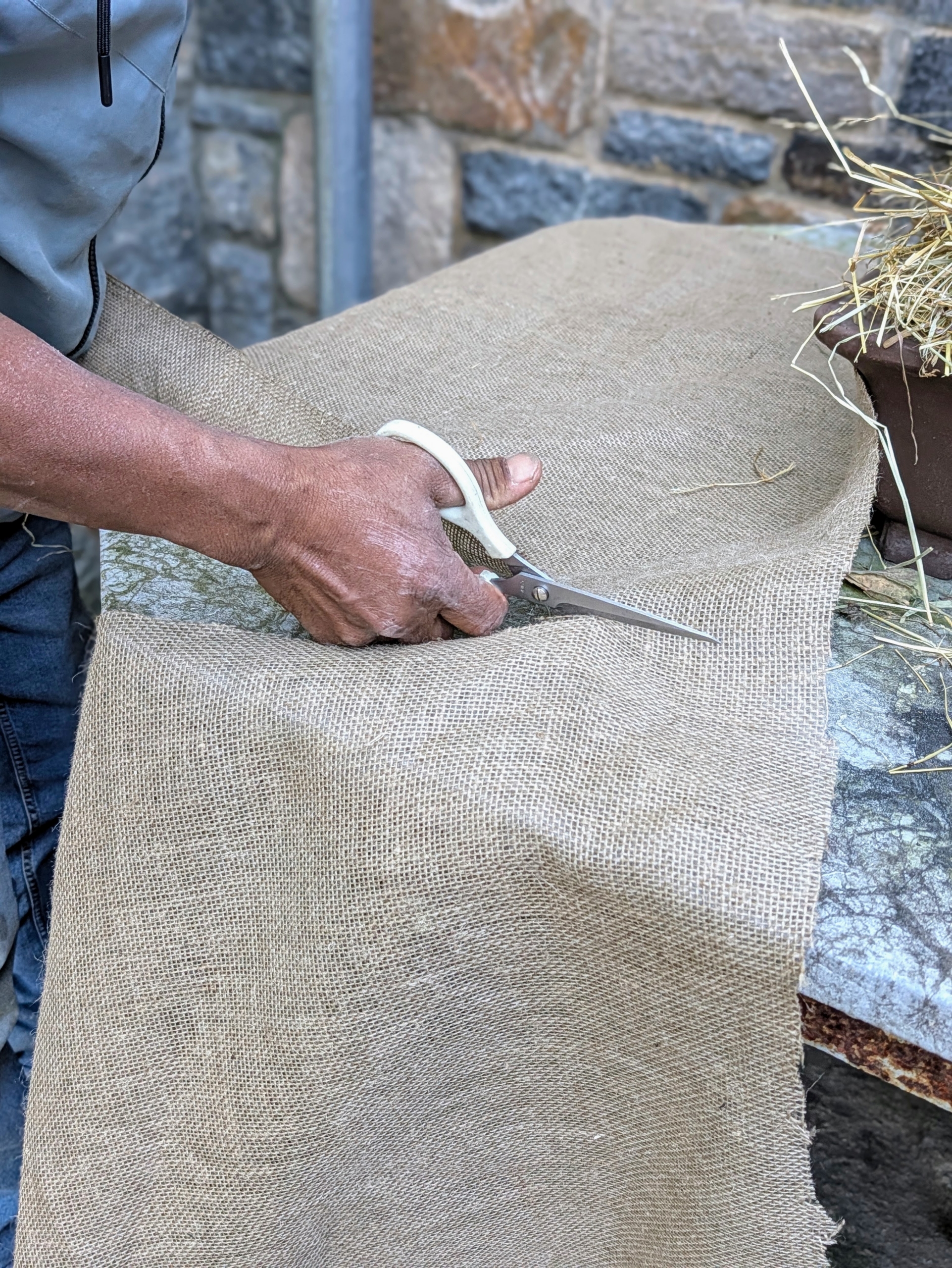
- Pete makes a slit down the center of the burlap piece to accommodate the base of the tree.
-
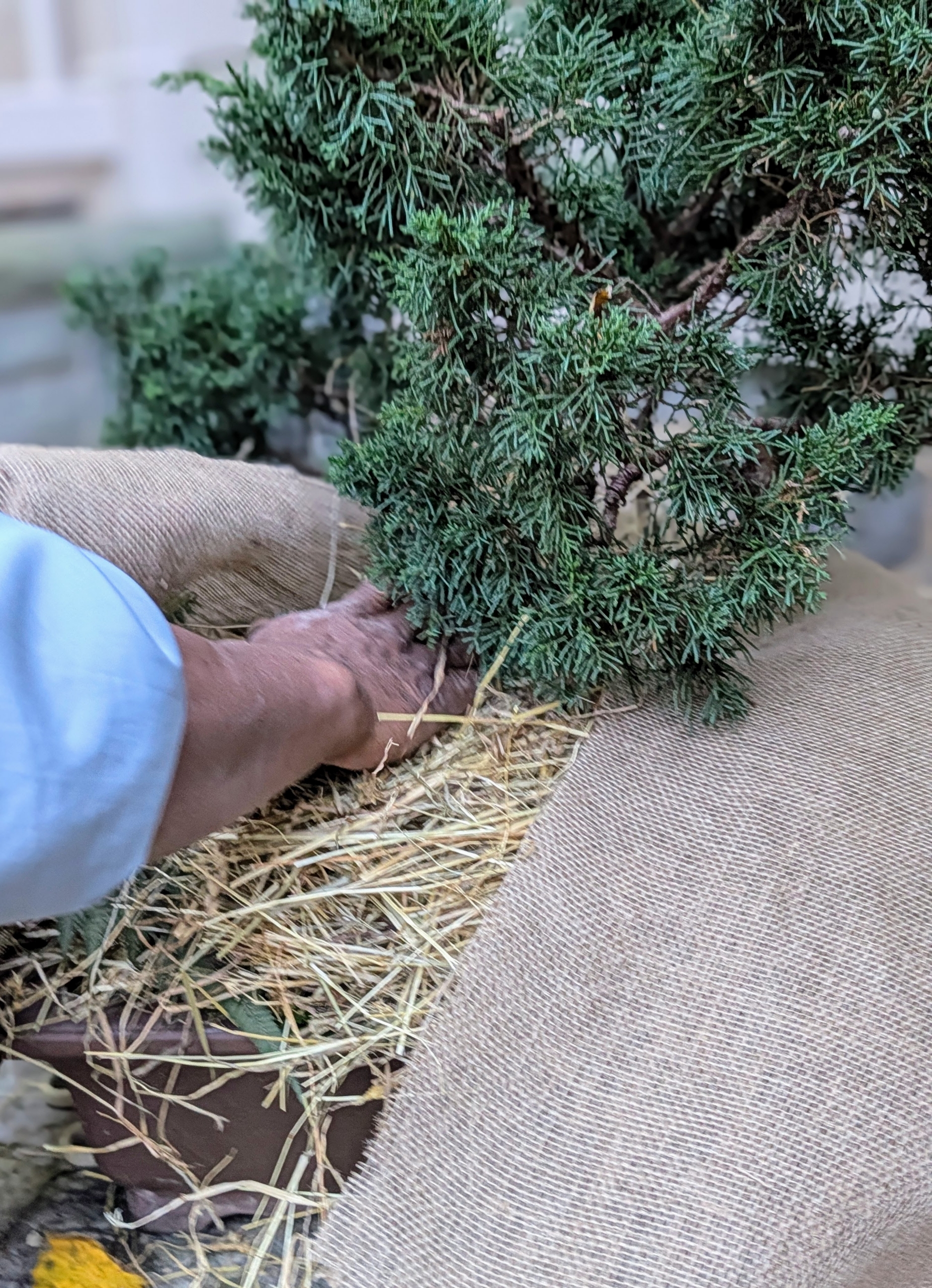
- And then Pete wraps it around the base of the juniper’s trunk, where the tree meets the soil.
-
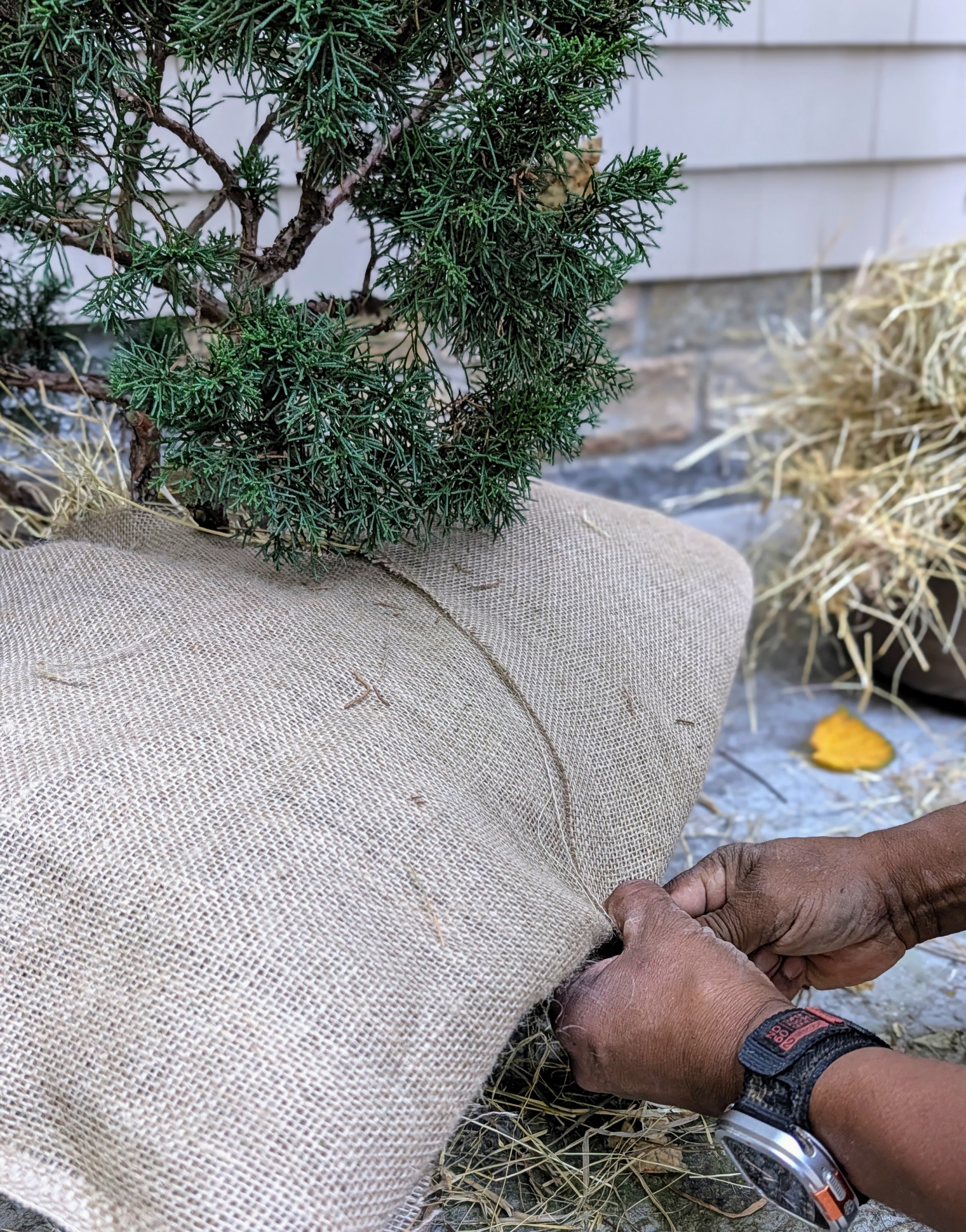
- Pete closes the burlap neatly in place, so it is snug all the way around the tree and container.
-
- And then he begins to sew the slit closed.
-
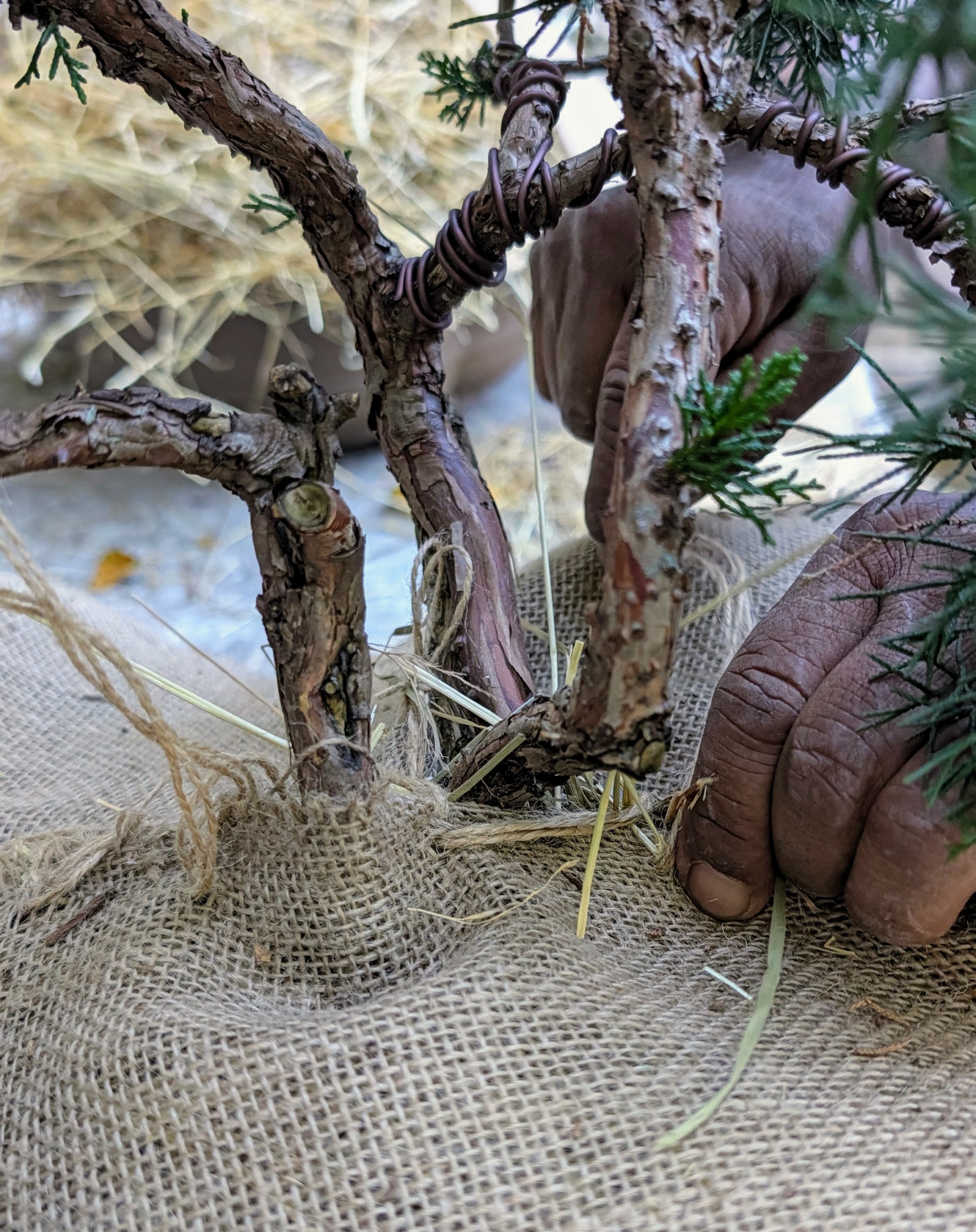
- Pete also sews around the trunk, so the base of the juniper is completely protected.
-
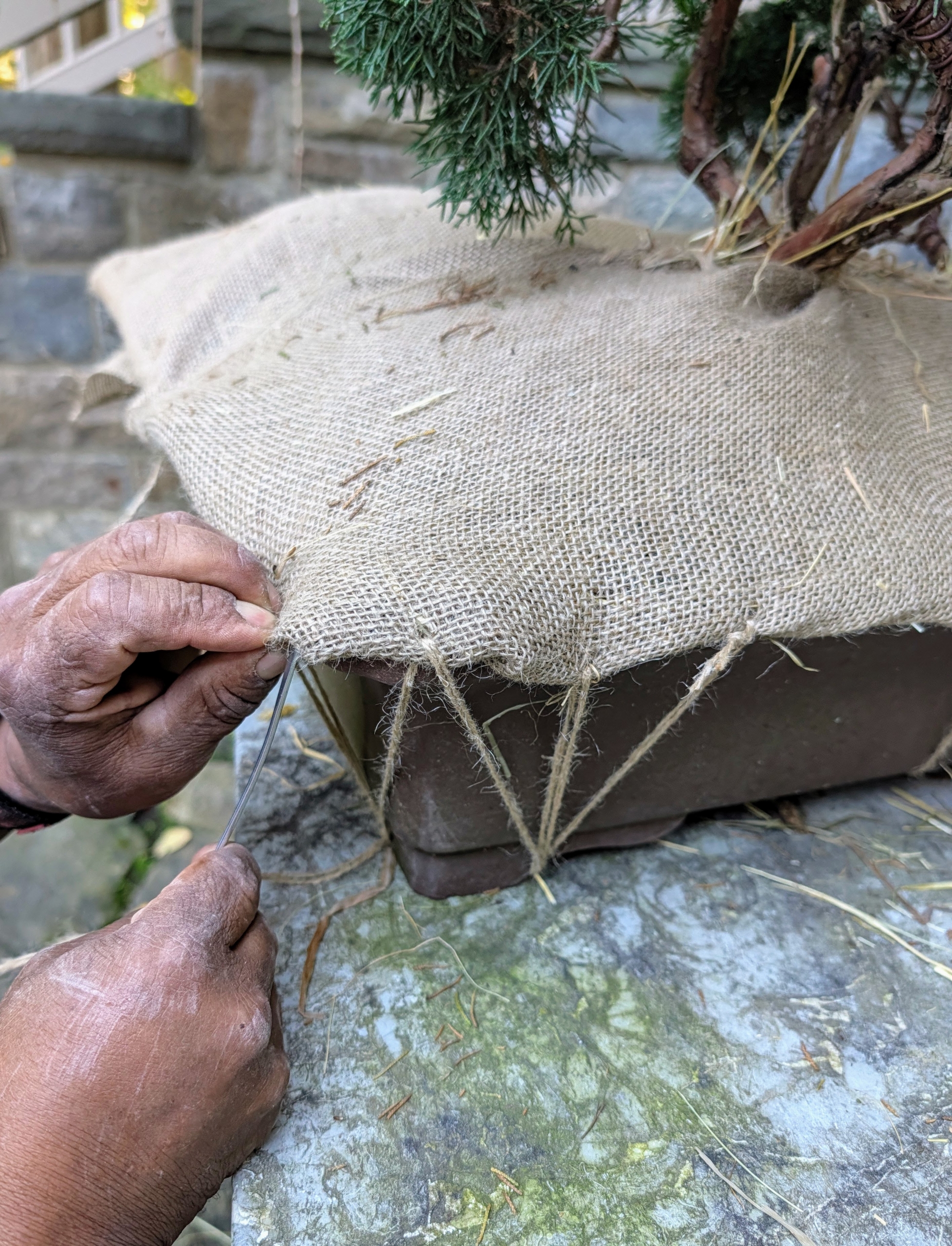
- To secure the sides of the burlap, Pete anchors the twine under the feet of the planter.
-
- While sewing, he also tucks in the ends, so they are neat, tidy and snug around the pot.
-
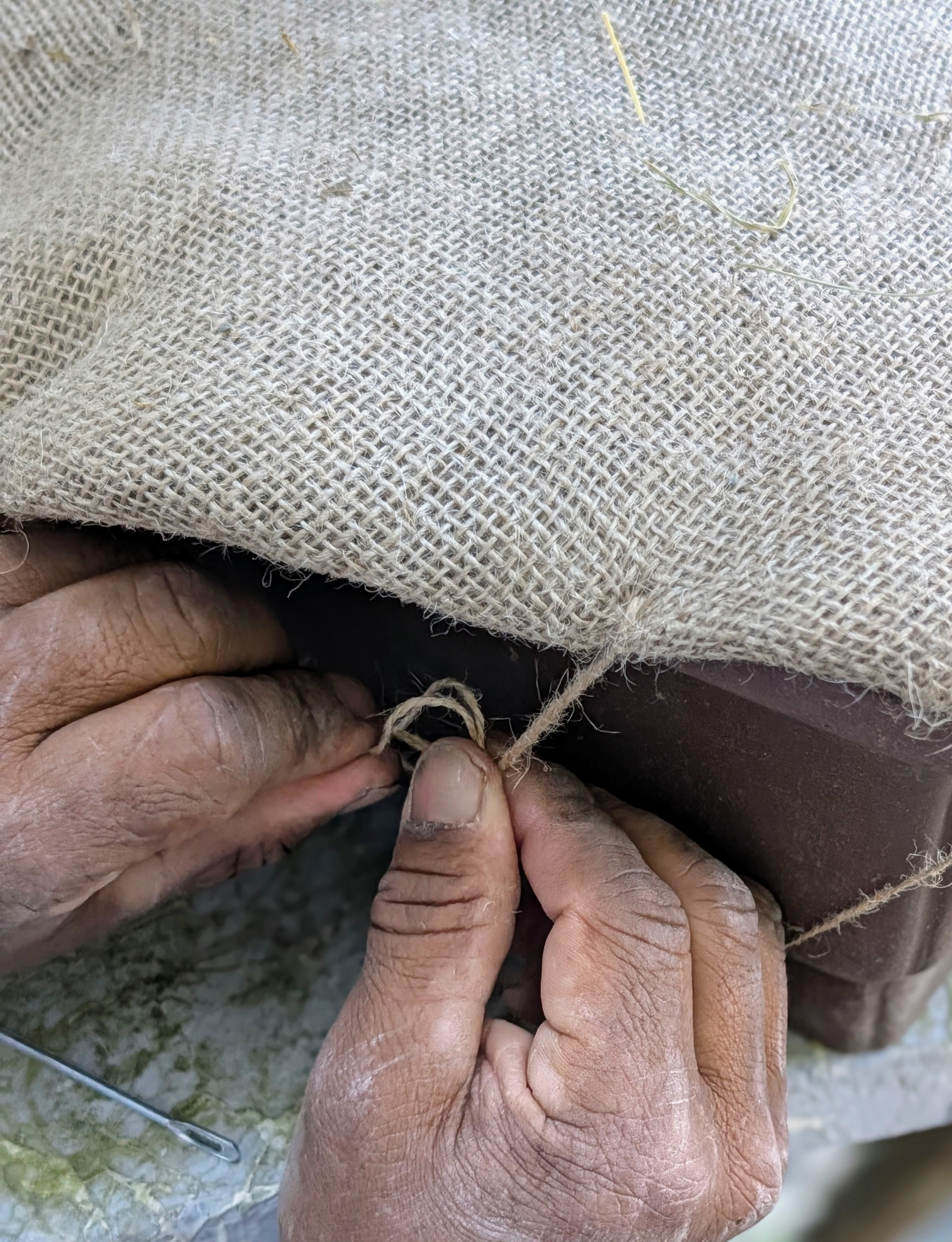
- Here, Pete secures the end of the jute twine and makes a knot.
-
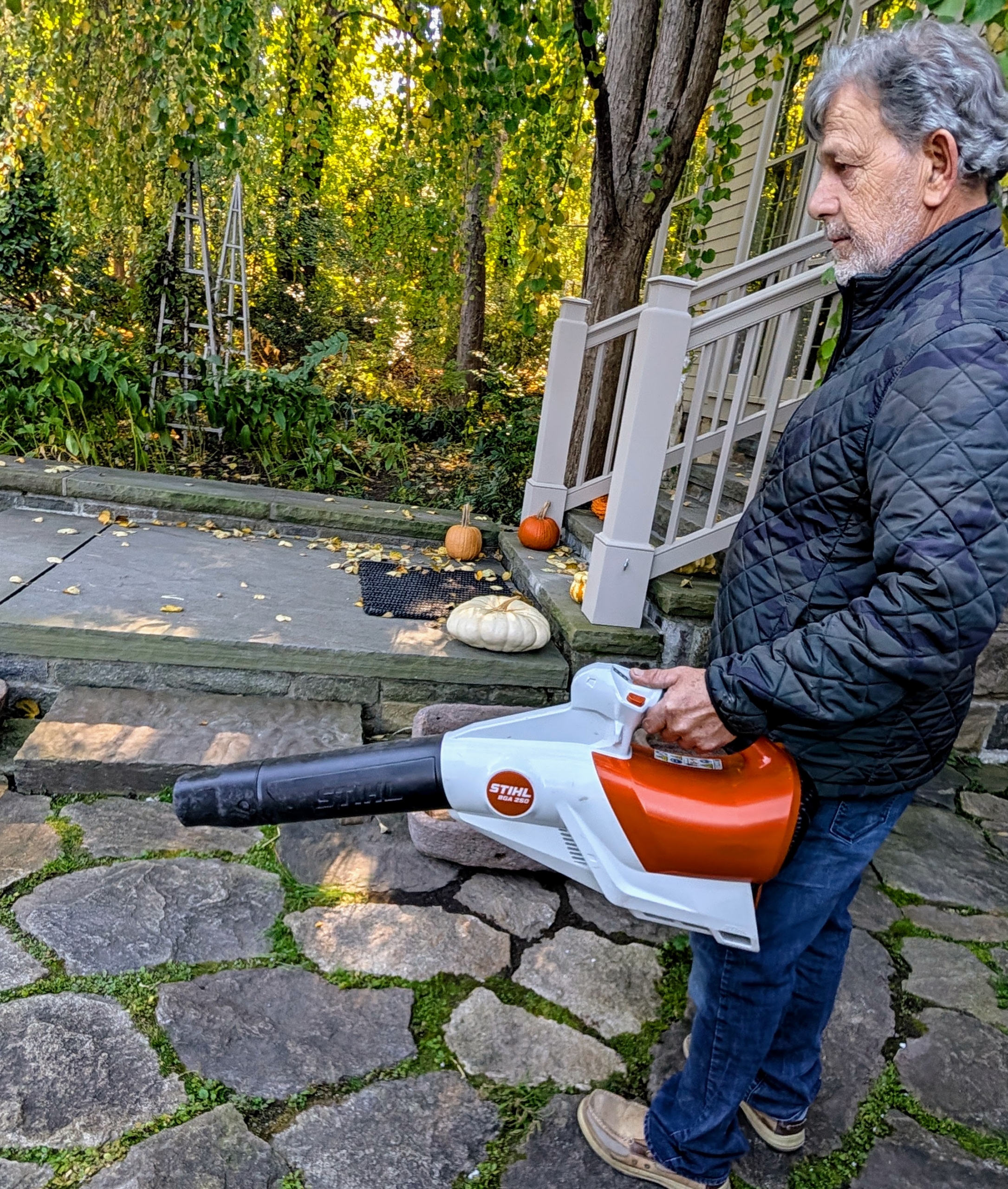
- Meanwhile, Fernando uses my battery powered handheld blower from STIHL to blow any leaves from the area.
-
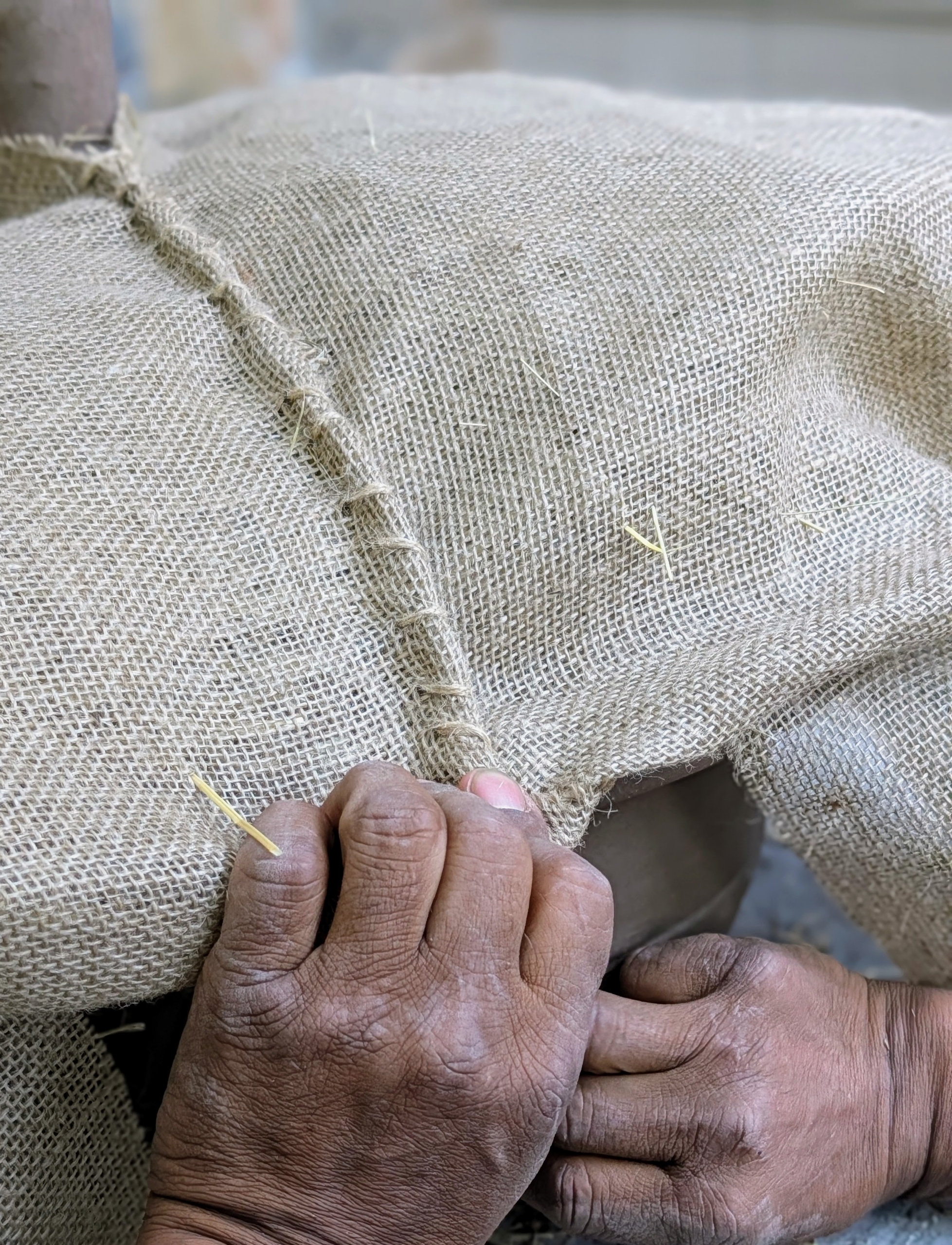
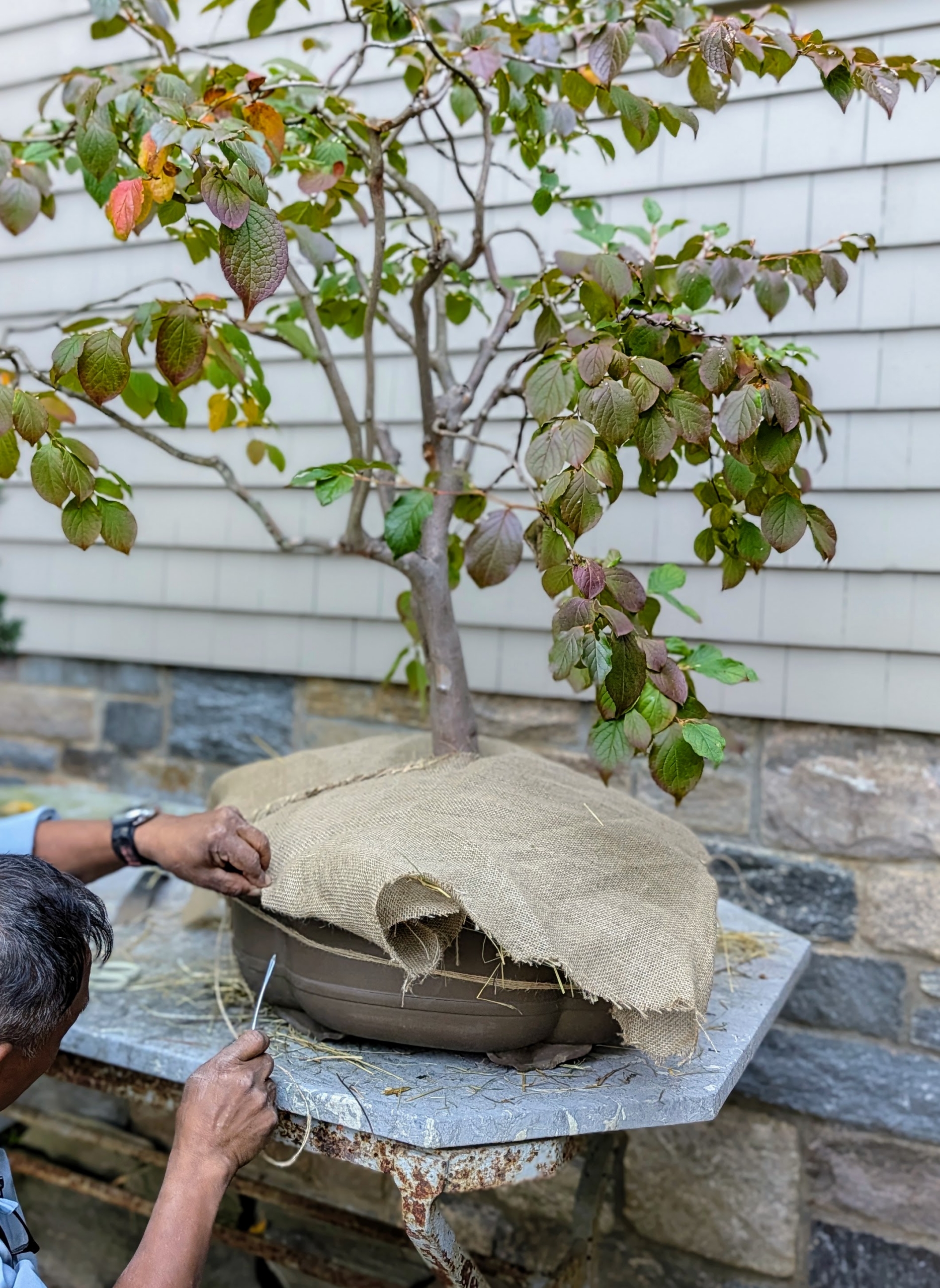
- Pete covers and sews the potted Stewartia bonsai. Everyone on my crew knows how to sew very well because of the burlap work we do around the farm.
-
- The burlap covers the hay on top of the pot completely and then gets tucked under and sewn tight.
-
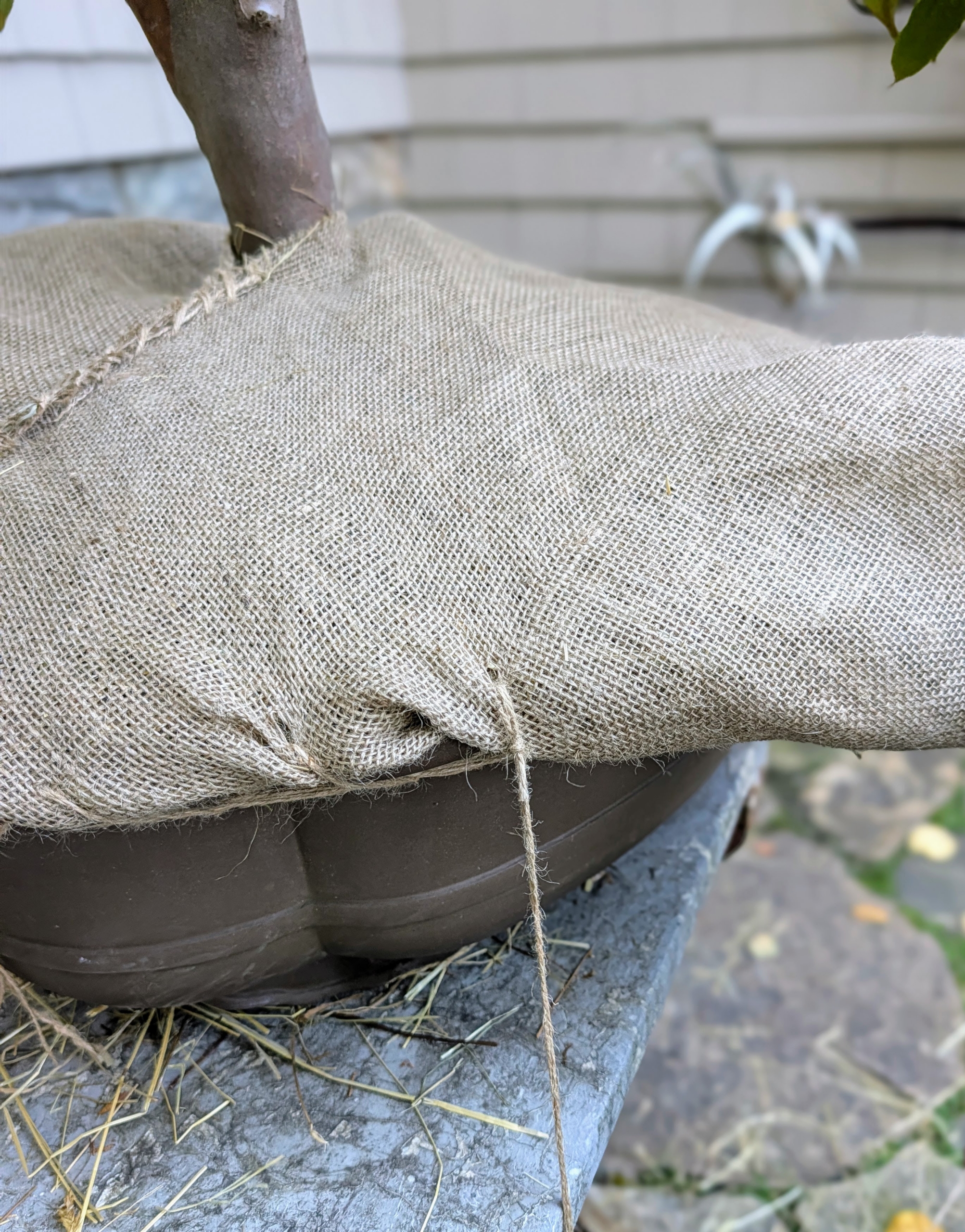
- Here is a closer look at the first stitches made at the edge of the pot. Using burlap still allows some water to penetrate the root ball while providing good aeration and circulation for the roots.
-
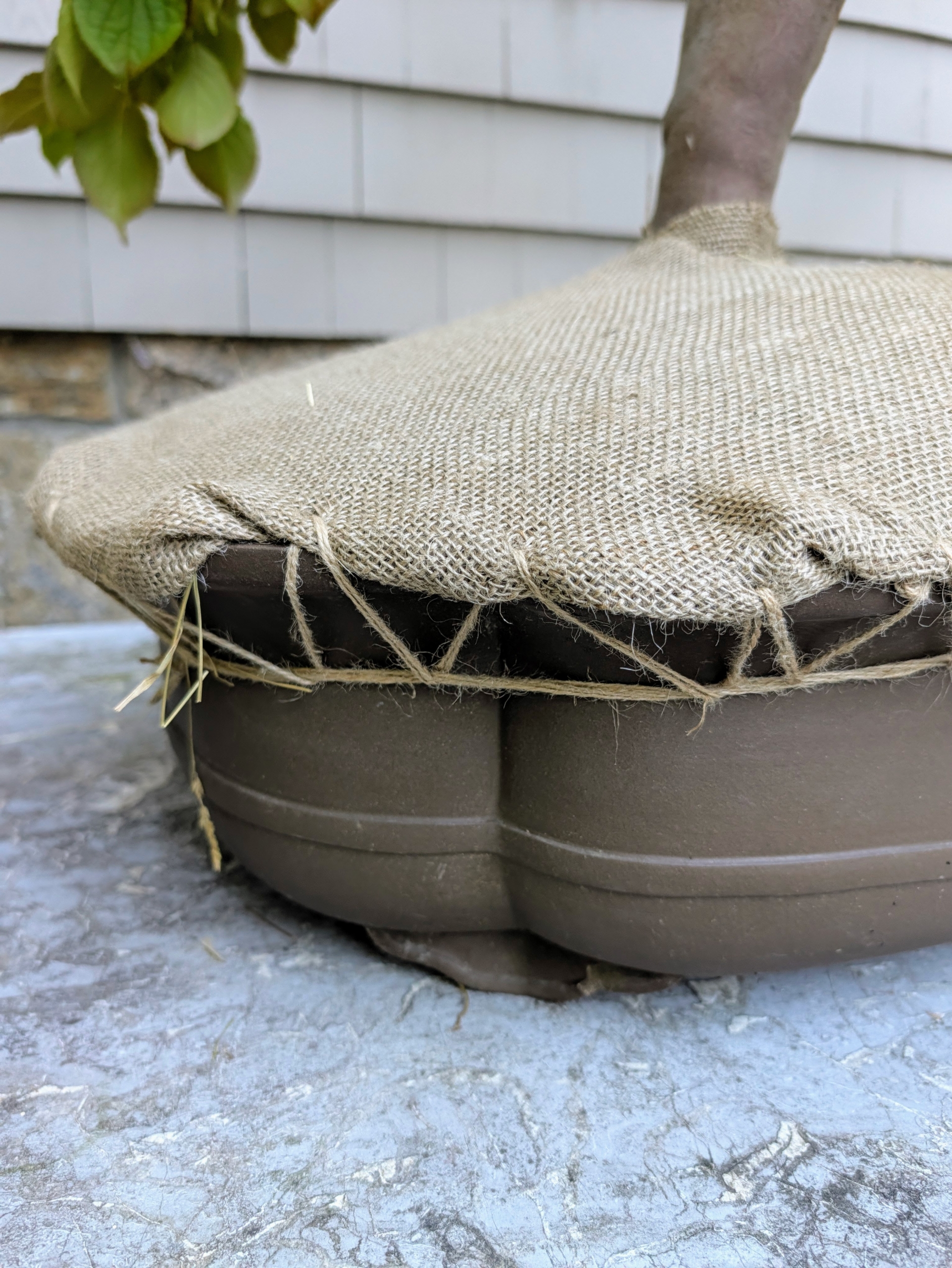
- Because this pot does not have feet, Pete ties jute twine around the vessel, so supporting pieces of twine can be secured.
-
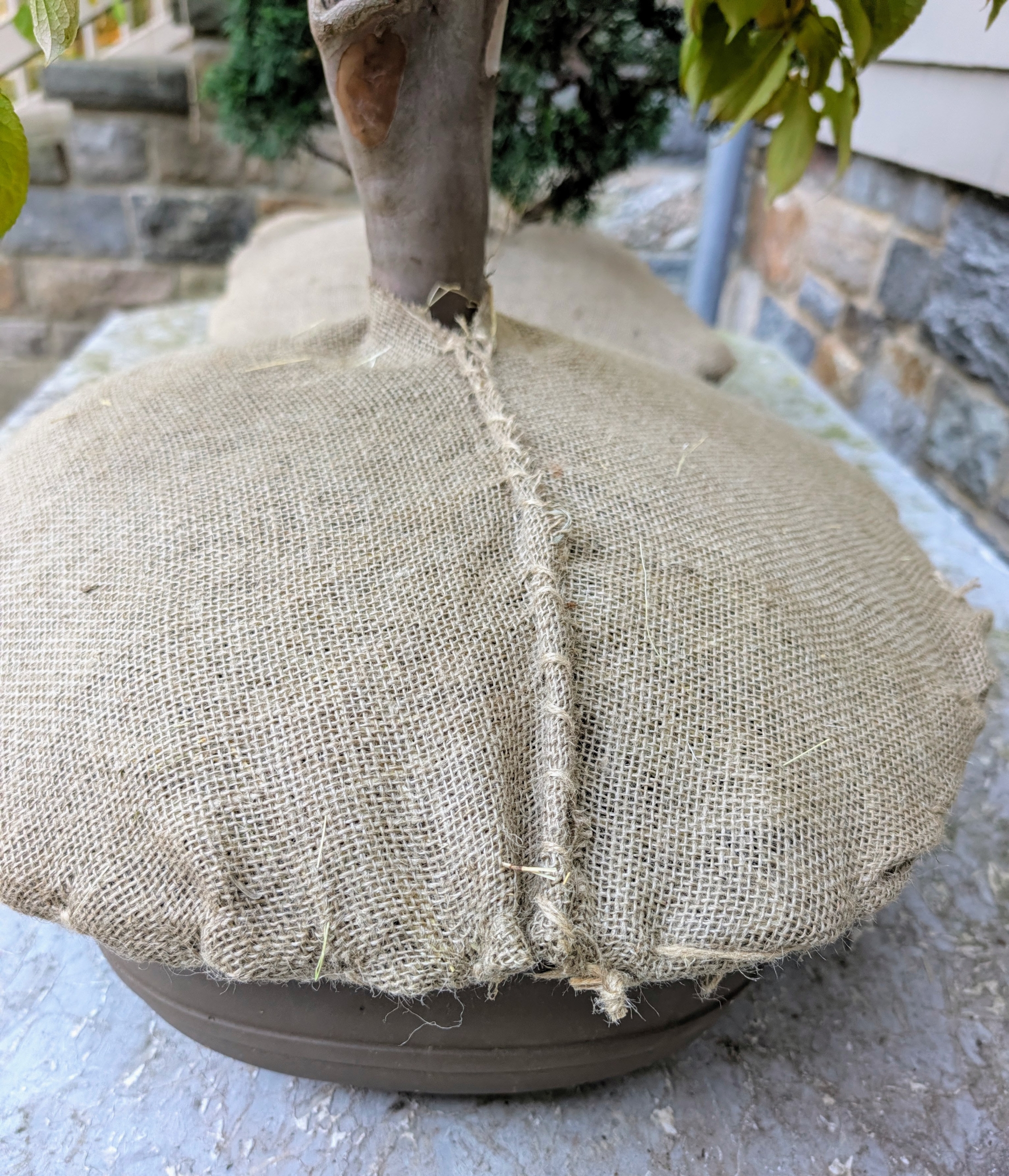
- Here is the Stewartia bonsai all finished and protected for the season.
-
- These bonsai trees will be monitored closely during the season. These precious plants are now protected from wind, snow, and freezing temperatures so they can rebound healthy and happy come spring.
 Martha Pins


 Martha Tweets


