The gardens at my Bedford, New York farm are changing every single day.
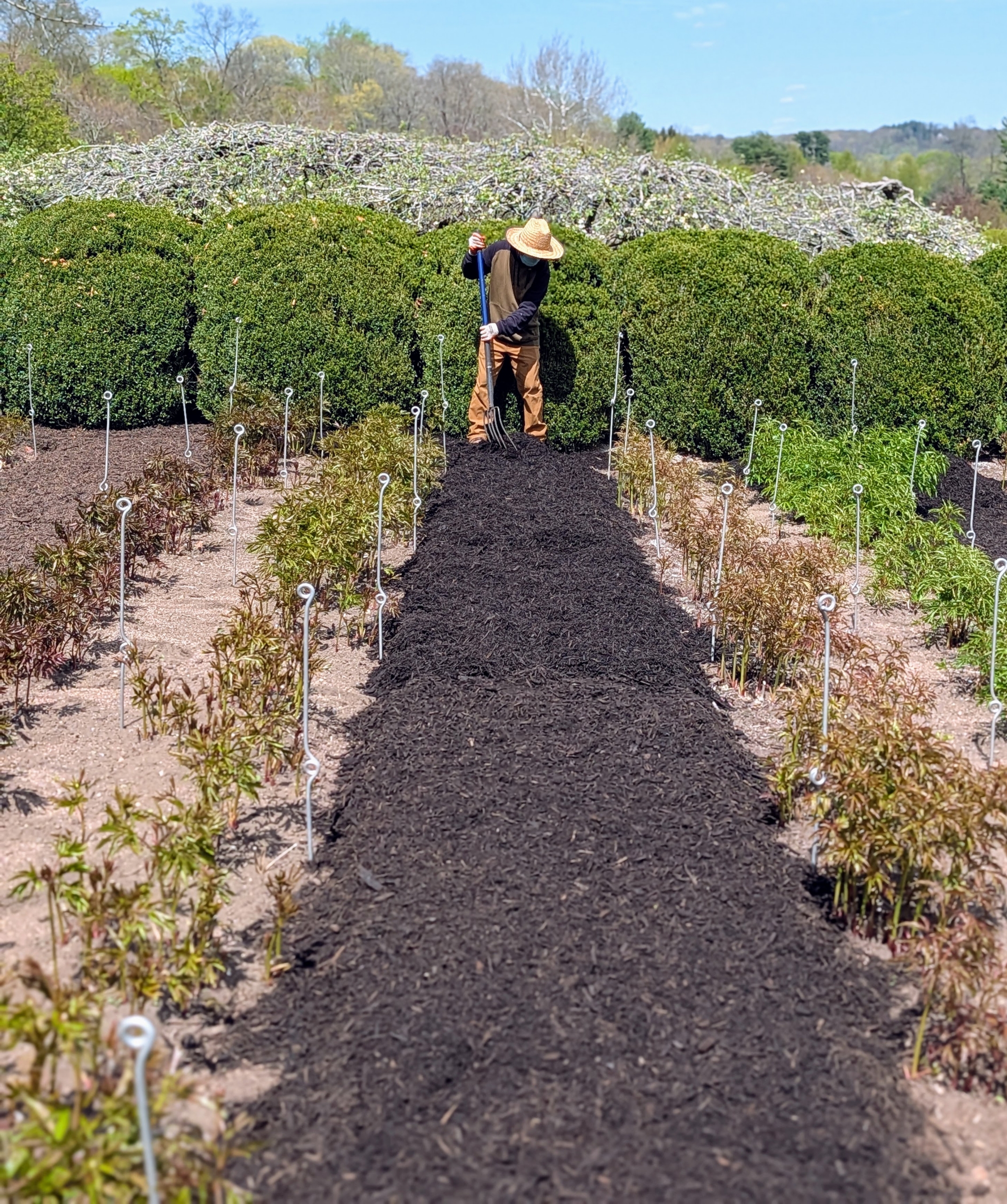
One of the most anticipated sights on the farm is my herbaceous peony garden in full bloom. No garden is complete without these beautiful plants, which show off their large, imposing flowers in May and June. True perennials, herbaceous peonies can live for 100-years, becoming more impressive over time. This week, my gardeners and outdoor grounds crew tended the beds - adding food, mulch and compost, and then carefully staking all the rows of plants so the massive flower heads don’t droop to the ground.
Enjoy these photos.
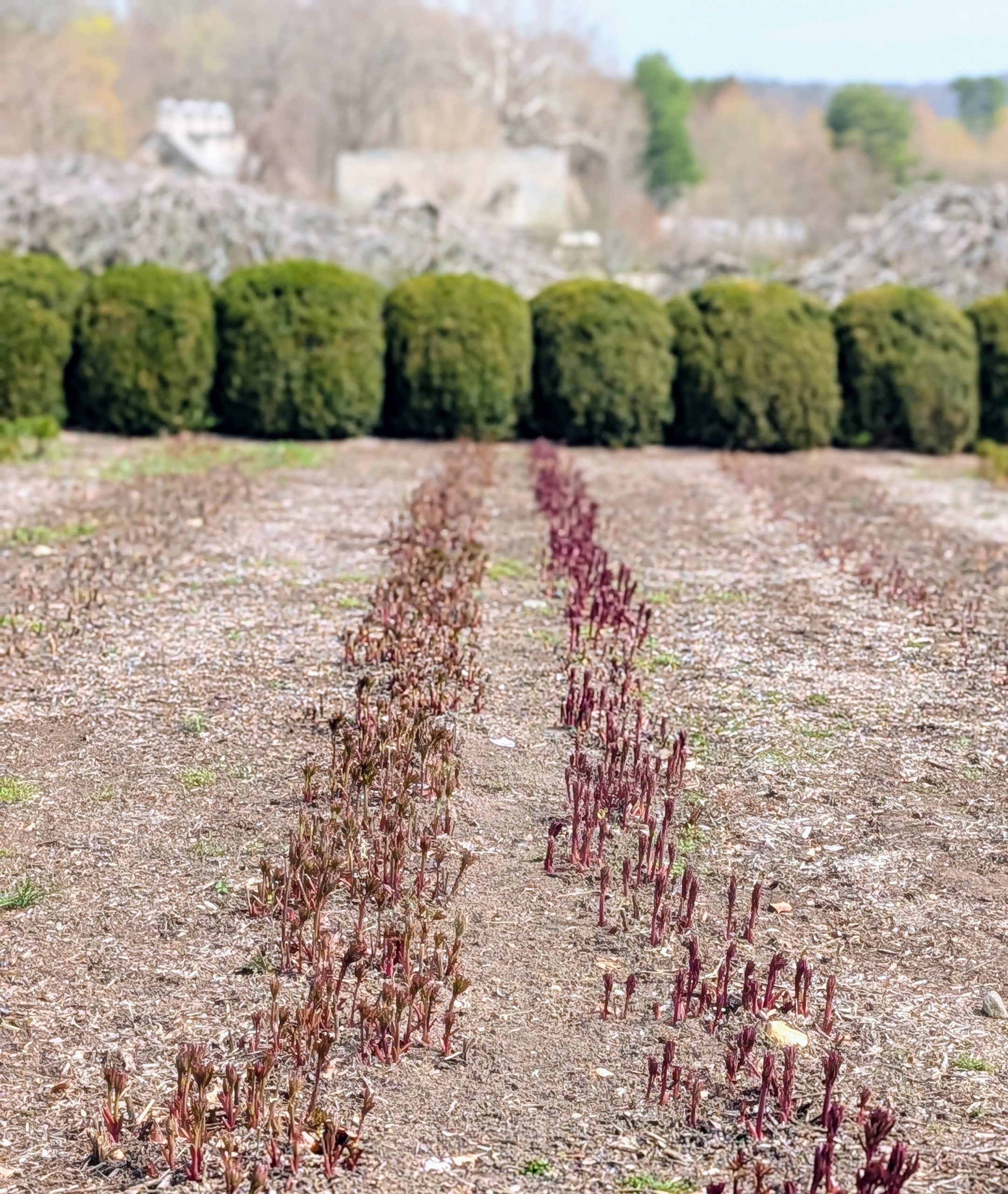
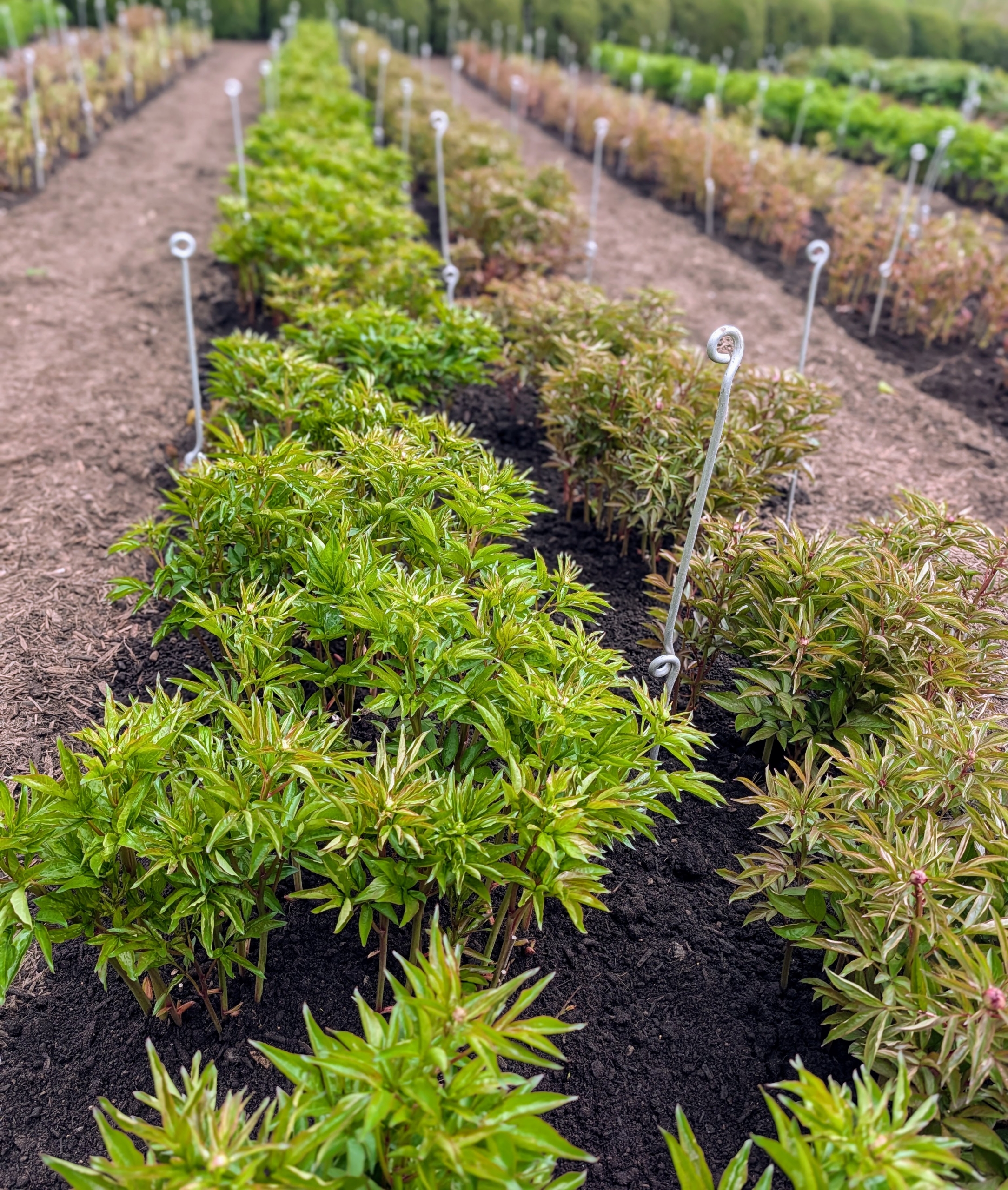
In April, the herbaceous peonies begin emerging from the ground, but they grow very quickly and need to be supported to protect the large heavy flowers. My peony garden is planted with 11 double rows of 22 herbaceous peony plants, 44 in each row of the same variety, all surrounded by a hedge of rounded boxwood shrubs, making it a focal point on the property.
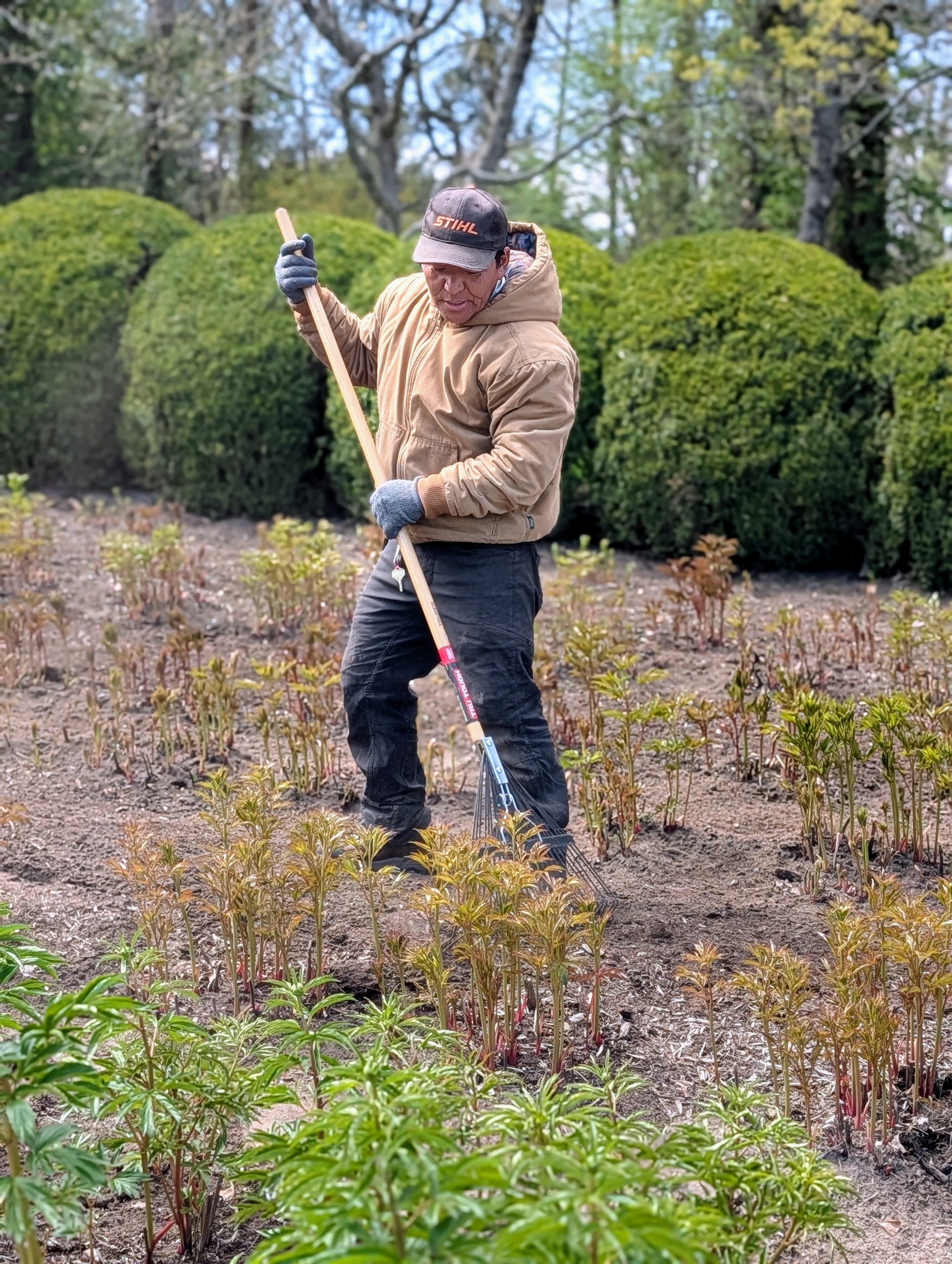
Phurba begins by cleaning and weeding the beds. This is still easy to do since the plants are small.
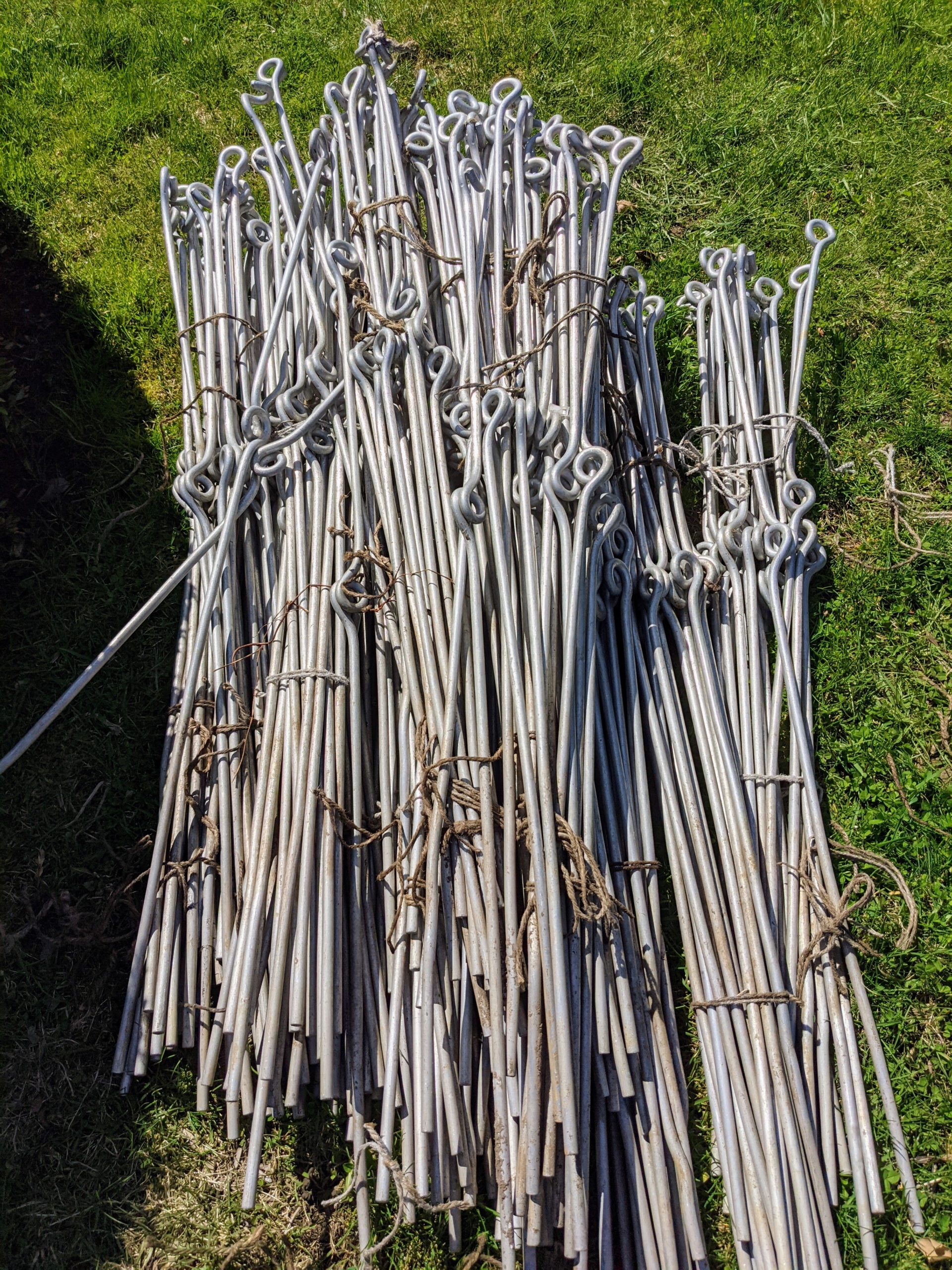
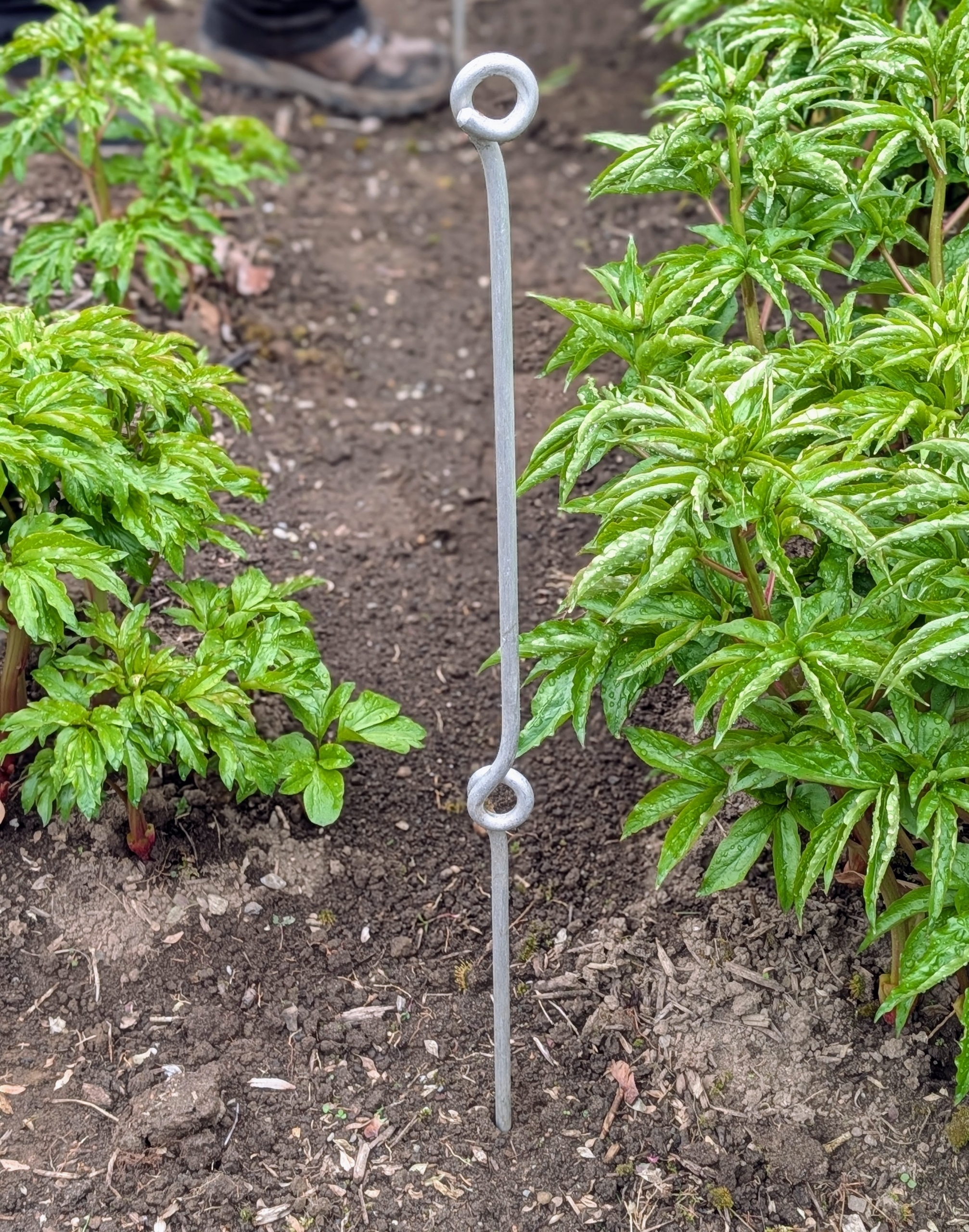
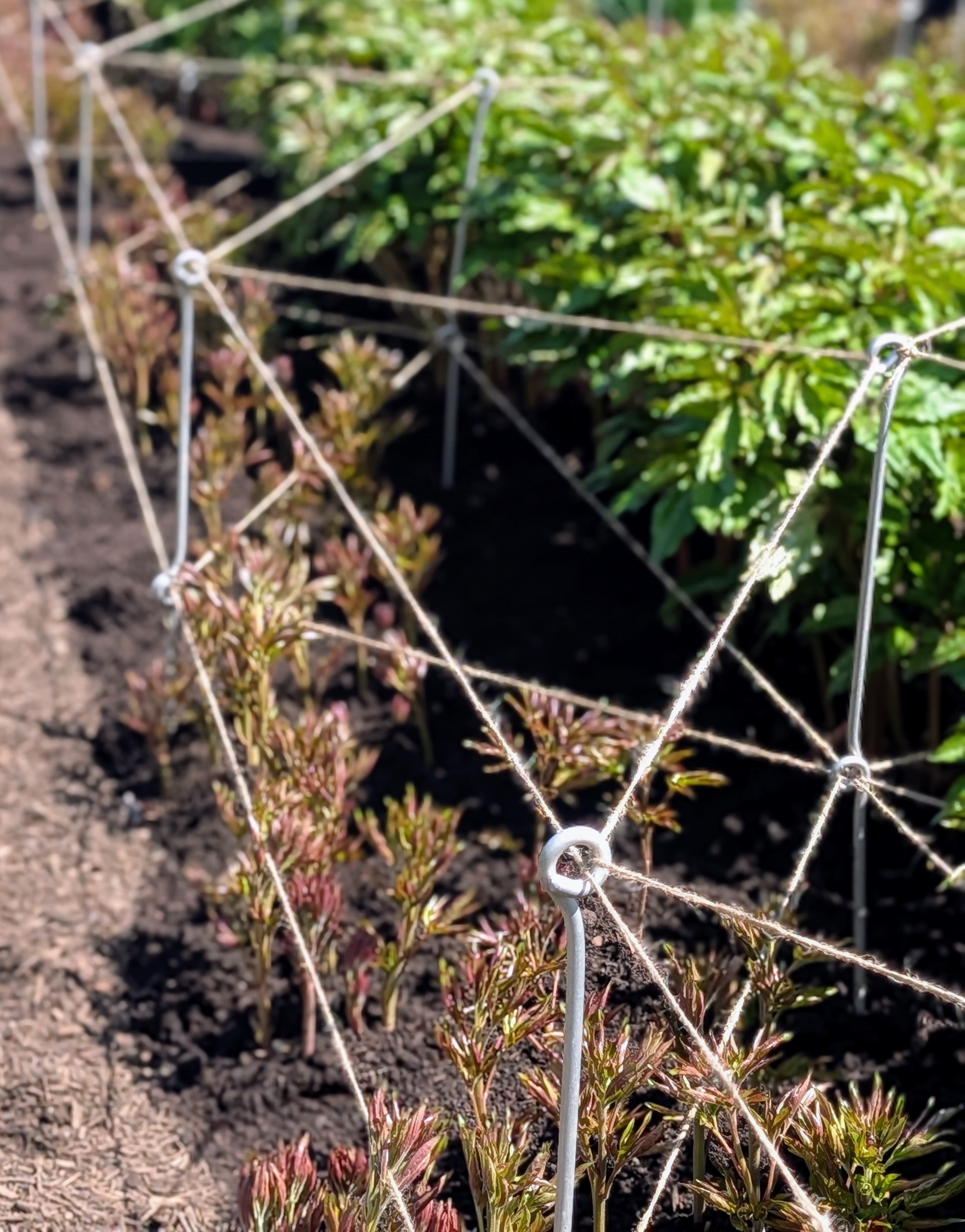
Instead of rings that are available at many garden centers, I use these metal stakes I designed myself for my own farm.
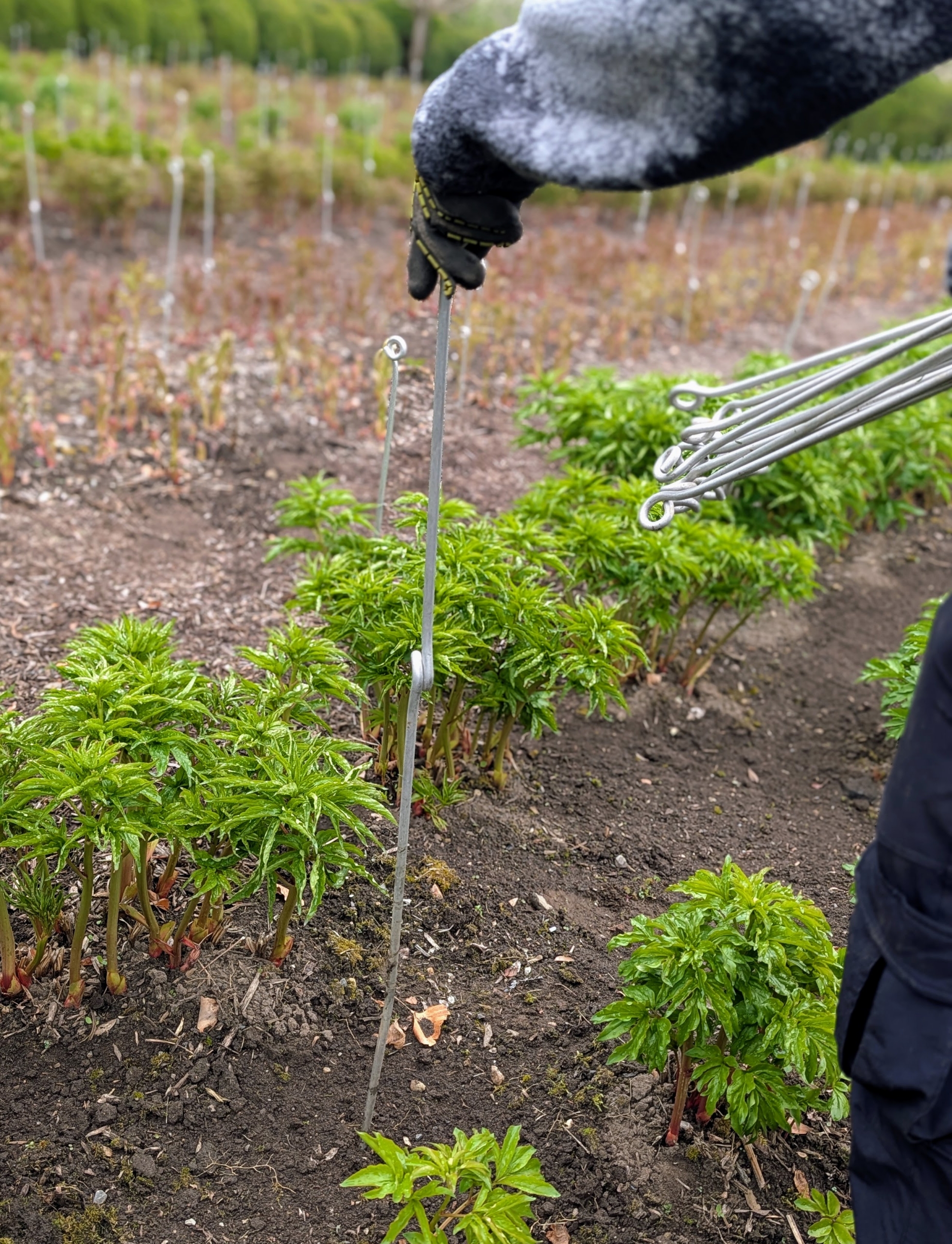
Matthew starts by inserting a stake every four-feet up and down both sides of each row.
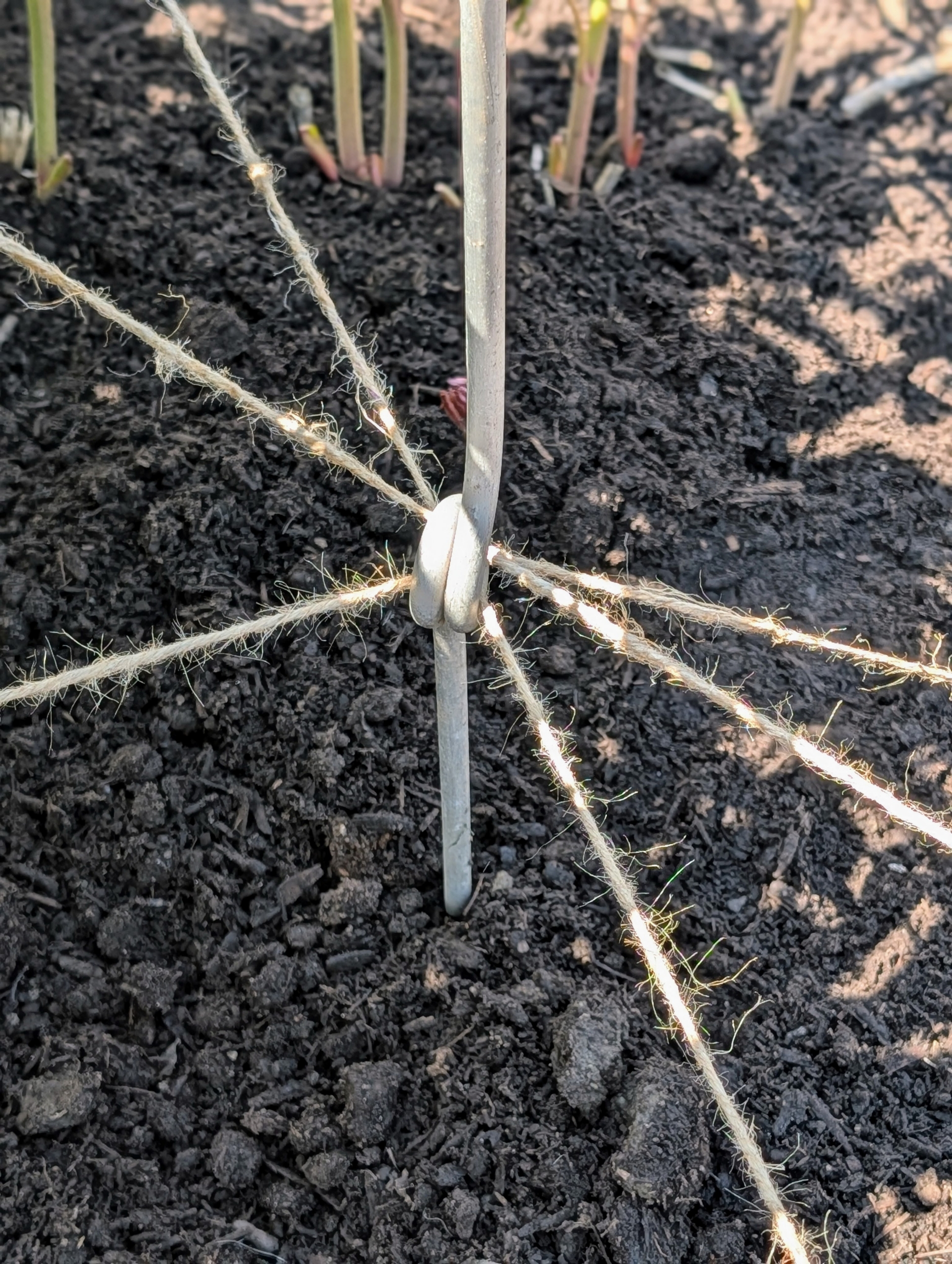
Each metal support has two eyes, one at the top and one in the middle. The stakes are about three feet tall.
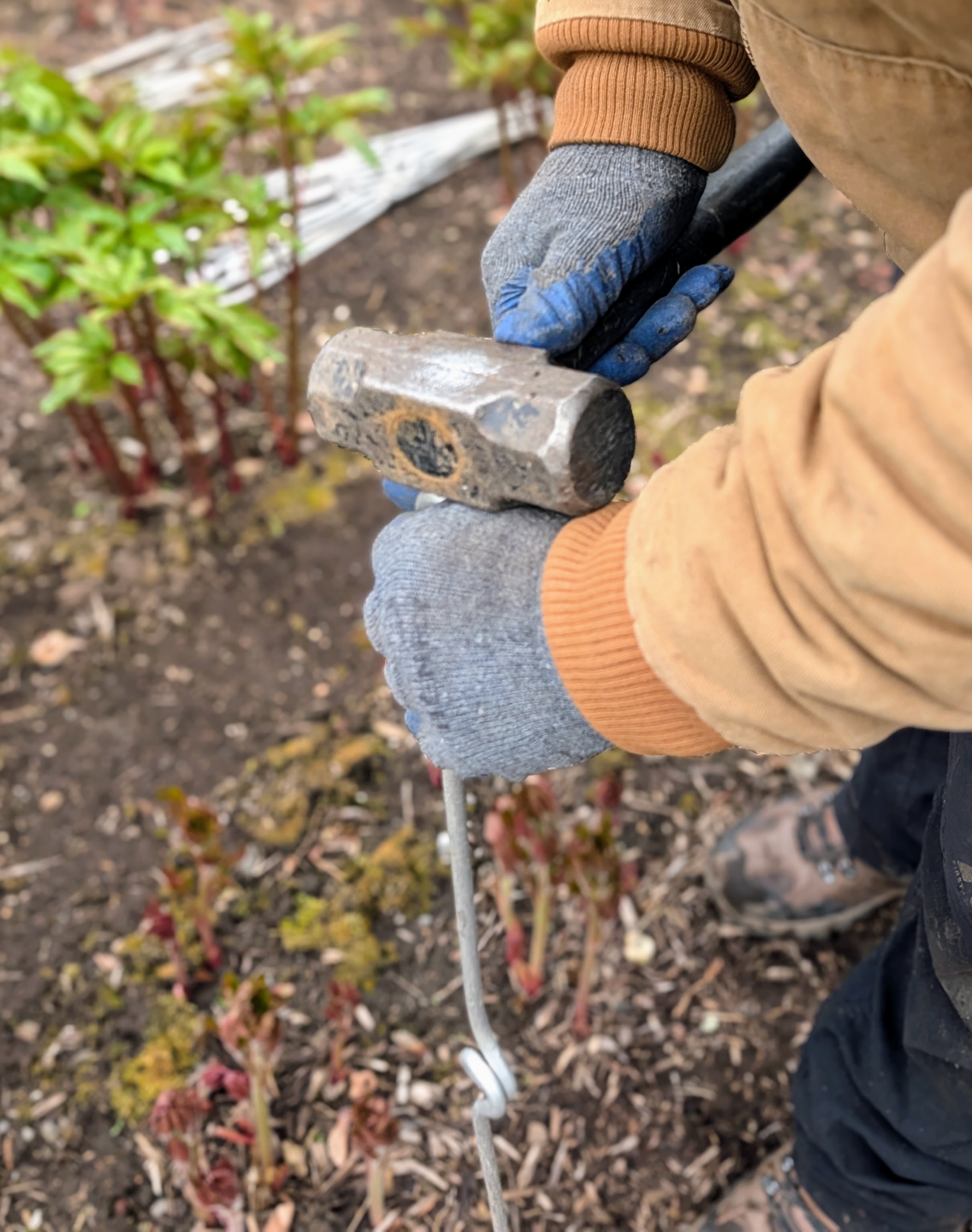
Once they are in position, they are pounded down several inches deep into the ground.
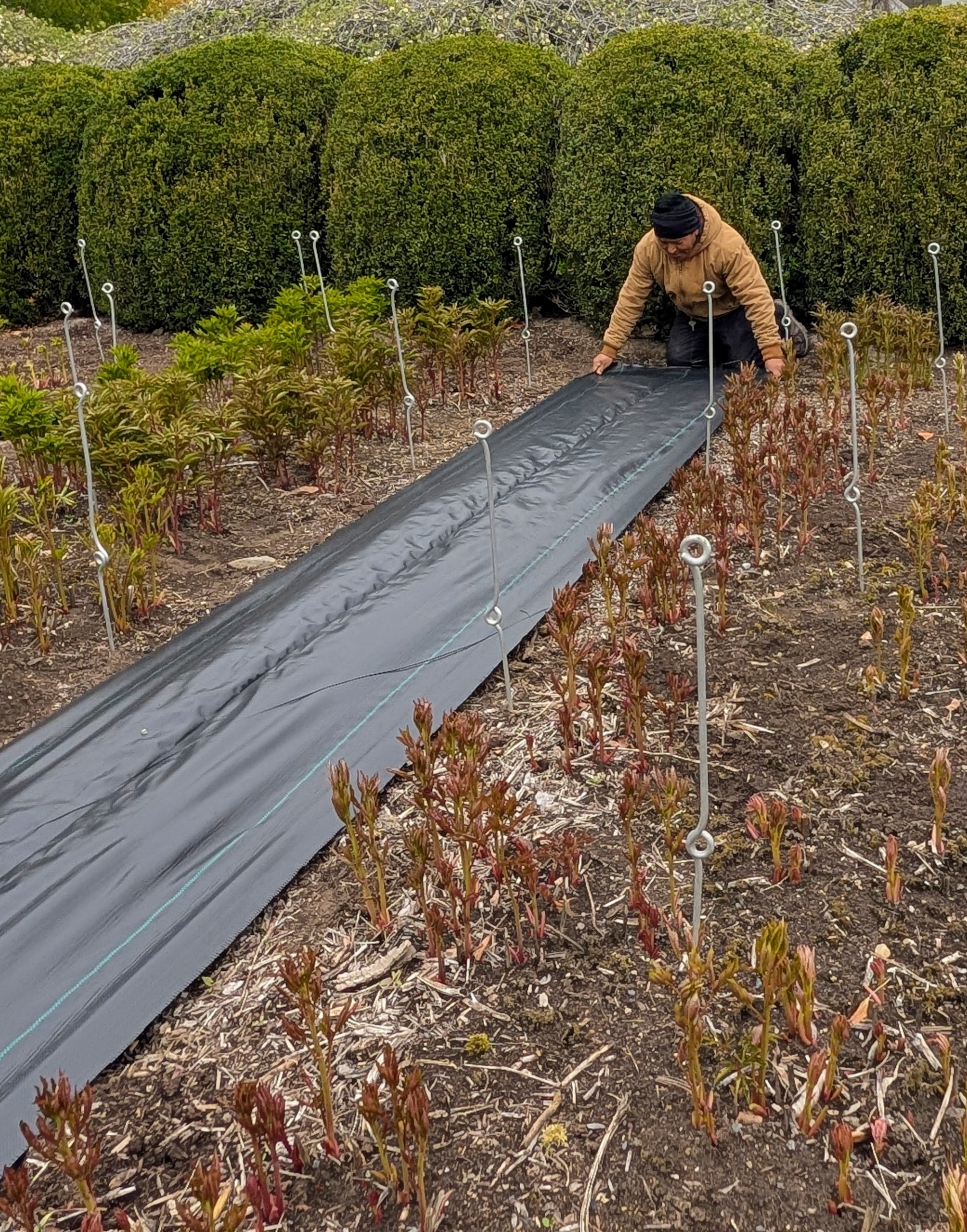
This year, I decided to line all the footpaths with an industrial strength weed cloth to cut down on those pesky weeds. Weed cloth is available in a variety of widths, but the fabric can also be cut to fit if needed.
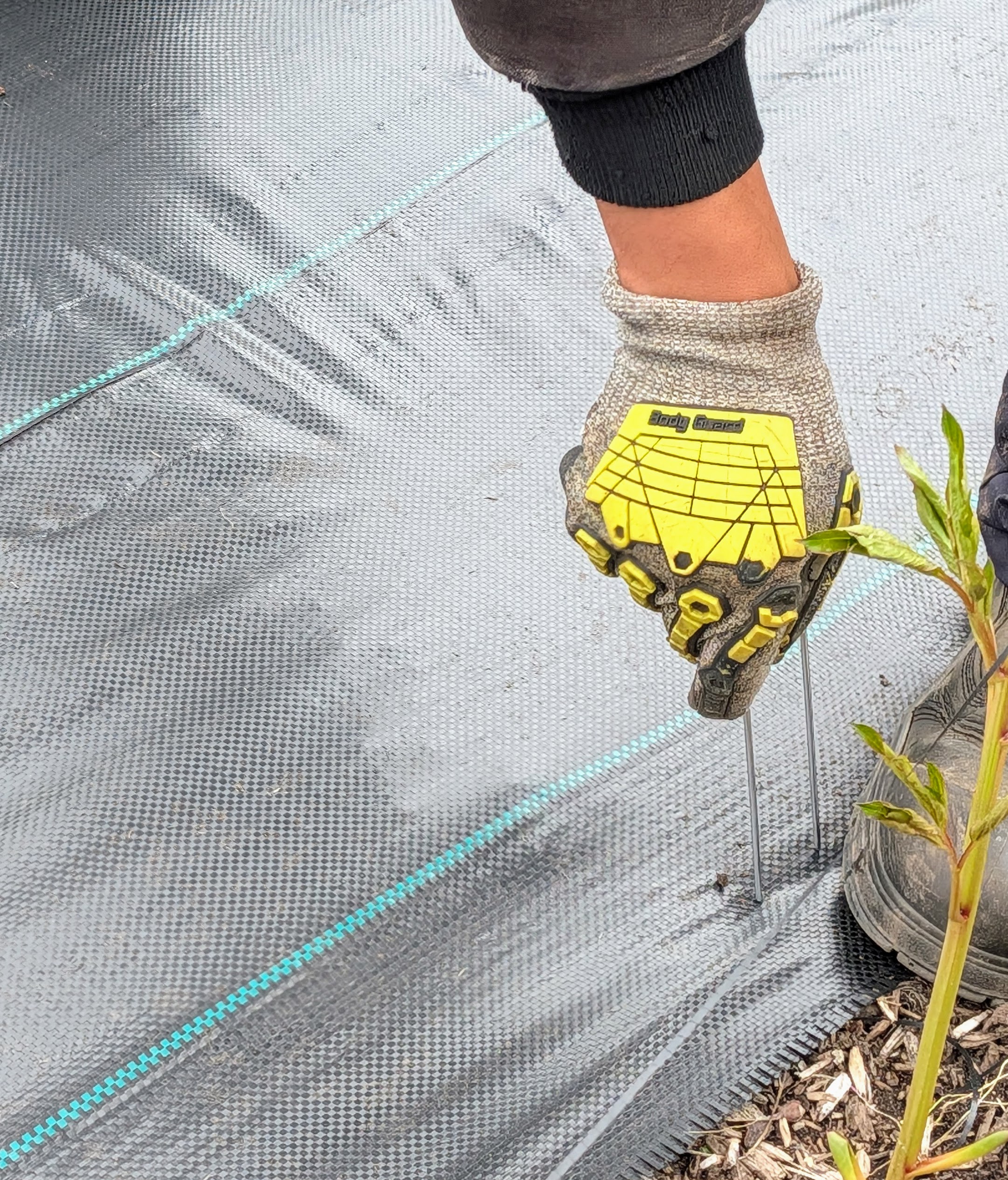
As the weed cloth is unrolled and positioned in the space, Matthew inserts a garden staple. These are placed every couple of feet on the edges and in the center to ensure the fabric stays in place.
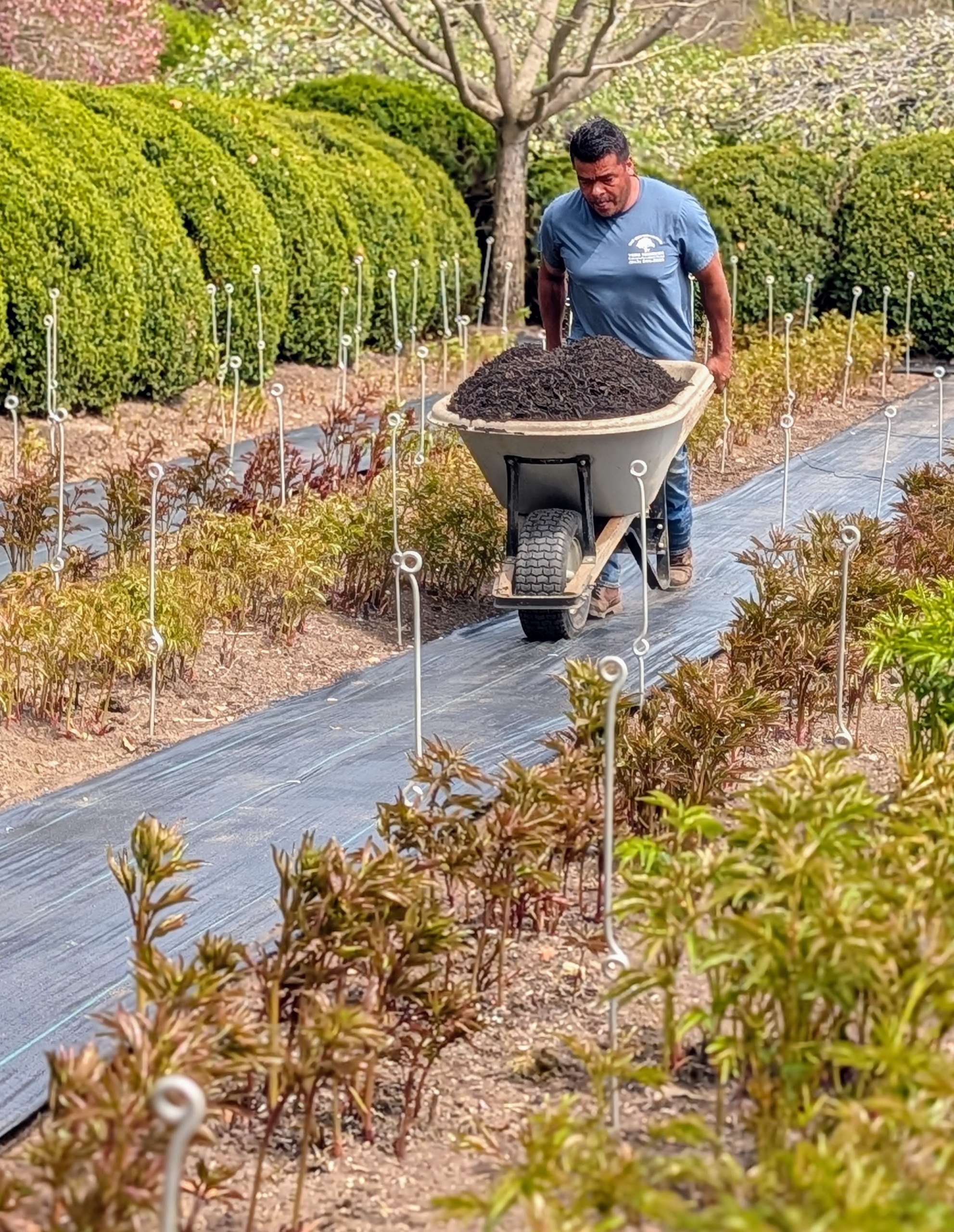
After the weed cloth is put down, wheelbarrows of mulch are brought into the garden.
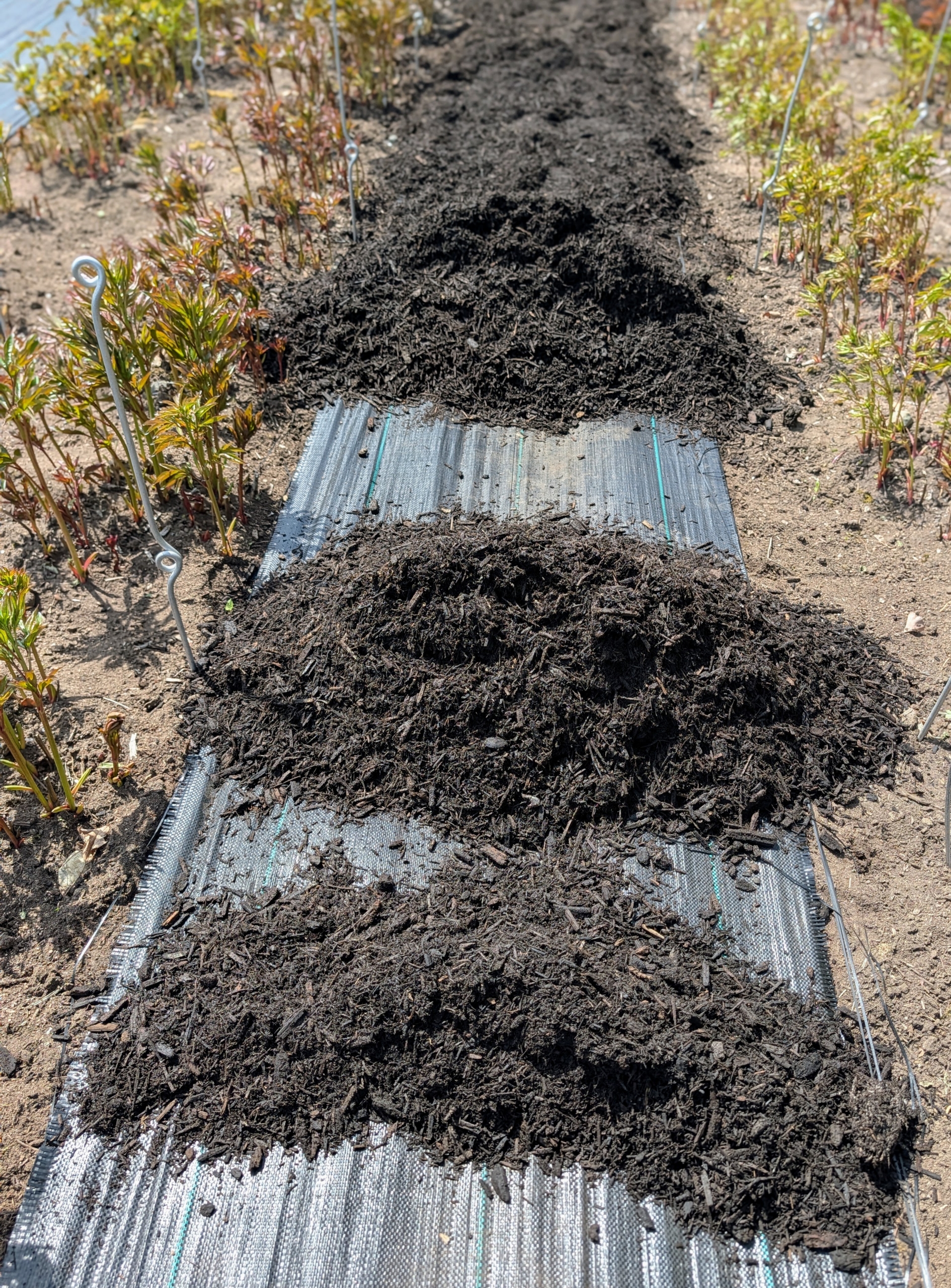
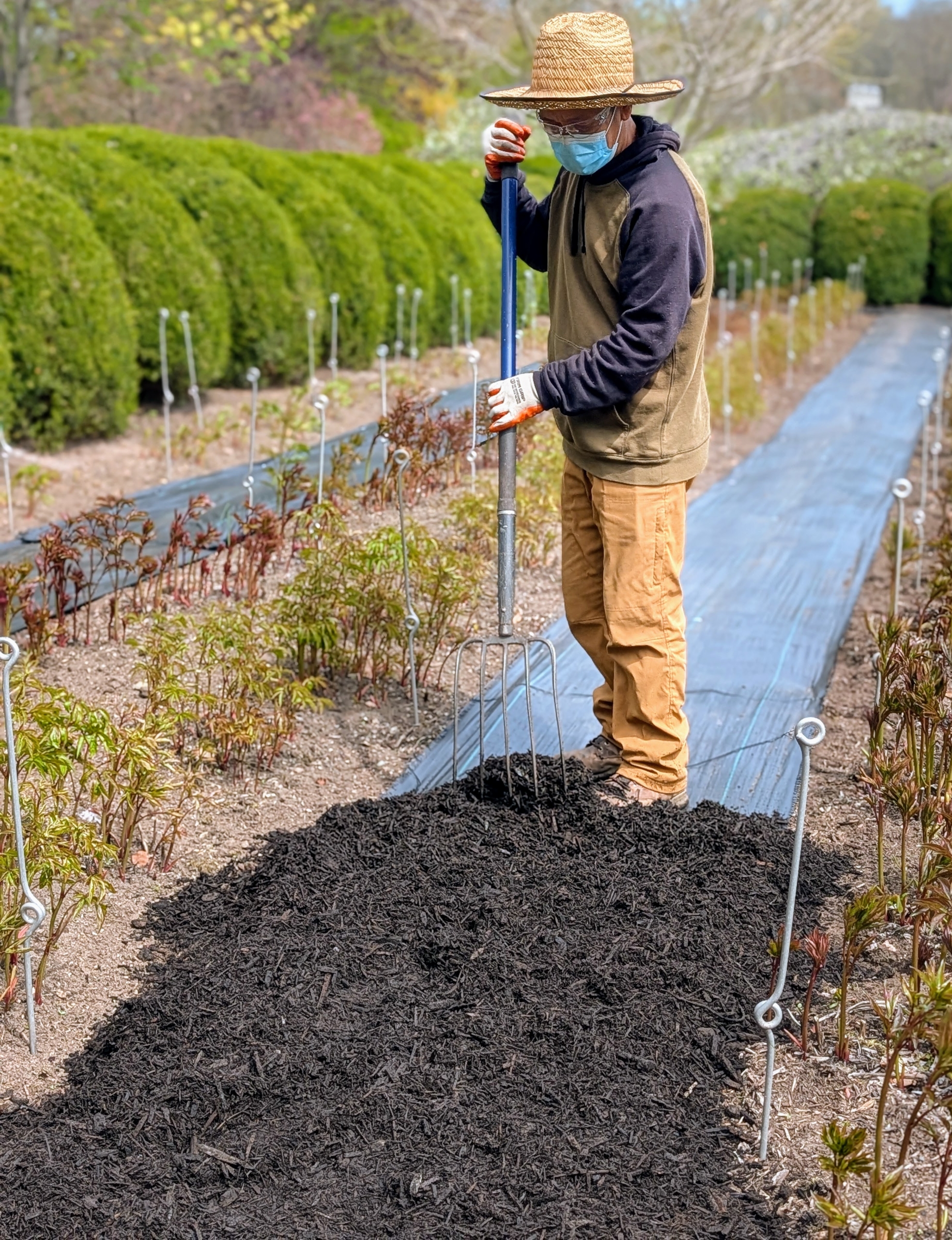
Arnold drops manageable mounds of mulch in each row.
Chhiring then spreads an even layer over the weed cloth.
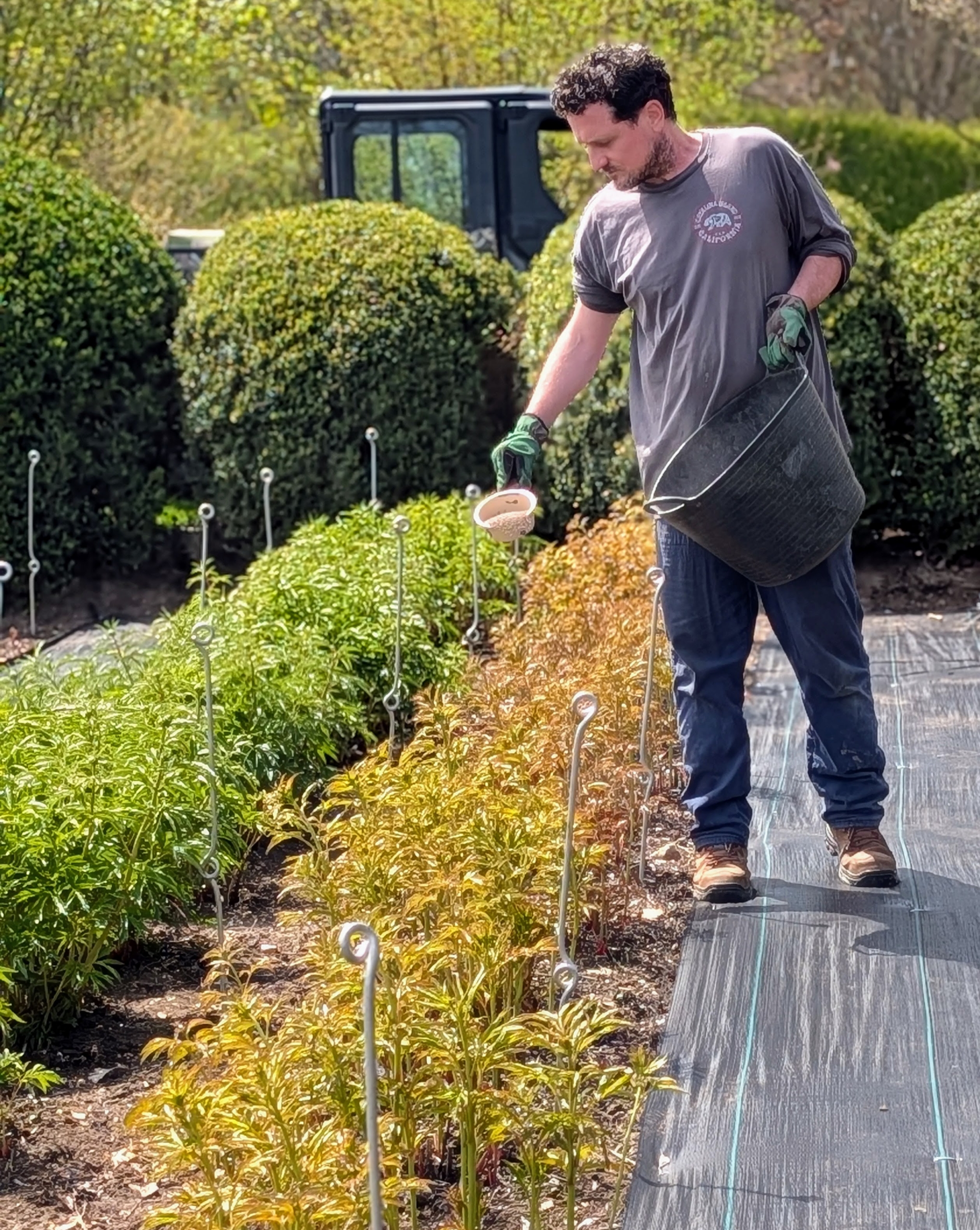
Meanwhile, Ryan feeds the peonies with azomite. Azomite is a natural, broad-spectrum mineral powder mined from volcanic ash. It contains more than 60 essential elements, including magnesium, calcium, potassium, silicon, and many micronutrients. It helps remineralize the soil for optimal growth, flowering, and resilience.
The paths look so wonderful topped with mulch.
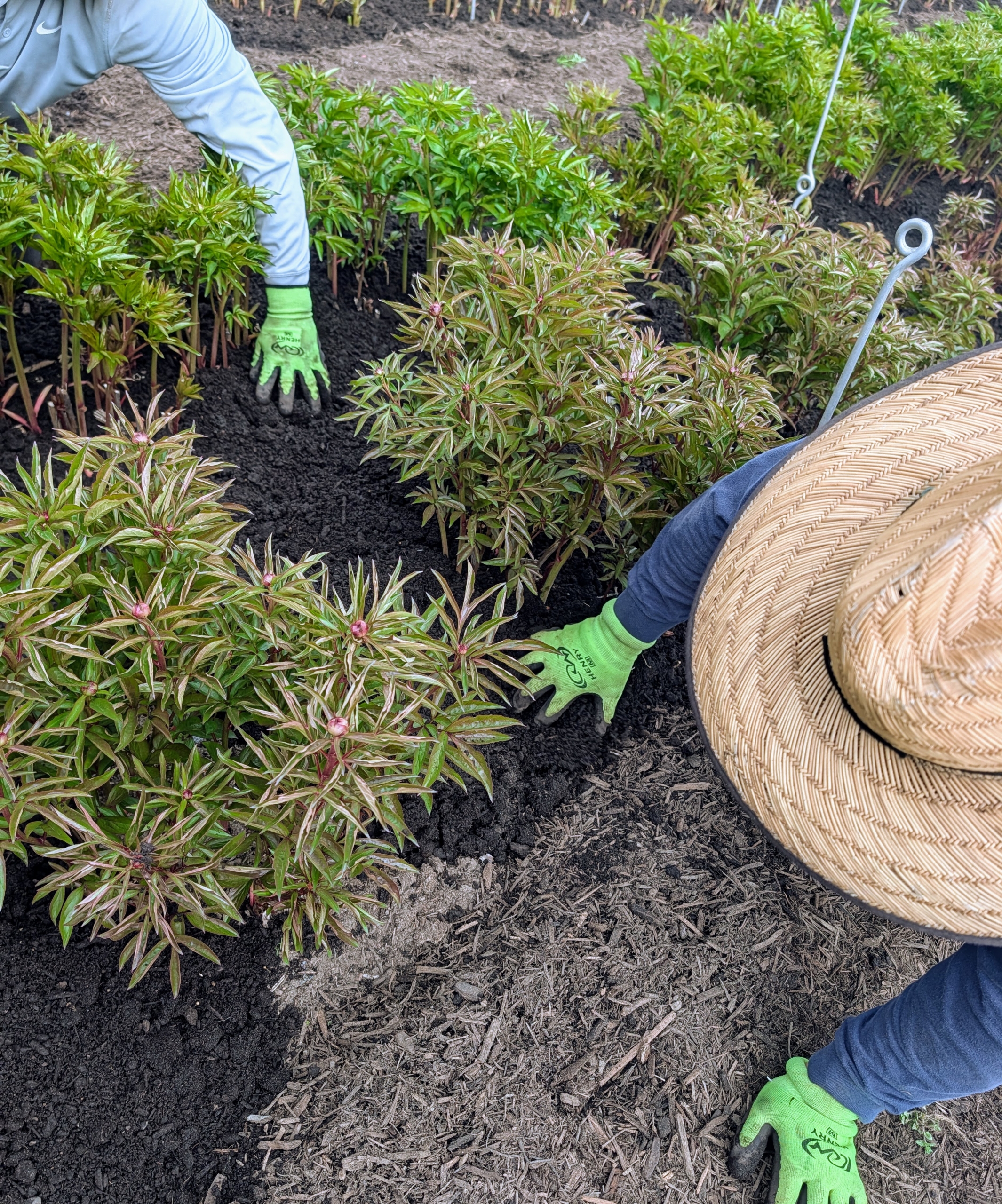
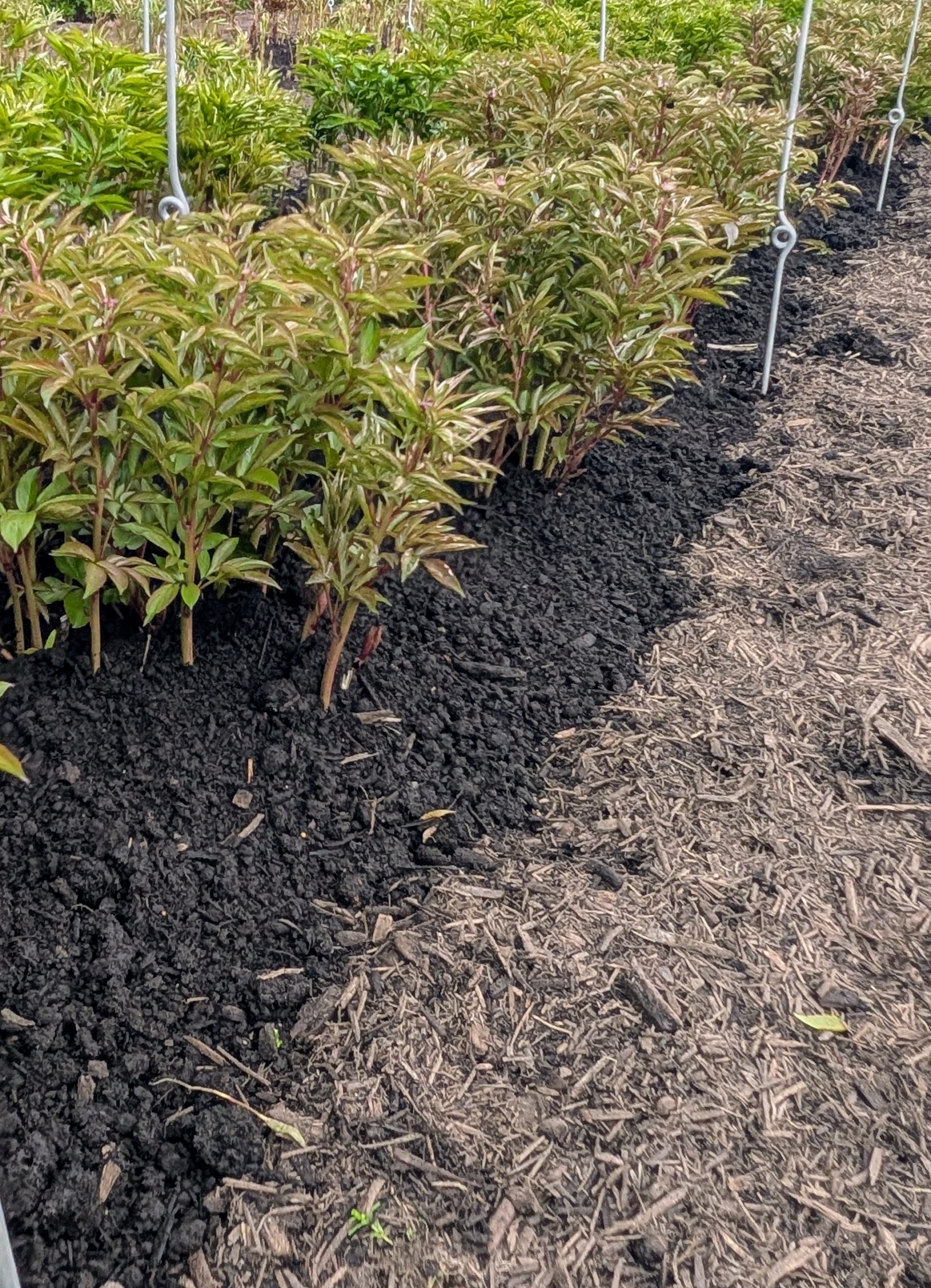
The next step is to cover the beds with compost. I make my own mulch and compost right here at my farm.
Do you know the difference between the two? Compost, which is decomposed organic matter such as horse manure and leaf mold, enriches the soil with nutrients, while mulch, which is mainly wood chips, protects the soil surface, conserves moisture, and hopefully keeps weeds away.
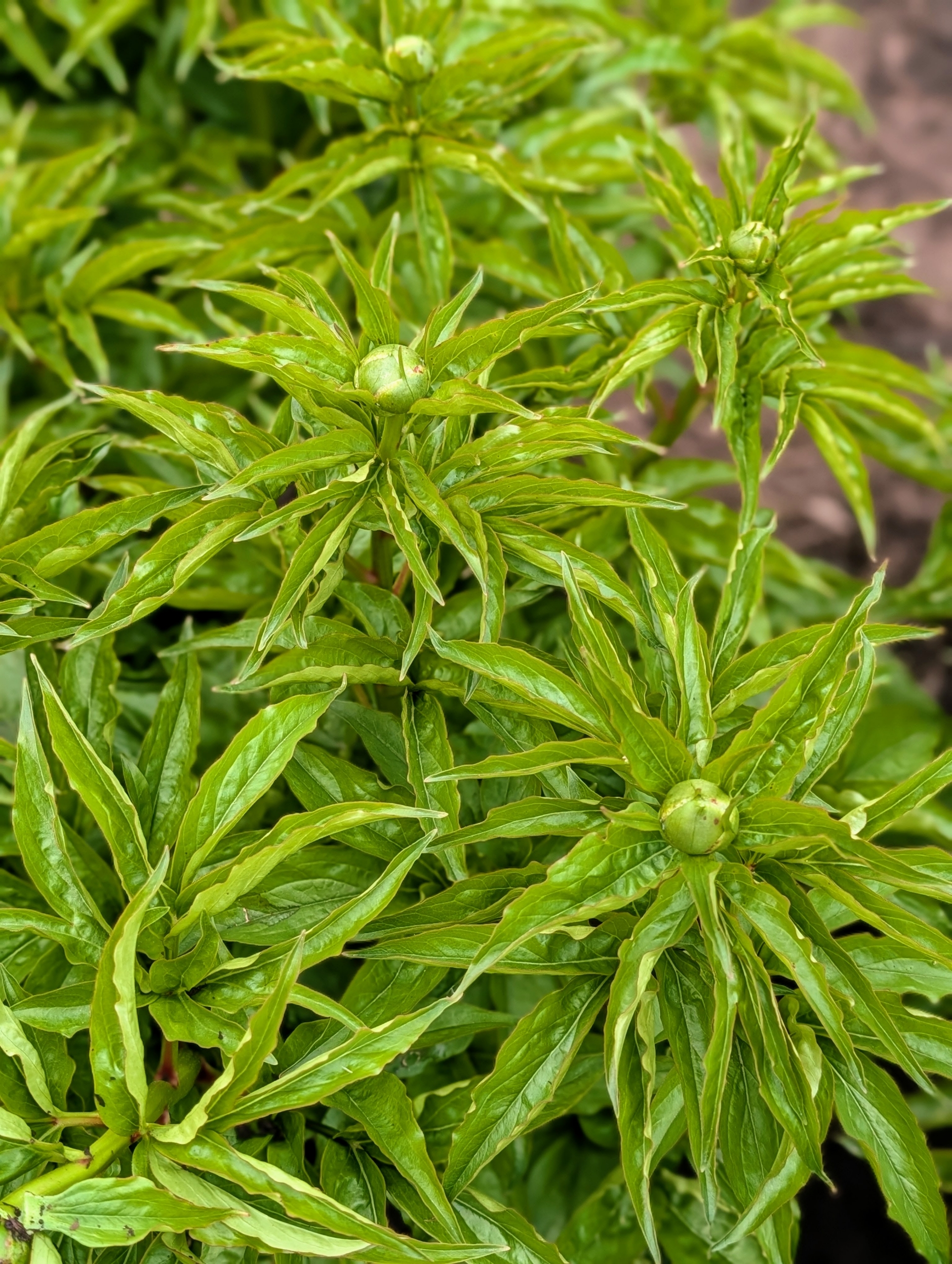
Like clockwork, the buds are now forming.
Right now, the tallest plants are still just about a foot to a foot and a half tall – a good time for staking.
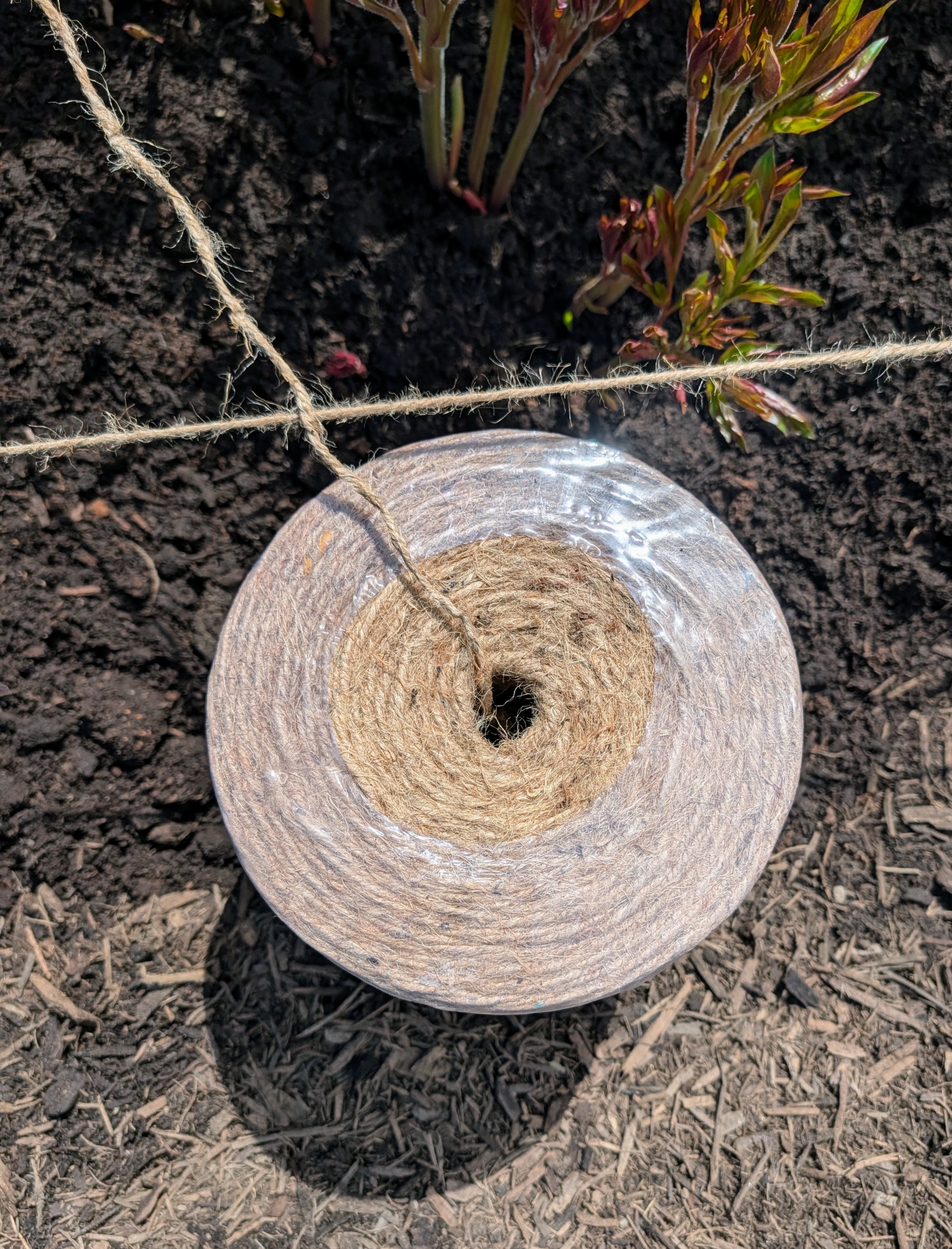
We use a natural jute twine for this project and for many gardening projects around the farm. Twine like this is available in large spools online and in some specialty garden supply shops.
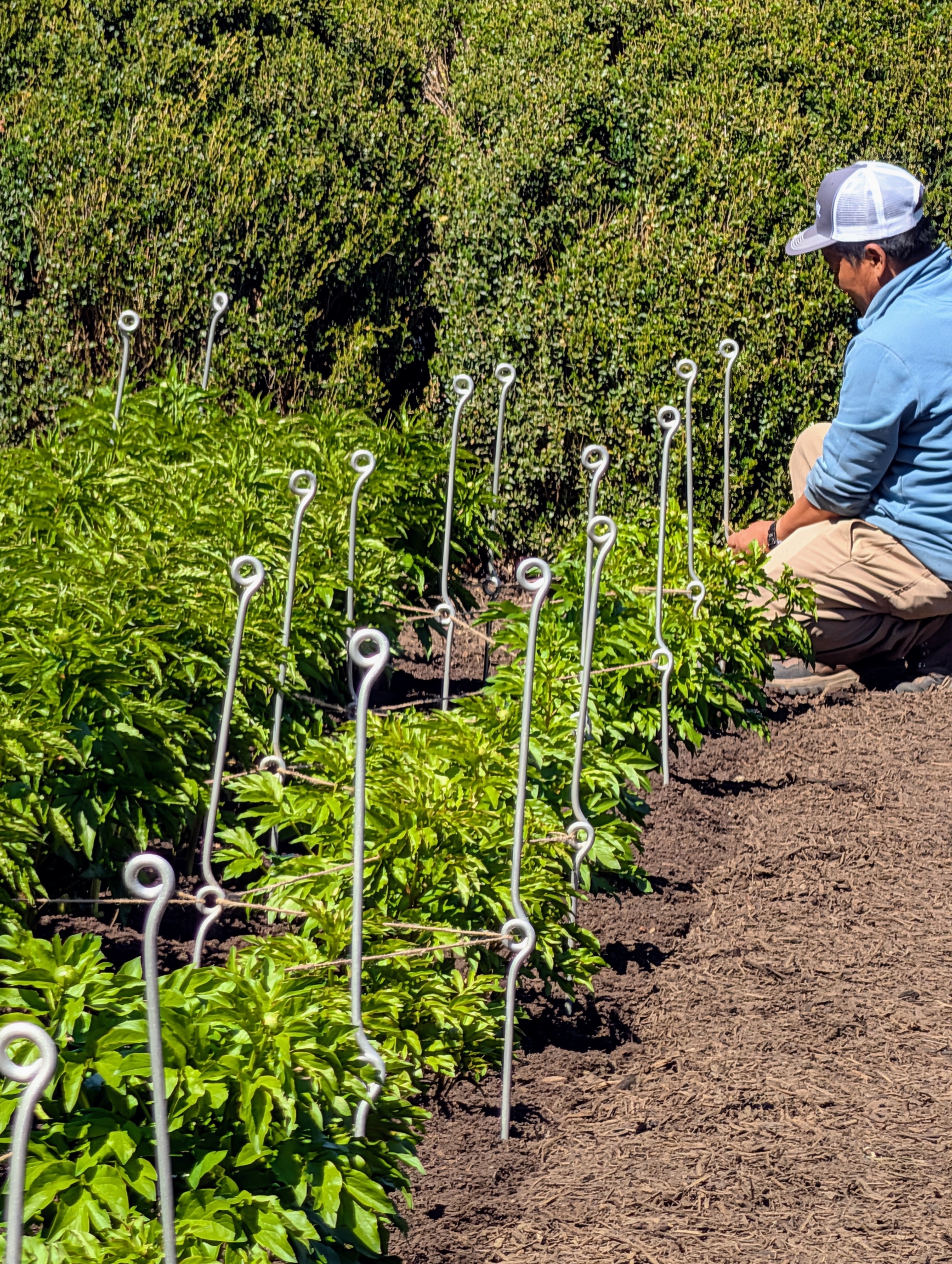
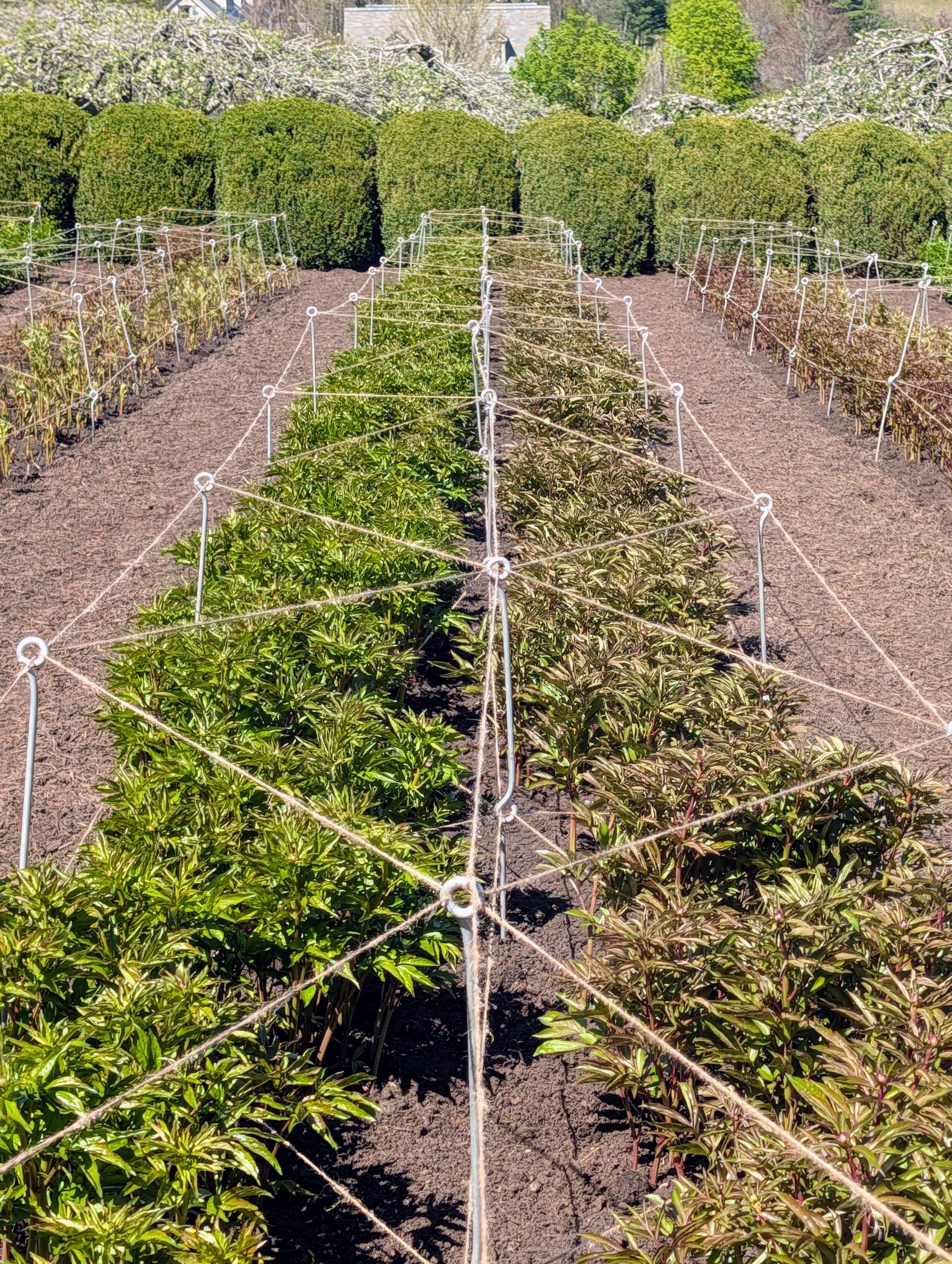
Phurba begins lacing twine through the middle stake eyes in a zigzag pattern all the way down the row.
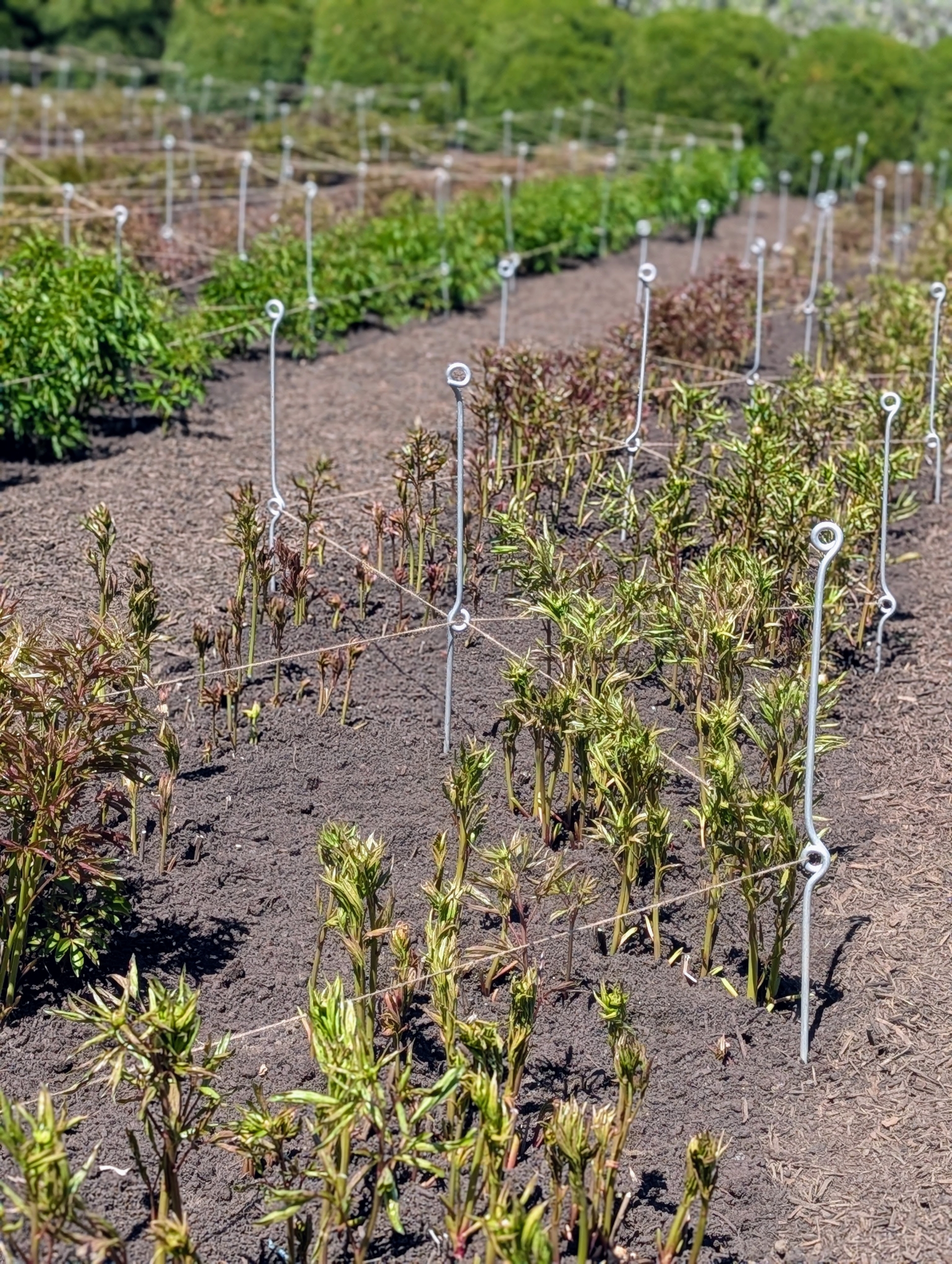
This technique allows support from every direction.
Twine is threaded through all the top holes following the same pattern. Here, one can see there is about a foot of space in between the top and middle eyes – enough room to support the stems at different levels.
I designed the eyes to be big enough for the many threads of twine. These have worked so well for me over the years.
Here is what a row looks like all done – very neat and tidy, and every peony plant supported by twine. The stakes and twine create such an artistic and geometric pattern. In just about five to six weeks, rows and rows of stunning pink and white herbaceous peonies will be flowering here at my farm.
To create a successful perennial garden, it's important to select the right plants for the area, use nutrient-rich soil, and monitor its development - feeding, grooming, and adjusting care as the garden matures.
Some of the most beautiful growth this time of year is behind my Tenant House and outside my gym building. In these areas I've planted Epimediums, trout lilies, mayapples, ferns, Syneilesis, Polygonatum, Cotinus, Stewartia trees, and other interesting plantings.
Enjoy these photos.
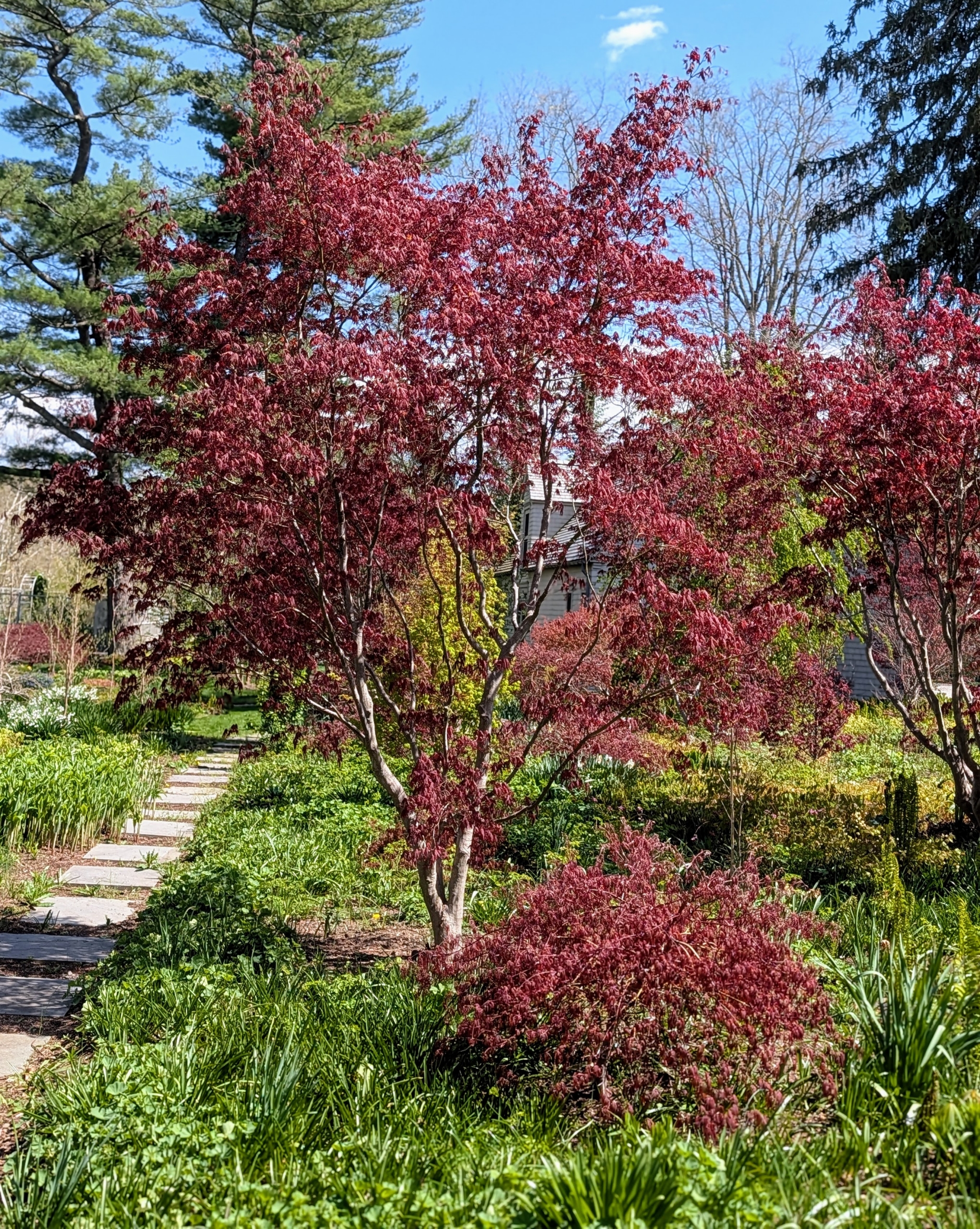
Behind my Tenant House I designed lovely perennial gardens that come alive this time every year. The burgundy trees are Japanese maples. With more than a thousand varieties and cultivars, the iconic Japanese maple is among the most versatile small trees for use in the landscape.
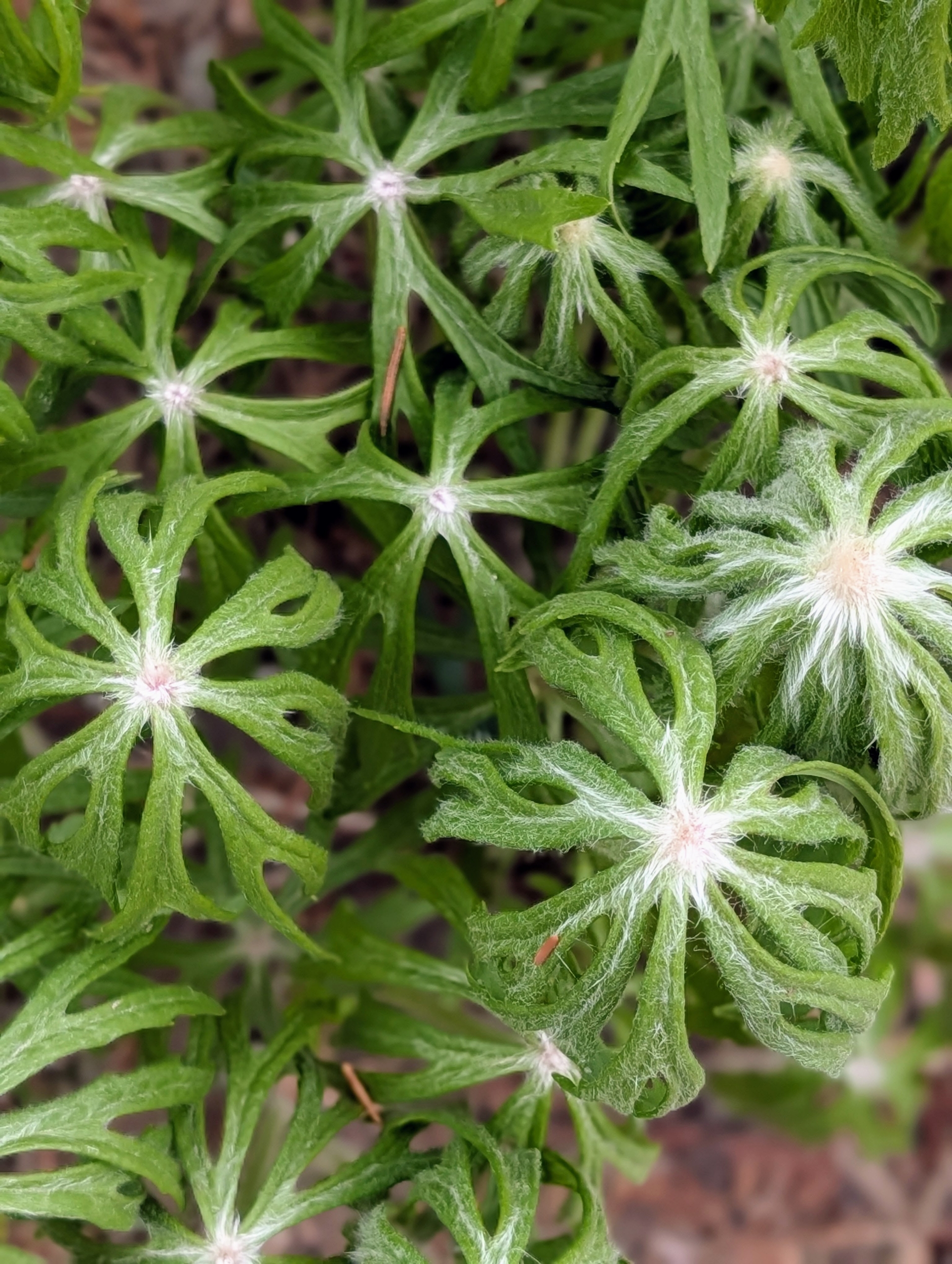
When plant shopping, I always look for the most interesting plants to add to my gardens. This is Syneilesis – a tough, drought-tolerant, easy-to-grow woodland garden perennial. Commonly called shredded umbrella, it has leaves that are narrow, dissected, and cascade downward like an umbrella. If grown in the proper environment, syneilesis will slowly spread to form an attractive colony.
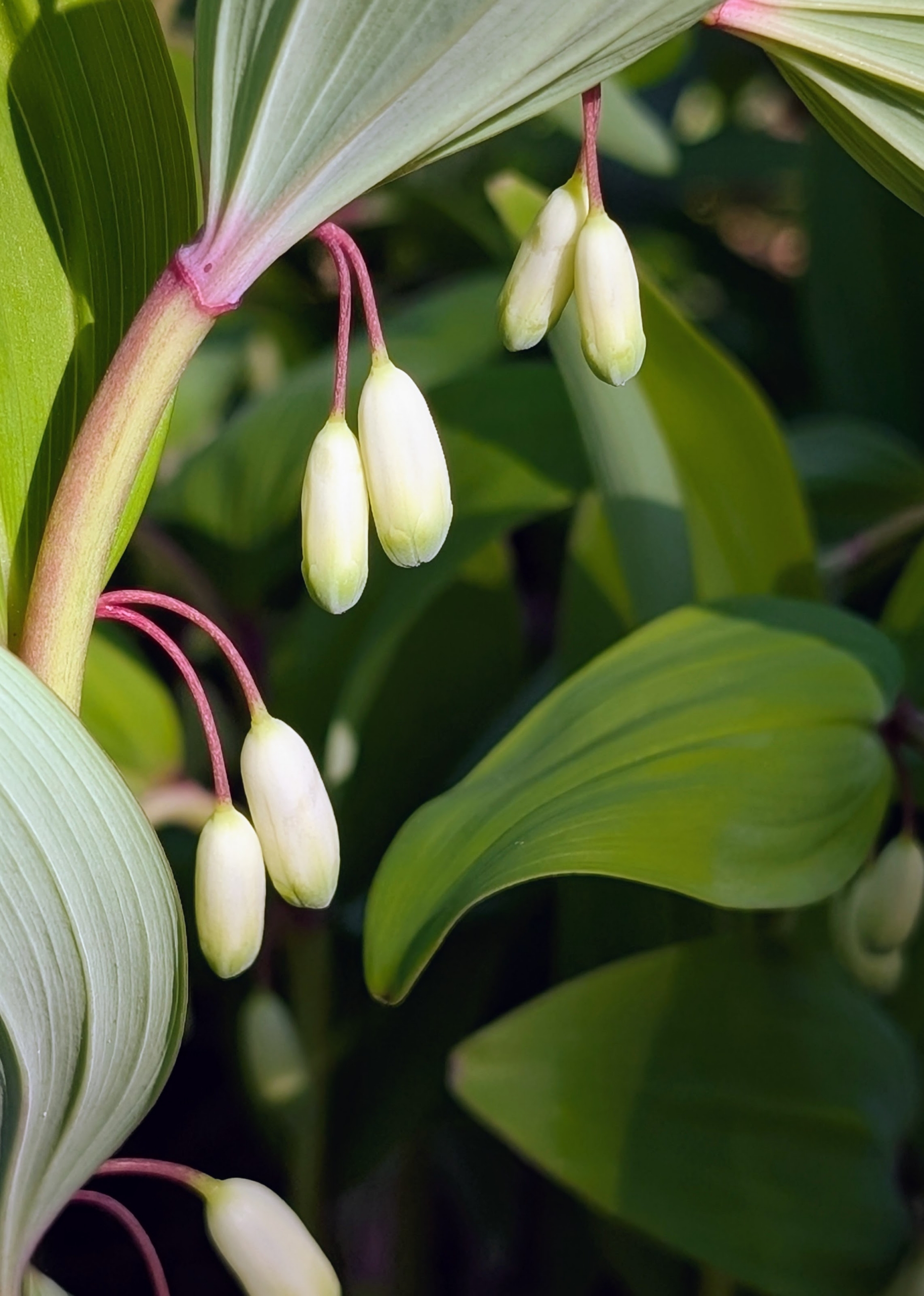
And this is Solomon’s Seal – a hardy perennial native to the eastern United States and southern Canada. These plants produce dangling white flowers, which turn to dark-blue berries later in the summer.
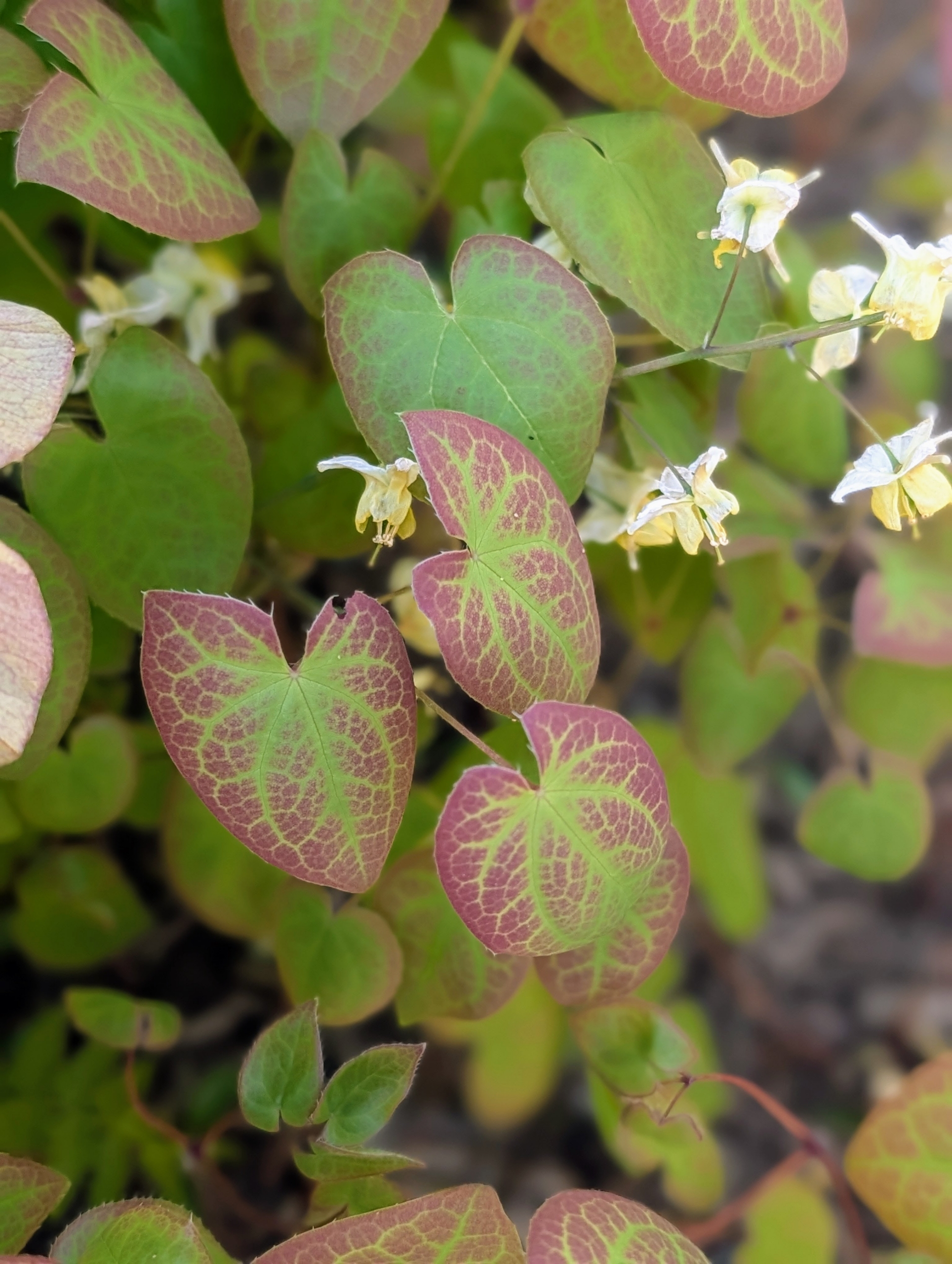
Epimedium, also known as barrenwort, bishop’s hat, fairy wings, horny goat weed, or yin yang huo, is a genus of flowering plants in the family Berberidaceae. The leaves are made up of leaflets, which can range in number from three to 50 and in size from as tiny to six inches long. They are generally heart-shaped, but can range from round to arrow-shaped.
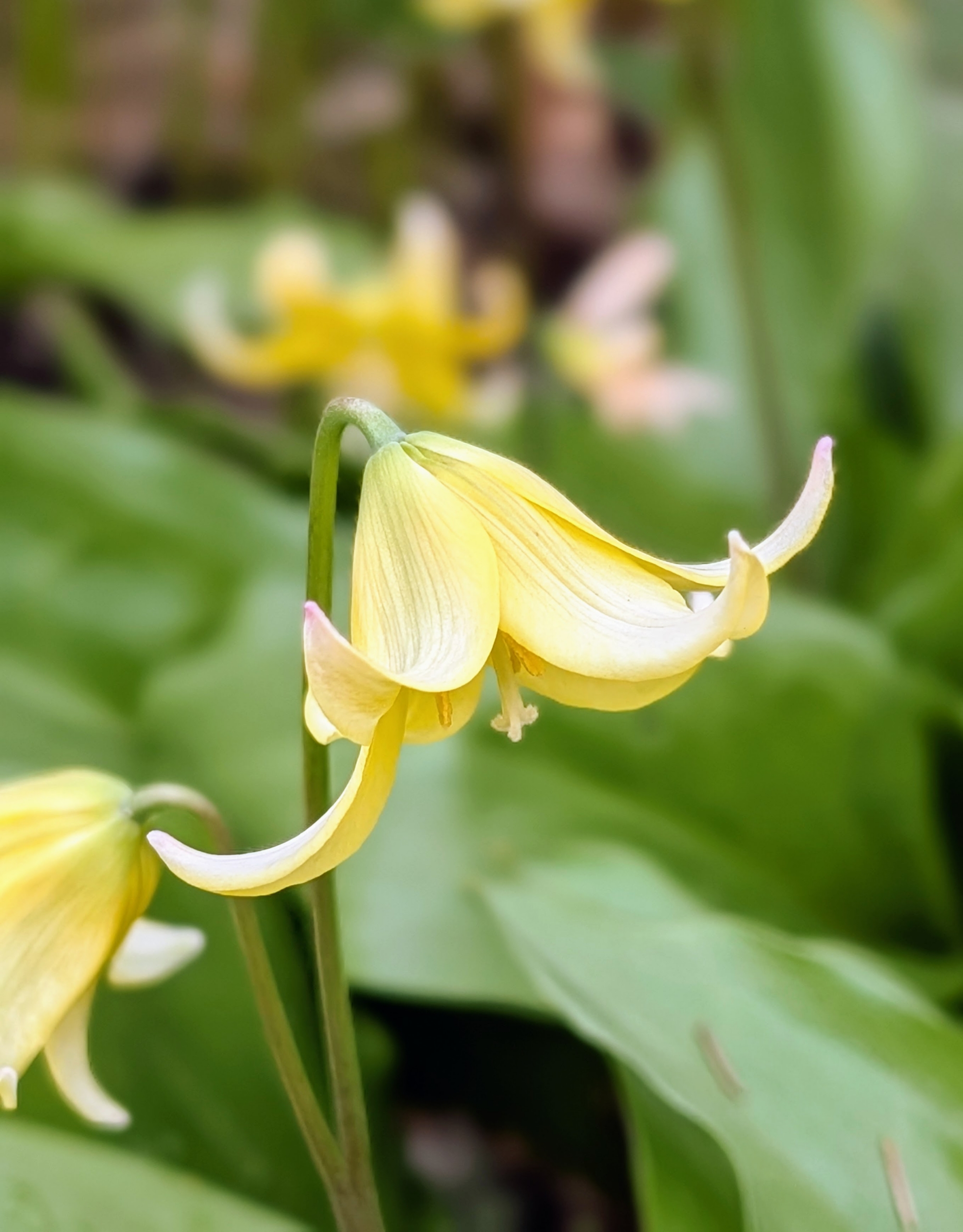
This is a trout lily. Its delicate blooms, which resemble turks cap lilies do best in dappled light.
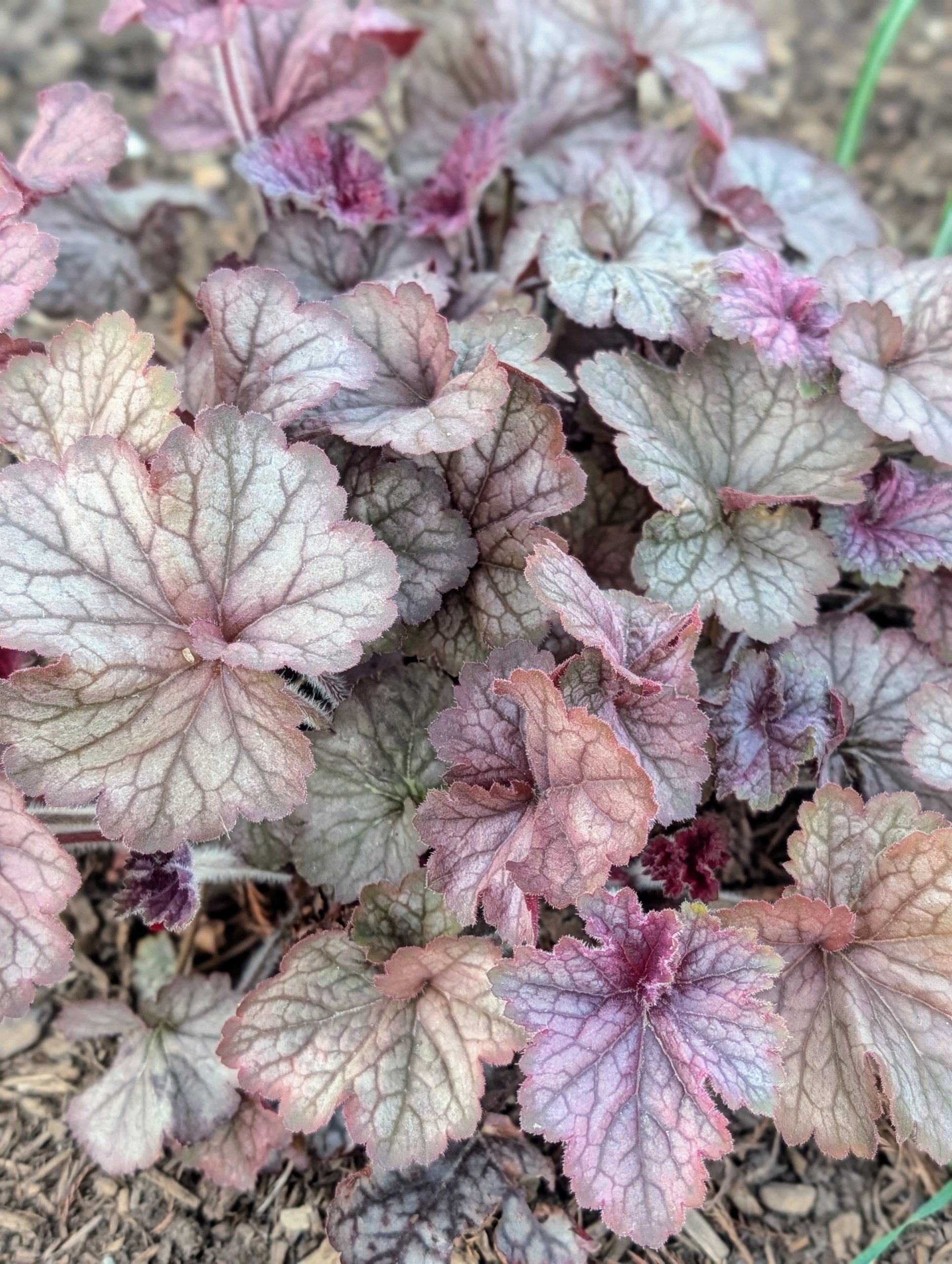
Heuchera plants grow into mounds and are exceptionally heat tolerant. Heuchera is a genus of largely evergreen perennial plants in the family Saxifragaceae, all native to North America. Common names include alumroot and coral bells. This is a ‘Northern Exposure Silver’ Heuchera.
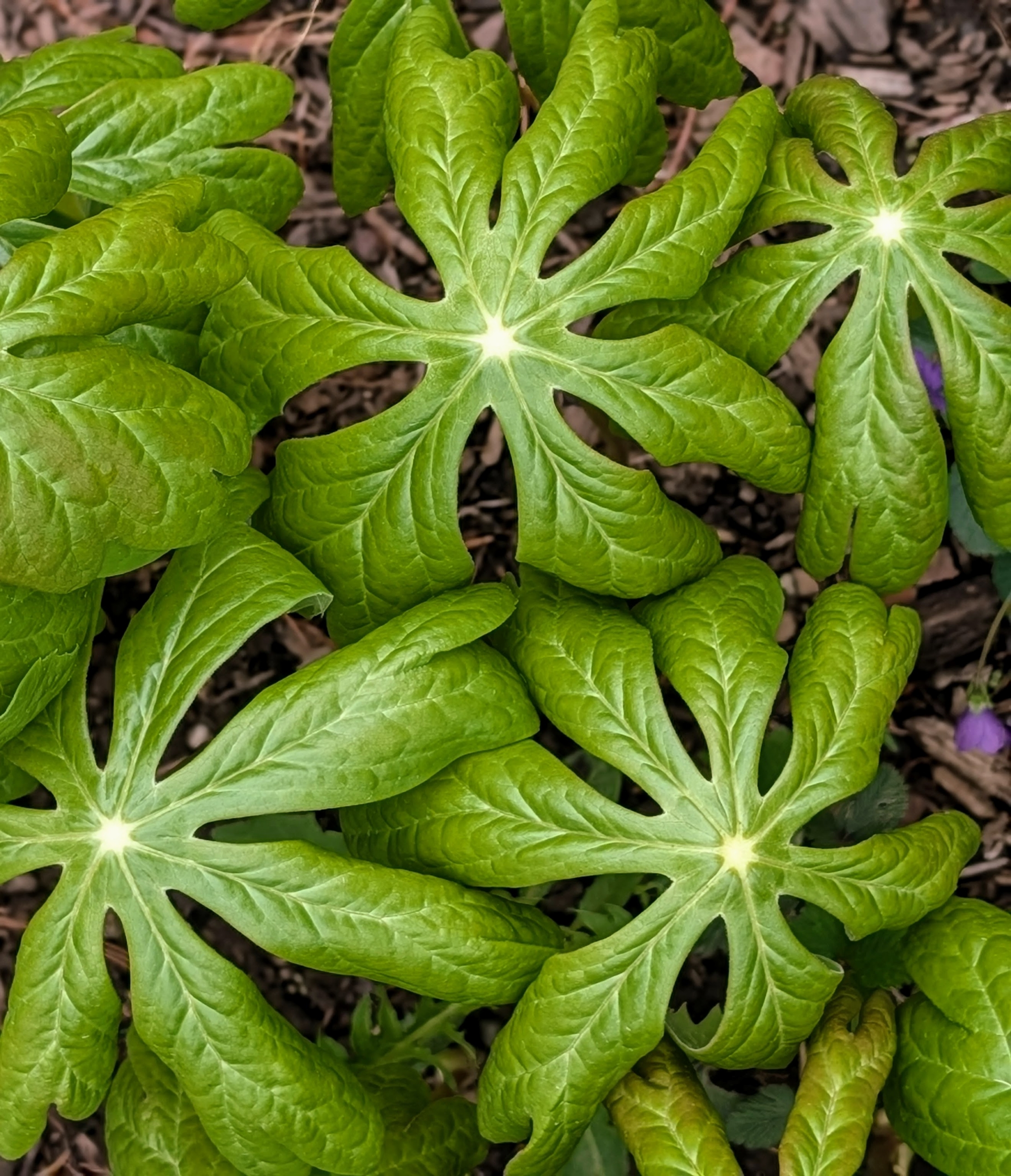
Podophyllum peltatum is commonly known as mayapple, American mandrake, wild mandrake, and ground lemon. Mayapples are woodland plants, typically growing in colonies from a single root. The leaves are deeply lobed and can grow up to one foot wide making them stand-out in the garden bed. This is a ‘Northern Exposure Silver’ Heuchera. The burgundy foliage becomes heavily frosted with silver, forming a dense mound. This plant also features sprays of small pink flowers on red stems that rise above the foliage from spring through summer.
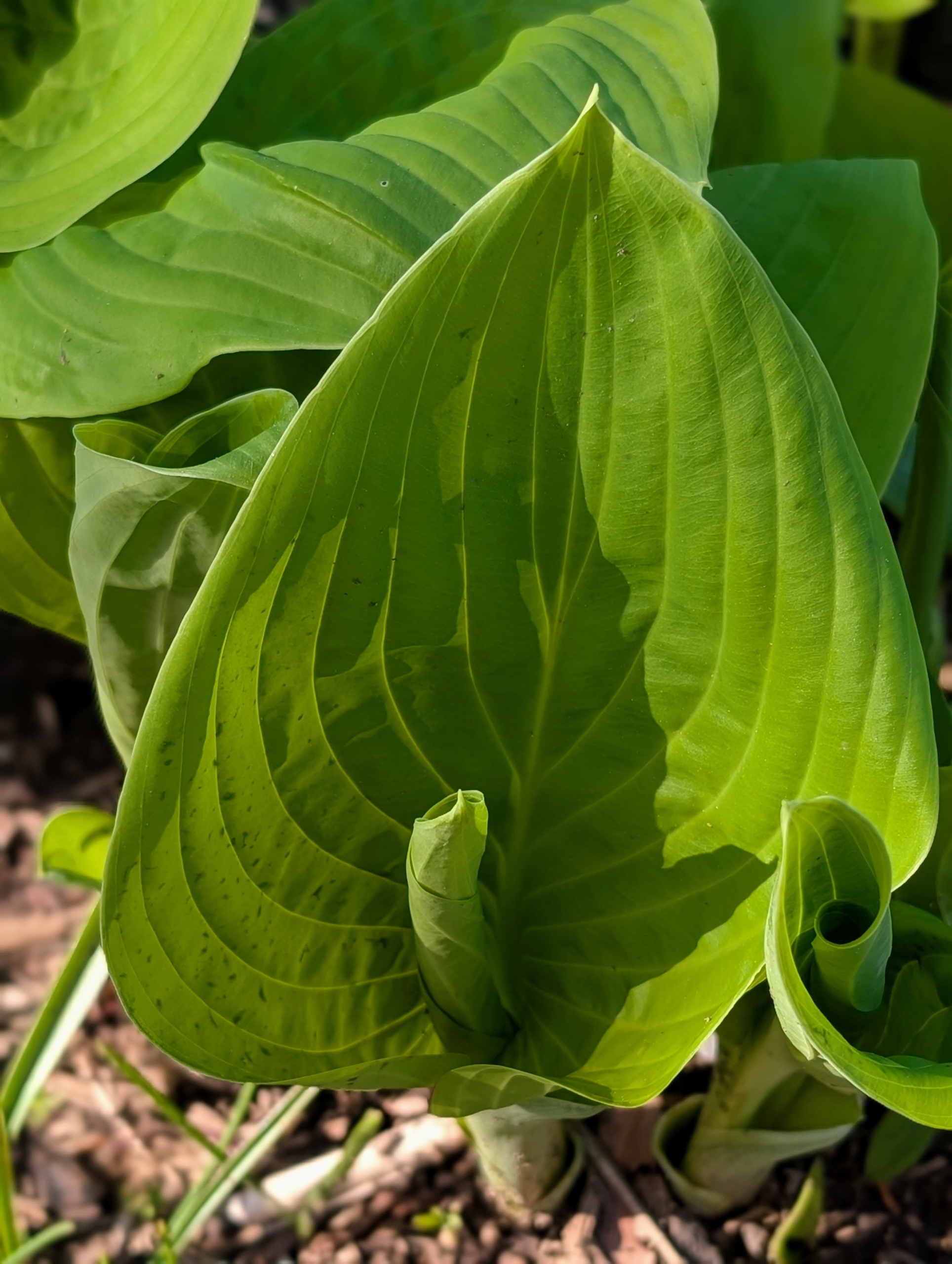
All the hostas are also growing quickly. The lush green foliage varies in leaf shape, size and texture, and their easy care requirements make them ideal for many areas.
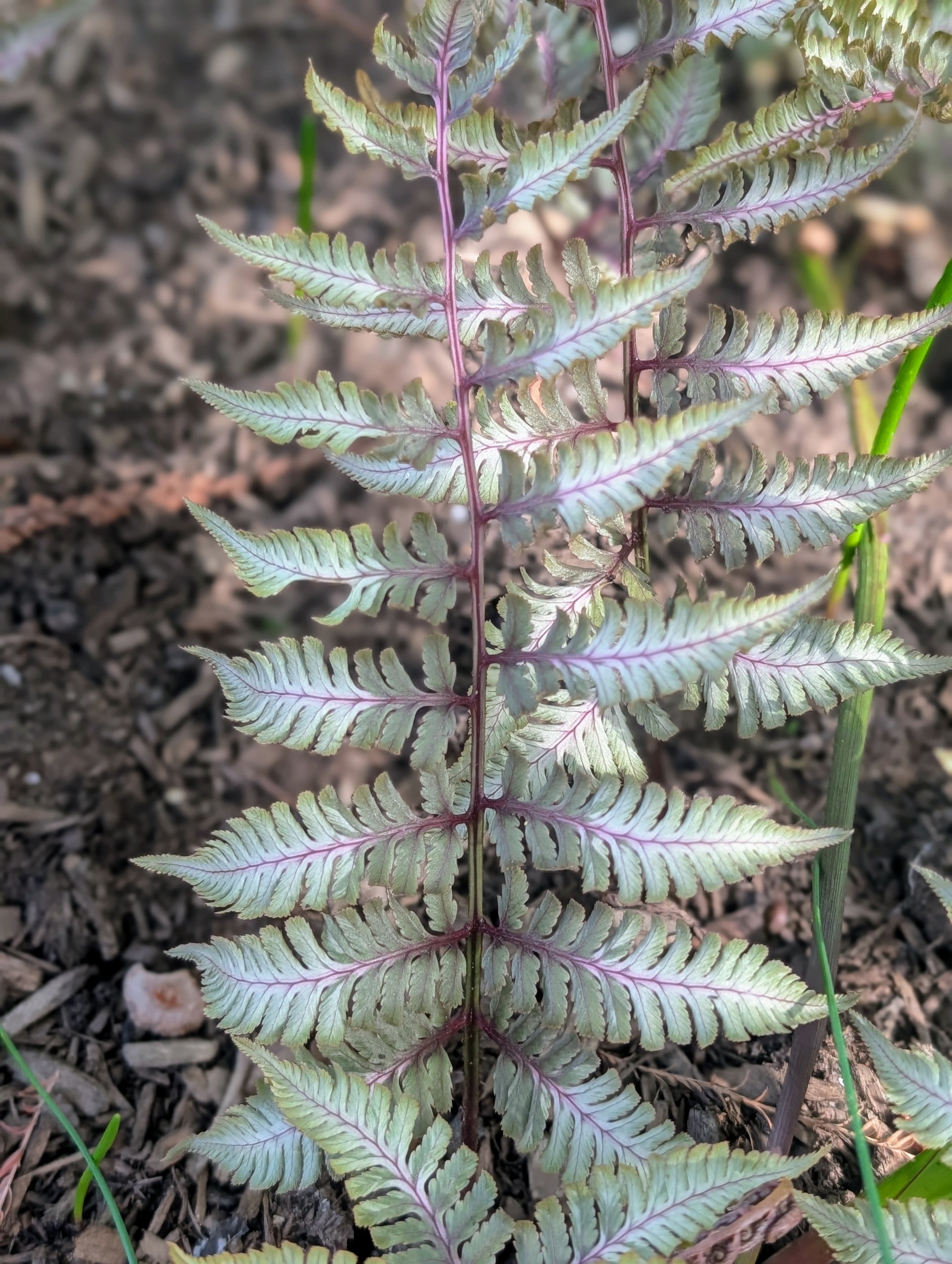
Some of the ferns in this area include the Japanese painted ferns – beautiful mounds of dramatic foliage with luminescent blue-green fronds and dark central ribs that fade to silver at the edges.
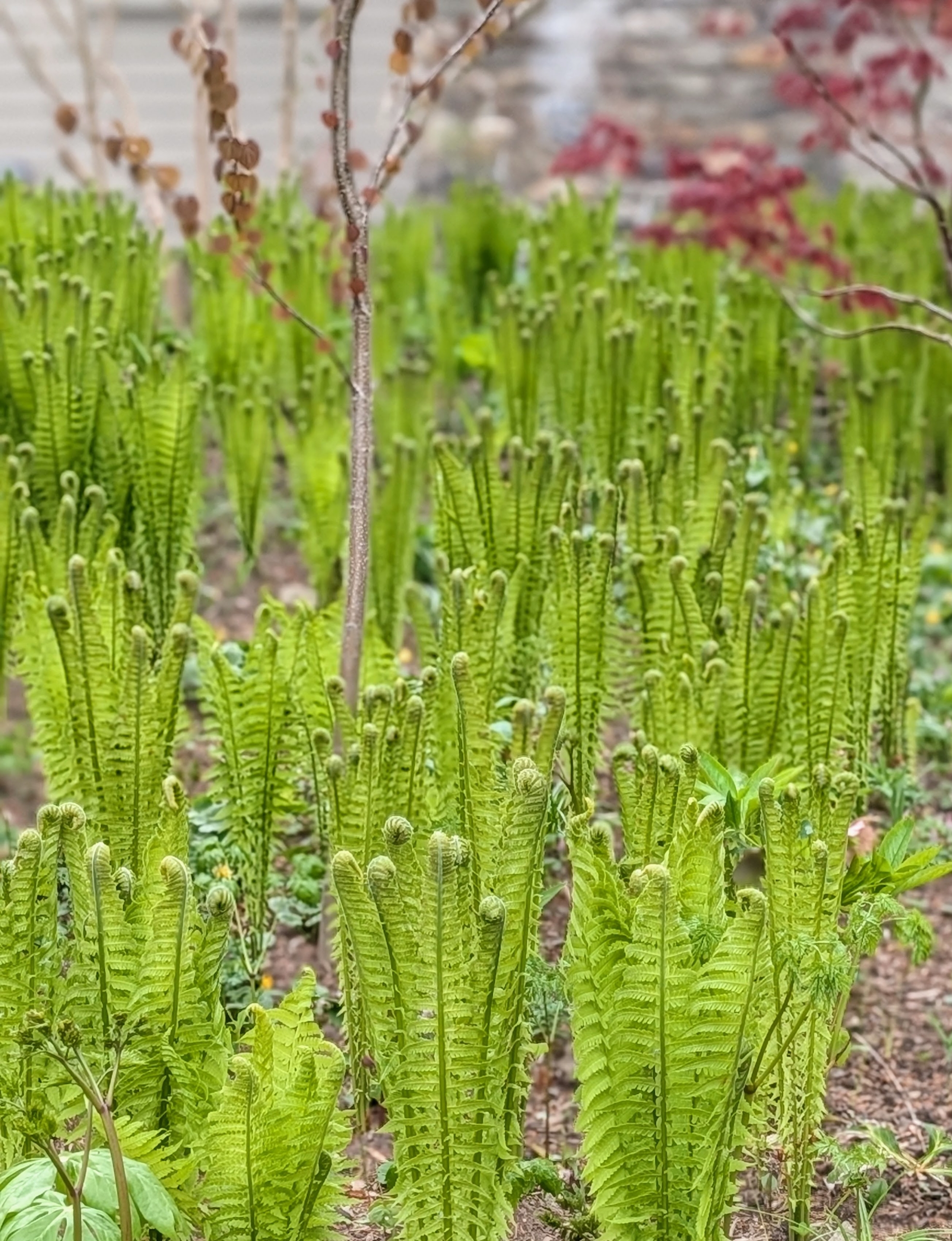
All around, I also have lots of ostrich ferns growing. Matteuccia struthiopteris is native to North America. Once established, these grow to a height of three to six feet. Ostrich fern grows in vase-shaped clumps called crowns. The showy, arching, sterile fronds are plume-like and reminiscent of the tail feathers of – you guessed it – ostriches.
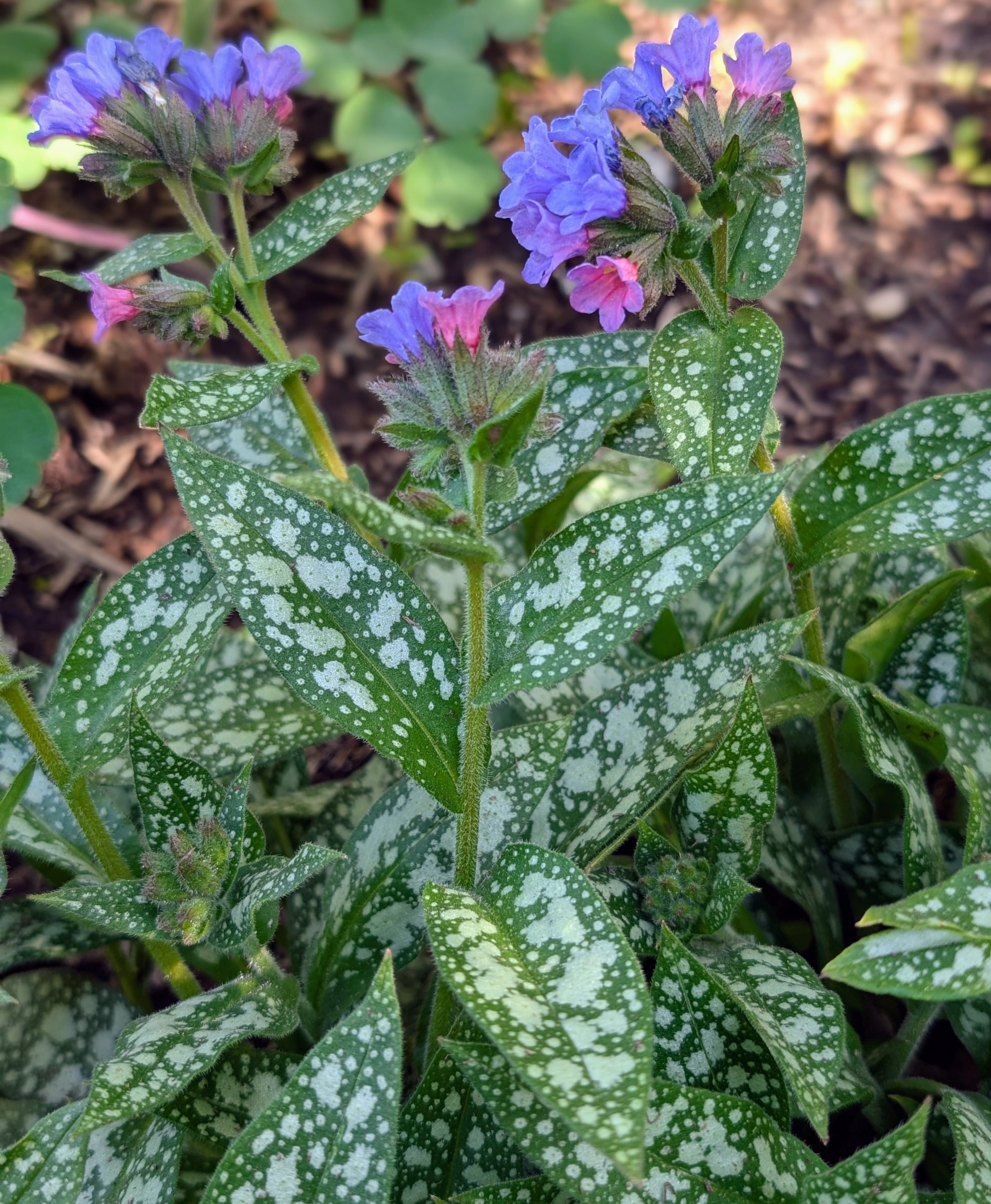
Lungwort plants, Pulmonaria, are most often grown for their interesting leaves, which are green with random white spots. The leaves also have a rough, hairy fuzz covering them. The flowers, commonly known as lungwort, are bell- or funnel-shaped with five petals. They typically start out pinkish and mature to violet blue.
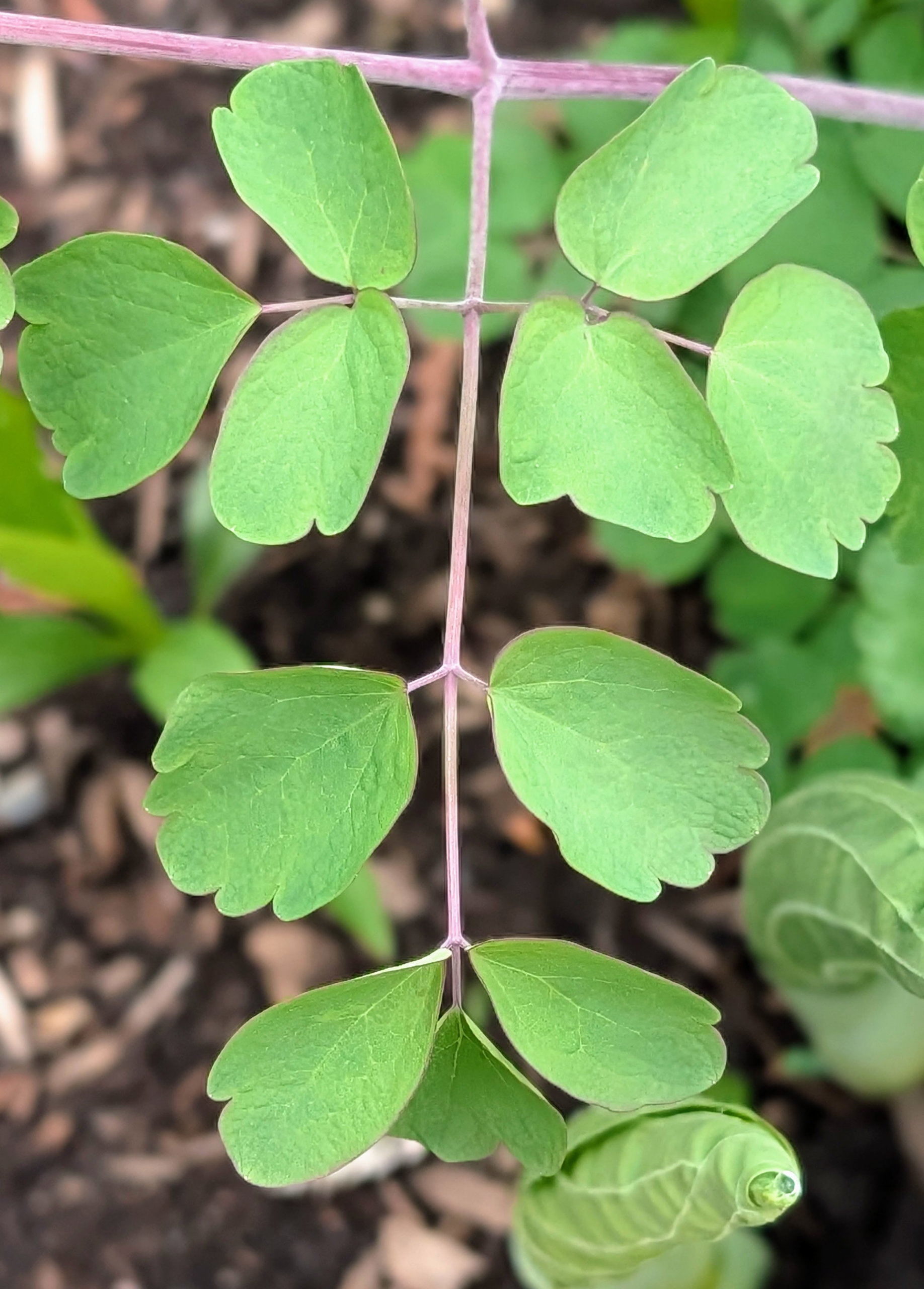
These are the dainty leaves of Thalictrum, or Meadow Rue – a robust, upright, clump-forming perennial featuring clouds of lavender mauve flowers later in the season.
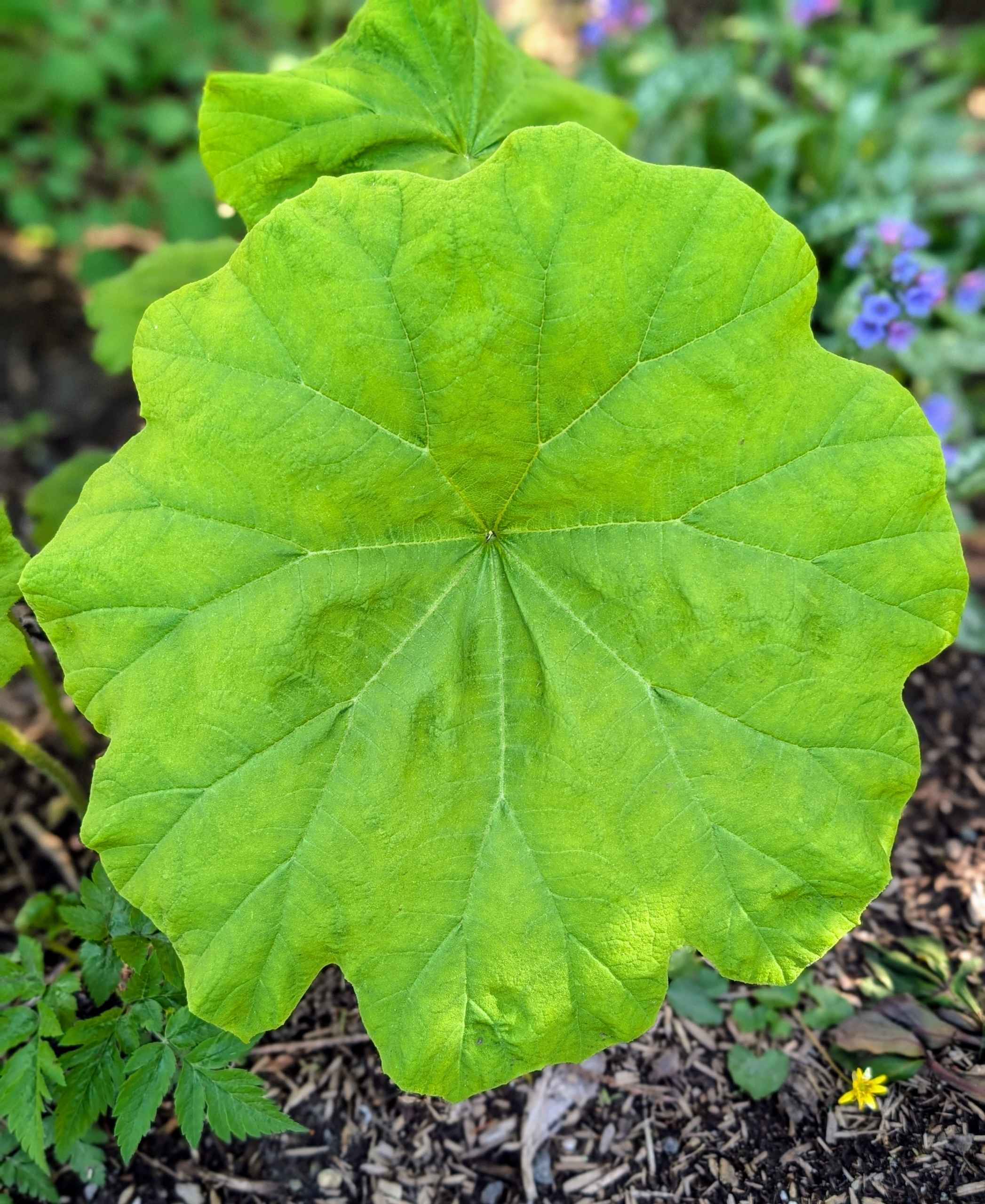
Astilboides is an interesting plant with huge, bright green leaves that are round and flat and measure up to 24-inches across. The effect is dramatic, and beautiful among other hardy perennials.
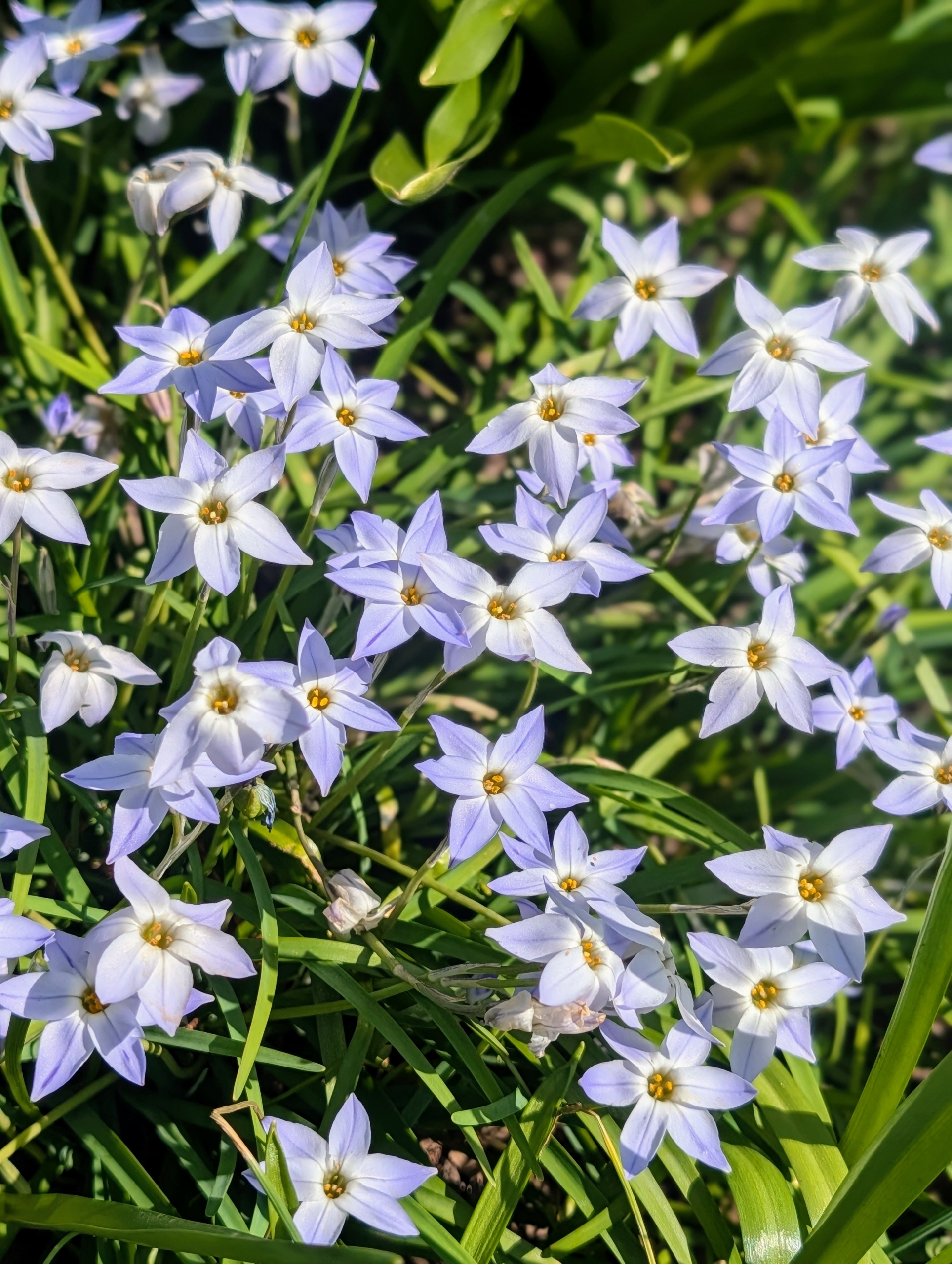
Ipheion uniflorum, commonly called spring starflower, is native to Argentina and Uruguay and features grass-like foliage and solitary star-shaped flowers on six-inch tall stems. Flowers range in color from almost white to violet blue. Flowers have a mild spicy fragrance, and when bruised the foliage emits an oniony aroma.
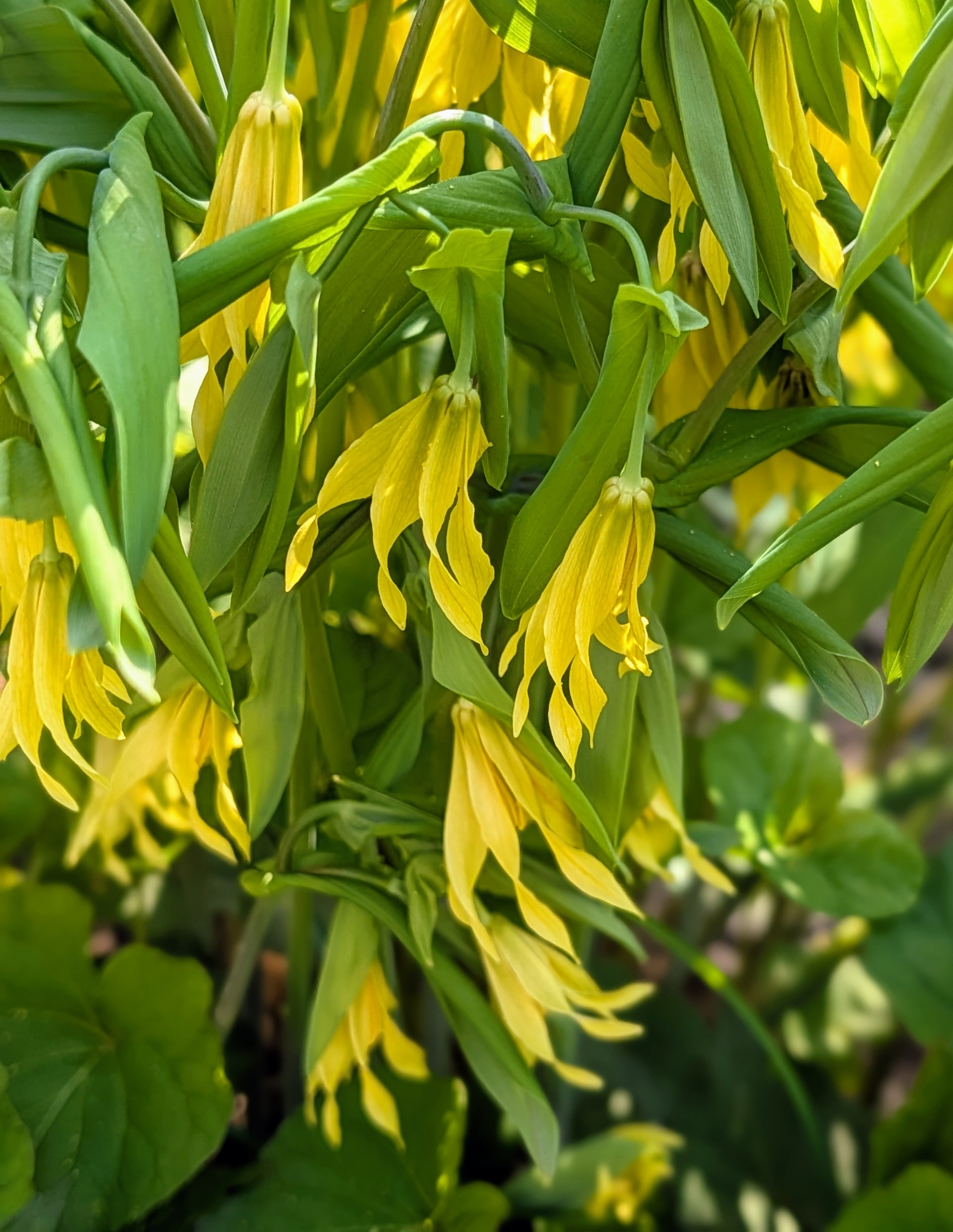
Uvularia grandiflora, the large-flowered bellwort or merrybells, is a species of flowering plant in the family Colchicaceae. Blooming mid to late spring, the flowers are twisted both in bud and in flower giving it a slightly droopy appearance.
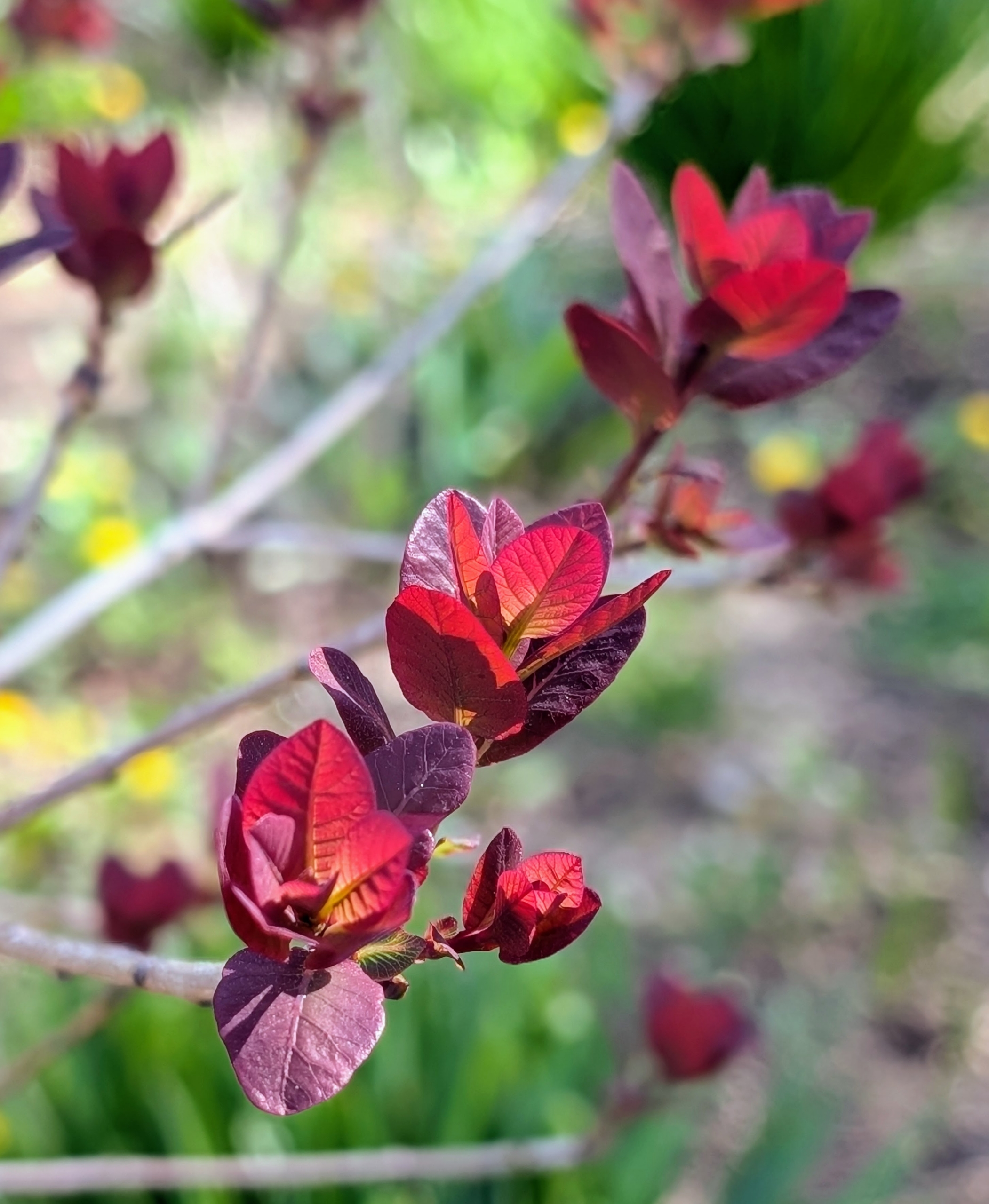
The Cotinus are leafing out too. Cotinus, the smoketree, or smoke bush, is a genus of two species of flowering plants in the family Anacardiaceae, closely related to the sumacs. Their smooth, rounded leaves come in exceptional shades of deep purple, clear pinkish-bronze, yellow, and green.
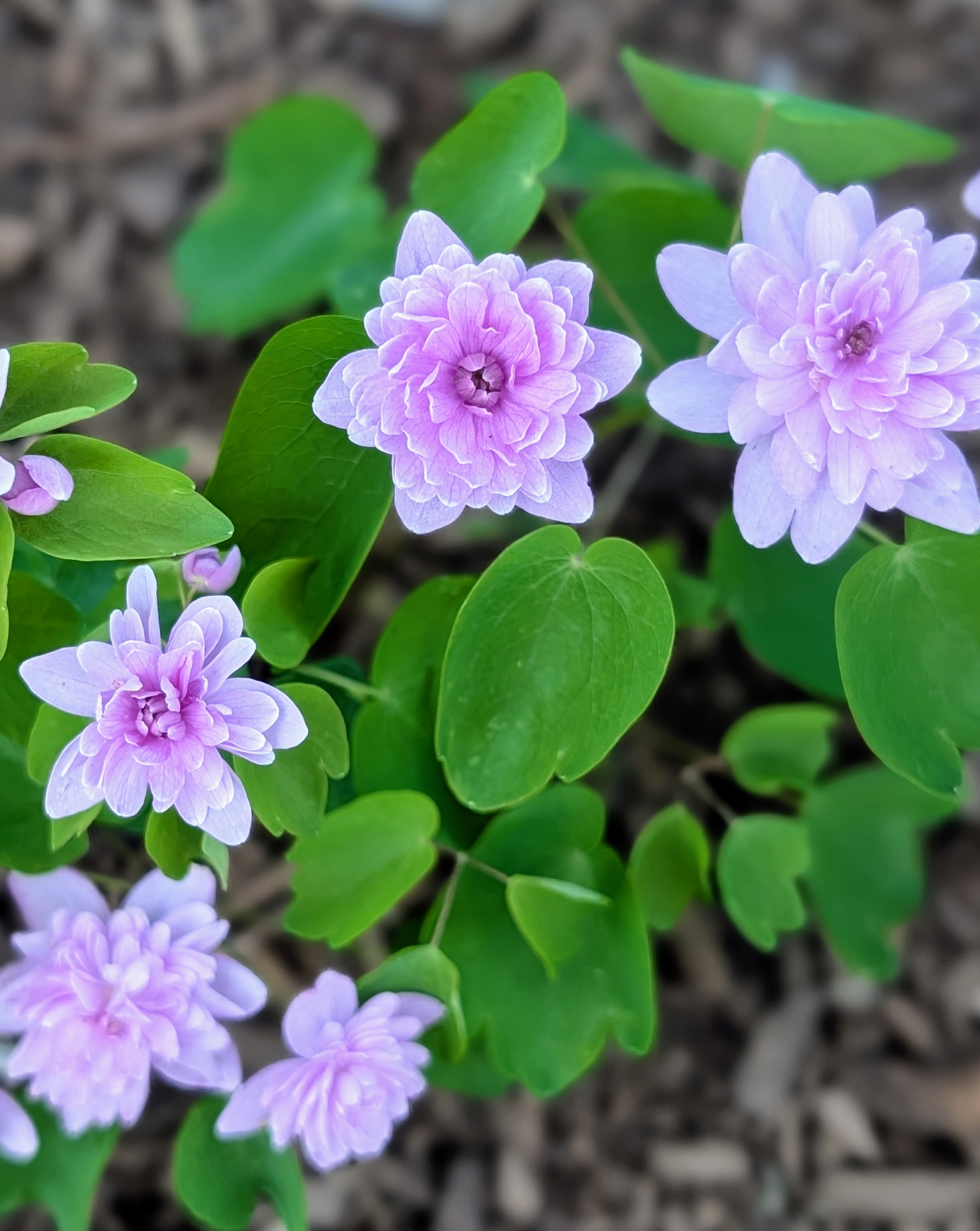
Anemonella thalictroides is an easy-to-grow, deer-resistant, durable, but dainty looking plant. The genus name Anemonella roughly translates as ‘little anemone’ because its flowers are miniature copies of the windflower. These are a light pale pink.
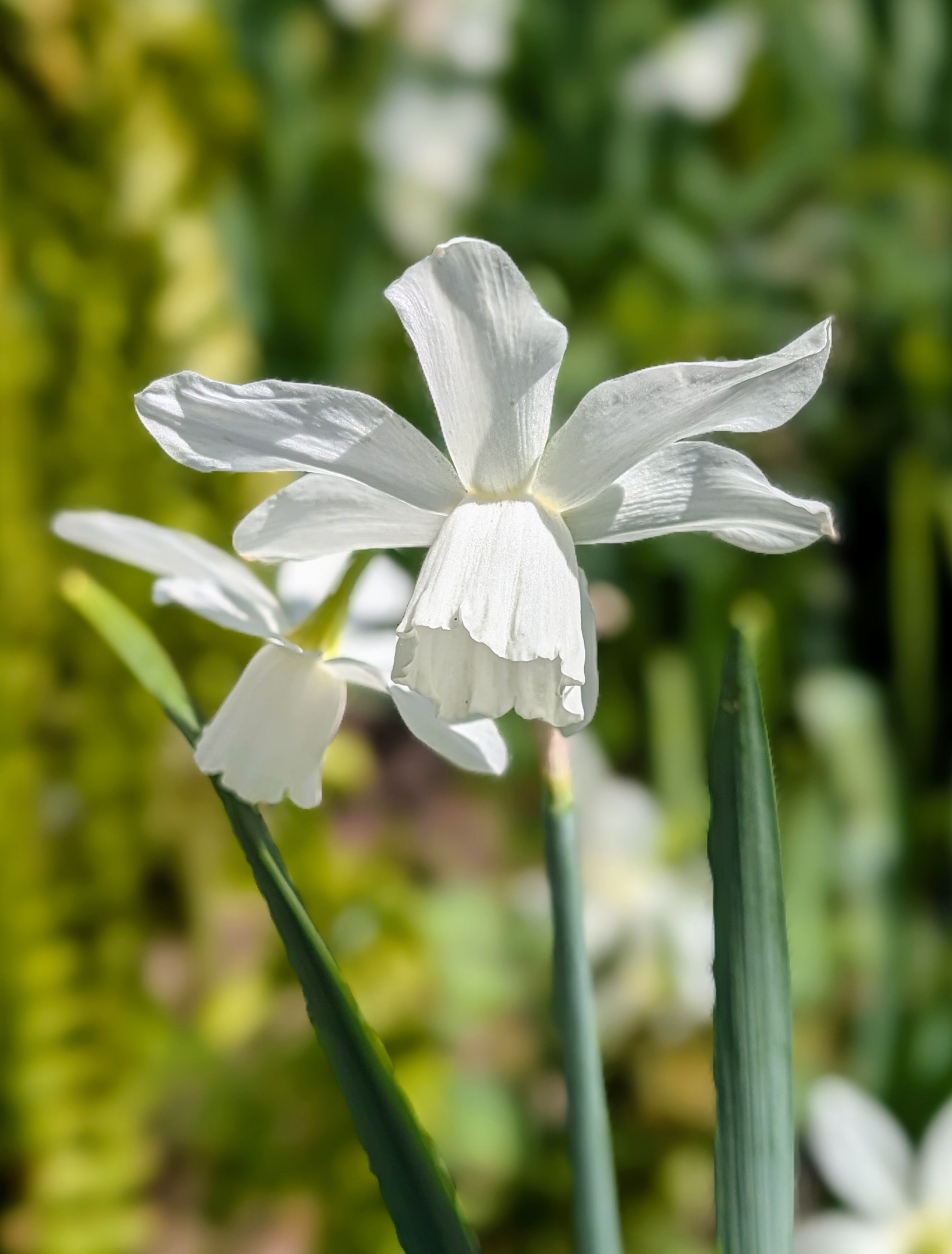
And we still have daffodils bordering the garden beds with bright colors! My daffodil blossoms come in many combinations of yellow, orange, and white.
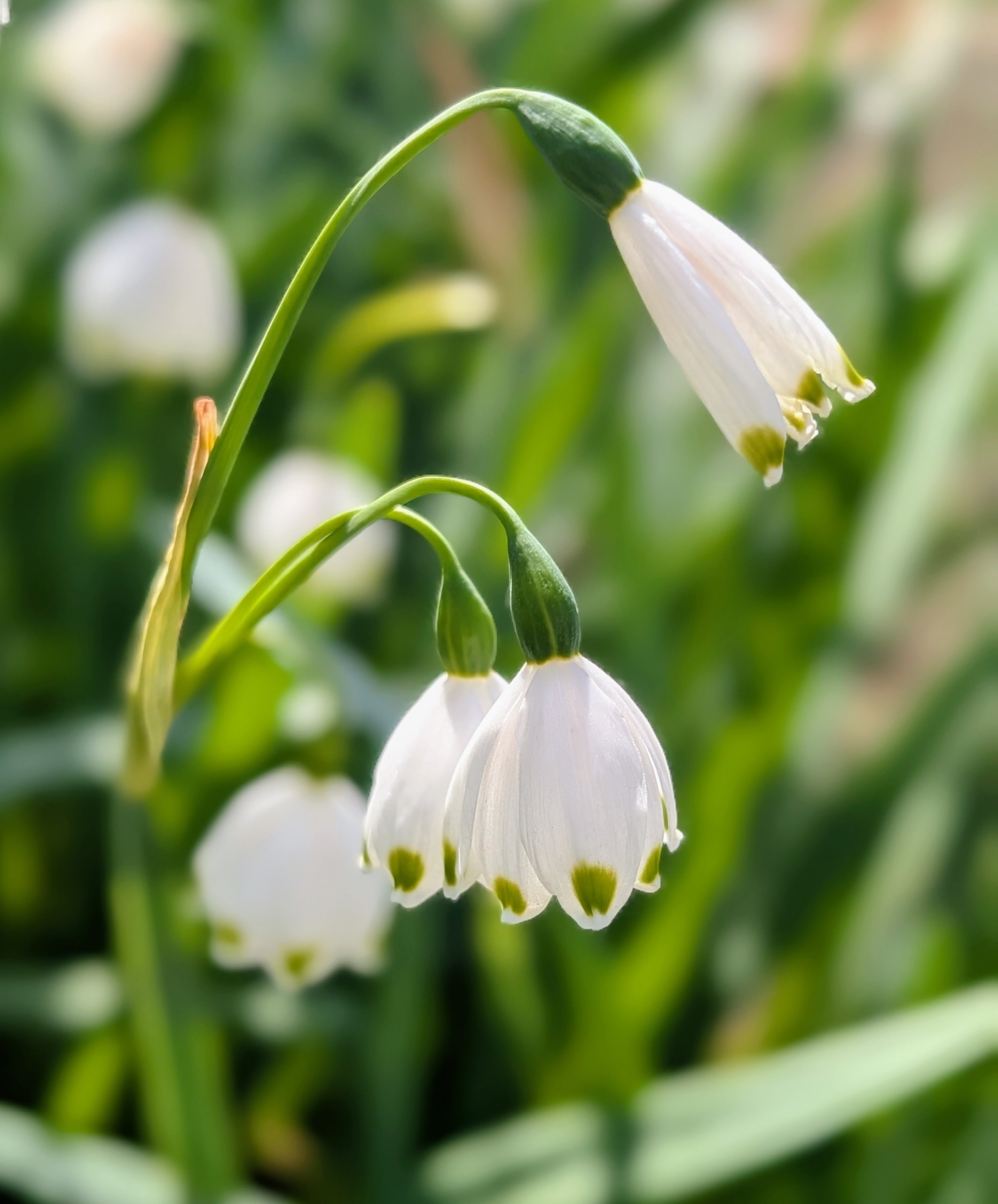
The Snowflakes are growing beautifully this year. The Snowflake is much taller than the Snowdrop, that blooms earlier in the season, and has more than one flower per stem. Snowflake petals are even, each with a green spots on the end, whereas Snowdrops have helicopter-like propellers that are green only on the inner petals.
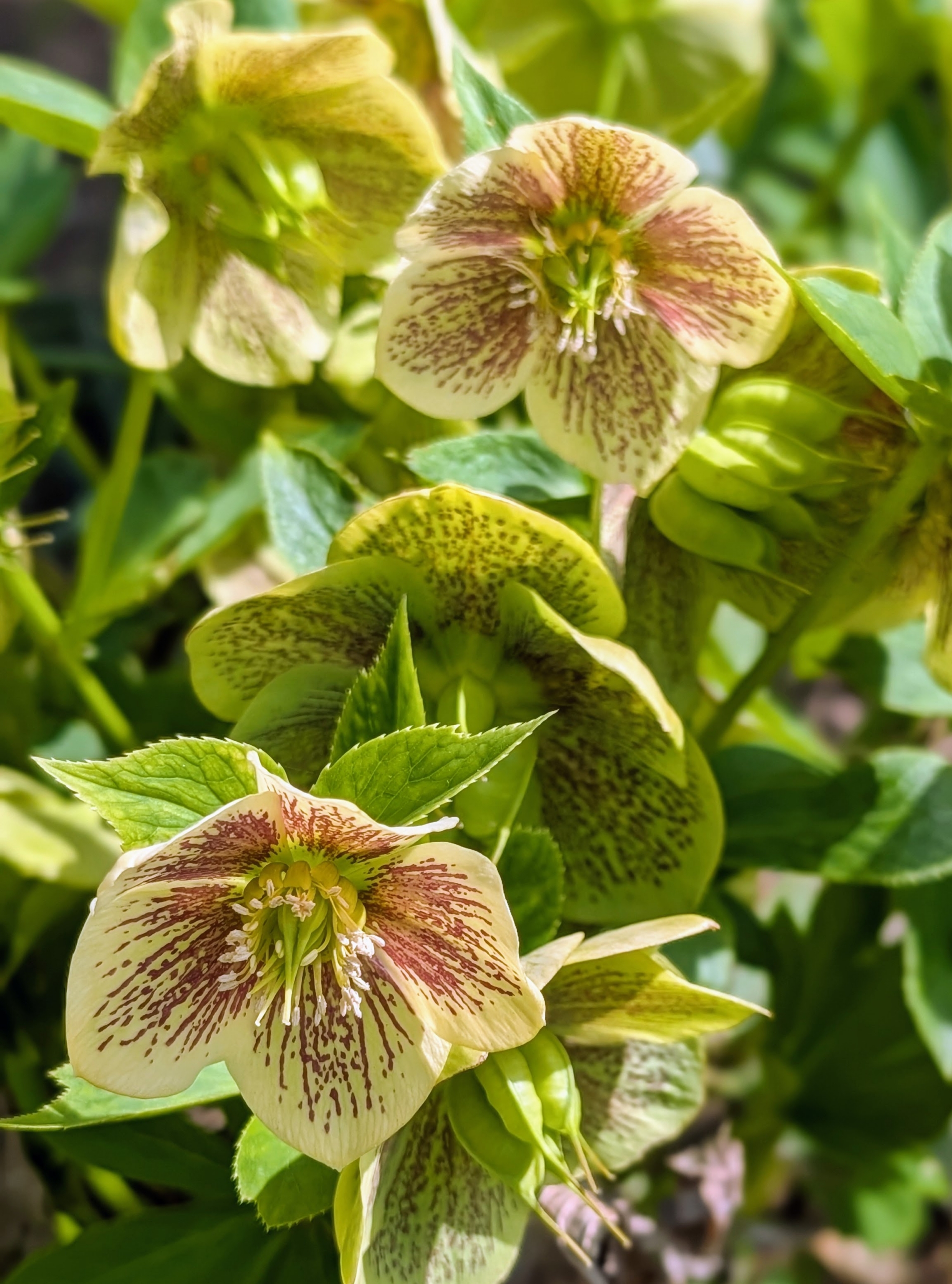
The hellebores continue to show beautifully at the farm. Hellebores are members of the Eurasian genus Helleborus – about 20 species of evergreen perennial flowering plants in the family Ranunculaceae. They blossom during late winter and early spring for up to three months. Hellebores come in a variety of colors and have rose-like blossoms.
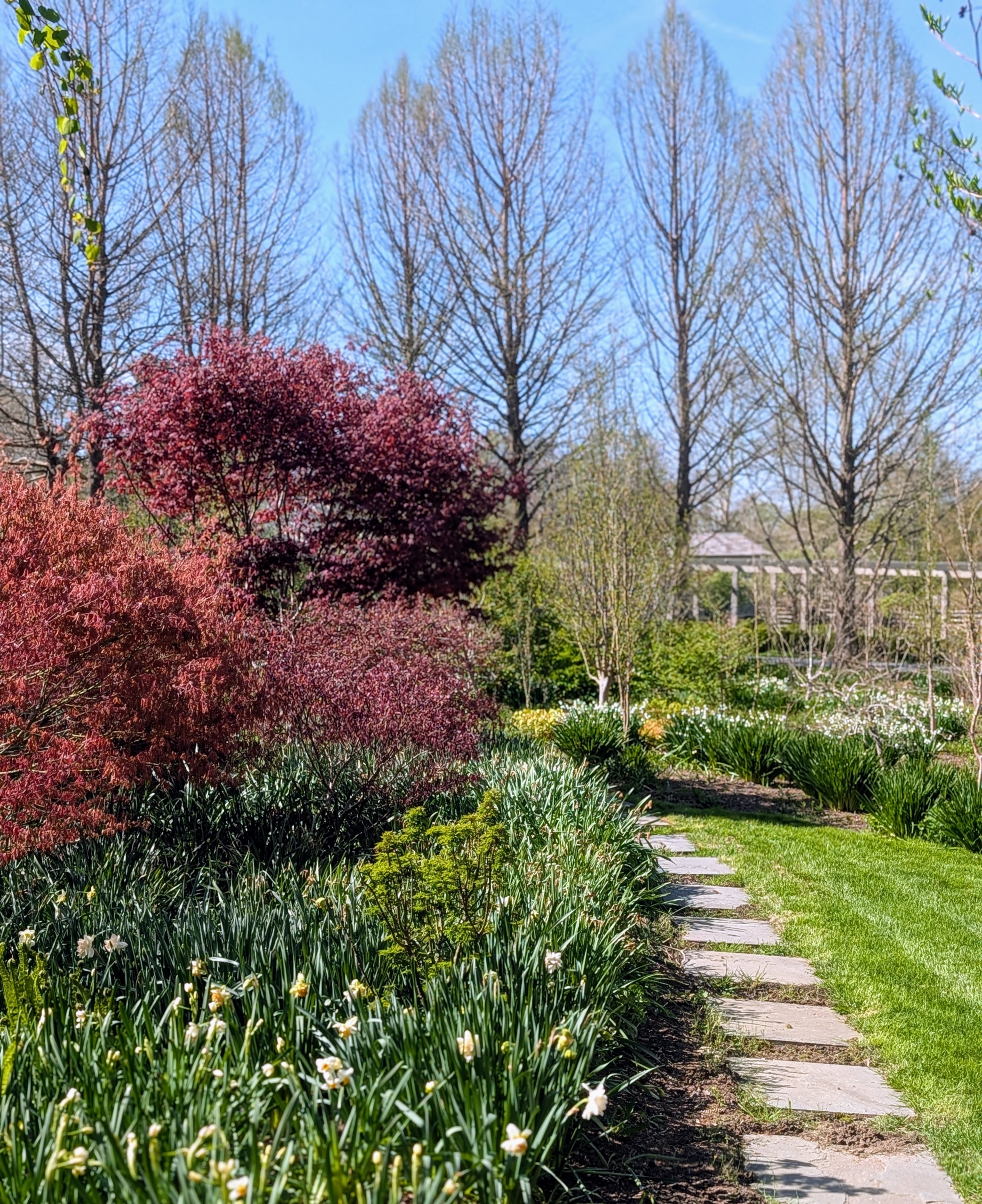
Every year, more and more plants grow in these beds, cover the space, and create a lush, green carpet of beautiful foliage.
I always encourage others to share photos from places they've visited. Not long ago our own Marquee Brands Home Brand Director, Dipali Patwa, found herself with some extra time after a flight back home to New York was delayed. Instead of sitting at the airport, she went out and toured an interesting garden to learn something new. Enjoy her story and her images.
During a recent business trip to West Palm Beach, I had the opportunity to visit the Ann Norton Sculpture Gardens. I didn’t walk this garden with Martha, but I’ve walked others with her, and that experience fundamentally changes how you see a space like this. Walking gardens with Martha teaches you to notice what many may overlook - the discipline of proportion, the intention behind what is planted, the way pathways guide movement without announcing themselves, and how light, at different times of day, becomes as important a design element as any material. You begin to understand that great environments are not accidental- they are edited, refined, and deeply intentional. So when I stepped into the Ann Norton Sculpture Gardens, I found myself seeing through that lens. Slowing down. Observing transitions. Understanding restraint. And what revealed itself was not just a garden, but a living composition- one that quietly holds art, nature, and time in balance.
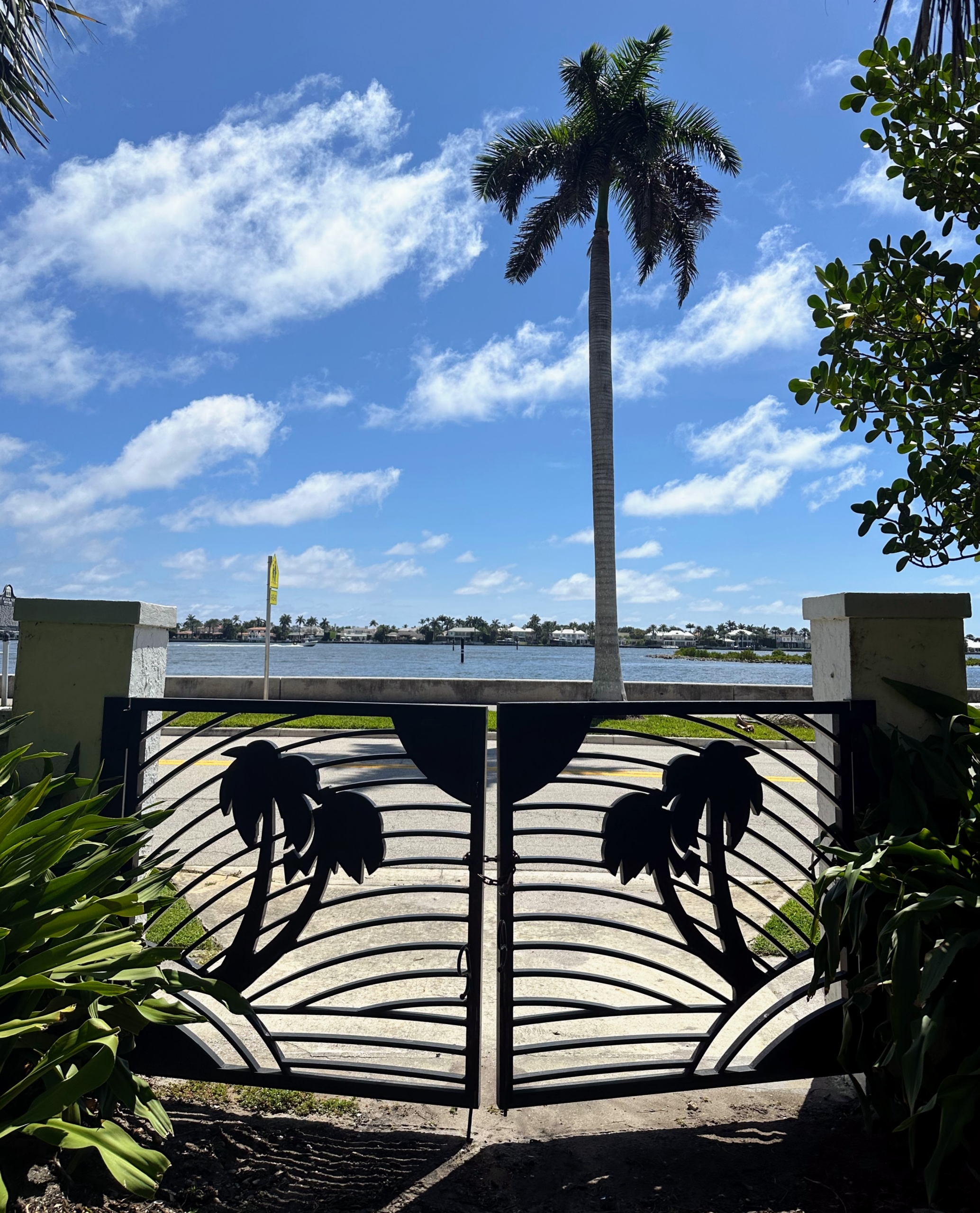
The Garden has a view directly over Lake Worth, which is part of the Atlantic Intracoastal Waterway.
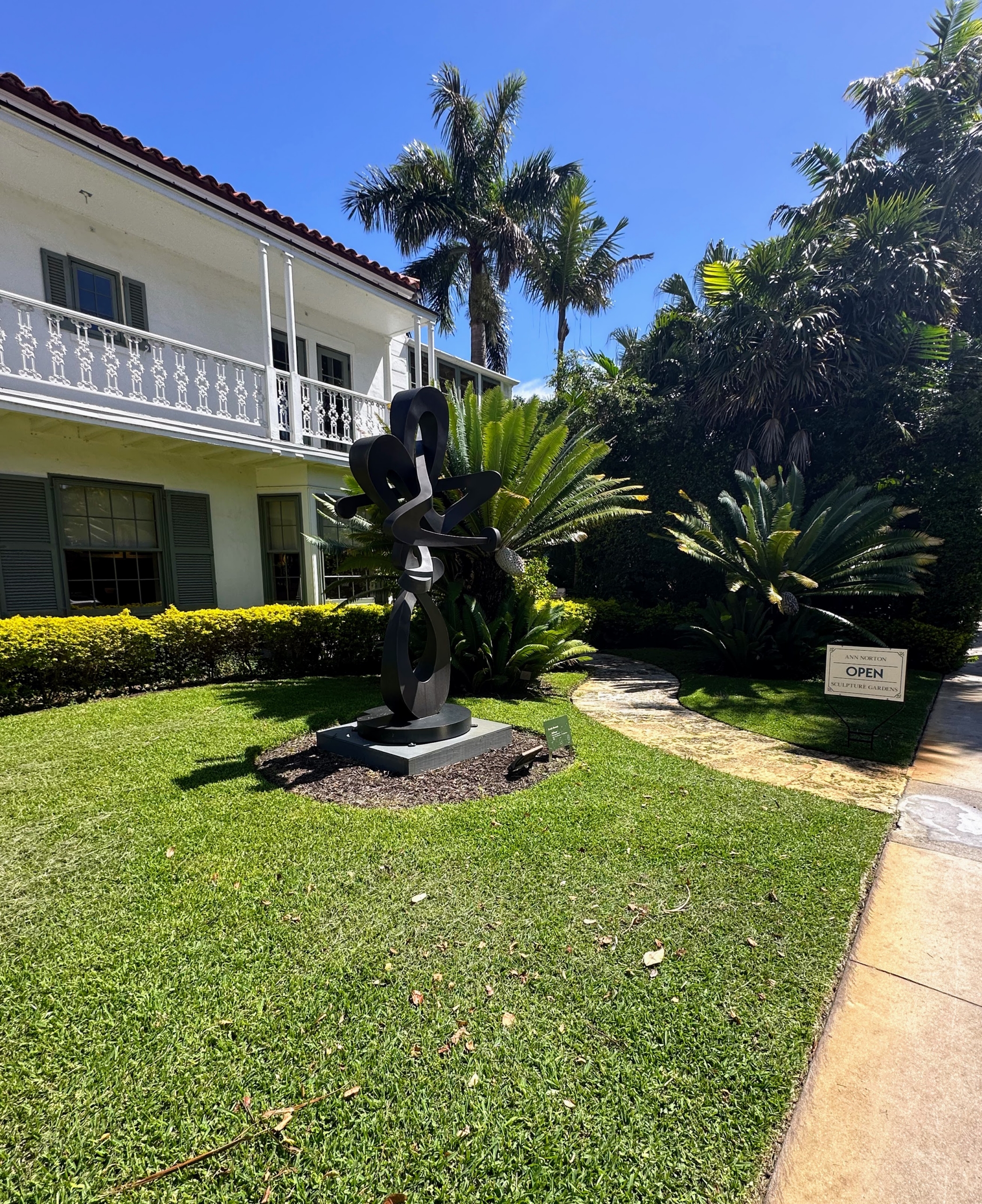
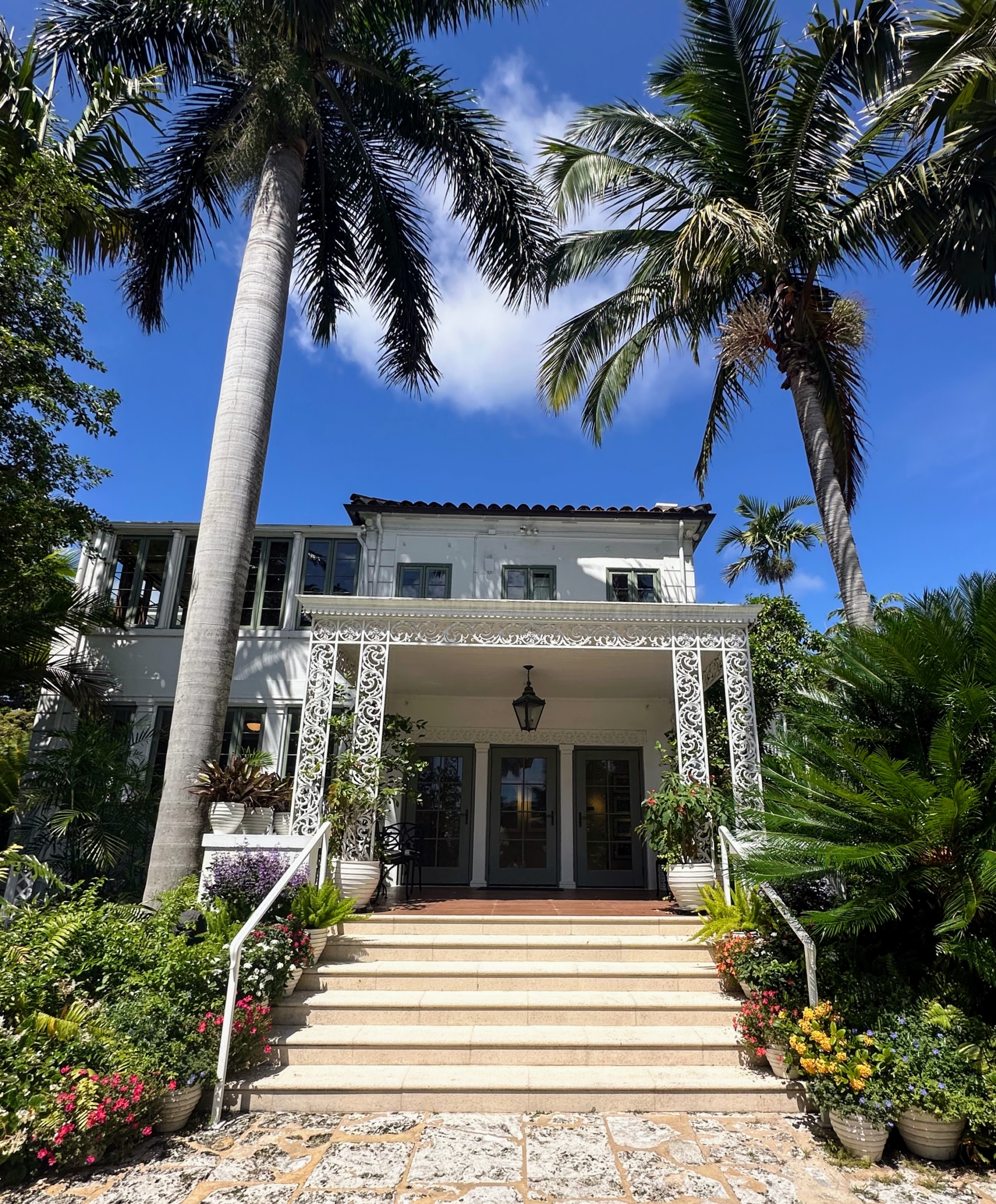
In 1942, Ann Norton became the first instructor of sculpture at the new Norton Gallery and School of Art. In 1948, she married the museum’s founder, Ralph Hubbard Norton (1875-1953). This is the entrance to the Norton House & Gallery.
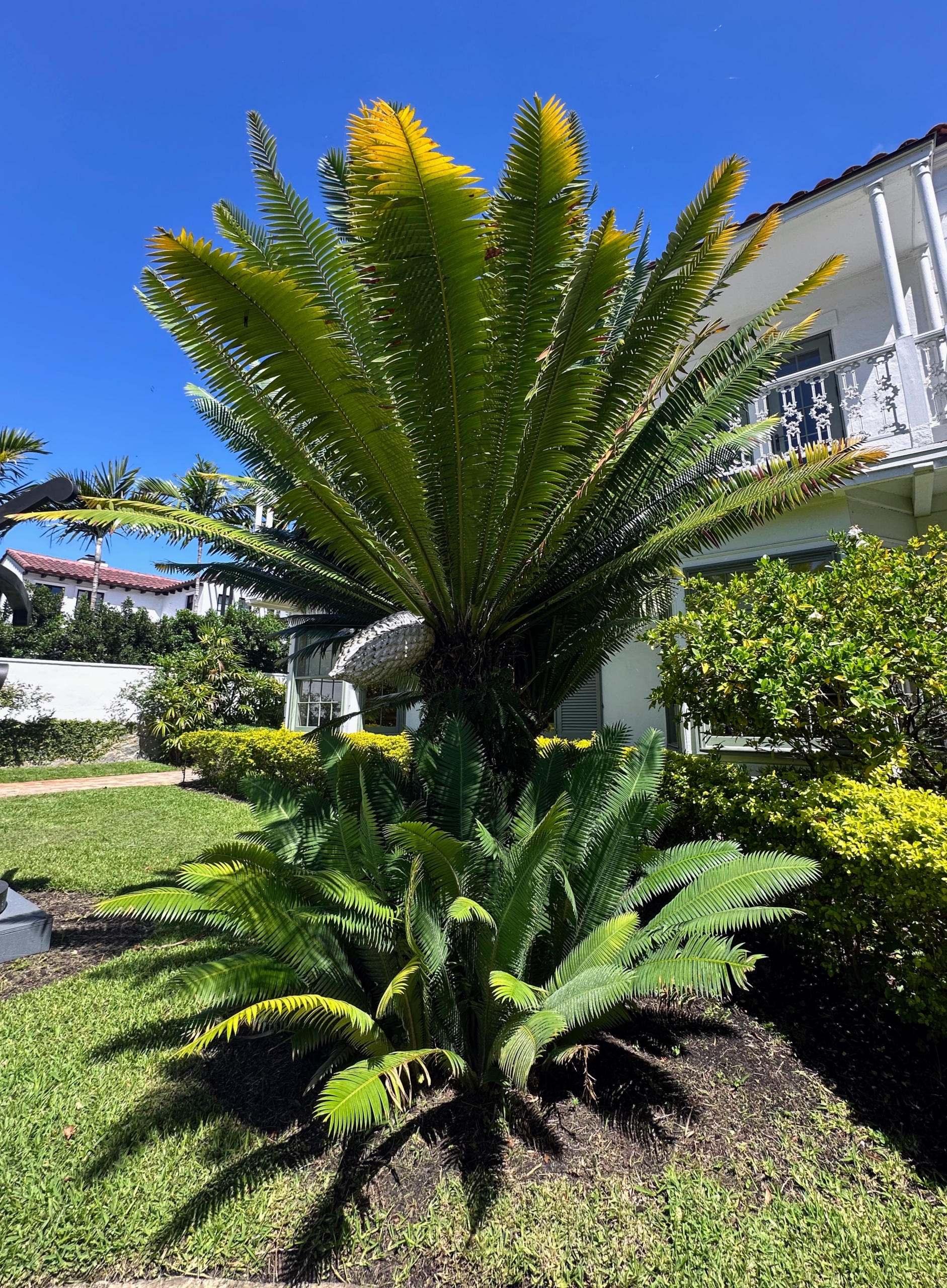
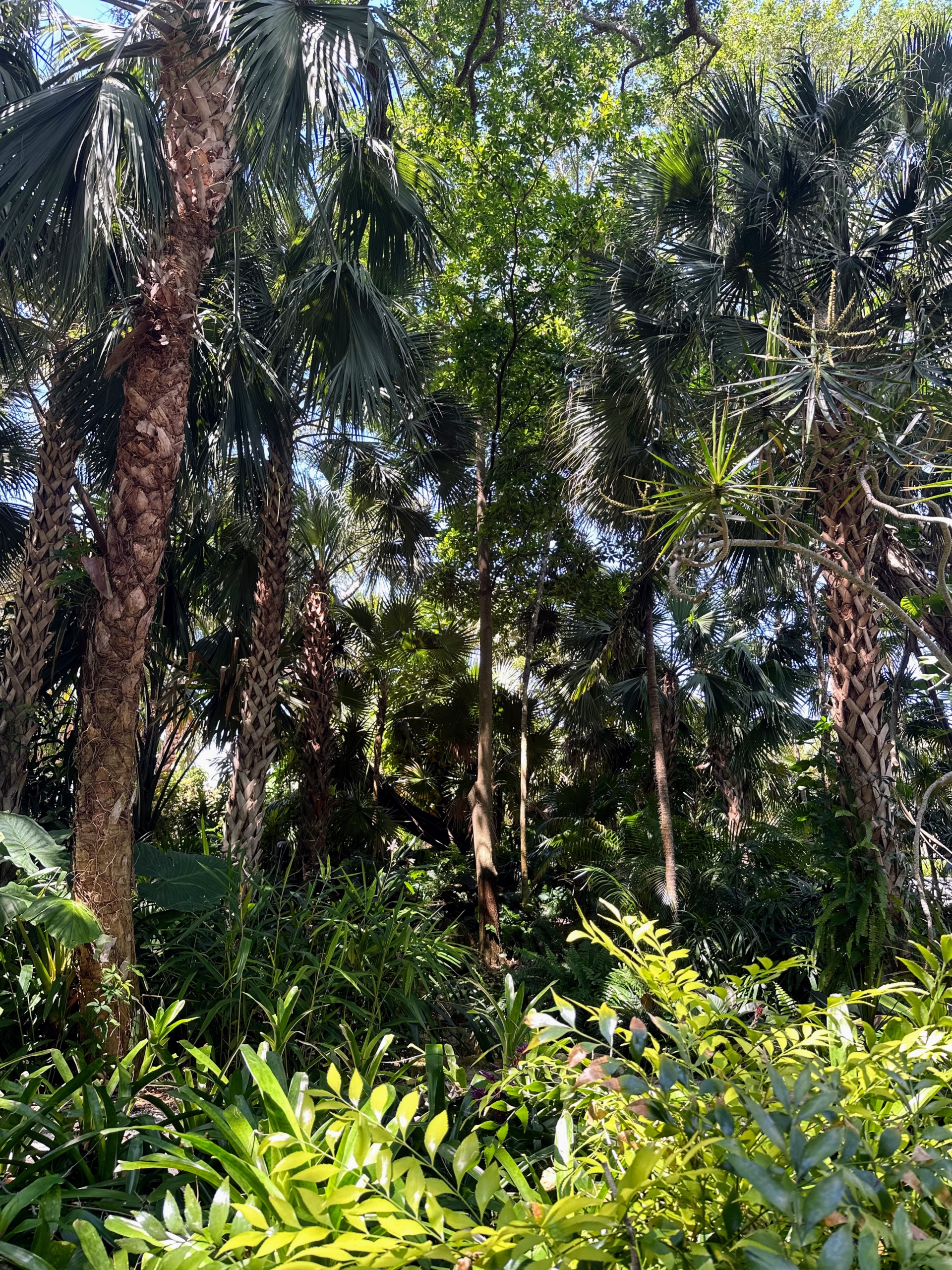
Along with the artworks, the Gardens also keep more than 250 rare palm species of cycads and unusual tropicals – it is recognized as one of the largest public collections in Florida.
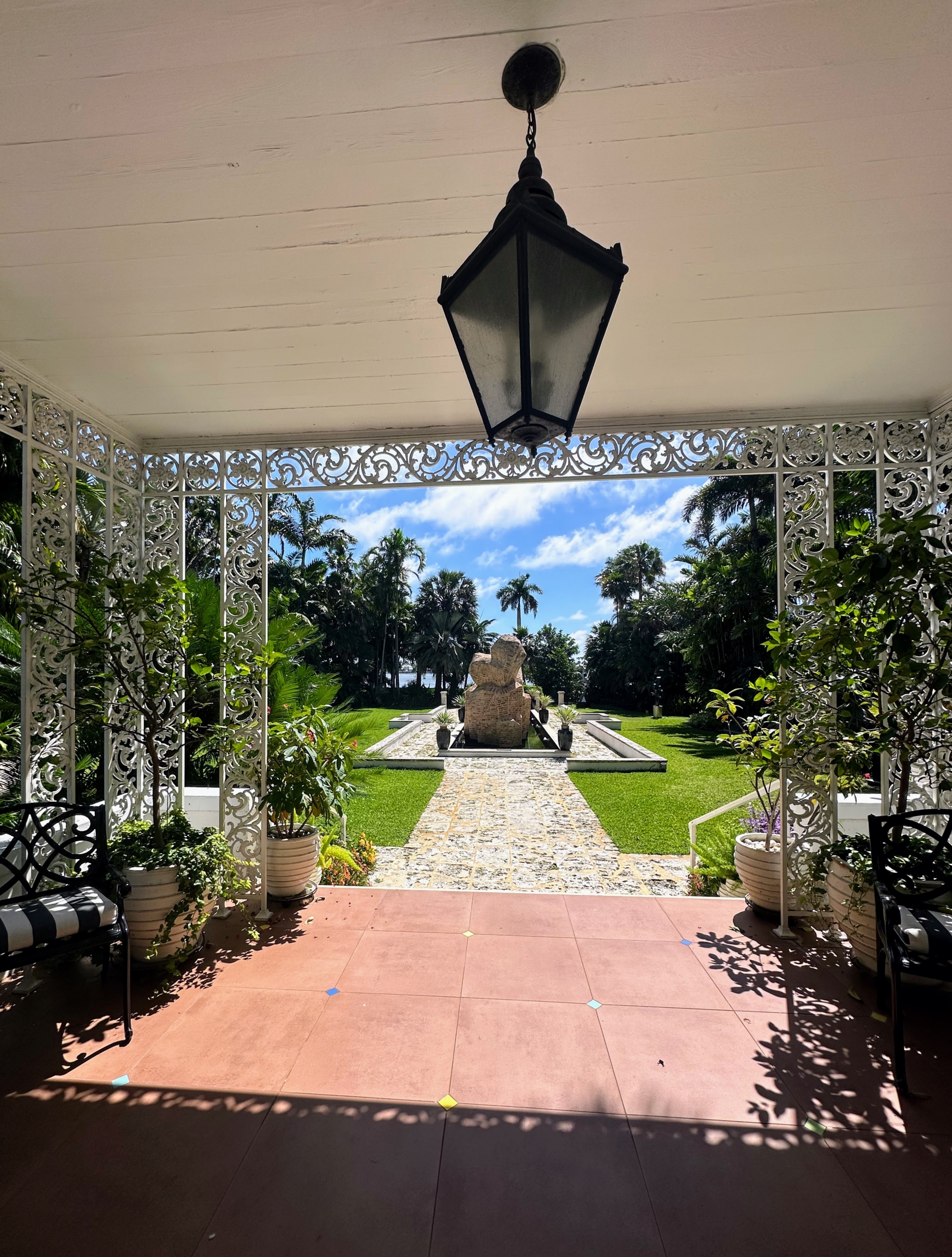
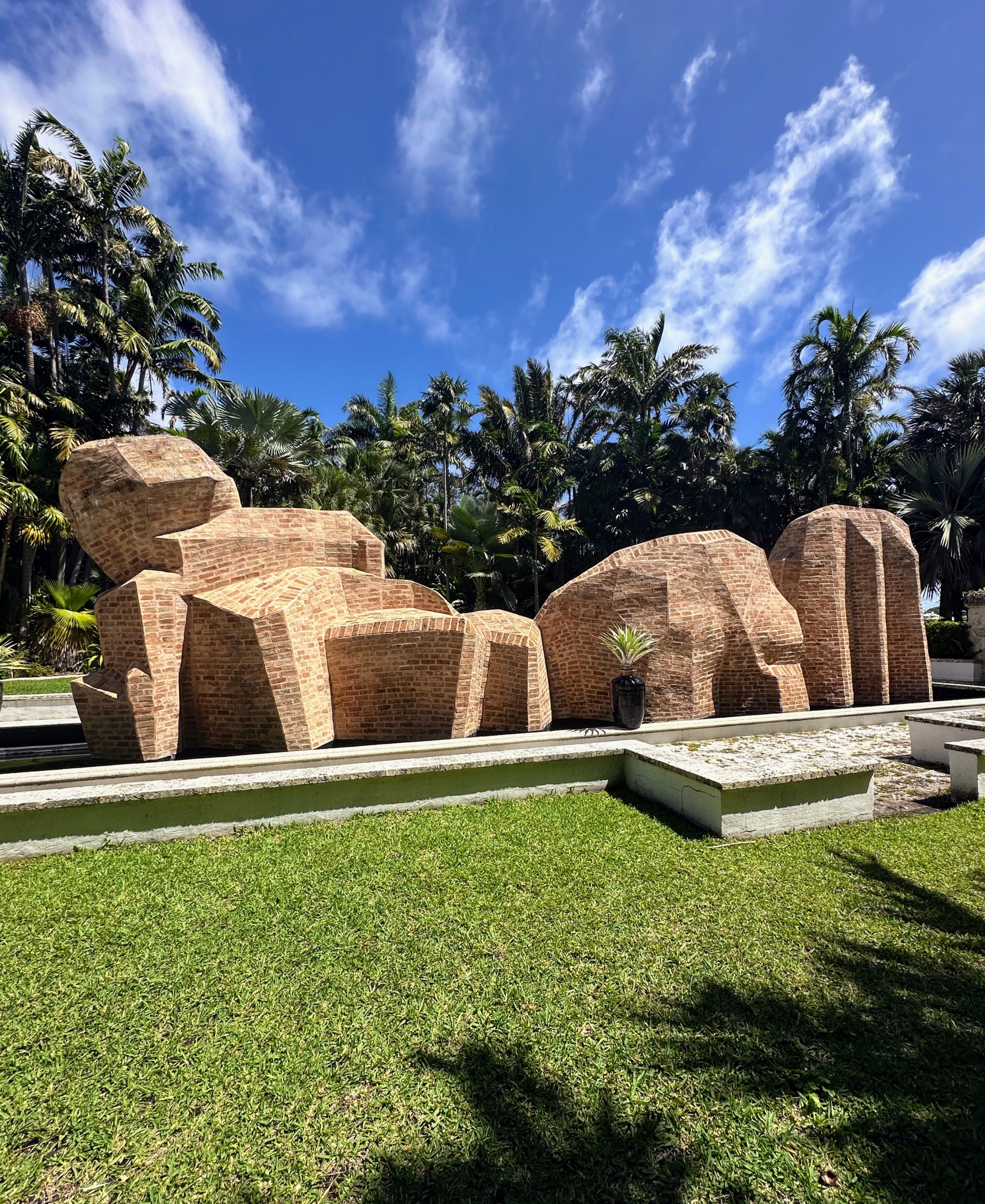
This is the back porch overlooking “Untitled Horizontal Sculpture,” 1979.
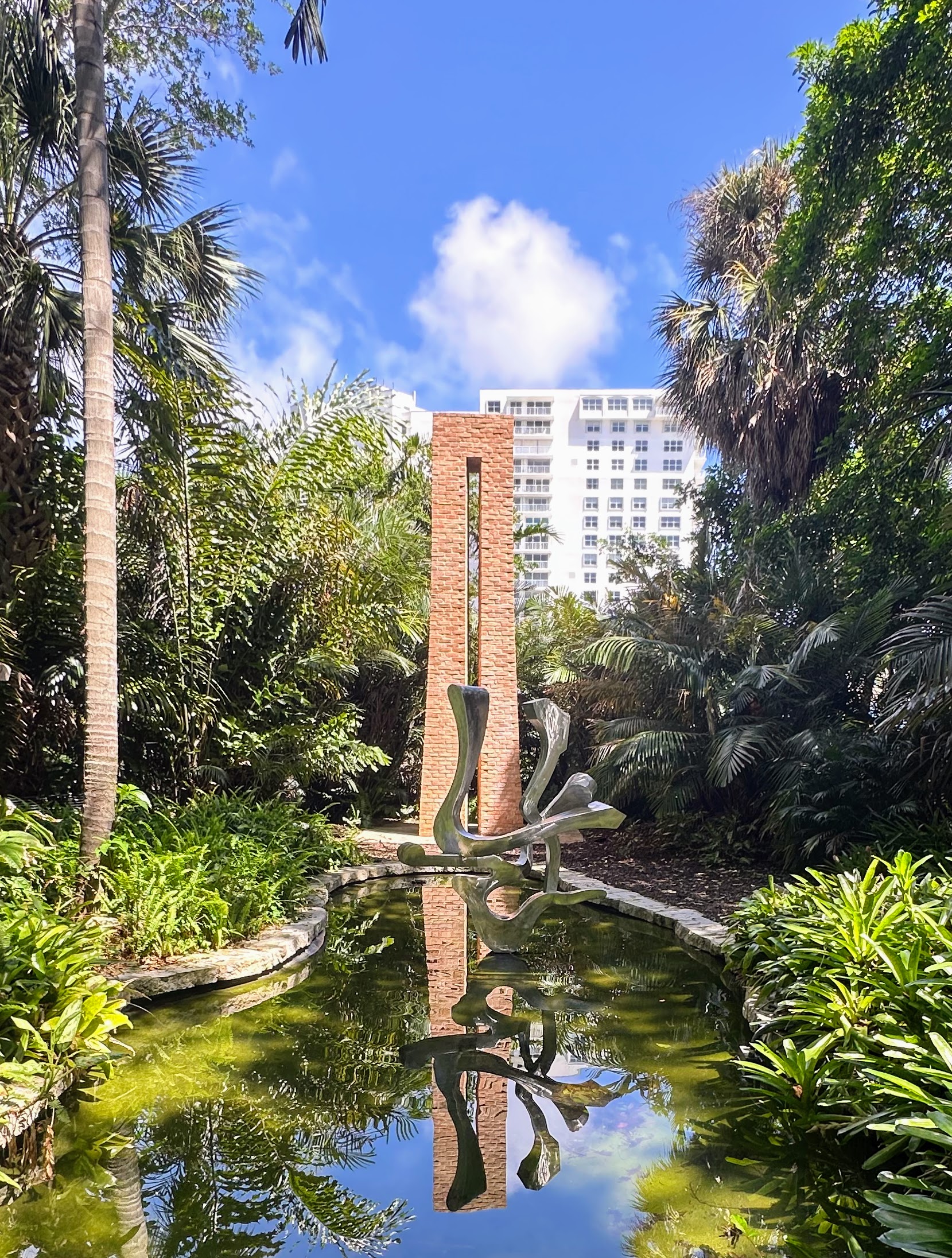
Here is a closer look at “Untitled Horizontal Sculpture, 1979.” It is one of nine of her monumental sculptures here. This was the last sculpture whose construction was overseen by Ann. Its silhouette was inspired by the Himalaya Mountains, which Ann loved to visit during her trips to India and Nepal. This installation is made of Mexican brick and has a total length of 48-feet.
Here is the entrance to the art gallery from the gardens.
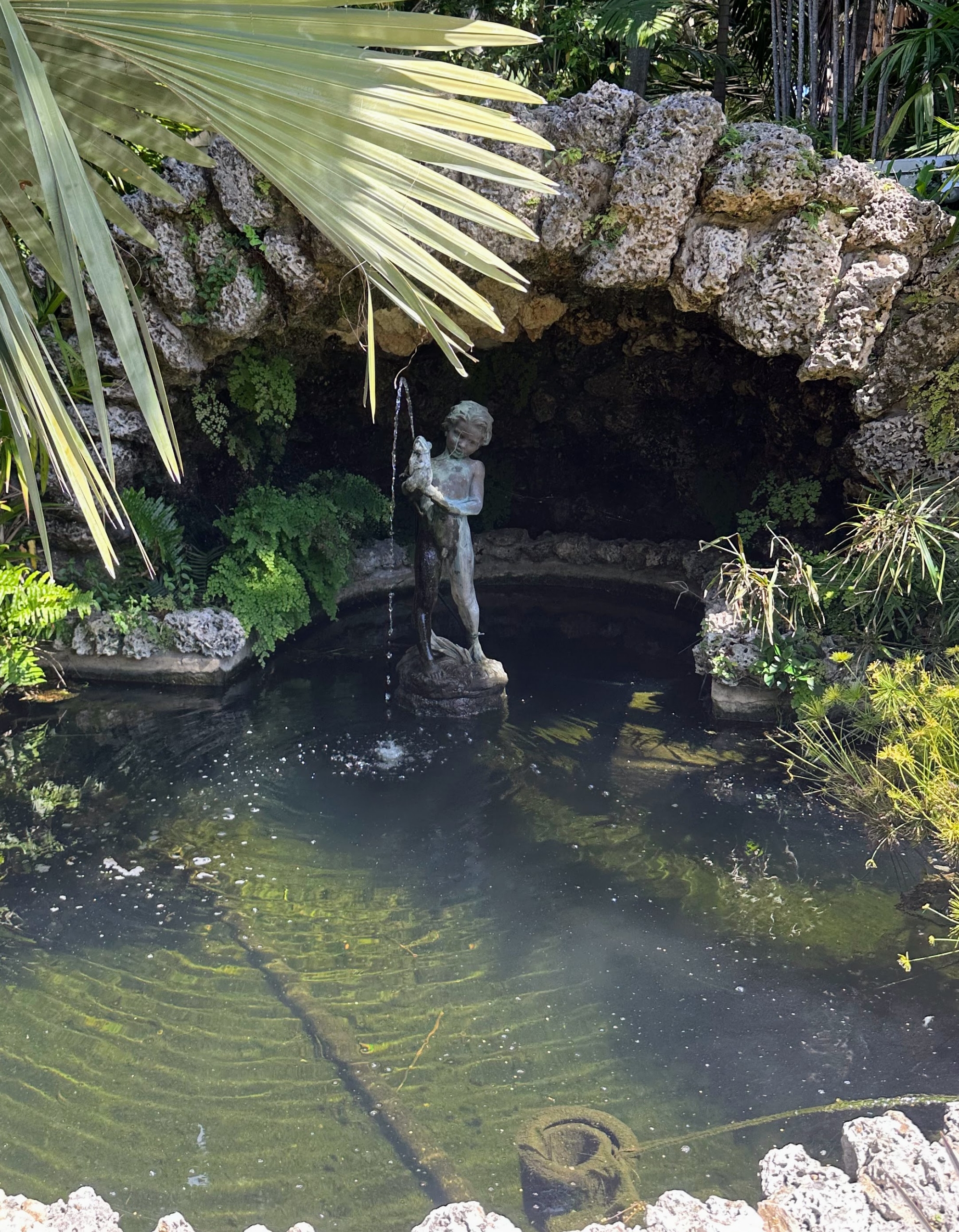
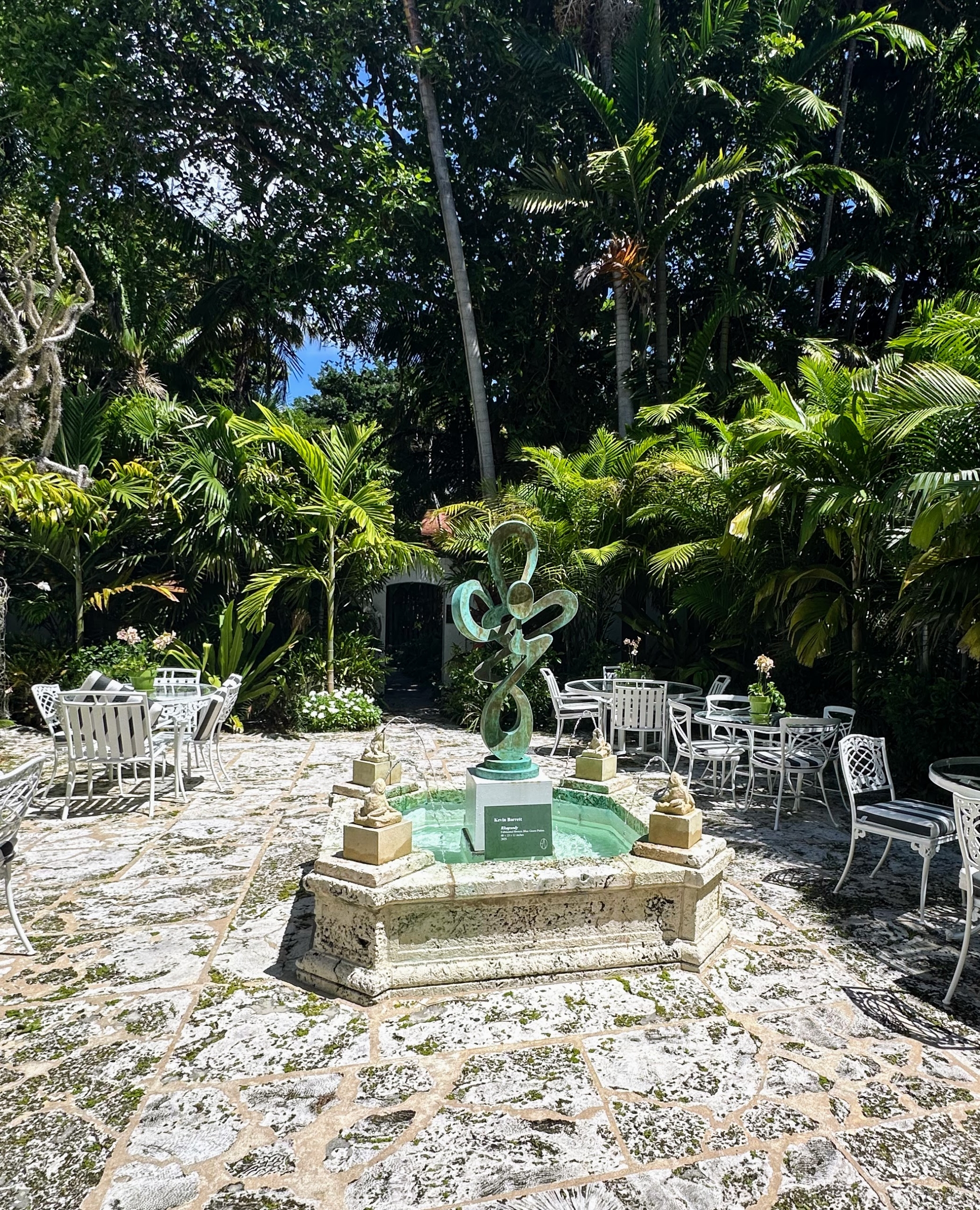
A small fountain under the shade of one of the many palms.
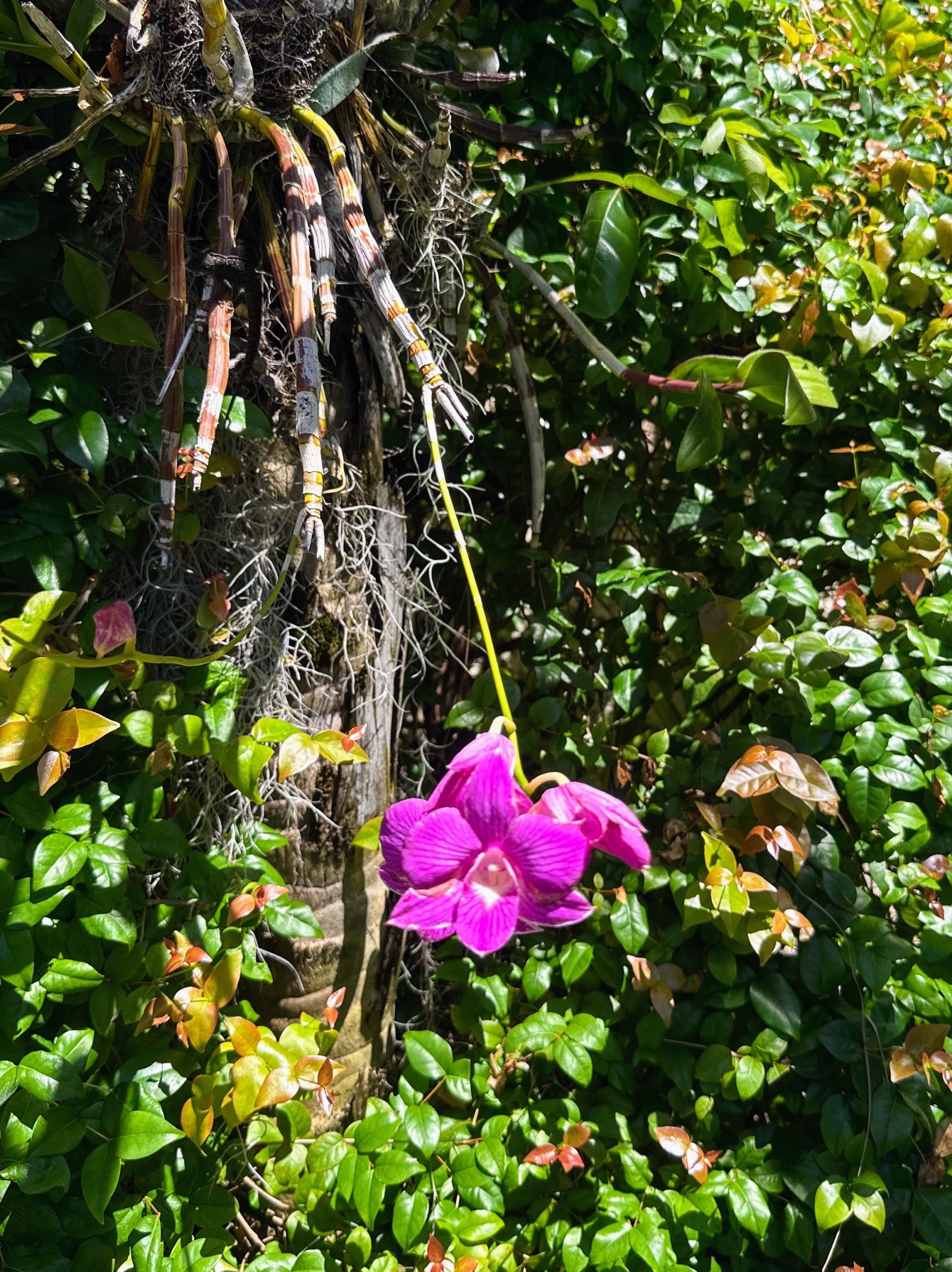
And a single bloom calling out to the living nature of this sanctuary. The gardens themselves are not ornamental- they are foundational. Layered with palms, cycads, orchids, and dense tropical foliage, the landscape acts as a natural frame.
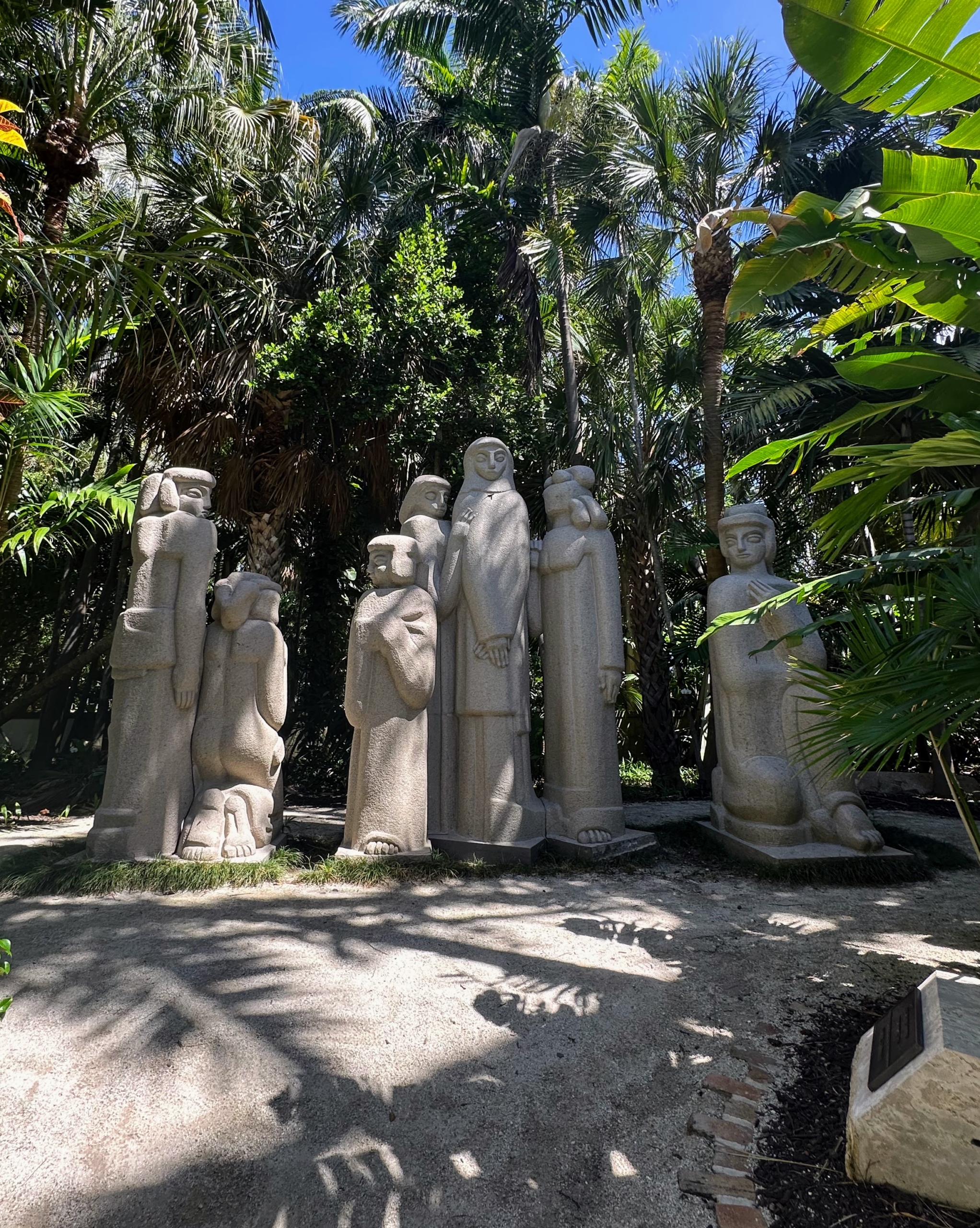
This art work is called “Seven Beings,” 1965, and is made of pink Norwegian granite. This installation was inspired by the sandstone formations Ann saw in Bryce Canyon National Park in Utah. It is 15 feet tall and 21 feet long.
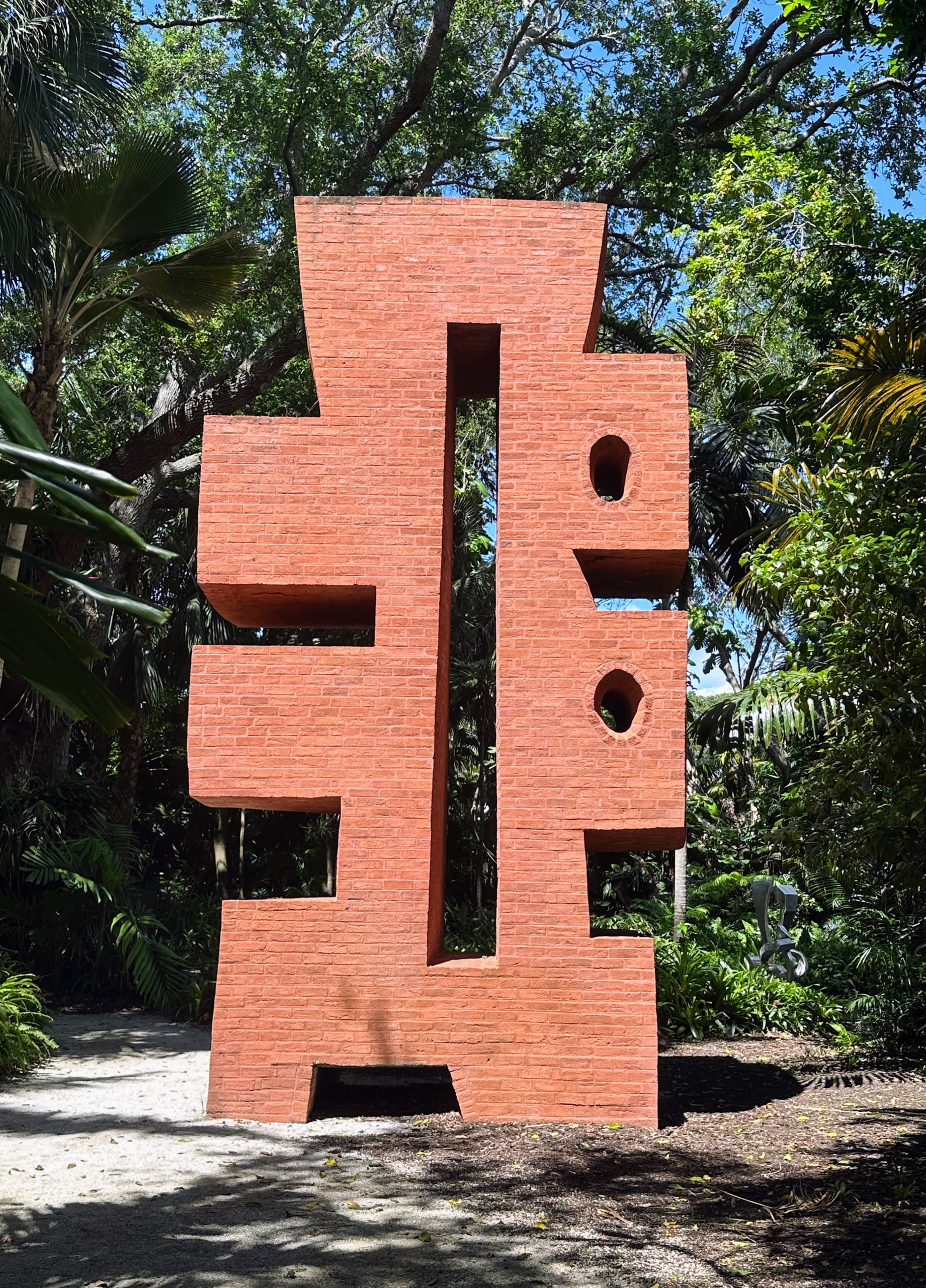
Ann’s sculptures, which she built in the gardens over a period of 15 years, are meant to be discovered “by surprise”. This is called “Gateway 4” and stands 24 feet tall. This sculpture’s apertures seem similar to the characters of the Sanskrit alphabet, known as the “mother of all languages.”
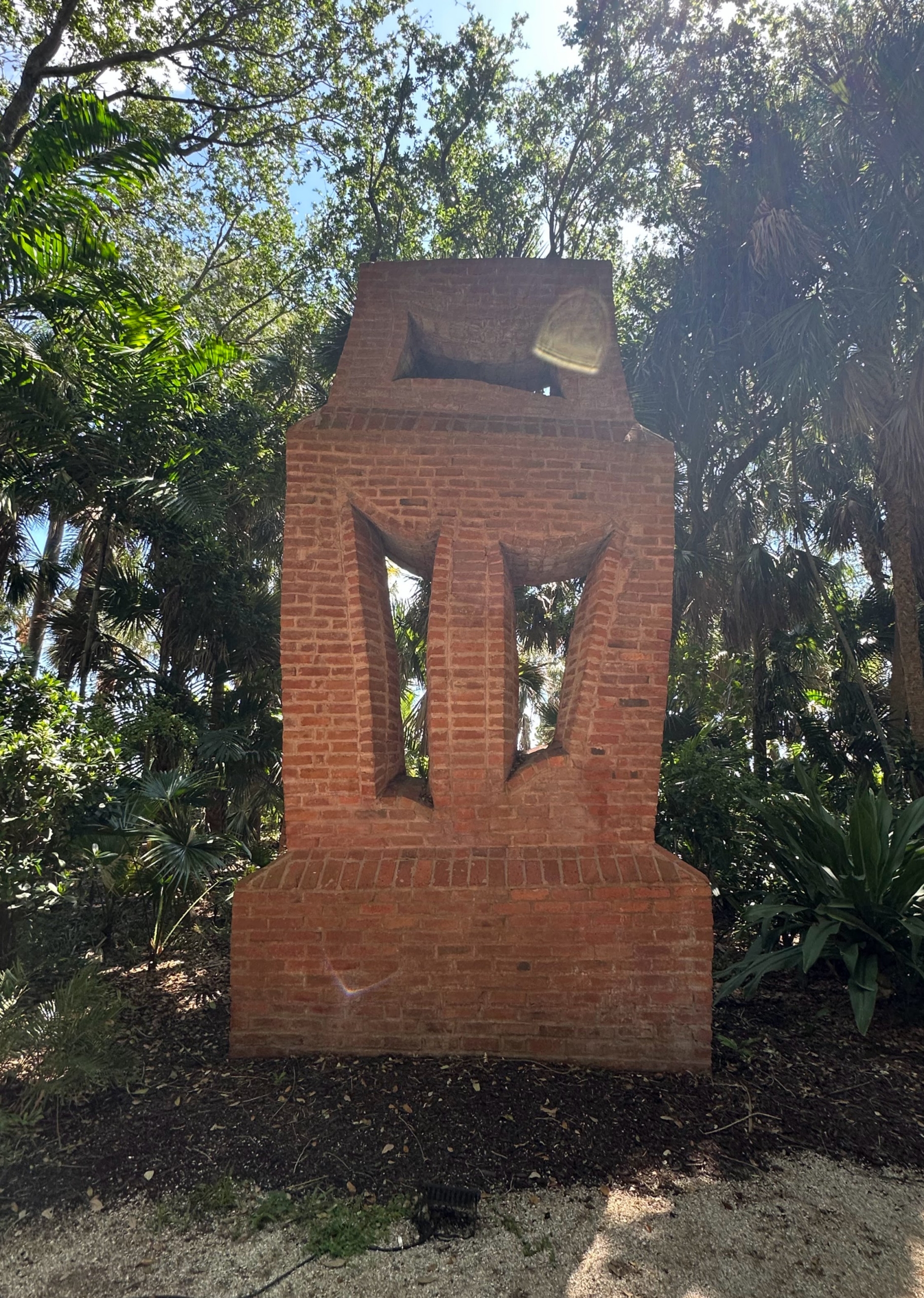
“Gateway 5,” 1977 is also handmade from North Carolina Brick. This massive tower recalls 20th-century architectural masterpieces such as Frank Lloyd Wright’s “Fallingwater” (1936-1939), in southwestern Pennsylvania.
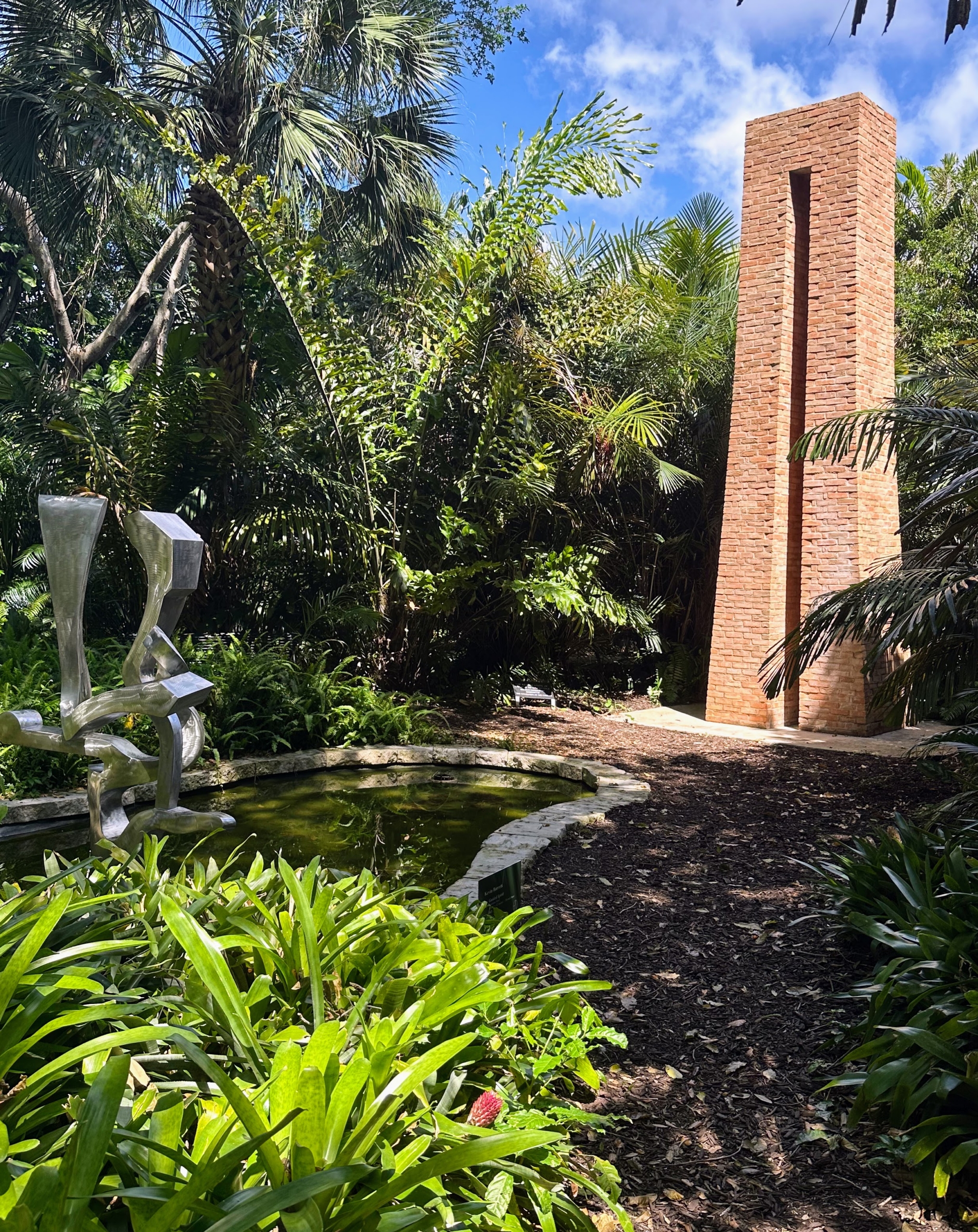
“Gateway to Knowledge,” 1983-84 is made from Boston brick and has a height of 30 feet. This is a posthumously built replica of a sculpture commissioned from Ann Norton in 1980 by the Massachusetts Bay Transit Authority and the Cambridge Arts Council near Harvard Square.
The juxtaposition of the sculpture, the fauna and the water body creates a moment of pause and reflection. In the Florida sun, these structures transform throughout the day: shadows sharpen, edges soften, and what feels solid begins to breathe.
The Gardens, at the request of Ann Norton, were designed by world-renowned botanist Sir Peter Smithers as a rare palm garden, to represent her commitment to conservation and the preservation of a quiet retreat. It is a rare gift to experience the union of this powerful art and the naturalness of the landscape.
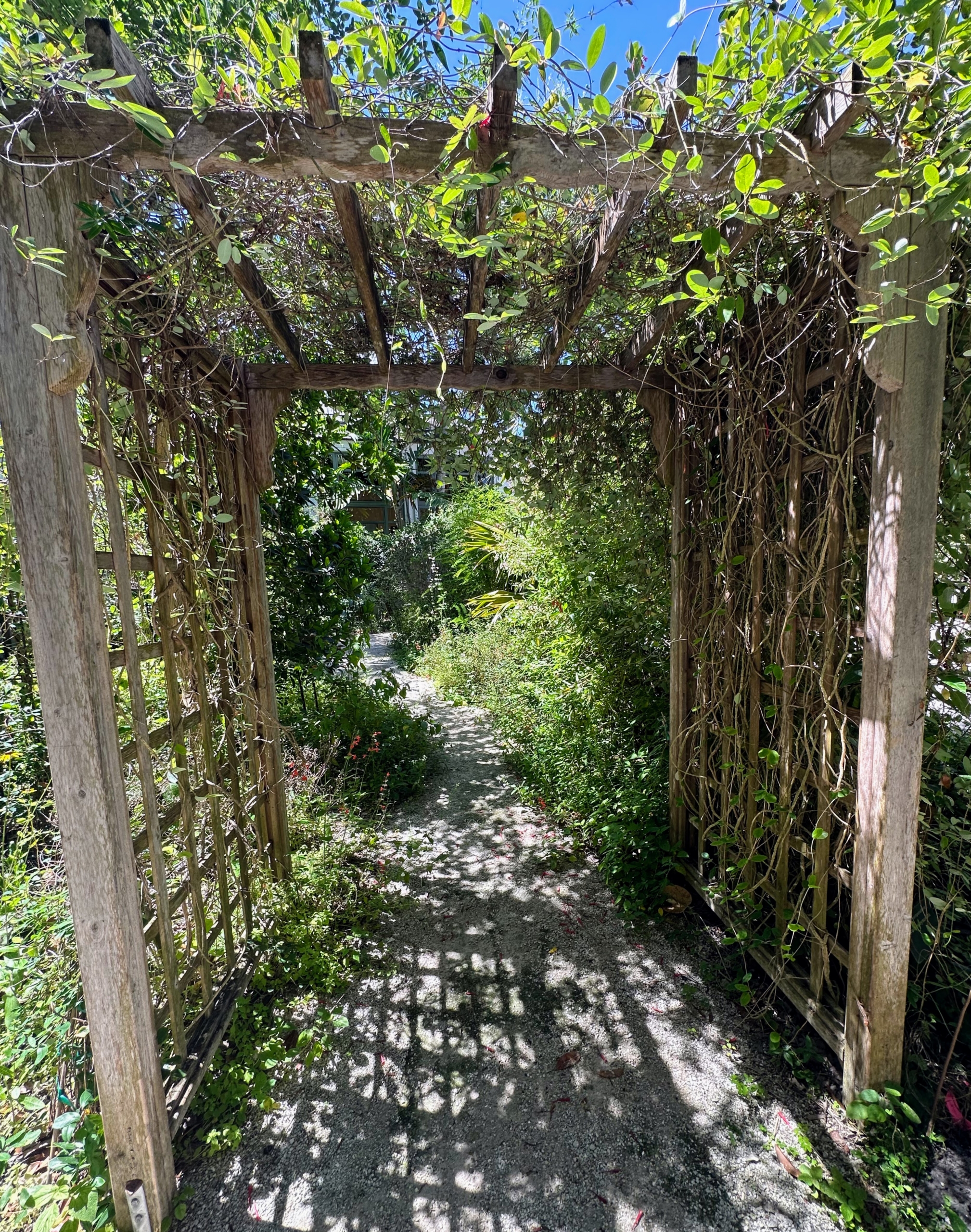
The Ann Norton Pollinator Garden is a haven that protects and supports a wide variety of birds, pollinators, beneficial insects and butterflies by providing food, water and shelter in a chemical-free space all year long.
Here I am after entering the Pollinator Garden. @dipalipatwa
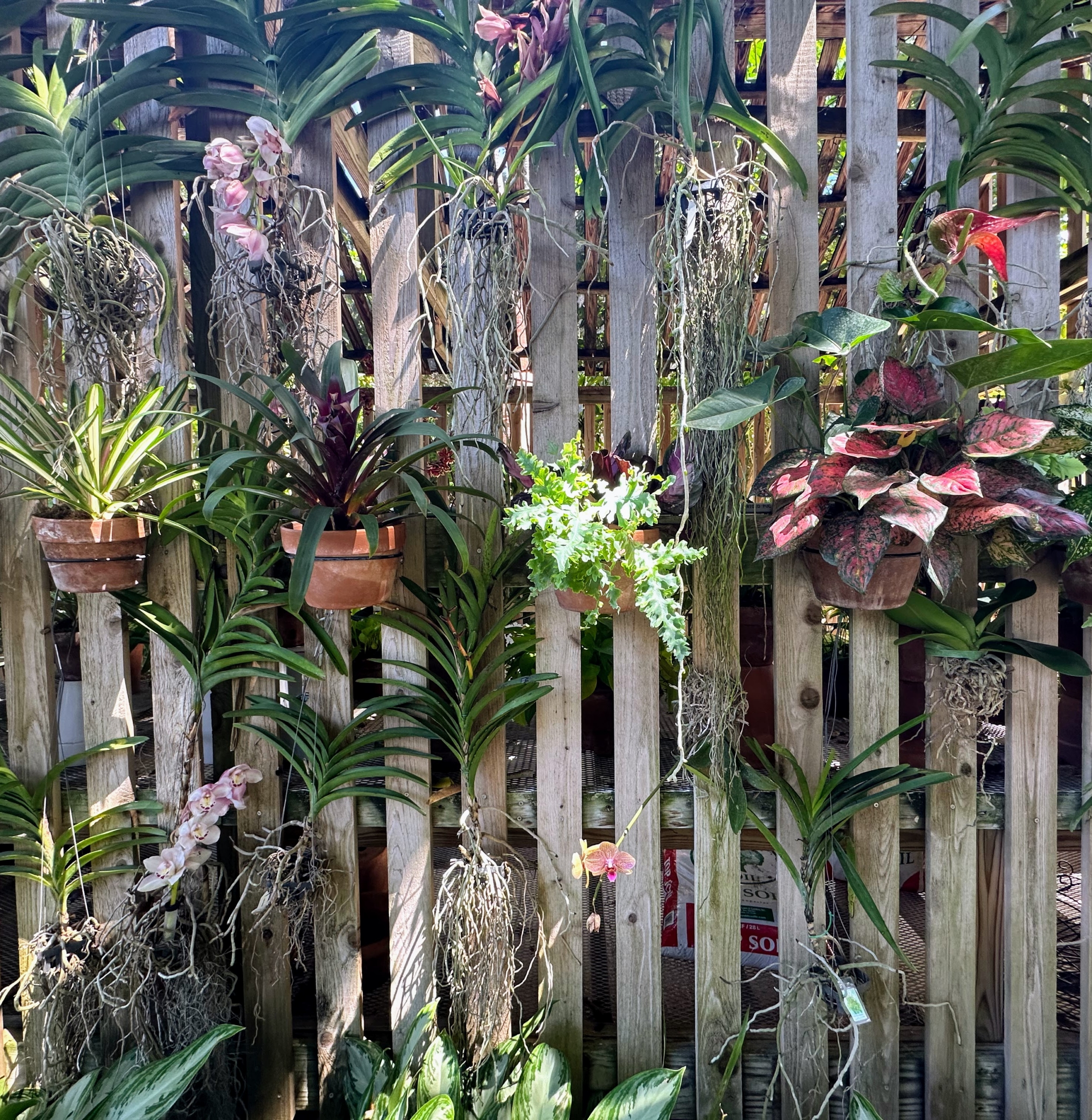
There were many plants within the garden to attract pollinators – both in the ground and potted along the fence.
This very quiet courtyard allows guests to take a moment and just be.
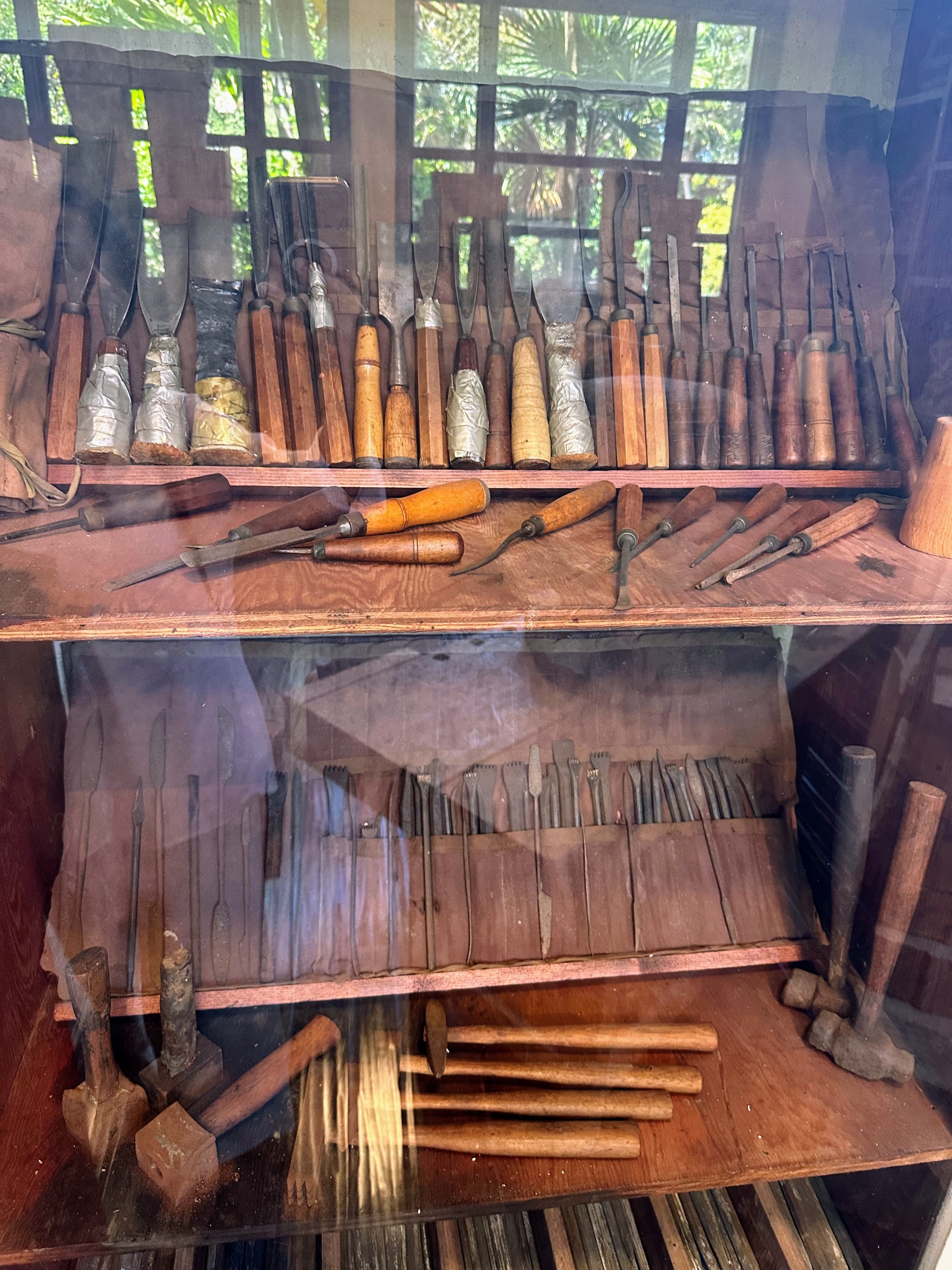
Ann drew from the time she was five-years old and received her first sculpting tool at age eight. The studio contains many of Ann’s chisels, hammers, and other tools, including some of those given to her as a child by her Aunt Rose.
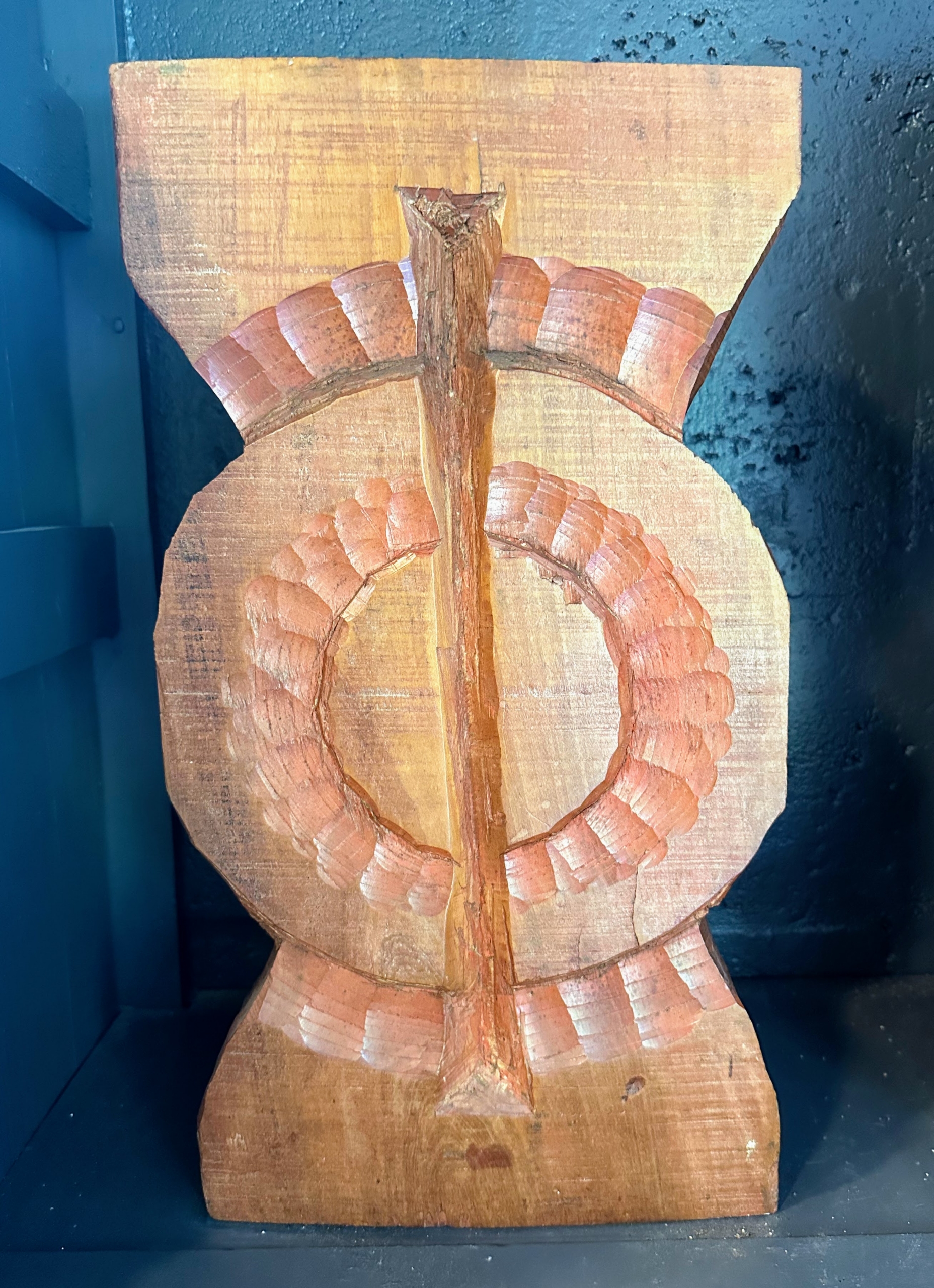
Ann Norton’s wooden sculptures are characterized by their monolithic, vertical forms and their deep connection to the natural world.
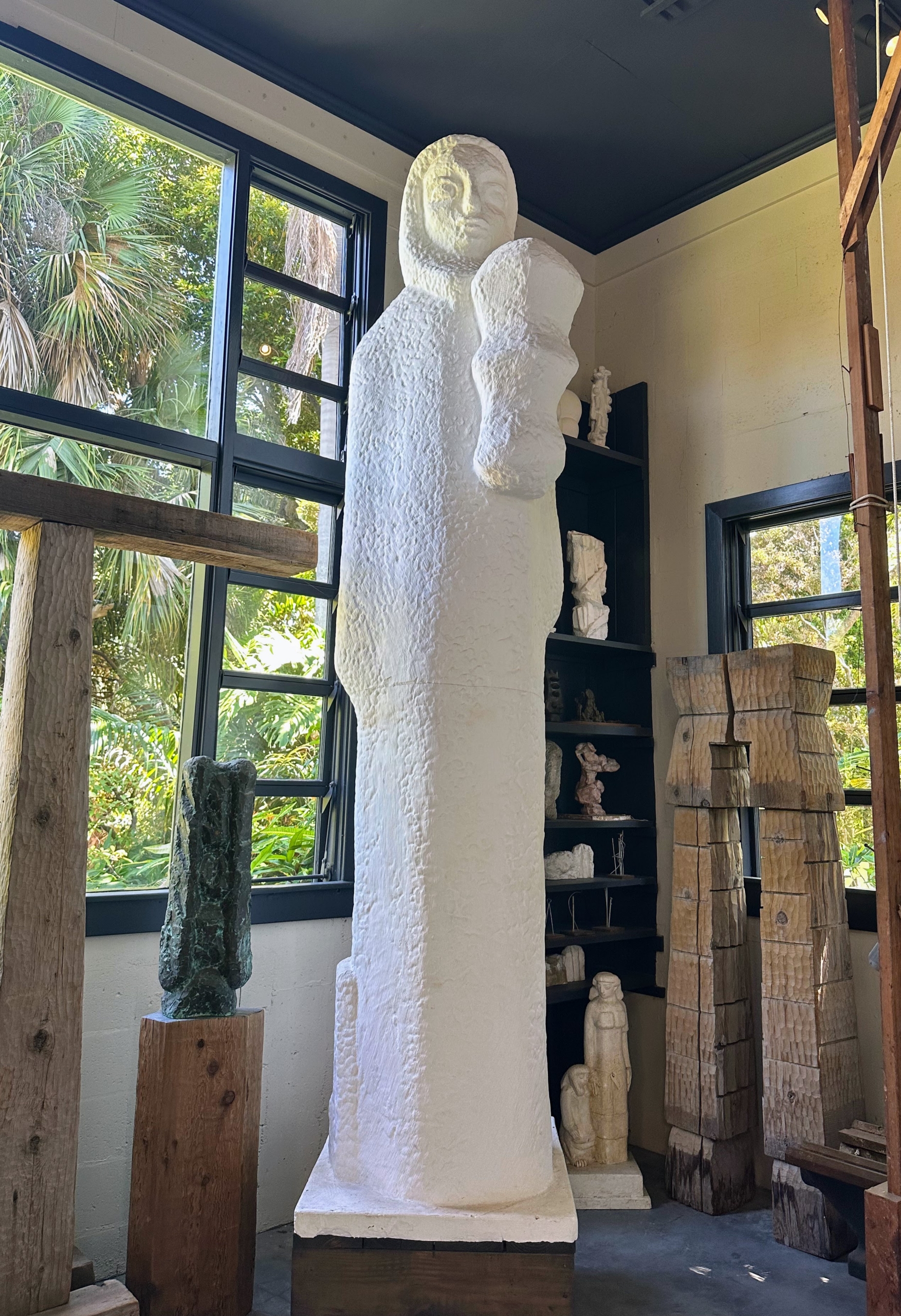
Created over four decades, Ann Norton’s works in bronze, stone and wood inhabit the studio like a forest alluring the visitor to explore and feel her artistic spirit. Guests are greeted by larger than life models, armatures, and studies that evolved into her monumental works in granite and brick found throughout the gardens. This striking white sculpture of a mother and child stands quietly, embodying both strength and tenderness.
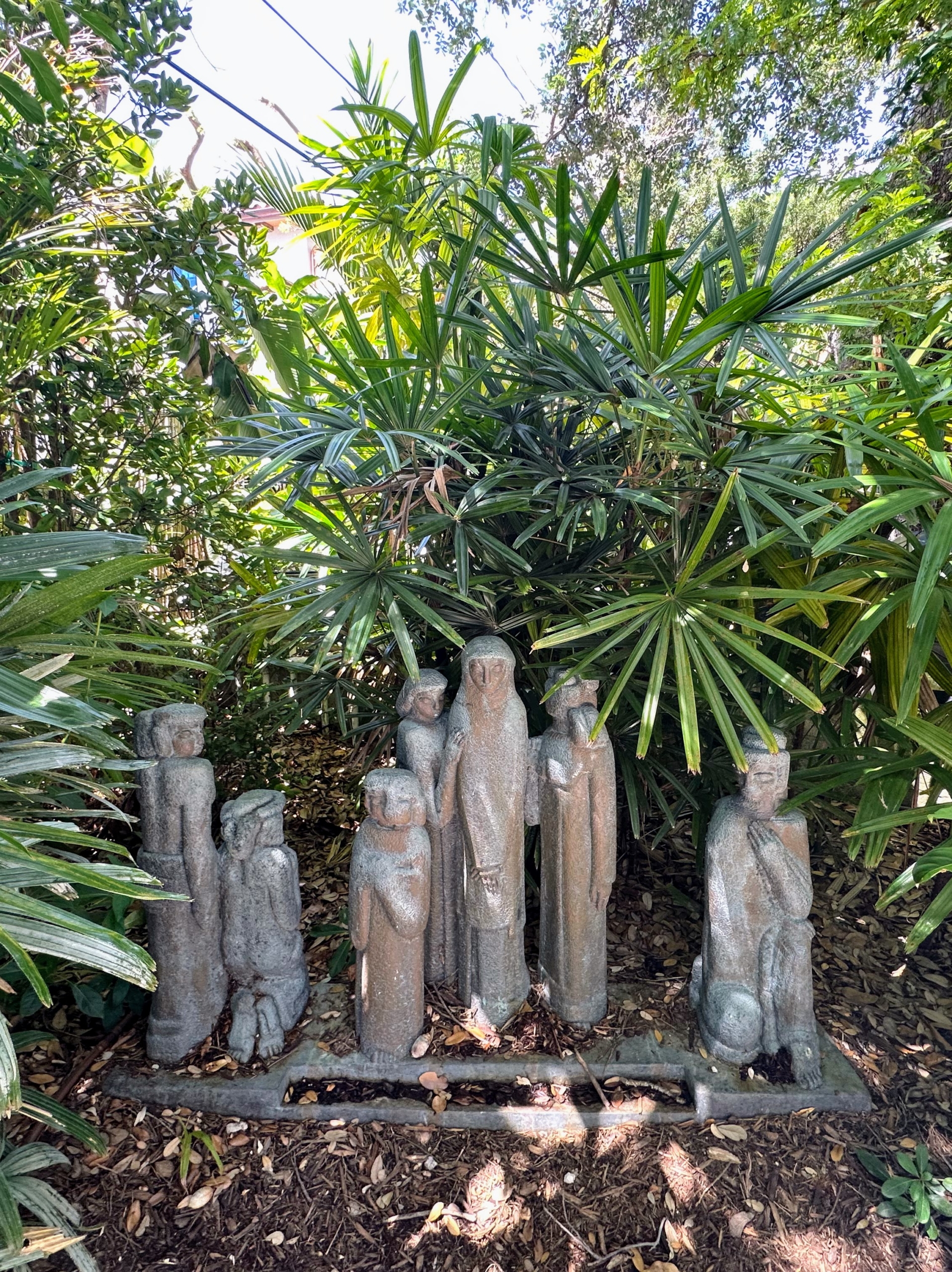
This smaller grouping of stone sculptures is a plaster study for Ann Norton’s larger monumental work, “Seven Beings,” (1965).
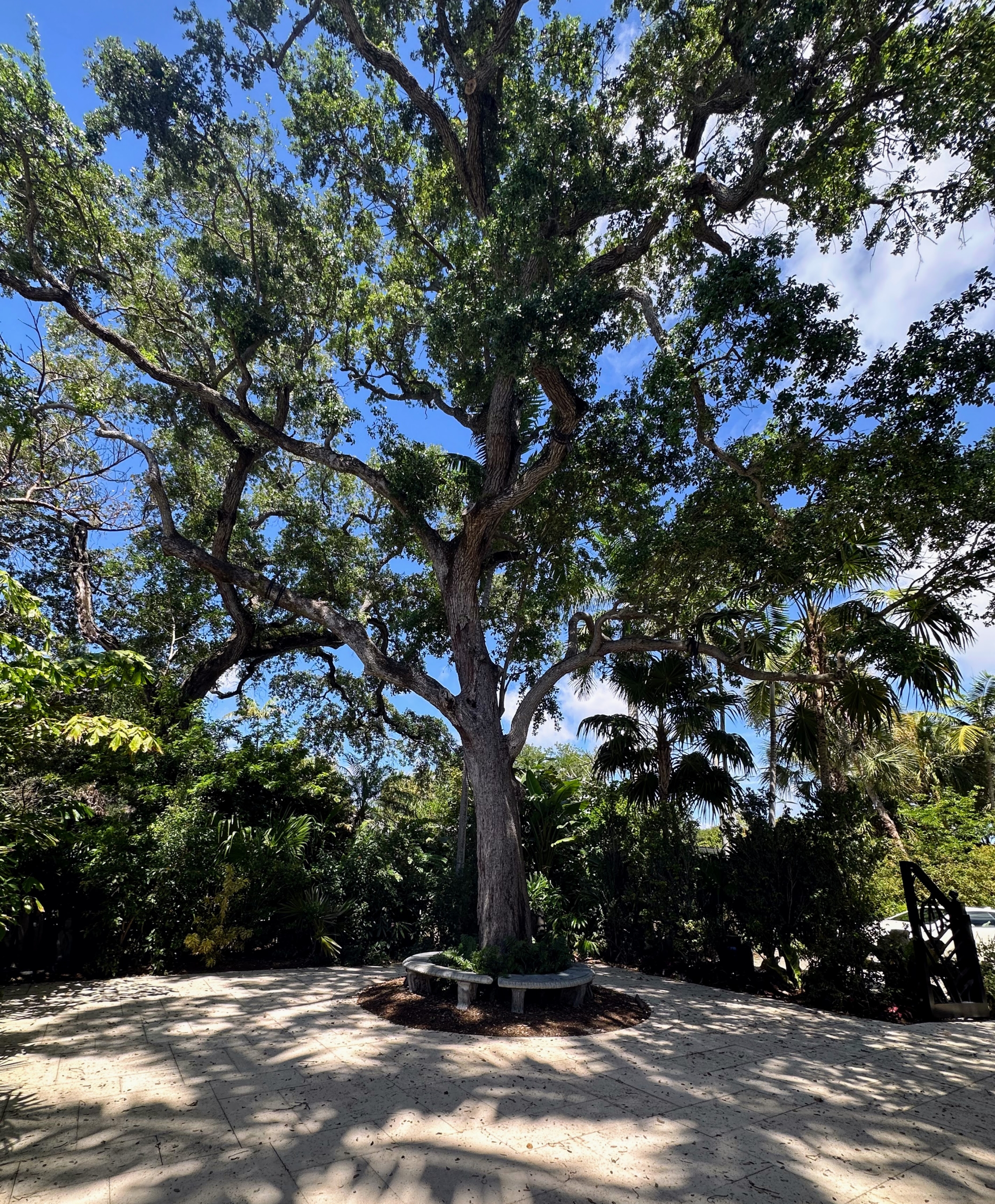
Within the two-acre property, there are many places to meditate and enjoy the quiet scenery, such as this courtyard. Ann transformed her home into a working environment where art could evolve alongside nature. The Studio and Gardens are open to the public and have inspired thousands of visitors – nature lovers, art enthusiasts, environmentalists, families and students. Visit if you can.




 Martha Pins


 Martha Tweets

