

Caring for the Herbaceous Peonies in Spring
The gardens at my Bedford, New York farm are changing every single day.
One of the most anticipated sights on the farm is my herbaceous peony garden in full bloom. No garden is complete without these beautiful plants, which show off their large, imposing flowers in May and June. True perennials, herbaceous peonies can live for 100-years, becoming more impressive over time. This week, my gardeners and outdoor grounds crew tended the beds - adding food, mulch and compost, and then carefully staking all the rows of plants so the massive flower heads don’t droop to the ground.
Enjoy these photos.
-

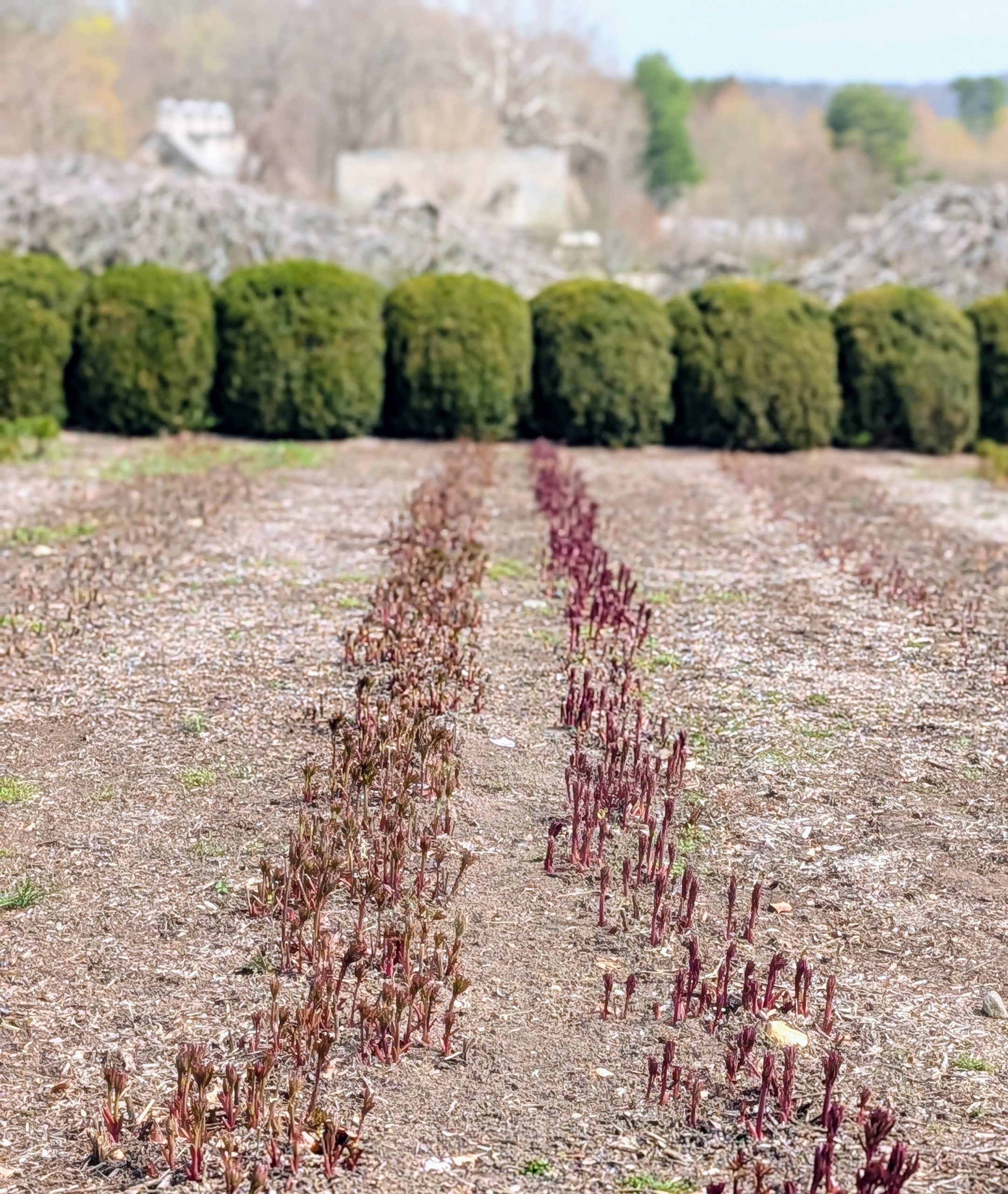
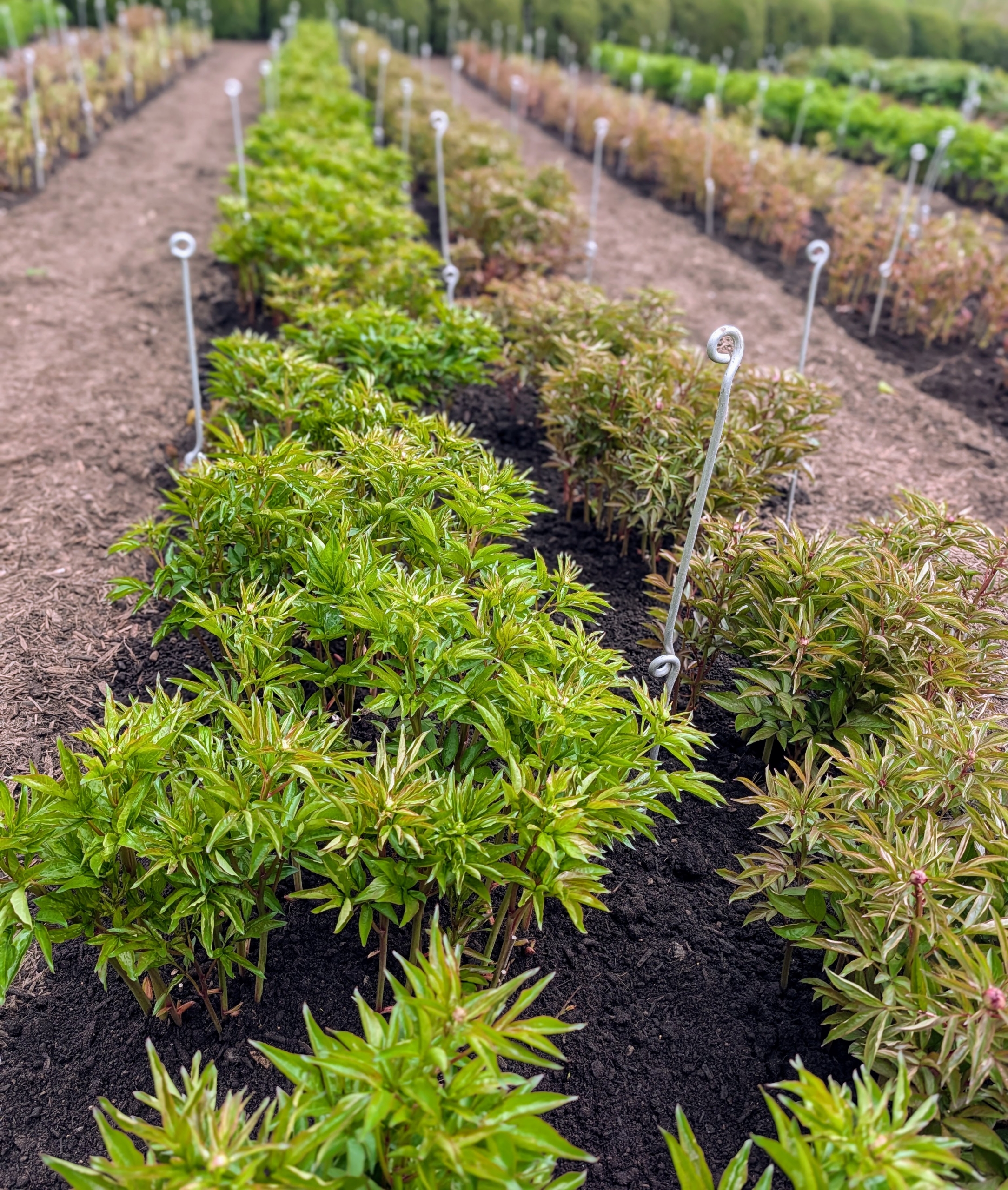
- In April, the herbaceous peonies begin emerging from the ground, but they grow very quickly and need to be supported to protect the large heavy flowers. My peony garden is planted with 11 double rows of 22 herbaceous peony plants, 44 in each row of the same variety, all surrounded by a hedge of rounded boxwood shrubs, making it a focal point on the property.
-
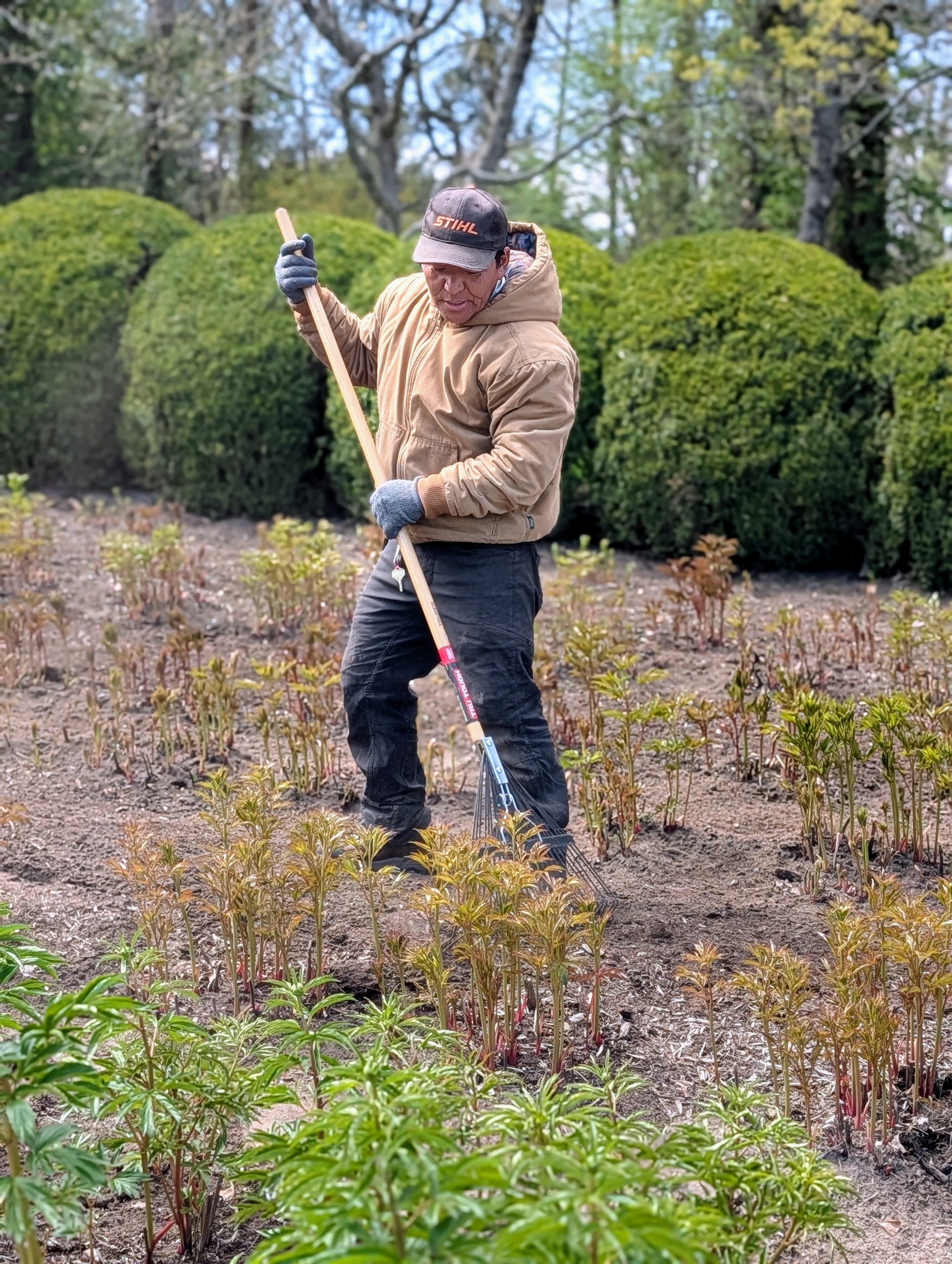
- Phurba begins by cleaning and weeding the beds. This is still easy to do since the plants are small.
-
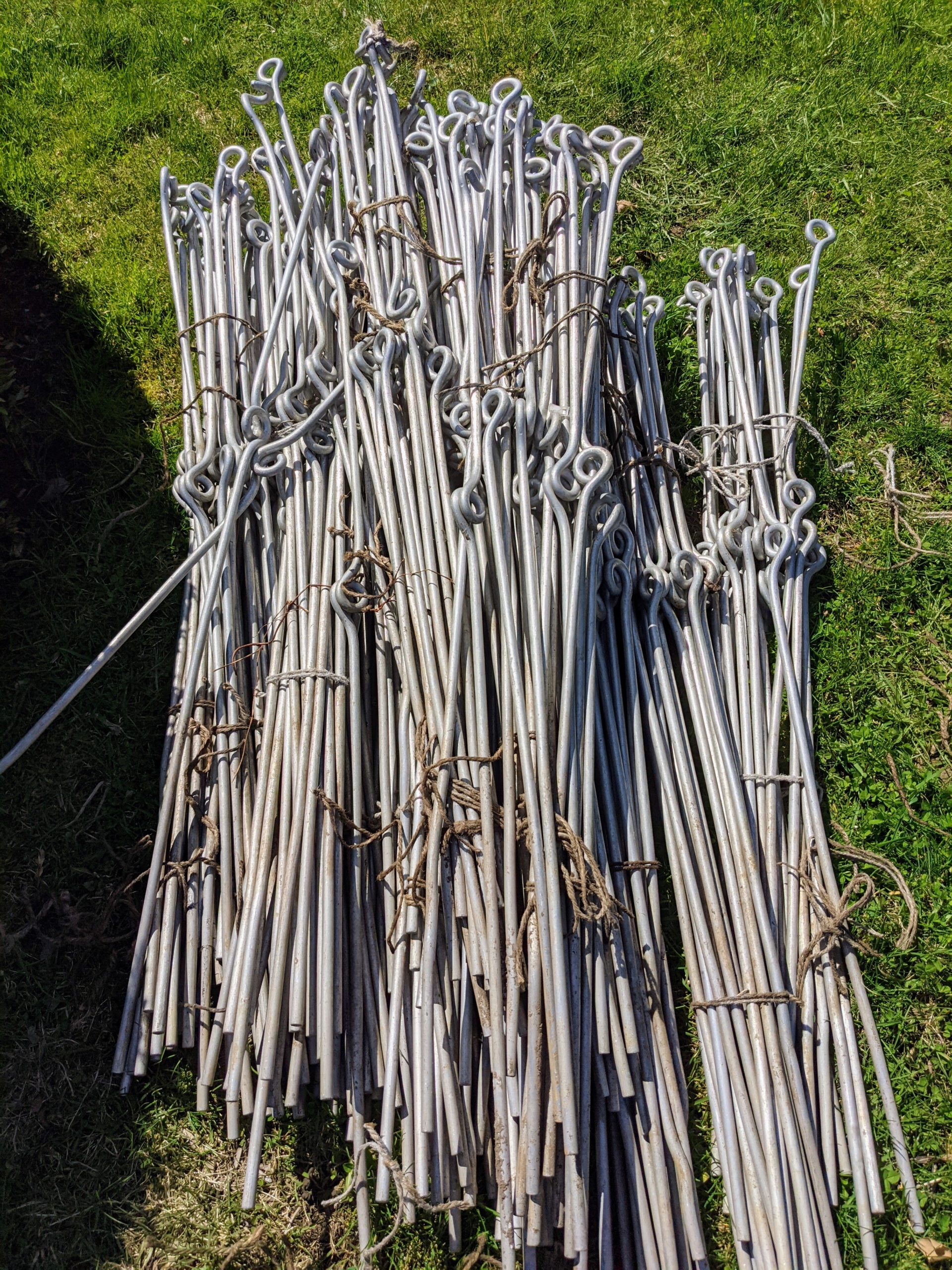
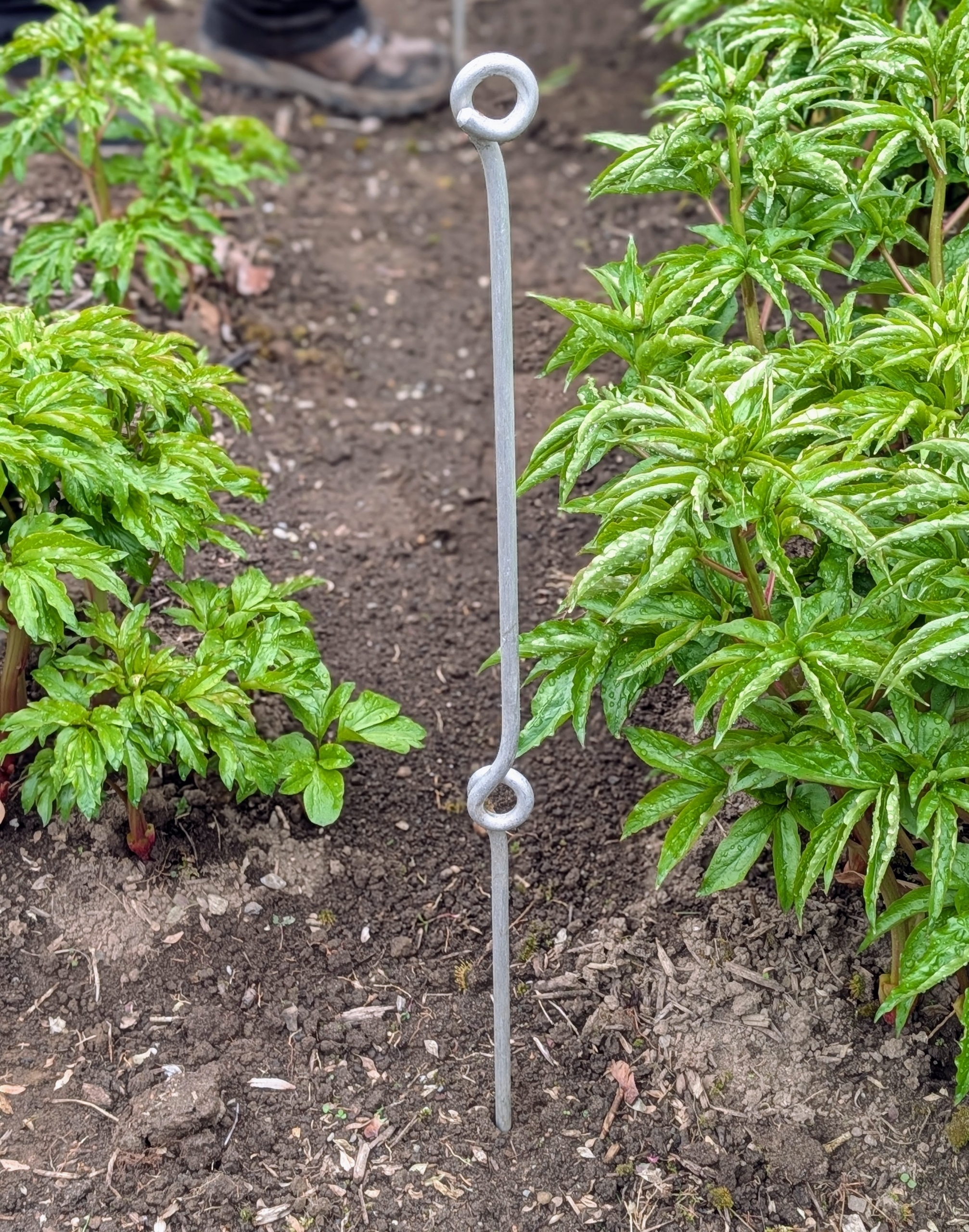
- Instead of rings that are available at many garden centers, I use these metal stakes I designed myself for my own farm.
-
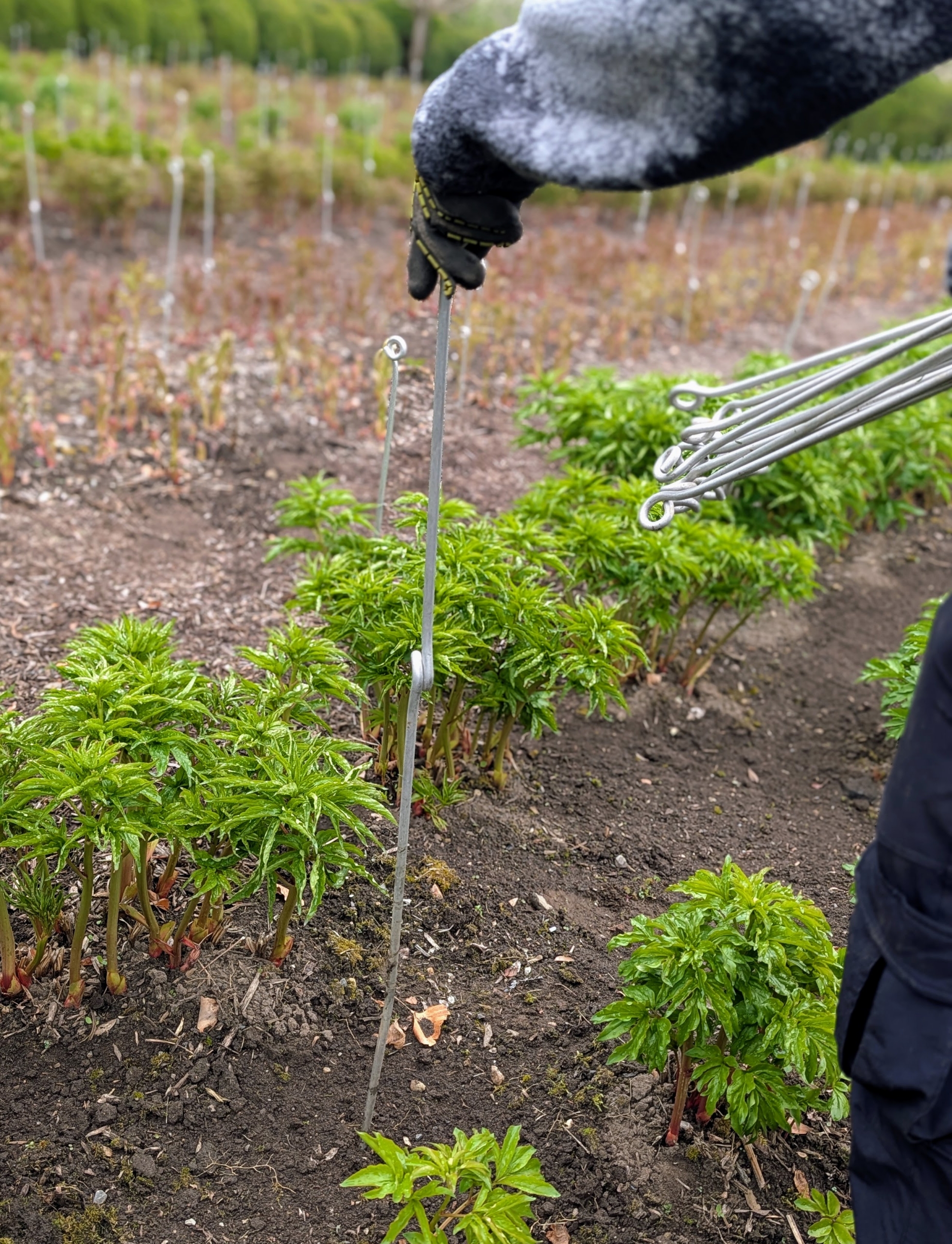
- Matthew starts by inserting a stake every four-feet up and down both sides of each row.
-
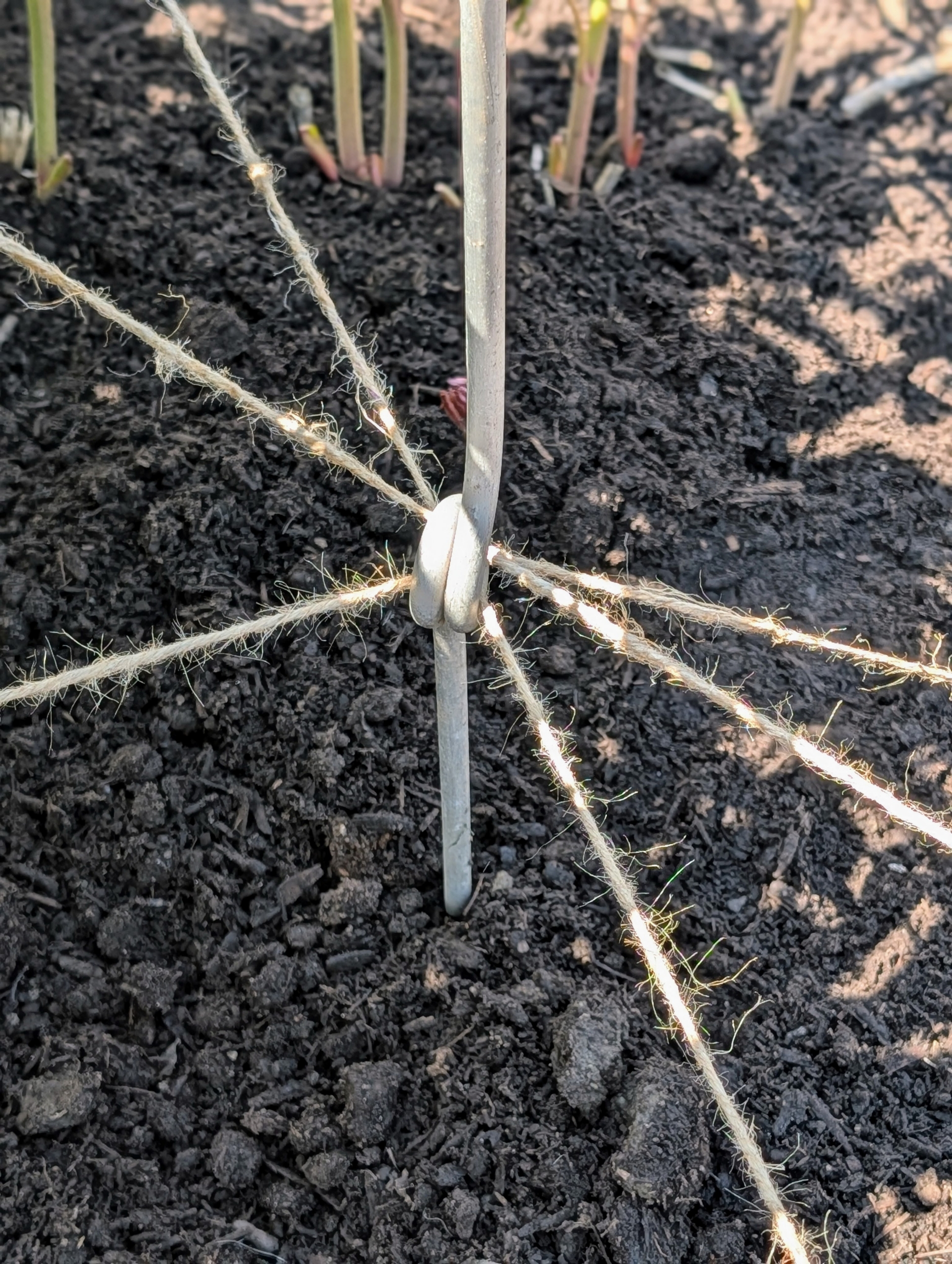
- Each metal support has two eyes, one at the top and one in the middle. The stakes are about three feet tall.
-
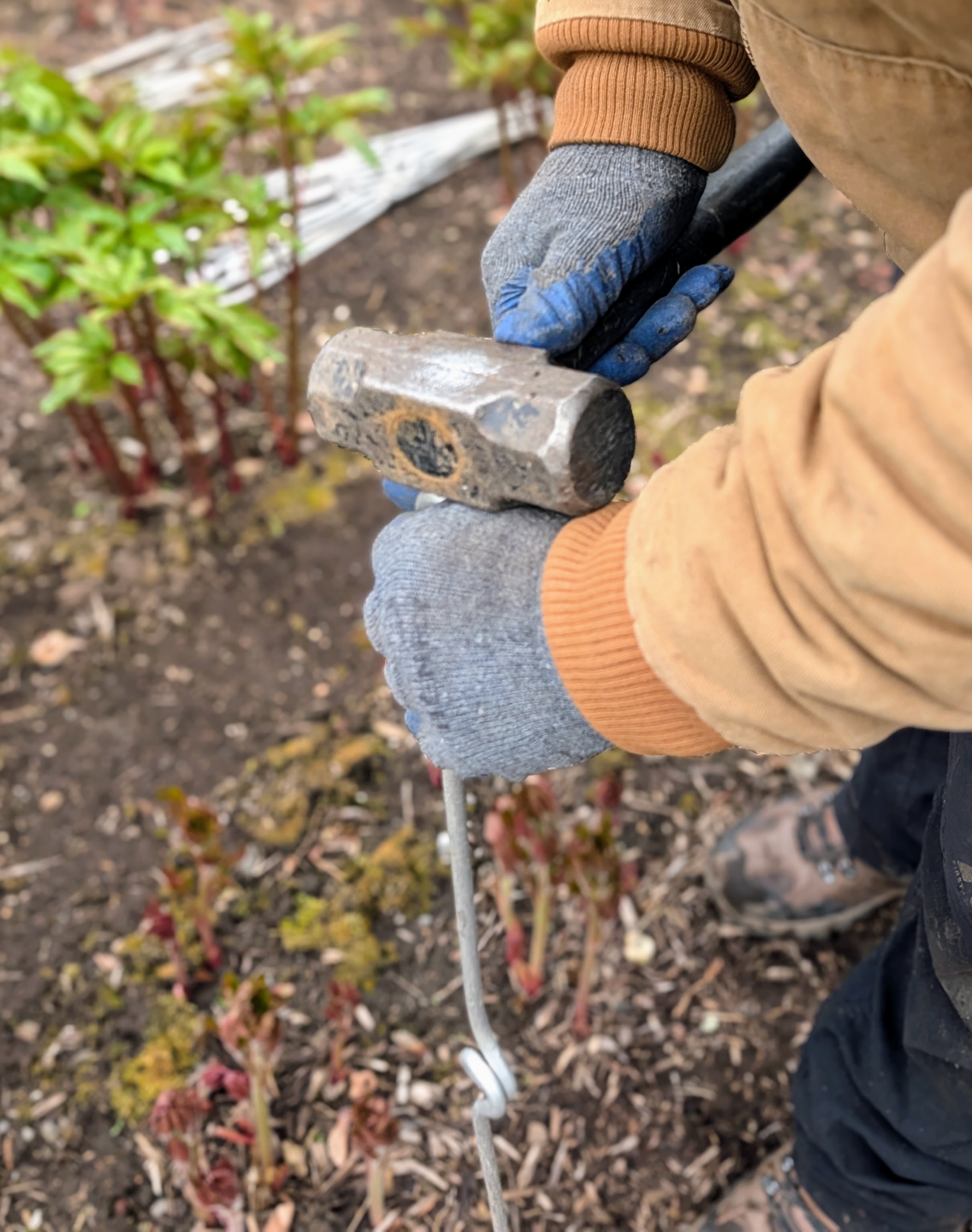
- Once they are in position, they are pounded down several inches deep into the ground.
-
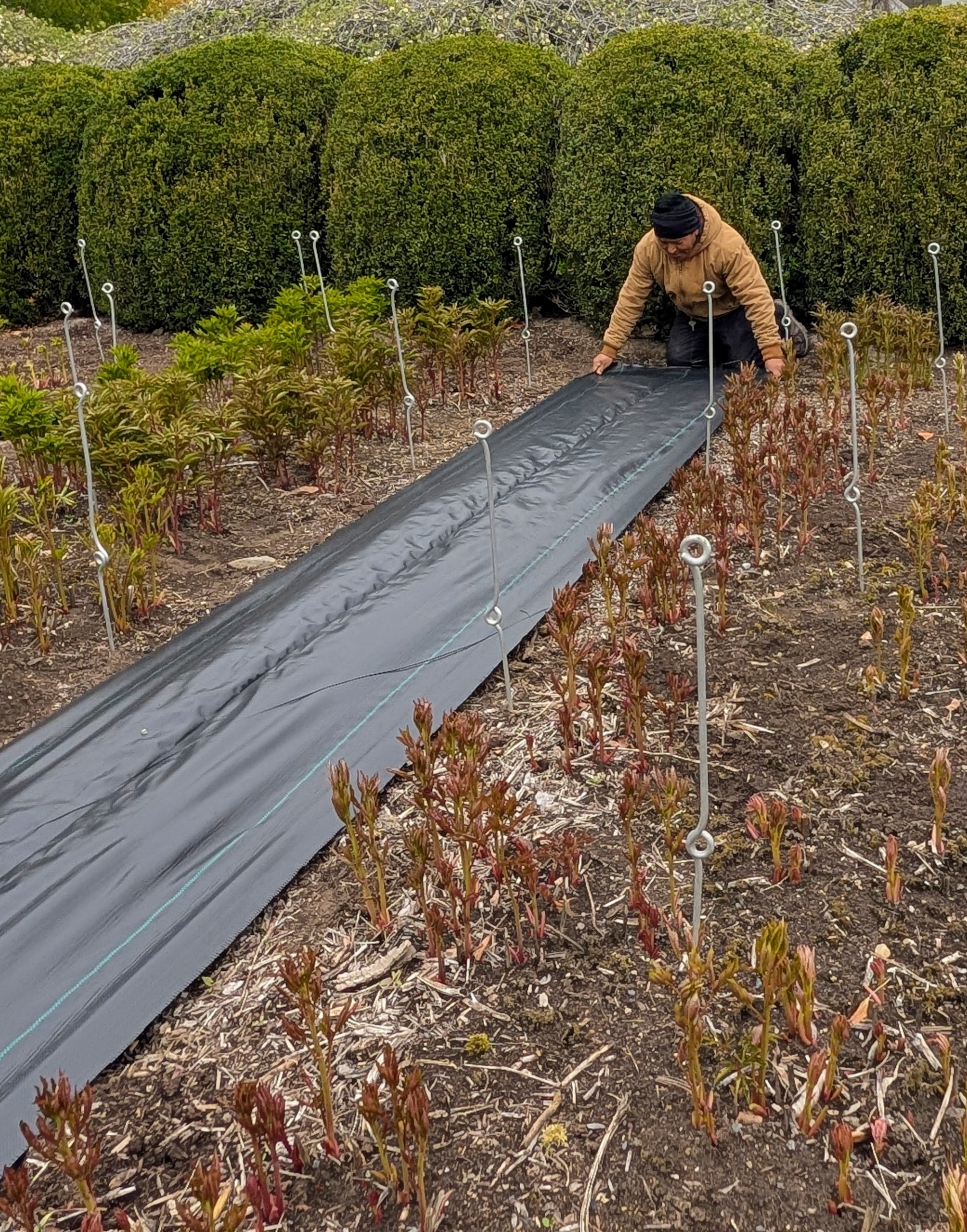
- This year, I decided to line all the footpaths with an industrial strength weed cloth to cut down on those pesky weeds. Weed cloth is available in a variety of widths, but the fabric can also be cut to fit if needed.
-
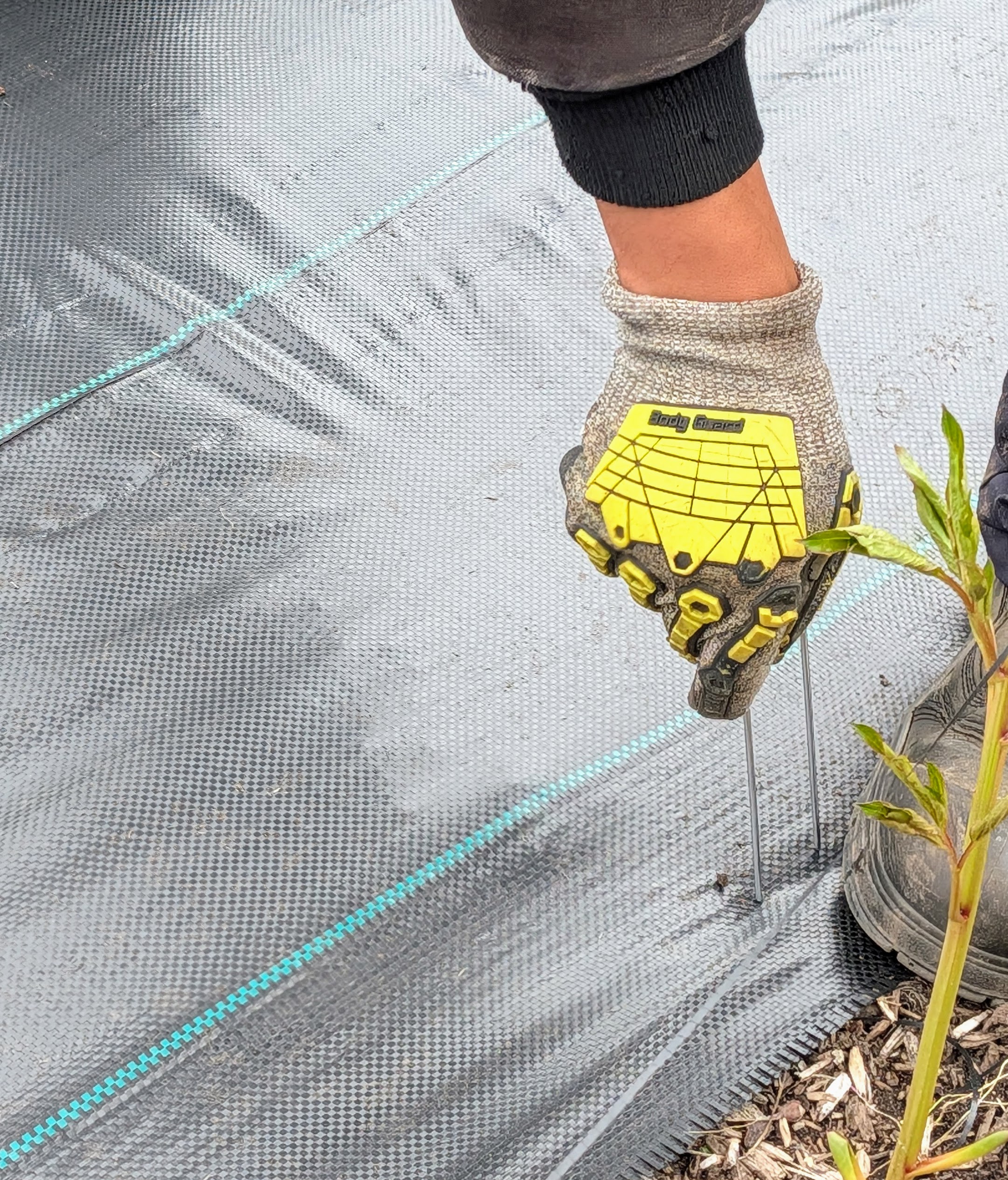
- As the weed cloth is unrolled and positioned in the space, Matthew inserts a garden staple. These are placed every couple of feet on the edges and in the center to ensure the fabric stays in place.
-
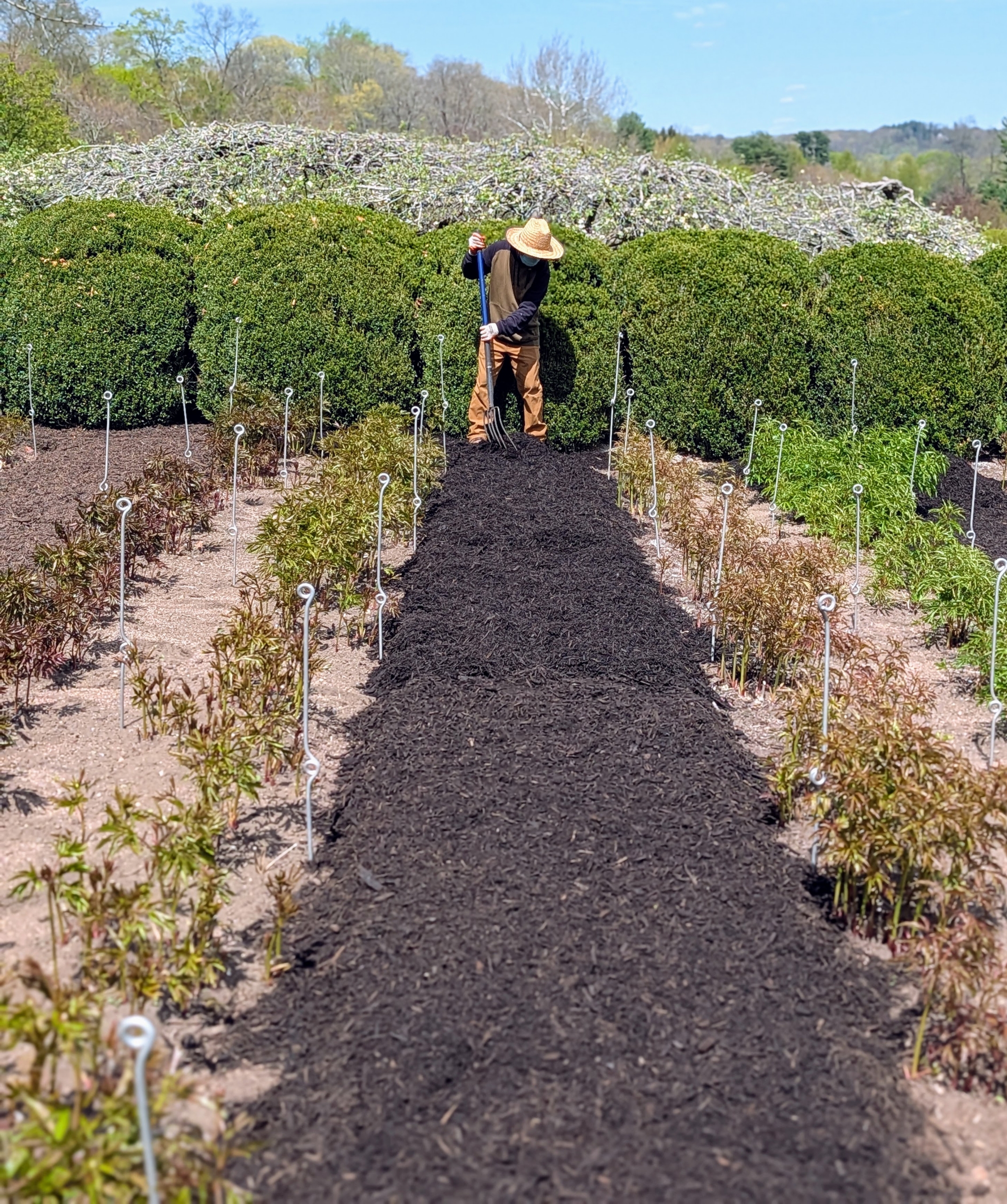
- After the weed cloth is put down, wheelbarrows of mulch are brought into the garden.
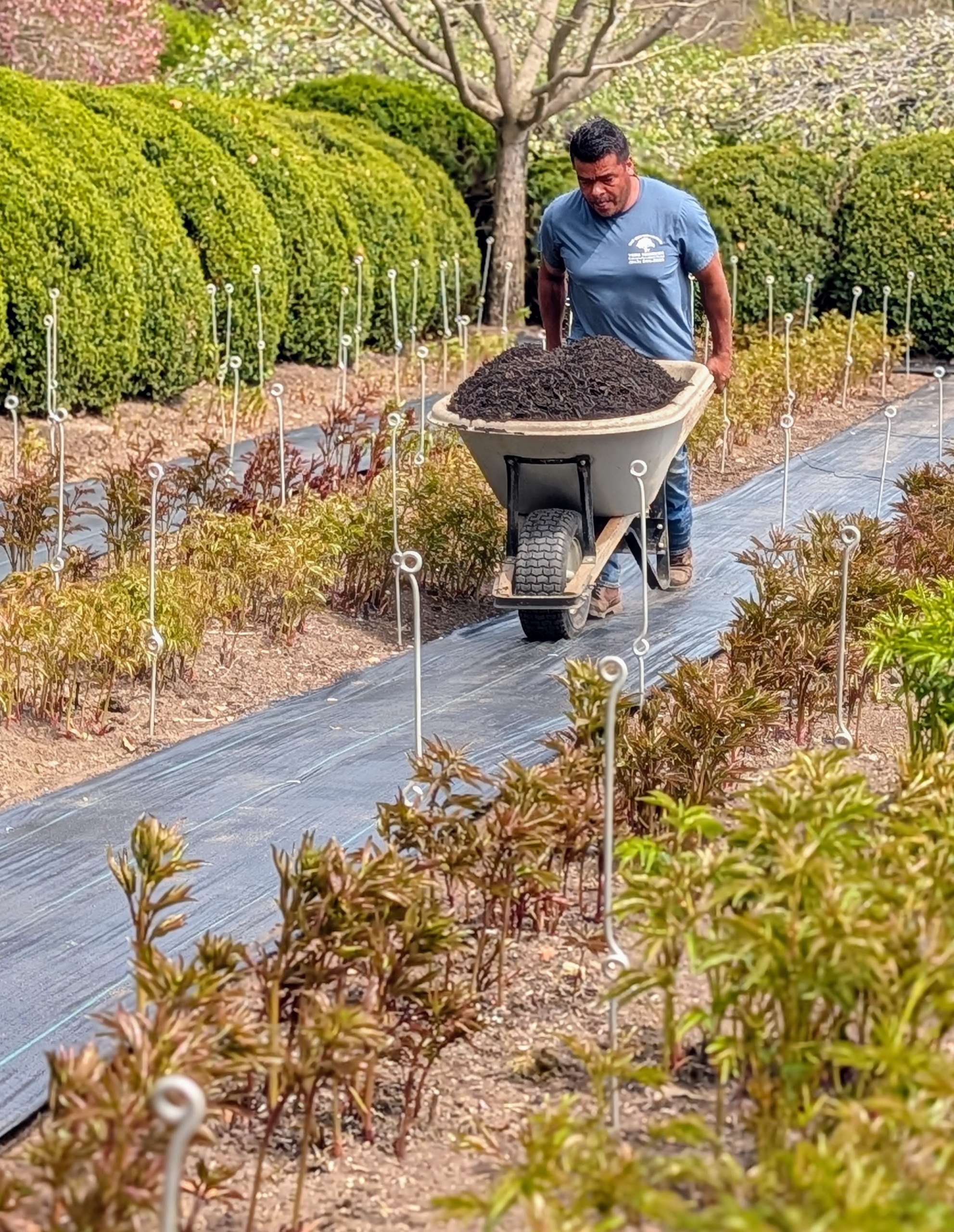
-
- Arnold drops manageable mounds of mulch in each row.
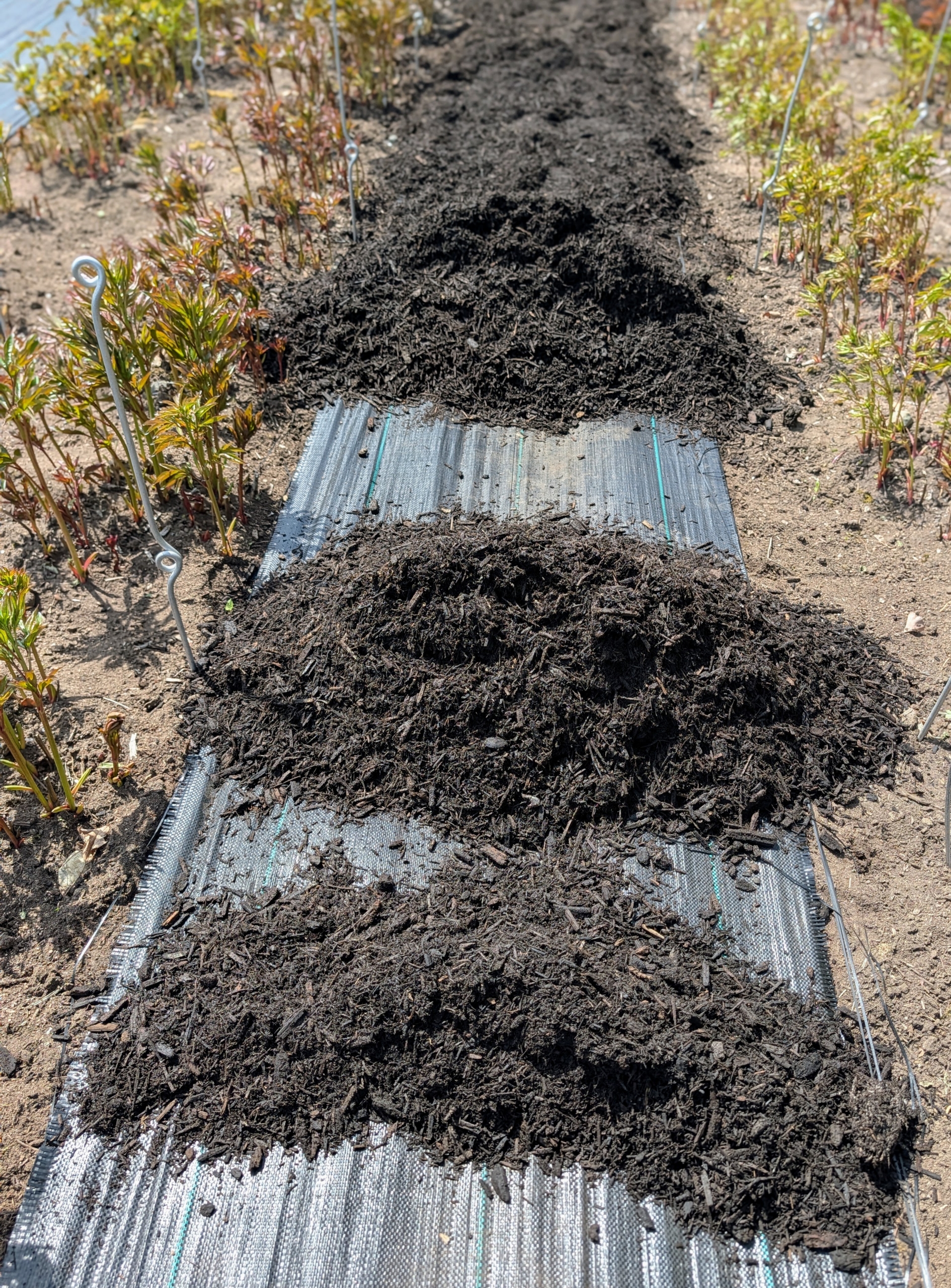
-
- Chhiring then spreads an even layer over the weed cloth.
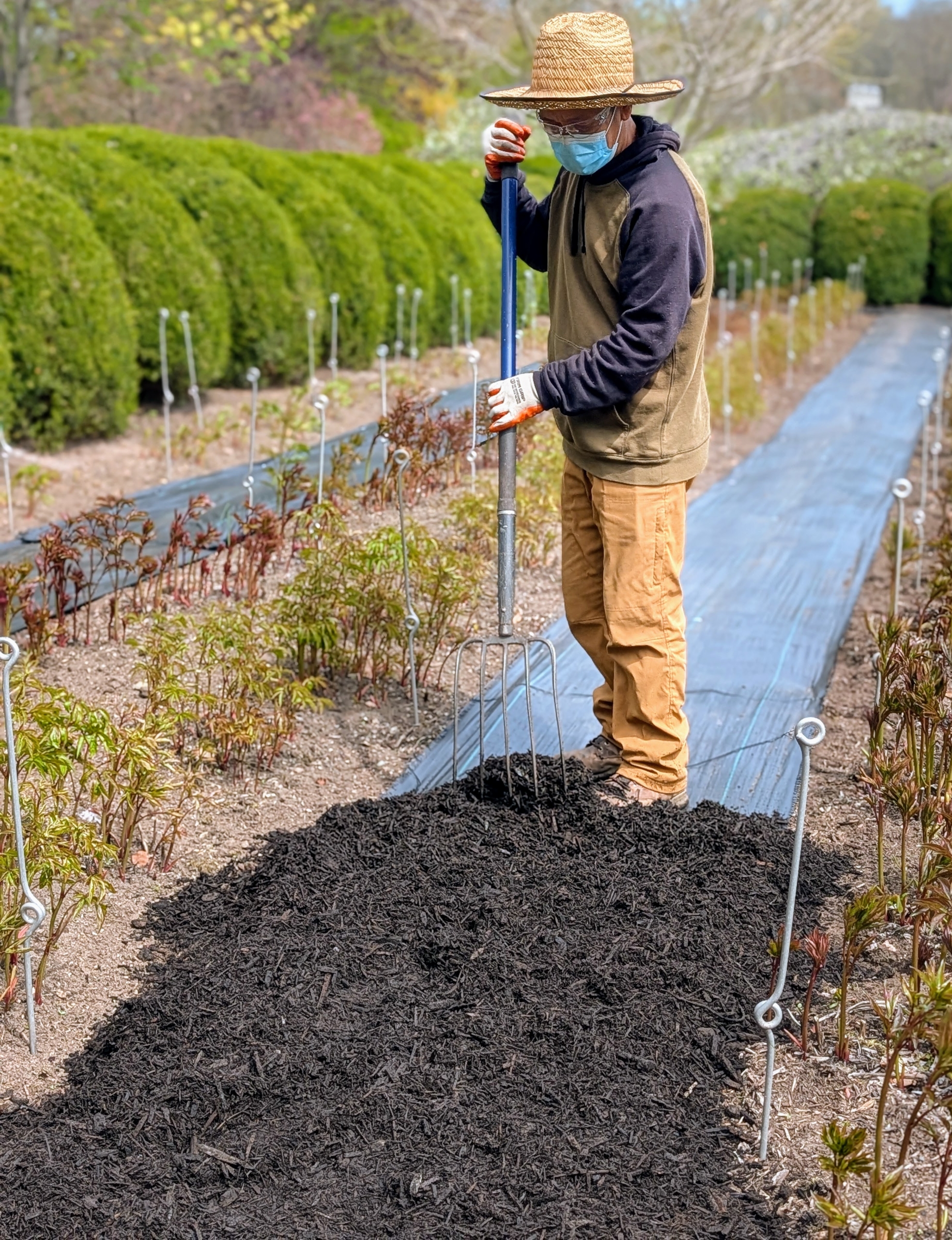
-
- Meanwhile, Ryan feeds the peonies with azomite. Azomite is a natural, broad-spectrum mineral powder mined from volcanic ash. It contains more than 60 essential elements, including magnesium, calcium, potassium, silicon, and many micronutrients. It helps remineralize the soil for optimal growth, flowering, and resilience.
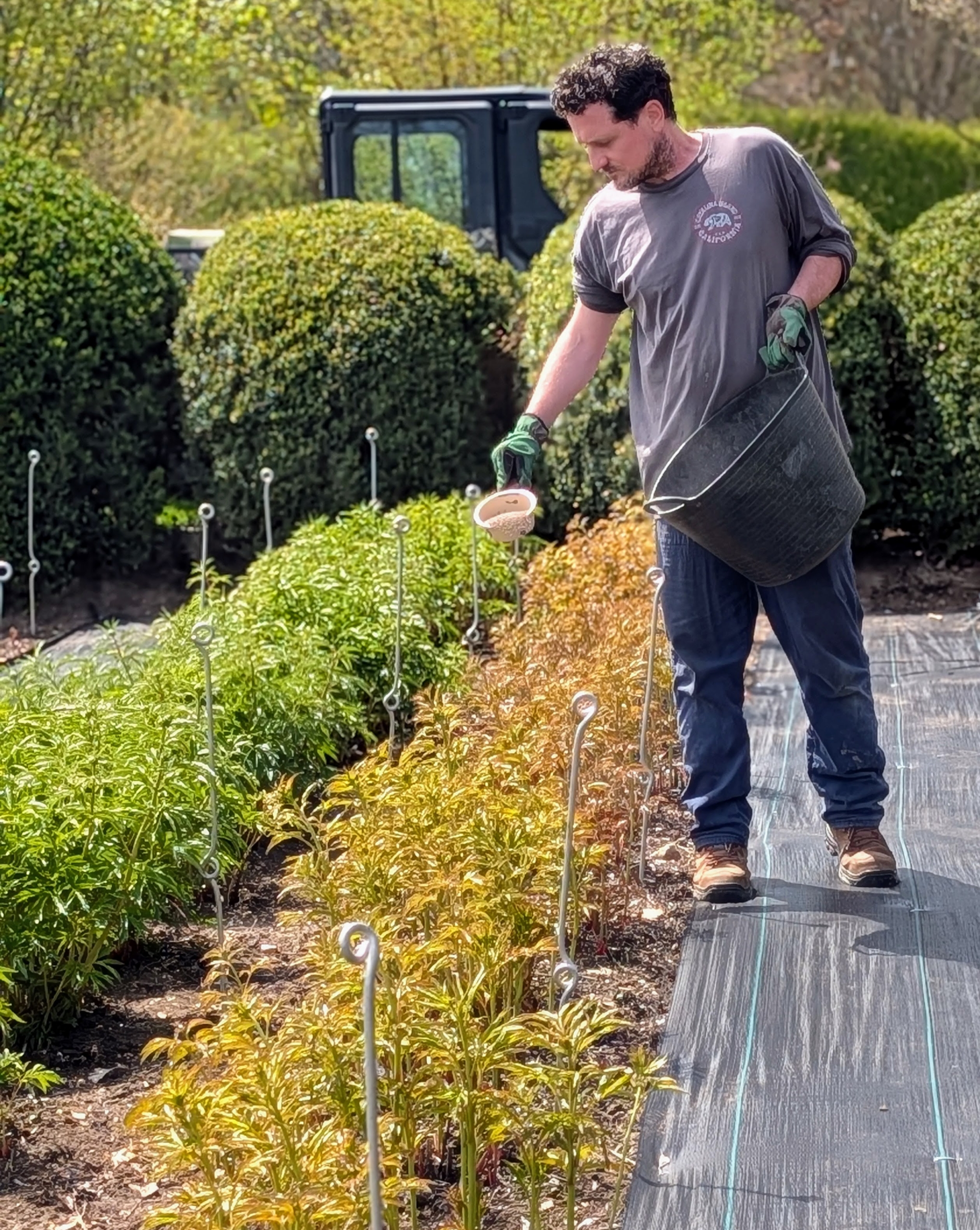
-
- The paths look so wonderful topped with mulch.
-
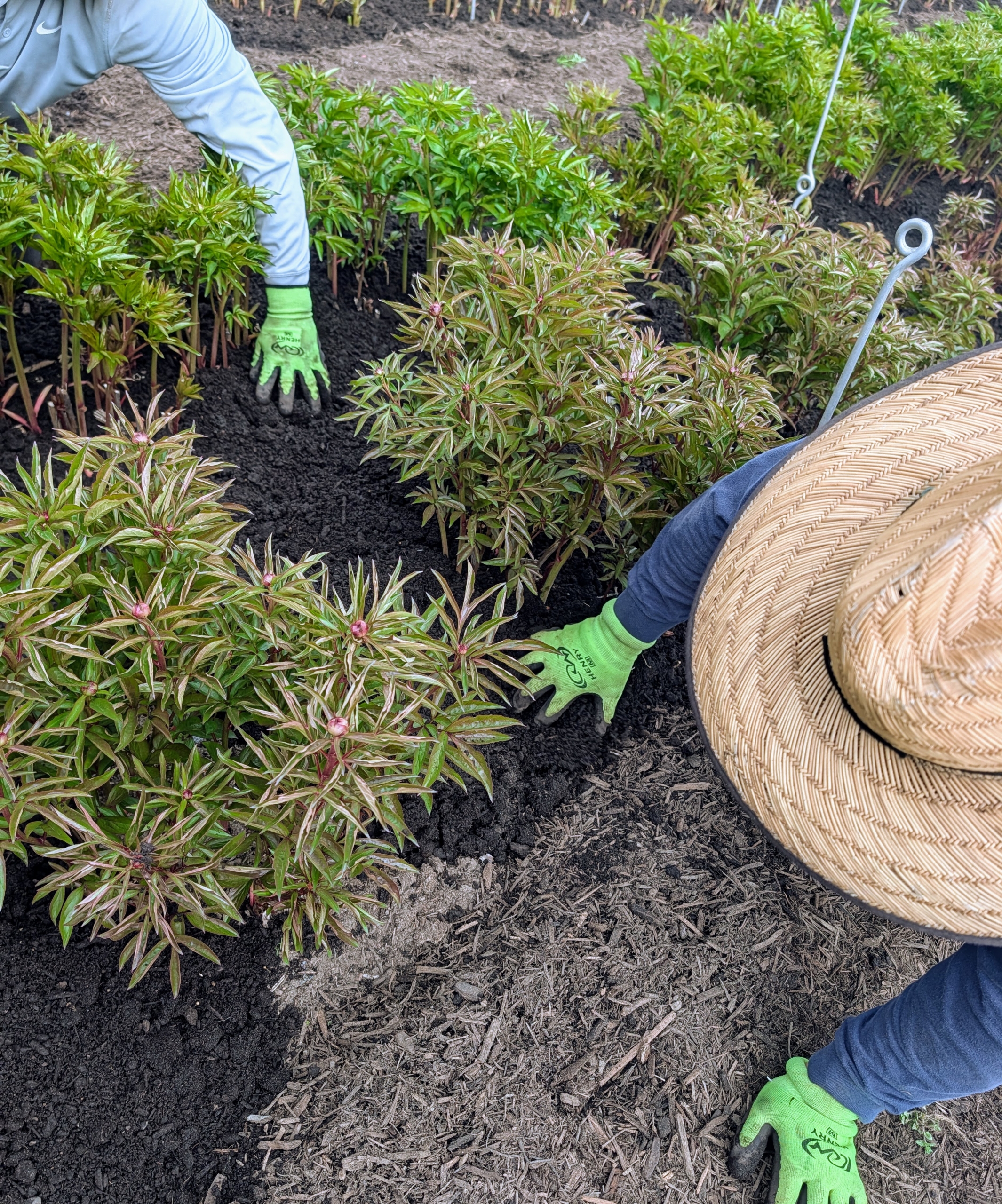
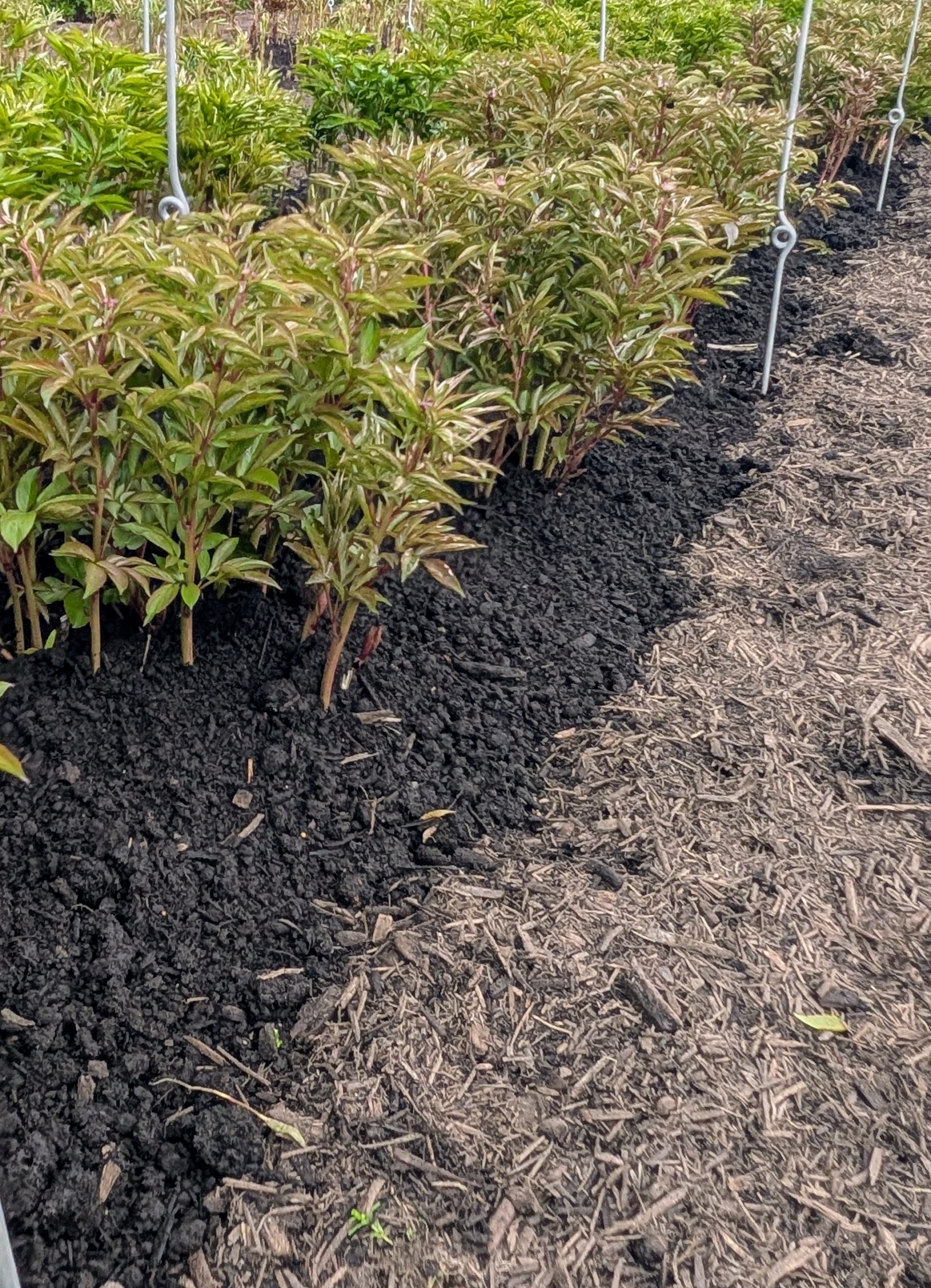
- The next step is to cover the beds with compost. I make my own mulch and compost right here at my farm.
-
- Do you know the difference between the two? Compost, which is decomposed organic matter such as horse manure and leaf mold, enriches the soil with nutrients, while mulch, which is mainly wood chips, protects the soil surface, conserves moisture, and hopefully keeps weeds away.
-
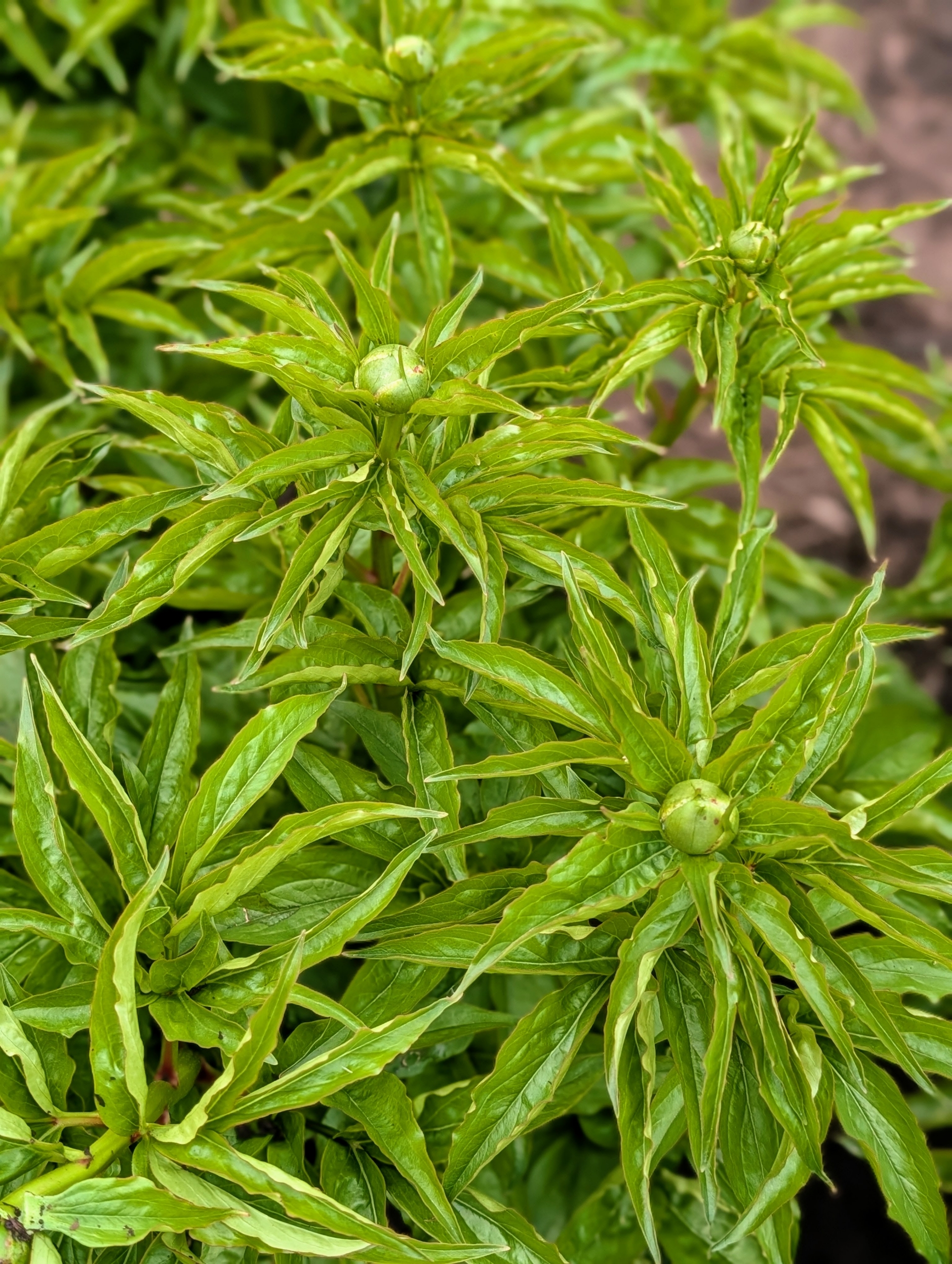
- Like clockwork, the buds are now forming.
-
- Right now, the tallest plants are still just about a foot to a foot and a half tall – a good time for staking.
-
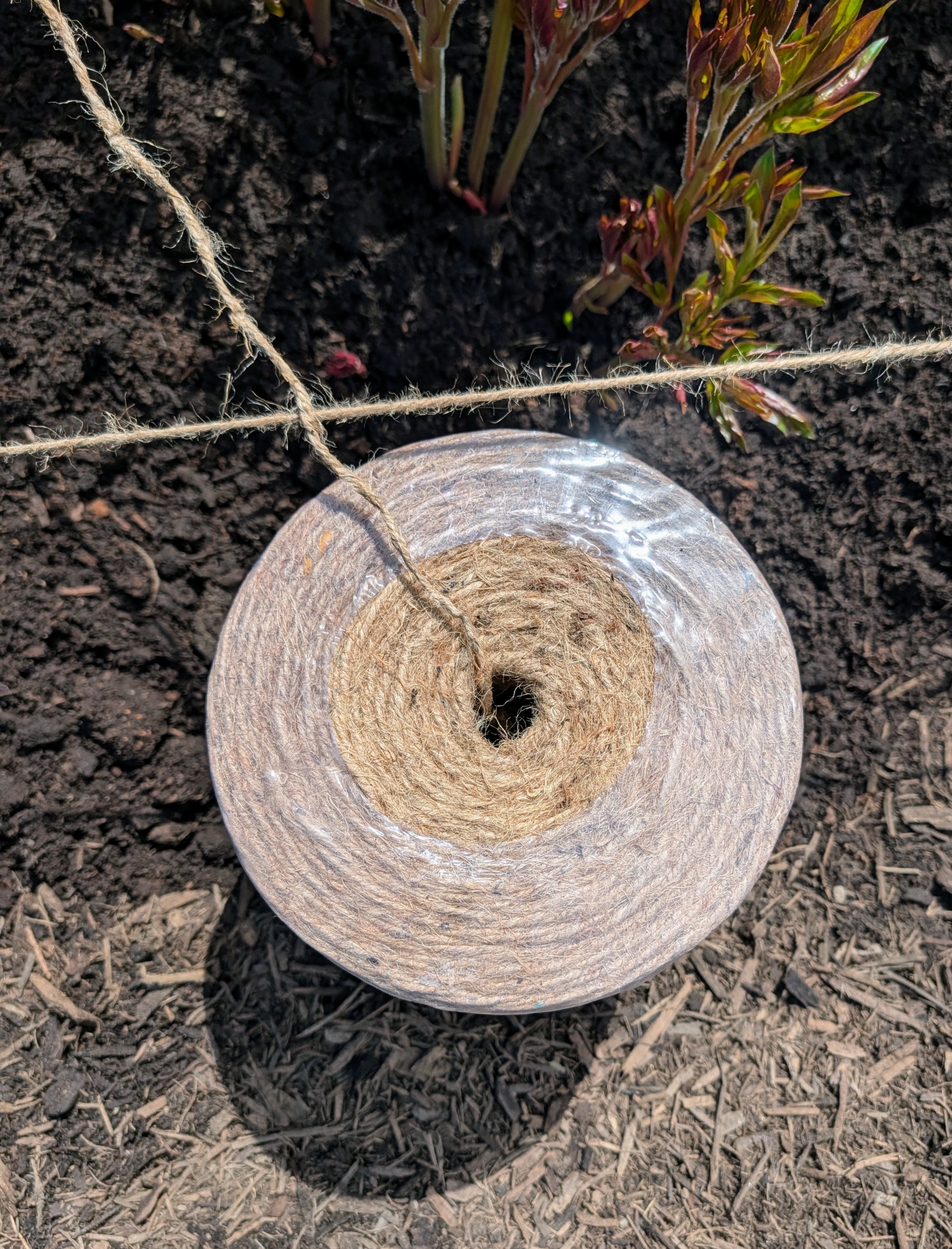
- We use a natural jute twine for this project and for many gardening projects around the farm. Twine like this is available in large spools online and in some specialty garden supply shops.
-
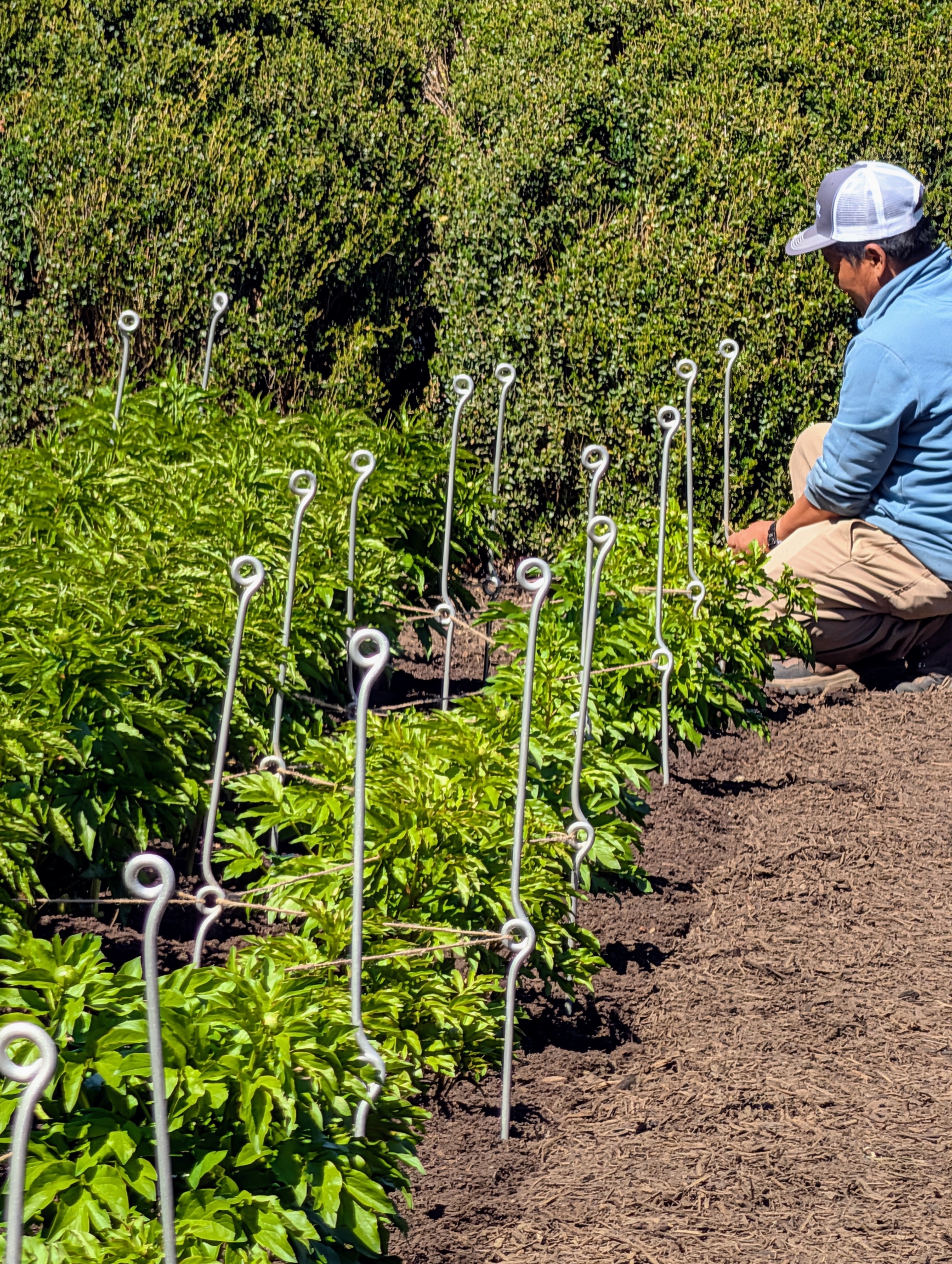
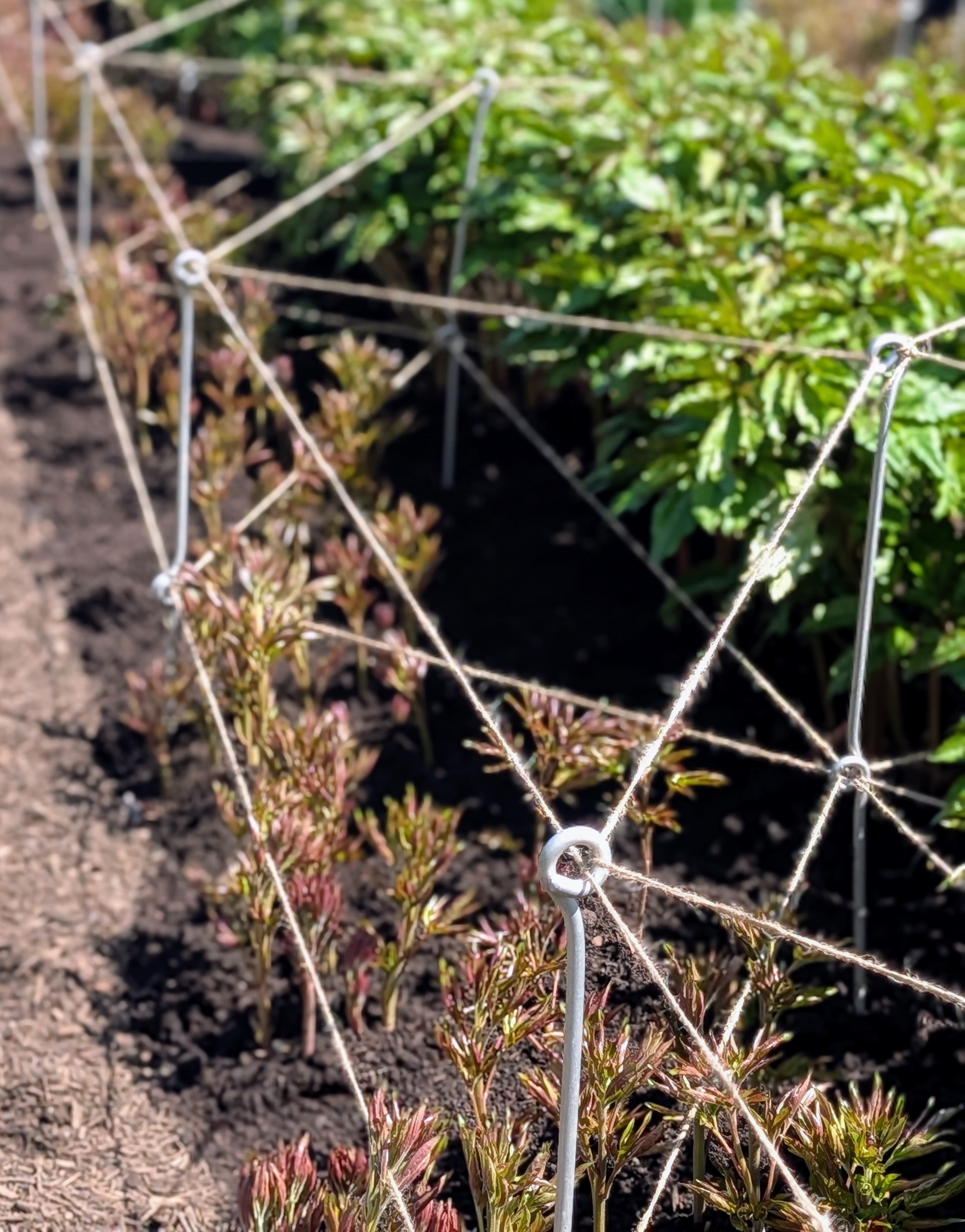
- Phurba begins lacing twine through the middle stake eyes in a zigzag pattern all the way down the row.
-
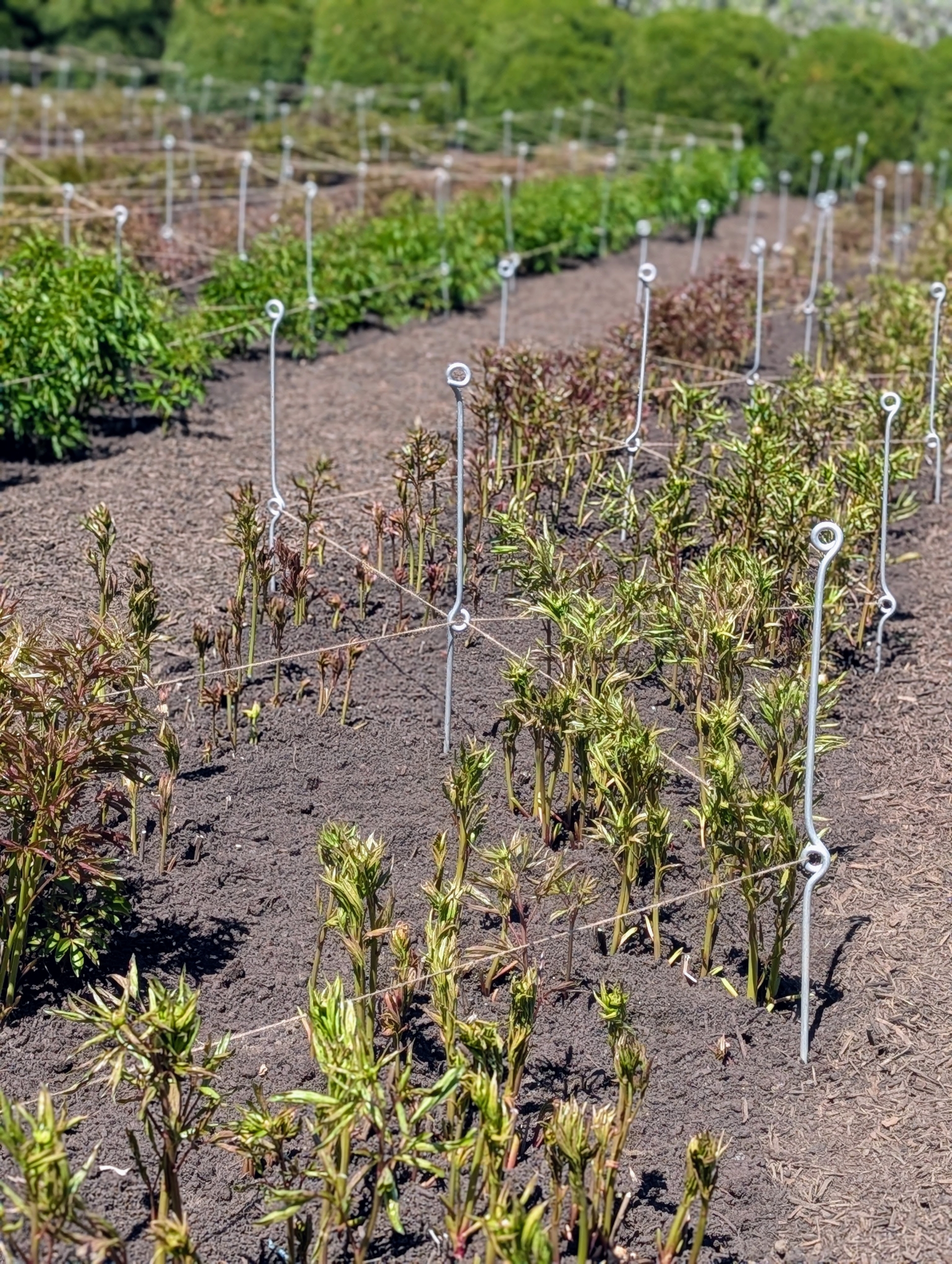
- This technique allows support from every direction.
-
- Twine is threaded through all the top holes following the same pattern. Here, one can see there is about a foot of space in between the top and middle eyes – enough room to support the stems at different levels.
-
- I designed the eyes to be big enough for the many threads of twine. These have worked so well for me over the years.
-
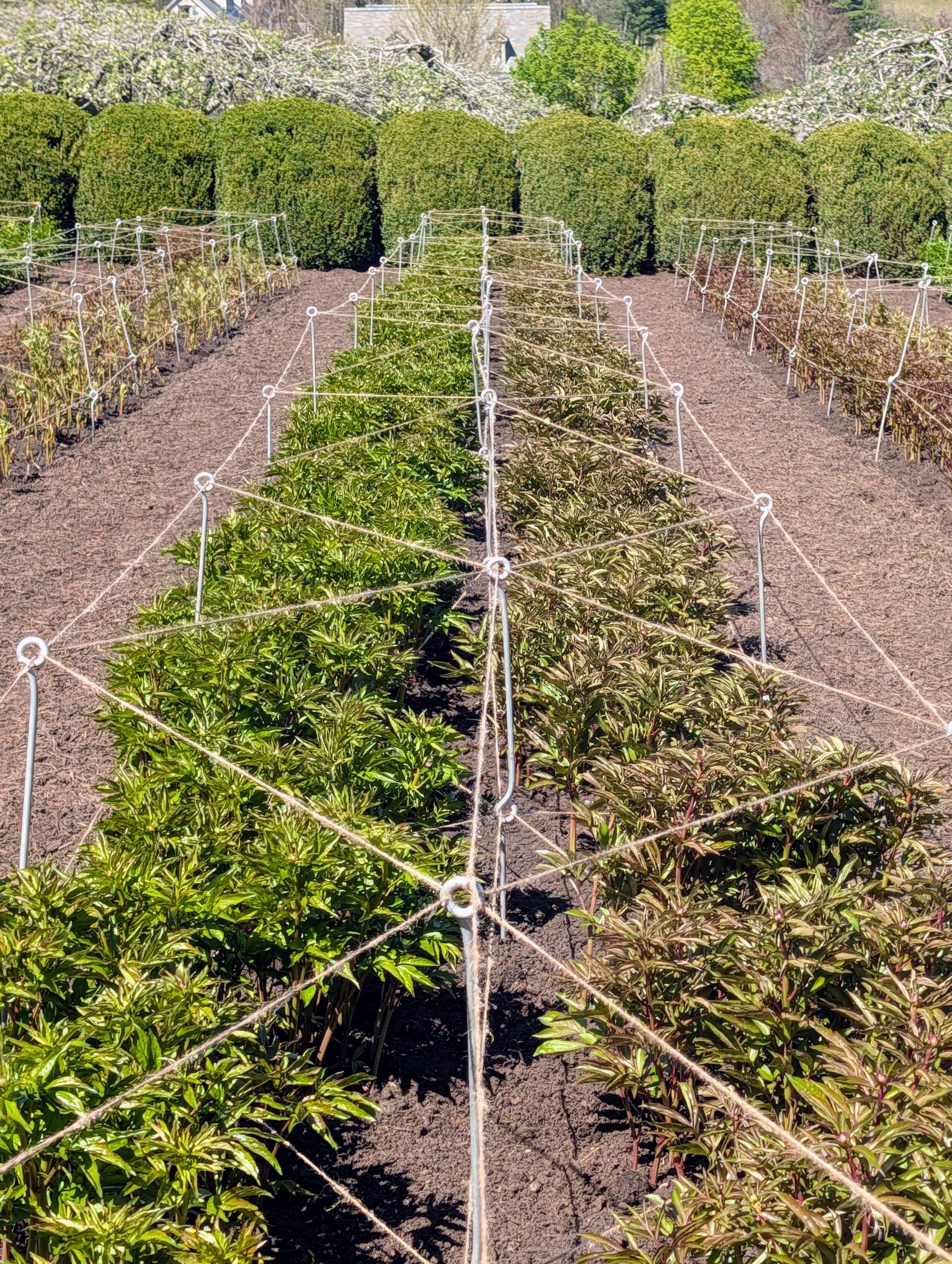
- Here is what a row looks like all done – very neat and tidy, and every peony plant supported by twine. The stakes and twine create such an artistic and geometric pattern. In just about five to six weeks, rows and rows of stunning pink and white herbaceous peonies will be flowering here at my farm.
 Martha Pins


 Martha Tweets

