

Planting Onions in My Vegetable Garden
It's planting time in my vegetable garden.
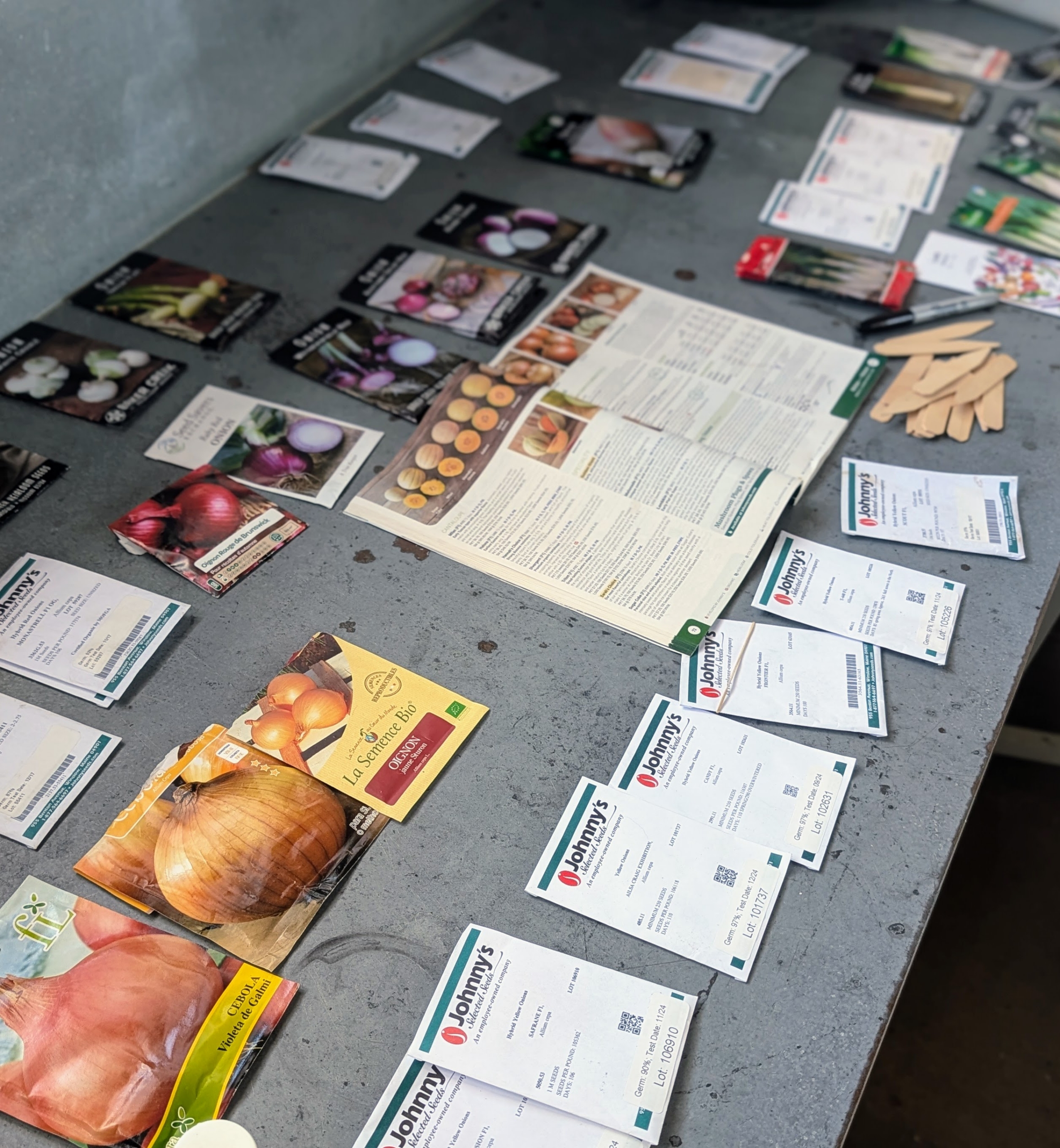
My gardeners have been very busy in my large, half-acre vegetable garden. Last week, they planted the season's onions which were all started from seed in my greenhouse. The seeds came from Johnny's Selected Seeds, a source I've been using for years. Onions, leeks, and shallots are all part of the genus Allium. They are hardy, thrive in full sun, and are easy to grow in a variety of soils and climates.
Here are some photos, enjoy.
-

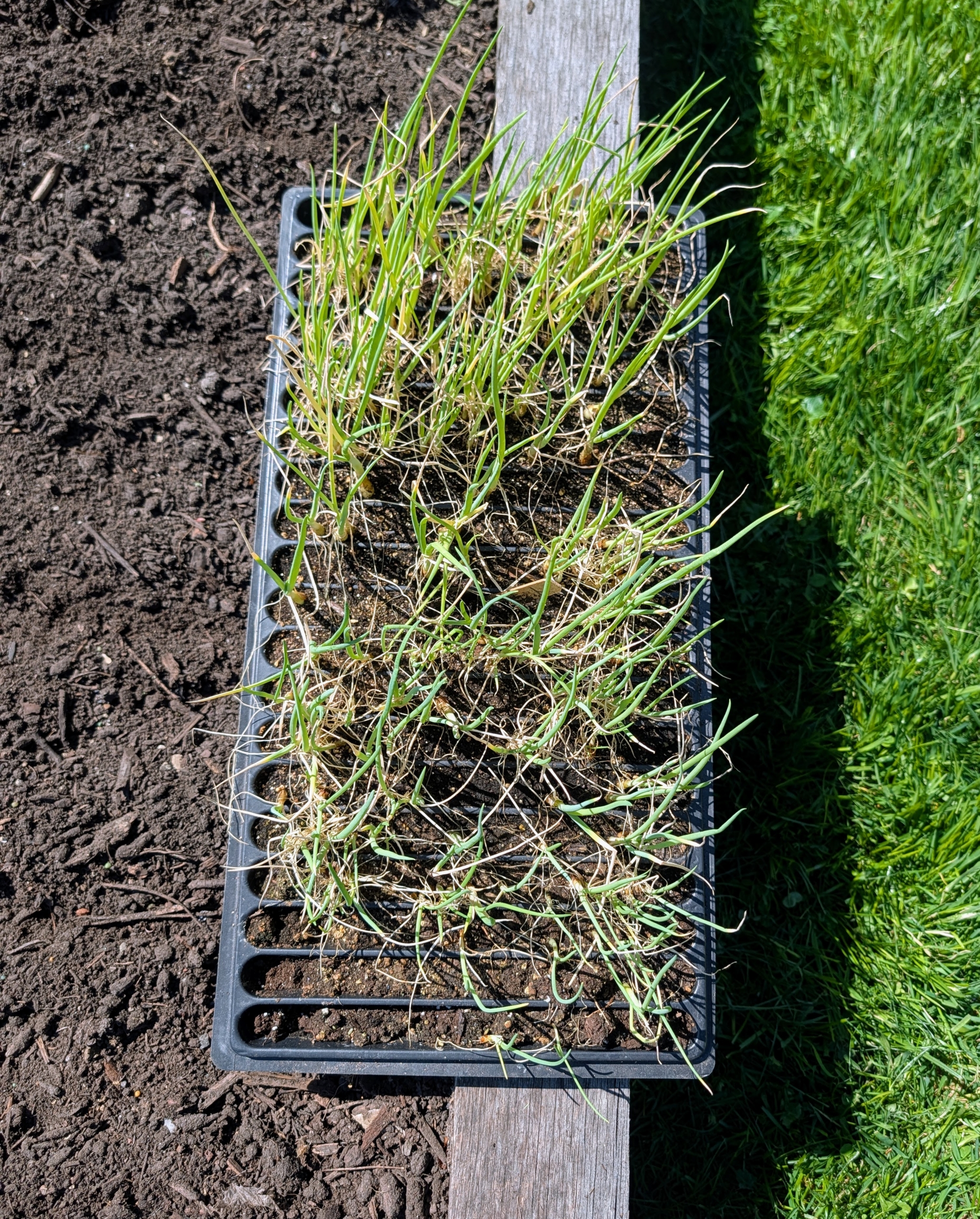
- This day was perfect for planting in the vegetable garden. Onions should be planted when temperatures are still a bit cool and then warm when they begin to mature. Early planting gives the onions time to develop tops and store energy for the bulbs.
-
- I always grow my onions from seed. Onion seeds are less expensive than other growing options such as sets and starts. Starting onions from seed can also offer a wider variety of onion types.
-
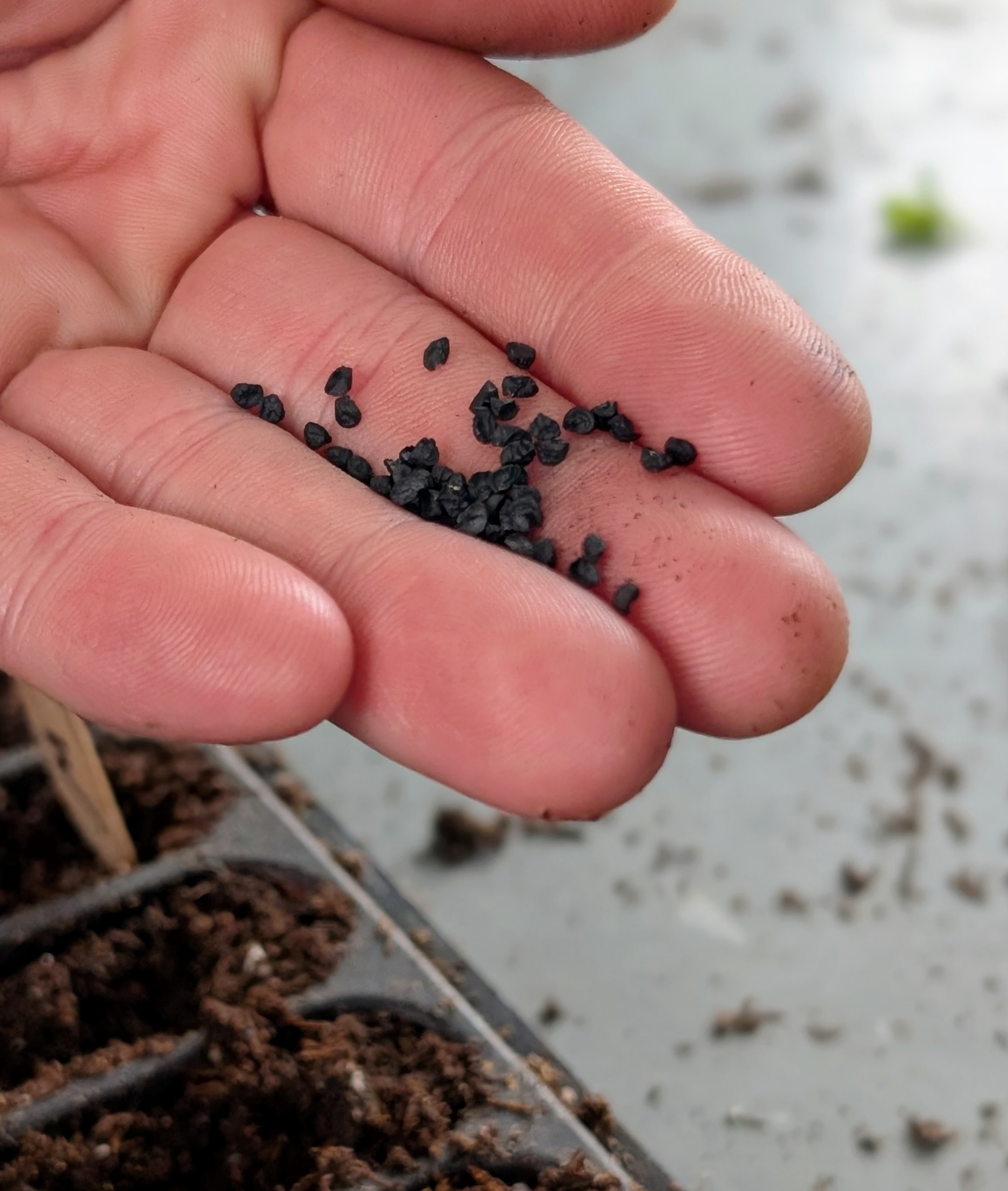
- I started my onions in mid-January. Onion seeds are very small.
-
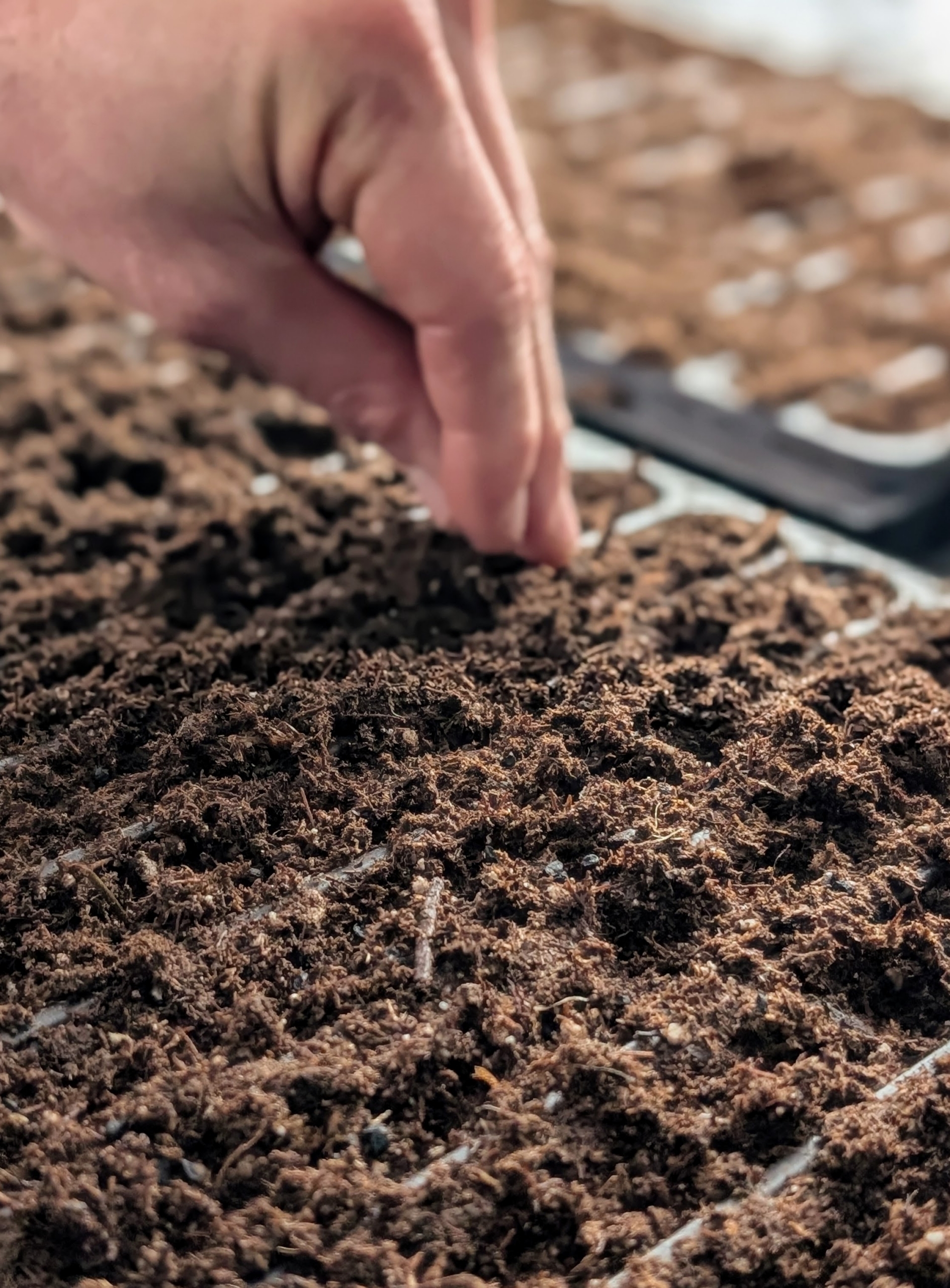
- My head gardener, Ryan McCallister, starts the seeds in trays, dropping them slowly and carefully, so they are evenly distributed along the rows.
-
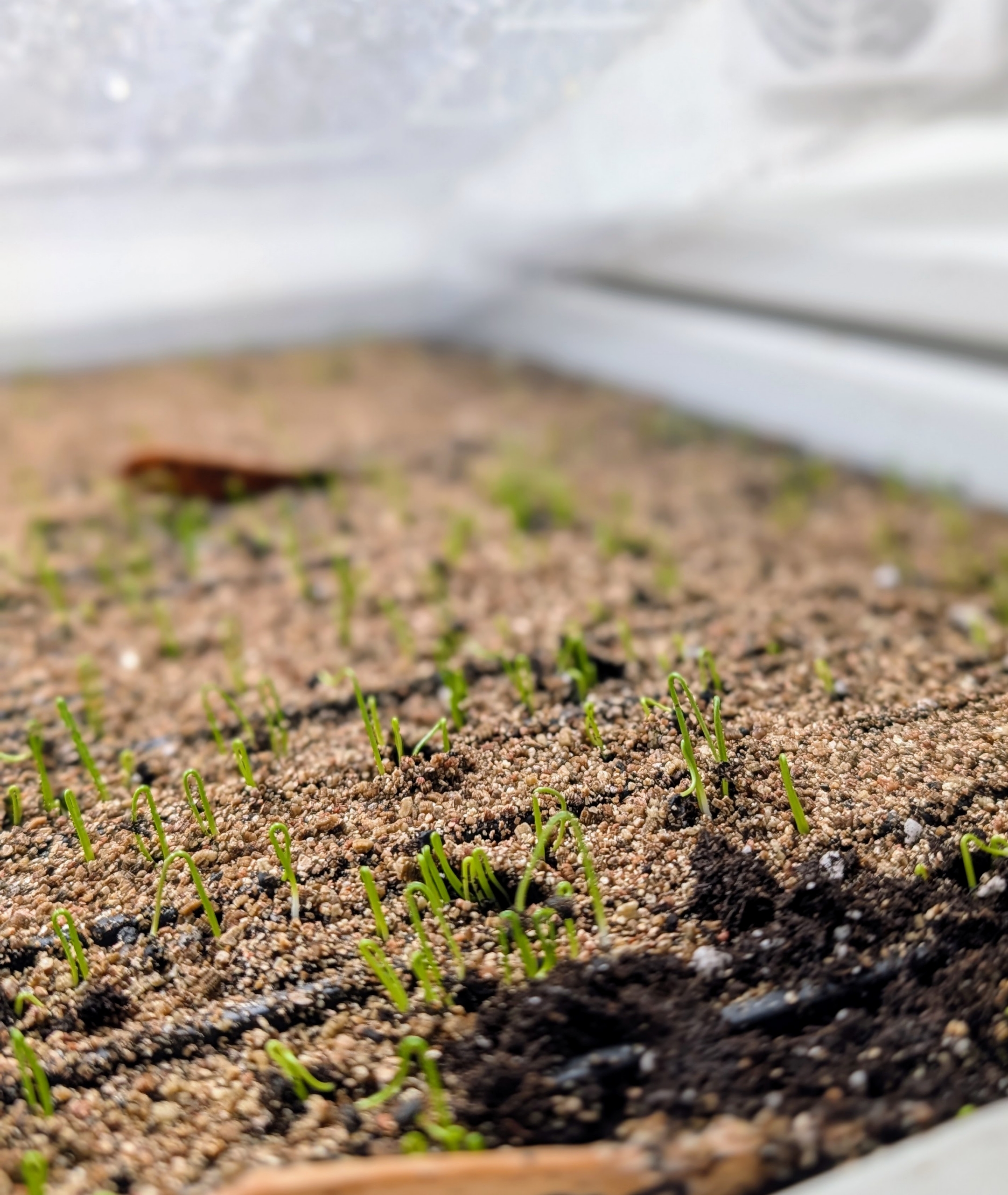
- Here they are just five days later in my Urban Cultivator.
-
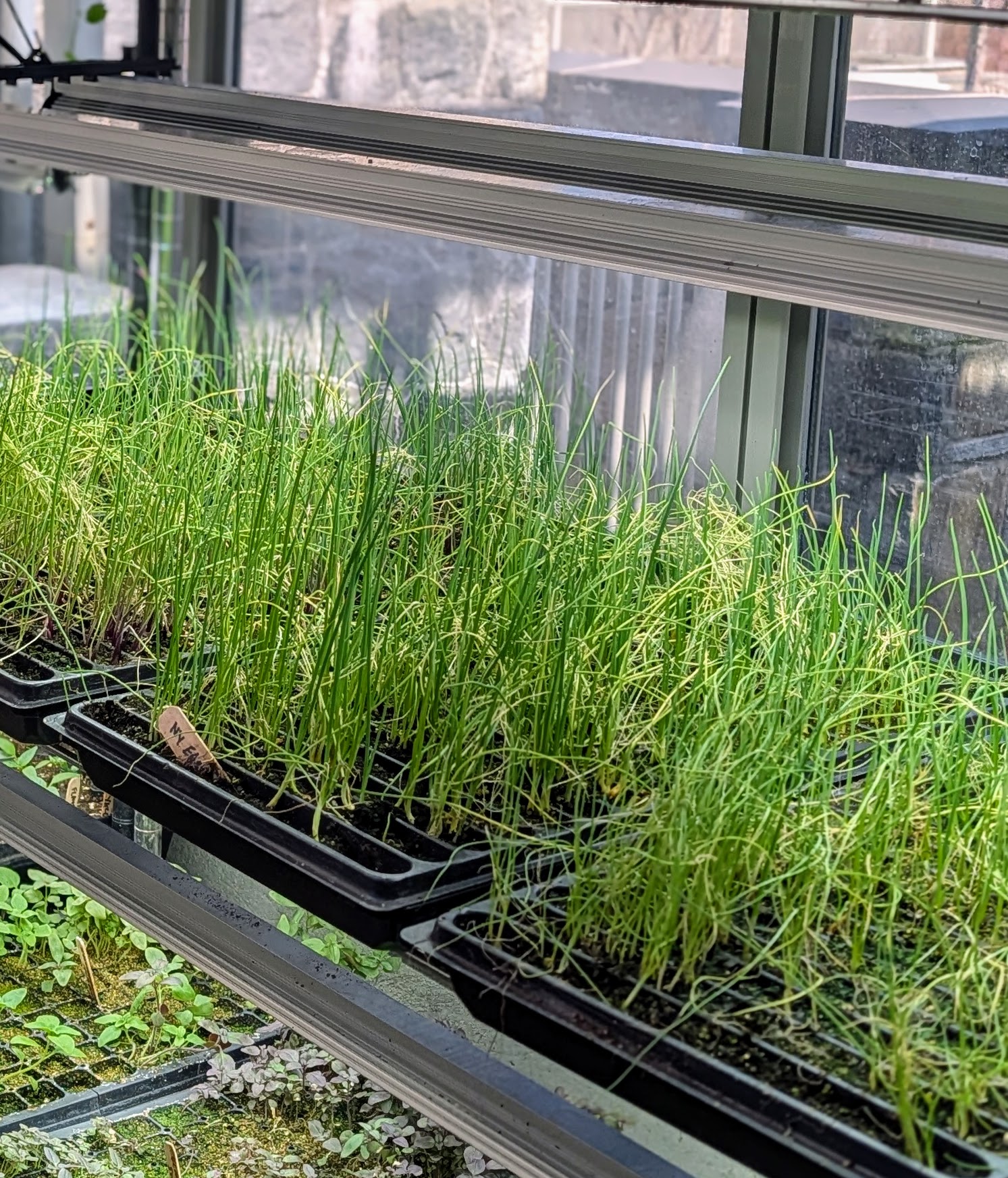
- And here they are a few weeks later – growing nicely in my greenhouse. Because I use a lot of onions for cooking and for sharing with my family, I grow lots of onions.
-
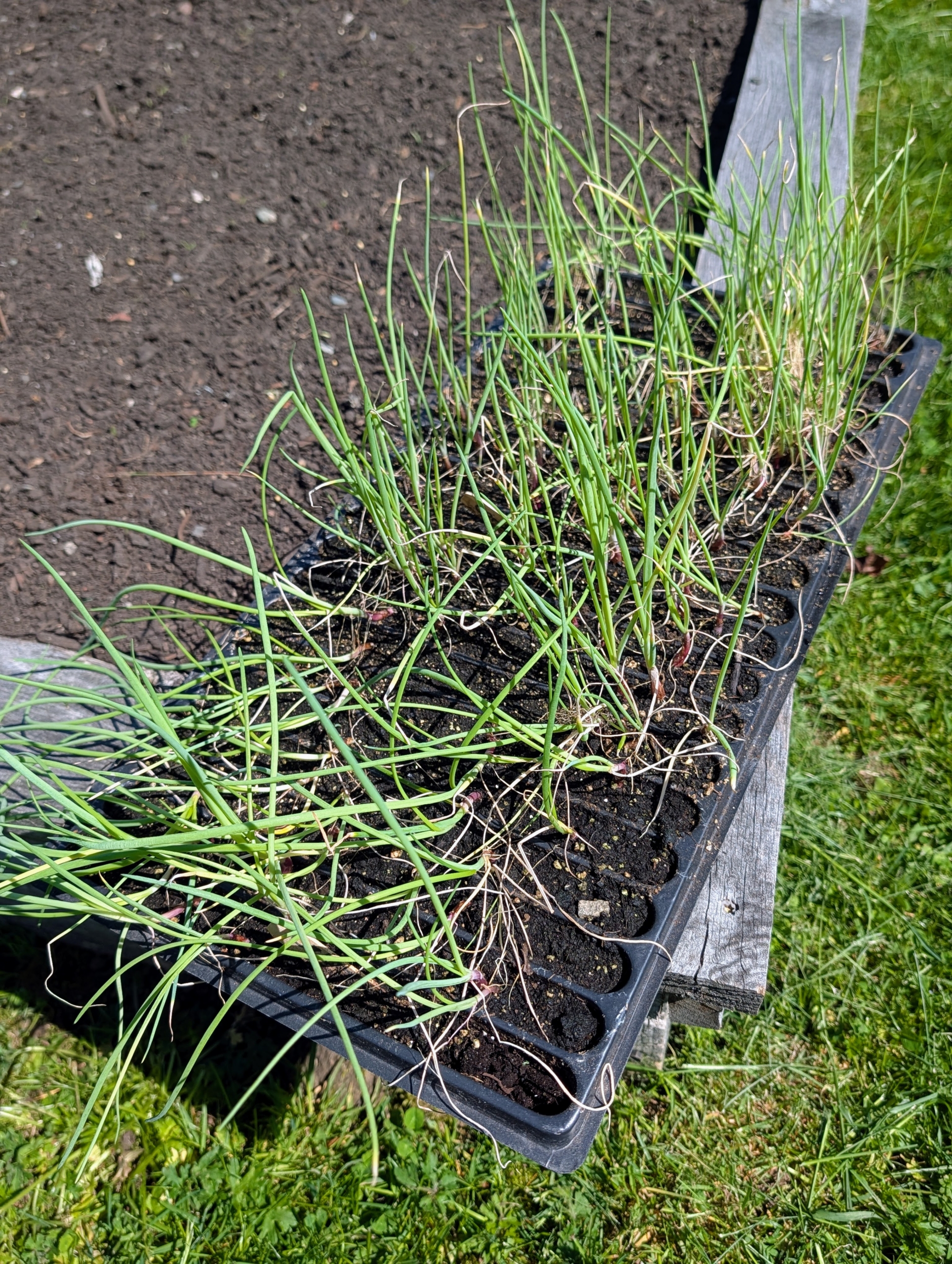
- And then last week, Ryan took them all out to plant in the garden. Onions are closely related to garlic, leeks, shallots, scallions and chives.
-
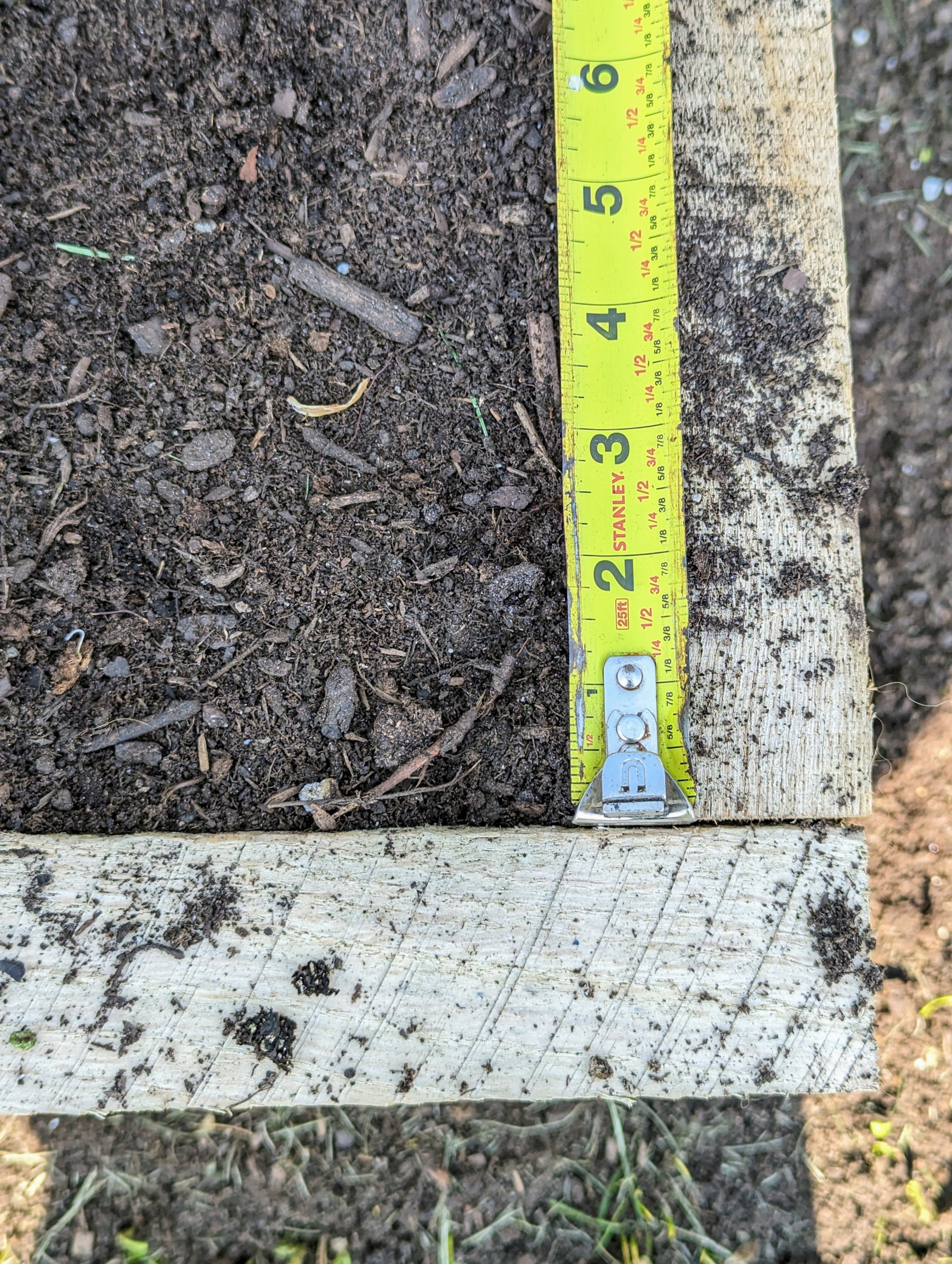
- The soil in all the beds was amended and fed. Here, Ryan measures the bed for proper placement. Healthy green plants should be 1 to 1 1/2 inches deep in rows 12 to 15 inches apart.
-
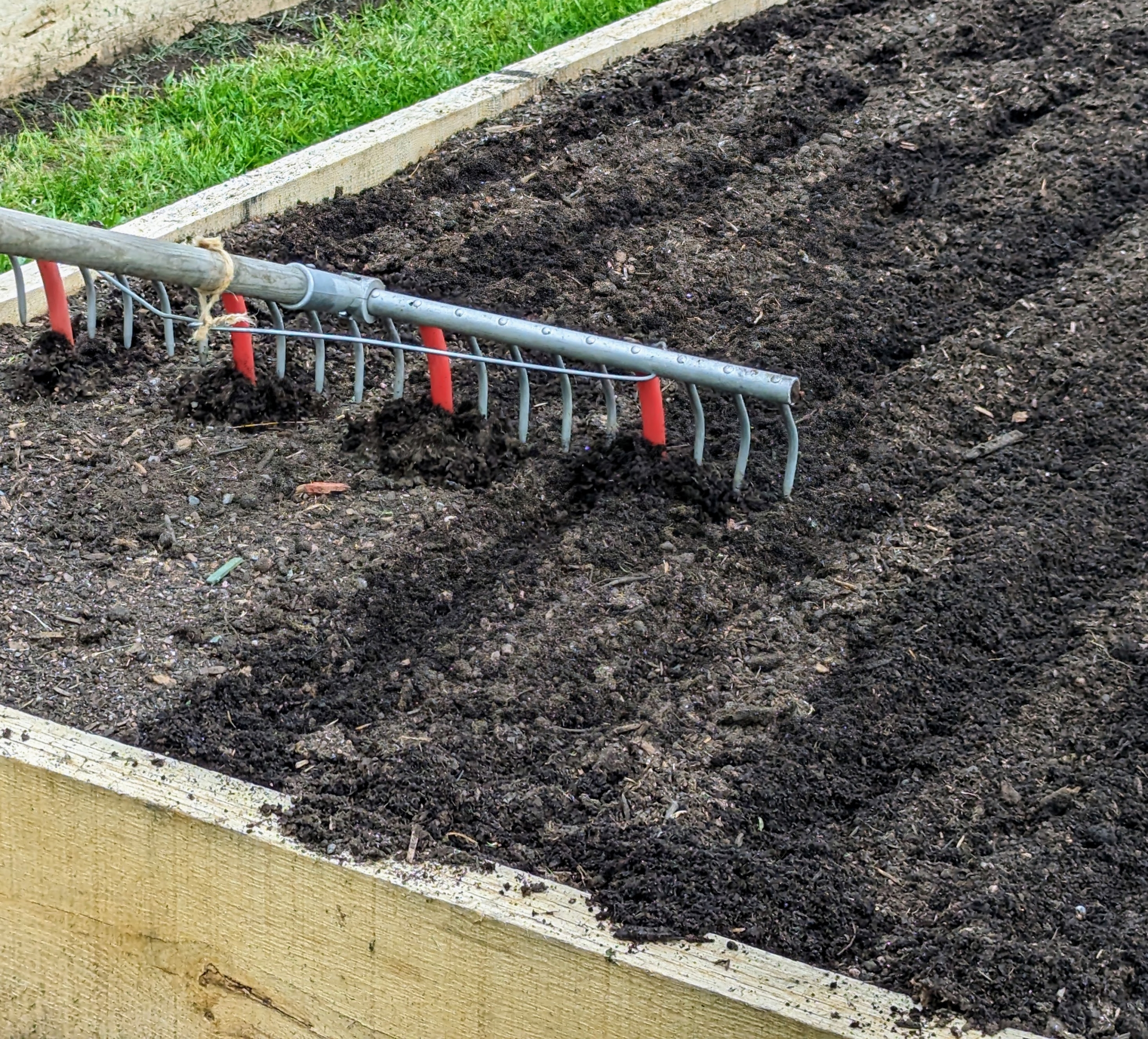
- Ryan creates the rows using a bed preparation rake from Johnny’s Selected Seeds.
-
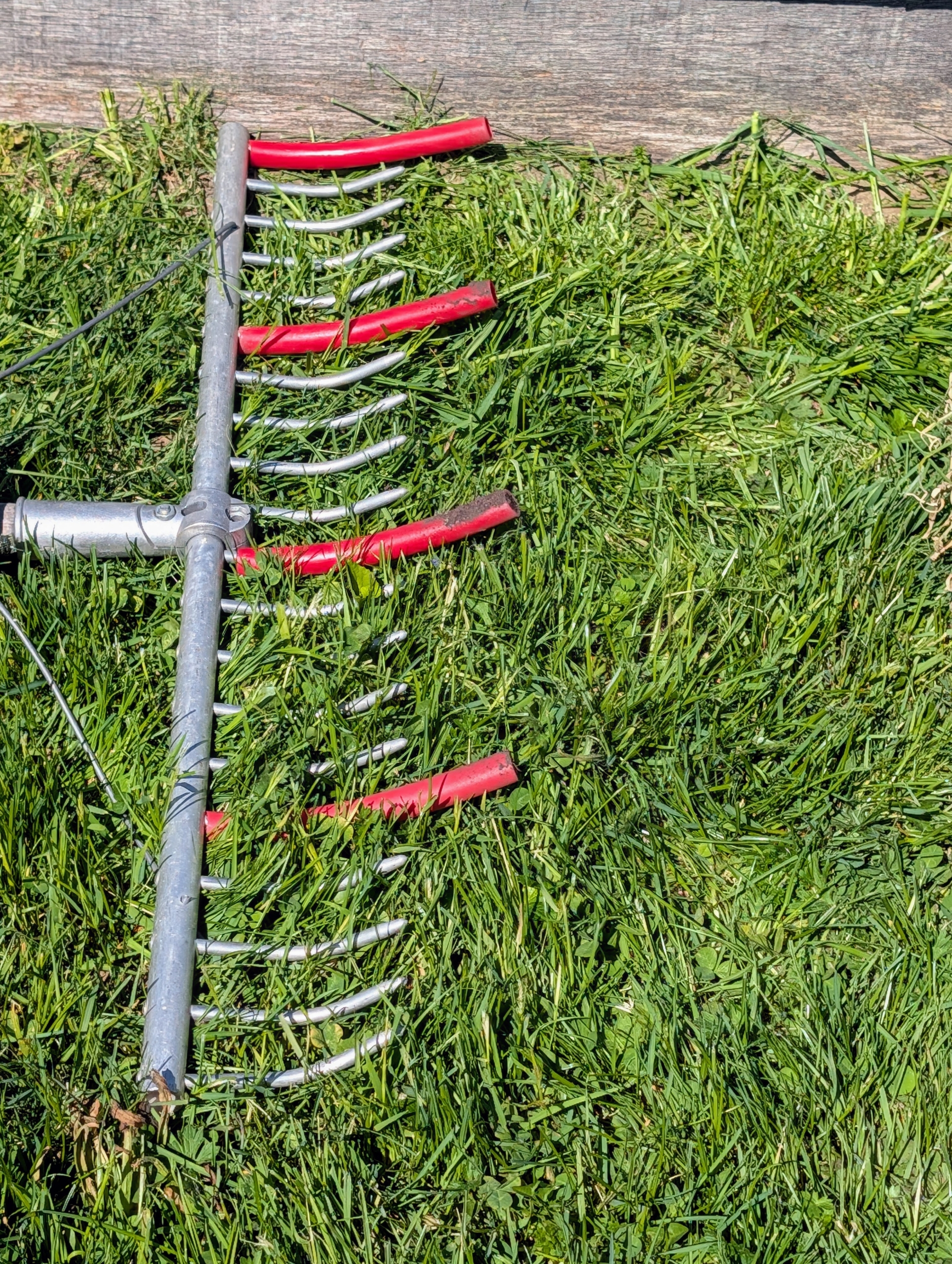
- Hard plastic red tubes slide onto selected teeth of the rake to mark the rows.
-
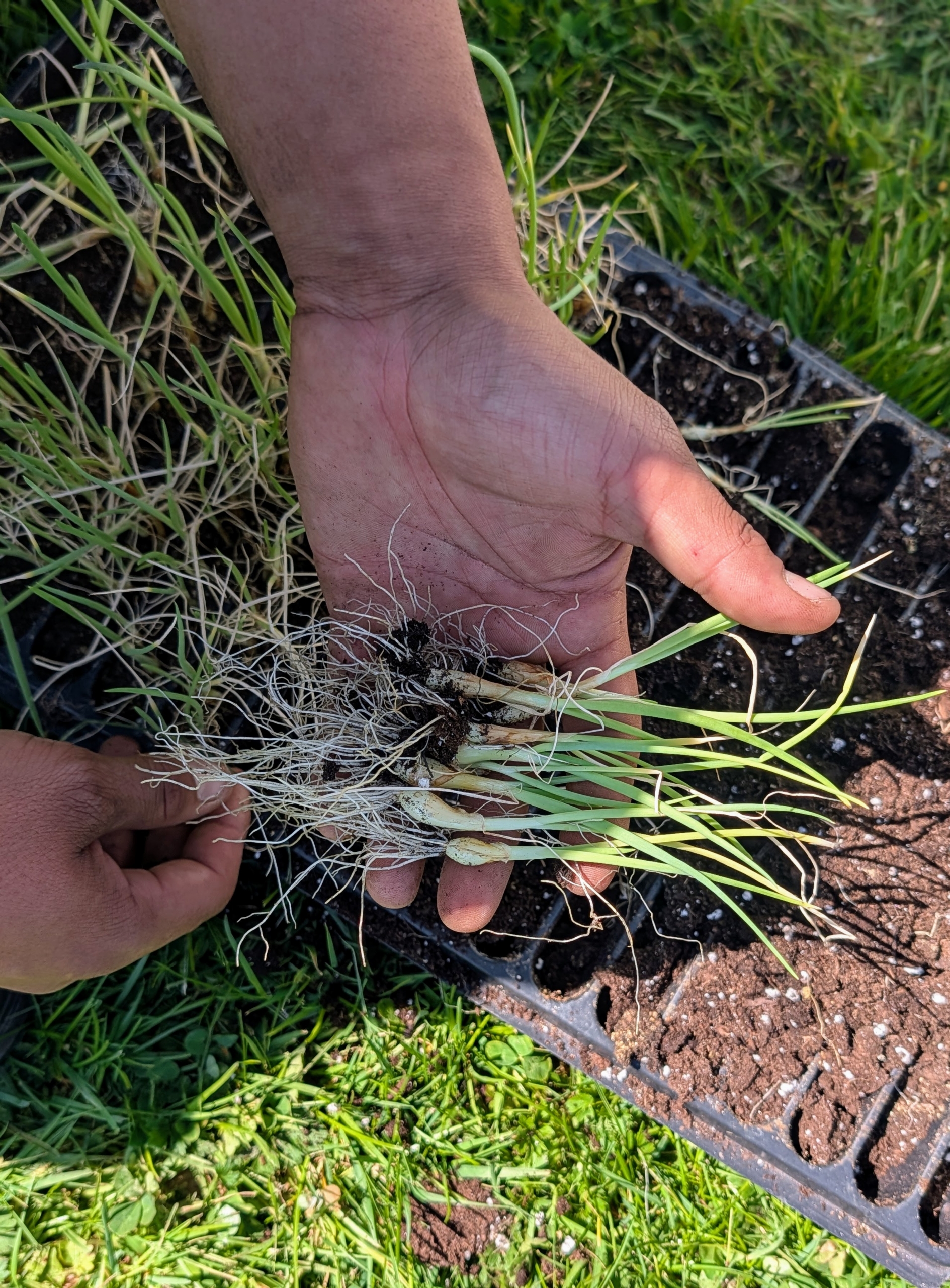
- Matthew separates the plants and picks the most robust ones to plant first.
-
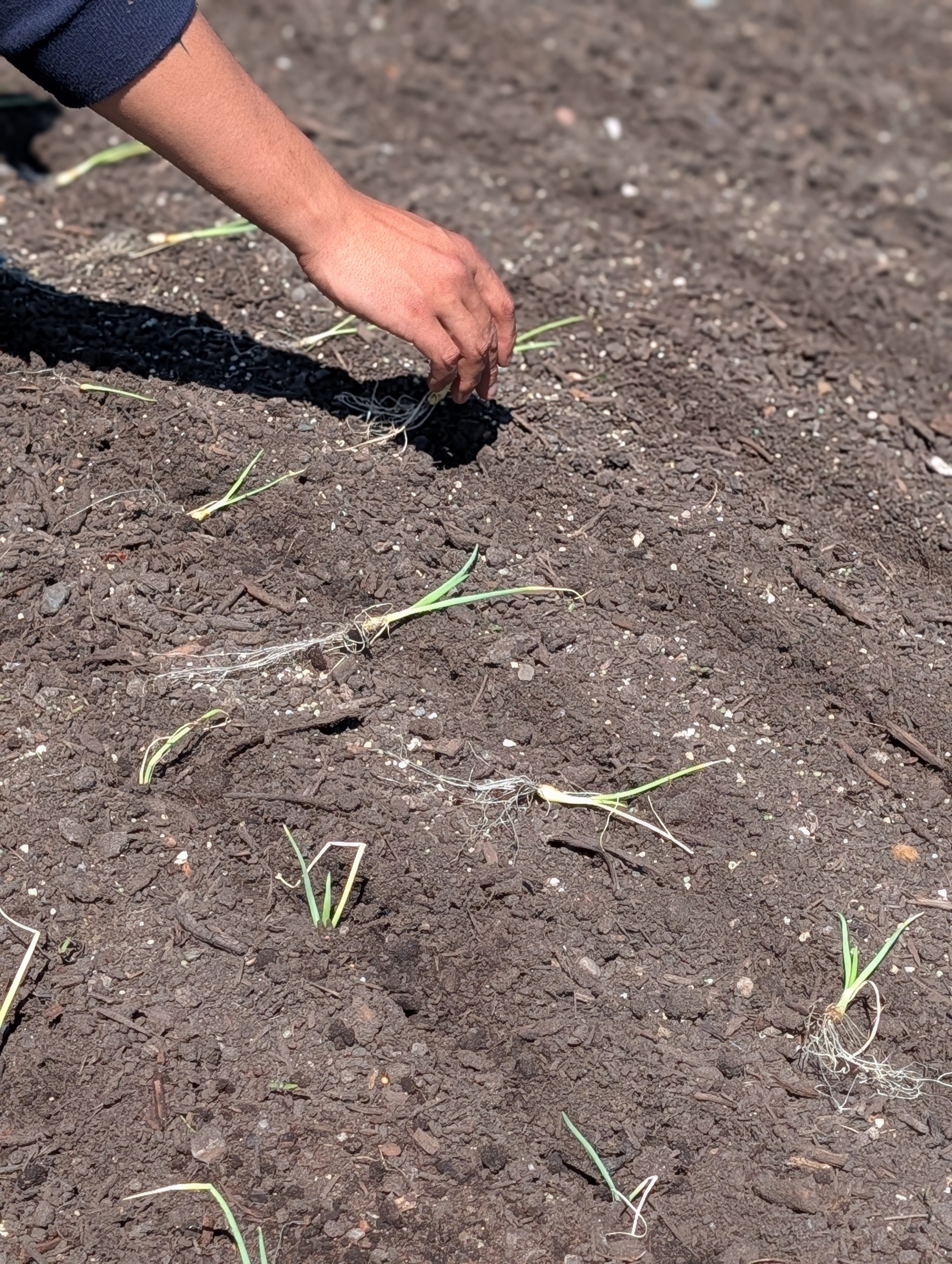
- He places each one down in the row a few inches from the next.
-
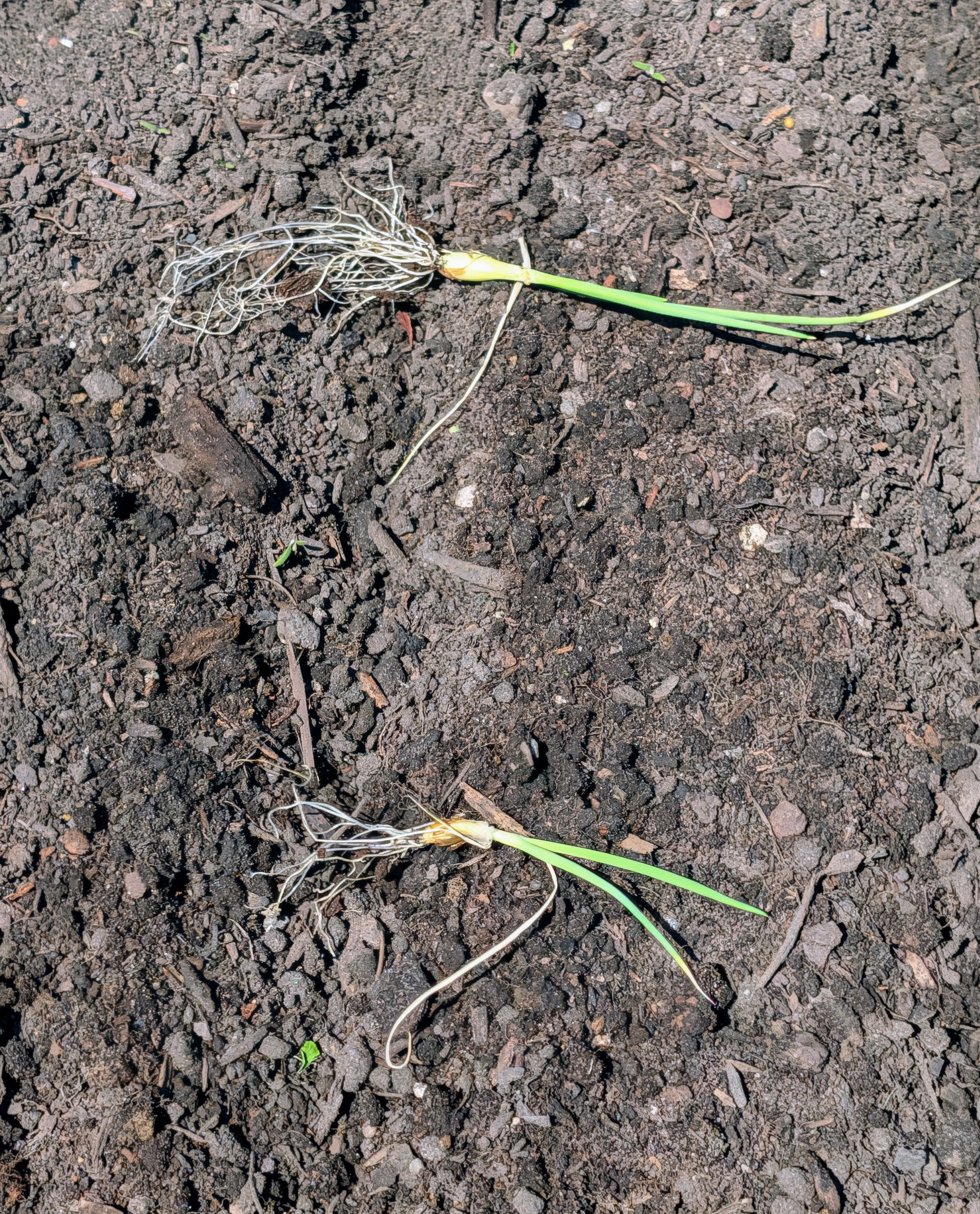
- Onion roots are slender, thread-like structures that grow from the bottom of the bulb, with some thicker roots storing nutrients and water.
-
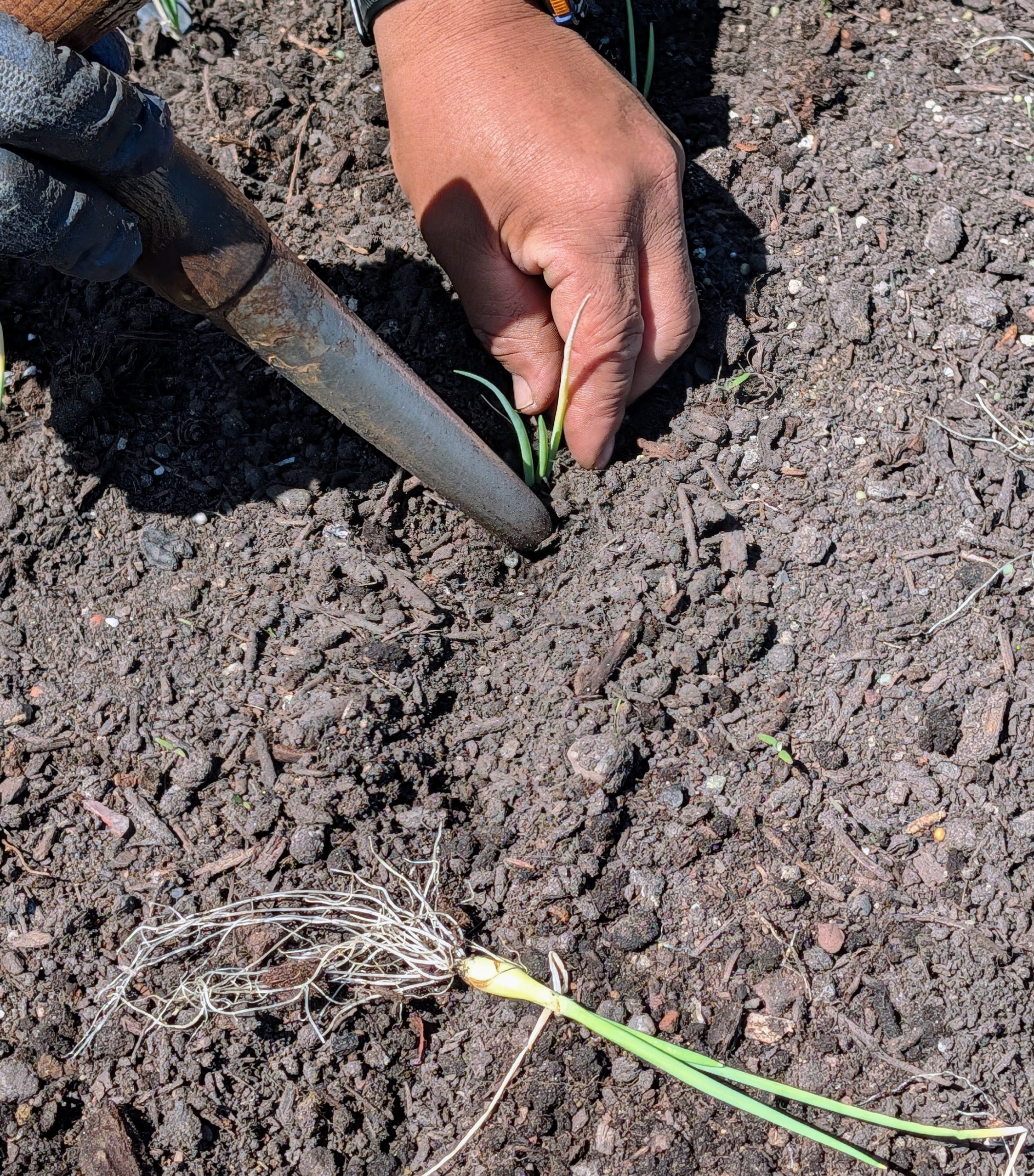
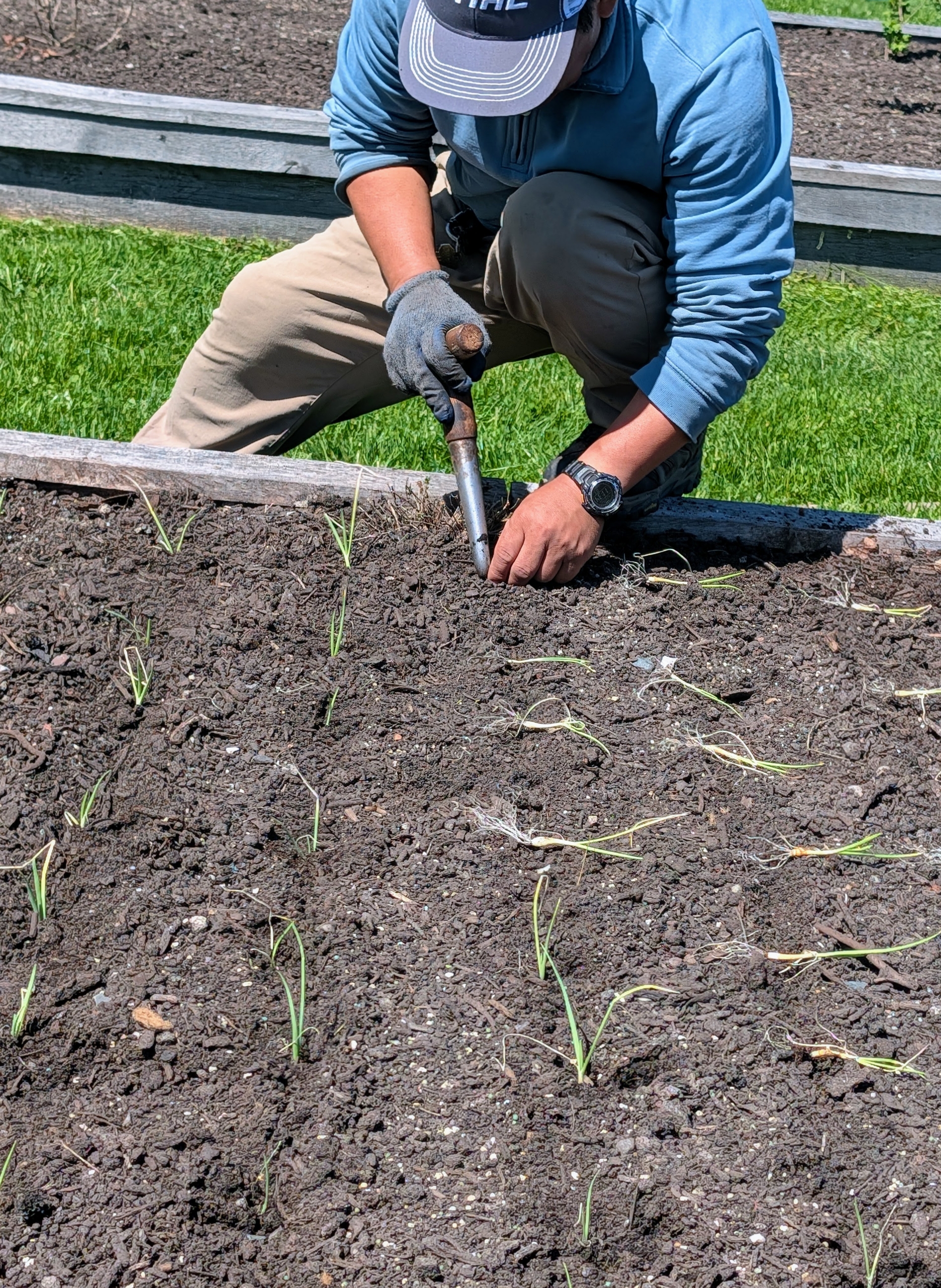
- Using the dibber, Phurba carefully positions the plant with the root end down and pushes it into the soil about two-inches deep until all the roots are well covered.
-
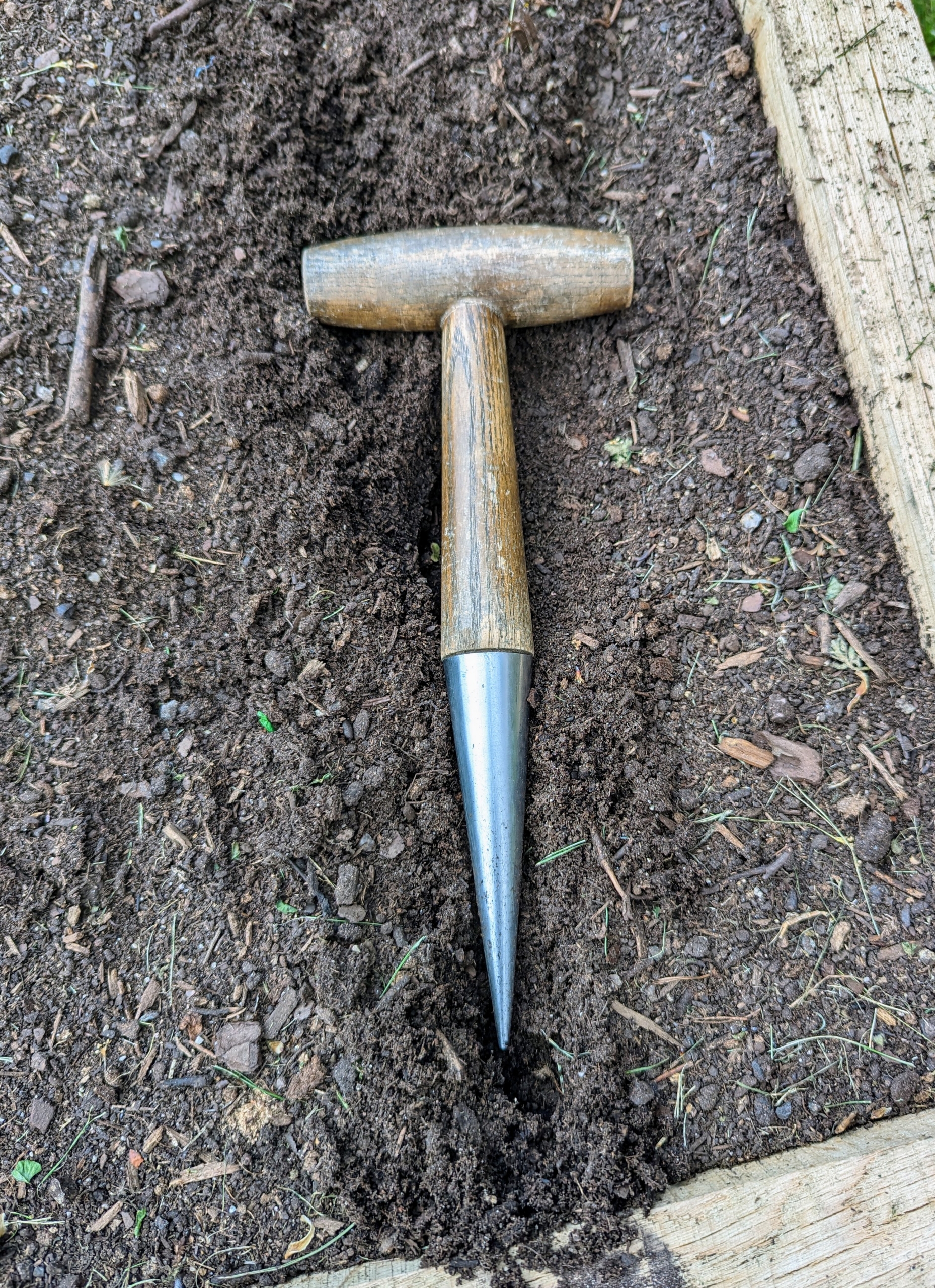
- A dibber or dibble or dibbler is a pointed wooden stick for making holes in the ground so that seeds, seedlings or small bulbs can be planted. Dibbers come in a variety of shapes including the straight dibber, the T-handled dibber like this one, the trowel dibber, and the L-shaped dibber.
-
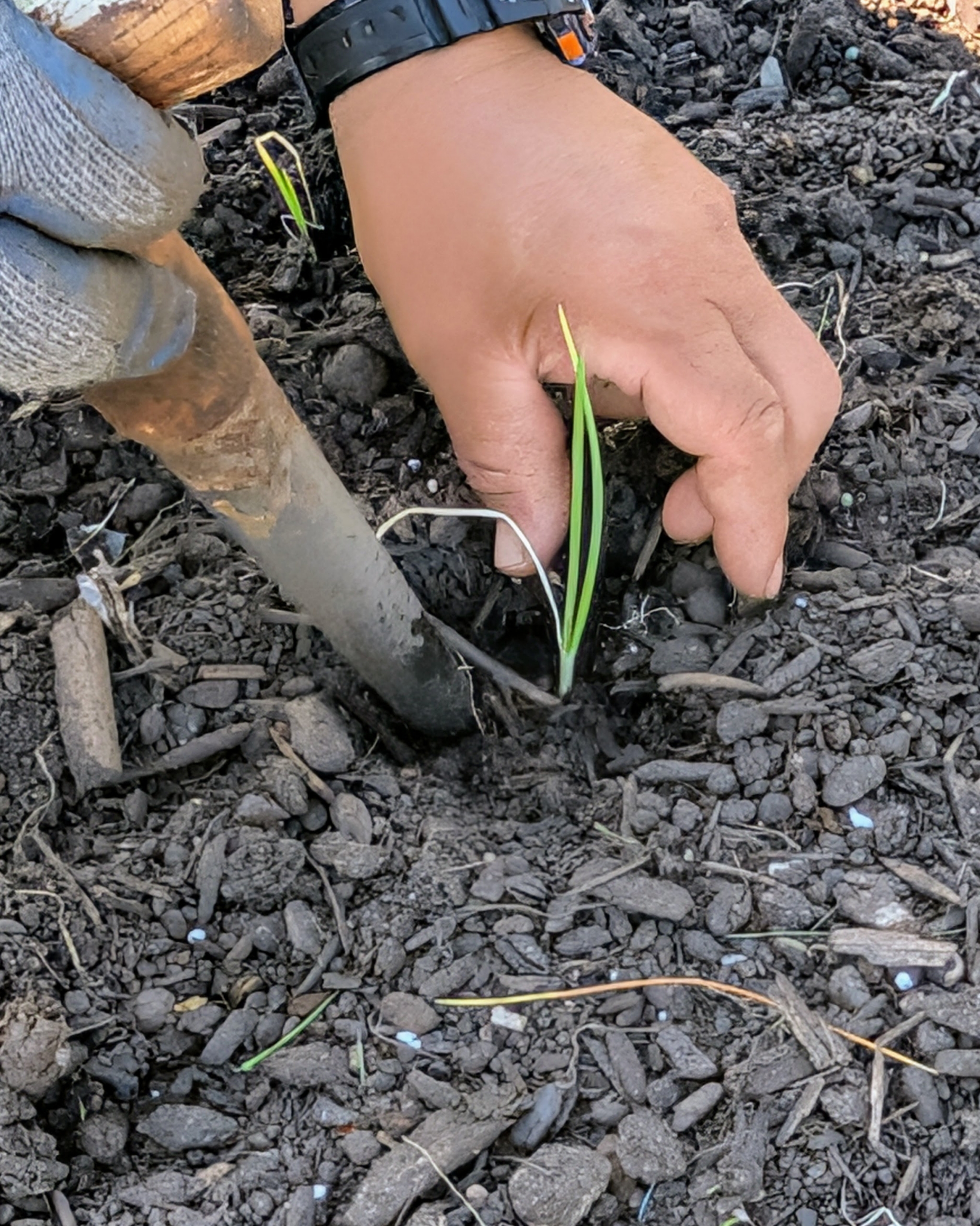
- Phurba makes sure the top of the plant’s neck isn’t covered too deeply. If too much of the plant is buried, the growth of the onion will be reduced and constricted.
-
- It’s a tedious job, but Phurba and Matthew get through pretty quickly.
-
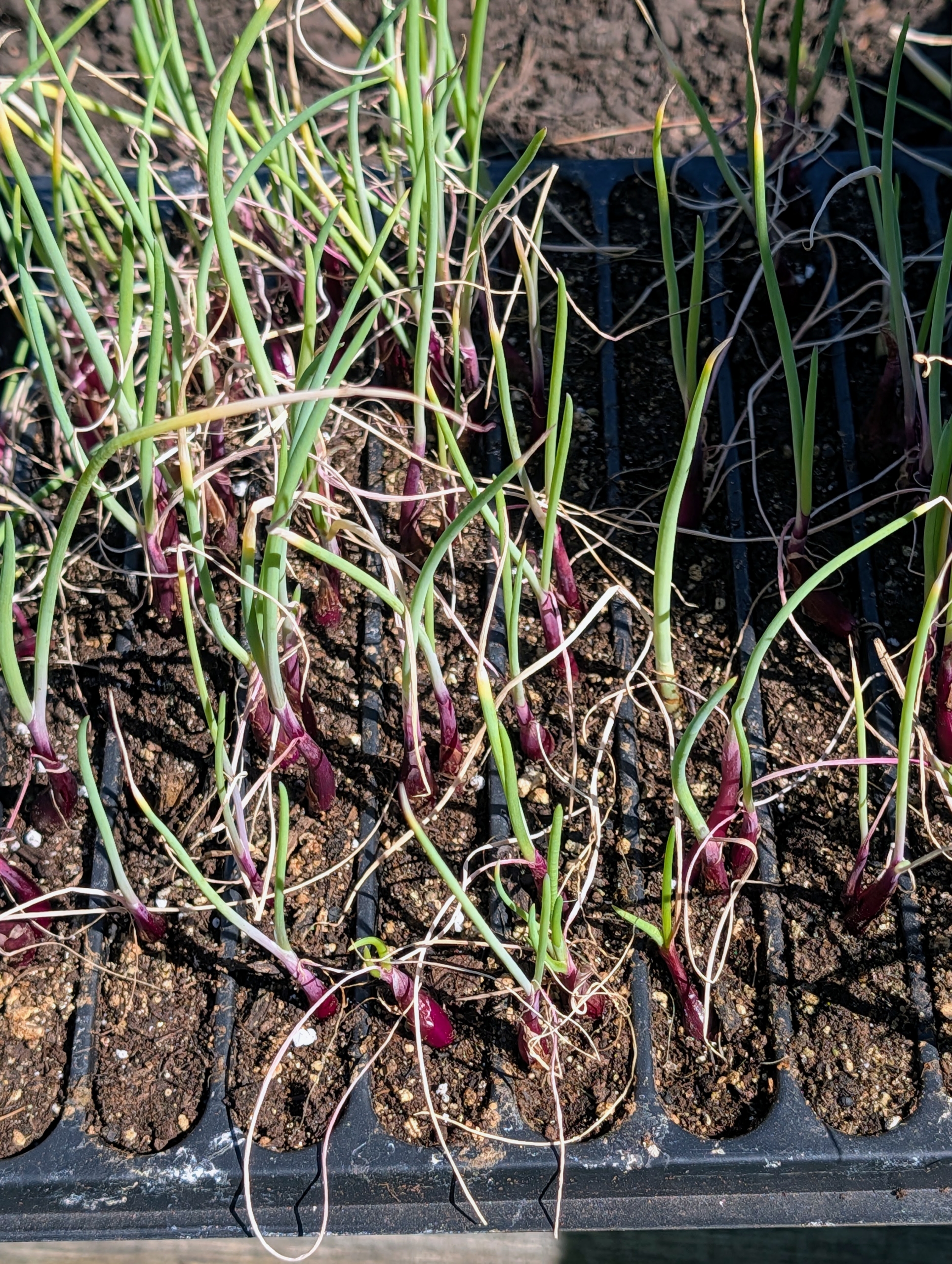
- Here is the tray of red onion plants also ready to be put into the ground. The beds include red onions, white onions, yellow onions.
-
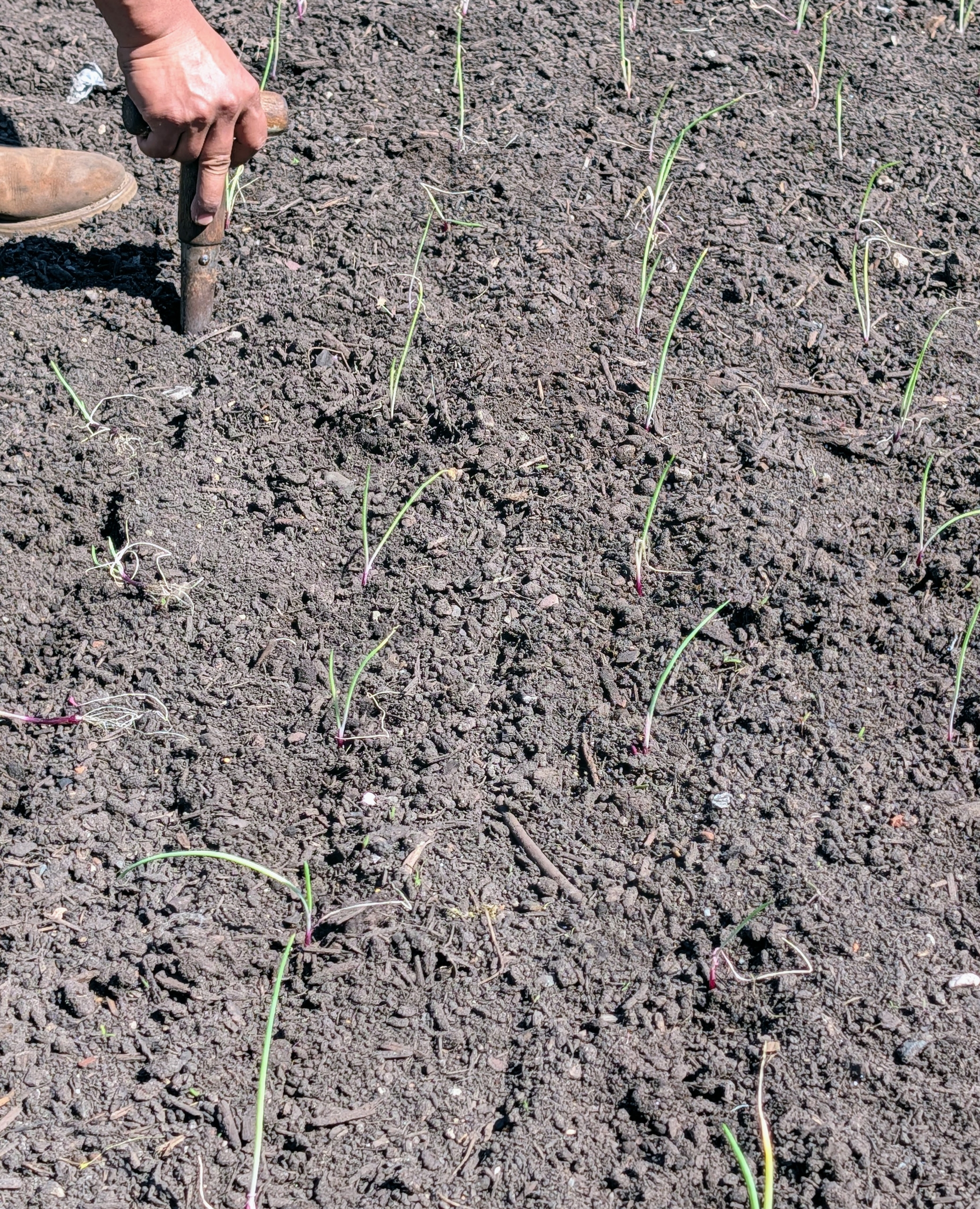
- Onions are categorized in two growing types: long-day and short-day. Long-day onions begin sprouting in late spring to summer when days are between 14 and 16 hours long. Short-day onions begin sprouting when days are between 10 and 12 hours in length – winter and early spring.
-
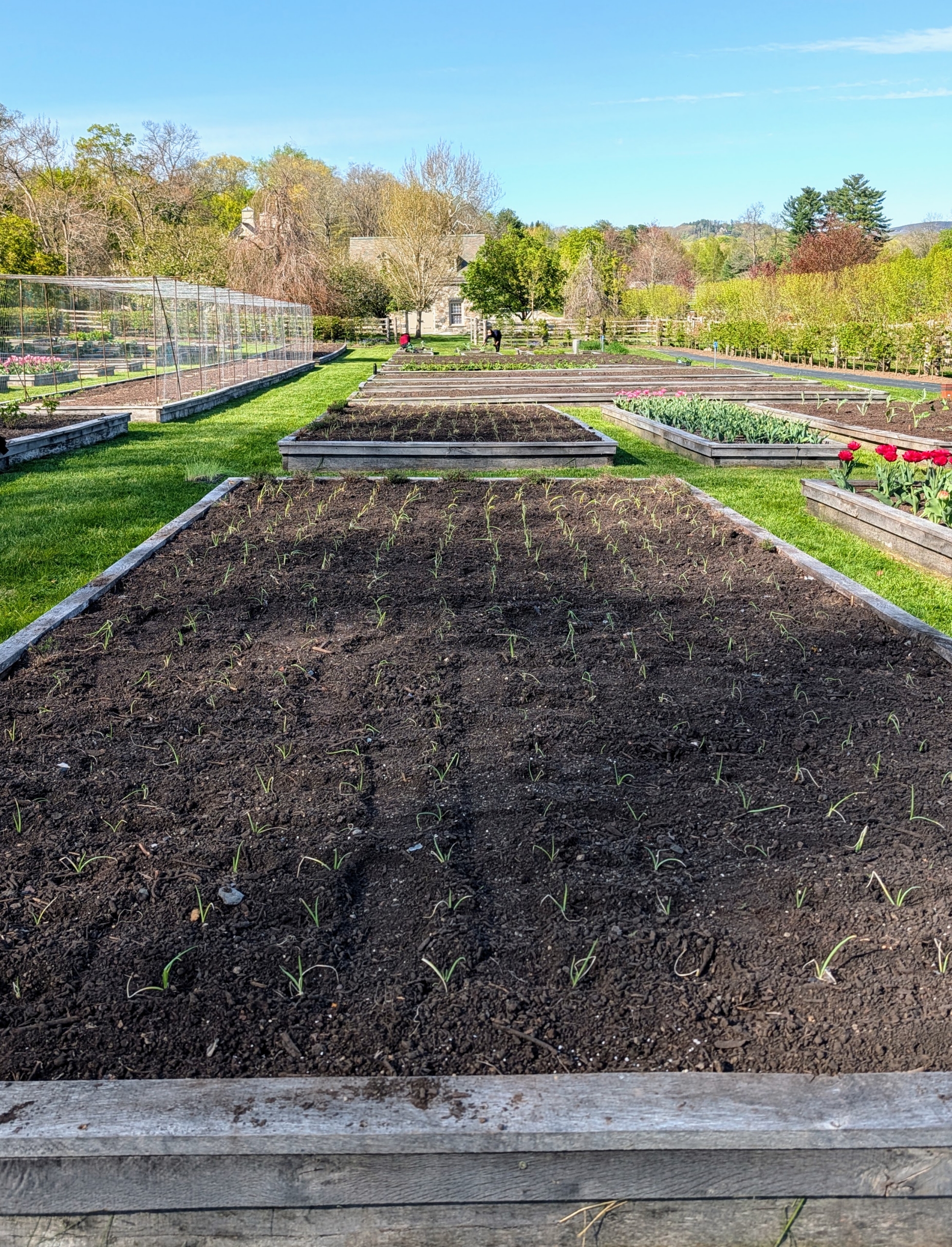
- We’re off to a wonderful growing season – it won’t be long now before I have bounties of fresh, nutritious vegetables.
 Martha Pins


 Martha Tweets

