

Propagating Heirloom Chrysanthemums
If you love bright and colorful heirloom mums that bloom in the fall, why not add more to your garden? The process is easier than you may think.
One way to propagate heirloom mums is to use cut stems from existing plants, place them in a rooting environment, and then nurture them until they can be transplanted. Earlier this week, my head gardener, Ryan McCallister, did just that - before discarding the old plants, Ryan trimmed the stems to manageable sizes, brought them indoors and rooted dozens of cuttings. It's a quick and easy way to grow more of these gorgeous flowers.
Here are some photos, enjoy.
-

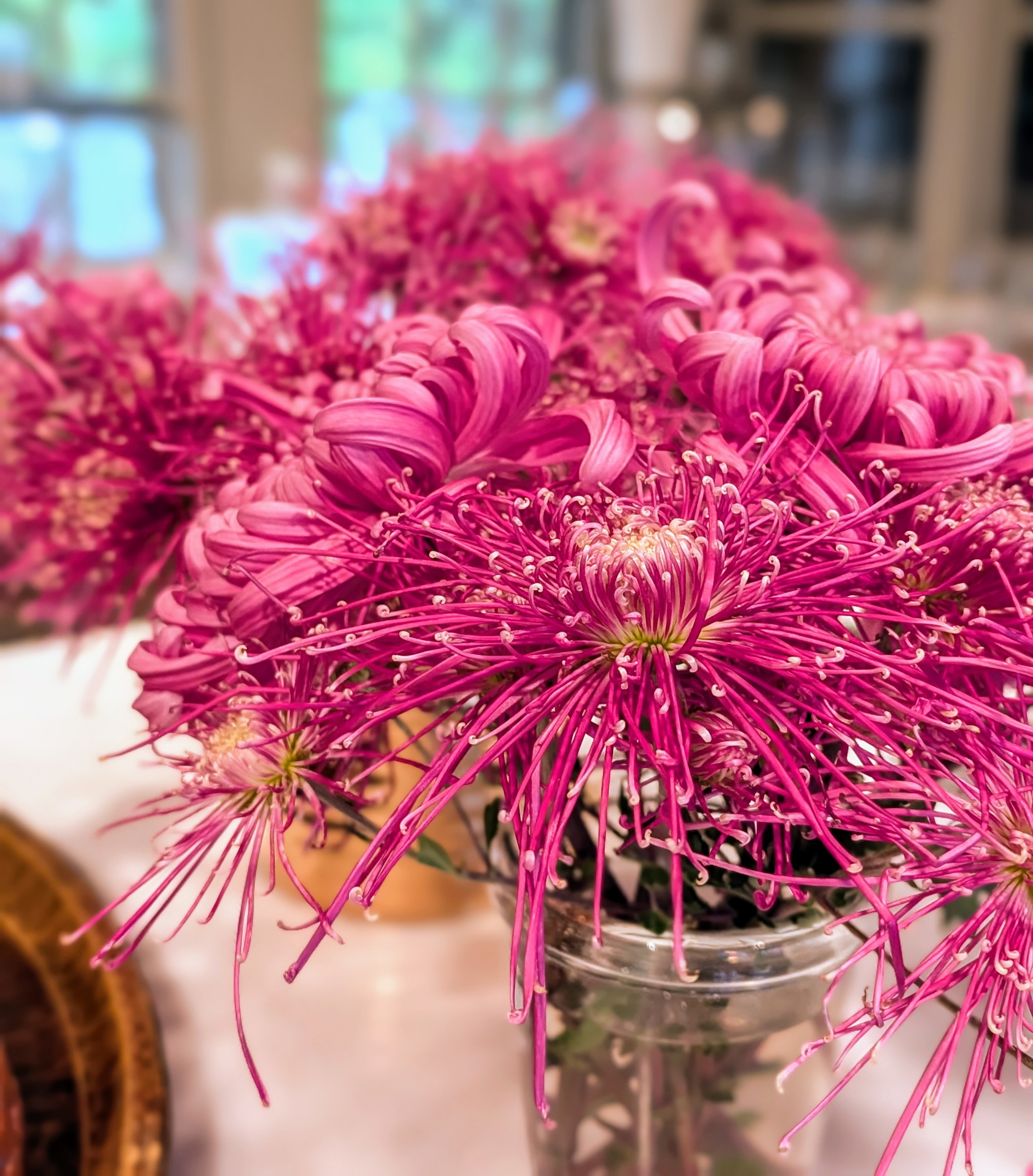
- Chrysanthemums, also known as mums, are popular fall flowers. They bloom when most of the garden flowers have already faded, and stand out in a variety of gorgeous colors and forms. This one in front is ‘Fleur de Lis.’ It’s often called the “Queen of Fall Flowers” with its vivid bright pink tones and delicately curved petals.
-
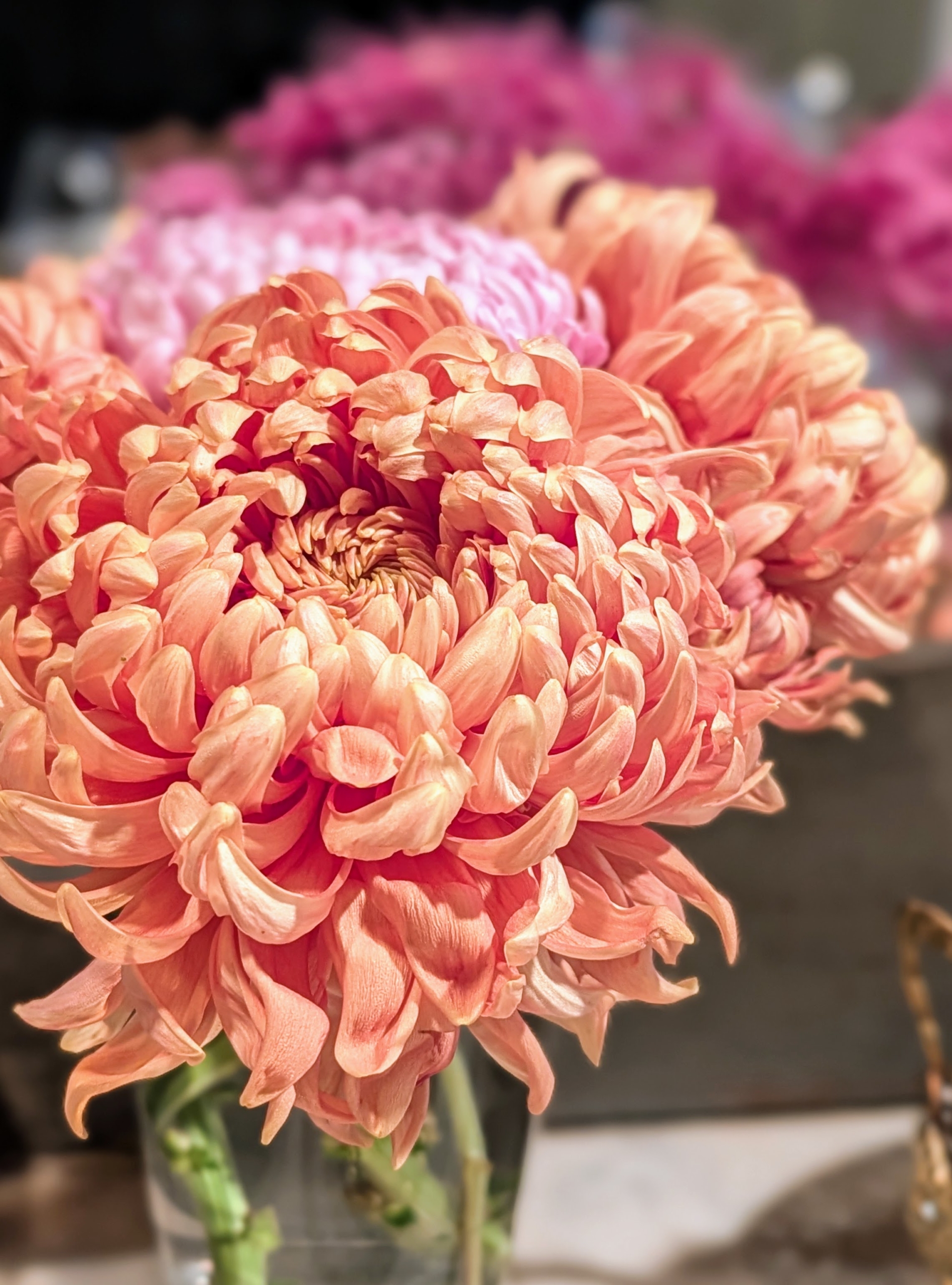
- I grew these from small plants I received from Bear Creek Farm in Stanfordville, New York. Bear Creek Farm sells an array of flowers, tubers and seeds and hosts several interesting flower seminars through the year.
-
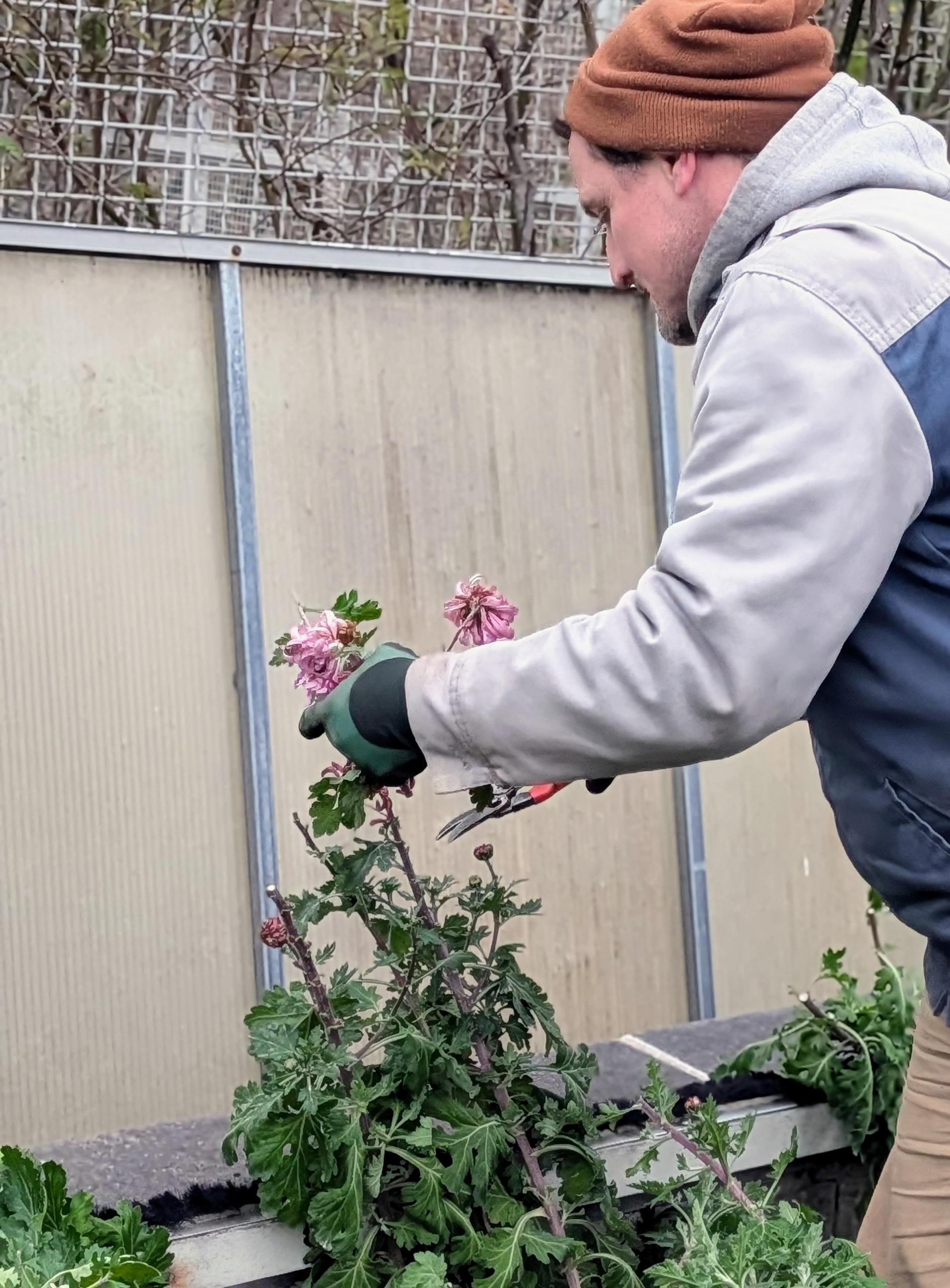
- After the plants were done blooming, Ryan saved them and collected many stem cuttings.
-
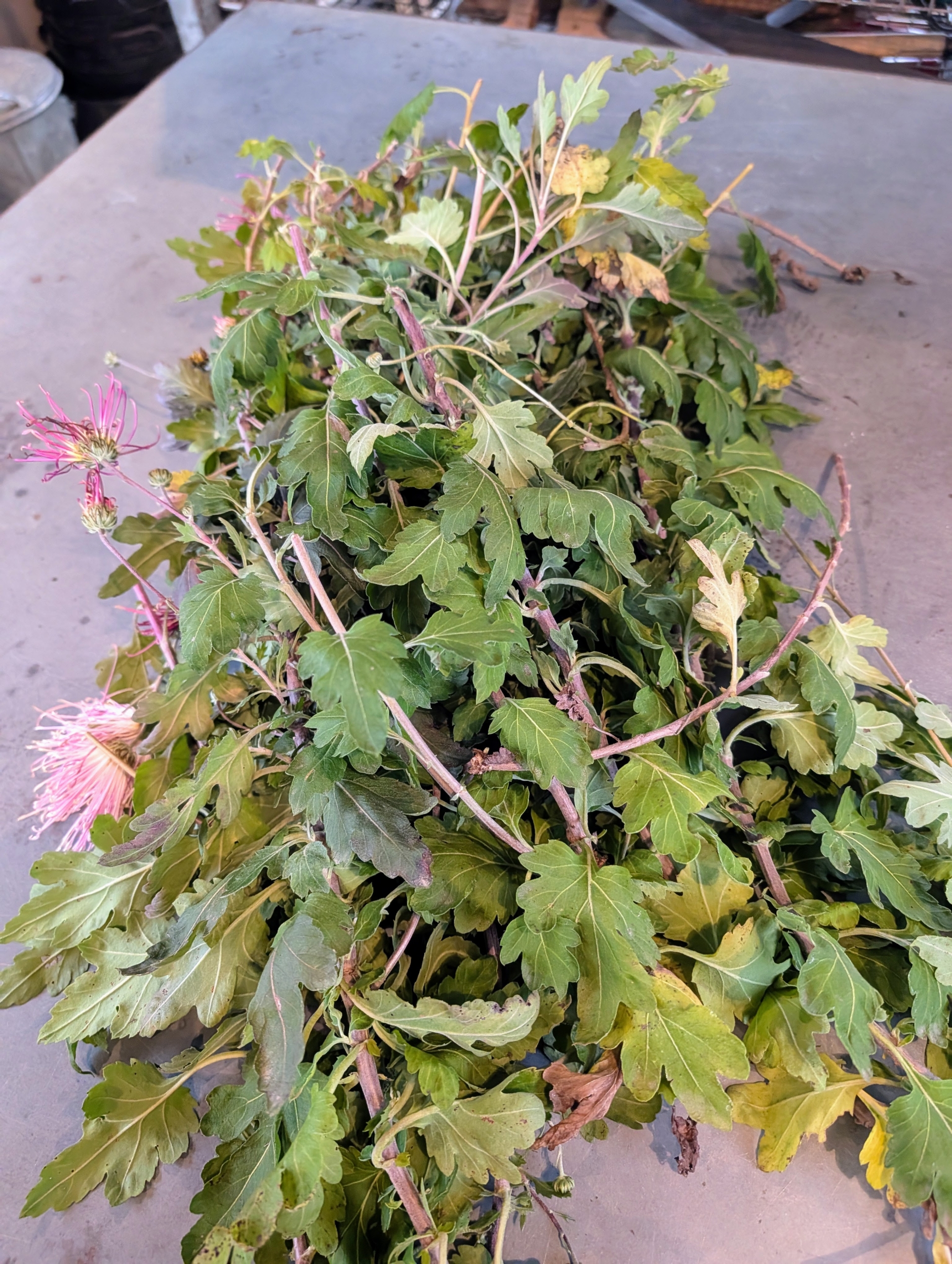
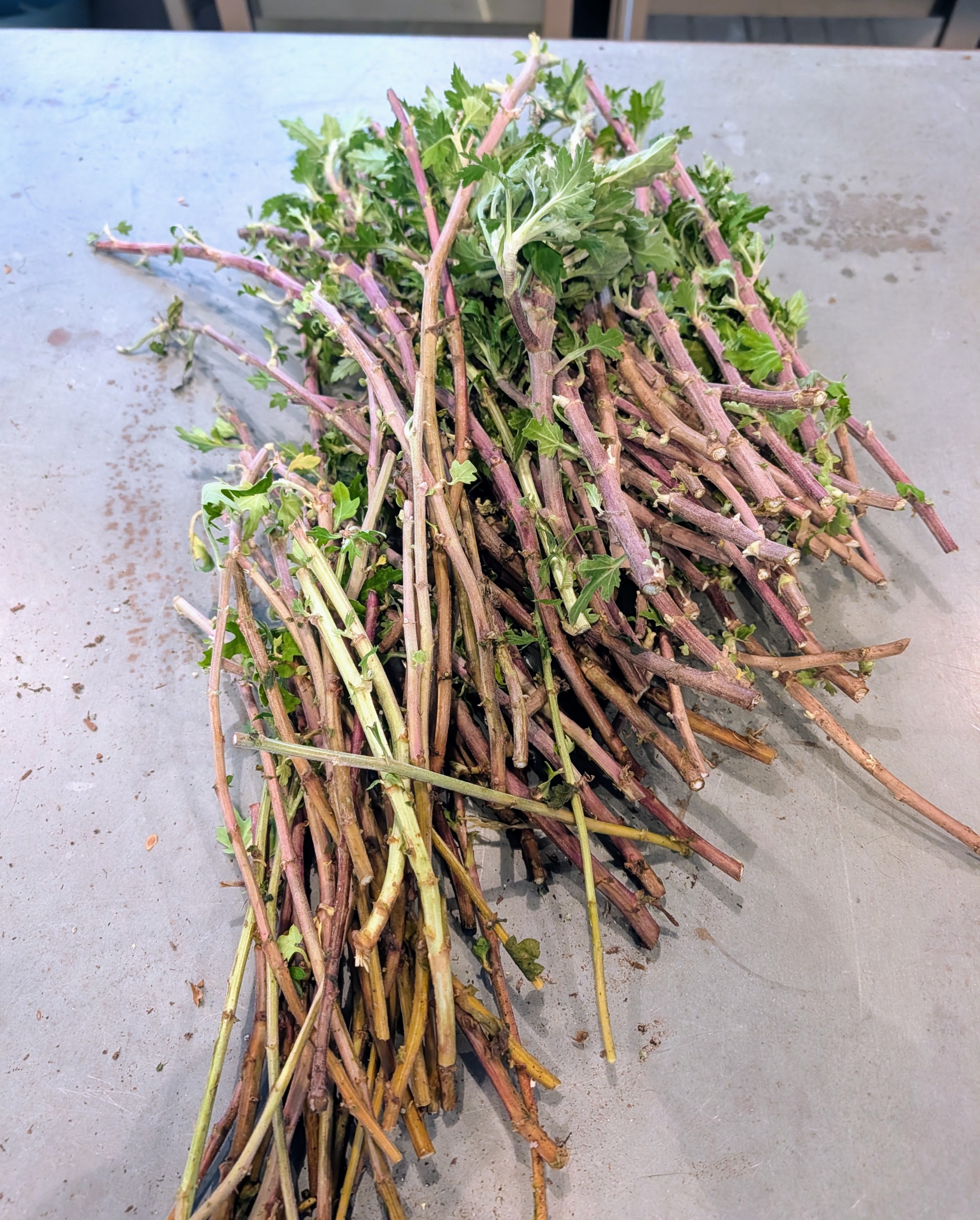
- Here are some of the cuttings brought indoors.
-
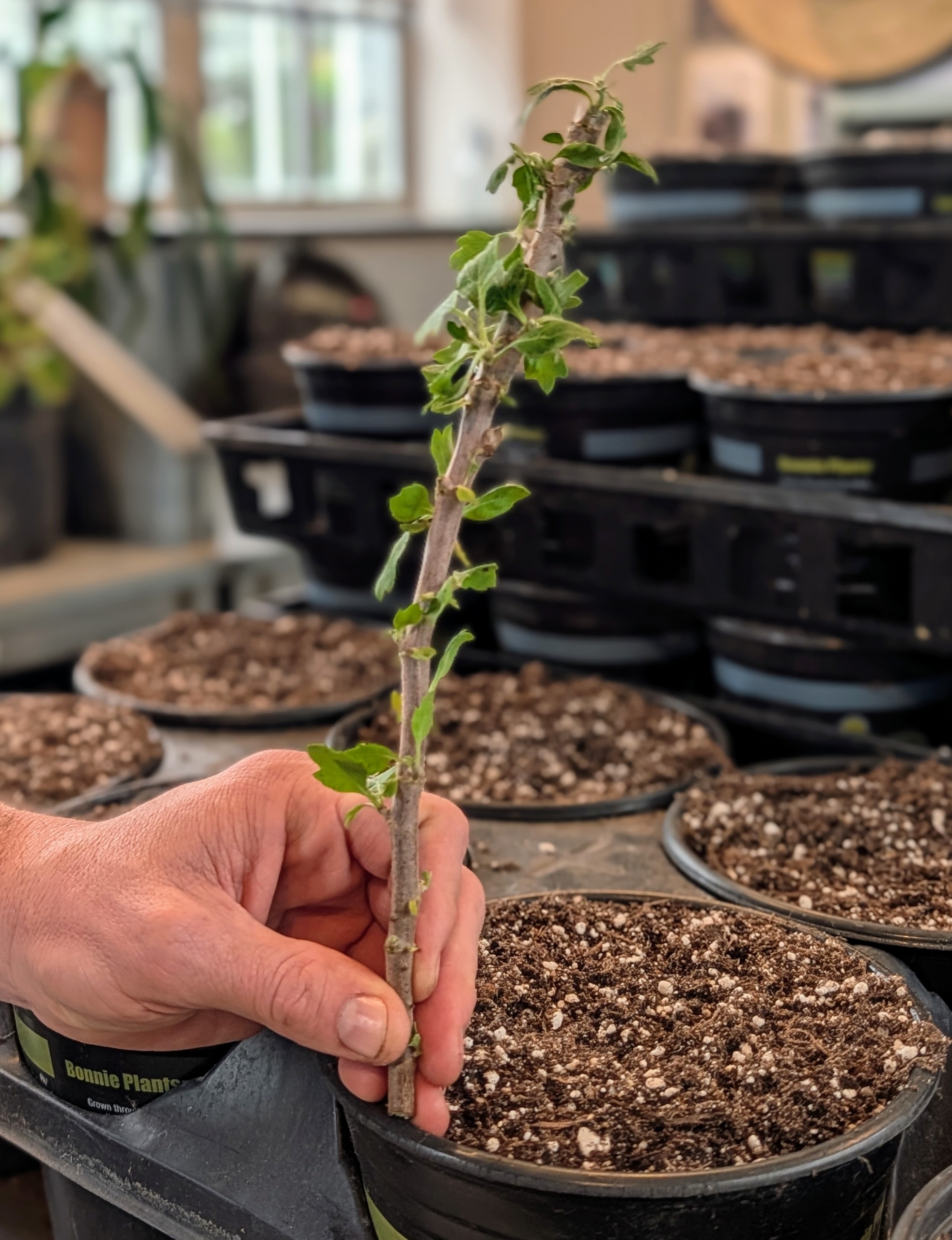
- Ryan cleans up the cuttings, removing any leaves from their bottom halves.
-
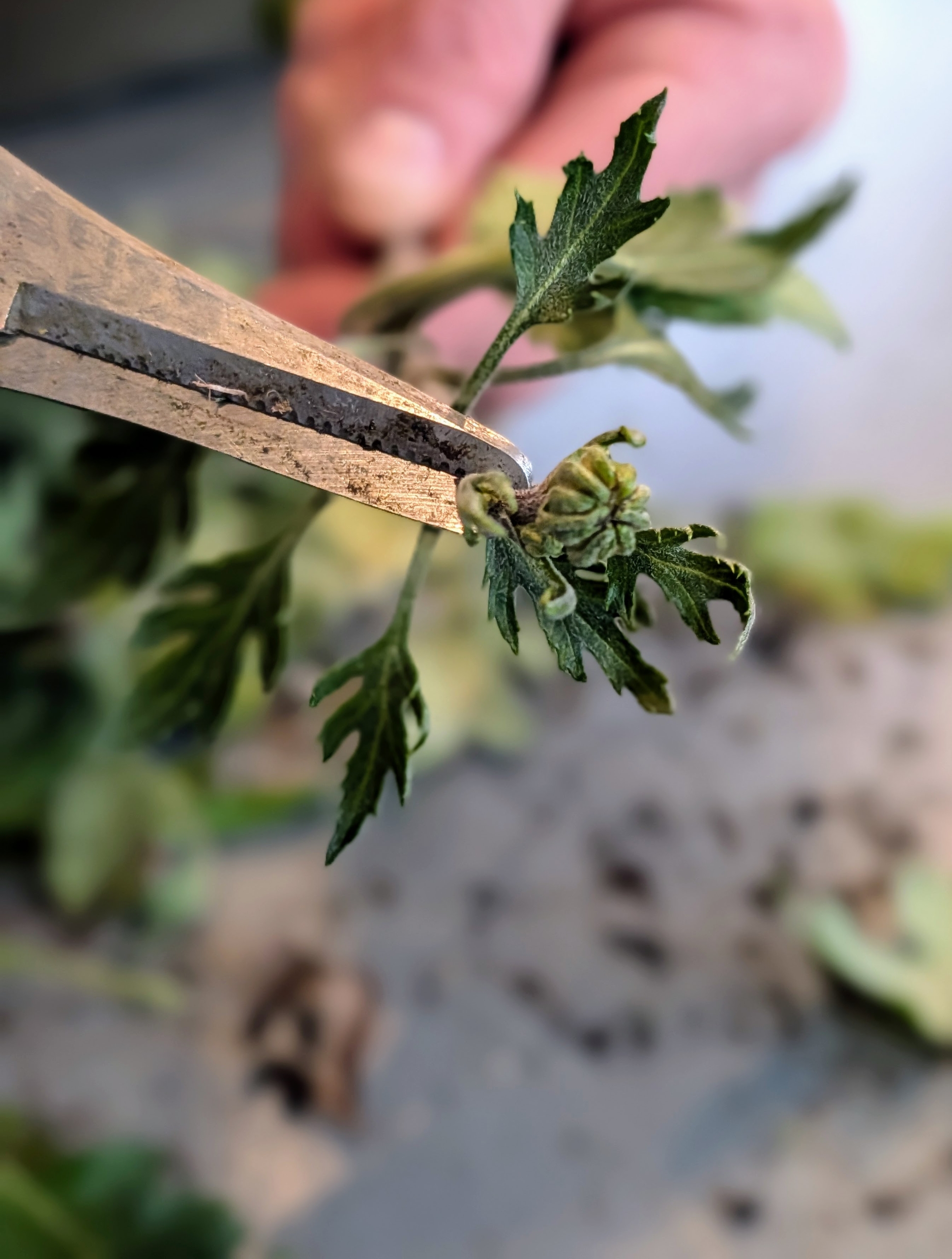
- He also cuts off any buds, so energy produced goes straight to root development.
-
- The cuttings are about eight inches tall.
-
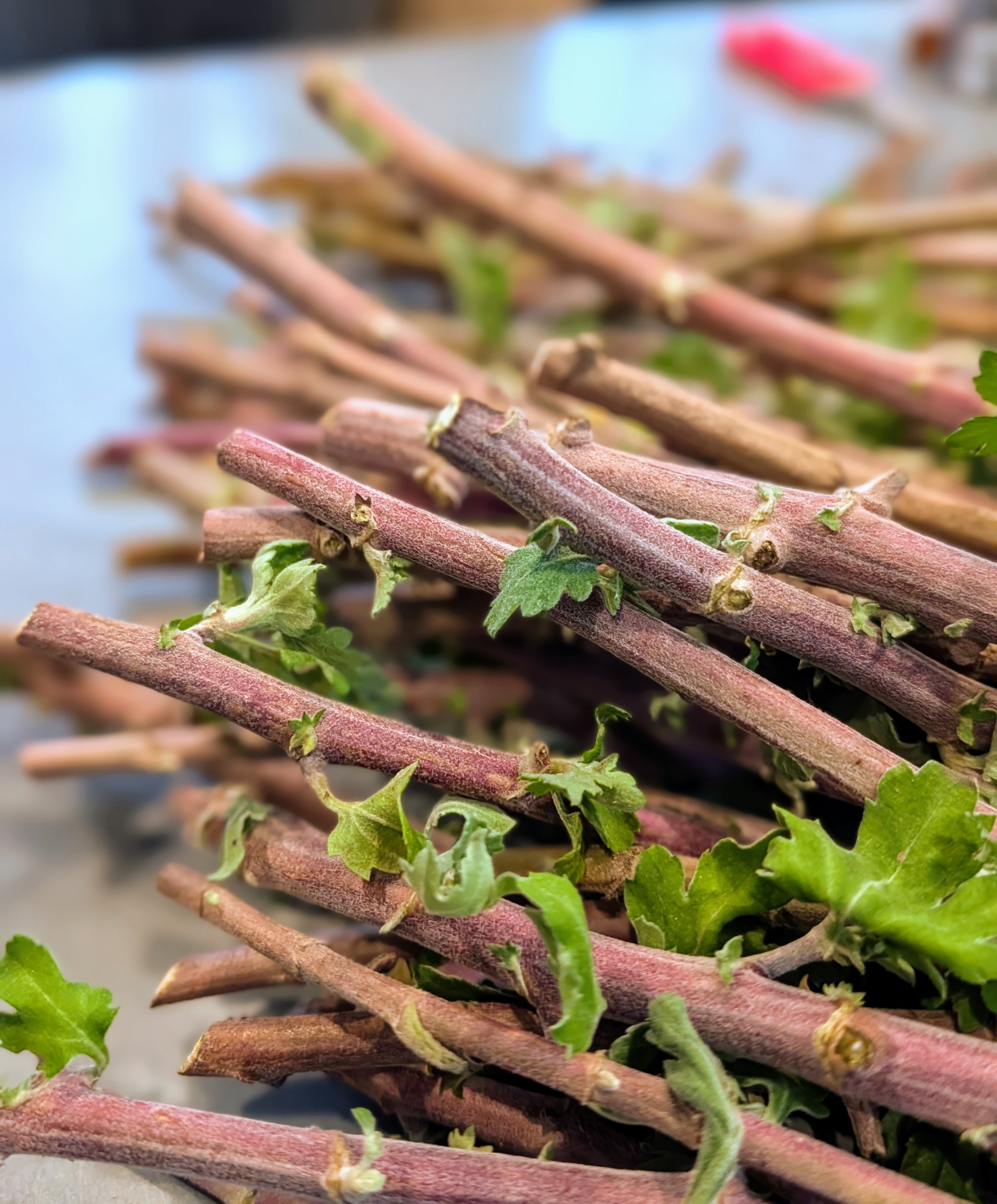
- Ryan prepares all the cuttings and then puts them aside in a dry place as he prepares the soil mix.
-
- I use Miracle-Gro Seed Starting Potting Mix, which is specially formulated for fast root development.
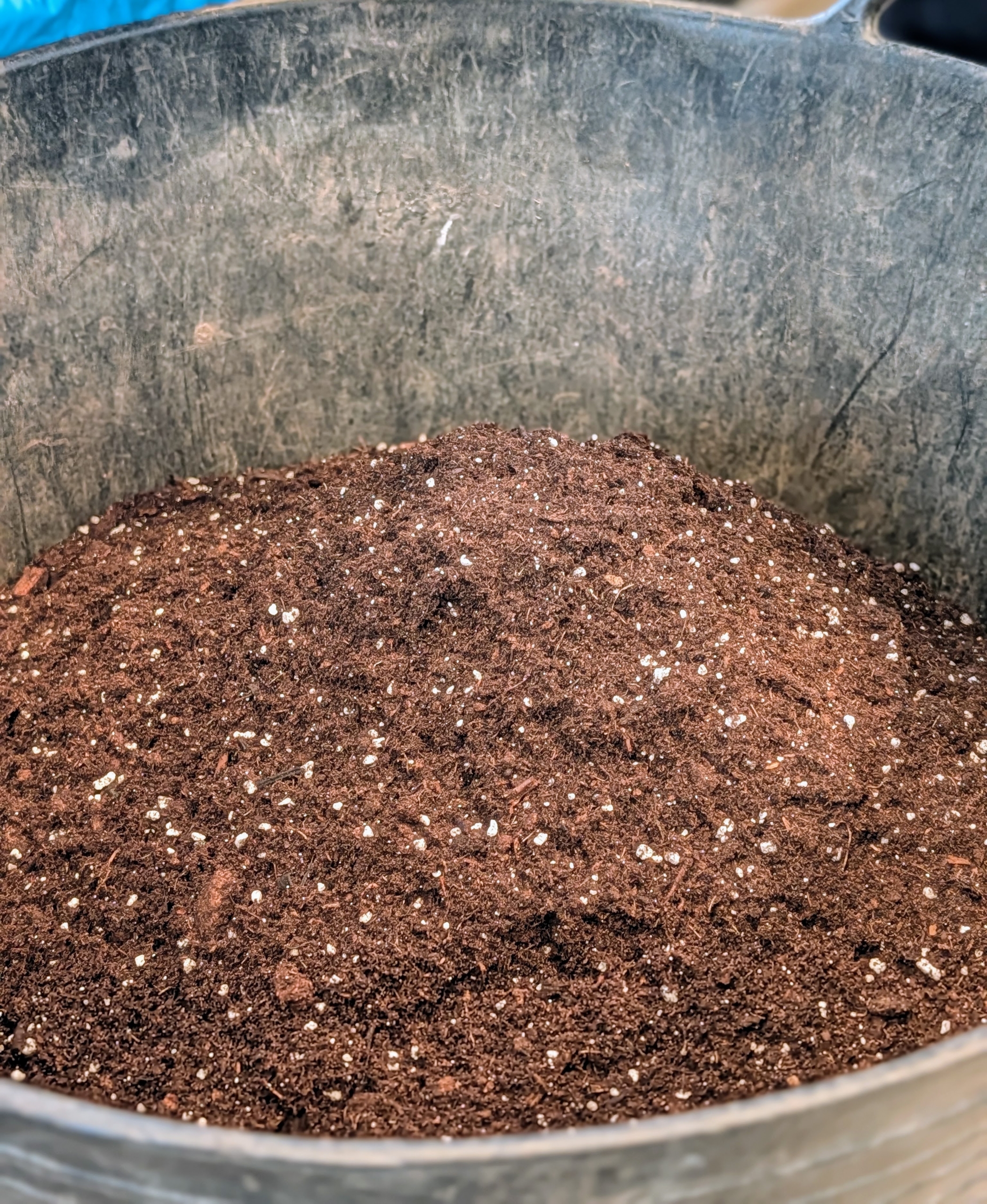
-
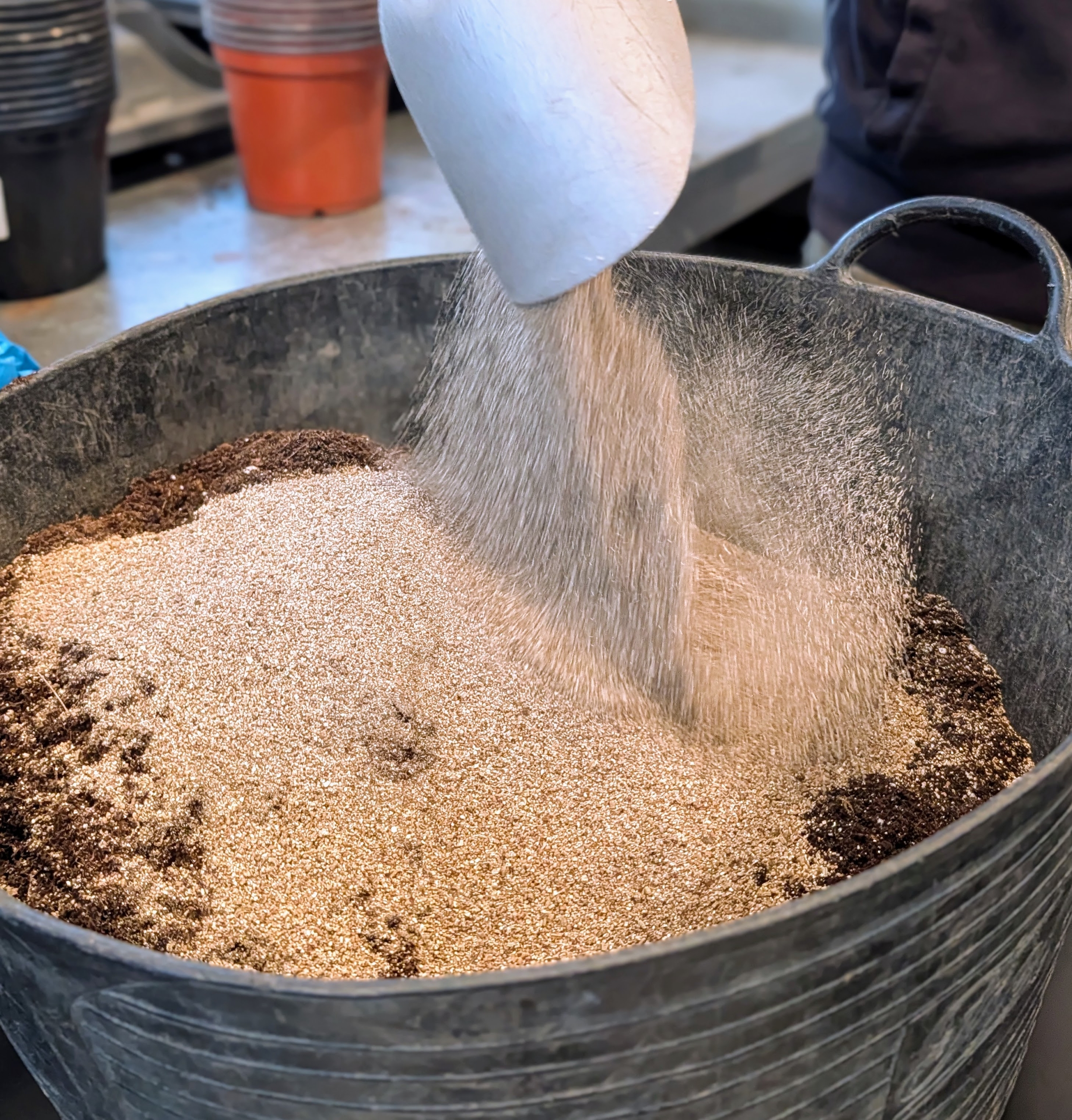
- Ryan adds some vermiculite to the potting soil. Vermiculite is typically gray-brown in color. It is a naturally occurring mineral often used as a soil amendment to retain moisture.
-
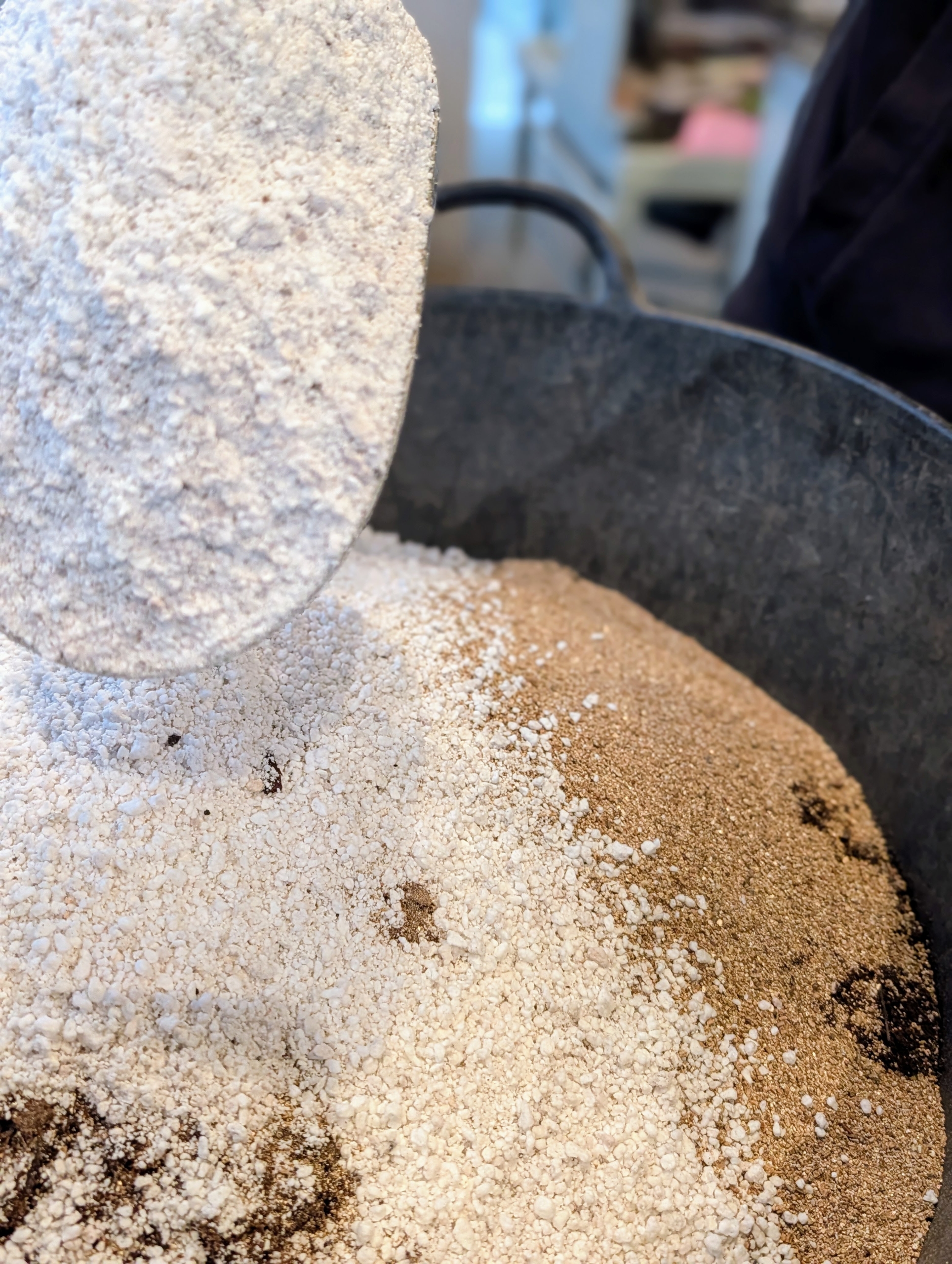
- Then he added some perlite, which is an amorphous volcanic glass and used as a draining and filtration agent.
-
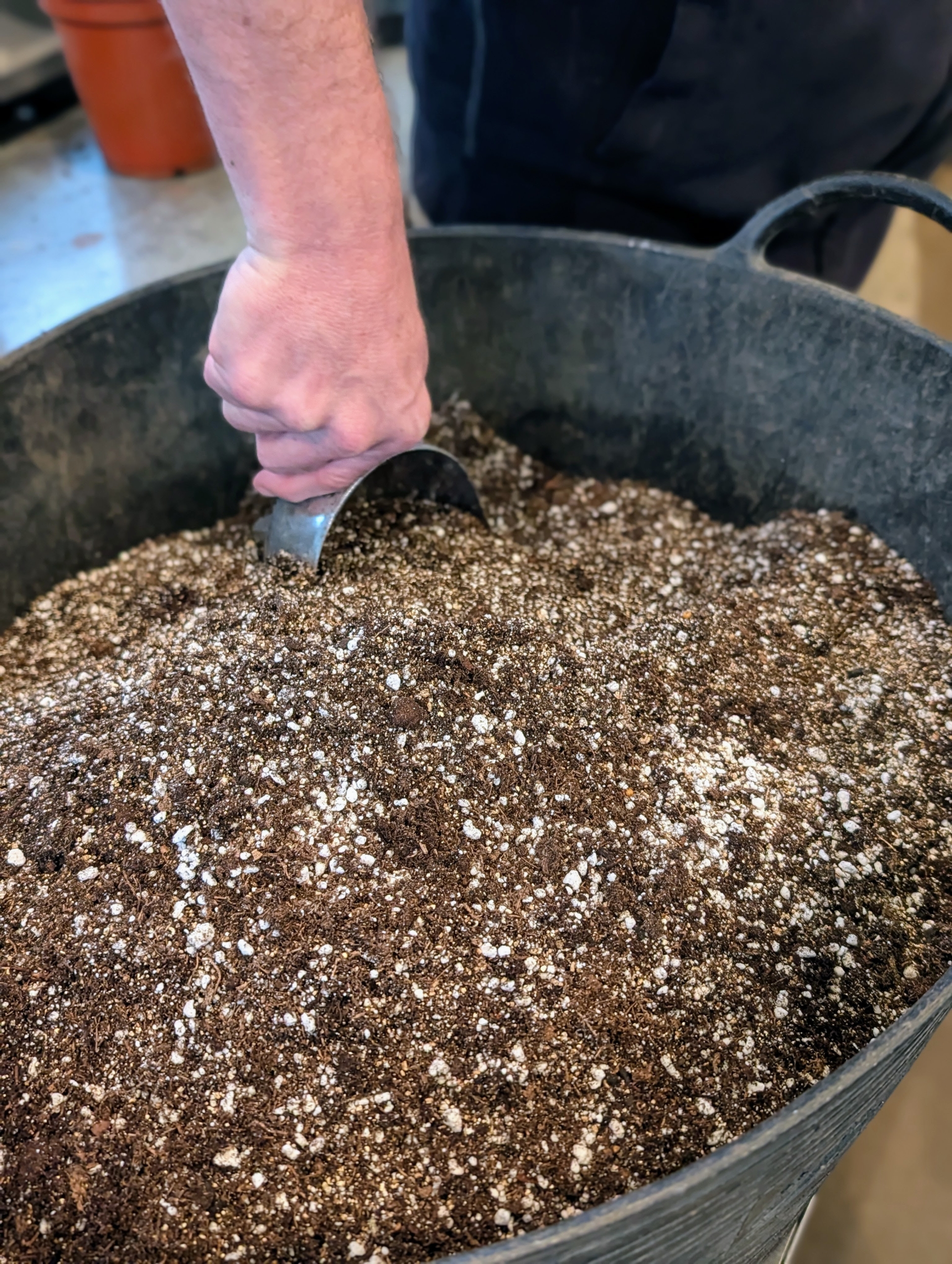
- Ryan mixes the elements together in a large gardening trug bucket. Ryan is potting up dozens of cuttings, so a large amount of soil mix is needed.
-
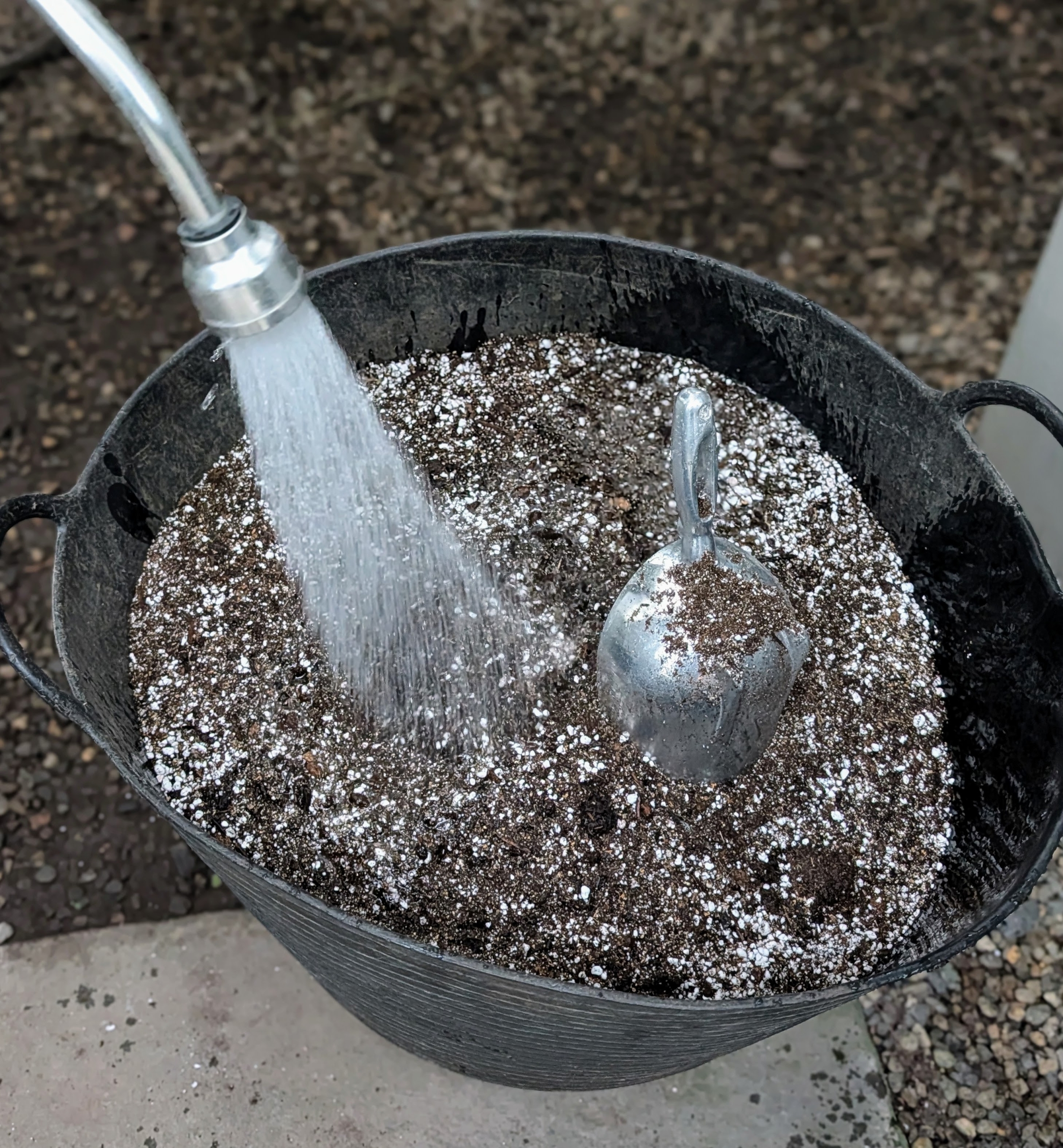
- Next, Ryan moistens the mix.
-
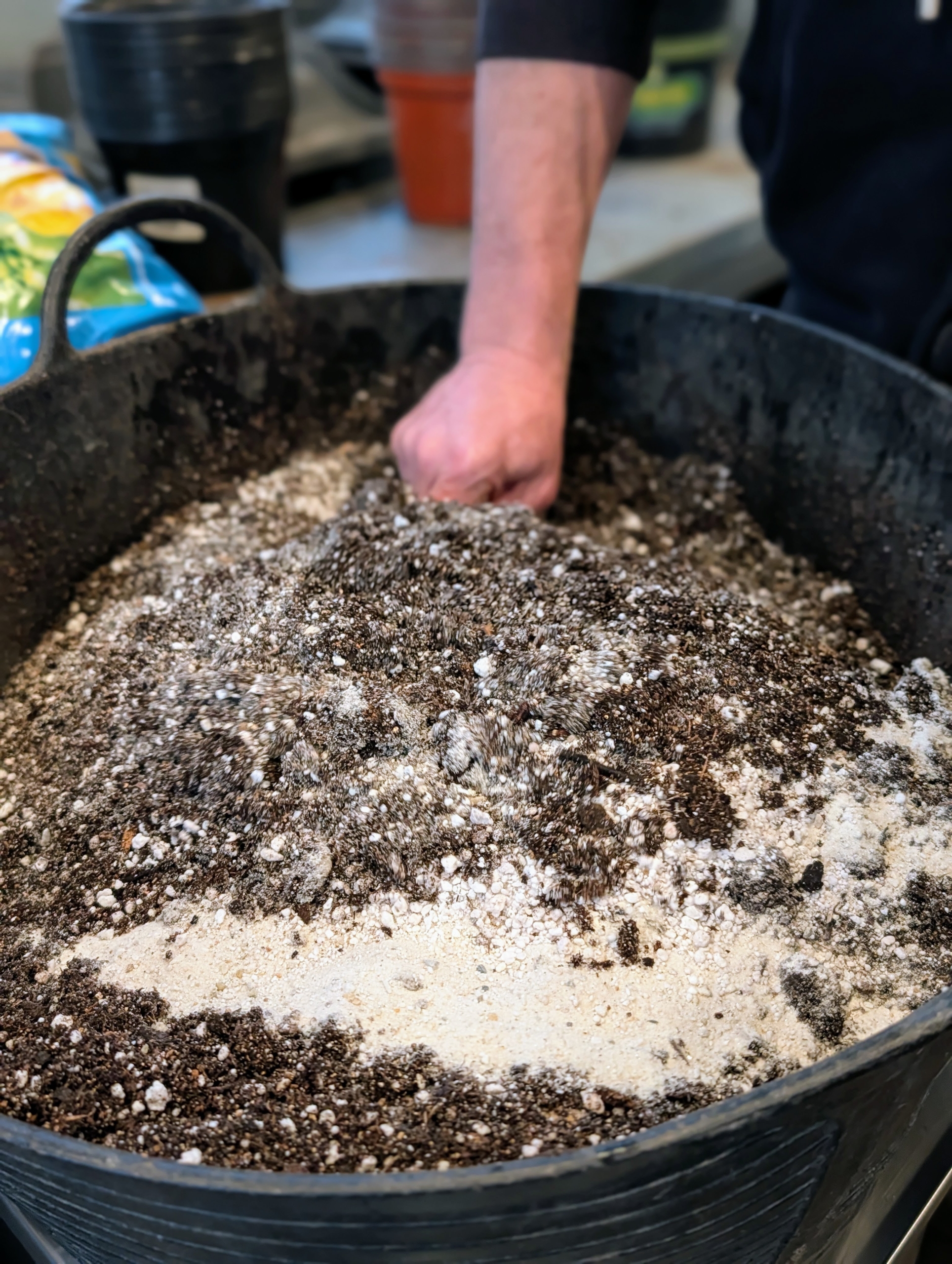
- And then mixes in a couple scoops of sand to improve drainage even more and enhance aeration. Sand also prevents soil compaction in the pots.
-
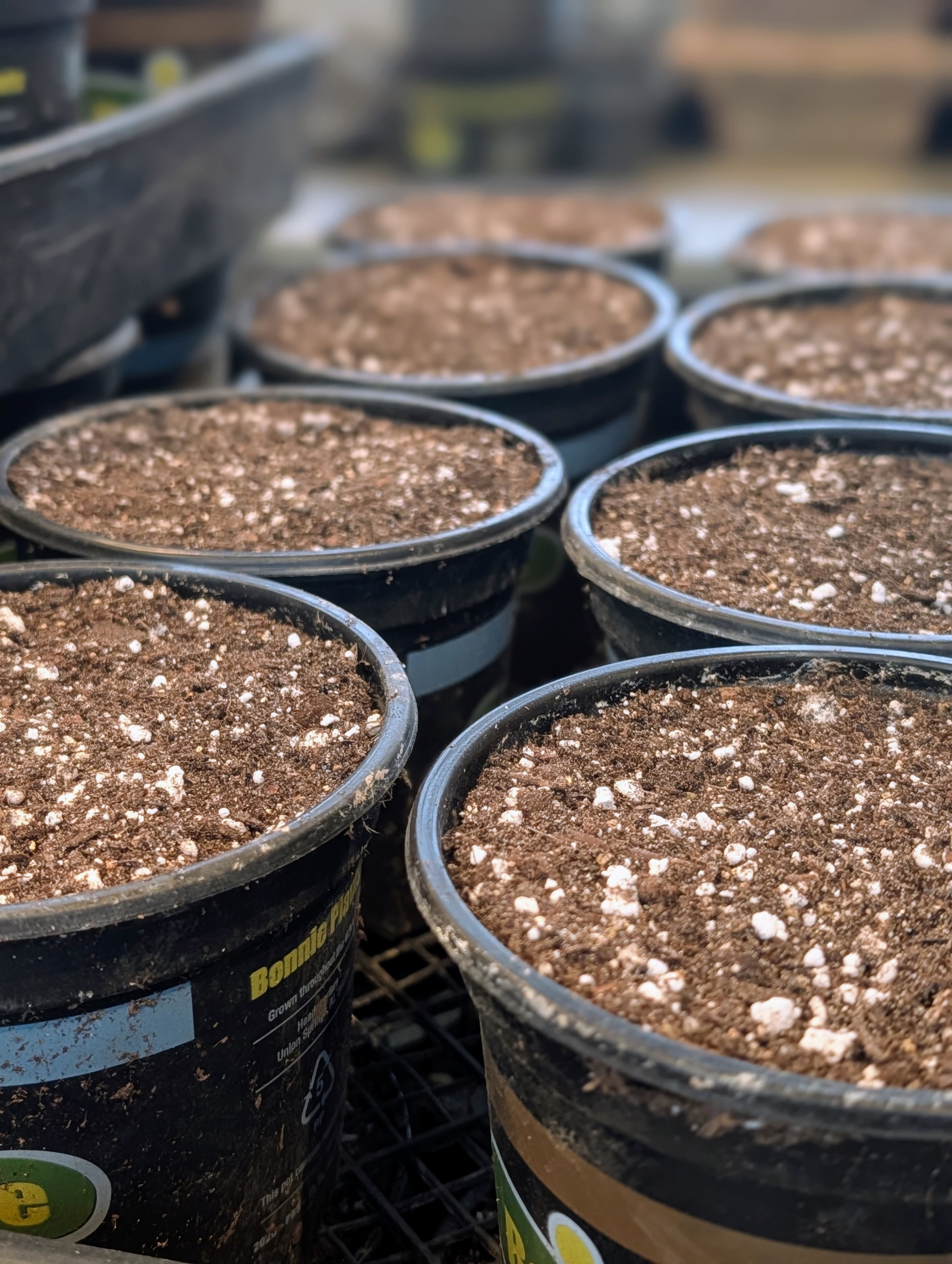
- Then in production line process, Ryan fills a number of pots just up to the lips of the containers.
-
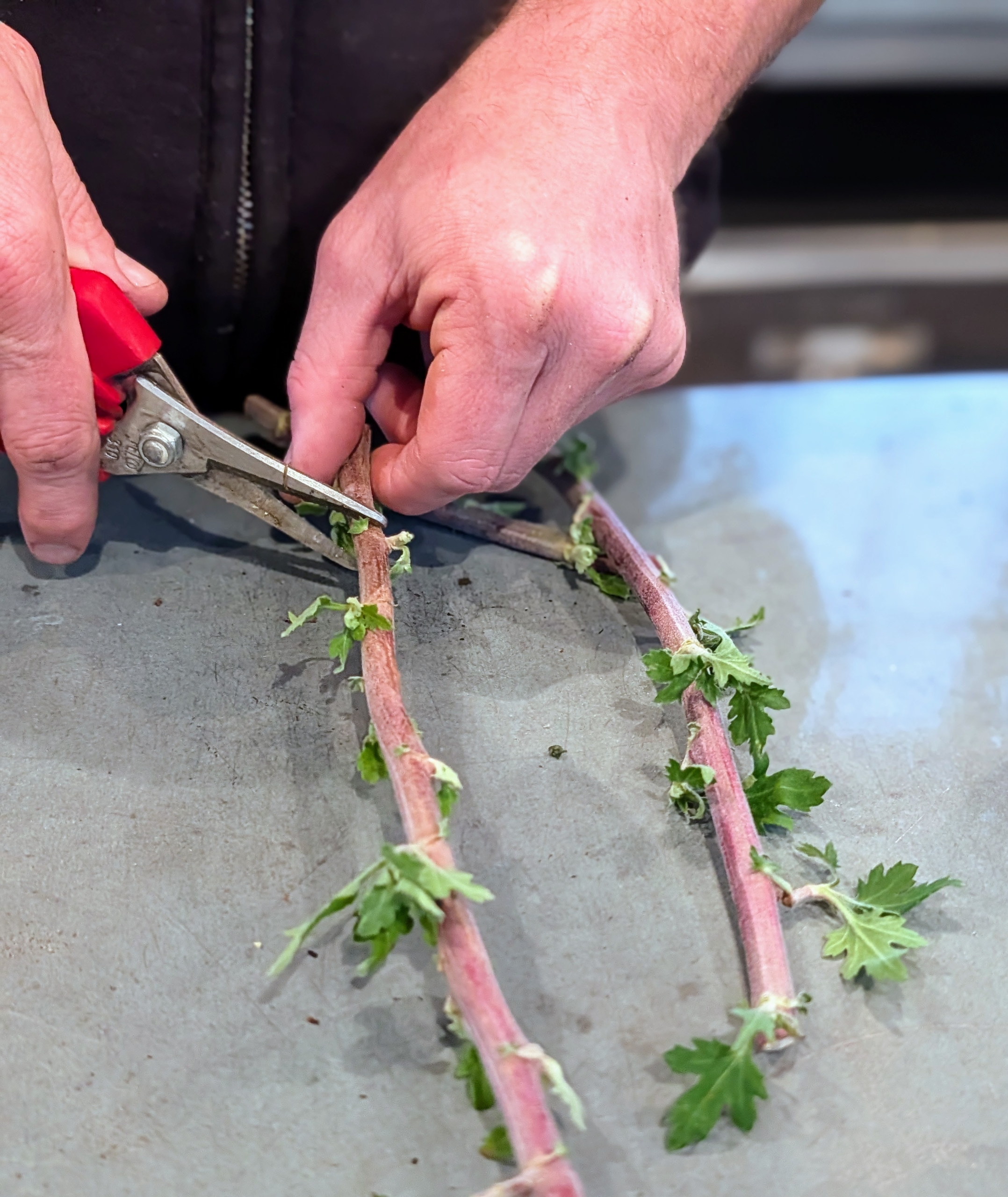
- Using small pruning shears, Ryan gives each stem a fresh cut.
-
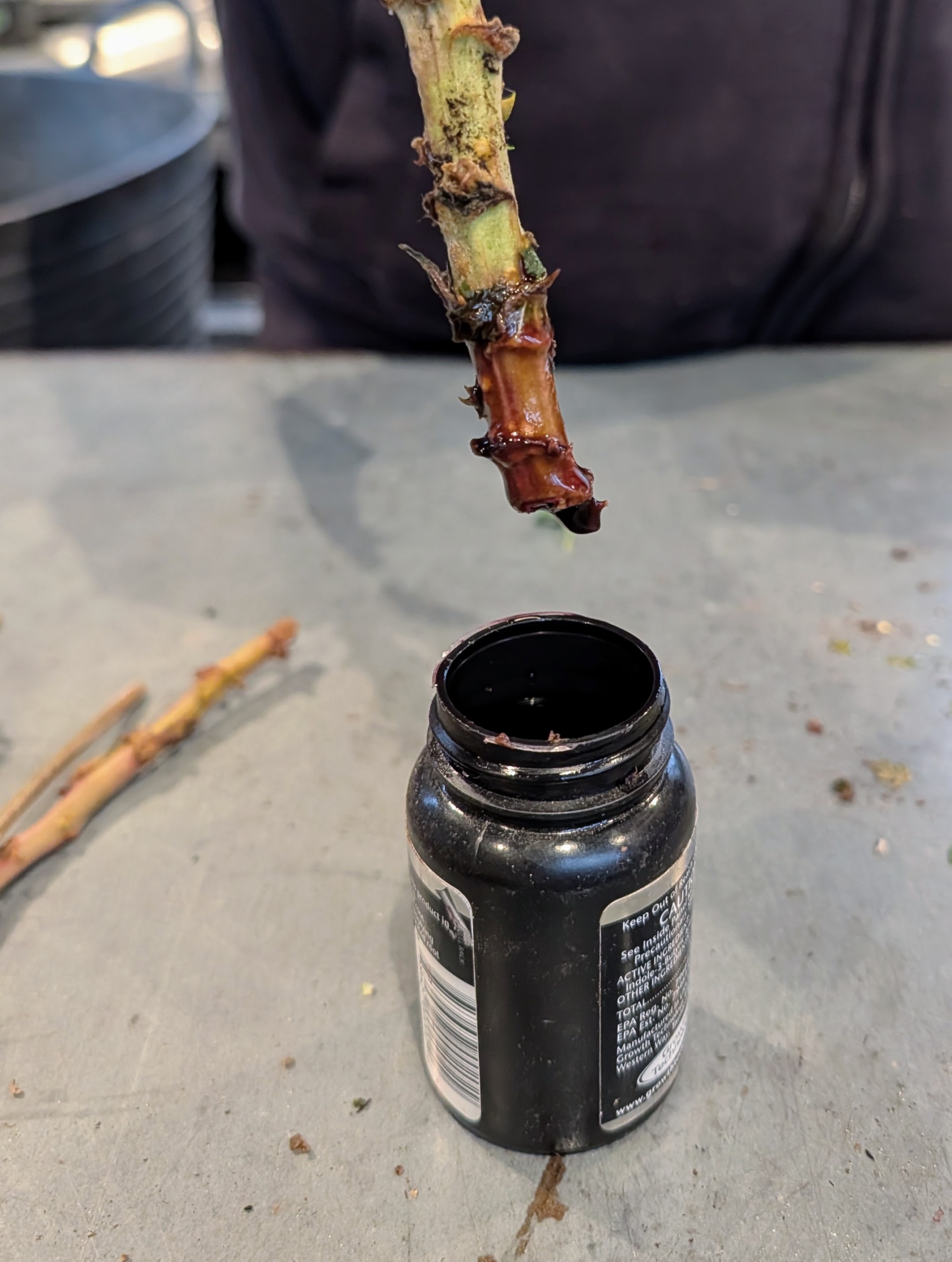
- Then he immediately dips one cut end into a rooting gel hormone making sure at least one node is coated. Rooting hormone gel, or powder, is available at garden shops and online and is essential for promoting root initiation and development.
-
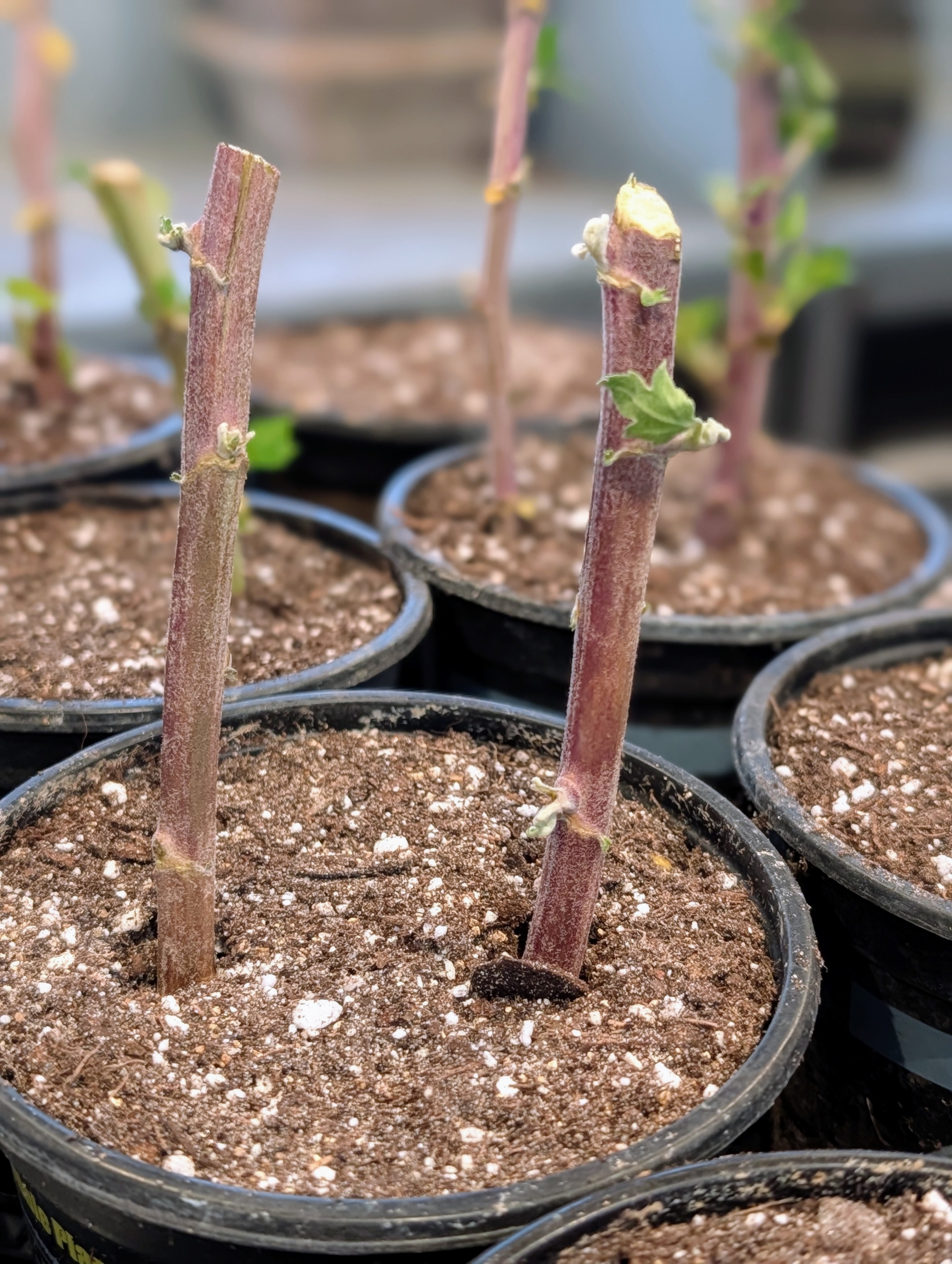
- Most cuttings are planted in pairs. Ryan sticks the coated end of the cutting a couple inches into the potting mix until it is secure and the entire coated area is in the soil. Any cuttings that do not take can be removed later.
-
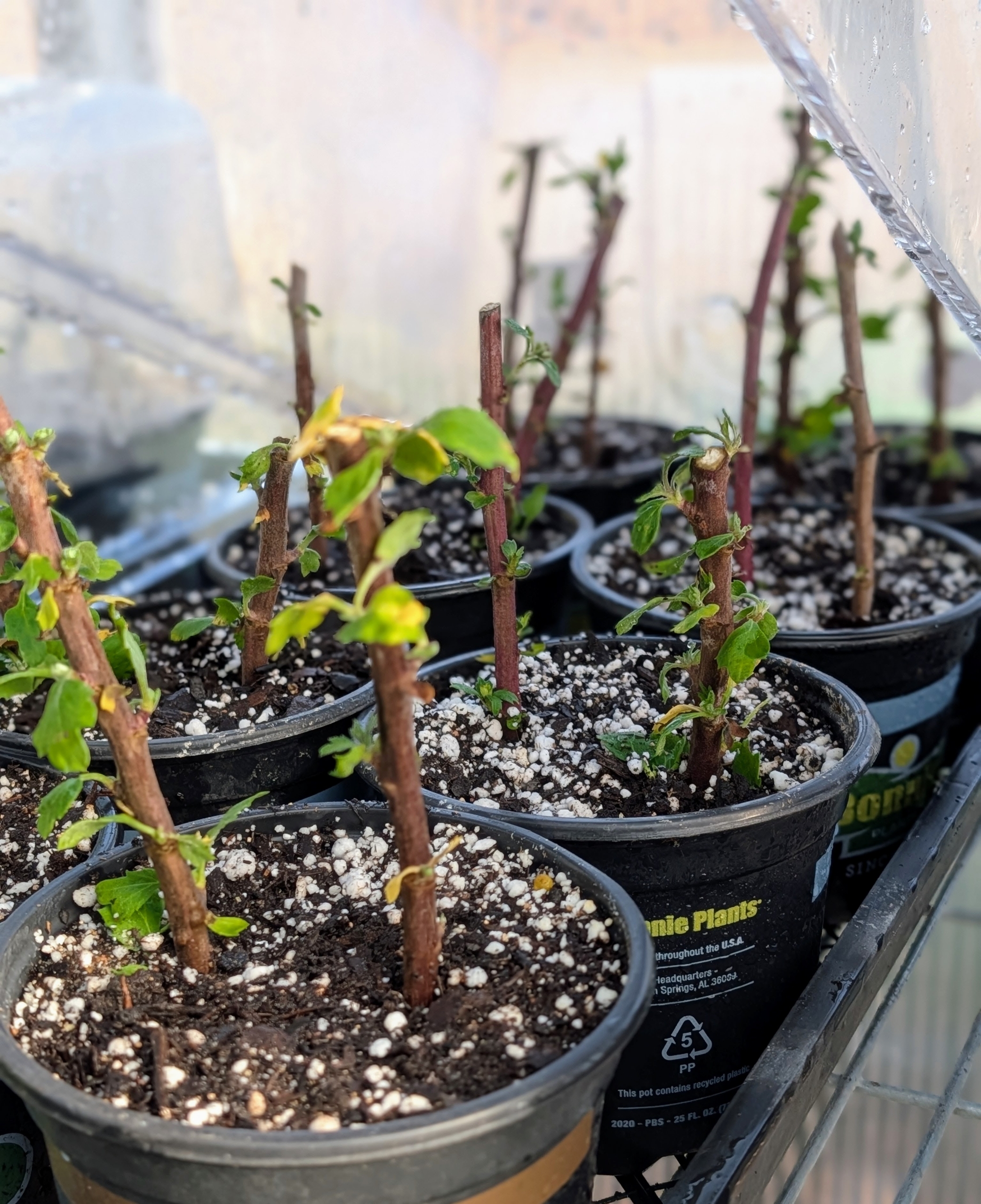
- Once all the cuttings are planted, they are watered and covered with humidity domes. These potted cuttings will be kept moist but not waterlogged to maintain proper rooting environments.
-
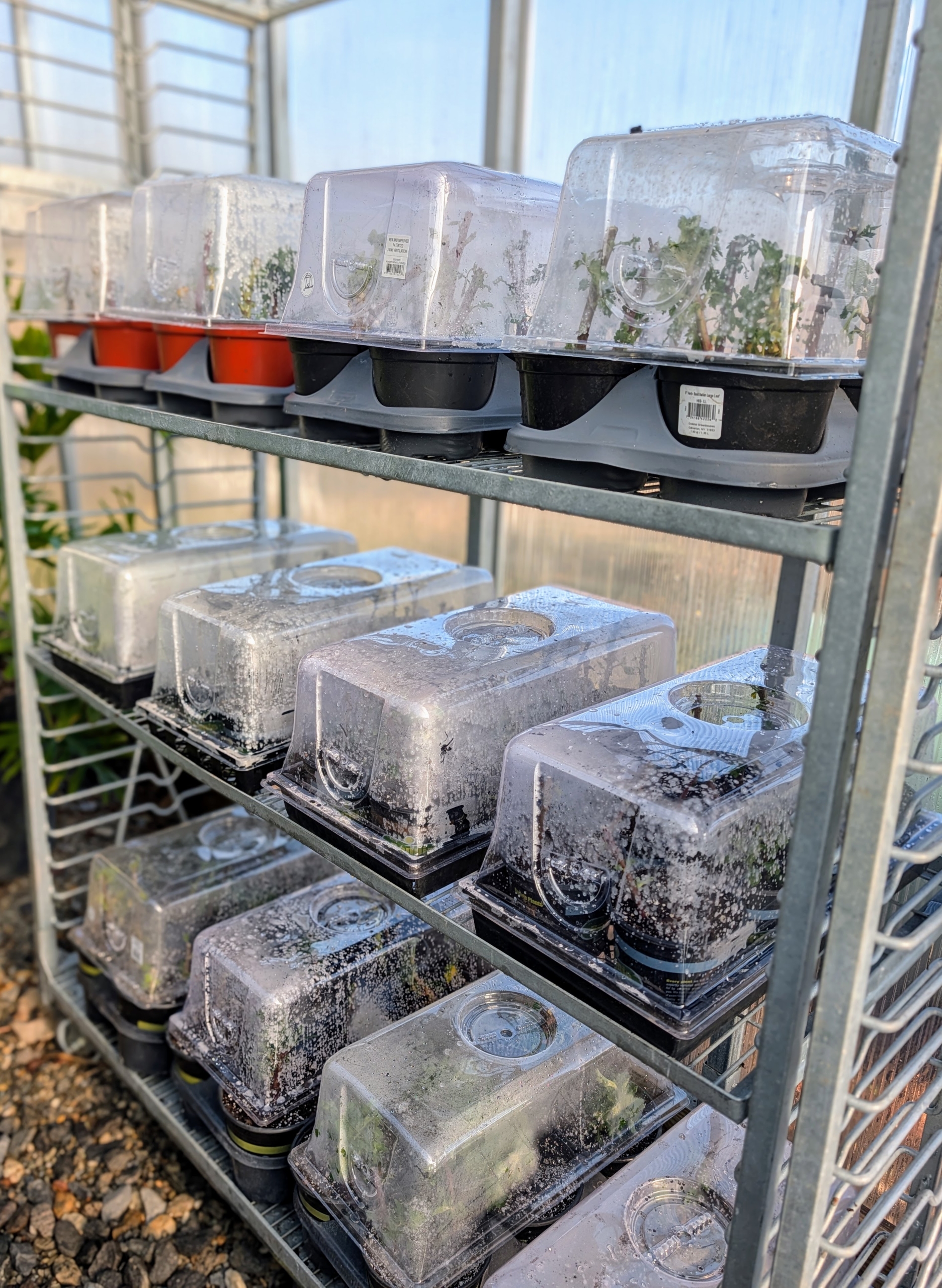
- Finally, the cuttings are brought into one of my temperature and humidity controlled hoop houses where they will remain for the season. I can’t wait to see how many of these mums take root.
 Martha Pins


 Martha Tweets

