

Pruning and Grooming My Maze
It's so important to keep up with the maintenance and care of the many trees and plants here at my farm.
Four years ago, I started creating a garden maze of interesting hedges, espaliers, and shrubs in the pasture across the carriage road from my Winter House terrace. I've planted hundreds of different specimens that add texture and interest - all according to a very detailed map I designed specifically for the space. To keep them healthy and looking their best, I make sure I prune and groom them regularly.
Here are some photos, enjoy.
-

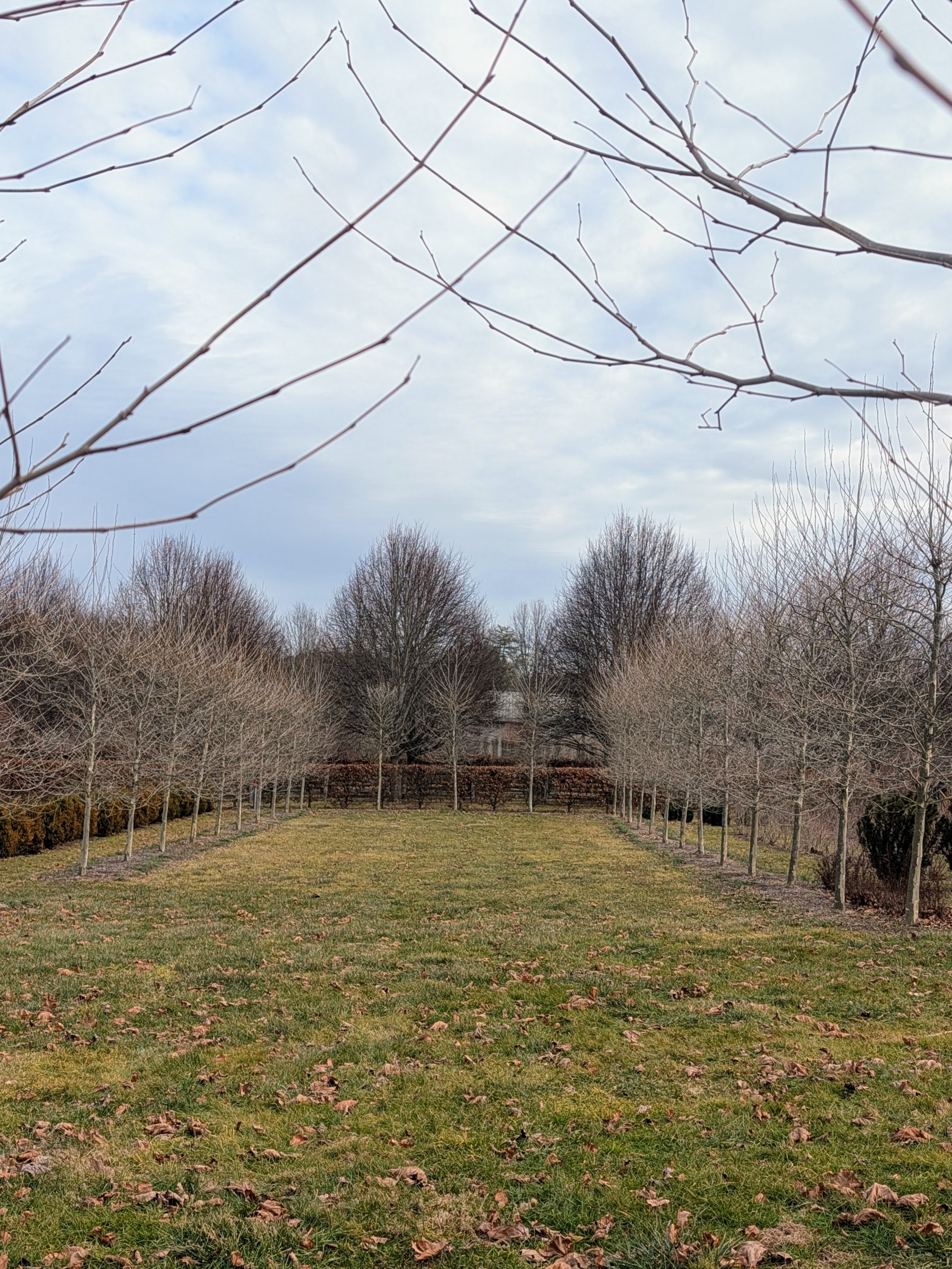
- A living garden maze is a puzzle of plantings – most will grow tall enough to prevent walkers from seeing the paths ahead. I designed the maze in this three acre pasture in front of my Winter House, so I could see it right from my window. This is a selection of Platanus acerifolia ‘Bloodgood’ trees, also known as London planes, planted almost in the center of the space. On each side are planted rows that will branch off with various pathway options and dead ends – with only one correct route to this open field.
-
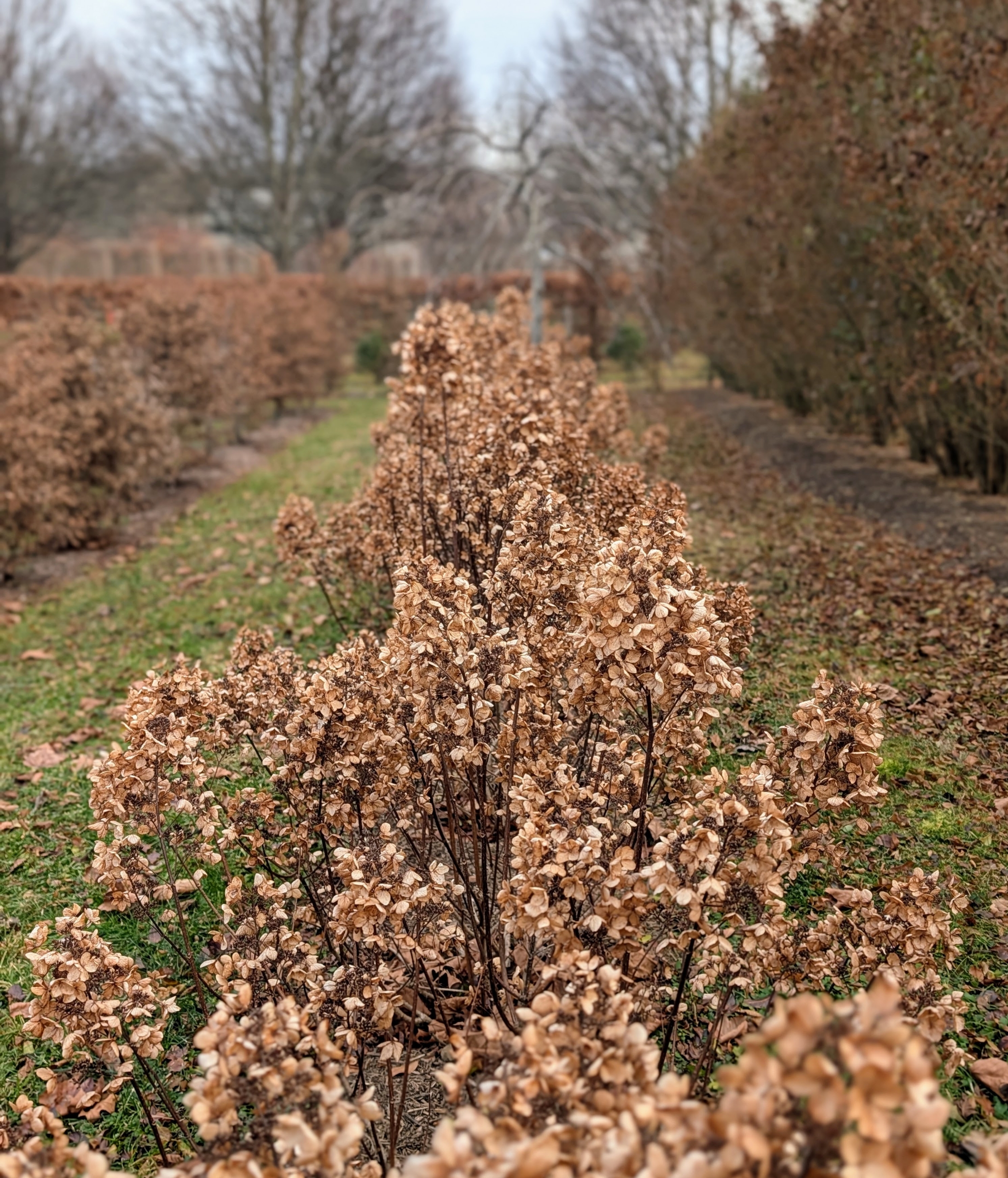
- Here is a row of hydrangeas, still with their dried flower heads intact. I planted a variety of different hedges, espaliers, trees, and shrubs in this maze – hundreds of specimens that add texture and interest, and all according to a detailed map I created specifically for the area.
-
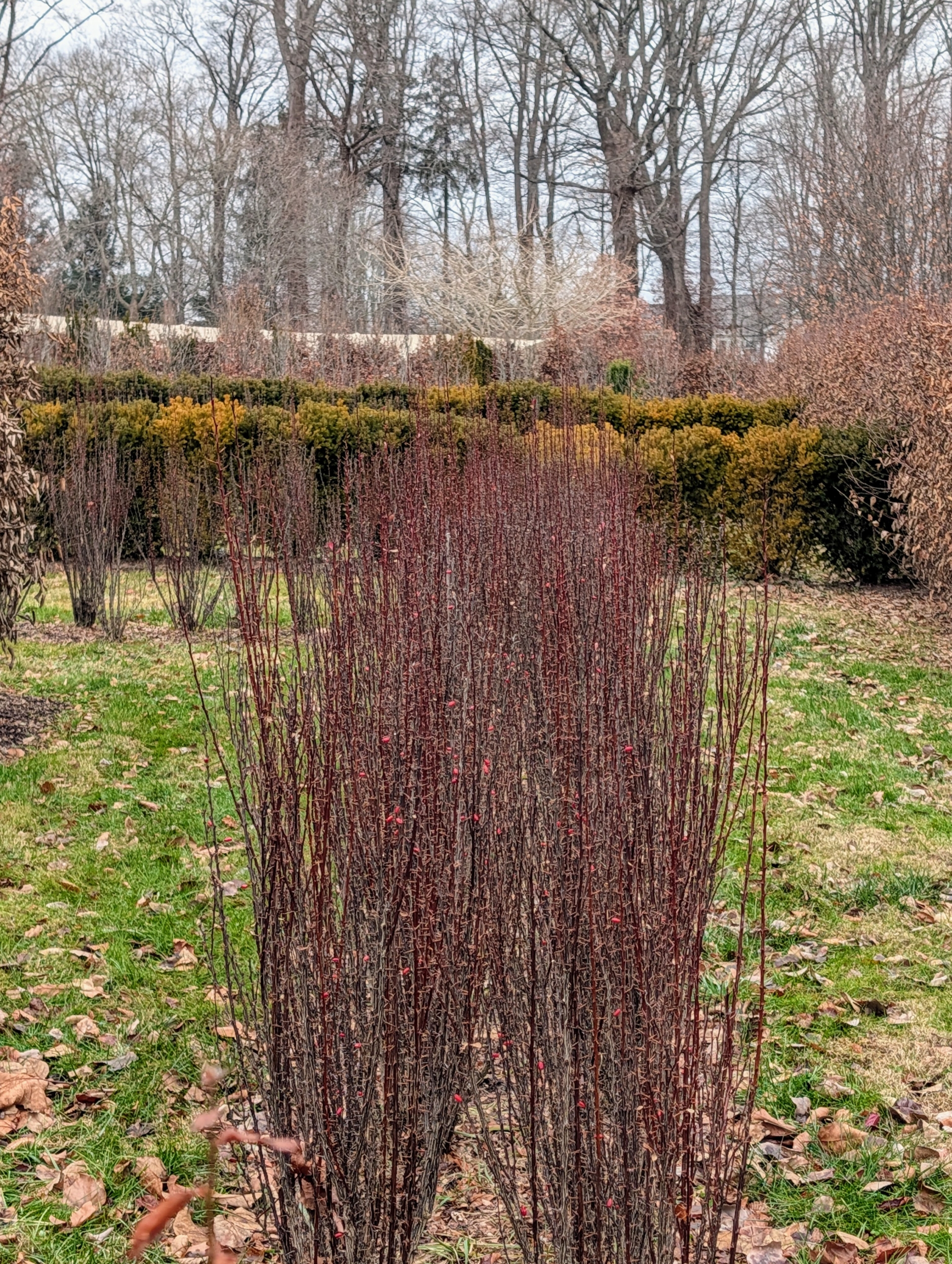
- This is Japanese barberry with its deep burgundy colored foliage.
-
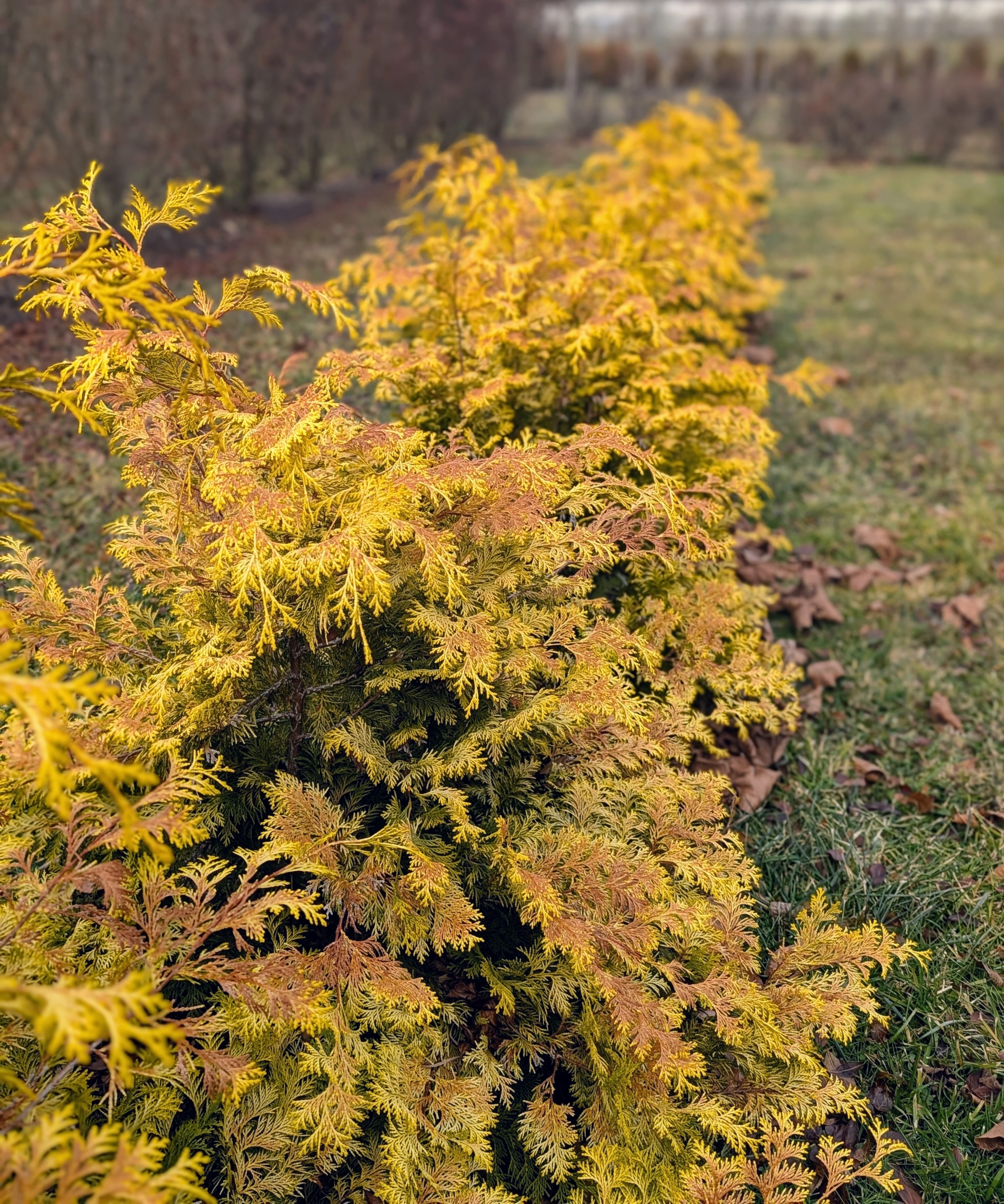
- Paul’s Gold threadleaf false cypress, Chamaecyparis pisifera, has year-round golden green foliage. The soft sprays of Paul’s Gold threadleaf false cypress emerges yellow in the spring and retains its gold color throughout the winter.
-
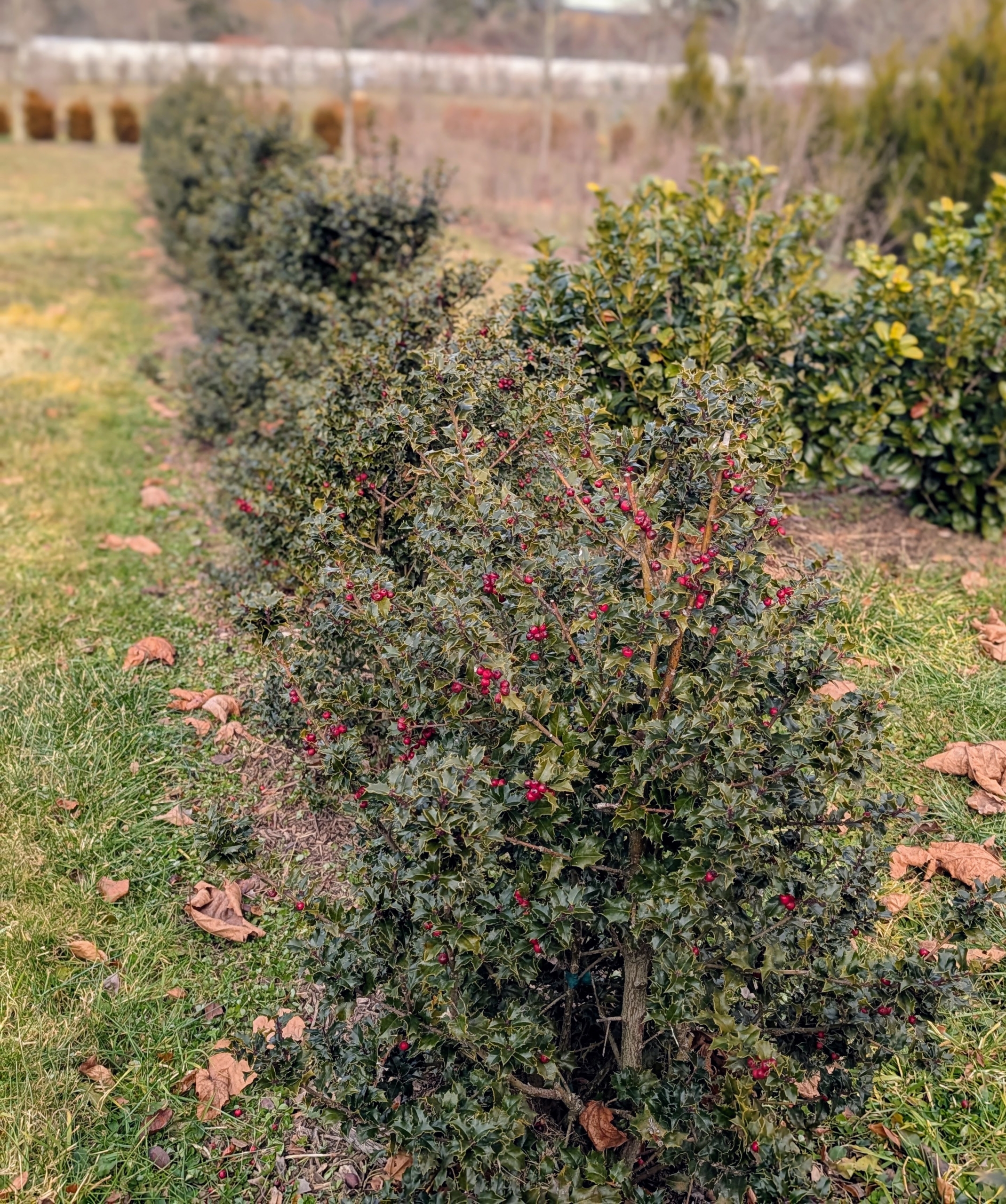
- And this is holly with bright red berries combined with glossy, dark green foliage. Many varieties of holly, Ilex, have compact habits and glistening leaves that’s excellent for hedges, borders, and yes, mazes. Many of the evergreens in this maze are grown by Monrovia, a wholesale plant nursery specializing in well-nurtured shrubs, perennials, annuals, ferns, grasses, and conifers with several nursery locations across the country.
-
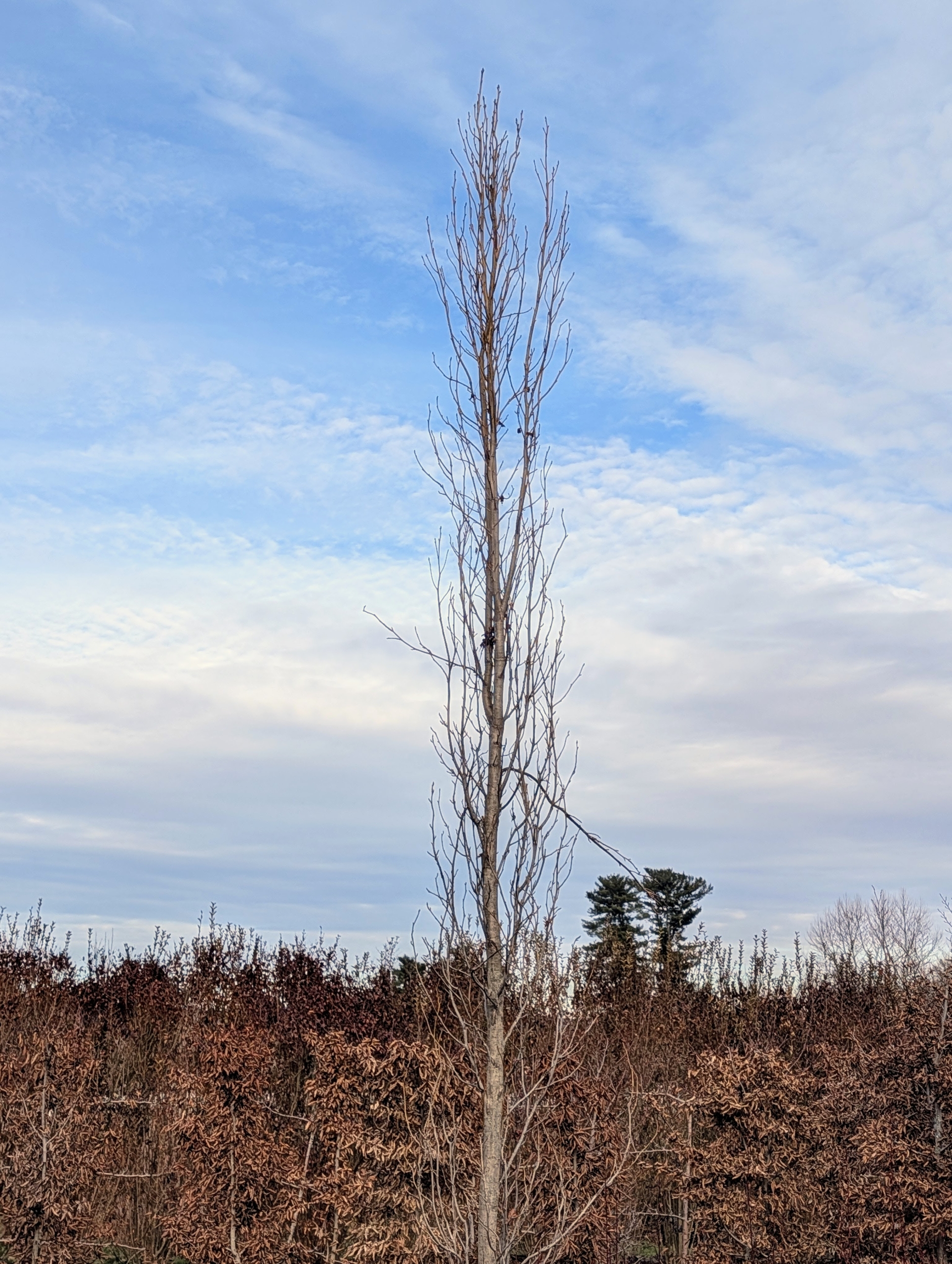
- Completely bare now, but this is one of several Liquidambar styraciflua ‘Slender Silhouette’ trees, American sweetgums. As these trees mature, they will maintain this erect, columnar form, growing up to 50 feet tall and only about four-feet wide.
-
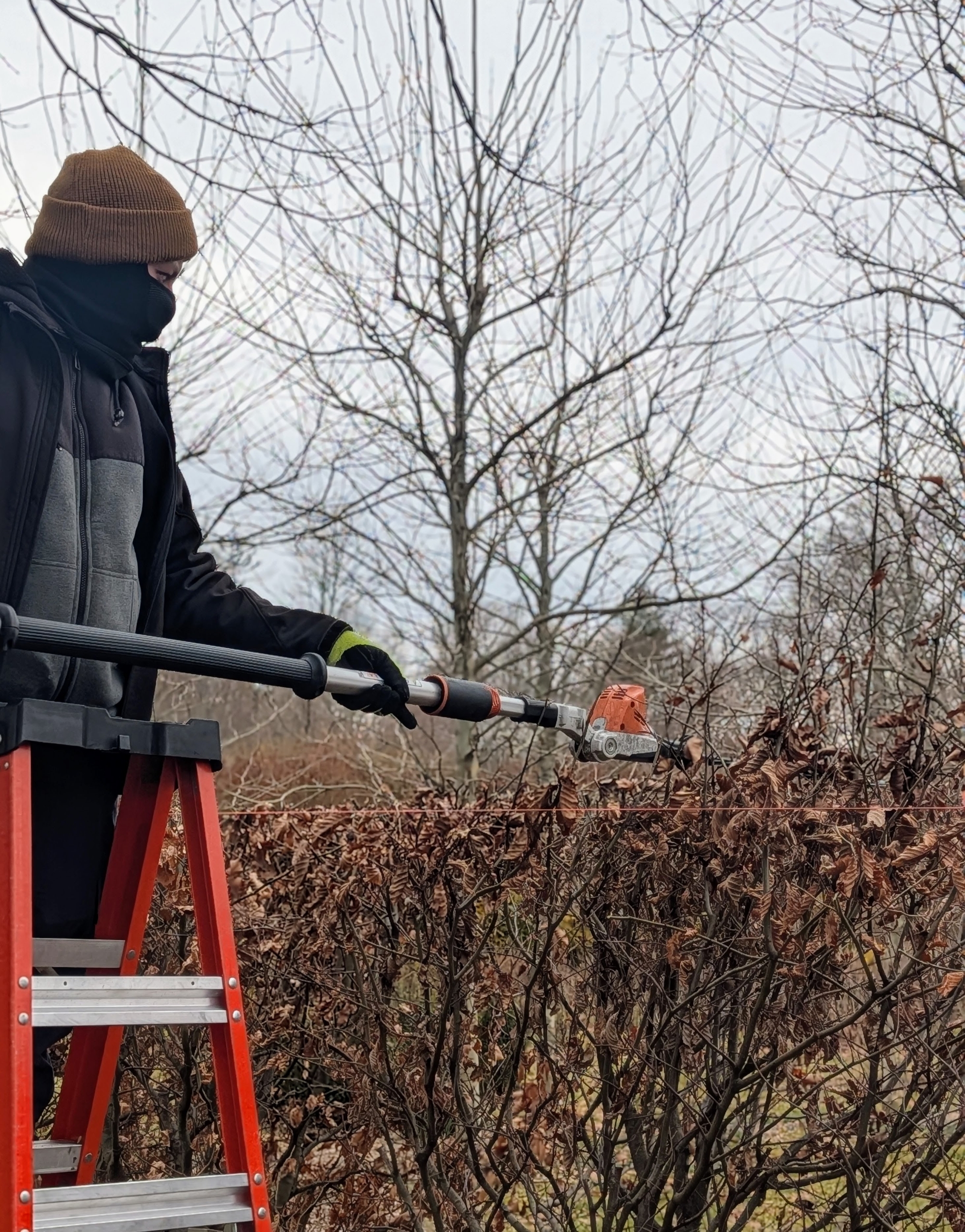
- When needed, the developing hedges are trimmed. Alex prunes the tops of the European beech that grow along the outermost edge of the maze. He makes sure they are all cut to the exact height by using the STIHL HLA 86 Powered Extended-Reach Hedge Trimmer.
-
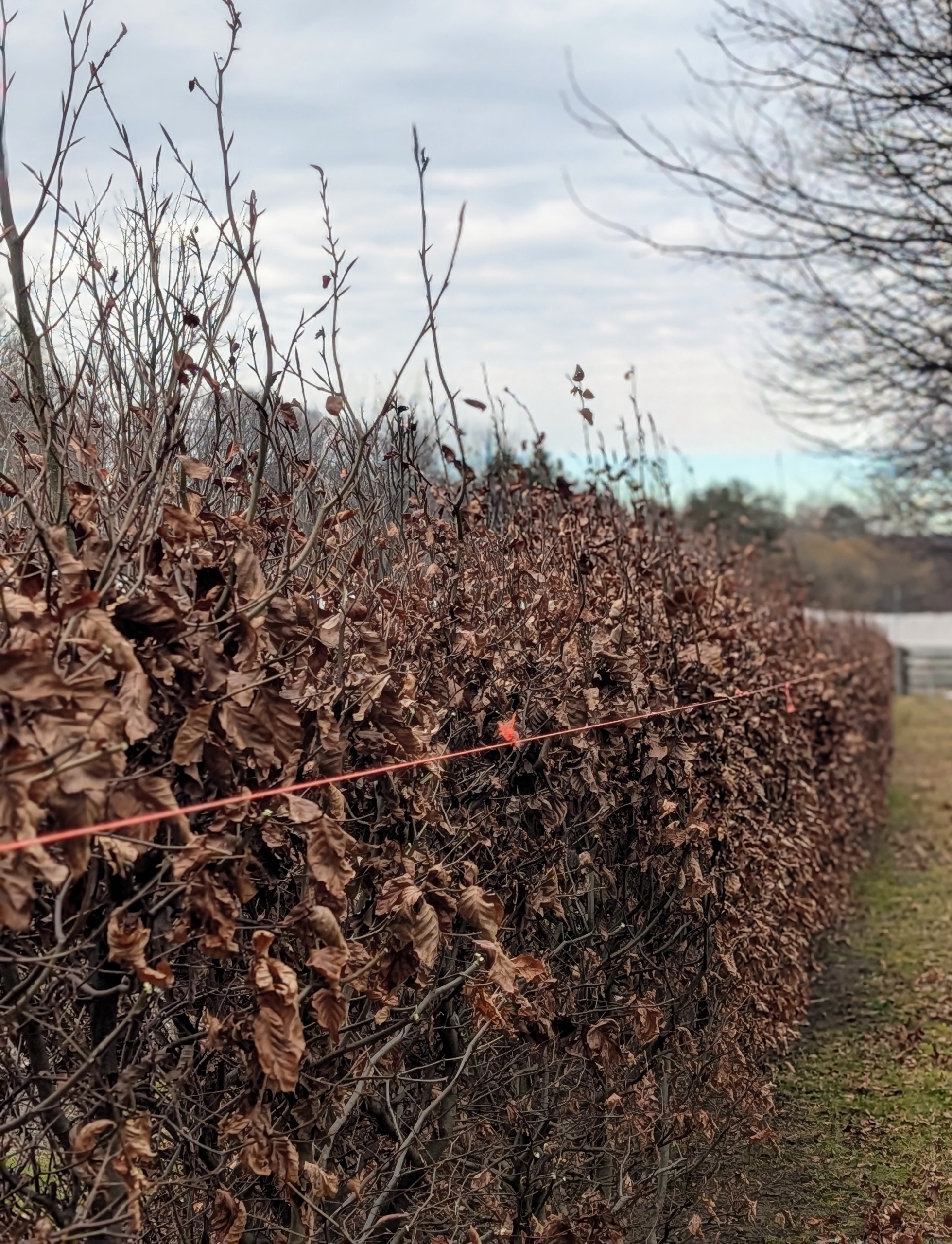
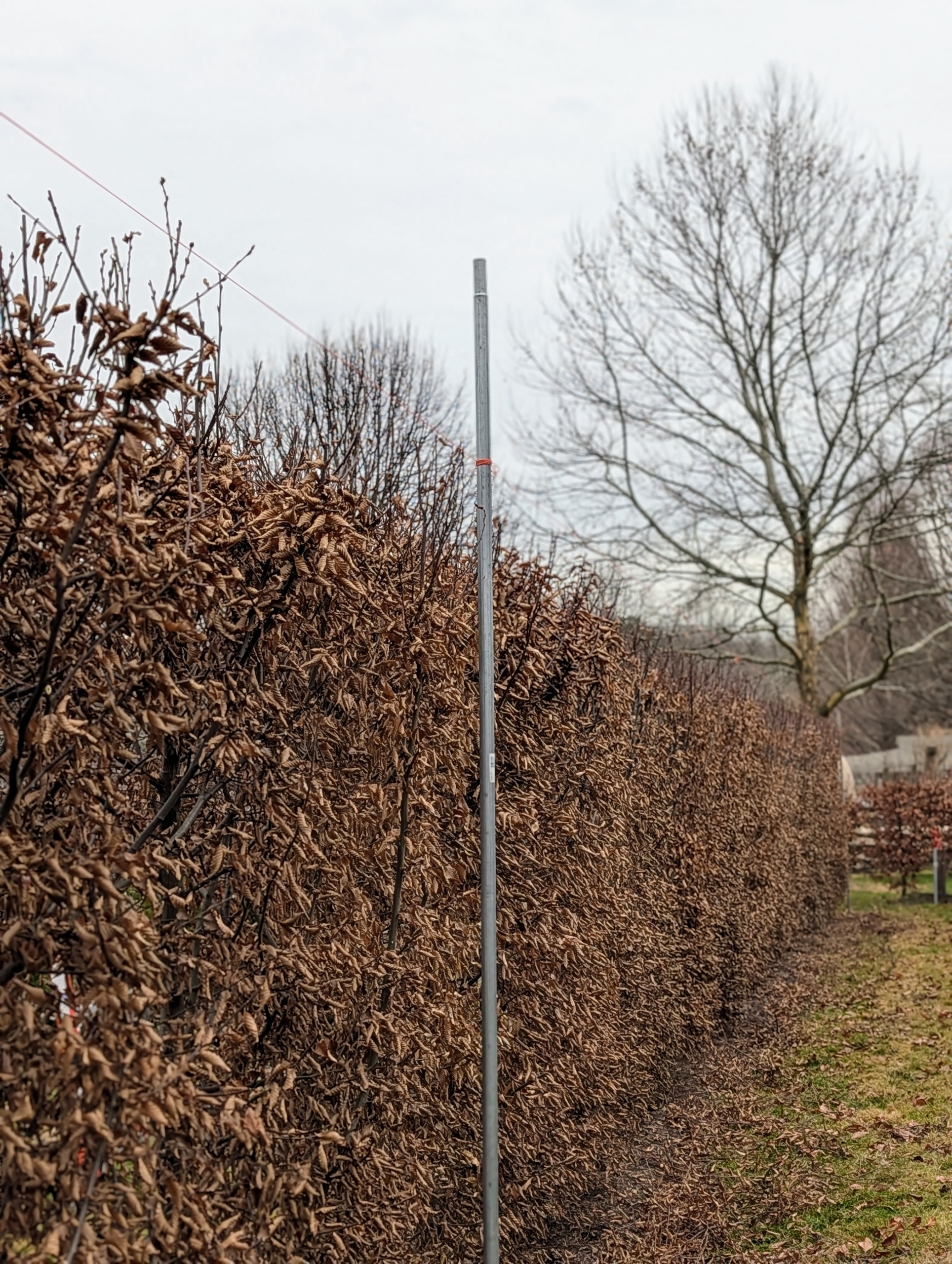
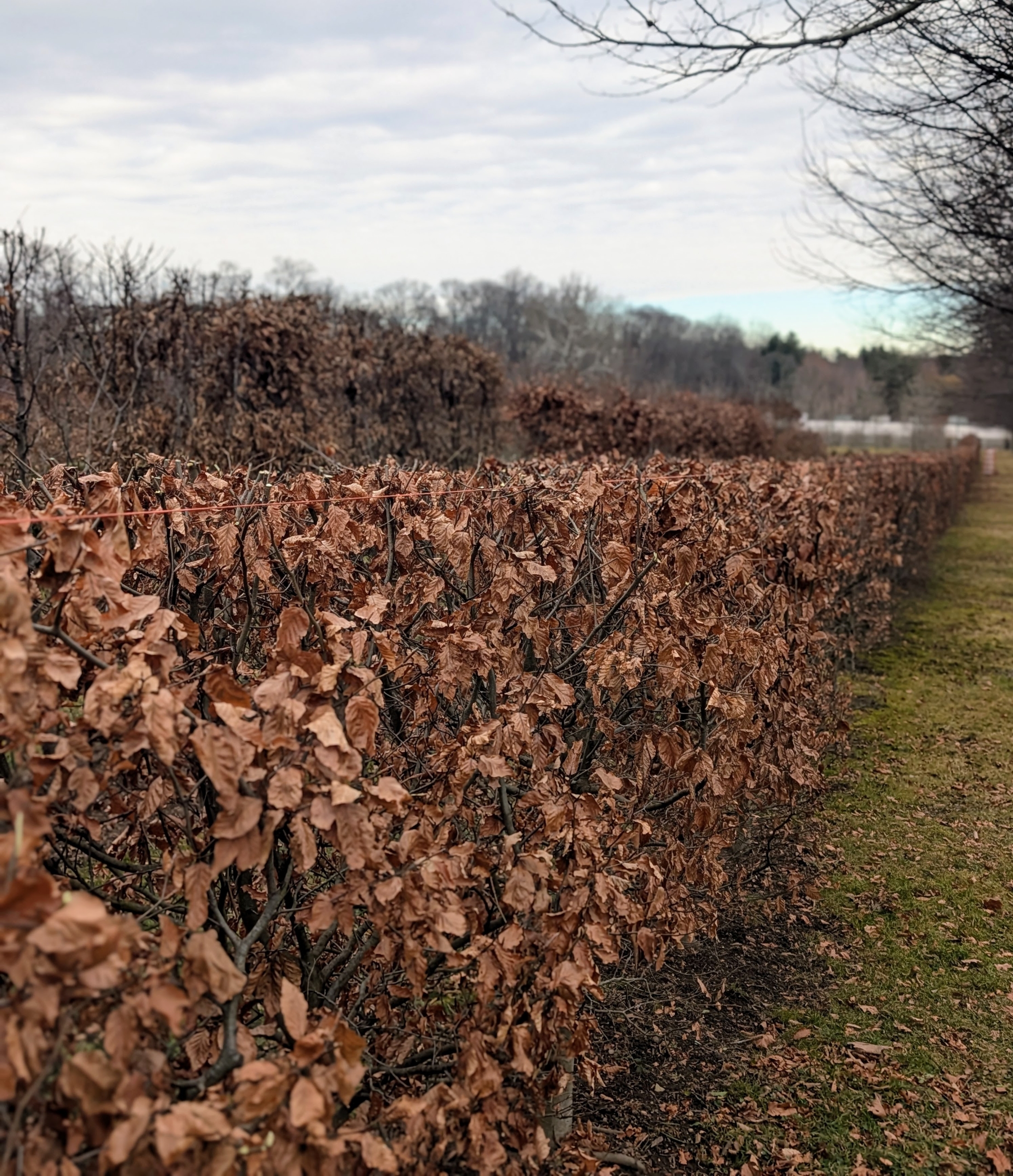
- For a maze, it’s best to use relatively fast-growing trees. Many will grow to be at least six feet tall and two feet wide at maturity. These have grown at least two feet since it was pruned last summer. Landscape twine provides a cutting guide.
-
- One eld is tied to a sturdy yet temporary stake and then stretched down the row, to another pole. Good, thoughtful preparation is crucial to any pruning job.
-
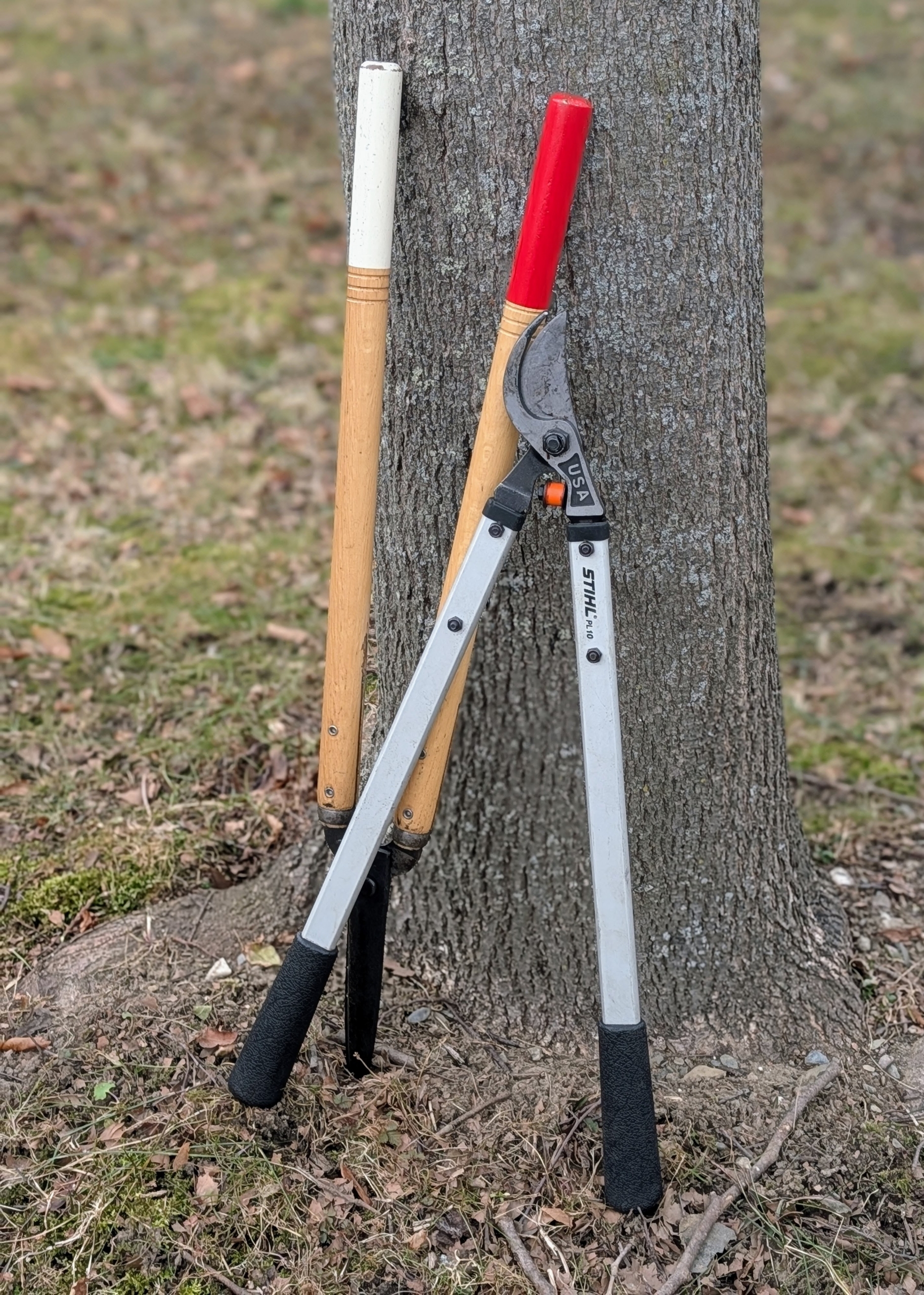
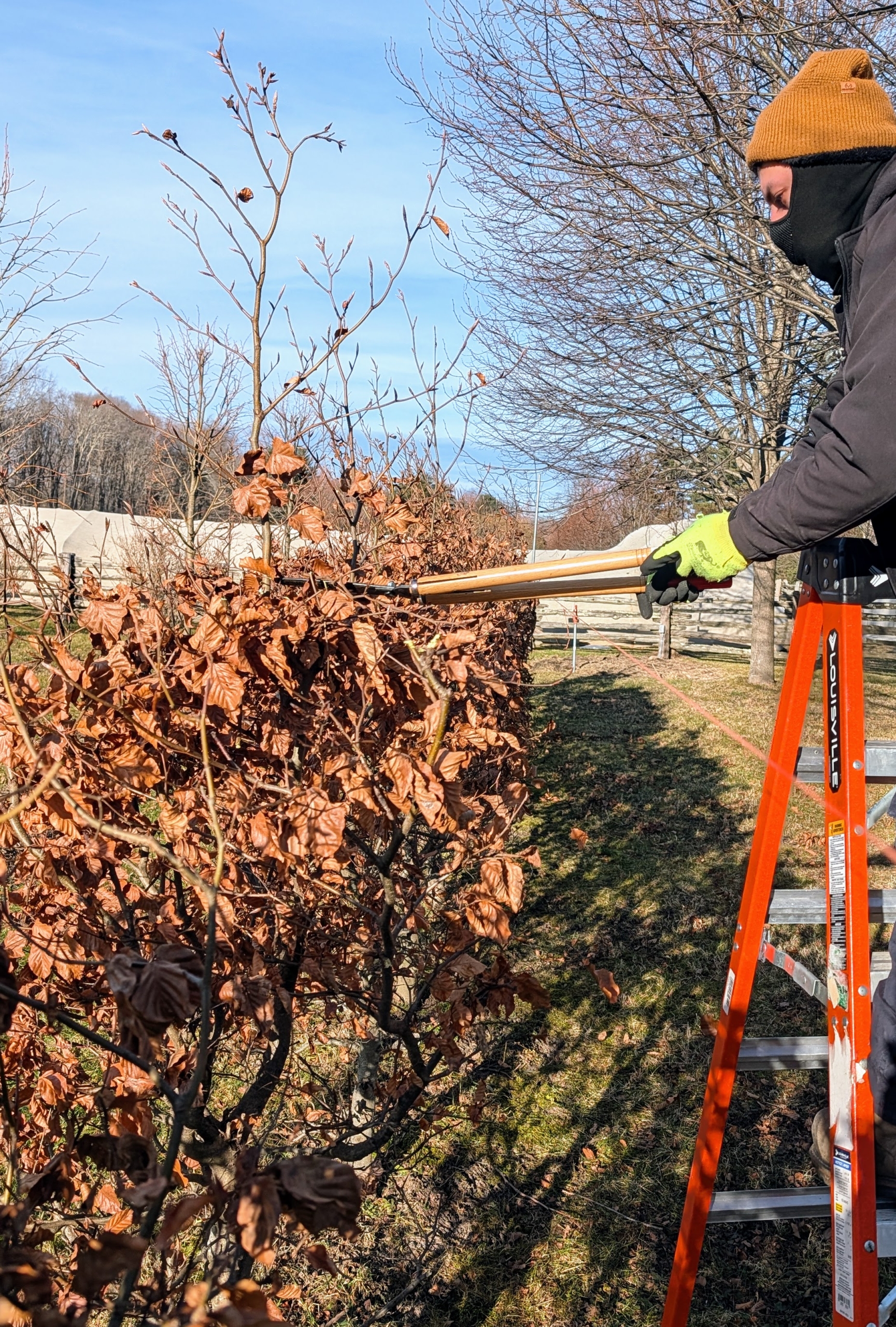
- Pasang and Alex also use hand tools including Japanese shears and the portable 24-inch handle loppers made by STIHL.
-
- The Japanese Okatsune shears are specially made for trimming hedges. These shears are user friendly, and come in a range of sizes.
-
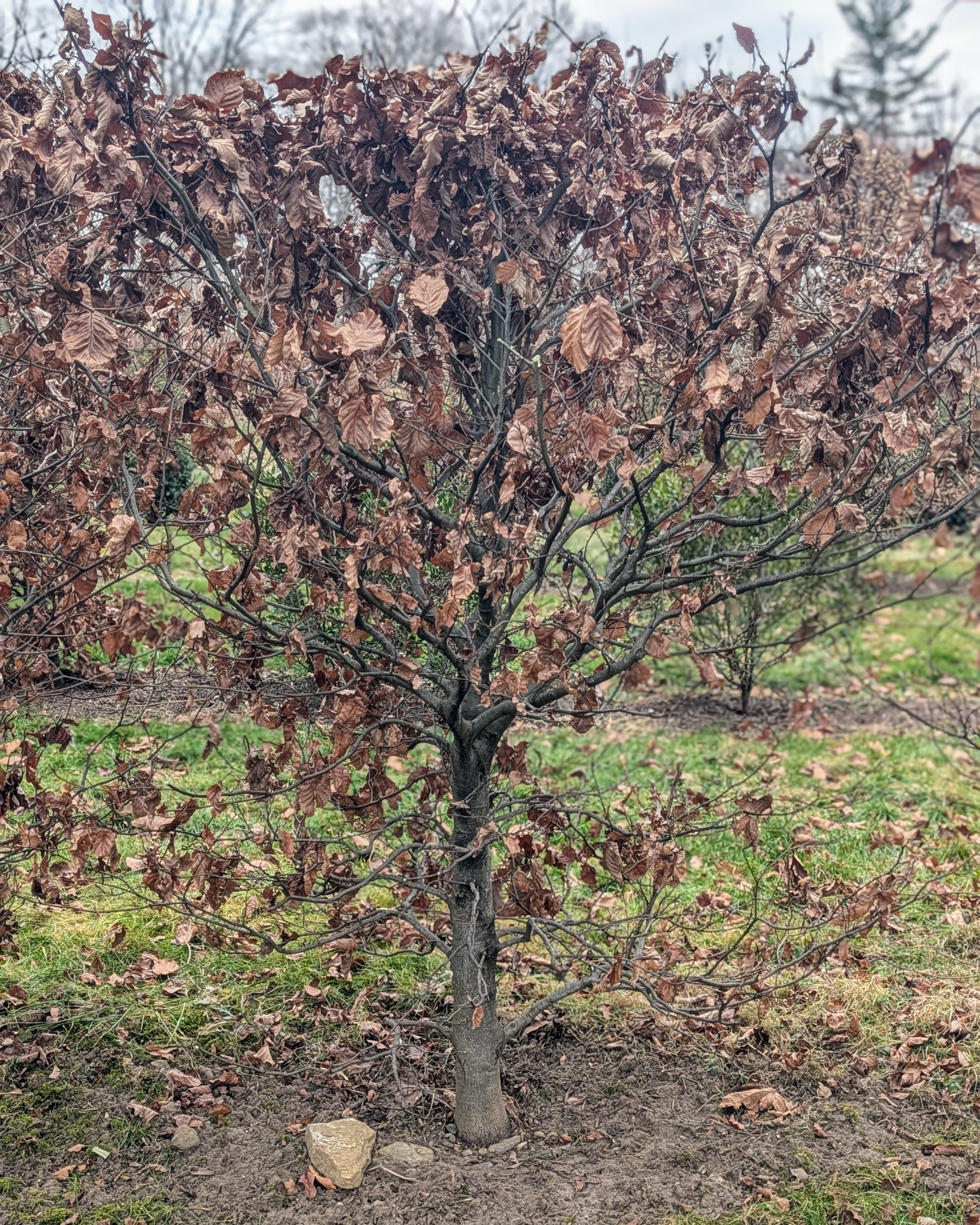
- Proper and regular trimming promotes new growth, improves air circulation and light through the branches, and keeps them looking aesthetically pleasing.
-
- Here is a section pruned, groomed, and trimmed precisely.
-
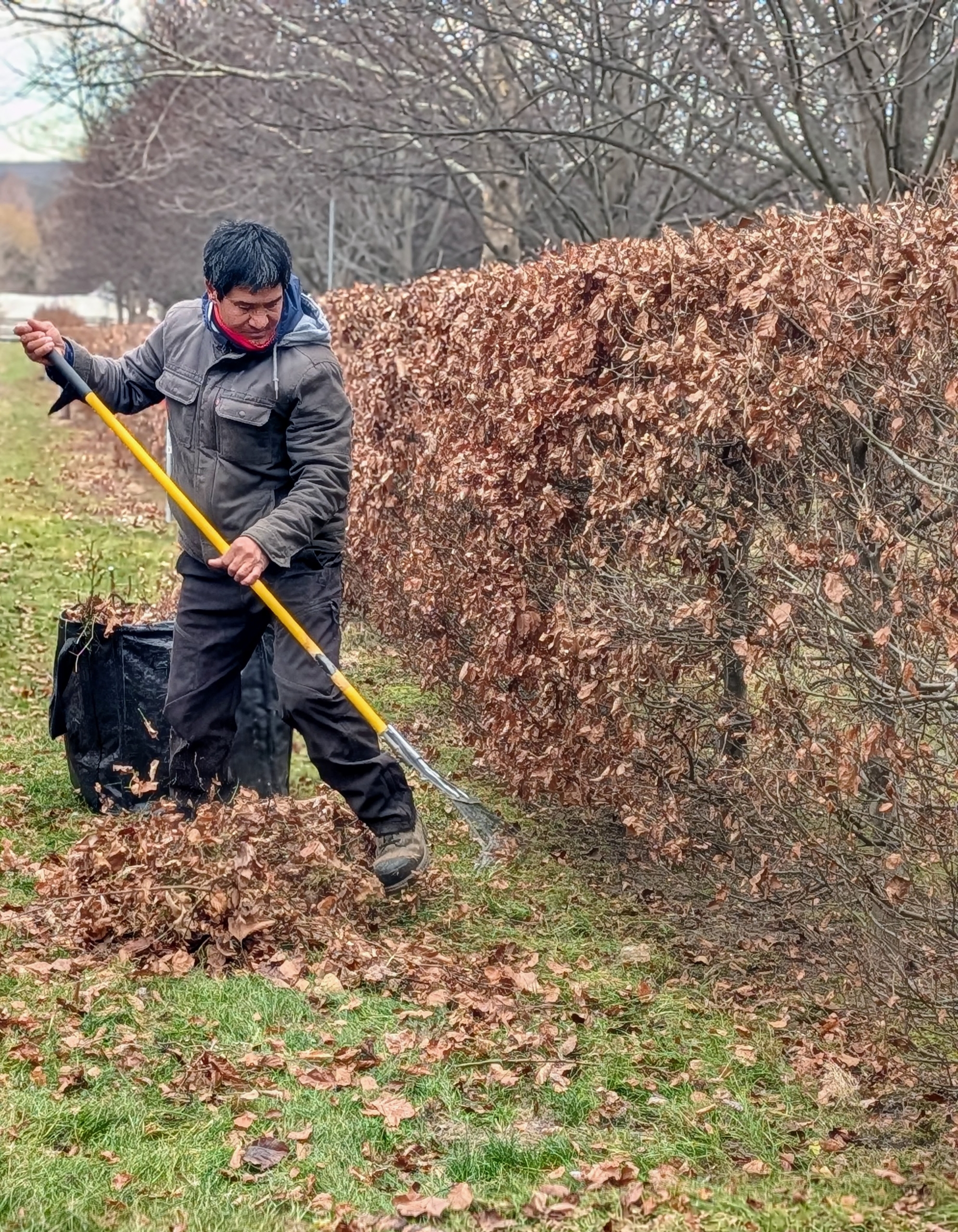
- Pasang follows to rake all the cut branches and leaves. My crew works in teams of two for good team work and safety.
-
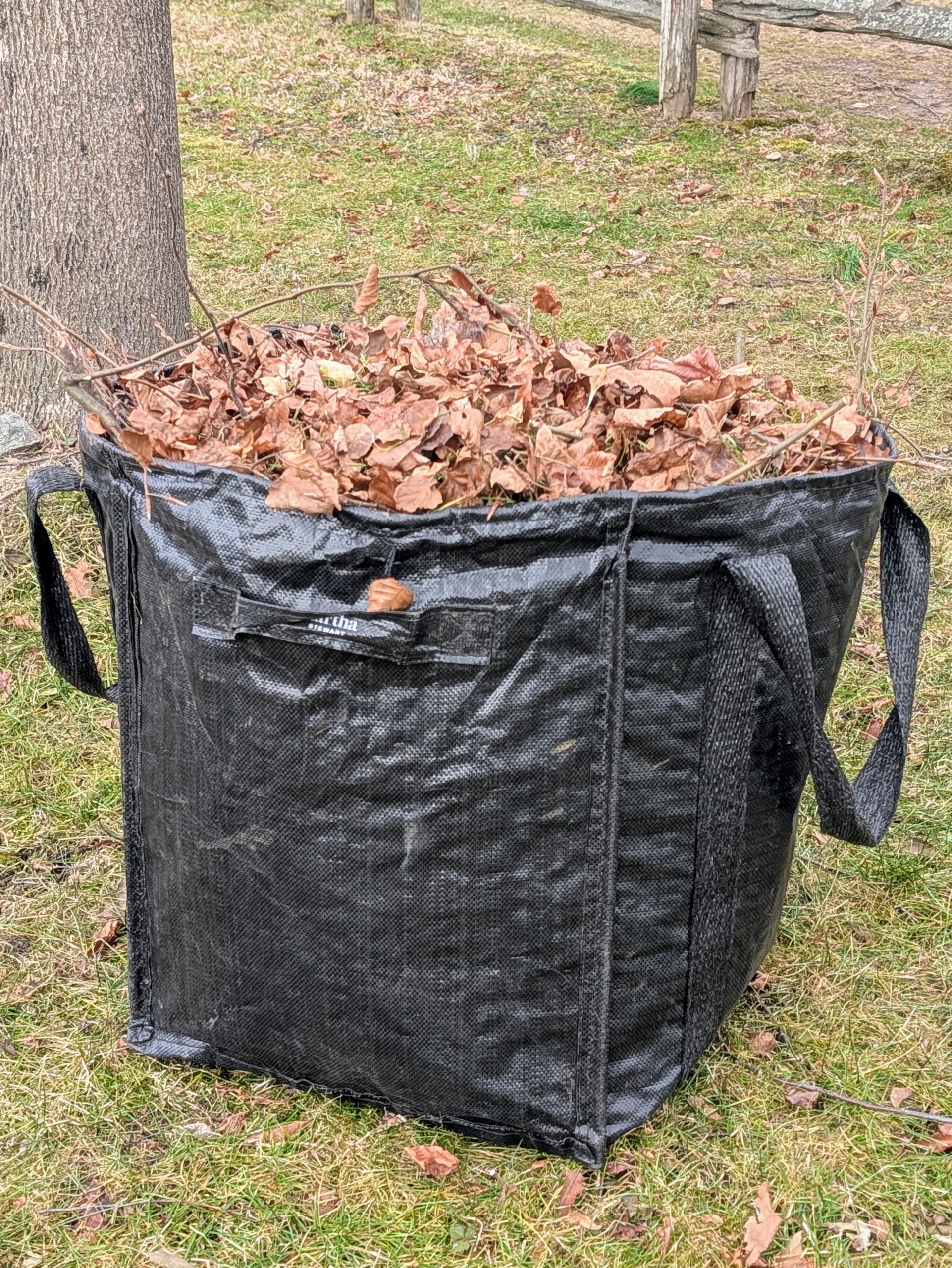
- Any clippings and late season leaves are discarded in my giant compost yard.
-
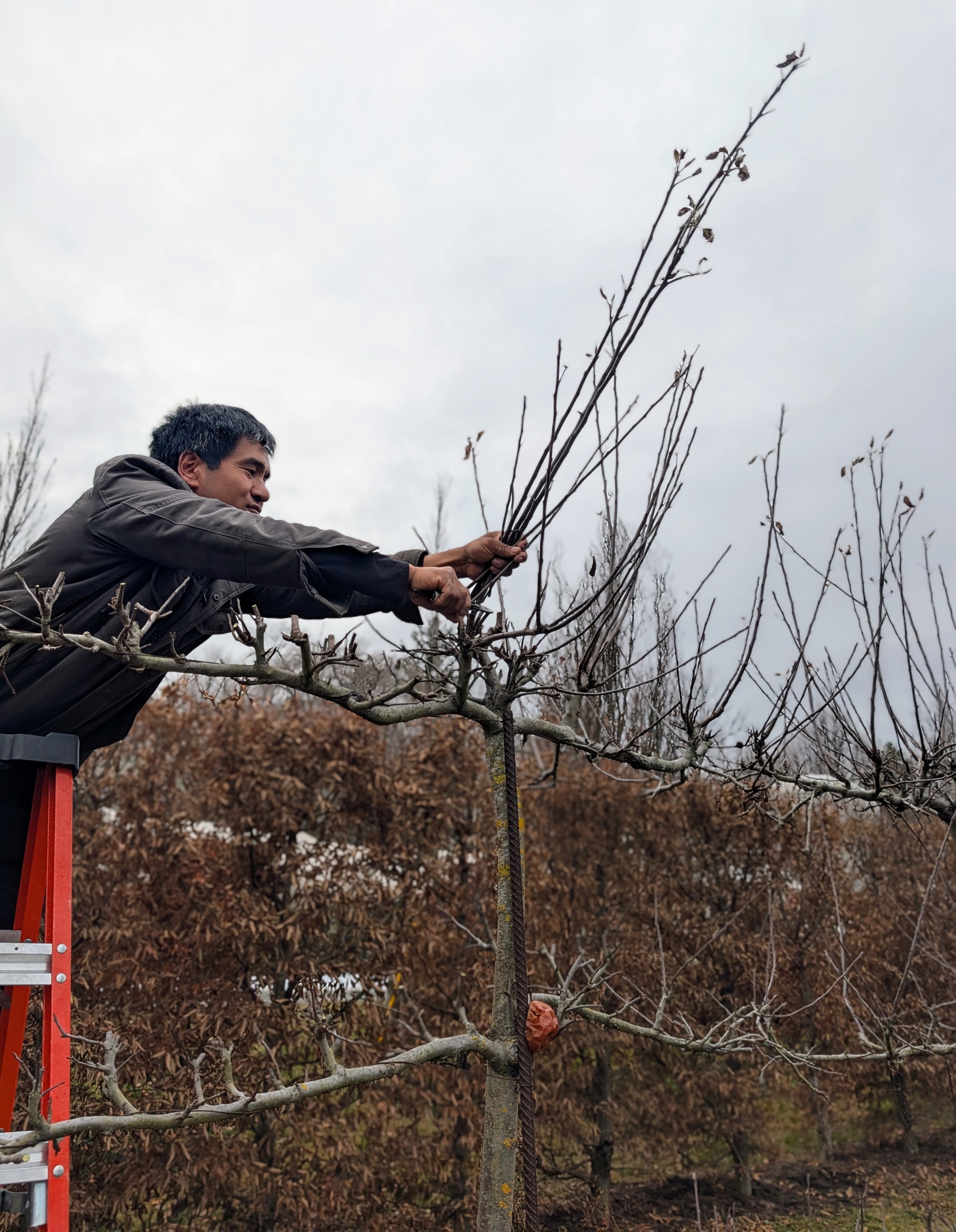
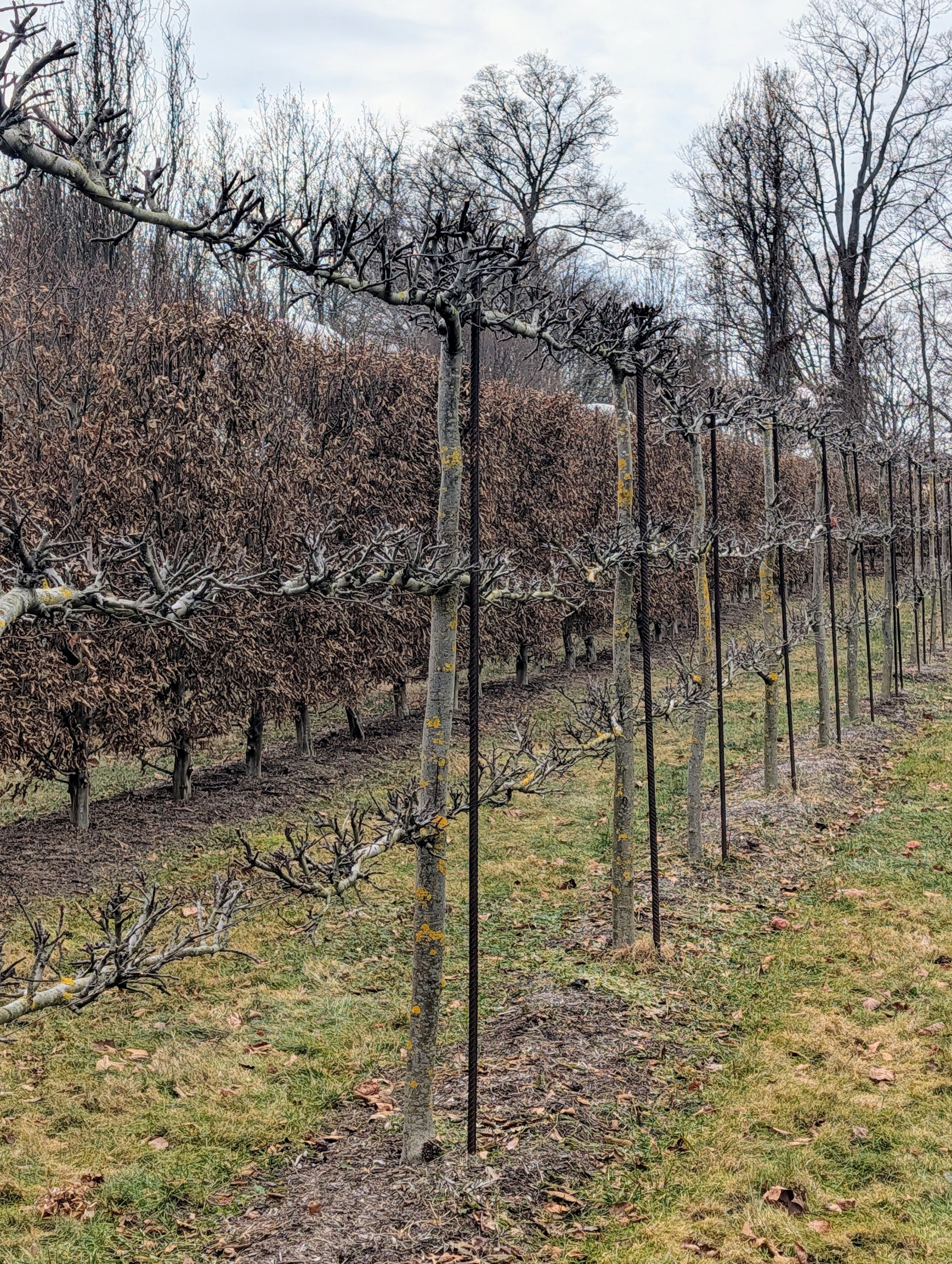
- Pasang moves onto the apple espalier, trimming any new growth and suckers. I grow a variety of wonderful apples. And, at the right time, those walking through can pick a fruit while they meander through this botanical puzzle.
-
- An espalier refers to an ancient technique, resulting in trees that grow flat, either against a wall, or along a wire-strung framework. Many kinds of trees respond beautifully to the espalier treatment, but fruit trees, like apple and pear, were some of the earliest examples. Espaliered trees can grow between four and eight feet apart – enough to allow them room as they grow, but still be close enough for a proper espalier. Among the apples in my maze are Liberty apples, Gala apples, Braeburn apples, and Yellow Delicious apples.
-
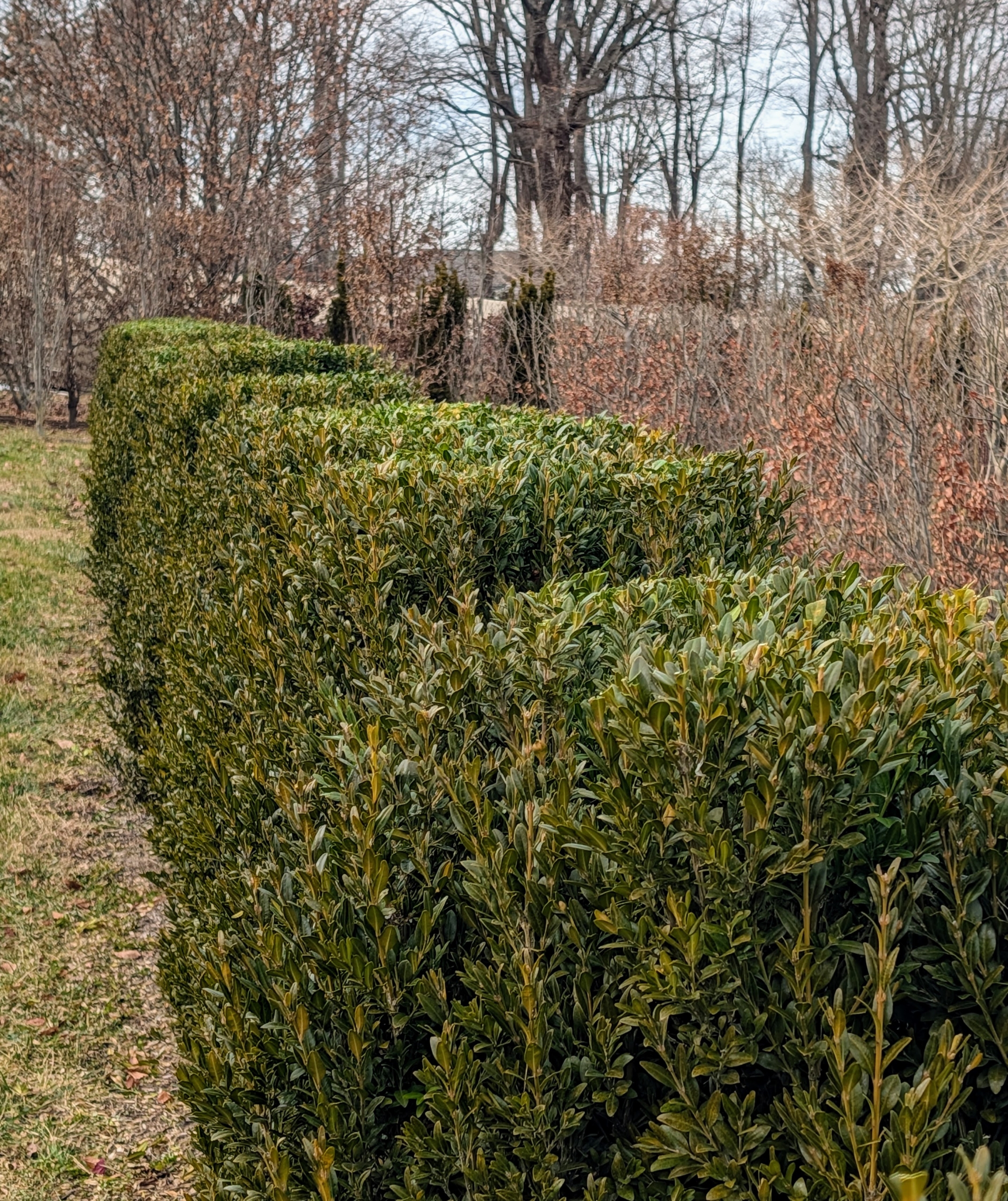
- Pasang and Alex also tended this row of boxwood – shaping and trimming every one square.
-
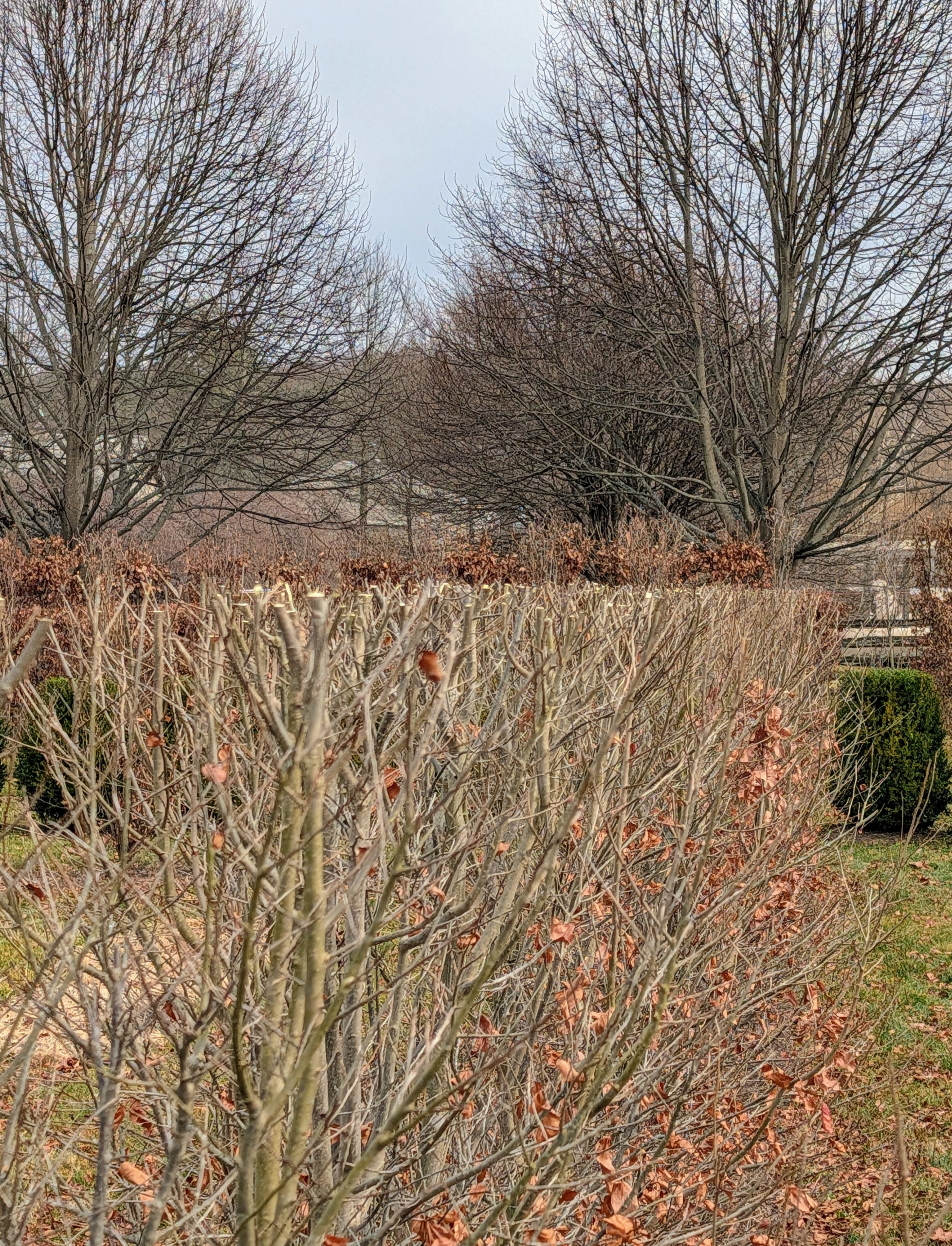
- Each shrub or bush is planted appropriately with enough space to accommodate its full grown size. As these plantings mature, they close up the spaces in between making it a true maze, with only one correct route to the intended destination.
-
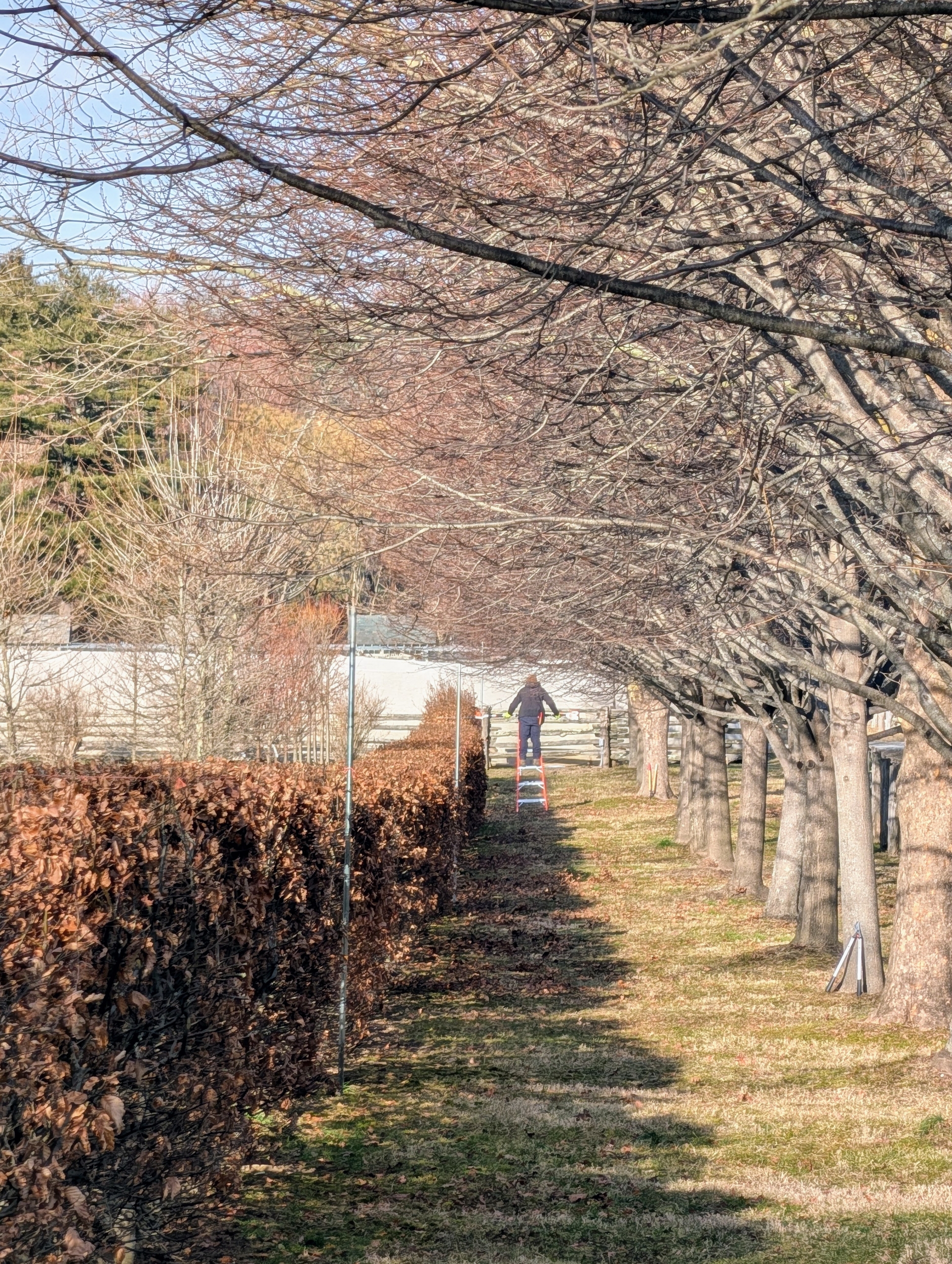
- There is still a lot of pruning work to be done in the maze, but my team is getting through it quickly and so efficiently.
 Martha Pins


 Martha Tweets

