
My Geese and Peafowl in Winter
It's a mild winter day here at my farm - a mix of sun and clouds with highs in the 40s, which means my peafowl and geese will be out and about in their enclosures.
Geese and peafowl are pretty tolerant of cooler weather. Geese have excellent insulation systems - dense outer feathers, thick down feathers, and natural fat reserves that not only keep them warm but also provide energy. The peafowl have protective feathering and can regulate their body temperatures to adjust to the cold. To make sure they are all comfortable, I provide heated shelters, where they can take cover during unpleasant conditions. And they're also checked several times a day to ensure they have all the food and water they need.
Here are some photos, enjoy.
-

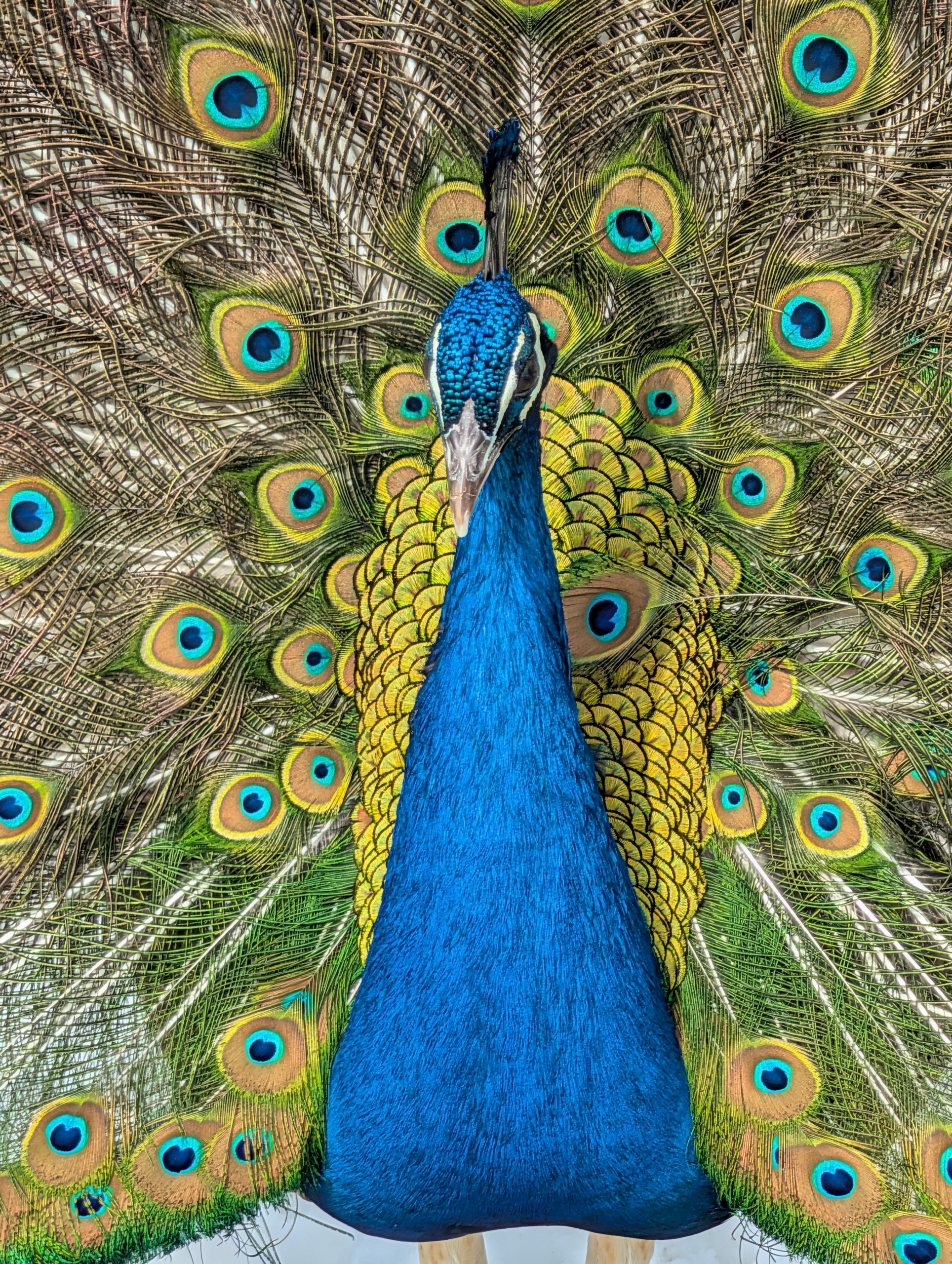
- Peacocks are stunning birds. And remember, technically only the males are peacocks with their long and colorful tails. The females are peahens. This is one of my handsome peacocks.
-
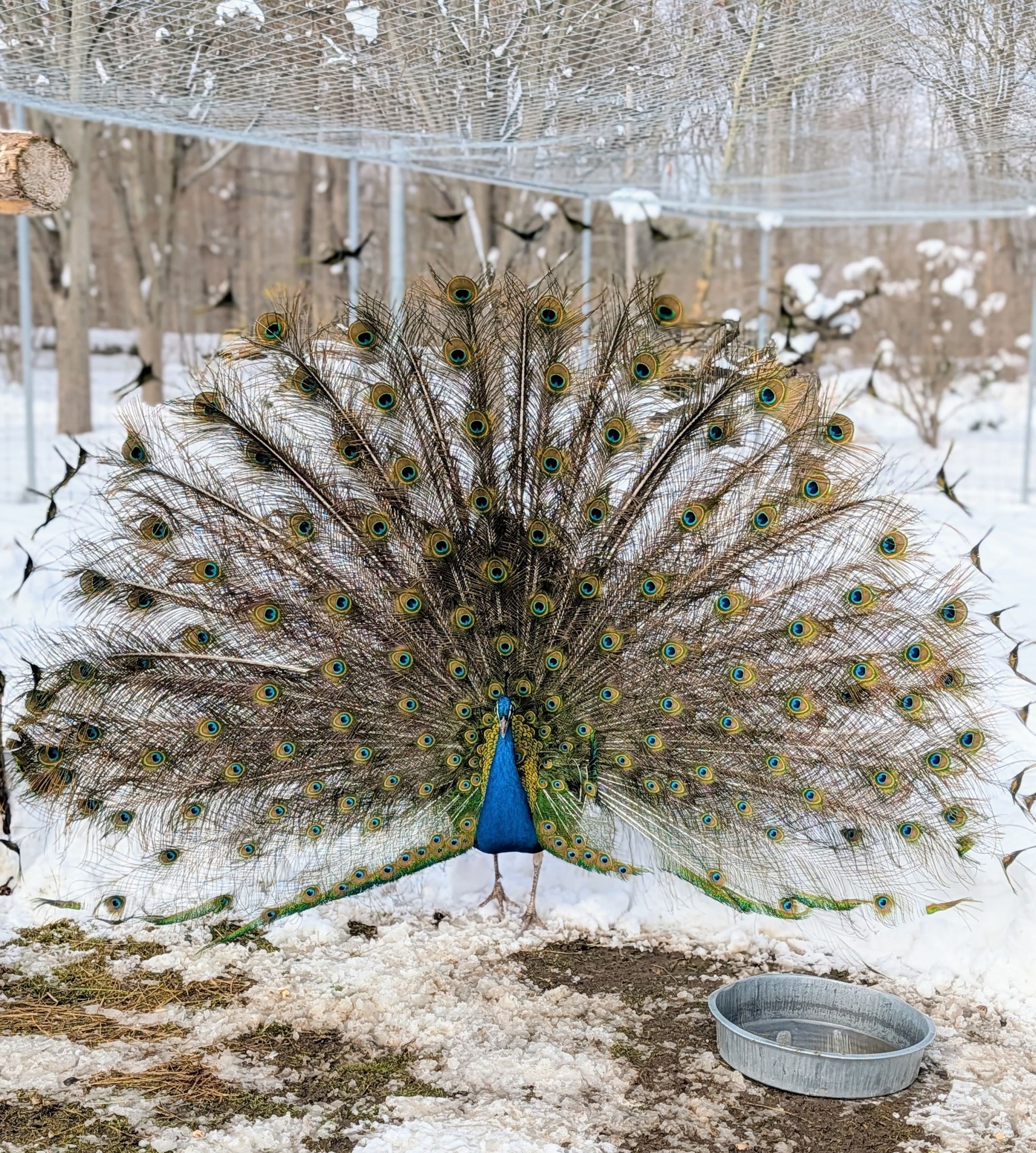
- Breeding season is just starting. This is when the males display their plumage to attract mates. The season usually runs from March to October or sooner if temperatures are warmer.
-
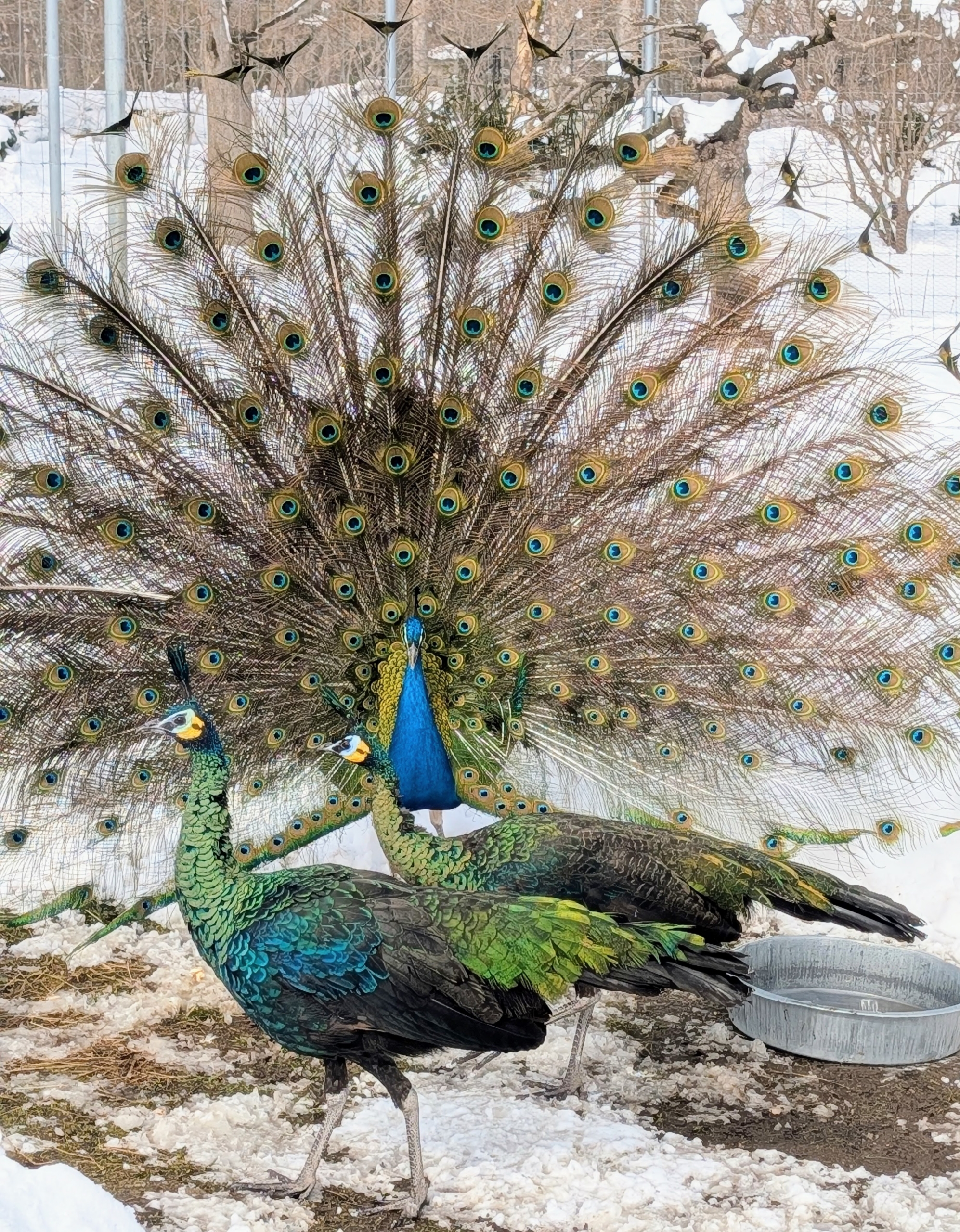
- Some of the peahens are curious and have gathered to watch the show.
-
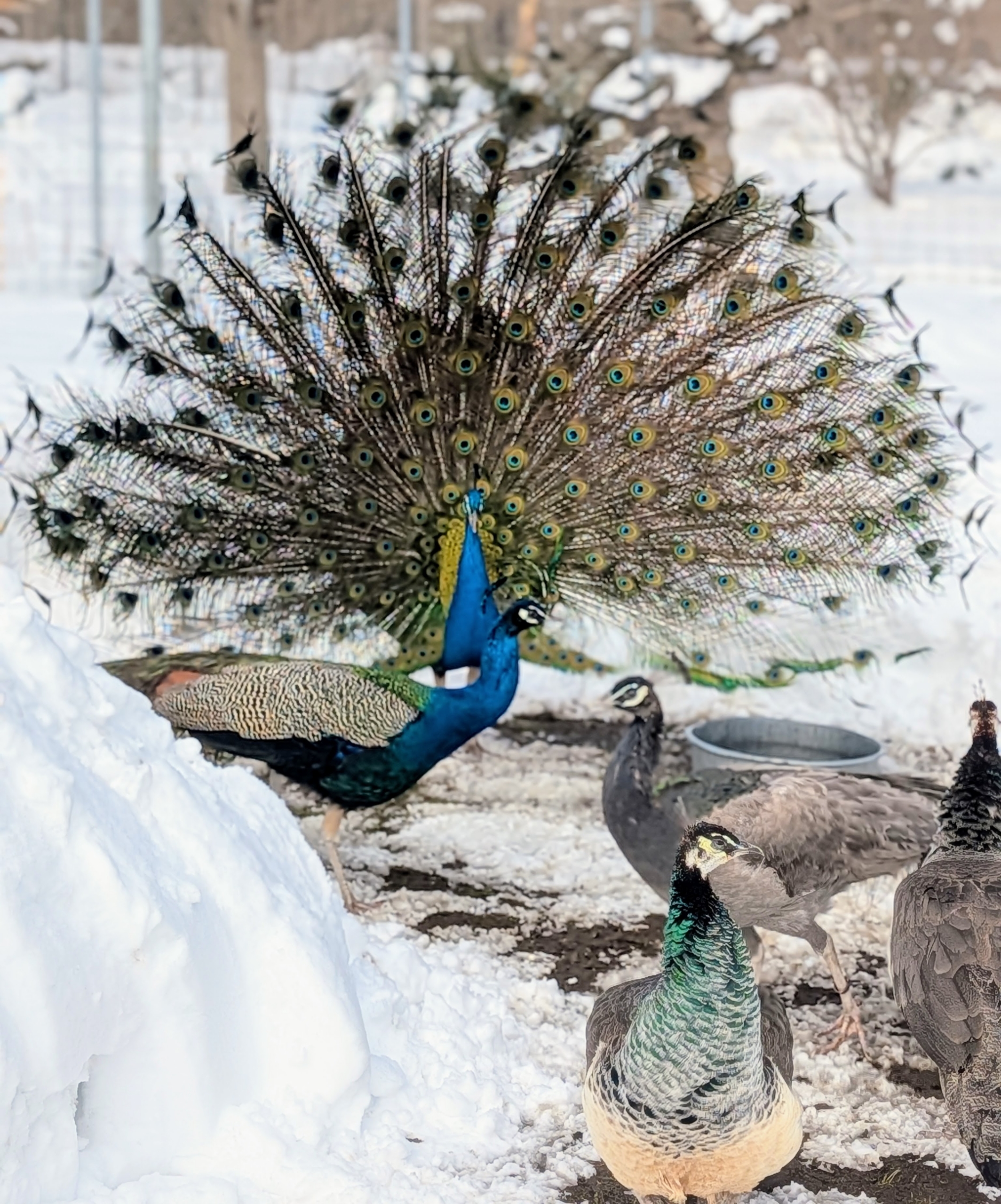
- The peacock turns in circles showing off his tail. This display is known as “train-rattling” – a way to show the females that they are healthy and fit for reproduction.
-
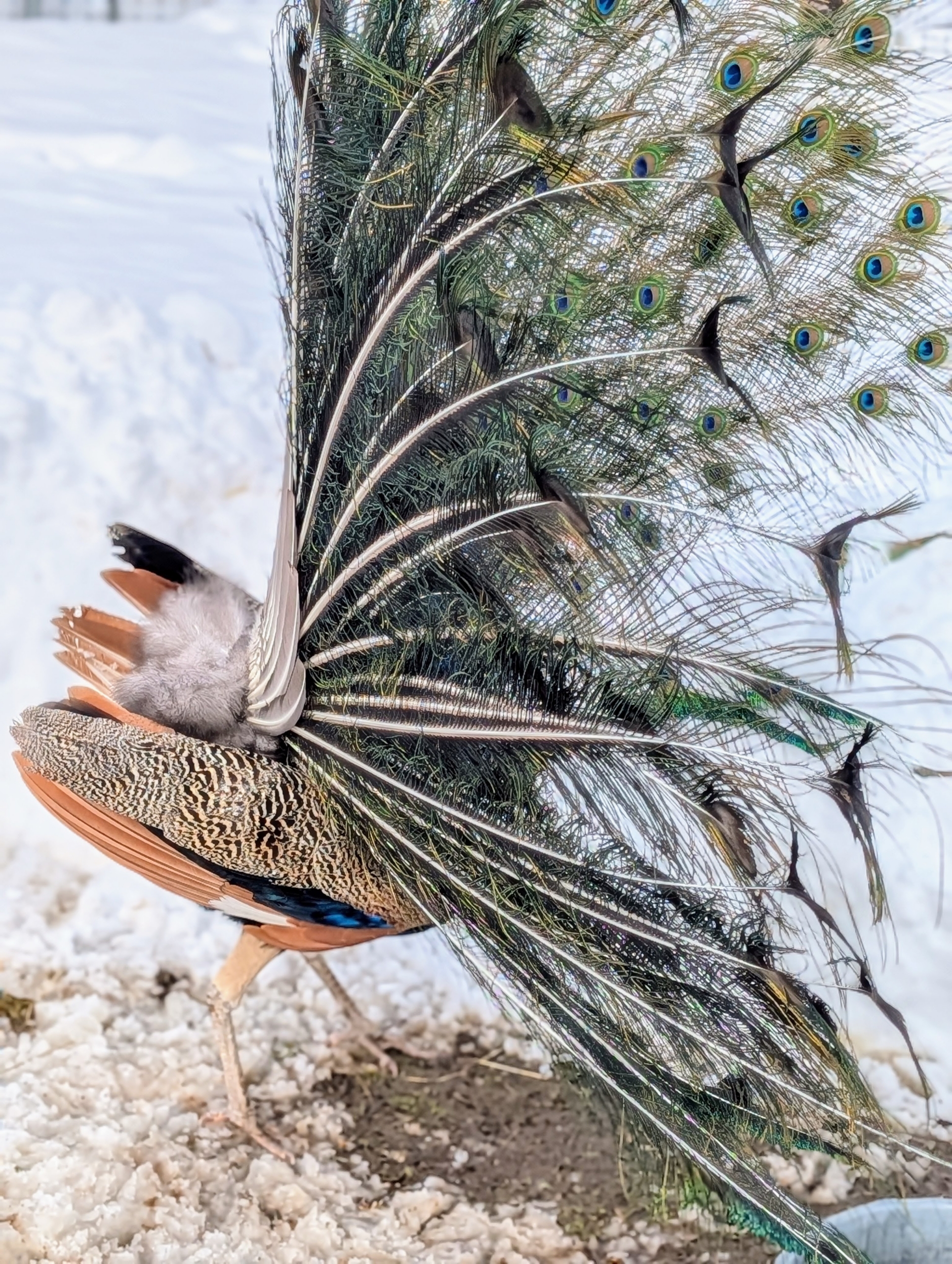
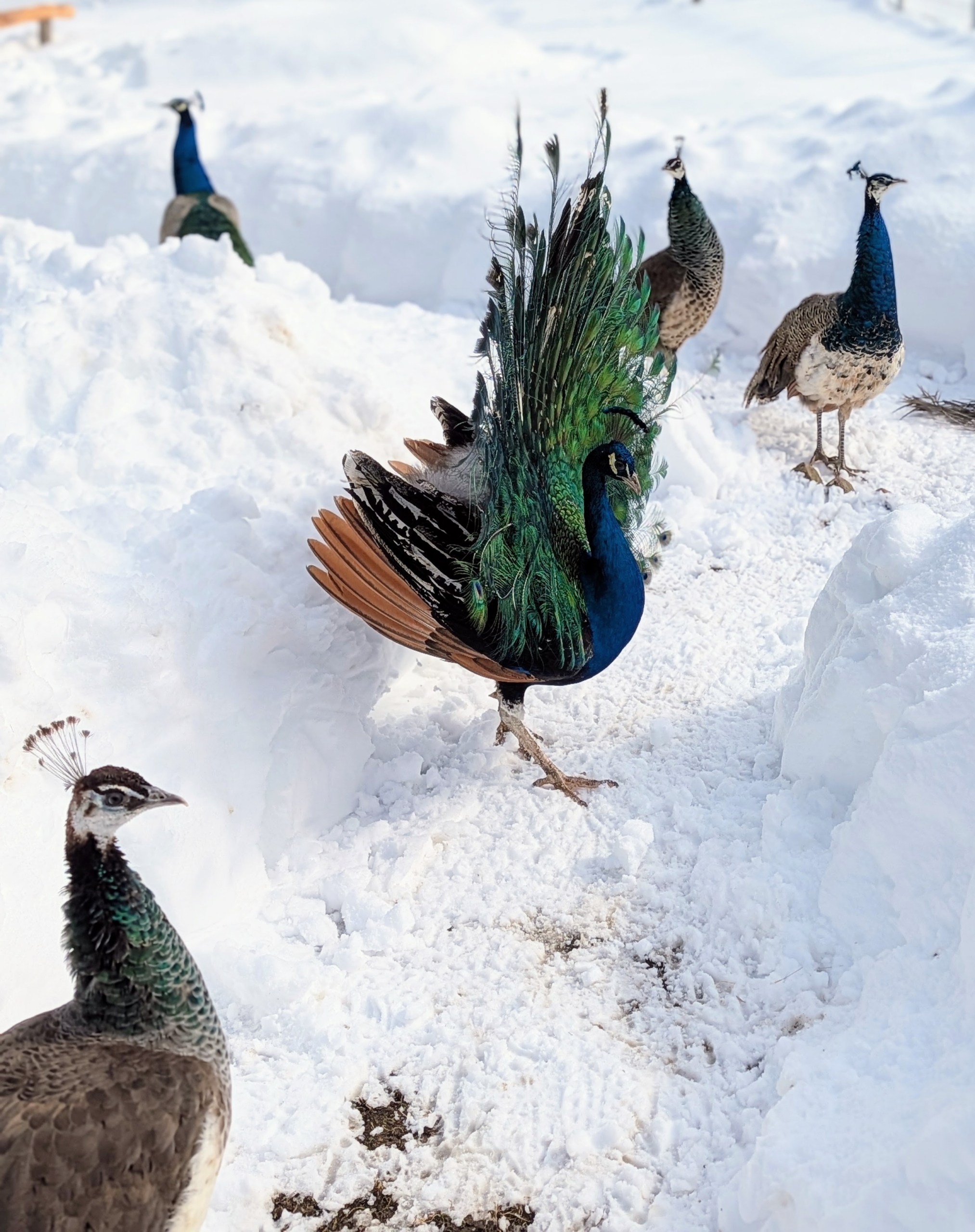
- The stiff rear feathers underlie the front feathers and provide support when the whole tail is raised.
-
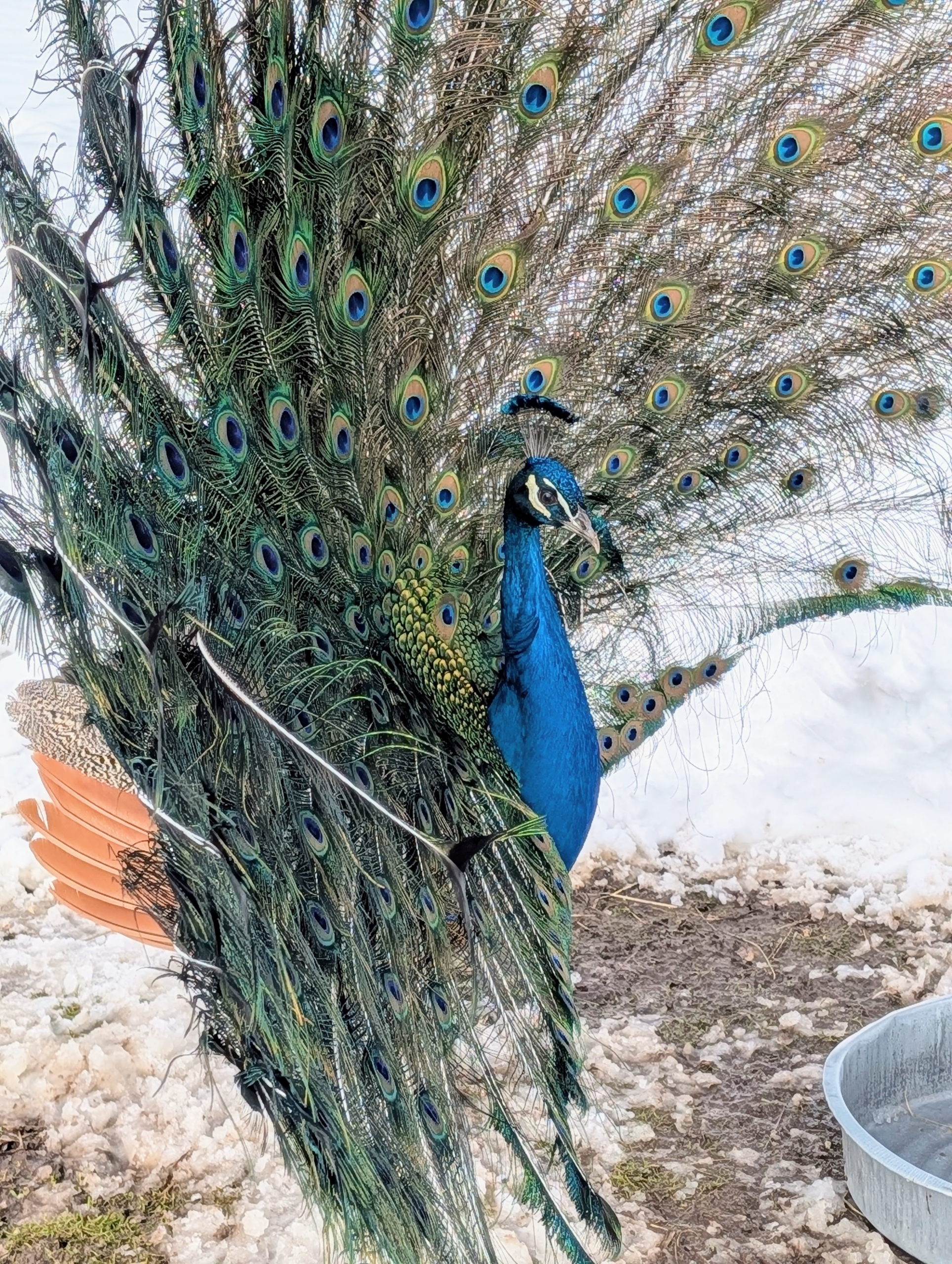
- This male repeats the dance over and over, turning to face the peahens as he rattles.
-
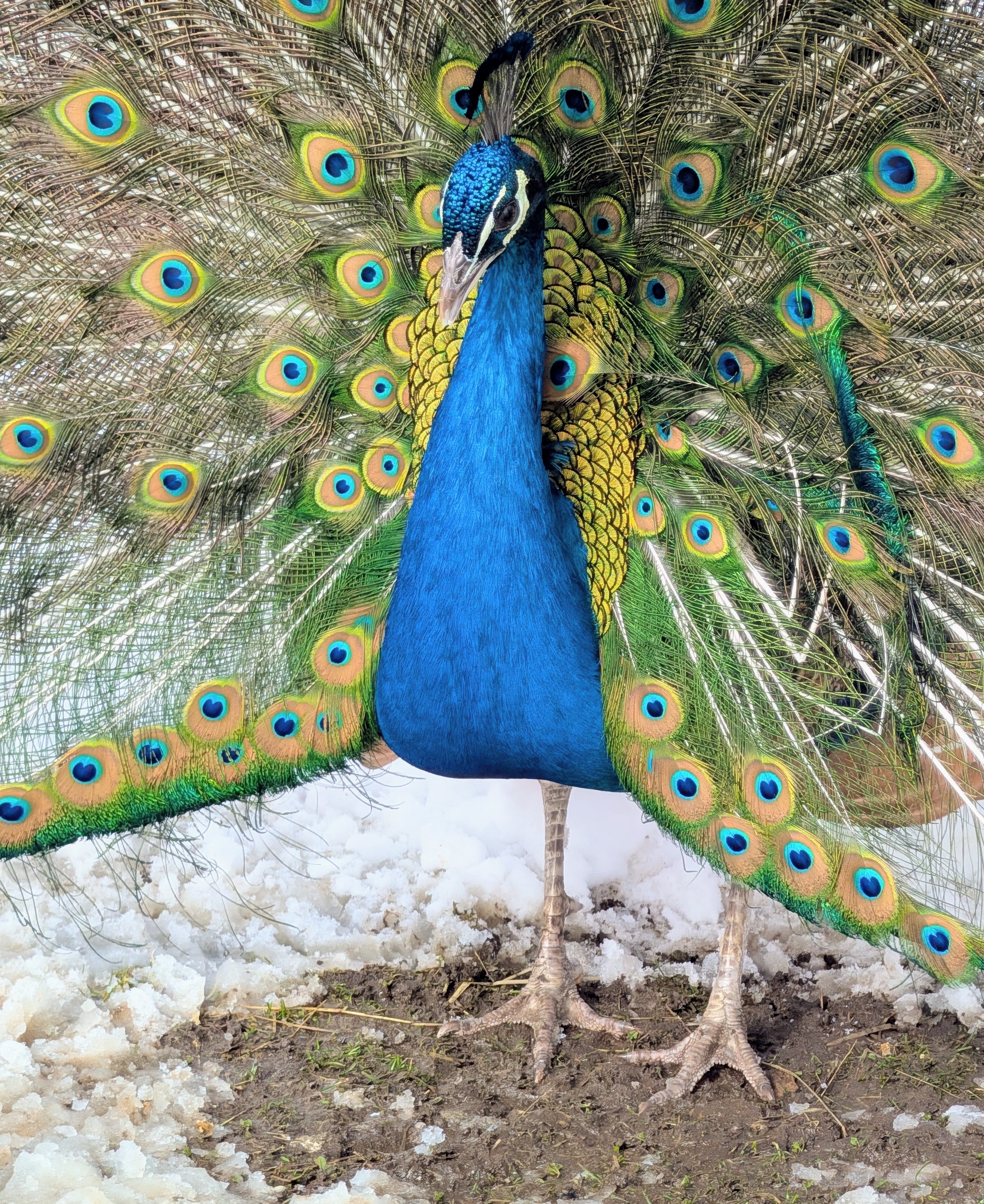
- And he certainly doesn’t mind the camera up close. And look at his feet. A peafowl’s legs are very strong. They have three toes on each foot facing forward, and one facing backwards. They also have sharp, powerful metatarsal spurs that are used for defense.
-
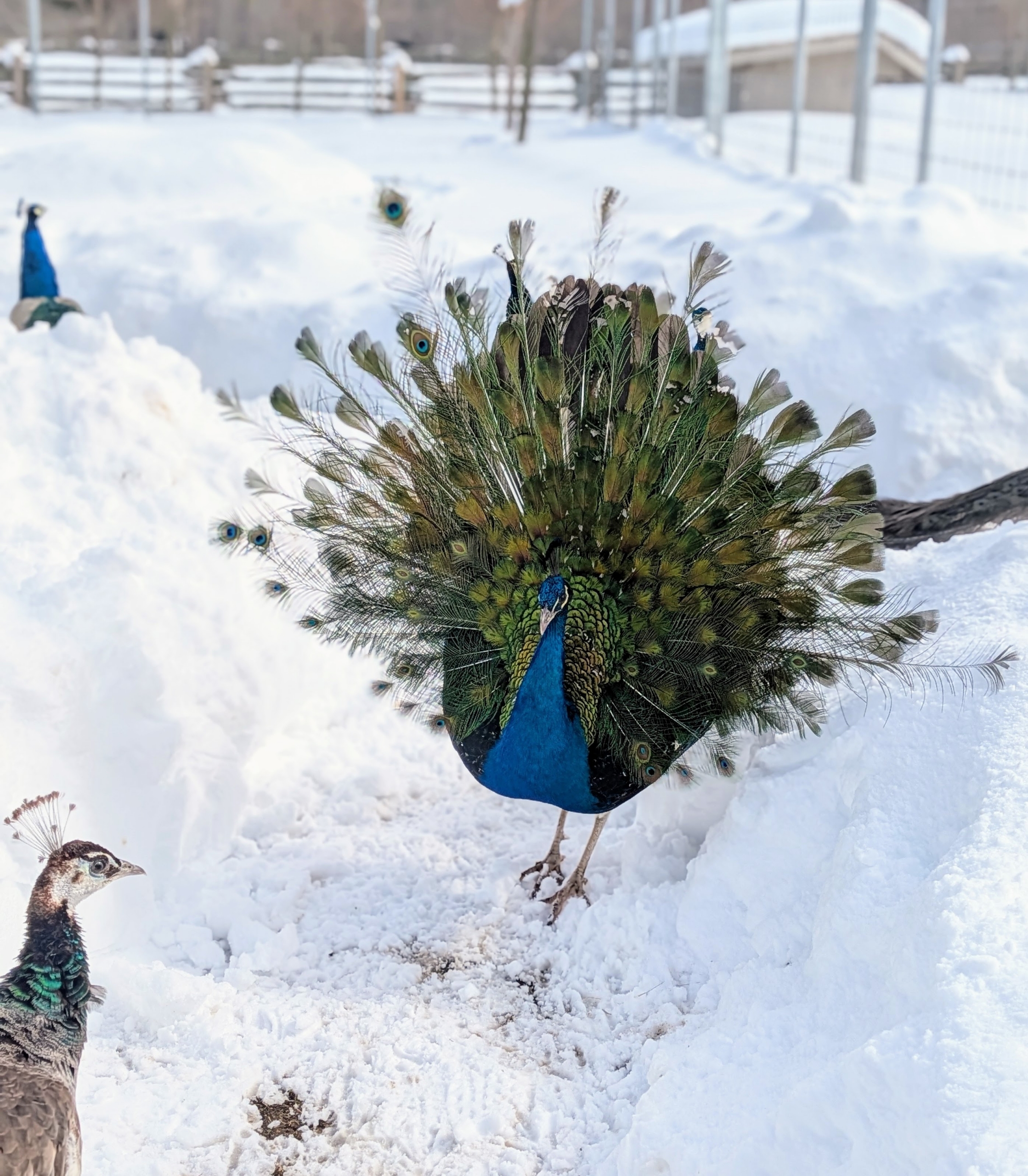
- This young male still has some growing to do, but here he is fanning his feathers also.
-
- One can see him trying hard to attract these peahens. He won’t have his full tail until at least three years of age. Peahens usually choose males that have bigger, healthier plumage with an abundance of eyespots.
-
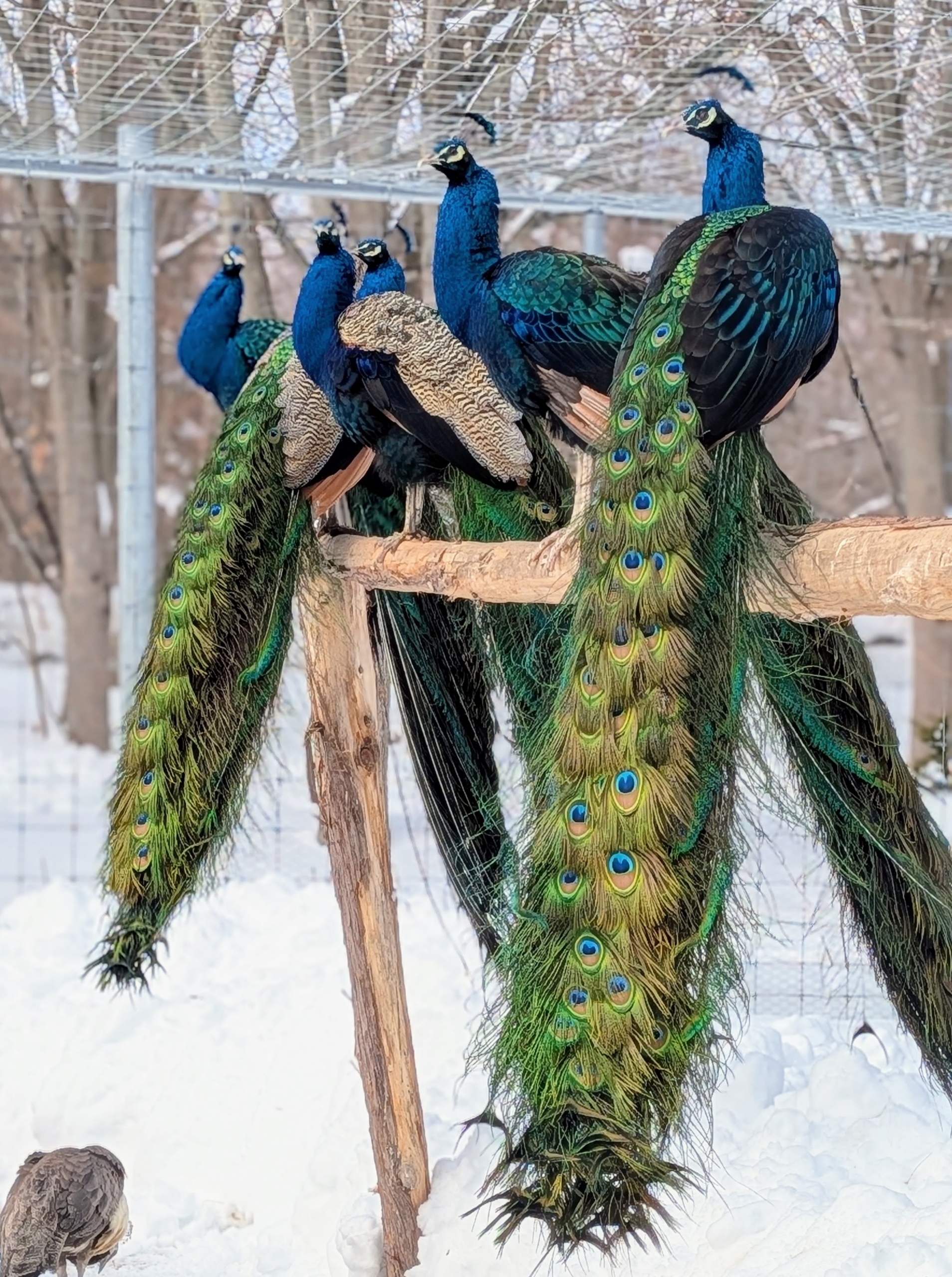
- My mature males with the biggest, longest tails are on their perch – keeping a lookout for predators. The peacock is a large sized bird with an average length from bill to tail of 39 to 45 inches.
-
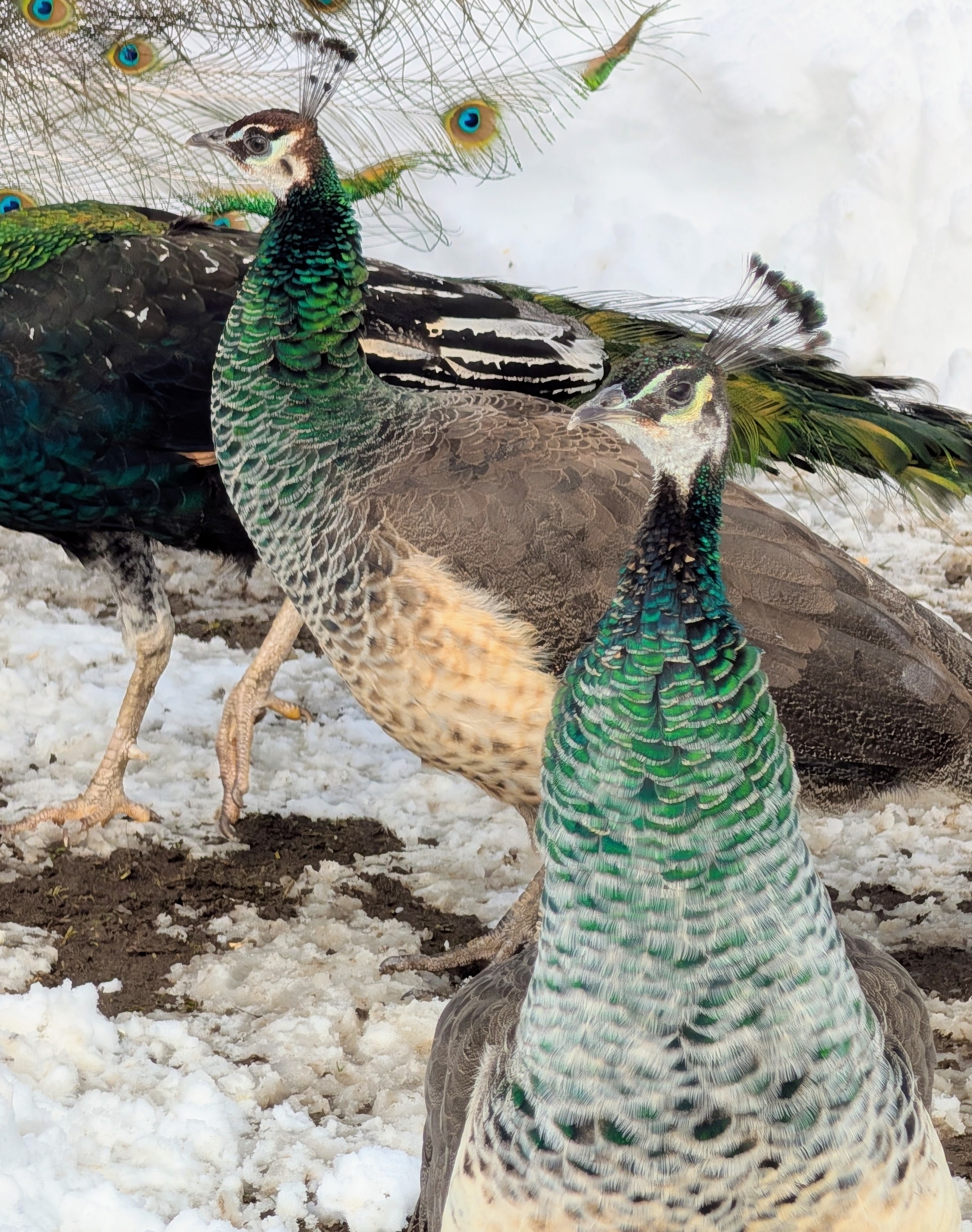
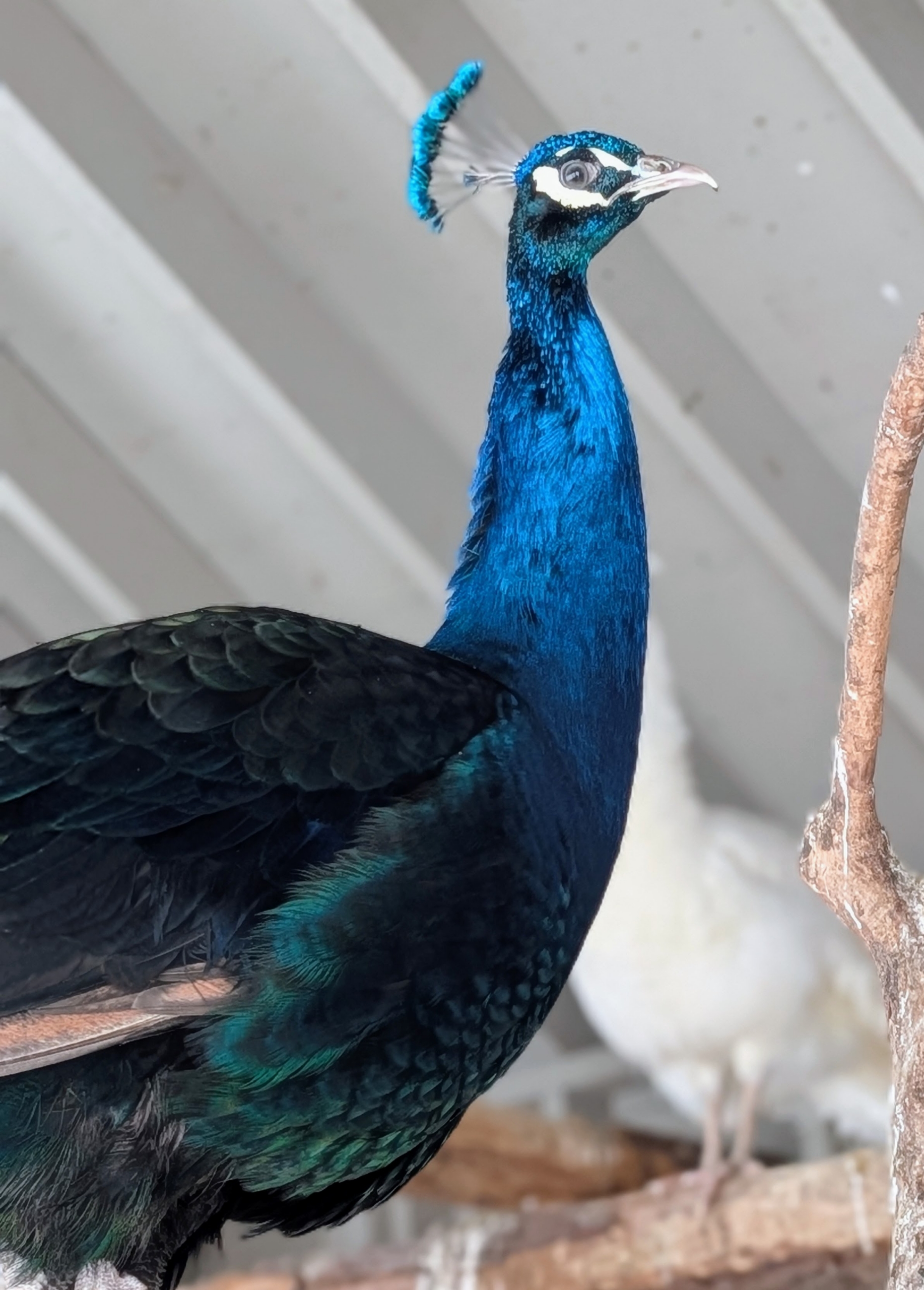
- These are females. Both male and female peafowl have a fan-shaped crest on their head called a corona. It may take up to one year for a corona to reach full size.
-
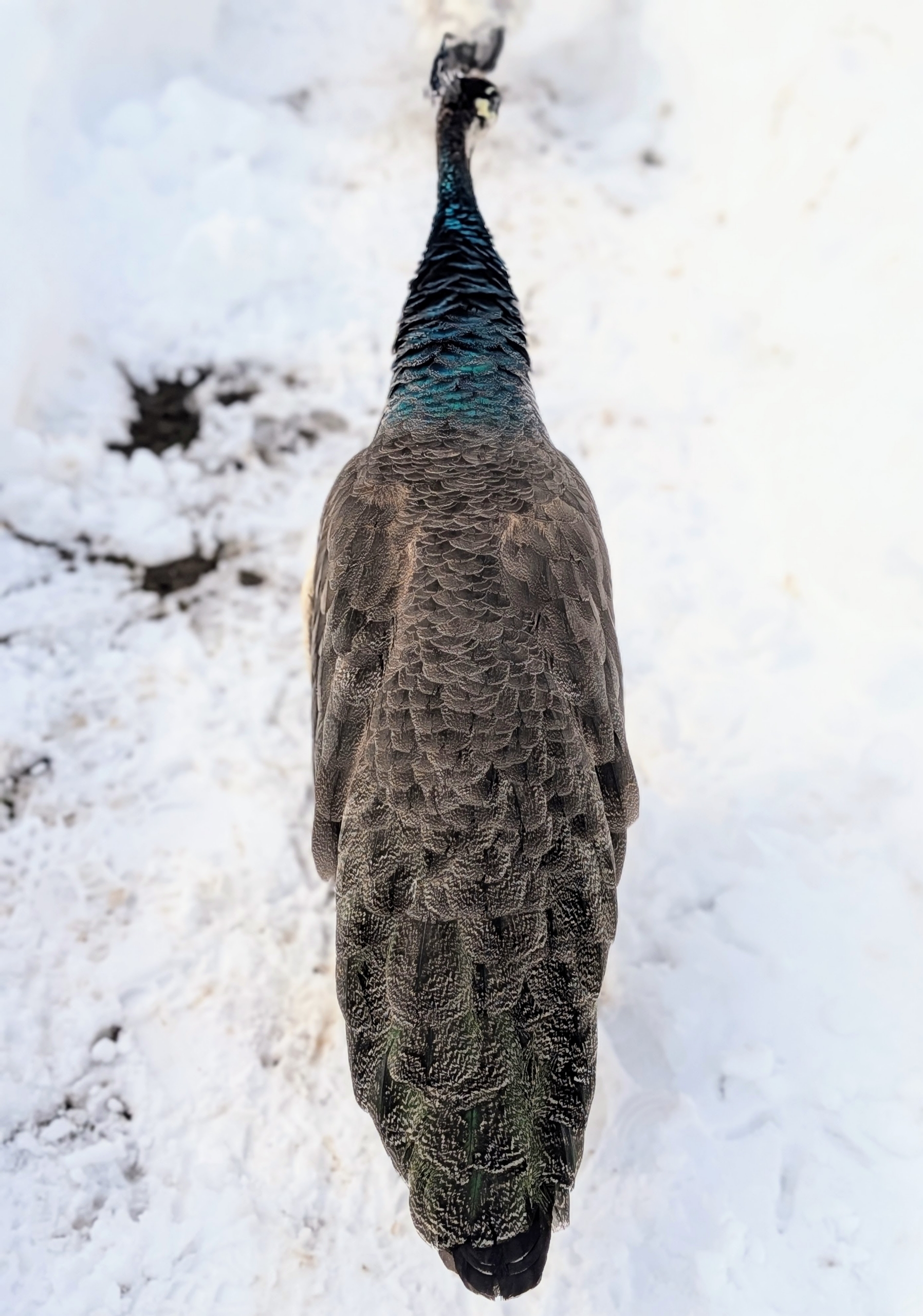
- A peahen has more subdued plumage – this one with soft brown feathers and a metallic green neck.Their colors are more dull to allow them to blend into their surroundings.
-
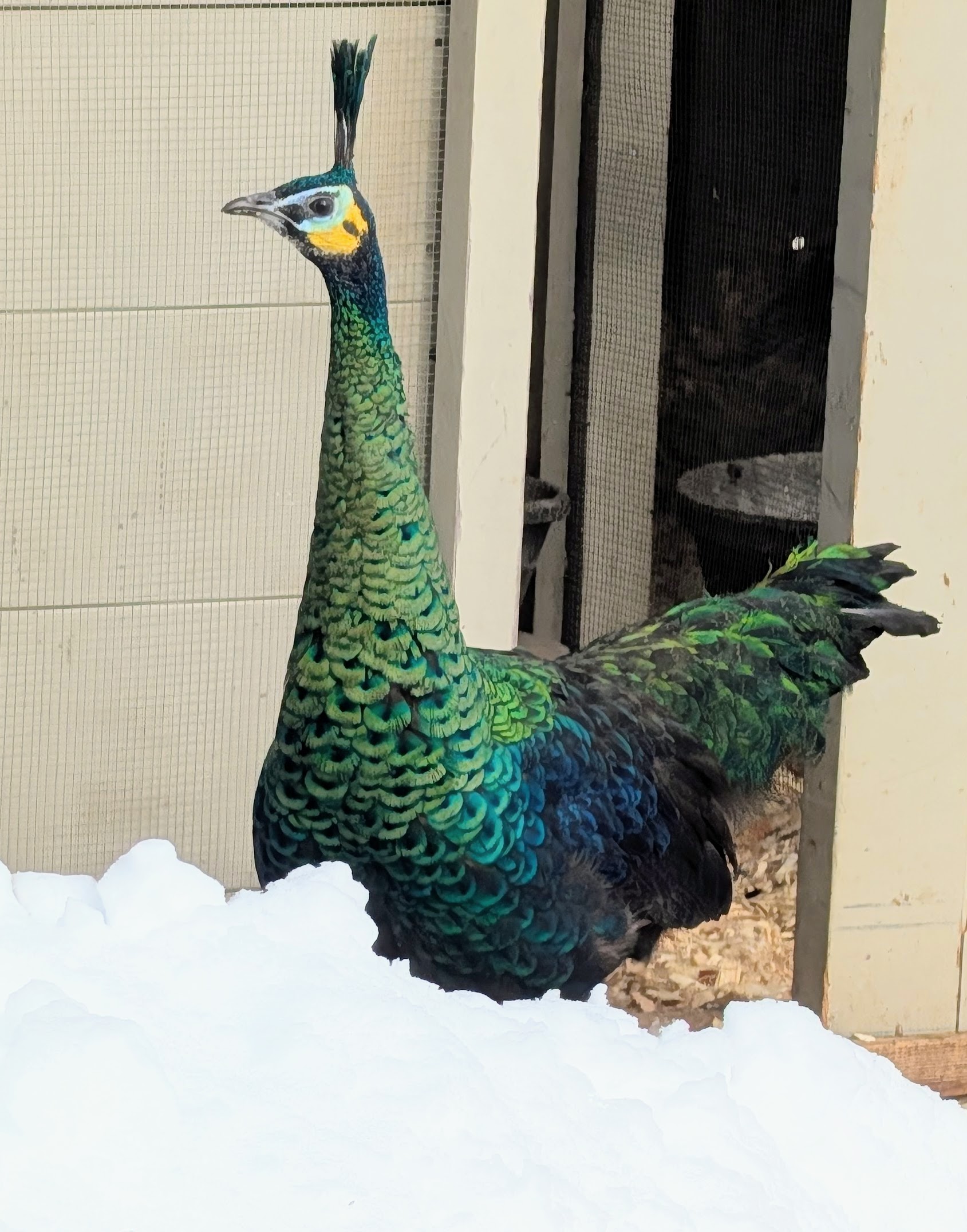
- Some of the birds are in their coop. Inside, they also have several perches on which they can roost.
-
- During the day, they are all free to walk in and out as they please.
-
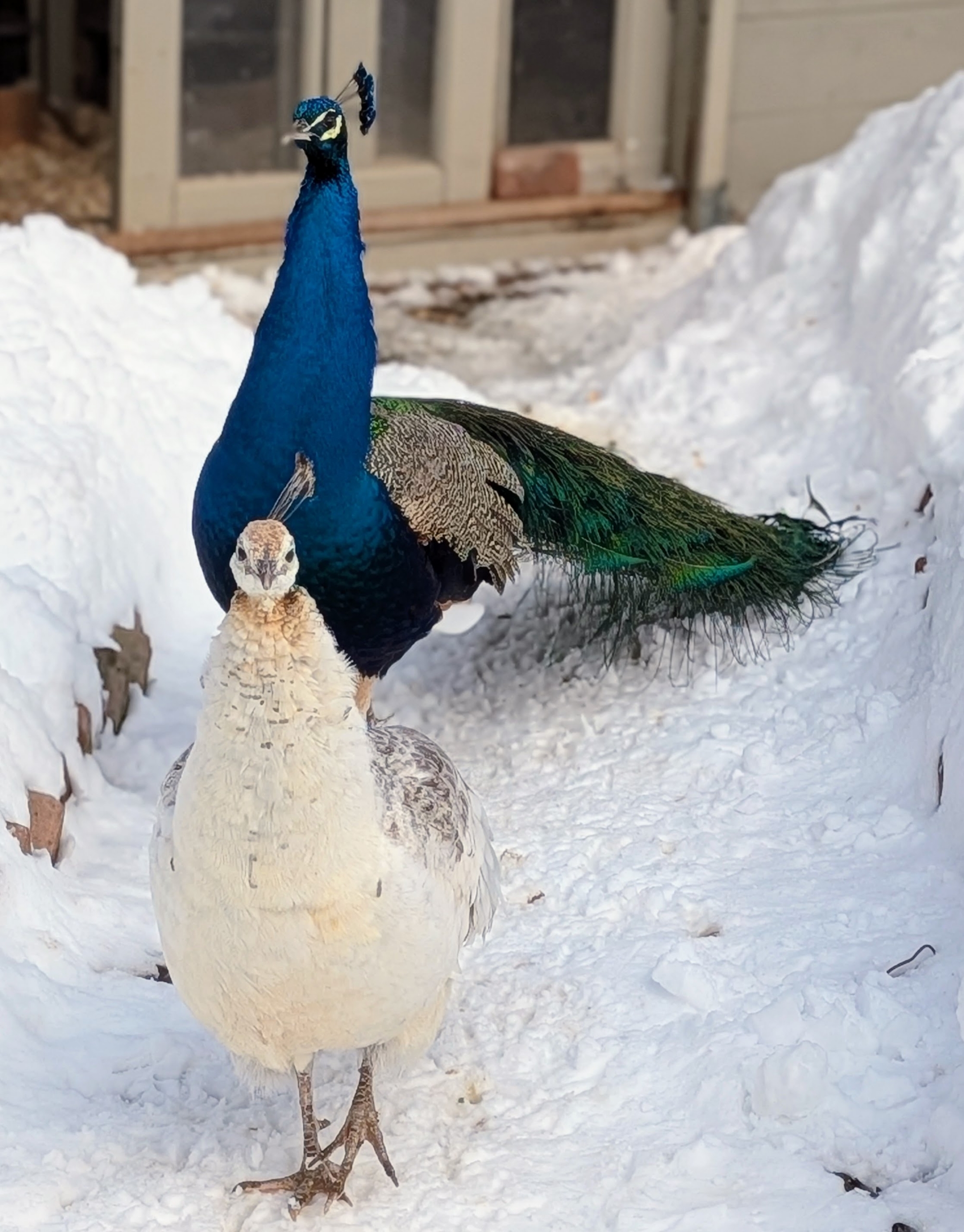
- These two decided to venture outdoors walking along the footpaths shoveled for them after the recent blizzard.
-
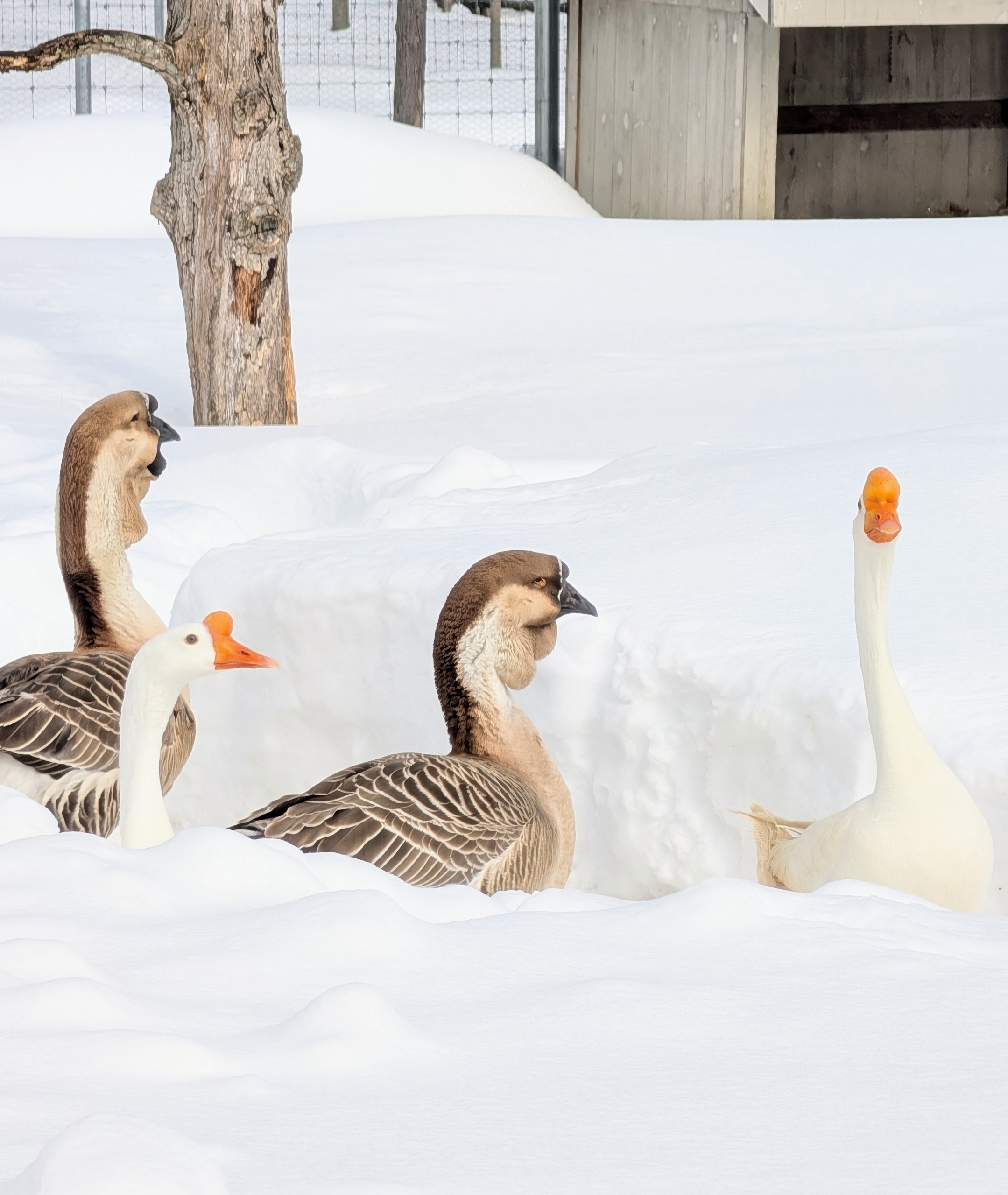
- Next door, my geese are also enjoying their shoveled “course.” I hope you saw the Instagram videos on @marthastewart48 – they walk single file from one side to the other, honking as they waddle.
-
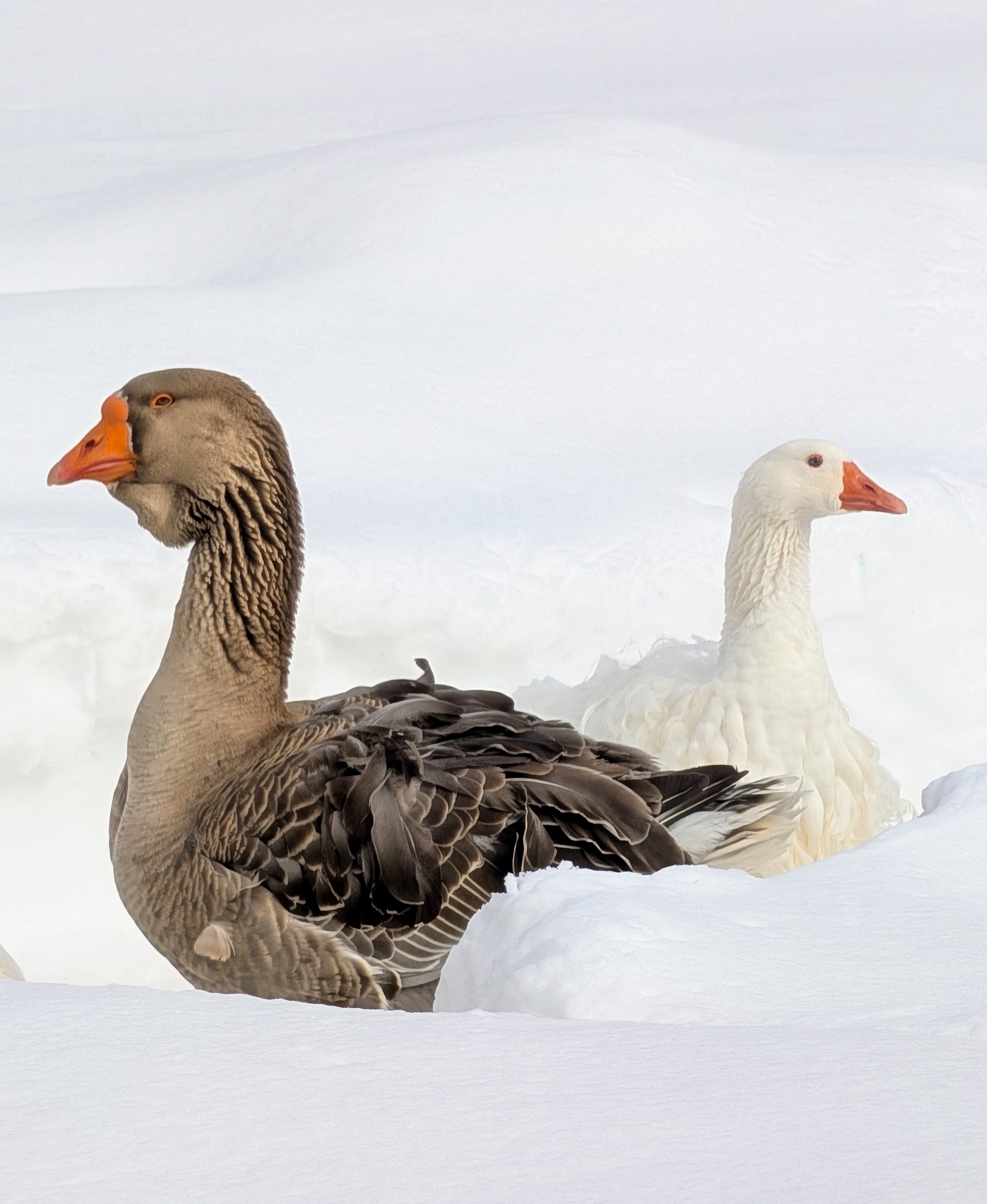
- During warmer days, they can also be found resting along the snow covered path and enjoying the activities around them.
-
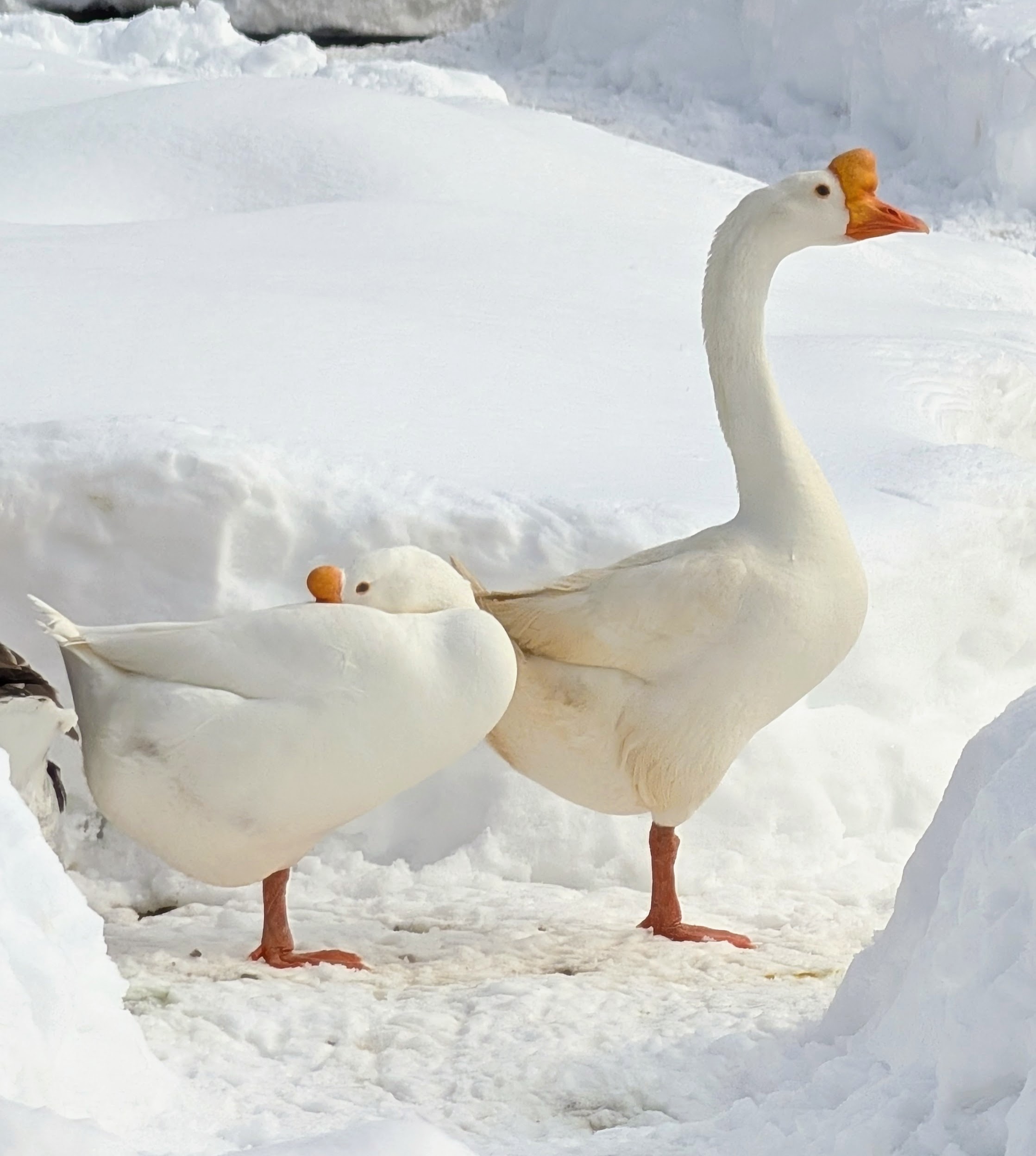
- Here is my pair of Chinese geese. These geese most likely descended from the swan goose in Asia, though over time developed different physical characteristics, such as longer necks and more compact bodies. The Chinese goose is refined and curvaceous. Its bill is relatively long and slender, with a large, rounded, erect knob that attaches to its forehead. The Chinese goose holds its head high and has a long, slim, well-arched neck which meets the body at about a 45 degree angle. Mature ganders average 12 pounds, while mature geese average 10 pounds.
-
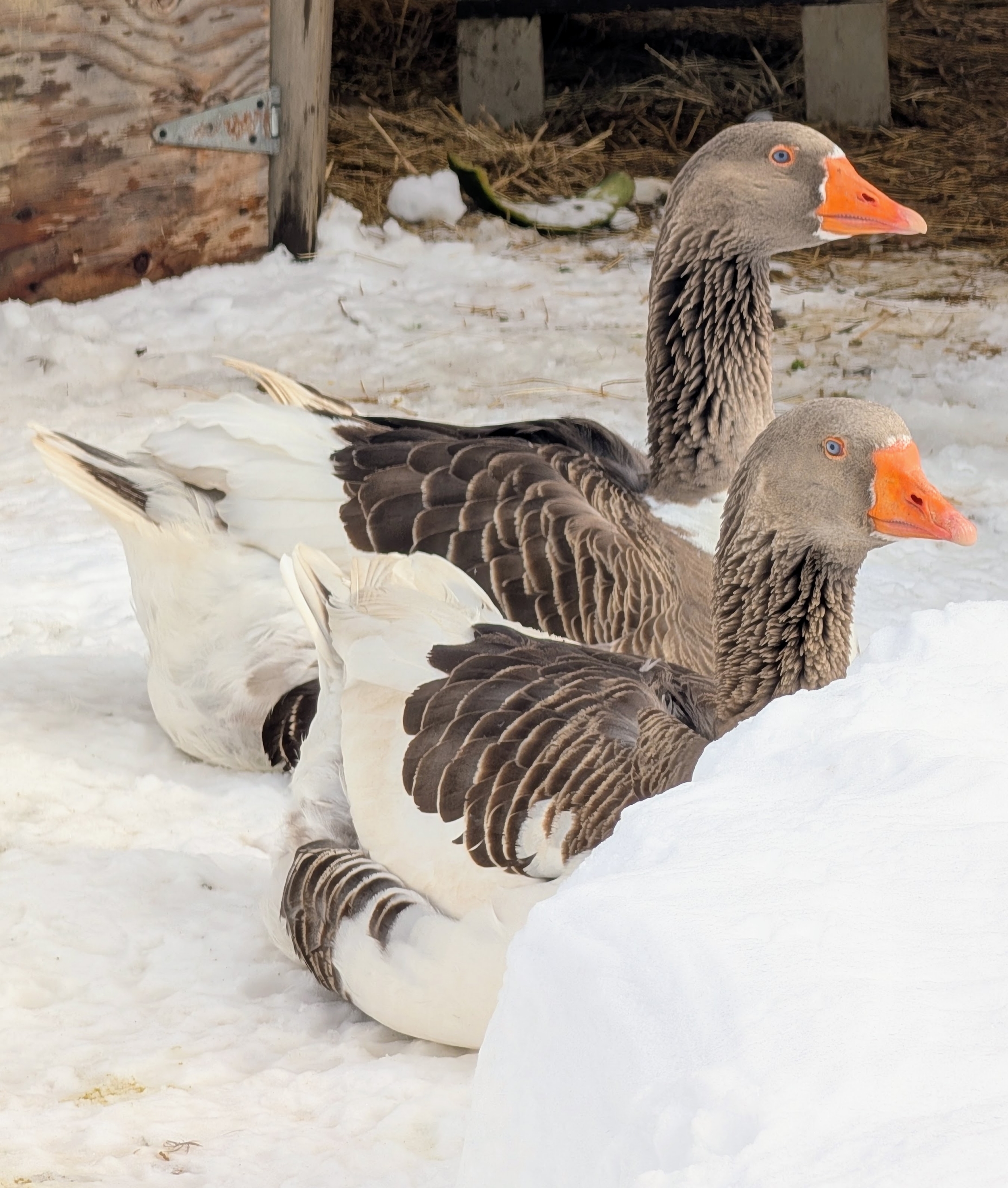
- My Pomeranian guard geese are happy in the snow – going indoors only when they’re hungry.
-
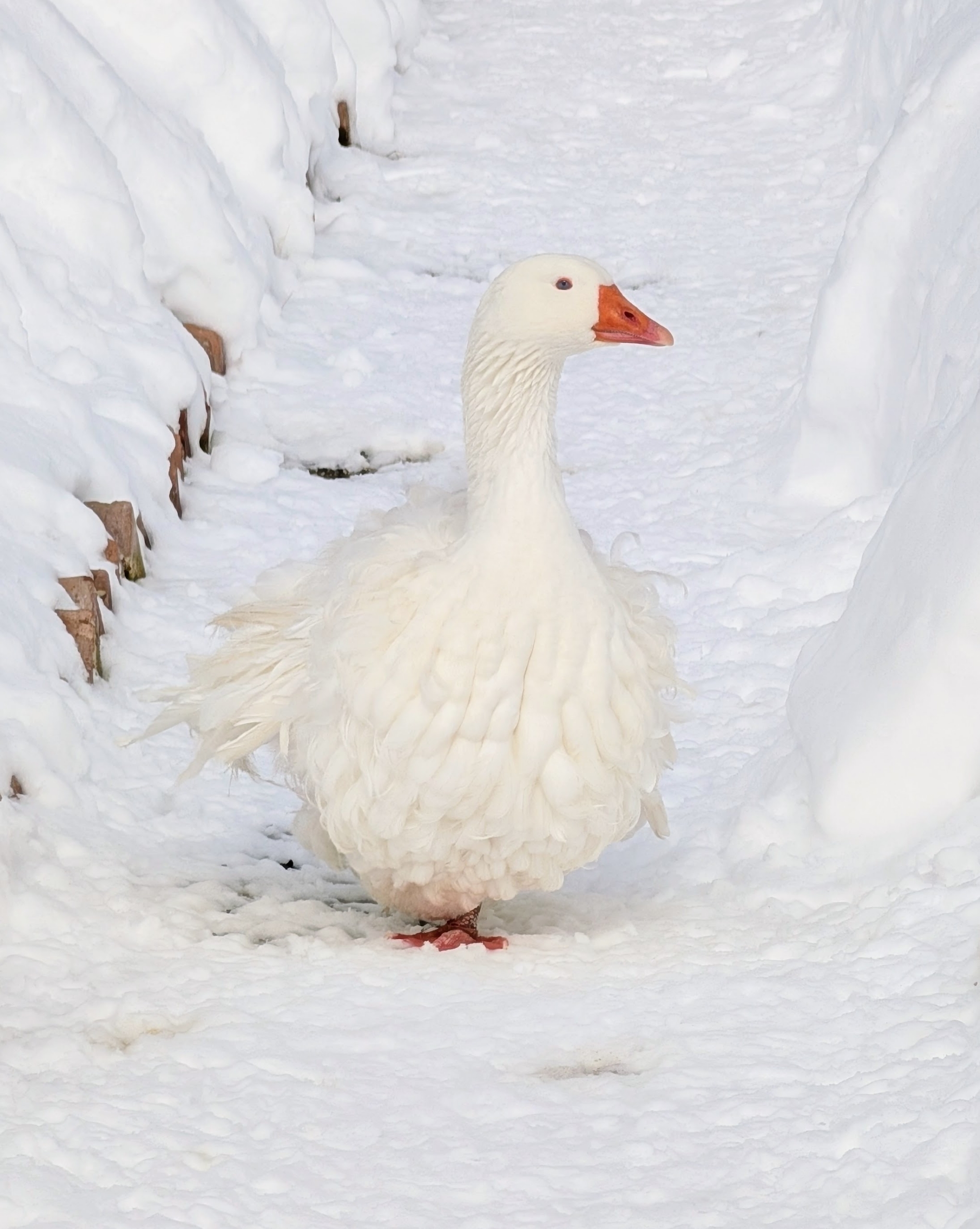
- And here is one of my Sebastopol geese. Sebastopols are medium-sized birds with pure white feathers that contrast with their bright blue eyes and orange bills and feet. And what is most striking is the plumage. The head and upper two-thirds of the neck is smooth, while that of the breast and underbody is elongated and well-curled. Both my peafowl and waterfowl are looking great and seem to be enjoying the winter season. Are you?
 Martha Pins


 Martha Tweets

