

Maintaining My Handmade Yew Table
Outdoor wood furniture requires regular oiling to maintain its natural beauty.
In 2021, after a large yew tree was removed from my former East Hampton home, I decided to give the wood a second life by turning it into a large dining table for the pavilion beside my pool. I created its design and enlisted master artisan Peter Billow, owner of Peter H. Billow Fine Woodworking in Brooklyn, New York to make it. The craftsmanship is evident in every detail, but to keep it looking its best I make sure to care for it properly. It is stored indoors during the winter season and oiled twice a year.
Here are some photos.
-

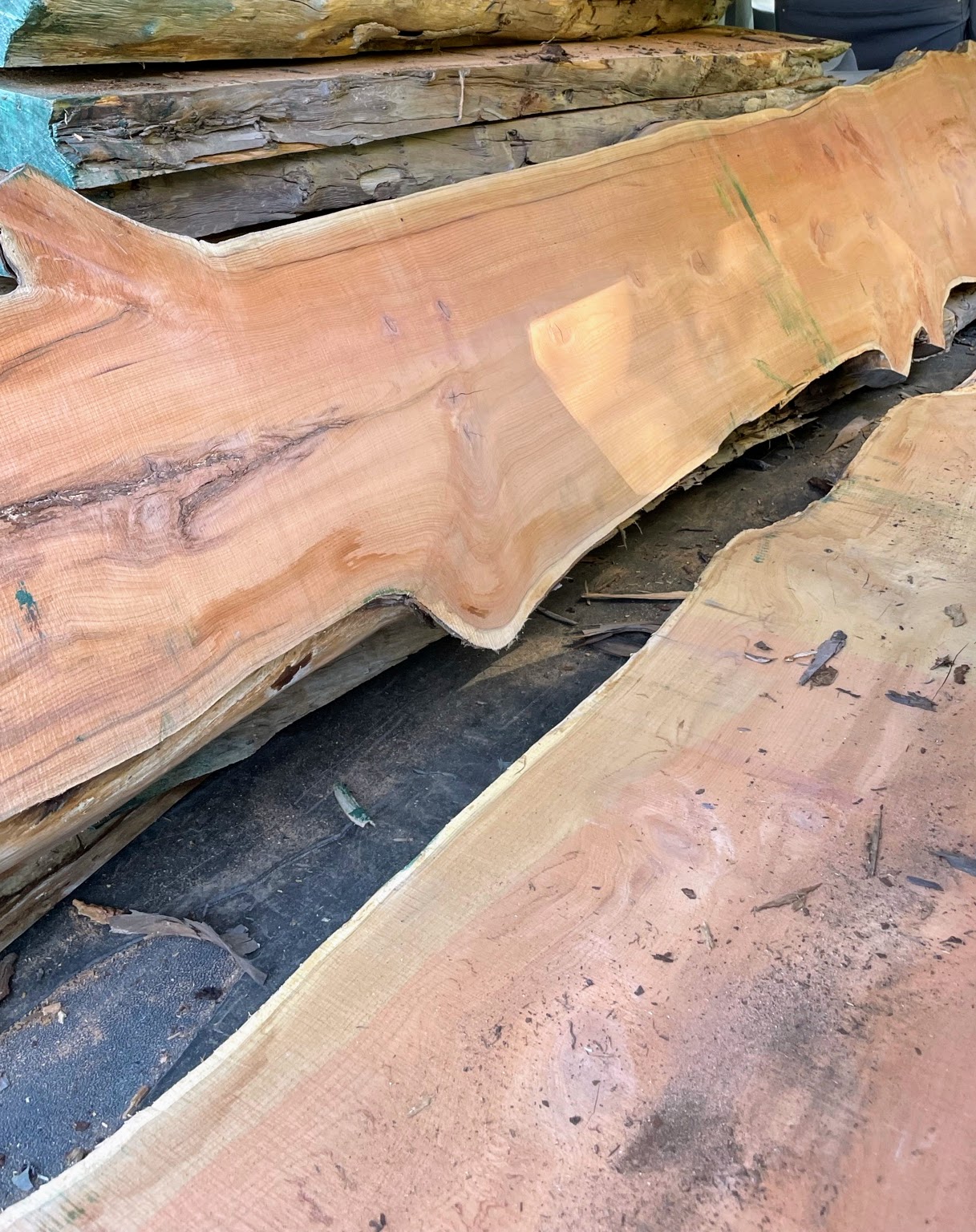
- Yew wood, Taxus Baccata, is a species of evergreen tree in the conifer family. It is also known as common yew, European yew, and English yew. Here is the lumber after the yew was cut. Wood from the yew is classified as a closed-pore softwood, similar to cedar and pine. Yew is easy to work with and is very flexible.
-
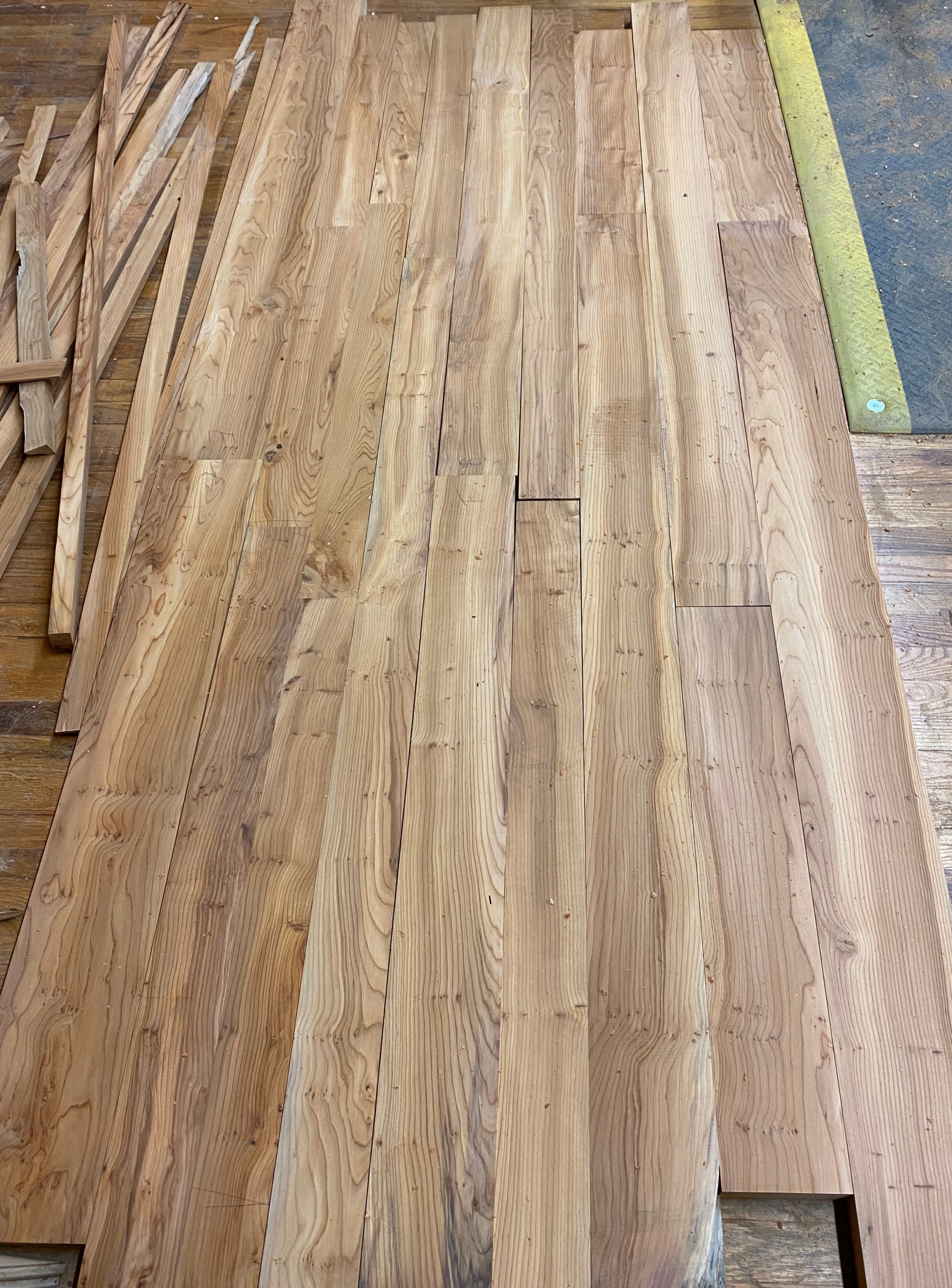
- Here is a section of the table at the shop after pieces are selected and laid out.
-
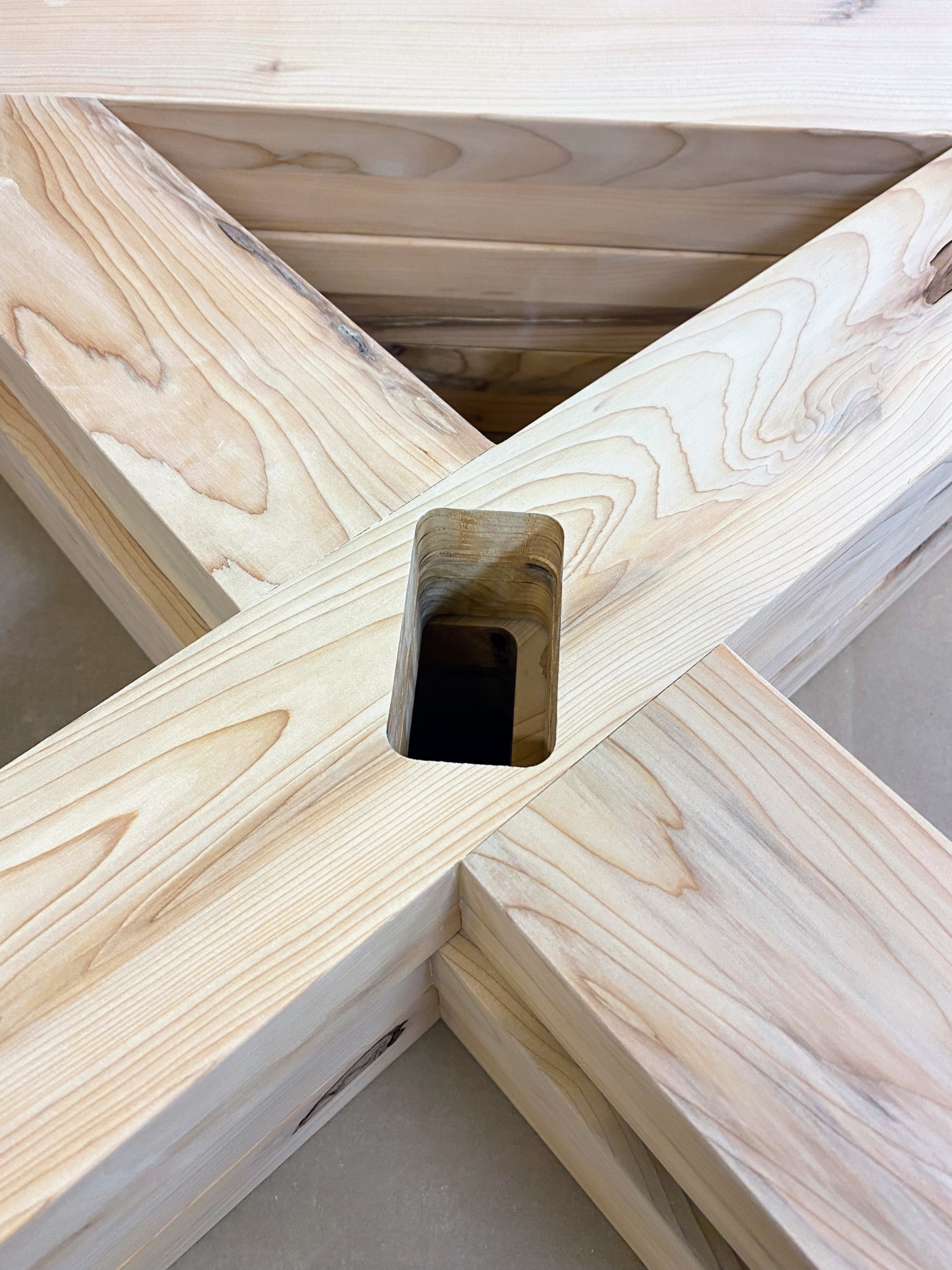
- Holes are made in the criss-crossed center of the trestles for the horizontal support.
-
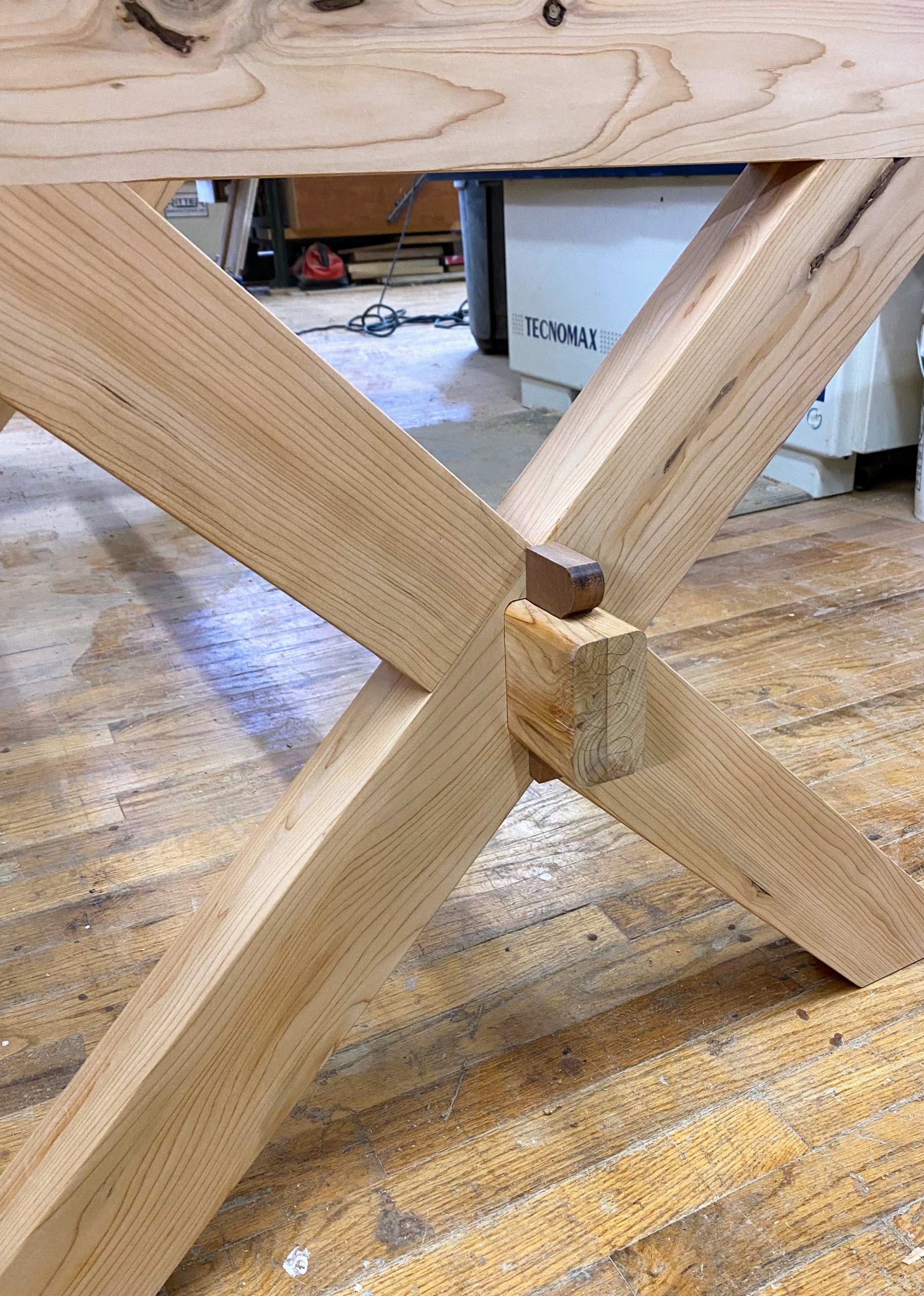
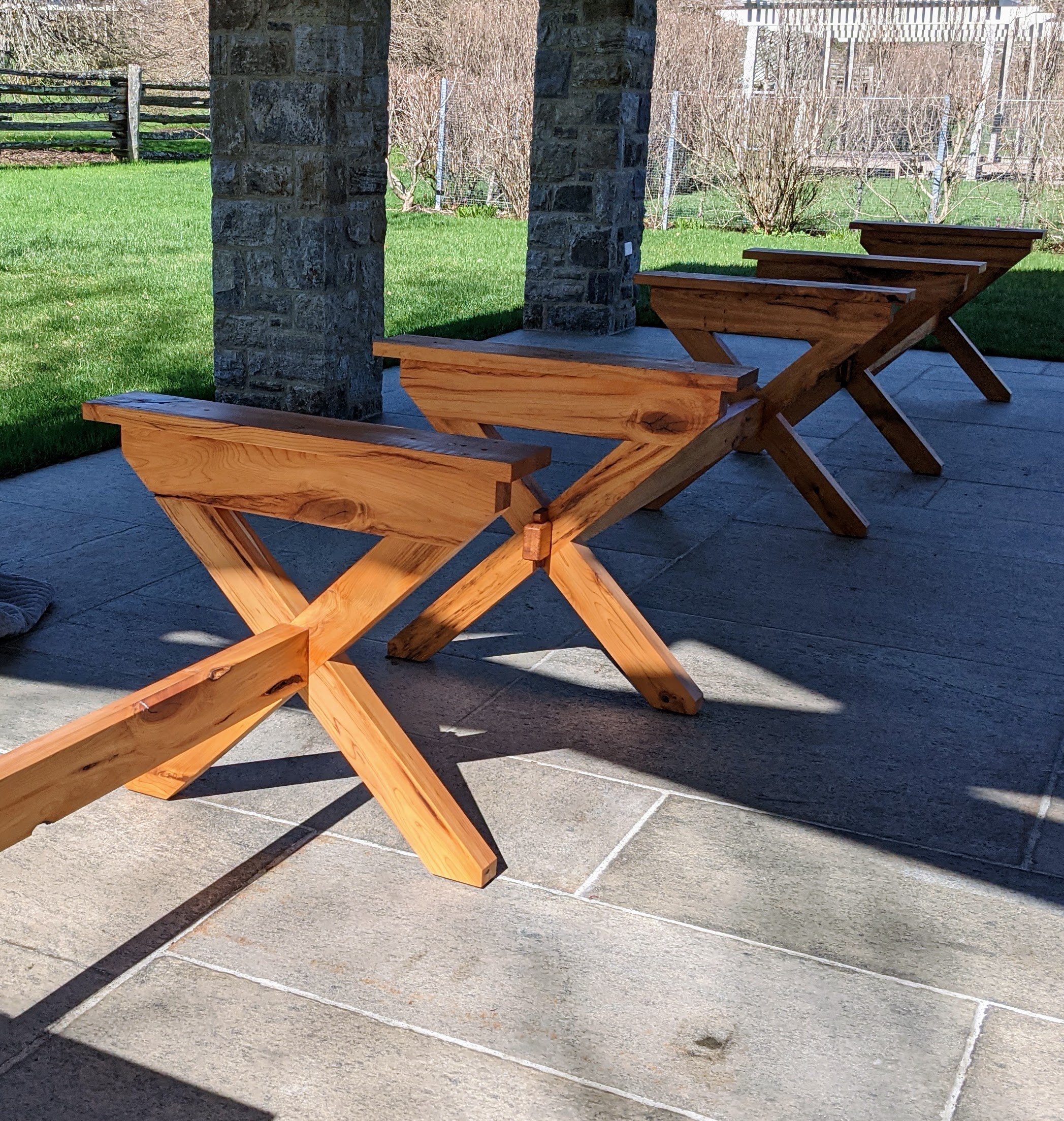
- This is one base after the cross piece was secured to the trestles. A trestle is a framework consisting of a horizontal beam supported by two pairs of sloping legs to hold up a flat surface such as a tabletop.
-
- The tables were finished and brought to my farm the following spring. English Yew ranges from durable to very durable when it comes to decay resistance. And, it is also resistant to insect attack. I knew it would be perfect here at the pavilion.
-
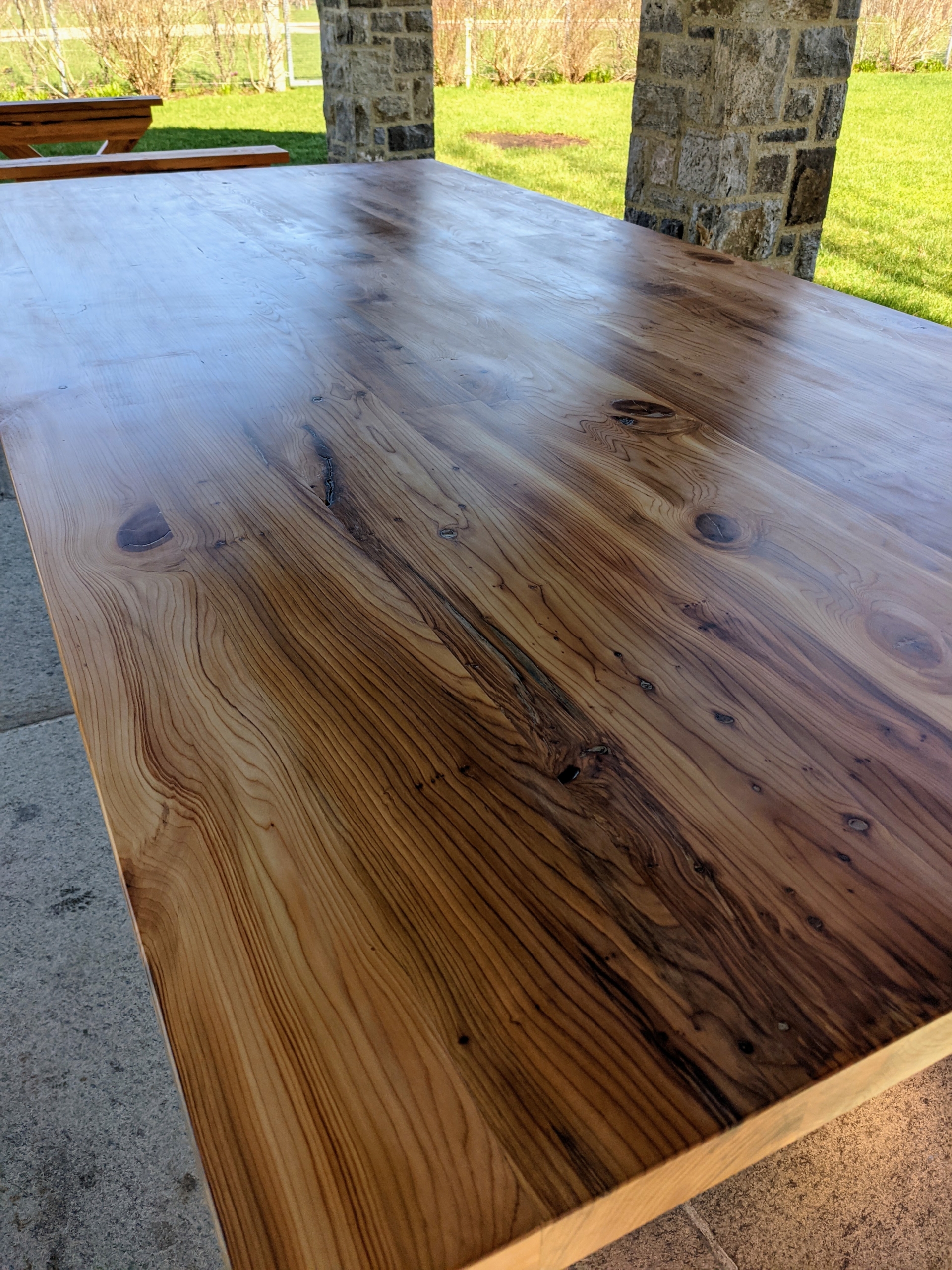
- Peter did not use any epoxy to fill the knots and natural holes in the wood – he left them as is.
-
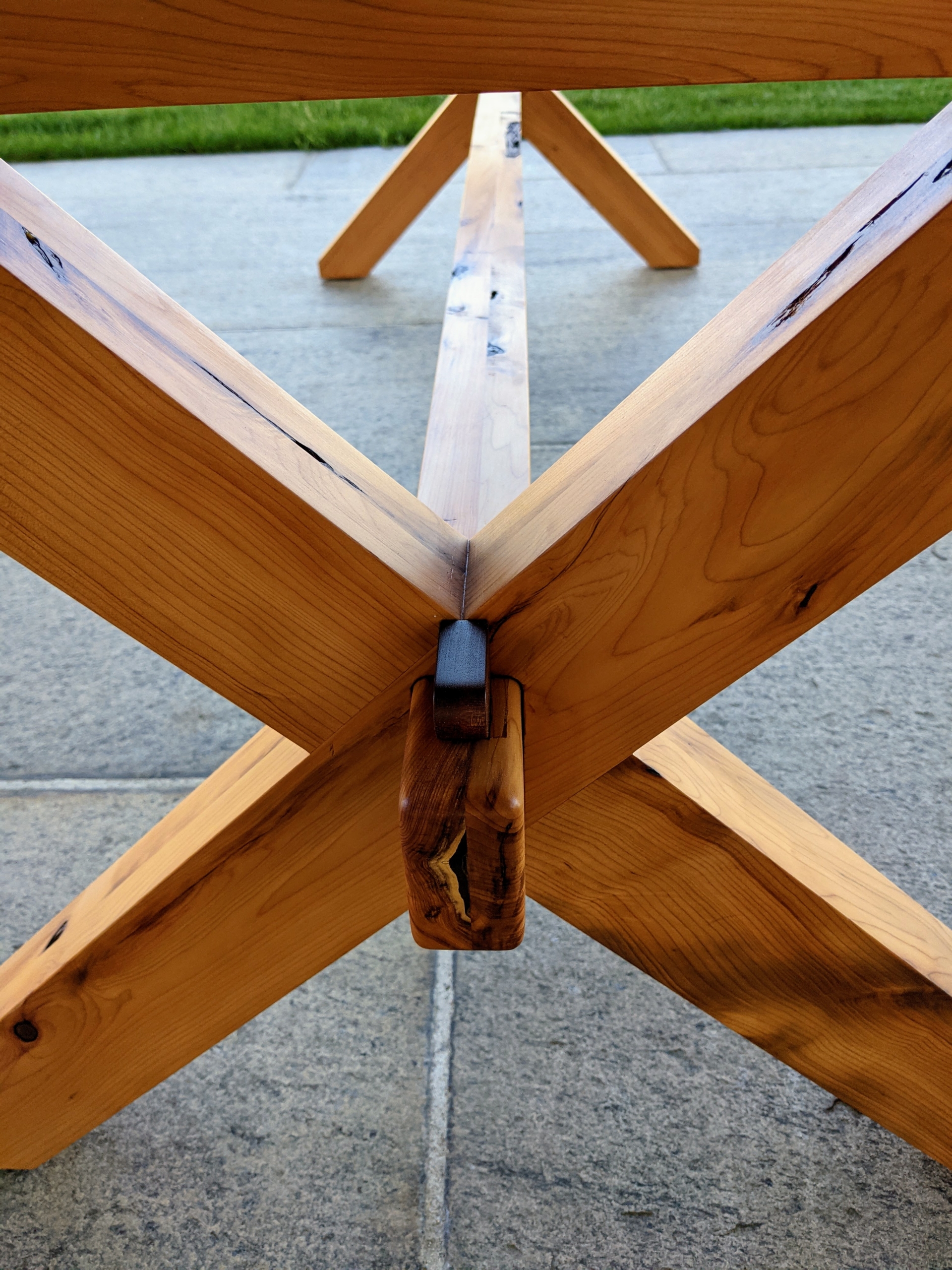
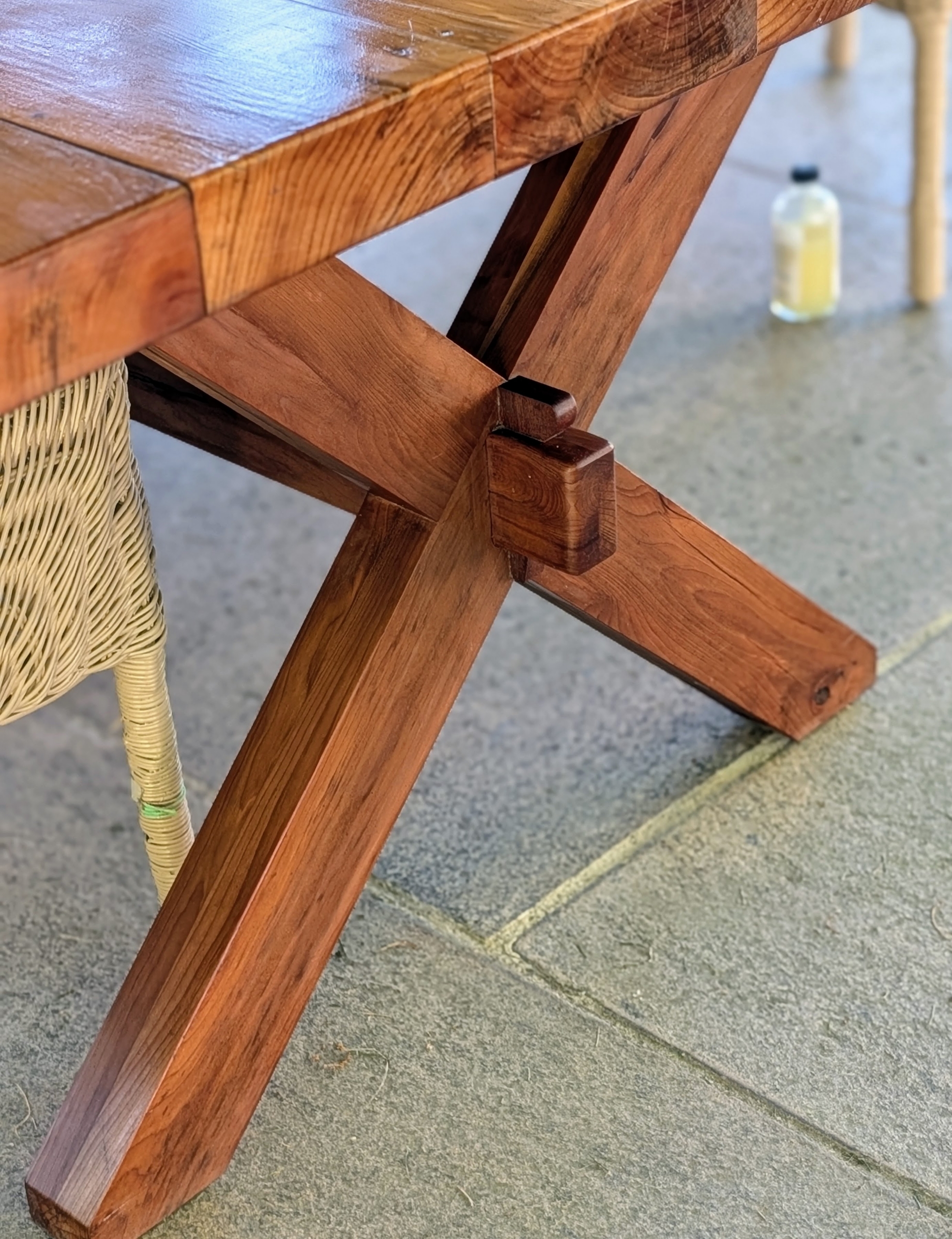
- The top peg on the trestle is made of walnut, a very strong and stable wood that can take intricate carving.
-
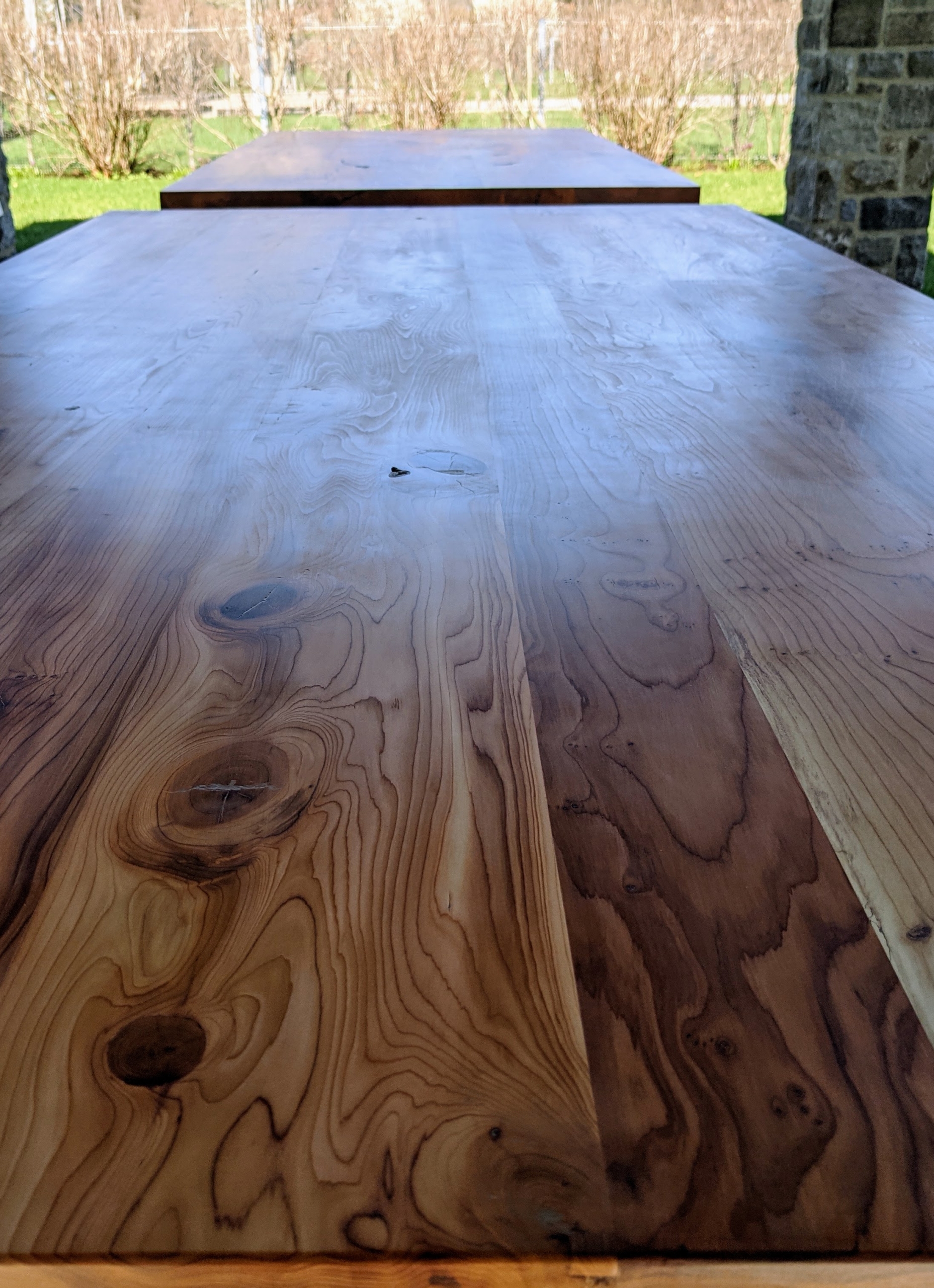
- Each table weighs about 300-pounds – wind will not bring it down!
-
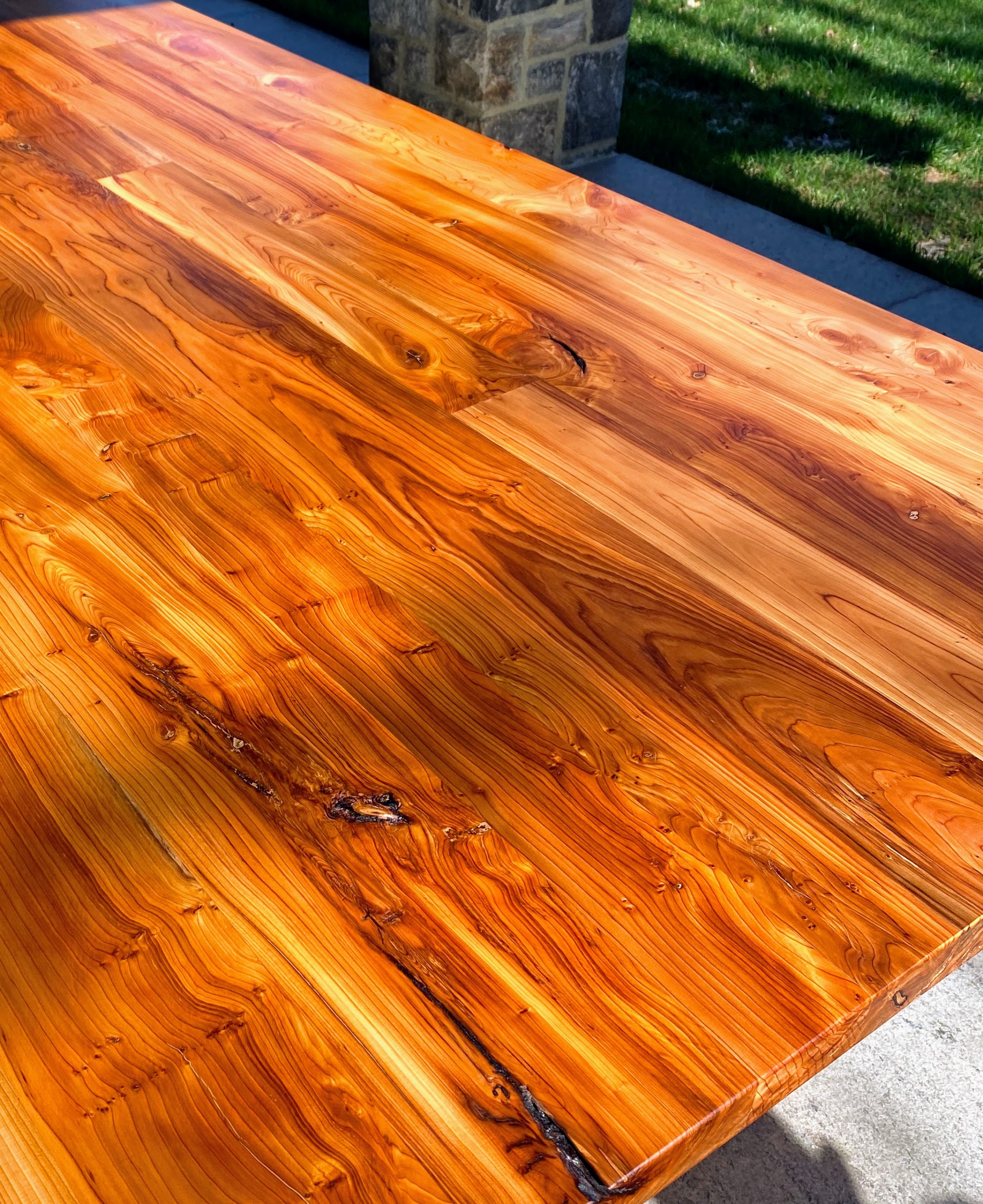
- The heartwood of yew tends to be an orange-brown, at times a darker brown. It is often used for cabinetry and tool handles. The hard, slow-growing wood is also used to make gates, furniture, parquet floors, and paneling.
-
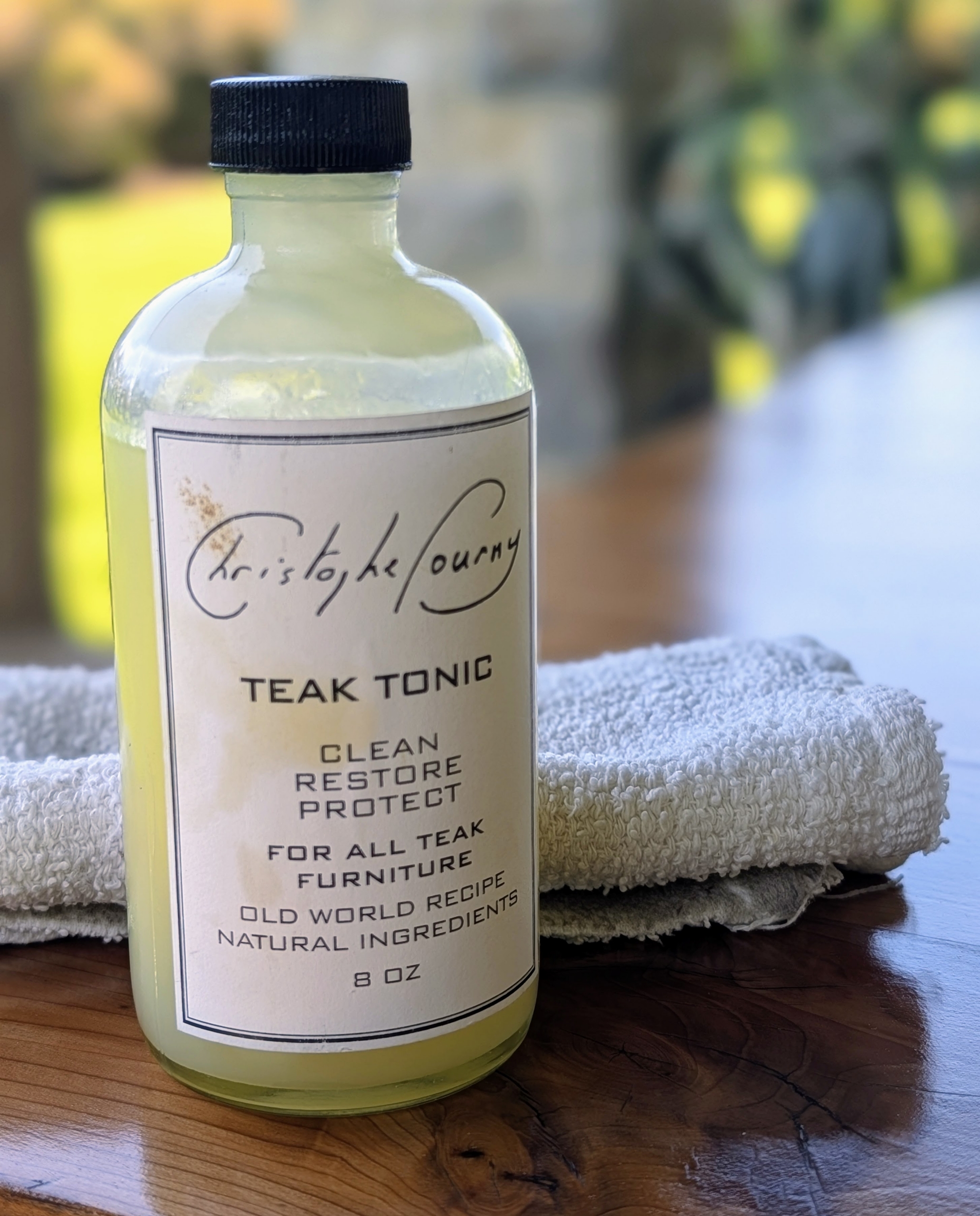
- To maintain its beauty, I treat it with Christophe Pourny’s Teak Tonic, which cleans, restores, and protects the wood. I’ve been using Christophe’s products for many years.
-
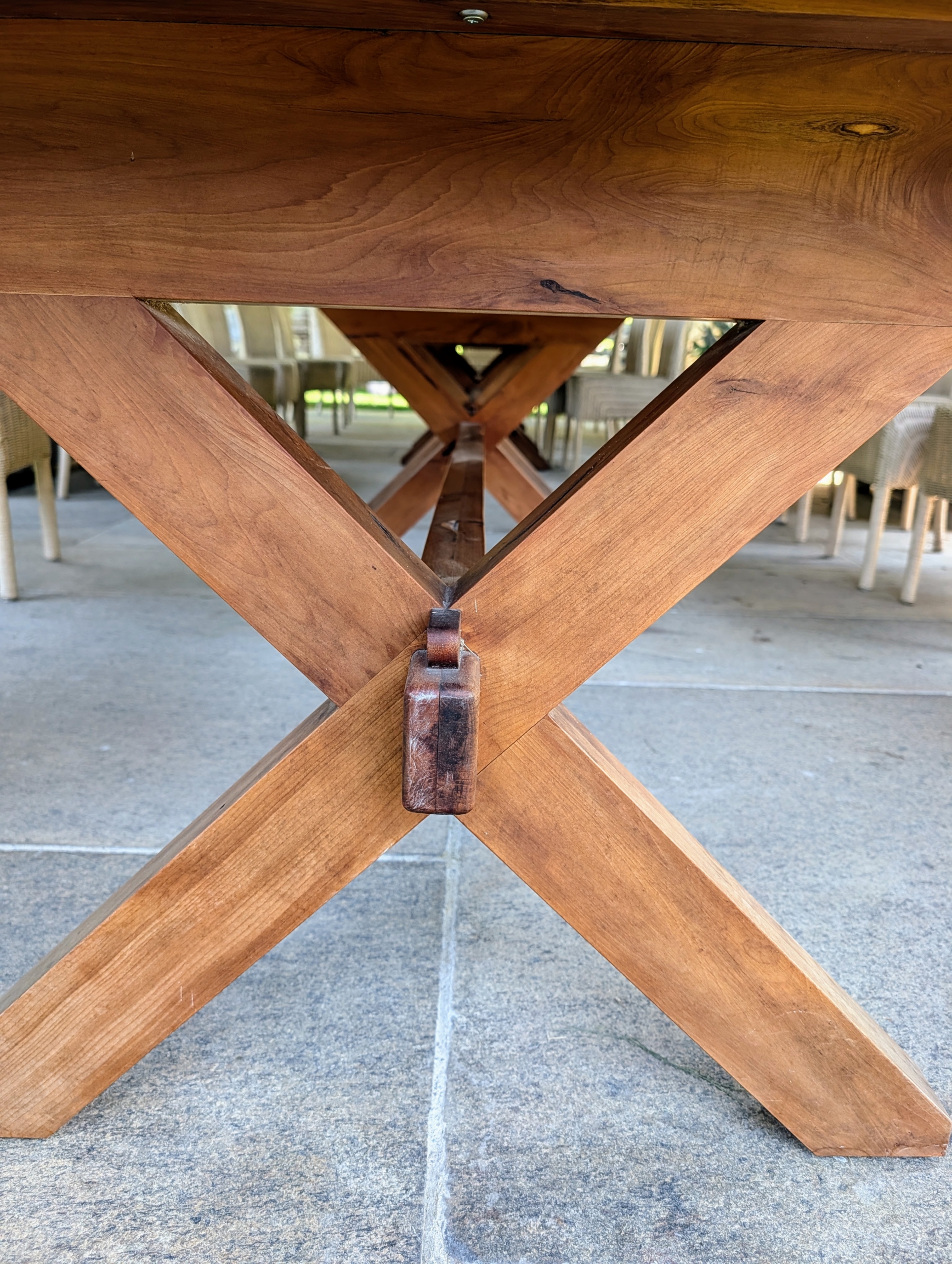
- Here is one of the trestles yesterday before oiling – it’s gotten a bit dull in color.
-
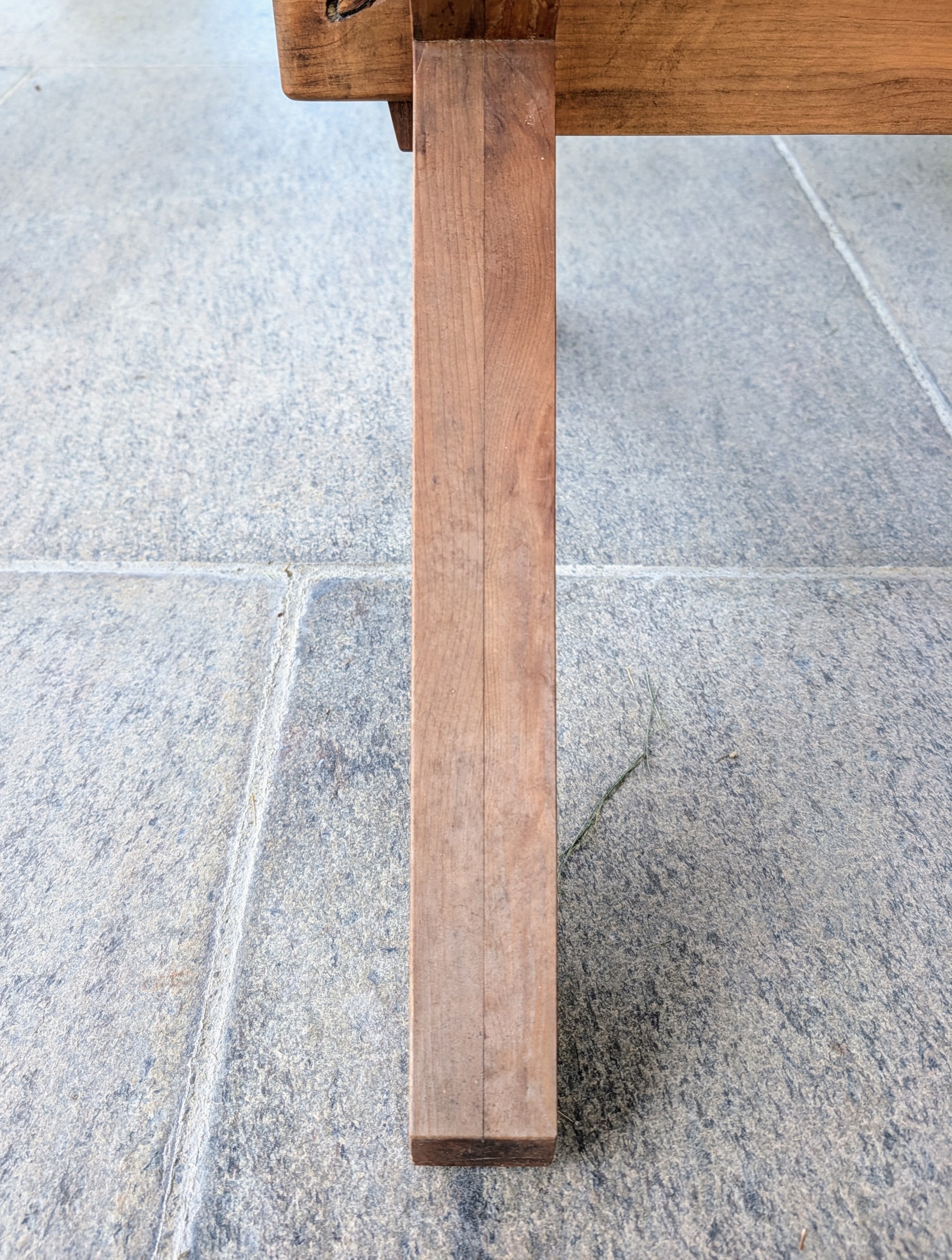
- Here is another “before” look.
-
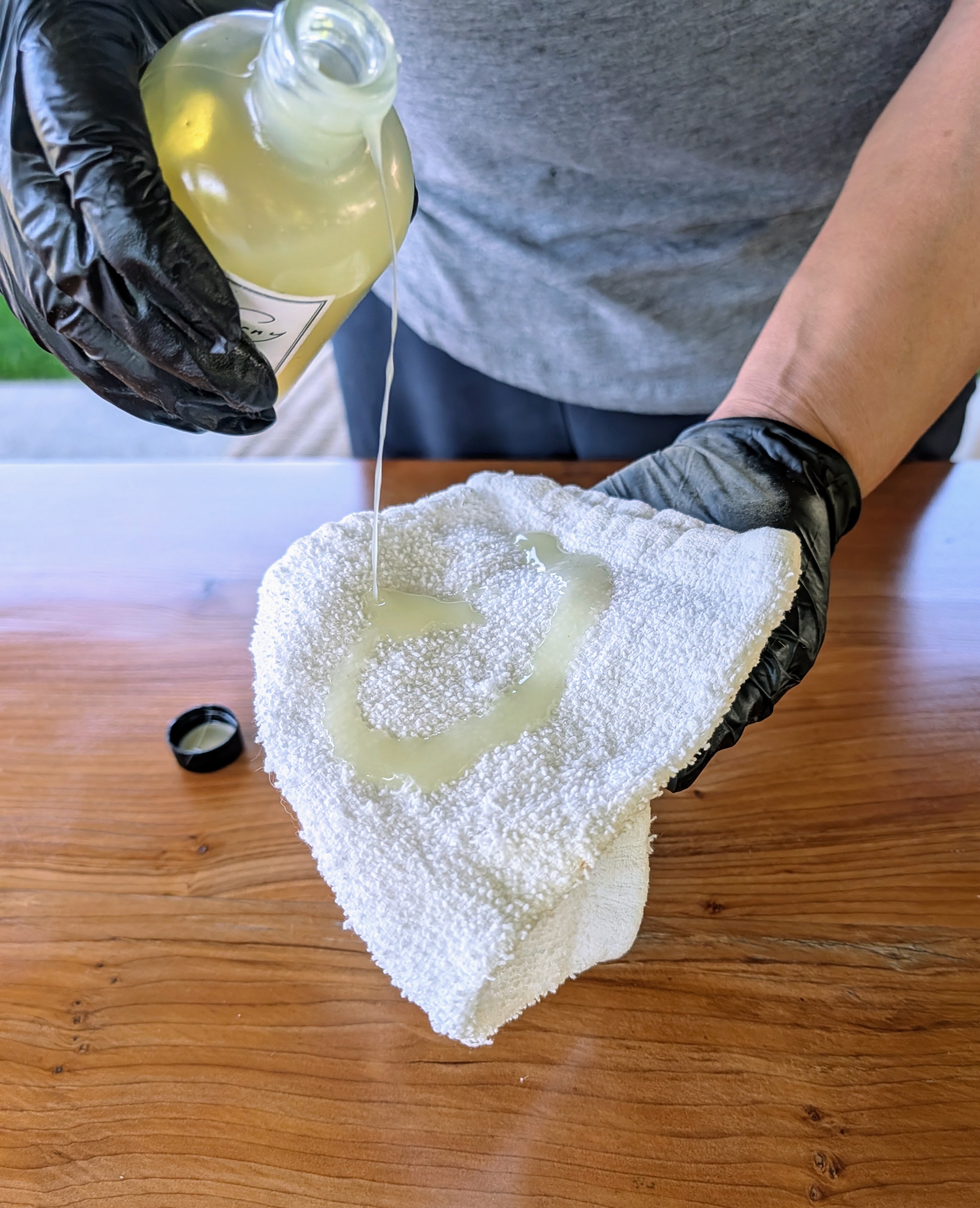
- Elvira pours some Teak Tonic onto a dry cloth.
-
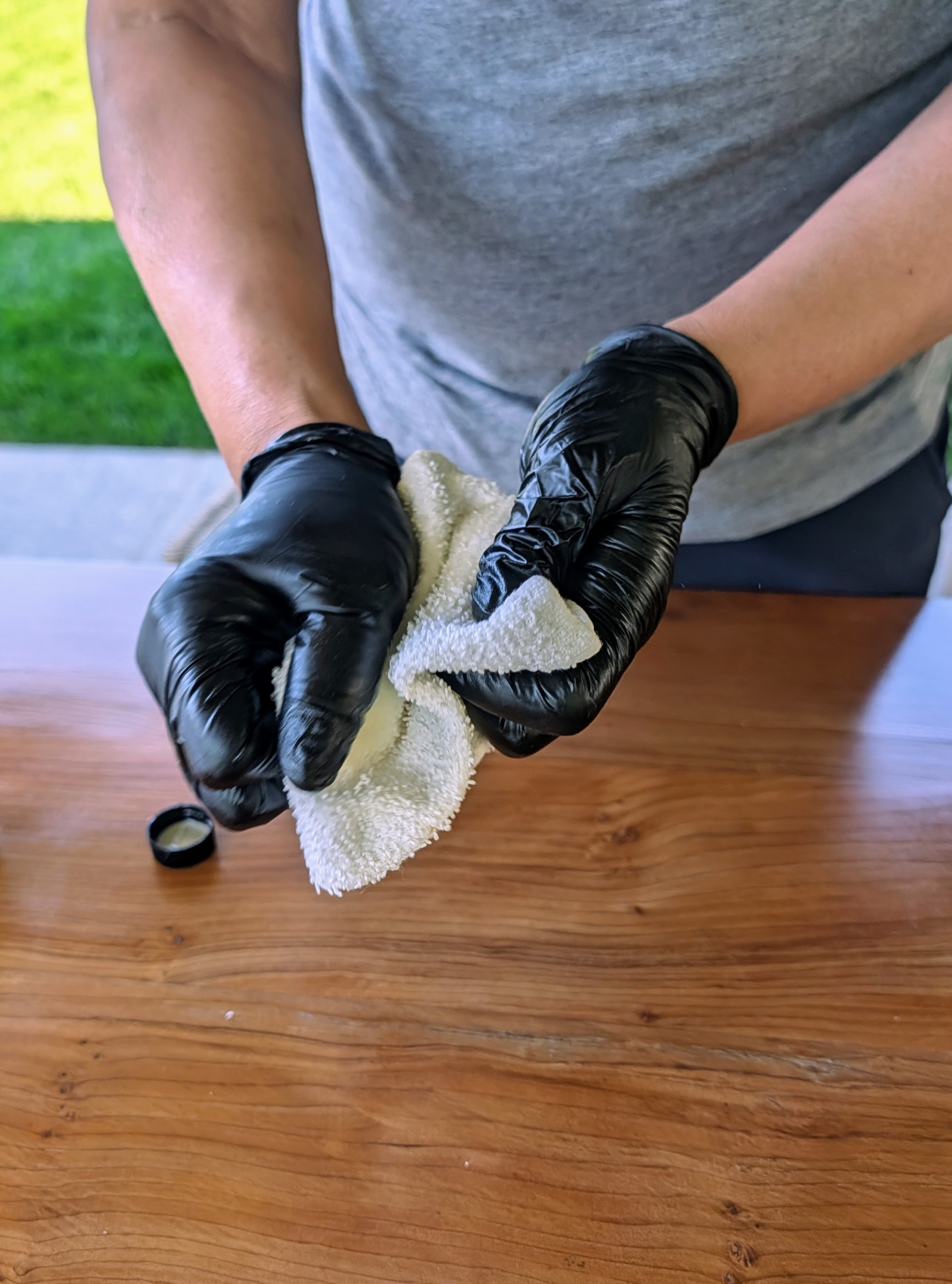
- And then rubs the cloth together to spread the oil.
-
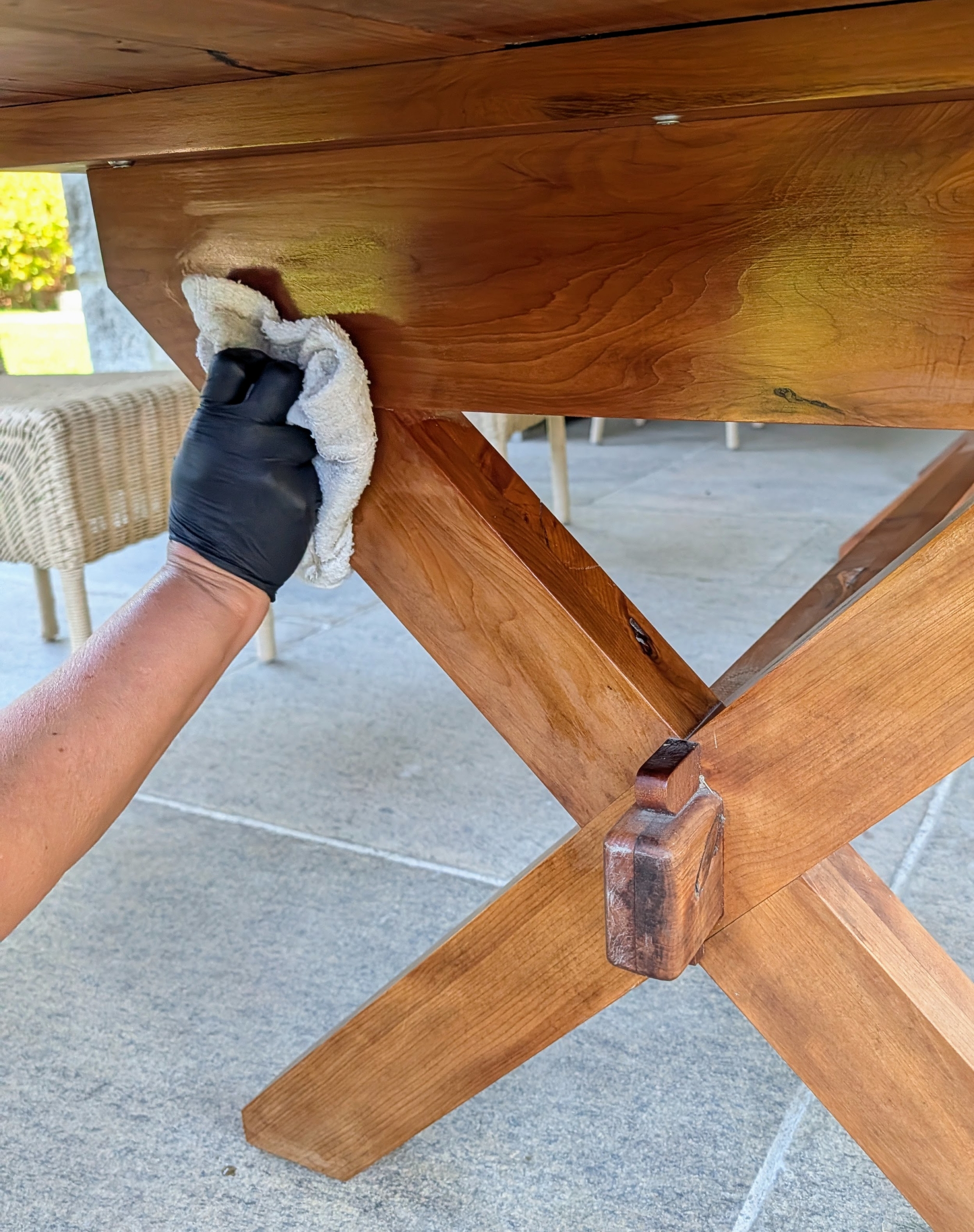
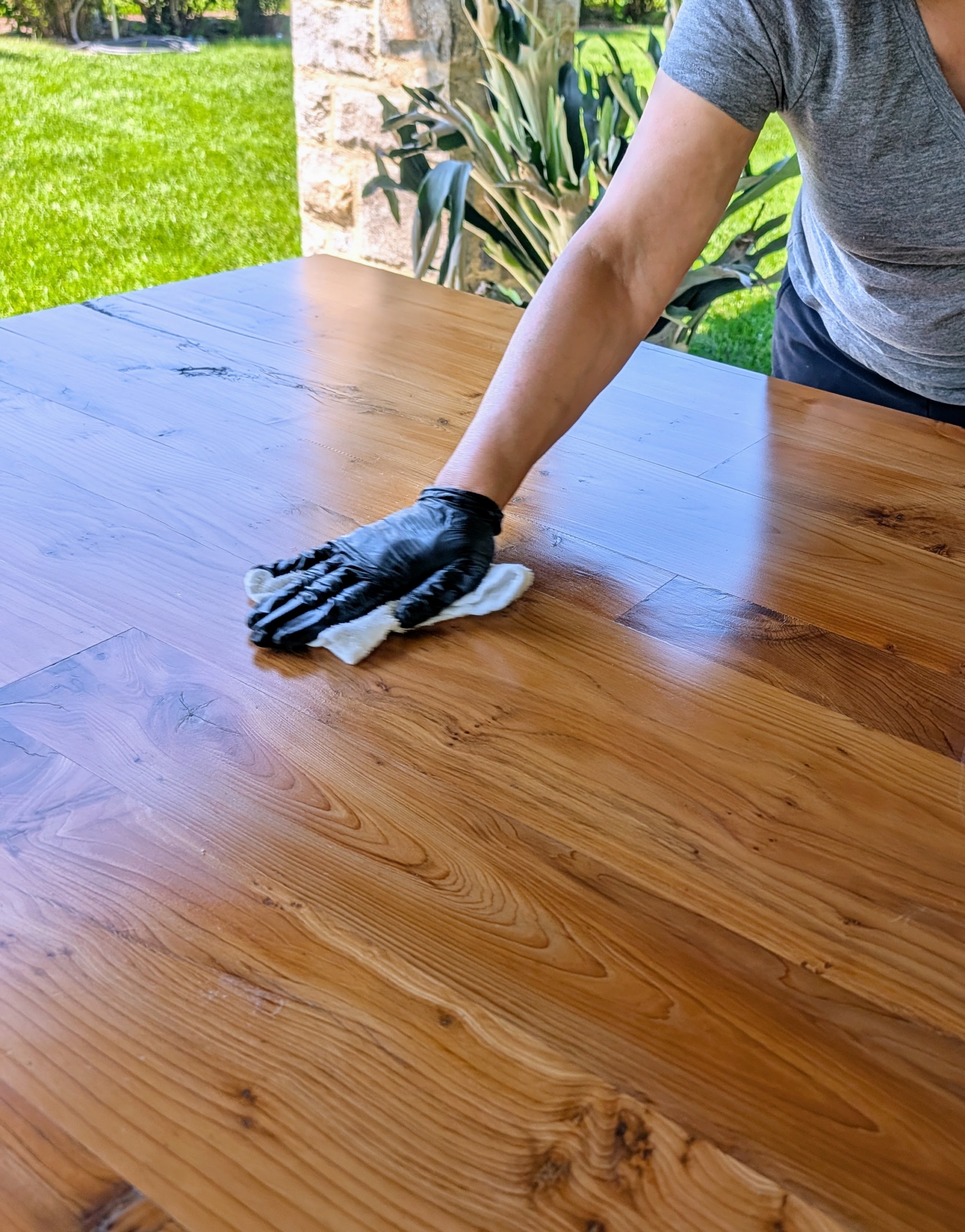
- Next, she slowly wipes down the table, applying the oil on every surface of the legs and base.
-
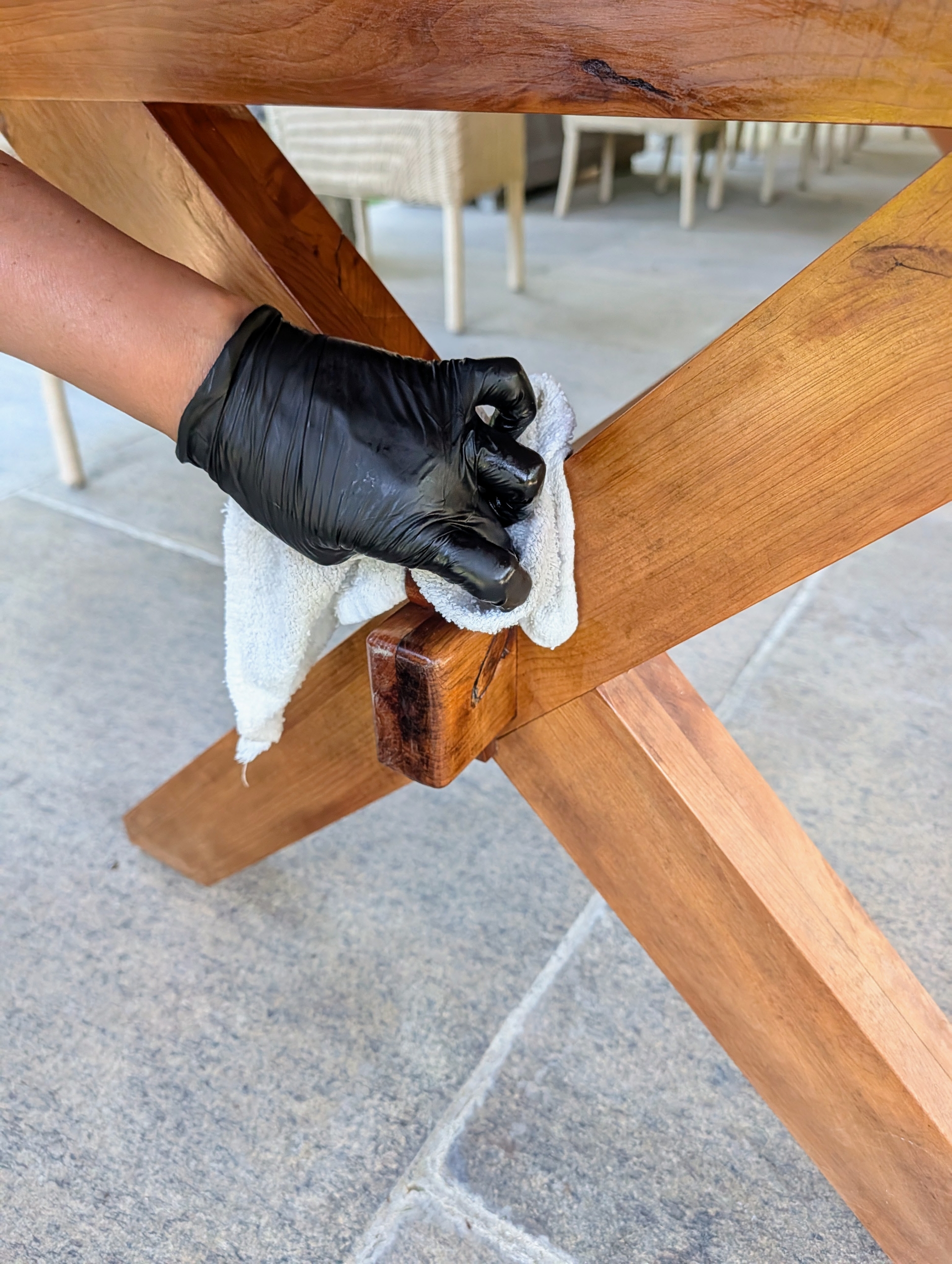
- She also makes sure to gets into the corners and crevices, removing any accumulated dust while restoring its shine.
-
- Elvira oils the tops of the tables as well, Here, she does it twice, so the surface is extremely clean as well as polished.
-
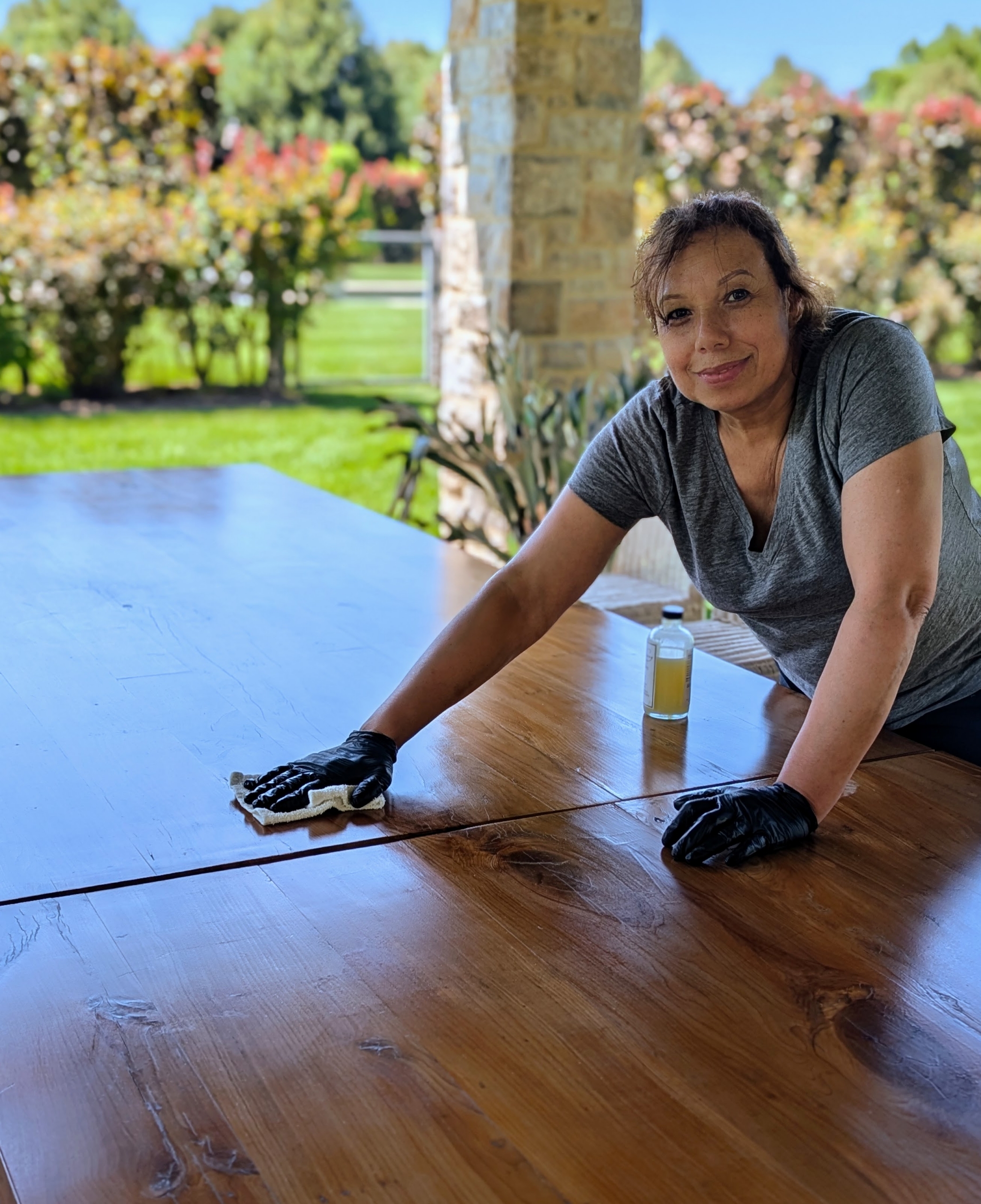
- It doesn’t take long to see the difference. It looks brand new! Elvira is so pleased with the results. This treatment should be done at least twice a year.
-
- Look at the legs after they are completely cleaned and oiled. The oil is left to dry and then the table is wiped with a dry cloth the next day to remove any excess.
-
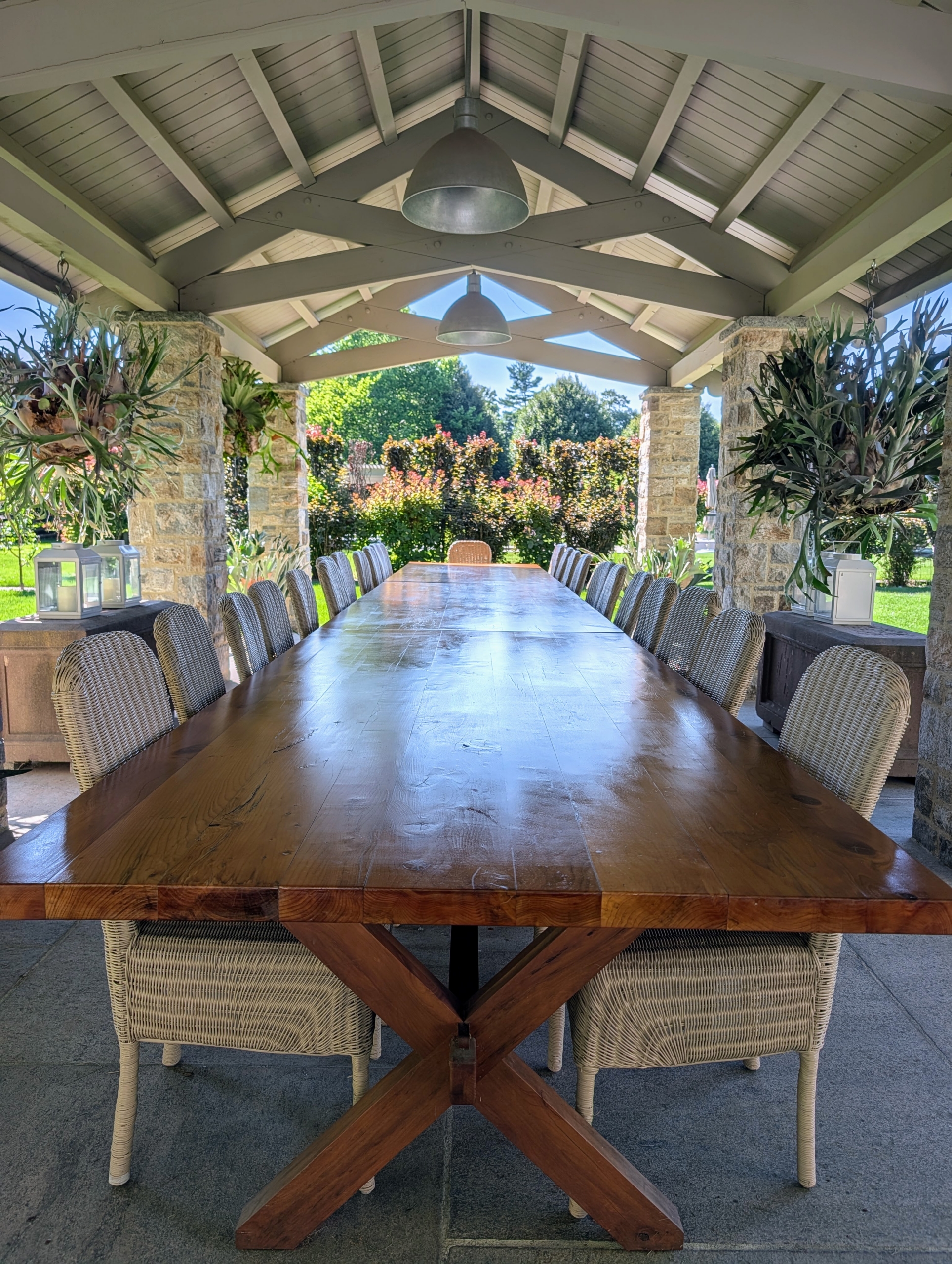
- And here is the table completely done – and ready for my next gathering. In fact, I’m entertaining later this week!
 Martha Pins


 Martha Tweets

