Exotic forms of succulents make excellent container specimens.
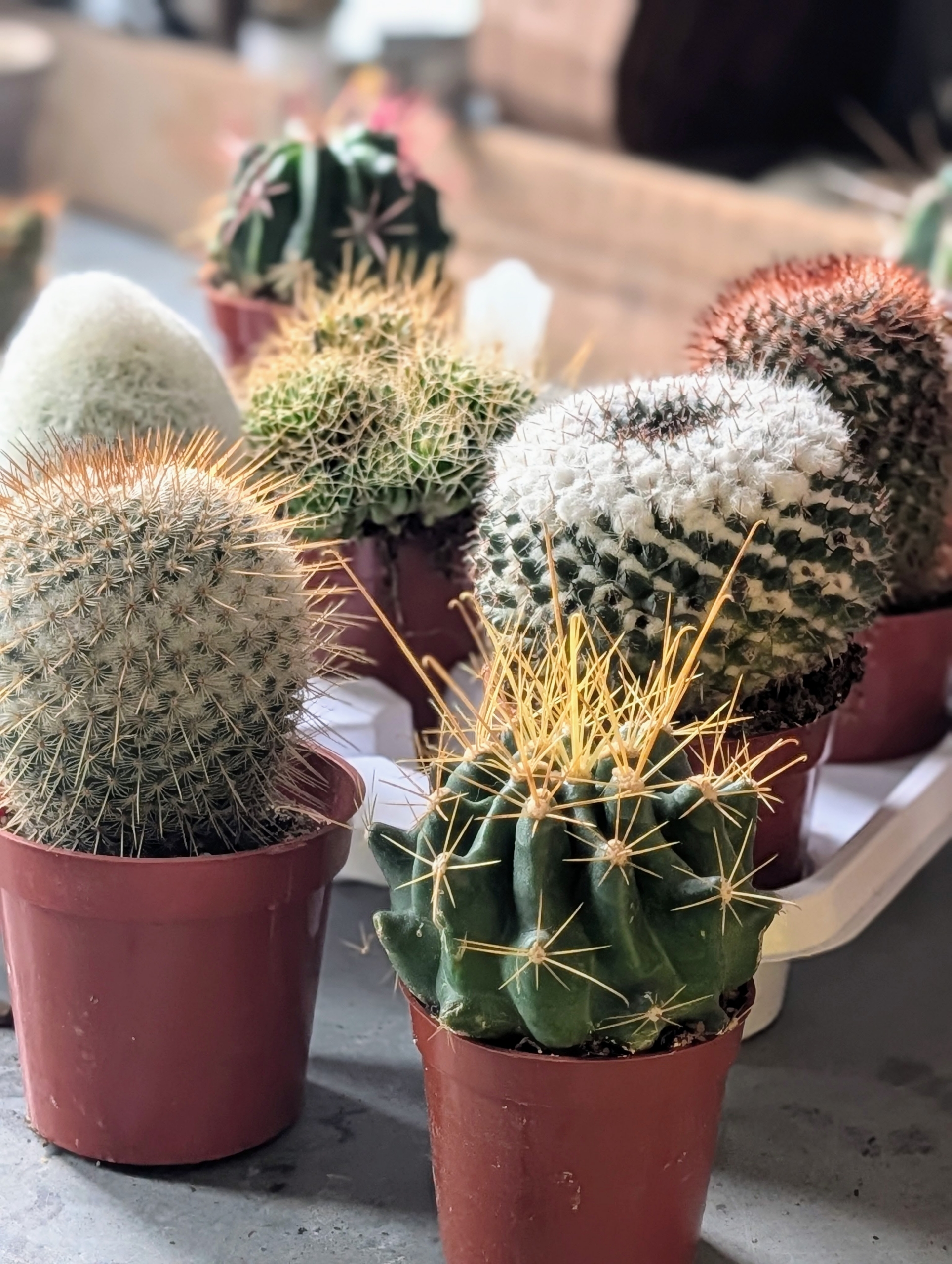
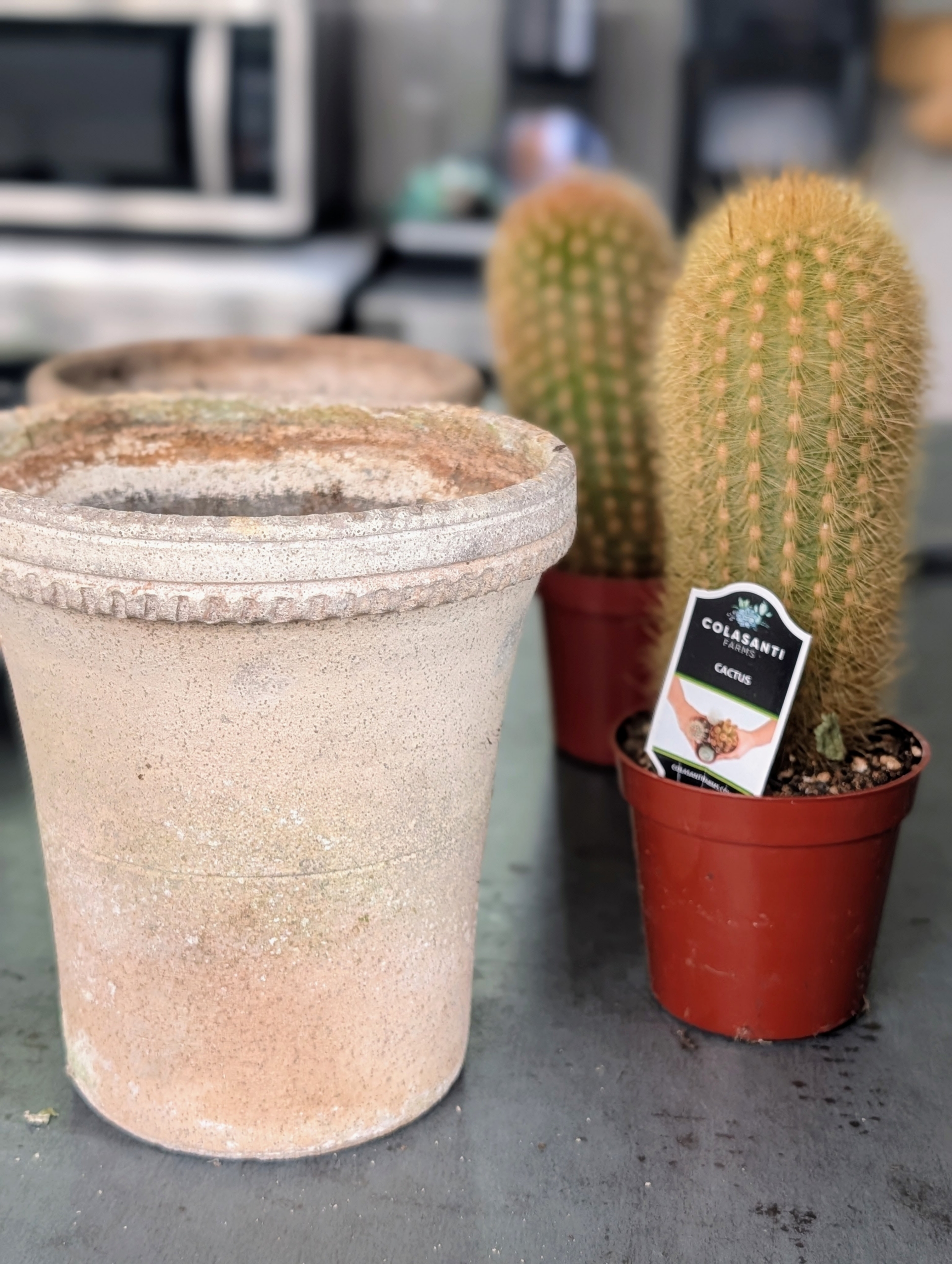
Succulents are low-maintenance, adaptable both indoors and out, and have a large number of unique forms making them ideal plants for those who love growing them but don’t really have a lot of time to care for them. Succulents, which includes the cactus family, are able to survive prolonged drought because they store moisture in their fleshy stems, roots, and leaves. Cacti also have pad-like buds, called areoles, out of which grow sharp spines, which protect the plant from harm and collect and condense moisture. Not long ago, I bought a few interesting cacti to add to my growing collection.
Enjoy these photos.
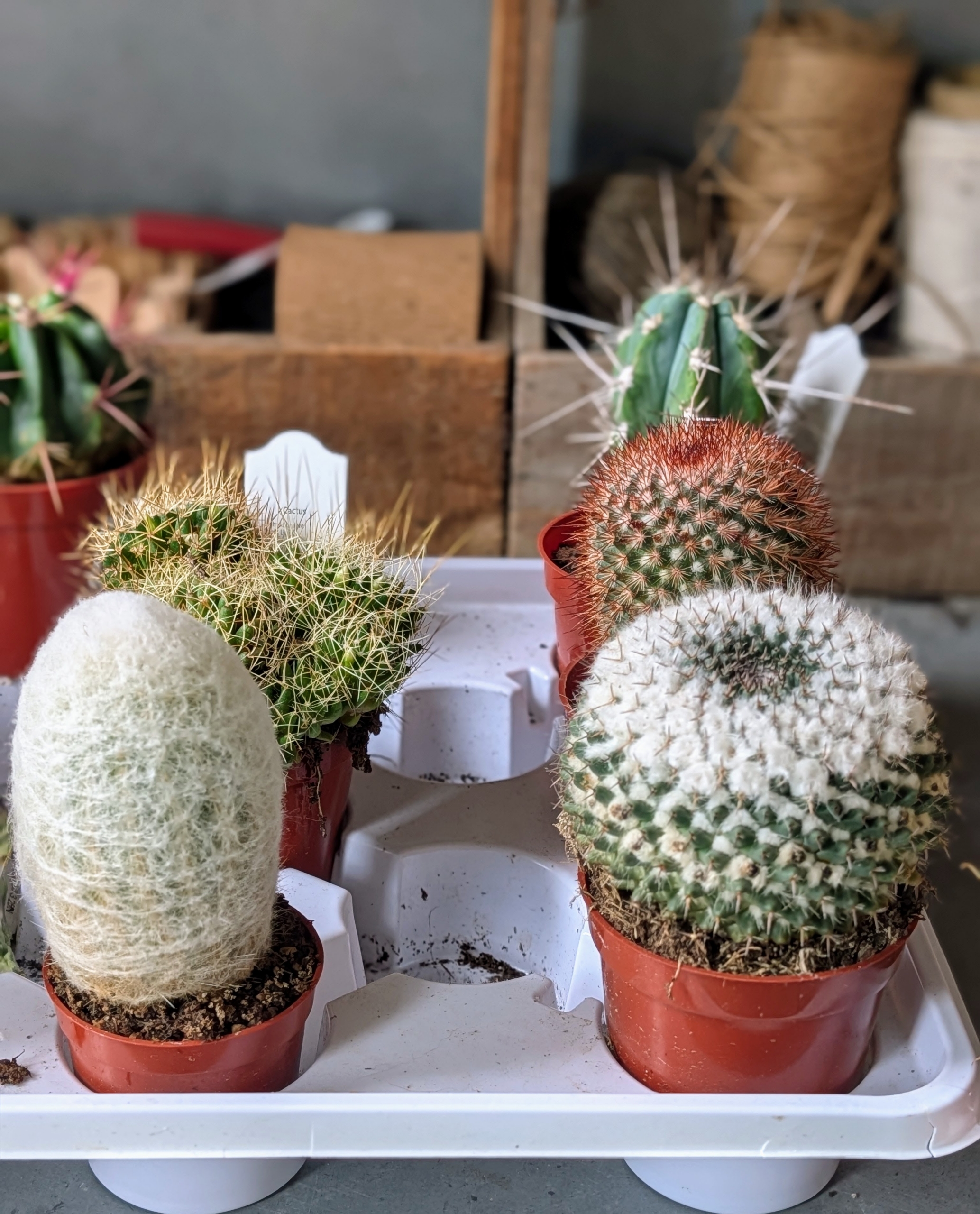
Whenever I travel, I often look for interesting plants to bring home and add to my greenhouse. I have amassed quite a collection of unique specimens over the years. These are from Colasanti Farms in Canada, a 4th generation family owned company growing a large variety of cactus, succulents and tropical plants.
When starting a cactus collection, know the basics about watering, sunlight, soil, and pots. And start with smaller, easy-to-care-for varieties.
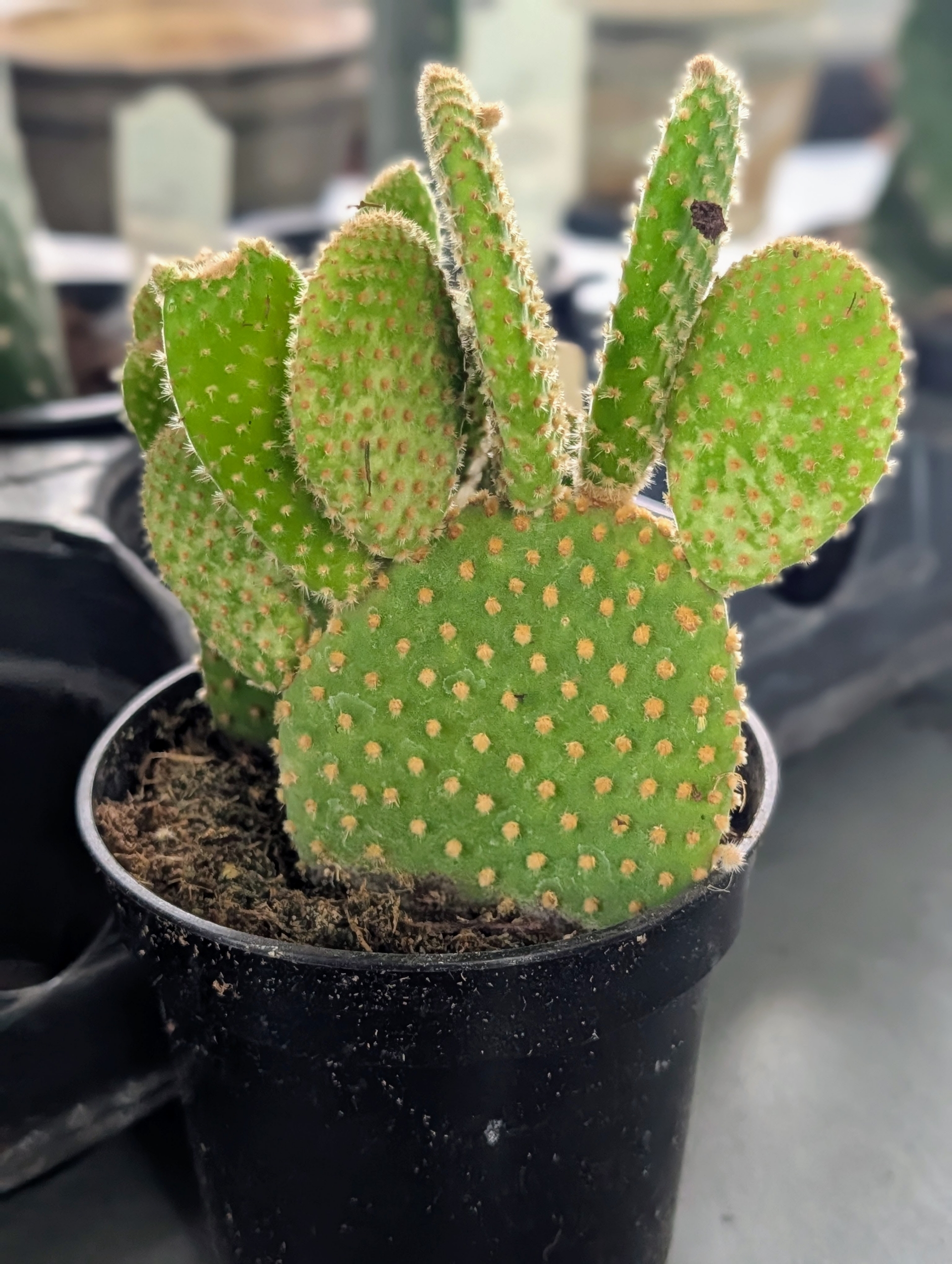
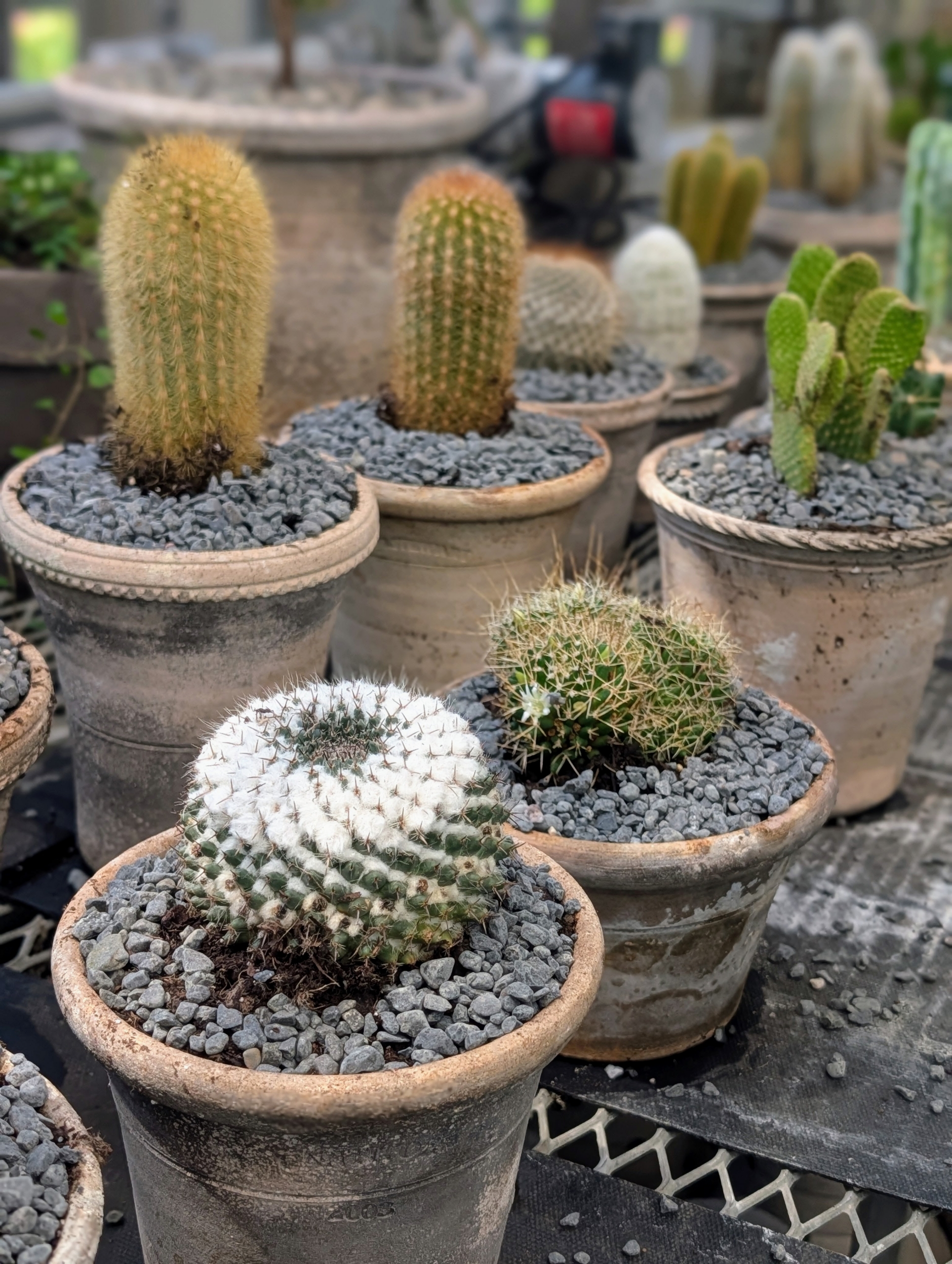
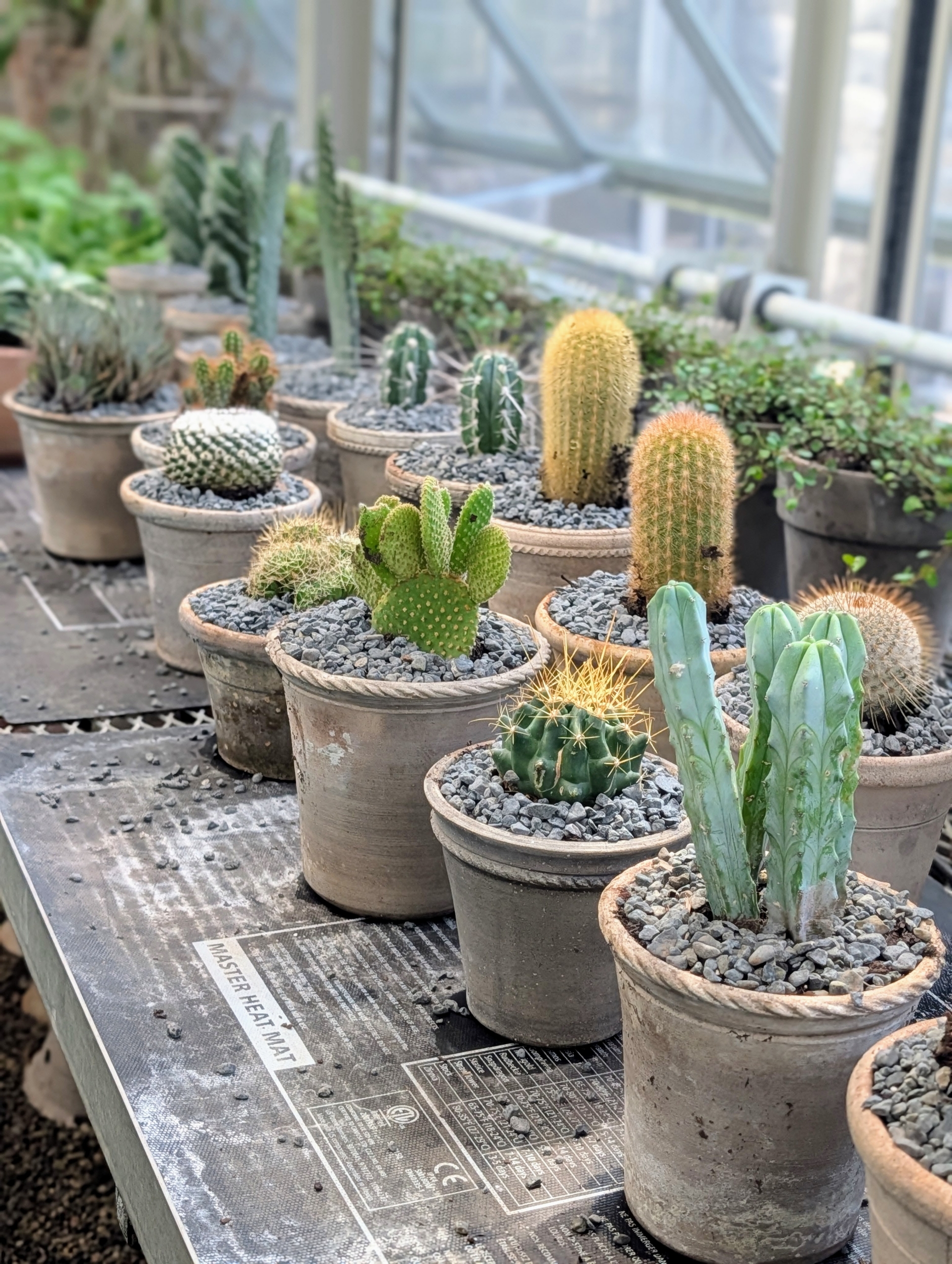
The Bunny Ear Cactus is a charming, low-maintenance ornamental plant with flat, paired pads covered in tiny barbed spines.
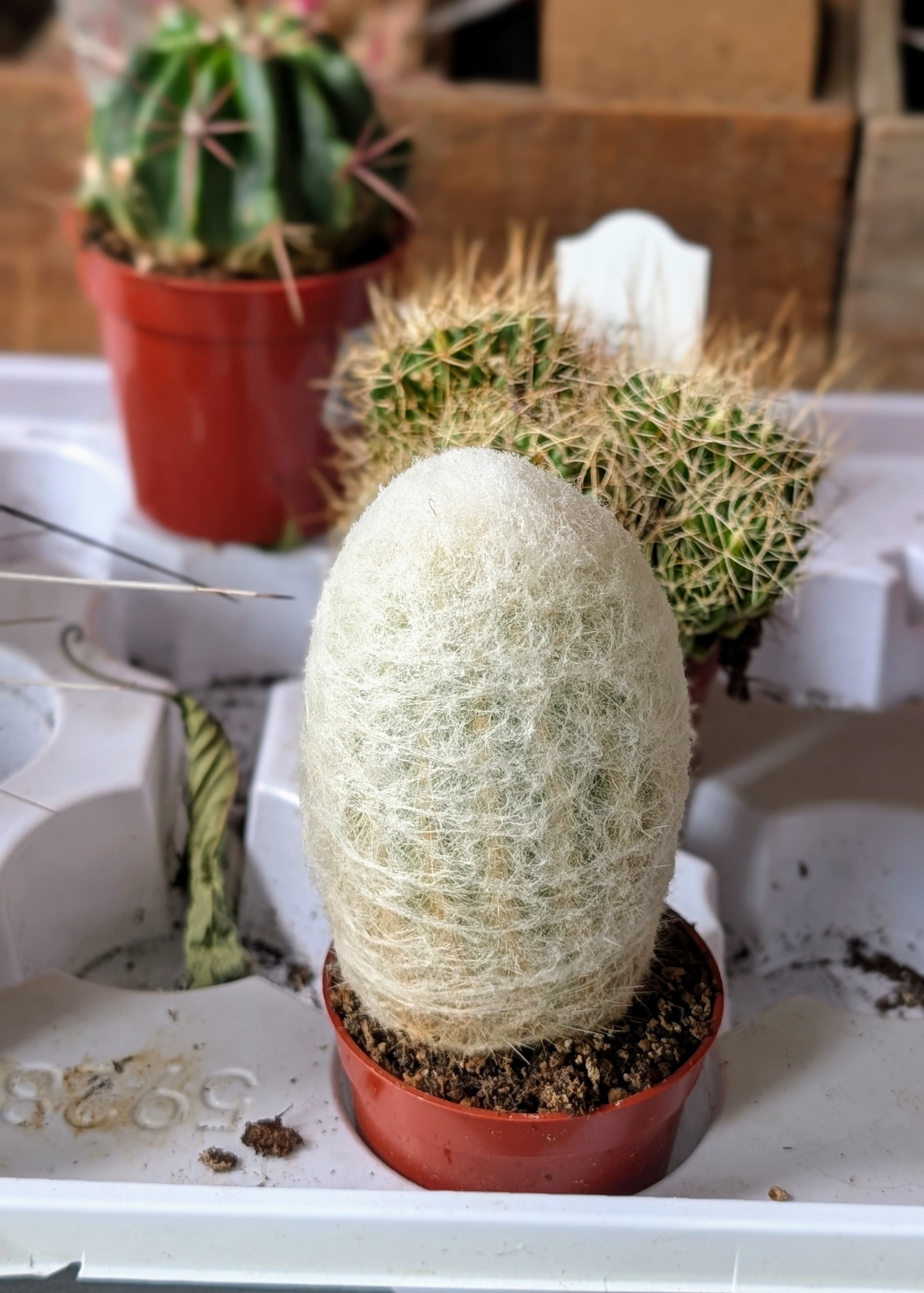
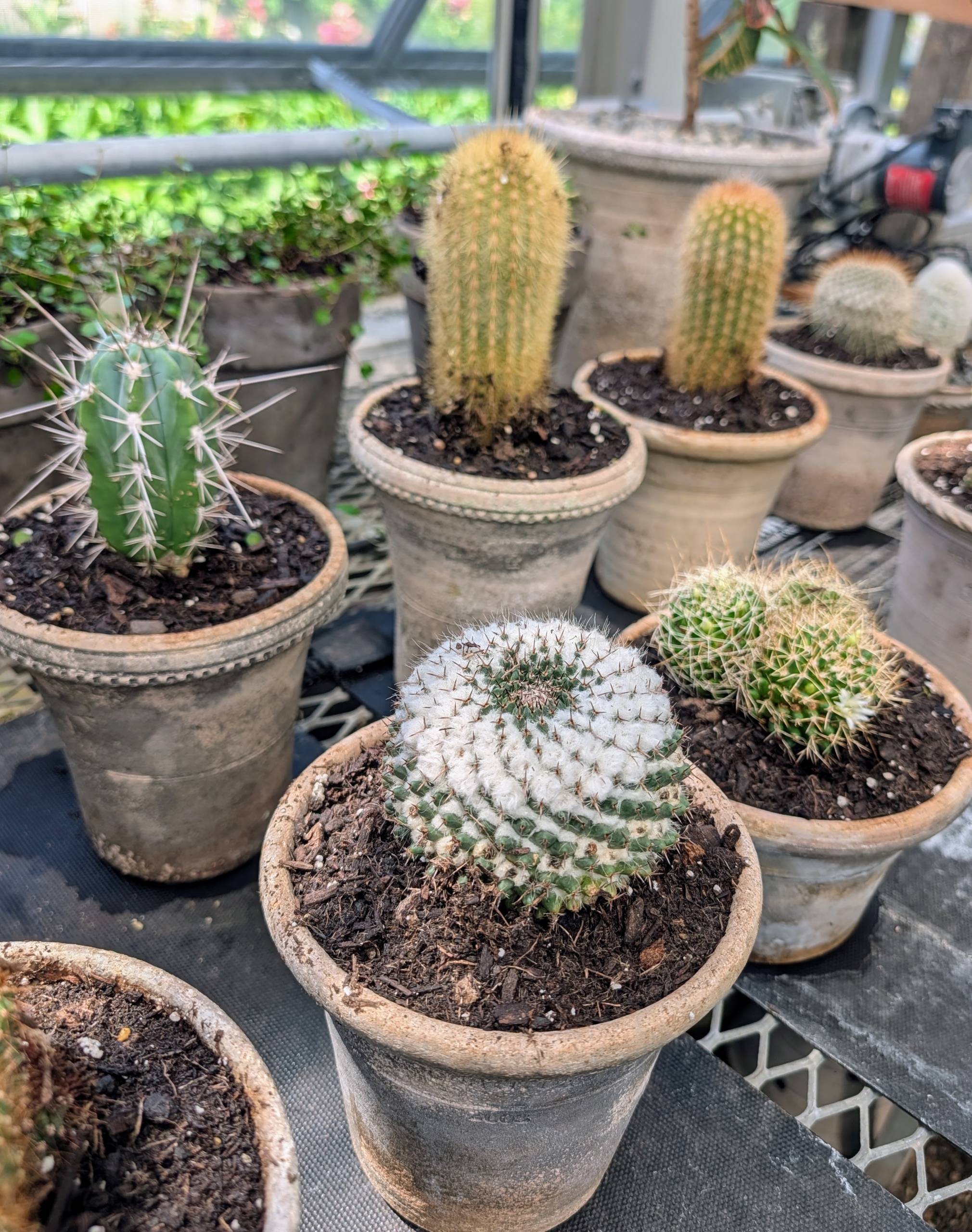
The Old Lady Cactus is a small, clump-forming cactus native to central Mexico and valued for its appearance and ease of care. It is spherical or cylindrical, can grow up to 12 inches tall and four inches wide, and has soft white hairs and bristle-like white spines, giving it a “white-haired lady” look.
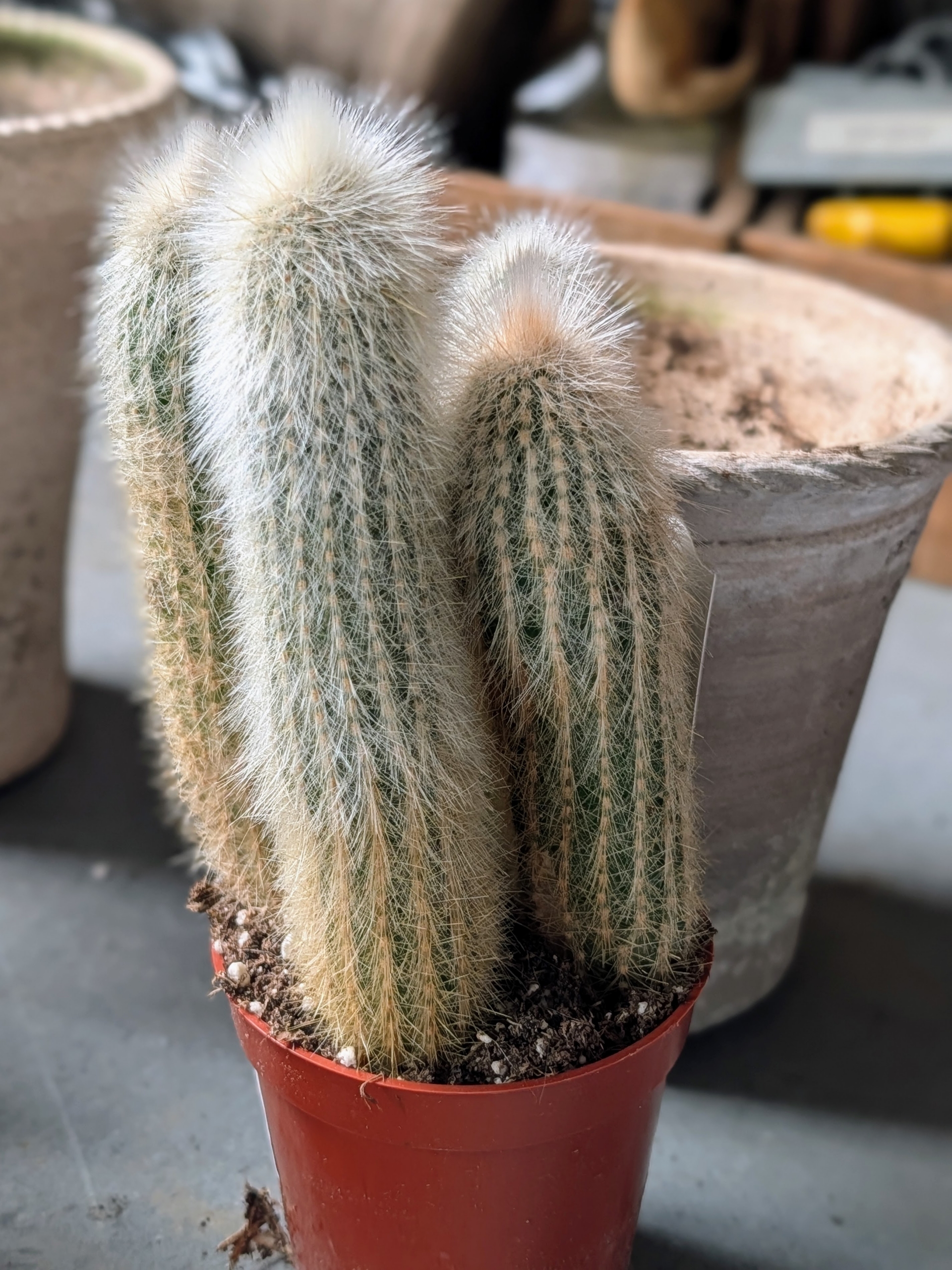
Similarly, the Old Man Cactus is a slow growing columnar cactus covered in long, white, hair-like spines that protect it from sun and cold, also giving it an aged appearance.
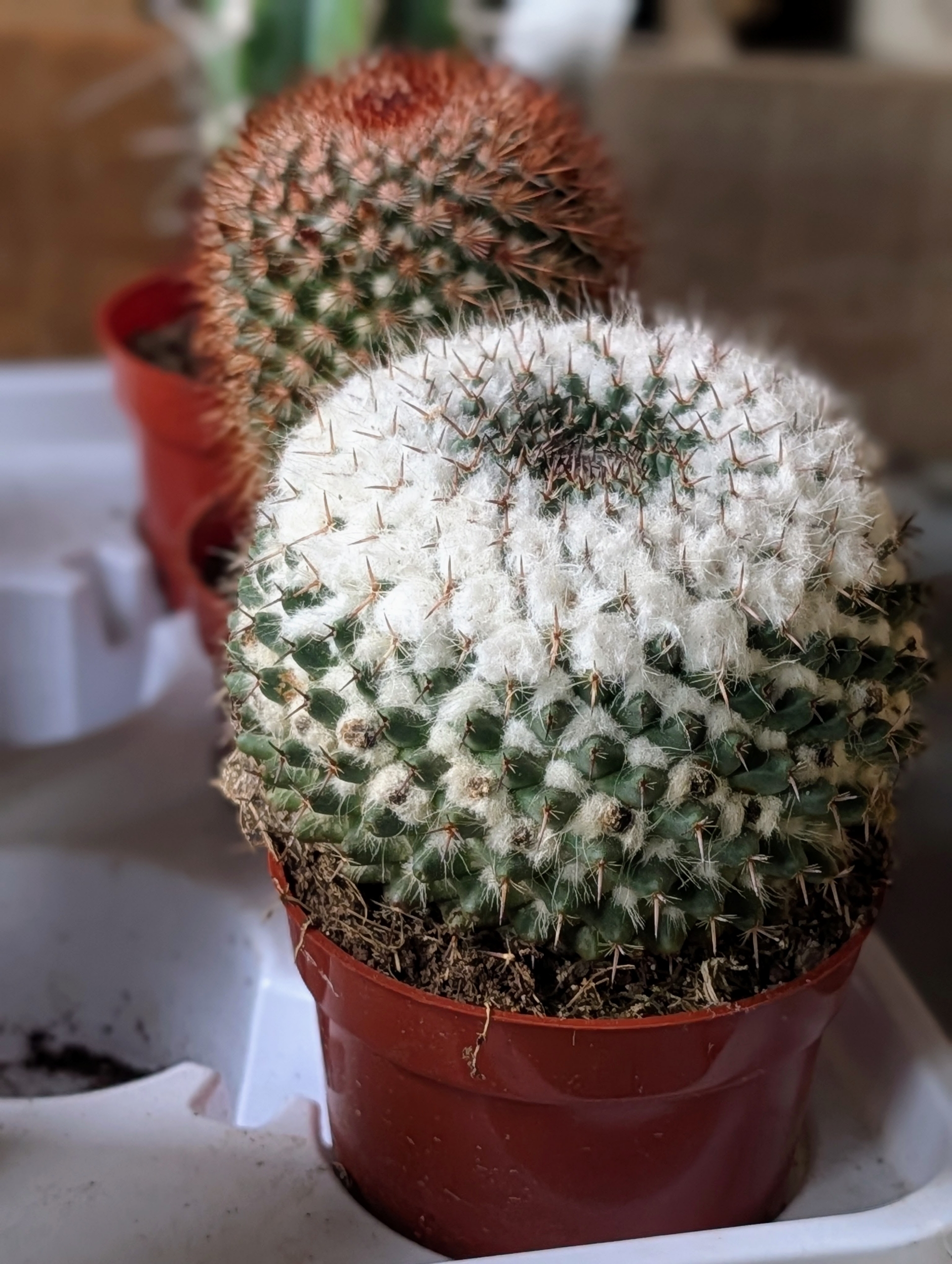
Several cactus species are known for their furry, white-coated looks – some with more dense woolly hairs or modified spines, but all part of the plant’s natural defense and insulation.
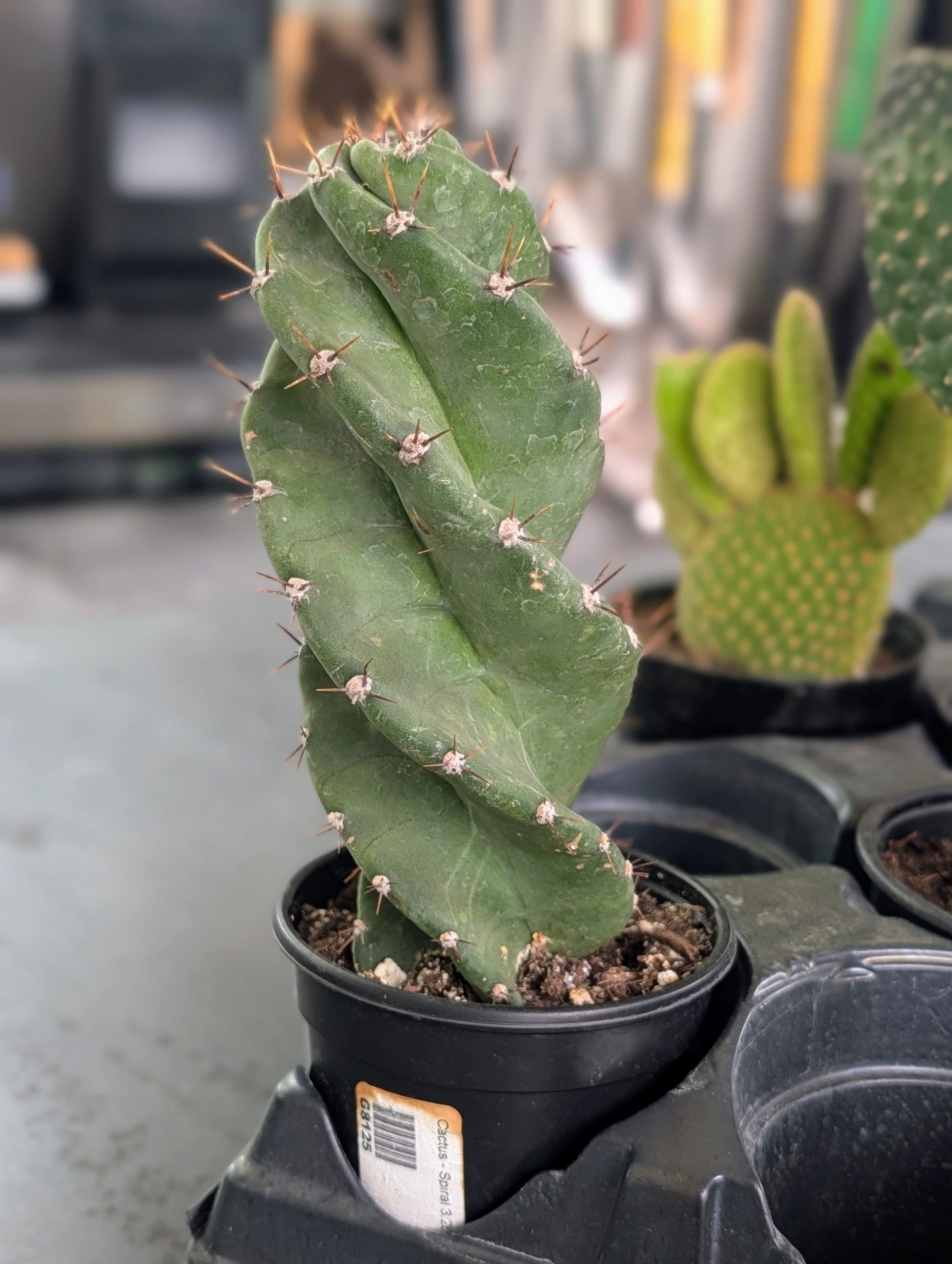
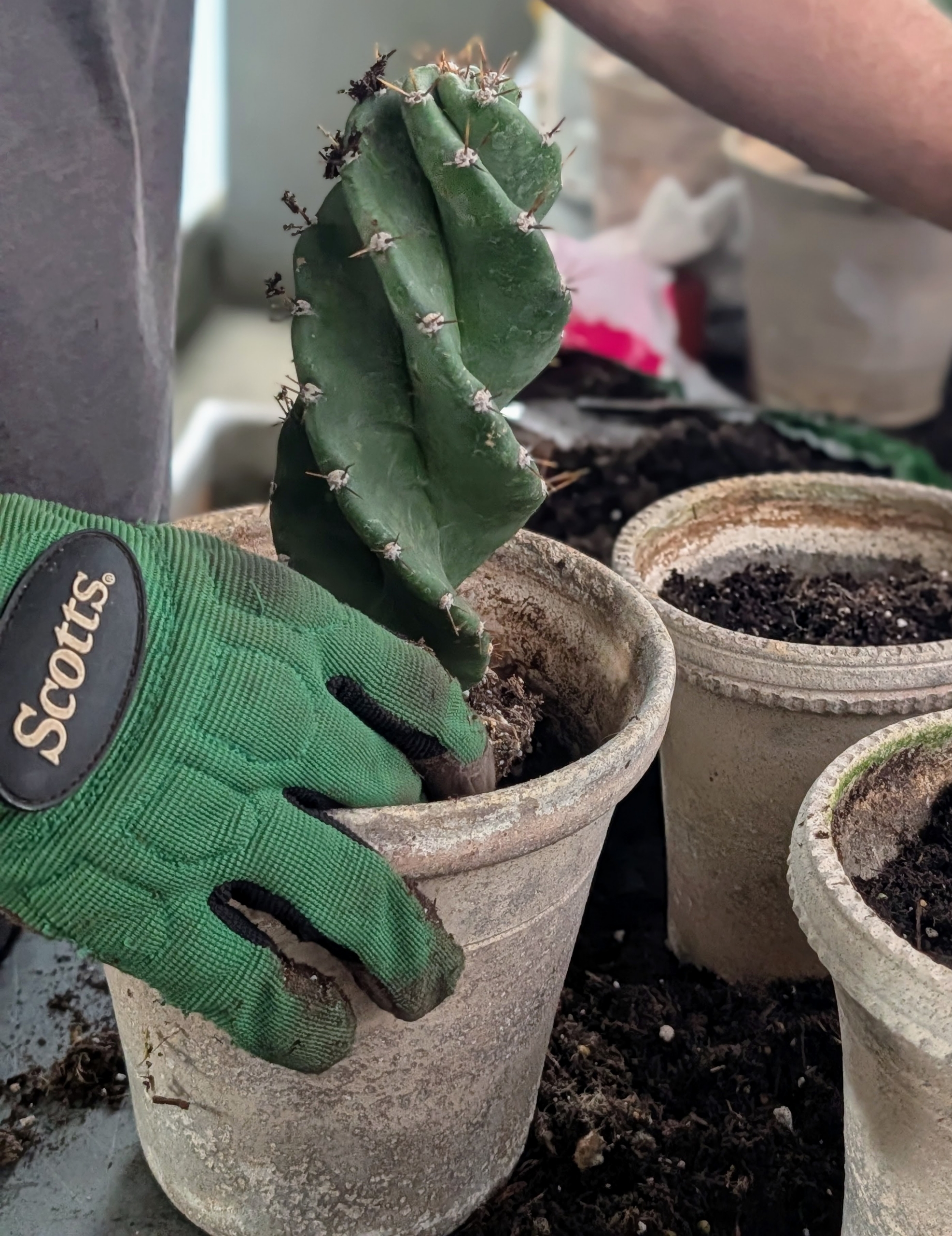
The Spiral Cactus is a striking, naturally twisting variety known for its corkscrew-shaped stems, fast growth, and ease of care when provided with bright light and well-draining soil.
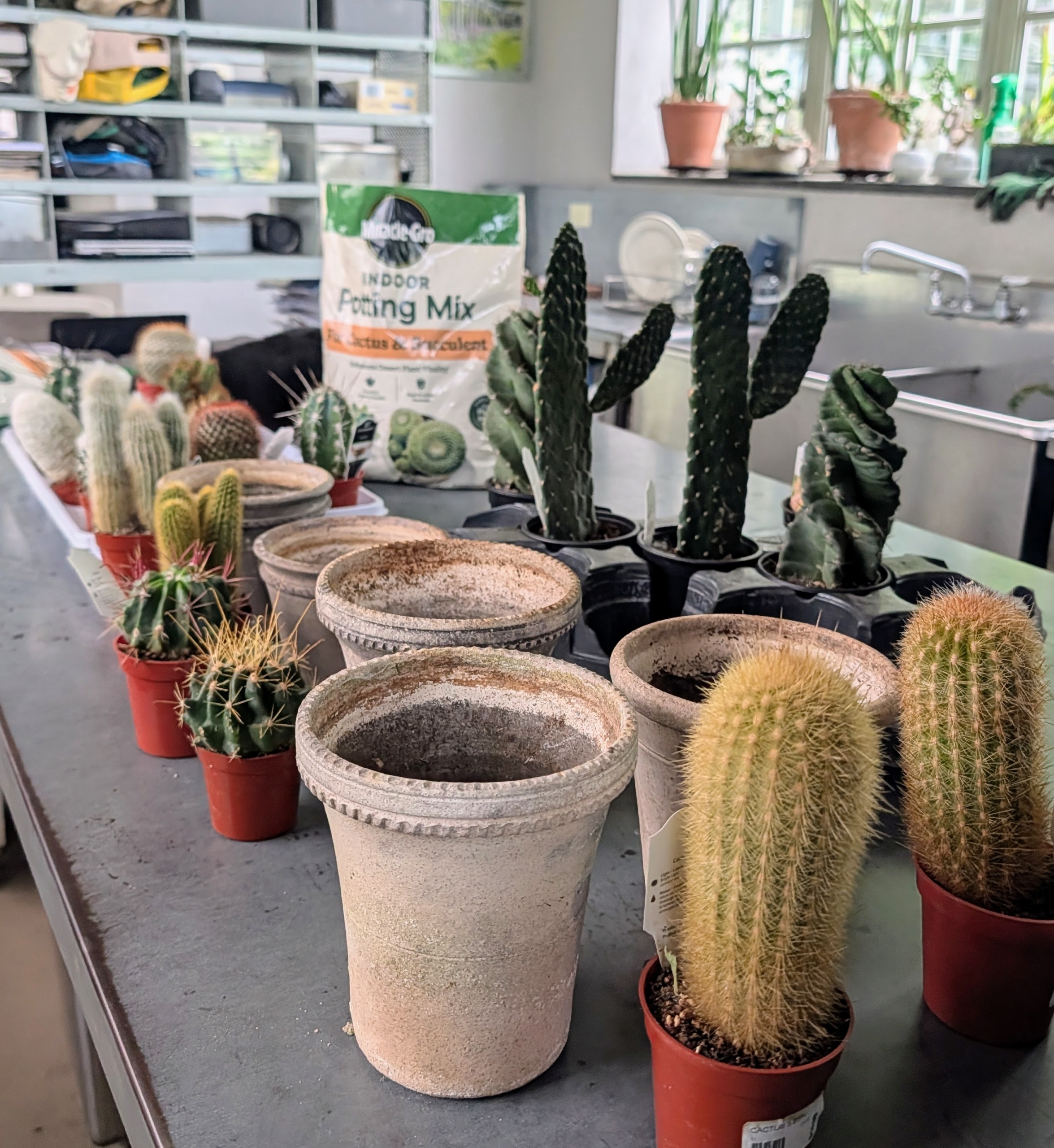
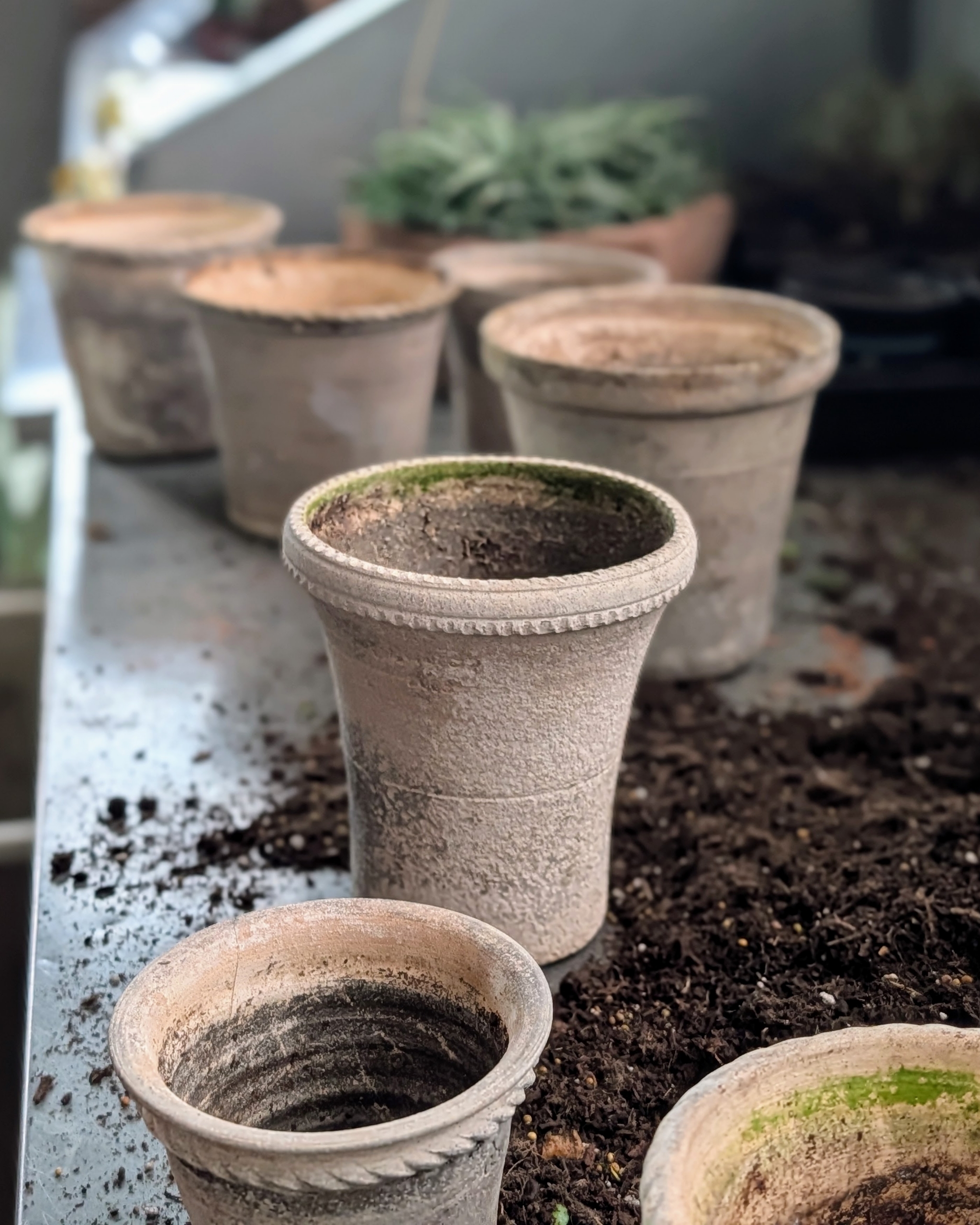
Ryan chooses the appropriate size container for each specimen. He matches the pot to the cactus’s growth habit—tall, narrow for columnar species, shallow and wide for globular or spreading types. I’ve been using Guy Wolff pots for many years – he makes every one of these by hand.
Select pots that are only slightly larger than the current root ball. Cacti have shallow roots and dislike sitting in wet soil.
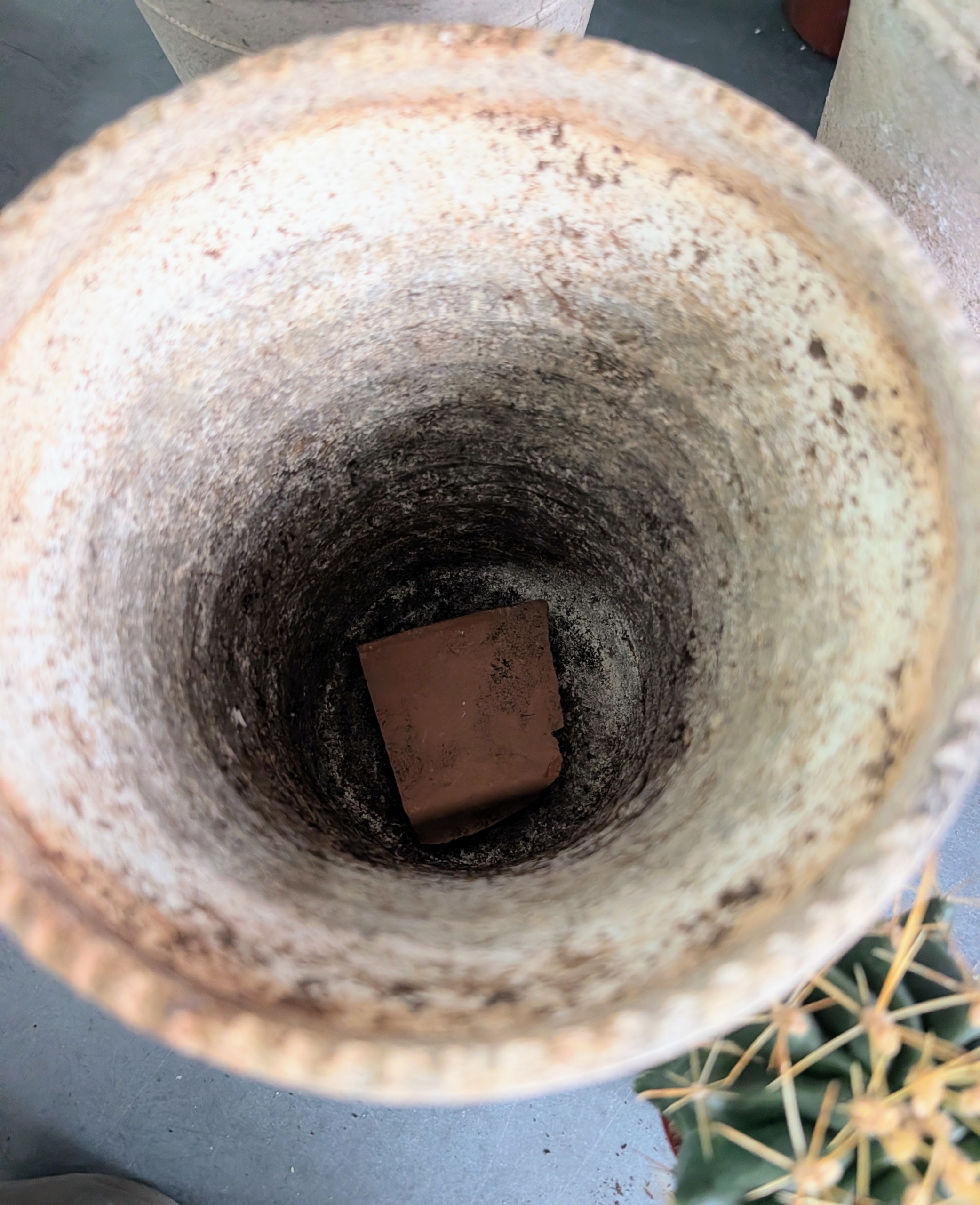
Each pot has a drainage hole. A clay shard is placed over the hole to help with drainage.
I like these pots because they allow proper aeration and moisture to penetrate through the sides and to the plant.
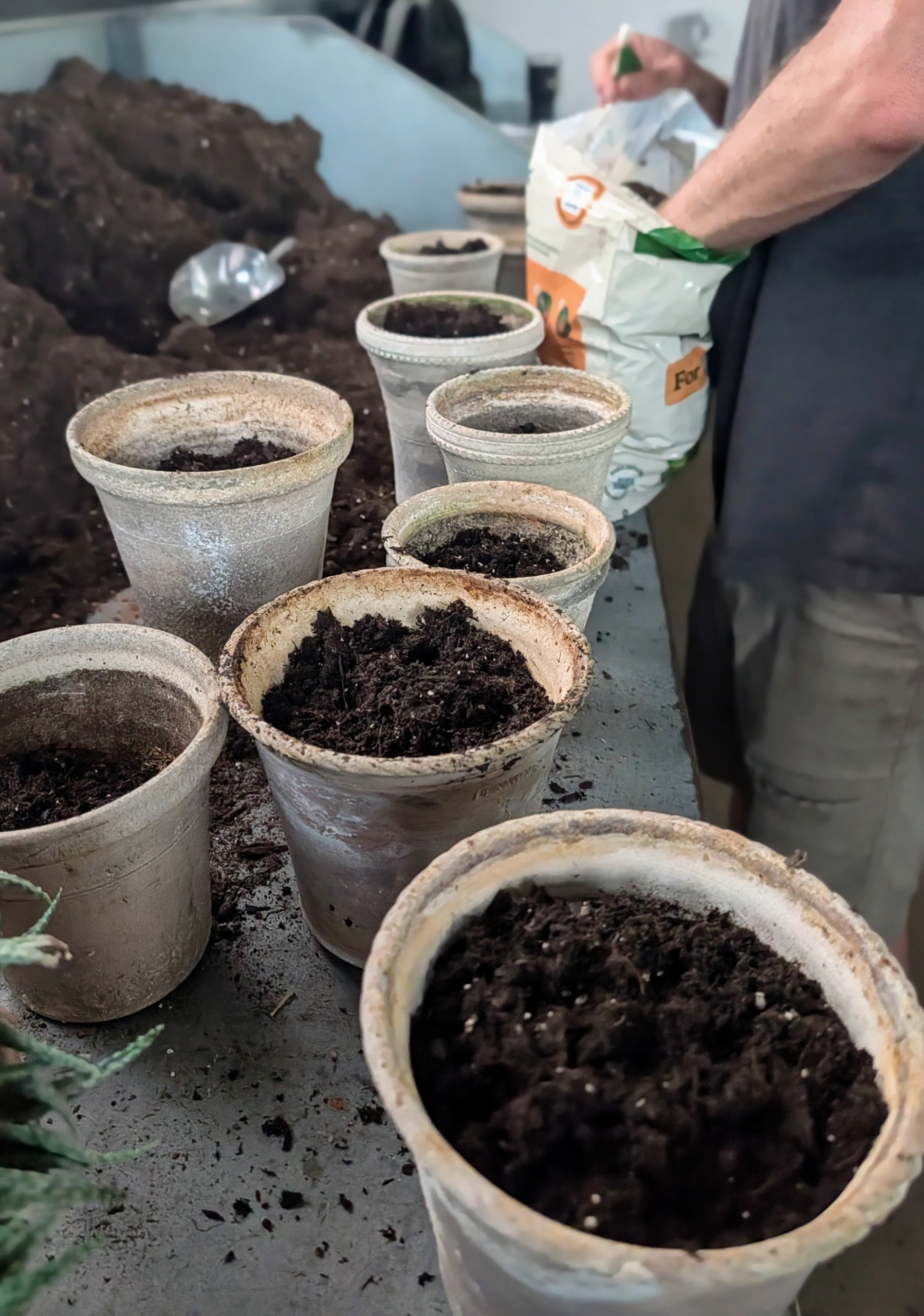
Ryan fills the pots with the soil mix, adding just enough so it is filled just below the top rim of the pot. When potting several plants, Ryan works in an efficient production line process, filling all the pots first.
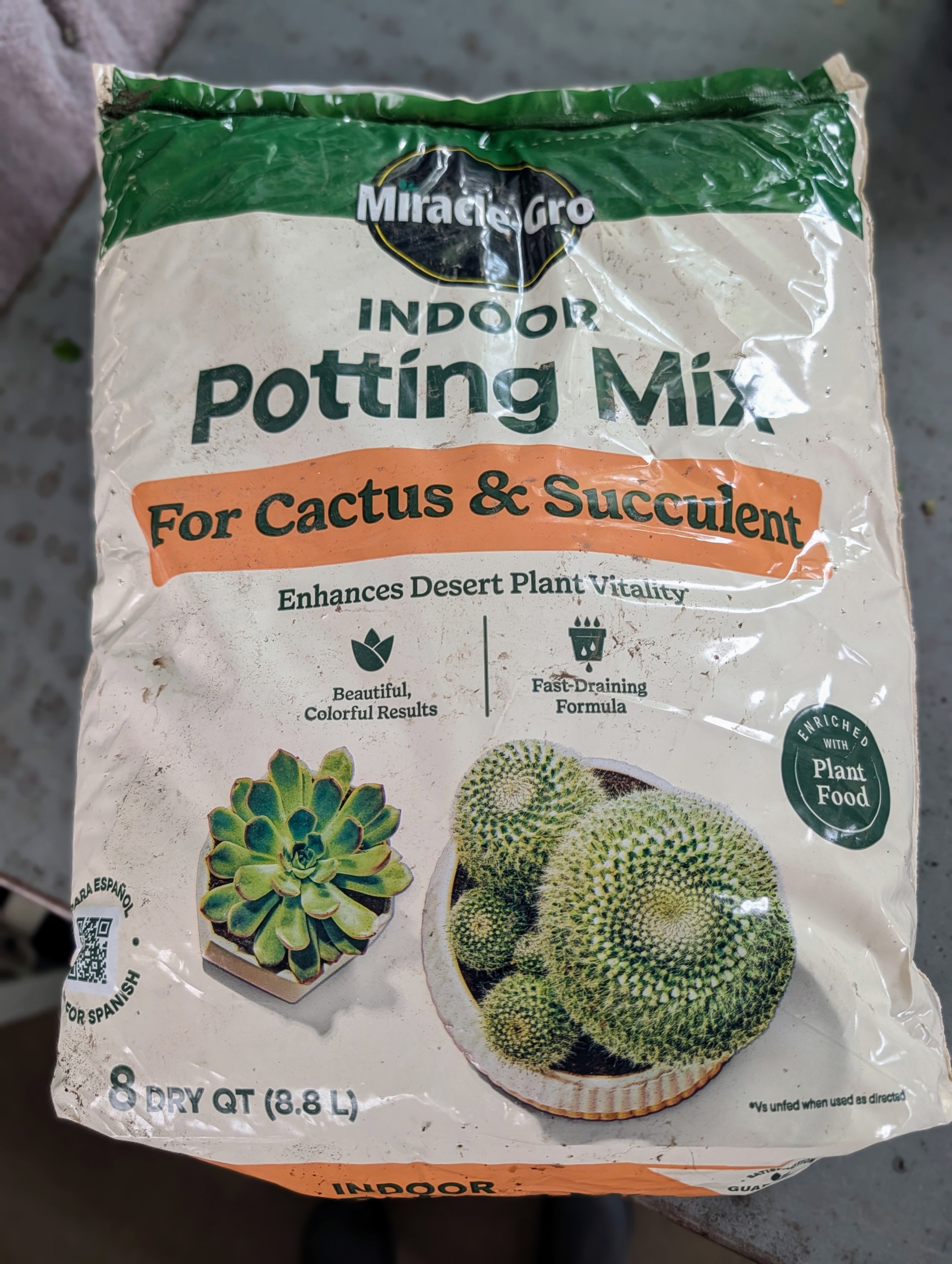
I use Miracle-Gro Indoor Potting Mix for Cactus and Succulents. It’s a fast-draining formula that’s great for all kinds of succulents, cacti, and citrus plants.
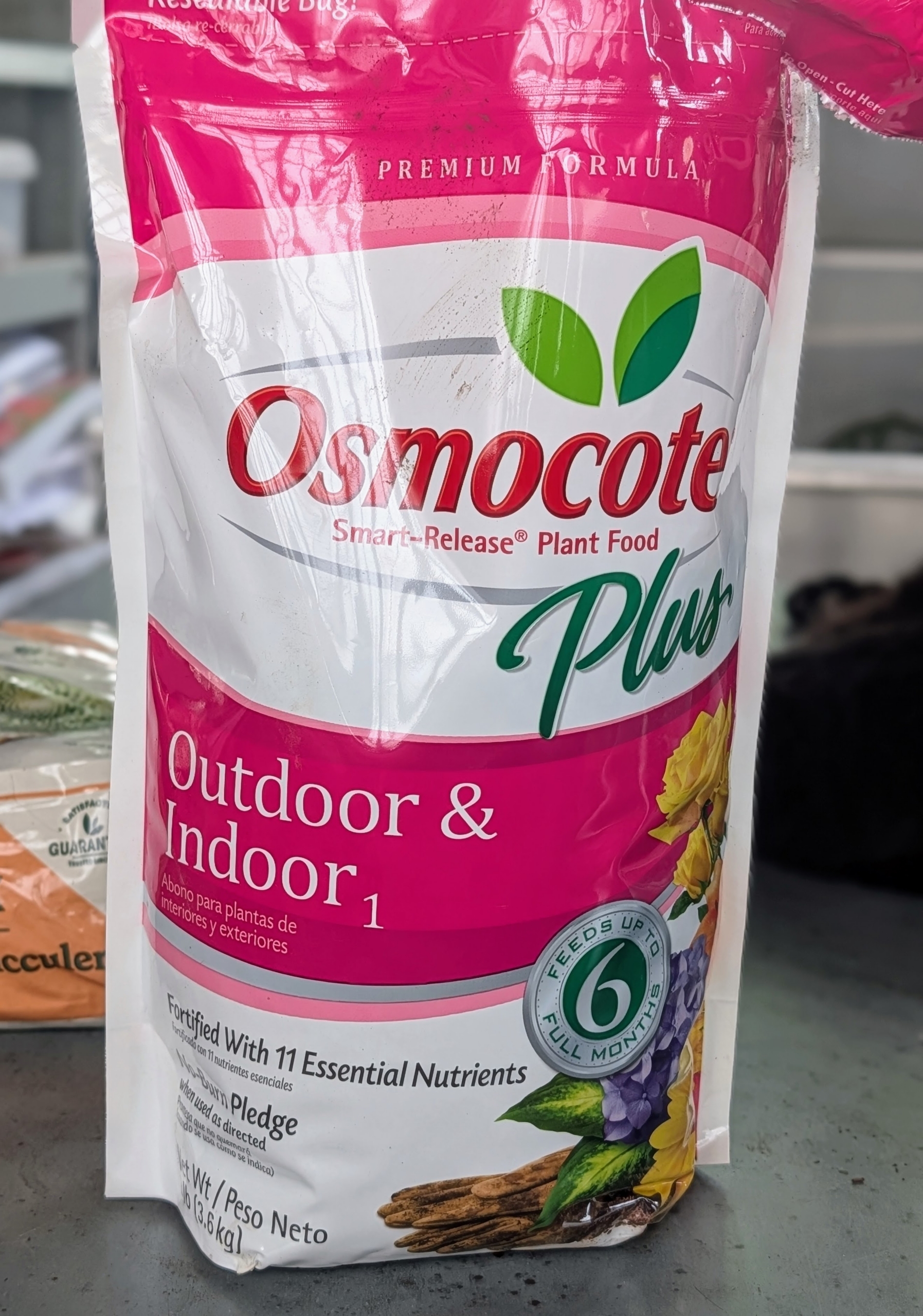
I also use Osmocote Plus, a type of controlled-release fertilizer designed to support plant growth. Always remember to feed your plants.
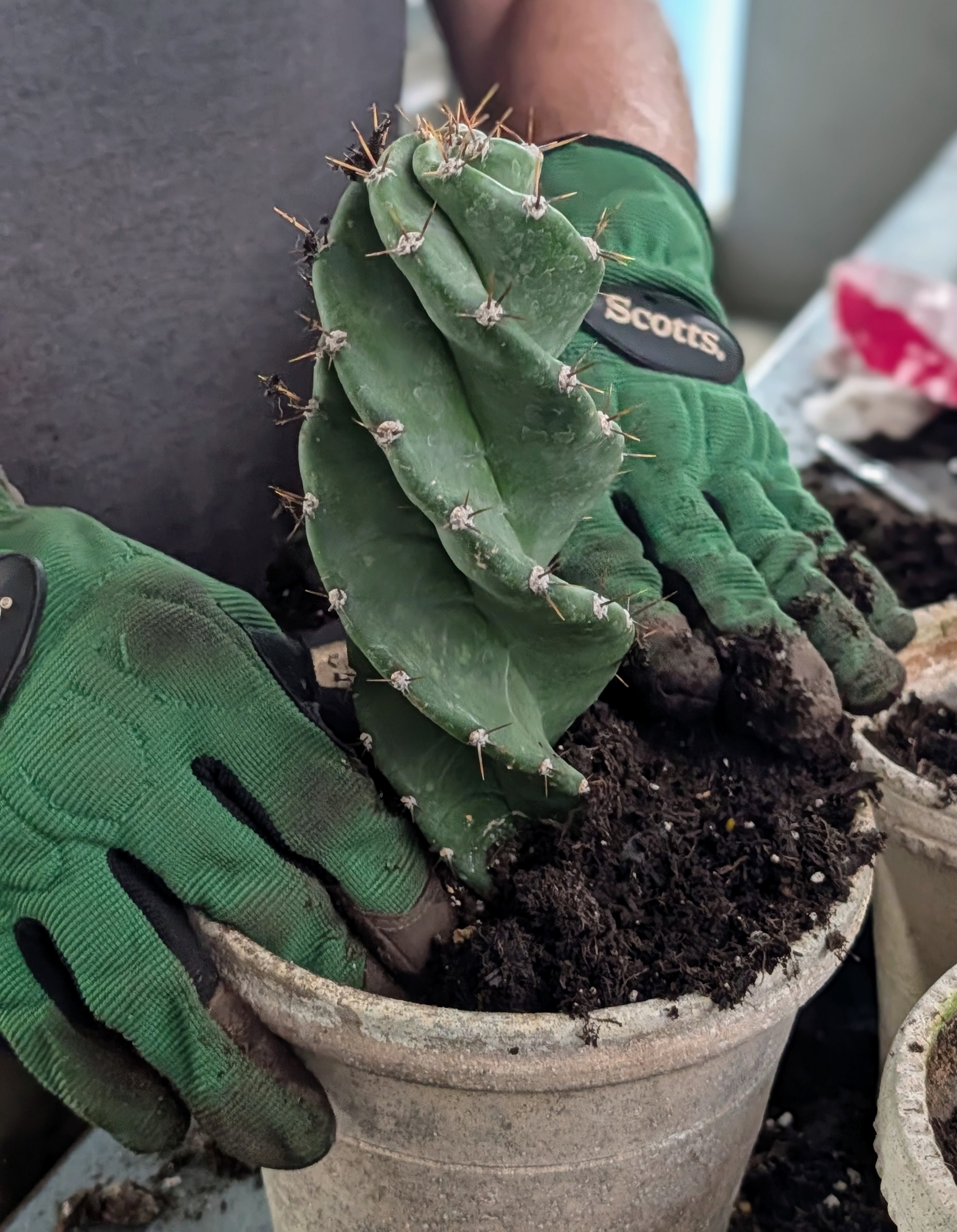
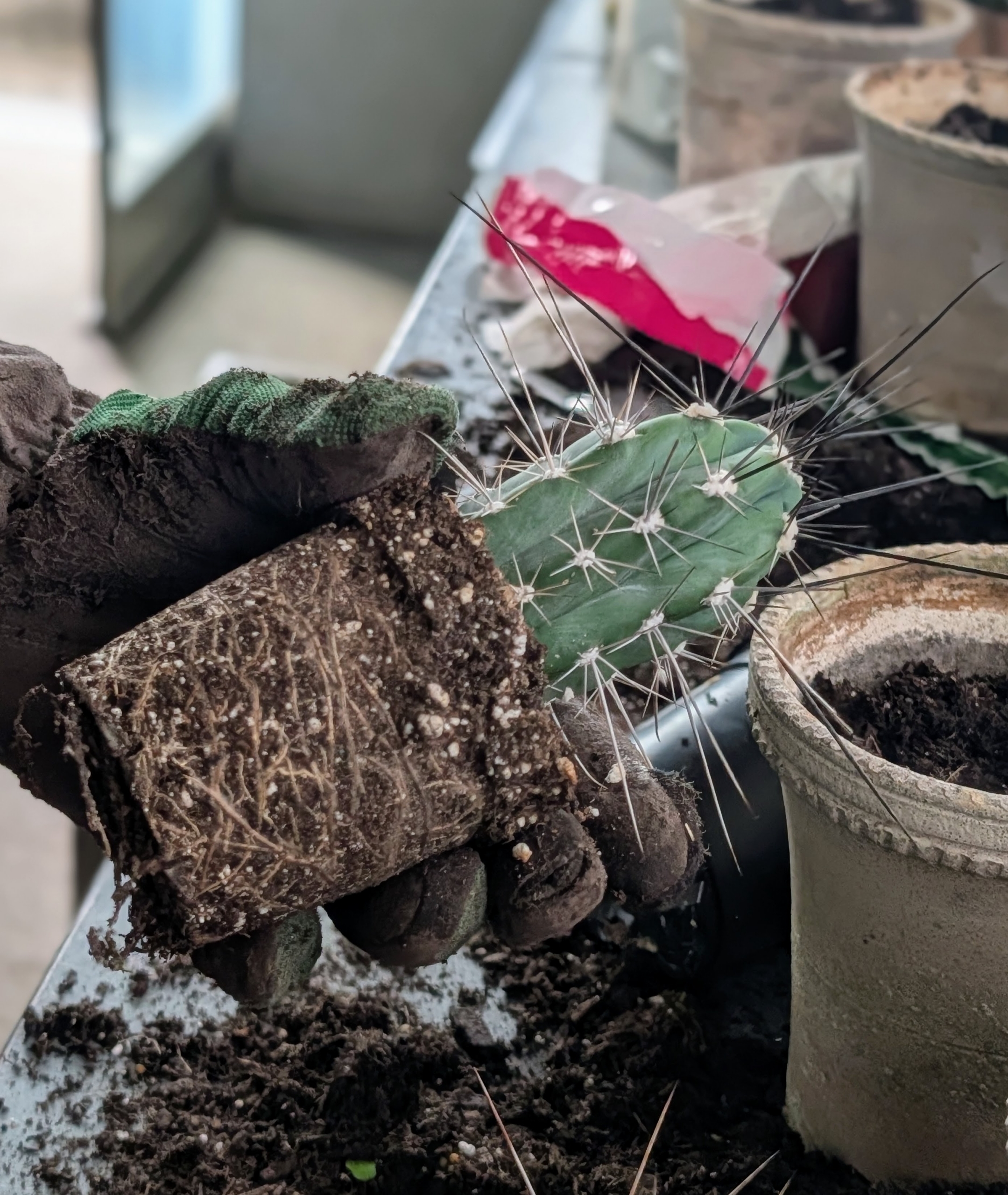
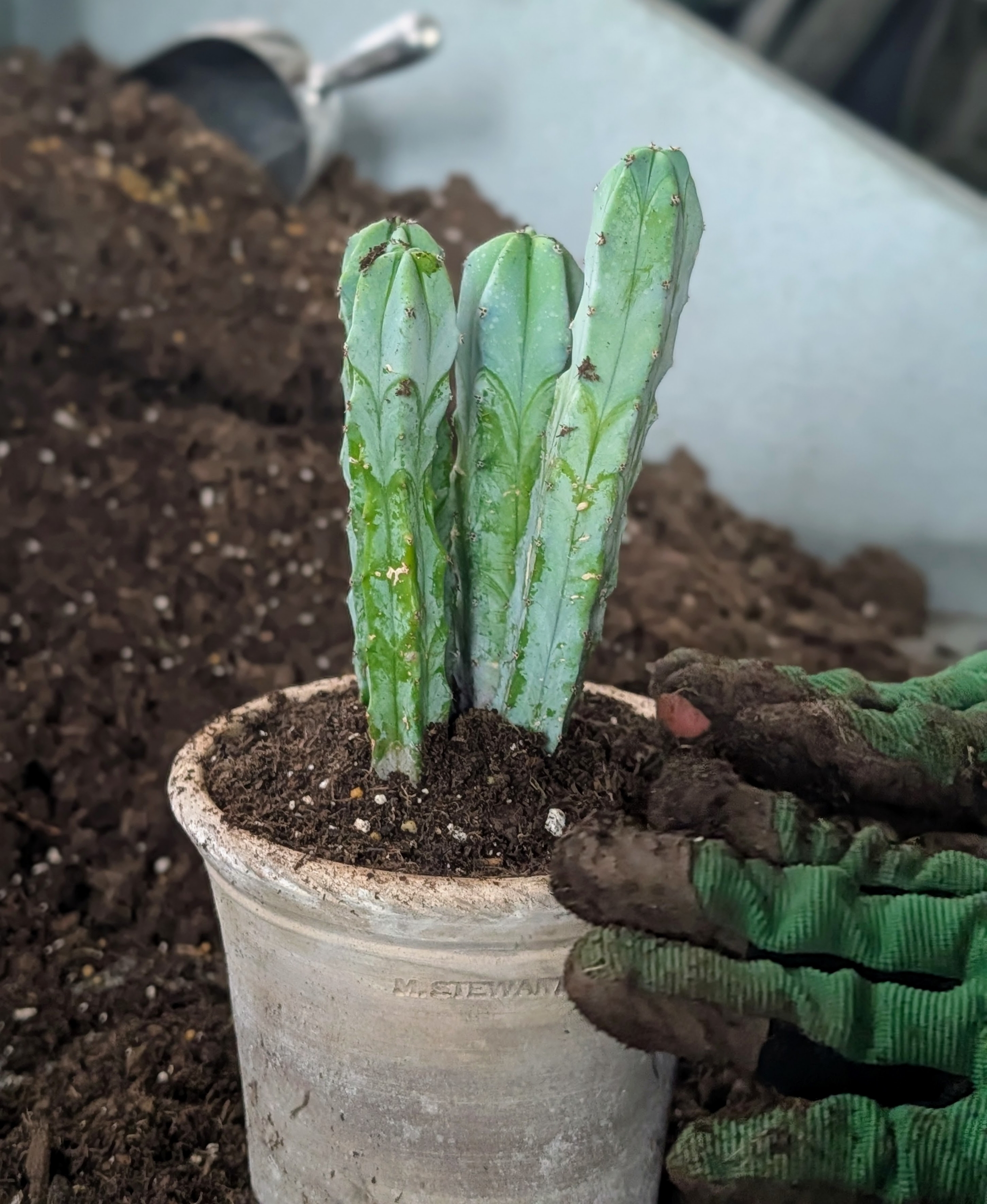
For spiny cacti, it’s important to use gloves or tongs to avoid injury. Ryan gently places the cactus in the center, ensuring the base sits just below the rim.
He fills in all the gaps around the plant, firming it lightly without compacting the soil.
Here is another cactus ready for potting. Before placing any plant in a pot, be sure to tease or loosen the root ball just a bit to stimulate root growth.
Many of these plants will last a couple years in these pots before they need transplanting. This is a Bilberry Cactus with thick, upright, blue-green stems with deep ribs, giving it a geometric shape, and small dark spines.
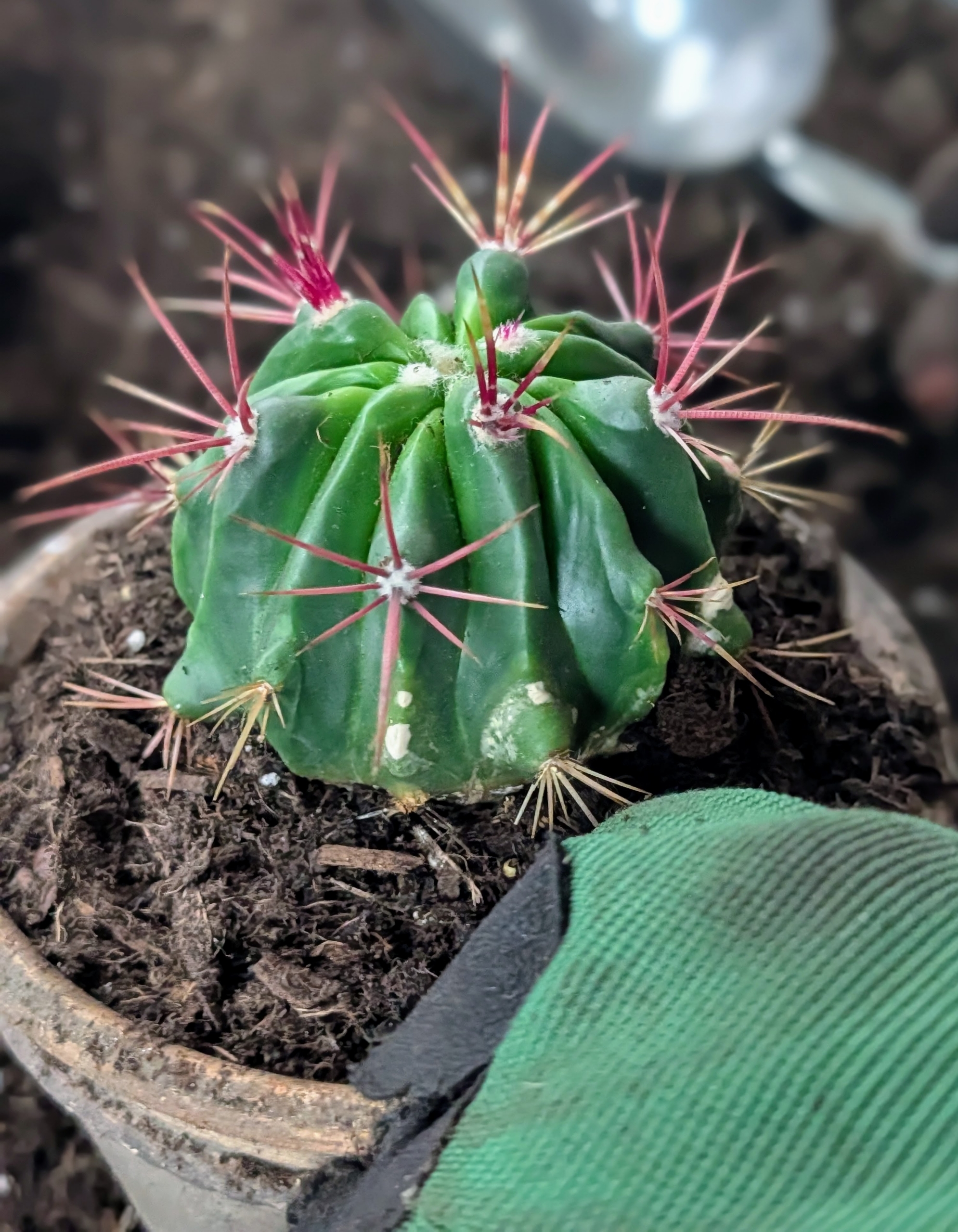
This is a barrel cactus, which is a round or cylindrical desert cactus known for its ribbed body, sharp spines, and vibrant flowers. Its spines, which can be yellow, red, or brown, provide protection, shade, and help reduce water loss.
Once all the plants are potted up, they are watered and placed in the greenhouse where they will get bright, direct light.
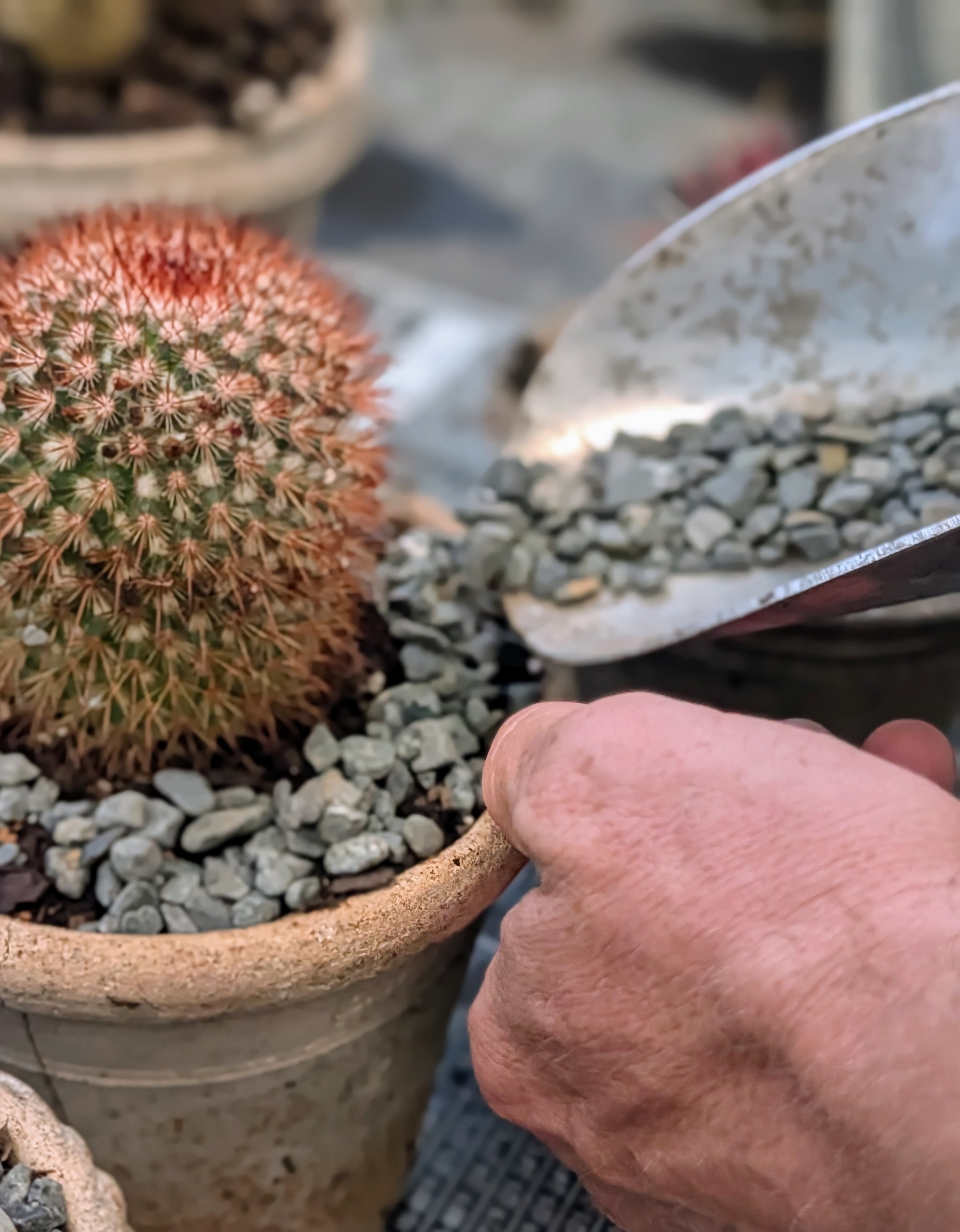
Ryan adds pea gravel to the top of the pots. Pea gravel, so named because the pieces are pea-sized, is available at garden centers and comes in different colors.
Gravel breaks up the force from watering, keeping the topsoil intact. It also creates air pockets in the soil, improving aeration and preventing compaction.
These plants will remain here in the greenhouse where they can be properly maintained. Occasionally, they will also be rotated into my Winter House for display. Try adding some of these plants to your collection – you’ll enjoy them as much as I do.
Every day, there's something new to admire in the garden. My flower garden continues to produce so many colorful and beautiful blooms.
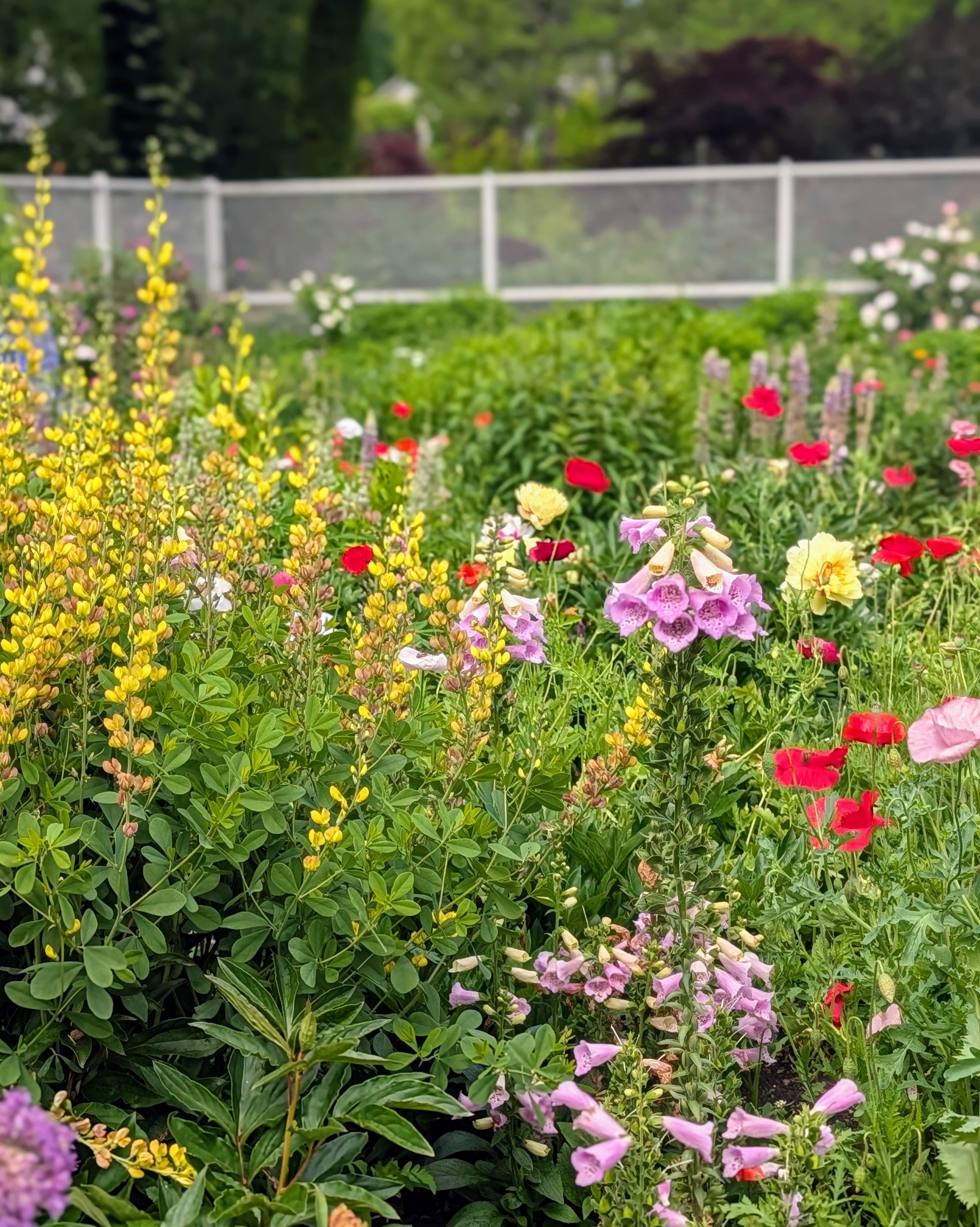
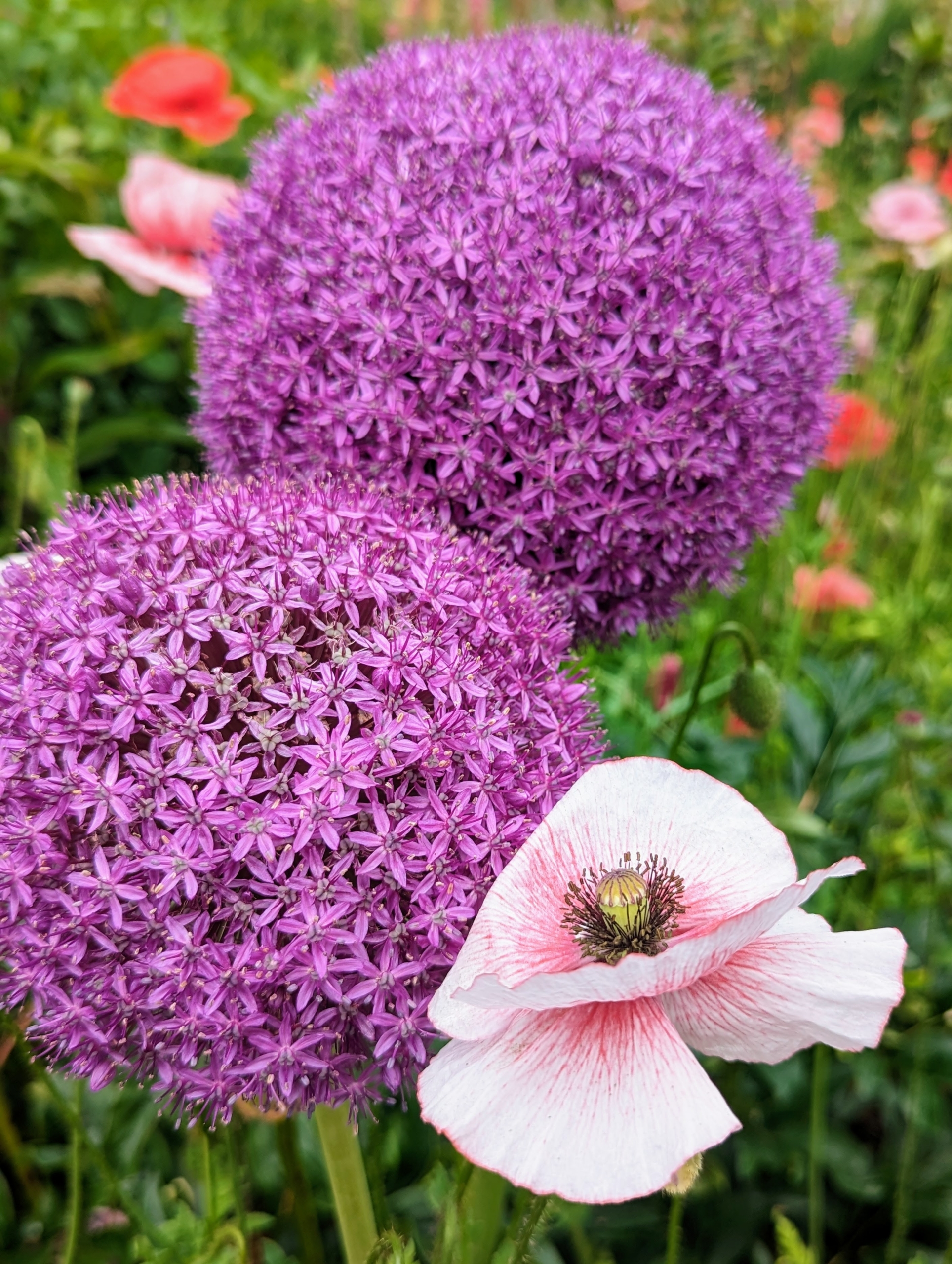
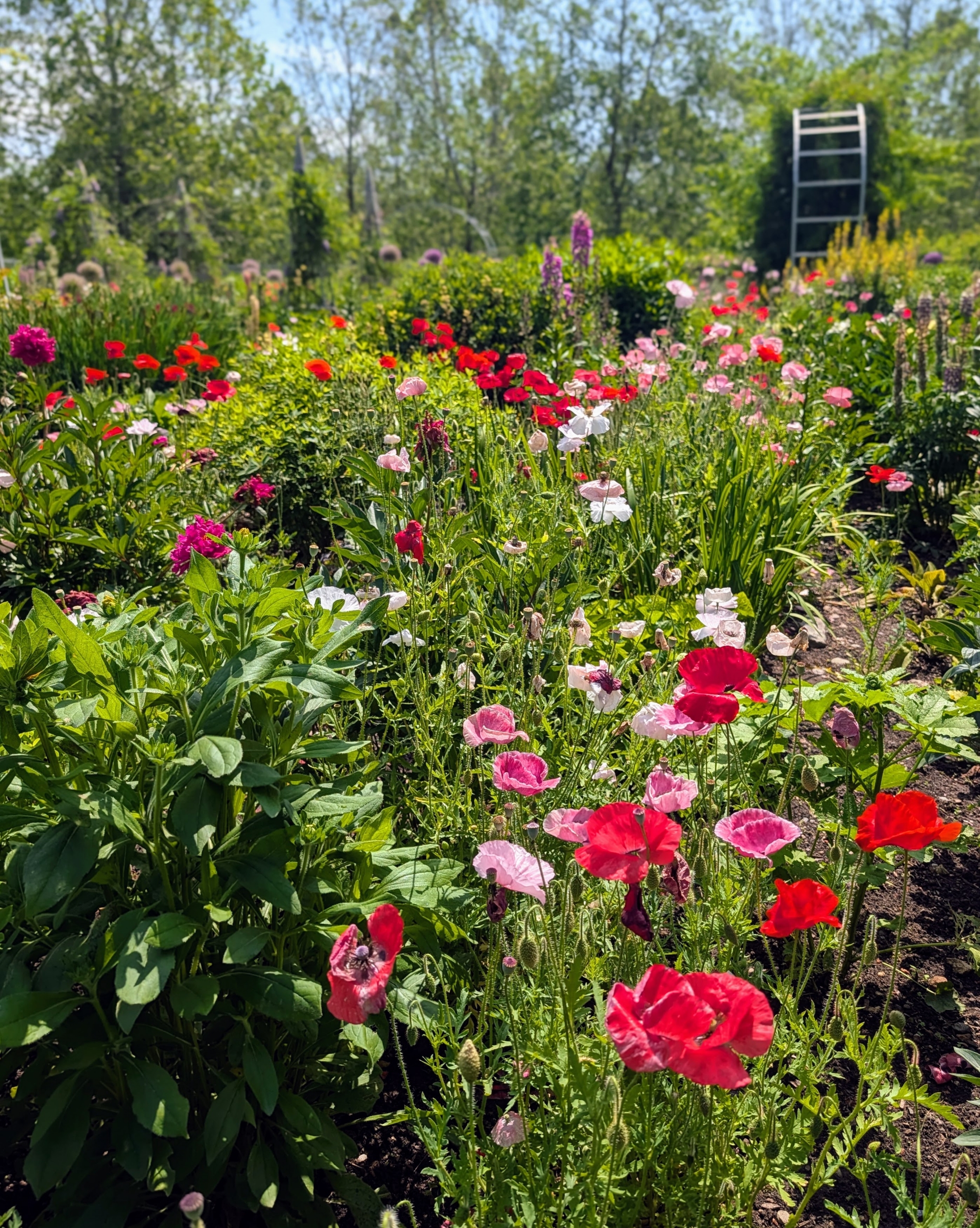
This perennial cutting garden has developed well over the seasons. I enjoy comparing its progress from year to year, and seeing where I need to add more plants to improve its display. Right now, gorgeous poppies are blooming everywhere - those colorful tissue paper-like flowers that look stunning both in the garden and in the vase. And there are also lots of Canterbury Bells, biennial bell-shaped blooms that come in shades of blue, pink, purple, or white. Plus, the larkspur, the alliums, the hardy Lady's Mantle, and of course, my climbing roses.
Enjoy these photos.
With so many different flowers in one large garden, I am able to spot new blooms coming up every day.
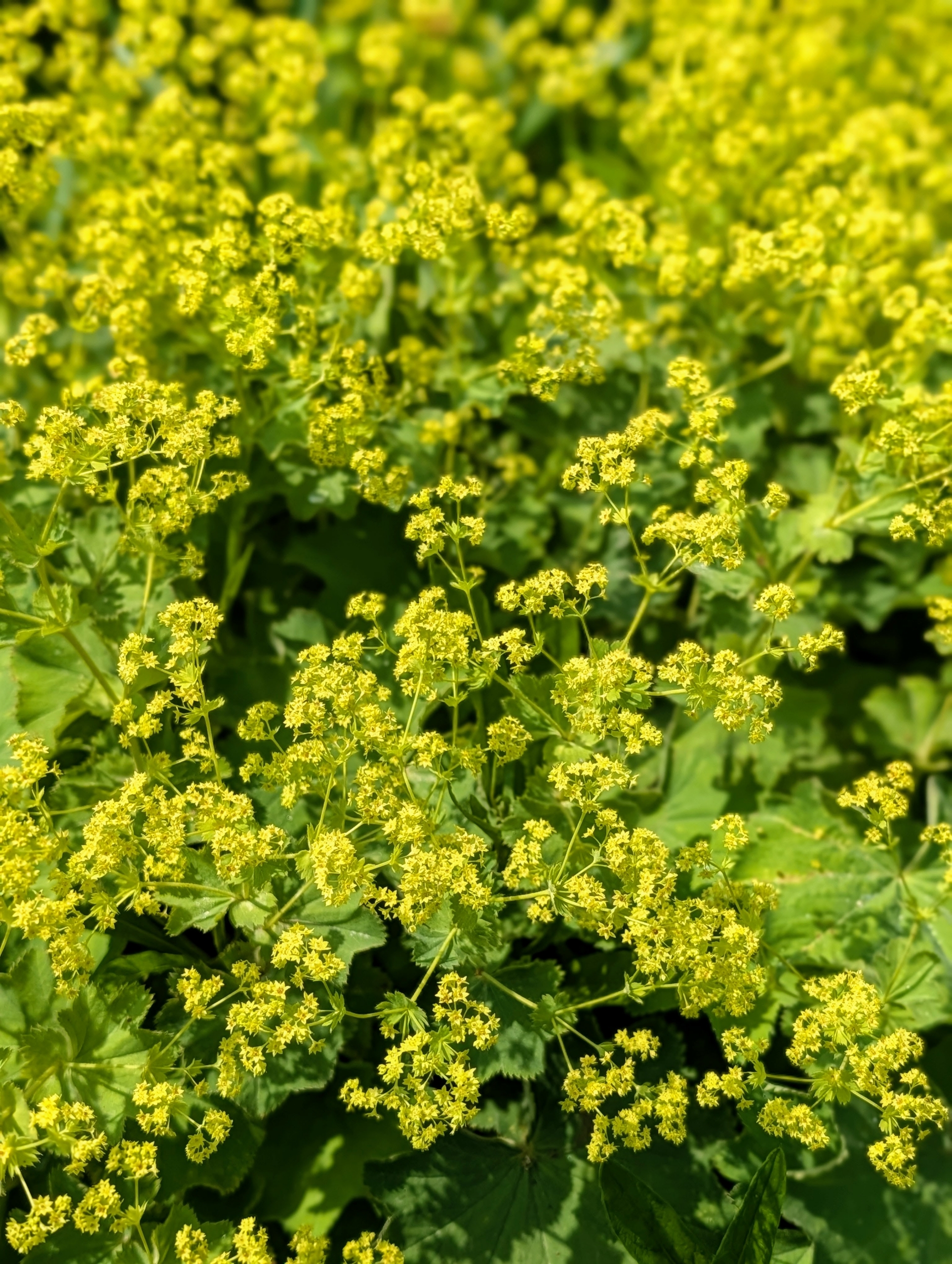
Some of them have longer bloom times and look great for weeks. Lady’s mantle, Alchemilla vulgaris, grows along both sides of the path of my cutting garden. It is a clumping perennial which typically forms a mound of long-stalked, circular, scallop-edge light green leaves, with tiny, star-shaped, chartreuse flowers.
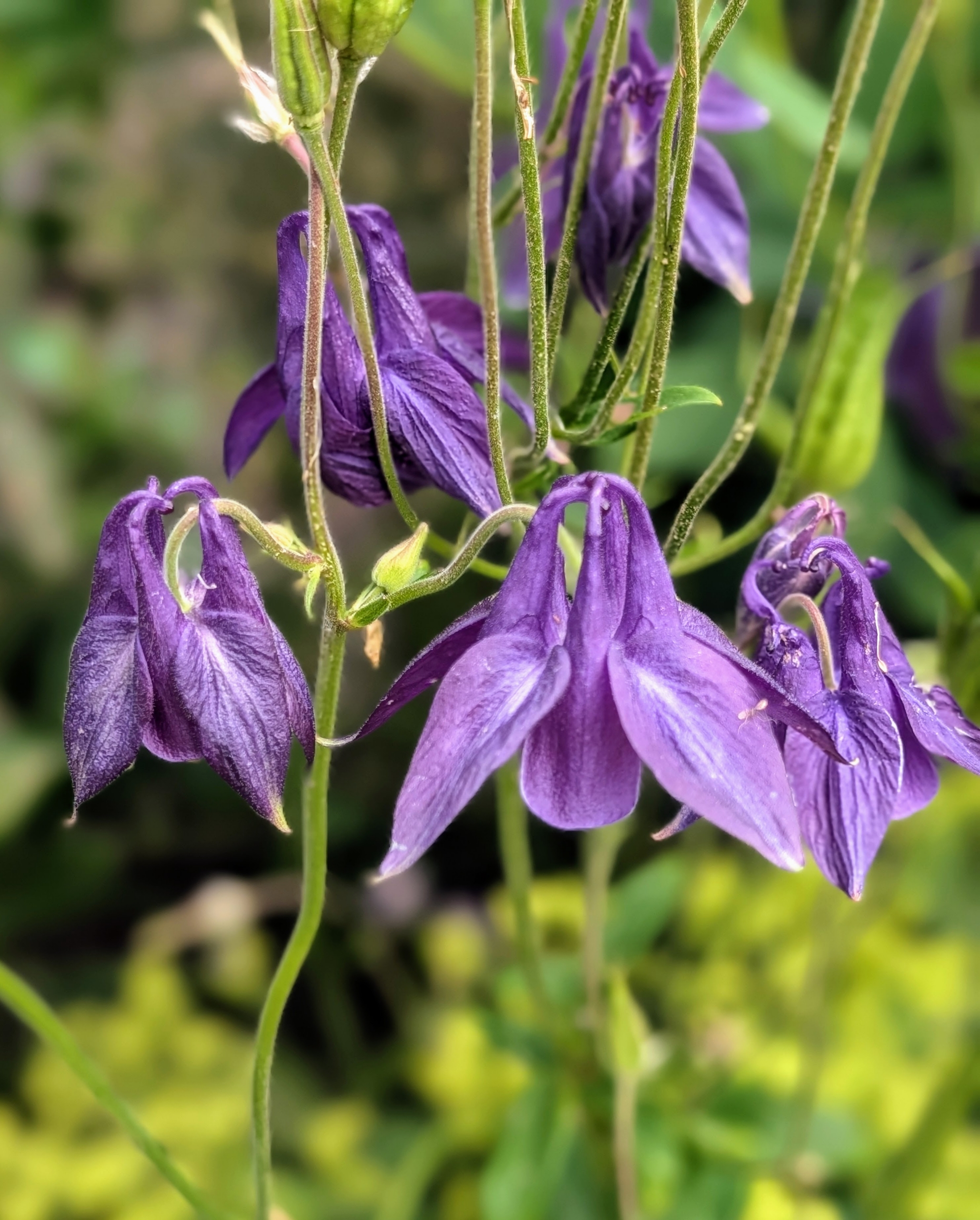
The columbine flowers still look charming. Aquilegia is an easy-to-grow perennial that blooms in a variety of colors during spring.
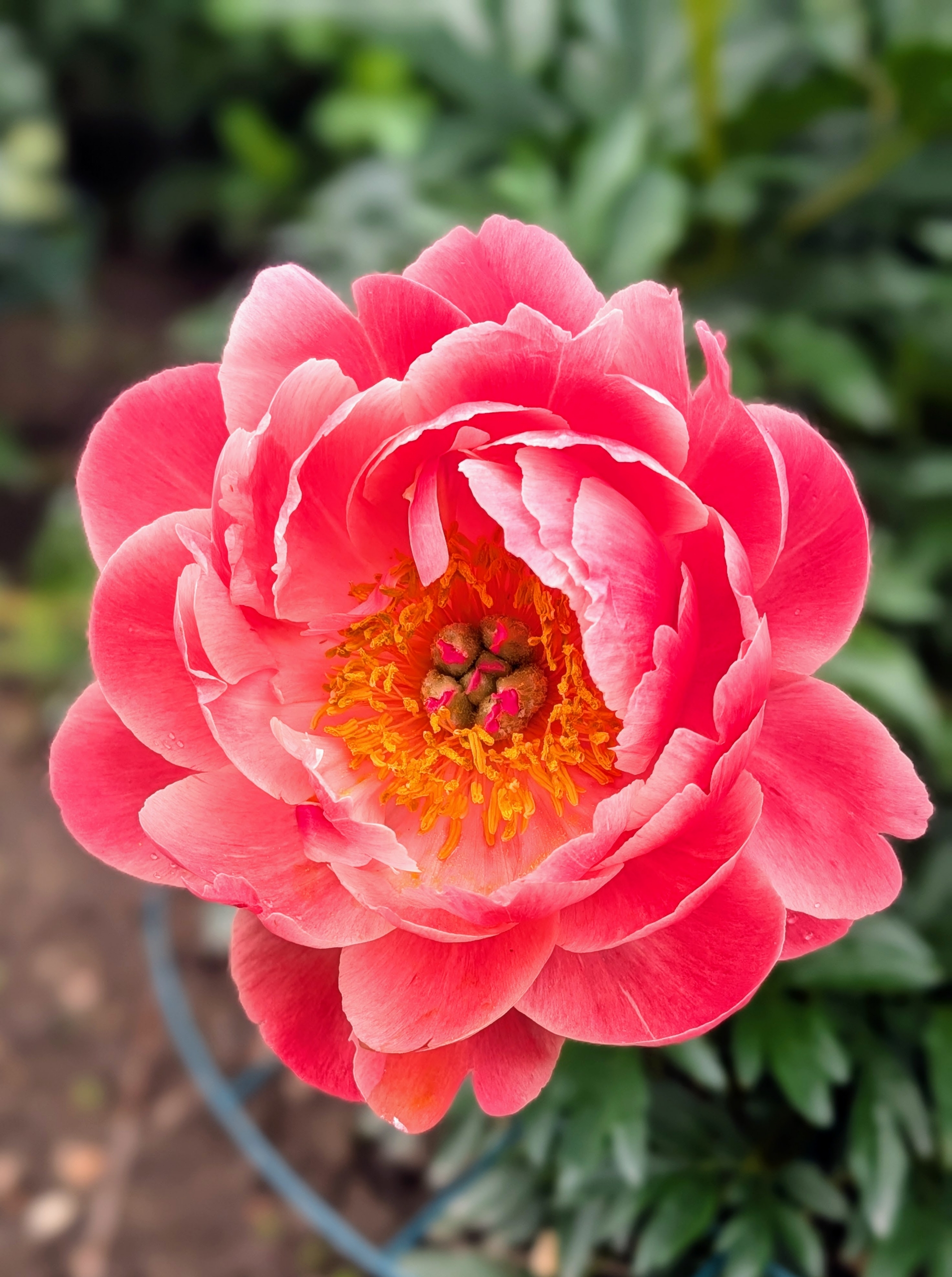
And some of the peonies are also still showing off.
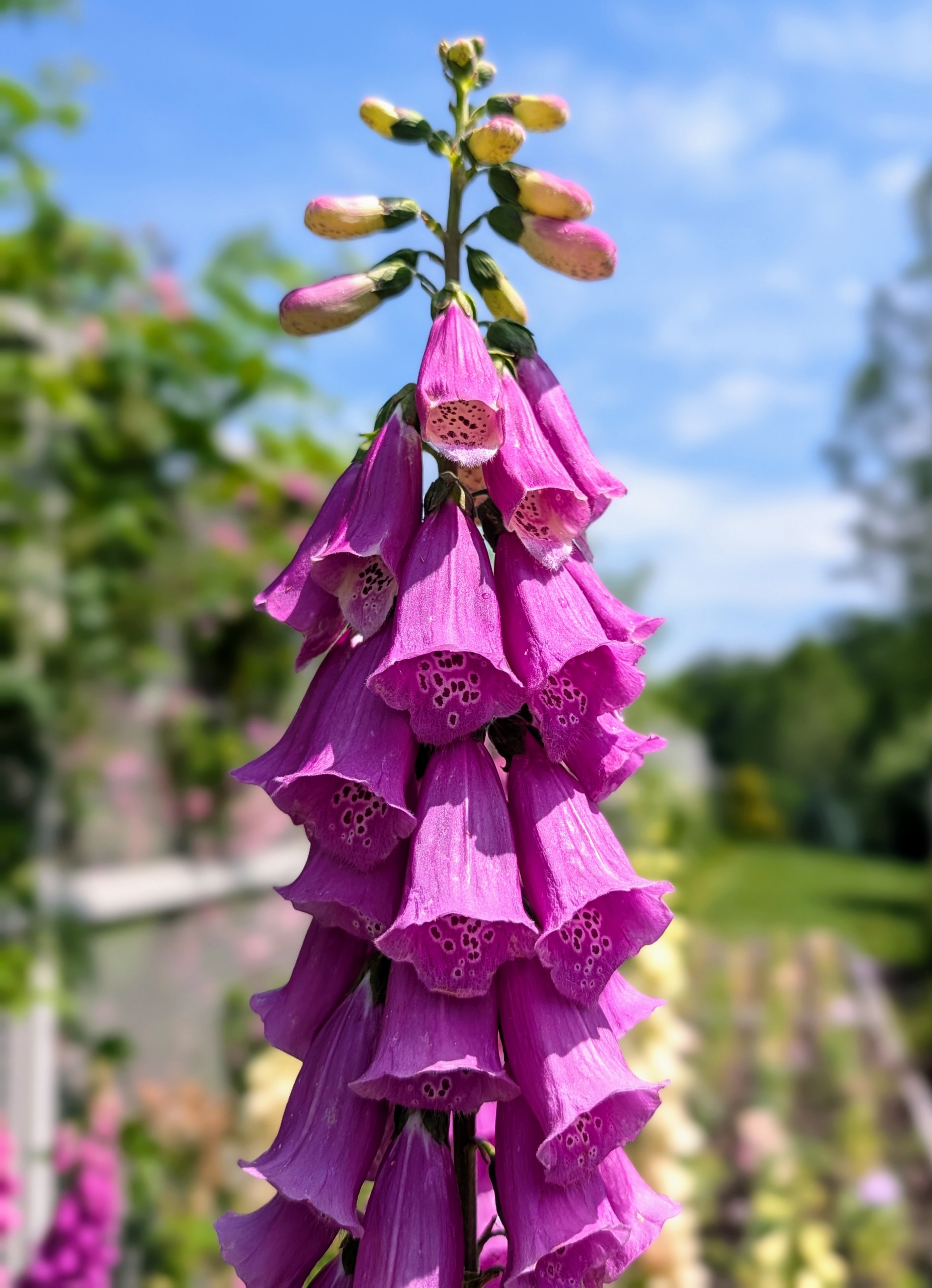
I start my foxglove from seed right in my greenhouse. Foxglove, Digitalis purpurea, add vertical interest to any garden. The flowers are on tall spikes and are tubular and bell-shaped, typically pink-purple with spotted interiors.
I grow so many alliums here at the farm and they continue to bloom so beautifully interspersed with other blooms. These easy-to-grow bulbs come in a broad palette of colors, heights, bloom times, and flower forms. They make excellent cut flowers for fresh or dried bouquets. What’s more, alliums are relatively resistant to deer, voles, chipmunks, and rabbits.
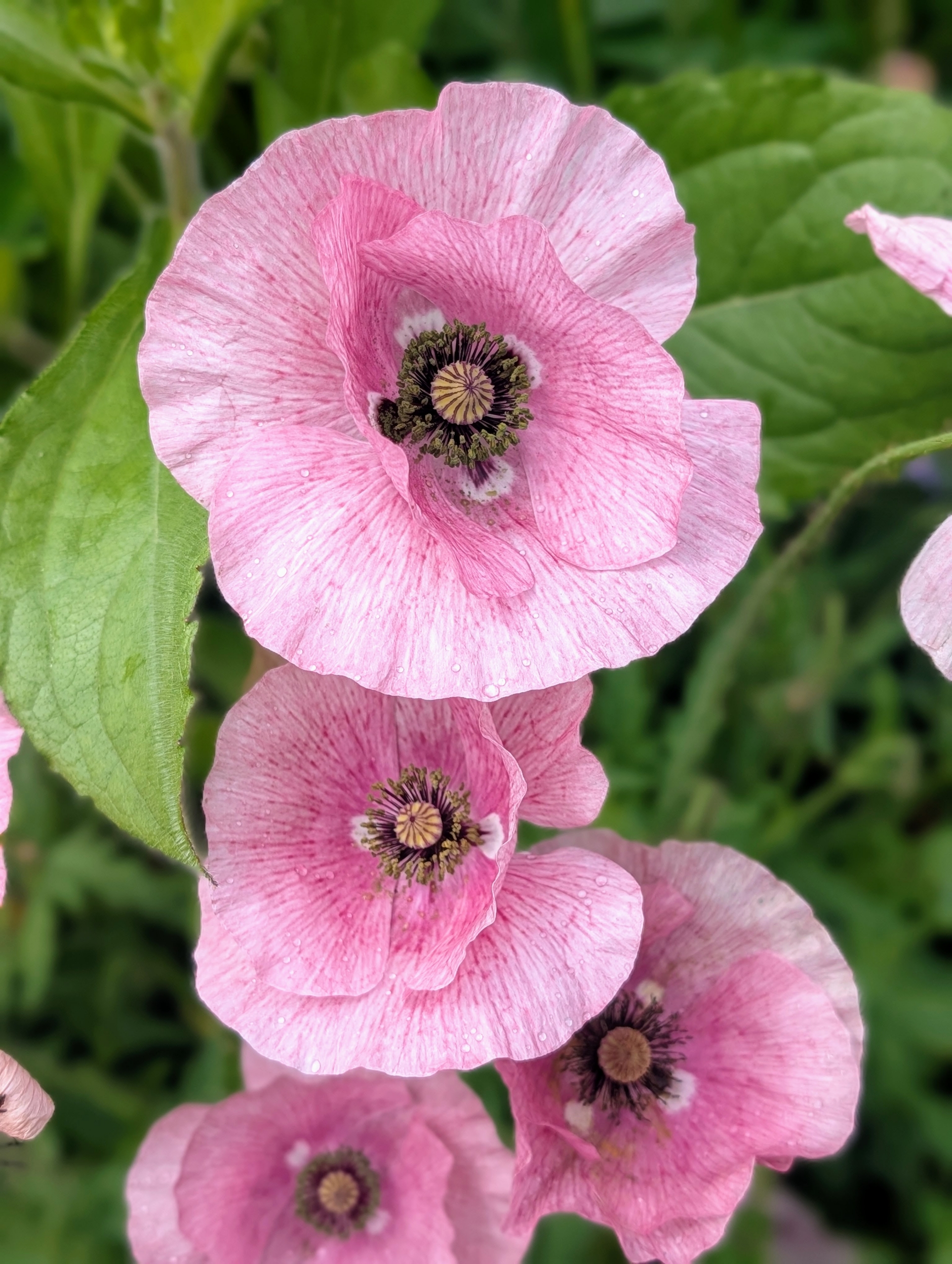
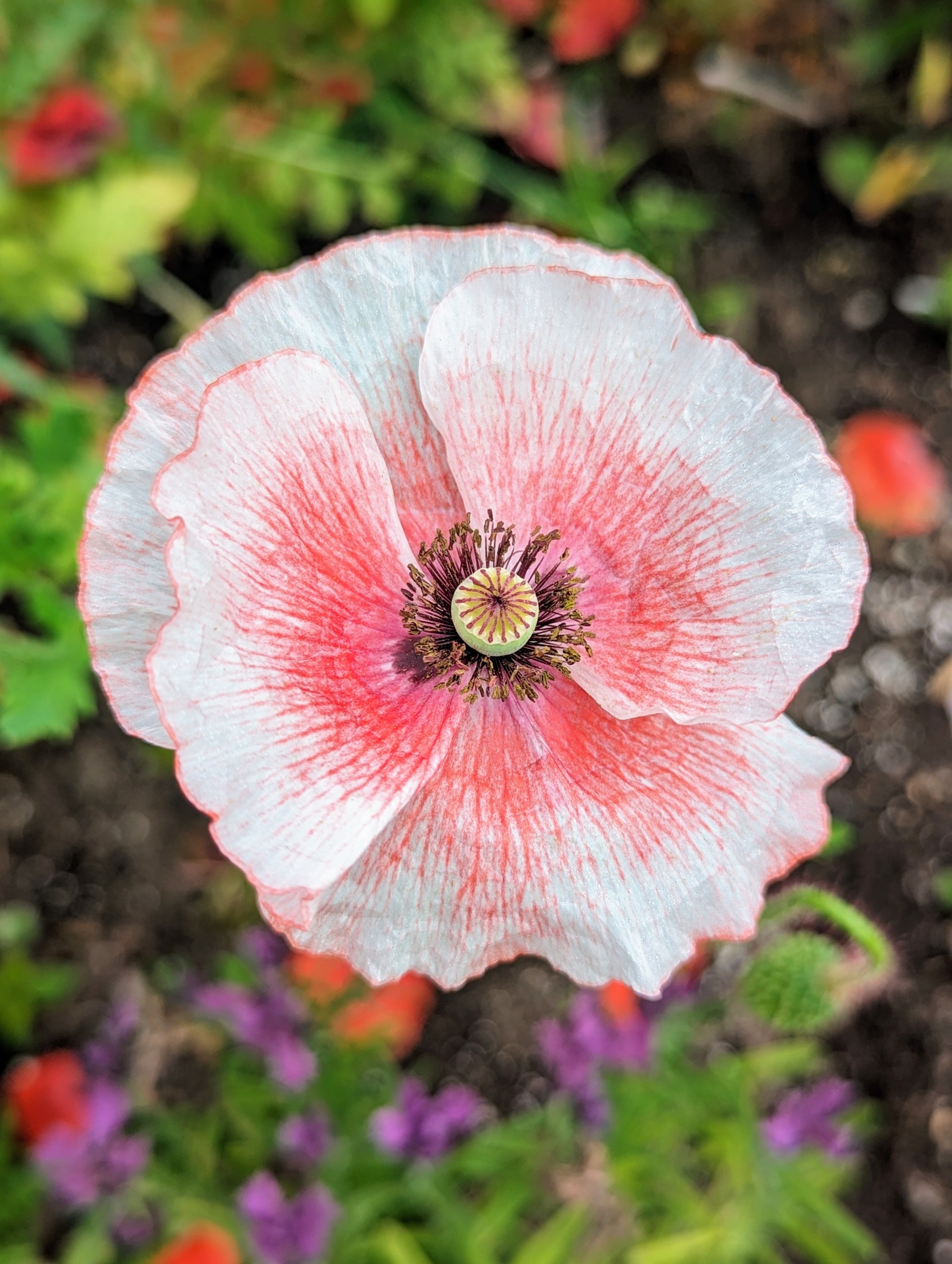
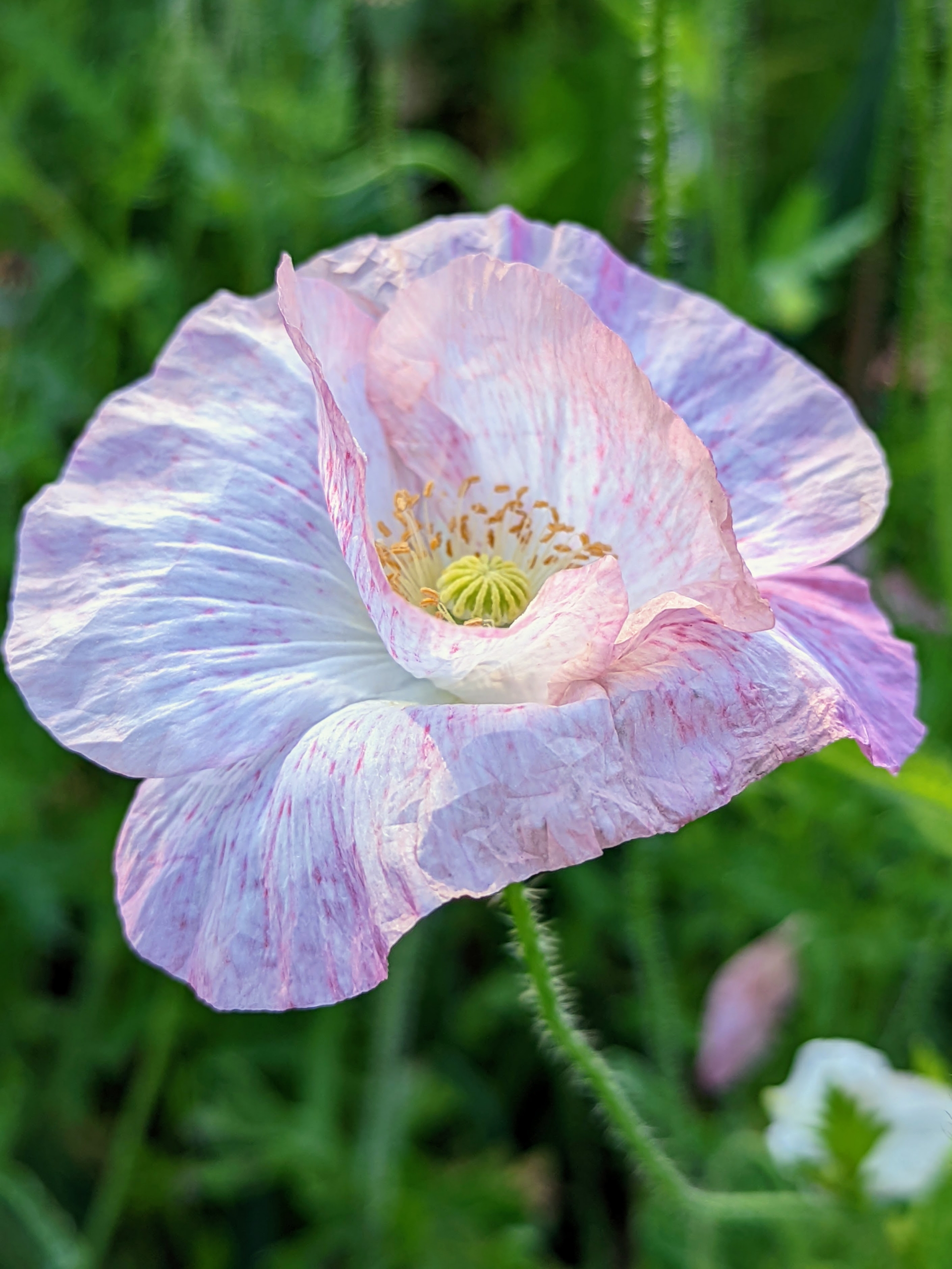
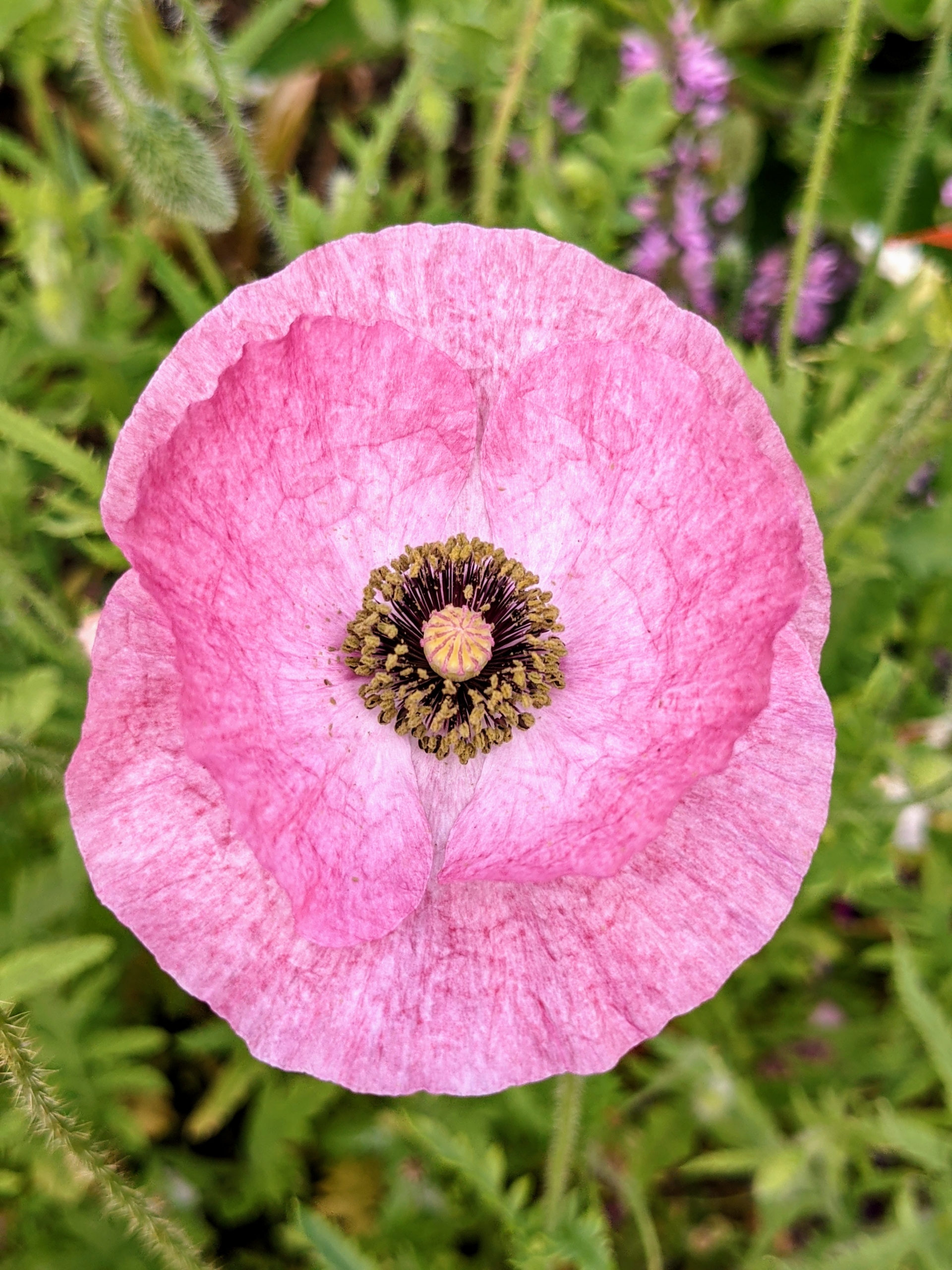
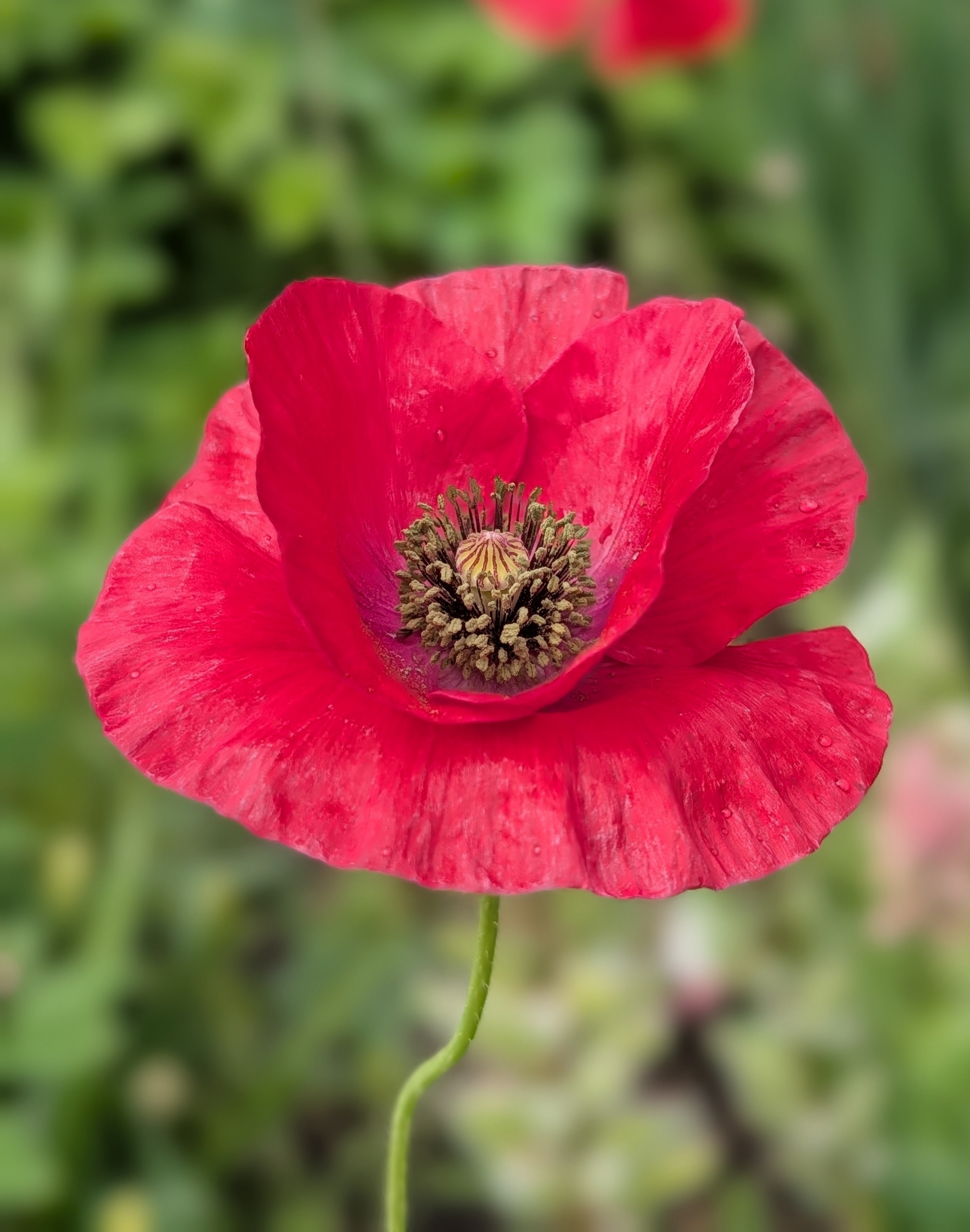
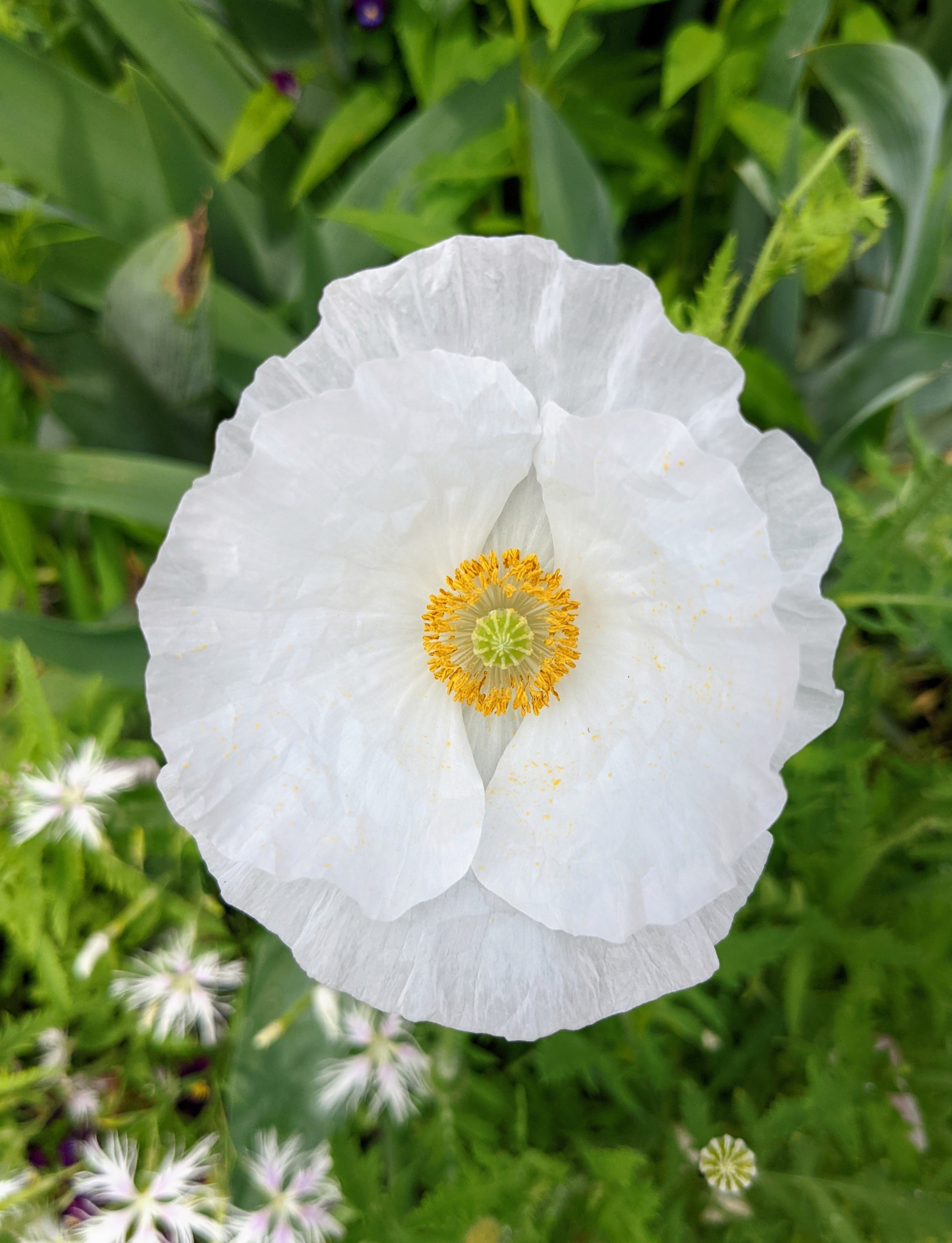
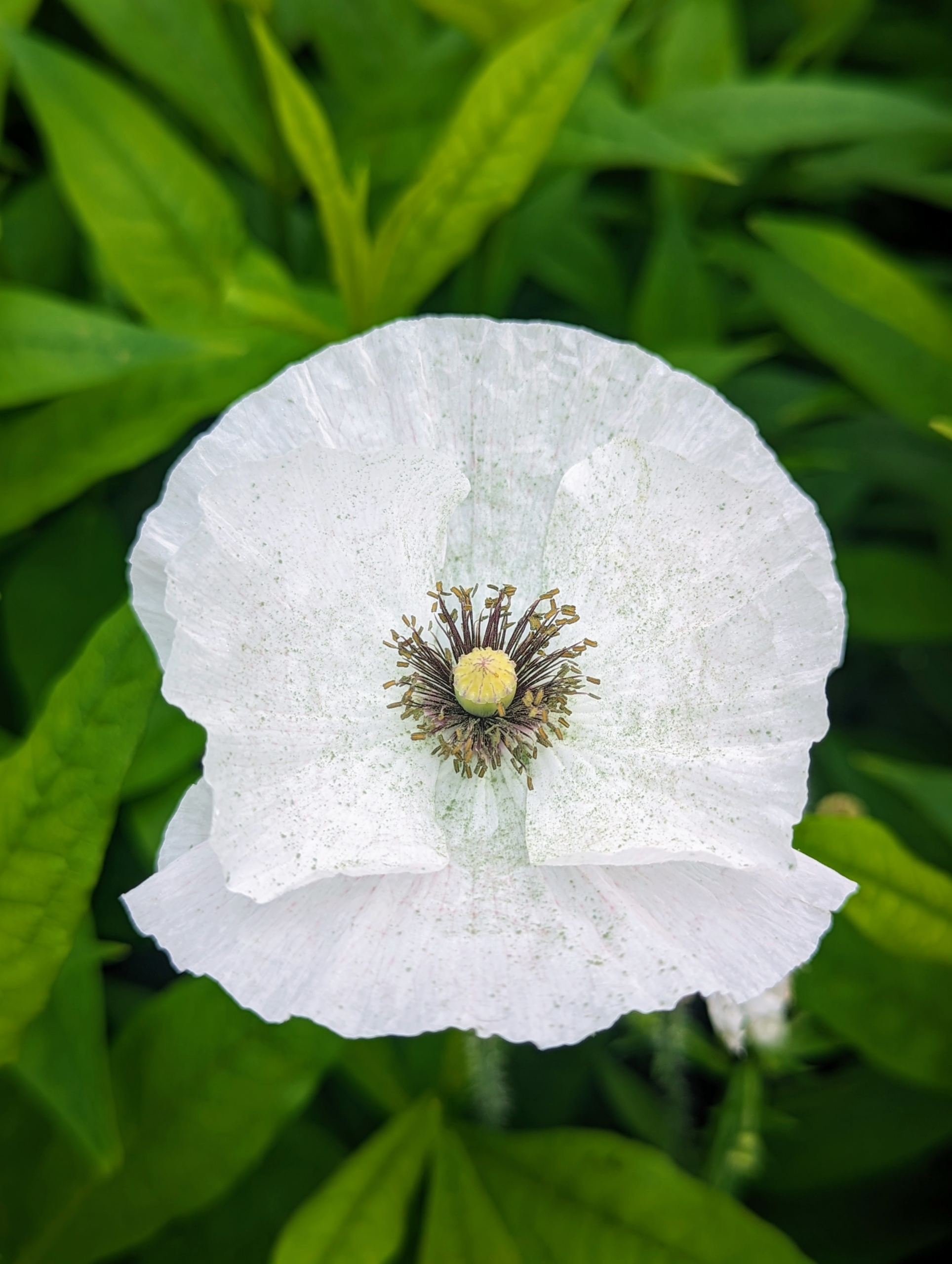
But this week it’s all about the poppies. Poppies produce open flowers that come in many colors from crimson red to purple, lavender, and pale pink. Poppies require very little care, whether they are sown from seed or planted when young – they just need full sun and well-drained soil.
This one is crisp yet delicate white with a reddish center.
Papaver grows mainly in the northern hemisphere, including within the Arctic Circle, with one species found in southern Africa.
Poppies are attractive, easy-to-grow herbaceous annual, biennial or short-lived perennial plants.
The plants typically grow to about two feet in height forming colorful flowers during spring and into summer with one bloom per stem.
Flowers have four to six petals, many stamens forming a conspicuous whorl in the center of the flower and an ovary of two to many fused carpels.
One tip – only water once per week during weeks that receive less than two inches of natural rainfall. And don’t splash any water on the foliage; moist leaves are more susceptible to pests and diseases.
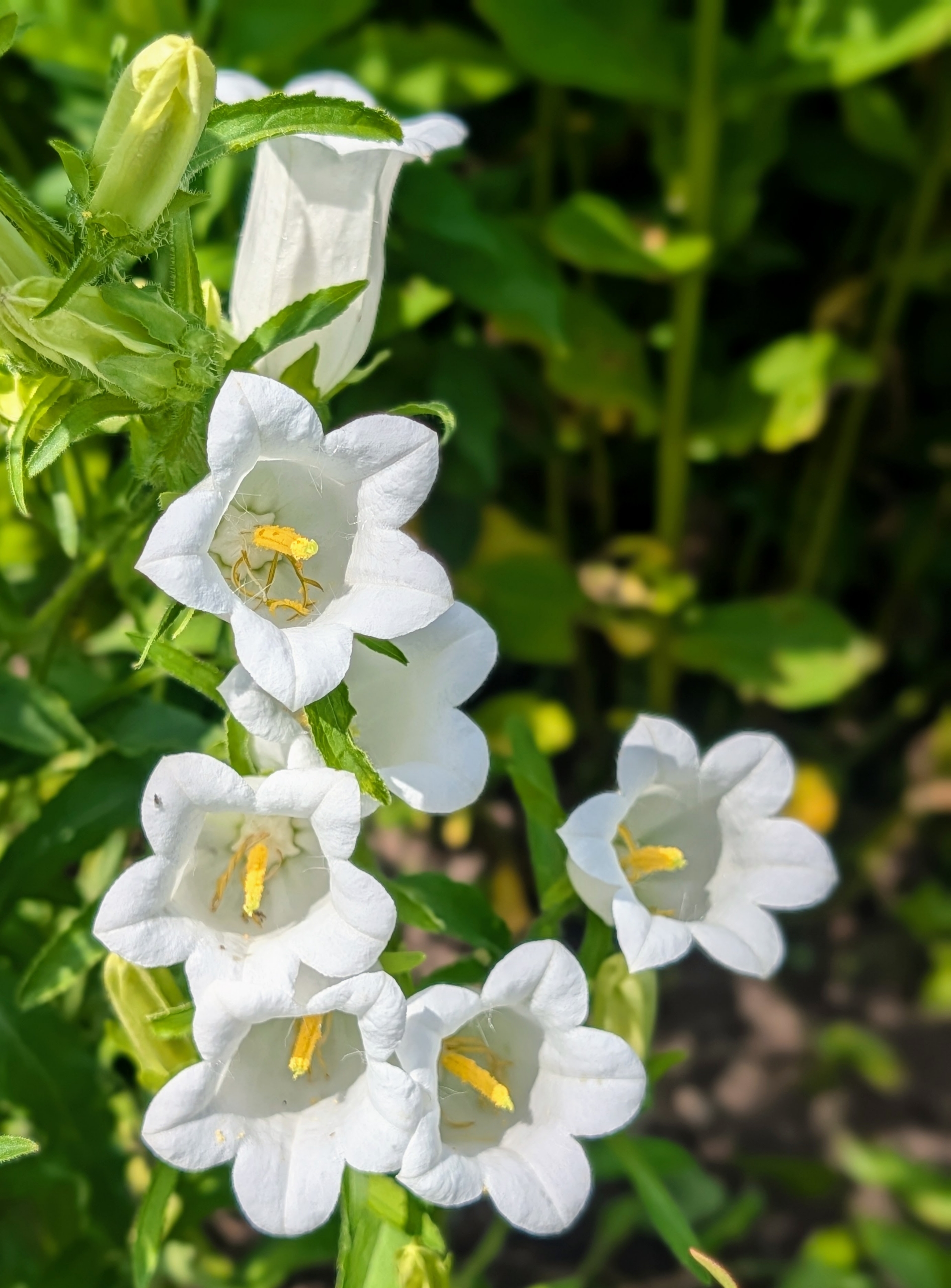
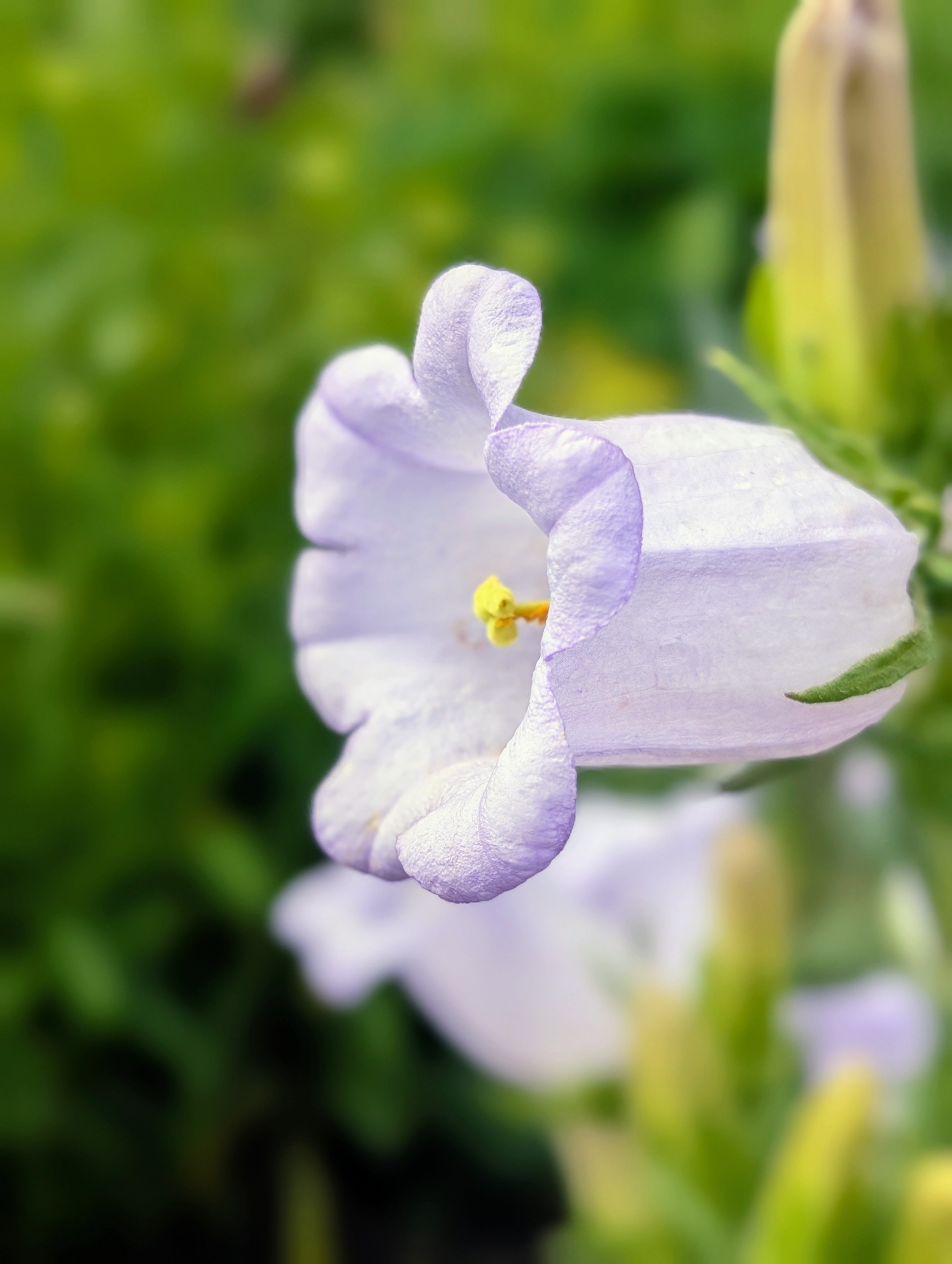
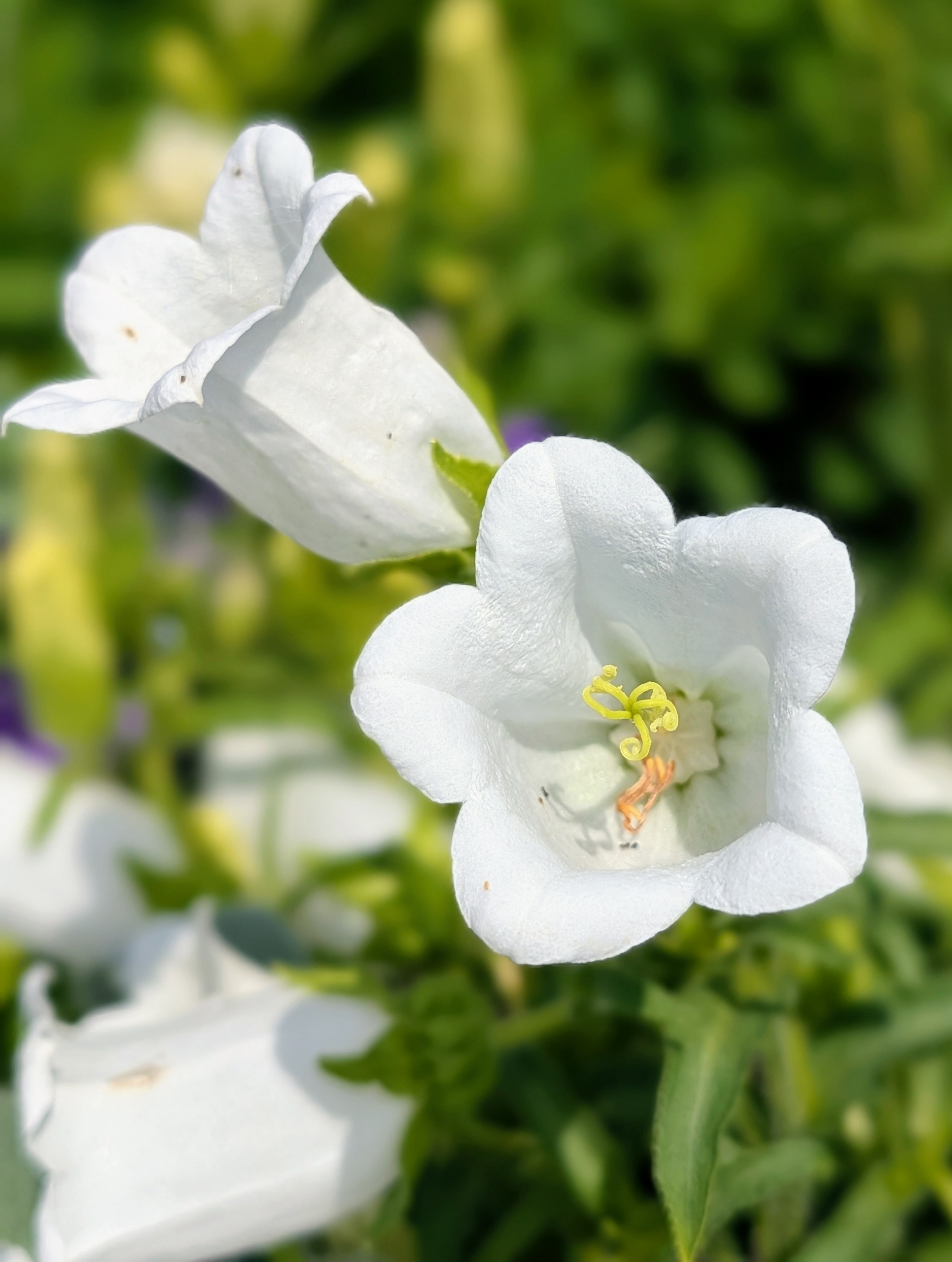
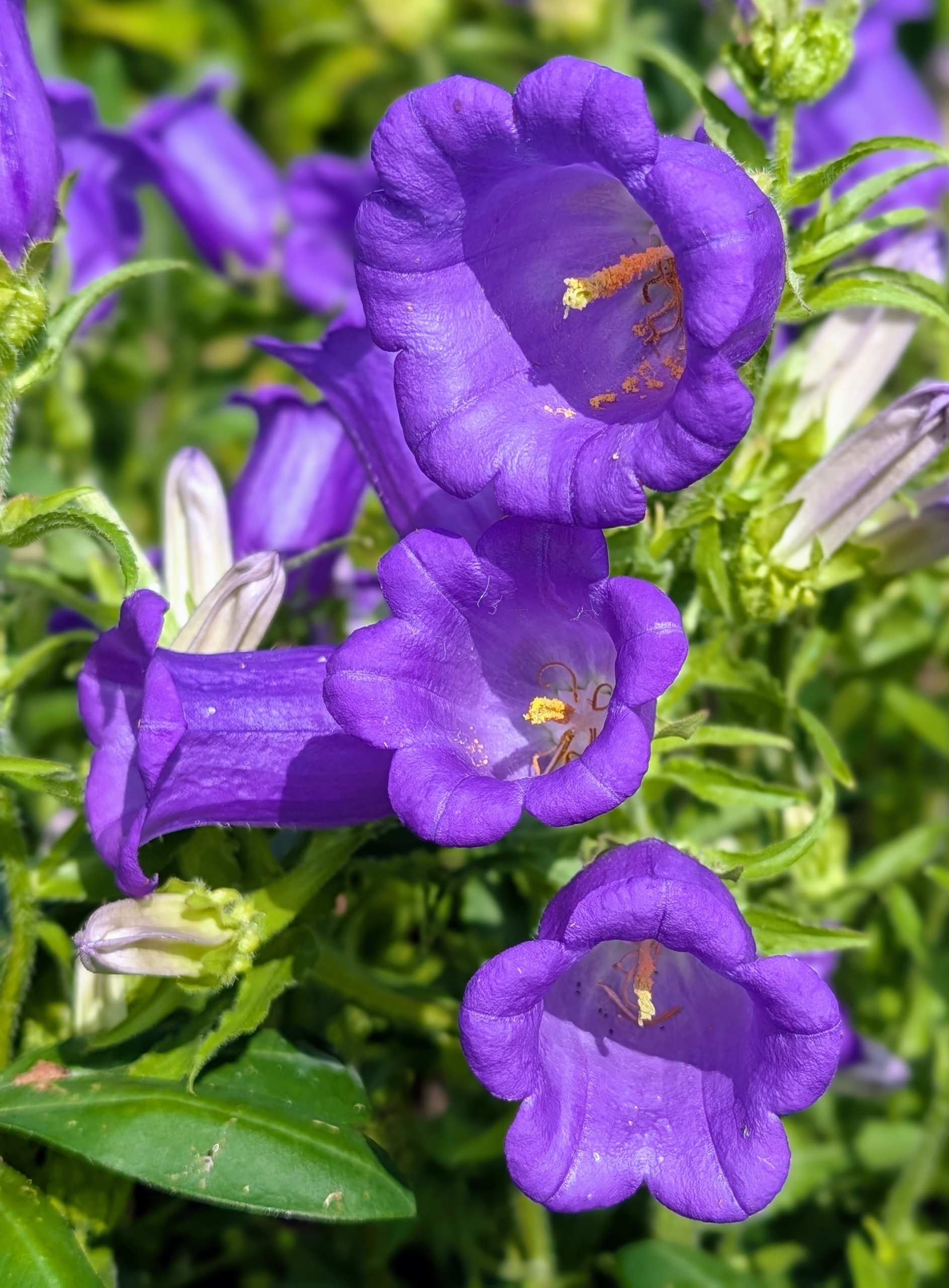
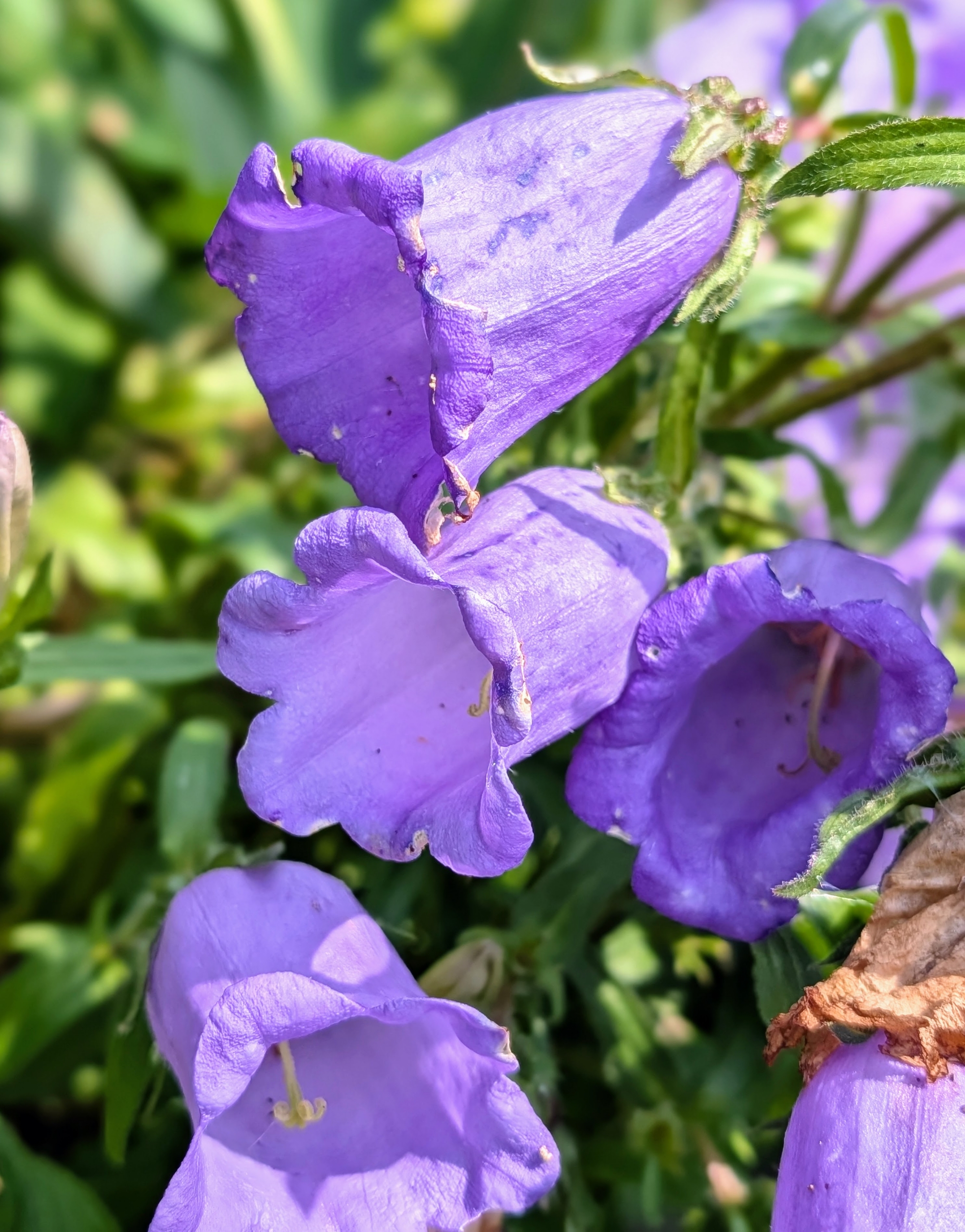
Also looking so pretty – my Canterbury bells, Campanula. These are biennial flowering plants that grow to approximately two feet in height.
The plants produce large, bell-shaped blooms that are sweetly scented and attract bees, butterflies, and other pollinators.
Canterbury Bells bloom from late spring to early summer.
These flowers come in white, dark purple, lavender, blue, and pink.
The soft, light lavender is one of its traditional shades.
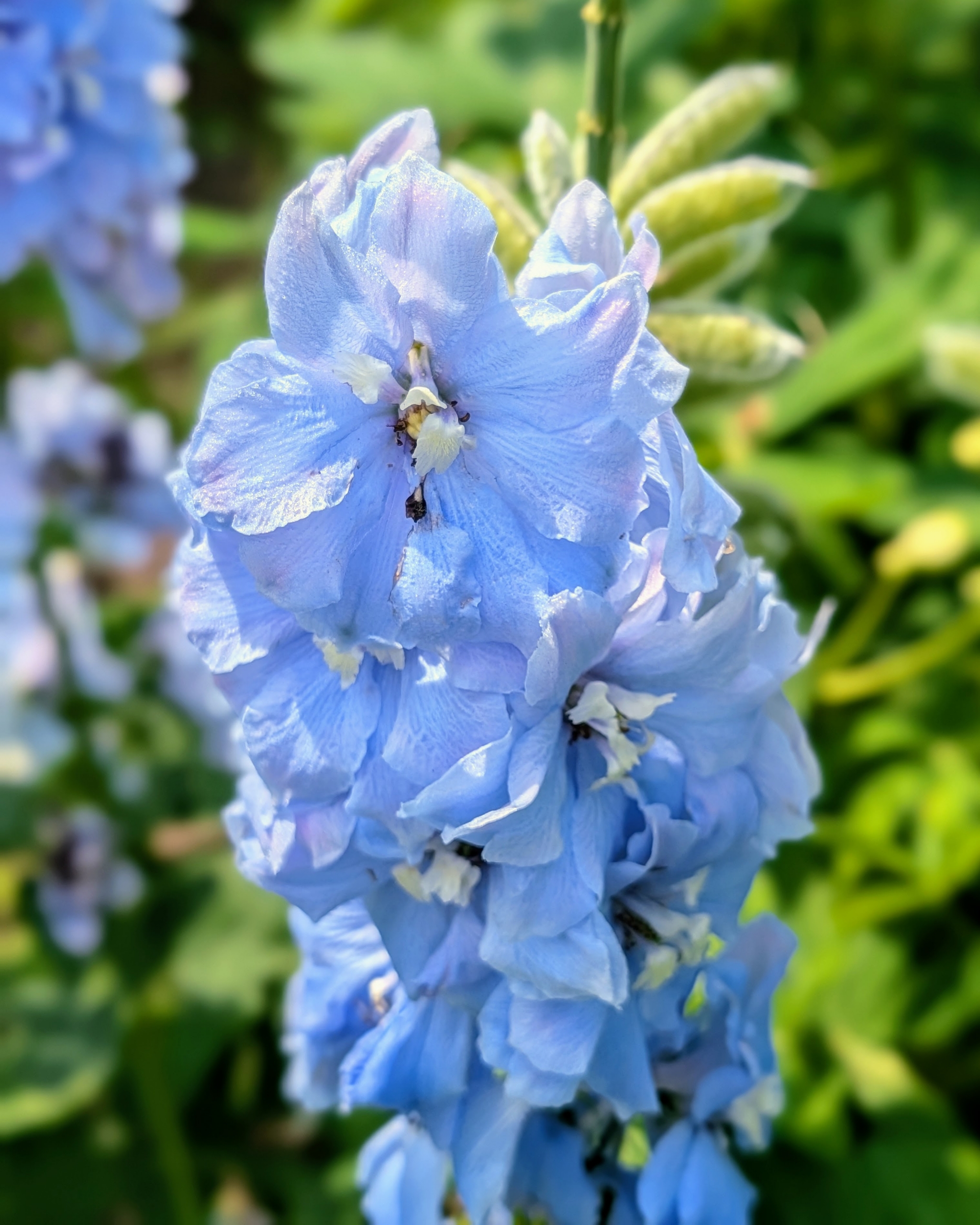
Larkspur, also known as delphinium, is a tall, colorful flowering plant prized for its spire-like blooms and variety of colors. Larkspur flowers come in shades of blue, mauve, pink, white, red, and yellow, and can be single or double-flowered.
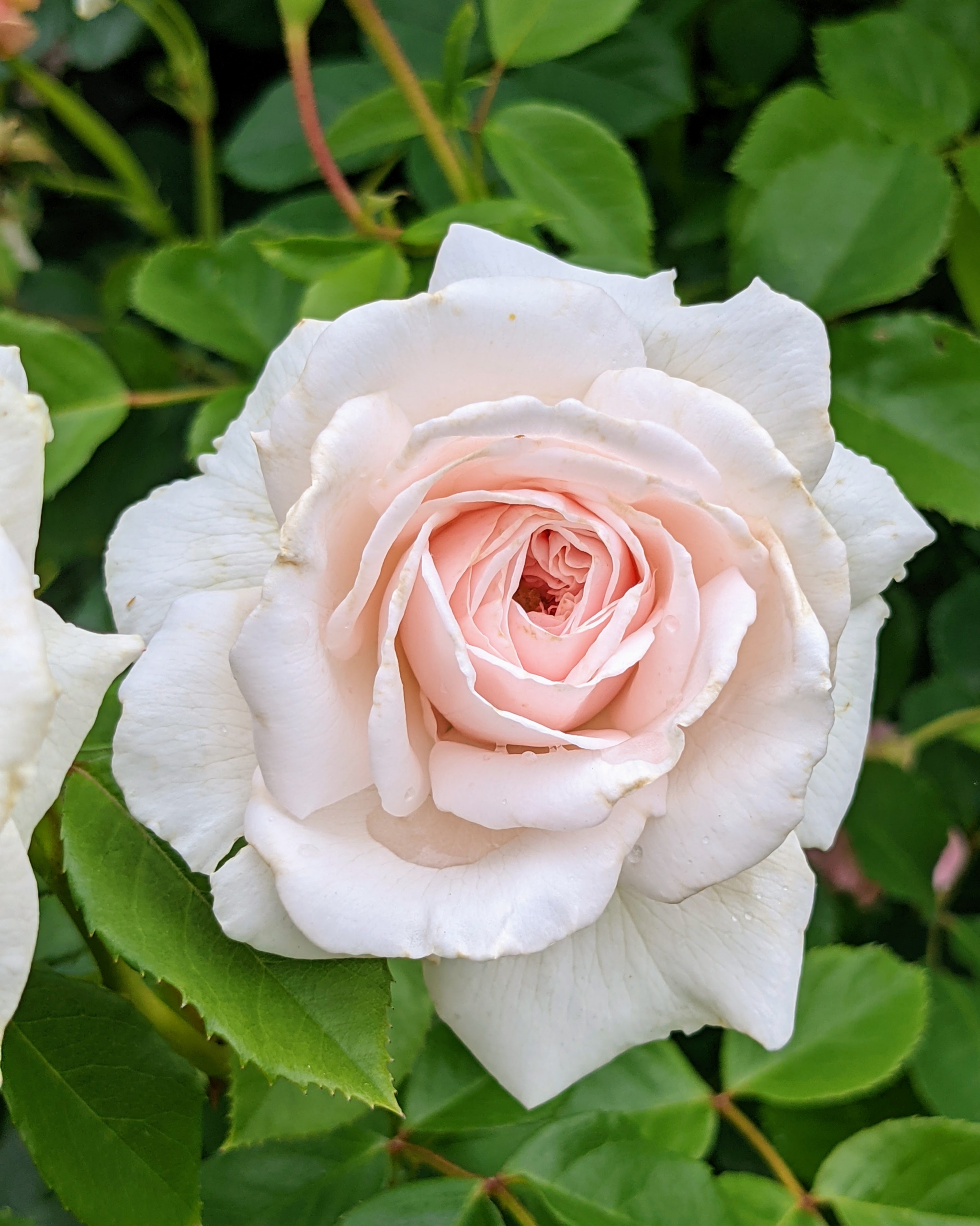
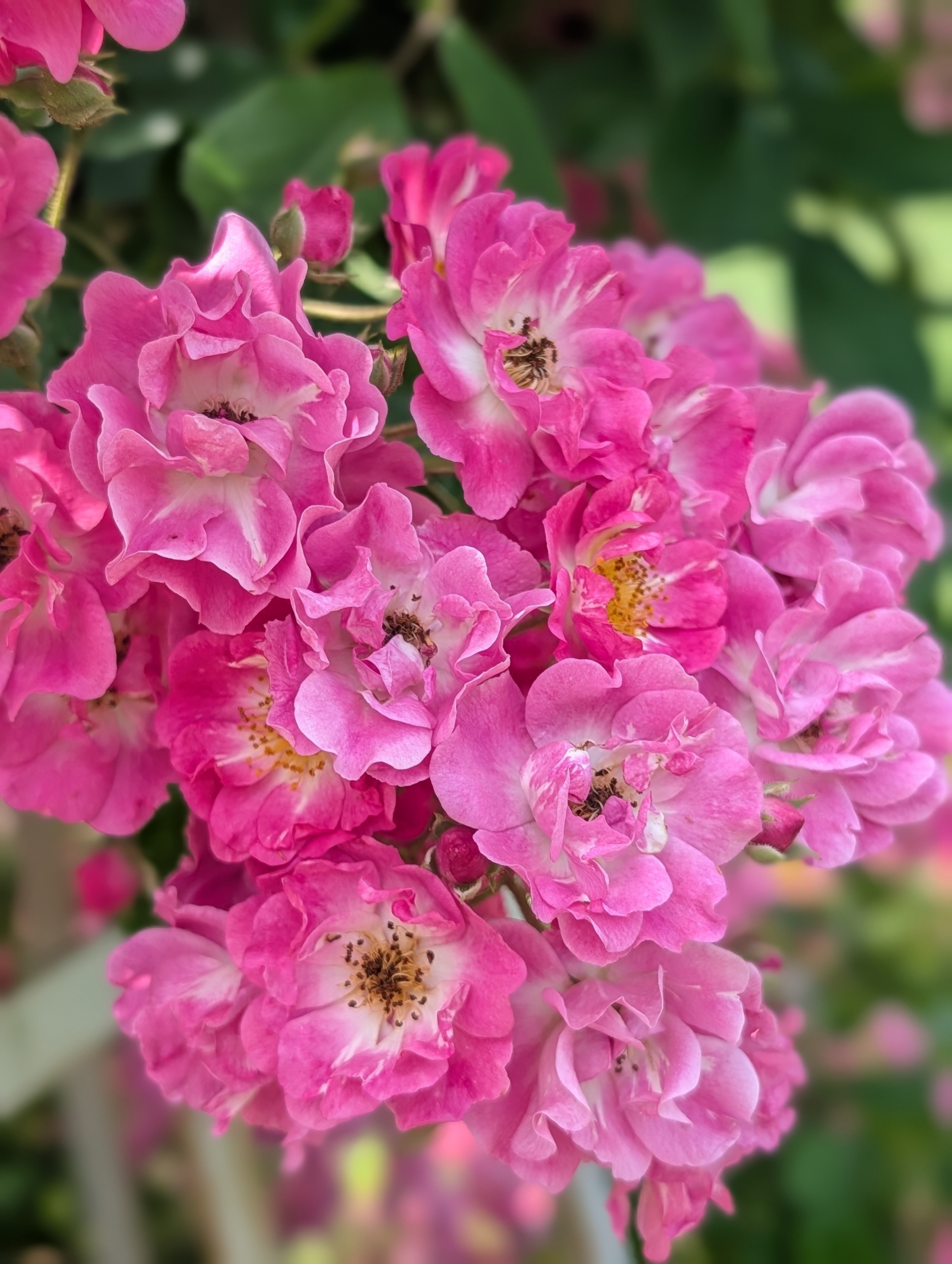
The roses are looking spectacular this year. I have a vast collection – many of which are heirlooms that I moved from Lily Pond, my former home in East Hampton, to Bedford, and they’re still thriving.
Roses come in many different colors, such as pink, peach, white, red, magenta, yellow, copper, vermilion, purple, and apricot. They also come in many forms. I’ll share more photos of my beautiful roses soon.
June is such an exciting time in my garden. This time of year, the days are long, the sun is warm, and the soil is in perfect condition – all creating an ideal environment for flowers to burst and bloom wonderfully.
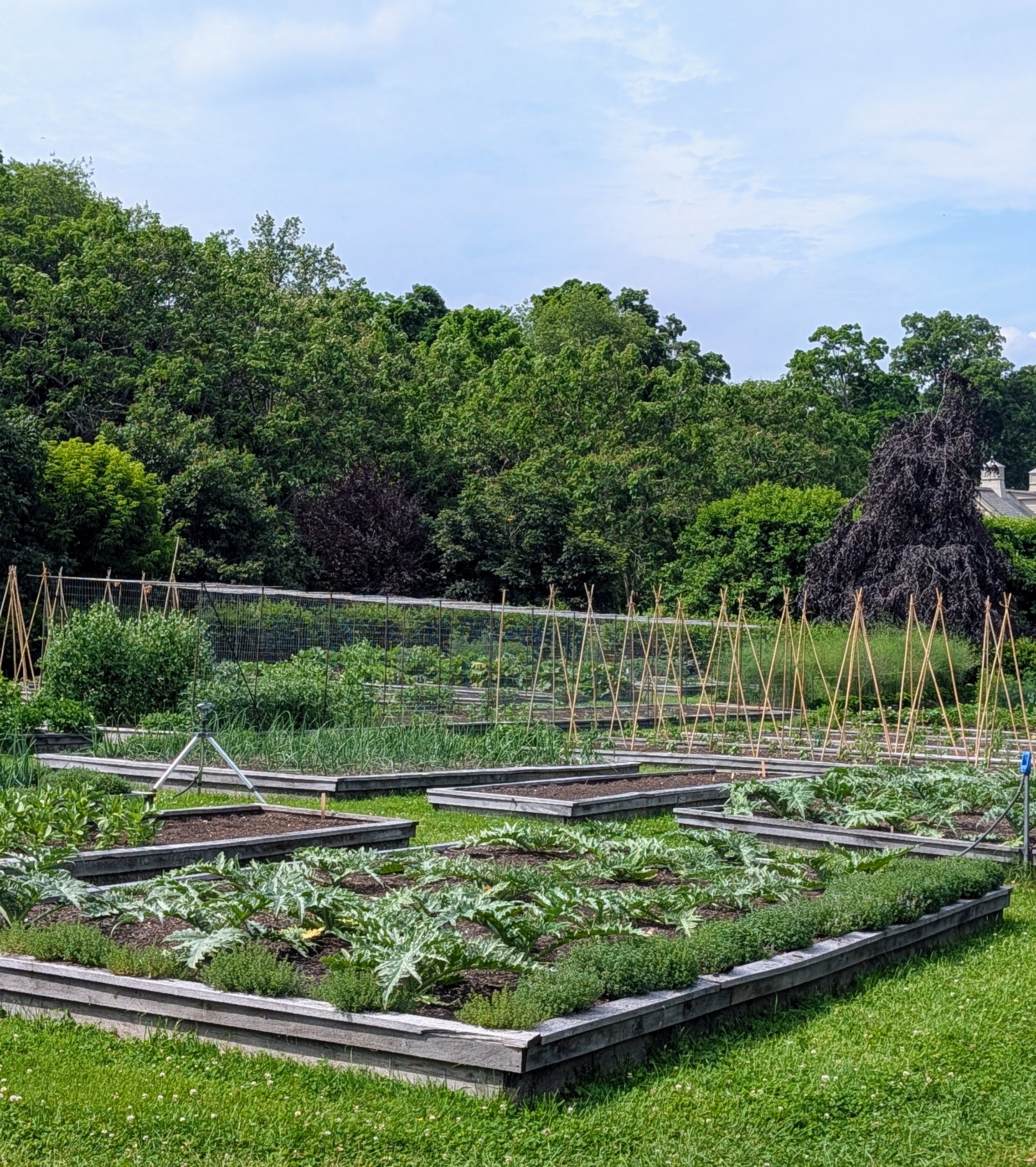
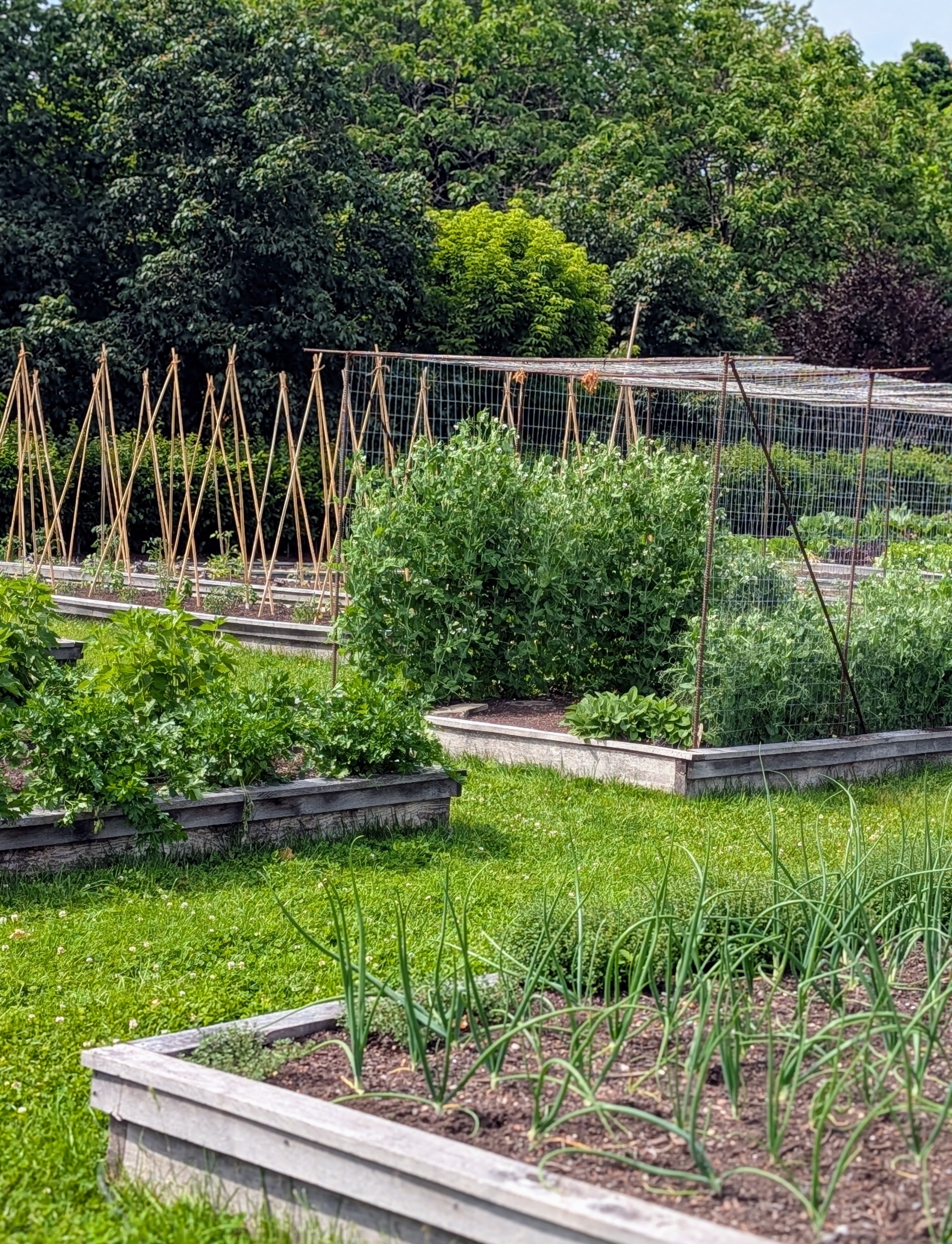
My large half-acre vegetable garden is so much fun to visit right now because of all the growing produce.
This garden, which is now in its fourth growing season, is planted with many crops - cabbage, cauliflower, kale, artichokes, fava beans, tomatoes, onions, shallots, all sorts of herbs, strawberries, and so much more. I always plant in succession, meaning I seed crops at intervals of seven to 21 days in order to maintain a consistent supply of harvestable produce throughout the season. I'm looking forward to my first big bounty.
Here are some photos, enjoy.
I planned this garden close to my Winter House, so I can get to it quickly, see what is growing, and pick what is ready.
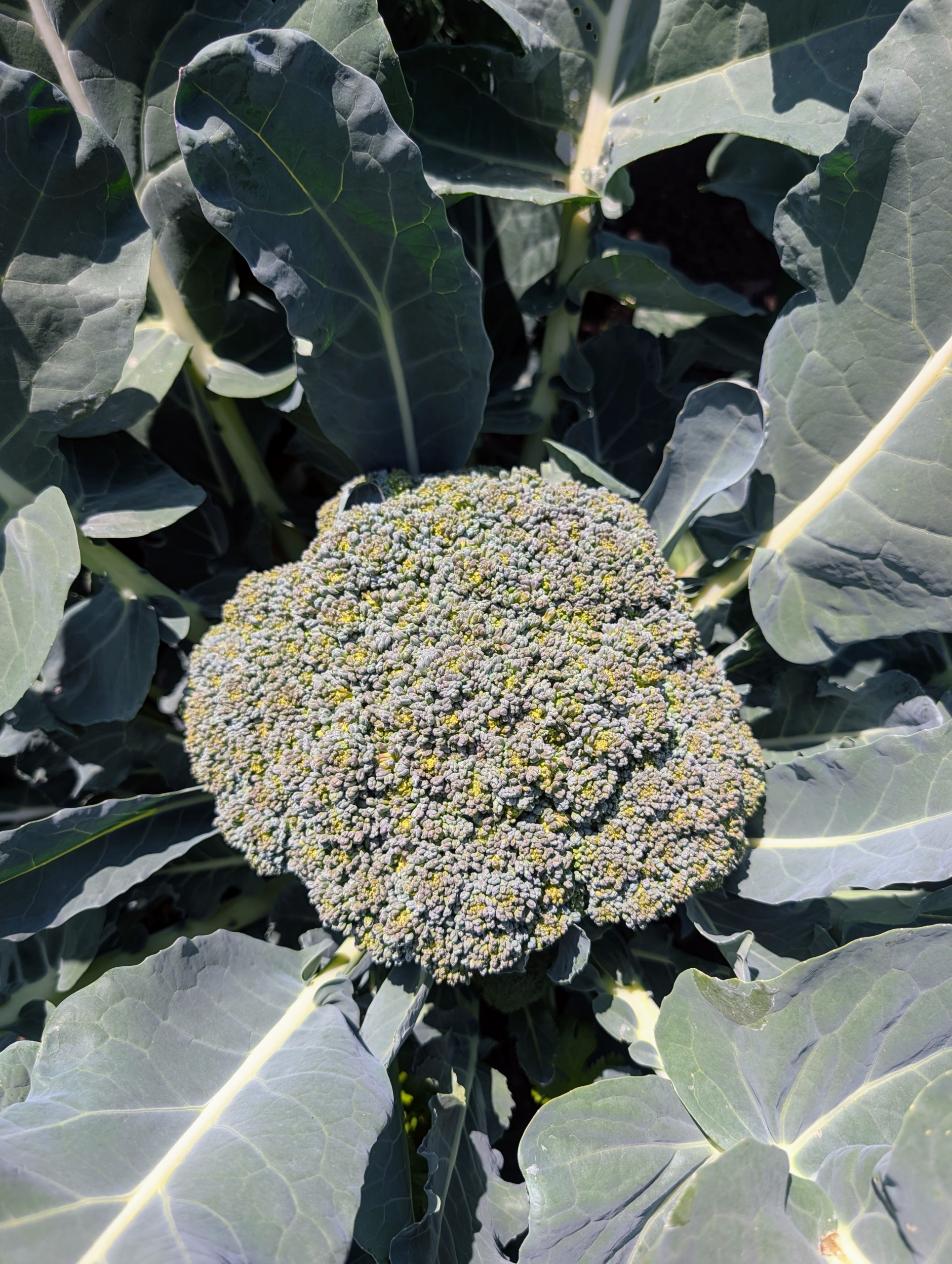
Broccoli is a hardy vegetable of the cabbage family that is high in vitamins A and D. And, according to the National Agricultural Statistics Service, USDA, the average American eats more than four-pounds of broccoli a year. My broccoli is looking perfect.
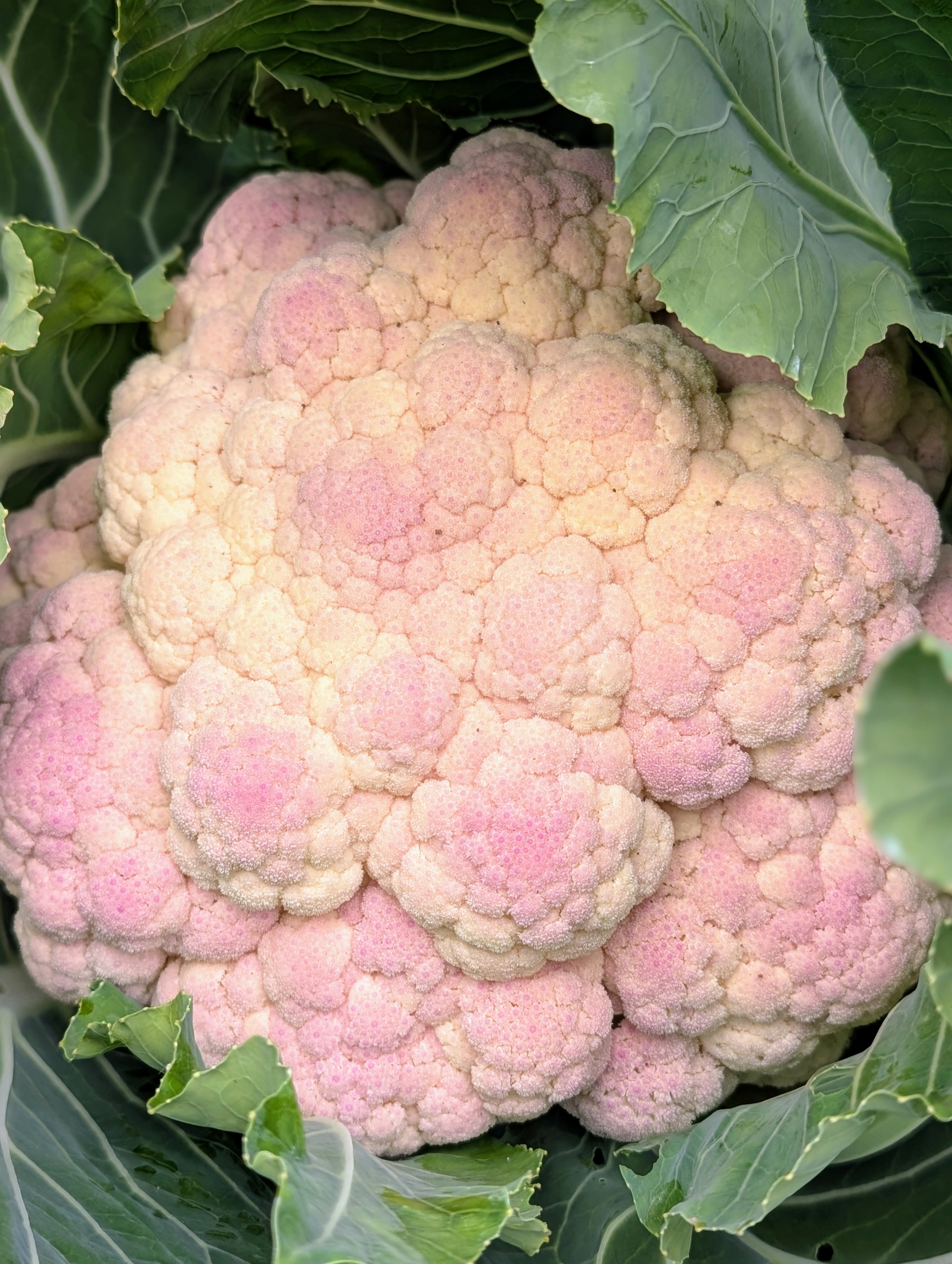
The cauliflower is also looking amazing. Here’s a beautiful head of cauliflower. Purple cauliflower gets its color from anthocyanin, a naturally occurring phytochemical that is also found in other red, blue, or purple fruits and vegetables.
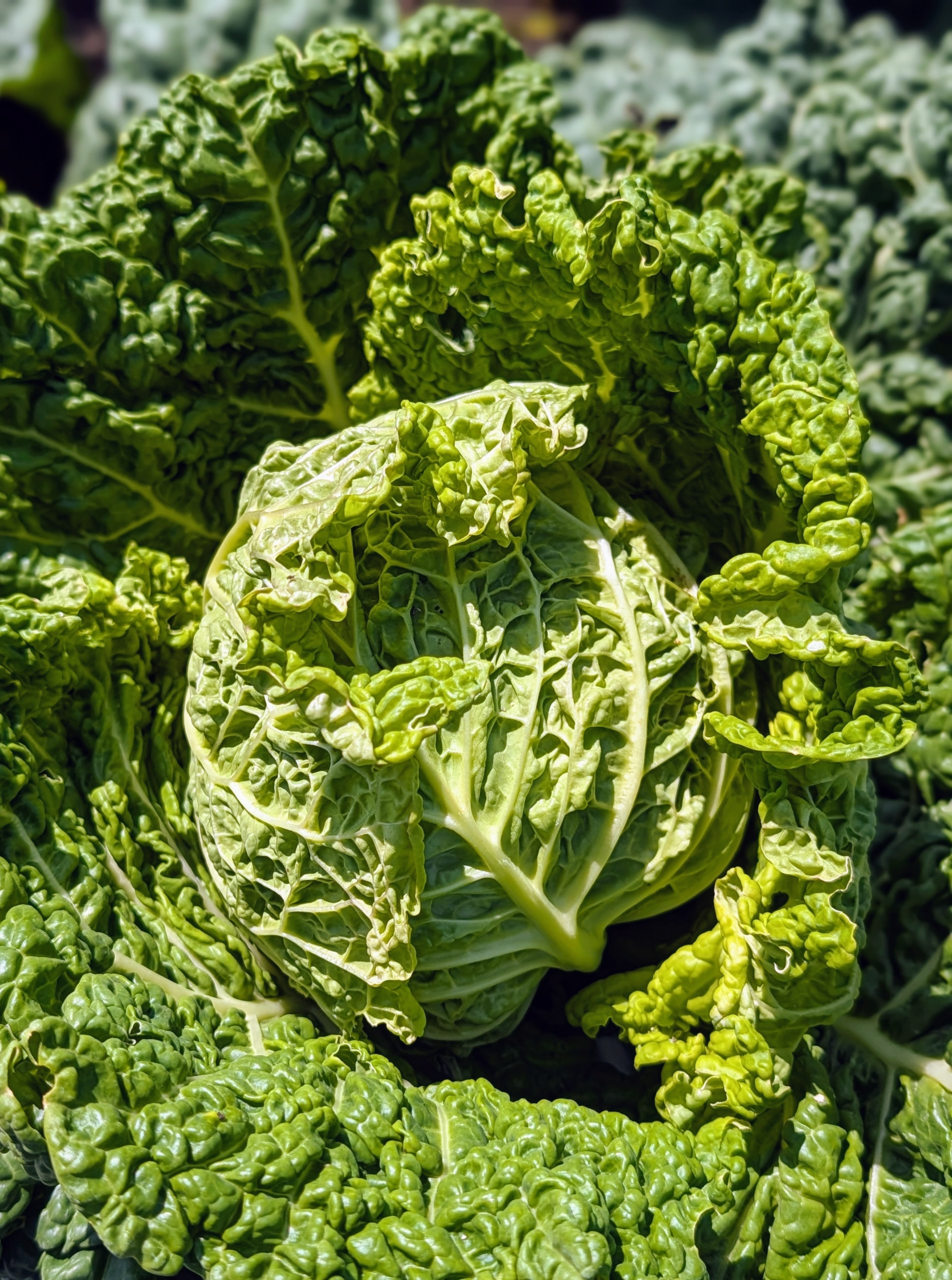
This is one of my cabbages. To get the best health benefits from cabbage, it’s good to include all three varieties into the diet – Savoy, red, and green. Savoy cabbage leaves are ruffled and a bit yellowish in color. It has crinkled, emerald green leaves, and a mildly nutty and sweet flavor.
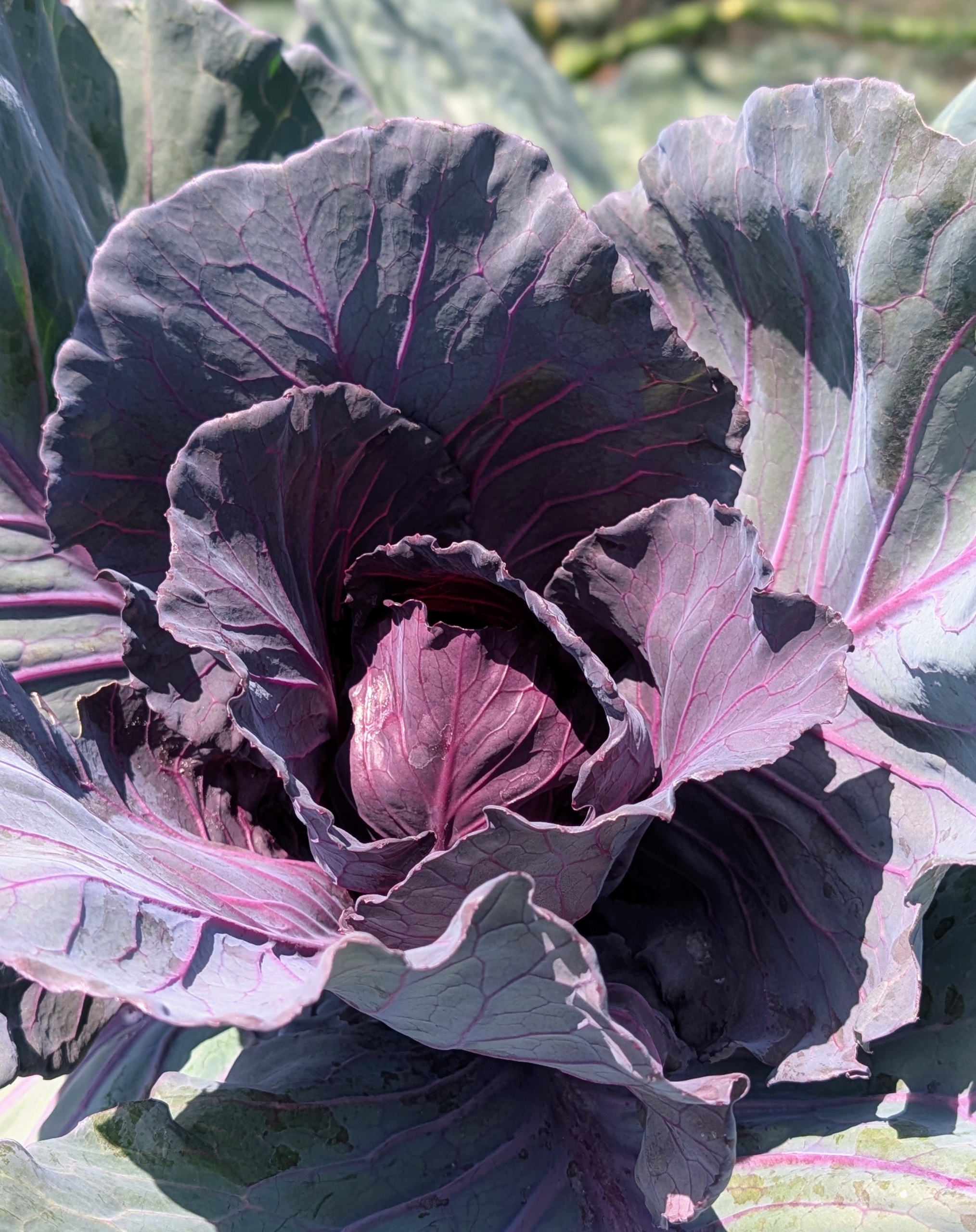
Red, or purple, cabbage is often used raw for salads and coleslaw. It contains 10-times more vitamin-A and twice as much iron as green cabbage.
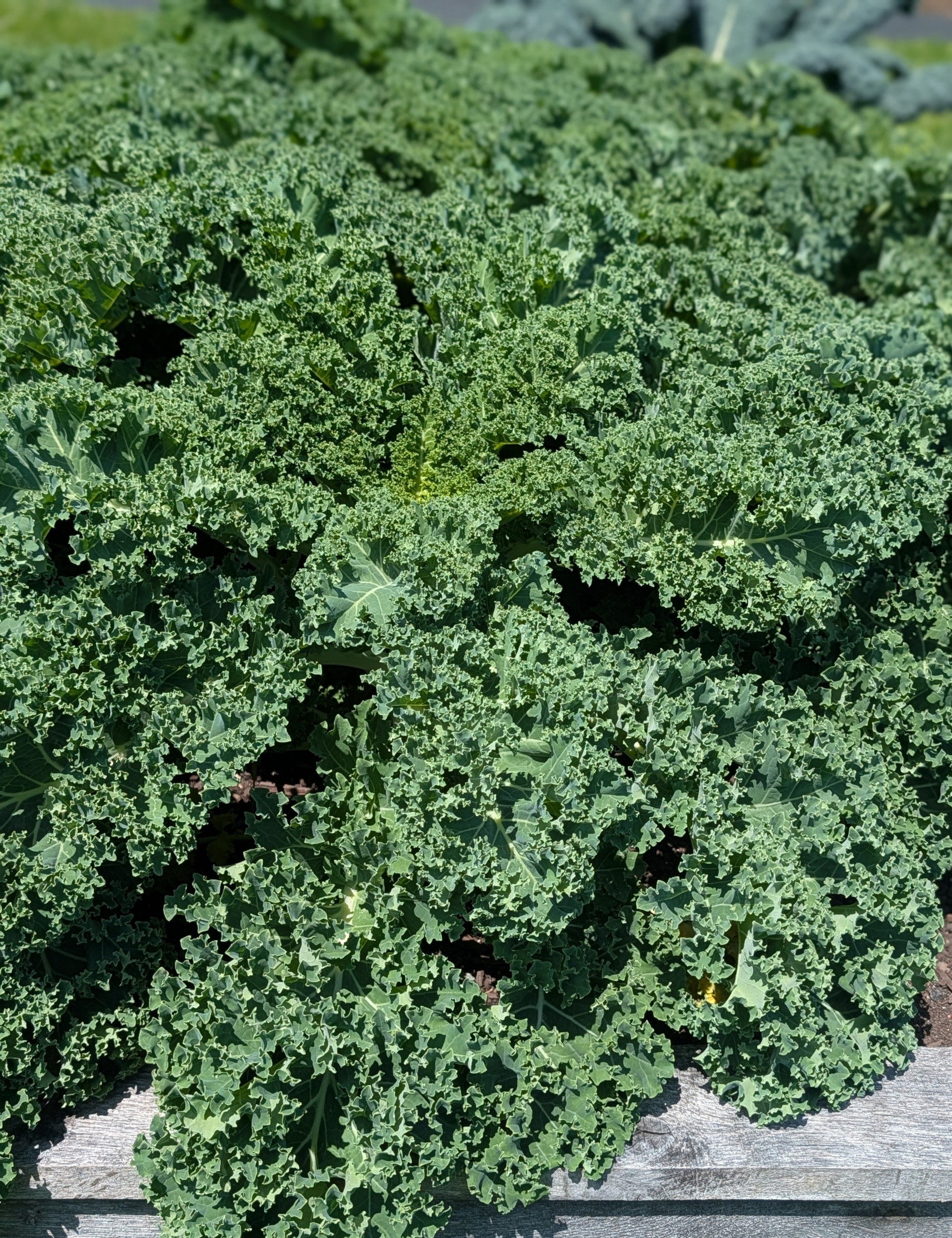
My kale is always a big shower in the garden – look how beautiful this crop is. Kale or leaf cabbage is a group of vegetable cultivars within the plant species Brassica oleracea. They have purple or green leaves, in which the central leaves do not form a head.
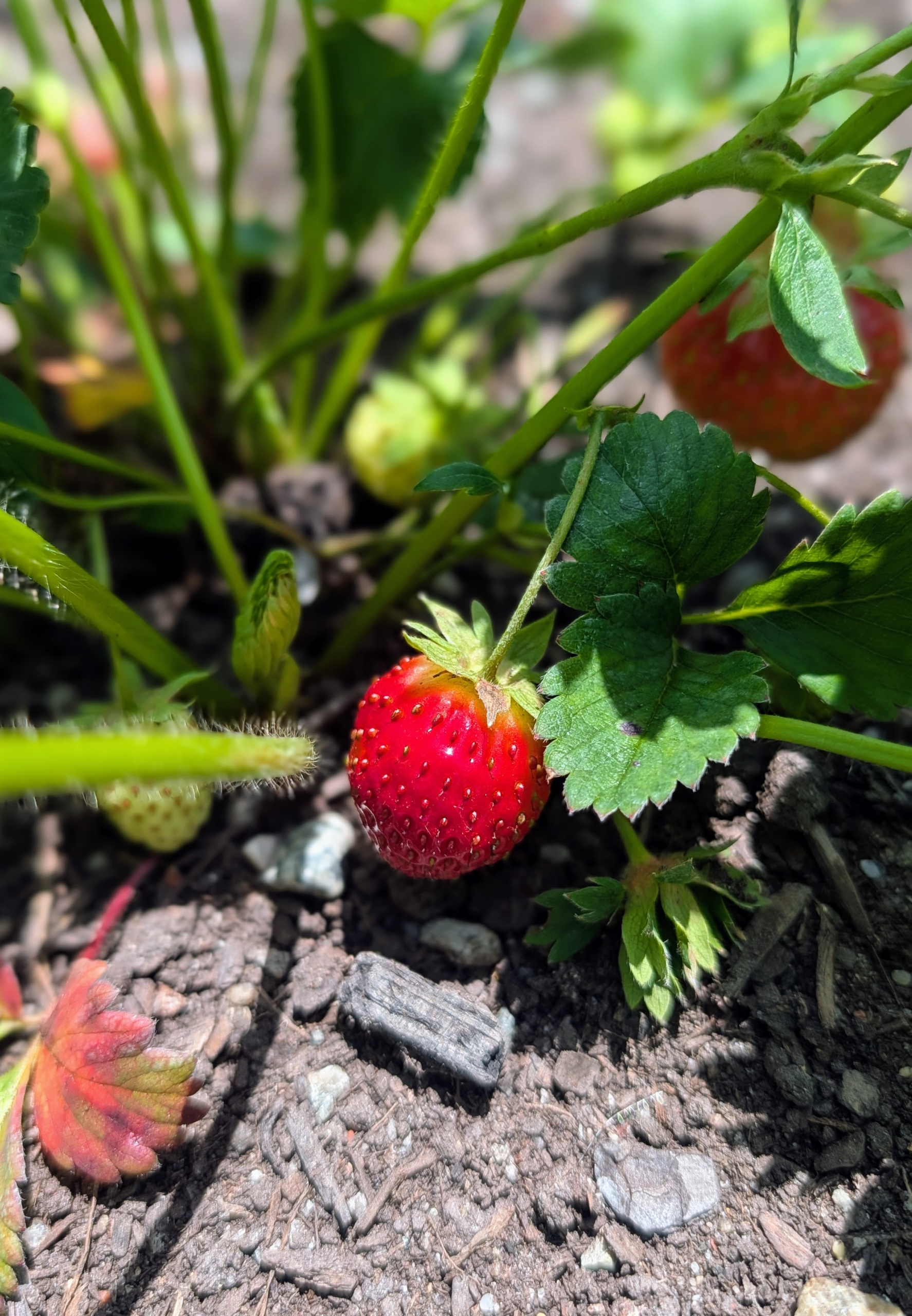
One one side, I have three long beds of strawberries and I’m seeing more beautiful bright fruits every day. Strawberries are among the easiest berries to grow. They are cold-hardy and adaptable, and can be planted in both garden beds and containers.
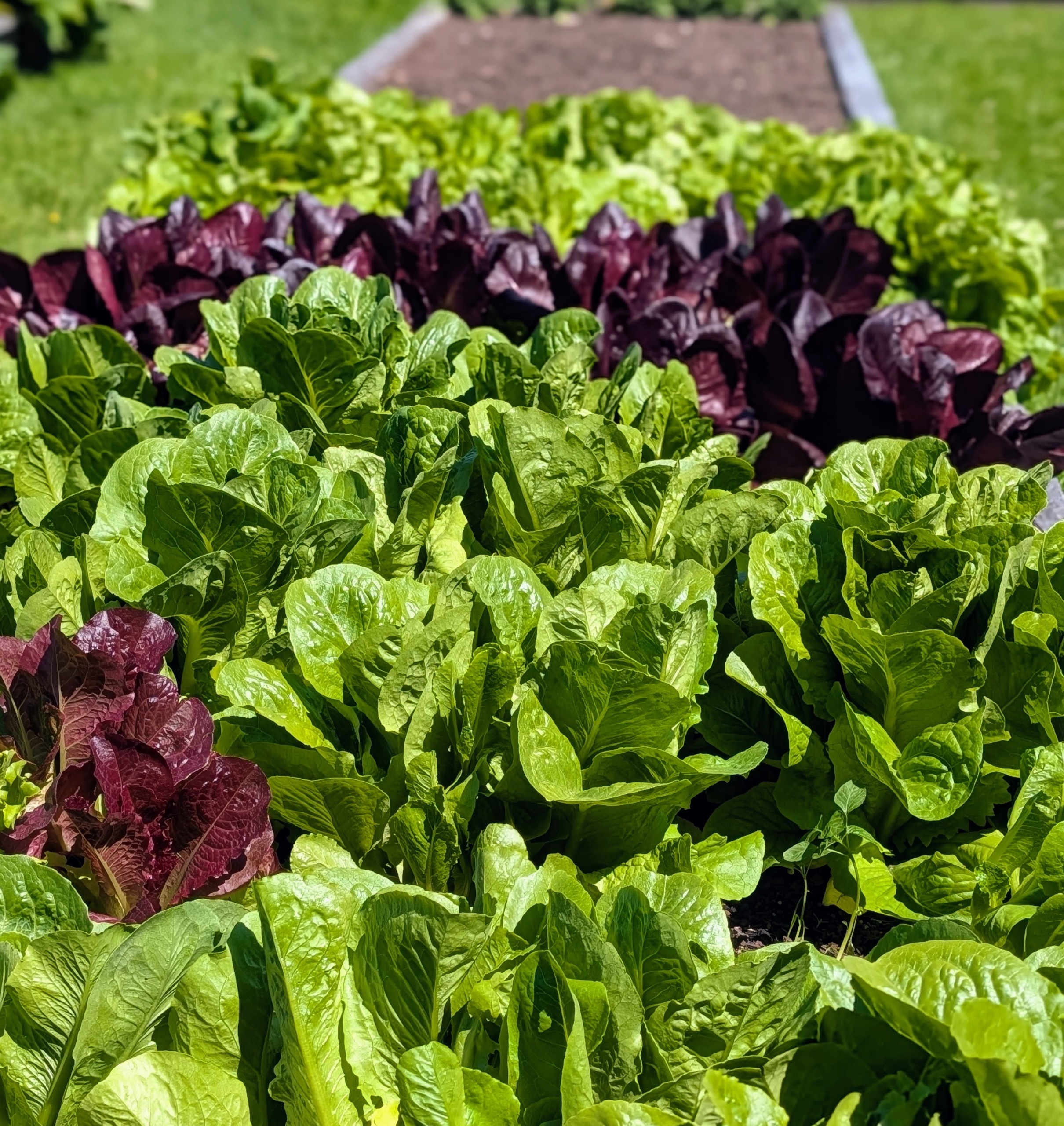
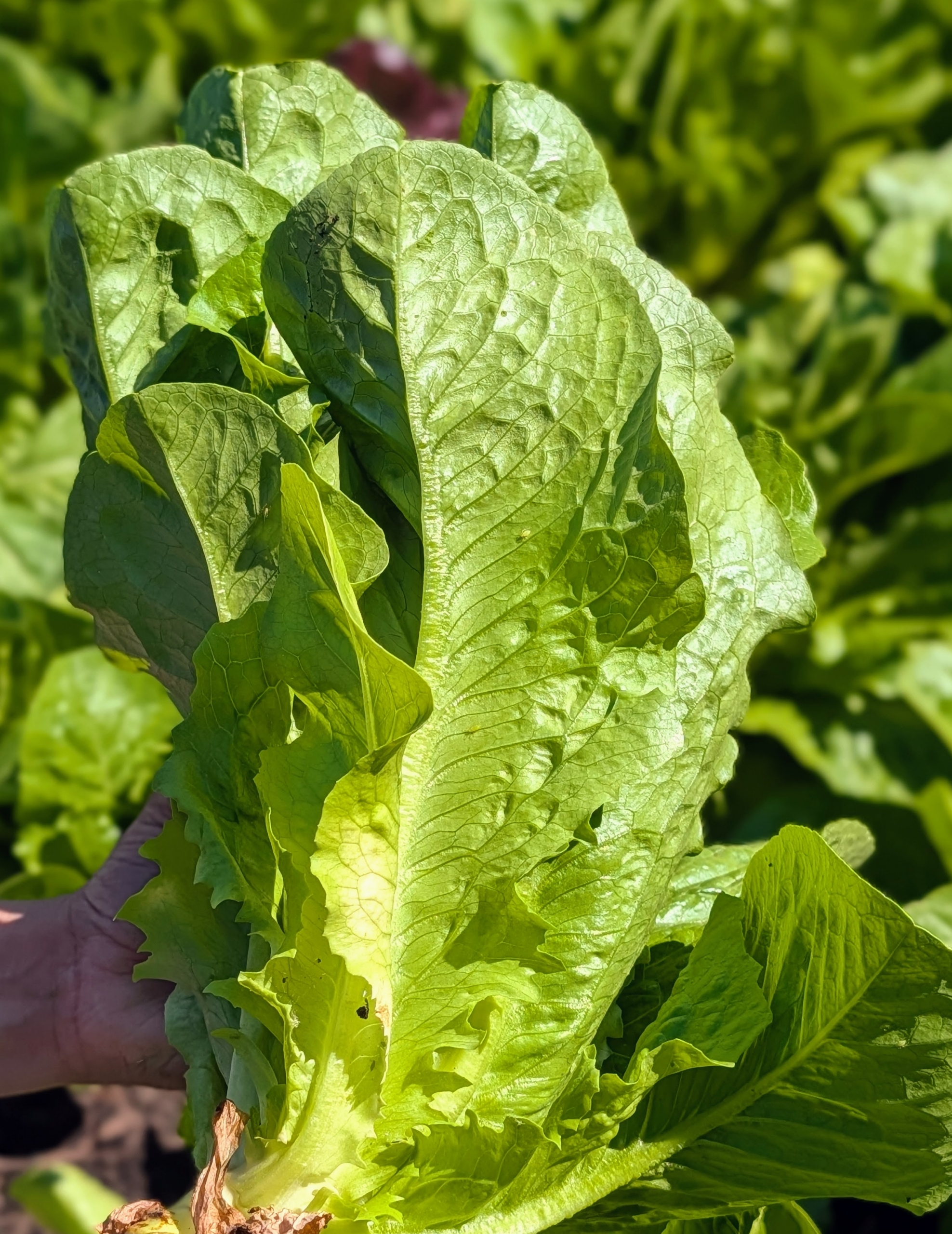
I am always growing lettuce. Lettuce, Lactuca sativa, is a cultivated plant of the daisy family, Asteraceae. Lettuce is a fairly hardy, cool-weather vegetable that thrives when the average daily temperature is between 60 and 70-degrees Fahrenheit. I grow several varieties.
This week, I harvested many heads of lettuce and shared them with everyone here at the farm.
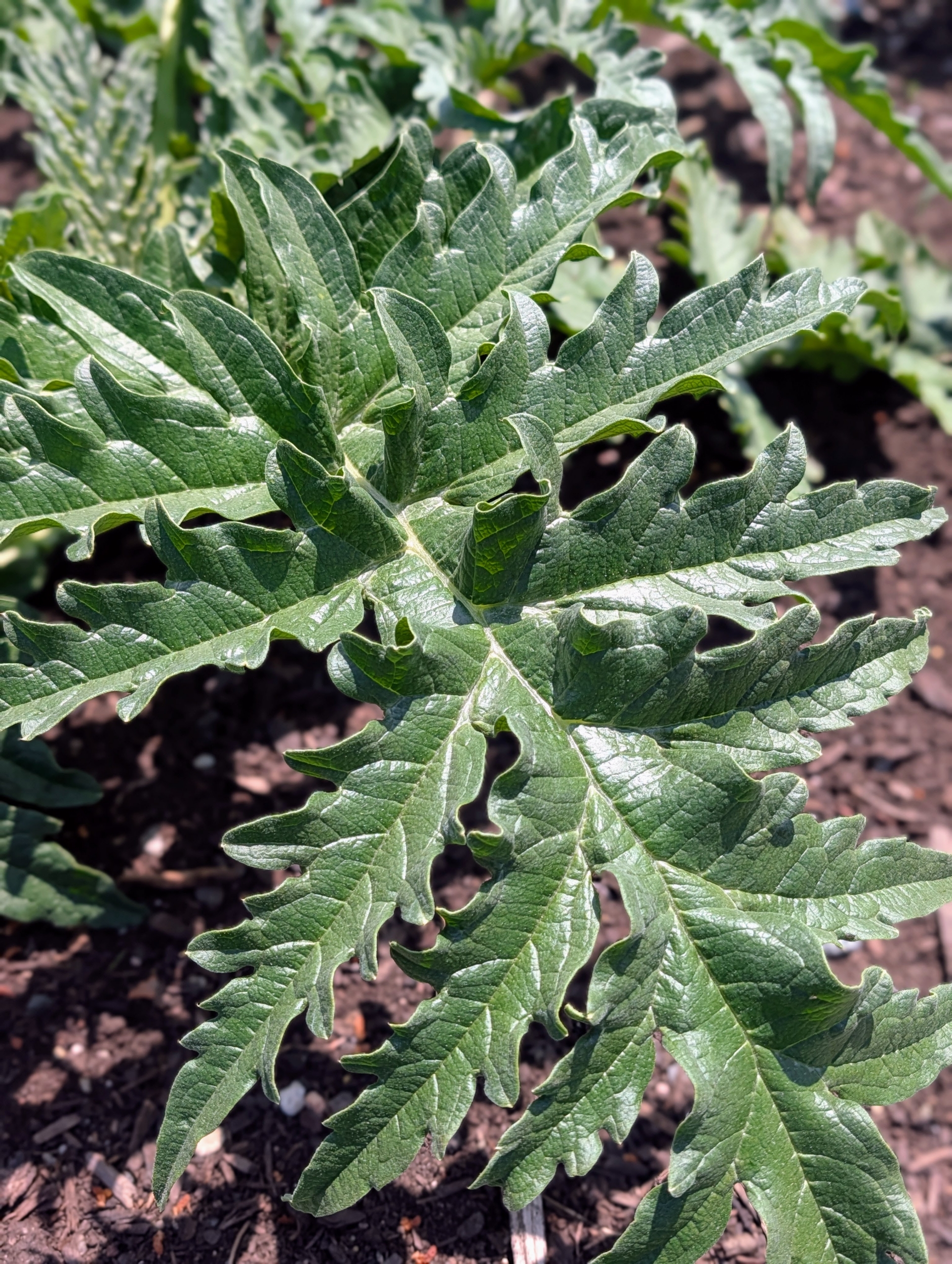
These are the leaves of my artichokes. Globe artichokes, Cynara scolymus, are popular in both Europe and the United States. Artichokes are actually the flower buds, which will emerge from the center of the plants. Artichoke plant leaves are silvery-green in color with long, arching shapes. The plant stems are thick and fleshy.
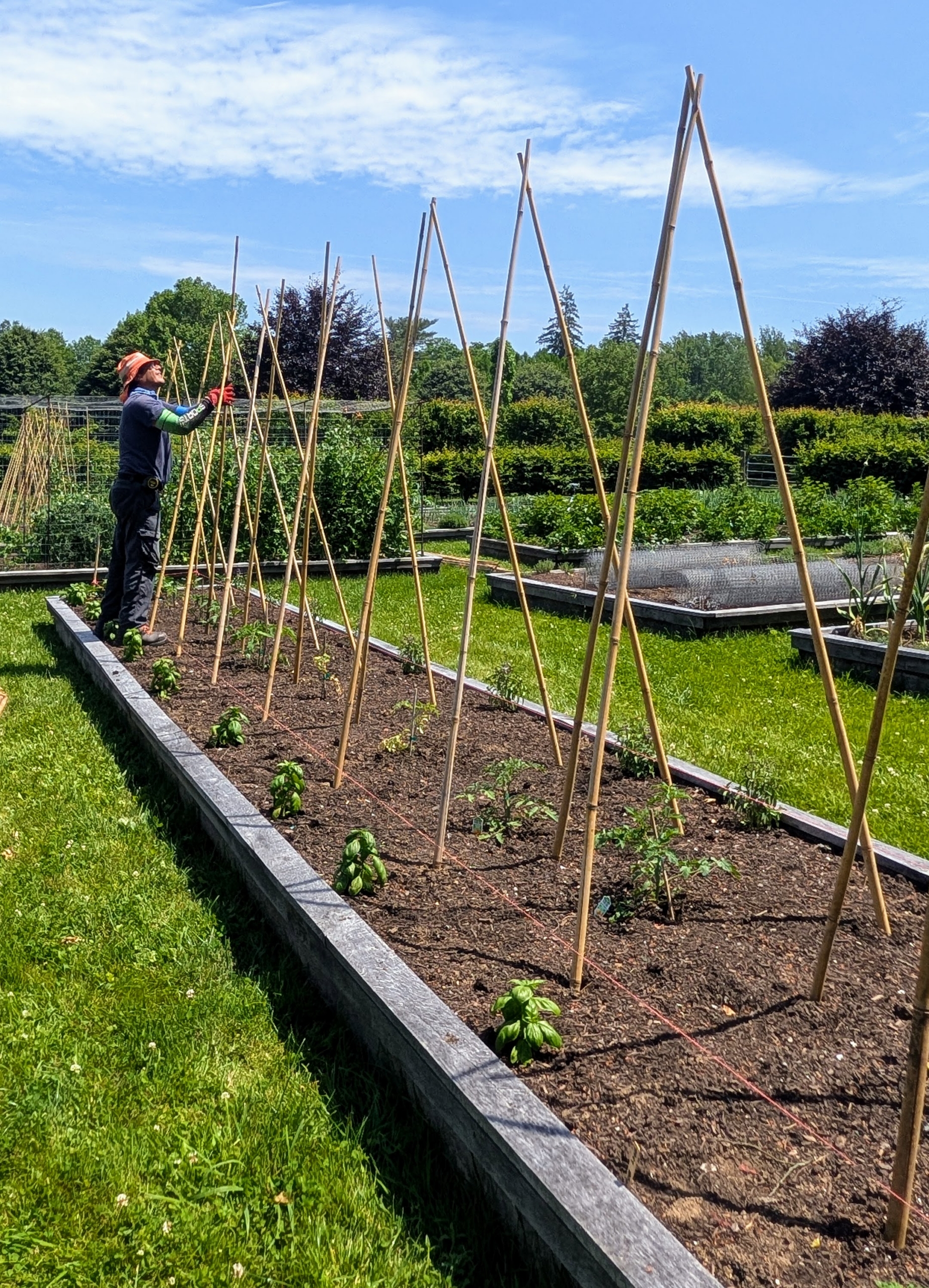
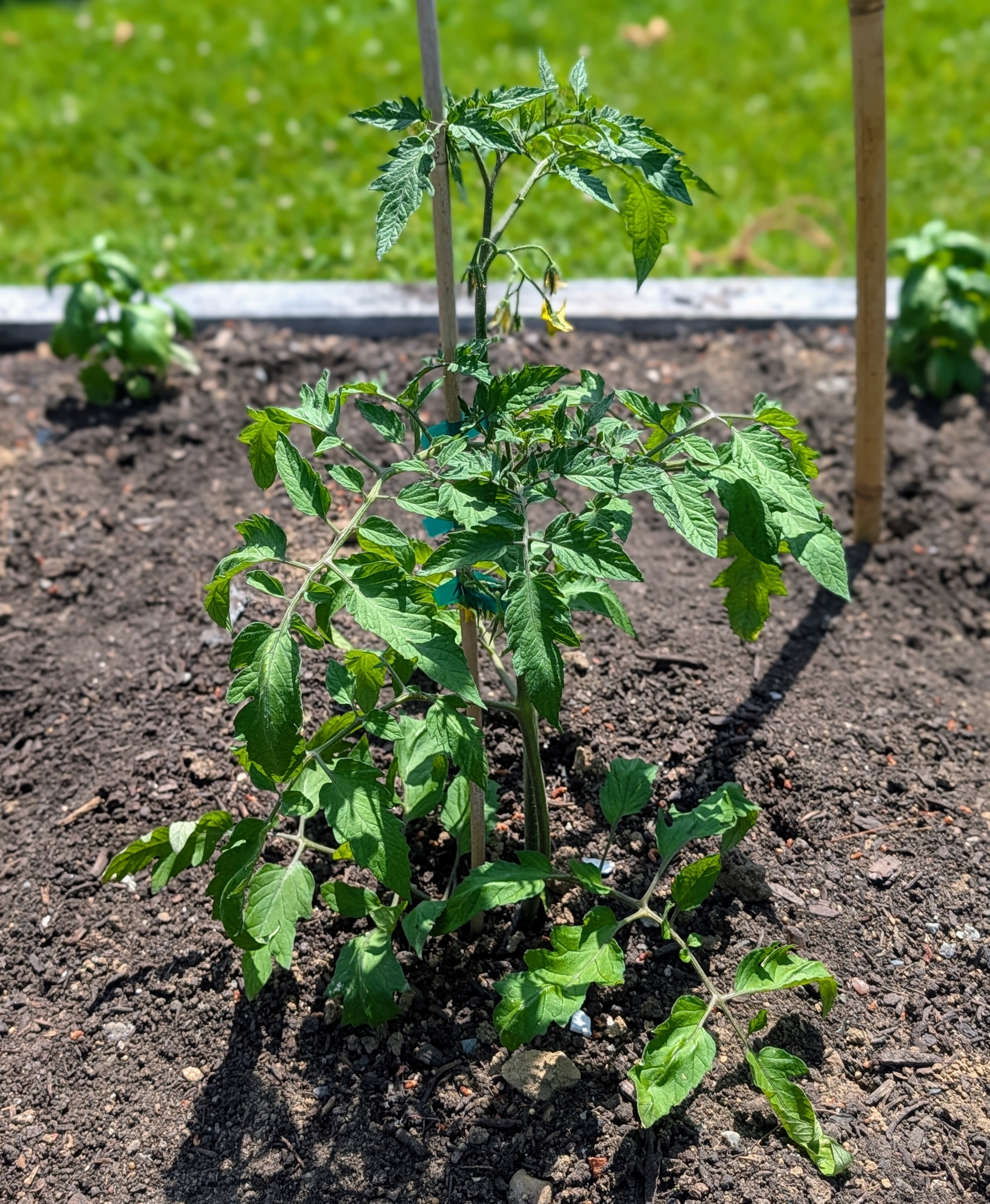
It’s easy to spot where the tomatoes are growing by all the bamboo supports. If you’ve ever grown a vining plant, you know how important it is to provide strong structures to which the vines can cling and climb. Bamboo is strong and easy to find at garden supply stores. Here’s Cesar securing three tall bamboo stakes above each tomato plant.
The vines will be secured to the bamboo as they grow. My tomatoes are grown from seed in my greenhouse every year.
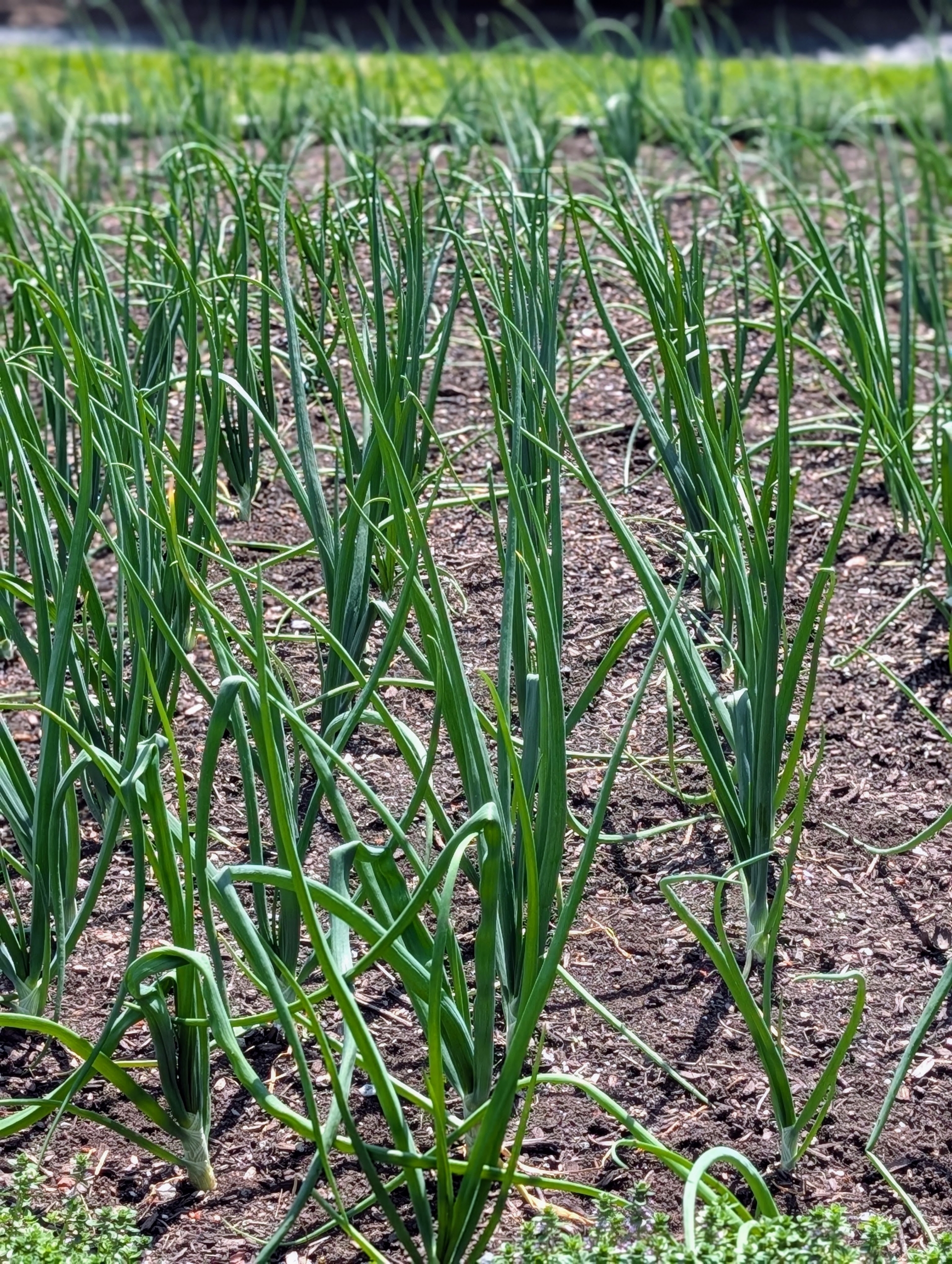
I planted my onions in late April – look how much these onions have grown. I plant a lot of white, yellow and red onions. Onions are harvested later in the summer when the underground bulbs are mature and flavorful. I always look forward to the onion harvest!
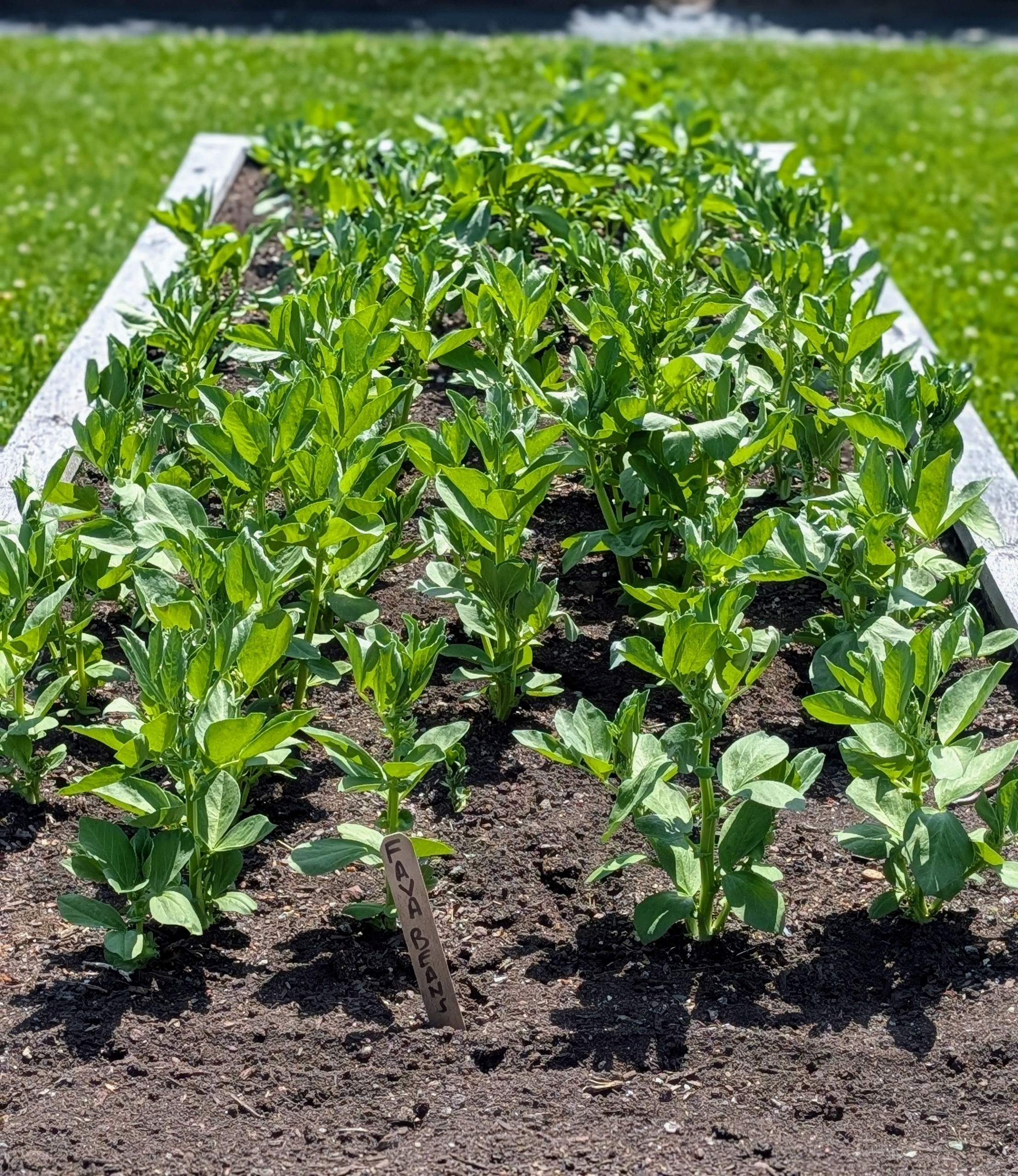
Here are the fava beans. Vicia faba, also known as the broad bean or fava bean is an ancient member of the pea family. Fava beans have a nutty taste and buttery texture.
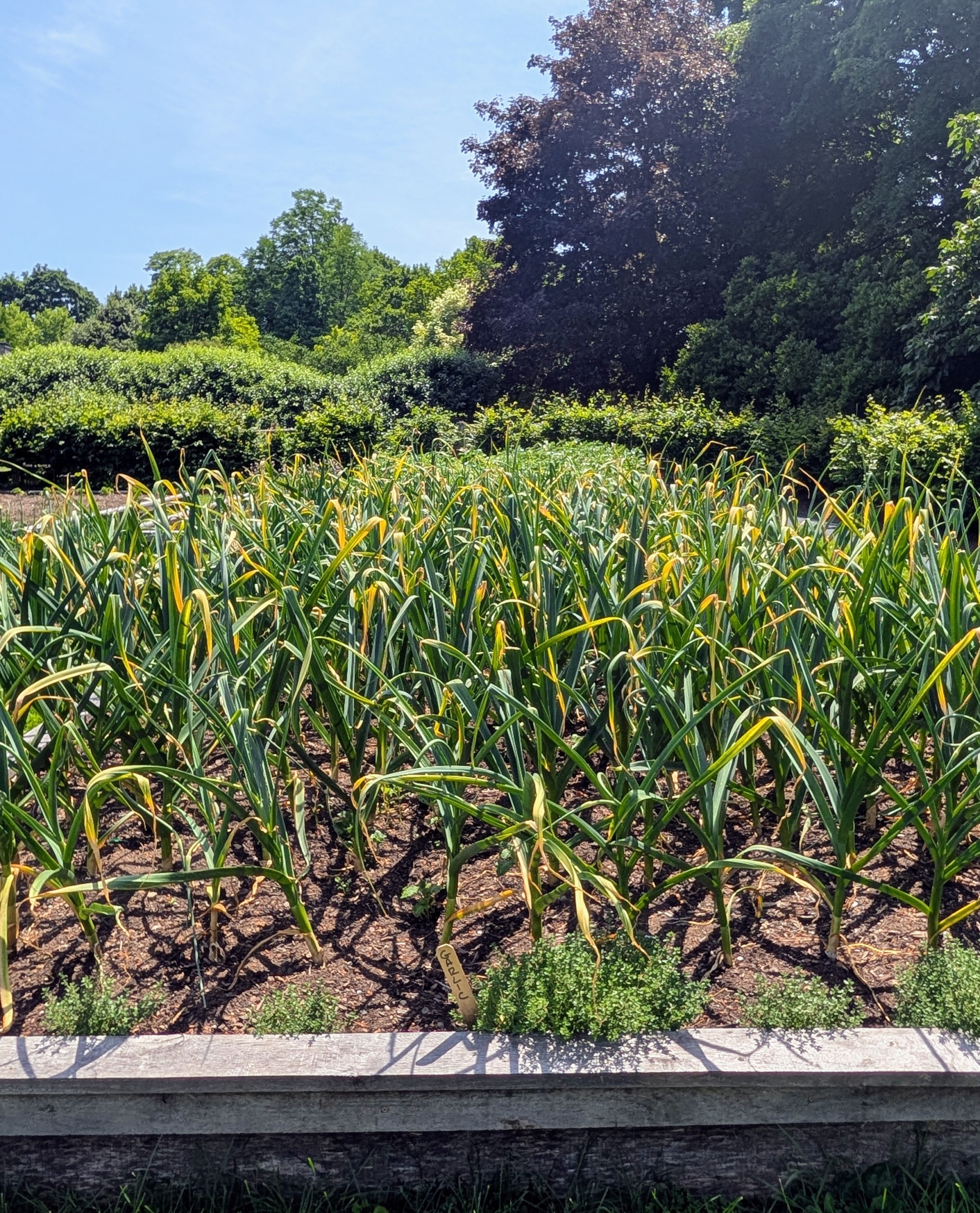
And here’s my bed of garlic. Determining when garlic is ready to harvest can be tricky. If it’s harvested too soon, the cloves are small and underdeveloped. If harvested too late, the clove heads begin to separate, making them more vulnerable to decay. The real indicator is the plant itself – when the bottom leaves have turned brown, and the top leaves are still green. This garlic will be ready in late July.
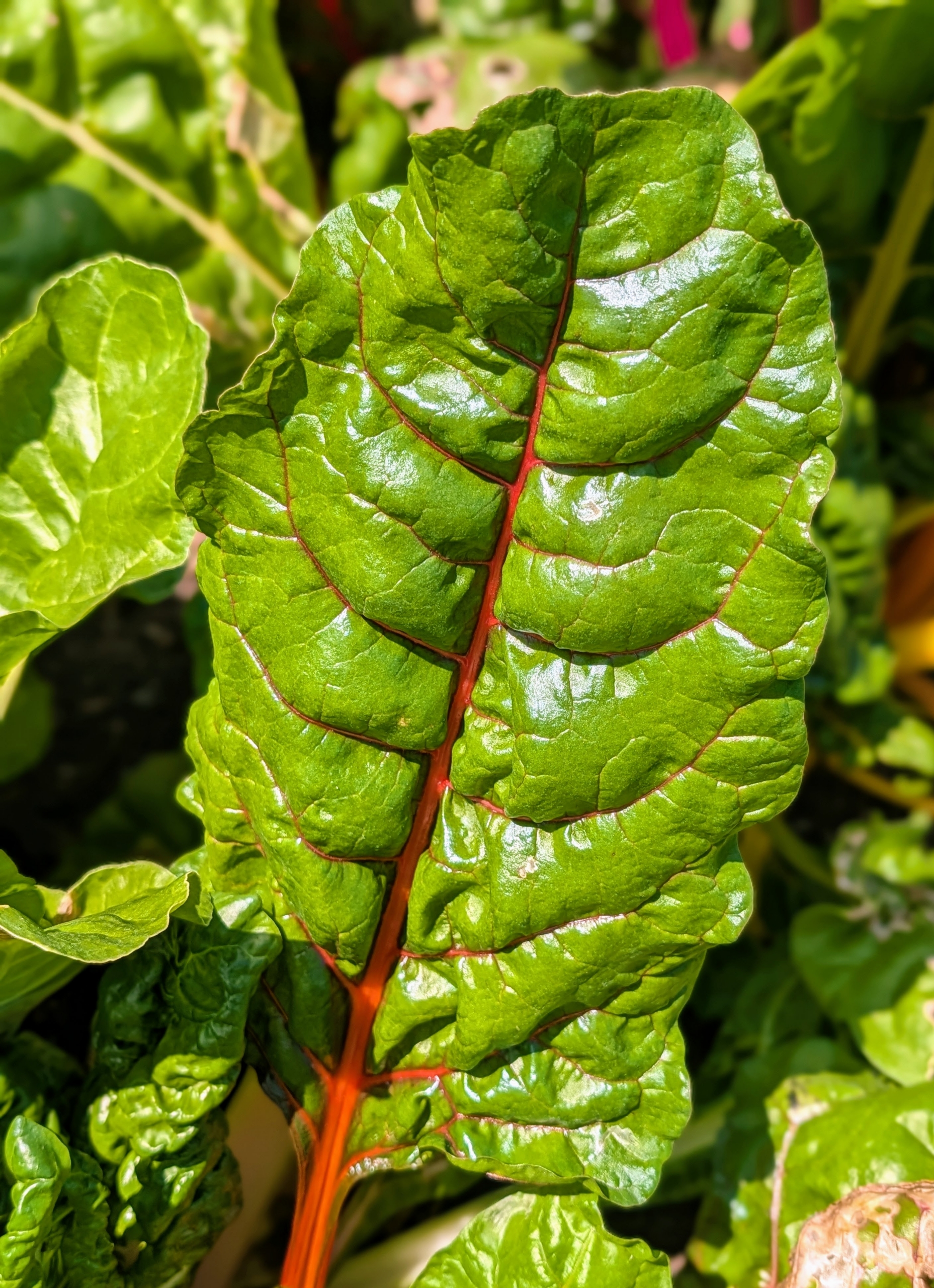
Swiss chard is a leafy green vegetable often used in Mediterranean cooking. The leaf stalks are large and vary in color, usually white, yellow, or red. The leaf blade can be green or reddish in color.
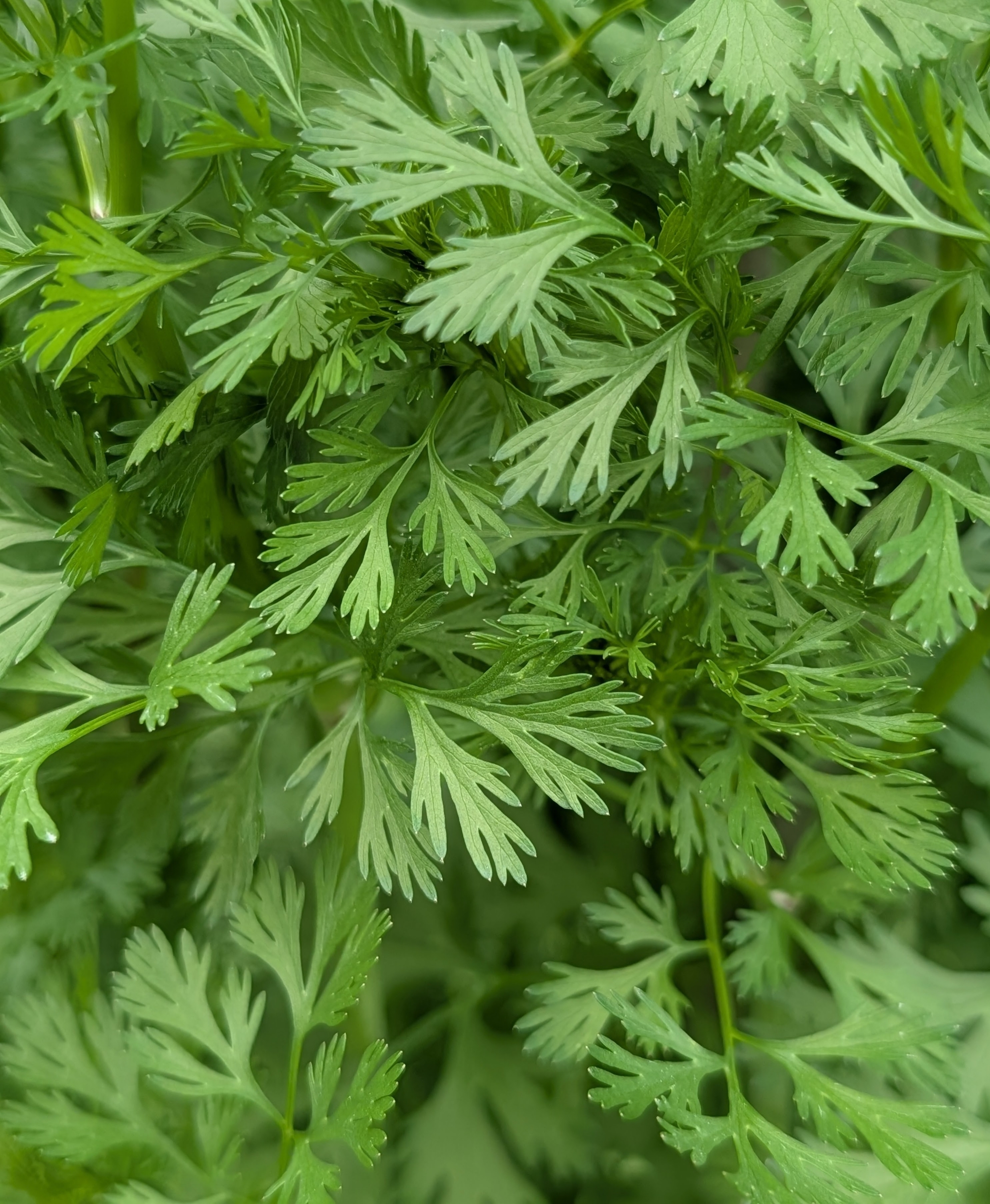
There is also a lot of fresh and fragrant cilantro. Often known in the United Kingdom as coriander, cilantro comes from the plant Coriandrum sativum. In the United States, the leaves of the plant are referred to as cilantro and the seeds are called coriander. Cilantro is also commonly known as Chinese parsley. And those who care for it and those who don’t are split – and it’s actually genetic. Some possess a gene that makes them super-sensitive to the aldehyde component found in cilantro. Do you love cilantro, or hate it?
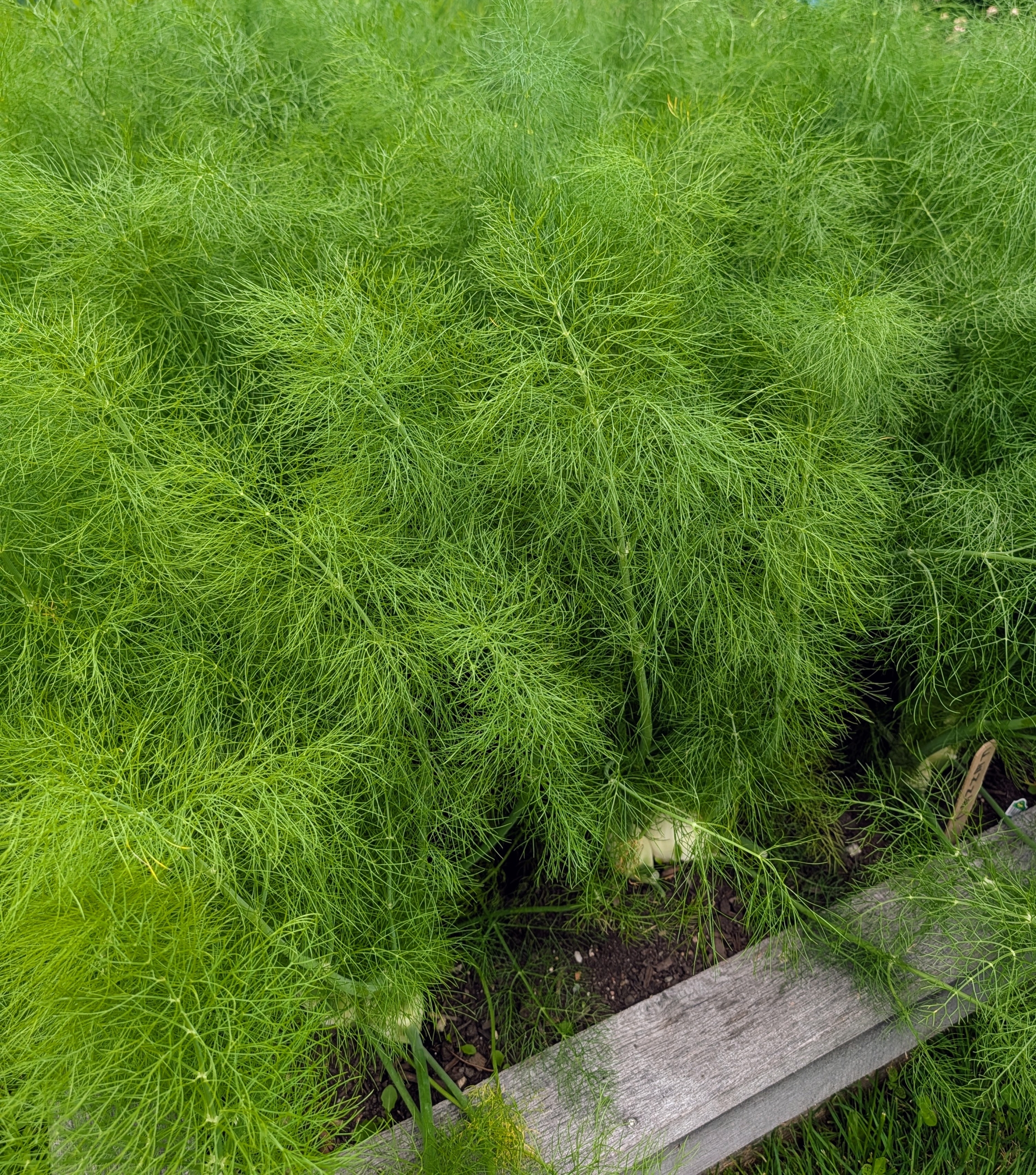
And do you know what’s growing below the feathery, thread‑like, and bright green to bluish‑green foliage?
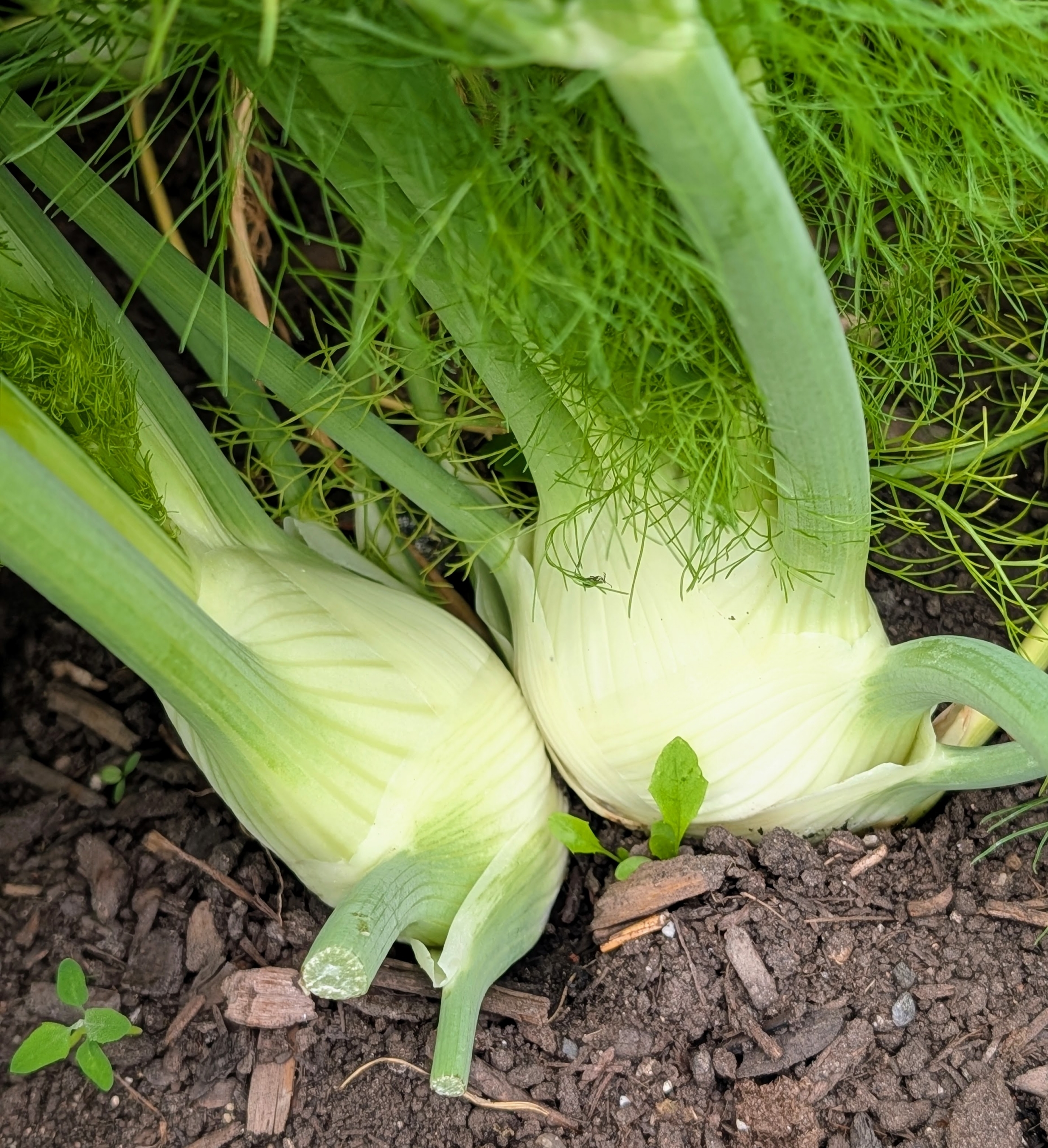
It’s fennel – the aromatic, rounded white bulb at the base. Fennel has a crisp texture and mild licorice flavor, which becomes sweeter when roasted or sautéed.
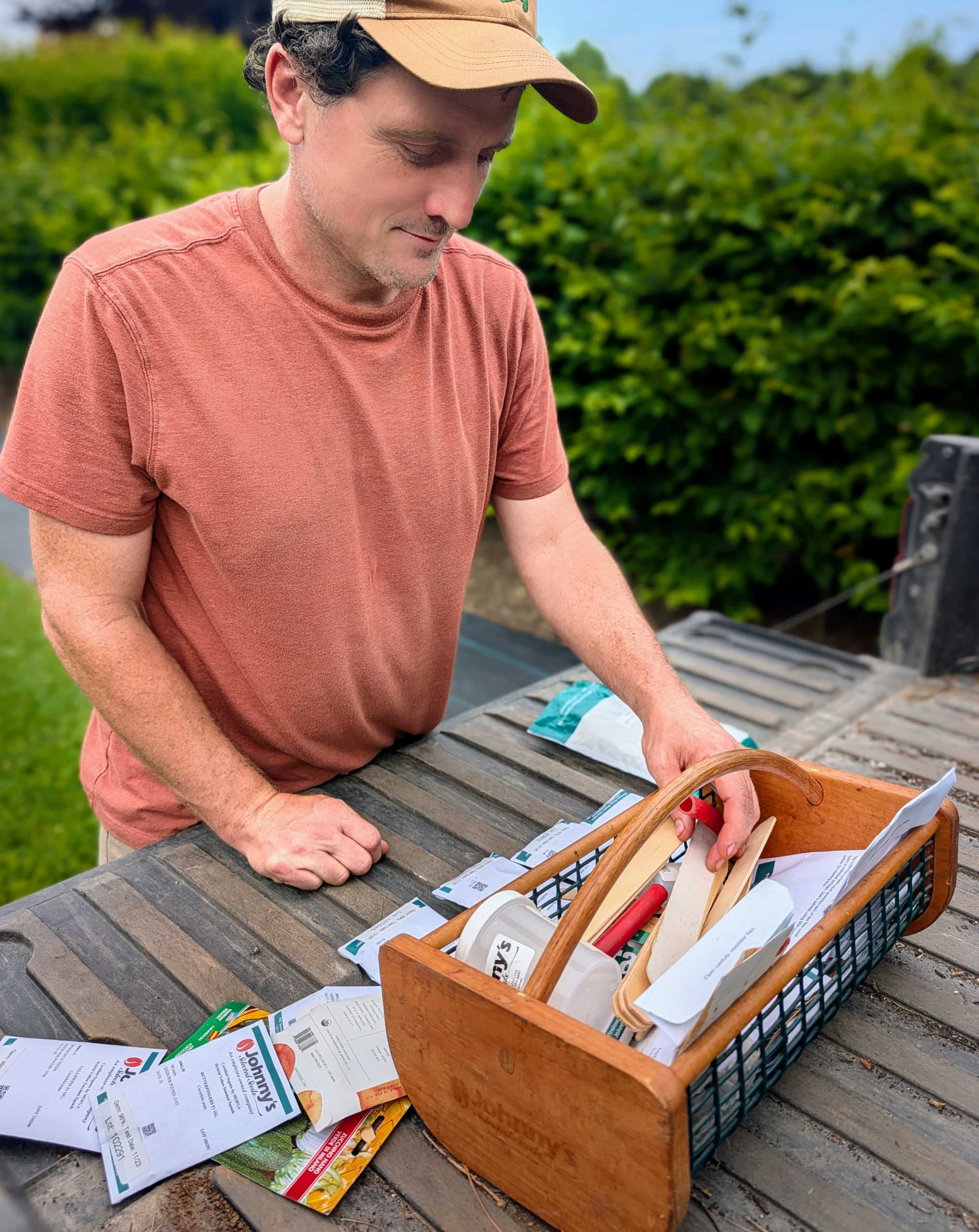
My head gardener, Ryan McCallister, just planted more seeds, so we have a consistent supply of harvestable produce throughout the season. Many of my seeds are from Johnny’s Selected Seeds in central Maine – a company I’ve been using for quite some time. Johnny’s Selected Seeds is a privately held, employee-owned organic seed producer that offers hundreds of varieties of organic vegetable, herb, flower, fruit and farm seeds that are known to be strong, dependable growers.
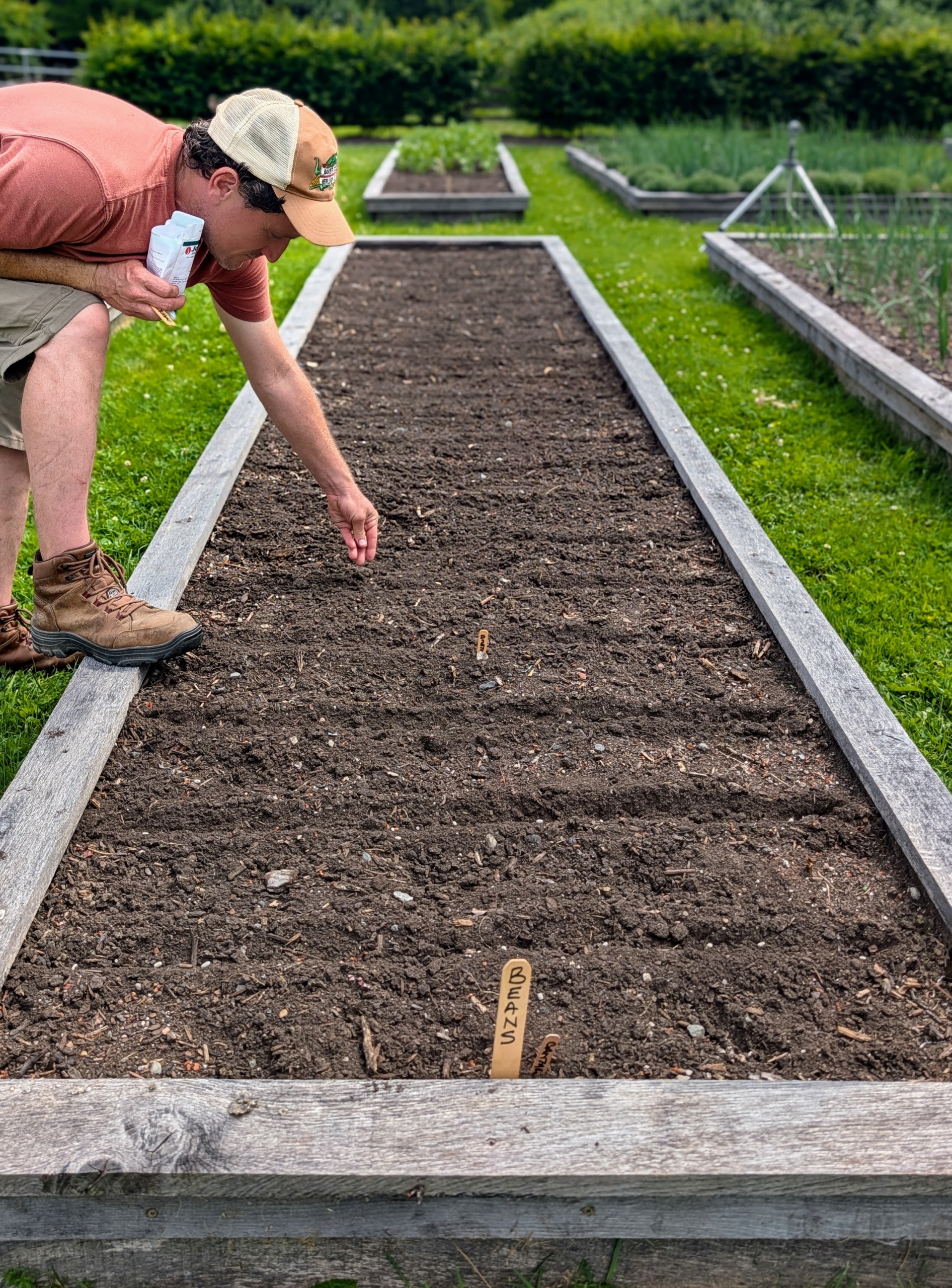
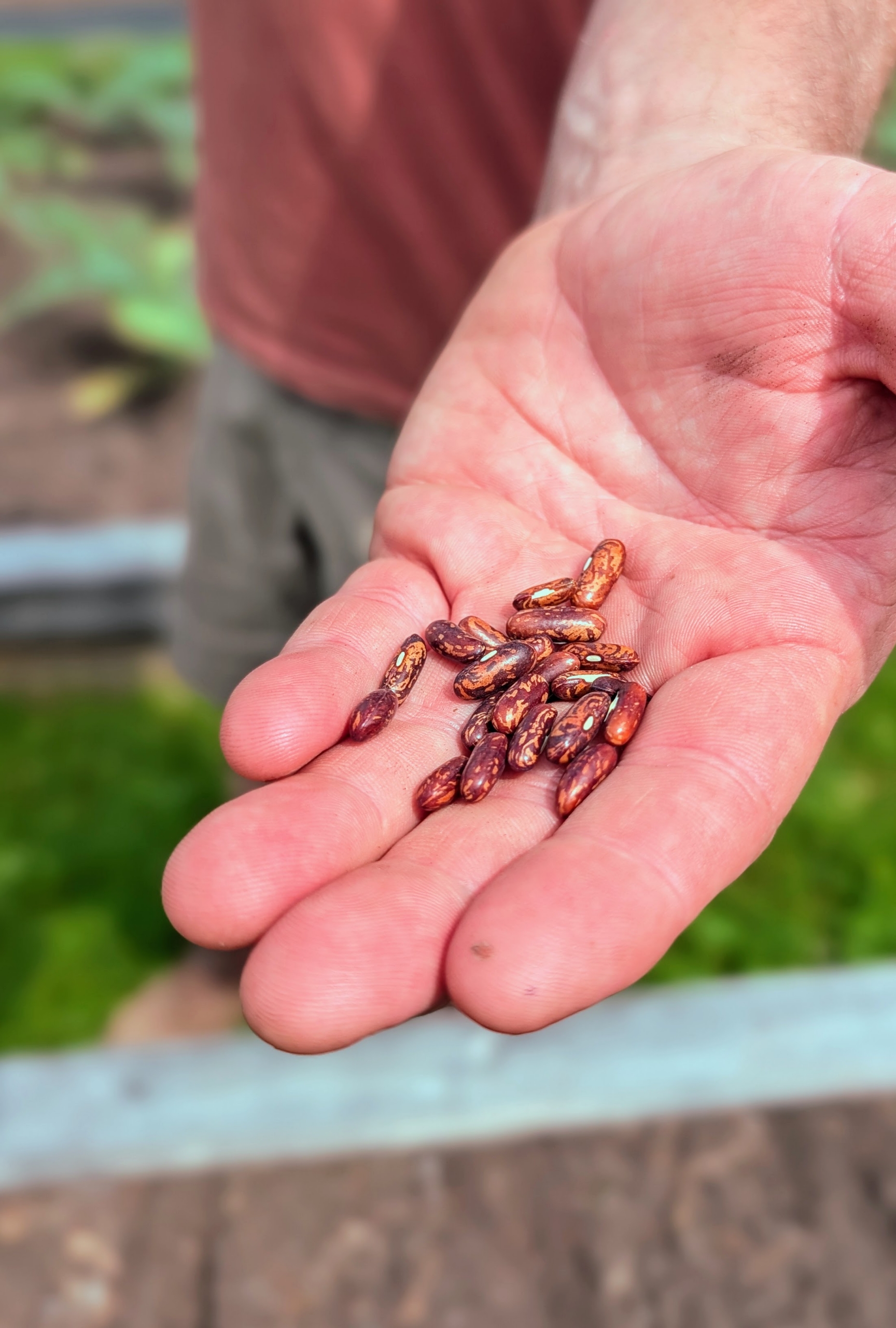
Here Ryan plants the beans. These bean seeds are planted about an inch to an inch-and-a-half deep. Ryan plants the seeds in rows that are about a foot apart. All the beds are raised slightly and all surrounded by wood frames.
Once the seeds are sown, the harvest of fresh beans usually begins in seven to eight weeks and lasts for around three weeks. Both bush and pole bean cultivars are members of the same species, Phaseolus vulgaris, also called “common beans.” Bush beans are one of the easiest vegetables to grow. They grow in small bushes 12 to 24 inches tall and don’t require any trellising.
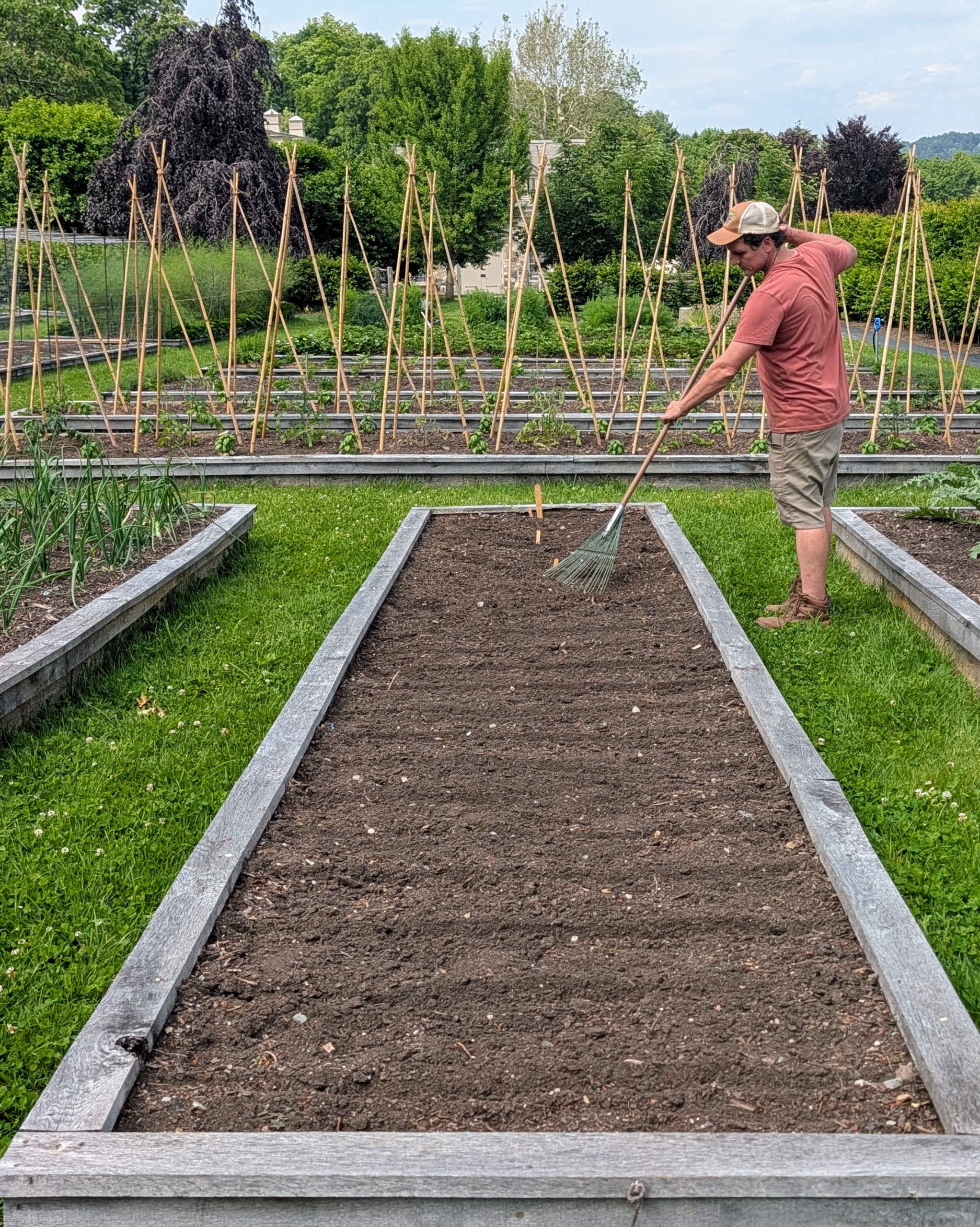
Once planted, Ryan rakes the bed, covering all the seeds with soil.
Everyone always asks what I do with all the vegetables I grow. I share them with my family, but I also love sharing the bounties with friends, colleagues, and my hardworking crew here at the farm. I also provide fruits, vegetables, and eggs for photography and video shoots. And, of course, all my birds get vegetables too. I hope your gardens are doing well this season.



 Martha Pins


 Martha Tweets

