

Storing Norfolk Island Pines for the Winter
Caring for my precious potted plants means following a strict schedule, particularly at the end of the warm season.
Just before the first frost, all my sensitive tropical specimens are gathered, groomed, organized, and placed in special greenhouses where temperature and humidity levels can be closely monitored and adjusted when necessary. Six Norfolk Island Pines, Araucaria heterophylla, are too tall for the greenhouses and need a more creative solution to keep them protected during winter. The center space of my stable is the perfect location.
Enjoy these photos.
-

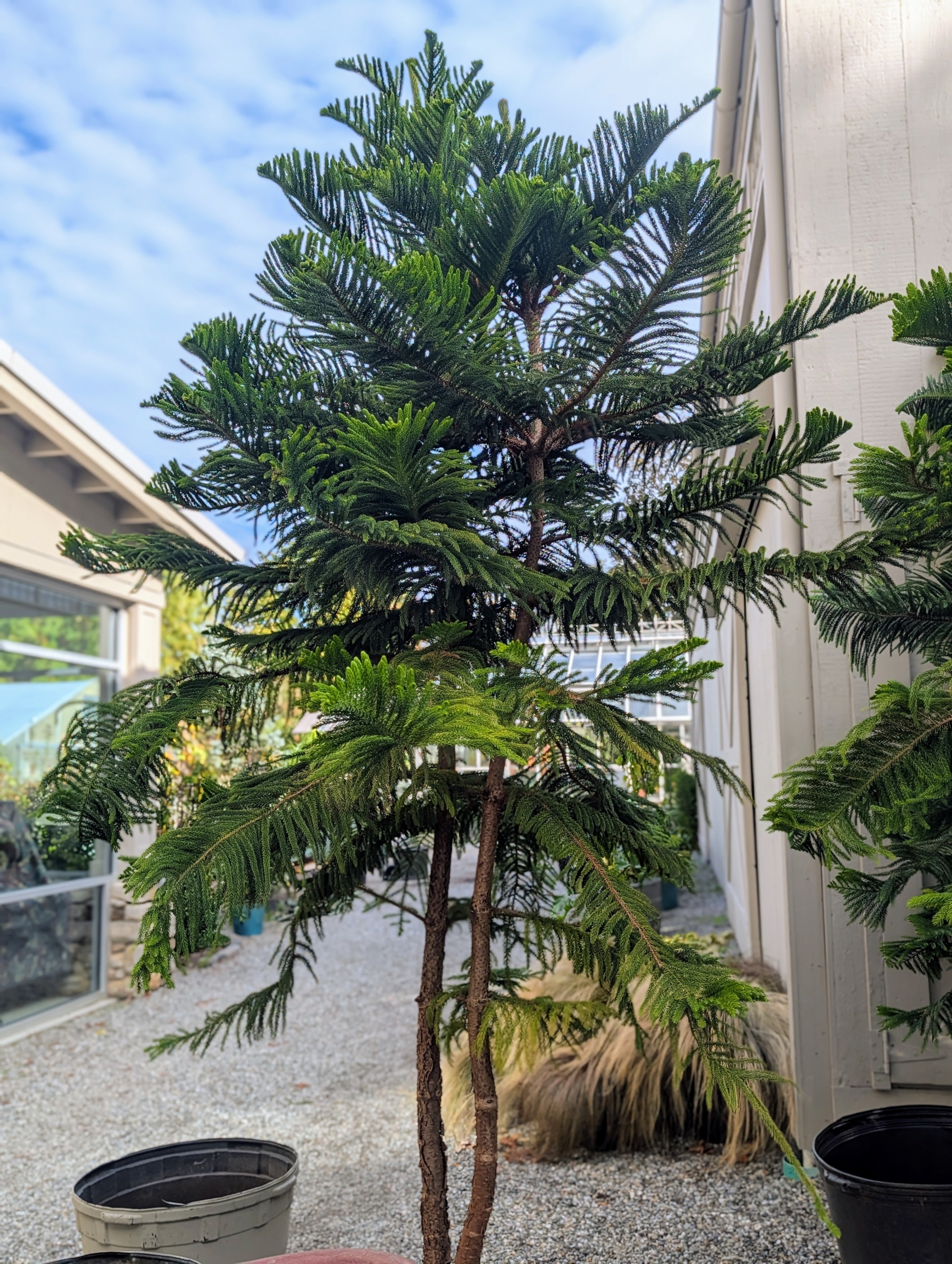
- Norfolk Island Pine trees are large, evergreen conifers with a symmetrical, pyramidal shape, straight trunks, and tiered branches arranged in whorls, with bright green soft, needle-like foliage. Mine are in excellent condition, but these trees cannot thrive in cold weather below 50 degrees Fahrenheit, so they need adequate shelter for the winter.
-
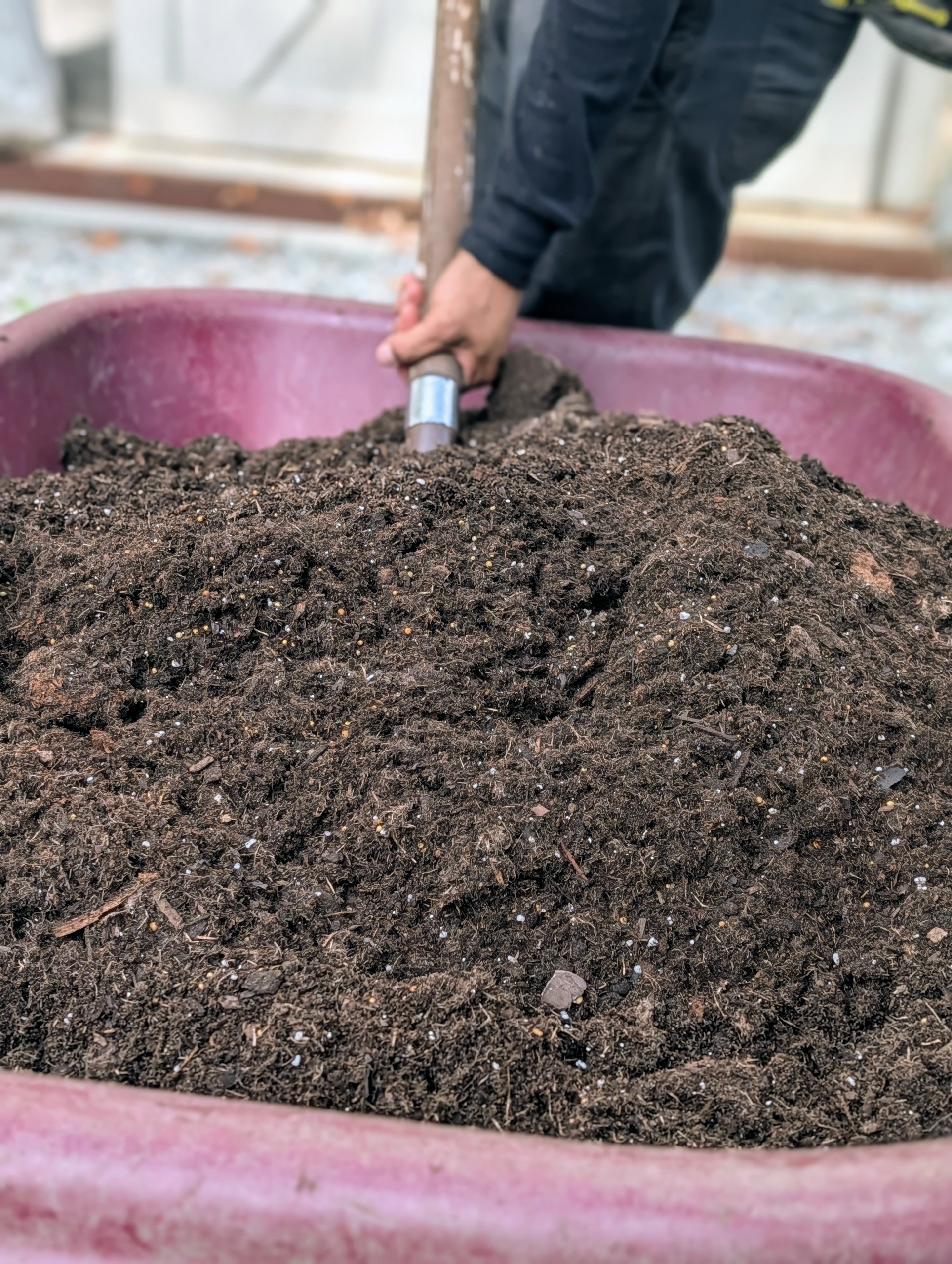
- Before the plants are stored, they’re repotted in plastic containers. This potting mix is specially formulated for outdoor container plants. Using a shovel, my gardener, Matthew Orrego, scoops the potting mix into an empty pot.
-
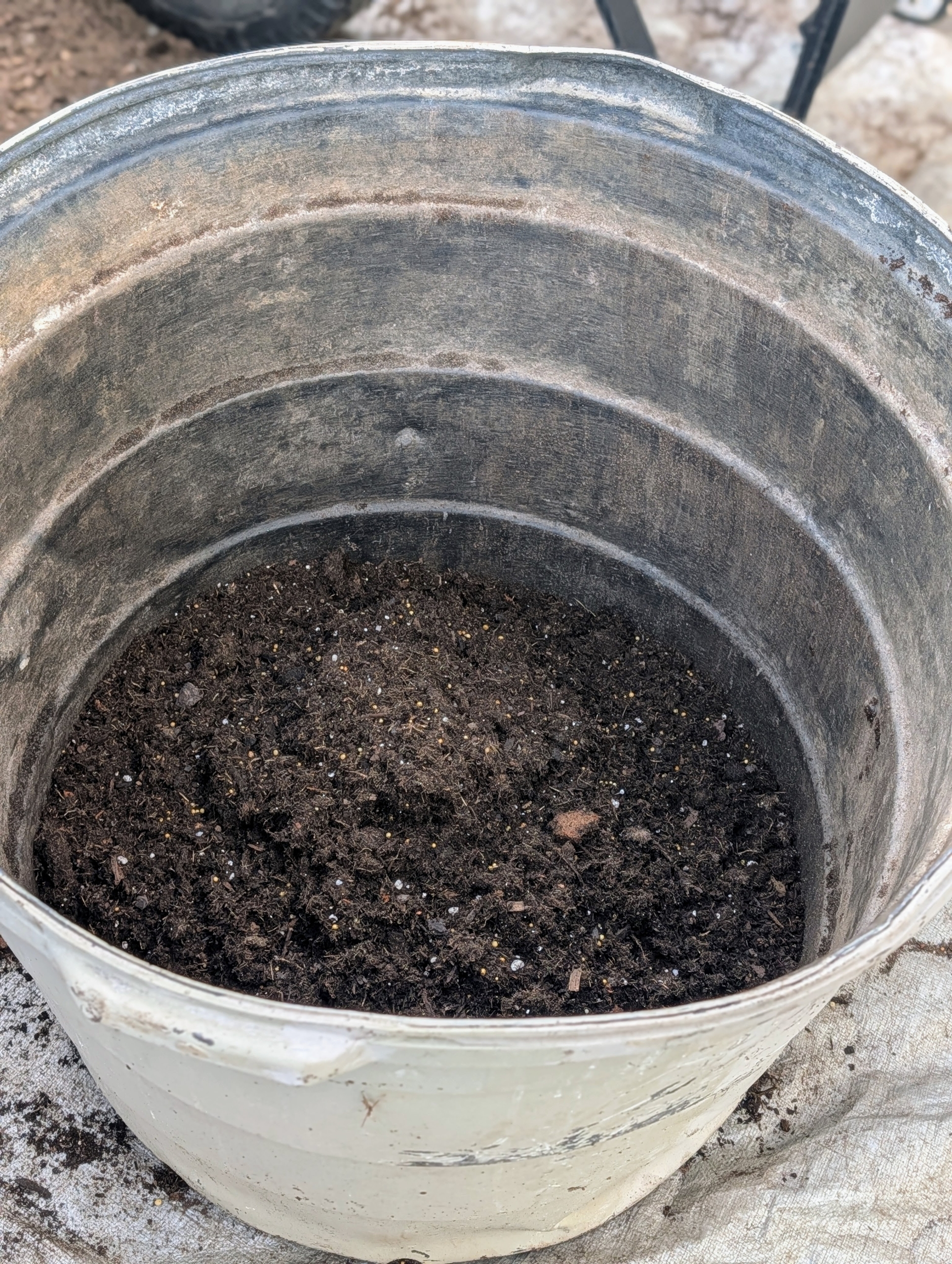
- The selected new pot is filled about a third with potting soil.
-
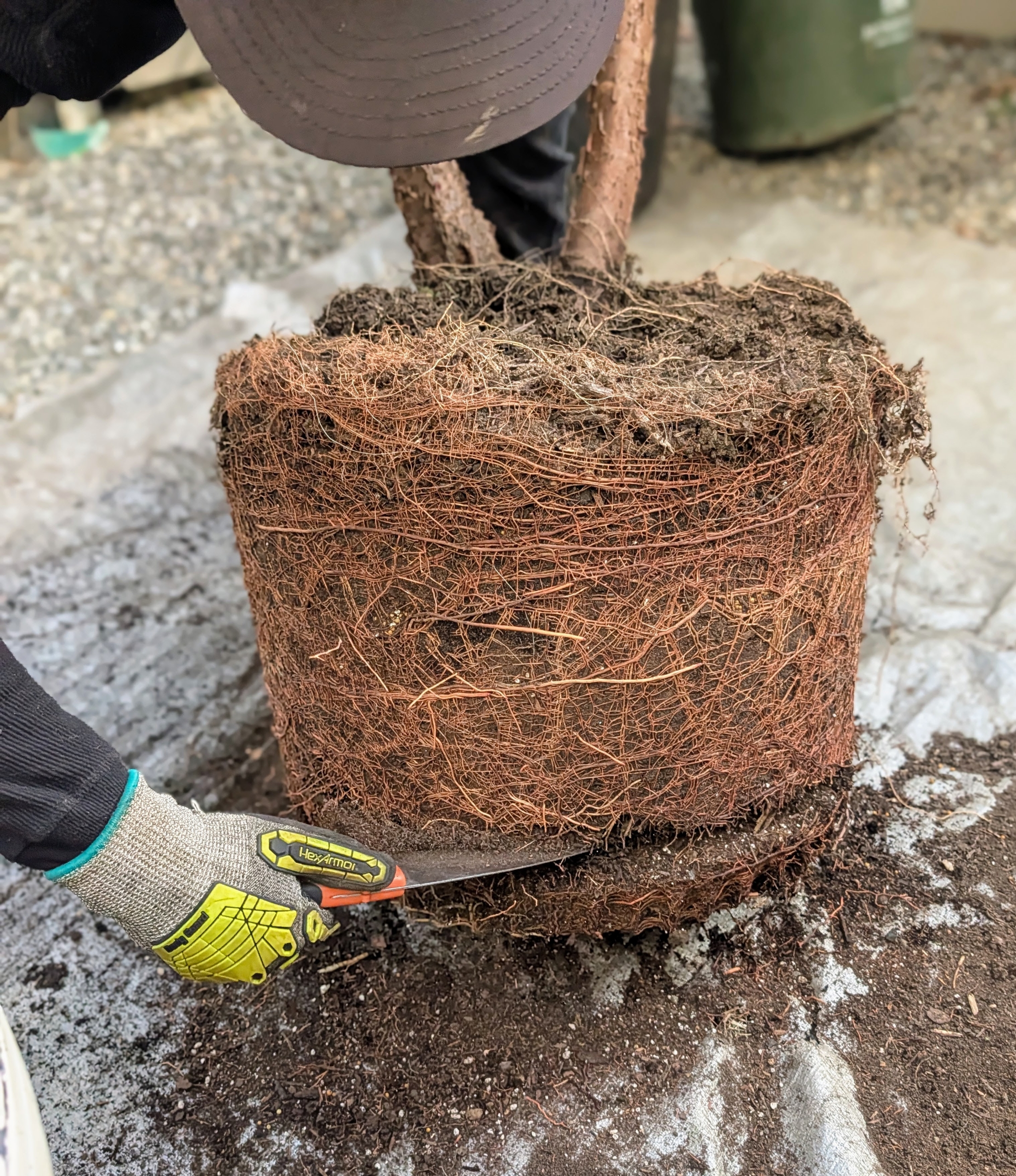
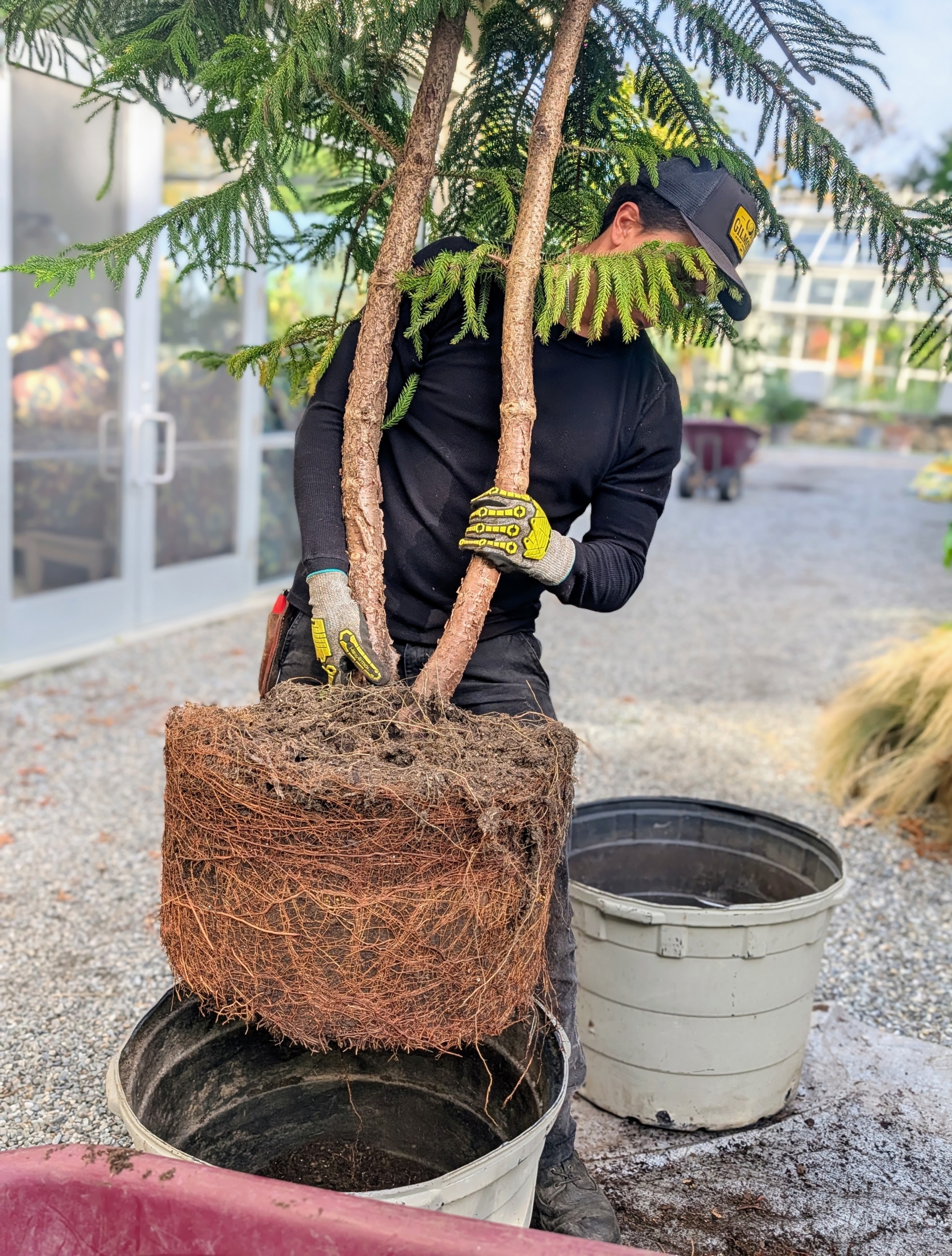
- Using a sharp gardening knife, Matthew cuts the bottom layer of the root ball to fit the pot and to stimulate new growth. Intentional cuts are also made along the sides of the root ball as part of the scarifying process.
-
- Using gloved hands for good grip, Matthew carefully lifts the pine by its base and places it into the new pot. Always hold a tree at its strongest point and never by its branches.
-
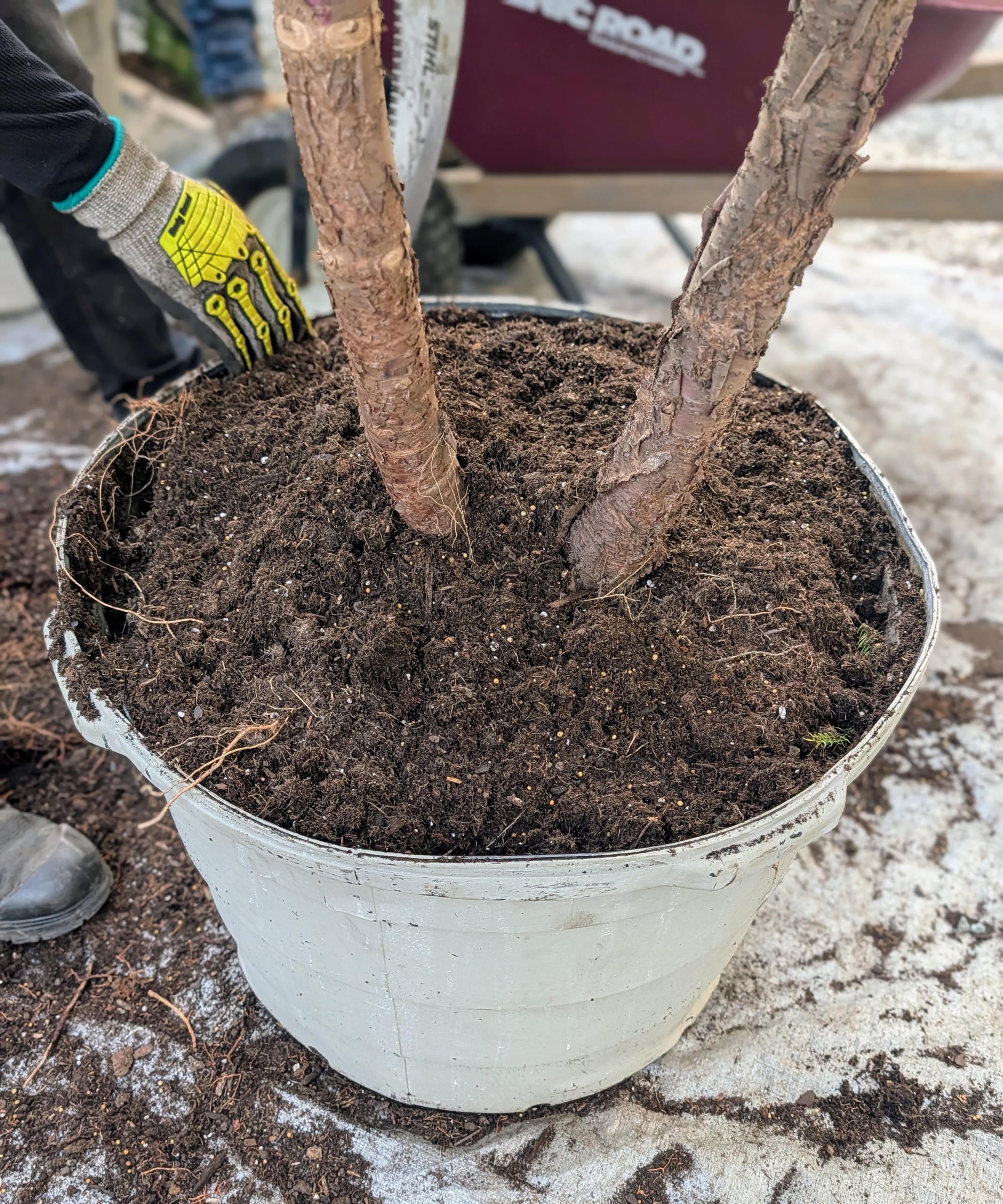
- He adds more soil to the container, so it sits as high as it was in its previous pot. He also tamps down as he fills, so there is good contact between the root ball and the new soil mix.
-
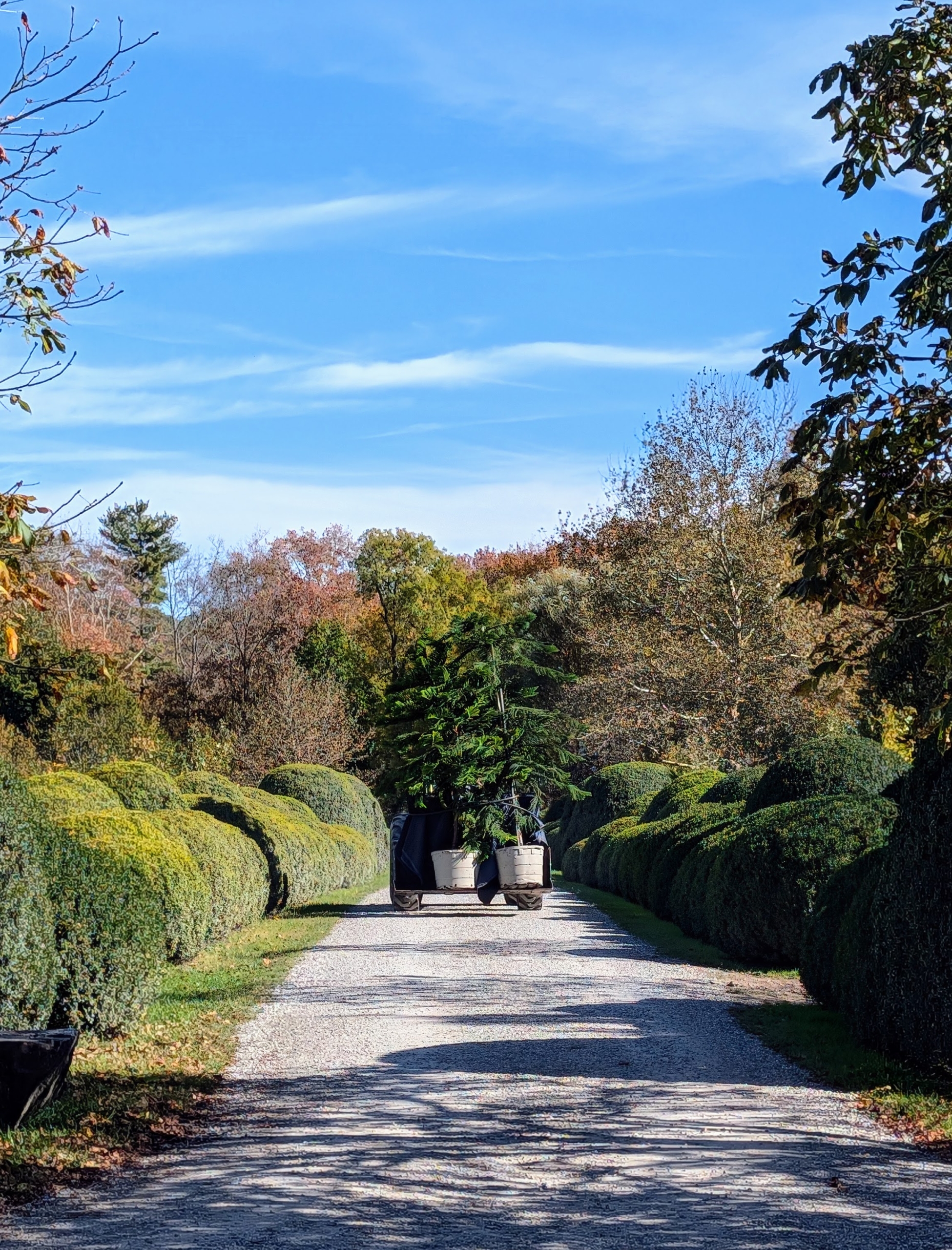
- Once the pines are repotted, Pete Sherpa from my outdoor grounds crew uses a tractor and its bucket to transport the potted trees to my stable. He transports two at a time.
-
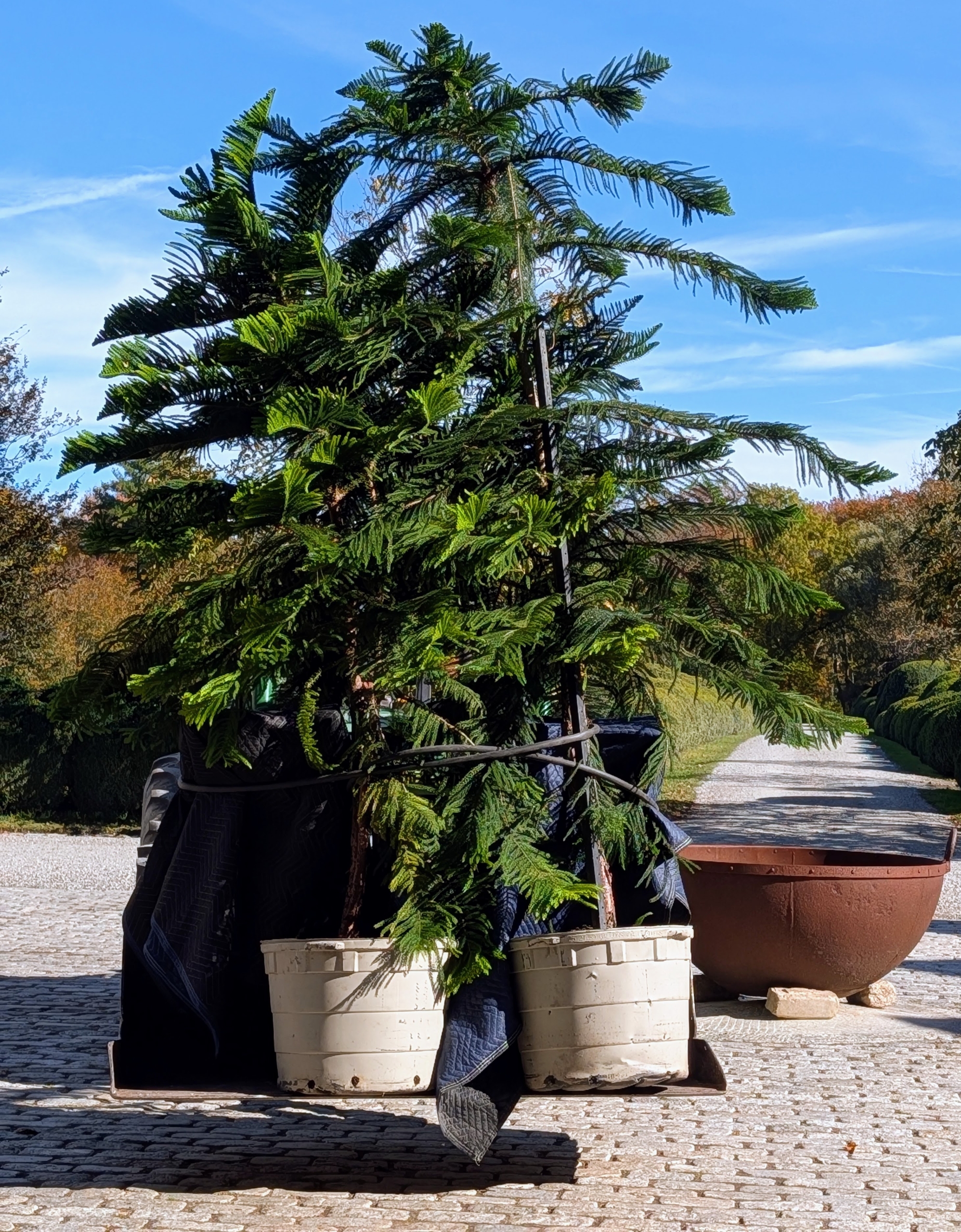
- Pete drapes a moving blanket on the back of the tractor bucket to protect the pines during the short move. He also secures the trees to the bucket, so they cannot fall.
-
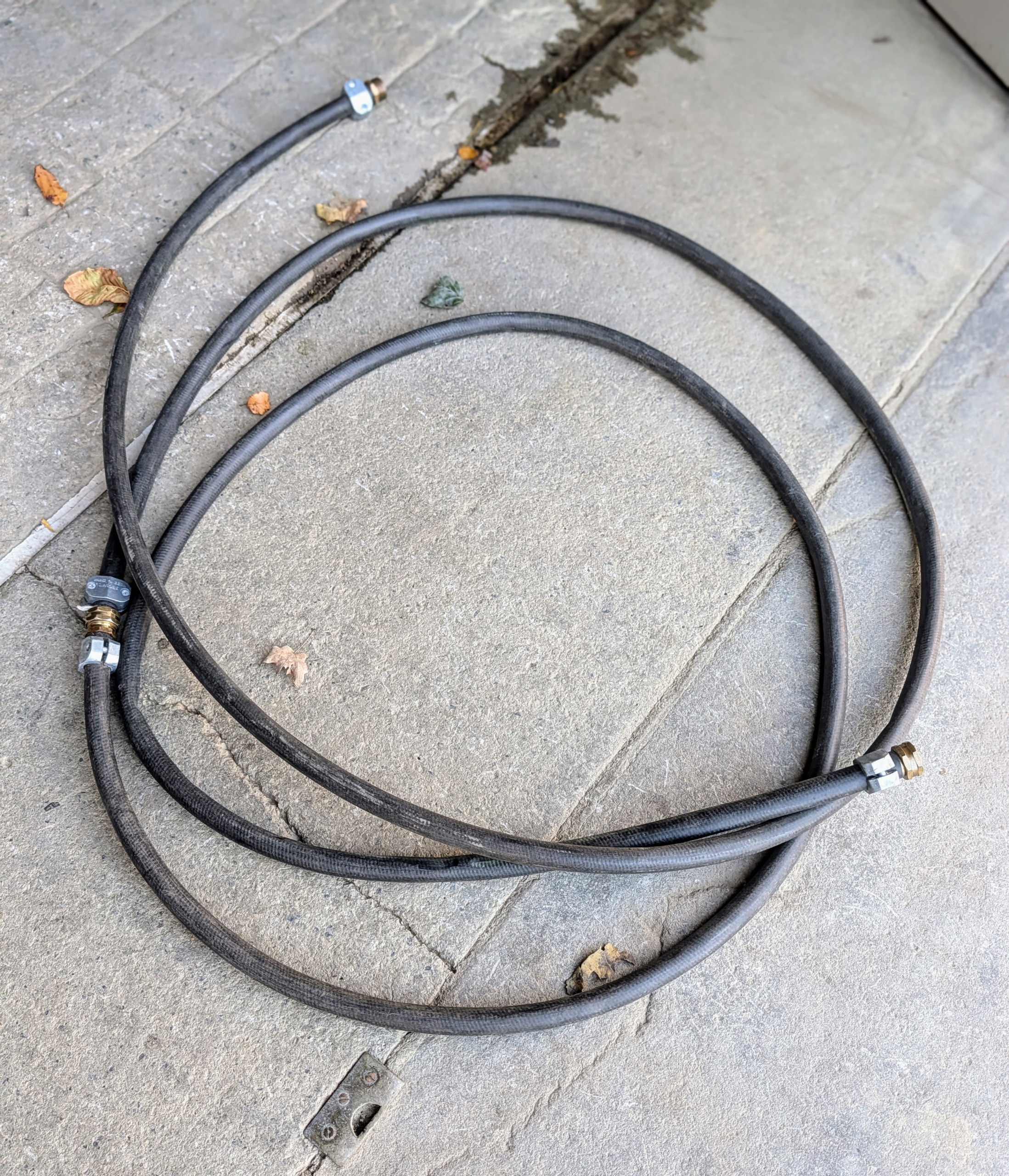
- Using old unused hose sections and hose connectors at both ends, Pete created the perfect tie support for the plants. The rubber hose does not damage the trunks of the trees at all. Recycling and repurposing otherwise unusable hoses… it’s a good thing.
-
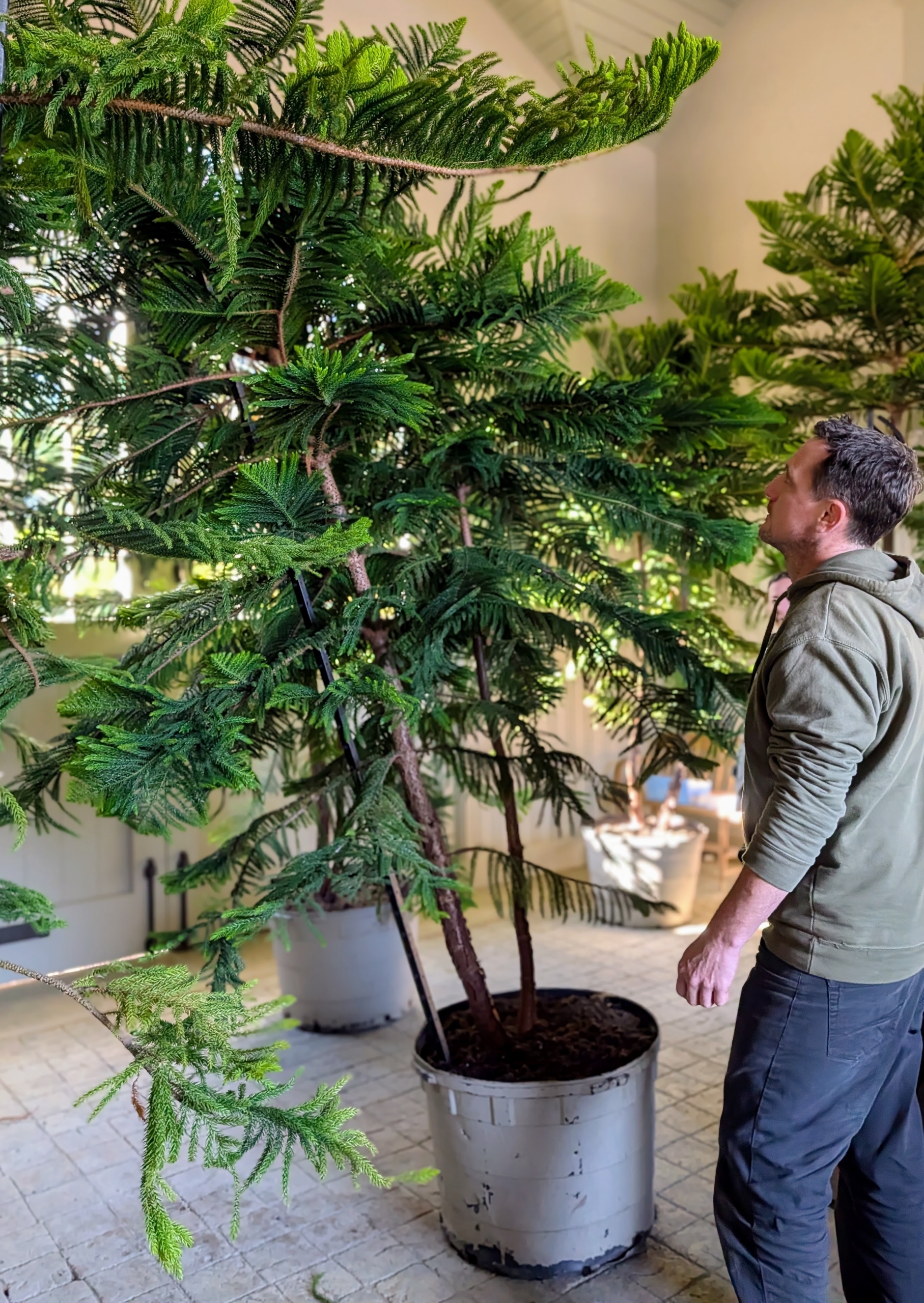
- Inside the stable, my head gardener, Ryan McCallister, walks around the newly positioned pines and makes sure the plants are placed correctly – no plants should ever touch. This prevents any possible diseases from transferring.
-
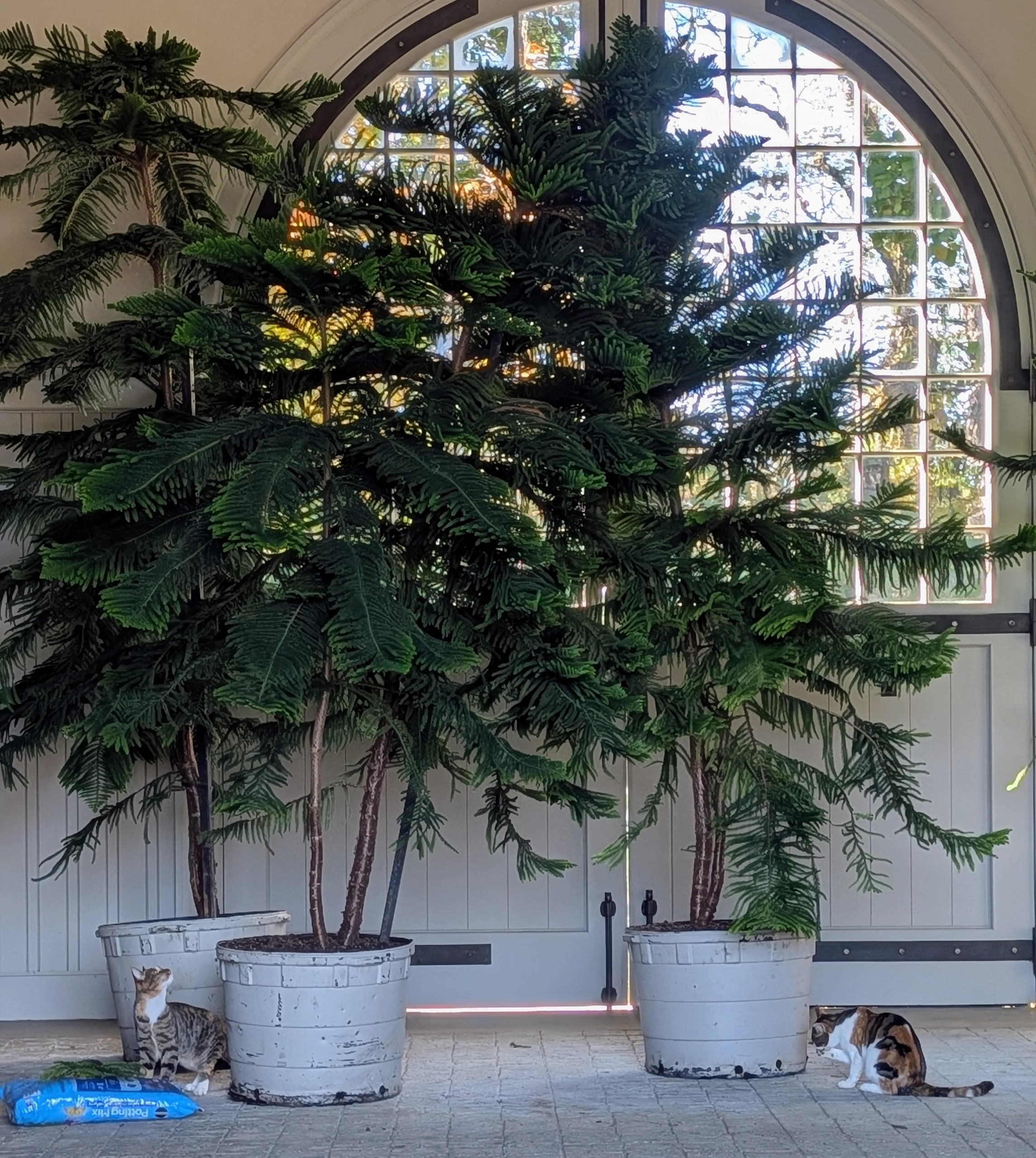
- My stable cats, May and Cinco, are never far from the action. They are very curious and love watching the crew at work.
-
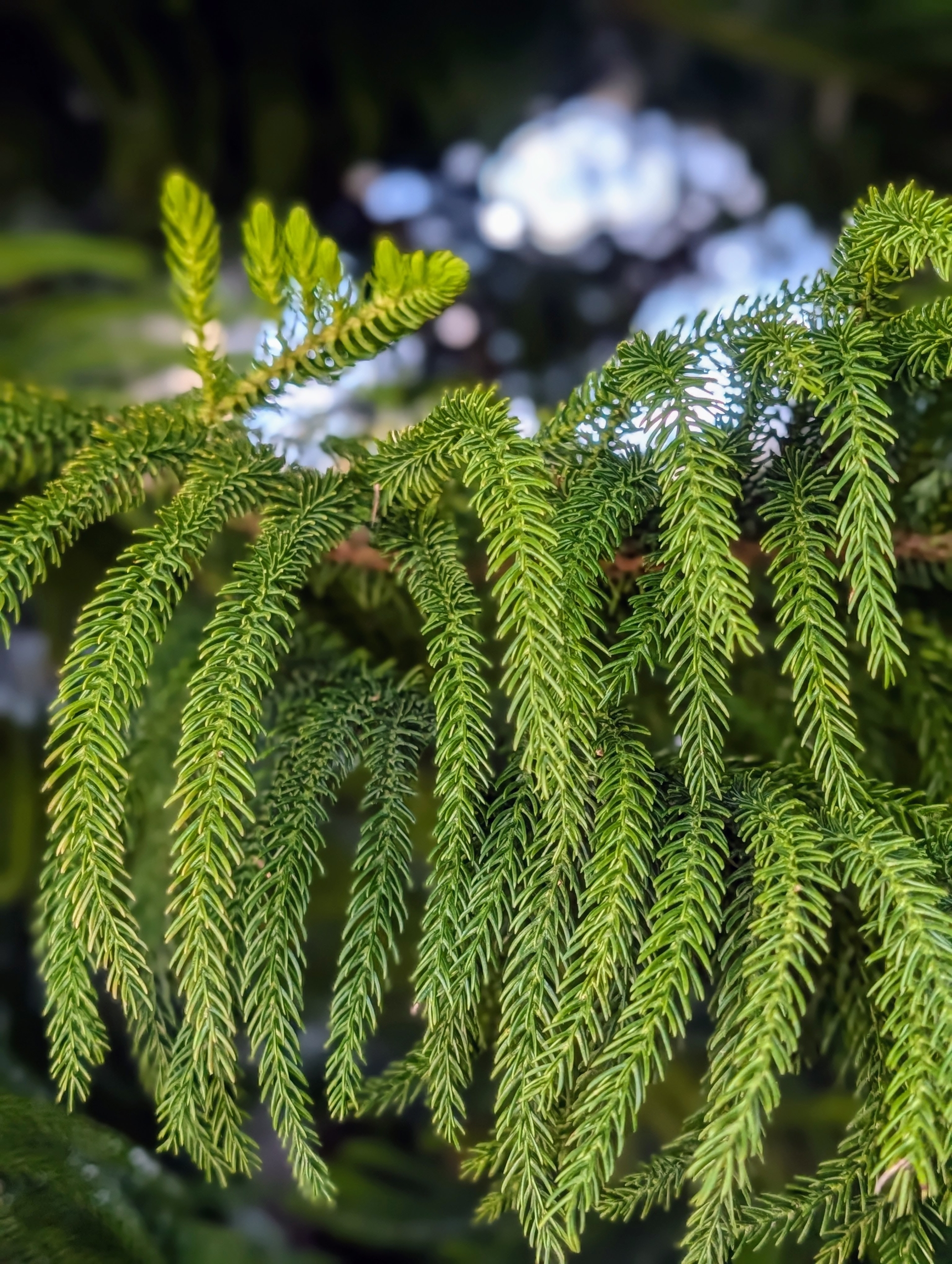
- From the Norfolk Island pine’s trunk, the branches grow out almost horizontally with the foliage hanging down incurved.
-
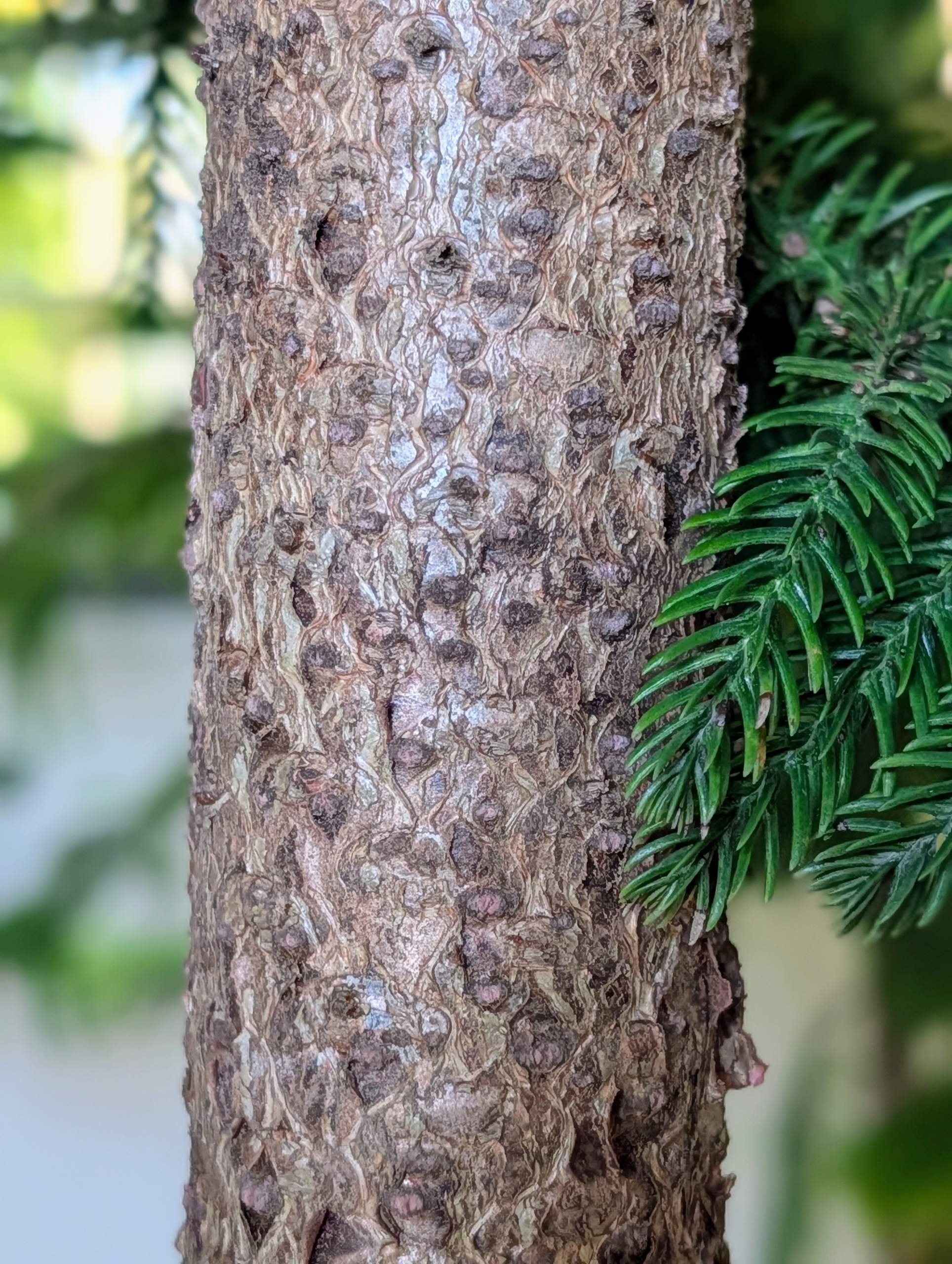
- The bark of the Norfolk Island pine is gray-brown in color, which exfoliates in fine distinctive scales.
-
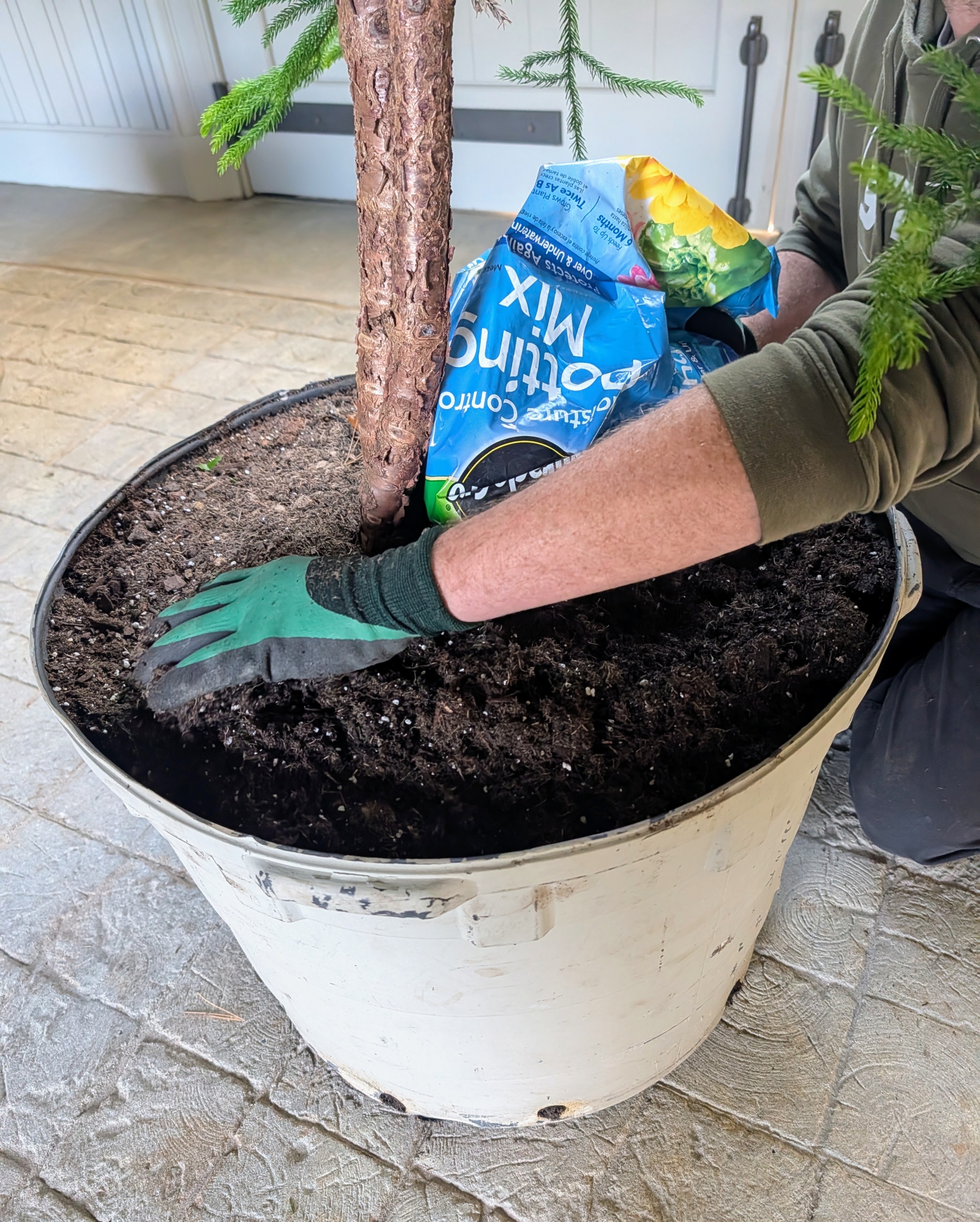
- Ryan checks the top and adds more potting mix if necessary. The soil may have settled more during the move.
-
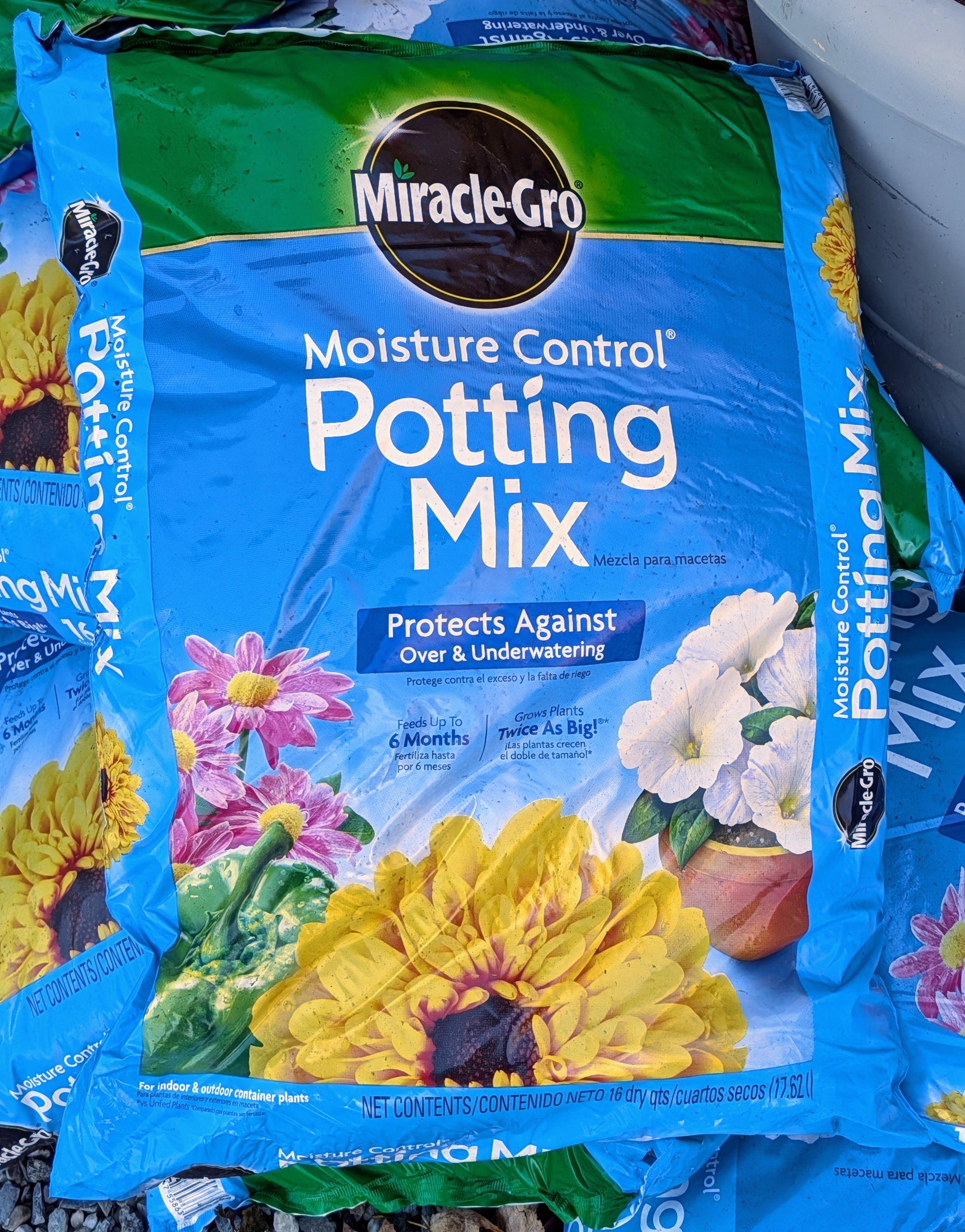
- This Miracle-Gro potting mix is specially formulated for moisture control, which will protect the plant from under and over watering.
-
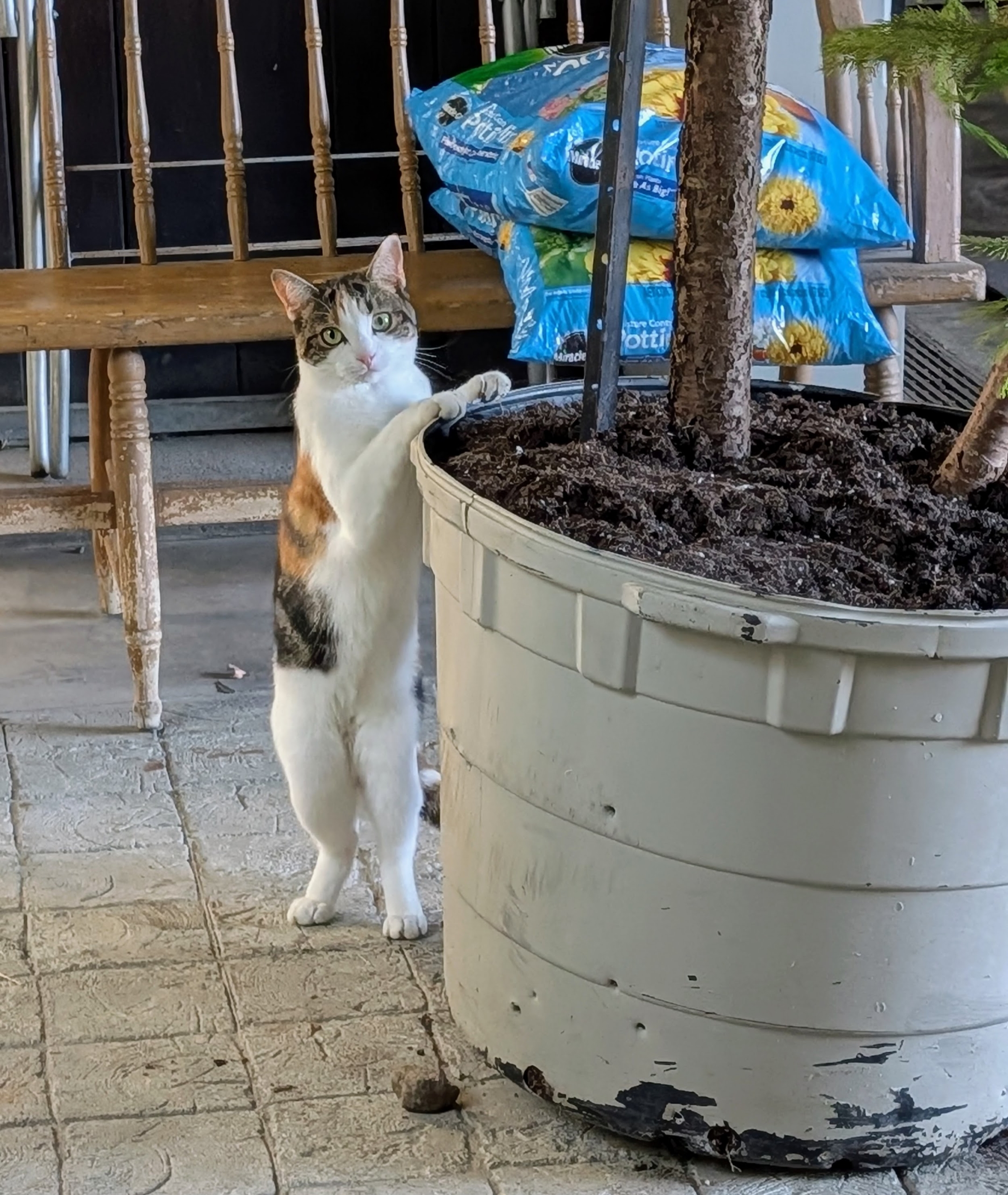
- Here’s Cinco, making sure everything is done properly. My team works efficiently to ensure all the plants are moved quickly and safely. As one transports, another is ready to unload and position the potted specimens.
-
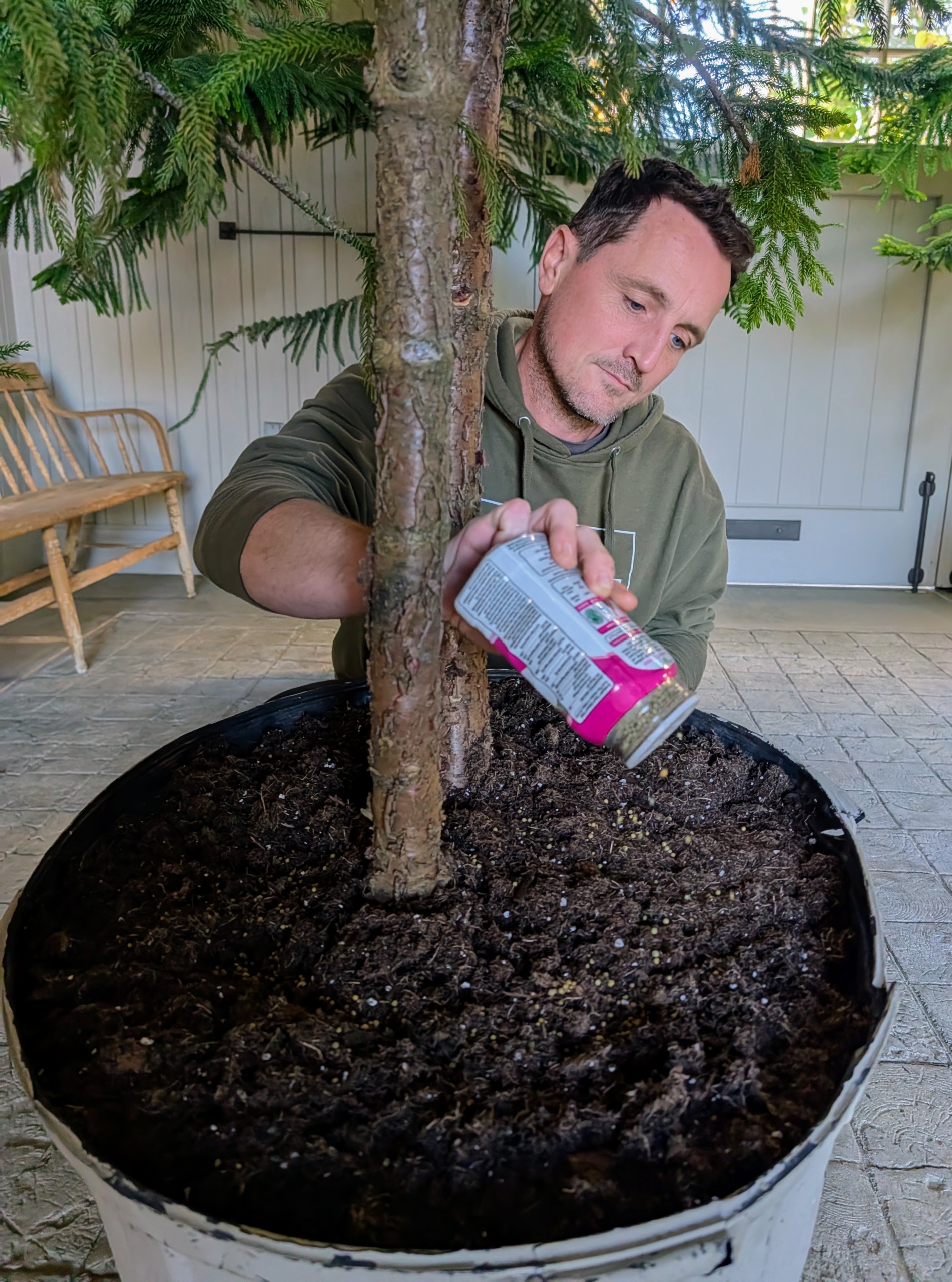
- Ryan also adds additional food – Osmocote smart release fertilizer will feed the plants for up to six months. All my tropical plants will get fed a couple of times before they are brought out again in spring.
-
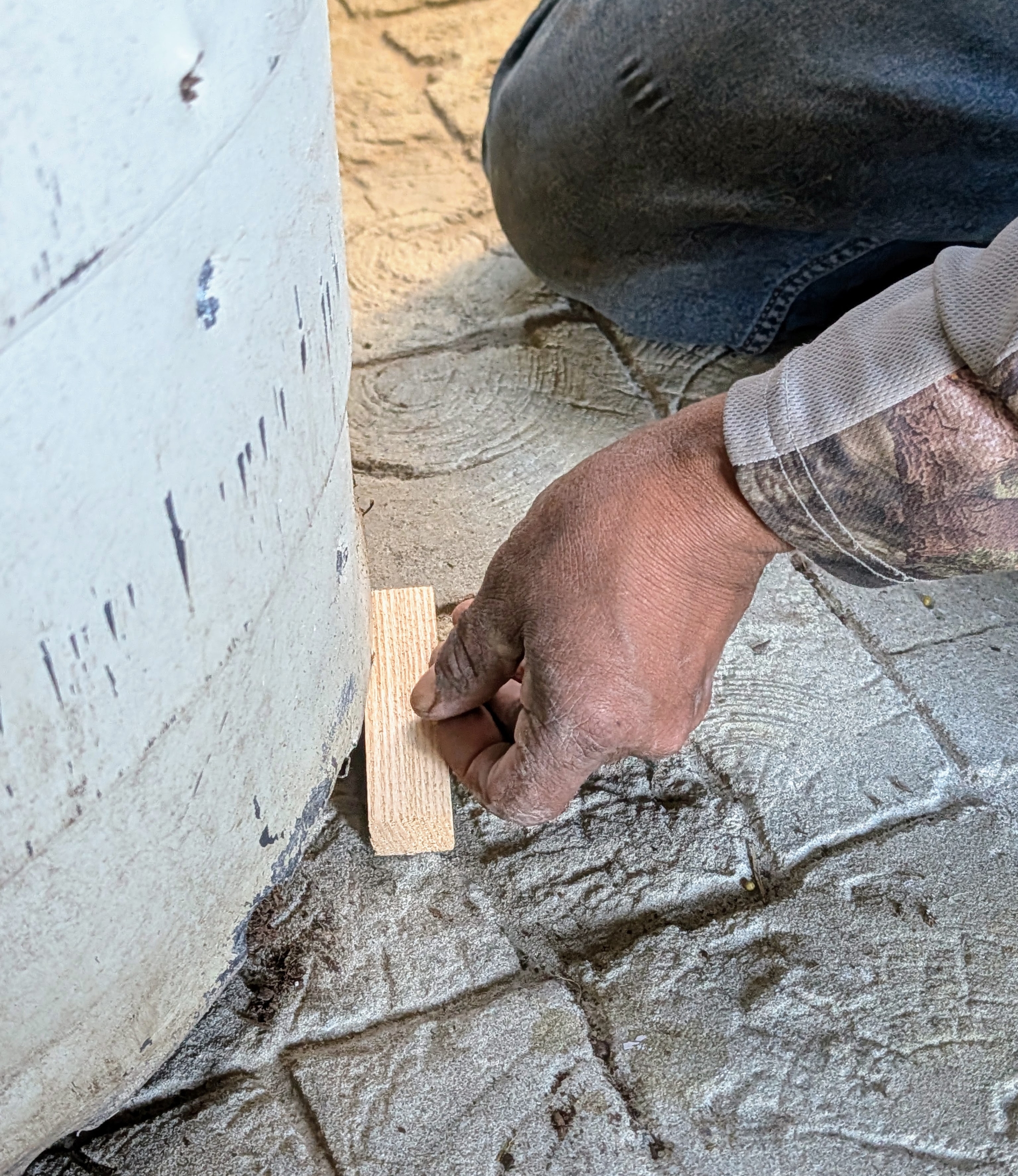
- Next, Pete adds wood shims under all the pots to keep them balanced on the stable floor. These pots have side holes for draining; however, if a pot’s hole is at the bottom, raising it on shims will allow the water to drain better.
-
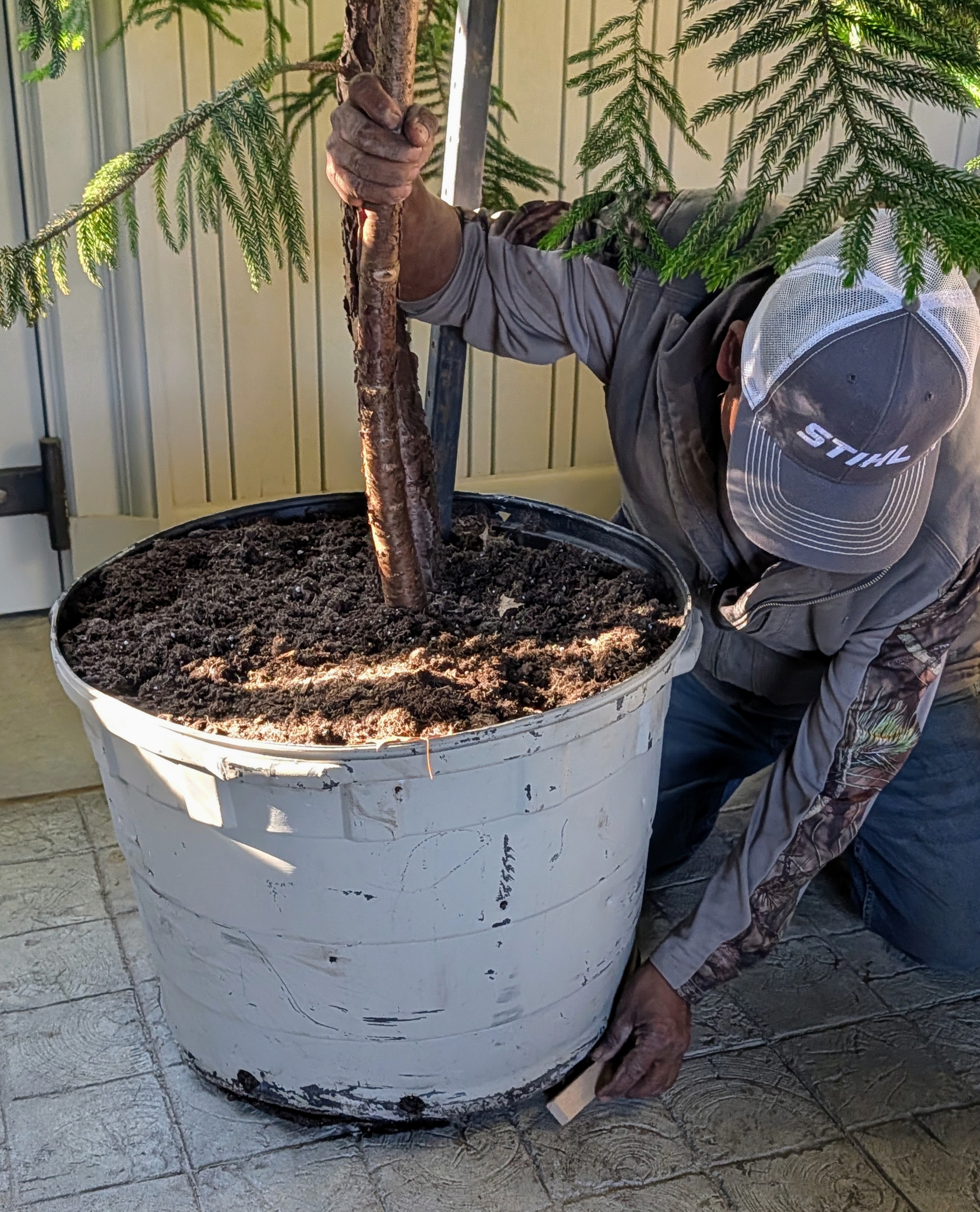
- Pete gently lifts the potted tree one section at a time and places a shim underneath. each of these pots needs several shims.
-
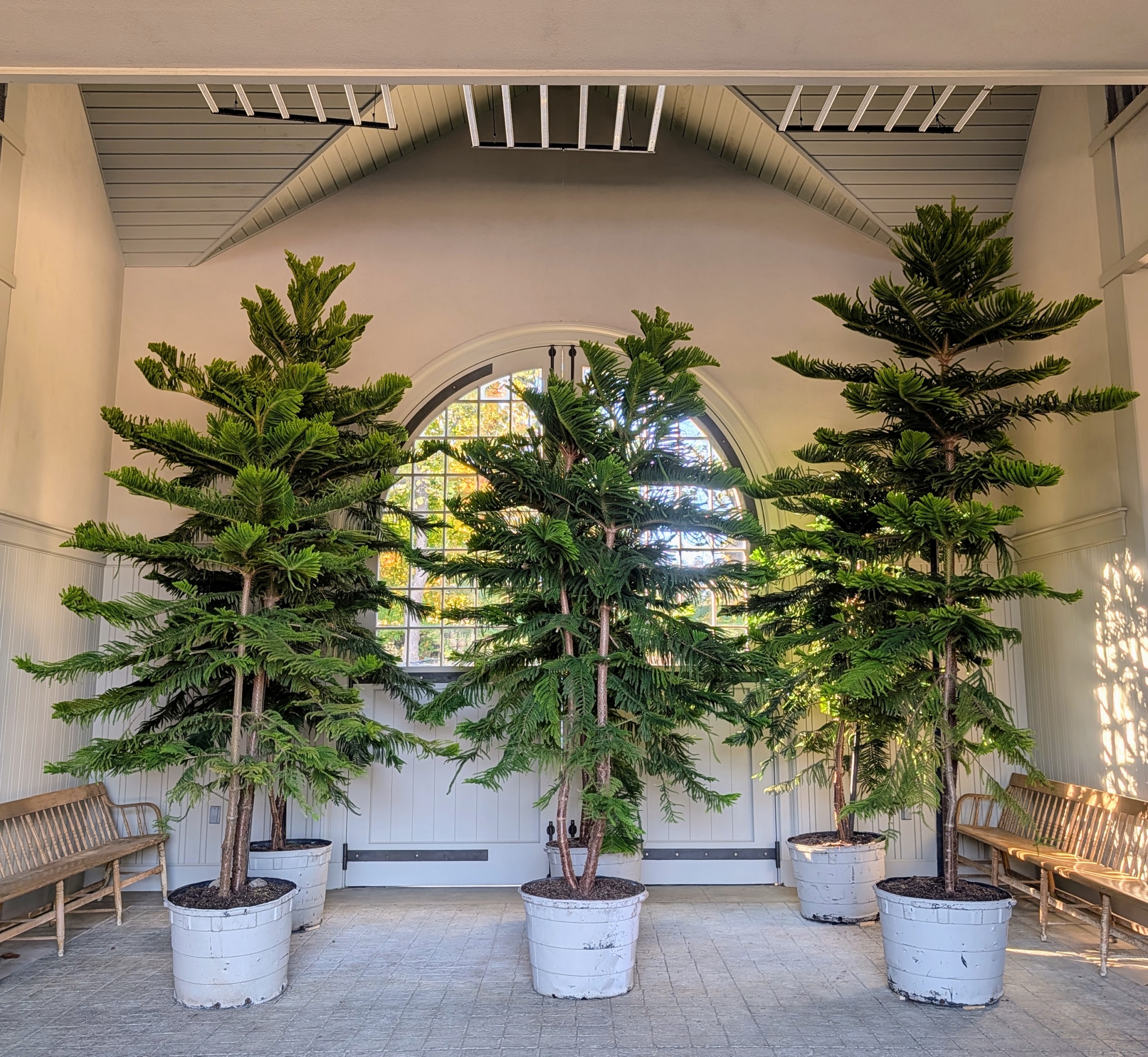
- Above the trees are grow lights, which will be turned on at night after Daylight Saving Time ends. I’m fortunate that I have a lot of indoor spaces that can help accommodate my tropical plants during the winter. These will do excellently in my stable.
 Martha Pins


 Martha Tweets

