

Pollarding Linden Trees
In order to keep my farm and all its gardens, allées, and groves as beautiful as possible, I pay lots of attention to the maintenance and care of all my trees. This time of year, my outdoor grounds crew is busy pruning many of the trees, including my allée of lindens.
Lindens, Tilia, are medium to large sized shade trees that are easy to maintain and attractive in any landscape. I have two linden tree allées - one that runs from the old corn crib all the way down to the chicken coops and the other slightly older allée near my stable. These trees, with their pyramidal shape and slow growth, are excellent specimens for the type of pruning called pollarding, a very severe method that involves cutting the branches back either to the trunk, or even all the way down to the top of the trunk to promote the growth of club-headed stems and dense new foliage and branches. Pollarding should be done annually. We started pollarding these lindens regularly in 2021, and we've noticed good development in the years since.
Here are some photos, enjoy.
-

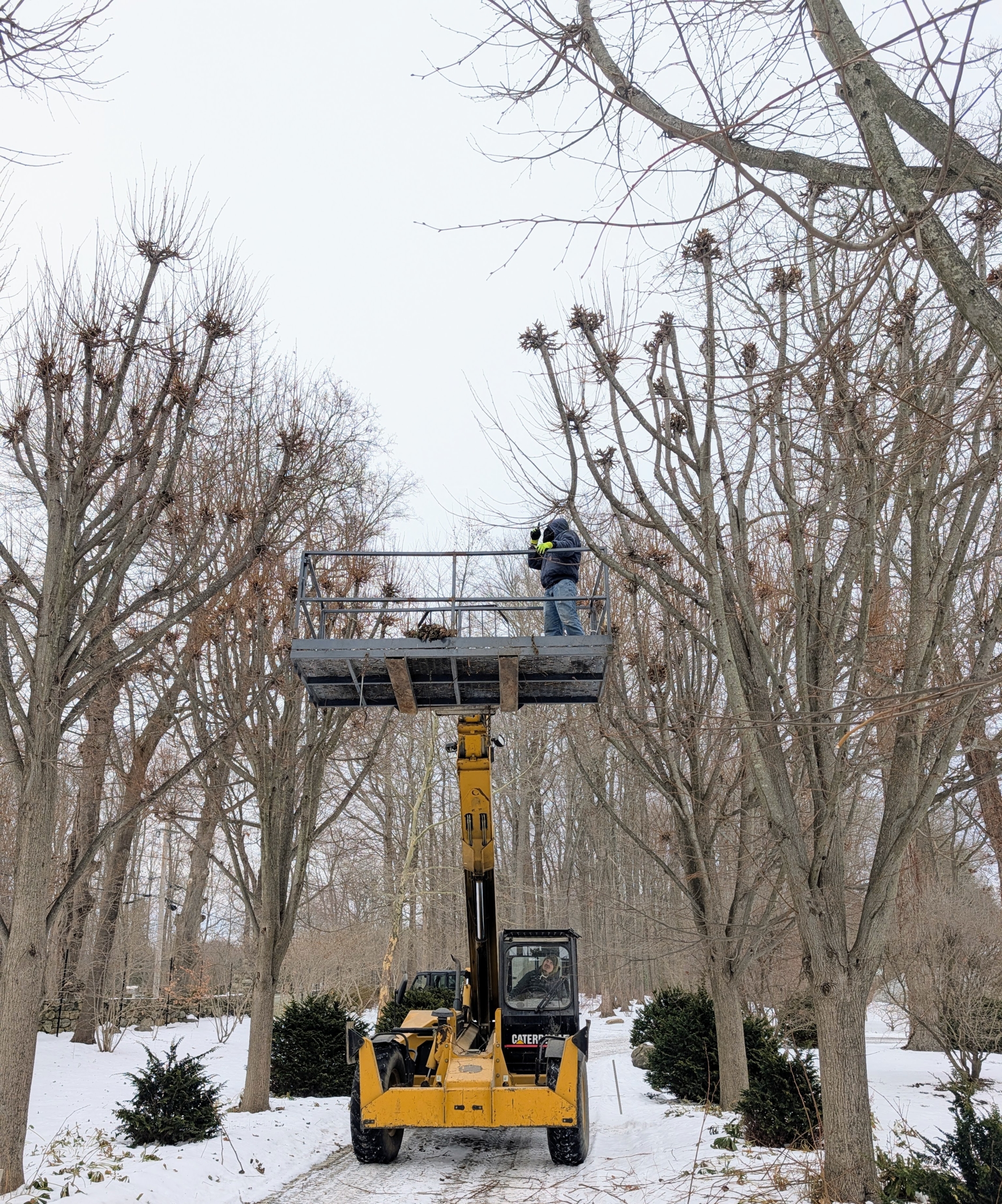
- The last few days have been cold, but clear and not too windy so it’s a perfect time for some high tree work on my linden trees.
-
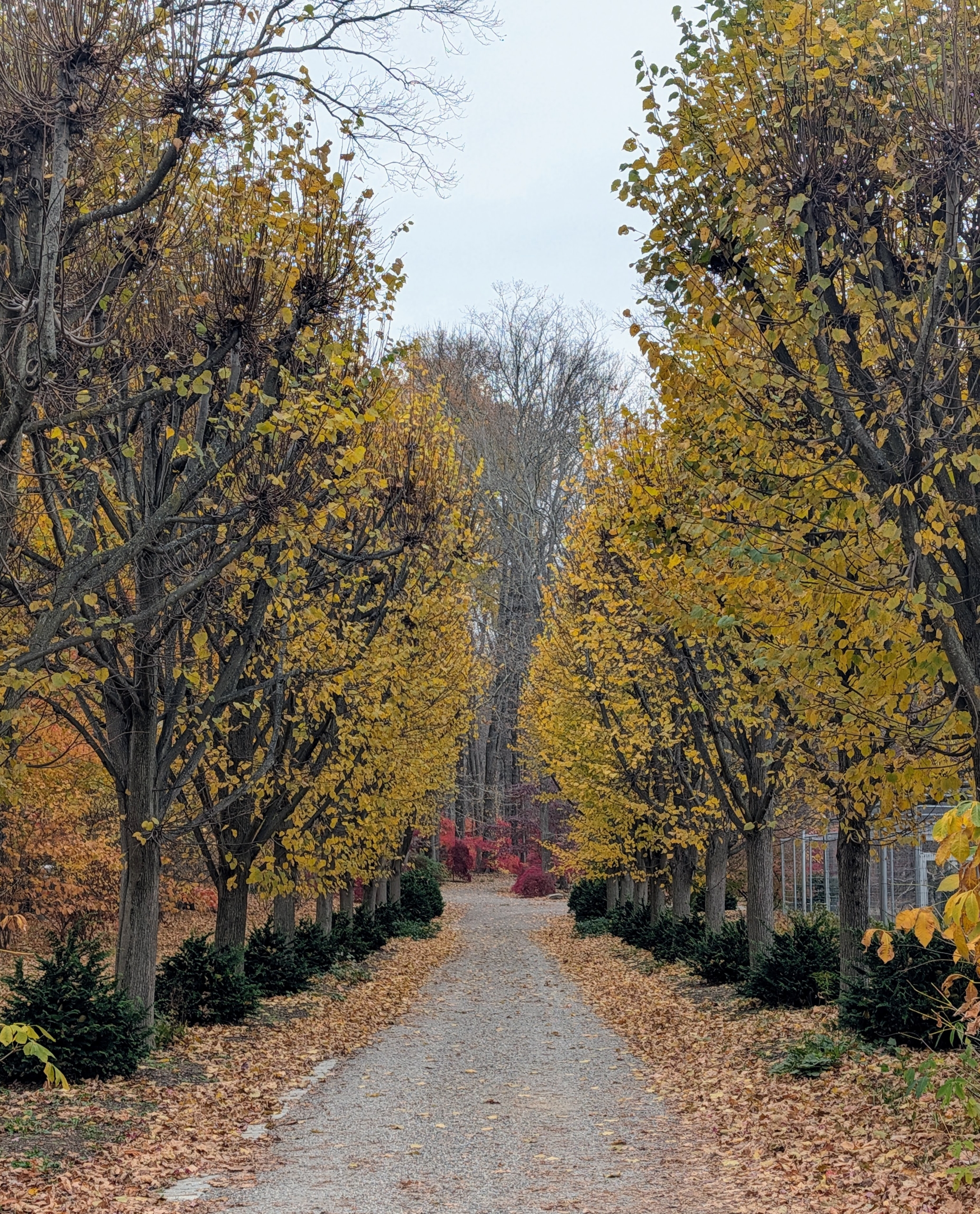
- Here they are last autumn. Linden leaves are green in summer and take on a beautiful golden hue in fall before dropping. These trees are easy to care for and ideal for urban landscapes because they tolerate a wide range of adverse conditions, including pollution.
-
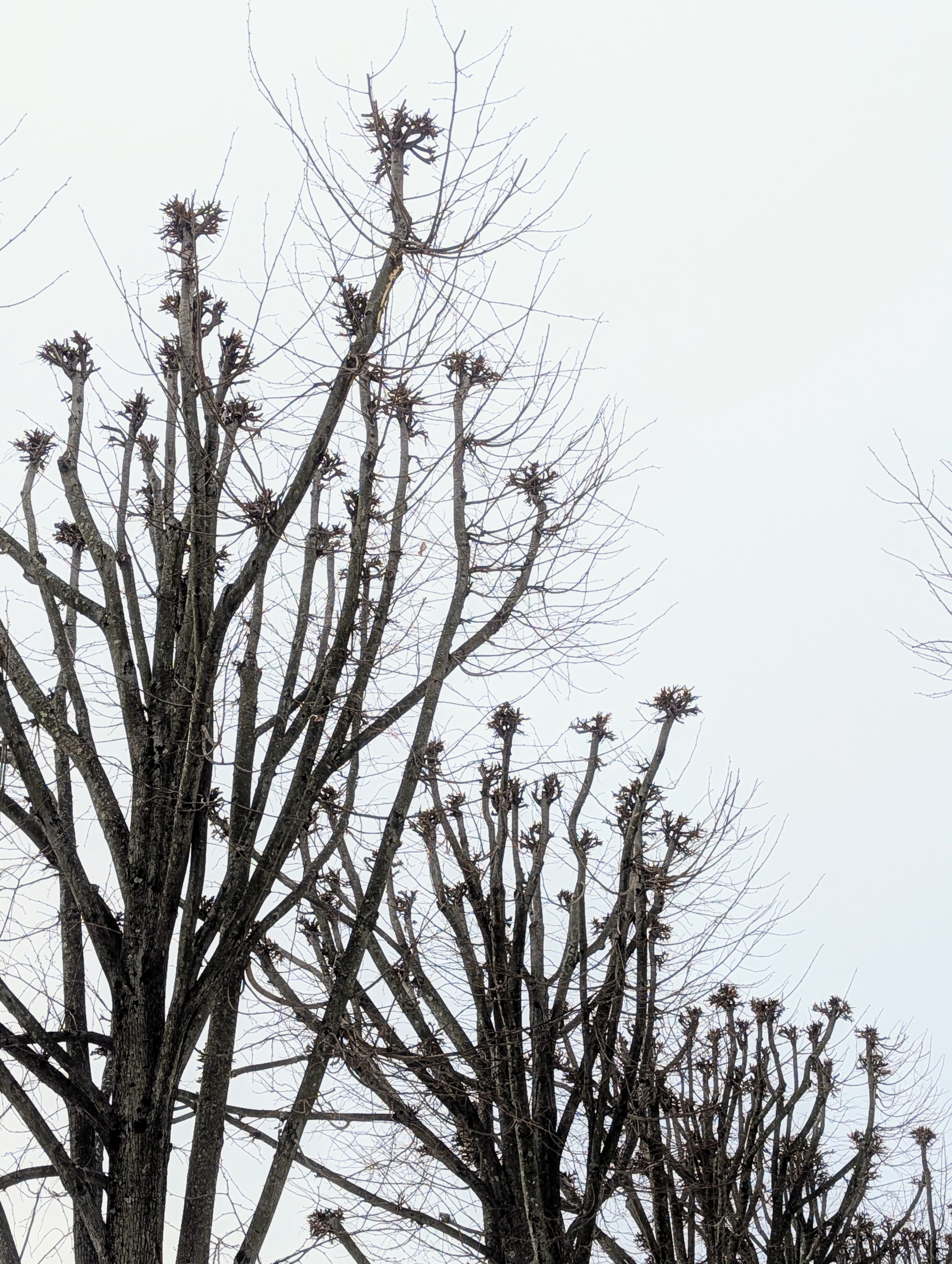
- More thought and planning goes into pollarding than regular topping, and lopping. Pollarding is similar to coppicing but plants are cut back to a stump, rather than down to the ground. Pleaching involves training trees or shrubs to grow in a flat, formal shape, often used for creating hedges and topiaries. All these pruning techniques encourage new growth and can enhance the aesthetic appeal of the landscape.
-
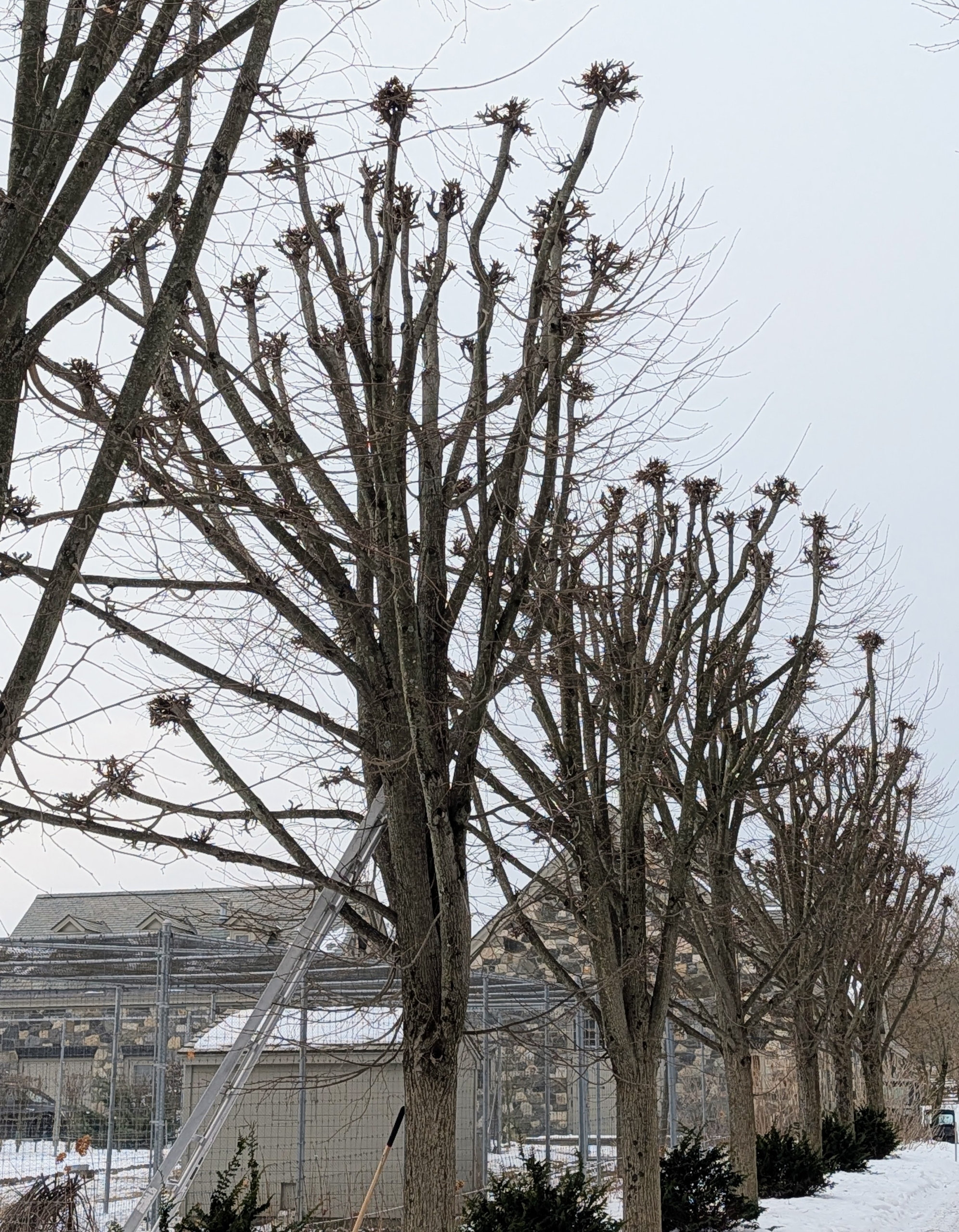
- Some of the other types of trees that can benefit from pollarding include beech trees, black locust trees, catalpa trees, hornbeams, horse chestnuts, London planetrees, mulberry trees, redbuds, and willows.
-
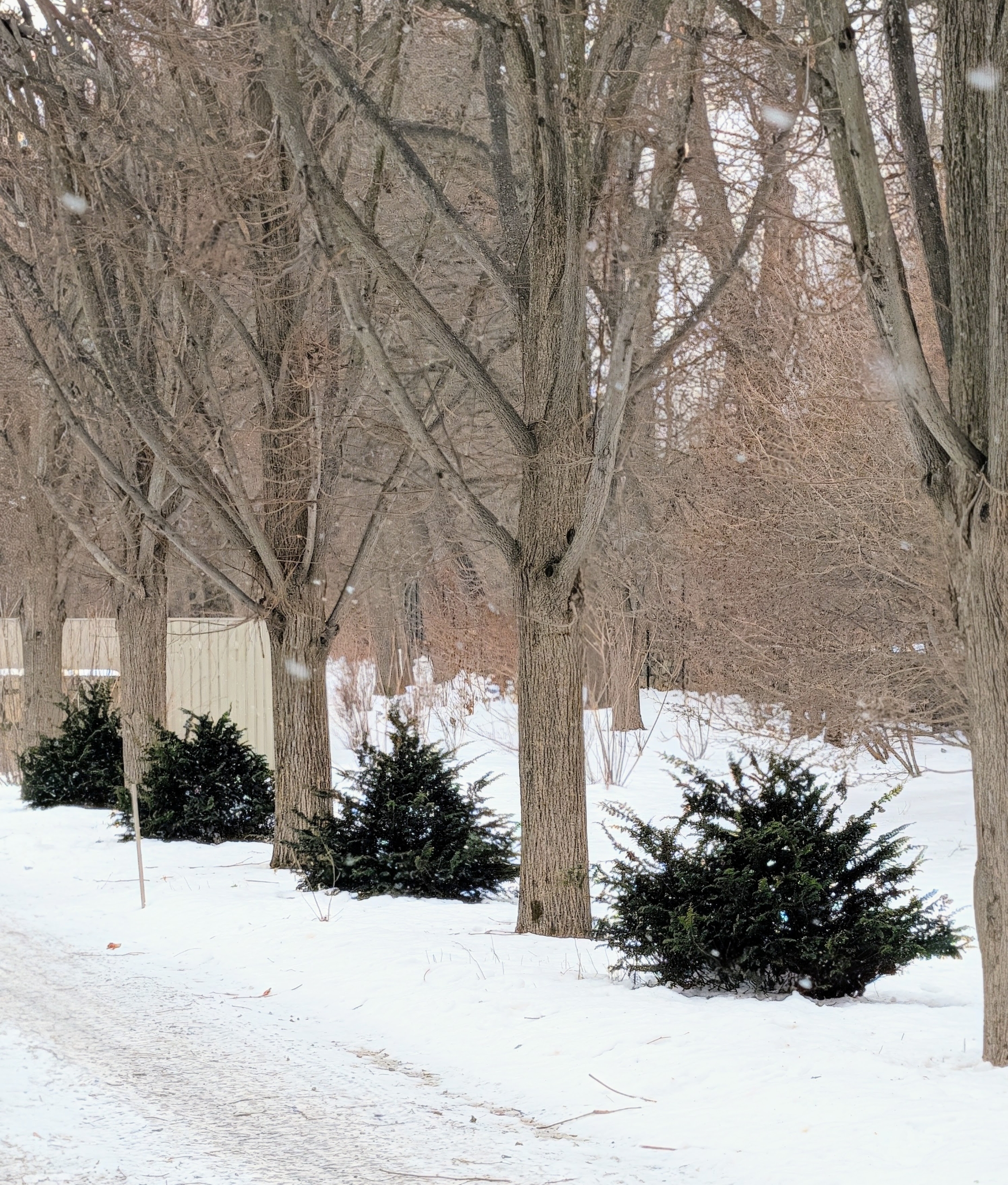
- Below these trees, I planted Fernspray Hinoki cypress bushes.
-
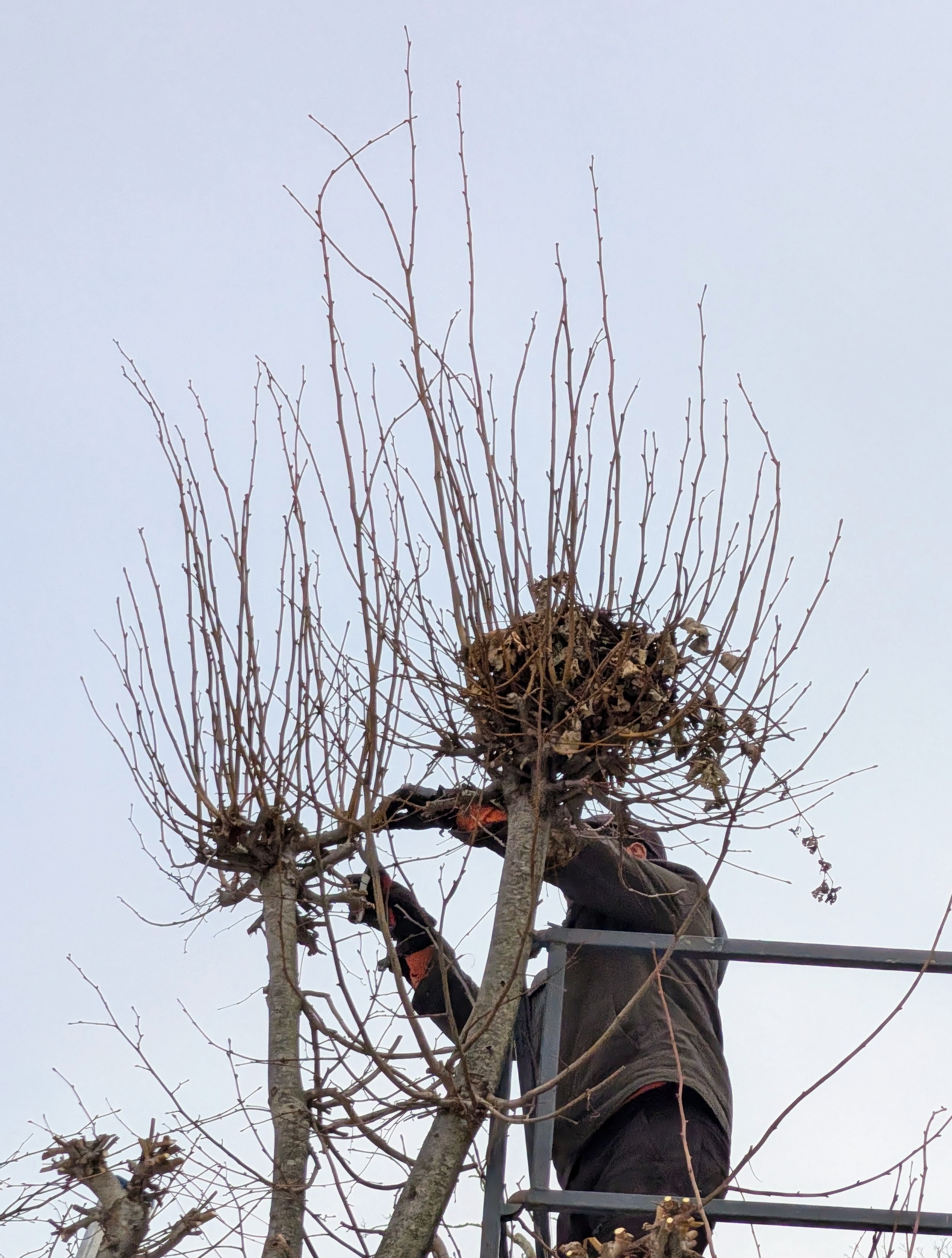
- Here is a closer look at the upward growth that is being pollarded. This year, I asked the crew to focus on these branches and leave more of the insides, so the trees leaf out wide and full.
-
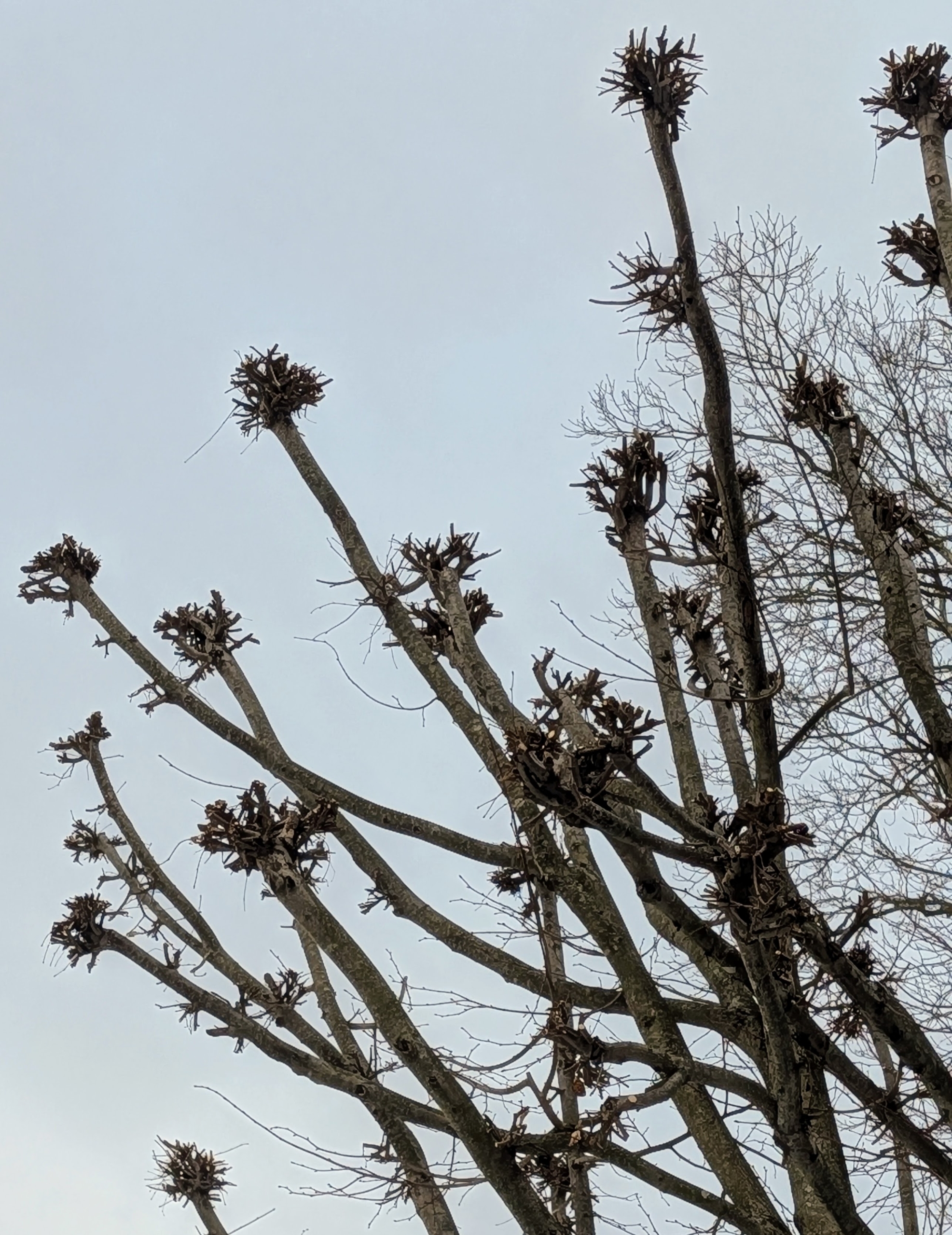
- And here is one area done – notice the tops are developing “nubs” or “knuckles” – these will look even better year after year.
-
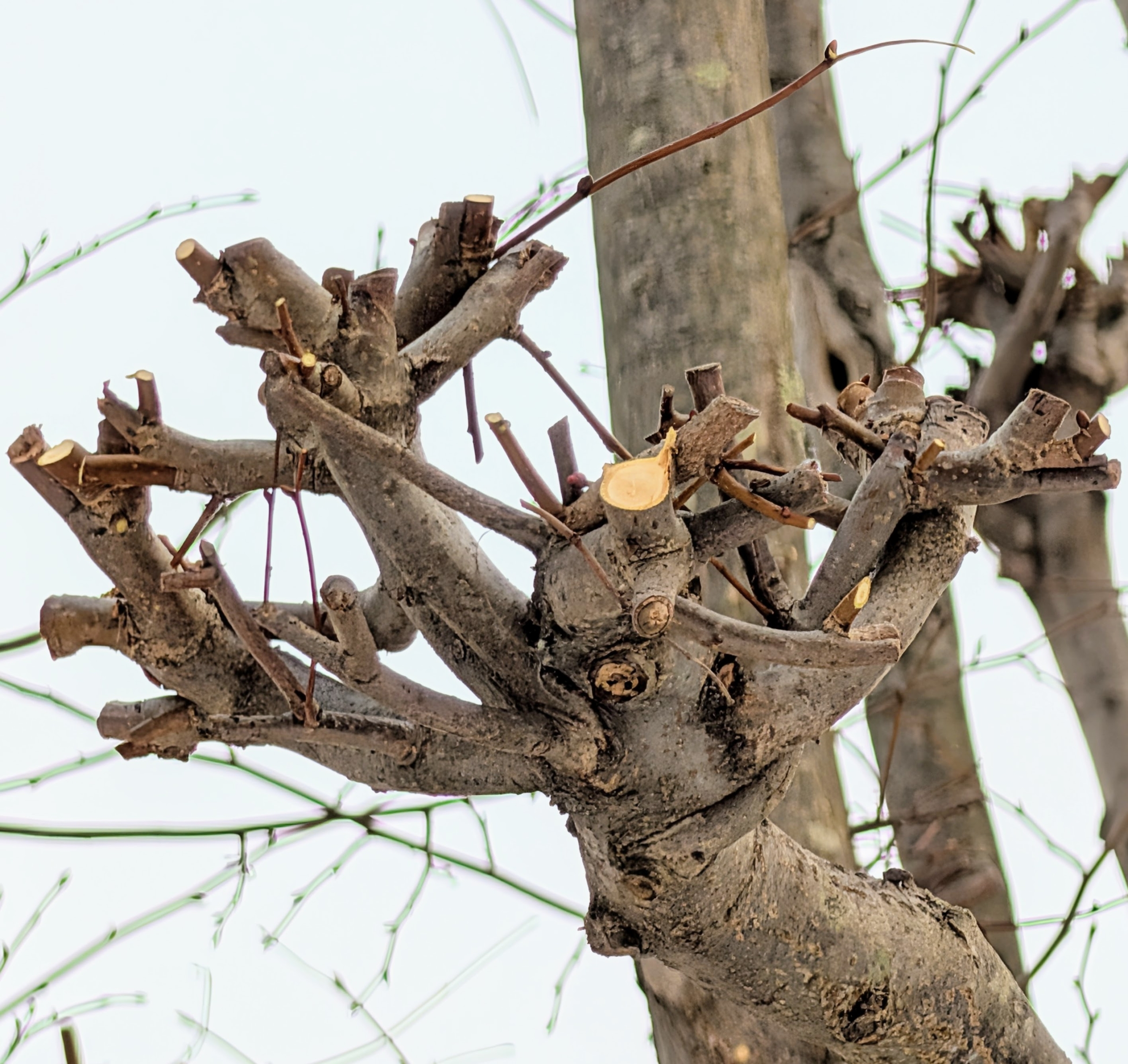
- And here is a new cut – always made outside the branch collar at a 45 to 60 degree angle to the branch bark ridge.
-
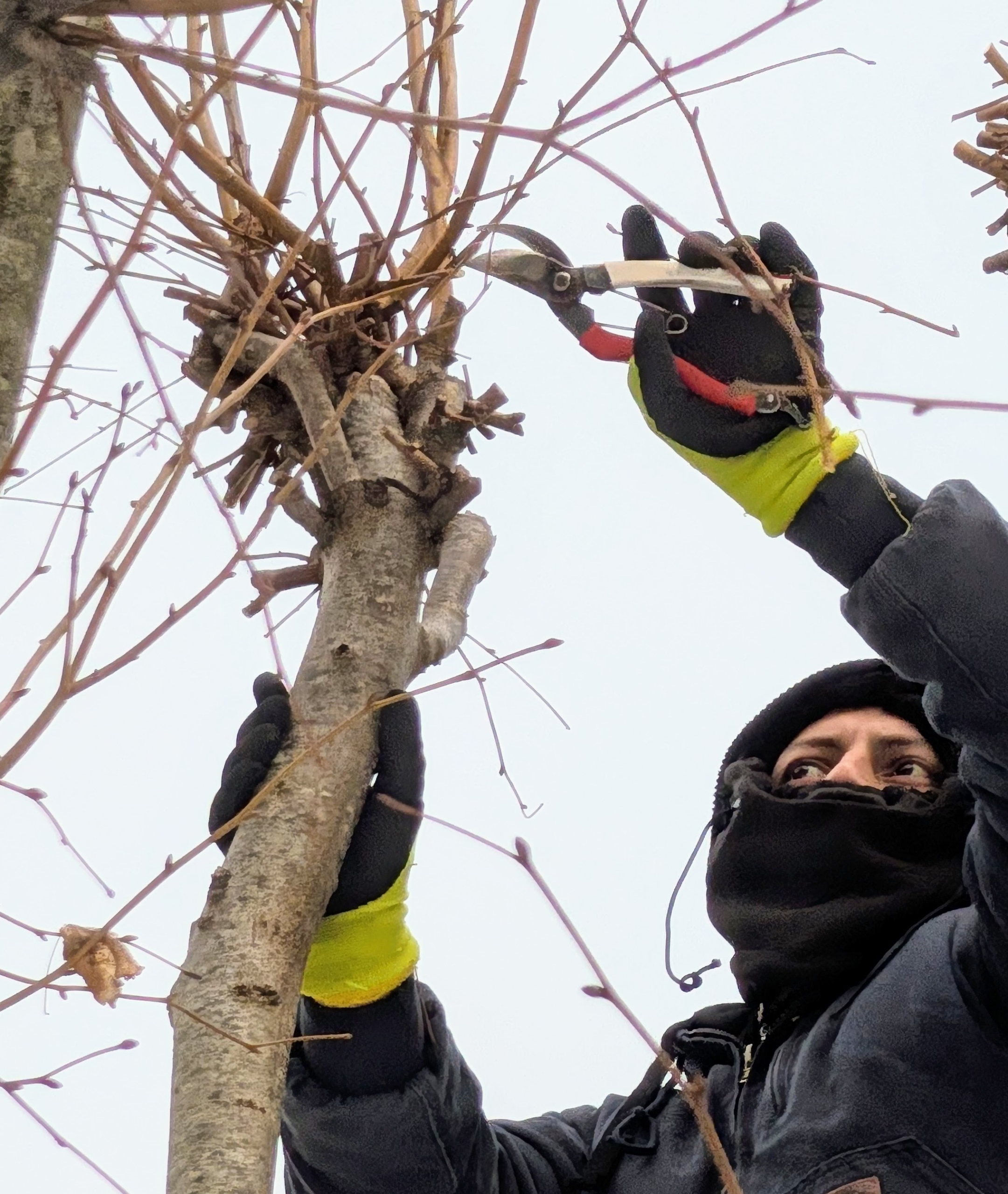
- Everyone on the crew uses sharp bypass pruners. Remember, a sharp tool always cuts clean, and helps the plant to recover better. Dull cutting tools rip and shred the plant tissue.
-
- Pollarding can help make trees live longer by maintaining them in a partially juvenile state and by reducing the weight and windage of the top part of the tree.
-
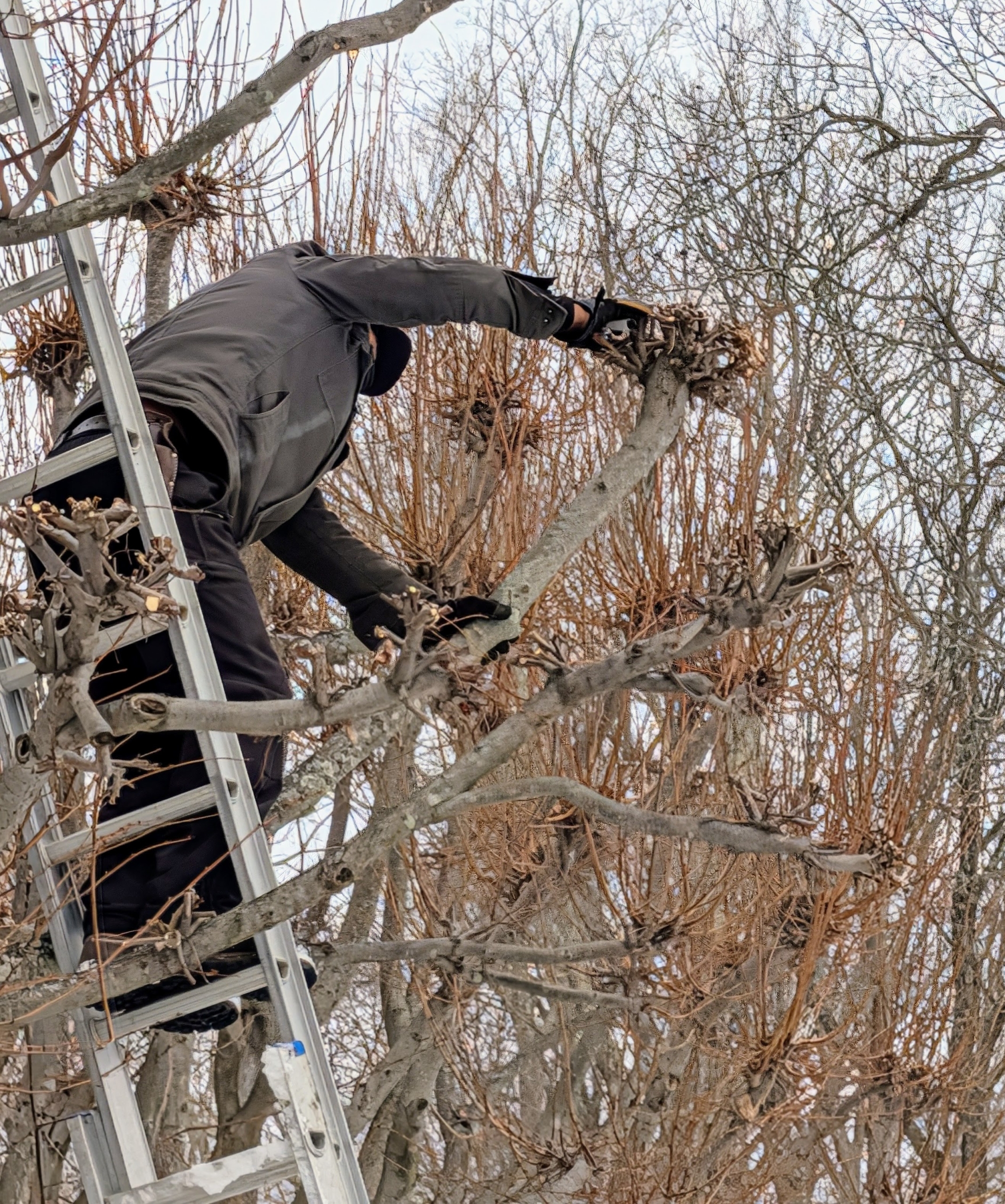
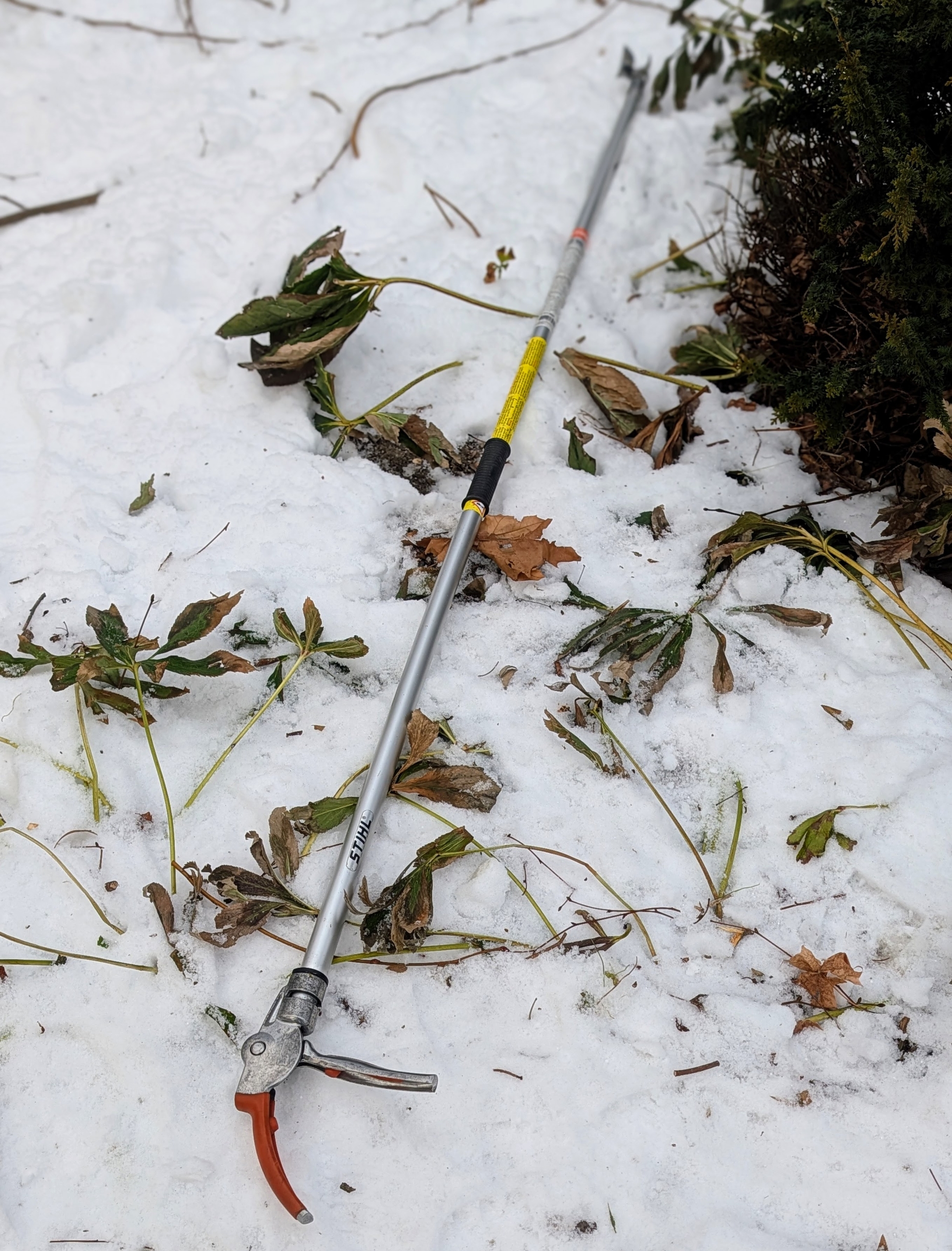
- For hard to reach branches, the team uses telescoping pole pruners. This STIHL tool is lightweight and has a very sharp blade for making smooth cuts. It is ideal for pruning higher branches that are not too thick.
-
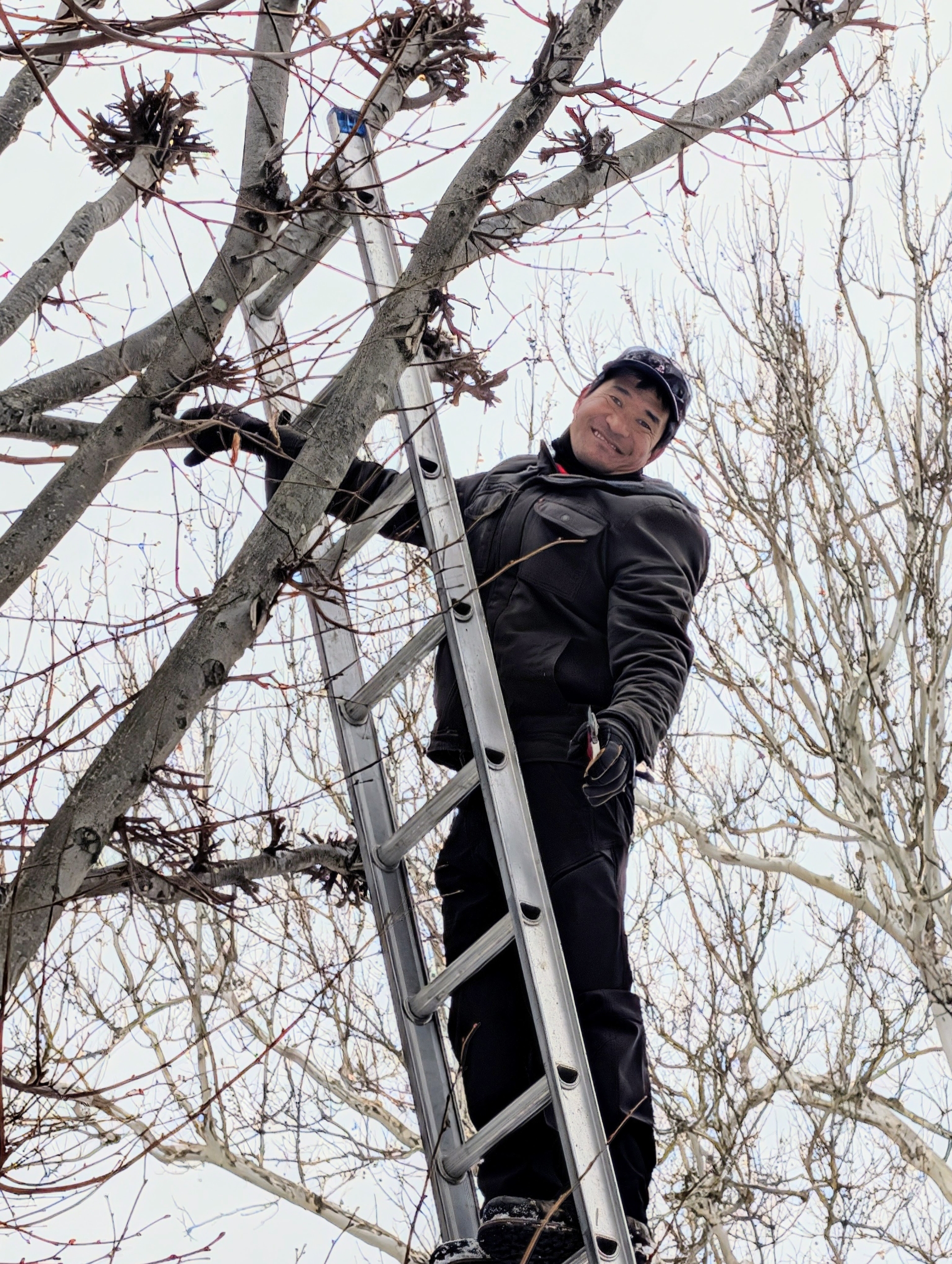
- Here’s Pasang, my resident tree pruning expert. Along with pollarding for shape and strong growth, Pasang also looks out for the Ds – dead, damaged, diseased, deranged or defective – these branches are also removed.
-
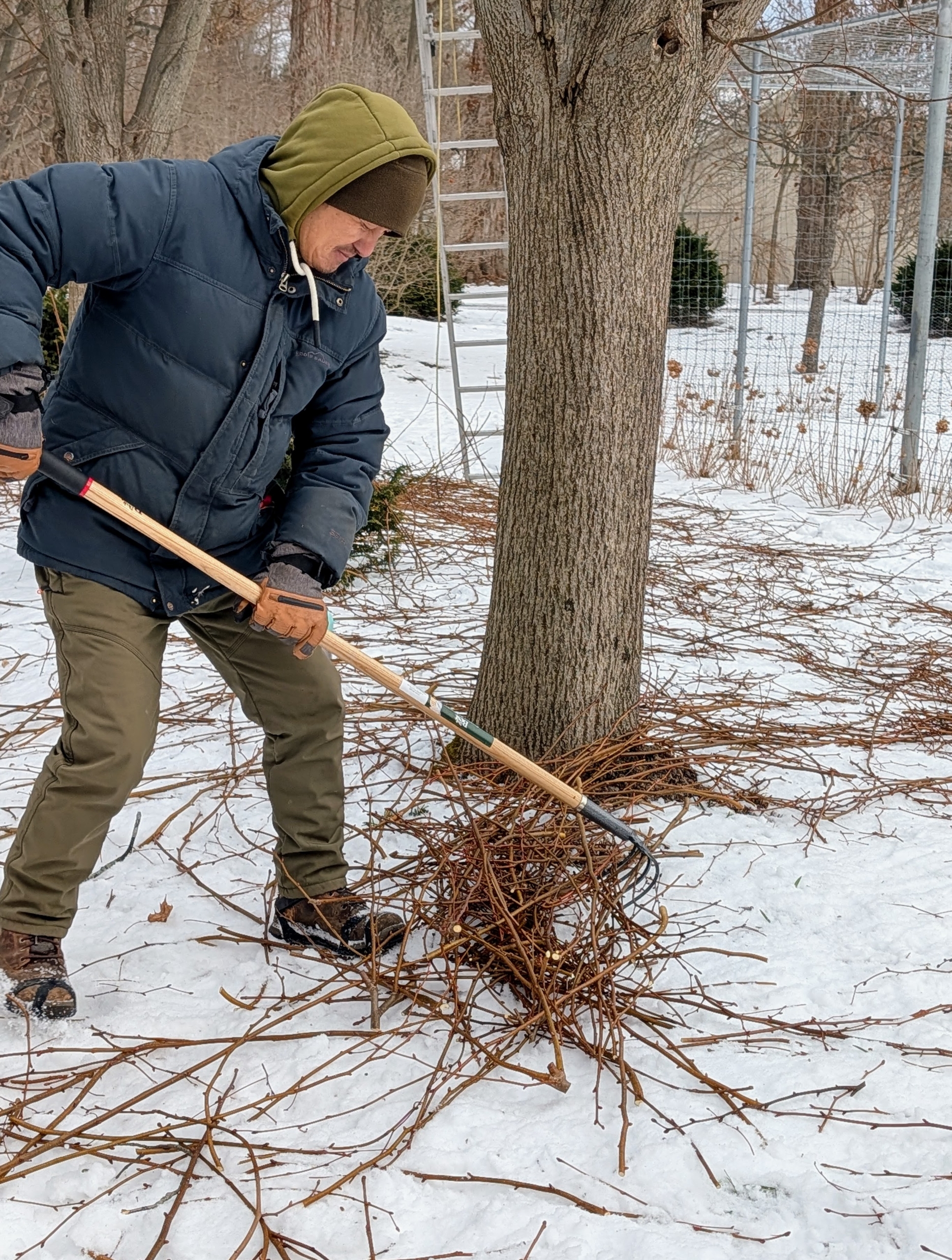
- Chhiring stays on the ground raking up the fallen branches and watching everyone from below.
-
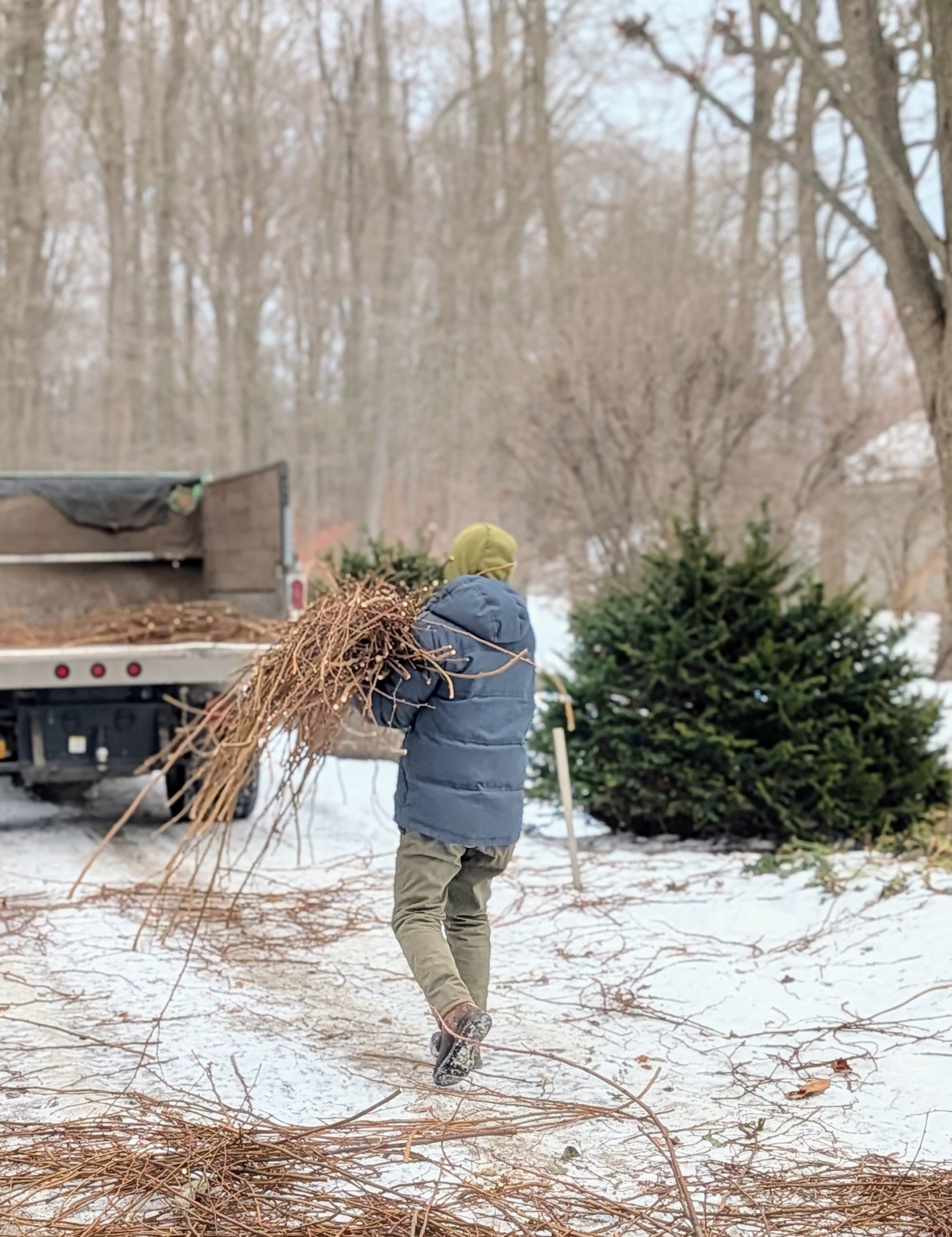
- The branches are gathered and then loaded onto the dump truck and taken to a designated pile for the wood chipper.
-
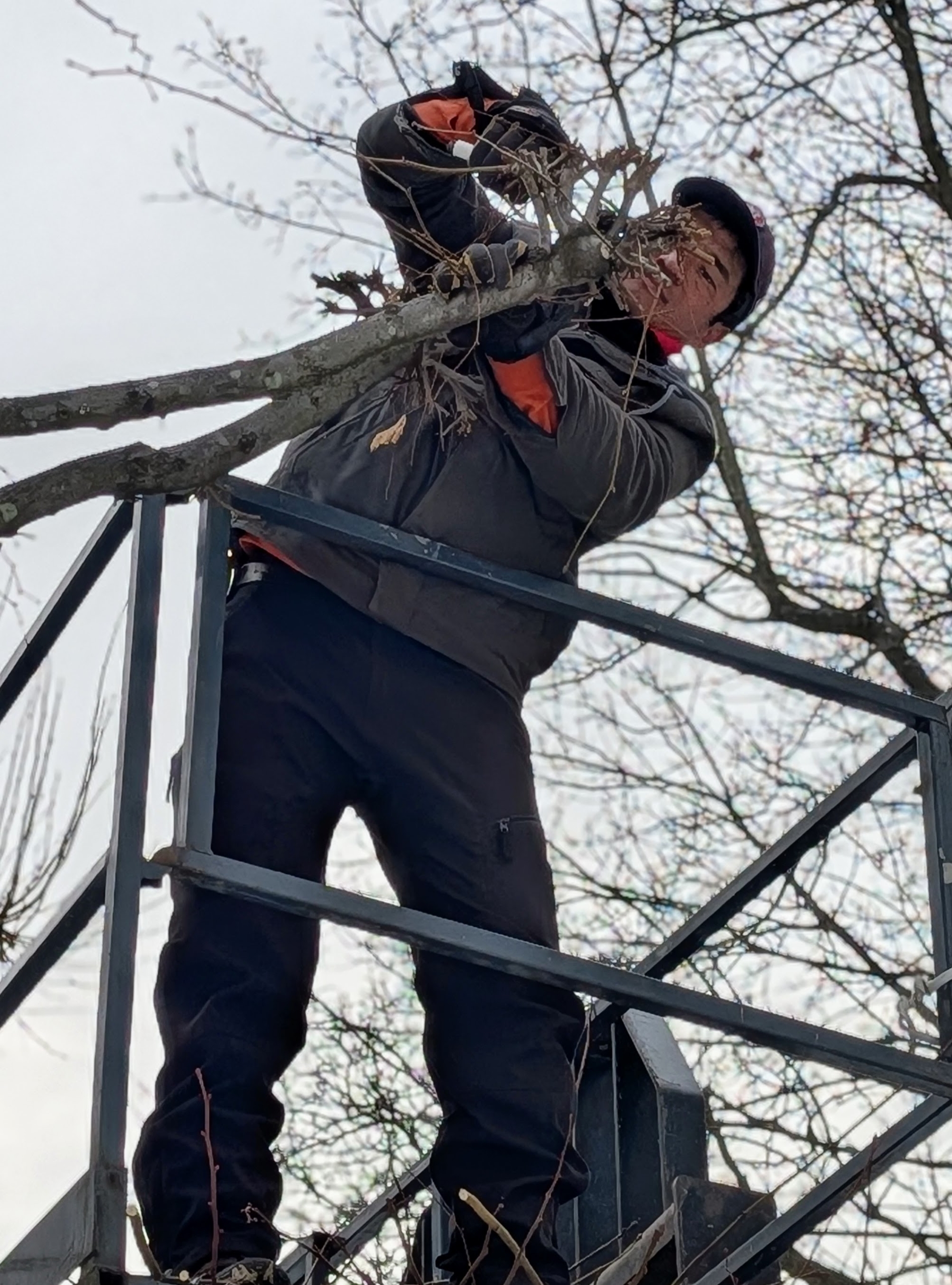
- At times, the crew works from the workers’ cage of my Hi-Lo tractor.
-
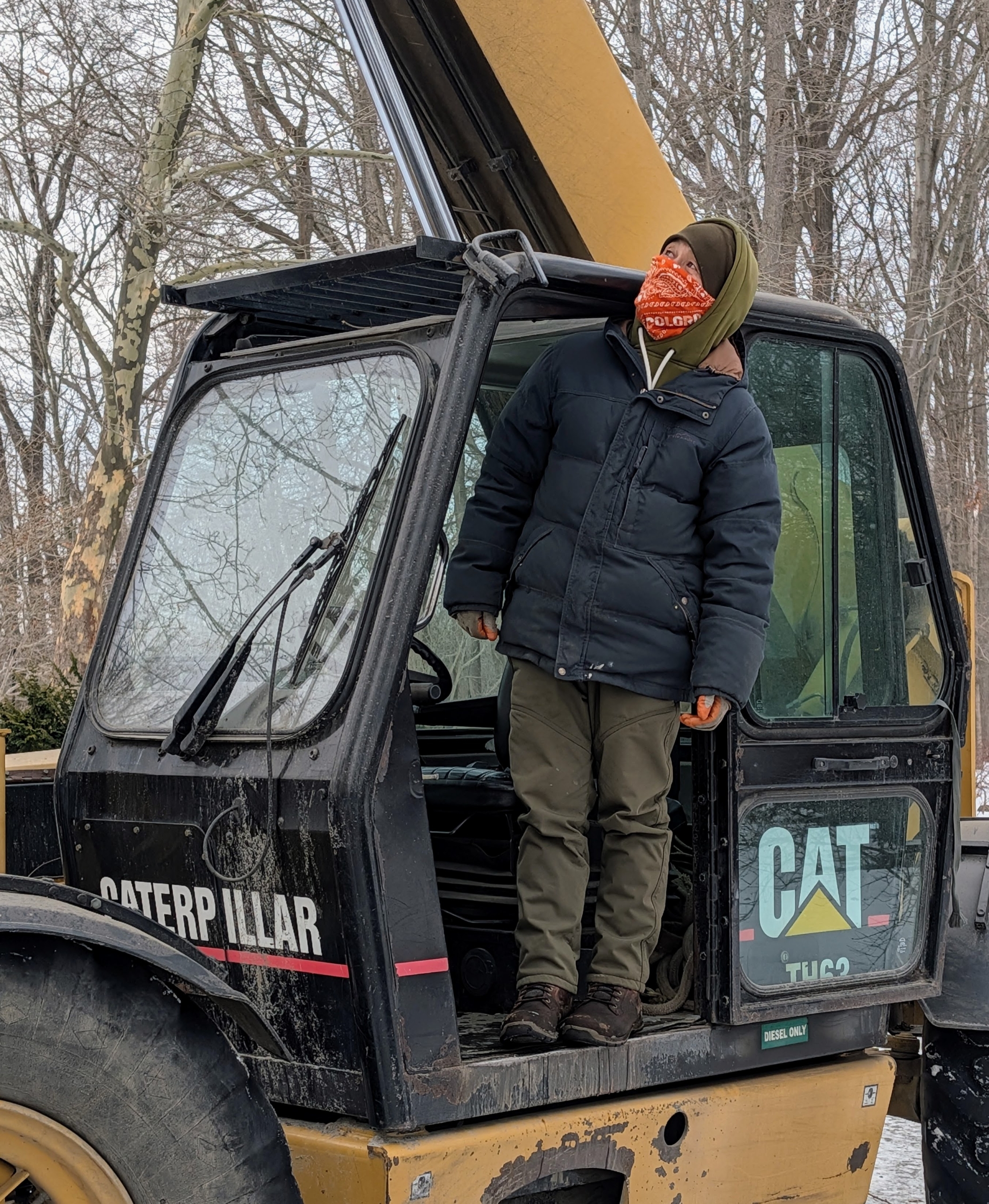
- When anyone is up in the Hi-Lo, Chhiring always has his eye on them – it’s important to have someone on the ground watching out for the safety of the crew.
-
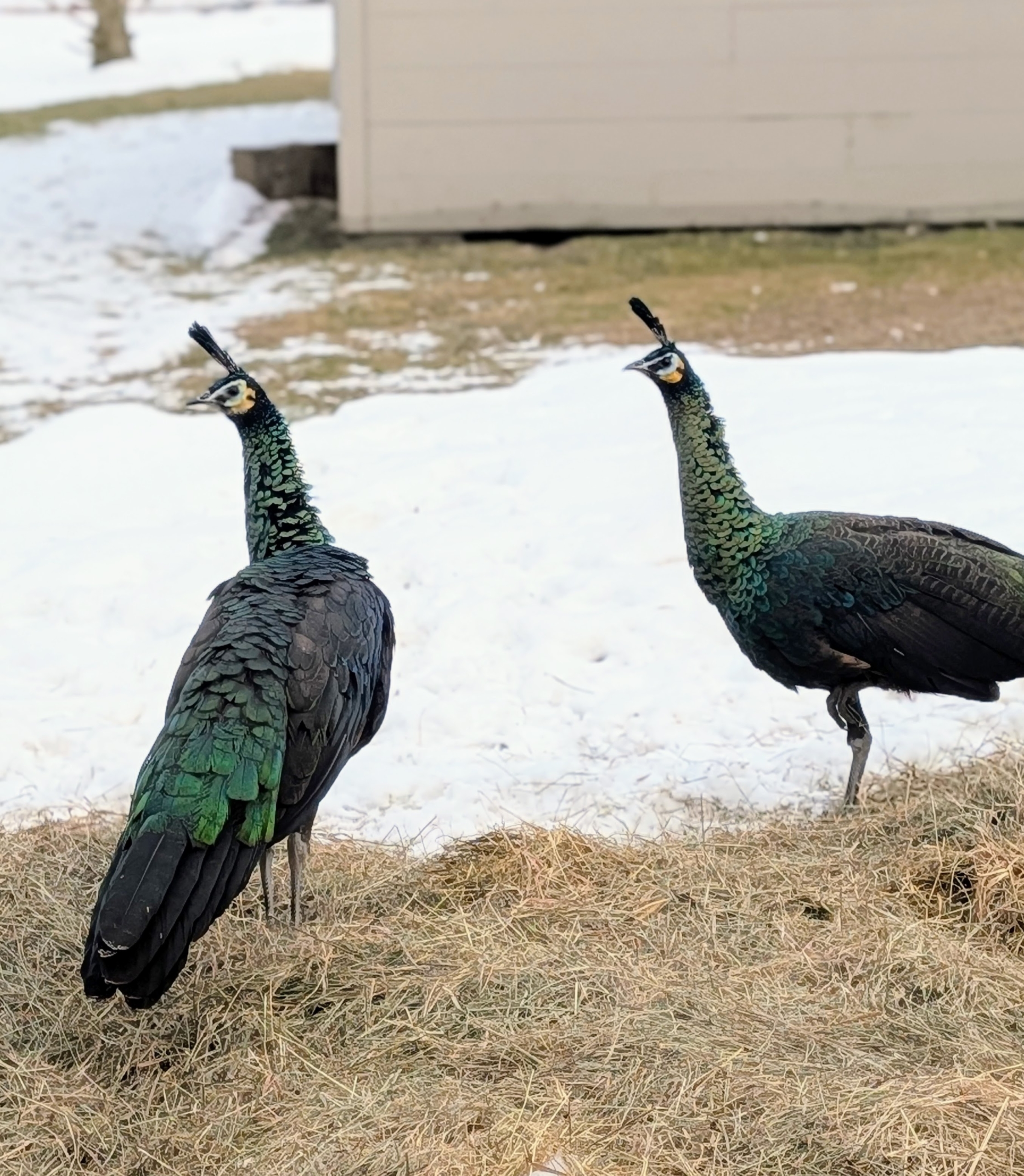
- Here are two of my peacocks also watching the activity. They’re in the adjacent pen. The layer of hay keeps them warm when they want to lounge outside of their coop.
-
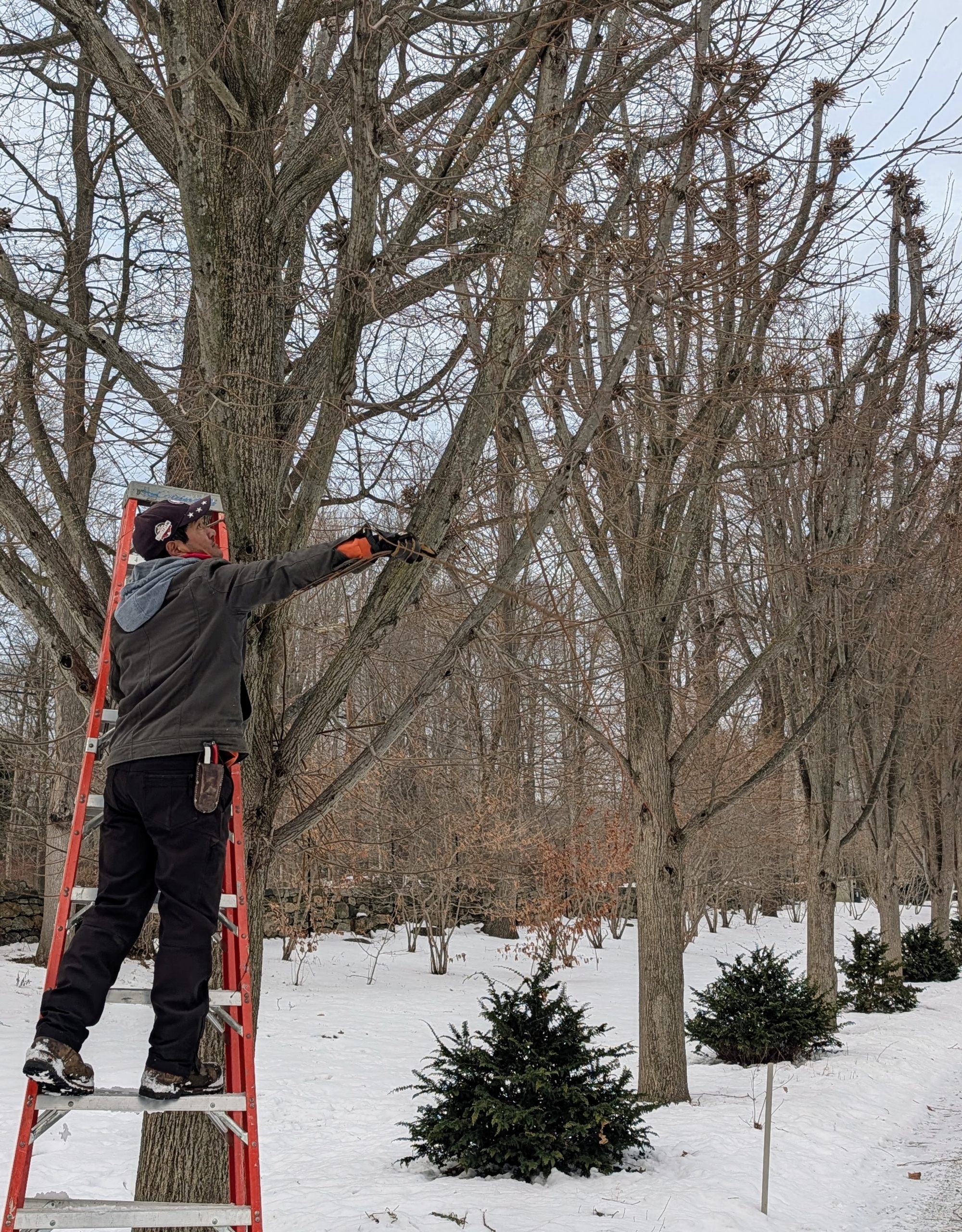
- Here’s Pasang pruning some lower branches to keep the tree nicely shaped.
-
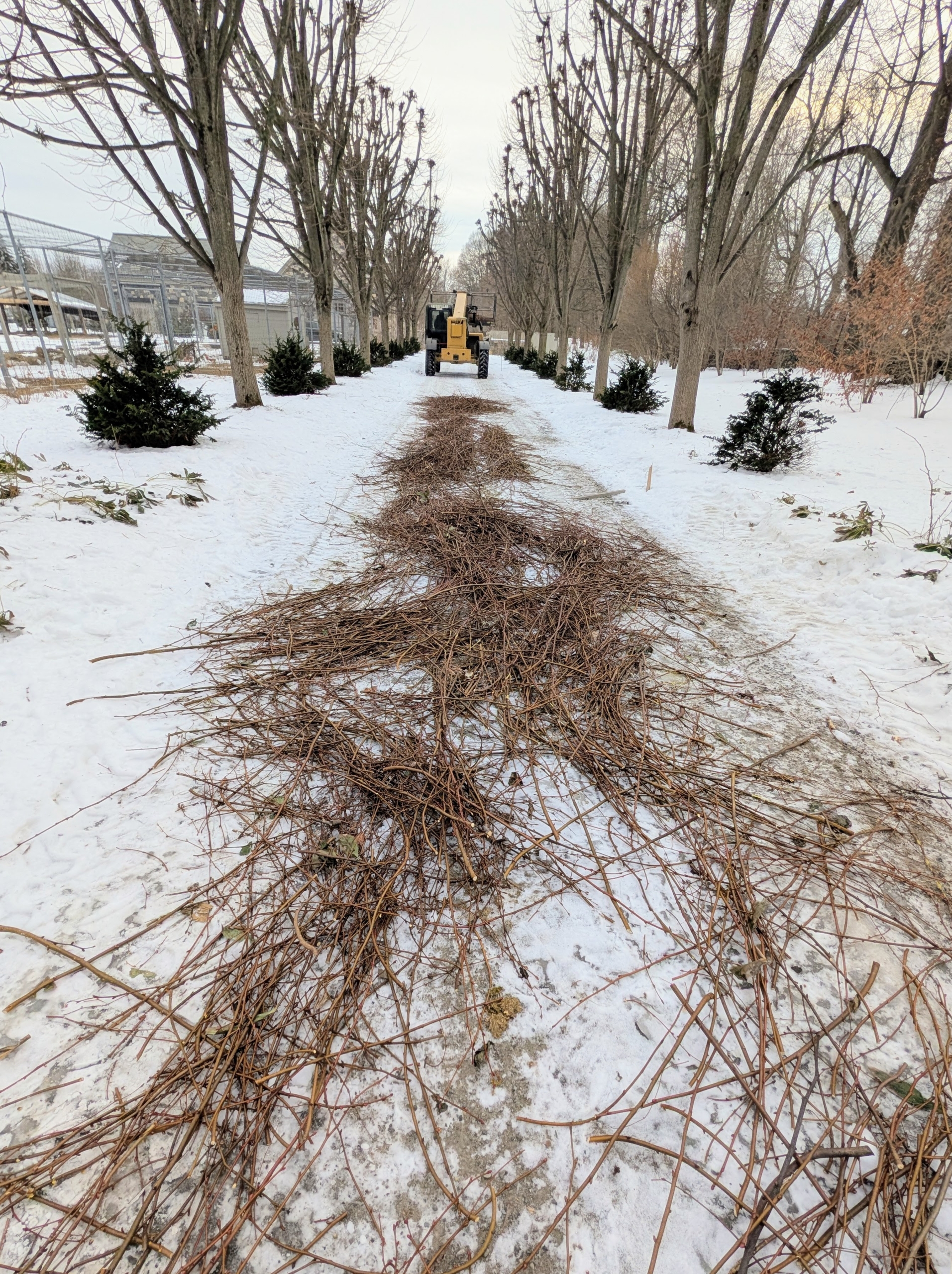
- It takes two full days to pollard this allée of lindens. The crew does the entire allée by hand.
-
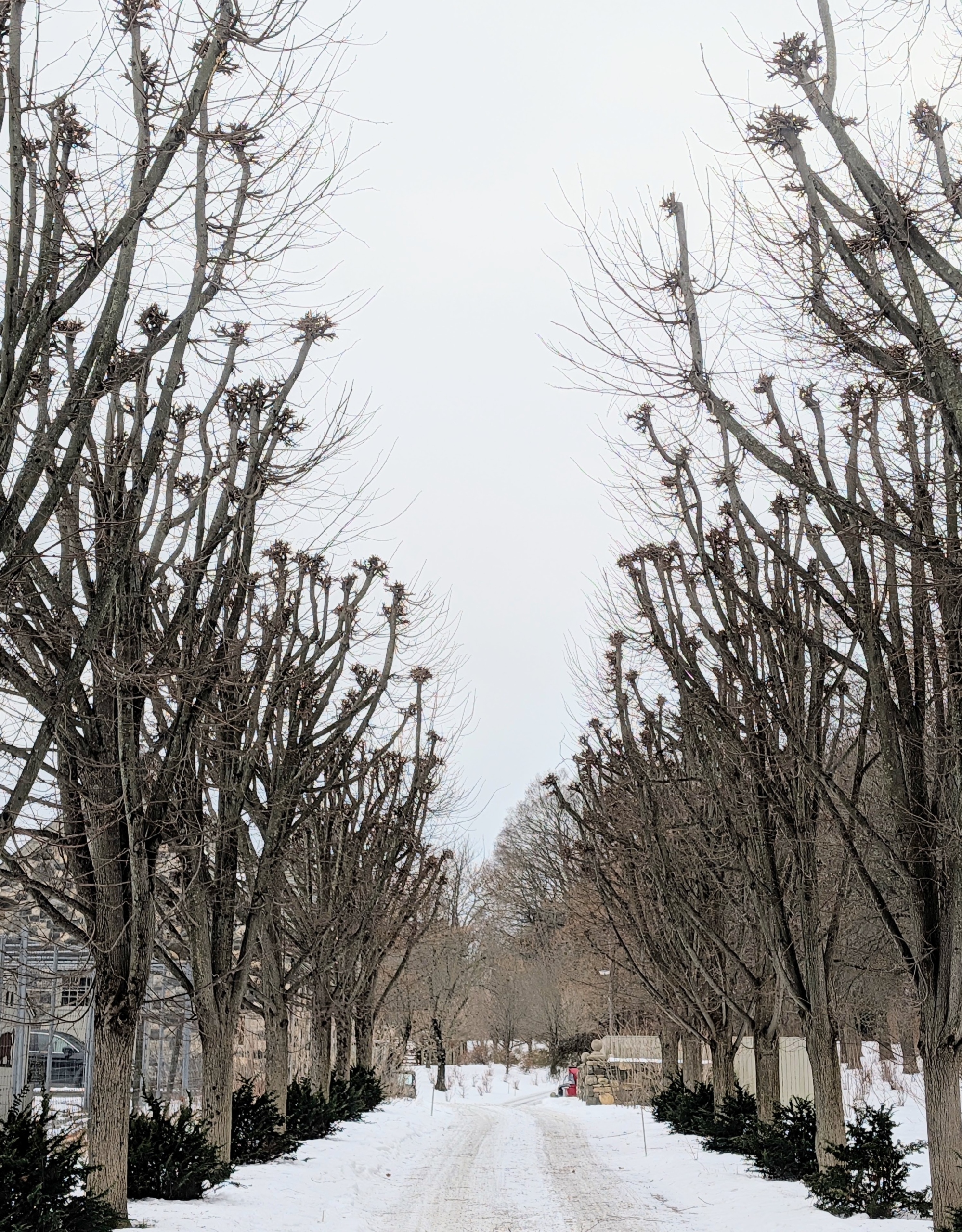
- Here’s the allée pollarded. Each year the long slender shoots that grow below the cuts will be removed, and a set of new shoots will develop creating a gnarled appearance. This linden allée is so beautiful. It’s exciting to see these trees grow and evolve over time.
 Martha Pins


 Martha Tweets

